I don't need your devotion -- your attention -- or to listen, connect with my emotions -- or to tell me I'm forgiven,
I don't need your affection or to feel your tender touch, I don't need your protection -- your support -- to be my crutch,
I don't need adoration -- all your compliments and thanking, your true appreciation -- all your patience -- understanding,
I don't need all the accolades -- your gratitude -- respect, your sympathy -- your serenades -- your charming intellect,
I don't need all your lavish gifts and all your good advice, don't save me in a snowdrift - I don't need your sacrifice,
I don't need your agreement or to see my point of view, just be good to me on Sunday -- and be good to me on Monday too.
Stephen Philip Druce is a poet and surrealist from Shrewsbury in the UK. He is published in the USA, Hungary, India, Canada, Ireland, the UK and South Africa. Stephen has also written for London theatre plays and BBC Radio 4 extra.
PLEASE NOTE: ARTICLES CAN ONLY BE REPRODUCED IN OTHER SITES WITH DUE ACKNOWLEDGEMENT TO BORDERLESS JOURNAL
Five poems by Pravasini Mahakuda have been translated to English from Odia by Snehaprava Das
Pravasini Mahakuda
YOUR POETRY

You do not get liberated by arguments.
Liberation isn’t on your mind,
Neither is it in your fortitude or your courage,
Nor in the tricky manoeuvring of your steps.
Liberation is in the challenges
Your soul ceaselessly confronts.
Salvation is in each line of the poem you write.
Do you know or do you not?
That even after you quit this beautiful earth,
Your poetry will live.
Readers of poetry will continue to be.
Your poetry will live forever because
You hold a timeless lover inside you,
And because of your love,
Which is liberation itself.
Your poetry will thrive as a green permanence,
Even on a blazing summer noon.
You and your poetry are one,
And have never existed apart.
 You yourself are poetry --
Only poetry, and nothing else.
Because like you, Poetry, too, is a woman>
And you, like poetry itself
Are the eternal Truth.

 THE REST OF THEM

Let the rest of them
Write about revolutions
And resistances,
About rights and responsibilities.
I write about life.
I write about love,
And things that happen around me.
I write about the changing seasons,
About the prices of goods,
Of the soreness hidden in the heart.
I write about the hopes and fears that
The heart incessantly wavers between,
Of an unseen wound that never stops to hurt.
I write about the eye that cannot see
The tears trickle down the other one,
Or the drenched pillow and the sari-end.
I write about a hand
That does not care to share
The ache in the other one.
I write about the song the dead river
That flowed once between us had sung.
Let others write about
What they won and lost.
I will write about the pain emanating from
An aspired for void.
Let others write about spite and disdain,
I will sing of life and love.

SHRAVANA*

For which Shravana must the woman
Write a poem now?
What kind of a poem of Shravana
Must she write to sprinkle life
Into the desert dying inside her
To cheer herself up?
Do you think it is easy to write poetry?
You do not know perhaps,
Only a drop of rain comes down
Against millions of palmfuls of tears.
In that lone drop of rain,
 Rings a primeval tune
That perhaps lay buried under
A century old rock.
You had never been in that song
In any phase of life,
Not as friend, a husband or a neighbour
Neither as a reader, nor a critic.
The agony is because
You were never a part of that song.
The Shravana is because
You were never a part of that song.
And the rain is because of that,
And the poem too!
It’s half-hour past eight.
On this evening of a Shravana Sunday
The Shravana pours generously.
Do you believe a woman somewhere
Still sits waiting for you on this evening,
Watching her own silent tears
Mingle in the Shravana rains outside?

*Month of July-August in the Indian calendar, normally monsoons in India.

GODDESS

She is not a goddess --
The one you invoked while
Immersing,
Or immersed while
Invoking.
She is a woman.
Perhaps you have not cared to see
The tears in the eyes of that goddess.
During those performances,
You have time and again played games
With her body and her tears.
Every night,
On the freshly made beds
And in freshly written verses too.
You always know that the
Finale of the game
Will be under your control
And by your choice.
Because you have ensured the result
Would be in your favour,
You have taken the game for granted.


SAREE

The pain and pangs I have lived through
Are as many
As the threads woven
In my saree.
The end of the saree fails to hold
the profusion of
All honour and dishonour,
All joys and sorrows,
Interest and indifference,
The ache of losing things
I had won,
The ecstasy of loving
And the agony of no response.
As I set out on a journey,
The sorrow-flowers bloom in a row
Along the border of the saree,
Spring into life.
As innocent symbols of that agony,
A scene floats past my mind in a flash
Where I find the whole of my being
Standing by the loom.
I marvel at the intimate emotion
Of a beautiful loving mind
Employed at the act of weaving
Such a saree of choice.
The threads in this saree
I am clad in are as many as
The sorrows and sufferings,
Joys and elations that roll
Inside me like the gentle undulations of
The middle notes of a song.
Pravasini Mahakuda is a distinguished Odia poet and translator with 18 original books and 8 books in translation from Hindi to Odia. She has received the Odisha Sahitya Akademi award, Jhankar Award and Junior and Senior Fellowships from the Ministry of Culture, Govt. of India. Her international engagements include participation in poetry festivals in Germany presenting her work in Berlin, Munich, Hamburg, Leipzig and Frankfurt. She regularly contributes poems in national magazines and attends seminars and poetry festivals across India.
Dr.Snehaprava Das, is a noted writer and a translator from Bhubaneswar, Odisha. She has five books of poems, three of stories and thirteen collections of translated texts (from Odia to English), to her credit.
PLEASE NOTE: ARTICLES CAN ONLY BE REPRODUCED IN OTHER SITES WITH DUE ACKNOWLEDGEMENT TO BORDERLESS JOURNAL
I was in Oxford on a Charles Wallace fellowship to study John Ruskin’s influence on M K Gandhi and R N Tagore. Like any other student I lived in a hostel, walked up to the Ruskin School of Art and Ashmolean Museum, to the High Street and the flea market, to the Bodleian Library, and – of course – the book stores that continue to make that ancient city of academic excellence such a delight for a person like me who started crawling in the midst of books.
What caught my fancy on the book-lined shelves in the hometown of a ‘legal deposit’ library? The screenplays of Quentin Tarantino. Countless books on Elizabeth 1 – perhaps because Shekhar Kapur’s Elizabeth had just released worldwide. And the volumes on art. The gorgeous reproductions halved the tedium of walking miles of museums and galleries. And the history of art rekindled my love for paintings from our collective past.
But what I didn’t take kindly to was the neglect of – if not bias against — art from my homeland. There were books on Greek, Chinese, Japanese , African, Egyptian, Mayan, Roman art, on Russian Icons and Stained Glass windows, on French Impressionists and German Expressionists, Cubists and Moderns… But Indian art? For crying out loud, where was Ajanta-Ellora? The glass paintings and Miniatures? Pichwai and Patachitra, Nathdwara and Kalighat Pat, Warli and Madhubani, Santiniketan and Baroda?
That’s when I told myself, “Put the journey of Indian paintings between covers.” For, which other country has a continuity that I can boast, of a tradition that has continued unchequered for three thousand years and more?
Once I was back home, my friend Reeta Dutta Gupta approached me to edit an Encyclopedia of Culture for the India Series she was nursing. And Dr Jain of Ratna Sagar entrusted me to author a Notebook that would recount for school-going children the story of Indian art from Bhimbetka to the present millennia. What luck!
*
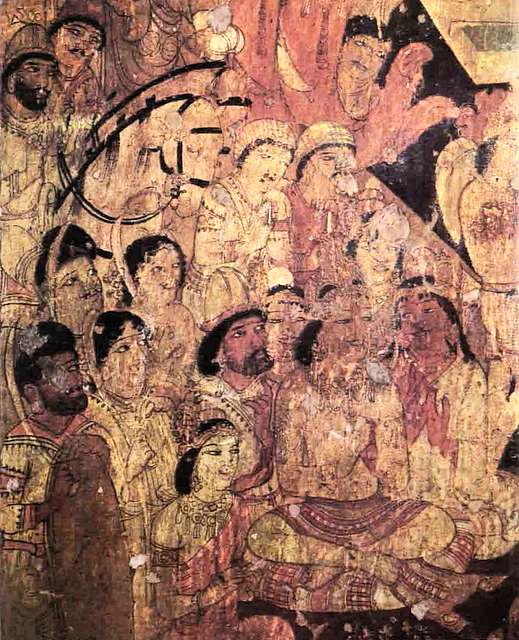
Be it the hunters and the hunted of Bhimbetka, the rock art now on the UNESCO list of World Heritage, or Kolam and Alpana and Rangoli, the decorative designs of Kerala and Bengal and Maharashtra. Be it the Buddha of Ajanta Frescoes or the ploughmen and blacksmith of the Haripura Congress panels painted by the Bengal master Nandalal Bose, be it the illuminations in the Jain manuscripts or the Mughal manners immortalised by the kalams: art in India has grown out of everyday life. These art expressions have been an integral part of the people’s existence, regardless of the style or the period in which they were painted. Yes, down centuries Indian art has withstood change of regiments, religions, philosophy, social content, historical setbacks. And, aesthetic excellence has found an outlet in forms and lines, strokes and colours, whether these were obtained by crushing gems or pounded rice.
This has helped India enjoy a continuity that is rare even in the developed societies. From the sketches of Bhimbetka to those of the tribal artists of Warli, from the murals of ancient India to the art of contemporary masters, from the miniaturised figures to the Tantric patterns – art in India has reinvented itself again and again. And each time it has emerged with renewed vigour and vitality. Because, every age has related to art in an intimate way. By painting on the wall. Decorating the floor. Placing it on the altar. Or simply by keeping an account of the times.
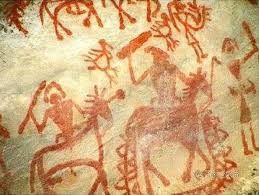
Bhimbetka Cave paintings from prehistoryA fresco from the Ajanta caves, 2nd century BCE to 6th century CEArt from Indian past. From Public Domain
As A Ramachandran – then professor of art at Jamia Millia Islamia in Delhi – had said to me, “Even when our ancient language that was deemed the language of the gods, fell into oblivion, art transcended centuries because it was communicating through a universal language – the visual language of colours and hues.” The lines defined the form, and also created a unitary area for the use of colour, he had further explained. “No matter what the subject, comprehension was never a problem for the Indian – until he was confronted by the art that was imposed by the colonialists.”
The Western overemphasis on realism played havoc, with the native sensibility that allowed for imagination and stylization, Nair Sir had pointed out. That sensibility had no problem accepting a ten-armed goddess, Dasabhuja Durga, or Dasanan, the ten-headed Ravan. “Lifestyle changes too have led to the dilution of Indian aesthetics that once enveloped our workaday lives. The only living art today is the visual art traditions in the villages, but that too might not last as villagers now want to ‘rise’ to the level of the urbans!” he had lamented.
In such a situation, art becomes doubly significant in the life of a child. When she or he is exposed to it, the child can not only access the history and the continuity of a culture but also nurture it with love that can ensure it lives in the days to come… With this in mind, I will write to focus on the high points of Indian art.
Ratnottama Sengupta, formerly Arts Editor of The Times of India, teaches mass communication and film appreciation, curates film festivals and art exhibitions, and translates and writes books. She has been a member of CBFC, served on the National Film Awards jury and has herself won a National Award.
.
PLEASE NOTE: ARTICLES CAN ONLY BE REPRODUCED IN OTHER SITES WITH DUE ACKNOWLEDGEMENT TO BORDERLESS JOURNAL
It has been a strange year for all of us. Amidst the chaos, bloodshed and climate disasters, Borderless Journal seems to be finding a footing in an orphaned world, connecting with writers who transcend borders and readers who delight in a universe knit with the variety and vibrancy of humanity. Like colours of a rainbow, the differences harmonise into an aubade, dawning a world with the most endearing of human traits, hope.
A short round up of this year starts with another new area of focus — a section with writings on environment and climate. Also, we are delighted to add we now host writers from more than forty countries. In October, we were surprised to see Borderless Journal listed on Duotrope and we have had a number of republications with acknowledgement — the last request was signed off this week for a republication of Ihlwha Choi’s poem in an anthology by Hatchette US. We have had many republications with due acknowledgment in India, Bangladesh, Pakistan and UK too among other places. Our team has been active too not just with words and art but also with more publications from Borderless. Rhys Hughes, who had a play performed to a full house in Wales recently, brought out a whole book of his photo-poems from Borderless. Bhaskar Parichha has started an initiative towards another new anthology from our content — Odia poets translated by Snehaprava Das. We are privileged to have all of you — contributors and readers — on board. And now, we invite you to savour some of our fare published in Borderless from January 2025 to December 2025. These are pieces that embody the spirit of a world beyond borders…
I Am Not My Mother: Gigi Baldovino Gosnell gives a story of child abuse set in Philippines where the victim towers with resilience. Click here to read.
Persona: Sohana Manzoor wanders into a glamorous world of expats. Click here to read.
In American Wife, Suzanne Kamata gives a short story set set in the Obon festival in Japan. Click here to read.
Sandy Cannot Write: Devraj Singh Kalsi takes us into the world of advertising and glamour. Click here to read.
Reminiscences from a Gallery: The Other Ray: Dolly Narang muses on Satyajit Ray’s world beyond films and shares a note by the maestro and an essay on his art by the eminent artist, Paritosh Sen. Click here to read.
A discussion of Jaladhar Sen’s The Travels of a Sadhu in the Himalayas, translated from Bengali by Somdatta Mandal, with an online interview with the translator. Click here to read.
Gower Bhat discusses the advent of coaching schools in Kashmir for competitive exams for University exams, which seem to be replacing real schools. Clickhere to read.
Sunset at Colaba, Bombay, which is currently referred to as Mumbai. From Public Domain
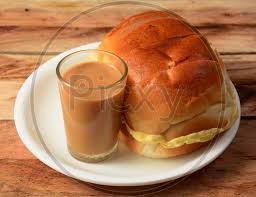
To think that Bombay is attainable is the first mistake of the rookie. And though this city attracts and repels in equal measure, it is the former that makes me want to linger all the more. And linger I do, over a cup (or was it two?) of piping hot Irani chai and bun maska at the Persian Cafe in Cuffe Parade. The rain starts just as soon as I step out of the metro station and make for the safer confines of the cafe, reminding me of home in more ways than one. It is only in Bombay that I am reminded that the culture of the Zoroastrians flourishes somewhere outside of Hyderabad as well.
Colaba lures me, but Kala Ghoda’s immense detachment from its suburban-esque walkways seems more pensive. With Mahatma Gandhi Road sweeping past the Fort and Dr Dadabhai Naoroji Road intersecting it at Flora Fountain, Bombay’s charm offensive lies bare. It is only much later, after I step into Kitaab Khana, the Bombay equivalent of Madras’ Higginbotham’s and Calcutta’s Oxford, that I strongly feel the Raj’s tentacles of reunion. On the other side of the road, the college named after Lord Mountstuart Elphinstone, who twice gave up the chance to be appointed governor-general of India, preferring to finish his two-volume work, History of India (1841) instead, is a reminder of the good that existed among our colonial masters.
*
But the second mistake that the rookie can make is by affirming that all of Bombay lies within the island of Colaba. While it did, in the days of the Raj, it no longer holds the sanctity of tradition as much as it does for the affluent who have no idea of when the last local leaves from Churchgate to Borivali. Versova, much a fishing village as Bandra had once been, is as far away from Colaba as Islamabad is from Vancouver, and Jogeshwari is a mere landing ground for the aristocrats of the north, for whom Thane is where the merely envious congregate and share stories over pav bhaji. A hint of Marathi wafts over the air, sprinkled generally with salt from the sea, and the Bambaiya of Parel and the Hindi of the island city are forgotten.
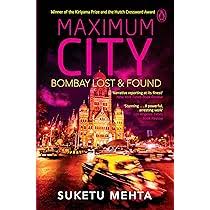
For what does a gentleman bred in the now-reclaimed Old Woman’s Island, fondly called Little Colaba, know of the fighting on the streets of Dadar? The Gateway of India, looming far beyond the ordinary, takes no part in the skyline of this Bombay, where political representatives of all hues and colours sell dreams just as kaleidoscopic as their ever-changing loyalties. Areas where no cars enter are not strictly unheard of in the Bombay of the north, and as Suketu Mehta so lovingly painted in Maximum City, it is a conurbation not afraid of its past, and one that is constantly stuck in an identity crisis. For there are more millionaires in Bombay than in any other city in the country, and they are only matched by the number of people who go to bed hungry. The Marine Drive becomes an elongated resting place for the unfortunate, the destitute or the merely curious once the lights on the Queen’s Necklace get turned on. I would have seen it had I known where to look.
*
To reclaim the days of the Raj, there are few places more apt to while away an evening than Colaba. There are certainly no places as germane as the cafes Mondegar and Leopold, which happily serve continental fare to their patrons after all these years without a trace of embarrassment at the culinary debaucheries they joyfully commit. Old men, with fedoras last seen in fashion in 1930 (before World War II took away the joys of wearing headgear, apart from sola topis, in a country where the sun has been awarded citizenship), and with shirts tucked into waistbands up to their lower chest, order bottles of grizzled beer with a side of mashed potatoes. Cholesterol and high blood sugar are forgotten when relieving one’s youth, especially with Spanish women gawking at the absurdity of it all in the flea market on the causeway outside. With the stroke of a pen, these men bring to life the jazz clubs of the early 1950s, recollecting the trumpeter Chris Perry at Alfred’s. And then they remember Lorna Cordeiro, of whom they speak as if she were a loved one.
The scarcity of vada pav in the vicinity of Kala Ghoda scares me until I remember that even autorickshaws are banned from this part of town. Much like a man seeking water from the desert atrophies of the Middle East, I lunge into a seller close to the Victoria Terminus. When he asks for a mere INR 30 for two vada pavs, I am shamed into submission, looking towards my shoes — coloured an extravagant yellow — and murmur notes of dissent that even my ears cannot pick up. A jet-black Mercedes-Benz skids past the puddle of water that has gathered around Flora Fountain, dousing me with dredges of obstinacy. There are two worlds that we live in, and Bombay may have achieved its supremacy over both yesterday.
Bun Maska can be found in Iranian cafes in Mumbai Pav Bhaji, a popular street food of Mumbai From Public Domain
Mohul Bhowmick is a national-level cricketer, poet, sports journalist, essayist and travel writer from Hyderabad, India. He has published four collections of poems and one travelogue so far. More of his work can be discovered on his website: www.mohulbhowmick.com.
PLEASE NOTE: ARTICLES CAN ONLY BE REPRODUCED IN OTHER SITES WITH DUE ACKNOWLEDGEMENT TO BORDERLESS JOURNAL.
“Son,” Hridaya whispered again, this time with an edge that made him quiver. “Do you know why you’re here?”
“I don’t,” Leonie answered, still shaken by his visions.
“Then I’ll tell you: this is your last incarnation. Your chance to break free from the cycles of separation and denial that have kept you bound. Do you know what this means?”
“I don’t,” he admitted.
Hridaya took a moment to adjust his robe, then gripped Leonie’s forearm, his voice low. “It means your ancient soul chose to return to this plane one last time for the purpose of liberation. Divine destiny is with you, but you still have the will to reject it. If you turn away, the universe will keep sending the lessons you need to learn. Ignore them, and they’ll get harsher. Do you understand?”
Leonie shrugged in resignation. “What does it matter what I’ve come here to learn?” he murmured, his gaze falling to the ground. “I’m all alone, anyway.”
“Nonsense,” Hridaya countered, his grip on Leonie’s palm firming.
“You are no orphan, but a beloved child of the universe. Though you may feel displaced, your soul is anchored to the womb of the world; your hands inter-twined with the pulse of creation. It is only in the folly of ignorance that we choose to desert ourselves, becoming orphans to our very own souls.
“Look,” he said, squinting his blind eyes as if sensing Leonie’s pain, “I know life doesn’t always add up the way we want it to, but that doesn’t mean we should stop counting our blessings. You see, there is no good or bad luck, really, only wisdom to be gained from our unmendable human condition.
“Our personal stories shape us, but they do not limit or define us. In the end, who we truly are escapes all form and definition. It doesn’t matter, then, what star you were born under or which side of the river you drank from— obstacles will arise either way. You must not get discouraged, son. We are here to pave the way for each other, learning to see clearer so we can love better.
The fortuneteller paused, as though listening for a distant whisper only he could hear. Then, with his head tilted toward the sky, he continued: “At any point, we can give our life a hundred different names or simply call it grace. It all depends on how well we learn to see through things. Sometimes the greatest trials turn out to be our highest blessings. Other times, we are left with indelible wounds, marks that cannot be erased or repaired. But if we carry our hurt with grace, the scars stitched onto our skin become luminous constellations guiding our way home.
“Now happiness is the common road. But freedom? Here the road forks. The path of freedom is not the way of the masses, nor the aspiration of the tribe. Many of us meddle with freedom, but freedom has little to do with getting things our way, possessing what we desire, or feeling good about this or that.
“Before we’re born, freedom is woven into the fabric of our souls. As children, we understand this instinctively, but as we grow, this knowingness fades, leaving us nostalgic or in denial. Only a rare, disgruntled minority set off on a quest to reclaim what’s been lost. Some journey far, sometimes to the farthest edges of the earth. Don’t get me wrong. At times, the search is required. Yet what really matters is never the distance we travel, but how deep we are willing to dive to illuminate the shadows.”
“Son,” the fortuneteller leaned in, his voice dropping to a secretive whisper. “You’ll hear many promising you something better or more. It seems to me everyone hopes to hoard magic, but the pot of gold doesn’t just sit at the end of the rainbow. Treasures pepper the trail. Each day, the path unfolds, ever unwritten. Now tell me, what does your heart long to know more than anything so it may be made free again?”
Silence pervaded the forest once more. A gentle breeze brushed against Leonie’s face as he gazed out at the water, then back at the man. “The truth about my mother,” he uttered. “That is what I’d like to know most.”
Hridaya sighed deeply. “The truth, son, will set you free, but to do so, it must break open your heart first. Are you sure this is what you want to know more than anything?”
A tremor rippled through Leonie’s heart. He knew that the truth, whatever it was, would hit like a punch to his chest.
***
Dearheart, perhaps you, too, have felt the sudden whack of truth—a force you have avoided, fearing it could shatter the world as you know it. Be honest: how often have you told a white lie to help someone save face or feel better? How many times has something inside you desperately wanted to live out the truth, and at the same time hoped it would never be revealed?
There’s no escaping it: the truth is seldom subtle. It’s a hurricane, exposing what you’ve kept covered. If we let the truth be destructive, it will wreak havoc. Yet honesty doesn’t have to be crushing; it can be as gentle as blushing. Gentle honesty is wise and discerning. It doesn’t weaken relationships; it deepens them. Speaking the truth is never about being rude, harsh, or unfiltered—it’s about upholding integrity in the centre of your heart. After all, honesty is a prickly rose. It must be handled with care, carried with grace, and delivered with unbending kindness. Even if it’s tough, lean into the hard conversations softly and speak your heart boldly. Stand for the truth—whatever the cost. Anything less is fickle, unreliable, and untrustworthy.
Dearheart, have you ever wondered about that tingle keeping you awake at night? Where does the fiery inspiration spark from? Why does your soul beckon you in? Consciousness is ever awake, whether you are asleep, stumbling, or taking the leap. It patiently waits for you to unlock the mysteries of your spirit and embrace the liberating journey that awaits.
About the Book
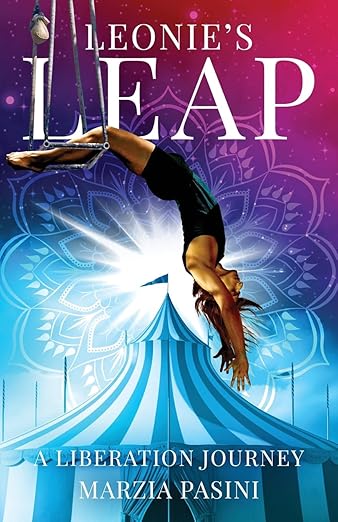
Leonie’s Leap tells of the adventures of a fifteen-year-old orphaned acrobat who escapes his dreary life to join the circus as a trapeze artist. Just as the daring acrobat takes the bold plunge into the unknown, your inner exploration reveals the hidden wonders within.
Your capacity to return to this wild inner landscape is the answer to your deepest longing, the home where every prayer settles. It doesn’t matter where you come from or what path you have chosen—every bit of YOU knows it: you were born to live vibrantly from your depths. The world needs you to dwell in your wildly liberated heart. It breathes through your sacred dreams. Your wings. Your feet.
Are you ready to leap?
About the Author
Marzia Pasini is a writer and life coach devoted to heart consciousness and the sacred return to self. With a background in Philosophy and a Master’s in Comparative Politics from the London School of Economics, she began her career in international development, working with the United Nations and the Office of Her Majesty Queen Rania of Jordan. Two life-altering health crises sparked a profound inner shift, inspiring her to help others reconnect with their inner freedom and truth. She has also authored a children’s book Satya and the Sun, which follows a young girl on a magical journey through her fear of the dark—offering an empowering reflection on change, trust, and the unknown.
Originally from Italy, Marzia has lived in six countries and now makes her home in India with her husband and two children.
.
PLEASE NOTE: ARTICLES CAN ONLY BE REPRODUCED IN OTHER SITES WITH DUE ACKNOWLEDGEMENT TO BORDERLESS JOURNAL
I often find myself amidst the crumbling cliffside, mumbling words to myself. Within the mouth of the weeping river, I must disperse the ashes of an awakening. Through the darker brush, colour would soak the dry paper. In the corner of an eroding house, I lack the search I'm entrusted. The mist I've felt this morn, now buries me in a shawl of memories.
The tiny tendril holding onto the iron railing, unwinds in the solitude it enjoys. It swirls in the nightly gale, swaying in its shallow reflection.
A feeling surges in me, as the poison in a pitcher leaf. It urges the nightly stillness to visit the lonely house, its amber curtain still intact. The long lane, in front of me, is waning under the new moon. It was once the pen, I had written my childhood with. The ink had flowed evenly, such as the poison in my drink. And now it must end abruptly, the tiny man in his bottle of wine. The twilight sky drinks the last few rays of the sun, while I sink in my purple drink.
Gautham Pradeep was born in Kerala, India. He is now pursuing an MBBS degree. He tries to explore the existential dilemmas of the his generation. His poems have been published widely.
.
PLEASE NOTE: ARTICLES CAN ONLY BE REPRODUCED IN OTHER SITES WITH DUE ACKNOWLEDGEMENT TO BORDERLESS JOURNAL
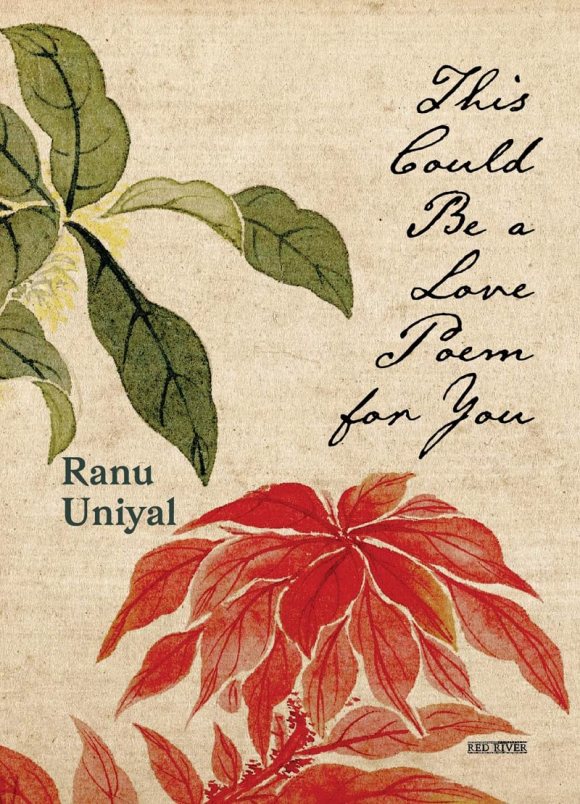
This Could Be a Love Poem for You by Ranu Uniyal, is her fifth collection of poems. Uniyal is a passionate bilingual poet at heart, a retired professor of English literature by profession and an inspiration to many budding poets. Across the Divide (2006), The Day We Went Strawberry Picking in Scarborough (2018), December Poems (2012) and Saeeda Ke Ghar (In Saeeda’s home, Hindi, 2021) are some other significant contributions made by the poet.
“Poetry and beauty are always making peace. When you read something beautiful, you find co-existence; it breaks walls down.” A quote by Mahmoud Darwish is reflective of Dr Uniyal’s poignant portrayal of human existence layered with love, grief, crises and relationships with the One (Self) and the World.
The collection is an aesthetic delight that traverses the heart of the readers with astute directness and a distinct confessional tone. It has three segments: ‘Dust My Regrets’, ‘Be a Good Girl’ and ‘Thy Eternal Grace’. Collectively, there are 62 poems in all.
The poems start from the personal and move to the universal with their intricate details. The poetic sensibilities take us to the female imaginary of the physical, psychological and spiritual domains. If Kamala Das in the 20th century introduced the readers to her brazenness in poetry, then Ranu Uniyal in the 21st century coerces her readers to travel from the common routine to the coveted spiritual abode found in the creative doctrine of poetry. The poetic depth can also be inferred through the rhythmic structure, the play with the words through alliteration and rhymes introduce jibes in poems such as ‘The Shop and the Shutter’.
The themes of love, identity, self-expression, language and power, old age, body’s fragility, vulnerability, precarity, loss, women and domesticity, motherhood, death and memory are persistent throughout the collection. She poetically contours the theme of human existence and its distinct flavours like WB Yeats in Sailing to Byzantium with — “That is no country for old men.”
The poetic pondering over the question of ‘Self’ or recurrent declaration of ‘I’ is developed through linguistic, racial, and geographical temporal identities. For example, the poet’s ‘Garhwali’ identity is camouflaged with the the more modern Anglophone identity. The declaration of the personal “self” and dedication to some personalities like Mohini Mangalik, S. A. Hamid and Amma takes us to the glints of the poet’s biography in the most poetic manner. Gulzar once uttered that, “we poets are errant grains of dust… life takes us and tosses us, we do not know where it will end.” The poems hail the essence of life’s evolutionary journey, especially the one of experience and the mature years of life.
Her poems present multiple binaries: of love and grief, seller and buyer, life and death, through picturesque imagery. Additionally, the poet familiarises the readers with the references to the pagan myths from diverse cultures, Christ, Nachiketa, Yama, Isis, which also introduce us to the eco-folklorists’ traditions which is a delight to explore.
She writes in aphorisms at times and critiques the personal and public crises. The poem, ‘Only Grief’, provocatively emotes the climate crisis as an apocalyptic warning through a distant voice from the future, wherein, critiquing the war-torn present world and the catastrophic space left for the progeny of the future.
We sang dangerously of the failure.
Of our prodigal ancestors.
Another poem, ‘From One Life to Another’, reflects a similar concern about the cataclysmic/tragic climate situations left for the future:
Sparrows and crows have
been hushed to silence.
The once-green acacia shrieked
as they chopped her limbs.
Nature and motherhood hold each other’s hands in sharing the identity of exploration and exploitation. Furthermore, the intricate details through the lens of the ecofeminist poetic sensibilities highlight the diversified literary corpus in the anthology. The same poem states further:
I was once a tree- all green.
Very tall, bobbing in the wind.
I had leaves, branches.
And occasional flowers.
I, too, had a name.
A woman. A mother.
Once a tree.
I brush them aside,
My tears, an upright foliage
Lying heavy on my chest.
Dr Uniyal can be set alongside the “literary greats” like Kamla Das and Sujata Bhatt.
The usage of the colloquial vernacular Hindi words and phrases makes it more personal, tinctured with cultural aesthetics.
The eponymous poem in the anthology, ‘This Could Be a Love Poem for You’ is raw and personal between the one waiting for the other partner far away from a distance is the talisman of the relationship, the theme that finds its way again and again in the poet’s poetic oeuvre. This colourful and mature anthology glossed with distinct sonorous imagery could indeed be a reflective love poem for the present and for our progeny, the rightful claimants, who would reminisce over the past. It’s a love poem about resilience and human existence that shall follow the hearts of the readers for a long, dialogic course of expressions and insights.
Gazala Khan teaches in the Department of English at Doon University, Dehradun, India. She has published poetry in magazines such as Setu, Borderless, and The Fictional Café and has been consistently working on creative and literary projects.
.
PLEASE NOTE: ARTICLES CAN ONLY BE REPRODUCED IN OTHER SITES WITH DUE ACKNOWLEDGEMENT TO BORDERLESS JOURNAL
Ratnottma Sengupta revisits an exhibition full 25 years later
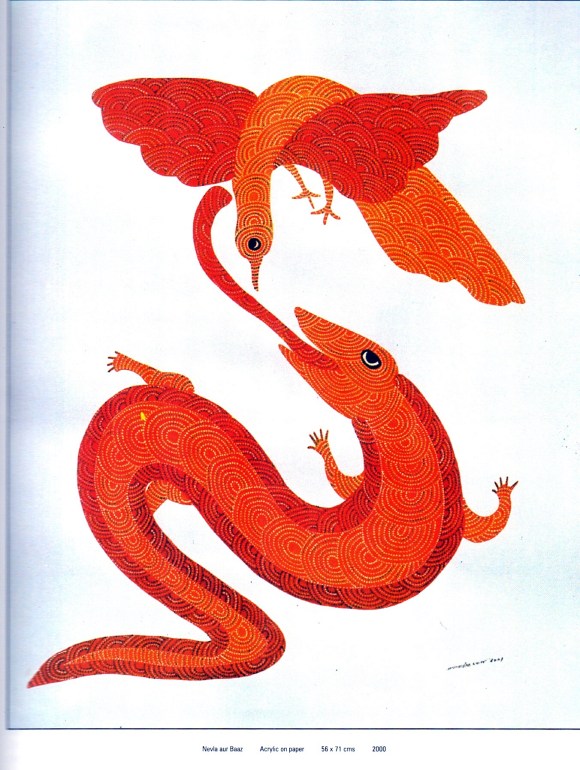
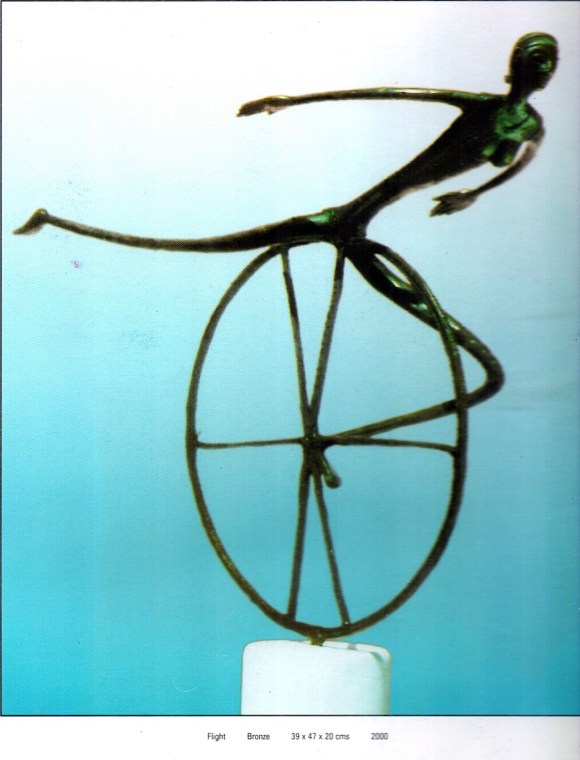
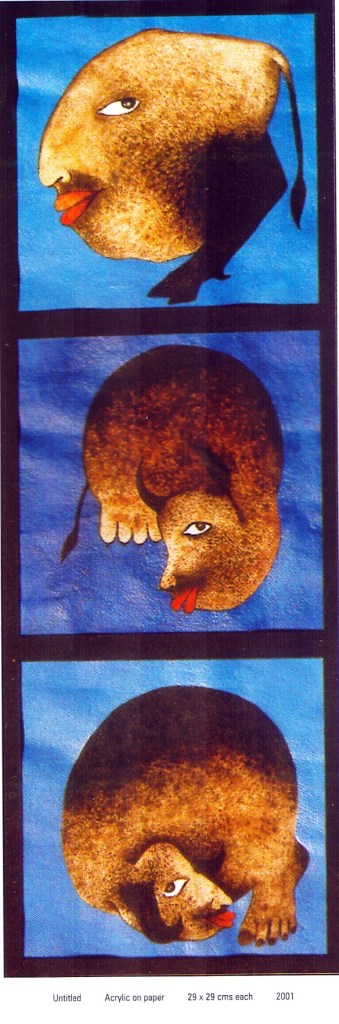
Images from exhibits at Anadi . Provided by Ratnottama Sengupta
On November 1 of 1956 was born a state in Central India called Madhya Pradesh. And 44 years later, on exactly the same day of November 1, in the year 2000 it was remapped. A new state — Chhattisgarh — was carved out of the land that had been home to the oldest Indians: the men and women who had peopled the caves at Bagh and Bhimbetka.
Standing at the threshold of that new beginning, I had curated an exhibition titled Anadi – that which has no beginning and, therefore, no end. The exhibition card was designed by M F Husain who came on the inaugural day in Delhi. The next day was graced by the presence of Madhavrao Scindia, scion of the royal family that continues to throw up political leaders. I was fortunate to have friends like collectors Anand Agarwal and H K Kejriwal, bureaucrats Bhaskar Ghose and Sarayu Doshi, art lovers like poet Gulzar and artists like Yusuf Arakkal. Happily, then, the exhibition travelled to Birla Academy in Kolkata to Chitrakala Parishath in Bangalore to the National Gallery of Modern Art in Mumbai. And with it travelled a batch of youngsters who were soon to be among the most sought after names in Indian Contemporary Art.
What made that exhibition so special? The card? The multi-venue display? The star viewers? The exhilarating combination of tribal paintings, figurative sculpture, and abstract images? Twenty five years later, I will look back to find an answer.
Images from exhibits at Anadi . Provided by Ratnottama Sengupta
At the intersection of two millennia I was amazed to note there was no rupture in continuity. Anadi offered a fresh look at a continuum that lives on beyond the geopolitical redefinition, because it began at a time when Chhattisgarh was not Madhya Pradesh, nor the Central Province of the Raj. Bhopal, Indore, Raipur, Jagdalpur, Sanchi, Vidisha, Malwa… these cities had no chief minister back then, nor a Prime Minister. Why, there were no Begums nor a Buddha. No Baj Bahadur loved a Roopmati nor did Kalidasa send a Cloud as Messenger. It was a time when the intrepid fingers that harnessed stones and hunted hides also painted rocks to sing of life. In the process – around 10,000 BCE – they crafted the rockbed of Indian Art at Bhimbetka, the UNESCO World Heritage Site mere miles away from Bhopal.
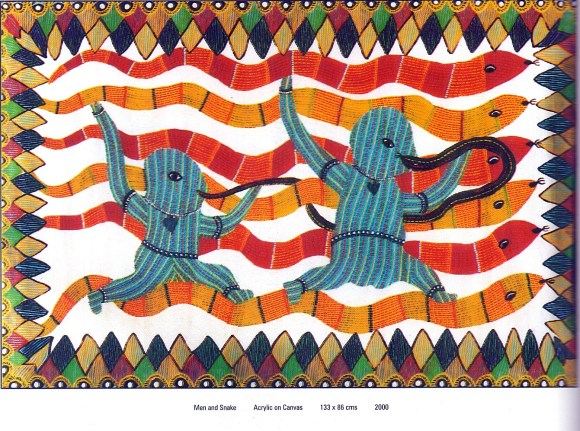
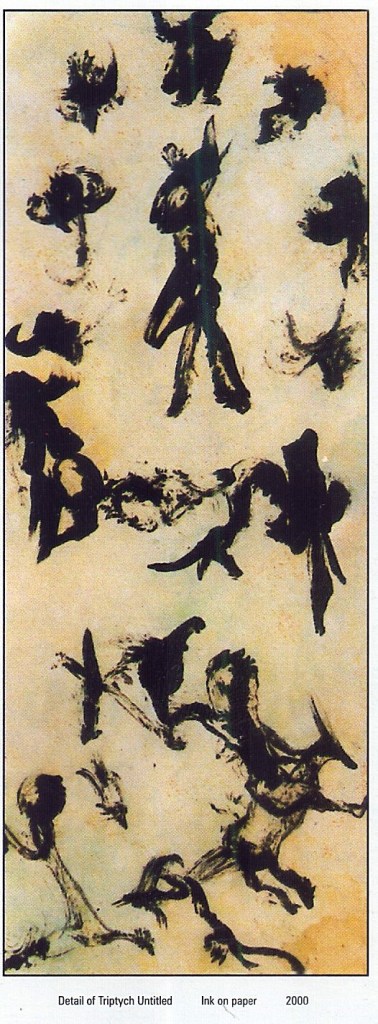
Bare lines that captured with only a twist and a turn the vigor of hunting and the verve of dancing, rock art is that elusive genre which is narrative, figurative and abstract – all at one go. And that is a characteristic common to the tribal stream of art which flourishes in the state from a forgotten past. There is a story in every figure painted by Bhuri Bai or Sukho Korwa. She paints a cart and tells you of the festival day when on its wheels it goes round habitats, collecting all the bimari and driving illness out of the village. He paints a bird that pounces on a snake which devours a rat, recounting the lifecycle that sustains ecological balance. But where is the third dimension? Where’s the likeness to the world of five senses? We see no effort here to evoke either. Instead, there is a stylization which is unique to the region that is home to the Bhil, Gond, Sahariya, Baiga, Saur and other tribes. A stylisation that abstracts the essence of the physical reality they celebrate through colour and line.
Images from exhibits at Anadi . Provided by Ratnottama Sengupta
Dots and crosses, circles and squares all come into play as the vivacious blues and reds, yellows and greens acquire life. A line is not simply a straight line or curve: that would be an unappetising repetition. The quest for variety and individuality finds Kala Bai, Lado, Sumaru break up the lines into an intricate arrangement of countless motifs. When the subject is the same, as too the colour, it’s the dots and crosses, dashes and stars that give the work the imprint of individuality. In the process, these artists who work in a community and send off their creations to markets in distant cities, have worked out a way of ‘patenting’ artistic property. Tradition did not require them to ever sign off a work with their names. In the age of copyright awareness and intellectual property rights, they might put their signatures on the canvas – but the unmistakable imprint of the artists lie in the manner of their assembling the familiar patterns.
That, make no mistake, is the sign of a master, be he in the tribal mould or a modernist. For corroboration, we have only to look at a painting by Maqbool Fida Hussain, N S Bendre or Syed Haider Raza. Madhuri or Mahabharat, Gandhi or Indira, M F Husain constantly painted figures. Eminent and easily recognised ones at that. And yet, they lived not in the details of their features but in the lines and colours that spelt ‘Husain’ to seasoned viewers. Likewise Bendre’s forms had little concern for photographic realism. In Raza’s case, it is the arrangement of colourful geometrical bindus (circles) and squares alone that speaks of the artist. So, regardless of whether or not there is a ‘McBull’ or ‘Bendre’ inked on the canvas, we readily identify these masters who, incidentally, all came from this same state of Madhya Pradesh.
Images from exhibits at Anadi . Provided by Ratnottama Sengupta
Note one more thing about these names. Each of them had set new watersheds for Indian contemporary art. All of them had opened up new avenues for artists who came after them. Bendre, the first to head the art education at the Maharaja Sayajirao University of Baroda, gave not just one more centre for mastering the brush. He gave shape to an institution which still assimilates the best of the home and the universe, giving the MSU artists a rare acceptability in India and in the West. Raza, who lived in Paris for years and years, did not sever his umbilical cord with this soil, yet carved a niche for Indianness in the Mecca of contemporary art. And Husain? The life as too the art of this ‘Picasso from Indore’ had become a legend in his own lifetime. Who else but MF could raise the high water mark at auctions, again at again, at home and abroad? Who but him could open up the markets for Indian artists, including those who preceded him like Jamini Roy?
Images from exhibits at Anadi . Provided by Ratnottama Sengupta
Talking of the masters who opened vistas, especially in the context of Madhya Pradesh, one comes to J Swaminanthan who facilitated a two-way transaction. While holding the reins of Roopankar Museum in Bhopal, he assimilated tribal art to such an extent that he could understand it, explain it, talk about it, write about it and paint after them, using their earth colours, and the bareness of their lines. At the same time, the outsider who became an insider gave, through Bharat Bhavan, all of Madhya Pradesh a new standing in the realm of contemporary art. Artists from all over the country would congregate in Bhopal with their art, exhibit it, discuss it threadbare in seminars, impart it to those keen to learn. Small wonder, the state boasts a host of artists like Akhilesh and Anwar, Seema Ghuraiya and Manish Pushkale, Yogendra and Vivek Tembe, Jaya Vivek and Jangarh Shyam. Artists who steal the attention of the world today.
This breed, which was born with the emergence of the state, came of age in artistic terms as the province consolidated its presence on the marquee. And an overwhelming number of them express themselves in just lines and colours. They care not for things like market – which seems to have an insatiable appetite for figurative art. Nor for the narrative tradition of the forefathers who painted on rocks. These neo-masters are all distilling forms, extracting experiences, working out their own equations with abstraction.
But, come to think of it, isn’t this exactly what the original artists of this land – and every other land on earth – set out to do when they picked up the sharpened tool that was millennia away from the paint brush?
Ratnottama Sengupta, formerly Arts Editor of The Times of India, teaches mass communication and film appreciation, curates film festivals and art exhibitions, and translates and writes books. She has been a member of CBFC, served on the National Film Awards jury and has herself won a National Award.
.
PLEASE NOTE: ARTICLES CAN ONLY BE REPRODUCED IN OTHER SITES WITH DUE ACKNOWLEDGEMENT TO BORDERLESS JOURNAL



 Borderless