Categories
Editorial

Other Echoes in the Garden…

“Other echoes
Inhabit the garden. Shall we follow?
Quick, said the bird, find them, find them…”

— TS Eliot, ‘Four Quartets: Burnt Norton’(1936)

Humans have always been dreamers, ideators and adventurers.

Otherwise, could we have come this far? From trees to caves to complex countries and now perhaps, an attempt to reach out towards outer space for an alternative biome as exploring water, in light of the recent disaster of the Titan, is likely to be tougher than we imagined. In our attempt to survive, to live well by creating imagined constructs, some fabrications backfired. Possibly because, as George Orwell observed with such precision in Animal Farm, some perceived themselves as “more equal”. Of course, his was an animal allegory and we are humans. How different are we from our brethren species on this beautiful planet, which can survive even without us? But can humanity survive without Earth? In science fiction, we have even explored that possibility and found home among stars with the Earth becoming uninhabitable for man. However, humanity as it stands of now, continues to need Earth. To live amicably on the planet in harmony with nature and all the species, including our own, we need to reimagine certain constructs which worked for us in the past but seem to have become divisive and destructive at this point.

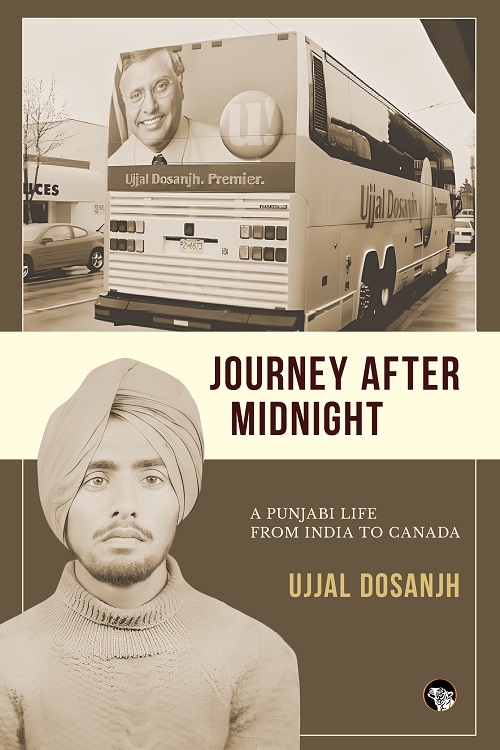
Ujjal Dosanjh, former Minister in the Canadian cabinet and former Premier of British Columbia, in his autobiography, Journey After Midnight – A Punjabi Life: From India to Canada, talks of regionalism as an alternative to narrow divisive constructs that terrorise and hurt others. He writes in his book: “If humanity isn’t going to drown in the chaos of its own creation, the leading nations of the world will have to create a new world order, which may involve fewer international boundaries.” We have a candid conversation with him about his beliefs and also a powerful excerpt from his autobiography.

An interview with Professor Fakrul Alam takes us into Tagore’s imagined world. He discussed his new book of Tagore translations, Gitabitan: Selected Song-Lyrics of Rabindranath Tagore. He has brought out a collection of 300 songs translated to English. In a bid to emphasise an inclusive world, we also have a translation of Tagore’s ‘Musalmanir Galpa’ (A Muslim Woman’s Story) by Aruna Chakravarti. A transcreation of his poem, called ‘Proshno or Questions’ poses difficult challenges for humanity to move towards a more inclusive world. Our translation by Ihlwha Choi of his own Korean poem to English also touches on his visit to the polymath’s construct in the real world, Santiniketan. All of these centring around Tagore go to commemorate the month in which he breathed his last, August. Professor Alam has also translated a poem from Bengali by Masud Khan that has futuristic overtones and builds on our imagined constructs. From Fazal Baloch we have a Balochi translation of a beautiful, almost a surrealistic poem by Munir Momin.

The poetry selections start with a poem on ‘Wyvern’, an imagined dragon, by Jared Carter. And moves on to the plight of refugees by Michael Burch, A Jessie Michael, and on migrants by Malachi Edwin Vethamani. Ryan Quinn Flanagan has poetry that suggests the plight of refugees at a metaphorical level. Vibrant sprays of colours are brought into this section by Luis Cuauhtémoc Berriozábal, Saranyan BV, Jahnavi Gogoi, George Freek and many more. Rhys Hughes brings in a spot of humour with his mountainous poetry (literally) and a lot of laughter with his or rather Google’s attempt at automatic translation of a poem. Devraj Singh Kalsi has shared a tongue in cheek story about an ‘amateur professional’ — rather a dichotomy.

We travel to Andaman with Mohul Bhowmick and further into Sierra with Meredith Stephens. Ravi Shankar travels back in nostalgia to his hostel and Kathleen Burkinshaw dives into the past — discussing and responding to the media presentation of an event that left her family scarred for life, the atomic holocaust of 1945 in Japan. This was a global event more than seven decades ago that created refugees among the survivors whose homes had been permanently destroyed. Perhaps, their stories are horrific, and heart wrenching like the ones told by those who suffered from the Partition of India and Pakistan, a divide that is celebrated by Independence Days for the two nations based on a legacy of rifts created by the colonials and perpetrated to this day by powerbrokers. Aysha Baqir has written of the wounds suffered by the people with the governance gone awry. Some of the people she writes of would have been refugees and migrants too.

A poignant narrative about refugees who flock to the Greek island of Lesbos by Timothy Jay Smith with photographs by Michael Honegger, both of whom served at the shelters homing the displaced persons, cries out to halt wars and conflicts that displace them. We have multiple narratives of migrants in this issue, with powerful autobiographical stories told by Asad Latif and Suzanne Kamata. Paul Mirabile touches on how humans have adopted islands by borrowing them from seas… rather an unusual approach to migrations. We have an essay on Jane Austen by Deepa Onkar and a centenary tribute to Chittaranjan Das by Bhaskar Parichha.

The theme of migrants is echoed in stories by Farouk Gulsara and Shivani Shrivastav. Young Nandani has given an autobiographical story, translated from Hindustani to English by Janees, in which a migration out of various homes has shredded her family to bits — a narrative tucked in Pandies Corner.  Strange twists of the supernatural are woven into fiction by Khayma Balakrishnan and Reeti Jamil.

In reviews, Parichha has explored Arunava Sinha’s The Greatest Indian Stories Ever Told: Fifty Masterpieces from the Nineteenth Century to the Present. Somdatta Mandal’s review of Amitav Ghosh’s Smoke and Ashes: A Writer’s Journey Through Opium’s Hidden Histories seems to be an expose on how historical facts can be rewritten to suit different perceptions and Basudhara Roy has discussed the Greening the Earth: A Global Anthology of Poetry, edited by K. Satchidanandan and Nishi Chawla.

There is more wonderful content. Pop by our August’s bumper edition to take a look.

I would like to give my grateful thanks to our wonderful team at Borderless, especially to Sohana Manzoor for her fabulous artwork. Huge thanks to all our gifted contributors and our loyal readers. Borderless exists today because of all of you are making an attempt to bringing narratives that build bridges, bringing to mind Lennon’s visionary lyrics:

You may say I'm a dreamer
But I'm not the only one
I hope someday you'll join us
And the world will live as one

Thank you for joining us at Borderless Journal.

Have a wonderful month!

Mitali Chakravarty

borderlessjournal.com

.

Visit the August edition’s content page by clicking here

READ THE LATEST UPDATES ON THE FIRST BORDERLESS ANTHOLOGY, MONALISA NO LONGER SMILES, BY CLICKING ON THIS LINK.

Categories
Excerpt

Journey After Midnight

Title: Journey After Midnight: A Punjabi Life from Canada to India

Author: Ujjal Dosanjh

Publisher: Speaking Tiger Books

50

A variation on the common Indian expression “Mullan de daur maseet taeen,” which roughly translates as “An imam’s ultimate refuge is the mosque,” sums up my relationship with the world: India is my maseet. I have lived as a global citizen, but India has been my mandir, my masjid, and my girja: my temple, my mosque, and my church. It has been, too, my gurdwara, my synagogue, and my pagoda. Canada has helped shape me; India is in my soul. Canada has been my abode, providing me with physical comforts and the arena for being an active citizen. India has been my spiritual refuge and my sanctuary. Physically, and in the incessant wanderings of the mind, I have returned to it time and again.

Most immigrants do not admit to living this divided experience. Our lack of candour about our schizophrenic souls is rooted in our fear of being branded disloyal to our adopted lands. I believe Canada, however, is mature enough to withstand the acknowledgement of the duality of immigrant lives. It can only make for a healthier democracy.

Several decades ago, I adopted Gandhi’s creed of achieving change through non-violence as my own. As I ponder the journey ahead, far from India’s partition and the midnight of my birth, there is no avoiding that the world is full of violence. In many parts of the globe, people are being butchered in the name of religion, nationalism and ethnic differences. Whole populations are migrating to Europe for economic reasons or to save themselves from being shot, beheaded or raped in the numerous conflicts in the Middle East and Africa. The reception in Europe for those fleeing mayhem and murder is at times ugly, as is the brutal discrimination faced by the world’s Roma populations. The U.S. faces a similar crisis with migrants from Mexico and other parts of South America fleeing poverty and violence, in some cases that of the drug cartels. Parents and children take the huge risk of being killed en route to their dreamed destinations because they know the deathly dangers of staying. Building walls around rich and peaceful countries won’t keep desperate people away. The only lasting solution is to build a peaceful world.

Human beings are naturally protective of the peace and prosperity within their own countries. A very small number of immigrants and refugees, or their sons and daughters, sometimes threaten the peace of their “host” societies. But regardless of whether the affluent societies of western Europe, Australia, New Zealand and North America like it or not, the pressure to accept the millions of people on the move will only mount as the bloody conflicts continue. Refugees will rightly argue that if the West becomes involved to the extent of bombing groups like ISIS, it must also do much more on the humanitarian front by helping to resettle those forced to flee, be they poverty-driven or refugees under the Geneva Convention. With the pressures of population, poverty and violence compounded by looming environmental catastrophes, the traditional borders of nation states are bound to crumble. If humanity isn’t going to drown in the chaos of its own creation, the leading nations of the world will have to create a new world order, which may involve fewer international boundaries.

In my birthplace, the land of the Mahatma, the forces of the religious right are ascendant, wreaking havoc on the foundational secularism of India’s independence movement. I have never professed religion to be my business except when it invades secular spaces established for the benefit of all. Extremists the world over—the enemies of freedom—would like to erase both the modern and the secular from our lives. Born and bred in secular India, and having lived in secular Britain and Canada, I cherish everyone’s freedom to be what they want to be and to believe what they choose to believe.

I have always been concerned about the ubiquitous financial, moral and ethical corruption in India, and my concern has often landed me in trouble with the rulers there. Corruption’s almost complete stranglehold threatens the future of the country while the ruling elite remain in deep slumber, pretending that the trickle of economic development that escapes corruption’s clutches will make the country great. It will not.

Just as more education in India has not meant less corruption, more economic development won’t result in greater honesty and integrity unless India experiences a cultural revolution of values and ethics. The inequalities of caste, poverty and gender also continue to bedevil India. Two books published in 1990, V.S. Naipaul’s India: A Million Mutinies Now and Arthur Bonner’s Averting the Apocalypse, sum up the ongoing turmoil. A million mutinies, both noble and evil, are boiling in India’s bosom. Unless corruption is confronted, evil tamed, and the yearning for good liberated, an apocalypse will be impossible to avert. It will destroy India and its soul.

On the international level, the world today is missing big aspirational pushes and inspiring leaders. Perhaps I have been spoiled. During my childhood, I witnessed giants like Dr. Saifuddin Kitchlew of the Indian freedom movement take their place in history and even met some of them. As a teenager, I was mesmerized by the likes of Nehru and John F. Kennedy. I closely followed Martin Luther King and Robert Kennedy as they wrestled with difficult issues and transformative ideas. I landed in Canada during the time of Pierre Trudeau, one of our great prime ministers. Great leaders with great ideas are now sadly absent from the world stage.

The last few years have allowed me time for reflection. Writing this autobiography has served as a bridge between the life gone by and what lies ahead. Now that the often mundane demands of elected life no longer claim my energies, I am free to follow my heart. And in my continuing ambition that equality and social justice be realized, it is toward India, the land of my ancestors, that my heart leads me.

Extracted from the revised paperback edition of Journey After Midnight: A Punjabi Life from Canada to India by Ujjal Dosanjh. Published by Speaking Tiger Books, 2023.

About the Book: Born in rural Punjab just months before Indian independence, Ujjal Dosanjh emigrated to the UK, alone, when he was eighteen and spent four years making crayons and shunting trains while he attended night school. Four years later, he moved to Canada, where he worked in a sawmill, eventually earning a law degree, and committed himself to justice for immigrant women and men, farm workers and religious and racial minorities. In 2000, he became the first person of Indian origin to lead a government in the western world when he was elected Premier of British Columbia. Later, he was elected to the Canadian parliament.

Journey After Midnight is the compelling story of a life of rich and varied experience and rare conviction. With fascinating insight, Ujjal Dosanjh writes about life in rural Punjab in the 1950s and early ’60s; the Indian immigrant experience—from the late 19th century to the present day—in the UK and Canada; post-Independence politics in Punjab and the Punjabi diaspora— including the period of Sikh militancy—and the inner workings of the democratic process in Canada, one of the world’s more egalitarian nations.

He also writes with unusual candour about his dual identity as a first-generation immigrant. And he describes how he has felt compelled to campaign against discriminatory policies of his adopted country, even as he has opposed regressive and extremist tendencies within the Punjabi community. His outspoken views against the Khalistan movement in the 1980s led to death threats and a vicious physical assault, and he narrowly escaped becoming a victim of the bombing of Air India Flight 182 in 1985. Yet he has remained steadfast in his defence of democracy, human rights and good governance in the two countries that he calls home—Canada and India. His autobiography is an inspiring book for our times.

About the Author: Ujjal Dosanjh was born in the Jalandhar district of Punjab in 1946. He emigrated to the UK in 1964 and from there to Canada in 1968. He was Premier of British Columbia from 2000 to 2001 and a Liberal Party of Canada Member of Parliament from 2004 to 2011. In 2003 he was awarded the Pravasi Bharatiya Samman, the highest honour conferred by the Government of India on overseas Indians. 

Click here to read the interview with Ujjal Dosanjh

.

PLEASE NOTE: ARTICLES CAN ONLY BE REPRODUCED IN OTHER SITES WITH DUE ACKNOWLEDGEMENT TO BORDERLESS JOURNAL. 

Categories
Stories

The Japanese Maple

By Shivani Shrivastav

Courtesy: Creative Commons

I saw her again. She was wearing dark slacks and a loose top she was blowing leaves off her lawn and into a corner with a blower. I had been seeing her daily for almost six months now, mostly in her front yard or her porch, or sometimes slowly driving to or from her house. She also seemed to be of Indian descent, as I could make out from her features, and as was confirmed when once her Amazon package that was wrongly delivered to our house.  When I had gone to return it, she had been pleasantly surprised, telling me that it was an expensive coffee maker she had ordered, and not everyone would have sought out the rightful owner.

That’s how we got talking. After that, I would always wave to her — when I saw her doing her yard work, on my evening walks or when either of us drove by, on our way to get groceries. In the spring she would plant colourful flower beds, and could often be seen cleaning and watering them. On sunny days, she would be mowing her lawn or talking to the college kids who sometimes came to do her yard work. In autumn, I saw her raking out leaves, putting the garden waste into large brown disposal bags and decorating her porch with colourful wreaths of maple leaves and berries.  Winter saw her blowing fresh snow off her porch and lawn and clearing and salting her driveway, so that the garage pathway would be clear for her to take out her car. She would often be seen driving to and from the local grocery stores, where I met her at times. Gradually, as we got friendlier, she invited me over for tea and then later for potluck lunches and sometimes just for sharing something special she had made that day, or a new recipe she had tried.

I had a hectic schedule, with frequent out of town work trips. She would often tell me, “Tara, you eat very less! You should take care of yourself; you should put on a little weight.” and more along the same lines. My usual replies were, “Mrs. Sen, I can’t cook yummy food like yours!” or “I don’t usually have time to cook!” accompanied by an indulgent smile. Of course, these reasons were true, but there was also the fact that I really did not enjoy cooking. I would much rather spend my time reading a good book or indulging my leisure time activity of writing poetry, than slaving over a hot oven or cooktop! She, on the other hand, was an excellent cook and baker, having picked up various tips and tricks for making the most mouth-watering dishes out of almost the most basic ingredients. She shared these with her book club members in their weekly meetups as well as with some lucky neighbours, me being one of them.

One day, as we sat talking on her porch, surrounded by the sweet smells of the lush lavender growing in one of a flower beds, she shared, “I came to Canada with my husband, after my marriage in 1988. Two years later, my brother and my uncle shifted here to, along with their families. Those early years were beautiful. Although we didn’t have much back then, we were happy, happy to have each other in a new land. Many of us were not fluent in English, coming from rural Indian backgrounds. We practised with each other, to gain confidence in social interactions as gradually we enlarged our social circles. Once everyone started on their  respective jobs, they also shifted to other places. One of my sons is now in California, the older one. The younger one is in Vancouver.”

We were interrupted by the barking of her tiny wire-haired terrier who was fiercely protective of her. Mostly, he was almost like a therapy dog, sitting on her lap, or somewhere near her, where she could reach out and pet him often. Right now, he had seen a delivery guy approaching the house. She took a parcel from him, offered it to Mickey, her tiny self-appointed protector, to sniff and judge okay, for that was her practice, which she said made him feel included in all her day-to-day activities and interactions.

Placing it aside, she thanked the delivery guy with a smile. Sitting down on one of the two cherry red Adirondack chairs on her porch, she told me, “Nowadays I prefer having as much delivered as I can: it’s easier, particularly for the stuff not readily available at Costco or Home Depot.” I could only imagine how difficult it must be for a lady of advanced years living by herself.

“I go to Toronto almost once a week and also to one of the farmer’s markets nearby. If you want, you could come along if you have some work or want to buy something from there. I could even bring it for you if you so wish.”

Although it was not my intention to cause her any kind of pain, what I had said had seemingly touched her, for as she looked up at me, she had tears shining in her eyes. “Thank you, my dear, I can’t tell you how much it means to me. It has been more than five years that I have been by myself now. Usually it’s okay, but some days are just harder. When Sudhakar passed away I lost my best and oldest friend. He used to tell me – Maya, you should make more friends; you should have your own life too.”

I do have friends here, my book club people too, plus some relatives living in Toronto and some other nearby places, but it’s not the same.”

“I understand”, I could only pat her hand helplessly, wishing I could do more. Going with the change of mood, we picked up the tea things as the breeze turned colder and went inside. It was nearly autumn again and the October evenings were getting quite chilly. The red, orange and yellow autumn foliage had its  own grace and beauty, but I would miss the long summer evenings, when I could just sit out on the patio or enjoy working in the backyard garden or water the front lawn barefoot. Not to mention, the beautiful flowers summer brought. Mrs. Sen, or rather, Maya, as she had instructed me to call her, had beautiful gardens, both at the front and back of her house. These she tended meticulously, taking care of her perennials through the change of seasons and making sure to  plant various varieties of seasonal flowers and shrubs. She had two gorgeous Japanese maples in her front yard, and had a beautiful weeping willow in her back yard that fascinated me. The flowerbeds were populated with multiple herbs like lavender, thyme, sage and rosemary, as well as flowers like peonies, roses, pansies, violets, lilies, hydrangea etc. She also had some beautiful shrubs and flowering trees like lilacs and magnolias. It was a veritable dream for the most discerning of botanists, at the very least!

As we entered the house, I realised that this was the first time I had been inside her home. Somehow, most of our conversations till date had been outside, on our patios or in one of our backyards, while one of us worked in the garden. She had successfully transmitted her enthusiasm for flora to me too. This was a first for us. As I placed the tray of biscuits and cookies on the kitchen counter, I noticed the wall next to it filled with lots of pictures — pictures of Tara with her family and of her visits back to India and their travels to various places. I could see pictures in front of the Taj Mahal, the Notre Dame, the Sydney Harbour and more.

“Oh, these are so beautiful! It seems you travelled quite a bit!”

“Oh yes, when the children were young, we travelled during the winter and summer breaks. Mostly to India, sometimes to America and Mexico, sometimes to more exotic places like Egypt, Bulgaria etc. It was only when the children started their own careers and moved away that we stopped our frequent travels.”

She went quiet for a bit, looking off into the distance, reliving the past perhaps.  Maybe a past that brought back bittersweet memories. I felt a little guilty for having asked her about the pictures. Some moments later, I took her leave, wishing her well and promising to meet her soon after having mastered the new biscuit recipe she had shared.

As fall turned to winter and I returned from some work-related travel, I thought of her as soon as I had settled back into my regular routines. I decided to meet her in the evening, but being severely jet-lagged, had to postpone it a little.

I finally went after three days. I noticed that her driveway was freshly shovelled and salted. As I rang the bell, I admired the beautiful wreath on her door, with her trademark red winter berries and green ribbons. I knew that nearer to Christmas, she would add some striped candy canes to it.

I heard some shuffling steps and she came to the door.

“Oh hello Tara!  It’s been quite a while! Were you out of town?”, came her cheerful greeting.

She did seem a little frailer to me, and I noticed her favouring one leg more than the other.

“Hello! Yes, I came back from a ten-day work trip three days ago. Sorry I couldn’t visit earlier. How have you been? Is anything the matter with your leg?”

“Yes, I fell down and hurt myself. There was a patch of black ice in the driveway. Although I had cleared and salted it, there were more flurries that day, followed by some rainfall. When I came back from visiting a friend, who dropped me back to my place, she had to hurry back as she had received a phone call, and I got down from the car and had barely taken a step when I slipped and fell. I hurt my leg and my back. Worse was that after the fall, the ice was so slippery that I couldn’t get back up. I walked like a four-legged animal for a few steps till some neighbours who had seen me fall rushed out and helped me back up and took me inside the house. This was two days ago. Since then I have been resting. Yesterday I got groceries delivered here, once the snow stopped.”

Feeling bad that I had not been there for her at such a time, I escorted her inside and shut the door. I gave her a little Reiki healing and made her a little tea after the session. We sat and chatted for a little while, and then I came back.

As I was on the way back her word echoed in my head, “No one knows what life might bring. I had never thought I’d be alone at this age. Back in India, people say that a lady who has sons is very fortunate. Well, I have two sons. When I called them, they said that they were sorry to hear about my fall, but they would not be able to come till the weekend. For the first two days, during which it snowed heavily, the neighbours who had seen me fall were kind enough to bring food over, two times a day. I am fortunate to have good people around me.”

I reflected on my own situation. I was separated, with no chances or desire of a reconciliation. Having decided that I did not need anyone in my life who had the power to hurt me, I had walled myself off, interacting briefly with people and that too, only to the extent needed. Very rarely did I venture out of my comfort zone;  letting people within my walls was a risk which I could not bear to take. Maya was the first person in the last three years that I had spoken to with such an open heart. Maybe it was because I felt such comfort in her presence and understood subconsciously that she would never hurt me.

When I thought about her, I remembered all her acts of kindness – the food drives for the homeless, the collection drives for clothes for refugees she ran, offering to collect all the donated clothes at her  house and later on sort through them for distribution, her gardening and plantation drives etc. This year, on Canada Day, she had gifted many trees and plants to her neighbours, as per their choice and need. I had received a beautiful Japanese maple, a sapling from her one of her own trees. She had said that the trees were saplings created from the tree that she had planted in her first home in Canada. The sapling she gave me looked very promising and would definitely turn out to be a beautiful and healthy tree, vibrant with its deep red leaves. Whenever I looked at it, I was reminded of Mrs Sen’s spirit and her welcoming smile.

Through the next few days, I kept a regular check on Mrs. Sen. She recovered quite well and was soon back to her usual tasks.

One day as I came to her place to meet her before going away on another work trip, she opened the door with a big smile. I smiled and asked her, “Wow! You are really glowing today! What’s up?”

“I am going to visit my son in California. He is coming over the next week for some work to Canada. After that, I plan to take him to see our beautiful Niagara-on-the-Lake, then I’ll accompany him back to California. I plan to stay there for almost a month.”

“That’s great news! You haven’t meet him for such a long time!”

“Yes! I’m so excited I will get to meet the grandchildren again!”

The rest of my visit passed in discussions of her upcoming trip. I promised to take care of her mail and plants while she was away, then left.

When I came back from my office trip, she had already left for California. I dutifully collected her mail, laying it aside on my hall table to give to her once she was back. I took special care of her two red maples, knowing that  she was especially fond of them. They stood to either side of her driveway, forming a delicate arch over her garage door.

The season changed again and spring blossomed, bringing with it fresh leaves on all the plants. The Japanese maples sprang fresh with vibrant leaves. I liked overseeing her yard work, paying the college students who came to clean it every week from the fund she had left with me when she met the last time.

Sitting there on her porch, reading a book while waiting for the boys to finish, I often looked at the trees, which seemed like two sentient sentinels. Now lush, they merrily waved their branches with their cherry-red leaves in the spring breeze.

“How happy Maya would be when she comes back and looks at them again!” She had shared some photos of her son’s house in California; it was a condo — no garden or even house plants; ‘they didn’t have the time for frivolities’, as her son had said.

“That is the one thing I’m really going to miss when I’m there — my garden. These plans that I choose every year with care and the perennials are like my children too. I love them all — the daisies, the sunflowers, the weeping willow at the other end of my lawn, the many seasonal flowers I like to keep in my window planters, all of them! I’m really going to miss them all!

“Don’t worry, you’re coming back before spring will have passed. You’ll still have your lilacs in bloom when you come back, and your begonias, petunias and lilies would all be in full bloom too.”

She smiled but seemed a little unconvinced.

That day, she was supposed to return. She had been in the habit of brining me warm meals the days I returned from one of my trips, so that I would not have to cook immediately after having journeyed, and also to ensure that I ate well. Taking a leaf out of her book, I thought I would return the favour and cooked a hearty soup, along with some homemade pasta. Balancing the bag with the food, I rang her bell but receiving no reply, thought maybe she was sleeping and came back, thinking that I would try again a little later, or maybe the next day.

The same thing happened the next day and the next; no reply to the doorbell. I had tried calling her cell phone, but it always went to voicemail. The three messages I had sent were delivered but not answered. Now I was truly worried, but there was little I could do except wait. Maybe she had extended her stay, because she certainly didn’t seem to be in the house. Although the lights turned on and off, I knew it was the automated system I had helped her install before leaving, so that the house would not seem empty.

I continued the upkeep of her garden in the meantime, hoping that she would show up any day and  sit blissfully once again, in her lovingly created garden. I missed her more than I thought I would. She had taught me a lot, even without my knowing.

Feeling a little bit like a stalker, I went to her Facebook profile and also the profile on the neighbourhood app, and found her sons’ profiles and dropped them both messages related to the wellbeing of Mrs. Sen. After a week, I still hadn’t received any replies. Almost a month passed. One day, I saw a ‘For Sale’ sign put up in her garden, right in front of one of the maples. Shocked, I called the agent’s number written on the board and was told that her son had made the decision to sell the house. All her stuff would be going to Goodwill as both her sons had no intention of coming back there to live.

I was broken-hearted that they cared so little for the place hey had grown up in, and which was so loved by their mother. She would never again get to see her garden. The flowers were all there; the garden still bloomed, but its creator had gone.

Two days later, I got a letter from her in my mailbox. It was dated a month and a half ago, so as per  my calculations, must have been written mere days before she passed away. In it, she had thanked me for taking such good care of her garden in her absence. Showering me with love and blessings, entreating me to take good care of myself, she ended her letter with something that surprised me. She mentioned that there was a key enclosed; indeed, there was a small but intricate key in one corner of the envelope, that must have slipped back when I pulled out the letter. She had written that it was the key to a post office box in her name. She had said, “If I do not return, please collect whatsoever is there and distribute it to all our neighbours. It is nothing that my sons would value, as I have set aside all else for them, except this mail box and its contents, that I will to my neighbours, who have loved and supported me through my last years.”

With tears in my eyes, I clutched the key to my heart and remembered her love for all her neighbours, sent across the border, across the bounds of life itself.

The next day, I went to the post office to collect the gifts. To my surprise, they were heirloom seeds, along with carefully collected and preserved flower bulbs, both of which she had painstakingly collected over the years. I remembered her getting some from as far as Vancouver and Montreal; some were tulip bulbs from Holland. Coming back home with the precious living gifts, I framed a message to post on the neighbourhood app. Hitting send, I looked out of my window. My beautiful Japanese maple was dancing in the breeze; her blessings and legacy would live on, spreading to the four winds.

.

Shivani Shrivastav is a Reiki Master and Osho sannyasin. By profession she’s a UK CGI Chartered Secretary and a Governance Professional/CS. She loves meditation, photography, writing and French jazz.

PLEASE NOTE: ARTICLES CAN ONLY BE REPRODUCED IN OTHER SITES WITH DUE ACKNOWLEDGEMENT TO BORDERLESS JOURNAL

Click here to access the Borderless anthology, Monalisa No Longer Smiles

Click here to access Monalisa No Longer Smiles on Kindle Amazon International
Categories
Essay

A Foray into Andaman

Narrative and photographs by Mohul Bhowmick

The swaying palms at Corbyn’s Cove, Port Blair

The palms sway as if they are reminded of a time long ago when they did not know that tectonic shifts would eventually edge them closer to the peninsular sequestration of mainland India. I bristle with the unimpeded curiosity of a man who knows that there is little to be seen apart from the reality of the here and the now. Corbyn’s Cove remains deliciously impaired by the downhill stretch of road that sees at least a hundred motor mishaps a year; I cannot help but grimace as the palms continue their little dance in immaculate rhythm with the late evening breeze.

Corbyn’s Cove seems to be a delightful aperitif before the hinging actuality imposed upon us by that of the most symbolic images of the island: the Cellular Jail. The garden near the gate of Cellular Jail boasts of petunias imported from England; I give them as much of a passing glance as the after-effects of the audio-visual show permit me.

Savarkar, hailed as a hero by the modern dispensation of our country, was perhaps the most well-known inmate of this gaol. As a reward for the valour he displayed while submitting at least three mercy petitions to the British for clemency after being sentenced here, the airport in Port Blair was named after him. On being granted that, Savarkar virtually stopped all criticism of the British Raj, as a result of which he enjoys a considerable legacy in present-day India as a freedom fighter. The museum here offers no facts about the said freedom or fighting. A young schoolboy asks questions to which his parents have no answer.

*

The convoy through which our car moves in giddying fashion on the Andaman Trunk Road leads us, after a fleeting glimpse of the indigenous people of the island — the Jarawas, to Baratang, where limestone caves await. An old, almost run-down ferry transports us to the mangrove creeks over the Middle Strait and heaves with painful aggravation before vomiting us out of its hull. The mud volcanoes watch with distaste and emit a sigh of antipathy. While the limestone caves remain apathetic to our incursions, I pay no heed to their unvoiced contempt.

Wading through the mangrove forests of Baratang Island

But unlike many of my forays in the past, I have felt less at home in Andaman than I have anywhere else. On leaving Port Blair, it seems as if I am circumnavigating an alternate planet, where the corruption that greed unfailingly encourages is let down by the unbridled probity of the officialdom, many of whom hail from the mainland. There is little of culture to speak of, save that which is showcased by settlers from the mainland. As is usually the case when emigres outnumber natives by their sheer magnitude, the indigenous peoples of Andaman have been forced to the margins of a history that they could not claim to have created.

Repeated written requests to visit the island of Nicobar get turned down. Resigned to an expedition that matches the itinerary of other visitors from the mainland, it is not hard to find solace in Aberdeen Bazaar in downtown Port Blair when the sun goes down. The limestone caves of Baratang had been exceptionally kind during the day, decrypting my confusion between stalagmites and stalactites with ease. Listening to my questions with the uninhibited sagacity of a sixty-year-old, the caves showcased how indifference does not necessarily have to portray weakness. 

*

Havelock is perhaps the best-known illustration of a one-horse or one-road-town. The ferry from Haddo twists and tumbles in the unfamiliar Bay of Bengal, infamous for its stomach-churning capabilities; it is not before the reassuring Naseeruddin Shah makes an appearance on the in-house television that I finally close my eyes. I wake to the turquoise-clear waters of the same tormentor (the Bay, not Shah) before descending into the waiting taxi, grateful for another chance at life. 

The sun sets without leaving a trace of itself at Radhanagar, and the Bengali migrants who serve up a delightful Mughlai parantha[1] talk endlessly of the overflow of tourists. Their Tamil neighbours, who sell seashells and illegal necklaces made from corals, seem happy enough to welcome the said disturbance, without whom their livelihoods would have been at stake.

The next day, the Kala Patthar beach seems astral at high noon as the sun beats gently down on the golden sand. I sit sipping on tender coconut juice and remind myself that it is too easy to seek the idea of Shangri-la in such locales, and not in the grim reality that the here and the now present. The harsh sun that burns my bare forearms to embers brings with it the missive that utopia, after all, is a state of mind. 

The bright sun parches you on the Kala Patthar beach, Havelock Island.

“All the way to heaven is heaven,” Saint Catherine had decreed in the fourteenth century. I found little to argue with the apostle when heading into Neil Island, recently renamed Shaheed Dweep by the central government. Bharatpur merits no mention at all, or about as much as a slap the genteel administrator at the tourist information centre would deserve for including it in one’s itinerary. Laxmanpur 1 and 2, strangely enough, overwhelm me enough to want as little to do with them as possible; it is often the untested and untried that draw a weary traveller’s mind.

Going against the tide? Almost sunset at the Laxmanpur -2 beach on Neil Island.

*

Return to Port Blair. The droll afternoon spent at Ross takes one back a century or two, but the cacophony that the resultant evening provides is worthy enough of a Tarantino chef-d’oeuvre. At dinner, two raucous Punjabi gentlemen argue over the viscosity of the dal makhni on offer; I take second helpings of the rabri[2] keeping an ear out for the chatter. They involve the floor staff as well, who are helpless, and have no option but to get a new batch of dal tadka served. The gentlemen say that they remember having asked for dal fry… I wonder what Rasheed, our driver during the sojourn, feels when he drops his guests at the airport for their flights back home to the mainland. He has never stepped out of Port Blair and continues to seem distant from the release (or is it escape?) that the terminal offers. I imagine him looking towards me misty-eyed, hopeful for a future in which his reality mirrors that which Andaman often proffers to travellers. But he turns the car around and rushes past the incoming traffic even before we have entered the concours

[1] Mughlai Parantha is flatbread stuffed with minced meat and coated with eggs

[2] Dessert

Mohul Bhowmick is a national-level cricketer, poet, sports journalist, essayist and travel writer from Hyderabad, India. He has published four collections of poems and one travelogue so far. More of his work can be discovered on his website: www.mohulbhowmick.com.

PLEASE NOTE: ARTICLES CAN ONLY BE REPRODUCED IN OTHER SITES WITH DUE ACKNOWLEDGEMENT TO BORDERLESS JOURNAL. 

Click here to access the Borderless anthology, Monalisa No Longer Smiles

Click here to access Monalisa No Longer Smiles on Kindle Amazon International
Categories
Review

The Greatest Indian Stories Ever Told 

Book Review by Bhaskar Parichha

Title: The Greatest Indian Stories Ever Told: Fifty Masterpieces from the Nineteenth Century to the Present 

Editor: Arunava Sinha

 Publisher: Aleph Book Company

The Indian subcontinent has had a long tradition of storytelling that is referred to as ‘contes’ or tales, by the French. ‘Kathasaritsagar‘ by Somdev in Sanskrit compiled in the 11th century CE is a great example of this. Flavourful folk tales can also be found in renditions after the 11th Century CE — like the Singhasan Battisi’[1].

Various Indian languages soon adopted this genre, gaining popularity throughout the country. Over the past 150 years, hundreds of memorable and popular stories have been written in more than 20 different languages. There are many ways in which they have become cultural cornerstones. Even those who do not read books often quote from a Premchand story or refer to a Tagore character in conversation. There are more people who know about our recent history as a result of Manto’s stories than any other history book published.

The Greatest Indian Stories Ever Told: Fifty Masterpieces from the Nineteenth Century to the Present  edited by Arunava Sinha, is a welcome addition to the genre. As an English translator, Sinha specialises in translating Bengali fiction and non-fiction from Bangladesh and India into English, including classic, contemporary, and modern works. More than seventy of his translations have been published so far in India, UK, and USA. He has twice won India’s top translation prize, the Crossword Award for translated books. He teaches at Ashoka University, where he is also the co-director of the Ashoka Centre for Translation.

This anthology contains stories that draw inspiration from a wide range of Indian regional dialects, languages, literature, and cultures, and includes early masters of the form, contemporary stars, and brilliant writers who came of age during the twenty-first century.

Among these authors are some of the most revered in Indian literature and have, between them, won almost every major literary award, including the Nobel Prize for Literature, the Jnanpith Award, the Sahitya Akademi Award as well as numerous other honours at the state, national, and international level. 

There is a plethora of literary delights in this collection, from Tagore’s evocative prose to Amrita Pritam’s emotional depth, from Ruskin Bond’s enchanting stories to Mahasweta Devi’s thought-provoking stories. It is a treasure trove of narratives translated to or written in English. If all these weaving the colours of the diversities in India are to be savoured across all the Indian states with diverse languages, they need to be in English. Collections of some of the best literary short fiction written by Indian writers began to emerge in the country at the end of the nineteenth century. And now in the twenty first century, the trend has been retained by this collection.

A must-have for any Indian literature enthusiast, The Greatest Indian Stories Ever Told provides a literary journey that explores space and time, which makes it a precious collector’s item that will become a valuable over time. Anyone who is interested in India’s rich cultural heritage as well as the rich tapestry of Indian storytelling should definitely read this anthology in order to gain some insight into the country’s rich cultural heritage. It promises to be an exciting and enticing literary feast, leaving readers awe-struck and enriched by the depth and beauty of Indian storytelling whether you are familiar with these eminent authors or are new to them, regardless of whether you know their work or not.

.

[1] Collection of ancient Indian folk tales; Literally, 32 tales of the throne, compiled after the 11th century CE

.

PLEASE NOTE: ARTICLES CAN ONLY BE REPRODUCED IN OTHER SITES WITH DUE ACKNOWLEDGEMENT TO BORDERLESS JOURNAL

Click here to access the Borderless anthology, Monalisa No Longer Smiles

Click here to access Monalisa No Longer Smiles on Kindle Amazon International

Categories
Nostalgia

My Hostel Days

By Ravi Shankar

The air was getting colder. There was an early morning chill. I wrapped my cotton blanket more tightly around me. January is one of the colder months of the year in Thrissur, Kerala, India. During winter and summer, I had taken to sleeping on the terrace of the men’s hostel. More peaceful and soothing. You can watch the twinkling stars and the clouds. A few other kindred souls did the same. Though it did rain on occasions and then we had to beat a hasty retreat with our bed rolls. The terrace also attracted students who studied using their table lamps till the small hours of the morning.

I stayed at the same hostel room throughout my undergraduate medical (MBBS) course and the first month of my internship. I still remember my entry into the men’s hostel. I had a big suitcase, a bedding roll, a table lamp, a plastic bucket, a mug, and a few daily necessities. We were allotted the first floor of the C Block called the C’ block. We were the sixth batch of the institution and the last one to enjoy the privilege of being allotted rooms together in a single block. Of the twelve rooms in C’ all except three were allotted to our batch.

Ragging was still going strong though strong anti-ragging efforts were also ongoing. We had security guards posted at the entrance to our block and our seniors screaming abuse at us. Gradually after the first few weeks, things quietened down. Reminiscing about those days, I am struck by the simplicity of our lives. Each room had two windows, a ceiling fan, three wooden tables with three wooden chairs, three wooden cots, three metallic cloth hangers, and concrete wall shelves. There was also a ventilator opening into the corridor. Each room was shared by three students. The older medical college hostels had high roofs and did not always have a ceiling fan.

The men’s hostel was located at the edge of the vast campus of the Medical College, Thrissur. There were three blocks (A, B and C) with each block spread over two floors. There was a big portico in front with a phone room and a phone boy. There were bigger rooms (with attached baths) for the tutors and a TV room on the first floor. We had an improvised gym on the ground floor. A room for indoor games was on the first floor next to the TV room and the hostel mess was on the ground floor. In those days there were no cell phones and subscriber trunk dialling (STD) was not yet available. Trunk calls had to be booked manually. The newspaper and magazines room were right at the hostel entrance.  

The mess was a simple affair with eight wooden tables and wooden stools and chairs. The chairs had to be strong enough to withstand frequent abuse from the students. There was a serving window, and the main kitchen was inside. Mornings were busy as the clinical students had to board the college buses to reach the hospitals in the town. We had a varied menu for breakfast. This could be masala dosa (a flat bread of rice and lentil flours stuffed with vegetables) puttu (steamed cylinders of ground rice, layered with coconut shavings and fillings), idli (a savoury rice cake), upma (a thick porridge made from rice flour or semolina), noolputtu (called string hoppers in Sri Lanka), bread with jam and butter and something that we called the fractional test meal (FTM). FTM consisted of a glass of warm milk, two boiled plantains and two hard boiled eggs. Quite nutritious and filling. Lunch was usually a hurried affair except on Sundays. Afternoon tea or coffee was one of my favourite repasts. Kerala has a rich and varied selection ranging from different types of vadas (savoury fried snacks), adas (fresh coconut and jaggery wrapped in a dough made of rice) steamed in banana leaf, cutlets, pazhampori (fried banana fritters) and something we called the grenade. The grenade was shaped like one, was mildly sweet and required some effort eating. Neither the mess tea nor coffee were remarkable.   

Hostel mess. Photo courtesy: Ravi Shankar

The quality of dinner varied greatly. On the menu could be chappati (unleavened flat bread), Kerala parotta (layered bread), biryani, plain rice among others. People from the central parts of the state were fond of kanji (a rice gruel). Each month we selected three mess secretaries to oversee the mess. Later we started having a dinner feast toward the end of the month with a grand menu. I still fondly remember the biryani and the lime juice. Lime juice is a specialty of the area with a beautiful blend of sourness and sweetness. We had the Indian Coffee House (ICH) run the college canteen off and on. They closed and reopened a number of times. The crowd we had was not enough for their operation? They served masala dosas with a stuffing of beetroot and potatoes, cutlets, and strong rich coffee. Economics restricted this outing to may be once a week. I survived on a monthly money order from my family.

We also had a local tea shop run by an old people a five-minute walk from the hostel. We used to drop in there during the evening for tea, coffee, and snacks. They also occasionally served lunch. The lunch was served on banana leaves and consisted of papadam, injipulli (dark brown sweet-sour and spicy curry made of ginger, tamarind, green chillies and jaggery), vegetables, sambar (a lentil-based vegetable stew), rasam (a spicy South Indian soup-like dish) and fish curry and fish fry as an extra. The fish was mackerel coated in a spicy rich coconut coating and deep fried in coconut oil. During the early days the mess had frequent financial difficulties resulting in closure and we had to hunt for food outside. Luckily there were a few local tea shops around the campus though this often required a long walk. This was challenging especially at night. Eventually the situation stabilized, and closures, luckily became rare. We also had water problems before we were connected to the main water supply. We were dependent on a small pond, which used to dry up during the summer. The mess had a huge water storage container placed near the wash basins in case the taps run dry.    

The medical college campus was the old TB sanatorium. The sanatorium was established several decades ago far away from human habitations. The campus was vast, and the soil rocky. There were a lot of cashew trees on the sprawling campus. Soon campus roads were constructed, and we could walk move about more easily amidst nature. The basketball and the badminton courts were closed to the hostel and were packed during the evenings. Summers were hot though the temperature was usually below 40 Celsius. Now summer temperatures are routinely over 40 degrees throughout much of Kerala. The state is facing the full brunt of global warming.

We organised a hostel day only once during the time I was at the college. That was a grand affair with music and dancing and several courses of food. The ground in front of the hostel was converted into a fairyland with twinkling lights and decorations. We had a system of ‘late mess’ where dinner was stored for us till 10 pm. We often used this service when we went to watch movies in Thrissur town. The bus fare then was below two rupees and now it is around twenty rupees.

We used to enjoy long walks in the sprawling campus and through the by lanes of surrounding villages. Life was very stressful with assignments, submissions, and frequent examinations. We had to find creative means to relax and recharge. I still remember my last week at the hostel. I was doing my posting in the hospital at Thrissur town and decided to shift to a lodge at the town outskirts. I had accumulated several medical textbooks during my study years, and these were heavy and had to be transported safely. Carrying these around required brute physical effort. You had to be physically strong to be a doctor. I developed close links with my room mates and my floor mates during my stay at the Men’s Hostel (MH). These are nurtured and maintained through our batch WhatsApp group. At my alma mater each batch is named after a famous personality in medicine. As I read more about Osler and his stellar contributions to medicine I felt justly proud that our batch carry his illustrious name. MH, Medical College, Trichur you have left an indelible mark on me and my fellow hostelers. MH tujhe salam[1]!    

[1] Salute to you.

Dr. P Ravi Shankar is a faculty member at the IMU Centre for Education (ICE), International Medical University, Kuala Lumpur, Malaysia. He enjoys traveling and is a creative writer and photographer.

.

PLEASE NOTE: ARTICLES CAN ONLY BE REPRODUCED IN OTHER SITES WITH DUE ACKNOWLEDGEMENT TO BORDERLESS JOURNAL

Click here to access the Borderless anthology, Monalisa No Longer Smiles

Click here to access Monalisa No Longer Smiles on Kindle Amazon International

Categories
Excerpt

Roses in the Fire of Spring

Title: Roses in the Fire of Spring: Better Roses for a Warming World and other Garden Adventures

Authors: M.S. Viraraghavan and Girija Viraraghavan

Starting to read our book you may well ask, why the title, why ‘Roses in the Fire of Spring’? The name is derived, in part, from Omar Khayyam’s lines in the Rubaiyat:

Come, fill the Cup, and in the Fire of Spring,
Your Winter garment of Repentance fling:
The Bird of Time has but a little way
To fly – and lo! The Bird is on the Wing.

The words of Omar Khayyam have a special meaning in the climate of the tropical mountain on which we have lived for the past forty years. On our mountain, the Palni Hills, at an elevation of over 2,000m, the monsoon rains are prolonged, and go on from September till almost the end of December. Nature, in our garden, produces a special effect in the last week of December. The Rosa gigantea plants climbing our many trees – cypress, callistemon and native magnolia – burst into spectacular bloom, in clouds of cream and white, an alternative White Christmas. There is an incredible surprise in store when suddenly the rains stop, and the sun comes out with the intense, rich brightness characteristic of mountain sunlight. At our altitude, the air is thin, pollution free, and the power of the sun in spring is stunning, the effect of the light further accentuated by ultra-violet rays. But the wind remains cold, like ice, the sun is like fire, and the result, if you are a drinker, is akin to whisky on ice. No wonder you are in a mood to discard the winter garment of repentance. The roses feel the same way, and there is a burst of bloom with a profusion of flowers much brighter in colour than on the plains. This same spring flowering of roses is, we are sure, a feature of the table-lands of Iran, at Nishapur, so romantically located by the side of the famed Silk Road where Omar Khayyam wrote his verses. There can be little doubt that he would have marvelled, as we do, at the spring sunlight. This same effect can be seen, to a lesser extent, in the rose areas of the Indo-Gangetic plain, where roses are in full bloom in February, and perhaps slightly earlier in the rose gardens of the Deccan Plateau of southern peninsular India.

It is not as though this spring flowering of roses ignited our lifelong search for better roses for the warmer parts of India, and, for that matter, the warmer parts of the world, so far denied the intoxication of beautiful, easily grown roses. We had always been impressed by the words of India’s pioneering rose breeder, B.S. Bhatcharji, who, nearly a hundred years ago, stressed the need for a separate line of breeding for warm climates. Our rose-growing experiences, particularly in the difficult growing climate of southern coastal peninsular India, convinced us that Bhatcharji was right. These areas have their share of passionate rose growers but they get by with great effort, growing the roses of temperate climates with weekly sprays of powerful pesticides, hazardous to themselves, and a threat to the environment. In this background we come to the thesis of this book – creating better roses for a warming world, and the search for other plants to complement the roses.

(From the Preface, Roses in the Fire of Spring, by M.S. Viraraghavan and Girija Viraraghavan, Running Head, 2023)

About the Book

Roses in the Fire of Spring records the epic journey, spanning more than half a century, of world- renowned rose hybridizers, M.S. ‘Viru’ Viraraghavan and his feisty partner-in-grime, Girija Viraraghavan, in their efforts to create roses better suited for a rapidly warming world. This account of their literally groundbreaking work is also part-travelogue and memoir. The Viraraghavans’ intrepid rose travels take them, and the reader, from continent to continent, up mountains, through forests, across oceans and rivers, from Uruguay to Japan, and from Germany to Australia. Join them on their journey as they plant-hunt, meet celebrated rosarians and plant enthusiasts, view some of the world’s most famous gardens, and trek indefatigably through a life rich with colour and fragrance. Replete with horticultural insight, engaging sidelights from their life, and photographs, this book, boasting an international cast of gardening luminaries, at once informs and entertains. It also presents a country-wise list of future possibilities in rose breeding in places as diverse as China, subtropical Asia, Africa and the Middle East. A must-have book for hobbyists, garden enthusiasts and professional plant hybridizers alike – for that matter, anyone concerned about the fragile environment of our planet.

About the Authors

M.S. ‘Viru’ Viraraghavan and Girija Viraraghavan are gardening enthusiasts. 

PLEASE NOTE: ARTICLES CAN ONLY BE REPRODUCED IN OTHER SITES WITH DUE ACKNOWLEDGEMENT TO BORDERLESS JOURNAL

Click here to access the Borderless anthology, Monalisa No Longer Smiles

Click here to access Monalisa No Longer Smiles on Kindle Amazon International

Categories
Poetry

If Heaven, If Hell

By Akil Contractor

IF HEAVEN, IF HELL

I would ascend on angels wings
(the safest mode being tandem),
the take-off would be smooth as silk,
the landing site not random.

If hell is where I’m meant to go,
I need a map to travel
since angels will not venture there,
how else will hell unravel!

There’s no one who can tell me yet
to which one I am headed —
I’m betting on CHATGPT
Its scope will be extended!

Akil Contractor is a writer from Mumbai, India. He has a number of poetry books online. His recent book of poems, Rhyming Verses – Sense and Non-sense, is now available on Amazon.

PLEASE NOTE: ARTICLES CAN ONLY BE REPRODUCED IN OTHER SITES WITH DUE ACKNOWLEDGEMENT TO BORDERLESS JOURNAL

Click here to access the Borderless anthology, Monalisa No Longer Smiles

Click here to access Monalisa No Longer Smiles on Kindle Amazon International

Categories
Essay

A Different Persuasion: On Jane Austen’s Novels & their Adaptations

By Deepa Onkar

Recently, a realisation dawned – it has been over a year since I have watched an adaptation of a Jane Austen novel as a film or television series. My earliest memories of watching them go back to 1995, when the BBC’s version of Pride and Prejudice was released – I would watch the DVDs, or episodes on YouTube, with some enthusiasm. Over the years, I didn’t lose a chance to watch others: Sense and Sensibility, (film), Emma (BBC television series) Pride and Prejudice (film) and so many others. Looking at the comments on YouTube, it was evident that the Jane Austen adaptation fandom was large, and on a global scale. The seamless way in which the adaptations were consumed in so many Indian homes, including mine, puzzled me. I was familiar with the novels, as I had been a student of English literature in postcolonial departments in India, but that could not be true of so many others.

I fretted about the fact that my literary moorings were not so much in my own mother-tongues, but in English. Middle-class India was forgetting its own languages. English has crept in slowly, unnoticed. We could of course, think like Chinua Achebe, the Nigerian novelist, for whom writing about our own cultural contexts, our histories, landscapes, and memories in English, changes the texture of that language, and diminishes its colonizing weight. It is also the attitude, conscious or unconscious, of so many Indian writers in English. Curiously not many Indian producers have picked up on the idea of serializing the novels of these writers – either in English or in an Indian translation – which should be easy to do. It was the BBC that first produced an Indian novel – Vikram Seth’s novel, A Suitable Boy as a television series (for a global audience).  

The Kenyan writer Ngugi wa Thiong’o has a much more radical perspective than Achebe – that it is not enough for people in previously colonised cultures to write in English, nor to claim it as their own. The very process by which English was acquired was violent and repressive. “(So) wherever you look at modern colonialism, the acquisition of the language of the coloniser was based on the death of the languages of the colonised. So it is a war zone.” Unless previously colonised cultures begin to train to think in their mother tongues again, he says, we will never really be able to shake off the mantle of colonisation.

This is a compelling, if daunting prospect – the work of decolonizing our minds perhaps begins within the education system which, in India, shows little inclination to change – it continues to lie in the shadows of the Anglo-American system, as it has for centuries. I draw comfort from Achebe’s attitude to English, which is the reality of many Indians. I don’t have to give up on Austen. But how do we rescue ourselves, and Austen? A critical and self-aware engagement with Austen – both the novels and the adaptations – seems to be a good place to begin. Reading Austen is arduous for those not born into English: I could hear my mother tongues tiptoe away as I read her. Reading is a solitary activity that connects us with the worlds of others, through the imagination. Watching an adaptation, on the other hand, can be solitary, or not. The visual text communicates through the senses rather than the imagination, although it does not mean it is not involved here.

It was not difficult to identify signs of England’s colonial links in either Austen’s novels, or the adaptations. Distant colonies such as the Caribbean and India were mentioned not infrequently in the novels: much of the income of the vast estates owned by the gentry was obtained from the colonies. Watching BBC’s Pride and Prejudice – and not for the first time – I spotted the tea, drunk in fine cups, the cigars that the men smoked, the cotton print dresses that women wore. I mentioned to a friend that some of the fabrics looked like the double-shaded handloom weaves from Andhra Pradesh, or Tamil Nadu. She agreed. Sometimes, the dresses also had paisley designs – these hugely popular prints were adaptations of Mughal mango motifs on textile. We, the global audience, need to train our gaze to the material roots of the English imagination, and be critical of it, rather than unreflectively consume its creations. Scenes of opulent country manors would appear repeatedly in many of the adaptations, and it was hard not to notice a kind of nostalgia for the glories of Empire. So much of the popularity of the adaptations seemed to be the result of clever packaging of Regency era settings and countryside.

Even as the lavish settings seemed to engulf Austen’s ingenious stories at times, a great deal of effort went into modernizing them. When Colin Firth came striding out of the lake in dripping wet shirt in 1995, the scene seemed to set the tone for other serials and films to become more inventive – as long as it created a stir. Almost every adaptation slipped in new scenes to suit their own narrative. They brought about a kind of visual cohesiveness to the series or films. Informal and relaxed body language, and facial expressions, and the manner in which emotions were expressed were adopted – rather than the stiff, stylized ways of the past. What we watched on screen was a hybrid text. I had no problem with this, unlike many die-hard Jane-ites the world over, who are perhaps purists at heart. Modern informality is, after all, a sign that the boundaries of class have become less rigid.  

When Austen’s world in the novel became too distant, and removed from my own, I would turn to the adaptations. They became relatable on screen. Besides, the adaptations were open to emotional expressiveness, where in the novels, emotions are sub-textual: I have lost count of the number of times I watched Elizabeth Bennett’s (Jennifer Ehle) fiery rejection of Darcy (Colin Firth) in Pride and Prejudice (1995, mini-series) or Elinor Dashwood (Emma Thomson) fall in love with Edward Ferras (Hugh Grant) in Sense and Sensibility (1995, film).

One of the main features of modernisation is the highlighting of the romantic plot. Love, is of course, central to Austen’s concerns, but on screen, it is difficult to see the larger moral order of which it was a part. Often, the biggest obstacle on the individual’s path to win over the object of their love is a moral flaw within themselves. Instead of Austen’s ironic, witty voice showing us the complexities of the individual, and of their interactions with society, we have to rely a lot on dialogue, and the point of view of the main character. Rather than the multiple layers of narrative in a novel, we have a linear effect in an adaptation. Everything is propelled towards a rather sentimental ‘happily ever after,’ which is not necessarily the point of a Jane Austen novel.

We do not – perhaps cannot – get to know the thoughts of Elizabeth Bennett or Elinor Dashwood on screen, independently of others. If emotions were more readily expressed on screen, we also had to contend with the loss of inner worlds, which a reader has access to. Action is all-important in an adaptation. The expression of physicality was thought to be enough to drive it, making up for our inability to know anything else. This seems to be the view of Andrew Davies, one of the most prolific adapters of Austen to the television screen. According to him, sexuality was already a major driver of the novels – his only task was to flesh it out. “Don’t be afraid (to represent) physicality… these are young people full of hormones and they are bursting with energy,” he says, when asked for pointers on adaptation.

In the novels, we also see how a character is separated from, or unable to communicate with the object of their love, until a morally satisfying solution is found. In Pride and Prejudice, Mr. Wickham’s true character had to be exposed, and Elizabeth could overcome her pride, and could accept that Mr. Darcy was right. In Emma, the eponymous heroine had much to learn in order to fully grow up: to be more self-aware and free from vanity, and realize she loved Mr. Knightley. Austen’s dislike of melodrama and writing that was overly invested in emotion is well-known. And so, it seems logical to think that she would not have liked mere ‘feel-good’ romanticism in the productions of her writings.

Morality as a force was more vivid on the page rather than the screen. It was arguably, an imaginatively constructed entity that was contemporaneous with the white man’s burden of colonization. Austen’s depictions of the world she lived in make her a ‘quintessentially English’ writer that is difficult for others to understand. But over the years, I learnt to understand her from my vantage point in post coloniality – the world is constituted of multiple identities and historical contexts, and being curious and open about others is a reasonable way of engaging with my own existential and sociological identities. 

Austen was an insider to her world – she deferred to the fact that women were very dependent on male approval and protection in order to survive. Most of the women in her novels were teenagers when they began their rounds of courtship, and often subjected to severe scrutiny by the world at large. But her women also used wit and rationality to make themselves seen and heard. Elizabeth Bennett (Pride and Prejudice) and Emma Woodhouse, (Emma) for example, challenged the existing model of the ‘superior,’ rational man.

Within the psychological worlds of men and women, Austen sought to describe the play of feeling, will and reason. Post-feminist critiques of Austen have been critical of her acceptance of these opposites and their implied gendered roles. Many adaptations exist, such as Lost in Austen, Pride and Prejudice Zombies, that satirize and parody Austen to a degree that ‘faithful’ adaptations do not aspire to. The comparisons and defenses could go on.

After years of reading Austen, my sympathies have recently begun to shift, imperceptibly – from the ‘wild and rational’ women of Austen’s novels, as Mary Wollestonecraft might have described them, to the quiet and introspective ones – more precisely, to Anne of Persuasion. Austen’s final novel seems to have achieved an introspective appeal that the other novels lacked. Anne’s deeply reflective and melancholic acceptance of her situation – a single woman stranded amidst a family that often exploited her situation – is the culmination of all of Austen’s literary prowess, and she herself seems to be on new ground as she explored Anne’s silences. A little into the novel, when she meets Captain Wentworth after eight years, there is some halting dialogue, as Anne comes to terms with her lost love, perhaps for the millionth time. Through these silences and halting dialogues, Austen seems to be testing the waters of what it means to be deeply self-aware. I’ve also read the dialogues to be a way in which words could be used to establish equality between them. It is through friendship that an egalitarianism of sorts is reached, that grows only gradually in strength.

The 2007 film adaptation of Persuasion portrayed the silences and the hesitant relationship between Anne and Wentworth admirably. It is difficult to portray interior worlds effectively on screen, and Sally Hawkins played the brooding, inconsolable Anne sensitively, particularly in the early scenes. Rupert Penry-Jones was striking as the embittered Captain Wentworth, seeking love elsewhere. The tension in their silences was palpably thick.

The letter Wentworth writes to Anne — “I am half-agony, half hope” — is a study in vulnerability: he is the flawed man who has to let go of his own stubborn refusal to acknowledge his feelings. The letter also indicates the difficulty of speech between them; writing is his only recourse. Men’s points of view are rarely presented in the novels. The adaptations turned this around – nearly all of the men have moments of vulnerability. This is a major breakthrough in modernization. Women all over the globe suddenly came upon visible evidence formen’s struggles with their feelings. This single factor alone, may be the reason for the huge popularity of the adaptations – men suddenly, were human and relatable.

When I learnt in 2022 of Netflix’s release of a new version of Persuasion, I began to watch it excitedly. But only a few moments in, I was sorely disappointed. The character of Anne (played by Dakota Johnson) was nothing like Austen’s – she was talkative and answered back. The key shortcoming of the film was the loss of Anne’s interior world.  When Anne and Wentworth (played by Cosmo Jarvis) meet, in the film, they engage in banter, from their very first meeting. Nothing much is left unsaid.  The absence of speech between Anne and Wentworth, which gives rise to one of the main tensions of the novel, and the earlier adaptation, is completely missing. They have finished saying a lot to each other in the very beginning. We cannot help wishing they hadn’t. Many of the characters were changed beyond recognition, and the sense of many scenes changed.

We know, early on, what the end is going to be. Austen plays words out in the final letter not coldly, but without a trace of extra emotion — that Wentworth’s maudlin show of tears were not for her. Perhaps, that was the final straw that drove me away from the film. I have not gone back to watching a film or adaptation after that. Something within me had died.

References

Language is a ‘war zone’: Conversation with Ngugi wa Thiong’o, The Nation, Rohit Inani, March 9, 2018

Adapting Emma for the 21st century:  An Emma no one will like; Laurie Kaplan, Jane Austen Society of North America (JASNA) V.30, no.1, (Winter 2009)

How to adapt Jane Austen to the screen, with Andrew Davies: Guardian Culture, YouTube, 2018

.

Deepa Onkar has degrees in English Literature from the Universities of Madras and Hyderabad, India. She was a teacher at Krishnamurti schools in Bangalore and Chennai, India, and a journalist at The Hindu. Her articles and poems have appeared in The Hindu, Punch magazine, The Bombay Literary Magazine, and The Lake, among others. 

.

PLEASE NOTE: ARTICLES CAN ONLY BE REPRODUCED IN OTHER SITES WITH DUE ACKNOWLEDGEMENT TO BORDERLESS JOURNAL

Click here to access the Borderless anthology, Monalisa No Longer Smiles

Click here to access Monalisa No Longer Smiles on Kindle Amazon International

Categories
Poetry

Dangerous Coexistence

Poetry and translation from Korean by Ihlwha Choi

In an Indian Santiniketan guesthouse,
I swatted a buzzing mosquito with my palm,
But it seems I hit the mosquito's back instead.
Startled, it hurriedly flew away.

On a summer night in Seoul,
A single mosquito is scouting my room with its buzzing wings.
I struck it with the fan I had,
Like a roof being blown away by a tornado,
The mosquito spiralled and shot up towards the ceiling.

Even after the fan's breeze subsided for quite some time,
It still seems not quite in its senses,
Continuing to buzz around every nook and cranny of the ceiling.

This mosquito is engaged in a dangerous coexistence,
I wonder if it has stockpiled emergency rations other than humans!

Ihlwha Choi is a South Korean poet. He has published multiple poetry collections, such as Until the Time When Our Love will Flourish, The Color of Time, His Song and The Last Rehearsal.

.

PLEASE NOTE: ARTICLES CAN ONLY BE REPRODUCED IN OTHER SITES WITH DUE ACKNOWLEDGEMENT TO BORDERLESS JOURNAL. 

Click here to access the Borderless anthology, Monalisa No Longer Smiles

Click here to access Monalisa No Longer Smiles on Kindle Amazon International