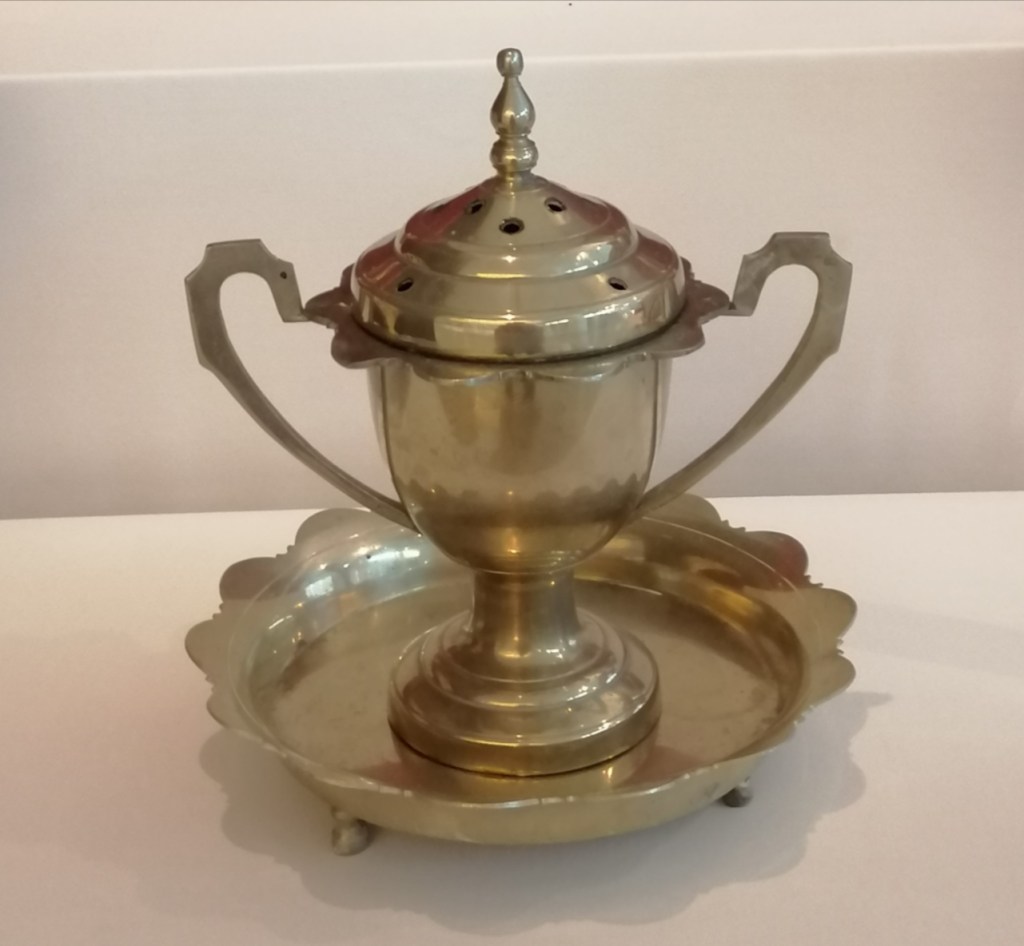
O, incense from rock and root! In the name of God and salutations to the Prophet, I sprinkle you onto the charcoal ember in the incense burner inherited from Elders. Ssseesshh! Ssseesshh! Ssseesshh! Billow across the span of humanity. Sharpen our senses, elevate our spirits, as an adornment of prayers for peace, as an accompaniment of the dead. Send blessings to the world of jinns and humans. The doors of servitude open, the purpose both are created. You are the balm for tormented souls. You welcome the mind into the realm of remembrance. Focus the soul on complete devotion to the One, the only One. Those with vague knowledge only see smoke of superstition, stupefied as rose water is sprinkled.
Ssseesshh! Ssseesshh! Ssseesshh!
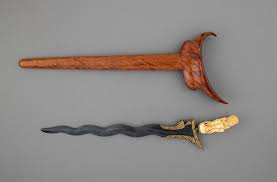
O, this servitude is indeed fragrant! O, this worship is indeed mystical and intimate to the One, the Only One. When the kris blade is smouldered by smoke, after washed with lime juice, in the name of God and salutations to the Prophet, the blade is dried and withstands rust, preserving inheritance and the calling. Culture and religion are intertwined, knowledge and understanding of the sacred realm that bless the worlds of jinns and humans. The doors of servitude open, creatures of the One, servants of the only One. O, this servitude is indeed fragrant! O, this worship is indeed mystical and intimate! Ssseesshh! Ssseesshh! Ssseesshh! Allah! Allah! Allah! My Lord!
DEBT
Hey, bestower of pleasure! Hey, the saving hand! I think I have been to hell: My soul is charred by sins, My mind is bombarded by doubt. I have rebelled against Me for fulfilling my desire. I think I have been to heaven: My soul is at peace with gratitude. My mind is still in acceptance. Everything has its place. Everything is measured. I am accepted by Me, mutual and pure. But return my will, return my future, return my entire me to the world and reality, from mere illusion, from every expectation. I want to live. I want to live. I want to live in a bit of doubt, in a pinch of rebellion, to learn by myself, to be in place and measured. Hey, bestower of pleasure! Hey, the saving hand! Let me pay my debt in feelings unsatiated.
THE MOUNTAIN God, smash the mountain in my soul. Obliterate the entire me with your Grace and Love. I could no longer bear the sufferings of alienation.
FIRASAT (Spiritual Intuition)
People nowadays do not know firasat. People nowadays do not use firasat. Purity brought down from Elders— the first intuition without veil, the stirrings and effects of unity of experience: Nature, knowledge, and actions unified, moved by the eye of the soul, nurtured by the discipline of the mind, based on strings of reiterative knowledge, demonstrated by signs from layers of Nature, validated by proofs in actions and breaths. The mind, soul, and spirit moulded in the self and surroundings. Ever since it is compartmentalised by thoughts that distinguish object from subject, dissecting issues to the atom, limiting conclusions and acceptance, denying possibilities and visions, veiling light by separation of knowledge. Is not this world a mirror? Is not this universe a sign? Is not this life a labyrinth? Is not a problem interlinked? Science, philosophy, psychology, history, and religion are only points of view that need to be reunified, that need to be rejuvenated as a whole with stirrings and effects of firasat that will pierce layers of existence, that will open secret doors of the manifest, symbolic, transcendent, and immanent worlds. Are not all that fall from the sky, grow on the surface of the earth, and return to the sky a belief in the unity of everything? So, the dust that floats in the air remembers the moment of attesting of the spirit that is gently blown at the boundaries of seven worlds. "Am I not your Lord?" The Malay testifies in firasat: "Yes, we affirm!"
Isa Kamari has written 12 novels, 3 collections of poetry, a collection of short stories, a book of essays on Singapore Malay poetry, a collection of theatre scripts and lyrics of 3 music albums, all in Malay. His novels have been translated into English, Turkish, Urdu, Arabic, Indonesian, Jawi, Russian, French, Spanish, Korean, Azerbaijan and Mandarin. Several of his essays and selected poems have been translated into English. Isa was conferred the S.E.A Write Award from Thailand (2006), the Singapore Cultural Medallion (2007), the Anugerah Tun Seri Lanang (2009) from the Singapore Malay Language Council, and the Mastera Literary Award (2018) from Brunei Darussalam.
He obtained a BArch (Hons) from the National University of Singapore in 1989, an MPhil (Malay Letters) from Universiti Kebangsaan Malaysia in 2008 and is currently pursuing a PhD programme at the Academy of Islamic Studies, Univeristi Malaya. His area of research is on the problem of alienation and the practice of firasat (spiritual intuition) in selected Singapore Malay novels.
The Lost Mantras is a collection that blends spirituality, Malay cultural heritage, and universal human experience. First published as part of Menyap Cinta (Love Greetings, 2022, Nuha Books KL), these poems are like a bridge between mysticism and everyday life, where traditional images (betel, jasmine, kris[1], oil lamps, setanjak[2]) are woven with Qur’anic echoes, prayers, and existential questioning. The collection carries a Sufi resonance—always circling back to longing, humility, surrender, and beauty as signs of God. The poems are not only lyrical but also function as cultural memory: they preserve Malay traditions, communal practices, and village life, while situating them in a cosmic framework of faith, sin, and redemption. The use of Malay customs, rituals, and objects is powerful: it asserts that spirituality is not abstract but embedded in heritage. This makes the collection uniquely Southeast Asian despite its universal in appeal.
Pondicherry must have been a dream. To co-exist in the halls of history where the French had left their mark was well within one’s capacity, but to thrive in a society where sandwiches were the norm and butter paneer the exception verged on the extraordinary. Every day in Pondicherry merited a visit to Baker Street, whose otherworldly triad of sandwich, croissant and quiche deserved an equally competent pat on the back; to not grow fat, content and happy in this town would have been doing it an injustice.
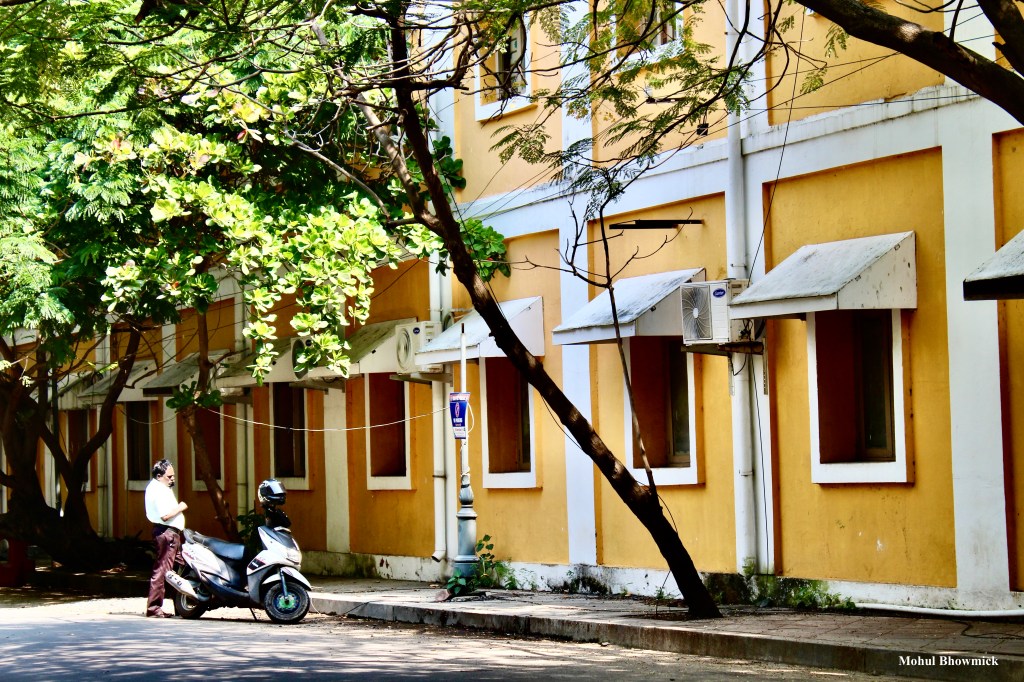
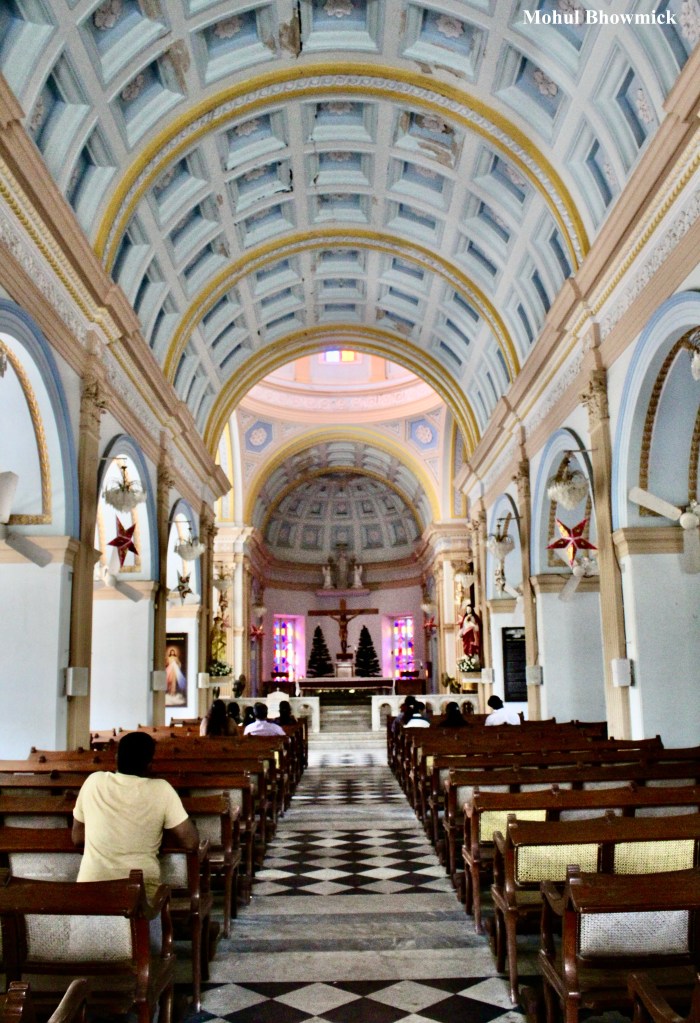
The Basilica of the Sacred Heart of Jesus, towering above the modest remains of Mahatma Gandhi Road, buffered the excesses that Our Lady of Angels (or Notre Dame des Anges – you tended to pick up lingua colonia in Pondicherry) gracefully bypassed. The ashram of the terrorist-turned-mystic Aurobindo Ghosh sat quietly on Rue Marine. To capture the whiff of spirituality by contact two lanes away on Rue de Dupleix was not to ask for much.
Yellow buildings in French Pondicherry Church of Notre Dame des Anges
The breath of fresh air that Ananda Adyar Bhavan up the same road promised but did not deliver remained just as it was when I had last come here three monsoons ago; in a stubborn reluctance to offer it anything but importune wisdom, I remembered being carried away by Alexander Dumas’ The Count of Monte Cristo (1846).Yet, it befitted the traveller to note that Rue Dumas honoured the colonialist Pierre Benoît Dumas[1], and not the man considerably greater than him. Of course, the French celebrated Dupleix[2] far more, as evidenced by a huge monument dedicated to him at the end of Goubert Avenue. To them, he was the greatest hero in a world where Napoleon was yet to be born, and where the English did not have Cromwell and the Americans had not seen Washington.
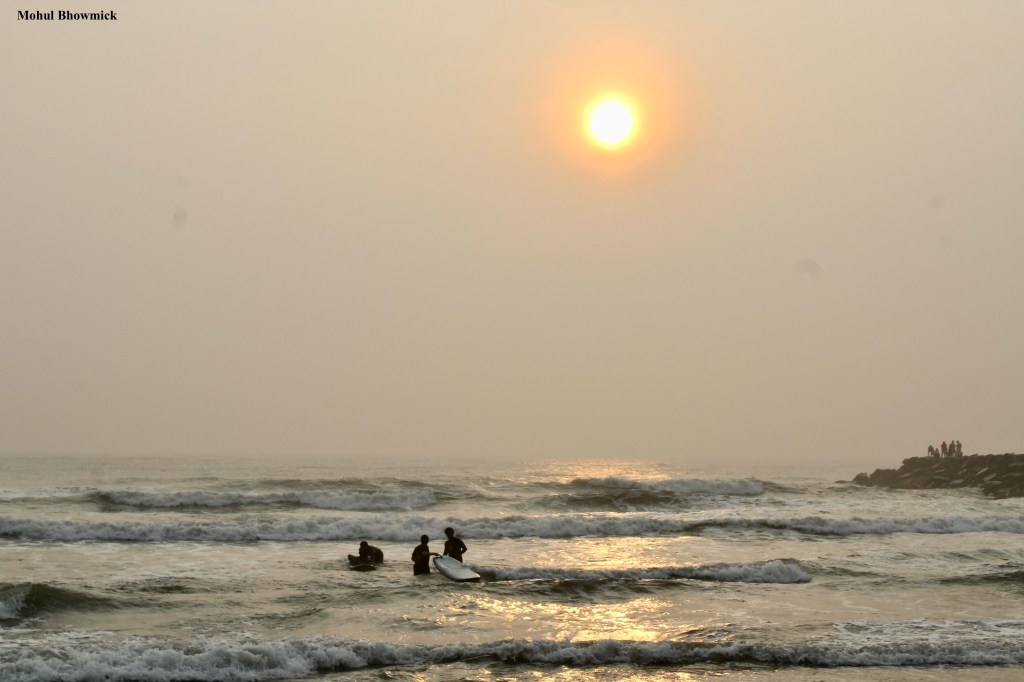
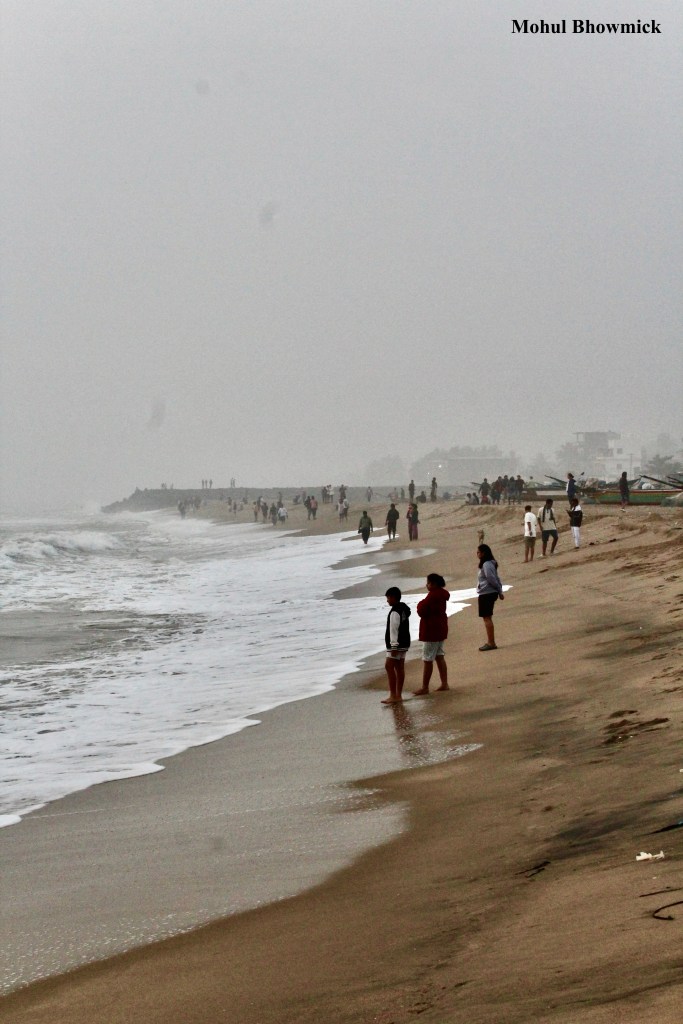
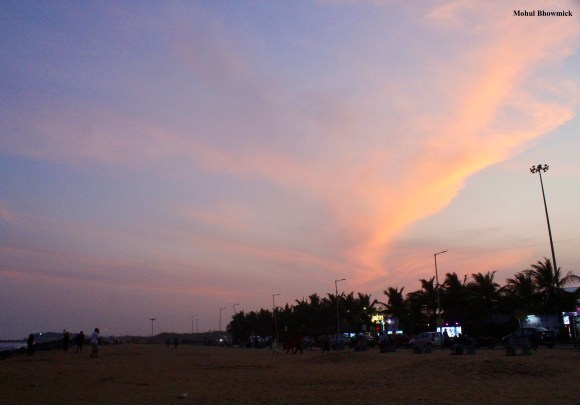
The sun bypassed the graceless winds that set up shop on the Promenade every evening; frequented far more by tourists than locals, it risked losing its sheen as something more than a weekend destination. But the coffee — of course, the coffee — whose aroma one could smell five streets away, was only a tad more appealing than the Pain au chocolat in all the bakeries of Pondicherry, upon whom entire paeans could be written.
To be carried away by such history was a must in Pondicherry; to stay sane, all one had to do was avoid mixing one’s emotions up in the Black Town, and be carried away by scarcity, poverty and destitution while crossing the canal between Netaji Salai and HM Kassim Salai. When I asked a fumbling Frenchman as to why the most significant roads of Pondicherry were named after men who vociferously advocated for self-rule, he told me that he did not know much about de Gaulle, and that his companion, a mild-complexioned young woman to whom being a liberal meant the same as being a libertine, had not read Voltaire.
“In the heart of every Frenchman, there is wine,” I said, quoting Ramanujan, who had been to Strasbourg and Marseille by road, but this only elicited the tiniest of smiles from a pockmarked student from Nantes who had read Hugo, and to whom the world was only just showing its vraies couleurs. It was all she could do not to stand in attention and belt out La Marseillaise under the mid-afternoon sun on Rue de Bussy.
[1] Pierre Benoît Dumas (1668–1745) was the French Governor General for Pondicherry
[2] Joseph Marquis Dupleix (1697-1763), Governor general of French India
Mohul Bhowmick is a national-level cricketer, sports journalist, poet, essayist and travel writer from Hyderabad, India. He has published five collections of poems and one travelogue so far. His latest book, The Past Is Another Country, came out in 2025. More of his work can be discovered on his website: www.mohulbhowmick.com.
.
PLEASE NOTE: ARTICLES CAN ONLY BE REPRODUCED IN OTHER SITES WITH DUE ACKNOWLEDGEMENT TO BORDERLESS JOURNAL
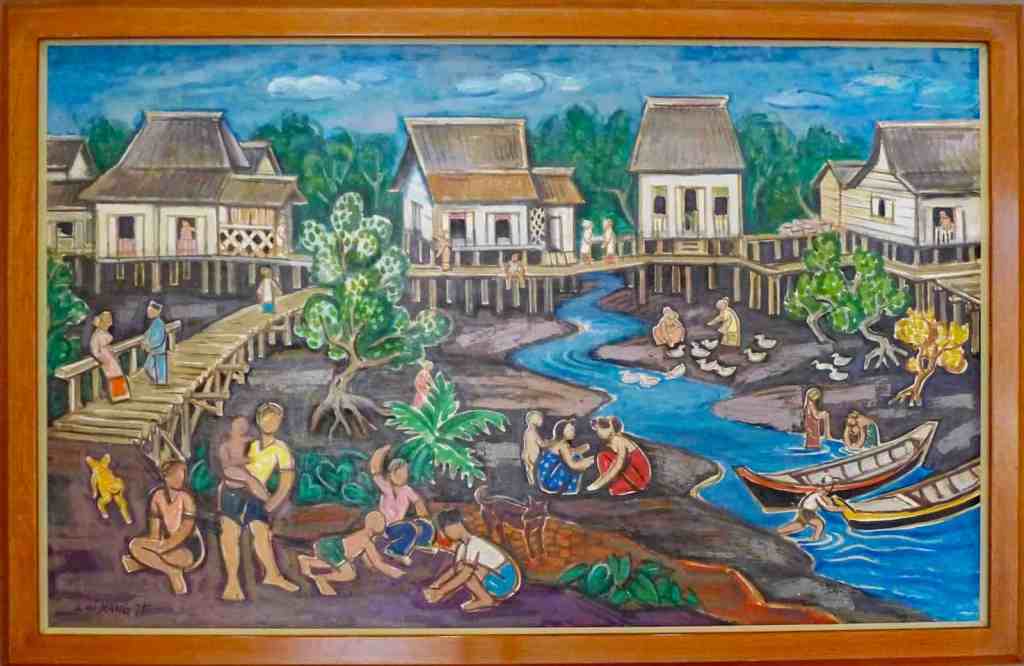
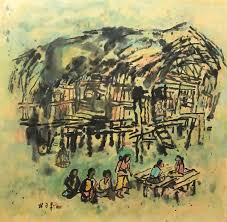
Life By the River by Liu Kang (1911-2004)Kampung Life by Lim Tze Peng (1921-2025)Depiction of Kampung or village life in Singapore more than fifty years ago. From Public Domain
THE BENCH

The melodious magpie on the bamboo twig --
the passing breeze welcomed the chirping.
Sitting on a dilapidated wooden bench,
under the thick canopy of the mango tree,
village folks rested in the shade,
calming the tremors of troubled hearts.
The hardship evident in the sighs,
still hopeful of tomorrow’s dreams,
drying the sweat of weariness.
Honest earnings chased away worries.
A pinch on the thigh, a cry of pain.
Laughter and jokes were shared merrily,
teasing the maiden sitting by the door,
smiling sheepishly, welcoming attention.
Recollecting a slice of an old tale,
fun and camaraderie were reminisced,
firm and amicable bonds were fostered.
It’s but a memory. It’s but a memory. It’s but a memory.
Now alone in a room,
gazing at the handphone screen,
chatting aimlessly in social media—
do we remember and long for the dilapidated bench,
crafting old tales, forging firm and amicable bonds?
Do we remember and pine
for the maiden sitting by the door?


CUSTOMS

Customs are not like banana fritters
coated with rice flour, dipped in hot oil,
served instantly, crispy and delicious, eaten warm,
accompanied by sips from a cup of black coffee.
Customs are like rain
that falls on the whims of the weather.
It’s always there, although infrequent,
temperamental and purposeful,
sometimes an inconvenience— plans thwarted—
but always invigorating
and instils a sense of acceptance.
If received with gratitude,
directed with perseverance,
and tempered with wisdom.
Life is beautiful with droplets of grace.
Life is fertile with the pouring of bounties.
Life is prosperous with love bestowed.
Customs make the earth supple.
Customs make the village noble.
Customs make a people well-mannered.
Once in a while,
relish a crispy banana fritter
and sip warm black coffee
while it rains cats and dogs.
Momentary disruption of plans,
the alleys and roads flooded—
moments of reflection,
moments of appreciation for the day,
is inherent in droplets of grace,
inherent in the pouring of bounties,
inherent in love bestowed.
Shifting of time and signs
the soil is tilled with purpose.
The village gathers and collectively agrees,
the people ready to realise
aspirations of good character
and respected stature.


SMOKE

Like smoke billowing amidst rubbish,
he burns his self-worth,
dances in the flames,
when the fire is meant
to warm breakfast and meals to school.
Now like smoke,
his children are floating,
begging for favours
at tips of cigarettes and cars’ exhaust pipes,
crushed by confusion in the stifling air.
Who would be hungry
if the smoke does not billow in the kitchen,
and for generations,
our humanity returns uncooked to God?


CURSE OF A WARRIOR

Hail the snake and its venom!
Call it a callous and rebellious act!
Shame be endured,
head decapitated!
Surrender not, carry the corpse!
Foolish is the mind,
desperate are the moves.
Let death fulfil the curses.
Let death be executed by the Angel.
Destroy my body, take my soul.
The wooden club hit the coffin.
Pierce my tongue and neck.
Stab my chest, guts dis-embowelled.
Blood spurts, life departs.
The warrior kisses the earth.
Blood turns into pus.
Pus turns into ambers of Hell.
Let me die so you die.
Let us die so everyone dies.
I give you my sin, my hurt, my sadness.
You’ll bathe in blood.
Isa Kamari has written 12 novels, 3 collections of poetry, a collection of short stories, a book of essays on Singapore Malay poetry, a collection of theatre scripts and lyrics of 3 music albums, all in Malay. His novels have been translated into English, Turkish, Urdu, Arabic, Indonesian, Jawi, Russian, French, Spanish, Korean, Azerbaijan and Mandarin. Several of his essays and selected poems have been translated into English. Isa was conferred the S.E.A Write Award from Thailand (2006), the Singapore Cultural Medallion (2007), the Anugerah Tun Seri Lanang (2009) from the Singapore Malay Language Council, and the Mastera Literary Award (2018) from Brunei Darussalam.
He obtained a BArch (Hons) from the National University of Singapore in 1989, an MPhil (Malay Letters) from Universiti Kebangsaan Malaysia in 2008 and is currently pursuing a PhD programme at the Academy of Islamic Studies, Univeristi Malaya. His area of research is on the problem of alienation and the practice of firasat (spiritual intuition) in selected Singapore Malay novels.
The Lost Mantras is a collection that blends spirituality, Malay cultural heritage, and universal human experience. First published as part of Menyap Cinta (Love Greetings, 2022, Nuha Books KL), these poems are like a bridge between mysticism and everyday life, where traditional images (betel, jasmine, kris[1], oil lamps, setanjak[2]) are woven with Qur’anic echoes, prayers, and existential questioning. The collection carries a Sufi resonance—always circling back to longing, humility, surrender, and beauty as signs of God. The poems are not only lyrical but also function as cultural memory: they preserve Malay traditions, communal practices, and village life, while situating them in a cosmic framework of faith, sin, and redemption. The use of Malay customs, rituals, and objects is powerful: it asserts that spirituality is not abstract but embedded in heritage. This makes the collection uniquely Southeast Asian despite its universal in appeal.
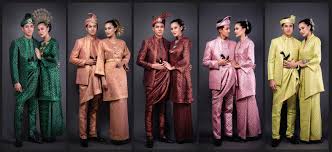
Women wearing baju kurongs and men wearing kain sampings. From Public Domain
OIL LAMPS

We did not taste chicken unless it was Hari Raya.
Mats laid on the corridor floor in front of ten doors—
the barrack houses at the end of Ramadan
decorated by oil lamps at each corner.
The gloomy village turned bright.
Each family brought out trays of varieties of dishes and cakes,
the feast welcoming Shawal.
The call of prayer from the radio,
followed by the hymns to glorify God.
Life in the village was indeed harmonious,
although sprinkled with misunderstandings,
slighted feelings throughout the year.
Exchanging delicious food,
extending congratulatory wishes,
laughter and tears flowed unimpeded.
The young proceeded to the field,
ignited the fuse of bamboo cannons
stuffed with carbide powder fodder.
The new moon was welcomed by blasts, claps, and cheers of happiness.
Flames of oil lamps swayed in the breeze,
resplendent till the morning,
before going to the mosque in groups,
wearing the baju kurung and kain samping.


THE BENCH

The melodious magpie on the bamboo twig,
the passing breeze welcomed the chirping.
Sitting on a dilapidated wooden bench,
the thick canopy of the mango tree,
village folks rested in the shade,
calming the tremors of troubled hearts.
The hardship evident in the sighs,
still hopeful of tomorrow’s dreams,
drying the sweat of weariness.
Honest earnings chased away worries.
A pinch on the thigh, a cry of pain,
laughter and jokes were shared merrily,
teasing the maiden sitting by the door,
smiling sheepishly, welcoming attention.
Recollecting a slice of an old tale,
fun and camaraderie were reminisced,
firm and amicable bonds were fostered.
It’s but a memory. It’s but a memory. It’s but a memory.
Now alone in a room,
gazing at the handphone screen,
chatting aimlessly in social media—
do we remember and long for the dilapidated bench,
crafting old tales, forging firm and amicable bonds?
Do we remember and pine
for the maiden sitting by the door?

CUSTOMS

Customs are not like banana fritters
coated with rice flour, dipped in hot oil,
served instantly, crispy and delicious, eaten warm,
accompanied by sips from a cup of black coffee.
Customs are like rain
that falls according to the weather.
It’s always there, although infrequent,
temperamental and purposeful,
sometimes an inconvenience— plans thwarted—
but always invigorating
and instils a sense of acceptance.
If received with gratitude,
directed with perseverance,
and tempered with wisdom,
life is beautiful with droplets of grace,
life is fertile with the pouring of bounties,
life is prosperous with love bestowed.
Customs make the earth supple.
Customs make the village noble.
Customs make a people well-mannered.
Once in a while,
relish a crispy banana fritter
and sip warm black coffee
while it rains cats and dogs.
Momentary disruption of plans,
the alleys and roads flooded—
a moment of reflection,
a moment of appreciation of the day,
inherent in droplets of grace,
inherent in the pouring of bounties,
inherent in love bestowed.
Shifting of time and signs
so the soil is tilled with purpose,
so the village gathers and collectively agrees,
the people ready to realise
aspirations of good character
and respected stature.

SIN

Sin is the earth,
Sin is the water,
Sin is the air,
Sin is the fire,
moved by a rebellious heart,
whispered by a vile intention.
Yes, Sin is the arrogance.
Yes, Sin is the pawn of power.
Yes, Sin is shamelessness.
Sin is a human,
who is given a will without limits,
without pity, who wants to be the reigning deity,
who wants to be the undeterred devil:
also, a human who chooses to want darkness,
wants to cheat, gorge, and be satiated:
the snake slithering in dark crevices,
the scorpion hiding in an undetected nest,
the leech waiting for prey in wetlands.
But Sin is the smelly compost that cultivates,
the cracked mirror that reflects form,
despondent valleys that look up to the summit,
tumultuous sea flowing from the openness of estuaries.
If the earth, water, air, and fire
are cleansed by seven skies, seven rivers, and seven blossoms,
moved by a modest heart,
whispered by a sincere intention,
Yes, the Sin will change to Repentance.
Yes, the Sin will change to Obedience.
The Sin will become Blissful and Fragrant.
Humanity.
Isa Kamari has written 12 novels, 3 collections of poetry, a collection of short stories, a book of essays on Singapore Malay poetry, a collection of theatre scripts and lyrics of 3 music albums, all in Malay. His novels have been translated into English, Turkish, Urdu, Arabic, Indonesian, Jawi, Russian, French, Spanish, Korean, Azerbaijan and Mandarin. Several of his essays and selected poems have been translated into English. Isa was conferred the S.E.A Write Award from Thailand (2006), the Singapore Cultural Medallion (2007), the Anugerah Tun Seri Lanang (2009) from the Singapore Malay Language Council, and the Mastera Literary Award (2018) from Brunei Darussalam.
He obtained a BArch (Hons) from the National University of Singapore in 1989, an MPhil (Malay Letters) from Universiti Kebangsaan Malaysia in 2008 and is currently pursuing a PhD programme at the Academy of Islamic Studies, Univeristi Malaya. His area of research is on the problem of alienation and the practice of firasat (spiritual intuition) in selected Singapore Malay novels.
The Lost Mantras is a collection that blends spirituality, Malay cultural heritage, and universal human experience. First published as part of Menyap Cinta (Love Greetings, 2022, Nuha Books KL), these poems are like a bridge between mysticism and everyday life, where traditional images (betel, jasmine, kris[1], oil lamps, setanjak[2]) are woven with Qur’anic echoes, prayers, and existential questioning. The collection carries a Sufi resonance—always circling back to longing, humility, surrender, and beauty as signs of God. The poems are not only lyrical but also function as cultural memory: they preserve Malay traditions, communal practices, and village life, while situating them in a cosmic framework of faith, sin, and redemption. The use of Malay customs, rituals, and objects is powerful: it asserts that spirituality is not abstract but embedded in heritage. This makes the collection uniquely Southeast Asian despite its universal in appeal.
I was in Oxford on a Charles Wallace fellowship to study John Ruskin’s influence on M K Gandhi and R N Tagore. Like any other student I lived in a hostel, walked up to the Ruskin School of Art and Ashmolean Museum, to the High Street and the flea market, to the Bodleian Library, and – of course – the book stores that continue to make that ancient city of academic excellence such a delight for a person like me who started crawling in the midst of books.
What caught my fancy on the book-lined shelves in the hometown of a ‘legal deposit’ library? The screenplays of Quentin Tarantino. Countless books on Elizabeth 1 – perhaps because Shekhar Kapur’s Elizabeth had just released worldwide. And the volumes on art. The gorgeous reproductions halved the tedium of walking miles of museums and galleries. And the history of art rekindled my love for paintings from our collective past.
But what I didn’t take kindly to was the neglect of – if not bias against — art from my homeland. There were books on Greek, Chinese, Japanese , African, Egyptian, Mayan, Roman art, on Russian Icons and Stained Glass windows, on French Impressionists and German Expressionists, Cubists and Moderns… But Indian art? For crying out loud, where was Ajanta-Ellora? The glass paintings and Miniatures? Pichwai and Patachitra, Nathdwara and Kalighat Pat, Warli and Madhubani, Santiniketan and Baroda?
That’s when I told myself, “Put the journey of Indian paintings between covers.” For, which other country has a continuity that I can boast, of a tradition that has continued unchequered for three thousand years and more?
Once I was back home, my friend Reeta Dutta Gupta approached me to edit an Encyclopedia of Culture for the India Series she was nursing. And Dr Jain of Ratna Sagar entrusted me to author a Notebook that would recount for school-going children the story of Indian art from Bhimbetka to the present millennia. What luck!
*
Be it the hunters and the hunted of Bhimbetka, the rock art now on the UNESCO list of World Heritage, or Kolam and Alpana and Rangoli, the decorative designs of Kerala and Bengal and Maharashtra. Be it the Buddha of Ajanta Frescoes or the ploughmen and blacksmith of the Haripura Congress panels painted by the Bengal master Nandalal Bose, be it the illuminations in the Jain manuscripts or the Mughal manners immortalised by the kalams: art in India has grown out of everyday life. These art expressions have been an integral part of the people’s existence, regardless of the style or the period in which they were painted. Yes, down centuries Indian art has withstood change of regiments, religions, philosophy, social content, historical setbacks. And, aesthetic excellence has found an outlet in forms and lines, strokes and colours, whether these were obtained by crushing gems or pounded rice.
This has helped India enjoy a continuity that is rare even in the developed societies. From the sketches of Bhimbetka to those of the tribal artists of Warli, from the murals of ancient India to the art of contemporary masters, from the miniaturised figures to the Tantric patterns – art in India has reinvented itself again and again. And each time it has emerged with renewed vigour and vitality. Because, every age has related to art in an intimate way. By painting on the wall. Decorating the floor. Placing it on the altar. Or simply by keeping an account of the times.
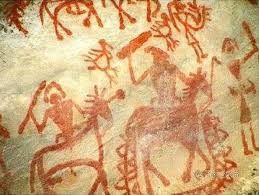
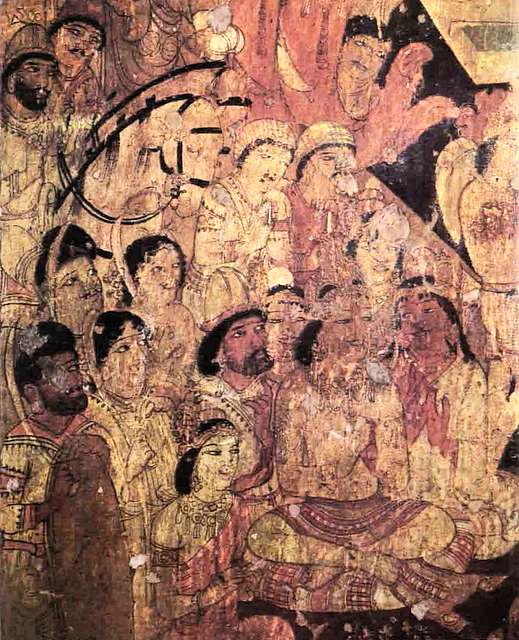
Bhimbetka Cave paintings from prehistoryA fresco from the Ajanta caves, 2nd century BCE to 6th century CEArt from Indian past. From Public Domain
As A Ramachandran – then professor of art at Jamia Millia Islamia in Delhi – had said to me, “Even when our ancient language that was deemed the language of the gods, fell into oblivion, art transcended centuries because it was communicating through a universal language – the visual language of colours and hues.” The lines defined the form, and also created a unitary area for the use of colour, he had further explained. “No matter what the subject, comprehension was never a problem for the Indian – until he was confronted by the art that was imposed by the colonialists.”
The Western overemphasis on realism played havoc, with the native sensibility that allowed for imagination and stylization, Nair Sir had pointed out. That sensibility had no problem accepting a ten-armed goddess, Dasabhuja Durga, or Dasanan, the ten-headed Ravan. “Lifestyle changes too have led to the dilution of Indian aesthetics that once enveloped our workaday lives. The only living art today is the visual art traditions in the villages, but that too might not last as villagers now want to ‘rise’ to the level of the urbans!” he had lamented.
In such a situation, art becomes doubly significant in the life of a child. When she or he is exposed to it, the child can not only access the history and the continuity of a culture but also nurture it with love that can ensure it lives in the days to come… With this in mind, I will write to focus on the high points of Indian art.
Ratnottama Sengupta, formerly Arts Editor of The Times of India, teaches mass communication and film appreciation, curates film festivals and art exhibitions, and translates and writes books. She has been a member of CBFC, served on the National Film Awards jury and has herself won a National Award.
.
PLEASE NOTE: ARTICLES CAN ONLY BE REPRODUCED IN OTHER SITES WITH DUE ACKNOWLEDGEMENT TO BORDERLESS JOURNAL
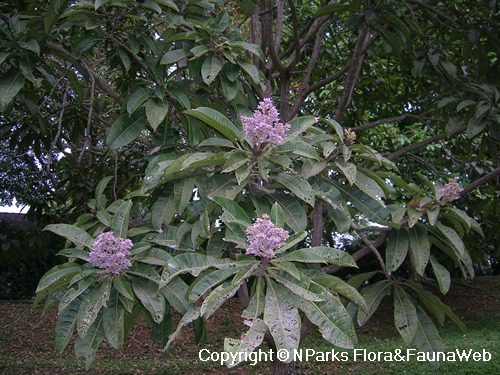
Flowers of Binjai Binja or White MangoFrom Public Domain
A SONG OF THE WIND

I surrender my body and soul
to smoke, steam, and mist,
which I gather with one last fibre of strength.
Listen to this lonesome song,
for the sun is envious of my existence.
This life yearns for separation;
frailty is only human.
Ballads after ballads you would know.
An honest young man is always chided for his age.
The unending love of parents
sometimes makes them act as dictators.
If you feel life as silkworms
dreaming of freedom,
just remember your wings have broken
the moment you willingly accept
the smoothness of silk.
If the clouds are too heavy
for the roof of your home,
call the wind, summon the earth.
Then you would taste the sweetness of charity.
But remember,
a barren land sometimes is best left barren,
for art also seeks justice.
Proclaim, but do not claim,
for your worth is still in a balance.
As life is a bountiful gift,
be discreet in giving alms,
but you must be brave to challenge,
although it means
you have to burn a piece of love letter.
For God is closer than your jugular vein.
I come to you from a dusty journey
where I gather smiles from smoke, steam, and mist.
Listen to this lonesome song for a while,
for I am envious of the ensuing dusk.

MOTHER

Oh, Allah,
I know of your Love
from the binjai which she craved for—
a slice from the only fruit plucked by a neighbour.
I know of your Mercy
from the warmth of the womb that protects a soul,
a frail presence in want of a mouthful of rice mixed
with soy sauce and fried fish,
under the thick foliage of the tree of Time,
offering shade to the unfolding age.
The moment she left to meet You,
the tree of Hope fell;
the kingdom of the Hereafter shook in my soul.
Parting will ultimately lead to meeting again.
Only to You I surrender,
begging for your love for Mother—
a straight path tracing her footsteps;
asking for your mercy for Mother—
which overrides your wrath over my life astray;
seeking your gentle affection,
as warm as Mother’s fingers.

TWEET

The chirping has escaped the cage.
The chirping is free; the trap is empty.
The chirping is returned and received.
The chirping is delirious on the rotten branch.
Your tail searches for the nest,
Your claws clench the twigs,
Your wings sift the wind,
Your beak catches the worm,
Your eyes survey the rainbow.
Hey you, the bird which has escaped!
Hey you, the bird which is free!
You bring along the cage in your flight.
The trap awaits your return.
If your tail is not guided by faith,
If your claws are not holding on to good deeds,
If your wings are not spreading grace,
If your beak is not chirping gratitude,
If your eyes are not seeking redemption—
Your song is a caged cry,
Your tweet is a prisoned anguish.
The resplendent feathers that you show off
are hiding a sadness as wide as the sky.

THE TRAIN

The door will close.
If religion is the track,
it does not determine
the path and destination for commuters.
They board and alight at different stations,
not the one, not the only one, not the same always.
Religion is like a map;
it does not make life boring,
does not block a journey,
shows the path anywhere you go,
not the one, not the only one, not the same always.
We are not carriages
that do not have choices.
Just make sure the meandering path is fun and secure,
the last stop safe and peaceful.
The door will close.
The One awaits there,
wherever it is.
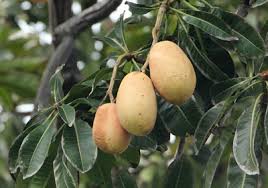
The inside of a binjai mango. From Public Domain
Isa Kamari has written 12 novels, 3 collections of poetry, a collection of short stories, a book of essays on Singapore Malay poetry, a collection of theatre scripts and lyrics of 3 music albums, all in Malay. His novels have been translated into English, Turkish, Urdu, Arabic, Indonesian, Jawi, Russian, French, Spanish, Korean, Azerbaijan and Mandarin. Several of his essays and selected poems have been translated into English. Isa was conferred the S.E.A Write Award from Thailand (2006), the Singapore Cultural Medallion (2007), the Anugerah Tun Seri Lanang (2009) from the Singapore Malay Language Council, and the Mastera Literary Award (2018) from Brunei Darussalam.
He obtained a BArch (Hons) from the National University of Singapore in 1989, an MPhil (Malay Letters) from Universiti Kebangsaan Malaysia in 2008 and is currently pursuing a PhD programme at the Academy of Islamic Studies, Univeristi Malaya. His area of research is on the problem of alienation and the practice of firasat (spiritual intuition) in selected Singapore Malay novels.
The Lost Mantras is a collection that blends spirituality, Malay cultural heritage, and universal human experience. First published as part of Menyap Cinta (Love Greetings, 2022, Nuha Books KL), these poems are like a bridge between mysticism and everyday life, where traditional images (betel, jasmine, kris[1], oil lamps, setanjak[2]) are woven with Qur’anic echoes, prayers, and existential questioning. The collection carries a Sufi resonance—always circling back to longing, humility, surrender, and beauty as signs of God. The poems are not only lyrical but also function as cultural memory: they preserve Malay traditions, communal practices, and village life, while situating them in a cosmic framework of faith, sin, and redemption. The use of Malay customs, rituals, and objects is powerful: it asserts that spirituality is not abstract but embedded in heritage. This makes the collection uniquely Southeast Asian despite its universal in appeal.
“And suddenly, among all those people I didn’t know, I had this strange feeling, this implausible realisation that I was seeing him for the first time. Handsome, confident, articulate in a language I still cannot follow with grace. And I felt this pang inside, you know, as if a naughty elf inside me were swaying my heart with a rope. How can I see my husband for the first time after having been married to him for almost eight years?”
Rosalia remained silent, observing for some speculating seconds the little square of tablet that Rita had brought for their tea.
“Your husband is exactly like this sweet, darling, which, by the way, is delicious. I need the recipe before you leave.”
“Like tablet?” Rita inclined her head to the right in the exact same way her daughter did when she heard anything worth clarification. “My grandmother Cochrane would be very honoured to know you like her Scottish tablet so much. I cannot make anybody eat it at home. Henry says it’s too sweet and Maggie too sticky.”
“Well…,” Rosalia sighed, “for me it’s perfect, and I am sure nobody in this office will say no to this morsel of Heaven. It reminds me of a dulce de leche candy my detestable mother-in-law used to make in Buenos Aires for Christmas. As you can see, even her perfect evilness was imperfect.”
Rita smiled again and rejoiced at the fact that she could come to visit her older friend at the Castelo de San Jorge with the express purpose of selfishly collecting smiles like Maggie used to collect peacock feathers in the garden before she started going to kindergarten. Rosalia’s office was a new environment for their meetings now. A step up on the podium of a friendship that had begun outside the Castelo box office under a narrow eave on a humid stone bench. Rita loved to breathe in the peace of the office, with its austere decor and dark wooden cabinets that had once cherished the delicate porcelain of Portuguese queens and now held Rosalia’s dictionaries alongside maps, brochures, and tourist forms for all those who came to witness the royal luxury of ancient times.
“So, do you mean that this feeling of seeing Henry again for the first time at the bank’s banquet is sweet like my grandmother’s tablet?”
“Not exactly. When I saw those brownish cubes on the plate, I was convinced that it would be difficult for me to bite into them. You know, my weak teeth and all that. But then I bit into one of them, and it melted on my tongue. And I felt this torrent of pleasure bursting in my mouth. I think what happened to you on Saturday is that you saw Henry like random people usually see him. You heard a far echo of the vision you had of him when you fell in love.”
Rita’s inner elf jumped from her heart to her face to make her frown and purse her lips at the same time.
“But sadly,” Rosalia continued, “you already know that what you saw is an act. The source of your confusion and your loneliness. You love a vision in a dream, a beautiful piece of candy in a perfect window shop that gets further and further away as you get closer.”
A soft knock at the door interrupted the old woman’s thought and let Rita take a sip of tea to conceal her disillusionment. Rosalia took the documents that Victor brought, turned to her side desk, and placed one of the pages in her sturdy IBM Selectric. She adjusted the corners of the paper as if she were folding a handkerchief for the ghost of one of the queens that had inhabited the Castelo centuries ago. Rosalia’s eyes were fixed on the rectangular screen of her typewriter as she turned toward Rita and pronounced in perfect French, “Trompe-l’oil…. trompe-l’oil[1] people I call them. What you see is never what you get. The man I married and later divorced, so many decades ago, was like that. Sometimes, out of the blue, I remember how elegant and self-confident he seemed to be, and still, after all this time, that elf you mentioned still plays tricks with my heart and its cords. Do you know the legend of the two Greek painters of ancient times?”
Rita looked up from her cup and raised her left red-haired eyebrow as an invitation.
“There was a competition to declare the most realistic painter in the land. Zeuxis and Parrhasius presented their art. The grapes that Zeuxis had painted were so impossibly real that birds flew into them and crushed their beaks and heads on the purple spheres. They died a cruel death, believing they were tasting the sweetest pulps and the bitterest seeds. Zeuxis, sure of his triumph, asked his opponent where his painting was. Parrhasius walked him in front of the curtain that hid his work. ‘Draw this cloth and you will see it,’ he said humbly. But Zeuxis’ eager hand trampled on the folds of a fake, perfect drapery made of shades, hues, and light. Parrhasius won not only the prize but the admiration of his enemy.”
Rita inclined her head to the left. “I’m sorry for the birds.”
“That’s why I don’t tell this story much. My granddaughter has a phobia of birds that decide to fly stubbornly in the wrong direction. I’m afraid I instilled that in her with this tale.”
Rita picked up a brown crumb from her saucer. “If only I could draw aside the curtain Henry places between himself, Maggie, and me. I’m a good wife. I don’t know what else to do.” Rita dropped the crumb and killed an imminent sob with the tip of her finger.
“You are like the candid birds, my child. You are hurt but strong. Cannot you see? You’re making sweets with the salt of tears, pure visions of love with the threads of deceit.”
Fabiana Elisa Martínez authored the collections 12 Random Words and Conquered by Fog. Other works of hers have been published in literary publications on five continents.
PLEASE NOTE: ARTICLES CAN ONLY BE REPRODUCED IN OTHER SITES WITH DUE ACKNOWLEDGEMENT TO BORDERLESS JOURNAL
Hey, the morning breaks! Hey, the faithful sun! Hey, the disappearing dew! Hey, the layered air! The breath desires, the soul asks: Who do you greet? Have you pondered, sons of Adam? Death awaits, life prolongs. Have you realised, progenies of Eve? The earth is impregnated and layered by purpose. The one that you welcome is the morning, The one that you coax is the sun, The one that you touch gently is the dew, The one that you breathe is the air. The gift of death, life fulfilled, accompanies the inevitable: morning, sun, dew, and air. A breath dissipates, a soul obliterates. Nothingness. Gone. Hey!
THE FIELD
The green grass is a mother’s heart, the velvet of love for her children. Although stepped upon by mischief and transgression, she distils dews of hope that her children would grow with the sun. The earth is the preparation of a father: soil and compost for his children where character would be rooted. Barren or fertile, he digs into his responsibility and self-worth, as long as the rain nourishes his age. Grass flowers are the children who only know the joy of the wind for as long as their dreams have not landed on earth and kissed the grass.
MOLTEN EARTH
This moment, we’re walking in the rain, accompanied by a bluish rainbow and red birds with purple blood. If they’re heading towards the dais, we have yet to embrace the longing. When the moon is in tears, it’s just ill-suited for us to sail on the orange henna sea. In truth, we verily love the eagle that flies in the desolate morning. If not for ravens like you, our forest would be infested with rabbits. Give us white wings; we want to fly with blue birds that return to reciprocate love. We want to taste milk. Is it for us only urine, the manifestation of love by dogs? Sound your prayer call in our shacks so that our tears are not just to bear the pain and bitterness of a plate of rice. If your pensiveness is just to reminisce the sufferings of night longing for day, our tears have flowed from the earth’s molten belly, which are stepped upon by saints like you and them who have cast curses upon us wretched souls.
POTPOURRI
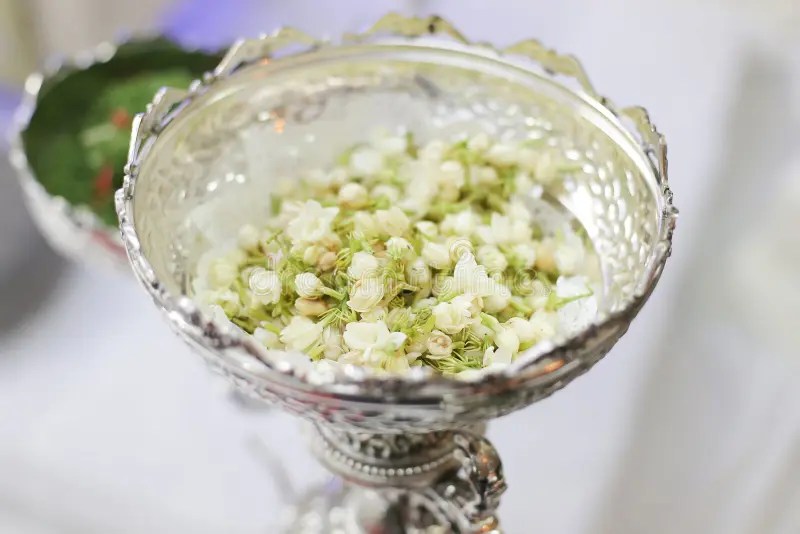
The screw pine thrives on damp soil, next to the swampy pond. It spreads its green in the wild; roots clench the earth we tread upon. The jasmine grows on the lawn, marks the boundaries of property. Sturdy branches, leaves flourish; petals open, greet the clouds. The sliced screw pine in a receptacle, the jasmine blossoms spread on the tray, perfume sprinkled to enhance the scent: the potpourri of bunga rampai welcomes guests. The ceremony officiated by the qadi, the couple duly married, customs and culture celebrated in fragrance, religious laws honoured on the dais. The shaving of the baby’s head, first steps on the soil, the coffin carried to the grave— the potpourri of bunga rampai adorns every domain, binding firmly entire life’s moments.
Bunga rampai — fresh flower potpourri used in Malay festivities and funerals. From Public Domain.
Isa Kamari has written 12 novels, 3 collections of poetry, a collection of short stories, a book of essays on Singapore Malay poetry, a collection of theatre scripts and lyrics of 3 music albums, all in Malay. His novels have been translated into English, Turkish, Urdu, Arabic, Indonesian, Jawi, Russian, French, Spanish, Korean, Azerbaijan and Mandarin. Several of his essays and selected poems have been translated into English. Isa was conferred the S.E.A Write Award from Thailand (2006), the Singapore Cultural Medallion (2007), the Anugerah Tun Seri Lanang (2009) from the Singapore Malay Language Council, and the Mastera Literary Award (2018) from Brunei Darussalam.
He obtained a BArch (Hons) from the National University of Singapore in 1989, an MPhil (Malay Letters) from Universiti Kebangsaan Malaysia in 2008 and is currently pursuing a PhD programme at the Academy of Islamic Studies, Univeristi Malaya. His area of research is on the problem of alienation and the practice of firasat (spiritual intuition) in selected Singapore Malay novels.
The Lost Mantras is a collection that blends spirituality, Malay cultural heritage, and universal human experience. First published as part of Menyap Cinta (Love Greetings, 2022, Nuha Books KL), these poems are like a bridge between mysticism and everyday life, where traditional images (betel, jasmine, kris[1], oil lamps, setanjak[2]) are woven with Qur’anic echoes, prayers, and existential questioning. The collection carries a Sufi resonance—always circling back to longing, humility, surrender, and beauty as signs of God. The poems are not only lyrical but also function as cultural memory: they preserve Malay traditions, communal practices, and village life, while situating them in a cosmic framework of faith, sin, and redemption. The use of Malay customs, rituals, and objects is powerful: it asserts that spirituality is not abstract but embedded in heritage. This makes the collection uniquely Southeast Asian despite its universal in appeal.
I bow to you, King. I bear the torment of your sadness in the embrace of my sleep. May it transform into glad tidings for the days of your people. This exploration is to find your throne, which has disappeared from our hearts. For my love to you, King.
JASMINES
Earth jasmines, sky jasmines, a string of jasmines encircles the heart, jasmines poured with water from the hills, jasmines sprinkled by a pinch of compost. Seven rivers, seven clouds— rain pelts onto forlorn petals. Beauty is in the form, beauty to the eyes, beauty is the hand that tends to the soil, beauty is the fingers that caress the leaves, beauty is the cut on the arms of the gardener. The scorching sun, the shade from the foliage, bountiful is the soul of the tree that delivers, witness to a life devoted to hard work, with the laws of nature as the axis. Strong roots clench the earth, shoots look up high to the sky. Stand firmly, the soul sings. Blossoms waft fragrant dreams. Earth jasmines, sky jasmines, bloom in the early morning. Say your prayers, introduce yourself.
BETEL LEAVES
To be at the top is to function at the bottom, upholding responsibilities and trust, strengthening shared roots. The fragile branches are free to stretch, the green leaves spread wide. Wild betel, untouched betel, covers the soil, climbs the trellis. To be at the peak in essence is to grow shoots, carrying fertile hopes and dreams, giving way and space to grow, to climb each posting energetically, to qualify for the position when seasons change. Lofty betels, heavenly betels, reach for the stars, greet the clouds. To be in the ceremonial receptacle in essence is to uphold tradition, surrendering to the preservation of culture. Typically chewed with lime, slicing problems, mature-red in speech, tracing the lives of roots and shoots. Wild betel, untouched betel, lofty betel, heavenly betel, courtship betel, customary betel, weaving values and the essence of leadership entrenched in tradition.
HOME
Free souls wouldn’t be easily bored by mentoring and demands, for it’s the stable self that gives rise to liberation. And that’s called freedom — it isn't about release without aims, just like city folks, released from home or work, wander aimlessly at shopping malls, seek excitement from novelty and transience. It isn't that Life doesn’t require variety, or it isn't that the soul doesn’t long for fun. It’s just that we who claim to be free are easily entrapped in useless pettiness that we spread in the city without ever realising that we haven’t returned to the doors of our hearts, although we’ve stepped afoot onto the compound of the house.
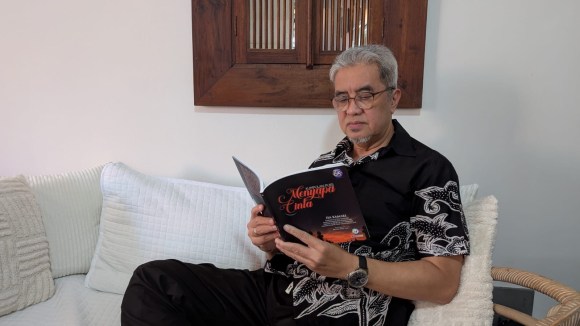
Isa Kamari : A foremost Malay writer from Singapore: Photo provided by the poet.
Isa Kamari has written 12 novels, 3 collections of poetry, a collection of short stories, a book of essays on Singapore Malay poetry, a collection of theatre scripts and lyrics of 3 music albums, all in Malay. His novels have been translated into English, Turkish, Urdu, Arabic, Indonesian, Jawi, Russian, French, Spanish, Korean, Azerbaijan and Mandarin. Several of his essays and selected poems have been translated into English. Isa was conferred the S.E.A Write Award from Thailand (2006), the Singapore Cultural Medallion (2007), the Anugerah Tun Seri Lanang (2009) from the Singapore Malay Language Council, and the Mastera Literary Award (2018) from Brunei Darussalam.
He obtained a BArch (Hons) from the National University of Singapore in 1989, an MPhil (Malay Letters) from Universiti Kebangsaan Malaysia in 2008 and is currently pursuing a PhD programme at the Academy of Islamic Studies, Univeristi Malaya. His area of research is on the problem of alienation and the practice of firasat (spiritual intuition) in selected Singapore Malay novels.
The Lost Mantras is a collection that blends spirituality, Malay cultural heritage, and universal human experience. First published as part of Menyap Cinta (Love Greetings, 2022, Nuha Books KL), these poems are like a bridge between mysticism and everyday life, where traditional images (betel, jasmine, kris[1], oil lamps, setanjak[2]) are woven with Qur’anic echoes, prayers, and existential questioning. The collection carries a Sufi resonance—always circling back to longing, humility, surrender, and beauty as signs of God. The poems are not only lyrical but also function as cultural memory: they preserve Malay traditions, communal practices, and village life, while situating them in a cosmic framework of faith, sin, and redemption. The use of Malay customs, rituals, and objects is powerful: it asserts that spirituality is not abstract but embedded in heritage. This makes the collection uniquely Southeast Asian while still universal in appeal
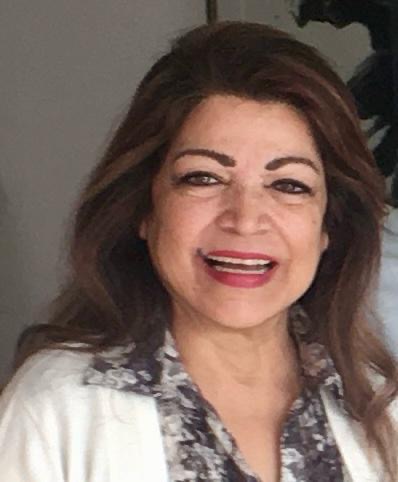
Neeman Sobhan, born in the West Pakistan of Pre-1971, continues a citizen of both her cultural home, Bangladesh, and her adopted home, Italy. Her journey took her to US for five years but the majority of times she has lived in Italy – from 1978. What does that make her?
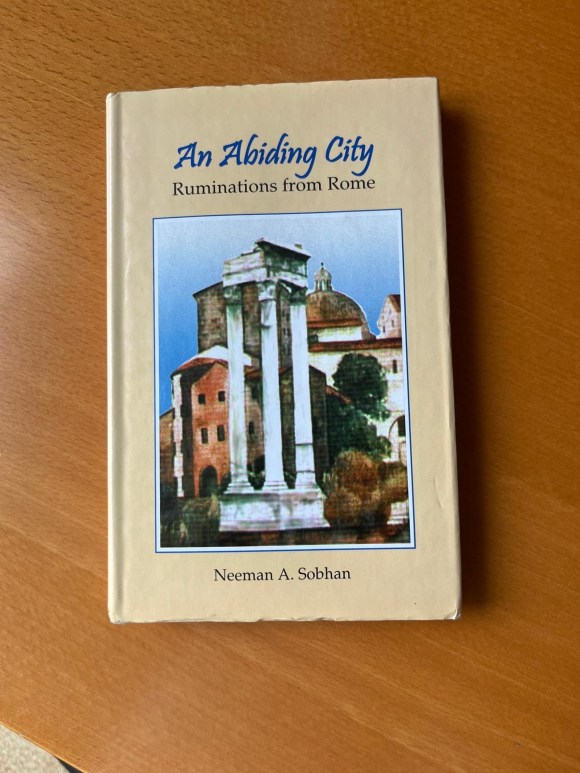
She writes of her compatriots by culture – Bangladeshis — but living often in foreign locales. Her non-fiction, An Abiding City, gives us glimpses of Rome. These musings were written for Daily Star and then made into a book in 2002. Her short stories talk often of the conflicting cultures and the commonality of human emotions that stretch across borders. And yet after living in Rome for 47 years – the longest she has lived in any country – her dilemma as she tells us in this interview – is that she doesn’t know where she belongs, though her heart tugs her towards Bangladesh as she grows older. In this candid interview, Neeman Sobhan shares her life, her dreams and her aspirations.
Where were you born? And where did you grow up?
I was born in Pakistan, rather in the undivided Pakistan of pre-1971: the strange land we had inherited from our grandparents’ and parents’ generation when British colonial India was partitioned in 1947 down the Radcliffe line, creating an entity of two wings positioned a thousand miles apart on either side of India! The eastern wing, or East Pakistan was formerly East Bengal, and my cultural roots are in this part of the region because I come from a Bengali Muslim family. But I was born not there but in West Pakistan, which is culturally and linguistically distinct from Bengal, comprising the regions of Western Punjab, Sindh, Baluchistan and the NWFP (North-West Frontier Provinces, bordering Afghanistan), where the official language is Urdu.
So, my birthplace was the cantonment town of Bannu in the NWFP, (now KPK or Khyber Pakhtunkhwa).
Perhaps my life as the eternal migrant, living outside expected geographical boundaries started right there, at birth.
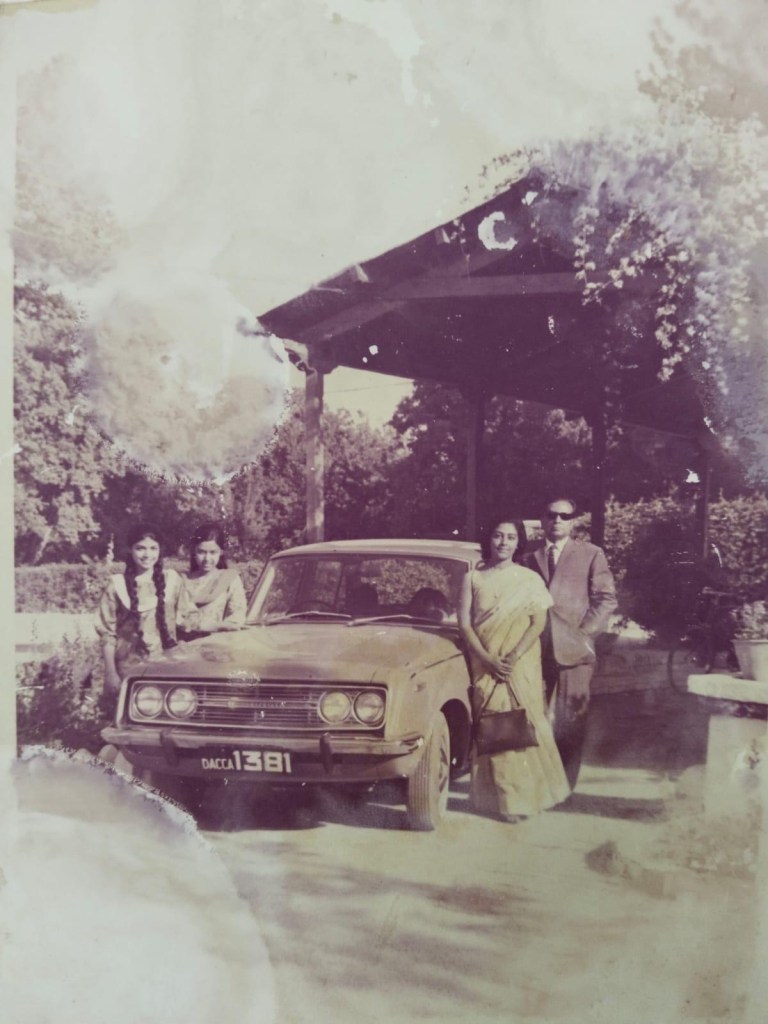
My father’s government job meant being posted in both wings of Pakistan. So, I grew up all over West Pakistan, and in Dhaka, whenever he was posted back to East Pakistan. Much of my childhood and girlhood were spent in Karachi (Sindh), Multan and Kharian (Punjab) and Quetta (Balochistan).
How many years did you spend in Pakistan?
The total number of years I spent in undivided Pakistan (West Pakistan, now Pakistan, and East Pakistan, now Bangladesh) is about two decades, or one year short of twenty years. From my birth in 1954, my growing years, till I left the newly independent Bangladesh in 1973 when I got married and came to the US at the age of nineteen.
What are your memories about your childhood in West Pakistan? I have read your piece where you mention your interactions with fruit pickers in Quetta. Tell us some more about your childhood back there.
I have wonderful memories of growing up in West Pakistan, in Karachi, Multan and Kharian of the late 50’s and early 60’s (despite the era of Martial Law under Field Marshall Ayub Khan, and later his military-controlled civilian government). However, the political environment is invisible and irrelevant to a child’s memories that center around family, school and playmates, till he reaches the teen years and becomes aware of the world of adults. Since, my father’ job entailed us going back and forth between West and East Pakistan, by the time we arrived in Quetta in late 1967, it ended up being my father’s last posting, because by then Ayub Khan’s regime was tottering under protests in both wings of Pakistan; and by the time (I should say in the nick of time) we left for Dhaka, it was already the turbulent year of 1970, which turned Pakistan upside down with General Yahya Khan becoming the new Marshall Law administrator. When we returned to Dhaka, it was the beginning of the end for Pakistan, with preparations for the first democratic general elections, and the blood soaked nine months war of independence for Bangladesh about to be staged.
But as a child, growing up in a Pakistan that was till then my own country, what remains in my treasure trove of memories are only the joys of everyday life, and the friendships (with those whom I never saw again, except one school friend from Quetta with whom I reunited in our middle age in Toronto, Canada!)
Also precious are the road trips with my five siblings and our adventurous mother, as we always accompanied our father on his official tours, across the length and breadth of West Pakistan.
But if I start to recount all my precious memories, I will need to write a thick memoir. And that is exactly what I have been doing over the years: jotting down my recollections of my past in Pakistan, for my book, a novel that is a cross between fact and fiction. The happy parts are all true, but the sad ones relating to the war that my generation underwent in 1971 as teenagers is best dealt with from the distance of fiction.
What I can offer is a kaleidoscopic view of some random memories: the red colonial brick residence of my family in the 60’s in Multan, one of the hottest cities of Punjab, known for its aandhi — dust storms — that would suddenly blow into the courtyard of the inner garden in the middle of the night as my sister and I slept on charpoys laid out in the cool lawn under a starlit sky, and being bundled up in our parents’ arms and rushed indoors; tasting the sweetest plums left to chill in bowls of ice; being cycled to school by the turbaned chowkidar weaving us through colourful bazars to the Parsi run ‘Madam Chahla’s Kindergarten School’ or on horse drawn tanga (carriages); learning to write Urdu calligraphic letters on the wooden takhta (board) with weed Qalam(pens) and a freshly mixed ink from dawaat (ink pots); and to balance this, my mother helping us to write letters in Bengali to grandparents back in East Pakistan on sky-blue letter pads, our tongues lolling as pencils tried to control the Brahmic alphabet-spiders from escaping the page.
In Karachi, returning home on foot from school with friends under a darkening sky that turned out to be swarms of locusts. Learning later that these grain eating insects were harmful only to crops not humans (and Sindhis actually eat them like fried chicken wings) does not take away the thrill of our adventure filled with exaggerated, bloodcurdling shrieks to vie with the screen victims of Hitchcock’s The Birds, viewed later as adults in some US campus. Picnics and camel rides on the seabeaches of Clifton, Sandspit, or Paradise Point. Near our home, standing along Drigh Road (the colonial name later changed to Shahrah-e-Faisal after King Faisal of Arabia, I later heard) waving at the motorcade of Queen Elizabeth II passing by with Ayub Khan beside her in a convertible with its roof down. That was in the 60’s. Later in 1970, embarking with my family on the elegant HMV Shams passenger ship at Karachi port for our memorable week long journey back to Dhaka across the Arabian Sea and the Indian Ocean, with a port of call at Colombo in what was still Ceylon, to disembark at Chittagong port, not knowing then that we were waving goodbye not just to the Karachi of our childhood but a part of our own country that would soon become the ‘enemy’ through its marauding army.
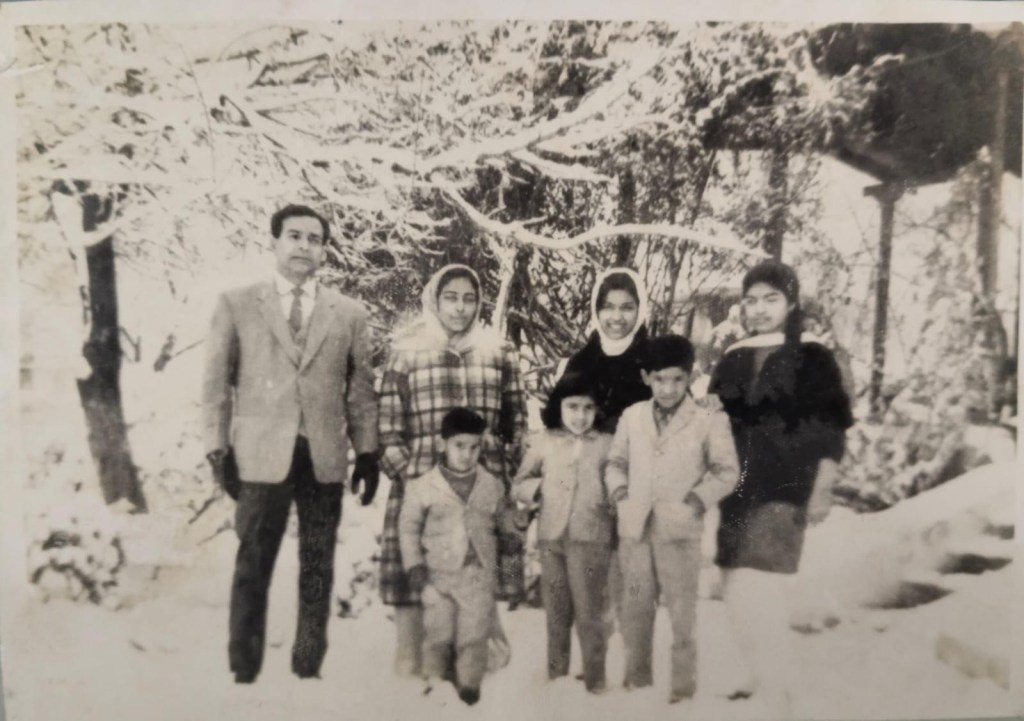
But I reset my memories and bring back the beauty and innocence of childhood with images of my family’s first sight of snowfall in Quetta, the garden silently filling with pristine layers of snowflakes piling into a cloudy kingdom under the freshly tufted pine trees, as we sipped hot sweet ‘kahwa’ tea, and cracked piles of the best chilgoza pine-nuts and dried fruits from Kabul. And since Quetta was our last home in Pakistan, I leave my reminiscences here.
In Front of their home With full family in the snow In Quetta: Photos provided by Neeman Sobhan
There are so many ways to enter the past. Photographs in albums discolor after a time, but words keep our lived lives protected and intact to be accessible to the next generation. I hope my novel-memoir will provide this.
How many countries have you lived in? Where do you feel you belong — Bangladesh, Pakistan, US or Italy — since you have lived in all four countries? Do you see yourself a migrant to one country or do you see yourself torn between many?
I have indeed lived in four countries, for varying lengths of time. In the sense of belonging, each country and stage of my life has left its unique impact. But I have still not figured out where I belong.
Although I lived in Pakistan and Bangladesh from birth till I was nineteen, these were the formative years of my life, and I feel they have coloured who I am fundamentally. The culture and languages of the subcontinent is fundamental to me as a human being. Also, having shared my parent’s experience of being almost foreigners and expats in their own country, trying to speak Urdu to create a Bengali lifestyle at home in a culturally diverse world of Punjabis, Sindhis, Baluchis or Pathans, I know it made them (and us as a family), different from our compatriots in East Pakistan who never left their region and had only superficial understanding of the West Pakistanis. My introduction to a migrant’s life and its homesickness started there, observing my parents’ life.
When I moved to the US after my marriage in 1973, it was to follow my husband Iqbal, to the Washington-Maryland area, where he had moved earlier as a PhD student after giving up, in 1971, his position in the Pakistani central government where he was an officer of the CSP (Civil Service of Pakistan) cadre. These were the days of being newly married and setting up our first home, albeit in a tiny student’s apartment, because more than as a home maker, I spent 5 years attending the University of Maryland as an undergraduate and then a graduate student. We thought our future might be here in the US, he working as an economist for a UN agency, and I teaching at a university. A classic version of the upwardly mobile American immigrant life.
But before we settled down, we decided to pursue a short adventure, and Iqbal and I came to Italy in 1978, from the US, on a short-term assignment with FAO, a Rome based agency of the UN. The mutual decision was to move here, temporarily! We would keep our options open for returning to the US if we did not like our life in Italy.
Well, that never happened! And given the fact that since then, we have spent the last 47 years in Italy, the Italian phase of my life is the longest period I have ever spent in any country in the last 71 years!
Meanwhile, we slowly disengaged ourselves from the US and it was clear that if we had to choose between two countries as our final homes, it would be between Bangladesh, our original home country, and Italy our adopted home.
Still, living away from ones’ original land, whether as an expatriate or an immigrant, is never easy. Immigrants from the subcontinent to anglophone countries like the US, UK, Canada, Australia etc, do not face the hurdles that migrants to Italy do in mastering the Italian language. I am still constantly trying to improve my language skills. Plus, there is the daily struggle to create a new identity of cultural fusion within the dominant and pervasive culture of a foreign land
So, in all these years, though I love Italy and my Roman home, I do not feel completely Italian even if my lifestyle incorporates much of the Italian way of life. For example, after a week of eating too much pasta and Mediterranean cuisine my husband and I yearn for and indulge in our Bengali comfort food. Although I enjoy the freedom and casual elegance of Italian clothes, I look forward to occasions to drape a sari, feeling my personality transform subtly, softly.
Yet, I cannot conceive of choosing one lifestyle over the other. The liberty to veer between different ways to live one’s life is the gift of living between two or more worlds.
The only incurable malaise, though, is the chronic nostalgia, especially during festivals and special occasions. For example, when Eid falls on a weekday, and one has to organise the celebration a few days later over a weekend, it takes away the spontaneous joy of connecting with one’s community, forcing one instead to spend the actual day as if it were an ordinary one. I miss breaking my fasts during the month of Ramadan with friends and family over the elaborate Iftar parties with special food back in Dhaka or celebrating Pohela Boishakh (Bengali new year) or Ekushey February (21st February, mother language day) in an Italian world that carries on with its everyday business, unaware of your homesickness for your Bengali world. Over the years, when my sons were in school, I made extra efforts for. But you know you cannot celebrate in authentic ways.
Of course, these are minor matters. And I am aware that by virtue of the fact that I have dual nationality (I’m both an Italian citizen, and a Bangladeshi), I cannot consider myself a true and brave immigrant — someone who leaves his familiar world and migrates to another land because he has no other options nor the means to return; rather, I feel lucky to be an ex-patriate and a circumstantial migrant — someone who chooses to make a foreign country her home, with the luxury of being able to revisit her original land, and, perhaps, move back one day.
Meanwhile, I feel equally at home in Italy and in Bangladesh because we are lucky to be able to make annual trips to Dhaka in winter.
Whether I am considered by others to be an Italo-Bangladeshi or a Bangladeshi-Italian, I consider myself to be a writer without borders, a global citizen. I feel, I belong everywhere. My home is wherever I am, wherever my husband and my family are. My roots are not in any soil, but in relationships.
I often quote a line by the Mexican poet Octavio Paz. “Words became my dwelling place.” It resonates with me because for me often, it is neither a tract of land, nor even people, but language, literature and my own writings that are my true sanctuary, my homeland. I feel blessed to have the gift of expressing myself in words and shaping my world through language. My home is etched on the written or printed page. My books are my country. It’s a safe world without borders and limits.
Maybe it’s the conceit of a writer and a migrant, nomadic soul, but I think our inner worlds are more substantial than our external ones.
When I read your writing, I find a world where differences do not seem to exist among people in terms of nationality, economic classes, race or religion. Is it not far removed from the realities of the world we see around us? How do you reconcile the different worlds?
I believe and trust in our common humanity, not the narrowness of nationality, race or religion. Nationality particularly is limiting, dependent on land, and boundaries that can shift due to physical or political exigencies. Nationality by conferring membership also necessarily excludes on the basis of manmade criteria, while humanity is boundless, all encompassing, and inclusive, based on shared natural, biological, and spiritual traits.
In my case, I consider the whole world my family. I say this not just as idealistic hyperbole and wishful thinking, but from the fact that I have a multi-cultural, multi-racial family. Only my husband and I are a homogenous unit being Bengali Muslims by origin, but both my sons are married outside our culture, race and religion. One of my daughters in law is Chinese, the other has an English-French father and a Thai mother. So, through my grandchildren, who are a veritable cocktail, yet my flesh and blood, I am related to so many races. How can I bear malice to any people on the globe? The whole world is my tribe, my backyard, where we share festivals and food and rituals and languages. We celebrate unity in diversity.
Kindness and caring for others are values I hold dear in myself and others. I believe in sharing my good fortune with others, and in peaceful co-existence with my neighbours, wherever I live. I believe in living with responsibility as a good citizen wherever I find myself. And so far, the world that I see around me, perhaps narrow, is peopled with those who invariably reflect my own sense of fraternity. Maybe I am foolish, but I believe in the essential goodness of humanity, and I have rarely been disappointed. Of course, there are exceptions and negative encounters, but then something else happens that restores ones faith.
Love is more powerful than hate and generates goodness and cooperation. Change can happen at the micro level if more people spread awareness where needed. Peace can snowball and conquer violence. The human will is a potent spiritual tool. As is the power of the word, of language.
Literature is about connections, communications, bridges. It can bring the experiences and worlds of others from the margins of silence and unspoken, unexpressed thoughts and emotions into the centre of our attention. It brings people who live in the periphery within our compassionate gaze. Language is one of the most effective tools for healing and building trust. Responsible writers can persuasively break down barriers and make the world a safe home and haven for everyone, every creature.
You have a book of essays on Rome, short stories and poems set in Rome. Yet you call yourself a Bangladeshi writer. You have in my perception written more of Rome than Bangladesh. So which place moves your muse?
Any place on God’s beautiful earth can move my muse. Still, the perception is not completely accurate that I have written more of Rome than Bangladesh. It is true that many of my columns, short fiction or poems are set in Rome, but they are not necessarily just about Italy and Italians. In fact, my columns and poems were written from the perspective of a global citizen, who celebrates whichever place she finds herself in.
Poetry, in any case, is never just about any place or thing, but a point of departure. It always goes beyond the visual and the immediate and transcends the particular to the philosophical. The sight of a Roman ruin may jumpstart the poem, but what lifts it into the stratosphere of meaningful poetry is the universal, the human. For example, even when my poem speaks of a certain balcony in Verona, the protagonist is not a girl called Juliet but the innocence of first love, in any city, in any era.
My book of short stories, even when located in Rome, actually concern characters that are mostly Bangladeshi. In fact, it is my fiction that makes me a Bangladeshi writer, because my stories are ways for me to preserve my memories of the Bengali world of my past and an ephemeral present. I write to root myself. I often feel that I should write more about the new Italians, the Bangladeshi immigrants generation, rather than the expats of my generation, but my writing stubbornly follows its own compass.
Regarding my book of essays, my original columns for the Daily Star were written about many other cities I travelled to, including Dhaka and places in Bangladesh, and encounters with people in various countries not just Italy. Constrained to select columns from two decades of weekly writing, for a slim volume to be published, I narrowed the field of topics to Italy and Rome. But I had many essays and travel pieces concerning China, Russia, Vietnam, Egypt, Brazil, Spain, Netherlands and many other European cities and Asian capitals. In the end, a handful of columns about Italy became my book An Abiding City: Ruminations from Rome.
However, in the preface I said: “I must remind that the scope of the book, as suggested in the title, is ‘Ruminations FROM Rome’ not ‘Ruminations ON Rome’ with a tacit emphasis on ‘from’ because the writing relates to matters not just concerning ROME but also encompasses reflections of a more general kind. This is a collection of writings from a columnist who, within her journey through the Eternal City, also attempts to share with her readers her passage through life. I wish my fellow travellers a smoothsojourn into my abiding city, the one WITHIN and WITHOUT.”
I know that had I not lived in Rome but, say, Timbuctoo, I would find something to inspire me to write about. Of course, I am privileged to have lived in Rome and Italy, but nature is beautiful everywhere, in its own way, and there are other civilisations with rich cultures, histories, arts, cuisines, poetry and philosophy that can inspire the sensitive observer and writer.
My elder son lives in Jakarta, my younger son in Bangkok and in all the years of visiting them, I am blown away by the culture and beauty of the Indonesian and Thai worlds, and I have a notebook full of unwritten essays. And there is still so much of the world I have not seen, yet every part of this wondrous earth including my backyard is a chapter in the book of human knowledge. So, had I never left Bangladesh I would still have written. Perhaps “Doodlings from Dhaka!”
What inspires you to write?
Many things. A face at a window, a whiff of a familiar perfume, an overheard conversation, a memory, a sublime view…. anything can set the creative machine running. Plus, if I’m angry or sad or joyous or confused, I write. It could become a poem, fiction, or a column.
The writer in me is my inner twin that defines my essential self. I am a contented wife of 52 years of marriage, a mother of two sons, and a grandmother of four grandsons (aged 8-7-6-5). These roles give me joy and help me grow as a human being. But my writer-self continues on its solitary journey of self-actualisation.
Yet, I write not just for myself, I write to communicate with others. I write to transmit the nuances of my Bengali culture and its complex history to my non-Bengali and foreign readers and students, but more importantly to my own sons, born and brought up in Italy, and my grandchildren, whose mothers (my daughters-in-law) are from multi-cultural backgrounds, one a Chinese, and the other a combination of English, French and Thai. I write also for the younger generation of Bengalis, born or raised abroad, who understand and even speak Bangla, but often cannot read the language, yet are curious about their parents’ world and their own cultural heritage.
What started you on your writerly journey? When did you start writing?
I have always written. As an adolescent, I wrote mostly poetry, and also kept a journal, which I enjoyed reading later. It created out of my own life a story, in which I was a character enacting my every day. It clarified my life for me. Interpreted my emotions, explained my fears and joys, reinforced my hopes and desires. Writing about myself helped me grow.
My columnist avatar is connected to this kind of self-referral writing, but in real life it emerged by accident when I was invited to write by the editor of the Daily Star. The act of producing a weekly column was a learning experience, teaching me creative discipline and the ability to marshal my life experiences for an audience. I learnt to sift the relevant from the irrelevant and to edit reality. What better training for fiction writing? For almost two decades my experience as a columnist was invaluable to my writer’s identity.
Soon I concentrated on fiction, especially short stories that were published in various anthologies edited by others in Bangladesh, Pakistan and India. I now realised that while column writing was about my life in the present tense and about the daily world around me, my fiction could finally involve the past. The result was my collection of short stories: Piazza Bangladesh.
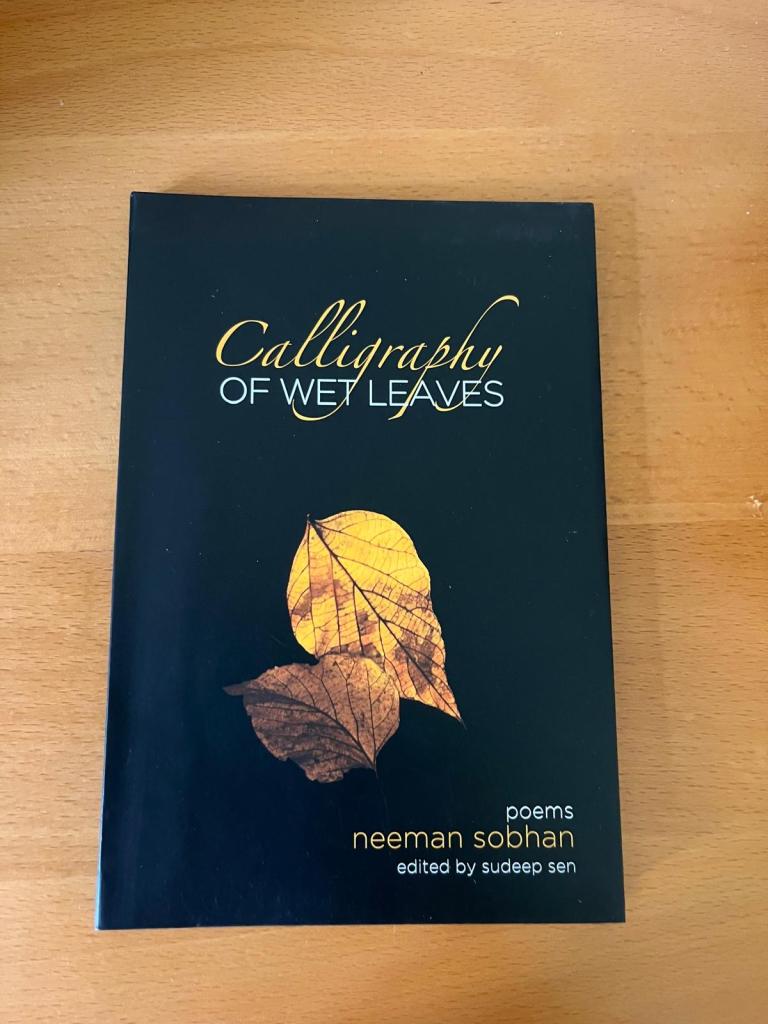
Ironically, it was my book of poems, Calligraphy of Wet Leaves that was the last to be published.
Your short stories were recently translated to Italian. Have you found acceptance in Rome as a writer? Or do you have a stronger reader base in Bangladesh? Please elaborate.
Without a doubt, as an anglophone writer, my reader base is better not just in Bangladesh, but wherever there is an English readership. However, books today are sold not in bookshops but online, so these days readers live not in particular cities or countries but in cyberspace.
But living in Italy as a writer of English has not been easy. The problem in Italy is that English is still a foreign and not a global language, so very few people read books in the original English. Every important or best-selling writer is read in translation. This is unlike the Indian subcontinent where most educated people, apart from reading in their mother tongues, read books, magazines and newspapers in English as well.
This is why I was thrilled to finally have at least one of my books translated into Italian, and published by the well-known publishing house, Armando Curcio, who have made my book available at all the important Italian bookstore chains, like Mondadori or Feltrinelli. Also, through reviews and social media promotion by agents and friends, and exposure through book events and literary festivals in Rome, including a well-known book festival in Lucca, it has gained a fair readership.
That’s all I wish for all my books, for all my writing, that they be read. For me, writing or being published is not about earning money or fame but about reaching readers. In that sense, I am so happy that now finally, most of my Italian friends and colleagues understand this important aspect of my life.
You were teaching too in Rome? Tell us a bit about your experience. Have you taught elsewhere. Are the cultures similar or different in the academic circles of different countries?
I taught Bengali and English for almost a decade at the Institute of Oriental Studies of the University of Rome, La Sapienza., till I retired, and it was an enriching experience.
I studied for a year at the University of Dhaka before I got married and came to the US in 1973, where I continued my studies at the University of Maryland, earning my B.A in Comparative Literature and M.A in English Literature. I mention this because these experiences gave me the basis to compare the academic cultures in the Bangladeshi, American and Italian contexts.
I discovered more in common between the Bangladeshi and Italian academic worlds, especially regarding the deferential attitudes of students towards their teachers. In Italy, a teacher is always an object of reverence. In contrast, I recall my shock at the casual relationships in the American context, with students smoking in front of their teachers, or stretching their leg over the desk, shoes facing the professor. Of course, there was positivity in the informality and camaraderie too, between student and teacher. But with our eastern upbringing we cannot disregard our traditional veneration of the Guru and Master by the pupil.
In Italy it was rewarding for me to have received respect as a ‘Professoressa’ while teaching, and even now whenever I meet my old students. However, some of the negative aspects of the academic world in Italy linked to the political policies that affect the way old institutions are run, cause students to take longer to graduate than at universities in the UK or US for example.
Are you planning more books? What’s on the card next?
I have a novel in the pipeline, a fusion of fiction and memoir, that has been in gestation for more than a decade. Provisionally titled ‘The Hidden Names of Things’, it’s about Bangladesh, an interweaving of personal and national history. It’s almost done, and I hope to be looking for a publisher for it soon. Perhaps, it has taken so long to write it because over the years while the human story did not change much, the political history of the country, which is still evolving through political crises kept shifting its goal posts, impacting the plot.
Most of my writings illustrate, consciously or inadvertently, my belief that as against political history our shared humanity provides the most satisfying themes for literature.
To share my stories with a readership beyond the anglophone one, my collection of stories ‘Piazza Bangladesh’ was translated into Italian and published recently in Italy, as ‘Cuore a Metà’ (A Heart in Half) which underlines the dilemma of modern-day global citizens pulled between two worlds, or multiple homes.
Meanwhile, my short stories, poems and columns will be translated into Bengali to be published in Dhaka, hopefully, in time for the famous book fair in February, Ekushey Boimela. Then my journey as an itinerant Italian-Bangladeshi writer will come full circle and return home.





 Borderless