A nonchalant mist settles calmly Over the pensive trees. Dull and scarred leaves spread below in thick scatters Like languishing memories…
A decaying door at an obscure bend From the ruins of Time Raises its grey, obstinate head. What lay behind that discreet door Did I ever want to know? A wonderland of many rainbows Or a sick valley of snow? Had I cared to see if there lay behind that door A terrain of spring delight Or a tunnel of an endless night, To see if the warm moment of love Was gained or lost? I clung instead to a world Full of winter and frost.
The door, desiccated in time Stands locked there still May be if I had tried but a little And stepped beyond, I might have entered a rose garden But I was never that discreet.
Dr.Snehaprava Das, is a noted writer and a translator from Bhubaneswar, Odisha. She has five books of poems, three of stories and thirteen collections of translated texts (from Odia to English), to her credit.
PLEASE NOTE: ARTICLES CAN ONLY BE REPRODUCED IN OTHER SITES WITH DUE ACKNOWLEDGEMENT TO BORDERLESS JOURNAL
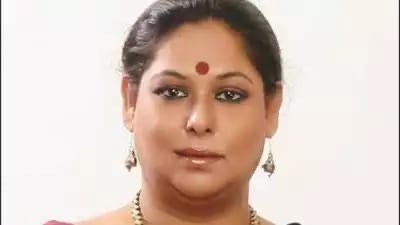
Poulami Bose Chatterjee converses with Ratnottama Sengupta
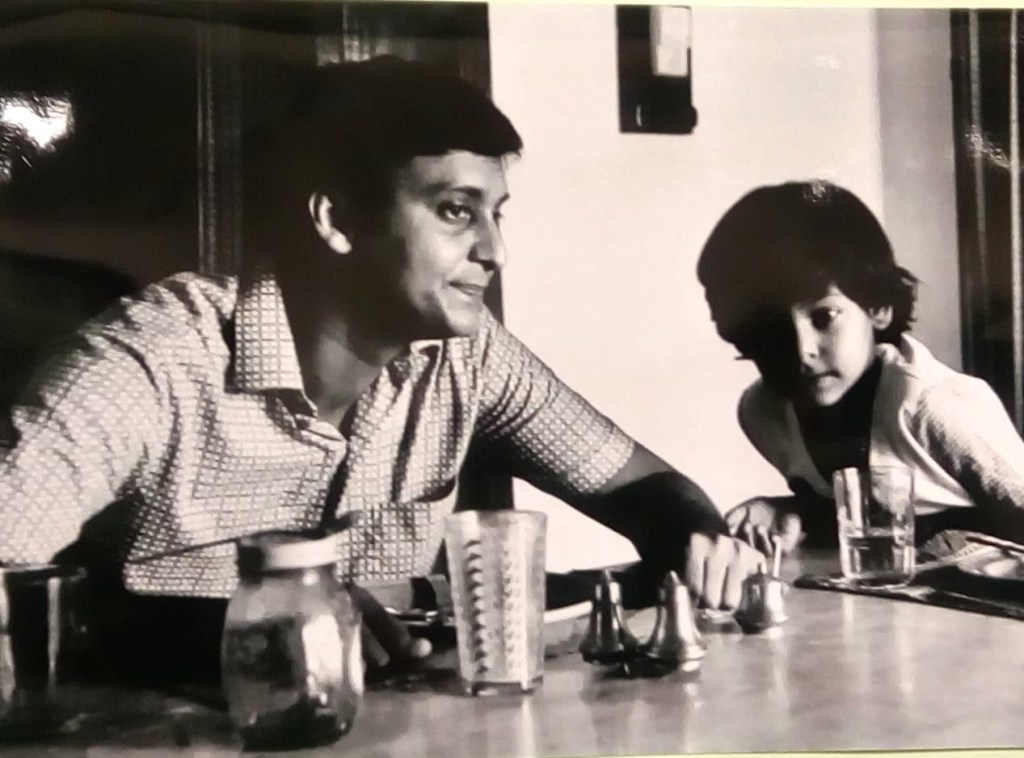
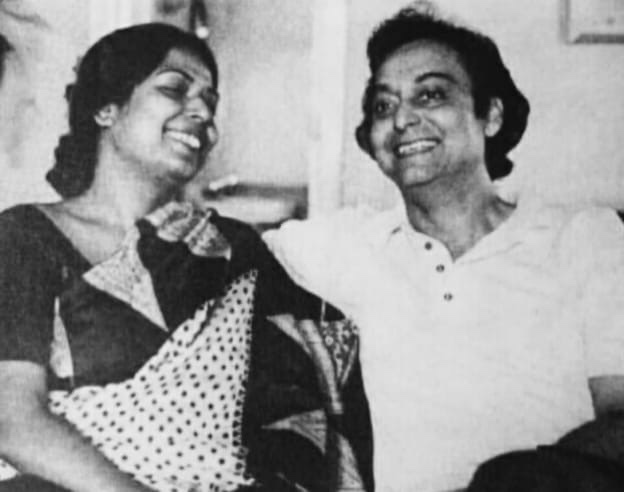
Young Soumitra Chatterjee with his daughter, Poulami. Photo provided by Ratnottama Sengupta
“All the recovery Rono Bhaitu[1]( Soumitra’s grandson) has made, is entirely due to his mother,” Soumitra Chatterjee (1935-2020) had said to me when I met him before Covid set in. His voice was laden with deep affection and paternal pride for his daughter. Deservedly so, as the world has been witnessing since the star actor passed away in November 2020. Poulami took upon herself the male mantle of lighting her father’s pyre.
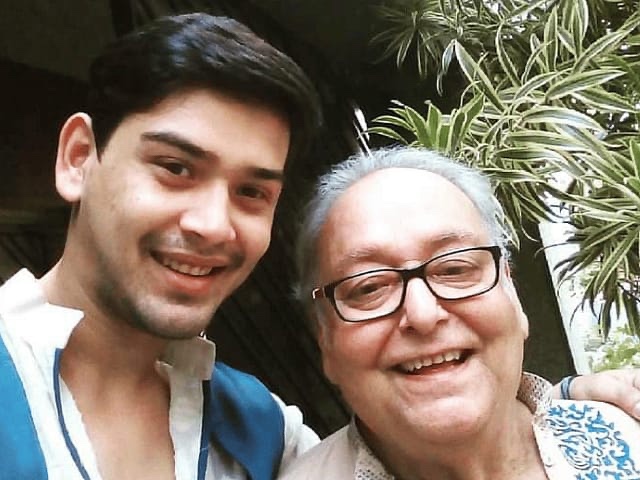
An older Soumitra Chatterjee with his grandson, Ronodeb Bose. Photo provided by Ratnottama Sengupta
But that was neither the beginning nor the end of her duty towards her father. I had seen her perform on stage alongside the thespian in Homapakhi [A Legendary Bird] that had explored the complexities of a society trying to reconcile its modern aspirations with traditional roots.
And last November she directed Janmantar [Rebirth], an original play Soumitra Chatterjee had written in 1993 but was never staged before. Seen through the eyes of a matinee idol who is visiting a remote village in Purulia, it focused on ills like child marriage, witch hunting, clash between and land owners and cultivators. “Unfortunately, 30 years later too, all the ills are still thriving on that soil,” Poulami said to me.
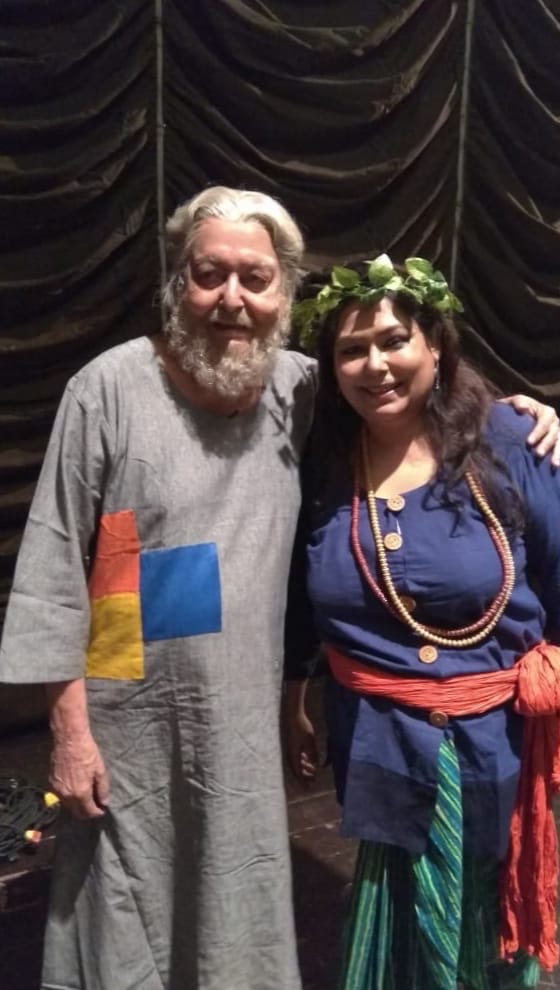
Poulami with Soumitra. Photo provided by Ratnottama Sengupta
And in January, even as the definitive biography Soumitra Chatterjee and his World was being launched in the Kolkata Literary Meet, she staged Chandanpurer Chor [The Thief of Chanderpur], his light hearted transliteration of Jean Anouilh’s Carnival of Thieves[2], to mark his birth anniversary.
On the eve of the International Women’s Day I conversed with Poulami, whose parents have been an integral part of my life too.
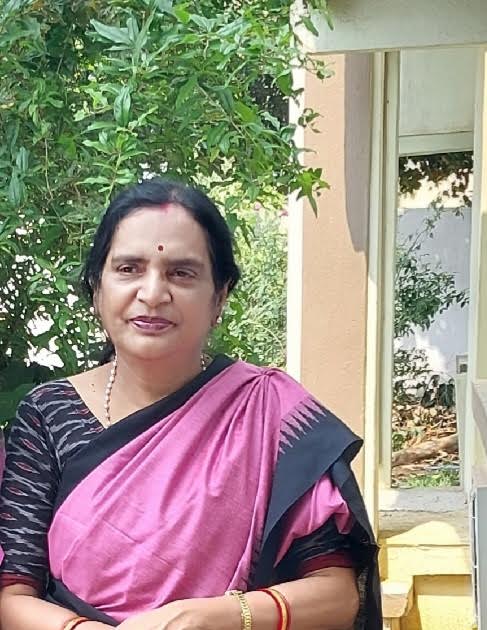
Ratnottama Sengupta: Who is Poulami? A Bharatanatyam dancer? A theatre person? Mother of an actor with a brief trajectory? Or, daughter of Soumitra Chatterjee?
Poulami Bose Chatterjee
Poulami Bose: I think Poulami is a bit of all this — along with a passionate theatre practitioner. I am my mother’s daughter too. I hope I am a loyal friend to my friends. But above all I’m myself. I like to think of myself as a free spirit — absolutely totally in love with my daughter and son and music and dance and theatre and all that is wonderful in the world.
RS: When did you first realise that your father was not a 10-5 pm office going father like that of other girls? That he was a star?
PB: For a long time in my growing up years I actually didn’t realise how big a star he was. He was a very loving, hands-on father, very involved in our lives. I always knew he was an actor but didn’t realise the magnitude of his stardom. He never brought that aspect home. Our home was always filled with lively discussions, about books, music, paintings, dance, theatre, cinema, the environment, travel… It was a beautiful childhood, very loving, very secure.
Bapi [father] and Ma were always introducing us to new things. Encouraging us to embrace the world. I thought that was normal and that’s what every father was like. Only after I grew up did I realise his impact on the Bengali moviegoers’ lives.
RS: What did a ‘cine star’ mean to you when a) you were learning Bharatanatyam under Thankamani Kutty? b) Studying? c) Getting married to Ruchir Bose?
PB: The word ‘Cine Star’ didn’t matter much when I was learning dance or studying because I was treated just like any other student, by my teachers and my friends. In fact my father didn’t believe in the word ‘Star’. He maintained that he was a professional actor — and we were certainly not encouraged to have airs and graces about us. So we interacted normally with people, and people did likewise. Some people were of course star struck but they didn’t make a difference to me. As for getting married to Ruchir: he was and still is a very down to earth person, far removed from the film industry, very humane. He and his family have always accepted me and treated me for who I am rather than who my father was.
RS: Who was a bigger star for you — Soumitra Chatterjee or Satyajit Ray?
PB: Of course Satyajit Ray! Soumitra Chatterjee was my father first and then everything else, whereas Satyajit Ray was larger than life. We grew up hero worshipping him. Our whole family was absolutely in awe of him — as a person, as a filmmaker, an author and the rest. We were influenced a great deal by his way of life. His sensibilities. In fact we still idolize him.
RS: Which films of Soumitra Chatterjee have you loved most?
PB: Oh there are so many! Apur Sansar, Sansar Simante, Jhinder Bondi, Koni. Ekti Jiban, Dekha, Mayurakshi, Agradani, Ashani Sanket, Abhijan, Sonar Kella, Ganadevata, Atal Jaler Ahwan, Aparichita, Teen Bhubaner Pare, Baghini, Basanta Bilap, Shakha Prasakha, Charulata, Kapurush, Akash Kusum, Dwando, Borunbabur Bondhu…[3] I can go on.
The most impressive thing for me was his versatility. He was different in all the films that I have mentioned above. He was one actor who didn’t have mannerisms. He always became the character. I have seen him doing a lot of homework, research to delve deep into the character’s psyche. Acting was his passion and that was evident in whichever role he played.
RS:Which film of your father has impacted you most? One that moved you at a personal level, perhaps because you identified with it most?
PB: I think Koni. His now iconic dialogue, “Fight Koni, fight!” has stayed with me till this day. Whenever I feel low or face any kind of obstacle, I always remember him in the film. How the human spirit is capable of rising against all odds. How hard work and determination can carry you forward. It inspires not to give up without a fight.
RS: Soumitra Da was a Master in Bengali; Deepadi[4] in English. Who guided you in your studies? Who selected what books you will read?
PB: My parents, like I said earlier, were hands on parents. They, both, helped me with my school work. The atmosphere in our house revolved around books, so we read a lot while growing up. Ma had done her MA in Philosophy. She and Bapi introduced me to both English and Bengali literature. Bapi was more strict, he expected me to read classics and serious books. Ma was more liberal, she let me read anything I wanted to, including romance novels which my father thought were a waste of time.
Soumitra and his wife Deepa. Photo provided by Soumitra Chatterjee
RS: So who are your favourite authors?
PB: I am eclectic in my choice. I read classics as well as bestsellers, plenty of them. My favourite authors are Tarashankar Bandopadhyay, Bibhuti Bhushan, Manik Bandopadhyay, Jibanananda Das, Shakti Chattopadhyay, Sunil Gangopadhyay, Charles Dickens, O Henry, Oscar Wilde, Maupassant, Shirshendu Mukhopadhyay, Samaresh Basu, John Grisham, Pablo Neruda, Gabriel García Marquez, Arundhati Roy, Agatha Christie, Akhtaruzzaman Elias, Humayun Ahmed, Jeffrey Archer, Khaled Husseini, Chitra Divakaruni Banerjee, Satyajit Ray, Sukumar Ray, Saradindu Bandopadhyay, Paolo Coelho, Gerald Durrell, Charlotte Bronte, Emily Bronte, Lewis Carroll… to name a few!
RS: Soumitra Da was a poet. He also translated plays — classics of world theatre — into Bengali. What was he most happy to do — act in movies? Write and direct plays? Or retire to the inner world of poetry?
PB: All three. I’ve never seen him sit idle or waste time. It depended on his mood — he loved doing all three. But I must add: theatre was, always, his first love. He was deeply influenced by Sisir Bhaduri (1889-1959), with whom he had started out. He directed plays for Pratikriti, a group that Ma had — and he directed plays for Abhinetri Sangha, set up by the actors of Tollygunge.
RS: Deepadi was an ace badminton player. Did she give up her own world to be Mrs Soumitra Chatterjee?
PB: She gave up her career primarily for us. Bapi was at the peak of his career and was naturally very busy. Ma felt we needed to have at least one parent around, always. In retrospect, I realise it was a huge sacrifice. But I have to say, both my brother and I needed her. I think she realised that and did what most mothers do: she prioritized us over her career.
Ma had the biggest heart ever. She was more intelligent than the three of us put together. And she was non-judgmental about who she was reaching out to. So many sportswomen she helped, on her own. And I vividly remember this young Muslim boy in New Market who always carried her shopping to the car. One day Ma learnt that he had TB. She immediately brought him home and organised a room on the terrace for him to stay until he recovered. She didn’t hesitate because she had children, she didn’t seek the advice of doctors, she didn’t think twice because her husband was a star!
RS: Why did you choose to carry forward Soumitra Chatterjee’s legacy on stage rather than on screen?
PB: Theatre kind of seeped into me. I used to watch Bapi – when he was idling, he would arrange the empty cigarette and matchboxes to design sets. I have been on stage ever since I could walk. It is my first love. I’m passionate about live performances, be it dance or theatre. Not that I didn’t get offers for films but I never actively pursued them. I married relatively early and had both my children by the time I was 26. Stage was always more accommodating and easier to manage. And till now the magic of the stage hasn’t worn off. I am still madly in love with the stage. Screen just didn’t happen… no particular reason, really.
RS: Soumitra Da was proud of his grandson’s screen presence. And he was extremely proud of the manner in which you handled your son’s unfortunate accident. Would you like to talk about it?
PB: Bapi had high hopes for Ronodeep. He felt Rono was a very sensitive actor perfectly suited for the screen. He was devastated by Rono’s accident. It was the most tragic thing to have happened in all our lives. But I have come to terms with it. I count my blessings — it could have been worse! Rono is with us — a bright and wonderful boy, sensitive and sweet, full of love and empathy. He still has a long way to go in terms of recovery and health but he’s getting there, one step at a time…
I have learned a lot from this phase of my life. I continue to learn every day. It has also shaped me, moulded me as a person. Bapi-Ma told me always to have grace even under pressure, to be always dignified. I have tried to follow them.
RS: Can you recount one cherished moment with your father?
PB: In May 2020, months before he passed away, during Covid, Bapi and I were just sitting and talking about various things. Suddenly he told me, “Mitil I have never said this to you before but I want you to know that I am very proud of the way you have conducted yourself during Bhaitu’s accident and every day since then. Your dignity and your grace has made me really happy. I’m so proud that you have turned out to be the person you are!”
All through my life I will cherish this one moment.
RS: In today’s world many daughters are taking up the responsibility of carrying forward the legacy of their fathers. What, in your opinion, has brought about this social change? Did Soumitra Chatterjee raise you to (consciously) fight patriarchy?
PB: I guess the world is waking up to the fact that what sons can do, daughters can do better! I really don’t know what exactly has brought this social change but I definitely welcome it. My daughter is a great source of strength for me. She is my best friend. My father had raised my brother, Sougata, and me as equals, maybe favouring me a tad more!
Bapi was always ahead of his times. He always told me, “The sky is the limit, you can do whatever you set your mind to.” But it was Ma who very consciously taught me to fight patriarchy. She was a champion for the girl child.
RS: Soumitra Da was never lured by the reach and fame of Bollywood? So, why did he direct Stree Ka Patra[5], the telefilm he made for the national television, in Hindi?
PB: Bapi believed that he could deliver best in his own mother tongue. Besides, he was not enamoured of the kind of films made in Bollywood at that time. He loved his life here, his theatre, his poetry, and co-editing Ekshan, the culture magazine that first published Satyajit Ray’s script. Going to Bollywood, he felt, would put a stop to all his literary and theatrical pursuits.
However, he got the offer to direct Stree Ka Patra for National Doordarshan, and it came with the clause that it had to be in Hindi. The other telefilm he directed, Mahasindhur Opar Theke [ From the Other side of the Ocean] was in Bengali
RS: Many uncharitable people say that Soumitra Chatterjee wasted his talent by limiting himself to Bengali films and by indiscriminate selection of roles — because of his family responsibilities. Your response to this?
PB: Limiting himself to Bengali films was a conscious decision he made. And I have just elucidated the reasons. Yes he wanted to provide for his family, and he did so the only way he knew to — by acting. He never shied from saying that he was a professional actor. And if he wanted to take on the responsibilities who is anyone else to talk about it?
He could have abandoned his family like many others. He chose not to. His family, his life, his choices… that’s all I can say.
RS: You have grown up in close proximity with stars like Sharmila Tagore, Madhabi Mukherjee, Sandhya Roy, Tanuja, and directors like Tapan Sinha, Ajoy Kar, Tarun Majumdar, Rituparno Ghosh. Please share some memories/ anecdotes with us.
PB: The only name in the list who I have grown up in close proximity with is Tapan Sinha, whose birth centenary is being celebrated. He was a wonderful human being! While we were growing up we didn’t interact much with people from the film industry. We certainly met them but at parties, weddings, social events…
My parents had a huge circle of friends. A doctor’s group. My mum’s friends. Poets like Shakti Kaku and Sunil Kaku. My dad’s friends like Nirmalya Acharya, the co-editor of Ekshan. Directors Ajit Lahiri, Ashutosh Mukherjee, Nripen Ganguly who was fondly called ‘Nyapa Da.’ Friends from theatre. His childhood friends. It was a vast cross section of people, so it was wonderful, happy and great fun growing up around so many amazing people.
RS: Gaachh [Tree], the documentary by Catherine Berger, focused only on his stage life. Abhijan[6][The Expedition] directed by renowned actor Parambrata Chatterjee, did not excite cineastes who have adored Soumitra Chatterjee, honoured with Dadasaheb Phalke for cinema, Sangeet Natak award for theatre, decorated with the Lotus award of Padma Bhushan and the French Order des Arts et des Lettres. Will you give us a biopic of Soumitra Chatterjee on stage?
PB: I am not in favour of a biopic for someone like Bapi. On the other hand, a stage production would be limiting. He was a multihued talent. It is difficult to capture so many facets of his personality. It is a daunting task to encompass every nuance, every shade of such an extraordinary life in a single film. A biopic should not be made if it does not do justice to the magnificence of the man.
.
[1] Ronodeb Bose, grandson of Soumitra Chatterjee, had a bike accident in 2017
[2] Jean Anouilh (1910-1987), Carnival of Thieves(1938)
[3] Bengali films in which Soumitra Chatterjee played the lead.
[5] A pun in the heading. Stree is woman, Patra is vessel as well as a prospective groom. So, a Woman’s Vessel or Prospective Groom
[6] Soumitro Chatterjee played the lead in the 1962 Abhijan, directed by Satyajit Ray
.
Ratnottama Sengupta, formerly Arts Editor of The Times of India, teaches mass communication and film appreciation, curates film festivals and art exhibitions, and translates and write books. She has been a member of CBFC, served on the National Film Awards jury and has herself won a National Award.
.
PLEASE NOTE: ARTICLES CAN ONLY BE REPRODUCED IN OTHER SITES WITH DUE ACKNOWLEDGEMENT TO BORDERLESS JOURNAL
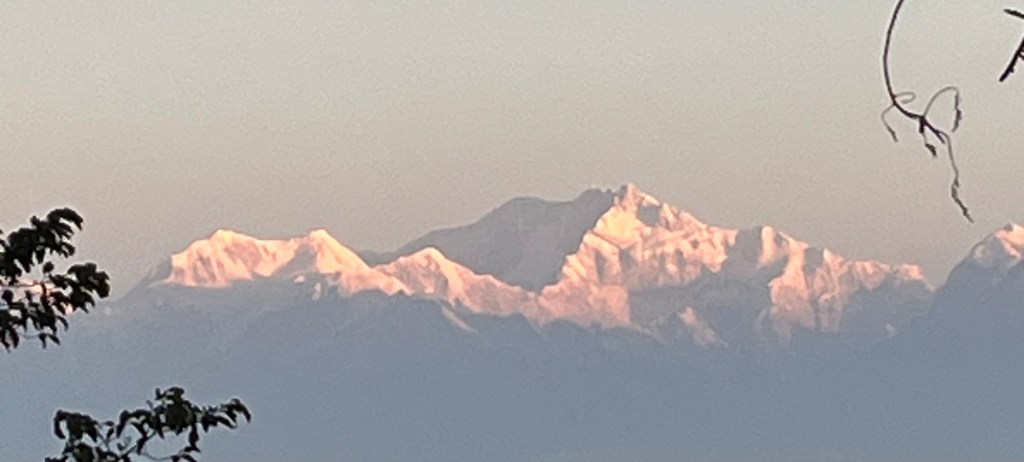
Ghoom, Darjeeling, is almost 2.5 km above sea level. Standing in the rarified air of Ghoom, you can watch the Kanchenjunga turn gold as it gets drenched in the rays of the rising sun. The phenomenon lasts for a short duration. The white pristine peak again returns to its original colour blending and disappearing among the white cirrus clouds that flit in the sky. Over time, it’s shrouded by mists that hang over this region. The event is transitory and repeats itself on every clear morning like life that flits in and out of existence over and over again…
Witnessing this phenomenon feels like a privilege of a lifetime as is meeting people who shine brightly and unusually, like the Kanchenjunga, to disappear into mists all too early. One such person was the founder of pandies’ 1 who coordinated the pandies’ corner for Borderless Journal, the late Sanjay Kumar (1961-2025). The idea of starting this column was to bring out the unheard voices of those who had risen above victimhood to find new lives through the work done by pandies’. In his book, Performing, Teaching and Writing Theatre: Exploring Play, published by Cambridge Scholars Publishing, he described his scope of work which in itself was stunning. His work ranged from teaching to using theatre and play to heal railway platform kids, youngsters in Kashmir, the Nithari survivors and more — all youngsters who transcended the scars seared on them by violations and violence. We hope to continue the column in coordination with pandies’.
Another very renowned person whose art encompassed a large number of social concerns and is now lost to time was the artist, MF Husain (1915-2011). This issue of Borderless is privileged to carry an artwork by him that has till now not been open to the public for viewing. It was a gift from him to the gallerist, Dolly Narang, on her birthday. She has written nostlgically of her encounters with the maestro who walked bare-feet and loved rusticity. She has generously shared a photograph of the sketch (1990) signed ‘McBull’ — a humorous play on his first name, Maqbool, by the artist.
Drenched with nostalgia is also Professor Fakrul Alam’s essay, dwelling on more serious issues while describing with a lightness his own childhood experiences. Many of the nonfiction in this issue have a sense of nostalgia. Mohul Bhowmick recalls his travels to Bhutan. And Prithvijeet Sinha introduces as to a grand monument of Lucknow, Bara Imambara. Lokenath Roy takes us for a stroll to Juhu, dwelling on the less affluent side. Suzanne Kamata describes her source of inspiration for a few stories in her new book, River of Dolls and Other Stories. A darker hue is brought in by Aparna Vats as she discusses female infanticide. But a light sprays across the pages as Devraj Singh Kalsi describes how his feisty grandmother tackled armed robbers in her home. And an ironic tone rings out in the rather whimsical musing by Farouk Gulsara on New Year days and calendars.
Everyone was at each other's throats, insistent that the world was ending. But I felt differently, as though I were just beginning, or just beginning again…
Poets, like visionaries across time and cultures, often see hope where others see despair. And humour always has that hum of hope. In a lighter tone, Rhys Hughes makes one laugh or just wonder as he writes:
I once knew a waiter who jumped in alarm when I somersaulted across his restaurant floor after entering the front door on my way to my favourite table: he wasn’t able to control his nerves and the meal he was bearing ended up on the ceiling with people staring as it started to drip down.
Translations feature poetry. Lyrics of Nazrul (1899-1976) and Tagore (1861-1941) appear together in Professor Alam’s translations of their love songs from Bengali. He has also transcreated a Bengali poem by Jibananada Das (1899-1854). Profoundly philosophical lines by Atta Shad (1939-1997) in Balochi has been rendered to English by Fazal Baloch for his birth anniversary this month. Ihlwah Choi has translated his poem from Korean, taking up the poignant theme of transience of life. A Tagore poem called ‘Kheya (Ferry)’, inspired by his rustic and beautiful surroundings, has been brought to us in English.
Huge thanks to all our contributors, the Borderless team for all these fabulous pieces. Thanks to Gulsara, Kamata, Bhowmick and Sinha for the fabulous photography by them to accompany their writings. Heartfelt gratitude to Sohana Manzoor for her cover art and to Dutta for her artwork accompanying her poem. Without all your efforts, this issue would have been incomplete. And now, dear readers, thank you for being with us through this journey. I turn the issue over to all of you… there is more as usual than mentioned here. Do pause by our contents page.
pandies’ was started in 1987. It’s spelled with a small ‘p’ and the name was picked by the original team. Read more about pandies’ by clicking here. ↩︎
The very last words my mother had said to me constituted the question, “What is your name?” We were in the VIP lounge of Dhaka airport and she had just been wheeled in from an aircraft with one of my sisters. Another sister and I had gathered there to receive her, perhaps knowing as well as her, that she was close to dying. And yet she had managed a smile as she said to me, “What is your name?”
The words, indeed, amounted to a kind of game she would play with me whenever I would meet her at my sister’s house in Dhaka. It was what we call a rhetorical question since she most certainly did not have to be told what my name was. It was her way of reminding me that while I might be professor of English at the University of Dhaka, I — Dr. Alam, as she would also sometimes teasingly call me — should never forget that I had learned English from her, sometimes literally at her feet as she did housework, and on other occasions, when she had done the day’s work, at the table where all of us siblings would gather to study once we were old enough to do so.
On International Women’s Day, I would like to pay a tribute to my mother, her fierce belief in the importance of education, especially women’s education, and the rights of women to study and work and have parity in every sphere with men.
My mother was an outstanding student. Recorded as well as oral family narratives enable me to reconstruct her brilliant performance as a student as well as her aborted student life and its consequences. From one of my aunts’ contributions to the 100th anniversary commemorative volume of Feni Government Girls School, I am reminded that both in Class Four and Six she had made it to the All Bengal Merit List and had been awarded scholarships for her achievement.
From an uncle’s autobiographical narrative, I have an explanation of why she had to stop studying when she was in Class Eight. The only Muslim girl studying in a very conservative town, she had become an obvious target of their religious concern. “Why must a Muslim girl study after a point?” they would say. My mother would go to school properly veiled, but these men reminded my grandfather, who had once been a progressive Swadeshi[1]but was then embracing a very conservative Islamic position, that there were Hindu male teachers teaching in the school. And, they noted, educated women tended to be immoral. For good measure they added, “Is your daughter going to become a judge/barrister after studying?” What was the point of female education, after all?
Persuaded, my grandfather withdrew my mother from school. The clinching point for him, I learnt from my uncle’s narrative, was his own father telling him with finality, “Your daughter has to stop studying. It’s enough that she can write letters and read them!” My grandfather tried to placate her by saying that she could sit for the matriculation examination as a “private” student.
Both my aunt’s account and my uncle’s narrative l record my mother’s intense grief afterwards. For a while, she tried to concentrate on studying for “private” matriculation. But then the First World War broke out; everything was disrupted in Feni, and she was married off after a couple of years. Not only was she grief-stricken at that time, as my aunt notes in her piece, but she would carry her grief at being cheated out of an education almost to her grave.
However, my mother was nothing if not a fighter. My uncles would tease her and call her a “communist”, and if the word had been fashionable in the late ’50s and ’60s when they would always be visiting us in our Dhaka house, surely they would have also called her a “feminist”, although I am sure she would have detested the sanctimonious and self-serving ways in which the word is at times bandied.
What my mother missed in formal schooling, she made up by reading voraciously, whenever she could spare the time. A lasting memory I have of my mother, both after lunch and dinner, and after all the housework was done and our studies supervised, was of her going to bed, day after day and night after night, with the Bangla newspaper, the current issue of the weekly Begum, and some Bangla novel, usually by Sarat Chandra or some other best-selling Bengali author.
Always feisty, and despite being immensely religious and completely devoted to God and the Prophet, she would never miss the opportunity to berate ‘holier than thou’ Muslim priests and men for the way they treated women. Because she knew the religion well, she would always cite examples of how the place of women was not what it was made to be by patriarchal Muslim men of her generation and how veiling beyond a point was totally unnecessary and the ghomta and orna[2]were good enough, if one knew what was prescribed in the holiest of books.
But the most eloquent way that my mother protested against the deprivation she and her generation of Muslim women suffered because of their fathers and their friends and mullahs at large, was in her single-minded dedication to the cause of women’s education. Not only did she teach us and my four sisters the English and Bangla alphabet, but she also ensured that her four daughters as well as her one son had equal access to education. She insisted that her daughters earned the highest degree possible in the field of their choice and was proud when they became working women. She was saddened when a couple of them did not go beyond an MA degree and when one of them gave up her job. And she did everything for them as long as she could to ensure that they could combine not only higher studies but career goals that would help them realise their dreams. When I told my wife I would be writing a tribute to my mother for International Women’s Day, she reminded me that my mother had told her when we were leaving for Canada, where I would be doing higher studies, that she should not come back without earning a higher degree in some field or the other.
Moreover, my mother’s preoccupation with women’s education went beyond her family. She would help any woman wanting to advance herself, through education and through jobs. Whether it was her sisters or her relatives, or even their friends, she offered our house as a home to them and would become their “local guardian” or counsellor, if not a surrogate mother. She also went way out of her way to help any woman she felt was remotely in distress, or lonely, or deprived in any way, with whatever little she could do to help or comfort them. And she would teach anyone, male or female, she could get hold of, believing that education was above all!
There is a lot more that I could say about my mother but I must end here by saying that I took this occasion not really to give you the feeling that my mother largely made me what I am, but mostly to convey to you how she had pledged herself to parity and worked for the emancipation of women in her own way all her life. In that respect, and in so many ways, she was an exemplary woman and truly ahead of her time and thus worth remembering on this day.
[1] Freedom fighter – active in the struggle for independence of the subcontinent from British rule
[2] Covering the head with the loose end of a saree or an orna (shawl or large scarf)
(First published in Daily Star, Bangladesh, on March 9, 2016)
‘Ghumiye Poribe Aami’ (I’ll fall asleep) from Jibananda Das’s poetry collection, Ruposhi Bangla (1934), has been translated from Bengali by Professor Fakrul Alam.
From Public Domain
I’ll fall asleep one day on one of your star-studded nights.
Perhaps youth will still stick to my soul —- perhaps
I’ll be in my prime then —- that will be so nice! But sleep
Overwhelms me now—Bengal’s grassy green bed lies beneath.
Eyelids shut. Tucked within mango tree leaves, Kach insects doze.
I too will doze off like them in this grassy land I love—- in silence!
The stories stored in my soul will eventually fade. New ones —-
New festivals -— will replace the old —- in life’s honey-tinged slight.

In your forever busy minds -— when finally, you, youthful ones,
Will be done tearing grassy stems and leaves -— when Manikmala
Will come here to pick up crimson-red bat and kamranga fruits
On some mellow autumnal morning -- when yellow shefali flowers
fall on this grass as shaliks and wagtails fly far, far away,
I’ll feel the sun -- the clouds —- lying down in death-like stupor!
Jibananada Das (1899-1954) was a Bengali writer, who now is named as one of the greats. In his lifetime, he wrote beautiful poetry, novels, essays and more. He believed: “Poetry and life are two different outpouring of the same thing; life as we usually conceive it contains what we normally accept as reality, but the spectacle of this incoherent and disorderly life can satisfy neither the poet’s talent nor the reader’s imagination … poetry does not contain a complete reconstruction of what we call reality; we have entered a new world.”
Based on Paul Gauguin’s life is a book by Somerset Maugham[1] called Moon and the Sixpence[2], a novel about a stockbroker who abandons his profession to become an artist. Gauguin[3] was a stockbroker turned artist, and Maugham was trained a physician but opted to write books and became a famed novelist. While earning a living as solely a writer has become increasingly difficult through the world unless you make it very big like JK Rowling[4], and therefore, most writers opt for being part time writers while holding full time jobs, we do have a few strange aberrations. One of them is Dr Kiriti Sengupta, who turned to publishing and poetry abandoning his profession — that of a dentist.
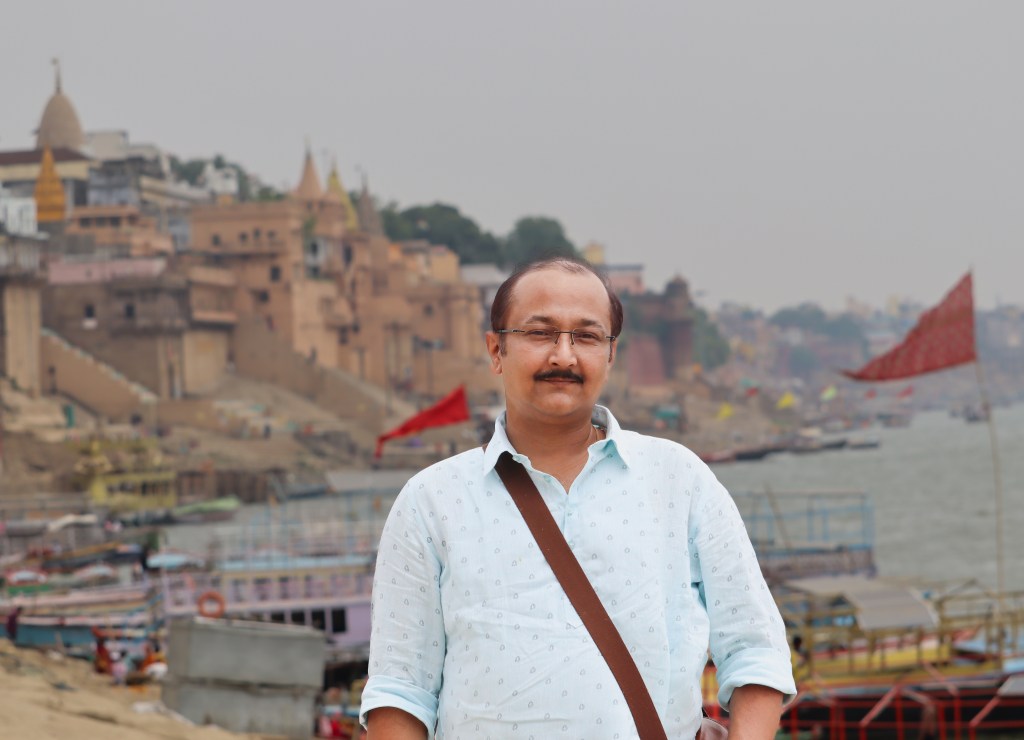
Kiriti Sengupta: Photo Courtesy: Bitan Chakraborty
He ran away from his home and started writing in a small, rented accommodation in 2011-2012. And now he writes, works as a director in one of India’s top upcoming publishing concerns, Hawakal, and rolls out poetry. Sengupta describes his former profession with, an underlined sense of irony, and perhaps with tongue-in-cheek humour:
I prefer patients who are edentulous. I dread
a tooth will wrangle my expertise, and I’ll fail
to make an impression.
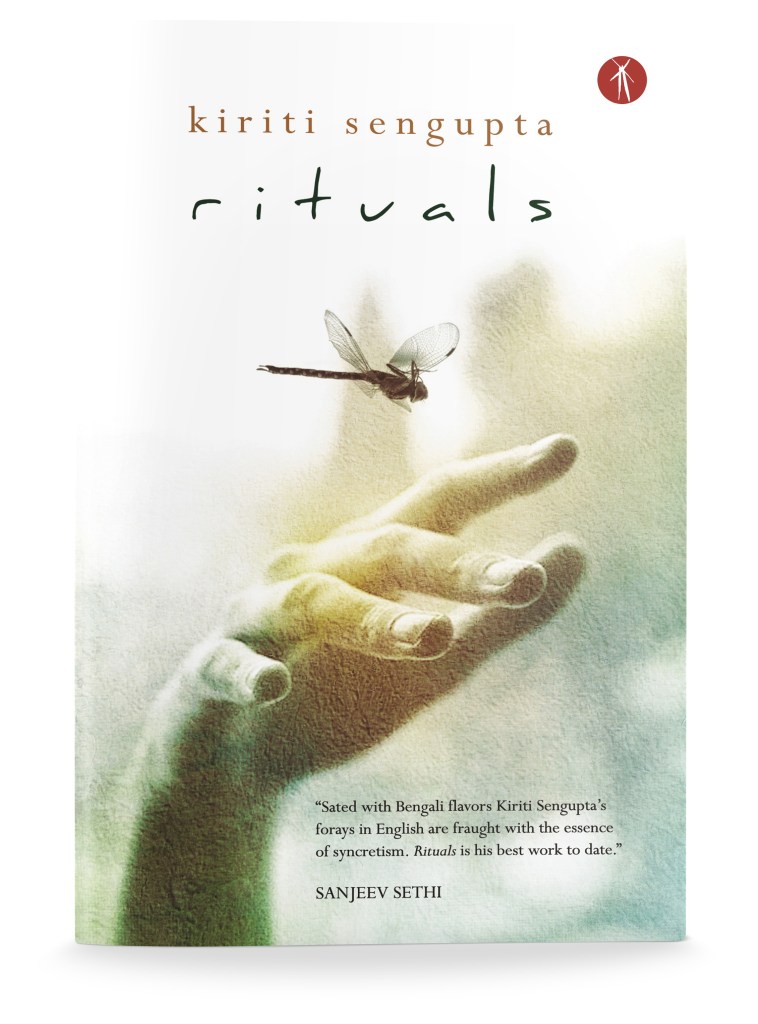
(Rituals, 2019)

Wisdom
the third molar adds
to the surgeon’s expertise
(Oneness, 2024)
He writes about water and the environment:
Water has many colors,
smudging pebbles
along its path

(‘Spectrum’, Water has Many Colours, 2022)


Feed the earth water
she flows in abundance.
Allow the planet to breathe:
the air is her consort.
(‘Hibiscus’, Water has Many Colours, 2022)
He writes for and about women:
How many mujras dwell in a kotha ?

How many neonates hew to a bordello?

Like her admirers
God is silent.
In her sinews
hides a hint of soil
from the yard of courtesans.

*Mujras are courtesan’s song and dance performances
*Kothas are brothels
(‘When God is a Woman’, Rituals, 2019)
And yet critiques stances with a twisted questions:
You define women as Durga
or Kali. Are you a believer? Are you
being kind? You could have convinced
them to fight the evil.
Instead, when you imply the goddess,
do you illustrate
sisterhood with many limbs? Would you
like men to act as Shiva—the destroyer?

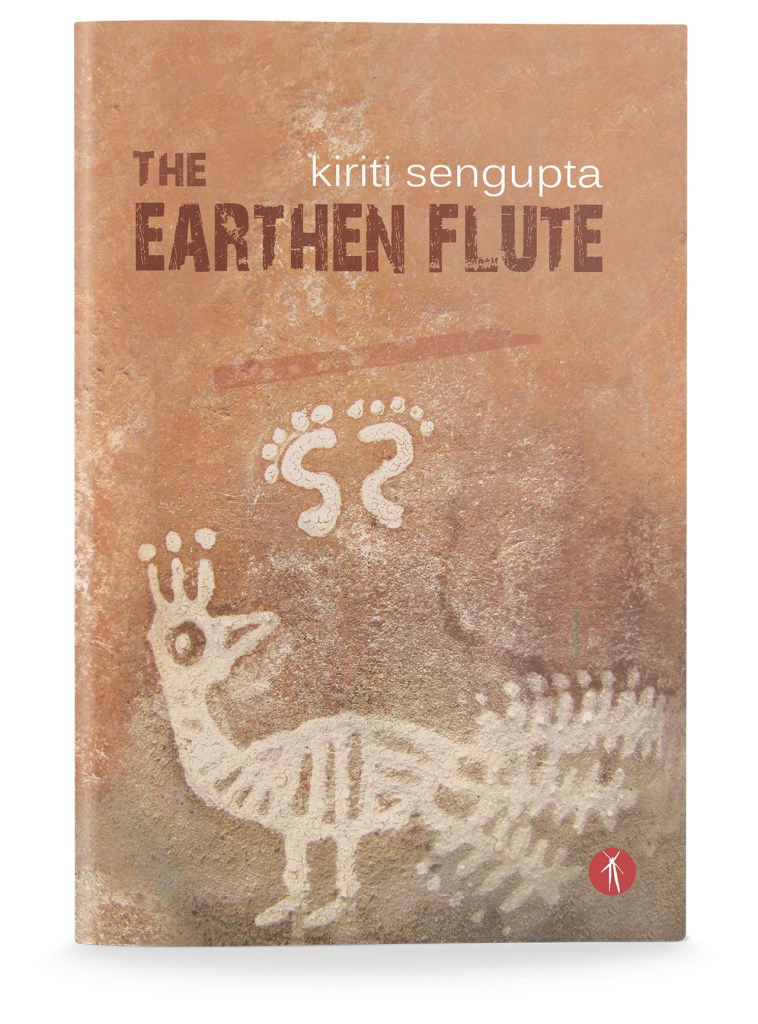
(‘Primordial Learning’, Oneness, 2024)
Underlying all of Sengupta’s poetry, is a strong sense of irony which like a veil drapes words with double entendres. While the poems are layered, he dwells on human frailties too… like procrastination with a soupçon of sarcastic humour as in ‘From Being Late in Calcutta’ (Rituals):
As soon as you mark me
I’ll talk about events
that guide me to the records
you maintain.

I’d say crowded buses invite passengers
from unscheduled halts.
I’d emphasize the number of speed-breakers on road,
and their poor performance in preventing accidents.

I’d tell you trains run late.
Signals are laggy between stations.
I won’t forget to mention how
a sudden protest
makes the train stand still for hours.

I’d discuss about the day I reported late,
owing to instantaneous suspension
of underground train services
as a man killed himself on the railway lane.

I’d ask you to remember why I came late the other day.

If you can recall,
I had indigestion despite eating at home.
I blamed farmers for sprinkling pesticides on crops.
I pointed at my salary that failed to buy organic veggies.

And then,
I’d invariably argue about maintenance and population.

I’d appreciate China, one-child policy, and their claim on
how the government prevented four hundred million births.
And how India thrives on the revenues earned
from selling nicotine and condoms.

I’ll explore other issues
the next time I reach late.
He pours out lines on stars, film stars and politicians. Sengupta responds to life with poetry, often terse, brief… sometimes with a wry sense of humour. But in the brevity, lies a depth of mystery, which you can mull and cogitate over endlessly. A flickering of spiritual beliefs and a seriousness of intent despite the apparent lightness of words create a conversation within the poems. In this exclusive, an award-winning author of more than fourteen books, Kiriti Sengupta takes us on whirlwind tour of his life, his ideas and his work.
When and how did you start writing poetry? Why did you switch professions — from a dentist to a poet-publisher? What compulsion made you turn from a lucrative to an uncertain profession? Were you sure you’d succeed? Please share your story with us.
First of all, thank you for inviting me to Borderless for a heart-to-heart, Mitali. I greatly appreciate your dedication to literature, especially quality work. Coming to your first question (a bundle of questions, actually), I don’t remember when I first wrote a poem. Coming from a dentistry background, I never imagined that I would write poems. Until then, I was well acquainted with journalistic articles, critical responses, cultural essays, and, of course, scientific papers. Poetry was out of the question. I believe in karma. Maybe I was destined to write poetry. It wasn’t a deliberate choice. It wasn’t a spontaneous stance either.
I was passing through an obnoxious personal crisis that compelled me to reconsider my career in dentistry. I was comfortably placed in a government institution, enjoying a considerably thick monthly salary. In early 2012, I decided to leave my job and spend some time with myself. However, as you can understand, it was risky, as I was the only breadwinner in my family, which consisted of my wife and son. I had no career options to pursue.
I was new to social media back then. I had the opportunity to become involved with a virtual group, Indies In Action (IIA), run by Stephen L. Wilson. They were raising funds for the victims of the devastating earthquake in Oklahoma. I contributed a few poems to the literary anthology Twist of Fate(ToF), which Steve edited. It was hugely successful, and all proceeds went to the May Tornadoes Relief Fund, managed by United Way. For the promotion of the book, I interviewed a few eminent contributors, such as Bill Lantry, Terry Lucas, Colin Dardis, Marshall G Kent Sr., Allison Bruning, Maggie Rascal, Don Martin, Linda Bonney Olin, Maria Edwards (the then President of the American Authors’ Association), Ency Bearis, among others. Honestly, they all helped me become familiar with the world of poetry.
In 2013, my first book, The Unheard I, was published. It was released simultaneously in India by Dhansere Prakashan and in the United States by Inner Child Press Limited. It was non-fiction, although it contained two chapters dedicated to poetry. In his commentary, Stuart Aken remarked, “It is a scholarly [collection] that will appeal to those with an interest in poetry, particularly spiritual poetry expressed as literature, as well as [to] those who have a leaning toward or a significant interest in Indian myth and religion.”
Even then, I had no plans to pursue writing (or publishing, for that matter) as my career. Gradually, I evolved, and here I stand today. Do I call myself successful? I’m not sure whether I have turned into a consummate writer. Since I write poetry in a niche market worldwide, it is challenging to become a “successful” poet and earn enough royalties to sustain my family. As a publisher, oh yes, Hawakal has emerged as a leading traditional press that has published several writers and poets and enjoys its presence in New Delhi, Kolkata and Nokomis (Florida).
How long have you been in the literary framework? Was it a tough journey moving from dentistry to writing? How did your family respond?
My first essay was published in 1995 in the college magazine. I remember it was written for students suffering from anxiety and family expectations. While studying dentistry at North Bengal Dental College, I joined the All-India Freelance Journalists Association (AFJA, Chennai). My senior colleague, Dr. Falguni Maji and I were commissioned by Uttarbanga Sambad to write an article on the pottery art in Matigara (Siliguri). I was a regular contributor to “The Third Law” in The Telegraph (India). Later, I regularly wrote health-related articles for Ganashakti.
As I said before, I was initiated into poetry quite late. It was a challenging move as I had no formal training, but I was immensely blessed to have a few mentors who honed my skills and taught me the basics of writing poetry.
My family suffered badly from my career-shift. They had to compromise on their living standards. The initial years of becoming a full-time writer were dreadful, to say the least. From only one wholesome meal a day to just a pack of instant noodles for the day — I have personally experienced it all. I ensured that my family didn’t starve, nor did my son lose his schooling. However, their ceaseless support enabled me to survive as a writer and publisher.
How many books have you authored/translated and how many poetry collections, and within how many years? Do you see yourself more as a poet or as a publisher/editor?
I have written fourteen books of prose and poetry, and as a translator, I have two full-length collections of poems. I have also edited nine literary anthologies, including Shimmer Spring, an all-colour, hardback coffee-table book published during the pandemic, which addresses our perceptions of light.
Honestly, I see myself as a patron of Indian arts, literature and fine arts (painting, sculpture, etc.). I’m an admirer of Indian textiles, too! I love buying drapes, be it a saree, a shawl, or a dhoti, in rich fabrics. Bitan and I have plans to start a men’s brand of drapes. We are working on it.
You claim you are a slow writer, and you isolate yourself in a ‘studio’. Tell us about your poetic process. How do you write? What inspires you to write? Are you influenced by any writers/musicians, or artists?
You know, Mitali, we have two studios in India: one in Kolkata and the other in Delhi. These ateliers are essentially stations where we work on the submissions from authors — we read, select, edit, and design the books we publish. We invite authors and readers to have a one-on-one. Readers also drop by to buy a book or two they want. You see, these studios are not meant for our writing. I say “our” because Hawakal is the collective enterprise of Bitan Chakraborty (the founder director) and me. While Bitan oversees the Bengali department, I supervise the English-language division of Hawakal.
It’s difficult to describe how I write. Anything that stirs my imagination or fancy, whether a line from a song, an incident, or a tragedy, often inspires me to pen my thoughts. I am fond of ekphrastic poems and frequently visit art exhibitions to catch a thread or two. However, it takes days or weeks to write a poem, although most of my poems are short or very short. I believe in condensing my thoughts, which is a time-consuming affair.
Your first collection of poems, Healing Waters Floating Lamps (2015), was largely spiritual, while your latest, Oneness (2024), covers multiple aspects of life that may not be purely spiritual. Some of the poems in your later works are also ironic or verge on humour. A gap of nine years and multiple publications reside between the two books. Has there been a change or a progression in your poetry through your journey? Do you feel your poetry has changed?
Healing Waters marks my debut full-length collection of poems. Prior to this, I released 4 books, including My Glass of Wine (2013), which featured autobiographical poetry. My journey as a poet has led to a noticeable evolution. Scholars are more suited to examine these transformations. Some observe that my language and craft have become significantly more refined. They argue that my recent works display a level of sophistication. Conversely, others suggest that my earlier poems felt more spontaneous and grounded. Embracing evolution is crucial; without it, my growth as a writer would stagnate.
You translate from Bengali. Tell us who all you have translated. Have the translations impacted your own poetry. Do you feel translations should be literal or more focussed on capturing the essence of the language?
As I said before, I translated two volumes of Bengali poetry into English: Sumita Nandy’s Desirous Water and Bibhas Roy Chowdhury’s Poem Continuous—Reincarnated Expressions. I am delighted that these books have received rave reviews in India and overseas. Moreover, Hawakal recently released the 10th-anniversary edition of Poem Continuous, which has garnered critical appreciation.
Other than these books, I have translated a few contemporary Bengali poets as well: Ranadeb Dasgupta, Gourob Chakraborty, Rajeswari Sarangi, to name but a few. I can confidently tell you that translating Bengali poems has hardly influenced my work.
Whether translations of poems should be literal or more focussed on capturing the essence of the original is debatable. However, it is even more critical to ensure that the translated piece qualifies as poetry in the first place. If the piece does not read like a poem, regardless of the sincerity of the translator, the labour of translating the original work goes into vain. Every language comes with its own nuances. So, the translator should possess an excellent understanding of both the source and target languages.
Hawakal is regarded as one of the most important publishing houses for poetry in India. When and how did you join Hawakal as the director of the English section? How did you meet Bitan? Could you tell us about the journey?
Thank you for your kind comments on Hawakal, Mitali. Bitan Chakraborty established Hawakal in 2008 in Kolkata. He published numerous Bengali poets until I joined him in 2015. A common friend Kishore Ghosh introduced Bitan to me. Ghosh, a Bengali poet of some renown and a journalist, urged Bitan to publish a collection of literary criticism based on my work and that of Sharmila Ray. The book was titled Rhapsodies and Musings: poets in the mirrors of other eyes and authored by Ketaki Datta and Tania Chakravertty. So, we started our collaboration. Eventually, Bitan induced me to become one of the Directors of Hawakal.
Where do you see Hawakal travels as a publishing concern? What is the scenario like? Do you only bring out writers of Indian origin, or are you open to writers from other backgrounds? What does Hawakal look for in writers to publish with you?
For the past few years, Hawakal has been more focussed on fiction and non-fiction manuscripts. There is no dearth of poetry submissions, though. However, it’s challenging to find an authentic voice. We have published American poets like Dustin Pickering, t. kilgore splake, Marshall G. Kent Sr., Gary Manz, and others. Ethnicity isn’t a limiting factor for someone who wants to get published by Hawakal.
We really want to establish a steady foothold in the United States. Our tiny outlet in Nokomis is currently managed by Dr. Robertson James Short II. It has to grow big. Hawakal seeks original work, and we yearn for quality submissions.
Do you have any suggestions for young writers?
Aspiring writers or poets should read more and be well-versed with the works of contemporary authors. It is important to get published in journals, and accepting rejections from the editors is equally beneficial. Getting published should be a slow process. As the saying goes, there is no shortcut through the forest of life…
The daughter soaked joy for the past few days amidst her parents and children. When I woke up early, the trees, the leaves, and the grasses were damp. The rising sun parched them before late. I probed the air: Did the Mother weep as she left for Kailash?
The wife returned to her spouse.
Note: Hindu mythology holds that Goddess Durga brings her children when she visits her paternal home annually in autumn. After a designated period, she returns to her husband, Shiva, at Mount Kailash.
DURVA (for Durba Chatterjee | DOB: 25 September 2023 )
1 As I learn more about you, I'll pick up a batch or two wherever I reach.
2 The courtyard knew my boyhood days. You embraced my unshod limbs and healed my bruises as I slipped.
You made up the loving drape the earth donned for my convenience.
3 You taught us harmony. Resting in your mesh were the rice grains. Strengthened by prayers, you sat on my scalp for the nuptials. The bride held you in her hair.
4 You embody divine grace. You are more pristine than water that turns holy as it lets you sink.
5 You add to the sanctity of the soil. Blessed are the humans raising you in their yards.
Like Draupadi, the planet mourns when the veil is withdrawn.
Notes:
Durva or Durba is a common Bengali name for girls. It denotes Bermuda or Conch grass, known for its many therapeutic properties and frequent use in Hindu rituals. Numerous Puranic stories are linked to Durva grass.
In the Mahabharata, the Kauravas stripped Draupadi, subjecting her to great humiliation and distress.
Kiriti Sengupta has had his poetry featured in various publications, including The Common, The Florida Review Online, Headway Quarterly, The Lake, Amethyst Review, Dreich, Otoliths, Outlook, and Madras Courier. He has authored fourteen books of poetry and prose, published two translation volumes, and edited nine anthologies. Sengupta serves as the chief editor of Ethos Literary Journal and leads the English division at Hawakal Publishers Private Limited, one of the top independent presses established by Bitan Chakraborty. He resides in New Delhi. Further information available at http://www.kiritisengupta.com
PLEASE NOTE: ARTICLES CAN ONLY BE REPRODUCED IN OTHER SITES WITH DUE ACKNOWLEDGEMENT TO BORDERLESS JOURNAL
The Tyne is still, the water's calm, a restful, reassuring balm. In Newcastle our train has stopped. From here it seems the perfect spot. Where the iconic bridges span, where, once, a different river ran; well, different water, anyway, flowing on into yesterday. An errant cloud floats in the sky, as if it's only passing by. Nimble fingers unpick its seams; on water sunlight softly gleams. Transporting good to buy and sell; the stories this river could tell! Riverside harbours, wharfs and docks, today replaced by concrete blocks. Where there was muck once there was brass; now buildings of shimmering glass, high-tech hubs, computer centres; the past flees; the future enters. Newcastle, grimy, built on coal; Have you now sold your northern soul? Those hardy people of the past? How long will their memory last?
II
Will the march of modernism harm that fabled humour, Geordie charm? Will your essential being change, or will it just remain the same? We're too busy with our smartphones to dwell on our ancestors' bones. To get on YouTube; that's our goal; we are not used to heaving coal. Those people, they belong to then; yet the people now come from them. Through generations runs a thread; They are by shared history wed. Yet, perhaps, they who once were here, who, too, enjoyed a pint of beer, are still with us; at least in thought, their lives unfinished; dreams still sought. Will our hopes, too, be unfulfilled, our vision struck, our voices stilled? We share with them. husband and wife, the fickle randomness of life. Now the train jolts into motion and dispels my idle notions. One final glance, one final time. The Tyne is still; and still the Tyne.
Stuart McFarlane is now semi-retired. He taught English for many years to asylum seekers in London. He has had poems published in a few online journals.
.
PLEASE NOTE: ARTICLES CAN ONLY BE REPRODUCED IN OTHER SITES WITH DUE ACKNOWLEDGEMENT TO BORDERLESS JOURNAL
A mythical Simurgh perched on the Tree of Life, to which it has special affinity. Belonging to Persian mythology, the Simurgh is said to have seen the world destroyed thrice. Photo from Public Domain.
Storytellers unfolded their tales,
Yet we paid them no heed.
Again, they unfurled their tales,
It didn’t bother us, indeed.

As tales unfolded, we drifted to sleep,
Fairies, demons, djins, and devils
Crept into their lore,
Yet we remained ignorant, as before.

When the Simurgh  swallowed the snake,
Nothing we did care.
When the princess fled with a shepherd,
Curiosity filled the air.
When the thieves broke in the warehouse,
Clamours spread far and near.

And when war arrived, knocking at our door,
We left for the mountains, grasping the swords.
At last, we knew: stories are not lies anymore.
Manzur Bismil is a prominent Balochi poet. He emerged on the literary scene in the early 1990s and soon rose to fame, creating a niche for himself in the pantheon of the Balochi poets. He is widely known for his neo-classic style, especially in his verses. So far he has published eight anthologies of his poetry. This poem is taken from the poet’s poetry collection Sahaar (The Fear) published by Demrawi Majlis Muscat in 2017.
Fazal Baloch is a Balochi writer and translator. He has translated many Balochi poems and short stories into English. His translations have been featured in Pakistani Literature published by Pakistan Academy of Letters and in the form of books and anthologies. Fazal Baloch has the translation rights of of this poem from the poet.
PLEASE NOTE: ARTICLES CAN ONLY BE REPRODUCED IN OTHER SITES WITH DUE ACKNOWLEDGEMENT TO BORDERLESS JOURNAL
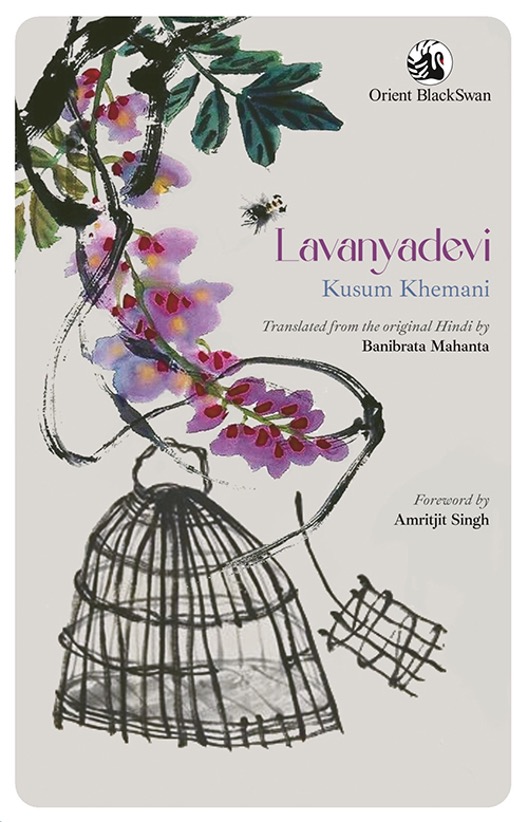
Author: Kusum Khemani (Translated from Hindi by Banibrata Mahanta)
Publisher: Orient BlackSwan Private Limited
Lavanyadevi is an award-winning 2013 novel by Kusum Khemani written in Hindi that chronicles five generations of a traditional aristocratic Bengali zamindar family as it transitions into modernity from British India to the present with the eponymous protagonist as its principal focus. Lavanyadevi—a compelling woman of perfection, extraordinary vision, qualities, and grace—remains real and credible because she is self-aware, self-critical, open to others, and to change. As a Marwari (people originally belonging to Marwar in Rajasthan) living in Kolkata, in Khemani’s fiction the schisms between ‘Bengali’ and ‘Marwari’ blur to reveal a delightfully plural, composite, and distinctively Indian ethos. Lavanyadevi is a story about women and their search for self, about shared laughter and friendships that endure across generations, beliefs and cultures—between mother and daughter, grandmother and granddaughter, and Marwari and Bengali women. Khemani’s women protagonists are strong, clear-sighted, both worldly and sublime, embodying a larger-than-life idealism while being grounded firmly in the everyday.
In his introduction to his novel Kanthapura (1938), Raja Rao had defined it as a sthala-purana[1], which he defined as a “legendary history” in which the old lady narrator in the village took recourse to the traditional Indian narrative technique, digressed at will to bring forth her point. Somehow the way Kusum Khemani takes recourse to multiple narrative techniques in Lavanyadevi and binds the different digressive stories and incidents into one contiguous whole when she tells us about the history of five generations of the Bengali zamindar family, reminds one of Raja Rao’s theory. She uses diverse narrative strategies like flashbacks, diaries, letters and emails, history, memory and the third person narrator to enrich its telling, lending it depth and range. A large part of the narrative revolves around telling us about past history when Lavanyadevi manages to lay her hands on her mother Jyotirmoyidevi’s diaries and finds great pleasure and thrill of reading one’s own family history. Not only do they offer a wonderful eye-witness account of the private and public sphere of Kolkata of those times, but they also make her easy transition into reading about her mother’s youth, her elaborate description of her magnificent wedding and the rituals that spread over almost a month.
The diary as metanarrative and the protagonist as reader/narrator are particularly effective, offering a telescopic perspective. Though at times it rambles a bit, the polyphonic structure of the novel engages Lavanyadevi the granddaughter, the daughter, the wife, the mother and the grandmother in conversations with her preceding and her succeeding generations. One must sometimes go back to the family tree and chart provided at the beginning of the novel to place people in proper perspective.
From the very beginning of the novel, Khemani portrays the character of Lavanyadevi in superlatives and this continues in different phases of her life till the end when she decides to remain incognito in the mountain ashram and yet control the lives of her descendants, well-wishers and others. From a child who always stood first in school and remained wholly ignorant of the real world, to her unusual marriage to a gentleman who moved over to Rangoon and then to London where she acquired many more degrees, till she came back to Kolkata, to rear her three children successfully, she seemed to excel in everything. This is how she is described at one place:
“Lavanyadevi was indefatigable. She administered the work of several institutions, her college and her home efficiently and with ease. She was never seen to panic. She was like Goddess Durga with her many hands – untiring in her zeal, handling all her duties unfailingly, responsibly and meticulously. No one could ever complain of being ignored by her. She loved all and treated everyone with the same degree of love and warmth. Scrupulous and hardworking, always upholding truth, Lavanyadevi was the unmatched standard of excellence in all aspects of life, her words worth their weight in gold.”
After judiciously assigning different welfare projects in the city as well as in far-flung places like Dhaka and the hills in Uttarkashi from the immense money she inherited from the family, and after her husband’s demise, Lavanyadevi decided it was time for her to leave the family premises and go and live in an ashram in the hills. There she did not stay in hibernation but her travels for work grew even more frenetic.
From the very beginning her rootedness and belief in the philosophical framework of Hinduism formed the core of her being. They propelled her to seek answers to questions of satya (truth) and mukti (liberation) that confronted her in the latter half of her life. She decided to transcend immediate personal concerns and address larger universal issues. Her transition from grihastha (householder) to sanyasa (renunciate) harkens back to the Hindu ideal of human life divided into four phases. However, contrary to the conception of life in isolation, Lavanyadevi, free of any kind of worldly considerations in this final phase of life, marshaled material and human resources to create a strong network of seva (social service) across the country and even beyond its borders. The list of her welfare schemes is too long to mention in the purview of this review, but ranged from renovating brothels in Kolkata’s red-light areas, creating self-help centres for rural women in Dhaka, de-addiction centres, eco-friendly schools in the hills, organic farming in South India, etc.
In the latter half of the novel, we find Lavanyadevi successfully transmitting her values and ideals to her children and grandchildren who are called the “Saptarshi Mandal friends” and who carry her legacy forward and emphasise that progress does not always mean breaking from the past. Here the novelist becomes too idealistic and brings in too many issues that seem a bit far-fetched. Issues of inter-caste and inter-religious relationships apart, the list of social welfare missions seems endless. Her “soul-children” unobtrusively usher in change and create space for diversity in relationships and ways of living. Harmonious cohabitation with nature became the foundational principle of all the education centres she built in the hills but the way she invisibly controls the activities of all her soldiers through emails and emphasises the middle path of life makes the advocacy of humanitarian concerns a bit overemphasised. She becomes larger than life for ideas and wish-fulfilment.
A Hindi novel about a Bengali family by a Marwari woman from Kolkata became significant when it was commissioned for translation into English. Winner of the PEN/Heim Translation Grant 2021, the jury called Lavanyadevi an ‘ambitious, far-reaching’ novel, lauding Khemani’s ‘energetic prose, deadpan sense of humor, and exquisite control’, and Banibrata Mahanta’s translation that ‘stretches and manipulates language to produce a vivid text’ and a must-read for lovers of Indian literature. Here one needs to mention the seriousness with which Mahanta gives us the ‘Translator’s Introduction’ at the beginning of the text and again ‘Translator’s Note’ at the end. This reviewer feels that both these could have been combined into one general essay highlighting the significance of the evolution of the Marwaris in Bengal, how Khemani’s novel is a hybrid artefact born out of multiple linguistic and cultural encounters, how the characters in the novel speak in languages other than Hindi produces dialogues in Bangla, Marwari, Haryanvi or Punjabi; and how between a breezy translation and a linguistically nuanced one, wherever possible the translator has eschewed the former and gone for the latter. As he rightly admits, translating this complex narrative into global or even a pan-Indian English is always risky, but Mahanta should be given due credit for overcoming all obstacles and bringing this immensely readable novel to a wide readership.




 Borderless