Based on Paul Gauguin’s life is a book by Somerset Maugham[1] called Moon and the Sixpence[2], a novel about a stockbroker who abandons his profession to become an artist. Gauguin[3] was a stockbroker turned artist, and Maugham was trained a physician but opted to write books and became a famed novelist. While earning a living as solely a writer has become increasingly difficult through the world unless you make it very big like JK Rowling[4], and therefore, most writers opt for being part time writers while holding full time jobs, we do have a few strange aberrations. One of them is Dr Kiriti Sengupta, who turned to publishing and poetry abandoning his profession — that of a dentist.
Kiriti Sengupta: Photo Courtesy: Bitan Chakraborty
He ran away from his home and started writing in a small, rented accommodation in 2011-2012. And now he writes, works as a director in one of India’s top upcoming publishing concerns, Hawakal, and rolls out poetry. Sengupta describes his former profession with, an underlined sense of irony, and perhaps with tongue-in-cheek humour:
I prefer patients who are edentulous. I dread
a tooth will wrangle my expertise, and I’ll fail
to make an impression.
(Rituals, 2019)

Wisdom
the third molar adds
to the surgeon’s expertise
(Oneness, 2024)
He writes about water and the environment:
Water has many colors,
smudging pebbles
along its path

(‘Spectrum’, Water has Many Colours, 2022)


Feed the earth water
she flows in abundance.
Allow the planet to breathe:
the air is her consort.
(‘Hibiscus’, Water has Many Colours, 2022)
He writes for and about women:
How many mujras dwell in a kotha ?

How many neonates hew to a bordello?

Like her admirers
God is silent.
In her sinews
hides a hint of soil
from the yard of courtesans.

*Mujras are courtesan’s song and dance performances
*Kothas are brothels
(‘When God is a Woman’, Rituals, 2019)
And yet critiques stances with a twisted questions:
You define women as Durga
or Kali. Are you a believer? Are you
being kind? You could have convinced
them to fight the evil.
Instead, when you imply the goddess,
do you illustrate
sisterhood with many limbs? Would you
like men to act as Shiva—the destroyer?

(‘Primordial Learning’, Oneness, 2024)
Underlying all of Sengupta’s poetry, is a strong sense of irony which like a veil drapes words with double entendres. While the poems are layered, he dwells on human frailties too… like procrastination with a soupçon of sarcastic humour as in ‘From Being Late in Calcutta’ (Rituals):
As soon as you mark me
I’ll talk about events
that guide me to the records
you maintain.

I’d say crowded buses invite passengers
from unscheduled halts.
I’d emphasize the number of speed-breakers on road,
and their poor performance in preventing accidents.

I’d tell you trains run late.
Signals are laggy between stations.
I won’t forget to mention how
a sudden protest
makes the train stand still for hours.

I’d discuss about the day I reported late,
owing to instantaneous suspension
of underground train services
as a man killed himself on the railway lane.

I’d ask you to remember why I came late the other day.

If you can recall,
I had indigestion despite eating at home.
I blamed farmers for sprinkling pesticides on crops.
I pointed at my salary that failed to buy organic veggies.

And then,
I’d invariably argue about maintenance and population.

I’d appreciate China, one-child policy, and their claim on
how the government prevented four hundred million births.
And how India thrives on the revenues earned
from selling nicotine and condoms.

I’ll explore other issues
the next time I reach late.
He pours out lines on stars, film stars and politicians. Sengupta responds to life with poetry, often terse, brief… sometimes with a wry sense of humour. But in the brevity, lies a depth of mystery, which you can mull and cogitate over endlessly. A flickering of spiritual beliefs and a seriousness of intent despite the apparent lightness of words create a conversation within the poems. In this exclusive, an award-winning author of more than fourteen books, Kiriti Sengupta takes us on whirlwind tour of his life, his ideas and his work.
When and how did you start writing poetry? Why did you switch professions — from a dentist to a poet-publisher? What compulsion made you turn from a lucrative to an uncertain profession? Were you sure you’d succeed? Please share your story with us.
First of all, thank you for inviting me to Borderless for a heart-to-heart, Mitali. I greatly appreciate your dedication to literature, especially quality work. Coming to your first question (a bundle of questions, actually), I don’t remember when I first wrote a poem. Coming from a dentistry background, I never imagined that I would write poems. Until then, I was well acquainted with journalistic articles, critical responses, cultural essays, and, of course, scientific papers. Poetry was out of the question. I believe in karma. Maybe I was destined to write poetry. It wasn’t a deliberate choice. It wasn’t a spontaneous stance either.
I was passing through an obnoxious personal crisis that compelled me to reconsider my career in dentistry. I was comfortably placed in a government institution, enjoying a considerably thick monthly salary. In early 2012, I decided to leave my job and spend some time with myself. However, as you can understand, it was risky, as I was the only breadwinner in my family, which consisted of my wife and son. I had no career options to pursue.
I was new to social media back then. I had the opportunity to become involved with a virtual group, Indies In Action (IIA), run by Stephen L. Wilson. They were raising funds for the victims of the devastating earthquake in Oklahoma. I contributed a few poems to the literary anthology Twist of Fate(ToF), which Steve edited. It was hugely successful, and all proceeds went to the May Tornadoes Relief Fund, managed by United Way. For the promotion of the book, I interviewed a few eminent contributors, such as Bill Lantry, Terry Lucas, Colin Dardis, Marshall G Kent Sr., Allison Bruning, Maggie Rascal, Don Martin, Linda Bonney Olin, Maria Edwards (the then President of the American Authors’ Association), Ency Bearis, among others. Honestly, they all helped me become familiar with the world of poetry.
In 2013, my first book, The Unheard I, was published. It was released simultaneously in India by Dhansere Prakashan and in the United States by Inner Child Press Limited. It was non-fiction, although it contained two chapters dedicated to poetry. In his commentary, Stuart Aken remarked, “It is a scholarly [collection] that will appeal to those with an interest in poetry, particularly spiritual poetry expressed as literature, as well as [to] those who have a leaning toward or a significant interest in Indian myth and religion.”
Even then, I had no plans to pursue writing (or publishing, for that matter) as my career. Gradually, I evolved, and here I stand today. Do I call myself successful? I’m not sure whether I have turned into a consummate writer. Since I write poetry in a niche market worldwide, it is challenging to become a “successful” poet and earn enough royalties to sustain my family. As a publisher, oh yes, Hawakal has emerged as a leading traditional press that has published several writers and poets and enjoys its presence in New Delhi, Kolkata and Nokomis (Florida).
How long have you been in the literary framework? Was it a tough journey moving from dentistry to writing? How did your family respond?
My first essay was published in 1995 in the college magazine. I remember it was written for students suffering from anxiety and family expectations. While studying dentistry at North Bengal Dental College, I joined the All-India Freelance Journalists Association (AFJA, Chennai). My senior colleague, Dr. Falguni Maji and I were commissioned by Uttarbanga Sambad to write an article on the pottery art in Matigara (Siliguri). I was a regular contributor to “The Third Law” in The Telegraph (India). Later, I regularly wrote health-related articles for Ganashakti.
As I said before, I was initiated into poetry quite late. It was a challenging move as I had no formal training, but I was immensely blessed to have a few mentors who honed my skills and taught me the basics of writing poetry.
My family suffered badly from my career-shift. They had to compromise on their living standards. The initial years of becoming a full-time writer were dreadful, to say the least. From only one wholesome meal a day to just a pack of instant noodles for the day — I have personally experienced it all. I ensured that my family didn’t starve, nor did my son lose his schooling. However, their ceaseless support enabled me to survive as a writer and publisher.
How many books have you authored/translated and how many poetry collections, and within how many years? Do you see yourself more as a poet or as a publisher/editor?
I have written fourteen books of prose and poetry, and as a translator, I have two full-length collections of poems. I have also edited nine literary anthologies, including Shimmer Spring, an all-colour, hardback coffee-table book published during the pandemic, which addresses our perceptions of light.
Honestly, I see myself as a patron of Indian arts, literature and fine arts (painting, sculpture, etc.). I’m an admirer of Indian textiles, too! I love buying drapes, be it a saree, a shawl, or a dhoti, in rich fabrics. Bitan and I have plans to start a men’s brand of drapes. We are working on it.
You claim you are a slow writer, and you isolate yourself in a ‘studio’. Tell us about your poetic process. How do you write? What inspires you to write? Are you influenced by any writers/musicians, or artists?
You know, Mitali, we have two studios in India: one in Kolkata and the other in Delhi. These ateliers are essentially stations where we work on the submissions from authors — we read, select, edit, and design the books we publish. We invite authors and readers to have a one-on-one. Readers also drop by to buy a book or two they want. You see, these studios are not meant for our writing. I say “our” because Hawakal is the collective enterprise of Bitan Chakraborty (the founder director) and me. While Bitan oversees the Bengali department, I supervise the English-language division of Hawakal.
It’s difficult to describe how I write. Anything that stirs my imagination or fancy, whether a line from a song, an incident, or a tragedy, often inspires me to pen my thoughts. I am fond of ekphrastic poems and frequently visit art exhibitions to catch a thread or two. However, it takes days or weeks to write a poem, although most of my poems are short or very short. I believe in condensing my thoughts, which is a time-consuming affair.
Your first collection of poems, Healing Waters Floating Lamps (2015), was largely spiritual, while your latest, Oneness (2024), covers multiple aspects of life that may not be purely spiritual. Some of the poems in your later works are also ironic or verge on humour. A gap of nine years and multiple publications reside between the two books. Has there been a change or a progression in your poetry through your journey? Do you feel your poetry has changed?
Healing Waters marks my debut full-length collection of poems. Prior to this, I released 4 books, including My Glass of Wine (2013), which featured autobiographical poetry. My journey as a poet has led to a noticeable evolution. Scholars are more suited to examine these transformations. Some observe that my language and craft have become significantly more refined. They argue that my recent works display a level of sophistication. Conversely, others suggest that my earlier poems felt more spontaneous and grounded. Embracing evolution is crucial; without it, my growth as a writer would stagnate.
You translate from Bengali. Tell us who all you have translated. Have the translations impacted your own poetry. Do you feel translations should be literal or more focussed on capturing the essence of the language?
As I said before, I translated two volumes of Bengali poetry into English: Sumita Nandy’s Desirous Water and Bibhas Roy Chowdhury’s Poem Continuous—Reincarnated Expressions. I am delighted that these books have received rave reviews in India and overseas. Moreover, Hawakal recently released the 10th-anniversary edition of Poem Continuous, which has garnered critical appreciation.
Other than these books, I have translated a few contemporary Bengali poets as well: Ranadeb Dasgupta, Gourob Chakraborty, Rajeswari Sarangi, to name but a few. I can confidently tell you that translating Bengali poems has hardly influenced my work.
Whether translations of poems should be literal or more focussed on capturing the essence of the original is debatable. However, it is even more critical to ensure that the translated piece qualifies as poetry in the first place. If the piece does not read like a poem, regardless of the sincerity of the translator, the labour of translating the original work goes into vain. Every language comes with its own nuances. So, the translator should possess an excellent understanding of both the source and target languages.
Hawakal is regarded as one of the most important publishing houses for poetry in India. When and how did you join Hawakal as the director of the English section? How did you meet Bitan? Could you tell us about the journey?
Thank you for your kind comments on Hawakal, Mitali. Bitan Chakraborty established Hawakal in 2008 in Kolkata. He published numerous Bengali poets until I joined him in 2015. A common friend Kishore Ghosh introduced Bitan to me. Ghosh, a Bengali poet of some renown and a journalist, urged Bitan to publish a collection of literary criticism based on my work and that of Sharmila Ray. The book was titled Rhapsodies and Musings: poets in the mirrors of other eyes and authored by Ketaki Datta and Tania Chakravertty. So, we started our collaboration. Eventually, Bitan induced me to become one of the Directors of Hawakal.
Where do you see Hawakal travels as a publishing concern? What is the scenario like? Do you only bring out writers of Indian origin, or are you open to writers from other backgrounds? What does Hawakal look for in writers to publish with you?
For the past few years, Hawakal has been more focussed on fiction and non-fiction manuscripts. There is no dearth of poetry submissions, though. However, it’s challenging to find an authentic voice. We have published American poets like Dustin Pickering, t. kilgore splake, Marshall G. Kent Sr., Gary Manz, and others. Ethnicity isn’t a limiting factor for someone who wants to get published by Hawakal.
We really want to establish a steady foothold in the United States. Our tiny outlet in Nokomis is currently managed by Dr. Robertson James Short II. It has to grow big. Hawakal seeks original work, and we yearn for quality submissions.
Do you have any suggestions for young writers?
Aspiring writers or poets should read more and be well-versed with the works of contemporary authors. It is important to get published in journals, and accepting rejections from the editors is equally beneficial. Getting published should be a slow process. As the saying goes, there is no shortcut through the forest of life…
The daughter soaked joy for the past few days amidst her parents and children. When I woke up early, the trees, the leaves, and the grasses were damp. The rising sun parched them before late. I probed the air: Did the Mother weep as she left for Kailash?
The wife returned to her spouse.
Note: Hindu mythology holds that Goddess Durga brings her children when she visits her paternal home annually in autumn. After a designated period, she returns to her husband, Shiva, at Mount Kailash.
DURVA (for Durba Chatterjee | DOB: 25 September 2023 )
1 As I learn more about you, I'll pick up a batch or two wherever I reach.
2 The courtyard knew my boyhood days. You embraced my unshod limbs and healed my bruises as I slipped.
You made up the loving drape the earth donned for my convenience.
3 You taught us harmony. Resting in your mesh were the rice grains. Strengthened by prayers, you sat on my scalp for the nuptials. The bride held you in her hair.
4 You embody divine grace. You are more pristine than water that turns holy as it lets you sink.
5 You add to the sanctity of the soil. Blessed are the humans raising you in their yards.
Like Draupadi, the planet mourns when the veil is withdrawn.
Notes:
Durva or Durba is a common Bengali name for girls. It denotes Bermuda or Conch grass, known for its many therapeutic properties and frequent use in Hindu rituals. Numerous Puranic stories are linked to Durva grass.
In the Mahabharata, the Kauravas stripped Draupadi, subjecting her to great humiliation and distress.
Kiriti Sengupta has had his poetry featured in various publications, including The Common, The Florida Review Online, Headway Quarterly, The Lake, Amethyst Review, Dreich, Otoliths, Outlook, and Madras Courier. He has authored fourteen books of poetry and prose, published two translation volumes, and edited nine anthologies. Sengupta serves as the chief editor of Ethos Literary Journal and leads the English division at Hawakal Publishers Private Limited, one of the top independent presses established by Bitan Chakraborty. He resides in New Delhi. Further information available at http://www.kiritisengupta.com
PLEASE NOTE: ARTICLES CAN ONLY BE REPRODUCED IN OTHER SITES WITH DUE ACKNOWLEDGEMENT TO BORDERLESS JOURNAL
The Tyne is still, the water's calm, a restful, reassuring balm. In Newcastle our train has stopped. From here it seems the perfect spot. Where the iconic bridges span, where, once, a different river ran; well, different water, anyway, flowing on into yesterday. An errant cloud floats in the sky, as if it's only passing by. Nimble fingers unpick its seams; on water sunlight softly gleams. Transporting good to buy and sell; the stories this river could tell! Riverside harbours, wharfs and docks, today replaced by concrete blocks. Where there was muck once there was brass; now buildings of shimmering glass, high-tech hubs, computer centres; the past flees; the future enters. Newcastle, grimy, built on coal; Have you now sold your northern soul? Those hardy people of the past? How long will their memory last?
II
Will the march of modernism harm that fabled humour, Geordie charm? Will your essential being change, or will it just remain the same? We're too busy with our smartphones to dwell on our ancestors' bones. To get on YouTube; that's our goal; we are not used to heaving coal. Those people, they belong to then; yet the people now come from them. Through generations runs a thread; They are by shared history wed. Yet, perhaps, they who once were here, who, too, enjoyed a pint of beer, are still with us; at least in thought, their lives unfinished; dreams still sought. Will our hopes, too, be unfulfilled, our vision struck, our voices stilled? We share with them. husband and wife, the fickle randomness of life. Now the train jolts into motion and dispels my idle notions. One final glance, one final time. The Tyne is still; and still the Tyne.
Stuart McFarlane is now semi-retired. He taught English for many years to asylum seekers in London. He has had poems published in a few online journals.
.
PLEASE NOTE: ARTICLES CAN ONLY BE REPRODUCED IN OTHER SITES WITH DUE ACKNOWLEDGEMENT TO BORDERLESS JOURNAL
A mythical Simurgh perched on the Tree of Life, to which it has special affinity. Belonging to Persian mythology, the Simurgh is said to have seen the world destroyed thrice. Photo from Public Domain.
Storytellers unfolded their tales,
Yet we paid them no heed.
Again, they unfurled their tales,
It didn’t bother us, indeed.

As tales unfolded, we drifted to sleep,
Fairies, demons, djins, and devils
Crept into their lore,
Yet we remained ignorant, as before.

When the Simurgh  swallowed the snake,
Nothing we did care.
When the princess fled with a shepherd,
Curiosity filled the air.
When the thieves broke in the warehouse,
Clamours spread far and near.

And when war arrived, knocking at our door,
We left for the mountains, grasping the swords.
At last, we knew: stories are not lies anymore.
Manzur Bismil is a prominent Balochi poet. He emerged on the literary scene in the early 1990s and soon rose to fame, creating a niche for himself in the pantheon of the Balochi poets. He is widely known for his neo-classic style, especially in his verses. So far he has published eight anthologies of his poetry. This poem is taken from the poet’s poetry collection Sahaar (The Fear) published by Demrawi Majlis Muscat in 2017.
Fazal Baloch is a Balochi writer and translator. He has translated many Balochi poems and short stories into English. His translations have been featured in Pakistani Literature published by Pakistan Academy of Letters and in the form of books and anthologies. Fazal Baloch has the translation rights of of this poem from the poet.
PLEASE NOTE: ARTICLES CAN ONLY BE REPRODUCED IN OTHER SITES WITH DUE ACKNOWLEDGEMENT TO BORDERLESS JOURNAL
Author: Kusum Khemani (Translated from Hindi by Banibrata Mahanta)
Publisher: Orient BlackSwan Private Limited
Lavanyadevi is an award-winning 2013 novel by Kusum Khemani written in Hindi that chronicles five generations of a traditional aristocratic Bengali zamindar family as it transitions into modernity from British India to the present with the eponymous protagonist as its principal focus. Lavanyadevi—a compelling woman of perfection, extraordinary vision, qualities, and grace—remains real and credible because she is self-aware, self-critical, open to others, and to change. As a Marwari (people originally belonging to Marwar in Rajasthan) living in Kolkata, in Khemani’s fiction the schisms between ‘Bengali’ and ‘Marwari’ blur to reveal a delightfully plural, composite, and distinctively Indian ethos. Lavanyadevi is a story about women and their search for self, about shared laughter and friendships that endure across generations, beliefs and cultures—between mother and daughter, grandmother and granddaughter, and Marwari and Bengali women. Khemani’s women protagonists are strong, clear-sighted, both worldly and sublime, embodying a larger-than-life idealism while being grounded firmly in the everyday.
In his introduction to his novel Kanthapura (1938), Raja Rao had defined it as a sthala-purana[1], which he defined as a “legendary history” in which the old lady narrator in the village took recourse to the traditional Indian narrative technique, digressed at will to bring forth her point. Somehow the way Kusum Khemani takes recourse to multiple narrative techniques in Lavanyadevi and binds the different digressive stories and incidents into one contiguous whole when she tells us about the history of five generations of the Bengali zamindar family, reminds one of Raja Rao’s theory. She uses diverse narrative strategies like flashbacks, diaries, letters and emails, history, memory and the third person narrator to enrich its telling, lending it depth and range. A large part of the narrative revolves around telling us about past history when Lavanyadevi manages to lay her hands on her mother Jyotirmoyidevi’s diaries and finds great pleasure and thrill of reading one’s own family history. Not only do they offer a wonderful eye-witness account of the private and public sphere of Kolkata of those times, but they also make her easy transition into reading about her mother’s youth, her elaborate description of her magnificent wedding and the rituals that spread over almost a month.
The diary as metanarrative and the protagonist as reader/narrator are particularly effective, offering a telescopic perspective. Though at times it rambles a bit, the polyphonic structure of the novel engages Lavanyadevi the granddaughter, the daughter, the wife, the mother and the grandmother in conversations with her preceding and her succeeding generations. One must sometimes go back to the family tree and chart provided at the beginning of the novel to place people in proper perspective.
From the very beginning of the novel, Khemani portrays the character of Lavanyadevi in superlatives and this continues in different phases of her life till the end when she decides to remain incognito in the mountain ashram and yet control the lives of her descendants, well-wishers and others. From a child who always stood first in school and remained wholly ignorant of the real world, to her unusual marriage to a gentleman who moved over to Rangoon and then to London where she acquired many more degrees, till she came back to Kolkata, to rear her three children successfully, she seemed to excel in everything. This is how she is described at one place:
“Lavanyadevi was indefatigable. She administered the work of several institutions, her college and her home efficiently and with ease. She was never seen to panic. She was like Goddess Durga with her many hands – untiring in her zeal, handling all her duties unfailingly, responsibly and meticulously. No one could ever complain of being ignored by her. She loved all and treated everyone with the same degree of love and warmth. Scrupulous and hardworking, always upholding truth, Lavanyadevi was the unmatched standard of excellence in all aspects of life, her words worth their weight in gold.”
After judiciously assigning different welfare projects in the city as well as in far-flung places like Dhaka and the hills in Uttarkashi from the immense money she inherited from the family, and after her husband’s demise, Lavanyadevi decided it was time for her to leave the family premises and go and live in an ashram in the hills. There she did not stay in hibernation but her travels for work grew even more frenetic.
From the very beginning her rootedness and belief in the philosophical framework of Hinduism formed the core of her being. They propelled her to seek answers to questions of satya (truth) and mukti (liberation) that confronted her in the latter half of her life. She decided to transcend immediate personal concerns and address larger universal issues. Her transition from grihastha (householder) to sanyasa (renunciate) harkens back to the Hindu ideal of human life divided into four phases. However, contrary to the conception of life in isolation, Lavanyadevi, free of any kind of worldly considerations in this final phase of life, marshaled material and human resources to create a strong network of seva (social service) across the country and even beyond its borders. The list of her welfare schemes is too long to mention in the purview of this review, but ranged from renovating brothels in Kolkata’s red-light areas, creating self-help centres for rural women in Dhaka, de-addiction centres, eco-friendly schools in the hills, organic farming in South India, etc.
In the latter half of the novel, we find Lavanyadevi successfully transmitting her values and ideals to her children and grandchildren who are called the “Saptarshi Mandal friends” and who carry her legacy forward and emphasise that progress does not always mean breaking from the past. Here the novelist becomes too idealistic and brings in too many issues that seem a bit far-fetched. Issues of inter-caste and inter-religious relationships apart, the list of social welfare missions seems endless. Her “soul-children” unobtrusively usher in change and create space for diversity in relationships and ways of living. Harmonious cohabitation with nature became the foundational principle of all the education centres she built in the hills but the way she invisibly controls the activities of all her soldiers through emails and emphasises the middle path of life makes the advocacy of humanitarian concerns a bit overemphasised. She becomes larger than life for ideas and wish-fulfilment.
A Hindi novel about a Bengali family by a Marwari woman from Kolkata became significant when it was commissioned for translation into English. Winner of the PEN/Heim Translation Grant 2021, the jury called Lavanyadevi an ‘ambitious, far-reaching’ novel, lauding Khemani’s ‘energetic prose, deadpan sense of humor, and exquisite control’, and Banibrata Mahanta’s translation that ‘stretches and manipulates language to produce a vivid text’ and a must-read for lovers of Indian literature. Here one needs to mention the seriousness with which Mahanta gives us the ‘Translator’s Introduction’ at the beginning of the text and again ‘Translator’s Note’ at the end. This reviewer feels that both these could have been combined into one general essay highlighting the significance of the evolution of the Marwaris in Bengal, how Khemani’s novel is a hybrid artefact born out of multiple linguistic and cultural encounters, how the characters in the novel speak in languages other than Hindi produces dialogues in Bangla, Marwari, Haryanvi or Punjabi; and how between a breezy translation and a linguistically nuanced one, wherever possible the translator has eschewed the former and gone for the latter. As he rightly admits, translating this complex narrative into global or even a pan-Indian English is always risky, but Mahanta should be given due credit for overcoming all obstacles and bringing this immensely readable novel to a wide readership.
A million stars are out tonight, a million more burn out of sight. Our world is bathed in radiant light; and we are all witness to its might.
What, then, is Time? Who of us can say? No-one knows, at the end of the day. One by one we will surely decay; our lives, like seconds, just tick away.
A thousand years, they will come and go, yet, still, none of us shall ever know why some seeds perish, while others grow; we can only accept it is so.
Who can tell what days may become, cold as the moon or hot as the sun? What you do now, it soon will be done; moments, like sparks, flash bright - then are gone.
IF I HAD A HORSE
If I had a horse I'd set out at dawn, when sunlight sifts the morning grey, and by the time the sky was bright, the light was sure, I'd be galloping hard and free. And there, the mountains. Beyond, the sea! Somewhere, out of view, a distant feel of blue. For a thousand miles or more we'd thunder over the land, embrace our green tomorrows, leave yesterday behind. And, always, the sun would shine, a bright shower in the morning; in evening a golden gleam. And, deep in the night, I'd taste the sweet taste of the earth and feel the tang of cold air. In starlight I would know what it means just to breathe; beneath a silver halo I'd know just what it means to be free. If I had a horse.
Stuart McFarlane is now semi-retired. He taught English for many years to asylum seekers in London. He has had poems published in a few online journals.
.
PLEASE NOTE: ARTICLES CAN ONLY BE REPRODUCED IN OTHER SITES WITH DUE ACKNOWLEDGEMENT TO BORDERLESS JOURNAL
Nazrul’s Tumi Shundor Tai Cheye Thaki (Because you are so beautiful, I keep looking at you) has been translated from Bengali by Professor Fakrul Alam.
From Public Domain
BECAUSE YOU ARE SO BEAUTIFUL

Because you are so beautiful, I keep looking at you
Dearest, is that my real offence? If the chokor bird* cries
While looking at the moon, the moon doesn’t shush it.
Because I keep looking at flowers about to bloom
Do flowers ever scold me? While viewing clouds
Parched birds pine for rain, but the clouds don’t protest then.
Even when they know the sun won’t shine on them,
Silly sunflowers aren’t appeased. They are truly content
Only when looking at their God. Charmed by your beauty,
I got my sight back. Now, dearest, let my eyes have their feel!

*Partridge, a bird that is said to feed on moonbeams in mythology
Book Title: The Long Strider in Jehangir’s Hindustan: In the Footsteps of the Englishman Who Walked From England to India in the Year 1613
Authors: Dom Moraes and Sarayu Srivatsa
Publisher: Speaking Tiger Books
During the years, in the early seventeenth century, when East India Company began a search for the possibilities of trade with India via sea route, Thomas Coryate of the village Odcombe in Somerset, England, made an ambitious plan to travel to the Indies, as he called it, on foot. This wasn’t his first undertaking. Having travelled across Europe on foot before, writing a travelogue Crudities on his experience which brought him some fame, he now wished to travel to a place no Englishmen had gone before. Motivated by the thought of gaining more fame with this venture so as to win the affection of Lady Ann Harcourt of Prince Henry’s Court, even the idea of traversing 5000 miles on foot as compared to 1975 miles that he did in Europe did not dissuade him.
Known as ‘the long strider’, in 1612, Coryate set for his journey to the Indies from London. And in year 1999, more than three hundred years later, his journey and subsequent struggles, somehow inspired Dom Moraes to traverse the same route to correlate Coryate’s experience in the now altered places and its people. Coryate travelled alone, Moraes took the journey with Sarayu Srivatsa, the co-author of this book.
Dom Moraes, poet, novelist and columnist, is seen as a foundational figure in Indian English Literature. He published nearly thirty books in his lifetime. In 1958, at the age of twenty, he won the prestigious Hawthornden Prize for poetry. He was awarded the Sahitya Akademi Award for English in 1994. The Long Strider in Jehangir’s Hindustan was first published in the year 2003. Moraes passed away in 2004.
Sarayu Srivatsa, trained as an architect and city planner at the Madras and Tokyo universities, was a professor of architecture at Bombay University. Her book, Where the Streets Lead, published in 1997 had won the JIIA Award. She also co-authored two books with Dom Moraes: The Long Strider, and Out of God’s Oven (shortlisted for the Kiriyama Prize). Her first novel, The Last Pretence, was longlisted for the Man Asian Literary Prize, and upon its release in the UK (under the title If You Look For Me, I am Not Here), was also included on The Guardian’s Not the Booker Prize longlist.
Srivatsa, who travelled with Moraes to all the places Coryate passed through, writes diary chapters coextending the same routes subsequently. So, each fictive reconstruction of a period and place of Coryate’s travel by Moraes is followed by a diary chapter for the same place by Srivatsa. In that sense the book becomes part biographical fiction and part memoir.
Coryate, son of a Vicar and dwarfish in stature, was seized by this desire to gain fame and respect. What desire seized the imagination of Moraes, eludes this reader. It, however, doesn’t escape the notice that both the writers shared somewhat similar plight towards the end.
Some of Coryate’s writing during the period did not survive as it was destroyed by Richard Steele, but the rest was sent to England and was posthumously published in an anthology in 1625. Basing his research on such sources, after extensive three years of investigation, Moraes managed to create an account of Coryate’s demeanour, his lived life in a new land with diverse people and customs at different places which he found both shocking and fascinating. Coryate found the people of India loud and violent but he was also touched by their generosity and kindness. He witnessed the disagreements between Hindus and Muslims, the caste system where the upper caste oppressed the people from lower caste, sati, and the ways of Buddhist monks, Sikhs, pundits of Benaras and Aghoris[1], the lifestyle of Jehangir and the city of Agra before Taj Mahal. He was fortunate to have an audience with Jehangir, the main reason of his travel, but he failed in securing his patronage or enough money to continue to China which he had been his original intent.
In Moraes’ writing, the era comes alive. Vivid imagery and description makes the struggles and sufferings of Coryate palpable on one hand and on the other offer a view on the unfolding of history in a country where these many hundred years later, the echoes of a past similar to the present can be heard. In the preface, Moraes posits one of the reasons to take on the book — to compare the India then with the country during his times. As the reader proceeds with the story, the comparison becomes apparent in Moraes’ construction vis-a-vis Srivatsa’s entries.
Towards the end, an ailing Coryate succumbed to his illness and his body was buried somewhere near the dock at Surat. He could not make a journey home in 1615, but in 2003 a brick from his supposed tomb was sent back to the church in Odcombe by Srivatsa where a ninety six year old vicar waited patiently for the only famous man from Odcombe to return home. The epilogue by Srivatsa gives an account of Moraes’ own struggle with cancer and his demise in 2004, a year after the book was published. It is but right that the soil from his grave in Mumbai also found a resting place in Odcombe.
Rakhi Dalal writes from a small city in Haryana, India. Her work has appeared in Kitaab, Scroll, Borderless Journal, Nether Quarterly, Aainanagar, Hakara Journal, Bound, Parcham and Usawa Literary Review.
.
PLEASE NOTE: ARTICLES CAN ONLY BE REPRODUCED IN OTHER SITES WITH DUE ACKNOWLEDGEMENT TO BORDERLESS JOURNAL
The first time I visited Rome was in early 1990. I was on a mission to find a better life after escaping the Iron Curtain of the Soviet Union. As punishment for my escape, my USSR citizenship was revoked, leaving me stateless, with the status of ‘Refugee of the World.’ I traveled light across continents, with just two suitcases filled with family photos, a few books, spoons, and small pots. I had almost no money in my pocket, but Rome and Italy were still a wonderful discovery and a source of immense cultural enrichment for me in 1990.
During that time, I visited Rome and its historical landmarks such as Vatican City, the Colosseum, the Roman Forum, and the Trevi Fountain, to name a few. I also had the most important interview of my life in Rome, at the American Embassy, where I received the green light to go to the USA!
In May of 2024, during our Mediterranean odyssey, we spent some time in Rome. It was a deeply nostalgic and memorable experience for me! Revisiting Rome after so many years brought back a flood of memories and allowed me to see familiar places with new eyes.
I would like to share with you a chapter about my life in Italy in 1990, from my memoir Camel from Kyzylkum:
Italy
My first impression of Italy was that it was quite dirty and noisy. After I got used to the spotless cleanliness of streets and places in Austria, it disappointed me to see trash on the streets and in public places, along with graffiti. For the first time, I saw homeless people sleeping on rags on the marble floor of the subway in Rome. I also noticed how Italians get pretty animated when they talk, compared to very restrained Austrian people. But with time, my opinion about Italy changed—I fell in love with the country, and I grew to love the warmth of Italian people. I came to love Italian bread. The Italian language was like music to my ears, and I even learned how to speak some basics.
For the first two weeks in Italy, we were stationed at the bungalow summer camp south of Rome. It was January, and even during the day it was pleasantly warm outside, but at night it was cold. These bungalow houses did not have heat and were not equipped for the wintertime. I remember I was sleeping in my warmest clothes and even covered myself with a mattress from a spare bed in my bungalow. Nevertheless, I got very sick with a cold, so sick that I thought I would not survive it. During the day I walked to the seafront and sat there for long hours—the warm Mediterranean sun and fresh, salty sea air helped me to slowly recover.
After two weeks in the bungalow summer camp, we were told that we needed to rent apartments for ourselves in the nearby city of Torvaianica, a city south of Rome that was founded in the 1940s and is best known for its beaches. It has a population of about 12,700 inhabitants and extends for about eight kilometers along central Lazio’s coast. The refugee organization, HIAS, gave us money to cover rent and food. I do not remember the exact amount it was per person, but it was just enough for us not to be on the street dying from hunger. Later on, when I was already in the United States and working, I was required to reimburse HIAS for what they’d spent on me. I paid it back gradually, a small amount each month.
There were plenty of apartments available for rent in January. Many of them were at the seaside. Refugees from the Soviet Union usually shared one apartment—a two-room apartment for two families, a three-room apartment for three families. I was alone and in no way could I afford to pay for a room on my own. Someone from the group introduced me to a young fellow who was traveling alone, too. His actual name completely escapes my memory at present, but I’ll call him “Misha.”
Misha was in his early twenties. He was very smart and even knew English. For the first time in his life, he was separated from his parents whom he had left behind in the Soviet Union. Misha and I rented a room in the two-room apartment on the first floor of a building at the seaside. We could sit on the balcony and look at the beach and the Mediterranean Sea in front of us. The enormous wardrobe that was in the room divided our room into two halves to give each of us some privacy. Misha was absolutely unprepared for everyday life. He did not know how to manage the little money we had, how to do grocery shopping, or how to cook food. I felt sorry for him and suggested that he contribute some amount of money for food and I would shop and cook for both of us. Misha was happy to do that.
When I went for an interview for the first time at the American Embassy in Rome, I was asked a lot about places I had worked in the Kyzylkum Desert. They had a detailed map of Uzbekistan on the table and asked me about Zarafshan, Navoi, Uchkuduk. I was surprised; I thought they already knew more than I did.
After the first interview, I had to wait for the second one, a very important interview, after which a decision would be made on whether to allow my entrance to the United States. Many families were denied the entrance visa to the United States without being given any specific reason or explanation. These people had stayed in Italy for six months, for a year, or even longer. They found some jobs to support themselves and their families. Some of them decided to stay in Italy for good. It was an unsettling time.
Every day at 6:00 p.m., all Soviet refugees who stayed in Torvaianica gathered together at the central square of the city. There were a lot of us, and while I do not know the exact number, I remember how the square was filled with a Russian-speaking crowd, to the amazement of the local population of Italians. We were waiting for the messenger, usually a man who would stand in the middle of the crowd and read the list of people who had gotten permission to go to America. Even though I had not yet had a second interview in the American Embassy, these daily meetings were the biggest entertainment of the day and a learning experience—people mingled together, told stories, shared news, and made friends.
Misha always found me in the crowd after the announcing part was over and asked, “What’s for dinner tonight?” It seemed that he was always hungry. Even though I did not want to go home yet, I felt an obligation to serve him dinner. I thought he was acting like a little baby and since I was not his mother, it was bothering me. There was only one time when I sent Misha to the store to get something for me while I was cooking. He returned with an ice cream cake, our money for two weeks of our food ration gone. We divided the cake among all of the people who lived in both rooms of the apartment. This was the last straw for me. I canceled our contract and let Misha be on his own. Our living arrangements in the apartment remained the same, but I did not cook for him anymore. Meanwhile, we got a new tenant in our room. Another woman, approximately my age, joined us. Three of us shared the room up to the time of my departure.
The distance between Torvaianica and Rome was about 40 kilometers (25 miles), and there was bus transportation. I used the bus a few times. The ride was about 50 to 60 minutes. I did not go often, because the bus was usually packed with people and reminded me very much of the buses in the Soviet Union. Also, traveling by bus costs money I could not spare. Very soon I learned I could get to Rome by hitchhiking—every car driven by an Italian man would stop when they saw a young, pretty woman hitchhiking on the road. Several times I even hitchhiked with Misha. When the car stopped, I told the driver that he was my brother. I must say that most of the time Italians were very reckless drivers, and I felt uncomfortable in the car quite often.
I loved my outings to Rome. I enjoyed exploring the beautiful city where every stone has a history. Once or twice a month, all museums in Rome were free and I took advantage of this. Visiting the Colosseum, St. Peter’s Basilica, the museums of the Vatican, including the Sistine Chapel and the Trevi Fountain, to name a few, all became unforgettable experiences and cultural enrichment for me.
On the days when I was not traveling to Rome, I was discovering Torvaianica. Some items and events from my time there will be engraved in my memory forever.
For instance, there was a shoe and leather accessories store across from our apartment. In the Soviet Union, Italian shoes and leather accessories always were part of every woman’s desirable outfit, but they were difficult to get. In the store across the street was everything I could only dream about: elegant leather shoes, hand purses, belts. I visited the store quite often—not to buy, just to look. The store seemed to me big and exceptional. Years later, in 2001, Sparky and I traveled to Italy and visited Torvaianica. We found the beachfront apartment where I lived at the beginning of 1990 and a shoe store across the road. To my amusement, all at once, I saw an ordinary little store where I calmly browsed —it did not give me the excitement that it had in 1990. Perception is everything, and I was a very different person by 2001.
The main drag of Torvaianica with its famous Italian bakeries, restaurants, and shopping sprawled along the Mediterranean coast. On the snuggly, warm Italian evenings of January and February, I liked to stroll the street, window shopping and people watching. Italian people did not like to hold back their emotions—they laughed, they talked loudly, helping themselves with gestures, and I loved the music of the Italian language. I always stopped at the window of one particular bakery to examine all of the wonderful baked goods on display, though I could not afford to buy any. One of these baked goods was filled with a mix of rich semolina and ricotta cheese, and was a shell-shaped pastry called Sfogliatelle; Zeppole was another pastry consisting of a deep-fried dough ball dusted with powdered sugar and sometimes filled with various sweets; there was also biscotti, Venetian cookies, and hot chocolate cake—I could not take my eyes off of these beautiful culinary arts. One evening, the owner of the store, a middle-aged Italian man wearing a white chef’s coat and hat, with a lush body, dark mustache, and kind, laughing eyes, came out carrying a plate with a few biscotti and Venetian cookies and offered it to me to taste. Bewildered by his offer and the fact that he, probably, had been watching me evening after evening in front of his window, I did not have the strength to refuse his marvelous-looking, tasty Italian pastries.
Finally, the day came when I received a letter from the American Embassy in Rome with the invitation for the second and most important interview of my life. As I struggled with the English language then, I clearly understood the date and time of my interview, but I completely missed the location. Besides, I was pretty sure that there was only one location for the American Embassy in Rome and I knew where it was. But I was wrong.
The interview was scheduled for 12:00 p.m. I wanted to be collected and prepared. To eliminate any possibility of being late, I arrived at the American Embassy in Rome at 11:00 a.m. It was a sunny, beautiful, spring-like day; I lost myself for a short time (while waiting) on the fascinating streets of Rome. The sidewalk cafes were full of business people enjoying their lunch hours. I was thinking, “Is there going to be a time in my life when I, like them, can sit leisurely at a sidewalk cafe and have lunch? And feel myself as confident, relaxed, and happy as these people?” I wanted to believe that this time would eventually come in my life.
At about 11:45 a.m., I returned to the American Embassy expecting to soon be called by the guard. There was a good crowd of people waiting, like me, to be called. One by one they went inside until only I was left waiting. It was after 12:00 p.m. I got anxious—I began to wonder why I was not being called. I showed my paper to the guard. He explained to me (mostly by gestures and with some Italian phrases) that my interview was in a completely different location on the other side of the city. I was shocked. First, I had no money to get a taxi. Second, I thought my life was doomed. With this realization, I stood on the curb of the street in the center of Rome and sobbed bitterly. Tears rolled down my face.
Well, the Italian people did not easily tolerate this scene. Soon enough, a taxi stopped by me. The driver got out of the cab and asked me what had happened. Continuing to cry, I showed him my paper invitation for the interview and tried to explain to him that I had come to the wrong location. He looked at the paper and then at me and started vigorously gesticulating, pushing me inside his cab. Even inside the taxi, I could not stop crying. The driver turned around to me shouting some equivalent of “Shut up” in Italian. I became quiet. I realized he was going to drive me to the address where I needed to be. While he was driving, I feverishly thought about how I would pay for my ride as I had very little money in my pocket. But I was wearing a gorgeous silver ring with a gemstone on the ring finger of my left hand. The ring was handmade with an intricate Gothic design and a big, beautiful, pink, tourmaline stone—it was my favorite ring! I bought it during my vacation in Latvia, a country on the Baltic Sea—Latvia was a part of the Soviet Union from 1940 to 1991. I immediately decided to pay for my ride with the ring.
We arrived at the address of the second location of the American Embassy. I paid for the ride with the ring. The grounds of the Embassy were surrounded by a high fence and the gates were closed. I was not sure how I could get inside. However, the gates opened for an incoming cab and I just sneaked through the gates and ran towards the main building. I entered a room full of people waiting to be called for their interviews. My face was red, mascara smeared across my face, and my hair was messed up. Immediately, I heard my name being called. I walked into a smaller room where two men asked me questions. Then one man with reddish hair said to me how he had grown up in Buffalo, New York. He asked me if I knew how severe the winter could be in Buffalo. I said, “Probably not worse than in Siberia.” They both laughed. With this, my interview was over. From that point, I would have to wait for the Messenger at the Torvaianica square to call my name and give me an official paper with “Yes” or “No” written on it.
After two weeks or so, the Messenger at the 6:00 p.m. gathering at the Torvaianica square called my name. I was not nervous; for some reason, I was sure that it would be “Yes”. I calmly opened the envelope—there were dates for my flight from Rome to New York City. It was exciting news for me, and in anticipation of big changes in my life, I started to prepare myself for the trip.
About the Book
Camel from Kyzylkum is an award-winning memoir that chronicles the remarkable journey of immigrating from the Soviet Union during the late twentieth century. It delves into themes of hope, struggle, family, and loss, offering a profound exploration of the human spirit’s yearning for freedom and self-determination. Through the author’s compelling narrative, readers gain a deep insight into life within the Soviet Union and the immense sacrifices and risks individuals undertake in pursuit of a better life.
The memoir traces a gripping path from Ukraine to the Kyzylkum Desert in Uzbekistan, and onward through Austria, Italy, and finally America. Along this journey, the author navigates personal truths and aspirations, illustrating the resilience and determination required to forge a new path in unfamiliar lands.
Camel from Kyzylkum is not just a memoir; it’s a transformative narrative that opens doors to unfamiliar worlds, encouraging readers to broaden their perspectives and empathize with the challenges and triumphs of others. It stands as a testament to the enduring human spirit and the universal quest for identity and belonging.
About the Author
Born and schooled in Ukraine, Lara Gelya spent the next two decades in the Kyzylkum Desert of the Republic of Uzbekistan, working at geological sites and expeditions of the Mining Industry. At that time Ukraine and Uzbekistan were parts of one country — the Soviet Union.
In 1989 Lara left the Soviet Union, lived in Austria and Italy before she, at last, found her way to the United States in 1990. Starting her life from ground zero again, and trying on so many hats, she was able to make a lengthy professional career that led to her eventual retirement on the shores of sunny Florida.
Now, enjoying her retirement, Lara fills her days with enriching activities like writing, creating videos and pictures, reading, gardening, cooking, traveling, and immersing herself in nature or entertainment. Her diverse interests and active lifestyle after retirement show a deep appreciation for life’s pleasures and a continuing curiosity about the world around her.
.
PLEASE NOTE: ARTICLES CAN ONLY BE REPRODUCED IN OTHER SITES WITH DUE ACKNOWLEDGEMENT TO BORDERLESS JOURNAL
Story by Veena Verma, translated from Punjabi by C. Christine Fair
In the darkest of night, a black car was winding its way along the black, wide, and desolate roads of Germany like a snake. Only the sound of the wind broke the all-pervasive silence. The wind and the car seemed to be competing to outpace each other. Far away in the distance, a glimmer of light briefly appeared and then vanished like a firefly. The silence and darkness returned once more. The electricity poles on the side of the road appeared to be standing with their heads bowed in exhaustion, yawning forth a light so dim that Manjit couldn’t even make out the time on her watch.
But Manjit didn’t even bother looking at her watch. She didn’t know the date, the day, much less the time. She didn’t know whether this country’s time zone was ahead of or behind that of India. She only knew that she had left her home on the 25th of October. She didn’t even have a calendar to look at the dates. But nature had given women one way to know the passing of a month. But that clock gifted from nature had become broken along the way. Manjit seemed to bleed every third day.
Sitting in the car, with eyes half open, she looked at her fellow travelers. There was the Gujarati driver and a white man in the passenger seat. Manjit was in the back with her son, Dipu, who rested his head in her lap. Dipu was the only one she knew. Manjit didn’t know who the others were, where they were taking her, or which routes they were driving. She only knew that she would soon meet her husband, Harjit.
Harjit, to whom she had been married six years ago. After spending only two weeks together, Harjit returned to Germany after promising to take her to Germany soon. The two weeks spent with Harjit felt like two minutes. It was like a beautiful dream which disappeared once she opened her eyes. Harjit promised her that within two months at the most, she would be with him in Germany. But years had passed, and Harjit still hadn’t sent the paperwork to call Manjit to Germany. He only wrote once to say that up to now, he had not yet divorced his German wife. Manjit and her family remained silent.
The Bride by Amrita Shergil (1913-1941). From Public Domain.
In this silence, there was also regret. Why did they marry this tall, slender, beautiful Manjit at the tender age of 20 to Harjit, who was already married? Manjit was faultless. No one ever said anything bad about her character. After finishing the tenth grade in the village, her father arranged for her to do her BA in a hostel in Ludhiana. Pragat Singh lived for his daughter whose mother died while she was a child. She was only five years old and her brother was only one year old when their mother passed away from pneumonia. Pragat Singh brought his young children, wailing like birds, under his wing and accepted God’s will. His relatives tried very hard to get him a second wife, but Pragat Singh was not ready to hear this.
“I will not allow a stepmother to come into this home…My children will not be neglected. What happened has happened. If I had had any luck at all, why did my first wife die? My God will take care of me. My children will grow up. Manjit will leave my home. When Kulbir turns 16, I will get him married. Happiness will return to the house. I’ve lived my life. All of you should pray for my children’s well-being.” Whenever Pragit Singh spoke with sorrow in his voice, the entire family wept.
Manjit remembered everything. Even though she was only five years old at the time, she remembered her mother’s passing very well. Throughout her childhood, she carried this loss in her gut. Without a mother, Manjit had to grow up early. She had to care for her little brother. She had to cook food for her father. All of the household responsibilities fell on her. Even though she ostensibly had a large family, they did nothing to help her other than expressing their sympathies.
Passing the tenth grade was a major milestone for Manjit. She had passed with distinction. Pragat Singh was very excited.
“Who says that daughters are less than sons? My daughter is my son. I will make her a lawyer…” Pragat Singh said with pride.
“Excessive education spoils girls…Moreover, because of her education, finding a suitable boy for her will be difficult. It’s hard to marry off well-educated girls. If the girl becomes a lawyer, you’ll have to find a judge,” the relatives caviled.
“So according to your logic, I should dump my daughter on some run-of-the-mill boy? I am going to send her to America or Canada. There, my daughter will enjoy her life. What is there for her here? Here, she’ll just toil away her life.” Pragat Singh had such lofty dreams for his daughter. He wanted to do everything he could to make up for the fact that the children had no mother. He wanted to give them all manner of comforts.
He enrolled Manjit in a girls’ college in Ludhiana where she stayed in a hostel. Sorrow tempered her father’s nature. With Kulbir, her relationship was more like that of a friend. Both siblings shared their secrets freely with each other. Kulbir paid less attention to his studies. She advised him to focus more on his studies, but he would just shrug his shoulders in response.
One day Manjit grabbed his ear and asked, “What do you mean to say by this shoulder shrugging?”
“Sister…If you leave after completing your studies and if I become a government officer, then Father will be left alone. If we both leave, then people will steal our land.” Manjit was incredulous hearing such a profound thing from Kulbir’s tiny mouth.
“I don’t understand, Biri…” She called her brother Biri from childhood.
“Father is alone, sister…All night he is exhausted…He needs someone to help him…Even though he doesn’t say anything, how long can this go on? Moreover, sons are supposed to take over the responsibilities of the family. Daughters become the assets of another family. You have studied a lot. You’ve studied enough for both of us. I am going to stay with Father. I have no plans for further study.” Manjit sighed upon hearing her brother speak as if he were an old man. It seemed to her as if neither she nor her brother ever got to be children. Both had to become responsible as soon as they were born. Both siblings sat there for some time, sharing their sorrows.
From that point onwards, Manjit didn’t pressure Kulbir to study. Moreover, she was very happy when she got called home right before the holidays to go meet a girl for Kulbir.
Kulbir was married even though he hadn’t even passed the tenth grade. The sadness was lifted. Happiness returned to Pragat Singh’s house. The family had a new member and liveliness returned. Relatives visited the house more often. The empty place of a woman had been filled.
Manjit had completed her BA and preparations were underway to marry her off. But no boy met Pragat Singh’s expectations. The prospective grooms came and went, but each time he found some fault with them. The search stretched out. Finally, Pragat Singh’s brother-in-law, Baldev Singh, said that a boy had come to Ludhiana from Germany. He’s an engineer there. To live in Germany permanently, he married a white woman in a “paper marriage” but they lived separately, and they would get divorced. The boy came from so far to marry a special Punjabi girl. He’s a boy from a very good family. He’s an educated, good-looking, strapping young man. He had no shortage of prospects. But because Baldev was Manjit’s uncle he could persuade them not to see these other girls right away. If they were to take out a matrimonial advertisement in the newspaper, there would be a huge line of girls, and it wouldn’t take long for there to be a bidding war.
Pragat Singh began to think about the boy’s second marriage.
Pragat Singh asked, “My daughter is not lacking anything. Why would I marry her off to a boy who is already married?”
Baldev Singh explained, “Look, it’s different in other countries…No one is virtuous there. People get married to settle there permanently. These white women do not find our sons suitable nor do they suit our sons. My friend’s son did exactly this. He went to England and married a white woman. Then after paying her off, he left her. White women agree easily. They never stay with one man for long. Now that boy is very wealthy, and he has taken a bride from Kapurthala back with him. The girl did a double BA!”
“But what will people say?” Pragat Singh was not convinced.
“How can you convince them? You don’t need to tell anyone…The boy knows and you know…Do what suits you. Don’t make a big deal about it. Fulfil your responsibility while you are still alive. In the future, we don’t know what your son and daughter-in-law will do.” Baldev Singh instilled in him the fear of an unknown future.
“No! My son would never betray his sister…” Pragat Singh was hurt by his suggestion.
“You married off your boy. He’s no longer yours to control. For now, you are the boss of your household. Whether you spend five rupees or fifty. It’s your call. No one would dare question you. Moreover, finding a boy from this kind of family is very difficult. The boy is a gem. A total gem. He is beyond reproach. He even takes care to iron his underwear. For the sake of my dead sister, I don’t want my niece to get caught up in the ruses of a mother-in-law or a sister-in-law. In a foreign country, there won’t be such family fights. Both the husband and wife are educated. They can enjoy life. Here, even the best government employee doesn’t make in a month what this boy makes in a week. And this is not temporary work. He has houses and cars. What difference does it make if he married a white woman to live there permanently? If a jatt [1]has land and vigour, then he can marry twice in one year, during the March and July harvests. These days, no one is a saint like you.” Baldev Singh’s flattery brought a smile to Pragat Singh’s sad face which flickered for a moment then disappeared much like a lightning bolt flashing ever so briefly in a dark cloud.
“Okay. I’ll consider your suggestion. You should do as you like. You are family. My daughter is your daughter…But I am asking Manjit’s preference.” Pragat Singh laid down this condition.
“You talk to Manjit. And also get Kulbir’s views. Even though he’s younger, his opinion still matters. By the grace of God, Kulbir is happily married.” Baldev Singh said his peace and got up.
Even though Manjit never argued with her father, Pragat Singh still wanted to have her consent before taking such a big step. When he raised the issue of Harjit with her, she became very bashful.
“If your mother were still alive, I wouldn’t have to ask you about this or discuss this with you. She would have done this herself.” Today he remembered his wife for the first time in years and his eyes welled up in front of his children.
Bride’s Toilette, Painting by Amrita Shergil. From Public Domain
“Do whatever you want father.” Manjit, crying, hugged her father tightly.
They cried for a long time in each other’s embrace.
The next week, he brought Manjit to a friend of Baldev Singh’s to meet Harjit. Manjit kept her eyes lowered and didn’t look at Harjit. Harjit took a liking to the fair-complected, serious, and shy girl. Five days later, she was married to Harjit. Harjit, lacking vacation time, returned to Germany two weeks later. It didn’t seem like two weeks had passed. Manjit dropped Harjit off at the Delhi airport. She felt as if she had seen off her own soul. Only her body was returning. Harjit’s loving touch awoke her virginal body and aroused a thirst in her. Like the hot earth which, upon experiencing a sudden momentary burst of rain, becomes ever thirstier.
Manjit no longer felt at home in her village. What game is Mother Nature playing that she feels like a stranger in her own home?
“It’s a matter of a little time. Harjit will send the papers…Then this separation will be over.” She was trying to console herself and care for the keepsakes of Harjit’s love. But Harjit had left her a hidden gift that she would realise much later – Harjits’s child. This was the real token of his love. Upon learning of this, a wave of happiness swept over the entire family. Manjit went to Ludhiana for the sole purpose of informing Harjit of the good news via phone. Harjit was very happy to hear this news.
Manjit forthrightly told him “Call me soon as I don’t want to remain alone.”
“I also want this…but I am helpless…That bitch is obstinate. She says that she will leave me and have me deported. She isn’t divorcing me. Just be patient for a while. I will do something,” Harjit assured her.
It was like this every time. She would stay up until the middle of the night writing him letters. She told him about her anxieties, she wrote about their love, and their child. She asked him about a name for the child, told him about the village gossip questioning why she hadn’t gone to her in-law’s family, and the growing burden on her father. But every question got the same response, “I am helpless…The issues are still being sorted….”
Some time had passed. Manjit’s son Dipu, began to crawl. But the paperwork from Harjit still had not come. The hopes and aspirations with which Pragat Singh had married off his daughter failed to materialise. After four years of having his daughter sitting at his home, he began to feel fits of panic. On several occasions, he wrote to Harjit to say that even though there was no shortage of wealth in the house, it still didn’t look good to have his daughter at her parent’s home. But Harjit repeated the same story that he wanted to do something but couldn’t.
In the meantime, Kulbir had two daughters. His wife, who had been an adolescent girl, grew into a woman and she began to rule the house indirectly. That very sister-in-law who out-danced everyone in the village at her wedding now did not speak with her politely. Leave aside not having conversations, she found a way to taunt her even in basic matters. She wasn’t half as smart or attractive as Manjit. But a woman whose husband loves her is the queen. The world will bow down to a woman—howsoever ugly or moronic she may be–if her husband values her. But even the most useless man will consider a woman who is beautiful and intelligent to be irrelevant if her husband is not with her. In our society, a man is like a woman’s identity card without which she cannot be identified.
Manjit was an intelligent girl. She very well understood her husband’s compulsions and her father’s responsibilities. So, she made a compromise with time and quietly waited for the papers to be sent from Harjit. She could tolerate all of this. But she couldn’t tolerate Kulbir’s avoidance and silence. Kulbir’s nature had completely changed in the last two years. Her little brother had been a friend. They spent their childhood laughing and playing together. They supported each other in times of sorrow. Now, he didn’t speak to her. He never spoke to her son Dipu nicely– as if he were some illegitimate child. And he didn’t speak that much with Father either. He usually spent his time away and the rest of the time with his wife.
Harjit occasionally sent a bit of money. But Pragit Singh forbade her from spending that money on expenses and told her to save it. Harjit sent clothes for Dipu a few times but Kulbir’s wife burned with jealousy. When her eldest daughter insisted upon wearing new clothes, she would drag her and punch her.
“Your father did not go to Germany…We are villagers…We have to make do with the little we have. I am not going to pamper my girls. I won’t let them become lawyers….” The sister-in-law let out her frustration that had been festering for several days.
“Sister-in-law, why do you beat your daughter? It makes no difference to me whether she or Dipu wear the clothes. Both are the same.” Manjit took her sister-in-law’s hand.
“How can they be the same? He has a rich father…His father seems to be some bigshot and her father toils all day in the soil. This will spoil the girls. There’s no question of me pampering my girls. I’m going to keep them on the straight and narrow otherwise they’ll make my life hell. We are already screwed because we haven’t sorted out the previous problem and we can’t bear more difficulties. My husband can’t sleep at all at night…” The sister-in-law, having made a mountain out of a molehill, went inside.
It seemed to Manjit that her sister-in-law wasn’t taunting her but simply speaking the truth. She hadn’t realised that Kulbir wasn’t her little brother anymore; rather, he was now the father of two daughters. The burden of Manjit wasn’t just born by her father or Kuldip but by the entire family. And not just by the family, but the entire village. And maybe by the entire country, whose culture views women as a burden or the wealth of another family. Perhaps, Harjit had forgotten his culture having settled in Germany. This was perhaps why he had become irresponsible.
Several such incidents made Manjit feel uneasy. Silence spread across the house. It was as if everyone was sulking at each other. Dipu began going to school. He went along with Kulbir’s daughters. Manjit never dropped him off at school. She had stopped leaving the house because people would pepper her with questions.
One asked, “Girl! Do you have any clue about your husband?”
Another said, “We know about those who live abroad…They do what suits them. We heard that he keeps a white woman. What was the need for your father to make this mess by marrying you off to someone so far away? Were there no boys in the Punjab?”
Because Manjit didn’t have the courage to leave the house, she remained inside. She kept her face hidden like a thief. Pragat Singh began to fall ill. His body was not robust to begin with. But the sorrow of his daughter devastated him. He was bedridden. Manjit’s heart sank when she saw him.
One day, Pragat Singh and Kulbir were engrossed in an argument about something. Just two days before, Manjit had gone to her friend’s home in Ludhiana to call Harjit. Upon her return, no one spoke to her.
“Have you done anything for Manjit or not, father?” This was perhaps the first time that Kulbir spoke to their father in a loud voice.
“What should I do, son? The boy turned out to be a duffer. We took a risk with this second marriage…” Pragat Singh took a deep sigh.
“The boy turned out to be a good-for-nothing. Are there no other boys in the world? Marry her off somewhere…” Kulbir’s patience had run out.
“How can we marry her off? What will people say?” Pragat Singh understood his son’s predicament.
“What are people already saying? You are always inside the house. I’m the one who has to interact with them. It’s going to be six years of her living here. In the future, I’ll have to marry off my daughters.” Kulbir was worried about his daughters’ futures.
“It’s not a big deal. Six years have passed by. So will another four. If he doesn’t call her, then he’ll return. Where will a woman with a child get a second husband?” Pragat Singh began coughing.
“So, you keep her for four more years. I can’t care for her. She frequently goes to Ludhiana. People are talking shit about us. So how long can you keep her here? Until her hair goes grey? Then you’ll marry her off? Right now, you should find someone who has been married twice or even thrice. But you won’t like any of them. You said, ‘My daughter will be a magistrate.’ Has the women’s revolution come? Yet, you gave her more education. Even though our relatives objected to more education, you did what you wanted. Even now if I say something, you are unwilling to listen. You, like mom, are going to die. But I’m the one who has to deal with the problems. If in the future she does something that disgraces us, who will we blame?” Kulbir seemed to be trying to find a solution.
Pragat Singh sat there thinking quietly.
“I am going to call your uncle. You don’t worry. First, we’ll hear what advice he has. He was the middleman.” Pragat Singh wanted to calm the situation.
“Forget this useless uncle. This is his mess. This son-of-a-bitch has never even visited. After getting us wrapped up in this bad marriage, he has stepped aside.” Kulbir abused his uncle profusely.
“It’s not a big deal. Don’t worry. Tomorrow, I am going to send someone to Tutian Ali village to call Baldev Singh,” Pragat Singh said calmly.
“Why will you send someone? I am going to Tutian Ali myself to get that bastard.” Kulbir got up.
And the next day, at the break of dawn, he brought Baldev Singh on his motorcycle.
The three men went on arguing for some time. After considerable discussion, Baldev promised to do something quickly and then left.
Even though Manjit didn’t hear everything, she sensed that something important would happen. She was like a bird in the forest who seeing the direction of the wind can predict a storm.
A few days later, Baldev returned and explained that an agent who lived in Jalandhar would illegally deliver Manjit to Germany for Rs 5 lakhs. Once she reached Germany, she could apply for political asylum just as others did. She could live there till Harjit got his divorce and they could live together.
At first, Pragat Singh was not amenable to this. But, seeing no other way, he relented. When Kulbir and his wife learned about the amount of 5 lakhs, they made it clear that they were not going to pay for it. From that point onward, neither spoke to the father or the uncle. Upon hearing this, Manjit felt as if finally, there was a glimmer of hope in her dark world.
When they discussed this with Harjit, he refused.
Harjit explained, “Coming here through an agent is very dangerous. Women are raped by them. How can a woman come like this? Moreover, she has a child with her.”
“The legendary lovers of the Punjab, Sassi and Sohni, took even greater risk to cross rivers to meet their lovers. I will be coming by plane. Don’t worry. It’s become very difficult for me to live here now. I can’t explain everything on the phone. With great difficulty, God has given us this opportunity.” Manjit choked up as she made her appeal. Harjit relented.
“It’s fine. Do as you wish. I won’t stop you.” Harjit gave the green signal.
Pragat Singh immediately agreed without seeking the advice of the pandit. After speaking with his brother-in-law, Baldev, Pragat Singh sold some land and arranged the 5 Lakhs to give to the agent. He didn’t ask Kulbir. However, he did inform him that by selling Manjit’s share of the land, he had fulfilled his obligation. Hearing Kulbir use such hurtful words for his sister, Pragat Singh felt aggrieved, and he wanted to do anything to bring back happiness to his depressed and hapless daughter.
“Why should this poor girl be punished for our mistakes? I feel like I have had two daughters. I spent five lakhs for the marriage of my second daughter. Parents will do anything to settle a daughter in her own home.” God knows how Pragat Singh managed to summon such confidence despite being ill and frail.
Manjit knew that her brother and sister-in-law would be angry when they heard about selling the land. But there were no other options available. She hesitated to speak to her brother. But a woman could understand a woman’s pain. So, she tried to explain everything clearly to her sister-in-law.
“Sister-in-law, I don’t know why I am so unfortunate that my father had to sell ancestral land to reunite me with my husband. But all of these things are on my mind. This is a loan to me and to Harjit. When I reach, I will return every cent.” Manjit felt like a criminal.
“Sister-in-law, go to your in-laws even if you have to take the earrings off my ears to do it. It’s not a loan. Educated girls take their equal share. Had Harjit intended to send money, he would have done it a long time before. Why does he need to do this? Harjit has artfully extracted his share of the land. Fine. It’s finished. We’ll make do. Father must also be very happy that he gave his daughter her share. But he never even spoke with us politely about this.” Manjit lost her courage to discuss things further when her sister-in-law spoke rudely, nostrils flaring.
She didn’t want there to be a conflict in the house because of her. Whatever relationship that she still had with her brother would also be lost. With a heavy heart, she swallowed her tears so that her father wouldn’t know what she was suffering.
Kesar Singh, the agent, was given Rs 4 lakhs. The remaining one lakh was promised to be handed over once Manjit reached Germany. Dipu, who from childhood had picked up on the idea of flying, would see a plane flying in the sky and say “Daddy’s plane has come! I am going to see Daddy!” With her child in her lap, Manjit said her final goodbyes to her village. In the middle of the night, she left her beloved village, like a thief.
“Father, we will come back soon.” She placed her head upon her father’s chest as he lay upon the bed.
Pragat Singh began to wail. He took $500 and some jaggery from underneath his pillow and gave it to his daughter and grandson as a blessing.
“Child, if your mother were alive…” His pillow was soaked with tears.
“Father, my sister-in-law and mother are the same. Don’t you worry about me. Both Kulbir and my sister-in-law have taken very good care of me.” Manjit paid her respects to her brother and sister-in-law who were standing nearby.
Pragat Singh took a deep sigh. Manjit picked up Dipu and left the house.
She had no idea when she left her house how long her journey would be or even how she would know when she reached her destination. The agent, Kesar Singh, had her passport delivered with a visa for Moscow. Kesar Singh’s man would take her from here. At the Moscow airport, she hid herself among the other passengers and came outside. Standing outside the airport she was looking everywhere frantically. For some 15 minutes or so, she stood there waiting for the agent’s man but no one came. She didn’t have a lot of luggage. She had only three suits for herself and three for Dipu in a handbag. The agent explained that she shouldn’t take a lot of luggage because she would have to walk along the way.
Just as she was thoroughly exhausted and thinking about sitting upon the ground, a South Asian man passed by her.
“You are Manjit, right?,” the man asked discretely.
Upon hearing her name, Manjit was startled. But she quickly got a hold of herself and nodded her head affirmatively.
He instructed, “Follow behind me slowly. Don’t arouse suspicion.” He then slipped in front of her.
Manjit put Dipu down to walk, and they began to slowly follow the man. Outside the airport, a white car was waiting, driven by a white man. When the South Asian man went and sat in the car, she picked up Dipu and walked briskly to the car. She climbed inside and sat Dipu on her lap. The car started with a jerk and took off slowly like a bullock cart.
Manjit looked outside the window. people with strange faces and clothes roamed about. Store sign boards were written in Russian, which she didn’t understand. She prayed to God and sat quietly with her son in her lap.
They arrived at some desolate place and stopped in front of a building. When the old, rusty door opened, a foul odor filled the air. Manjit was seated in a room on the second floor. In the room, there was only one bed, a desk, and a chair. Manjit laid the sleeping Dipu on the bed and began looking for water to wash her hands and face.
The South Asian man explained, “There’s a shared kitchen here, Madam…Boys in your situation are staying in the adjoining rooms. I mean those with illegal papers.”
Confused, Manjit responded, “Illegal? But Uncle Kesar arranged my papers…These are genuine…”
“In our profession, no one has an uncle. Agents and goldsmiths don’t even spare their own fathers…. How did you get this wrong impression?” The man gave a lecherous laugh, his black, filthy teeth glimmered like watermelon seeds.
Manjit was in disbelief. “This is fraud,” she said in English.
“Don’t speak English. You will get caught…And if you get caught, four other men will suffer along with you…Sit here quietly. The kitchen and the bathroom are below. You go and wash your face and hands, and I will bring you something to eat.” And as he was leaving, Manjit handed him Dipu’s empty milk bottle.
“Oh. I forgot to tell you my name…People call me Tony…But this is my fake name, just like your passport.” As soon as Tony said this, Manjit’s whole body began to tremble.
After Tony left, she locked the door to the room. Not only did she not go downstairs to wash her hands and face, but she didn’t even as much as turn on the lights in her room. She shivered as she sat in the darkness.
About an hour later, Tony returned with things to eat and drink.
He was worried. “Something terrible has happened.”
“What happened…?” She also became concerned.
“Because your visa is fake your name is not showing up in the computer at the embassy here. The embassy people told me to bring the woman because they are starting a case.” Tony sat down with his head in his hands.
Fearfully, she stood up from the bed. “Now what will happen?”
“Who knows what will happen…We have a man working in the embassy. I have just returned from meeting him. He is on his way here. Look, maybe this will get sorted out…The man is very useful…If he uploads your name in the computer somehow…Otherwise….” Concerned, Tony shook his head.
“Otherwise, what will happen?” Manjit went and stood next to him.
Tony laid out the possible punishments. “The police will capture you. Jail is also possible. They may send you back to India…and you may spend seven years in jail here. They’ll send your kid to an orphanage…”
“No…No…This cannot happen.” Manjit let out a shriek.
“Shut up, you crazy bitch! You’re going to get caught and you’re going to get me caught.” Tony got up and put his hand over her mouth to muffle her sounds and he put the other hand on her back.
“This can’t happen.” Manjit shook her head in disbelief.
“Why can’t it happen? Everything is possible. In the underworld, everything is possible.” Tony removed his hand from her mouth but not from her back.
An idea came to Manjit’s mind. “Can I call my husband or the uncle in India?”
“I thought you’re an intelligent and educated women. But you seem like a complete moron. Where are you going to find a phone here? What if the police record your voice on the phone? You will bring this trouble upon yourself.” Tony expressed sympathy.
Manjit, out of options, asked him, “So…what should I do?”
“Look. I’m not nuts. I am worried about you. This guy is coming, Peter. He can do a lot of things. If he manages to understand the problem, then he will sort it out. Guaranteed.” Tony grabbed her and sat her down on the bed.
Manjit asked, “How should he understand?”
“Bas[2]. Just watch what is going on…” As Tony elaborated, there was a knock on the door.
“Look, he’s here.” Tony ran to open the door.
A short, obese man entered. It was hard to tell from his colour whether he was white or South Asian. He sat down as he blew smoke from his cigar. He stared at Manjit and then at Dipu, who suddenly got up from his sleep. Seeing the situation, Tony picked up Dipu and carried him outside.
Manjit was stunned. Peter got up from the chair and sat her on the bed. Manjit was terrified and tried to get up, but he had pinned down her arms.
“Sit up. Don’t worry.” When Peter spoke Punjabi, Manjit sighed relief.
“I…I…I…am very tired…I want to relax.” She began to sense some looming danger.
“Don’t make such a fuss. There is no shortage of women in Russia. I have come here only to help you because you are an Indian girl. I have an obligation to help out my own people because no one over here is going to look after us.” When Peter spoke, Manjit could smell the alcohol on his breath.
“I don’t need any help.” Manjit pushed him and she ran towards the door.
“Don’t be so stupid, girl. You entered this country illegally. It’s very rare to come across Indian girls here. If anyone gets suspicious, you’ll get caught. You need a visa for Germany, and you need papers.” Peter pulled back her dupatta.
“I don’t need anything…” Manjit tried to open the door, but it was locked from the outside.
Manjit threatened, “I am going to scream and call the others for help.”
“Screaming happens every day here. No one will bother. Everyone here is a thief. Illegal immigrants like you. They value their lives.” Rather than kowtowing to her threat, he scared the shit out of her.
Manjit felt as if she were imprisoned. She banged her head on the door with all her might then she began to wail.
“Don’t be foolish. In life, nothing happens exactly as a person wants. You have to give something to get something. I am with you…I’m going to help you cross over…” Peter forcefully took her into his embrace and turned off the light in the room.
Helpless and in tears, Manjit sat on the floor with her head in her knees. Peter did not force her onto the bed. He satisfied his lust on the foul-smelling carpet on the floor. Leaving Manjit lying on the floor, he took a key from his pocket and opened the door then put on his coat and went outside.
Injured, Manjit stood up and began looking everywhere for something with which she could take her life. Amidst the things on the table, she glimpsed a long knife. She had just picked up the knife when the door opened, and Dipu came in alone.
“Mommy…” Dipu yelled. The knife fell from Manjit’s hand.
“Mommy. Uncle has given me so many toys…” Dipu showed her a large packet which he held in his small hands.
“My son…If you hadn’t been born, I would have killed myself. How can I go to your father being disgraced like this?” Manjit hugged her son and began to sob.
“Mother, who beat you?” It was very difficult for little Dipu to understand his mother’s suffering.
“No one, son.” Manjit collected her wits.
While feeding Dipu, she thought that some way or another, she would hand over Dipu to Harjit to whom he belonged. After this, nothing else would matter. What had she done with her life? She was living only for Dipu. Otherwise, given all that happened after her marriage, she would have killed herself somehow to remove the burden from her father’s mind. She tried to move on from the rape that had happened. Then she wiped her eyes and began to put Dipu to sleep.
That night, Tony did not return. She spent the entire night awake. The next morning, Tony returned with fresh milk and bread. Manjit wanted to smash Tony’s head with a brick. Tony understanding her mental condition went downstairs with eyes glancing downward to make tea. After some time, he came upstairs. He had a smile on his face.
“Your situation will be sorted out, Madam.” Tony said in a conciliatory tone of voice.
But Manjit did not respond. She looked in Tony’s direction with fury in her eyes. With that same, old lustful smirk, he began to pour the tea into the cups.
“Whatever was meant to happen, has happened…Take this tea. Wash your face and hands and change your clothes…Take a look at how ugly you look.
“Your man lives in a country of white women… Where women stand beneath streetlights and call men with a gesture of their hand. How did your husband pick you, such low-grade stuff?” When Tony exceeded all limits of indecency, Manjit could no longer control herself.
“What do you know about my husband, you bastard? When I tell him of your misdeeds, he will eat you alive.” Abuses shot from Manjit’s mouth like bullets.
“You are going to tell your husband? About my misdeeds? From where has this brave man come who will eat me alive? If he had any feelings for you, why didn’t he come and get you himself? Why are you going through an agent?” Tony laughed sarcastically.
“He had to…” Manjit began to say something but quickly stopped herself.
“Compulsion is just an excuse. Here, men sleep around with dozens of women. What do you know about your husband? What will you get by telling him? Your honour is in your hands. Moreover, no man in this world would keep a woman in his house who has slept with strange men. You’ll just create problems for yourself. You’ll pay the price.” Tony’s words silenced Manjit.
For some time, she went on thinking in silence.
“You don’t worry. You are a married woman. Here, we don’t abandon unmarried girls. What will come of you? So, has anyone compromised your virginity? After all, you have a kid…Who will ever know? Your sacrifice will not go wasted. Take a look. I bought your papers from Peter. You’ll be allowed to travel onwards.” Tony withdrew the paperwork from his pocket.
A sparkle returned to Manjit’s sad eyes. Having forgotten all of her pain and sorrow, she began to eat a biscuit with her tea.
“What else is going to happen to me?” Manjit made herself get up to go to the bathroom to wash her face and hands.
Looking at herself in the mirror, she saw that what Tony said was true. Her face looked haggard. Looking at herself carefully after so many months, she sobbed. Her face was gaunt. Her eyes were sunken with dark circles appearing all around them.
Her face had become skeletal. The veins in her long neck were clearly visible. Her body was emaciated. The darkness of her sorrows snatched her rosy glow and left her face sallow. Her one-expressive face had become a portrait of despair. Her youth had faded.
“Sorrow and anguish consume a person…,” she said to her reflection in the mirror then she washed her hands and face.
Deep inside a person, no matter how despondent and defeated by life they may feel, there is still some glimmer of life that illuminates a path out of this darkness. This is where Manjit was. Somehow, her heart told her that there would be an end to her misery. She, like an ordinary woman, would reach her husband’s house and forget all of her hardships. Holding this thought, she spent the whole day playing with Dipu. Just like a person, who after sustaining an injury is weak but healed by nature and rebounds twice as strong to face down challenges, Manjit too resolved to ford this difficult path.
“What was to happen, has happened. What was my fault?” Holding this thought, she began trying to forget the incident of that night.
She was asleep at midnight when she felt something moving on her chest. Fear seized her breath. When she opened her eyes and looked, she saw Tony stretched out next to her, his right hand exploring her body.
“Bastard.” Manjit grabbed his hand and twisted it.
“Don’t speak loudly, Madam. People outside will hear,” Tony whispered.
“Let them hear, you prick. Get out of my room.” Manjit, with all of her strength, kicked him in the legs.
“Stop it…Stop it. It’s not good to get so angry. Am I any worse than Peter? If Peter could enjoy himself, what’s your problem with me taking a turn?” Tony didn’t mind her kicks of rage and smiled, revealing those black teeth.
“That happened once,” Manjit clarified.
“If it happened once, then what’s the problem with it happening again and again?” Tony now began to show his manliness. He tore Manjit’s clothes. Manjit was helpless and looking all around. Tony spread a blanket out on the floor and put Dipu to sleep. Manjit was grateful that at least her child was not watching him violate her.
But Manjit’s wish would not remain fulfilled for long. On the third day, Tony came with two other men, Pala and Narman.
“These are our men, and they will take you across the border with Russia…” Tony introduced them to her.
Upon seeing these men, Manjit didn’t like them. One could see the debauchery in their eyes. Then Manjit began to shake with some unknown fear. A woman, no matter how simple she may be, is an expert in reading the eyes of men. And Manjit set out on that path where there was no dignity or honour. She put Dipu to sleep then she took a blanket and tried to sleep. The loud drunken laughter coming from the other room kept her awake.
A while later, Pala came into her room and dragged her out from underneath the blanket. He was the rape champion. He didn’t let Manjit put up the slightest resistance and, like Peter, gave evidence of manliness on the floor of the room. When Pala had exhausted himself, Narman came. He couldn’t speak a word of Punjabi, but every torturer understands the language of cruelty and how to use it. Narman was not unfamiliar with this language. This happened repeatedly throughout the night. As if both men had decided their turns. Inside, Manjit had lost her will to say anything. She was not prepared for these sudden assaults.
The next day, Tony stayed with her the entire day. Because of the incident the night before, whatever hesitation he had was now gone. Now he violated Manjit in front of Dipu. If Dipu cried, he threatened to turn him over to the police. Several days passed like this. So, when Tony finally handed over the paperwork to travel onwards, Manjit could not believe it. Tony took four hundred dollars from her, claiming that it was for purchasing things and bribing onward agents.
“Take these jeans and top and put it on. You’ll get caught in Indian clothes.” And then he told her to change her clothes.
The next day, Pala and Narman put her on the train going to Budapest. The long trip took two days and nights and was exhausting. But at all times, on the train, there were checkers and other passengers. Because of this, she was not afraid of those two sadists. At the border with Hungary, the railway employees gathered the passports which, upon reaching Budapest, were returned.
Once they reached Budapest, Pala and Narman dropped her off at a flat and returned.
“So be it. I escaped that hell,” Manjit consoled herself.
According to what Paul said, two men going by the names of Ali and Makhan would facilitate her border crossing into Austria that evening. Manjit stretched out on the sofa and began waiting for these two strange men.
It was now quite dark but the two men had not come. Manjit felt restless. She didn’t know where she was, their ages or even what they looked like. But it turns out that she didn’t have to wait much longer. Around nine o’clock at night, the door to the flat opened and the two young men came in together. One was dark complexioned and the other was wheatish.
Manjit sat up on the sofa.
“It’s okay. Be comfortable. You can stay where you were,” the dark-complexioned man said.
The two men looked at each other and made secretive gestures. Manjit saw everything and ignored it. She had become used to tolerating such filthy gazes and rapacious behavior. The two of them went into the kitchen and began warming something. Then they took out a bottle of booze and put it on the table. The dark one, Ali, filled two glasses with alcohol and offered some to Manjit.
“No.” Manjit answered with hatred.
“Makhna. You take this,” Ali yelled at Makhan who was standing in the kitchen.
“No. I am not drinking,” Makhan answered from the kitchen.
“Drink it, bastard! If you drink, you’ll have the courage to act.” Ali picked up the glass and went to give it to him in the kitchen.
Ali returned and put Manjit’s neck in his right arm and kissed her for a long time. Manjit did not resist. It was as if she had lost the power to fight back. Dipu got up and began to play with the brass statues on the shelf. He had become accustomed to seeing everything.
“You do not have a visa for Austria. The police are very strict here…,” Ali began to strike fear in Manjit’s heart.
“I know. I do not have a visa. I know how strict the police are. However strict they are, compared to animals like you, they will be gentle…” Manjit suddenly boiled with rage.
Ali and Makhan looked in her direction in bewilderment.
“What do you want to say, girl?” Ali asked in an annoyed voice.
“Why are all of you dogs all alike?” Manjit’s voice was also piqued.
“From which jackal and wolf-infested jungle have you come? You should be grateful that they didn’t chew on your bones or your kid’s.” Ali’s eyes had the sparkle of a butcher, and he grabbed Manjit by her braid and yanked it hard. Manjit let out a cry and even Dipu began to cry out of fear. Ali slapped Manjit on the face two or three times and grabbing her braid dragged her into the other room.
Ali said “We have become bored with white meat. These days, we rarely get any Indian women.” He then rendered Manjit helpless and threw her on the bed.
“Makhan’s turn came after Ali’s. Then came Ali’s turn, then Makhan’s. Both of them repeatedly did their duty.
After abusing her like this for some time, Ali demanded one hundred dollars from her so that he could give it to the agent who would take her onward. Manjit withdrew the last one hundred dollars from her bag and handed it to him. In the evening, Ali put her in a car and took her to the snow-covered mountains ahead. Before getting out of the car, he gave some instructions to Manjit.
“The next station after this will be your husband’s house. Once you’ve reached there, you should not talk about us. Even we have a reputation. You also will be disgraced. For this reason, you should forget everything that has happened during your journey.” Then he handed her over to Jack, the driver of the Sky Train, and left.
Jack took her to a guest house. He then said something in an unknown language to the older white woman sitting at the reception and they both laughed. Manjit could neither understand anything nor did she want to.
At night, Jack came to make use of his manliness. Manjit laid quietly on the bed like a corpse.
The next evening, Jack took her on foot along the twisting mountainous route. Ahead there was a dense forest and the darkness of night. But Jack wanted to make her cross the border at midnight, when the soldiers on guard would change shifts at midnight. They spent several hours walking along the uneven path. Both were ready to drop due to the cold and exhaustion. Both took turns carrying Dipu, who was asleep.
“Look! There is Germany…” Jack signaled towards the wire fencing ahead.
Manjit looked ahead with wide eyes as if she were searching for her lost destination in the darkness.
“We must crawl under this wire. There is a current running through it twenty-four hours a day. If it is touched by you ever so slightly, you will be caught.” Jack warned her of the dangers.
She hesitated for a moment.
Jack warned her, “Do it quickly. Otherwise, I will leave you here and go back.” Then she gathered her courage and laid herself out in the crevice that had been excavated beneath the wire. She squeezed herself through to the other side on her back. Jack handed her Dipu in the same way, then ran towards the dark forest.
Manjit, without wasting a single minute, turned towards the left following Jack’s instruction. Around five hundred feet ahead, there was a black car waiting for her in the darkness. Without giving it much thought or consideration, she got into the car. The Gujarati driver started the car without even turning around to look.
As the car sped up, Manjit’s memories came flooding back just as rapidly. She remembered each and every moment of her life like some story. Only she knew what had happened to her, what she had suffered, and what she endured in silence. She could tell no one. She was contemplating the deep extent of a woman’s suffering. She worships like a God the very one who destroys her. She wasn’t even considered worthy of explaining the reality of these so-called gentlemen who have been appointed the caretakers of society. If she were to say the slightest thing in protest of their cruelties, she would be punished. Society would boycott her. She would be exiled from the homes of her father and husband, and the mark of the stigma would always be a target on her forehead. Perhaps fearing this, she would tolerate all of the abuse quietly and would not share her agony.
Up to this point, she had endured in silence. Her heart had already been crushed in her own country, where people and her relatives taunted her and ruined her life. Without any other option, she had to set upon this dangerous path. Otherwise, somehow or the other, she would have remained waiting for Harjit her entire life. She had no objection. But in this way, she was kicked out of her village.
Physically, she had been eviscerated by the monsters of this unknown land. Monsters who roamed around everywhere in the guise of men, whose hunger could only be sated by the flesh of women. They didn’t leave any meat on her body. Ali was correct when he said that if they could, they would chew on her bones. There was no part of her body that did not have the marks of the teeth and nails of those monstrous beasts. Even now, she felt their rough hands probing her body as if they wanted to tear away her flesh. Who knew which hand belonged to whom? There were so many hands, and they all felt the same. It was as if they weren’t fingers on her entire body, but lizards slithering. Filthy lizards, under whose stench, the fragrance of the beautiful moments spent with Harjit were vitiated.
She was thinking about Harjit when she recalled with great intensity all of those incidents that happened to her.
“Should I tell Harjit about this?” she asked herself.
“No. You’ll just cause problems for yourself.” Tony’s words were ringing in her ears.
“How can one keep such an enormous truth away from the man with whom one will spend her entire life?” she asked of the darkness.
“In the entire world, there has never been a man born who will let a woman who has been with another man in his house.” Ali’s eyes glimmered in the dark.
“Then what should I do?” Worried, she clutched her bag.
She found a packet of hard cane sugar, which her father had given her for good luck. She felt as if her hands had frozen.
“When your father comes to know your story, he will kill himself by eating poison. Harjit won’t keep you…How will you go — having left Dipu alone in this cruel world? You have seen the savagery and reality of this world. For this reason, you will remain quiet. Leave the decision in the hand of God…Women tolerate anything to preserve the honour of the family.” The packet grabbed her hand.
“So be it…If this ever gets out, then I will explain to Harjit that I destroyed myself for his son. If it hadn’t been for Dipu, she would have ended her story by leaping into a well in the village. Maybe Harjit will forgive me. He is so educated and gentle. If he cannot understand my pain, then curse this life.” Thinking about this, she began her journey quietly like a train that would stop at several stations, and travelers would get on and off continuing forward towards its final destination.
“In just ten minutes, we will deliver you to your husband.” The Gujarati driver said in Hindi, breaking the silence.
Manjit’s heart began to pound hard and her hands and feet began to tremble. Her mouth was dry. She ran her hands over her hair and fixed her chunni[3].
“Have I really reached my husband’s country? What will be the first words I say to him?” But Harjit wouldn’t let her say anything. He would run to her and bring her into his arms in front of everyone…Maybe he’d even forget Dipu…But she would stop him herself to say, “Take care of your child. With great difficulty, I cared for him these last five years. Now it’s your turn.” All of this seemed to be a dream.
Suddenly the car stopped with a jerk beneath an electricity poll. Manjit looked outside from the window. Some man was standing there with his hands inside the pockets of a leather jacket. Manjit watched with great attention. This was indeed Harjit. He got a little heavier and perhaps this was why she didn’t recognise him.
The driver got out of the car and was talking with Harjit for some time. Manjit began to feel anxious. Why was Harjit taking so long? Why hasn’t he come over to open the door and embrace her? When Manjit could no longer control herself, she slowly opened the door and came outside. Outside there was a frigid wind blowing and her chunni flew off, but Manjit didn’t realise this. Taking soft steps, she approached Harjit and the Gujarati man.
“Who is this,” Harjit asked in surprise.
“This is your wife…,” the Gujarati said happily.
“My wife? Dude, you have brought me the wrong woman. This is not my wife…” Harjit said worriedly.
“Believe me, sir… This is your wife. Look carefully.” The Gujrati was very distressed.
“Do you think that I am looking at my wife for the first time? She is very beautiful. Here. Look at her picture…” Harjit took his wallet from his pocket.
Manjit saw that Harjit was showing the photo of her when she was a maiden with two braids in which she is standing holding a book to her chest…a young girl.
Manjit wanted to say something, but the words would not come out.
“You certainly should be able to recognise your child?” The driver wanted to give more proof.
“When the wife isn’t mine, how can the kid be mine? Go. Go make an idiot of someone else…,” Harjit said in a stern voice and quickly went and sat in his car parked on the other side of the road.
“You…You. Please listen to me.” The driver ran behind him.
But Harjit, with a jolt, turned his car around and disappeared in a plume of smoke.
Just as Harjit’s car turned around, Manjit’s mind began to spin… She felt dizzy, and everything around her seemed to be spinning. It was as if the entire universe was spinning…Manjit lost her footing. Before the driver could do anything, she fell to the ground.
[1] Jat here refers to a person from the farming community. It also could be the caste of the boy
Veena Verma is a Punjabi short story writer based in UK. She has brought out three anthologies of short stories.
C. Christine Fair, the translator, is a professor in Georgetown University’s Security Studies Program. Her books include In Their Own Words: Understanding the Lashkar-e-Tayyaba (OUP 2019); Fighting to the End: The Pakistan Army’s Way of War (OUP, 2014); and Cuisines of the Axis of Evil and Other Irritating States (Globe Pequot, 2008). Her translations of Hindi, Urdu and Punjabi stories have appeared in the Bombay Literary Magazine, Bombay Review, Muse India, Kitaab, The Punch Magazine, and Borderless Journal. She reads, writes and speaks Punjabi, Hindi, and Urdu.
.
PLEASE NOTE: ARTICLES CAN ONLY BE REPRODUCED IN OTHER SITES WITH DUE ACKNOWLEDGEMENT TO BORDERLESS JOURNAL
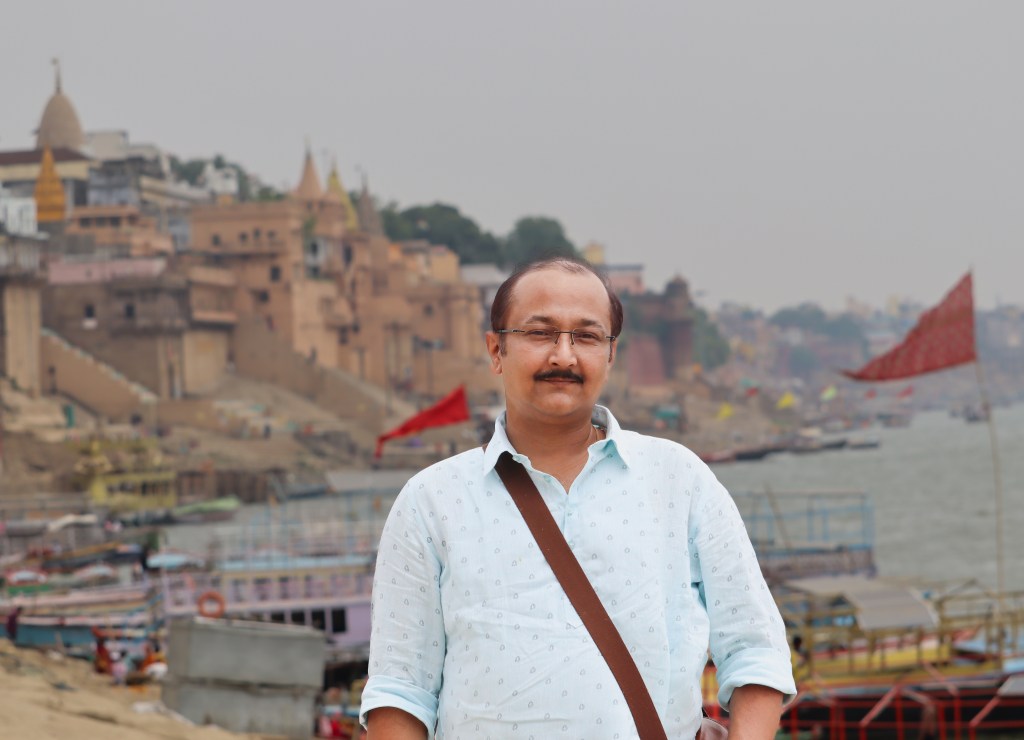


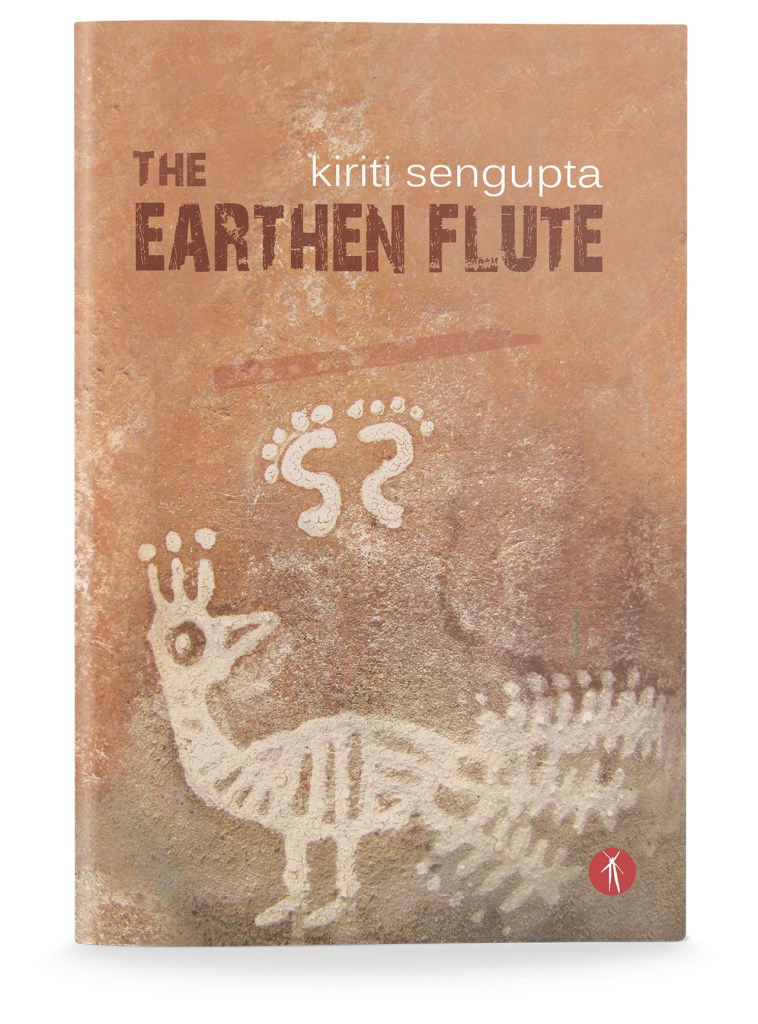


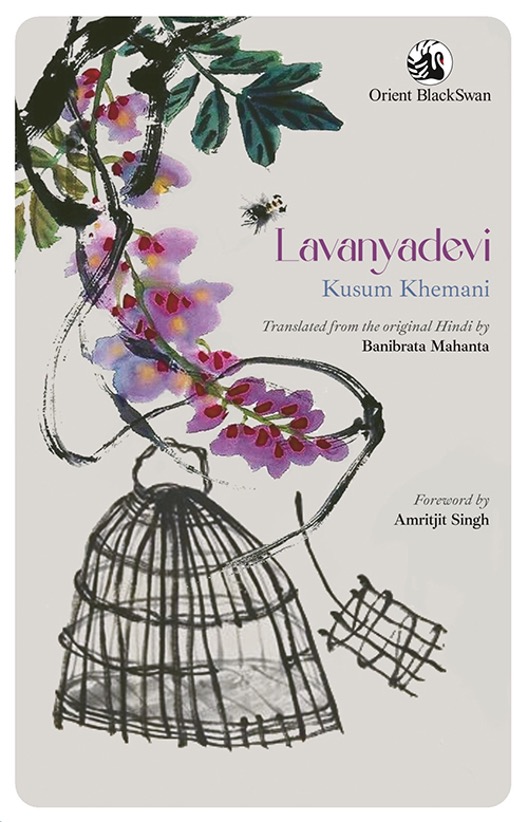


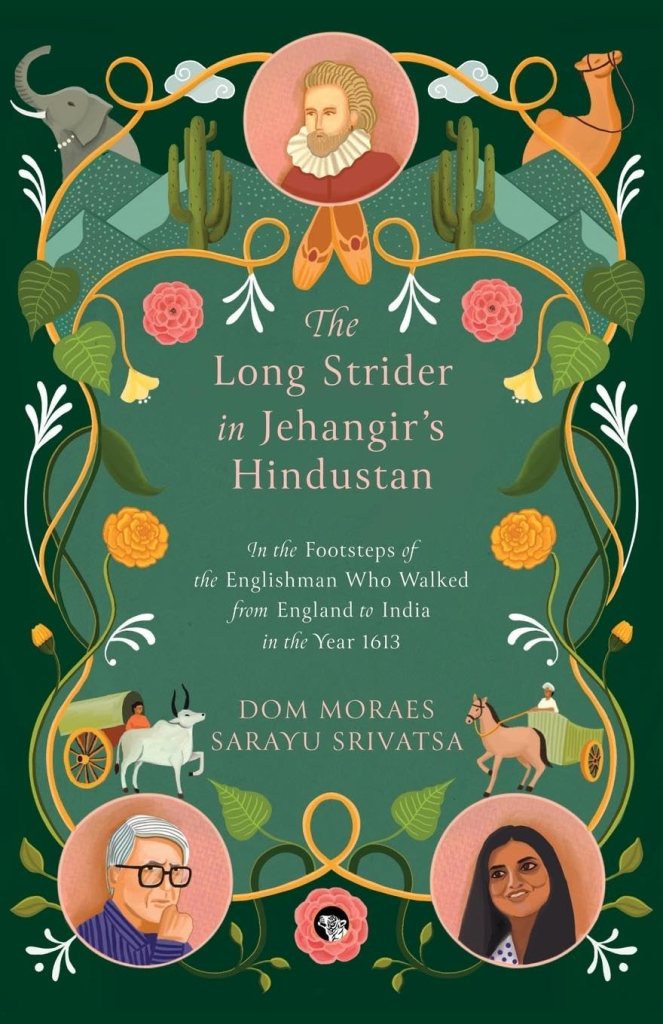

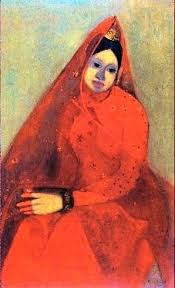
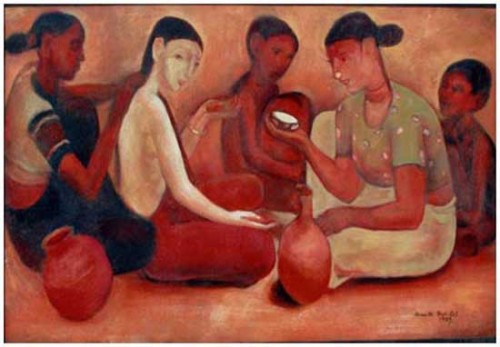
 Borderless