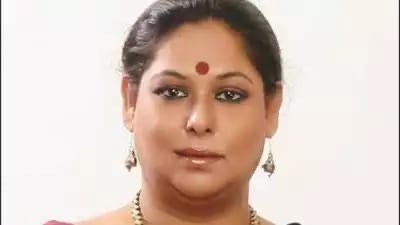
Poulami Bose Chatterjee converses with Ratnottama Sengupta
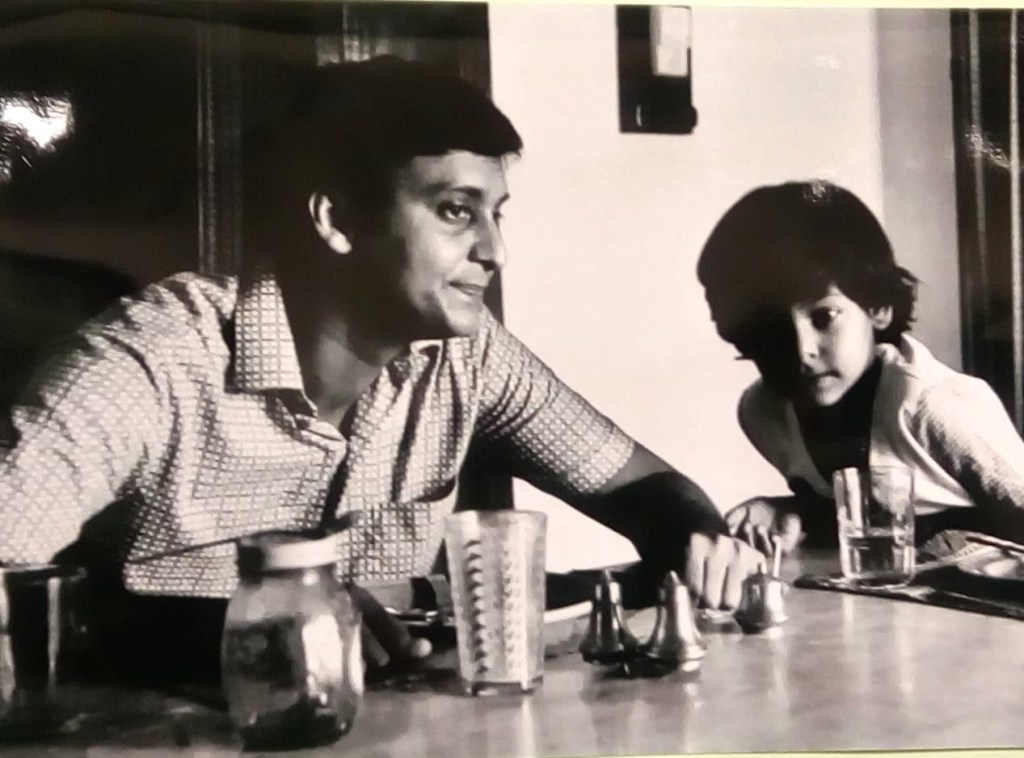
Young Soumitra Chatterjee with his daughter, Poulami. Photo provided by Ratnottama Sengupta
“All the recovery Rono Bhaitu[1]( Soumitra’s grandson) has made, is entirely due to his mother,” Soumitra Chatterjee (1935-2020) had said to me when I met him before Covid set in. His voice was laden with deep affection and paternal pride for his daughter. Deservedly so, as the world has been witnessing since the star actor passed away in November 2020. Poulami took upon herself the male mantle of lighting her father’s pyre.
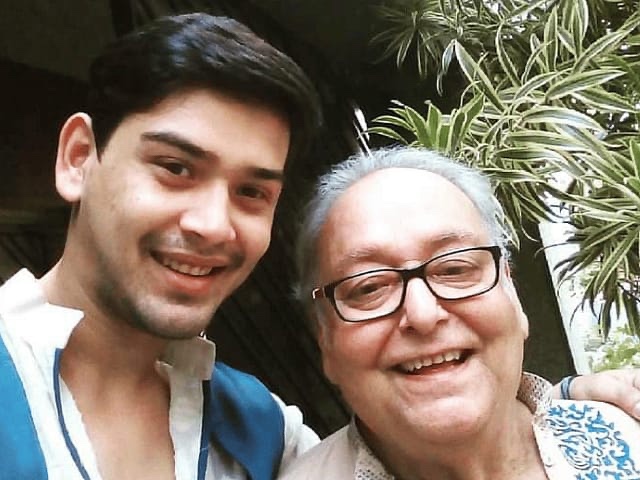
An older Soumitra Chatterjee with his grandson, Ronodeb Bose. Photo provided by Ratnottama Sengupta
But that was neither the beginning nor the end of her duty towards her father. I had seen her perform on stage alongside the thespian in Homapakhi [A Legendary Bird] that had explored the complexities of a society trying to reconcile its modern aspirations with traditional roots.
And last November she directed Janmantar [Rebirth], an original play Soumitra Chatterjee had written in 1993 but was never staged before. Seen through the eyes of a matinee idol who is visiting a remote village in Purulia, it focused on ills like child marriage, witch hunting, clash between and land owners and cultivators. “Unfortunately, 30 years later too, all the ills are still thriving on that soil,” Poulami said to me.
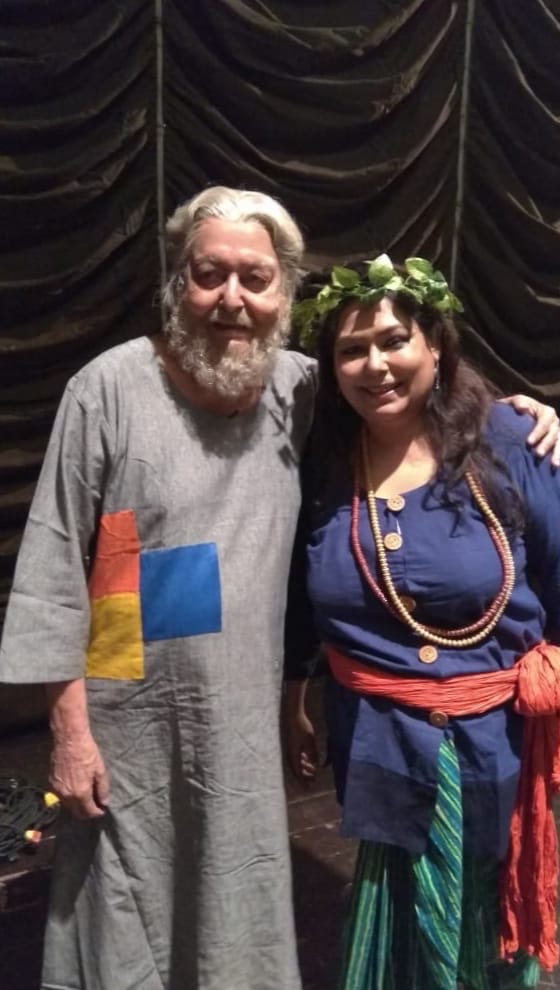
Poulami with Soumitra. Photo provided by Ratnottama Sengupta
And in January, even as the definitive biography Soumitra Chatterjee and his World was being launched in the Kolkata Literary Meet, she staged Chandanpurer Chor [The Thief of Chanderpur], his light hearted transliteration of Jean Anouilh’s Carnival of Thieves[2], to mark his birth anniversary.
On the eve of the International Women’s Day I conversed with Poulami, whose parents have been an integral part of my life too.
Ratnottama Sengupta: Who is Poulami? A Bharatanatyam dancer? A theatre person? Mother of an actor with a brief trajectory? Or, daughter of Soumitra Chatterjee?
Poulami Bose Chatterjee
Poulami Bose: I think Poulami is a bit of all this — along with a passionate theatre practitioner. I am my mother’s daughter too. I hope I am a loyal friend to my friends. But above all I’m myself. I like to think of myself as a free spirit — absolutely totally in love with my daughter and son and music and dance and theatre and all that is wonderful in the world.
RS: When did you first realise that your father was not a 10-5 pm office going father like that of other girls? That he was a star?
PB: For a long time in my growing up years I actually didn’t realise how big a star he was. He was a very loving, hands-on father, very involved in our lives. I always knew he was an actor but didn’t realise the magnitude of his stardom. He never brought that aspect home. Our home was always filled with lively discussions, about books, music, paintings, dance, theatre, cinema, the environment, travel… It was a beautiful childhood, very loving, very secure.
Bapi [father] and Ma were always introducing us to new things. Encouraging us to embrace the world. I thought that was normal and that’s what every father was like. Only after I grew up did I realise his impact on the Bengali moviegoers’ lives.
RS: What did a ‘cine star’ mean to you when a) you were learning Bharatanatyam under Thankamani Kutty? b) Studying? c) Getting married to Ruchir Bose?
PB: The word ‘Cine Star’ didn’t matter much when I was learning dance or studying because I was treated just like any other student, by my teachers and my friends. In fact my father didn’t believe in the word ‘Star’. He maintained that he was a professional actor — and we were certainly not encouraged to have airs and graces about us. So we interacted normally with people, and people did likewise. Some people were of course star struck but they didn’t make a difference to me. As for getting married to Ruchir: he was and still is a very down to earth person, far removed from the film industry, very humane. He and his family have always accepted me and treated me for who I am rather than who my father was.
RS: Who was a bigger star for you — Soumitra Chatterjee or Satyajit Ray?
PB: Of course Satyajit Ray! Soumitra Chatterjee was my father first and then everything else, whereas Satyajit Ray was larger than life. We grew up hero worshipping him. Our whole family was absolutely in awe of him — as a person, as a filmmaker, an author and the rest. We were influenced a great deal by his way of life. His sensibilities. In fact we still idolize him.
RS: Which films of Soumitra Chatterjee have you loved most?
PB: Oh there are so many! Apur Sansar, Sansar Simante, Jhinder Bondi, Koni. Ekti Jiban, Dekha, Mayurakshi, Agradani, Ashani Sanket, Abhijan, Sonar Kella, Ganadevata, Atal Jaler Ahwan, Aparichita, Teen Bhubaner Pare, Baghini, Basanta Bilap, Shakha Prasakha, Charulata, Kapurush, Akash Kusum, Dwando, Borunbabur Bondhu…[3] I can go on.
The most impressive thing for me was his versatility. He was different in all the films that I have mentioned above. He was one actor who didn’t have mannerisms. He always became the character. I have seen him doing a lot of homework, research to delve deep into the character’s psyche. Acting was his passion and that was evident in whichever role he played.
RS:Which film of your father has impacted you most? One that moved you at a personal level, perhaps because you identified with it most?
PB: I think Koni. His now iconic dialogue, “Fight Koni, fight!” has stayed with me till this day. Whenever I feel low or face any kind of obstacle, I always remember him in the film. How the human spirit is capable of rising against all odds. How hard work and determination can carry you forward. It inspires not to give up without a fight.
RS: Soumitra Da was a Master in Bengali; Deepadi[4] in English. Who guided you in your studies? Who selected what books you will read?
PB: My parents, like I said earlier, were hands on parents. They, both, helped me with my school work. The atmosphere in our house revolved around books, so we read a lot while growing up. Ma had done her MA in Philosophy. She and Bapi introduced me to both English and Bengali literature. Bapi was more strict, he expected me to read classics and serious books. Ma was more liberal, she let me read anything I wanted to, including romance novels which my father thought were a waste of time.
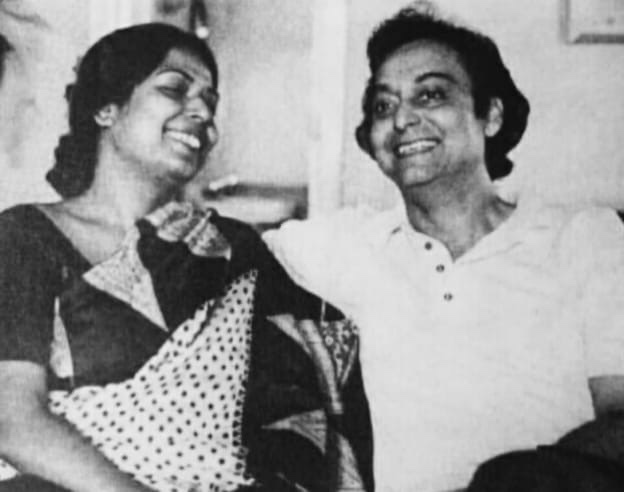
Soumitra and his wife Deepa. Photo provided by Soumitra Chatterjee
RS: So who are your favourite authors?
PB: I am eclectic in my choice. I read classics as well as bestsellers, plenty of them. My favourite authors are Tarashankar Bandopadhyay, Bibhuti Bhushan, Manik Bandopadhyay, Jibanananda Das, Shakti Chattopadhyay, Sunil Gangopadhyay, Charles Dickens, O Henry, Oscar Wilde, Maupassant, Shirshendu Mukhopadhyay, Samaresh Basu, John Grisham, Pablo Neruda, Gabriel García Marquez, Arundhati Roy, Agatha Christie, Akhtaruzzaman Elias, Humayun Ahmed, Jeffrey Archer, Khaled Husseini, Chitra Divakaruni Banerjee, Satyajit Ray, Sukumar Ray, Saradindu Bandopadhyay, Paolo Coelho, Gerald Durrell, Charlotte Bronte, Emily Bronte, Lewis Carroll… to name a few!
RS: Soumitra Da was a poet. He also translated plays — classics of world theatre — into Bengali. What was he most happy to do — act in movies? Write and direct plays? Or retire to the inner world of poetry?
PB: All three. I’ve never seen him sit idle or waste time. It depended on his mood — he loved doing all three. But I must add: theatre was, always, his first love. He was deeply influenced by Sisir Bhaduri (1889-1959), with whom he had started out. He directed plays for Pratikriti, a group that Ma had — and he directed plays for Abhinetri Sangha, set up by the actors of Tollygunge.
RS: Deepadi was an ace badminton player. Did she give up her own world to be Mrs Soumitra Chatterjee?
PB: She gave up her career primarily for us. Bapi was at the peak of his career and was naturally very busy. Ma felt we needed to have at least one parent around, always. In retrospect, I realise it was a huge sacrifice. But I have to say, both my brother and I needed her. I think she realised that and did what most mothers do: she prioritized us over her career.
Ma had the biggest heart ever. She was more intelligent than the three of us put together. And she was non-judgmental about who she was reaching out to. So many sportswomen she helped, on her own. And I vividly remember this young Muslim boy in New Market who always carried her shopping to the car. One day Ma learnt that he had TB. She immediately brought him home and organised a room on the terrace for him to stay until he recovered. She didn’t hesitate because she had children, she didn’t seek the advice of doctors, she didn’t think twice because her husband was a star!
RS: Why did you choose to carry forward Soumitra Chatterjee’s legacy on stage rather than on screen?
PB: Theatre kind of seeped into me. I used to watch Bapi – when he was idling, he would arrange the empty cigarette and matchboxes to design sets. I have been on stage ever since I could walk. It is my first love. I’m passionate about live performances, be it dance or theatre. Not that I didn’t get offers for films but I never actively pursued them. I married relatively early and had both my children by the time I was 26. Stage was always more accommodating and easier to manage. And till now the magic of the stage hasn’t worn off. I am still madly in love with the stage. Screen just didn’t happen… no particular reason, really.
RS: Soumitra Da was proud of his grandson’s screen presence. And he was extremely proud of the manner in which you handled your son’s unfortunate accident. Would you like to talk about it?
PB: Bapi had high hopes for Ronodeep. He felt Rono was a very sensitive actor perfectly suited for the screen. He was devastated by Rono’s accident. It was the most tragic thing to have happened in all our lives. But I have come to terms with it. I count my blessings — it could have been worse! Rono is with us — a bright and wonderful boy, sensitive and sweet, full of love and empathy. He still has a long way to go in terms of recovery and health but he’s getting there, one step at a time…
I have learned a lot from this phase of my life. I continue to learn every day. It has also shaped me, moulded me as a person. Bapi-Ma told me always to have grace even under pressure, to be always dignified. I have tried to follow them.
RS: Can you recount one cherished moment with your father?
PB: In May 2020, months before he passed away, during Covid, Bapi and I were just sitting and talking about various things. Suddenly he told me, “Mitil I have never said this to you before but I want you to know that I am very proud of the way you have conducted yourself during Bhaitu’s accident and every day since then. Your dignity and your grace has made me really happy. I’m so proud that you have turned out to be the person you are!”
All through my life I will cherish this one moment.
RS: In today’s world many daughters are taking up the responsibility of carrying forward the legacy of their fathers. What, in your opinion, has brought about this social change? Did Soumitra Chatterjee raise you to (consciously) fight patriarchy?
PB: I guess the world is waking up to the fact that what sons can do, daughters can do better! I really don’t know what exactly has brought this social change but I definitely welcome it. My daughter is a great source of strength for me. She is my best friend. My father had raised my brother, Sougata, and me as equals, maybe favouring me a tad more!
Bapi was always ahead of his times. He always told me, “The sky is the limit, you can do whatever you set your mind to.” But it was Ma who very consciously taught me to fight patriarchy. She was a champion for the girl child.
RS: Soumitra Da was never lured by the reach and fame of Bollywood? So, why did he direct Stree Ka Patra[5], the telefilm he made for the national television, in Hindi?
PB: Bapi believed that he could deliver best in his own mother tongue. Besides, he was not enamoured of the kind of films made in Bollywood at that time. He loved his life here, his theatre, his poetry, and co-editing Ekshan, the culture magazine that first published Satyajit Ray’s script. Going to Bollywood, he felt, would put a stop to all his literary and theatrical pursuits.
However, he got the offer to direct Stree Ka Patra for National Doordarshan, and it came with the clause that it had to be in Hindi. The other telefilm he directed, Mahasindhur Opar Theke [ From the Other side of the Ocean] was in Bengali
RS: Many uncharitable people say that Soumitra Chatterjee wasted his talent by limiting himself to Bengali films and by indiscriminate selection of roles — because of his family responsibilities. Your response to this?
PB: Limiting himself to Bengali films was a conscious decision he made. And I have just elucidated the reasons. Yes he wanted to provide for his family, and he did so the only way he knew to — by acting. He never shied from saying that he was a professional actor. And if he wanted to take on the responsibilities who is anyone else to talk about it?
He could have abandoned his family like many others. He chose not to. His family, his life, his choices… that’s all I can say.
RS: You have grown up in close proximity with stars like Sharmila Tagore, Madhabi Mukherjee, Sandhya Roy, Tanuja, and directors like Tapan Sinha, Ajoy Kar, Tarun Majumdar, Rituparno Ghosh. Please share some memories/ anecdotes with us.
PB: The only name in the list who I have grown up in close proximity with is Tapan Sinha, whose birth centenary is being celebrated. He was a wonderful human being! While we were growing up we didn’t interact much with people from the film industry. We certainly met them but at parties, weddings, social events…
My parents had a huge circle of friends. A doctor’s group. My mum’s friends. Poets like Shakti Kaku and Sunil Kaku. My dad’s friends like Nirmalya Acharya, the co-editor of Ekshan. Directors Ajit Lahiri, Ashutosh Mukherjee, Nripen Ganguly who was fondly called ‘Nyapa Da.’ Friends from theatre. His childhood friends. It was a vast cross section of people, so it was wonderful, happy and great fun growing up around so many amazing people.
RS: Gaachh [Tree], the documentary by Catherine Berger, focused only on his stage life. Abhijan[6][The Expedition] directed by renowned actor Parambrata Chatterjee, did not excite cineastes who have adored Soumitra Chatterjee, honoured with Dadasaheb Phalke for cinema, Sangeet Natak award for theatre, decorated with the Lotus award of Padma Bhushan and the French Order des Arts et des Lettres. Will you give us a biopic of Soumitra Chatterjee on stage?
PB: I am not in favour of a biopic for someone like Bapi. On the other hand, a stage production would be limiting. He was a multihued talent. It is difficult to capture so many facets of his personality. It is a daunting task to encompass every nuance, every shade of such an extraordinary life in a single film. A biopic should not be made if it does not do justice to the magnificence of the man.
.
[1] Ronodeb Bose, grandson of Soumitra Chatterjee, had a bike accident in 2017
[2] Jean Anouilh (1910-1987), Carnival of Thieves(1938)
[3] Bengali films in which Soumitra Chatterjee played the lead.
[5] A pun in the heading. Stree is woman, Patra is vessel as well as a prospective groom. So, a Woman’s Vessel or Prospective Groom
[6] Soumitro Chatterjee played the lead in the 1962 Abhijan, directed by Satyajit Ray
.
Ratnottama Sengupta, formerly Arts Editor of The Times of India, teaches mass communication and film appreciation, curates film festivals and art exhibitions, and translates and write books. She has been a member of CBFC, served on the National Film Awards jury and has herself won a National Award.
.
PLEASE NOTE: ARTICLES CAN ONLY BE REPRODUCED IN OTHER SITES WITH DUE ACKNOWLEDGEMENT TO BORDERLESS JOURNAL
Translations are like bridges. Three years ago, we decided to start a bridge between Tagore’s ideas and the world that was unfamiliar with his language, Bengali. He has of course written a few pieces in Brajbuli too. We started our journey into the territory of Tagore translations with Aruna Chakravarti’s Songs of Tagore. Now we have expanded hugely this section of our translations with many prose pieces and more translations of his lyrics and poetry by writers like Aruna Chakravarti, Fakrul Alam, Radha Chakravarty, Somdatta Mandal, Himadri Lahiri, Ratnottama Sengupta, Chaitali Sengupta and Nishat Atiya other than our team’s efforts. To all these translators our heartfelt thanks. We share with you their work celebrating one of the greatest ideators of the world.
Prose
Stories
.Aparichitaby Tagore :This short story has been translated as The Stranger by Aruna Chakravarti. Click hereto read.
Musalmanir Galpa(A Muslim Woman’s Story): This short story has been translated by Aruna Chakravarti. Clickhere to read.
One Small Ancient Tale: Rabindranath Tagore’s Ekti Khudro Puraton Golpo (One Small Ancient Tale) from his collection Golpo Guchcho ( literally, a bunch of stories) has been translated by Nishat Atiya. Click hereto read.
Bolai: Story of nature and a child translated by Chaitali Sengupta. Click hereto read.
Baraf Pora (Snowfall) : This narrative gives a glimpse of Tagore’s first experience of snowfall in Brighton and published in the Tagore family journal, Balak (Children), has been translated by Somdatta Mandal . Clickhere to read.
Himalaya Jatra( A trip to Himalayas) :This narrative about Tagore’s first trip to Himalayas and beyond with his father, has been translated from his Jibon Smriti (1911, Reminiscenses) by Somdatta Mandal. Click here to read.
Library: A part of Bichitro Probondho(Strange Essays) by Rabindranath Tagore, this essay was written in 1885, translated by Chaitali Sengupta. Click hereto read.
Book Excerpts
The Parrot’s Tale: Excerpted from Rabindranth Tagore. The Land of Cards: Stories, Poems and Plays for Children, translated by Radha Chakravarty, with a foreword from Mahasweta Devi. Clickhere to read
Rabindranath Tagore Four Chapters: An excerpt from a brilliant new translation by Radha Chakravarty of Tagore’s controversial last novel Char Adhyay. Click here to read.
Farewell Song :An excerpt from Radha Chakravarty’s translation of Tagore’s novel. Click hereto read.
Oikotan(Harmonising) has been translated by Professor Fakrul Alam and published specially to commemorate Tagore’s Birth Anniversary. Click hereto read.
Monomor Megher O Shongi (or The Cloud, My friend) has been translated by Professor Fakrul Alam. Click here to read.
Professor Fakrul Alam has translated Tomra Ja Bolo Tai Bolo, Hridoy Chheele Jege and Himer Raate — three songs around autumn from Clickhere to read.
Tagore’sAchhe Dukhu, Achhe Mrityu, (Sorrow Exists, Death Exists) has been translated from Bengali by Fakrul Alam. Click hereto read.
Tagore’s long poem, Dushomoy (translated as Journey of Hope though literally the poem means bad times). Click here to read the poem in English and listen to Tagore’s voice recite his poem in Bengali. We also have a sample of the page of his diary where he first wrote the poem as ‘Swarga Pathhe'(On the Path to Heaven).
Deliverance by Tagore: ‘Tran’by Tagore, a prayer for awakening of the subjugated. Click here to read the translation.
Abhisar byTagore: A story poem about a Buddhist monk by Rabindranath Tagore in Bengali. Click here to read the translation.
Amaar Nayano Bhulano Eledescribes early autumn when the festival of Durga Puja is celebrated. Click here to read the translation from Bengali.
Morichika or Mirage by Tagoreis an early poem of the maestro that asks the elites to infringe class divides and mingle. Click here to read the translation from Bengali.
Pochishe Boisakh(25th of Baisakh) is a birthday poem Tagore wrote in 1922 and from he derived the lyrics of his last birthday song written in 1941. Click here to read.
Chhora or Rhymes, a poem describing the creative process, it was written in 1941. Click here to read.
Okale or Out of Syncgives a glimpse of how out of sync situations are also part of our flow. Click here to read.
Mrityu or Death dwells on Tagore’s ability to accept death as a reality. Clickhere to read.
Songs of Tagore: Seven songs translated by Aruna Chakravarti from a collection that started her on her litrary journey and also our Tagore translation section. Click here to read.
There is no bar to losing myself in an imaginary world.
I can soar high on the wings of a song in my mind.

-- Tagore, Losing Myself
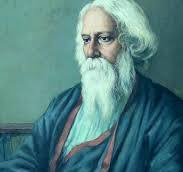
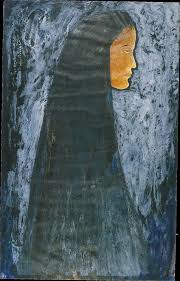
Painting of Rabindranath Tagore (7th May 1861- 7th August 1941) by his nephew, Gaganendranath Tagore (1867-1938). Courtesy: Creative Commons
Soaring on imaginary wings, on Rabindranath Tagore’s 162nd birth anniversary, we explore his vision for a better world while trying to recreate in English the first poem the maestro wrote for his own birthday which was later made into a song, his last birthday celebration as imagined by Aruna Chakravarti in her historical novel, Daughters of Jorsanko, and also the translation of the last song he wrote for the occasion.
As a change-maker, the maestro tried to close gaps by both his actions— Santiniketan and Sriniketan — and by his writings. The translations of the birthday songs written by the maestro himself brings to the fore what he looked forward to and prayed for. The fiction explored here creates fantastically independent women Tagore visualised, breaking the boundaries of social conventions. The characterisations can be seen both in the short story translated by Aruna Chakravarti especially for this issue and also in the novel Farewell Song, translated by Radha Chakravarty. This has been brought to attention in Meenakshi Malhotra’s review of the novel. Both the short story and the novel show the emergence of the new independent woman of Tagore’s imagined world. A hundred years later, are we able to accept women as independent as visualised by Tagore? As progressive?
And to round up our section is Professor Fakrul Alam’s musing on seasonal songs of Tagore as he translates the lyrics and discusses their relevance. These also reflect on the maestro’s need to close social gaps as Alam translates in one of the songs:
Rain streams down incessantly
Alas wayfarer; alas disabled, homeless ones!
The wind moans on and on.
In Farewell Song: Revisiting Tagore’s Vision of Modern Love, Meenakshi Malhotra revisits Tagore’s Shesher Kobita, translated by Radha Chakravarty and reflects on the modern woman and romance as shown by Tagore by bringing in a brief comparison between the women leads of Aparichita and the novel. Click here to read.
In Rabindranath’s Monsoonal Music, ProfessorFakrul Alam brings to us Tagore songs in translation and in discussion on the season that follows the scorching heat of summer months. Clickhere to read.
Shesher Kobita(1928-29)Translation of Shesher Kobita by Radha Chakravarty (2011)
Romance and reality inevitably clash. While Tagore is not unconvinced about the existence of conjugal love in some of his stories, conjugality and romance make uneasy bedfellows inFarewell Song. Marriage is rooted in the humdrum, quotidian, everyday but romantic love dwells on another astral plane. It is the realisation of the gap between the two that informs the novel/la, a realisation that never the twain shall truly meet, manifesting itself in the pages of this complex narrative that folds into itself a romantic love story, social satire and literary criticism. The multiple strands are brilliantly woven into the plot of this novel, which could be classified as a prose-poem. Its very title, “Shesher Kobita”, literally meaning last poem and translated by Professor Radha Chakravarty as Farewell Song, is evocative of its lyricality.
Shesher Kobita is primarily a love story between two young people, Amit Raye and Labanyalata, both of whom express their love in the most lyrical vein imaginable. Labanya, like many of Amit’s compatriots in Calcutta, is an avid reader and staunch admirer of Rabindranath Tagore’s writing, and her familiarity with Tagore’s work is evident in much of her conversation and in many of her perceptions. Amit, on the other hand, persists in citing the words of a ‘modern’ poet, Nibaran Chakrabarti, who is a persona created by Amit himself, to express his views about poetry. Readers see through this ruse quickly enough, and the third person narrative , often allows space for narrative commentary. As the translator, Radha Chakravarty points out, “Two schools of Bengali poetry, pro and anti-Tagore, are pitted against each other through the dialectic of the Amit-Labanya encounter.” Tagore cleverly plays out and into the literary /poetic debates of his later decades (1920s onwards) in order to prove his contemporary relevance and above all, the modernity of his work.
Amit, the protagonist, is from an elite and rich family, privileged enough to have gone to Oxford and wealthy enough to be under no compulsion to earn immediately. He’s a dilettante who is interested in the vagaries of style, which is seen as being a notch higher than fashion. Brilliant but restless, mercurial as quicksilver, he cannot commit himself to any one thing or relationship. Yet, getting away from the highly artificial social life of Kolkata, to the relatively pristine and pastoral world of Shillong, he falls deeply, unequivocally in love, with the quiet, studious but unassuming young girl, Labanyalata and establishes a soul-connection, as it were, with her. Yet this deep commitment pales and collapses in the face of the demands of the everyday social world. It is this space–“habitus”– which is occupied by Amit’s sister’s friend, Ketaki (Katy) Mitra. To quote from Radha Chakravarty’s introduction to her translation of the book, “Two forms of love are presented through Amit’s involvements with Katy Mitter and Labanya-one rooted in the material and the social, the other, embedded deep within the soul”
The expression of this soulful love dips into and is expressed through not only Bangla literature and poetry but is steeped in the idioms of English poetry, from Shakespeare to the metaphysical poets. Seeing a book of John Donne’s poems on Labanya’s table, Amit quotes, “for God’s sake, hold your tongue and let me love.” And yet, his intense love seems doomed as an idealistic ephemeral bliss, to be swept away by the ‘real’. Not a keen observer of nature, Amit seems to indulge frequently in “pathetic fallacy”, appropriating aspects of the landscape in order to express his moods and feelings. The landscape is often symbolic with Amit and Labanya meeting for their trysts at the site of a waterfall, always a significant feature of Tagore’s landscapes. Mita (meaning friend) and Banya (of the forest) –the lovers’ names for each other– create a world of their own, full of poetry and lyricality. And yet, inevitably, inexorably, the social, material, everyday world presses upon them and the lovers part. And yet, as the novel draws to a close, we do not experience this parting/ estrangement as a tragedy but almost as much of a resolution and closure that the novel could offer.
For Amit Ray/e is an embodiment of the modern split subject, the divided self. He has made up a world of words, and it is in this world that his heart and mind dwell. It is this inner space-the still centre of the turning world (to quote from another modern poet) that Labanya inhabits. And this is what Labanya, intelligent and perceptive, realises. Labanya, in her own way, is the new woman- independent and emotionally self-reliant, reminding one of Kalyani in ‘Aparichita‘, translated by Aruna Chakravarti as ‘The Stranger‘. They are women who dream of a life beyond domesticity and conjugal felicity. For them marriage would be a slippery slope, not a nesting ground. In these versions of ‘modern’ love, each person, especially the women, are complete and self-assured in themselves. This is particularly true of Kalyani, where we get a sense that she towers over the suitors in her life.
Labanya is able to connect to connect with Amit as a friend. to Amit, the friendship acts as an anchor, a stay against the vacuousness of his urban existence. Such a soulful connection belongs to the realm of dreams and these connects are what dreams are made of. However, dreams often shatter, or worse, fester. When Amit is asked whether in marriage, partnership and companionship cannot combine, his reply is illuminating. Marriage is the finite to the infinity of love and romance. He compares his relationship to the westernised Ketaki/Katy, his girlfriend in England who later becomes his wife, after the interlude with Labanya. “My initial relationship with Katy was indeed based on love but it was like water in a pitcher, to be collected daily, and used up everyday.” In contrast, his love for Labanya “remains a lake, its waters not be carried home but meant for” his “consciousness to swim in”. This realisation creates no inner conflict because he also glimpses that Labanya is someone who lives in his dreams, “in the twilight of gleams and of glimpses” (Tagore’s lines from Gitanjali, a basket of song-offerings). In a serendipitious resolution, Labanya also finds her companion in domesticity, her father’s brilliant student Shobhanlal, who has yearned for her for years, only to be spurned. Thus the story becomes not a tragedy of betrayal, but an extended musing and discussion on love, romance and marriage of the modern subject, in a world where the ground beneath the feet of the characters is constantly shifting.
It is this sense of a world in flux and its nuances that Radha Chakravarty’s translation deftly captures. Translating a novel of discussion requires a constant awareness of key concepts and multiple contexts — literary, social, cultural and philosophical. As a skilled translator and litterateur with an extensive repertoire and many years of experience, the editor-translator has brought her many accomplishments to the task of translation. Translating poetry and its nuances is challenging; here, the translation conveys immense wealth of meaning and richness of detail. The novel, in a sense, is a plea for romantic yearning and aspiration, for reaching out to those “unheard melodies” that are far sweeter than those which are available for the asking.
Unlike Bankim, who had depicted the new woman in an unflattering light a few decades earlier, Rabindranath was essentially sympathetic to women. Women were often among his closest associates and companions, and his friendship with women like the Argentinian Victoria Ocampo not only spurred him into song , but made him rethink the contours of modern cosmopolitan womanhood. Well-read and accomplished, women like Labanya not only challenge traditional ideas of womanhood, but is reflexive and aware enough not to judge Katy Mitra. Torn between the pull of intellectual independence and the desire for surrender, Labanya also represents the emergence of the female subject in modern Bangla literature.
.
Dr Meenakshi Malhotra is Associate Professor of English Literature at Hansraj College, University of Delhi, and has been involved in teaching and curriculum development in several universities. She has edited two books on Women and Lifewriting, Representing the Self and Claiming the I, in addition to numerous published articles on gender, literature and feminist theory.
.
PLEASE NOTE: ARTICLES CAN ONLY BE REPRODUCED IN OTHER SITES WITH DUE ACKNOWLEDGEMENT TO BORDERLESS JOURNAL
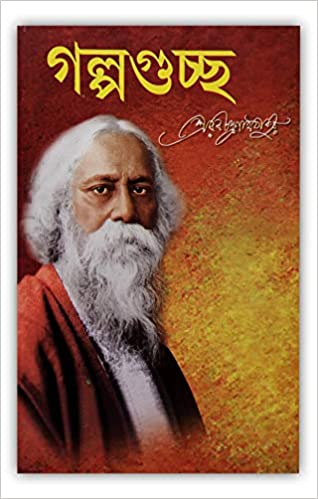
Written in 1916 by Rabindranath Tagore, ‘Aparichita’ is a short story featured in his ‘Golpo Guchho’ (A Collection of Stories). It has been translated from Bengali by Aruna Chakravartias The Stranger.
Goplo Guchho, a collection of 95 short stories was originally published in five parts by Indian Publishing House from 1908-1909
The Stranger
I am twenty-seven years old today. My life has been unremarkable, so far, both in terms of length and quality. Yet it is not without value. It can be compared to that of a flower on whose breast a honeybee had nestled once, leaving behind a faint glimmer that germinated and swelled into a tiny ball of fruit.
Something similar happened to me. The encounter was brief; almost ephemeral. In chronicling the events I shall be brief too. But make no mistake. Though short, my story should not be passed over unread. Those who take the trouble to go through it will find meaning in it.
I am well educated. I have passed all my college examinations with ease. I am good looking too. When I was a child my school masters would mock my pretty face. Simul phul they would call me. Makal phal. Simul is a flower and makal, a fruit. Both have gorgeous exteriors but are of no use to anyone. The first is totally lacking in fragrance and the second in flavour. I would shrink with shame and resent the unfairness of these remarks. But as I grew older, I told myself that if another birth was granted to me, I would like it to be a replica of this one. My face should be as handsome and those of my schoolmasters as twisted with derision as when I was a lad.
My father had been poor once. In later life he made a lot of money. However, his profession as a lawyer demanded so much time and effort that he never got a chance to enjoy any of it. He must have heaved a sigh of relief when he died. For the first time he had been granted a rest.
My upbringing was left to my mother. Having come from a poor family she never lost sight of the fact that she was a wealthy woman. Nor did she allow me to do so. As an infant I remember being carried long after I had learned to walk. As a result, I never really grew up. I still look amazingly young for my age. I could easily pass for the elephant headed god’s younger brother nestling in his mother Annapurna’s lap.
After my father’s death, my maternal uncle took charge of our affairs and became my guardian. Mama[1] was only six years older than me. But, like the parched sands of a subterranean river, he steadily sucked away everything we had… assets, liabilities, hopes, cares, dreams and aspirations. The draining had been so thorough that we were unable to access anything on our own. We had to dig into him for every drop. In consequence, I lived a life totally shorn of responsibility.
Fathers of marriageable daughters could not but consider me a good catch. I had no bad habits. I’d never even touched tobacco. I was simple and good tempered. That’s because being simple and good tempered made life easy for me. I obeyed my mother because I lacked the guts to disobey her. I was prepared to allow this quality full play in future. Girls permitted to choose their own husbands would do well to keep this in mind, when making their choice.
As soon as the time was ripe, marriage proposals from the best families started to pour in. But my uncle, who was the Chief Agent of the Dispenser of my Destiny, had very definite ideas of what constituted a good match. The girl had to come from an impoverished family for only then would she keep her head bowed and be humble and obedient. On the other hand, what was the value of a daughter-in-law who didn’t bring a substantial dowry? My uncle’s requirements were simple. The father had to be poor yet ready to give him all the money he wanted. He must be the kind of man Mama could milk with ease yet wasn’t obliged to treat with respect. One who wouldn’t complain if he was offered tobacco in the coconut shell hookah meant for subordinates instead of the lordly silver albola he smoked himself.
My friend, Harish, works in Kanpur. On one of his visits to Kolkata, he said to me, “O hey! Speaking of brides, I know an excellent girl.”
I was in a state of limbo at the time. I had passed my M.A. some months earlier. Now there was nothing for me to do. I didn’t have to study or look for a job. Nor was I required to poke my nose into any of my financial affairs. No work, no worries, no opinions were expected of me. A desert of indolence and inactivity stretched before my eyes. I was consumed with thirst for something; someone… I had no idea who or what I was searching for.
In this frame of mind Harish’s words struck a chord in me. My mind and body trembled with an unknown emotion — the way newly budding leaves on the boughs of a bakul[2] tree shiver and quiver with the first warm winds of spring, throwing dancing patterns of light and shadow on the ground. Harish had a romantic side to him, and he spoke with tenderness and passion. He described the girl in words that fell like a sweet shower on my shrivelled soul. I looked at him with star struck eyes, “Why don’t you speak to Mama, Harish?” I begged.
Harish was ready to oblige. He was a great entertainer, and everyone enjoyed his company including my uncle who, once they sat down to a chat, was loath to let him go. Mama, of course was more interested in the girl’s father than in her. From Harish’s description he came to know that, though wealthy once, the gentleman was now in straitened circumstances. However, there were still some good scrapings left in the pot of gold bequeathed to his family, years ago, by the goddess Lakshmi. Unable to keep up the lofty standards set by his forefathers, he had decided to leave his ancestral village and settle in a small town in the west where no one knew him and he could live a simple life, without worrying about lost prestige. He had just this one daughter, no one else, so he wouldn’t hesitate to pour the contents of the pot into the hands of one who ensured her happiness. What could be better? My uncle was thoroughly convinced that this was the man he was looking for.
So far so good. But there was one worrying factor. The girl was fifteen. Why had she been kept unwed for so long? Was there some flaw in the family? “Arre na na[3]” — Harish hastened to explain. The father was very picky. He hadn’t found anyone he considered worthy of her, so far. He didn’t mind waiting till the right boy came along. But the girl’s age did. Refusing to stop at her father’s command it had marched on at its accustomed pace. Harish’s ability to charm his listeners and lull their fears, worked. Mama was persuaded to look into the proposal.
Mama considered any place outside Kolkata to be as alien and exotic as the islands of the Andaman. The furthest he had travelled in his life was to Konnagar. If he had been Manu[4], he would have forbidden the crossing of Howrah Bridge, in his Samhita[5], for who knew what dangerous territory lay beyond it? There was no question of his leaving Kolkata, so my cousin Binu was sent to Kanpur to conduct the negotiations and, if all went well, seal the new relationship by a ritualistic blessing of the bride. Mama had full faith in Binu da[6]’s good sense, good taste and sagacity. I would have liked to go with him and see the girl but couldn’t summon up the courage to ask for permission. I didn’t even dare ask to be shown a photograph.
Binu da returned satisfied. “She’ll do…,” he muttered, “pure gold.”
He tended to speak in monosyllables and was extremely reticent in his praise. Where another would have exclaimed “Wonderful!” or “Excellent!” he mumbled, “Not bad”. His “She’ll do” was ample affirmation. It was clear to all of us that Fate had smiled on me. Prajapati, the God of marriage, had given the nod.
As was to be expected, Mama decided that the wedding would be held in Kolkata. The resultant effect was the bride’s father was forced to make all the arrangements in a city of which he knew nothing. Shombhunath Babu was a handsome man of about forty. There were traces of silver in his whiskers though not in his hair which was black and plentiful. He had the kind of good looks that compels attention even in a crowd. The immense trust that he reposed in Harish was evident from the fact that he agreed to the marriage without seeing me. He set eyes on the one who was to be his son-in-law only three days before the ceremony.
I fervently hoped that he liked what he saw. It was difficult to tell. He spoke little in a very soft voice and listened quietly when Mama’s tongue wagged vigorously with exaggerated accounts of our wealth and status and our reputation as one of the first families of Kolkata. I squirmed with embarrassment under that gentle, probing gaze. But Mama’s enthusiasm would not be dampened. He went on and on. He probably assumed, from Shombhunath Babu’s subdued voice and manner, that the man was spineless and easily intimidated. The thought must have filled him with glee for, in fathers of brides, this quality was deemed a virtue. He remained seated when his guest rose to take his leave. He didn’t think it necessary to escort him to his carriage.
The cash component of the dowry had been agreed upon already. Mama, who prided himself on his extraordinary skill in negotiation; his well-honed ability to extract the best deal for himself in any given situation, now turned his attention on the quality and quantity of jewels that would adorn the bride’s person. Polite but pointed questions elicited the response he desired. Enough would be given to satisfy the most determined of blood suckers. I had no idea of what was going on between the two guardians. To tell the truth I wasn’t interested. Financial affairs were not my business. Besides I was confident that, in any battle of wits, Mama would emerge the winner. It mattered little that we didn’t need the money or that Shombhunath Babu was being squeezed dry. I was proud of Mama as were we all.
The turmeric ceremony was conducted with a lot of fanfare. So many trays of gifts were sent to the bride’s house with so many maids and servants carrying them, that doling out the necessary tips must have been a financial drain on her father. Exchanging gleeful remarks about the poor man’s distress and helplessness, Ma and Mama had a good laugh.
The wedding day arrived. The bridegroom’s procession was led by a mighty concert of drums, trumpets, flutes and fiddles. This set up such a pandemonium of discordant sounds that the noise could be compared to a stampede into Saraswati’s lotus garden, by a herd of mad elephants, violent enough to force the goddess of music to flee to safer havens. Covered with brocade and precious gems, I looked exactly like a jeweller’s shop in the middle of an auction. I had to prove to the bride’s father, had I not, the worth of the son-in-law he had had the good fortune to acquire? It was a battle of prestige and I rushed headlong to win it.
Mama was not impressed by the wedding venue. The assembly hall, to which the bridegroom’s party was ushered, was small and the seating somewhat constricted for the number of guests we had brought. The arrangements were on an ordinary scale, hardly befitting our family’s wealth and position. He was also a bit miffed by Shombhunath Babu’s behaviour. He found it strange. Rather cold and distant. If it weren’t for another man’s servile bowing and scraping, oily smiles and folding of hands, Mama might have felt incensed enough to walk out of the house with the bridegroom in tow. This was a lawyer friend of the bride’s father—a hulk of a man with a huge bald head and a very dark complexion. That he was in charge of the logistics was obvious from the greasy sheet he had wrapped around his middle and the cracked voice that was clearly the result of having shouted orders all day. The good thing was that, unlike the bride’s father, he was aware of the niceties of social behavior and what was owing to the groom’s party. He smiled and swayed his heavy head at everybody and addressed strings of flattering words to each, from the cymbal player in the band to the most distinguished of the wedding guests.
Shortly after our arrival Mama took our host aside and whispered something in his ear. The two walked out of the room. I don’t know what transpired between them but, within a few minutes, Shombhunath Babu returned. “Babaji!” he said, “Your presence is needed. Please come with me.”
The problem was a simple one. Some persons, not all, are ruled by a single compulsion. Mama was one of them. He had a goal before his eyes of which he was determined never to lose sight. This goal, he would never forgive himself if he failed to reach it even in the tiniest degree, was that he would never allow anyone to get the better of him. He had a horror of being cheated. The bride’s father had promised a good amount of jewellery. But could he be trusted to keep his word? The man seemed somewhat tight-fisted judging from the tips and return gifts the servants, carrying the turmeric, had brought back with them. Who knew if the bridal ornaments were of the weight and purity of gold promised? The sensible thing to do was to have their worth assessed before the rituals commenced. To wait till after the ceremony would be an exercise in futility. Thus, with due caution and good sense, he had included our family goldsmith in the wedding party.
My future father-in-law led me to a small room. It was empty, except for Mama who was seated on a chowki[7], and the goldsmith who sat on the floor with his scales, weights and touchstones spread out before him.
“Your uncle wishes to have the girl’s jewels tested before the ceremony,” Shombhunath babu looked at me with a strange expression in his eyes. “What do you say?”
I hung my head in silence.
“Why should he say anything?” Mama answered for me. “It’s what I want that counts.”
“Is that so? Do you endorse your uncle’s statement?” The gentle, thoughtful gaze unnerved me. Not knowing how to respond I tilted my head expressing assent. Financial affairs were handled by guardians. What right did I have to interfere?
“Very well.” Shombhunath Babu murmured. “The trouble is…it will take some time to remove the jewels. The bridal toilette is complete, and my daughter is wearing them already. Had I known….no matter… please stay here till I return.”
“Why?” Mama cried out surprised. “Why should he stay here? Go back to the hall, Anupam, and join the others.”
“No.” Shombhunath Babu’s voice was soft but firm. “He will stay here.”
He left the room and returned after half-an-hour with a bundle wrapped in a gamchha[8]. Spreading out its contents on the chowki, he invited the goldsmith to begin his examination. The goldsmith’s practiced eye told him the worth of what he saw in an instant. “There’s no need to examine anything,” he said, “The gold is hundred percent pure. Not a trace of alloy. Look.” Picking up a bangle he pressed it gently. A tiny dent appeared. “These are obviously from a bye gone era. Nothing like this is fashioned anymore. The girl’s grandmother’s perhaps?” He threw a questioning glance at our host.
The moment he heard this Mama whipped a notebook out of his pocket and started listing the ornaments one by one. He had to make sure that everything he had been shown would find its way into the family vault. A pleased smile appeared on his face. They were far more in number and of greater weight than he had expected.
Now, Shombhunath Babu picked up a pair of earrings from the pile. “Kindly examine these and let me know their value,” he said. The goldsmith turned them over in his hands. “Bought from an English shop,” he curled his lips disdainfully, “They have hardly any gold to speak of.” Shombhunath Babu took them from him and handed them to Mama. “Keep these with you,” he said. Mama’s face flushed a deep red with embarrassment. They were the earrings he had sent with Binu da for the bridal blessing.
“Go Anupam.” He tried to recover his composure. “Go sit with the others in the assembly—”
“No. No.” Shombhunath Babu interrupted smoothly. “There’s no need to go to the assembly hall just now. Dinner, for the bridegroom’s party, has been served and your guests have proceeded to the dining area. Let me take you there.”
“What!” Mama exclaimed, “Eat now? Before the ceremony begins…?”
“The auspicious hour is far off. Why wait till then? Please come with me.” There was something in his voice, a strength that came from a long habit of command, that compelled obedience. Mama rose meekly and followed him out of the room.
The meal, though not ostentatious, was well-cooked, neatly served and plentiful in quantity. The guests ate to satiety and were well content. Shombhunath Babu invited me to join them, but Mama was aghast at the suggestion. “What nonsense!” he cried forcefully, “How can the bridegroom sit down to a meal before the rites have begun?”
Shombhunath Babu ignored the outburst. “What do you say?” His eyes looked into mine thoughtfully. As though he expected a reaction. Any reaction. But I remained silent. What could I say? How could I go against the express wishes of my uncle and guardian?
“Very well then.” Shombhunath Babu turned his attention back to my uncle. “You have taken a lot of pains and come a long way,” he said pleasantly. “My hospitality, I’m afraid, has not met the standards your illustrious family is used to. I’m a poor man. Please forgive me. I do not wish to trouble you any further.”
“It’s alright. It’s alright.” Mama waved his hands in the lordly manner he used to reassure his inferiors and demonstrate his generosity. “Let the ceremony begin. I’m ready…”
“It will take a few moments for your carriages to arrive. Kindly wait till then.”
“What!” Mama’s eyes nearly popped out of his head. “Is this a joke?”
“You are the one who has turned a serious affair into a joke.” Shombhunath babu answered calmly. “How could you even think that I would steal my own daughter’s jewels? What sort of people are you? I am sorry but I cannot give my daughter in marriage to a family like yours.” He looked straight into Mama’s eyes ignoring me completely. He didn’t glance at me even once or try to gauge my reaction. He seemed to have made up his mind that I was nothing.
What happened after that? As was to be expected the groom’s party shouted and cursed, broke the furniture, smashed the chandeliers and having completed the carnage to their satisfaction made their way home. The band that had pronounced its entry into the wedding venue with such a cacophony of sounds now slinked along the streets in funereal silence. The lamps had burned out and the only light that guided the mournful procession came from the stars.
The rest of the family was wild with fury. Had anyone even dreamed, let alone seen or heard, anything like this? Such arrogance in a bride’s father! What did the man think of himself? “Let’s see how he secures another match for his precious daughter,” the women cried out to one another, “The world doesn’t run according to his whims and fancies. Wait and watch. He’ll be taught the lesson of his life.”
Which was all very well. But what was the point of cursing a man with the eternal spinsterhood of his daughter if he was prepared to keep her unwed all her life?
In the whole of Bengal, I was the only bridegroom with the distinction of being turned away from the wedding venue. I, who was so eligible! Such an excellent catch! And to think that the stigma stamped on my brow had followed such a jingoistic display of wealth and status from our side! Everyone was laughing at us. Mama’s breast burned with rage and humiliation. The thought that stung him most cruelly was that the wily father of the bride had outwitted him. How cleverly he had managed to feed him and his party, keeping them in his debt forever, before sending them packing! The insult was not to be borne. “I’ll sue the scoundrel for defamation and breach of promise,” Mama shouted as he stomped about the house. “I’ll make sure he spends the rest of his days turning the grinding stone in jail.”
At this point some of his well-wishers stepped in. If he tried anything of the sort, they warned, he would lose the few shreds of dignity he had left. The farce would be complete.
Needless to say, I was fuming too. “If only some disaster were to strike the man,” I thought over and over again,” he would regret his folly and come rushing to my feet begging for forgiveness…” I wished fervently for something terrible to happen. I lined up all kinds of possibilities tugging at my whiskers in nervous anticipation.
Yet, running parallel to this dark stream of hate and malice, was another. Irradiated with light. My thoughts had been submerged in its waters all these months and would not be dismissed. No matter how hard I tried, I couldn’t pluck out the image of the unseen maiden which had taken root in my heart. Her face had possessed me entirely and continued to do so. I saw a brow adorned with sandal paste. Cheeks flushed a deep rose in shy expectancy. A form draped in red silk, glittering with jewels. In the fantasy world I inhabited she was a golden creeper, ready and waiting to shower her wealth of spring blossoms at my feet. One moment, another step, and I could have claimed her. But the moment had stretched to eternity. A mighty wall had appeared between us, and I had lost sight of her…
Ever since Binu da’s return from Kanpur I had made it a point to visit him, every evening, and pester him with questions. Being extremely economical in language and expression he had said little. Owing to that very fact, perhaps, the few words he uttered sent sparks flying into my soul and set it aflame. I was overwhelmed with a sense of the girl’s beauty. It was not of this world. It was ethereal.
I had waited patiently for the moment when the imagined would transform to reality. When I would see, with the eyes of the flesh, what I had only dreamed about. But alas! Fate had beguiled me with false hopes then dashed them to the ground. A thick veil of mist had risen between us. She had disappeared beyond it, and I was left on the other side, lurking like a ghost.
The girl had been shown my photograph… so I’ve heard from Harish. I’m sure she approved of what she saw. Why wouldn’t she? My heart told me that she has kept it hidden in a secret drawer. And on lonely afternoons, secure in her room with doors and windows locked against prying eyes, she would take it out and look longingly at it. I saw her bending forward to examine it more closely, her beautiful hair falling on both sides of her face in long shining strands. And the moment she heard footsteps, she would hide it quickly in the scented folds of her sari.
The days passed, one by one. No one mentioned marriage. Mama was still nursing his grievance and Ma thought it preferable to wait till people have forgotten my humiliation.
Harish told me that good matches were found for the Kanpur girl, but she had taken a vow to remain unwed. The news filled me with elation. My inner eyes could see her… pale and worn with longing for me. She ate little and that, too, when she was forced. Dusk[9] would set in but she would forget to braid her hair. Her father looks at her and wondered. “What has happened to my girl? Why is she so changed?” Sometimes, he would walk into her room and find her sitting by the window, her eyes streaming with tears.
“What is the matter Ma?” he would ask tenderly. “Tell me the truth. Is something troubling you?”
“Why, no Baba.” She wiped her eyes quickly and rose to her feet. “Nothing is wrong.”
The father’s heart would sadden. She was his only child. His pride and joy. How could he bear to see her thus? How could he stand by and watch a delicate bud, just about to open its petals, wilt and wither in the hot dry winds of a rainless summer? He decided to swallow his pride. He would rush to our door and beg pardon with abject humility…
After that…what?
The stream of hate that lay coiled within me unwound and stretched to its full length. “Tell the girl’s father to make fresharrangements,” it wouldhiss like a poisonous snake. “Let lights blaze and guests arrive from far and near. Then, just when the ritualsare about to commence, gather the bridegroom’s party together and walk out of the wedding venue with a smile.”
But the other stream, pure as a lover’s tears, appeared before me in the form of a milk white swan. “Set me free,” it pleads. “As Iflew to Damayanti’s[10] garden, aeons ago, so let me wing my way to the beloved one and whisper the joyful tidings in her ears.”
The dark night ended, new rain fell, the drooping flower raised its face. The wall crumbled and made way for me. Only me. The others were left behind. And then…?
My story ended here.
But no. It wasn’t the end. I’ll come to the point at which it was left hanging and conclude my narrative.
I was accompanying my mother on a pilgrimage to some holy cities of the north. I had been entrusted with the task since Mama, as I’ve said before, was so averse to travelling that he hesitated to even cross the Howrah Bridge. Tossed this way and that by the swaying of the train, I slept fitfully, dreams dancing in shards in and out of my head. Suddenly, it came to a halt, and I awoke. My eyes beheld an expanse of light and shadow the like of which I had never seen before. I was still in the throes of my dream, I think, because everything looked remote; unreal. I felt I was in another world. Only the few lamps burning on the station platform seemed vaguely familiar.
I turned to Ma who lay sleeping on her berth, the green curtain shielding her eyes from the light. Boxes and bundles, dislodged from their places by the movement of the coach, lay scattered. I hadn’t come out of my dream fully, perhaps, because even this common place scene appeared surreal in my eyes. The scattered objects, the dim green light…I felt I was floating in a space between existence and non-existence.
Suddenly the silence of the night was broken. “Come,” someone cried out, “Come quickly. There’s space here.” My heart leaped upon hearing the Bengali language spoken in a feminine voice. Was what I had just heard a string of words?Or was it a song? I wondered at myself. Did I react the way I did because the voice belonged to a member of the opposite sex? No, I’m quite sure that wasn’t the reason. Perhaps I had been yearning to hear my mother tongue through all these months of staying away from my roots. Have I heard anything like this before? I asked myself, feeling awed and humbled. Opening the window, I looked out. There was no one there. The guard waved his lantern and the train started to move.
All my life I have found myself being moved by a beautiful voice. Beauty of face and form has its own attraction but the human voice, I’ve always felt, expresses that which lies deep within the soul. Though I could see nothing with the outer eye a form started taking shape within me. Like a star-studded sky which wraps one in its folds but does not brush the skin, it slid deep into my soul making music as it went. You who are so perfect; so complete! I called out to that divine melody. You bloom like a flower on the bruised heart of a capricious age and let its winds pass over you. Yet not a petal is blown away. Not a speckappears on your pristine purity.
The train picked up momentum. The rattle was as metallic as before, falling like strokes on an iron drum. But, strange to say, it made music in my ears. There’s space here… I heard with every beat… there’s space here. But was there a space? In this self-absorbed world did anyone concede space to another? Did anyone know the truth about another? Yet, this not knowing, I was convinced, was a web of mist; an illusion. Once torn apart all would stand revealed. Recognition would be complete.
“ I know you,” my heart murmured to the one who was once a stranger, “I’ve known you from the beginning of time. You called out to me, ‘Come quickly,’ you said. I’ve come to you. I haven’t wasted a moment.”
I couldn’t sleep the whole night. At every station I opened the window and looked out, fearing that the unseen one would depart unseen…
We got down, the next morning, at a junction station where we had to change trains. Since I had reserved seats in a first-class compartment, I was not worried about being caught in a crowd. But the sight that met my eyes filled me with dismay. The platform was choc a bloc with sahebs and their orderlies. Some army general, out on a pleasure trip with his cronies, was waiting for the train which arrived, a few minutes later, crammed with passengers. I realised that travelling first class was out of the question and felt a stab of anxiety. Where, on this crowded train, would I find place? I ran up and down the platform peering into every window when a girl, standing at the door of a second- class compartment, called out to my mother. “Why don’t you come to our coach? There’s space here.”
I looked up startled. The same voice. The same words. There were only a few moments left for the train to leave. I helped my mother up then, climbing in, I called out to the coolies to stow the luggage. Just then the train started moving. Overcome with panic I stood helplessly, not knowing what to do. Who was worse equipped than me to deal with a situation like this? But the girl, with extraordinary dexterity, snatched the boxes and beddings from the hands of the running men and flung them on the floor. In the commotion of the moment, an expensive camera of mine was left behind. I made no effort to retrieve it.
What happened next? A perfect bliss pervaded my being of a kind impossible to put in words. How shall I even begin to describe it? Stringing a bunch of words together seems meaningless. They would express nothing.
The music I had only heard so far had assumed a shape and appeared before our eyes. I glanced at Ma. She was staring at the girl with such rapt attention that not an eyelash flickered.
She was about sixteen or seventeen. But the shy diffidence of approaching womanhood, so common in girls of her age, sat lightly on her. Her gaze was clear and unflinching, her gestures free, and there was a purity in her face and form the like of which I had never seen before. Not a trace of timidity or unease marred the natural grace of her movements.
What I felt at the time went beyond what I saw. To tell the truth, I can’t even recall the colour of the sari she wore. All I remember is that she was dressed very simply and that I was filled with a sense that externals held no meaning for her. She rose, slender and upright as a tuberose stalk, above the plant that had given her birth. Above the earth in which it was embedded. Her fragrance was hers alone and came from within.
I sat in one corner, my eyes glued to the pages of a book. But my ears were keenly attuned to the excited voices of the little girls who were travelling with her. I marvelled at the way she became one with them. Though considerably older she was totally at ease, and they laughed and joked merrily together. The little ones had an illustrated storybook out of which they were pestering her to read a story. I gathered, from their chatter, that they had heard it several times yet wanted to hear it again. I understood why. It wasn’t the story. It was her voice they wanted to hear; the golden voice that reinvented as it went along and made everything sound new. That, springing from the heart like a fountain, filled their ears with music. I found myself responding in much the same way. Her presence made my sun shine brighter. My sky was more intimate in its embrace. My heart was washed by the pristine waters that emanated from the one who was still a stranger…
At the next station she beckoned to a vendor and bought an enormous cone of spiced gram which the whole party proceeded to eat with gusto. My nature was so hedged in by restrictions that, though tempted, I couldn’t bring myself to ask for some. “Stupid me!” I thought, “this was my chance of speaking with her. Of letting her know I wanted something from her…”
The moment passed.
From the expression on Ma’s face, I realised that she was puzzled. She couldn’t decide what to make of our travelling companion. The way she was wolfing down large handfuls of the crunchy mixture, that too in the presence of a male, was surely reprehensible in a girl of her age! Yet, and this too I saw in Ma’s eyes, one couldn’t really think of her as shameless and greedy. There was an innocence about her, a lack of self-consciousness that proclaimed the fact that, though adult in years she was a child at heart. Perhaps she didn’t have a mother and hadn’t been taught the niceties of feminine deportment. Ma is not a garrulous woman. She cannot converse easily with strangers. I could see that she wanted to find out more about the girl, but her natural reticence stood in the way.
The train stopped at a large station and a group of sahebs, clearly belonging to the general’s entourage, came in. Striding purposefully up and down the compartment they scanned the seats with eagle eyes. There wasn’t an inch of extra space and they left.
A few minutes later a railway employee, a native, entered with two name cards which he proceeded to hang on the seats we were occupying. “These are reserved seats,” he told me, “You’ll have to move to another compartment.” Ma’s face turned pale and even I felt a pang of apprehension. But before I could say or do anything someone spoke in Hindi. “No,” the familiar voice was cool and confident, “We won’t give up our seats.”
“You’ll have to,” the man answered roughly, “There’s no other way.”
The girl left the train and returned with the station master, an Englishman who was clearly embarrassed by what he was being forced to do. “I’m sorry,” he looked at me with a rueful smile, “But these seats are—”
I rose to my feet and started walking towards the exit calling “Coolie! Coolie!” as I went. Suddenly I had to stop in my tracks. The girl was standing before me. “No,” she said firmly, “You’re not going anywhere. Please return to your seat.” Turning to the station master she said in flawless English, “That’s a lie. These seats are not reserved.” Plucking the name cards off the seats she flung them out of the window.
The man who had been allotted the seats was standing at the door instructing his orderly to stow his luggage. He stared in shock at the cards flying out of the window and, unable to meet the fire raining eyes, turned away. Plucking at the station master’s sleeve he whispered something in his ear. I have no idea of what transpired between them. All I know was that the departure was delayed for a while and a new coach fitted to the train.
Kanpur station arrived. Our travelling companions rose and started gathering their belongings. My mother, who had sat in silence all this while, could hold herself in no longer. “What is your name Ma?” she asked.
“My name is Kalyani.”
Ma and I threw startled glances at one another.
“Your father?” Ma’s voice was a whisper.
“He’s a doctor. His name is Shombhunath Sen.”
CONCLUSION
Setting my mother’s wishes firmly aside, disobeying Mama’s express command, I went to Kanpur. I met Kalyani and her father and apologised on my own and my family’s behalf with folded hands. The latter’s heart seemed to melted but the former remained firm in her resolve. She would not marry.
“Why not?” I asked.
“I follow my mother’s command.”
But she didn’t have a mother. I was wild with desperation. Was there another maternal uncle, then, lurking somewhere? Was history repeating itself?
It didn’t take me long to arrive at the truth. Her mother was Bharat Mata. After the fiasco of the wedding, she had taken a vow to dedicate herself to her country. And how better to do that than spend her life educating girls of the land?
But I did not give up hope. A stream of music, the like of which I’d never heard before, had crept into my ears from out of the dark and seeped into my soul. That exquisite melody played in my heart, all day long, like the strains of a flute from another world. It became the lodestar of my being; the refrain of my life-song.
I was twenty- three then… I’m twenty- seven now. I have shed my uncle. He is no longer part of my life. And my mother, perhaps because I’m her only son, has preferred to remain with me.
If you are under the impression that I nurture hopes of marriage–you are wrong. All I live for is hearing that voice speak the same words There is space. Of course, there is space. There has to be. If there wasn’t, where would I find the ground to stand on?
Years have gone by. I’ve stayed on here. I see her from time to time. I hear her voice. She entrusts me with small tasks, and I carry them out. This is the space I’ve needed and dreamed about. “O stranger!” my heart calls out to her, “you will forever remain a stranger for there is no end to knowing you. Yet I’m grateful. My destiny has been kind to me. It has granted me the space I’ve yearned for all my life.”
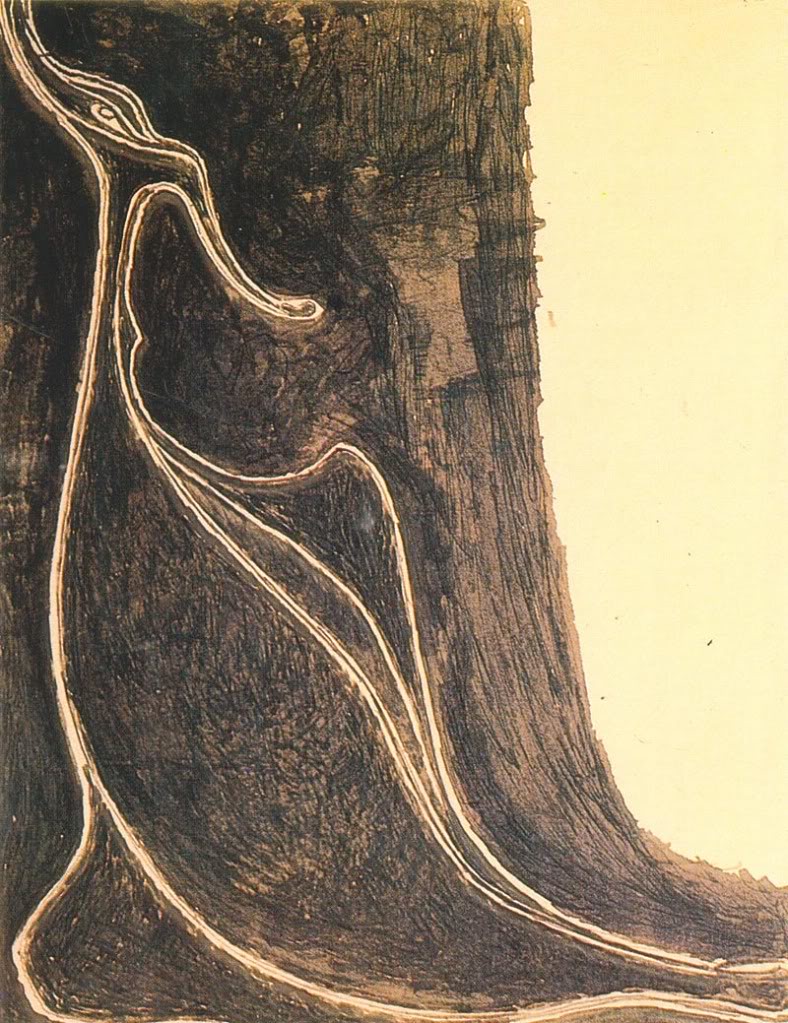
Painting by Tagore Tagore (1861-1941) Courtesy: Creative Commons
[8] Traditional thin, coarse cotton fabric often used in lieu of a towel
[9] Traditionally, women were supposed to tie their hair especially in the evening.
[10] Nala Damayanti, a story from Mahabharata, where the couple were parted before they were reunited.
Aruna Chakravartihas been the principal of a prestigious women’s college of Delhi University for ten years. She is also a well-known academic, creative writer and translator with fourteen published books on record. Her novels Jorasanko, Daughters of Jorasanko, The Inheritors, Suralakshmi Villa have sold widely and received rave reviews. The Mendicant Prince and her short story collection, Through a Looking Glass, are her most recent books. She has also received awards such as the Vaitalik Award, Sahitya Akademi Award and Sarat Puraskar for her translations.
.
PLEASE NOTE: ARTICLES CAN ONLY BE REPRODUCED IN OTHER SITES WITH DUE ACKNOWLEDGEMENT TO BORDERLESS JOURNAL



 Borderless