Categories
Contents

Borderless, December 2025

Art by Sohana Manzoor

Editorial

‘I wondered should I go or should I stay…’ …Click here to read.

Translations

Nazrul’s Shoore O Baneer Mala Diye (With a Garland of Tunes and Lyrics) has been translated from Bengali by Professor Fakrul Alam. Click here to read.

Four of his own Malay poems have been translated by Isa Kamari. Click here to read.

Five poems by Satrughna Pandab have been translated to English from Odia by Snehaprava Das. Click here to read.

A Lump Stuck in the Throat, a short story by Nasir Rahim Sohrabi translated from Balochi by Fazal Baloch. Click here to read.

Tagore’s Jatri (Passenger) has been translated from Bengali by Mitali Chakravarty. Click here to read.

Conversation

Keith Lyons in conversation with Harry Ricketts, mentor, poet, essayist and more. Click here to read.

Poetry

Click on the names to read the poems

Harry Ricketts, Luis Cuauhtémoc Berriozábal, Laila Brahmbhatt, John Grey, Saba Zahoor, Diane Webster, Gautham Pradeep, Daniel Gene Barlekamp, Annwesa Abhipsa Pani, Cal Freeman, Smitha Vishwanath,John Swain, Nziku Ann, Anne Whitehouse, Tulip Chowdhury, Ryan Quinn Flangan, Ramzi Albert Rihani, Rhys Hughes

Poets, Poetry & Rhys Hughes

In Said the Spook, Rhys Hughes gives a strange tale around Christmas. Click here to read.

Musings/ Slices from Life

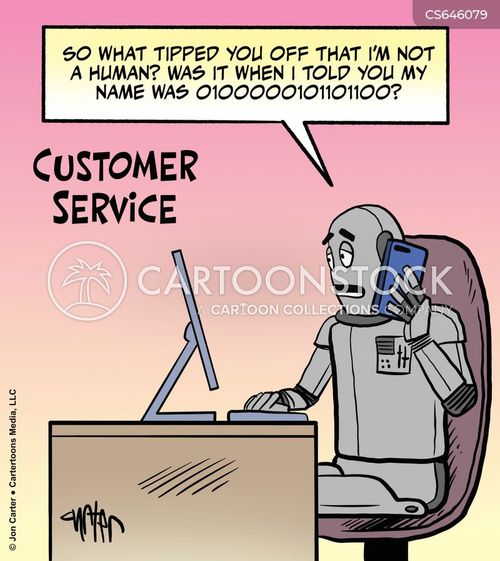
Your call is important to us?

Farouk Gulsara writes of how AI has replaced human interactions in customer service. Click here to read.

Honeymoon Homecoming

Meredith Stephens visits her old haunts in Japan. Click here to read.

Cracking Exams

Gower Bhat discusses the advent of coaching schools in Kashmir for competitive exams for University exams, which seem to be replacing real schools. Click here to read.

The Rule of Maximum Tolerance?

Jun A. Alindogan writes of Filipino norms. Click here to read.

How Two Worlds Intersect

Mohul Bhowmick muses on the diversity and syncretism in Bombay or Mumbai. Click here to read.

Musings of a Copywriter

In The Monitoring Spirit, Devraj Singh Kalsi writes of spooky encounters. Click here to read.

Notes from Japan

In One Thousand Year Story in the Middle of Shikoku, Suzanne Kamata takes us on a train ride through Japan. Click here to read.

Essays

250 Years of Jane Austen: A Tribute

Meenakshi Malhotra pays a tribute to the writer. Click here to read.

Anadi: A Continuum in Art

Ratnottama Sengupta writes of an exhibition curated by her. Click here to read.

Sangam Literature: Timeless Chronicles of an Ancient Civilisation

Ravi Varmman K Kanniappan explores the rich literary heritage of Tamil Nadu. Click here to read.

A Brickfields Christmas Tale

Malachi Edwin Vethamani recounts the flavours of past Christmases in a Malaysian Kampung. Click here to read.

Bhaskar’s Corner

In The Riverine Journey of Bibhuti Patnaik, Bhaskar Parichha pays a tribute to the octegenarian writer. Click here to read.

Stories

Evergreen

Sayan Sarkar gives a climate friendly and fun narrative. Click here to read.

The Crying Man

Marc Rosenberg weaves a narrative around childhood. Click here to read.

How Madhu was Cured of Laziness

Naramsetti Umamaheswararao gives a fable set in Southern India. Click here to read.

Book Excerpts

Excerpt from Ghosted: Delhi’s Haunted Monuments by Eric Chopra. Click here to read.

Excerpt from Leonie’e Leap by Marzia Pasini. Click here to read.

Book Reviews

Rakhi Dalal reviews Anuradha Kumar’s Love and Crime in the Time of Plague. Click here to read.

Andreas Giesbert reviews Ariel Slick’s The Devil Take the Blues: A Southern Gothic Novel. Click here to read.

Gazala Khan reviews Ranu Uniyal’s This Could Be a Love Poem for You. Click here to read.

Bhaskar Parichha reviews Indira Das’s Last Song before Home, translated from Bengali by Bina Biswas. Click here to read.

.

Click here to access the Borderless anthology, Monalisa No Longer Smiles

Click here to access Monalisa No Longer Smiles on Amazon International

Categories
Musings

Your call is important to us?

By Farouk Gulsara

From Public Domain

I cringe every time I hear this line, during those countless times during my calls, placed amidst the robotic, psychosis-inducing loop of hold music. Funny, this ‘muzak’[1] was meant to create calmness. 

“All our agents are extremely busy right now; you’ll be attended to shortly. Your call is important to us.” The robotic voice would go, trying to sound like how a hangman would place a hood over your head before pulling the lever. 

“You are the number 999,999,999th customer in line!”

This is nothing new. Even when an alien concept called customer service was introduced in the old days, people had to wait in line to have their issues resolved. At least, the saving grace at the end of this endless queue was a human voice, not a chatbot. Now, after a zillion years of human experience in crisis management, the problem of waiting persists, and we still have to wait in line, twiddling our fingers.

Now that all transactions and dealings are conducted electronically, I wonder why the queue on the telephone line is never-ending. Is there a rush for something that I am unaware of? Are the customers so unimportant or irritating that the company believes it does not need to invest in more agents to handle the increasing demand? Whether it is a Monday or any other day of the week, you can tune in and listen to an hour or so of so-called soothing music, or until your patience runs out. 

When you finally reach the end of the line and think it is all over, it is not. Here, you will be presented with a menu so extensive that you will be spoiled for choice. Press 1 for English, press 2 for …, press 1 for savings, press # to return to the main menu, yada yada. The fat lady never sings. 

Along the way, you will be forewarned, “anything you say can be used against you in the court of law!”, but not in the exact words. 

“Your call is important to us. It will be recorded and be used for training purposes!” Yeah, right. 

For all you know, nobody is there at the other end. The single casual employee employed to man the line may be on sick leave with a sore throat or something. The customer line is just to hold a caring image. If a problem cannot be resolved online, how can it be sorted over the phone? The clients have to present themselves in person at the office anyway. Just give the callers some chill music and let them be zombified by the hold music. At a time when AI (artificial intelligence) is taking over mundane tasks, it is not cost-effective to hire dedicated staff for them. This is what the big companies seemingly offering call-in customer service seem to think.

They may have made a devilish deal with the telco companies. We hold the line while the telcos go laughing all the way to the bank on our account. That is why there are frequent dropped calls. It is not due to poor cellular network coverage or a system glitch. It is intentional.

Not to forget the flurry of self-aggrandising advertisements that get inserted while clients wait in anticipation or are doing their down-to-earth activities like cutting vegetables or watering the garden with the phone on speaker mode, realising the futility and wasted effort of holding the phone to the ear. 

Customer service is a thing of the past. Now that there are so many online options to address the intended concerns, face-to-face interaction is quite dated. If the customer is too daft to use the services, they deserve to be taken for a ride. Increasingly, automation can handle most compelling transactional issues. If the customer’s problem is too big for the bots to handle, the customer still needs to go to the office.

The problem is that offices are virtual nowadays. Mailing addresses are in the cloud, and offices are shared by a zillion fly-by-night companies. There is a thin line between the modern way of doing business and being taken for a ride. Like the pleas of the stranded Nigerian princes and their stash of heirlooms, a legitimate transaction may turn out to be a scam, too.

From Public Domain

[1] Muzak- a brand of soft, instrumental, and smooth non-distracting music designed to create an atmosphere of calmness.

Farouk Gulsara is a daytime healer and a writer by night. After developing his left side of his brain almost half his lifetime, this johnny-come-lately decided to stimulate the non-dominant part of his remaining half. An author of two non-fiction books, Inside the twisted mind of Rifle Range Boy and Real Lessons from Reel Life, he writes regularly in his blog, Rifle Range Boy.

PLEASE NOTE: ARTICLES CAN ONLY BE REPRODUCED IN OTHER SITES WITH DUE ACKNOWLEDGEMENT TO BORDERLESS JOURNAL

Click here to access the Borderless anthology, Monalisa No Longer Smiles

Click here to access Monalisa No Longer Smiles on Kindle Amazon International

Categories
Essay

‘Verify You Are Human’

By Farouk Gulsara

Screenshot by Author

How often have we, as fully realised human beings, found ourselves in the ironic situation of proving our human status to a computer programme? We have ticked boxes to identify zebra crossings, traffic lights, and buses, only to be told we were wrong, as if we did not know what a bus was. It is as if our fingers were too stubby to press the right keys or too daft to understand. And now, we are deciphering distorted words, as only a human could read wavy or cursive writing. 

Now we understand. The verification exercises did not just stop automatons from spying on our data. They were meant to aid computers in digitising old books[1]. Computers sometimes struggle with old pages when converting physical books into digital versions. Due to wear and tear and fading caused by oxidation, the text may appear distorted. Computers use this mundane verification process by making humans interpret these unreadable texts. We play a crucial role in this process, creating a training module to help identify issues and errors to improve digitisation.

While CAPTCHA[2] (acronym for Completely Automated Public Turing test to tell Computers and Humans Apart) was initially designed to prevent bot attacks and spam, it is now used by computers to distinguish between humans and bots among users. Alan Turing, the father of theoretical computer science, proposed a test[3] which was later named after him to evaluate a machine’s ability to exhibit intelligent behaviour indistinguishable from a human. Although many machines and AI programmes have passed this test, humans now face a reverse Turing Test to prove our organic status.

The funny thing is, while all this is happening, with automation and the diminishing need for human interaction, humans are gradually losing their humanity. We have lost the ability to look into each other’s eyes and start a conversation just for fun. Suppose Alan Turing proposed the test to gauge machine intelligence, and modern computers give a reverse Turing Test[4] to exclude unwanted chatbots. In that case, humans perhaps need a Turing-like test to confirm they still have some grey cells. We are increasingly losing our capacity for idle chats. We are all just prisoners, best left to our own devices.

Talking about looking into each other’s eyes and melting into the passion of each other’s aura, the dating scene these days is no longer like that. Enter any dimly-lit romantic restaurant, couples are not lost looking at one another but lost in the abyss of cyberspace, looking at the digital restaurant menu or perhaps into each other’s social media or Tinder hits to see what the other half has been up to. 

While it is true that automation is changing the job market, it’s also creating new opportunities. My son, for instance, worries about his job, but I remind him that the world has created jobs that were non-existent just half a century ago. Who has heard of social media managers, cloud architects, or veterinary psychologists? My mother told me that my grandfather worked in a printing press. He used to come back smelling of turpentine, which he used to clean off the ink that stuck on his body. Nowadays, printing is done at home with a button, a slight whirring and a whooshing, and out comes a printed document at one’s convenience. 

My grandfather later became a chauffeur to a successful business magnate. Once we have sorted out the finer points of bringing self-driving cars to market, we may not need drivers in the future. Now, many self-proclaimed gig entrepreneurs give up their full-time paying jobs to become delivery boys. Do we have news for these boys? Drones are dying to get up and replace you.

If one were to think that only the blue-collar job is at risk, think again. Conveyancing jobs currently carried out by paralegals can be taken over by an AI programme to churn out beautiful Sales and Purchase Agreements[5]

These programmes have also learnt to say the appropriate words during grief and crises. Increasingly, call-in helplines are ‘manned’ by AIs. The field of psychiatry may be at risk of not needing doctors. Even as we speak, we may already be conversing with chatbots about our bank transactions without realising it. This raises ethical questions about the role of AI in sensitive areas of human life and the potential loss of human connection in these interactions.

I remember a time in mid-1990 when the Malaysian civil society expressed concern over Malaysia’s uncontrolled influx of foreigners and our overdependence on the foreign labour force[6]. Someone suggested automation and mechanisation as a possible way to avert this. Still, apparently, the financiers were not too keen to increase  business expenses, which would possibly reduce foreign investment. The general acceptance was that third-world nations were not ready to fully automate. They had not been able to provide universal employment to their citizens. This historical perspective highlights the complex relationship between automation, economic development, and social equity.

Moving forward, we sometimes find ourselves in zombie states, clicking reel after reel on social media as if we have so much time. Examples of children turning violent against the hands that feed them when their demand to go online is denied are not uncommon. Have we not heard of spouses immersed in full-blown affairs living under the same roof with the other half with ease, with a bit of help from the need for data privacy? A husband does not know what the wife does behind his back because access to devices is guarded by passwords. 

Rock bands once thought using synthesisers on their songs was sacrilegious. The legendary British rock band, Queen, proudly boasted that they never used synthesisers to maintain a traditional, raw, organic feel to their sounds. Now, we must be happy with the digital manipulation of music and voice. Even though AI can compose music at a philharmonic level, music connoisseurs are far from contented. They say it lacks emotion, probably because great music comes from lived experience[7].

What started as automation, where machines aided humans to ease work, has now evolved to something which can learn and mimic human actions. It has come to be called intelligence, albeit artificially developed by the human mind. Like a student surpassing his teacher, the real fear now is that AI is evolving consciousness. If AI is the future, the person who controls the future will be King. Does that not mean that tech entrepreneurs will be the world’s future leaders? The world will indeed be borderless, only determined by digital connectivity. 

We already long for the good old days when talking to customer service did not start with, “press 1 for English and this conversation will be recorded for self-improvement.” What they mean is that it will be used against you. Dealing with a computer chatbot already feels Kafkaesque. It feels like talking to a wall without recourse to “talking to the manager!”

[1] https://www.horlix.com/captcha-a-brief-history/

[2] https://soax.com/glossary/captcha

[3] https://www.bbc.co.uk/news/technology-27762088

[4] https://www.britannica.com/technology/Turing-test

[5] https://ttms.com/will-artificial-intelligence-ai-take-over-lawyers-jobs/

[6]  https://www.worldbank.org/en/country/malaysia/publication/migration-automation-and-the-malaysian-labor-market#:~:text=Given%20that%20investments%20in%20automation,both%20sending%20and%20receiving%20countries

[7] https://www.frontiersin.org/journals/neurorobotics/articles/10.3389/fnbot.2022.897110/full

.

Farouk Gulsara is a daytime healer and a writer by night. After developing his left side of his brain almost half his lifetime, this johnny-come-lately decided to stimulate the non-dominant part of his remaining half. An author of two non-fiction books, Inside the twisted mind of Rifle Range Boy and Real Lessons from Reel Life, he writes regularly in his blog, Rifle Range Boy.

PLEASE NOTE: ARTICLES CAN ONLY BE REPRODUCED IN OTHER SITES WITH DUE ACKNOWLEDGEMENT TO BORDERLESS JOURNAL

Click here to access the Borderless anthology, Monalisa No Longer Smiles

Click here to access Monalisa No Longer Smiles on Kindle Amazon International

Categories
Musings

More than Words

By Jun A. Alindogan

From Public Domain

It is always refreshing when trust can be established online without any face-to-face interaction. Social media is filled with scammers, making it challenging to trust individuals based solely on their stories. This becomes even more complicated when the relationship starts at a time when the internet was not easily accessible. In these situations, you have to rely only on the person’s words. Sincerity is difficult to gauge, even with the use of emotive and abstract language in any physical correspondence.

Many years ago, I found myself in a situation where I met a woman through physical correspondence, as encouraged by a friend. He advised me to introduce myself to the lady and share about my work teaching at the seminary, providing English tutorials for Koreans, and assisting a church in a suburban foothill. As it turned out, she was part of a Christian NGO based in the US, along with a few other senior citizens. The organisation’s mission was to provide funds for seminary scholarships, livelihood support, books, conference fees, further studies, and toys.

Our relationship was purely based on trust as we did not know each other personally and yet for a number of years, she supported me financially as she learned of my journey. She preferred to write her letters on an electric typewriter and on blue-coloured stationery with a lovingly short note of affirmation. She took my every word at face-value although at times, I sent her photos of myself and church activities to support my stories that she sometimes quoted in her monthly newsletter.

When a missionary friend detoured to the US prior to her Colombian street kids’ programme, she visited the organisation’s garage cum office and brought my gift of a passenger jeep replica made from the ashes of a previous volcanic eruption, which she greatly appreciated. The organisation’s resources were donated to a graduate-level seminary in the US, that included her book, Pilgrims and Strangers Seek The City Not Made with Hands, upon her demise and all her colleagues.

Words only have meaning when they are used in a relational context; otherwise, they are simply meaningless.

Years before the internet became readily accessible, I used to write letters to two friends who worked as domestic helpers in Singapore. Despite having college degrees, they were unable to find relevant jobs in our country due to its political turmoil. I myself was jobless for two years, and like many new college graduates, I succumbed to depression and questioned my faith and self-worth. The struggles were compounded by stress from family and friends. I found a way to vent my issues to these Overseas Filipino Workers (OFWs), who also had their fair share of misery and homesickness. My letters were selfish. Over time, the correspondence gradually faded, along with the photos that sometimes accompanied their stories. One migrated to Canada and the other one is retired and lives with her sibling who has a physical disability in a suburban locality. All my letters from my benefactors and friends were washed away in an unexpected catastrophic flood that swept my residence. Up to this day, the loss is still palpable.

I lost two aunts during the pandemic, who were the last of my father’s siblings. The younger one passed away in her late 70s, while the older one died in her early 90s. Both were based in the US and worked as medical professionals. Every Christmas, I make sure to send them individual greeting cards through the mail, along with a few personal thoughts. They lived separately in the same village in the US, and I believe they appreciated these physical cards for their nostalgic value. They didn’t usually respond to emails or cards, as technology can be bothersome for the elderly.

My older aunt once told my eldest brother, who also lives in the US, that my emails were too long and tended to put her to sleep. I also send them thank you cards for the occasional holiday cash they send. My relationship with my aunts is mainly through written correspondence, with only a few rare occasions of meeting in Manila. Despite this, they never fail to remember me and my younger sibling, sending us thoughtful notes. My dad passed away at 60, and my aunts fondly told me that I look like my father. Perhaps this resemblance was one of the catalysts that kept our correspondence going, even in its irregularity. Stories, however trivial, matter to them.

Letter writing can be tedious, especially when done by hand. However, it is also tiring to write letters on computers and share both trivial and significant stories to send by post, as we are not certain if our experiences matter to our recipients. Nevertheless, physical personal correspondence brings about a certain degree of warmth that is often lacking online. It takes more effort to scribble than to type. It is also more spontaneous compared to digital writing, where you can effortlessly edit and revise through AI tools. Sometimes, the physical paper used says a lot about the sender and receiver. I am particularly fond of lined stationery with religious quotes and maxims on recycled paper. The envelope is of equal value as well because it must similarly match its properties.

At times, I also use plain paper to write letters. I remember writing letters of regards and sharing personal news with a college classmate and friend who was stationed on one of the most remote islands in the country for a kids’ mission. She replied to me, but her letters took a long time to reach me through the mail. Both her letters and mine were written in longhand. We were able to reconnect through letters because there were no mobile phones or internet at that time. The distance and physical absence made our words more meaningful and profound.

They say that the post office is in its dying stage, but time and again, it has proven itself to still be relevant in the internet age. Not everyone is connected, especially in areas where there is no access to electricity.

In one of the upland villages in my municipality, which is just about a two-hour drive from the city, they have not had electricity for years. This is because streetlights have to be paid for by the consumer. If the area has rugged terrain, it will require a good number of posts to be erected to bring electricity. This is a common scenario in agricultural and upland villages. While solar power is an option, procuring panels can be quite expensive as the government has not taken any measures yet to bring the cost down. To connect, villagers go to stores that offer WiFi for a minimal fee. Mobile signals are not available in many remote locations, so the gap is still widespread despite technological tools. We must accept the fact that technology is limited. Physical correspondence is here to stay.

From Public Domain


Manuel A. Alindogan, Jr., also known as Jun A. Alindogan, is the Academic Director of the Expanded Alternative Learning Program of Empowered East, a Rizal-province based NGO in the Philippines and is also the founder of Speechsmart Online that specialises in English test preparation courses. He is a freelance writer and a member of the Freelance Writers’ Guild of the Philippines (FWGP).

PLEASE NOTE: ARTICLES CAN ONLY BE REPRODUCED IN OTHER SITES WITH DUE ACKNOWLEDGEMENT TO BORDERLESS JOURNAL. 

Click here to access the Borderless anthology, Monalisa No Longer Smiles

Click here to access Monalisa No Longer Smiles on Kindle Amazon International

Categories
Contents

Borderless, April 2025

Art by Sohana Manzoor

Editorial

Seasons in the Sun?….Click here to read.

Translations

An excerpt from Tagore’s long play, Roktokorobi or Red Oleanders, has been translated by Professor Fakrul Alam. Click here to read.

Tagore’s essay, Classifications in Society, has been translated by Somdatta Mandal. Click here to read.

Poems of Longing by Jibananada Das homes two of his poems translated from Bengali by Professor Fakrul Alam. Click here to read.

Four cantos from Ramakanta Rath’s Sri Radha, translated from Odiya by the late poet himself, have been excerpted from his full length translation. Click here to read.

An excerpt from Syad Zahoor Shah Hashmi’s Nazuk, has been translated from Balochi by Fazal Baloch. Click here to read.

Disappearance by Bitan Chakraborty has been translated from Bengali by Kiriti Sengupta. Click here to read.

Roadside Ritual, a poem by Ihlwha Choi  has been translated from Korean by the poet himself. Click here to read.

Tagore’s Pochishe Boisakh Cholechhe (The twenty fifth of Boisakh draws close…) from Bengali by Mitali Chakravarty. Click here to read.

Poetry

Click on the names to read the poems

Luis Cuauhtémoc Berriozábal, Thompson Emate, Pramod Rastogi, George Freek, Vidya Hariharan, Stuart McFarlane, Meetu Mishra, Lizzie Packer, Saranyan BV, Paul Mirabile, Hema Ravi, Ryan Quinn Flanagan, Rhys Hughes

Poets, Poetry & Rhys Hughes

In Three Gothic Poems, Rhys Hughes explores the world of horrific with a light touch. Click here to read.

Musings/Slices from Life

The Day the Earth Quaked

Amy Sawitta Lefevre gives an eyewitness account of the March 28th earthquake from Bangkok. Click here to read.

Felix, the Philosophical Cat

Farouk Gulsara shares lessons learnt from his spoilt pet with a touch of humour. Click here to read.

Not Everyone is Invited to a Child’s Haircut Ceremony

Odbayar Dorje muses on Mongolian traditions. Click here to read.

From a Bucking Bronco to an Ageing Clydesdale

Meredith Stephens writes of sailing on rough seas one dark night. Click here to read.

Musings of a Copywriter

Stay Blessed! by Devraj Singh Kalsi is a tongue-in-cheek musing on social norms and niceties. Click here to read.

Notes from Japan

On Safari in South Africa by Suzanne Kamata takes us to a photographic and narrative treat of the Kruger National Park. Click here to read.

Essays

Songs of the Adivasi Earth

Ratnottama Sengupta introduces us to the art of Haren Thakur, rooted in tribal lores. Click here to read.

‘Rajnigandha’: A Celebration of the Middle-of-the-Road

Tamara Raza writes of a film that she loves. Click here to read.

‘Climate change matters to me, and it should matter to you too’

Zeeshan Nasir writes of the impact of the recent climate disasters in Pakistan, with special focus on Balochistan. Click here to read.

Bhaskar’s Corner

Ramakanta Rath: A Monument of Literature: Bhaskar Parichha pays a tribute to the late poet. Click here to read.

Stories

Jai Ho Chai

Snigdha Agrawal narrates a funny narrative about sadhus and AI. Click here to read.

The Mischief

Mitra Samal writes a sensitive story about childhood. Click here to read.

Lending a hand

Naramsetti Umamaheswararao takes us back to school. Click here to read.

Conversation

Ratnottama Sengupta talks to filmmaker and author Leslie Carvalho about his old film, The Outhouse, that will be screened this month and his new book, Smoke on the Backwaters. Click here to read.

Book Excerpts

An excerpt from Anuradha Kumar’s Wanderers, Adventurers, Missionaries: Early Americans in India. Click here to read.

An excerpt from Snigdha Agrawal’s Fragments of Time (Memoirs). Click here to read.

Book Reviews

Somdatta Mandal reviews Sheela Rohekar’s Miss Samuel: A Jewish Indian Saga, translated by Madhu Singh. Click here to read.

Gracy Samjetsabam reviews Tony K Stewart’s Needle at the Bottom of the Sea: Classic Bengali Tales from the Sundarbans. Click here to read.

Bhaskar Parichha reviews Raisina Chronicles: India’s Global Public Square by S. Jaishankar & Samir Saran. Click here to read.

.

Click here to access the Borderless anthology, Monalisa No Longer Smiles

Click here to access Monalisa No Longer Smiles on Amazon International

Categories
Editorial

Seasons in the Sun?

April is a month full of celebrations around the world. Asia hosts a spray of New Year festivities. Then there are festivals like Qing Ming Jie, Good Friday and Easter. All these are in a way reminders of our past. And yet, we critique things as old fashioned! So, where does tradition end and ‘outdated’ or ‘outmoded’ start? Meanwhile we continue to celebrate these festivals with joy but what happens to those who have lost their home, family and their living due to war or climate disasters? Can they too join in with the joie de vivre? Can we take our celebrations to them to give solace in some way?

In our April issue, we have stories from climate and conflict-ridden parts of the world. From Bangkok, Amy Sawitta Lefevre gives an eyewitness account of the March 28th Earthquake that originated in Myanmar. While in her city, the disaster was managed, she writes: “I’m also thinking of all the children in Myanmar who are sleeping in the open, who lost loved ones, who are feeling scared and alone, with no one to reassure them.” As news reels tell us, in Myanmar there have been thousands of casualties from the earthquake as well as shootings by the army.

From another troubled region, Pakistan, Zeeshan Nasir gives a heartrending narrative about climate change, which also dwells on the human suffering, including increase in underage marriages.

Human suffering can be generated by rituals and customs too. For instance, if festivals dwell on exclusivity, they can hurt those who are left out of the celebrations. Odbayar Dorje muses along those lines on Mongolian traditions and calls for inclusivity and the need to change norms. On the other hand, Devraj Singh Kalsi hums with humour as he reflects on social norms and niceties and hints at the need for change in a light-hearted manner. Farouk Gulsara makes us laugh with the antics of his spoilt pet cat. And Suzanne Kamata dwells on her animal sightings in Kruger National Park with her words and camera while Meredith Stephens takes us sailing on stormy seas… that too at night.

Art is brought into focus by Ratnottama Sengupta who introduces artist Haren Thakur with his adaptation of tribal styles that has been compared to that of Paul Klee (1879-1940). She also converses with filmmaker Leslie Carvalho, known for his film The Outhouse, and his new novel, Smoke on the Backwaters. Both of these have a focus on the Anglo-Indian community in India. Also writing on Indian film trends of the 1970s is Tamara Raza. Bhaskar Parichha pays tribute to the late Ramakanta Rath (1934-2025), whose powerful and touching poetry, translated from Odia by the poet himself, can be found in our translations section.

We have an excerpt from Professor Fakrul Alam’s unpublished translation of Tagore’s Red Oleanders. It’s a long play and truly relevant for our times. Somdatta Mandal shares with us her translation of Tagore’s essay called ‘The Classification in Society’, an essay where the writer dwells on the need for change in mindsets of individuals that make up a community to move forward. A transcreation of a poem by Tagore for his birthday in 1935 reflects the darkness he overcame in his own life. Two poems expressive of longings by Jibananada Das have been translated from Bengali by Professor Alam aswell. From Balochistan, we have an excerpt from the first Balochi novel, Nazuk, written by the late Syad Zahoor Shah Hashmi and rendered into English by Fazal Baloch. Among contemporaries, we have a short story by Bitan Chakraborty translated from Bengali by Kiriti Sengupta, a poignant story that reflects on gaps in our society. And a Korean poem by Ihlwha Choi rendered to English by the poet himself.

Our poetry section celebrates nature with poetry by Lizzie Packer. Many of the poems draw from nature like that of George Freek and Luis Cuauhtémoc Berriozábal. Some talk of the relationship between man and nature as does Stuart McFarlane. We have a variety of themes addressed in poems by Thompson Emate, Meetu Mishra, Saranyan BV, Paul Mirabile, Pramod Rastogi, Ryan Quinn Flanagan and many more. Rhys Hughes brings in both humour and social commentary of sorts with his poem. And in his column, Hughes has shared three gothic poems which he claims are horrible but there is that twinge of fable and lightness similar to the ghosts of Ebenezer Scrooge’s world[1]— colourful and symbolic.

Stories sprinkle humour of different shades with Snigdha Agrawal’s narrative about mendicants and AI and Mitra Samal’s strange tale about childhood pranks. Naramsetti Umamaheswararao takes us back to schooldays with his narrative. We have a fun book excerpt from Agrawal’s Fragments of Time (Memoirs), almost in tone with some of her stories and musings.

An extract from Anuradha Kumar’s latest non-fiction making bridges across time and geographies. Called Wanderers, Adventurers, Missionaries: Early Americans in India, the book is an intriguing read. We have a review by Professor Mandal of Sheela Rohekar’s Miss Samuel: A Jewish Indian Saga, translated by Madhu Singh. Highlighting syncretic folk traditions, Gracy Samjetsabam has discussed the late Tony K Stewart’s translation of oral folklore in Needle at the Bottom of the Sea: Classic Bengali Tales from the Sundarbans. Parichha has written about a high-profile book that also hopes to draw bridges across the world, Raisina Chronicles: India’s Global Public Square, by S. Jaishankar and Samir Saran.

This issue has been made possible because of support from all of you. Huge thanks to the team, all our contributors and readers. Thanks to Sohana Manzoor for her fabulous artwork. Do pause by our contents page as all the content could not be covered here.

Perhaps, world events leave a sense of pensiveness in all of us and an aura of insecurity. But, as Scarlett O’ Hara of Gone with the Wind[2] fame says, “After all, tomorrow is another day.” 

Looking forward to a new day with hope, let’s dream of happier times filled with sunshine and change.

Enjoy the reads!

Mitali Chakravarty

borderlessjournal.com

[1] A Christmas Carol by Charles Dickens, 1843

[2] Gone With the Wind, a novel by Margaret Mitchell, published in 1936

Click here to access the contents page for the April 2025 Issue

READ THE LATEST UPDATES ON THE FIRST BORDERLESS ANTHOLOGY, MONALISA NO LONGER SMILES, BY CLICKING ON THIS LINK.

Categories
Stories

‘Jai Ho’ Chai

By Snigdha Agrawal

From Public Domain

The sun beat down mercilessly on the railway platform of Karwar Railway Junction, where a group of rotund, saffron-clad priests huddled together, fanning themselves with cardboard pieces ripped from cartons. Their expressions were grim, their bellies noticeably less jolly than usual.

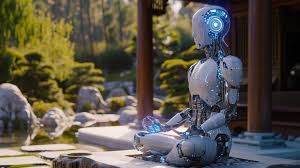
“It’s the end of an era, brothers,” sighed Pandit Upadhyaya, his triple chins wobbling like unset strawberry Jello. “First, they replaced bulls with tractors. Then, they put machines in our post offices. And now; NOW, they have brought AI into our temples!”

The sacred threads worn over their left shoulder, diagonally across the body, seemed to protest against their protruding bellies, yellowed and stringy, yet proudly declaring the caste hierarchy would soon be rendered null and void.  The looks of concern on their faces screamed, “Not fair…not fair at all”.

From Public Domain

“I still cannot believe it!” moaned Pandit Shastri, wiping his forehead with the end of his dhoti[1]. “A robot priest? Is this then the end of the Kalyug [2]? Else, how can a machine do what we do?”

“They say it chants flawlessly,” added Pandit Joshi, shaking his head. “Not one mispronounced shloka[3]!  No breaks for tea or chewing on betel leaves! No accidental burps during the aarti[4]!”

“Profaneness!” chorused the group, clutching their prayer beads in outrage.

“I even heard,” Pandit Sharma whispered conspiratorially, “that the AI priest does not accept dakshina[5]! No envelopes, no fruit baskets, no ghee-laden sweets. What kind of priest didn’t accept gifts?” they nodded looking puzzled.

Pandit Upadhyaya lamented. “What is our next recourse? If these AI priests take over, who will feed us? Who will drape us in silk? Who will offer us ghee-laden sweet boxes?”

A train pulled into the station just then; the platform transformed with the usual activity commencing on arrivals. Passengers stuck their heads out, looking around for tea and snacks.  Pandit Sharma suddenly came up with an idea. “Not all is lost yet.”

“Meaning?” asked Pandit Joshi, narrowing his eyes suspiciously.

“We shall sell tea! But not just any tea—Prasad[6] Chai! Sacred! Blessed! Tea infused with the wisdom of the Vedas!”

The priests considered this. It was true. If there was one thing, they were experts in, it was making offerings with dramatic flair. Why not apply that skill elsewhere?

Within weeks, they set up stalls on the platform, offering passengers their special chai.  As trains pulled in, the platform echoed with the chorus…”Om Chai Namah![7]” “Divine Masala Chai.  Guaranteed to bring you good karma!” “Blessed by Brahmins, brewed with bhakti[8]!”

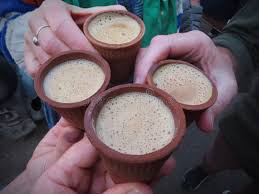
Soon enough, their stall was milling with passengers keen to taste this unique concoction, prepared by none other than the four Brahmin Head Priests. The spectacle of their tea-making performance, with dramatic gestures, had everyone gawking. Served in earthen cups, each sip elicited murmurs of appreciation from the passengers.  The “Jai Ho” brand of tea didn’t take long to become a hot success.

Word spread like wildfire in the temple town.  Business boomed. The tea, laced with just the right amount of saffron, cardamom, and sacred nostalgia, had an irresistible charm. Soon, the platforms were buzzing with satisfied sippers. Every train passing through the station had passengers stepping out to sip on this special tea.

As they counted their first earnings, Pandit Upadhyaya sighed, “Brothers, who knew AI would push us into a more profitable business?”

But then, one day, a group of railway officials swooped down on them in their khaki outfits with officious looks on their faces. One of them, a spectacled man with a voice that needed no loudspeaker, spoke, “Pardon me, Swamiji’s, but we’ve received some complaints. Your tea business is so blessed that passengers are delaying boarding their trains. This is causing major delays and loss of revenue to the railways.  Moreover, it’s illegal to do business on the platform without a licence from the authorities.  Can you show the vendor licence?” he asked hesitatingly.

The priests exchanged guilty glances.

The official adjusted his spectacles, “Of course, we can set that right, as we have received a special request from the high command. The Railway Ministry wishes to introduce your “Jai Ho” chai at all major railway junctions!”

Jowls dropped, mouths agape, the priests couldn’t believe they heard right. The tufts of hair on the back of their shaved heads stood erect in surprise.

Pandit Upadhyaya beamed, “Brothers, the Gods have truly blessed us! It no longer matters that non-humans have overtaken our profession, we continue to gain from selling the brew the Gods’ drink!”

As they sipped their divine brew, laughing heartily, they looked up at the temple in the distance, where the AI priest continued chanting slokas flawlessly.

“Well,” chuckled Pandit Sharma, “at least that machine can’t make chai!”

And so, from AI adversaries to tea sellers, the priests of Karwar found their unexpected salvation—not in temples, but in terracotta cups of steaming, saffron-infused chai.

From Public Domain

[1] A loose piece of cloth wrapped in the lower half of the body

[2] The current age according to Hindu eras, supposed to be dark.

[3]Sanskrit chants 

[4] Holy offerings

[5] Honorariums

[6] Offerings blessed by Gods

[7] Bow to the blessed chai

[8] Devotion

Snigdha Agrawal (nee Banerjee) is an author of five books and a regular contributor to anthologies and e-magazines.  A septuagenarian, she has recently published a book of memoirs titled Fragments of Time, available on Amazon and Flipkart.

PLEASE NOTE: ARTICLES CAN ONLY BE REPRODUCED IN OTHER SITES WITH DUE ACKNOWLEDGEMENT TO BORDERLESS JOURNAL

Click here to access the Borderless anthology, Monalisa No Longer Smiles

Click here to access Monalisa No Longer Smiles on Amazon International

Categories
Slices from Life

Hooked for Life and Beyond…

By Ravi Shankar

I was hooked! It was my first exposure to a computer though I had read about these in the newspapers and seen them on television. I think it was a Spectrum personal computer popular in the 1980s. My friend, Sanjay and I did a few simple tasks and played a few games on the computer. The games of the 80’s were slow and clunky by today’s standards. In those days however they were interesting and enticing. BASIC was the most popular computer language then. We also had COBOL and a few others. My good friend, Sanjay Mhatre was a bibliophile and a free thinker, and I often used to visit his place and borrow from his vast book collection. However, even in the 1980s there was uneasiness and opposition to computers and the fear that it would replace people and lead to mass unemployment was often mentioned.

The rise of information technology (IT) and the important role to be played by Indian companies was still in the future. I expect artificial intelligence (AI) will also open new jobs in the future. At my medical college in Thrissur, Kerala, India computers were still rare. Communist Kerala had a love-hate relationship with computers and technology. Maharashtra (a western Indian state) was an early adopter of computers, and my tenth- and twelfth-mark sheets were computerised while my MBBS ones were handwritten. During my postgraduation at Chandigarh, computers gained prominence in our conversations. Our head of the department was gracious enough to offer the services of his secretary for typing our research manuscripts when she was free. The only other option was to pay for the service from outside providers. In those days WordStar and WordPerfect dominated word processing. 

Creating slides for presentations was a challenge. LCD projectors were not available, and we had to create physical slides with cardboard mounting. The slides were created on early versions of PowerPoint and photographed using a camera to create the physical ones. My co-guide, Dr Anil Grover (then a cardiologist) at Postgraduate Institute (PGI), Chandigarh mentioned how computers will become increasingly common and encouraged me to learn the Microsoft package of Word, PowerPoint, and Excel. PGI also started offering email facility on a limited basis. You had to write down the details of your email and take it to the IT section who will send your message. We had modems then, which took a while to connect and made a series of sounds with flashing lights while connecting to the internet.

In Pokhara, Nepal at the beginning of the twenty-first century, internet was still a luxury. Manipal College of Medical Sciences used to charge 10 Nepalese rupees to send a message. Faculty could type their message in Outlook and twice a day, the IT person would send and receive messages. In those days, a floppy disk was the most common external storage device, and I soon had a large and colourful collection of floppies. Floppies were not always reliable and sometimes the data on them could not be read. CD-ROMs were another storage device, but CD writers never became commonplace. At Mahendra Pul in the heart of Pokhara, a new cybercafé came up in the early 2000s offering internet browsing at 150 Nepalese rupees per hour. Compared to what we were previously paying, this was a steal!

The college also had an LCD projector though it was not commonly used by faculty members for teaching-learning. This was a large and clunky device. Earlier versions often had compatibility issues. You create your slides and hope for the best. These may or may not open on the laptop and may or may not be projected. One had to have a backup of the lecture on overhead projector (OHP) transparencies, just in case. We did not yet have easy access to computers or laptops. This came only later when the United States Pharmacopeia (USP) set up a drug information and pharmacovigilance centre at the teaching hospital. We got two excellent Dell computers, and the hospital provided us with internet.

The early computers were slow with a big, bulky, and heavy cathode ray screen. They had a blinking cursor and words appeared slowly after typing. The Hollywood movie, You’ve Got Mail (1998), follows the romance between Meg Ryan and Tom Hanks developed through email. The movie is a good introduction to the early days of the internet.  

We had purchased a home desktop computer in 2001 or 2002. This purchase was a financial disaster. The computer required frequent repairs and drained our finances. Google launched its beta version of email, Gmail in 2004, and I was one of the early adapters. I became a fan of Gmail right from the start. It offered significant advantages over the then dominant Hotmail, Yahoo mail and Rediff mail. The storage was larger and there was no need to delete your old emails. Kist Medical College in Lalitpur, Nepal had purchased Dell desktop computers, and these were among the best ones I had used. Fast and responsive with good memory and speed. These had LCD monitors and looked sleek and modern.  

Computer technology has made significant advances. I read that if cars had made similar advances to computers we could drive to the moon and back on a litre of gasoline. Chips started getting smaller and more powerful and are today fought over by the global technology superpowers. A variety of online applications started making their appearance with the spread of the internet. Some of these eventually became the internet giants of today. In India, internet became widely available, and the costs dropped significantly. Mobile technology also made dramatic advances. In India most people access the internet and carry out online tasks using their mobile phones. For around 12000 Indian rupees today you can get a decent mid-range phone. Today mobiles in the palm of your hands have greater processing power than the giants of the 1950s and 1960s. I remember reading a comic strip where a visitor from the future time travels to the present. He laughs on seeing the supercomputer, the most powerful one on earth. When asked why he shows a small ball and introduces it as a computer from his time with much greater processing power than the humungous supercomputer.

One of the major advances has been cloud computing and cloud services. We have Chromebooks that work on web-based applications and needs the internet to do things. Both Google and Microsoft offer a range of services including storage, meetings, messaging, and applications for text, presentations, and calculations. AI is now an integral part of applications. PowerPoint offers the designer option for slides and creates stunning backgrounds. I recently attended a workshop on Copilot, the AI support software from Microsoft that is fully integrated into all their applications. I like the transcribing option for interviews and focus groups offered by Teams and later by Zoom and this makes my life as a researcher easier.

Star Trek, Futuristic computing

When I was growing up, I had no clue about what would soon become commonplace. The world wide web, the ability to browse libraries and art collections, video conferencing, online work processes, applying for government and other services online, online fund transfer and remittance are now at our fingertips. The COVID pandemic shifted a lot of learning and even assessment online. Presently we mainly interact with computers using a keyboard. I am a fan of the sci-fi series, Star Trek, where people interact with computers mainly using their voice. Voice commands are already available and  steadily improving.

I was slow getting into social media. Their judicious use is to be recommended. Facebook keeps me updated on what my friends, acquaintances and former students are doing. LinkedIn is the professional face I present to the world, Twitter (now X) is a concise way to stay connected and YouTube is a major source of entertainment. Computers have changed our life for ever. At a basic level these are based on the flow of electrons through circuits and on the pioneering work in atomic physics done at the start of the twentieth century.

The last three decades have seen developments and changes at unimaginable speed. Who knows what the next three will bring? Will progress continue at an ever-accelerating pace or will we eventually hit a roadblock? We may have to wait for Father Time to provide the answers!

Dr. P Ravi Shankar is a faculty member at the IMU Centre for Education (ICE), International Medical University, Kuala Lumpur, Malaysia. He enjoys traveling and is a creative writer and photographer.

.

PLEASE NOTE: ARTICLES CAN ONLY BE REPRODUCED IN OTHER SITES WITH DUE ACKNOWLEDGEMENT TO BORDERLESS JOURNAL

Click here to access the Borderless anthology, Monalisa No Longer Smiles

Click here to access Monalisa No Longer Smiles on Kindle Amazon International

Categories
Review

Artificial Intelligence in a Human World 

Book review by Bhaskar Parichha

Title: Faking It : Artificial Intelligence In a Human World 

Author: Toby Walsh

Publisher: Speaking Tiger Books

AI, or Artificial Intelligence, has become an integral part of our daily lives. It has revolutionised industries, from healthcare to transportation and manufacturing. However, some people may seek to artificially enhance AI to deceive others. This is called “faking AI”. There are several reasons why someone might fake AI.

Faking AI can enable individuals to impersonate someone else or appear as experts in a particular field. This can have negative consequences, such as fraud or phishing scams. Creating AI from scratch can be complex and time-consuming. By pretending to have AI, individuals can save time and effort while still achieving their desired results. In some cases, individuals may prefer to keep certain aspects of their AI-driven projects confidential. Faking AI can provide privacy and discourage further investigation.

One of the most common methods of fake AI is to manipulate data. By selectively choosing or modifying data, individuals can create artificial patterns or results that seem AI-generated. Another approach is to use pre-trained models, which are AI systems based on large datasets. These models can be repurposed and fine-tuned to deliver specific results without significant effort.

Machine Learning as a Service (MLaaS) platforms enable individuals to create AI models without technical expertise. These platforms often offer pre-trained models to generate fake AI results. Fake AI APIs, or Application Programming Interfaces, can simulate AI functionality. These APIs provide AI-driven responses or data but rely on predetermined algorithms or scripts.

While pretending to have AI may have certain advantages, it also has several disadvantages. Faking AI can mislead consumers about AI quality and authenticity. This can erode trust in AI technology and hinder its widespread adoption.

Faking AI may violate ethical guidelines and legal requirements. The use of AI without disclosing its true origins or limitations can contribute to legal consequences, including breach of contract or fraud. Faking AI can result in inaccurate predictions and decisions. This can lead to serious consequences in industries where AI plays a significant role, such as healthcare or finance.

Faking It: Artificial Intelligence In a Human World by Toby Walsh goes into the subject. A world leader in artificial intelligence, Walsh has spent his life dreaming about and researching how machines think. Scientia Professor of AI at the University of New South Wales and Fellow of the Australian Academy of Science. Toby is passionate about ensuring AI improves, not harms, our lives. He authored It’s Alive! From the Logic Piano to Killer Robots, which was named one of the year’s best books by the New Statesman. Toby contributes to American Scientist, New Scientist and The Guardian.

The blurb says:Faking AI has become an increasingly prevalent concern in today’s digital age. It is crucial for individuals and organizations to be aware of the methods and motivations behind faking AI and take appropriate measures to detect and protect against it. By implementing best practices and promoting transparency, we can build trust and preserve the integrity of the AI-driven world. Artificial intelligence is, as the name suggests, artificial and fundamentally different to human intelligence. Yet often the goal of AI is to fake human intelligence. This deceit has been there from the very beginning. We’ve been trying to fake it since Alan Turing answered the question ‘Can machines think?’ by proposing that machines pretend to be humans.

As Walsh argues in his book, we are on the verge of developing artificial intelligence that can be used to deceive us. ChatGPT is an example of an artificial intelligence that is capable of fooling us into believing that it is intelligent and blurring the line between what is real and what is not. The truth is that they are devoid of true understanding, sentience, and common sense.

In spite of this, they are still capable of making a difference in the world. He raises fundamental questions in the book, including: Can artificial intelligence be creative? Can they be moral? What can we do to ensure they are not harmful?

Toby Walsh takes us through all the ways artificial intelligence mockups human emotion in this exciting and fascinating book. Also, he examines the implications of this for humanity in the present and the future of our planet.

.

Bhaskar Parichha is a journalist and author of UnbiasedNo Strings Attached: Writings on Odisha and Biju Patnaik – A Political Biography. He lives in Bhubaneswar and writes bilingually. Besides writing for newspapers, he also reviews books on various media platforms.

.

PLEASE NOTE: ARTICLES CAN ONLY BE REPRODUCED IN OTHER SITES WITH DUE ACKNOWLEDGEMENT TO BORDERLESS JOURNAL

Click here to access the Borderless anthology, Monalisa No Longer Smiles

Click here to access Monalisa No Longer Smiles on Amazon International