Our home is our planet with it’s unique combinations which have made life possible. These evolve and mutate with human intervention and the passage of time. The changes affect the flora and the fauna — of which we are a part — of this beautiful green planet. The World Environment Day is a UN initiative to protect the environment and to create an awareness about the changes wrought on it and how it could impact us as a species. Writers from yore have written of the beauty and the inspiration invoked by nature as have the moderns. Today, we share with you vintage writings as well as modern writing in prose on the world around us, showcasing the concerns of a century ago and the reality today.
Vintage Prose
One Small Ancient Tale: Rabindranath Tagore’s Ekti Khudro Puraton Golpo (One Small Ancient Tale) has been translated by Nishat Atiya. Click hereto read.
Bolai: Story of nature and a child translated by Chaitali Sengupta. Click hereto read.
Baraf Pora (Snowfall) : This narrative gives a glimpse of Tagore’s first experience of snowfall in Brighton and published in the Tagore family journal, Balak (Children), has been translated by Somdatta Mandal . Clickhere to read.
The Day of Annihilation, an essay on climate change by Kazi Nazrul Islam, has been translated from Bengali by Radha Chakravarty. Clickhereto read.
Modern Prose
The Gift : Rebecca Klassen shares a sensitive fiction about a child and an oak tree. Click here to read.
A Penguin’s Story: Sreelekha Chatterjee writes a fiction from a penguin’s perspective. Clickhere to read.
Navigational Error: Luke P.G. Draper explores the impact of pollution with a short compelling narrative. Click here to read.
Pigeons & People : In his fiction, Srinivasan R explores human nature and imagines impact on our fauna. Click here to read
The Theft of a River: Koushiki Dasgupta Chaudhuri reveals a poignant truth about how a river is moving towards disappearance due to human intervention. Clickhereto read.
Potable Water Crisis & the Sunderbans: Camellia Biswas, a visitor to Sunderbans during the cyclone Alia, turns environmentalist and writes about the potable water issue faced by locals. Click here to read.
Statue of Begum Roquiah in the premises of Rokeya Hall, University of Dhaka. From Public Domain.
Recently, near Shamsun Nahar Hall, the second women’s hall of the University of Dhaka, a resident student defaced graffiti depicting Roquiah Sakhawat Hossein – popularly called Begum Rokeya. Black paint was used to smear her eyes and her mouth. Later, the student apologised for her action and promised to restore the image.
I do not know what upset the young woman. The picture is not offensive. The woman has her hair modestly covered. However, the manner of the defacing is troubling. The eyes have been painted over so that the woman cannot see; the mouth has been painted over so that the woman cannot speak. Why was the young woman denying the rights that Roquiah fought for, that the women of my generation demanded as their fundamental rights, and that the young women of today take for granted? Why was the young woman who defaced the picture denying the rights that the students against discrimination were claiming?
But, then to my surprise, I learned that this was not the only picture of Roquiah’s that had been defaced after August 5. In this other picture she had been given a beard and the derogatory word “magi[1]” written across it. What had Roquiah done to be dishonoured? What had made her controversial? Why was a young generation denying the changes that Roquiah had brought in young women’s lives by sheer perseverance and strength of will? On October 1, 1909, only four months after her husband’s death, Roquiah Sakhawat Hossein started a school in his name at Bhagalpur where she had been residing at the time. It was with great difficulty that she was able to persuade two families to send their daughters to her school. Of the five students, four were sisters.
Forced to leave Bhagalpur for personal reasons, she moved to Calcutta. However, she did not give up her dream and, two years later, on March 16, 1911, she re-started Sakhawat Memorial Girls’ School with eight students. At the time of her death on December 9, 1932, there were more than 100 girls studying at the school. Apart from teaching, the school encouraged girls to take part in sports and cultural activities. In recognition of her contribution to women’s education, the first women’s hall of the University of Dhaka was renamed “Ruqayyah Hall” in 1964.
From Public Domain
More than a century has passed since Roquiah’s Sultana’s Dream was published in the Indian Ladies Magazine in 1905. In Bangladesh, in recent years, more than half of SSC graduates have been girls – who have also outperformed the boys. Though the female to male ratio goes down at the university level, women are working in different professions. Nevertheless, the danger to women that led to the institutionalisation of purdah and its extremes – which Roquiah questioned and decried for its often fatal results and which in Sultana’s Dream she reverses to put men in the “murdana” – still persists.
According to the UN, “Violence against women and girls remains one of the most prevalent and pervasive human rights violations in the world.” It is estimated that almost one in three women has been subjected to physical and/or sexual intimate partner violence, non-partner sexual violence, or both, at least once in her life. Numbers of women’s deaths in 2023 reveal that a woman was killed every 10 minutes.
Sadly, many of the killings are within the family, by husbands, brothers, fathers, mothers-in-law, and mothers – who have internalised the concept of honour and allow their daughters to be killed by those who should protect them. In early November, the murder of five-year-old Muntaha shocked the nation. We learned to our horror that her female tutor has been charged with the murder.
Neither education nor empowerment is proof against violence. What is the answer? Was Roqiuah wrong?
Had Roquiah been here today she would have been surprised to see so many young women wearing jeans but also hijabs – very different from the all-enveloping burqas of her times. Perhaps she would have been happy to see that the young women in the crowded streets were not afraid of the young men, and that, in August, when the traffic police were absent, they were confidently directing traffic. She would have been happy to see that the burqa had changed – as she had once suggested in an essay on the subject that it should.
However, she would have been shocked to see in recent months young men beating each other up with sticks – some even fatally. She had believed in education, believed that education was the answer to improving lives. She had striven to educate girls because she believed that it was education that would change their lives for the better. She would have been horrified to know that most of the young men beating each other up were students. She would perhaps have asked, Was I wrong? If education is not the answer, what is?
It is not enough then to educate women and to empower them. The tutor was educated and empowered. Perhaps what is important then is to realize as Roquiah did that one must have proper values. In “Educational Ideals for the Modern Indian Girl,” she stressed that India[2] must retain what is best about its traditions. Acquiring education did not mean that Indian women should discard their familial roles or forget their cultural values.
Though in this essay Roquiah emphasised traditional roles for women, she also believed that women had roles outside the family. Thus, in a letter to the Mussulman, dated December 6, 1921, she noted that four of the Muslim girls’ schools in Calcutta had headmistresses who had studied at Sakhawat Memorial Girls’ School.
Roquiah has been an icon for the generation of early feminists in East Pakistan/Bangladesh, many of whom like Shamsun Nahar Mahmud and Sufia Kamal were inspired by her and others like Nurunnahar Fyzenessa and Sultana Sarwat Ara who had studied at her school. She was one of the heroines for the generation of women activists of the mid-1970’s who made her call for emancipation their rallying cry. Women for Women, a research and study group, has a poster which quotes lines from Roquiah’s essay, “Subeh Sadek”: Buk thukiya bolo ma! Amra poshu noi. Bolo bhogini! Amra Asbab noi…Shokole shomobeshe bolo, amra manush. Proclaim confidently, daughter, we are not animals. Proclaim, sister, we are not inanimate objects… Proclaim it together, we are human beings.
Many people are frightened of the word feminism and believe it means a radicalism that would destroy society. But in reality, feminism is a call for equality and justice. Yes, Roquiah was a feminist, who saw the positive side of Islam and decried the absurdity and injustices of society. Roquiah would not have radically changed gender relationships but in both Sultana’s Dream and her novel Padmarag (1924), she suggests that women can have identities that are not dependent on their relationships to men. Yes, she was bound by her times, but the courage with which she lived her life – refusing to be shattered by personal tragedies and trying to make the world better for others – is still relevant today. As is the rationality that she stressed at all times.
“One night, the mortar launcher awakened superstition from its sleep and dragged it away with an F-16 saying, ‘I cannot exist . . . unless there is a refugee.’”
We celebrate the human spirit in those who surviving war-torn zones or climate disasters reach out for new homes or refuges in safer places. They are referred to as refugees. Yet, many people who are living without the fear of having their homes ransacked, burnt, bombed or annihilated because of reasons we don’t quite understand — for who could fully explain the logic of war, floods or fires — find it hard to allow the dispossessed shelter within the bounds of their safe haven. They get blamed for creating scarcities of resources.
“Is it our instinct to always blame the victim?” asks Ramy Al-Asheq in Ever Since I Did Not Die. We share more such questions from him and others in this special issue. He was born and bred in a refugee camp, eventually incarcerated and suffered till he found a safe haven. An account from Timothy Jay Smith on the plight of refugees who escaped to Lesbos from as far as Afghanistan and Iraq brings to the fore the crises faced by host countries too. Shaheen Akhtar’s short story takes us to a refugee camp for Rohingyas, people who have lived in the region of the Rakhine state from the seventh century but in the last few years have been facing violent displacement. A UN report gives out they are being beheaded, shot and burnt out of their homes.
We have poetry from a refugee from Ukraine who is trying to rebuild her life in Scandinavia, Lesya Bakun, and from Ahmad Al-Khatat of Iraq. Michael Burch brings in the story of Christ while talking of modern day refugees, given that he describes the Child as a ‘Palestinian’. Though did these borders drawn by political needs exist at that time? LaVern Spencer McCarthy questions laws and attitudes that nurture such fences while Ihlwha Choi of Korea talks of love and acceptance being the best balm for refugees — whether North or South Korean or Ukrainian.
The flowers are already in full bloom, In the hearts of the Northern and Southern Koreans, Also in the hearts of the people of Ukraine and Russia.
When will we find a way to get in touch with the same ‘flowers of love’ and acceptance for all humanity living on this beautiful green planet? Do we need to redefine our norms to let our species survive and thrive? Let’s ponder with these writers…
An excerpt from Ramy Al-Asheq’sEver Since I Did Not Die, translated from Arabic by Isis Nusair, edited by Levi Thompson. The author was born in a refugee camp. Click here to read.
Mister, They’re Coming Anyway: Timothy Jay Smith writes on the refugee crisis in Lesbos Island, Greece with photographs by Michael Honegger. Click here to read.
The Magic Staff , a poignant short story about a Rohingya child by Shaheen Akhtar, translated from Bengali by Arifa Ghani Rahman. Click here to read.
Ratnottama Sengupta has known Ruchira Gupta for more than 40 years. But reading I Kick and I Fly has made her see in a new light the young journalist who has become a force of change in the global fight against human trafficking.
Ruchira Gupta
Kiddy. Ruchi. Journalist. Documentary filmmaker. Emmy Award winner. Founder President, Apne Aap[1]Women Worldwide. Social activist. Agent of changes to international laws. Sera Bangali[2]. Ekta[3]Award winner. Professor, NYU. Cancer survivor. Essayist. Exhibited artist. Published novelist…
“What next?” I could have asked Ruchira Gupta. And without waiting for her to reply I could add, “Member of Rajya Sabha? The first step to even higher offices on the world stage.” Because? This kid born to Rajni and Vidya Sagar Gupta has dedicated her life-breath to ensure that not a single child is either sold or bought for sexual gratification in exchange of a few rupees.
Hardly surprising that when she picked up her pen while recovering from Covid in her family home in Forbesganj, she penned a novel like I Kick and I Fly. “A book that is a MUST READ for one and all who are interested in fighting, tackling, and – not or – ending sex trafficking,” as Anjani Kumar Singh, Director, Bihar Museum said at the launch in Patna. Because? It is a story of optimism as Heera the protagonist, overcomes unimaginable obstacles to emerge a path breaker in the Nat community who believed it was the fate of its girls to sell their body at puberty, or even earlier, for the welfare of their family.
Inspirational. And in the most absorbing way. Read this excerpt from the novel to understand how a message becomes engrossing read.
"My name is Heera. I am from a town named Forbesganj, in a state called Bihar, in northern India, very close to Nepal,” I begin. My voice is shaking along with the rest of me. But I go on. “My brother and I are the first people in our family to ever go to school, and I have grown up believing that being sold for prostitution is my Destiny. That there are few doors open to me as a child of an oppressed-caste family. Our people used to be wrestlers and performers. But overnight we were told we could not do those things anymore, that our entire way of life was illegal.”

My voice is shaking less now and I manage to look at people in front of me. “How do people survive when they are not allowed to do the work they know and love? For my family of nomads, it meant asking people for a place to live, and then doing just about any job they told us we could do. One of these jobs was having sex with people for money.

“These children and women had no choice but to sell their bodies in exchange for a place to live. For food to eat. And for their husbands to be given work. And though people say that times have changed, they must not have changed everywhere, because I have been told since I was a little girl that selling my body was what I had to do to support myself and my family. And I believed it. Many in my family believed it too.

“Finally early this year it was my turn to be put up for sale. My family was in a tight spot, in debt to the wrong man. I grew up in a red-light area, so I knew what it involved. There are no secrets kept from kids where I come from. So, I said No, and we tried to get around it.

“My mother paid back our loan, but the traffickers came for me anyhow. The first time I got away. The second time they got me, but I was rescued by my brother and teacher.

“When I was stuck in a tiny room with my traffickers outside the door, I asked myself why had they kept coming for me even when they had no claim, no right? And that’s when I fully realized that they believed my body belonged to them, and I knew for certain it did not. It was kung fu that helped me understand this. Because it is through kung fu that I learnt, my body would do what I told it to. That my body listened to me – and only me.”

I take a breath. “There is power in my body. My body connects me to my cousin, my aunt, my grandmother who were all sold for prostitution. But kung fu also connects my body to my ancestors, who were champion wrestlers. If both these things lived within me, could I choose which course I wanted to take?”

I look up now, realizing that I have memorized the final words on the page. “For most of my life, the answer to that was NO. But suddenly I felt that maybe there was another possibility. I didn't do it on my own: I needed my family to stand with me, and most importantly, a cheerleader who made me believe that safety could be mine. Rini Di taught me kung fu and opened the doors of the world to me. And that is how I have come to stand before you now.”
Heera stands before her teachers and her friends, other survivors of trafficking as an example who not only fights, successfully, the might of traffickers but who actually saves another trafficked girl. Who, even more importantly, instils faith, and courage, and dream… In her brother, her mother, and her father. Her brother Salman who always stood by her even as he studied for a better future. Her Mai who broke stones for a livelihood and gathered enough courage to take a loan to put in place a roof over their head. Her Baba who stands as a loser but accepts change and even starts to nurse a dream — for his daughter as much as for his son.
And so, when the Martial Arts Foundation awards Heera and her co-fighter friend, Connie, a scholarship to train for one full year in New York, along with admission to a local school, Heera too starts dreaming. Of a future, perhaps only twelve months down, when her family would be dwelling in a pink-bricked three roomed house. When Salman would study in a residential school in Siliguri. When Mai would have a betel shop. When Baba would be a porter at the railway platform. When her cousin Mira Di would be a seamstress with a tailoring shop of her own in the very backroom where she was forced to service men. When the corrupt policeman, Suraj Sharma, and the trafficker, Ravi Lala, would be in jail, no longer on the prowl in Girls Bazaar.
“It’s not a dream,” says Ruchira , reiterating the clinching line of I Kick and I Fly. “I have seen this transformation actually take place in Forbesganj. “There were 72 home-based brothels in the lane when Apne Aap started. Today there are two. Girls no longer sit outside waiting for customers. The two sisters who were locked up in the hut have finished school. One is a chef, the other is a teacher. The girl who was kidnapped is a karate trainer. Someone like Mai really has a betel paan leaf shop and someone like Mira Di is a seamstress. The cattle fair is no longer allowed to bring dance or orchestra groups.”
This was the perfect time to strike a conversation with Ruchira Gupta, I reckoned. And so I decided to shoot…
Me:How – rather, why – did you start writing I Kick and I Fly?
Ruchi: I started writing this story when a fourteen-year-old girl just like Heera won a gold medal in a karate championship in Forbesganj. She was being groomed for prostitution with other girls in her lane. A lane just like Girls Bazaar.
Her journey was not easy, it was heroic. I saw how she and her friends overcame hunger, fought off their fear and stood up to traffickers with grace and gusto. An annual cattle fair used to claim girls from that lane every year. When my NGO, Apne Aap, opened a community centre and a hostel there, we were constantly attacked by men like Gainul and Ravi Lala. They would stalk the mothers, the daughters, and me. They hurled abuses, threw stones, stole from our office and even kidnapped girls. We built higher walls around the hostel to prevent traffickers from jumping over. I posted guards outside my home, hired lawyers, filed police complaints and cases in court. Just like Mai, some mothers in the lane disobeyed their husbands even though they were beaten up. Their daughters were the first batch of girls in our hostel.
Me:Are all the characters real? Is the hope real? Do people in real life change the way Baba does?
Ruchi: Most of the events in the book are inspired by real people, places, events. To give you one example: A trafficking survivor from Indonesia told me how she was locked up and how she escaped from a brothel in Queens, New York, by disguising herself in a burqa. She is now a global leader in the struggle against trafficking. In my novel, Heera uses the same device to rescue Rosy.
Baba, Heera’s father, is also based on real-life fathers in the Nat community of Forbesganj. They would actually auction off their daughters to the highest bidder when the mela came to town! But as I began working in the red-light area I saw that they were not black and white criminals but human beings desensitised through decades and generations of oppression. Of course, there was no excuse that they did not try to fight back. I did see some fathers change when they saw their daughters succeed. Until then the possibility of a different future had not even occurred to them.
When hope unfurls in a downtrodden human being, it is like a tendril. I saw it in the eyes and actions of some fathers in the red-light area of Forbesganj when their daughters won gold medals in karate.
Me:You have not learnt kung fu. Why did you project Rini Di – clearly your alter ego – as a kung fu teacher? It is a physical art of self-defence. How precisely does that connect with, or help, girls who are in the river of flesh?
Ruchi: I still remember, it was early morning when a boy came to my home with his mother to seek help. His sister and cousin were locked up by traffickers to stop them from coming to the hostel. We had to mobilise the police to get them out. I noticed then that the girls were badly bruised while the traffickers were unscathed. I wished that the girls were able to fight back.
Our Apne Aap women’s group met that afternoon at the centre. Everyone was afraid that we would be beaten in retaliation for the police raid. That’s when I suggested martial arts classes. The women loved the idea. I used to see a couple teach karate teacher near the rice fields to boys in a private school. We hired them and the classes began. Soon the bullying in schools stopped.
As the girls started to win competitions, something changed. The very townspeople who had agitated to urge the principal to expel our red light children began to respect them. And the fathers in the community began to see value in their daughters. The biggest change was in the girls themselves. They began to own their bodies and value themselves. As they gained self-esteem, they began to do better in class. Soon more mothers began to stand up to the traffickers and even to their husbands in the lane, saying they would send their daughters to school.
Me: How did Apne Aap help change the picture at the ground level?
Ruchi: Today Apne Aap has educated more than 3,000 girls from red-light areas through school and college and is still continuing to do so. They are in jobs as animation artists, teachers, doctors, lawyers, chefs, managers of pizza parlours and of gas stations too.
Our NGO’s community has become a safe space to hold meetings, share stories, get food, do homework, and plot against traffickers. Women, very much like Mai and Mira Di, meet regularly in the centre to solve their problems. They fill out forms with the help of Apne Aap workers to access government entitlements like low cost housing, ration and loans. They go collectively to talk to the authorities when there are delays.
The Apne Aap legal team helps victims to file police complaints, testify in court and get traffickers convicted. The real Gainul and the real Ravi Lala are in jail. In 2013, Apne Aap survivor leaders and I testified in Parliament for the passage of section 370 IPC, a law that punishes traffickers and allocates budgets for services to the prostituted and the vulnerable.
Before these could happen, I had shown my documentary and testified to the UN and to the US senate for laws that would decriminalise the victims; increase choices for vulnerable and trafficked girls and women; and punish the traffickers and sex buyers. I can proudly say that my testimony and inputs contributed in the passage of the UN Protocol to end Trafficking in Persons and the UN Trafficking Fund for survivors as well as the passage of US Trafficking Victim Protection Act.
Me: Ruchi you come from an established, politically aware, well connected and much respected family. You grew up in the metros and now live an international life, mostly abroad. You won a coveted award for The Selling of Innocents. You helped in the making of Love, Sonia. Why did you not continue to make films? In short, what compelled you to start Apne Aap Women Worldwide?
Ruchi: As you know, I started as a journalist right after graduation. I learnt to ask questions, and I listened. The question that changed my life was: Where are the girls?
I was researching a story in the hills of Nepal when I came across rows of villages with missing girls. I had asked this to the men playing cards in the villages in Nepal. I followed the trail and found that a smooth supply chain existed from these remote hamlets to the brothels of India. Little girls, perhaps only twelve, were locked up in cages in Kolkata, Delhi and Mumbai for years and sold for a few cents night after night.
All the girls were from poor farming families. Many, like Heera, were from nomadic indigenous communities or marginalised castes. Like her, they were either not sent to school, or bullied until they dropped out, or pulled out by their fathers and sold into prostitution.
I was sad, then angry, and finally determined to do something about it. That’s how I ended up exposing the horror in my documentary. When I was on the stage in Broadway receiving the Emmy in 2013, all I could see beyond the glittering lights were the eyes of the mothers who had broken their silence to save their daughters. I decided in that instant to use my Emmy not to build a career in journalism but to make a difference.
I did two things. I dubbed it in six languages and I travelled across the world with it. I screened it in villages to show parents what the brothels were like. I showed it to the UN and the US Senate when I testified against the crime that is human trafficking. It contributed to a global push by activists that led to a new UN protocol to end trafficking and the first US anti-trafficking law, the Trafficking Victims Protection Act (TVPA).
Me: What was your magic wand?
Ruchi: I had no magic wand. I didn’t even have experience to stop the kidnapping of girls, or knowledge about how to put traffickers in jail. I was an English literature student from Kolkata’s Loreto College who joined The Telegraph while pursuing my honours degree graduation. But as a journalist, I saw the reality and invented ways to move forward.
Something had happened while I was filming the documentary. A pimp had stuck a knife to my throat. I was in a small room. There was nowhere to run. Suddenly, I was encircled by the 22 women I was interviewing. They told the pimp that he would have to kill them first. He knew it would be too much trouble to kill so many women, so he slunk away. I was saved. That moment changed my life.
The Emmy award money helped me start Apne Aap Women Worldwide with the women who had bravely spoken up in my film. I listened to the women who said they had four dreams: Education for their children; a room of their own; an office job; and punishment for those who bought and sold them. That became my NGO’s business plan.
I learnt that the best solutions came from those who experience the problem. The idea of the hostel, the idea of food in the community centre, and even the idea of karate came when we sat in a circle in the mud hut that is our community centre. It evolved into a grassroots approach which we call asset-based community development – ABCD or the 10 Asset model. Every woman or girl who becomes an Apne Aap member gains ten assets – both tangible and intangible. These are: a safe space, education, self-confidence, the ability to speak to authorities, government IDs and documents, low-cost food and housing, savings and loans, livelihood linkages, legal knowledge and support, and a circle of at least nine friends.
Each of these assets is a building block in an unfolding story of personal and community change. I wrote this novel to share with you that change is possible.
Me:Ruchi you had come up with the art-documentation, The Place Where I Live is Called Red Light Area. You got the girls to make a series of videos about different aspects of their life. You supported a documentary on the scheduled tribes. What inspired you to shun Art For Art’s Sake and pursue Art as Activism?
Ruchi: I learned in a very practical way the power of women’s collective action and the importance of sticking by one another. I promised myself I would never give up on those women’s dream. As a result, today thousands of girls have exited the prostitution systems from brothels across the country. There is more awareness about sex trafficking globally. And there are better laws and services for victims like Mira Di in over 160 countries.
Me:But we still have miles to go before we sleep…?
Ruchi: Yes, because the truth is that there isn’t one but many, many more Heeras. Girls Bazaar still exists in many parts of the world, including the USA. The brothel in Queens is real. The International Labour Organisation estimates there are more than 40 million victims of human trafficking globally with hundreds of thousands of victims in the US alone. Human trafficking is the second largest organised crime in the world, involving billions of dollars, according to the United Nations Office for Drugs and Crime (UNODC).
Me:So, what more actions would you suggest to tackle the issue? Through IKAIF, an upbeat tale of an underdog’s rise to victory, you have shown that ‘lost girls’ earmarked for ‘the oldest profession’ can erase their ‘destiny’ through education, and reliance on their own inner strength. What other positive actions would you suggest?
Ruchi: Heera’s is a story of hope in spite of great odds. It’s about our bodies — who they belong to, the command they can give us. It is about friends who make changes you want in your life. It is about a community that resolves to make change contagious, and succeeds.
You too can ‘Join The Movement’ to create a world in which no child is bought or sold. You can do that in so many ways. You can 1) Sign the freedom pledge on my website Ruchiragupta.com.
2) Learn more about the issue by reading I Kick and I Fly, and by watching The Selling of Innocents on my website.
3) Create further awareness by sharing the book, the movie and the pledge on your social media handles.
4) Volunteer and intern with Apne Aap or a local NGO in your town.
And you can Sponsor a girl like Heera on apneaap.org!
[2] The Best Bengali – An award given by the Ananda Bazaar Patrika group
[3] Unity: The Ekta Award is a National Award from India
Ratnottama Sengupta, formerly Arts Editor of The Times of India, teaches mass communication and film appreciation, curates film festivals and art exhibitions, and translates and write books. She has been a member of CBFC, served on the National Film Awards jury and has herself won a National Award.
.
PLEASE NOTE: ARTICLES CAN ONLY BE REPRODUCED IN OTHER SITES WITH DUE ACKNOWLEDGEMENT TO BORDERLESS JOURNAL
Title: Permacrisis: A Plan to Fix a Fractured World
Authors: Gordon Brown, Mohamed El-Erian, Michael Spence, Reid Lidow
Publisher: Simon & Schuster UK
A nation or region’s success depends on three things: growth, economic management, and governance. The three dimensions are interconnected and affect each other. Growing an economy is a fundamental part of economic development. Factors like productivity, technological innovation, and sector expansion are all part of it. Infrastructure, education, and research and development are key to sustainable growth. Strong growth can create jobs, raise incomes, and improve living standards.
Governments and institutions take policies and decisions to maintain the economy’s stability and effectiveness. Setting fiscal policies, regulating financial markets, and overseeing trade and investment are tasks involved. The goal of effective economic management is to promote stability, increase competitiveness, and grow the economy. For macroeconomic stability and progress, it takes inflation, budget deficits, and exchange rates into account.
Countries and regions are governed by rules and structures. It includes political institutions, legal systems, and decision-making processes. By promoting transparency, accountability, and participation, sound governance ensures power is exercised fairly and justly. Decisions are made keeping in view society’s most beneficial interests, and citizens’ rights are protected. Maintaining stability, attracting investment, and promoting economic development requires strong governance.
Growth, economic management, and governance reinforce each other. Sustainable economic growth requires effective economic management, ensuring resources are allocated efficiently and policies support it. Effective governance promotes stability and attracts foreign investment through efficient economic management. A well-functioning governance system ensures that economic growth benefits are distributed equitably. After the recent pandemic, economists are worried about a prolonged crisis. Could we be experiencing a permacrisis? It is likely that the current state of the world will lead to anxiety, and that is what this book tells us in splendid detail.
Permacrisis: A Plan to Fix a Fractured World by Gordon Brown, Reid Low, Mohamed A. El-Erian and Michael Spence looks at the economic downturn the world is struggling through right now.
After holding the office of Chancellor of the Exchequer for over a decade, Gordon Brown became Prime Minister. During the 2009 London G20 summit, he mobilised global leaders to walk the world back from the brink of a second Great Depression. He is currently serving as the UN Special Envoy for Global Education, spearheading efforts to ensure quality, inclusive education for all children. He is also a Global Health Finance Ambassador for the World Health Organization. Brown holds a PhD in history from Edinburgh University.
Mohamed A. El-Erian is President of Queens’ College Cambridge. As Chief Economic Advisor at Allianz, he formerly served as Co-Chief Investment Officer and Chief Executive of PIMCO. Besides columnising for Bloomberg Opinion, he’s also a Financial Times contributor. He is a Senior Global Fellow at the Lauder Institute and Rene M. Kern Practice Professor at Wharton School. Before joining Harvard Management Company, he was a managing director at Solomon Smith Barney/Citigroup. His books When Markets Collide and The Only Game in Town were New York Times bestsellers.
Michael Spence is Emeritus Professor of Management at Stanford University. He is a Senior Fellow at Stanford’s Hoover Institution, and a Council on Foreign Relations Distinguished Visiting Fellow. He is an adjunct professor at Bocconi University and an honorary fellow at Magdalen College. He authored The Future of Economic Growth in a Multispeed World. He was Dean of the Stanford Business School from 1990 to 1999, and Dean of the Harvard Faculty of Arts and Sciences from 1984 to 1990. His awards include the John Kenneth Galbraith Prize for teaching excellence and the John Bates Clark Medal. He won the Nobel Prize in Economic Sciences for his work in information economics in 2001.
Reid Lidow served as Los Angeles Mayor’s Executive Officer. Reid worked on Gordon Brown’s campaigns before. During his undergraduate studies at USC, Reid double majored in International Relations and Political Science. He received a Gates Cambridge Scholarship and an MPhil in Development Studies from Queens’ College, Cambridge.
As some of the most highly respected and experienced thinkers of our time, these friends found that their pandemic zooms increasingly focused on a cascade of crises: sputtering growth, surging inflation, poor policy responses, an escalating climate emergency, increasing inequality, a rise in nationalism, and a decline in international cooperation. They shared their fears and frustrations with each other. The more they talked, the more they realised that, despite past mistakes that set the world on this bumpy path, there is a better path to a brighter future. Their varied perspectives contributed to their pursuit of a common goal: attainable solutions to the world’s fractures. Those thoughts are reflected in this book.
According to the authors, our current permacrisis is a result of broken approaches to growth, economic management, and governance. Even though these approaches are flawed, they can be repaired. A provocative, inspiring plan to change the world is the need of the hour. The book illustrates how we can prevent crises and improve the future for the benefit of the many and the few. According to the book, problems that remain unresolved for a prolonged period of time will only worsen; this is what happens in a permacrisis, which is why we must act quickly.
This instructive book provides a sensible plan of reform that can be used to create a world that is fairer and more equitable.
.
Bhaskar Parichha is a journalist and author of Unbiased, No Strings Attached: Writings on Odisha and Biju Patnaik – A Political Biography. He lives in Bhubaneswar and writes bilingually. Besides writing for newspapers, he also reviews books on various media platforms.
.
PLEASE NOTE: ARTICLES CAN ONLY BE REPRODUCED IN OTHER SITES WITH DUE ACKNOWLEDGEMENT TO BORDERLESS JOURNAL
Can anyone say for sure, when Japan and Kerala or, for that matter, Japanese and Malayalam languages, came into contact for the first time? No, it is all buried in the chronicles of yore! This is so, in spite of the legendary Bodhidharma travelling from somewhere in the South-West part of India (Kerala?) to China on its way to Japan in AD 520, albeit still disputed!
With the arrival of the Portuguese in Southern Japan from Cochin(?) during AD 1543, there was obviously a possibility of Malayalee priests or laymen including ‘horse trainers’ and cooks, reaching Japan along with Portuguese navigators. But records of such visits are yet to be made public, being either in Portuguese, Chinese or Japanese archives.
However, according to Takako Mulloor, a daughter-in-law from Japan living in Kerala for the past half a century, such obscurities need not always be the case. She remembers the story of four Japanese youths who happened to visit Quilon and from there to North Kerala, sometime during the reign of Ōtomo Sōrin (1530-1587).
Sorin was one of the few feudal lords of Japan (Daimyo), to embrace Catholicism under the influence of Portuguese missionaries. Originally known as ‘Fujiwara-no-Yoshishige’, he was very powerful at the time, ruling most of Japan. Apparently, he thought it apt to ascertain the ‘truth’ behind the new religion that was spreading fast in his domain. Thus, he is said to have deputed four Japanese youths to Rome and Europe – a new world — to meet the Holy Pope and report back to him.
These youths, after completing their mission successfully, landed in Quilon, on their return voyage. Quilon was a flourishing port of that period. Due to some unknown reasons, they proceeded further north towards Cochin by local crafts, called ‘Kettuvalloms’. Unfortunately, one of them caught malaria and died somewhere on the way and was buried.
According to personal communication from Takako, such records are available with the NHK ( Nippon Hōsō Kyōkai) Brodcasting Corporation of Japan. She remembered that a TV team from NHK had visited Kerala sometime in 1979-80, to make a documentary on these youths and to locate the grave of the one who had lost his life. Takako was their interpreter on this mission, being fluent in Malayalam, Japanese and English.
While I was in Japan from 1965 to 1969, very little information was available in Kerala about Japan. Prior to leaving India, except for some writings by the renowned author MT Vasudevan Nair, the knowledge of Japanese language or culture was scanty.
On joining Osaka University of Foreign Languages (Ōsaka Gaidai), I was fascinated by the general manners of people in and out of the university. They were always kind, polite and willing to help especially students and others from abroad.
Despite having an advanced ‘Language Laboratory’ and excellent faculty, my language proficiency was mostly strengthened by the people on the street or in the villages of the Osaka suburbs. From the very beginning, I was also struck with an inexplicable quality in their language, with its unaccented delivery and melodious intonations that always reminded me nostalgically, of Malayalam!
Amazingly, both these languages were similar in several respects such as the order of alphabets, vowels and structure of sentences that usually didn’t end in a consonant.
We foreign students had to learn some special topics namely ‘Things Japanese’ that included Flower arrangement (Ikebana); Japanese theatre traditions Kabuki, Bunraku and the oral Rakugo and so on. In general, most of them including folk arts, proverbs, and day to day practices, reminded me of the village life in Kerala.
For instance, ‘banishing’ evil spirits from home was just the same as practiced in villages here. Above all, I could also recognise a few Japanese words more or less similar in meaning and pronunciation, synonymous with Malayalam!
That was when the idea of a Japanese-Malayalam Dictionary germinated in me. But, back in Tokyo University after completing six months’ language course, my attention was mainly focused on research, to earn a doctorate. Still, I was able to hone my Japanese speaking skills by constant interaction with the local people who were always enthusiastic about teaching foreigners, their language.
During the second year in Tokyo, unexpectedly one day, the Indian Embassy in Tokyo called me to enquire if I could teach a few senior Japanese government officials, Malayalam.
Didactic skill being not my forte with Malayalam, my first response was a polite ‘no’, despite the attractive remuneration offered. But the potential pupils would not be dissuaded. Thus started my part-time job as ‘Malayalam Teacher’, in Tokyo. Nearly three years of teaching came to an end on my completing my doctoral research, so as to return home.
Contacts with my erstwhile students were soon reduced to almost nil. One exception was an exchange of communication with a Shyoichi Itoh, who retained his interest in Malayalam as also Kerala. Occasionally, he used to write to me in Malayalam to my great delight, for comments and correction. He had also written some articles on Kerala in Japanese journals, on topics of interest to Japanese readers, based on his experience.
The unique Writers’ Co-operative of Kerala (SPCS) was one of such topics covered. Similarly, at my request and as suggested by the editor M T Vasudevan Nair, he wrote an article for the Malayalam weekly, Mathrubhoomi, focusing on the ritual suicide of the famous Japanese writer Yukio Mishima, in 1970. He had also written a guide book for Japanese students interested in learning Malayalam entitled ‘Malayalam for Beginners’.
Subsequently in 1974, Itoh made a surprise visit to me in Poona where I was working at the time. In fact, he came with the happy news of joining The Tokyo University of Foreign Studies (TUFS) as Professor and Head of the Department of Malayalam. That was a deserving recognition of his dedication to the study of Malayalam. His Malayalam for Beginners is still in use in the University and elsewhere.
My last meeting with Prof. Itoh was during early 1982, when he visited my official residence in Tokyo, with his dear daughter. At that time, I was on a government of India assignment (1981-’85), renewing old contacts as well.
Sadly, Prof. Itoh passed away rather prematurely, in 1998.
After taking superannuation from my employer — an international organisation at that time – at the beginning of the current millennium, I settled down in Cochin, India. Still, the dictionary dream was alive and efforts for bringing Japanese and Malayalam closer, was always a passion!
During the early nineties, despite being immersed in professional activities, I had undertaken the translation of Nobel Laureate Yasunari Kawabata’s [1]novel, Yama no Oto or ‘Sound of the Mountain’ (1971) directly from Japanese to Malayalam as Malayute Shabdam.
Published by Current Books (Trissur) in 1994, the translation was well received by Malayalee readers, resulting in more editions. Considering the fact that such translations are usually based on the English version due to language constrains, my work, directly from the original Japanese, is thought to be the first of its kind, in Malayalam.
However, the dictionary project could not be taken up immediately even after retirement, due to personal preoccupations. Ultimately, work on this long-awaited project was started in 2002, two years after retirement, in right earnest.
An old dictionary of Japanese-English-Japanese format, brought along from my ‘student’ days in Osaka was used as the first reference source. Published in 1950 by the Obunsha Company of Tokyo, it was the only one available for me at that juncture.
Following untiring work, the first draft was ready in two years. It was prepared in the Japanese-English-Malayalam format covering some 2000 foolscap pages and nearly a hundred thousand head-words. The meaning of each word and phrase was given in English and Malayalam with Japanese pronunciation in Malayalam fonts. The entire manuscript was compiled in long hand, without using a typewriter or computer!
Thereafter, attempts to get a competent publisher in Kerala was futile mainly due to the non-availability of Japanese fonts for printing. As a final solution, it was felt necessary to obtain fonts from Japan. However, the impasse was broken finally when my old friend and great historian Prof (Dr.) M.G.S. Narayanan introduced Toshie Awaya, a faculty member of the TUFS, as a conduit for assistance from that university.
While discussing various possibilities with Awaya, it was a pleasant surprise to know that late Prof. Itoh, my ‘old student’, used to be her Malayalam Professor!
Subsequently, on visiting Japan with my wife, a meeting was arranged with the late Indologist and renowned historian, Prof. Noboru Karashima, whom I knew during Tokyo University days. He was living in Kamakura, and Awaye took us to his very impressive residence for discussion.
On that occasion, as he suggested, it was decided we meet Prof. Jun Takashima and Prof. Makoto Minegishi engaged in dictionary-related research, in TUFS. They were attached to the Institute of Languages and Cultures of Asia and Africa (ILCAA). Established in 1964 within TUFS, this institute was engaged in promoting academic exchanges between Japan and other Asian-African nations, having been recognised as competent to carry out that task.
The two Professors during a meeting that ensued in the Institute, were amazed to see the sample manuscript of the dictionary that was shown to them. Firstly, use of ‘long hand’ instead of typing or computer printing, seemed out of this world to them.
Another fact, of more importance, was that the dictionary used as reference source material was outdated. It was pointed out that in view of the fast-evolving nature of languages with the addition of new words incessantly, the earlier work had become redundant.
While agreeing to discard the manuscript, we decided to start afresh using a latest dictionary as source to digitalise the new version with the help of a software developed by Prof. Takashima! It was also agreed that the manuscript thus produced with my data would be arranged in a ‘camera-ready’ copy at the ILCAA, that could be suitably published in Kerala.
After several exchanges of visits from India to Japan and Japan to India followed by umpteen number of corrections and revisions, the promised ‘final’ product was ready by the end of 2018.
Then, it was a matter of finding a qualified publisher. The Kerala State Institute of Languages, Thiruvananthapuram, that readily agreed, was found to be the most appropriate one to accomplish that task, in an excellent manner.
The formal release of the beautifully printed and bound Japanese-Malayalam Dictionary of some 1500 pages was formally carried out in the presence of the ILCAA Professors, by Kerala State Cultural Minister A.K. Balan. Hideki Asari, Minister and Dy. Chief of Mission, Japanese Embassy, New Delhi and several other dignitaries were present on the occasion in Thiruvananthapuram on March 8, 2019.
With such a happy finale of a hard work put in during some sixteen years of my post-retirement years, the dictionary may represent a milestone in the annals of Japanese-Malayalam affinities.
During the half a century that elapsed from the time of my first landing in Japan and the release of the dictionary, major changes are manifested in the ethos of Japan-Kerala interactions. Exchange of visits by artists, academics, writers and common people, resulted in the publication of several travelogues, translations, studies, and so forth enabling people of these two parts of the world to come closer, as I dreamt in the 1960s.
Several literary works from Japanese were translated into Malayalam by eminent writers from Kerala including M.K. Menon (Vilasini), K. Kunhikrishnan and others! General studies were also published about Japan, in Malayalam. An in-depth study of Kerala-Japan cultural relations is available in the remarkable book, ‘The Throne of Chrysanthemums’ by the gifted writer and artist, K. Asok Kumar.
In addition to such developments, many professionals from Kerala are now finding gainful employment in Japan, something unheard of a few years back.
In conclusion, it has to be emphasised that the age-old affinity between Japanese and Malayalam needs to be studied afresh by our linguists and historians, in the light of significant evidence emerging from various new studies.
When Rev.(Dr.) Robert Caldwell (1814-1891) postulated the theory of possible origin of Japanese and Tamil languages from the same root, there was no mention of Malayalam, in particular. So also Japanese professors – Akira Fujiwara (1981) and Susumu Ohno (2007) — who revived that hypothesis recently, were also not referring to the Malayalam connection.
Meanwhile, some of our erudite linguists such as Prof. Naduvattom Gopala Krishnan, were able to prove the ancient origin of Malayalam, from the same root as modern Tamil, proving eligibility of both these languages to be included in the ‘Classical Languages’ category, already accepted officially.
According to Prof Gopala Krishnan, the very fact that some ‘Malayalam only’ words were identified in ‘Sangam Literature’ of 300 BCE- 300 ACE, reaffirms its classical position. Even epigraphical evidence from the Edakkal Caves of Wayanad (Malabar), that go back to 6000 BCE, are said to be supportive of ancient origin of Malayalam, together with Tamil.
As such, there is an urgent need for a relook into our perspective of the gamut of Japanese-Malayalam affinities!
[1] Yasunari Kawabata (1899-1972) was the first Japanese to win a Nobel prize in 1968
Dr. KPP Nambiar, formerly a Consultant/Technocrat at the UN Food and Agriculture Organisation, is the author of many scientific papers and books, including a 1500-page Japanese-Malayalam dictionary.
PLEASE NOTE: ARTICLES CAN ONLY BE REPRODUCED IN OTHER SITES WITH DUE ACKNOWLEDGEMENT TO BORDERLESS JOURNAL.
In childhood I recall getting my coveted membership to Save Our Seas. I loved the sea and marine animals, and this seemed a meaningful way of helping from a child’s perspective. I recall reading Rachael Carsons famous books Silent Spring and The Sea Around Us at the same age and wondering how a book written in the sixties could be so prescient and why the subject was still under debate? If a ten-year-old can understand the message Carson had, of indiscriminate application of agricultural chemicals, pesticides, and other modern chemicals polluting waterways, damaging wildlife populations and causing health problems for humans, then why not adults?
It’s easy for a child’s mind to think those simple questions, not understanding the intricacies of what’s at play. Not least; politics, big business and money. These more than anything has dictated international policy, and it’s not science that sways policy, it’s influence. Vandana Shiva, an Indian environmentalist, is another such example of a prescient activist whose truth has been stifled in the march toward profit. Shiva, both physicist and social activist, founded the Research Foundation for Science, Technology, and Natural Resource Policy devoted to developing sustainable methods of agriculture. Shiva is contended; “Justice and sustainability both demand that we do not use more resources than we need. Uniformity is not nature’s way; diversity is nature’s way. We are either going to have a future where women lead the way to make peace with the Earth or we are not going to have a human future at all.”
Sadly, Shiva’s work is less known than companies like Monsanto who are responsible for mass destruction due to putting profits before conscience in the selling of GMO[1] seeds that caused widespread bankruptcy, suicides and irreversible environmental damage. In 1995, the United States Environmental Protection Agency, EPA, listed Monsanto among the top 5 lethal corporations dumping toxic waste, as it was recorded dumping nearly 37 million tons of toxic waste, through air, water, and land. . It is unfathomable why such blatant atrocities should be permitted but our global history is littered with them.
Scientists have warned since the 1800s, where experiments suggesting that human-produced carbon dioxide (CO2) and other gases were able to collect in the atmosphere and insulate Earth (or its reverse) were met with more curiosity than concern. By the late 1950s, CO2 readings would offer some of the first data to corroborate the global warming theory. That it’s not if, but when, climate change will alter the way humans experience life on this planet, let alone wildlife and nature.
At one extreme we have the eco warrior who has valiantly tried to campaign and actively fight against human encroachment; in the middle, we have the skeptic who points to fluctuating weather patterns going back millennia and at the other extreme, there are the climate deniers who despite having children seem not to be concerned about the earth those children will inherit. There is proof that “Dating back to the ancient Greeks, many people had proposed that humans could change temperatures and influence rainfall by chopping down trees, plowing fields or irrigating a desert.”
If I sound biased it is because it’s a generally accepted fact that the earth isn’t just heating up, it is changing. The only issue under debate now is who or what is responsible, if anyone is, and how long do we have before things get really bad. Twenty years ago, people still mulled over whether climate change was happening, many believing it was just cyclical and sometimes it was, but there have been enough giant seismic changes in the last 40 years to put that doubt to rest. “Scientists have pieced together a record of the earth’s climate by analysing a number of indirect measures of climate, such as ice cores, tree rings, glacier lengths, pollen remains, and ocean sediments, and by studying changes in the earth’s orbit around the sun. This record shows that the climate varies naturally over a wide range of time scales, but this variability does not explain the observed warming since the 1950s. Rather, it is extremely likely (> 95%) that human activities have been the dominant cause of that warming.”
Now if you turn on the TV, the nightly news is as much about weather as it is other things. Weather dominates our lives more than ever. Perhaps it’s ironic that ancient man would live or die by weather and we are now doing the same. The heyday of calm weather may have been slightly exaggerated but most people over 50 can attest that things weren’t quite as dramatic all the time, every year, as they appear to be now.
The harbinger of our behaviour in terms of polluting the environment has speeded up, something that may have been inevitable but could possibly have been avoided. The hardest part being that ‘developed’ countries such as America and Europe asked ‘developing’ countries to reduce their carbon and other emissions without really reflecting that they were as if not more guilty, relatively speaking, before they ‘saw the light’. To ask developing countries to leapfrog ahead in their development for the sake of the environment is coming from a position of privilege, having already polluted the world themselves first.
On the other hand, developing countries may struggle to reduce emissions because they are gaining traction in terms of improving quality of life for most of their population but are not there yet in terms of having the luxury to reduce emissions. It takes a lot of money, effort, commitment and determination to do this and for a country that is trying to improve its lot for its citizens this isn’t always their first priority, not to mention the patronising tone of developed countries demanding this be done. It is important to see this relationally which means understanding the difference in countries development and that some of those countries were abused and depleted of resources and kept ‘poor’ by conquering overlords who reaped the benefits and left them poor as a result. Those counties will struggle to climb out of the post-colonial model and that should be considered when judging them.
But we don’t have time. Despite know this beforehand, we did not do enough. In the late 1800’s, Swedish chemist Svante Arrhenius [1859-1927] wondered if decreasing levels of CO2 in the atmosphere might cool Earth. To explain earth’s ice ages, he considered if decreased volcanic activity could lower CO2 levels globally. Those calculations evidenced that if CO2 levels were halved, global temperatures may decrease by about 9 degrees Fahrenheit. From this, Arrhenius investigated if the reverse were also true; investigating what would occur if CO2 levels doubled. His results suggested global temperatures would increase by the same amount.
By the 1980s global temperatures were going rapidly higher. So, climate-based experts use 1988 as a critical turning point when events placed global warming in the spotlight with extreme weather and increased public interest. Scientists, the UN and many others warned we were heading to a point of no return.
Turn on the news today and we seem to be there.
Even if we did everything right as a planet from now on, it would still be too late to repair the biggest climate change consequences. That doesn’t mean we shouldn’t try but it’s alarming to imagine we’ve let it become too late, though not surprising when you consider the apathy of world leaders to come together and make this happen.
UN Secretary-General António Guterres’ remarks to the General Assembly in March 2022 illustrates this: “Just last week, the Intergovernmental Panel on Climate Change issued an alarming report that showed climate impacts are already devastating every region of the world, but particularly developing countries and small island States. The session considered the irreversible impacts of the climate crisis, which could render some parts of the earth uninhabitable.” What does it mean for us? For the future generations if there are to be any? It means things we took for granted will change. Just as more animals are going extinct than ever before we also must look to history to give us an idea of what we might face in the near future.
Look how many times there have been huge seismic shifts in the earth? One example in particular is quite interesting. The Storegga Slide happened in approximately (600-BCE) and was the largest Paleo tsunami to hit Europe in the (Paleo) era. It altered the geography of Europe massively, causing England to break off from continental Europe from where Scotland was attached to Scandinavia. This was lost beneath the sea as a huge part of Scandinavia broke off and caused giant waves that poured over this fertile land and swallowed it whole.
Climate deniers use these types of stories to explain away climate change as being a natural phenomenon but that’s inaccurate. Whilst significant and damaging things have occurred throughout history and will continue to, as scientists warned, it’s the number of disasters and changes occurring that count, not that they happen but that they happen with such regularity and severity. It’s been this hot before, but has it been this hot consistently and throughout the world for as long before? I was born in a year where there was freak heatwave but that’s just it, it was a freak heatwave.
Such things are natural in nature but not if its progressive or things keep happening one after the other. People assume if there is a cold winter then climate change can’t be real but that’s the funny thing, it’s the extremes of weather as much as heat, that are indicative of climate change. For every extraordinarily hot summer and burning Hawaii, there are extreme weather events in winter too as the planet falls out of a healthy cycle and is slowly losing its ability to nurture life like it used to.
Does it mean we will become extinct? Or just that life will become harder and less places habitable? And hasn’t that happened before? Well, it has, in so much as once Africa was a grassland without drought and Europe was covered in ice. But when a planet first forms it’s likely to have extreme weather. As long as humans have been churning out chemicals that pollute the seas and mining the earth for its ore, we’ve accelerated and exacerbated those disasters. And just as it is believed a meteor killed off the dinosaurs and a virus might have killed off the Neanderthals it’s possible our actions will hasten our demise and at very least make life more unbearable.
How? Along with viruses being more omnipresent than previously and antibiotic resistance, UV exposure and higher radiation have increased. The average human has more chemicals and formaldehyde and plastics in their body than at any other point in history. It affects our health, our reproduction and our longevity. Cancers hit the young more than ever before. We’re either over medicated or not able to afford medication. If global temperatures rose by 11 or 12 degrees, more than half the world’s population, as distributed today, would die of direct heat. The disparity between the ‘haves’ and the ‘have nots’ have exaggerated like in the feudal past. The idea we’re all middle class is a myth borne on ownership for technology rather than quality of life, which for many working two or three jobs to sustain their lifestyle, is hardly enviable.
The world is heading for a collision, and we are propagating this by a lifestyle we don’t seem capable of changing. If we label those who care about the environment as eco terrorists and pay football players millions whilst leaving nurses and teachers underfunded? Our priorities must be reflected in these things to have a trickledown effect in the future. If we can’t educate our children to understand that saving the planet isn’t just a day every year or a whim but must be a full-time effort, then what hope does the future possess?
ActNow is the United Nations campaign to inspire people to act for the Sustainable Development Goals and many other organisations like it fight against misinformation and seek to actuate these goals, but they’re often drowned out by lobbyists for special interests, such as the car industry, gas industry, fossil fuel industry, nuclear industry etc.
Just like in the fight against cancer, we need science to lead the way, that science which is not the influenced by special interest groups, like in the case of cancer, big-pharma and big-business. We need to take profit out of research and make it objective rather than tied to business, so it can be unimpeded to do what’s necessary. With cancer research, profit has stymied progress and stalled any meaningful change, instead people believe cancer is being cured by pharmaceutical promises, whilst more people than ever are getting cancer. Contrast this to climate change and if we don’t do the research into sustainable alternatives and ways to live into the future, there may be no future worth living for.
All hope is not completely lost of course. We always find ways, maybe one of them will be to go off world whilst another would be to live in Antarctica when it melts, provided the sea doesn’t swallow it. But what of the towns and cities by the coasts? What will that look like in 50 years? Maybe less. I think in my life time it is predicted that many of these places will be unliveable, beneath water, and whilst this has happened before it hasn’t happened to this degree. Yes, Venice has always been sinking and maybe NYC wasn’t built on the best land but everywhere else? And what will the displaced do? And how is space travel possible without a healthy earth?
Those old enough can attest that the world seems to be burning and statistically with more people than ever on an already burgeoning planet in terms of resources. We seem to be wasting more food, yet more people are hungry in certain pockets of the world. We are growing hotter in some parts, colder in others, heatwaves represent an increasing threat to cities in both the Northern and Southern hemispheres. And it’s shifting agricultural production. Heatwaves are affecting colder countries too. A study states: “As illustrated by the example of Quebec, rising temperatures and heatwaves are an increasing hazard in countries of comparably cold climate as well as in warmer climates. According to a report published by UN Climate Change, higher temperatures due to climate change cause heatwaves which affect human health. For example, in Germany alone, the heatwave of 2003 resulted in nearly 7,000 deaths and many heat-related illnesses due to heat stroke, dehydration, and cardiovascular disease.”
Realistically many places in the planet are harder to live in, firstly because prices are pushed artificially high by unrelenting inflation but slower wage increases, people are often underemployed or expected to work longer hours for less pay if you consider the cost of living 50 years ago to now and relate that to increase in wages. On another level, people’s standards of living seem to improve in some areas, but again this is hard to gauge when you consider the divide between the very wealthy elite and the rest.
In America at least, displaced people’s flood through the borders and are hopefully given shelter and housing and opportunities but are they really better off than from the places they have fled? In some circumstances invariably, but for others, they may earn more but that money is swallowed by the higher cost of living; so, they’re not really better off. It’s an illusion to consider America as the land of the free or the American Dream, with so many living below the poverty line or just above it, which is negligible when you consider you may have slightly more money but you are thus not eligible for social assistance so you end up being as poor or poorer than those who do qualify for social assistance. This all relates to climate change because what incentive do people who are struggling to survive have, to help save the environment? Can you blame them? Shouldn’t we blame if we are to allocate blame, those who perpetuate poverty and turn a blind eye to its outcomes? Like former colonial countries who once having raped the land, decry its poverty, even as it’s the direct result of such pillage? Haiti being a great example of that.
Meanwhile the war machine grinds on and we pour money into that, to the detriment of climate change. Climate change is left for summits about but little changes. Countries make pledges but few are actuated and that’s without considering the lies that abound, or the cover ups of environmental disasters that are hushed up but have caused immeasurable harm. In 2017, the US Air Force used USD$4.9 billion worth of fuel; also, that year, the US military was responsible for 59 million tons of CO2 which is the same as total emissions of some industrialised countries like Switzerland or Sweden.
If we don’t even get the actual truth, how can we know the true extent of damage and our real part in it? Think of the nuclear disasters? That said, it’s understandable countries seeking to free themselves from fossil fuels would consider nuclear power, but how tenable is that when it depends upon people to function, what if those people were lost? Would the sites go critical and kill all survivors? Where do we safely store radioactive nuclear waste when it takes thousands of years to degrade even slightly? Just like those toxic super-dumping sites dotted throughout the planet, filling the seas with plastic and debris, we don’t think about the consequence of such dumping, only the immediacy of needing air conditioners.
Eventually fossil fuels will run out, but we haven’t found a tangible replacement. Electric car batteries don’t do well in heat, they also aren’t as durable in distance driving, cost a lot in using electricity which is still using resources, are prohibitively expensive and likewise with solar energy and wind energy. It seems there are downsides to all we’ve come up with so far, and whilst some progress is made with desalination of water to ensure clean drinking water and terraforming of previously uninhabitable land, is it enough to ward off the inevitable or does it mean those who already are rich, will be somewhat protected from the first consequences of planet earths deteriorating climate, whilst those without, will be the first to pay the price?
We’ve had so many canaries in the coal mine warnings from long before now, that none of this is news but people still en mass prefer not to think of it. When polled, voters in America usually do not put climate change in the top five concerns they have. The last few years this has changed, and that might signal a positive shift to taking climate change seriously, but it’s a bit late. Things can be done to shore up some of the fragile resources, but it will take a sustained commitment. How can that happen if majority of politicians’ are more focused on power and money than true change, renewable energy that works and a consensus that if we do nothing, we only have ourselves to blame? We have to change politics, policies and education if we hope to have a meaningful impact long term.
If we replace jobs with AI and technology as we are doing, how will people afford to improve their lives and make significant change? Everything is interconnected, it all matters, but we have to care, and being distracted by technology and super stars isn’t the answer. Why can’t an eco-warrior be a hero as much as a basketball player? We must keep trying. As Dr. Vandana Shiva is quoted as saying; “I do not allow myself to be overcome by hopelessness, no matter how tough the situation. I believe that if you just do your little bit without thinking of the bigness of what you stand against, if you turn to the enlargement of your own capacities, just that itself creates new potential.”
Candice Louisa Daquin is a Psychotherapist and Editor, having worked in Europe, Canada and the USA. Daquins own work is also published widely, she has written five books of poetry, the last published by Finishing Line Press called Pinch the Lock. Her website is www thefeatheredsleep.com
.
PLEASE NOTE: ARTICLES CAN ONLY BE REPRODUCED IN OTHER SITES WITH DUE ACKNOWLEDGEMENT TO BORDERLESS JOURNAL
If religion has bound people of different lands, religion has also crafted gulfs between people who shared the birthplace and spoke the same language. If religious hatred led to the holocaust, religion became the cornerstone of India’s Partition. The crimes against humanity in Bosnia also were rooted in religious intolerance, as Ratnottama Sengupta retraced when her brother, Dr Dipankar Ghosh wrote to her from Bosnia-Herzegovina, as part of the peace-keeping forces in 1996.
The Bosnian War (1992-1995) was an immediate fallout of the break-up of the Socialist Federal Republic of Yugoslavia. It began to disintegrate when Slovenia and Croatia seceded in 1991. Serbia, the largest constituent in the Republic of Yugoslavia, did not want Croatia’s independence as a large Serb minority lived in Croatia. But the rest of the state declared national sovereignty in October 1991 (two years after the fall of the Berlin Wall) and held a referendum for independence on 29 Feb 1992.
Bosnia, the largest nationality, was home to Muslim Bosniaks – they wanted Bosnia to be a unitary multi-ethnic state. The Serbs wanted to be independent if not to unite with Serbia. Likewise, the Croats wanted significant autonomy for their majority areas or secession to Croatia.
The referendum favoured independence, but the Bosnian Serbs opposed this, as they aimed at creating a new state – Republika Srpska (RS) that would include Bosniak majority areas. So, their political representatives boycotted it. And a day before the outcome of the referendum, on 28 February 1992, the Assembly of the Serb People in Bosnia and Herzegovina adopted the Constitution of the Serbian Republic of Bosnia and Herzegovina.
Eventually, the European Union formally recognised the newly constituted Republic, as did the UN. It was inhabited mainly by Muslim Bosniaks, Orthodox Serbs, and Catholic Croats. As this Republic gained international recognition, the earlier Cutiliero Plan proposing a division of Bosnia into ethnic cantons collapsed.
Now the Bosnian Serbs, led by Radovan Karadzic and supported by the Serbian regime of Slobodan Milosevic and the Yugoslav People’s Army (JNA), mobilised their forces inside Bosnia and Herzegovina in order to secure ethnic Serb territory. Soon war spread across the Balkan land, accompanied by ethnic cleansing.
Siege of Sarajevo (1992-1996): The Bosnian Serbs who would settle for nothing less than a new state, Republika Srpska (RS), now encircled Sarajevo, the capital of Bosnia-Herzegovina. With a siege force of 13,000 stationed in the surrounding hills, they assaulted the city with artillery, tanks, and small arms. The army of RS, which had transformed from the Yugoslav Army units in Bosnia, fought the army of the Republic of Bosnia and Herzegovina (ARBiH).
Inside the city ARBiH, which was the Bosnian government’s defence force composed of Bosniaks and Croat forces in the Croatin Defence Council (HVO), was poorly equipped. It could not break the siege and for six months, the population of Sarajevo lived without gas, electricity or water. It is estimated that of the 13,952 killed during the siege, 5434 were civilians.
Within a year increased tension between the Bosniaks and the Croats led to escalation of the Bosnian war, in 1993. Here on, the war was characterised by bitter fighting, indiscriminate shelling of cities and towns, ethnic abuse, forcible transfer and systematic mass rape of Bosniak Muslim women – perpetrated mainly by Serbs and, to a lesser extent, by Croat and Bosniak forces. Events such as Markale massacre and Srebrenica genocide, perpetrated to raze the Bosniak’s morale and willingness to fight, became iconic of the conflict.
Markale Massacre: In February 1994, the open-air market in the historic core of Sarajevo. Mortars were shelled. This act of targeting civilians in the marketplace was carried out, it was later confirmed, by the Army of Republika Sprska (VRS).
Initially the Serbs were militarily superior due to the weapons and resources from the JNA. Eventually they lost momentum as the Bosniaks and Croats allied against RS following the creation of the Federation of Bosnia and Herzegovina in 1994.
The repeat shelling of the Markale Market in August 1995 prompted the NATO airstrikes against Bosnian Serb forces and eventually led to the Dayton Peace Accord. The peace negotiations were held in Dayton, Ohio and signed on 21 November 1995.
Srebrenica Genocide: In July 1995, more than 8000 Bosniak Muslim men and boys in and around the town in eastern Bosnia were killed by the Bosnian Serb Army of Republika Srpska (VRS) under the command of Ratko Mladic. Prior to the massacre UN had declared the besieged enclave of Srebrenica a “safe” area but had failed to demilitarise the area or break the siege of Sarajevo. By 2012, close to 7,000 genocide victims were identified by DNA analysis of the recovered body parts.
Some Serb accounts say that the massacre was in retaliation of civilian conflicts on Serbs by Bosniak soldiers from Srebrenica. This claim has been rejected by the UN and ICTY as “bad faith attempt to justify the crime against humanity”.
US Inaction: The United States took no action till 1995 against the smuggling of arms that had become rampant. It was widely believed that the CIA funded, trained and supplied the Bosnian Army. EU intelligence sources maintained that the US organised arms shipment to Bosnia through its Muslim allies. Pakistan, for one, ignored the UN ban that declared it illegal for other Muslim countries to supply arms in the war. It not only supplied arms and ammunition to Bosnian Muslims, it also airlifted anti-tank missiles.
Serbia did not fight but supported RS with money, arms and volunteers. Croatia too did the same for Croats.
The war ended with the signing of the General Framework Agreement for Peace in Bosnia and Herzegovina in Paris on 14 December 1995. British soldiers were first deployed in 1992 to protect aid convoys in Bosnia during the vicious civil war. They stayed on for peacekeeping duty.
War Crimes: Radovan Kradzic, the first President of Sprska during the Bosnian war, was a trained psychiatrist who was also known for his poetry. But the co-founder of the Serbs Democratic Party was declared a War Criminal. He was hunted down after 12 years as a fugitive in Belgrade and Austria, and extradited to the Netherlands which was then heading EU. There the International Crimes Tribunal for Yugoslavia (ICTY) convicted him on 11 counts of crimes against Bosniak and Croat civilians. Found guilty of the genocide in Srebrenica, he was sentenced to 40 years imprisonment.
Reportedly hundreds of people had demonstrated in his support. Others pleaded that Bosnia and Serbia could not move ahead economically as long as he was at large.
By 2008 ICTY had convicted 45 Serbs, 12 Croats, and 4 Bosniaks of War Crimes against Humanity. Estimates suggest that around 12,000-50,000 – mostly Bosniak – were raped, mainly by Serb forces. About 1 million people were killed and 2.2 million were displaced. This makes the Bosnian war the most devastating conflict in Europe since the end of World War II.
Net Outcome: The Bosniaks accomplished their goal of independent Bosnia. But the Serbs preserved their territorial gains a change in the demographic and self-rule in Republika Sprska. Also, the ethnic cleansing led to changes in the demographic composition of the Bosnian region – with the Serbs gaining the most.
History of the Conflict: The roots of the Bosnian War lies in the history that dates back to the 6th and 7th century when the region came to be inhabited by Slavic tribes. Bosnia was conquered in 1463 by the Ottoman Turks. Under their rule, large sections of the population converted to Islam while the rest remained either Orthodox Christians or Catholics. The Christian Orthodoxy came to be associated with Serbian nationality and Catholicism with Croat nationality. It is interesting to note that all these people spoke the same Slavic language.
Ethnic violence has been endemic in Bosnia and Herzegovina that had been under Austrian rule (1878-1918) before becoming a part of Yugoslavia. Violence engulfed it during WW2 when it was under Croatia, a puppet of Nazi Germany. In 1943-44, most of Bosnia was conquered by Serb-dominated Communists. Consequently, when WW2 ended, Bosnia became a constituent of the Socialist Federal Republic of Yugoslavia. It was led by Josip Broz Tito (1892-1980), an ethnic Croat who tried to create a common Yugoslav identity based on adherence to Communist ideology. When that glue wore off, the nationalist separatist forces surfaced again.
*
Dipankar Ghosh, since he went to Pune’s Shivaji Preparatory Military School as a teenager, was mentally equipped to face the tribulations a war brings in its wake. His graduation from Kolkata’s Neel Ratan Sircar Medical College armed him to care for the ailing. And, being the firstborn of celebrated writer Nabendu Ghosh, he had a flair for writing.
All three qualities surfaced whenever the doctor, who retired as a Colonel in Britain’s Royal Army Medical Corp, put pen to paper. And he did that whenever he felt the urge to touch base with his parents in Bombay. From wherever he was camping — Belize, Belsen, Brunei, Cyprus, or in the Gulf War…
In the process, he breathed life into the now lost art of writing letters — which often became travelogues… like this letter to his father:
*
Mrkonic Grad. Photo provided by Ratnottama Sengupta
Lt Col D Ghosh, RAMC
RMO, 1 WFR
SHOE Factory, Mrkonic Grad
BFPO 551.U.K.
5th July 1996
Dear Baba,
I have just received your last letter from Bombay. I was worried about your health, which is why I rang you last night. Sorry it was so late. There was quite a queue for the phone, so I had to wait for my turn, Lt Col notwithstanding! I am reassured that you are okay.
I am sorry the line was so poor, but it is a satellite line, which travels from Bosnia to the USA then is beamed on to India — hence all the static. Mind you, it is full of static when I speak to Lesley and Children in the UK too. Sadly, it is only an outgoing line, which takes call out, but no incoming calls. If you need to get in touch with me urgently, the best thing would be for you to ring Lesley and she can get in touch with me via the Ministry of Defence.
We have been out in Bosnia for just over three months now, and the problems here seem to be in a state of very uneasy peace, now that Dr Radovan Karadzic has finally handed over the reins of power (Oh Yes!?). We are somewhat concerned that the proposed elections in September might bring about fresh unease and disturbance, even without Dr Karadzic at the hustings, and we might be, willy-nilly, dragged into a situation of tension to try to maintain peace. Nonetheless, the Bosnians are making some efforts to keep the peace, albeit because we are waving a big stick whilst holding out a carrot.
The position is especially delicately balanced for us at the moment, due to the ICFWCB’s (International Commission for War Crimes in Bosnia) declaration of the good Dr Karadzic and his General, Ratko Mladic as ‘War Criminals’ for genocide against the Muslims of Bosnia. There’s little doubt, this is due to pressure from the countries with more than a few spare billions of petrodollar in western banks. We are hoping that we will not need to confront the Bosnian Serbs by having to arrest these two persons (since this was not a part of the Dayton agreement that has laid the framework last year for ending the war ravaging Bosnia for more than three years). These two still hold considerable political sway, and have a significant following in this country.
It seems likely that we (British Army as well as the Americans, much as they might dislike it) will have to stay on in Bosnia for quite a while longer than we’d initially made allowance for. If the yanks want out, I hope we shall pull out as well. The Serbs seem to prefer having us around, to maintain the peace, than any other European nation, as they feel the British army of IFOR has, so far, been fair and reasonable in their dealings with them. (IFOR, you do know, is the NATO-led multinational peace enforcement force here under a one-year mandate).
This was not the feeling they had about us last year though!
The biggest single problem at the moment, which might cause a major flare up for us, is Mostar. The people of this divided town straddling the river Neretva in south-east Bosnia have selected a Muslim majority council: this, the minority Croatian population are unwilling to accept, and have been boycotting. So far the town, which is known for its mediaeval arched bridge Stari Most, has been run by a peace committee from the European community with the help of IFOR, but they have threatened to hand over the council and resign from running it.
This would effectively ring the death knell for the first election in Bosnia. Which would mean that the results of all the country-wide elections, due in September, may be an exercise in futility.
The sad news this morning is that the iconic bridge, which connected the two parts of the city, was blown up by ‘unknown miscreants’ – very likely to have been Croats. Thankfully, Mostar is in the French sector of IFOR overall, so let’s hope and pray.
*
Now to give you some idea of all the other things that I’ve been up to, here in Bosnia. In May we started what we call a G5 project, a ‘Hearts and Minds’ operation to try and persuade the people at the grassroots about the benefits of Peace. This is in a small village called Podrasnica, with medical logistic support — essentially, medicines — from Medicine Sans Frontier (MSF), an international humanitarian organisation that provides medical assistance to people affected by wars, epidemics or other disasters.
Podrasnica is a village of some 950 people and is, like most places in the Balkans, nestled in a valley, about ten miles from our location in Mrkonic Grad.
The people are mostly poor agrarians, eking out a living on small land holdings, or are involved in the logging industry. I run a Primary Health Care Clinic here, twice a week. The locals and also some people from the surrounding villages (though they never let on they are from another village!) are very grateful to have this facility, as they are very poor and many of them are unable to afford the price of medicine, or have transport to travel to Mrkonic Grad, and certainly not to their only surviving big hospital at Banja Luka. We do the basic medical care and also provide them with medicines which are given to us by MSF.
Most of my patients are elderly people and small children, as the majority of young healthy men and women go to other places, bigger cities or towns, to earn a living as best as they can. I’ve never come across so many people, in such a small community, with so much Hypertension amongst them. How much of that is the result of the stresses of war and how much of it due to the Turkish coffee they drink, would be interesting to investigate.
The majority of people are by and large sick of the war, and this is the first time, in five years, some of them will be able to harvest their own crops. The vast quantity of what they grew in the last few years was either commandeered by their own Army or looted by the opposition (Muslims and/or Croats).
The clinic is now quite popular, but it is time consuming as we have to use an interpreter, and I am lucky if I can get through more than 15-20 patients per clinic.
I have a special admirer called Milija (Serbian version of our dear Emily!) who brings us Turkish coffee. She was one of my first patients. She is sixty-two years old, and is a real darling. She doesn’t believe I’m fifty, which is wonderful for my morale!
Later this month, possibly on the 16th, we will ‘hand over’ the clinic to the local Serbs, to continue the clinic with ongoing Medical support from MSF and support from us, if they want it. If they do take over the clinic completely, I shall miss seeing the patients. I’m hoping that they will be happy to allow me to continue the clinic, at least once a week.
The clinic work sustains me through the boredom and the non-events (in real life terms) of the remainder of the week. So far I have had one bottle of ten-year-old Brandy, and a bottle of the local firewater called Sliivo — a fruit brandy they make out of plums). I’ve found out the hard way that it is safer to keep a hand over the little glasses they offer the slivovitz in, otherwise it gets automatically topped up! Even better, so that I don’t drink whilst on duty.
The vegetables are coming on a treat in Milija’s garden, and the palm trees are loaded with fruits, as are the apple trees next to the clinic. Milija thinks they will have a decent harvest, if the peace holds, and she’s trying hard to dissuade her oldest son from drinking too much — otherwise, she says, she will force him to come and see me!
The men who do not have regular employment, and there’s a lot of them about, have become apathetic. So alcoholism is rife, and hence, I think, Hypertension and Peptic disease. All my boys have now developed a taste for Milija’s Turkish coffee, but I try to dissuade Milija, as I am fairly certain that the coffee beans must cost quite a bit.
We always have an interpreter for the clinic, who are generally Bosnian girls, or fellers. They are generally chary (maybe even contemptuous) of the local yorkels, as is normal in all developing nations, and certainly in India. But the vast majority of them seem to have developed a special protective shell, to help them cope with the business of dealing with the needs of their poorer country folks, as the vast majority of them (the interpreters) get paid some DM 1000–12,00/ a month. This is eight to ten times what the ordinary folks in the country earn.
There are some really bright students amongst these interpreters, who have given up career courses in order to take up jobs with IFOR, so that they can look after their families. One of the girls we have with us in Mrkonic Grad was a second year medical student when the war broke out. Another girl, the daughter of a Chemistry Professor (her mother), is a graduate Electronic Engineer. She is trying to get funds organised so she can do a Master degree, and then probably a PhD. What will happen to all these blighted lives eventually, who knows?
I am constantly amazed how well these girls cope with living amongst all of our sex-starved, often foul mouthed soldiers. Some, of course, cope better than others, the youngest being just over 16 years old! IFOR has arranged a free scholarship for her, to study in the UK after she’s done her stint with the Army.
It is hard to be surrounded by so much tragedy and not be repulsed by war and the people who lead nations into them. But draw the experiences of N Ireland into the reckoning and you realise that humankind has still some way to go before being called truly civilised. Amongst all this, when one has to cope with the petty point scoring of the self-seeking people, and self-aggrandizement of personalities around you, then it can get somewhat wearying.
So far I am managing to cope with the changes that have occurred in my life, and find it comforting to accept that “This too shall pass”. Your letter was a solace.
I hope that my dear mother is keeping well. Please convey my pronam and love to Maa. Hope you are both well when this gets to you. I’ve rambled on too long for now.
With pronam and love,
Yours, as ever, Khoka
From left to right: Nabendu Ghosh, Dipankar Ghosh and Ratnottama Sengupta. Photo provided by Ratnottama Sengupta.
Ratnottama Sengupta, formerly Arts Editor of The Times of India, teaches mass communication and film appreciation, curates film festivals and art exhibitions, and translates and write books. She has been a member of CBFC, served on the National Film Awards jury and has herself won a National Award.
.
PLEASE NOTE: ARTICLES CAN ONLY BE REPRODUCED IN OTHER SITES WITH DUE ACKNOWLEDGEMENT TO BORDERLESS JOURNAL
Blazing trails, as well as retracing the footsteps of great explorers, Christopher Winnan, a travel writer, delves into the past, and gazes into the future while conversing with Keith Lyons.
Chris Winnan in Shangri La. Photo courtesy: Chris Winnan
Christopher Winnan is a man of many hats. He has travelled widely throughout Asia, seeking out the latest breakthroughs and emerging technologies; with an uncanny ability to pick and forecast trends. As a travel writer and location scout, he’s explored off-the-beaten-track places; contributing to National Geographic and Frommers. When not consulting or publishing about Asia’s newest frontiers, he has an on-going fascination with past exploration, from the karst landscapes of south China’s opium trails to the ancient tea-horse trading routes across the Tibetan borderlands and eastern Himalayas. He writes on a wide range of subjects, both non-fiction and fiction, transporting guests to worlds old and new. Keith Lyons introduces us to the multi-faceted persona of Christopher Winnan, his past, present and future…
Tell us about growing up in the UK. When did you first get into writing?
The first paid writing gigs that I had in the UK were for top shelf men’s magazines, titles like Mayfair, Knave and Men Only. I was still too young to write the Readers Wives’ Real Stories, and so instead, I would pitch them bizarre subjects that they used as factual fillers. One I remember doing was a deep dive on the Scottish cannibal Sawney Beane, and another was about the Sultan’s harem in Constantinople. I used to find obscure books at the library on strange subjects and then compress them into articles. I may not have been Pulitzer Prize work, but the pay was good, and the work was steady.
Before you moved to Asia, what things did you do?
In the UK, I worked as a manager in a pet food warehouse, and I was one of the first casualties in the steady move to logistics automation. Just about everybody I worked with has since been replaced by AI and robots. I was not all that cut up because I had been working almost every hour that God sent, and the great boss that had originally hired me had since moved on a replaced by someone I could not get along with. I was happy to go, just to get away from him. Fortunately, I got a nice redundancy settlement, and decided to spend it on one of those round-the-world air tickets. I always thought that I would be back in twelve months and find another job. I would not have believed that I was never going back.
What first brought you to visit Asia, and where did you go? What was your first impression?
I heard about a big military parade in Seoul, and so I decided to make that my first stop. I was only planning to stay a couple of days before moving onto Tokyo, but an Australian at my guesthouse persuaded me to go for an interview at a local English school. I had never done a days’ teaching in my life, but they did not seem to care, and I was hired on the spot. I started work two days later. The school was a massive Hagwon[1], a cram school right in the middle of downtown. There were at least 300 foreign teachers, and about two-thirds of us were illegals, working on three-month tourist visas. Back in those days, the authorities did not care. South Korea was an Asian Tiger economy and everybody and their dog wanted to learn English. The Korean won was really strong against the dollar, and so we were all making bank. We would do three months on and three months off. During the down time, we would go off and explore other parts of Asia, and party like animals. Then we would come back and work like dogs for three months. I can remember that it was not long that I knew all the textbooks by heart and was teaching 14 contact hours a day, starting at 6am and finishing at 10pm. I had taught just about every class at least a dozen time so my prep time was minimal, and honestly, I loved every minute of it. The entire country was on a massive growth streak, and everybody had high hopes for the future. It was an amazing time. Eventually, I started dating one of the Korean teachers at my school. Unfortunately, she was not an ordinary local. He father had been an ambassador, she had studied at Oxford, and Papa was now the mayor in Korea’s second largest city. When he found out that his precious daughter was with a dirty foreigner, he hit the roof. The following Monday six immigration officers turned up at the office of my Director of Studies. They were all wearing long black trench coats and dark glasses and looked like the Gestapo.
“Tell us which classroom Chris Winnan is in. If you do not tell us we will arrest every teacher you have and close down the entire school.” Clearly, he did not have a lot of choice. I spent a couple of nights in an out-of-town jail and was then on a plane back to the UK. I was not too cut up about it, because at the time, Kim Il-sung[2] in North Korea, was jumping up and down threatening to turn Seoul into “a sea of fire”. A lot of the other teachers were desperate to leave but could not get out of their contracts. Anyway, it had been a good run. I had only planned to be in Seoul for three days, but I ended up staying for nearly three years.
And China, what was your first encounter like, and what made you decide to live and work there?
Like I said, we were doing three months on and three months off in Seoul, which gave us plenty of chance to explore the rest of Asia. Some places were just starting to open-up in those days. We went wreck diving in the largest WWII warship graveyard in the Philippines and ancient coin hunting in Cambodia. Cambodia, for example, was still a scary place in those days. The Khmer Rouge had only recently been ousted from power, and there were still UN peacekeepers everywhere. The markets were full of weapons, and much of the country was still off limits. We went down to Sihanoukville because we heard about an intrepid Frenchman was setting up the country’s first dive centre down there. When we went back three months later, he had been murdered by Khmer Rouge militants. We took the once-a-week train back to Phnom Penh and then just a week later, Khmer Rouge bandits kidnapped a dozen westerners and twenty odd locals off the very same train. Every one of them was executed and ended up in a shallow cave. That was a very close shave. If we had been travelling just one week later, we too would have been on this train, and I would not be talking to you now. Unsurprisingly, there were not a lot of other travellers at the time. Back in the capital, we met a Swiss who was smuggling looted artefacts out of places like Angkor back to Europe. Then there was the young Belgium kid who was trying to buy authentic Khmer Rouge uniforms. He was heading off to Battambang, which was the militants last remaining stronghold. We never saw or heard from him again.
It was dangerous but incredibly cheap. We met an American who had rented a massive nine-bedroom villa out of town for just a hundred dollars a month. It turned out he was a bit of an idiot though. He was petrified of being abducted and so he went to the Russian market and bought a load of land mines. He buried them all around the perimeter of his place, and then that night the monsoons rains came, and washed them all away.
When I was deported from Korea, I was still quite flush with cash and I had really enjoyed my teaching experience, so I decided to do a year-long intensive TEFL[3] course back at university in the UK. The course itself was a waste of time, far too academic to be of any real practical use in the real world, but I was one of the only native speakers, on the course so I had a wonderful time partying with teachers in training from all over the world. Even in those days, the universities were corporate money-making machines. My course had about thirty students and nearly all of them were non-EU residents, which meant that they were paying around four or five times as much we UK residents.
This was long before the influx of mainland Chinese students, but there were at least half a dozen Koreans and Japanese in my class. They could barely speak a word of English between them, but the professors were instructed to give them every possible assistance, in order that they would come back and sign on for even more lucrative Masters and PhD courses. The faculty would bend over backwards to help them and practically wrote their essays for them, while we English students were generally ignored. I can only imagine that universities are far, far worse now that they are full of rich tuhao[4] Mainlanders. At my university, there were only two Mainlanders in the whole place out of about 6,000 students in total, and they both looked as though they had stepped right out of the Cultural Revolution. They were more like a pair of North Koreans than the Chinese students you see today.
Their English was excellent, but they both wore Mao caps, and they talked as if they had come out of a time warp. They wanted to exchange stamps and discuss Marxism, while everybody else wanted to go down to the student union and get drunk. They must have had a tough time of it. Talking to them I realised that mainland China was about the only place in Asia I had not yet visited and so once I finished my course, that was where I decided to go.
What was China like when you first went, and how has it changed?
I initially went to Shanghai and worked at the very first English First language school. I soon saw what cowboys they were at that company, but fortunately, there was an abundance of work in Shanghai at the time, so I quickly jumped ship and went to work as a ‘Training Manager’ at a local five-star hotel. There were only a handful[5] of luxury foreign hotels in Shanghai, and so I was really lucky to have landed such a plum job. I got my own room and ate like a king at the restaurants along with the other executives. My hours were few, especially when compared to that of the interns who had come out from the UK and who had to share rooms and eat in the staff canteen.
Shanghai in those days felt much like it must have done in the twenties nearly a century earlier. In the clubs that we went to at the weekend, famous MTV VJs and Cantopop stars from Hong Kong would fly in to party. There were so few foreigners at that time, that we still had a kind of rock star status, which I fully took advantage of. I ended up dating the Prima Ballerina from the Shanghai Ballet, which gave me all kinds of incredible introductions to the local movers and shakers. For a year or so, I felt like I was living a charmed life.
Unfortunately, all good things come to an end. Shanghai was growing so fast that scores of new five-star hotels were being built. The one where I worked was one of the first, and therefore one of the oldest. Occupancy rates dropped as other more exciting options came online. They had to make cuts and having a full time English teacher on the management roster seemed to be rather extravagant and so I was one of the first to be let go.
I decided to take a job in Guangzhou at the Guangdong Foreign Language University. I went for that option because I had heard that university jobs were becoming more prestigious, even if they were not as well paid. The salary back then was 1,100 RMB per month which was about US$100. Fortunately, I had been earning ten times that at the hotel, and as it was full board, I had been able to save most of it.
I can still remember the staff of the foreign affairs office picking me up at the Railway Station and how we drove though the downtown of Guangzhou. We passed a couple of big five-star hotels, and I immediately felt more comfortable, thinking that this will not be so bad after all. We then continued to drive for another hour, and I found out to my dismay, that I was going to be working out in a secondary campus way out in the sticks.
The teacher apartments had definitely seen better days and the student canteen was like something out of the Cultural Revolution. This time, I was in for a major culture shock. Fortunately, the students were all very keen and enthusiastic. They were mainly from poor second and third tier cities out in the hinterland. Most of them had been delighted to be accepted into this particular big city university, but like me, hit the ground with a bump when they realised that were going to be at an out of town, secondary campus.
Immediately, corruption reared its ugly head. The waiban (the foreign affairs office) had a nice little earner going where they would hire out their teachers to the local joint ventures at the weekend for inordinate corporate rates. I was immediately placed at Coca Cola in a nearby industrial city. The money was good, but it was two hours travel either way and really ate into my weekend.
The other big problem that I was one of only two qualified teachers. All the other foreigners were undercover Christian missionaries from some American church organisation, who actually paid the University to hire them. Most of them were far more interested in preaching than teaching.
After a couple of months of extreme boredom, stuck out in the middle of the Chinese countryside, I started to take the long bus trip downtown to explore Guangzhou. The city itself was amazing and far more interesting than Shanghai, as it really was the Workshop of the World in those days. It was filled with every kind of wholesale market you could imagine. If it was a ‘Made-in-China’ product that ended in the west, it was guaranteed that it had gone through the markets in Guangzhou first. And they were huge sprawling places, as big as any shopping mall back home, and each one focussed on just one range of products. There were vast buildings filled with suppliers of tools, toys, Tupperware and textiles. Every time I ventured downtown, I would visit a new one and it would usually take me the whole day to explore the entire place.
I remember the day I first went to the Toy Market. There was a peasant woman outside with a bunch of plastic Star Trek figures on a piece of battered plastic tarp. Upon closer inspection, I found that they were all stamped with serial numbers on the feet, and most of them were very low numbers indeed. There was a 0001 Captain Picard, a 0002 Commander Riker and a 0003 Mr Data. I quickly realised that these were probably the factory prototypes, the original production batch that had gone up to marketing for displays and presentations before the main quantity was shipped out. I made her an offer and bough the lot, some thirty or forty figures. This was in the days before Ebay, so I went on a few early Star Trek collectors’ forums and told them what I had found and offered them for sale. Unfortunately, I made the mistake of telling them where I had found these, and everybody immediately accused that the figurines were fakes. China’s reputation was terrible even in those days. I could not give them away, let alone sell them, and so I sent them back to a friend in the UK as a gift. I hear that many of them are now worth hundreds of dollars apiece. This experience got me very interested in export opportunities, and from then on, I bolstered my measly teaching income by buying all kinds of oddities that I would stumble across in my travels and sell them overseas. One day I found the factory who made all the patches and insignia for the FBI and the Secret Service. For many years, I exported vast quantities to collectors in the US. I was buying them for pennies and selling them at high prices on eBay, with the help of a couple of partners in the US.
How was your experience in Beijing, Guangzhou and Shanghai?
Guangzhou was an interesting place to be in the early days. It really felt as though I had been taken back in a time machine. In the decade before the handover, Hong Kong was at its most exciting and vibrant, and crossing the border back into the mainland after a visa run was like suddenly going back fifty years. Bicycles ruled the road, there was no such thing as the internet and there was not even any English language TV. I might as well have been on another planet. Guangzhou was the first city to open up to western business interests, and this had also been the case in the past, and so the people that were drawn there were curious about all things western and what was going on in the largely unknown outside world. The city had been hosting the world’s largest international Trade Fair for more than fifty years, and so twice a year I was able to make friends with intrepid entrepreneurs from the remotest corners of the earth. I remember developing a passion for Yemeni cuisine, partying with Senegalese ambassador and exploring the factory slums with a group of businessmen from Madagascar.
Living conditions were most definitely in the hardship category, but the opportunities were immense. I left the university and went to work for an American corporate training company right in the heart of downtown, and fully immersed myself in what was, at the time, the most exciting city on earth. I had always felt myself to be somewhat of an ugly duckling, but here I quickly transformed into a tall, handsome swan. While I was coaching the eager new managers at the world’s biggest multi-nationals, I had a nice little sideline in modelling gigs. One year, I played the role of visiting businessman in an advertisement for the first state-owned five-star hotel in the city, and suddenly, my face was on TV all over Guangdong and Hong Kong, twenty times a night. I could not walk down the street without people recognising me and wanting to talk to me.
It was ironic that I was so popular downtown because my name was mud back at the University that I had just left. I was talking to some of my old students, and they told me that one of the missionary teachers had been caught in bed with one of the students. Rather than fire and deport the missionary, they expelled the student. They then announced at a student assembly that it was me that had been caught en-flagrante, and that I had been fired for this indiscretion. This was of course a lie, but I was no longer there to defend myself, and it also meant that they got to keep a missionary teacher that they did not have to pay.
I later landed a short-term six-month contract at the brand new computing campus of BeiDa, Beijing’s most prestigious university, and I hated just about every minute of it. I had been looking forward to working with the crème de la crème of Chinese education, but the students turned out to be robotic study machines, superb exam takers, many with photographic memories, but barely a shred of imagination between the lot of them. Nobody ever asked any pointed questions, contradicted what I said or suggested interesting alternatives. All that they were capable of was rote-memorisation and mindless regurgitation of the textbook.
Obviously, any discussion of current affairs, geo-politics and domestic issues was completely off the table. Here I was, with what was supposed to be a few thousand of the brightest young minds in China, and not one of them wanted to discuss anything of consequence. To make things worse the climate was appalling, the freezing temperatures made worse by industrial smog that was so thick that you could cut it with a knife and spread on your toast for breakfast. I did a little bit of sightseeing on my days off, but everywhere had been so thoroughly transformed with revisionist propaganda that I soon gave up. Even the food was appalling. Chinese cuisine is disappointing at the best of times, especially if you have spent any length of time in any other Southeast Asian countries but coming directly from Guangzhou where Cantonese really bucks the national trend, being in Beijing was like being on prison rations. After six months, I was going crazy and incredibly relieved to leave.
What has it been like to be in China at its peak in terms of energy, growth, dynamism?
I am not really sure I saw China at its peak, not by a long shot. You have to remember that China was way ahead of the rest of the world back in the days of Confucius and then again back in the Tang and Ming Dynasties. When I was there in the nineties, China was still reeling from a series of the worst man-made disasters that the world has ever seen, including the Great Famine and The Cultural Revolution. It was not surprising the Deng Xiaoping era was a period of rapid growth. They were after all starting from almost nothing and just about every other country on the planet was years ahead of them. People talk about the Chinese economic miracle, but in hindsight, which other way could it have gone? They were already at rock bottom in terms of economy and technology. From there the only way was up.
I was very lucky that I was living there as a foreigner with all the advantages that entailed, but it was still pretty unpleasant to be a Chinese citizen, especially a female. For ordinary Chinese people, life was not much better than it is in Iran, Russia or even North Korea. It was slightly better for a few years after Deng’s reforms, up until, say the Beijing Olympics, but it was not some Golden age of equality and mass prosperity.
As foreigners, we were somewhat isolated from the most unpleasant aspects. In fact, many existed entirely inside an expat bubble of privilege and protection, not even wanting to know what was going on in the real China. As an explorer, I saw with my own eyes what life was like in the mega-city slums, or back in the quasi-medieval villages of the hinterlands, and it was really grim. I can only imagine what it is like now, with the mass lock downs and large-scale crackdowns.
Most of the expats I knew enjoyed the exoticness of their existences, but it is not like we lived like the British colonials of the Raj. Yes, occasionally you met the kind of expat businessman who live in a gated villa and threw away a thousand dollars a night on karaoke whores, but most of us were teachers who lived in regular apartments and shopped at local wet markets. The fact was that life in China was so unpleasant that the really rich folks simply did not want to go there. I can remember briefly doing some consulting work for the heir to the VW[6] fortune, who was planning to invest millions, if not billions in green technology and environmentalism. Once he arrived, he found that he hated the place so much that he immediately flew back to Tokyo permanently and handed off all responsibility to his subordinates. Once his initial enthusiasm disappeared, so did the funds and the whole thing came to nothing.
I can also remember meeting an eighty-year-old who was backpacking his way around Yunnan, staying in hostels and guesthouses with youngsters that were around a quarter of his age. It turns out that he had been stationed in Shanghai as a Marine, just after the war when he was still in his twenties. For me, that would have been a much more interesting period to experience China, or maybe even earlier, in the days of Chiang Kai Skek and the gangsters that ruled the city.
How did you get into researching and writing travel articles and guidebooks?
I was on a visa run in Hong Kong, browsing through the China travel books in a bookstores in Tsim Sha Tsui. I was quite proud of the growing body of knowledge that I was slowly accumulating on the growing megalopolis of Guangzhou, and I wanted to see what the existing guidebooks said about the place.
I was very disappointed when I saw that the writer for Frommer’s claimed the entire city was a complete waste of time. He talked about a few lacklustre tourist sites, but this was completely unfair as Guangzhou was never a tourist city. It was an international business hub. He practically ignored all the wholesale markets, and the vibrant restaurant culture. I was very disappointed and wrote to the publisher telling them so, and that Guangzhou deserved much better. They agreed and asked me if I would contribute to their forthcoming edition, and could I cover another eight provinces at the same time.
When did you venture into Southwest China and how did it contrast with other parts of coastal city China?
It was when I got that first commission that I really started venturing into the Hinterlands. Obviously, I was required to cover all the coastal cities, but honestly, most of them were just provincial versions of Guangzhou filled with pop up factories and very little else. Huizhou Hangzhou, Fuzhou, Wenzhou and every other bloody Zhou were almost all identical. A few fake temples to replace everything that had been destroyed during the Cultural Revolution, but otherwise all pretty similar and boring. I was glad to get out into the sticks and explore the mountains and the countryside. Of course, this also had its downsides.
The second time I worked for Frommers’, I recommended a guy that I had met on the road who had been working for Rough Guides. They gave him Shanghai, Beijing and Xinjiang, all the places that I did not want and so it worked out really well. I had just had a meeting in Shenzhen with the new Director of PR for Shangri La hotels, who had been incredibly gracious and offered to comp me at any of her properties all over the country. I was grateful, but back in those days there were only about two Shangri Las in all the provinces that I was covering, so it was not really a big deal. Anyway, I told my friend Simon from Rough Guides to get in touch with her, and she quickly offered him the same deal. There were so many Shangri Las in his patch that over the next twelve months he enjoyed more than 200 free room nights completely at her expense. She was so happy with all the free coverage that he gave the brand, that she put him and his entire family up for a two-week, all-expenses-paid vacation at the company’s flagship hotel in Hong Kong. All meals included, unlimited bar tab, limo, everything. It must have been the holiday of a lifetime. As for me, I can remember turning up at the Shangri La in Beihia, and it was a worn-out shell of a state-owned enterprise dump that had yet to be renovated. I took one look at the place and decided to pay for a guest house in town out of my own pocket instead.
Exploring an old town in China. Photo Courtesy: Chris Winnan
What’s your fascination with things like the ancient tea-horse routes or opium trails?
I was very lucky working for Frommers’, as the editor encouraged me to explore and find new places. She gave me a freedom that most other guidebook writers did not enjoy. If you work for Lonely Planet, you have to cover the three must see sites, the three most popular eateries and three of the most well-known hotels. They cover so much that there simply is not room for anything else.
With Frommers, I had much more autonomy. For example, the first edition that I did they asked me to go and cover the up-and-coming destination of Hainan. It was so disappointing that I told them if they insisted that I go back, I would not be doing another edition for them. Fortunately, they agreed.
I was fascinated by the real history of China, not the propaganda that the official guides had to memorise in tourism school. I knew that there were stories that were being suppressed, fascinating takes of history and adventure that deserved to be told. The Opium Trails was a great example. For hundreds of years opium has been the main cash crop in Southern China, and much of the North too. Not only was in popular domestically as a recreational drug, but it was also exported to feed the habits of all the coolies that worked in the Chinese enclaves that existed all over Southeast Asia and beyond. So much of it was grown by the greedy landlords that it often led to regional famines and conflict. When the Communists took over, they changed the names of most cities, but if you start looking at the old records, you soon see that opium was the key commodity of the domestic economy. In Kunming alone, there were more than 120 opium distilleries.
How do you feel as a guidebook writer knowing later others will use your expertise to make it easier, but also that it might change a place?
Nowhere stays the same forever. Brigadoon is not real. Everywhere changes, whether I write about or not. In fact, it would be incredibly arrogant of me to assume that I can do anything alter the vector of a specific location. I agree that tourism can cause irreparable damage to pristine environments, but that is a problem that is caused by the many flaws of capitalism, not by me writing about it. To be honest, most of the very best places that I ever discovered are still relatively unknown even by the most adventurous travellers. For a while I did consider keeping them a secret, but I soon realised that was completely pointless. The real damage is caused by mass tourism, not by a few adventurous backpackers trying to get off the beaten path. From what I have seen, even the most remote locations were pillaged and plundered long before I was even born. Occasionally, I would find a remnant of what existed before, but it is usually just a brief glimpse of what was there previously.
How have you managed to stay at the cutting edge of ideas, new places, trends etc?
I love to read old guidebooks that have long been out of print. One time, I found an eighties paperback that had been compiled by a couple of overseas language students who wanted to explore the provinces of Guangxi and Guizhou during their summer vacation. Much of what they had written was tips on how to avoid the local authorities and visit places that were usually off limits to foreigners. Back in those days, nearly everywhere was forbidden and those two guys seemed to have spent half their holiday being escorted onto buses by local policemen who really did not want them to be there. Their explorations were long before the first Lonely Planet, and so their guidebook was filled with places that I never heard of before. This is the main problem with guidebooks. They establish well-travelled routes, which then receive so much traffic that everywhere else is usually ignored, even if the places recommended in the book have gone so far downhill that they are hardly worth considering any more.
I was always on the lookout for new places that I had never heard of. Whenever I arrived in a new town, the first place that I would check out was the local Xinhua bookstore. In the days before mobile phone and even owning a GPS device was completely illegal and likely to get you arrested as a spy, locally printed maps were always a treasure trove of information. Libraries are few and far between in rural China, but everywhere has a state-owned bookstore that disseminates all the government propaganda and school textbooks.
Sometimes I would really on local expertise. I remember one time I was travelling through Yunnan with a really glamorous Shanghai socialite. I think that she was slumming it with me, probably to enrage her parents. While we were in Kunming, she insisted on visiting one of the most expensive hairdressers in town for a suitably elegant coiffure. I asked her to quiz the head stylist on the trendiest new restaurants in town, and he gave us some amazing leads. One of the best was an amazingly innovative new place that had set up shop in what was previously a retail outlet for the local, state-owned Chinese medicine factory. It was full-on oriental apothecary in style, wall-to-wall with all those tiny wooden drawers that they used to store all the herbs and tinctures inside. The menu was a bamboo pot full of temple shaker sticks, the kind that are used by Chinese fortune tellers. You shake the sticks and depending on what falls out they tell you your future. In this case, we shook the sticks in order to decide what to order. All the food had medicinal ingredients like Lion’s Mane mushroom, gingko nuts and goji berries. It was a unique experience, that I would never have found by myself. Sometimes, insider information is essential.
How glamorous is being a travel writer and how does the reality compare with the perception?
As I explained before with regard to my friend from Rough Guides and all his free comps, it can be extremely glamorous. I imagine that if you are working for the New York Times and writing about the Caribbean, it must be a non-stop life of luxury. If, on the other hand you are out in the back of beyond in rural China, working for an English language guidebook in a place where absolutely zero percent of the population speaks any English, it is more of a challenge. In a place like China, in terms of finding interesting places, you have to kiss an awful lot of frogs before you ever meet any princes. Unfortunately, I can never be absolutely sure of that fact until I had actually been there and had a good look around for myself.
There again, some of the most spectacular discoveries come from the most uncomfortable conditions. The further you get away from civilisation, the more unspoiled the nature becomes, but the harder the travel becomes. I can remember spending endless hours in a horribly cramped minibus to reach a remote one-donkey mountain village that probably had barely changed in the last five hundred years. The accommodation would have been considered hardship conditions even by Mary and Joseph. There was no heating, the bed was carved into the bare rock and the toilet was a couple of planks over the adjoining pig sty. Despite all of this, the terrain was some of the most spectacular karst that I have ever seen, ancient stone staircases cut directly into the side of the mountains surrounded by vistas straight out of a Tolkien epic poem.
What’s the process of writing for you? How do you find topics or get ideas?
I try to keep abreast of interesting new developments by dipping into a wide as range of media as possible. Fortunately, this is easier than ever with the modern internet. I especially like websites that have very active comments sections, where people express a wide range of opinions and add valuable insights to the original article.
It is only when you dig into sites that have very active comments sections that you start to get some contrary opinions and interesting leads to follow up. Reddit is obviously one of the most useful resources, while Youtube videos have by far the most comments.
I recently watched a video about the future of resin 3D printers, and the presenter asked his viewers to share their thoughts on the way that that the industry was heading in the comments. The result was a selection a very knowledgeable individuals offering some very valuable insights that would have been difficult to find anywhere else. Good videos can often have thousands of individual comments and so in that case, I find that it is always good to sort them by the most replies received. That way you can start with the most active conversations and avoid all the mundane monosyllabic comments.
I recently found an interesting website called Exploding Topics. They have a regular newsletter where they highlight the most searched for trending topics on Google. Most of them are quite obscure but it is still interesting what is going viral before it hits the mainstream.
With subjects that I am especially interested in, I will do a regular Youtube search every month or so and sort the results by date uploaded. This way I can see all the latest content since I last searched and see for myself what is trending. For example, I regularly search for new 3D printing related videos, and recently discovered that the field of 3D musical instruments is suddenly taking off. Some wind instruments, such as clarinets can be extremely expensive, often requiring rare tropical hardwoods and craftsman engineering for all of the finger controls. Seeing and hearing some of the 3D printed versions showed me that the technology is rapidly catching up, and it probably will not be long before we see the very first entirely 3D printed orchestras. A 3D printed violin might not sound like a Stradivarius, but open-source designs are being improved on all the time and are vastly reducing the cost of entry for any aspiring musicians.
The general media is slowly being eviscerated and they simply have not got the resources to cover all the interesting stories out there. Even with the field of 3D printing, there are so many new areas opening up. Mainstream media cannot be expected to cover niche topics such as 3D printed firearms, 3D printed clockwork mechanisms or 3D printed crossbows, but all of these are making very rapid advancements and are fascinating subjects to watch develop.
What satisfaction do you get from being an expert in your many fields, getting positive reviews, gaining acknowledgement?
I am not sure it is possible to really become an expert these days, especially when so many fields are advancing so rapidly. It is good to try and keep an overview over a broad range of topics. Anyway, that is where the most interesting breakthroughs come from. From people in different fields making imaginative connections between topics that would otherwise seem completely unrelated. Hopefully, one day I will be able to make one of those world-changing cross-fertilisations that nobody else had ever considered before.
How vital are language skills, contacts, connections and your own drive to help find the latest?
The world has become such a huge place that I am not sure that personal networks are really of all that much value as they were in the past. If anything, I would say that social media is a distinct disadvantage in this sense. It is too much of distraction and too often becomes an echo chamber. Look at Wechat in China for example. Everybody is separated out into their little special interest groups which really makes it difficult to get an accurate view of the bigger picture. It is for this reason that I choose not to have a phone, and I notice that slowly, more and more people are starting to see the advantages of this choice. Not many at the moment, admittedly, but I recently found out that both Alan Moore[7] and Andy Hamilton[8] both choose not to have mobiles. These are two great examples of amazing writers, and so I am tempted to believe that I am following the right path.
How do you stay disciplined for your writing?
My last job in China was as the director of Marketing with a Chinese travel agency. The Chinese owner had very little clue of what was involved in the creation of quality content. Towards the end of my contract, she signed a contract that would have required me to write about 400,000 words in a matter of months. In the end, the project never came to fruition, but for a for weeks, I found myself under enormous pressure and realised that I was quite capable of writing 10,000 words per day, something that I would never have dreamed possible previously. I would not like to have to maintain that kind of output on a regular basis, but it is very useful to know that you can do it when push comes to shove.
These days, I like to get at least a thousand words out of the way first thing in the morning before I check my email or get sucked into Reddit. This gives me a sense of achievement early in the day and means that I can be more productive for the rest of the day.
How has the guidebook industry changed from the days of Lonely Planet/Frommers to now in the digital age?
On-line Travel Agencies such as Agoda, Tripadvisor and Booking.com killed the guidebook publishing industry stone dead. I hear that there are still a few Lonely Planet guidebooks being published, but they do not really count, as that company never paid a decent living wage in the first place. I read that that the brand has been sold twice in the last couple of years and are now a major money sink. Unfortunately, the OTAs are no better, and in many ways much worse. Having worked in the travel industry for such a long and having experienced all the tricks that hotels and travel agencies get up to, I would estimate that at least 90% of TripAdvisor reviews are fakes. They might not be paid for in cash, but are usually part of some quid pro quo deal, like a kind of insider trading within the hospitality industry. The remaining 10% that might be genuine are usually for the most popular, well-travelled places that everybody already knows about. The end result is that there are plenty of reviews of five-star business hotels that are paid for with points or exchanged air miles, but hardly anybody is going out finding new routes, and discovering new places.
The other main problem is the fact that the OTAs charge 20% or 30% per booking which has put huge financial pressure on a lot of the smaller accommodations. Admittedly, this was also partly true for Lonely Planet. In any location, the three places that got included in the book usually had more business than they could handle, while everybody else struggled to find customers. The OTAs have only made the situation far worse and have caused endless numbers of smaller operations to simply give in and shut up shop completely.
Still, what grates me most about about the OTAs is that they did away with one of the most rewarding jobs in the world. Anybody that was paid to be a professional travel writer literally had their dream job. I am all for automating as many of the dull, dirty and dangerous jobs out of existence as possible, but why do away with the most exciting jobs on the planet, just so that another Internet company can improve its bottom line by a few bucks? The demise of the paid guidebook writer is the end of an era, amazing job opportunities that future generations will never even know existed.
How different is factual writing from writing fiction?
Writing fiction is far more difficult because you need to be constantly creating an original storyline. Either you need to be a natural born storyteller, or you need to do a lot of drugs. I have been working on a solar punk novel for many years now but it requires much more effort than non-fiction. Rather than repackaging facts, you have you come up with truly novel ideas and then back them up with believable facts anyway, which makes it at least twice the work of producing non-fiction. Some of the more prolific novelists seem to be able to channel stories from another dimension. I remember reading that Robert E Howard[9], for example, would just sit down at the typewriter and the character of Conan the Barbarian would just flow out of him, like he was possessed by some literary spirit. Only very occasionally have I had that kind of experience, but I sure wish it was something that I could turn on and off at will. Now I understand why so many fiction writers struggle with writer’s block. At least when you are writing about real world facts for a work of non-fiction, you can always go out and do some more research. It is really frustrating when you are halfway through a fictional plot line and suddenly the inspiration just dries up and will not come back.
What is travel like post-Covid? What have been the best places you’ve lived in, and where are you now?
Honestly, I have not yet done any post Covid travel. It is still too much hassle to consider at the moment and anyway, I am lucky that I have spent the lock downs in a very pleasant Thai beach resort, and I could not have been more comfortable if I had tried.
As for the best places that I have lived, well I always found that tourist locations were a better bet than solely industrial or commercial centres. Tourist towns are usually popular with good reason, and as long as you find one that is not too developed, then they are often quite affordable. Obviously, this does not apply to the Bahamas or Tahiti or Monte Carlo. While I was living up in the Himalayas, I would often bump into fellow guidebook writers who were there on vacation, but who like me had chosen to live full time in one of their favourite discoveries. I met an Australian who had relocated to Thimphu in Bhutan, a Kiwi that was living up on the terraces of Ubud above Bali, and a couple who were enjoying the high life in Hong Kong. This was shortly after the handover but still long before the descent into despair, back when Hong Kong was still a world class city.
What was interesting was that most guidebook writers would choose to settle somewhere that had been a highlight in their travels, and that these places were often far more attractive than any of the places that you see in these entirely fabricated Top Ten Places to Retire articles. The only exception was the Lonely Planet writer who was compiling the latest China edition. It turned out that he lived in Ulan Bataar of all places, the capital of Inner Mongolia. It turned out that he had married a Mongolian girl and that is why he was stuck in Bataar.
These days, there are far fewer places to choose from than before. Most countries have clamped down on long term visas, and the end of the globalisation era will see far fewer long-term expats than I have experienced in my lifetime. A worldwide wave of fear and xenophobia prevails all over and the only foreigners that are welcome are those with huge amounts of disposable cash, even though they often end up wrecking the housing market and the economy for the locals.
I was very lucky to experience as much travel as I did, and it is sad to see that current generations will not have the same opportunities. When I was young it was easy to travel and find work as an English teacher or in the tourist industry, but those days have rapidly come to a close, and in the future, I think that if you really want to travel to exotic climes, you will probably have to go with the military as part of an invasion force.
Untried paths. Photo courtesy: Chris Winnan
How about air travel in the age of climate change? Is it better to view documentaries?
Oh yes, definitely. I gave up flying in the early part of my writing career, but I was lucky in that I had plenty of time to travel, and so going everywhere by boat and train was an adventure that I could justify. These days the new cost of flying is so prohibitive that it is going to be restricted mainly to the very wealthy from now on. The good news is that you can explore many of the most amazing parts of the world through travel documentaries. When I was young, we were lucky to see the occasional show about the rain forest or the outback, but these days, there are amazing films of some of the most remote places on the planet. These guys that jet around the globe with the aim of visiting every single country on the planet, honestly make me sick. What utterly narcissistic excess, when you can now travel all the way around the globe from the comfort of your very own armchair!
What future travel plans do you have?
Not many at the moment. Covid has put pay to just about everything and it looks like we are entering into a global recession that will make travel expensive and difficult for a long time to come. Still, there were not all that many places left on my bucket list anyway. It is ironic that most of the places that I really wanted to tick off were locations that most people had either never heard of or would never dream of actually visiting. For example, Kigali, the capital of Rwanda, has been at the very top of my list for a long time now, and yet the UK government only considers it a place to forcibly deport unwelcome refugees. In truth, Kigali was one of the fastest developing cities in Africa, attracting lots of high-tech investment and with a wonderfully cool climate and beautiful countryside. Admittedly, it was not ideal when it came to democracy and freedom of speech. I really wanted to experience the urban chaos and incredible opportunities of Lagos in Nigeria.
I always wanted to see the Tepuis of Venezuela, and I always fancied the idea of living in one of those medieval tower blocks in Sana’a in Yemen. Unfortunately, more and more of these places are now becoming off limits to even the most intrepid of travellers, and so maybe I will have to wait until my next life before I get chance to experience their charms.
The good news is that life in Thailand is really not so bad.
What’s your advice for aspiring writers?
There is good money to be made on Amazon, but only if you approach writing as a business. This means putting in long hours and hard work when you are getting started. It means having a wide selection of attractive products for your potential customers to choose from and making sure that they are up to date and relevant. I took all the unique experience that I built in Guangzhou and created the world’s only guidebook to the city and its hundreds of specialist wholesale markets. Unfortunately, as soon as the Chinese economic miracle began to grind to a halt, so did my sales. Although I had recommendations from embassies, consulates and chambers of commerce, I could not get any official backing at all from the local government or tourist authorities. Then, on top of this I had to deal with assassination reviews from local tour guides and interpreters because my work was so thorough that it negatively impacted their business. Finally, Covid struck and by now, my book is probably completely out of date.
Initially it took years of adventure and exploration to compile, and now I doubt that I could ever afford to update it, even if I could get back into the country in the first place. Therefore, my advice is to try and make sure that your writing has a long shelf life. If you want to create an evergreen title that provides you with a long-term passive income, then you will need to choose your subject matter very carefully. Find a good cover designer on Fiverr or develop the necessary skills yourself. A good cover sells your work and a bad cover will quickly consign it to Amazon oblivion. Find a fellow author who will help you with proof-reading and editing. You will never catch every single spelling mistake by yourself, no matter how many times to go over your work, and this will be the first thing that readers will complain about in their reviews. Professional editors are very expensive, so find someone who you can share the task with.
Always be looking for new subjects to write about. Your breakthrough book will very likely be the title that you least expected to succeed, but the more you publish, the more you increase your chances of it happening.
Keith Lyons (keithlyons.net) is an award-winning writer, author and creative writing mentor, who gave up learning to play bagpipes in a Scottish pipe band to focus on after-dark tabs of dark chocolate, early morning slow-lane swimming, and the perfect cup of masala chai tea. Find him@KeithLyonsNZor blogging at Wandering in the World (http://wanderingintheworld.com).
PLEASE NOTE: ARTICLES CAN ONLY BE REPRODUCED IN OTHER SITES WITH DUE ACKNOWLEDGEMENT TO BORDERLESS JOURNAL
He begins speaking the moment he enters the room. “I had to crawl under the bed and call 911 when my daddy was hitting my mommy,” Jeremy announces. Skin as brown as California hills in summer, a quick bright smile despite what he has just announced.
He examines us. “I’ve been waiting for a mommy and a daddy for a long time,” he confides. “I told my social worker I wanted parents who would love me, I wanted to be read to at night and I wanted a teddy bear and the nightlight.” Jeremy lays out a row of miniature toy cups. “Would you like a cup of coffee?” he asks. We nod and he pretends to pour coffee.
We walked out of that office that first day unable to talk, arrowheads of love sent straight into our hearts.
Adopting a child from social services is a debilitating process. Months and months of looking at pictures of children in a small office. At first I yearned for each and every face, but by page fifty or so, sitting in that stifling room, I became hard. I was a consumer of the very worst kind, a consumer of kids.
Then one day we turned the page and there he was. “That’s the one!” my husband and I said almost at the same time.
This was our second marriage. Mike had three kids and I had one. Our children were grown and we had room in our lives and hearts to raise one more.
In the weeks to come, waiting for him to move in, I showed Jeremy’s picture—big smile, wearing a little dinosaur T-shirt—to everyone I met until the paper became crumpled and creased at the edges. I practiced saying the word “son” over and over again; the word filled my mouth with sweet music. As though absorbing his story would make him more mine, I read the reports from social services over and over again. Addiction, domestic abuse, now seven years old, he had lived in six different homes in the past ten years. The trio of his brother and sister and him twice given back from permanent homes until a bold judge decided to separate the kids and place them in individual homes for adoption.
I made a room for him with a brave cowboy motif. A lampshade with bucking broncos, a rodeo quilt, a clothes hanger that said the word cowboy and yes, a nightlight.
He called me mommy immediately. At first it was so easy, my days filled with joy, the love I felt bright, uncomplicated and complete. We watched insects crawl across grass blades, played in the pool, walked the dogs, told stories to each other about the shapes of clouds, moments so perfect I did not want to be doing anything else. His face bloomed a full bouquet of smiles. I told long romantic tales that softened up the edges of his story. “Look at your feet,” I told him. “Maybe they came from your grandfather, a farmer walking through hot brown soil.”
Our bodies opened towards each other. He came easily into my lap. We did three-people hugs. “It’s dark in here,” he would say in a muffled voice and we laughed happily, knowing what he was really saying was that it was safe in our arms. Every day he unfurled a little bit more.
“I am your son from another mommy,” he said to me one day, and I found myself blinking back tears. He reached for my hand with that easy and nonchalant assumption of safety and protection every child should have. “You chose the right guy.”
One afternoon Mike and I had gone for a walk on the short walk with the dogs when far off in the distance we heard him calling. “Mommy, mommy,” a lost boy sound on the wind. As fast as I could I ran back to him, wrapped my arms around him. “I’ll never leave you,” I whispered. “I am your forever mommy.”
But it wasn’t always easy. When you adopt a child you do not have the long ropes of familiarity to climb back into time, to comfort and explain. You will not recognize the face of your husband in an expression that crosses your child’s face, will not see your grandfather in his hands. And if that child has been hurt, you don’t start at zero, you often start at minus one, undoing rather than doing. It is the elemental clay of human nature – sometimes what you find will frighten you, sometimes it will inspire.
We learned quickly that trouble wrestled deep in the biological bedrock of this little boy’s soul. There was a black hole at the center of him and every morning we woke to the very real assignment of trying to fill that hole.
He had fits and we never knew when one would detonate. We could hear his thoughts through his physicality, would know just by the sound of his steps on the stairs or the lilt of his voice whether it was going to be a good or bad day. He would kick the walls, sometimes tear at his skin with his fingers. When we went hiking he would suddenly stop on the trail in front of me and when I would bump into him he would fall apart. He had arrived finally to his forever home and yet he tried to break it.
We hung tough, however, and I was happy. It was like creating a sculpture from raw elements, polishing up the good in this little boy, hoping that a heart fully loaded could reach back and heal his previous wounds.
It was at the end of middle school that Jeremy began to complain more, blame more, see the dark side of everything. The only brown boy in the all-white classroom, he had never done well socially. No one came to play in the swimming pool, a few listless birthdays now and then but no best friend.
I tried to dismiss it. Who could blame him? How could I presume to know what it was like to walk down the street as a Latino male? All around him were smug youngsters plumped with entitlement, multiple gadgets in their bedrooms, soccer camps, private tutors, $40 haircuts. No one had lived his life so delineated into a sharp before and after, no one had lived those years of fierce wanting, dragged his particular bag of sorrow behind them.
But as the months went by, Jeremy began to close himself off from us. Loneliness laminated his surfaces, made him unreachable. Though we tried hard to excavate his sorrow and talk it through, he refused. A corrosive teasing entered our dynamic, a hard taunting jeer in his voice that held pieces of flint, igniting sparks of incendiary opinions and behaviors calculated to alarm.
He was one of the best things that had ever come into my life, and yet I was losing him.
The one constant in all these years was Jeremy’s affinity for religion. Though different from my beliefs—more connected to the large madrone tree near our house then to any kind of building—I’ve always encouraged his love of God: I thought it gave him another kind of home, a spiritual breathe he could lean against and calm his anger. My husband, an emigrant from Ireland, had returned to the Catholic church after many years away, attending a small agrarian church with a maverick priest where he was allowed to ask questions.
We found a small high school that was a bit religious, but with a sweet culture where spiritual safety mattered more than the colour of one’s skin. It seemed perfect. We did due diligence, everyone said it was a good school and apolitical.
From the very first week Jeremy loved it. Its tidiness seemed to comfort him, some origin of biological sin to be monitored with the rules and severity of Christian cause-and-effect thinking. And at first we didn’t mind too much. If we could get him through these difficult teenage years, the rest of the sloppy, restless world would wait for him. He was nicer around the house. We began to have mighty conversations about existence and religion, and at first the conversations were fair and thoughtful.
It was slight at first, a few comments he repeated from school, a teacher who publicly supported Trump in the classroom. When I called the school to complain about the spillage of politics mixed with religion, they were noncommittal.
Slowly but purposefully, the school turned our son against us.
Feeding his need for identity, Jeremy began to wear a huge cross around his neck. He filled notebooks with drawings of Jesus hanging from the cross dripping blood. He branded himself with a huge tattoo drawn in felt pen down one arm, enormous box letters that proclaimed John 41.
I did not expect a son with a Burning Man sense of anarchy, but I certainly did not expect this angry soldier of Christ. For the first time he belonged more to his religion than to us. When he told us we would burn in hell because we had not accepted Jesus as the son of God, I called the school. Does it have to be so grim, I asked? Imagine a boy who had waited seven years for a forever family, only to be told that he would be alone again in eternity.
I became known as a parent they needed to pray for.
Jeremy became increasingly provocative. He used current events to define himself. Maybe Trump was right and we should build that wall. Though his father had come from Nicaragua, though he had been rescued by a safety net of social-service programs, Jeremy thought we should cut money for children.
He supported a new president who lived out his own oppositional temper tantrums in soundbites…I was grieving the fate of our country, now in the hands of those whose views on just about everything went directly against mine. And now they had my son.
The war on our house escalated. We started to talk about getting him out of that school, but he refused and we thought we might do more damage by ripping him away from the one place where he was happy. We took him to a family therapist but he refused to go back. Though I knew intellectually he was hurting others because he was so hurt himself I did not discipline myself.
As the months went by, the sweet boy I had known hardened in a furnace of rage. No more three-people hugs; he retreated to a room I was too disheartened to ask him to clean, a midden of old food and dirty clothes emanating the odor of despair.
My friends tried to normalize what we were experiencing. “It’s just teenage rebellion,” they said. “Let the world teach him. It’s not personal.” But I sensed somehow it was deeper than this.
Though I knew it wasn’t good parenting I retreated, protecting myself from attacks. I closed off my face, smiled a little less often, learned to weaponize my silence. Grieving the little boy who was no longer, frightened of the man he was becoming, I fell into loss and fear. Trump’s America had entered our home, a sinister cynicism, a license to attack, even to hate. I felt selfish, severe, angry, small, berated myself for being so out-of-control, for not having the courage to change our dynamic.
What was wrong with me? Why couldn’t I learn to love this man he was becoming? Was I only looking for the me inside of him, towards the places where we were the same?
My husband, recognizing that I was disintegrating, and worried as well about the effect the many battles were having on Jeremy, stepped in and became the primary contact. I tried to follow Mike’s lead. I learned how to duck and weave, not take everything on, develop a small chorus of noncommittal listening grunts. But as we drifted into our separate silences, terrible awkward dinners where no one spoke, the not-so-neutral accord and careful politeness began to seem as cruel as the raging world war used to be.
*
It is now a year later. We decided to pull Jeremy out of the school and enrolled him in a place of wide green lawns, an organic garden, a social-justice teacher who encourages discord, and a mission statement of diversity. In solidarity with other high schools, students walked out to protest guns. A transgender student was elected homecoming queen.
It is been a difficult transition for Jeremy, jarring, but he is doing well. A’s and B’s. He has made friends, signed up for model UN. He has returned to sketching, and his intricate details of hands no longer hold crosses. He still goes to church every Sunday but is more generous around other people’s beliefs. He even allowed me to hug him in Macy’s when I took him shopping.
Can we pass Jeremy into the years beyond us intact, healthy, maybe even happy? Will he live in the bright light of possibility and hope or will he sculpt his life from wounds, define himself from loss. College, marriage, jobs, his own children…maybe the last few years of war were just a brief furrow in the arc of his life, all those years of challenging just his way of testing us, another form of stopping in the middle of the trail so that I would bump into him and he can fall apart.
Last night, after dinner, I went out on our deck, watched the mountains grow soft with twilight. Our dog padded out with a clatter of nails. Frogs began to croak, the leaves in the old madrone rattled, stars appear in the night sky. A light comes on in Jeremy’s bedroom. He has a math test tomorrow and he is studying.
“Mommy, mommy,” I still hear on the wind.
I take a deep breath. “He’ll be all right,” I think to myself for the first time in years.
.
Jeanie Kortum is an author, journalist, and humanitarian. She has written two novels Ghost Vision which is based on her experience in Greenland and Stones which is about Female Genital Mutilation.
.
PLEASE NOTE: ARTICLES CAN ONLY BE REPRODUCED IN OTHER SITES WITH DUE ACKNOWLEDGEMENT TO BORDERLESS JOURNAL

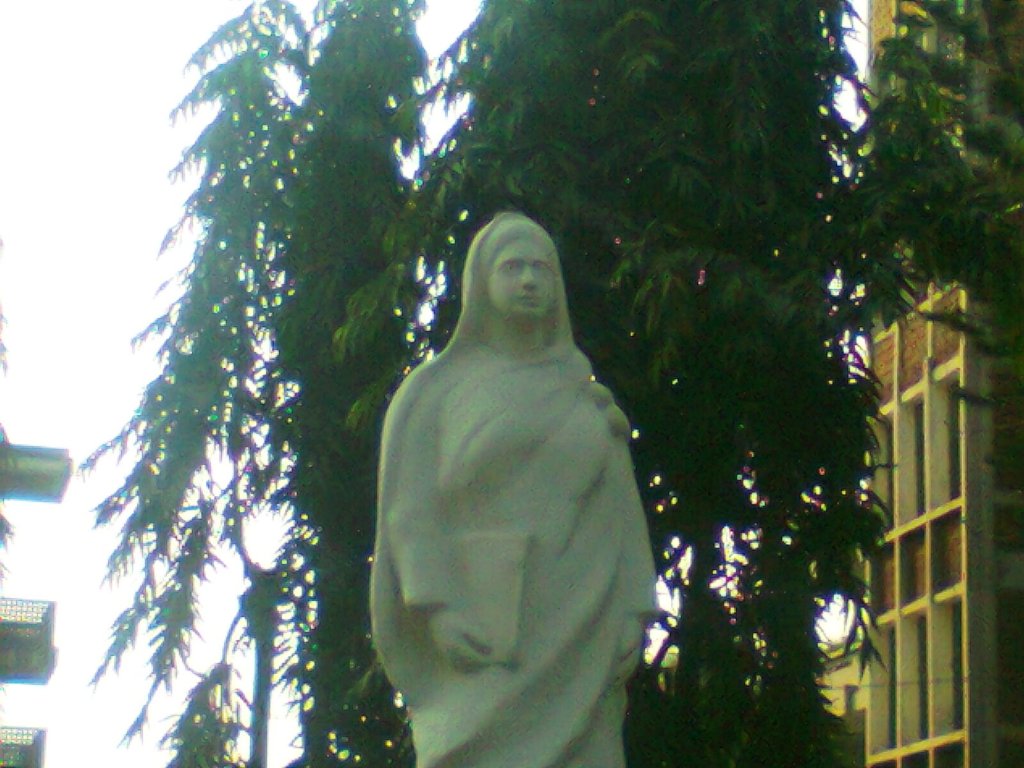
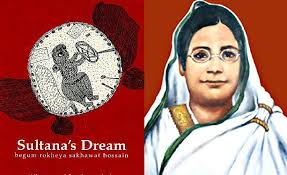
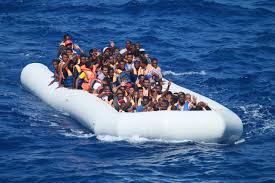
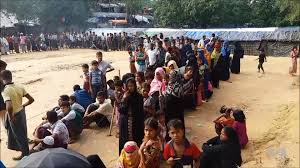

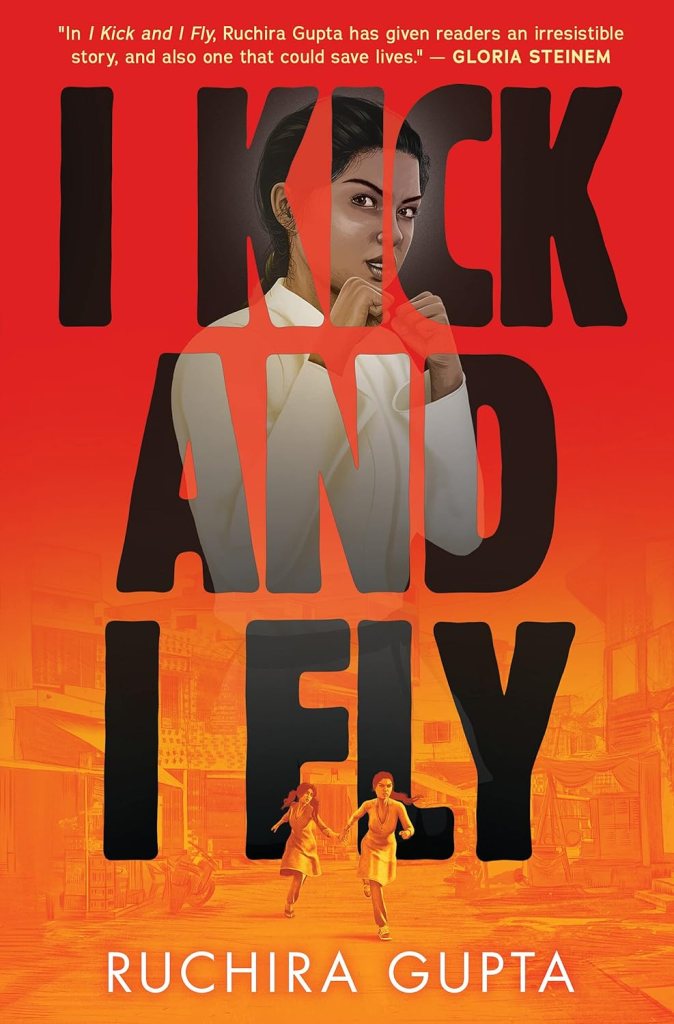

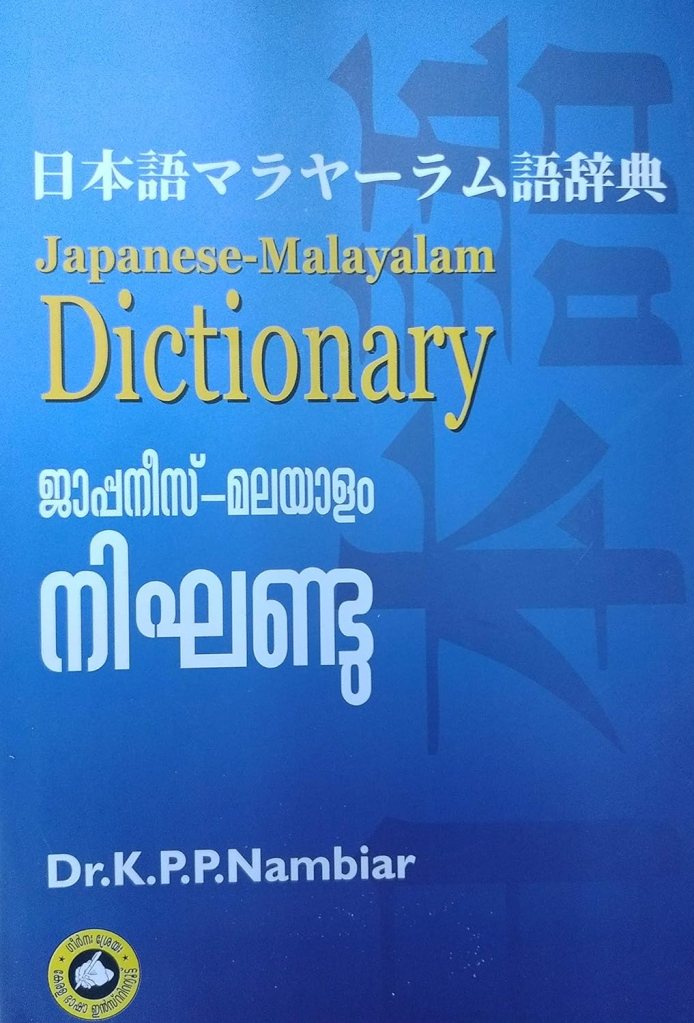


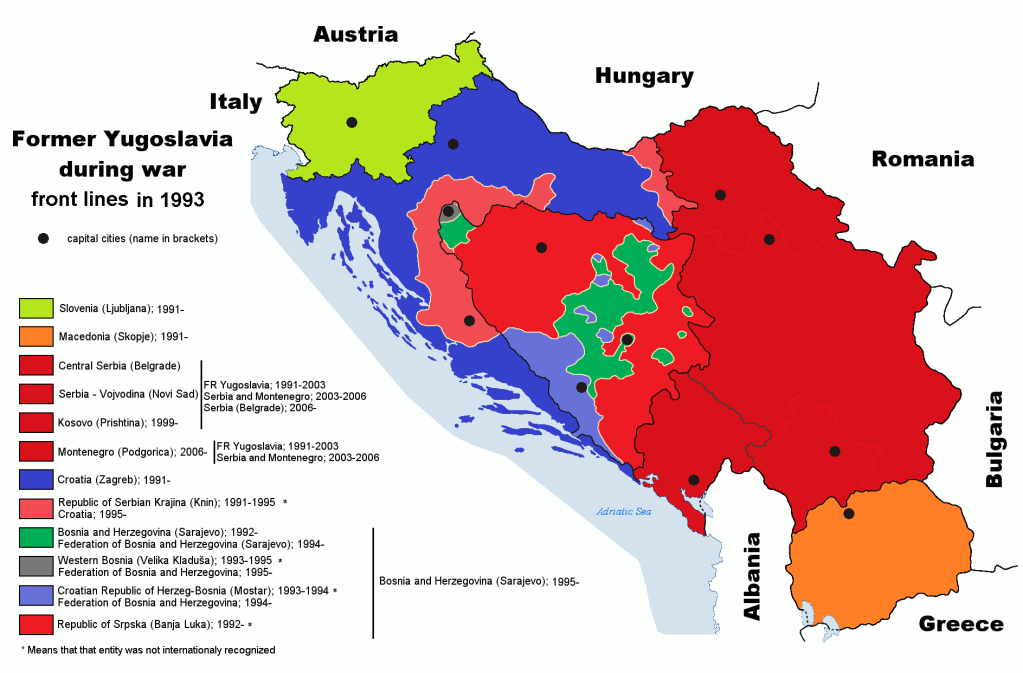

 Borderless