Most people like you and me connect with the commonality of felt emotions and needs. We feel hungry, happy, sad, loved or unloved and express a larger plethora of feelings through art, theatre, music, painting, photography and words… With these, we tend to connect. And yet, larger structures created over time to offer security and governance to the masses—of which you and I are a part — have grown divisive, and, by the looks of it, the fences nurtured over time seem insurmountable. To retain these structures that were meant to keep us safe, wars are being fought and many are getting killed, losing homes and going hungry. We showcase such stories, poems and non-fiction to create an awareness among those who are lucky enough to remain untouched. But is there a way out, so that all of us can live peacefully, without war, without hunger and with love and a vision towards surviving climate change which (like it or not) is upon us?
Creating an awareness of hunger and destruction wreaked by war is a heartrending story set in Gaza by JK Miller. While Snigdha Agrawal’s narrative gives a sense of hope, recounting a small kindness by a common person, Sayan Sarkar shares a more personal saga of friendship and disillusionment — where people have choice. But does war leave us a choice as it annihilates friendships, cities, homes and families? Naramsetti Umamaheswararao’s story reiterates the belief in the family – peace being an accepted unit. Vela Noble’s fantastical fiction and art comes like a respite– though there is a darker side to it — with a touch of fun. Perhaps, a bit of fantasy and humour opens the mind to deal with the more sombre notes of existence.
The translation section hosts a story by Hamiruddin Middya, who grew up as a farmer’s son in Bengal. Steeped in local colours, it has been rendered into English by V Ramaswamy. Nazrul’s song revelling in the colours of spring has been translated from Bengali by Professor Fakrul Alam. Atta Shad’s pensive Balochi lines have been brought to us in English by Fazal Baloch. Isa Kamari continues to bring the flavours of an older, more laid-back Singapore with translations of his own Malay poems. A couple of Persian verses have been rendered into English by the poet, Akram Yazdani, herself. Questing for harmony, Tagore’s translated poem while reflecting on a child’s life, urges us to have the courage to be like a child — open, innocent and willing to imagine a world laced with trust and hope. If we were all to do that, do you think we’d still have wars, violence and walls built on hate and intolerance?
Mario Fenech takes a look at the idea of time. Amir Zadnemat writes of how memory is impacted by both science and humanities while Andriy Nivchuk brings to us snippets from Herodotus’s and Pericles’s lives that still read relevant. Ravi Varmman K Kanniappan gives the journey of chickpeas across space and time, asserting: “The chickpea does not care about your ideology, your portfolio, or your meticulously curated identity. It will grow, fix nitrogen, feed someone, and move on without a press release.” It has survived over aeons in a borderless state!
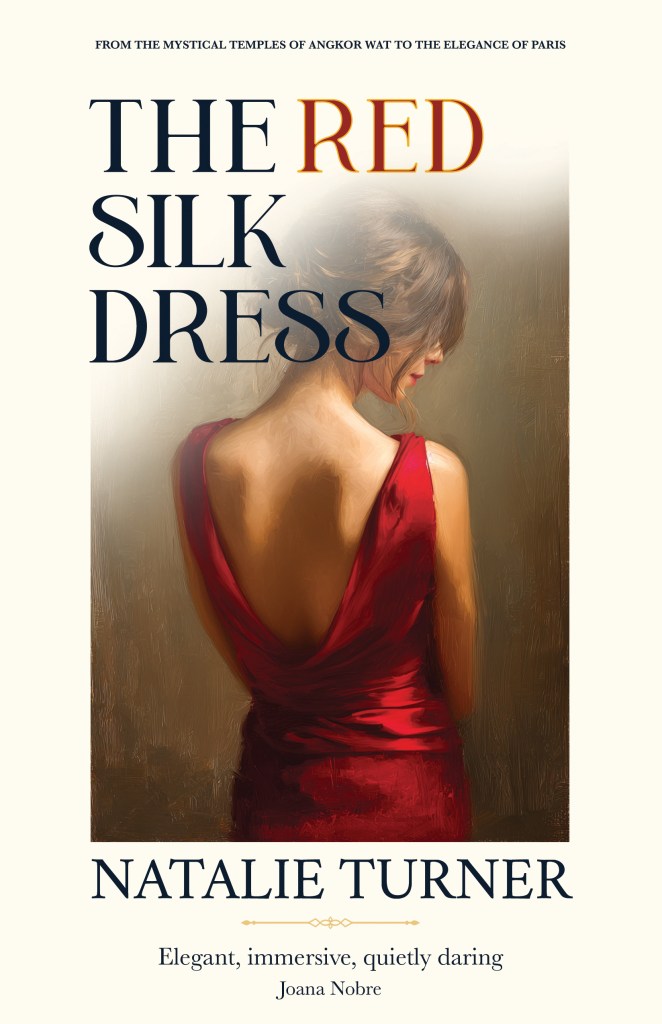
In book excerpts, we have a book that transcends borders as it’s a translation from Assamese by Ranjita Biswas of Arupa Kalita Patangia’s Moonlight Saga. Any translation is an attempt to integrate the margins into the mainstream of literature, and this is no less. The other excerpt is from Natalie Turner’s The Red Silk Dress. Keith Lyons has interviewed Turner about her novel which crosses multiple cultures too while on a personal quest.
Holding on to that idea, we invite you to savour the contents of our February issue.
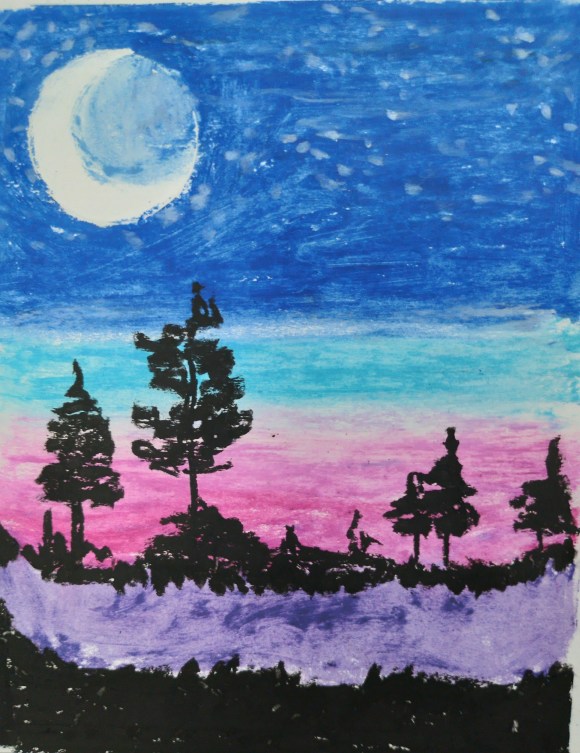
Huge thanks to all our contributors and readers for making this issue possible. Heartfelt thanks to our wonderful team, especially Sohana Manzoor for her fabulous artwork.
Enjoy the reads!
Let’s look forward to the spring… May it bring new ideas to help us all move towards more amicable times.
Keith Lyons in conversation with Natalie Turner, author of The Red Silk Dress
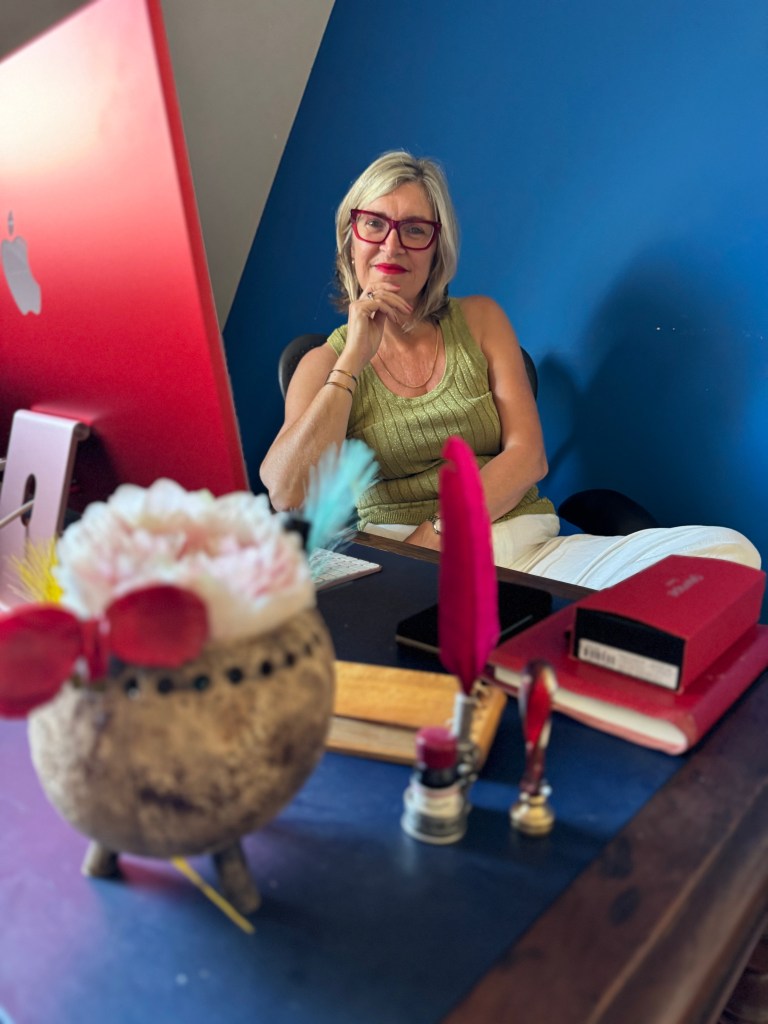
Natalie Turner in Lisbon
Tell us about your background and life. If you had to give a relatable elevator pitch to readers, what would you say?
I was born in 1968, a year of social upheaval, into a life shaped early by movement, belief, and questioning. My parents were Christian missionaries, so I grew up immersed in faith, travel, and a strong inner world. From a young age, I wanted to be a writer. I was also restless, resistant to fixed paths, and fiercely independent, which meant that desire took many shapes before it found its way home.
As a young adult, I travelled and worked across Asia and Latin America, experiences that expanded my worldview and quietly dismantled many of the belief systems I had inherited. I later studied politics, economics, and social psychology, worked in Parliament, and then moved into business and innovation, where I continue to help organisations navigate change. Writing stayed alive throughout, mostly through journals and ideas, even when it wasn’t centre stage.
The red thread running through my life has always been transformation. A willingness to question what no longer fits, and the courage to follow what is asking to emerge. Writing fiction felt like the most honest way to bring that thread home.
What first inspired The Red Silk Dress?
The inspiration came from living inside a world that looked complete from the outside but felt fractured beneath the surface. In Southeast Asia, I was surrounded by what’s often called the expat life, glamorous settings, elegant events, and success on display. Yet in quieter moments, especially in conversations with women, a very different story would surface.
Many were intelligent, capable, outwardly fulfilled, yet privately wrestling with a sense of loss. They had raised families and built impressive lives, yet somewhere along the way they felt they had misplaced themselves. The contrast between the polished exterior and the unspoken interior stayed with me.
At the same time, I recognised a parallel in myself. From the outside, my life also looked full and successful. Inside, I sensed something unfinished, something buried. The novel grew from that convergence. From the tension between what we show the world and what quietly asks for attention. Cambodia, and a writing retreat in Siem Reap, became the place where that question could no longer be ignored.
Why did you choose Claudette, a French woman living overseas, as the heart of this story?
I didn’t choose Claudette in a deliberate way. I wasn’t designing a character or thinking about nationality or backstory. She arrived. On the outskirts of Angkor Wat, during a writing retreat, surrounded by experienced writers and acutely aware of my own inexperience, this woman appeared fully formed in my imagination.
She was elegant and guarded, wearing a wide-brimmed white hat and dark glasses. She introduced herself as Claudette, from Paris, and asked me to write her story. When she removed her glasses, what struck me was the sadness in her eyes. That moment carried a quiet insistence. It wasn’t dramatic, but it was unmistakable.
I wrote the opening paragraph that day, and it remains the opening paragraph of the novel. Claudette wasn’t invented to make a point. She was the right vessel for the story that wanted to be told.
The novel explores longing, desire, and reinvention. What drew you to these themes?
Reinvention has always fascinated me because I’ve lived it. I’ve moved countries, changed careers, and rebuilt my life more than once. That capacity for agency, for choosing to become something new, has been a quiet through-line in my work and my thinking.
Longing and desire entered the novel more subtly. At the time, I was living in Penang, Malaysia, immersed in colour, texture, heat, and beauty. I began to experience desire not as something reckless or romanticised, but as a form of intelligence. A way back into memory, creativity, and the parts of us that go dormant when life becomes crowded with too much to do.
Longing, for me, is a signal. If we ignore it, we stay as we are. If we listen, it draws us inward, into an interior journey that can quietly change the course of our lives.
Is The Red Silk Dress a love story, or is it really about something deeper?
It’s about something deeper than a conventional love story. The love affair in The Red Silk Dress isn’t a romance in the usual sense, and it isn’t about escape or transgression for its own sake. It functions as a catalyst. Love, in Claudette’s case, is what wakes her up to herself.
What interested me was eros in its older meaning. A sensual awakening of the body and the senses, of attention and aliveness. A pause that draws us back into ourselves and allows us to inhabit moments more fully.
In that sense, eros doesn’t just awaken desire. It awakens attention. And sustained attention inevitably sharpens conscience. When we feel more alive, more present, more attuned, we become more aware of misalignment. Of what we are complicit in. Of what no longer feels bearable. That awareness naturally turns outward into questions of responsibility.
Places feel very alive in the book. Why were Cambodia, Malaysia, and Paris important settings?
The places are alive in the novel, as much a character as the people who inhabit it. Geography isn’t a backdrop for Claudette’s journey; it actively shapes it.
Cambodia is where the story begins because it is where her inner life is first disturbed and opened. I was deeply affected by Cambodia’s layers of history, from the ancient Angkor civilisation to the energy of contemporary artists, designers, and entrepreneurs rebuilding culture with pride and imagination. There is a sensuality and generosity in the country that opens Claudette.
Malaysia is her lived world. It is where I spent many years, moving between lush, gated communities, international enclaves, and the daily crossings into Singapore. That environment, with its contrasts between order and improvisation, privilege, and dislocation, shaped how Claudette learned to belong and not belong at the same time.
Paris represents origin and memory. It carries sensuality, identity, and an earlier version of herself. It is where Claudette must reckon with who she has been and who she is becoming, not nostalgically, but honestly.
And then there is Portugal, which sits quietly behind the book rather than inside the story. It is where the novel was edited, refined, and completed. After the intensity of Asia, it offered a different rhythm. More space. More listening. It was here that what had been awakened elsewhere could be integrated and shaped with patience.
For me, the locale is never decorative. Each country asks something different of Claudette. Cambodia opens her. Malaysia tests her sense of belonging. Paris calls her to reckon with her past.
What’s your connection with Malaysia, Cambodia, and Singapore, and what was your experience living and working there?
I moved to Singapore in 2010, initially for work. It was still a time when the traditional expat package existed, and the city was dazzling, ordered, and highly curated. I was fascinated by it, not because it was my life, but because of what it revealed about status, success, and performance.
We moved to Malaysia largely for practical reasons. In Johor Bahru, we became part of a more entrepreneurial, improvised community, shaped by people building lives across borders. I crossed into Singapore several times a week, so the contrast between those two societies became part of my daily rhythm.
Penang was where something settled. It was slower, textured, steeped in history. It was also where I returned fully to writing and committed to the novel. After years of living between worlds, Penang became the place where the book could finally be written.
You’ve lived and worked across many countries. How has that shaped the way you write about identity and belonging?
Living across countries has made identity feel less fixed and more relational. Belonging isn’t something you arrive at once and for all. It shifts depending on place, people, and season of life.
Being immersed in different cultures sharpened my sensitivity to belief systems, values, and the ways we construct meaning. Living now in Portugal has added another layer. After years of movement, it has offered a sense of feeling grounded without confinement. A rhythm where I can listen differently.
I now find myself writing more reflective cultural pieces that explore place, memory, and creativity. Belonging, I’ve learned, is not about fitting in neatly. It’s about learning how to be changed by place while remaining true to yourself.
You often write about moments when life quietly asks us to change. Where does that fascination come from?
From my own life. I’ve reinvented not just what I do, but how I think. What interests me most are the subtle moments when something no longer fits and begins to ask different questions.
Real change rarely arrives loudly. It comes as a discomfort, a quiet misalignment. Innovation, like personal change, requires the courage to step beyond conformity and tolerate uncertainty. I’ve always been drawn to that edge because it is where life becomes most alive.
Your professional work focuses on creativity and transformation. Did those ideas find their way into this story?
Yes, though not in a literal way. My work has always been about how change unfolds as lived experience. Claudette’s journey follows that inner arc. Awareness, awakening, investigation, and consequence.
Creativity also enters the novel through the senses. Fabric, silk, touch, style. I wanted creativity to live in the body, not just the mind. In that sense, the story becomes a meeting place between beauty and transformation.
Did writing The Red Silk Dress change how you see yourself or your work?
The act of writing, and the way the book moved me emotionally and sensorially, awakened a level of creative energy I hadn’t experienced before. When I finished the novel, I realised I had opened a door into a new phase of my life.
It also reoriented my work. I no longer separate creativity, leadership, and transformation into neat categories. They belong together. Writing the novel didn’t replace my previous work. It gave it a deeper centre.
In parallel, I continue my work with women in leadership, creating spaces where they can step back from performance and certainty and listen more deeply to themselves. In many ways, those spaces and the novel are in a subtle, mutually reinforcing conversation. Both are about reconnecting with agency, voice, and purpose, not as theory but as lived experience.
Who do you think this book is for?
It will likely resonate most strongly with women who are curious, reflective, and drawn to immersive stories. Readers who want to be transported into another world and enjoy discovering history, culture, and meaning through story.
That said, men have responded deeply too. Several have shared how meaningful it was to inhabit a woman’s inner world so intimately. While it is a woman’s journey, the relationships and portrayals of masculinity are layered and intentional.
At heart, it’s for readers standing at a threshold. Those who sense a quiet unease and are open to being moved by a story that stays with them.
If a reader recognises themselves in Claudette’s struggle, what would you want them to take from her story?
I would want them to pause first. To take a breath and turn inward. Claudette’s story isn’t a prescription or a manifesto. It’s an invitation to reflect.
If there is one thing I hope readers take from her journey, it’s the understanding that feeling trapped does not mean being powerless. Agency often begins quietly, with hope, courage, and a willingness to trust what is asking to emerge.
And that emergence isn’t just personal. It shapes how we show up in our families, our work, our communities. Change, in this story, is not about abandoning life, but about stepping back into it with greater responsibility for the world we are helping to shape.
What do you hope readers feel or reflect on after turning the final page?
Above all, I hope the book creates a pause. A moment of deeper listening. Not a rush to act or decide, but an invitation to sit with what is emerging.
What’s your advice to aspiring writers?
I think writing begins with attention. Being open to life, to what keeps circling at the edges of consciousness, to the story that wants to be told. Craft matters enormously, of course. Writing a novel asks for depth, endurance, and commitment well beyond beautiful prose. Technique only comes alive when it is in the service of something true, something rooted in vulnerability. Finding your story is about learning how to listen, and then having the courage and patience to give it form.
.
Keith Lyons (keithlyons.net) is an award-winning writer and creative writing mentor originally from New Zealand who has spent a quarter of his existence living and working in Asia including southwest China, Myanmar and Bali. His Venn diagram of happiness features the aroma of freshly-roasted coffee, the negative ions of the natural world including moving water, and connecting with others in meaningful ways. A Contributing Editor on Borderless journal’s Editorial Board, his work has appeared in Borderless since its early days, and his writing featured in the anthology Monalisa No Longer Smiles.
She stepped out of the limousine. The brim of her white Panama hat brushed the car door, and dust from the spinning wheels of a departing silver Mercedes hung in the air like a shroud. She shot an irritated glance at the receding car. Why did everything have to feel so rushed? She exhaled slowly, a familiar weight pressing against her chest. She looked down at her Jimmy Choos, now dusted with sand—a small detail, yet enough to deepen her annoyance. Determined to regain a sense of control, she pulled a tissue from her bag and stooped to wipe them clean. Shielding her eyes with oversized black sunglasses, she lifted her gaze to the sun.
Surrounded by meticulously manicured gardens, the Grand Hotel d’Angkor, an elegant cream mansion with a red slate roof and white veranda, stood before her. Its old-world charm softened her irritation. Finally, a touch of class. Claudette hadn’t realised just how much she had missed it.
Beside the limousine stood Andrew, her husband, his tall frame casting a long shadow. Wiping sweat from his freckled forehead, the lines on his face betrayed stress and fatigue. She knew it was the toll of his work, and she couldn’t help but feel a pang of sadness.
“I’ll check in,” he said, frowning. Pulling a handful of US dollars from the pocket of his sun-bleached khaki shorts, Claudette watched as he paid the driver, a knot of emotion tightening in her chest. There had been a time when he was light-hearted—playful even—but those days were long gone. Now his frown served only as a reminder of how distant they had become. His efforts to avoid meaningful conversation only deepened her frustration, and their relationship rarely stretched beyond the children’s schedules and his business travel plans.
“Monique, Pierre, wait!” she called to their ten-year-old twins. Overcome with excitement, they ignored her and sprinted up the hotel steps. Waving to catch their attention, she dropped her mobile. “Mon Dieu. Can you tell the children to stop for a moment?” Andrew turned his back and waved dismissively. Why does the burden of responsibility always fall on me? It was a familiar pattern. She was tired of feeling unheard and unimportant. Picking up her phone, she tucked a strand of long dark hair behind her ear and lowered her hat to shield her face from the sun. Following the twins up the steps, she entered the hotel.
“Ma’am.” A butler bowed as he offered a cold-pressed towel. Grateful for his attentiveness, she thanked him and pressed it to her face. Its cardamom-infused aroma lingered on her lips, and her fingers tingled from its cool, damp texture. Wiping her hands, she smiled and placed the towel on a small bronze plate. Determined to shake off her discomfort, she followed him into the cool, air-conditioned lobby and stepped into the lounge. Notes of Duke Ellington’s ‘Sophisticated Lady’ drifted through the air, accompanying her inside. It was one of her favourite songs. A wave of nostalgia, stirred by Sarah Vaughan’s mellow voice, carried her back to her days as a fashion student in a Parisian jazz bar. How she missed those days—when everything felt simple, possibilities stretching ahead like an open road. Days before she met Andrew, when her dreams were bright and believable. For a moment, the memories wrapped around her like a warm embrace. For a moment, she forgot where she was. She wanted more than the façade of a glamorous life; she longed to feel alive again. She sat down on a muted gold velvet sofa, hoping this weekend she might rediscover the Claudette she once was.
ABOUT THE BOOK
From the mystical temples of Angkor Wat to the glittering expat communities of Malaysia and the elegance of Paris, the novel is a story of longing, courage and transformation. Claudette, a French expat trapped in a loveless marriage, is captivated by Som, a charismatic Cambodian whose passion for his homeland awakens desires she thought were lost. Torn between duty and an awakening that promises freedom, but at a cost, Claudette must choose or risk losing the life calling her name. An intimate journey through the beauty and ache of second chances, the risks we take for love, and the secrets we keep, even from ourselves. For everyone longing to reclaim identity, this story will linger long after the final page.
ABOUT THE AUTHOR
Natalie Turner is a British author based in Lisbon. Her debut novel, The Red Silk Dress, is an upmarket literary exploration of longing, courage, and awakening, set across Cambodia, Malaysia, and Paris. Alongside her fiction, she writes a reflective cultural column exploring creativity, imagination, and the human dimensions of change. She is also the author of the award-winning non-fiction book Yes, You Can Innovate. Drawing on years living across Southeast Asia and Europe, she writes about women at thresholds, the landscapes that shape us, and the quiet moments where life begins to change.

 Borderless