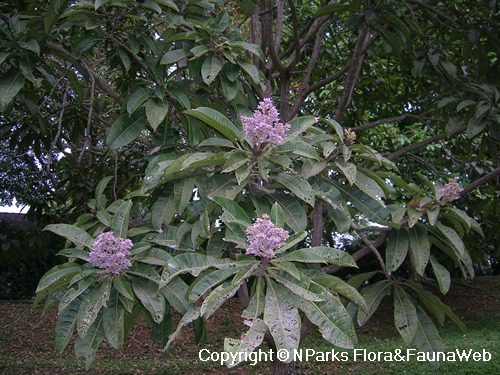
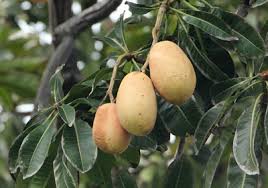
Flowers of Binjai Binja or White MangoFrom Public Domain
A SONG OF THE WIND
I surrender my body and soul to smoke, steam, and mist, which I gather with one last fibre of strength. Listen to this lonesome song, for the sun is envious of my existence. This life yearns for separation; frailty is only human. Ballads after ballads you would know. An honest young man is always chided for his age. The unending love of parents sometimes makes them act as dictators. If you feel life as silkworms dreaming of freedom, just remember your wings have broken the moment you willingly accept the smoothness of silk. If the clouds are too heavy for the roof of your home, call the wind, summon the earth. Then you would taste the sweetness of charity. But remember, a barren land sometimes is best left barren, for art also seeks justice. Proclaim, but do not claim, for your worth is still in a balance. As life is a bountiful gift, be discreet in giving alms, but you must be brave to challenge, although it means you have to burn a piece of love letter. For God is closer than your jugular vein. I come to you from a dusty journey where I gather smiles from smoke, steam, and mist. Listen to this lonesome song for a while, for I am envious of the ensuing dusk.
MOTHER
Oh, Allah, I know of your Love from the binjai which she craved for— a slice from the only fruit plucked by a neighbour. I know of your Mercy from the warmth of the womb that protects a soul, a frail presence in want of a mouthful of rice mixed with soy sauce and fried fish, under the thick foliage of the tree of Time, offering shade to the unfolding age. The moment she left to meet You, the tree of Hope fell; the kingdom of the Hereafter shook in my soul. Parting will ultimately lead to meeting again. Only to You I surrender, begging for your love for Mother— a straight path tracing her footsteps; asking for your mercy for Mother— which overrides your wrath over my life astray; seeking your gentle affection, as warm as Mother’s fingers.
TWEET
The chirping has escaped the cage. The chirping is free; the trap is empty. The chirping is returned and received. The chirping is delirious on the rotten branch. Your tail searches for the nest, Your claws clench the twigs, Your wings sift the wind, Your beak catches the worm, Your eyes survey the rainbow. Hey you, the bird which has escaped! Hey you, the bird which is free! You bring along the cage in your flight. The trap awaits your return. If your tail is not guided by faith, If your claws are not holding on to good deeds, If your wings are not spreading grace, If your beak is not chirping gratitude, If your eyes are not seeking redemption— Your song is a caged cry, Your tweet is a prisoned anguish. The resplendent feathers that you show off are hiding a sadness as wide as the sky.
THE TRAIN
The door will close. If religion is the track, it does not determine the path and destination for commuters. They board and alight at different stations, not the one, not the only one, not the same always. Religion is like a map; it does not make life boring, does not block a journey, shows the path anywhere you go, not the one, not the only one, not the same always. We are not carriages that do not have choices. Just make sure the meandering path is fun and secure, the last stop safe and peaceful. The door will close. The One awaits there, wherever it is.
The inside of a binjai mango. From Public Domain
Isa Kamari has written 12 novels, 3 collections of poetry, a collection of short stories, a book of essays on Singapore Malay poetry, a collection of theatre scripts and lyrics of 3 music albums, all in Malay. His novels have been translated into English, Turkish, Urdu, Arabic, Indonesian, Jawi, Russian, French, Spanish, Korean, Azerbaijan and Mandarin. Several of his essays and selected poems have been translated into English. Isa was conferred the S.E.A Write Award from Thailand (2006), the Singapore Cultural Medallion (2007), the Anugerah Tun Seri Lanang (2009) from the Singapore Malay Language Council, and the Mastera Literary Award (2018) from Brunei Darussalam.
He obtained a BArch (Hons) from the National University of Singapore in 1989, an MPhil (Malay Letters) from Universiti Kebangsaan Malaysia in 2008 and is currently pursuing a PhD programme at the Academy of Islamic Studies, Univeristi Malaya. His area of research is on the problem of alienation and the practice of firasat (spiritual intuition) in selected Singapore Malay novels.
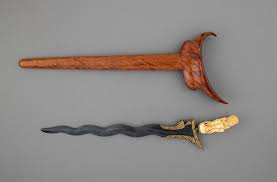
The Lost Mantras is a collection that blends spirituality, Malay cultural heritage, and universal human experience. First published as part of Menyap Cinta (Love Greetings, 2022, Nuha Books KL), these poems are like a bridge between mysticism and everyday life, where traditional images (betel, jasmine, kris[1], oil lamps, setanjak[2]) are woven with Qur’anic echoes, prayers, and existential questioning. The collection carries a Sufi resonance—always circling back to longing, humility, surrender, and beauty as signs of God. The poems are not only lyrical but also function as cultural memory: they preserve Malay traditions, communal practices, and village life, while situating them in a cosmic framework of faith, sin, and redemption. The use of Malay customs, rituals, and objects is powerful: it asserts that spirituality is not abstract but embedded in heritage. This makes the collection uniquely Southeast Asian despite its universal in appeal.
Hey, the morning breaks! Hey, the faithful sun! Hey, the disappearing dew! Hey, the layered air! The breath desires, the soul asks: Who do you greet? Have you pondered, sons of Adam? Death awaits, life prolongs. Have you realised, progenies of Eve? The earth is impregnated and layered by purpose. The one that you welcome is the morning, The one that you coax is the sun, The one that you touch gently is the dew, The one that you breathe is the air. The gift of death, life fulfilled, accompanies the inevitable: morning, sun, dew, and air. A breath dissipates, a soul obliterates. Nothingness. Gone. Hey!
THE FIELD
The green grass is a mother’s heart, the velvet of love for her children. Although stepped upon by mischief and transgression, she distils dews of hope that her children would grow with the sun. The earth is the preparation of a father: soil and compost for his children where character would be rooted. Barren or fertile, he digs into his responsibility and self-worth, as long as the rain nourishes his age. Grass flowers are the children who only know the joy of the wind for as long as their dreams have not landed on earth and kissed the grass.
MOLTEN EARTH
This moment, we’re walking in the rain, accompanied by a bluish rainbow and red birds with purple blood. If they’re heading towards the dais, we have yet to embrace the longing. When the moon is in tears, it’s just ill-suited for us to sail on the orange henna sea. In truth, we verily love the eagle that flies in the desolate morning. If not for ravens like you, our forest would be infested with rabbits. Give us white wings; we want to fly with blue birds that return to reciprocate love. We want to taste milk. Is it for us only urine, the manifestation of love by dogs? Sound your prayer call in our shacks so that our tears are not just to bear the pain and bitterness of a plate of rice. If your pensiveness is just to reminisce the sufferings of night longing for day, our tears have flowed from the earth’s molten belly, which are stepped upon by saints like you and them who have cast curses upon us wretched souls.
POTPOURRI
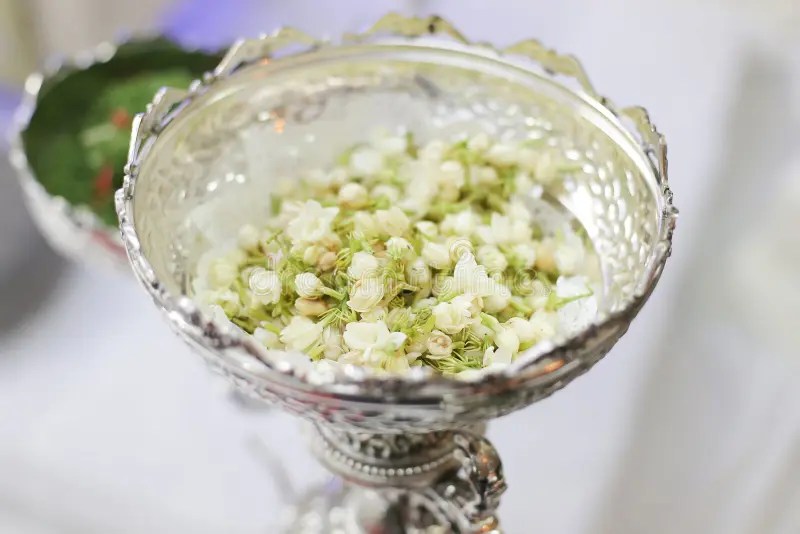
The screw pine thrives on damp soil, next to the swampy pond. It spreads its green in the wild; roots clench the earth we tread upon. The jasmine grows on the lawn, marks the boundaries of property. Sturdy branches, leaves flourish; petals open, greet the clouds. The sliced screw pine in a receptacle, the jasmine blossoms spread on the tray, perfume sprinkled to enhance the scent: the potpourri of bunga rampai welcomes guests. The ceremony officiated by the qadi, the couple duly married, customs and culture celebrated in fragrance, religious laws honoured on the dais. The shaving of the baby’s head, first steps on the soil, the coffin carried to the grave— the potpourri of bunga rampai adorns every domain, binding firmly entire life’s moments.
Bunga rampai — fresh flower potpourri used in Malay festivities and funerals. From Public Domain.
Isa Kamari has written 12 novels, 3 collections of poetry, a collection of short stories, a book of essays on Singapore Malay poetry, a collection of theatre scripts and lyrics of 3 music albums, all in Malay. His novels have been translated into English, Turkish, Urdu, Arabic, Indonesian, Jawi, Russian, French, Spanish, Korean, Azerbaijan and Mandarin. Several of his essays and selected poems have been translated into English. Isa was conferred the S.E.A Write Award from Thailand (2006), the Singapore Cultural Medallion (2007), the Anugerah Tun Seri Lanang (2009) from the Singapore Malay Language Council, and the Mastera Literary Award (2018) from Brunei Darussalam.
He obtained a BArch (Hons) from the National University of Singapore in 1989, an MPhil (Malay Letters) from Universiti Kebangsaan Malaysia in 2008 and is currently pursuing a PhD programme at the Academy of Islamic Studies, Univeristi Malaya. His area of research is on the problem of alienation and the practice of firasat (spiritual intuition) in selected Singapore Malay novels.
The Lost Mantras is a collection that blends spirituality, Malay cultural heritage, and universal human experience. First published as part of Menyap Cinta (Love Greetings, 2022, Nuha Books KL), these poems are like a bridge between mysticism and everyday life, where traditional images (betel, jasmine, kris[1], oil lamps, setanjak[2]) are woven with Qur’anic echoes, prayers, and existential questioning. The collection carries a Sufi resonance—always circling back to longing, humility, surrender, and beauty as signs of God. The poems are not only lyrical but also function as cultural memory: they preserve Malay traditions, communal practices, and village life, while situating them in a cosmic framework of faith, sin, and redemption. The use of Malay customs, rituals, and objects is powerful: it asserts that spirituality is not abstract but embedded in heritage. This makes the collection uniquely Southeast Asian despite its universal in appeal.
I bow to you, King. I bear the torment of your sadness in the embrace of my sleep. May it transform into glad tidings for the days of your people. This exploration is to find your throne, which has disappeared from our hearts. For my love to you, King.
JASMINES
Earth jasmines, sky jasmines, a string of jasmines encircles the heart, jasmines poured with water from the hills, jasmines sprinkled by a pinch of compost. Seven rivers, seven clouds— rain pelts onto forlorn petals. Beauty is in the form, beauty to the eyes, beauty is the hand that tends to the soil, beauty is the fingers that caress the leaves, beauty is the cut on the arms of the gardener. The scorching sun, the shade from the foliage, bountiful is the soul of the tree that delivers, witness to a life devoted to hard work, with the laws of nature as the axis. Strong roots clench the earth, shoots look up high to the sky. Stand firmly, the soul sings. Blossoms waft fragrant dreams. Earth jasmines, sky jasmines, bloom in the early morning. Say your prayers, introduce yourself.
BETEL LEAVES
To be at the top is to function at the bottom, upholding responsibilities and trust, strengthening shared roots. The fragile branches are free to stretch, the green leaves spread wide. Wild betel, untouched betel, covers the soil, climbs the trellis. To be at the peak in essence is to grow shoots, carrying fertile hopes and dreams, giving way and space to grow, to climb each posting energetically, to qualify for the position when seasons change. Lofty betels, heavenly betels, reach for the stars, greet the clouds. To be in the ceremonial receptacle in essence is to uphold tradition, surrendering to the preservation of culture. Typically chewed with lime, slicing problems, mature-red in speech, tracing the lives of roots and shoots. Wild betel, untouched betel, lofty betel, heavenly betel, courtship betel, customary betel, weaving values and the essence of leadership entrenched in tradition.
HOME
Free souls wouldn’t be easily bored by mentoring and demands, for it’s the stable self that gives rise to liberation. And that’s called freedom — it isn't about release without aims, just like city folks, released from home or work, wander aimlessly at shopping malls, seek excitement from novelty and transience. It isn't that Life doesn’t require variety, or it isn't that the soul doesn’t long for fun. It’s just that we who claim to be free are easily entrapped in useless pettiness that we spread in the city without ever realising that we haven’t returned to the doors of our hearts, although we’ve stepped afoot onto the compound of the house.
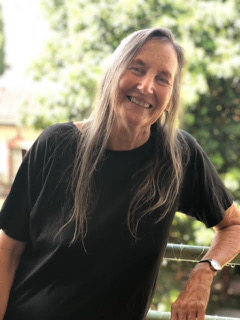
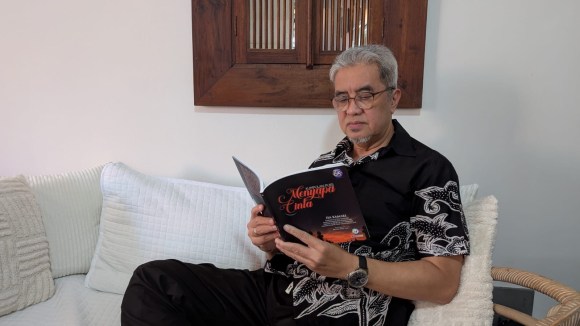
Isa Kamari : A foremost Malay writer from Singapore: Photo provided by the poet.
Isa Kamari has written 12 novels, 3 collections of poetry, a collection of short stories, a book of essays on Singapore Malay poetry, a collection of theatre scripts and lyrics of 3 music albums, all in Malay. His novels have been translated into English, Turkish, Urdu, Arabic, Indonesian, Jawi, Russian, French, Spanish, Korean, Azerbaijan and Mandarin. Several of his essays and selected poems have been translated into English. Isa was conferred the S.E.A Write Award from Thailand (2006), the Singapore Cultural Medallion (2007), the Anugerah Tun Seri Lanang (2009) from the Singapore Malay Language Council, and the Mastera Literary Award (2018) from Brunei Darussalam.
He obtained a BArch (Hons) from the National University of Singapore in 1989, an MPhil (Malay Letters) from Universiti Kebangsaan Malaysia in 2008 and is currently pursuing a PhD programme at the Academy of Islamic Studies, Univeristi Malaya. His area of research is on the problem of alienation and the practice of firasat (spiritual intuition) in selected Singapore Malay novels.
The Lost Mantras is a collection that blends spirituality, Malay cultural heritage, and universal human experience. First published as part of Menyap Cinta (Love Greetings, 2022, Nuha Books KL), these poems are like a bridge between mysticism and everyday life, where traditional images (betel, jasmine, kris[1], oil lamps, setanjak[2]) are woven with Qur’anic echoes, prayers, and existential questioning. The collection carries a Sufi resonance—always circling back to longing, humility, surrender, and beauty as signs of God. The poems are not only lyrical but also function as cultural memory: they preserve Malay traditions, communal practices, and village life, while situating them in a cosmic framework of faith, sin, and redemption. The use of Malay customs, rituals, and objects is powerful: it asserts that spirituality is not abstract but embedded in heritage. This makes the collection uniquely Southeast Asian while still universal in appeal
For as long as I can remember, I have been an introvert — this is who I am and will always be. Yet, few believe it. I come from Madagascar, a distant island where the people are called the Malagasy — a community bound by culture, tradition, and a shared sense of identity. Malagasy people are known for their warmth and generosity, often revealing a talkative side as they delight in conversation, and playful exchanges. In contrast, I am reserved — a shy person who expresses myself freely only when comfortable and among those I trust.
As a child, I was the most talkative among my siblings, recounting every detail of my school day to my parents. I delighted in describing the funny expressions my primary school teacher made while explaining lessons, or the mischievous boys who always stuck their chewing gum on the pupils’ desks and all the tasks I had accomplished. I wanted my parents to know I was doing well, that the teacher praised me, and that I helped classmates who struggled.
Both my parents are very talkative, especially my father, from whom I inherited the gift of words. Speaking in front of my family comes naturally, yet in front of others, my words often falter — a fear that has always troubled me. I speak freely only with those I know well— my family and a few close friends.
Facing a large audience has always been daunting. My father encouraged me to confront this fear, to be confident, and to meet the audience’s gaze. I tried many times: presenting in group projects, speaking as a class representative, even addressing an audience at a classmate’s parent’s funeral.
As I grew older, my determination to overcome this fear grew. I devoured books and videos on public speaking, eager to communicate with confidence. My first real test came in 2018, when I delivered a speech in a Japanese language contest. I had loved Japanese language since childhood, captivated by its culture, and dreamed of becoming fluent. Entering the contest was a dream — an opportunity to speak publicly and a chance to win a trip to Japan.
I was guided by two close friends who practiced with me daily. They corrected my mistakes, offered feedback, and most importantly, encouraged me. Having known me for years, they understood how terrifying standing on stage could be, yet they supported me out of love, friendship, and belief in my potential.
During rehearsals, I gave my utmost effort, memorising the script when necessary. Still, doubts lingered about meeting expectations, conquering fears, and not disappointing those who believed in me. The days of practice passed quickly, and soon, the big day arrived. Nervous at first, I gradually became more at ease while speaking. I managed to control my anxiety but knew my performance was imperfect. I focused on each word, yet my mind occasionally went blank, struggling with the judges’ questions. Embarrassment washed over me; I feared I had let my friends and family down.
In the end, I did not win the first prize, but my closest friends congratulated me. They reminded me that the true milestone was stepping onto the stage, speaking in front of an audience, and maintaining composure. Their encouragement helped me realise that courage and effort mattered more than the outcome itself.
As an introvert, talking to strangers is challenging, let alone addressing a crowd. Hearing the words “public speaking” makes my stomach tighten, palms sweat, and heart race. Stage fright, fear of facing many people and sharing my thoughts has always been real. Each time my name is called, I shake, my mind blanks, heart pounds, mouth dries, and confidence seems to vanish before I start. Yet, I have never lost hope. Deep down, I knew a strength within me would help rise above fear and grow into a better version of myself.
One year later, I stood again in the same contest. This annual competition was a goal I refused to let go of. As before, my friends encouraged, pushed, and trained with me every day until the D-day. Their support gave me the strength to continue. I prepared even more fiercely — joining language clubs and volunteering in storytelling activities. But it was not easy. I never felt comfortable speaking or working with strangers. I was told teamwork required discussion, sharing, and collaboration — a nightmare for an introvert.
Solitude had been my ally, yet suddenly, I was surrounded by people of all ages and personalities. Cooperation was no longer optional. However, through this challenge, I discovered an important truth: whether introverted or extroverted, whether silent or talkative, we must learn to connect with others. Survival and growth depend on collaboration and support.
The big day of the speech contest arrived in May, a season of transition between summer and winter. I arrived at the hall just in time, accompanied by a close friend. A staff member guided me to my seat, only a few meters from the judges. I felt cheerful, and calm, even giving a fist bump to nearby contestants. For the first time, I felt truly ready to give a speech — optimistic, and at peace. Perhaps it was the preparation or my friends’ wholehearted support, or maybe I had begun to trust myself.
There were four contestants in the advanced level, and I was the last to speak. Each of us hoped to win the grand prize — a trip to Japan. I did not worry about the others. I believed in my success and was determined to win first place. Just days before, I even dreamed of visiting Japan, so nothing could stand in my way.
Finally, it was my turn. I adjusted the microphone, greeted in Japanese, and bowed to the judges and audience. I spoke for about five minutes on how Malagasy parents raise children. Three judges asked each two questions. Thanks to countless practice hours and mock questions and answers sessions with my best friends, I answered every tricky question. For the first time, right after my speech, I felt like a winner.
The event lasted about three hours, and the final verdict came. The Master of Ceremonies announced winners, starting with the beginner level, then the advanced. Among the four in my category, only two remained. The Master of Ceremonies paused dramatically before announcing the first-place winner… and pronounced my name. I whispered a silent thanks to God. This result — the goal I had worked so hard for — had become reality. The trip to Japan was the reward, and even more importantly, I had overcome stage fright. I spoke naturally and confidently in front of the audience — another milestone achieved.
Later that year, in 2019, I visited Japan for the first time. The experience was magical. I met wonderful people, explored my favorite country, and fulfilled a long-cherished dream.
Six years later, I returned to the Land of the Rising Sun—this time as an international student. I now live in Tokushima prefecture, which is in southeastern Japan, far from the bustling cities, in a quiet countryside where few tourists venture. Yet, the city and its neighbourhoods are simply wonderful. It is peaceful, surrounded by greenery, and while the locals may seem reserved, they are incredibly welcoming. Even with some grasp of the local language, adapting to a new country as a foreigner is challenging. Still, thanks to the support of my seniors and friends who have lived here for years, I managed to navigate my first six months successfully.
The city where I live hosts an annual Japanese speech contest open to foreigners who have been residing here for some time. I was encouraged to participate, partly because I could speak some Japanese, and partly because it was a great chance to gain experience. I thought, why not? After all, I gradually grew more comfortable speaking in front of others.
This time, participants could choose their own topics, though it was suggested to focus on their experience in Japan or explore cultural connections between their home country and Japan. I was eager to participate, but selecting a topic was harder than I expected. Inspiration felt scarce, and I had no clear direction. Still, I knew that finding my own perspective was key to making the speech meaningful.
Overwhelmed by my studies, I barely noticed the passage of time. Before I knew it, the deadline had arrived. I had not written a single word, though ideas swirled in my mind. I opened my laptop, took a deep breath, and began writing everything that came to my mind. Reflecting on my experiences in Japan, I realised that people often struggled to pronounce my name correctly. That inspired me to talk about the hidden culture behind Japanese and Malagasy names.
With my theme set, I focused on making my speech coherent and captivating. I tend to draw inspiration at the last minute. I wrote, rewrote, and proofread repeatedly, staying up all night without noticing morning approaching.
Finally, I finished my manuscript and emailed it to one of my Japanese teachers to check for grammatical errors. She responded immediately, and her quick proofreading allowed me to submit my speech on the deadline. I felt relieved, yet strangely nervous, a sensation I could not quite describe.
Six years have passed since I last spoke in front of an audience. Preparing another speech made me feel nostalgic, bringing back memories of long rehearsals, the advice of my best friends, and countless sleepless nights.
A month after submitting my manuscript, I received an email from the event organizer announcing my selection. I was among the fourteen candidates chosen to compete. I whispered a quiet “wow,” but doubts immediately surfaced. I had two months to prepare. To understand what awaited me, I watched recordings of previous competitions, while my seniors and Japanese teacher helped me refine my speech.
Four students were selected from my university. The other three were Asian students with extensive experience in Japanese language and culture. They read Kanji (Japanese characters)effortlessly and conversed naturally. And then, there was me. Though I had been exposed to Japanese language and culture since childhood, memorising every character reading and grasping dialects was never easy. Back in my country, despite growing interest in Japanese language and culture, opportunities to use it in daily life remain limited. Once again, I faced a new challenge—this time in the Land of the Rising Sun.
Time flew, and soon the two months of preparation had passed. Finally, the big day arrived. Early that morning, a kind university staff member greeted us with a bright smile. As I descended from my dormitory, I saw her waiting by her car near the main gate, bowing politely. Her excitement was palpable. Three of us rode in her car; she asked about our preparations and told jokes, perhaps to ease our nerves, which were all visible.
After twenty minutes, we arrived at a large building and walked up to the fifth floor through corridors decorated in traditional style. Japanese architecture and design have always fascinated me, and I was struck by their beauty once again. The event hall was medium-sized, with a small table at the entrance holding our name tags.
One by one, the other candidates arrived. We were then led to a smaller room for a preparatory meeting. While waiting, we chatted briefly to get to know one another. The competition began in the early afternoon. We were instructed to enter the hall one by one, greeted with warm applause. Observing the other candidates, I could tell they were ready. Fourteen contestants competed in total. Thirteen were Asians from countries including China, Vietnam, India, Indonesia, the Philippines, Taiwan, Sri Lanka, and Thailand. I was the only African, from a distant country few people knew. Before each speech, the Master of Ceremonies shared a brief anecdote about the candidate’s country, offering the audience a glimpse into its culture. Each contestant then delivered a five-minute speech.
There were two types of awards: the Golden Prize for first and second place, followed by four Silver Prizes. I had hoped to place among the top five while preparing my speech.
As I listened to the first three candidates, I was deeply impressed. Their speeches were powerful, emotional, and delivered with near-native fluency. I was surprised by how advanced and impressive their speaking skills were. I was the sixth speaker. Perhaps it had been so long since I last addressed an audience, or perhaps it was the absence of my closest friends but standing alone in a foreign country in front of strangers was overwhelming. My hands trembled. When my name was announced, I feared I might not endure those five minutes on stage.
Still, I stood before hundreds of people. I bowed, held the microphone firmly, and began. My heart raced and sweat ran down my face and back. Gradually, the pressure eased. When I shared the example of the longest name in the world—from my country, the audience reacted with surprise and amusement. I realised how attentive they were and regained inner calm. Although I forgot one line, I finished my speech smoothly and expressively.
The remaining eight candidates were equally impressive. Their eloquence was such that, with eyes closed, one might mistake them for native speakers. It was the highest-level contest I had ever participated in. Each theme and presentation were unique, and every contestant spoke with confidence. I doubted whether I would receive a prize, but reassured myself that even without one, the experience was worthwhile. Most participants had lived in Japan for over three years, and the Chinese and Taiwanese contestants were especially strong in oral expression. Yet, standing among such talented competitors was an honor.
After a break that was supposed to last twenty minutes but stretched to fifty, results were announced. They began with six Encouragement Prizes. I thought I might be among them, but my name was not called. Two more awards followed, still not mine. A friend nudged me, whispering, “Congratulations!” I replied, “Stop joking. Congratulations to you instead!”
Finally, the Silver Prizes were announced. They first called my country, then my name. The applause and cheers overwhelmed me, and tears welled in my eyes. I had not expected to win a Silver Prize, given the competition’s level. One friend from my university won the Golden Prize, and the second Golden Prize went to a Vietnamese contestant.
Participating in such a high-level competition was a tremendous challenge. Every step—from manuscript preparation to standing on stage—pushed me beyond my comfort zone. Yet, when it was over, I felt immense pride. I had once again delivered a speech before a large audience, this time in the country whose language I had cherished for years.
Though I had been nervous, the audience remained unaware. Their attentive expressions and warm applause carried me through. Afterwards, my Japanese teachers praised my performance, saying I had done exceptionally well. In that moment, I realised every hour of preparation, every doubt, and every fear had been worthwhile. I had faced a formidable challenge, stood my ground, and expressed myself fully, a reminder that courage, practice, and determination can transform daunting experiences into triumphs. It is a memory I will treasure forever.
.
Randriamamonjisoa Sylvie Valencia is from Madagascar and is currently studying in Japan as a trainee student. She enjoys reading, writing, listening to music, and traveling to explore new cultures.
PLEASE NOTE: ARTICLES CAN ONLY BE REPRODUCED IN OTHER SITES WITH DUE ACKNOWLEDGEMENT TO BORDERLESS JOURNAL
Amy Sawitta Lefevrefrom Bangkok writes an eyewitness account of the March 28, 2025, earthquake with it’s epicentre in Myanmar.
I had just finished an errand and was about to head home from downtown Bangkok. At the last minute, I decided that I needed lunch. I had barely sat down at a restaurant on the ground floor of a skyscraper when suddenly I felt dizzy, and almost about to black out. It felt as though a magnet were pulling down my head and my body.
Just then someone in the restaurant shouted: “Earthquake!”
Next thing, we were all running out of the building which was swaying. It felt like an apocalypse. The stuff out of Hollywood movies. People were pouring outside, and many started pointing upward at something with horrified eyes. As I turned my eyes in that direction, I was stunned at what I saw: the rooftop pool of the hotel in the skyscraper near us was splashing down like a mountain cataract.
Water spilling out of the pool. From Public Domain
A chill passed through me as I thought: “This building is about to collapse on us!”
Luckily for us, it did not. But we soon learnt that many others had not been so fortunate, as a 7.7 magnitude earthquake had just ripped through Mandalay in Myanmar, with shock waves in parts of Bangkok.
I tried to stand steady but felt as if I was on the deck of a ship on a stormy sea. I thought in a daze about the ferocious power of natural disasters. Incredible how something seemingly so far away could wreak havoc here. I’ve lived in Bangkok for more than a decade and nothing like this had ever happened.
My first thought was for my children. I tried calling the school, but everyone was using their phones, and I couldn’t get through. Eventually I saw a message pop up from the school saying the children had been evacuated. My next thought was to rush home and embrace my children.
I’m a former journalist and now a humanitarian, and I’ve been through many crises in my professional career, but nothing quite prepares you for having to live through a disaster, which for the first time, you realise could impact your own children. And it was a disaster in the sense that Thailand and Myanmar both declared states of emergency.
That day it took me 4-5 hours to walk from downtown Bangkok to my home in the north of Bangkok. The sky train was not working. The traffic on the downtown street was chaotic. My legs just kept moving because all I wanted to do was to get home to my children.
Along the way I met many people whose faces bore the same expression: kind Thai faces, or kind tourist faces, but all of them shell-shocked. Yet, despite everything, people tried to collect themselves in an orderly fashion and helped each other.
I met many angels: one man offered to buy me a cold sugarcane juice seeing the pallor of my blood drained face; a woman gave me her shopping bag to carry my bag as it’s handle had broken when I rushed out of the building.
As I kept walking down streets where the soundtrack was of wailing sirens, the rubber soles of the flimsy leopard print ballet shoes I had slipped on that morning were almost worn out. At one point, I couldn’t continue walking. I was dizzy and nauseated, and flopped onto the sidewalk to catch my breath beside a couple on holiday from Peru. We crouched on the floor together, trying to rest before continuing our journey. All around us people were spilling out of buildings, hugging each other, trying to phone loved ones, and in endearingly typical Thai fashion, smelling herbal inhalers!
Around 6 pm, I finally staggered home and embraced with relief and gratitude my two children and our nanny. We stood at the threshold just holding each other in a warm group hug. My husband was away from Thailand on work, and he called frantically, as did my mother from the suburbs of Bangkok, both relieved to hear our voices. Family and friends messaged with concern and prayers.
The weekend was a blur. We soon learned that the damage and death toll in Myanmar was significant. I spent Saturday in my role as a humanitarian media manager writing a press release, taking media interviews and coordinating interviews for others, while still processing what had just happened the day before.
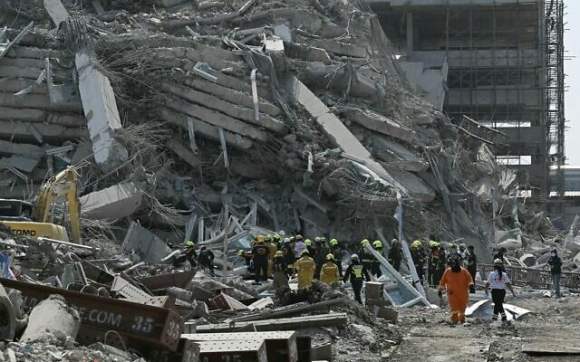
Collapsed building in Bangkok. From Public Domain
On the Sunday, the children and I were on a highway when we drove past the rubble of a building under construction, near the well-known Chatuchak Market. It had collapsed, trapping dozens of unfortunate workers under it. All I could think of was how massive the pile of rubble was, and how eerily quiet it was. Now I can’t bear to look at the photos or videos of anxious relatives of those construction workers who are waiting to hear news of their loved ones.
In Myanmar more than 3,000 people have died and more than 3,000 are injured but that figure will likely go up as rescue operations continue. In the light of such a massive emergency, my natural instinct was to sideline my own needs and to first respond to the call of duty. But by the fifth day after the earthquake, I had to see a specialist at the hospital because my balance felt completely off since that day.
Even though the doctor gave me the all-clear with some medicines and has advised me to rest, to practice focusing my eyes on still images, and to take walks and deep breaths, I feel as though my entire body has shifted to one side or is cracked, just like some of those buildings in central Bangkok. My city and I, both shaken to the core, trying to recover.
We’re told that another earthquake could happen in the next 30 days again and it fills me with dread. My children, six and eight, ask me what we would do if another one hits. They are scared and want answers. As do we adults. The earth is our home, and the health and well-being of its environment influences our own. If seismic activities are linked to climate change, maybe, by treating our planet with more kindness and respect we might mitigate future eruptions.
In the meantime, my children have me and my husband to talk to them and reassure them. But I’m also thinking of all the children in Myanmar who are sleeping in the open, who lost loved ones, who are feeling scared and alone, with no one to reassure them. Let us be there for them and other victims of natural disasters, in whatever ways we can, in solidarity with our common and vulnerable humanity.
My prayers for those for whom the ground shifted not just for a day, but whose entire lives may have turned upside down.
.
Amy Sawitta Lefevre is a former journalist and currently works at an international NGO. She has been based in Thailand for over a decade.
.
PLEASE NOTE: ARTICLES CAN ONLY BE REPRODUCED IN OTHER SITES WITH DUE ACKNOWLEDGEMENT TO BORDERLESS JOURNAL
Borderless Journal started on March, 14, 2020. When the mayhem of the pandemic had just set in, we started as a daily with half-a-dozen posts. Having built a small core of writings by July, 2020, we swung to become a monthly. And we still continue to waft and grow…
Art by Sohana Manzoor
We like to imagine ourselves as floating on clouds and therefore of the whole universe. Our team members are from multiple geographies and we request not to be tied down to a single, confined, bordered land. We would welcome aliens if they submitted to us from another galaxy…
On our Fifth Anniversary, we have collected celebratory greetings from writers and readers stretched across the world who share their experience of the journal with you and offer suggestions for the future. We conclude with words from some of the team, including my own observations on being part of this journey.
Aruna Chakravarti
Heartiest congratulations to Borderless on the occasion of its fifth anniversary! Borderless, an international journal, has the distinction of carrying contributions from many eminent writers from around the world. From its initiation in 2020, it has moved from strength to strength under the sensitive and skillful steering of its team. Today it is considered one of the finest journals of its kind. I feel privileged to have been associated with Borderless from its very inception and have contributed substantially to it. I wish to thank the team for including my work in their distinguished journal. May Borderless move meaningfully towards the future and rise to greater and greater heights! I wish it every success.
Professor Fakrul Alam
Five years ago, when Borderless set out on its literary voyage, who would have imagined the length and breadth of its imaginative crossings in this span of time? The evidence, however, is digitally there for any reader who has seen at least some of its issues. Creative writing spanning all genres, vivid illustrations, instant links giving resolute readers the option to track a contributor’s creative voyaging—here is boundless space always opening up for those seeking writing of considerable variety as well as originality. The best part here is that unlike name-brand journals, which will entice readers with limited access and then restrict their spaces unless you subscribe to them, all of Borderless is still accessible for us even though it has attracted a wide readership in five years. I certainly hope it will stay that way.
And what lies ahead for Borderless? Surely, more opportunities for the creative to articulate their deepest thoughts and feelings in virtual and seemingly infinite space, and innumerable avenues for readers to access easily. And let us hope, in the years to come Borderless will extend itself to newer frontiers of writing and will continue to keep giving space to new as well as emerging writers from our parts of the world.
May the team of Borderless, continue to live up to their claim that “there are no boundaries to human imagination and thought!”
Radha Chakravarty
Since its inception, Borderless Journal has remained true to its name, offering a vital literary space for writers, artists and scholars from around the world to engage in creative dialogue about their shared vision of a world without borders. Congratulations Borderless, and may your dream of global harmony continue to inspire.
Somdatta Mandal
According to the famous Chicana academic and theorist Gloria Anzaldua, the Borderlands are physically present wherever two or more cultures edge each other, where peopIe of different races occupy the same territory, where under, lower, middle and upper classes touch, where the space between two individuals shrinks with intimacy. Hatred, anger and exploitation are the prominent features of this landscape. There, at the juncture of cultures, languages cross-pollinate and are revitalized; they die and are born. Borders are set up to define the places that are safe and unsafe, to distinguish us from them. A border is a dividing line, a narrow strip along a steep edge. A borderland is a vague and undetermined place created by the emotional residue of an unnatural boundary. It is in a constant state of transition. The prohibited and forbidden are its inhabitants.
About five years ago, when a new online journal aptly called Borderless Journal was launched, these ideas which we had been teaching for so long were simply no longer applicable. Doing away with differences, with limits, it became a suitable platform where disparate cultures met, where people from all disciplines could express their views through different genres, be it poetry, translation, reviews, scholarly articles, creative writing and so on. Many new writers from different parts of the world became regular contributors to this unique experimentation with ‘borderlessness’ and its immense possibilities are very apt in this present global context where social media has already changed many earlier notions of scholarship, journalism, and creativity.
Jared Carter
In its first five years Borderless has become an important witness for international peace and understanding. It has encouraged submissions from writers in English based in many different countries, and has offered significant works translated from a wide range of national literatures. Its pages have featured writers based in India, Pakistan, China, Taiwan, Japan, South Korea, Australia, the UK, and the US. In the future, given the current level of world turmoil, Borderless might well consider looking more closely toward Africa and the Middle East. As the magazine continues to promote writing focused on international peace and freedom, new horizons beckon.
Teresa Rehman
The best part of this journal is that it is seamless and knows no margins or fringes. It is truly global as it has cut across geographical borders and has sculpted a novel literary genre called the ‘borderless’. It has climbed the mountains of Nepal, composed songs on the Brahmaputra in Assam, explored the hidden kingdom of Bhutan, walked on the streets of Dhaka, explored the wreckage of cyclones in Odisha, been on a cycling adventure from Malaysia to Kashmir, explored a scenic village in the Indo-China border, taken readers on a journey of making a Japanese-Malayalam dictionary, gave a first-hand account of the war in Bosnia-Herzegovina and described the syncretic culture of Bengal through its folk music and oral traditions. I hope it continues telling the untold and unchartered stories across mountains, oceans and forests.
Kirpal Singh
In a world increasingly tending towards misunderstandings across borders, this wholesome journal provides a healthy space both for diverse as well as unifying visions of our humanity. As we celebrate five distinguished years of Borderless Journal, we also look forward to another five years of such to ensure the underlying vision remains viable and visible as well as authentic and accurate.
My heartfelt Congratulations to all associated with this delightful and impressive enterprise!
Asad Latif
The proliferation of ethnic geographies of identity — Muslim/Arab, Hindu/Indian, Christian/Western, and so on — represents a threat to anything that might be called universal history. The separation and parcelling out of identities, as if they are pre-ordained, goes against the very idea (proclaimed by Edward Said) that, just as men and women create their own history, they can recreate it. Borders within the mind reflect borders outside it. Both borders resist the recreation of history. While physical borders are necessary, mental borders are not. This journal does an admirable job in erasing borders of the mind. Long may it continue to do so.
Anuradha Kumar
I have been one of Borderless’ many readers ever since its first issue appeared five years ago. Like many others, I look forward with great anticipation to every issue, complete with stories, , reviews, poems, translations, complemented with interesting artwork.
Borderless has truly lived up to its name. Within its portal, people, regardless of borders, but bound by common love for literature, and the world’s heritage, come together. I would wish for Borderless to scale even greater heights in the future. As a reader, I would very much like to read more writers from the ‘Global South’, especially in translation. Africa, Asia and Australasia are host to diverse languages, many in danger of getting lost. Perhaps Borderless could take a lead in showcasing writers from these languages to the world. That would be such an invaluable service to readers, and the world too.
Ryan Quinn Flanagan
To me, Borderless Journal is a completely free and open space. Topics and styles are never limiting, and the various writers explore everything from personal travelogues to the limp of a helpful druggist. Writers from all corners of the globe contribute, offering a plethora of unique voices from countless circumstances and walks of life. Because of this openness, Borderless Journal can, and likely will continue to grow and expand in many directions simultaneously. Curating and including many new voices along the way. Happy 5th Birthday to a truly original and wonderfully eclectic journal!
George Freek
I feel the Borderless Journal fills a special spot in the publishing world. Unlike many journals, which profess to be open-minded and have no preference for any particular style of poetry, Borderless actually strives to be eclectic. Naturally, it has its own tastes, and yet truly tries to represent the broad spectrum which is contemporary poetry. I have no advice as to where it should go. I can only say keep up the good work, and stooping to a cliche, if it’s not broken, why try to fix it?
Farouk Gulsara
They say time flies when one is having fun. It sure does when a publication we love regularly churns out its issues, month after month, for five years now.
In the post-truth world, where everybody wants to exert their exclusivity and try to find ways to be different from the person standing next to them, Borderless gives a breath of fresh air. At a time when neighboring countries are telling the world they do not share a common history, Borderless tries to show their shared heritage. We may have different mothers and fathers but are all but “ONE”!
We show the same fear found in the thunderous sounds of a growling tiger. We spill the exact hue of blood with the same pain when our skin is breached. Yet we say, “My pain is more intense than yours, and my blood is more precious.” Somehow, we find solace in playing victimhood. We have lost that mindfulness. One should appreciate freedom just as much as we realise it is fragile. Terrorism and fighting for freedom could just be opposing sides of the same coin.
There is no such thing as a just war or the mother of all wars to end all wars as it has been sold to us. One form of aggression is the beginning of many never-ending clashes. Collateral damage cannot be justified. There can be no excuse to destroy generations of human discoveries and turn back the clock to the Stone Age.
All our hands are tainted with guilt. Nevertheless, each day is another new day to make that change. We can all sing to the tune of the official 2014 World Cup song, ‘Ola Ola,’ which means ‘We are One.’ This is like how we all get together for a whole month to immerse ourselves in the world’s favourite sport. We could also reminisce about when the world got together to feed starving kids in Africa via ‘Band-Aid’ and ‘We Are the World’. Borderless is paving the way. Happy Anniversary!
Ihlwha Choi
I sincerely congratulate Borderless Journal on its 5th anniversary. I am always delighted and grateful for the precious opportunity to publish my poetry in English through this journal. I would like to extend my special thanks for this.
Through this journal, I can read a variety of literary works—including poetry, essays, and prose—from writers around the world. As someone for whom English is a foreign language, it has also been a valuable resource for improving my English skills. I especially enjoy the frequent features on Rabindranath Tagore’s poetry, which I read with great joy. Tagore is one of my favourite poets.
I have had the privilege of visiting Santiniketan three times to trace his legacy and honor his contributions to literature and education. However, one aspect I find a little disappointing is that, despite having published over 30 poems, I have yet to receive any feedback from readers or fellow writers. It would be wonderful to have such an opportunity for engagement.
Additionally, last October, a Korean woman received the Nobel Prize in Literature—the first time an author from South Korea has been awarded this honor by the Swedish Academy. She is not only an outstanding novelist but also a poet. I searched for articles about her in Borderless Journal but was unable to find any. Of course, I understand that this is not strictly a literary newspaper, but I would have been delighted to see a feature on her.
I also feel honoured that one of my poems was included in the anthology Monalisa No Longer Smiles: An Anthology of Writings from across the World. I hope such anthologies will continue to be published. In fact, I wonder if it would be possible to compile and publish collections featuring several poems from contributing poets. If these were made available on Amazon, it would be a fulfilling experience for poets to reach a broader audience.
Moving forward, I hope Borderless Journal will continue to reach readers worldwide, beyond Asia, and contribute to fostering love and peace. Thank you.
Prithvijeet Sinha
The journey of authorship, self-expression and cultural exchange that I personally associate with Borderless Journal’s always diverse archives has remained a touchstone ever since this doorway opened itself to the world in 2020. Going against the ramshackle moods of the 2020s as an era defined by scepticism and distances, The journal has upheld a principled literary worldview close to the its pages and made sure that voices of every hue gets representation. It’s also an enterprise that consistently delivers in terms of goodwill and innocence, two rare traits which are in plenteous supply in the poems, travelogues, essays and musings presented here.
The journey with Borderless has united this writer with many fascinating, strikingly original auteurs, buoyed by a love for words and expression. It is only destined for greatness ahead. Happy Birthday Borderless! Here’s to 50 more epochs.
From Our Team
Bhaskar Parichha
As Borderless Journal celebrates its fifth anniversary, it is inspiring to see its evolution into a distinguished platform for discourse and exploration. Over the years, it has carved a unique niche in contemporary journalism, consistently delivering enlightening and engaging content. The journal features a variety of sections, including in-depth articles, insightful essays, and thought-provoking interviews, reflecting a commitment to quality and fostering dialogue on pressing global issues. The diverse contributions enrich readers’ understanding of complex topics, with a particular focus on climate change, which is especially relevant today. By prioritising this critical issue, Borderless informs and encourages engagement with urgent realities. Having been involved since its inception, I am continually impressed by the journal’s passion and adaptability in a changing media landscape. As we celebrate this milestone, I wish Borderless continued success as a beacon of knowledge and thoughtful discourse, inspiring readers and contributors alike.
Devraj Singh Kalsi
Borderless Journal has a sharp focus on good writing in multiple genres and offers readable prose. The platform is inclusive and does not carry any slant, offering space to divergent opinions and celebrating free expression. By choosing not to restrict to any kind of ism, the literary platform has built a strong foundation in just five years since inception. New, emerging voices – driven by the passion to write fearlessly – find it the ideal home. In a world where writing often gets commercialised and compromised, Borderless Journal is gaining strength, credibility, and wide readership. It is making a global impact by giving shape to the dreams of legendary poets who believed the world is one.
Rakhi Dalal
My heartiest congratulations to Borderless and the entire team on the fifth Anniversary of its inception. The journal which began with the idea of letting writing and ideas transcend borders, has notably been acting as a bridge to make this world a more interconnected place. It offers a space to share human experiences across cultures, to create a sense of connection and hence compassion, which people of this world, now more distraught than ever, are sorely in need of. I am delighted to have been a part of this journey. My best wishes. May it continue to sail through time, navigating languages, literature and rising above barriers!
Keith Lyons
Is it really five years since Borderless Journal started? It seems hard to believe.
My index finger scrolls through Messenger chats with the editor — till they end in 2022. On the website, I find 123 results under my name. Still no luck. Eventually, in my ‘Sent’ box I find my first submission, emailed with high hopes (and low expectations) in March 2020. ‘Countdown to Lockdown’ was about my early 2020 journey from India through Thailand, Malaysia, Indonesia, and Australia to New Zealand as COVID-19 spread.
Just like that long, insightful trip, my involvement with Borderless Journal has been a journey. Three unique characteristics stand out for me.
The first is its openness and inclusiveness. It features writers from all over the globe, with various contributions across a wide range of topics, treatments and formats.
The second feature of the journal is its phenomenal growth, both in readers and writers, and in its reach. Borderless really does ‘walk the talk’ on breaking down barriers. It is no longer just a humble literary journal — it is so much bigger than that.
The third unique aspect of Borderless is the devotion endowed in nurturing the journal and its contributors. I love the way each and every issue is conceived, curated, and crafted together, making tangible the aspiration ‘of uniting diverse voices and cultures, and finding commonality in the process.’
So where can we go from here? One constant in this world is change. I’d like to think that having survived a global pandemic, economic recession, and troubling times, that the core values of Borderless Journal will continue to see it grow and evolve. For never has there been a greater need to hear the voices of others to discover that we are all deeply connected.
Rhys Hughes
I have two different sets of feelings about Borderless Journal. I think the journal does an excellent job of showcasing work from many different countries and cultures. I want to say it’s an oasis of pleasing words and images in a troubled sea of chaos, but that would be mixing my metaphors improperly. Not a troubled sea of chaos but a desert of seemingly shifting values. And here is the oasis, Borderless Journal, where one can find secure ideals of liberty, tolerance, peace and internationalism. I appreciate this very much. As for my other set of feelings, I am always happy to be published in the journal, and in fact I probably would have given up writing poetry two years ago if it wasn’t for the encouragement provided to me by regular publication in the journal. I have written many poems especially for Borderless. They wouldn’t exist if Borderless didn’t exist. Therefore I am grateful on a personal level, as a writer as well as a reader.
Where can Borderless Journal go from here? This is a much harder question to answer. I feel that traditional reading culture is fading away year after year. Poets write poetry but few people buy poetry books. They can read poems at Borderless for free and that is a great advantage. I would like to see more short stories, maybe including elements of fantasy and speculative fiction. But I have no strategic vision for the future of the journal. However, one project I would like to try one day is some sort of collaborative work, maybe a big poem with lots of contributors following specific rules. It’s an idea anyway!
Meenakshi Malhotra
Borderless started with a vision of transcending the shadow lines and has over time, evolved into a platform where good writing from many parts of the world finds a space , where as “imagination bodies forth/ The forms of things unknown, the poet’s pen/Turns them to shapes and gives to airy nothing/A local habitation and a name.”
It has been a privilege to be a part of Borderless’s journey over the last few years. It was a journey based on an idea and a vision. That dream of creating solidarity, of transcending and soaring over borders and boundaries, is evident in almost every page and article in the journal.
Mitali Chakravarty
Looking at all these responses, thinking on what everyone has said, I am left feeling overwhelmed.
Borderless started as a whimsical figment of the imagination… an attempt to bring together humanity with the commonality of felt emotions, to redefine literary norms which had assumed a darker hue in the post Bloomsbury, post existentialist world. The journal tried to invoke humour to brings smiles, joys to create a sense of camaraderie propelling people out of depression towards a more inclusive world, where laughter brings resilience and courage. It hoped to weave an awareness that all humans have the same needs, dreams and feelings despite the multiple borders drawn by history, geographies, academia and many other systems imagined by humans strewn over time.
Going forward, I would like to take up what Harari suggests in Homo Deus — that ideas need to generate a change in the actions of humankind to make an impact. Borderless should hope to be one of the crucibles containing ideas to impact the move towards a more wholesome world, perhaps by redefining some of the current accepted norms. Some might find such an idea absurd, but without the guts to act on impractical dreams, visions and ideas, we might have gone extinct in a post-dino Earth.
I thank the fabulous team, the wonderful writers and readers whose participation in the journal, or in engaging with it, enhances the hope of ringing in a new world for the future of our progeny.
Jonathan Harper was startled out of sleep by an impatient ringing at the door bell. He rolled out of bed, tip-toed to the sitting-room and peeked through the curtains covering the bay windows. In the dim, moonlit night he perceived a slender, young man dressed in some sort of long robe. He was completely bald. Again the bell rang and rang under the young man’s relentless ringing. Jonathan hastened to the hearth, picked up the poker out of its andiron then quietly moved towards the door. With a quick jerk he unlocked it so as to take the knocker by surprise. The knocker looked stonily at Jonathan’s sleepy, pale face and at the poker.
“Whatever are you doing with that mighty weapon, father?” was that knocker’s first remark. Jonathan stared in astonishment, mouth agape. “Yes, father it’s me, your son Francis. Have you forgotten me ?”
And that was how Francis Harper, the fugitive Buddhist monk, and his father Jonathan, completely thunderstruck, were reunited …
“Quick, come in … come in … At this hour of the night, Francis. And look at you, dressed like a beggar monk. So thin. I hardly recognised you.” Jonathan was in a state of great excitement. Francis sailed in, closed the door and settled on the familiar canopy. He scanned the sitting-room: Nothing had changed.
“You gave me a scare, Francis,” Jonathan resumed, still standing.
“Well, who would be ringing at this hour of the night?” Francis returned in a flat voice. His father hadn’t quite understood the question. He seemed half asleep. “Where’s mum?”
“Who?”
“Mummy … your beloved wife?” Francis pressed ironically. Jonathan stared emptily at him. “Well, is she here, or has she gone to see her boring sister Hazel ? Perhaps she’s out with her lover?” Jonathan winced.
“Don’t be vulgar, Francis, please.”
“Come on, I’m only having you on. Where is she?”
Jonathan stepped forward: “I thought she was with you! She went to find you in Laos a year ago, and I’ve never had any word from her since.”
Francis looked blankly at this father then jumped up. “She’s mad ! Why did you let her go, damn it?”
“I didn’t let her go, Francis; she woke up one morning and off she went leaving me a note.”
“What note? Do you still have it?”
“The note … Yes …” Jonathan shuffled to his bedroom to procure Heather’s note that she had left for him on the chimney-mantle. He handed it to his son. It seemed that it had been wrinkled up into a ball then roughly flattened out.
“Bloody hell! Why did she do that?” Francis gritted his teeth. “It’s such a dangerous place to be for mummy. She has no clue of the dangers : the jungles are infested with disease and wild animals. Food and water are dodgy. It’s another world.”
The son glared at his father then threw himself down onto the canopy, burying his face in his hands.
“I’ve put the police on to it but nothing has come up,” Jonathan defended himself, yet in a contrite tone of voice. “She believed that only she could bring you back to us. But … how did you come back here?”
The question struck Francis oddly. He looked at his father who still stood: “Do put down that poker, you cut such a ridiculous figure.” Indeed, Jonathan hadn’t noticed that he still clenched the poker tightly. He tossed it into the cold hearth. Francis sighed: “Me ? Do you really want to know, father?”
“Of course I want to know, then we can both set out to find mother.”
“No we cannot just set out to find mother. I am a wanted criminal in Thailand and in England. Have you forgotten?”
“Rubbish! How then did you manage to get home if you are wanted by the police?” Jonathan persisted, trotting back and forth from the sitting-room to the kitchen to make coffee and toast muffins.
“That’s a long story,” Francis lamented, crumbling up the letter and dropping it to the carpeted floor.
“Well, we have the whole night, so please, I must know the truth. It’s been a nightmare for me in this house all alone. You know that Andy pops in almost every day to rub salt into my wounds, drinking my brandy and wheeling that mordant wit of his.”
“You mean that you’ve been pissing it up with that halfwit?” Francis snapped.
“No … no, of course not. But he invites himself over and never knows when to leave. How many times have I put up with his drunken effrontery.”
“Well, if I ever see him here …”
“No ! He must not see you; if he does all Stevenage will know and that means the police, too. No. We must find a way to hide you, to keep you safe from the law until this rotty mess is straightened out.”
“Straightened out?” Francis sneered. He eyed his father coldly. ‘Forced’ solitude had wrinkled the old man’s ashen face, had given him the appearance of Gandalf straight out of TheHobbit, all he needed was a grey cloak, staff and floppy hat to complete the portrait instead of his thirty-year old pyjamas. The flesh on his neck had gone flabby and his eyes, colourless, like his thinning, flaky hair. Jonathan finished his coffee: “Please tell me how you left Laos and managed to reach England,” he said in a weak voice, practically beseeching his son.
Francis took a gulp of coffee, he made a wry face: “I haven’t drunk coffee for over twelve years.” Setting the cup down on the settee, he began his tale. And as Francis fumbled to find his words Jonathan observed the metamorphosis of his appearance.
Francis’ face, laboured by years of privations, illness and fasts, had the appearance of rough, sandy stone. His eyes were set deep in their orbits whilst the furrows of his crow’s eyes twitched at every slight movement or sound in the sitting-room. The callousness of his face darkened all its former freshness of youth – that youth he had abandoned in southeast Asia. He swayed slightly in the canopy, nibbling at his muffin, apathetically. Jonathan made some more coffee and toasted more muffins for his enfeebled son. He opened slightly the bay window curtains then finally settled down in his wicker chair.
Francis began lethargically, rubbing his hairless head: “I had been living from monastery to monastery in northern Laos, constantly ill because of the food and water until one day I decided that I had no future in those remote places of worship. Mind you, the religious services captivated me as did the jungle and the snaking, mystical Mekong. The monks were jovial chaps, very respectful and reserved. They offered a soothing solace to my inner and outer sufferings. But I had to leave and return to England. My mind and body ached for familiarity… for mother and for the English language …”
“And your father?” interposed Jonathan, biting his quavering lower lip. Francis looked sadly at his aging father. “I know I haven’t been the best of fathers to you, Francis,” Jonathan conceded, his cheeks flushing red with shame. “But you will acknowledge that I did encourage you to travel to Asia to earn your livelihood. You know, I did not choose my solitude. It was imposed on me.”
“Did we then impose it, me and mummy?” came Francis’ laconic retort.
Jonathan looked dismal, a bit jarred by the remark. He stared at his son through sleepy, spent eyes. Francis laughed: “Of course I’ve returned for you too!” He pursued: “Thanks to my Lao passport procured for me by the Venerable Father, I travelled to visa-free countries. First, I boated it down to Vientiane, then took a cheap flight to Moscow. From there to Cairo, where I renewed my British passport at the embassy wihout any questions asked, although it had expired over six years. Anyway, with my British passport I entered Italy by boat, and from there on used my British passport since European border officials hardly looked at it. To avoid the usual big entries into England I hitched up to the Hook of Holland and took the ferry to Harwich.”
“But hadn’t the border officials suspected anything … your dress?”
“I changed dress in Italy but wore my robe when crossing into England.”
“But your photo?”
“My face has undergone a drastic change, father — haven’t you noticed?” Jonathan had but said nothing. “Anyway, what could they say to a tonsured-headed Englishman who had become a Buddhist?” Jonathan paused, as if reflecting.
“And the money to pay for all these flights, boats and trains?”
“I had my Cook’s travellers’ cheques safely in my money belt.”
Jonathan sighed. “Look Francis, we must not dilly-dally, Interpol may be on your trail at this very moment. No dawdling about, I have to find a place to hide you.”
“Don’t exaggerate, father, please.”
Jonathan sized up his gaunt, emaciated son: “I hope you’re not thinking of turning yourself over to the police.” Jonathan wrung his hands fearfully.
“No, no, I’ve paid for my selfishness and stupidity. Every day and night for twelve years that horrible scene still floods my mind.”
Here it seemed to Jonathan that Francis began to weep quietly. What to do ? What to do ? Comfort him with a fatherly hand on the shoulder ? A paternal embrace ? Or simply a kind, appeasing word ? Jonathan, whilst he observed his son, realised that he had never been a fatherly towards his son. Heather had been right — he thought as he looked on helplessly at his son’s bony, trembling shoulders.
The grandfather clock struck six.
“My God, it’s morning!” Jonathan cried, going to the bay window. “People will be milling about.”
“So what, people always mill about in the morning,” came Francis’ sardonic reply.
“Someone may see you.”
“Through the window? Who will see me father if I stay in the house?”
“Right you are, Francis.”
“And mother?” Francis retorted, a glare of reproach in his cloudy eyes.
“Mother? Why hasn’t she ever written to me? Did you not have any news of her in Laos?”
“Some monks did speak about an old lady with grey hair seen in different boats on the Mekong. That’s about all. It could have been anyone … “
“Anyone? An old, grey-haired lady traipsing up and down the Mekong,” Jonathan cut in savagely. He fell back into his wicker chair. “I have to get you out of England before I tend to your mother. I will act quickly and decisively for you and her.”
Francis stared at his wizen-faced father, and for the first time in his life the young man felt a pang of pride towards him. Yes, a pang of pride because Francis had always believed his father to be a moral coward, a skulker who purposely disavowed, even mocked all his childhood projects, which had gradually raised an emotional tension between them. The clock struck half-past six. The first rosy rays of the sun trickled into the sitting-room with the warm, gay light. At that stroke of the clock Francis truly felt that their generational tension had been somehow lightened.
Francis stood. Jonathan stood. They gazed at each other and an instant later broke out into howls of laughter, laughing like two little boys. They laughed and laughed as they had never laughed before.
Jonathan strode over to Francis and slapped him paternally on the back: “Let’s have a real British breakfast.” Which they did — bacon and eggs, kipper and fresh orange juice which Jonathan squeezed himself.
The doorbell rang. Jonathan jumped out of his chair. Francis hastened to the bay window. It was Andy. “Blast! Into your room Francis and don’t make a sound. I’ll send that bugger packing. How dare he come bothering me at this hour of the morning.”
As Jonathan shuffled to the door, Francis made a bee-line for his bedroom. Jonathan threw it open.
“Well old man, up bright and early, hey?” began Andy in his usual strident, exasperating tone. “How about a little excursion to St Albans this morning ? They have an excellent pub where the food is the best in Hertfordshire.” Andy struck his customary ill-bred pose.
“No thanks, not today Andy, I’m terribly busy …”
“You, busy, Johnny old boy? Come on, mate, we’ll take your car.”
“That goes without saying since you haven’t one,” Jonathan rejoined peevishly. “No, today I must finish some work. You go and tell me how the food is. We’ll see about tomorrow.” He corrected himself. “No … next week ; I shall be popping over to visit my cousin-in-law.”
Andy sensed that Jonathan was lying.
“I see,” and a grotesque smile stretched over his red-spotted, pasty face. “What’s good for the goose is good for the gander, hey?”
“What are you insinuating?”
“Oh nothing … nothing, old boy. Have a good time and let me know how things work out.” He gave Jonathan an equivocal wink. Jonathan slammed the door in his face.
“Bloody idiot!” he growled. Jonathan stopped in his tracks. “My cousin-in-law … that’s it ! I’ll send Francis to Mary in Ireland. No one will ever think of searching for him in Ireland.”
Jonathan was all agog. He had found a solution to Francis’ dilemma thanks to Andy’s unexpected visit. He called to Francis who opened the door of his room carefully.
“No bother, the blighter’s gone, and I have a smashing idea, Francis. I have half a mind to drive you to Ireland where the British police will never hunt you down. My cousin-in-law, Mary O’Casey, lives in Waterville. Once we’re there and you’ve met her, I’ll drive back to England, get a flight to Laos and bring mother back home.”
Francis had never seen his father so animated. His shrivelled features seemed to rejuvenate, new blood infuse that puffy, pasty, unshaven Gandalf face. Francis, however, stood at the door of his room, a strange, alien gleam in his eyes. He turned to his father: “You’ve left everything as it was,” he pronounced softly. “Malraux’s La Voie Royale, Maugham’s TheGentleman in the Parlour. My desk … Everything as it was … exactly … “
“Yes, your mother wished it so. Nothing has been touched. The room has been waiting for your return. Unfortunately the circumstances require desperate action that I would never have imagined. We must buckle up, my boy.”
“Ireland?” wondered Francis sceptically.
“Ireland,” Jonathan echoed. “I shall get you there tonight and we’ll be on the Birkenhead ferry for Dublin tomorrow morning. Dress like an average Englishman and use your British passport.”
“What do you mean by an average Englishman, father?” Francis enquired.
“Well … Put a cap on your bald head and dress in English clothes. You’re not thinking of getting into Ireland with your monk’s robe, are you?”
Francis chuckled: “Don’t worry, my days of impersonating a Buddhist monk are over.”
“Were you then not sincere about your conversion?” his father asked rather puzzled.
Francis shrugged his shoulders: “I don’t know. I don’t know who I really am. I seem to have lost all identity of myself by impersonating or embracing so many identities. Now I’m off to Ireland. Will I become an Irishman?” A melancholic smile stretched his bloodless lips.
“Whatever you become Francis you will always be my son.” Francis nodded, albeit the resigned gesture seemed to embarrass his father who eyed his son with genuine sympathy.
“Mary will have you working in the gardens, and you know she has lodgers there all year round. You could help her out in her home. She lost her husband many years ago. A fine woman, she is.”
Francis nodded again and stepped back into his room. He closed the door silently and lay on his bed, his blood-shot eyes fixed on all his books nicely arranged on the shelves. He smiled. Then those sleepless eyes fell on a photo of his beloved Irish setter, Patty. He closed them and thought of nothing … nothing at all. He began to murmur a prayer of contrition in the name of the Enlightened One …
Meanwhile in the sitting-room Jonathan set to work without delay. He had already contacted his cousin-in-law by phone, explaining Francis’ predicament. He related everything to her without any feelings of guilt or mawkish sentimentality. Mary despised sentimentality. She would welcome Francis like her own child — a child she had never herself had.
Francis had fallen asleep. His father woke him at five in the afternoon. They had a large dinner, after which, under the cover of darkness, Jonathan packed Francis’ belongings in the boot — two shirts and trousers, a pair of walking boots and woollen socks, and his favourite books, Malraux’s La VoieRoyale, Maugham’s Collected Short Stories, three of Richard Burton’s travel books and T.E. Lawrence’s Seven Pillars of Wisdom.
They reached Birkenhead in the morning two hours before the first ferry to Ireland. The bored border official hardly looked at their passports. An hour and a half later they were in Dublin. There the Irish waved them through after having taken a cursory glance at their passports. Two hours later they arrived at Mary O’Casey’s homestead near Hog’s Head. They were both exhausted but relieved to have accomplished their mission.
Mary welcomed them with a hearty lunch. She hadn’t seen Jonathan for over twenty-five years. As to Francis, she had seen him once at the age of five or six. Jonathan stayed on several nights. Mary had no lodgers at that time so she was happy to sit at the welcoming hearth, drink her evening brandy and chat with her distant family-in-law. She read about Heather in the tabloids and wished Jonathan all the luck to bring her back home. If the British bobbies couldn’t do it, well, Jonathan would! He nodded, weakly. Francis remained silent.
Three days later Jonathan bid farewell to Mary and his son. It was time to put into action his plan to retrieve Heather from the jungles of Laos. He would obtain his visa for Laos in London, then buy his flight ticket. He promised to keep Francis informed of any developments.
“Good or bad!” said Francis, with a serious face. Jonathan’s cheeks reddened. He didn’t answer, casting a covert glance at Mary. Instead he strode over to his son, kissed him on both cheeks, something he had not done since he was a baby, kissed Mary on the forehead and hastened out to the car. He was gone in a few minutes.
“I hope you’ll tell me some good stories of your travels, Francis,” Mary chirped cheerfully, taking Francis by the arm. “You know, I like a good story round the hearth. I’ll have you know that you’re in the land of leprechauns, banshees and sidhes.” Her greenish eyes twinkled with impishness.
“What are banshees and sidhes?” Francis asked sheepishly.
“Ah! The spirits of the dead, lad. The unquiet dead. But you needn’t bother about them, I chase minions away with my broom.” And Mary broke into peels of good-natured laughter.
Francis worked daily in Mary’s lovely flower and vegetable gardens, and when lodgers arrived he cooked them breakfast and dinner whenever she was at Waterville on an errand. Oftentimes, he accompanied the guests on the loop road where he could again and again admire the blanket bogs. Mary warned him on several occasions, waving a minatory finger at him, never to step foot in the lime-covered homestead. He never did, not because he was afraid of ghosts — his upriver experiences in Laos had hardened him on all fear of supernatural beings — but because he hadn’t the heart to disobey his father’s cousin-in-law, a cousin-in-law, by the way, that he never quite came to comprehend the genealogical connexion. No matter. He felt at home with this charming woman and with her lively lodgers.
Four quiet months elapsed. One late misty Autumn morning Mary handed Francis a letter from his father. It was posted from Luang Prabang, Laos. Francis quickly opened it. As he scanned the almost unreadable scribble of his father’s handwriting his now bearded face contracted and hardened into a stony expression of restrained grief.
“What is it, my lad?” Mary strolled over to him, frightened.
The young man set the letter down gently on the table: “Mummy’s dead, Mary. She died of illness in northern Laos six months ago. Father is bringing her back home for burial.” Mary placed a motherly hand on Francis’ shoulder and spoke a few words of real warmth. Francis stared vacantly through the open front door into the greyish autumn sky.
The first lodger of the morning thumped slowly down the wooden stairway for breakfast.
From Public Domain
.
Paul Mirabile is a retired professor of philology now living in France. He has published mostly academic works centred on philology, history, pedagogy and religion. He has also published stories of his travels throughout Asia, where he spent thirty years.
.
PLEASE NOTE: ARTICLES CAN ONLY BE REPRODUCED IN OTHER SITES WITH DUE ACKNOWLEDGEMENT TO BORDERLESS JOURNAL
Salma A. Shafi writes from ground level at Noakhali
From Public Domain
The Greater Noakhali region of Bangladesh is experiencing one of the most severe flood and water-logging crises in recent memory, driven by persistent heavy rainfall since mid-August 2024. The flood affected more than 5 million people, submerging houses, roads, and marketplaces, and leaving large portions of the region inundated. A total of 71 people, including women and children, lost their lives in the flood affected areas. With water levels reaching alarming heights, the disaster has raised significant concerns about vulnerability of the region for future flooding.
Almost every year floods occur in Bangladesh, but the intensity and magnitude vary from year to year. Their nature causes and extent of destruction gives them various definitions such as river flood, rainfall flood, flash flood, tidal flood, storm surge flood. The term manmade flood is a recent phenomenon attributed to encroachment on vital water channels, such as canals and wetlands sometimes for construction of roads and bridges and frequently for fish cultivation, hatcheries and shrimp farming.
Context of recent flood in Bangladesh
Since August 20, 2024, Bangladesh has been facing severe flooding triggered by continuous heavy rainfall and, according to the Bangladesh Ministry of External Affairs, water releases from Dumbur Dam, upstream in Tripura, India[1], a claim that is denied by the Indian government. Tripura also suffered severe floods and landslides[2] from this August. The flood impacted several districts in Bangladesh, including Feni, Noakhali, Comilla, Lakshmipur, Brahmanbaria, Cox’s Bazar, Khagrachhari, Chattogram, Habiganj, and Moulvibazar. By August 23, 2024, the Ministry of Disaster Management and Relief reported that floods had affected 4.5 million people across 77 upazilas in 11 districts. Nearly 194,000 people, along with over 17,800 livestock sought refuge in 3,170 shelters as the crisis continued.
In addition to widespread displacement, the floods led to tragic fatalities, with deaths reported across multiple districts. Communication with key river stations, such as Muhuri[3] and Halda[4], were completely severed, hampering collection of vital data necessary for relief and rescue operations. The extensive flooding has caused significant damage to property, crops, and infrastructure, displacing thousands of families. The disruption to transportation and agriculture deepened the humanitarian crisis, demanding immediate action to mitigate long-term impacts of disaster on the affected communities.
The flood situation in Noakhali District worsened due to continuous heavy rainfall and rising water levels of the Muhuri River. The district Weather Office recorded 71 mm of rainfall within 24 hours, exacerbating the flooding. Approximately 2 million people were stranded as floodwaters submerged roads, agricultural fields, and fish ponds. Seven municipalities in the district went underwater, with widespread waterlogging affecting both rural and urban settlements.
Map provided by Salma A Shafi
On September 1, 2024, the Noakhali Meteorological Office reported a staggering 174 mm of rainfall within a 12-hour period, causing widespread flooding and waterlogging across low-lying areas. The worst-affected upazilas include Noakhali, Senbagh, Sonaimuri, Chatkhil, Begumganj, Kabirhat, Companiganj, and Subarnachar, where over 2.1 million people were stranded. Additionally, more than 264,000 individuals sought refuge in emergency shelters and school buildings. The prolonged water-logging devastated local economy, particularly the agricultural sector, where vast areas of farmland, including Aman rice seedbeds and vegetable fields, were submerged, jeopardizing livelihoods of farmers and disrupting essential food production for a prolonged period.
With 90% of Noakhali district’s population impacted by this flash flood, the region faced critical humanitarian and environmental emergency. An analysis of the causes and consequences of flood and waterlogging in Greater Noakhali reveals an interplay of meteorological, infrastructural, and environmental factors coupled with geographic location of Bangladesh and the geo morphology of the river systems of the region. Bangladesh and India share 54 rivers of which the Teesta, Ganges, Brahmaputra, Meghna forming the GBM basin are the most important. This river basin is one of the largest hydrological regions in the world and stretches across five countries Bangladesh, Bhutan, China, India and Nepal. This basin area is home to 47 percent of the Indian population and 80 percent of the Bangladeshi population. Food security, water supply, energy and environment of both countries are dependent on the water resource of the rivers.
Uncertainty and Challenges in Flood situation
During the monsoon periods development of a low-pressure system over northern Bangladesh can bring very heavy to extremely heavy rainfall in Assam, Meghalaya, and Tripura posing great threat to flood-prone areas in Bangladesh. These overlapping weather patterns and regional dynamics create highly uncertain and dangerous situation, making it difficult to coordinate an effective response and leave millions of people vulnerable to worsening flood conditions.
Map provided by Salma A Shafi
Flooding in Noakhali region resulted from heavy rainfall and floods in western Tripura in August and as per MEA[5] news broadcast that the Dumbur Dam, a hydro power project had been, “auto releasing”, water as a consequence of the rainfall. The Dumbur Dam in Tripura is located far from the border about 120km upstream of Bangladesh. It is a low height dam (30m) that generates power and feeds into a grid from which Bangladesh also draws 40MW power. There are three water level observation sites along the 120km river course. As per news from the monitoring agencies excess water from the Gumti reservoir was automatically released through the spillway once it crossed the 94m mark which is the reservoirs full capacity. It is a known fact there is no comprehensive regional mechanism for transboundary water governance or multilateral forum involving the five Asian nations. The lower riparian nations particularly India and Bangladesh are therefore the worst sufferers.
Key Impact Areas in Bangladesh:
The flood in the Noakhali region was caused by overflow of water from the large catchment areas downstream of the Dumbur Dam. While river channels were not deep enough to accommodate the excess water, unplanned constructions on rivers and canals caused the water to spill into settlement areas causing humanitarian crisis unseen in decades. Kompaniganj and Hatiya upazilas (sub-districts) were completely inundated by floodwaters, while Subarna Char, Sonaimuri, Noakhali Sadar, Kabir Hat, and Senbag upazilas were partially affected. The flooding submerged homes, roads, and marketplaces, with water levels reaching roof levels in the high flood zones, waist-deep in some areas and knee-deep inside most homes. The rising floodwaters devastated farmlands, particularly Aman paddy seedbeds and vegetable fields, swept away, a large number of the cattle, poultry including the sheds which sheltered them.
Current Challenges
The ongoing flood crisis in Bangladesh faces several critical challenges. One of the most immediate issues is the submersion of roads and the disruption of communication networks, which has significantly hindered relief efforts. The situation is fluid, with new districts continuously being affected, complicating the delivery of aid and emergency services to those in need. This has also resulted in delays in evacuations, leaving many communities stranded without access to basic necessities.
Another key challenge is the conflicting information from different meteorological agencies. The Bangladesh Meteorological Department and the Flood Forecasting and Warning Center (FFWC) have issued varying reports regarding upcoming weather conditions. This uncertainty is affecting the preparedness of the affected populations, making it difficult for them to take timely and appropriate measures to protect themselves and their property.
Geo-political Tension in River Management in Bangladesh
Bangladesh, known as one of the most climate-vulnerable nations globally is facing increasing geopolitical challenges due to its strategic location on the Ganges-Brahmaputra Delta. Besides, annual monsoon floods, flash flood, particularly in northeastern districts of Sylhet, Feni and Cumilla, Noakhali are exacerbated by water releases from upstream dams, such as the Dumbur Dam. These actions have intensified tensions between Bangladesh and India, highlighting the complex dynamics of transboundary river management.
Despite legal recognition of rivers as living entities, both nations continue to exploit these water resources through infrastructure projects that disrupt natural river flows. Extensive dam and hydropower projects on shared rivers have caused significant environmental and social injustices downstream, impacting both ecosystems and livelihoods. This situation reflects a broader pattern of unilateral control and inadequate cooperation in water management, which contradicts international agreements and hinders equitable water sharing.
The Bangladesh-India Joint River Commission, established in 1972, is yet to resolve these critical issues. The recent floods have further underscored the need for more effective communication and cooperation between the two nations to prevent future disasters. As calls for water justice grow louder, there is increasing pressure on both countries to remove barriers and ensure the free flow of rivers across borders, upholding the principles of transboundary water governance and protecting the rights of those affected downstream.
Flood Map of Noakhali District, 2024. Map provided by Salma A Shafi
[5] Ministry of External Affairs, in this case Bangladesh.
Salma A. Shafi is an architect and urban planner. She did her MSc. in Urban Planning from AIT, Bangkok, Thailand and has a Bachelor of Architecture (B. Arch.) degree from BUET, Dhaka. Salma Shafi has extensive experience in urban research and consultancy, specialising in urban land use and infrastructure planning, housing and tenure issues. She is a well-known researcher in the field of urbanisation and urban planning. Urban Crime and Violence in Dhaka published by the University Press Limited (2010), Housing Development Program for Dhaka City, Centre for Urban Studies, Dhaka (2008) and Feroza, a biography of her mother published by Journeyman (2021).
.
PLEASE NOTE: ARTICLES CAN ONLY BE REPRODUCED IN OTHER SITES WITH DUE ACKNOWLEDGEMENT TO BORDERLESS JOURNAL
I’m a rough tongued kitty. Many blades, many languages. I’ve licked the globe like it’s my very own Catnip filled toy -- Yet forever remained an alien, exotic breed. “You speak meow so well,” Say the domestics. “It doesn’t fit.” I’m a sharp-clawed kitty. Declawed, I’m defenceless. Where beauty remains the ultimate weapon -- do I fit? Do I fit -- among these manicured personas Moulded into the shapes of patriarchal desire? My feral femininity, My felinity Trying to go hand in paw -- But it doesn’t fit.
Arshi Mortuza was made in Bangladesh but moulded in the U.K, U.S.A, Sweden, China, Thailand and Canada. Many of her poems explore the theme of alienation, drawn from her experiences of being raised in multiple countries. You can find her on instagram as @poetessarshi
.
PLEASE NOTE: ARTICLES CAN ONLY BE REPRODUCED IN OTHER SITES WITH DUE ACKNOWLEDGEMENT TO BORDERLESS JOURNAL
A conversation with the author,Afsar Mohammed, and a brief introduction to his latest book, Remaking History: 1948 Police Action and the Muslims of Hyderabad. Click hereto read.
A conversation with Meenakshi Malhotra over The Gendered Body: Negotiation, Resistance, Struggle, edited by Meenakshi Malhotra, Krishna Menon and Rachana Johri and a brief introduction to the book. Click hereto read.
In His Unstable Shape, Rhys Hughes explores the narratives around a favourite nursery rhyme character with a pinch of pedantic(?) humour. Click here to read.