Categories
A Special Tribute

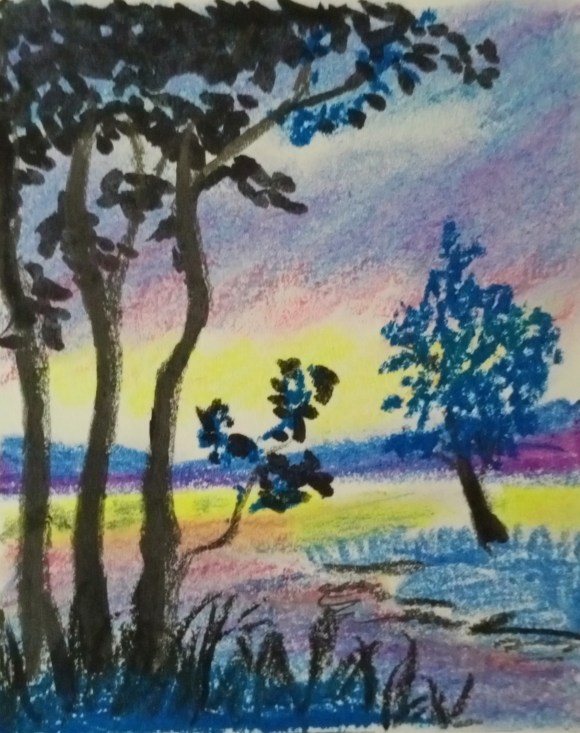
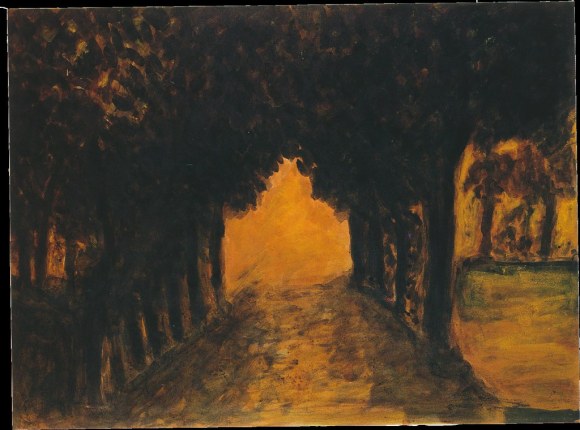
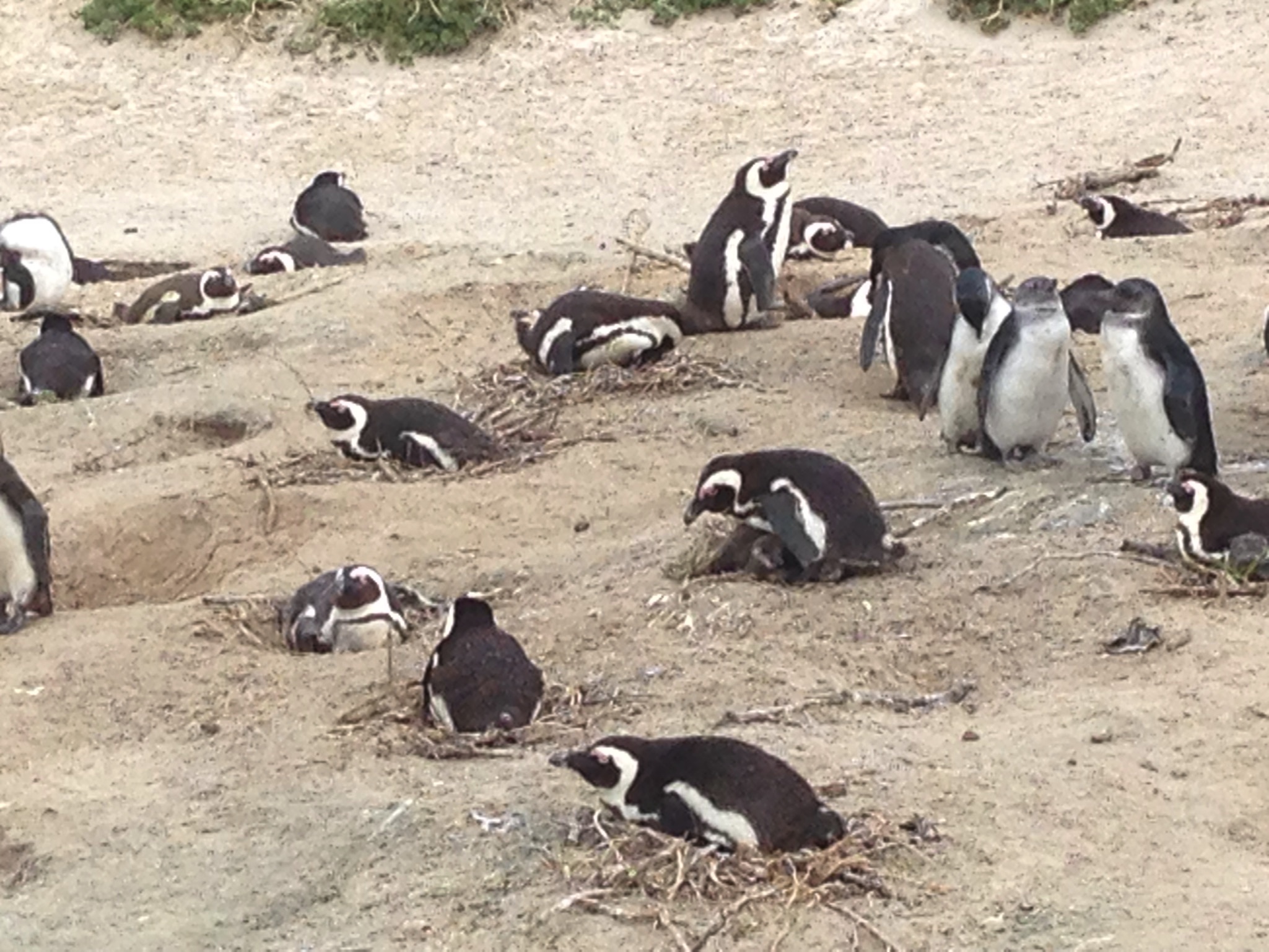
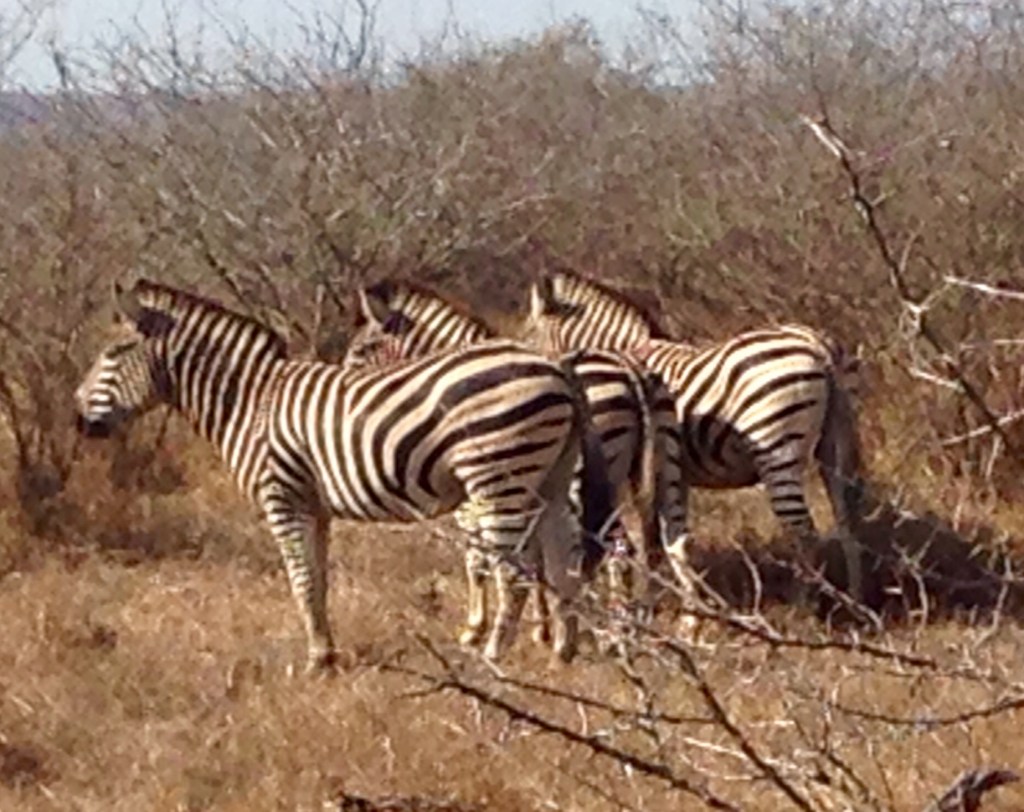
Born to be Wild…

We share the planet with creatures great and small. To commemorate the World Wild Life Day, we present to you a selection of non-fiction, stories and poems around the fauna and its conservation

Poetry

Vanilla Gorilla by Rhys Hughes. Click here to read.

Animal Limericks by Michael Burch. Click here to read.

A translation of Tagore’s Amar Shonar Horin Chai (I want the Golden Deer), set against the backdrop of the woods in Ramayana. Click here to read.

Prose

One Small Ancient Tale

Rabindranath Tagore’s Ekti Khudro Puraton Golpo (One Small Ancient Tale) from his collection Golpo Guchcho (literally, a bunch of stories) has been translated by Nishat Atiya. The story centres around birds in wilderness. Click here to read.

Forsaking Distant Hemispheres for the Immediate Locale

Meredith Stephens introduces us to the varied fauna (ranging from seals to monitors) found in South Australia with vivid photographs. Click here to read.

Navigational Error

Luke P.G. Draper explores the impact of pollution on whales with a short compelling narrative. Click here to read.

Memory Gongs

Rhys Hughes creates a legend with wild elephants. Click here to read.

Categories
Contents

Borderless February 2022

Winter in Africa. Painting by Sybil Pretious.

Editorial

What’s Love Got to Do with it’ … Click here to read.

Interviews

Sriniketan: Tagore’s “Life Work”: In Conversation with Professor Uma Das Gupta, Tagore scholar, author of A History of Sriniketan, where can be glimpsed what Tagore considered his ‘life’s work’ as an NGO smoothening divides between villagers and the educated. Click here to read.

Akbar: The Man who was King: In conversation with eminent journalist and author, Shazi Zaman, author of Akbar, A Novel of History. Click here to read.

Translations

One Day in the Fog, written by Jibananda Das and translated from Bengali by Professor Fakrul Alam. Click here to read.

Mahnu, a poem by Atta Shad, translated from Balochi by Fazal Baloch. Click here to read.

A Superpower in the Pandemic, written and translated from Korean by Ihlwha Choi. Click here to read.

Eyes of the Python, a short story by S.Ramakrishnan, translated from Tamil by Dr.B.Chandramouli. Click here to read.

Raatri Eshe Jethay Meshe by Tagore has been translated from Bengali as Where the Night comes to Mingle by Mitali Chakravarty. Click here to read.

Pandies’ Corner

These stories are written by youngsters from the Nithari village who transcended childhood trauma and deprivation. The column starts with a story, Stranger than Fiction from Sharad Kumar in Hindustani, translated to English by Grace M Sukanya. Click here to read.

Poetry

Click on the names to read

Rhys Hughes, A Jessie Michael, Jay Nicholls, Moonmoon Chowdhury, Mike Smith, David Francis, Ananya Sarkar, Matthew James Friday, Ashok Suri, John Grey, Saptarshi Bhattacharya, Candice Louisa Daquin, Emalisa Rose, Ryan Quinn Flanagan

Nature’s Musings

Penny Wilkes explores dewdrops and sunrise in A Dewdrop World. Click here to read.

Poets, Poetry & Rhys Hughes

Rhys Hughes explores the paranormal with his usual wit in Three Ghosts in a Boat. Promise not to laugh or smile as you shiver… Click here to read.

Musings/ Slices from Life

Requiem for the Melody Queen

Ratnottama Sengupta sings her own paean in which a chorus of voices across the world join her to pay a tribute to a legend called Lata Mangeshkar. Click here to read.

Forsaking Distant Hemispheres for the Immediate Locale

Meredith Stephens introduces us to the varied fauna found in South Australia with vivid photographs clicked by her. Click here to read.

Breaking the fast

P Ravi Shankar takes us through a breakfast feast around the world. Click here to read.

Musings of a Copywriter

In Life without a Pet, Devraj Singh Kalsi gives a humorous take on why he does not keep a pet. Click here to read.

Notes from Japan

In Bridging Cultures through Music, author Suzanne Kamata introduces us to Masaki Nakagawa, a YouTuber who loves Lativia and has made it big, playing for the President of Lativia at the Japanese coronation. Click here to read.

Essays

Farewell Keri Hulme

A tribute by Keith Lyons to the first New Zealand Booker Prize winner, Keri Hulme, recalling his non-literary encounters with the sequestered author. Click here to read.

Satyajit Ray’s Cinematic Universe: Can Isolation Lead to a New World?

Rebanta Gupta explores two films of Satyajit Ray, Kanchenjunga & Charulata to see what a sense of isolation can do for humans? Click here to read.

‘What remains is darkness and facing me – Banalata Sen!’

Rakibul Hasan Khan explores death and darkness in Fakrul Alam’s translation of Jibanananda Das’s poetry. Click here to read.

Dhaka Book Fair: A Mansion and a Movement

Ratnottama Sengupta writes of a time a palace called Bardhaman House became the centre of a unique tryst against cultural hegemony. The Language Movement of 1952 that started in Dhaka led to the birth of Bangladesh in 1971. In 1999, UNESCO recognised February 21 as the Mother Language Day. Click here to read.

The Observant Immigrant

 In To Be or Not to Be, Candice Louisa Daquin takes a close look at death and suicide. Click here to read.

Stories

Navigational Error

Luke P.G. Draper explores the impact of pollution with a short compelling narrative. Click here to read.

The Art of Sleeping

Atreyo Chowdhury spins an absurd tale or could it be true? Click here to read.

Dear Dr Chilli…

Maliha Iqbal writes of life as a young girl in a competitive world. Click here to read.

The Literary Fictionist

In MissingSunil Sharma gives us a long literary yarn. Click here to read.

Book Excerpts

Two Banalata Sen poems excerpted from Jibanananda Das: Selected Poems with an Introduction, Chronology and Glossary, translated from Bengali by Fakrul Alam. Click here to read.

An excerpt from Mahasweta Devi, Our Santiniketan. Translated from the Bengali by Radha Chakravarty. Click here to read.

Book Reviews

Indrashish Banerjee reviews The Best of Travel Writing of Dom Moraes: Under Something of a Cloud. Click here to read.

Gracy Samjetsabam reviews Masala and Murder by Patrick Lyons. Click here to read.

Rakhi Dalal reviews Kavery Nambisan’s A Luxury called Health. Click here to read.

Bhaskar Parichha reviews Growing up Jewish in India: Synagogues, Customs, and Communities from the Bene Israel to the Art of Siona Benjamin, edited by Ori Z. Soltes. Click here to read.

Special Issues

Cry, Our Beloved… Click here to read (For Peace)

Born to be Wild …Click here to read (World Wild Life Day)

Categories
Editorial

‘What’s Love Got to Do with It’

Art by Sohana Manzoor
‘Why does education in love not feature in today’s curriculum?’
— Mahasweta Devi, Our Santiniketan (Translated by Radha Chakravarty, 2022, Seagull Books)

As the world celebrates Valentine’s Day, one pauses to think how far commercialisation has seeped in over time that the very concept of a tender emotion was questioned by Tina Turner in a song called, “What’s love got to do with it” nearly four decades ago. 

This was written even before Mahasweta Devi (1926-2016) published a nostalgic memoir of 1930’s Santiniketan in Bengali in 2001. She raised her pen to ask the very pertinent question that is quoted above. Why is education in love not a part of our curriculum anymore? She was reminiscing about her days in Santiniketan where children were brought up with rigorous academics while discipline was coloured with love and affection. They nurtured a love for nature in students too. This has become a rarity for many and perhaps needs to be revived as the Earth struggles to continue habitable for humankind. In the process of educating students to love and give, Santiniketan threw up many greats like the writer herself. We are delighted to host an excerpt from the start of Our Santiniketan translated beautifully by Radha Chakravarty.

Santiniketan was only the very visible part of a huge project taken on by Tagore (1861-1941). The other part now united with Santiniketan under the banner of Visva Bharati University is Sriniketan, a group of villages where Tagore experimented with raising consciousness and standards of villagers to integrate them into a larger world. He brought in new techniques in agriculture and crafts into the villages under this programme involving many prominent scientists, artists and humanists. And the project has blossomed. Did you know Tagore thought of himself as an NGO and his ‘life work’ he felt was developing villages (Sriniketan) and educating young minds to build a world where borders of knowledge, poverty and ignorance could be smoothened?

He wrote: “I alone cannot take responsibility for the whole of India. But even if two or three villages can be freed from the shackles of helplessness and ignorance, an ideal for the whole of India would be established.

“Fulfill this ideal in a few villages only, and I will say that these few villages are my India. And only if that is done, will India be truly ours.”

All this can be found in a book called A History of Sriniketan (Niyogi Books), written by Uma Das Gupta, a major authority on Tagore who moved from Oxford to Santiniketan and made Tagore’s work in these two institutions her own life’s work. We have featured her and her book in our interview/review section.

Raised out of such ashes of poverty that Tagore sought to dispel, are youngsters from the village of Nithari, where ceaseless efforts by volunteers of organisations like Saksham and pandies’ has given a new lease for life to those who have been exposed to violations, violence, divides, poverty and deprivation. One of them, Sharad Kumar, now studying to be an engineer, kicks off our new section called Pandies’ Corner with his story in Hindustani translated by a volunteer, Grace M Sukanya. His story learns from history and shows rather than tells.

A similar approach to view the present through lenses focussed on the past at a much grander scale has been taken by Shazi Zaman, an author and journalist, who has stepped into the Anglophone world with the transcreation of his own novel from Hindi to English, Akbar, A Novel of History (Speaking Tiger Books). He has brought to the fore how in days when sectarian violence based on religions killed, Akbar (1542-1605) tried to create a new path that would lead to peace so that he could rule over an empire united by administration and not broken by contentious religious animosities which often led to wars. In his interview, he tells us of the relevance of the Great Mughal in a period of history that was torn by divides, divisions so deep that they continue to smoulder to this day and date. That history repeats itself is evident though our living standards seem to improve over time. Bhaskar Parichha’s review of Growing up Jewish in India: Synagogues, Customs, and Communities from the Bene Israel to the Art of Siona Benjamin, edited by Ori Z. Soltes, also reinforces these divides and amalgamations in the modern context. The other books that have been reviewed include The Best of Travel Writing of Dom Moraes: Under Something of a Cloud by Indrashish Banerjee, and Gracy Samjetsabam has introduced us to an intriguing murder mystery in Masala and Murder by Patrick Lyons.

Translations have thrown up interesting colours this time with a Tamil story by a Sahitya Akademi winning writer, S Ramakrishnan, translated on our pages by B Chandramouli, one from Korean by Ihlwha Choi and of course a transcreation of Tagore’s songs where he sings of the meeting of horizons. A beautiful poem by eminent Balochi poet Atta Shad (1939-1997) has been translated by Fazal Baloch. We are again privileged to host an original translation of Jibananda Das(1899-1954) by Professor Fakrul Alam. We also managed to get permission to share some of Professor Alam’s fabulous translations of Jibananada Das from UPL (United Press Limited) and are starting it out by excerpting two of his poems on Banalata Sen, which were till now restricted to readership who only had access to the hardcopy. Rakibul Hasan Khan has given us an essay on these translations. An interesting essay on Satyajit Ray (1921-1992) by Rebanata Gupta and personalised tribute to the first Booker Prize winner from New Zealand, Keri Hulme (1947-2021), by Keith Lyons, who had many non-literary encounters with the sequestered author, add to the richness of our oeuvre.

Ratnottama Sengupta has also paid a moving tribute to the music legend, Lata Mangeshkar, who died at the age of 92 on 6th February, 2022. The choral symphony of multiple voices that hums through the paean recreating the larger than life presence of Lata reinforces that her lilting voice will stay embedded in many hearts and lives forever. Her perfect honing of musical skills delivered with the right emotions make her an epitome of human excellence. She gave the best of herself to the world.

Brooding on death and suicide is Candice Louisa Daquin essay. This is a topic under discussion as Switzerland might start a resort for abetting suicides. It is rather frightening that while people value life and as technology and humans work in consonance to preserve it, the rich can think of squandering away this unique process that has till now not been replicated. The other strange long literary yarn that is dark in colours is woven by Sunil Sharma as he explores the futility and self-pity experienced by retirees in their existentialist quest to find a meaning to live. It has bits of poetry too. Penny Wilkes has also introduced verses into her photographic tour of dewdrops. Candice’s vibrant poetry this time has joined that of Ryan Quinn Flanagan, Mike Smith, A Jessie Michael, Ananya Sarkar, Jay Nicholls, Saptarshi Bhattacharya, Rhys Hughes and many more I leave you to unfold. Rhys Hughes has also given us a spooky piece which says ghosts might be genies — check it out. Do you agree or is he just being bizarre and funny?

Wrapped in more dry humour is Devraj Singh Kalsi narrative on why he does not want pets. Meredith Stephens, on the contrary loves pets and sails the seas of West Australia with her camera, words, seals and dolphins. Luke PG Draper also speaks for animals — for the intrusion of pollutants that harm creatures like whales in his short story. Hop all over the world with Ravi Shankar breaking nightly fasts with food from different cultures. More colour is brought in by Suzanne Kamata who starts a new column, Notes from Japan — introducing us to Japanese sensation, Masaki Nakagawa, who has sung his way to hearts with Lativian songs that he loves, so much so that he got to perform at the Japanese coronation and has pictures with the Latvian President.

The time has come to let you discover the mysterious pieces that have not been mentioned here in the February edition — and there are many.  

Before I wind up till the next month, I would like to thank our fabulous team who make this journal possible. Keith Lyons has now become part of that team and has graciously joined our editorial board. Sohana Manzoor and Sybil Pretious deserve a special kudos for their fabulous artwork. Our grateful, heartfelt thanks to all our wonderful contributors and readers who keep the journal alive.

Wish you all a lovely month.

Best wishes,

Mitali Chakravarty

Borderless Journal

Categories
Interview Review

Sriniketan: Tagore’s “Life Work”

In Conversation with Professor Uma Das Gupta, Tagore scholar, author of A History of Sriniketan: Rabindranath Tagore’s Pioneering work in Rural Reconstruction published by Niyogi Books, 2022

Tagore (1861-1941) has been celebrated as one of the greatest poets of the world, a great philosopher, a writer, an artist, a polyglot but what did the maestro himself perceive as his greatest ‘life work’?

He wrote: “My path, as you know, lies in the domain of quiet integral action and thought, my units must be few and small, and I can but face human problems in relation to some basic village or cultural area. So, in the midst of worldwide anguish, and with the problems of over three hundred millions staring us in the face, I stick to my work in Santiniketan and Sriniketan hoping that my efforts will touch the heart of our village neighbours and help them in reasserting themselves in a new social order. If we can give a start to a few villages, they would perhaps be an inspiration to some others—and my life work will have been done.” This was in a letter in 1939 to an agricultural scientist, Leonard Elmhirst (1893-1974), who helped him set up Sriniketan, a craft and agricultural development project for the villages which fell under the purview of the Tagore family zamindari.

To Tagore, his ‘life work’ lay in the welfare of humankind and poetry was just one of the things he did, like breathing. He told a group of writers, musicians, and artists, who were visiting Sriniketan in 1936: “The picture of the helpless village which I saw each day as I sailed past on the river has remained with me and so I have come to make the great initiation here. It is not the work for one, it must involve all. I have invited you today not to discuss my literature nor listen to my poetry. I want you to see for yourself where our society’s real work lies. That is the reason why I am pointing to it over and over again. My reward will be if you can feel for yourself the value of this work.”

Uma Das Gupta

These are all incidents woven into a book called A History of Sriniketan by historian and Tagore biographer, Uma Das Gupta, who did her post-doctoral research on the maestro and the history of the educational institutions he founded at Santiniketan and Sriniketan. She moved out of Oxford and pursued her studies in Calcutta. She has highlighted Tagore uniquely as an NGO (Non-governmental organisation) operator and also an educator. Mahasweta Devi (1926-2016) in her book Our Santiniketan, recently translated by Radha Chakravarty, focussed on his role mainly as an educator who sought to revive values, a love for nature along with rigorous academics to create thinkers and change makers like the author herself.

A History of Sriniketan is about his work among villagers to bridge gaps. Often, his poetry and writing expresses the empathy he felt for pain and suffering, his need to instil beauty and well-being into humankind so that they could evolve towards a better world — an ideal which he described to an extent in poems like ‘Where the Mind is Without Fear’ and India’s national anthem.

Dasgupta did this by not only delving into Tagore’s own writings but by devoting her life to unearth the depth of the maestro’s commitment and the hard work and money he invested in the project he described as his ‘Life’s work’. She even visited the villages and talked to the beneficiaries and workers. Her book is peppered with photographs of Tagore in Sriniketan. It is amazing to see pictures of the poet with people from Sriniketan sitting on the ground or celebrating festivities.

Tagore, Das Gupta tells us, poured all his Nobel prize money, into the Sriniketan Bank project which was led by his son, Rathindranath. The project hoped to free the peasant from debt. How well were these experiments received by Tagore’s contemporaries? Das Gupta writes in her book: “It would not be an exaggeration to say that Rabindranath had to encounter all of those things, that is, to ‘overcome opposition’ and to ‘conquer space and time’, in no uncertain measure. In short, he had to drive hard to do anything good for a better village life. As a first step, he insisted that Indians should unite to provide nation-building services to the village and not look to the State for doing what was our own duty towards our people. For him, this had to be the more important function of the Swaraj being sought from alien rule.

“In Rabindranath’s view, what had misled society in our transition to modernity was the introduction of the Western concepts of private property and material progress. What this led to was that mankind, though never free from greed, now crossed the limits, within which it was useful rather than harmful. What came about as a result was that property became individualistic and led to the abandoning of hospitality to our people and loss of communication with them. As a consequence, there was an increasing divide between city and village. He found all that to be the reality, when trying to bring about changes, both in his family’s agricultural estates and in the villages surrounding Santiniketan-Sriniketan.”


Tagore, Nandalal Bose & Leonard Elmhirst are together in this picture taken in 1924. Lord Elmhirst, then Tagore’s secretary/assistant stands at the back with Nandalal Bose between him and Gurudev. Courtesy: Creative Commons

To bridge this divide, Sriniketan was created with the involvement of more of the Tagore family, agriculturists, scientists from all over the world, like Leonard Elmhirst whom Tagore had invited in 1921 to lead the Sriniketan work, and artists, like Nandalal Bose. It was a path breaking experiment which found fruition in the long run. They adapted from multiple cultures without any nationalistic biases. Rathindranath brought batik from Indonesia into the leather craft of Sriniketan. We are told, “One of the early influences was from Santiniketan’s association with a group of creative thinkers from Asia, who were spearheading a Pan-Asian Movement that questioned Western hegemony in art and artistic expression. A pioneer of the Pan-Asian Movement was Kakuzo Okakura (1863–1913, Japanese scholar and author of The Book of Tea). He came to Calcutta in 1904, when he met Rabindranath, and they became friends. Okakura admired and supported Rabindranath’s Santiniketan school. Nandalal’s Kala-Bhavana syllabus included Okakura’s artistic principles of giving importance to nature, tradition, and creativity, which were the same as Rabindranath’s artistic principles.”

That Tagore’s effort was unique and overlooked by the mainstream is well brought out through the narrative which does not critique but only evidences. For instance, Das Gupta contends: “He (Tagore) wrote the same to Lord Irwin, the Viceroy, in a letter dated 28 February 1930, when appealing for a government grant towards agricultural research. ‘I hope I shall have the opportunity on my return for another talk with Your Excellency in regard to what has been my life’s work and in which I feel you take genuine personal interest.’ Lord Irwin had come for a visit to Sriniketan at the time and Rabindranath was told of his favourable impression of what he saw during his visit to Sriniketan. In his letter, Rabindranath wrote how he was doing the work ‘almost in isolation’, without any understanding from his people or from the government.” Does that often not continue to be the story of many NGOs?

Sriniketan by Dasgupta is a timely and very readable non-fiction which brings to light not just the humanitarian aspect of Tagore but the need for the world to wake up to the call of nature to unite as a species beyond borders created by humans and live in harmony with the Earth. It all adds up in the post-pandemic, climate-disaster threatened world. To survive, we could learn much from what is shared with us in this book. I would love to call it a survival manual towards a better future for mankind. Scholarship has found a way to connect with the needs of the real world. The book is reader friendly as Das Gupta writes fluently from the bottom of her heart of a felt need that is being voiced by modern thinkers and gurus like Harari — we need to bridge borders and unite to move forward.

Das Gupta retired as Professor, Social Sciences Division, Indian Statistical Institute. She was Head of the United States Educational Foundation in India for the Eastern Region. Recently, she has become a National Fellow of the Indian Institute of Advanced Study (IAAS), Shimla, and a Delegate of Oxford University Press. Her publications include Rabindranath Tagore: A Biography; The Oxford India Tagore: Selected Essays on Education and Nationalism; A Difficult Friendship: Letters of Rabindranath Tagore and Edward Thompson, 1913–1940; Friendships of ‘largeness and freedom’: Andrews, Tagore, and Gandhi, An Epistolary Account, 1912–1940. In this interview, she focusses mainly on her new book, A History of Sriniketan, while touching on how Tagore differed from others like Gandhi in his approach, his vision and enlightens us about a man who created a revolution in ideological and practical world, and yet remained unacknowledged for that as in posterity he continues to be perceived mainly as an intellectual, a poet and a writer.


Uma Das Gupta in the corridors of the Indian Institute of Advanced Studies (IIAS), Shimla, where she was visiting as a  National Fellow (2012 – 2014) to advise on a permanent exhibit on Tagore’s life and work. The project was sponsored by the Ministry of Culture in celebration of Tagore’s 150th anniversary. This Institute is housed in the erstwhile Viceregal Lodge of imperial times. Photo provided by Uma Das Gupta

You are a well-known biographer of Tagore and have done extensive research on him. What made you put together A History of Sriniketan?

Grateful for your kind appreciation.

Writing a history of Sriniketan has been a priority for me. As a Tagore biographer, my dominant theme is about a poet who was an indefatigable man of action. His work at Sriniketan is of prime importance in that perspective. The secondary theme is of him as a poet and writer of many a genre, lyric, poetry, narratives, short stories, novels and plays. I had to make a choice of emphasis between the two themes since I did not intend to write a full-scale biography covering all aspects of Tagore’s life, equally.  My choice was to explore his educational ideas and to examine how he implemented them at his Santiniketan and Sriniketan institutions. His work as an educator and rural reformer is even today hardly known because his genius as a poet and a song writer overshadowed his work as an educator, rural reformer, and institutional builder. That area of research was quite virgin when I started it as a post-doctoral project in the mid-1970s. For perceptions about his poetry and his large oeuvre I have drawn on the work of the scholars who know the subject better than I do.  

My focus is on the concerns that featured persistently in Tagore’s writings and his actions. These were about the alienation in our own society between the elite and the masses, about race conflict and the absence of unity in our society, India’s history, nationalism, national self-respect, internationalism, an alternative education, religion, and humanism as elaborated by him in his collection of essays titled The Religion of Man (1931).

A History of Sriniketan is a detailed presentation about his ideas and his work on rural reconstruction. The idea of doing something to redeem neglected villages came to him when he first went to live in his family’s agricultural estates in East Bengal. His father sent him as manager in 1889. The decade that he spent there was his first exposure to the impoverished countryside. He was then thirty, already a poet of fame, and had lived only in the city till then. The experience played a seminal part in turning him into a humanist and a man of action. The closer he felt to the masses of his society the further he moved from his own class who were indifferent to the masses. His independent thinking gave him the courage of conviction to work alone with his ideas of ‘constructive swadeshi’. 

As a pragmatist he knew there was not a lot he could do given his meagre resources as an individual in relation to the enormity of the needs. But he was determined at least to make a beginning with the work. His goals were a revitalized peasantry, village self-reliance through small scale enterprises, cottage industries and cooperative values. He wrote, “If we could free even one village from the shackles of helplessness and ignorance, an ideal for the whole of India would be established…Let a few villages be rebuilt in this way, and I shall say they are my India. That is the way to discover the true India.”

Disillusioned with nationalist politics he turned to his own responses to the many troubled questions of his times. Tagore was convinced there could be no real political progress until social injustices were removed. He pointed repeatedly to the sectarian elements of Indian nationalism which kept our people divided. He hoped that the Santiniketan-Sriniketan education would create a new Indian personality to show the way out of the conflict of communities. He thus brought a different dimension to nationalism by arguing for universal humanity. It led to doubts about his ‘Indianness’ among his contemporaries. He had the courage to defy the idea of rejecting the world as a condition for being ‘Indian’. In fact, he tried continuously to break out of the isolation imposed on his country by colonial rule. He had the foresight to sense that the awakening of India was bound to be a part of the awakening of the world.  

What is the kind of research that went in into the making of this book? What got you interested in Tagore in the first place?

I am a historian by training. Historians have to back up every statement they make in their analysis by written documents. That is why the historian’s main source is the archives. Likewise, my research for this book has been mainly archival. I searched for written documentation from 1922 when the Sriniketan scheme of rural reconstruction work was officially launched. The documentation included the minutes of meetings, memoranda exchanged among the workers of the Institute of Rural Reconstruction, official notes, and annual reports written and filed.

In addition, I used to visit the villages in which the scheme was implemented to get an understanding of the ground reality. The work was started with six villages in 1922, extended to twenty-two more villages in the first ten years, and to many more villages afterwards. When the work was being run on a small scale, the Institute tried to post a village worker to stay in the village itself and work along with the villagers to implement the Sriniketan scheme. Some of these villages actually kept notes and records of their work which I could use as part of my local level research. I also interviewed some of the workers who had retired but who were still living around Sriniketan in their old age though their number was small. I have used those oral interviews in my documentation. Some of the Village Workers had their own private correspondence to which they gave me access.

There is also extensive personal correspondence in the Rabindra-Bhavana Archives between the leaders of the Sriniketan work. Among them first and foremost are Rathindranath Tagore and the British agricultural scientist, Leonard Elmhirst, whom Tagore had invited in 1921 to lead the Sriniketan work. Elmhirst had been to India earlier as a Wartime Volunteer during World War 1. When Tagore came to know of him through another British agriculturist working in Allahabad, Sam Higginbottom by name, he contacted Elmhirst with a request to come to Santiniketan and to lead the Sriniketan work. One of Tagore’s prime targets was to implement Scientific Agriculture in the villages. In fact, many years earlier, in 1906, he had sent his son Rathindranath and another student of the Santiniketan school, Santoshchandra Majumdar, who was Rathindranath’s classmate, to the University of Illinois at Urbana-Champagne to study Agriculture with the view that they would bring back the expertise for the Sriniketan work at the completion of their studies.       

Leonard Elmhirst & his wife: Courtesy: Creative Commons

Elmhirst was in Sriniketan from 1922 to 1924 after which he returned to his work in England. He worked closely with the Sriniketan team even from far through the letters they exchanged. Rathindranath consulted Elmhirst regularly over Sriniketan’s work in progress and this correspondence is in the archives.

There is also a very charming body of personal letters between Tagore and Elmhirst. Tagore’s originals are among the Elmhirst Papers in the Dartinghall Hall Trust archives in Devonshire, UK, and Elmhirst’s original letters are in the Rabindra-Bhavana archives, Santiniketan. This correspondence has been published.  

Another very important source of documentation is available in the Diaries of Leonard Elmhirst which he wrote from the start of the Sriniketan work in 1922. Elmhirst’s Diaries were published by Visva-Bharati titled Poet and Plowman. There are some day-to-day accounts of how the work was being done on the ground by a group of senior students from Santiniketan who had chosen this field for training and of course by the Village Workers who had been appointed by the Institute. There were other leaders who helped with the work throughout like Kalimohan Ghose who later carried out the pioneering Surveys of the Villages. I have included some of these path breaking Surveys in the Appendices of A History of Sriniketan.   

Last but not the least important for my research were Tagore’s ideas of education and rural reconstruction about which he wrote several essays in two important collections, namely Palli-Prakriti (Countryside and Nature) and Sikshya (Education). Some of the essays were autobiographical as to how he started the rural work in his family’s agricultural estates in East Bengal where his father sent him in 1889. He stayed at Selidaha, the Estates’ headquarters, with his family till 1900 when he moved to Santiniketan in South Bengal’s Birbhum district where his father had founded an ashram and called it Santiniketan, the ‘Abode of Peace’. It was not a monastic ashram but one for householders to spend some days in prayer and meditation away from their household responsibilities. This is where Tagore and his young family moved in 1900-01 with his plans to start a school for children in the heart of nature. It was to be a school where the children could learn to creatively assimilate the knowledge imparted to them instead of in the classroom that characterised colonial education. This was how his Santiniketan school was founded in 1901.

Santiniketan was located within two miles of the Bolpur Railway Station on the East Indian Railway Line. It was situated on high ground, in the middle of a wide plain, open to the horizon on all sides. There, father and son had planted noble groves of mainly mango and sal trees. There, in the heart of nature not far from a big city, Tagore had the advantage of being able to draw upon both raw materials and cultural products in equal measure as it were. There was the influence of trees, open fields, and the seasons changing so starkly on the one hand; on the other hand, there was the inspiration of artists, science teachers, libraries, and hand-made, machine-made, equipment.        

You ask why I got interested in working on Tagore. There is a very personal story to share. When our son was born in Oxford where my husband and I were working with University Fellowships during 1972-73, we decided to move to Visva-Bharati on an invitation from the then Vice-Chancellor, the eminent historian Pratul Chandra Gupta. We were of course attracted to the possibility of being at Tagore’s institution and also to the prospect of raising our child in its pastoral environment. We did thus move to Visva-Bharati in 1973 leaving our Calcutta jobs at Presidency College, where my husband was Professor of History, and Jadavpur University, where I was teaching. Once we went Visva-Bharati, I began to explore the possibility of doing post-doctoral research on Tagore rather than on colonial history as was the area of my doctoral dissertation at the University of Oxford.

What would be the purpose of such a book? Do you think Tagore’s model would work if multiple NGOs adopted his ideas?

As I have already mentioned I am a biographer of Tagore’s educational ideas and the history of his institutions at Santiniketan and Sriniketan. To me writing this book on a history of Sriniketan was an integral part of my research. But at a personal level, I was concerned that the history of that practical and experimental work that Tagore did under the most difficult of circumstances might get completely forgotten if it were not documented. That was a genuine concern because of two reasons. Firstly, while Santiniketan has retained its charm as a popular tourist spot, and as Santiniketan’s oldest buildings of exceptional architecture had become heritage buildings, Sriniketan did not have anything to show or display for outsiders to connect with its one-time strident presence in bringing life and action to the villages. Secondly, Sriniketan never reinvented the wheel but just carried on from the 1950s as a unit of Visva-Bharati University to fill in for routine bureaucratic and funding purposes. Even its beautiful and thriving craft work that brought acclaim to Sriniketan from well beyond its precincts, would slowly but surely erode.  

Therefore, the primary purpose of this book is to document a pioneering humanistic enterprise for posterity, and also for the next generations who were expected to be engaged in the field of rural development even though the original model was not necessarily practically and theoretically viable in today’s socio-economic scenario. The book is also for the scholar and for the generally interested person. When I was starting my work in the mid 1970s, there was no doubt in my mind that Sriniketan was becoming less visible.   

As for whether multiple NGOs could use the Tagore model is for the NGOs to tell us, but I do know that in its neighbourhood, Sriniketan remains an important inspiration for mobilizing villages non-politically.  There have been one or two such movements in the vicinity of Santiniketan-Sriniketan which are continuing to work actively at grassroots. One is Pannalal Das Gupta’s ‘Tagore Society for Rural Development’. Founded in 1969-70 as a registered society, the Tagore Society specialises in motivating villagers to take on environmental self-help projects. There is also the ‘Amar Kutir Society for Rural Develoment’ located very close to Sriniketan which was once a shelter for runaway political prisoners. Founded in 1923 by Susen Mukhopadhyaya, a young revolutionary freedom fighter then, who was attracted to Tagore’s work in rural reconstruction. We learn from his writing that he kept observing the work while coming in and out of jail himself.  ‘Amar Kutir’ developed the work of organising local crafts persons, upgrading their skills, training them in design, and in marketing their products for economic rehabilitation. The Birbhum district had several families of traditional weavers. Some of them had been engaged in trade by the East India Company.     

Another such non-governmental private initiative for rural development has come up more recently in 1984 in the outskirts of Sriniketan called the ‘Elmhirst Institute of Community Studies’, (EICS), whose members are working mainly in the areas of women and child development including family counselling, family adoption, de-addiction and rehabilitation, HIV/AIDS education and intervention. They were started with substantial moral and financial support from Elmhirst who was interested in spreading Sriniketan’s pioneering enterprise and taking the ideas further to meet the needs of the later day.    

In other parts of India individual leaders were drawn to the work of building village self-reliance and a few had dedicated themselves to the cause in post-independence India. For his Ashrams at Sabarmati and Wardha, Gandhi himself kept closely in touch with Sriniketan which he visited several times even after Tagore’s passing and knew it well. Gandhi’s follower, Baba Amte, in Madhya Pradesh was a key worker in the field. More contemporarily one reads of the utopian commune ‘Timbaktu Collective’ in rural Andhra Pradesh where a husband-and-wife team, Bablu and Mary Ganguly, have organised the hapless farm labourers of Anantapur district to work for the regeneration of wasteland and start projects on organic farming, soil conservation, propagation of traditional food crops and have also taken steps for women’s and Dalit empowerment and rural health. Most of these ideas were at one time born and nurtured in the holistic laboratory for socio-economic development that Sriniketan was. Bablu Ganguly acknowledges Fukuoka as his mentor. Being Bengali by birth, it would not be surprising if he was aware of Tagore but perhaps only as a poet and songwriter.      

Tagore withdrew from the national movement to develop villages, which is where, he felt lived a large part of India. Gandhi had a similar outlook. So, where was the divide?

With his deepening sympathy for the suffering millions of his country, Tagore became increasingly critical of the changes that Britain had brought to India. But he also felt strongly for the West’s ideas of humanism and believed they were of benefit to Indian society. Revolutionary changes were inescapably entering into our thoughts and actions. This was evident in the proposition that those whom our society decreed to be ‘untouchables’ should be given the right to enter temples. The orthodox continued to justify their non-entry into temples on scriptural pretexts, but such advocacy was being challenged and resisted. The people’s ‘voice’ had put out the message that neither the scriptures nor tradition nor the force of personality could set a wrong right. Ethics alone could do so.   

There were important factors that led gradually to this new way of thinking. The impact of English literature was one such. Tagore pointed out that acquaintance with English Literature gave us not only a new wealth of emotion but also the will to break man’s tyranny over man. This was a novel point of view. The lowly in our society had taken it for granted that their birth and the fruits of their past actions could never be disowned; that their sufferings and the indignities of an inferior status had to be meekly accepted; that their lot could change only after a possible rebirth. Society’s patriarchs also held out no hope for the downtrodden. But contact with Europe became a wake-up call. It was no surprise that in his landmark essay Kalantar (Epoch’s End) Tagore recalled and endorsed the British poet Robert Burns’s unforgettable line, “A man’s a man for a’ that.

It was in that longing to bring hope to the deprived people that Tagore and Gandhi felt really close. They were both carrying out rural reconstruction work because they knew that the majority of Indians lived in villages and wanted to bring awakening and national consciousness to the villages as the prime goal to freedom. Both men focused their attention on the peasantry as the largest class within Indian society who were paralysed by anachronistic traditions and weighed down by poverty and the absence of education.

The major issues on which Tagore and Gandhi differed were debated nationally. Before discussing the specific issues in the controversy, it would be useful to examine their general positions on freedom and nationalism. In The Religion of Man (1931), Tagore developed the position that the history of the growth of freedom is the history of the “perfection of human relationship”. Gandhi applied the same principle to resolving India’s racial conflict. Tagore took the idea further and challenged the credo of nationalism. Tagore argued that the basis of the nation-state was a menace to the ideal of universal harmony or to the “perfection of human relationship”. But to the nationalist leadership all over the country, including Gandhi, political self-rule or swaraj came to be understood as a necessary phase of spiritual self-rule, or swarajya, and nationalism as the first step towards attaining free human fellowship.

Tagore alone spoke out against that trend. He argued that the crucial stumbling block in India’s future lay in the social problems of the country such as the absence of human rights for the masses and the alienation between the educated classes and the masses. He emphasised what the country needed most of all was constructive work coming from within herself and the building of an ethical society as the best way for rousing national consciousness. The rest would inevitably follow, even political freedom.

In his novel, Ghare Baire (The Home and the World, 1916), Tagore seemed critical of Gandhi’s call for Khadi and burning of mill cloth imported from England. Yet, Sriniketan was a handicraft forum for villagers to find a way to earn a living through agriculture and craft. So, why the dichotomy of perspectives as both were promoting local ware? Where was the clash between Gandhi’s interpretation of Khadi and Tagore’s interpretation of selling indigenous craft?

There was never any conflict in their perceptions or feelings for the poor, Gandhi’s and Tagore’s. Other issues were stirred in relation to the Khadi campaign and the burning of foreign cloth. For instance, the Congress in 1924 moved a resolution under Gandhi’s recommendation enlisting its members to spin a certain quantity of cloth on the charka (spinning wheel) as a monthly contribution. The idea was to give the movement country-wide publicity, and also, to make spinning a means of bonding between the masses and the politicians.

Tagore was wholly opposed to the idea of using the charka as a political strategy for swaraj and explained his position in his 1925 essay titled ‘The Cult of the Charka’. He argued that there was no short-cut to reason and hard work if anything was to succeed; that nothing worthwhile was possible by mass conversion to an idea; that our poverty was a complex phenomenon which could not be solved by one particular application such as spinning and weaving Khadi. Tagore raised the question if our poverty was due to the “lack of sufficient thread”, or due to “our lack of vitality, our lack of unity”?

On burning clothes Tagore’s position was that such a method hurt the poor by forcing them to sacrifice even what little they obtained from selling those clothes. He concluded that buying and selling foreign cloth should be delegated to the realm of economics. In his reply Gandhi wrote, that he did not draw “a sharp or any distinction between economics and ethics”. He added that the economics that hurt the moral well-being of an individual or a nation “are immoral and therefore sinful”.     

Is Sriniketan unique? Can it be seen as Tagore’s model for rural development?

To the best of my knowledge there is no parallel institution in India.

I am not aware if Tagore was ever talking of a ‘model’ that he expected others to follow. He was certainly hoping, as he wrote, that his work will help to establish an “ideal” [his word] for the rest of the country.

My own sense is that an “ideal” has been established given that empowerment of the villages through the Panchayats has become a nationwide project. Of course, the government’s approach is not fully in character with Tagore’s holistic vision for the individual’s humanistic development. Today the individual hardly counts, politics and economics are what matter. All the same it has to be said that the villages are getting some attention and are not left to rot as had been the case in the earlier century.       

You have said that Tagore faced criticism for the way he used Nobel Prize money. Can you enlighten us on this issue? Tell us a bit about the controversy and Tagore’s responses.

As anyone would surmise the Nobel Prize money was very precious also to the Santiniketan community because the teachers and workers there had to struggle over the resources for the institution. But contrary to the community’s expectation, Tagore decided that the Prize money would be given to the cause of rural credit. He had started the Patisar Krishi (farmers’) Bank in 1906 followed by the Kaligram Krishi Bank. According to Tagore’s biographer, Prasanta Pal, the total investment in the rural banks in 1914 amounted to Rs 75,000 of which Rs 48,000 was invested in the Patisar Krishi Bank at 7% interest per annum and Rs 27,000 at the same rate of interest in the Kaligram Krishi Bank. Tagore decided that only the interest from those investments could be used to pay for the maintenance of the Santiniketan school. The actual purpose of the fund was to give loans to the poor peasants so as to relieve them from exploitation by moneylenders and some unethical landlords too. In order to repay their loans, the peasants had to sell their produce at a rate lower than the market price immediately after drawing the harvest. This phenomenon was causing them perpetual indebtedness. The Krishi Banks were to loan money to the peasantry at a lower rate than the money lenders and relieve them from the age-old exploitation.     

Tagore was firm that the primary beneficiary of his Nobel Prize money would be the poor peasantry of his family’s estates, and the Santiniketan school would be only the secondary beneficiary. He tried thus to balance his two main concerns when settling the future of his Nobel Prize money.  

It cannot be said there was a ‘controversy’ over this as Gurudev (which was how the community addressed Tagore) was too revered for a controversy to be raised about a decision that he had taken. But there was disappointment.  It seemed strangely that even his inner circle had not realised his deep emotional attachment and ideological commitment to the cause of the impoverished peasantry. Perhaps, my response to your earlier question may explain why. 

Tagore had noticed the gaps between the different strata of Indian society. Sriniketan was an attempt to bridge the gap. How far did his ideals succeed?

There was tremendous societal gap between the different strata of Indian society.  With all of Tagore’s will and effort, it cannot be said that the Sriniketan ideals could bridge the gap. Even today, a perceptive visitor, who visits Santiniketan and Sriniketan, located only within two miles of each other, can tell the difference between the two. Santiniketan looks bright and thriving, but Sriniketan looks neglected.    

Community life in the Indian villages was seen to break for the first time with the emergence of professional classes among the English-educated Indians. The city began to attract them away from the villages. Those Indians were happy to let the government take over guardianship of the people and relinquish to it their own traditional duties to society. The result was a widening gap between town and country, city and village.  Tagore knew from his life’s direct experience that none of those who dominated the political scene in his time felt that the villagers ‘belonged’. The political leadership apprehended that recognising this vast multitude as their own people would force them to begin the real work of ‘constructive swadeshi’. They were not even interested to try. That was where the Sriniketan effort was invaluable to Tagore. He saw that the endeavour built at least a relationship with the village, if nothing else.

The Sriniketan scheme sought to bridge the gap by bringing to the village a combination of tradition and experiment. Tagore knew that a civilisation that comprises of only village life could not be sustained. “Rustic” was a synonym for the “mind’s narrowness”, he wrote. In modern times, the city had become the repository of knowledge. It was essential therefore for the village to cooperate with the city in accessing the new knowledge.  One such vital area of expertise was in agriculture. His study of “other agricultural countries” had shown that land in those countries was made to yield twice or thrice by the use of science. A motor tractor was bought for Sriniketan in 1927 because he believed that the machine must find its way to the Indian village. He wrote,If we can possess the science that gives power to this age, we may yet win, we may yet live.”

Your book tells us that Sugata Dasgupta’s publication, A Poet & A Plan (1962) showed that Sriniketan had benefitted the villages it adopted decades after Tagore’s death. Has there been further development of these communities or is it status quo?

No, it cannot be said that it is status quo from the 1960s. There have been changes for sure. There have been benefits to the villages from the Government’s projects. Indeed, the government had adopted some of their early projects from Sriniketan’s original work.

More interventions are needed of course but it has to be said something is being done. Of course, the changes I can mention that have benefitted the condition of the villages and therefore the villagers’ lives came well after Sugata Dasgupta’s publication. The three that I can mention are communications, roads, and electricity. Today there are more long-distance buses than ever before transporting people to and from the villages. Totos and cycle rickshaw-vans take passengers from the bus stands to the interior villages. Roads are another major development.  Besides the highways, the mud paths in the villages are now being converted to metalled roads. There is electricity in the villages.

I should mention one other significant change which is that secondary education is now fairly common to the present-day rural populace. College education has also come within their reach.

What is the current state of the present day Sriniketan? What do you see as the future of Sriniketan?

Presently, Sriniketan runs as a department or unit of Visva-Bharati University and works according to the University’s requirements. I am not acquainted with the requirements. I continue to be a regular user of the University’s Rabindra-Bhavana archives even now. But I have not been connected with the University in any official capacity after the 1980s which is a long time ago.

Thank you for your time.

(This is an online interview conducted by Mitali Chakravarty.)

PLEASE NOTE: ARTICLES CAN ONLY BE REPRODUCED IN OTHER SITES WITH DUE ACKNOWLEDGEMENT TO BORDERLESS JOURNAL

Categories
Tagore Translations

At the Confluence of Night & Day

Written in 1910 (15 Ashwin 1317) in Santiniketan, Raatri Eshe Jethay Meshe or where the night comes to mingle was a part of his collection called Gitimalya ( A garland of Songs) first published in 1914.

Gitimalya
WHERE THE NIGHT COMES TO MINGLE

You and I met at the confluence when
Night came to mingle with the ocean of day.
There, the shades of black and white formed dark and light —
There, the waves rushed from bank to bank.
A baritone rang amidst the silence of the skies,
The gold line rose out of the deepest of darkness.
My dreams mingled with tears as I awoke
Searching for contentment in vain.

Here is a rendition of the song in Bengali by Dwijen Mukherjee (1927-2018) a renowned singer from the past. His voice seems to capture the cadence of the song and colours it with the freshness of dawn.

.

.

(Trans-created for Borderless Journal  by Mitali Chakravarty with editorial support from Sohana Manzoor and Anasuya Bhar.)

.

PLEASE NOTE: ARTICLES CAN ONLY BE REPRODUCED IN OTHER SITES WITH DUE ACKNOWLEDGEMENT TO BORDERLESS JOURNAL

Categories
Poetry of Jibananda Das

One Day in the Fog…

Translated from Bengali by Professor Fakrul Alam

Jibananada Das. Courtesy: Creative Commons

Jibananada Das (1899-1954) was a Bengali writer, who now is named as one of the greats. During his life he wrote beautiful poetry, novels, essays and more. He believed: “Poetry and life are two different outpouring of the same thing; life as we usually conceive it contains what we normally accept as reality, but the spectacle of this incoherent and disorderly life can satisfy neither the poet’s talent nor the reader’s imagination … poetry does not contain a complete reconstruction of what we call reality; we have entered a new world.”

ONE DAY IN THE FOG...

(“Akdin Kuashai” from Ruposhi Bangla)
 
I well know a day will come when you won’t find me in this foggy field
Having ended its walks, the heart will move on to a silent, icy room then
Or perhaps it will be a while before it can be consoled. It may take time
For it to forget this earthly field. In astonishment, I’ll keep looking 
At the shaliks of the field from my bed in darkness. Will golden eagles
Still unfurl their wings and waft their way to this fog-filled field from afar?
To this day they head for bare ashwath branches as evening turns golden.
While through the soft rice stalks field mice still keep looking at the stars
 
As evening descends. Do bees still not build hives in intense dense darkness?
Having their fill of honey, don’t they fly away in the foggy, evening wind?
So far they must fly to, alas…or perhaps hemmed by chalta leaves
Some get trapped under hives. The flies fly away…drop… die in the grass—.

Fakrul Alam is an academic, translator and writer from Bangladesh. He has translated works of Jibanananda Das and Rabindranath Tagore into English and is the recipient of Bangla Academy Literary Award (2012) for translation and SAARC Literary Award (2012).

Categories
Essay

Satyajit Ray’s Cinematic Universe: Can Isolation Create a New World?

 By Rebanta Gupta

The Hungarian Marxist philosopher György Lukács coined the term “transcendental homelessness” in his essay The Theory of the Novel, to explore the feeling of homesickness prevalent in the arena of modern philosophy. The ecosystem of the epic was governed by the cosmic laws of fate, the transcendental signified was ever-present to protect mankind, and the human soul found a transcendental home in that cosmic destiny. The celebrated Postcolonial scholar Edward Said, in his essay, ‘Reflections on Exile’ observes, “Classical epics, Lukács wrote, emanate from settled cultures in which the values are clear, identities stable, life unchanging.” Novel, the brainchild of modernity, is the site where this “transcendental homelessness” functions. The European novel emerged out of a changing society, where the omnipotent figure of God had been effaced, with the invasion of skepticism and rationality. Novels germinate from a societal structure, Said writes, “in which an itinerant and disinterested middle-class hero or heroine seeks to construct a new world, that somewhat resembles an old world left behind forever.” A sense of retrogression, an insatiable urge to return to that erstwhile home haunts the modern world, which suffers from an ontological homelessness. The shadow of this sense of homelessness and estrangement also haunts cinema, which has a novelistic structure. Cinema, which is engraved on celluloid, is written by an auteur, the director, who is analogous to the author of a novel. The characters of the celebrated Indian filmmaker Satyajit Ray’s films suffer from a sense of perpetual homelessness; pangs of isolation and estrangement haunt their sinews and nerves, in the midst of a kaleidoscopic world. This essay would focus on two of Ray’s films: Kanchenjungha (1962) and Charulata (1964) and try to analyze how they create an atmosphere of isolation and estrangement.

Satyajit Ray. Courtesy: Creative Commons

Kanchenjungha (1962) narrates the saga of a wealthy aristocratic family, during the final lap of their vacation at Darjeeling. Inclement weather has shrouded the peak of Mount Kanchenjungha with mist, and a parallel mist of confusion, contradictions, unrequited desire, and unspoken words has enveloped the characters. The film describes the primacy of the father figure in the family ecosystem through the character of Indranath (played by Chhabi Biswas), who is a snooty, pompous, and authoritarian figure, who wants his daughter Manisha (played by Alokananda Roy), to marry a wealthy man whom he has hand-picked for her, but she seems to be reluctant to accept this unilateral decision of her father. William Wordsworth, in the poem Lines Composed a Few Miles Above Tintern Abbey (1798), had instructed his sister Dorothy to believe in the ways of nature, which fills the mind “with quietness and beauty” and “lofty thoughts, that neither evil tongues, rash judgments, nor the sneers of selfish men” can demotivate her. But Indranath, it seems, stands vertically opposite to the arena of Wordsworthian exhortations; he is completely alienated from nature, his materialistic drive has effaced his capacity to appreciate the beauteous aspects of Darjeeling and the Himalayan wildness. When the ornitho-enthusiast Jagadish, his brother-in-law (played by Pahari Sanyal) talks about his search for a bird, Indranath nonchalantly asks, “Roast hoy? (Could it be roasted?”). He is marooned in his sequestered island of materialism, and his desire to catch a glimpse of the snow-clad Kanchenjungha is basically a competitive desire to acquire a coveted product, real love of nature is not associated with that. He has high opinions about Banerjee (played by N. Viswanathan), the potential groom for Manisha, because he has a starting salary of twelve hundred rupees, which was indeed a handsome amount in the postcolonial context of the film. Indranath’s wife Labanya (played by Karuna Banerjee) is a subjugated woman, who has a feeble presence before the domineering existence of her husband, and her subjectivity finds no outlet. She, therefore, sits on a bench by the abyss, and at the hour of descending fog, sings the Tagore song E Parabase Rabe Ke Hay (“Alas, who will live in this forlorn and alien land”), set in the Hindustani Classical Raga Kafi, which uses the notes komal gandhar (E-Flat) and komal nishad (B-Flat). The raga creates a melancholic mood, as the song touches the somberness of gandhar and the solitary bohemianism of nishad (which is widely used in the mercurial and melancholic Bengali folk music), and it reflects the alienated state of a woman, who has not had her share of love from her husband. Fog dilutes the outlines of the horizon, as her hopes slowly get extinguished and desperation reigns supreme, and the last line, “Temon apon keho nahi e prantare hay re (There is no one dear and near in this alien world)” mingles with the fog to create an atmosphere of perennial loneliness. Jagadish’s comment, “You have sung after such a long time,” indicates that Labanya’s daily hectic life and Indranath’s iron fist have isolated her from her artistic persona. Rabindranath Tagore talks about the importance of aesthetics in his seminal work Japan Jatri (Travels through Japan, 1919) if humans become too much obsessed with the utilitarian domain, they become machine-like entities, whereas the domain of aesthetics is the area where they can actually realise the true nature of their existence, leading to the experience of the Lebenswelt (life-force)described by Edmund Husserl. The song not only translates Labanya’s melancholia into musical notes, but it also signifies her urge to rediscover her real self, as she expresses concern over the possibility of the smothering of Manisha’s artistic qualities and urges after the marriage. The golden Kanchenjunga, which appears in the last few frames of the film, signifies that cosmic home, the abode of hope, which has hitherto remained elusive to the characters. But in this journey to the cosmic abode, the rogue Indranath is left behind, as he frantically searches for his compatriots, and a terrifying wave of isolation hits him, along with a mocking, derisive tune of a hilly song.

Charulata (1964) is widely regarded as one of the premier achievements of Ray. The film, which is based on the 1901 novella Nashtaneer (The Broken Nest), written by Rabindranath Tagore, narrates the heart-wrenching saga of the eponymous heroine (played by Madhabi Mukherjee), who walks down the solitary passages of an aristocratic house like a spectre. Her husband, Bhupati (played by Shailen Mukherjee), the editor of a political newspaper, nurtures the dream of expanding his business, while Charu suffers from lovelessness; sexual and intellectual dissatisfaction simmers within her. The much-lauded opening scene sets the melancholic tone of the film. The scene where Charu is seen knitting the initials of Bhupati’s name on a handkerchief might remind the audience of Alfred Tennyson’s Lady of Shalott, who is imprisoned in an island castle. She weaves a colorful web in her solitary chamber under the shadow of an unknown curse, which will befall her, if she looks down at the city of Camelot. She can only catch glimpses of the “shadows of the world” in the mirror that hangs before her. Charu, like the Lady of Shalott, is imprisoned in an urban mansion, where household chores are managed by a fleet of servants. She watches the activities of the outside world through binoculars, in an effort to reconcile the differences between the home and the world. The images of the palanquin bearers, a man with monkeys, a fat man with an umbrella crossing the road- all these are reminiscent of the “shadows of the world” in Tennyson’s poem written in 1842, which have now appeared on the glasses of Charu’s binocular. But the Lady of Shalott had to pay the price for abandoning her loom and looking down at the blooming water lilies and the “helmet and the plume” of the gallant knight, as Tennyson writes,

Out flew the web and floated wide;
The mirror crack’d from side to side;
“The curse is come upon me,” cried
      The Lady of Shalott.

Similarly, the curse of infidelity and adultery hits Charu, with the arrival of Amal, her attractive brother-in-law (played by Soumitra Chatterjee). He enters her life in a tempestuous way, which echoes the knight’s entry into the lady’s life. Charu’s isolated state makes her desperate to efface the boundaries separating the home and the world, and the entry of Amal signifies the eruption of the outside world in Charu’s domestic discourse. Ray portrays the psychological gulf between Bhupati and Charu by making Charu stare at the fleeting image of Bhupati through the binocular. He is engrossed in his world of political journalism with no time to accompany his wife, while the latter tries to find solace in literature and other artistic works. But the binocular episode underscores the irreconcilable differences between them. The camera unprecedentedly backtracks, as she lowers the device and stares at her husband with a note of derision in her eyes. This derision anticipates the arrival of Amal, who will occupy the void left by Bhupati will emerge as his sexual and intellectual rival.

The last scene, which incorporates the freeze-frame technique, is reminiscent of the final scene of François Truffaut’s film The 400 Blows (1959) where the teenage protagonist Antoine Doinel stares at the audience by rupturing the fourth wall, and the camera zooms in on his face and refrigerates time, to show the signs of discontentment on his face. Charu and Bhupati face each-other, and the latter’s heart is exploding because of his wife’s supposed infidelity. Though a note of reconciliation is hinted at, when Charu invites Bhupati inside, the frame eventually freezes, the music halts, and Bhupati cannot hold Charu’s extended arm, underlining the impossibility of their conjugal bond. Antoine’s discontentment, along with a sense of guilt, now appears on the couple’s faces, as the word Nashtaneer or “Broken Nest” appears on the screen.

Tagore had celebrated the grandeur of a peaceful abode when he wrote the song “Ohe sundar mama griha aji paramatsaba rati, rekhechhi kanaka mandire kamalasana pati (Beauty, I have laid down the bed of lotus in the golden pagoda for you, on this auspicious night of festivity)”. But Charu and Bhupati fail to construct that resplendent home, since they are separated by circumstances. They could be inhabiting the same house, but with an abysmal gulf between them, they would be suffering from a sense of metaphorical homelessness. In this regard, Charu, Bhupati, and Amal anticipate the ménage à trois between Bimala, Nikhilesh, and Sandip in Ray’s Ghare Baire (1984). Bimala (played by Swatilekha Sengupta) too becomes a victim of the broken nest syndrome, as her nationalistic aspirations are at loggerheads with her conjugal fidelity.

These two films illustrate the urge to reach a cosmic abode of love, unity, and security, which is throttled by the constraints of worldly relationships and circumstances. Charu is searching for that elusive home, where she can find her true self, and fine-tune her soul with the ethereal harmony of the universe, but her failure to touch the perimeters of that utopian abode fills her hearts with pangs of isolation and estrangement. Labanya’s personal moments of discovery through the song by the abyss marks the intersection of solitude and loneliness; solitude has a personal dimension, when an individual can explore the hidden self away from the worldly bustles, but loneliness has an excruciating and universal dimension, that unravels her marooned condition, when materialist forces have encroached and decimated her subjectivity. Kanchenjungha and Charulata underscore the desire of these characters to travel from the world of loneliness and estrangement to the world of solitude, where they can re-explore and rediscover themselves to understand the divine mechanisms of the universe. It is an inward spiritual journey, which intersects with the journey of Christian, the protagonist of John Bunyan’s magnum opus The Pilgrim’s Progress (1678,1684) who had embarked on a quest for the Heavenly City.

.

Rebanta Gupta has completed his Postgraduate studies in English Literature from Presidency University, Kolkata. He is interested in Literary Theory, Hindustani Classical Music, Hermeneutics of Film, Narrative of Bengal, and Cultural Studies.

.

PLEASE NOTE: ARTICLES CAN ONLY BE REPRODUCED IN OTHER SITES WITH DUE ACKNOWLEDGEMENT TO BORDERLESS JOURNAL

Categories
A Wonderful World

What do We Need?

 “It is not enough to try to remove wants; you can never remove them completely from outside; the far greater thing is to rouse the will of the people to remove their own wants.” — Rabindranath Tagore, A History of Sriniketan by Uma Das Gupta, published by Niyogi Books.

Painting by Sohana Manzoor

Does political freedom eulogised by masses ensure housing, clothing, food, love kindness, self respect and education to all the beneficiaries of a newly structured country? Centring around this theme, we bring together writing around India’s Republic Day, when the country adopted its new constitution and called itself an independent republic with its own self-defined preamble. This happened on 26th January, 1950. Here we carry writing that reflects on the then and now of the people who have lived by that constitution defined in 1950. Some of the issues had been voiced centuries ago, by Akbar, the grand Mughal, subsequently by greats like Tagore who died long before India became an independent entity and more recently by Nabendu Ghosh. These issues, ranging from the basic needs of food, clothing, shelter, education, health have been variously taken up among people by NGOs and writers who have come forward to voice and act to awaken the majority to make a change. Are people then better off now than they were in the past?

Past Reflections

An excerpt from Shazi Zaman’s Akbar: A Novel of History detailing his interactions with Surdas and Braj, showcasing syncretic elements in the past, where homage to power clashes with spiritual aspirations. Click here to read.

Morichika or Mirage by Tagore: An early poem of the maestro that asks the elites to infringe class divides and mingle. Click here to read.

Give Me A Rag, Please:A short story by Nabendu Ghosh, translated by Ratnottama Sengupta, set in the 1943 Bengal Famine, which reflects on man’s basic needs. Click here to read

Current Musings

For the Want of a Cloth: Ratnottama Sengupta muses on an NGO who has won a Magsaysay Award for his work with cloth distribution in India contextualising it against the issues raised in Give Me a Rag, Please by Nabendu Ghosh. Click here to read.

Among Our People: Devraj Singh Kalsi gives a fictitious account of a common man’s quest for security in a country that is one of the world’s largest democracy. Click here to read.

We Consider Faith by Dibyajyoti Sarma: A poem that takes a look at the medley that defines faith in the current world. How has it evolved from Akbar’s times? Click here to read.

Potable Water Crisis & the Sunderbans: Camellia Biswas, a visitor to Sunderbans during the cyclone Alia, turns environmentalist and writes about the potable water issue faced by locals. The support often comes from beyond the border lines and from people who live through the ordeal. Click here to read.

The Malodorous Mountain: A Contemporary Folklore: Sayantan Sur looks into environmental hazards due to shoddy garbage disposal and describes how it can be resolved. Click here to read.

Dramatising an Evolving Consciousness: Theatre with Nithari’s Children: Sanjay Kumar gives us a glimpse of how theatre has been used to transcend trauma and create bridges. Click here to read.

Categories
Tagore Translations

A Hymn By Rabindranth

‘On This Auspicious Day’ is a trans-creation of a Brahmo hymn, Aaji Shubhodine Pitaar Bhabone, by Rabindranath Tagore. Written in 1883, this song was first published in TatwaBodhini Patrika, a magazine brought out by the splinter group from Brahmo Sabha led by Tagore’s father, Debendranath Tagore.

A Bengali Rendition of the song by Debabrata Biswas
ON THIS AUSPICIOUS DAY

On this auspicious day, let us go to our 
Father’s heavenly abode. 
Let us go. Let us go, you and I. 

The level of contentment in His blissful
Home is unfathomable to us. 

The three worlds are in ecstasy with
Festivities that spill over with joy.

Let us join the celestials singing in praise of him
Let us go there. Let us go, you and I.

Tagore like his father and grandfather was a Brahmo. The Brahmo festival, Maghotsav, is celebrated at the end of January, by the Bengali calendar on the 11th of Magh. Brahmo Samaj grew out of Brahmo Sabha. These were attempts at a reform movement on Hinduism initiated in the early part of the nineteenth century Calcutta by Raja Ram Mohan Roy and Dwarakanath Tagore, the poet’s grandfather.

(Trans-created for Borderless Journal  by Mitali Chakravarty with editorial support from Sohana Manzoor and Anasuya Bhar.)

.

PLEASE NOTE: ARTICLES CAN ONLY BE REPRODUCED IN OTHER SITES WITH DUE ACKNOWLEDGEMENT TO BORDERLESS JOURNAL

Categories
Musings Tagore Translations

Two Birds: Musings on Tagore

Ratnottama Sengupta muses as she translates Tagore’s song, Khachar Pakhi Chilo (1892, The caged bird was)

TWO BIRDS

In a coop of gold, lived Cage Bird,
In the forest dwelt Free Bird --
How did the twain meet on a dawn?
What had Fate ordained?

"Dear One in cage," Free Bird called out,
"Come, let's fly into the wood."
"You come inside," chirped Cage Bird,
"The enclosure can be our home!"
"No!" Free Bird cried, "the chains are not for me!"
"Alas!" Cage Bird sighed, 
"How can I live in the holt!"

Free Bird sat outside and sang
All the forest songs he loved.
Cage Bird parroted all 
The tricks it had been taught -
'Twas as if they spoke two tongues!
Free Bird pleaded, "Dear one!
For me sing one Forest song!""
Cage Bird said, "You better rote
Songs of the cage, loved one!"
"No!" Free Bird wailed, 
"I do not parrot cliches!"
"Alas," sobbed Cage Bird,
"How do I sing what I've never heard!"

The Free Bird chimed, "Deep is the blue 
Of the sky above,
There's no bar in its expanse!"
"See!" Cage Bird twittered,
"How well-netted is the aviary
on all its four sides!"
"Let go of yourself!" Free Bird whistled,
"In the clouds above, just once!"
"This cosy corner is so very tranquil!"
Cage Bird chirped, "Why not 
Submit to its peace?"
"No! Where will I then fly?"
"Alas! Where in the clouds 
Will I find a perch?"

Thus the two birds loved each other
But could not unite.
Through the gaps their beaks would kiss
Their eyes bespoke their longing
But neither could understand
Nor express to the other
Their biding constraints.
They flapped their wings
They stretched their arms
"Come to me dear, let me
Hold you to my heart!"
"No!" the Free Bird feared,
"The door might snap shut!"
"Alas!" lamented the Caged Bird
"I have no might to fly!"
Birds in a large cage in Saratchandra’s home. Photo Courtesy: Ratnottama Sengupta

Growing up in a Vaishnav family where kirtan was a part of daily life, I had always loved this song Rabindranath Tagore composed in the kirtan style. In my later years I thought the Universal Poet had penned the Natya Geeti — song drama — in the context of the Freedom Struggle. No, I learnt in an essay by the poet: it was penned in 1892 to put into words a more universal philosophy — the duality that is part of every human existence. 
Difficult to comprehend? Perhaps not, once we obliterate the sameness of the two birds and attribute gender markers to them. Tagore himself thought of the caged bird as the woman in every man, and the free bird as the man in every woman. Perhaps that is why it is structured along the lines of the traditional Shuk Shari samvad — a conversational song between between two birds (parrots perhaps?) — wherein Shuk is a follower of the masculine, Purushottam Krishna, and Shari of Radha, the essence of femininity. However, I was prompted to look up the poem recently when I saw a large birdcage in a corner of Saratchandra Chatterjee’s house in Deulti some 60 km from Kolkata. It was pretty routine, apparently, for households then to have aviaries ‘domesticating’ finches, canaries, parakeets, cockatiels, lovebirds and other feathered pets — much like today’s people with pet dogs and cats. But I was struck by a different thought: Did the two birds represent the two stalwarts of Bengali Literature who lived at the same time? Did one look inside homes and scan woes besetting the happiness of their human relationships? And did the other take off from his perch on a branch of the tree rooted in terra firma, to swim in the boundless ocean above? Even today, one draws you out into the vast expanse while the other pulls you homeward. Together? They give us a  universe…

Notes:

Kirtan is devotional music.

Tagore (1861 to 1941) and Saratchandra (1876-1938) were contemporaries. While Saratchandra wrote stories based on real life to expose and reform social ills, Tagore’s work was more philosophically inclined, though he has written of such societal issues too.

In 1894, Rabindranath wrote in Aadhunik Saahitya while commenting on the works of the poet Biharilal Chakraborty –

“… There is an independently moving masculine entity within our nature, which is intolerant to bondage alongside a feminine one which preffers to be enclosed and secured within the walls of the home. Both of them remain united in an inseparable fashion. One is eager to develop significantly his undying strength in a diverse way by savouring ever-new tastes of life, exploring ever-new realms and manifestations and the other remains encircled within innumerable prejudices and traditional practices, enthralled with her habitual deliberations. One takes you out into the vast expanse and the other seems to pull towards home. One is a forest bird (or the free bird of the translation by Ratnottama Sengupta) and the other is a caged bird. This forest bird is the one that sings much. Although, its song expresses with its diverse melodies the whimper and its craving for unrestricted freedom.”

Rabindranath Tagore was a brilliant poet, writer, musician, artist, educator – a polymath. He was the first Nobel Laureate from Asia. His writing spanned across genres, across global issues and across the world. His works remains relevant to this day.

Ratnottama Sengupta, formerly Arts Editor of The Times of India, teaches mass communication and film appreciation, curates film festivals and art exhibitions, and translates and write books. She has been a member of CBFC, served on the National Film Awards jury and has herself won a National Award. 

.

PLEASE NOTE: ARTICLES CAN ONLY BE REPRODUCED IN OTHER SITES WITH DUE ACKNOWLEDGEMENT TO BORDERLESS JOURNAL