Written and published in 1901, Mrityu (Death)was a part of RabindranathTagore’s collection called Naibedya (Offering).
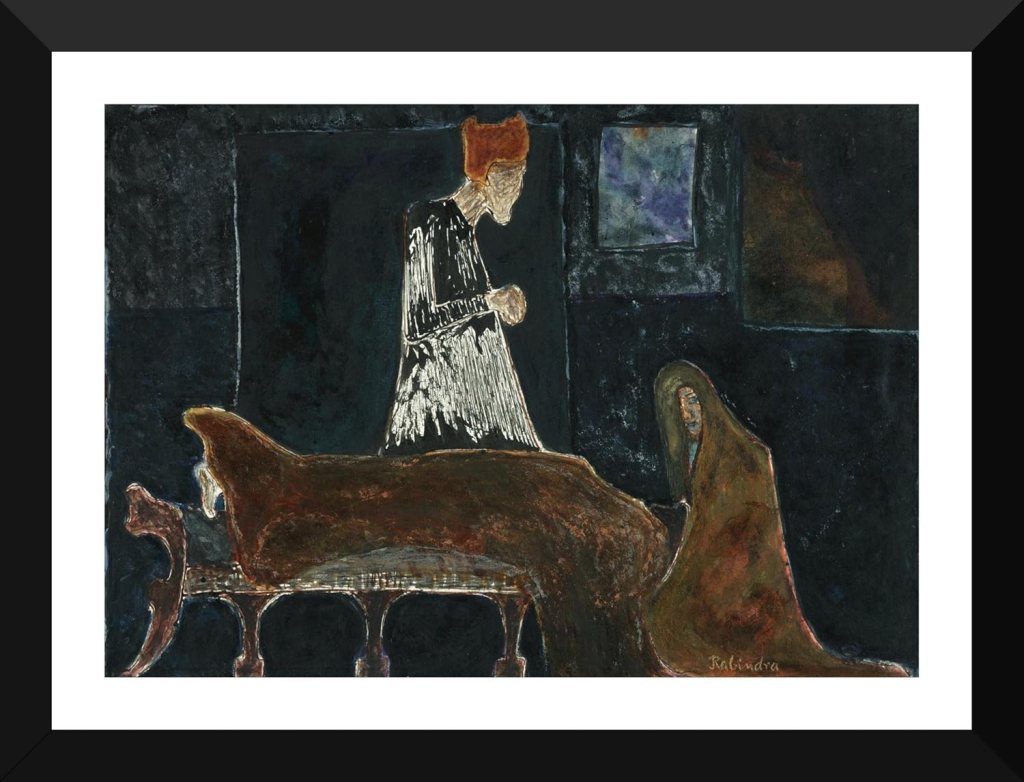
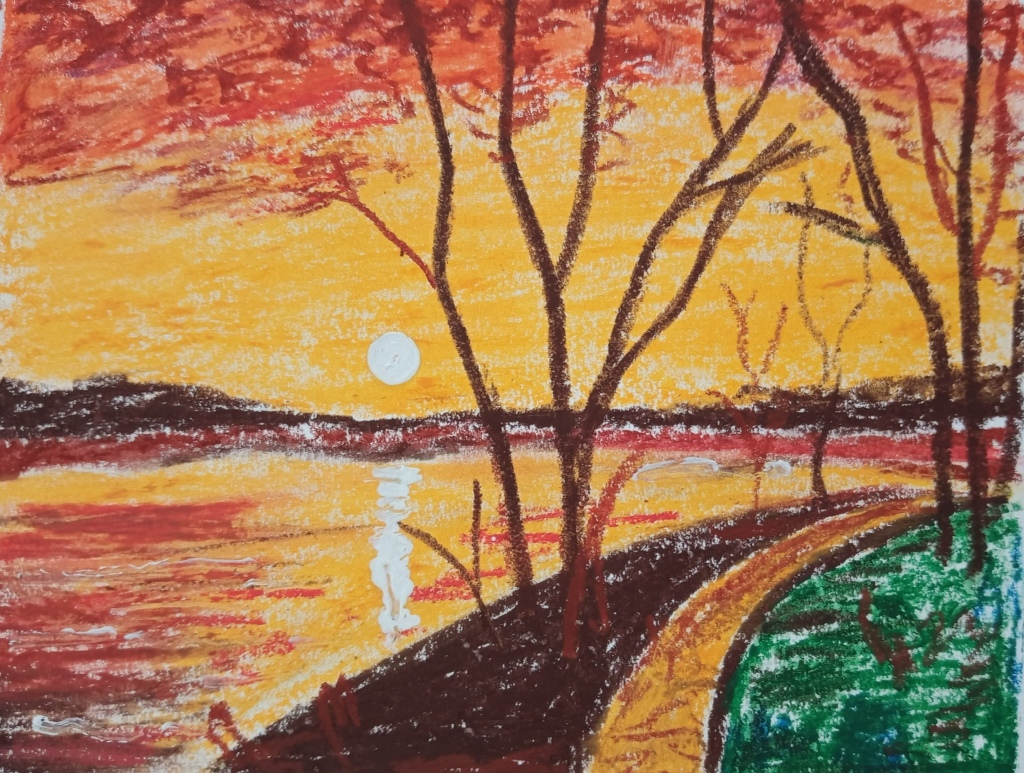
Death Scene painted by Tagore (1861-1941). From Public Domain
DEATH

Death is a stranger to me.
Today, I shiver in apprehension.
I cling to this life with all my might,
With tears in my eyes, I wait to bid
This world goodbye.
    O ignorant, why did you grow
So attached to this life when
The cycle of life and death was
Known to you? The dawn of death
Is like reacquainting with a stranger.
I love this life so much that I am
Convinced I will love death equally.
A child torn from one breast wails but is comforted
Within moments of being held at the other breast.
This poem has been translated by Mitali Chakravarty with editorial input by Sohana Manzoor
.
PLEASE NOTE: ARTICLES CAN ONLY BE REPRODUCED IN OTHER SITES WITH DUE ACKNOWLEDGEMENT TO BORDERLESS JOURNAL
Ratnottama Sengupta muses on acts of terror and translates a Bengali poem by Tarik Sujat which had come as a reaction to an act of terror. Click here to read.
Renee Melchert Thorpe recounts her mother’s migration story, hopping multiple countries, starting with colonial Calcutta and Darjeeling. Click here to read.
Paul Mirabile wanders into the realm of the supernatural dating back to the Potato Famine of Ireland in the 1800s. Clickhere to read.
Conversations
In conversation with eminent Singaporean poet and academic, Kirpal Singh, about how his family migrated to Malaya and subsequently Singapore more than 120 years ago. Click hereto read.
There was a time when humans walked the Earth crossing unnamed landmasses to find homes in newer terrains. They migrated without restrictions. Over a period of time, kingdoms evolved, and travellers like Marco Polo talked of needing permissions to cross borders in certain parts of the world. The need for a permit to travel was first mentioned in the Bible, around 450BCE. A safe conduct permit appeared in England in 1414CE. Around the twentieth century, passports and visas came into full force. And yet, humanity had existed hundreds of thousand years ago… Some put the date at 300,000!
While climate contingencies, wars and violence are geared to add to migrants called ‘refugees’, there is always that bit of humanity which regards them as a burden. They forget that at some point, their ancestors too would have migrated from where they evolved. In South Africa, close to Johannesburg is Maropeng with its ‘Cradle of Humanity’, an intense network of caves where our ancestors paved the way to our evolution. The guide welcomes visitors by saying — “Welcome home!” It fills one’s heart to see the acceptance that drips through the whole experience. Does this mean our ancestors all stepped out of Africa many eons ago and that we all belonged originally to the same land?
And yet there are many restrictions that have come upon us creating boxes which do not allow intermingling easily, even if we travel. Overriding these barriers is a discussion with Jessica Mudditt about Once Around the Sun: From Cambodia to Tibet, her book about her backpacking through Asia. Documenting a migration more than a hundred years ago from Jullundur to Malaya, when borders were different and more mobile, we have a conversation with eminent scholar and writer from Singapore, Kirpal Singh. Telling the story of another eminent migrant, a Persian who became a queen in the Mughal Court is a lyric by Nazrul, Nur Jahan, translated by Professor Fakrul Alam from Bangla. Ihlwha Choi has self-translated his own poem from Korean, a poem bridging divides with love. Fazal Baloch has brought to us some exquisite Balochi poems by Munir Momin. Tagore’s poem, Okale or Out of Sync, has been translated from Bengali to reflect the strange uniqueness of each human action which despite departing from the norm, continue to be part of the flow.
We have a tongue in cheek piece from Devraj Singh Kalsi on traveling in a train with a politician. Uday Deshwal writes with a soupçon of humour as he talks of applying for jobs. Snigdha Agrawal brings to us flavours of Bengal from her past while Ratnottama Sengupta muses on the ongoing wars and violence as acts of terror in the same region and looks back at such an incident in the past which resulted in a powerful Bengali poem by Tarik Sujat. Kiriti Sengupta has written of a well-known artist, Jatin Das, a strange encounter where the artist asks them to empty fully even a glass of water! Ravi Shankar weaves in his love for books into our non-fiction section. Recounting her mother’s migration story which leads us to perceive the whole world as home is a narrative by Renee Melchert Thorpe. Urmi Chakravorty takes us to the last Indian village on the borders of Tibet. Taking us to a Dinosaur Museum in Japan is our migrant columnist, Suzanne Kamata. Her latest multicultural novel, Cinnamon Beach, has found its way to our book excerpts as has Flanagan’s poetry collection, These Many Cold Winters of the Heart.
In reviews, Somdatta Mandal has written about an anthology, Maya Nagari: Bombay-Mumbai A City in Storiesedited by Shanta Gokhale and Jerry Pinto. Rakhi Dalal has discussed a translation from Konkani by Jerry Pinto of award-winning writer Damodar Mauzo’sBoy, Unloved. Basudhara Roy has reviewed Trailokyanath Mukhopadhyay’s Tales of Early Magic Realism in Bengali, translated by Sucheta Dasgupta. Bhaskar Parichha has introduced us toThe Dilemma of an Indian Liberal by Gurcharan Das, a book that is truly relevant in the current times in context of the whole world for what he states is a truth: “In the current polarised climate, the liberal perspective is often marginalised or dismissed as being indecisive or weak.” And it is the truth for the whole world now.
Our short stories reflect the colours of the world. A fantasy set in America but crossing borders of time and place byRonald V. Micci, a story critiquing social norms that hurt by Swatee Miittal and Paul Mirabile’s ghost story shuttling from the Irish potato famine (1845-52) to the present day – all address different themes across borders, reflecting the vibrancy of thoughts and cultures. That we all exist in the same place and have the commonality of ideas and felt emotions is reflected in each of these narratives.
We have more which adds to the lustre of the content. So, do pause by our content’s page and enjoy the reads!
I would like to thank all our team without who this journal would be incomplete, especially, Sohana Manzoor, for her fabulous artwork. Huge thanks to all our contributors who bring vibrancy to our pages and our wonderful readers, without who the journal would remain just part of an electronic cloud… We welcome you all to enjoy our June issue.
‘Okale‘ (translates as ‘out of sync with time’) is a part of Tagore’s poetry collection, Khanika (translates to ‘moments’) published in 1900.
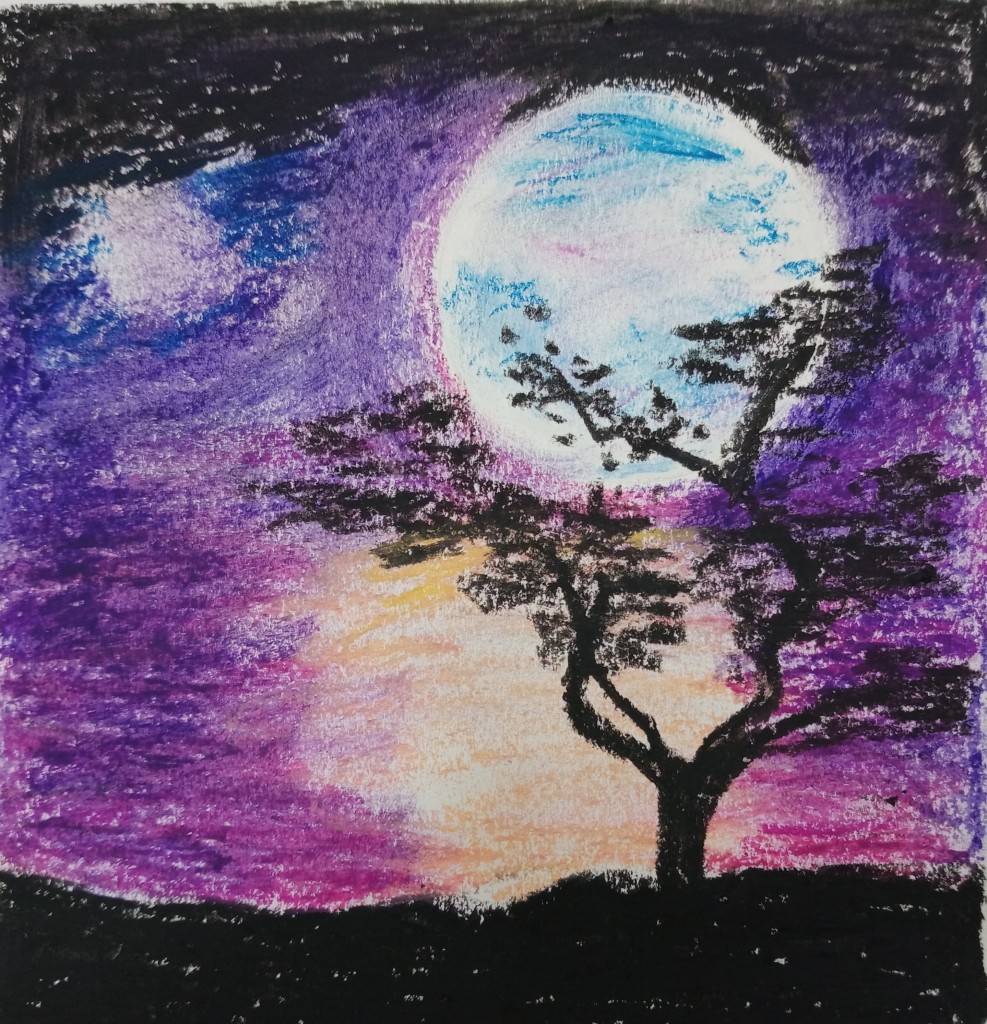
Art by Sohana Manzoor
OUT OF SYNC

Who is it that runs burdened with
           Merchandise to the closed haat*?
Dusk has set in.
             The day is past.

Carrying burdens on their heads,
Vendors return to their homestead.
A fragment of the new moon
                     Has risen in the vale.
Those from the other shore,
Call out loudly to the boats.
The riverside reverberates with
                       Their echoes evermore.

With what hope have you come
              At this hour
To the closed haat, breathlessly,
              With your load?

Sleep has caressed
              The woods to bed,
The cawing of crows have halted
              In their nests.

In the shrubs near the pond,
By the fence, crickets call.
Stunned branches of bamboo,
          Sway softly in the breeze —
Within the courtyard of their homes,
The weary sleep in their abodes.
The night-lamp brightens
          The flickers of shades.

When all are at rest,
        As the time to work is past,
Who is it that runs burdened with
           Merchandise to the closed haat?


*Rural Bazaar
This poem has been translated by Mitali Chakravarty with editorial input by Sohana Manzoor
.
PLEASE NOTE: ARTICLES CAN ONLY BE REPRODUCED IN OTHER SITES WITH DUE ACKNOWLEDGEMENT TO BORDERLESS JOURNAL
I’m a cyclone, a whirlwind,
	I pommel all that lie in my path,
	I am a dance-driven swing,
I dance to my own beat, I’m a free spirit, high on life...

-- Kazi Nazrul Islam, Rebel or Bidrohi, translated by Prof Fakrul Alam.
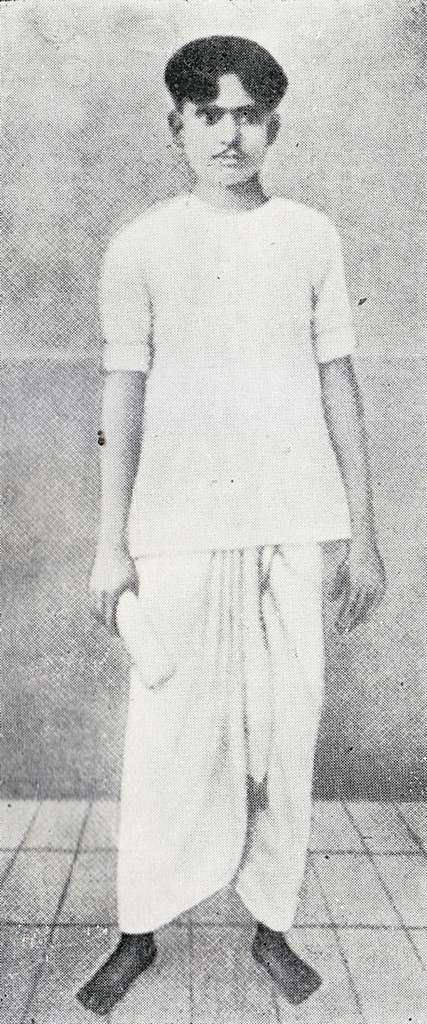
Young Nazrul
Nazrul’s writing has the power of whirlwind or a tornado — it can break with its force and make with love. His songs are a law unto themselves and called Nazrul geeti. And all this remains popular and still relevant more than a century after he was born.
Kazi Nazrul Islam (1899-1976) was born in Burdwan, a part of the Bengal Presidency that stretched from Bengal to Singapore during colonial times. Nazrul lived through the colonial rule, the independence of the subcontinent, the Partition and the creation of Bangladesh. He was multifaceted — he had tried his hand at soldiering and then settled for being a poet, writer, journalist, and musician. He is now regarded as the national poet of Bangladesh, the Bidrohi Kobi or the rebel poet.
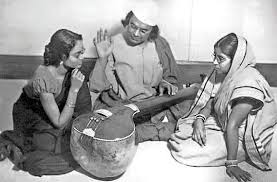
Nazrul teaching Nazrul Geeti
Here, we have tried to gather flavours of his writing and life. We start with the translation of his lyrics (a Nazrul geeti) on butterflies, translated by Fakrul Alam performed by the legendary Feroza Begum, move on to his response to Tagore’s poetry — they had a vibrant relationship as Somdatta Mandal has reflected in her discussion on Radha Chakravarty’s recent translation of his Selected Essays. It’s followed by more translations of three of his poems by Niaz Zaman, who has also written about Nazrul’s support for women. A searing essay on religious divides and socio economic gaps, translated by Sohana Manzoor, also brings to focus the plight of a beggar woman torn by poverty. A short story , showcasing him as a fiction writer, is borne of his experiences as a soldier. Last but not the least, we have a fiery speech by Nazrul from Chakravarty’s translation.
On Nazrul’s 125th birth anniversary, we welcome you to muse on him and his world…
Poetry
Projapoti (Butterfly) by Nazrul has been translated by Fakrul Alam from Bengali. Click here to read.
Somdatta Mandal writes about Radha Chakravarty’s translation of Selected Essays: Kazi Nazrul Islam and in the process explores his life and times. Click here to read.
In Dylan on Worm’s Head, Rhys Hughes describes a misadventure that the Welsh poet had while hiking as a tribute to him on Dylan Thomas Day. Clickhereto read.
Munaj Gul gives an in memoriam for a photographer from Balochistan. Clickhere to read.
Musings of a Copywriter
In ‘Is this a Dagger I See…?‘, Devraj Singh Kalsi gives a tongue-in-cheek account of a writer’s dilemma. Click here to read.
Notes from Japan
In A Golden Memory of Green Day in Japan, Suzanne Kamata tells us of a festival where she planted a tree in the presence of the Japanese royalty. Click here to read.
Perhaps when Dylan Thomas wrote these lines, he did not know how relevant they would sound in context of the world as it is with so many young dying in wars, more than seven decades after he passed on. No poet does. Neither did he. As the world observes Dylan Thomas Day today — the day his play, Under the Milkwood, was read on stage in New York a few months before he died in 1953 — we have a part humorous poem as tribute to the poet and his play by Stuart McFarlane and a tribute from our own Welsh poet, Rhys Hughes, describing a fey incident around Thomas in prose leading up to a poem.
May seems to be a month when we celebrate birthdays of many writers, Tagore, Nazrul and Ruskin Bond. Tagore’s birthday was in the early part of May in 1861 and we celebrated with a special edition on him. Bond, who turns a grand ninety this year, continues to dazzle his readers with fantastic writings from the hills, narratives which reflect the joie de vivre of existence, of compassion and of love for humanity and most importantly his own world view. His books have the rare quality of being infused with an incredible sense of humour and his unique ability to make fun of himself and laugh with all of us.
Nazrul, on the other hand, dreamt, hoped and wrote for an ideal world in the last century. The commonality among all these writers, seemingly so diverse in their outlooks and styles, is the affection they express for humanity. Celebrating the writings of Nazrul, we have one of his fiery speeches translated from Bengali by Radha Chakravarty and a review of her Selected Essays: Kazi Nazrul Islam by Somdatta Mandal. An essay from Niaz Zaman dwells on the feminist side of Nazrul while bringing in Begum Roquiah. Zaman has also shared translations of his poetry. Professor Fakrul Alam, who had earlier translated Nazrul’s iconic ‘Bidrohi or Rebel‘, has given us a beautiful rendition of his song ‘Projapoti or Butterfly’ in English. Also in translation, is a poem by Tagore on the process of writing poetry. Balochi poetry by Manzur Bismil on human nature has been rendered into English by Fazal Baloch and yet another poem from Korean to English by Ilwha Choi.
Ratnottama Sengupta this month converses with a dancer who tries to build bridges with the tinkling of her bells, Sohini Roychowdhury. Gita Viswanthan travels to Khiva in Uzbekistan, historically located on the Silk Route, with words and camera. An essay on Akbar Barakzai by Hazran Rahim Dad and another looking into literature around maladies by Satyarth Pandita add zest to our non-fiction section. Though these seem to be a heterogeneous collection of themes, they are all tied together with the underlying idea of creating links to build towards a better future.
In focus this time is a writer whose prose is almost akin to poetry, Rajat Chaudhuri. A proponent of solarpunk, his novel, Spellcasters, takes us to fictitious cities modelled on Delhi and Kolkata. In his interview, Chaudhuri tells us: “The path to utopia is not necessarily through dystopia. We can start hoping and acting today before things get really bad. Which is the locus of the whole solarpunk movement with which I am closely associated as an editor and creator…”
On that note, I would like to end with a couple of lines from Nazrul, who reiterates how the old gives way to new in Proloyullash (The Frenzy of Destruction, translated by Alam): “Why fear destruction? / It’s the gateway to creation!” Will destruction be the turning point for creation of a new world? And should the destruction be of human constructs that hurt humanity (like wars and weapons) or of humanity and the planet Earth? As the solarpunk movement emphasises, we need to act to move towards a better world. And how would one act? Perhaps, by getting in touch with the best in themselves and using it to act for the betterment of humankind? These are all points to ponder… if you have any ideas that need a forum on such themes, do share with us.
We have more content which has not been woven into this piece for the sheer variety of themes they encompass. Do pause by our content’s page and browse on all our pieces.
With warm thanks to our wonderful team at Borderless — especially Sohana Manzoor for her fabulous art — I would like to express gratitude to all our contributors, without who we could not create this journal. We would also like to thank our readers for making it worth our while to write — for all of our words look to be read, savoured and mulled, and maybe, some will evolve into treasured wines.
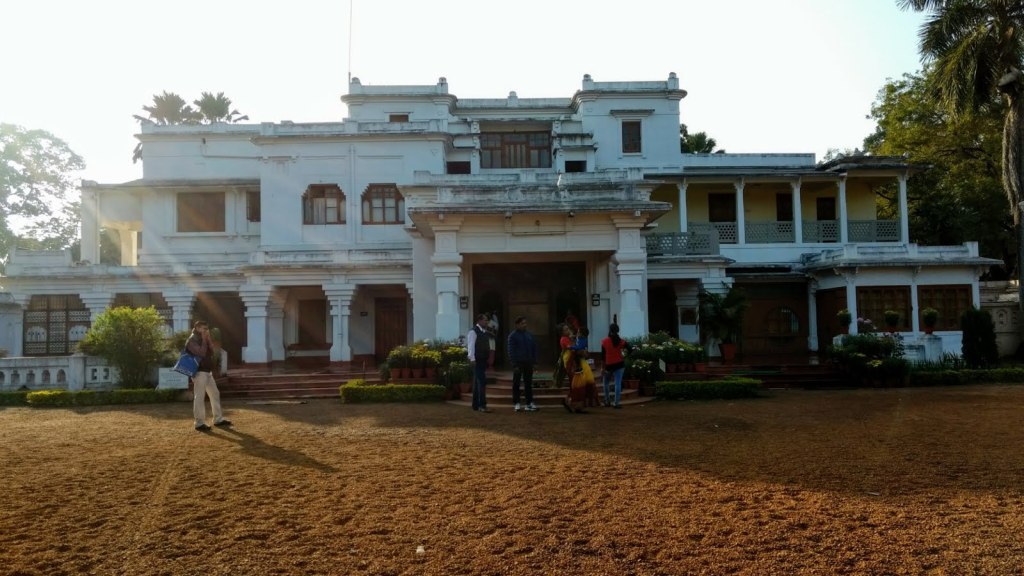
‘Chhora or Rhymes’ was written by Rabindranath Tagore in 1941 in Santinketan at his home, Udayan. It was part of a collection called Chhora that was published in the same year.
Udayan (translates to sunrise) Tagore’s home in Santiniketan, where he wrote this poem.
     RHYMES

When idleness hovers
       In twilight’s haunts,
A hard day’s work
       Draws to a halt,
Scattered whimsies
      Float in flocks.
I do not know why
      The dream realm calls,
Leaving behind the
       Chasms of the day —
Some are filled with sentiments,
        Some, run astray —
The flow of these imaginings,
        Lost in their own rhythm,
Revel as irrationally as
        Crickets’ chirp in unison,
Or dragonflies gather in dusk
        To flit spontaneously
Into a weak flame that
        Flickers dimly.
 In clear light, when I reflect
          On those lines,
I wonder if they were written
          Intoxicated with wines.
Externally, they seem
           To have an obvious sense,
And yet, they seem to conceal
           mysteries that are dense.
Thoughts seem to stream, flow,
           And drown —
Yet, they do not reveal
           From where they come.
They exist I know but the rest
           Is obscured by darkness —
The game is on to tie one
           With another in coherence.
Congruity gives meaning.
         But they break these constraints,
And in an ecstatic frenzy,
          Dance in emptiness, unrestrained.
This poem has been translated by Mitali Chakravarty with editorial input by Sohana Manzoor
.
PLEASE NOTE: ARTICLES CAN ONLY BE REPRODUCED IN OTHER SITES WITH DUE ACKNOWLEDGEMENT TO BORDERLESS JOURNAL
Baraf Pora (Snowfall) by Rabindranath Tagore,gives a glimpse of his first experience of snowfall in Brighton and published in the Tagore family journal, Balak (Children), has been translated from Bengali by Somdatta Mandal. Clickhere to read.
Himalaya Jatra( A trip to Himalayas) by Tagore, has been translated from his Jibon Smriti (1911, Reminiscenses) by Somdatta Mandal from Bengali. Click here to read.
Bhumika (Introduction) by Tagore has been translated from Bengali by Ratnottama Sengupta. Click here to read.
The Fire-grinding Quern by Manzur Bismil has been translated from Balochi by Fazal Baloch. Clickhere to read.
The Tobacco Lover by Ihlwha Choi has been translated from Korean by the poet himself. Clickhere to read.
Pochishe Boisakh(25th of Baisakh) by Tagore(1922), has been translated from Bengali by Mitali Chakravarty. Click here to read.
Pandies Corner
Songs of Freedom: Dear Me… is an autobiographical narrative by Ilma Khan, translated from Hindustani by Janees. These narrations highlight the ongoing struggle against debilitating rigid boundaries drawn by societal norms, with the support from organisations like Shaktishalini and pandies’. Click here to read.
Paul Mirabile gives a gripping tale about a young pyromaniac. Click hereto read.
Conversation
Ratnottama Sengupta in conversation about Kitareba, a contemporary dance performance on immigrants, with Sudarshan Chakravorty, a choreographer, and founder of the Sapphire Dance Company. Click here to read.
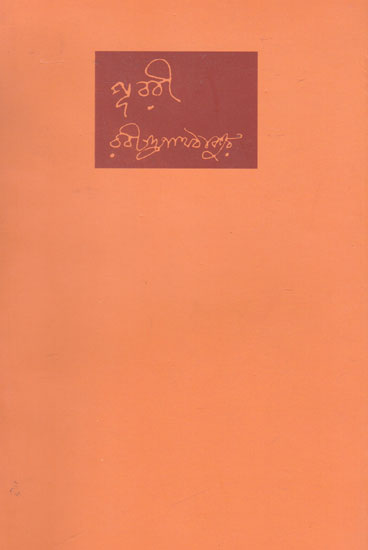
Pochishe Boisakh[1]was written by Tagore on 8th May 1922, and published in a collection called, Purabi [name of a raga] by the poet himself under the aegis of Vishwa Bharati.
Purabi by Rabindranath TagoreRabindranath Tagore(1861-1941)
Night gives way to dawn. I bring to you By hand, The full saga of My birth written By the rays of The morning sun.
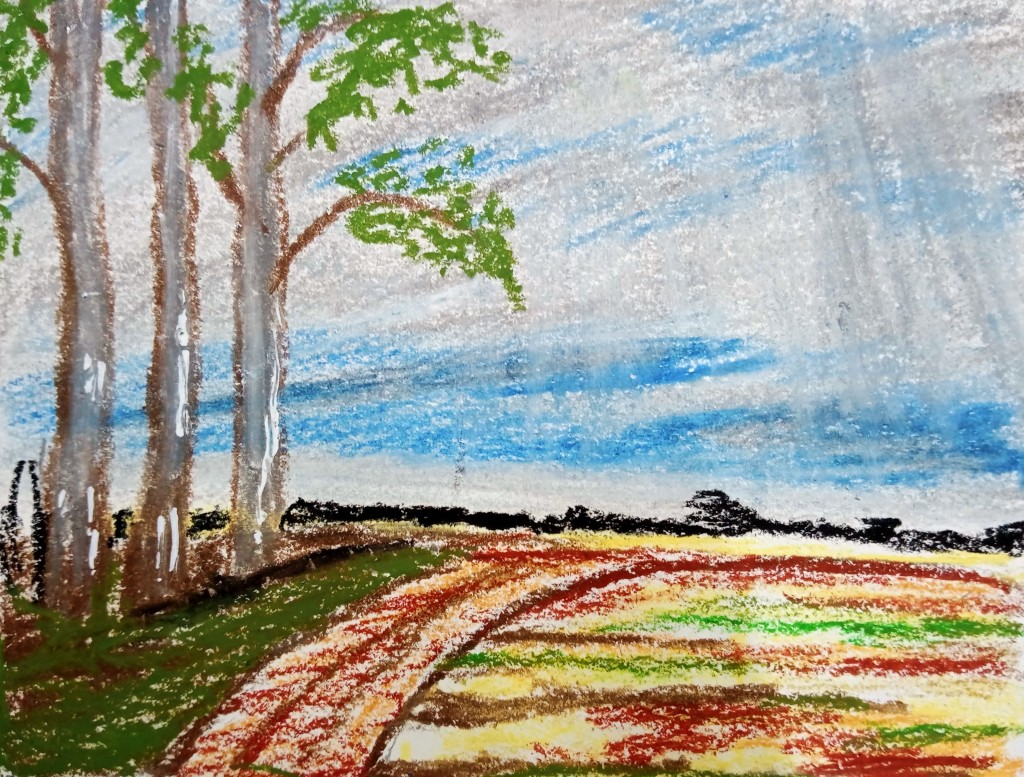
A blood smeared sun rises out of the horizon. Faint shadows of the woods play lonely notes of the Bhairavi. Saal, palm and sisir trees murmur to Break the silence of the outskirts. On the dry fields, a blood-red path resembles The forehead of a sanyasi* smeared with holy paste.
This day returns every year In different guises on this earth — Sometimes, filled with copper-coloured mangoes, Or rustling with young palms, Or, crackling with dry leaves in the mid-day sun, Sometimes rushing to free itself Like the clouds of the Unshackled kalbaisakhi*. And it comes to me When I am alone, Drunk with the northern breeze, Hands me a gift — A plate made of the blue sky And then a zephyr filled cup of nectar.
This day has dawned today. My heart beats rapidly As if someone is blowing a conch resonating With the susurration of infinite oceans. Birth and death like The skyline meet in the circle of life. Today they come together. A white radiance seems To overflow with music from The flute of Time, filling the emptiness. Endless music irradiates My soul singing from within.
Morning descends with a Calm smile and Whispers into my ears: “I have come anew amidst many. One day, you arrived In this universe Redolent with the perfume of fresh mallika blooms, Amidst the breezy caresses of the chattim tree, In the heart of darkness, Under a steadfast, azure gaze. I kiss the forehead Of the new you. I have come to awaken you On this exciting day.
“Oh, newly fledged, Let’s revisit the start of your life. Today your existence is overwhelmed With transient dusty correspondence. Remember, O youth, Your first birthday… Unblemished — Pure, like the first moments of your life; Like the waves of the ocean, revive Every second of Your first day.
“Oh, newly fledged, Arise, illumined Out of the ashes of past. Anew, May you shine out of the mists like a rising sun. Holding the vernal flag, Fill youthful moments with lush foliage — In this way, newly fledged, Pierce the emptiness, reveal yourself. Revel in the exuberance of life, Reveal the eternal wonders of the universe within your being. The horizon reverberates with notes from the auspicious conch.”
In my heart, Eternal new notes peal On pochishe boisakh!
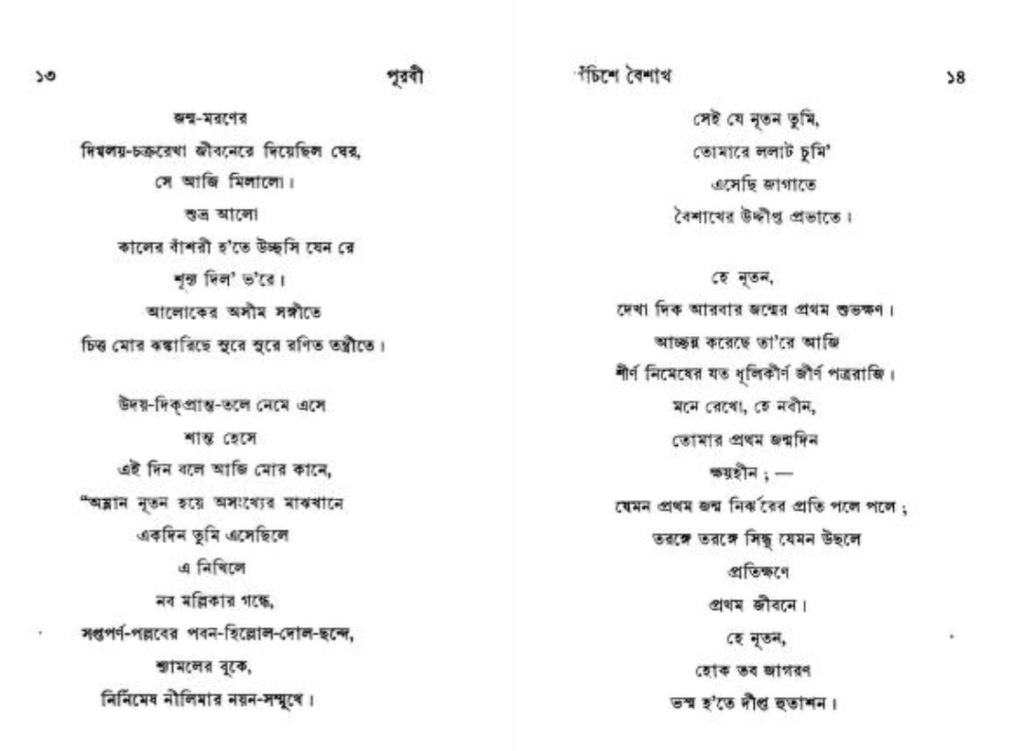
In 1941, Tagore adapted the last part of the poem, changed a few words and made it into a song for his last birthday, acceding to the request of a birthday song to his family and friends. The song, ‘Hey Nutan’[2], has been translated by Aruna Chakravarti in her historical novel, Daughters of Jorasanko, as the last birthday song by Tagore. You can access the translation of the song and his last birthday celebrations depicted by Aruna Chakravarti by clicking here.
ScreenshotScreenshotThe poem written in 1922 from Purabi, Vishwa Bharati The last part of the poem from PurabiThe last birthday song (1941)The last part of the longer poem written in 1922 was adapted into a song by Tagore, his last paean to his own birthday, few months before his death in 1941. The changes made to the words and phrases can be seen in the screenshots pasted above.
[1] Pochishe Boisakh is the 25th of Boisakh. Boisakh is the first month of the Bengali calendar coinciding with mid-April to mid-May. Tagore was born on 25th Boisakh, which is a date that shuttles between 7th to 9th May every year on the Gregorian calendar.
[2] Aruna Chakravarti translates this as ‘Oh ever new’. In the poem, it has been translated as ‘Oh newly fledged’. It is from that point that Tagore made the changes and converted the poem into a song. He changed a few words, a few lines, giving it a new life as a song.
(This poem has been translated by Mitali Chakravarty with editorial input by Sohana Manzoor)
.
PLEASE NOTE: ARTICLES CAN ONLY BE REPRODUCED IN OTHER SITES WITH DUE ACKNOWLEDGEMENT TO BORDERLESS JOURNAL






 Borderless