Let me begin by saying that like most readers enamoured by her works, I really enjoyed reading Arundhati Roy’s first work of memoir Mother Mary Comes to Me published in 2025. It is a soaring account, both intimate and inspiring, of how the author became the person and the writer she is, shaped by circumstance, but above all by her complex relationship to the extraordinary, singular mother she describes as a gangster, as ‘my shelter and my storm’. In the meantime, many reviews of the book have already been published, some full of praise and some quite critical, but it can be undoubtedly said that the book created a literary storm that one hadn’t experienced for quite a long time. And to add to that, social media is now flooded with her interviews, readings etc., some very recent and some as old as fifteen years. This essay delves into several issues pertaining to it that have struck me as unique.
Born out of the onrush of memories and feelings provoked by her mother Mary’s death in 2022, this is the astonishing, often disturbing and surprisingly funny memoir of the Arundhati Roy’s life, from childhood to the present, from her movement from Kerala to Delhi. There are forty-two chapters in this book, not numbered, but the titles themselves are self-explanatory. By following their interesting nomenclature, one can get an inkling of how Roy has laid out her narrative strategy, by talking not only about her own life but how it has been intertwined with her mother in a peculiar love-hate relationship. In the very first chapter titled ‘Gangster’, (which Roy has been reading in many gatherings till now), she tells us about her peculiar relationship with her mother. In her excellent and unique narrative style, she says:
“As a child I loved her irrationally, helplessly, fearfully, completely, as children do. As an adult I tried to love her cooly, rationally, and from a safe distance. I often failed. Sometimes miserably. I wrote versions of her in my books, but I never wrote her.”
She then advices her reader: “Most of us are a living, breathing soup of memory and imagination – and that we may not be the best arbiters of which is which. So read this book as you would a novel. It makes no larger claim.”
The narration of the incidents always does not follow a strict chronological order. Some of the stories are already quite well-known. This tells us how the young Syrian Christian Mary Roy married a Bengali tea planter in Assam and had to soon leave her husband because of his drunkenness and lack of responsibility towards his family. Having no support except for a bachelor’s degree in Education, she takes the bold decision of walking out of the marriage and lands in Ooty along with her two young children to live in her father’s cottage. A few months into her fugitive life, her estranged mother and elder brother arrived from Kerala to evict her. They told her that under the Travancore Christian Succession Act, daughter had no right to their father’s property and that they were to leave the house immediately. Years later Mary would challenge the act in the Supreme Court and demand an equal share of her father’s property, and luckily by winning the case in 1986 she became a sort of celebrity overnight.
The story then moves on to Kottayam and then to Ayemenem in Kerala (some of the details of which are beautifully narrated in The God of Small Things too) where Mary Roy struggles to find a foothold for herself and the children and open a school. That story of how that school began in a rudimentary form and how it gradually grew into the well-known residential institution called Pallikoodam designed by the famous architect Laurie Baker, how it remained a top priority in Mary Roy’s life ( the school children prioritised over her own) along with her own eccentricities, her uncompromising nature and peculiar behaviour ( her refusal to be accepted as the mother of the famous writer Arundhati Roy, being one of them), till her death remains one major strand of the narrative.
The other major narrative strand pertains to Roy’s own life. Arundhati’s version of the story tells us how in the summer of 1976 she finished her high school at sixteen and leaving Kottayam (and of course her mother whom she wanted to dissociate forever), arrived alone without any contact in a completely alien territory in Delhi to take the entrance exam for the School of Architecture. Not having any contact with her mother for several years, she led a bohemian life, lived together with different people, saw partly the underbelly of life and did odd jobs to sustain herself. In the architectural school, she met Pradip Kishen and eventually married him (who was then the husband of the boss under whom she was working for a while). She scripted a screenplay for a movie called In Which Annie Gives ItThose Ones about the college life and though it was once telecast in Doordarshan decades ago, it had been lost till recently the footage has been recovered, restored and set as an official entry in the Berlin Film festival this year but one which Roy refused to attend citing the cause of Palestine.
She was involved in another movie script Electric Moon and acted in minor roles in some off beat films like Massey Sahib till she changed her mission of life. After the publication of The God of Small Things, Roy stopped writing novels and got involved in political and social causes and got involved with social activists like Medha Patkar and the Maoists in the Chhattisgarh region and even faced jail for a day for her protests. The writing she produced for a couple of decades were all powerful political manifestos supporting leftist politics (“The Algebra of Infinite Justice” being one of the well- known texts and My Seditious Heart, published in 2019, is a collection of her non-fiction) till she came up with her second novel The Ministry of Utmost Happiness.
In the meantime, the handsome royalty she received from her first novel changed her living style and for the first time Arundhati Roy managed to eke out a comfortable lifestyle and even buy a house of her own. Her narration is interspersed with several interesting anecdotes, relating to her relationship with her brother whom she mentions throughout as LKC, and their chance meeting with Micky Roy, their father in pathetic condition in Delhi. The chapter titled ‘Mama Bear, Papa Bear’ is very interesting to read. It begins with the following lines: “Seven years had gone by since I’d last seen Mrs Roy. The strangest thing is that I cannot remember how she and I came to be in contact with each other again”. Then the joy of seeing her brother after so many years was exacerbated with their meeting of their father Micky Roy, who had totally disappeared from their lives when they were kids. The pathetic state of the man almost dying out of liquor addiction, we are told about how he was “as frail as a small bird, lame and hunched over …he was severely malnourished, like people in UN pamphlets.” This is how Roy narrates the incident:
‘You would never have believed I was your father. You look so much more like me than your mother. Doesn’t she, Kapil Dev? Same nose. Same eyes…sorry eye.’(Giggle.) ‘I say Orundhuti, do you hit the bottle?’
He pronounced my name the Bengali way.
‘Me? No.’
‘Oh, go on. Tell the truth. All good Roys hit the bottle. Whaddyou say, Kapil Dev?’
(Giggle. Slap.)
After going through all the ups and downs of life, especially in relation to her mother (too many to be narrated here), the story end in the last chapter aptly titled ‘A Declaration of Love’ when in January 2022 she got a message from her mother saying that she loved her. Despite everything that had happened between them, somehow, she knew that to be true. “My lifelong refusal to stop loving her, no matter what, had finally breached her barriers.” The story ends with her death, the details of her cremating process, the performance of the Kottayam Police Band, the 21-gun salute she received and ultimately the memorial they built for her in the bamboo grove where the headstone mentioned Mary Roy as ‘Dreamer Warrior Teacher’ and ‘Founder Pallikoodam.’ The strange love-hate relationship that persisted between Arundhati and her mother comes out beautifully in the end when she writes:
“The first night in a Mrs Roy-less world, I spun unanchored in space with no coordinates. I had constructed myself around her. I had grown into the peculiar shape that I am to accommodate her. I had never wanted to defeat her, never wanted to win. I had always wanted her to go out like a queen. And now that she had, I didn’t make sense to myself any more.”
Another interesting piece of information is revealed in this concluding chapter is about how Arundhati casually decided to get divorced from Pradip Kishen with the same lack of seriousness with which she had got married, so that he and the girls (and their property) had no legal connection to her. The order granting them the divorce had been delivered to her the previous morning, at the very moment Mrs Roy died. ‘So, I, free woman, free falling, was heir to nothing at all. But I was curious about our great will-making mother’s will.’ Later she gets to know that her brother had marked off Mrs Roy’s house and its compound from the rest of the school and had it registered in her name. So, she decided to renovate the house and build the Grove simultaneously in it.
The Cover Design
Before concluding, I want to draw the reader’s attention to the special care that has been taken to make and market this book. The cover design is a highly skilled piece of production. On the stark red cover of the book with the title embossed artistically, we have half a dust jacket in white with two different pictures of Roy on the front and the back cover– one a current photograph of the author with her head full of pepper and salt curls and with a discreet smile on her face. The other photograph is of a much younger and radical Arundhati with a distinct far-away look in her eyes and with a burning cigarette on her lips. Though the publisher gives the statutory warning that cigarette smoking is injurious to health and it does not support it in any way, a very stark visual statement about the unnatural bohemian nature of the author gets revealed through this photograph.
Incidentally, this selling of a book through its stark and attractive cover reminded me of a similar strategy undertaken in 1997 when Roy’s debut novel The God of Small Things won the Booker Prize and took the literary world by storm. The book came out in what was essentially the pre-internet and social media era and the maximum number of reviews and essays that came out during that time were in print. In an essay which I had authored then, calling it “The Making and Marketing of Arundhati Roy” I had shown that the contents of the dust jacket of the book differed radically from region to region and it was done through a deliberate and effectively thought-out strategy. So, in the Indian edition we had a different story outline giving us a gist of what to expect inside, especially the love of a paravan, an untouchable man with an upper-caste woman, along with the local setting in Kerala, Ayenemem to be exact.
In the Random House edition published from New York, the story outline was completely different, not only telling us about untouchability and the love between Radha and Krishna that would lure the western reader to pick up the book about a unique place in India defined as ‘God’s Own Country’ in tourist brochures. Also, the photographs of Roy (both taken by her then husband Pradip Kishen) differed radically. With this new book, of course, such strategies didn’t work anymore. With innumerable book launches, readings by the author everywhere (a search on Youtube will even land you with interviews that are more than a decade old) we now come upon other ways and means through which the book has been popularised. But all said and done, I must conclude by saying that whether you agree or disagree with the extreme left wing political views that Arundhati Roy professes, those who still haven’t read this memoir have really missed reading a wonderfully written book with its 372 pages that is really unputdownable, with its lyrical as well as down to earth style of narration, full of new metaphors, new word coinages that are the USP of Arundhati Roy.
Somdatta Mandal, critic and translator, is former Professor of English at Visva-Bharati University, Santiniketan, India.
.
PLEASE NOTE: ARTICLES CAN ONLY BE REPRODUCED IN OTHER SITES WITH DUE ACKNOWLEDGEMENT TO BORDERLESS JOURNAL
Six years ago, a few of us got together to bring out the first issue of Borderless Journal. We started as a daily blog and then congealed into a monthly journal offering content that transcends artificial borders to meet with the commonality of felt emotions, celebrating humanity and the Universe. Today as we complete six years of our existence in the clouds, we would like to celebrate with all writers and readers who made our existence a reality. We invite you to savour writings collected over the years that reflect and revel in transcending borders, touching hearts and some even make us laugh while exploring norms.
In this special issue. we can only offer a small sample of writings but you can access many more like these ones at our site…Without further ado, let us harmonise with words. We invite you to lose yourselves in a borderless world in these trying times.
Rebel or ‘Bidrohi’, Nazrul’s signature poem, ‘Bidrohi‘, translated by Professor Fakrul Alam. Click here to read.
Manish Ghatak’s Aagun taader Praan (Fire is their Life) has been translated from Bengali by Indrayudh Sinha. Click here to read.
Tagore’s poem, Tomar Shonkho Dhulay Porey (your conch lies in the dust), has been translated from Bengali by Mitali Chakravarty as ‘The Conch Calls’. Click here to read.
Ihlwha Choi spent some time in Santiniketan and here are poems he wrote in reaction to his observations near the ‘home of R.Tagore’, as he names Santiniketan and the Kobiguru. Click here to read Nandini.
Rituals in the Garden: Marcelo Medone discusses motherhood, aging and loss in this poignant flash fiction from Argentina. Click here to read.
Navigational Error: Luke P.G. Draper explores the impact of pollution with a short compelling narrative. Click here to read.
Henrik’s Journey: Farah Ghuznavi follows a conglomerate of people on board a flight to address issues ranging from Rohingyas to race bias. Click hereto read.
The Magic Staff , a poignant short story about a Rohingya child by Shaheen Akhtar, translated from Bengali by Arifa Ghani Rahman. Click here to read.
A Cat Story : Sohana Manzoor leaves one wondering if the story is about felines or… Clickhere to read.
When West Meets East & Greatness Blooms: Debraj Mookerjee reflects on how syncretism impacts greats like Tagore,Tolstoy, Emerson, Martin Luther King Jr, Gandhi and many more. Click here to read.
The Day Michael Jackson Died: A tribute by Julian Matthews to the great talented star who died amidst ignominy and controversy. Click here to read.
Potable Water Crisis & the Sunderbans: Camellia Biswas, a visitor to Sunderbans during the cyclone Alia, turns environmentalist and writes about the potable water issue faced by locals. Click here to read.
My Love for RK Narayan, Rhys Hughes discusses the novels by ths legendary writer from India. Click here to read.
Travels ofDebendranath Tagore: These are travel narratives by Debendranath Tagore, father of Rabindranath Tagore, translated from Bengali by Somdatta Mandal. Click here to read.
Baraf Pora (Snowfall): This narrative gives a glimpse of Tagore’s first experience of snowfall in Brighton and published in the Tagore family journal, Balak (Children), has been translated by Somdatta Mandal . Clickhere to read.
The Day of Annihilation: An essay on climate change by Kazi Nazrul Islam has been translated from Bengali by Radha Chakravarty. Clickhereto read.
Reminiscences from a Gallery: The Other Ray: Dolly Narang muses on Satyajit Ray’s world beyond films and shares a note by the maestro and an essay on his art by the eminent artist, Paritosh Sen. Click here to read.
The Bauls of Bengal: Aruna Chakravarti writes of wandering minstrels called bauls and the impact they had on Tagore. Click here to read.
Title: River Traveller: Journeys on the TSANPO-BRAHMAPUTRA from Tibet to the Bay of Bengal
Author: Sanjoy Hazarika
Publisher: Speaking Tiger Books
Sanjoy Hazarika, a former reporter for the New York Times, dons many hats, combining roles as researcher, columnist, mentor and practitioner. Over decades this veteran journalist has travelled extensively across the Northeast and its neighbourhood. His interests include developments in Myanmar, Bhutan, Tibet (PRC), Bangladesh and Nepal and he has produced over a dozen documentaries including on the Brahmaputra, dolphins, governance, conflict, and rights.
River Traveller tells the story of a great river, as powerful as it is mysterious. The Brahmaputra rises in Tibet, travels through three countries and, after travelling over 2,900 kms, flows into the Bay of Bengal. But the most interesting part is that this river is known by many names: Yarlung Tsangpo and Po Tsangpo in Tibet, Siang in Arunachal Pradesh, Brahmaputra in Assam, the Jamuna in Bangladesh, merging with the Ganga at Arichar Ghat, to form the vast Padma on its unending flow to the Bay of Bengal and its quest for union with the sea.
This book has come together over decades of travels on this braided river (including on the boat clinics that he launched in 2005 in Assam) where Hazarika had seen its beauty and faced its wrath, been stuck on sandbanks and swept out to sea. He listened to those who plied the boats, the pilots, drivers, fishermen and their families, the sick and the ailing, women and children, Buddhist and Hindu monks, Sikh and Muslim priests, officials, politicians, students and scientists. He has listened to poets, singers, writers and artists, and to businessfolk and daily wage earners, boat builders, contractors, tea planters and workers. The writer amalgamated all their stories which were a mix of sadness, a determination to survive, an acceptance of fate and joy. Therefore, his traveller’s tales span not just his own journeys but the stories of those who had gone before him. Like the river, the region and its neighbourhood “never cease to delight, surprise, inspire, sadden and confound.”
Of course, the most ostentatious reason for Hazarika’s travels is the filming of documentaries on the river at different points of time. His first travel was for the film A River’s Story, the Quest for the Brahmaputra that he scripted and produced with Jahnu Barua as the director, Sudheer Palsane as cinematographer, Sanjoy Roy and Jugal Debta as audiographers as well as many others. The thrust area was to study the stories of the river and its people, from its beginnings in the Tibetan Plateau to the end in the Bay of Bengal. It wasn’t about science and theory, or politics and the environment, or climate change, but about the river and its moods, and especially its people and their relationship with each other, through history and changing geography, culture, faith, peace and poverty.
In the second venture, Gautam Bora was director and cinematographer of Brahmaputra, a six-part series for Doordarshan, shot in Arunachal Pradesh and Assam. In his third venture, he was involved in the making of Children of the River, the Xihus of Assam, which was directed and filmed by Maulee Senapati and where he learned much about dolphins.
Divided into three parts, the book is as exhaustive a study on the river as can be imagined. The Brahmaputra is one of the world’s longest and widest rivers—sustaining entire civilizations and agrarian systems. It has fascinated cartographers, lured adventurers, attracted kings and dynasts, and has supported life and ways of living by its banks. Before beginning with the actual travel in Part One that includes his sojourns in Tibet and Arunachal Pradesh, Hazarika goes back to history of the thirteenth century when in about 1215 AD, the Tai-Ahom prince Siu-ka-pha left his native land now on the China-Myanmar border and undertook a long march before settling down in Charaideo, his capital, with its surrounding flat plains, rich red soil, streams and the vast Brahmaputra nearby. After that for centuries, traders, smugglers, fighters, fugitives, goods, cuisines, languages and ideas as well as religions and religious people have travelled in either direction on the Siu-ka-pha trail.
Hazarika begins his yatra in Tibet and narrates how the challenges relating to it were not new. He describes a Tibet that was trying to hold on to its cultural legacy in the face of Chinese rule and the land’s exploitation for its resources. He recounts stories of explorers, spymasters and mapmakers, especially a motley crowd of intrepid men in the service of the East India Company and the Survey of India, who discovered the route of the river especially when it’s source was hidden in the most inhospitable terrain on earth. They finally solved the puzzle of the vanishing river and established that the Brahmaputra and the Tsangpo were the same river.
In Arunachal Pradesh, Hazarika views the river from a helicopter and to him it resembled a great, brown meandering serpent, moving in huge loops, with many channels; at times, a stream or two which joined the flow backed down on themselves, creating elegant oxbow lakes. At Gelling, the first village on the Indian side, the turbulent Tsangpo churns its way through a narrow valley after a cascading drop from Tibet. Here for the first time the Tsangpo changes its name and is known as the Siang or Dibang for the next 200 kilometers before it enters Assam. At a place called Kobo, the Lohit meets the Dibang, Noa Dihing, Tengapani and Siang and develops the immense power that is mirrored in the Brahmaputra in full flow.
Part Two comprising of nine chapters focuses on Assam. After the earthquake of 1950, water ‘blockades’ happened not just on the Siang but also on several other rivers flowing into the Assam Valley and as a result the river changed its course, lifted the riverbed, flattened the banks and land, and braided it in many places far more than ever before. As a result, many towns like Rohmoria, Sadiya simply vanished after being embraced by flood waters, and places like Barpeta, Goalpara and Dhubri underwent demographic changes.
In separate chapters we learn about the tea gardens of Assam, the influence of Srimanta Sankaradeva and his satras[1], about the great river island Majuli, the singer Bhupen Hazarika, the presence of dolphins in the Brahmaputra, the thousands of islands known as the chars and saporis, which are permanent in their impermanence, where the Muslim residents are known as Miyas, the large number of migrants that inhabit the place, the sand bars and sandbanks that dot the riverscape from Upper Assam and how the collection of sand and its sale and distribution has changed the lives of many along the river to the point where it enters Bangladesh. He also gives us details about the ferry system, the boat clinics on the river that represent both a dream and a reality, as annually, nearly three lakh people are treated in these mobile structures.
The third part of the narrative obviously ends with four chapters on Bangladesh. We are told how to move from a slow riverine economy to a bustling one is quite challenging. This section includes fear of being hunted by pirates on an open sea, the faith in the navigators, ‘drivers’, pilots and other crew members who can read the mind of the river, the trip to the confluence of the Ganga and the Brahmaputra along with a Bangladeshi singer called Maqsoodul Haque or Mac. Both these rivers have different names in Bangladesh. The Ganga is the Padma while the Brahmaputra is the Jamuna. We are told about the story of the island known to Indians as New Moore Island and to the Bangladeshis as Sandwip island that appeared and disappeared, causing a diplomatic furore. The Brahmaputra’s role in shaping the destiny of low-lying Bangladesh is well-established and we are told of the connectedness of the people to the river, on either side of the human-made border. There are many places where the turbulent river refuses to accept human markers and controls and the border just remains an imaginary line snaking across shifting sands.
After reading about the multifarious experiences of Hazarika, it is needless to state that this book of non-fiction mesmerizes the readers to such a great extent that one hankers for more information. It is best to conclude the review by quoting from the poetic way Hazarika himself speaks at the end of the book about the interconnectedness that lies even in a grain of sand:
“I have traversed the river, shared my secrets with it and laid my fears and troubles to rest there. It too has spoken to me and has been kind and generous, in the midst of its vastness and power, to someone who could not swim.
“River Traveller is deeply personal and piloted by my life and learnings on the river, failings, shortcomings, understanding. It’s about shared stories, loves gained and lost, inspiration and sadness. Autobiographical in parts, it navigates history and crosses borders.
“Many travels beckon, for the river still calls.“
From extremism to environmental responsibility, politics to ethnography, River Traveller touches on a multitude of subjects, and is an enduring study of human life and natural history. It is a rich and memorable portrait of one of the mightiest rivers on our planet. The colour photographs that are included in the middle of the narrative add extra charm to the narration. A volume worth possessing and reading and rereading repeatedly.
[1] Specialised Vaishnavi monasteries in Assam serving as socio-religious, cultural and educational centres since the fifteenth century.
.
Somdatta Mandal, critic and translator, is a former Professor of English at Visva-Bharati University, Santiniketan, India.
.
PLEASE NOTE: ARTICLES CAN ONLY BE REPRODUCED IN OTHER SITES WITH DUE ACKNOWLEDGEMENT TO BORDERLESS JOURNAL
Showkat Ali (1936 – 2018) was a renowned Bangladeshi novelist, short story writer and journalist whose work explored history, class and identity in Bengali society. In 1989, he published a novel called Narai (translated from Bengali as The Struggle) which is set in a remote village in the Dinajpur region of undivided Bengal during the mid-1940s.
The novel is broadly divided into three sections. In the first section entitled ‘A Ploughing Household,’ the author gives us detailed description of an agrarian society where poor Muslim farmers as well as some other lower classes of untouchable Hindus eked out their living primarily through farming as well as other low-paying jobs. The feudal setup of the society is complete with threatening and wily landlords (often Hindus) who are always on the lookout for cheating the sharecroppers of their legitimate dues.
The story begins with a poor farmer called Ahedali who, unable to procure a second bullock to till his field, bore one side of the yoke himself, and soon fell ill and succumbed to death leaving his young wife Phulmoti and a ten-year-old son Abedali behind. The real problem for this widow begins when she is left alone to fend for herself along with a few ducks, chickens and goats. Her fragile world is shattered. People in the village start advising her to get married once again and she gradually finds it very difficult to survive from the ogling eyes and salacious offers from different men in the community. Her son can offer little defense against the men now circling her—neighbours, relatives, even the local cleric—drawn by desire and the lure of her small property. Malek, a kindly bookseller at the local market, too, proves not to be what he seems. It is Malek’s hired hand, Qutubali, who finds himself drawn into her struggles, standing by her in ways that others do not.
The second section of the novel ‘Home and Family’ describes in detail how Qutubali, the simple-minded outsider whose unexpected kindness and fierce loyalty turns into Phulmoti’s unlikely ally. Apparently, he was a senseless and stupid man who provided her benefaction again and again. Much younger to her, he was totally ignorant of standard man-woman relationships and though he often stayed back at Phulmoti’s house, he didn’t express any sort of physical desire for the young widow. He tended to the animals, helped in sowing seeds and worked relentlessly to bring some comfort and peace in the household.
This entire section gives us details of how they come close to each other. Finding no other alternative to live a decent and harmonious life, they go to a mosque where a saint called Darbesh Chacha, who had brought up the orphan Qutubali earlier, gets them married in order that both can live their lives peacefully hereafter. Since then, things gradually changed. If a young widow found a husband, or brought home a ‘ghor jamai’[1], that was definitely news, especially if the man in question was from another village. But people gradually accepted it. Of course, the widow’s suitors fumed with resentment, though even that fire cooled eventually. Qutubali also gradually started learning the tricks of the trade – he had their own land and along with the yield of the sharecropped land, he knew he could become a full-fledged farmer soon. He was sure the days of his misfortune were over. At the end of this section, when Phulmoti announces to the simple-minded Qutubali that she was pregnant, the reader feels that the rest of the story would follow suit in domestic harmony and bliss. The family had a happy air about them. But that was not to be.
The third section of the novel aptly titled ‘We Must Fight!’ begins amid the upheavals of a precarious feudal order and the stirrings of a nation on the verge of independence. Qutubali did not have the time to stay at home. He was never clear about where he went and what he did. When asked, he replied in monosyllables. He started attending sermons. The headmaster of the village school started indoctrinating him and the village folk with the idea of swadeshi.
The politics of the Congress and the Muslim League started to hover on the margins of village life, far removed from their daily battles. But when the tebhaga[2]struggle broke out in Bengal—with sharecroppers demanding two-thirds of the harvest from landlords as their rightful due—Phulmoti and Qutubali stand to lose what little of their lives they had pieced back together.
By that time, she no longer saw Qutubali as a callow youth. He had become a regular, responsible, labouring man but his gradual involvement in the politics could not be avoided. He got involved in the activities of the peasants’ union. The novel remains open-ended with Phulmoti keeping on waiting for her husband to come back from wherever he was even after a decade is over.
Before concluding, a note must be added about the excellent quality of translation. Both V. Ramaswamy and Mohiuddin Jahangir have done a wonderful job in translating this social realist novel from one of the most celebrated novelists of Bangladesh for the benefit of a wider audience to remember a very detailed study of rural Bengal from both social and political angles from the 1940s — a very significant time when amidst the prevailing feudal order of the agrarian society in rural Bengal, the stirrings of a nation on the verge of independence as well as outside forces were gradually creeping in.
[1] In the usual Bengali tradition, a wife moves on to live in her husband’s house after marriage. The situation is reverse when the married man comes to live in his wife’s or in-law’s house and is then called a ‘ghor jamai.’
[2] The Tebhaga movement was significant peasant agitation, initiated in Bengal in the late 1940s by the All India Kisan Sabha of peasant front of the Communist Party of India. It aimed to reduce the share of crops that tenants had to give to landlords.
I was in Oxford on a Charles Wallace fellowship to study John Ruskin’s influence on M K Gandhi and R N Tagore. Like any other student I lived in a hostel, walked up to the Ruskin School of Art and Ashmolean Museum, to the High Street and the flea market, to the Bodleian Library, and – of course – the book stores that continue to make that ancient city of academic excellence such a delight for a person like me who started crawling in the midst of books.
What caught my fancy on the book-lined shelves in the hometown of a ‘legal deposit’ library? The screenplays of Quentin Tarantino. Countless books on Elizabeth 1 – perhaps because Shekhar Kapur’s Elizabeth had just released worldwide. And the volumes on art. The gorgeous reproductions halved the tedium of walking miles of museums and galleries. And the history of art rekindled my love for paintings from our collective past.
But what I didn’t take kindly to was the neglect of – if not bias against — art from my homeland. There were books on Greek, Chinese, Japanese , African, Egyptian, Mayan, Roman art, on Russian Icons and Stained Glass windows, on French Impressionists and German Expressionists, Cubists and Moderns… But Indian art? For crying out loud, where was Ajanta-Ellora? The glass paintings and Miniatures? Pichwai and Patachitra, Nathdwara and Kalighat Pat, Warli and Madhubani, Santiniketan and Baroda?
That’s when I told myself, “Put the journey of Indian paintings between covers.” For, which other country has a continuity that I can boast, of a tradition that has continued unchequered for three thousand years and more?
Once I was back home, my friend Reeta Dutta Gupta approached me to edit an Encyclopedia of Culture for the India Series she was nursing. And Dr Jain of Ratna Sagar entrusted me to author a Notebook that would recount for school-going children the story of Indian art from Bhimbetka to the present millennia. What luck!
*
Be it the hunters and the hunted of Bhimbetka, the rock art now on the UNESCO list of World Heritage, or Kolam and Alpana and Rangoli, the decorative designs of Kerala and Bengal and Maharashtra. Be it the Buddha of Ajanta Frescoes or the ploughmen and blacksmith of the Haripura Congress panels painted by the Bengal master Nandalal Bose, be it the illuminations in the Jain manuscripts or the Mughal manners immortalised by the kalams: art in India has grown out of everyday life. These art expressions have been an integral part of the people’s existence, regardless of the style or the period in which they were painted. Yes, down centuries Indian art has withstood change of regiments, religions, philosophy, social content, historical setbacks. And, aesthetic excellence has found an outlet in forms and lines, strokes and colours, whether these were obtained by crushing gems or pounded rice.
This has helped India enjoy a continuity that is rare even in the developed societies. From the sketches of Bhimbetka to those of the tribal artists of Warli, from the murals of ancient India to the art of contemporary masters, from the miniaturised figures to the Tantric patterns – art in India has reinvented itself again and again. And each time it has emerged with renewed vigour and vitality. Because, every age has related to art in an intimate way. By painting on the wall. Decorating the floor. Placing it on the altar. Or simply by keeping an account of the times.
Bhimbetka Cave paintings from prehistoryA fresco from the Ajanta caves, 2nd century BCE to 6th century CEArt from Indian past. From Public Domain
As A Ramachandran – then professor of art at Jamia Millia Islamia in Delhi – had said to me, “Even when our ancient language that was deemed the language of the gods, fell into oblivion, art transcended centuries because it was communicating through a universal language – the visual language of colours and hues.” The lines defined the form, and also created a unitary area for the use of colour, he had further explained. “No matter what the subject, comprehension was never a problem for the Indian – until he was confronted by the art that was imposed by the colonialists.”
The Western overemphasis on realism played havoc, with the native sensibility that allowed for imagination and stylization, Nair Sir had pointed out. That sensibility had no problem accepting a ten-armed goddess, Dasabhuja Durga, or Dasanan, the ten-headed Ravan. “Lifestyle changes too have led to the dilution of Indian aesthetics that once enveloped our workaday lives. The only living art today is the visual art traditions in the villages, but that too might not last as villagers now want to ‘rise’ to the level of the urbans!” he had lamented.
In such a situation, art becomes doubly significant in the life of a child. When she or he is exposed to it, the child can not only access the history and the continuity of a culture but also nurture it with love that can ensure it lives in the days to come… With this in mind, I will write to focus on the high points of Indian art.
Ratnottama Sengupta, formerly Arts Editor of The Times of India, teaches mass communication and film appreciation, curates film festivals and art exhibitions, and translates and writes books. She has been a member of CBFC, served on the National Film Awards jury and has herself won a National Award.
.
PLEASE NOTE: ARTICLES CAN ONLY BE REPRODUCED IN OTHER SITES WITH DUE ACKNOWLEDGEMENT TO BORDERLESS JOURNAL
“Contrary to common perceptions, Lhasa is not forbidden to outsiders” – M.A.Aldrich
Old Lhasa: A Biography, (a revised edition published in 2025 for the South Asian market of a book originally published in 2023), is a voluminous 615-page book that combines historical research, travel writing, religion, and culture to offer a comprehensive account of Lhasa, the capital city of Tibet. The author, M. A. Aldrich, is a lawyer who has lived and worked in Asia since the 1990s and had earlier published books on cities like Peking and Ulaanbaatar. Written on the basis of his multiple trips to Lhasa and its surroundings (the last one as late as September 2024), he is happy to discover that Old Lhasa has stood the test of time and still accurately captures the sight, sounds, and feelings of the city and foreigners can wander about freely without a minder so long as their papers are in order. As this book slowly emerged, it grew into both a portrait of the history and culture of that city as well as a serviceable guidebook for readers who are able to go to Tibet when political and regulatory circumstances permit.
Aldrich paints an intricate portrait of Lhasa, a storied city and its history, by giving us the evolution of how the Tibetan script came to be, with inspiration from ancient India and at the same time livens up the narrative with humorous anecdotes, interesting legends and charming fables that makes this book blend many genres into one. Divided into 49 chapters and enriched with several maps and black and white photographs, the chronological narration rightfully begins with the first chapter titled ‘Prelude to Lhasa’ where we are told that with Lhasa as the geographical focal point of their faith, Tibetans believe the dharma[1] has always been connected to their country. He begins the journey in the seventh century during the final moments of the life of Buddha, mentions specific Buddhist virtues such as compassion, wisdom, and benevolent power, among other essential qualities for the path to awakening. For Tibetan followers of the dharma, the history of Tibet is the history of the Bodhisattva of Compassion, which is simultaneously woven into the story of Lhasa.
In the 1920s, when Tibet enjoyed its greatest freedom from outside interference in the modern era, Lhasa had a population of only around twenty-five thousand. It was divided into two districts: one that is now the Old Town, with its seventh-century Jokhang Temple (or, more simply, the “Jokhang,” meaning the “House of the Lord”) at its centre; and the other being Shol Village, which is at the foot of Marpo Ri (Red Mountain). These administrative districts were divided by a north-south boundary that ran through the Turquoise Bridge, another structure dating to the seventh century. The Old Town was not much larger than two- or three-square kilometers, while Shol was even tinier. The residents of Lhasa at that time took immense pride in the religious heritage of their city. Nearly every luminary in Tibetan history had come to Lhasa because of the importance of the Jokhang as the focal point from which Tibetan civilization evolved and expanded. No other city could rival it.
Lhasa grew organically outward in concentric circles. Around 1160, a monk built the Nangkhor, a pilgrim’s circuit (korlam) directly adjacent to the inner sanctum of the Jokhang, so that devotees could practice the religious ritual of circumambulation. It is from this kernel that the boundaries of Old Lhasa came into existence. By the 14th century, Lhasa was enclosed within the Barkhor, a kilometre-long korlam circling the temple and a monastery among other buildings. By the 1650s, Lhasa’s outer limits had been expanded to the Lingkhor, a ten-kilometre pilgrimage route. And so, the boundaries of the city remained until recently.
Lhasa’s significance also drew heavily upon the nearby presence of government buildings and monastic sects of learning. The Potala Palace, with its superb representation of Tibetan architecture, is a massive and dazzlingly beautiful fortress-like monastery that had been the residence of the Dalai Lama and the seat of the Tibetan government since 1648. Three monasteries outside the city were centres of the so-called Yellow Hat or Gelukpa School of Tibetan Buddhism, preserving a venerable tradition of scholasticism and monastic training that had been imported to Tibet from the universities at Nalanda, Odantapuri and Vikramshila in Northern India. Daily life in early 20th century Lhasa was mostly grounded in religion for both the laity as well as the clergy. The Lhasa calendar year revolved around a sequence of religious festivals that tracked the flow of one month into another in a never-ending cycle of faith and devotion. Though religion permeated society, Lhasa was not an “other-worldly” place. In 1951, when the People’s Liberation Army marched into Lhasa behind portraits of Chairman Mao Zedong, Zhou Enlai, and Liu Shaoqi, the days of the city with its self-administered culture were numbered. During the 1959 Tibetan Uprising, the Chinese Communist Party reacted to the civil unrest as if Tibet should be taught a lesson. The Party continues to do so despite brief intermittent periods of slightly relaxed policies. Though Chinese modernity has been imported wholesale into Lhasa, the author opines that Old Lhasa is still there in its people who maintain their centuries-old faith and customs. One just needs to know where and how to look.
In the Prologue, Aldrich had confessed that this is not a “serious book” about Lhasa as the term is understood within the narrow confines of modern academia, since its objective is only to share what he had learned about Lhasa with simpaticos. His audience is the general reader or armchair traveller with a basic understanding of the tenets of Buddhism and the broad outlines of Asian history. He does not go into great depth on religious theory, and he hopes his views might also be of interest to Tibetans who have come of age in the diaspora and are curious about what a non-Tibetan thinks of this fabled city. He attempts to avoid the excessive solemnity and despair that attends much writing about Tibet. It is not that he is ignorant of ongoing atrocities and the appallingly cruel policies of the Party, but he has no doubt Tibet will have a renaissance. He opines Tibetans will overcome the current dark cycle just as they have overcome other bleak phases in their history.
In conclusion, it can be said that even after reading it thoroughly and enjoying it, this book as the author rightly states, “will nudge readers to learn more about Tibet and Tibetan culture.” Also, as Dr. Lobsong Sangay, former head of the Tibetan Government in Exile, rightfully mentions in the ‘Foreword’
, “Though the story of Tibet is an ongoing tale of tragedy, it also is a tale of the human spirit and the resilience of the Tibetan people. …this book is a window for seeking genuine access that will help you make meaningful discoveries of your own, whether you are physically travelling through the streets of Lhasa or traveling through the pages of this book far away from Lhasa.”
After Geetanjali Shree’s Tomb of Sand, the first novel to receive the International Man Booker Prize in 2022 for a work of fiction written in an Indian language and translated into English, history repeated itself once again when this year in 2025, Banu Mushtaq’s book of selected short stories Heart Lamp, written originally in Kannada and translated into English by Deepa Bhasthi, was recipient of the same coveted prize. It proved that translating from Indian bhasha languages to compete worldwide with other canonical literatures has gained maturity to impress the jury who finally evaluate the prize.
In the twelve stories of Heart Lamp, published originally in Kannada between 1990 and 2023, Banu Mushtaq exquisitely captures the everyday lives of women and girls in Muslim communities in southern India. As a journalist and lawyer, most of the stories are women-centric and in all of them she tirelessly champions women’s rights and protests all forms of caste and religious oppression. As a believer in the highly influential literary movement in Kannada during the 1970s and ‘80s – the Bandaya Sahitya tradition – that started as an act of protest against the hegemony of upper caste and mostly male-led writing that was then being published and celebrated, Banu Mushtaq’s literary career therefore gave importance to dissent, rebellion, protest, resistance to authority, revolution and its adjacent areas at par with the movement that urged women, Dalits and other social and religious minorities to tell stories from their own lived experiences.
The author goes on to highlight several harmful social practices that are still prevalent in the Muslim community and even supported by law, which impede girls including women of all ages, from having freedom to make positive choices, thus hampering them from realizing their full potential. In story after story, the deeply patriarchal structure of Muslim society is depicted in such a manner that it is not only applicable to the Muslims living in villages and town in south India but can be applicable elsewhere too. She shows how child marriage is still in practice and mentions the suffering and trauma women experience because of legally sanctioned polygamy which causes social and financial insecurity and hardship for women and their offspring. The curse of teen talaq[1]and the practice of issuing multiple fatwas[2] which are deliberately aimed at constricting women are urgently in need of being addressed legally.
In the very first story, ‘Stone Slabs for Shaista Mahal’, we find Iftikar’s too much effusive declarations of love for his wife Shaista vanish into thin air immediately after her death and he soon marries a young girl leaving all his children to be looked after by his eldest daughter. The ‘Fire Rain’ has mutawalli[3] Usman Saheb heading the community and making hundreds of decisions for others, but when her sister comes begging he refuses to give her the legitimate share of his ancestral house. Whereas the ‘Black Cobras’ has the mutawalli saheb refuse to help a woman whose husband has deserted her for giving birth to three daughters and provide any support for her youngest sick daughter who dies without any treatment. The story ends with a focus on female revolt when his own wife decides to go and have an operation to stop childbirth. In an interesting story ‘A Decision of the Heart’ the author narrates the plight of a man called Yusuf who is unable to balance the love between his wife and his mother and finally decides to arrange a nikah for his mother Mehaboob Bi.
One story that delves deep into Muslim customs that we generally are not aware of, is entitled ‘Red Lungi’. It tells us about a mass circumcision programme at the mosque for the poor where a young boy Arif undergoes the procedure and is cured in due course. His plight is then contrasted with Samad, the son of a rich man who remains weak and unfit despite the elaborate festivities for his circumcision and the gifts.
The titular story ‘Heart Lamp’ centres around Mehrun who is left to fend for herself as her husband falls for another woman. When she goes to her parents’ house for support, her brothers send her back. Leaving the responsibility of her children upon her eldest daughter Salma, she attempts to burn herself to death. The scene where her daughter begs her to stop and so finally, she aborts her suicide attempt, is extremely moving. The depiction of rural Karnataka comes out very clearly in ‘Soft Whispers’. The story narrates in detail the childhood antics of an eight-year-old girl visting her grandparent’s house in Mabenahalli village. Her young playmate, Abid, who would join her to play tricks, turns into the supervisor of a dargah[4]. When he comes to invite her to join the festival, he keeps his head lowered and does not even meet her eye.
Despite mentioning serious social issues pertaining to the average middle and lower-middle class Muslim families, Mushtaq’s stories are laced with a sense of wry humour and pathos. For instance, in ‘High-Heeled Shoes’, Niaz Khan envies his sister-in-law who comes from Saudi Arabia wearing gorgeous high-heeleded shoes and, in the end, manages to buy a pair for his pregnant wife Arifa which does not fit her at all. The difficulty in walking with those shoes on, and the interaction she has with her unborn child in her womb takes this story to a different level altogether. ‘A Taste of Heaven’ has Bi Dadi, who turns into stone after her ja-namaz[5]is soiled, gaining solace by drinking Pepsi and thinking it to be aab-e-kausar, the nectar from heaven, and starts living in a delusory world of her own in the company of her long-lost husband. In ‘The Arabic Teacher and Gobi Manchuri’, the young Maulvi Hazrat’s penchant for eating “gobi manchuri[6]” is the comic fulcrum on which the story turns. Again, Shazia’s desperate attempts in ‘The Shroud’ to locally procure a kafan[7] and sprinkle it with the holy zamzam water from Mecca after having callously forgotten to bring one for poor Yaseen Bua from her Hajj pilgrimage, makes her grief and being conscience-stricken rather ludicrous.
In the 2025 International Booker Acceptance Speech Mushtaq said: “This book is my love letter to the idea that no story is ‘local’ – that a tale born under a banyan tree in my village can cast shadows as this stage tonight…. [It] was born from the belief that no story is ever ‘small’ – that in the tapestry of human experience, every thread holds the weight of the whole.”
Her observation power is indeed very strong. Muslim women have been victims of deprivation and discrimination in various matters owing to a dearth in education and awareness. To bring a change in the family, a change in mentality is very crucial. The last story of this collection, ‘Be A Woman Once, Oh Lord!’ is a typical tale of male chauvinism, where deprived a dowry, a man throws out his sick wife and children to get married again.
A woman must construct her own identity besides being someone’s daughter, somebody’s wife or someone’s mother. Only education and self-dependence can establish a woman as a human being beyond her religious and family identities. But as her translator rightly points out, it would be a disservice to reduce Mushtaq’s work to her religious identity, for stories transcend the confines of a faith and its cultural traditions. So, she should not be seen as writing only about a certain kind of woman belonging to a certain community, that women everywhere face similar, if not the exact same problems, and those are the issues that she writes about.
Before concluding, a few words need to be written about the translator and the translation too. In the Translator’s Note, titled ‘Against Italics’, Deepa Bhashti reiterates that the “translation of a text is never merely an act of replacing words in one language with equivalent words in another: every language, with its idioms and speech conventions, brings with it a lot of cultural knowledge that often needs translating too.” She mentions that she was very deliberate in her choice to not use italics for the Kannada, Urdu and Arabic words that remain untranslated in English. She believes that italics serve to not only distract visually, but more importantly, they announce words as imported from another language, exoticizing them and keeping them alien to English. She also mentions that there are no footnotes used at all.
In her separate International Booker Prize Acceptance Speech, Bhasthi also tells us how through the work they could bring out what would otherwise be unread, uncelebrated texts to a new and very different sets of readers. She stated how the story of the world was really a history of erasures. It was “characterized by the effacement of women’s triumphs and the furtive rubbing away from collective memory of how women and those on the many margins of this world live and love.” Therefore, the stories in this collection are recommended for reading not by reducing Mushtaq’s work to her religious identity, but by transcending the confines of a faith and its cultural traditions.
[1] It’s an Islamic practice in which a Muslim man could divorce his wife by uttering the word “talaq” (divorce) three times.
Translators are bridge builders across cultures, time and place. We have interviewed five of them from South Asia. While the translators we have interviewed are academics, they have all ventured further than the bounds of academia towards evolving a larger literary persona.
The doyen of translation and the queen of historical fiction, Aruna Chakravarti, and poet, critic and translator, Radha Chakravarty , feel their experience at bridging cultures has impacted their creative writing aswell. Somdatta Mandal, is prolific with a huge barrage of translations ranging from Tagore, to women to travellers, despite being an essayist and reviewer, claims she does not do creative writing and views translations as her passion. Whereas eminent professor and essayist from Bangladesh, Fakrul Alam tells us that translating helped him as a teacher too. Fazal Baloch, translator and columnist from Balochistan, tells us that translation is immersive, creative and an art into itself. We started the conversation with the most basic question – how do they choose the text they want to translate…
How do you choose which texts to translate?
Aruna Chakravarti
Aruna Chakravarti: A translation is an attempt at communication on behalf of a culture, a tradition and a literature. Choosing an author and, more importantly, the most significant areas of his or her work are the first steps towards this communication, because it is only through translation that masterpieces from a small provincial culture become universal ones. Since I come from Bengal, I have always chosen the best of its literature for translation. My first translation was of Rabindranath Tagore’s lyrics. Rabindranath once said that even if all his other work fades to oblivion, his songs would remain. Saratchandra Chattopadhyay, a leading writer of 19th and early 20th century Bengal, considered Srikanta the best of his novels and the most suited to be conveyed to a global readership. I translated Srikanta. Sunil Gangopadhyay is hailed as the most eminent writer of present-day Bengal. My translations of his novels and short stories are extraordinarily well received by non-Bengali readers, to this day.
Radha Chakravarty
Radha Chakravarty: Every occasion is different. Sometimes a text chooses itself because I feel compelled to translate it. Sometimes I select texts to translate, in response to suggestions or requests from editors, readers and friends who read. Several of my books in translation evolved alongside my research interests as a scholar and academic. For instance, VermillionClouds, my anthology of stories by Bengali women, developed from my general interest in feminist literature and my desire to bring texts from our own culture to the English-speaking world. My translations of Mahasweta Devi’s writings, especially the stories on motherhood in the collection titled In the Name of the Mother, happened when I was working on a chapter about Mahasweta for my PhD thesis. Our Santiniketan, my translation of her childhood memoir, emerged from my interest in her writings, as well as my admiration for Rabindranath Tagore. The translations of Chokher Bali1, Farewell Song (Shesher Kabita) and FourChapters reflect my special fascination with Tagore’s woman-centred novels, for this was also the subject of my post-doctoral work. Later, I developed this research into my book Novelist Tagore: Gender and Modernity in Selected Texts. For my edited anthology Shades ofDifference, a compilation of Tagore’s works on the theme of universality in heterogeneity, the selection involved a great deal of thinking and research. And translating Kazi Nazrul Islam’s essays turned out to be an incredible learning experience.
Somdatta Mandal
Somdatta Mandal: I have been translating different kinds of texts over the last couple of decades, and I have no fixed agenda of what I choose to translate. Usually, I am assigned some particular text by the author or a publisher, but sometimes I pick up texts which I like to do on my own. Since I have been working and researching on travel writing for a long time, I have chosen and translated several travel texts from Bengali to English written by women during the colonial times. I have also translated a lot of Rabindranath Tagore’s essays, letters and memoirs of different women related to him. Recently I translated a seminal Bengali travel text of a sadhu’s sojourn in the Himalayas in the late nineteenth century. I have a huge bucket list of texts that I would love to translate provided I find some publisher willing to undertake it. Since copyright permissions have become quite rigid and complicated nowadays, I have learnt from my own experience that it is always advisable to seek permission from the respective authorities before venturing into translating anything. Earlier I was naïve to translate stories which I liked without seeking necessary permission from the copyright holder and those projects ultimately did not see the light of day.
Fakrul Alam
Fakrul Alam: I have no fixed policy on this issue. Sometimes the texts choose me, so to speak. For instance, I began translating poems from Bengali when I first read Jibanananda Das’s “Banalata Sen”. The poem got hold of me and would not let go. I felt at one point an intense desire to translate it and read more of Jibanananda’s poems. Translating the poem elated me and having the end product in my hand in a printed page was joyous. The more poems I read by Jibanananda afterwards, the more I felt like rendering them into English, as if to share my delight and excitement at coming across such wonderful poems with readers who would not have read them in Bengali. That led to my first book of translations, Jibanananda Das: Selected Poems (Dhaka, UPL, 1999). As I ended my work on Jibanananda I thought: why not translate some poems by Rabindranath too? I had climbed one very high mountain satisfactorily and so why not venture forth and climb the topmost peak of Bengali literature? And so, I began translating Rabindranath’s poems as well as his songs. I had grown up with them, but till now had never imagined I could render them into English. Kumkum Bhattacharya, a dear friend who at that time was in charge of Viswa-Bharati’s publishing wing, Granthana Vibhaga, had seen samples of my work and told me to think of an anthology of his translated works to be published in Tagore’s sesquicentenary year for them. This led me to the poems, prose pieces and songs by him that I translated for The Essential Tagore (Cambridge, Mass, Harvard UP, 2011 and Kolkata: Viswa Bharati, 2011), a book that I had co-edited (with Radha Chakravarty). My last book of translations, Gitabitan: Selected Song-Lyrics of Rabindranath Tagore (Dhaka: Journeyman Books, 2023) alsocame out of this same compulsion of translating works in Bengali. This particular work is a book of translations of nearly 300 songs that I love to listen to again and again—songs that made me feel every now and then that I had to translate them, especially when I heard them sung by a favourite Tagore singer. My translations of a few Kazi Nazrul Islam’s poems and some of his songs are also the result of such compulsive feelings.
However, I also translated some works because I was requested to do so by people who knew about my Jibanananda Das and Tagore translations and who felt that I would be a competent translator of works they felt were worth presenting to readers in English versions of Bengali books very dear to them. My three translations of works by Sheikh Mujibur Rahman, The Unfinished Memoirs (Dhaka: UPL Books, 2012), The Prison Dairies (Dhaka: Bangla Academy, 2017), and New China 1952 (Dhaka: Bangla Academy, 2021) were all outcomes of requests made to me to translate them. Translating Ocean of Sorrow, the epic 1891 novel by Mir Mosharraf Hossain, has been the most challenging translating work I have had to undertake till now (Dhaka: Bangla Academy, 2016). I would not have dared take on the task of translating such a long and demanding prose work if Shamsuzzaman Khan, the Director of the Bangla Academy of that period, had not kept requesting me to translate this classic of Bengali Literature.
I will end my response to this question by saying that every now and then I translate poems and prose pieces by leading writers who are my contemporaries and who keep requesting me to translate them. Occasionally, I will also translate poems by major poets of our country of the last century—poets like Shamsur Rahman and Al Mahmud—because a poem or two by them had gripped me and made me feel like venturing forth into the realm of translation.
Fazal Baloch
Fazal Baloch: Translating poetry and prose are two very different endeavors. Poetry often makes an immediate impact. Sometimes just a few lines strike me powerfully on the first reading, creating an atmosphere that sets the translation process in motion. In other words, I tend to translate the verses that stir something in me or resonate deeply.
Prose translation, by contrast, works differently. It usually unfolds after a longer process and often requires multiple readings of the text. At times, it even calls for a more deliberate, conscious effort.
Does translating impact your own writing?
Aruna Chakravarti: Yes, it does. While translating the great masters of Bengali literature I have learned much that has impacted my own writing. From Rabindranath I learned that prose need not necessarily be dry and matter of fact. It could be imbued with lyricism without appearing sentimental and over emotional. Saratchandra taught me the importance of brevity and precision. Search all his novels and you will not find one superfluous word. I try to follow his example and shun over-writing. From Sunil Gangopadhyay, I learned the art of dialogue. His direct, no-nonsense style and use of colloquialisms work best in dialogue.
Radha Chakravarty: Yes indeed. As I have just indicated in my answer to your previous question, my translations often take a course parallel to my research, and the two strands of my work sometimes become inseparably interrelated. In my critical works on Indian literature, I remain conscious of bringing these writings to an audience beyond India. Hence an element of cultural translation infuses my analysis of texts by Indian writers. In my own English poetry, when I write about Bengali settings and themes, bilingual overtones often seep in.
Somdatta Mandal: No, not at all. I am not a creative writer per se, so there is no way that translation can influence my own writing.
Fakrul Alam: I will start answering the question by saying that apart from translating and writing nonfiction essays in the creative mode, I have not authored literary works. I am first and foremost an academic. Inevitably, translating Rabindranath’s works have impacted on me academically. By now I have at least one collection of essays on various aspects of Rabindranath’s life and enough essays on him that can lead to another such book. No doubt coming to know Rabindranath so intimately through the kind of close reading that is essential for translation work has made me more sensitive to him as a thinker, educator and visionary, as well as a poet and writer of prose and fictional works. Reading literary creations by him, his letters and lectures that I came across because of my involvement with his work has also lead me to editing; the work I did as co-editor of The Essential Tagore is surely proof of that.
Let me add that my translations have also impacted on my teaching. I am now able to draw on comparisons with Bangladeshi writers and Bengali literature for comparison and contrast in the classroom when I teach texts written in English to my students. Reading up on the authors I have translated has also equipped me to be more aware of Bangladesh’s roots and national identity formation. This has led me to essays on these subjects.
Fazal Baloch: Translation is not separate from the process of creativity. Through it, we enter a new world of meaning and explore the experiences of others through a creative lens. As a writer, I find translation essential for nurturing and enriching the mind. It is also worth noting that translation is not partial or fragmentary but a complete and holistic act. When I translate, I move with its current just as I do when I write. Both processes unfold in their own rhythm without obstructing one another. In fact, it is through translation that I have come to recognize and understand great works of creativity in a deeper way.
What is the most challenging part of translation? Do you need to research when you translate?
Aruna Chakravarti: Yes, since a major part of my translation work was set in 19th century Bengal, I needed to understand and imbibe the ethos and ambience of the times. Being a Probasi Bangali who has lived outside Bengal all her life, this was important. Consequently, a fair amount of research was involved. This has stood me in good stead in my own writing.
Speaking about challenges there are many. The more divergent the two literary traditions the greater the dilemma of the translator. But the test of a good translation is the absence of uncertainty, hesitation and strain. Since translation undertakes to build bridges across cultures it is important that it reads like a creative work. The language must be flowing and spontaneous; one that readers from other languages and cultures don’t feel alienated from. One that they are willing, even eager to read. One they can sail through with effortless ease.
On the other hand, readability or beauty of language cannot be the sole test of a good translation. If the translator becomes obsessed with sounding right in the target language, he/she could run the risk of diluting and distorting the original text which would be a disservice to the author. The reader should hear the author’s voice and be conscious of the source language and culture, down to the finest nuance, if the translation is a truly good one. A good translator is constantly trying to keep a balance between Beauty and Fidelity. No translation is perfect but the finer the balance…the better the translation.
Radha Chakravarty: When translating from Bengali into a culturally distant language like English, the greatest challenge is to bring the spirit of the original alive in the target language, for readers who may not be familiar with the local context. Literal translation does not work.
The need for research can vary, depending on the nature of the text being translated, the purpose of the translation, and the target readership. Some texts travel easily across cultural and linguistic borders, while others need to be interpreted in relation to the time, place and milieu to which they belong. The latter demand more research on the part of the translator, who must act as the cultural mediator or interpreter. When translating Tagore’s writings for my anthology The Land of Cards: Stories, Poems and Playsfor Children, I found that these works speak to all children without requiring too much explanation or contextualization; very often the context becomes clear from the writing itself. But Boyhood Days, my translation of Tagore’s childhood memories in Chhelebela, required greater contextualization, for present day readers to grasp unfamiliar details of life in old-world Kolkata.
Somdatta Mandal: The most challenging part of translation is to maintain the readability of the text which I consider to be of foremost importance for any text to communicate with its readers. However, this readability should not be achieved at the cost of omission or suppression of portions of the original. Instead of rigidly following one particular criterion, usually my focus has been to choose what best communicates the nuances of the Source Language [SL]. Sometimes of course when it is best to do a literal translation of cultural material rather than obfuscate it by transforming it into an alien idiom taken from the target language resulting thus in a significant loss of the culture reflected in the original text.
As for doing research when I translate, the answer depends on what kind of text I am working on. If it is a serious academic piece, then occasionally I must consult the dictionary or the thesaurus for the most suitable word. Sometimes contextual or historical references need special attention and background research but such instances are occasional. What really attracts me towards translation is the inherent joy of creativity – of being free to frame the writer’s thoughts in your own words.
Fakrul Alam: The most challenging part of translation is getting it right, that is to say, conveying the words and feel of the original as accurately as possible. But “getting it right” also means being able to convey the form and tone of the original as well as is possible. In every way the translator must carry on his translating shoulder the burden of accuracy whenever and whatever he or she is into translating. In this respect a translator like me is different from creative people who take on the task of translating ready to take liberties to render the original in distinctive ways that will bear their signatures. They do not feel constrained like translators of my kind who never dare to move away more than a little distance from the original in order to convey the tone and the meaning as imaginatively and creatively as is possible for them.
I have a simple method when it comes to translating. My first draft is the result of no aid other than printed and/or online dictionaries. If there are allusions I come across when readying the first draft, I Google. Lately, AI has been very helpful in this regard—it even gives me the English equivalence for quite a few Bengali words when, for instance, I type the title in English of a Bengali song-lyric by Rabindranath. Then I compare my translation with that of other translations available online to see if my version is deviating to much from the ones I see.
Occasionally, I will need to do research on the work I am translating. In translating Mir Mosharraf Hossein’s epic novel, for example, I kept searching on the net to know more about the characters and situations of history he had rendered into his narrative than I knew from his writing. I will also do a lot of research if and when I feel a poem or prose work needs to be contextualized and footnotes or end notes needed by readers to understand what is being depicted fully. Thus, for Jibanananda Das’s “Banalata Sen” alone I had to Google a number of times to understand fully the imaginative geography of the piece and get a feel of the real-life equivalents of the places and characters mentioned. In particular, for the first stanza of the poem I had to look for glossaries I intended to provide on words like Vimbisar, Vidarbha, Sravasti and Natore for overseas readers.
Fazal Baloch: Translation is not simply the process of transferring of text from one language to another; it is more like a conversation between cultures, a process through which they come closer and begin to understand one another.
For me, the most challenging part of translation is working with idiomatic and metaphorical expressions. Every language has its own unique idioms and linguistic frameworks, and these are often difficult to carry over into another language. To meet this challenge, I often need to conduct research and explore the etymological roots of words.
What is more important in a translation? Capturing the essence of the work or accuracy?
Aruna Chakravarti: Capturing the essence of the work is certainly more important than accuracy. Translators shouldn’t translate words. They should convey the spirit, the intent of the work. There are some authors so obsessed with their own use of language… they want translators to find the exact equivalent for each word they have written. This is a bad idea. Firstly, it is simply not possible to find exact equivalents. At least, not in languages as diverse as Bengali and English. Secondly, the job of the translator is not to satisfy the author’s ego. It is to transfer a literary gem from a small readership to a larger, more inclusive one. If one is unable to do so, the author revered in his own country will fail to speak meaningfully across the language barrier and the onus of the failure will fall on the translator.
Radha Chakravarty: A literary text is a living reality, not a corpus of printed words on the page. It is this living spirit that needs to animate the translated text, rather than precise verbal equivalence. The popular emphasis on fidelity in translation is misplaced. For literary translation cannot be a mechanical exercise. It is, in its own right, a creative process, which depends, not on rigid verbal ‘accuracy’, but on the translator’s ability to recreate, in another language, the very soul of the original. Perhaps ‘transcreation’ is a good word to describe this.
Somdatta Mandal: Regarding translation, it must be kept in mind that though something is always lost in translation, one must always attempt to strike the right balance between oversimplification and over-explanation. Translation is also creative and the challenges it poses are significant. The intricate navigation between the source language and the translated language shows that there are two major meanings of translation in South Asia – bhashantar, altering the language, and anuvad, retelling the story. Without going into major theoretical analyses that crowd translation studies per se, I feel one should have an equal grasp over the SL and the TL [Translated Language] to make a translated piece readable. I translate between two languages – Bengali and English. Sometimes of course, cultural fidelity must be prioritised over linguistic fidelity.
Translating has caught up in a big way over the past five or six years. Now big publishing houses are venturing into publishing from regional bhasha [Language] literatures into English and so the possibilities are endless. Now every other day we come across new titles which are translations of regional novels or short stories. Translating should have as its prime motive current readability and not always rigidly adhering to being very particular about remaining close to each individual line of the source text. The target readership should also be kept in mind and so the choice of words used, and glossary should be eliminated or kept to a minimum. The meaning of a foreign word should as far as possible be embedded within the text itself. All these issues would make translating an enjoyable experience. Way back in 1995, Lawrence Venuti popularised the term ‘foreignized’ so that readers can get access to the source culture as well. He used the term to explain the kind of translation that ‘signifies the difference of the foreign text by disrupting the cultural codes that prevail in the target language.’ Thus, the idea of translation is not to just communicate the plot but also to make readers familiar with the traditions, rituals, and world views of the other.
Fakrul Alam: To me the most important goal is to come as close to the original in every possible way. This means aiming for accuracy, but surely it also means coming as near as possible to the essence of the original. In other words, as far as I am concerned, accuracy will lead to essence. But as I indicate above, most creative writers doing translation will go for the essence and forego accuracy. But knowing something will be lost in translation I will try to minimize the loss by sticking close to the original in every possible way—word meaning, the rhythm of speech, sound elements and imagery. Of course, a man’s reach should exceed his grasp but what else is going to bring the translator close to cloud nine?
Fazal Baloch: Both essence and accuracy matter, but in poetry translation, the limited space to maneuver often makes essence the priority. As I mentioned earlier, the goal of translation is not only to carry over the meaning of the words but also the rhythm, tone, emotion, and cultural context that bring the original to life.
In practice, this means the translator has to balance several tasks at once: preserving cadence and rhythm, maintaining poetic flow, and ensuring semantic clarity. Yet above all, the translator must not lose the spirit of the original when choosing between essence and accuracy.
Prose, on the other hand, offers more freedom. Because it allows greater room to preserve meaning, accuracy tends to matter more, though essence still plays a role.
In short, poetry often gives more weight to essence, while prose allows essence and accuracy to work together more harmoniously.
Best friend from Childhood, literally Sand from the Eye ↩︎
Bios of Featured Translators:
Aruna Chakravarti has been the principal of a prestigious women’s college of Delhi University for ten years. She is also a well-known academic, creative writer and translator. Her novels, Jorasanko, Daughters of Jorasanko, The Inheritors, Suralakshmi Villa and The Mendicant Prince have sold widely and received rave reviews. She has two collections of short stories and many translations, the latest being Rising from the Dust. She has also received awards such as the Vaitalik Award, Sahitya Akademi Award and Sarat Puraskar for her translations.
Radha Chakravarty is a poet, critic and translator based in Delhi, India. She has published over 20 books, including translations of major Bengali writers such as Rabindranath Tagore, Bankimchandra Chatterjee and Kazi Nazrul Islam, anthologies of South Asian writing, and several critical monographs. She has co-edited The Essential Tagore (Harvard and Visva-Bharati), named Book of the Year 2011 by Martha Nussbaum. She was Professor of Comparative Literature and Translation Studies at Ambedkar University Delhi.
Somdatta Mandalis the Former Professor of English and Chairperson at the Department of English & Other Modern European Languages, Visva-Bharati, Santiniketan. Somdatta has a keen interest in translation and travel writing.
Fazal Baloch is a writer and translator. So far, he has published seven English anthologies and one Urdu collection of his translations. His. works include “God and the Blind Man: Selected short stories by Munir Ahmed Badini (Balochistan Academy of Science and Research, 2020), The Broken Verses: Aphorism and Epigrams by Sayad Hashumi (Balochi Academy Quetta 2021), Rising Stars: English Translations of Selected Balochi Literature by the Writers under the Age of Fifty (Pakistan Academy of Letters Islamabad 2022), Muntakhib Balochi Kahaniyan (Pakistan Academy of Letters Islamabad 2022), Adam’s Remorse and Other Poems by Akbar Barakzai (Balochi Academy Quetta 2023), “Why Does the Moon Look So Beautiful?: Selected short stories by Naguman” (Balochistan Academy Turbat, revised edition 2024) and “Every Verse for You”: Selected Poetry by Mubarak Qazi (Balochistan Academy Turbat, revised edition 2025). His translations have also been included in different anthologies such as ‘Silence between the Note’ (Dhauli Books India, 2019), Unheard Voices: Twenty-One Short Stories in Balochi with English translations (Uppsala University Sweden, 2022) and ‘Monalisa No Longer Smiles: An Anthology of Writings from across the World (Om Books International, 2022). He also contributes literary columns to various newspapers and magazines. He lives in Turbat Balochistan where he serves as an Assistant Professor at Atta Shad Degree College Turbat.
(The interviews were conducted via email by Mitali Chakravarty)
PLEASE NOTE: ARTICLES CAN ONLY BE REPRODUCED IN OTHER SITES WITH DUE ACKNOWLEDGEMENT TO BORDERLESS JOURNAL
A review of Jaladhar Sen’s The Travels of a Sadhu in the Himalayas, translated from Bengali by Somdatta Mandal, published by Speaking Tiger Books, and a conversation with the translator.
Jaladhar Sen (1860–1939) travelled to the Himalayas on foot with two sadhus[1] in quest of something intangible. His memoir makes us wonder if it was resilience, for after all he lost his daughter, wife and mother — all within a few months. He moved to Dehradun from Bengal for a change of scene after his tragic losses before journeying into the hills.
Written in Bengali and first published as a serial in the Tagore family journal, Bharati, in 1893, the book was brought out in 1900 as Himalay. It has been brought to Anglophone readers by Somdatta Mandal, an eminent translator who has extensively translated much of Tagore’s essays and journals. She is a critic and scholar, a former professor of Santiniketan, an excellent translator to bring Jaladhar Sen’s diary to light. Mandal has given a lucid and informative introduction to Sen, his book and her translation — very readable and without the use of scholastic language or words which would confuse readers. Her commentary adds value to the text by contextualising the people, the times and the circumstances.
Her translation is evocative of the journey, creating vivid visual impact with the play of words. Sen is a Bengali who has picked up Hindi during his brief stay in Dehradun. That he uses multiple vernaculars to move around with two more Bengali migrants who have turned to a religious life and meets locals and pilgrims from a variety of places is well-expressed with a smattering of expressions from various languages and dialects. Mandal has integrated the meanings of these words into the text, making it easy for readers unfamiliar with these phrases to read and enjoy the narrative without breaking the continuity.
Sen is secular and educated — not ritualistic but pragmatic. You can see his attitudes illustrated in an incident at the start of the book: “We quickened our pace, but when we caught up to the two sanyasis, I felt a mix of amusement and irritation. One of them turned out to be my former servant, whom I had dismissed twenty or twenty-five days earlier for theft. His transformation was remarkable—dressed in the elaborate robes of a sanyasi, with tangled hair and constant chants of ‘Har Har Bom Bom’, he was barely recognisable as the thief he once was. It was sheer bad luck on his part that our paths crossed that day.”
At the end of the journey too, Sen concludes from his various amusing and a few alarming experiences: “Many imposters masquerading as holy sanyasis brought disgrace to the very essence of renunciation. Most of these so-called sanyasis were addicted to ganja[2], begged for sustenance, and carried the weight of their sins from one pilgrimage site to another.”
Yet, there is compassion in his heart as the trio, of which Sen was a part, help a sick young youth and others in need. He makes observations which touch ones heart as he journeys on the difficult hilly terrain, often victimised by merciless thunderstorms, heavy downpours and slippery ice. He writes very simply on devotion of another: “I felt happy observing how deep faith and belief illuminated his face.” And also observes with regret: “We have lost that simple faith, and with it, we have also lost peace of mind.” He uses tongue-in-cheek humour to make observations on beliefs that seem illogical. “In such matters, credit must be given to the authors of the Puranas. For instance, Hanuman had to be portrayed as colossal, so the sun was described as being subservient to him. However, with the advancement of science, the estimated size of the sun grew larger, and instead of diminishing Hanuman’s glory, his stature had to be exaggerated even further. Similarly, Kumbhakarna’s nostrils had to be depicted as enormous, so that with each breath, twenty to twenty-five demon monkeys could enter his stomach and exit again.”
Mandal has translated beautiful descriptions of the Himalayas from his narrative with lucid simplicity and elegance. When Sen chances to see the first snow peaks, the wonder of it, is captured with skill: “We were amazed to see a huge mountain of snow, its four large peaks encircling us. The sun was already quite high in the sky, and its bright rays fell upon those mountain peaks, radiating hues that cannot simply be described in words. Even the best painter in the world could not replicate the scene with his brush.” And: “Yet the scenery that unfolded before my eyes was simply magical. Standing in front of this pristine beauty, man’s power and pride were humbled. He could recognise his own triviality and weakness very clearly and, to a certain extent, grasp the greatness of the creator within his heart.”
And of course, there is the typical Bengali witty, sardonic banter creeping in to the narrative: “On certain days, when I felt inclined to indulge in minor luxuries, I would purchase a few pedas. However, such bravado was rarely worth the effort, as one might have needed the assistance of archaeological experts to determine the sweets’ actual date of origin—no one could tell how many generations of worms had made their home inside them!”
The translation has retained the simplicity of the narrative which Sen tells us was essentially his style. He had no intention of publishing what he wrote. He had started out in company of a sadhu with a staff, a blanket and a stock of Baul Kangal Harinath’s songs. He writes at the end: “I didn’t intend to write a diary. I had a songbook with me, and when that book was being bound, I had added a few blank pages with the idea of writing down new songs if I came across them.” He scribbled his notes in those blank pages.
The journey makes a wonderful read with its humorous descriptions of errant sadhus, frightening storms, descriptions of geographies and travel arrangements more than a hundred years ago, where the pilgrims live in shop houses and eat meagre meals, the perseverance, the wonder, the love and friendship one meets along the way. Though there is greed, theft and embarrassment too! Some of his narrative brings to my mind Nazes Afroz’s translation of Syed Mujtaba Ali’sIn a Land Far from Home: A Bengali in Afghanistan.
Mandal tells us: “A prolific writer, Sen authored about forty-two books, including novels, travelogues, works with social messages, children’s literature, and biographies.” In real life, she describes Sen as “a writer, poet, editor, philanthropist, traveller, social worker, educationist and littérateur.” That’s a long list to wear. There’s more from Mandal about what the book offers and why she translated this unique travelogue in this exclusive interview.
Traveller-translator Somdatta Mandal
How did you chance upon this book and why did you decide to translate it? How long did the whole process take?
I have been writing and researching on Indian Travel Writing for almost over two decades now and so was familiar with the sub-genre of travel writing about the Himalayas. In Bangla, there exists a great number of books on travel to holy places as part of a pilgrimage from the mid-19th century onwards. But this book was unique because it was written by a secular person who did not go to the Himalayas as part of a pilgrimage but nevertheless got influenced by the other pilgrims with whom he went along. It was in the summer of 1890 when he actually travelled, and later in 1893, his perilous experience was published serially in the Bengali periodical Bharati which was then edited by Rabindranath Tagore’s niece, Sarala Devi Choudhurani.
During that period, with the proliferation of travel narratives being regularly published in several contemporary Bengali periodicals, Jadadhar Sen’s narration became very popular and after 1900 when it was published in book form, it took the Bengali readers of the time by storm. Its popularity led to it being included as part of the syllabus at Calcutta University. Feeling that pan-Indian readers who could not read the original text in Bangla should get to read this interesting text in English, I was inspired to translate this travelogue for a long time and Speaking Tiger Books readily accepted my proposal a couple of years ago.
The places visited by Sen might not seem unique in the present context, but the period during which he undertook the travel and the culture-specificity of it needed special attention. I was busy editing two volumes of travel narratives to Britain then, and after I finished my project, I took up translating this text in full earnest. It took me about three months to complete the translation, and I send the manuscript to the publishers in January this year. After several editorial interventions, it ultimately saw the light of day in July 2025.
Did you need to input much research while doing the translation? How tough was it to translate the text, especially given that it has multiple language and cultural nuances?
I did have to do some biographical research on Jaladhar Sen as his narrative is absolutely silent about why he moved from Bengal to Dehradun and the actual reason for his setting out on this particular journey. Interestingly, I was also researching about Swami Ramananda Bharati, who was the first Bengali traveller to Tibet and Manas Sarovar, and who wrote the famous book Himaranya (The Forest of Snow) whom Sen knew earlier and with whom he actually undertook the journey. With several cross references I could fill in a lot of biographical gaps in the narrative.
Regarding translation, it must be kept in mind that though something is always lost in translation, one must always attempt to strike the right balance between oversimplification and over-explanation. Translation is also a sort of creativity and the challenges it poses are significant. The intricate navigation between the source language and the translated language shows that there are two major meanings of translation in South Asia – bhashantar, altering the language, and anuvad, retelling the story. Without going into major theoretical analyses that crowd translation studies per se, I feel one should have an equal grasp over both translated and source languages to make a translated piece readable.
What are the tools you have used to retain the flavour of the original narrative? Please elaborate.
Readability of this old text Himalay in the present context is of paramount importance and though it is very difficult to replicate the grandiose writing style of late nineteenth-century Bangla, I have attempted to retain as much of the original flavour of the text as possible. Without using glossary or footnotes, the meaning of certain words becomes evident through paraphrasing the text. Thus, in keeping with Jaladhar Sen’s original work, the names of some words have been retained as they are. For example, the words dharamshala and chati—resting places on the pilgrim’s path—are so culture-specific that they are retained in their original forms. Sen also uses other culture-specific words such as panda (the Brahmin middleman who acts as the intermediary for worshipping the deity), the kamandalu (the water jug carried by sanyasis), lota-kambal (the jug and blanket that emphasise one’s identity as a sadhu), the jhola (the typical cloth bag that hangs from the shoulders), and the mahanta, or the head priest of the temple. Again, different terms such as sadhu, sanyasi, and yogi are used at different points to define ascetics and are often employed interchangeably. The term math, denoting seats of authority and doctrinal learning, has also been retained in its original form. As a Bengali gentleman settled in western India— Dehradun—the author often refers to Bengal as his desh, which literally means ‘country’, but in his parlance refers to the region of Bengal, which is as much a part of India as Dehradun. This definition should not create any confusion in the reader’s mind.
You, like the author, never clearly tell us why Sen starts out on such a perilous journey. Why do you think he went to this journey?
From evidential sources we get to know that like any other domestic person Jaladhar Sen began his career as a teacher in a High School in 1883 in Faridpur in Bengal. He got married in 1885 but however, a few years later he endured a great personal tragedy, losing his family members in quick succession. In 1887, his newborn daughter died on the twelfth day after her birth, and his wife passed away another twelve days later. Within three months, his mother also died. Overwhelmed by grief and seeking solace, he moved to Dehradun at the foothills of the Himalayas, where he worked as a teacher.
It is known that Sen did not venture into the Himalayas out of wanderlust. Dejected with domestic life, he apparently went to Kumbh Mela in Haridwar, where he chanced upon Swami Ramananda Bharati, an elderly Bengali sadhu whom he had known previously. He decided to accompany him on a trek all the way to Badrinath on foot. This was the background to his Himalayan travels and how he became a paribrajak sadhu or a traveller saint. The year was 1890.
Even though the memoir spans only a month, the author underwent many changes. Would you regard this book as a bildungsroman of sorts, especially as there is a self-realisation that comes to Sen at the end? Please elaborate.
In his travel account Sen documents his experiences of journeying to various places of religious significance, namely Devaprayag, Rudraprayag, Karnaprayag, Vishnuprayag and Joshimath before reaching the temple town of Badrinath in the upper Himalayas. He undertook this journey as a secular sojourner. But the travel impacted his soul in such a way that at the end of his narrative he admits that he had ventured in the Himalayas with a funeral pyre burning within his heart; and he merely embraced the cool breeze of the mountains with his hands and pressed the hard snow against his chest. He is doubtful whether he had the time or the state of mind to witness the eternal glory of the Lord revealed in the heavenly scenes around him. Could he lift his head and look towards heaven? That sense of wonder was absent within him. But some sort of change had already appeared within him. In this context, I feel the last two sentences of his narrative to be very significant when he states: “If anyone feels inspired to visit the Himalayas after reading this simple travel narrative of mine, then all my writing will have been worthwhile. And if anyone journeys towards the feet of the god of the Himalayas, my life would have been fulfilled.”
What was your favourite part of the book. Did you enjoy translating some things over others? Please elaborate.
There are several sections in the book which I really enjoyed translating. Most of them relate to specific incidents that Sen encountered during his travels and how human nature was the same everywhere. The first one was when they were on their way to Devaprayag and in his diary entry on 11th May, he tells us about the incident when his money pouch along with the Swamiji’s tiger skin was stolen on the way and how with the help of a panda he managed to retrieve it after a lot of effort. Though they were not very much spiritually inclined, they realized that there were crooks on the way to the pilgrimage sites who also dressed up as sadhus and everyone could not be trusted in good faith.
The second memorable incident is when trekking during extremely inclement weather — rain and thunderstorm– and when stones rushed down from the mountain slopes nearly killed them, how Achyutananda or Vaidantik who was accompanying them managed to protect him by shielding from the natural calamities with his own body as a mother hen does to protect her chicks.
The third interesting incident that Sen narrates is dated 3rd June when they got stranded at a chati in Pipul Kuthi. The head constable or jamadar sahib arrived there to enquire about a theft and Sen tells us how even in that remote mountainous region, the police had the reputation for rudeness and stern behaviour as the Bengal police had. He writes, “These officers, tasked with restraining wrongdoers and protecting civil society, displayed the same demeanour no matter where they were stationed. It seemed that the police were the same everywhere.”
Another memorable section is when they chance upon a young boy who probably ran away from his house and was trekking with them for some part of the way. The way in which the sick lad was ultimately deposited under the care of a doctor in the local hospital is extremely moving. Several other sections can also be mentioned here but it will turn my reply excessively long.
Why did you feel the need to bring this book to a wider readership? Are you translating more of his books?
I have already mentioned the importance of Sen’s travelogue in charting the long tradition and rich repertoire of Bengali travel narratives on the Himalayas that focus on travel as pilgrimage. As early as 1853, Jadunath Sarbadhikari embarked on a journey from a small village in Bengal to visit the sacred shrines of Kedarnath and Badrinath. Returning in 1857, he chronicled his travels in Tirtha Bhraman (1865). Two lesser-known pilgrimages to the Himalayas were undertaken by monks of the Ramkrishna Mission order – Swami Akhandananda and Swami Apurvananda—in 1887 and 1939, respectively. Their travelogues were published many years later by Udbodhan Karyalaya, the official mouthpiece of the Mission. In both narratives, we find vivid details of the hardships of travelling during that period, marked by limited financial resources and minimal material comforts.
Jaladhar Sen’s narrative also holds a significant position in this chronological trend of writing about travelling in the Himalayas. From the 1960s onwards we find a proliferation of Himalayan travel writing in Bangla by writers such as Prabodh Kumar Sanyal, Shonku Maharaj, Umaprasad Mukhopadhyay and others, and many of these texts need to be translated provided one finds a responsive publisher for them. I am not translating Jaladhar Sen anymore, though as a prolific writer Sen authored about forty-two books, including novels, travelogues, works with social messages, children’s literature, and biographies.
How do you choose which text to translate? You always seem focussed on writers who lived a couple of centuries ago. Why do you not translate modern writers?
There is no hard and fast rule for selecting which text I want to translate. I have already translated several travel texts by Bengali women beginning from Krishnabhabini Das’s A Bengali Lady in England, 1876, to later ones. But I have not translated any travelogue about the Himalayas before. Here I must be candid about two issues. I pick upon writers usually whose texts are free of copyright as that does not entail a lot of extra work securing permissions etc. The second more practical reason is that I still have a long bucket list of translations I would like to do provided I find an agreeing publisher. But that is very difficult because several of my proposals have been rejected by publishing houses because they feel it will not be marketable in the current scenario.
As for the query about translating modern writers let me narrate a particular incident. As a woman writer and as someone interested in translating travel narratives of all kinds, I had approached Nabanita Dev Sen through a willing publisher to translate her visit to the Kumbh Mela that she wrote about in her book titled Koruna Tomar Kone Poth Diye[3]. After seeking necessary permission and meeting her personally on several occasions to discuss several chapters, I gradually got frustrated because even after three sets of corrections, the translation did not satisfy her.
She consulted several other people, including her own daughter, and ultimately told me that she couldn’t accept my translation because she ‘didn’t find herself in it.’ The colloquial Bangla humour in some places were not sufficiently translated. As far as I got to know from the publisher, she changed editors thrice, and in the end the translated book was published with one of the editors named as the ‘translator’. When I chanced to meet her at my university on a different occasion, Nabaneetadi told me that she had mentioned my name in the acknowledgement section of the book, which of course I didn’t bother to buy or check. From such a bitter experience, I feel staying with writers dead long ago is a safer bet for me.
You are working on a new translation. Will you tell us a bit about your forthcoming book?
As I have already mentioned, I found Swami Ramananda Bharati’s Himaranya (The Forest of Snow) to be a companion piece for translation. Not only is this significant because it was the same Swamiji with whom Jaladhar Sen travelled to the Himalayas, and though his name is not mentioned anywhere by Sen, we get to know a lot about him already through his narrative. As a monk, Bharati travelled to Mount Kailash and Manas Sarovar in Tibet during 1898, the first Bengali to do so. These travels form the basis of Himaranya. It was not entirely ‘spiritual’ or ‘theological’ but rather depended on the traveller’s own temperament. There are presentations of secular interests and considerations, and modern readers can relate to them easily, especially because the route to Kailash and Manas Sarovar has now been opened for Indian pilgrims once again and several groups are going there every other day. The manuscript is already with the publisher and hopefully the book should see the light of day by the end of this year if everything goes well.
You have translated so many voyages by Tagore, by Sen, do you now want to bring out your own travelogues or memoirs?
I have been translating travel narratives of different kinds for a long time now. I still plan to do a few more if I get a proper publisher for the same. I am an avid traveller myself and have actually trekked to Kedarnath, Badrinath, Gangotri and Yamunotri twice. I have also trekked for fourteen days to visit Muktinath in Nepal way back in the early 1980s, and during the pandemic days when I was confined at home, I managed to key in that experience in Bangla from the diary I kept at that time. That narrative was published in the online journal Parabaas which is published from the United States. But I have never taken writing about my own travelogues or memoirs seriously. Of course, last year and also forthcoming this year, a special Puja Festive number of a Bengali magazine has been publishing my travel articles. But there is nothing serious or academic about it.
Do you have any advice for fledging writers or translators?
Translating has caught up in a big way over the past five or six years. Now big publishing houses are venturing into publishing from regional bhasha literatures into English and so the possibilities are endless. Now every other day we come across new titles which are translations of regional novels or short stories. My only advice for young writers or translators is that since copyright permissions have become quite rigid and complicated nowadays, it is always advisable to seek permission from the respective authorities before venturing into translating anything. I was quite young and naïve earlier and just translated things I liked without seeking prior approval and as usual those works never saw the light of day. Also, as time went by, I learnt that translating should have as its prime motive current readability and not always rigidly adhering to being very particular about remaining close to each individual line of the source text. The target readership should also be kept in mind and so the choice of words used and glossary should be eliminated or kept to a minimum. The meaning of a foreign word should as far as possible be embedded within the text itself. All these issues would definitely make translating an enjoyable experience.
Thanks for the wonderful translation and your time.
[1] Mendicants. Sadhu and swami also have the same meaning
[3] Translates from Bengali to The Path to Compassion, published in 1978. The translation was published by Supernova Publishers in 2012 as The Holy Trail: A Pilgrims Plight. Soma Das is mentioned as the translator.
(This review and online interview is by Mitali Chakravarty)
I had arranged to leave at half past four in the morning; my friends arrived even earlier to bid me farewell. It was a moonlit night, and the entire world lay silent and still. Could this small change in my life affect the grand workings of the earth? I was leaving everyone behind; friends and relatives accompanied me for quite some distance. It was evidently difficult for them to sever the affectionate ties they had nurtured with me for so long. I requested that they not proceed further; in the end, they reluctantly turned back. I, too, glanced back several times to take one last look at them. I couldn’t help but wonder—if this separation from friends was so painful, how much more difficult would it be to part from one’s own family?
A few days ago, I had read Pilgrim’s Progress*, and one scene from the book kept recurring in my mind. As we walked, my thoughts wandered to such reflections. Soon, the sun rose. We began moving towards Hrishikesh. This was an unfamiliar route—rarely travelled by others. After crossing several mountains and forests, we arrived at a small village called ‘Khanu’† around 11 a.m. This peaceful village with only five to seven houses nestled beneath a canopy of trees, resembled a tiny bird’s nest. A small stream meandered near the village. We went and took shelter under a tree by the stream, and, parched and famished, we gratefully drank its water to our hearts’ content. After eating our meal there, we resumed our journey around 5 p.m.
After leaving the village, we noticed two monks walking ahead of us. Since it was just the two of us travelling, I thought, why not join these holy men? At least the four of us could travel together for a while. We quickened our pace, but when we caught up to the two sanyasis, I felt a mix of amusement and irritation. One of them turned out to be my former servant, whom I had dismissed twenty or twenty-five days earlier for theft. His transformation was remarkable—dressed in the elaborate robes of a sanyasi, with tangled hair and constant chants of ‘Har Har Bom Bom’, he was barely recognisable as the thief he once was. It was sheer bad luck on his part that our paths crossed that day.
I recounted the whole story to Swamiji, who commented, ‘Perhaps his companion has some money in his jhola, and he has disguised himself in this manner to swindle it.’
Indeed, there seemed to be no limit to the number of people who cloaked themselves in saffron robes, with matted hair and a kamandalu, only to engage in theft, deceive innocent people, or even commit heinous crimes when the opportunity arose. Readers will encounter many such so-called sadhus in my travel narrative.
At first, my servant seemed confident I wouldn’t recognise him in his new guise. He appeared smug, believing that his ‘western intelligence’ would outwit my ‘Bengali intellect’. Seeing us, he began chanting ‘Bom Bom’ even louder, as if to reinforce his act. Unable to tolerate his pretence any longer, I burst out laughing and said, ‘Aare lounde, kabse chori chhod ke sadhu ban giya?——Oh, you scoundrel, since when did you give up thievery to become a monk?’
He was utterly stunned and rendered speechless by my words. I then explained everything to his companion, a naïve and well-meaning man. This stout young fellow had accepted my servant as his disciple, feeding him well in exchange for a few religious sermons. I said, ‘Sadhu, you may keep him and feed him—I have no objection. But if you have any money in your jhola, guard it carefully. If a man can become a sadhu in ten or twelve days, there’s nothing stopping him from becoming a murderous dacoit in a few hours.’
Later, I heard that the sadhu heeded my unsolicited advice.
By evening, we reached Bhogpur. This village was home to many people, and the presence of small brick houses suggested that some wealthy residents lived there. Close to the homes of these affluent villagers stood a dharamshala, built and maintained by the villagers themselves. Travellers and sadhus from afar could find shelter here, with food and amenities provided by the locals. However, if a traveller carried money or the village had a shop, they need not rely on these dharamshalas.
There is a great deficiency of dharamshalas in Bengal. In many respects, we are far more developed and civilised than people from other parts of India; however, we are so preoccupied that we do not have the leisure to spare time for travellers or sick people who might perish on their journeys. Of course, it must be acknowledged that there are still a few among us who are exceptions to this. Nevertheless, I feel that the uneducated Garhwali farmers, who help others, offer shelter to the distressed, and wholeheartedly care for guests, are far more sincere than the educated people of Bengal.
We spent the night at the dharamshala in Bhogpur. Exhausted from the rigours of travelling, we had no need for food and instead went straight to sleep.
7th May, Thursday
We resumed our journey early in the morning and entered the forest of Hrishikesh, which we had traversed before. Although the forest was familiar, the path was entirely unknown; we could not determine whether we were following the same route we had previously taken. We reached Hrishikesh at 1 p.m. and rested beneath a tree, still without any food. Once the afternoon sun’s glare had lessened, we resumed our journey and reached Lakshman Jhula by evening.
The few shops overlooking the Ganga at Lakshman Jhula were bustling with travellers. A group of Udasi sanyasis had arrived that very day. They were Sikhs.
(Excerpted from The Travels of a Sadhu in the Himalayas by Jaladhar Sen, translated by Somdatta Mandal. Published by Speaking Tiger Books, 2025.)
THE BOOK
In the summer of 1890, Jaladhar Sen left behind a life of domesticity and embarked on an adventure across some of India’s most sacred landscapes, from Hrishikesh, all the way to Badrinath. Armed with little more than a blanket, a staff, and a book of songs by the renowned Bengali poet and Baul singer Kangal Harinath, he journeyed through perilous mountain passes, snowbound valleys, and remote pilgrim towns—seeking not the divine, but solace for a life fractured by loss.
Sen’s deeply personal travelogue chronicles the breathtaking beauty of the Himalayas—the roaring Alakananda, the towering peaks of Nara and Narayan, the spiritual might of Shankaracharya’s Joshimath, the bustling markets of Srinagar, and the ethereal stillness of Badrinath—along with a vivid cast of characters—from stoic sadhus, cunning pandas and officious police personnel to ailing young boys, large-hearted villagers and even fellow Bengali pilgrims. In the shadow of the Himalayas, Sen reflects on the complexities of faith, the hypocrisies of ascetic life, and the profound tenderness of human connection.
Blending diary observations and literary flourish, Himalay—first published in 1900—had once captured the imagination of a generation of Bengalis, inspiring them to travel far beyond their homeland. This English translation reintroduces Sen’s compelling account to a new audience, highlighting its historical importance and enduring charm as one of the earliest modern Bengali narratives of the Himalayan experience.
THE AUTHOR
Jaladhar Sen (1860–1939) was a Bengali writer, poet, editor and a philanthropist, traveller, social worker, educationist, and littérateur. He was awarded the title of ‘Ray Bahadur’ by the British Government. In 1887 he suffered the greatest loss in his life when his mother, wife and daughter died in quick succession. Overwhelmed by grief and seeking solace, Jaladhar moved to Dehradun at the foothills of the Himalayas, where he worked as a teacher. It was during this time, in 1890, that he travelled to the Garhwal Himalaya. This journey inspired his travelogue Himalay.
THE TRANSLATOR
Somdatta Mandal is the Former Professor of English and Chairperson at the Department of English & Other Modern European Languages, Visva-Bharati, Santiniketan. Somdatta has a keen interest in translation and travel writing.
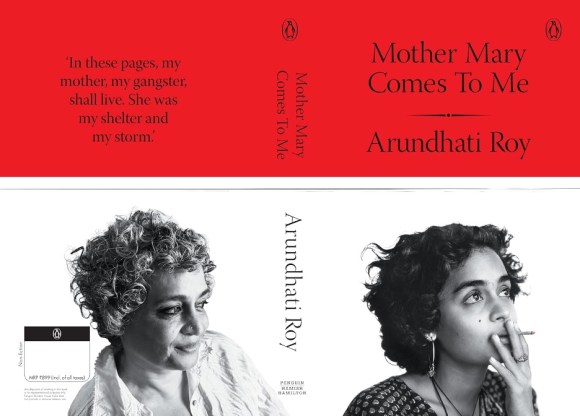

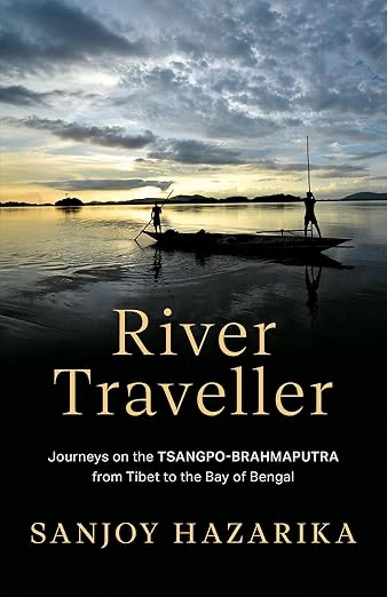
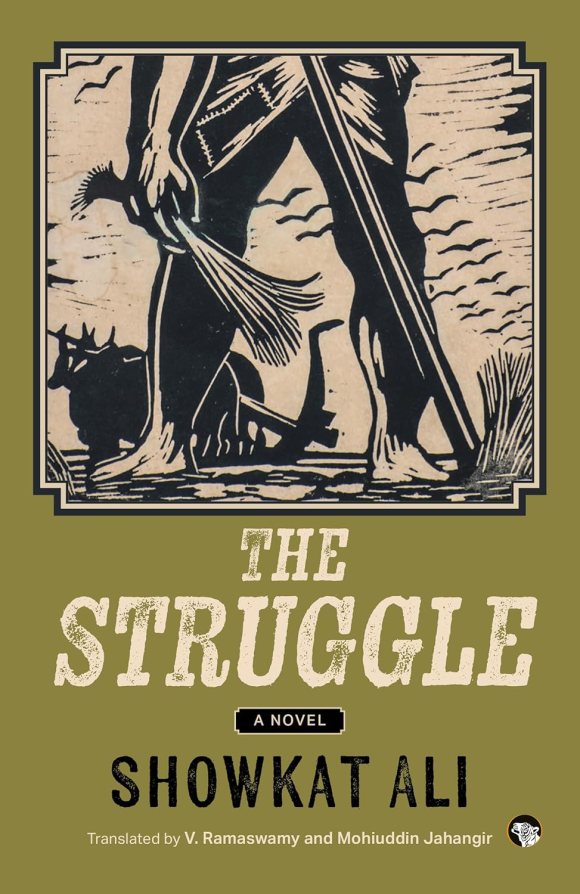
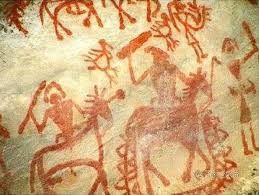
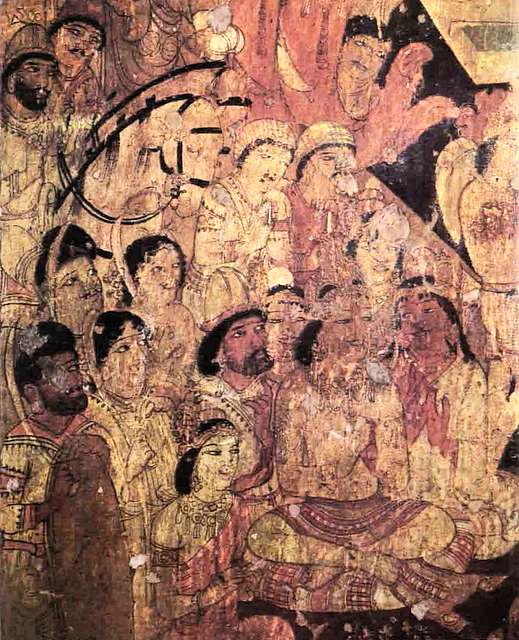
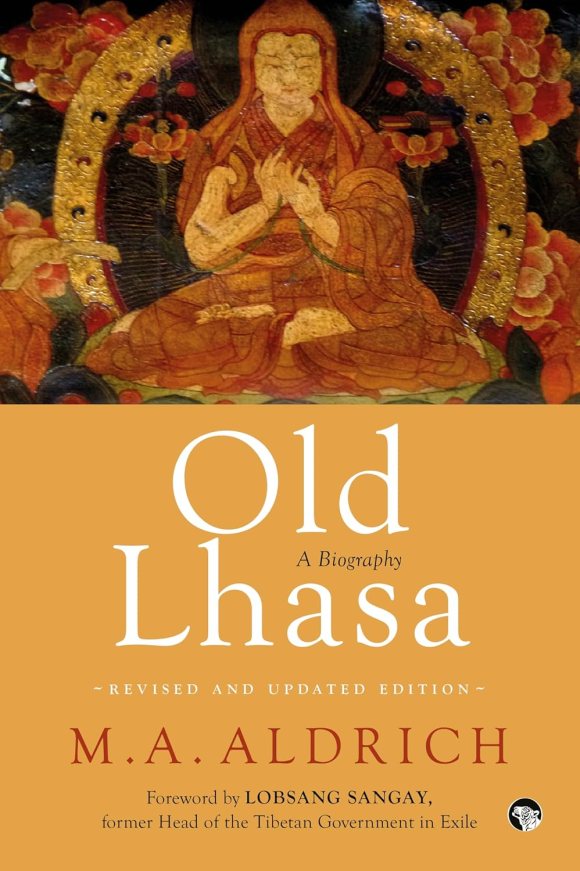


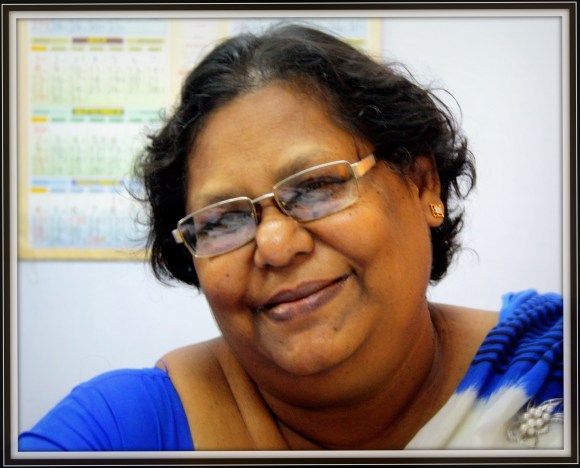
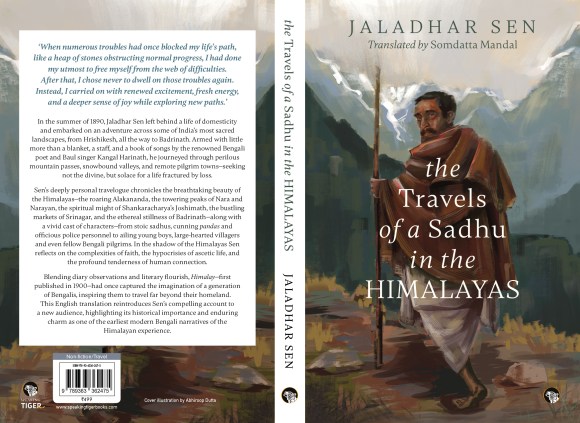
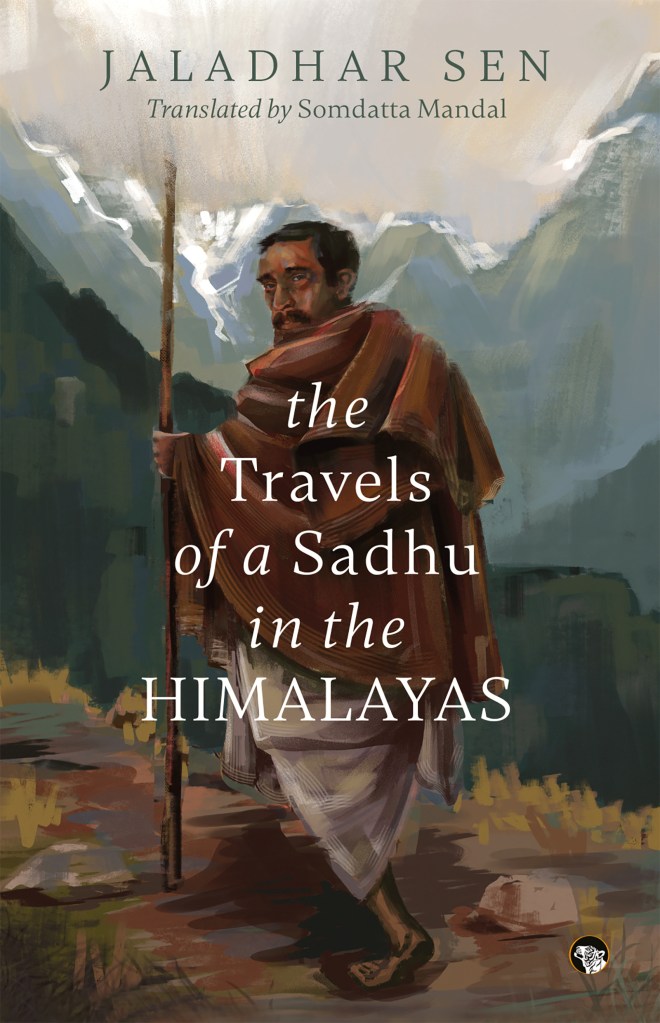
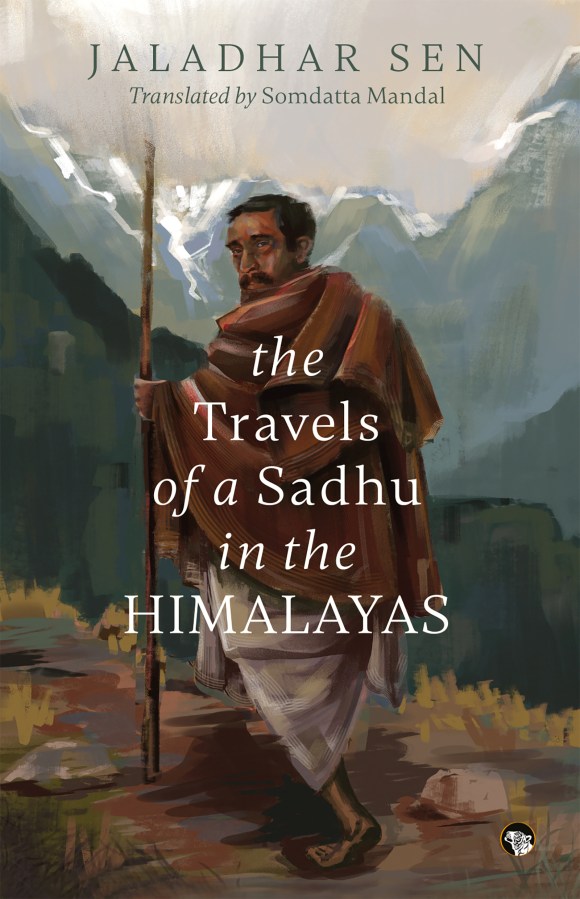
 Borderless