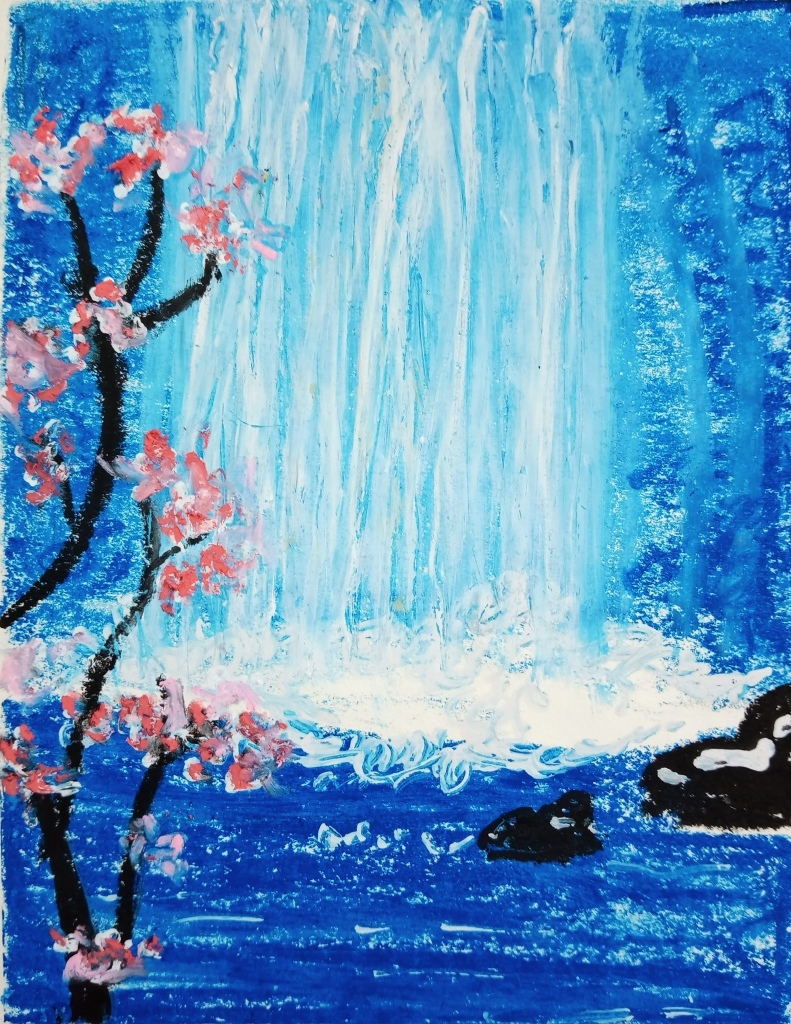
Art by Sohana ManzoorCourtesy: Suzanne Kamata Some of our visuals in 2024
As we wait for the new year to unfold, we glance back at the year that just swept past us. Here, gathered together are glimpses of the writings we found on our pages in 2024 that herald a world of compassion and kindness…writings filled with hope and, dare I say, even goodwill…and sometimes filled with the tears of poetic souls who hope for a world in peace and harmony. Disasters caused by humans starting with the January 2024 in Japan, nature and climate change, essays that invite you to recall the past with a hope to learn from it, non-fiction that is just fun or a tribute to ideas, both past and present — it’s all there. Innovative genres started by writers to meet the needs of the times — be it solar punk or weird western — give a sense of movement towards the new. What we do see in these writings is resilience which healed us out of multiple issues and will continue to help us move towards a better future.
A hundred years ago, we did not have the technology to share our views and writings, to connect and make friends with the like-minded across continents. I wonder what surprises hundred years later will hold for us…Maybe, war will have been outlawed by then, as have been malpractices and violences against individuals in the current world. The laws that rule a single man will hopefully apply to larger groups too…
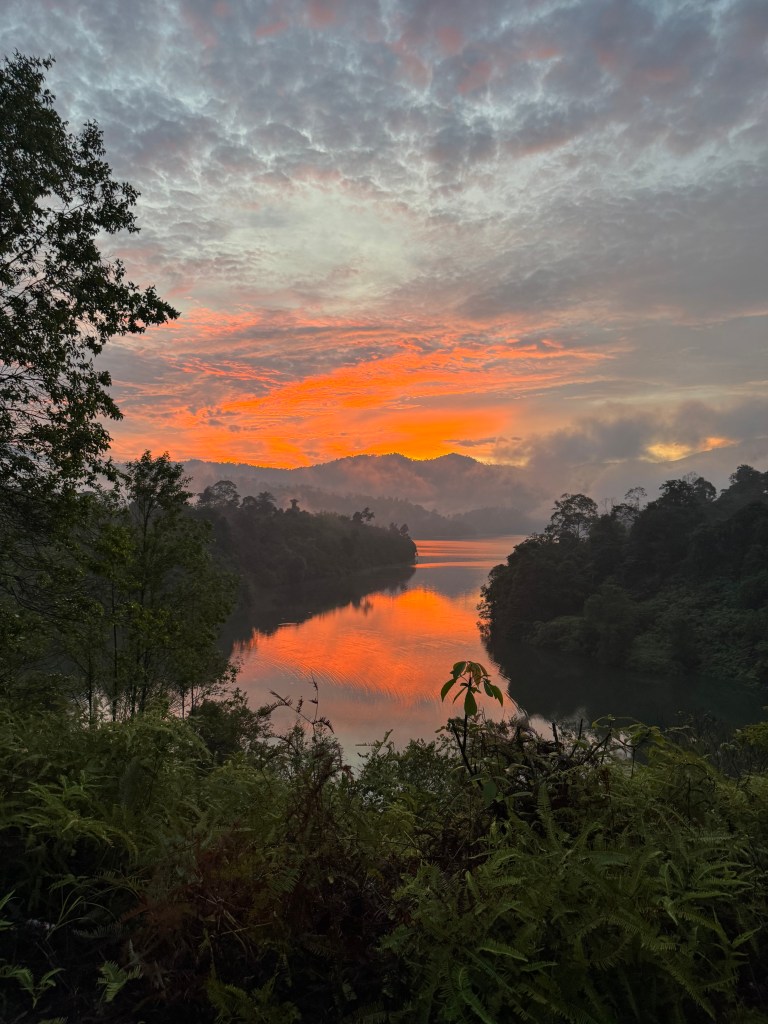
Courtesy: Ratnottama Sengupta Courtesy: Farouk GulsaraSome of our visuals in 2024
Amalkantiby Nirendranath Chakraborty has been translated from Bengali by Debali Mookerjea-Leonard. Click hereto read.
The Mirror by Mubarak Qazi has been translated from Balochi by Fazal Baloch. Click hereto read.
Homecoming, a poem by Ihlwha Choi on his return from Santiniketan, has been translated from Korean by the poet himself. Click here to read.
Pochishe Boisakh(25th of Baisakh) by Tagore (1922), has been translated from Bengali by Mitali Chakravarty. Click here to read.
Nazrul’sGhumaite Dao Shranto Robi Re(Let Robi Sleep in Peace) has been translated from Bengali by Professor Fakrul Alam. Click hereto read.
Jibananada Das’sAndhar Dekhecche, Tobu Ache (I have seen the dark and yet there is another) has been translated from Bengali by Professor Fakrul Alam. Click here to read.
Tagore’sShotabdir Surjo Aji( The Century’s Sun today) has been translated from Bengali by Mitali Chakravarty. Clickhereto read.
A narrative by Rabindranath Tagore thatgives a glimpse of his first experience of snowfall in Brighton and published in the Tagore family journal, Balak (Children), has been translated from Bengali by Somdatta Mandal. Clickhere to read.
Suzanne Kamata discusses the peace initiatives following the terrors of the 1994 Rwandan Genocide while traveling within the country with her university colleague and students. Click here to read.
A story by Sharaf Shad, has been translated from Balochi by Fazal Baloch. Click here to read.
Conversations
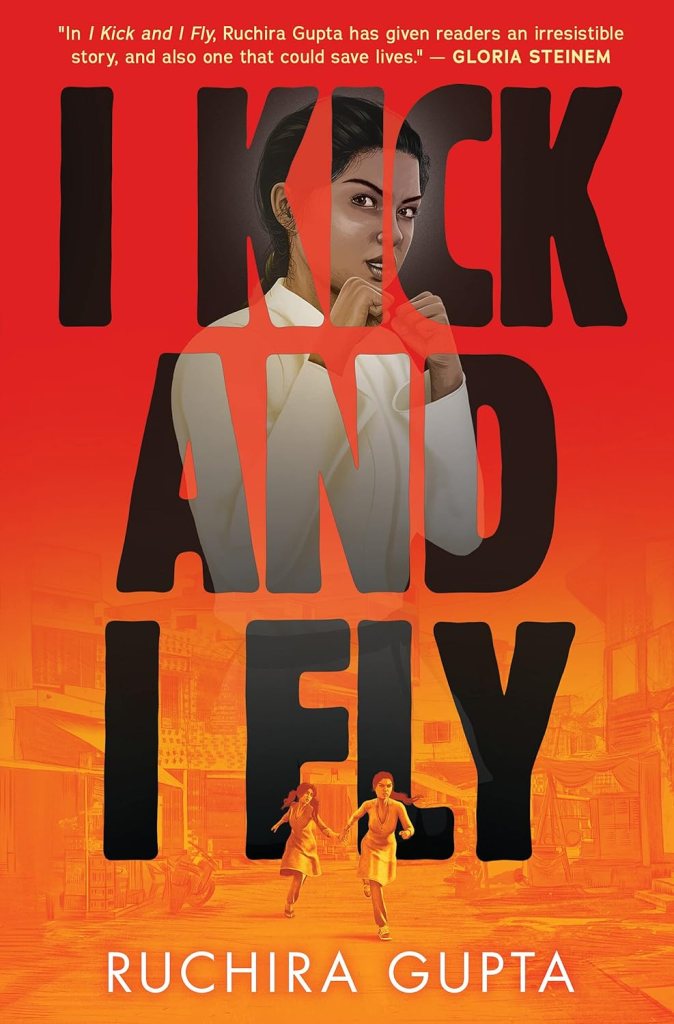
Ratnottama Sengupta talks to Ruchira Gupta, activist for global fight against human trafficking, about her work and introduces her novel, I Kick and I Fly. Click here to read.
A conversation with eminent Singaporean poet and academic, Kirpal Singh, about how his family migrated to Malaya and subsequently Singapore more than 120 years ago. Click hereto read.
Ratnottama Sengupta talks to Ruchira Gupta, activist for global fight against human trafficking, about her work and introduces her novel, I Kick and I Fly. Click here to read.
The White Lady by Atta Shad has been translated from Balochi by Fazal Baloch. Click here to read.
Sparrows by Ihlwha Choi has been translated from Korean by the poet himself. Click here to read.
Tagore’s Dhoola Mandiror Temple of Dust has been translated from Bengali by Mitali Chakravarty. Click here to read.
Pandies Corner
Songs of Freedom: What are the Options? is an autobiographical narrative by Jyoti Kaur, translated from Hindustani by Lourdes M Supriya. These narrations highlight the ongoing struggle against debilitating rigid boundaries drawn by societal norms, with the support from organisations like Shaktishalini and pandies’. Click here to read.
Ratnottama Sengupta travels back to her childhood wonderland where she witnessed what we regard as Indian film history being created. Click here to read.
Aditi Yadav explores the universal appeal of the translation of a 1937 Japanese novel that recently came to limelight as it’s rendition on the screen won the Golden Globe Best Animated Feature Film award (2024). Click here to read.
Love is a many splendoured thing and takes many forms — that stretches beyond bodily chemistry to a need to love all humankind. There is the love for one’s parents, family, practices one believes in and most of all nurtured among those who write, a love for words. For some, like Tagore, words became akin to breathing. He wrote from a young age. Eventually, an urge to bridge social gaps led him to write poetry that bleeds from the heart for the wellbeing of all humanity. Tagore told a group of writers, musicians, and artists, who were visiting Sriniketan in 1936: “The picture of the helpless village which I saw each day as I sailed past on the river has remained with me and so I have come to make the great initiation here. It is not the work for one, it must involve all. I have invited you today not to discuss my literature nor listen to my poetry. I want you to see for yourself where our society’s real work lies. That is the reason why I am pointing to it over and over again. My reward will be if you can feel for yourself the value of this work.”
And it was perhaps to express this great love of humanity that he had written earlier in his life a poem called Dhoola Mandirthat urges us to rise beyond our differences of faith and find love in serving humankind. In this month, which celebrates love with Valentine’s Day, we have a translation of this poem that is born of his love for all people, Dhoola Mandir. Another poet who writes of his love for humanity and questions religion is Nazrul, two of whose poems have been translated by Niaz Zaman. Exploring love between a parent and children is poetry by Masood Khan translated from Bengali by Fakrul Alam. From the distant frontiers of Balochistan, we have a poem by Atta Shad, translated from Balochi by Fazal Baloch, for a fair lady — this time it is admiration. Ihlwha Choi translates poetry from Korean to express his love for a borderless world through the flight of sparrows.
Suzanne Kamata writes a light-hearted yet meaningful column on the recent Taylor Swift concert in Tokyo. Aditi Yadav takes up the Japanese book on which was based a movie that won the 2024 Golden Globe Best Animated Feature Film Award. Sohana Manzoor journeys to London as Devraj Singh Kalsi with tongue in cheek humour comments on extracurriculars that have so become a necessity for youngsters to get to the right schools. Snigdha Agrawal gives us a slice of nostalgia while recounting the story of a Santhali lady and Keith Lyons expresses his love for peace as he writes in memory of a man who cycled for peace.
In reviews, Somdatta Mandal has explored Tahira Naqvi’s The History Teacher of Lahore: A Novel. Srijato’s AHouse of Rain and Snow, translated from Bengali by Maharghya Chakraborty, has been discussed by Basudhara Roy and Bhaskar Parichha has reviewed Toby Walsh’s Faking It: Artificial Intelligence in a Human World. News and Documentary Emmy Award winner (1996) Ruchira Gupta’s daring novel born of her work among human traffickers, I Kick and I Fly, has been brought to our notice by Sengupta and she converses about the book and beyond with this socially conscious activist, filmmaker and writer. Another humanist, a doctor who served by bridging gaps between patients from underprivileged backgrounds, Dr Ratna Magotra, also conversed about her autobiography,Whispers of the Heart — Not Just a Surgeon: An Autobiography, where she charts her journey which led her to find solutions to take cardiac care to those who did not have the money to afford it,
We have fiction this time from Neeman Sobhan reflecting on how far people will go for the love of their mother tongue to highlight the movement that started on 21st February in 1952 and created Bangladesh in 1971. Our stories are from around the world — Paul Mirabile from France, Ravi Shankar from Malaysia, Sobhan from Bangladesh and Ravi Prakash and Apurba Biswas from India — weaving local flavours and immigrant narratives. Most poignant of all the stories is a real-life narrative under the ‘Songs of Freedom’ series by a young girl, Jyoti Kaur, translated from Hindustani by Lourdes M Supriya. These stories are brought to us in coordination with pandies’ and Shaktishalini, a women’s organisation to enable the abused. Sanjay Kumar, the founder of pandies’ and the author of a most poignant book about healing suffering of children through theatre, Performing, Teaching and Writing Theatre: Exploring Play, writes, “‘Songs of Freedom’ bring stories from women — certainly not victims, not even survivors but fighters against the patriarchal status quo with support from the organisation Shaktishalini.”
While looking forward in hope of finding a world coloured with love and kindness under the blue dome, I would like to thank our fabulous team who always support Borderless Journal with their wonderful work. A huge thanks to all of you from the bottom of my heart. I thank all the writers who make our issues come alive with their creations and readers who savour it to make it worth our while to bring out more issues. I would urge our readers to visit our contents’ page as we have more than mentioned here.
Ratnottama Sengupta has known Ruchira Gupta for more than 40 years. But reading I Kick and I Fly has made her see in a new light the young journalist who has become a force of change in the global fight against human trafficking.
Ruchira Gupta
Kiddy. Ruchi. Journalist. Documentary filmmaker. Emmy Award winner. Founder President, Apne Aap[1]Women Worldwide. Social activist. Agent of changes to international laws. Sera Bangali[2]. Ekta[3]Award winner. Professor, NYU. Cancer survivor. Essayist. Exhibited artist. Published novelist…
“What next?” I could have asked Ruchira Gupta. And without waiting for her to reply I could add, “Member of Rajya Sabha? The first step to even higher offices on the world stage.” Because? This kid born to Rajni and Vidya Sagar Gupta has dedicated her life-breath to ensure that not a single child is either sold or bought for sexual gratification in exchange of a few rupees.
Hardly surprising that when she picked up her pen while recovering from Covid in her family home in Forbesganj, she penned a novel like I Kick and I Fly. “A book that is a MUST READ for one and all who are interested in fighting, tackling, and – not or – ending sex trafficking,” as Anjani Kumar Singh, Director, Bihar Museum said at the launch in Patna. Because? It is a story of optimism as Heera the protagonist, overcomes unimaginable obstacles to emerge a path breaker in the Nat community who believed it was the fate of its girls to sell their body at puberty, or even earlier, for the welfare of their family.
Inspirational. And in the most absorbing way. Read this excerpt from the novel to understand how a message becomes engrossing read.
"My name is Heera. I am from a town named Forbesganj, in a state called Bihar, in northern India, very close to Nepal,” I begin. My voice is shaking along with the rest of me. But I go on. “My brother and I are the first people in our family to ever go to school, and I have grown up believing that being sold for prostitution is my Destiny. That there are few doors open to me as a child of an oppressed-caste family. Our people used to be wrestlers and performers. But overnight we were told we could not do those things anymore, that our entire way of life was illegal.”

My voice is shaking less now and I manage to look at people in front of me. “How do people survive when they are not allowed to do the work they know and love? For my family of nomads, it meant asking people for a place to live, and then doing just about any job they told us we could do. One of these jobs was having sex with people for money.

“These children and women had no choice but to sell their bodies in exchange for a place to live. For food to eat. And for their husbands to be given work. And though people say that times have changed, they must not have changed everywhere, because I have been told since I was a little girl that selling my body was what I had to do to support myself and my family. And I believed it. Many in my family believed it too.

“Finally early this year it was my turn to be put up for sale. My family was in a tight spot, in debt to the wrong man. I grew up in a red-light area, so I knew what it involved. There are no secrets kept from kids where I come from. So, I said No, and we tried to get around it.

“My mother paid back our loan, but the traffickers came for me anyhow. The first time I got away. The second time they got me, but I was rescued by my brother and teacher.

“When I was stuck in a tiny room with my traffickers outside the door, I asked myself why had they kept coming for me even when they had no claim, no right? And that’s when I fully realized that they believed my body belonged to them, and I knew for certain it did not. It was kung fu that helped me understand this. Because it is through kung fu that I learnt, my body would do what I told it to. That my body listened to me – and only me.”

I take a breath. “There is power in my body. My body connects me to my cousin, my aunt, my grandmother who were all sold for prostitution. But kung fu also connects my body to my ancestors, who were champion wrestlers. If both these things lived within me, could I choose which course I wanted to take?”

I look up now, realizing that I have memorized the final words on the page. “For most of my life, the answer to that was NO. But suddenly I felt that maybe there was another possibility. I didn't do it on my own: I needed my family to stand with me, and most importantly, a cheerleader who made me believe that safety could be mine. Rini Di taught me kung fu and opened the doors of the world to me. And that is how I have come to stand before you now.”
Heera stands before her teachers and her friends, other survivors of trafficking as an example who not only fights, successfully, the might of traffickers but who actually saves another trafficked girl. Who, even more importantly, instils faith, and courage, and dream… In her brother, her mother, and her father. Her brother Salman who always stood by her even as he studied for a better future. Her Mai who broke stones for a livelihood and gathered enough courage to take a loan to put in place a roof over their head. Her Baba who stands as a loser but accepts change and even starts to nurse a dream — for his daughter as much as for his son.
And so, when the Martial Arts Foundation awards Heera and her co-fighter friend, Connie, a scholarship to train for one full year in New York, along with admission to a local school, Heera too starts dreaming. Of a future, perhaps only twelve months down, when her family would be dwelling in a pink-bricked three roomed house. When Salman would study in a residential school in Siliguri. When Mai would have a betel shop. When Baba would be a porter at the railway platform. When her cousin Mira Di would be a seamstress with a tailoring shop of her own in the very backroom where she was forced to service men. When the corrupt policeman, Suraj Sharma, and the trafficker, Ravi Lala, would be in jail, no longer on the prowl in Girls Bazaar.
“It’s not a dream,” says Ruchira , reiterating the clinching line of I Kick and I Fly. “I have seen this transformation actually take place in Forbesganj. “There were 72 home-based brothels in the lane when Apne Aap started. Today there are two. Girls no longer sit outside waiting for customers. The two sisters who were locked up in the hut have finished school. One is a chef, the other is a teacher. The girl who was kidnapped is a karate trainer. Someone like Mai really has a betel paan leaf shop and someone like Mira Di is a seamstress. The cattle fair is no longer allowed to bring dance or orchestra groups.”
This was the perfect time to strike a conversation with Ruchira Gupta, I reckoned. And so I decided to shoot…
Me:How – rather, why – did you start writing I Kick and I Fly?
Ruchi: I started writing this story when a fourteen-year-old girl just like Heera won a gold medal in a karate championship in Forbesganj. She was being groomed for prostitution with other girls in her lane. A lane just like Girls Bazaar.
Her journey was not easy, it was heroic. I saw how she and her friends overcame hunger, fought off their fear and stood up to traffickers with grace and gusto. An annual cattle fair used to claim girls from that lane every year. When my NGO, Apne Aap, opened a community centre and a hostel there, we were constantly attacked by men like Gainul and Ravi Lala. They would stalk the mothers, the daughters, and me. They hurled abuses, threw stones, stole from our office and even kidnapped girls. We built higher walls around the hostel to prevent traffickers from jumping over. I posted guards outside my home, hired lawyers, filed police complaints and cases in court. Just like Mai, some mothers in the lane disobeyed their husbands even though they were beaten up. Their daughters were the first batch of girls in our hostel.
Me:Are all the characters real? Is the hope real? Do people in real life change the way Baba does?
Ruchi: Most of the events in the book are inspired by real people, places, events. To give you one example: A trafficking survivor from Indonesia told me how she was locked up and how she escaped from a brothel in Queens, New York, by disguising herself in a burqa. She is now a global leader in the struggle against trafficking. In my novel, Heera uses the same device to rescue Rosy.
Baba, Heera’s father, is also based on real-life fathers in the Nat community of Forbesganj. They would actually auction off their daughters to the highest bidder when the mela came to town! But as I began working in the red-light area I saw that they were not black and white criminals but human beings desensitised through decades and generations of oppression. Of course, there was no excuse that they did not try to fight back. I did see some fathers change when they saw their daughters succeed. Until then the possibility of a different future had not even occurred to them.
When hope unfurls in a downtrodden human being, it is like a tendril. I saw it in the eyes and actions of some fathers in the red-light area of Forbesganj when their daughters won gold medals in karate.
Me:You have not learnt kung fu. Why did you project Rini Di – clearly your alter ego – as a kung fu teacher? It is a physical art of self-defence. How precisely does that connect with, or help, girls who are in the river of flesh?
Ruchi: I still remember, it was early morning when a boy came to my home with his mother to seek help. His sister and cousin were locked up by traffickers to stop them from coming to the hostel. We had to mobilise the police to get them out. I noticed then that the girls were badly bruised while the traffickers were unscathed. I wished that the girls were able to fight back.
Our Apne Aap women’s group met that afternoon at the centre. Everyone was afraid that we would be beaten in retaliation for the police raid. That’s when I suggested martial arts classes. The women loved the idea. I used to see a couple teach karate teacher near the rice fields to boys in a private school. We hired them and the classes began. Soon the bullying in schools stopped.
As the girls started to win competitions, something changed. The very townspeople who had agitated to urge the principal to expel our red light children began to respect them. And the fathers in the community began to see value in their daughters. The biggest change was in the girls themselves. They began to own their bodies and value themselves. As they gained self-esteem, they began to do better in class. Soon more mothers began to stand up to the traffickers and even to their husbands in the lane, saying they would send their daughters to school.
Me: How did Apne Aap help change the picture at the ground level?
Ruchi: Today Apne Aap has educated more than 3,000 girls from red-light areas through school and college and is still continuing to do so. They are in jobs as animation artists, teachers, doctors, lawyers, chefs, managers of pizza parlours and of gas stations too.
Our NGO’s community has become a safe space to hold meetings, share stories, get food, do homework, and plot against traffickers. Women, very much like Mai and Mira Di, meet regularly in the centre to solve their problems. They fill out forms with the help of Apne Aap workers to access government entitlements like low cost housing, ration and loans. They go collectively to talk to the authorities when there are delays.
The Apne Aap legal team helps victims to file police complaints, testify in court and get traffickers convicted. The real Gainul and the real Ravi Lala are in jail. In 2013, Apne Aap survivor leaders and I testified in Parliament for the passage of section 370 IPC, a law that punishes traffickers and allocates budgets for services to the prostituted and the vulnerable.
Before these could happen, I had shown my documentary and testified to the UN and to the US senate for laws that would decriminalise the victims; increase choices for vulnerable and trafficked girls and women; and punish the traffickers and sex buyers. I can proudly say that my testimony and inputs contributed in the passage of the UN Protocol to end Trafficking in Persons and the UN Trafficking Fund for survivors as well as the passage of US Trafficking Victim Protection Act.
Me: Ruchi you come from an established, politically aware, well connected and much respected family. You grew up in the metros and now live an international life, mostly abroad. You won a coveted award for The Selling of Innocents. You helped in the making of Love, Sonia. Why did you not continue to make films? In short, what compelled you to start Apne Aap Women Worldwide?
Ruchi: As you know, I started as a journalist right after graduation. I learnt to ask questions, and I listened. The question that changed my life was: Where are the girls?
I was researching a story in the hills of Nepal when I came across rows of villages with missing girls. I had asked this to the men playing cards in the villages in Nepal. I followed the trail and found that a smooth supply chain existed from these remote hamlets to the brothels of India. Little girls, perhaps only twelve, were locked up in cages in Kolkata, Delhi and Mumbai for years and sold for a few cents night after night.
All the girls were from poor farming families. Many, like Heera, were from nomadic indigenous communities or marginalised castes. Like her, they were either not sent to school, or bullied until they dropped out, or pulled out by their fathers and sold into prostitution.
I was sad, then angry, and finally determined to do something about it. That’s how I ended up exposing the horror in my documentary. When I was on the stage in Broadway receiving the Emmy in 2013, all I could see beyond the glittering lights were the eyes of the mothers who had broken their silence to save their daughters. I decided in that instant to use my Emmy not to build a career in journalism but to make a difference.
I did two things. I dubbed it in six languages and I travelled across the world with it. I screened it in villages to show parents what the brothels were like. I showed it to the UN and the US Senate when I testified against the crime that is human trafficking. It contributed to a global push by activists that led to a new UN protocol to end trafficking and the first US anti-trafficking law, the Trafficking Victims Protection Act (TVPA).
Me: What was your magic wand?
Ruchi: I had no magic wand. I didn’t even have experience to stop the kidnapping of girls, or knowledge about how to put traffickers in jail. I was an English literature student from Kolkata’s Loreto College who joined The Telegraph while pursuing my honours degree graduation. But as a journalist, I saw the reality and invented ways to move forward.
Something had happened while I was filming the documentary. A pimp had stuck a knife to my throat. I was in a small room. There was nowhere to run. Suddenly, I was encircled by the 22 women I was interviewing. They told the pimp that he would have to kill them first. He knew it would be too much trouble to kill so many women, so he slunk away. I was saved. That moment changed my life.
The Emmy award money helped me start Apne Aap Women Worldwide with the women who had bravely spoken up in my film. I listened to the women who said they had four dreams: Education for their children; a room of their own; an office job; and punishment for those who bought and sold them. That became my NGO’s business plan.
I learnt that the best solutions came from those who experience the problem. The idea of the hostel, the idea of food in the community centre, and even the idea of karate came when we sat in a circle in the mud hut that is our community centre. It evolved into a grassroots approach which we call asset-based community development – ABCD or the 10 Asset model. Every woman or girl who becomes an Apne Aap member gains ten assets – both tangible and intangible. These are: a safe space, education, self-confidence, the ability to speak to authorities, government IDs and documents, low-cost food and housing, savings and loans, livelihood linkages, legal knowledge and support, and a circle of at least nine friends.
Each of these assets is a building block in an unfolding story of personal and community change. I wrote this novel to share with you that change is possible.
Me:Ruchi you had come up with the art-documentation, The Place Where I Live is Called Red Light Area. You got the girls to make a series of videos about different aspects of their life. You supported a documentary on the scheduled tribes. What inspired you to shun Art For Art’s Sake and pursue Art as Activism?
Ruchi: I learned in a very practical way the power of women’s collective action and the importance of sticking by one another. I promised myself I would never give up on those women’s dream. As a result, today thousands of girls have exited the prostitution systems from brothels across the country. There is more awareness about sex trafficking globally. And there are better laws and services for victims like Mira Di in over 160 countries.
Me:But we still have miles to go before we sleep…?
Ruchi: Yes, because the truth is that there isn’t one but many, many more Heeras. Girls Bazaar still exists in many parts of the world, including the USA. The brothel in Queens is real. The International Labour Organisation estimates there are more than 40 million victims of human trafficking globally with hundreds of thousands of victims in the US alone. Human trafficking is the second largest organised crime in the world, involving billions of dollars, according to the United Nations Office for Drugs and Crime (UNODC).
Me:So, what more actions would you suggest to tackle the issue? Through IKAIF, an upbeat tale of an underdog’s rise to victory, you have shown that ‘lost girls’ earmarked for ‘the oldest profession’ can erase their ‘destiny’ through education, and reliance on their own inner strength. What other positive actions would you suggest?
Ruchi: Heera’s is a story of hope in spite of great odds. It’s about our bodies — who they belong to, the command they can give us. It is about friends who make changes you want in your life. It is about a community that resolves to make change contagious, and succeeds.
You too can ‘Join The Movement’ to create a world in which no child is bought or sold. You can do that in so many ways. You can 1) Sign the freedom pledge on my website Ruchiragupta.com.
2) Learn more about the issue by reading I Kick and I Fly, and by watching The Selling of Innocents on my website.
3) Create further awareness by sharing the book, the movie and the pledge on your social media handles.
4) Volunteer and intern with Apne Aap or a local NGO in your town.
And you can Sponsor a girl like Heera on apneaap.org!
[2] The Best Bengali – An award given by the Ananda Bazaar Patrika group
[3] Unity: The Ekta Award is a National Award from India
Ratnottama Sengupta, formerly Arts Editor of The Times of India, teaches mass communication and film appreciation, curates film festivals and art exhibitions, and translates and write books. She has been a member of CBFC, served on the National Film Awards jury and has herself won a National Award.
.
PLEASE NOTE: ARTICLES CAN ONLY BE REPRODUCED IN OTHER SITES WITH DUE ACKNOWLEDGEMENT TO BORDERLESS JOURNAL




 Borderless