Poetry by Atta Shad, translated from Balochi by Fazal Baloch
Had we known the fate of tomorrow,
Today would’ve not slipped
So carelessly from our hands.

Alas! On the gallows of follies,
Desire stands condemned.

True — it is the heart alone
That bears witness to God’s existence,
Not the eye,
For each reflection is a slave to sight.
But what the heart feels —
That alone is the truth:
The rest is illusion.

Some walk with reason,
Some, in a dreamlike haze,
Yet all are bound together,
Step by step,
Carrying the weight of longing
In the folds of a thirsty soul.

In the vast realm of my imagination,
Stands the idol sculpted by my own hands.
I bow before it—
This endless expanse but remains devoid of the Divine.

From being, nothingness emerges,
And from nothingness,
The being is born, over and again.

The lament for yesterday,
The hopes for tomorrow,
The wealth of ages
In search of unseen wisdom,
Wander upon the shores of today.
Either the flood shall wash them away,
Or the shore shall stand unshaken
Before the surging tides.

Where lies the end
Of this unquenchable thirst?
From Public Domain
Atta Shad(1939-1997) is the most revered and cherished modern Balochi poet. He instilled a new spirit in the moribund body of modern Balochi poetry in the early 1950s when the latter was drastically paralysed by the influence of Persian and Urdu poetry. Atta Shad gave a new orientation to modern Balochi poetry by giving a formidable ground to the free verse, which also brought in its wake a chain of new themes and mode of expression hitherto untouched by Balochi poets. Apart from the popular motifs of love and romance, subjugation and suffering, freedom and liberty, life and its absurdities are a few recurrent themes which appear in Shad’s poetry. What sets Shad apart from the rest of Balochi poets is his subtle, metaphoric and symbolic approach while versifying socio-political themes. He seemed more concerned about the aesthetic sense of art than anything else.
Shad’s poetry anthologies include Roch Ger and Shap Sahaar Andem, which were later collected in a single anthology under the title Gulzameen, posthumously published by the Balochi Academy Quetta in 2015.
Fazal Baloch is a Balochi writer and translator. He has translated many Balochi poems and short stories into English. His translations have been featured in Pakistani Literature published by Pakistan Academy of Letters and in the form of books and anthologies. Fazal Baloch has the translation rights of Atta Shad from the publisher.
PLEASE NOTE: ARTICLES CAN ONLY BE REPRODUCED IN OTHER SITES WITH DUE ACKNOWLEDGEMENT TO BORDERLESS JOURNAL
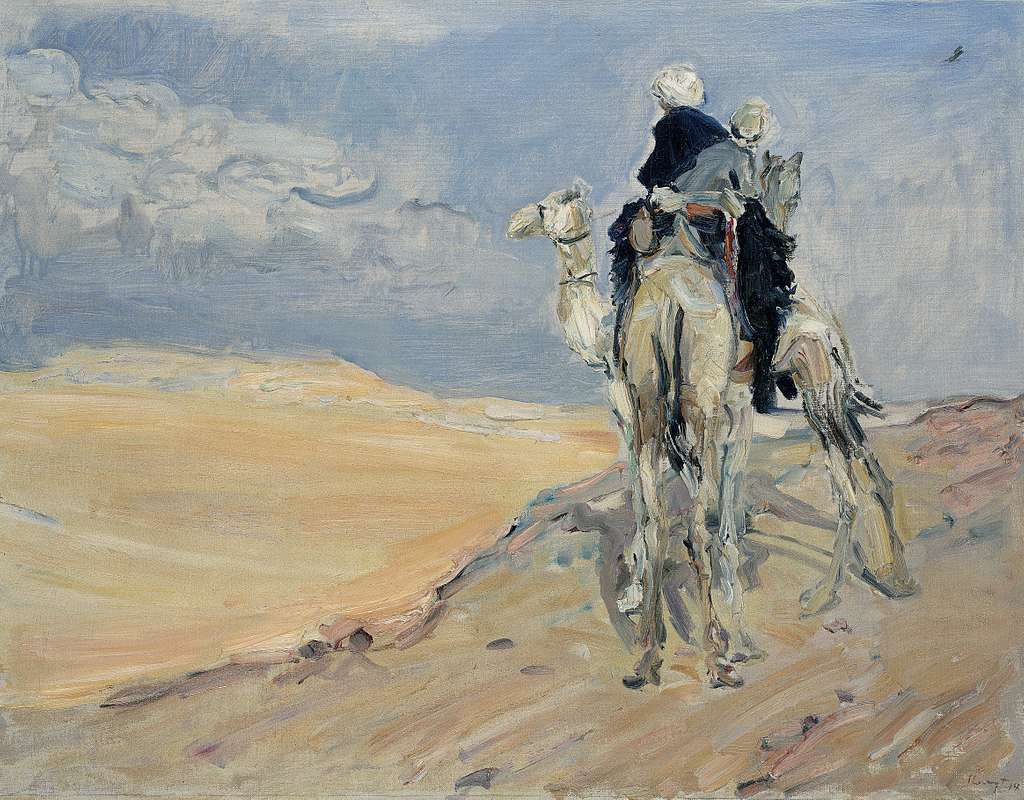
A mythical Simurgh perched on the Tree of Life, to which it has special affinity. Belonging to Persian mythology, the Simurgh is said to have seen the world destroyed thrice. Photo from Public Domain.
Storytellers unfolded their tales,
Yet we paid them no heed.
Again, they unfurled their tales,
It didn’t bother us, indeed.

As tales unfolded, we drifted to sleep,
Fairies, demons, djins, and devils
Crept into their lore,
Yet we remained ignorant, as before.

When the Simurgh  swallowed the snake,
Nothing we did care.
When the princess fled with a shepherd,
Curiosity filled the air.
When the thieves broke in the warehouse,
Clamours spread far and near.

And when war arrived, knocking at our door,
We left for the mountains, grasping the swords.
At last, we knew: stories are not lies anymore.
Manzur Bismil is a prominent Balochi poet. He emerged on the literary scene in the early 1990s and soon rose to fame, creating a niche for himself in the pantheon of the Balochi poets. He is widely known for his neo-classic style, especially in his verses. So far he has published eight anthologies of his poetry. This poem is taken from the poet’s poetry collection Sahaar (The Fear) published by Demrawi Majlis Muscat in 2017.
Fazal Baloch is a Balochi writer and translator. He has translated many Balochi poems and short stories into English. His translations have been featured in Pakistani Literature published by Pakistan Academy of Letters and in the form of books and anthologies. Fazal Baloch has the translation rights of of this poem from the poet.
PLEASE NOTE: ARTICLES CAN ONLY BE REPRODUCED IN OTHER SITES WITH DUE ACKNOWLEDGEMENT TO BORDERLESS JOURNAL
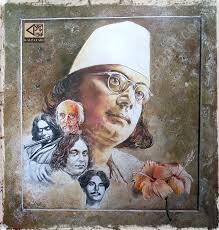
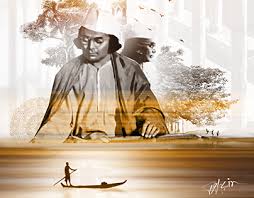
The many faces pf Kazi Nazrul Islam. From the Public Domain
The abiding image of Kazi Nazrul Islam (1899-1976) is that of the “Rebel Poet,” who defines himself as a fiery comet streaking across the firmament, emblazoning in the sky a message of revolutionary change. Unlike Rabindranath Tagore, Nazrul was not born into social and intellectual privilege. He has been described, in fact, as “the ‘other’ of the elite Kolkata bhadralok”.[1] Born in Churulia village in the Bardhaman district of Bengal, Nazrul was the son of the head of a mosque, studied in an Islamic school, and during his youth, joined a Leto group, a travelling band of local performers. When in high school, he was recruited into the British army, and served in Karachi. Even after he returned to Bengal as a young poet who had already acquired fame and repute, he remained something of an outsider to the intellectually sophisticated world of the literati. It was from this position of an outsider that he fashioned his own image as the bidrohior ‘Rebel poet’ who challenged the structures of the political, social, cultural and literary establishment with the sheer force of his iconoclastic writings.
Though best known as a poet, composer and revolutionary, Nazrul’s oeuvre also includes novels, essays, stories, editorials and journalistic pieces on a remarkable variety of topics. He was also a lyricist and composer, creator of the iconic genre called “Nazrulgeeti”. Nazrul’s brilliant literary career lasted from 1919 to 1942, when illness brought it to a sudden end. During this short span of time, he wrote on an amazing range of subjects, including politics, nationalism, social change, religion, communalism, education, philosophy, nature, love, aesthetics, literature and music. He saw it as his mission to arouse public awareness about pressing issues, and to jolt them out of their complacency and general apathy. Remembering Nazrul on the 48th anniversary of his death, it is daunting to think about his extraordinary legacy, but also a timely moment to reflect upon his significance for our own times.
In his political stance, Nazrul argued passionately in favour of armed struggle for total independence from colonial rule, rejecting the Gandhian path to advocate a freedom won via armed resistance. The trope of violence recurs in his writings. Yet his apparent espousal of the principle of destruction springs from a utopian dream of constructive change. “Reform can be brought about, not through evolution, but through an outright bloody revolution,” he says in the essay ‘World Literature Today’. “We shall transform the world completely, in form and substance, and remake it, from scratch. Through our endeavours, we shall produce new creation, as well as new creators”.[2]
Nazrul’s ideas on education counter the colonial pattern, advocating instead a curriculum that draws on indigenous contexts and models. He feels that the new education policy should emphasise empathy, inclusiveness and heterogeneity, with a special focus on psychological and emotional development. “It is our desire that our system of education should be such that it progressively makes our life-spirit awakened and alive,” he says in ‘A National Education’, adding: “… We would rather produce daredevils than spineless young men.” [3]
Inclusiveness and acceptance of heterogeneities are central to Nazrul’s vision. During his stint as a soldier in Karachi in his young days, he became interested in Marxist thought. The influence of this line of thinking can be felt in his emphasis on economic egalitarianism, and his passionate support of the cause of the downtrodden peasantry, particularly in his journal Langal. Following the 1926 riots in Kolkata, he expresses his anguish at the communal antagonism between Hindus and Muslims, critiquing different forms of orthodoxy in both religions. In the poem ‘Samyabadi (Egalitarian)’ [4], he declares:
I sing the song of equality—
Where all divisions vanish and barriers dissolve,
Where Hindu-Buddhist-Muslim-Christian
	merge and become one …
Nazrul was also a supporter of women’s rights. In his poetry, he speaks of equality between men and women. In ‘Nari (Woman)’ he argues: “If man keeps woman captive, then in ages to come, / He will languish in a prison of his own making”.[5]
Not surprisingly, Nazrul’s fearless, unconventional attitude aroused hostility in many quarters. His bold, outspoken magazine Dhumketu enraged the British. The journal was banned, and Nazrul condemned to rigorous imprisonment. At his trial in 1923, he delivered a resounding rejoinder in his speech ‘Rajbandir Jabanbandi (Deposition of a Political Prisoner)’. He remained a thorn in the flesh for the British administration because of his revolutionary views. Nazrul’s religious views also raised many hackles. He married Ashalata Sengupta, or Pramila, who belonged to the Brahmo Samaj. This antagonised conservative Hindus as well as orthodox Muslims.
Nazrul’s success as a writer, especially Rabindranath Tagore’s appreciation of his work, also caused jealousy among contemporary writers. For Tagore had dedicated his play Basanta to Nazrul, and also sent a telegram to him when he was in prison, exhorting him to give up his hunger strike. In 1922, Tagore had written a poem addressed to Nazrul, which appeared in successive issues of the journal Dhumketu[6]:
Come, O shining comet! Blaze
Across the darkness, with your fiery trail.
Upon the fortress-top of evil days,
Let your victory-pennant sail.
What if the forehead of the night
Bear misfortune’s sinister sign?
Awaken, with your flashing light,
All who lie comatose, supine.
Rabindranath Tagore’s recognition of Nazrul’s talent created a lot of envy in literary circles. In 1926-27, parodies of Nazrul’s poetry started appearing in Shanibarer Chithi, a journal published by the Tagore circle. It came to be rumoured that Tagore had not liked Nazrul’s use of the Persianate word khoon (blood) instead of the Sanskritised word rakta, in his composition ‘Kandari Hushiar’. This gave rise to a controversy that became known as khooner mamla (the bloody affair), which drew a strong reaction from a deeply perturbed Nazrul, in the shape of an essay ‘Boror Piriti Balir Baandh” (A Great Man’s Love is a Sandbank)’, in which he blamed Tagore’s followers for the entire misunderstanding. The situation was resolved through the mediation of friends, and relations between Tagore and Nazrul remained cordial. When Tagore died in 1941, Nazrul broadcast a moving elegy, “Robi-Hara”, on Calcutta Radio.
In some ways, Nazrul was ahead of his time. Not many people know that he was aware of environmental issues and the threat of climate change, pressing problems in our own times. In ‘The Day of Annihilation’, he writes in a prophetic vein, of global warming, dissolving ice-caps and a changing ecology, cautioning his readers that if humans exploit the planet, we will eventually be responsible for the destruction of life on earth.
In Nazrul’s life and writings, we encounter the constant pull of contraries.His consciousness was simultaneously rooted in local culture, and infused with a broad transnational spirit. He felt inspired by movements in other parts of the world, such as the Turkish Revolution, the Irish Revolution and the Russian Revolution. In the essay ‘Bartaman Viswasahitya (World Literature Today)’, we discover his awareness about literary developments across the globe.In his political writings he espouses the path of violence, but he also composes exquisitely tender love songs, devotional songs drawing on both Hindu and Muslim imagery, and songs about the beauty of nature.
Nazrul’s style is a volatile mix of colloquial, idiomatic expressions, formal Bengali, Sanskrit and Persianate vocabulary, a smattering of English, and multiple registers of language. His polyglot sensibility also surfaces in his practice as a translator. He translated Omar Khayyam and Hafez from Persian into Bengali. His translations from Arabic into Bengali include 38 verses of the Qu’ran, part of the Mirasun Nagmat (a treatise on Hindustani classical music) and some poems. He translated Whitman’s ‘O Pioneer’ from English into Bengali. He is also known for his innovative ghazals in Bengali.
In 1942, Nazrul suddenly lost his speech. His illness brought his literary life to an abrupt end. All the same, the impact of his writings continued to be felt. In the Bangladesh Liberation War of 1971, the freedom fighters adopted Nazrul’s music as a source of inspiration. He was later declared the National Poet of Bangladesh. Today, while Nazrul’s poems and songs continue to delight and inspire, the true extent of his achievement remains in shadow. It is time for a comprehensive reappraisal of this much underestimated literary genius, because his writings have so much to offer us in our present world.
[1]The Collected Short Stories of Kazi Nazrul Islam, ed. Syed Manzoorul Islam and Kaustav Chakraborty (Hyderabad: Orient Blackswan, 2024), p. xviii. Bhadralok translates to gentleman
[2]Kazi Nazrul Islam, Selected Essays, translated by Radha Chakravarty (New Delhi: Penguin Random House, 2024), p. 137.
[3] Kazi Nazrul Islam,Selected Essays, trans. Radha Chakravarty (2024), p. 60.
[6]The Essential Tagore, ed. Fakrul Alam and Radha Chakravarty. Cambridge, Massachusetts: Harvard University Press, 2011, pp. 115-116; Translation mine.
Radha Chakravarty is a writer, critic, and translator. She has published 23 books, including poetry, translations of major Bengali writers, anthologies of South Asian literature, and critical writings on Tagore, translation and contemporary women’s writing. She was nominated for the Crossword Translation Award 2004.
.
PLEASE NOTE: ARTICLES CAN ONLY BE REPRODUCED IN OTHER SITES WITH DUE ACKNOWLEDGEMENT TO BORDERLESS JOURNAL
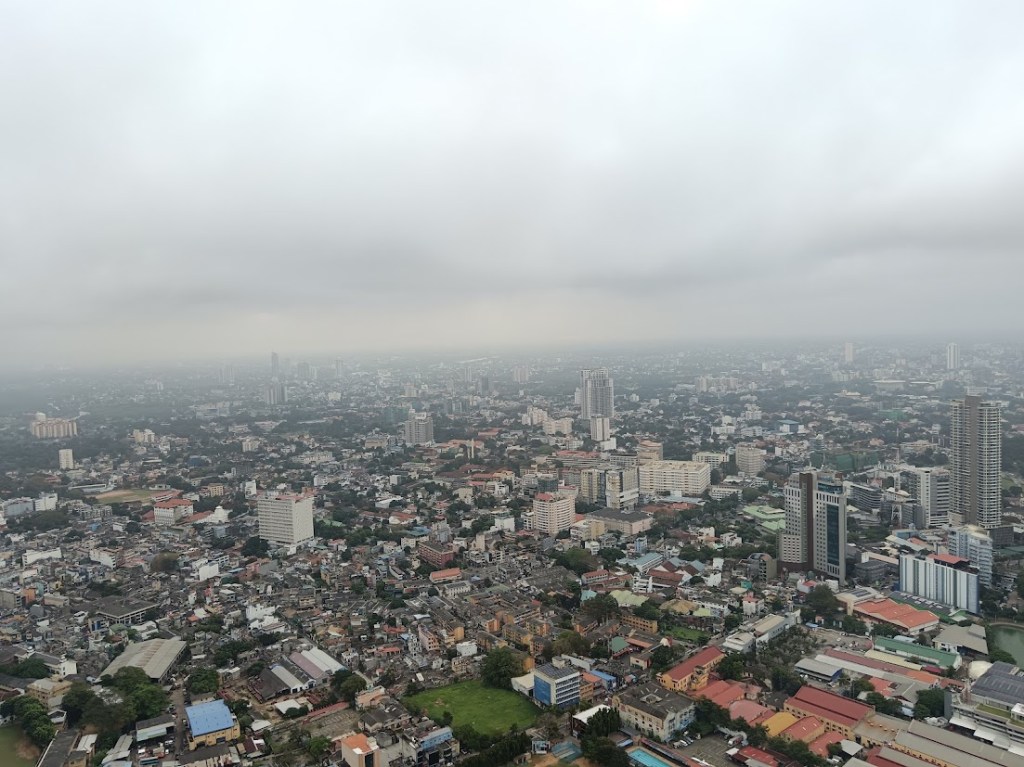
A panoramic view of Colombo. Photo courtesy: Ravi Shankar
My impressions of Colombo and Sri Lanka were positive. I was aware of the high human development indicators of the island nation, progress in access to essential medicines and the civil war. Sri Lanka shares many similarities with the state of Kerala in Indian in terms of topography, culture, food habits, high human development, outmigration, militant trade unions and a passion for egalitarian development. I also remembered the recent violent uprising against the former president and the image of the public frolicking in the pool at the presidential palace.
I was happy to receive an invitation to travel to Colombo in July 2023. I was invited to The Colombo Medical School, which was established by the British in 1870 and is one of the older schools in South Asia. It is the premier medical school of the country, and a new tower block has been constructed. The twenty-story tower is spacious and houses various departments. the humanities. The school was the first to start a Department of Medical Humanities (using art in the education of doctors) in South Asia. The physiology department has created a museum consisting of old instruments and apparatus that are no longer used. This is an excellent idea, and you remain in touch with the history of medicine.
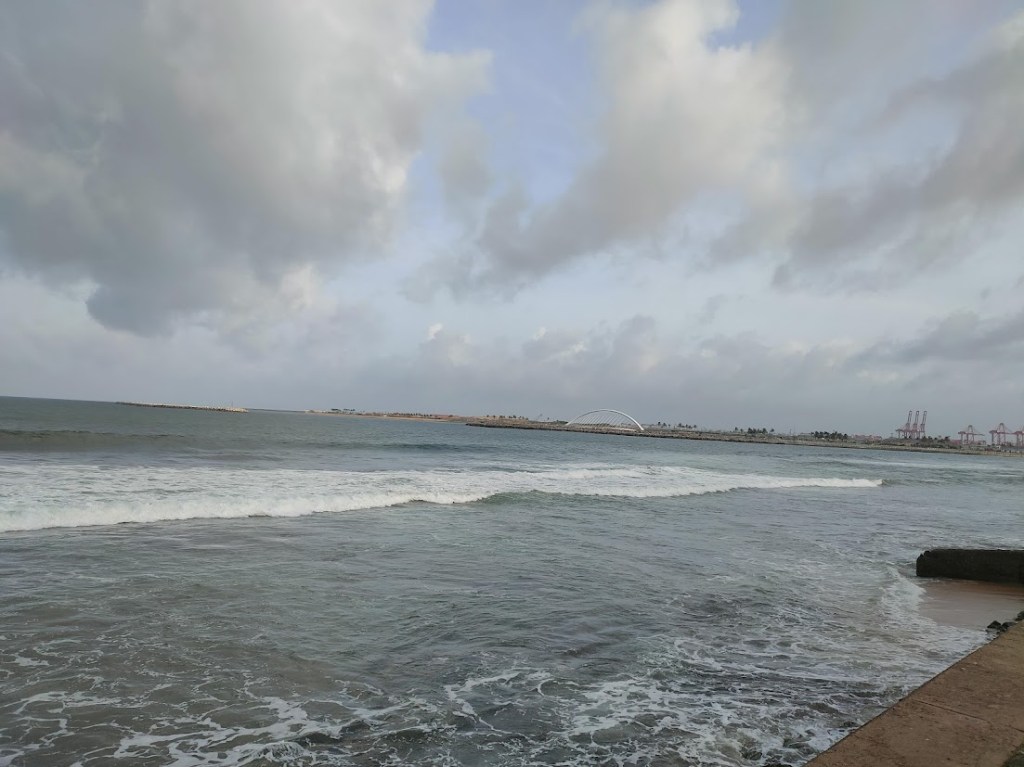
The hotel where I stayed was located on Galle Face Road with the beach and the Galle Face green on the other side of the road. The beach was clean, and the park was originally laid out in 1859 by the British Governor General Sir Henry Ward. The Dutch had placed the cannons facing the ocean as a defence against the Portuguese. Sri Lanka had changed hands multiple times among the different colonial powers.
One of the striking features of Colombo is its cleanliness. The buses may be old and crowded but they are colourful. There are also rickshaws in a variety of colours, mainly green and red though yellow ones were less common. The kittul jaggery harvested from the fishtail palm or the jaggery palm is famous and I loved the gingelly rolls made with this jaggery. My second visit was in early January this year. The apartment where I stayed was attached to an old Sri Lankan house. The location was near to all conveniences but away from the noise and traffic.
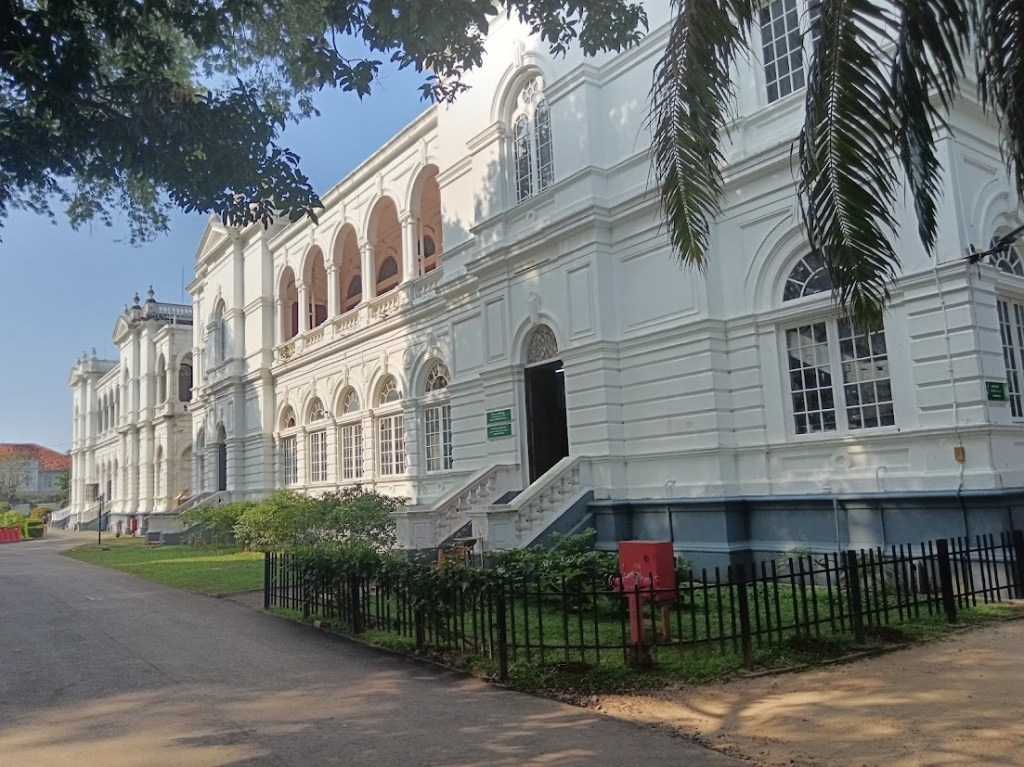
I visited the Sri Lankan national museum, the largest in the country. It was established by Sir Gregory, the British governor of Ceylon (as Sri Lanka was then called) in 1877. The museum is housed in a white, neo-Baroque building and offers a fascinating glimpse into Sri Lanka’s past. The museum is well maintained though it is not air conditioned. The humidity is a constant presence in Colombo. The collection of antiques at the museum is extraordinary.
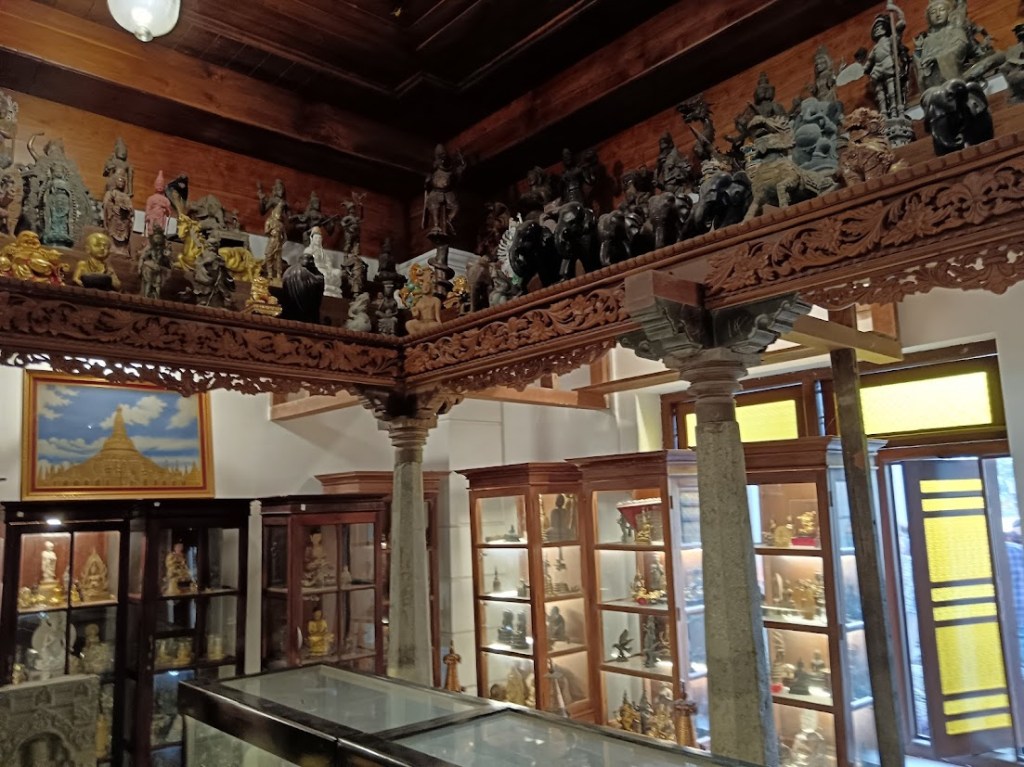
The MuseumInside the templePhoto Courtesy: Ravi Shankar
On my last evening in Colombo, I did some sightseeing. We went to the Gangaramaya temple, the most important one in Colombo. The architecture is a mix of Sri Lankan, Indian, Thai, and Chinese styles. The temple was started by the famous scholar monk Hikkaduwe Sri Sumangala Nayaka Thera in the late 19th Century. The temple has a rich collection of Buddha statues and huge collections of ivory that must be worth millions if not billions. Our next stop was the Lotus tower at 351.5 metres, the largest self-supported structure in South Asia. The lotus is a symbol of purity. view of Colombo city from the observation tower at the top is excellent. I could see the Galle Face Road where I had stayed during my last visit. We could see the Sri Lankan railway depots and stations.
Colombo is a fascinating city. There is plenty to see and do. Recent economic events have hit the island hard. During my subsequent visit I plan to explore other parts of this magical country. Serendip/Serendib was the ancient Persian/Arab name for the country. The name is believed to be derived from the Sanskrit Simhaladwipa (dwelling place of Lion’s Island). The lion occupies a prominent place on the Sri Lankan flag.
The three princes of Serendip in an ancient story had the knack of making unexpected discoveries and is the root of the word serendipity in English. Visit Colombo and Sri Lanka, who knows what serendipitous discoveries await you?
Photo Courtesy: Ravi Shankar
Dr. P Ravi Shankar is a faculty member at the IMU Centre for Education (ICE), International Medical University, Kuala Lumpur, Malaysia. He enjoys traveling and is a creative writer and photographer.
.
PLEASE NOTE: ARTICLES CAN ONLY BE REPRODUCED IN OTHER SITES WITH DUE ACKNOWLEDGEMENT TO BORDERLESS JOURNAL
There was a time when humans walked the Earth crossing unnamed landmasses to find homes in newer terrains. They migrated without restrictions. Over a period of time, kingdoms evolved, and travellers like Marco Polo talked of needing permissions to cross borders in certain parts of the world. The need for a permit to travel was first mentioned in the Bible, around 450BCE. A safe conduct permit appeared in England in 1414CE. Around the twentieth century, passports and visas came into full force. And yet, humanity had existed hundreds of thousand years ago… Some put the date at 300,000!
While climate contingencies, wars and violence are geared to add to migrants called ‘refugees’, there is always that bit of humanity which regards them as a burden. They forget that at some point, their ancestors too would have migrated from where they evolved. In South Africa, close to Johannesburg is Maropeng with its ‘Cradle of Humanity’, an intense network of caves where our ancestors paved the way to our evolution. The guide welcomes visitors by saying — “Welcome home!” It fills one’s heart to see the acceptance that drips through the whole experience. Does this mean our ancestors all stepped out of Africa many eons ago and that we all belonged originally to the same land?
And yet there are many restrictions that have come upon us creating boxes which do not allow intermingling easily, even if we travel. Overriding these barriers is a discussion with Jessica Mudditt about Once Around the Sun: From Cambodia to Tibet, her book about her backpacking through Asia. Documenting a migration more than a hundred years ago from Jullundur to Malaya, when borders were different and more mobile, we have a conversation with eminent scholar and writer from Singapore, Kirpal Singh. Telling the story of another eminent migrant, a Persian who became a queen in the Mughal Court is a lyric by Nazrul, Nur Jahan, translated by Professor Fakrul Alam from Bangla. Ihlwha Choi has self-translated his own poem from Korean, a poem bridging divides with love. Fazal Baloch has brought to us some exquisite Balochi poems by Munir Momin. Tagore’s poem, Okale or Out of Sync, has been translated from Bengali to reflect the strange uniqueness of each human action which despite departing from the norm, continue to be part of the flow.
We have a tongue in cheek piece from Devraj Singh Kalsi on traveling in a train with a politician. Uday Deshwal writes with a soupçon of humour as he talks of applying for jobs. Snigdha Agrawal brings to us flavours of Bengal from her past while Ratnottama Sengupta muses on the ongoing wars and violence as acts of terror in the same region and looks back at such an incident in the past which resulted in a powerful Bengali poem by Tarik Sujat. Kiriti Sengupta has written of a well-known artist, Jatin Das, a strange encounter where the artist asks them to empty fully even a glass of water! Ravi Shankar weaves in his love for books into our non-fiction section. Recounting her mother’s migration story which leads us to perceive the whole world as home is a narrative by Renee Melchert Thorpe. Urmi Chakravorty takes us to the last Indian village on the borders of Tibet. Taking us to a Dinosaur Museum in Japan is our migrant columnist, Suzanne Kamata. Her latest multicultural novel, Cinnamon Beach, has found its way to our book excerpts as has Flanagan’s poetry collection, These Many Cold Winters of the Heart.
In reviews, Somdatta Mandal has written about an anthology, Maya Nagari: Bombay-Mumbai A City in Storiesedited by Shanta Gokhale and Jerry Pinto. Rakhi Dalal has discussed a translation from Konkani by Jerry Pinto of award-winning writer Damodar Mauzo’sBoy, Unloved. Basudhara Roy has reviewed Trailokyanath Mukhopadhyay’s Tales of Early Magic Realism in Bengali, translated by Sucheta Dasgupta. Bhaskar Parichha has introduced us toThe Dilemma of an Indian Liberal by Gurcharan Das, a book that is truly relevant in the current times in context of the whole world for what he states is a truth: “In the current polarised climate, the liberal perspective is often marginalised or dismissed as being indecisive or weak.” And it is the truth for the whole world now.
Our short stories reflect the colours of the world. A fantasy set in America but crossing borders of time and place byRonald V. Micci, a story critiquing social norms that hurt by Swatee Miittal and Paul Mirabile’s ghost story shuttling from the Irish potato famine (1845-52) to the present day – all address different themes across borders, reflecting the vibrancy of thoughts and cultures. That we all exist in the same place and have the commonality of ideas and felt emotions is reflected in each of these narratives.
We have more which adds to the lustre of the content. So, do pause by our content’s page and enjoy the reads!
I would like to thank all our team without who this journal would be incomplete, especially, Sohana Manzoor, for her fabulous artwork. Huge thanks to all our contributors who bring vibrancy to our pages and our wonderful readers, without who the journal would remain just part of an electronic cloud… We welcome you all to enjoy our June issue.
                   A POEM
     Like a mat, we laid out the night,
 And birds adorned the jungle around their feet,
     Heart —- an ocean, and within the ocean,
   Each tide wore shackles around their feet.


A POEM

Everyday,
Time slips through my hands,
Like millet grains.
Would that you were a bird,
You'd be my guest!

A SCENE

Crystalline shards
Of shattered smiles,
Once they pierce the eyes,
The world, like a teardrop,
Seeks an escape
Towards the lap.


A POEM

Just an evening,
From the seasons of your eyes,
Let my heart
Soar for a moment,
With the birds of silence.


STARS
If one night,
Suddenly,
Stars scatter across my eyes,
I’ll cast my eyes at your lap,
And spread the sky,
Upon the earth.


WAITING

With the same pace and rhythm,
They sail ahead --
Yet the moon reaches the shore,
Long before the boats.

MELODIES AT DAWN

“Is there someone, each night who comes,
Sprinkling on the city's somnolent birds,
The colourful melodies of her words?”

“What secrets do I hold? What sights I’ve seen?
In the ambiance, a beauty sifted through,
Casting a strange, enchanting sheen,
Painting hues on voices, wings and silence.”


WORLD

In a bottle,
Carved from your beauty
I’ve preserved for me
A lush green moment of spring --
A nest,
In the nest,
A sweet birdsong.
A window,
Every morning it opens
To a melodious overture of sea-waves
And a cold, bright moment of solitude --
Like a tear drop,
The size of a tiny pearl,
Sustaining you, me and my God.
Munir Momin is a contemporary Balochi poet widely cherished for his sublime art of poetry. Meticulously crafted images, linguistic finesse and profound aesthetic sense have earned him a distinguished place in Balochi literature. His poetry speaks through images, more than words. Momin’s poetry flows far beyond the reach of any ideology or socio-political movement. Nevertheless, he is not ignorant of the stark realities of life. The immenseness of his imagination and his mastery over the language rescues his poetry from becoming the part of any mundane narrative. So far Munir has published seven collections of his poetry and an anthology of short stories. His poetry has been translated into Urdu, English and Persian. He also edits a literary journal called Gidár.
Fazal Baloch is a Balochi writer and translator. He has translated many Balochi poems and short stories into English. His translations have been featured in Pakistani Literature published by Pakistan Academy of Letters and in the form of books and anthologies.
.
PLEASE NOTE: ARTICLES CAN ONLY BE REPRODUCED IN OTHER SITES WITH DUE ACKNOWLEDGEMENT TO BORDERLESS JOURNAL
When I was growing up, the radio was the musical score constantly playing in the background. Blaring between Tamil movie songs and radio dramas were news of the hour and current issue discussions. The things that got imprinted on my impressionable mind as I was transforming from a teenager to a young adult were about violence, wars and bombings. I remember about the war in Vietnam as it was close to home. For every peace talk and the end of war announcement, there would pop up another bombing and a barrage of casualties. My simple mind wondered when the war would end, but it never did. It went on for so long that they had a Tamil film in 1970 named Vietnam Veedu (House of Vietnam), referring to a household forever in family feuds and turmoil.
Along with the war in Vietnam, people came by boat to the shores of Malaysia. The then leaders, in the late 1970s, dealing with a poor economic climate as they were reeling from a devastating racial riot, were not so cordial with their arrival. Malaysia went into the bad books of the international arena when the Marines were issued a ‘shoot-at-sight’ order on Vietnamese boat people by the then Deputy Prime Minister, Mahathir Muhammad. The refugees were eventually placed in barb-wired concentration camps-like holding centres. The last of the boat people left Malaysia in 2005. Even today, many former refugees who had started life anew elsewhere return to Pulau Bidong to perform ancestral worship or to remind themselves and their descendants of the hell they escaped.
Just as I thought Malaysia had seen the last of the people displaced from their homes gracing their shores, Malaysia had to play host to economic refugees from Myanmar, the ethnic Myanmarese and the Rohingyas. And the cycle of not wanting to spend the country’s precious resources and accepting them on humanitarian grounds continues to date.
My ever optimist friend is dreaming of a utopia on Earth. Her idea of utopia is one where people are kind to each other, not hurling grenades or aiming intercontinental missiles at each other and accepting each other’s citizens with open arms. In fact, in her world, there would be borders. She dreams of a world where people are happy, able to enjoy the fruit of their existence, a world where there is no destruction of Mother Earth and none of the species of plants and animals go extinct. She envisages a space where everyone communicates with one another with kindness without hurting their psyche. The search is still on, where people do not look at each other with scorn and suspicion and are willing to accept another as a fellow sibling from a common mother. She dreams of a borderless world where heart, mind and territories are a continual flow of ideas and messages for the betterment of humankind. Unfortunately, despite all the strides the world has seemingly made, she remains unhappy and is getting more discontent by the day.
“Why is there so much hate? Why is there war after all the wisdom we have supposedly learnt as evidenced by our scientific advancements?” she asks. “Are we just developing creative ways to annihilate each other until the whole race reaches the point of no return?”
I see our newspapers and digital media. I became convinced that humans are evil and anthropocentric. They do not bother about other living beings. They are only interested in fending for themselves, fattening themselves, usurping treasures and fattening their coffers, and rapaciously wanting to leave a legacy for their descendants to savour to eternity. In typical situations, the world can accommodate all of Man’s needs, but not their greed.
Innately, I reminisce about the times when I was young, trees were tall, the air was clean, and adults were trustworthy. We long to go back to those innocent days.
Upon closer scrutiny, we realise we were presented with a false image of serenity. Beneath the surface of sobriety, even then, trenches were built to gun down brothers and chemical factories to neutralise them biologically. We think we are in the worst of times, but historians differ. Our current era is the most peaceful and safest throughout our existence. The chance of an average man in the current time, unlike his ancestors, to be directly involved or affected physically by wars is quite remote.
Our ancestors did not need the media to know the world’s plight because it often happened at their doorstep. The swords carved out people’s fate line, not consensus or democracy.
Life is cyclical. Peace and chaos have alternated all through our history. Like a phoenix, we keep rising from the rubble of destruction only to be broken to smithereens. Torrents of events around us bear testimony to this fact. It has been like this since time immemorial.
There was a time when Angkor Wat was the talk of travellers who could not stop praising man’s colossal achievement. With mind-binding engineering marvels, it testified to what the human mind could think next. Then, it got lost in the folly of human activities, only to be discovered as an ancient relic by passing foreigners.
Isfahan, an essential stop along the Silk Road, was once hailed as heaven on Earth with the highest level of culture. People with exquisite taste for art, literature, music and architecture made it their second home. Babur, who established the Mughal Dynasty, never synced with India as he felt the Indians were less cultured than the Persians because of what he was exposed to in the Safavid capital. Isfahan’s own glory brought its destruction.
All through Man’s sojourn on Earth, it has been anything but peaceful. The funny thing is that, amid all the destruction, we still managed to bring up our humanity and the science that would save us from extinction. In spite and amidst all the mayhem, we kept famine at bay, found cures for many infectious diseases and sent rockets to the moon and beyond. Paradoxically, the science that saved us becomes a thorn in our progress. From muskets to rifles to intercontinental missiles to the press of a red button, it is becoming easier to plan out our destruction.
So, the world has never been peaceful, and humans have not been kind. What can we do about it? Do you brood at our shortsightedness, or are we like Sisyphus? Knowing pretty well that, Sisyphus destined for life with the punishment of pushing a boulder up a hill only to see it roll down and for him to repeat the whole exercise again and again, he can take two paths. He can perform the task without thinking, like an automaton, go mad and die, or the alternative is finding simple pleasures in the seemingly mundane task. He could challenge himself to do it faster, explore newer routes to roll the boulder or experiment with various tools to aid in his task.
We continue doing our bit for humanity, knowing very well that it is just a drop in the ocean. Our efforts to promote peace and brotherhood will trigger small pockets of change and hopefully snowball into something earth-shattering for a good reason.
War, hardship and tragedy are bound to continue. It is too intertwined in our DNA. Many are even convinced that for seismic changes to occur, we need jolts and uncertainties. All these wars may be part of our search for a perfect system to pave Earth’s peace. A war to end all wars? Now, where have we heard that one before?
All through its existence, the Universe has seen it all before. If one were to believe Graham Hancock, the documentary maker or a pseudo-historian as some may call him, then one would be convinced that the world has experienced all these and even greater things before, only to lose everything because of human greed. Some other belief systems are confident that time does not go in a linear fashion but rather in a cyclical fashion. All that is happening today gives the Universe a deja vu.
.
Farouk Gulsara is a daytime healer and a writer by night. After developing his left side of his brain almost half his lifetime, this johnny-come-lately decided to stimulate the non-dominant part of his remaining half. An author of two non-fiction books, Inside the twisted mind of Rifle Range Boy and Real Lessons from Reel Life, he writes regularly in his blog, Rifle Range Boy.
.
PLEASE NOTE: ARTICLES CAN ONLY BE REPRODUCED IN OTHER SITES WITH DUE ACKNOWLEDGEMENT TO BORDERLESS JOURNAL
O, White Lady!

Your alluring figure,

With seductive gestures

And sway of your gentle gait,

Sets lamps aquiver

In shame and discomfiture.


O, White Lady!

Your flower-adorned hair,

At times, gleams red,

At times, shines black,

At times, turns grey.

The morning and evening breeze

Tousle them in shameful disarray.

Women, sneer at you

As with comely grace

Their exquisite clothes they array.
Atta Shad(1939-1997) is the most revered and cherished modern Balochi poet. He instilled a new spirit in the moribund body of modern Balochi poetry in the early 1950s when the latter was drastically paralysed by the influence of Persian and Urdu poetry. Atta Shad gave a new orientation to modern Balochi poetry by giving a formidable ground to the free verse, which also brought in its wake a chain of new themes and mode of expression hitherto untouched by Balochi poets. Apart from the popular motifs of love and romance, subjugation and suffering, freedom and liberty, life and its absurdities are a few recurrent themes which appear in Shad’s poetry. What sets Shad apart from the rest of Balochi poets is his subtle, metaphoric and symbolic approach while versifying socio-political themes. He seemed more concerned about the aesthetic sense of art than anything else.
Shad’s poetry anthologies include Roch Ger and Shap Sahaar Andem, which were later collected in a single anthology under the title Gulzameen, posthumously published by the Balochi Academy Quetta in 2015.
Fazal Baloch is a Balochi writer and translator. He has translated many Balochi poems and short stories into English. His translations have been featured in Pakistani Literature published by Pakistan Academy of Letters and in the form of books and anthologies. Fazal Baloch has the translation rights of Atta Shad from the publisher.
PLEASE NOTE: ARTICLES CAN ONLY BE REPRODUCED IN OTHER SITES WITH DUE ACKNOWLEDGEMENT TO BORDERLESS JOURNAL
Mulla Fazul (died around 1858) is considered one of the greatest poets of classical period. He is credited to have assigned new dimensions to classical Balochi poetry in terms of themes and diction. He also wielded equal command in Arabic and Persian languages which is evident in his poetry. The following poems have been taken from the anthology called, Drapshokin Sohail1, compiled and edited by Faqeer Shad.
MY BELOVED


Like the moon of the fourteenth night,

My beloved’s face glows bright.

She is the lightning on rainclouds,

Above the mountains that does strike,

Or a pomegranate

That ripens in weeks

Its blooming buds.

How desperately my ailing heart seeks!


WORLD


She seduces and ensnares a stranger

And her husband she cheats on and betrays.

The world is an unfaithful woman,

Each day she flirts in a new way.


HATRED TOWARDS BRETHREN


If a man harbours

Hatred towards his brother,

Off his sanity and wisdom will go.

The comforts of his abode

Away the scorching wind will blow

And soon the foemen

Subdue him with the sword.


DISUNITY


In disunity, what will you gain, after all?

The sun has gone past the horizons.

Night has descended on the world.

It’s dark wherever I cast a glance.
.
Translation from Balochi: A Shining Star in Ursa Minor ↩︎
Fazal Baloch is a Balochi writer and translator. He has translated many Balochi poems and short stories into English. His translations have been featured in Pakistani Literature published by Pakistan Academy of Letters and in the form of books and anthologies.
PLEASE NOTE: ARTICLES CAN ONLY BE REPRODUCED IN OTHER SITES WITH DUE ACKNOWLEDGEMENT TO BORDERLESS JOURNAL
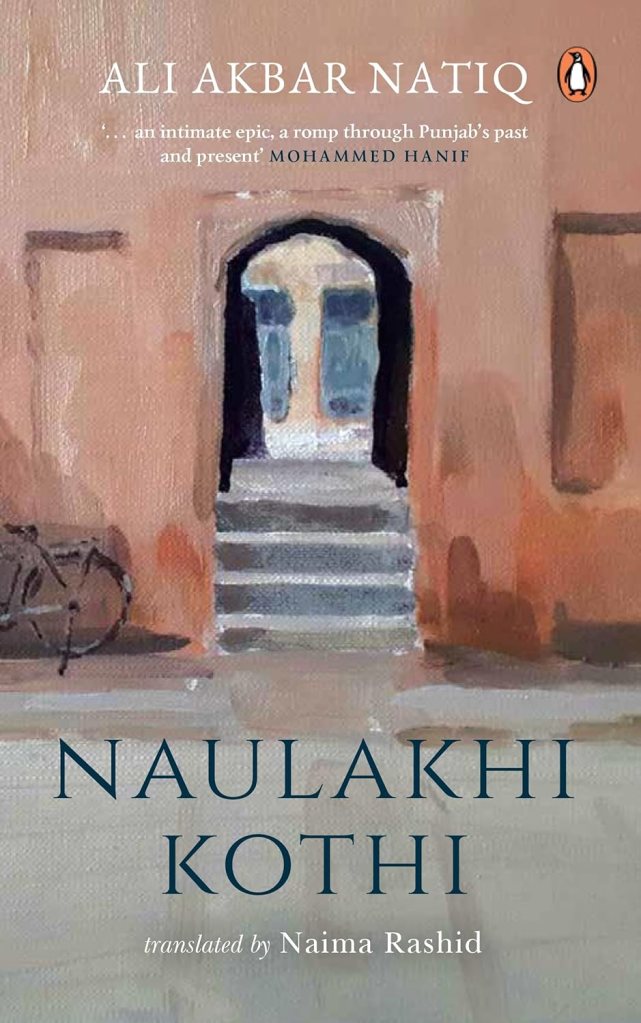
Author: Ali Akbar Natiq (Written originally in Urdu)
Translator: Naima Rashid
Publisher: Penguin Random House India
The recent interest of big publishing houses in India venturing to bring out translated texts from various regional languages and bhasha[1] literatures into English is adding not only richness to the publishing arena but is also spreading the awareness of the existence of so many classic Indian texts which were inaccessible to the layman reader due to their inability to read the language used by the author. This has not only increased pan-Indian readership but spread the richness of Indian literature worldwide.
The novel, Naulakhi Kothi[2], containing 56 chapters and 464 pages, was written originally in Urdu by Ali Akbar Natiq, and has been translated into English by Naima Rashid. It contains a wide historical and meticulous geographical canvas in the micro-level as well as the sweeping narrative of rural Punjab that begins in British India and goes on in the years leading up to the Partition and ends around the nineteen-eighties. It brings us face to face with the lived culture of this place. The days of ordinary people of the entire rural Punjab region going about their business also come alive before us.
The wide canvas of Naulakhi Kothi offers more or less three simultaneous perspectives – that of the feud in the villages of Punjab between the Muslims and the Sikhs and the role of the British administrators who, in trying to maintain law and order in the region, also have their own axe to grind. In the sprawling canvas of characters, in the intricate, multi-layered world that Natiq conjures, with subtext, backstory and arcs, it seems as if we are literally living in the world and conversing daily with its contours.
The first chapter aptly titled “Homecoming” tells us the story of one of the protagonists of the novel, the Britisher, William, who after eight long years in England was returning to Hindustan, the land he had spent his childhood, to work as the newly appointed assistant commissioner of Jalalabad in eastern Punjab. He dreamt of returning ‘home’ to the idyllic Naulakhi Kothi, the titular bungalow built by his grandfather. The manner in which the Britishers had been spoilt silly in Hindustan made many families live like Nawabs and they lived a class apart – often more powerful than the kings who ruled the country. Throughout the novel William is warned by the hardened commissioner Hailey that his behaviour and softness towards the locals does not bode well for any British officer living in Hindustan. His nature was said to display “signs of a certain rebellion and a proclivity towards a poetic bent of mind”. He was reminded that the British were there to rule these lands and not to romance them. He was asked to maintain a distance between the ruler and the ruled and in dispensing justice, distance himself from the wrongdoer and the wronged.
For the four years he was posted in Jalalabad, William took many radical steps. He toiled so diligently, putting his heart and soul in his work that he managed to change the entire face of the region. The standard of education alone had surpassed that in all other tehsils[3] of Punjab. He also had a new canal and several other small streams built. As a result of these, there was a plentiful supply of water across the tehsil, and an abundant produce of wheat, rice, and maize crops; a general well-being began to show on people’s faces. Because of his connections he could prevent his transfer from the place for some time but could not do so for ever. Through many twists and turns of events, after frequent transfers, and after the war broke out, he realised there was a grand conspiracy in which everyone had teamed up against him – the Hindus, the Muslims and the British. By the end of the novel, we find a decrepit old man who, shorn of his former British glory and power, living a lonely life in Naulakhi Kothi when his wife and children left him and went back to England. But soon he was even thrown out of that place to settle in one of the nehri kothis[4]nearby, and in the end, he died like a pauper with no one to even remember him. So much for his love for Hindustan!
The next sub-plot centres around Maulavi Karamat who for the past thirty years, had been the head imam of the small village mosque. The poor people of the village who could barely make ends meet, could not pay him a salary but instead supplied him with rotis daily which were religiously collected every day by his son Fazal Din. Whatever Maulavi Karamat had learnt from his father, Ahmed Din, and even that which he didn’t fully know, he used to transfer it all to Fazal Din, for the survival of their family rested with him. The fortunes of this man took a good turn when he was appointed by William to become the head munshi in Jalalabad and teach Urdu, Arabic and Persian to young children. This move was basically undertaken to do away with the disparity and poor percentage of Muslim students attending the government schools. From then on, we find Maulavi’s fortunes rising and gradually his son Fazal Din turns into a mature and sensible sarkari babu[5]. After two years of working at the Governor House, Fazal Din had enough to buy his own land and build a house. Post Partition, Fazal Din’s work increased considerably and with adequate means to prepare false property documents, he got enmeshed in corruption and amassed a great amount of wealth. His desire to learn more English and to go to Britain to rise above his class is an example often found among those who worked in the administrative service of the government.
The other most significant strand in the narrative is of course the constant enmity between the Muslims and the Sikhs. We are given the story of Sher Haidar who was the zamindar of a certain area being killed by Sardar Sauda Singh and his men — not in a clandestine way, but in an open, offensive manner. Ghulam Haidar, the son of Sher Haidar was entrusted by his subjects and relatives who pledged their loyalty to the new heir to take revenge of the killing and after a lot of incidents, looting, and fighting that ensues between the two rival religious groups, their fortunes kept fluctuating while the ordinary villagers continue suffering. The Sikh leader who was accused of murder remains free and he showed his prowess by moving around with arms in the open. Detailed descriptions of attack and counterattacks between the warring groups are narrated meticulously and one becomes aware of the looting, arson and treachery that prevailed in the villages of Punjab at that time.
It is difficult do justice to the vast canvas of storyline that Natiq so brilliantly interweaves throughout the novel in this review. The problems the British rulers faced during the world war, the changing equations in the country with the Quit India Movement, Jinnah’s policy for an independent Pakistan, the role of the Muslim League, the silent exodus of the British leaving Hindustan, the idea of Partition that had silently started ripping the population apart, the resultant flow of refugees after the Partition was officially declared, the exodus – all these find detailed mention in the narrative as well.
Ali Akbar Natiq’s unique narrative style and the equally brilliant translation by Naima Rashid that stays close to the Urdu text preserving the flavour of Urdu sprinkled with regional dialect is to be really appreciated. There are no footnotes or glossaries but the context holds enough clues for flow of the narrative. In the translator’s note at the beginning, Rashid mentions that in the creative choices she has made. She favoured the mood and tone of the original – “If it’s bitingly sarcastic or insulting in the original, I’ve attempted to recreate the same tone and tailored the other choices accordingly.” Throughout the novel the very detailed descriptions of characters and incidents create a great visual impact upon the reader, and we see the sequences like we do in films. Natiq has managed to cover such a wide canvas of the storyline with dexterity by juxtaposing chapters in such a way that they unfold like a cinematic reel in front of our eyes. Thus, despite its length, this novel with its social, political, religious, historical, and geographical issues covering a wide cross-section of the Punjab region remains a page-turner and is strongly recommended for all classes of reader alike.
.
[1] Language, referring to different languages of India
[2] Translates to House of nine lakhs(ninety thousand)





 Borderless