Nazrul’s Tumi Shundor Tai Cheye Thaki(Because you are so beautiful, I keep looking at you) has been translated from Bengali by Professor Fakrul Alam. Click here to read.
Hotel Acapulco, has been composed and translated from Italian by Ivan Pozzoni. Click hereto read.
Farouk Gulsara pays a tribute to a doctor and a friend. Click hereto read.
Musings of a Copywriter
InBecoming a ‘Plain’ Writer, Devraj Singh Kalsi explores the world of writer’s retreats on hills with a touch of irony. Clickhere to read.
Notes from Japan
In Educating for Peace in Rwanda, Suzanne Kamata discusses the peace initiatives following the terrors of the 1994 Rwandan Genocide while traveling within the country with her university colleague and students. Click here to read.
Bijoy K Mishra writes of cyclones in Odisha, while discussing Bhaskar Parichha’s Cyclones in Odisha – Landfall, Wreckage and Resilience. Clickhereto read.
Love is a many splendoured thing and takes many forms — that stretches beyond bodily chemistry to a need to love all humankind. There is the love for one’s parents, family, practices one believes in and most of all nurtured among those who write, a love for words. For some, like Tagore, words became akin to breathing. He wrote from a young age. Eventually, an urge to bridge social gaps led him to write poetry that bleeds from the heart for the wellbeing of all humanity. Tagore told a group of writers, musicians, and artists, who were visiting Sriniketan in 1936: “The picture of the helpless village which I saw each day as I sailed past on the river has remained with me and so I have come to make the great initiation here. It is not the work for one, it must involve all. I have invited you today not to discuss my literature nor listen to my poetry. I want you to see for yourself where our society’s real work lies. That is the reason why I am pointing to it over and over again. My reward will be if you can feel for yourself the value of this work.”
And it was perhaps to express this great love of humanity that he had written earlier in his life a poem called Dhoola Mandirthat urges us to rise beyond our differences of faith and find love in serving humankind. In this month, which celebrates love with Valentine’s Day, we have a translation of this poem that is born of his love for all people, Dhoola Mandir. Another poet who writes of his love for humanity and questions religion is Nazrul, two of whose poems have been translated by Niaz Zaman. Exploring love between a parent and children is poetry by Masood Khan translated from Bengali by Fakrul Alam. From the distant frontiers of Balochistan, we have a poem by Atta Shad, translated from Balochi by Fazal Baloch, for a fair lady — this time it is admiration. Ihlwha Choi translates poetry from Korean to express his love for a borderless world through the flight of sparrows.
Suzanne Kamata writes a light-hearted yet meaningful column on the recent Taylor Swift concert in Tokyo. Aditi Yadav takes up the Japanese book on which was based a movie that won the 2024 Golden Globe Best Animated Feature Film Award. Sohana Manzoor journeys to London as Devraj Singh Kalsi with tongue in cheek humour comments on extracurriculars that have so become a necessity for youngsters to get to the right schools. Snigdha Agrawal gives us a slice of nostalgia while recounting the story of a Santhali lady and Keith Lyons expresses his love for peace as he writes in memory of a man who cycled for peace.
In reviews, Somdatta Mandal has explored Tahira Naqvi’s The History Teacher of Lahore: A Novel. Srijato’s AHouse of Rain and Snow, translated from Bengali by Maharghya Chakraborty, has been discussed by Basudhara Roy and Bhaskar Parichha has reviewed Toby Walsh’s Faking It: Artificial Intelligence in a Human World. News and Documentary Emmy Award winner (1996) Ruchira Gupta’s daring novel born of her work among human traffickers, I Kick and I Fly, has been brought to our notice by Sengupta and she converses about the book and beyond with this socially conscious activist, filmmaker and writer. Another humanist, a doctor who served by bridging gaps between patients from underprivileged backgrounds, Dr Ratna Magotra, also conversed about her autobiography,Whispers of the Heart — Not Just a Surgeon: An Autobiography, where she charts her journey which led her to find solutions to take cardiac care to those who did not have the money to afford it,
We have fiction this time from Neeman Sobhan reflecting on how far people will go for the love of their mother tongue to highlight the movement that started on 21st February in 1952 and created Bangladesh in 1971. Our stories are from around the world — Paul Mirabile from France, Ravi Shankar from Malaysia, Sobhan from Bangladesh and Ravi Prakash and Apurba Biswas from India — weaving local flavours and immigrant narratives. Most poignant of all the stories is a real-life narrative under the ‘Songs of Freedom’ series by a young girl, Jyoti Kaur, translated from Hindustani by Lourdes M Supriya. These stories are brought to us in coordination with pandies’ and Shaktishalini, a women’s organisation to enable the abused. Sanjay Kumar, the founder of pandies’ and the author of a most poignant book about healing suffering of children through theatre, Performing, Teaching and Writing Theatre: Exploring Play, writes, “‘Songs of Freedom’ bring stories from women — certainly not victims, not even survivors but fighters against the patriarchal status quo with support from the organisation Shaktishalini.”
While looking forward in hope of finding a world coloured with love and kindness under the blue dome, I would like to thank our fabulous team who always support Borderless Journal with their wonderful work. A huge thanks to all of you from the bottom of my heart. I thank all the writers who make our issues come alive with their creations and readers who savour it to make it worth our while to bring out more issues. I would urge our readers to visit our contents’ page as we have more than mentioned here.
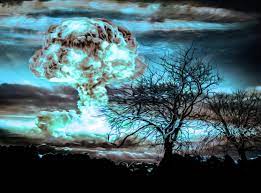
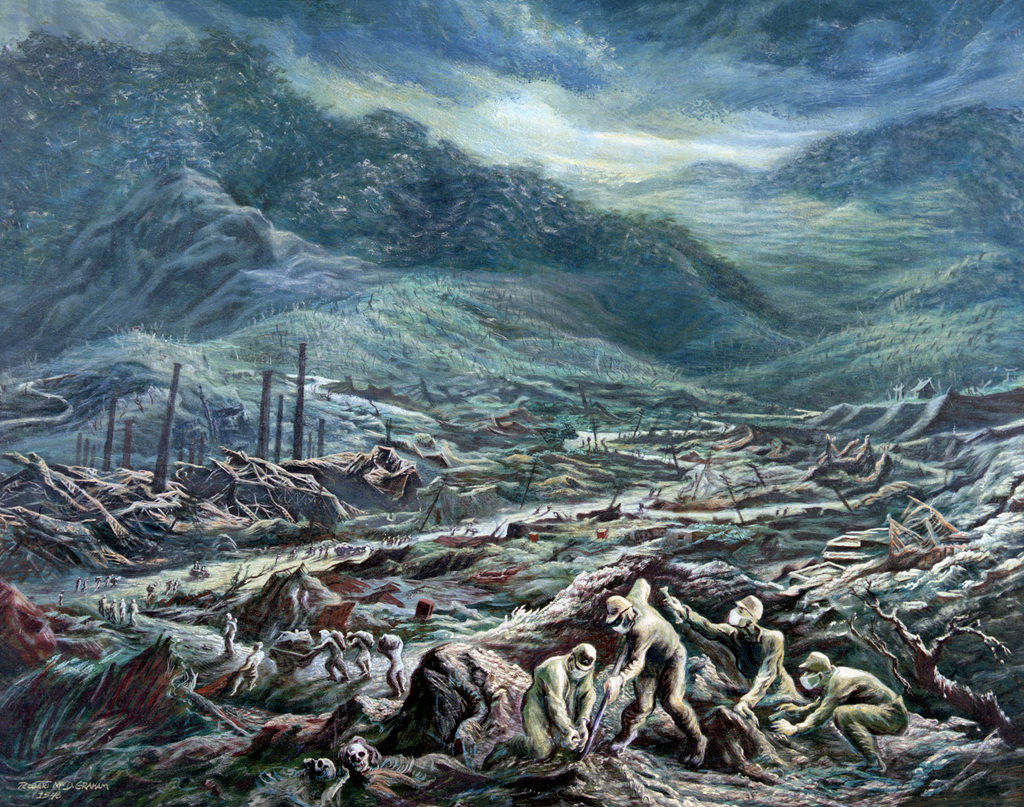
Atom Nuclear Bomb Explosion- Illustration “Atomic Landscape” Nagasaki, Japan 1946 Art by Robert Graham Courtesy: Creative Commons
When in 1945, the Allied forces dropped atom bombs on August 6th in Hiroshima and on August 9th in Nagasaki, the Second World War drew Japanese aggression to a halt. But what was the impact on the lives of those innocents whose home, family and future changed forever? Their lives were wrecked — within a few seconds for no fault of their own. The impact clearly continues to ravage the second generation, as can be seen from the narrative of a hibakusha’s daughter who shares her travails while expressing her candid views on the recent movie, Oppenheimer, and the sale of ‘Boppenheimer’ products. She writes: “I live with it1 now having a chronic progressive nerve pain disease. My damaged immune system is attributed to my mother’s exposure to radiation from the atomic bombing.”
Are we forgetting that past, where two whole towns were decimated by atomic bombings with uncountable numbers of deaths and suffering handed down generations? Will we repeat the horrific story again to resolve issues as conflicts continue to ravage the planet with weapons, without considering their impact on the already felt climate crises? Will there be a replay of the bombing of 1945 to annihilate a people, their way of life and create suffering among all humanity? We may not be around to comment on the outcome!
Way back in 2017, climate experts contended that in case of another such bomb blast, “The effect would be similar to that of the giant meteor believed to be responsible for the extinction of the dinosaurs. This time, we would be the dinosaurs.”
With that in mind, we hope for a world without wars. In this special edition, writings look for peace by creating awareness and suggesting alternatives. Kathleen Burkinshaw writes about the 1945 bombings and her perspectives on media packaging of mushroom clouds. We have a story from a soldier’s perspective during the First World War by the eminent Bengali poet, Nazrul, who fought in it as a soldier for the British army. Current conflicts show up in the writing of Ramy-Al-Asheq, who was born in a refugee camp in the Middle East. They move to Ukraine with voices of Lesya Bakun, a refugee on the run, and Ron Pickett, a US army veteran. Poetry on Myanmar in the past by Sister Lou Ella Hickman and a story of the Rohingya’s plight by Shaheen Akhtar brings the focus into civil wars within Asia. More poems by Don Webb and Michael Burch urge for peace through poetry. Awareness about conflicts that nonetheless impact an interconnected world are brought in with interviews with journalists who were in Afghanistan (Andrew Quilty) and Myanmar (Jessica Muddit) when the takeovers by the current regimes started. We conclude with a discussion for alternatives towards a better future with Anthony Sattin.
Non-Fiction
Mushroom Clouds and Movies: Response from a Hibakusha’s Daughter:Kathleen Burkinshaw, a second generation victim who suffers nerve disorders from the atom bomb dropped on Hiroshima, where her mother watched her own father perish, responds to the recent media packaging of the event. Click here to read.
The Refugee and the Other, an excerpt from Ever Since I Did Not Die by Ramy Al-Asheq, translated by Isis Nusair. Click here to read.
Poetry
I am Ukraine by Lesya Bakun, a refugee from Ukraine. Click here to read.
Wars and Rumours of War, a response on the war in Ukraine by Ron Picket, a a retired naval aviator with over 250 combat missions and 500 carrier landings. Click here to read.
My Visit to Myanmar in 1997, a poem about peace in the land where Buddha flourished by Sister Lou Ella Hickman. Click here to read.
Henais a short story by Nazrul from the perspective of a soldier during the first world war, translated from Bengali by Sohana Manzoor. Click here to read.
The Magic Staff is a poignant short story about a Rohingya child seeking refuge by Shaheen Akhtar, translated from Bengali by Arifa Ghani Rahman. Click here to read.
Interviews
A discussion about Afghanistan, with journalist Quilty who went back to Kabul as Taliban entered the city. Click here to read.
Keith Lyons talks to Jessica Mudditt, who watched from within the country as the Myanmar Junta took over. Click here to read.
Could there be a way out of this world wide unrest? A discussion with Anthony Sattinas he explores concept of brotherhood unique to earlier times, when borders were not this well defined. Click here to read.
*
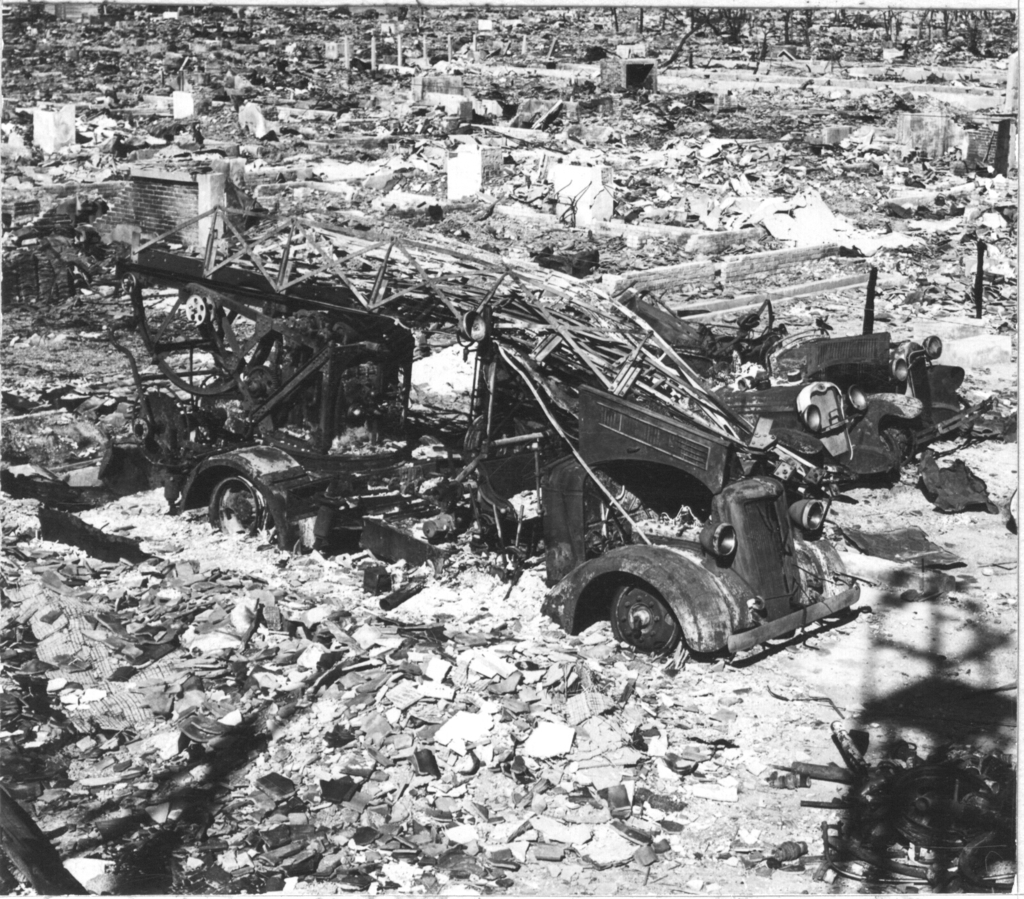
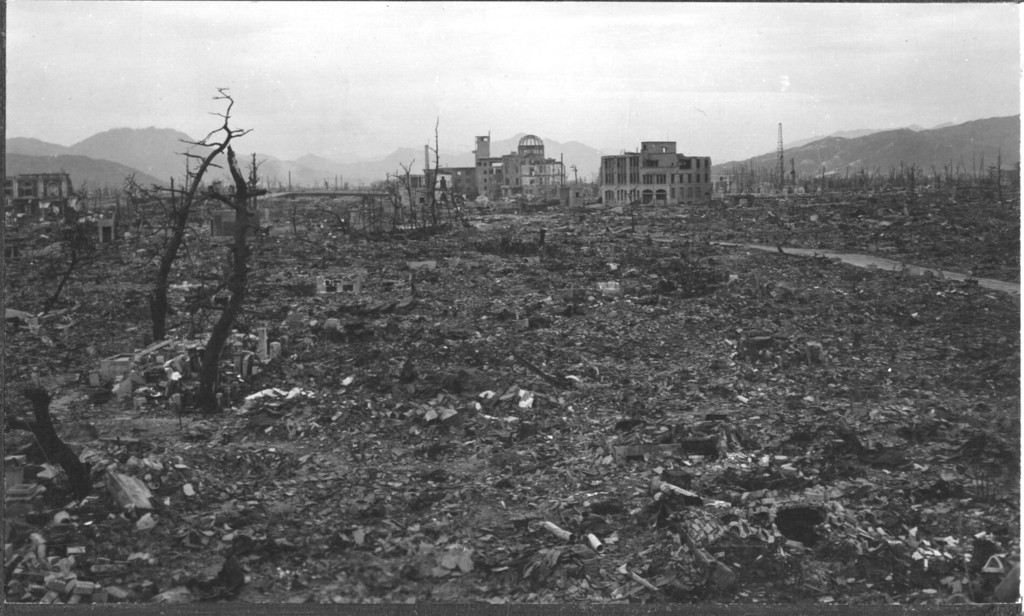
Hiroshima after August 6th, 1945Hiroshima after bombingCourtesy: Creative Commons
“I was three years old at the time of the bombing. I don’t remember much, but I do recall that my surroundings turned blindingly white, like a million camera flashes going off at once.

Then, pitch darkness.

I was buried alive under the house, I’ve been told. When my uncle finally found me and pulled my tiny three year old body out from under the debris, I was unconscious. My face was misshapen. He was certain that I was dead..."

-- YASUJIRO TANAKA/ LOCATION: NAGASAKI/DISTANCE FROM HYPOCENTER: 3.4 KM, AFTER THE BOMB, https://time.com/after-the-bomb/
The two atom bombs that ended the Second World War. (1939-1945) Courtesy: Creative Commons
Recalling the incidents of 1945 — when two bombs were dropped in the name of peace destroying towns, populations and a way of life of innocents who had nothing to do with the aggressive invasion of the power-hungry, instilling suffering for generations to come, and justifying the whole incident in the name of peace — should have taught humankind lessons that we would never forget. When I read about the incidents, the horror of these make me shudder. Even the sky changed colours. The Earth grew barren as life on it writhed to an untimely halt, some wounded towards a painful end and some dead. Some of our species suffered in the most horrific ways. For some death lingered with pain. For others, life lingered with pain — both emotional and physical. Has that all been forgotten or erased from our minds?
Given the current global atmosphere, we perhaps most need to pray for peace: peace, to alleviate hunger; peace to be with loved ones; peace to have access to resources at a reasonable price so that all of us can afford to live in comfort. And yet the wars rage…
As we move ahead this year, poetry around war has proliferated in our pages, showing why we need peace. Today, in this issue we bring to you writing that looks for peace as well as our older pieces describing the horrors of the atom bomb in Hiroshima.
An interview with nuclear war survivor’s daughter, authorKathleen Burkinshaw, who continues to suffer the aftermath of the Hiroshima blast that only her mother had faced and has written a book, The Last Cherry Blossom, describing the horrors of the war, life before it and after. Clickhereto read.
Can Peace come Dropping by... An essay by Candice Louisa Daquin, contextualising the current global issues and exploring peace. Click hereto read.
My friend, you would not tell with such high zest
To children ardent for some desperate glory,
The old Lie: Dulce et decorum est
Pro patria mori*.
-- Dulce et Decorum Est, Wilfred Owen (1893-1918)

*Translated: "It is sweet and fitting to die for the homeland."
South Africa
India
Singapore
World War 1 memorials stretched across countries: Courtesy: Creative Commons
On 11th November, we remember the men who gave up their lives to win wars for those in power. Remembrance Day started as an annual event after the First World War (28th July, 1914- 11the November, 1918) more than a hundred years ago, in memory of soldiers — some of who were lost in the battle grounds, whose remains never got back to their families. Some of these men who fought were from countries that were subservient to colonial powers who started the war and some, like the soldier-poet, Wilfred Owen, were from conquering nations.
This was much before atom bombs were dropped on Hiroshima and Nagasaki. Eventually, a nuclear armistice was declared. Mahatma Gandhi (1869-1948), an internationally acknowledged apostle of peace, had an opinion on this: “‘The very frightfulness of the atom bomb will not force non-violence on the world? If all nations are armed with the atom bomb, they will refrain from using it as it will mean absolute destruction for all concerned?’ I am of the opinion that it will not.” Has this nuclear armistice made the world more peaceful? And if so, what is the quality of peace that has been wrought by drumming fears of annihilation in human hearts? Could the ‘fakir…striding half-naked up the steps of the viceregal palace’ be right after all?
Here we have collected a few stories and poems around ongoing conflicts and wars which stretch to the present day, some old and some new… some even written by men who faced battle…
Poetry
A poem and art by Sybil Pretious in memory of soldiers who died in the World War I.
From the Pages of a Soldier’s Diary… by Mike Smith takes you on a journey through the pages of a colonial diary and muses on choices he has made. Clickhereto read.
Bundu, Consoler of the Rich is a story based on memories of the Partition by Nadir Ali, translated from Punjabi by Amna Ali. Click here to read.
The mother of a soldier once told me she did not agree that winning a war was a solution to peaceful living. She said, “If our army kill the enemy, some other mothers lose their sons; some other wives are widowed; some other children lose their fathers…”
Her summation of the war seems like an accurate description of the current day scenario. While politically the bombs that killed 140,000 in Hiroshima and 74000 in Nagasaki on 6th and 9th August respectively(1945), destroyed two cities, ended the Second World War (1939-1945) which claimed a total of 70-85 million lives over six years and led to the celebration of VE Day (Victory Europe Day), can we afford such horrors of violence and annihilation again? This is a question that remains in the grey zone as nuclear non-proliferation looks like agreeing to peace because the terror of war frightens. Will we ever have a world where peace is loved for the sake of what it brings and not for the fear of annihilation?
Writers in this special commemorate the horrors of the atom bomb and write their plea for peace. While American-Japanese writer, Suzanne Kamata, and Manjul Miteri of Nepal explore victimhood, Michael Burch talks of the Enola Gay, the legendary bomber that dropped “Little Boy” and annihilated a whole city. He reflects on the testing that continued on Bikini Island and further to ‘maintain peace’. We also have the words of Kathleen Burkinshaw who continues impacted by this terror — though it was her mother who was the hibakusha or survivor of the bomb blast. We round up this section with Candice Louisa Daquin’s reflections on peace and the reality as it is.
Oh Orimen! A poem in Nepalese about a victim of the blast written by a sculptor, Manjul Miteri, who while working on the largest Asian statue of the Buddha in Japan visited the museum dedicated to the impact of the blast. The poem has been translated to English by Hem Bishwakarma. Click hereto read.
Kathleen Burkinshaw is the daughter of a woman who survived the Hiroshima blast. Burkinshaw suffers neural damage herself from the impact of the bomb that her parent faced. She has written a book called The Last Cherry Blossomrecounting her mother’s first hand experiences. Her novel has been taken up by the United Nations as a part of its peacekeeping effort. She has been actively participating in efforts to ban nuclear weapons, including presenting with Nobel Laureates. Click here to read the interview.
“Nothing can be unconditional: consequently, nothing can be free.”


“Liberty means responsibility. That is why most men dread it.”

-- George Bernard Shaw,  Maxims for Revolutionists, Man & Superman (1903)
George Bernard Shaw (1856-1950), a great writer and playwright, used these epigrammatic lines to bring focus on what people thought was liberty or freedom from oppression, from regimes that were dictatorial. While discussing concepts of freedom, one does wonder if political freedom solves all humane issues, occasions we celebrate with great aplomb, like the birth of a nation.
This month started with the observance of July 4th, the date of the American Revolution in 1776 and the publication date of Whitman’s Leaves of Grass in 1855. In between these two years, in 1789, ten days down the line, on July 14th, another significant occurrence has been handed down by history to be celebrated as the Bastille Day— the day prisoners were freed from Bastille, a major event that led to the overthrow of the insensitive monarchy in France, a symbolic resurgence of the common, exploited man that has often been seen as an inspiration for later uprisings to reinforce the concept of democracy or liberté, égalité, fraternité.
As we move forward in time, towards August, one wonders if liberty attained by these means was good for all fellow humans? France was part of the Allied Forces that with America taking the lead dropped not one but two atom bombs on Hiroshima and Nagasaki on August 6th and 9th, 1945, to end the Second World War. Did the ends justify the means? Reflecting the cry and suffering of these victims, we have poetry from Suzanne Kamata, a well-known writer from Japan. Michael Burch on the other hand has shared poetry with us which shows how the nuclear programme continued unrepentant despite the devastation it caused. One must give kudos to the descendants of the victims of the nuclear blast that they have forgiven the perpetrators, admitted their own hand in the Second World War and moved ahead. In that spirit, we have an essay on peace by Candice Louisa Daquin, who joins the Borderless team as a writer-in-residence.
We have much happening in poetry this time with an interview of American poet Jared Carter, a recipient of number of awards and fellowships, including the Walt Whitman Award and the Guggenheim fellowship. He walks us through how he created the poem ‘Yeti’ (first published in the May edition of Borderless) and talks of the impact of artifacts from China and India on his own thought processes, the impact of Du Fu (712-770) and much more. We have a poem in Du Fu’s style this time by George Freek and an interesting poem with a Chinese title by Carter, a title that can have multiple connotations and yet each seems to fit the poem perfectly.
Rhys Hughes has brought humour into our pages with both his poetry and essay on William Mcgonagall, who bore the sobriquet of the worst writer in the world through his life and had things thrown at him when he read his poetry in Dundee. Yet, his work survived the beatings, and he lives on known as the ‘Scottish Homer’.
More poetry by Singaporean poet Marc Nair gives us a glimpse of the little island as viewed by someone who has grown up on it. Poetry is always multi-hued, and we have Lorraine Caputo transport us to a Garífuna village in Honduras. Penny Wilkes takes us ‘Down the Path of Nostalgia’ with a mix of old and new photography, prose and poetry on how almost a decade after the end of the Second World War, she started her love affair with photography and nature. It hovers between poetry and musings, and this time we have a rare musing by Jared Carter too. Devraj Singh Kalsi continues cogitating with wry humour while arranging bookshelves. We also have the backpacking granny visitingIndonesia. Post sharing this trip, our granny — Sybil Pretious — plans a little break from publishing to complete her memoirs.
A riveting flash fiction by Kaiyi Tan celebrates the spirit of conquest in these dark times, weaving into the pandemic lore the quest for personal freedom. Stories this time carry a real life one by Jean Kortum on adoption — her own struggle. But then, stories can be real or unreal – draw a bit from both to reflect bigger truths or create alternates that sink into the human mind as a perceived reality and leave an imprint deep inside the heart, like that of Niles Reddick. My conviction is that some lived experiences of writers seep into each story, whether it is from Bangladesh or India or by our literary fictionist, Sunil Sharma. His narrative continues infused by suspense.
We have a complete translated story of Tagore by Radha Chakravarty as our book excerpt this time. ‘The Parrot’s Tale’, ostensibly part of a children’s collection, reflects Tagore’s response to conventional schooling — a reason for him to start Shanti Niketan perhaps. She has also shared two of her translations of Rabindranath’s songs from Bhanusingher Padabali (1884, Bhanusingh’s verses). Chakravarty generously consented to an interview and has given us a glimpse of her journey as a translator and critic. We also have translated a long poem by Tagore on our pages, a poem that inspires hope, though it was named Dushomoy (1897, Bad Times) finally. The original name had been Swarga Patthe (On the Path to Heaven) as can be seen from a page in his diary. We have been fortunate in finding a recording of his voice reciting the poem in Bengali and the print of a sample page of the manuscript bearing his signature.
We continue with Akbar Barakzai’s poetry translated by Fazal Baloch from Balochi – this time addressed to his daughter reminding for some reason of Nehru’s Letters from a Father to his Daughter — a book I read as a child. In addition, we have translations from Korea and Bosnia & Herzegovina, from where the young poet, Maid Corbic, has taken up the concept of freedom of the self and of the nation, both together.
Keith Lyons from New Zealand in his very brief essay has quoted American novelist William Faulkner, “We must be free not because we claim freedom, but because we practice it.” And perhaps we need to remember this if for no other reason, then, just to maintain our own sanity in these strange, almost unreal times as we attempt to unite as humankind to free ourselves from an unknown and unfathomable virus.
In a more sombre note, last week, untroubled by the virus, a victim of cancer, Bollywood legend Dileep Kumar, aged 98, breathed his last. Ratnottama Sengupta adds an unusual colour to the Borderless Journal with her tribute to this hugely acclaimed actor. In the process, she unfolds for us a brief history of the Indian cinema, and a glimpse of a world that transcends all man made constructs in quest of perfection.
We have an interesting set of reviews this July. Rakhi Dalal has reviewed Anuradha Kumar’s riveting short story collection, A Sense of Time. A murder mystery for young readers, Murder at Daisy Apartments by Shabnam Minwalla, has been reviewed by Gracy Samjetsabam. The Third Eye of Governance–Rise of Populism, Decline in Social Research by Dr N Bhaskara Rao, reviewed by Bhaskar Parichha, seems to be a non-fiction that looks forward to bridging gaps between academia and the real world, a truly felt need. Parichha has also given us an essay on a man who inspired Ian Fleming, the creator of James Bond, to make him a part of his lore, a journalist who moved around all of Asia with equal aplomb and a sense of humour – a truly global citizen called Richard Hughes.
I want to thank all our wonderful contributors for making this edition a reality. And readers, we leave you to explore the unknown… like that place we call outer space. A huge thank you again to not only all our wonderful contributors, our faithful readers but also to the fabulous Borderless team scattered across the world.
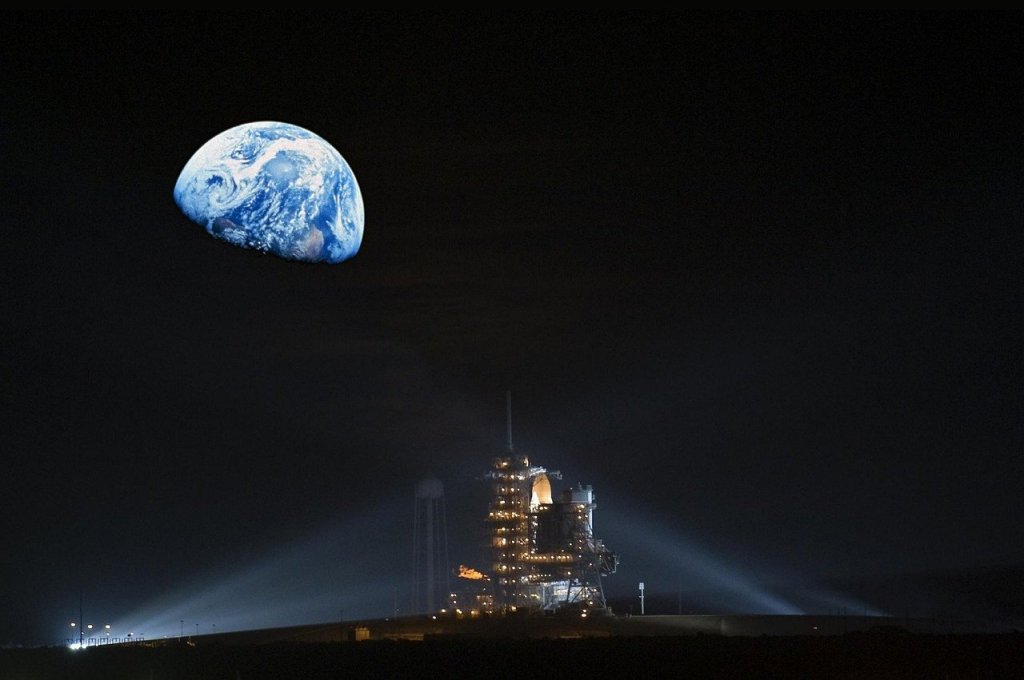
Before I wind up, a little bird trills a song of hope in my ear. Business tycoons have started stepping into the mysterious void of space to eventually – let us hope — create affordable travel for common man, though it has started off as an expensive proposition. Will this be an industry that will generate more jobs on and off Earth and find new places for man to inhabit? After all, when George Bernard Shaw wrote his plays and essays, we had yet to cross the frontiers beyond Earth, had never even thought of flying across the world in budget airlines or mining moons!
Will we have a new world, a new outlook and a new set of hopes and aspirations as we stretch the frontiers of our home planet?
Wish you all a wonderful month of reading and thinking.



 Borderless