Categories
Essay

From Srinagar to Ladakh: A Cyclist’s Diary

Farouk Gulsara on a cycling adventure through battleworn Kashmir

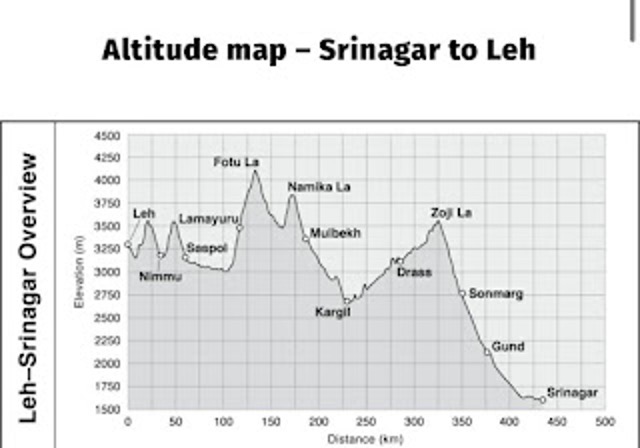
They say to go forth and explore, to go to the planet’s edge to increase the depth of your knowledge. Learning about a country is best done doing the things the local populace does, travelling with them, amongst them, not in a touristy way, in a manicured fashion in a tourist’s van but on leg-powered machines called bicycles. Itching to go somewhere after our memorable escapade in South Korea, cycling from Seoul to Busan, as the borders opened up after the pandemic, somebody threw in the idea of cycling from Kashmir to Ladakh. Long story short, there we were, living our dream. The plan was to cycle the 473km journey, climbing 7378m ascent in 8 days, between 6th July 2024 and 12th July 2024. 

Our expedition started with us landing in Amritsar after a 5.5-hour flight from Kuala Lumpur. From there, it was another flight to Srinagar, where the crunch began.

Day 1. Amritsar
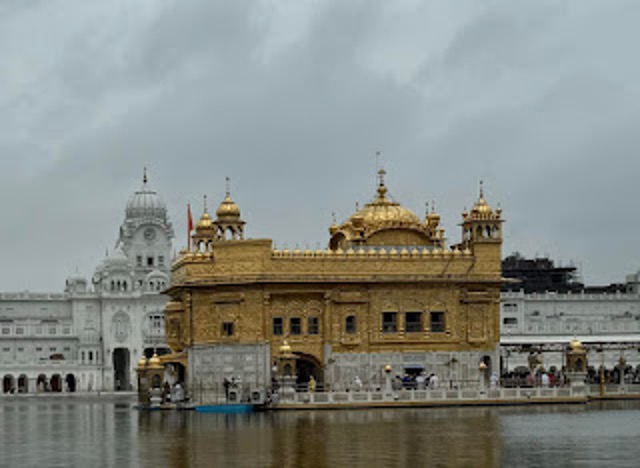
Amritsar Golden Temple. Photo Courtesy: Farouk Gulsara

After a good night’s sleep, everyone was game for a quick, well-spread breakfast and a leisurely stroll to the Harmandir, the Sikh Golden Temple. Much later, I realised the offering was 100% vegetarian and did not miss any non-vegetarian food. As a mark of respect, the vicinity around the temple complex served only vegetarian food, including a McDonald’s there. Imagine a McDonald’s without the good old quarter pounder! Hey, image is essential.

The usual showing of gratitude to the Almighty was marred by the unruly behaviour of the Little Napoleons, the Royal Guards. New orders were out, it seems, according to one guard with a chrome-plated spear and a steely sheathed dagger at his hip—no photography allowed. Then, on the other end of the Golden Pool, it was okay to photograph but only with a salutary (namaste) posture, with hands clasped on the chest. On the other side, it was alright. One can pose as he pleases. The guards were more relaxed there. 

That is the problem when rules are intertwined with religion. People make their own goal post and shift it as they please. When little men are given power to enforce God’s decree on Earth, they go overboard. They feel it is their God-given raison d’etre and the purpose of existence. Since nothing is cast in stone and everyone in mankind is on a learning curve, what is appropriate today may be blasphemous tomorrow and vice versa. We distinctly remember snapping loads of pictures of the full glory of Harmandir day and night during our last visit, preCovid. 

We all know what happened in the Stanford experiment when students were given powers to enforce order. It becomes ugly very quickly. Next, the flight to Srinagar. 

Boat House Dal Lake, Srinagar
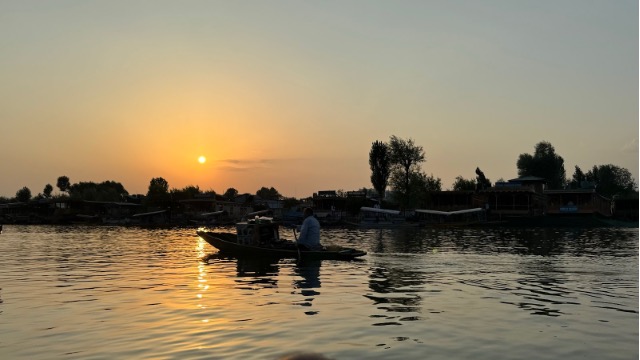
Srinagar. Photo Courtesy: Farouk Gulsara

My impression differed from when Raj Kapoor and Vyajanthimala were seen spending their honeymoon boating around the lake in the 1964 mega-blockbuster Hindi movie Sangam. Then, it had appeared insanely cold, with mists enveloping the lake’s surface. Serenity was the order of the day. What I saw in the height of summer with a temperature hovering around 30C, was anything but peaceful. Even across the lake, the constant blaring of car horns was enough to make anyone go slightly mad. 

The lake is a godsend for dwellers around it. Many depend on the lake to transport tourists and sell memorabilia and other merchandise on their boats. The rows of boat houses are also popular sites for honeymooners and tourists to hire. Privacy may be an issue here. Imagine small-time Kashmiri silk vendors just landing at the boat house and showing produce to the occupants. They may want you to sample their kahwa, a traditional spiced-up, invigorating, aromatic, exotic green tea.

Day 2. Boat House, Dal Lake, Srinagar
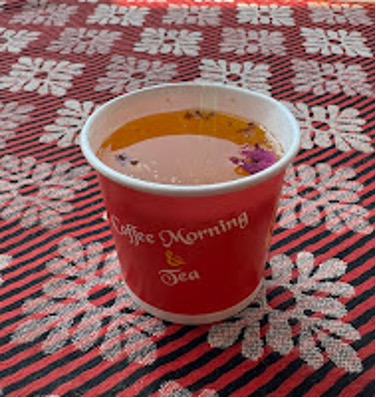
Kashmiri Kahwa, a spiced tea. Photo Courtesy: Farouk Gulsara

Early morning starts with peaceful silence until the honking and murmur of the crowd start slowly creeping in. It was a leisurely morning meant to acclimatise ourselves to the high altitude (~1500m) before we began to climb daily till we hit the highest point of ~5400m. This would — aided by prophylactic acetazolamide –hopefully do the trick to keep altitude sickness at bay. 

The morning tête á tête amongst the generally older crowd was basically about justifying our trip ahead. The frequent question encountered by these older cyclists was, ‘Why were they doing it?’ The standard answer was similar to what George Mallory told his detractors when he expressed his desire to climb the peak that became Everest.

“Why? Because it is there!” Mallory had said. 

The cyclists told their concerned naysayers, “Because we can!”

Yeah, the general consensus was sobering. Time was running out, and so many things needed to be done before the big eye shut. There were so many places and so little time!
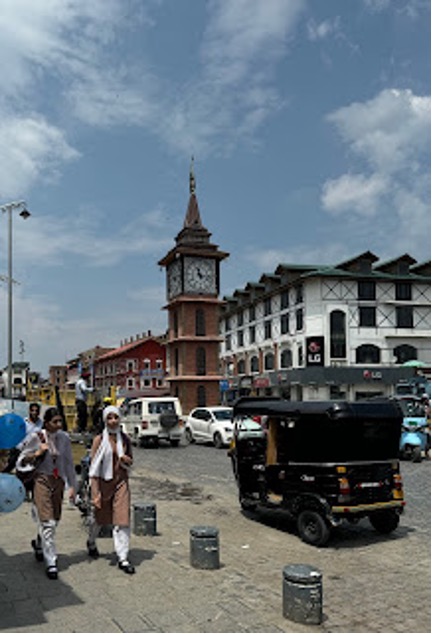
Lal Chowk. Photo Courtesy: Farouk Gulsara

Continuing the easy-peasy stance before the crunch, a trip to town was due. Backed with the symphony of the blaring of honks, we made a trip to the town square, Lal Chawk. After checking out how regular people got along with life, we realised the heavy presence of armed army personnel at almost every nook and corner of the town. Perhaps it was because it was Friday and prayers were in progress.

The return trip to our boat house was a trip down memory lane. After spending most of our adult lives in air-conditioned cars, the trip back on a cramped Srinagar town bus brought us back to our childhood, when rushing to get a place in the bus and squeezing through shoulder to shoulder in a sardine-packed bus was a daily challenge. That, too, was in the tropical heat minus the air conditioning. 

By noon, temperatures had soared to a roasting 30C. So much for cool Kashmir!

Our trip coincided with the Amarnath Yatra, an annual pilgrimage for Shiva worshippers who pay obeisance to Holy Ice Lingam. 
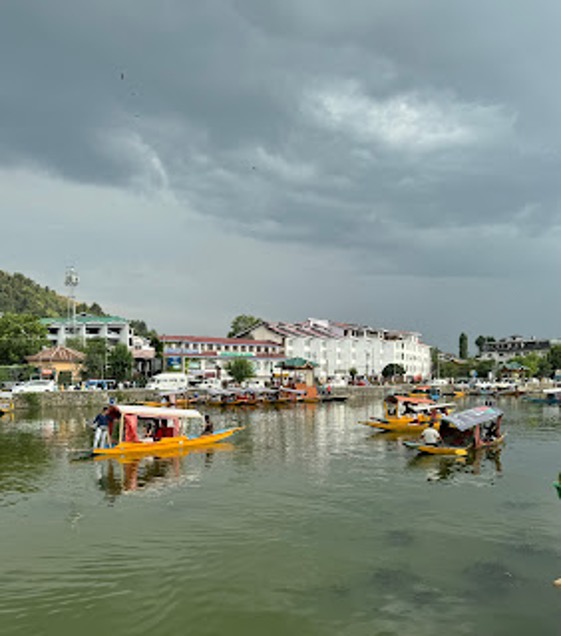
Dal Lake. Photo Courtesy: Farouk Gulsara

The evening was the time to familiarise ourselves with our machines, which involved a ride around the city. It was a nightmare of an experience where we had to simultaneously see our fronts, back, and sides. It was jungle fare. Nobody knew from which direction vehicles were going to barge at us. We survived somehow, if ever we were born in India, our most probable cause of death would be death by road traffic accident. 

The ride brought us to the affluent part of Srinagar, which changed our perception of Kashmir as a war-torn zone. What we saw were nicely manicured lawns and neatly painted buildings. The only hint of disturbances is the apparent presence of armed army personnel nearby. It is said that the one single sign of peace is to see people hanging around lakes and esplanades. We did see this on this ride. Young families were strolling along the promenade to a string of shops selling potpourri of delicacies. Kashmir appeared peaceful. 


Day 3. Srinagar…move it, move it…
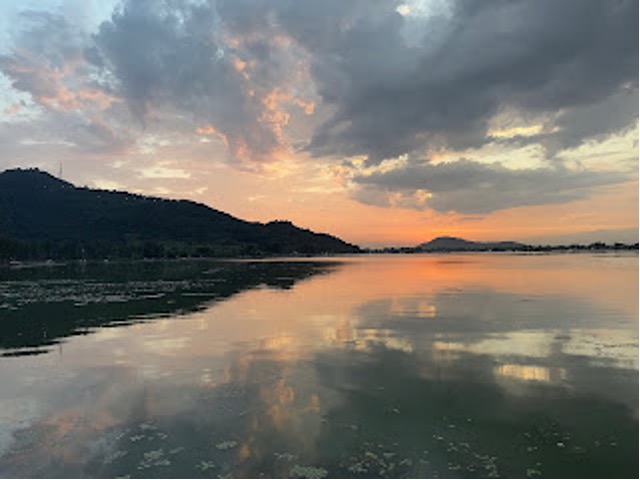
Sunset at Dal Lake. Photo Courtesy: Farouk Gulsara

It was 4am in Kashmir, and all through the night, it had been raining with occasional threats of thunder in the distance. The plan was to start riding as soon as the day broke with the first ray of the sun. That could be 5am or later. And it has probably nothing to do with Indian timing. Today’s ride would be a 90km challenging ride with an ascent of 4.5%. 

All the cyclists survived the ordeal. Starting around 6am, after checking the machines and last-minute briefings, we were good to go.

We did not know that Lake Dal was so huge. The first 20km was all about going around the lake. The first stop was at Mani Gam, a picturesque countryside with a massive tributary of the Sindh River, for an early breakfast of hot milk coffee. 

As expected, the traffic was heavy because of the Amarnath Yatra. But one would expect attendees of a divine voyage like this to want to exhibit tolerance, patience, and softness. Unfortunately, the ugly side of drivers was in full glory. If the rest of the world would blare their honk with all their might just before a head-on collision, here, the same action is synonymous with informing another fellow road user that he is around. 

To be fair, many pilgrims were in chartered vans, and the drivers were quite aggressive, overtaking in blind corners and swerving to the edge of the roads. All in the name of making more trips and making money for the family. 
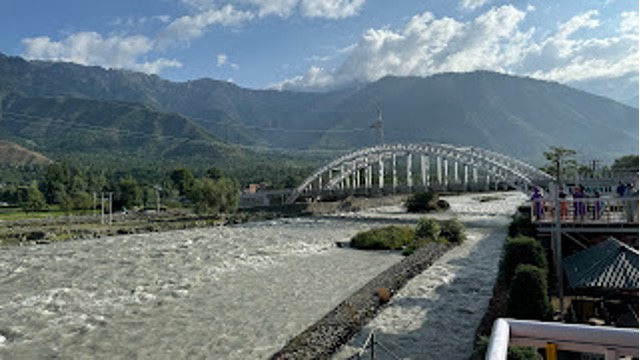
Sind River at Ganderbal. Photo Courtesy: Farouk Gulsara

They say with greater powers comes great responsibility. Apparently, the lorry drivers here missed the memo. Locally, they are known as the King of the Road, with multi-octaved ear drums rupturing high-decibel honks, sometimes to the tune of Bollywood numbers. 

The cyclists continued grinding despite side disturbances that can push any person raving mad; the steady climb was unforgiving. Just when they thought that was the end of the climb, they were fooled for another just after the bend. The most gruelling part was the end of the day’s trip. We rode more than 85 km, climbed a total elevation of 2692 m, and still lived to tell. 

Hotel Thajwass Glacier, Sonamarg 
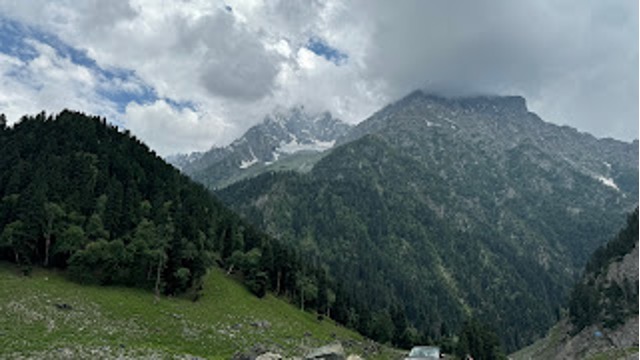
Along Srinagar…Ladakh Highway. Photo Courtesy: Farouk Gulsara

Dinner was entirely vegetarian as a mark of respect to the hotel’s occupants who were there to fulfil their pilgrimage at Amarnath temple. The brouhaha that struck a chord amongst many occupants was the cancellation of helicopter services to the pilgrimage site. The pilgrims were given the choice of either walking a 15 or 22-km track to fulfil their vows or they could pre-book a helicopter ticket to go there. The trouble with the helicopter services is that their feasibility depended on the weather. Weather is controlled by God, the logical explanation would be that God was not too keen to give audience to the so-and-so who were scheduled on flight.

After the light chat with fellow hotel dwellers and answering their curious questions about why able bodies would want to torture themselves, it was time to hit the sack. We could have asked them why fly when they could walk, but we did not.

Day 4. Sonamarg
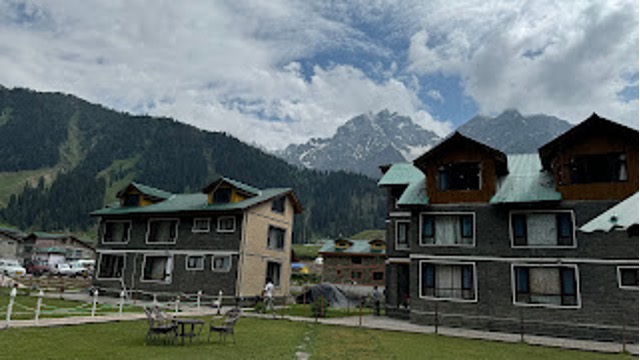
Sonamarg. Photo Courtesy: Farouk Gulsara

We decided to make it a day of light and easy. Everyone was left to their own devices after the spirit-sapping grind the day before. Most took a rain check on the initial hike but went for a long walk instead. 

So, we took a stroll in the Kashmiri Valley, admiring the result of Nature’s choice of colours in His palette: the symphony of rushing cool mountain water and the refreshing cool breeze. 

We met a couple from Chennai at the breakfast table with a sad tale. They had recently lost their only child who was born with cerebral palsy. They had to part from her after caring for their child for many years. They suddenly found plenty of free time on their hands. They decided to spend the rest of their remaining post-retirement lives doing short gigs, earning enough money to tour around and help out other families undergoing the same predicament as they did with their special child. 

When we think we do not have nice shoes, we should not forget about those with no feet. No matter how big our problems seemed, others could have had it worse. 

Sonamarg can be classified as a tourist town with rows of hotels on either side of the road, occasionally laced with souvenir shops and restaurants. The township appears to have been newly built, with freshly tarred roads, loose pebbles on the road shoulder, and unfinished touch-ups. 

Day 5. Off to Drass
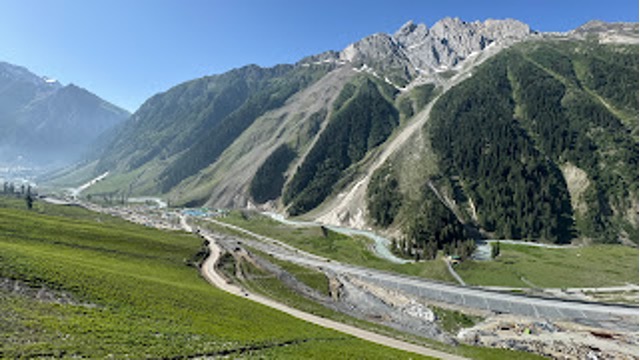
On the way… Photo Courtesy: Farouk Gulsara

We were off to Drass, the coldest inhabited place in India in winter. A quick read and one might read it as Dr-Ass, rather fitting of a name as one could use an examination of one’s derrière after a climb that was upon us. We will see you in hell. But wait, hell is supposed to be hot, is it not? Or hath hell frozen over?

At one point in the 1947-48, Drass was invaded and captured by Pakistan. Soon later, India recaptured Drass. We were only 12km from the line of control (LOC).

Hotel D’Meadow Drass

As expected, it was a gruelling ride. The first 21km were excruciatingly torturous, with narrow roads that had to be shared with the notorious motorists who thought that without the honk, one could not drive. We had to test our trail biking skills later as quite a bit of the stretch was undone or probably collapsed as a result of downpours. We were left with a sand tract and later fabricated stone tracks, which gave good knocking on our posterior ends. Remember our appointment with Dr Ass?
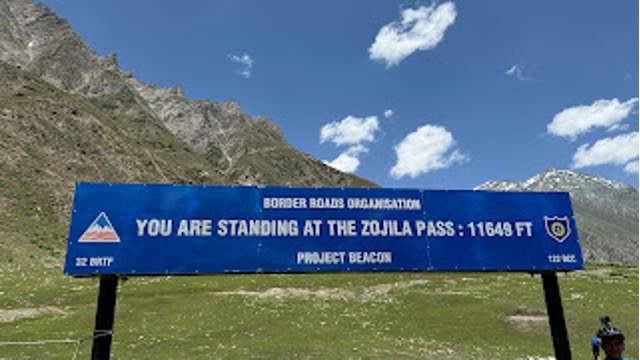
Zojila Pass. Photo Courtesy: Farouk Gulsara

After the 21 km mark, it was generally downhill, but our guide told us to unlock the mountain bike suspension for more comfort due to the violent bumping. The road improved as we entered Ladakh but was interspersed with occasional potholes that shook the machine.

After a short lunch break at a remote restaurant (referred to as a hotel), we were good to go and finally reached Drass at about 3 pm.


We had gone through the gruelling Zojila Pass. A tunnel is currently being built to connect Sonamarg and Drass. It would cut down travel from 4h to 1.5h. 

Point to note: this Pass lives up to its name. When Japan was attacked by many post-nuclear attack monsters, the biggest one was referred to as Gojira. Hollywood decided to christian Gojira as Godzilla, giving rise to the meaning of gigantic as in Mozilla and Godzilla’s appetite. Zojila Gojira, what’s the difference? Both were scary.

Day 6. Drass to Kargil 

Leaving the ‘Gateway to Ladakh’ and the ‘Coldest place in India’, we headed toward Kargil, which had been immortalised in annal of history when Pakistan and India fought a war in 1999. 

Today’s cycling routine was less enduring compared to our previous rides. Most of the route was a downhill trend lined by dry, stony mountains on one side and the gushing blue waters of a tributary of the Indus on the other. The road condition was pretty good, with recently tarred roads, barring some stretches being tarred and resurfaced in various states. 

After completing the close 60km trip to Kargil, we were told we were the fastest group the organiser had ridden with. Eh, not bad for a bunch of sixty-something madmen! Maybe they were just words of encouragement.

I was surprised to see Kargil as a bustling town with many business activities. Construction is happening here and there. Vendors were spreading their produce. Touters were busy looking for clientele. Hyundais, Marutis, and motorcycles thronged the streets, which were obviously not built to handle such tremendous volumes. Everyone was in a hurry. That is a sign of development. 

We were housed in the tallest building around here. It was a four-story, four-star hotel with a restaurant and 24-hour hot water services. In most places we stayed, hot water was only supplied at short, predetermined intervals. 

Day 7. Kargil to Budkharbu

The day started at about 6:45 am, with temperatures around 9C. This leg was expected to be tough. Two-thirds of our journey would be climbs, and there’d be more. It is expected to be sunny throughout, so we could expect a lot of huffing and puffing. 

Today’s ride was easily the toughest one. Straddling on our saddles for 7.5 hours was no easy feat by any means. The climbs went on and on. The steepest and most prolonged ascent came after 39 km. It was a sustained climb for the next 10 km, hovering between 4% and 12% ascent. 
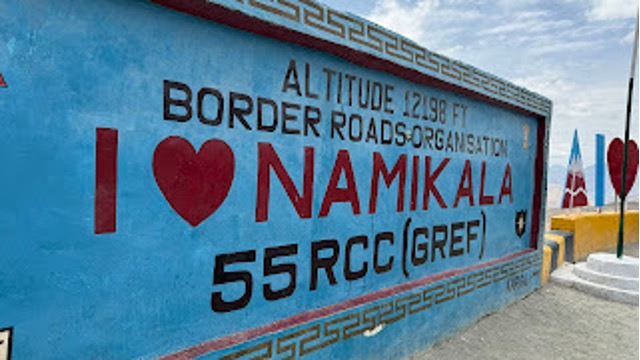
Photo Courtesy: Farouk Gulsara

Nevertheless, we were feasted with some of the most mesmerising views of barren, arid landscapes, as though someone had painted them with hues in the brown range, occasionally speckled with malachite green and a top of sky blue. It was a feeling as if we were at the edge of heaven. 

We pass through a small town called Malbech, which appears to be a Buddhist town with many temples and chanting over its public address system. I guess no one wants to keep their sacred words of God to themselves. They had a compelling desire to broadcast it to the world. 

Many Shiva temples and mosques lined the road of our ride, all showing their presence with specific flags, colours and banners claiming those areas. 

We finally reached Budhkharbu at 2 pm in the heat of summer Ladakh. The temperature was about 22C. The total biking time was 5h 43m. Everyone was shrivelled, depleted of glycogen and energy.  

Budhkharbu is so far from civilisation that the occupants do not feel the need for digital connectivity. Only we, the town folks, were having withdrawal symptoms for not being able to upload our Strava data to earn instant gratification. Foreigners were not allowed to purchase SIM cards, so we were essentially crippled for a day.

Day 8. Padma Numbu Guest House, Budhkhorbu to Nurla
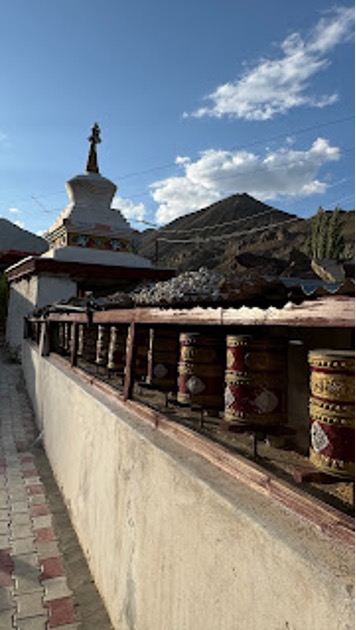
Photo Courtesy: Farouk Gulsara

Rise and shine. Rinse and repeat. Breakfast at the Guest House to a vegetarian, sorry, no eggs too, accompanied by the aroma of incense and the tune of ‘Om Jaya Jagatheeswara Hare1‘, we were good to go. I suspect the owners of this guest house were ardent BJP supporters. The keyholder to our rooms carried a lotus symbol. And the BJP mission office was their neighbour. 

We were up on the saddle and ready to move by 7:15 am. The sun was already bright and shiny by then, and we were all enticed by the 26kms steep decline.

After 9 kms, we did not mind the initial steep climb traversing the unforgiving Fotula Pass. At one point, we almost reached 4,200m above sea level. Other than the occasional passerby and military barracks, there wasn’t a single inkling of life there. It was just barren, arid land for miles and miles. 

64 km later, we arrived at our destination, Nurla. Nurla is a no man’s land and is not featured for first-time visitors to Ladakh. Nearby is a self-forming statue of the Sleeping Buddha and a giant statue of Maitreya Buddha. Here, the seed of the Namgyal Dynasty started. It is famous for Tibetan paintings. As temporary sojourners, we just learned and moved along. 

By now, we had learnt how the honking system worked. Even the brotherly advice from BRO (Border Road Organisation) advises using vehicle horns, especially at blind corners and overtaking another vehicle. At a telepathic level, the driver seems to converse with the other, ‘I can take charge of my vehicle as I overtake you. Now, don’t you make any sudden moves, can you?’ The melodious tone of honks, especially of lorries and buses, is just to liven up the monotonous journey, as do music (and movies).

Day 9. Travellers Lodge, Nurla to Leh

We were told today’s leg would be challenging, with 85 km to cover and a steep one. Hence, we had to be up on our saddles by 5 am. 

In essence, today’s outing was the toughest by far. We climbed two hills, and just when we thought everything was done and dusted, another climb to our hotel came. Overall, we covered 85km and 1672m elevation in 7h 2m. 

We saw two essential tourist attractions as we approached Leh: Magnetic Hill and gurudwara. Magnetic Hill is believed to create an optical illusion of a hill in the area and surrounding slopes. The cars may be going uphill when they are, in fact, going downhill. 
Sourced by Farouk Gulsara

The Guru Pathan Gurudwara is another curious worship site in the middle of nowhere. Legend has it that Guru Nanak stopped at this place, coming from Tibet and towards Kashmir. It was a Buddhist enclave. While meditating, an evil demon tried to crush him by rolling down a boulder. Hold behold, the stone turned waxy soft and did not injure the Guru. 

An indestructible piece of rock was encountered while constructing this stretch of the highway. The Buddhist monks told the authorities of the legend, and the Gurudwara was erected. The Buddhists revered Guru Nanak and treated him as a great teacher. 

The journey ended with a brutal, unrelenting climb to our final destination, Hotel Panorama in Leh. 

The next journey the following day to Khardungla was optional. Only the young at heart opted for it. A 37 km journey with an inclination of 8% constantly with possible extreme subzero temperatures was too much to ask from my gentle heart. I opted out.  

Thus ended our little cycling escapade from Srinagar to Leh, Ladakh. Few will attempt this journey with SUVs or superbikes; only madmen will do it with mountain bikes. 

P.S. I want to thank Sheen, Adnan, Basil, and Samir of MTB Kashmir for their immaculate planning and supervision of the rides. 

  1. A holy chant extolling the lord of the Universe ↩︎

Farouk Gulsara is a daytime healer and a writer by night. After developing his left side of his brain almost half his lifetime, this johnny-come-lately decided to stimulate the non-dominant part of his remaining half. An author of two non-fiction books, Inside the twisted mind of Rifle Range Boy and Real Lessons from Reel Life, he writes regularly in his blogRifle Range Boy.

.

PLEASE NOTE: ARTICLES CAN ONLY BE REPRODUCED IN OTHER SITES WITH DUE ACKNOWLEDGEMENT TO BORDERLESS JOURNAL

Click here to access the Borderless anthology, Monalisa No Longer Smiles

Click here to access Monalisa No Longer Smiles on Kindle Amazon International

Categories
Editorial

Seasons Out of Time

...the horror of dark red sky – the gates of hell opened wide so they say that even atheists prayed to save the souls of the dead...

— Lizzie Packer, 'Hot Dry Summers'

The description in ‘Hot Dry Summers’ is not of hell but what is perceived as happening on certain parts of Earth due to global warming or climate change. Forest fires. Nearer the equator, the storms have become harsher with lightning strikes that seem to connect the Earth to the sky. Trees get uprooted as the soil is softened from excessive rain. Sometimes, they fall on passers-by killing or injuring them. There is no rain in some places, forest fires or flooding in others… The highest temperatures touched 55 degrees Celsius this year. Instead of worrying about losing our homes lodged on land masses to the oceans that continue to rise, becoming dark heat absorbers due to loss of white ice cover, we persistently fight wars, egged on by differences highlighting divisive constructs. It feels strange that we are witness to these changes which seem to be apocalyptic to doomsday sayers. Are they right? Our flora, fauna and food will also be impacted by global climate change. How will we survive these? Will we outlive these as a species?

Keeping the myriad nuances of living on this planet in mind, we have writings from more than a dozen countries showcased in this issue, with a few highlighting climate change and wars — especially in poetry. Michael Burch has given us poetry on weather. John Grey has celebrated nature. Other than Lizzie Packer, Mitra Samal has a subtle poem on climate change. Stuart McFarlane and David Mellor bring the disaster of war to our doorstep. Jared Carter, Kirpal Singh, Ryan Quinn Flanagan, Averi Saha, Shamik Banerjee, David Francis, George Freek, Rakhi Dalal and more have reflected on the varied nuances of life. Rhys Hughes has brought in humour and a comment on our perspectives, with his poem ‘Devil’s Bridge to Istanbul’… Can a shortcut be found across continents with the magic of a signboard?

Poetry in our translations’ section travels to Balochistan, from where a Hafeez Rauf translated from Balochi by Fazal Baloch, talks of burning tyres, again conflicts. It takes on a deeper hue as Ihlwha Choi translates his poignant poem from Korean, reflecting on the death of his mother. We have a translation of Tagore’s less popular poem, Mrityu[1], reflecting on the same theme. His reflections on his wife’s death too have been translated by Professor Fakrul Alam who has also shared a song of Nazrul, written and composed on the death of Tagore. Another lesser-known poet but brilliant nonetheless, Nirendranath Chakraborty, has been translated for us by Debali Mookerjea-Leonard. And what a tremendous poem it is when the person called Amalkanti wanted to be sunshine! We have a story too — ‘Speech Matters’ by Naramsetti Umamaheswararao translated by Johny Takkedasila.

Our stories as usual travel around the world — from Holland (by Paul Mirabile) to Hyderabad (by Mohul Bhowmick) and with a quick pause at Bangalore (by Anagha Narasimha). Travels in the real world are part of our non-fiction. Sai Abhinay Penna takes to a the second largest mangrove forest in the world and Ravi Shankar to Colombo. Madhuri Bhattachrya gives us a glimpse of an Indian summer and Snigdha Aggrawal explores the impact of climate change in her part of the world. Farouk Gulsara actually writes his reflections at a traffic junction. And it reads droll…

We have an in memoriam by Keith Lyons on Morgan Spurlock, the documentary maker who ate McDonald fare for a month and then made a film on it. We have two tributes to two legends across time. Wayne F Burke has given a brief piece on the iconic illustrator, Norman Rockwell. And Aruna Chakravarti, the queen of historic fiction who brought the Tagore family alive for us in her two very well researched novels, Jorasanko and Daughters of Jorasanko, has given us a fabulous tribute to Tagore on the not-so common aspects of him.

We have excerpts from another historical novel set in Bengal of Tagore’s time, Dan Morrison’s The Prince and the Poisoner: The Murder that Rocked the British Raj and Hughes’ The Sunset Suite, a set of absurd tall tales that make you smile, squirm or wonder…  Reviews of Salman Rushdie’s Knife: Meditations After an Attempted Murder by Somdatta Mandal and of Arundhathi Subramaniam’s Wild Women: Seekers, Protagonists and Goddesses in Sacred Indian Poetry by Basudhara Roy bring two latest books to our readers. Navleen Multani reflects on Mapping the Mind, Minding the Map, edited by Basudhara Roy and Jaydeep Sarangi. And Bhaskar Parichha tells us about a group of men called Pundits during British Raj, “In the closed files of the government of British India, however, they were given their true designation as spies…” in his review of Derek Waller’s The Pundits: British Exploration of Tibet and Central Asia.

Suzanne Kamata, the novelist who does a column from Japan for us normally, has spoken to us about her new novel, Cinnamon Beach, which overrides multiple manmade constructs. It’s an interesting read from someone who lives her life across multiple cultures and transcends many boundaries.

This is a bumper issue, and it is difficult to convey the vibrant hues of words that colour this edition. Please do pause by our contents page for a more comprehensive look.

This issue would not have been possible without all our fabulous contributors and a wonderful, dedicated team. We are delighted that Rakhi Dalal — who has done many reviews and shares her poetry with us in this issue — has agreed to be a writer-in-residence with us. A huge thanks to all of you, and especially Sohana Manzoor for her artwork. I am truly grateful to our readers for popularising our efforts to put together an online space with free and vibrant reads.

I would like to end with a few lines that gives me hope despite climate change, wars and doomsday predictions.

There’s more to life,
he says to me,
than what you choose to see.

— George Freek, 'The Imponderables'

Enjoy the reads.

Mitali Chakravarty

borderlessjournal.com

[1] Death

Click here to access the content’s page for the July 2024 Issue.

.

READ THE LATEST UPDATES ON THE FIRST BORDERLESS ANTHOLOGY, MONALISA NO LONGER SMILES, BY CLICKING ON THIS LINK.

Categories
In Memoriam

Fast Food for a Month!

American film-maker Morgan Spurlock, best known for ‘Super Size Me’ didn’t want to be remembered as just the guy who ate burgers for a month. He had other plans, as Keith Lyons discovered

Photo from Public Domain

It was almost 20 years ago I first met the film-maker Morgan Spurlock. As part of a global tour promoting his newly released participatory documentary Super Size Me he was in New Zealand’s capital Wellington. While he told me about how he hatched the ‘really great, bad idea’ of the movie, I too came up with the crazy plan to get him into a nearby McDonald’s for a suitable photo for the magazine I was writing for.

Morgan’s film idea came after a Thanksgiving dinner at his parent’s place. While lying on a couch having eaten his fill, he was watching TV when there was a story about two people who had sued McDonald’s, claiming that the fast-food chain had misled them about the nutritional value of its burgers, fries and sodas, causing them health problems as well as a to gain significant weight. As part of the story, a spokesman for McDonald’s came on, saying there was no link between their obesity and the food at McDonald’s which was healthy and nutritious. Morgan figured that if he ate McDonald’s every day, there shouldn’t be a problem.

For 30 days, he ate nothing but McDonald’s food and drink, trying everything on the menu at least once, and accepting any super-size portions when offered. He gained weight and got sick. At the end of the month, he appeared puffy faced. His liver function was impaired, and he was depressed. The doctors monitoring his state advised him not to continue damaging his health (later, he confided to me that it took him more than a year to get back to his original weight — with help from his girlfriend Alexandra Jamison — also known as Healthy Chef Alex).

The film about the promotion of fast foods and American eating habits went on to win the best directing prize at Sundance Film Festival and was nominated for an Oscar. It capitulated the docu-prankster into being a household name.

A few years after the movie came out, he had married Alexandra (his second of three marriages which ended in divorce), who came up with the book, The Great American Detox Diet. Morgan told me about his other projects he’d been working on. After Super Size Me, he developed an unscripted documentary-style series. His 30 Days was based on putting a person in a different environment from their upbringing, beliefs, religion or profession for a month to see how exposure to opposite worldviews altered prejudice. “Yeah, I spent 25 days in a jail in Virginia,” he once emailed me casually, when he had become the person embedded in a community very different from his own. “Just so I could experience life as an inmate.” He wanted the reality TV series to explore how people might challenge their now stereotypes, so had a devout Christian living with a Muslim family, and a homophobe staying with a homosexual.

From the Public Domain

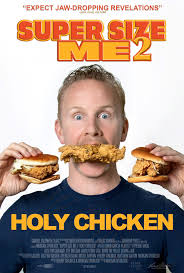
Morgan, who had been likened to a budding Michael Moore ‘for a Jackass generation’[1], went on to direct and produce more movies, including about terrorism and the fight against it in Where in the World is Osama bin Laden (2008), What Would Jesus Buy (2007), and even One Direction: This is Us (2013), and The Simpsons 20th Anniversary Special – In 3-D! On Ice! His interests were eclectic, making a documentary about comic book convention fans as well as one on men’s grooming, and another on product placement. His long-awaited Super Size Me 2: Holy Chicken!, where he looked at how the fast food industry had changed, came out in 2019, but by then his career had waned, following an admission of sexual misconduct which included being unfaithful to every wife and girlfriend he ever had, and also a long term problem with alcohol.

I lost contact with Morgan a few years ago, but still have memories of the time we walked up the stairs into McDonald’s in central Wellington. No security guards came to stop us from taking photos. No manager yelled at us. He stood smiling with that broad goofy smile of his and his trademark handlebar moustache as I snapped away taking pictures of him with the backdrop of the McDonald’s counter and menu board. He had been worried that we wouldn’t be allowed inside McDonald’s, or to take any photos. In the US, he told me, security alerts meant he couldn’t step into any Golden Arches without being challenged.

I was saddened to hear that Morgan recently died, of complications from cancer, aged 53. Many newspapers headline the news: ‘Documentarian who ate McDonald’s for 30 days and changed fast food industry’. His brother Craig said Morgan “gave so much through his art, ideas and generosity. The world has lost a true creative and a special man”.

In the late-2000s, after the success of Super Size Me, Morgan told me of his ambitions, and reminded me that he didn’t want to be typecast for just Super Size Me. “I hope I am remembered for more than just as the guy who ate hamburgers for a month.”

[1] Gen X from: https://en.wikipedia.org/wiki/Jackass_Forever

.

Keith Lyons (keithlyons.net) is an award-winning writer and creative writing mentor originally from New Zealand who has spent a quarter of his existence living and working in Asia including southwest China, Myanmar and Bali. His Venn diagram of happiness features the aroma of freshly-roasted coffee, the negative ions of the natural world including moving water, and connecting with others in meaningful ways. A Contributing Editor on Borderless journal’s Editorial Board, his work has appeared in Borderless since its early days, and his writing featured in the anthology Monalisa No Longer Smiles.

.

PLEASE NOTE: ARTICLES CAN ONLY BE REPRODUCED IN OTHER SITES WITH DUE ACKNOWLEDGEMENT TO BORDERLESS JOURNAL. 

Click here to access the Borderless anthology, Monalisa No Longer Smiles

Click here to access Monalisa No Longer Smiles on Kindle Amazon International

Categories
Interview

Nature & Kenny Peavy

Keith Lyons introduces us to Kenny Peavy, an author, adventurer, educator and wilderness first-aider who has travelled far and wide and wishes everyone could connect with the natural world right outside their door. 

American Kenny Peavy has spent three decades getting people outdoors. He believes that by playing in and exploring the natural world, we can discover or re-kindle a deep connection with Nature and learn to respect and take care of the planet we all share. 

For the last twenty one years, he’s been based in Asia, working in Thailand, Malaysia and Indonesia. He’s currently at possibly the coolest school in the world, made of bamboo and nestled in lush jungle, the Green School Bali. Kenny is an advocate for education and learning outside the classroom. 

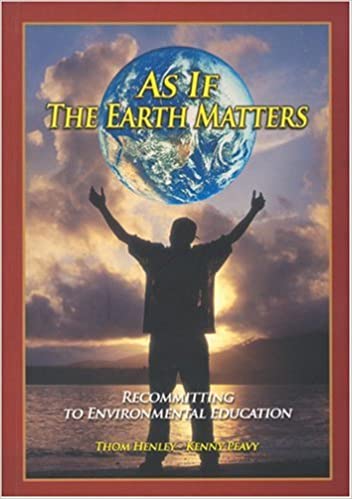
In this conversation, we are going to learn about growing up in the South of the US, how his environmental awareness was instilled, what brought him to Asia, and some of the biggest cultural differences (including breakfast). In addition to his questioning memoir Young Homeless Professional, in 2007 Kenny co-authored the pioneering environmental education handbook, As if the Earth Matters, and recently, an illustrated book, The Box People , was re-released digitally to enable children, young people and their parents and educators anywhere in the world to use the book. He also created Waffle House Prophets: Poems Inspired by Sacred People and Places

In efforts to raise awareness about conservation and sustainability in Southeast Asia, he’s paddled around the island of Phuket in Thailand, and ridden a bamboo-frame bike from Thailand through Malaysia to Singapore and Bali. As well as being a nature guide, project fundraiser and science teacher, Kenny is also a qualified wilderness first responder and first aid trainer. In Bali, he had to flee with his family when an erupting volcano threatened their village. 

Kenny has some advice for city-dwellers afraid of the ‘sometimes scary’ world away from concrete and mobile phones.

Tell me about growing up in Georgia, as I only know it being famous for peanuts, and being the birthplace of Julia Roberts, Kanye West, Martin Luther King Jr, Ray Charles, and Hulk Hogan? 

I was born in 1969 so, essentially, I was a kid in the ’70s and ’80s. Since the ’80s were my high school years, I consider myself a child of the ’80s in all its hair metal, boom box, Pac Man and Donkey Kong glory!

It was very rural. A lot different then. We weren’t as aware of the outside world and didn’t have access to a lot of things like we do now. 

I distinctly remember going to my first ‘real mall’ in about 1984 or maybe 1985. It was Gwinnett Place Mall. A huge commercial shopping centre. Up until then, we only really had local mom-n-pop shops. So, it was astounding. One of my friends could drive and he had a car. 

None of us had much money so we all pitched in a couple of dollars for gas. The parking lot was dizzying and the mall was an amazing place to watch people. We tried this new thing none of us had ever heard of called a Gyro wrap and it was absolutely delicious and strange. Then afterwards I had an Oreo ice cream. Something I had never experienced before since we only had vanilla, strawberry and chocolate ice cream at the local shop. It was all brand new. 

Growing up in the countryside we didn’t have that sort of food or flavours so even those simple things we take for granted today were fascinating novelties back then!

Aside from that, as I said, it was very rural. Most folks had land and cows or chickens. A lot of pine trees which means pulp mills to make paper. Plenty of dirt roads. Atlanta was the BIG CITY and most of us were kind of afraid to go there because we never heard anything but bad news about city folks.

What was the environment you grew up in like

Most folks were into fishing, hunting and other similar recreations. I went to a public school and took the free bus to school. We definitely had jocks, hicks, geeks and other ‘distinctive’ social groups. Me and all my friends were into hard rock and heavy metal and we saved our money so we could see all the shows from AC/DC, Bon Jovi, Ozzy Osbourne and White Snake when they came to Atlanta (even though we were scared of the Big City and fast talking city folks).

Our big entertainment was cruising the strip mall where they had a McDonalds and a hardware store. We’d all just drive in circles wasting time and gas while blasting The Scorpions so we could wave at people we’d seen at school the very same day.

I think most families were basically Blue Collar with jobs in construction, factories or some kind of farming. We all grew up working and my first job at age fifteen was washing dishes at a steak house in town. Other jobs we had as teens were cutting grass, painting curbs, running cashier in a gas station and other similar tasks.

How did you get into writing, was it something you developed a talent for early on, or did you have some inspiration and guidance from others? 

I always wanted to be a poet and swoon the girls with poems and fancy quotes from far-flung novels. It never worked.

I also wanted to be that professor with the patches on the elbows of his tweed jacket and a pipe dangling from my mouth as I pontificated wise philosophical diatribes to impress the masses. I’m still working on that one!

Your interest in Nature, the environment and science, where did that come from? 

Essentially, from growing up and playing outdoors. We were always outside and not allowed in the house during the day. So, we’d get bored and flip over logs, explore the creeks, go fishing and ride our bikes all over the trails in the woods.

This lead me to get curious about the critters we found under the logs and hiding out in the rocks in the stream. Combine that with a love for hunting and fishing and I eventually studied biology at university.

I basically wanted to know how Nature worked. What made it tick? How did all the pieces fit together? That also lead to jobs at the Institute of Ecology at the University of Georgia where I learned a heap about aquatic macro-invertebrates, ichthyology (fish) and ecology — and had a private lunch with the Father of Modern Ecology and author of the very first ecology textbook, Professor Emiritus Eugene Odum.

That’s why I firmly believe that a childhood spent outdoors playing and exploring will later lead to an insatiable curiosity for Nature and an ethic for conservation and stewardship.

You document in your book Young Homeless Professional  about a time in your life when you immersed yourself in the natural world, and were searching for answers. What did you learn from that time about the world and yourself? 

I essentially have many of the same questions today. I think I understand the inner workings of Nature and life’s mysteries a bit better now. With a modicum more insight and quite a few more experiences under my belt than 20+ years ago, I think what’s most important is the process of questioning. The ability to stay open to life’s possibilities is key. We most likely will never fully comprehend or understand life, our roles in the cosmos and Nature’s mysteries, but if we stay curious, keep exploring, stay open to the possibilities and keep questioning then I think that’s the key to finding a place in this world we all share.

How did you end up moving from the US to teaching in Asia? 

On a whim. I wanted adventure. I wanted to see and experience new cultures, try weird foods, learn about different religions and philosophies. Speak strange languages. So with US$ 8,000 in the bank, a teaching degree and a hankering to see the world I set out for Kuala Lumpur in the year 2000: I’ve never looked back!

What are the biggest differences between life in the US and your current life and environment in Bali? 

The biggest difference has to be that it’s a majority Muslim country. My wife is Muslim and I’ve grown quite comfortable being married into a different culture and religion. And here in Bali, it’s mostly Hindu which is vastly different from Islam. Growing up in the Southern US, I was only ever exposed to Methodist and Baptist forms of Christianity. All of this was new to me 20 years ago when I moved here.

I think the tropical climate and easy-going beach lifestyle are also very different from growing up in the foothills of the Appalachian Mountains. 

Another HUGE difference is having rice for breakfast! I was always a hash browns and eggs or better yet, grits, kind of guy. We don’t really have either one of those here. But instead, they eat rice with a spicy sauce and crispy chicken or fish for a typical Indonesian Breakfast!

As well as being a teacher, you’ve done a lot of activities, organising events, initiating projects and raising funds. What’s your motivation for doing these? 

I feel like we should give back. Whatever we have to share, to teach, to give to others is valuable. Being part of something bigger than ourselves, whether it is a project, a group, a movement or an ideology is fundamental to achieving a sense of fulfilment and belonging. When we give, we receive back way more joy and happiness than we originally gave. It gets multiplied! Through giving of ourselves and sharing what we have, we receive a sense of being part of a larger cause and a sense of contentment which is multiplied many times over. 

One of your most notable achievements, in addition to your writing and educational work, is riding a bamboo bicycle across Southeast Asia from Thailand to Bali to raise awareness on sustainability. What was the hardest part of that adventure? 

It was all fun with plenty of excitement and adventure. There were actually very few hiccups and hardships. But I would have to say that cycling some of the monotonous palm oil plantations through peninsular Malaysia from the Thai border to Singapore was hot, boring and so sad. It was heartbreaking to see what was once a beautiful rainforest converted into endless palm oil plantations and a never-ending paved highway.

You also kayaked around the island of Phuket to raise awareness about marine conservation. How important is tangible action to bringing about change? 

Taking action is paramount. We can say anything we want. We can project an image of being eco-friendly and sustainable. We can GreenWash anything. But if you want to see what someone truly believes, watch what they do. Pay attention to their actions. Tangible action, hands-on, in the field, is where it’s at! Especially, if we truly want to bring about change and make a difference we have TO DO, not just SAY or BELIEVE.

Environmental education seems to be at the heart of your mission, how do you encourage students, teachers and adults to re-connect with Nature? 

Ironically, I spent 2 years researching this question as part of my MS degree and what I discovered and concluded after hundreds of peer-reviewed papers, conferences, surveys and questionnaires is that the best way to connect to Nature is simple… get outside and play!

Free time, exploring and playing in Nature are way more effective than any curriculum or lesson plan. When we take time to just wander and wonder we connect in ways that can’t be facilitated through constructed lessons or planning. It happens naturally and spontaneously when we get lost in play, discovery and exploration.

What are people’s (particularly city-dwellers) biggest fears about the natural world? 

I think the main thing people are afraid of is boredom. They don’t know how to wallow in boredom until the sense of wonder kicks in. We’re so used to instantaneous entertainment that we’ve become afraid to just sit, observe and take things as they come.

Another big one is mosquitos! And leeches. People are terrified of leeches!

Tell us about the environmental education book you co-wrote with Thom Henley As if the Earth matters?

It’s basically a teacher training manual and activity guide. We wrote it back before there were any resources to train teachers in Southeast Asia. So, the activities are meant to get kids connected to nature through exploration and engaging the senses. We put an emphasis on showing Southeast Asian flora and fauna as well as locals in Thailand, Malaysia and Indonesia as instructors and participants to make sure it would have a multi-cultural approach to environmental education.

I am hoping to take some of the activities in the book and update them and create a much smaller activity packet. I think it’s now more important and relevant than ever that we try to connect kids and adults to Nature. 

As well as working as a nature guide, trek leader, science teacher, you are also a wilderness first aid instructor. What inspires you to be so active? 

I think the main driver and inspiration comes from a sense of curiosity. I always wanted to be a National Geographic explorer, or some kind of adventurer!

When I was young, I was inspired by the Indiana Jones movies, David Attenborough and TV shows that featured people exploring exotic places, getting lost in mysterious jungles, landing in the middle of some kind of misadventure or a quest.

Those images stuck with me and keep me excited and curious to this day! There is always something new to learn, a new place to see, a new style of music to hear, and new flavours to be tasted.

You’ve also done some personal service projects, such as in Bali helping those affected by the volcano eruption. How challenging is it to initiate projects, particularly in a foreign country? 

It’s easy to do a project but it’s incredibly difficult to do it right.

The key seems to be relationships. If you have a relationship with someone in the village or even someone that knows someone in the village then things tend to go well.

The main issue I see is that many foreigners want to help in some way but they simply don’t know how. During the Mount Agung crisis, we were at a refugee camp and saw a car pull up and start tossing food into the crowd. The local villagers were then forced to run around and grab the donations up off the ground. It was very demeaning. I vowed to never approach any type of service project that way.

Essentially, you just need to ask the village what they truly need. This is the crucial step and it’s often overlooked. What I mostly see are people with good intentions making assumptions about what a village needs and then donating completely irrelevant or unwanted and unneeded stuff. Whether this is inappropriate food items that won’t be used, hot thick blankets in the tropics or painting a wall at a school when the funds and volunteer time could be used much wiser the missing ingredient is always communication with the locals to find out their true needs.

In the case of Mount Agung, what we discovered after meeting the heads of the villages is that they wanted fresh vegetables, fresh fruit, spices, electric fans and N95 masks. They said everyone had donated rice and instant noodles and that they needed something they could cook to go with it! In the end, we delivered those items based on their needs and wants not on assumptions.

So, if and when folks want to help out and do service projects it’s most helpful to find a trustworthy local that can help facilitate communications to ensure that the project is effective and truly wanted and needed.

How much do you feel you are an American in Asia, or a global citizen of the planet? 

I don’t feel very American anymore. Aside from my mom, dad and sister, I don’t have many connections to my country of birth these days.

I’ve been overseas for more than 20 years now. I’ve changed quite a bit personally and the USA has also changed a great deal in that time. 

I would say nowadays I definitely feel more like a global citizen and can be comfortable in almost any situation. These days I’m used to being surrounded by, working with and keeping company with locals of whatever country I am working in.

Being surrounded by people of diverse cultures, exploring and learning about different peoples, traditions, foods and ecosystems are what keep me happy!

When it comes to communicating and writing, what’s your process? 

Ideas always come to me at the strangest times. The best ideas seem to come when I am not thinking about writing but instead, when I am on the motorbike, bicycle, drifting off to sleep or distracted or focused on something entirely different. To catch those ideas, I always keep a pad of paper and pen next to the bed, my phone has a note-taking app and I have a zillion sticky notes. I even e-mail ideas to myself sometimes! So that’s step one. Catch the idea and record it. 

Then I tend to forget about it until I come across a similar thought or idea through reading, listening to a podcast or hearing something or someone that triggers more thought. That’s when I tend to gather up those ideas from the emails, sticky notes and note-taking app and start to map them out and write an outline. Then I forget about it again for a while.

Finally, when I revisit those ideas, I try to develop them into an essay, poem or even a book!

For the writing, I try to use my Southern American voice and interject colloquialisms. I normally write it. Edit it. Re-write. Edit again.

I find the editing is ongoing and every time you ‘rest’ in between versions and then look at your writing with fresh eyes you catch phrases that could be written better, sentences that can be shortened and different ways to say and express things that make them more interesting. Lastly, the thesaurus is my best friend!

What advice do you have some someone reading this, who wants to find their purpose, and also make a difference in the world?

Stay curious. Stay open. Seek out adventure. Don’t be afraid to fail. Keep learning new skills and spend long periods of time reflecting on who you are and what you have to contribute to the world.

Enjoy the adventure of being alive!

CLICK HERE TO READ HIS COLUMN, MISSION EARTH.

You can follow Kenny Peavy on Twitter @kenny_peavy or Instagram @kenny_peavy, and he will reply if you email him at kennywpeavy@gmail.com. Kenny also has a FB group about the Box People project (https://www.facebook.com/groups/boxpeopleunboxed ), and there is more information about the book on Amazon (https://www.amazon.com/Box-People-Out/dp/B09M4R6PRB/), or direct from Kenny via email kennywpeavy@gmail.com

Keith Lyons (keithlyons.net) is an award-winning writer who gave up learning to play bagpipes in a Scottish pipe band to focus on early morning slow-lane swimming, the perfect cup of masala chai tea, and after-dark tabs of dark chocolate. Find him@KeithLyonsNZ or blogging at Wandering in the World (http://wanderingintheworld.com).
.

PLEASE NOTE: ARTICLES CAN ONLY BE REPRODUCED IN OTHER SITES WITH DUE ACKNOWLEDGEMENT TO BORDERLESS JOURNAL