Categories
Poetry

Christmas Cheer

By Malachi Edwin Vethamani

Christmas Cheer

The familiar sounds of carols 
and hymns are distant 
as are the smells of 
curries and freshly baked cookies. 

Boyhood memories warm the spirit
but the passing of the years
missing loved ones
brings a chill to the heart. 

The present so varied
and so unfamiliar 
of the once held dear
Christmas joy. 

A chef is roasting the turkey.
A waiter is pouring my wine.
Text messages are streaming in 
but give little Christmas cheer.

Malachi Edwin Vethamani is a poet and writer. His poetry publications include: Life Happens (Maya Press, 2017) and Complicated Lives (Maya Press, 2016). His edited volume of poems entitled Malchin Testament: Malaysian Poems (Maya Press, 2017) won the Best Book prize in the English Language category for the Malaysian Best Book Award 2020 organised by the Malaysian Publishers Association. His latest publication is an edited volume of poems entitled Malaysian Millennial Voices (Maya Press, 2021). His poems have appeared in various literary journals. He is Founding Editor of Men Matters Online Journal.

.

PLEASE NOTE: ARTICLES CAN ONLY BE REPRODUCED IN OTHER SITES WITH DUE ACKNOWLEDGEMENT TO BORDERLESS JOURNAL
Categories
Poetry

Wake

By A Jessie Michael

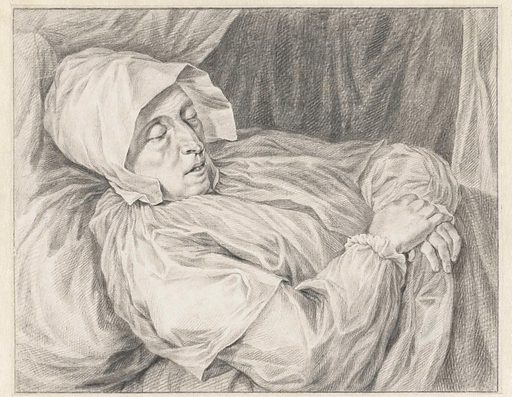
I awake to a wake,
(my very own it seems)
Of people familiar and not,
Unaware that I am awake at my wake.

What have I left 
in the wake of my awake life-
A speed boat existence
Swirling a lengthy, frothy wake?

How many were drenched by
The spray of my life’s wake?
I never turned to see
Too busy awake to the things before me

Now they reminisce, drink, smoke and snack
To keep awake at my wake.
“Go home. Sleep!” I say
But to them I’m not awake.

They keep awake at my wake
To celebrate me dead.
Where were they
When I was truly awake?

“O we were there,” they chatter.
“We were drenched by the wake
Of your speedboat existence.
Were you truly ever awake?”

A. Jessie Michael is a retired Associate Professor of English from Malaysia. She has written short stories for online journals, local magazines and newspapers. She has published an anthology of short stories Snapshots, with two other writers and most recently her own anthology The Madman and Other Stories (2016).

PLEASE NOTE: ARTICLES CAN ONLY BE REPRODUCED IN OTHER SITES WITH DUE ACKNOWLEDGEMENT TO BORDERLESS JOURNAL

Categories
Stories

Captain Andi is in love

By Dr. P Ravi Shankar

The bubbly lyrics of Bobby McFerrin’s song ‘Don’t worry be happy’ filled the room. Andi was awakened from his slumber and slowly opened his eyes. He glanced at the clock by the bedside. Five a.m. Still dark outside. He had a virtual clinical exam later that morning. Early to bed and early to rise in the good old armed forces tradition was always mentioned by his mentor. Though with the heavy course workload and multiple assignments on most days he did not hit the bed before 11 pm.

His artificial intelligence (AI) mentor carefully monitored his academic progress. He was a straight A student and had done very well through the duration of the course, which was partially done. He was doing an accelerated curriculum and was expected to graduate in about two years. After his morning ablutions, his home robot came with a steaming hot cup of coffee. Dark and strong just the way he liked it. The robot checked his physical parameters. There were several sensors implanted in his body monitoring in real-time his physical parameters. Everything seemed normal and there was no cause for alarm.

He was one of the twenty students who had joined the undergraduate medical program at the Armed Forces medical school a year ago. He was inducted at the rank of Captain. Now the army and other organisations did not require many doctors. AI systems did most of the work of diagnosing and treating patients. AI was ubiquitous and omnipresent. Systems drove trucks, public transportation, private transportation, flew planes, did all menial jobs, carried out all secretarial and clerical jobs and took care of and educated human children. He had a special interest in human history and recalled the history lessons he had taken at school. During the mid-twenty-first century AI began to dominate life and most humans had slowly but steadily lost their jobs. Some were able to retrain and readapt and started helping in building and educating AI systems. The wars and the heating of the planet had reduced the liveable land. Human population steadily decreased for the first time in several centuries.

Frequent pandemics had become a regular part of life. Or rather was it the same pandemic which never really went away? A certain degree of control and protection was afforded by vaccines, but the virus had become endemic. Humans were resilient and had adapted to the new normal. New strains were isolated regularly, and these required a new set of vaccines to be developed and another round of vaccination. Luckily vaccines were edible these days and incorporated in tasty fruits like bananas.

Maya was his classmate. A perky and slender dark-haired girl, she never failed to cheer him up. He would be meeting her in about an hour. He read through his notes and prepared for the day ahead. He had a special interest in cyborgs and in enhancement of human function. Medicine had developed so much since the Middle Ages. He would be having a class on the ethics of incorporating AI systems in medicine in the morning by Prof Kim. He enjoyed Prof Kim’s sessions. All sessions these days were virtual except the ones on clinical skills. Most patients interacted with their doctors virtually. The sensors implanted on each human meant changes could be identified early and diseases addressed at the incipient stage. He and his fellow students and the teacher interacted virtually using a mix of extended reality and holographic images. The world had shifted online.

The world was a huge web. The internet of things. Devices and persons communicated constantly. Life was good, was it not? Why did he get the creepy feeling that he was being monitored all the time? Was he ever really alone? His father had made a fortune building sea walls and protecting coastal cities from the rising seas. The sea level had risen by over two feet and sea walls were a necessity. The Dutch were the masters and had made a huge fortune keeping the world from drowning. Human germ cell DNA editing was routine — both to eliminate deadly genetic diseases and to enhance human capabilities.  

Nearly everyone had some sort of enhancements done to their body to improve their hearing, vision, physical endurance, and immunity among other things. Surviving in the hostile world without an enhanced immune system was impossible. Occasionally he got together physically with his batchmates in the informal learning spaces the college provided. They were an even split. Ten humans with enhancements and ten living AI machines. Life had taken on a whole new meaning with the advent of machine life.

Machine life had several advantages. They were stronger, had almost superhuman powers and were immune to the viruses and other microbes in the air. Occasionally some parts needed to be replaced or some enhancements carried out. They did not need to sleep, and neither were they ever bored and unfocused. In medicine the machines had anthropomorphic features. They looked like humans and from their external appearance only it had become difficult to know if someone was a machine or a human.

Humankind was pursuing immortality. Most lived nearly three hundred years. Rich individuals could download their memories into AI systems and become immortal. The memories could be slowly downloaded at intervals into a developing human and a person could live life both in the virtual and the real worlds. Dr Cerson was a famous surgeon of the twentieth century, and his memories were being slowly downloaded into Captain Andi. Cerson’s ‘soul’ had passed through several human bodies during the ensuing centuries learning and adapting to the brave new world in the process. Surgery today was fully robotic and used an army of micro and nano-bots to carry out the procedure precisely and with nearly no tissue damage.

Maya was a humanoid — machine life. He recalled the day she had told him about herself in the college cafeteria. She knew he was developing tender feelings for her. Machines were built to detect and respond to human emotions. Human-machine intimate relationships were not expressly forbidden but neither were they encouraged by the government. There were a host of problems though the machines were built to be empathetic and kind to humans. The machines did not require sleep, no babies resulted from the relationship and one of the partners was immortal. He had given a lot of thought to these issues but eventually decided to go ahead with his relationship with Maya. He would be moving into her house in a week so that they could sync forces and optimise performance. He started humming the opening lyrics of the classic love song sung by George Benson ‘Nothing’s gonna change my love for you’ as he got dressed for his trip to the college cafeteria and coffee with Maya.

.

Dr. P Ravi Shankar is a faculty member at the IMU Centre for Education (ICE), International Medical University, Kuala Lumpur, Malaysia. He enjoys traveling and is a creative writer and photographer.

.

PLEASE NOTE: ARTICLES CAN ONLY BE REPRODUCED IN OTHER SITES WITH DUE ACKNOWLEDGEMENT TO BORDERLESS JOURNAL

Categories
Independence Day

Malaysia

Malaysia is said to have been inhabited 40,000 years ago by the same tribes who populated the Andamans. Situated on the trade route between China and India, they assimilated varied cultures into their lore, including that of the Arabs. Phases of colonial occupation by the Portuguese, Dutch and British wracked their history from 1511. They suffered from Japanese occupation during the Second World War. The Federation of Malaya achieved independence after a struggle on 31st August 1957. In 1963, the British colonies of Singapore, Sarawak and North Borneo were combined with Malaya and the country was rechristened Malaysia.

In 1965, Singapore was voted out due to ideological reasons, some of it being racial and political. This Partition was free of political bloodshed or violence between the two countries, unlike the earlier Partitions within Asia which led to much violence and bigotry — India, Pakistan and North Korea and South Korea (where the split along the 38th parallel was initiated by the West post-Second World War to settle matters between the ideological blocks of communism and capitalism).

Malaysia continues a federal constitutional monarchy with a Sultan and an elected Prime Minister at the helm and has a mixed population of Malays (Bumiputera), Chinese, Indians, Portuguese and other ethnicities. We present a selection of writing from this country, put together on the occasion of their 64th independence day, also known as Hari Merdeka or National day.

Poetry

Benderaku (My Flag) by Julian Matthews. Click here to read.

A False Dawn by  Malachi Edwin Vethamani. Click here to read.

Colours of Words, three poems by A Jessie Michael. Click here to read.

Prose

Brother Felix’s Ward

Malachi Edwin Vethamani takes us to an exploration of faiths and borders. Click here to read.

The Night of Sirens

A Jessie Michael tells us of riots that set in during elections in Malaysia. Click here to read.

Categories
Poetry

Colours of Words

By A Jessie Michael

DIVERSITY   

Diversity is our last name.
Born speaking three languages (or four),
We, unconscious code switchers,
created creole 
before linguists caught up with us.
Colourless and colour blind.
Playing in each other’s homes,
Their food, became ours 
 Ours, theirs.
Their foul words ours,
And our curses theirs.

We walk into temples,
Mosques, churches,
attending christenings, weddings
and funerals.
No discomfort we feel 
participating in diverse festivals
of each religion and race.
Come to think of it, 
Diversity must be our middle name.

We don each other’s costumes 
as a matter of daily wear;
no one claims ownership,
it’s all national fare.
Then of course we marry each other
Creating a lovelier mess
of bi-racial and tri-racial children
of no definite ethnicity.
Growing up bi-religious and tri-lingual,
Colourless and colour blind,

We live everywhere in this world,
Never feeling we are different
until we have to fill a form.
Asian, Indian, European, East European
Middle Eastern, African, African American,
 American and other.
How the heck do we know?
Dang those forms that ask us so,
to tick boxes to put us into boxes.
Dang the politicians of single colour 
because they cannot see the rainbow.

Actually, diversity is our first name. 


HAVE WE?  HAVE WE?        

Have we learnt another language
to challenge our little brains?
Have we walked in others’ shoes 
and learnt of their pain?
Have we shared with them a cup of joy
and freely drunk of theirs too?
Have we sat at their table and
broken bread with them?
Have we stood beside the others 
and thought them just the same?
Have we risen above ancient anger,
forgiven our fellow men,
thought them worthy of our compassion
and stretched out our hands?
Have we emptied the bitter cup
that diminishes all men?


Our colours are but geography,
our religions but pathways 
to the same universal One.
So, who is to say who is better?
It is always our own buried fear,
that we pray at the altar,
then curse the man on the street
just because he looks different 
and is from another land;
just because we will not say
he is really a God-made-Man.

A. Jessie Michael is a retired Associate Professor of English from Malaysia. She has written short stories for local magazines and newspapers. She has published an anthology of short stories Snapshots, with two other writers and most recently her own anthology The Madman and Other Stories (2016).

PLEASE NOTE: ARTICLES CAN ONLY BE REPRODUCED IN OTHER SITES WITH DUE ACKNOWLEDGEMENT TO BORDERLESS JOURNAL

Categories
Editorial

Triumph of the Human Spirit

On August 8th 2021, the chief of the International Olympic Committee, Thomas Bach, pointed out during the closing ceremony that these games were “unprecedented” and brought messages of “hope, solidarity and peace” into a world torn with the desolation generated by the pandemic. It was a victory of the human spirit again, a precursor of what is to come. That the Japanese could get over their pandemic wrought hurdles, just as they did post the nuclear disasters wrought by the Second World War and by the 2011 earthquake-tsunami at Fukushimaya, to host something as spectacular and inspiring as these international games reflects, as the commentators contended, a spirit of ‘harmony and humility’. The last song performed by many youngsters seemed to dwell on stars in the sky — not only were the athletes and organisers the stars but this also reminded of unexplored frontiers that beckon mankind, the space.What a wonderful thing it was to see people give their best and unite under the banner of sports to bring messages of survival and glimpses of a future we can all share as human beings! Our way of doing things might have to evolve but we will always move forward as a species to thrive and expand beyond the known frontiers.

One such explorer of yet unknown frontiers who mingles the historic with the contemporary, Goutam Ghose, an award-winning filmmaker and writer, has honoured our pages with an extensive interview showing us how art and harmony can weave lores that can help mankind survive. This is reinforced by the other interview with Singaporean academic, Dr Kirpal Singh, whose poetry reflects his convictions of a better world. With our intelligence, we can redefine processes that hold us back and grind our spirits to dust — be it the conventional ‘isms’ or norms that restrict our movement forward – just as Tagore says in the poem, we have translated this time, ‘Deliverance’.

…On this auspicious dawn,
Let us hold our heads high in the infinite sky 
Amidst the light of bounteousness and the heady breeze of freedom.

As the Kobiguru mentioned earlier in the poem, the factors that oppress could be societal, political, or economic. Could they perhaps even be the fetters put on us by the prescribed preconceived definition of manmade concepts like ‘freedom’ itself? Freedom can be interpreted differently by multiple voices.

This month, on our pages, ‘freedom’ has found multiple interpretations in myriad of ways — each voice visualising a different dream; each dream adding value to the idea of human progress. We have discussions and stories on freedom from Nigeria, Argentina, India, Pakistan, Myanmar, Malaysia and more. Strangely enough, August holds multiple independence/ national days that are always for some reason seen as days of being ‘freed’ by many — at least from oppression. But is that true?

From Malaysia, Julian Matthews and Malachi Edwin Vethamani cry out against societal, religious and political bindings – quite a powerful outcry at that with a story and poems. Akbar Barakzai continues his quest with three poems around ideas of freedom translated from Balochi by Fazal Baloch. Jaydeep Sarangi and Joan Mcnerny pick up these reverberations of freedom, each defining it in different ways through poetry.

Jared Carter takes us back to his childhood with nostalgic verses. Ryan Quinn Flanagan, Michael Lee Johnson, Vandana Sharma and many more sing to us with their lines. Rhys Hughes has of course humour in verse that makes us smile as does Jay Nicholls who continues with her story-poems on Pirate Blacktarn – fabulous pieces all of them. The sport of hummingbirds and cats among jacaranda trees is caught in words and photographs by Penny Wilkes in her Nature’s Musings. A poetic tribute to Danish Siddiqui by young Sutputra Radheye rings with admiration for the Pulitzer prize-winning photographer who met his untimely end last month on 16th while at work in Afghanistan, covering a skirmish between Taliban and Afghanistan security forces. John Linwood Grant takes up interesting issues in his poetry which brings me back to ‘freedom’ from colonial regimes, perhaps one of the most popular themes for writers.

Indo-Pak independence, celebrated now on 14th (Pakistan) and 15th August (India), reflects not only the violence of the Partition which dislocated and killed millions historically but also the trauma caused by the event. Capturing this trauma is a short story based on memories of Partition by Nadir Ali, translated from Punjabi by his daughter, Amna Ali. Ratnottama Sengupta translates from the diary of Sandhya Sinha (1928-2016), a woman’s voice from the past that empathises with the subjugated who were subdued yet again after an upsurge of violence during the Quit India Movement (1942) against the colonials. Sinha contends that though the movement frittered away, the colonials were left with an after-taste of people hankering for self-rule. A thought-provoking short story by Sunil Sharma explores the results of self-rule in independent India.

Alluding to Jinnah’s vision for women, Aysha Baqir muses emotionally about the goals that remain yet to be fulfilled 74 years after independence. Moazzam Sheikh’s story of immigrants explores dementia, giving us a glimpse of the lives of Asian immigrants in America, immigrants who had to find a new home despite independence. Was this the freedom they dreamt of — all those who fought against various oppressive regimes or colonialism?

Tagore’s lyrics might procure a few ideas on freedom, especially in the song that India calls its National Anthem. Anasuya Bhar assays around the history that surrounds the National Anthem of India, composed by Tagore in Bengali and translated to English by the poet himself and more recently, only by Aruna Chakravarti. We also carry Dr Chakravarti’s translation of the National Anthem in the essay. Reflecting on the politics of Partition and romance is a lighter piece by Devraj Singh Kalsi which says much. ‘Dinos in France’ by Rhys Hughes and Neil Reddick’s ‘The Coupon’ have tongue-in-cheek humour from two sides of the Atlantic.

A coming-of-age story has been translated from Nepali by Mahesh Paudyal – a story by a popular author, Dev Kumari Thapa – our first Nepali prose piece.  We start a four-part travelogue by John Herlihy, a travel writer, on Myanmar, a country which has recently been much in the news with its fight for surviving with democracy taking ascendency over the pandemic and leaving the people bereft of what we take for granted.

Candice Louisa Daquin discusses a life well-lived in a thought provoking essay, in which she draws lessons from her mother as do Korean poet, Ihlwha Choi, and Argentinian writer, Marcelo Medone. Maybe, mothers and freedom draw similar emotions, of blind love and adulation. They seem to be connected in some strange way with terms like motherland and mother tongue used in common parlance.

We have two book excerpts this time: one from Beyond the Himalayas by the multi-faceted, feted and awarded filmmaker we have interviewed, Goutam Ghose, reflecting on how much effort went in to make a trip beyond boundaries drawn by what Tagore called “narrow domestic walls”. We carry a second book excerpt this time, from Jessica Muddit’s Our Home in Myanmar – Four years in Yangon. Keith Lyons has reviewed this book too. If you are interested in freedom and democracy, this sounds like a must read.

Maithreyi Karnoor’s Sylvia: Distant Avuncular Ends, is a fiction that seems to redefine norms by what Rakhi Dalal suggests in her review. Bhaskar Parichha has picked a book that many of us have been curious about, Arundhathi Subramaniam’s Women Who Wear Only Themselves. Parichha is of the opinion,Elevated or chastised, exonerated or condemned, the perturbation unworldly women in India face is that they have never been treated as equal to men as spiritual leaders. This lack of equality finds its roots not only in sociological and cultural systems, but more particularly at the levels of consciousness upon which spirituality and attitudes are finally based.”One wonders if this is conclusive for all ‘unworldly women’ in India only or is it a worldwide phenomenon or is it true only for those who are tied to a particular ethos within the geographical concept of India? The book reviewed by Meenakshi Malhotra,  Somdatta Mandal’s The Last Days of Rabindranath Tagore in Memoirs, dwells on the fierce independence of the early twentieth century women caregivers of the maestro from Bengal. These women did not look for approval or acceptance but made their own rules as did Jnadanandini, Tagore’s sister-in-law. Bhaskar Parichha has also added to our Tagore lore with his essay on Tagore in Odisha.

As usual, we have given you a peek into some of our content. There is more, which we leave for our wonderful readers to uncover. We thank all the readers, our fantastic contributors and the outstanding Borderless team that helps the journal thrive drawing in the best of writers.

I wish you all a happy August as many of the countries try to move towards a new normal.

Mitali Chakravarty

Borderless Journal, August 2021

Categories
Independence Day Stories

Brother Felix’s Ward

By Malachi Edwin Vethamani 

Johan sat very still. His head was bowed low. His fingers were clasped together tightly. As he heard Brother Felix say, ‘Amen’, his fingers relaxed and slowly disengaged. He slowly raised his head. He saw Brother Felix’s radiant, happy, glowing face.  Brother Felix’s gaze fell on him and he seemed to smile a little broader. The other boys were already leaving their seats. Johan wanted to linger a little longer. He felt a calmness within him. Johan knew where he ought to be and slowly made his way out of the chapel and headed to the mosque. Today, he had lingered a little longer than he should have.

Johan knew he was not supposed to attend chapel. At the sound of the last bell on Fridays, his Muslim classmates would leave school and head for lunch or sometimes go directly to the mosque for Friday prayers. Johan was a loner and did not go with his classmates. They found him aloof and different. Soon, they found out that he went for chapel at school before going to the mosque for Friday prayers. They were amused and did not care what Johan did. They did not say anything to the adults. 

When his first year at his new school ended, Johan longed for the Friday chapel. Johan yearned for the music, the songs and the stories he heard each week. When Brother Felix mentioned certain prophets, he would recognize them as Adam, Ibrahim, Musa and most of all, Nabi Isa. He had been taught about all of them by his Al-Quran and Fardu Ain teachers. 

Brother Felix had often talked about Jesus or Nabi Isa, as Johan had first known of him. Johan did not tire hearing stories of Jesus’ miracles or the parables with their teachings. Soon Jesus was rarely Isa to Johan. He did not go beyond these stories. Johan did not want to hear about the Jesus who was crucified and was said to have risen. He did not want to hear about the Jesus who was resurrected from the dead and whom the Christians called god. The Jesus alive and preaching love was enough for him.

Johan was drawn to Jesus, the man. He was drawn to Brother Felix. Brother Felix told the stories Jesus had. Stories about love, kindness and forgiveness. Soon, Johan wanted to be like Brother Felix. His young mind could not have comprehended the ramifications of his desire. Johan did not see in his young, innocent mind the transgressions he would be making by just desiring to be like Brother Felix.

Brother Felix treated Johan as he did all the young boys under his care. He was aware of the complex and complicated racial and religious situation in the newly formed Malaysia. He was glad that a missionary school like his could continue to operate in a Muslim country.

Brother Felix enjoyed playing football as a young man and continued to play when he found time. He had broad shoulders and a well-built body, a soldier’s body. He was strong and had felt ready to go to a distant country in Asia. Brother Felix heard his calling to come to Malaysia in his thirties. He did not have to wait long. One of the other Brothers who had just returned from a short stint in Malaysia informed him of a teaching position in a secondary school in Malacca and he immediately applied for it. 

He arrived in Singapore and made his way to Malacca. He was welcomed by the other Brothers and Sisters who were already there in this small town. He was to teach English in the only school set up for boys by the Catholic church. His first day of teaching went by quite uneventfully. What struck him was the different colours of his students. They were certainly quite different from those in Dublin. However, the colours meant little to Brother Felix. They were all the same in his flock. 

It did not take long for Brother Felix to discover that they were certainly not the same and a few had to be treated slightly differently. In his induction to Malaysian life, Brother Felix discovered the religious mosaic in the country. The main concerns were to be with the Muslim students. They were to be set apart and given different religious instruction in the Catholic School. Brother Paul, the Headmaster, had been very clear about it when he met Brother Felix for the first time. Brother Paul, now in his late 50s, had arrived on Malayan shores just like Brother Felix. Over two decades he had learned the ways of the local authorities and adapted accordingly. ‘There will be no preaching or conversion of Muslim students to Christianity,’ Brother Paul had instructed Brother Felix. That would be at the peril of closing down this school and the Brothers’ Provincialate. The La Sallian Brothers certainly did not want that to befall them, he was explicitly cautioned. 

Brother Felix, however, wondered why Muslim parents would want their children to attend a missionary school. A local teacher gave him the answer. One day, a young twenty something Chinese English language teacher, Miss Esther Lim, informed him, ‘They want their children to learn English well and be able to go overseas for further studies.’ With that Brother Felix’s lessons on Malaysia and Malaysians, especially Muslim Malaysians, had slowly begun. It was made clear to him that Christianity was out of bounds for Malay boys in missionary schools. There was no compromise on this matter, none whatsoever ever. 

Brother Felix was in his eighth year of teaching when Johan joined the school in a Form Two class. He was a precocious young boy. Johan was in Brother Felix’s English language class. Johan was a keen reader and his language proficiency was the highest among his peers. Johan had breezed through Enid Blyton stories and gone on to the more adventurous Hardy Boys mysteries. Brother Felix could not help but take notice of this young boy. He wrote excellent compositions but spoke only when called to answer a question. Johan did not enjoy sports, and this kept him very much on his own. He chose to sit in the last row in the class and was often by himself. 

Johan was a fair-skinned lad. His facial features were not typically Malay. When he spoke, it was always in English. He looked like some of the Eurasian boys in the school. Johan did not join the Malay boys in his class, either. They spoke both English and Malay but seemed unwelcoming towards this new kid who spoke only in English.  Most people did not think him to be Malay. Brother Felix was one of those who did not think of Johan being Malay, either until he saw the young man’s full name in the class register. 

Brother Felix was given the task of conducting the weekly lessons from the Bible during Chapel. The students arrived for the sessions with mixed feelings. Most seemed reluctant to attend. It took a while for them to settle down. The other Brothers were present to help the boys settle down. Soon the chapel was almost full. Johan was among the last to enter the chapel and as usual, he sat alone and in the last pew. Brother Felix only noticed Johan after a few Fridays. Just as in the English Language class, Johan sat there quietly, listening with a faraway look. Lost in his own world. Brother Felix chose not to say anything.

Johan listened to Brother Felix’s Bible stories but rarely waited for the moral lessons that followed. His attention would wane as the stories drew to a close and as soon as the pedantic part began, his mind would switch off and he would quietly slip away before the others could notice him. 

Johan’s thoughts often lingered on the stories he heard during Chapel. Many of these stories he had heard before about prophet Ibrahim and Ishak, Musa and Adam. Just the names had been changed here. He was fascinated when he heard the stories that Jesus had told. Johan understood sibling rivalry and envy in the tale about the prodigal son. In his gentle heart, he glowed on the kindness of the good Samaritan. These were new stories to him. 

A desire slowly began to grow in Johan. He wanted to read and hear more about this gentle prophet who preached love and was later scorned by some of his own people and the Romans. Johan scoured a few history books in the school library and found the historical Jesus mentioned in passing. Then one day, by sheer chance he found a Bible stories series in the fiction section. And over the next few weeks, he managed to read the twenty-five titles in the whole series. 

Brother Felix prepared for his English language classes with the same enthusiasm as he did for Chapel. In both, Johan remained seated at the back and Brother Felix thought it best to leave the boy alone. He sensed Johan was different and he was not sure if there was something troubling the lad.

During the double-period English language classes which were towards the end of a long school day, Brother Felix would play a game with the students. He would tell them a story and ask them to give an ending or ask the students to give a lesson they could learn from the story. These stories were short enough to hold their attention and the class would listen intently. The students would respond rather enthusiastically, knowing someone would get a small prize from Brother Felix. Johan listened intently like the others. He enjoyed the stories and knew the lessons they taught. He had read many of them in the books on the library shelves. His heart warmed when he heard Brother Felix now re-tell these stories. Yet, Johan felt no desire to raise his hand to answer Brother Felix’s questions. Hearing the stories was gift enough from Brother Felix. He also did not want to draw any attention to himself.

Soon there were only a few more weeks before public examinations. Johan and his classmates were busy with their preparations for the examinations. The school Chapel sessions continued as usual. One Friday, just as Johan was slipping away from the chapel and rushing off to the mosque for the prayers, his Bahasa Malaysia teacher saw him. The teacher called him aside and asked Johan what he was doing coming out from the chapel? 

“Listening to the Bible stories, sir,” he replied in Malay. 

The teacher gave him a stern warning, “Stop going to the chapel. It is not for you. If you go again, your parents will be informed.”  

Johan nodded, thanked his teacher and fled. He knew why the teacher forbade him to go to the Chapel. It broke his heart that he had been caught. He sobbed all the way to the mosque, knowing he could not return to the chapel anymore. His mind was troubled throughout the Friday prayers. He found it hard to pay attention to the sermon that was being preached. As the prayers drew to a close and the worshippers began to leave, Johan remained seated in his place. His eyes were closed, and he tried to clear his mind. But the troubling words from his Bahasa Malaysia teacher continued to ring loudly in his head. After a few minutes, finding no solace, he got up and left for home. 

Johan was back at his seat in his classroom on Monday. Classes went on as usual. Brother Felix was his usual self, completely unaware of what had transpired for Johan on Friday. The Bahasa Malaysia teacher came to class and taught his lesson. Just as the bell rang, and Johan was about to sigh a relief, the teacher called out Johan’s name and said, ‘Johan, jangan lupa apa yang saya kata pada kamu (Johan Don’t forget what I told you)’, reminding Johan of his warning. His classmates however, paid no heed to what the teacher told Johan.

As Friday drew close, Johan longed to go to chapel. He had grown accustomed to it. The whole of that Friday morning was a struggle within him. He could not see the problem of attending Friday Chapel, then rushing off for Friday prayers. Attending chapel had not turned him away from his religion. After the final class on Friday, Johan walked slowly to the mosque. He knew the chapel routine well and that by the time he reached the mosque, Brother Felix would be giving his weekly lesson to his schoolmates. Johan did his ablutions and joined the men in the mosque. 

The last week of class finally arrived. There were a few revision lessons and “spotting” of exam questions for the examination. Brother Felix walked into the classroom with his usual bright smile. Johan knew that this would be the final class with Brother Felix. They would have a few days of study leave before the examination began the following week. Like the other teachers, Brother Felix gave tips for the examinations. Unlike his regular way of ending his lessons, today, Brother Felix had no time for a story for his students. He ended his class in an unusual manner. He looked at all his students and bid them farewell, “You have my best wishes and God bless each one of you.” He beamed at the students, picked up his books, and waited for their practised reply. The students shouted out, “Thank you, Brother Felix.”

Johan felt a sadness descend upon him. He saw the end of something he had treasured. This second year in the new school had been trying. His parents had demanded excellent grades from him so that he could enter the Science stream the next year, in a new school overseas. Brother Felix had been a beacon in his lonely life. English language classes had not just been learning the English language but listening to Brother Felix’s Bible stories, listening to his calming voice. 

He remembered his English language teacher in the previous school. Puan Halimah taught English using so many Malay words, it frustrated Johan. He felt his Bahasa Malaysia was improving but not his English language. His classmates were generally weak in English and were quite happy with Puan Halimah’s style of teaching. Johan’s parents wanted more for him and got him transferred out of the school.

Johan knew this day would come. It had been scheduled and was expected. Not the way his attending chapel had suddenly been terminated. That had been unexpected and painful. He thought it cruel, even. He felt something he enjoyed and loved being snatched away from him. His young mind was completely oblivious of what could have happened if his Bahasa Malaysia teacher had made a complaint to the religious authorities.

Johan wanted to see Brother Felix. He wanted to say thank you for all that Brother Felix had done for him. Johan feared he might not see Brother Felix again, unsure when he would be leaving for England.

Johan knocked on Brother Felix’s office door. On the door, he saw Brother Felix’s name and job designation. It read, Brother Felix and beneath it, Senior Assistant. A familiar voice answered, “Come in.” Brother Felix was seated at his table. Johan had never been into this office. Brother Felix gave him his familiar warm smile. 

“Ah, Johan! Wasn’t expecting you to be coming to see me. Sit down.”

“Good afternoon, Brother Felix,” Johan replied. 

Johan sat on the chair in front of Brother Felix. 

“Sir, I wanted to come and thank you,” he said. 

Brother Felix was not accustomed to having students drop by his office to thank him. Most shied away from his office and some dreaded being called to see him. It often meant some disciplinary issue needed to be addressed. 

“Johan, it’s been a pleasure teaching you. You should speak up more in class,” Brother Felix said. 

“Brother Felix, I really liked your stories, too.”

“They are not my stories, they are stories from The Bible, Johan.”

“Sir, I know. I read a few in the library…. Brother Felix, could you give me a copy of The Bible?” Johan asked. Johan could not believe what he had just said. He had merely come to thank his English language teacher. And now, he had blurted a request for a copy of The Bible

Brother Felix sat in front of Johan with the most perplexed look. No student had ever asked him for a Bible. And there sat in front of him a Muslim boy asking for a Bible. Brother Felix remembered Brother Paul’s words, “There will be no preaching or conversion of Muslim students to Christianity.” 

Johan sensed a change coming upon his favourite teacher’s face. There was no anger welling up. Just some confusion and a sadness.

“Brother Felix, I’m not sure why I suddenly asked you for a Bible. I just came to say thank you for the English classes and for the stories during Chapel on Fridays. I will miss both.”

Johan quickly got up, gave Brother Felix a bow and fled from his office. Anyone seeing Johan leave Brother Felix’s office would have thought that he had just received a punishment from the school Senior Assistant. 

Brother Felix sat at his table for a long time thinking of Johan and all his wards. He began to weep silently. He did not know why he wept.

.

Malachi Edwin Vethamani is a Malaysian Indian poet, writer, editor, critic, bibliographer and academic. He is Emeritus Professor with University of Nottingham. More details in: www.malachiedwinvethamani.com 

.

PLEASE NOTE: ARTICLES CAN ONLY BE REPRODUCED IN OTHER SITES WITH DUE ACKNOWLEDGEMENT TO BORDERLESS JOURNAL

Categories
Interview National Day Special

In Conversation with Kirpal Singh

Dr Kirpal Singh
we are known globally
as a nation of multi-cultures
but we are united as one people.

not an easy goal to realise
knowing how differences divide
and make unity problematic.

-- Reaching Out... Kirpal Singh, 2021

Kirpal Singh is a poet and a literary critic from Singapore. An internationally recognised scholar whose core research areas include post-colonial literature, Singapore and Southeast Asian, literature and technology, and creativity thinking,  Singh has won research awards and grants from local and foreign universities. He was one of the founding members of the Centre for Research in New Literatures, Flinders University, Australia in 1977; the first Asian director for the Commonwealth Writers’ Prize in 1993 and 1994, and chairman of the Singapore Writers’ Festival in the 1990s. In 2004, he became the first Asian and non-American to be made a director on the American Creativity Association’s board. He retired dean of Singapore Management University.

Singh was born as a part of Malaya in 1949 to a father of Sikh descent and a Jewish-Scottish mother. He lived through three regimes in this part of the world: colonial, Malayan and Singaporean. His poetry is perhaps what best tells us about his faith in the little island state that came to its own in 1965. In this interview, he shares his life story with us, the last being a huge donation of books that he is making to the National Library of Singapore – a donation of 3,000 books collected over decades.

You are an academic, critic and writer who stretches out across SE Asia. When did your ancestors move to Singapore from India and why?

My paternal grandparents moved to Singapore from Punjab in 1901. They came to the then Federation of Malaya in search of a better life.

You have never lived in India but shuttled between Singapore and Malaysia. Probably at that time it was all part of Malaya. Can you recall Singapore/Malaya during your childhood?

Yes, though born in Singapore in March 1949, I was taken back to be with my dadiji (paternal grandma) in Malaya when I was two months old.  However, I was brought back to Singapore when I was seven to begin school. My grandparents thought Singapore was a better place to receive an English education.

Your mother was Scottish and father, an Indian. What languages did you grow up speaking? What language is most comfortable for you to write in? 

I grew up speaking bits of Punjabi, Malay and, of course, English. In my teenage years I also picked up some Chinese dialects. Though I did study Mandarin in school, I am not too good at it. I can only speak a smattering of it. I am most comfortable writing in English.

You have seen Singapore move from infancy to its current state. Can you tell us what this journey has been like?

It has been an astonishing journey. When I was young-preschool age — Singapore was a British colony. In 1963, Singapore joined Malaya to become part of a new entity then known as Malaysia. However due to basic differences, Singapore pulled out of Malaysia and became an independent, sovereign nation in August 1965.

You are an academic who retired dean of Singapore’s major management institute. And yet, you write poetry. Can you tell us a bit about your journey?

At the then newly established Singapore Management University which I was invited to join as Founding Faculty in 1999, I was told to introduce Creative Thinking as a new mandatory module for all undergraduates. I helmed this exciting and new programme for ten years. SMU was the first University in the world to make Creative Thinking a compulsory course for all undergraduates. Sadly in 2010 this was made optional.

You have a huge collection of books —25,000. How long has it taken you to collect these books?

It has taken me more than 50 years.

Tell us a bit about your book collection. What are your favourite books?

My collection is eclectic. Most of my books, however, belong to the humanities, and within this, most belong to the literary genre. I loved reading from a very young age (being alone at home, reading brought me solace and also knowledge). Among my favourite books, the tragedies of Shakespeare and Sophocles feature prominently. Some 20th century books (those of D H Lawrence and Aldous Huxley in particular), I value tremendously. I should also add that I have been very blessed to have met many of the more well-known/established writers of the 20th century and blessed to have been given signed copies by these wonderful authors: among them Doris Lessing, William Golding, Brian Aldiss, and numerous others.

Did your reading impact your writing?

Quite naturally, yes. I think it’s hard not to be affected by what one reads when it comes to one’s own writing. Even with writers who consciously try to ensure that no clear influences obtain, critics have frequently found far too many disguised references not to infer which authors influenced those writers.

Recently, you made an announcement that you will donate 3,000 books to promote love of reading in Singapore. Do you think donating these books will be enough to make book lovers of non-readers?

I doubt if the mere act of donating will create readers. However, I feel that having a few thousand additional books in a library will, hopefully, draw at least the attention of a few readers and maybe among these will be new readers.

Most people read bestsellers.  What do you think will attract more to appreciate literature like EM Foster, DH Lawrence, and Coleridge?

Yes, in the age of commercialisation, classic writers may not obtain immediate readership– hence schools and colleges/universities play a vital (and necessary) role to ensure that our graduates are educated– at least minimally– in the works of writers who helped change and shape new sensibilities.

Thank you for your time. 

Click here to access poetry by Kirpal Singh

.

PLEASE NOTE: ARTICLES CAN ONLY BE REPRODUCED IN OTHER SITES WITH DUE ACKNOWLEDGEMENT TO BORDERLESS JOURNAL

Categories
Essay

The Day Michael Jackson Died

A tribute  by Julian Matthews

The day Michael Jackson died on June 25, 2009, I received a SMS from my eldest brother. He rarely messaged me, but since I was the only journalist in the family, I was the go-to person when any major news broke. “Is it true?” he asked.

I was away in Gua Musang, Kelantan, attending a funeral of a relative on my wife’s maternal side.

We had ferried my aging in-laws there from Ipoh. We checked in at a tiny hotel that didn’t have a lift and had to walk up three flights of stairs. My 90-year-old father-in-law was a little hard of hearing and had poor eyesight. So, when we placed him in a room several doors away from us, I showed him where ours was — he could knock if he needed anything.

The hotel didn’t have internet access, and I was unable to confirm the news with my brother.

My wife and I chatted about “MJ”, how we went to his concert in Singapore in 1993 and how we were blown away by his singing, dancing and the special effects at that memorable show.

Michael had taken ill after the first show, and we were informed of a postponement on the second show only after we had all gathered inside the Kallang Stadium. We chose to stay, extended our leave and burnt our return train tickets. We definitely were not going to miss this once-in-a-lifetime event. Expectations were raised by the delay but Michael did not disappoint.

I refer to Michael in the first person because I grew up watching him, as part of the brotherly quintet, The Jackson 5. Their afros rocked and they were a lot hipper and cooler group than the strait-laced, clean-cut Osmonds.

The Jackson 5 appeared on popular musical shows of the time: The Andy Williams Show, The Flip Wilson show, The Sonny and Cher Comedy Hour, and eventually had their own self-titled variety show. Even on the black and white screen TV, you could tell their outfits were colourful and funky with floral motif tops and wide bell-bottom pants.

Michael, as the lead singer with his fancy footwork, always took centre stage, never missing a beat in coordinated choreography with his brothers or sliding smoothly out to do his solo turns.

His stage presence was magnetic; he was the consummate performer, an entertainer extraordinaire, the star of every show. As kids, we often tried to mimic his trademark move — multiple 360° spins — and flopped miserably in front of the TV in fits of laughter.

Fast forward to my mid-20s, I remember after late-night partying, I often crashed at a buddy’s house in Bangsar. He would always blast Michael’s solo album Off The Wall on his stereo system with its meter-high speakers and we would lie in bed, happy and high, mouthing the lyrics to Don’t Stop ‘Til You Get Enough, Rock With You, Workin’ Day and Night,  and end with the lovelorn pathos of She’s Out of My Life, until we drifted off to sleep.

Then came the follow-up album, Thriller and we were sucked in by the mesmerising MTV music videos from the album — Beat It, Billie Jean and Thriller, the last with its iconic zombie-dance and Vincent Price’s ghoulish monologue and trailing creepy laugh.

In 1983, at Motown’s 25th anniversary concert, Michael unveiled the moonwalk, a gliding stride so smooth that it almost seemed he was floating backwards on stage. It was epic and became his new signature move, just when breakdancing was taking the world by storm.

Each subsequent album — Bad, Dangerous and HIStory — added to Michael’s popularity and allure, whether the songs leaned towards harder, edgier rock numbers, Bad, Dirty Diana, Smooth Criminal; or message-laden anthems in Black or White, Heal the World, Earth Song; or softer tunes reflecting his vulnerability in Liberian Girl, You Are Not Alone and the confessional Man In The Mirror. Only Michael could pull them all off.

Michael had transitioned from the precocious child star to adult superstar. And we were fans for life.

But by the mid-90s, along with fame came infamy.

Michael was nicknamed Wacko Jacko, the subject of tabloid fodder with some bizarre stories about his exotic pets, his penchant to sleep in a hyperbaric oxygen chamber (note: later denied), his multiple plastic surgeries, his failed and supposedly “sexless” marriage to Elvis’ daughter (note: Lisa Marie Presley was quoted as saying the couple’s sex life was “very hot”), his extravagant shopping sprees and endless scrutiny on his changing skin tone (note: he had vitiligo).

Michael was quoted as aspiring to be Peter Pan, the boy who never grows old. He even named his palatial home Neverland, built his own private amusement park and movie theatre there and lived with a chimpanzee named Bubbles and llamas named Louie and Lola.

Along with the rumours, came more credible pieces on an abusive father, being robbed of his childhood, and a desperate need to connect with children by inviting them over to Neverland for park rides, to play arcade games, watch movies over popcorn, or just climb trees. And, unfortunately, for sleepovers.

In October, 1996, Michael was scheduled to have his first-ever concert in Malaysia. My wife and I were expecting our first child and we were deep in the throes of preparing, with gynae visits, birthing classes and acquiring baby things — the crib, baby bottles, diapers, baby car seat.

By then, we were over our concert-going, partying phase and were looking forward — albeit with nervous, fevered anticipation — to welcome our new-born.

The news headlines suggested Michael was also expecting his first child with an Australian nurse and the gossip mill was churning out exposés on the surrogacy.

A previous accusation on child molestation had also re-surfaced.

The week that Michael was in Kuala Lumpur, we heard of a few sightings of him about town. We were rushing to a family gathering one day and stopped by at Toys ‘R’ Us to get a last-minute gift. Something was obviously amiss at the mall when we reached there. There were children dressed in costumes aligning the escalators and as soon as we entered the store, we heard screaming outside. Suddenly, a group of men in suits, surrounding a slender shadow, entered the shop and the staff pulled the shutters down. We were trapped inside, along with 20 or so other shoppers.

It was Michael Jackson and his entourage. We were distracted, but only momentarily, as we knew we were late for our event and eager to just shop and leave.

Then Michael appeared in the very aisle we were browsing in. No bodyguards, no minders, just him alone. He was in understated black and had dark glasses and a black mask on.

He pointed at my wife’s pronounced bump, gesturing in a semi-circle and mumbled. I remember acknowledging she was pregnant and introducing us. I proffered a hand and he shook it gently but firmly with a pale, un-gloved one. His dusky, bright eyes peered over his glasses and it appeared he wanted to lower the mask and say something.

It was a surreal moment.

Perhaps, he was trying to convey our commonality, the three of us as expectant parents – a language we could share, just a normal chat with normal humans on upcoming baby matters. But somehow, he sensed we were not up to that conversation. How could we be? Something had changed. Here before us was not the superstar we knew but just another man in disguise, who maybe, just maybe, had a predilection for young boys.

We just wanted to get our gift and go. He moved on — and so had we.

*

The years rolled by and after awhile, I tired of repeating the story of the encounter and seldom spoke of it.

Back at the wake in Gua Musang in 2009, a light, dreary rain came down and we huddled under the makeshift tent which stretched across the narrow road in the village. Amid the chanting, tiny bells rang with regularity, and the air was infused with the smell of joss-sticks and burning charcoal from a nearby kitchen. It was a Taoist ceremony, the family was of Hakka descent and all the close family members in the funeral procession wore white.

My father-in-law was seated in his usual long-sleeved light blue shirt, pressed brown pants, shiny black shoes and although it was already night, still had his dark glasses on. He had undergone eye-surgery again recently to rescue his vision after an earlier operation was botched. The dark glasses were for protection from the glare of the lights. This small-framed, Ceylonese man stood out in a sea of white.

As relative after relative came by to convey condolences to the family, there were whispers, a murmuring in Hakka among the older aunties and uncles, then raised voices recognising his presence.

Back in the day, my father-in-law, as a young medical officer, was a hospital assistant based at the General Hospital in Kota Baru in Kelantan. He must have treated many of those present at the funeral. They came up to him, acknowledged him, shook his hand and bowed low, almost in reverence. There was no language barrier in their paying homage to a 90-year-old man, who they obviously respected. With his dark glasses, under the glow of lights, he was a star in his own right.

Sometime in the middle of the night, after we returned to the hotel to sleep, I was awakened by someone knocking in the distance. I knew it wasn’t our door. The knocking grew louder and more persistent. I tried to get back to sleep, then realized, it might be my father-in-law!

I bounced out of bed, opened the door and sure enough, it was him.

He was knocking furiously on some stranger’s door, two rooms down the hotel corridor.

“Papa! Papa! Here!”

I alerted the wife and we sorted him out, got him a glass of water, and returned him to his room.

The next morning, on the return journey, the radio stations were playing many of Michael Jackson’s hits: Ben, Bad, Billie Jean, Beat It, Black or White, Man in the Mirror.

The one that finally got to me, though, ferrying my in-laws home, was Gone Too Soon:

Like a comet, blazing ‘cross the evening sky…Gone too soon.”

We grew up with Michael. We watched him evolve from the lovable child prodigy fronting his brothers on our black and white TVs, twirling and spinning for us, to churning hit after hit as a solo artist. He was a brilliant, talented musician who gave us his all in exhilarating music videos and energetic performances in live concerts, as he ascended into superstar status.

For Michael, at age 50, the boy who never wanted to grow old, death came a-knocking too early. And indeed, like a comet, blazing across the evening sky, he was gone too soon.

.

Julian Matthews is a former journalist and trainer currently expressing himself in poetry, short fiction and essays. He is based in Malaysia

.

PLEASE NOTE: ARTICLES CAN ONLY BE REPRODUCED IN OTHER SITES WITH DUE ACKNOWLEDGEMENT TO BORDERLESS JOURNAL

Categories
Stories

Orang Minyak or The Ghost

A Jessie Michael explores blind belief in a Malay village

The nerves of Kampong Semut were aquiver with anxiety, fear and excitement, all melded together. The haven of wooden houses several miles from the nearest town and surrounded by coconut groves and padi fields, which were more and more a rarity, now had its slow, meandering peace shattered and its people shaken awake.  Adrenalin flowed fast and they jumped at shadows.

A hysterical village girl claimed that she had seen, against the light of the moon, the shape of a naked man climbing through her window. When she sat up, the shape slid out again and vanished. The village religious body initially put the claims down as the imaginings of a frustrated young woman but when more girls made similar claims, the villagers decided that there might be some truth to the matter. The village elders claimed the sightings could be that of an Orang Minyak, (Oily Man) — that grease covered, naked, dark, male malevolence that prowled villages, seeking to molest and rape virgins. This entity had long been quiet in the whole country and was beginning to be dismissed as myth.

 The village police first looked suspiciously at the village boys but could find no evidence. No fingerprints, no grease trails. Their parents, some of whom were in the police force too, could vouch for the male members of the family being home on the nights of the intrusions. It must have been a male from a neighbouring village; but, increasingly, by the very nature of these apparitions, they were prone to believe the old myth. The apparition came on moonlit nights and never in the rain. The police could only advise stop-gap measures. The girls were told to sleep close to their mothers or grandmothers and barricade all the windows. The men set up night patrols.

The ‘prowler’ stopped for a couple of months and then struck again when the villagers had dropped their guard a little to enjoy their evenings with family meals and chatter. This time, the Oily Man attacked Pak Din’s daughter as she was going to the outhouse nearby late at night. The light of the moon was bright enough so she carried no torch or lantern. The outhouse was clearly outlined as were the clumps of vegetation around. She could leave the outhouse door open for the quick visit.

 He succeeded in raping her as she was returning. Her family could only glean scraps of information from the shattered girl — a naked, oily, masked, man, the whiff of a strange incense and passing out. By the time she recovered to find herself half naked and screamed, the intruder had disappeared without a trace.

As usual the village descended on the village headman’s home. As usual Tok Baharuddin was not yet home. Tok Baharuddin was village headman, businessman cum politician, all rolled in one, who had to travel to town daily to drum up grass root support as well as business. As everyone knew, politics and business go hand in hand; one cannot exist without the other. He was good for the village, getting them a decent clinic, school, roads and always writing job recommendations for school leavers even if most did not land the jobs. He was so busy with meetings that he was out every day and often travelled out station for a few days. He was a feather in the village cap for the mention of his name put Kampung Semut on the local map.

When he returned that evening, Tok Baharuddin was apoplectic that the police were so negligent as to let this crime happen and not have any clues or suspects. He visited the victim’s house for a first hand version of the incident. “I’ll talk to the Police Chief,” he declared. “I’ll make sure this criminal hangs.”  As village chief he must be seen to take action to secure the safety of his village and naturally his own effectiveness and reputation.

The villagers listened to him respectfully. He was a good leader but he straddled the old world and the new and more and more he leaned into the new. He tactfully avoided, meaningless rituals and shunned dabbling in the occult.

The village men gathered again in each other’s homes to study the situation from another perspective.  Ariffin, a retired police officer who had served in other states, gave some hair-raising information. “You know, the Indians and Chinese also have this spirit phenomenon. Another being or spirit can enter a person and completely alter the personality and behaviour of that person until the spirit decides to leave. The spirit can speak in strange languages, make the host sick and harm others. When the episode of possession is over, the person reverts to normal but cannot remember anything of what happened.  In the most idyll of places, evil preys; it roams to feed its primal lust.”

Ariffin’s audience looked at each other. Was he saying it could be any of them? Perish the thought. One of the men burst out, “This is evil let loose. It is not human. The police can’t do anything. We will have to call the bomoh (local shaman /medicine man) from Trengganu to exorcise this village”.

Such practice was publicly declared to be pagan and unIslamic, so, a little argument arose if this was even allowed. The village Imam was soon outvoted and persuaded that all old customs could not be thrown out at the risk of harming their daughters and that they were to resort to this without blaming God for what was going on. The Imam bowed out gracefully, since his prayers all these months had proven ineffective. They did not worry about the headman who they knew considered himself a little too advanced to believe in shamans and bomohs. So, he could be expected to close an eye to their plans and not attend the exorcism exercise out of political correctness.

The exorcism was to be an expensive affair, for even a bomoh needed to make a living. And he had to exorcise the evil entity not only from the victims but from the whole village as well, which meant a visit to each house and building and there must have been fifty buildings at least. Every household contributed; at least RM200 each. Life was disrupted for two days over the weekend. The bomoh arrived from across the state border with his paraphernalia of keris (dagger), frankincense, pots, roots, oils and herbs. The village women sourced flowers and limes to make large pots of infusions.

Tok Baharuddin tactfully took a two-day business trip out of state, leaving his wife to attend to all the rituals.

 The main ceremony began at the village hall where the bomoh lit a small bonfire in a pot, fuelled with the herbal leaves and roots. He held a silver keris hanging on a chain over the flames and declared that the swing of the keris indicated the presence of an evil spirit lurking in the village. Someone had sent this entity from the nether world and it was unlikely to leave until it had claimed its prey of seven virgins to satiate its lust if the exorcism was not performed. The bomoh threw incense into the flames and a great cloud of smoke enveloped him and most of the room. While the smoke billowed and the attendees choked on the pungent odour of the incense, he muttered incantations and occasionally gave an almighty shout, commanding the evil spirit to leave the village.

The exorcism in the hall lasted an hour, ending with the medicine man sprinkling water infused with flowers and cut lime and into which he had blown and spat vehemently. No corner of the hall was spared. A similar but shorter, smoky ceremony was enacted at every house after which the occupants were instructed to bathe in the flower and lime infusion which they had prepared and into which the Bomoh had blown spells. Unmarried girls and women were given amulets to wear around their necks to ward off all harm. The following day all the public buildings were exorcised – the school, clinic, the police station, and as an extra precaution, the little mosque too. The villagers gathered at every building, the older ones, nostalgic for the practices of their forefathers and fearful of missing out on something, the younger ones fascinated by these old rituals they never knew existed in their culture. It was quite a spectacular performance at each stop. When it was all over, the bomoh was gratefully sent off with his tools and stash of cash. The villagers finally breathed in relief.

The exorcism gave the village two weeks of peace. Then the bold, daring, greasy phenomenon struck again in the dark, to attack Muna, the twenty-year old only daughter of the widower Pak Som.  Fortunately, Pak Som had not let his guard down. He boarded the windows and doors and kept a long pounding stick next to his mat. He gave a knife to Muna to keep beside her. They regularly burnt incense in the house to ward off evil. But that night Muna felt a slimy hand smelling of car engine oil trying to smother her. She could not scream but her hand clutching the knife obeyed her father instructions. She swung the knife hard against the thing’s back and it yelped. Her scream had her father out, swinging the pounding stick but he hit only air. The thing was gone. He rushed out and could not spot anything. The moon was shining full and looking up he saw, silhouetted against the silver orb, a black dog flying.

Allahu Akbar,” he muttered repeatedly. The neighbours were alerted and they came with their lanterns. They could only see the gap on the floor of the raised house where the Orang Minyak had removed a plank, and traces of blood on the knife, nothing else.

It was mid-day by the time Tok Baharuddin rushed over. He had been delayed arriving home from one of his late-night meetings in the town. A crash between his car and a buffalo had landed him in hospital to tend to his minor wounds while a mechanic tended to the car’s wounds and made in drivable. The villagers were too distraught to bother with his misfortunes. They were on a warpath. “The bomoh has been useless — not powerful enough. This evil had to be fought with evil. Someone has set a curse on the village and that person has to be found and destroyed by a stronger evil entity!”. Muna’s father was distraught. Black magic had the propensity to attract all the jinns and dark forces to the place where it was practiced and to the people who practiced it. Already he felt its tentacles tightening around his chest. He was quite sure his death was imminent. He had seen the ominous sign – the flying black dog.

The headman complied with their request. There was no other way to appease them except to let them fight fire with fire. He also had to show concern for his daughter just returned from the University in the city. Her polish and elegance might make her the next target. His wife was super vigilant, barricading the doors and windows, covering the wooden floors with linoleum and nailing planks against the eves so there was no entry to the rafters. What more could one do?

Tok Baharuddind’s daughter, Hasinah, while respecting the fears of the villagers was thoroughly bemused in private. She was quite sure it was a case of mass hysteria, the kind that occurred with village girls confined in boarding schools; only here they were confined to their village. To appease her mother, she agreed to keep a big stick next to her. As a precaution, despite her doubts, she took her camping flick knife to bed too

“I’ll be back at midnight. Be careful to lock up properly,” Baharuddin announced to his wife and children as he left for yet another business/political meeting.

His daughter played with the flick knife while waiting to sleep. She imagined the many ways in which she would attack an intruder and surprised herself with her imagination.

It was at midnight, when she drifted between sleep and wakefulness that Hasinah felt a hand slide up her thigh and another smother her. As she struggled against the naked being mounting her, she flicked the switch knife clutched in her outstretched hand and transferred all her strength into plunging him deep in the neck.

It was definitely blood, not oil, that spurted out of the Oily Man, warm and musty, mingling with the suffocating smell of grease and oil. He sprang up and ran to the front door, stumbling. She chased him and grabbed his arm but he slid from her grasp as the grease was intended to allow. She followed him out, shouting for the sleepers to awake. She looked around and saw a black dog flying, silhouetted against the moon.

The neighbouring men brought out torches and hurricane lamps and followed the clear trace of blood but could not track it beyond the front door. Still they persisted, fanning out their search. No one could bleed so much and go far, and spirits don’t bleed. Half an hour later they found the village headman, naked, oil covered and masked, bleeding to death in a ditch. Next to him, a dead black dog.

A. Jessie Michael is a retired Associate Professor of English from Malaysia and a writer of short stories and poems She has been published in anthologies and literary journals online.

PLEASE NOTE: ARTICLES CAN ONLY BE REPRODUCED IN OTHER SITES WITH DUE ACKNOWLEDGEMENT TO BORDERLESS JOURNAL.