Pondicherry must have been a dream. To co-exist in the halls of history where the French had left their mark was well within one’s capacity, but to thrive in a society where sandwiches were the norm and butter paneer the exception verged on the extraordinary. Every day in Pondicherry merited a visit to Baker Street, whose otherworldly triad of sandwich, croissant and quiche deserved an equally competent pat on the back; to not grow fat, content and happy in this town would have been doing it an injustice.
The Basilica of the Sacred Heart of Jesus, towering above the modest remains of Mahatma Gandhi Road, buffered the excesses that Our Lady of Angels (or Notre Dame des Anges – you tended to pick up lingua colonia in Pondicherry) gracefully bypassed. The ashram of the terrorist-turned-mystic Aurobindo Ghosh sat quietly on Rue Marine. To capture the whiff of spirituality by contact two lanes away on Rue de Dupleix was not to ask for much.
Yellow buildings in French Pondicherry Church of Notre Dame des Anges
The breath of fresh air that Ananda Adyar Bhavan up the same road promised but did not deliver remained just as it was when I had last come here three monsoons ago; in a stubborn reluctance to offer it anything but importune wisdom, I remembered being carried away by Alexander Dumas’ The Count of Monte Cristo (1846).Yet, it befitted the traveller to note that Rue Dumas honoured the colonialist Pierre Benoît Dumas[1], and not the man considerably greater than him. Of course, the French celebrated Dupleix[2] far more, as evidenced by a huge monument dedicated to him at the end of Goubert Avenue. To them, he was the greatest hero in a world where Napoleon was yet to be born, and where the English did not have Cromwell and the Americans had not seen Washington.
The sun bypassed the graceless winds that set up shop on the Promenade every evening; frequented far more by tourists than locals, it risked losing its sheen as something more than a weekend destination. But the coffee — of course, the coffee — whose aroma one could smell five streets away, was only a tad more appealing than the Pain au chocolat in all the bakeries of Pondicherry, upon whom entire paeans could be written.
To be carried away by such history was a must in Pondicherry; to stay sane, all one had to do was avoid mixing one’s emotions up in the Black Town, and be carried away by scarcity, poverty and destitution while crossing the canal between Netaji Salai and HM Kassim Salai. When I asked a fumbling Frenchman as to why the most significant roads of Pondicherry were named after men who vociferously advocated for self-rule, he told me that he did not know much about de Gaulle, and that his companion, a mild-complexioned young woman to whom being a liberal meant the same as being a libertine, had not read Voltaire.
“In the heart of every Frenchman, there is wine,” I said, quoting Ramanujan, who had been to Strasbourg and Marseille by road, but this only elicited the tiniest of smiles from a pockmarked student from Nantes who had read Hugo, and to whom the world was only just showing its vraies couleurs. It was all she could do not to stand in attention and belt out La Marseillaise under the mid-afternoon sun on Rue de Bussy.
[1] Pierre Benoît Dumas (1668–1745) was the French Governor General for Pondicherry
[2] Joseph Marquis Dupleix (1697-1763), Governor general of French India
Mohul Bhowmick is a national-level cricketer, sports journalist, poet, essayist and travel writer from Hyderabad, India. He has published five collections of poems and one travelogue so far. His latest book, The Past Is Another Country, came out in 2025. More of his work can be discovered on his website: www.mohulbhowmick.com.
.
PLEASE NOTE: ARTICLES CAN ONLY BE REPRODUCED IN OTHER SITES WITH DUE ACKNOWLEDGEMENT TO BORDERLESS JOURNAL
Sunset at Colaba, Bombay, which is currently referred to as Mumbai. From Public Domain
To think that Bombay is attainable is the first mistake of the rookie. And though this city attracts and repels in equal measure, it is the former that makes me want to linger all the more. And linger I do, over a cup (or was it two?) of piping hot Irani chai and bun maska at the Persian Cafe in Cuffe Parade. The rain starts just as soon as I step out of the metro station and make for the safer confines of the cafe, reminding me of home in more ways than one. It is only in Bombay that I am reminded that the culture of the Zoroastrians flourishes somewhere outside of Hyderabad as well.
Colaba lures me, but Kala Ghoda’s immense detachment from its suburban-esque walkways seems more pensive. With Mahatma Gandhi Road sweeping past the Fort and Dr Dadabhai Naoroji Road intersecting it at Flora Fountain, Bombay’s charm offensive lies bare. It is only much later, after I step into Kitaab Khana, the Bombay equivalent of Madras’ Higginbotham’s and Calcutta’s Oxford, that I strongly feel the Raj’s tentacles of reunion. On the other side of the road, the college named after Lord Mountstuart Elphinstone, who twice gave up the chance to be appointed governor-general of India, preferring to finish his two-volume work, History of India (1841) instead, is a reminder of the good that existed among our colonial masters.
*
But the second mistake that the rookie can make is by affirming that all of Bombay lies within the island of Colaba. While it did, in the days of the Raj, it no longer holds the sanctity of tradition as much as it does for the affluent who have no idea of when the last local leaves from Churchgate to Borivali. Versova, much a fishing village as Bandra had once been, is as far away from Colaba as Islamabad is from Vancouver, and Jogeshwari is a mere landing ground for the aristocrats of the north, for whom Thane is where the merely envious congregate and share stories over pav bhaji. A hint of Marathi wafts over the air, sprinkled generally with salt from the sea, and the Bambaiya of Parel and the Hindi of the island city are forgotten.
For what does a gentleman bred in the now-reclaimed Old Woman’s Island, fondly called Little Colaba, know of the fighting on the streets of Dadar? The Gateway of India, looming far beyond the ordinary, takes no part in the skyline of this Bombay, where political representatives of all hues and colours sell dreams just as kaleidoscopic as their ever-changing loyalties. Areas where no cars enter are not strictly unheard of in the Bombay of the north, and as Suketu Mehta so lovingly painted in Maximum City, it is a conurbation not afraid of its past, and one that is constantly stuck in an identity crisis. For there are more millionaires in Bombay than in any other city in the country, and they are only matched by the number of people who go to bed hungry. The Marine Drive becomes an elongated resting place for the unfortunate, the destitute or the merely curious once the lights on the Queen’s Necklace get turned on. I would have seen it had I known where to look.
*
To reclaim the days of the Raj, there are few places more apt to while away an evening than Colaba. There are certainly no places as germane as the cafes Mondegar and Leopold, which happily serve continental fare to their patrons after all these years without a trace of embarrassment at the culinary debaucheries they joyfully commit. Old men, with fedoras last seen in fashion in 1930 (before World War II took away the joys of wearing headgear, apart from sola topis, in a country where the sun has been awarded citizenship), and with shirts tucked into waistbands up to their lower chest, order bottles of grizzled beer with a side of mashed potatoes. Cholesterol and high blood sugar are forgotten when relieving one’s youth, especially with Spanish women gawking at the absurdity of it all in the flea market on the causeway outside. With the stroke of a pen, these men bring to life the jazz clubs of the early 1950s, recollecting the trumpeter Chris Perry at Alfred’s. And then they remember Lorna Cordeiro, of whom they speak as if she were a loved one.
The scarcity of vada pav in the vicinity of Kala Ghoda scares me until I remember that even autorickshaws are banned from this part of town. Much like a man seeking water from the desert atrophies of the Middle East, I lunge into a seller close to the Victoria Terminus. When he asks for a mere INR 30 for two vada pavs, I am shamed into submission, looking towards my shoes — coloured an extravagant yellow — and murmur notes of dissent that even my ears cannot pick up. A jet-black Mercedes-Benz skids past the puddle of water that has gathered around Flora Fountain, dousing me with dredges of obstinacy. There are two worlds that we live in, and Bombay may have achieved its supremacy over both yesterday.
Bun Maska can be found in Iranian cafes in Mumbai Pav Bhaji, a popular street food of Mumbai From Public Domain
Mohul Bhowmick is a national-level cricketer, poet, sports journalist, essayist and travel writer from Hyderabad, India. He has published four collections of poems and one travelogue so far. More of his work can be discovered on his website: www.mohulbhowmick.com.
PLEASE NOTE: ARTICLES CAN ONLY BE REPRODUCED IN OTHER SITES WITH DUE ACKNOWLEDGEMENT TO BORDERLESS JOURNAL.
It’s been five years since the American cyclist ‘Hutch’ died, yet his message of peace remains, as Keith Lyons remembers the global citizen who challenges us all to live life to its fullest
In early 2019, having not heard from an old friend ‘Hutch’ for a few weeks, I learnt that the American I’d first met in China has died of natural causes at his new humble home in the mountains of Greece. He was almost 80 years old.
There’s nothing extraordinary about living until your late 70s. Or relocating to live the last years of your life in a warmer place. But Hutch was not your ordinary septuagenarian retiree. Nor was he a typical American. Though when I first heard about him in 2009, it was when a German friend staying with me in southwest China had come across a sign on the wall of an Italian restaurant in Lijiang, Yunnan, seeking fellow cyclists for day trips around the area. The deal was, go on a ride with Hutch and other cyclists, and he would pay for lunch or dinner. “So how was he?” I asked my friend about the organiser, who had a website promoting world peace. “American, very American,” she replied. I was intrigued by this.
But it wasn’t till another month or so that our paths crossed, and I met him in a café with a gaggle of others: locals, Chinese youngsters who had moved to Yunnan province, and some foreigners.
Hutch was treating them all to drinks and pizza. I found out later, he bought bikes for some ride participants who became his friends. That’s the kind of person he was.
Hutch was not a tall man in stature, and the cycling obviously kept him very fit, I noted on first meeting him. He wore lycra cycling gear, a neck scarf and bandana, and had a gentle face, with a bright eyes and a benign smile. He was polite, and entertaining, and clearly enjoyed the carbo-loading pizza as much as the entourage, made up of English-speaking Chinese who ranged from their 20s to 40s.
He invited me to join them, as after pizza, there was going to be cake and dessert. He got up to shake my hand, and I noticed he was wearing cycling shorts, with spindly yet muscle-toned legs.
Having set up his new China base in the mountain town where I’d been living since the mid-200s, I got to know him over drinks, meals, outings and adventures. Mr F. A. Hutchinson (I never knew what those initials stood for) acquired names in each country where he stayed – Haqi in China, Nima (meaning ‘sun’) in Tibet, Hache in Bolivia. At one stage he was signing off his emails with ’The Magic Dragon’, his serpent name. ‘Or just call me a bum on a bike’, was tagged to the end of his signature. I just knew him as Hutch.
Generous and giving, sometimes overly generous, he also adopted adult children, accumulating a family of daughters and sons in China during his half decade living in Xining and Lijiang. While his trusted bike, Ms.Fetes, was loaded with pannier bags front and back, he didn’t carry much baggage from his past, which had seen him serve in Vietnam, work for decades in TV sports production in the US, and establish a talent development agency in China in 2007.
Over the couple of years I knew him in Lijiang I can only recall a few occasions when he was not sporting padded cycling shorts. More often than not he turned up to cafe, meeting and events on his bicycle, sometimes not bothering to take off his cycling helmet indoors.
That cycle helmet proved its value one day when we were out cycling in the hills to an alpine lake around 2,600 m above sea level not far from LIjiang. Hutch was a cyclist with remarkable stamina, and his slow and steady approach could burn off others 40 years his junior on hill climbs. While Hutch had cycled all over China for a number of years, without major incident or accident — a fact which impressed all who inquired about the safety and sanity of cycling in The Middle Kingdom — while out with me he broke that 100% safety record. Coming down a winding hill late one afternoon the wheels of his bike skidded on icy gravel and he ended up falling off his bike, a large truck behind him putting on its brakes just in time to avoid running him over. Worried he was requiring an ambulance or hospital treatment, I rushed over to Hutch to find him un-fazed by it all. He cycled back to where he was living, and tried to tend to his battered and bloody knees, elbows and hands himself, a wry smile over his beard-stubbled face.
One of Hutch’s most impressive achievements in China was to cycle from Lijiang across Tibet to Lhasa and onto Mt Kailas, a feat made more incredible by the challenges and dynamics of a group ride (participants from several countries included Elvis), and then the breakaway split by some cyclists which jeopardized the whole mission. I helped with some of the logistics during the year-long adventure, but am still in awe of anyone who can cycle for weeks at altitudes over 4,000 metres across the Tibetan plateau. The tale of the 70-year-old American who cycled across China to Tibet made newspaper headlines, and he featured on the front cover of cycling and outdoor magazines. We gave him a hero’s welcome when he returned to Lijiang, his story still told by expats and locals living in north-west Yunnan.
As well as his cycling pilgrimage to the holy mountain of Tibet, we worked on a housing project for small Tibetan-style eco-houses with wind and solar energy made for US$10,000. In Lijiang, he helped his friend Irlin set up a small eatery (possibly to ensure he had a reliable supply of Western food), and he was a regular visitor to my café, ‘Lijiang Millionaire’s Club’, and the crosstown cafe (and tango dance studio), ‘Over the Bridge’, run by fellow New Zealander, Stephen Dalley.
After Hutch’s years in China, he was ready for a change. Increasingly worried about the Chinese government’s clampdowns on freedom of speech, his frustrations spilled over from the anonymous government to the Chinese people. He often carried a green canvas shoulder bag with the words in Mandarin of Chairman Mao ‘Serve the People’ — and found occasion to show that to shopkeepers, bank clerks, ticket sellers or government officers — anyone who was stonewalling him or telling him ‘mei you’ (don’t have).
Perhaps inspired by the practical and easy-going nature of Kiwis, Hutch was looking forward to heading to New Zealand, where he already had a number of contacts. After Lijiang, he went to Australia, New Zealand, and then to South America, before moving to Europe a few years ago to live in Spain, Germany and Greece.
He was on a personal crusade, to promote peace and understanding, and wanted to get more people on bicycles, by holding inclusive, inexpensive cycle tours. “One of our slogans, Burn Fat, Not Oil,” he wrote.
One of Hutch’s key talents was to enlist others to join, and get them working together, even though he admitted he didn’t like groups. However, the laziness or greediness of others sometimes meant that his efforts floundered into anarchy and stagnation.
While often on the move, Hutch wasn’t a ‘rolling stone gathering no moss’ kind of person. Instead, he acquired more friends everywhere he went. I never saw him play the age card, but enjoyed hearing his wisdom acquired from a long and interesting life. He had some strong opinions on various subjects. Once you met Hutch and he got your contact details, it was like being on an email subscription list you could not get off. A few times I got fed up with the email exchanges, not so much from Hutch, but from some of his old American friends, and despite requests to opt out, found myself back on the list a few months later.
Taoist Hutch believed we needed to change the world, and to change ourselves. He quoted Mahatma Gandhi on his site: “You must be the change you wish to see in the world.”
He rallied against capitalism, materialism, money and greed. He complained about how money was god, the world was going mad, and against the failures of democracy with widespread corruption of its leaders. One year his favourite slogan was, “We have met the enemy, and he/she is us.”
Hutch urged ‘women of the world to unite’. He was impressed by former New Zealand prime minister Jacinda Ardern, often sending me links to news articles about her, but he was not so favourable about Myanmar’s leader Aung Sun Suu Kyi and her lack of response to ethnic cleansing, telling me, “I am starting to really dislike this woman.”
He called for urgent measures to address what he saw as the biggest and most unrecognised problem facing the human race: over-population. Each day he posted comments with news articles under the title ‘Pathology in America’, or with his take on issues, written in upper case: SLEAZE-BAG TRUMP’S AMERICA. He cursed wrongdoers, and hoped they would face the consequences. ‘WOE BE UNTO TRUMP FO ALL THIS! MAY ALL THE 7 DEPREDATIONS, FULL UPON HIM AND HIS CHILDREN’S CHILDREN, FOR 7 GENERATIONS’1, he penned recently after a second child died in government custody at the US border.
Sometimes his missives were written as poems or as cryptic riddles. Likewise, he was prepared to consider other views, new information or the different opinions of those better informed, and he would figuratively smoke the peace pipe.
Hutch did occasionally like to smoke a pipe, not with tobacco but with the ‘happy baccy’. (Indeed, today there’s an article in Scientific American suggesting THC in marijuana may boost rather than dull the elderly brain).
“As I get older, I seek peace and tranquillity,” he wrote in one of his emails to me. “What has been important to me is a different life, one seeking answers to the riddle of life.” In another he sent last year, he said he was getting closer. “Closer to what? The peace of mind of having overcome materialism.” In another email he wrote “at this age, we take life one day at a time”.
He wrote latterly that he had wanted to live in Meteora in Greece, having fantasised about it while in Germany, visiting his long-time friend and patron, Rucha. The rock formation in central Greece has a stunning hillside Eastern Orthodox monastery, second in importance only to Mount Athos. Almost prophetically, he said recently, “We never know when our time has come, so better to act Now!”
On Christmas Eve last year, after a good day out cycling around Meteora, the 78-year-old wrote a poem which started:
What a cycling day this has been, What a rare mood I’m in Being the Light Screaming Delight. . . .
It was in the small town of Kalampaka near Meteora where Hutch died, around 2 January 2019 — according to his close friend Xu Tan — after coming down with a bad cold a few days before. He was cremated at the base of the Meteora rocks.
“I’m not much big on ‘goodbyes’,” Hutch posted as he left Australia in late 2011 on his way to New Zealand. “I usually slip out the back, Jack . . . get a new plan, Stan — and basically get myself down the road.”
“There is no reason to be sad when someone dies and sheds their body,” he said. “In fact, we should celebrate such a transition.”
After learning of his death, many candles were lit in memory of Hutch, in China, Australia, New Zealand, South America, in Europe, in the USA — all around the world, a remembrance and celebration of that cranky, freewheeling legend, as he cycled over the hill into the sunset, and into a brand new dawn.
And five years later, we still remember the man and his message.
Photo provided by Keith Lyons
These are authorial comments retained for colour but do not reflect the stand of Borderless Journal ↩︎
Keith Lyons (keithlyons.net) is an award-winning writer and creative writing mentor originally from New Zealand who has spent a quarter of his existence living and working in Asia including southwest China, Myanmar and Bali. His Venn diagram of happiness features the aroma of freshly-roasted coffee, the negative ions of the natural world including moving water, and connecting with others in meaningful ways. A Contributing Editor on Borderless journal’sEditorial Board, his work has appeared in Borderless since its early days, and his writing featured in the anthology Monalisa No Longer Smiles.
.
PLEASE NOTE: ARTICLES CAN ONLY BE REPRODUCED IN OTHER SITES WITH DUE ACKNOWLEDGEMENT TO BORDERLESS JOURNAL.
The sparrow I saw under the roof of a border checkpoint

crossing from the USA to Canada,

heading to the Mahatma Gandhi Memorial in New Delhi,

coming out with a bottle of drink from an alleyway

encountered a sparrow in front of a small shop.


Both the sparrows – the one seen at the border checkpoint

and the other in front of the small shop,

belong to the same species as those

that live under the eaves of my hometown houses.

Next to the KBS* New York correspondent’s mike,

the sparrow hopping on the street, nibbling on crumbs,

and the sparrow living in a salt warehouse in Sorae*, Incheon,

are both sparrows from the same species.


Like a quiet Korean restaurant sign by the road on the way to Las Vegas,

or like the little six-year-old Korean-American kid I met

at a small snack bar in an LA alleyway,

lonely yet welcoming fellow countrymen sparrows from afar.


*KBS: Korea Broadcasting System

*Sorae: small creek in Incheon City, Korea
Ihlwha Choi is a South Korean poet. He has published multiple poetry collections, such as Until the Time When Our Love will Flourish, The Color of Time, His Song and The Last Rehearsal.
.
PLEASE NOTE: ARTICLES CAN ONLY BE REPRODUCED IN OTHER SITES WITH DUE ACKNOWLEDGEMENT TO BORDERLESS JOURNAL.
Shantanu Ray Chaudhuri in conversation with M.S. Viraraghavan and Girija Viraraghavan
M.S. Viraraghavan and Girija Viraraghavan
In their new book Roses in the Fire of Spring: Better Roses for a Warming World and Other Garden Adventures (Running Head, 2023), world-renowned rose hybridisers, M.S. Viraraghavan and Girija Viraraghavan, record their journey of over fifty years, creating more than a hundred new rose varieties, in a range of colours, shapes and types. The authors spoke to Shantanu Ray Chaudhuri on their lifelong passion for the rose.
The passion for roses goes back a long way – can you recall the first moments when you realised that this was a ‘calling’ you had to follow? Any epiphanic moment that leaps to the mind?
From quite a young age, Viraraghavan was fascinated with roses, but the epiphanic moment was really when his family spent summer vacations in Coonoor, staying at the government guesthouse within Sim’s Park, which overlooked a rose garden. Every morning, he would wander about this garden which was a blaze of colour of the new roses created from the golden rose of Persia, R. foetida by Pernet Ducher, a great French rose breeder. The brilliant, never-before-seen colours of these roses amazed him – from bright gold and apricot to dazzling oranges and reds. In particular, one of the golden roses took his breath away – ‘Julien Potin’, aptly named for a jeweller – its vivid colour was quite overwhelming for the boy of thirteen, already thrilled with roses. From this came the intoxicating thought: ‘If Pernet Ducher could do it, why not I?’
There’s a delightful little bit about Viraraghavan sir’s viva-voce for the IAS and how his knowledge of roses played an important part in him getting through that. Would you like to share that with our readers?
A difficult part of the IAS examination is the viva-voce, where a panel of senior administrators question the aspirant about various aspects of his or her life and ambitions. Viraraghavan was in the middle of this interview when the Chairman, by chance a learned rose grower, asked him what his hobbies were. ‘Growing roses,’ was the response. The next question was meant to be a googly to confuse a nervous candidate. ‘What roses can you grow in Madras City?’ But Viraraghavan had read the CompleteGardening in India by K.S. Gopalaswamiengar, well-known horticulturist of Bangalore, many times, so my answer was nearly verbatim from the chapter on various kinds of roses which do well in low-to-medium elevations, i.e., warm climates, so he reeled off the different rose classifications: Teas, Noisettes, Bourbons, Chinas, Hybrid Teas, Hybrid Perpetuals. The interview committee then decided it was prudent to go on to other questions rather than get a lecture from a young and seemingly unflurried candidate! But his capacity to master detailed information on various subjects had been noted, and he came through with flying colours (pun intended).
You mention making your presence on the world stage as late as 2000. Please give us a brief account of your work on roses before and after – a potted highlights package, if one can call it.
From the start, our rose breeding focused on creating better roses for warm climates based on the dictum of India’s pioneer rose breeder, B.S. Bhatcharji of Bengal and Bihar, who had stressed the need for a separate breeding line for warm climates as distinct from the Western focus on creating cold-hardy roses suitable for them. Thus, in the early years, our work was with those roses which, though Western, performed well in hot climates, and we had bred many which did well in Hyderabad where we lived. Then, after perusal of many books on roses, we realised the potential in two Indian rose species Rosa gigantea (from northeast India) and Rosa clinophylla (perhaps the world’s only tropical rose species). After getting them with great effort, we began to work with them. At every annual national rose convention in India we would present updates of our work. In 1999, at what happened to be a World Regional Rose Convention, in Jaipur, Viraraghavan’s talk, as always, focused on the breeding with the two rose species mentioned. After the talk, the World Federation of Rose Societies President, Helga Brichet, and Vice-President (South America), Mercedes Villar, came up to him and said they had never before heard of this kind of rose work or of these rose species and invited him to be a speaker at the next World Rose Convention to be held in May 2000 in Houston, Texas.
That was the start of a further phase of rose breeding with the realisation that other than India, several warm parts of the world were also looking for roses that would do well there. These two rose species had been personally collected by us from their native habitat. At Houston, and in other places, people were fascinated by this aspect, which no earlier breeder had undertaken, that is, personally collecting rose species in the wild, at great risk, growing them and using them in creating new roses; starting from scratch as it were. It made sense to them when Viraraghavan explained the dictum of that great German breeder Wilhelm Kordes I who said –‘The soup ladle will only bring out what is already in the tureen’, meaning that fresh genetic input was required if new and different roses are to be created. The enthusiastic response to his ideas strengthened his determination to go ahead with this new rose breeding line. There is nothing as intoxicating as the realisation that the rose world is watching our work with great interest.
One of the most fascinating sections of the book is the one titled ‘The Ones Who Came Before’. Please provide readers with a short account of these legendary influences.
Karrie’s Rose. Photo courtesy: M.S. Viraraghavan and Girija Viraraghavan
We had noticed that invariably roses were named for famous people with often no connection to the world of roses. This made us think: why not name our roses for the intrepid plant-hunters who had discovered roses in the wild, on mountains and in forests, and botanists who had contributed to the knowledge on plants.
One wild Indian rose is R. gigantea, from our north-east, and Myanmar. Three great plant hunters were responsible for collecting this species in the wild – Sir George Watt, General Sir Henry Collett and Frank Kingdon Ward. We decided to name our rose hybrids for all three. Sir George was a medical doctor with an interest in botany, and worked as a surveyor with the British India government. During the course of his work, in the 1880s, he found Rosa gigantea growing on the slopes of Mt Sirohi, now in Manipur, and collected specimens. Almost simultaneously, so did Sir Henry Collett, except in the Shan Hills in what is now Myanmar. Both specimens were identified as being the same and named by the great Belgian taxonomist of the time, François Crepin. Climbing Mt Sirohi in 1990, we came across and collected plants from perhaps the precise location that Sir George had found Rosa gigantea. We named our first hybrid, a creamy yellow climbing rose, for him. We then felt it should be planted near his ancestral home in Scotland. With the help of the Royal Botanic Garden, Edinburgh, we managed to get this new rose planted in the Logan Botanic Garden, very near Sir George’s birthplace. Some years later we embarked on a sentimental journey, along with his descendants and his associates’ descendants, visiting his grave and the hospital he had worked in after retiring from India, to see the rose blooming in Logan.
We named a second seedling we had bred from R. gigantea for General Sir Henry Collett, a rose with big creamy white blooms that has been planted in suitable areas in Britain as well, and, gratifyingly, being grown by some of his descendants. A third rose, a climber with blooms of yellow-suffused pink, was named for Frank Kingdon Ward, the legendary and intrepid plant hunter who collected innumerable new and wild Himalayan plants despite his surprising acrophobia! We then came across a piece by the then BBC 4 gardening anchor, Matthew Biggs, who had visited Kingdon Ward’s grave in Grantchester near Cambridge. He wrote about the neglected condition of the grave of one of the world’s greatest plant explorers. So we decided to make amends by planting ‘Frank Kingdon Ward’ by the wall nearest his grave in the churchyard in a moving ceremony organised by Matthew Biggs, and attended by a number of well-known British horticulturists, as also the family. An urn with the ashes of Sheila Macklin, Kingdon Ward’s wife, for whom he had named a Himalayan lily, and who had died just the previous year, was interred near his grave, and close to where the rose was planted.
We have also named a rose for Leschenault de la Tour, the great French plant explorer who found a beautiful new rose species, called Rosa leschenaultiana after him, in the Western Ghats in the early 1800s; our rose named for him is a climber with pure white blooms.
And of course we have a rose to celebrate the remarkable life and career of the great Indian botanist and cytogeneticist, E.K. Janaki Ammal, who co-wrote the Chromosome Atlas of All Cultivated Plants in 1945. She studied botany at Michigan State University in the 1920s on a full scholarship, later receiving a PhD and DSc honoris causa. Back in India, she played a vital role in creating the ‘Noble’ strain of sugarcane – an extraordinary hybrid of sugarcane and bamboo leading to varieties thick as a man’s arm in contrast to the pencil-thin traditional varieties. But credit was stolen by seniors at the research station, and so she went off to Britain. There she worked at famous institutes, including John Innes, Kew and the Royal Horticultural Society. Later, she met the then Prime Minister Jawaharlal Nehru on a plane, and he put her in charge of reforming the Botanical Survey of India in Calcutta. But sadly she was a forgotten figure by the time of her death in 1984. Our rose named for her has the same colour hues as the saris she wore – orange yellow and saffron. A plant of this rose was planted in 2020 at the World Regional Rose Conference Kolkata, at the Botanical Survey of India garden. The rose has also been planted in the John Innes Institute, in Kew and the Royal Horticultural Society’s garden in Wisley in the UK.
If one were to ask you of one moment each – one particular achievement in the journey and one abiding regret – what would these be and why?
There can be no doubt that the moment which was special in our rose breeding career was the moment described above, when Helga Brichet and Mercedes Villar came up to us in Jaipur in 1999, and said they had never heard such a new approach to breeding roses, pioneered by us, of using two Indian rose species to create a new line of warm-climate roses. It was their invitation to speak in Texas launched us on to the world stage of roses.
As for an abiding regret, that’s all too easy to answer. It’s the systematic neglect of Indian-bred roses by the rose-growing public of India, who remain fascinated by roses raised in Europe and the U.S. though they are utterly unsuited for Indian climates. This unreasonable preference for foreign rose varieties is part of the general craze for all things foreign. Fortunately, more recently, there has been a change, and young rose breeders and growers are realising that Indian bred roses do better in the heat and are slowly beginning to grow these.
Give us an insight into the challenges and pitfalls of growing and creating roses in India, as informed by your journey. Interesting story that highlighted these.
The main challenge was getting Indian roses accepted by the Indian rose growing public, as highlighted above. Indeed, now our roses are being grown in India, perhaps because they are being grown around the world! Another thing is one must learn patience. It takes us about eight to nine years to name and release a new rose. It is a long process, of the actual crossing of two roses, waiting for the fruit to ripen, then harvesting the fruit (rose hips), collecting the seeds, stratifying them in the refrigerator (if one lives on the hot plains), sowing the seed, waiting for the seedlings to sprout, growing the plant for a number of years to test its potential, and suitability, and only then finding a name and releasing it, by sending to a rose nursery to make more plants.
Our long career in rose breeding and our connected travels around the world has provided us with many interesting, even hilarious experiences. We were in Japan, at the Sakura Rose Garden. With us was a group of people including our friend, the well-known Japanese plant scientist, Dr Yuki Mikanagi. We were looking at a rose plant, with dark pinkish-red blooms with white on the reverse, bred by us and as yet unnamed. Yuki said she liked this rose very much. We immediately told her that we would name it for her. She said: ‘But this rose is red and white, whereas my name means “snow” in Japanese. Viru’s instant response was, ‘Then we will it name it Blushing Yuki,’ much to the delight of Yuki and everyone.
In his government service days, when we lived in Hyderabad, Viru would tend to his roses, watering and spraying them with fertilizers before leaving for office. There would be a number of telephone calls for him about some official matter. Girija would answer the phone (landline in those days), and when she told the callers he was busy spraying, they would hear it as ‘praying’ and immediately apologise: ‘Please do not disturb him when he is at his prayers’.
Both of us were hands-on gardeners, doing most of the work ourselves and you cannot garden without muddy hands and clothes. Very often visitors would mistake us for the garden help and request us to take them to the master or the mistress of the house. The looks on their faces when they realised who we were would make us laugh.
On one occasion, we were in California to receive the ‘Great Rosarians of the World’ Award. At the ceremony, we both first gave a talk on ‘Roses in India, Past Present and Future’. At the end of the ceremony, an earnest old lady came up to us and asked, in all seriousness, ‘Do roses grow in India?’
For most of us, roses are red and a Valentine’s Day Gift. Appendix 1 of your roses runs to 50 pages! Tell us briefly of some of the interesting ones, in particular the very evocative names you have, for example, Kindly Light, Meghamala/Wine-dark Sea, Twilight Secret. What goes into giving a name to a rose?
Apart from the roses we have named for friends, for other roses we like to give evocative names.
KINDLY LIGHT: we named this lovely white shading to soft pink rose after the hymn ‘Lead, Kindly Light’, a favourite of Mahatma Gandhi’s. We have the practice of giving two names to some of our roses, one better understood in India, if it is a Sanskrit word, and one for the West. This rose is named ‘Swami Vinayananda’ in India, for a monk of the Ramakrishna Mission order. He was great plantsman, his book on dahlias is a definitive work on all aspects of dahlia growing and he was very good rose grower.
MEGHAMALA/WINE-DARK SEA: One more example of two names for a rose. Meghamala translates as ‘garland of clouds’. The name for our rose was inspired by the purple garland-like pattern, reminiscent of clouds, on the petals of this rose, which otherwise are dark orange-red in colour. ‘Meghamala’ is from a line by Devulapalli Krishna Sastri, beloved modern poet of the Telugu language, to whom the rose is a tribute. ‘Wine-Dark Sea’ derives from Homer’s epithet, in both the Iliad and Odyssey, of the purple shadows of approaching night on the orange-red waters reflecting the rays of a setting sun on the Aegean Sea.
ALLEGORY OF SPRING: We named a very special light-pink rose with intriguing pointed petals after the famous Botticelli painting La Primavera, also called ‘Allegory of Spring’.
INCENSE INDIGO: An indigo purple rose with an enticing fragrance was the inspiration for this name.
TWILIGHT SECRET and TWILIGHT TRYST: Two purple-hued roses that remind one of the late evening, shadowy light, romantic secrets and trysts.
AHIMSA: We gave this name to a golden yellow rose borne on a plant without any thorns (prickles), thinking of the Mahatma’s philosophy of non-violence.
KUSABUE’S GUARDIAN ANGELS: Kusabue is the name of a rose garden in Sakura City, Japan, entirely looked after by volunteers, all very senior citizens. This is our tribute to them.
Golden ThresholdKanyakumariPhoto Courtesy: M.S. Viraraghavan and Girija Viraraghavan
Shantanu Ray Chaudhuriis a film buff, editor, publisher, film critic and writer. Books commissioned and edited by him have won the National Award for Best Book on Cinema twice and the inaugural MAMI (Mumbai Academy of Moving Images) Award for Best Writing on Cinema. In 2017, he was named Editor of the Year by the apex publishing body, Publishing Next. He has contributed to a number of magazines and websites like The Daily Eye, Cinemaazi, Film Companion, The Wire, Outlook, The Taj, and others. He is the author of two books: Whims – A Book of Poems(published by Writers Workshop) and Icons from Bollywood (published by Penguin/Puffin).
.
PLEASE NOTE: ARTICLES CAN ONLY BE REPRODUCED IN OTHER SITES WITH DUE ACKNOWLEDGEMENT TO BORDERLESS JOURNAL
Ujjal Dosanjh left his village in Punjab in quest of a better life. He had a bare smattering of English, very less money and some family overseas when he left his home at Dosanjh Kalan at the age of seventeen. That was in 1964. He spent the first three years in Britain and then, moved to Canada to become a prominent lawyer, activist and political figure.
When he started in the 1960s, to earn a livelihood in England, he shunted trains in the British Railways. He left for Canada in hope of a better future. He had to work initially in sawmills and factories to support himself. Eventually, he could get an education and satisfy his ambitions in British Columbia, which became his home. Coming from a family which contributed to the freedom struggle of India, it was but natural that he would turn towards a public life. His uprightness, courage, tolerance, openness and commitment had roots in his background, where his parents despite different political ideologies, lived together in harmony. His family, despite their diverse beliefs, stood by him as he tried to live by his values.
Dosanjh voiced out against separatist forces that continue to demand an autonomous country for Sikhs to this day. In 1985, he was beaten almost to death by such Khalistani separatists as he boldly opposed the movement that had earlier led to the assassination of the Indian Prime Minister, Indira Gandhi (1917-1984) and to the bombing of an aircraft where all 329 people aboard died. However, undaunted by such attacks, he continues to talk unity, welfare for the underprivileged and upholds Mahatma Gandhi as his ideal. He went into Canadian politics with unfractured belief in the Mahatma. Dosanjh was the Health Minister of Canada and earlier the Premier of British Columbia. He has been honoured by both the Indian and Canadian governments. In 2003, he received the highest award for diaspora living outside India, Pravasi Bharatiya Samman, and, in 2009, he was a recipient of the Top 25 Canadian Immigrant Award.
Now, sixty years from the time he left his country of birth, he shares his narratives with the world with his updated autobiography — the first edition had been published in 2016 — and also with fiction. As an immigrant with his life spread over different geographies, he tells us in his non-fiction, Journey After Midnight – A Punjabi Life: From India to Canada:“Canada has been my abode, providing me with physical comforts and the arena for being an active citizen. India has been my spiritual refuge and my sanctuary.”He writes of what he had hoped could be a better future for humankind based on the gleanings from his own experiences and contributions to the world: “If humanity isn’t going to drown in the chaos of its own creation, the leading nations of the world will have to create a new world order, which may involve fewer international boundaries.”
In this interview, he shares his journey and expands further his vision of a world with diminishing borders.
You travelled from a village in Punjab, through UK and ended up in the Canadian cabinet to make changes that impacted humanity in your various public roles as a politician. Would you have been able to make an impact in a similar public role if you had never left India? Was the journey you went through necessary to help you become who you are?
It’s almost next to impossible to imagine what actually would have happened to my life in India had I stayed there. The most complicating element would be the standards that I would apply in such reimagining, the standards I most certainly wouldn’t have known or applied to my Indian life’s journey. I do think though and I have said it often in conversations with friends that had I stayed in India I would have either turned into a saint or devil; nothing in between for one who in 1964, the year I left, already hated the beginnings of the corruption that has now almost completely enslaved the country’s polity and ensnared the society.
Even though what has guided me throughout my life were the lessons I learnt from my freedom fighter maternal grandfather, my activist father and Mahatma Gandhi’s life, I believe the ethics and mores of public life, first in Britain and then in Canada helped shape and sculpt who I became and how I conducted myself. Had I not been to Britain and not lived most of my life in Canada, it’s impossible even to imagine the ‘me’ that would now be walking upon our planet earth.
While within five years of landing in Canada, you were studying in University of British Columbia and driving an Austin, some other immigrants fifteen years down the line continued in abject poverty. What does it take to rise out of endemic poverty? Do you see that happening in the world around us today?
The way you phrased the question conceals the fact that before I resumed full time college in January 1970s and went on to complete my BA and then LL.B. in 1976, I had spent full six years of my life in UK and Canada working jobs including shunting trains with British Rail, making crayons in a factory, being a lab assistant in a secondary school and pulling lumber on the green chain in a saw mill in Canada while often attending night school.
And I must add that my extended family and my spouse were largely responsible for paying my way through my B.A. and LL.B.
While even then it wasn’t easy, I do recognise the union wage then available to students in summer employment enabled them to save enough for the school year; with most summer jobs that’s not the case now. The students now more often than not have to depend on loans or help from the parents.
A significant section of the immigrant diaspora has done reasonably well while for many it’s becoming harder and harder to just make ends meet.
And by the way the Austin, you refer to, was the used Austin 1100, Austin Mini’s sister, I had bought for the then princely sum of six hundred dollars; it took mere six dollars to fill its tank.
That’s truly interesting. At the beginning of your biography, you stated ‘politics is a noble calling’. Later you have written, “I had realized I needed to make a clean break from thepettiness of politics.” Which of these is true? And why the dichotomy — pettiness as opposed to nobleness? And what made you change your perspective?
No, I have not changed my view of politics. It is a noble calling but only if you do it for the right reasons. More and more I found that a significant number of people seeking public office did so for glory that they perceived the elected public office bestowed upon them. Shorn of any lofty ideals and the pursuit of public good politics often degenerates into petty squabbles rather than the giant battles of great and contrasting ideas.
The pettiness is the result of small minds pursuing the mirage of glory in phony battles that barely move the needle on the bar of public good. I often refer to the absence of great leaders in the political landscape of India and the world; Canada has not escaped the current curse of the dearth of great minds in the political arena. Hence my exasperation at the situation I found myself in.
The world over, politics seems to have become the refuge of intellectual dwarfs—no offence intended to our shorter brothers and sisters. The small minds tend not to see too far into the future; they are oblivious to the need to constantly challenge the world to be what it could be.
After a lifetime of activism and close to eighteen years of elected office it was only natural for me to tire of the myopia and pettiness in what otherwise remains a noble endeavour.
You met Indira Gandhi — the second woman to lead a country in a prime ministerial role — and had this to say of her “Indira Gandhi loved India immensely. One can be an imperfect leader and yet a patriot”. Do you think she was an effective leader for India?
My wife and I spent an hour speaking with Indira Gandhi on the afternoon of January 13, 1984. We spent the first few minutes comparing notes about our grandparents and parents as freedom fighters and activists before discussing the issues related to the agitation in Punjab, its growing militancy and increasing violence in and outside the Golden Temple. From what she said it was clear she was extremely troubled about the dangerous situation of the militants holed up in the Temple and the toll it was taking on the peace, politics and the economy of the state. I sensed a certain helplessness in this otherwise quite brave woman when describing the unsuccessful efforts she and her office had made to reach a peaceful settlement of the issues raised by the Sikh agitation. Because I had met both the militant Bhindranwale and the peace loving leader of the agitation, Longowal, and understood the tension between the two men and their followers, I knew she was grappling with a political minefield. All of this and much more that we discussed left me in no doubt about her love for the country and all its people.
But I do believe she allowed the situation at the Golden Temple to linger too long and deteriorate before trying to bring it under control; thus, it and the Operation Bluestar, her ultimate response to the armed militants holed up in the Temple, remains one of her great misjudgements—perhaps as grave as the declaration of the National Emergency in 1975.
Imperfection being part of the human condition, one isn’t surprised that Indira Gandhi who saw all Indians as equally Indian, too, was imperfect; a strong but imperfect leader.
“Sikri was the capital for the new world of unity that Akbar had wanted to create. Ashoka took a similarly bold leap toward peace after a bloody war. Two millennia after Ashoka and four centuries after Akbar, Mahatma Gandhi shared with India a similar vision and a path out of colonialism. India killed him.” Please explain why you feel India killed Gandhi.
One can’t and mustn’t blame an entire country for the actions of one or two persons and yet what I said of Gandhi’s assassination, at least figuratively if not literally, can be said with ample justification; not one but several attempts were made to end Gandhi the mortal. If many Indian hearts and minds—and there were many in his lifetime, perhaps not as many as there are in Modi’s India—wanted Gandhi and his philosophy of nonviolence and love for all dead, then I must say, even without resorting to the writers’ licence, India stands accused and guilty of his January 30th, 1948 assassination; India killed Gandhi.
Even before the advent of Modi on the national scene India’s politicians had substantially diminished and damaged Gandhi’s legacy of Truth, Love and Non-violence. Considering the so few prominent voices in the public domain criticising the Modi regime’s single-minded undermining of Gandhi’s legacy, almost to the point of extinction, it can be said that if it already hasn’t done so, India is close to annihilating Gandhi’s Truth, Love and Non-violence.
“To India’s shame, the rich and ruling classes of today mimic the sahibs of yore. Some of them still head to the hills with their servants, the Indian equivalent of the slaves of the United States.” As Gandhi is seen as one of the architects of modern India, what would have Gandhi’s stand been on this?
When Gandhi lived in England and South Africa, he was part of the diaspora of his time and learnt new things as such. Today with social and digital media one hopes even living in India he would have been aware of the yearning of humanity for equality and economic and social justice. The way most rich and powerful treat the poor and the weak in India is absolutely antithetical to what an egalitarian India would demand of them.
I’m aware of how Gandhi didn’t support the abolition of caste and of his position or lack thereof on the question of equality for the blacks of South Africa at the time. But different times throw up leaders with different and perhaps better approaches to the fundamental issues. Were he alive today, he would have argued for the abolition of caste, equality for all and he wouldn’t have accepted or ignored how India treats its workers, poor and the powerless.
You have told us “India leads the world in the curse of child slavery and labour. Millions of India’s children are trapped in bonded labour, sex trafficking and domestic ‘help’ servitude.” Most people plead poverty and survival when they talk of children working. Do you see a way out? Is there a solution?
Yes, like all problems, this, too, has a solution:
Legislate, legislate and legislate.
Enforce, enforce and enforce the legislation.
I know some laws do exist but we need legislation with more teeth. The laws regarding minimum wage, hours of work, overtime and holiday pay and health regulations must be strengthened and more vigorously enforced, in particular, in the so-called domestic help sector. Better wages and working conditions rigorously enforced would attract adult workers who would be able to send their children to proper schools rather than thrust them in to slavery in exploitative homes, factories and workplaces.
Not much will improve on this front though unless Indians end the endemic corruption in law enforcement. You see corruption confronts and stares us in almost all, if not all, issues Indian; it is the elephant almost in each and every room.
“Violence can never be a tool for change in a modern, democratic nation.” You tried to use Gandhian principles through your life — even in Canada. Do you think non-violence can be a way of life given the current world scenario with wars and dissensions? How do you view Gandhi sanctioning the participation of soldiers in the first and second world wars? Can wars ever be erased or made non-violent?
First let’s deal with Gandhi’s sanction of the soldiers in the two world wars. Whether or not he had sanctioned their participation, the soldiers would have gone to war; most of them fought for wages, not for the love of war or the country except those for whom the Second World War was a war against fascism and hence justified.
I don’t believe Gandhi ever stated that in fighting a violent enemy or a perceived enemy one was not allowed to use violence. All I ever remember him saying was that you throw your unarmed body wrapped in soul force in front of the enemy but if you are too chicken to do so or can’t do so for some other reason but fight an aggressor you must, violence is better than doing nothing.
As for countries fighting each other I don’t believe he ever said that, in an uncertain world where the military of another country could invade at any moment, a country must forego a military of its own.
As for nonviolence being a way of life, it can and must be for a country in its internal life. On the borders however one always has to deal with what one is presented with; you can’t ask Ukraine to not fight; in the face of a suddenly expansionist China or a belligerent Pakistan, Gandhi wouldn’t have urged the Buddha’s meditational pose for India; he didn’t do so in late 1947 when Pakistani fighters invaded Kashmir.
As for wars being non-violent, they can never be if the likes of Russia continue to invade others.
You opposed the Khalistani separatists and stood for a united India. What is your stand on Khalistan, given the recent flare up? Did you do anything this time to allay the situation in Canada?
I have always been opposed to countries being carved out on ethnic, linguistic or religious basis; I am a firm believer in multilingual, multi-ethnic, multi-religious and multi-racial populations living together in peace within the boundaries of peaceful countries; for that to happen, secularism remains a sine qua non[1]. That is why I so passionately continue to support a secular and inclusive India.
As for me doing something in the face of what is happening in Canada today vis a vis the Khalistanis, I didn’t say anything because I don’t believe it would have added to the debate; everyone already knows what I think and believe.
What does concern me though is the weak-kneed response and reaction of the public leaders of Canada; they have not unconditionally condemned the glorification of terrorists, known murderers or those who on the streets of Canada glorify and revere the killers of Air India passengers or of Mrs. Indira Gandhi. For me, someone who immigrated to Canada in 1968 when the elder Trudeau became the Prime Minister of the country, the near silence of our politicians on Khalistani violence and its glorification has been a low point; the older Trudeau knew how to deal with the terrorists; he didn’t and wouldn’t have pussy footed around terrorism or its glorification.
When your autobiography was published the first time in 2016, your column in Indian Express was cancelled. As many of us grew up in India of the past, we believed in secularism and democracy with freedom of expression. How has it changed over a period of time?
After I left India and particularly when I was introduced to the Hyde Park, I reflected on India and it seemed to be one of the freest places in the world; any intersection of a city road or a corner of the village served as a mini Hyde Park; from the millions of speeches made in such Hyde Parks all over India, millions of ideas tumbled forth from the lips of ordinary but engaged Indians.
Of course, I do realise that in the lives of the poor and the powerless, the freedom hadn’t shone as bright. The imprisoning of the Naxalites without charges and Indira Gandhi’s Emergency were the first real jolts of un-democracy and unfreedom I felt India as a whole had suffered. From there it went downhill; that sporadic communal riots continued; that Godhra was done to the Muslims as was done the post Indira assassination violence to the Sikhs; lynchings of Muslims and Dalits continue today.
India’s response to the first major unfreedom, Indira’s Emergency censorship, was encapsulated in the blank front pages of the censored Indian Express, that symbol of the Journalism of Courage. That symbol may still burn today but it is smouldering and clearly less bright enveloped as it and others are in the atmosphere of fear of the likes of ED[2] and CBI[3]; almost none amongst the traditional media homes shines much or at all; the digital media has thrown up some brave examples like The Wire. But the overall scene is dismal. India needs many revolutions; one of them is the reawakening of some semblance of fortitude in India’s Godi[4] media outlets.
Over repeated trips to India, you observed that people did not want to talk of major issues like availability of potable water but wanted to discuss issues like the eroding culture among the diaspora. Why do you think this has happened? Is there a way to change this mindset?
Human mind is an amazing thing; it seeks engagement but when the immediate is painful to observe and feel, it finds solace in contemplating the scenes afar; for sheer survival in its troubled and troubling milieu it develops numbness; such numbness shields it from the immediate while thinking about the distant problems, imagined or real, offer it a sense of engagement. Such is what I thought happened to many in Punjab.
Another troubling thing was that much beyond the essential human pride a sense of chauvinism and superiority, at least among its rich and powerful, has plagued Punjab for a long time which has blinded it to the need for change and progress—one didn’t need to improve what one believed to be perfect and hence superior.
Punjab has significantly slipped in the Human Development Index. That this humbling fact is now quite widely acknowledged in intellectual and political circles gives me some hope that things may improve.
“There are massive water shortages across the country. There’s a crisis in health care…Under the weight of crippling debts and droughts, small and marginal farmers are killing themselves. There aren’t enough jobs being created for the millions of youth joining the job market every year. The human-rights record of the Indian State inKashmir, the Northeast and other parts in the grip of insurgency is horrific and shameful. Dalits and Muslims are lynched with impunity by Hindutva-inspired mobs for skinning dead cows, or being in the vicinity of meat that may or may not be beef.” Do you see a way out? What can India do to step out of the condition you have described so accurately?
I have argued for some time that what India needs is a new freedom struggle, a Values’ Revolution, to rid itself of corruption—rishwat[5], unethicality, religious and cultural fanaticism that impinges on many Indians’ right to life, dignity and liberty. In arguing this I am aided by Gandhi’s dictum—that I have always alluded to in my own writings—that he was engaged in not creating a new India but a new Indian; my reading of what he said has led me to conclude he meant a caring, humane, compassionate, egalitarian and an ethical Indian. To create an India with 1.4 billion ethical and progressive Indians requires a mammoth revolutionary change in our values; hence a Values’ Revolution.
At the moment I see the country’s civil society under constant attack by the forces of social division whereas in fact social solidarity and cohesion are sorely needed. A Values’ Revolution will require giant leaders; I see none on the scene today but I’m not disheartened because once begun the Revolution itself may, as do all revolutions, throw up the necessary giants.
You are an immigrant who has lived out of India for almost half a century. Do you think as part of the diaspora living outside India, we could all act together to heal a region broken by its own inability to live up to the vision created by those who wrote the constitution of the country? What would be your vision of India?
The diaspora coming together to even slightly nudge India forward is an emotionally compelling and noble thought; many of us constantly dream of doing something for the country we have left behind. Some of us do so while others revel in its imaginings only.
A major stumbling block to the diasporic unity on this question has been the ideological divisions amongst the Indians abroad which usually mirror India’s domestic political fault lines and unfortunately those difference have been only rendered sharper by the way elements of the diaspora have recently been employed in aid of India’s domestic political machinations. The old diasporic divisions now seem and feel more rabid; it is as if the political battles of India now rage equally actively in the diaspora itself.
I always dream of India as a caring, compassionate, egalitarian and ethical India. One that values all its citizens equally and brims with social and economic justice.
That is such a wonderful thought with which many of us agree wholeheartedly. You have written: “If humanity isn’t going to drown in the chaos of its own creation, the leading nations of the world will have to create a new world order, which may involve fewer international boundaries.” What is the world order you suggest?
For starter no order can be imposed by the so-called leading nations, no matter how powerful. It may take a significant amount of nudging and cajoling by them to change anything.
When I wrote my autobiography, I was imagining the world moving, at least to begin with, in the direction of regional groupings like the European Union. We saw that as the number of member states of the United Nations trended upwards, Europe witnessed the opposite where many countries dared to create the EU practically erasing borders; granted Britain rebelled – but even within its borders a referendum held today would most likely approve it re-joining the EU.
As a possible beginning for the rest of the world, our best hope lies in grand imaginings such as a South Asian Common Market at once reducing the expense of standing militaries staring angrily at each other across the borders; Southeast Asia, Africa, South America could follow; North American Free Trade Agreement already exists creating at least an economic union.
If to begin with the countries regionally moved toward the free flow of human beings along with the necessary and more convenient local trading, one could foresee the international will and desire developing toward a world populated by fewer borders and more freedom. Hopefully that would move humanity toward more international egalitarianism, prosperity and fewer wars.
Hopefully, the vision materialises. Thank you very much for giving us your time and wonderful books that make us think and emote.
In the contemporary world, with its multiple environmental crises, conflicts, and violence, persisting poverty, and social exclusion, the question about the role of arts in general, and of literature specifically, must inevitably arise. Do they have any positive role other than entertainment and distraction, or are they merely the icing on a rapidly decaying and disintegrating cake?
Without naming the problem in exactly this way, much of Chittaranjan Das’s work was devoted to implicitly answering this question, for he clearly recognised that a merely functionalist approach to trying to identify the role of the arts in society would be totally inadequate and theoretically shallow. Rather, to answer the question more fully, we should ask what constitutes a society’s self-understanding, its modes of self-representation, and its internal hermeneutics, and how, methodologically speaking, we can gain access to this deep cultural grammar of a society. Das’s original professional career was as a rural sociologist and teacher of the subject in Agra and elsewhere. As a sociologist he would have been aware that such questions arise not only in the sociology of the arts, but equally in relation to such intractable subjects as religion, suicide, and the emotions.[1]
The year 2023 is the centennial birth anniversary[2] of the thinker, educationist, critic, pioneer of Odia non-fiction writing and one of the finest translators, Professor Chittaranjan Das. Chittabhai — as he was known throughout Odisha — was the most prolific writer, with numerous diaries, essays, reviews, autobiographies, memoirs, columns, textbooks, and monographs.
Many eminent writers were born in Bagalpur village in Jagatsinghpur district. Chittaranjan Das was one of them. He was the third child of five brothers and three sisters. He attended Punang School after schooling in his native village. Afterwards, he attended Ranihat Minor School and Ravenshaw Collegiate School. In 1941, he passed the matriculation examination and enrolled at Ravenshaw College, Cuttack, for higher education. However, he became involved in the independence movement. His inspiration came from Manmohan Mishra[3].
During his Ravenshaw student days, he was an active member of the Communist Party of India. In 1942, he joined the Quit India Movement and was imprisoned. During his jail term, Das acquired many skills, including learning languages, particularly French. In 1945, he was released from prison and attended Santiniketan. During his academic career, he was exposed to a wide variety of intellectuals, thinkers, and writers. He was deeply influenced by their works.
His studies in psychology, sociology, and cultural anthropology continued in Europe and abroad in the years that followed. He was trained in clinical psychology at the Vienna School established by Sigmund Freud. It was here that he met philosopher Martin Buber. He continued his studies at Santiniketan and later at Copenhagen University, Denmark.
He returned to Odisha in 1954 and joined the Jibana Bidyalaya, a school inspired by Gandhi’s ideals on education, established by Nabakrushna Choudhury and Malati Devi. Later on, he became the headmaster of this institution. He left after four years and took a teaching assignment near Agra.
Sri Aurobindo’s philosophy drew Das to the revered sage’s teachings. Upon returning to Odisha, he taught at the Institute of Integral Education in Bhubaneswar, based on Sri Aurobindo’s values. This was in 1973. While he did not stay for long, he remained associated with this movement until his death in 2011.
Das considered the whole world to be his home. He was proficient in a wide range of languages, including Hindi, Urdu, Bengali, Assamese, Sanskrit, Danish, Finnish, French, Spanish, and English. His vast studies covered many areas of social and human sciences like philosophy, psychology, religious studies, and linguistics as well as school studies. His knowledge is reflected in 250 books he wrote or translated into Odia.
He was a regular contributor to newspapers and his columns appeared in major Odia dailies like Dharitri, Pragativadi, Sambad, Samaja and more. These short pieces have been compiled into books that give insight into his views on contemporary issues. His first writing was an article in a school magazine. The article ‘Socrates’ appeared in 1937 in the Ravenshaw Collegiate magazine, Sikshabandhu.
Das travelled widely around the world. During his travels, he closely examined the social, cultural, and political life of the countries he visited. He wrote books describing his impressions. He has translated many books into Odia from countries he visited. His translation work is vast. His understanding of the topic and the translation of the books make for a pleasant reading experience.
He was an excellent diary writer. These captured his feelings about many incidents. The autobiographical diary entries have been published as Rohitara Daeri[4], a series of over 20 volumes. His love for the mother tongue was unparalleled. Despite excellent command of more than a dozen languages, including German, Danish and Finnish, as well as Sanskrit, Pali, Urdu and Bengali, he wrote mostly in his mother tongue, Odia.
His contribution to Odia literature was huge because he translated the works of many prominent writers — Bengali writer Ashapurna Devi, polymath Albert Schweitzer, French novelist François Mauriac, British-Indian anthropologist Verrier Elwin, Danish poet Karl Adolph Gjellerup, French writer Antoine de Saint-Exupéry, Lebanese-American poet and writer Kahlil Gibran, Russian poet Boris Pasternak, former President of India Sarvepalli Radhakrishnan and the iconic Mahatma Gandhi. Sri Aurobindo’s principal philosophic work, a theory of spiritual evolution culminating in the transformation of man from a mental into a supramental being and the advent of a divine life upon earth, Life Divine, is Chittranjan Das’s significant work.
Many awards have come his way. In 1960, for his essay ‘Jeevana Vidyalaya’[5], he was awarded by the Odisha Sahitya Akademi. He was given the Sarala Award in 1989 for his essay ‘Odisha O Odia’. He was conferred with the Sahitya Akademi Award in 1998 for his book Biswaku Gabakhya[6]. He bagged more accolades from Prajatantra Prachar Samiti, Gangadhar Rath Foundation, Utkal Sahitya Samaj and Gokarnika.
Chittaranjan Das’s works incorporate both creative experimentation and a transformative philosophy. He has worked in education, literature, cultural creativity and artistic criticism. During his lifetime, he was instrumental in the growth and development of numerous social action and development groups. Throughout his writings, he discussed self-development, social change, and mankind’s evolution. His Odia autobiography Mitrasya Chakhusa[7]is an extraordinary work in the genre.
A scholar of eminence, literary commentator and author of numerous books in Odia and English, he was known as ‘Socrates of Odisha.’
.
[1] John Clammer (The Essays of Chittaranjan Das on Literature, Culture, and Society/Ed. Ananta Kumar Giri and Ivan Marquez)
Bhaskar Parichha is a journalist and author of Unbiased, No Strings Attached: Writings on Odisha and Biju Patnaik – A Political Biography. He lives in Bhubaneswar and writes bilingually. Besides writing for newspapers, he also reviews books on various media platforms.
.
PLEASE NOTE: ARTICLES CAN ONLY BE REPRODUCED IN OTHER SITES WITH DUE ACKNOWLEDGEMENT TO BORDERLESS JOURNAL
Zhi-Khro mandala, a part of the Bardo Thodol’s collection, a text known in the West as The Tibetan Book of the Dead, which comprises part of a group of bardo teachings which originated with guru Padmasambhava in the 8th Century. Courtesy: Creative Commons
My friend, Dr Ramesh Kumaran first shared the shocking news with me on WhatsApp. Along with a recent photo, the caption mentioned ‘Mourning the sudden and untimely of our dear Joseph Francis (6th batch). May his soul rest in peace. 6th October 2022.’ I felt sick in the pit of my stomach. This was the first mortality among our MBBS batch mates. One of our friends died when he was studying for MBBS, but he had left the course and was suffering from a prolonged illness. Some of our batch mates had close encounters with death during the ongoing COVID-19 pandemic.
I was reminded of my own mortality and the fact that we often forget that our time on earth is limited. None of us know when exactly or how we will die. This I believe is a good thing. Movies have explored the sad state of people who knew or supposed they knew when and how they would die. Humans stride through life assuming their immortality. We kill fellow humans indiscriminately. We learn to hate each other. We pursue wealth and power. When we leave our material existence on Earth, we can take none of the accumulated wealth and power with us. The ancient Egyptians believed otherwise and buried their Pharaohs with all they would need in the afterlife. Ordinary people had no such privileges. We do not know much about the afterlife. Here science ends and we enter the realm of religion.
I facilitated a module on Death and Dying for medical and other students and our ignorance about death is profound. Modern medicine has the motto of preserving life regardless of its quality. We have not been trained to let go and make a person’s remaining time on Earth worthwhile. This is slowly changing but change is slow. We do not live life assuming that any moment can be our last on Earth. The Tibetan Book of the Dead (Bardo Thodol) tells us to live each moment in a spiritually fulfilling manner and mentions that we all have the potential to break free from the cycle of reincarnation and become spiritually enlightened beings.
I first met Joseph when I joined the Men’s hostel and the undergraduate medical (MBBS) course at Thrissur, Kerala, India. Our seniors were prowling around our floor abusing us and one of my friends was crying as he had just been forced to take off his moustache. Ragging still exists in India and students who were abused by their seniors wait for the new intake to take revenge. You are not able to take revenge on the powerful, so you take out your anger on the powerless. We see this all around in the modern world.
Joseph stayed in a room near mine, and we became friends though not extremely close. One of the things I still remember about him is that he used to write with a fountain pen and used black ink. Even in those days when writing was still common most of us used ballpoint pens. He had impeccable handwriting. Joseph was always a perfect gentleman and willing to help others. I believe we did a few of our internship postings together. We collaborated on skits and other presentations during the college day celebrations. I still remember our college trip to Trivandrum Medical College for the Intermedicos festival and we stayed and slept in the badminton court inside the Men’s hostel. Life was simpler in those days. We were beginning to see the end of the MBBS doctor and specialisation, and super specialisation was becoming common. I feel this is a sad development and an MBBS doctor is competent to treat most illnesses. In fact, evidence shows that most illnesses can be handled by a trained paramedic. In most European countries, care is mostly delivered by general physicians while in the United States care is mostly provided by specialists. The amount spent and the health status of these countries/regions tell their own story.
During those days, failure in MBBS examinations was common. Anatomy at the end of the first MBBS and Medicine at the end of the Final MBBS had the maximum casualties. Grading was arbitrary and there were no clear rubrics to guide the scoring. I was lucky to have squeaked through the anatomy dissection and the medicine courses. Joseph was unlucky and mentioned this often as due to his failures, he could not appear for the entrance exam of PGIMER[1], Chandigarh, one of the top postgraduate institutes in the country. One could not appear for the entrance exams failing the MBBS. A lot of effort has gone globally into changing the assessment system in MBBS and making it fairer and more objective.
Joseph used to join us for an occasional game of basketball. I next met him at Ollur, near Thrissur, when I was doing my post-graduation. St Vincent de Paul hospital was a multi-specialty hospital. I had come down to Kerala for a few days and stayed with Job and Joseph, both medical officers with who I shared a large apartment.
Over the years I lost touch with Joseph, and I next interacted with him in 2018 when I joined a WhatsApp group of my classmates. Joseph was very active in the group and was working as an anaesthesiologist in the United Kingdom. Many of my batchmates were working in National Health Service (NHS) and they often would mention how the NHS is being steadily starved of funds. The COVID pandemic hit the medical community hard. Doctors in practice seem to be especially vulnerable. We discussed this and postulated that it could be because they are exposed to repeated doses of the virus in high concentrations from multiple patients. Many doctors had lost their lives; many others I know were in the Intensive Care Unit for prolonged periods of time. Two of my classmates in the UK had serious illnesses requiring hospitalisation and prolonged intensive care.
I next interacted with Joseph when I was unable to make a bank transfer to the UK to pay for membership fees of a professional organisation. The transfer was not going through and eventually, I asked Joseph if he could do the transfer from his account in the UK, and I would deposit the money in his account in India. He readily agreed. Joseph was always very helpful. During the last two years, I have lost several friends. Two academic collaborators, one in Malaysia and the other in Yemen passed away. Colleagues I knew in Nepal died due to COVID complications.
Death can be a celebration of a person’s life. An Irish wake is one last party to honour the deceased. Unknown diseases plagued the Irish countryside causing a person to appear dead. Hence a person would be waked in the deceased’s home for at least one night. I had the exact fear while certifying death. What if the person then woke up and disputed my certification? I was very careful and meticulous while writing out a death certificate.
These deaths have underscored my own mortality. As someone once said, death and taxes are inevitable. Accepting one’s own mortality and coming to terms with our eventual demise makes you aware of the folly of chasing power and glory and can contribute toward a gentler, more decent world. Climate change is a testament to human greed and folly. We are still uncertain how liveable Earth will be during the next hundred years. As Mahatma Gandhi said, we can satisfy human needs, but we cannot satisfy human greed!
.
[1] Postgraduate Institute of Medical Education and Research
.
Dr. P Ravi Shankar is a faculty member at the IMU Centre for Education (ICE), International Medical University, Kuala Lumpur, Malaysia. He enjoys traveling and is a creative writer and photographer.
.
PLEASE NOTE: ARTICLES CAN ONLY BE REPRODUCED IN OTHER SITES WITH DUE ACKNOWLEDGEMENT TO BORDERLESS JOURNAL
Bhaskar Parichha reviews a non-fiction written on Netaji by his family.
Title: Netaji Subhas Chandra Bose’s Life, Struggle and Politics
Author: Krishna Bose
Editor and Translator: Sumantra Bose
Publisher: Picador India
Books on Netaji Subhas Bose are plentiful and readers are unvaryingly fascinated by every book that hits the bookshelves. The enigma and the ecstasy of Netaji’s short yet eventful life continue to enthrall people worldwide even after decades since his death in a plane crash.
This new book Netaji Subhas Chandra Bose’s Life, Struggle and Politics by the late Krishna Bose is a refreshingly new account of the great leader’s life. Three aspects of his life stand out prominently in the book: Subhas Chandra Bose’s political motivations, personal relationships, and the daring military campaigns he undertook to secure India’s independence.
Krishna Bose (1930-2020) was a Member of Parliament thrice. A professor of English Literature, Krishna (nee Chaudhuri) married Dr. Sisir Kumar Bose — son of Netaji’s elder brother Sarat Chandra Bose. Sisir was Netaji’s chief aide in his daring escape from India in 1941 and drove the escape car from the family’s mansion on Kolkata’s Elgin Road. After Netaji’s death, Krishna helped Sisir build the Netaji Research Bureau at Netaji Bhawan. She served as NRB chairperson after Sisir’s death.
The book offers a rare in-depth account of the Netaji’s meaningful life by one of Bose’s close family members. That makes the book authentic and stimulating. Originally written in Bengali, the writings reveal the “human being alongside the revolutionary and freedom fighter”. It traverses Bose’s life from childhood to his death in August 1945. With important chapters about his youth, political career, and the power equation with Mahatma Gandhi and Jawaharlal Nehru, the book subtly brings out different shades of Netaji’s personality.
Drawing on Netaji Research Bureau’s archives and decades of fieldwork and interviews, this book offers an unmatched portrait of Subhas Chandra Bose – the man, his politics, and his epic struggle for India’s freedom. Krishna Bose’s writings were compiled, edited, and translated from Bengali by her son Sumantra Bose.
Krishna Bose traveled the world and extensively to the subcontinent in order to find out more about Netaji’s life. She strung together her findings, giving new insights into Subhas Chandra Bose’s political motivations, his personal relationships, his epic journeys, and the daring military campaigns he undertook to secure India’s independence. Written over six decades the book vividly reveals Netaji as a human being alongside his radical views.
The book has a detailed account of the women who influenced Netaji (his mother, adoptive mother, wife, and close friends as well as the soldiers of the all-women Rani of Jhansi regiment that was trained in Singapore), an eyewitness account of Netaji’s epic struggle in Europe and Asia, his secret submarine journey and escape from his Calcutta home and the Andamans where Netaji raised the national tricolour.
Divided into seven chapters (‘The Women who Influenced Netaji’; ‘Netaji’s relationships with Indian and World Leaders’; ‘Azad Hind Fauj’: ‘Netaji’s Epic Struggle in Europe and Asia’, ‘Netaji’s Soldiers: Remembering the Brave’; ‘The Liberated Lands’: ‘Visiting Manipur and the Andamans’; ‘Netaji and Women’: ‘In War and Friendship and Requiem’), the book is a truthful chronicle of Netaji.
The book contends: “[W]e visit the Manipur battlefields where the Indian National Army waged its valiant war, the Andamans where Netaji raised the national tricolor; Singapore, where the INA took shape; Vienna and Prague, his favorite European cities; and Taipei, where his life was tragically cut short. We meet Netaji’s key political contemporaries – from Nehru and Gandhi to Tojo and Hitler. And we learn in gripping detail about the Azad Hind Fauj’s spirit of unity and the bravery in the war of its men – as well as the women who fought as the Rani of Jhansi Regiment.”
In fact, Krishna Bose closely knew many personalities who feature in this book – Basanti Debi, Subhas’s adopted mother; Emilie Schenkl, his spouse; Lakshmi Sahgal, Abid Hasan, and many other leading soldiers of the Azad Hind movement – who all shared vital memories that helped complete Netaji’s life story.
Rabindranath Tagore and Subhas Chandra Bose are the two most iconic figures late modern Bengal has produced. The nature of their relationship is, however, not very well known. We are told: “Tagore and Bose first met at sea, in July 1921. Subhas, aged twenty-four was returning by ship from England to India after resigning from the Indian Civil Service to join the national struggle for freedom taking shape under Mahatma Gandhi’s leadership. Tagore, aged sixty, happened to be a co-passenger on the ship. In his book, The Indian Struggle, 1920-1934, published in London in January 1935, Netaji recalled that journey and wrote that he and Tagore had extensive discussions during the voyage.”
Aiming to bring an end to the controversies and conspiracy theories surrounding the freedom fighter, the over 300-page book gives a detailed and evidence-based account of his death in one of its chapters. Notwithstanding the mystery surrounding his demise, Netaji is widely believed to have died in a plane crash in Taiwan.
Featuring 95 images and letters from family albums and Netaji Research Bureau archives, this compilation by Krishna Bose on Netaji and his struggle for India’s freedom will enlighten readers, and especially the younger generation, about Subhas Chandra Bose’s ideals and his vision about the development of a free India.
.
Bhaskar Parichha is a journalist and author of Unbiased, No Strings Attached: Writings on Odisha and Biju Patnaik – A Political Biography. He lives in Bhubaneswar and writes bilingually. Besides writing for newspapers, he also reviews books on various media platforms.
.
PLEASE NOTE: ARTICLES CAN ONLY BE REPRODUCED IN OTHER SITES WITH DUE ACKNOWLEDGEMENT TO BORDERLESS JOURNAL
Crowds crossing borders defined by colonials in 1947. Courtesy: Creative Commons
At the stroke of midnight, on 14th-15th August, 1947, the colonials handed the Indian subcontinent back to the indigenous population — but they did not leave it as they had found it. They made changes: some reforms and alterations, like the introduction of railways helped the subcontinent move towards a better future once the plundering of raw materials and the transport of British mill cloth halted. However, the major change which continues to create conflicts in the sub-continent to date was the Partition on the basis of religions. This was initiated by the colonial policy of divide and rule, which came into play post the revolt of 1857 and is often perpetrated still by the local inheritors of the colonies. Was it justified and does the packaging by the colonials have to be given credence so that the progeny of the ruled keep othering and thinking of differences?
To help you find answers, we bring to you writings about the days of the Raj like Aruna Chakravarti’s The Mendicant Prince, where the colonials try to deprive a state of its rightful ruler to fill their own coffers, and Premchand’s Pus ki Raat (A Frigid Winter Night) that reflects the sorry state of peasantry under the Raj. Prince or pauper — both suffered. Voices that pleaded for secularism, like that of Nazrul, Tagore or Gandhi remained unheard by those who drew the lines of division. Bhaskar Parichha tells us in his review: “On his way to Noakhali and in the face of the large-scale massacre, to the question ‘Will Partition Change Us Forever?’ Mahatma Gandhi replied: ‘I have seen more of history than anyone of you, and I tell you that I have known Hindu boys who called Muslims ‘uncle’. Hindus and Muslims used to participate in each other’s festivals and other auspicious occasions.’”
And perhaps this is borne out from the life of Zohra Sehgal, a legendary dancer as reflected by the essay written by Ratnottama Sengupta, based on Ritu Menon’sZohra: A Biography in Four Actsand her own interactions with the aging performer. Along with these, we have the voices from the present like that of G Venkatesh who finds that the borders may not be what the indigenous population had wanted and Aysha Baqir’s narrative reflecting on the darker aspects of life in the sub-continent.
Aruna Chakravarti unfolds through the life of a prince in pre-independence era in her latest novel,The Mendicant Prince, based on the prince of Bhawal controversy in the first part of the last century. Click here to read.
Ratnottama Sengupta gives a glimpse of the life of Zohra Sehgal, based on the book Zohra: A Biography in Four Acts by Ritu Menon, and her own personal interactions with the aging Zohra Sehgal. Click here to read.
In Istanbul, G Venkatesh stops over at the airport to make a friend from the other side of the divide. Click here to read.
In I am Not the End, Aysha Baqir takes on the persona of a computer to unleash a poignant and chilling story based on the darker side of modern living. Click hereto read.
Bhaskar Parichha reviews Rakesh Batabyal’s Building a Free India, dynamic speeches by freedom fighters of the last century. Click here to read.
Near the Indo-Pak border Near the India-Bangladesh borderCourtesy: Creative Commons
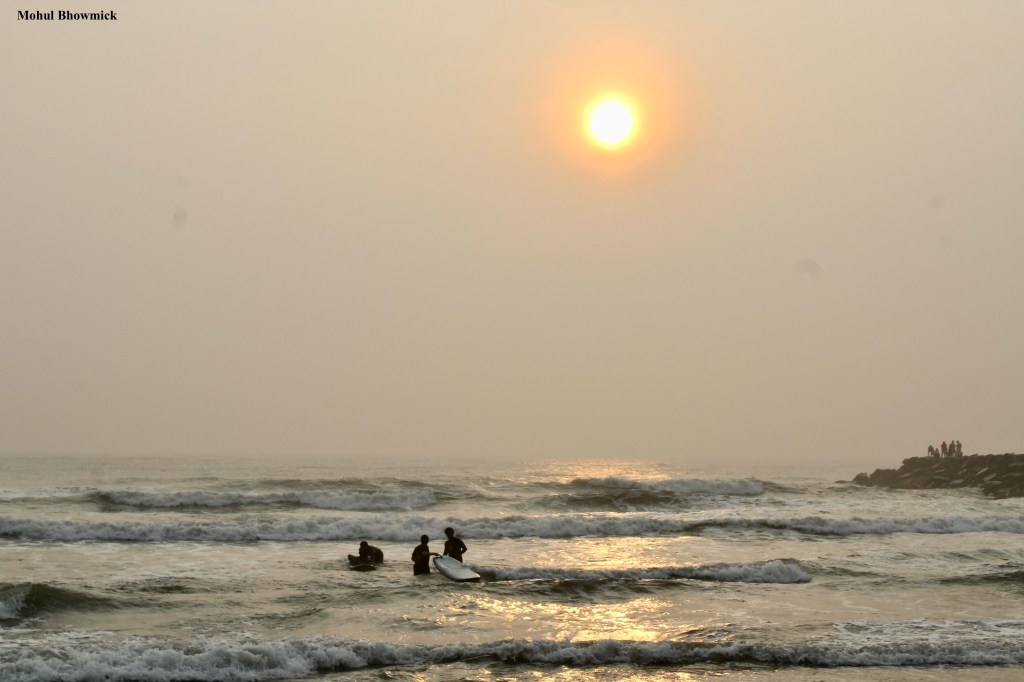
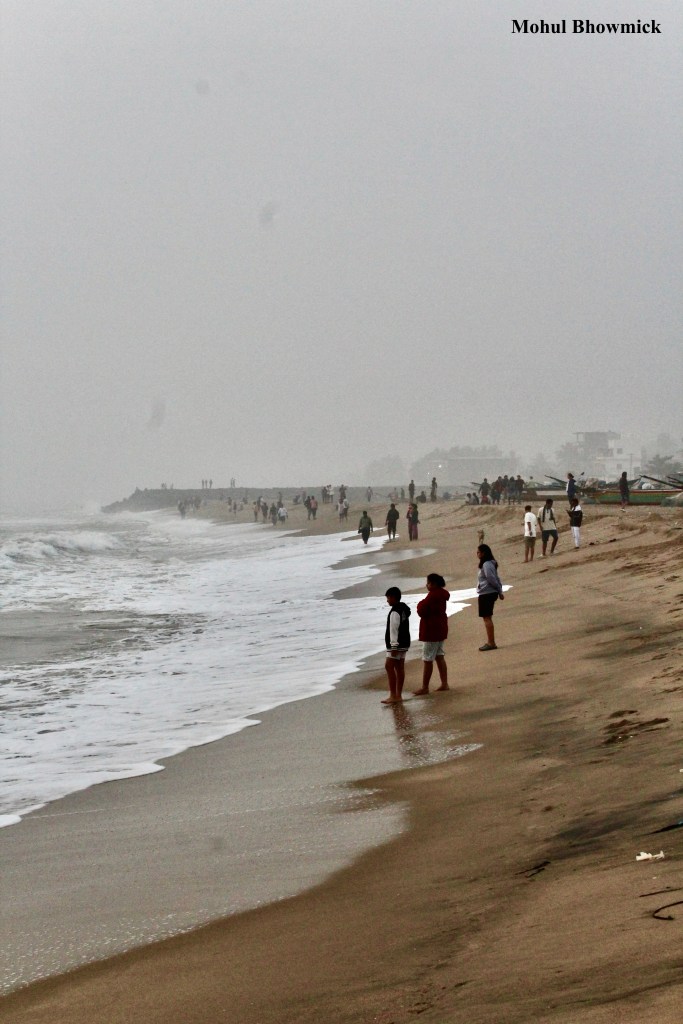
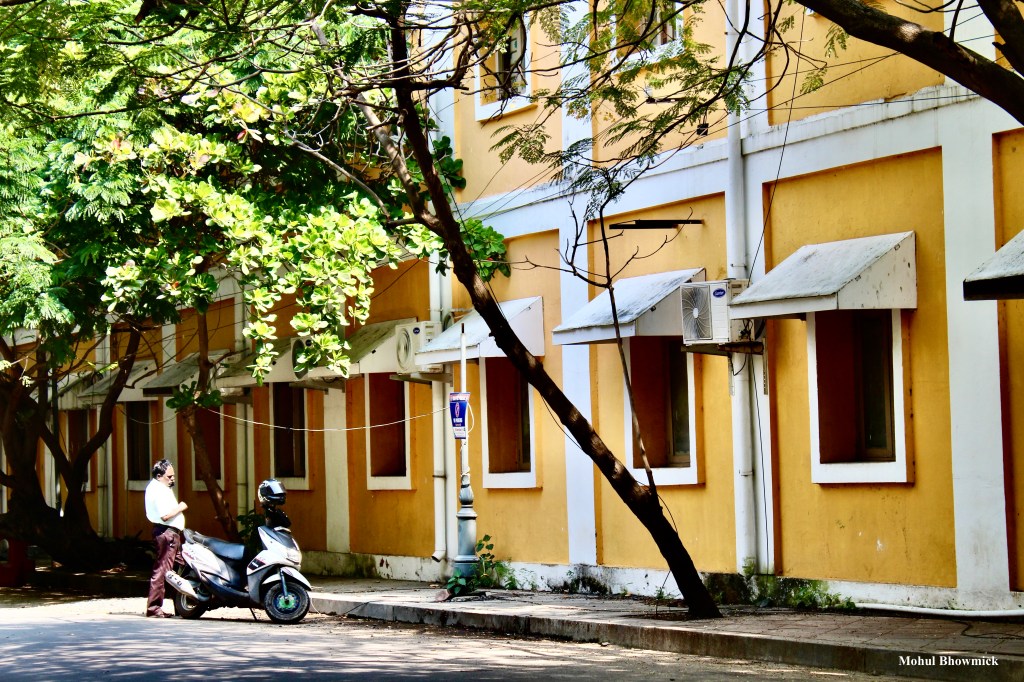
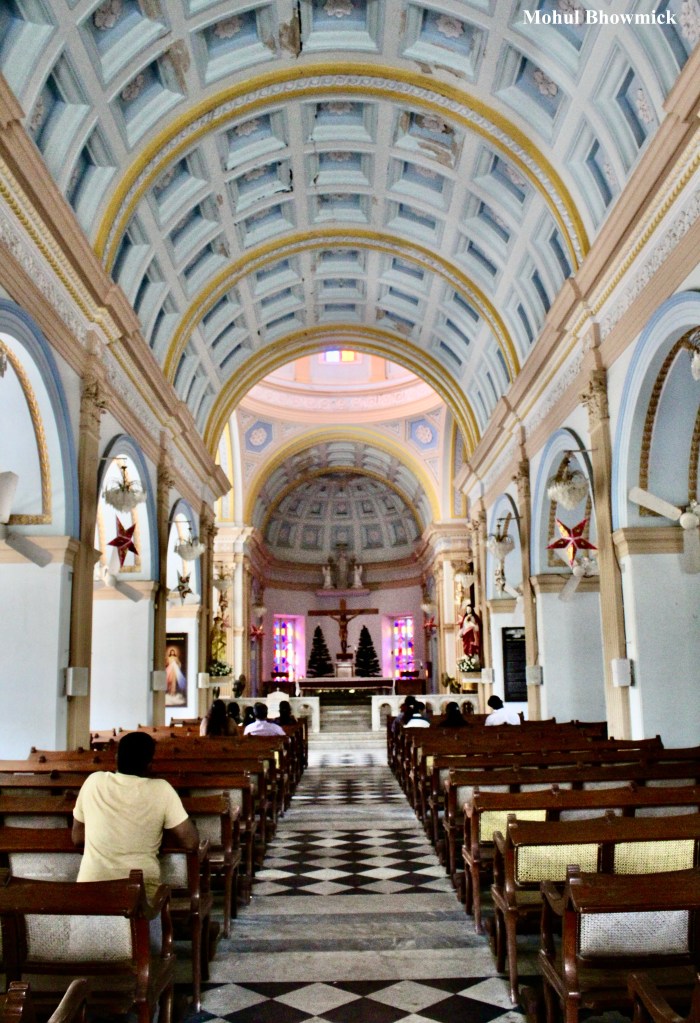
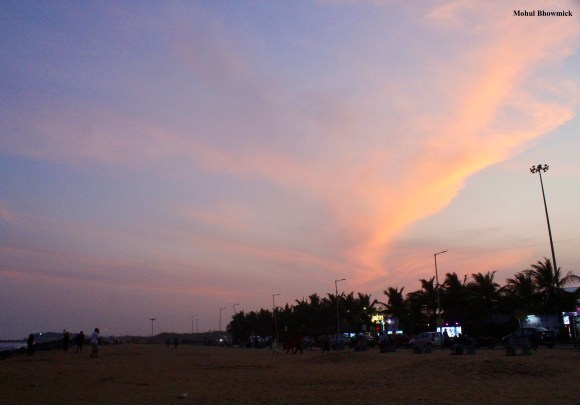

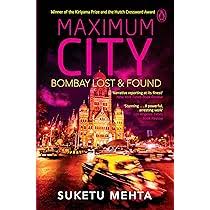
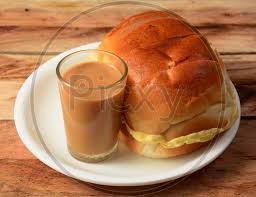



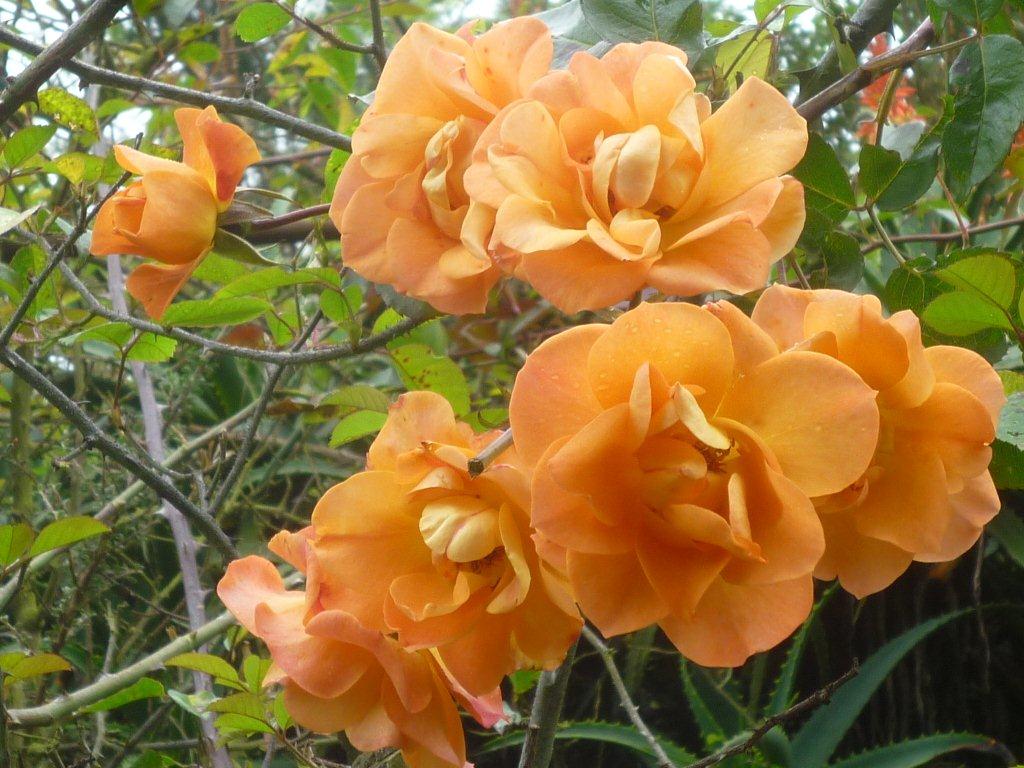
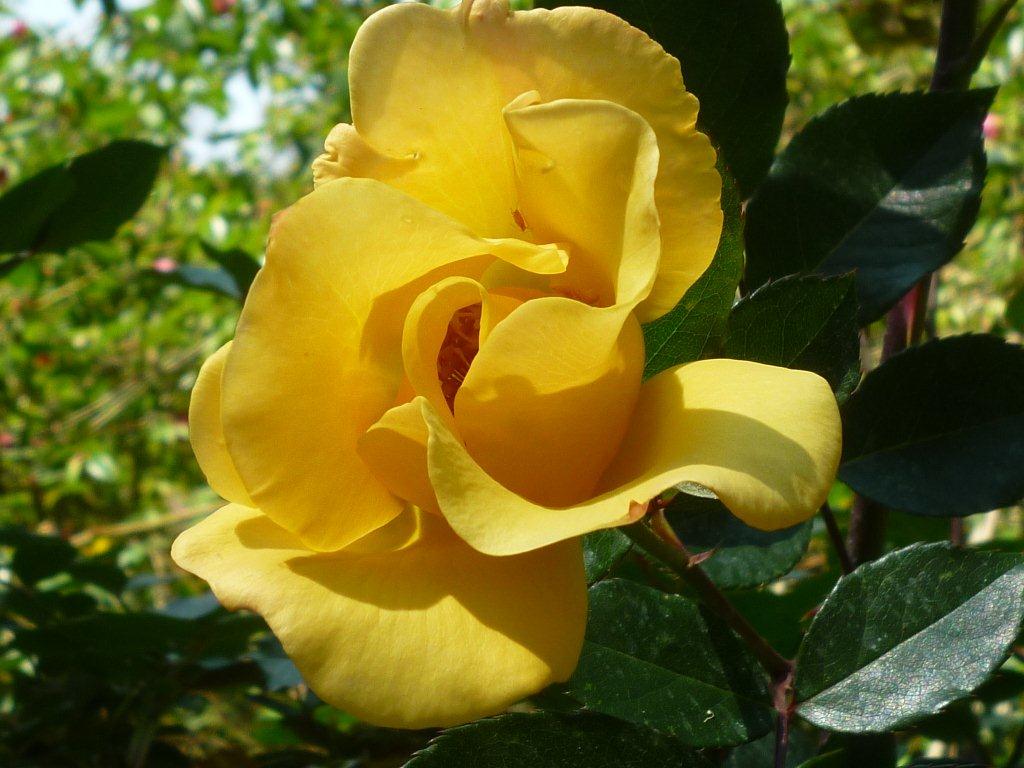

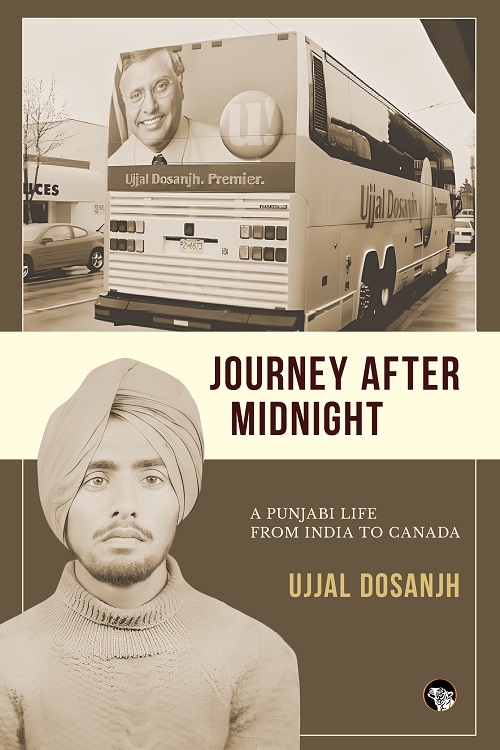
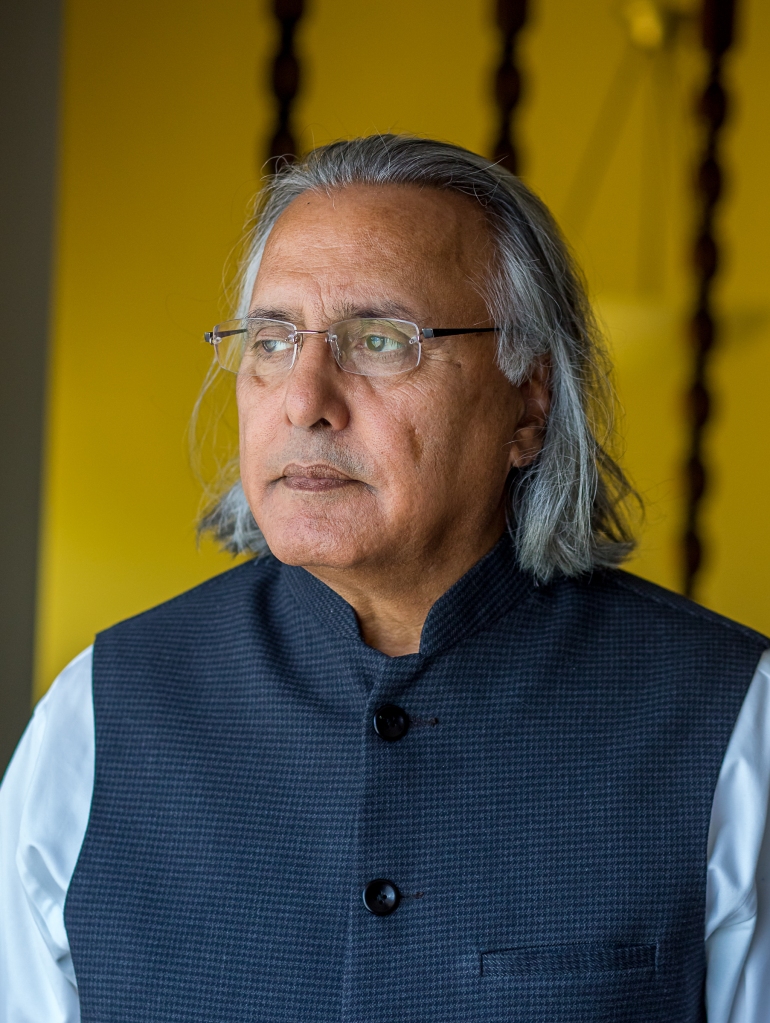
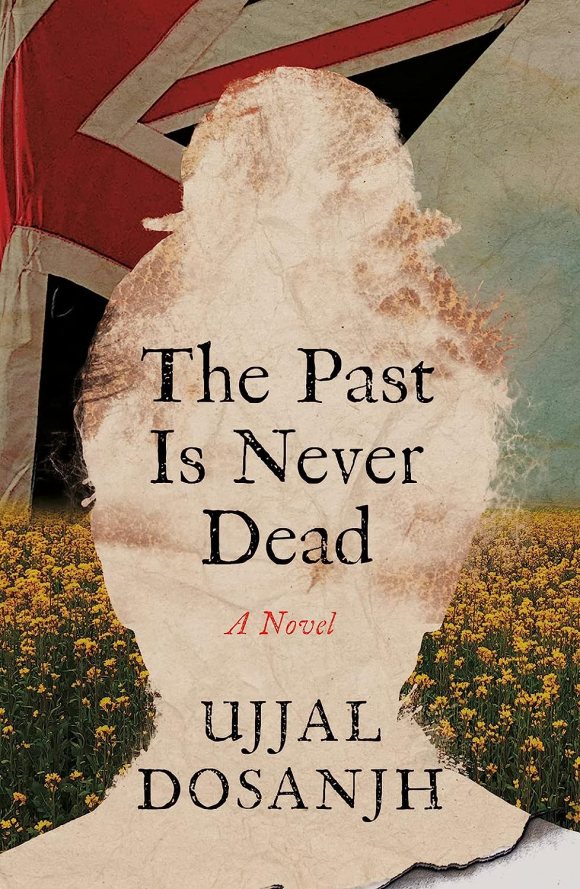




 Borderless