Categories
Editorial

Is Sky the Limit?

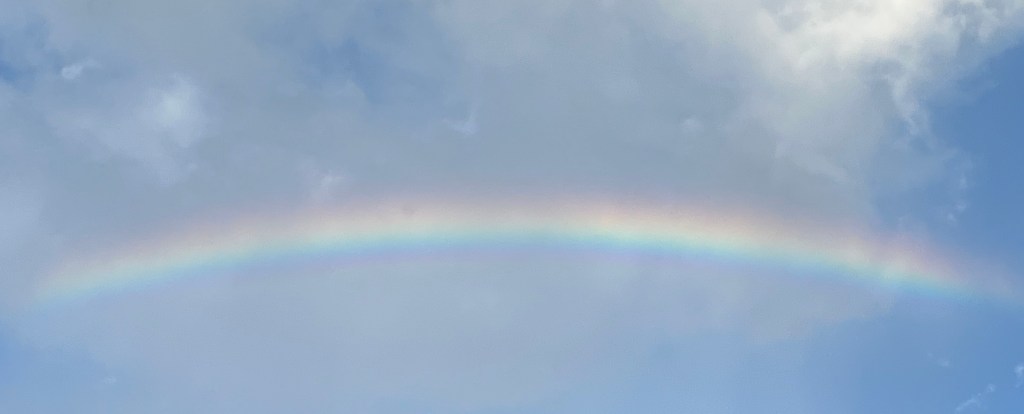
Sometimes, we have an idea, a thought and then it takes form and becomes a reality. That is how the Borderless Journal came to be six years ago while the pandemic raged. The pandemic got over and takeovers and wars started. We continued to exist because all of you continue to pitch in, ignoring the differences created by certain human constructs. We meet with the commonality of felt emotions and aesthetics to create a space for all those who believe in looking beyond margins. We try to erase margins or borders that lead to hatred, anger, violence and war. Learning from the natural world, we believe we can be like the colours of the rainbow that seem to grow out of each other or the grass that is allowed to grow freely beyond manmade borders. If nature gives us lessons through its processes, is it not to our advantage to conserve what nurtures us, and in the process, we save our home planet, the Earth? We could all be together in peace, enjoying nature and nurture, living in harmony in the Universe if only we could overlook differences and revel in similarities.

A young poet Nma Dhahir says it all in her poem that is a part of our journal this month —

This is how we stay human together:
by refusing the easy damage, by carrying each other
without calling it sacrifice,
by believing that what we protect in one another
eventually protects the world.

--'How We Stay’ by Nma Dhahir

In our poetry section, we have Ron Pickett suggesting peace and love with his poem on three doves on a roof and Snigdha Agrawal hinting at a future Earth. We have heartfelt poetry weaving in the colours of life with Jared Carter, Tim Tomlinson, Mohul Bhowmick, Laila Brahmbhatt, George Freek, Lana Hechtman Ayers, Pramod Rastogi, John Grey, Edward Reilly, Luis Cuauhtémoc Berriozábal, Snehaprava Das, SR Inciardi and Ryan Quinn Flanagan while Rhys Hughes weaves in humour.

Translations has more poetry with Professor Fakrul Alam bringing us Nazrul’s Bengali lyrics in English and Fazal Baloch familiarising us with beautiful Balochi poetry of the late Majeed Ajez, a young poet who left us too soon. Isa Kamari translates his own poems from Malay, capturing the colours of the community in Singapore to blend it with a larger whole. And of course, we have a Tagore poem rendered into English from Bengali. This time it’s a poem called ‘Jatra (Journey)’ which reflects not only on social gaps but also on politics through aeons.

Christine C Fair has translated a story from Punjabi by Lakhvinder Virk, a story that reflects resilience in women who face the dark end of social trends, a theme that reverberates in Flanagan’s poetry and Meenakshi Malhotra’s essay, which while reflecting on the need of different perspectives in histories – like water and nomads — peeks into the need to recall women’s history aswell. This is important not just because March hosts the International Women’s Day (IWD) but because one wonders if women in Afghanistan are better off now than the suffragettes who initiated the idea of such a day more than a century ago?

This time our non-fiction froths over with scrumptious writings from across continents. Tamara-Lee Brereton-Karabetsos muses on looking at numbers and beyond to enjoy the essence of nature. Farouk Gulsara ideates about living on in posterity through deeds and ideas. Gower Bhat shares how he learns story writing skills from watching movies. Meredith Stephens talks of her experience of a fire in the Australian summer. Bhaskar Parichha writes with passion about his region, Odisha. We have a heartfelt tribute to Mark Tully, who transcended borders, from Bhowmick. And an essay on Arundhati Roy’s memoir, Mother Mary Comes to Me, from Somdatta Mandal, which explores not just the book but also the covers which change with continents. Prithvijeet Sinha travels beyond Lucknow and Suzanne Kamata brings to us stories about her trip to Phnom Penh.

Keith Lyons draws from the current crises and writes about changing times, suggesting: “Changes aren’t endings, but thresholds.” Perhaps, if we see them as ‘thresholds of change’, the current events are emphasising the need to accept that human constructs can be redefined. I am sure a Neolithic or an Australopithecus would have been equally scared of evolving out of their system to one we would deem ‘superior’. Life in certain ways can only evolve towards the future, even if currently certain changes seem to be retrogressive. We can never correctly predict the future… but can only imagine it. And Devraj Singh Kalsi imagines it with a dollop of humour where tails become a trend among humans again!

Humour and absurdity are woven into a series of short fables by Hughes while Naramsetti Umamaheswarao weaves a fable around acceptance of differences. In fiction, we have stories of resilience from Jonathon B Ferrini and Terry Sanville. Bhat gives us a story set in Kashmir and Sohana Manzoor gives us one set in Dhaka, a narrative that reminds one of Jane Austen… and perhaps even an abbreviated version of the 2001 film, Monsoon Wedding.

In reviews we have, Mohammad Asim Siddiqui discussing Anisur Rahman’s The Essential Ghalib. Rituparna Khan has written on Malashri Lal’s poetry collection reflecting on women, Signing in the Air. And Bhaskar Parichha has reviewed Deepta Roy Chakraverti’s Daktarin Jamini Sen: The Life of British India’s First Woman Doctor, a book that reflects on the resilience that makes great women. Thus, weaving in flavours of the IWD, which applauds women who are resilient while urging humans for equal rights for one half of the world population.

Book excerpts host Kailash Satyarthi’s Karuna: The Power of Compassion and Aruna Chakravarti’s Creeping Shadows: 13 Ghost Stories. We are also running a feature on the latter collection with Chakravarti telling us why she switched from historical fiction to ghost stories. The interesting thing is many of her ghouls are embedded in histories where they suffered violences, which leads us to the bigger question, can human suffering dehumanise us? Should it?

While we ponder on larger realities, Borderless Journal looks forward to a future with more writings centred around humanity, climate change, our planet and all creatures great and small. This year has not only seen a rise in readership and contributors — and the numbers rose further after our unsolicited Duotrope listing in October 2025 — but has also attracted writers from more challenged parts of the world, like Ukraine, Iran, Tunisia and Kurdistan. We are delighted to home writing from all those who attempt to transcend borders and be a part of the larger race of humanity. I would like to quote Margaret Atwood to explain what I mean. “I hope that people will finally come to realize that there is only one ‘race’—the human race—and that we are all members of it.” And I would like to extend her view to find solidarity with all living beings. I hope that there will be a point in time when we will realise there’s not much difference between, a lizard, a fly, a human or a tree… All these lifeforms are necessary for our existence.

I would want to hugely thank all our team for stretching out and making this a special issue for our sixth anniversary and Manzoor for her fabulous artwork. Huge thanks to all our contributors and readers for being with us through our journey. Let’s change the world with peace, love and friendship!

Looking forward to the future.

Mitali Chakravarty

borderlessjournal.com

CLICK HERE TO ACCESS THE CONTENTS FOR THE MARCH 2026 ISSUE.

.

READ THE LATEST UPDATES ON THE FIRST BORDERLESS ANTHOLOGY, MONALISA NO LONGER SMILES, BY CLICKING ON THIS LINK.

Categories
Poetry

How We Stay by Nma Dhahir

Nma Dhahir
There are days when kindness is not a feeling
but a decision made quietly, like leaving a light on
in a room no one thanks you for entering.

The world keeps moving through us, unfinished,
asking more than it explains.

We learn restraint from what survives without display:
the hand that loosens before it clenches,
the voice that waits long enough to hear itself soften,
the moment when power chooses not to announce its name.

Nothing here is dramatic. That is the point.

This is how we stay human together:
by refusing the easy damage, by carrying each other
without calling it sacrifice,
by believing that what we protect in one another
eventually protects the world.

Nma Dhahir is an emerging poet and writer from Kurdistan. She emphasizes the importance of the younger generation in driving change and innovation within the places they’re from, and this includes arts. 

PLEASE NOTE: ARTICLES CAN ONLY BE REPRODUCED IN OTHER SITES WITH DUE ACKNOWLEDGEMENT TO BORDERLESS JOURNAL

Click here to access the Borderless anthology, Monalisa No Longer Smiles

Click here to access Monalisa No Longer Smiles on Amazon International

Categories
Musings

Watery World

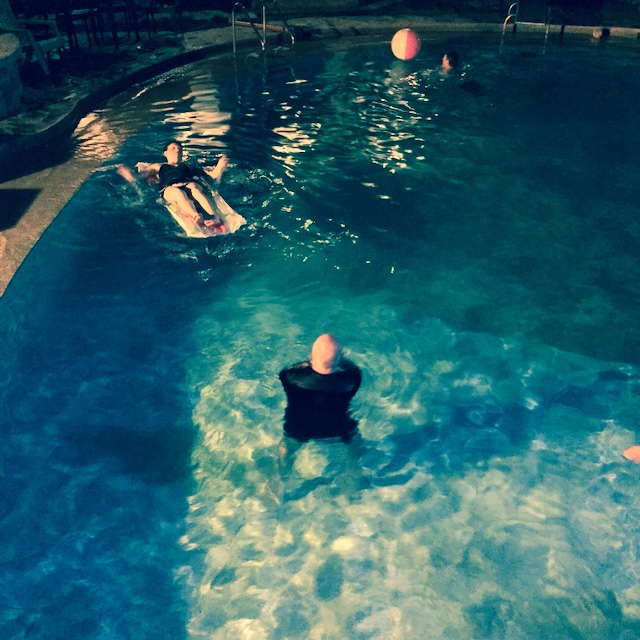
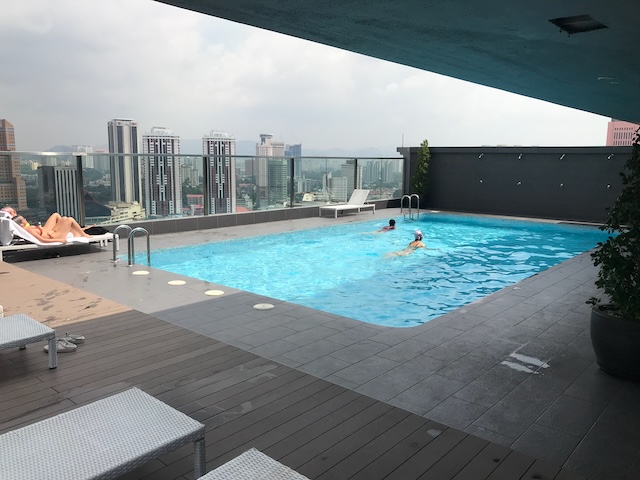
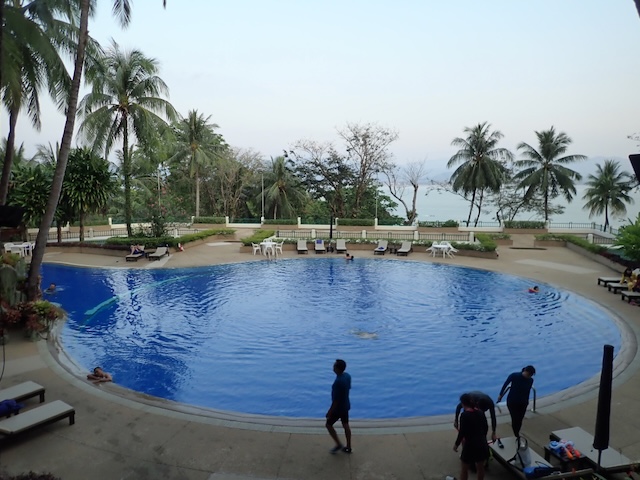
We live on a huge planet, a watery world, which is a small cosmos in itself. Keith Lyons discovers humanity in his local swimming pool.

In recent years, I’ve increasingly sought an elixir of life. Even though I know this magical potion won’t grant me eternal life — not even eternal youth. The elixir doesn’t even promise to cure all diseases, though it seems a lot of other people are taking this tonic as treatment for every kind of ailment. 

My pursuit of this higher realm means that most days, if I am able, I take a break from work, life and the busy-ness of it all to replenish, relax, and rejuvenate. My woo-woo astrological friend reckons that because my star sign is Cancer (one of the three water signs along with Pisces and Scorpio), I am drawn to water. But then, we all need water. Water is Life. It keeps all life going – for without water, life cannot exist. As the saying goes, “No Blue – No Green.” We need water to survive, to thrive, for our hygiene, for our wellbeing, and for the ice cubes in our virgin piña colada cocktails. 

When I heard about the prospect of a new swimming pool opening up nearby my home, in the dark days of the Covid-pandemic, I was doubly happy and expectant. I even turned up to the new venue before it had actually opened, when they were still finishing the build and checking all the systems worked. The local government funded facility offered not only a swimming pool, but also a point of contact for interactions with the council, and the pool was twinned with a modern library. In my mind, I imagined that it might be possible to go swimming, then to glide over to a cafe or bar to get a drink, and then to select a book to read while reclining on an in-water lounger. Could it possible? I know I had stayed at a fancy hotel with a wet bar in Macau, where the bartender served cocktails to me and a photographer as we lived our best lives — until the next morning when we didn’t feel so flash. 

Water, as you may know, makes up over 70% of the Earth’s surface. Up to 60% of the human body is actually water — depending on how much fluids you’ve drunk. A cucumber is made up of around 96% water. I recall these facts from a high school science project as I push the button of the water dispenser and a half circle of cool water arcs up for me to catch as much as I can in my mouth. I’m thirsty and know I need to drink lots of fluids, as I’ve just spent the last 80 minutes exercising and soaking in warm water. And I feel like I’m dehydrated from all the exertion. 

Ever since a new indoor swimming pool opened in my neighbourhood, I’ve been making the effort to go as often as I can, to move and stretch in the warm hydrotherapy pool and then relax in the even-hotter spa. It has become something of a pilgrimage for me, even on the coldest, rainy days of winter. My route there from my house goes along a new cycleway, through a park (where a dog recently tried to attack me on my bike) cuts through a local ‘secret shortcut’ beside offices and a new church, then tracks along an industrial area of factories, warehouses, and commercial premises. After 6pm, the road to the pool has little traffic, just the occasional truck and security vehicle. If road conditions, traffic and winds are favourable, I can be door-to-door in under 10 minutes. But once I enter the new complex, change into my swimming gear, and walk down the ramp of the hydrotherapy pool, time becomes less important. I change from the demands of a busy world to more me-time. 

But there’s more than devoting an hour to honour and exercise one’s physical body. Moving in water offers benefits beyond the physical realm, whether one’s aim is to help the heart, the waistline or the body’s strength. Because water is a lot denser than air, water provides more resistance — around 12-14% — compared to doing the same exercises on land. That resistance assists cardio and strength training. There’s another factor for water-based activities: buoyancy. The feeling of being lighter or weightless when submerged in water means you take the pressure off bones, joints and muscles. It is the closest thing you or I might get to being in space. You don’t even need one of those NASA t-shirts with the iconic blue, red and white logo of the National Aeronautics and Space Administration. 

The 1.4-metre-deep hydrotherapy pool, which is kept at 33-36C, sits alongside the traditional 25-metre swimming pool, which is kept at 26-28C. The therapeutic pool’s inclusion in the new community complex was the result of lobbying by locals, who previously had to drive across to the opposite side of the city to access a suitably warm pool. 

Photo Courtesy: Keith Lyons

It has only been a few months since the pool opened, but already many come to the waters, from when it opens at 5.30am each weekday (7am weekends) to when the last are forced to leave at 9.30pm (8pm in weekends). I’m more of an afternoon and evening swimmer, preferring to go to the pool after work or at the end of the day. Some attend the twice-a-week gentle exercise class, where the average age is 65+. Others visit almost every day at nearly the same time. 

Some arrive in wheelchairs, pushing walking frames, or hobbling on crutches. Others walk from the changing rooms to the water smiling expectantly as they pace towards the transformative pool. At mid-morning, with the light from the wall-to-ceiling windows slanting across the pool, it could easily be a scene from the 1985 movie, Cocoon, where the retirement home pool helped them rediscover their youth (it was full of aliens). If you had to paint the scene, there would be a lot of blue hues, along with off-white and grey tones, with silvery reflections off the water.

While some exercise by themselves, focusing on their routines, the set prescribed by their physiotherapist, or whatever takes their fancy, for many it is also a social time, as they aqua jog up and down the lengths, or stand at the sides doing calisthenics. If you listen carefully over the music soundtrack of upbeat, positive songs playing over the public speakers, you can hear the water gushing and flowing. It bubbles up from the floor of the pool. Jets roll in from the sides of the hydrotherapy pool. In the spa pool, there’s a force field strategically placed around the pool. Modern water treatment means there’s no smell of chlorine. 

The pool is a very tactile, sensual in-body experience. It is also somewhat humbling. Patrons must change into suitable bathing costumes, which can be as skimpy and revealing as bikinis and togs, though some prefer full body covering for modesty or self-perceptions. The water in the hydrotherapy pool is so warm that there’s never any hesitation on entering. People are only limited by the speed at which they can move from the air environment to the watery world of buoyancy and drag. 

My local swimming pool is a microcosm of the wider community, and the big wide world. As where I live has experienced significant migration in recent decades, it is certainly a diverse multi-national cross-section of the community. Chinese are the largest group, with a swim school, coached sometimes in Mandarin, operating most weeknights. There are also families from the Philippines, a group of learn-to-swimmers from Nepal, and occasionally a non-swimmer from India who needs to be rescued from the deep end of the main pool by lifeguards. On one afternoon and evening, the whole pool becomes ‘women-only’, with the blinds drawn so women can use the pools without the glare of men. With more refugees from other countries now making up our neighbourhood, there are often people from Afghanistan, Eritrea, Kurdistan, Ethiopia, Somalia and Bhutan venturing into the pools for the first time. 

Is the swimming pool I go to special? Can such a multi-sensory, multi-cultural, relaxing-yet-reviving experience only be found in my swimming pool? Nope. Seek out a public swimming pool in your area and discover another world. 

.

Keith Lyons (keithlyons.net) is an award-winning writer and creative writing mentor originally from New Zealand who has spent a quarter of his existence living and working in Asia including southwest China, Myanmar and Bali. His Venn diagram of happiness features the aroma of freshly-roasted coffee, the negative ions of the natural world including moving water, and connecting with others in meaningful ways. A Contributing Editor on Borderless journal’sEditorial Board, his work has appeared in Borderless since its early days, and his writing featured in the anthology Monalisa No Longer Smiles.

.

PLEASE NOTE: ARTICLES CAN ONLY BE REPRODUCED IN OTHER SITES WITH DUE ACKNOWLEDGEMENT TO BORDERLESS JOURNAL. 

Click here to access the Borderless anthology, Monalisa No Longer Smiles

Click here to access Monalisa No Longer Smiles on Kindle Amazon International