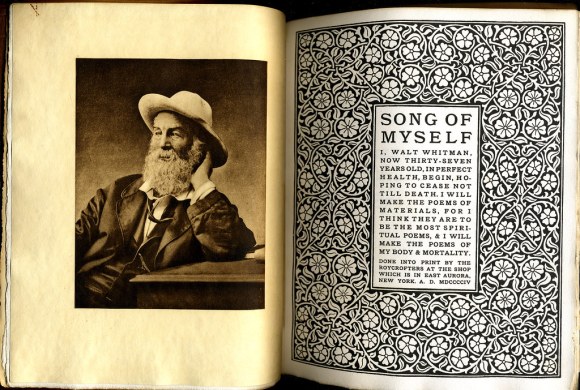
I CELEBRATE myself, and sing myself,
And what I assume you shall assume,
For every atom belonging to me as good belongs to you...

(Excerpted from Song of Myself, Walt Whitman, 1881)
Fourth of July, was the date that Walt Whitman’s anthology, Leaves of Grass, was published for the first time. The year was 1855. This was a book with poetry that embraced all humanity. The writing did not look for philosophical labels but reached out to all mankind touching the hearts of millions beyond the poet’s own lifetime, rising above races, rituals, politics, economics and hatred.
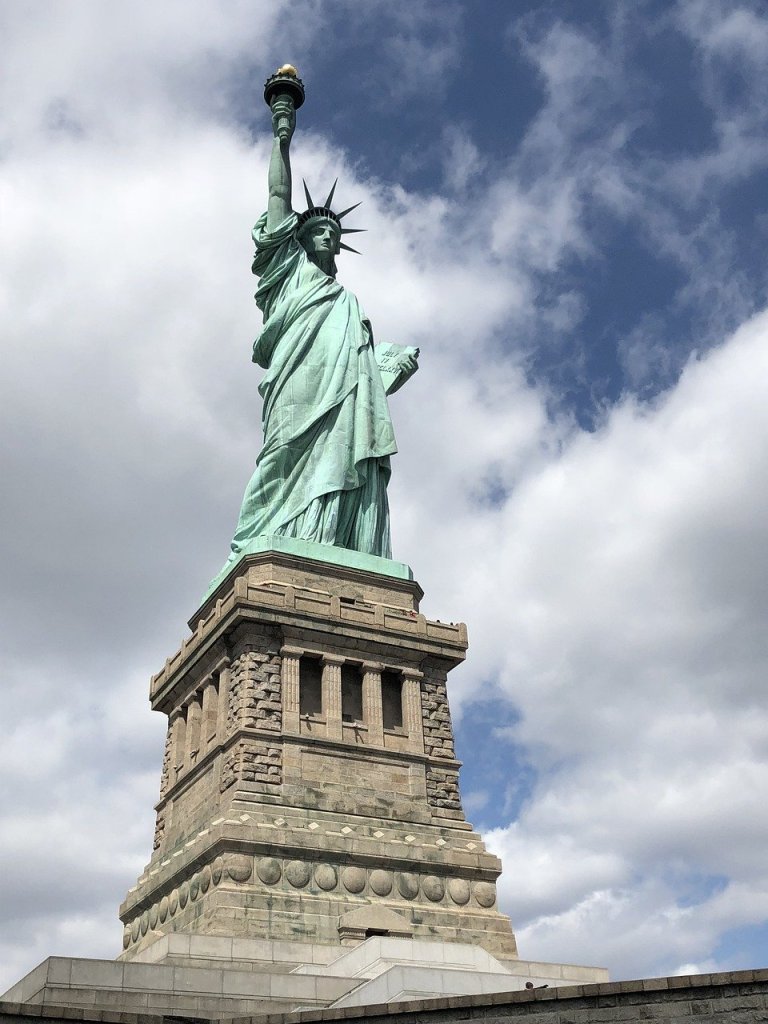
On that same date, in the century preceding the publication of this book — on 4th July, 1776 — thirteen colonies that had been established by immigrants in the continent of North America signed Thomas Jefferson’s Declaration of Independence, freeing themselves from the British yoke after they populated the landmass that had been occupied by American Indians for many thousands of years. The date continues to be celebrated as the American Independence Day with much fanfare. Borderless Journal presents to you writing that celebrates the occasion. Perhaps when at leisure, some of us will pause to wonder if independence and democracy bring freedom to all concerned.
Michael R Burch with his powerful poetry not just reaffirms the history of the country but also brings in the legendary Mohammed Ali to seek the voice of sanity and humanism. Click here to read.
Candice Louisa Daquin’s ruminations tells us what it means to be an American immigrant in today’s world and in the land that prospered under immigrants. Clickhere to read.
It was a white wooden building two stories tall — two long, high-ceilinged rooms, one on each floor, topped by a flat tarpaper roof that sloped toward the back of the property.
Where I grew up, such structures were called “storefront buildings.” Surrounded by elms and maples, it stood a block west of the courthouse, on the northwest corner, facing east. Originally it had been a lodge hall. During the Depression years, the members of the lodge had gradually died off, and the building stood empty until one of my relatives, an uncle who was an artist, acquired it, a few years before the war, and had it fixed up as a studio.
My parents drove us down to this place to visit the artist’s widow in the late 1940s. The town and the building were always the same. There were no sidewalks. My father parked at the edge of the lot. Out front, rising from its square of stone, was the cast-iron pump with the curved handle. Here we would drink cold water from our cupped hands, and refresh ourselves, each time we came to visit.
If the light slanting beneath the canopy of trees seems clear and steady now, it is not simply because I look back on that vanished building through a scrim of fifty years, so that all the wrinkles and irregularities have been smoothed out. We forget not only what certain trees mean to a landscape, to the profile they give to a town; we forget even the quality of light filtering down through their leaves and branches.
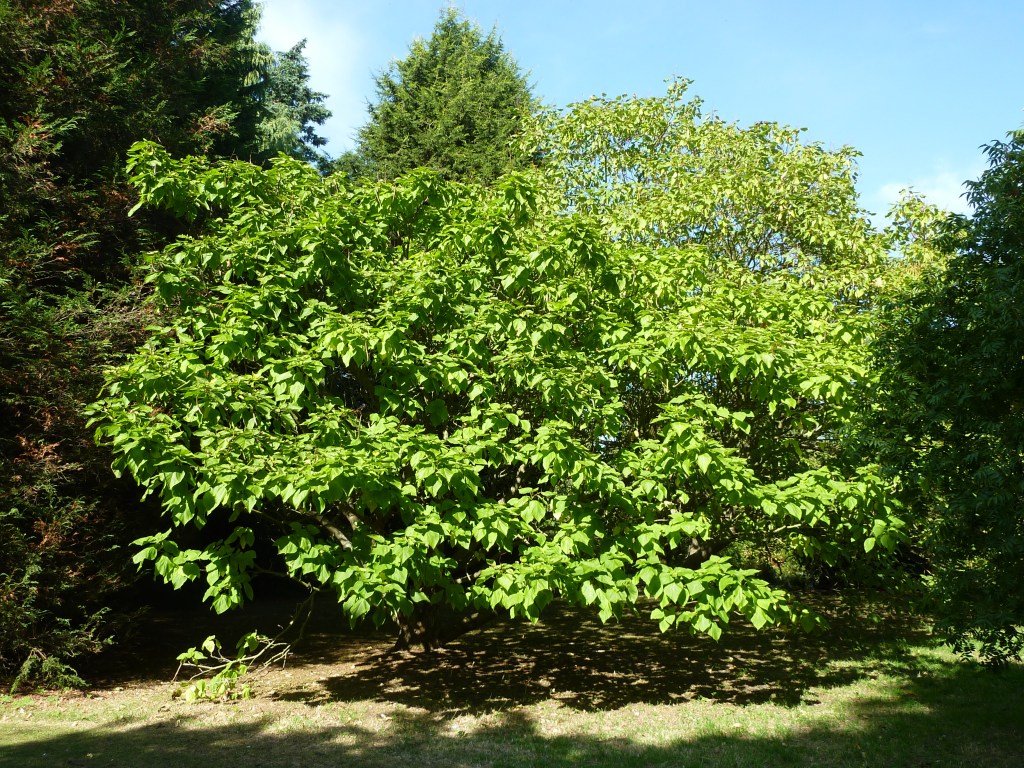
One kind of illumination reaches down when you are a small child playing beneath the limbs of a catalpa tree; another kind settles over you at the base of a willow, or a shagbark hickory. Later, it is almost as though hidden voices had been speaking to you, pointing out certain shadows and profiles — the outlines of small, undiscovered things, the shapes of beetles and lost marbles and blades of grass.
I say this because I know there were elms reaching over the summer studio, and I know they are gone now, all of them. But their handling of the light remains unchanged.
If you asked me to describe that light, I would say that it was notched, pieced together like the irregular swatches and squares of silk and satin and calico that interlock to form the pattern of an old quilt. The stitching along the edges of each of those pieces, even the smallest, would be minute and exact.
There was the light, and the stillness, and the simplicity. Inside, the rooms of the old building were always cool, even on the warmest days. Looking back, I sometimes think of it as an enormous block of ice cut from some snow-covered lake and mysteriously preserved until summer was at its height — a day in late July, with cicadas shimmering in the trees.
But it had been left in that grassy place, as though overlooked or forgotten, and it melted at a glacial rate. Ultimately it was doomed to disappear, but it was still so vast and impermeable that it would take years, or even decades, sitting there among the lilacs and the forsythia, to shrink away.
Most of that great sun-dappled cube of a building has dwindled and grown dim now, even in my memory, but here and there I can still see a milky patch, a section of white clapboard gleaming with opalescent light.
Or I will find myself peering into one of the windows, a square grown blank with sunlight, and gradually it will change, as though a cloud were passing over the sun, or as though tree limbs overhead had begun to stir in a cool wind, rearranging the shadows and reflections below.
At such moments each pane of the window turns clear, and I can see inside, and remember.
(First published in The Aurora Review)
Jared Carter is an American poet with seven books of poetry. He is the recipient of numerous awards, which include the Walt Whitman Award, the Poets’ Prize, a Guggenheim fellowship, and two fellowships from the National Endowment for the Arts.
.
PLEASE NOTE: ARTICLES CAN ONLY BE REPRODUCED IN OTHER SITES WITH DUE ACKNOWLEDGEMENT TO BORDERLESS JOURNAL
In conversation with Fakrul Alam, an eminent translator, critic and academic from Bangladesh who has lived through the inception of Bangladesh from East Bengal, translated not just the three greats of Bengal (Tagore, Nazrul, Jibanananda) but also multiple political leaders. Click here to read.
In conversation with Arindam Roy, the Founder and Editor-in-cheif of Different Truths, an online portal for social journalism with forty years of experience in media and major Indian newspapers. Click here to read
Akbar Barakzai’s poem, The Law of Nature, translated by Fazal Baloch. Click here to read.
Kazi Nazrul Islam’s poem, Shammobadi(The Equaliser) translated by Shahriyer Hossain Shetu. Click here to read.
Tagore’sAmar Shonar Horin Chai(I want the Golden Deer) translated by Mitali Chakravarty, edited and interpreted in pastel by Sohana Manzoor. Click here to read.
To mark the birth centenary of Satyajit Ray, Ratnottama Sengupta translates fromNabendu Ghosh’s autobiography experience of Pather Panchali ( Song of the Road) — between covers and on screen. Click here to read.
Wendy Jones Nakanishi, an academic who started her life in a small town called Rolling Prairie in midwestern US, talks of her journey as a globe trotter — through Europe and Asia — and her response to Covid while living in UK. Click here to read.
‘Did life change or did I change from the events of the last year,’ ponders New Zealander Keith Lyons who was in the southern state of Kerala when the first cases of Covid-19 were detected in India last January. Click here to read.
An excerpt from Enter Stage Right by Feisal Alkazi with a visual of young Alkazi dancing in one of the earliest discos of New Delhi. Click here to read.
As we stand on the threshold of a new normal that will eternally rewrite the history of social interactions, of movements across the globe, of new world orders that will have to be more inclusive and more transparent to world view, we will, perhaps, feel the need to redefine business laws so that even countries with lesser wealth are able to access vaccinations and peace. We are now looking up to leaderships which seem to be in crises themselves. Sitting securely on a tiny island that is well governed, an island where affluence and well-being set it adrift from the turmoils of countries around it, I wonder thirty years from now, what will mankind be like… Will we be forever marred by the current events of the world? Globalisation has ensured that none of us can be secure on any secret island. There can be no land of lotus eaters hidden from the rest of mankind and accessed by only a few anymore. Even if one region is affected by the virus in any corner of the world, can the rest of the world be pandemic free? Perhaps, a question that those who peddle in vaccines and human well-being can address.
These issues have not only been highlighted by the news media but have also found echoes in some of our content this time. Keith Lyons’s essay talks of his last stay in India, when a tourist carried the the pandemic unwittingly into Kerala in February 2020 and subsequent repercussions. More stories and poems that dwell on the spread of the virus this year cry out for compassion. One hopes young poet Ruchi Acharya’s verses are born true.
One day the roses of hope will grow
Meeting the horizon,
Roses that, even plucked, will not die
But will bloom and bloom
Every single day that passes by.
We have young writers on the virulence of the virus and mature pens like that of globe-trotting academic Wendy Jones Nakanishi, who maps the pandemic from UK. Perhaps, we will find a new direction eventually.
There have been calls for uniting above divides as a single unit called mankind earlier too, from greats like Tagore and Nazrul. This time we carry translations of both — Nazrul’s translated poem calls for uniting against artificial divides drawn by man-made constructs and Tagore’s translation talks of redefining through self-reflection. An essay on Tagore by academic Parineet Jaggi talks of the impact of the teachings of Guru Nanak, the founder of Sikhism, on Tagore.
We have essays on writers and icons from around the globe. A photo-essay on the bald eagle, heralding the American Independence Day on the 4th of July, gives a humorous anecdote on how the eagle was chosen above the turkey. We have more variety by Candice Louisa Daquin, an immigrant in US, who shows how important human movement across man-made borders is to the development of a country. Michael Burch has given us beautiful poetry reflecting the history of America and American dreams, one of them with the voice of the legendary Mohammed Ali. These verses add substance to the concerns raised by Daquin. Jared Carter brings to us the colours of life with his poetry.
We have humour in verses from Rhys Hughes and even from a young poet, Sutputra Radheye. Limericks from Michael Burch and Penny Wilkes photo-poetry on ‘Changing Seasons’ puts us in a more cheerful mood. More poetry from multiple writers across the world, including Nepal, Macedonia and Korea, have found their way into our journal.
Hughes has also given us a comprehensive and interesting essay on a twentieth century poet called Ivor Cutler, who said much as he sang his poetry and was encouraged by Paul McCartney of the Beatles. The brilliant poetry of Akbar Barakzai continues translated on our pages by Fazal Baloch and one must give many thanks to the translator for his indefatigable energy and for bringing us wonderful fare from Balochistan. An excerpt translated by eminent journalist Ratnottama Sengupta from Nabendu Ghosh’s autobiography ends with Satyajit Ray’s starting his famed career with Apu’s triology (based on Pather Panchali, a novel by Bibhuti Bhushan Bandopadhyay). These three films have become iconic in cinema history.
We were fortunate to have Professor Fakrul Alam agree to an interview. An eminent translator, critic and academic who has lived through the inception of Bangladesh from East Bengal, Alam has translated not just the three greats of Bengal (Tagore, Nazrul, Jibanananda) but also multiple political leaders like Mujibur Rahman. In this exclusive, he has taken us through the annals of history, reflecting on less-known perspectives of the Partition. Also, in conversation with Borderless, is Arindam Roy, a journalist with forty years’ experience and the founder of Different Truths who started his writing career, much in the tradition of Cyrano de Bergerac on a humorous note.
This time our backpacking granny, Sybil Pretious, gives us a glimpse of her wisdom, wit and compassion while visiting Philippines and talks of an ancient death ritual, volcanoes and strange mud baths. Devraj Singh Kalsi explores young romance in his tongue-in-cheek fashion. We also have more semi-humorous musings from young writers across borders. While Sunil Sharma has explored facets of the impact of terrorism, the other stories are told in a lighter vein.
Our book excerpt from Feisal Alkazi’s Enter Stage Right has a picture of the young artiste in a discotheque dancing in abandon — check it out. It made me smile. Rakhi Dalal has reviewed Jnanpith Award winner Shrilal Shukla’s Fragments of Happiness translated by Niyati Bafna. The book review by Meenakshi Malhotra of Neelima Dalmia Adhar’sThe Secret Diary of Kasturba brings out an interesting facet on Gandhi and women in the Independence movement. It makes one notice the contrasts in the perspectives of Gandhi and Tagore, who created women like he saw around him in fiction. Kasturba’s life also contrasts with the independence found in the life of the avant-garde artist, Amrita Sher-Gil, who lived around the same time. In an essay, Bhaskar Parichha has shown how Sher-Gil lived out her dreams, blending the best of the East and West, while Malhotra writes, that though “Gandhi called women to join the national movement … he was not seeking to emancipate, but more to call forth their capacity for self-abnegation and self-sacrifice.”
Parichha has also introduced us to the need for changes in the banking sector in India while reviewing Transformational Leadership in Banking edited by Anil K. Khandelwal. Perhaps these will be part of the changes that will ultimately lead to a revision of old systems and the start of new ones. Changes, though not always welcomed or convenient, hopefully will lead to progress that can mould our future into a happier one. Restless stirrings transformed mankind from cave dwellers to an intelligent race that can assimilate nature and technology to survive and dream of a future, living among stars.
As Borderless reaches out to unite mankind transcending artificial constructs, its attempts can bear fruit only with support from each and every one of you. I would like to thank all our editorial team for their wonderful support, contributors for being the backbone of our content, and all our readers for continuing to patronise us.
Do take a look at our current issue for the writers who remain unmentioned here but create phenomenal bridges towards a borderless world.
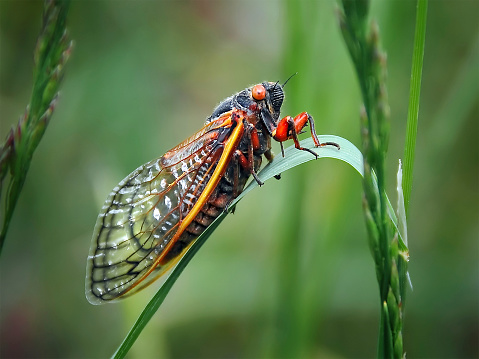
         Cicadas in the Rain

Only when it began to rain could I hear it,
in late summer, after they had all risen high
in the saucer magnolia tree – a soft, slow rain
at first, while the light still held in the west.

That sound so familiar, so unhesitant, but never
during a storm, and yet with drops plashing
and pelting through the leaves, their voices
coalesced in ways I had never heard before –

some strange harmonic of summer’s ending,
some last reinforcement or challenge – mounting
against the rain’s insistence, trying to outdo it,
seeking a pulse within the larger immensity,

and succeeding, as though a door had opened,
and I heard pure sound issuing forth, stately
and majestic, even golden, while all around it,
darkness, rain falling, trees bent by the wind.

(Excerpted from Darkened Rooms of Summer)


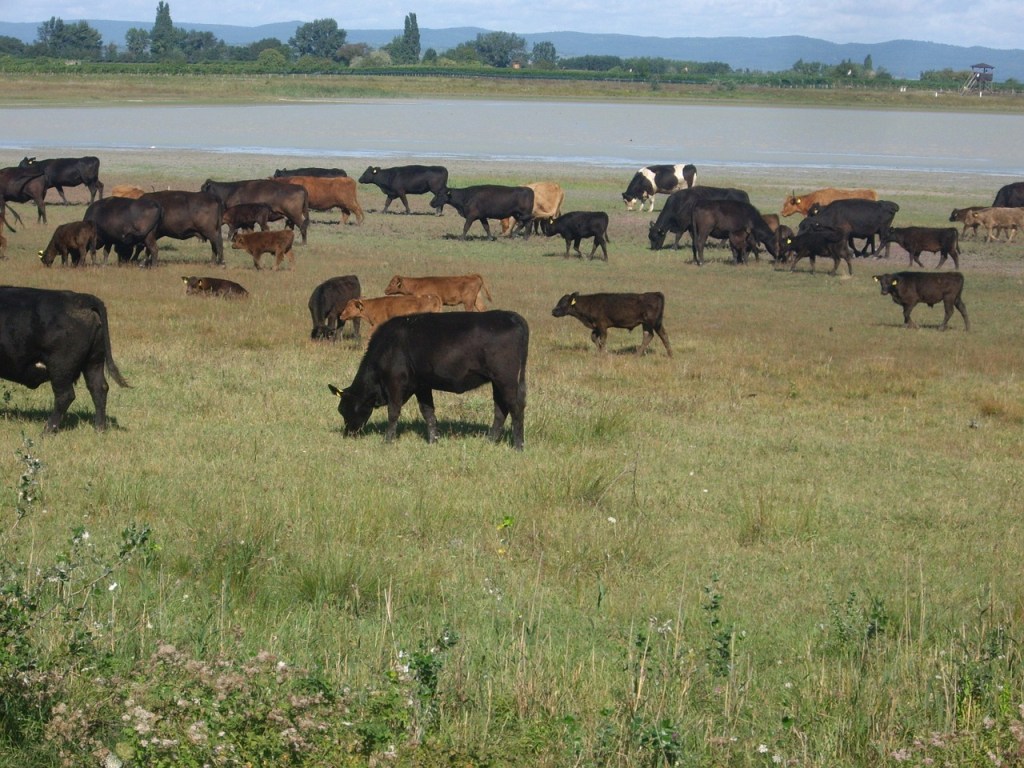
        Slaughterhouse

There were no cattle prods back then.
          We beat and whipped
The ones that broke away. The pens
          were re-equipped

To move them more efficiently.
          For some, a sheer
Incomprehensibility
          took over.Fear

Made them submit.Convulsed with pain,
          a few cried out
To something that could not explain
          or hear their shout.
Jared Carter’s most recent collection, The Land Itself, is from Monongahela Books in West Virginia. His Darkened Rooms of Summer: New and Selected Poems, with an introduction by Ted Kooser, was published by the University of Nebraska Press in 2014. A recipient of several literary awards and fellowships, Carter is from the state of Indiana in the U.S.
.
PLEASE NOTE: ARTICLES CAN ONLY BE REPRODUCED IN OTHER SITES WITH DUE ACKNOWLEDGEMENT TO BORDERLESS JOURNAL
Environment and man — are they separate or is man a part of nature? Different writers have interpreted nature and its forces in different ways over a period of time, in glory, in storm and at battle. Explore some of our selections on nature on World Environment Day… Enjoy our oeuvre.
Rabindranath Tagore’sEkti Khudro Puraton Golpo (One Small Ancient Tale) from his collection Golpo Guchcho ( literally, a bunch of stories) has been translated by Nishat Atiya. Click hereto read.
Bhaskar Parichha gives us a glimpse of the life of Wangari Muta Maathai founder of the Green Belt Movement, which has — through networks of rural women — has planted over 30 million trees. Click here to read.
As cyclone Amphan fireballed and ripped through Kolkata, Nishi Pulugurtha gives a first hand account of how she survived the fear and the terror of the situation. Click here to read.
As a tribute to the 209th anniversary of Edward Lear, Rhys Hughes writes of his famous poem, ‘Owl and the Pussycat’, and writes a funny ending for it rooted in the modern day. Click here to read.
A compelling flash fiction by Suyasha Singh hovering around food and a mother’s love. Click here to read.
The Literary Fictionist
In A Lunch Hour Crisis, Sunil Sharma raises humanitarian concerns that though raised in a pandemic-free world, have become more relevant and concerning given our current predicament. Click here to read.
Anasuya Bhar explores the various lives given to a publication through the different edited versions, translations and films, using Tagore as a case study and the work done to provide these online. Click here to read.
Prithvijeet Sinha uses Gaman (Departure), a Hindi movie around the pain of migrant workers, as a case study to highlight his contention that lyrics and songs convey much in Indian films. Click here to read.
Bhaskar’s Corner
In Manoj Das – The Master Storyteller, Bhaskar Parichha pays a tribute to one of the greatest storytellers from the state of Odisha, India, Manoj Das( 1934-2021). Click here to read.
Bhaskar Parichha reviews Raising a Humanist by Manisha Pathak-Shelat‘s and Kiran Vinod Bhatia. Click here to read.
Interviews
Communication scholars and authors, Manisha Pathak-Shelat and Kiran Vinod Bhatia, discuss how to bring up children in these troubled times, based on their book, Raising a Humanist, which has just been released. Click here to read.
Sonya J Nair of Samyukta Poetry talks about the Samyukta Research Foundation and its affiliates and its festival, Anantha. Click here to read.
               Yeti

Tell me again that nothing’s there,
          that never was
At all, except in places where
          things slip, or pause,

Yet register, on some high ridge
          where something moves
And then is gone. As though a bridge
          of snow should lose

Its grip, and drop away, but leave
          a shadow where
Such vanishing might still deceive
          in that thin air.
Jared Carter’s most recent collection, The Land Itself, is from Monongahela Books in West Virginia. His Darkened Rooms of Summer: New and Selected Poems, with an introduction by Ted Kooser, was published by the University of Nebraska Press in 2014. A recipient of several literary awards and fellowships, Carter is from the state of Indiana in the U.S.
.
PLEASE NOTE: ARTICLES CAN ONLY BE REPRODUCED IN OTHER SITES WITH DUE ACKNOWLEDGEMENT TO BORDERLESS JOURNAL
Greetings fromBorderless Journalfor all Asian New Years!Click here to read our message along with the video and a translation of a Tagore song written to greet the new year, with lyrics that not only inspire but ask the fledgling to heal mankind from deadly diseases.
Rabindranath Tagore’s Ekti Khudro Puraton Golpo (One Small Ancient Tale) from his collection Golpo Guchcho ( literally, a bunch of stories) has been translated by Nishat Atiya. Click here to read.
Sohana Manzoor shares the Bengali New Year celebrations in Bangladesh with colourful photographs and interesting history and traditions that mingle beyond the borders. Click here to read.
Ratnottama Sengupta, a well-known senior journalist and film critic lives through her past to make an interesting discovery at the end of recapping about the silk route. Click here to read and find out more.
Mike Smith drifts into nostalgia about mid-twentieth century while exploring a box of old postcards. What are the stories they tell? Click here to read.
Over 150 Authors and Artists from five continents have written on mental illness in an anthology called Through the Looking Glass. Candice Louisa Daquin, a psychotherapist and writer and editor, tells us why this is important for healing. Click here to read.
Meenakshi Malhotra explores the role of masculinity in Nationalism prescribed by Tagore, his niece Sarala Debi, Gandhi and Colonials. Click here to read.
Sohana Manzoor explores the social relevance of a dance drama by Tagore, Natir puja. We carry this to commemorate Tagore’s birth anniversary. Click here to read
Bhaskar Parichha reviews Reconciling Differencesby Rudolf C Heredia, a book that explores hate and violence. Click here to read.
Nivedita Sen reviews Nomad’s Landby Paro Anand, a fiction set among migrant children of a culture borne of displaced Rohingyas, Syrian refugees, Tibetans and more. Click here to read
Sarcophagus with the myth of Protesilaus and Laodamia. Here, Laodamia grieves for the loss of her husband Protesilaus in the Trojan War. From a tomb along the Via Appia Nuova, ca. 160-170 CE: Creative Commons
Laodamia to Protesilaus

If you were lost, how would I find you,
what path take along dark streets, through
damp vaults, how untangle those choices
far underground, those myriad voices?

If I were gone, you could no longer follow
through great spillways, or deep hollows
in that world. My footsteps would fade,
there would be no echo, no light or shade.

Still, somewhere your presence ahead
would call, through realms of the dead,
through time imploded and turned back,
platform deserted, abandoned track.

No pause in this long pursuit, this seeking
that has no end. Neither of us speaking,
or able to break the spell – neither chase
nor surrender. Only the lost, familiar face.

(First published in The Raintown Review.)


Resurrection

The body rises up at last,
          it cannot keep
Its distance from what comes to pass,
          when more than sleep

Is beckoning. To bid adieu
          and still to bless,
Savonarola reached out through
          the flames; and pressed

Against them, Frida Kahlo sat
          upright, as though
Awakening at last from what
          is merely show.

(First published in Clementine Unbound.)
Savonarola was a 15th century cleric known for opposing secular art. Courtesy Creative commons
Self Portrait by Frida Kahlo was an early twentieth century Mexican artist. Courtesy: Creative commons
Jared Carter’s most recent collection, The Land Itself, is from Monongahela Books in West Virginia. His Darkened Rooms of Summer: New and Selected Poems, with an introduction by Ted Kooser, was published by the University of Nebraska Press in 2014. A recipient of several literary awards and fellowships, Carter is from the state of Indiana in the U.S.
.
PLEASE NOTE: ARTICLES CAN ONLY BE REPRODUCED IN OTHER SITES WITH DUE ACKNOWLEDGEMENT TO BORDERLESS JOURNAL












 Borderless