Categories
Editorial

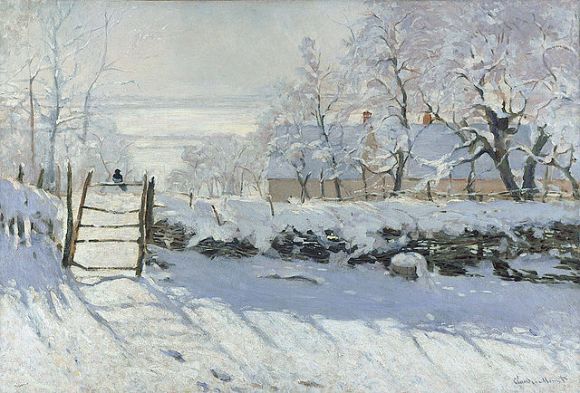
Spring in Winter?

Painting by Claude Monet (1840-1926)
If Winter comes, can Spring be far behind?

'Ode to the West Wind', Percy Bysshe Shelley (1792 -1822)

The idea of spring heralds hope even when it’s deep winter. The colours of spring bring variety along with an assurance of contentment and peace. While wars and climate disasters rage around the world, peace can be found in places like the cloistered walls of Sistine Chapel where conflicts exist only in art. Sometimes, we get a glimpse of peace within ourselves as we gaze at the snowy splendour of Himalayas and sometimes, in smaller things… like a vernal flower or the smile of a young child. Inner peace can at times lead to great art forms as can conflicts where people react with the power of words or visual art. But perhaps, what is most important is the moment of quietness that helps us get in touch with that inner voice giving out words that can change lives. Can written words inspire change?

Our featured bookstore’s owner from Bangladesh, Amina Rahman, thinks it can. Rahman of Bookworm, has a unique perspective for she claims, “A lot of people mistake success with earning huge profits… I get fulfilment out of other things –- community health and happiness and… just interaction.” She provides books from across the world and more while trying to create an oasis of quietude in the busy city of Dhaka. It was wonderful listening to her views — they sounded almost utopian… and perhaps, therefore, so much more in synch with the ideas we host in these pages.

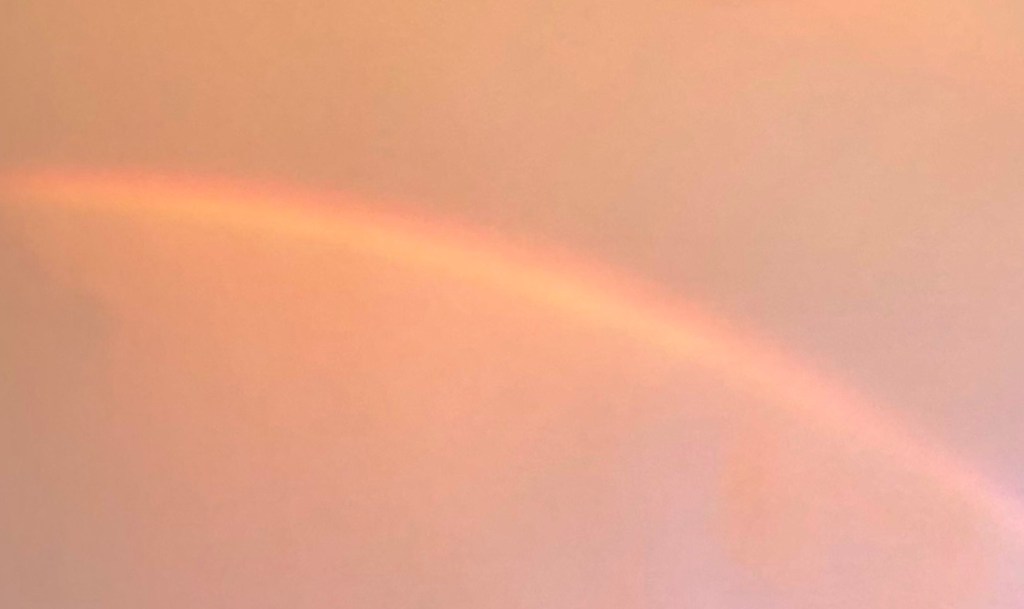
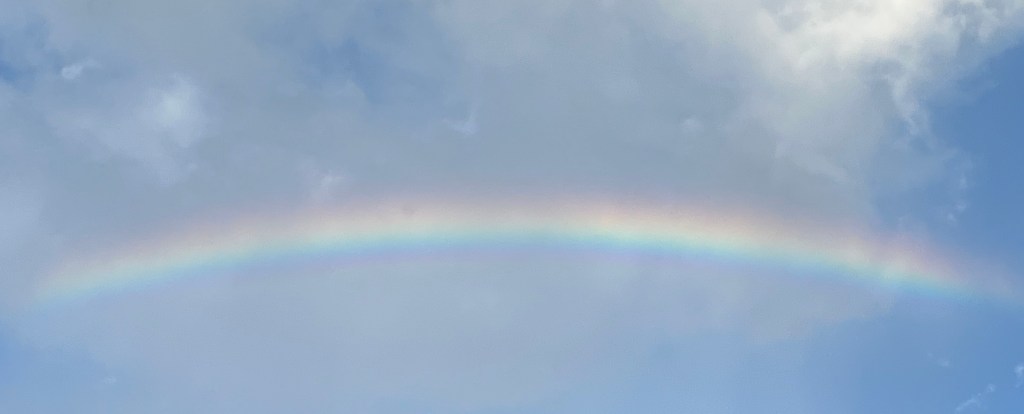
Our content this month are like the colours of the rainbow — varied and from many countries. They ring out in different colours and tones, capturing the multiplicity of human existence. The translations start with Professor Fakrul Alam’s transcreation of Nazrul’s Bengali lyrics in quest of the intangible. Isa Kamari translates four of his own Malay poems on spiritual quest, while from Balochi, Fazal Baloch bring us Munir Momin’s esoteric verses in English. Snehprava Das’s translation of Rohini K.Mukherjee poetry from Odia and S.Ramakrishnan’s story translated from Tamil by B.Chandramouli also have the same transcendental notes. Tagore’s playful poem on winter (Sheeth) mingles a bit for spring, the season welcomed by all creatures great and small.

John Valentine brings us poetry that transcends to the realms of Buddha, while Ryan Quinn Flanagan, Ron Pickett and Saranyan BV use avians in varied ways… each associating the birds with their own lores. George Freek gives us poignant poetry using autumn while Luis Cuauhtémoc Berriozábal expresses different yearnings that beset him in the season. Snehaprava Das and Usha Kishore write to express a sense of identity, though the latter clearly identifies herself as a migrant. Young Debadrita Paul writes poignant lines embracing the darkness of human existence. Joseph C. Ogbonna and Raiyan Rashky write cheeky lines, they say, on love. Mohit Saini interestingly protests patriarchal expectations that rituals of life impose on men. We have more variety in poetry from William Doreski, Rex Tan, Shivani Shrivastav and John Grey. Rhys Hughes in his column shares with us what he calls “A Poem Of Unsuccessful Excess” which includes, Ogden Nash, okras, Atilla the Hun, Ulysees, turmeric and many more spices and names knitting them into a unique ‘Hughesque’ narrative.

Our fiction travels from Argentina with Fabiana Elisa Martínez to light pieces by Deborah Blenkhorn and Priyanjana Pramanik, who shares a fun sketch of a nonagenarian grandma. Sreenath Nagireddy addresses migrant lores while Naramsetti Umamaheswararao gives a story set in a village in Andhra Pradesh.

We have non-fiction from around the world. Farouk Gulsara brings us an unusual perspective on festive eating while Odbayar Dorj celebrates festivals of learning in Mongolia. Satyarth Pandita introduces us to Emil Cioran, a twentieth century philosopher and Bhaskar Parichha pays a tribute to Professor Sarbeswar Das.  Meredith Stephens talks of her first-hand experience of a boat wreck and Prithvijeet Sinha takes us to the tomb of Sadaat Ali Khan. Ahmad Rayees muses on the deaths and darkness in Kashmir that haunt him. Devraj Singh Kalsi brings in a sense of lightness with a soupçon of humour and dreams of being a fruit seller. Suzanne Kamata revisits a museum in Naoshima in Japan.

Our book excerpts are from Anuradha Kumar’s sequel to The Kidnapping of Mark Twain, Love and Crime in the Time of Plague: A Bombay Mystery and Wayne F Burke’s Theodore Dreiser – The Giant, a literary non-fiction. Our reviews homes Somdatta Mandal discussion on M.A.Aldrich’s Old Lhasa: A Biography while Satya Narayan Misra writes an in-depth piece on Amal Allana’s Ebrahim Alkazi: Holding Time Captive. Anita Balakrishnan weaves poetry into this section with her analysis of Silver Years: Senior Contemporary Indian Women’s Poetry edited by Sanjukta Dasgupta, Malashri Lal and Anita Nahal. And Parichha reviews Diya Gupta’s India in the Second World War: An Emotional History, a book that looks at the history of the life of common people during a war where soldiers were all paid to satiate political needs of powerbrokers — as is the case in any war. People who create the need for a war rarely fight in them while common people like us always hope for peace.

We have good news to share — Borderless Journal has had the privilege of being listed on Duotrope – which means more readers and writers for us. We are hugely grateful to all our readers and contributors without who we would not have a journal. Thanks to our wonderful team, especially Sohana Manzoor for her fabulous artwork.

Hope you have a wonderful month as we move towards the end of this year.

Looking forward to a new year and spring!

Mitali Chakravarty

borderlessjournal.com

CLICK HERE TO ACCESS THE CONTENTS FOR THE NOVMBER 2025 ISSUE.

.

READ THE LATEST UPDATES ON THE FIRST BORDERLESS ANTHOLOGY, MONALISA NO LONGER SMILES, BY CLICKING ON THIS LINK.
Categories
Interview

Carr is Driven to Write Fast

Short-story writer, publisher and writing advocate, Steve Carr, has helped many writers around the globe get published for the first time. The author speaks to Keith Lyons about his prolific output and the best way to conquer writer’s block by being abundantly productive and creative.

Steve Carr is on the quest to write the perfect short story. But perfectionism isn’t putting him off the challenge. Since his first short story was published half a dozen years ago, he’s had over 600 short stories published internationally.

The native of Cincinnati, Ohio has travelled extensively outside the United States, serving as a military journalist in the Army and Navy before switching to fiction. As well as his work appearing in print and online in magazines, literary journals, and anthologies, eight collections of his short stories have been published, including ‘A Map of Humanity’ in 2022. He’s even released a paranormal/horror novel ‘Redbird’.

He was editor of literary magazine ‘Short Story Town’ and is the founder and publisher of Sweetycat Press whose goal is to support emerging writers by providing opportunities to getting published, primarily in anthologies.

When did you first discover your talent for writing?

From the earliest grades in school, I excelled in writing and English. By the time I reached high school the word had gotten around with the English Composition teachers that I had talent as a writer. In my senior year I had an English teacher, Mrs. Katz, who went out of her way and far beyond the curriculum to challenge my writing abilities. She encouraged me to pursue a writing career after I completed high school. Thanks to her support, and my own curiosity about what was happening in Vietnam (during the war), instead of going to college I enlisted in the Army to become a military journalist.

What encouraged you along the way to express yourself through writing?

My teachers in school and I took to writing the way fish take to water.

Tell us about your career as a military journalist? What did that involve? What kind of writing did you do in the army and navy?

I attended the prestigious joint military school, The Defense Information School, where I learned journalism and photojournalism. My intention was to go to Vietnam to see and report first-hand on what was happening over there. Fate intervened, and I was sent to the District Recruiting Command in Jacksonville, Florida as an Information Specialist, which involved me travelling around Florida and Georgia writing articles about the war about the war, as conveyed to me by military channels and returning soldiers, for local newspapers. I spent three years in that position and decided to end my enlistment to begin my college education in Cincinnati, where I’m from. Being the restless sort, I got bored after my Freshman year and enlisted in the Navy, and following the path of my favourite writer, W. Somerset Maugham, who had trained as a doctor, I enrolled in the Hospital Corps School, to become a Navy medic (a Hospital Corpsman). Because I did well during that training, I was offered the opportunity to attend the Neuropsychiatric Technician Program in San Antonio, Texas. Completing that, I was sent to the Portsmouth Virginia Naval Hospital where I quickly advanced to the position of the only enlisted instructor for the Psychiatric Technician School, Phase II, and for the next three years I worked with psychiatric patients while also teaching. During that time my writing was entirely medical/ psychiatric-based. That proved as beneficial to my writing as the skills I learned in the Army as a journalist.

Where in the world did your early career take you?

It took me first to the Army and then to the Navy. I traveled to a number of states and saw things and experienced life in ways I never thought possible or imaginable as I grew up.

How did you get into fiction writing?

My path as a writer, leading me to writing fiction, zigzags all over the place. If writing plays can be considered writing fiction (which it is), it wasn’t until after college where I double-majored in English and Theater, completed after my enlistment in the Navy, that I turned to writing plays, resulting in a few of them being produced in several states. During the next few years while writing plays I also wrote grants for non-profit health care providers, another unexpected benefit to my eventual path to writing fiction, which didn’t begin in earnest until years later, after I retired from owning my own theatrical production company. Writing fiction didn’t happen until I was mentoring a college student interested in learning to write fiction, and wanting to show him how it was done, I wrote a short story and then submitted it to a publication that quickly accepted and published it. Thinking that was really easy, the same thing happened with my second story. That was where my fiction writing career began.

What’s one of your first success stories in getting published? How did you feel seeing your name in print?

In June, 2016, the online publication, Literally Stories, accepted my first story “Eleanor” about the life of a modern-day reclusive woman who lived on the edge of the South Dakota Badlands. To tell you the truth, I don’t recall how I felt, other than being surprised that getting my first fiction story was so easy. I must have also felt encouraged because I quickly followed that with a second story. 600-plus stories – new and reprints – published since then tells me that from the beginning I must have liked the experience of being published because as evident, I haven’t stopped.

What’s your motivation for writing, given that rewards are scarce in a monetary sense?

I’ve been asked that question a lot, and honestly, I have no idea what motivates me to write. I don’t need the money, so that wasn’t a motivator from the very beginning. Maybe what motivates me is the challenge of writing good fiction. Now, I’m on the conquest to write the perfect short story. Someone told me that I may have already done that and don’t realise it. I have my doubts about that, so I continue to write short story fiction.

Does writing fiction involve a different part of your brain or different process than non-fiction writing such as journalism? If so, how?

The process of journalistic writing and writing fiction is somewhat similar. The best in both forms of writing involves making the individuals (characters) in the work, engaging, compelling and relatable, and bringing the events in the piece to life. For me, writing begins with observation and intellectual curiosity. Both journalistic writing and fiction almost demands that. I have no idea which parts of my brain I’m using, but I think I was wired to observe and give thought to the world and people around me from a very early age.

If writing is a creative process, how does the aspiring writer manage the creative side with the more mundane, organised side, such as having a schedule for writing and submitting, and meeting deadlines?

That’s a hard question to answer since every individual has their own methods and abilities to be organized in anything they do. I have a guidebook, Getting Your Short Stories Published, published by Clarendon House Publications, that is available on Amazon, that provides the method I use for organising my writing and submissions. Even in that I caution the reader that it is my method, and it may not work for everyone. If I can be conceited about the guidebook, it has some very useful information in it, including the importance of knowing grammar and punctuation, why reading the submission guidelines is essential, and understanding how editors evaluate submissions.

How do you get motivated to write?

Motivation has never been a problem for me. What helps is that I set goals and quotas: how many stories do I want to write in a given month? How many words do I want to write on any given day? Am I on track for my yearly quota of published stories?

Where do you get your ideas, and how do they form into a story?

I begin with a title that has popped into my head, not always inspired by anything in particular, but sometimes a result of reading a news article or seeing something happening while outside. I’ve also been fortunate enough to travel, to meet lots of interesting people, and I have a very fertile imagination born of a love of art, music and movies, so those things are always stirring around in my head. Once a title has been formed, I then think about how the story will begin and end. In that way I am a “plotter,” (someone that plots out the entire story). I fill in the middle as I write. In that way I am also a “pantser.”(someone who flies by the seat of their pants all the way through their pants).

What’s your actual writing process – and is it fuelled by anything?

I don’t really have a process. I tend to write in shifts throughout the day or night, mostly when I feel like it. I have goals, as I said, but I don’t allow myself to become stressed if I lag behind or don’t meet them. I enjoy the process of writing, of seeing the words, sentences and paragraphs appear on the blank page.

How do you find out about opportunities for submissions, for example for literary journals and anthologies?

I have a subscription to Duotrope which is a publication search site. Their fee for use is either $5.00 per month or $50.00 per year. The great thing about them that is unlike any other search site is that they send out a weekly email that lists publications looking for submissions. I get about 80-90% of my submission opportunities from Duotrope. They can be found at https://duotrope.com/search/catalog.aspx. I also subscribe to Authors Publish https://authorspublish.com/ and to a number of publications that send out monthly newsletters and calls for submissions. I also find opportunities for submissions on social media, both in the large number of Facebook writing groups I belong to, and on Twitter. There are a number of editors who like my work and ask for stories from me.

What do you attribute to your incredible success in having over 600 short stories published?

This is going to sound like bragging, but I’m a good writer. I have a thorough understanding of short story structure and I write stories that have a broad appeal. I was told by another editor that I’m a “commercial writer,” meaning I write what readers want. I also write stories based on what publications are looking for. I found out early it was a waste of time and energy to write a story and then try to find a home for it. I use what the publications are seeking as prompts, and then I write a story from the prompt. I also write a lot of stories, so it’s a simple law of averages that the more stories I submit, the more of them get accepted – of course if only they are well-written. I also write in every genre which is extremely helpful in being able to adjust my themes, plots and characters to match a genre. 

Tell us about your efforts to support emerging writers through Short Story Town and publishing anthologies with Sweetycat Press?

Short Story Town is a Sweetycat Press online literary magazine that paid emerging for their stories and narrative poems. It will be closing down on June 1 after a year of operations to allow me to focus on the anthologies. Under the Sweetycat Press publishing imprint over 1,000 prose writers and poets worldwide have had their works published. The anthologies are varied and each one has a theme. So far Sweetycat Press has published an episodic crime anthology titled The Whole Wide World, an anthology titled Landscapes & Cityscapes, followed by A Love Letter (Or Poem) To . . ., Stories and Poems in the Song of Life, Beautiful: In the Eye of the Beholder, and Movement: Our Bodies in Action. On July, I will be giving out $900 in combined cash awards in the Jewels in the Queen’s Crown contest to 20 writers poets who have had a prose work or poem published in one of the anthologies judged by a small panel to be the best of the best.

What’s your advice for aspiring writers?

Never take advice about writing from anyone who has less experience with writing than you do. Readers are important but being told what a reader likes or dislikes about what they read is a lot different than being told how to write. Also, don’t get freaked out about a rejection. Everyone gets them. Shrug it off and move on. A rejection will never cause you physical harm.

And your next projects?

An anthology will be published from the Jewels in the Queen’s Crown contest and then two anthologies are planned for later in the year. Anyone interested in writing a story or poem for inclusion in an anthology should check in regularly with the Sweetycat Press website https://www.sweetycatpress.com/ Unfortunately, I don’t pay the writers/poets whose works are accepted, but the anthologies do provide platforms for showcasing a writer or poet’s talent and skill.

Steve Carr’s Twitter is @carrsteven960. His website is https://www.stevecarr960.com/ He is on Facebook:https://www.facebook.com/steven.carr.35977

Keith Lyons (keithlyons.net) is an award-winning writer, author and creative writing mentor, who gave up learning to play bagpipes in a Scottish pipe band to focus on after-dark tabs of dark chocolate, early morning slow-lane swimming, and the perfect cup of masala chai tea. Find him@KeithLyonsNZ or blogging at Wandering in the World (http://wanderingintheworld.com).

PLEASE NOTE: ARTICLES CAN ONLY BE REPRODUCED IN OTHER SITES WITH DUE ACKNOWLEDGEMENT TO BORDERLESS JOURNAL