Categories
Essay

Songs of the Adivasi Earth

For 50 years now Ratnottama Sengupta has seen Haren Thakur adroitly create art from the humdrum of tribal life. And his stylised abstract of the dark-toned humans still makes her sit up and take note.
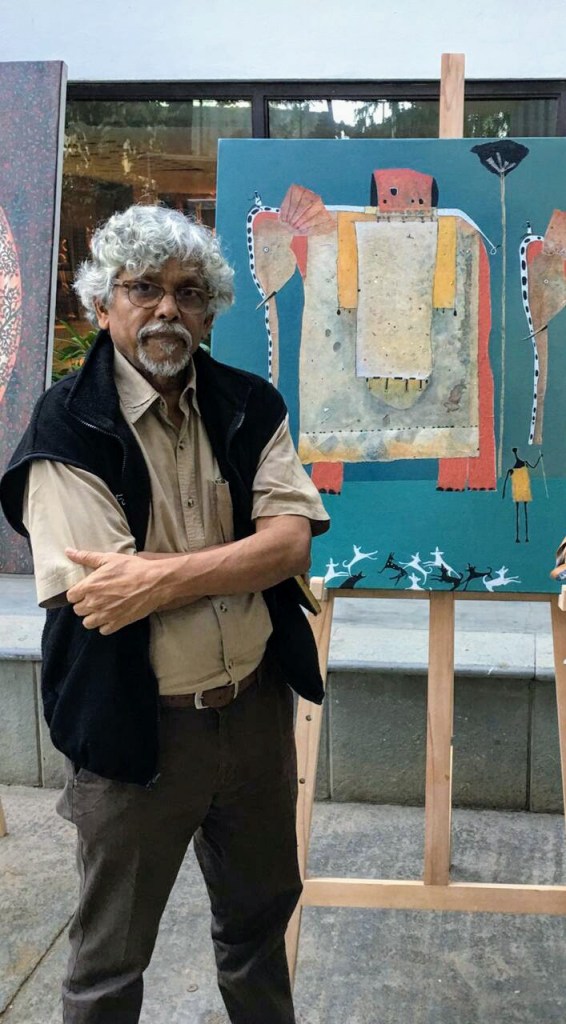
Haren Thakur with his painting. Photo provided by Ratnottama Sengupta

A dark, stick-like outline encompasses a human of the male species. A triangle, an oblong, a rectangle. A white patch in the midst of a sepia-green landscape. A drummer. A mother with a child holding aloft a balloon. Two women bathing in a primitive pond. A quizzical duck. A wriggling worm. Trees hills fish pigs cows fox… And, yes! A train zigzagging its way through a vast expanse of meadows. As we view the watercolours of Haren Thakur from Ranchi, you might think of the rice-white art of the Warli tribals characterised by geometric shapes that depict the rituals of everyday life. I might be inclined to revisit the painted layers on the 100,000-year laterite at the prehistoric rock shelters of Bhimbetka in the foothills of the Vindhyas in Madhya Pradesh. Another viewer might think of the ancient Sauras and the adornment of their walls in their adobe huts in Odisha. The artist himself might have recollections of the animated Santhal pats he saw being created during his student years in Tagore’s Santiniketan. However, none of Haren’s figures are simplistic. They are all stylised. And so adroitly that you are bound to sit up and take note of them no matter how many times you have come across the theme.
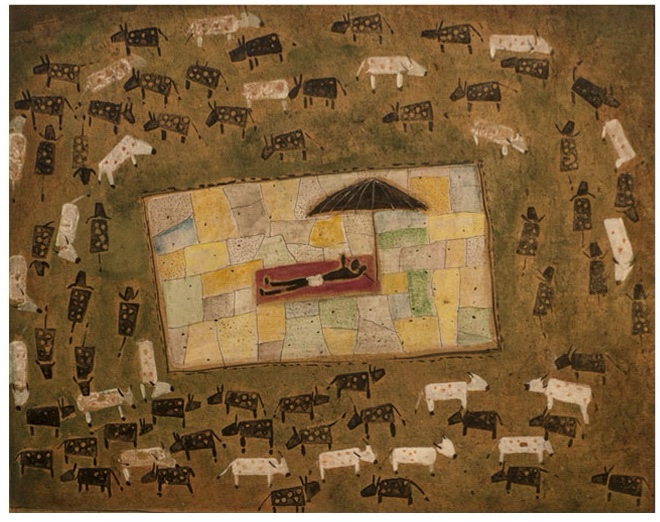
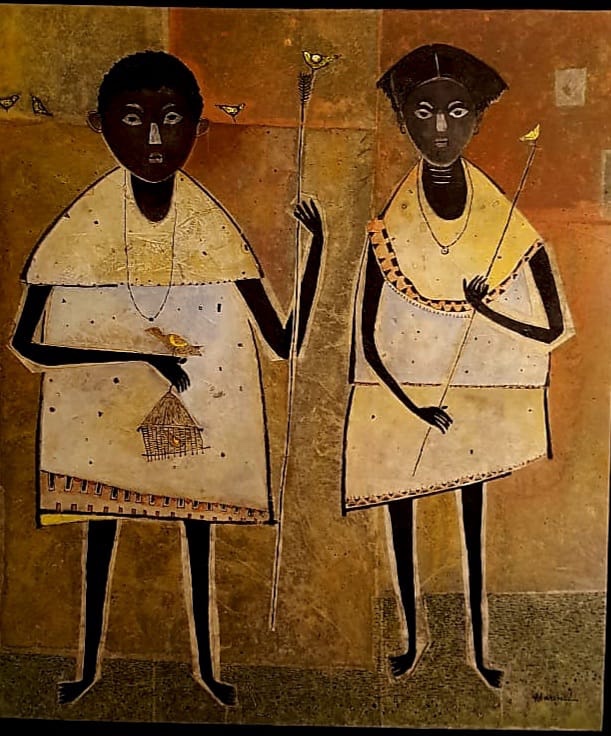
Form and content come seamlessly together in the paintings that Haren Thakur will exhibit in Delhi’s Habitat Centre from April 15. The artist who mastered Art at Santiniketan — home to Santhals, the native dwellers of Bengal and Odisha — then made his living in Jharkhand, which is home to 32 tribes… Indeed, from his very beginning, the beauty in the dark skin-tone of the men and women going about their chores was the most natural rhythm of life in the bazaars and streets of Bankura Bishnupur, where his family hailed from, or in Purulia, where his father made his home. 

Beyond doubt, Rabindranath’s deep affection for the Santhals and the Bauls reinforced this love. Much like Gurudev, Haren finds poetry in their tilling of the earth. In their mono-toned songs and the repetitive steps of their dance. In the fulfilment they find in the primeval life and archetypal love. And when, following in the footsteps of the Universal Poet, Haren finds beauty in a grain of sand, the everyday life ceases to be an essay in deprivation and rises to the level of art.

*

And his colour palette? That too came off the walls of his hostel in Santiniketan, from the frescoes and murals by Binode Behari Mukherjee. From the brick-toned ‘canvas’ that is the prehistoric rock painting of Bhimbetka. The pigment on Haren’s brush and tubes is never loud then, never grating. It is always muted, always mellow. And the impact is heightened by Haren’s utilisation of rice paper, and Chinese ink, on watercolour.

The Nepali rice paper became his signature in 1974. Prior to that he would work the rice paper in the tempera process that was ‘Master Moshai’ Nandalal Bose’s gharana, school – or Indian shaili, style. But in that process of painting layer by layer, the rice paper would lose its original character and serve merely as a background surface.

Then, in his fourth year, for a scholarship test of the Visva Bharati University, Haren experimented by soaking the rice paper in water. It became so pliant that he could spread it out like a piece of cloth. “And its texture!” It won him the scholarship — and immense appreciation from his teachers, Dinkar Kaushik and Somnath Hore. “They said, ‘Go ahead and explore this medium and this process further. It adds a dimension that has immense possibility.”
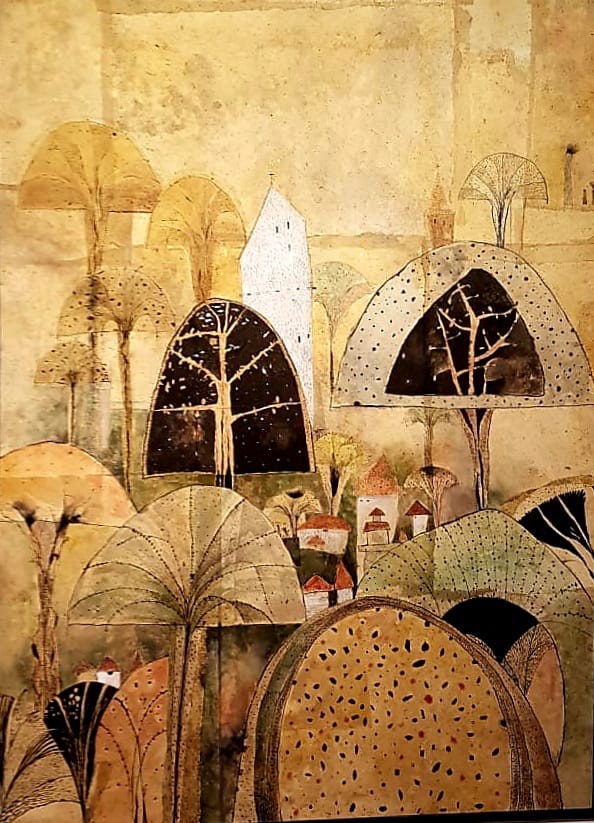
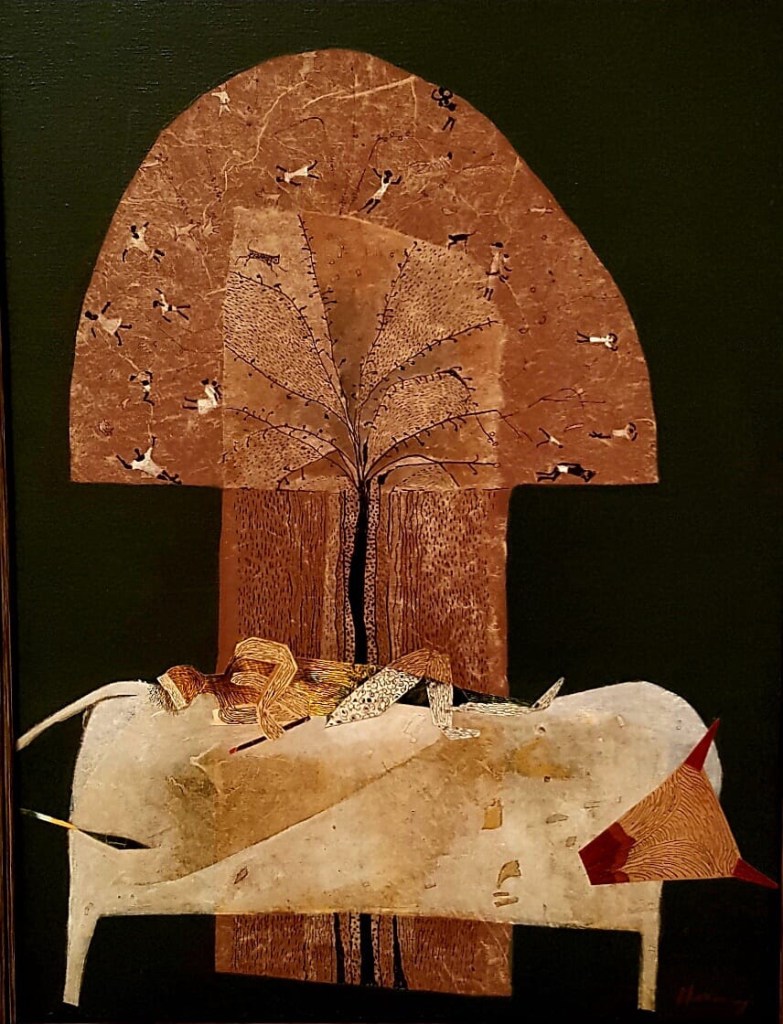
Fifty years have gone by since, but Haren has not given it up. Sometimes, when painting on canvas, he does apply acrylic directly on its surface. But at times, even here, he pastes rice paper on the canvas, primes it with watercolour, then inks in the forms. However he adds, “when I paint on rice paper mounted on board, I do not – cannot – use acrylic. It simply doesn’t have the capacity to be absorbed by the rice paper the way watercolour gets absorbed.” So, in such cases Haren uses transparent watercolour.

Clearly the chemistry between rice paper and watercolour is amazing. Unique.

*

Circling back to the content: Haren’s understated pitch was reinforced by the Zen worldview of a teacher like Somnath Hore. The master minimalist’s use of the white, barely scratched by the red of a wound, spoke volumes — and it made Haren introspect. Once, while exhibiting the Wound series, Somnath Da had said, “I discovered such depth of emotion in the reticence of tones!” This soliloquy got deeply etched in Haren’s unconscious. And eventually it came to express itself in the rusty red of the iron oxide rich Birbhum soil; the roasted brown of Purulia’s rocky earth; the weathered green of the Bauls; the soothing blue of the open sky high above the woolly white of floating clouds.
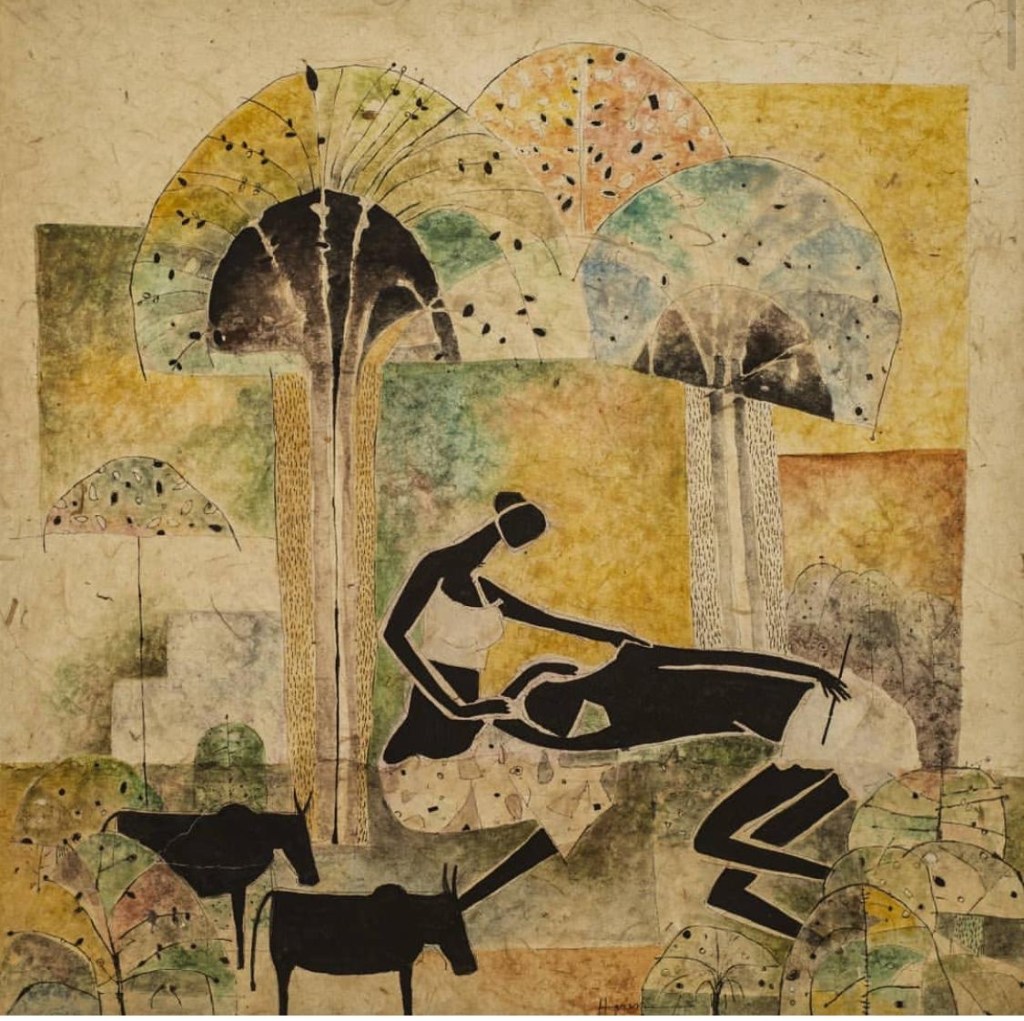
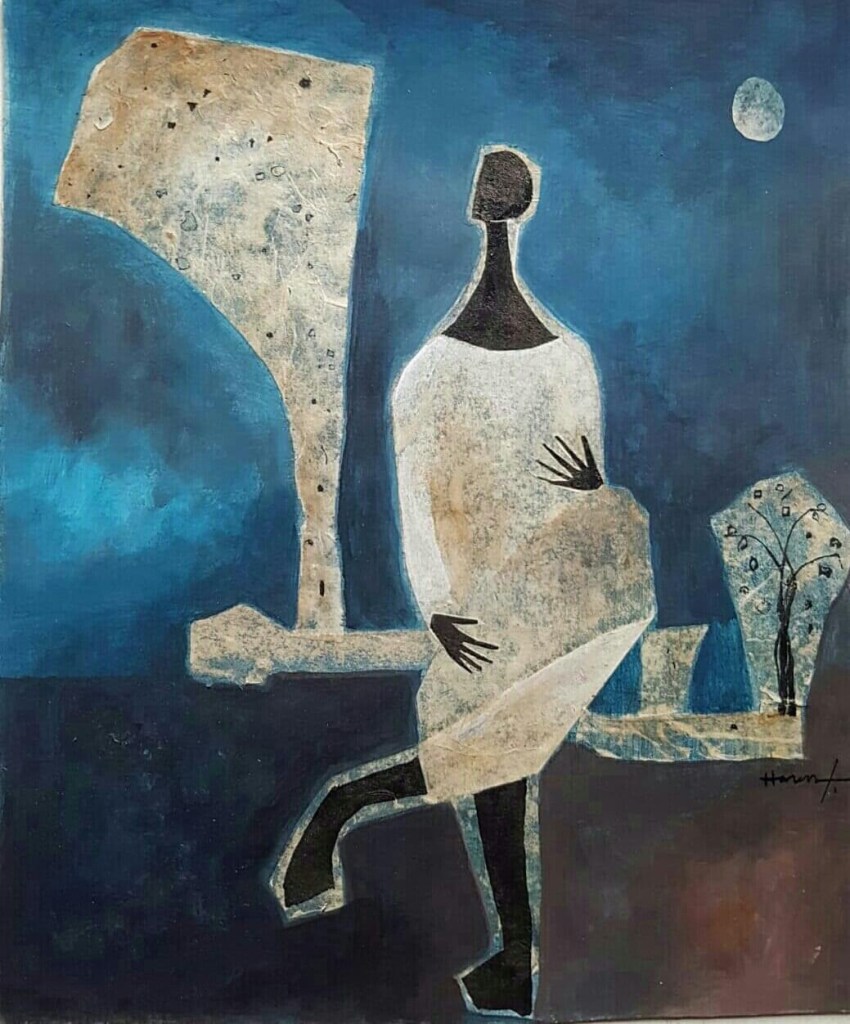
Flattened figures. Non-realistic features. Do you see a hint of Husain – or perhaps Paul Klee – in the abstraction of the human world? I notice a reflection of the figures encountered on Egyptian papyrus. Or the African world. Haren, on his part, reiterates his original inclination: the attraction towards the lack of artifice in Adivasi life. How else would the tribals go about their daily humdrum with a baby knotted to their back? Or float in an open pool under the sun-kissed sky? To the city-bred mind, this would be unthinkable — until Haren captions it ‘Nature’s Bathtub’!

But, notwithstanding my references, the art traditions of the indigenous people over the world have never influenced Haren. “Their art tradition is so rooted in their environment – be it of Jharkhand or of any other.” Even their pigments, brush, and surface are integral to their life. But he certainly derives inspiration from the lifestyle of the original inhabitants, he affirms.

“I have always admired their direct application, the spontaneity of their form,” Haren further explains. “But I am influenced rather by the uncomplicated lives they lead. Since I was in Santiniketan I have admired the way they connect with nature in everything they do. Their intimacy with animals is incredible – they seem to be in dialogue with the animals they domesticate! This became a part of my visual world, especially when I came to live in Ranchi. The same reality imbues the lives of the natives – Oraon, Munda, Ho, Sabar, Bedia, Lohar… They rest under the tree unconcerned about how the ‘civilised’ world looks at them. They speak with the hills, with clouds in the sky, with cattle and kids, trees and waters, rivers and streams!”
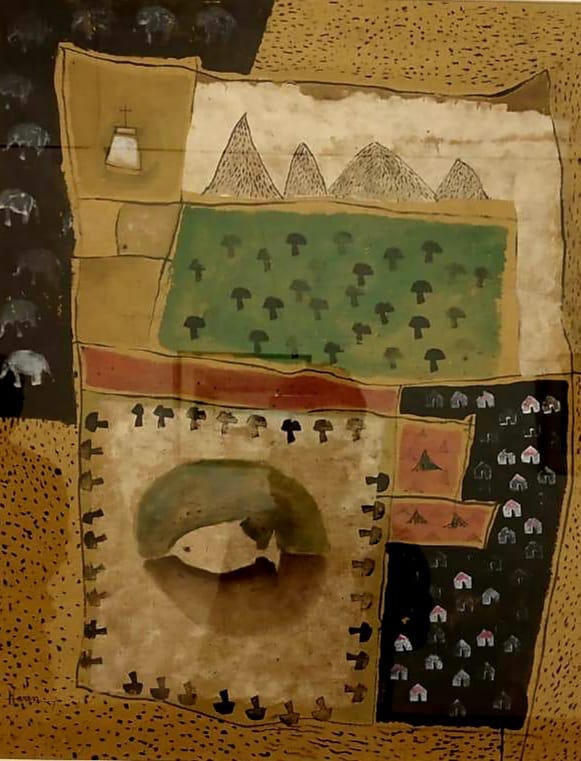
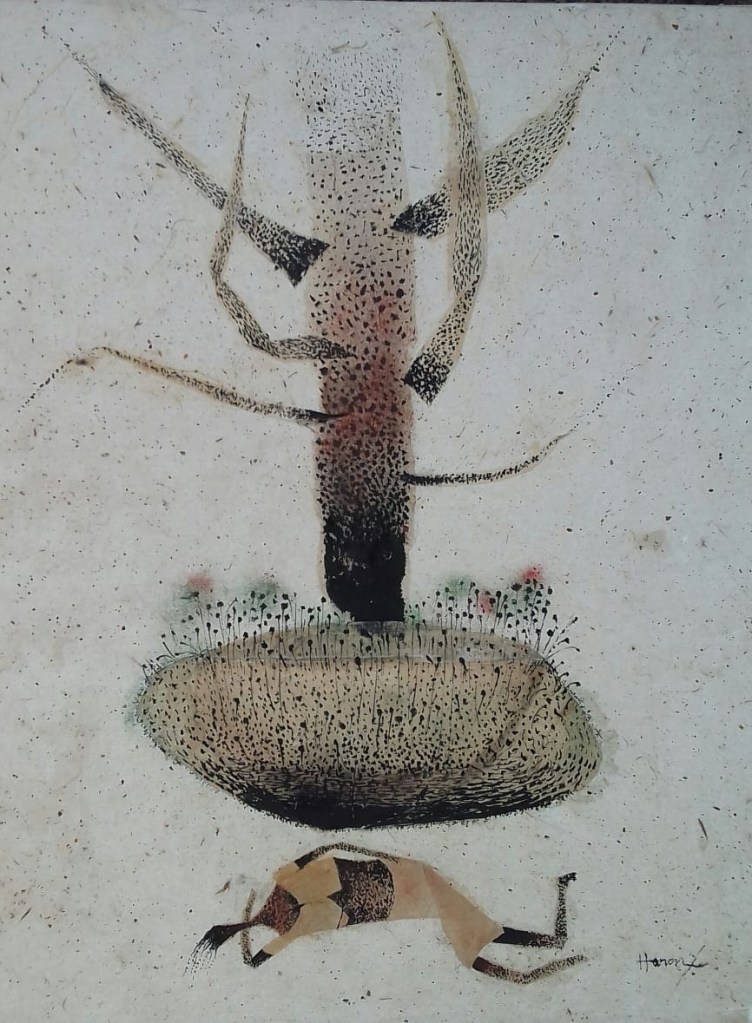
This they do with no inhibition. Because this routine is a reality they have inherited from their ancients. “That is why I believe there is nothing more ‘Contemporary’ than this,” Haren asserts. This innate natural life, and the Santiniketan grooming, combined to forge his vocabulary, his visual language.

So, in the exhibits, you encounter an abundance of water bodies. Pools and ponds. Rivers and waterfalls. Lotus and lily. Big fish. Many small fish in its tummy. Ducks and kingfishers. Hyacinth and hayfield. All this is a natural part of the countryside that has made Haren theirs.

Interestingly there is also this play with size. In one of the frames an elephant walks down the road – and at every footfall he is greeted by a number of… ants?! Look closely and you will decipher that they are dogs!

Haren is giving you a worm’s eye view. And, in addition to the proportion, he is  picturing the Hindi proverb Haathi chaley bazar, kutta bhaukey hazaar/ when an elephant walks to the market, a thousand dogs will bark! Political comment? You said it!

Stay tuned to the song of the Adivasi earth, Haren.

.

Ratnottama Sengupta, formerly Arts Editor of  The Times of India, teaches mass communication and film appreciation, curates film festivals and art exhibitions, and translates and writes books. She has been a member of CBFC, served on the National Film Awards jury and has herself won a National Award. 

.

PLEASE NOTE: ARTICLES CAN ONLY BE REPRODUCED IN OTHER SITES WITH DUE ACKNOWLEDGEMENT TO BORDERLESS JOURNAL

Click here to access the Borderless anthology, Monalisa No Longer Smiles

Click here to access Monalisa No Longer Smiles on Amazon International
Categories
Celebrating Translations

We are the World

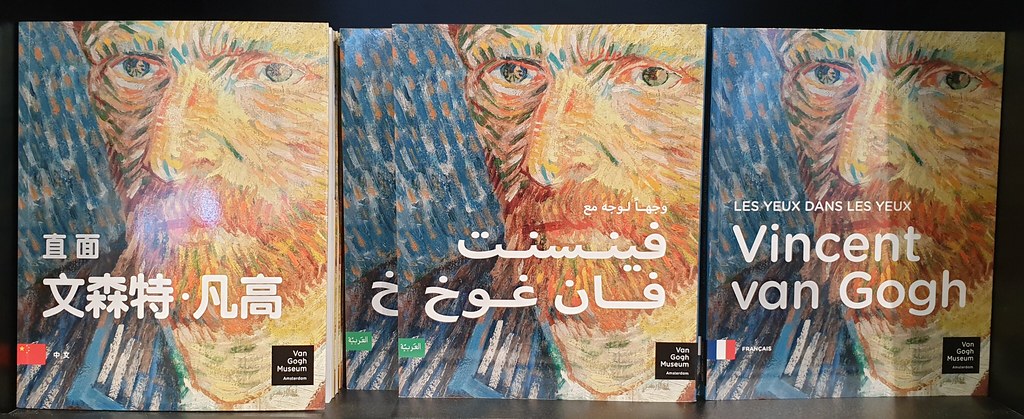
Vincent Van Gogh written is different scripts. Courtesy: Creative Commons

The whole world opens up in the realm of ideas that have existed wafting and bridging across time and space. Sometimes they find conduits to come to the fore, even though they find expression in different languages, under varied cultural milieus. One way of connecting these ideas is to translate them into a single language. And that is what many have started to do. Celebrating writers and translators who have connected us with these ideas across boundaries of time and place, we bring to you translated writings in English from twenty eight languages on the International Translation Day, from some of the most iconic thinkers as well as from contemporary voices. 

Prose

Tagore’s short story, Aparichita, has been translated from Bengali as The Stranger by Aruna Chakravarti. Click here to read. 

Travels & Holidays: Humour from Rabindranath, have been translated from Bengali by Somdatta Mandal. Click here to read.

Hena, a short story by Nazrul, has been translated from Bengali by Sohana Manzoor. Click hereto read.

Munshi Premchand’s Balak or the Child has been translated from Hindi by Anurag Sharma Click here to read.

Munshi Premchand’s Pus Ki Raat or A Frigid Winter Night  has been translated from Hindi by C Christine Fair. Click here to read.

Nadir Ali’s The Kabbadi Player has been translated from Punjabi by Amna Ali. Click here to read.

Kamaleswar Barua’s Uehara by  has been translated from Assamese and introduced by Bikash K. Bhattacharya. Click here to read.

S Ramakrishnan’s Muhammad Ali’s Singnature has been S. Ramakrishnan, translated from Tamil by Dr B. Chandramouli. Click here to read. 

PF Mathews’ Mercy,  has been translated from Malayalam by Ram Anantharaman. Click here to read.

Road to Nowhere, an unusual story about a man who heads for suicide, translated from Odiya by the author, Satya Misra. Click here to read.

An excerpt from A Handful of Sesame by Shrinivas Vaidya, translated from Kannada by Maithreyi Karnoor. Click here to read.

Writings from Pandies’ Corner highlight the ongoing struggle against debilitating rigid boundaries drawn by societal norms. Each piece is written in Hindustani and then translated by a volunteer from Pandies’ in English. Click here to read.

Rakhamaninov’s Sonata, a short story by Sherzod Artikov, translated from Uzbeki by Nigora Mukhammad. Click here to read.

Of Days and Seasons, a parable by the eminent Dutch writer, Louis Couperus (1863-1923), translated by Chaitali Sengupta. Click here to read.

The Faithful Wife, a folktale translated from Balochi by Fazal Baloch. Click here to read.

An excerpt from Ramy Al-Asheq’s Ever Since I Did Not Die, translated from Arabic by Isis Nusair, edited by Levi Thompson. The author was born in a refugee camp. Click here to read.

Poetry

Two songs by Tagore written originally in Brajabuli, a literary language developed essentially for poetry in the sixteenth century, has been translated by Radha Chakravarty. Click here to read. 

Rebel or ‘Bidrohi’, Nazrul’s signature poem,Bidrohi, translated from Bengali by Professor Fakrul Alam. Click here to read.

Banlata Sen, Jibananada Das’s iconic poem, translated from Bengali by Professor Fakrul Alam. Click here to read. 

Poetry of Michael Madhusudan Dutt has been translated from Bengali by Ratnottama Sengupta. Click here to read.

Our Children, a poem by well-known Iranian poet, Bijan Najdi, has been translated from Persian by Davood Jalili. Click here to read.

Akbar Barakzai’s Be and It All Came into Being has been translated from Balochi by Fazal Baloch. Click here to read.

Biju Kanhangad’s The Girl Who Went Fishing has been translated from Malayalam by Aditya Shankar. Click here to read.

Jitendra Vasava’s Adivasi Poetry,  translated from the Dehwali Bhili via Gujarati by Gopika Jadeja. Click here to read.

Sokhen Tudu’s A Poem for The Ol Chiki, translated from the Santhali by Hansda Sowvendra Shekhar. Click here to read.

Thangjam Ibopishak’s Gandhi & Robot translated from the Manipuri by Robin S Ngangom. Click here to read.

 Rayees Ahmad translates his own poem, Ab tak Toofan or The Storm that Rages, from Urdu to English. Click here to read.

Poetry by Sanket Mhatre has been translated by Rochelle Potkar from Marathi to English. Click here to read.

An excerpt from Evening with a Sufi: Selected Poemsby Afsar Mohammad, translated from Telugu by Afsar Mohammad & Shamala Gallagher. Click hereto read.

Ihlwha Choi’s Universal Language written at Santiniktan, translated from Korean by the poet himself. Click here to read.

Sangita Swechha’s Motherhood: A Tiny Life inside Me has been translated from Nepali by Hem Bishwakarma. Click here to read.

Rosy Gallace’s Two poems from Italy  have been translated from Italian by Irma Kurti. Click here to read.

Poetry in Bosnian written and translated from Bosnian by Maid Corbic. Click here to read.

Lesya Bakun translates three of her own poems from Ukranian and Russian to English. Click here to read.

Poems from Armenia by Eduard Harents translated from Armenian by Harout Vartanian. Click here to read.

Categories
Essay

Potable Water Crisis & the Sunderbans

By Camellia Biswas

Many projected climate change impacts, including sea-level rise, temperature increase, heavy rainfall, drought and cyclone intensity, is increasing yearly flooding, riverbank erosion, salinity intrusion, etc. These pose severe impediments to the socio-economic development of India, especially the coastal areas. The coastal area of India, especially the Bay of Bengal, is located at the tip of the northern Indian Ocean. It is frequently hit by severe cyclonic storms, generating long tidal waves aggravated by the shallow bay.

At least one major tropical cyclone strikes the Eastern/south-eastern coast each year with powerful tidal surges. The Chakraborty et al (2016, 13-19) report states almost 2.3 million people were affected by Cyclone Aila more than a decade ago in May 2009. Many people were stranded in flooded villages. The tidal surge was about 10-13metres in height. It washed away enormous number of households, lives, livestock, crops and all other resources of the affected region. Aila was not a powerful storm, but its heavy incessant rains and storm surges were enough to swamp the mouths of the Ganges in both Bangladesh and India (Biswas 2017).

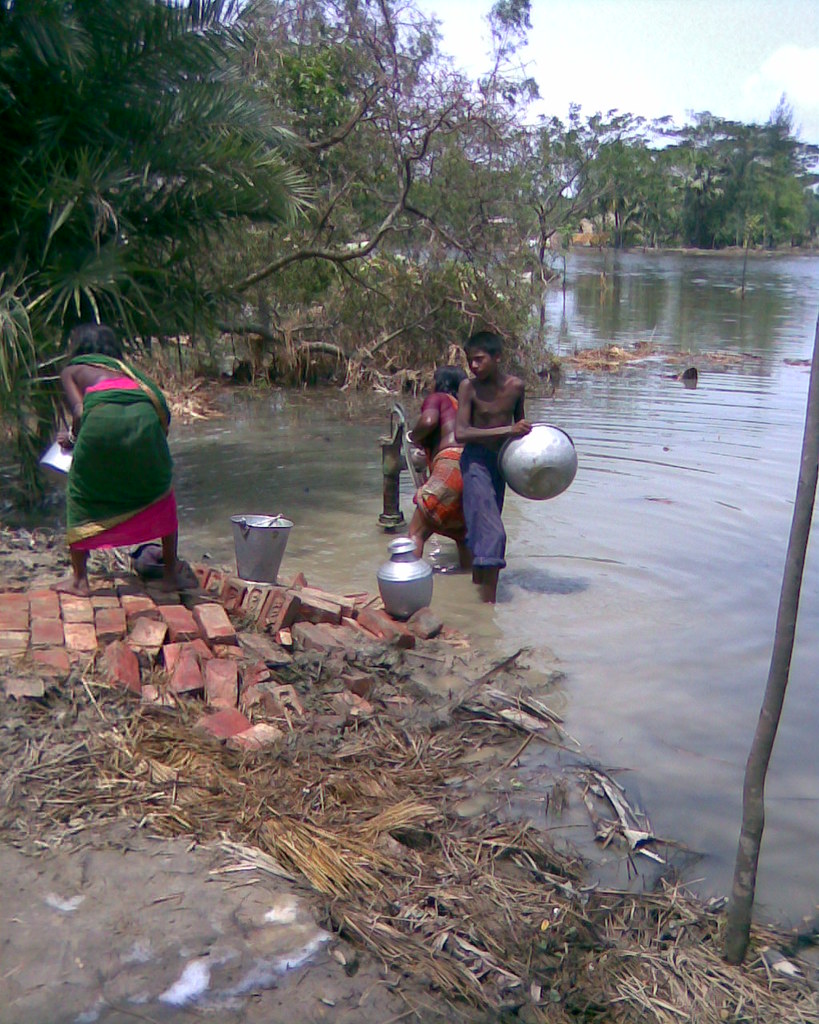
Some islands in the Bay of Bengal and the mangrove forests of the Sundarbans region were wholly submerged underwater. This catastrophe happened within a brief period, which resulted in people becoming homeless, leaving their assets in the households. A tiny percentage of the affected people could take shelter in the nearby cyclone shelter or schools during the cyclonic event. However, in several discussions, the affected people criticised that most cyclone shelters were built post-Aila and schools had only ground floors, which was anyways inundated. Most people thus took refuge on elevated roads. The extreme flooding also resulted in thousands of people losing access to safe drinking water and exposure to floodwaters containing untreated wastewater, dead animals and fish.

Impacts on water systems and water quality are often not visualised as chronic damage to property or the landscape. And thus, most treatments to these problems are temporary and short-lived. Potable water scarcity is a cumulative problem in the coastal region of India, especially Sundarbans, as it is revolving saline water slowly. Climate-induced disasters like rainfall, cyclone and storm surge, flood etc., are making the situation worse. Coastal people gradually depend on groundwater due to surface water salinity. As a result, groundwater extraction is increasing day by day. For that reason, the shallow aquifer has also been contaminated by salinity intrusion.

I have witnessed the horrific situation of women and children wailing for drinking water and waiting for relief distribution while spending my summer holidays at my native house in Sundarbans. The 14-year-old me then was horrified by the helpless situation of my own people, my kin and kept wondering whether disaster management conditions would be better or worse in due course of time especially when it concerns marginal communities of Dalits and Adivasis.

The memories of Aila keep flashing back to these Sundarban islanders every time they are hit by a cyclone or post-cyclone flood. Some of the stories they shared with me during my doctoral fieldwork made me revisit my Aila memories. As a native researcher, it gave a new stance towards the importance of water beyond its economic value and enhancing communities’ socio-cultural ties. Water, which has often served as an agency to conflict and dispute, during Aila it stimulated the sense of brotherhood and togetherness among the Samsernagar village residents.

Flood Friendship Between India-Bangladesh

Samsernagar is the last village in West Bengal’s Sundarban, bordering Bangladesh by river Kalindi. During Aila, the embankments of Samsernagar broke, resulting in the inundation of the village with the high tide influx from Kalindi. It led to total ruination of the settlement in just a couple of minutes. Samsernagar was submerged in the water, and so were the tube-wells and ponds, which were the only source of drinking water. It is where the villagers from Bangladesh came as harbingers of help.

In the political map, Bangladesh and India are demarcated as two separate nations. However, for people in Samsernagar, their neighboring village will still be the Village Koikhali of Bangladesh. To better understand, I phoned one of my respondent’s relatives who lived on the other side and asked about their experience during Aila regarding the help they provided to the Samsernagar residents. Koikhali residents came to Samsernagar rowing on their boat with barrels of potable water and other essential aids like food, clothes and mats. From several discussion and information interaction, it can be inferred that Samsernagar still recognises their international neighbour’s gesture which didn’t let them die of drinking polluted water. This act showed how, on the one hand, the water acted as a demon to the villagers through flooding and on the other, the barrels of drinking water brought by the neighbouring villages of Bangladesh became a sign of camaraderie and community interest. It went beyond just a mere necessity to live. It showed us how two villages come together, ignoring the human-made international boundary.

The Dilemma of Drinking water Crisis

That this acute drinking water problem can turn into a chronic issue in events like Aila and similar flooding situations is given credence by the fact that underground water also becomes saline due to leaching and seepage. Even after the floodwater recedes, the tube well water remains undrinkable. Sittler (2017), in her study on ‘Floodwater and stormwater can contaminate your water well’ argues that regardless of where storm-water runoff occurs, like floods, it can carry harmful contaminants such as soil, animal waste, salt, pesticides, and oil, potentially impacting drinking water wells and water quality. When discussed these challenges with groundwater experts at Sundarbans, they pointed out that in the Hingalganj Block, where Samsernagar village is situated, many deep tube well weren’t rightly maintained. Excessive contaminant-laden run-off infiltrated these drinking water wells through and assessed that the well casings or caps may not have been completely watertight. Moreover, any potential contaminants into the well can pose at least a short-term risk to water quality and human health.

In 2009, many families in Sundarbans, out of desperation, consumed pond water undergoing some basic filtration, knowing that the pond water stank from carcasses of dead animals. As farmlands remain filled with saline water, paddy yield became meagre the same and following year. Affected people when interviewed spoke of the mismanagement of the state’s relief supply and its lack of providing safe water, on how the local administrations would run some basic filtration like boiling the contaminated water and distributing it. As a result, hundreds of villagers suffered from diarrhea two weeks after drinking contaminated water. According to UNICEF, 28 diarrheal deaths were registered, and over 85,000 cases were reported from the Aila-hit districts of West Bengal.

Water can be considered a symbolic element, a resource, a commercial product, or a service. The interconnections established and the value attributed to water usage serves to build norms and references that influence the decision-making process from individuals to higher levels of social organisation. When considering it a resource for life, its interests and values vary and change across cultures, communities, states, space and time. One may raise an inquiry that spaces like Sundarbans is surrounded by rivers and seas, and that’s presumably the reason why Sundarban locals might not feel impacted by the presence of noble metals in the water.

However, as Sundarban landscape has a mangrove ecosystem, the water quality in and around the area has been found to be of inferior quality (CGWB report, 2014-15). If also, post-Aila most deep wells that were reconstructed at the height of 8-10ft above flood level so that the runoff was less likely to introduce contaminants into these wells, slight amount of saline water still managed to seep into the groundwater. However, it is the persistent presences of high iron and arsenic in the wells within that should raise alarm. So, even though the region is surrounded by water, most of it is toxic. Thus, for the Sundarban islanders, continuous access to safe and potable water is an aspiration that continues a dream for the whole community.

REFERENCES:

.

Camellia Biswas is a doctoral candidate at the discipline of Humanities & Social science, IIT Gandhinagar. She is an Inlaks-RS conservation grantee for the year 2021-22. Her research specialises in Environmental anthropology, focusing on human- Nature Interaction in Indian Sundarban under the larger discourse of Climate disaster.

.

PLEASE NOTE: ARTICLES CAN ONLY BE REPRODUCED IN OTHER SITES WITH DUE ACKNOWLEDGEMENT TO BORDERLESS JOURNAL

Categories
Editorial

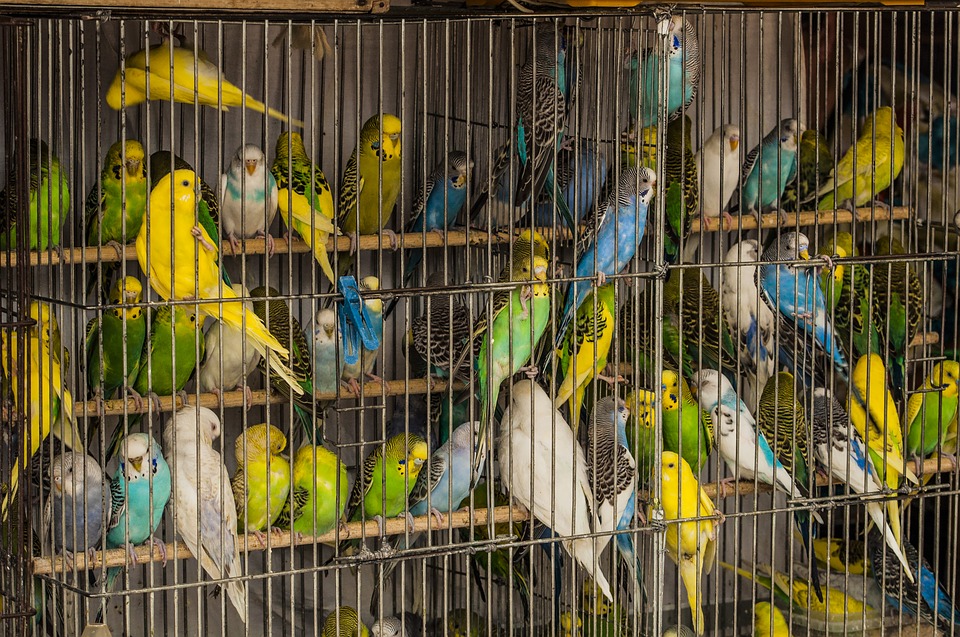
The Caged Birds Sing

...Don't you know
They're talkin''bout a revolution
It sounds like a whisper...
-- Tracy Chapman,'Talkin 'Bout a Revolution
Thou shalt love thy neighbour as thyself. 
— Bible 

We are living in strange times that seem to be filled with events to challenge the innovativeness of man. As if the pandemic were not enough, concepts that had come out of the best in our civilisation to unite mankind have been convoluted by a minority to manipulate and hurt the majority into submission. Life is not about surviving with faint-hearted compliance but about having the courage to live it as you want, facing it full up front, to voice out in unison against injustices, wrongs, and most of all to loan strength to help and care for each other. Often to understand this, we need to hinge on to our past, to learn from our heritage. But do we do that? In the hectic drive to be successful, we tend to ignore important lessons that could have been imbibed from the past. Like, did you know that the tribes in the Andaman can save themselves from a tsunami?

Padma Shri Anvita Abbi tells us all about the Andamanese and her attempts to revive their moribund language in her interview and book, Voices from the Lost Horizon, reviewed by Rakhi Dalal. While the review focusses on the uniqueness of Abbi’s work and the publication with its embedded recordings of the tribe fast dissolving into the morass of mainstream civilisation, her interview highlights the need to revive their lores that evolved out of a 70,000-year-old culture. On the other hand, Jessica Mudditt, interviewed by Keith Lyons, dwells on the ongoing crisis in Myanmar, which has been clearly the focus of her book, Our Home in Yangon. This interview focusses on the here and now of the crisis. But most crises have their roots deep and perhaps an exploration of these could help. There are 135 ethnicities in Myanmar but how many are actually integrated into the mainstream? Are they in the process of getting ‘lost’ like the voices of the speakers of Greater Andamanese?

That is why we tried to showcase a few such strains that are going unheard in the loudness of the ‘civilised’ mainstream. We have translations in poetry from Santhali and Adivasi, touching on the concerns of those who are often considered underdeveloped. And, perhaps, as Abbi said in her interview about the Andamanese, we can say much the same for these tribes too.

“These tribes are neither poor, nor uneducated (their knowledge of environment comprising birds, fishes, medicinal plants and their … weather predictions, and the Earth they walk on is amazing) …”

Distinctions have been created by a ‘civilisation’ entrenched in mono-cognitive enforcements leading to the loss of trust, confidence, languages, cultures and valuable knowledge about basic survival. Perhaps we can attempt to heal such wounds by imbibing the openness, love, devotion and compassion shown by the Buddhist monk, Upagupta (who is still revered in Myanmar as Shin Upagutta), in the translation of Tagore’s story poem, ‘Abhisar’ or ‘The Tryst’.  Somdatta Mandal’s translation of Tagore’s letters introduce similar humanitarian concerns when the maestro mentions a German anthropologist and his wife who for the betterment of mankind were journeying to study tribals in India. Tagore remarks, “The people for whom they are willingly prepared to undergo hardship and to overlook all sorts of danger are not their relatives, nor are they civilised.” And yet even a century ago to fathom more about mankind, attempts were being made to integrate with our ancient lore. The concept of being ‘civilised’ is of course now much under the microscope. What is being ‘civilised’?

 Is it about having power? We have Akbar Barakzai’s poem translated by Fazal Baloch on creation looking at the divide between a ‘civilised’ God and man. The theme stresses the two sides of the divide. More translations from Odiya, Dutch and Korean further mingle different flavours of the world into our journal — each questioning the accepted norm in different ways.

In an edition focussed on myths and stories from which we evolved, Rhys Hughes has created an unusual legend around elephants. His poetry also deals with animals — cats. One wonders if the T S Eliot’s famed ‘Macavity, the Mystery Cat’ could have to do something with his choices?  We were fortunate to have Arundhathi Subramaniam share her poetry on myths around Indian figures like Shakuntala and Avvaiyar and the titular poem from When God is a Traveller that won her the 2020 Sahitya Akademi Award. Michael R Burch continues on the theme dwelling on Circe, Mary Magdalene and Helen. Sekhar Banerjee has a more iconoclastic approach to myths in his poetry. Jared Carter talks of modern myths perpetuated through art and cultural studies as does Mike Smith in his musings with his glance back at the last century through a photograph.

We have poetry by a Filipino writer Gigi Baldovino Gosnell from South Africa, looking for a new world, a new legend, perhaps a world without borders. Tohm Bakelas has given us a few lines of powerful poetry. Could these poems be a reaction to world events? Smitha Vishwanath has responded to the situation in Afghanistan with a poem. In this edition, photographs and verses in Penny Wilkes’ ‘Nature’s Musings‘ draw from the universe. She writes, “The sun never asks for applause” — a powerful thought and perhaps one mankind can learn from.

Ghost stories by Niles Reddick and Sunil Sharma perpetuate the theme, especially the latter has a ghost that questions myths of ‘isms’ created in the modern-day world. We also have a writer from Malaysia, P Ravi Shankar, with a futuristic legend set in a far-off time where man has embraced the reality of climate change and artificial intelligence. An interesting and fun read as is Devraj Singh Kalsi’s professions about why he did not become a professor, Geetha Ravichandran’s light musing on word play and a young writer Saurabh Nagpal’s musing, ‘Leo Messi’s Magic Realism‘ — a footballer viewed from a literary perspective!

While our musings make us laugh, our essays this time take us around the world with the myth of happiness deconstructed by Candice Louisa Daquin, to Burma and deep into Kolkata’s iconic history of the detective department started in the nineteenth century. There is an essay by Bhaskar Parichha that explores politics and media and mentions ‘gatekeepers’ of the media who need to be responsible for influencing public opinion. Guess who would be the gatekeepers?

Bhaskar Parichha’s review of Wendy Donniger’s non-fiction exploring myths around horses, Winged Stallion and Wicked Mares, and Basudhara Roy’s review of Bina Sarkar Ellias’ Song of a Rebel and Other Selected Poems perpetuate the theme of the importance of the past on the one hand and question it on the other. But that is what Borderless is about — exploring the dialectics of opposing streams to re-invent myths towards a better future.

We have a bumper issue again this time with nearly fifty posts. I invite our wonderful readers on a magical journey to unfold the hidden, unmentioned gems scattered on the pages of the September Issue of Borderless. Thank you again to an outstanding team, all our global contributors who make every edition an adventure and a reality and our wonderful readers. Thank you all.

Have a beautiful month!

Mitali Chakravarty

Borderless Journal