Categories
Interview Review

The Subliminal World of Radha Chakravarty’s Poetry

In conversation with Radha Chakravarty about her debut poetry collection, Subliminal, published by Hawakal Publishers

Radha Chakravarty

Words cross porous walls
In the house of translation—
Leaf cells breathe new air.

We all know of her as a translator par excellence. But did you know that Radha Chakravarty has another aspect to her creative self? She writes poetry. Chakravarty’s poetry delves into the minute, the small objects of life and integrates them into a larger whole for she writes introspectively. She writes of the kantha — a coverlet made for a baby out of soft old sarees, of her grandmother’s saree, a box to store betel leaves… Her poetry translates the culture with which she grew up to weave in the smaller things into the larger framework of life:

Fleet fingers, fashioning
silent fables, designed to swaddle
innocent infant dreams, shielding
silk-soft folds of newborn skin
from reality’s needle-pricks,
abrasive touch of life in the raw.

--'Designs in Kantha’

She has poignant poems about what she observes her in daily life:

At the traffic light she appears 
holding jasmine garlands
selling at your car window for the price
of bare survival, the promise
of a love she never had, her eyes
emptied of the fragrance
of a spring that, for her, never came.

--‘Flower Seller’

Some of her strongest poems focus on women from Indian mythology. She invokes the persona of Sita and Ahalya — and even the ancient legendary Bengali woman astrologer and poet, Khona. It is a collection which while exploring the poet’s own inner being, the subliminal mind, takes us into a traditional Bengali household to create a feeling of Bengaliness in English. At no point should one assume this Bengaliness is provincial — it is the same flavour that explores Bosphorus and Mount Everest from a universal perspective and comments independently on the riots that reft Delhi in 2020… where she concludes on the aftermath— “after love left us    and hate filled the air.”

The poems talk to each other to create a loose structure that gives a glimpse into the mind of the poetic persona — all the thoughts that populate the unseen crevices of her being.

In Subliminal, her debut poetry book, Radha Chakravarty has brought to us glimpses of her times and travels from her own perspective where the deep set tones of heritage weave a nostalgic beam of poetic cadences. Chakravarty’s poems also appear in numerous journals and anthologies. She has published over 20 books, including translations of major Bengali writers such as Rabindranath Tagore, Bankim Chandra Chatterjee, Mahasweta Devi and Kazi Nazrul Islam, anthologies of South Asian writing, and several critical monographs. She has co-edited The Essential Tagore (Harvard and Visva-Bharati), named ‘Book of the Year’ 2011 by Martha Nussbaum.

In this conversation, Radha Chakravarty delves deeper into her poetry and her debut poetry book, Subliminal.

Your titular poem ‘Subliminal’ is around advertisements on TV. Tell us why you opted to name your collection after this poem.

Most of the poems in Subliminal are independent compositions, not planned for a pre-conceived anthology. But when I drew them together for this book, the title of the poem about TV advertisements appeared just right for the whole collection, because my poetry actually delves beneath surfaces to tease out the hidden stories and submerged realities that drive our lives. And very often, those concealed truths are startlingly different from outward appearances. I think much of my poetry derives its energy from the tensions between our illusory outer lives and the realities that lurk within. In ‘Memories of Loss’, for example, I speak of beautiful things that conceal painful stories:

In a seashell held to the ear
the murmur of a distant ocean

In the veins of a fallen leaf
the hint of a lost green spring

In the hiss of logs in the fire,
the sighing of wind in vanished trees

In the butterfly’s bold, bright wings,
The trace of silken cocoon dreams

So, when and why did you start writing poetry?

I can’t remember when I started. I think I was always scribbling lines and fragments of verse, without taking them seriously. Poetry for me was the mode for saying the unsayable, expressing what one was not officially expected to put down in words. In a way, I was talking to myself, or to an invisible audience. Years later, going public with my poems demanded an act of courage. The confidence to actually publish my poems came at the urging of friends who were poets. Somehow, they assumed, or seemed to know from reading my published work in other forms, that I wrote poetry too.

Did being a translator of great writers have an impact on your poetry? How?

Yes, definitely. In particular, translating Tagore’s Shesher Kabita (as Farewell Song), his verses for children, the lush, lyrical prose of Bankimchandra Chatterjee (Kapalkundala) and the stylistic experiments of contemporary Bengali writers from India and Bangladesh (in my books Crossings: Stories from India and Bangladesh, Writing Feminism: South Asian Voices, Writing Freedom: South Asian Voices and Vermillion Clouds) sensitised me to the way poetic language works, and how the idiom, rhythm and resonances change when you translate from one language to another. Translating poetry has its challenges, but it also refined my own work as a poet. Let me share a few lines of poetry from Farewell Song, my translation of Tagore’s novel Shesher Kabita:

Sometime, when you are at ease, 
When from the shores of the past,
The night-wind sighs, in the spring breeze,
The sky steeped in tears of fallen bakul flowers,
Seek me then, in the corners of your heart,
For traces left behind. In the twilight of forgetting,
Perhaps a glimmer of light will be seen,
The nameless image of a dream.
And yet it is no dream,
For my love, to me, is the truest thing …

What writers, artists or musicians have impacted your poetry?

For me, writing is closely associated with the love for reading. Intimacy with beloved texts, and interactions with poets from diverse cultures during my extensive travels, has proved inspirational.

Poetry is also about the art of listening. As a child I loved the sound, rhythm and vivacity of Bengali children’s rhymes in the voice of my great-grandmother Renuka Chakrabarti. She has always been a figure of inspiration for me, a literary foremother who dared to aspire to the world of words at a time when women of her circle were not allowed to read and write. A child bride married into a family of erudite men, and consumed by curiosity about the forbidden act of reading, she took to hiding under her father-in-law’s four-poster bed and trying to decipher the alphabet from newspapers. One day he caught her in the act. Terrified, she crept out from her hiding place, and confessed to the ‘crime’ of trying to read. Things could have gone badly for her, but her father-in-law was an enlightened individual. He understood her craving to learn, and promised that he would teach her to read and write. Under his tutelage, and through her own passion for learning, she became an erudite woman, equally proficient in English and Bengali, an accomplished but unpublished poet whose legacy I feel I have inherited. Subliminal is dedicated to her.

As a child I absorbed both Bengali and English poetry through my pores because in our home, poetry, and music were all around me. I was inspired by Tagore and Nazrul, but also by modern Bengali poets such as Jibanananda Das, Sankho Ghosh and Shamsur Rahman. In my college days, as a student of English Literature, I loved the poetry of Shakespeare, Donne, Yeats, T. S. Eliot and the Romantics.

Later, I discovered the power of women’s poetry: Emily Dickinson, Sylvia Plath and Adrienne Rich, to name a few. I am fascinated by the figure of Chandrabati, the medieval Bengali woman poet who composed her own powerful version of the Ramayana. Art and music provide a wellspring of inspiration too, for poetry can have strong visual and aural dimensions.

You translate from Bengali into English. How is the process of writing poetry different from the process of translation, especially as some of your poetry is steeped in Bengaliness, almost as if you are translating your experiences for all of us?

Translation involves interpreting and communicating another author’s words for readers in another language. Writing poetry is about communicating my own thoughts, emotions and intuitions in my own words. Translation requires adherence to a pre-existing source text. When writing poetry, there is no prior text to respond to, only the text that emerges from one’s own act of imagination. That brings greater freedom, but also a different kind of challenge. Both literary translation and the composition of poetry are creative processes, though. Mere linguistic proficiency is not enough to bring a literary work or a translated text to life.

English is not our mother tongue. And yet you write in it. Can you explain why?

Having grown up outside Bengal, I have no formal training in Bengali. I was taught advanced Bengali at home by my grandfather and acquired my deep love for the language through my wide exposure to books, music, and performances in Bengali, from a very early age. I was educated in an English medium school. At University too, I studied English Literature. Hence, like many others who have grown up in Indian cities, I am habituated to writing in English. I translate from Bengali, but write and publish in English, the language of my education and professional experience. Bengali belongs more to my personal, more intimate domain, less to my field of public interactions.

Both Bengali and English are integral to my consciousness, and I guess this bilingual sensibility often surfaces in my poetry. In many poems, such as ‘The Casket of Secret Stories,’ ‘The Homecoming’ or ‘In Search of Shantiniketan’, Bengali words come in naturally because of the cultural matrix in which such poems are embedded. ‘The Casket of Secret Stories’ is inspired by vivid childhood memories of my great-grandmother’s  daily ritual of rolling paan, betel leaves stuffed with fragrant spices, and arranging them in the metal box, her paaner bata[1]. When she took her afternoon nap, my cousins and I would steal and eat the forbidden paan from the box, and pretend innocence when she woke up and found all her paan gone. Of course, from our red-stained teeth and lips, she understood very well who the culprits were. But she never let on that she knew. It was only later, after I grew up, that I realised what the paan ritual signified for the housebound women of her time:

In the delicious telling,
bright red juice trickling
from the mouth, staining
tongue and teeth, savouring
the covert knowledge
of what life felt like in dark corners
of the home’s secluded inner quarters,
what the world on the outside looked like
from behind veils, screens,
barred windows and closed courtyards
where women’s days began and ended,
leaving for posterity
this precious closed kaansha* casket,
redolent with the aroma of lost stories

*Bronze

But I don’t agree that all my poetry is steeped in Bengali. In fact, in most of my poems, Bengali expressions don’t feature at all, because the subjects have a much wider range of reference. As a globe trotter, I have written about different places and journeys between places.

Take ‘Still’, which is about Mount Everest seen from Nagarkot in Nepal. Or ‘Continental Drift’, about the Bosphorus ferry that connects Asia with Europe. Such poems reflect a global sensibility. My poems on the Pandemic are not coloured by specific Bengali experiences. They have a universal resonance. I contributed to Pandemic: A Worldwide Community Poem (Muse Pie Press, USA), a collaborative effort to which poets from many different countries contributed their lines. It was a unique composition that connected my personal experience of the Pandemic with the diverse experiences of poets from other parts of the world. The poem was nominated for the Pushcart Prize. I guess my poems explore the tensions between rootedness and a global consciousness.

What are the themes and issues that move you?

I tend to write about things that carry a strong personal charge, but also connect with general human experience. My poems are driven by basic human emotions, memory, desire, associations, relationships, and also by social themes and issues. Specific events, private or public, often trigger poems that widen out to ask bigger questions arising from the immediate situation.

Sometimes, poetry can also become for me what T. S. Eliot calls an “escape from personality,” where one adopts a voice that is not one’s own and assume a different identity. ‘The Wishing Tree’ and the sequence titled ‘Seductions’ work as “mask” poems, using voices other than my own. This offers immense creative potential, similar to creating imaginary characters in works of fiction.

There are a lot of women-centred poems in Subliminal. Consider, for example, ‘Designs in Kantha’, ‘Alien’, ‘River/Woman’, ‘That Girl’, ‘The Severed Tongue’ and ‘Walking Through the Flames’. These poems deal with questions of voice and freedom, the body and desire, and the legacy of our foremothers. Some of them are drawn from myth and legend, highlighting the way women tend to be represented in patriarchal discourses.

The natural world and our endangered planet form another thematic strand. I am fascinated by the hidden layers of the psyche, and the unexpected things we discover when we probe beneath the surface veneer of our exterior selves. My poems are also driven by a longing for greater connectivity across the borders that separate us, distress at the growing hatred and violence in our world, and an awareness of the powerful role that words can play in the way we relate to the universe. ‘Peace Process’, ‘After the Riot’ and ‘Borderlines’ express this angst.

How do you use the craft of poetry to address these themes?

Poetry is the art of compression, of saying a lot in very few words. Central to poetry is the image. A single image can carry a welter of associations and resonances, creating layers of meaning that would require many words of explanation in prose. Poems are not about elaborations and explanations. They compel the reader to participate actively in the process of constructing meaning. Reading poetry can become a creative activity too. Poems are also about sound, rhythm and form. I often write “in form” because the challenge of working within the contours of a poetic genre or form actually stretches one’s creative resources. In Subliminal, I have experimented with some difficult short forms, such as the Fibonacci poem, the Skinny, and the sonnet. Take, for instance, the Skinny poem called ‘Jasmine’:

Remember the scent of jasmine in the breeze?
Awakening
tender
memories
bittersweet,
awakening
buried
dormant
desires,
awakening,
in the breeze, the forgotten promise of first love. Remember?

The last two lines of the poem use the same words as the beginning, but to tell a different story. The form demands great economy.

I pay attention to the sound, and even when writing free verse, I care about the rhythm.  Endings are important. Many of my poems carry a twist in the final lines. I mix languages. Bengali words keep cropping up in my English poems.

Are your poems spontaneous or pre-meditated?

The first attempt is usually spontaneous, but then comes the process of rewriting and polishing, which can be very demanding. Some poems come fully formed and require no revision, but generally, I tend to let the first draft hibernate for some time, before looking at it afresh with a critical eye. Often, the final product is unrecognisable.

Which is your favourite poem in this collection and why? Tell us the story around it.

It is hard to choose just one poem. But let us consider ‘Designs in Kantha’, one of my favourites. Maybe the poem is important to me because of the old, old associations of the embroidered kantha with childhood memories of the affection of all the motherly women who enveloped us with their loving care and tenderness. Then came the gradual realisation, as I grew into a woman, of all the intense emotions, the hidden lives that lay concealed between those seemingly innocent layers of fabric. The kantha is a traditional cultural object, but it can also be considered a fabrication, a product of the creative imagination, a story that hides the real, untold story of women’s lives in those times. Behind the dainty stitches lie the secret tales of these women from a bygone era. My poem tries to bring those buried emotions to life.

As a critic, how would you rate your own work?

I think I must be my own harshest critic. Given my academic training, it is very hard to silence that little voice in your head that is constantly analysing your creative work even as you write. To publish one’s poetry is an act of courage. For once your words enter the public domain, they are out of your hands. The final verdict rests with the readers.

Are you planning to bring out more books of poems/ translations? What can we expect from you next?

More poems, I guess. And more translations. Perhaps some poems in translation. My journey has taken so many unpredictable twists and turns, I can never be quite sure of what lies ahead. That is the fascinating thing about writing.

Thank you for giving us your time.

[1] Container for holding Betel leaves or paan

(The online interview has been conducted through emails and the review written by Mitali Chakravarty.)

Click here to read poems from Subliminal.

PLEASE NOTE: ARTICLES CAN ONLY BE REPRODUCED IN OTHER SITES WITH DUE ACKNOWLEDGEMENT TO BORDERLESS JOURNAL. 

Click here to access the Borderless anthology, Monalisa No Longer Smiles

Click here to access Monalisa No Longer Smiles on Kindle Amazon International

Categories
Poetry

Southern Song Poetry in Translation

Ye Shao-weng translated from Mandarin to English by Rex Tan

Hangzhou in times of Southern Song Dynasty

Ye Shao-weng (1100-1150) was a Southern Song Dynasty poet from Zhejiang. An academician, he belonged to the Jianghu (Rivers and Lakes) School of poets, known for its unadorned style of poetry. He served in the imperial archives of the capital, Hangzhou.

BEFORE THE GARDEN’S GATE 

My knocks go unanswered
Left to echo
As my clogs
Lacerate the moss covered floor

Yet I see
A spring untamed
As the red apricot
Branches out the garden’s hedge

Rex Tan is a journalist by trade and a poet at heart. As a Malaysian, he is fluent in English, Mandarin, and Malay, yet he calls none his first language.

PLEASE NOTE: ARTICLES CAN ONLY BE REPRODUCED IN OTHER SITES WITH DUE ACKNOWLEDGEMENT TO BORDERLESS JOURNAL

Click here to access the Borderless anthology, Monalisa No Longer Smiles

Click here to access Monalisa No Longer Smiles on Amazon International

Categories
Stories

Prison Break

By C. J. Anderson-Wu

The thirteenth month. Late autumn.

The roughly hewn walls are damp, with patches of mold and fungus growing in the crevices. Water stains streak down, and the air is heavy with the scent of mildew and decay. The bricks are discoloured, their edges slicked by humidity. The dank, musty atmosphere lurks in every corner of the cell, sprawling to the skin and weighing down the spirits of the people living within.

These walls bear witness to the despair and suffering of those who ever had been confined in them, generation after generation. They hold their memories; hope, fear, determination, and regret. Their fabric is so coarse and patchy, it seems to seep in each man’s unfortunate personal history. 

The thirty-seventh month. Is it spring?

Tiny ferns break through and grow out of the crevices on the walls. Their delicate fronds, in vibrant green, fan out like miniature umbrellas, waving gently in the rare breeze blown from the high window. Their stems are slender and wiry, weaving in and out of the cracks in the walls.

I was a journalist, and I am a political prisoner, for my freedom-of-speech and anti-authoritarian-regime campaign*. I lost almost all contact with the outside world, and don’t know how much longer I will be here.

I imagine the ferns clinging tenaciously to the rough surface of my cell, their roots burrowing deep into the cracks, and eventually shattering down the walls.

These ferns are my will of survival, my prison break.

.

*Author’s Note: According to the Reporters Without Borders (Reporters Sans Frontieres, or RSF), as of 2022, there are 533 media professionals imprisoned all over the world. China remains the biggest jailer of journalists, followed by Myanmar and Iran.

.

C. J. Anderson-Wu/吳介禎 is a Taiwanese writer, her short stories have been shortlisted for a number of international literary awards, including the Creative Award by the International Human Rights Art Festival. She also won the Strands Lit Flash Fiction Competition, and the Invisible City Literature Competition.

.

PLEASE NOTE: ARTICLES CAN ONLY BE REPRODUCED IN OTHER SITES WITH DUE ACKNOWLEDGEMENT TO BORDERLESS JOURNAL

Click here to access the Borderless anthology, Monalisa No Longer Smiles

Click here to access Monalisa No Longer Smiles on Kindle Amazon International
Categories
Musings

The Elusive Utopia?

By Farouk Gulsara

When I was growing up, the radio was the musical score constantly playing in the background. Blaring between Tamil movie songs and radio dramas were news of the hour and current issue discussions. The things that got imprinted on my impressionable mind as I was transforming from a teenager to a young adult were about violence, wars and bombings. I remember about the war in Vietnam as it was close to home. For every peace talk and the end of war announcement, there would pop up another bombing and a barrage of casualties. My simple mind wondered when the war would end, but it never did. It went on for so long that they had a Tamil film in 1970 named Vietnam Veedu (House of Vietnam), referring to a household forever in family feuds and turmoil. 

Along with the war in Vietnam, people came by boat to the shores of Malaysia. The then leaders, in the late 1970s, dealing with a poor economic climate as they were reeling from a devastating racial riot, were not so cordial with their arrival. Malaysia went into the bad books of the international arena when the Marines were issued a ‘shoot-at-sight’ order on Vietnamese boat people by the then Deputy Prime Minister, Mahathir Muhammad. The refugees were eventually placed in barb-wired concentration camps-like holding centres. The last of the boat people left Malaysia in 2005. Even today, many former refugees who had started life anew elsewhere return to Pulau Bidong to perform ancestral worship or to remind themselves and their descendants of the hell they escaped.

Just as I thought Malaysia had seen the last of the people displaced from their homes gracing their shores, Malaysia had to play host to economic refugees from Myanmar, the ethnic Myanmarese and the Rohingyas. And the cycle of not wanting to spend the country’s precious resources and accepting them on humanitarian grounds continues to date.  

My ever optimist friend is dreaming of a utopia on Earth. Her idea of utopia is one where people are kind to each other, not hurling grenades or aiming intercontinental missiles at each other and accepting each other’s citizens with open arms. In fact, in her world, there would be borders. She dreams of a world where people are happy, able to enjoy the fruit of their existence, a world where there is no destruction of Mother Earth and none of the species of plants and animals go extinct. She envisages a space where everyone communicates with one another with kindness without hurting their psyche. The search is still on, where people do not look at each other with scorn and suspicion and are willing to accept another as a fellow sibling from a common mother. She dreams of a borderless world where heart, mind and territories are a continual flow of ideas and messages for the betterment of humankind. Unfortunately, despite all the strides the world has seemingly made, she remains unhappy and is getting more discontent by the day. 

“Why is there so much hate? Why is there war after all the wisdom we have supposedly learnt as evidenced by our scientific advancements?” she asks. “Are we just developing creative ways to annihilate each other until the whole race reaches the point of no return?” 

I see our newspapers and digital media. I became convinced that humans are evil and anthropocentric. They do not bother about other living beings. They are only interested in fending for themselves, fattening themselves, usurping treasures and fattening their coffers, and rapaciously wanting to leave a legacy for their descendants to savour to eternity. In typical situations, the world can accommodate all of Man’s needs, but not their greed. 

Innately, I reminisce about the times when I was young, trees were tall, the air was clean, and adults were trustworthy. We long to go back to those innocent days. 

Upon closer scrutiny, we realise we were presented with a false image of serenity. Beneath the surface of sobriety, even then, trenches were built to gun down brothers and chemical factories to neutralise them biologically. We think we are in the worst of times, but historians differ. Our current era is the most peaceful and safest throughout our existence. The chance of an average man in the current time, unlike his ancestors, to be directly involved or affected physically by wars is quite remote. 

Our ancestors did not need the media to know the world’s plight because it often happened at their doorstep. The swords carved out people’s fate line, not consensus or democracy. 

Life is cyclical. Peace and chaos have alternated all through our history. Like a phoenix, we keep rising from the rubble of destruction only to be broken to smithereens. Torrents of events around us bear testimony to this fact. It has been like this since time immemorial.

There was a time when Angkor Wat was the talk of travellers who could not stop praising man’s colossal achievement. With mind-binding engineering marvels, it testified to what the human mind could think next. Then, it got lost in the folly of human activities, only to be discovered as an ancient relic by passing foreigners. 

Isfahan, an essential stop along the Silk Road, was once hailed as heaven on Earth with the highest level of culture. People with exquisite taste for art, literature, music and architecture made it their second home. Babur, who established the Mughal Dynasty, never synced with India as he felt the Indians were less cultured than the Persians because of what he was exposed to in the Safavid capital. Isfahan’s own glory brought its destruction. 

All through Man’s sojourn on Earth, it has been anything but peaceful. The funny thing is that, amid all the destruction, we still managed to bring up our humanity and the science that would save us from extinction. In spite and amidst all the mayhem, we kept famine at bay, found cures for many infectious diseases and sent rockets to the moon and beyond. Paradoxically, the science that saved us becomes a thorn in our progress. From muskets to rifles to intercontinental missiles to the press of a red button, it is becoming easier to plan out our destruction. 

So, the world has never been peaceful, and humans have not been kind. What can we do about it? Do you brood at our shortsightedness, or are we like Sisyphus? Knowing pretty well that, Sisyphus destined for life with the punishment of pushing a boulder up a hill only to see it roll down and for him to repeat the whole exercise again and again, he can take two paths. He can perform the task without thinking, like an automaton, go mad and die, or the alternative is finding simple pleasures in the seemingly mundane task. He could challenge himself to do it faster, explore newer routes to roll the boulder or experiment with various tools to aid in his task. 

We continue doing our bit for humanity, knowing very well that it is just a drop in the ocean. Our efforts to promote peace and brotherhood will trigger small pockets of change and hopefully snowball into something earth-shattering for a good reason.

War, hardship and tragedy are bound to continue. It is too intertwined in our DNA. Many are even convinced that for seismic changes to occur, we need jolts and uncertainties. All these wars may be part of our search for a perfect system to pave Earth’s peace. A war to end all wars? Now, where have we heard that one before?

All through its existence, the Universe has seen it all before. If one were to believe Graham Hancock, the documentary maker or a pseudo-historian as some may call him, then one would be convinced that the world has experienced all these and even greater things before, only to lose everything because of human greed. Some other belief systems are confident that time does not go in a linear fashion but rather in a cyclical fashion. All that is happening today gives the Universe a deja vu.

.

Farouk Gulsara is a daytime healer and a writer by night. After developing his left side of his brain almost half his lifetime, this johnny-come-lately decided to stimulate the non-dominant part of his remaining half. An author of two non-fiction books, Inside the twisted mind of Rifle Range Boy and Real Lessons from Reel Life, he writes regularly in his blog, Rifle Range Boy.

.

PLEASE NOTE: ARTICLES CAN ONLY BE REPRODUCED IN OTHER SITES WITH DUE ACKNOWLEDGEMENT TO BORDERLESS JOURNAL

Click here to access the Borderless anthology, Monalisa No Longer Smiles

Click here to access Monalisa No Longer Smiles on Kindle Amazon International

Categories
Poetry

Poetry by Saranyan BV

Standing in the Expanse Under the Neem Tree Cluster

I wait with a bundle of tinder logs rolled in a hessian sack.
It’s raining, the air humid, the dust in the air settled.
I wait for the pilgrims to pass, the coast town is overfilled.
I wait for today’s angels to avail my service,
Angels who arrive with spices and groceries,
They never bring the firewood. I cook their food with love.

I stand waiting at the crossroad with a jerrycan of petrol,
The fuel’s brown looking like gold, no sediments in there,
No decisions to be made by the private car users,
Except to notice the quality of my fuel,
And ask me if I could take over the wheels.
I drive with love. Whatever I do, I do with love.

All this waiting is about being and the essence of being
And finding means to make ends meet;
When the need stops, you would no longer find me
Standing in the expanse under the neem tree cluster;
The hessian sack or the jerrycan would continue
In the hands of another good person, waiting to learn.

Saranyan BV is poet and short-story writer, now based out of Bangalore. He came into the realm of literature by mistake, but he loves being there. His works have been published in many Indian and Asian journals. He loves the works of Raymond Carver.

.

PLEASE NOTE: ARTICLES CAN ONLY BE REPRODUCED IN OTHER SITES WITH DUE ACKNOWLEDGEMENT TO BORDERLESS JOURNAL

Click here to access the Borderless anthology, Monalisa No Longer Smiles

Click here to access Monalisa No Longer Smiles on Kindle Amazon International

Categories
Poetry

Spring Poems by Luis Cuauhtémoc Berriozábal

A NEST IN THE BRANCHES 

I offer you a night
of bliss by the river
and unconditional
love. I offer you a

nest in the branches

my little night bird.
It is March, spring,
and your body will
be floating in water.

You will not die.

But float under silver
stars and the moon,
silver as well, and your
thighs will be tickled

by nests branches.


IN THE WOODS

In the woods
one can walk
for miles and
miles in a
long circle.

Time will slow
down or speed
up. It all
depends on
your mind’s state.

Birds will chirp.
Your belly
will growl. Fruit
can save you
from the end.

The sounds of
the woods will
linger on
in your dreams,
an echo

of birdsong,
branches and
twigs breaking,
your belly
growling like

a stray dog’s
growl, the hiss
of a snake,
a rattle
and hum; wind.

Born in Mexico, Luis Cuauhtémoc Berriozábal lives in California and works in the mental health field in Los Angeles, CA.His poetry has been published by Blue Collar Review, Borderless Journal, Escape Into Life, Kendra Steiner Editions, Mad Swirl, SETU, and Unlikely Stories.

PLEASE NOTE: ARTICLES CAN ONLY BE REPRODUCED IN OTHER SITES WITH DUE ACKNOWLEDGEMENT TO BORDERLESS JOURNAL

Click here to access the Borderless anthology, Monalisa No Longer Smiles

Click here to access Monalisa No Longer Smiles on Amazon International

Categories
Notes from Japan

The Cherry Blossom Forecast

Photographs and Narrative by Suzanne Kamata

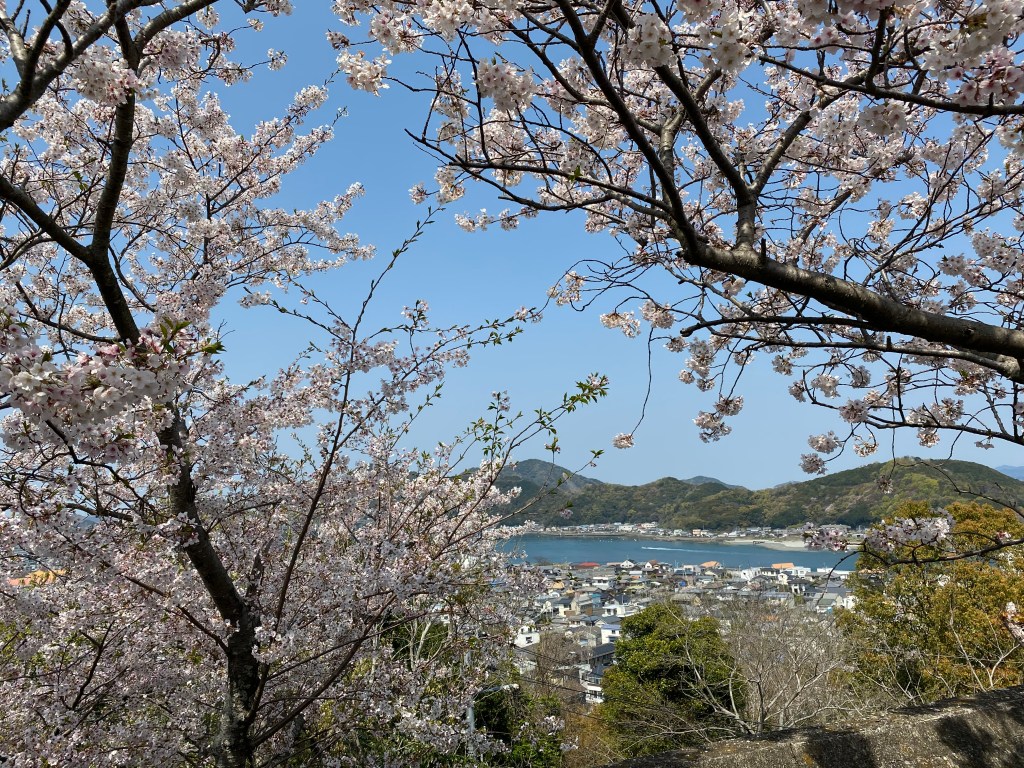
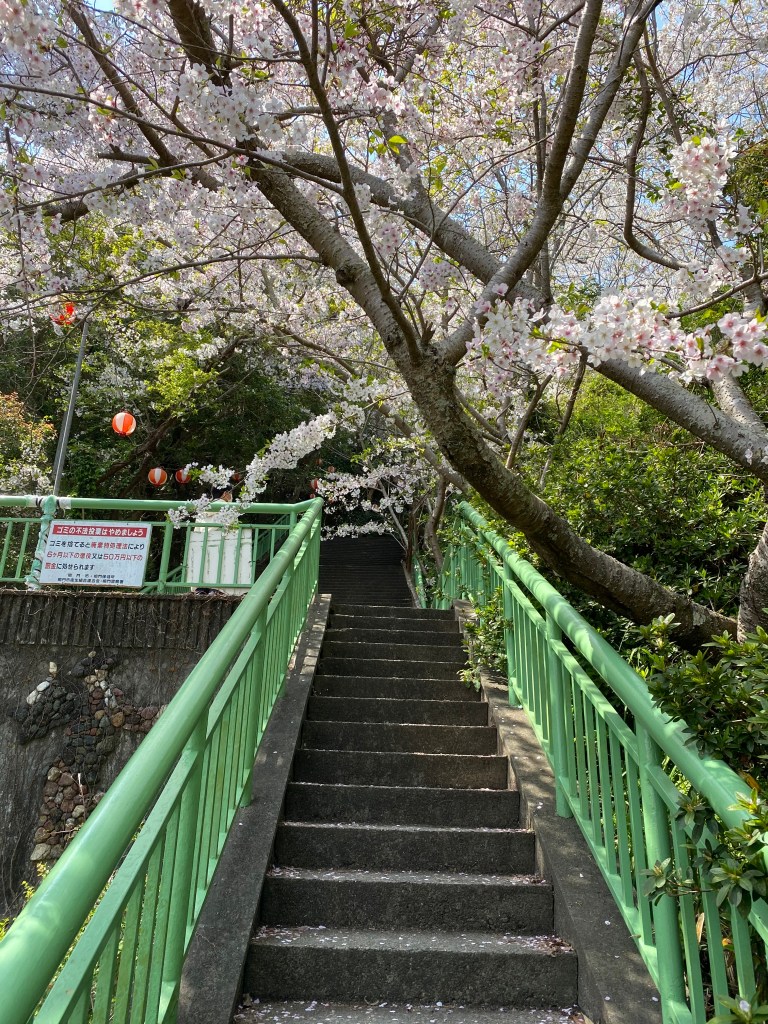
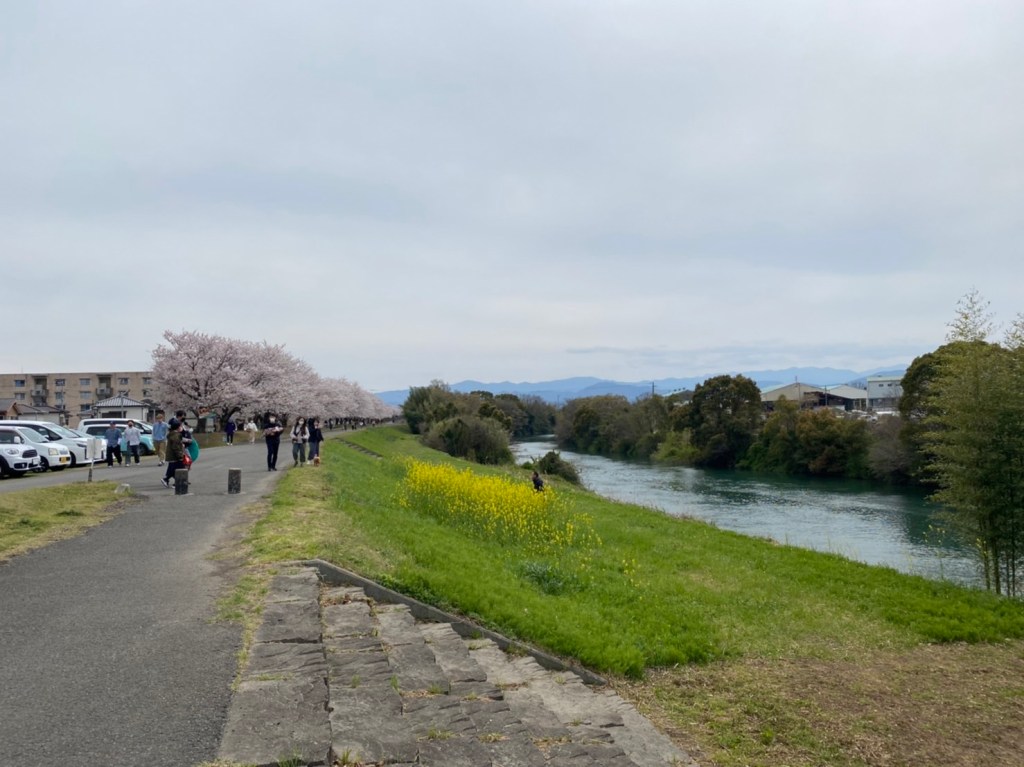
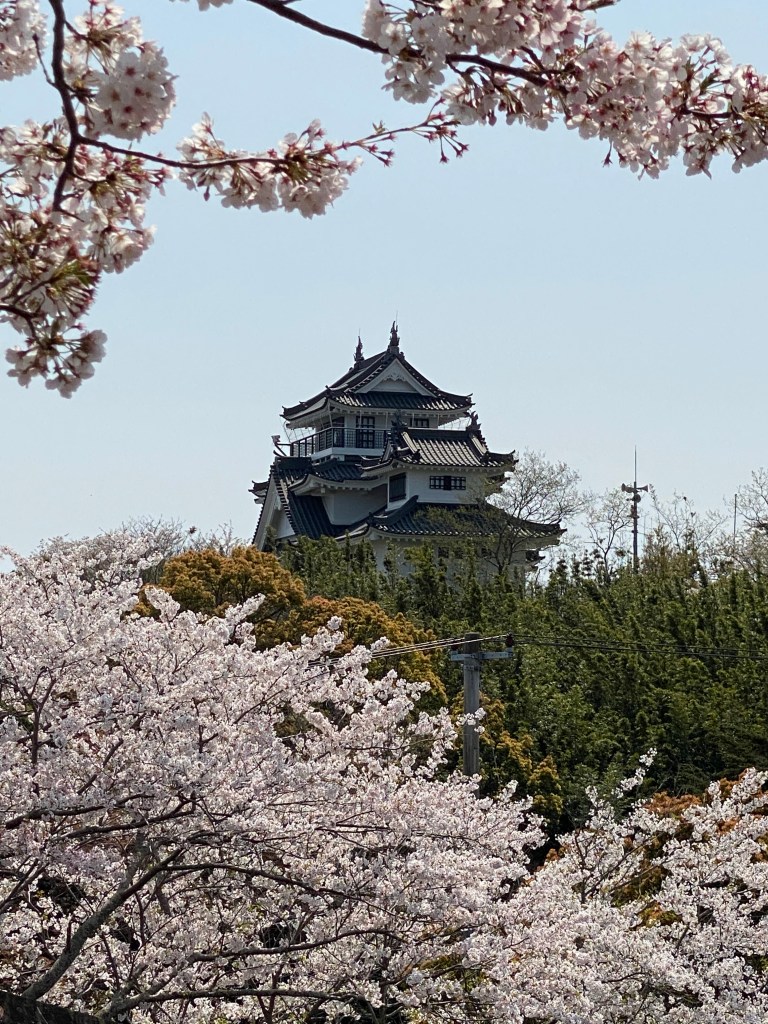
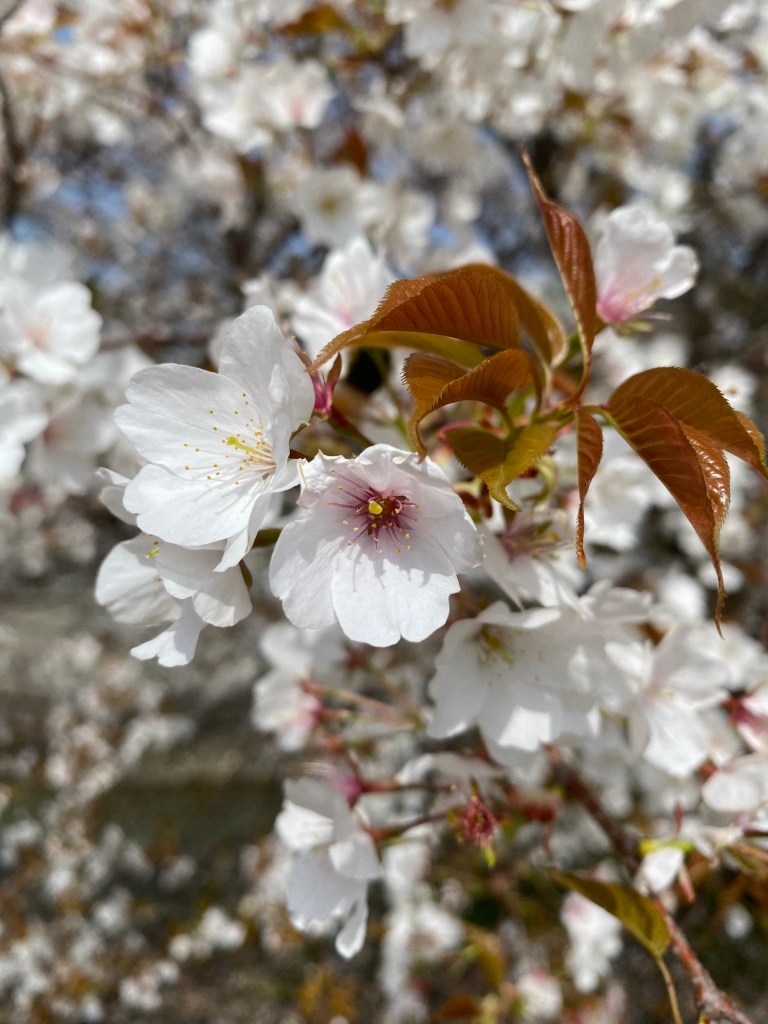
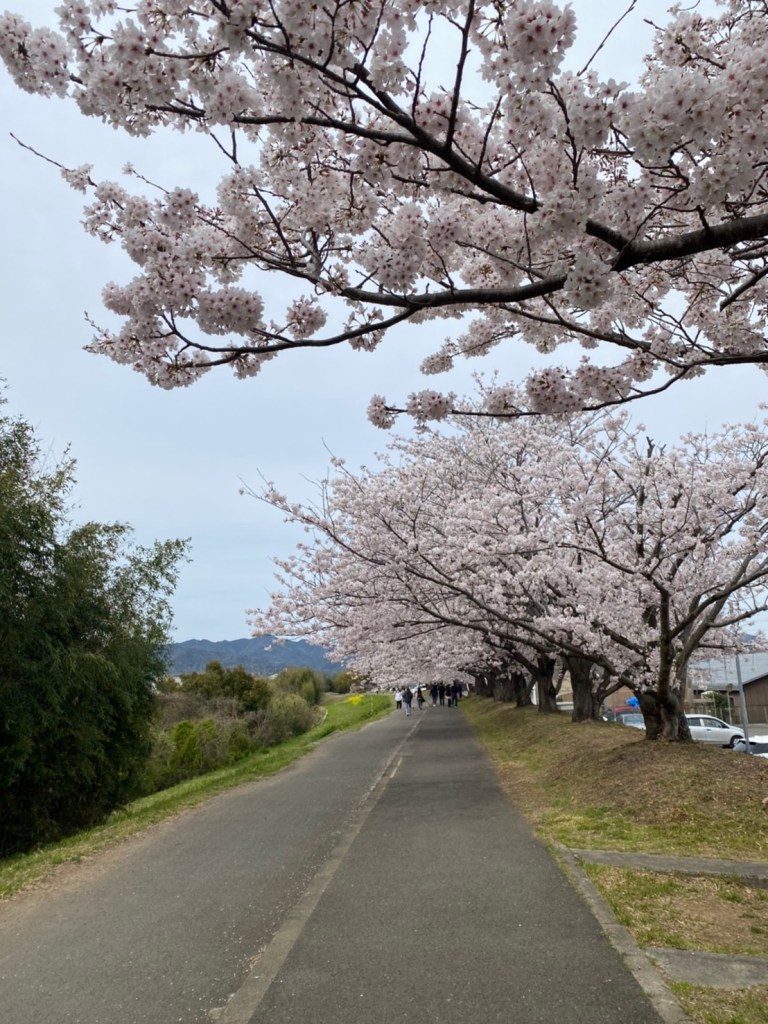
Nothing says “Japan” quite like cherry blossoms.

As I write this, the cherry trees on the campus of the university where I work are adorned with deep pink blossoms. There are several varieties of sakura, which bloom at different times. The earliest are the Kawazukura-zakura, which blossom as early as February in some parts of Japan. In a couple of weeks, the more commonly known frothy pale pink flowers of the Somei Yoshino will be seen. Usually, this timed to perfectly coincide with graduation ceremonies, and opening ceremonies welcoming new students. Every speech seems to begin with a mention of the ephemeral blooms.

Another kind, the Shidare-zakura (weeping sakura), is often found in traditional Japanese gardens.  There used to be a Shidare-zakura across the street from my house. I enjoyed seeing the flowers, garlands swaying in the breeze, but, unfortunately, the owner of the property cut the tree down

My family and I used to make at least one outing each spring to roam among the cherry blossoms. Now, it’s just my husband and me, but as I previous years, we will probably visit a park or mountainside, transformed into a fairytale landscape, and take selfies while pondering the impermanence of youth and beauty.

Many people will gather on blue tarp spread under boughs to partake of lavish boxed lunches and drink beer. The park surrounding the former grounds of Tokushima Castle will be thronged with merrymakers. During the pandemic, Hanami (cherry-blossom-viewing) was frowned upon. At that time, the park was eerily vacant. I imagine that for many Japanese, not being able to participate in this traditional event was one of the greatest hardships of 2020-22.

In February, TV announcers are newspapers begin to forecast the passage of blossoms across the peninsula. It goes something like this:

In northern Japan, snowflakes flutter and fall. Winter hangs on.

Cherry tree twigs stick out of bare branches like witchy fingers.

Every year meteorologists predict the appearance of cherry blossoms.

How do they know when the buds will release their blooms?

Well, from March, once a day, sometimes twice, someone checks on 58 designated barometer trees. One is near Yasukuni Shrine in Tokyo. Most people don’t know where the rest of the trees are. It’s a secret!

People from all over Japan send in photos of cherry blossom buds. Team cherry blossom examines all the photos and tracks the progress of the trees.

Tightly clenched buds mean it may be another month.

About ten days later, the tips change color – yellow-green.

And then, a deeper darker green, like moss in a forest.

When the tips become pink, get ready for cherry blossom viewing.

After five or six blossoms have appeared, the Meteorological Agency announces the start of the cherry blossom season.

In Kyushu, cherry trees may bloom in March. Gradually, buds open, releasing frothy flowers all the way up to Hokkaido, in a wave of pink and white.

Cherry blossom petals flutter and fall.

Suzanne Kamata was born and raised in Grand Haven, Michigan. She now lives in Japan with her husband and two children. Her short stories, essays, articles and book reviews have appeared in over 100 publications. Her work has been nominated for the Pushcart Prize five times, and received a Special Mention in 2006. She is also a two-time winner of the All Nippon Airways/Wingspan Fiction Contest, winner of the Paris Book Festival, and winner of a SCBWI Magazine Merit Award.

PLEASE NOTE: ARTICLES CAN ONLY BE REPRODUCED IN OTHER SITES WITH DUE ACKNOWLEDGEMENT TO BORDERLESS JOURNAL

Click here to access the Borderless anthology, Monalisa No Longer Smiles

Click here to access Monalisa No Longer Smiles on Amazon International

Categories
Poetry

Seasonal Poems by Ron Pickett

CALIFORNIA RAIN

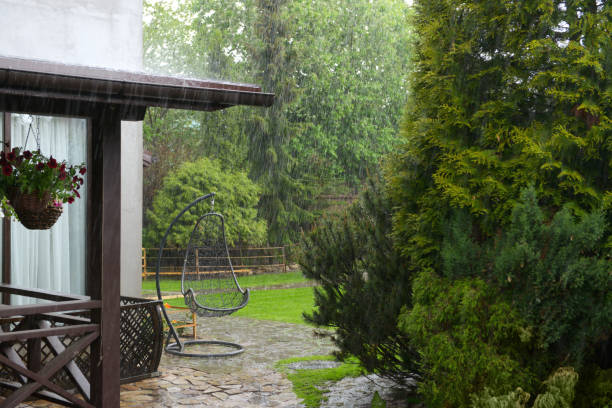
I stand in the covered patio.
I listen to the rain – the sound of the rain.
I force myself to dismiss everything else.
I focus on the sound of the rain.
It falls more heavily, I remember that sound.
Water gushes from the downspouts.
The rain slackens but it is still raining,
I can hear the sounds of the raindrops in the puddles.
I hear distant thunder muffled by the rain.
I must remember the sounds.
I let my perception widen.
I see the raindrops falling leaving streaks.
I smell the fresh smell of the rain.
I know the world is being washed and replenished.
I sun comes out. I’m saddened.

I know when it is the first rain of the wet season – but I never know when it is the last.


A POND IN THE SUMMER

The quiet following my intrusion slowly ends.
I sit, very quietly on a tree stump.
Birds begin slowly returning to their songs.
The tiny, flighty birds first.
Then the larger, louder birds.
A dove flutters to the ground raising a small dust cloud.
A heron breaks the surface catching a fish.
Droplets from the struggling, wriggling fish leave ripples.
The water is tea-stained by the dead limbs and leaves,
And dust and pollen lightly cover the still surface.
A bullfrog croaks, and leaps into the pond.
A fish jumps, catching an insect.
The warm, languid water is the home of many creatures.
A squirrel lets an acorn fall into the pond.
A slight breeze disturbs the placid pond.
I stand up. Silence returns as I leave.
The intruder retreats.

Ron Pickett is a retired naval aviator with over 250 combat missions and 500 carrier landings. His 90-plus articles have appeared in numerous publications. He enjoys writing fiction and has published five books: Perfect Crimes – I Got Away with It, Discovering Roots, Getting Published, EMPATHS, and Sixty Odd Short Stories.

.

PLEASE NOTE: ARTICLES CAN ONLY BE REPRODUCED IN OTHER SITES WITH DUE ACKNOWLEDGEMENT TO BORDERLESS JOURNAL

Click here to access the Borderless anthology, Monalisa No Longer Smiles

Click here to access Monalisa No Longer Smiles on Amazon International

Categories
Musings of a Copywriter

A Conversation with God

By Devraj Singh Kalsi

Although I have always believed that God keeps his plans hidden and reveals them only at the right time, a recent episode where someone conveyed through a reliable source that my end was close, has not shaken but awakened me to a new realisation — the obvious truth that life is indeed momentary and nothing more than a dream. However, the breach of the confidentiality clause and the choice of an inappropriate messenger made me seek an audience with God for further clarity. Just like question papers get leaked, perhaps some divinely gifted human beings also have access to exclusive, insider information from none other than God. 

Before the prediction of my passing away could bloom into a reality, the man who turned it simpler than making a weather forecast had to attend the funeral of his sister-in-law. He was unprepared for the funeral. Focused on me and obsessed with my premature exit, he could not employ his special powers to correctly identify the first person in the queue, awaiting despatch. I wondered in case he had got this spot on, his reputation as a misfortune-teller would have received a tremendous boost, just like pollsters get a huge appreciation if their survey comes closest to the result.  

His grand plans to throw a lavish party to celebrate my popping-off remain in suspension until a sudden cardiac arrest or an accident terminates my worldly journey, enriching his life and giving him more solace than what my soul deserves. Although he goes around building the image of being a blessed soul, his predictions have a slimmer chance of coming true than the revival of a moribund political party. 

Conquering the fear of death has been attempted to be made easy with divine prayers over the years, but the potential of fear to enter through locked rooms has never been questioned. This forewarning made me expedite my plans to complete my next novel without wasting a single day as the projection was for the hasty, untimely expiration of my lease of life. Before death came knocking, I decided to knock once more with my manuscript at the glass doors of publishers and hope the letters of rejection arrive before I say goodbye. 

Not a keen devotee who spends quality time in divine remembrance, I thought I should seek clarity from the remitter. Had God really chosen an emissary to convey his secret about my untimely demise? In my prayers, I urged him to grant an audience and respond to my query in brief if he did not like to talk much about it. Hence it was a big surprise when God not only appeared in my dream to address my grievances but also allowed me the opportunity to seal a profitable deal.  

 I was direct, sharp, and swift in my approach. I asked him the truth about death being imminent in my case. Seeking confirmation of what floated in the air, I raised the question of shady characters getting cherry-picked to spell doom. Cutting me short, he said I had accumulated a lot of bad karma in life, and I could not escape the punishment for it. 

I remembered I had ditched many true lovers in the past and their curses were pending. He expressed worry that I was not leading my life according to his plan. He disclosed one example in this regard – I was supposed to die due to alcohol excess, but I had not shown the urge to drink even one peg. He had expected me to guzzle alcohol to destroy my health like several writers had done earlier. 

God said, He never changed his plans to rewrite destiny, but my recent set of good deeds was a big surprise even though I was not supposed to perform such impossible tasks. Hence, it was a foregone conclusion that I would last longer than expected, as the battery life was charged up and still in good working condition. Despite my earlier backlog of bad karma, my current inclusion of good deeds in the basket had earned me brownie points. I asked him if he could specify the date or year, but he said it was decades. The plural meant another twenty years at least. This gave me the confidence to challenge the man who made a wrong prediction and scare him by saying I knew when he was supposed to say adieu after a conversation with God even though I had no idea about it. 

Since God was in a jovial mood, I decided to try the art of negotiation. Making a quick list of the priorities, I kept quiet as he was supposed to know what was going on in my mind. To offer clarity, I chose to specify but he looked quite unfazed to hear the sober litany of demands. He construed it as materialistic – just another example of greed for worldly possessions. I said when everything in this world is temporary –and he would take it back after my death – then he should not hesitate to give it to me for a temporary period. 

As I writer, I felt I should have added the blessing to churn out best-sellers like many other writers. I often wonder what makes potboilers possible. He understood I was nowhere close to being a great writer so the best option to avail was the opportunity to become a successful novelist. I made it categorically clear that great writers get memorials and tributes whereas I was interested in a mansion and royalty cheques with a loyal reader base so long as I wrote.  

After mentioning this desire, I thought God would perhaps vanish from the scene, like a genie. I told him that I was aware that people talk about failure as the pillar of success. I told him many such pillars were ready, so he should proceed to build the roof of success. He liked my sense of humour and urged me to make good use of it as humour alone would unlock many doors for me. It was a clear indication that I should focus on writing comedies. 

My dream was about to reach its end as it was past daybreak. The sunlight was filtering in through the window. Everything in this conversation was delightful including the prediction of my end due to alcohol. When heartbreak and other setbacks did not convert me into an alcoholic, I wondered what kind of intense tragedy could compel me to hit the bottle. As I began to imagine possibilities, I thought maybe while returning from a blockbuster film party, some drunken fellow would ram his car into mine on the highway or my tipsy driver would lose control and hit the lamppost, leading to my death due to an accident caused by alcohol and drunken driving!

Devraj Singh Kalsi works as a senior copywriter in Kolkata. His short stories and essays have been published in Deccan Herald, Tehelka, Kitaab, Earthen Lamp Journal, Assam Tribune, and The Statesman. Pal Motors is his first novel.  


PLEASE NOTE: ARTICLES CAN ONLY BE REPRODUCED IN OTHER SITES WITH DUE ACKNOWLEDGEMENT TO BORDERLESS JOURNAL

Click here to access the Borderless anthology, Monalisa No Longer Smiles

Click here to access Monalisa No Longer Smiles on Kindle Amazon International
Categories
Poetry

Poetry by John Grey

WHEN I FINALLY LEFT HOME

It was two hours before
I returned home
to load up the rest of my stuff
into the back of the van.

It was three days before
I showed up
for a home-cooked dinner.

It was a week before
I struggled through
that familiar front door
with my laundry.

And three months before,
the big lie –
“My landlord promised my apartment
to his son and new daughter-in-law”
when the truth was,
I couldn’t hack it on my own.

It was two years before,
I really did leave home.

It was the first
but not the last time,
I said “Finally.”


BATTLE LINES

Your house abuts your neighbors’.
And they brawl incessantly,
in words and sometimes in deed.
Hands over ears don’t help.
Their hardness, their selfishness,
their cruelty towards each other,
penetrates everything in their way.

The husband beats his wife.
She thrashes the boy.
The boy screams at his sister.
The sister smashes things
against her bedroom wall.

You live alone in loneliness.
Their closeness chafes into rage.
They can't merely sob like you.
They all have to take life out on somebody.

The violence quietens down eventually.
Explosions retreat into shame.
You even hear some sighs of regret,
a hug here and there.

You don’t pity them.
You’re too busy pitying yourself.
You can’t remember the last time
you had someone to make up to.


LISTEN UP

We, always the lesser of the two in a relationship,
need a more explicit way to establish our equality

than a limp stance or an emaciated smile.
We, who live in a constant state of ambush,

or underfoot, or mostly outside looking in,
must find, within ourselves, louder voices,

stronger cuss words, eyes that bulge with anger
rather than the kind that retreat deep in their sockets.

I recommend doing this in front of a full-length mirror.
You’d be surprised how much you can terrify yourself.


AN OLD MAN’S LAST HIKE

How far I’ve come, the road beyond won’t tell me.
Up ahead, it’s more of a trail but, thankfully,
it winds its way through forests, to rivers
and the wide, clear lake they drain into.

It doesn’t even matter if I make it to the waters,
anyplace now, from the field of wildflowers
to the sturdy trunks of ancient trees,
is a place of comfort for old bodies.

My blood can spur on the new shoots,
my flesh, grow moss and mushrooms,
my bones, replenish the limestone hills,
my darkness, free the light.


MY PARENTS’ GRAVES

He’s buried in a small country graveyard,
his rough slab also interred
but in long grass not earth.

Her ashes lie
beneath a smooth slab of granite.
in a field that surrounds
a city crematorium.

His coffin,
her remains.
are a hundred miles apart.

She was fifty years a widow in life
and is still a widow in death.

John Grey is an Australian poet, US resident, recently published in New World Writing, North Dakota Quarterly and Lost Pilots. His latest books, Between Two Fires, Covert and Memory Outside The Head are available through Amazon. He has writing upcoming in California Quarterly, Seventh Quarry, La Presa and Doubly Mad.

PLEASE NOTE: ARTICLES CAN ONLY BE REPRODUCED IN OTHER SITES WITH DUE ACKNOWLEDGEMENT TO BORDERLESS JOURNAL

Click here to access the Borderless anthology, Monalisa No Longer Smiles

Click here to access Monalisa No Longer Smiles on Kindle Amazon International