The wind is an old friend.
We meet on Wednesday afternoons
to catch up over a coffee.

Some days she’s late, held up
by work in the Gulf Coast
or Ireland, somewhere more interesting
than the corn-plained fields of southern Michigan.

I never mind
because her stories about
broken quartz shattered
into a thousand stars
against limestone cliffs
remind me that even
destruction can be beautiful.

This week, I tell her
over the hushed babble of
other café-goers
about my cat’s death.
She promises to scatter its ashes
over ancient pine forests in the
upper peninsula. She pays

for my coffee. She offers two
kisses on each cheek
and a sincere ciao before
returning to the world. It’d be nice

to be able to do the same.
Dustin P Brown is a US-born, Spain-based author of poetry, prose, and the occasional drama. His work has appeared in other journals like Lit Shark and Bacopa Literary Review.
.
PLEASE NOTE: ARTICLES CAN ONLY BE REPRODUCED IN OTHER SITES WITH DUE ACKNOWLEDGEMENT TO BORDERLESS JOURNAL
Suzanne Kamata shares a story from 1999, set during Obon or the Festival of Bon, a Japanese Buddhist custom that honors the spirits of one’s ancestors.
Obon Festival. From Public Domain
My husband is dancing.
The name of the dance is “Awa Odori,” “Awa” being the ancient name for Tokushima, where we live now, and “odori” being Japanese for “dance.” Its origins are unclear. Some say fertility rites, others claim it is a celebration of a good harvest.
My husband is thinking about none of these things as he dances with his friends of fifteen years. No doubt he is drunk on beer and fellow feeling, absorbed in the revelry of this annual festival.
I am at home alone in our apartment.
I could have gone, too, but I declined by way of protest. I’m demonstrating because while I am welcome to, indeed expected to, celebrate Japanese holidays, my own country’s holidays go ignored. When I’d wanted to do something special a month ago in observance of the Fourth of July, Jun had refused. “This is Japan,” he’d said, as if that would explain everything.
When I married Jun, I’d had a concept of international marriage as the combining of two cultures, not the elimination of one. True, I’d expected compromises, but on both sides, not just mine.
This time, however, I’m not giving in. I’m not going to budge. I didn’t go with him to visit his ancestors’ graves, and I am not going to don a cotton yukata[1] and dance in the streets to flute and drum. If he won’t see me halfway on Thanksgiving, Christmas, and Independence Day, then I’ll just sit this one out.
.
During Obon, the whole family usually gathers at some point. I’ll admit that I did go along with Jun to his parents’ house where his sister Yukiko and her family, his aunts and uncles and cousins, and his grandmother were assembled.
Uncle Takahiro said, “Hello. How are you?” in English, and everyone laughed as if he’d just told a joke.
I answered politely in Japanese, then my husband’s sister pushed her three-year-old toward me. “Go ahead. Say it, Mari-chan,” she said, beaming with motherly pride.
Dutifully, Mari recited the litany of English words that she had learned since I last saw her: “Horse. Cow. Pig.”
Yukiko looked to me expectantly, and I indulged her with words of praise for her daughter.
I can see it now. Yukiko will be the worst kind of “education mama,” as they call mothers who obsess over their children’s school performances.
“They’re teaching English at Mari-chan’s nursery school now,” Yukiko told me. “A foreigner comes once a week.”
Then, unbidden, Mari launched into a song. It was “Eensy Weensy Spider,” complete with gestures. Though she garbled some of the words, she earned a hearty round of applause from the adults.
.
Even after all this time, Jun’s relatives still don’t know how to talk to me. I make them uncomfortable, and sometimes I feel that I should apologise for being there, or better yet, just disappear. They have never tried to talk to me about everyday things like popular TV shows, bargain sales at Sogo, the big department store in town, or new recipes. When conversation is flagging, someone usually says to me, “Don’t you miss your home? Isn’t it hard being so far away?”
“It’ll be different after you have children,” my friend Maki said. “They’ll accept you then.”
Maybe so, but it looks like children are a long way off for Jun and me. Although we have been married for seven years, we have no kids. Mari was born just nine months after Yukiko and her husband were married. Their second baby – a boy – came along a year later.
We want children. We have even tried. I know that there’s nothing wrong with my body because I’ve been to specialists all over town, but Jun doesn’t seem interested in getting checked himself.
His mother would never believe there was a problem with her son. I’ve heard her whispering with Jun’s grandmother. “It’s because she’s American.”
Jun’s grandmother, who doesn’t know any better, nodded her head and said, “Ahh, yes. I’ve heard that gaijin don’t keep the baby in the womb as long as we Japanese do. Gaijin and Japanese can’t make babies together.”
And Jun’s mother, who should know better, nodded her head and said, “Yes, yes. You may be right.”
My mother-in-law also tells Jun’s grandmother that I’m a lazy wife. She tells the story in a whisper loud enough for me to hear that sometimes when she drops by our apartment, Jun is loading the clothes into the washing machine! Another time, he was standing at the stove with an apron on, cooking dinner!
“He should have married a Japanese woman,” Jun’s grandmother says. “A Japanese woman would take care of him.”
.
Jun and I sleep together in the same bed. His sister sleeps apart from her husband, in another room entirely, with her two children. His parents sleep in the same room, but one of them sleeps in a bed, the other in a futon spread on the floor.
Just before we got married, we bought furniture for our apartment. At that time, Jun suggested getting separate beds. He said that it was practical. With two beds, there would be no tussling over sheets, no accidental kicking in the night. I cried because whenever I had thought about marriage, I’d had an image of us sleeping in each other’s arms, breathing in unison.
Finally, we got one bed, a “wide double” that we cover with a double wedding ring quilt. It’s true that sometimes one of us winds up wrapped in all the sheets while the other one nearly freezes, and sometimes I find myself pinned into an uncomfortable position by Jun’s heavy limbs, but I don’t care. For me, one of the great joys of this life is waking up close to him, close enough to kiss him and run my hand over his bare chest.
.
Jun likes carpet and sofas and colonial style houses. I have always admired the simplicity of tatami mats and just a few cushions to sit on, rooms enclosed by sliding paper doors. My ideal room is an empty one, totally void of any unnecessary object. From studying home decorating magazines while in the US, I’d come to believe that in Japan this minimalism was typical. When I got here, I found that that wasn’t true at all. Tiny spaces were crammed with every imaginable appliance, Western furniture, and tacky knickknacks from other people’s vacations.
Jun likes to live in the Western mode. Like most people of his generation, he rejects tradition, or says he does. He sometimes rejects Japan, but he will never leave this place.
He watches CNN via satellite, eats popcorn and s’mores and coleslaw. He sleeps in a bed and sits on a sofa and he’s married to me, an American.
Sometimes, when he’s tired or angry, he forgets that this is an international marriage. He says, “Why can’t you be more Japanese?”
I look at myself in the mirror and see what others see: my blonde hair, blue eyes, and white skin. I can’t help but laugh. “Because I’m not Japanese,” I say. Even if I changed my citizenship, changed my name, and acted exactly like a Japanese woman, people would still look at me and say “foreigner.” Even if I dyed my hair black, got a tan, wore contact lenses, and had plastic surgery, they would still be able to tell the difference.
At times like these, I look at Jun and say, “If you wanted a Japanese wife, then why did you marry me?”
And he always replies in the same way. “Because I love you.”
.
My friends Maki didn’t marry for love. She chose her husband in the same way that I chose a college, poring over applications and photos. She invited me to help her pick one out. I was puzzled by this process. I watched the reject pile become higher and higher and I felt sorry for all those men whom Maki didn’t want to meet.
“This one’s too short,” she said, tossing an application aside.
The next one she picked up went into the “no” stack as well. “He’s handsome, but I don’t want to marry a farmer. Farmers’ wives have to work in the field all the time.” She wrinkled her nose and studied her manicured fingernails. Her hand had never known hard work.
The few who went into the other pile had good jobs with decent salaries, respectable families, and compatible hobbies.
At first, I imagined that all of those men were clamouring to marry Maki, but then she told me she’d never met any of them. The profiles had been passed along by a matchmaker. Those men were probably going through pictures of women, too, picking and choosing, making little stacks.
I thought about all the things that had made me fall in love with Jun – things that you can’t tell from a photo or a piece of paper, like the sound of his voice and the sweet strawberry taste of his mouth. I asked her if any of that mattered.
“You fall in love after you get married,” Maki said. “You Americans think that life is like a fairy tale, and then you get a divorce when you find out you were wrong.”
Maki has been married for two years and has one child. She is still waiting to fall in love with her salaryman husband. She doesn’t complain, though. He works for a good company, and she can stay home with their baby or go shopping whenever she feels like it. Sometimes she whispers to me about the possibility of having an affair with an American man.
I have known Maki for four years. When I met her, she was working for a travel agency and struggling to master English. I gave her private lessons which eventually metamorphosed into coffee klatches and late nights in discos. She is sometimes irreverent and wild and I can’t help but like her.
I can hear the chang-cha-chang-cha-chang of the festival music, a rhythm that never ceases or alters during the dance. I can picture the scene in my mind. The women are in yukata with hats that look like straw paper-plate holders folded over their heads. They wear white socks with the big toe separate, and geta, those wooden sandals. The men don’t wear any kind of shoes, just the tabi – the white socks, that will become soiled from the streets. They wear white shorts and the happi coats that brush over their hips. They tie bands of cloth called hachimaki around their foreheads.
The women dance upright, their hands grasping at the air above their heads as if they are picking invisible fruit. With each step, they bend a knee and touch a toe to the pavement, the thong driving between the toes and causing pain.
The men’s dance is freer and sometimes women deflect and join them. They dance bent over, arms and legs flailing. Their movements become wilder as the evening wears on. The dancers become more drunk, the music continues as before. Chang-cha-chang-cha-chang.
.
When I was a kid, we used to have big family picnics on the Fourth of July. My uncles and father and older male cousins played horseshoes, then later everyone would join in a game of volleyball. There was always too much food, and after gorging on fried chicken, potato salad, chocolate cake, and watermelon, we would hold our bulging bellies in agony. Then some of the adults would lie down and take naps while my cousins and I poked around in the creek, catching frogs and other slimy creatures.
As soon as dusk fell, and sometimes before, we would light sparklers under the close supervision of an adult. We waved them in the air, describing circles with crackling sparks, our faces full of glee.
Later, we’d all climb into my uncle’s station wagon and drive to the riverside to watch the real fireworks. Before the display began, the American flag was raised in a glaring spotlight and “The Star Spangled Banner” blasted out of loudspeakers. We all sang along, impatient for the show to begin. It always started out with small single-coloured bursts, like chrysanthemums or weeping willows in the sky. Then the fireworks got bigger, turning to rainbow blossoms worthy of our wonder. The adults oohed and ahhed and we said, “Wow! Look that that!” The very last was red, white and blue, and image of the flag we’d sung to earlier. Its shape hung in the sky for just a moment before falling like fairy raindrops.
During Obon, there are fireworks, too, but when I see them it’s not the same. I feel a tightening in my chest and the tears well up behind my eyes.
I go to a store nearby, one of the few businesses open during the holidays. The woman at the cash register greets me and smiles when I walk in the door. I wonder if she’d rather be dancing, and if she has been left behind while her husband parades in the streets.
.
I pick up a set of sparklers which are on sale and put them in a basket. I add a cellophane-wrapped wedge of watermelon. This one-piece costs more than the huge oval melons you can buy roadside where I come from. Into the basket also goes a package of frozen microwavable fried chicken and canned potato salad.
I pay for everything and go back to the apartment to prepare my feast. Night has already fallen. By the light of the overhanging kitchen lamp, I eat my chicken and potato salad. It’s the best meal I’ve had in a long time.
Later, when the dishes are done and drying on the rack, I take the package of sparklers and a box of matches onto the balcony. I light them one by one and watch them burn brightly in the darkness. I draw figure eights in the night air, write my name, etch zigzags of light.
When I’m finished, I lean over the railing and start to sing. I belt out “The Star Spangled Banner,” “America, the Beautiful,” and “I’m a Yankee Doodle Dandy.” My voice is so loud that a dog starts to howl.
I feel better. I go back into the apartment and push the kitchen table to one side. With my back straight and my elbows bent, I reach up as if I am about to pick an apple from a tree. There is a smile on my face as I start to dance. Chang-cha-chang-cha-chang.
Dance for Obon Festival by Takahashi Hiroaki (Japan, 1871-1945). From Public Domain
Suzanne Kamatawas born and raised in Grand Haven, Michigan. She now lives in Japan with her husband and two children. Her short stories, essays, articles and book reviews have appeared in over 100 publications. Her work has been nominated for the Pushcart Prize five times, and received a Special Mention in 2006. She is also a two-time winner of the All Nippon Airways/Wingspan Fiction Contest, winner of the Paris Book Festival, and winner of a SCBWI Magazine Merit Award.
PLEASE NOTE: ARTICLES CAN ONLY BE REPRODUCED IN OTHER SITES WITH DUE ACKNOWLEDGEMENT TO BORDERLESS JOURNAL
It is always refreshing when trust can be established online without any face-to-face interaction. Social media is filled with scammers, making it challenging to trust individuals based solely on their stories. This becomes even more complicated when the relationship starts at a time when the internet was not easily accessible. In these situations, you have to rely only on the person’s words. Sincerity is difficult to gauge, even with the use of emotive and abstract language in any physical correspondence.
Many years ago, I found myself in a situation where I met a woman through physical correspondence, as encouraged by a friend. He advised me to introduce myself to the lady and share about my work teaching at the seminary, providing English tutorials for Koreans, and assisting a church in a suburban foothill. As it turned out, she was part of a Christian NGO based in the US, along with a few other senior citizens. The organisation’s mission was to provide funds for seminary scholarships, livelihood support, books, conference fees, further studies, and toys.
Our relationship was purely based on trust as we did not know each other personally and yet for a number of years, she supported me financially as she learned of my journey. She preferred to write her letters on an electric typewriter and on blue-coloured stationery with a lovingly short note of affirmation. She took my every word at face-value although at times, I sent her photos of myself and church activities to support my stories that she sometimes quoted in her monthly newsletter.
When a missionary friend detoured to the US prior to her Colombian street kids’ programme, she visited the organisation’s garage cum office and brought my gift of a passenger jeep replica made from the ashes of a previous volcanic eruption, which she greatly appreciated. The organisation’s resources were donated to a graduate-level seminary in the US, that included her book, Pilgrims and Strangers Seek The City Not Made with Hands, upon her demise and all her colleagues.
Words only have meaning when they are used in a relational context; otherwise, they are simply meaningless.
Years before the internet became readily accessible, I used to write letters to two friends who worked as domestic helpers in Singapore. Despite having college degrees, they were unable to find relevant jobs in our country due to its political turmoil. I myself was jobless for two years, and like many new college graduates, I succumbed to depression and questioned my faith and self-worth. The struggles were compounded by stress from family and friends. I found a way to vent my issues to these Overseas Filipino Workers (OFWs), who also had their fair share of misery and homesickness. My letters were selfish. Over time, the correspondence gradually faded, along with the photos that sometimes accompanied their stories. One migrated to Canada and the other one is retired and lives with her sibling who has a physical disability in a suburban locality. All my letters from my benefactors and friends were washed away in an unexpected catastrophic flood that swept my residence. Up to this day, the loss is still palpable.
I lost two aunts during the pandemic, who were the last of my father’s siblings. The younger one passed away in her late 70s, while the older one died in her early 90s. Both were based in the US and worked as medical professionals. Every Christmas, I make sure to send them individual greeting cards through the mail, along with a few personal thoughts. They lived separately in the same village in the US, and I believe they appreciated these physical cards for their nostalgic value. They didn’t usually respond to emails or cards, as technology can be bothersome for the elderly.
My older aunt once told my eldest brother, who also lives in the US, that my emails were too long and tended to put her to sleep. I also send them thank you cards for the occasional holiday cash they send. My relationship with my aunts is mainly through written correspondence, with only a few rare occasions of meeting in Manila. Despite this, they never fail to remember me and my younger sibling, sending us thoughtful notes. My dad passed away at 60, and my aunts fondly told me that I look like my father. Perhaps this resemblance was one of the catalysts that kept our correspondence going, even in its irregularity. Stories, however trivial, matter to them.
Letter writing can be tedious, especially when done by hand. However, it is also tiring to write letters on computers and share both trivial and significant stories to send by post, as we are not certain if our experiences matter to our recipients. Nevertheless, physical personal correspondence brings about a certain degree of warmth that is often lacking online. It takes more effort to scribble than to type. It is also more spontaneous compared to digital writing, where you can effortlessly edit and revise through AI tools. Sometimes, the physical paper used says a lot about the sender and receiver. I am particularly fond of lined stationery with religious quotes and maxims on recycled paper. The envelope is of equal value as well because it must similarly match its properties.
At times, I also use plain paper to write letters. I remember writing letters of regards and sharing personal news with a college classmate and friend who was stationed on one of the most remote islands in the country for a kids’ mission. She replied to me, but her letters took a long time to reach me through the mail. Both her letters and mine were written in longhand. We were able to reconnect through letters because there were no mobile phones or internet at that time. The distance and physical absence made our words more meaningful and profound.
They say that the post office is in its dying stage, but time and again, it has proven itself to still be relevant in the internet age. Not everyone is connected, especially in areas where there is no access to electricity.
In one of the upland villages in my municipality, which is just about a two-hour drive from the city, they have not had electricity for years. This is because streetlights have to be paid for by the consumer. If the area has rugged terrain, it will require a good number of posts to be erected to bring electricity. This is a common scenario in agricultural and upland villages. While solar power is an option, procuring panels can be quite expensive as the government has not taken any measures yet to bring the cost down. To connect, villagers go to stores that offer WiFi for a minimal fee. Mobile signals are not available in many remote locations, so the gap is still widespread despite technological tools. We must accept the fact that technology is limited. Physical correspondence is here to stay.
From Public Domain
Manuel A. Alindogan, Jr., also known as Jun A. Alindogan, is the Academic Director of the Expanded Alternative Learning Program of Empowered East, a Rizal-province based NGO in the Philippines and is also the founder of Speechsmart Online that specialises in English test preparation courses. He is a freelance writer and a member of the Freelance Writers’ Guild of the Philippines (FWGP).
PLEASE NOTE: ARTICLES CAN ONLY BE REPRODUCED IN OTHER SITES WITH DUE ACKNOWLEDGEMENT TO BORDERLESS JOURNAL.
A review of Anuradha Kumar’s Wanderers, Adventurers, Missionaries: Early Americans in India (Speaking Tiger Books) and an interview with the author
Migrants and wanderers — what could be the differences between them? Perhaps, we can try to comprehend the nuances. Seemingly, wanderers flit from place to place — sometimes, assimilating bits of each of these cultures into their blood — often returning to their own point of origin. Migrants move countries and set up home in the country they opt to call home as did the family the famous Indian actor, Tom Alter (1950-2017).
Anuradha Kumar’s Wanderers, Adventurers, Missionaries: Early Americans in India captures the lives and adventures of thirty such individuals or families — including the Alter family — that opted to explore the country from which the author herself wandered into Singapore and US. Born in India, Kumar now lives in New Jersey and writes. Awarded twice by the Commonwealth Foundation for her writing, she has eight novels to her credit. Why would she do a whole range of essays on wanderers and migrants from US to India? Is this book her attempt to build bridges between diverse cultures and seemingly diverse histories?
As Kumar contends in her succinct introduction, America and India in the 1700s were similar adventures for colonisers. In the Empire Podcast, William Dalrymple and Anita Anand do point out that the British East India company was impacted in the stance it had to colonisers in the Sub-continent after their experience of the American Revolution. And America and India were both British colonies. They also were favourites of colonisers from other European cultures. Just as India was the melting pot of diverse communities from many parts of the world — even mentioned by Marco Polo (1254-1324) in The Kingdom of India — America in the post-Christopher Columbus era (1451-1546) provided a similar experience for those who looked for a future different from what they had inherited. The first one Kumar listed is Nathaniel Higginson (1652-1708), a second-generation migrant from United Kingdom, who wandered in around the same time as British administrator Job Charnock (1630-1693) who dreamt Calcutta after landing near Sutanuti[1].
Kumar has bunched a number of biographies together in each chapter, highlighting the commonality of dates and ventures. The earliest ones, including Higginson, fall under ‘Fortune Seekers From New England’. The most interesting of these is Fedrick Tudor (1783-1864), the ice trader. Kumar writes: “In Calcutta, Dwarkanath Tagore, merchant and patron of the arts (Rabindranath Tagore’s grandfather), expressed an interest to involve himself in ice shipping, but Tudor’s monopoly stayed for some decades more. Tagore was part of the committee in Calcutta along with Kurbulai Mohammad, scion of a well-established landed family in Bengal, to regulate ice supply.”
Also associated with the Tagore family, was later immigrant Gertrude Emerson Sen (1890-1982, married to Boshi Sen). She tells us, “Tagore wrote Foreword to Gertrude Emerson’s Voiceless India, set in a remote Indian village and published in 1930. Nobel Laureate Rabindranath Tagore called Emerson’s efforts, ‘authentic’.” She has moved on to quote Tagore: “The author did not choose the comfortable method of picking up information from behind lavish bureaucratic hospitality, under a revolving electric fan, and in an atmosphere of ready-made social opinions…She boldly took in on herself unaided to enter a region of our life, all but unexplored by Western tourists, which had one great advantage, in spite of its difficulties, that it offered no other path to the writer, but that of sharing the life of the people.’” Kumar writes of an Afro-American scholar, called Merze Tate who came about 1950-51 and was also fascinated by Santiniketan as were some others.
Another name that stuck out was Sam Higginbottom, who she described as “the Farmer Missionary” for he was exactly that and started an agricultural university in Allahabad. Around the same time as Tagore started Sriniketan (1922), Higginbottom was working on agricultural reforms in a different part of India. In fact, Uma Dasgupta mentions in A History of Sriniketan: Rabindranath Tagore’s Pioneering work in Rural Reconstruction that Lord Elimhurst, who helped set up the project, informed Tagore that “another Englishman” was doing work along similar lines. Though as Kumar has pointed out, Higginbottom was a British immigrant to US — an early American — and returned to Florida in 1944.
There is always the grey area where it’s difficult to tie down immigrants or wanderers to geographies. One such interesting case Kumar dwells on would be that of Nilla Cram Cook, who embraced Hinduism, becoming in-the process, ‘Nilla Nagini Devi’, as soon as she reached Kashmir with her young son, Sirius. She shuttled between Greece, America and India and embraced the arts, lived in Gandhi’s Wardha ashram and corresponding with him, went on protests and lived like a local. Her life mapped in India almost a hundred years ago, reads like that of a free spirit. At a point she was deported living in an abject state and without slippers. Kumar tells us: “Her work according to Sandra Mackey combined ‘remarkable cross-cultural experimentation’ and ‘dazzling entrepreneurship.’”
The author has written of artists, writers, salesmen, traders (there’s a founder/buyer of Tiffany’s), actors, Theosophists, linguists fascinated with Sanskrit, cyclists — one loved the Grand Trunk Road, yet another couple hated it — even a photographer and an indentured Afro-American labourer. Some are missionaries. Under ‘The Medical Missionaries: The Women’s Condition’, she has written of the founders of Vellore Hospital and the first Asian hospital for women and children. Some of them lived through the Revolt of 1857; some through India’s Independence Movement and with varied responses to the historical events they met with.
Kumar has dedicated the book to, “…all the wanderers in my family who left in search of new homes and forgot to write their stories…” Is this an attempt to record the lives of people as yet unrecorded or less recorded? For missing from her essays are famous names like Louis Fischer, Webb Miller — who were better known journalists associated with Gandhi and spent time with him. But there are names like Satyanand Stokes and Earl and Achsah Brewster, who also met Gandhi. Let’s ask the author to tell us more about her book.
Anuradha Kumar
What made you think of doing this book? How much time did you devote to it?
These initially began as essays for Scroll; short pieces about 1500-1600 words long. And the beginnings were very organic. I wrote about Edwin Lord Weeks sometime in 2015. But the later pieces, most of them, were part of a series.
I guess I am intrigued by people who cross borders, make new lives for themselves in different lands, and my editors—at Scroll and Speaking Tiger Books—were really very encouraging.
After I’d finished a series of pieces on early South Asians in America, I wanted to look at those who had made the journey in reverse, i.e., early Americans in India, and so the series came about, formally, from December 2021 onward. I began with Thomas Stevens, the adventuring cyclist and moved onto Gertrude Emerson Sen, and then the others. So, for about two years I read and looked up accounts, old newspapers, writings, everything I possibly could; I guess that must mean a considerable amount of research work. Which is always the best thing about a project like this, if I might put it that way.
What kind of research work? Did you read all the books these wanderers had written?
Yes, in effect I did. The books are really old, by which I mean, for example, Bartolomew Burges’ account of his travels in ‘Indostan’ written in the 1780s have been digitized and relatively easy to access. I found several books on Internet Archive, or via the interlibrary loan system that connects libraries in the US (public and university). I looked up old newspapers, old magazine articles – loc.gov, archive.org, newspapers.com, newspaperarchive.com, hathitrust.org and various other sites that preserve such old writings.
You do have a fiction on Mark Twain in India. But in this book, you do not have very well-known names like that of Twain. Why?
Not Twain, but I guess some of the others were well-known, many in their own lifetime. Satyanand Stokes’ name is an easily recognisable still especially in India, and equally familiar is Ida Scudder of the Vellore Medical College, and maybe a few others like Gertrude Sen, and Clara Swain too. I made a deliberate choice of selecting those who had spent a reasonable amount of time in India, at least a year (as in the case of Francis Marion Crawford, the writer, or a few months like the actor, Daniel Bandmann), and not those who were just visiting like Mark Twain or passing through. This made the whole endeavour very interesting. When one has spent some years in a foreign land, like our early Americans in India, one arguably comes to have a different, totally unique perspective. These early Americans who stayed on for a bit were more ‘accommodating’ and more perceptive about a few things, rather than supercilious and cursory.
And it helped that they left behind some written record. John Parker Boyd, the soldier who served the Nizam as well as Holkar in Indore in the early 1800s, left behind a couple of letters of complaint (when he didn’t get his promised reward from the East India Company) and even this sufficed to try and build a complete life.
How do these people thematically link up with each other? Do their lives run into each other at any point?
Yes, I placed them in categories thanks to an invaluable suggestion by Dr Ramachandra Guha, the historian. I’d emailed him and this advice helped give some shape to the book, else there would have been just chapters following each other. And their lives did overlap; several of them, especially from the 1860s onward, did work in the same field, though apart from the medical missionaries, I don’t think they ever met each other – distances were far harder to traverse then, I guess.
What is the purpose of your book? Would it have been a response to some book or event?
I was, and am, interested in people who leave the comforts of home to seek a new life elsewhere, even if only for some years. Travelling, some decades ago, was fraught with risk and uncertainty. I admire all those who did it, whether it was for the love of adventure, or a sense of mission. I wanted to get into their shoes and see how they felt and saw the world then.
Is this because you are a migrant yourself? How do you explain the dedication in your book?
I thought of my father, and his cousins, all of whom grew up in what was once undivided Bengal. Then it became East Pakistan one day and then Bangladesh. Suddenly, borders became lines they could never cross, and they found new borders everywhere, new divisions, and new homes to settle down in. They were forced to learn anew, to always look ahead, and understand the world differently.
When I read these accounts by early travellers, I sort of understood the sense of dislocation, desperation, and sheer determination my father, his cousins felt; maybe all those who leave their homes behind, unsure and uncertain, feel the same way.
You have done a number of non-fiction for children. And also, historical fiction as Aditi Kay. This is a non-fiction for adults or all age groups? Do you feel there is a difference between writing for kids and adults?
I’d think this is a book for someone who has a sense of history, of historical movements, and change, and time periods. A reader with this understanding will, I hope, appreciate this book.
About the latter half of your question, yes of course there is a difference. But a good reader enters the world the writer is creating, freely and fearlessly, and I am not sure if age decides that.
You have written both fiction and non-fiction. Which genre is more to your taste? Elaborate.
I love anything to do with history. Anything that involves research, digging into things, finding out about lives unfairly and unnecessarily forgotten. The past still speaks to us in many ways, and I like finding out these lost voices.
What is your next project? Do you have an upcoming book? Do give us a bit of a brief curtain raiser.
The second in the Maya Barton-Henry Baker series. In this one, Maya has more of a lead role than Henry. It’s set in Bombay in the winter of 1897, and the plague is making things scary and dangerous. In this time bicycles begin mysteriously vanishing… and this is only half the mystery!
The announcement of a ‘major retrospective’ sent Alice’s friends giddy with excitement. Reviews in The Guardian raved. The five stars awarded barely seeming adequate.
Alice remained silent. In truth she had never heard of the American artist. Her tastes were more European; Turner, Vermeer, Caravaggio.
Some friends raced to become early bird visitors. They had joined queues like static conga lines and came away gushing with praise. But to Alice, the Hoppers became like an irritating family, who mutual friends declared “You will love’. However past experience had taught her that when introduced, she had found no common ground.
“We must put it on the list,” declared Julia. Her closest friend and partner for any such cultural initiatives. Julia hated finding herself on the back foot at parties when the latest event was mulled over by guests who had already taken it in.
Alice nodded noncommittally, changed the subject by drawing attention to a stylish pair of shoes in a store window.
Fortnightly visits to the Maudsley psych hospital in southwest London had become routine to her now. A years’ worth of psychotherapy was succeeding in untangling her past. She no longer entered the outpatients with eyes fixed on the squares of carpet tiles. A ploy in those early days to avoid any interaction with the human flotsam that mental health had beached in the waiting room.
But over time she saw that this was a place where calmness was carefully curated. Pictures of flowers bloomed on the walls. The décor was always spruce and the staff — from receptionists to psychiatrists — treated the patients, however ramshackle, with respect.
Now she and her therapist Margaret would chit chat as key codes where punched into pads, in order to gain admittance to each level of the labyrinthine building. The sounds like birds of prey that issued from the acute wing no longer made her start.
This particular Monday morning, her appointment was at a bleary eyed 8 am. Fine if she lived in London — however she was a two hours train ride away so her alarm clock blared reveille at 5 am.
Her session was finished by nine. “You’ve got the rest of the day to yourself,” Margaret remarked as she shouldered the final door whose second line of defence seemed to be that it always stuck. Alice was at a loss as to how to spend this time. London brimmed with museums and galleries, but nothing tempted her. “You know what Dr Johnson said,” grinned her therapist.
“When a man is tired of London, he is tired of life,” responded Alice. “Probably not the best sentiments to quote in Maudsley,” they both agreed.
Since the peak hour ticket had been expensive Alice felt the outlay should reward her with more than counselling. She was not in the mood for aimless shopping. But scrolling from memory through the current exhibitions, she found there was a dearth, except of course for the Hoppers at the Tate. It was a short tube ride away. “Well there’s always cappuccino and cake in the café afterwards.” She consoled herself.
On the Victoria line, as the train jolted to a halt at each station, her carriage never fully aligned with hoardings that trumpeted the event. And as the tube accelerated away, she only got a zoetrope impression of images that did nothing to ignite her enthusiasm.
“If it’s crowed,” she decided, “I won’t bother.” Envisaging hordes of retirees, school parties and tourists mobbing the entrance, all waiting for 10am like a starting gun.
In truth most exhibitions only admitted a hundred or so visitors every hour. But even so, from past experience, she knew there would be a funeral pace past each picture as if it was laying in state.
Alice blamed those headphones that explained each painting down to the final daub. Visitors planted themselves in front of the picture until the recording told them to move onto the next image. “Just look and form your own opinion,” she would mutter whilst craning to catch a glimpse of the artwork.
The Thames accompanied her towards the Tate. There was a Monday morning feeling in this part of London, as if the area was drawing breath after a busy weekend. The district was dedicated to tourism with The Globe and The Turner being near neighbours.
The gallery was housed in a decommissioned power station designed by the architect Sir Giles Gilbert Scot, in a time when even functional buildings were given an aesthetic flourish. The conversion to art gallery had retained the original deco building but also made sympathetic modern additions. The brickwork was cleaned back to its original red and the towering chimney advertised itself on the London skyline.
With the internal machinery removed, the empty core allowed for spacious galleries ideal for art on an ambitious scale. The turbine hall alone was so vast that it dwarfed the escalators that bore visitors up to the galleries. Here even Michelangelo’s’ 17 ft David would look lonely.
Alice was quite accustomed to taking herself off to the cinema, theatres, exhibitions alone. Most of her friends were married, therefore had commitments. She was often too impatient to wait whilst they managed the logistics of their domestic lives, to find time to accompany her.
There was a freedom in being on her own, a spontaneity that meant she could hop on a train, and head to London whenever she felt inclined.
Friends found her ease at flying solo incomprehensible. “You’re so brave,” they would remark in tones that simultaneously managed to be admiring but also patronising, “I could never do anything like that on my own.”
“It’s practice,” she would explain. As an only child she had grown up used to her own company. Moreover, without a partner now, the fact was if she wanted the rich cultural life she craved, Alice had to take matters into her own hands.
Over time she had developed strategies that gave her confidence. Aware that even in the 21st , a single woman going to the theatre or cinema on her own still garnered curious glances, she was, therefore, always accompanied by a book.
Arriving at the Tate’s ticket desk, Alice was surprised to find only a dribble of people. 10 am on a Monday morning was apparently too early even for the keenest of visitors.
Consequently, with extraordinary timing she had the luxury of being the only person in the exhibition. Grinning at her good fortune she placed herself in the centre of the largest room. She then made a 360 degrees turn to get an overview of the Hoppers before moving in on specific images that beckoned to be examined.
What she saw utterly contradicted her preconceptions of the artist and his work. These were not the cosy representations of American life she had expected.
Human loneliness was delineated in every scene. There were no cosy family meals or girlfriends gossiping. Indeed, these people seemed to possess no faculty for laughter. Married couples who had run out of things to say to each other long ago, now gazed off into their own private horizons. Solitary men sat on stoops smoking with blank expressions as if they had given up on thinking. Many eyes were cast down, or concealed beneath hats, so that all emotional cues were transferred to their body language whose droop spoke of hopelessness.
This despair was not confined to cityscapes. There were landscapes too, where forests growled at the edges of civilisation, and unkept grass prowled up to the stoops of solitary white wooden houses. These homes were personified as if conveying by proxy the emotions the characters in other pictures could not. Doors screamed and windows gaped.
Above all she had never seen an artist paint silence so effectively. It emanated from the pictures, seeming to seep into the gallery itself.
In all the years of visiting exhibitions she had never seen one that reflected back her own experience of life. The images did not bring her mood down rather she felt exhilarated that she was able to look these pictures in the face without flinching.
Alice returned home buzzing with a convert’s zeal. As a result, her friend hastily cleared a Saturday. She farmed her kids off to their cousins for the day and left a ready meal for her husband in the fridge. Of course, Alice was champing to revisit the exhibition, although she was savvy enough to understand that she would never be able to recreate the timely conditions or the wonder she had experienced on first seeing the pictures.
The two women arrived at the gallery early enough for there to be a lunchtime lull. From past experience she knew her friend did not work her way methodically through an exhibition but liked to see the artist’s greatest hits first. Juila made for the voyeuristic
‘Night Windows’, where a woman is observed in a bedsit, her back to an open window from which curtains billow, a favoured image for fridge magnets and coasters.
Alice felt the same rush of enthusiasm for the pictures. She was desperate to enjoy again images that had particularly affected her, but good manners tethered her to Julia’s side. Nevertheless, she could not help breathlessly pointing out details in ‘Night Windows’ that had struck her before. Alice’s words tumbled out in her desire to share the image with her friend. However, Julia seemed to have left her enthusiasm with her coat in the cloakroom. She regarded the painting in silence. Alice grimaced inwardly wondering if her effusiveness was deterring her friend so turned off her gush of words.
Julia still did not engage with this painting or indeed any others. She paused before each image briefly without comment. Alice trailed behind her at a loss. She wondered if her friend had suddenly become unwell. There was a precedent for this when she had once passed out from a UTI at the theatre. And she knew her friend well enough that if she hated an exhibition, she was quick to speak her mind.
“Are you feeling okay?” she whispered.
“I’m fine,” Julia responded. But the ‘fine’ was loaded with a subtext Alice could not at that moment fathom.
Julia stood briefly before the artist’s other well-known pictures as if mentally ticking them off. Alice desultorily picked out a detail here and there like offering titbits to someone who had lost their appetite. Her friend merely nodded or squeezed out a ‘hmmm’.
From her peripheral vision the paintings she ached to enjoy again beckoned to her. Finally, she made her way to them, hoping that by giving her friend some space she might find some way into the works. However, looking over her shoulder she saw Juia had begun to move past the paintings without pausing, barely glancing at the images. Eventually feeling as if she was abandoning her friend at a party of strangers she returned to her side. They had reached ‘Night Hawks’. “Surely she’ll respond now,” she thought. Her friend did but not with appreciation, instead she raised her hand to her eyes as if shielding her gaze. Alice was reduced to foolishly gesturing ‘the famous one’ as if trying to chivvy a child’s interest.
“Well I think we’ve seen enough,” Julia suddenly found her voice again, “Let’s get out of here.” And without waiting for Alice, she bolted through the exit and plonked herself in a comfy armchair in the coffee shop and took a deep breath as if the atmosphere in the gallery had tried to choke her. In an effort to raise her friend’s spirits, Alice brought her a double shot cappuccino and a slab of cake. Seated by a large picture window looking down on the Thames, Alice commented on a few landmarks by way of breaking the silence. It was still a one-way conversation though until revived by the food, Julia began to join in.
Clearly there was not to be their usual post event discussion. This was unprecedented. They could not even agree to disagree as they had many times before if they could not even discuss the exhibition. During this smallest of small talk, Alice tried to make sense of her friend’s reaction. She began to feel as if she had forced Julia to accompany her. Then remembered it was actually her friend’s agency that had brough them to the Tate. Reasoning to herself that they couldn’t spend the rest of their lives avoiding all reference to the Hoppers she brushed the small talk aside, took a breath and blurted out, “Did you not like the exhibition?”
Julia paused before speaking, “Look, I know you love them but for me, there was no beauty in there.” She gestured with her head towards the gallery they had come from. “They are so dreary.” Her tone verged on whining as if the exhibition had got her there under false pretences. Alice was quick to point out that they had seen other exhibitions genuinely devoid of conventional beauty — Rothko, Warhol, Gilbert and George. None of whose work could have comfortably inhabited a sitting room.
“But I know what to expect with abstract art,” her friend pointed out. “I can stomach geometric shapes and dribbled paint because they engage my mind not my emotions,” she paused, “also somehow they don’t reflect real life.” The caffein had clearly loosened her tongue. “I expect at least some beauty in representational art.” She began to list Hopper’s faults. “Why are there so few people in the city? It looks post-apocalyptic. And they are so miserable. That picture of the psycho house seems to sum up the whole collection.” She added as a last shot.
Alice felt as if her friend’s criticism was aimed at her as well as the artist. She attempted to put her case for the paintings. “But don’t you see that they reflect the isolation of modern life?” Her friend’s face remained adamant. Alice searched for a comparison then had a brain wave, “Look’ we both studied TS Eliot at uni. Can’t you see it’s ‘The Waste Land’ translated into art?” She felt rather pleased with her analogy.
But Juila shook her head. “You can distance yourself from words, but pictures,” she grimaced. “Nothing erases an image, once seen it gets trapped in your mind.”
Alice pondered the two divergent responses to the Hoppers. Both were extreme in their own ways. She wondered if the roots of their reactions lay in their backgrounds. Her own history, even her therapist agreed, verged on the Gothic. Whereas Julia had enjoyed an Enid Blyton childhood. Throughout her life she had been adored by her father and encouraged by her mother. Her marriage to Jim was that rare thing, a pairing that lasted without a whiff of infidelity. Admittedly their life together had not been entirely charmed — ill health, a father’s dementia — redundancy had been faced down over time. Now their reward was a very comfortable life.
Her friend seemed to have read her thoughts. “I know I have a good life compared to most,” Juila admitted. “And I know there’s ugliness in the world. I just don’t want to be reminded of it on a day out.”
Alice began to understand that the pictures were an uncomfortable reminder of less kind lives. Whilst they were not in the face brutality of war, instead they showed men and women recognizably modern whose lives were the playthings of circumstance and as such had visibly given up.
They seemed to have awakened some existential fear in her friend, perhaps a dread of feeling hopeless. The Hoppers were a reminder that even middle-class lives could falter and fall if fate gave a push.
Julia suddenly changed the subject with a hand brake turn. She gave a round up of her daughters’ careers and love lives, her husband’s progress on the kit car he was building. She seemed in this way to be deploying her family as a buffer against the images she had just seen.
Making for the exit, it was usually part of their ritual to visit the gift shop. But whilst Alice turned to enter, eager to buy more Hopper related merchandise, Juila swept passed deep in describing the minutiae of her family’s next trip to Italy . Alice shrugged, “I’ll pop in next time,” she thought.
.
Fiona Sinclair has had several collections of poetry published by small presses. Her short stories have been published in magazines in the UK, US and Australia.
.
PLEASE NOTE: ARTICLES CAN ONLY BE REPRODUCED IN OTHER SITES WITH DUE ACKNOWLEDGEMENT TO BORDERLESS JOURNAL
Title: Raisina Chronicles: India’s Global Public Square
Author: S. Jaishankar & Samir Saran
Publisher: Rupa Publications
Raisina Chronicles: India’s Global Public Square by S. Jaishankarand Samir Saran commemorates a decade of the Raisina Dialogue, India’s flagship geopolitical and geo-economics conference. The book reflects on the journey of the Raisina Dialogue and its impact on global discourse. It brings together contributions from leaders, thinkers, and diplomats, scholars, and policymakers worldwide, offering insights into addressing global challenges through collaboration and dialogue.
S. Jaishankar has been India’s External Affairs Minister since May 2019 and represents Gujarat in the Rajya Sabha. He was the Foreign Secretary from 2015 to 2018 and has held ambassadorial roles in the U.S., China, and the Czech Republic, as well as High Commissioner to Singapore. He authored notable books like The India Way: Strategies for an Uncertain World and Why Bharat Matters. Samir Saran is the President of the Observer Research Foundation (ORF), a leading Indian policy think tank. He has enhanced ORF’s influence in the U.S. and the Middle East and provides strategic guidance at the board level. Saran curates the Raisina Dialogue, co-chairs the World Economic Forum’s Global Future Council on Geopolitics, and serves on the Board of Governors of The East West Centre in the US. He has written five books, edited key monographs and journals, and contributed to numerous academic papers and essays, appearing in both Indian and international media.
The book brings together voices from across the world—of leaders and thinkers reflecting on the Raisina Dialogue’s impact on how we may navigate global challenges and create solutions that work. Putting India at the forefront of leading the change, the effect of these Dialogues is felt across policies and projections.
The editors emphasise that diversity, dissent, discord, and divergence of opinion make for the necessary ingredients for a sustainable future, shaped and owned by all. Ten years since its inception, the Raisina Dialogue has become the paramount platform for bringing together cultures, peoples and opinions. It is now India’s flagship geopolitical and geo-economics conference and has truly become a global public square—located in New Delhi, incubated by the world.
It emphasises the importance of diversity in thought, approaches, beliefs, and politics. It highlights how pluralism and heterogeneity contribute to resilience and societal evolution. Raisina Dialogue serves as a platform for inclusive participation, welcoming voices from underrepresented geographies and institutions.
While it showcases India’s emergence as a global leader in addressing development challenges and fostering international cooperation, it reflects the philosophy of Vasudhaiva Kutumbakam (the world is one family) and its efforts to harmonise local solutions with global needs.
Through initiatives like the G20 Presidency, India has shared transformative models such as digital public infrastructure (e.g., India Stack), offering templates for financial inclusion and tech-enabled development globally.
Alongside the carefully organised discussions, Raisina Chronicles examines the evolution of the Dialogue and presents its audience with a comprehensive volume that offers deep insights and an unwavering optimism for achieving shared solutions to worldwide issues.
As the globe approaches significant structural and historical transformations, the core aspiration of this work is to ensure that the voices of the populace are prioritised in global politics and policymaking, echoing through influential circles and reaching the broader community. For leaders to effect change, it is essential for society to unite and take a decisive step forward in the right direction.
Raisina Dialogue is also portrayed as a crucial venue for bridging divides in a fractured world. It fosters open discussions among diverse stakeholders—diplomats, scholars, business leaders, civil society members—to discover shared futures and solutions. The book underscores the importance of dialogue over polemics and inclusivity over exclusivity in shaping global policies.
Contributions from high profile global leaders such as Kyriakos Mitsotakis (Prime Minister of Greece), Mette Frederiksen (Prime Minister of Denmark), Penny Wong (Australian Foreign Minister) and others enrich the book with perspectives on international cooperation, climate goals, defence partnerships, and multilateralism.
The book serves as both a retrospective of the Raisina Dialogue’s achievements over ten years and a forward-looking guide for navigating global challenges. It positions India at the heart of global conversations, highlighting its role in fostering equitable dialogue and creating solutions that resonate across borders.
This volume is not just a collection of essays but also an intellectual testament to the transformative power of dialogue in shaping a sustainable future for humanity.
Bhaskar Parichha is a journalist and author of Cyclones in Odisha: Landfall, Wreckage and Resilience, Unbiased, No Strings Attached: Writings on Odisha and Biju Patnaik – A Political Biography. He lives in Bhubaneswar and writes bilingually. Besides writing for newspapers, he also reviews books on various media platforms.
.
PLEASE NOTE: ARTICLES CAN ONLY BE REPRODUCED IN OTHER SITES WITH DUE ACKNOWLEDGEMENT TO BORDERLESS JOURNAL
Titles: Little Lhasa: Reflections in Exiled Tibet and Tibetan Suitcase
Author: Tsering Namgyal Khortsa
Publisher: Speaking Tiger Books
Following the forced escape of His Holiness the Dalai Lama in March 1959, thousands of Tibetans were forced to flee Tibet, and it was these refugees who formed the early exiled community. The refugee community now stands at a figure of around 130,000, with Tibetans spread across numerous settlements in India, Nepal and Bhutan, and thousands more displaced all around the world. The Tibetan government in exile is based in Dharamsala, India. It is called the Central Tibetan Administration (CTA) and was founded in 1959 by the 14th Dalai Lama. In the 1980s, a second wave of Tibetans fled due to political repression. The CTA advocates for human rights, self-determination, and the preservation of religion and culture for Tibetans. The CTA has a parliament, judiciary, and executive branch and its principles include truth, non-violence, and genuine democracy. The Dalai Lama has said that the exile administration would be dissolved as soon as freedom is restored in Tibet.
After over seventy years of being in exile, a whole generation of Tibetans have come of age in a land far from home. With the Dalai Lama and other great masters as their spiritual guides, they have grown up cut off from their homeland. Their experiences have been unique, as they have, despite globalization, kept alive their religion and culture. In Little Lhasa: Reflections in Exiled Tibet, Tsering Namgyal Khortsa writes comprehensively about the different aspects of their life today. Comprising of ten essays and six interviews, this volume becomes an eye-opener on the multifarious aspects of the present situation of Tibetans at large. Beginning with different writers writing about Tibet and exile in the very first essay titled ‘Little Lhasa’, the next one ‘Shangrila Online’ tells us about the role of social media, internet cafes and how technology in remote Dharamsala often enables one to participate in other people’s experiences in real time. The writer describes in detail how such lifestyle changes in contemporary times have enabled the creation of a “virtual Tibet”. In the next essay ‘Buddha’s Children’, Khortsa describes the young generation of exiled children in India and how their religious identity has triumphed over all other identities. We are also told about the different kinds of foreigners who come to India to take religious courses, and the writer wonders whether they go home feeling merely inspired by their visit to India and their meetings with Tibetan masters or whether such exposure and experience actually triggers a paradigm shift in the way they view the world.
In the next essay we are told how Tibetans lead demonstrations in Dharamsala and other parts of India every year, especially the one held on March 10th that commemorates the anniversary of the failed uprising against Chinese invasion. ‘Movies and Meditation’ mentions a film festival in Dharamsala which reveals how recent Tibetan films highlight a growing and vibrant filmmaking community within the Tibetan diaspora, but Khortsa laments the paucity of full-length films about Tibetans in exile and the issues they confront, namely patriotism, individualism, and reconciliation of personal fulfilment with the Tibetan cause. The titles of the three following essays, ‘Dharma Talk’, ‘The Lure of India’ and ‘The Monk at Manali’ are self-explanatory. The last essay of this section ‘Nation of Stories’ tells us about writers who write and publish in the English language, and though diverse in terms of their education, upbringing, background and geographical location, one common condition that they all share is the collective trauma of the Chinese occupation of Tibet, which is invariably a leitmotif in Tibetan literature.
Part Two consists of six interviews, each one different in perspective than the other, and they must be mentioned here to understand the kaleidoscopic nature of the people involved in the Tibetan cause. Thus, we have conversations with Lisa Gray as ‘A Western Buddhist’, Ananda Nand Agnihotri as ‘An Indian Tibetan Buddhist,’ Ngawang Woeber, ‘An Ex-Political Prisoner’, Nyima Dhondup, ‘A Swiss Tibetan’, Tenzing Sonam, ‘A Tibetan Writer and Filmmaker’ and Tenphun, ‘The Tibetan Poet’. All in all, Little Lhasa becomes a valuable record of the life of a people who refuse to bow down or forget, and even while adapting to a rapidly changing world, continue to nurture their roots.
II
After the non-fiction, Tsering Namgyal Khortsa comes up with a brilliant piece of fiction and read together, each text complements the other beautifully. In the ‘Editor’s Note’ at the very beginning of the novel Tibetan Suitcase, Tsering Namgyal Khortsa tells us that while he was working as a business journalist in Hong Kong he once ran into Dawa Tashi, an old acquaintance and an aspiring novelist from Dharamsala, India who was working as a meditation teacher and was quite busy with his job. He had a suitcase full of letters and documents and wanted him to turn the contents of the suitcase into a book. After going through the collection, Khortsa discovered that the contents of the suitcase, if organized with care and discipline, could indeed make for an epistolary novel. So, he declares that except for correcting a few typos here and there and add note and datelines to the letters, he had not done anything. He also categorically states, “None of the letters are mine, except some entries that I wrote, making the book partly fictionalized.” He also wanted to leave room for readers to imagine (or ‘feel’ for themselves) what is not mentioned in the book, in deference to the Tibetan culture of reticence and taciturnity, rather than turning himself into an all-knowing chatterbox.
Tibetan Suitcase is a remarkable novel about the peripatetic Tibetan community in exile. It is divided into six parts, beginning roughly from 1995 to 2000. It opens in Hong Kong where a tycoon Peter Wong opens a meditation centre and employs Dawa Tashi, our protagonist as a meditation teacher and a guru, though he is not really trained to be a lama. Dawa Tashi is an India-born Tibetan. His parents fled Tibet when the Chinese invaded, and Dawa has grown up in the quiet, verdant Indian Himalayas. When Dawa applies to a well-known university in America (Appleton University in Wisconsin) to pursue a course in creative writing, his hitherto ordinary life changes dramatically. At the university he befriends, and falls in love with, Iris Pennington, an unusual American student who is studying Buddhist literature. He also comes in contact with Khenchen Sangpo, a renowned scholar of Buddhism and a reincarnated Rinpoche himself. Circumstances lead Dawa back to India too soon, but the connections he makes take his life into many new directions. Some, with Iris and Khenchen, take him deeper into the mystical and mysterious world of Buddhist scholarship. Other journeys take him back to his roots, making him question his life’s directions.
Apart from the interesting incidents and characters we meet in the first four parts of the novel, Part Five is an exceptionally engrossing to read. Beginning with the reportage in the Fall Issue of the journal Meridian, which is edited by Brent Rinehart, we are told that on his seventy-ninth birthday Khenchen decided that he had to go back to Tibet to see his native land. Having gained a quick residency status in the United States, and possessing an American passport, Khenchen still had many relatives in Tibet, some of them quite alive and well, despite the Chinese occupation. He travels to Lhasa in 1996 and goes for a trip to Lake Manasarovar but things take a different turn when he is arrested by the Chinese authority because he was apparently “endangering national security”. What follows are different press releases from the US Statement Department, reports from the International Association of Tibetan Studies in London, address by the President of Appleton University and as Iris writes to Dawa, she never expected herself to be so politically involved and “did not realize Tibet was such a political subject”. It was ironic that one of the world’s most spiritual places was one of its most burning political issues. Tibet might be a small place, but it has a reasonably big space in the collective consciousness of the world. Of course, Khenchen Sangpo is ultimately released and without disclosing the actual ending of the novel, which in a circular fashion ends in Hong Kong from where it began, many loose ends are tied up and life came to a full circle for everybody, especially for Iris Pennington who finally managed to find her roots.
Both the non-fiction and the fiction book by Tsering Namgyal Khortsa prove to be eye-openers for all readers who have very little knowledge about the sorrow and plight of the uprooted Tibetans who live in exile and many of whom do not even have a country to call their own. Based in Dehradun, India at present, Khortsa’s narratives are so powerful that it has aptly prompted Speaking Tiger Books to reprint the updated versions of both the books in 2024 and one can call it a yeoman service to readers both serious and casual. A must read.
.
Somdatta Mandal, critic and translator, is a former Professor of English at Visva-Bharati, Santiniketan, India.
.
PLEASE NOTE: ARTICLES CAN ONLY BE REPRODUCED IN OTHER SITES WITH DUE ACKNOWLEDGEMENT TO BORDERLESS JOURNAL
Borderless Journal started on March, 14, 2020. When the mayhem of the pandemic had just set in, we started as a daily with half-a-dozen posts. Having built a small core of writings by July, 2020, we swung to become a monthly. And we still continue to waft and grow…
Art by Sohana Manzoor
We like to imagine ourselves as floating on clouds and therefore of the whole universe. Our team members are from multiple geographies and we request not to be tied down to a single, confined, bordered land. We would welcome aliens if they submitted to us from another galaxy…
On our Fifth Anniversary, we have collected celebratory greetings from writers and readers stretched across the world who share their experience of the journal with you and offer suggestions for the future. We conclude with words from some of the team, including my own observations on being part of this journey.
Aruna Chakravarti
Heartiest congratulations to Borderless on the occasion of its fifth anniversary! Borderless, an international journal, has the distinction of carrying contributions from many eminent writers from around the world. From its initiation in 2020, it has moved from strength to strength under the sensitive and skillful steering of its team. Today it is considered one of the finest journals of its kind. I feel privileged to have been associated with Borderless from its very inception and have contributed substantially to it. I wish to thank the team for including my work in their distinguished journal. May Borderless move meaningfully towards the future and rise to greater and greater heights! I wish it every success.
Professor Fakrul Alam
Five years ago, when Borderless set out on its literary voyage, who would have imagined the length and breadth of its imaginative crossings in this span of time? The evidence, however, is digitally there for any reader who has seen at least some of its issues. Creative writing spanning all genres, vivid illustrations, instant links giving resolute readers the option to track a contributor’s creative voyaging—here is boundless space always opening up for those seeking writing of considerable variety as well as originality. The best part here is that unlike name-brand journals, which will entice readers with limited access and then restrict their spaces unless you subscribe to them, all of Borderless is still accessible for us even though it has attracted a wide readership in five years. I certainly hope it will stay that way.
And what lies ahead for Borderless? Surely, more opportunities for the creative to articulate their deepest thoughts and feelings in virtual and seemingly infinite space, and innumerable avenues for readers to access easily. And let us hope, in the years to come Borderless will extend itself to newer frontiers of writing and will continue to keep giving space to new as well as emerging writers from our parts of the world.
May the team of Borderless, continue to live up to their claim that “there are no boundaries to human imagination and thought!”
Radha Chakravarty
Since its inception, Borderless Journal has remained true to its name, offering a vital literary space for writers, artists and scholars from around the world to engage in creative dialogue about their shared vision of a world without borders. Congratulations Borderless, and may your dream of global harmony continue to inspire.
Somdatta Mandal
According to the famous Chicana academic and theorist Gloria Anzaldua, the Borderlands are physically present wherever two or more cultures edge each other, where peopIe of different races occupy the same territory, where under, lower, middle and upper classes touch, where the space between two individuals shrinks with intimacy. Hatred, anger and exploitation are the prominent features of this landscape. There, at the juncture of cultures, languages cross-pollinate and are revitalized; they die and are born. Borders are set up to define the places that are safe and unsafe, to distinguish us from them. A border is a dividing line, a narrow strip along a steep edge. A borderland is a vague and undetermined place created by the emotional residue of an unnatural boundary. It is in a constant state of transition. The prohibited and forbidden are its inhabitants.
About five years ago, when a new online journal aptly called Borderless Journal was launched, these ideas which we had been teaching for so long were simply no longer applicable. Doing away with differences, with limits, it became a suitable platform where disparate cultures met, where people from all disciplines could express their views through different genres, be it poetry, translation, reviews, scholarly articles, creative writing and so on. Many new writers from different parts of the world became regular contributors to this unique experimentation with ‘borderlessness’ and its immense possibilities are very apt in this present global context where social media has already changed many earlier notions of scholarship, journalism, and creativity.
Jared Carter
In its first five years Borderless has become an important witness for international peace and understanding. It has encouraged submissions from writers in English based in many different countries, and has offered significant works translated from a wide range of national literatures. Its pages have featured writers based in India, Pakistan, China, Taiwan, Japan, South Korea, Australia, the UK, and the US. In the future, given the current level of world turmoil, Borderless might well consider looking more closely toward Africa and the Middle East. As the magazine continues to promote writing focused on international peace and freedom, new horizons beckon.
Teresa Rehman
The best part of this journal is that it is seamless and knows no margins or fringes. It is truly global as it has cut across geographical borders and has sculpted a novel literary genre called the ‘borderless’. It has climbed the mountains of Nepal, composed songs on the Brahmaputra in Assam, explored the hidden kingdom of Bhutan, walked on the streets of Dhaka, explored the wreckage of cyclones in Odisha, been on a cycling adventure from Malaysia to Kashmir, explored a scenic village in the Indo-China border, taken readers on a journey of making a Japanese-Malayalam dictionary, gave a first-hand account of the war in Bosnia-Herzegovina and described the syncretic culture of Bengal through its folk music and oral traditions. I hope it continues telling the untold and unchartered stories across mountains, oceans and forests.
Kirpal Singh
In a world increasingly tending towards misunderstandings across borders, this wholesome journal provides a healthy space both for diverse as well as unifying visions of our humanity. As we celebrate five distinguished years of Borderless Journal, we also look forward to another five years of such to ensure the underlying vision remains viable and visible as well as authentic and accurate.
My heartfelt Congratulations to all associated with this delightful and impressive enterprise!
Asad Latif
The proliferation of ethnic geographies of identity — Muslim/Arab, Hindu/Indian, Christian/Western, and so on — represents a threat to anything that might be called universal history. The separation and parcelling out of identities, as if they are pre-ordained, goes against the very idea (proclaimed by Edward Said) that, just as men and women create their own history, they can recreate it. Borders within the mind reflect borders outside it. Both borders resist the recreation of history. While physical borders are necessary, mental borders are not. This journal does an admirable job in erasing borders of the mind. Long may it continue to do so.
Anuradha Kumar
I have been one of Borderless’ many readers ever since its first issue appeared five years ago. Like many others, I look forward with great anticipation to every issue, complete with stories, , reviews, poems, translations, complemented with interesting artwork.
Borderless has truly lived up to its name. Within its portal, people, regardless of borders, but bound by common love for literature, and the world’s heritage, come together. I would wish for Borderless to scale even greater heights in the future. As a reader, I would very much like to read more writers from the ‘Global South’, especially in translation. Africa, Asia and Australasia are host to diverse languages, many in danger of getting lost. Perhaps Borderless could take a lead in showcasing writers from these languages to the world. That would be such an invaluable service to readers, and the world too.
Ryan Quinn Flanagan
To me, Borderless Journal is a completely free and open space. Topics and styles are never limiting, and the various writers explore everything from personal travelogues to the limp of a helpful druggist. Writers from all corners of the globe contribute, offering a plethora of unique voices from countless circumstances and walks of life. Because of this openness, Borderless Journal can, and likely will continue to grow and expand in many directions simultaneously. Curating and including many new voices along the way. Happy 5th Birthday to a truly original and wonderfully eclectic journal!
George Freek
I feel the Borderless Journal fills a special spot in the publishing world. Unlike many journals, which profess to be open-minded and have no preference for any particular style of poetry, Borderless actually strives to be eclectic. Naturally, it has its own tastes, and yet truly tries to represent the broad spectrum which is contemporary poetry. I have no advice as to where it should go. I can only say keep up the good work, and stooping to a cliche, if it’s not broken, why try to fix it?
Farouk Gulsara
They say time flies when one is having fun. It sure does when a publication we love regularly churns out its issues, month after month, for five years now.
In the post-truth world, where everybody wants to exert their exclusivity and try to find ways to be different from the person standing next to them, Borderless gives a breath of fresh air. At a time when neighboring countries are telling the world they do not share a common history, Borderless tries to show their shared heritage. We may have different mothers and fathers but are all but “ONE”!
We show the same fear found in the thunderous sounds of a growling tiger. We spill the exact hue of blood with the same pain when our skin is breached. Yet we say, “My pain is more intense than yours, and my blood is more precious.” Somehow, we find solace in playing victimhood. We have lost that mindfulness. One should appreciate freedom just as much as we realise it is fragile. Terrorism and fighting for freedom could just be opposing sides of the same coin.
There is no such thing as a just war or the mother of all wars to end all wars as it has been sold to us. One form of aggression is the beginning of many never-ending clashes. Collateral damage cannot be justified. There can be no excuse to destroy generations of human discoveries and turn back the clock to the Stone Age.
All our hands are tainted with guilt. Nevertheless, each day is another new day to make that change. We can all sing to the tune of the official 2014 World Cup song, ‘Ola Ola,’ which means ‘We are One.’ This is like how we all get together for a whole month to immerse ourselves in the world’s favourite sport. We could also reminisce about when the world got together to feed starving kids in Africa via ‘Band-Aid’ and ‘We Are the World’. Borderless is paving the way. Happy Anniversary!
Ihlwha Choi
I sincerely congratulate Borderless Journal on its 5th anniversary. I am always delighted and grateful for the precious opportunity to publish my poetry in English through this journal. I would like to extend my special thanks for this.
Through this journal, I can read a variety of literary works—including poetry, essays, and prose—from writers around the world. As someone for whom English is a foreign language, it has also been a valuable resource for improving my English skills. I especially enjoy the frequent features on Rabindranath Tagore’s poetry, which I read with great joy. Tagore is one of my favourite poets.
I have had the privilege of visiting Santiniketan three times to trace his legacy and honor his contributions to literature and education. However, one aspect I find a little disappointing is that, despite having published over 30 poems, I have yet to receive any feedback from readers or fellow writers. It would be wonderful to have such an opportunity for engagement.
Additionally, last October, a Korean woman received the Nobel Prize in Literature—the first time an author from South Korea has been awarded this honor by the Swedish Academy. She is not only an outstanding novelist but also a poet. I searched for articles about her in Borderless Journal but was unable to find any. Of course, I understand that this is not strictly a literary newspaper, but I would have been delighted to see a feature on her.
I also feel honoured that one of my poems was included in the anthology Monalisa No Longer Smiles: An Anthology of Writings from across the World. I hope such anthologies will continue to be published. In fact, I wonder if it would be possible to compile and publish collections featuring several poems from contributing poets. If these were made available on Amazon, it would be a fulfilling experience for poets to reach a broader audience.
Moving forward, I hope Borderless Journal will continue to reach readers worldwide, beyond Asia, and contribute to fostering love and peace. Thank you.
Prithvijeet Sinha
The journey of authorship, self-expression and cultural exchange that I personally associate with Borderless Journal’s always diverse archives has remained a touchstone ever since this doorway opened itself to the world in 2020. Going against the ramshackle moods of the 2020s as an era defined by scepticism and distances, The journal has upheld a principled literary worldview close to the its pages and made sure that voices of every hue gets representation. It’s also an enterprise that consistently delivers in terms of goodwill and innocence, two rare traits which are in plenteous supply in the poems, travelogues, essays and musings presented here.
The journey with Borderless has united this writer with many fascinating, strikingly original auteurs, buoyed by a love for words and expression. It is only destined for greatness ahead. Happy Birthday Borderless! Here’s to 50 more epochs.
From Our Team
Bhaskar Parichha
As Borderless Journal celebrates its fifth anniversary, it is inspiring to see its evolution into a distinguished platform for discourse and exploration. Over the years, it has carved a unique niche in contemporary journalism, consistently delivering enlightening and engaging content. The journal features a variety of sections, including in-depth articles, insightful essays, and thought-provoking interviews, reflecting a commitment to quality and fostering dialogue on pressing global issues. The diverse contributions enrich readers’ understanding of complex topics, with a particular focus on climate change, which is especially relevant today. By prioritising this critical issue, Borderless informs and encourages engagement with urgent realities. Having been involved since its inception, I am continually impressed by the journal’s passion and adaptability in a changing media landscape. As we celebrate this milestone, I wish Borderless continued success as a beacon of knowledge and thoughtful discourse, inspiring readers and contributors alike.
Devraj Singh Kalsi
Borderless Journal has a sharp focus on good writing in multiple genres and offers readable prose. The platform is inclusive and does not carry any slant, offering space to divergent opinions and celebrating free expression. By choosing not to restrict to any kind of ism, the literary platform has built a strong foundation in just five years since inception. New, emerging voices – driven by the passion to write fearlessly – find it the ideal home. In a world where writing often gets commercialised and compromised, Borderless Journal is gaining strength, credibility, and wide readership. It is making a global impact by giving shape to the dreams of legendary poets who believed the world is one.
Rakhi Dalal
My heartiest congratulations to Borderless and the entire team on the fifth Anniversary of its inception. The journal which began with the idea of letting writing and ideas transcend borders, has notably been acting as a bridge to make this world a more interconnected place. It offers a space to share human experiences across cultures, to create a sense of connection and hence compassion, which people of this world, now more distraught than ever, are sorely in need of. I am delighted to have been a part of this journey. My best wishes. May it continue to sail through time, navigating languages, literature and rising above barriers!
Keith Lyons
Is it really five years since Borderless Journal started? It seems hard to believe.
My index finger scrolls through Messenger chats with the editor — till they end in 2022. On the website, I find 123 results under my name. Still no luck. Eventually, in my ‘Sent’ box I find my first submission, emailed with high hopes (and low expectations) in March 2020. ‘Countdown to Lockdown’ was about my early 2020 journey from India through Thailand, Malaysia, Indonesia, and Australia to New Zealand as COVID-19 spread.
Just like that long, insightful trip, my involvement with Borderless Journal has been a journey. Three unique characteristics stand out for me.
The first is its openness and inclusiveness. It features writers from all over the globe, with various contributions across a wide range of topics, treatments and formats.
The second feature of the journal is its phenomenal growth, both in readers and writers, and in its reach. Borderless really does ‘walk the talk’ on breaking down barriers. It is no longer just a humble literary journal — it is so much bigger than that.
The third unique aspect of Borderless is the devotion endowed in nurturing the journal and its contributors. I love the way each and every issue is conceived, curated, and crafted together, making tangible the aspiration ‘of uniting diverse voices and cultures, and finding commonality in the process.’
So where can we go from here? One constant in this world is change. I’d like to think that having survived a global pandemic, economic recession, and troubling times, that the core values of Borderless Journal will continue to see it grow and evolve. For never has there been a greater need to hear the voices of others to discover that we are all deeply connected.
Rhys Hughes
I have two different sets of feelings about Borderless Journal. I think the journal does an excellent job of showcasing work from many different countries and cultures. I want to say it’s an oasis of pleasing words and images in a troubled sea of chaos, but that would be mixing my metaphors improperly. Not a troubled sea of chaos but a desert of seemingly shifting values. And here is the oasis, Borderless Journal, where one can find secure ideals of liberty, tolerance, peace and internationalism. I appreciate this very much. As for my other set of feelings, I am always happy to be published in the journal, and in fact I probably would have given up writing poetry two years ago if it wasn’t for the encouragement provided to me by regular publication in the journal. I have written many poems especially for Borderless. They wouldn’t exist if Borderless didn’t exist. Therefore I am grateful on a personal level, as a writer as well as a reader.
Where can Borderless Journal go from here? This is a much harder question to answer. I feel that traditional reading culture is fading away year after year. Poets write poetry but few people buy poetry books. They can read poems at Borderless for free and that is a great advantage. I would like to see more short stories, maybe including elements of fantasy and speculative fiction. But I have no strategic vision for the future of the journal. However, one project I would like to try one day is some sort of collaborative work, maybe a big poem with lots of contributors following specific rules. It’s an idea anyway!
Meenakshi Malhotra
Borderless started with a vision of transcending the shadow lines and has over time, evolved into a platform where good writing from many parts of the world finds a space , where as “imagination bodies forth/ The forms of things unknown, the poet’s pen/Turns them to shapes and gives to airy nothing/A local habitation and a name.”
It has been a privilege to be a part of Borderless’s journey over the last few years. It was a journey based on an idea and a vision. That dream of creating solidarity, of transcending and soaring over borders and boundaries, is evident in almost every page and article in the journal.
Mitali Chakravarty
Looking at all these responses, thinking on what everyone has said, I am left feeling overwhelmed.
Borderless started as a whimsical figment of the imagination… an attempt to bring together humanity with the commonality of felt emotions, to redefine literary norms which had assumed a darker hue in the post Bloomsbury, post existentialist world. The journal tried to invoke humour to brings smiles, joys to create a sense of camaraderie propelling people out of depression towards a more inclusive world, where laughter brings resilience and courage. It hoped to weave an awareness that all humans have the same needs, dreams and feelings despite the multiple borders drawn by history, geographies, academia and many other systems imagined by humans strewn over time.
Going forward, I would like to take up what Harari suggests in Homo Deus — that ideas need to generate a change in the actions of humankind to make an impact. Borderless should hope to be one of the crucibles containing ideas to impact the move towards a more wholesome world, perhaps by redefining some of the current accepted norms. Some might find such an idea absurd, but without the guts to act on impractical dreams, visions and ideas, we might have gone extinct in a post-dino Earth.
I thank the fabulous team, the wonderful writers and readers whose participation in the journal, or in engaging with it, enhances the hope of ringing in a new world for the future of our progeny.
A discussion with Bhaksar Parichha, author of Cyclones in Odisha, Landfall, Wreckage and Resilience, published by Pen in Books.
While wars respect manmade borders, cyclones do not. They rip across countries, borders, seas and land — destroying not just trees, forests and fields but also human constructs, countries, economies and homes. They ravage and rage bringing floods, landslides and contamination in their wake. Discussing these, Bhaskar Parichha, a senior journalist, has written a book called Cyclones in Odisha, Landfall, Wreckage and Resilience. He has concluded interestingly that climate change will increase the frequency of such weather events, and the recovery has to be dealt by with regional support from NGOs.
Perhaps, this conclusion has been borne of the experience in Odisha, one of the most vulnerable, disaster prone states of India, where he stays and a place which he feels passionately about. Centring his narrative initially around the Super Cyclone of 1999, he has shown how as a region, Odisha arranged its own recovery process. During the Super Cyclone, the central government allocated only Rs 8 crore where Rs 500 crore had been requested and set up a task force to help. They distributed vaccines and necessary relief but solving the problem at a national level seemed a far cry. Parichha writes: “As a result, the relief efforts were temporarily limited. To accommodate the displaced individuals, schools that remained intact after the cyclone were repurposed as temporary shelters.
“The aftermath of the cyclone also led to a significant number of animal carcasses, prompting the Government of India to offer a compensation of 250 rupees for each carcass burned, which was higher than the minimum wage. However, this decision faced criticism, leading the government to fly in 200 castaways from New Delhi and 500 from Odisha to carry out the removal of the carcasses.”
He goes on to tell us: “The international community came together to provide much-needed support to the recovery efforts in India following the devastating cyclone. The Canadian International Development Agency, European Commission, British Department for International Development, Swiss Humanitarian Aid Unit, and Australian Government all made significant contributions to various relief organisations on the ground. These donations helped to provide essential aid such as food, shelter, and medical assistance to those affected by the disaster. The generosity and solidarity shown by these countries underscored the importance of global cooperation in times of crisis.” They had to take aid from organisations like Oxfam, Indian Red Cross and more organisations based out of US and other countries. Concerted international effort was necessary to heal back.
He gives us the details of the subsequent cyclones, the statistics and the action taken. He tells us while the Bay of Bengal has always been prone to cyclones, from 1773 to 1999, over more than two centuries, ten cyclones were listed. Whereas from 1999 to 2021, a little over two decades, there have been nine cyclones. Have the frequency of cyclones gone up due to climate change? A question that has been repeatedly discussed with ongoing research mentioned in this book. Given the scenario that the whole world is impacted by climate disasters — including forest fires that continue to rage through the LA region in USA — Parichha’s suggestion we build resilience comes at a very timely juncture. He has spoken of resilience eloquently:
“Resilience refers to the ability to recover and bounce back from challenging situations. It encompasses the capacity of individuals, communities, or systems to withstand, adapt, and overcome adversity, trauma, or significant obstacles. Resilience involves not only psychological and emotional strength but also physical resilience to navigate through hardships, setbacks, or crises.
“Resilience is the remarkable capacity of individuals to recover, adapt and thrive in the face of adversity, challenges, or significant life changes. It is the ability to bounce back from setbacks, disappointments, or failures, and to maintain a positive outlook and sense of well-being despite difficult circumstances.
“Resilience is not about avoiding or denying the existence of hardships, but rather about facing them head-on and finding ways to overcome them. It involves developing a set of skills, attitudes, and strategies that enable individuals to navigate through difficult times and emerge stronger and more capable.”
He has hit the nail on the head with his accurate description of where we need to be if we want our progeny to have a good life hundred years from now. We need this effort and the ability to find ways to solve and survive major events like climate change. Parichha argues Odisha has built its resilience at a regional level, then why can’t we? This conversation focusses on Parichha’s book in context of the current climate scenario.
Bhaskar Parichha
What prompted you to write this book?
Odisha possesses an unfavorable history of cyclones with some of the most catastrophic storms. People suffered. My motivation stemmed from documenting this history, emphasising previous occurrences and their effects on communities, infrastructure, and the environment.
What kind of research went into this book? How long did it take you to have the book ready?
The idea for the book originated more than a year ago. It was intended for release to commemorate the twenty-fifth anniversary of the 1999 Super Cyclone and the cyclones that followed. Having witnessed the disaster first-hand and having been involved in the audio-visual documentation of the relief and rehabilitation initiatives in and around Paradip Port after the Super Cyclone, I gained a comprehensive understanding of the topic. The research was largely based on a thorough examination of the available literature, which included numerous documents and reports.
Promptly after you launched your book, we had Cyclone Dana in October 2024. Can you tell us how it was tackled in Odisha? Did you need help from the central government or other countries?
Cyclone Dana made landfall on the eastern coast on the morning of October 25, unleashing heavy rainfall and strong winds that uprooted trees and power poles, resulting in considerable damage to infrastructure and agriculture across 14 districts in Odisha. Approximately 4.5 million individuals were affected. West Bengal also experienced the effects of Cyclone Dana. After effectively addressing the cyclone’s impact with a goal of zero casualties, the Odisha government shifted its focus to restoration efforts, addressing the extensive damage to crops, thatched homes, and public infrastructure. The government managed the aftermath of the cyclone utilizing its financial resources.
Tell us how climate change impacts such weather events.
Climate change significantly influences weather events in a variety of ways, leading to more frequent and intense occurrences of extreme weather phenomena. As global temperatures rise due to increased greenhouse gas emissions, the atmosphere can hold more moisture, which can result in heavier rainfall and more severe storms. This can lead to flooding in some regions while causing droughts in others, as altered precipitation patterns disrupt the natural balance of ecosystems.
What made people in Odisha think of starting their own NGOs and state-level groups to work with cyclones?
The impetus for establishing non-governmental organisations and state-level entities in Odisha is fundamentally linked to the region’s historical encounters with cyclones, which have highlighted the necessity for improved community readiness. Through the promotion of cooperation between governmental agencies and civil society organisations, Odisha has developed a robust framework that is adept at responding to natural disasters while simultaneously empowering local communities.
What are the steps you take to build this resilience to withstand the destruction caused by cyclones? Where should other regions start? And would they get support from Odisha to help build their resilience?
Building resilience to withstand the destruction caused by cyclones involves a multi-faceted approach that encompasses infrastructure development, community engagement, and effective disaster management systems. Odisha has established a robust model that other regions can learn from. Odisha’s experience positions it as a potential leader in sharing knowledge and best practices with other regions. The state has demonstrated its commitment to enhancing disaster resilience through partnerships with international organisations and by sharing its model of disaster preparedness with other states facing similar challenges. Odisha can offer training programs and workshops based on its successful strategies, guide in implementing early warning systems, building resilient infrastructure and also collaborating with NGOs and international agencies to secure funding for resilience-building initiatives in vulnerable regions.
You have shown that these cyclones rage across states, countries and borders in the region, impacting even Bangladesh and Myanmar. They do not really respect borders drawn by politics, religion or even nature. If your state is prepared, do the other regions impacted by the storm continue to suffer…? Or does your support extend to the whole region?
Odisha is diligently assisting its impacted regions through comprehensive evacuation and relief initiatives, while adjacent areas such as West Bengal are also feeling the effects of the cyclone. The collaborative response seeks to reduce damage and safeguard the well-being of residents in both states. Odisha’s approach to cyclone response has garnered international acclaim.
Can we have complete immunity from such weather events by building our resilience? I remember in Star Wars — of course this is a stretch — in Kamino they had a fortress against bad weather which seemed to rage endlessly and in Asimov’s novels, humanity moved underground, abandoning the surface. Would you think humanity would ever have to resort to such extreme measures?
The idea of humanity seeking refuge underground, as illustrated in the writings of Isaac Asimov, alongside the perpetual storms on Kamino from the Star Wars franchise, provokes thought-provoking inquiries regarding the future of human settlement in light of environmental adversities. Although these scenarios may appear to be exaggerated, they underscore an increasing awareness of the necessity for adaptability when confronted with ecological challenges. The stories from both Kamino and Asimov’s literature act as cautionary narratives, encouraging reflection on potential strategies for human resilience in the future.
With the world torn by political battles, and human-made divisions of various kinds, how do you think we can get their attention to focus on issues like climate change, which could threaten our very survival?
A comprehensive strategy is crucial for effectively highlighting climate change in the context of persistent political conflicts and societal rifts. Various methods can be utilised to enhance public awareness, galvanise grassroots initiatives, promote political advocacy, emphasise economic prospects, frame climate change as a security concern, and encourage international collaboration.
Can the victims of weather events go back to their annihilated homes? If not, how would you suggest we deal with climate refugees? Has Odisha found ways to relocate the people affected by the storms?
Individuals affected by severe weather events frequently encounter considerable difficulties in returning to their residences, particularly when those residences have been destroyed or made uninhabitable. In numerous instances, entire communities may require relocation due to the devastation inflicted by natural disasters, especially in areas susceptible to extreme weather conditions. Odisha’s proactive stance on disaster management and community involvement has greatly improved its ability to address challenges related to cyclones. The state’s initiatives not only prioritise immediate evacuation but also emphasize long-term resettlement plans to safeguard its inhabitants against future cyclonic events. For instance, residents from regions such as Satabhaya in Kendrapara district are being moved to safer locations like Bagapatia, where they are provided with land and support to construct new homes. This programme seeks to reduce future risks linked to coastal erosion and flooding.
Thanks for your book and your time.
(This review and online interview is by Mitali Chakravarty.)
Painting by Margaret Macdonald Mackintosh (1864-1933)
Toma flopped onto the cushioned sofa in resignation and disgust. She cursed herself for being persuaded into believing that it would be a nice evening. She should have trusted her instincts. Now she regretted her decision to come to the party. Nothing to look forward to but the time when her uncle and aunt would decide to leave.
She sighed and took a sip of lemonade and noticed her uncle casting a worried glance at her. Feeling somewhat sorry for him, she smiled to assure him that nothing was amiss. It was not his fault, really. Her Latif Uncle and Rashida Aunty were doing their best to introduce Toma to the Bangladeshi community in Arlington. Back in Dhaka, Toma’s mother had lately been upset by her wayward daughter’s decision to stay on in the US to pursue a PhD after completing her Master’s. So, to appease her mother, she agreed to go to this party while visiting her maternal uncle and aunt in Virginia—a place to meet prospective bridegrooms and such. Toma herself had not been completely averse to the idea—she wouldn’t mind settling down eventually—but what she had seen so far was not very encouraging.
Early in the evening she had met Faiyaz, son of an eminent Bangladeshi doctor living in Fairfax, and himself a well-paid systems analyst with an MS from MIT. His mother had been crowing to the crowd about his recent raise. Toma could not help cringing. To her, such information was absolutely private, and she considered it as distasteful as a display of undergarments. Faiyaz, a stocky fellow of about 5 feet 4, smiled coyly at Toma, who was taller than him, poised, and very attractive. Throughout the evening, she had noticed quite a few men sizing her up and down. An elderly man even asked her if she had been in the Girl Scouts as she seemed to have an athletic body. Toma smiled politely and answered “no” before moving away feeling irritated and embarrassed.
Next came Tanvir and his parents. “Oh, how interesting! Both Toma and Tanvir begin with a T!” the father said with great mirth. Tanvir worked in a law firm in New York and was on the lookout for a prospective bride who would be smart and attractive, but not too career-oriented. He would be earning a lot, so he was more in need of a homemaker. The first question he asked Toma was what she planned to do after her master’s. When she replied that she was continuing into the PhD, he looked at her very seriously and said, “You are in physics, right?” Before Toma could reply he ploughed on. “You know, girls don’t have the right kind of aptitude for science. I don’t mean any offense. It’s just that research has shown that girls are better at languages while boys are better at mathematical and spatial cognition. In any case, with your degree and looks you can get a good job—why would you waste several years of your life on a PhD?”
Toma felt like scratching his eyes out. She took a moment before replying. “It has been my dream to become a physicist since I was in eighth grade,” she said. “Besides, I got accepted and funded at Purdue, so presumably, they didn’t find any problems with my mathematical and spatial skills.” Toma forced a smile before moving away.
After meeting Habib and his blabbering fool of a sister, Toma decided to take a break. After all, there was only so much one could take. She heaved a sigh and took another sip, no, a gulp at her drink. She could not understand why these people, who claimed to be so well-educated and cultured, acted the way they did. She looked across the room at the bevy of women in all their jewels and finery. To think that some day she might have to join their ranks made her feel nauseated. She saw a fat Mrs. Zoardar gesturing with her hands in such a way that everyone could see her emerald-studded bracelets. Another woman in a pale purple muslin saree was talking in a high-pitched voice, “Daud and I are planning to visit Europe next summer. I simply loove Paris—the Louvre is my soul. People here boast about cars and houses. You should all open your eyes and try to see the world. What is there in life, eh? Enjoy it!”
Toma grimaced and thought that the only person she could confide in about such nonsense was Mayeesha. Like Toma, Mayeesha too had been lately facing these situations. Actually, her case was worse since she lived in a city with a larger Bangladeshi community, whereas Toma had only come here to visit. Soon she would be back in the small university town in Indiana where the community would leave her largely at peace.
“Why so sad a face?” said a voice that sounded rather amused. Toma saw a woman occupying another sofa across from hers. She remembered seeing her before—a young woman who was accosted by a mother with two marriageable sons. She had deflected her by saying that she was already married and then had moved gracefully away from the vicinity. She was holding a glass in her hand, probably fruit punch, and Toma could not help noticing her fingers—the long, tapering fingers of an artist. She had an amused smile on her lips, but it was her eyes that made Toma take a second look at her. Her eyes were almost violet—a very unusual color for a Bangladeshi woman. Must be colored contacts, Toma thought. Still, there was understanding and compassion in her eyes. Unlike the other women in the room, she wore a simple vegetable-died, earth-toned cotton saree which made her all the more attractive.
“I am Urbee, I’m visiting too,” she said.
Toma smiled back. “I am Toma.”
“And you’re in the marriage mart?” said Urbee with her eyes dancing. It was more of a statement than a question.
Toma squirmed and then tried to change the topic. “I heard you say that you’re married. Is your husband around?”
“No,” replied Urbee solemnly. “I am actually separated from my husband. But I say I’m married to save myself from the old vultures. A woman here has no place unless she is under a man’s name.” She made a face and said, “Pathetic, isn’t it?”
Toma didn’t know what to say in response to this frank admission. “You’re not dressed like the other married women though,” she said.
“I’m still a student. So I can wear what I want. Besides, my husband is not here, right?” came the reply. “But there are also exceptions. See that lady over there? Urbee inclined her head and Toma followed her gaze to see a woman with a child seated on a sofa. She wore a crumpled silk shalwar-kameez, and seemed oblivious to the world. Her hair was casually tied at the back and she wore no make-up. As far as Toma could see, the only jewelry she had on was a pair of earrings, nothing gold or glittering. “Her husband is an economist, and she herself is a doctor. But she does not give a fig as to what people think of her,” murmured Urbee. “And now take a look at that decked-up camel.” Toma turned to see a tall, lanky woman in bright fuchsia pink lehenga passing by. She wore false eyelashes. The kohl eyeliner reminded Toma of Elizabeth Taylor in Cleopatra. She gave Toma and Urbee a fleeting glance as she walked by. Toma could almost see a camel in her awkward gait.
“She is a grad student at Virginia Tech—does she look like it? Her father pays for it, of course,” confided Urbee. “And there’s her sister who has come to visit from Texas.”
The sister looked normal, thought Toma. As if reading her thought Urbee said, “Wait till you see her with her son. They have a birthday bash for him once every month in anticipation of his first birthday this coming February. Oh, and they order several identical birthday cakes: one for the photos, one for the kids to smash, one for the kids to eat, one for the diabetic grandparents—you get the idea.”
Toma turned to look at her companion. “You’re kidding!” she spluttered. Urbee shook her head sadly. “No, I am not. Their father is a notorious government officer in Bangladesh. He is filthy rich. They have a ranch somewhere in Texas. The whole family spends time there every year. The decked-up camel is also in the marriage-mart, by the way.”
“She will fit in very well, I think,” answered a disgusted Toma.
Urbee smiled. Suddenly, a woman appeared from nowhere. “There you are. I’ve been looking all over for you.” Toma looked up to see a rather pretty but anxious-looking woman bending towards Urbee. “Don’t you think we should leave now?” she asked.
A flicker of annoyance crossed over Urbee’s face. But she replied in an even voice, “Come Rehnuma, I’ve just started enjoying myself. Don’t spoil it. Meet Toma. She is visiting too—like me. Toma, this is my cousin Rehnuma.”
Rehnuma glanced at Toma uncertainly and her lips stretched in a tight smile. Then she left abruptly but looked back at least twice. Toma felt somewhat uneasy. “Is there anything the matter? Your cousin does not like me, I think.”
Urbee laughed. “It’s not you. The problem is with me. I don’t fit in, you see. And she thinks I will get into trouble.”
“Do you get into trouble?” Toma was curious.
“Oh yes,” Urbee giggled. “If people bother me too much, that is. I told Mrs. Zoardar that she has a lot of similarity with the queen of pigs. And when Harun Ali’s brother came to look for a prospective bride, I told him nobody would be interested in a bald dwarf like him!”
Toma’s jaw dropped open. “What? No way! But why? Because they’re stupid?”
“Not just because they are stupid. Mrs. Zoardar has a daughter-in-law whom she treats very badly. And look at the woman—she thinks she looks like a queen. Yes, she is the Queen of Pigs.”
“And the other one?”
“That one is an absolute ass. He is a short, bald, hirsute fellow—not to mention almost middle-aged—yet he was looking for someone ‘beautiful and fair.’ Also, the bride would have to be less than twenty-five years of age. So I told him the truth. He has not found his bride yet, and that was three years back.”
A thought occurred to Toma. “You seem to know a lot of people around. How long have you been here?”
Urbee looked away. “I come here every December to visit my uncle. This is my fourth year in the US.”
“And Rehnuma is your cousin – I mean your uncle’s daughter?”
“Yes.” Urbee smiled. “She is rather cautious. Doesn’t like my ways.”
“Well,” laughed Toma. “I admire your courage. But I won’t be able to do what you do.”
“Oh, but you will,” replied Urbee with conviction, turning her shining eyes on Toma. “I, too, was polite and courteous once. But it seems a long time ago now. Sweet and enduring as my name. ‘Urbee’ means earth—did you know that?”
“I was thinking that yours is an unusual name. I have known a couple of Urmees, but no Urbee. But, seriously, you’re talking as if you’re my grandmother,” Toma laughed. “You cannot be more than three or four years older than I am.”
“I am thirty-seven, Toma. I may not look it but I am. When you reach my point in life, you too will think and feel differently.” She looked at Toma directly. “You too don’t fit in. You see things differently already.”
Toma shuffled uncomfortably. “A lot of girls feel like me. My best friend Mayeesha, for example.”
Urbee laughed. “I don’t know your friend. But you remind me of myself ten years back. I married because I thought I was in love.” She shrugged.
“I won’t get married until I find the right person,” Toma replied quietly.
Urbee peered into her face and laughed again. “And are you sure you’ll recognize the right person?” She shook her head. “You’re very romantic, just as I was,” she paused. “There’s no right person,” she shook her head. “There’s no man in this world to fit in the shoes….” Her voice trailed off. Then suddenly she got up and smiled brightly. “Best of luck in your groom hunting.”
Toma was suddenly angry. “I’m not looking for a husband,” she said firmly.
“Nooo?” Urbee looked at her wide-eyed. “What are you doing here then? Haven’t you been looking around and passing judgment too? ‘This one has a nosy mother, that one is too short, this one is too bossy’—isn’t that what you had been doing?”
Toma was too flustered to reply.
Her companion observed placidly, “We all do it, Toma. All the time. We are all in the same boat, only we think we are different.”
Toma found her tongue. “But you just said that I don’t fit in.”
“That too,” Urbee nodded. “You don’t fit into their world. You belong to another. That’s the problem. How will you survive in their world? Good luck.” Urbee walked away before Toma could stop her.
* * *
“Come dear, it’s time to leave,” Toma’s reverie was broken at the voice of her aunt. Rashida was smiling at her niece with genuine affection. Toma got up, relieved at the prospect of getting out of this place at last. Latif was already at the door, collecting their coats.
“I saw you talking to Tonima,” observed Latif when they were seated in the car. “What do you think of her?” he asked.
“Tonima?” Toma asked blankly. “Who is that?”
“The girl you were chatting with,” her aunt supplied.
“Oh! But her name is Urbee —was that her nickname, then?” Toma was a little perplexed.
Her uncle and aunt glanced at each other. “That was Tonima. What else did she say?” her aunt asked.
“I rather liked her,” Toma smiled. “She seems nice, though at the end I thought she was a bit strange. I would love to meet her again.”
“Did she say anything about herself?”
“She said she’s a grad student. But I don’t know what her discipline is, or where she studies. Why do you ask?” Then Toma added hastily, “She did mention that she is separated from her husband. . . you don’t disapprove, do you?”
Latif sighed. Toma went on, “She is a fine person, I think, even though different from most people.”
“She is not. . . er, normal,” her uncle blurted out, a little embarrassed.
“Not normal!” Toma echoed.
“She used to be a scientist, a molecular biologist doing cancer research, but then she went crazy,” Rashida said quietly. “She lost her only child in an accident. Never recovered from the blow fully. Her mother-in-law blamed her for being careless. It was not her fault though. She tried having another child but miscarried. Her in-laws interfered and poisoned her relationship with Biplob. A year later, they were divorced. Tonima and Biplob used to be a lovely couple, always the life of the party.” Rashida looked out at the lighted building they had come out from. “She was such a talented young woman—such a waste,” she sighed.
Toma fumbled for words, “But. . . uh. . . why was she . . . what was she doing in the party, then?”
“It’s her uncle’s house. She has a nurse, I think, who checks on her from time to time.”
Toma remembered Rehnuma and her anxious face. “Rehnuma,” she whispered.
“What?” Latif asked absent-mindedly. “She has this weird habit—takes on the persona of different people. And makes up strange tales.” He looked at Rashida. “Do you remember how she freaked out poor Ashraf by telling him that she is the re-incarnation of some Indian goddess?”
Rashida laughed. “Yes, Kali. I thought that was hilarious.” She looked at Toma explaining, “I don’t like Ashraf. He acts like Mr. Know-It-All. I thought Tonima gave him a good put-down.”
Toma was still struggling to grasp it all. “But she seemed quite normal to me. I mean—I mean the way she observes people.” Toma repeated some of the things she heard from her new friend. “And she has a very good sense of humour,” she added.
Latif sighed again and started the car. “That’s the problem. She seems normal—almost. But then, she has these hysterical fits when she remembers what she had and lost. Her uncle loves her very much and takes utmost care. Sometimes she is very charming, but. . .”
“And that Biplob!” Rashida grumbled. “He simply relocated. Married again—lives somewhere in California, I heard.” Then she added viciously, “The only good thing is that the new wife banished her mother-in-law from the house when she tried to meddle too much.”
Toma sat quietly, thinking of all she has heard. Urbee seemed so natural, intelligent, sane, and normal. Her observations on the people of the room were accurate and exactly as Toma thought. Suddenly, she jolted and felt a shiver run down her spine. Tonima—that name was so much like her own. And she used to be a scientist, just like she herself hoped to be. But what was she actually looking for in her prospective husband? Was she just a husband-hunter, as Tonima had said? Would she find the right person, or the right direction? Didn’t Tonima say that Toma will become like her?
As the car plunged into motion, Toma sat still and looked out into the darkness, trying to imagine what the future had in store for her.
.
Sohana Manzoor is a writer and academic from Bangladesh, with a PhD in English from Southern Illinois University Carbondale. Her works have appeared in Bellingham Review, Eclectica, Litro, Singapore Unbound, Borderless Journal, and elsewhere. She was the Literary Editor of The Daily Star from 2018- 22. Currently, she is pursuing an MFA in Creative Writing at UBC, Vancouver.
.
PLEASE NOTE: ARTICLES CAN ONLY BE REPRODUCED IN OTHER SITES WITH DUE ACKNOWLEDGEMENT TO BORDERLESS JOURNAL.
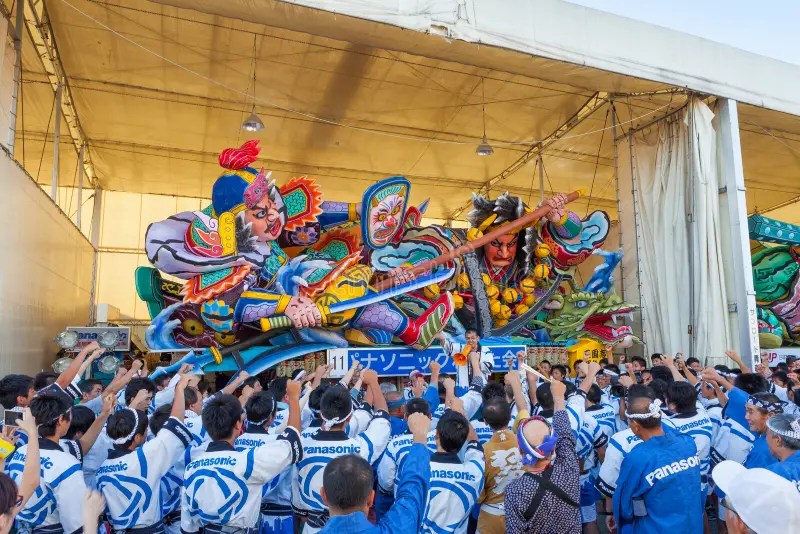
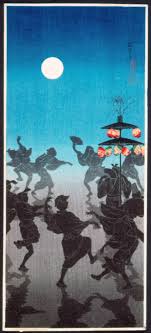


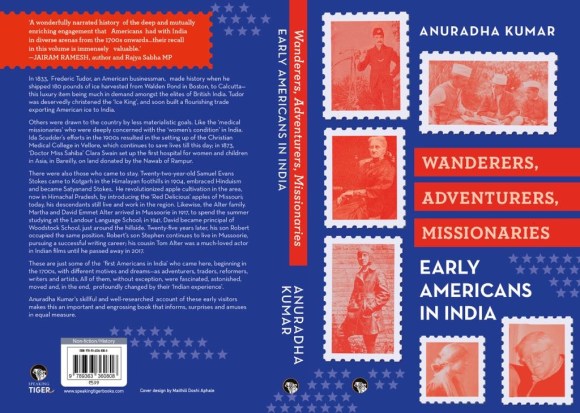

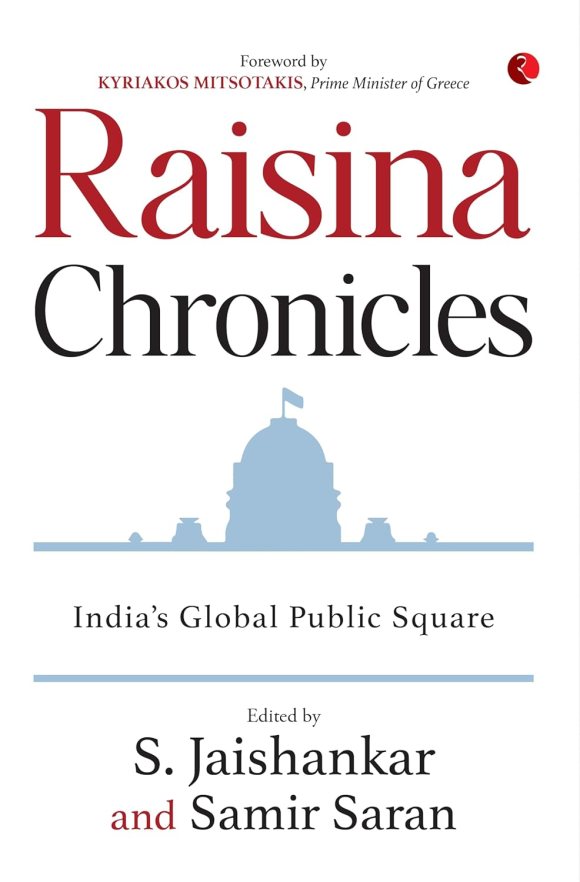
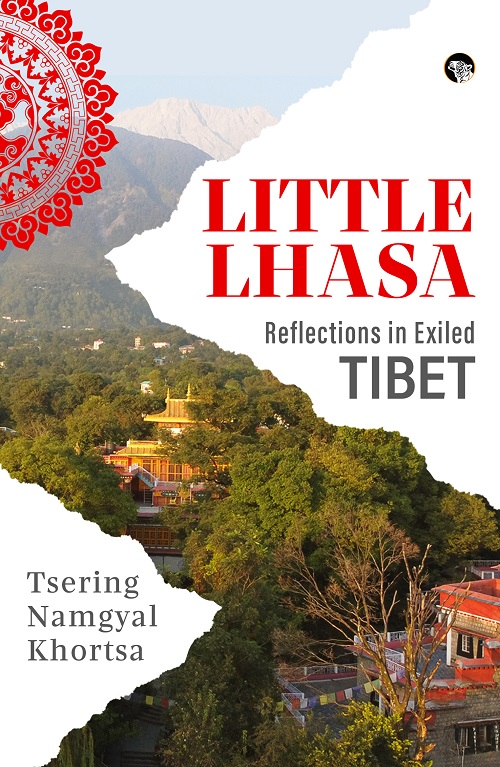
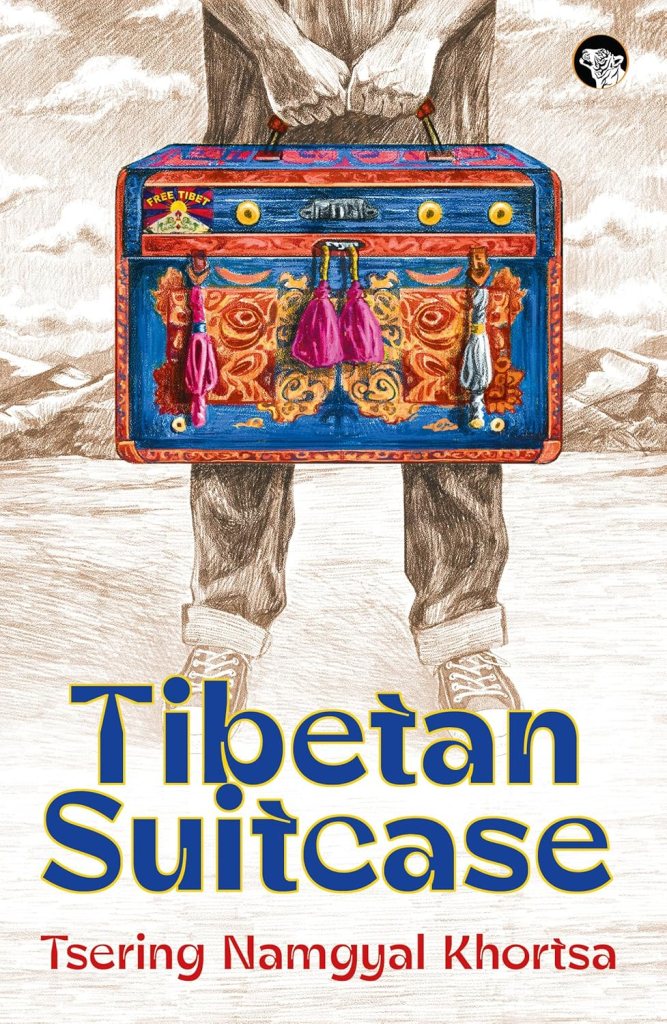
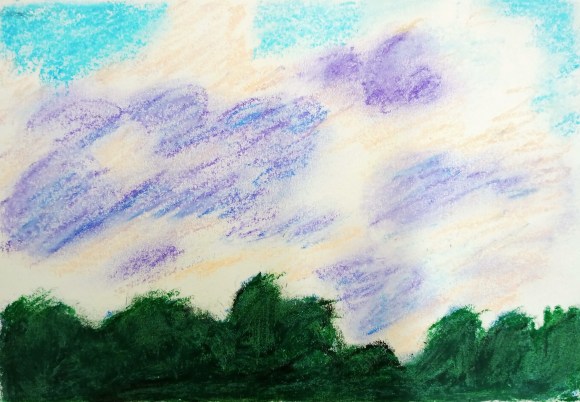
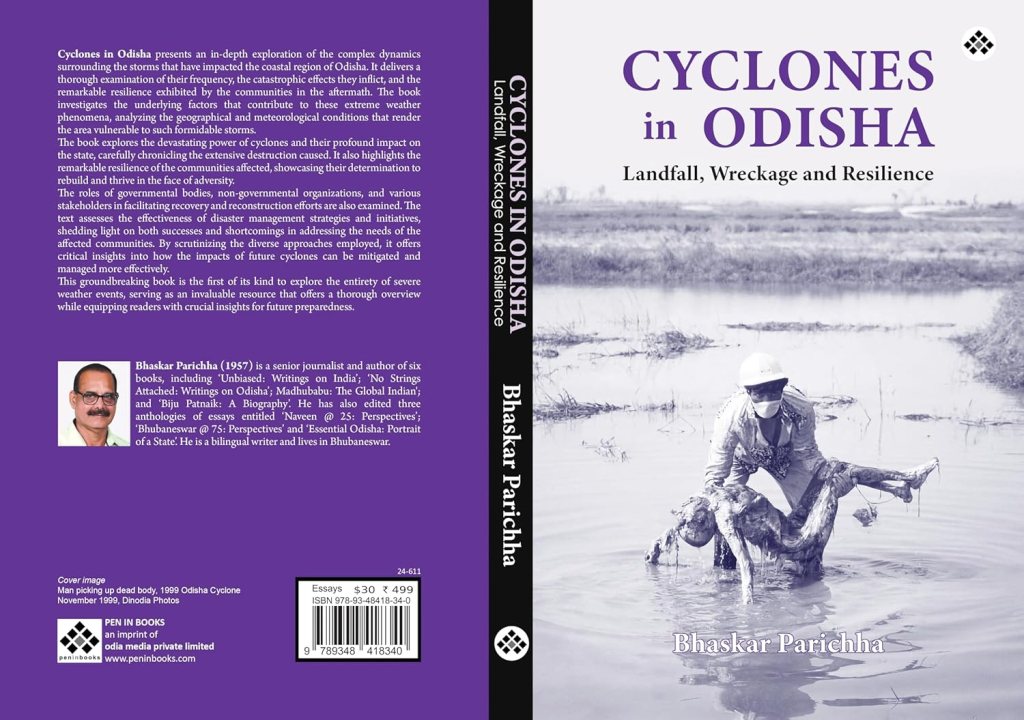

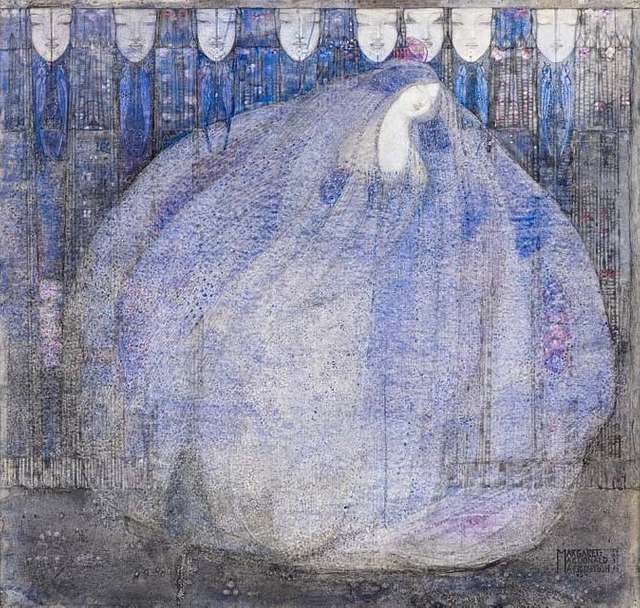
 Borderless