‘Tran (Deliverance)’ was first published in 1901 in a collection known as Naibedya (Offering to God). Here we present a translation from the Bengali poem as found in Sanchayita (Collection), a compilation of poems published by Visva-Bharati to mark the Tagore septuagenarian celebrations in 1931.
Art by Sohana Manzoor
Deliverance

From this hapless country, oh Benevolent One,
Efface all petty fears —
Fears of society, governance and death.
The rock-like burden borne by the impoverished and the weak,
This pain of being ground under dust,
This endless abuse, reinforced each second,
This self-debasement, within and without,
This yoke of enslavement, terror, subjugation,
Is trod on again and again by many marching feet.
Beaten out of self-worth, pride —
Break this enormous pile of shame
With your foot. On this auspicious dawn,
Let us hold our heads high in the infinite sky
Amidst the light of bounteousness and the heady breeze of freedom.
Subsequently, it was translated by Rabindranath Tagore himself as ‘Freedom from Fear’ and published in the Vishwa Bharati Journal in 1933; then, in Modern Review in 1934 according to Bichitra, an online Tagore valorium. It was first anthologised in Collected Poems and Plays of Rabindranath Tagore (Macmillan, London). The translation varies from the original Bengali poem with the last two lines missing completely.
English Translation by TagoreThe Bengali poem in Naibedya did not bear the title ‘Tran’ but just the number ’48’Courtesy: Bichitra Valorium
(Translated by Mitali Chakravarty, edited by Sohana Manzoor on behalf of Borderless Journal. Thanks to Anasuya Bhar, Associate Professor of English and Dean of Postgraduate Studies, at St. Paul’s Cathedral Mission College Kolkata University, for helping with the research. Also thanks to Fakrul Alam and Aruna Chakravarti for their feedback.)
.
PLEASE NOTE: ARTICLES CAN ONLY BE REPRODUCED IN OTHER SITES WITH DUE ACKNOWLEDGEMENT TO BORDERLESS JOURNAL
To Commemorate Tagore’s 80th Death anniversary, we present a review of Somdatta Mandal’s translation of memoirs around Tagore’s last days with a forward by Professor Fakrul Alam
Book Review by Meenakshi Malhotra
Title: The Last Days of Rabindranath Tagore in Memoirs
Translator/ Editor: Somdatta Mandal
Publisher: Birutjatio Sahitya Sammiloni, 2021
The Last Days of Rabindranath Tagore in Memoirs, selected, edited, translated, and put together from the original Bangla by Somdatta Mandal, hovers along a fine line between biography, autobiography and perhaps a bit of hagiography around the account of a life lived in the shadow of imminent death. Mandal draws on all these genres to create a rich chiaroscuro of effects, with a chorus of the memoirs of a few caregivers, mostly women, who were in close proximity to Tagore and served and took care of him in the last year of his life.
Criss-crossing between bouts of illness and creativity, the caregivers also doubled as scribes and notetakers, transcribing the precious words of the great poet. Together, they create an incredibly rich web of narratives, which have been very ably selected and translated by Professor Somdatta Mandal. The memoirs also convey a sense and flavour of the place, whether it is Santiniketan, Jorasanko, Kalimpong or Mongpu — the various places and haunts of Rabindranath in the twilight of his life. The interesting thing is that many of these ancillary memoirs were written by young people who later became famous as writers and artists, their talents often nurtured, encouraged and incubated by the greatly revered poet himself.
The titles of their respective memoirs attest to their unique writerly talents: ‘Nirbaan’ by Pratima Devi, representing a release and freedom from a painful state. Rani Chanda, the second section talks about the ‘alapchari’(Musical) Rabindranath and Gurudev, highlighting his sensitivity to and concern for others. Mongpu-te Rabindranath and Swarger Kachakachi (Rabindranath at Mongpu and Close to Heaven) by Maitreyi Devi are deeply evocative pieces. Nirmalkumari’s “22nd Shravan” is perhaps given the most space by the editor/translator and shows his anxieties about the fate of the university built by him, a unique educational experiment very dear to his heart. Living in the shadow of the great man, it is as if each memoir and person measures up their life which gains in meaning and significance, as a result of the unique legacy bequeathed to them, with love and affection, by the poet.
In reflecting and refracting, through the prism of their care and service, the closing year of Rabindranath’s life, the memoirs lay bare several facts. The bard was often a difficult patient, experiencing several crests and troughs as far as his moods — creative and otherwise — were concerned. Too intelligent and perceptive to avoid facts, he could see his imminent death, but did not want his caregivers to be morose and mournful. On them, fell the job of entertaining him, creating laughter and fun, in which he would participate when his health permitted him. He was less scared of death, he said, than of surgery advocated by his very eminent doctors like Dr Bidhan Chandra Roy (later he Chief Minister of West Bengal from 1948-1962) and Dr Nilratan Sarkar.
That this book is a labour of love is evident from Professor Mandal’s careful selection and editing, as well as her meticulous and competent translation. She has presented the momentous and moving final months of Rabindranath Tagore’s eventful life up to the day of his death which witnessed an outpouring of grief from many quarters. It is the final months of his life which is transcribed and inscribed by his memorialists, among whom are Pratima Devi, his daughter-in-law and son Rathindranath’s wife; Rani Chanda, his secretary Anil Chanda’s wife and a writer herself; Maitreyi Devi, the well-known writer and a protégé and favourite of Tagore’s; Nirmalkumari Mahalanabis, whose exchanges with the kobi-guru (great poet) have been detailed in Kobi and Rani (translated by Professor Mandal in 2020) and Amita Thakur, his granddaughter.
The first selection Pratima Devi’s ‘Nirbaan’ (1942) demonstrates his faith in and affection for his conscientious daughter-in-law, who, along with Rani Chanda and others, become an embodiment of care and nurture. He is aware of being a difficult patient and this awareness, which shines through in many of his comments and pet peeves, not only redeems him, but makes him more human. Musing “fondly on the poet’s twilight moments” while punning on the Robi (Bangla for sun) in the poet’s name, Maitreyi Devi, a Sahitya Akademi award-winning novelist writes: “The almost setting sun…was no less pleasant than the glory and radiance of the afternoon sun” and even within the sickroom, the poet continued “playing” his tunes, along with the march of time.
In his sensitive and nuanced foreword, Professor Fakrul Alam points out the memorialists’ refusal to minimize or sentimentalize Gurudev’s illness. In fact, Rani (Nirmalakumari Mahalanobis) expresses her impatience and criticism of the happenings and the people around the poet in the last stages. Amita Thakur, Rabindranath’s granddaughter was a notable exponent of his songs in her time, and he would depend on her to note down the songs as they came to him. Her work is chosen, says Alam, “as a coda for her assemblage of extracts from the memoirs of the five devoted caregivers who were women who had served him selflessly for sustained periods.”
The literary and archival value of such a work is undeniable and its benefits for exploring literary culture is immense. Between its glimpses of a towering giant in the world of letters with a truly international perspective to its comments about Tagore’s closeness to women and his seeking women as caregivers, the collection is also a testament to Tagore’s faith in the selfless capacity of women.
The book and Rabindranath’s close relationship with his many caregivers and later, memoirists, sometimes created a family dynamic of some tension between his natal family and adopted one. At one point, Maitreyi Devi (called “Mongpobi” or “Mitra” by the poet) talks of the negative comments made about her by Indira Debi (Bibi), one of Tagore’s favourite nieces, daughter of Satyendranath Tagore and Jnadanandini Debi. Later however, Maitreyi Devi also mentions the kindness shown to her by Indira Debi when they are together in Santiniketan.
Like in Kobi and Rani, the memoirs of Rani Mahalanobis (called Prathama or first to differentiate her from Rani Chanda who was referred to as Dwitiya or second) show the many facets of the great man himself — his many moods from his mellow moods even when he was in extreme pain to his irascible mood to his playful and humorous moments. It is to the credit of the editor/translator that she has organised and arranged the material very skillfully to bring out his mercurial nature, his flashes of temper and his expectation that his caregivers would wear their responsibilities lightly.
Overtly committed to personal memory, life narratives and biographies occasionally come close to hagiography. They also lay bare a performativity inscribed in the very form, implicit in the relationship between the great man/ luminary and those who are satellites in his orbit. The many layers of feeling get reflected in a plurality of forms that are both sedimented and fluid in structure — comprising letters, diaries, poems, fragments. These innovative narrative structures are evolved to convey through an overlapping of various genres: non-fiction, poetry, memoir, autobiography, letters, etc. Extending well beyond any coherent theoretical coordinates to streamline its disparate forms, life narratives are as much constructed by an individual artist — subject as they are the product of her/his intersecting textures of historical, social, political, economic, and cultural contexts.
The socio-cultural context is specifically that of the progressive environment of Santiniketan and Vishwa Bharati. We see how the ambience of cultural efflorescence and Brahmo liberal ideas helped shape these young women. Perhaps, because of the reformist cast of Brahmo womanhood or the holistic educational schemes fostered by Tagore, in his caregivers, we see the emergence of relatively independent or mobile women, cast in agentic roles of decision making. We see an extraordinary sense of a tightly-knit community of caregivers whether in Pratima Devi and Maitreyi Devi during the harrowing journey back from Kalimpong to Calcutta when Tagore’s illness worsens, the encounters of Maitreyi Devi with British doctors in Kalimpong or the journey undertaken by Maitreyi from Mongpu along with her young daughter immediately after a landslide, when her husband, Manmohan Sen, undertakes to get the landslide cleared.
With a vibrant assembly of many pictures and voices, the story emerges from a collage. Piecemeal in bits and pieces, like the oranges sent to Rabindranath by Maitreyi Devi from Mongpu. Each experience, like the fruit, is savoured slowly and with relish. The remaining fruit, both actually and figuratively/symbolically, is given to the students.
A life, even one as extraordinary as Rabindranath Tagore’s, unfolds in time, simultaneously, it also participates in eternity. Thus, even as his nearness and the promise of proximate greatness draws his mentees into his magical orbit, we see him worrying about his imminent death and the fate of Santiniketan. We have to also see the life of the women, details of which get inscribed in their memoirs. The demands placed upon them are often relegated to the margins as they form part of the enchanted circle around the ailing poet, who at times seems to assert his claim on their time, albeit often in jest, sometimes in a semi-serious way, competing for their attention with their other affections and preoccupations. Their lives, they realise, are given significance and irradiated by his presence, endowed with value through the care they could extend to the great soul.
Ultimately the collection testifies to the power of great literature and poetry. As the poet himself says:
“Of course, literature is based upon lies — from beginning to end. Whatever I have said, whatever I am saying, how much of that is true? I have done a lot of farming for 80 years. I cannot vouch that all the grains will be stored in the barn. Some will be eaten by rats, but even then, something would be left behind. I cannot say that with certainty, eras change, times change and along with that everything also changes. But I can say with certainty that my songs will last the longest. Especially Bengalis will have no other way except to sing my songs in grief, sorrow, joy and happiness. They will have to go on singing them for ages.”
Kumar Sri Jayantanath is aptly quoted in Appendix B of the memoirs: “There is nothing new to say about Rabindranath because whatever we had to say has already been said by him.” Therefore, we pay a tribute to the poet in the poet’s own words:
“You had brought along with you
Deathless soul
In your death you have
Donated that
You have donated that
In your death.”
.
Dr Meenakshi Malhotra is Associate Professor of English Literature at Hansraj College, University of Delhi, and has been involved in teaching and curriculum development in several universities. She has edited two books on Women and Lifewriting, Representing the Self and Claiming the I, in addition to numerous published articles on gender, literature and feminist theory.
.
PLEASE NOTE: ARTICLES CAN ONLY BE REPRODUCED IN OTHER SITES WITH DUE ACKNOWLEDGEMENT TO BORDERLESS JOURNAL
“Nothing can be unconditional: consequently, nothing can be free.”


“Liberty means responsibility. That is why most men dread it.”

-- George Bernard Shaw,  Maxims for Revolutionists, Man & Superman (1903)
George Bernard Shaw (1856-1950), a great writer and playwright, used these epigrammatic lines to bring focus on what people thought was liberty or freedom from oppression, from regimes that were dictatorial. While discussing concepts of freedom, one does wonder if political freedom solves all humane issues, occasions we celebrate with great aplomb, like the birth of a nation.
This month started with the observance of July 4th, the date of the American Revolution in 1776 and the publication date of Whitman’s Leaves of Grass in 1855. In between these two years, in 1789, ten days down the line, on July 14th, another significant occurrence has been handed down by history to be celebrated as the Bastille Day— the day prisoners were freed from Bastille, a major event that led to the overthrow of the insensitive monarchy in France, a symbolic resurgence of the common, exploited man that has often been seen as an inspiration for later uprisings to reinforce the concept of democracy or liberté, égalité, fraternité.
As we move forward in time, towards August, one wonders if liberty attained by these means was good for all fellow humans? France was part of the Allied Forces that with America taking the lead dropped not one but two atom bombs on Hiroshima and Nagasaki on August 6th and 9th, 1945, to end the Second World War. Did the ends justify the means? Reflecting the cry and suffering of these victims, we have poetry from Suzanne Kamata, a well-known writer from Japan. Michael Burch on the other hand has shared poetry with us which shows how the nuclear programme continued unrepentant despite the devastation it caused. One must give kudos to the descendants of the victims of the nuclear blast that they have forgiven the perpetrators, admitted their own hand in the Second World War and moved ahead. In that spirit, we have an essay on peace by Candice Louisa Daquin, who joins the Borderless team as a writer-in-residence.
We have much happening in poetry this time with an interview of American poet Jared Carter, a recipient of number of awards and fellowships, including the Walt Whitman Award and the Guggenheim fellowship. He walks us through how he created the poem ‘Yeti’ (first published in the May edition of Borderless) and talks of the impact of artifacts from China and India on his own thought processes, the impact of Du Fu (712-770) and much more. We have a poem in Du Fu’s style this time by George Freek and an interesting poem with a Chinese title by Carter, a title that can have multiple connotations and yet each seems to fit the poem perfectly.
Rhys Hughes has brought humour into our pages with both his poetry and essay on William Mcgonagall, who bore the sobriquet of the worst writer in the world through his life and had things thrown at him when he read his poetry in Dundee. Yet, his work survived the beatings, and he lives on known as the ‘Scottish Homer’.
More poetry by Singaporean poet Marc Nair gives us a glimpse of the little island as viewed by someone who has grown up on it. Poetry is always multi-hued, and we have Lorraine Caputo transport us to a Garífuna village in Honduras. Penny Wilkes takes us ‘Down the Path of Nostalgia’ with a mix of old and new photography, prose and poetry on how almost a decade after the end of the Second World War, she started her love affair with photography and nature. It hovers between poetry and musings, and this time we have a rare musing by Jared Carter too. Devraj Singh Kalsi continues cogitating with wry humour while arranging bookshelves. We also have the backpacking granny visitingIndonesia. Post sharing this trip, our granny — Sybil Pretious — plans a little break from publishing to complete her memoirs.
A riveting flash fiction by Kaiyi Tan celebrates the spirit of conquest in these dark times, weaving into the pandemic lore the quest for personal freedom. Stories this time carry a real life one by Jean Kortum on adoption — her own struggle. But then, stories can be real or unreal – draw a bit from both to reflect bigger truths or create alternates that sink into the human mind as a perceived reality and leave an imprint deep inside the heart, like that of Niles Reddick. My conviction is that some lived experiences of writers seep into each story, whether it is from Bangladesh or India or by our literary fictionist, Sunil Sharma. His narrative continues infused by suspense.
We have a complete translated story of Tagore by Radha Chakravarty as our book excerpt this time. ‘The Parrot’s Tale’, ostensibly part of a children’s collection, reflects Tagore’s response to conventional schooling — a reason for him to start Shanti Niketan perhaps. She has also shared two of her translations of Rabindranath’s songs from Bhanusingher Padabali (1884, Bhanusingh’s verses). Chakravarty generously consented to an interview and has given us a glimpse of her journey as a translator and critic. We also have translated a long poem by Tagore on our pages, a poem that inspires hope, though it was named Dushomoy (1897, Bad Times) finally. The original name had been Swarga Patthe (On the Path to Heaven) as can be seen from a page in his diary. We have been fortunate in finding a recording of his voice reciting the poem in Bengali and the print of a sample page of the manuscript bearing his signature.
We continue with Akbar Barakzai’s poetry translated by Fazal Baloch from Balochi – this time addressed to his daughter reminding for some reason of Nehru’s Letters from a Father to his Daughter — a book I read as a child. In addition, we have translations from Korea and Bosnia & Herzegovina, from where the young poet, Maid Corbic, has taken up the concept of freedom of the self and of the nation, both together.
Keith Lyons from New Zealand in his very brief essay has quoted American novelist William Faulkner, “We must be free not because we claim freedom, but because we practice it.” And perhaps we need to remember this if for no other reason, then, just to maintain our own sanity in these strange, almost unreal times as we attempt to unite as humankind to free ourselves from an unknown and unfathomable virus.
In a more sombre note, last week, untroubled by the virus, a victim of cancer, Bollywood legend Dileep Kumar, aged 98, breathed his last. Ratnottama Sengupta adds an unusual colour to the Borderless Journal with her tribute to this hugely acclaimed actor. In the process, she unfolds for us a brief history of the Indian cinema, and a glimpse of a world that transcends all man made constructs in quest of perfection.
We have an interesting set of reviews this July. Rakhi Dalal has reviewed Anuradha Kumar’s riveting short story collection, A Sense of Time. A murder mystery for young readers, Murder at Daisy Apartments by Shabnam Minwalla, has been reviewed by Gracy Samjetsabam. The Third Eye of Governance–Rise of Populism, Decline in Social Research by Dr N Bhaskara Rao, reviewed by Bhaskar Parichha, seems to be a non-fiction that looks forward to bridging gaps between academia and the real world, a truly felt need. Parichha has also given us an essay on a man who inspired Ian Fleming, the creator of James Bond, to make him a part of his lore, a journalist who moved around all of Asia with equal aplomb and a sense of humour – a truly global citizen called Richard Hughes.
I want to thank all our wonderful contributors for making this edition a reality. And readers, we leave you to explore the unknown… like that place we call outer space. A huge thank you again to not only all our wonderful contributors, our faithful readers but also to the fabulous Borderless team scattered across the world.
Before I wind up, a little bird trills a song of hope in my ear. Business tycoons have started stepping into the mysterious void of space to eventually – let us hope — create affordable travel for common man, though it has started off as an expensive proposition. Will this be an industry that will generate more jobs on and off Earth and find new places for man to inhabit? After all, when George Bernard Shaw wrote his plays and essays, we had yet to cross the frontiers beyond Earth, had never even thought of flying across the world in budget airlines or mining moons!
Will we have a new world, a new outlook and a new set of hopes and aspirations as we stretch the frontiers of our home planet?
Wish you all a wonderful month of reading and thinking.
In a tribute to Bollywood legend Dileep Kumar or Yusuf Khan in real life, Ratnottama Sengupta, one of India’s most iconic arts journalist, time-travels to the days when the ‘Fankar-e-Azam’ – the great actor – sprinted about on the sets of Bombay’s studios …spiced up with fragments from the autobiography of Sengupta’s father, famed screenwriter and litterateur, Nabendu Ghosh
The different faces of Dileep Kumar. Photographs provided by Ratnottama Sengupta
“Actually the quality of a performer is also measured by the contrast that he can handle. To do something different, to be humorous, and intimidating, and also to make them feel sorry for you… that is the way people like you.” – Dilip Kumar
On 7thJuly, 2021, I was at a loss — in trying to think of an epithet for the thespian who had just passed away. So am I now, in deciding where I should start my recollections of the deathless legend. For, Dilip Kumar was already B-I-G when I started understanding the word ‘Cinema’.
I was born in 1955 — the year of Satyajit Ray’s Pather Panchali in Bengal, Bimal Roy’s Devdas in Hindi films, and also of Azad. Years would go before I learnt that Apu-Durga’s Song of the Road had placed India on the celluloid map of the world. Before I understood that my father, Nabendu Ghosh, had a hand in immortalizing Devdas by writing its screenplay – often dubbed ‘direction on paper.’ And before I observed this curious coincidence: Azad had released the same year as Devdas, the ode to undying, self-destructive love. Curious, because it brought the Monarch of Tragedy with Tragedienne, Meena Kumari, in order to create a comedy! A fun outing where a rich man, Azad, rescues Shobha from bandits; and when she decides to marry him, her family discovers Azad is the bandit.
1955 First release of Devdas . Photo provided by Ratnottama Sengupta
I became aware of this film only recently, while working on the song Apalam Chapalam – danced by Sayee and Subbulaxmi – for my underproduction documentary on Dance in Hindi Films. That number is a lesson for anyone studying dance. But aeon before I came to it, I would start dancing every time the Murphy radio in our Malad bungalow played Radha na boley na boley na boley re (Radha shan’t speak to Krishna). I would pick up the hairband lying in front of our mirror, put it on and start swaying in a circular motion. I must have been about two-and-half. There was no television, no silver screen, no Meena Kumari in my life, only a radio. And it cast a spell with this song from Azad, one of the few comedies of Dilip Kumar, with Kohinoor and Ram Aur Shyam.
Years down the star actor had talked about distributors objecting to his playing a comic role. “’But people are used to seeing you in tragic roles… so you will die in the end, right?’ they would insist. ‘But I wanted to alter the image. I did not want to be stuck in one groove. There is a risk in breaking a familiar mould, but if people can anticipate you, that is the end of your mystery! So you must do something different each time, a departure from your familiar personality. You must work a little harder and change the chemistry of the personality’.” This could be the Bible for any actor if he plans to defy time.
Dilip Kumar captivated me with a dance which – like Meena Kumari’s in Azad – was no classical number, only robust, folksy Nain lar jai hey toh manwa ma kasak hoibey kari (When our eyes meet, I feel a pang in my heart). This was in Gunga Jumna (1960), produced by Dilip Kumar and directed by his mentor Nitin Bose. The star gustily dancing with a bunch of guys in dhoti – he was so spontaneous, so natural! This at a time when women danced but men dancing was seen as effeminate. Yes, the traditional dance gurus were male, but the movie idol had to be macho, so no dancing! Dance gurus were revered in life but on screen they were lampooned as in Padosan (The Next-door Neighbour, 1968). But he was so confident, suave you cannot but be infected by his joi de vivre.
The other thing about Gunga Jumna was its dialect. The tongue he speaks — an admixture of Brajbhasha, Khaiboli, Awadhi, Bhojpuri — connects all our people in northern India. That may be why, when Amjad Khan was preparing to play Gabbar Singh, his lines garnished his dhobi’s (washerman’s) dialect with Gunga’s. Again, Lagaan (2001) returns to this tongue which Aamir Khan once more picks up as PK (2014), the alien who knows no earthly language of communication, from a street walker in a psychic manner, by simply holding her hand.
Dilip Kumar’s dialogue delivery was distinctly different from his other contemporaries, Raj Kapoor or Dev Anand. One had cultivated a generous dose of Charlie Chaplin in his mannerism; the other had to thank Gregory Peck for his angular tilt of head. Dilip Kumar’s controlled delivery, low and clear, probably stemmed from his admiration for Paul Muni. He whispered for the benefit of his lady love alone – how romantic! A person standing at an arm’s distance, and being addressed almost with reverence, at a time when so many of contemporaries had yet to cast off the theatrical manner of vociferous enunciation: this intensity charmed my mother’s generation of men and women and spilled over to actors of my preteen years – unabashedly they subscribed to the adage, ‘Imitation is the foremost form of adulation’.
When Joy, the worthy son of Bimal Roy, made his centenary tribute to his father, he had started by interviewing Nabendu Ghosh. In it, while talking about Devdas, the screenwriter says: “On the first day of shooting I saw Dilip Kumar loitering by himself, aloof, remote. So I asked him, ‘What’s the matter Yusuf Bhai? Every day you sit with us, talk to us, join us in our banter. Why are you so preoccupied today?’ He replied, ‘Woh teenon mere kandhe par baithey hain Nabendu Babu (those three are weighing me down like a burden on my shoulder).’ ‘Kaun teen (which three)?’ – I asked him. He replied, ‘Barua Saab, Saigal Saab, and Sarat Chandra.’” The first two legends had played Devdas (1935), Pramathesh Barua in Bengali and K L Saigal in Hindi, in New Theatre’s bilingual production, and Sarat Chandra Chatterjee (the author of Devdas) of course is the most translated author in India: Devdas alone has seen a dozen versions in as many languages if not more. Nabendu continued: “So I asked him, ‘What do you think of Sarat Chandra as a writer?’ And he replied, ‘He had divinity in his pen.’”
What a pithy appreciation of a literary master. Hardly surprising that Dilip Kumar was a major presence on the stage when the Sarat Centenary Celebrations were held in Bombay. Others present included Nitin Bose and Biraj Bahu Kamini Kaushal along with Sunil Gangopadhyay, then a young Turk who pooh-poohed the literary giant. Baba, having scripted Parineeta(1953), Devdas, Biraj Bahu(1954), Majhli Didi(Middle Sister, 1968) and Swami (later filmed by Basu Chatterjee), as much as due to his standing in Bengali literature, had chaired the unforgettable celebration.
When Nabendu Ghosh was wondering about Yusuf Saab’s eloquent reticence, clearly the actor was in the process of pouring himself into the soul of the persona — or was he giving Devdas the stamp of Dilip Kumar? It was this total absorption that saw him transcend every known interpretation of the character and make his Devdas the abiding face of an indecisive, love-torn soul. In an interview Dilip Kumar had said, “If I have to be convincing as a 30-year-old, I must familiarize myself with what he has gone through in the preceding 29 years.”
However in another interview — this one, to renowned film critic, screenwriter and director, Khalid Mohamed — he had debunked method acting saying, “Yeh kis chidiya ka naam hai? What is this thing you call Method Acting?” Okay, so he did not learn – or unlearn – the acting technique of the Russian master Stanislavsky but he certainly believed in the ‘art of experiencing.’ He must have drawn on personal experiences or their memories to inform his characterization, the truth behind the persona who lived and loved in another space and time. This I can say from my visit to the sets of Sungharsh (Clash,1968) directed by H S Rawail.
I can’t remember why I had gone there but I remember visiting with my father. The crew was busy preparing lights for the shot. This was the last film where Dilip Kumar was seen with Vyjayantimala: their first was Devdas, and included Gunga Jumna, Madhumati, Naya Daur, Paigham. I noticed him running round the sets, dressed in a dhoti with a gamchha tied round his waist. “Why is the hero working himself out of breath?” I’d wondered to myself. I got the answer when they started the takes: the scene required him to run up, axe in hand, and breathlessly deliver a message. The film based on Mahasweta Devi’s novel, Layli Aasmaner Aina (The Mirror of Layli Aasman), revolved around a courtesan and a thugee, and almost half a century later Baba wrote Sei Sab Kritantera (Those Gods of Death) which won him the Bankim Puraskar, about the cult of bandits. But circling back to Dilip Kumar, I find it astounding that a quarter century after his screen debut, the legend was preparing for the shot by physically running around!
No wonder he was so natural. Yet this perceptive actor did not skyrocket into fame with Jwar Bhata (Ebb and Flow, 1944), directed by Amiya Chakravarty, nor did Pratima, directed by Jairaj with music by Arun Mukherjee, do any good to his career. It was with Nitin Bose’s Milan (The Union), based on Tagore’s Naukadubi (The Wreck) and released on a Friday preceding 15tH August 1947, that his listless performance gained sparkle. Along with Jugnu (Fireflies), which was the highest grosser of the year, Milan laid the ground for the long innings of the resolved player. Small wonder, when he produced Gunga Jumna, he singled out his mentor to be the director.
All the three films, Jwar Bhata. Pratima and Milan were produced by Bombay Talkies, then being run by Devika Rani and Ashok Kumar. The popular pair of Achhut Kanya (The Untouchable Girl, 1936) was responsible for most decisions in the milestone production company that gave breaks to other majors of Indian cinema like Dev Anand, Gyan Mukherjee, B R Chopra, Sadat Hasan Manto. Ashok Kumar and Devika Rani had given Mohamed Yusuf Khan, the son of a Pathan dry fruits trader from Peshawar, his screen name. “Why did Yusuf Khan become Dilip Kumar?” is a much asked question. To Khalid Mohamed the thespian had revealed, “The choice was between Jehangir and Dilip Kumar. The second seemed a better option because it sits easy on every tongue.” Many others have seen a different reason behind the change.
Ashok Kumar Ganguly was directed to lop off his family name at the instance of Franz Osten, the Bavarian director who partnered Himanshu Rai in the early years of Bombay Talkies, to make him more ‘Indian’ rather than a Bengali or a Brahmin. ‘Kumar’ – meaning, young prince – was, since then, included in their name by most actors — Uttam Kumar too. When Dilip Kumar debuted in mid-1940s, the national movement to free India from colonial harness was coming to a head — as was the crescendo for a separate political identity for the Muslim populace. In this scenario, many in the profession that depended on the support of maximum number of viewers, were opting for names that did not underscore their Islamic roots. Thus Mahjabeen Bano became Meena Kumari, Mumtaz Jehan Dehlavi became Madhubala, Nawab Bano was renamed Nimmi by Raj Kapoor, Nargis had started as Baby Rani, Hamid Ali Khan had assumed the name of Ajit. However, Dilip Kumar spawned many other clones. Thus, commenced the age of Pradeep Kumar, Rajendra Kumar, Manoj Kumar, Sanjeev Kumar, Akshay Kumar. And many tried to clone his histrionic abilities too!
*
The year 1947 proved a turning point in the life of Dilip Kumar in so many ways. Mehboob Khan’s Andaz (Gesture,1949), his Aan (Pride) and Nitin Bose’s Deedar (A Glance), both released in1951, Amiya Chakravarty’s Daag (The Stain,1952), Bimal Roy’s Devdas, Yahudi (Jew), Madhumati, K.Asif’s Mughal-e-Azam (1960) — all the films thereafter proved super hits. They also carried a message for the masses, be it against alcoholism, or war; in favour of fidelity in marriage, or unadulterated friendship. They turned the brooding hero into a popular idol. At a time, the country was rapidly industrializing, Naya Daur (New Age) focused on the conflict between modernity and tradition through a race between a tonga and a bus. Yahudi, through the love between the Jewess and the Roman prince, sent out a message of communal bonding.
Dilip Kumar, it is evident, kept pace with the transformation coming in the nation’s life. His own performance, his selection of roles all reflected this. That could be why Gunga Jumna by the family production house of Citizen Films, became a precursor in so many ways. I have already spoken about its dialect. Projecting dacoits in the central roles was another. Later decades saw dacoits being replaced by smugglers as villain, drag racketeers as the evil guys, terrorists as the despicable ones. But the dacoit theme kept recurring through Mujhe Jeene Do (Let Me Live, 1963), Mera Gaon Mera Desh (My Village My Land, 1971), Sholay (Flames, 1975), Pratiggya(The Oath, 1975(, Ganga Ki Saugandh ( Swear by the Ganga, 1978), Bandit Queen (1994), Pan Singh Tomar (2010). More so, the keynote of two brothers on either side of law was to see many reincarnations – most remarkably in Deewar (The Wall), which turned Amitabh Bachchan into the legend he is. Years later Dilip Kumar teamed with Amitabh Bachchan to play father and son aligned on opposing sides of law – again, with amazing success.
Sangharsh
Ganga Jamuna
Film posters from different films Dileep Kumar starred in. Photograph Courtesy: Ratnottama Sengupta
The legend teaming with a younger icon was not something new for Dilip Kumar, nor would it be the last. Keeping pace with his growing years he had shared screen space with Anil Kapoor in Mashal (The Torch, 1980s), and with Naseeruddin Shah in Karma. Prior to Deewar he had appeared in Paari (1970s), a Bengali film, where the then rising star Dharmendra played the lead. This film was remade as Anokha Milan with the same cast. Likewise, Tapan Sinha’s Sagina Mahato (Bengali) was remade as Sagina (Hindi) with his wife Saira Banu opposite him. This remains one of Dilip Kumar’s most significant performances — perhaps also his most ‘political’ incarnation on screen. Here he is a factory worker who becomes the first to stand up to the tyranny of the British bosses in the tea gardens on the Himalayan reaches of North Bengal. Once more he surprised us, his younger viewers, to whom he was nothing but a man named Sagina Mahato whose naivety was being cleverly exploited. I had seen both the Bengali and Hindi versions but I have no answer as to why the remake did not work a magic nationally. Dilip Kumar was, after all, a master of delivery in Hindi and Urdu, although his English too was flawless.
Dilip Kumar seems to have had a special equation with Bengal, which could have grown out of the fact that so many directors from Bengal dominated the Indian screen through 1940s, 1950s, 1960s, 1970s… in other words, the screen idol’s active years. I was won over by the charisma of the star in Madhumati, incarnated from a story by Ritwik Ghatak. He had penned the first draft of the immortal classic that continues to mesmerise viewers to this day, then he was summoned back to Kolkata to direct two of his own films, Bari Theke Paaliye (The Runaway) and Ajantrik( 1957). The final script was prepared by Bimal Roy, as was his practice, in conference with his team. As a part of this Nabendu Ghosh had worked on detailing the reincarnation film as Dilip Kumar himself revealed in the interview to Khalid Mohamed. I was simply enchanted by the actor’s screen presence. Here I was, growing up in the age of Rajesh Khanna and Amitabh Bachchan, remember? Yet I was compelled to surrender to the charm of this actor! The only other ‘Kumar’ who superseded his charm for me was Uttam Kumar – and both had started their screen journeys in 1940s – long before I was born! Madhumati itself was ‘born again’ – most successfully as Farah Khan’s Om Shanti Om (2007) but the enduring charm of Dilip Kumar as an engineer arriving the upper reaches of Kumaon Hills and losing himself amidst tribals remains matchless.
Baba (Nabendu Ghosh) also scripted Yahudi where Bimal Roy directed Dilip Kumar and Meena Kumari as the Roman prince and the Jewess who fall in love – endangering lives. In the Nehruvian era, it resonated with the values of secularism that the super actor himself enshrined. In his personal life, this saw Dilip Kumar align with the Congress. He donned the hat of the Sherif of Bombay (1980) and raised funds for causes, including for the physically challenged, through exhibition cricket matches. His commitment to the country’s constitutional framework saw him campaign in support of V P Singh — and later Manmohan Singh — as Prime Minister. Nominated to Rajya Sabha — the Upper House of Parliament — from 2000 to 2006, he served in Standing Committees that brought in amendments to Indian Medical Council Act 2006. He used his MP funds to restore Bandra Fort and improve the Bandra Promenade. These kept earning him laurels in India and beyond. The Dadasaheb Phalke Award winner was decorated as Padma Bhushan in (1991), Padma Vibhushan by the present Modi government in 2015, and — befittingly — accorded state honour at his funeral.
My most significant interaction with Dilip Kumar happened four decades after Yahudi – in 1999. Atal Behari Vajpayee was then the Prime Minister, and the Pakistan government was to confer their highest civilian award – Nishan-e-Imtiaz on the actor. In the wake of the Kargill infiltration and the ensuing war this was red rag to the right wingers. Shiv Sena had laid siege outside the thespian’s Pali Hill mansion, objecting to his receiving the award of merit as a betrayal of his own country. At that point Dilip Kumar, who continues to have a massive following across the subcontinent and beyond, had come to meet the Prime Minister. And I, then the Arts Editor of The Times of India, was given a special audience – perhaps also because I was the daughter of ‘Nobendu Babu’.
I clearly recall his words: “I was born in Peshawar, which by a twist of events is now in another land. A boundary line has turned it into a foreign country but I continue to be a produce of that land. I cannot deny that nor do I wish to. And I am not breaking any law of this land by accepting this Order of Excellence. If my country benefits in any way by my refusing this award, then I am willing to do so. If instead it strengthens bonding with a (warring) nation, why should I decline it?”
This is what he said to the Prime Minister too, resulting in Vajpayee ji issuing a statement to the effect that Dilip Kumar does not need to prove his patriotism to anybody. He will do just as his heart dictates. Whether he should accept the Nishan or decline it will be decided by his inner self. No one needs to tell him that.
In later years I have thought to myself: Suchitra Sen, another abiding icon who was paired with Dilip Kumar in Devdas, has been honoured by the Bangladesh government because she was born in Pabna, and we felt happy. Soumitra Chatterjee has been honoured by the French Legion de Honor – as was his mentor Satyajit Ray before him – and we felt honoured. The Government of India conferred the Padma on Sir Richard Attenborough for his directorial essay on Gandhi (1983) and we rejoiced. If all of these gladdened our hearts, why should we take exception to Nishan-e-Imtiaz? Why must we carry scars of the past in our mind and heart? Would it not be better to apply balm on wounds and reinforce peace?
Before I wrap up, I must time-travel back to 1991. That was the year the Film and Television Institute of India (FTII) conferred an Honoris Causa on Nabendu Ghosh whose 25 year association (1966-1991) had seen the emergence of such famous alumni as Kumar Shahani, Jaya Bachchan, Subhash Ghai, Girish Kasaravalli, Aruna Raje, Syed Mirza, Ketan Mehta, Kundan Shah. “By honouring his association with FTII we are also honouring the milestones the screen writer has gifted to the world of cinephile,” Dilip Kumar had said as the Guest of Honour handing over the honorary doctorate. And in his address to the students, who had caused waves of unrest in FTII, he had said: “You have come here to learn the art of filmmaking. Instead, do you wish to teach your teachers? In our times we did not have any institute, we learnt from our directors. Bimal Roy himself was an institution. Nitin Bose, Bimal Roy, Mehboob Khan – they have moulded masters who come to teach you here. You stand to gain if you learn from them. Never forget to benefit from those who have learnt by experience…”
The words stay with me, as do the performances of the timeless actor who stopped short of scoring a century.
.
Ratnottama Sengupta, formerly Arts Editor of The Times of India, teaches mass communication and film appreciation, curates film festivals and art exhibitions, and translates and write books. She has been a member of CBFC, served on the National Film Awards jury and has herself won a National Award.
.
PLEASE NOTE: ARTICLES CAN ONLY BE REPRODUCED IN OTHER SITES WITH DUE ACKNOWLEDGEMENT TO BORDERLESS JOURNAL
A translation of Dushomoy (bad times), written originally by the poet as Swarga Patthe (On the path to Heaven) in the Bengali month of Boisakh 1304, roughly April 1897 of the Gregorian Calendar.
A Journey of Hope


Though dusk sets in slowly,
    The songs of the spheres have been silenced.
Though you fly companionless in the endless sky,
     Though exhaustion seeps into your body,
A terrifying dread prays in mute chants,
    All horizons across the orb are covered by a veil --
Yet bird, o lone bird of mine,
     Despite the blinding darkness, do not stop beating your wings.

This is not the murmur of woods,
     This is the python-like ocean swelling.
This is not a bower of flowers,
      This is the undulating hood swaying to the music of waves.
Where is that shore full of blossoms and foliage,
     Where is the nest, where is the branch to rest?
Yet bird, o lone bird of mine,
     Despite the blinding darkness, do not stop beating your wings.

The long night stretches ahead,
     The sun sleeps stilled after sunset.
The universe is breathless under restraint.
     In this stunned stance, time meanders.
Swimming across the shades of the limitless night,
     A crescent moon appears in the distant skyline.
Yet bird, o lone bird of mine,
     Despite the blinding darkness, do not stop beating your wings.

High up in the skies, the stars point their fingers
     Towards your path while gazing at you.
Deep below lies restless death in rising crests
      Of hundreds of waves that beckon.
In distant shores, some call out with an offering,
    “Come, come,” they entreat, they plead.
Yet bird, o lone bird of mine,
    Despite the blinding darkness, do not stop beating your wings.

There is no fear, no tie of affection, no attraction,
      There is no expectation, expectation is only a mirage.
There is no language, no futile weeping,
      There is no home, no floral bed to rest on.
There are only these wings, there is the celestial quadrangle,
     The dawn is led astray by the drawing of the sequestered night —
Yet bird, o lone bird of mine,
    Despite the blinding darkness, do not stop beating your wings.
(Translated by Mitali Chakravarty, edited by Sohana Manzoor on behalf of Borderless Journal. Thanks to Dr Aruna Chakravarti for the discussion and feedback which helped improve the translation.)
Tagore’s draft of the poem, ‘Swarga Patthe’, with the signature and date. This is the poem that has come down to us as ‘Dushomoy’, now translated as ‘Journey of Hope’.
Click here to listen to Tagore recite the poem about a lone bird in his own voice in Bengali.
.
PLEASE NOTE: ARTICLES CAN ONLY BE REPRODUCED IN OTHER SITES WITH DUE ACKNOWLEDGEMENT TO BORDERLESS JOURNAL
Renowned translator and academic Radha Chakravarty has translated two songs by Tagore written originally in Brajabuli, a dialect based on Maithali that was popularised for poetry by the medieval poet Vidyapati. Composed in 1877. it became a part of Bhanusingher Padabali in 1884. This song draws from the lore of Radha and Krishna.
Bhanu Singher Padavali
Gahana Kusuma Kunja Majhe(Amidst the Densley flowering Bower)
In the densely flowering forest grove
The flute sings softly of tender love.
Shame and scruples cast aside,
O beloved friend, come, step outside!
In delicate, graceful blue attire,
Heart aflame with budding desire,
In your doe-eyed gaze, a guileless smile,
Come to the bower, O friend, awhile!
Flowers pour forth their fragrance, strong
Birds pour forth a river of song
From the moon, pure nectar streams,
In the silver radiance of its beams.
Hear the gently humming bees,
Amidst the countless blooming trees,
Clustered blossoms fill the bower—
Bakul and jasmine, in full flower.
Shyam himself is here, behold!
Eyes overflowing with love, untold.
Immortal glory, grace divine
Shames the moon, and pales its shine.
O band of women, let us race—
On Govinda, to feast our gaze!
Bhanusingha’s hymn of praise
At the sacred feet of Shyam, he lays.
Shaono Gagane Ghor Ghanaghata

(The Dark Monsoon Skies)

So dense the clouds in the monsoon sky, so dark the night’s black veil!
Dare I set out for the forest, friend?—A woman, so alone and frail?
Wild winds flail the Yamuna waves, peals of thunder overhead,
Flashing lightning, crashing trees—my body trembles in sheer dread!
Rain descends in dancing chimes, from the clustered clouds above,
Sal, piyal, tal and tamal—so dark the densely wooded grove!
Tell me, friend, amidst this storm, why Kanha plays this cruel game—
From the grove, on his magic flute, tenderly calling Radha’s name?
Attire me in strands of pearl; with ornaments, my brow adorn;
With champak garlands bind these locks, flowing long and free, unshorn.
In the dark, at dead of night, go not, O maiden! to Nawal Kishore—
Your faithful servant, Bhanu pleads—so terrifying is the thunder’s roar!
Both these songs have been excerpted from Krishna in Indian Thought, Literature and Music, ed. Mandira Ghosh, Shubhi Publishers, 2021
Radha Chakravarty is a writer, critic and translator. She has co-edited The Essential Tagore (Harvard and Visva Bharati), nominated Book of the Year 2011 by Martha Nussbaum, and edited Shades of Difference: Selected Writings of Rabindranath Tagore (Social Science Press, 2015). She is the author of Feminism and Contemporary Women Writers (Routledge, 2008) and Novelist Tagore: Gender and Modernity in Selected Texts (Routledge, 2013). Her translations of Tagore include Gora, Chokher Bali, Boyhood Days, Farewell Song: Shesher Kabita and The Land of Cards: Stories, Poems and Plays for Children. Other works in translation are Bankimchandra Chatterjee’s Kapalkundala, In the Name of the Mother by Mahasweta Devi (nominated for the Crossword Translation Award, 2004), Vermillion Clouds: Stories by Bengali Women,and Crossings: Stories from Bangladesh and India. She has edited Bodymaps: Stories by South Asian Women and co-edited Writing Feminism: South Asian Voices and Writing Freedom: South Asian Voices. Her poems have appeared in Journal of the Poetry Society of India, Contemporary Major Indian Women Poets, The Poet, Hakara, Narrow Road Journal, Krishna in Indian Thought, Literature and Music, The Fib Review, The Skinny Poetry Journal and Indian Poetry through the Passage of Time. Forthcoming books include Our Santiniketan (translation of Mahasweta Devi’s memoirs; Seagull Publishers); The Tagore Phenomenon (Allen Lane), Kazi Nazrul Islam: Selected Essays (Nazrul Centre for Social and Cultural Studies) and Mahasweta Devi: Writer, Activist, Visionary (Routledge, UK). She is Professor of Comparative Literature & Translation Studies at Ambedkar University Delhi.
.
PLEASE NOTE: ARTICLES CAN ONLY BE REPRODUCED IN OTHER SITES WITH DUE ACKNOWLEDGEMENT TO BORDERLESS JOURNAL
Radha Chakravarty has, for many of us, been synonymous to translations that we read – excellent translations of Tagore, Bankim and Mahasweta Devi – major names from Bengal in Literature. A well-respected academic who specialises in translations, Tagore, Mahasweta Devi, Women’s Literature, South Asian Literature, Subaltern Writings and Comparative Literature, in this exclusive she talks to us of the multiple journeys in her development as a translator, critic and writer.
You are an eminent translator, editor, critic and writer. What started you out on this path?
These are separate yet interlinked roles, different journeys yet part of the same narrative of my involvement with the world of words. I started writing when I was a child, but came to think of publishing my creative work many years later, when journal editors began to solicit my poetry for publication. My poems have now appeared in many books and journals, in India and internationally. It was a wonderful collaborative experience to contribute to Pandemic: A Worldwide Community Poem (Muse Pie Press, USA), nominated for the Pushcart Prize 2020.
My work as a critic evolved through engagement with research. Feminism and Contemporary Women Writers(Routledge, 2008) for instance, emerged from my doctoral research, a cross cultural study of writers such as Mahasweta Devi, Anita Desai, Doris Lessing, Toni Morrison, Margaret Atwood and Buchi Emecheta. Novelist Tagore (Routledge, 2013) draws upon my research on gender and modernity in Tagore’s novels. My essays and reviews come from my areas of specialization, including Tagore Studies, women’s writing, South Asian Studies, Comparative Literature and Translation Studies.
As an editor, my work is inspired by the idea of sahitya, the Bengali word for “literature” that Tagore interprets as “being with” or “being together”. This idea of collaboration and dialogue across heterogeneities fascinates me. My edited volumes, such as Bodymaps (Zubaan, 2007), a collection of South Asian women’s stories on the body, Vermillion Clouds(Women Unlimited, 2010), an anthology showcasing a century of fiction by Bengali women and Writing Feminism (co-edited with Selina Hossain; UPL, 2010), containing selections of South Asian feminist writing, are inspired by this principle. My most exciting collaborative project as an editor, so far, was The Essential Tagore (Harvard and Visva-Bharati, 2011), where my co-editor Fakrul Alam and I worked with thirty reputed South Asian translators located in different countries, on the largest anthology of Tagore’s writings across ten genres. The volume, named the ‘Book of the Year’ 2011 by Martha Nussbaum, has since become a standard reference for Tagore scholars worldwide.
As for translation, I started dabbling in informal translations, across Bengali, English and Hindi, even as a child. My grandfather, who taught me advanced Bengali at home, often involved me in these linguistic experiments. My first published translation happened almost by accident, in the 1990s. A friend, an Israeli art historian, asked me to explain the lyrics of the Bollywood song daiya re daiya re charh gaye papi bichhwaa(the poisoned scorpion climbed on me), because she was researching the scorpion motif in the Khajuraho scultpures. I ended up translating the entire song into English, in verse! My friend was amazed. She included my translation of the song with due credit, in her essay on the scorpion, published in the Journal of the Asiatic Society of India. As for my early books in translation, I must thank my friends, the editors and publishers who urged me to take up those projects. They saw in me a potential I had not fully recognised myself. Later, the overwhelming recognition that these books received transformed my self-image. I began to think of myself as a translator, among many other things.
You started by translating Mahasweta Devi. When and why did you start translating Tagore? What moved you from Mahasweta Devi to Tagore?
At the turn of the century, I was immersed in the challenge of translating into English the heterogeneities of contemporary Bengali fiction. Crossings: Stories from Bangladesh and India (2003), my first published book of translations, included the stories of twenty living writers. Alongside, I was working on In the Name of the Mother, my translations of some powerful, unusual stories about motherhood by Mahasweta Devi. The volume appeared soon after Crossings.
Meanwhile, I received a sudden call from Rani Ray—once my teacher, now a friend, mentor and figure of inspiration—urging me to translate Tagore’s Chokher Bali (A grain of Sand) an important but neglected text. I remember the shock and awe I felt at that moment. I protested that I was no Tagore expert, much as I loved and admired his work, but Rani di was adamant. “I think you are the right person to translate this novel,” she insisted. I found myself promising that I would try. And that was how my journey as a Tagore translator began. I read the novel, was struck by its boldness as a path-breaking modern text, and felt daunted but also tremendously excited at the challenge of trying to translate this hundred-year-old text that was at once so rooted in its context, and yet so far ahead of its time. Translating Chokher Bali was an immersive experience. It transformed me, drew me into a lifelong relationship with Tagore, and there has been no looking back.
Was translating Tagore different from translating Mahasweta Devi or Bankim? How was it similar/ different?
As I said, I first translated contemporary writing before turning my attention to Tagore. My translation of Bankim’s Kapalkundala came in 2005, after I had also translated Tagore’s Shesher Kabita as Farewell Song. So the transition from Mahasweta and other contemporary figures, to Tagore’s early twentieth century texts, and then to Bankim’s nineteenth century novel was like a journey back in time, delving further and further into the Bengali literary past. Of late, I have been translating parts of the Chandrabati Ramayana, a sixteenth century composition. Each step in this journey has been a process of exploration and rediscovery through translation, of familiar and much loved texts that I had read avidly in my early life, never dreaming that I might one day aspire to translate these literary jewels.
After working with living writers, the transition to Tagore was not easy. When translating Chokher Bali, I felt the need to evoke the flavour of a bygone age, even in a contemporary translation for the twenty-first century reader. This involved complex creative experiments with style and vocabulary that stretched my abilities as a translator. One felt the importance of bringing to life the cultural ethos of Bengal in the late nineteenth century, a world in many ways unfamiliar to readers of our time. Simultaneously, I recognized the modernity of Tagore’s novel, the new element of interiority that transformed the Bengali novel at his magic touch. That needed to be brought to life too.
Moving from Tagore to Bankim offered a fresh set of challenges. The lyrical, Sanskritised cadences of Kapalkundala are far removed from the more modern idiom of Tagore’s novels. Bankim’s text is set in the Mughal period. Hence the translator must actually negotiate the past at a double level, to bring to the modern reader the late medieval ethos as represented through Bankim’s nineteenth century sensibility. Crossing these temporal and cultural divides demanded daring experiments with language, as well as considerable research to contextualize the source text. It was a learning process for me.
Working with the ChandrabatiRamayana is a different experience altogether. A radical text for its times, and one that challenges the mainstream literary tradition, it remains a text worth returning to in our own context, because it destabilizes monolithic conceptions of our premodern religious and social traditions. Finding in English an idiom that will capture the poetry as well as the content is a hard task though.
These adventures in translation have compelled me to read the Bengali literary tradition from a different angle, from a writerly perspective, as it were. I have realized that translation involves a creative element, but also works as a form of interpretation. It has become clear to me why translation can be described as the most intimate act of reading.
In the Jaipur Literary Festival (2017), you made a very interesting observation that if one does not get into the skin of a writer, one cannot capture the essence of the writer in entirety. Are all good translations more of transcreations that literal translations?
Translation often appears to me a form of ventriloquism, the translator’s voice making itself heard through the voice of the source text. It produces a double-voiced text. My endeavour, when translating, is to bring to life the spirit rather than the literal vocabulary of the source text. One struggles to apprehend, interpret, and then, through one’s own creative ability in the target language, to approximate the impulse behind the original. A doubleness comes into play here, due to the gap in time, location, language, culture and context that separates the translation from the source text. In this tension resides the dynamic potential of translation to simultaneously recognize and displace the original. The success of a translation often depends on the translator’s creativity, as well as the author’s.
What is your opinion of Tagore’s own translation of his works? Can you expand on that?
Tagore’s English translations of his own work shot him to international fame and led to the Nobel Prize. Yet he was diffident about his own command of English, and unsure about the quality of his translations. Some of these translations resorted to archaisms and a rather stilted style that did not weather the test of time very well. They were partly responsible, I feel, for the fluctuations in Tagore’s international reputation after the initial flush of success. Certainly, they are not close copies of the original Bengali texts; rather, they are re-creations in a different language, for a different readership. While some readers may cavil at the gap between the source texts and their English versions, these translations, in my opinion, remain important instances of the ways in which translation can connect different cultures through dynamic border crossings. The Kabir translations for instance, drawing upon the work of Kshitimohan Sen, and produced by Tagore in collaboration with Evelyn Underhill, provide a fascinating instance of the translingual and transcultural border-crossings that were involved in this process.
Sometimes Tagore adopted unorthodox collaborative measures when working with translations.
We know about the English translations of course, but it is worth remembering that Tagore also translated numerous premodern poets into Bengali and English, from a range of different languages, often drawing upon eclectic sources and relying on the assistance of others more knowledgeable about the languages and literary cultures of the source texts. I have recently published an essay on Tagore’s translations of medieval poetry, where I argue that these should be read, not as literal, faithful renderings that seek to cling close to the source texts, but rather, as transcreations that resituate these early texts in new, unfamiliar contexts. What takes place in his translations of Bhakti poetry, for instance, is also a meeting of different faiths, across diverse histories and geographies.
Can a translation be done from a translated piece into the same language? Would such a revision be of value?
Intralingual translations can be found in many literary cultures. Sometimes, texts in formal or classical versions of a language get translated into a modern, colloquial idiom, to reach a wider audience in a different time period. Often, these can be read as democratizing moves, arising from dynamic historical shifts that bring about an interrogation of social and linguistic hierarchies. The bridging of gaps between “high” and “popular” cultures can be attempted through such processes. These translations imagine into being new readerships for older texts, giving them a new and altered “afterlife”. The market also dertermines some of these things, especially when it comes to promoting modern versions of enduring texts that are regarded as classics. Intralingual translation can blur the borderline between translation and adaptation.
Can a translation to another language be done from a translation say in English, and still have the authenticity of the original writer?
It is currently a widely prevalent practice to use English translations as source texts for re-translation of texts into other languages. English as the language of global currency provides a useful medium for such translingual, often transnational interchanges. In India, despite our multilingual culture, there is dearth of translators who can work across Indian languages without taking recourse to English as a via media. This is part of the colonial legacy, which transformed our premodern polyglot culture through the compartmentalization and codification of the “modern Indian languages”. Today, bilingual and multilingual Indian scholars and translators are scarce. Hence, traffic across Indian languages tends to take place via English. The need of the hour is to regenerate a culture where the true potential of our multilingualism can be acknowledged, through a revaluation of polyglot scholarship.
Collaborative translation also holds immense possibilities for South Asian cultures, where diverse forms of linguistic and literary expertise can be harnessed, to work directly across our many languages, without always using English as a crutch. We already possess a rich history of collaborative translations in our literary past. This can inspire us to develop models for translation that involve mutual relationships between translators working in different languages.
How do you deal with translating multiple languages used by a writer into English? How would you indicate the presence of dialects or another language in the text you are translating from Bengali to English?
This question is particularly pertinent to the writings of Mahasweta Devi, where we find extraordinary instances of heteroglossia and multilingualism, in ostensibly monolingual texts. In a single story, such as “Draupadi”, we find chaste and colloquial Bengali, Santhal song, Hindi words and phrases, and English expressions, as well as quotations from various sources. Such texts challenge the monolingual paradigm to indicate that our cultural ethos, and also our sensibility, is always already multilingual. The idea of “pure” language is destabilized, to dramatize, in the words of the text, the dynamic interaction of various languages and linguistic registers. The social and political hierarchies that underlie this interplay of languages come to the fore through the rhetoric of the text. In such instances, the translator faces a tremendous challenge, especially with English as a target language so far removed from South Asian linguistic cultures. This tests the translator’s imagination and creativity, and demands the ability to summon up suitable strategies to deal with the challenges posed by the source text.
In my own translations, I prefer to highlight the forms of otherness operational in the source text, instead of erasing these markers of difference in order to create a smooth and easy style that would comfort a reader unfamiliar with written Bengali or South Asian cultures. To a great extent, I try to retain “untranslatable” cultural elements such as kinship terms, or names of trees, flowers, food and clothing. The use of italics also needs to be rationalised, depending on the demands of the source text, as well as the context, purpose and target audience for the translation. I prefer to keep notes and glossaries to a minimum, wanting instead that the reader engage actively in making meaning of the translation. In other words, I like to foreground the “translatedness” of the translation, as a text from elsewhere. At the same time, though, I don’t carry the process of defamiliarization so far as to completely destroy the readability of the target text. After all, I translate in order to be read. And I translate for the general reader, because I want my translations to have as wide and eclectic a readership as possible. It is my mission to bring writers from our own culture to the rest of the world, not just for a select coterie of erudite scholars.
Has translating all these writers impacted your own writing and thought processes as a critic? How?
As a critic, one reads a book from the outside, as it were. It is the analytical faculty that comes to the fore, even in close reading. When translating, something different happens. Translation, like literary criticism, involves close reading, interpretation and contextualization. But the actual process of translating also involves other faculties beyond the rational and intellectual. A feel for language is required, an element of emotion, and a creative ability to find strategies that will make the text viable in a new language for a new audience. One gets drawn into the source text through the process of rewriting or reinventing it, instead of striving for critical distance. Elements of affect, and the pleasure of the text, bring the process of translation alive. Criticism treats the text as a stable entity to be interpreted and analysed, while translation destabilizes the fixity of the “original” and makes us aware of its potential mutability. As a practising translator, I think I have become more sensitive to the “writerly” aspect of the texts that I read as a critic. I have also become more sharply aware of the way canons are formed, and the ways in which translation can trigger transformations in prevalent literary and linguistic hierarchies..
How do you find the time to juggle between academics, translations and writing?
It can be a tightrope walk. But if something matters enough, one tries to make time for it. Always, one is up against the feeling of racing against time. So much to do, and so little time. A lifetime is too short.
What are your future plans? Do we have anything new in the offing?
I find myself immersed in many different adventures with words. Currently, I am working on The Tagore Phenomenon (Allen Lane, forthcoming), a giant anthology that showcases Tagore’s works as a polymath whose oeuvre covers an extraordinary range of subjects, including nationalism, internationalism, education, social issues, nature and environment, spritituality, science, literature and the arts, rural reconstruction, religion, philosophy and humanism, to name a few. A new translation of Char Adhyay (Four Quartets), Tagore’s last novel, is on the way.
Our Santiniketan, to be soon published by Seagull, is my English translation of Mahasweta Devi’s recollections of her days in Santiniketan as a little schoolgirl. An entire ethos, a bygone era, comes to life in these memoirs, invoking the world of Santiniketan in the living presence of Rabindranath Tagore, during the 1930s. Mahasweta Devi: Writer, Activist, Visionary, an edited volume, will bring together scholarly essays and translations showcasing the writer’s life, work and critical reception across cultures. I am also translating selected essays by Kazi Nazrul Islam, whose prose deserves far more attention than it has so far received.
Alongside, my poetry continues to appear in print, in diverse forums. Translations of my poems have also been published. Drawing my poems together in a collected volume is a long overdue project, waiting to happen …
Thank you for giving us your time Professor Radha Chakravarty.
Click here to read Tagore’s prose translations by Radha Chakravarty.
Click here to read Tagore’s poetry translations by Radha Chakravarty.
.
(This is an online interview conducted by Mitali Chakravarty on behalf of Borderless Journal.)
.
PLEASE NOTE: ARTICLES CAN ONLY BE REPRODUCED IN OTHER SITES WITH DUE ACKNOWLEDGEMENT TO BORDERLESS JOURNAL
Aruna Chakravarti has been Principal of a prestigious Women’s College of Delhi University for ten years. She is also a well-known academic, creative writer and translator with seventeen published books on record. They comprise five novels, two books of short stories, two academic works and eight volumes of translation. Her first novel The Inheritors (published by Penguin Random House) was shortlisted for the Commonwealth Writers’ Prize and her second, Jorasanko (published by HarperCollins India)received critical acclaim and also became a best seller. Daughters of Jorasanko, a sequel to Jorasanko, (HarperCollins India) has sold widely and received rave reviews.Her novel Suralakshmi Villa, published by Pan Macmillan Ltd under the Picador imprint, has been adjudged “Novel of the year (India 2020)” by Indian Bibliography published in The Journal of Commonwealth Literature U.K. Her latest work, The Mendicant Prince, a semi-fictional account of the Bhawal legal case, was released by Pan Macmillan Ltd, in July this year to widespread media coverage and acclaim. Her second book of short stories Through a Looking Glass: Stories has just been released by Om International Ltd.
Her translated works include an anthology of songs from Rabindranath Tagore’s Gitabitaan, Sarat Chandra Chattopadhyay’s Srikanta and Sunil Gangopadhyay’s Those Days, First Light and Primal Woman: Stories. Among the various awards she has received are Vaitalik Award, Sahitya Akademi Award and Sarat Puraskar.
She is also a script writer and producer of seven multi- media presentations based on her novels. Comprising dramatised readings interspersed with songs and accompanied by a visual presentation by professional artists and singers, these programmes have been widely acclaimed and performed in many parts of India and abroad.
This conversation between Aruna Chakravarti and Sunil Gangopadhyay that took place at a Tagore Conference organised by the Sahitya Akademi in Kochy in 2011. Clickhereto read.
We launch our Tagore section with the translation of seven of his songs by the gifted Sahitya Akademi winning translator and author, Aruna Chakravarti. Click hereto read.
Tomar eyi Madhuri Chaapiye ( This Loveliness of Yours…)
Jibon Moroner Shimana Charay ( Beyond the Horizons of Life and Death..)
Janaganamana by Tagore (Lord of Masses, National Anthem of India) — complete version translated by Aruna Chakravarty at the end of the essay. Click here to read.
The witch is Aruna Chakravarti’s translation of a short story by renowned writer, Tarasankar Bandopadhyay . The original story titled, Daini, was first published in 1940 in Probashi magazine in Bengali. Click here to read.
In conversation with Fakrul Alam, an eminent translator, critic and academic from Bangladesh who has lived through the inception of Bangladesh from East Bengal, translated not just the three greats of Bengal (Tagore, Nazrul, Jibanananda) but also multiple political leaders. Click here to read.
In conversation with Arindam Roy, the Founder and Editor-in-cheif of Different Truths, an online portal for social journalism with forty years of experience in media and major Indian newspapers. Click here to read
Akbar Barakzai’s poem, The Law of Nature, translated by Fazal Baloch. Click here to read.
Kazi Nazrul Islam’s poem, Shammobadi(The Equaliser) translated by Shahriyer Hossain Shetu. Click here to read.
Tagore’sAmar Shonar Horin Chai(I want the Golden Deer) translated by Mitali Chakravarty, edited and interpreted in pastel by Sohana Manzoor. Click here to read.
To mark the birth centenary of Satyajit Ray, Ratnottama Sengupta translates fromNabendu Ghosh’s autobiography experience of Pather Panchali ( Song of the Road) — between covers and on screen. Click here to read.
Wendy Jones Nakanishi, an academic who started her life in a small town called Rolling Prairie in midwestern US, talks of her journey as a globe trotter — through Europe and Asia — and her response to Covid while living in UK. Click here to read.
‘Did life change or did I change from the events of the last year,’ ponders New Zealander Keith Lyons who was in the southern state of Kerala when the first cases of Covid-19 were detected in India last January. Click here to read.
An excerpt from Enter Stage Right by Feisal Alkazi with a visual of young Alkazi dancing in one of the earliest discos of New Delhi. Click here to read.
As we stand on the threshold of a new normal that will eternally rewrite the history of social interactions, of movements across the globe, of new world orders that will have to be more inclusive and more transparent to world view, we will, perhaps, feel the need to redefine business laws so that even countries with lesser wealth are able to access vaccinations and peace. We are now looking up to leaderships which seem to be in crises themselves. Sitting securely on a tiny island that is well governed, an island where affluence and well-being set it adrift from the turmoils of countries around it, I wonder thirty years from now, what will mankind be like… Will we be forever marred by the current events of the world? Globalisation has ensured that none of us can be secure on any secret island. There can be no land of lotus eaters hidden from the rest of mankind and accessed by only a few anymore. Even if one region is affected by the virus in any corner of the world, can the rest of the world be pandemic free? Perhaps, a question that those who peddle in vaccines and human well-being can address.
These issues have not only been highlighted by the news media but have also found echoes in some of our content this time. Keith Lyons’s essay talks of his last stay in India, when a tourist carried the the pandemic unwittingly into Kerala in February 2020 and subsequent repercussions. More stories and poems that dwell on the spread of the virus this year cry out for compassion. One hopes young poet Ruchi Acharya’s verses are born true.
One day the roses of hope will grow
Meeting the horizon,
Roses that, even plucked, will not die
But will bloom and bloom
Every single day that passes by.
We have young writers on the virulence of the virus and mature pens like that of globe-trotting academic Wendy Jones Nakanishi, who maps the pandemic from UK. Perhaps, we will find a new direction eventually.
There have been calls for uniting above divides as a single unit called mankind earlier too, from greats like Tagore and Nazrul. This time we carry translations of both — Nazrul’s translated poem calls for uniting against artificial divides drawn by man-made constructs and Tagore’s translation talks of redefining through self-reflection. An essay on Tagore by academic Parineet Jaggi talks of the impact of the teachings of Guru Nanak, the founder of Sikhism, on Tagore.
We have essays on writers and icons from around the globe. A photo-essay on the bald eagle, heralding the American Independence Day on the 4th of July, gives a humorous anecdote on how the eagle was chosen above the turkey. We have more variety by Candice Louisa Daquin, an immigrant in US, who shows how important human movement across man-made borders is to the development of a country. Michael Burch has given us beautiful poetry reflecting the history of America and American dreams, one of them with the voice of the legendary Mohammed Ali. These verses add substance to the concerns raised by Daquin. Jared Carter brings to us the colours of life with his poetry.
We have humour in verses from Rhys Hughes and even from a young poet, Sutputra Radheye. Limericks from Michael Burch and Penny Wilkes photo-poetry on ‘Changing Seasons’ puts us in a more cheerful mood. More poetry from multiple writers across the world, including Nepal, Macedonia and Korea, have found their way into our journal.
Hughes has also given us a comprehensive and interesting essay on a twentieth century poet called Ivor Cutler, who said much as he sang his poetry and was encouraged by Paul McCartney of the Beatles. The brilliant poetry of Akbar Barakzai continues translated on our pages by Fazal Baloch and one must give many thanks to the translator for his indefatigable energy and for bringing us wonderful fare from Balochistan. An excerpt translated by eminent journalist Ratnottama Sengupta from Nabendu Ghosh’s autobiography ends with Satyajit Ray’s starting his famed career with Apu’s triology (based on Pather Panchali, a novel by Bibhuti Bhushan Bandopadhyay). These three films have become iconic in cinema history.
We were fortunate to have Professor Fakrul Alam agree to an interview. An eminent translator, critic and academic who has lived through the inception of Bangladesh from East Bengal, Alam has translated not just the three greats of Bengal (Tagore, Nazrul, Jibanananda) but also multiple political leaders like Mujibur Rahman. In this exclusive, he has taken us through the annals of history, reflecting on less-known perspectives of the Partition. Also, in conversation with Borderless, is Arindam Roy, a journalist with forty years’ experience and the founder of Different Truths who started his writing career, much in the tradition of Cyrano de Bergerac on a humorous note.
This time our backpacking granny, Sybil Pretious, gives us a glimpse of her wisdom, wit and compassion while visiting Philippines and talks of an ancient death ritual, volcanoes and strange mud baths. Devraj Singh Kalsi explores young romance in his tongue-in-cheek fashion. We also have more semi-humorous musings from young writers across borders. While Sunil Sharma has explored facets of the impact of terrorism, the other stories are told in a lighter vein.
Our book excerpt from Feisal Alkazi’s Enter Stage Right has a picture of the young artiste in a discotheque dancing in abandon — check it out. It made me smile. Rakhi Dalal has reviewed Jnanpith Award winner Shrilal Shukla’s Fragments of Happiness translated by Niyati Bafna. The book review by Meenakshi Malhotra of Neelima Dalmia Adhar’sThe Secret Diary of Kasturba brings out an interesting facet on Gandhi and women in the Independence movement. It makes one notice the contrasts in the perspectives of Gandhi and Tagore, who created women like he saw around him in fiction. Kasturba’s life also contrasts with the independence found in the life of the avant-garde artist, Amrita Sher-Gil, who lived around the same time. In an essay, Bhaskar Parichha has shown how Sher-Gil lived out her dreams, blending the best of the East and West, while Malhotra writes, that though “Gandhi called women to join the national movement … he was not seeking to emancipate, but more to call forth their capacity for self-abnegation and self-sacrifice.”
Parichha has also introduced us to the need for changes in the banking sector in India while reviewing Transformational Leadership in Banking edited by Anil K. Khandelwal. Perhaps these will be part of the changes that will ultimately lead to a revision of old systems and the start of new ones. Changes, though not always welcomed or convenient, hopefully will lead to progress that can mould our future into a happier one. Restless stirrings transformed mankind from cave dwellers to an intelligent race that can assimilate nature and technology to survive and dream of a future, living among stars.
As Borderless reaches out to unite mankind transcending artificial constructs, its attempts can bear fruit only with support from each and every one of you. I would like to thank all our editorial team for their wonderful support, contributors for being the backbone of our content, and all our readers for continuing to patronise us.
Do take a look at our current issue for the writers who remain unmentioned here but create phenomenal bridges towards a borderless world.

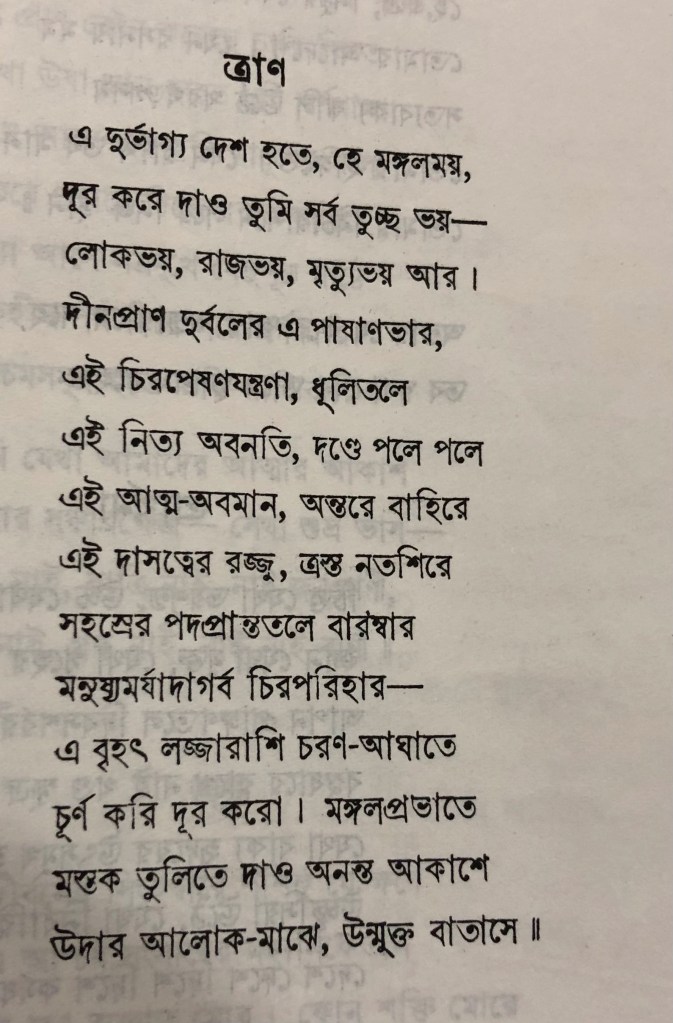
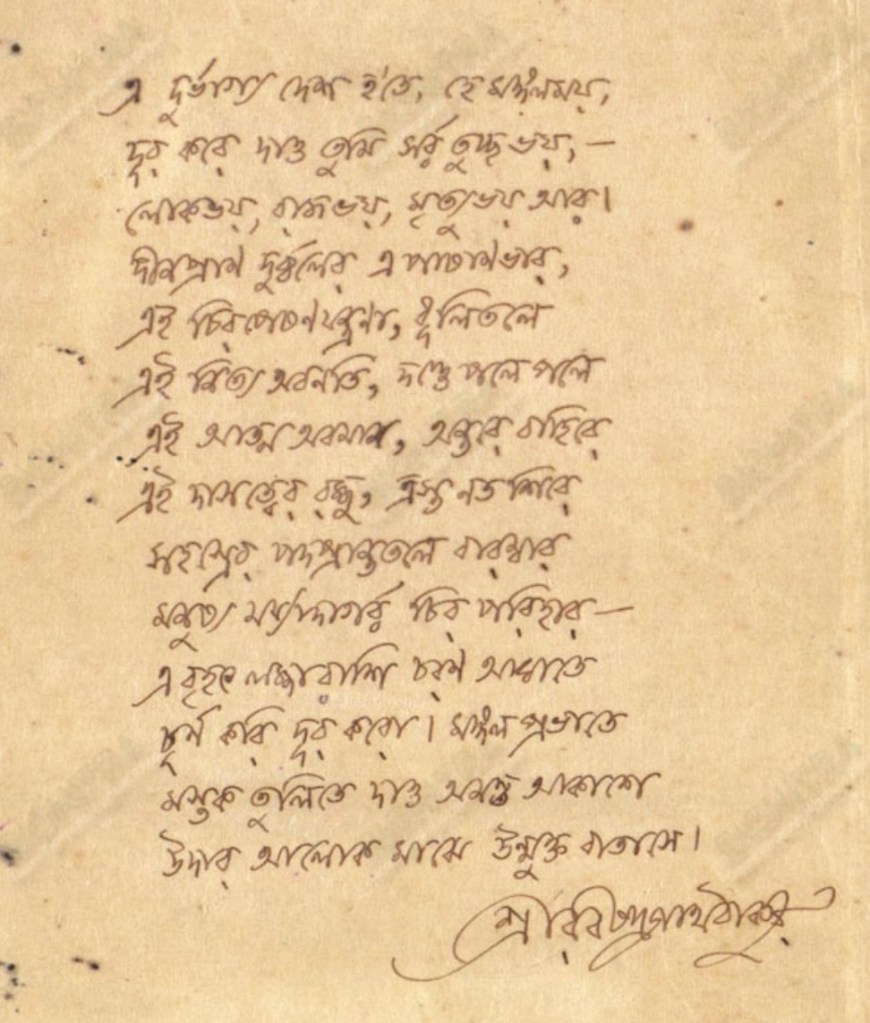
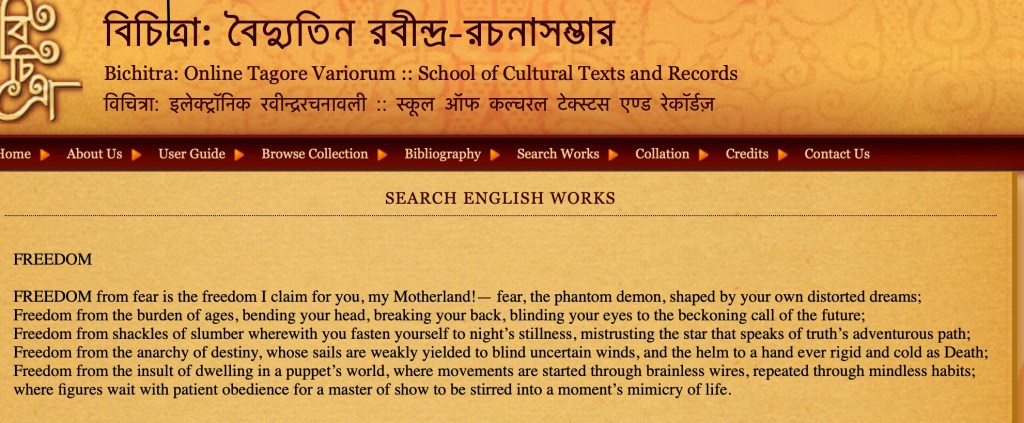
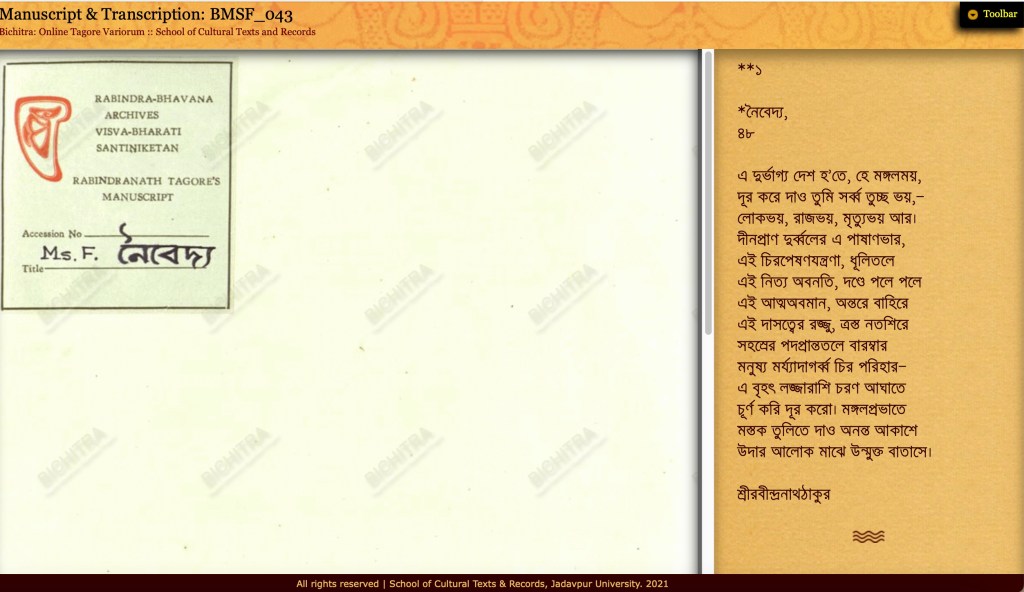
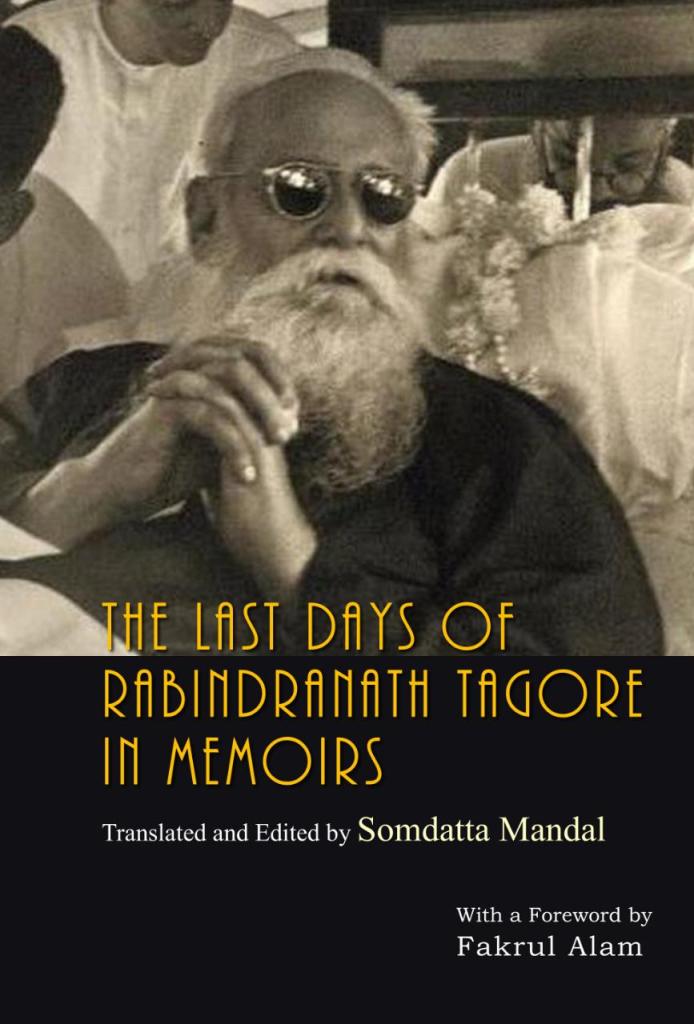

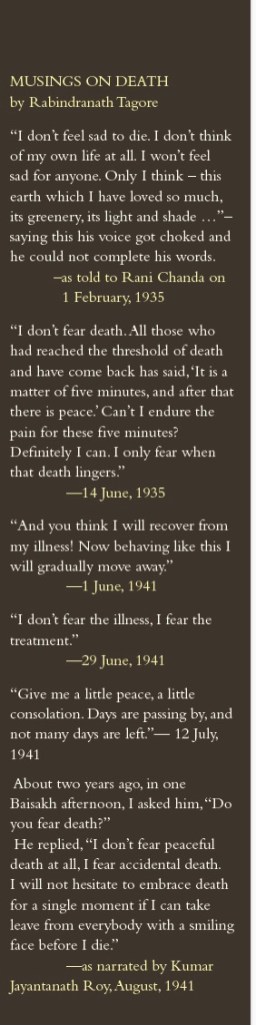



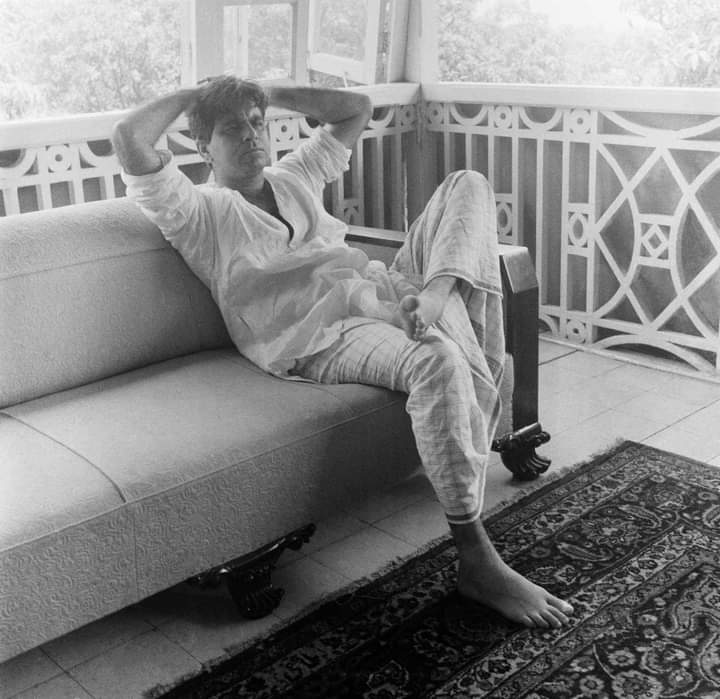
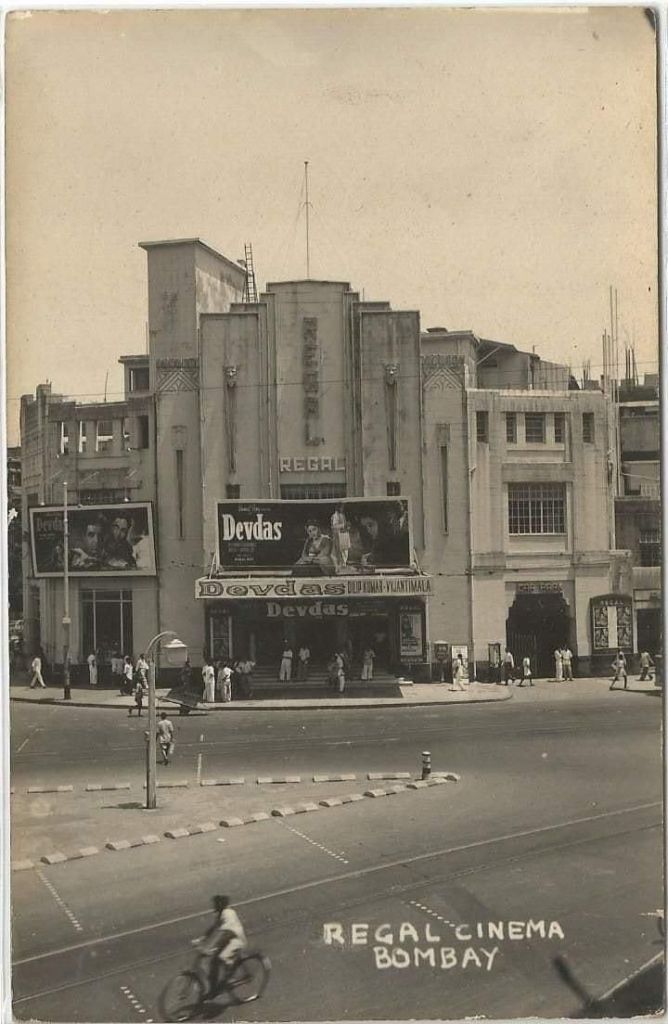



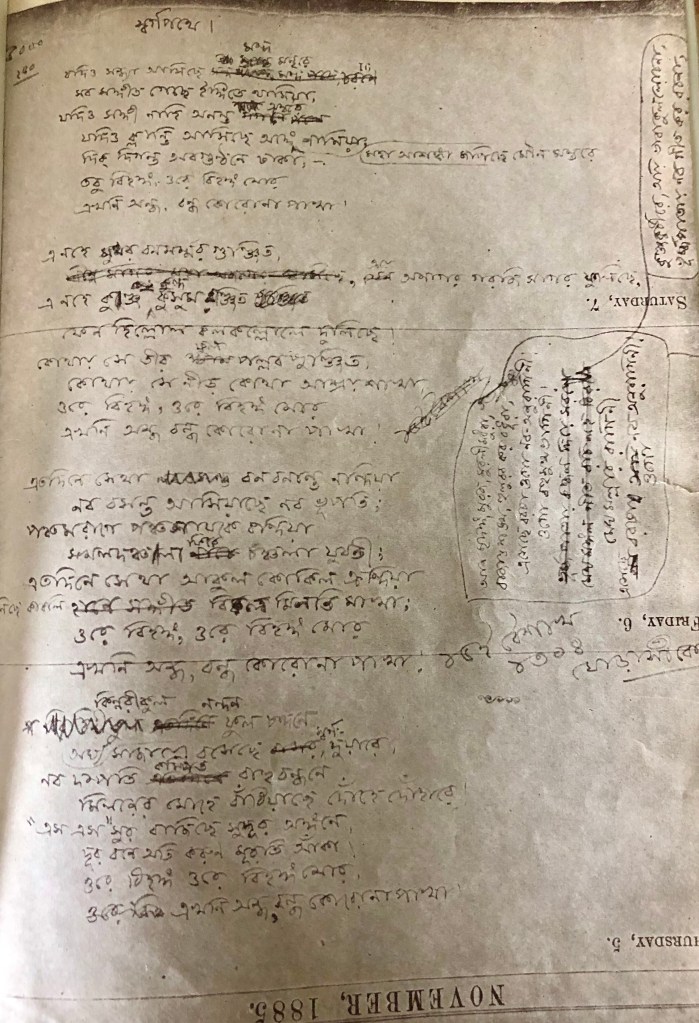
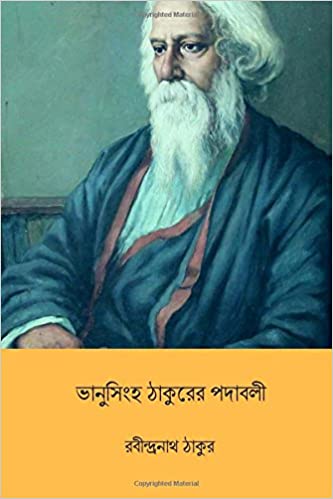
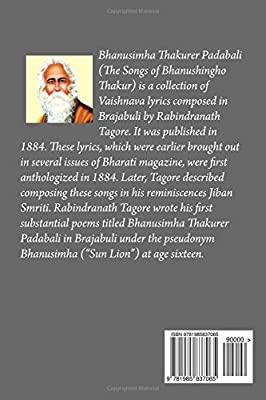

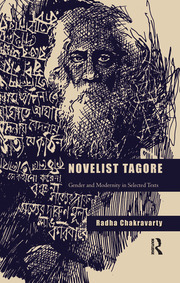
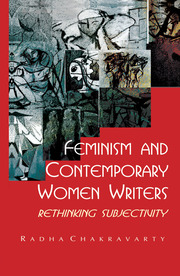
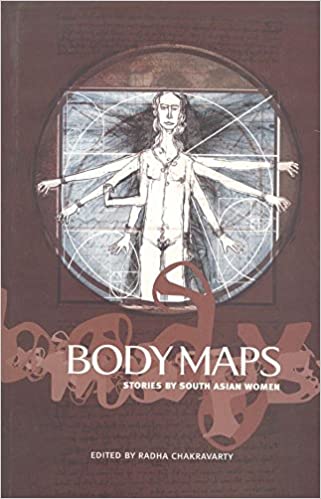


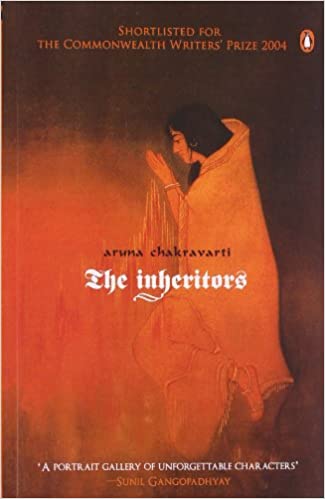


 Borderless