Ratnottama Sengupta muses on her encounter with the writings of eminent artist and writer, Dhruba Esh, and translates one his many stories, Amiyashankar Go Back Home from Bengali. Click here to read.
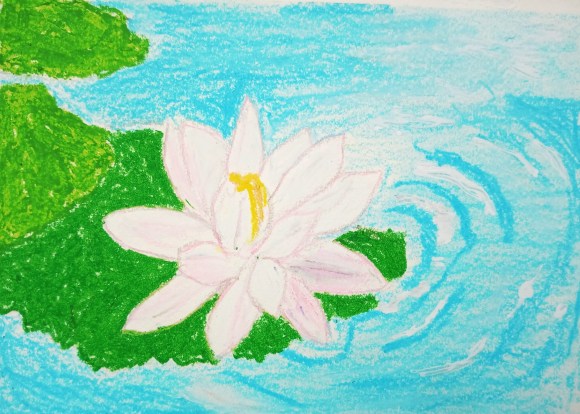
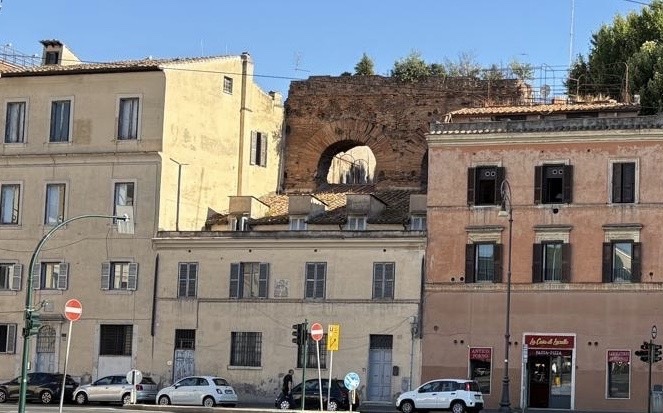
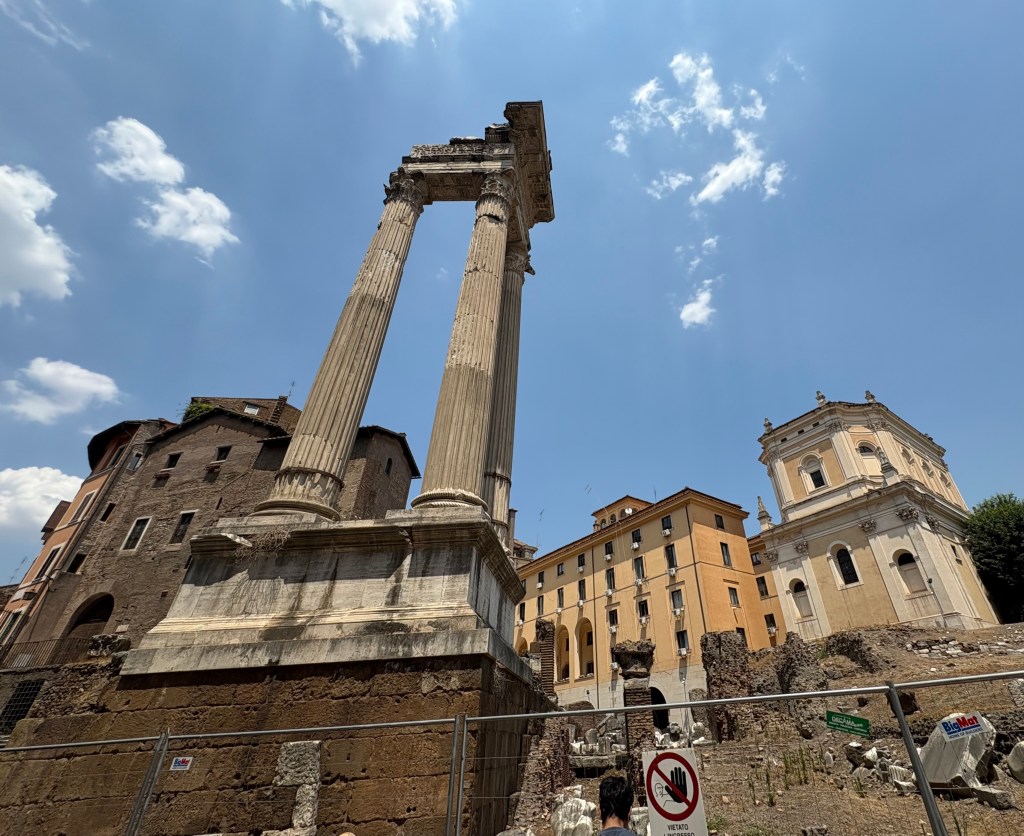
All around us, we hear of disasters. Often, we try to write of these as Tagore seems to do in the above lines. However, these lines follow after he says he draws solace and inspiration from a ‘serene lotus’, pristine and shining with vibrancy. He gazes at it while looking for that still point which helps him create an impact with words. That is perhaps what we can hope to do too — wait for a morning where clarity will show us the path to express not just what we see, but to find a way to heal and help. Finding parallels in great writings of yore to our own attempts at recreating the present makes us realise that perhaps history is cyclical. In Rome, new structures rear up against thousand-year walls, reflecting how the past congeals into the present.
Congealing the past into our present in this July’s issue are stories of American migrants — like Tom Alter’s family who made India their home — by Anuradha Kumar in her new non-fiction Wanderers, Adventurers, Missionaries: Early Americans in India. We feature this book with a review and an interview with the author where she tells us how and why she chose to write on these people. We have more people writing of their own wanderings. Mohul Bhowmick wanders into Cambodia and makes friends over a local sport while Prithvijeet Sinha strolls by the banks of the River Gomti in Lucknow. Meredith Stephens not only takes us to the Prime Meridien in Greenwich but also to Carnarvon which houses a science and technology centre in Australia. Devraj Singh Kalsi wanders with humour to discover gastronomical inspiration and hopes for sweeter recompense.
Taking up the theme of cli-fi, Rajat Chaudhuri’s Wonder Tales for a Warming Planetseems to bring hope by suggesting adapting to changing climes. Rakhi Dalal tells us in her review: “It dares to approach the climate crisis through the lens of empathy and imagination rather than panic or guilt. In doing so, Rajat Chaudhuri gives us what many adult climate narratives fail to deliver—a reason to believe that another world is not only possible but already being imagined by the young. All we need to do is listen.” Bhaskar Parichha has discussed the autobiography of a meteorologist and Distinguished University Professor at George Mason University, Jagadish Shukla. In A Billion Butterflies: A Life in Climate and Chaos Theory, he claims Shukla has “revolutionised monsoon forecasting.” Somdatta Mandal has written about Dilip K Das’s Epidemic Narratives: The Cultural Construction of Infectious Disease Outbreaks in India. And Gower Bhat reviews Neha Bansal’s best-selling poetry collection, Six of Cups.
With that, we wind up the contents of this month’s issue. Do pause by our content’s page to check it out in more details.
This month’s edition would not have been possible without all our contributors, our fabulous team and especially Sohana Manzoor’s artwork. Huge thanks to all of them and to our wonderful readers who make it worthwhile for us to write and publish. Do write in to us if you have any feedback. Five years ago, we chose to become a monthly from a daily… We have come a long way from then and grown to host writers from more than forty countries and readers from almost all over the world. For this, we owe you all – for being with us and encouraging us to find fresh pastures.
Story by Surya Dhananjay, translated from Telugu by Rahimanuddin Shaik
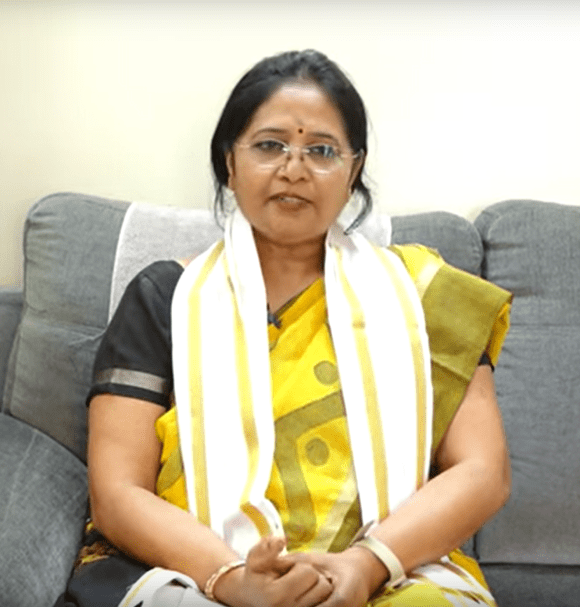
Surya Dhananjay
That night, in Tarnaka, Hyderabad city, all the apartments were silent as if lost in deep sleep. Sujatha’s flat was one among those. Her husband and children were sound asleep. Meanwhile, she, in the bedroom, faintly heard the phone ringing in the hall. Sujatha, a lecturer by profession, was awake, preparing for the next day’s class. A strange fear gripped her as the phone rang at that hour. As if someone was chasing her, she rushed to answer the phone. It was an unknown number. She thought of calling back but decided against it, thinking it was too late at night. The phone rang again. She immediately picked it up.
Who could it be? Why would they call at this hour of the night?
Various thoughts raced through her mind. Thinking she’d find out who it was if she called back, she redialled
“Hello,” she said, and that was it!
She could hear crying and shouting from the other end. Then the phone got disconnected again. Anxiously, she redialled, but the phone had been switched off. She checked Truecaller app[2] to see who it might be. ‘Not found’ was the result. Putting aside the book she was reading, she lay down. But she couldn’t sleep. Various thoughts haunted her. She didn’t know when she finally drifted off to sleep.
Morning dawned bright. Waking up, she fearfully picked up her phone. There were four or five messages.
She read: “Mastan anna2 is no more. He has left us.”
She felt like a thunderbolt had stricken her heart. Her eyes filled with tears. Wiping them away, she read the message again. The news slowly sank in – the news that the brother she had cherished since childhood, Mastan anna[3] who eagerly awaited for the rakhi[4] she tied every year, was gone. Tears flowed uncontrollably from her eyes. Her tear-filled eyes became slightly blurry. Through that blur, her childhood memories, mixed with tears, began to drip down drop by drop.
Sujatha was then studying in the sixth standard at Miryalaguda Girls’ High School. She came from Hemanayak tanda,[5] near the Sagar canal. Her mother, Dhwali Bai, and father Bhadru Naik were forward thinking people. Though they had only daughters, they educated them well instead of arranging child marriages for them like everybody else. Sujatha was the youngest. Theirs was a family living happily in the lap of nature, drawing their living from small-scale farming and raising cows.
Dhwali Bai occasionally went to the Miryalaguda market for groceries. On her way back, she would drop off the children’s clothes for stitching at tailor Mastan’s shop in the old bus stand area. Not just her, everyone from the tanda got their clothes stitched there for festivals and occasions. Mastan treated his customers well. He was thin in appearance and always wore clothes as white as jasmine flowers. He captivated everyone with his gentle speech. He had immense respect for Dhwali Bai and Bhadru Naik’s family. He called Dhwali Bai ‘Amma[6]’. Dhwali Bai always wished well for others. He was won over by her kindness. Dhwali Bai, who had no sons, saw a son in him. After some time, their bond grew, and Mastan became a member of the family.
Back then, there was only one bus service from Miryalaguda to Hemanayak tanda. It made only two trips a day – one in the morning and one in the evening. Sujatha, studying in Miryalaguda, would go home every Saturday evening by this bus. Her mother would wash all her school dresses white. She would oil her hair and braid it into two plaits. While making her hair, Dhwali Bai would advise Sujatha to be careful in the town.
“Because I didn’t study, I didn’t know the world. You, at least, study well and bring light to our tanda, Beti[7]. Even if Bhadru Naik has no sons, the daughters he has should study well and become role models for everyone,” Dhwali would say.
One day, Dhwali Bai, having come to drop Sujatha at the hostel, introduced Sujatha to Mastan.
“Look, Beta[8], this is your younger sister. You need to make a uniform for her. Otherwise, they won’t let her into school today. Also, whenever she comes to board the service bus, you must save a seat for her by placing a towel near the window. Tell that conductor to take the girl carefully and drop her off at the tanda gate. There aren’t good boys on the buses these days. Tell the driver to scare those boys a bit,” Dhwali instructed, as if instructing her own son.
Mastan smiled. “Alright, Yaadi[9], I’ll do as you say. I’ll look after Sujatha like my own sister. From the moment she gets off the bus all the way to her school, and after school, putting her on the bus to the tanda – it’s my responsibility,” he said, engaging them in conversation while quickly stitching a skirt and blouse for Sujatha.
“Here, sister, this dress is a gift from your brother,” he offered.
Sujatha shook her head as if declining the gift and looked at Dhwali Bai.
“Don’t take it for free, Amma. Instead, she can tie rakhi on me every year,” he said, placing the dress in her hand. From that day, their bond grew. Mastan looked after Sujatha like the apple of his eye. Their brother-sister relationship became known in the tanda as well. Every year, Mastan would go to the tanda, have Sujatha tie the rakhi, and receive Dhwali Bai’s blessings before returning. Mastan’s wife, Rajitha, was very happy that he treated Sujatha with such respect and love, even though she wasn’t his biological sister.
However, some people in the tanda didn’t like their bond. Naturally, the tanda dwellers lived happily like deer in the forest, away from the plains. Just as deer get agitated by the presence of a new creature, they hesitated when non-tribals mixed with them. They viewed Mastan’s visits to the tanda with suspicion. Kalya, Sakku, and Saida decided they must somehow stop Mastan from coming to the tanda. They didn’t dare discuss this with Bhadru Naik and Dhwali Bai. The tanda dwellers had immense respect for Bhadru. He treated everyone lovingly. Raising his daughters admirably, he stood as a role model. They didn’t dare oppose such a person. But they wanted to stop Mastan from coming to the tanda and were waiting for an opportunity.
Mastan, living amidst the car horns and crowds of Miryalaguda town, constantly stressed, dearly loved the tanda, its people, and its atmosphere. The peaceful tanda air, the innocent talk of the Lambadis, the mouth-watering jowar rotis and garlic chutney, the pleasing sight of green trees, cows, goats, and chickens in every house – Mastan liked all this very much. Moreover, like Bhadru Naik and Dhwali Bai, Mastan had an immense love for people and relationships. He helped those who came to his shop within his means and earned a good reputation around the old bus stand. If anyone came to the Mandal[10] Revenue Office with work, he would inquire about their problem, connect them with officers he knew, and provide appropriate help.
That day was 15th August[11], flag hoisting Day. Mastan went to the school looking for his sister. But Sujatha wasn’t there. As it was also Rakhi that day, Mastan learned from her friends that Sujatha had gone to the tanda the previous day to tie rakhis to her brothers there. Mastan set off for the tanda, cycling. Near the tanda, he saw some children and gave them chocolates. Sakku and Saida, who were coming that way, saw Mastan giving chocolates. They came up to him.
“Hey Mastan! What are you giving the kids? Are you giving them some enchanted marbles?!” they asked suspiciously.
“Ayyo, nothing like that, Bhiya[12]! These are just chocolates distributed at school, I brought them in my pocket. That’s what I’m giving,” Mastan replied and moved on.
Reaching Dhwali Bai’s house, Sujatha saw Mastan and shouted joyfully, “Yaadi, Mastan anna has come!”. Sujatha tied the rakhi on Mastan’s wrist and fed him sugar.
“Mastan anna, I tied the rakhi, what will you give me?” she asked.
“You’ll go to Hyderabad for higher studies, won’t you! If you get a job, you’ll stay there. Then, I myself will look after Yaadi and Bapu[13]. That is the gift I give you,” he said, smiling as he mounted his cycle.
Ten days later, suddenly, everyone in the tanda fell sick with fever. Some had diarrhoea and vomiting. Every house had patients. The tanda, which until then was like a marigold field full of bright flowers, now looked like a cotton field stripped of its flowers. Dark and unwell.
‘Some evil misfortune has befallen the village,’ people began to think.
“No, no, some ghost has possessed the tanda,” said one. “No, we didn’t celebrate the Seethlayadi festival grandly this time. That’s why the goddess is angry,” said another.
“Yes, the village deities of the tanda are angry. We must call the priest. We need to talk. Let’s all contribute a hundred rupees each and celebrate the festival well,” said the Tanda Naik[14].
“Oh Naik, these are not the real reasons why the people in the tanda suffer. That tailor shop Mastan is the cause of all this. He did this. They say he knows magic spells. Whatever he wishes, happens, they say. We found out in town,” Saida spoke passionately, his words sparking fear in the hearts of the tanda people.
“Hey, don’t talk nonsense, Saida! Mastan is not that kind of person,” Bhadru Naik thundered angrily.
Realising that his words would be wasted if he didn’t counter Bhadru, Saida looked at Sakku. “Hey Sakku! Didn’t Mastan give marbles to our tanda boys the other day…?”
“Oh… he did, Saida. I saw it too.”
“Ah! He put enchanted spell on those marbles.”
The people slowly nodded their heads, seeming to agree with Saida’s words. Meanwhile, someone from the crowd said, “In that case, we must catch that Mastan! We must make him confess what spell he used. If we just leave him, our tanda will be ruined. Only if we punish him severely will anyone else be afraid to even look towards our tanda,” they said.
“We will go and catch him,” said Kalya, Sakku, and Saida, setting off for Miryalaguda. Since everyone was united on this, Bhadru Naik and Dhwali couldn’t refuse.
The next day, Sakku, Saida, and Kalya met Mastan. “Our tanda dwellers have asked us to bring you. Come!” they said and took him away. Learning about the situation from school friends, Sujatha also left the hostel for the tanda. People gathered in front of the Tanda Naik’s house. Mastan was brought there. Sujatha reached the spot.
“Why have you brought me here?” Mastan asked the Tanda Naik.
“Everyone in our tanda has fallen ill with fever. We have never seen everyone get fevers like this at the same time. We are strong people. We can withstand any disease. But today, the entire tanda is troubled like this. They are saying you are the reason for all this. They say you gave some enchanted marbles to our boys. People apparently saw it. If that is true, tell us the counter-spell. Otherwise, the people are angry. They won’t leave you,” the Naik concluded, looking straight into Mastan’s eyes.
The accusation pierced Mastan’s heart like a crowbar.
“Spells?… I don’t know what those are. I only know how to love others. Please trust me,” he replied pitifully.
“Then what did you mix in those chocolates? What about them?” Kalya questioned.
“Those were distributed on the Independence Day at Sujatha’s school.”
“Then why did you bring them here? Aren’t there any little boys in Miryalaguda? Our boys look healthy and vibrant. That’s why you got jealous. You couldn’t bear it. Isn’t that it?!” they bombarded Mastan with question after question.
Kalya, Sakku, and Saida, who wanted to stop Mastan from coming to the tanda, saw this small opportunity as a great one and launched their attack. The people, suffering from fear and pain due to the fevers, couldn’t think rationally about right and wrong. They almost fell upon Mastan and beat him. Even though Bhadru, Dhwali, and Sujatha tried to stop them, no one listened. Swinging furiously, they attacked him.
“Don’t do this my fellow brothers, Mastan anna is not like that.”
“Hey Mastan, don’t ever look towards our tanda again! Go!” Before the Naik could finish his words, Sujatha interrupted, “Dada[15], is this your wisdom? Can’t your leadership distinguish between good and bad people?” she asked, her voice filled with anger and anguish.
“You don’t know about him, child,”
“I know everything, Dada! I am studying in the sixth standard. Science doesn’t accept spells and magic. Those are just our fears. Mastan anna is a good man. He considers not just me, but all the children of our tanda as his brothers and sisters. To stay in our tanda which suspected and insulted a good man like Mastan anna, I too feel humiliated, Dada!” she cried, taking Mastan away.
From then on, Mastan stopped coming to the tanda and Sujatha moved out of the tanda to study in less than a month. Eventually, she married and settled down in the capital town of Hyderabad. But she would come to Miryalaguda every year on Rakhi just to tie the rakhi on Mastan’s wrist. No matter how much anyone threatened, their brother-sister bond continued.
Hearing the news of Mastan’s death, Sujatha set off from Hyderabad to Miryalaguda with a grief-stricken heart. As she travelled in the car with her husband and children, childhood incidents flashed before her eyes.
“Though not of our caste, our religion, our tribe, the bond of humanity and the jewel of goodness united Mastan anna with our family. How good was Mastan anna! Though his shop was a small one, his heart was vast. Mastan anna always had the quality of helping others in his own way,” she thought to herself, looking out the car window. She realised they had reached the town. People were bustling in the shops along the roads. ‘What is it?’ she wondered, rolling down the car windows. People were enthusiastically buying rakhis. Whichever shop she looked at, only rakhis were visible.
Just then, Mastan’s small shop near the old bus stand came into her view. It was open. Seeing it, her heart grew heavy. Inside, she saw Mastan’s photo with a gentle smile and a serene face. Hundreds of rakhis surrounded the photo. The whole shop was filled with rakhis. Seeing this, crying she got out of the car and paid her respects. She was surprised and astonished looking at the farewell Mastan received.
The car reached Mastan’s house. There was no one outside the house. Only a few people were inside. Seeing Sujatha, Mastan’s wife, Rajitha, came out of the house crying and held her tightly. Rajitha’s told her that the cremation ceremony was over the night before. She said in a gloomy tone that only Mastan’s memories remained for them now. This left Sujatha stunned. She felt immense pain for not being able to have a final glimpse of Mastan.
Composing herself, Sujatha asked, “On the way, I saw many rakhis around Anna’s photo in that small shop. Who put them there?”
Then Rajitha replied, “The people of Hemanayak tanda tied them,” leaving Sujatha even more surprised.
“Our tanda people? Weren’t they angry with Anna, Vadina[16]?”
“That was once upon a time. The very people who misunderstood him under the pretext of spells came to admire him after knowing the truth. The occasion never arose to tell you this matter!”
“Really! How did they find out?” Sujatha asked eagerly.
“A month after they insulted him in front of the tanda Naik’s house, your brother went to the tanda on his cycle to plead with them and to tell them he knew nothing. On the way, beside the road, he apparently saw groups of crows and vultures gathered some distance away. Going closer, he saw that chicken shop owners from Miryalaguda town were dumping their waste there. Crows gathered around it, picking up the rotten stuff with their beaks, flying to the tanda’s water tank, sitting on it to eat, and dropping some of the pieces into the water tank. Those waters got contaminated, and cholera spread throughout the tanda.
She continued, “As soon as he understood the matter, he returned to Miryalaguda, complained to the Municipal Health Department, and got the waste removed. He got the tank cleaned. He got fines imposed on the chicken shop owners who dumped the waste there. He ensured no one came that way again.
“After some days, the diseases in the tanda subsided. The people learned the truth. Everyone came from the tanda and apologised and expressed their gratitude to your brother. They asked him to come to the tanda again. But your brother had too much self-respect. He said, ‘It’s enough that you know the truth, I won’t come again.’ The occasion never arose to tell you all this,” Rajitha said, handing Sujatha a packed cardboard box.
“Your brother asked me to give this to you,” Rajitha said. Sujatha opened it with great curiosity. Inside, he had carefully preserved all the rakhis she had tied on Mastan over the past twenty years. Seeing them, Sujatha cried profusely, realising Mastan’s noble personality, his heart as vast as the ocean, and his love for her as high as the Himalayas.
Along with the box, Rajitha gave Sujatha a packet that Mastan had also asked her to give. Inside was a green saree with a red border.
“Your brother himself spun the yarn and wove this saree. He worked hard for six months to weave it. Saying one shouldn’t remain indebted to a sister, and that he had never given you anything, he planned to call you for the Dasara festival this time and give you this saree,” Rajitha explained.
Mastan belonged to the Padmashali[17] community. In truth, Mastan had long forgotten how to spin yarn and weave sarees. But Sujatha was astonished that he had personally woven a saree for her.
“How much Mastan anna loved me! Truly, having such a brother is my fortune,” she offered a tribute from her heart. She felt very happy that the tanda people had understood Mastan’s goodness. Assuring Rajitha that she would take responsibility for educating Mastan’s two children and making them successful, Sujatha got into the car.
Now her heart felt elated. The anger she held towards her tanda for twenty years vanished. “My tanda dwellers are children of the forest. They are not aware of the outside world and its cunning ways. They all live together like one family. They don’t easily trust non-Lambadis or newcomers. That’s not just their characteristic. It’s also the law of the forest for their own protection. That’s why they insulted Mastan anna like that, that day. But if they love someone, they cherish them dearly. For them, everything is intense — love or anger. ” thinking thus, Sujatha reached Hyderabad with Mastan’s memories and a heavy heart.
.
Originally published in Telugu as Mastananna Dabba (tr. the box of Mastan brother) in Namaste Telangana, Sunday edition, on 8th March, 2020
Prof. Surya Dhananjay is an eminent Telugu scholar and folklorist from Osmania University. She champions tribal heritage and education with her writing. With an illustrious literary career spanning decades, Prof. Dhananjay has authored 28 books, including poetry, short stories, critical essays, historical studies, and compilations, alongside 80+ research papers. Her seminal work, Gor Banjara: An Enduring Tribe (co-authored with Dr. Dhananjay Naik), is a landmark exploration of Banjara (gipsy) heritage. Through her writings and advocacy, she has championed the preservation of cultural identities, leaving an indelible mark on Telugu literature and tribal studies.
Shaik Rahimanuddin has translated children’s literature on Storyweaver, Analpa and Prajasakti have published his children’s book translations.
.
PLEASE NOTE: ARTICLES CAN ONLY BE REPRODUCED IN OTHER SITES WITH DUE ACKNOWLEDGEMENT TO BORDERLESS JOURNAL
Look around you and expand your heart.
Petty sorrows are insignificant.
Fill your vacant life with love for humanity.
The Universe reverberates with celestial ecstasy.
— Anondodhhara Bohichche Bhubone(The Universe reverberates with celestial ecstasy), Tagore, 1894
Some of the most beautiful colours in this universe are blended shades— colours that are born out of unusual combinations. Perhaps that is why we love auroras, sunrises and sunsets. Yet, we espouse clear cut structures for comprehension. As we define constructs created by our kind, we tend to overlook the myriads of colours that hover in the gloaming, the brilliant play of lights and the vibrancy of tints that could bring joy if acknowledged. That ignoring the new-born shades or half-shades and creating absolute structures or constructs lead to wars, hatred, unhappiness and intolerance has been borne true not only historically but also by the current turn of events around the globe. While battles are never fought by the colours or beliefs themselves, they can harm — sometimes annihilate — rigid believers who are victimised for being led to accept their way as the only one and hate another. Perhaps, this has echoes of the battle between the Big Endians and Little Endians over the right way to break eggs in Jonathan Swift’s Gulliver’s Travels (1726). As the book is mere fiction, we can admire, agree and laugh at the content. However, in real life, watching newsreels has become a torture with destruction and violence being the main highlights. These detract from life as we knew it.
Writing or literary inputs seem to have become a luxury. But is it really hedonistic to play with words? Words used effectively over a period of time can impact readers to think peace, acceptance and love and also help people heal from the ensuing violence. That can be a possibility only if we self-reflect. While we look for peace, love and acceptance in others, we could start by being the change-makers and bridge builders ourselves. That is the kind of writing we have managed to gather for our November issue.
Building such bridges across humanity, we have poems on the latest Middle Eastern conflict by Stuart McFarlane and David Mellor, which explore the pain of the victims and not the politics of constructs that encourage wars, destruction of humanity, the flora, the fauna and our home, the Earth. Michael Burch writes against wars. Prithvijeet Sinha and Ahana Bhattacharjee write about refugees and the underprivileged. Reflecting colours of the world are poems from Ryan Quinn Flanagan, Suzayn AH, Radhika Soni, Ron Pickett, George Freek and many more. Rhys Hughes has brought lighter shades into his poetry by trying a new technique while reflecting on yetis and mermaids. His column tries to make a parody of a non-existing parody, using TS Eliot’s century old poem, ‘Wasteland’, with amazing results!
Our translations are all poetry too this time. Professor Fakrul Alam has translated a poem discussing human aspirations by Quazi Johirul Islam from Bengali. Another Balochi poem of hope by Bashir Baidar has been brought to us in English by Fazal Baloch bringing into play the moonlight.
For the first time, we are privileged to carry poetry from a language that has almost till now has eluded majority of Anglophone readers, Maithili. Vidyanand Jha, a Maithili poet, has translated his poetry for all of us as has Korean poet, Ihlwha Choi. Winding up translations are Tagore’s ultimate words for us to introspect and find the flame within ourselves in the darkest of times – echoing perhaps, in an uncanny way, the needs of our times.
Our conversation this month brings to us a poet who comes from a minority group in India, Banjara or gypsies, Ramesh Karthik Nayak. In his attempt to reach out to the larger world, he worries that he will lose his past. But does the past not flow into the future and is it not better for traditions to evolve? Otherwise, we could all well be living in caves… But what Nayak has done — and in a major way — is that he has brought his culture closer to our hearts. His debut poetry book in English, Chakmak (flintstones), brings to us Banjara traditions, lives and culture, which are fast getting eroded and he also visits the judgemental attitude of the majoritarian world. To give you a flavour of his poetry, we bring to you an excerpt from his book, livened beautifully with Banjara art and an essay by Surya Dhananjay that contextualises the poetry for us. Our excerpts also have a focus on poetry for we are privileged to have a few poems from Mamang Dai’s The White Shirts of Summer: New and Selected Poems. Mamang Dai is a well-known name from the North-eastern state of Arunachal Pradesh for both her journalistic and poetic prowess.
We are happy to host Ranu Uniyal’s beautiful review of I am Not the Gardener: Selected Poems by Raj Bisaria. Bisaria among other his distinctions, was named “Father of the modern theatre in North India” by the Press Trust of India. The other reviews are all of prose. Somdatta Mandal has written of Ali Akbar Natiq’s Naulakhi Kothi, a fictional saga of gigantic proportions. Anita Balakrishnan has reviewed Lakshmi Kannan’s short story collection, Guilt Trip. The book that gives hope for a green future, Akshat Rathi’s Climate Capitalism: Winning the Global Race to Zero Emissionshas been reviewed by Bhaskar Parichha. Parichha contends: “Through stories that bring people, policy and technology together, Rathi reveals how the green economy is possible, but profitable. This inspiring blend of business, science, and history provides the framework for ensuring that future generations can live in prosperity.”
The anti-thesis to the theme for a welfarist approach towards Earth can be found in Koushiki Dasgupta Chaudhari’s poignant musing titled, “The Theft of a River”. Meredith Stephen’s travel to California and Sai Abhinay Penna’s narrative about Chikmagalur have overtones of climate friendliness. Ravi Shankar writes further of his travels in Peru and Peruvian coffee. Keith Lyons takes us peeking at Beijing and the Great Wall. Gayatri Devi adds to the variety by introducing us to the starry universe of South Indian cinema while Devraj Singh Kalsi brings in the much-needed humour with his narrative about his “Crush on Bottles“. Suzanne Kamata has also given a tongue-in-cheek narrative about the mystique of addresses and finding homes in Japan. We have fiction from Paul Mirabile located in England and Kalsi’s located in India. Pause by our contents page to view more gems that have not been mentioned here.
Huge thanks to our team at Borderless Journal, especially Sohana Manzoor for her fabulous artwork. This journal would not have been as it is of now without each and every one of them and our wonderful contributors and readers. Thank you all.
Wish you all a wonderful month as we head towards the end of a rather tumultuous year.
In Conversation with Ramesh Karthik Nayak, author of Chakmak, with an afterword on Banjaras bySurya Dhananjay and art by Ramavath Sreenivas Nayak, published by Red River.
They always wish they wander
into black clouds like Banjara Tribes:
the people with no address on the earth,
gypsies in the tales of time.
Here are stories of a people who have never voiced their lores in English. The Banjaras had oral folk lore as old as the hills. They relocated to various places in the world. One group wandered down to the South, where some learnt to write their spoken language — Gor Boli — in Telugu. To this group belongs young Ramesh Karthik Nayak who has given us a wonderful book of poems describing the life of Banjaras as well as concern that in the process of integration, they seem to be losing parts of their heritage. Called Chakmak[1], the book leaves a lingering aftertaste not just with words but also with the vibrant artwork by Ramavath Sreenivas Nayak and an informative essay on Banjaras by Surya Dhananjay.
Banjara art in Chakmak by Ramavath Sreenivas Nayak
You travel with the book to a place of wonder and yet it’s not all smooth sailing as the poems introduce notes of accord and discord into the conversation. Reality and discontent creep in.The poetry is layered with images, simple and yet of a definitive flavour. There is poignancy in the poet’s lines when he says:
The ippa flowers grieve
releasing inebriety
listening to the story of our tanda*.

*tanda: settlement
And:
No ghunghtos*  were left in the tanda,
all have disappeared
along with the people
who were born
and grew
within the ghunghtos.

*ghungtos: veils
And yet the culture seems to have had an innate wisdom as the tribe harmonised with nature:
The thunders devour our huts and us.
So, to threaten thunder, we howled.
We should raise our voices whenever we need to.
Or else we die.
In the titular poem ‘Chakmak’, Nayak tells us about his life as a Banjara and then reflects:
The world is trying to heap the chakmak together,
ransack our tribe for stones
and change the tanda into a haat*
of banjara tribes.

The chakmak in the haat were ready to burst
with chronicles untold.
You gather the people.
The flute disappears.
I try fabricating the remaining tale.

*haat: market at a fair
Nayak for all his flavour and wisdom experiences a severe disconnect and finds himself in almost perhaps, an immigrant’s world, where it is hard to adjust to the reality of the ethos that connects him to the larger world and he feels an outsider in the world that he was born into. Torn between these two, the young writer is fascinated by death. He tells us –
Since my childhood
I saw death as an untouchable
In this candid conversation, Ramesh Karthik Nayakn– a young lecturer, presenter on Doordarshan[2] and an upcoming voice for a people who have remained voiceless over centuries following oral traditions — talks of this strange position he finds himself in. He tells us more about his people, his perceptions and his poetry.
Ramesh Karthik Nayak
Congratulations on being the first Banjara writer to have done a full book in English. Reading your book, one gets a whiff of Banjara life as it was in the past. Can you tell us about their life and beliefs? The creation myth seems unique… maybe you can tell us a bit about the colours you have reflected in your poetry?
Thank you. There is a vacuum in indigenous literature. Not enough indigenous literature has been produced till now. This vacuum won’t be filled until we the insiders turn outsiders. After some time, when we question our identity, we start seeking our own history and go back into the past. In this process, we practise a few things (writing, singing, painting, dancing or sculpting) which slowly turn us into an insider.
Each and every colour has a significance in our lives. All colours will be seen in our attire. If there are any colours missing, they will be reflected in the mirrors embroidered into our garments while we travel.
There are many beliefs and occupations seen among us.
If, the calf’s ceremony (Bhessi Puchre). When a buffalo gives birth to a calf, based on the calf’s gender, after 5 or 7 days, we conduct a ceremony with seven triangle-shaped stones (Shaathi Bhavani[3] :Manthrali, Kankali, Hinglaj, Mariamma, Thulja, Sheetla, and Dhavalagar) by offering lapsi (rice boiled in milk and cooked in jaggery). The Saathi Bhavani look after their children (who share their arts and crafts with nature for free) and their cattle safely and provide them with natural resources abundantly. Only after this ceremony, the milk from the lactating cow can be shared with others. Until then, no single drop could be shared outside the home. If the milk was shared with others before the ceremony, the calf’s life would be in danger. Thus, we respect animal needs too.
Another very distinctive ritual is a death ritual of a young married person. Friends or family members of the deceased pierce pins under the dead person’s feet so that the corpse is hindered from walking back without pain. They believe that the young person will have a yearning for their hamlet and children. So, the ghost might want to haunt their homes. Also, while taking the body to its final destination, the deceased’s friends throw mustard seeds along the way. While coming back home, they pluck off the pins off the feet and pick up each grain. They keep picking the grains the whole day. The cycle keeps repeating.
Did Banjaras — who at the end you call gypsies — ever grow roots and become farmers? You have a poem about a farmer. Did your ancestors give up their nomadic lifestyle to opt for farming?
Our ancestors used to sell salt by wandering from place to place. They used to thatch roofs and transport stuff from place to place. They sang songs handed down orally and embossed traditional tattoos. They would stitch clothes with infinite designs, etc. Now everything has turned upside down. Now, we are growing up eating many types of leafy and root vegetables, rice, corn and sorghum instead of our traditional foods.
In Telangana, wherever you travel by the highway, you will see Banjaras on both sides of the roads selling fruits and vegetables. Other common occupations among us are farming, driving auto rickshaws, selling crafts, making bricks in kilns, etc.
Your dialect/ language Gor Boli had no written script and I read in the afterword that the traditions were oral. So, did you learn about your culture purely from oral traditions? Are your two books written in Gor Boli written in Telugu or in just plain Telugu? Which language are you most comfortable in? Which language did you grow up speaking?
I have learnt many things by seeing and listening. Whenever I ask my parents about something they simply smiled instead of giving an answer. They did not want to share any cultural things about our community. They always asked me to concentrate on my studies. That might be one of the reasons that I always keep thinking of my people and their history.
I grew up with the Telugu language. In 1999/ 2000, I was sent to a private school for my education. From then onwards, I thought I was a Telugu. Later, I realised I’m a Gor (Banjara/ Lambadi). Now I am a hybrid Gor. I want to localise myself from hybridity. I have published two books in Telugu. One is in English. These three books are just an introduction to an existing community. To write down the sensibilities and other things, I think this life won’t be enough. There is only one book which I haven’t been able to publish yet, written in Gor Boli with Telugu script. I’m comfortable with Telugu. People tell me that I stammer when I speak Gor Boli. They also say my way of speaking is like that of a child. Nowadays, I believe I’m comfortable with Telugu, Banjara (Gor Boli) and English.
In your poem, ‘Who am I?’, you mention eviction. Did you or your tribe face displacement? Tell us your story.
Yes, it happened with my grandparents. Before that, they used to stay in abandoned lands. They would stay in one area for two to five years and then migrate to a different place to get enough grass for the cattle or herd they had. Earlier, my grandparents were settled near a hilly place, where there was a pond. Then, in 1970s, the then-state government relocated my grandparents to Jakranpally Thanda, also called VV Nagar Tanda, near to the highway road NH44 and a village Jakranpally (now known as Mandal) near to our tanda.
Still, in our state, some nomadic communities face eviction.
TheBanjaras depicted in the art in your book seem to be a musical lot. Does music impact your poetry?
Yes indeed. Women are trained to sing their plights in a song, which we call Dhavlo. This was the name of my short story collections in Telugu. The event could be happy or sad, but everything would be sung in a song. Some of the lyrics can be so heartrending that listeners could start to cry. Our people cannot survive without singing. Some people also misunderstand our Dhavlo as Rudali’s[4]song. Each and every moment is made into a song for self or for children or just to survive. I hope the flow of my blood has music, then automatically my words would atleast carry a little bit of music with it. So that could turn into a poem that you read.
You seem to be steeped in lores from the past, and yet you bring it all to us in English. How did you develop your fascination for words? Tell us how from a tanda you moved into school textbooks?
It started when I was admitted into private school. I stopped talking to others. I would stare at our school ground, where there were some other nomadic families sheltered in the tarpaulin tents. I felt like going to them. They were not Banjaras, but they had donkeys and horses. I still remember the scene. In the summer, near our school, a canal was being dug. Accidentally, a boy fell under a heavy vehicle and died. His mother picked him and kept him in her lap and wept.
I was fascinated. I thought of killing myself. And in this way, death always put herself first in my words.
Later, as I changed many schools, I grew lonelier and started drawing landscapes. I started writing to create captions for my drawings. Thus, my drawing drove me into writing. Writing turned into a habit; later it became a compulsion. When I came across Toni Morrison’s quote, “If you find a book you really want to read but it hasn’t been written yet, then you must write it”, I could connect and also to the stories of Mahasweta Devi. Because of my writing, I have developed my skill in Telugu and English — at least I can express the way I feel. Later, after getting published, with the help of my friends, Aparna Thota and Chaitanya Pingali, the Balder Bandi (Bullock Cart) attracted readers and an autonomous college prescribed a poem in the under-graduate curriculum and the book was prescribed in the post-graduate curriculum.
Why did you name your book Chakmak, a flintstone. Is the poem named as such at the centre of the story you want to share with the readers?
In our community, we bow down to the earth in front of a rock or stone to offer ourselves. We also use the rocks for other things like I have mentioned in the poem. So, in our community, things which are regarded as sacred should also be useful in other ways. They should not sit idle or be untouchable. In our daily lives, we do see many stone and pebbles, but we don’t even take a look at them, instead we kick them off. I wanted to highlight that even rocks have history.
Also, many rock were getting blasted in our areas. We are just losing our natural resources. We are losing the peacock and fox cries that echo from the top of rocks.
I sensed a sense of regret in your poems for the loss of a way of life. Do you feel that it is better to stay indigenously and not integrate with the mainstream? Do you think it helps integrate with the mainstream?
I’m afraid for my people. They are losing their sensibilities. Their fascination for modern lifestyle is making them disregard their identity as Banjaras. Sometimes, I even feel like I should go to each and every one and explain to them why we should choose ourselves as we have been. Being segregated from the mainstream is also part of our identity. So, I hope for now there will not be any integration with the mainstream population. Of course, you may be wondering that Ramesh Karthik Nayak is now living with mainstream society and telling this. Yes, I’m living with this society, where I feel suffocated with the artificial lifestyle. I know I will be just a guest to my land, where I keep cheating my people, writing their lives on paper. Mainstream society once had pity on indigenous communities, but now it has turned envious, because our people are getting benefits like reservation from the government.
In ‘A Day in the Rainy Season’, you have spoken of a rain ritual where people howl: in ‘Roseland’ you have written of how roses is not what Banjaras grow and in ‘On the Forest’, you reaffirm that the Banjaras are in harmony with the green. Given the need for a greener world, would you say that Banjaras lived in harmony with nature? If so, how?
Nomadic or Adivasi people always believed in nature. And they still insist that they are an extension of the greenery, which is a quarter part of this cosmos. And the harmony that the reader experiences in my poems cannot be explained except as part of our traditions. But I want to make a point. In tribal communities, love and hatred are two different things that resonate at different wavelengths. Their way of living reflects love always to the outsiders. Without beliefs and rituals offered to the trivial things, you cannot even imagine a single day in the life of tribals. It will be incomplete.
You have mentioned untouchability. Have you or yours ever faced it in the present day or is it something from the past? In ‘Death’, you equate death with untouchability.
I have had my education in distance mode. So, I don’t know about the discrimination that happens in schools and colleges. But I heard many things related to discrimination from friends. Now, I regularly hear that these nomads (Banjaras) migrated from somewhere and they even have reservations now. They don’t belong to this land, they say.
To support my studies, I used to distribute leaflets in bus stops. I used to work in a photocopy shop operating machines, sold books at events, did catering, and helped as an air-conditioning mechanic. While working, few people did not want me to work for them because I was a Banjara.
In the past, our people were herders. They were not allowed to touch the water that the owners’ animals drank. And they were always accused of stealing. They were always treated as thieves and murderers (Criminal Tribes Act, 1871) in some areas. In some areas of course, Banjaras were treated with due respect because of their hard work. However, there have been times when they would not be allowed to get into the bus to sit with others, especially when they were in Banjara attire.
In 2016, I visited a tanda near Medchal. On my third visit, a group of women told me their plight about selling fruits and vegetables, how people bargained with them because of their indigenous identity or because of their broken Telugu, how some people took credit and never paid. Later, an older woman, Kokhli, talked about the well. Whenever these Banjaras want to fetch water from the well, which belonged to a landlord near their tanda, the farm workers used to excrete into the water so that the Banjaras could not quench their thirst. But unfortunately, they had no other choice. So, they had to draw from the same well for drinking. The same thing also happened recently in Tamil Nadu. I’m trying to record all these in my stories and poems.
Since my childhood, I have had a great love towards death. I even dreamed of dying many times. That’s how death came and repeated more in my poems.
What are your future plans? Any other book in the offing?
In our Telugu states, we have 35 tribal communities, which includes Girijanas — nomads dwell near to the hills or abandoned lands, and Adivasis — people dwell within the forest (Gond, Koya, Nayak Pod, Gutthi Koya, Pardhan, Banjara, Matura Lambadi, etc). I want to write more about all the tribes in Telugu and in English languages. It might be in any genre. Sometimes a single topic can be expressed in multiple formats like in a poem, short story or essay.
Presently, I am co-editing (with Prof Surya Dhananjya) a compilation of Telangana Banjara stories in Telugu. I am also working on my second short story collection Banjara Hills in Telugu along with English poems (which I am rewriting from Telugu).
Thanks for giving us your time and for a brush with your people through the book.
Our Tanda


Our tanda is a bird’s nest
our homes: broken refuges
and our lives are feathers
swirling in the air.

The moon and the sun
hatch time so long as they wish
and flee, leaving folds,
on the lips of time.

Mirrors raise our hopes
showing ourselves
break our knuckles quietly
shatter into fragments and prick hearts.

Goats, cows, buffaloes, sheep and hearts,
all dig out rivers of forests with desires
as kids draw winged horses on the black of night
with fingers
dreaming of sugary peppermints or custard blobs.

Mothers sing lullabies,
oil-lamps
embellishing the night
to sleep.

Fathers guard homes
one eye on the house
the other eye on the field
with their heads out of their windows
they turn into flaming torches.

The ippa flowers grieve
releasing inebriety
listening to the story of our tanda.


Chakmak


	I

There were a few chakmak
at the window, ants and insects wandered
among them.

Whenever I visit the window,
I licked the chakmak,
no sweetness touched my heart,
nor did smell hit my nostril,
though they look like candy jellies.

I picked them
and threw them out of the window.

Daada picked them up,
took them again into the house
and placed them at the sill.
I thought of doing the same again.
He taunted our hen indirectly —
I could understand that the hen was me.

I thought the mysterious relationship
of our folk remains untold,
hid in the skulls
about chakmak.


	II

One day when daadi was busy
in stitching her tukri
she kept the chakmak beside her
sharpening the needle on a chakmak.

I sat beside her staring at the chakmak —
darkness and light played about,
I was astonished by the sharp light
emitting from them.

The beads were placed in front of daadi
on a piece of cloth for stitching them on her tukri,
they stopped singing and rolling,
were trying to peep into daadi's honey eyes.

The needle writing the joy of tukri on the chakmak,
white stains swelled out from the black chakmak
when accidentally her sweat fell on it.

She saw me and asked me to sit beside her,
started narrating the tales of chakmak,
as I continued staring at them.


	III

Birth after the water broke —
you crept out of your mother's womb
with stains of the eternal world
giving her womb to rest from the eternal sea.

This black stone gave you the world,
cut your umbilical cord
but it suffered by your birth,
fevered, it one day burnt our hut.

At the age of two
when the moon was peeping into the rice
squeezed in my hand with milk,
my hand filled with moonlit serpents crawling down
that trembled in my blood tunnels.

Your daada sang a song —
the red stones brought joy to earth,
consoling the hard skin of daada's hand,
illuminating his loneliness

Then you got an invitation to the wonderland,
and there you slept in the bed of the red stone's reflection.

At the age of five,
we were summoned by the monsoon and started migrating.
We were stuck in the forest
you weeping of darkness and hunger,
in the fierce night.

Flesh-coloured stones devoured the darkness,
sprinkled its hunger on your fear
and roasted a few onions for you.

At the age of eight,
you were anxious about seeing the lunar eclipse —
the milk stone dragged the sky in its reflection.

She kept on stitching her tukri.
I was plunged into gazing at the chakmak,
my heart sensed something strange strange is about to happen.


	IV

I picked the chakmak into my palm.
The curves in the palms and lines on the chakmak
are trying to mate, and the curiosity in me reached my neck.
A cleft appeared in the chakmak.
I checked others for any more.

After a few minutes,
a butterfly soars from stone,
a man falls from its wing.
I take him in my hand,
he turns into a flute
made of animal bone.
I train my ear to hear him.

A voice from the bone flute starts talking
from the rusted past,
how we vanished from our identities,
how we were sheltered in the tortoise shells
and hung on horns of deers.

The world is trying to heap the chakmak together,
ransack our tribe for stones
and change the tanda into a haat
of banjara tribes.

The chakmak in the haat were ready to burst
with chronicles untold.
You gather the people.
The flute disappears.
I try fabricating the remaining tale.
Courtesy: Chakmak, art by Ramavath Sreenivas Nayak
Canvassing the Lives of Banjaras
By Surya Dhananjay
Banjara is an indigenous ethnic tribe of India. Banjara were historically nomads and later established settlements called tanda. Generally known as Gor-Banjara, they are also called Lambadis in Telangana, or Banjaras collectively across India. However, they are known by different names in various parts of the country, including Banjara, Gor, Gorya, Tanda, Laman, Lambadi, Sugali, Labhan, Labhana, Baladiya, Ladniya, Adavi, Banjari, Gypsy, Kora and Gormati, among others. The other names also indicate synonyms and signify the principal nature — wandering of Banjaras in various parts of the country.
Banjaras generally suffix Nayak with their names, along with other surnames such as Jadhav, Rathod and Pawar. Nayak was a title given by the local kings, Britishers and Mughals, as the Banjaras were warrior transporters, who transported essential commodities, such as salt, food grains (as well as weapons) on ladenis, bullock caravans for their armies. The titles were bestowed in appreciation of their honesty and hard work. Over time, the title has become the traditional name of many of the Banjaras.
The word Banjara is derived from the Sanskrit word Vana Chara — wanderer of the jungle. The word Lambani or Lamani, by which our community is also known, is derived from the Sanskrit word lavana (salt), which was the principal product the community transported across the country. Their moving assemblage on a pack of oxen was named tanda by the European traveller Peter Mundy in 1632 AD.
Historically, they were the original inhabitants of Rajputana, Rajasthan, and professional cattle breeders and transported these essentials to different parts of the region, using crucial transport routes. They are known to have invented Laman Margass1.
They then migrated to North India, East Asia and Europe in the ancient periods and to Central India and South India in the medieval periods along with the armies of Mughals from thirteenth to eighteenth century.
Banjaras lost their livelihood during British rule when the railways and roadways were constructed and they became the victims of predatory capitalism. Banjaras who were uprooted by the British government from their transportation profession were forced to indulge in petty crimes for their livelihood, which invited the wrath of the British and brought them under the ambit of the Criminal Tribes Act of 1871. Later, abandoning their traditional Ladeni profession, they settled wherever their Ladenis had halted in the colonial period and established their tandas, dwellings.
Traditionally, Banjaras depended on the pack of bullocks and bullock carts, called balder bandi in their Gorboli, for carrying out their ladenis and the cattle and oxen only were their properties for the ages, on which they built their livelihood through centuries. Many generations of Banjaras have taken birth on the balder bandi and have used it as shelter too.
Their language is called Gorboli, an Indo-Aryan language in addition to their own culture and traditions.
Gorboli has no script, it is either written in Devanagari script or the script of the local language, such as Hindi, Marathi, Telugu and Kannada, etc.
Most of their populations are concentrated in Maharashtra, Karnataka, Telangana, Andhra Pradesh, Bihar, Madhya Pradesh, Gujarat, Tamil Nadu, Himachal Pradesh, Orissa and West Bengal.
As such the local languages have much impact on their language, the words of which have found their way into Gorboli.
Owing to the fact that it is a dialect, the Banjaras do not have much written literature either. However, they keep their songs, lyrics, and literature alive orally. As there is no written literature available to the outer society about Banjaras, the chances of knowing their history, sentiments, culture and traditions are meagre.
Banjaras show a unique lifestyle, holding steadfast to their ancient dress code, perhaps the most colourful and elaborate of any tribal group in India.
The versatile and colourful Banjaras are found to be interspersed amidst tribal and non-tribal populations and yet tenaciously maintain their cultural and ethnic identity. Their dress and decoration and social practices have remained almost unchanged through the ages despite the habitation shift from northwest India to across India. Banjaras are a strong and virile race with tall stature and fair complexion.
The Banjara women’s dress and jewellery are auspicious and the whole outfit consists of elaborately embroidered and studded phetya or ghagro (skirt), kaacnhli or kaali (blouse), tukri and ghunghto (veil stitched in patches of cloth of various colours along with mirrors of different shapes, cowries and beads).
Women also wear baliya, bangles made of ivory to save their lives from wild animals. They wear many ornaments like topli, hanslo, rapiyar haar, wankdi, kasse, ghughara and phula pawla, which weigh nearly 20 kgs or more.
Banjara men (maati mankya) wear turban on their heads, a few wear babli (earrings) on the top of the right ear, kameez (white shirt) and dhoti, kolda (silver fat ring wrapped to wrist) in turban they hide chutta (cigar), tobacco, beedi leaves, cotton and chakmak (flint stone), etc.
Tattoos on their body parts define philosophies and memories of childhood. The main intention of tattoos is to sell them and buy food after death in heaven or hell. They make sacrifices to the earth and stones because they believe that God is in nature.
Banjaras have their own culture and traditions that reflect their life and beauty. Banjaras celebrate the festival of Goddess Seethla Matha (starting at the time of the rainy season to save us and our cattle from seasonal disease and for good yield) at the end of the rainy season.
They celebrate Teej Festival, a celebration of wheatgrass grown for nine days in bamboo baskets by maiden girls to get married to a good groom in the presence of Goddess Jagdamba,
Baar Nikler/ Baarand khayer is a feast in the forest, exposing the love towards nature that protects them.
Historically they had a big struggle to settle down since they led a nomadic life for centuries. During difficult times, they ate grass and clay. Their regular diet consists of grass poppies, leafy boiled dough-made baatis (chapattis), bran, maize, jowar, deer, pigeon, rabbit, fish, hen, turkey, peacock, tortoise, turtle, porcupine, goat, sheep, radish, raw onions, wild onions, green chilli, roasted potatoes, red clay, black clay, tamarind sprouts, rela pulu (golden shower flower as used to make curry) and monitor lizard.
Few folks sell their children, lands, traditional dress, ornaments and even wombs and many girls and women are known to have faced human trafficking. Many people have slaved as daily labours, women were sexually exploited, many of their tandas were wiped out and they have been killed.
Though The Constitution of India had provided many rights to the tribes, the provisions are unknown to these people who lead their lives as daily labourers, selling firewood and children for food, becoming street vendors, roadside chapati-makers and the like. People who do not know this stare at them. A small percentage of people use the reservation benefits, and most of them are subject to discrimination and exploitation.
As such, not much is spoken about in media channels and newspapers about the atrocities of land evictions and exploitations of Banjaras. This still happens throughout the country.
Only a few scholars have written books and presented papers on their lives. Few non-fiction collections have been published in Telugu, Kannada and Hindi languages. But no creative literature has been produced from the community.
This effort of bringing out the poetic illustration of the life of Banjaras is made by Ramesh Karthik Nayak, a young member of the Banjara community.
He hails from the small, remote village of VV Nagar Tanda of Jakranpally Mandal of Nizamabad District. He has published a poetry book, Balder Bandi (Ox Cart) and a short story collection, Dhaavlo (Mourning Song), canvassing the life of Banjaras in Telugu.
Both books have been received well by the literary world and have since opened the doors to Banjara literature. Within a short span, he has been able to bring before us this wonderful poetic format, which shows his interest in bringing out the historical, cultural, traditional and contemporary issues of Banjaras before the world.
I believe that he is like a popular flower called kesula (moduga puvvu in Telugu), which is seen brightly among all the trees in a jungle.
According to my knowledge, this is the first poetry collection written on the lives of Banjaras in the English language which brings out the rawness of Banjara’s lives and the poems are brilliantly written. It is a rare drop of honey from a kesula flower, in which the lives of Banjaras are carved transparently.
I believe that each poem of this collection is a chakmak, flint stone, which ignites many endless thoughts in the reader. I hope that this poetic creation of Ramesh Karthik Nayak will also definitely be received in a big way by all the literary minds. I hope this introduction about Banjara tribes will help you understand the tribal communities a little.
Finally, without going into the depth of his poems, I would like to quote a few lines from his poem ‘Tanda’:
Our tanda is a bird’s nest
our homes: broken refuges
and our lives are feathers
swirling in the air.
In this poem Ramesh has carved the picture of the status of the lives of Banjara tribes in the present-day context and earlier days. Banjara lives are indeed shattering day by day.
Courtesy: Chakmak, art by Ramavath Sreenivas Nayak
About the Book
Ramesh Karthik Nayak’s poems are marked by rich imagery, poignant stanzas, and moving stories about his people. I enjoyed reading his poems. — Hansda Sowvendra Shekhar
Ramesh Karthik Nayak distills all the pains and fears of his tribe to create a poetry of intense suffering and profound communion with nature. There is something primal, elemental, about his poetry that helps the reader distinguish it from the dominantly urban Indian English poetry. The poet brings a fresh voice, a new tone, and timbre seldom seen in traditional English poetry in the country, without making his poetry less sophisticated. — K Satchidanandan
Through his poems, Ramesh Karthik Nayak presents the celebratory life of the Banjara people; at the same time, he questions his existence. The questions he poses to us are both poignant and plausible. The poet expresses the truth with spontaneity and ferocity that if we are untouchables then, from nature to your vitality to your body, everything in this world has been touched by us. — Sukirtharani
Ramesh Karthik Nayak’s poems represent the dimensionalisation of Indian poetry in English. It’s appalling to think that a mature collection of poetry from a tribal/nomadic tribe poet had to wait for so long after Maucauley’s initiatives. Anchored in his cultural inheritance, Nayak documents with elan his dreams for the future. — Chandramohan S
About the Author
Ramesh Karthik Nayak is a Banjara (nomadic aboriginal community in South Asia) bilingual poet and short story writer from India. He Writes in Telugu and English. He is one of the first writers to depict the lifestyle of the Banjara tribe in literature. His writings have appeared in Poetry at Sangam, Indian Periodical, Live Wire, Outlook India, Nether Quarterly, and Borderless Journal and his story, “The Story of Birth was published in Exchanges: Journal of Literary Translation, University of IOWA. He was thrice shortlisted for the Sahitya Akademi Yuva Puraskar in Telugu.
Chakmak is his first collection of poems in English.
The poet can be reached at rameshkarthik225@gmail.com


 Borderless