Categories
Review

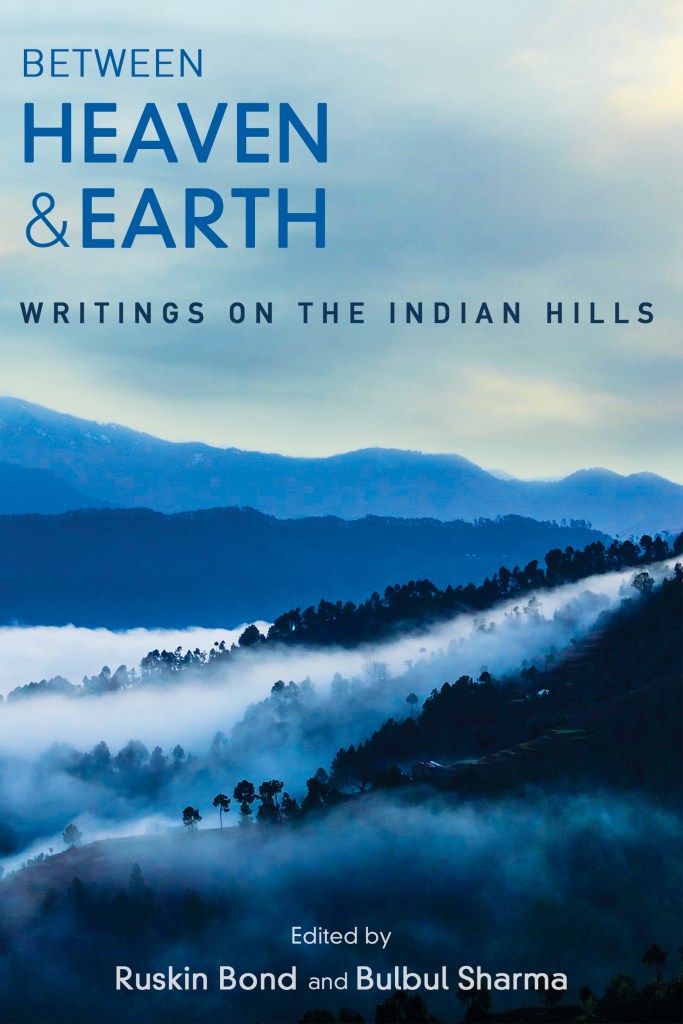
Building a Free India

Book Review by Bhaskar Parichha

Title: Building A Free India

Author: Rakesh Batabyal

Publisher: Speaking Tiger Books

“Under this Flag there is no prince and there is no peasant, there is no rich and there is no poor… Whether we be Hindus or Muslims, Christians, Jains, Sikhs or Zoroastrians and others, our Mother India has one undivided heart and one indivisible spirit.” — Sarojini Naidu, poet and political activist, on the resolution on the national flag in the Constituent Assembly, 22 July 1947

The immutability of prodigious speeches and their magnifying impact on people can’t be underestimated. The prize of a great speech comes from pure wisdom that originates from indulgence. These words from Naidu’s speech can work as magic anytime one reads them.

Building A Free India – Defining Speeches of Our Independence Movement that Shaped the Nation by Rakesh Batabyal is just the book you needed to read as India celebrates her 75th year of its independence. It is a thought-provoking assemblage of solicitous speeches delivered by some of the most prominent Indian personalities.

Many of these men and women have made invaluable contributions to India’s coming together as a nation of people and are the pride and honour of the sub-continent. These are people who impacted the lives around them. Their words were the gems that had the power to evoke courage and emotion in countless people and inspire them to make history.

Rakesh Batabyal teaches history, theory, and philosophy of media at the Centre for Media Studies, Jawaharlal Nehru University. His The Penguin Book of Modern Indian Speeches is widely accepted as an important work in the genre. He is working on a book on the history of nationalism in India.

Says the blurb: “The new public sphere that emerged in nineteenth- and early-twentieth-century India was a space that enabled magnificent public oratory, particularly that which mounted a challenge to colonial rule. From social and political platforms like the Indian National Congress, in the courts of law, or inside legislative bodies, leaders of the freedom struggle gave eloquent and clear-eyed articulations of not only the social, economic, and political problems that faced India and their possible solutions but also the kind of sovereign nation we must collectively aspire to be. India’s democratic ethos was a product of these foundational ideas of the freedom movement.”

Building a Free India brings together these landmark speeches delivered over roughly a century by the leading lights of the national movement—from Dadabhai Naoroji, Surendranath Banerjee, Bhikaiji Cama, Lajpat Rai, and Tilak, to Gandhi, Nehru, Ambedkar, Bose, Sarojini Naidu, and Maulana Azad—as well as a range of lesser-known but equally remarkable figures.

Writes Batabyal in the book: “As the movement progressed—from the economic critique of colonial rule by the early nationalists to the unequivocal demand for Purna Swaraj[1] and the immense moral authority of the Mahatma Gandhi-led resistance—the notion of an equal society that ensured dignity to all—irrespective of caste, class, gender or religion—came to occupy a central place in it. By the time the Constituent Assembly met in December 1946, not just civil rights, but the particular rights of women, of minorities, of the Depressed Classes, and the Adivasis were being articulated and demanded, not as favours but as a matter of course.” As the editor of this volume writes in his brilliant introduction, the effect of the speeches delivered by the leaders of our national movement was to focus “political action towards scripting an ennobling nationalism that would give us a just and equal society”.

A couple of speeches in the book are captivating. This one by India’s philosopher-President Dr Sarvepalli Radhakrishnan on India’s history and legends reads: “Our pledge tells us that this ancient land shall attain her rightful and honored place. We take pride in the antiquity of this land for it is a land which has seen nearly four or five millenniums of history. It has passed through many vicissitudes and at the moment it stands, still responding to the thrill of the same great ideal. Civilization is a thing of the spirit; it is not something external, solid, and mechanical. It is the dream in the people’s hearts. It is the inward aspiration of the people’s souls. It is the imaginative interpretation of human life and the perception of the mystery of human existence. That is what civilization actually stands for.

‘We should bear in mind these great ideals which have been transmitted to us across the ages. In this great time of our history, we should bear ourselves humbly before God, brace ourselves for this supreme task that is confronting us and conduct ourselves in a manner that is worthy of the ageless spirit of India. If we do so, I have no doubt that; the future of this land will be as great as its once glorious past.’

Painstakingly divided into six chapters, each section in the 300-plus page veers around freedom and that itself makes the collection unique. What’s more Batabyal provides a context to every single discourse.

On his way to Noakhali and in the face of the large-scale massacre, to the question ‘Will Partition Change Us Forever?’ Mahatma Gandhi replied: “I have seen more of history than anyone of you, and I tell you that I have known Hindu boys who called Muslims ‘uncle’. Hindus and Muslims used to participate in each other’s festivals and other auspicious occasions. You want to force me to leave this place but you should know that I have never submitted to force. It is contrary to my nature. You can obstruct my work, even kill me. I won’t invoke the help of the police. You can prevent me from leaving this house, but what is the use of your dubbing me an enemy of the Hindus? I will not accept the label. To make me quit, you have to convince me that I have made a mistake in coming here.”

This and many such defining speeches make the collection truly exceptional. The book  is not only a priceless history of India’s  freedom movement but also of the ideas of universal equality, dignity, and justice that are—and must always remain—at the root of any democracy. The assortment of some sixty communicative moments of oratory would provide the reader with a fresh perspective and evoke feelings of patriotism, motivation, and infinite stimulus.


[1] Full self-rule

.

Bhaskar Parichha is a journalist and author of UnbiasedNo Strings Attached: Writings on Odisha and Biju Patnaik – A Political Biography. He lives in Bhubaneswar and writes bilingually. Besides writing for newspapers, he also reviews books on various media platforms.

.

PLEASE NOTE: ARTICLES CAN ONLY BE REPRODUCED IN OTHER SITES WITH DUE ACKNOWLEDGEMENT TO BORDERLESS JOURNAL
Categories
Review

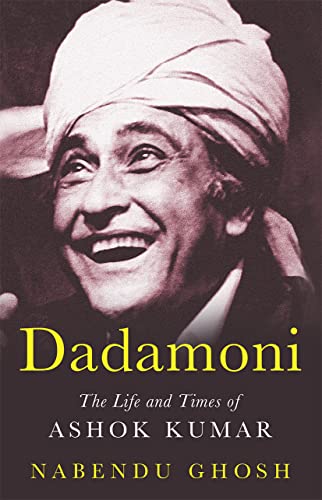
The Life and Times of Ashok Kumar by Nabendu Ghosh

Reviewed by Indrasish Banerjee

Title: Dadamoni: The Life and Times of Ashok Kumar

Author: Nabendu Ghosh

Publisher: Speaking Tiger Books

Dadamoni: The Life and Times of Ashok Kumar by Nabendu Ghosh (1917-2007) is a reflection on the Hindi film industry as much as it’s a biography of the legendary actor.  An eminent scriptwriter in Bollywood and director, Ghosh was an award-winning Bengali writer whose oeuvre of work includes thirty novels and fifteen collections of short stories. As a script writer, he wrote the scripts in Hindi for iconic films like Devdas, Bandini, Sujata, Parineeta and many more.

Ashok Kumar (1911-2001) was a part of both the small and the big screen in India while he lived. Was Ashok Kumar a star? What was his position in the Hindi film industry? When did he become a character actor? Was he a good actor? These questions are very easy to answer about others but when it comes to ‘Dadamoni’, as he was fondly called, the answers become nebulous.

Ashok Kumar started his career in the early 1930s which makes him senior to stars like Raj Kapoor, Dilip Kumar and Dev Anand who made their debuts and attained stardom when Ashok Kumar was already a reigning star. Ghosh knew Ashok Kumar personally for many years. And the personal touch comes through in many places – through anecdotes and because of the regard that shines through the narrative. The jokes that Ashok Kumar cracked from time to time, the things the thespian told the author, all find place in the book. There is also a visible attempt to protect Dadamoni’s reputation against any allegation of vices generally attributed to stars. Ghosh, who had gone to Bombay as part of Bimal Roy’s team, constantly tries to establish Dadamoni as a gentle, thoughtful and educated person.

But this gentle, thoughtful and educated person didn’t have it easy in the world of films. Ashok Kumar had a shaky start. A shy and retiring person, he had gone to Bombay while studying to become a lawyer in Calcutta — to become a director. The ambition was idealistically driven – films, a new medium then, could be a means of educating people. But fate intervened. The person supposed to play the hero’s role in Achhut Kanya (Untouchable Maiden, 1936) had gone missing and the search for a replacement was on.

One day, Ashok Kumar, an employee of Bombay Talkies then, discovered the owner of the studio, Himanshu Rai, quizzically looking at him. Rai had found the replacement for the hero of Achhut Kanya. But for the hero, it was beyond belief that he could act in a movie. The most endearing part of the book is how this diffident hero finds his footing in the industry becoming its earliest and biggest star. And the most poignant part is the gradual decline and death of the studio system even as its product – Ashok Kumar – rose to new heights.

As the narrative draws to a close, one is left wondering what is Ashok Kumar’s position in the legion of Bollywood stars? This has been answered exhaustively in the ‘Afterword’ by Ratnottama Sengupta, eminent film critic and Ghosh’s daughter, who brings in not only personal lore but also her own experience. She tells us Ashok Kumar served “as a textbook for actors wanting to perfect characterisations, voice control, timing, gestures postures” and that he transformed “the acting style in Indian cinema from theatrical to naturalistic – which is still the cinema language worldwide.”

Naming him the “Elder brother of the industry”, Sengupta asserts, “I’d say he is the one personality who symbolises Indian cinema’s journey from Bombay Talkies to Bollywood.” She brings in his stories of interactions with film stars, his hits and directorial ventures, his launching of major actors and his deep links with them, including his acclaimed brother, Kishore Kumar, with more anecdotes from multiple eminent actors like Shammi Kapoor, Moushumi Chatterjee, David Lean and his associates and family ties that stretch to embrace actors from different religion and race. Bharti Jaffrey, Ashok Kumar’s daughter, who has written a heartfelt forward for this edition, is married to actor Saeed Jaffrey’s elder brother.

What makes this book unique is that Ghosh wrote this book in English himself and it has been republished posthumously[1] with the addition of a forward and an exhaustive afterword by the well-known daughters of the two film icons. It also has classic photographs of Ashok Kumar. Both the emotionally charged forward by award-winning actress Bharti Jaffrey, and the afterword by Sengupta, a national film award-winning journalist, explore further the enigma that was Ashok Kumar. By the end of the ‘Afterword’, one realises how deeply tied and organic are the Bollywood families and how much they do to try and create bridges and close gaps – the Ashok Kumar Foundation being one such effort. The whole package – the forward, the narrative, the photographs and the afterword — leaves one spellbound.  

CLICK HERE TO READ THE BOOK EXCERPT


[1] First published in 1995 by Harper Collins – mentioned in the ‘Preface’ written by Ghosh in 1995 and reproduced in this edition published by Speaking Tiger Books.

.

Indrasish Banerjee has been writing and publishing his works for quite some time. He has published in Indian dailies like Hindustan Times and Pioneer, and Café Dissensus, a literary magazine. Indrasish is also a book reviewer with Readsy Discovery. Indrasish stays and works in Bangalore, India. 

.

PLEASE NOTE: ARTICLES CAN ONLY BE REPRODUCED IN OTHER SITES WITH DUE ACKNOWLEDGEMENT TO BORDERLESS JOURNAL

Categories
Excerpt

Wordsmith Sarat Chandra and Tell-tale Ashok Kumar

Title: Dadamoni: The Life and Times of Ashok Kumar

Author: Nabendu Ghosh

Publisher: Speaking Tiger Books

Wordsmith Sarat and Tell-tale Ashok 

The child Ashok Kumar was highly imaginative and could tell stories to his maternal grandfather, Raja Shib Chandra.

‘Come on boy, tell me a new story,’ the Raja would demand with a smile.

The five-year-old great grandson would gravely start, ‘You see great grandpa, yesterday I was walking through the jungle –‘

The Raja narrowed his eyes, ‘At what time?’ he interrupted.

The boy did not lose his nerve. ‘Yesterday, when you were having a nap after your lunch,’ he kept up the grave tone.

‘And where was the jungle?’ the Raja quipped. 

The boy smiled, ‘On the bank of the Ganga.’

‘Carry on,’ said the Raja.

‘As I walked through the jungle,’ little Ashok went on, ‘there were birds chirping and peacocks dancing. I was feeling fine when suddenly I heard a tiger roar. I stopped. The birds stopped chirping, the peacocks flew fast and in panic. I turned around. And there it was standing, the tiger. It was a huge tiger, snarling at me and thrashing its tail on the ground…

‘Trembling in fear, I broke into a run. The tiger roared and sprang at me. I ran and ran hard. The tiger chased me. It almost reached me, it would soon fall upon me, grab me, swallow me. What shall I do? Oh, how shall I save myself? I prayed for wings and they sprang out of my two shoulders and I flew upward through the trees and escaped in the air. The tiger roared and roared and roared on…’

Little Ashok looked at the Raja for a due appreciation.

But the Raja looked at him with disbelief in his eyes and asked, ‘So you can grow wings out of your shoulders?’

The boy stared at him and nodded, ‘Yes, I can.’

‘Show me,’ the Raja demanded.

Undaunted, the boy said, ‘You become a tiger and I will show you my wings.’

The Raja roared with laughter. ‘Bravo my little one, bravo!’ he conceded. 

Two servants peeped in at this moment on hearing the Raja’s laughter. The Raja beckoned one of them in.

‘Jagai, go to Upen Ganguly’s house and house and call that dark chap – you know –‘ Raja Shib Chandra ordered.

‘Yes, master.’

Soon a young man came there. He was dark but attractive, with handsome features and exceptionally bright, penetrating eyes.

The Raja welcomed him, ‘Come here, my lad. Do you know my great grandson, Ashok?’

‘No sir – but now I will know him,’ the dark young man smiled at little Ashok and added, ‘Ashok is the name of an Emperor.’

The little boy smiled back at the compliment.

Shib Chandra said to the young man, ‘Look here, my great grandson is no less than you — he can also tell stories. Tell him a story Ashok.’

Before starting to narrate a story Ashok looked at the young man and asked, ‘Have you ever eaten silver rice and fried silver parval?’

‘I will eat them when I find them.’

Many many years later when the cinema houses displayed a ‘House Full’ board everytime an Ashok Kumar film was released, New Theatres of Calcutta invited the actor to join the concern. It had earned the reputation of producing quality films — and to this day the name remains nonpareil in the history of Indian cinema.

Ashok Kumar agreed to meet them to discuss the matter. When he met Birendra Nath Sircar, the managing director, in his office there were some other directors and a dark man with silvery hair and sharp burning eyes.

Mr Sircar introduced the gentleman in dhoti-kurta by saying, ‘Mr Ganguly, he is our pride — Shri Sarat Chandra Chatterjee, the great novelist.’

Startled, Ashok Kumar turned towards the legend and bowed low.

Sarat Chandra smilingly asked, ‘Do you remember me?’

Ashok shook his head, ‘No sir — sorry.’

Sarat Chandra laughed and said, ‘Try and you will remember that you used to narrate stories to me — of silver made rice and fried silver parval.’

And the scene came back to Ashok Kumar. So, he used to narrate to this great magician — story writer Sarat Chandra!

Every one had a hearty laugh when Sarat Chandra narrated the story from the past. In his tum Ashok Kumar narrated how Sarat Chandra’s uncle, the writer Upen Ganguly, would regretfully say, ‘This chap, my nephew Sarat, does nothing! I am worried about him.’ This unleashed another round of laughter.

Ashok Kumar finally acted in only one film, Samar. He did not join New Theatres. It was Bombay Talkies that had groomed him and made him what he was. He would never leave Bombay Talkies.

(But, in 1953, after Bombay Talkies closed its shutter for good, he bought the rights to Parineeta. It was the first film of Ashok Kumar Productions.) 

(Excerpted from Dadamoni: The Life and Times of Ashok Kumar, Speaking Tiger Books 2022)

 About the Book:

Ashok Kumar (1911–2001), fondly known as Dadamoni, is one of the great icons of Hindi cinema. This warm, intimate biography traces his remarkable journey, from reluctant actor to Bollywood’s first superstar and, in his later years, a much-loved presence on national television.

Born in Bhagalpur (then in the Bengal Presidency), Ashok Kumar was enthralled by the ‘bioscope’ as a child. In his twenties, he quit his law studies and came to Bombay to become a film director. But life—rather, Himanshu Rai, the founder of Bombay Talkies—had different plans for him. Despite the director’s reservations, he was cast in the lead role opposite Devika Rani in the 1936 film Jeevan Naiyya when the original hero went missing. The same year, Ashok Kumar was paired with Devika Rani again in Achhut Kanya, which was a blockbuster. The transformation of the accidental hero into a charismatic star-actor had begun. Over the next six decades, he proved himself to be a master of the craft, playing cop and thief; genial grandfather and sly matchmaker; villain and hero; heartbroken lover and suave rake with equal ease in numerous films, including Kismet, Mahal, Parineeta, Kanoon, Gumrah, Chalti Ka Naam Gaadi, Aashirwad, Mamta, Jewel Thief, Khoobsurat and Khatta Meetha. But as Nabendu Ghosh writes, Ashok Kumar’s world was much larger—he was also a charming conversationalist, mentor, homeopath, astrologer, painter, linguist, limericist and, above all, loyal friend and devoted husband and father. This book is also a mini-history of the early decades of Bombay’s Hindustani cinema, and its pages are rich with little anecdotes featuring legends like—besides Devika Rani—Saadat Hasan Manto, Sashadhar Mukherjee, Leela Chitnis, Dilip Kumar, Dev Anand, Meena Kumari and B.R. Chopra. Sarojini Naidu and Jawaharlal Nehru make brief appearances too, as does Morarji Desai.

For anyone interested in the Hindi cinema of yesteryears—in its cosmopolitanism, camaraderie and charm—this thoroughly engaging book is a must-read.

About the Author:

 Nabendu Ghosh (1917–2007) was a dancer, novelist, short-story writer, film director, actor and screenwriter. His oeuvre of work includes thirty novels and fifteen collections of short stories, including That Bird Called Happiness: Stories and Mistress of Melodies, edited by Ratnottama Sengupta. As scriptwriter, he penned cinematic classics such as Devdas, Bandini, Sujata, Parineeta, Majhli Didi and Abhimaan.

Click here to read the review

PLEASE NOTE: ARTICLES CAN ONLY BE REPRODUCED IN OTHER SITES WITH DUE ACKNOWLEDGEMENT TO BORDERLESS JOURNAL
Categories
Review

An Aesthetic Rebellion set in Mumbai

Book Review by Gracy Samjetsabam

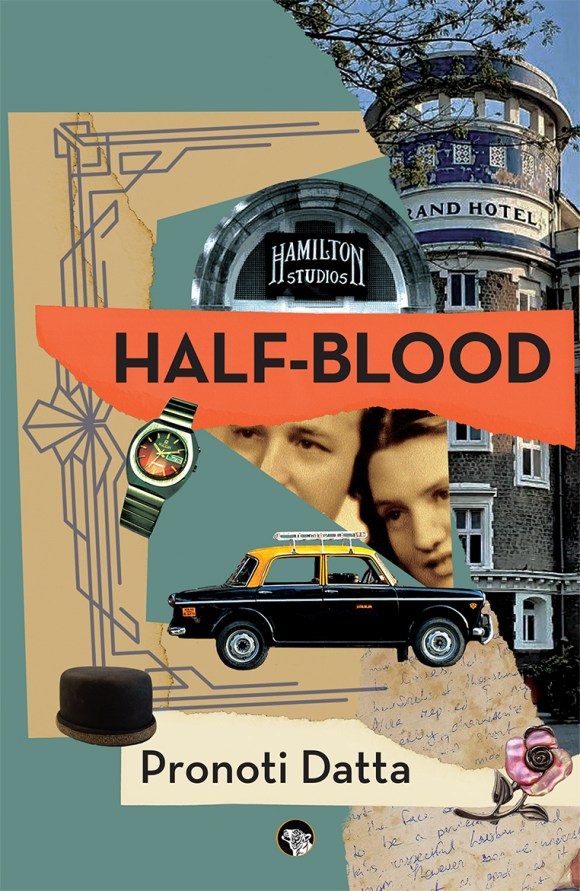
Title: Half-Blood

Author: Pronoti Datta

Publisher: Speaking Tiger Books

Half-blood by Pronoti Datta is a gripping noir-fiction that speaks about the harsh realities of urban settings, morally negotiated characters, dysfunctional families, and atypical individuals with dark secrets and surprises. Pronoti Datta was a journalist for about a decade and a half, covering culture and society in Bombay, the city from which she draws inspiration. She resides in Bombay and works as an editor of digital content. Half-blood is her debut novel.

The novel starts with a letter from Burjor to Moonie (Maya), the two main characters of the novel. In the letter, Burjor clandestinely explains his reason for disappearance by writing, “You see, Moonie, I did a terrible thing for which I had to leave Bombay. I don’t want to burden you, in this letter, with the details of my deed – or my life. It’s a long story and I’m not a man of words.” The prologue with this letter sets the tone for the story. The book has thirty-two   chapters with an ‘Epilogue’ that gives the new order of things and “a sense of having created meaning” to life, or rather to newer ways of looking at life.  

The story gives a glimpse into the lives of the dwindling Parsi population of Mumbai. The narrative spanning generations, time and space is a perfect read for those who love city stories, or love to know more about multicultural India. Most importantly, it is a fascinating story for those who love crime and suspense with a touch of history and culture. Datta brings to fore snippets specific to the lives of people and places in the then Bombay and now Mumbai. The author successfully addresses the failures, shortcomings, and the uglier side of life with wit and humour.

Maya, a journalist, who is young, talented, confident, ambitious, and disillusioned with life suffers from an existential crisis. She resurrects the past in search of her roots and meaning in life. Through the limited clues left in the “letter” from her biological father, she traces her bloodline. She embarks on a journey, stumbling upon unexpected facts and fiction on the life of Mumbaikars and Parsis some of who are poor and sometimes half-blooded or of mixed ethnicity. This is a story of rags-to-riches, underrated heroes and people in the sidelines. Burjor Elavia, a half-blood, a “fifty-fifty” is an “Adhkachru” — an illegitimate child of a Parsi man and a tribal woman. He accepts poverty and bondage to resist being pushed aside as a non-existent bastard.

Through the story of Burjor and Maya in Mumbai from the seventies, at the time of the prohibition till the 26/11 attack in 2008 in recent times, Datta weaves the  less explored facets of history of the city into her fiction. The characters in the novel range from different religions, language backgrounds, and communities residing and crisscrossing paths to give voice to the culturally diverse mega-city.

Maya, born to Mini and Burjor, is adopted by an unusually matched Bengali parent. Brought up in Mumbai, she grew up in a locality with a good mix of residents from different communities and religions. Moved by stories of those who “persisted in their beliefs, fielding scorns and disapprobation, and emerged victorious,” she goes on to study Philosophy in Delhi and mingles with friends from across the country. Datta presents a realistic picture of a young girl of mixed descent from Mumbai, pursuing her path of self-discovery by connecting the past with the present. In this quest, she unravels smaller plots that add to the larger picture. As she unravels her own past, Maya describes her situation as similar to that of the Prince of Denmark — Hamlet. She says, “I am Hamlet looking into my father’s ghost.” Datta grinds a story that carries a peek into the time and gives a space to those at the margins and the unconventional like the infamous “Aunty Bars,” savage liquor barons, Adivasi women, scandalous navjotes[1], and children growing up in multicultural society

The novel is an aesthetic rebellion as it delves into the Parsi way of life including that of poor Parsis, good-hearted rogues, crime and punishment in defiance of pigeon-holes and labels about a community or group. Half-blood as the title suggests, reveals wider horizons and deeper nuances of identity. A fiction about modern India, this book takes us on a tour of less revealed nooks of history and culture to unearth beauty in diversity. Elegantly presented with a cover design by Maithili Doshi Aphale, which speaks for itself, the Speaking Tiger book, Half-blood breaks through stereotypes and clichés to win your heart.


[1] A religious initiation to Zoroastrianism, the religion followed by Parsis

.

Gracy Samjetsabam teaches English Literature and Communication Skills at Manipal Institute of Technology, MAHE, Manipal. She is also a freelance writer and copy editor. Her interest is in Indian English Writings, Comparative Literature, Gender Studies, Culture Studies, and World Literature. 

.

PLEASE NOTE: ARTICLES CAN ONLY BE REPRODUCED IN OTHER SITES WITH DUE ACKNOWLEDGEMENT TO BORDERLESS JOURNAL
Categories
Review

A Manmade Humanitarian Crisis

Meenakshi Malhotra visits Harsh Mander’s Locking down the Poor contextualising it against the current scenario

Title: Locking down the Poor: The Pandemic and India’s Moral Centre

Author: Harsh Mander

Publisher: Speaking Tiger Books

Harsh Mander’s Locking down the Poor: The Pandemic and India’s Moral Centre is a moving and poignant account of a crisis that he views as preventable. He gives us a detailed account of the havoc wreaked by the sudden announcement of a nation-wide lockdown in March. In early 2020, the first cases of Covid-19 infection were confirmed in India, and on 24 March the country’s prime minister announced a nationwide lockdown, giving the population of over 1.3 billion just four hours’ notice. It became obvious within a matter of days that India had plunged into a major humanitarian crisis.

In this stringent and harsh critique, Mander, a social activist, demonstrates how grave this crisis has been, and why it has had a lasting impact, from which the economy is still reeling. The author further shows us that this impact  is the direct consequence of public policy choices that the governance made, particularly of imposing the world’s longest and most stringent lockdown, with the smallest relief package. The underprivileged were abandoned even as their livelihoods were destroyed and the blue collared work force were pushed to the brink of starvation.

Mander brings us voices of out-of-work daily-wage and informal workers, the homeless and the destitute, all overwhelmed by hunger and dread. From the highways and overcrowded quarantine centres, he brings us stories of migrant workers who walked hundreds of kilometres to their villages or were prevented from doing so and detained. His book can be seen as an expose that lays bare the callous disregard for basic needs during an emergency closure of a country where tens of crores continue to live in congested shanties or single rooms, on pavements with no toilets and no running water and no possibility of physical distancing, even though more than seven decades have passed after independence.

While the pandemic was a world-wise crisis which forced nations and countries to take emergency   measures, Mander contends that the response within the country was a betrayal of the common people, the starving millions of India who live on the edge of hunger and poverty. Their increased precariousness, the author believes, was a result not only of a natural but a man-made, humanitarian crisis. It was the result, he says, of a short-sighted governance operating with a middle-class bias, who just refused to take into cognisance the ironies of pronouncements like “wash your hands” “stay home, stay safe”.

The author’s concerns here can be framed in the larger context of his anxiety and fears about the erosion of democratic politics in India. Speaking with the authority of an ombudsman wielding a blunderbuss, Mander backs his account with facts and statistics, observation and detailed reporting. Carrying out relief work in the unauthorised urban slums of Delhi, he sees the desperate situation of the people who are more threatened by hunger than the pandemic. That the government turned a blind eye to the omnipresent reality of hunger and poverty, was appalling to the author. Further, the alarming rise of domestic violence during the pandemic has also exposed the domestic space as a precarious location for many women in India and elsewhere. This fact has been well documented across a range of platforms and though this is not a primary concern in Locking Down the Poor.

The book concerns itself with hunger, the uncertain fate of migrants, daily wage labourers, the deepening class divides and many other issues of relevance. Mander points out the neglect of food security and the dismantling of informal labour rights, the wilful blindness of the courts and the state machinery which forced people into the space of their ‘homes’ regardless of the distress or human cost which has been colossal and disastrous. Commenting on the impact of the lockdown on the upper classes, Mander comments, “For the rich and middle classes, the lockdown was disorienting and a nuisance, but largely seen as necessary.” However, in the absence of safety nets, it was the poor who had to bear the brunt of the devastation that followed.

Thus, he writes that while the “appallingly planned lockdown offered zero protection to the poor, it placed the burden of the most destructive costs on their shoulders.” He also quotes journalist Ipsita Chakravarty who wrote in stark terms that “with the nationwide lockdown, the government drew a cordon around the bodies it wished to protect…pulling up the drawbridges to guard the chosen-those who could afford to stay in. On the bodies of those outside this charmed circle, the lockdown wrought havoc.”

Looking at the crisis of the first lockdown in 2020, after a gap when some time has elapsed, we realise that much of his critique holds true even now. The lack of foresight and proper planning became evident in the second wave as well, given the colossal tragedy of humongous proportions that unfolded in front of us and made all of us — rich, poor, middle -class citizens — mute victims and witnesses. A very comprehensive account of the impact on India of the Covid crisis, Locking down the Poor is also a chronicle of our times, of brutal exclusions that we practice unthinkingly on a daily basis. The book is in a sense as the blurb says a “ledger of our accountability at a time when the poor of India have been brought to despair and abjection by a callous state and an uncaring, unequal society”.

 Dr Meenakshi Malhotra is Associate Professor of English Literature at Hansraj College, University of Delhi, and has been involved in teaching and curriculum development in several universities. She has edited two books on Women and Lifewriting, Representing the Self and Claiming the I, in addition  to numerous published articles on gender, literature and feminist theory.       

.

PLEASE NOTE: ARTICLES CAN ONLY BE REPRODUCED IN OTHER SITES WITH DUE ACKNOWLEDGEMENT TO BORDERLESS JOURNAL

Categories
Excerpt

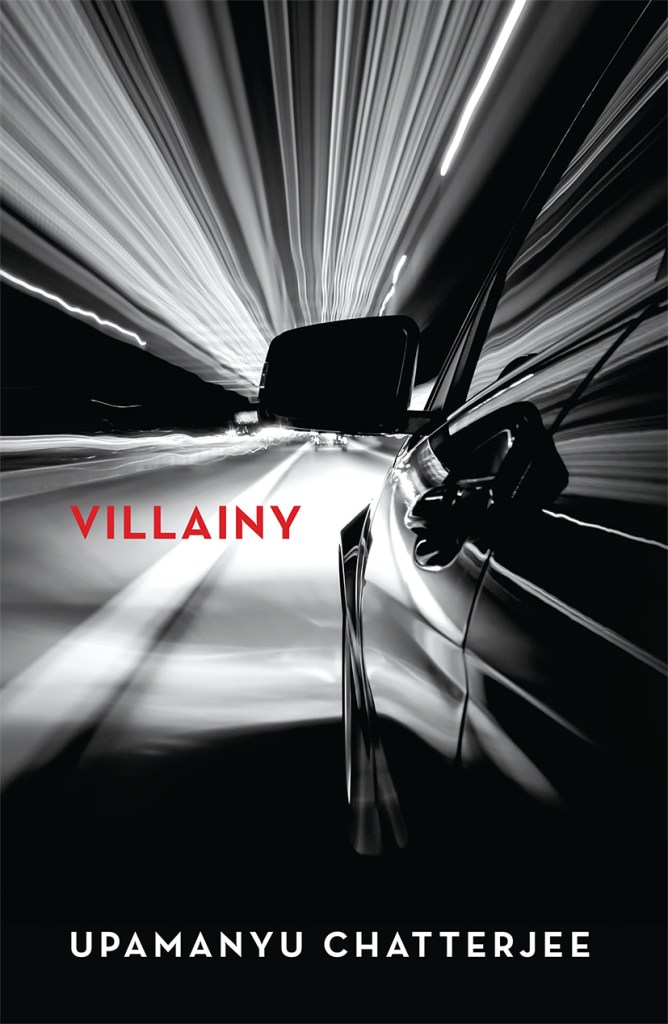
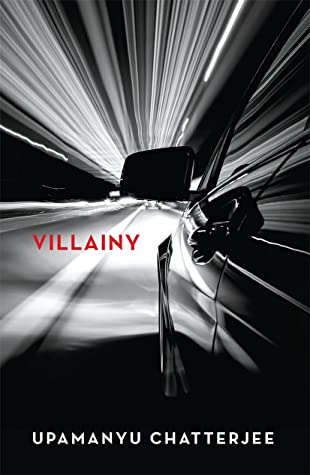
Villainy by Upamanyu Chatterjee

Title: Villainy

Author: Upamanyu Chatterjee

Publisher: Speaking Tiger Books

Death of late having been much on her mind, it did not seem surprising to Dr Mujumdar that she should, at seven-forty of a December morning, during her constitutional in the neighbourhood park, be the first to come upon the corpse or rather, to recognise it to be a dead body. Of course, they were all concentrating on striding along on the jogging track – rolling their hips, pausing discreetly on occasion, only for a micro-second, to break wind – and all moving clockwise as per the rules set down and put up by the Residents’ Welfare Association on the signboard at the entrance, and if they had eyes for anything, it was for the odd, protruding pebble in their paths and every now and then, a Johnny-come-lately in his new car outside the gates, prowling in search of a parking slot. But beneath the hibiscus bushes just before the Children’s Corner, they so stared her in the face, leapt out at her to shout out their presence that she marvelled that no one else appeared to have noticed them – a pair of off-white Bata tennis sneakers, stark against the dark, damp loam, blue socks in a heap at the ankles, khaki trousers that had ridden up to reveal scrawny calves, with the rest of the travesty mercifully hidden by the foliage and a mound of compost awaiting distribution. For travesty she knew it would be and she did not want to see it; for since when has death not been a travesty of all that holds meaning?

       ‘Something tells me that that is not a drunk Colony guard or municipal gardener sleeping it off,’ said she, aloud, to herself, glanced at her watch even though she knew what time it was, and continued silently, But could I still do my half-a-dozen rounds as though nothing has happened, or at least as many as I can before someone else notices something amiss? Or would that be callous and unfeeling of me? She lengthened her stride and began doggedly to pump her elbows in an effort to get away quickly. Her heart though was really not in it that morning. ‘It does seem shameful for someone who’s almost a medical doctor,’ she carried on her conversation with herself, ‘to run away from a corpse. Waddle away, more accurately. But people must never know. And all this – ’ She looked up and about her for a moment, blinked ‘ – is going to have to stop pretty soon, isn’t it?’ She exchanged a ‘Morning’ for a ‘Hello, dear’ as she overtook portly Mrs Gulati. ‘I mean, no one can possibly jog or skip rope or stretch or do his yoga and breathe through his anus or laugh his therapeutic Santa Claus belly laugh in the presence of a dead body, can he?’ And then, aloud, ‘Morning, Sanjeev-ji. You are early today?!’

      Dr Mujumdar took more than her usual eleven minutes to cross the Children’s Corner, pass the Water-Harvesting Area and loop around the Nano Golf Course. By the time she turned into the straight stretch along the C-Block side of the park, a knot of the regulars, forced to abandon their burpees and their Hanuman pushups, had formed around the hibiscus bushes. Automatically, Dr Mujumdar slowed down, even wondered for a second whether she could about-turn and, disobeying the commandment of the RWA, clump away anti-clockwise.

       ‘Don’t touch anything! Just call the police.’

      ‘Could it be someone we know? Even a member of the Health Club?’

      ‘Doesn’t look as though his membership did him any good. Somebody had better telephone the police, I say.’

      ‘I can’t. My phone needs to be charged.’

      ‘I can’t either, unfortunately. I always leave my phone behind at home when I step out for my exercise.’

      ‘Why don’t you call them? They will respond immediately to your commanding personality.’

      ‘It is the RWA that should phone the police. After all, the dead body has been found in a public place. Just call Tutreja at the Association.’

      ‘I can’t, I just told you. My phone needs to be charged.’

      ‘Why are you carrying around a phone that doesn’t work?’

      ‘To time my rounds, if you must know. The clock works. And how damn nosey you are, if I might add.’

      ‘Is something the matter? I’m a doctor. A pharmacist, more accurately. Perhaps I might be of help.’

      The knot of exercisers, three-deep by then, stirred and parted like porridge to make way for Dr Mujumdar and then congealed around her even before she could look down once more upon the Bata shoes and the scrawny calves, the khaki trousers. The press of bodies made concentration all the more difficult.

      ‘We’ll have to pull him out and turn him over. Any volunteers?’ The doctor looked about her at the knot, watched it stir and thin. ‘Backache,’ murmured a man with a white moustache, his hand ready to clutch his hip.

      With a grunt of annoyance, portly Mrs Gulati planted herself in the hibiscus bed, pushed aside the vegetation and bent to grab an ankle. The shadow of a momentary queasiness crossed her features at the touch of that cold, alien flesh. She was suddenly surrounded by several fellow-residents whom she had abashed. Freely directing and admonishing one another, they lifted the body up and sideways and laid it down, face up, on the jogging track. The group emitted a sort of collective moan, part sigh, part gasp, on first seeing the face. With difficulty, Dr Mujumdar got down on her knees beside the body. The onlookers, four deep now, gathered about them as though caught in an eddy.

      He was dead, there was no doubt about that. The dead do not look like the living. She felt for his pulse. The wrist was cold and stiff. She extracted a large handkerchief from the pocket of her tracksuit and gently dusted the loam and grit off the face. A murmur, a commentary on the vanity of all that is not death, rustled through the group like the hint of a breeze.

Excerpted from Villainy by Upamanyu Chatterjee. Published by Speaking Tiger Books, 2022.

ABOUT THE BOOK

 Walkers in a Delhi neighbourhood park come upon a body on a mid-winter morning—an unidentified body, unremarkable but for an extraordinary scar right between the eyes.

A delinquent teenager—who prefers, to the rest of living, an Ecstasy pill with a beer, and the interior of an expensive car with a gun in his pocket—leaves home one evening for a joyride in his father’s Mercedes.

In the nineteen years separating these episodes, five killings take place—and one near-fatal battery—none of which would have happened if a school bus hadn’t been in the wrong lane. Deals are struck between masters and servants, money changes hands, assurances are given and broken. The wheels of justice turn, forward, backwards and sideways, pause and turn again. Old alliances are tested and new ones are formed in prison cells, mortuaries and court rooms. And every life is a gamble, for no one is entirely innocent.

A meticulously crafted literary thriller, Upamanyu Chatterjee’s seventh novel is a riveting story of crime and retribution, and a meditation on the randomness of evil, death and redemption. It will keep you spellbound till the end.

ABOUT THE AUTHOR

 Upamanyu Chatterjee is the celebrated author of English, August: An Indian Story (1988), The Last Burden (1993), The Mammaries of the Welfare State (2000), Weight Loss (2006), Way to Go (2011), and Fairy Tales at Fifty (2014)—all novels; The Revenge of the Non-vegetarian (2018), a novella; and The Assassination of Indira Gandhi (2019), a collection of long stories. He won the Sahitya Akademi Award in 2000, and in 2008, he was awarded the Order of Officier des Arts et des Lettres by the French Government for his contribution to literature.

Click here to read the review

PLEASE NOTE: ARTICLES CAN ONLY BE REPRODUCED IN OTHER SITES WITH DUE ACKNOWLEDGEMENT TO BORDERLESS JOURNAL
Categories
Review

  Is Villainy by Upamanyu Chatterjee a ‘Commercial Thriller’?

Book review by Indrasish Banerjee

Title: Villainy

Author: Upamanyu Chatterjee

Publisher: Speaking Tiger Books


Delhi has many sides to it. It’s the city of Islamic dynasties, transformative history, cultural finesse, power politics. However, some of the celebrated books in last the decade or so on Delhi — The White Tiger (Arvind Agida), The Capital (Rana Dasgupta) — have mostly highlighted its cynical side: the shallowness of its rich, the constant oppression of the poor, the misuse of wealth and power, the ubiquity of corruption, moral decadence and a casual acceptance of everything wrong. I spent a few formative years in Delhi in the 80s. Even back then the common view about Delhi was it wasn’t a place for the straightforward.  But people also felt the city had some redeeming qualities.

In last two and half decades or so, the Manu Sharma case(1999) where the murderer shot a bartender for refusing to serve him; the sordid  tandoor murder (1995) where a suspicious husband killed his wife and several other outrageous occurrences which wreaked havoc in the city exposing its underbelly  and shaped its reputation as a place where nothing is right. This is the timeframe of Upamanyu Chatterjee’s latest book Villainy.

Upamanyu Chatterjee shot to fame with English August in 1988. The Last Burden (1993), Mammaries of the Welfare State (2000) and many more critically acclaimed novels followed. He also wrote a novella, The Revenge of Non-vegetarians (2018) and a collection of long stories, and The Assassination of Indira Gandhi (2019). He won the Sahitya Academy Award for the Mammaries of the Welfare State in 2000 and, in 2008, was awarded the Order of Officer des Arts et des Letters by the French Government for his contribution to literature.

Villainy is structural delight. It starts in 2016 and then takes the reader to the late 90s, into a completely different narrative setting without any obvious linkage to the former strand. In 2016 a dead body of an anonymous person is discovered in a park one early morning when the residents of the area are starting their day. It remains anonymous even after the police leaves no stone unturned for establishing its identity. The other strain is set in 1997, a boy, a spoilt brat, high on Ecstasy pill, out with his father’s Mercedes Benz, murdered two people and a dog.

Loosely based on the high profile Manu Sharma murder case where a rich man’s son killed a woman and justice was meted out only seven years later, the novel would have been every bit a commercial thriller but for the literary style of Upamanyu Chatterjee. If you subtract the style, however, Villainy reads like a novel waiting to be adopted for a pacy web series. The narrative is speedy; the chapters are long, without becoming tiresome, and episodic; the scenes have a visual quality, and they transition swiftly.

There is another thing that reminds you that Villainy is a work of a literary writer: ideological hangover. When a literary writer writes a thriller, characters’ actions mostly conform to their ideological stereotypes. Nemichand, a rich jeweller, is (or has to be) an amoral man. His attitude towards social or economic inferiors is always driven by a bristling class consciousness. He is boorish and uses expletives whenever aroused but when his benefactors do the same, he feels they are acting above station. Atmaram, Nemichand’s driver, on the other hand, is no paragon of virtues – he has accepted money to have his son, Parmatma, falsely admit to committing the murders – but Atmaram is largely a victim of circumstances, which, being the making of the rich, morally exempt the poor man.

But whatever may be its biases, Villainy works at different levels. As a thriller it doesn’t give you too many boring moments. As a literary fiction it gives some moments to reflect on – you should read Chatterjee’s take on villainy in general. Chatterjee has been able to create a sense of time for both the periods (2016 and the late 90s) the plot operates in. His efforts are sometimes cliched like invoking the most talked about events of those times but sometimes they are subtler and less obvious giving you a feeling of reliving those days.

With declining sales of literary fiction and burgeoning popularity of web series, former literary fiction writers are taking to thrillers discarding their subtler muses. Villainy is quite a journey from English August.  But that the likes of Chatterjee are taking to popular genres is actually good news.  Villainy projects a picture of a society with all its flaws and failings — responsibly and deftly.

Click here to read an excerpt

Indrasish Banerjee has been writing and publishing his works for quite some time. He has published in Indian dailies like Hindustan Times and Pioneer, and Café Dissensus, a literary magazine. Indrasish is also a book reviewer with Readsy Discovery. Indrasish stays and works in Bangalore, India. 

.

PLEASE NOTE: ARTICLES CAN ONLY BE REPRODUCED IN OTHER SITES WITH DUE ACKNOWLEDGEMENT TO BORDERLESS JOURNAL
Categories
Excerpt

Half-Blood

Title: Half-Blood

Author: Pronoti Datta

Publisher: Speaking Tiger Books

And so, I entered a household trembling with various emotional currents. Shivaji, incredulous that acquiescent Mini had actually contravened his order and brought a stranger’s child home, infuriated that there was nothing he could do about it short of leaving Mini or depositing me back from where I’d come (but where had this kid really come from?). Ratna, ecstatic over the drama, dancing on her toes in anticipation of phoning her masters in Calcutta to report that the child was indeed here and that they could hop into the Howrah Mail for Bombay as they had been waiting to do ever since the news of my adoption was broken to them. But also in Ratna, an incipient feeling of something when she saw my swaddled frame. Was it maternal instinct radiating from her dormant womb? Mini, awash with love for the child of a man she had been passionate about, thrilled at her own audacity and at finally having something in this relationship that she could control.

“You had two things in your favour,” Mini said. “As the offspring of a Parsi couple, there was no question of caste. Secondly, you’re fair. If you were dark-skinned, your dadu-thamma would’ve had an issue.”

In the two days it took the senior Debs to arrive from Calcutta, I had won Ratna over fully. She was prepared to mutiny against her masters if they tried to banish me, aligning with Mini for the first and only time. At last, Ratna could practice her vast knowledge of natal care lying untapped, and Mini let her, out of (a brief period of) gratitude. When I was constipated, which was often as an infant, Ratna would oil a betel leaf and lightly brush my disobedient sphincter with the suppository. When I had the runs, she would feed me a buttery mash of boiled potato and rice, the most effective jammer for a mischievous colon, rolled into spheres with fingers and palm and lined up like soldiers on my plate. She massaged my little body with mustard oil to get my circulation going and for a couple of years every day planted a black dot of kohl on my temple to ward off lurking evil eyes.

The Debs tried to persuade Mini to return me. How could she thrust a stranger’s child on their son, especially since she was the one with a bad uterus? At this point, Ratna, who had overheard the fights between Mini and Shivaji, privately told Shivaji’s mother that the problem was not with Mini but with Shivaji’s plumbing. The doctor had suggested the issue could have something to do with his weight. But Shivaji had accepted defeat immediately, refusing to exercise or diet. Her tactic had the desired effect. The Debs, feeling responsible for their son’s deleterious eating habits, backed off, going as far as to gently suggest to Shivaji that the child might repair his strained marriage. Back in Calcutta, when they told the rest of the family and friends about their adopted grandchild, they made themselves out to be progressive folk.

“Everyone there thinks you were their idea,” Mini said.

They stayed for three months. Initially, they viewed me with suspicion, the way you look at a bag that has been abandoned in the train, worried it might detonate. This was partly because I was obviously not a Deb. I was too good looking, with the milky skin, fleshy features and golden-brown ringlets of a cherub gambolling in the skies of an Italian fresco. But it didn’t take very long for them to warm to me and pitch in with their own ideas of child-rearing. They insisted my head be shaved at the age of two months as was customary. Mini was opposed but gave in since the Debs had accepted me. In place of my Botticellian curls, there grew limp, black hair.

“I cried when your head was shaved,” Mini said. “But those two were relieved to see your new hair because it made you look less foreign.”

What Mini hid from everyone, even prying Ratna, was a box of objects that came along with me. Burjor had wanted Mini to pass it on to me at an appropriate age. She gave it to me when I was eighteen, the day after my naïve confession about Danish Khan. Mini insisted I open the carton in her presence.

“I’d like some privacy,” I said.

“You’re such a coward you’ll put it away at the back

of your cupboard without looking if I leave you alone,”

she said.

“I might not be ready.”

“You’re eighteen, you’re ready.”

Excerpted from Half-Blood by Pronoti Datta. Published by Speaking Tiger Books, 2022.

ABOUT THE BOOK

 ‘You see, Moonie, I did a terrible thing for which I had to leave Bombay. I don’t want to burden you, in this letter, with the details of my deed—or my life. It’s a long story and I’m not a man of words.’

It is 2009, more than a decade after Maya read this intriguing letter addressed to her. The awkward, adopted child of an odd Bengali couple, she’s now a 34-year-old journalist in an existential mess that she alleviates by smoking pot and going on long walks with her latest boyfriend. But in order to find the meaning she craves, Maya must confront her past, and open a box of objects she inherited. When she finally does, she’s led on a startling, sparkling journey of discovery.

At the centre of this journey is Burjor Elavia, a ‘fifty-fifty’, an ‘Adhkachru’— the illegitimate child of a Parsi man and a tribal woman—born in a nondescript village in Gujarat. In 1952, not yet eighteen, he made his way to Bombay, where he lived a colourful life—promiscuous, reckless, involved in a string of shady businesses, but also compassionate and a charmer. His greatest achievement was an audacious venture for fifty-fifty Parsis like himself, many of them strugglers, some of them on the make and all of them eccentric. In their tangled, mixed-up, funny life stories, Maya tries to find her beginnings—and maybe her future.

Set in the teeming, varied universe that is Bombay, Half-Blood is an entertaining, full-blooded novel about dysfunctional families, plucky survivors, chancers, mavericks and good-hearted rogues. A celebration of vitality, impurity and other true virtues of life, it is a marvellous debut.

ABOUT THE AUTHOR

 Pronoti Datta was a journalist for over thirteen years, covering culture and society in Bombay. This is her first novel and she draws much inspiration from the city. She lives in Bombay (minus cats or children) and works as an editor of digital content.

.

PLEASE NOTE: ARTICLES CAN ONLY BE REPRODUCED IN OTHER SITES WITH DUE ACKNOWLEDGEMENT TO BORDERLESS JOURNAL

Categories
Review

The Tombstone in My Garden: Stories From Nagaland

Book review by Indrashish Banerjee

Title: The Tombstone in My Garden: Stories From Nagaland

Author: Temsula  Ao

Publisher: Speaking Tiger Books

The problem with any place that’s politically disturbed is that the rest of the aspects of the place – its culture, society, myths, beliefs – are obscured to outsiders. The place comes to be seen only through the prism of the disturbances and not savoured for its characteristics, its turmoils casting an impregnable shadow on its people, myths, its flora and fauna. Slowly even literature gets so obsessed with its ‘issues’ that it becomes difficult to find anything to read on the place which doesn’t talk about them or delves deeper. 

 Temsula  Ao’s The Tombstone in My Garden cuts through that roughage and takes its readers to the soul of Nagaland – to its villages, tribal myths, social practices that have been woven into five short stories that light a torch into every aspect of society in Nagaland.  Without the pretence of being a social observer or commentator, the narratives unfold with the unobtrusiveness of a storyteller who doesn’t highlight social practices judgementally but as ordinary things — unworthy of special attention. The perniciousness can be felt only after they arrive at their narrative outcomes. 

A very significant voice from Nagaland and contemporary Indian literature, Temsula Ao, has won several prestigious awards including the Padma Shri in 2007 and the Nagaland Governors’ Award for Distinction in Literature in 2009. Her Laburnum for My Head, a collection of short stories, won her the Sahitya Academy Award in 2013. 

The opening story, ‘The Platform’, takes us into the world of Nandu, a Bihari migrant to Nagaland who earns his living working as a coolie in Dimapur railway station. Promoted to become a senior among other porters for his hard work and his knowledge of various languages, including Nagamese, one day Nandu picks up an abandoned Muslim boy from the platform. He, slowly, develops paternal feelings for the waif despite a constant tension between the two due to their religious differences. 

But life in a railway station is hardly far from the lives who make a living from vices. As the boy grows up, he falls into the company of Shankar, a pimp. One day a fight breaks out between the boy and Shankar over a prostitute – and it ends in the boy’s carefully guarded religious identity getting exposed. The next day Nandu sees a crowd in the platform. He goes to find out what it’s about – and finds the boy dead. 

‘Snow-Green’, the third story in the collection, is thematically an open-ended story – where enthusiasts of many stripes will find something for them. The fate of the self-centred mistress will warm the cockles of the environmentalist’s heart. When Snow-Green’s trauma starts, the climate enthusiast will feel vindicated about his convictions about human treatment of nature being responsible for our current climate-induced miseries. The turn of the events at the end is impressive. 

In the ‘Saga of a Cloth’, when a brawl becomes the last straw, leading the village Council to expel Imlijongshi from the village, you will feel a bit vindicated: Imlijongshi, the self-destructive fool has finally got what he deserved. However, when the story makes a complete U-turn after that, you will feel you should have held back your judgement.  

“In a small voice almost breaking with grief and perhaps regrets too, Otsu addressed the departing figure, ‘Jongshi, wait, I have something important to tell you which you must know; do not leave me to die alone with this secret’.” 

This passage brimming with suspense is almost a start to another story retreating three generations, to a different time and space, when Otsu was a young girl dating Imdong and being stalked by Lolen unaware of what the future held in store. By the time the narrative descends three generations and returns to Imlijongshi, your feelings about the boy, his fate, his grandmother and the whole business of life — will be much more introspective, much more nuanced, much less stereotypical. 

‘The Tombstone in my Garden’, the title story of the collection, has some similarities with ‘The Saga of Cloth’. Both are long stories spanning generations; both have a woman at the centre suffering because of marriages to men they hadn’t intended to marry. But there the similarities end. Whereas ‘The Saga of Cloth’ has a rural, rustic setting, ‘The Tombstone in my Garden’ has an urban setting. Whereas Otsu is rooted in Naga traditions, Lily Anne is just the opposite, an Anglo Indian who deals with jibes about her dual cultural identity her whole life.  But that is just one aspect of ‘The Tombstone in my Garden’. 

A first-person narrative, the story starts on a suspenseful note, an old lady explaining her relationship with a tombstone, the graveyard of her husband, in her garden.  Using the tombstone as a starting point, she slowly meanders into her story. The reader is kept guessing till her narrative is complete. The story has a feminist touch. 

The stories in The Tombstone in My Garden may be short but they are very unlike short stories. They don’t rely on snappy twists in the tale to keep them going. Instead the plots move at an unhurried speed, one subplot making way for another seamlessly and gracefully. For instance, the  impact of Lolen’s contempt for Otsu’s life riles not so much while reading of the deeds, their immediacy and narrative pace preoccupying the reader, but impacts when Otsu’s entire later life seems mangled by Lolen’s intemperate actions.  Similarly, the reader is miffed not so much by the supercilious indifference of the mistress to the Snow-Green, a flowering plant of rare beauty but how a shallow human need of the mistress — her desire to win the first prize in the annual flower show — towers over the most existential concerns of the flowering plant. 

You may argue this is the nature of all narratives – to take you to extraordinary outcomes through seemingly ordinary occurrences – but where Tombstone In My Garden differs is that it acquaints with the ‘ordinary’ things about a place where we have come to believe the ordinary is always in short supply. 

At the end, almost all the stories have clearly demarcated epilogues narrating the later fates of the characters. This helps remove the conclusions from the immediacy of the preceding story leaving the reader ruminating with the advantage of hindsight and a melancholic feeling, like an aftertaste of a novel.

 As time goes short stories are moving away from their parental identity – the novel. They are getting shorter all the time and are being seen as tools for instant gratification. The current song and dance over flash fiction is an example. Temsula Ao’s collection of short stories makes the reverse journey, taking the short story back to its parental origin – the novel. 

.

Indrasish Banerjee has been writing and publishing his works for quite some time. He has published in Indian dailies like Hindustan Times and Pioneer, and Café Dissensus, a literary magazine. Indrasish is also a book reviewer with Readsy Discovery. Indrasish stays and works in Bangalore, India. 

.

PLEASE NOTE: ARTICLES CAN ONLY BE REPRODUCED IN OTHER SITES WITH DUE ACKNOWLEDGEMENT TO BORDERLESS JOURNAL

Categories
Editorial

‘What’s Love Got to Do with It’

Art by Sohana Manzoor
‘Why does education in love not feature in today’s curriculum?’
— Mahasweta Devi, Our Santiniketan (Translated by Radha Chakravarty, 2022, Seagull Books)

As the world celebrates Valentine’s Day, one pauses to think how far commercialisation has seeped in over time that the very concept of a tender emotion was questioned by Tina Turner in a song called, “What’s love got to do with it” nearly four decades ago. 

This was written even before Mahasweta Devi (1926-2016) published a nostalgic memoir of 1930’s Santiniketan in Bengali in 2001. She raised her pen to ask the very pertinent question that is quoted above. Why is education in love not a part of our curriculum anymore? She was reminiscing about her days in Santiniketan where children were brought up with rigorous academics while discipline was coloured with love and affection. They nurtured a love for nature in students too. This has become a rarity for many and perhaps needs to be revived as the Earth struggles to continue habitable for humankind. In the process of educating students to love and give, Santiniketan threw up many greats like the writer herself. We are delighted to host an excerpt from the start of Our Santiniketan translated beautifully by Radha Chakravarty.

Santiniketan was only the very visible part of a huge project taken on by Tagore (1861-1941). The other part now united with Santiniketan under the banner of Visva Bharati University is Sriniketan, a group of villages where Tagore experimented with raising consciousness and standards of villagers to integrate them into a larger world. He brought in new techniques in agriculture and crafts into the villages under this programme involving many prominent scientists, artists and humanists. And the project has blossomed. Did you know Tagore thought of himself as an NGO and his ‘life work’ he felt was developing villages (Sriniketan) and educating young minds to build a world where borders of knowledge, poverty and ignorance could be smoothened?

He wrote: “I alone cannot take responsibility for the whole of India. But even if two or three villages can be freed from the shackles of helplessness and ignorance, an ideal for the whole of India would be established.

“Fulfill this ideal in a few villages only, and I will say that these few villages are my India. And only if that is done, will India be truly ours.”

All this can be found in a book called A History of Sriniketan (Niyogi Books), written by Uma Das Gupta, a major authority on Tagore who moved from Oxford to Santiniketan and made Tagore’s work in these two institutions her own life’s work. We have featured her and her book in our interview/review section.

Raised out of such ashes of poverty that Tagore sought to dispel, are youngsters from the village of Nithari, where ceaseless efforts by volunteers of organisations like Saksham and pandies’ has given a new lease for life to those who have been exposed to violations, violence, divides, poverty and deprivation. One of them, Sharad Kumar, now studying to be an engineer, kicks off our new section called Pandies’ Corner with his story in Hindustani translated by a volunteer, Grace M Sukanya. His story learns from history and shows rather than tells.

A similar approach to view the present through lenses focussed on the past at a much grander scale has been taken by Shazi Zaman, an author and journalist, who has stepped into the Anglophone world with the transcreation of his own novel from Hindi to English, Akbar, A Novel of History (Speaking Tiger Books). He has brought to the fore how in days when sectarian violence based on religions killed, Akbar (1542-1605) tried to create a new path that would lead to peace so that he could rule over an empire united by administration and not broken by contentious religious animosities which often led to wars. In his interview, he tells us of the relevance of the Great Mughal in a period of history that was torn by divides, divisions so deep that they continue to smoulder to this day and date. That history repeats itself is evident though our living standards seem to improve over time. Bhaskar Parichha’s review of Growing up Jewish in India: Synagogues, Customs, and Communities from the Bene Israel to the Art of Siona Benjamin, edited by Ori Z. Soltes, also reinforces these divides and amalgamations in the modern context. The other books that have been reviewed include The Best of Travel Writing of Dom Moraes: Under Something of a Cloud by Indrashish Banerjee, and Gracy Samjetsabam has introduced us to an intriguing murder mystery in Masala and Murder by Patrick Lyons.

Translations have thrown up interesting colours this time with a Tamil story by a Sahitya Akademi winning writer, S Ramakrishnan, translated on our pages by B Chandramouli, one from Korean by Ihlwha Choi and of course a transcreation of Tagore’s songs where he sings of the meeting of horizons. A beautiful poem by eminent Balochi poet Atta Shad (1939-1997) has been translated by Fazal Baloch. We are again privileged to host an original translation of Jibananda Das(1899-1954) by Professor Fakrul Alam. We also managed to get permission to share some of Professor Alam’s fabulous translations of Jibananada Das from UPL (United Press Limited) and are starting it out by excerpting two of his poems on Banalata Sen, which were till now restricted to readership who only had access to the hardcopy. Rakibul Hasan Khan has given us an essay on these translations. An interesting essay on Satyajit Ray (1921-1992) by Rebanata Gupta and personalised tribute to the first Booker Prize winner from New Zealand, Keri Hulme (1947-2021), by Keith Lyons, who had many non-literary encounters with the sequestered author, add to the richness of our oeuvre.

Ratnottama Sengupta has also paid a moving tribute to the music legend, Lata Mangeshkar, who died at the age of 92 on 6th February, 2022. The choral symphony of multiple voices that hums through the paean recreating the larger than life presence of Lata reinforces that her lilting voice will stay embedded in many hearts and lives forever. Her perfect honing of musical skills delivered with the right emotions make her an epitome of human excellence. She gave the best of herself to the world.

Brooding on death and suicide is Candice Louisa Daquin essay. This is a topic under discussion as Switzerland might start a resort for abetting suicides. It is rather frightening that while people value life and as technology and humans work in consonance to preserve it, the rich can think of squandering away this unique process that has till now not been replicated. The other strange long literary yarn that is dark in colours is woven by Sunil Sharma as he explores the futility and self-pity experienced by retirees in their existentialist quest to find a meaning to live. It has bits of poetry too. Penny Wilkes has also introduced verses into her photographic tour of dewdrops. Candice’s vibrant poetry this time has joined that of Ryan Quinn Flanagan, Mike Smith, A Jessie Michael, Ananya Sarkar, Jay Nicholls, Saptarshi Bhattacharya, Rhys Hughes and many more I leave you to unfold. Rhys Hughes has also given us a spooky piece which says ghosts might be genies — check it out. Do you agree or is he just being bizarre and funny?

Wrapped in more dry humour is Devraj Singh Kalsi narrative on why he does not want pets. Meredith Stephens, on the contrary loves pets and sails the seas of West Australia with her camera, words, seals and dolphins. Luke PG Draper also speaks for animals — for the intrusion of pollutants that harm creatures like whales in his short story. Hop all over the world with Ravi Shankar breaking nightly fasts with food from different cultures. More colour is brought in by Suzanne Kamata who starts a new column, Notes from Japan — introducing us to Japanese sensation, Masaki Nakagawa, who has sung his way to hearts with Lativian songs that he loves, so much so that he got to perform at the Japanese coronation and has pictures with the Latvian President.

The time has come to let you discover the mysterious pieces that have not been mentioned here in the February edition — and there are many.  

Before I wind up till the next month, I would like to thank our fabulous team who make this journal possible. Keith Lyons has now become part of that team and has graciously joined our editorial board. Sohana Manzoor and Sybil Pretious deserve a special kudos for their fabulous artwork. Our grateful, heartfelt thanks to all our wonderful contributors and readers who keep the journal alive.

Wish you all a lovely month.

Best wishes,

Mitali Chakravarty

Borderless Journal