Categories
Contents

Borderless, July 2025

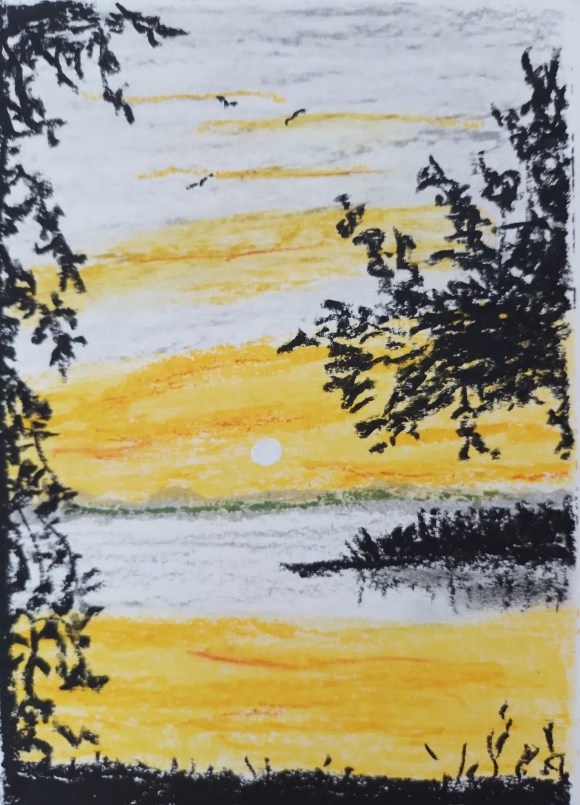
Art by Sohana Manzoor

Editorial

‘…I write from my heart of the raging tempest…’.Click here to read.

Translations

Jibanananda Das’s poem, Given the Boon of Eternity, has been translated from Bengali by Professor Fakrul Alam. Click here to read.

Karim Dashti’s short poems have been translated from Balochi by Fazal Baloch. Click here to read.

Five poems by Sangram Jena have been translated from Odia by Snehprava Das. Click here to read.

Surya Dhananjay’s story, Mastan Anna, has been translated from Telugu by Rahimanuddin Shaik. Click here to read.

The Last Letter, a poem by Ihlwha Choi  has been translated from Korean by the poet himself. Click here to read.

Tagore’s Probhatey (In the Morning) has been translated from Bengali by Mitali Chakravarty. Click here to read.

Poetry

Click on the names to read the poems

Luis Cuauhtémoc Berriozábal, Snehaprava Das, David R Mellor, Snigdha Agrawal, George Freek, Laila Brahmbhatt, Tracy Lee Duffy, John Swain, Amarthya Chandar, Craig Kirchner, Shamim Akhtar, Jason Ryberg, Momina Raza, Ryan Quinn Flanagan, Shahriyer Hossain Shetu, Rhys Hughes

Musings/ Slices from Life

What is Great Anyway?

Farouk Gulsara explores the idea of ‘greatness’ as reflected in history. Click here to read.

From Cape Canaveral to Carnarvon

Merdith Stephens writes of her museum experiences with photographs from Alan Nobel. Click here to read.

A Journey through Pages

Odbayar Dorj writes of library culture in Japan and during her childhood, in Mongolia. Click here to read.

By the Banks of the Beautiful Gomti

Prithvijeet Sinha strolls through the park by the riverfront and muses. Click here to read.

Dhruba Esh & Amiyashankar

Ratnottama Sengupta muses on her encounter with the writings of eminent artist and writer, Dhruba Esh, and translates one his many stories, Amiyashankar Go Back Home from Bengali. Click here to read.

Musings of a Copywriter

In Gastronomy & Inspiration? Sherbets and More…, Devraj Singh Kalsi looks at vintage flavours. Click here to read.

Notes from Japan

In Summer Vacation in Japan: Beetle Keeping and Idea Banks, Suzanne Kamata narrates her experience of school holidays in Japan. Click here to read.

Essays


It doesn’t Rain in Phnom Penh

Mohul Bhowmick writes of his trip to Phnom Penh and Siem Reap. Click here to read.

Haunted by Resemblances: Hunted by Chance

Aparajita De introspects with focus on serendipity. Click here to read.

Stories

Blue Futures, Drowned Pasts

Md Mujib Ullah writes a short cli-fi based on real life events. Click here to read.

Unspoken

Spandan Upadhyay gives a story around relationships. Click here to read.

Misjudged

Vidya Hariharan gives a glimpse of life. Click here to read.

Nico Returns to Burgaz

Paul Mirabile writes about growing up and reclaiming from heritage. Click here to read.

Feature

A review of Anuradha Kumar’s Wanderers, Adventurers, Missionaries: Early Americans in India and an interview with the author. Click here to read.

Book Excerpts

An excerpt from Rhys Hughes’ The Eleventh Commandment And Other Very Short Fictions. Click here to read.

An excerpt from Snehprava Das’s Keep It Secret. Click here to read.

Book Reviews

Somdatta Mandal reviews Dilip K Das’s Epidemic Narratives: The Cultural Construction of Infectious Disease Outbreaks in India. Click here to read.

Rakhi Dalal reviews Rajat Chjaudhuri’s Wonder Tales for a Warming Planet. Click here to read.

Gower Bhat has reviewed Neha Bansal’s Six of Cups. Click here to read.

Bhaskar Parichha reviews Jagadish Shukla’s A Billion Butterflies: A Life in Climate and Chaos Theory. Click here to read.

.

Click here to access the Borderless anthology, Monalisa No Longer Smiles

Click here to access Monalisa No Longer Smiles on Amazon International

Categories
Editorial

‘…I write from my heart of the raging tempest…’

I can see the heartbreak, 
Hear the wailing, the awakening,
I write from my heart
Of the raging tempest.

— Translation of Probhatey or ‘In the Morning’ by Rabindranath Tagore (1906)

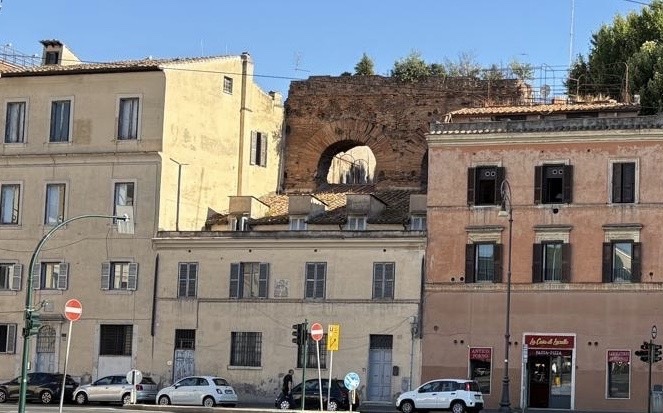
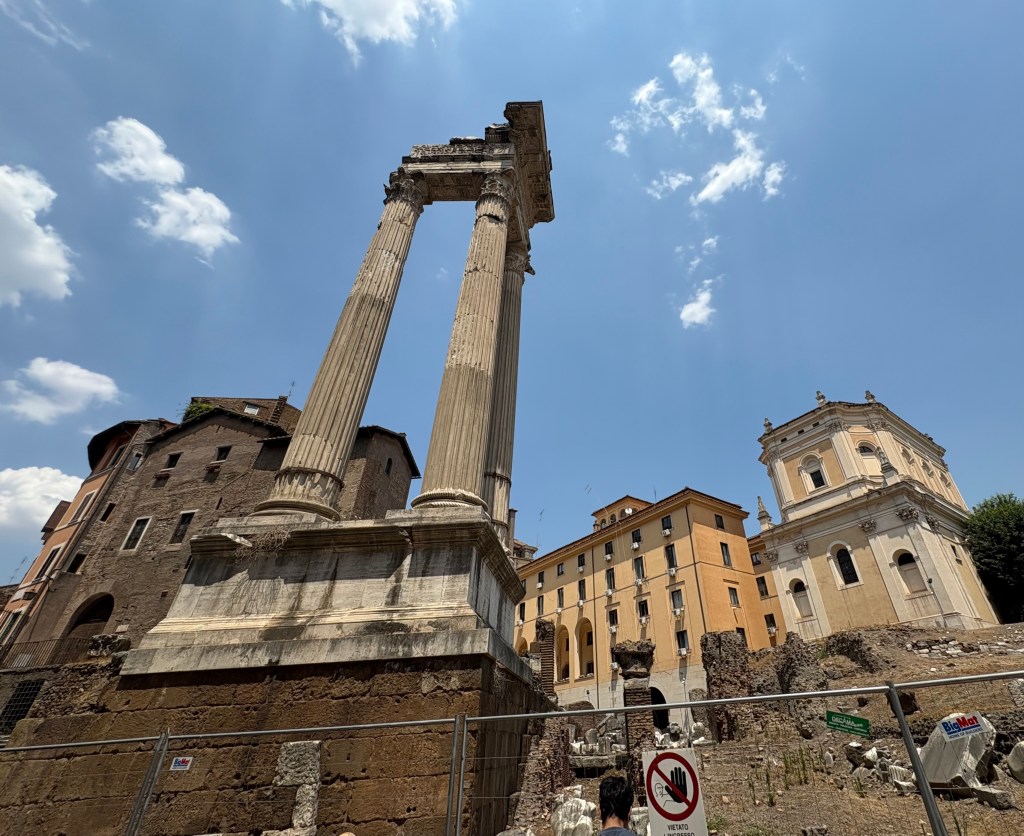
All around us, we hear of disasters. Often, we try to write of these as Tagore seems to do in the above lines. However, these lines follow after he says he draws solace and inspiration from a ‘serene lotus’, pristine and shining with vibrancy. He gazes at it while looking for that still point which helps him create an impact with words. That is perhaps what we can hope to do too — wait for a morning where clarity will show us the path to express not just what we see, but to find a way to heal and help. Finding parallels in great writings of yore to our own attempts at recreating the present makes us realise that perhaps history is cyclical. In Rome, new structures rear up against thousand-year walls, reflecting how the past congeals into the present.

Congealing the past into our present in this July’s issue are stories of American migrants — like Tom Alter’s family who made India their home — by Anuradha Kumar in her new non-fiction Wanderers, Adventurers, Missionaries: Early Americans in India. We feature this book with a review and an interview with the author where she tells us how and why she chose to write on these people. We have more people writing of their own wanderings. Mohul Bhowmick wanders into Cambodia and makes friends over a local sport while Prithvijeet Sinha strolls by the banks of the River Gomti in Lucknow. Meredith Stephens not only takes us to the Prime Meridien in Greenwich but also to Carnarvon which houses a science and technology centre in Australia. Devraj Singh Kalsi wanders with humour to discover gastronomical inspiration and hopes for sweeter recompense.

The dialogue started by Professor Fakrul Alam on libraries earlier with his essay and by Kalsi (with a pinch of humour) has been continued by Odbayar Dorj. She talks of the fading culture of libraries in Mongolia, her home country, and the vibrant culture that has blossomed in Japan. Suzanne Kamata writes of the rituals of summer holidays in Japan… including looking after a pet dung beetles.

Farouk Gulsara muses on ‘greatness’ as a concept with irony. Aparajita De muses on the word serendipity, applying it to her own situation while Ratnottama Sengupta muses on her encounter with the writings of eminent cover artist and writer who is not only a recipient of the Bangla Academy literary award but also immensely popular with children, Dhruba Esh, and translates one his many stories from Bengali.

In translations, Professor Alam has brought to us a beautiful poem by Jibanananda Das. Karim Drashti’s Balochi short poems have been rendered in English by Fazal Baloch and Snehaprava Das has found for us Odia poems of Sangram Jena in translation. Ihlwha Choi has rendered his own Korean poem to English while Tagore’s poem, ‘Probhatey (In the Morning)’ winds up the poetry in this section. We have more in prose — Surya Dhananjay’s story, Mastan Anna, translated from Telugu by Rahimanuddin Shaik.

In fiction, we have stories from around the world. Paul Mirabile sets his story in Burgaz. Spandan Upadhyay gives a mysterious narrative set in a world outside our waking consciousness and Vidya Hariharan gives us a glimpse of life in modern day India. From Bangladesh, Md Mujib Ullah writes a short cli-fi based on real life events.

Taking up the theme of cli-fi, Rajat Chaudhuri’s Wonder Tales for a Warming Planet seems to bring hope by suggesting adapting to changing climes. Rakhi Dalal tells us in her review: “It dares to approach the climate crisis through the lens of empathy and imagination rather than panic or guilt. In doing so, Rajat Chaudhuri gives us what many adult climate narratives fail to deliver—a reason to believe that another world is not only possible but already being imagined by the young. All we need to do is listen.” Bhaskar Parichha has discussed the autobiography of a meteorologist and Distinguished University Professor at George Mason University, Jagadish Shukla. In A Billion Butterflies: A Life in Climate and Chaos Theory, he claims Shukla has “revolutionised monsoon forecasting.” Somdatta Mandal has written about Dilip K Das’s Epidemic Narratives: The Cultural Construction of Infectious Disease Outbreaks in India. And Gower Bhat reviews Neha Bansal’s best-selling poetry collection, Six of Cups.

Poetry awakens myriad of hues in Borderless with verses from across the world. We have poems from Luis Cuauhtémoc Berriozábal, Ryan Quinn Flangan, Snehprava Das, George Freek, Laila Brahmbhatt, Tracy Lee Duffy, Amarthya Chandar, Jason Ryberg, Momina Raza, Shahriyer Hossain Shetu and more. Snigdha Agrawal gives a fun-filled poem about a duck and Rhys Hughes has given us a collection of verses like puzzles where we need to guess the animals! We also have an excerpt from Hughes’ The Eleventh Commandment And Other Very Short Fictions and Das’s short stories, Keep It Secret.

With that, we wind up the contents of this month’s issue. Do pause by our content’s page to check it out in more details.

This month’s edition would not have been possible without all our contributors, our fabulous team and especially Sohana Manzoor’s artwork. Huge thanks to all of them and to our wonderful readers who make it worthwhile for us to write and publish. Do write in to us if you have any feedback. Five years ago, we chose to become a monthly from a daily… We have come a long way from then and grown to host writers from more than forty countries and readers from almost all over the world. For this, we owe you all – for being with us and encouraging us to find fresh pastures.

Enjoy the reads!

Wishing you peace and happiness,

Mitali Chakravarty,

borderlessjournal.com

Click here to access the contents for the July 2025 Issue

READ THE LATEST UPDATES ON THE FIRST BORDERLESS ANTHOLOGY, MONALISA NO LONGER SMILES, BY CLICKING ON THIS LINK.

Categories
Stories

Unspoken

By Spandan Upadhyay

The city hummed in the distance, a restless body of lights and shadows. From the 10th-floor balcony of an aging apartment building, the sound of honking cars, barking dogs, and occasional train whistles formed a chaotic symphony. The night air was thick with the scent of rain-soaked pavement, diesel exhaust, and something else, something old, unspoken, waiting: like the breath of a forgotten tomb.

Flat 10-B faced east. At dawn, sunlight strained through grime-caked windows, pooling weakly on floors that hadn’t seen polish since Madhavi’s husband died. The walls, once eggshell white, had yellowed like ancient newspaper clippings. Cracks branched across the ceiling in fractal patterns, mapping silent histories of monsoons absorbed and endured.

Madhavi Bose had lived in this apartment for twenty-seven years. She had moved in as a young bride, her heart brimming with the quiet satisfaction of middle-class security. Her husband had been a government officer with a voice like a rusted hinge and hands that smelled always of mustard oil and ink. She’d learned to love him through ritual: starching his shirts, packing his tiffin, listening to his stories of petty office politics. Her world contracted to the geometry of his needs, his nap times, his preference for fish on Thursdays, his mother’s backhanded compliments about Madhavi’s rice.

And then, suddenly, he was gone. A heart attack at forty-five, slumped over a stack of tax files. No time for goodbyes, no time for regrets. Just the scent of his hair oil lingering on pillowcases, and the pension that arrived every month like a condolence card.

Left with a sixteen-year-old daughter and a life halved, Madhavi had done what was expected of her. She survived. She woke each morning, brewed tea for one, and scrubbed the balcony tiles until her knuckles bled. She learned to kill cockroaches without flinching. She stopped wearing sindoor.

And then there was Riya.

Riya, now twenty-four, had been a bright, sharp-eyed child, full of questions, full of hunger. At eight, she’d torn maps from schoolbooks to tape above her bed. Patagonia! Istanbul! Marrakech! Places whose names rolled like marbles in her mouth. At fourteen, she wrote stories about women who rode motorcycles through deserts. Too restless for a city like this, too impatient for a life like her mother’s. She devoured novels as if they were contraband, hiding Rushdie under her mattress, scribbling poems in the margins of math notebooks.

University had been a brief reprieve. For three years, she’d rented a hostel bunk near campus, subsisting on muri[1]and the euphoria of all-night literary debates. She fell in love twice, once with a Marxist poet who quoted Faiz, once with a biology student who sketched ferns in her notebooks. Both left for Delhi. Both promised to write. Neither did.

Her first job interview had been at a glossy magazine office where the editor yawned while she spoke. The second, at a publishing house, ended when they asked her to fetch chai for a visiting author. “You’ll start as an intern,” they’d said, though she’d graduated top of her class. Soon, she found herself in a cubicle the colour of wet cement, editing corporate brochures about cement. The future is built on solid foundations. Her colleagues wore polyester saris and discussed baby formulas. At lunch, she hid in stairwells, nibbling canteen samosas gone cold, scrolling through friends’ Instagrams: New York! Berlin! — until her eyes burned.

And so, she returned to Flat 10-B. To her mother. To a house where the only real conversations happened in the spaces between words.

The apartment’s rhythm was metronomic. Madhavi rose at 5:30 AM, the click of her alarm clock splitting the dark like a dry twig. She brewed Assam tea, the pot whistling two precise notes. The newspaper arrived with a thud; she read it front to back, circling typos in red pen. By 6:45, she descended the ten flights (the elevator had died with her husband), her cane tapping each step like a metronome. She walked exactly three laps around the park, nodding at the same widows on the same benches, their saris fading to identical shades of ash.

Riya woke at 8:00 AM to the smell of cumin seeds burning, Madhavi’s eternal attempt at breakfast. She dressed in the dark, avoiding mirrors. The corridor to the front door felt longer every day, lined with family photos fossilized in time: her parents’ wedding portrait, Madhavi’s smile stiff as starched cotton, Riya’s fifth birthday, half the cake uneaten, her father’s garlanded graduation photo gathering dust.

Evenings condensed into separate silences. Madhavi parked herself before the television, absorbing soap operas where women wept over stolen inheritances and switched-at-birth babies. The flickering blue light etched her face into something statue-like, immovable. Riya retreated to her room, headphones blaring punk rock, rereading The Bell Jar [2] for the twelfth time. She’d marked a passage years ago, I saw my life branching out before me like the green fig tree, but now the figs seemed rotted, the tree petrified.

Dinner was a sacrament of avoidance. “There’s dal in the fridge.” “Okay.” They passed each other like shadows, careful not to touch. Once, Madhavi’s fingers brushed Riya’s wrist while handing her a plate. Both recoiled as if scalded.

They never argued. Arguments required collision, and collision required caring enough to crash.

Then the sleepwalking began.

It was Riya who noticed it first. She woke one morning with grit beneath her nails, the taste of soil sharp on her tongue. Her legs ached as if she’d climbed mountains. On a hunch, she checked her shoes, the soles caked with mud.

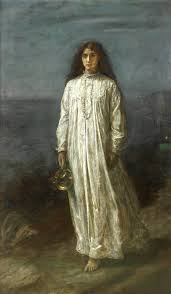
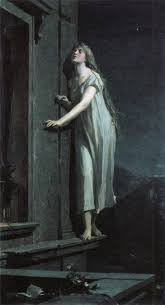
The next night, she hung her mobile around her neck. The footage, grainy and green-tinged, showed her move out at 2:17 AM. Her movements fluid as that of a marionette. She glided past the cracked full-length mirror, her reflection blurred, as if out of focus, turned the doorknob with eerie precision. Moments later, Madhavi emerged from her room, eyes milky in the dark, nightgown billowing like a sail. Together, they drifted into the hallway, bare feet soundless on cracked tiles.

Riya didn’t speak of it. Words would make it real. Instead, she began stealing glances at her mother, really looking, for the first time in years. Madhavi’s hands fascinated her: long fingers calloused from scrubbing, nails pared to the quick, a silver band still indenting her ring finger. Once, she caught Madhavi humming a Rabindra Sangeet tune while chopping onions, her voice girlish, almost playful. The sound froze Riya mid-step. By the time she exhaled, the humming had stopped.

One rain-heavy evening, Madhavi broke the unspoken rules. “I wanted to be a teacher,” she said abruptly, ladling dal onto Riya’s plate.

Riya’s thumb hovered over her phone screen. “What?”

“At Bethune College, I’d been accepted. History. Your grandfather said educated wives were headaches. So.” She shrugged, a single lift of the shoulder that contained a lifetime of folded dreams. “Your father preferred my fish curry to my opinions anyway.”

The admission hung between them, delicate as a cobweb. Riya thought of her own application to Columbia’s MFA program, buried under a strata of rejection emails. She wanted to ask, Were you angry? Did you ever scream? Instead, she muttered, “The dal’s good.”

Madhavi stared at her, eyes glinting with something that could’ve been pity. Or recognition.

The sleepwalking intensified. Riya began waking in strange tableaus: perched on the fire escape, her toes curled over the edge; kneeling in the building’s puja[3] room, marigold petals stuck to her knees; once, standing in the parking lot, arms outstretched as if awaiting crucifixion. Her phone footage revealed nightly pilgrimages, down ten flights, through the lobby’s broken turnstile, into the skeletal garden behind the building. Always, Madhavi followed.

Then came the monsoon night.

Rain sheeted the balcony grilles, the wind howling through gaps in the window seals. Riya was sleepwalking, mud squelching between her toes, her nightdress plastered to her skin. She stood in the garden’s center, lightning fracturing the sky. To her left, Madhavi hovered, drenched and spectral, her gaze locked on Riya.

A current passed between them, not a spark, but a surge.

Madhavi spoke first, her voice unspooling like smoke. “At last. At last, my enemy.”

Riya’s jaw clenched. The words came out involuntarily. “Hateful woman. Selfish and old. You want my life to be your epilogue.”

“You devoured my youth.” Madhavi’s hands flexed. Her eyes had a glassy look, but they were inanimate. Still. “You, who blames me for her cage.”

“You never fought! You just… folded.”

“And you?” Madhavi’s laugh was a dry leaf crushed underfoot. “You run, but only in circles. You think I don’t see your applications? Your hidden bank account?”

Riya’s breath hitched. The garden seemed to pulse, neem leaves trembling, earth exhaling decades of buried words.

“I could’ve left,” Madhavi whispered. “After he died. Gone back to school. But you-”

“Don’t.”

“– you needed stability. Security.”

“I needed a mother, not a martyr!”

Lightning flashed. For an instant, Madhavi’s face was a mask of cracks. Then, a dog barked, the neighbor’s irritating new resident, and the spell snapped.

Madhavi blinked, rain dripping from her lashes. “Is that you, darling?”

Riya hugged herself, shivering. “Yes, Ma.”

And then, as if nothing had happened, they went back inside. They climbed the stairs in silence, leaving wet footprints that evaporated by dawn.

.

[1] Puffed rice

[2] Novel by Sylvia Plath published in 1963 under the penname of Victoria Lucas

[3] Prayer


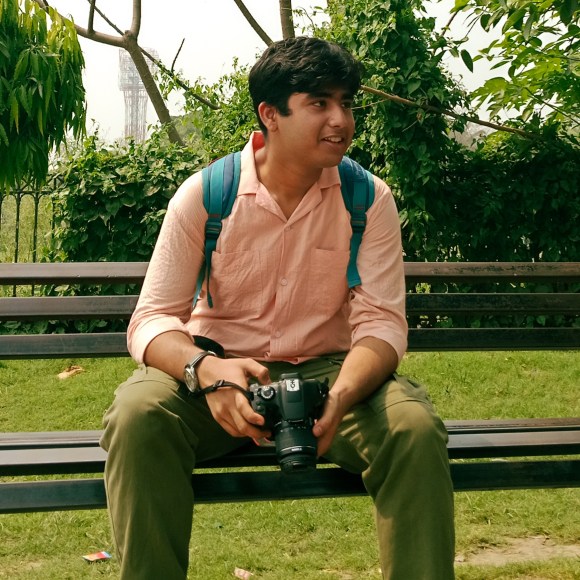
Spandan Upadhyay
 is a new writer whose work captures the vibrant nuances of everyday life. With a deep appreciation for the human experience, Spandan’s stories weave together subtle emotions and moments of introspection. Each of his stories invite readers into a world where ordinary occurrences reveal profound truths, leaving a lasting impact.

.

PLEASE NOTE: ARTICLES CAN ONLY BE REPRODUCED IN OTHER SITES WITH DUE ACKNOWLEDGEMENT TO BORDERLESS JOURNAL. 

Click here to access the Borderless anthology, Monalisa No Longer Smiles

Click here to access Monalisa No Longer Smiles on Kindle Amazon International
Categories
Contents

Borderless, May 2025

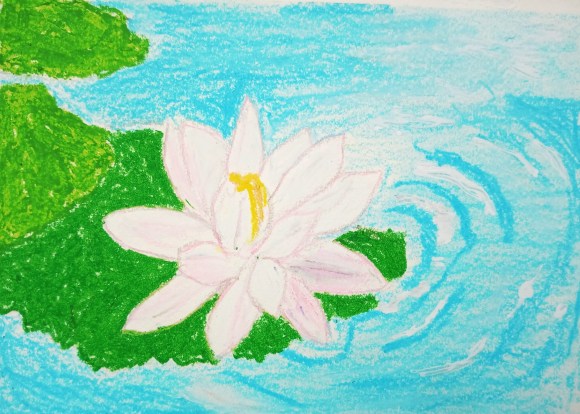
Art by Sohana Manzoor

Editorial

“Imagine all the people/ Living life in peace”… Click here to read.

Translations

The Day of Annihilation, an essay on climate change by Kazi Nazrul Islam, has been translated from Bengali by Radha Chakravarty. Click here to read.

Arise O Woman and Two Flowers on One Leafstalk, lyrics by Nazrul, have been translated from Bengali by Professor Fakrul Alam. Click here to read.

Five poems by Bipin Nayak have been translated from Odia by Snehaprava Das. Click here to read.

Identity by Munir Momin has been translated from Balochi by Fazal Baloch. Click here to read.

Among Strangers, a poem by Ihlwha Choi  has been translated from Korean by the poet himself. Click here to read.

Asha or Hope by Tagore has been translated from Bengali by Mitali Chakravarty. Click here to read.

Poetry

Click on the names to read the poems

Ryan Quinn Flangan, Jim Bellamy, Snehprava Das, George Freek, Niranjan Aditya, Christine Belandres, Ajeeti S, Ron Pickett, Kajoli Krishnan, Stuart McFarlane, Snigdha Agrawal, Arthur Neong, Elizabeth Anne Pereira, Rhys Hughes

Poets, Poetry & Rhys Hughes

In Did He Ever?, Rhys Hughes gives fun-filled verses on Lafcadio Hearn, a bridge between the East and West from more than a hundred years ago. Click here to read.

Musings/ Slices from Life

Will Dire Wolves Stalk Streets?

Farouk Gulsara writes of genetic engineering. Click here to read.

The Boy at the Albany Bus Stop

Meredith Stephens dwells on the commonality of human emotions. Click here to read.

The Word I Could Never Say

Odbayar Dorj muses on her own life in Mongolia and Japan. Click here to read.

Social Media Repetition

Jun A. Alindogan discusses the relevance of social media. Click here to read.

Shanghai in Jakarta

Eshana Sarah Singh takes us to Chinese New Year celebrations in Djakarta. Click here to read.

Musings of a Copywriter

In My Writing Desk, Devraj Singh Kalsi writes of the source of his inspiration. Click here to read.

Notes from Japan

In Feeling Anxious in Happy Village, Suzanne Kamata relates a heartwarming story. Click here to read.

Essays

Reminiscences from a Gallery: The Other Ray

Dolly Narang muses on Satyajit Ray’s world beyond films and shares a note by the maestro and an essay on his art by the eminent artist, Paritosh Sen. Click here to read.

This Garden Calls Out to Me: A Flaneur in Lucknow’s Sikandar Bagh

Prithvijeet Sinha takes us back to a historical landmark, made for love but bloodied by war. Click here to read.

Stories

Going to Meet the Hoppers

Fiona Sinclair writes a layered story on human perspectives. Click here to read.

The Ritual of Change

Parnika Shirwaikar explores the acceptance of change. Click here to read.

The Last Metro

Spandan Upadhyay explores the spirit of the city of Kolkata. Click here to read.

Nico Finds His Dream

Paul Mirabile narrates how young Nico uncovers his own yearnings. Click here to read.

The Bequest

Naramsetti Umamaheswararao gives a story reflecting a child’s lessons from Nature. Click here to read.

Conversation

Ratnottama Sengupta introduces and converses with photographer, Vijay S Jodha. Click here to read.

Book Excerpts

An excerpt from Devabrata Das’s One More Story About Climbing a Hill: Stories from Assam, translated by multiple translators from Assamese. Click here to read.

An excerpt from Ryan Quinn Flangan’s Ghosting My Way into the Afterlife. Click here to read.

Book Reviews

Somdatta Mandal reviews Arundhathi Nath‘s translation, The Phantom’s Howl: Classic Tales of Ghosts and Hauntings from Bengal. Click here to read.

Andreas Giesbert reviews Rhys Hughes’ The Devil’s Halo. Click here to read.

Bhaskar Parichha reviews Aubrey Menen’s A Stranger in Three Worlds: The Memoirs of Aubrey Menen. Click here to read.

.

Click here to access the Borderless anthology, Monalisa No Longer Smiles

Click here to access Monalisa No Longer Smiles on Amazon International

Categories
Editorial

“Imagine all the people/Living life in peace”

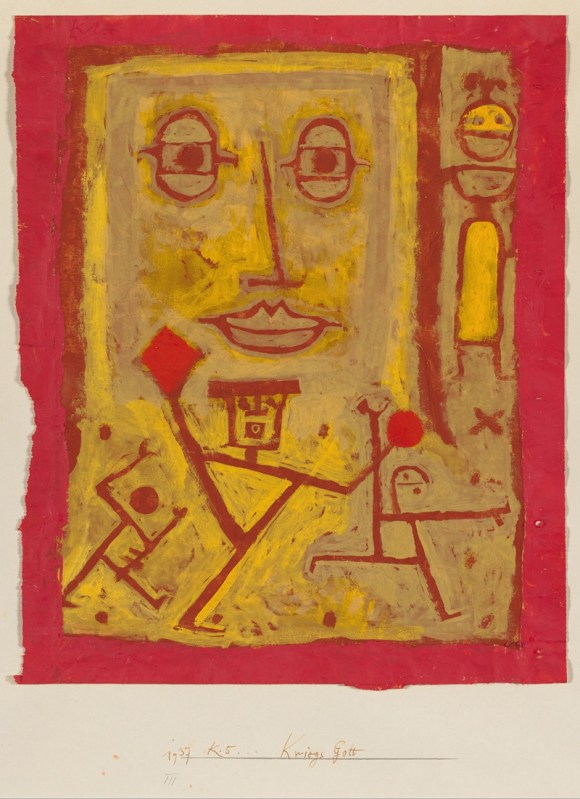
God of War by Paul Klee (1879-1940)
The sky weeps blood, the earth cannot contain
The sorrow of the young ones we've slain.
How now do dead kids laugh while stricken by red rain?

— from Stricken by Red Rain: Poems by Jim Bellamy

When there is war
And peace is gone
Where is their home?
Where do they belong?

— from Poems on Migrants by Kajoli Krishnan

Poetry, prose — all art forms — gather our emotions into concentrates that distil perhaps the finest in human emotions. They touch hearts across borders and gather us all with the commonality of feelings. We no longer care for borders drawn by divisive human constructs but find ourselves connecting despite distances. Strangers or enemies can feel the same emotions. Enemies are mostly created to guard walls made by those who want to keep us in boxes, making it easier to manage the masses. It is from these mass of civilians that soldiers are drawn, and from the same crowds, we can find the victims who die in bomb blasts. And yet, we — the masses — fight. For whom, for what and why? A hundred or more years ago, we had poets writing against wars and violence…they still do. Have we learnt nothing from the past, nothing from history — except to repeat ourselves in cycles? By now, war should have become redundant and deadly weapons out of date artefacts instead of threats that are still used to annihilate cities, humans, homes and ravage the Earth. Our major concerns should have evolved to working on social equity, peace, human welfare and climate change.

One of the people who had expressed deep concern for social equity and peace through his films and writings was Satyajit Ray. This issue has an essay that reflects how he used art to concretise his ideas by Dolly Narang, a gallery owner who brought Ray’s handiworks to limelight. The essay includes the maestro’s note in which he admits he considered himself a filmmaker and a writer but never an artist. But Ray had even invented typefaces! Artist Paritosh Sen’s introduction to Ray’s art has been included to add to the impact of Narang’s essay. Another person who consolidates photography and films to do pathbreaking work and tell stories on compelling issues like climate change and helping the differently-abled is Vijay S Jodha. Ratnottama Sengupta has interviewed this upcoming artiste.

Reflecting the themes of welfare and conflict, Prithvijeet Sinha’s essay takes us to a monument in Lucknow that had been built for love but fell victim to war. Some conflicts are personal like the ones of Odbayar Dorj who finds acceptance not in her hometown in Mongolia but in the city, she calls home now. Jun A. Alindogan from Manila explores social media in action whereas Eshana Sarah Singh takes us to her home in Jakarta to celebrate the Chinese New Year! Farouk Gulsara looks into the likely impact of genetic engineering in a world already ripped by violence and Devraj Singh Kalsi muses on his source of inspiration, his writing desk. Meredith Stephens tells the touching story of a mother’s concern for her child in Australia and Suzanne Kamata exhibits the same concern as she travels to Happy Village in Japan to meet her differently-abled daughter and her friends.

As these real-life narratives weave commonalities of human emotions, so do fictive stories. Some reflect the need for change. Fiona Sinclair writes a layered story set in London on how lived experiences define differences in human perspectives while Parnika Shirwaikar explores the need to learn to accept changes set in her part of the universe. Spandan Upadhyay explores the spirit of the city of Kolkata as a migrant with a focus on social equity. Both Paul Mirabile and Naramsetti Umamaheswararao write stories around childhood, one set in Europe and the other in Asia.

As prose weaves humanity together, so does poetry. We have poems from Jim Bellamy and Kajoli Krishnan both reflecting the impact of war and senseless violence on common humanity. Ryan Quinn Flanagan introduces us to Canadian bears in his poetry while Snigdha Agrawal makes us laugh with her lines about dogs and hatching Easter eggs! We have a wide range of poems from Snehprava Das, George Freek, Niranjan Aditya, Christine Belandres, Ajeeti S, Ron Pickett, Stuart McFarlane, Arthur Neong and Elizabeth Anne Pereira. Rhys Hughes concludes his series of photo poems with the one in this issue — especially showcasing how far a vivid imagination can twist reality with a British postman ‘carrying’ sweets from India! His column, laced with humour too, showcases in verse Lafcadio Hearn, a bridge between the East and West from more than a hundred years ago, a man who was born in Greece, worked in America and moved to Japan to even adopt a Japanese name.

Just as Hearn bridged cultures, translations help us discover how similarly all of us think despite distances in time and space. Radha Chakravarty’s translation of Kazi Nazrul Islam’s concerns about climate change and melting icecaps does just that! Professor Fakrul Alam’s translation of Nazrul’s lyrics from Bengali on women and on the commonality of human faith also make us wonder if ideas froze despite time moving on. Tagore’s poem titled Asha (hope) tends to make us introspect on the very idea of hope – just as we do now. At a more personal level, a contemporary poem reflecting on the concept of identity by Munir Momin has been translated from Balochi by Fazal Baloch. From Korean, Ihlwah Choi translates his own poem about losing the self in a crowd. We start a new column on translated Odia poetry from this month. The first one features the exquisite poetry of Bipin Nayak translated by Snehprava Das. Huge thanks to Bhaskar Parichha for bringing this whole project to fruition.

Parichha has also drawn bridges in reviews by bringing to us the memoirs of a man of mixed heritage, A Stranger in Three Worlds: The Memoirs of Aubrey Menen. Andreas Giesbert from Germany has reviewed Rhys Hughes’ The Devil’s Halo and Somdatta Mandal has discussed Arundhathi Nath’s translation, The Phantom’s Howl: Classic Tales of Ghosts and Hauntings from Bengal. Our book excerpts this time feature Devabrata Das’s One More Story About Climbing a Hill: Stories from Assam, translated by multiple translators from Assamese and Ryan Quinn Flangan’s new book, Ghosting My Way into the Afterlife, definitely poems worth mulling over with a toss of humour.

Do pause by our contents page for this issue and enjoy the reads. We are ever grateful to our ever-growing evergreen readership some of whom have started sharing their fabulous narratives with us. Thanks to all our readers and contributors. Huge thanks to our wonderful team without whose efforts we could not have curated such valuable content and thanks specially to Sohana Manzoor for her art. Thank you all for making a whiff of an idea a reality!

Let’s hope for peace, love and sanity!

Best wishes,

Mitali Chakravarty

borderlessjournal.com

Click here to access the contents page for the May 2025 Issue

READ THE LATEST UPDATES ON THE FIRST BORDERLESS ANTHOLOGY, MONALISA NO LONGER SMILES, BY CLICKING ON THIS LINK.

Categories
Stories

The Last Metro

By Spandan Upadhyay

The platform was empty. My footsteps echoed back at me as if mocking this sterile, hollow space. I had been here a thousand times before, but never like this—never in the aftermath of such a disaster. 9:30pm, and the metro hadn’t shown up yet. I sat down, unsure of where else to be. The evening had been a slow car crash — every minute at that poetry reading had scraped away at my dignity. Each time I glanced up from my notebook, I caught the same expression on people’s faces, that slightly bored politeness, the kind reserved for an artist you’ll never remember.

I loosened the strap of my satchel and rubbed my shoulder, trying to push the night out of my mind, but it stuck, like the words of my poems, lingering. Why had I called them ‘Words Left Unspoken’? It seemed so pretentious now, as if I was grasping for some profound truth when, really, they were just words no one cared to listen to. I saw my reflection in the mirror on the platform. Green kurta, brown sandals and black rimmed glasses, I didn’t really command much attention. Why would anyone care to listen to me anyway?

I glanced around the station. It felt unreal, like some purgatory where time stretched on forever, with nothing to look forward to. The fluorescent lights flickered, and the only sound was the occasional distant rattle of a train that would never come. Or at least it felt like it.

This city, Kolkata—it was once a place where artists mattered, where poets walked down College Street with a cup of tea in one hand and a burning idea in the other. Now? Now, the city didn’t care about poetry. It cared about money, about practicality, about getting from one station to the next as fast as possible.

I checked my phone again. Though there wasn’t really much to check. The poetry circle WhatsApp group was silent, like the station itself. No one had said a word about my performance. Probably because they were all too busy posting Instagram stories from some hipster café by now.

My eyes wandered to the far end of the platform. That’s when I saw her.

She was standing under one of the dim lights, a woman in her late forties, maybe early fifties, her face lined with age and fatigue. She had a basket of flowers slung over her arm—wilting roses, chrysanthemums, marigolds, all tired-looking, much like their owner. I’d seen her here before, always in the same spot. She was a fixture of the station, but I’d never paid much attention.

Tonight, though, there was something about her that pulled at me, maybe because she seemed as out of place as I felt.

I stood up, more out of curiosity than anything else, and walked toward her. My footsteps sounded loud in the silence, but she didn’t seem to notice.

“Flowers at this hour?” I asked, my voice echoing off the walls.

She glanced at me, her eyes sharp, measuring me up. “Metro or no metro, people still need flowers. Weddings, funerals, who cares? Life goes on.”

Her voice was raspy, like someone who’d spent years yelling into the wind. And yet, there was something calm about her. Resigned. It felt familiar.

I shrugged. “Strange place to sell them, though.”

She didn’t look at me this time, just adjusted the flowers in her basket, fingers working methodically. “It’s quieter down here. Besides, I’m not here for the regular crowd. I’m here for people like you.”

“Like me?” I frowned.

“Late. Alone. Waiting for something that’s probably not coming.”

The words hit me like a slap, sharper than I expected. There was a tired smile on her lips when she finally looked up, and in her eyes, I saw something I didn’t want to acknowledge—recognition.

I smirked, though I didn’t feel like it. “I guess that makes two of us then.”

She chuckled softly. It was a strange sound, not of amusement but of knowing. She leaned back against the wall, the flowers now forgotten at her side. “You’re one of those types, aren’t you? The ones who think too much.”

I should’ve been offended, but I wasn’t. She was right. I was one of those types. I lived inside my own head more than I lived in the real world. “I suppose I am.”

Silence enveloped us, thick and uncomfortable, but I didn’t move away. Maybe it was because I had nowhere else to go, or maybe it was because this was the first time in a long while that someone had spoken to me without the usual pretence. The usual platitudes.

“What about you?” I asked, breaking the silence. “What’s your story?”

Her eyes flicked to me again, and for a moment, I regretted asking. It sounded cheap, like I was trying to force a connection where there wasn’t one. But she didn’t seem to mind. If anything, the question seemed to amuse her.

“My story?” she repeated, almost as if tasting the words. “My story is this city. I came here when I was a girl, like so many others. Thought I’d find something—maybe love, maybe money. Instead, I found nothing. Just a city that takes everything and gives you nothing back.”

I nodded, though I wasn’t sure why. I wasn’t anything like her. I wasn’t scraping by selling flowers at a metro station. But her words felt true, as if they could just as easily be mine.

“I know that feeling,” I said quietly, more to myself than to her.

She tilted her head, her eyes narrowing slightly. “Do you? What did the city take from you?”

I swallowed. How do you explain to someone that the city hadn’t taken anything tangible? It hadn’t taken my house or my livelihood. It had taken my belief, my sense of purpose. It had eroded me slowly, bit by bit, rejection after rejection.

“I wanted to be a poet,” I said, almost ashamed of how small that sounded in comparison. “But it turns out, poetry doesn’t pay the bills.”

The woman smiled — a slow, tired smile, but a smile nonetheless. “Ah, poetry. That’s a different kind of hunger.”

She stood up straight then, looking at me with something like pity in her eyes. “And has the city fed that hunger? Or has it starved you?”

I felt my throat tighten, that familiar ache creeping up again. The answer was obvious, but saying it aloud would make it too real.

“Starved me,” I whispered.

She nodded, as if she already knew. As if that was the only answer she had ever expected. “This city has a way of doing that,” she said softly. “But you’re still here, aren’t you? Still waiting.”

I couldn’t look at her anymore. The sound of a train rumbled in the distance, but it didn’t matter. I wasn’t waiting for the metro. Not anymore.

*

The rumble of the approaching train faded, leaving only the familiar, dead silence behind. I stared at the woman, still leaning against the grimy wall, and realised how little I knew about her—this strange fixture of the metro station who spoke with such familiarity about a city I thought I understood.

I glanced at her basket of wilting flowers. The roses, once bright and promising, now drooped sadly, much like everything else in this place. I wanted to ask her something more meaningful, but I wasn’t sure where to start. Every time I opened my mouth, it felt like I was playing a part in a scene I hadn’t rehearsed for.

“How long have you been selling flowers?” I asked, almost awkwardly, knowing it wasn’t the right question, but asking it anyway.

She looked at me, then down at the basket as if only just remembering the flowers were there. “Long enough,” she replied with a wry smile. “It’s been… what, twenty years?”

“Twenty years?” I repeated, surprised. “At this station?”

She chuckled, shaking her head. “Not here, no. I used to sell near Howrah Bridge. It was better business back then. People actually bought flowers to take home. Now, people are too busy for things like that. They’re always in a rush—running to catch a train, running to get home. Nobody stops anymore. But down here, there’s time. The waiting… it slows everything down.”

Her words struck me in a way I hadn’t expected. The waiting—it was something I knew all too well. I wasn’t just waiting for the metro; I had been waiting for years, for something that never came. For recognition, for understanding, for someone to care about the words I scribbled on pages night after night.

“You said you came here when you were young. What brought you to Kolkata?” I asked, sensing there was more to her story than just flowers.

She hesitated, her eyes shifting toward the empty tracks. For a moment, I thought she wouldn’t answer. But then she sighed, the weight of the years settling into her voice. “A man,” she said simply. “A musician. He played the harmonium—beautifully, like he could make the city itself sing. I followed him here, thinking we’d make a life together. I was just a girl, then. What did I know?”

The way she said it—so matter-of-fact, without a trace of bitterness—made it seem like she had long ago accepted the futility of it all. But I could hear something else beneath her words, a kind of nostalgia wrapped in pain. Her story wasn’t unfamiliar; I had heard versions of it before. Hell, I had lived it, in my own way.

“What happened to him?” I asked, not sure if I was overstepping.

She smiled, but it didn’t reach her eyes. “What happens to all men like that? He left. One day, he just… disappeared. No note, no goodbye. Just gone. I waited for him—days, weeks—but I knew. Deep down, I knew he wasn’t coming back.”

She let the words hang in the air between us. I didn’t know what to say. What could I say? There was no way to ease that kind of loss. It wasn’t the kind you could fix with words. It just stayed with you, like a dull ache you learned to live with.

I shifted uncomfortably, memories of my own failed relationships creeping in, uninvited. I had been left before, too. Not in such a dramatic way, but in small, gradual steps. I had been with someone once—Megha, a girl who loved art, who loved the idea of poetry as much as I did. We would sit together in the old cafés of College Street, drinking endless cups of tea, talking about books and writing and the meaning of life.

But my ambition had killed it. She grew tired of waiting for me to be someone, tired of the rejection letters, the endless nights where I’d stay up writing instead of being with her. She had wanted a future, something stable, something real. I couldn’t give her that. I couldn’t be practical. And so, just like the woman’s musician, Megha had left.

I cleared my throat, trying to push the memory away. “Why did you stay here? In the city, I mean. After he left?”

She looked at me, surprised by the question. “Where else was I supposed to go?” Her voice was soft, as though the answer should have been obvious. “Once you come to this city, it doesn’t let you leave. Not really.”

I nodded, understanding more than I wanted to admit. Kolkata did that to people. It pulled you in with its promises of art, of culture, of something greater than yourself. But once you were here, it chewed you up and spit you out. And yet, you stayed. You stayed because there was something about this place, something that kept you hoping, even when you knew better.

“I stayed because this is where everything happened,” she continued, her voice barely above a whisper. “This is where I loved, where I lost. And I figured if I left, it would all disappear, like it had never happened. The city… it holds the memories.”

She looked away then, her gaze drifting toward the tracks again, as if waiting for something that wasn’t coming.

I understood her in a way I didn’t expect to. I had stayed for the same reason. I had stayed because leaving would mean admitting that none of it had mattered—my poems, my dreams of becoming something more than just another face in the crowd. As long as I stayed, I could pretend that maybe, one day, things would change. Maybe one day, someone would listen.

The sound of another train rumbled faintly in the distance, but neither of us moved.

*

I stayed quiet for a while, letting her words sink in. The idea that Kolkata held memories—it was strange how true that felt. The city never let you forget. Every street corner had a history, every old café carried the weight of conversations long past. And if you had been here long enough, like I had, those memories started piling up on you, like layers of dust on an old book you no longer bothered to open.

The woman shifted, the flowers rustling in her basket. She wasn’t looking at me anymore; her eyes were somewhere far away, back in whatever time she was remembering.

“We used to walk,” she said suddenly, her voice softer now, almost wistful. “All over the city. He used to play his harmonium on the ghats by the river, you know. I thought… I thought we’d stay like that forever.”

I could almost picture it: her and this mysterious musician, strolling through the old streets of Kolkata, full of hope, maybe even a kind of reckless love. The kind of love that felt invincible when you were young, when the world hadn’t yet shown you its teeth.

“And you believed in him,” I said, not as a question, but as a statement. Because of course she did. That’s what love did—it made you believe, even in the most absurd dreams.

She nodded. “Yes. I believed in him. I believed that the music would carry us through. I believed in the city, too. I thought this was the kind of place where people like us could thrive, where art mattered.”

Her words echoed something I had thought once. Maybe still did, deep down.

“And now?” I asked.

She didn’t answer right away. Her fingers traced the edge of one of the wilted flowers, and for a moment, I thought she wasn’t going to say anything. But then she looked up, her eyes meeting mine. “Now, I don’t know. I think… maybe I was wrong. Maybe this city only cares about those who already have something. If you come here with nothing, you leave with even less.”

That hit me hard. I thought of all the nights I had spent in tiny cafés, hunched over my notebook, scribbling out poems with the belief that this city—the same one that had raised writers like Tagore and Ghosh — would eventually recognise me. I thought of all the open mikes I had attended, all the rejection letters I had collected over the years. The city had taken my words, my effort, and it had given me nothing in return.

But, like her, I had stayed. I had stayed because I didn’t want to believe I was wrong. I didn’t want to admit that maybe this city wasn’t what I had imagined it to be.

I rubbed my face, trying to shake off the feeling that was creeping up on me. “I used to believe too,” I said quietly. “When I first came here… I thought Kolkata was the place where dreams happened. I thought it would embrace me.”

I wasn’t sure why I was telling her this. I hadn’t even said it out loud to myself before. But there was something about the way she spoke, the way she seemed to understand without judgment, that made it easier to confess.

She didn’t respond, but there was a look in her eyes that said she understood.

“I came here to be a poet,” I continued, feeling the weight of those words more heavily than I had before. “I thought I had something to say, you know? I thought people would listen.” I laughed, though there was no humour in it. “But the city doesn’t care. No one listens. They just… move on. Poetry doesn’t matter to them.”

“Poetry matters,” she said softly, surprising me. “It’s just that most people don’t realise it does.”

I wanted to believe her. I really did. But it was hard, after all these years. I couldn’t even remember the last time someone had genuinely cared about what I had written.

The silence between us thickened, and I found myself drifting back to a time when things were different. The early days, when I had first arrived in Kolkata. I remembered the excitement, the feeling that the city was alive with possibilities. I had been younger then, full of optimism. And I hadn’t been alone.

There was Megha.

The memory of her came back so suddenly, it was like a punch to the gut. I hadn’t thought about her in a long time—not really. Not in any meaningful way. But now, in this quiet station, with this woman who reminded me too much of lost things, Megha’s face rose to the surface.

I could see her as clearly as if she were standing in front of me: dark hair that always fell into her eyes, a quick, teasing smile, the way she’d sit across from me in a café, her hands wrapped around a cup of tea, listening intently as I read her some new poem I was working on. She had loved words as much as I did. Or at least, that’s what I had thought.

We had met during my first year in the city. She was a literature student at Presidency, full of fire and ideas, always debating something, always questioning. She was the kind of person who seemed like she could change the world if she wanted to. And for a while, I thought we could change it together.

We spent hours in each other’s company, walking through the narrow lanes of College Street, visiting the old bookstalls, talking about poetry and art like they were the only things that mattered. I had never felt so alive, so full of potential. With Megha, everything seemed possible.

But ambition has a way of turning on you.

I had wanted to be a poet so badly, wanted to make my mark in the world of letters. I spent every waking moment writing, trying to create something that would last. I thought Megha understood, but slowly, I could feel her slipping away. She grew tired of waiting for me to “make it,” tired of the uncertainty, the nights where I chose my poems over her. She wanted stability, something I couldn’t give.

The end had been slow, like a candle burning itself out. One day, she was just… gone. She hadn’t left like the woman’s musician, without a word. But when she said goodbye, I knew it wasn’t just the end of us—it was the end of the belief that love could coexist with art. Not for me, at least.

“Are you thinking about someone?” the woman’s voice broke through my thoughts, pulling me back to the present.

I blinked, surprised that she had noticed. “Yeah. Someone I lost.”

She nodded, as if she knew that feeling all too well. “Funny how they never really leave us, isn’t it? Even when they’re gone, they stay here.” She tapped her chest lightly, right where her heart was.

I didn’t reply. I didn’t need to. The station was silent again, except for the faint hum of the city above us, always moving, always forgetting.

The air felt heavy with all the things we hadn’t said yet. The train wasn’t coming, but neither of us seemed to care anymore. I glanced at the woman — this flower seller who seemed to know the city better than anyone I’d ever met — and wondered how many stories like mine she had heard over the years, how many late-night conversations had she had with strangers, all of us waiting for something.

“It’s funny,” I said, breaking the silence again. “I’ve been in Kolkata for years now, but I still feel like a stranger. Like the city doesn’t really belong to me.”

She looked at me, her expression unreadable. “The city doesn’t belong to anyone.”

Her words settled over me like a cold wind. Maybe that was the truth I had been avoiding all this time. Kolkata wasn’t mine. It wasn’t anyone’s. It just was, moving forward with or without us. And yet, somehow, I had convinced myself that it owed me something.

“I guess I’ve been waiting for it to recognise me,” I said, feeling a little foolish even as the words left my mouth. “Like, if I just wrote the right poem, if I just found the right words, then maybe…”

“Then maybe you’d matter,” she finished for me.

I nodded. There was no point in denying it. That’s exactly what I had been chasing—validation, recognition, something to prove that my words weren’t just disappearing into the void. But the truth was, no matter how many poems I wrote, no matter how many nights I spent scribbling away in dimly lit cafés, the city didn’t care.

She sighed, her shoulders sinking a little as she leaned against the wall. “This place… it makes you think you’re special. It makes you believe you’re destined for something more. But it’s just a city. It’s not listening.”

Her words hit harder than I expected. For years, I had clung to the idea that Kolkata was different—that it was a city that nurtured art, that it understood poets and dreamers. But the truth was, Kolkata wasn’t a living thing. It was just a backdrop. The stories we told ourselves about it were just that—stories.

“Do you ever regret it?” I asked. “Staying here, I mean.”

She didn’t answer right away. Instead, she looked down at the wilting flowers in her basket, running her fingers over the petals as if considering their fate.

“Regret?” she echoed, almost to herself. “I don’t know. I think, after a while, regret doesn’t mean much. You just… accept things. You stop fighting.”

There was a kind of peace in her voice, but it wasn’t the kind I wanted. It was the peace of someone who had given up on the fight. And that scared me.

“I don’t want to stop fighting,” I said, the words coming out more forcefully than I intended. “I don’t want to just… accept that this is all there is.”

She smiled softly, but there was something sad in it. “Then don’t. But the city won’t fight with you. It doesn’t care. You’re the only one who does.”

That was the hardest part to accept—that the city wasn’t an adversary or a friend. It wasn’t anything. All these years, I had been projecting my own desires onto it, waiting for it to give me something that it had never promised.

I ran a hand through my hair, frustration gnawing at me. “I don’t know. Maybe I’ve just been deluding myself this whole time.”

“Maybe,” she said simply. “Or maybe you’re just waiting for the wrong thing.”

I frowned. “What do you mean?”

She looked at me, her dark eyes sharp, searching. “You’re waiting for the city to recognize you. But what if that’s not what matters? What if… it’s about finding someone who sees you, instead?”

Her words lingered in the air between us, and for a moment, I didn’t know what to say. It wasn’t something I had thought about before. I had always assumed that if I could just succeed—if I could just make a name for myself—then everything else would fall into place. But what if I had been chasing the wrong thing all along?

“Someone who sees me…” I repeated quietly.

She nodded. “Isn’t that what we all want? To be seen, to be heard? Not by the world, but by one person who understands.”

Her words brought back the memory of Megha again. She had seen me once, hadn’t she? She had believed in me, in my poetry, in my passion. But I had let her slip away, too caught up in my own ambitions to realise that she had been the one who understood me.

I swallowed, the weight of that realisation settling in. All these years, I had been chasing after something abstract—recognition from a city, from an audience that didn’t even know me. But maybe what I had needed all along was something simpler. Someone to see me. Really see me.

“Did he see you?” I asked, my voice barely above a whisper. “The musician?”

Her eyes flickered with something I couldn’t quite place—pain, maybe, or longing. “He did. For a while.”

She didn’t say anything more, and I didn’t push. There was no need. I could tell by the way she looked at me, by the way her hand absently touched the petals of the flowers, that it was a wound she still carried. A wound that had never fully healed.

The sound of another distant train rumbled through the station, but it was faint, almost like a ghost passing through. We both stood there, lost in our own thoughts, the silence between us heavy but comfortable.

I felt something shift inside me, like a door that had been locked for years had finally creaked open. I didn’t know what was on the other side yet, but for the first time in a long while, I felt like maybe… just maybe, I was ready to find out.

*

The low rumble of the metro echoed through the station, growing louder with each passing second. But neither of us moved. The sound seemed distant, like a reminder that time was still flowing, even though it felt like we had stepped outside of it for a while.

I glanced at the woman. She wasn’t looking at me, or at the approaching train. Her eyes were fixed somewhere just past the tracks, as though she could see something I couldn’t. Maybe she was thinking about her musician. Maybe she was thinking about the life she’d imagined but never had. Whatever it was, I felt like I shouldn’t disturb her.

The train arrived, its brakes screeching as it slowed to a stop. The doors opened with a mechanical hiss, and for a moment, I considered getting up, walking toward the train, letting this conversation fade into memory like so many other late-night encounters in this city.

But I didn’t move.

I didn’t want to leave just yet. Not until I figured out why this conversation—this woman—had gripped me so intensely. I felt like there was still something left unsaid, something hanging in the air between us.

The woman turned her head slightly, her eyes meeting mine, and for the first time since we started talking, I saw a flicker of emotion there. Not just the weariness she had shown earlier, but something else. Something deeper.

“You’re not getting on the train,” she said, not as a question but as a statement.

“No,” I replied quietly. “Neither are you.”

She smiled faintly. “No. I guess not.”

We sat there for a few moments longer, the train doors still open, inviting us in, but neither of us made a move. The platform was empty except for us now. Everyone else had either left or never showed up. It was just the two of us, waiting for something we couldn’t quite name.

Finally, the doors slid shut, and the train began to pull away, leaving the station once again in silence.

“Why didn’t you get on?” I asked her, genuinely curious.

She shrugged, her gaze returning to the empty tracks. “I wasn’t waiting for the train.”

I frowned. “Then what were you waiting for?”

She didn’t answer right away, and for a moment, I thought she wouldn’t. But then she looked at me again, and this time, there was something in her expression that made my chest tighten.

“I’m not waiting for anything,” she said softly. “Not anymore.”

Her words hung in the air, heavy with finality. I didn’t know what she meant, not fully, but something in the way she said it made me feel like she had already made peace with whatever it was she had been waiting for all those years.

I wanted to ask her more—to pry open the door she had just cracked, to understand what lay behind her cryptic words. But I couldn’t. I felt like asking would break whatever fragile connection we had built, and I wasn’t ready to lose that yet.

Instead, I turned the conversation back to something I understood—something that had been gnawing at me since we started talking.

“Do you ever think about why we create art?” I asked, almost to myself. “I mean, why we bother with it at all? When no one’s listening, when no one cares, why do we keep going?”

She tilted her head, considering my question. “I don’t know,” she admitted. “But maybe it’s because we’re afraid of disappearing. Of being forgotten.”

I nodded slowly, the truth of her words sinking in. That was it, wasn’t it? The fear of being invisible. The fear that if we stopped creating, stopped putting pieces of ourselves into the world, we would just vanish.

“Maybe,” I said. “But sometimes it feels like we’ve already disappeared.”

She smiled at that, a small, sad smile. “Maybe we have. But it doesn’t stop us, does it?”

“No,” I said, shaking my head. “It doesn’t.”

We sat in silence for a while, the hum of the empty station filling the space between us. I thought about all the poems I had written, all the nights spent hunched over my notebook, convinced that the next line, the next stanza, would be the one that finally made people see me. I thought about Megha, about how I had pushed her away in my pursuit of something that had never materialised.

And then I thought about this woman, sitting here beside me, selling flowers at a metro station in the dead of night. She had loved, she had lost, and yet she had stayed. Not because the city had given her anything, but because… well, maybe because she had nowhere else to go. Or maybe because leaving would have meant giving up on the idea that this place still held something for her.

“What will you do now?” I asked her, unsure if I was talking about tonight or her life in general.

She glanced down at her basket of flowers, then back at me. “I’ll go home. Get some sleep. Tomorrow, I’ll come back here and sell more flowers. And the day after that.”

Her words were simple, matter-of-fact, but there was a weight to them that I couldn’t quite shake. It was like she had accepted her place in the world, and I wasn’t sure if that was comforting or terrifying.

“And you?” she asked, her eyes locking onto mine. “What will you do?”

I didn’t have an answer. Not a real one, anyway. I could say I’d keep writing, keep chasing the dream of being a poet in a city that didn’t care. But suddenly, that felt hollow. I wasn’t sure I believed in it anymore—not the way I had when I first came here.

“I don’t know,” I admitted. “I guess I’ll just… keep waiting.”

She nodded, as if that made perfect sense. “We all wait for something. Sometimes, we don’t even know what it is until it’s too late.”

The station fell quiet again, and I realized that this was it. This was the moment when I had to leave, when the night would end and I’d go back to my small, cramped apartment and try to make sense of everything that had happened. But something still held me there, some invisible thread connecting me to this woman and her basket of wilted flowers.

“I don’t even know your name,” I said, almost an afterthought.

She smiled—a real smile this time, not the sad, resigned ones from earlier. “It doesn’t matter,” she said. “Names are just another thing the city forgets.”

I opened my mouth to argue, to tell her that names did matter, that they were part of what made us real, what made us seen. But before I could say anything, the faint sound of another train approaching echoed through the station.

This time, I knew I had to go.

I stood up, slinging my satchel over my shoulder. “Goodbye,” I said, though it didn’t feel like enough.

She didn’t say anything, just nodded, her smile fading as the train grew louder. I turned and walked toward the platform, the noise of the approaching metro filling the space behind me. I didn’t look back, though I wanted to.

As the train doors opened and I stepped inside, I realised something strange. I had come here tonight feeling more lost and disconnected than ever, and yet now, leaving this woman behind, I felt a sense of closure. Like something had ended, even if I wasn’t sure what.

The doors slid shut, and the train began to move. I leaned back against the seat, staring out at the dark tunnel ahead. I didn’t know where I was going. But for the first time in a long while, that didn’t bother me.

.

Spandan Upadhyay is a new writer whose work captures the vibrant nuances of everyday life. With a deep appreciation for the human experience, Spandan’s stories weave together subtle emotions and moments of introspection. Each of his stories invite readers into a world where ordinary occurrences reveal profound truths, leaving a lasting impact.

.

PLEASE NOTE: ARTICLES CAN ONLY BE REPRODUCED IN OTHER SITES WITH DUE ACKNOWLEDGEMENT TO BORDERLESS JOURNAL. 

Click here to access the Borderless anthology, Monalisa No Longer Smiles

Click here to access Monalisa No Longer Smiles on Kindle Amazon International