Categories
Review

Boats in a Storm: Migrant Narratives

Book Review by Bhaskar Parichha

Title: Boats in a Storm: Law, Migration, and Decolonization in South and Southeast Asia, 1942–1962

Author: Kalyani Ramnath

Publisher: Westland/Context

The legal frameworks established during the period from 1942 to 1962 in South and Southeast Asia played a crucial role in shaping migration patterns and influencing decolonisation processes. This era witnessed significant changes as countries in these regions sought to redefine their legal systems in the wake of colonial rule, which in turn affected the movement of people across borders.

Migration patterns were influenced by various factors, including the aftermath of World War II, the struggle for independence, and the establishment of new national identities. Additionally, the decolonisation processes during this time were marked by the emergence of new legal frameworks that aimed to address the complexities of post-colonial governance and the rights of migrants. Understanding the interplay between these legal frameworks, migration trends, and decolonisation efforts provides valuable insights into the socio-political landscape of South and Southeast Asia during this transformative period.

Boats in a Storm: Law, Migration, and Decolonization in South and Southeast Asia, 1942–1962  authored by Kalyani Ramnath is a thoroughly researched work. This book is  part of the series South Asia in Motion and was originally published by Stanford University. Ramnath serves as an Assistant Professor of History at the University of Georgia and has conducted extensive research on migration.

Says the blurb: “For more than a century before World War II, traders, merchants, financiers, and laborers steadily moved between places on the Indian Ocean, trading goods, supplying credit, and seeking work. This all changed with the war and as India, Burma, Ceylon, and Malaya wrested independence from the British empire.”

This captivating book is set against the backdrop of the tumultuous post-war period. It delves deeply into the legal struggles encountered by migrants who are determined to maintain their traditional ways of life and cultural practices. The narrative highlights their experiences with citizenship and the broader process of decolonisation. Even as new frameworks of citizenship emerged and the political landscapes of decolonisation created complexities that often obscured the migrations between South and Southeast Asia, these migrants consistently shared their cross-border histories during their engagements with the legal system.

These narratives, often obscured by both domestic and global political developments, contest the notion that stable national identities and loyalties emerged fully formed and free from the influences of migration histories after the fall of empires.

In her book, Kalyani Ramnath draws on archival materials from India, Sri Lanka, Myanmar, London, and Singapore to illustrate how former migrants faced legal challenges in their efforts to reinstate the prewar movement of credit, capital, and labour. The book is  set against the  backdrop of a climate marked by rising ethno-nationalism, which scapegoated migrants for taking away jobs from citizens and monopolising land.

Ramnath fundamentally illustrates in the book that the process of decolonisation was marked not just by the remnants of collapsed empires and the establishment of nation-states emerging from the debris of imperial breakdown. It also encompasses the often-ignored stories of wartime displacements, the unexpected consequences that arose from these events, and the lasting impacts they have had on societies.

This perspective highlights the complex and multifaceted process of decolonisation, demonstrating how it was shaped not only by significant political transformations but also by the personal narratives and experiences of individuals who faced the challenges of conflict and displacement.

An excellent book to read!
.

.

Bhaskar Parichha is a journalist and author of Cyclones in Odisha: Landfall, Wreckage and ResilienceUnbiasedNo Strings Attached: Writings on Odisha and Biju Patnaik – A Political Biography. He lives in Bhubaneswar and writes bilingually. Besides writing for newspapers, he also reviews books on various media platforms.

PLEASE NOTE: ARTICLES CAN ONLY BE REPRODUCED IN OTHER SITES WITH DUE ACKNOWLEDGEMENT TO BORDERLESS JOURNAL

Click here to access the Borderless anthology, Monalisa No Longer Smiles

Click here to access Monalisa No Longer Smiles on Amazon International

Categories
Stories

The Sixth Man

By C. J. Anderson-Wu

Lin Yuan-Kai strode past the basketball courts, flanked by two prison officers, when a basketball suddenly flew toward him, striking his left hip. Though unhurt, the impact startled him. Laughter erupted from the players on the court—it was no accident.

Without hesitation, he picked up the ball and gestured his intent to join them. The officers didn’t interfere. The inmates, momentarily caught off guard, watched as he lined up a shot. He missed, but his confidence and performance impressed them.

For the next seven minutes, they played. Two inmates stepped forward as his teammates for a mano a mano match. Together, they seized victory, defeating their opponents 12 to 8. When the game ended, the officers resumed their duty, escorting Lin Yuan-Kai away, as if nothing had happened.

The sun hung mercilessly overhead, its heat absorbed and magnified by the endless concrete walls stretching in every direction. The prison yard of cracked pavement and sun-bleached barriers offered little relief. The air shimmered above the surface, thick with dust and the scent of stone baking in the heat. A few trees, sparse and struggling, clung to life along the far edge of the yard, their thin, brittle leaves barely moving in the stagnant air. The little tree shades were claimed by the few inmates lucky enough to lean against their trunks, eyes squinted against the glare. 

Most others had no such luxury. They paced in the open, sweat slicking their skin. Conversations were short and clipped, words drowned out by the hum of cicadas whining from somewhere beyond the towering perimeter walls. The walls themselves, reinforced with layers of thick concrete, absorbed the heat like a furnace, turning corridors into suffocating tunnels of stifling air. 

Two years ago, Lin Yuan-Kai was commissioned by the Archives Bureau to conduct the analysis of political archives and the gaps left behind after multiple rounds of legal document collection. The task was immense, and many researchers had approached it by pinpointing missing records and overlooked events. However, that method lacked structure and rarely led to meaningful conclusions.

Given the limited timeframe, Lin Yuan-Kai devised an approach that combined institutional records, yearbooks, and interdepartmental meeting minutes to identify relevant agencies involved in political documentation. Not every agency maintained comprehensive records, and many yearbooks only covered relatively recent years, which complicated the search. Another method involved a quantitative breakdown of archival cases and items.

With these comparisons and insights gained from studying archives and conducting interviews, Lin Yuan-Kai suspected that there were unfound prison archives that might have been hidden, abandoned, or destroyed. Traditionally, archives had been collected by searching institutional catalogs through keyword and classification code queries. But that process had two major flaws—some documents were not indexed due to oversight, and institutional catalogs were often incomplete or poorly organised. The true scope of political archives lay not only in recorded files but also in the unindexed stacks of storage, filled with materials that had never been officially recognized as archives.

Determining which institutional catalogs to consult was another challenge. For instance, searching for prison records during martial law meant looking beyond the former Garrison Command and into its subordinate and sub-subordinate agencies that had been dismissed after the abolishment of martial law. Despite the obstacles, direct access to storage rooms was the most effective solution. That required perfect timing, coordination, and support from the right people. Fortunately, the Archives Bureau’s careful planning made it possible, allowing as much as possible access to the storage rooms where records had long been buried. Several times, young staff members had initially claimed that certain archives did not exist, only to uncover them once inside.

It was a rare opportunity, shaped by luck and determination, and it offered a glimpse into the missing history hidden in forgotten shelves.

Nevertheless, bureaucracy was a major obstacle of Lin Yuan-Kai’s mission. Authorities were never eager to be scrutinized, in the past as well as at the present. As he arrived at the former Alapawan prison, now a correctional institute, Lin Yuan-Kai felt the old walls, though renovated, still carried the weight of their history. Inside the building, the scent of disinfectant and old settings filled the air as he approached the front desk. A stern clerk barely glanced up from his files when Lin Yuan-Kai introduced himself and explained his purpose, citing his authorization letter from the Archives Bureau. The clerk took his paper, skimmed it for a brief moment, then sighed.

“The records you’re looking for don’t exist.”

Lin Yuan-Kai had anticipated resistance. Bureaucracy had a way of stalling progress, and Alapawan’s past was no exception. He tried to reason with the clerk. “These events happened only fifty years ago. Surely there are still some transcripts or reports? Can I enter your archive room and look for myself?”

Half a century ago, political prisoners in Alapawan attempted to seize weapons and ammunition from the prison guards, hoping to break free and ignite a large-scale revolt across the island—ultimately aiming to establish the Republic of Taiwan. But they failed.

Following the prison break, a Joint Command was formed, consisting of the Garrison Command, an army corps, and the police force, tasked with tracking down the fugitives. Within days, five chief conspirators were captured, and within months, these rebels previously imprisoned for separatism, disrupting social harmony, or sympathizing with communists were sentenced to death. This time, the charges were far graver: instigation of social disorder, treason, and espionage.

This chapter of the insurgence had been thoroughly investigated and studied. Lin Yuan-Kai had pored over nearly all available historical materials, including the official reports on its suppression and subsequent rehabilitation. To him, their plan had always seemed doomed from the start—too few participants, none of whom had ever been trained in combat, armed or unarmed.

Even if many sympathized with their idealism, organizing them into a unified force, let alone securing enough supplies to sustain an uprising, was nearly impossible.

What pressed on Lin Yuan-Kai’s mind, however, was not how they had failed—but what followed. How many more were purged in the aftermath?

Determined, he waited for the clerk’s response.

The man’s lips pressed into a thin line. “You’ll need an official request submitted through proper channels. A paper from the Archives Bureau can’t order us to upheaval our archive.”

Upheaval, Lin Yuan-Kai thought, that’s how they saw a search of the archive, it means the documentation must be in very bad condition. “Is there anyone I can speak to in person? Former officers, anyone who might have firsthand knowledge?”

The clerk shrugged.

“What about inmate logs? Medical reports?”

The man hesitated. “Accessing them requires approval from the warden’s office. But the documents don’t include materials from fifty years ago.”

Lin Yuan-Kai saw his chance. “Let me speak to the warden, please.”

After several more rounds of procedural explanations and lingering doubt from the clerk, Lin Yuan-Kai was finally escorted to the warden’s office. Warden Liu, an aging man with years of institutional experience behind him, sat at a desk cluttered with paperwork. His eyes held neither warmth nor hostility, just the weariness of a man accustomed to endless trivial administrative tasks.

“I understand you’re seeking records on the insurgents,” Liu said, leaning back in his chair. “Officially, we have no ties to the former Alapawan prison, and our institute does not comment on past political events.”

Lin Yuan-Kai sat forward. “I’m not here to stir controversy, only to understand what happened. The prisoners’ perspective, the conditions, their treatment during the conflict, those details are crucial to preserving history.”

What he withheld was the conversation with a relative of one of the cellmates. She had approached him upon learning about the Alapawan prison project.

“Dr. Lin, my granduncle disappeared after the prison insurgence, after the sentencing and execution of the five chief conspirators. We never found out why or what happened. There is no governmental paper detailing his release, or his death.”

The young woman, Hsiao Yi-Chun, retrieved a worn photograph: a man in a white shirt, his hair neatly trimmed in a business cut. “This is the only photo we have of our granduncle.”

Lin Yuan-Kai, who had spent years studying the White Terror, had seen countless images of its victims. Each one struck him deeply. In the faded photograph, the man’s dark eyes stared back at him—he was likely around his own age.

What would happen to his own family if he were to vanish?

Carefully, Lin Yuan-Kai wrote down the man’s name, his charge, the year he was sent to Alapawan prison, and snapped a picture of the worn portrait with his smartphone.

After their meeting, Lin Yuan-Kai tried to edit the portrait with his phone—unblurring it, brightening it a little, strengthening the contrast 20%, and testing almost all special effects. But, at last, he saved the original without keeping any edited image. Hsiao Yi-Chun said they were told that her granduncle was the “sixth man”, but no one knew what it meant. 

Standing in the warden’s office, Lin Yuan-Kai wondered if there was any clue that could lead him to the “sixth man”. The air was thick with the scent of stale paper and old ink, the kind that lingered on documents left untouched for years.

A single overhead lamp flickered, casting erratic shadows over the cluttered desk, its surface scarred by decades of use. Forgotten files lay in disarray, stacked haphazardly, their edges curling from time and neglect. The blinds were drawn, shutting out daylight, trapping the room in a suffocating stillness.

Officer Liu studied Lin Yuan-Kai for a long moment. Then, instead of responding, he rose from his chair and crossed the room to an old, rusted cabinet. With a quiet click, he unlocked a drawer and pulled out a worn box of folders.

“These are the only personnel notes from that time, kept by a former officer,” Liu said. “Unofficial and very incomplete, but if you want insight, this might be your best chance.”

Lin Yuan-Kai wiped the dust from his sleeves as he leaned over the crate, its brittle edges crumbling under his fingers. The box, long forgotten in the corner of the archive, promised secrets. But so far, it had yielded nothing but empty envelopes, rusted paper clips, and a cracked ceramic cup with faded initials no one could recognize.

Lin Yuan-Kai stood by the desk, flipping through the box’s contents with growing frustration. Bent clips, drawing pins, a hardened eraser, outdated requisition forms, a dust-coated key, each item more useless than the last. But the warden said nothing. He sat slumped in his chair, fingers laced together, watching the archivist with weary indifference. His gaze held neither curiosity nor concern, just the detached patience of a man accustomed to fruitless searches. The dim light caught in the deep lines of his face, revealing decades of service worn into his skin.

Lin Yuan-Kai kept searching, brushing aside brittle folders until his fingers found something different—a single slip of paper, folded with deliberate care. Slowly, he unfolded it, scanning its brief message.

“Documents regarding Deng Tse-Shan must be burned before May, together with this note.”

Obviously, it was a secret order but was not obeyed. The recipient had neither destroyed the note nor, perhaps, the documents it referenced.

Lin Yuan-Kai’s pulse quickened. He scanned the note again, absorbing its implications. If the files had been moved rather than burned, then someone had deemed them worth preserving, just not in the way history had dictated. His grip tightened. He glanced at the warden, searching for any reaction. None came. Silently, Lin Yuan-Kai tucked the paper into his pocket.

Back at the AirBnB, Lin Yuan-Kai let the cold shower wash away both the sweat and the lingering excitement. He reminded himself that he might not find anything beyond the note.

Later, in the shared living room, he settled into a chair, sipping the icy beer he had stored in the fridge earlier.

A westerner with a ponytail walked in. Seeing Lin Yuan-Kai, he asked politely, “Are you Dr. Lin Yuan-Kai?”

“Yes, I am,” Lin Yuan-Kai replied, surprised. How did a foreigner know him?

The man extended his hand. “I’m Dr. Morris. They told me you’re an archive expert.”

Lin Yuan-Kai shook his hand. In this isolated place, any outsider stood out, especially one visiting the prison, the largest institution in the region.

He gestured toward the beer. “Want one?”

They moved to a high table with their beers. Dr. Morris, an American sinologist, studied the inscriptions on headstones to trace the tempo-spatial patterns of migration to Taiwan from different regions of the world.

“They told me there are many headstones that might be of interest, so I came to see for myself,” he said. “I walked around and found graves with inscriptions suggesting that people from diverse backgrounds lived here from the late nineteenth to the early twentieth century. Some came from China, some from Southeast Asia, others from Taiwan’s west coast, and some relocated from the mountains to farm.” Lin Yuan-Kai was amazed that one could re-establish such a history through headstones.

Dr. Morris continued, “I copied down some of the names carved into the stones, at least the ones still legible. Some graves bear only a name, with no other details. Tomorrow, I am going to check out the old village office, hoping some documents have survived. The neighbourhood chief, Mr. Huang, agreed to take me.”

“What is in the village office?”

“They said the office kept tons of unattended documents, and I might find some matching the names on the headstones.”

“Can I go with you?” Lin Yuan-Kai asked, as an archive expert, the prospect of an unknown collection set his pulse racing.

“Of course, that’s what I intend to do.”

.

Around 7 o’clock next morning, they met in front of the dilapidated village office, and Mr. Huang brought a key to carefully open the door. Lin Yuan-Kai thought it was just a gesture, for the door was so unhinged, anyone could just kick it open.

The archive room was in the deepest side of the building, lying in stillness, untouched and forgotten. As the pale morning rays filtered through its dust-streaked high windows, shadows stretched long across the floor, tracing the outlines of scattered folders and crumbling stacks of paper that had surrendered to time.

Metal filing cabinets, their surfaces pockmarked with rust, stood in rows like sentinels guarding history’s remnants. Some drawers hung open, revealing brittle documents curled at the edges, their ink faded. The air smelled of damp paper and aged furniture, memories soaked into the very walls, lingering long after the last searcher had departed.

A single overhead light flickered weakly, its bulb on the verge of surrender. In the corner, a toppled chair lay beside a desk strewn with yellowed index cards, each inscribed in careful, long-forgotten handwriting. The room exuded a quiet decay—a blend of dust, brittle paper, and the faint musk of fraying linen threads that once bound volumes now crumbling with age. The air carried a musty dampness, heavy from years without ventilation, tinged with the metallic trace of ink that had long since bled into the paper’s grain.

They stood uncertainly, unsure where to begin. Then, a sharp shriek from a bird outside the window cut through the silence, startling them. A single leaf fluttered in through the broken screen and landed atop a half-open drawer. Lin Yuan-Kai took it as a sign, so he would start there.

Dr. Morris unfolded the papers where he had recorded names over the past few days, studying them as he tried to decipher the document arrangement. The records were categorized roughly by the number of strokes in the characters of family names: Wong, with four strokes, was placed first; Wu, with seven, followed after; and Lin, with eight, came next in the sequence.

While Dr. Morris remained buried in the worn-out documents, Lin Yuan-Kai turned his attention to the files of surnames with the most strokes. He examined those for Yen but found little of note, only a handful of records for the name. The files of Tsai were similar.

The documentation was inconsistent; some individuals had more detailed records, including birthplaces, occupations, marriages, and even death dates, while others had nothing beyond a name. Women, in particular, were often documented solely in relation to their husbands—identified, for instance, as Madam Tsai when married, and again only when widowed.

Lin Yuan-Kai thought of Hsiao Yi-Chun’s granduncle as he sifted through the files under the Hsiao surname. Unsurprisingly, he found nothing; the man had disappeared in 1970, while these records dated back only to the late 19th century through the mid-20th century.

Still, experience had taught him that archives always held something—hidden traces, faint echoes of the past, as if the ghosts of those denied closure lingered, guiding his search.

Political prisoners of that era were often in their twenties or thirties. If some had been locals born in the 1930s or 1940s, their names might still be buried in these files.

He retrieved the note he had secretly pocketed the day before—Deng Tse-Shan, the man the authorities had tried to erase.

At first, the documents of the Deng families revealed nothing. But as Lin Yuan-Kai scanned names that might be connected, Dr. Morris unfolded his own notes and pointed to an entry—a name containing Deng and Shan, though the middle character was unrecognisable

“Could they be the same person?”

“Very likely,” Lin Yuan-Kai said, leaning in. “Where did you find this name?”

“In the mass grave. He might be the ‘sixth man.’”

Sixth man. It was the second time Lin Yuan-Kai had heard that phrase.

Dr. Morris explained that, according to Prof. Jiang Ming-Shun, after the five chief conspirators for Taiwan’s independence were arrested and sentenced to death, the national leader Chiang Kai-Shek remained convinced that a sixth man had played a role in the prison break and ordered that he be found at all costs.

No one knew how Chiang had obtained this information, given that he lived and governed from Taipei, far from the prison in Taitung. But his word carried unquestioned authority. His judgment was treated as truth, and his directive was followed without hesitation.

The result was a wave of arrests and executions carried out with little to no evidence, culminating in the mass grave near the prison.

“So, there were more than one ‘sixth man’?”

“Based on what we counted in the mass grave, there were likely eight to twelve. Some mounds might not be graves at all, and others may have disappeared over time, lost to floods or landslides.”

Lin Yuan-Kai took over Dr. Morris’s notes, searching for Hsiao Yi-Chun’s granduncle. One name shared a matching character, but it wasn’t enough to confirm whether it was the same man, or if Hsiao Yi-Chun’s granduncle was among the “sixth man.”

A clearer picture has begun to emerge beyond the well-studied prison insurgence. In addition to the five chief conspirators, eight to twelve other men were accused of being accomplices and executed on the spot—without trial, without due process. The scale of this slaughter exceeded even that of the major trials. Each of these men—who may or may not have been involved in the uprising, who may or may not have supported Taiwanese independence, who may or may not have identified as Chinese or Taiwanese—was killed as the “sixth man”.

To their families, they simply vanished. To history, they became little more than unmarked remains, whose existence were left to be debated as part of Taiwan’s sovereignty decades later. 


C. J. ANDERSON-WU
 (吳介禎) is a Taiwanese writer who has published fiction collections about Taiwan’s military dictatorship (1949–1987), known as White Terror: Impossible to Swallow (2017) and The Surveillance (2021). Her third book Endangered Youth—Taiwan, Hong Kong, Ukraine has been launched in April 2025. Her works have been shortlisted for a number of international literary awards, including the International Human Rights Art Festival and the 2024 Flying Island Poetry Manuscript Competition. She also won the Strands Lit International Flash Fiction Competition, the Invisible City Blurred Genre Literature Competition, and the Wordweavers Literature Contest.

.

PLEASE NOTE: ARTICLES CAN ONLY BE REPRODUCED IN OTHER SITES WITH DUE ACKNOWLEDGEMENT TO BORDERLESS JOURNAL

Click here to access the Borderless anthology, Monalisa No Longer Smiles

Click here to access Monalisa No Longer Smiles on Kindle Amazon International

Categories
Excerpt

A Walking History of the Himalayan Landscape

Title: Human Nature: A Walking History of the Himalayan Landscape

Author: Thomas Bell

Publisher: Penguin Random House

On the plane from Kathmandu I could see the thunderheads building over the eastern hills, after a month of drought. At the bus park, when I claimed my place in the front of the jeep, the soldier who’d already taken his said, ‘This is going to be awkward.’ He spent the first part of the journey asleep on my shoulder.

The road climbed through the clouds and tea gardens of Ilam. The neat little tea hedges were whorled around the round hills like the ridges on a fingerprint. The air was opaque with condensation, like every time I’ve been there. I was once told that this continually cloudy weather—‘the sun never shines, it’s so depressing!’—accounts for the fact that Ilam has the highest suicide rate in the country. But a woman from here, whom I met in Kathmandu, said, ‘No, it’s because the kids’ parents won’t let them be with whom they want to be; they’re lovesick, then their exams come, they come under even greater pressure, feeling their whole lives are at stake, and they drink poison or jump in a river.’

The music in the jeep was loud, and there wasn’t much conversation until we began descending into Phidim in declining light. Beyond the steamed-up glass we saw a blur of rain, cloud and forest, the lights of the town below, and white flashes of lightning. ‘Mother!’ squealed the young woman in the back, and the passengers began talking about deaths by lightning. In his home district they’re quite common, Rajendra said. ‘The victims are burnt black-black!’ The jeep dropped people off at various places, lastly me and Rajendra at a hotel. He carried most of the bags and fishing rods upstairs.

That evening in the hotel restaurant I was joined by an engineer, who was living there while he worked on a hydropower project. It was stormy outside. We drank whisky and talked about fishing, which he was interested in, and about walking routes. After we’d been talking for a while, and it seemed I knew enough to get around, he asked why I needed a guide, referring to Rajendra, who he’d seen carrying the rods upstairs.

‘I need someone to help me with my stuff,’ I said.

I was planning to walk down the Tamar River, do some fishing, and make our way back through the hills to Kathmandu in two or three weeks. ‘Start your walk from the village of Majhitar,’ the engineer said. ‘It’s on your way, and the fishing will be good where a stream flows into the Tamar.’

In the morning a car from the engineer’s project took me and Rajendra and dropped us a few kilometres away, which was as far as the road stretched then. The map I had was only ten years old, but very out of date, because in a short time the hills have filled with roads. The footpath leading from Phidim towards the Tamar was in the process of becoming the Mid-Hill Highway, a major project that will coil over ridge after ridge across the whole country. We began tramping along the unfinished surface towards Majhitar.

Except for last night’s squalls, the weather had been dry throughout the hills. Forest fires were in the news. Here, the villagers were ploughing in preparation for more rain, whereupon they’d plant maize. Where the immense red slopes were too steep to farm they were thinly forested with sal trees, which had shed their leaves to endure the arid spring. The braided streams of the Tamar came into view beneath us. After last night the water was a dirty, concrete grey. The road descended to Majhitar.

The name of this village means that members of the fishermen’s caste—Majhi—are living on a flat piece of alluvial land called a tar. The first people we reached were rethatching their house ahead of the monsoon. Their nets were hanging in the rafters. Rajendra stopped to talk, and they fried some minnows for us. ‘There are fish in this river as big as ourselves,’ the Majhis said, ‘but there’s no chance of catching them in this black water.’ They showed us the thick lines and 2-inch hooks they use, baited with minnows, to catch the big ones. ‘Fish eat fish?’ Rajendra asked.

For the rest of the day we crossed the slopes high above the black waters of the Tamar. We climbed steeply through a burnt forest, the path levelled out among fragrant pines, then we walked all afternoon in grinding sunshine, through leafless jungle with little to drink. The brightness, heat and thirst, last night’s whisky, the weight of my bag, and the awkward load of fishing rods swinging around my body made the world contract. By the end of the day I’d withdrawn into determination only to reach the village where we’d stay. When we got there the villagers asked us, for some reason, ‘Are you from the land registry department?’ They were also Majhis.

Archaeologists have speculated that fishing villages were the first permanent settlements, because even before agriculture they had a source of food in one place. It seems plausible that a similar principle is relevant here. This village, which only consisted of half a dozen stone huts, was built on a naturally formed terrace about 20 yards above the river. Each hut was a single windowless room, with a wall-less sleeping platform above it under a pitched thatch roof. Drunks were asleep on steps and benches at the end of the afternoon. We put our stuff down and were shown which house would take us. Rajendra and I asked them to prepare daal and rice for us, but they said they had no daal.

‘Vegetables then?’ They had no vegetables.

‘Can I have a cup of tea?’ There was no tea.

‘Then give me a cigarette.’ There were no cigarettes. They rolled the tobacco they grew in strips of fibre from their maize cobs.

About the Book

Human Nature, Thomas Bell embarks on four walks through the Himalaya, each in a different season, to explore the interplay between the land and the people who call it home. This evocative history entwines travelogue with folklore, literature, art and anthropology, offering a nuanced portrait of life over the centuries in one of the world’s most enigmatic regions.

Bell’s decades of living in Nepal give him an unusual perspective that bridges the gap between insider and outsider. The stories told to him touch on themes from religion to ecology and political economy, and from pre-history to the present day. He also deftly examines the impact of British imperialism and the growing external pressures on the environment.

Accompanied by striking photographs, Human Nature is a magnificently written account that spans big ideas and real lives. Erudite, intimate and evocative, this is essential reading for anyone seeking to understand the relationship between communities and their environment.

About the Author

Thomas Bell was born in the north of England. After university, he moved to Nepal to cover the civil war there for the Daily TelegraphThe Economist and other publications. He was the Southeast Asia correspondent of the Daily Telegraph, before returning to Kathmandu where he was a political officer for the United Nations during the peace process. His earlier book, Kathmandu, is a history of Nepal’s capital.

.

PLEASE NOTE: ARTICLES CAN ONLY BE REPRODUCED IN OTHER SITES WITH DUE ACKNOWLEDGEMENT TO BORDERLESS JOURNAL

Categories
Essay

How Dynamic was Ancient India?

Farouk Gulsara discussed William Dalrymple’s latest book

Growing up in the later part of the 1970s, kids of my generation were drilled with stories that India was a subcontinent of poverty, filth, and pickpockets. Even our history books taught us that it was a land of darkness, living in its myths, superstitions, and cults, waiting to be civilised by the mighty European race and their scientific discoveries. 

That was what was impressed upon us as we sauntered into adulthood. The media did not help either. With eye-catching news like a particular Indian Prime Minister having his daily dose of gau mutra[1] for breakfast and another ousted after thirteen days of taking oath as the Prime Minister, India was made out to be just another third-world country. Then came the 21st century and the turn of tides. Locally bred academicians started teasing deeper into India’s forgotten history. They started doubting the self-deprecating history that was taught to them by leftist historians in the textbooks.

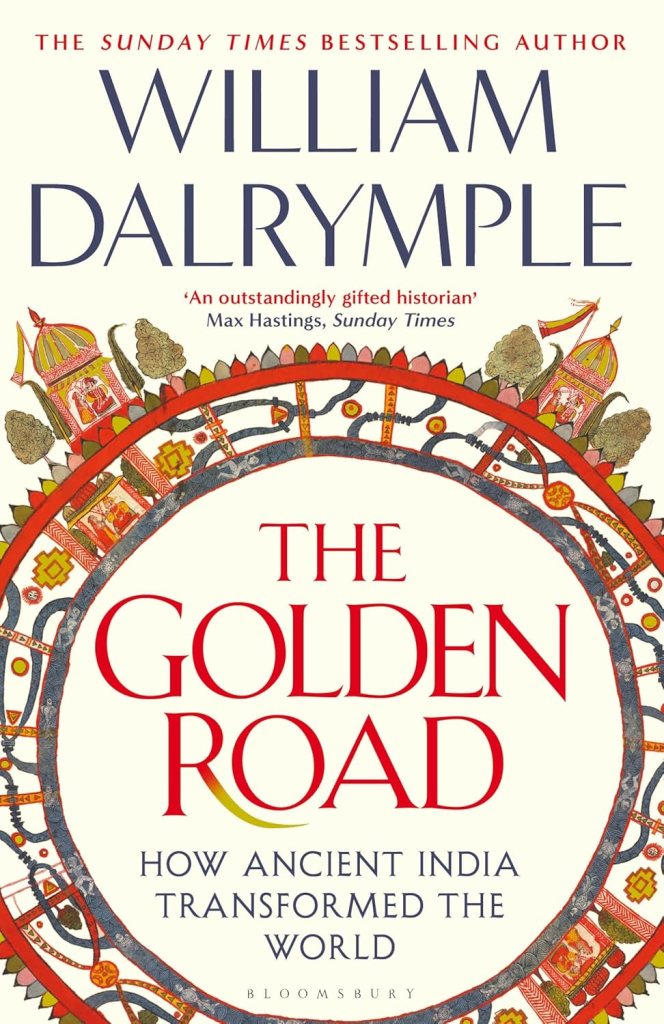
Like many historians before him, historian William Dalrymple, in his latest book, The Golden Road: How Ancient India Transformed the World outlines the importance of India as a cradle of knowledge that peddled wisdom to regions near and far. Its scientific knowledge was far ahead of its time. This know-how was put into practice and spread via trade routes. Their port of entry received not just their goods but also their culture and way of life.

Enduring attack after attack from foreign invaders, Indians had already forgotten their glorious past by the time of the British Raj. A tiger hunting expedition inadvertently brought British hunters to various beautiful cave carvings and Buddhist sculptures. That kind of rekindled India’s history, which had disappeared from the Indian imagination.

India had been a crucial economic fulcrum and a civilisational engine in early world history. As early as 31BCE, Indians had learnt to manipulate the monsoonal winds to steer their ship to the West to the prosperous kingdom of Ethiopia, Egypt and subsequent access to the Mediterranean. With their mammoth merchant ships, they transported pearls, spices, diamonds, incense, slaves and even exotic animals like elephants and tigers in exchange for gold. Trade favoured India so much that a Roman Naval Commander, Pliny the Elder, lamented the unnecessary spicing of the food and the almost transparent Indian fabric that left nothing to the imagination. It is said Buddhism reached the shores of Egypt through these ships. The Christian monastic way of life is said to have been influenced by these monks.

With seasonal monsoon winds, Indian ships brought not just trade but philosophy, politics, and architectural ideas to Southeast Asia, China, and even Japan. All this cultural allure and sophistication did not happen through conquest. Sanskrit was the language of knowledge and a conduit for spreading knowledge. 

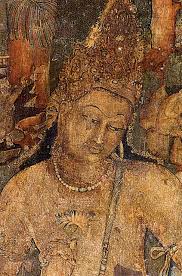
Buddhism emerged in the 5th century BCE as an alternative to caste-centred and animal sacrifice-filled rituals. Unlike Jainism’s strict austerities, it offered a middle path. Due to King Ashoka’s untiring efforts, Buddhism spread beyond its borders. Contrary to the belief that Buddhism promotes an impoverished way of living, early Buddhists drew interests (and resources) from the merchant group, as evidenced by the Ajanta Caves’ findings. Buddhism drew many Chinese scholars to India’s centres of higher learning in Nalanda and Kanchipuram in the South to get first-hand experience reading Buddhist scriptures in Sanskrit. India’s universities later became the template for other varsities the world over. 

India’s cultural influence on South Sea Asia is phenomenal. Stories from Indian epics, Ramayana and Bhagvad Gita, are told and retold in children’s stories, plays and cultural art forms. Their ruling elites were Hindus. The biggest Hindu and Buddhist temples are not in India but in Cambodia and Java, respectively, as Angkor Wat and Borobudur. Marvellous stony statues and temple are similar to those in India. At a time when the Byzantines were presiding over Europe, the Suryavarman clan was ruling a Hindu Empire so huge it would dwarf their European counterpart.  

The 5th to 7th century of the common era was the golden age of Indian mathematics. Between Aryabhata and Brahmagupta, their knowledge of the nine-number system (and zero) brought them the know-how of negative numbers, algebra, trigonometry, algorithms and astronomy far ahead of their time. They understood that Earth was a sphere spinning on its axis, about the eclipse, gravity and planetary rotations. The Indians even built a space observatory tower in Ujjain to study constellations and devise a solar calendar. The idea of a prime meridian arose from here. 

In the 8th century, the Abbasids exerted control over the Afghanistan region through treaties with local viziers. At that time, the Bamiyan region in Afghanistan had over 460 monasteries and 10,000 monks. A member of an influential Buddhist family, the Barmakid, converted to Islam to establish his family in the Abbasid fold. They brought Indian medicines, texts, and scholars with them and encouraged and promoted Islamic engagement with the East. Sanskrit texts were translated into Arabic. It is said that the Barmakids were instrumental in the building of Baghdad. 

The Islamic hegemony spread, as did the scholarship it had built. 

The Bamakid-Abbasid liaison met a tragic end due to palace power dynamics. The Abbasids started looking at the Romans for inspiration. Many Europeans were drawn to the Golden Age of Islam. Many texts were translated into Latin. Toledo of Andalusia introduced the science of timekeeping from Ujjain to Oxford. A particular young Italian named Leonardo of Pisa picked up the beauty of Mathematics during his stay in Algeria. He returned to publish ‘Liber Abaci‘ (The Book of Calculation) in 1202, which introduced Europe to the sequence of Fibonacci numbers and the mystic power of mathematics. This sudden gush of knowledge spurred the European Renaissance.  

The whole cycle completed its full arc when European powers rose to great heights. Benefitting from the knowledge from India that layered its way through, passing from hand to hand, the colonial masters returned to chop off [2]the hands that had nourished it. 

Emerging rejuvenated from their occupation-induced slumber, with their Anglophilic familiarity, Indians have risen from the ashes to claim their status in the Indosphere[3], a world where Indian influences permeated every layer of society.

This well-researched, unputdownable book is for all history buffs. Infused with little nuggets from cover to cover that would excite nerds, it is a joy to read about the history of India in a way that is not often told in the mainstream.

[1] Gau mutra, cow urine, has a sacred role in some forms of Hinduism and Zoroastrianism and is used for medicinal purposes and in some Hindu ceremonies.

[2] https://www.thedailystar.net/lifestyle/special-feature/the-muslin-story-187216#

[3] Indosphere is a collective linguistic term for areas under Indian linguistic influence. It includes countries in the Southern, Southeast, and East Asian regions. 22 languages, including Indo-European and Dravidian languages, are recognised under this category and are considered to have originated in India. 

Farouk Gulsara is a daytime healer and a writer by night. After developing his left side of his brain almost half his lifetime, this johnny-come-lately decided to stimulate the non-dominant part of his remaining half. An author of two non-fiction books, Inside the twisted mind of Rifle Range Boy and Real Lessons from Reel Life, he writes regularly in his blog, Rifle Range Boy.

.

PLEASE NOTE: ARTICLES CAN ONLY BE REPRODUCED IN OTHER SITES WITH DUE ACKNOWLEDGEMENT TO BORDERLESS JOURNAL

Click here to access the Borderless anthology, Monalisa No Longer Smiles

Click here to access Monalisa No Longer Smiles on Kindle Amazon International

Categories
Interview

 Magical Journey of Worlds and Words with Lya Badgley

Keith Lyons in conversation with Lya Badgley

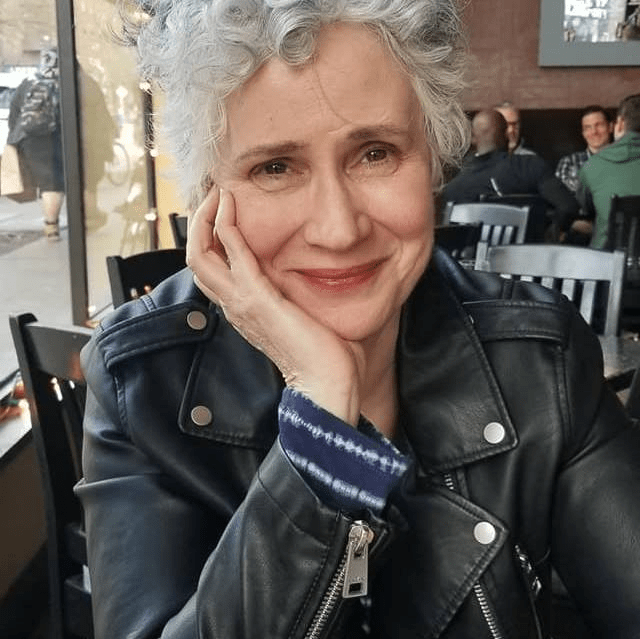
Lya Badgley

Lya Badgley’s life reads like an exotic adventure book you can’t put down, but she writes plot-driven suspense about women overcoming life-changing odds, against a backdrop of global conflict. In this interview, she shares her views about creativity, courage, persistence and resilience.

Youve had an interesting life – how often do people say that to you? How do you tell the story of your life in a short elevator pitch?

I’ve been very lucky to have had choices – many do not. That said, being born in Myanmar to Montana parents, was a good start. From Seattle’s arts scene to documenting war crimes in Cambodia and opening a restaurant in Yangon, my life experiences fuel my creativity. I’ve been a mother, a former city council member, and an environmental activist and now write novels drawing deeply from my lived experiences.

So, you were born in Yangon, Myanmar. How did your parents from the Rocky Mountains come to be in Burma? What are your first memories from there?

My parents discovered the wider world when my father was stationed in northern Japan during the Korean War. They fell in love with Asia, and he went on to dedicate his life to academia, earning a doctorate in political science. They first arrived in Burma (Myanmar) in the late 1950s. One of my earliest memories is coming home from kindergarten in up-country Burma and telling my mother that all the children spoke English in class. Astonished, she accompanied me to school the next day, only to find that the children were speaking Burmese. I had simply assumed it was English. To this day, I love languages.

What kind of environment did your parents create which encouraged your creativity?

My mother was a true artist, always encouraging me to find beauty in everything around me. My father sparked a deep curiosity about the world, especially about the lives of everyday people. Our dinner table conversations were always lively, full of challenges and excitement, fueling my imagination and intellect. I was never allowed to leave the table without sharing something interesting and eating all my vegetables.

In 1987 what changed your life? How does Multiple Sclerosis affect you today?

In 1987, I developed a persistent headache that wouldn’t go away. Within two weeks, I lost vision in one eye. The diagnosis of Multiple Sclerosis came swiftly. I’ll never forget the mix of terror and wonder as I looked at the pointillistic MRI image of my brain, and the doctor casually said, “Yep, see those spots? That’s definitely MS,” as if he were ordering lunch. Strangely, that diagnosis liberated me—after all, what’s the worst that could happen? Now, as I age, the disease may slow my body, but it hasn’t dimmed my spark.

In what ways has being a musician/poet/writer/artist been a struggle and challenge? Do you think that is part of process and it in turn fosters innovation?

The struggles of being an artist—whether overcoming rejection, creative blocks, or balancing art with daily life—are definitely part of the journey. But there’s also magic in that process. There’s something almost alchemical about wrestling with a challenge and, through that tension, creating something entirely new. It’s in those moments of uncertainty that the most unexpected ideas emerge, as if they’re waiting for the right spark. The struggle doesn’t just foster creativity—it transforms it, turning obstacles into opportunities. And the joy comes from watching that magic unfold, as your vision takes on a life of its own.

When did you return to Southeast Asia, and how did you come to work as a videographer on a clandestine expedition interviewing Burmese insurgents, and later helping document the genocide cases in Cambodia?

The short answer is — a boyfriend! In the early ’90s, I returned to Southeast Asia, driven by a deep connection to the region and feeling uncertain about what to do next after a failed marriage. Through a friend I met during Burmese language studies, I stumbled upon an unexpected opportunity to work as a videographer on a covert mission, documenting interviews with Burmese insurgents. That intense experience then led to my role in Cambodia, where I worked with Cornell University’s Archival Project. There, I helped microfilm documents from the Tuol Sleng Museum of Genocide, preserving crucial evidence that would later hold war criminals accountable. Both experiences were life-changing and cemented my passion for telling these vital stories.

You were among the few foreigners to open businesses in Burma in the 1990s. What hurdles were there to opening the 50th Street Bar & Grill Restaurant in Yangon, Myanmar? How was Burma at that time?

Opening the 50th Street Bar & Grill in Yangon in the mid ’90s was a real adventure, and I take great pride in being part of the first foreign-owned project of its kind at that time. Myanmar was just emerging from decades of isolation, with very few foreigners and even fewer foreign businesses. Navigating the bureaucracy was incredibly challenging — layers of red tape, and we often had to rely on outdated laws from the British colonial era just to get things moving. It took persistence, creative problem-solving, and a lot of patience. I had the advantage of understanding the culture and speaking a bit of the language, and I never worked through a proxy. I handled even the most mundane tasks myself—like sitting for hours in a stifling hot bank, waiting to meet the manager, who was hiding in the bathroom to avoid me!

Basic infrastructure issues like inconsistent electricity and unreliable suppliers were ongoing challenges. But despite all the hurdles, Yangon had a special energy then. The people were incredibly warm and resilient, and there was a palpable sense that the country was on the cusp of major change, even though it remained under military rule. Looking back, I’m proud to have been part of something so groundbreaking during such a unique moment in Myanmar’s history. It’s heartbreaking to see the return of darker times.

When did you first start writing and what has kept you writing? 

In the ’80s, I began writing song lyrics for my music, which eventually evolved into poetry. It turned out I had more to say, and my word count steadily grew from there. I write because I have no choice; it’s an essential part of who I am.

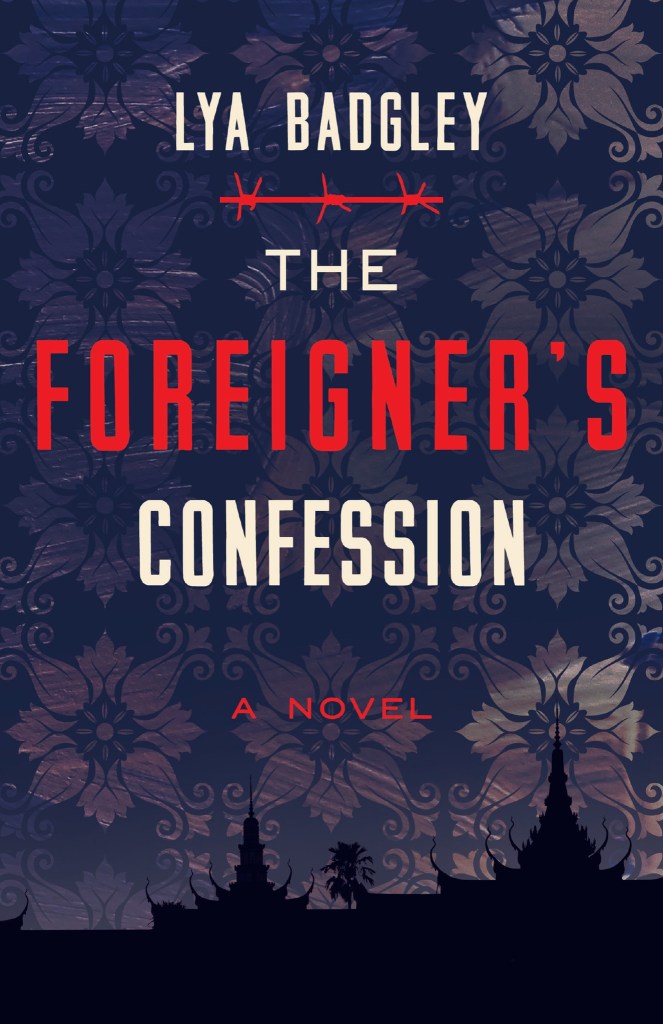
Your first novel, The Foreigners Confession, out in 2022, in the middle of the Covid-19 pandemic, weaves together one persons story and a countrys painful history. How do you integrate in the legacy of the past, a personal journey, a war-torn country and the themes of loss and regret?

In The Foreigners Confession, I explore the interconnectedness of personal stories and a nation’s history. I like using conflict zones as backdrops for my protagonist’s inner turmoil. These settings highlight the psychological landscape shaped by war and trauma, reflecting the chaos within the character. I’m fascinated by the notion that evil exists in each of us, and under the right circumstances, we’re all capable of bad things. This theme resonates throughout the narrative, as the characters grapple with their moral choices amidst the turmoil surrounding them. As Tom Waits[1] beautifully puts it, “I like beautiful melodies telling me terrible things” — that juxtaposition is central to my writing, illustrating how beauty and darkness can coexist and inform our understanding of the human experience.

When it comes to writing are you a planner or a pantser? Whats your process for writing, particularly when you want to bring in the setting, the history of a place, and authenticity?

I’m a pantser all the way! Just saying the word “spreadsheet” makes me break into a sweat. I wish I could create meticulous diagrams and beautiful whiteboards filled with colorful, fluttering sticky notes, but that just isn’t my style. For me, the story unfolds as I write. I refer to myself as a discovery writer. It’s a slow and sometimes tedious process but discovering what I didn’t know was going to happen is truly amazing. I draw from my personal experiences to provide authenticity.

Does writing suspense/mystery help make a novel more compelling because it has to be well-crafted and cleverly constructed?

I write the story buzzing in my brain and then try to determine the genre.

What do you think about the power and potential of a novel to reach readers in a different way, for example as a vehicle to give insight into the situation in Cambodia or Myanmar, the wider/deeper issues (like geopolitics/colonialism), and the present reflecting a troubled past?

Yes, yes, yes! Novels have the potential to foster empathy and understanding, challenging readers to confront uncomfortable truths. Can we humans please stop being so stupid? It’s doubtful, but we can only hope.

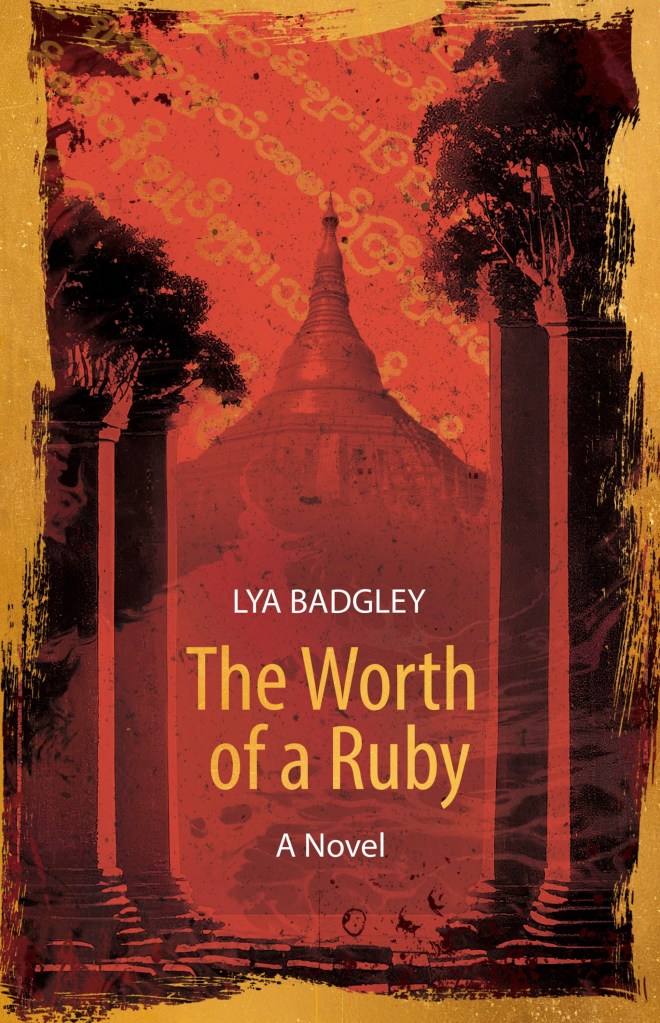
Last year your second novel, The Worth of a Ruby, was launched, and youve recently been in Myanmar. Whats been your impression of the place in 2024, still suffering under the coup and with not such good prospects as in the 2010s? Could you ever go back there to live?

Sitting in the Inya Lake Hotel in Yangon as I write this, I can see that the people here carry a veil over their eyes that I don’t recall from my previous visits. Nevertheless, the cyclical nature of oppression has persisted here for a long time. My husband and I would move back in a heartbeat if there were opportunities and adequate healthcare for my situation. This country remains a part of my identity, and I dream of a future where I can return to help contribute to its recovery.

Your current/recent visit to SE Asia has taken you to what places? What have been the most memorable experiences?

I’m in Yangon until mid-October and will then spend a few days in Singapore, slogging my books to the shops there. As always, the most memorable experiences are renewing the deep connections with the people I care about.

Both your books feature people/countries having to confront their past/dark side. How do you think a novel can help navigate through the complexities and nuances of situations, or at least show that nothing is as black and white as first thought?

That’s a complex question, and any answer can only touch the surface. Both of my novels explore people and countries grappling with their pasts and confronting their darker sides, but the truth is, no single story can fully capture the complexity of these situations. What a novel can do, however, is open a window into the nuances and shades of gray that exist beneath the surface. By diving into characters’ personal struggles and the layered histories of their countries, readers can begin to see that nothing is as black and white as it might seem. A novel helps illuminate the hidden motivations, moral ambiguities, and emotional complexities that are often overlooked, offering a more profound understanding of the tangled web of human experience.

Your work-in-progress novel is set in Bosnia. What themes will that explore?

The themes in my work-in-progress novel set in Bosnia will continue to explore the complexities of personal and national histories, much like my previous work. However, this time I’m weaving in elements of magic realism, drawing inspiration from the Sarajevo Haggadah and Balkan folktales. These mystical elements will add a new layer to the narrative, deepening the exploration of identity, memory, and the ways in which the past haunts the present. The use of folklore will allow me to delve into the region’s rich cultural traditions while keeping the focus on the enduring human themes of loss, resilience, and transformation.

Where is homefor you now? How do you think living in other countries has influenced your outlook and personality?

I am wildly curious, and home is the room I’m sitting in. Though we pay a mortgage on our condo in Snohomish, home has always been more about where I am in the moment than a fixed place. Living in different countries has profoundly shaped my outlook and personality. It’s given me a deep appreciation for diverse perspectives and a sense of adaptability. I’ve learned that people’s values and struggles can be both uniquely local and universally human. Experiencing different cultures has also sparked my curiosity and influenced the way I approach storytelling, allowing me to blend personal and global themes into my work.

What do you think are your points of difference/advantages that you bring to your writing?

One of the key differences I bring to my writing is my unique upbringing. Growing up in Myanmar with parents who encouraged both critical thinking and creativity gave me an early appreciation for the complexities of the world. I’ve lived in many countries and experienced firsthand the way cultures can both clash and blend, and that depth of perspective is something I try to infuse into my stories. Navigating a chronic disease like multiple sclerosis has also shaped my writing. It’s taught me resilience, patience, and how to find beauty in challenging situations. I think these experiences allow me to write characters and narratives that explore the shades of gray in life—the areas where pain, perseverance, and hope intersect.

Why do you think that a high proportion of expats/students/backpackers/digital nomads are from the Pacific Northwest and find themselves living and working in Southeast Asia? (I know three people from Snohomish who live in Asia).

It’s an interesting phenomenon, and I think the Pacific Northwest has some unique qualities that make it a breeding ground for wanderers. Growing up on the edge of the continent, facing west, there’s always been a sense of curiosity about what’s beyond the horizon. The region’s creative spirit—fueled by its music scene, constant rain, endless coffee, and a long history of innovation with computers and tech—fosters a mindset that’s open to exploration and new ideas. People from the PNW are used to thinking outside the box, and there’s a certain resilience that comes from enduring gray skies. This drive for adventure and discovery seems to naturally extend to places like Southeast Asia, where expats, students, backpackers, and digital nomads can experience a different pace of life while still tapping into their creative or entrepreneurial sides. Though, it blows my mind that you know three people from my little town of Snohomish living in Asia!

For aspiring writers and creatives, and for readers of Borderless, whats your advice?

My advice for aspiring writers, creatives, and readers of Borderless is simple: always take the step, go through the door you don’t know. The unknown is where growth, creativity, and discovery happen. Don’t be afraid to embrace uncertainty and take risks in your work and life. Whether it’s starting a new project, exploring a different idea, or venturing into unfamiliar territory, those leaps often lead to the most rewarding experiences. Stay curious, keep pushing boundaries, and trust that the act of creating—no matter how daunting—will always teach you something new.

Where can readers find you?

Email: lyabadgley@comcast.net

Mobile: 360 348 7059

110 Cedar Ave, Unit 302, Snohomish WA 98290

www.lyabadgley.com

www.facebook.com/lyabadgleyauthor

www.instagram.com/lyabadgleyauthor

Youtube: www.youtube.com/@lyabadgleyauthor 

.

[1] American musician

Keith Lyons (keithlyons.net) is an award-winning writer and creative writing mentor originally from New Zealand who has spent a quarter of his existence living and working in Asia including southwest China, Myanmar and Bali. His Venn diagram of happiness features the aroma of freshly-roasted coffee, the negative ions of the natural world including moving water, and connecting with others in meaningful ways. A Contributing Editor on Borderless journal’s Editorial Board, his work has appeared in Borderless since its early days, and his writing featured in the anthology Monalisa No Longer Smiles.

.

PLEASE NOTE: ARTICLES CAN ONLY BE REPRODUCED IN OTHER SITES WITH DUE ACKNOWLEDGEMENT TO BORDERLESS JOURNAL. 

Click here to access the Borderless anthology, Monalisa No Longer Smiles

Click here to access Monalisa No Longer Smiles on Kindle Amazon International
Categories
Notes from Japan

In Praise of Parasols

A classic way to keep cool

By Suzanne Kamata

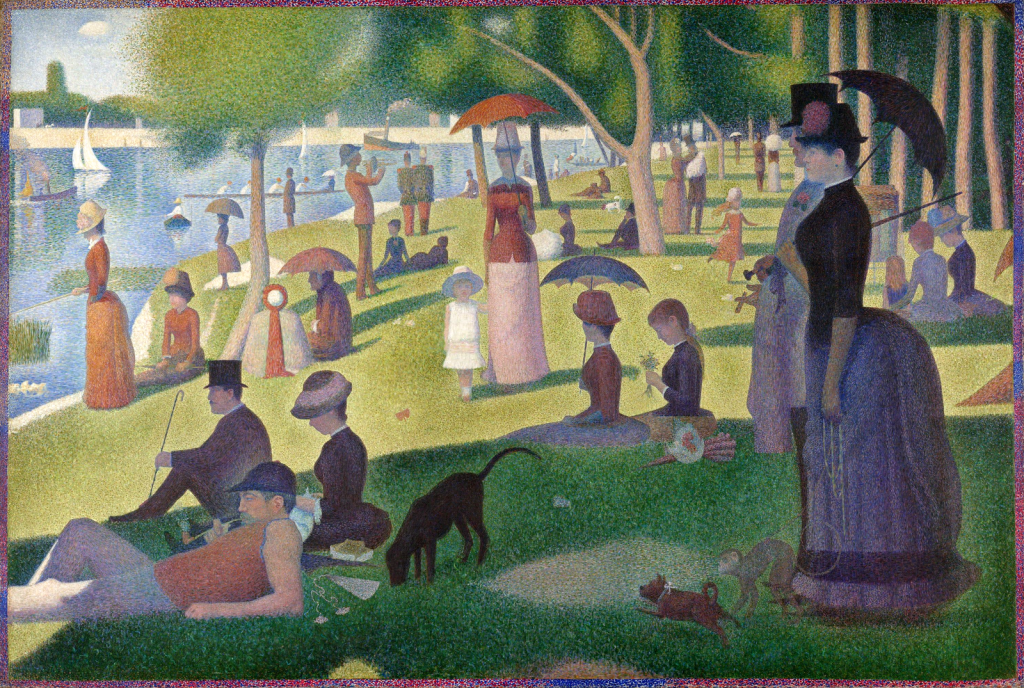
Painting by Georges Seurat(1859-1891). From the Public Domain.

Parasols? Seriously? Such were my thoughts when I first arrived in Japan one summer over twenty years ago. How quaint, I thought. How old fashioned! If a lady was worried about preserving her lily-white complexion, why not just slather on sunscreen and wear a hat?

In South Carolina, where I’d just come from, the only time I ever saw women wielding parasols was when I visited antebellum mansions. There, tour guides flounced around plantations in hoopskirts, twirling parasols as part of their period costumes. In real life, no one used them.

Back then, many of my friends spent hours laying out in the sun, in pursuit of the perfect tan. In the United States, people found my skin to be too pale, but in Japan women wore long white gloves and smeared their faces with whitening cream. And they carried parasols to ward off the sun.

Parasols have actually been in use in the Middle East and Asia for a very long time. They are depicted in ancient art in India, Egypt, Mesopotamia, and Greece, and are mentioned in a divination book from the Chinese Song Dynasty printed in 1270. Although alternative uses have been discovered for the parasol – for example, in 1902, ladies were advised by The Daily Mirror to use their parasols to fend off ruffians — the basic design is much the same as that of first century China.

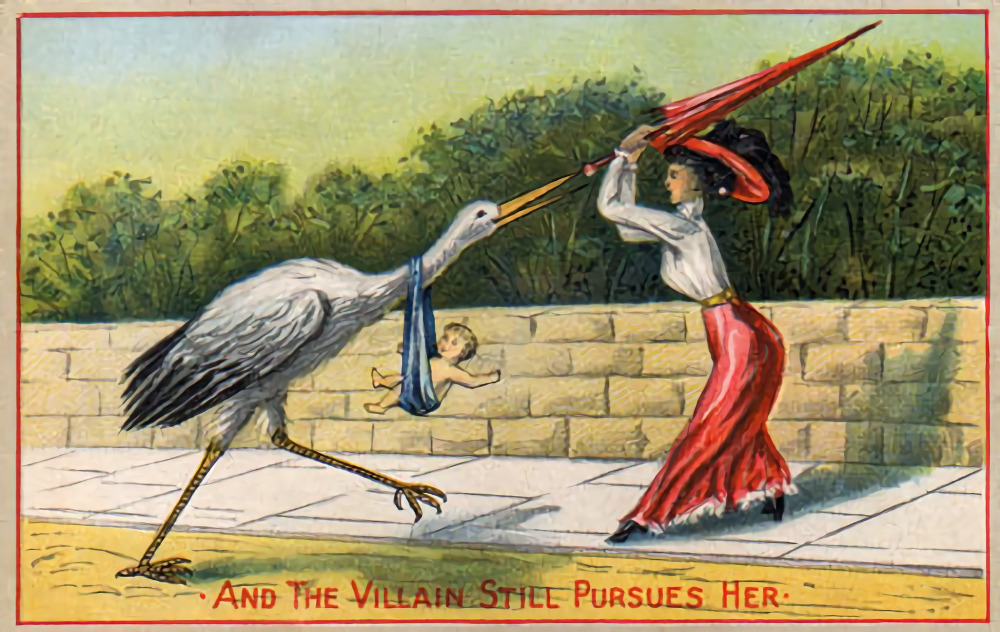
A postcard from the turn of the 20th century. From the Public Domain

The only parasol I’d ever owned was a bright red one made of paper, bought from a souvenir shop in Southeast Asia, which I displayed in a corner as an ethnic accent to my home décor. I never thought of using it outside.

Parasols were fussy and cumbersome, I thought. How could you do anything with your hands if you were holding one? They were a nuisance, and yet when I went to a baseball game with my mother-in-law in mid-summer, and the hot sun beat down upon us, I was grateful to share the shade of her black umbrella.

Ever conscious of my carbon footprint, I walk to the neighbourhood store with my eco-bags. One sweltering day last summer, I started to reach for my hat on my way out the door, but grabbed an umbrella instead. It really was cooler underneath! And carrying a parasol helps cut down on the new freckles. Today I browsed online for a new parasol. A number of new vendors have popped up in the West offering a variety of designs – Battenburg Lace for outdoor weddings, solid team colours for stadium sports, and more. Could it be that the parasol is about to come into fashion again in my native country? Here in Japan, it has never gone out of style. 

Suzanne Kamata was born and raised in Grand Haven, Michigan. She now lives in Japan with her husband and two children. Her short stories, essays, articles and book reviews have appeared in over 100 publications. Her work has been nominated for the Pushcart Prize five times, and received a Special Mention in 2006. She is also a two-time winner of the All Nippon Airways/Wingspan Fiction Contest, winner of the Paris Book Festival, and winner of a SCBWI Magazine Merit Award.

PLEASE NOTE: ARTICLES CAN ONLY BE REPRODUCED IN OTHER SITES WITH DUE ACKNOWLEDGEMENT TO BORDERLESS JOURNAL

Click here to access the Borderless anthology, Monalisa No Longer Smiles

Click here to access Monalisa No Longer Smiles on Amazon International

Categories
Interview Review

A Backpacker’s Diary by Jessica Mudditt

A brief overview of Once Around the Sun : From Cambodia to Tibet (Hembury Books) by Jessica Mudditt and a conversation with the author

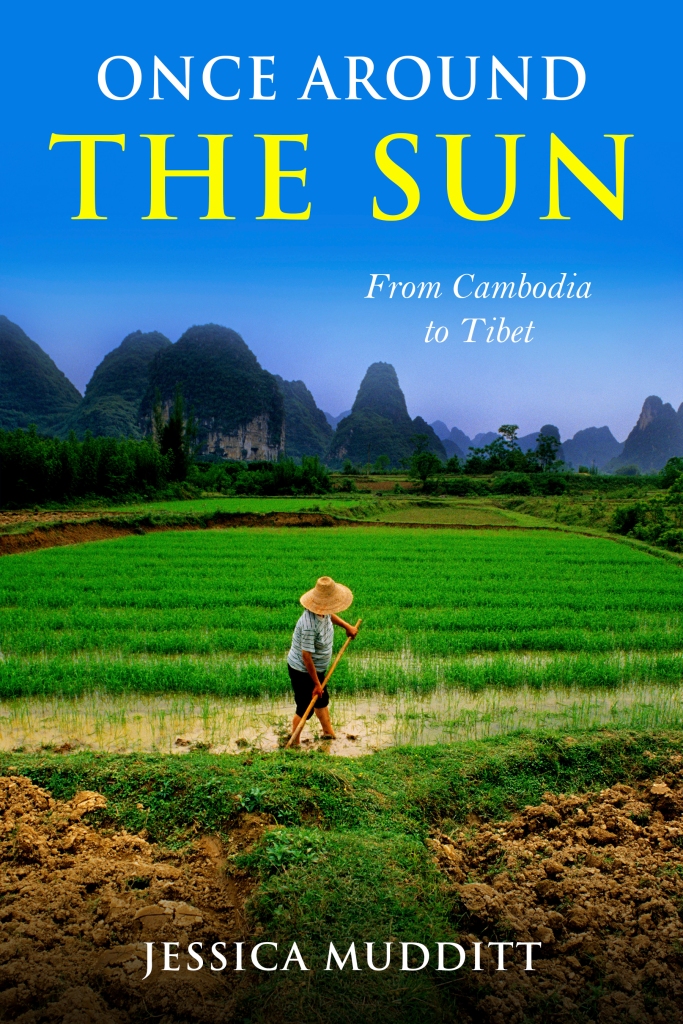
Jessica Mudditt’s Once Around the Sun: From Cambodia to Tibet is not just a backpacker’s diary but also her need to relate to humanity, to find friendships and even love, as she does with Kris, a photographer named after Krishna, the Hindu god, because his parents while visiting India fell in love with the divinity!

The Burmese translation of Our Home in Myanmar was published recently.

Hurtling through Cambodia, Vietnam, China, Tibet, young Mudditt concludes her narrative just at the brink of exploring Nepal, India and Pakistan in her next book… leaving the reader looking forward to her next adventure. For this memoir is an adventure that explores humanity at different levels. Before this, Mudditt had authored Our Home in Myanmar – Four years in Yangon, a narrative that led up to the Myanmar attack on Rohingyas and takeover by the military junta. Once Around the Sun: From Cambodia to Tibet is the first part of a prequel to her earlier book, Our Home in Myanmar, both published by her own publishing firm, Hembury Books.

What makes her narrative unique is her candid descriptions of life on a daily basis — that could include drunken revelry or bouts of diarrhoea — while weaving in bits of history and her very humane responses. Her trip to Angkor Wat yields observations which brings into perspective the disparities that exist in our world:

“I was gazing out at an empire that was once the most powerful and sophisticated in the world. In 1400, when London had a middling population of 50,000, the kingdom of Angkor had more than a million inhabitants and a territory that stretched from Vietnam to Brunei. It had flourished for six hundred years, from the ninth to the fifteenth centuries.

“But somehow Cambodia had become one of the world’s poorest countries, and surely the most traumatised too, following a recent war and genocide. I knew that when we came back down to the ground, there would be a collection of ragtag street kids and downtrodden beggars desperately hoping for our spare change. It was difficult to reconcile the grandeur of Cambodia’s past with its heart-breaking present in the twenty-first century. How did a country’s fortunes change so dramatically? Could the situation ever be turned around?”

How indeed?

Then, she writes of Vientaine in Vietnam:

“I was struck by the fact that sex work seemed to be the consequence for countless young women living in poverty. It made me angry, but mostly sad.”

In these countries broken into fragments by intrusions from superpowers in the last century, judged by the standards of the “developed countries” and declared “underdeveloped”, an iron rice bowl becomes more important to survive than adventure, discovering other parts of the world or backpacking to self-discovery. Travel really is the privilege of that part of the world which draws sustenance from those who cannot afford to travel.

Jessica showcases mindsets from that part of the Western world and from the mini-expat world in Hong Kong, which continue alienated from the local cultures that they profess to have set out to explore or help develop. One of the things that never ceases to surprise is that while the ‘developed’ continue to judge the ‘third world’, these countries destroyed by imposed boundaries, foreign values, continue to justify themselves to those who oppress them and also judge themselves by the standards of the oppressors.

Some of these ‘developing’ countries continue to pander to needs of tourism and tourists for the wealth they bring in, as Jessica shows in her narrative. She brings out the sharp differences between the locals from Asia and the budgeted backpackers, who look for cheap alternatives to experience more of the cultures they don’t understand by indulging in explorations that can involve intoxicants and sex, their confidence backed by the assurance that they can return to an abled world.

Backpackers from affluent countries always have their families to fall back on — opulent, abled and reliable. Mudditt with her candid narrative explores that aspect too as she talks of her mother’s response to her being sick and budgeting herself. Her mother urges her to cut short her trip. But she continues, despite the ‘adversities’, with an open mind. That she has a home where she can return if she is in any kind of trouble begs a question — what kind of ‘civilisation’ do we as humans have that she from an abled background has a safe retreat where there are those for whom the reality of their existence is pegged to what she is urged to leave behind for her own well-being? And why — as part of the same species — do we accept this divide that creates ravines and borders too deep to fathom?

Mudditt with her narrative does create a bridge between those who have plenty and those who still look for and need an iron rice bowl. She mingles with people from all walks and writes about her experiences. Hers is a narrative about all of us –- common humanity. Her style is free flowing and easy to read — quite journalistic for she spent ten years working as one in London, Bangladesh and Myanmar, before returning to her home in Australia in 2016. Her articles have been published by Forbes, BBC, GQ and Marie Claire, among others. This conversation takes us to the stories around and beyond her book.

What led you to embark on your backpacking adventure? Was it just wanderlust or were you running away from something?

It was primarily from wanderlust, but I also didn’t know what I was going to do with the rest of my life. After six years at university, I was still yet to have any particular calling. However, I was also glad I didn’t know. It meant that I was free to go and explore the world, because I wasn’t putting my career on hold. I had no career.

I also had a broken heart when I set off for Cambodia – but the trip was planned before that relationship had even begun. But again, part of me was glad that my boyfriend had called it quits, because my plan was to be away for a very long time (and it ended being a decade away).

What made you think of putting down your adventures in writing? As you say, this is a prequel to your first book.

It was the pandemic that made me realise that backpacking was really special. There was a period in 2020 when it looked like travel may never be so unrestricted again, so it motivated me to document my year of complete freedom. It was also before social media was even a thing. When I was lost, I was really lost, and I had to use my problem-solving skills.

Prior to the pandemic, I sort of thought that backpacking itself was too fun to write about. I hadn’t actually lived in any of the countries I visited – I was just passing through. But that is also a valid experience, and one that many people can fondly relate to. There were also some really confronting and difficult moments.

You have written of people you met. How have they responded to your candid portrayals? Or did you change their names and descriptions to convey the essence but kept your characters incognito?

While I was writing the book, I got back in touch with the people I travelled with – I can thank Facebook for still being in touch with most people mentioned. They helped me to remember past anecdotes and I got some of the back story of their own trips. I have only used first names to protect their privacy, although there are some photos in the book too. Thankfully the world is so big that the odds are small that anyone would recognise, say, an Irish guy from Adam in Vietnam in 2006! Clem from Shanghai has just sent me a photo of her with my book, and Romi from Vietnam actually came to my book launch, which was awesome.

What was your favourite episode in this book — as a backpacker and as a writer? Tell us about it.

I think it was crossing into China and meeting ‘the man.’ I felt so alive with every step I took into China after crossing over on foot from Vietnam. To be chaperoned in the way I was – without being able to communicate a single word – was unusual. His kindness left me speechless, so the anecdote has a nice story arc.

In your travels through China, you faced a language handicap and yet found people kind and helpful. Can you tell us a bit about it?

I foolishly underestimated the language barrier. It was profound. In Southeast Asia, there was always at least a sprinkling of English, and I sort of just assumed that I’d be fine. I entered China from Vietnam, so my first port of call was Nanning, where there is not even really an expat population. I couldn’t do the most basic things, from finding the toilet or an internet cafe or something to eat! I used sign language and memorised the Chinese character for ‘female’ to make sure I went into the right toilet! In a restaurant, I just pointed at whatever someone else was eating in the hope that they would bring me a bowl of whatever it was. There were times when I was seriously lost and lonely, but I ended up staying in China for two months and saw the comedic side. I was bumbling around like Mr Bean (who is hugely popular in China).

I met a lot of people who were really kind to me, and I was just so grateful to them. I didn’t have Wi-Fi on my phone back then, so getting lost in a massive city in China was a bit scary. I met a student called Mei-Xing who ‘adopted’ me for a few days in Guilin. We had a really nice time together and it was so great to hang out with a local.

What is/are the biggest takeaway/s you had from your backpacking in this part of the world? Tell us about it.

I think it’s something quite simple: the world can be a very beautiful place, and a very polluted place. Tourism can do a great deal of damage when there are too many people clambering over one area. There is also an incredible level of disparity in a material sense on our planet. Some humans are travelling into space on rockets. Others are pulling rickshaws, as though they are draught horses. It is profoundly inequitable.

Having travelled to large tracts of Asia, what would you think would be the biggest challenge to creating a more equitable world, a more accepting world? Do you think an exposure to culture and history could resolve some of the issues?

I think that democracy is key. It slows us down and forces us to act in the interest of the majority, not the top-level cronies. That is definitely also something I witnessed in Myanmar. When a few people hold all the power, the population is deprived of things that ought to be a human right.

I think that travel definitely alters your perspective and broadens your mind, and it is something I’d recommend to anyone. Realising that the way that things are done in your home country is not the only way of doing things is a valuable thing to learn.

Mostly, you met people off the street. In which country did you find the warmest reception? Why and how?

In Pakistan. The hospitality and friendliness was unparalleled. I think it was in part due to not having many tourists there. Nothing felt transactional. I met some fascinating people in Pakistan who would have a profound impact on my own life. I am still in touch with several people I met there.

At a point you wondered if the poverty you saw could be reversed back to affluence in the context of the Angkor kingdom. Do you have any suggestions on actually restoring the lost glory?

I believe that it is beginning to be restored. Pundits have called this the “Asian Century.” I am convinced that the United States and the UK are in decline, and this process will only speed up. India, to me, holds the most promise as the next superpower, because it is a democracy (albeit flawed – like all of them), English- speaking, enormous, beautiful, fascinating and its soft power is unmatched. China is facing headwinds. I blame that on making people sad by removing their agency.

How long were you backpacking in this part of the world? Was it longer than you had intended? What made you extend your stay and why?

My trip was exactly 365 days long. I planned it that way from the beginning. I wanted to travel for no less than a year (more than a year and I might stay feeling guilty for being so indulgent!). That is also why the book is called Once Around the Sun – my time backpacking was the equivalent of one rotation of the Earth. I set off on 1 June 2006 – the first day of winter in Australia – and I arrived on 1 June 2007 in London, on the first day of the British summer. I love the sunshine.

After having travelled around the large tracts of Asia and in more parts of the world, could you call the whole world your home or is it still Australia? Is your sense of wellbeing defined by political boundaries or by something else?

Home for me is Sydney. I absolutely love it. I get to feel as though I am still travelling, because my home city is Melbourne. I go down a new road every other day and I love that feeling. The harbour is beautiful, and the sun is shining most days. It’s very multicultural too.

My kids are three and five, so I haven’t travelled overseas for years. My plan is to travel with them as much as possible when they are a bit older. I hope they love it as much as me. I cannot wait to return to Asia one day. I am also desperate to visit New York City.

What are your future plans for both your books and your publishing venture?

The second part of Once Around the Sun will come out in 2025. It’s called Kathmandu to the Khyber Pass, and it covers the seven months I spent Nepal, India and Pakistan.

My goal is to complete my fourth memoir by 2027. It will be called My Home in Bangladesh (it will be the prequel to Our Home in Myanmar!).

My fifth book will be about how to write a book. I am a book coach and in a few years I will have identified the most common challenges people face when writing a book, and finding their voice.

In the next twelve months, there will be at least 12 books coming out with Hembury Books, which is my hybrid publishing company. I love being a book coach and publisher and I hope to help as many people as possible to become authors.

Please visit the website and set up a discovery call with me if you plan on writing a nonfiction book, or have gotten stuck midway: https://hemburybooks.com.au/.

(The online interview has been conducted through emails and the review written by Mitali Chakravarty.)

Click here to read an excerpt from Once Around the Sun

PLEASE NOTE: ARTICLES CAN ONLY BE REPRODUCED IN OTHER SITES WITH DUE ACKNOWLEDGEMENT TO BORDERLESS JOURNAL. 

Click here to access the Borderless anthology, Monalisa No Longer Smiles

Click here to access Monalisa No Longer Smiles on Kindle Amazon Internation


Categories
Conversation

‘Home has been a Process of Lifelong Search’

In Conversation with Kirpal Singh

Dr Kirpal Singh

 “Singapore is intimately linked with home and, yet for me, home has always been a process of lifelong search. Partly because of the early months of my birth. The record says I was born in March 1949, but the time was not certain as I do not have a birth certificate. My father forgot to register my birth,” reminisces Dr Kirpal Singh, an internationally recognised scholar. Born in the Straits Settlement of Singapore, before the island emerged as an independent entity, he has lived through much of history. He tells a story of multi-racial, multi-cultural growth that the island afforded him.  

His father, he tells us, was “well known throughout Malaya — Jeswant Singh nicknamed as ‘Just One’ — a boxer who would knock people down with his left hook. In 1954, he left boxing when he killed someone during a match.” His mother, a Jewish Scot who he cannot recollect, he tells us, “ might have been David Marshall’s sister according to my stepsister but no one else has said that.”  Marshall[1] was the first Chief Minister of Singapore from 1955 to 1956 and then Singapore’s Ambassador to France, Portugal, Spain, and Switzerland 1978 to 1993. He is the founder of the Worker’s Party. His parents had emigrated from Baghdad to Singapore in 1908 according to current resources.

How did Singh’s parents come to be in Singapore? Were they immigrants or colonials?

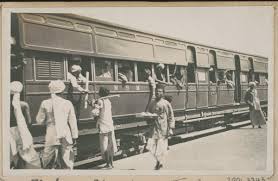
He responds with what he knows: “My grandfather and grandmother came to Singapore on board a ship in 1900. They left Jullunder, Punjab, in 1899. By the time they reached Singapore, it was the end of 1900. They left to seek their fortune. They were from the farming community. My grandfather was only sixteen and my grandmother was about twelve. They were in transit in Penang for six months. They came to Singapore in 1901. Actually, it was all Malaya — Singapore was part of the Straits Settlement. They came to Singapore by train. Trains were just starting out. It was around August 1901.

Trains in Malaya

“My uncle was conceived during this journey. They halted in Singapore for only two or three weeks. My grandfather’s cousin was in Perak[2], in Malaya. So, he wanted to be with his cousin. His cousin had cattle. Most of the Sikhs were cattle farmers. They settled in Pahang[3], an area which eventually became a nuclear dump[4] for Australia. It is closed to public now. There was a stone that proclaimed the land was a nuclear dump when I went with my son a few years ago.

“My father moved to Singapore as his prospects were better here as a boxer. This is where he met my mother. I was born here. He actually met mum because my mother’s two brothers had invited her to come from Glasgow. My mother is Scottish, from an industrial background. Her brothers came to the Far East to make money.  She finished her school leaving exams and came to visit her brothers during her vacation. She would go with her bothers to watch boxing, where she saw my father, the champ. She was only fifteen or sixteen. The next thing the brothers knew was she was pregnant with me.”

Jeswant Singh was popular with colonials. Kirpal Singh tells us: “Some Europeans saw him box and offered him a job then in the Base Ordinance Depot. This was the British Military camps in the Far East. There were three bases in Singapore: the naval base, Kranji and one in the South. He worked there for thirty years and retired after that. In 1972[5], after the final British withdrawal from Singapore, dad’s formal employment status ended. After that he just did odd jobs, ending up as a security guard, looking after the factories in Jurong, earning about two to three hundred dollars a month.”

Kirpal Singh spent his childhood with his grandmother and uncle. Before he started schooling, his father left him with his grandmother and divorced his mother in favour of a new bride. Dr Singh tells us the story of how he returned to Singapore: “I was basically in Perak with my grandmother. My uncle, who was the first Sikh to become a Christian in Southeast Asia, left home because his father gave him a beating for changing his religion. My uncle was an Anglican. His conversion saved him from the Great Depression as the clergy was very well looked after. From 1929 to 1933, the church looked after him because he was the priest in Seramban. My father was still young. My uncle was born in 1911 and my dad in 1923. My grandmother bore eighteen children. Five of the infants passed away before they were one month old. But thirteen survived. She passed away at 95… I knew when I left for my doctorate programme in Adelaide that that was the last time I would see her. I had a hunch and was crying on the plane. Six weeks later, I got a letter with the news of her death.”

He adds: “Dad was in not in a position to look after me. The responsibility fell on his brother William. His full name was William Massa Singh s/o Deva Singh. He had studied at the Ipoh Chinese school, topped the school, eventually worked as an insurance agent. He was very good in English. The principal of his school, a New Zealander, arranged for my uncle to move to Singapore. Then my father moved there too. Singapore was the metropolis even then. It was the centre of English education. Penang was the other one. In 1956, I was sent to Singapore from Perak on a train — a one-and-a-half-day journey to my uncle.”

His grandmother joined them within a few months as his uncle was, he says, “more interested in aiding Lee Kuan Yew get rid of the colonials. Lee Kuan Yew was a self-made man. He met Goh Keng Swee[6] and Rajaratnam[7] as students in England. They became buddies and wanted to move out of colonial rule and be independent.”

Then, how did a young child survive? Dr Singh tells us: “I used to earn my pocket money from age five six by watering gardens. I have had very interesting experiences. When I was in primary two, I used to give tuition to primary one students. With enough gumption, you can survive in this world.”

“I grew up with my uncle’s wards, who were brought home to be educated. There was even one who was a Chinese-Japanese mix. So, I grew up being familiar cross-cultural marriages and in a multicultural home. I grew up in the kampong with a Chinese boy and we became friends from the age of seven-and-a-half when we were in primary two. His name is Tan Jwee Song — I call him Jwee, ‘my good saint’.  He told me after O-levels he would support me to study further and took to teaching. At that time, you could become a teacher after completing your O level. I joined Raffles late during my time in high school because it was too expensive for me. I taught in night classes started by Lee Kuan Yew and studied. I owed Jwee $80,000 dollars and I wanted to pay his widow back — but she would not accept it. When I graduated in 1973 with an honours’ degree, I was $44 thousand in debt. Then, I was given a scholarship.”

And slowly, Kirpal Singh came to his own. When television came into being, he tells us: “I was often on TV in 1970s — days of early television — debates and interviews as a guest.” Kirpal Singh grew into an intellectual of repute as he worked and studied with the support of the many races and many people who, often like him, were migrants to Singapore.

As time moves forward, these stories — that are almost as natural as the sand, the wind and the sea — ask to be caught in words and stored for posterity, stories from life that show how narrow borders drawn by human constructs cannot come in the way of those with ‘gumption’.

(Written by Mitali Chakravarty based on a face to face conversation with Kirpal Singh. Published with permission of Kirpal Singh)

[1] https://www.roots.gov.sg/stories-landing/stories/david-marshall/story

[2] Now in Malaysia

[3] Now in Malaysia

[4] https://buletinonlines.net/v7/index.php/lynas-radioactive-waste-to-be-dumped-in-pahang-tax-free-while-australia-gets-a18-million-in-taxes-2/

[5] The British armed forces were scheduled to withdraw from Singapore by 1971. https://eresources.nlb.gov.sg/infopedia/articles/SIP_1001_2009-02-10.html#:~:text=On%2018%20July%201967%2C%20Britain,Singapore%27s%20defence%20and%20economic%20security.

[6] Deputy Prime Minister of Singapore, 1973-1980, one of the founding members of the ruling PAP (People’s Action Party) https://www.roots.gov.sg/stories-landing/stories/goh-keng-swee/story

[7] Deputy Prime Minister of Singapore from 1980 to 1985, one of the founding members of the ruling PAP https://www.roots.gov.sg/stories-landing/stories/sinnathamby-rajaratnam/story

PLEASE NOTE: ARTICLES CAN ONLY BE REPRODUCED IN OTHER SITES WITH DUE ACKNOWLEDGEMENT TO BORDERLESS JOURNAL. 

Click here to access the Borderless anthology, Monalisa No Longer Smiles

Click here to access Monalisa No Longer Smiles on Kindle Amazon Internation


Categories
Stories

Jonathan’s Missing Wife

By Paul Mirabile

Courtesy: Creative Commons

The alarm-clock rang at seven as usual. Jonathan, puffy-eyed, yawned and slammed down the catch violently. He then rolled over towards Heather, his wife, who always needed a firm nudge to get her up in the morning. Alarms had absolutely no effect on her eardrums. Roll he did but the left side of the bed was empty! Odd, Jonathan, a light sleeper, had not heard the creaking of the bed. Besides, he had always been the first to rise in the mornings.

He threw off the blankets, blurry-eyed, and shuffled to the loo. Throwing a bathrobe over his pyjamas, Jonathan glided barefoot into the kitchen. No one! Into the sitting-room. Empty! He opened the door to their son’s now unslept in room and took a peep. Nothing! He shrank back when he saw the large map of Southeast Asia scotched to the wall over his son’s desk, and two books laid out open: André Malraux’s La Voie Royale[1] and Somerset Maugham’s The Gentleman in the Parlour: A record of a journey from Rangoon to Haiphong. He closed the door quietly with a religious deference.

A bit ruffled by this unaccustomed morning void in the house, Jonathan quickly washed, dressed, drank a cup of coffee and decided to investigate the strange absence of his wife. First he telephoned her bridge-club mates, Molly, Susan and Julie. Not one had seen or heard from her since their last get-together last week. Nonplussed, Jonathan dialled Heather’s sister’s number, Hazel at Luton. She had no great love for him but …

Hazel answered the phone, yawning, vague and aloof. No, she hadn’t spoken to Heather since Tuesday. It was Friday. “Maybe she’s out buying a mink stole,” she scoffed with unaffectionate irony. And she slammed the receiver down. Jonathan winced, poising his phone over its hook. He let it drop with a dull thud …

He fell back into a wicker chair chaffed by Hazel’s customary curtness. From the large bay window of his Town Council flat he gazed musingly out at the dwarfed pine trees that separated the pavement from his tiny front garden. The autumn leaves, sad, spiralled up and down against the grey sky, tumbling about the yellowing grass. He rocked back and forth meditatively. Wherever could she be? This was not like her, he repeated over and over again. He suddenly thought of the detective’s report…No, it had nothing to do with that. He was sure of it.

Jonathan shot out of the wicker chair and stepped out the front door. He would make a few rounds of Stevenage before doing anything too hastily. He got into his brand new 1975 Ford Cortina and roared off to their favourite pub, The Duck or Grouse. Why she should ever go there at this time of the morning seemed absurd. But one never knows … Heather worked there in her younger days as a barmaid, perhaps she popped in for a chat before shopping.

The inside of the pub was cloaked by the darkness of early morning emptiness. The owner, Lawrence, a squinty-eyed bloke, was busy juggling bottles of liquor and whistling some ridiculous television series tune. His huge, round, pink, hairless face lit up in surprise at the sight of Jonathan. The pub-owner stopped juggling, staring at him out of his squinty, shabby eyes.

“A bit early for a pint, mate!” he boomed in that portentous fatuous voice of his. “Where’s your better half ?” And he gave Jonathan a conspicuous wink. Jonathan, in no mood for Lawrence’s boring humour, came to the point :

“Heather has gone off, or I think she’s gone off.”

“With who ?” came the other’s equivocal repartee.

“Don’t mess about, Lawrence. Just tell me whether she’s been in or not.” Lawrence rubbed his hairless chin thoughtfully and shook his head. He turned towards the kitchen in the rear and cried out, “Have you seen Heather about, love?” A faint voice between splashes and the clanging of kitchenware answered in the negative. The pub-owner shrugged his burly shoulders. Jonathan pursed his lips, turned his back to him and strode dejectedly to the door. As he reached the low door Lawrence shouted out huskily: “Cheerio old boy ; give my regards to the misses … when you find her … Mind the head, duck or grouse!” Jonathan bit his lip, disregarded the caustic remarks and stalked into the streets.

Back in the car he weighed up the situation, fuming over Lawrence’s uncalled for insinuations. Heather was over sixty ! He frowned. The cheeky sod believed the whole thing to be a joke. Gone off with who?

Perhaps she’s at the pictures. No, at this time of day? What’s on? Oh, that stupid action film. She’d never go in for that.

His eyes lit up — the grocer’s, yes, of course, she went out to the grocer’s shop just across from the Cromwell Hotel. Jonathan headed towards the Cromwell in downtown Stevenage Old Town without a second thought.

The dumpy, red-cheeked Mrs Whitby was all smiles when she caught sight of Jonathan stumbling into her empty shop, although the redness of his face and his bloodshot eyes startled her — that is, piqued her curiosity. 

“All right, Jonathan ? You’re not looking very jaunty this morning,” she began in her hoarse, cocky voice.

“Yes, yes, I’m fine,” he lied. “But listen, has my wife been in this morning?”

“Can’t say that I’ve seen her. Why? Has the misses been playing hide and seek with her mate?” She gave him a sly wink. Jonathan stiffened. He never liked Mrs Whitby and this feeling was manifestly reciprocal. Nor did Heather for that matter. She thought her vulgar. Alas, this was the closest grocery shop to their flat.

“You must take this seriously, Mrs Whitby,” responded Jonathan sharply. “She’s nowhere to be found, and I don’t know what to do.”

“Go to the bobbies,” she suggested tersely. “It’s their job to find missing people, right ? Be quick about it though, she might have been abducted by some romantic stranger stirring about Stevenage.” Mrs Whitby chortled, rolling her crossed eyes in a grotesque manner. Jonathan pulled a dour face.

“Oh don’t talk nonsense. There are no romantic strangers stalking about Stevenage, and if there were, they would never have chatted up a sixty-five year old woman.”

“Well, well, well. How do you know that a woman at sixty-five couldn’t seduce a man?” Mrs Whitby riposted dryly as if she herself, in her sixties, had ensnared a few ‘romantic strangers’. “You should know, sir, that old birds do catch the worm.” Jonathan was shocked by the vulgarity of the metaphor. Then she added lightly, “Go to the police station or call Scotland Yard. You know, Scotland Yard always finds missing people. Mind you, most times they’re dead, but they find a few alive.”

Jonathan stared at the ungainly woman in disbelief; the words stabbed at his chest with poignant thrusts. She noticed Jonathan’s ghastly mien and wanted to retract her statement but it was too late. She quickly said, “But sometimes they find them alive, they do. Don’t worry about Heather; she can take care of herself good and proper.”

He left the grocery shop as if in a drunken stupor, staggering into the cold, wind-swept streets. Melancholic leaves twirled about, descending in crispy clusters to the pavement. Above they dangled precariously from naked boughs, then down they plummeted from the high arching tree-tops, floating like fairy lights, bouncing to the pavement and street listlessly, their silken colours obscured by the mud. Jonathan followed intensely their errant adventure; the spiralling leaves drew him ever closer to their Fate. Suddenly, he drew back from the scene lest he become emotionally devoured by it. The morning events grew more and more estranged to him, like a bad dream or a doctor notifying you that your cancer was incurable. Plucking up courage he took a deep breath, dashed for his car and raced off to the police station in Stevenage New Town.

Jonathan stopped the car abruptly. There, tottering along the pavement was his neighbour Andy. He had no overcoat and sported a stained starched white shirt. His long, wavy hair had visibly not been combed. Andy was certainly drunk! Jonathan pulled up beside him and called out, “Andy! Do you have a minute?”

Andy, indeed drunk, stopped short in his footfalls. When he realised it was Jonathan, he danced over to the Ford flapping his arms like a bird. Andy was in a delightful mood.

“Blimey, Jonathan old fellow, fancy meeting you here.” Andy skipped back and forth, jovially tapping Jonathan’s car window with his tobacco-stained fingers.

“Stop dancing for heaven’s sake,” an exasperated Jonathan yelled out. “Have you seen Heather about ?”

Andy froze in his side-stepping and posed as if to have his photo taken. He turned his beetle-like eyes on his neighbour, “Have I seen Heather ? Well … “ He put a finger to his temple. “Yes, I might have dreamt of her last night or the night before … lambent eyes sparking like wine, teeth, milky white.”

“Stop mucking about and just tell me whether you’ve seen her or not,” the wife-seeker lashed out, beside himself. Andy had always been the ingratiating neighbour, ‘stepping in’ uninvited for tea at four, or more often, for a few shots of Jonathan’s expensive Armagnac at seven!

“I can’t say that I have, Johnny.”

“Stop calling me Johnny! Are you sure? You look absolutely sloshed.”

“Yes I’ve had a few, but I am able to peer through the fumes of Glenfiddich[2] and grasp the dire urgency of the situation. Now let me see,” and he rolled his eyes about in their orbits. “Sorry mate, I haven’t seen your wife since ‘mi own troubles and strife’[3] buggered off with the manager of the Cromwell.”

“What are you insinuating ?” Jonathan eyed him coldly.

“Nothing old boy ; no need to make a row over a flown bird. You know what they say, when the cage is left open birds will fly out.”

“Drunken fool !” Jonathan rolled up the window and sped off to the police station. It soon dawned on him that he had no time to lose. All these ridiculous enquiries led him nowhere. No one took either him or the affair with any seriousness. But was it all that serious? What would the police do? Would they snicker at him, cast amusing glances at one another as he narrated his morning’s ordeals? Would they twitch their moustaches whilst rubbing their clean-shaven chins? Before he had any answers to these questions, he had parked across from the local police station.

Unexpectedly there were no twitching of moustaches or amused glances for the simple reason that behind the desk, congested with sheaves of documents and notes, sat one very clean-shaven police officer, his corrugated, oval face beaming with absolute boredom. As Jonathan staggered forward, the police officer peered at him out of steel, blue eyes. The frosty peering of those eyes examined him from head to toe. Jonathan suddenly felt very self-conscious, like when one forgets to put on underwear on an outing, or trying on shoes at the shop with holes in your socks. In a state of exhausted excitement, he reported everything he had experienced since the alarm-clock woke him up at seven sharp. He even had a photo of Heather in his wallet. The officer obediently jotted down every word in a very professional manner. This show of professionalism put Jonathan somewhat at ease, although he did feel his energy flagging, his verbosity aimless.

The officer held the photo in front of him, studying it carefully. After a few minutes, he turned his attention to Jonathan whom he studied for a minute or two. Those steel, blue eyes bore into his. Jonathan felt terribly awkward.

“I shall have Scotland Yard check all English citizens having left the country on flights to Southeast Asia,” the officer finally stated, beating his brows. These words were spoken as if they brooked no questioning. Jonathan, however, was in no mood to be brow-beaten by a young police officer whose cryptic words left him more in a muddle than when he arrived. This being said, he did express a tinge of anxiety as if the officer were keeping him in the dark by withholding a piece of information that concerned him personally.

“Why Southeast Asia ?” he stuttered.

“Why not Shangri-La for that matter?” The other, amused by Jonathan’s caustic humour, leaned over the desk with an enigmatic smile.

“Are you not Jonathan Richards, father of the teacher who went missing in Thailand some six or seven months ago ?” Jonathan, abashed, fell back.

“Yes I am. But I fail …”

“To see the motive of your wife’s disappearance in connection with your son’s? In that case, allow me, sir, to put you in the picture. Instead of contacting us or Sotland Yard, you went about hiring a private detective whose reputation, as far as our files show is a far cry from Sherlock Holmes’.” He chortled at his own comparison.

Jonathan remained stoic, unamused by such a preposterous assumption. Was this officer making fun of him ?

“My son’s disappearance has nothing to do with my wife’s!” he managed to retort tartly.

“Does it not?” came the other’s terse rejoinder. Jonathan unzipped his vest and unbuttoned his collar. The air had become sultry, laden with danger, unexpectedness.

“I shall not be misled or abused,” he objected without conviction.

“Misled ? Abused ? Dear sir, here you are whimpering about your missing wife after having whimpered about your missing son. What have you done for both ? You sent an incompetent fool to Thailand for an extravagant fee, when in fact, if I am not mistaken, your wife urged you to go contact the police or Scotland Yard.”

Jonathan, aghast, went pale, jarred by the officer’s personal details. He was at the edge of despair, but at the same time was beginning to understand …

“How dare you pry into my family affairs ? Did my wife come to you in secret ? Are you in league with her … hand and glove ?”

“Secret ? Hand and glove ?” he chuckled. “I should think not Mr Richards. It seems that all this is a secret only to you!”

At that blow Jonathan took hold of the officer’s untidy desk. He immediately straightened up, “Am I then responsible for both their disappearances?”

“Now, now, let us not get all rattled over an incident that has been in our files for months. Yes, your wife, Heather, I believe, informed us of your son’s misfortune after Sherlock Holmes had given her his trashy report. You know that the police keep abreast of these foreign matters.”

“That means you urged her to leave then…?” Jonathan shouted, his peevish, bloodshot eyes blurry from anger and insult.

“Not exactly.” The officer replied coolly, twiddling a pen about his thumb. “The police do not urge, as you put it; we merely suggested that since the detective in question happened to be a crank, or charlatan if you wish, other means of locating your son would have to be adopted.”

“Such as?” Jonathan’s voice rose a pitch.

“Such as you yourself going to fetch him, old chap! And since you haven’t made a move for over six months, well, it appears that the misses has taken it upon herself to do what you should have done.”

The accusation addressed so pointedly at him drove him to a frenzy.

“Are you accusing me of parental misguidance ? How dare you …” he shouted, flushing red in the face.

“Let us not get nasty now, Mr Richards. Would you prefer that I send you packing with trite remarks or stencilled phrases like ‘oh, not to worry, it can happen to the best of us. Keep a stiff upper lip’?”

“Rubbish! Anyway, how can you be so sure about all this? Has she left you a note?”

“Police intuition, my good man. Intuition,” snorted the officer all smiles, his cold blue eyes gleaming with rakish roguery.

“Intuition ! What nonsense !” Jonathan exploded.

The officer resumed in a mollifying tone, “Just go home and wait for a letter or a phone call. We, too, shall do our own investigation. No need to put yourself out.” The aloof nonchalance of the police officer’s reaction and comportment infuriated Jonathan even more. He turned on his heels and scuttled out of the station as if having been tutored by some old nanny.

The late morning sun lay hidden behind layers of thick, grey clouds. He felt a sudden chill. A sudden urge to scream at passers-by that eyed him with either indifference or overt suspicion. A scream that would bring back his Heather … his son !

“We can go find him together, Heather … please …,” he lamented to himself. A few drops of rain fell on his feverish forehead. He let the drops drip down into his parched mouth. He needed a drink. The whole sky was engulfing him in a white cloak of despondency. The chills grew longer, succeeded quicker.

“No, impossible ! She couldn’t have gone on her own. She knows nothing of travelling nor of taking care of herself. I’ll call Heathrow to confirm it.”

That officer’s smirk burned his insides. “How dare he tell me more about my wife than …” Jonathan’s train of thought came to an abrupt halt, “A conspiracy! Yes, everyone is ganging up on me; that blasted sister of hers, Andy, Mrs Whitby, Lawrence … even the Stevenage police ! The whole lot of them are in on it. How dare that officer address me as an old chap ! Heather planned this behind my back in connivance with a pack of deceiving scourges …”

In a savage rage he kicked at the water-logged leaves that clung to the pavement. He struck at them violently whilst the pitter-patter of rain fell heavier and heavier. Several leaves rebuffed his vicious assaults, clinging all the more securely to the now drenched pavement. He flew into a tantrum beating the rebellious leaves, “I’ll show you!” he cried aloud, wrenching them out of their refractory state, tearing them to pieces with his boot.

Several women passing by stopped to observe this unusual spectacle. Jonathan, suddenly conscious of their regard, ceased his petulant outburst. There he stood, cutting a gloomy, lonesome figure in the now pouring rain. He felt like a helpless child. He moved swiftly to his car, flung open the door and sped off home, thoroughly disgusted with the police, his neighbours, Stevenage … with Humanity as a whole …

Once at home, wet as a rat, he immediately threw himself down on the sofa in the sitting-room. He wanted to cry but could not. He thought of Heathrow. As he reached for the receiver, his bloodshot eyes fell on a folded piece of paper stuck between the blue china bought in Amsterdam, the artificial wax orchids and two family picture frames on the mantelshelf of the hearth. Why had he not seen that this morning? He stood and looked at it carefully. Heather’s handwriting had scribbled his name on the fold of the paper. With a trembling hand he unfolded it. A sudden sadness overwhelmed him…

Dearest Jonathan,

Off to Southeast Asia to find our Francis. I’m sure you understand my decision given the fact that for six months you have made no move yourself. I had no other choice love, believe me. You’ll be on your own for some time, but you’ll get on just fine without me. I’m sorry I said nothing of this to you, but woman’s intuition told me what you would have been very cross with me if I had. Now that I am gone pray for my safe return with our dear Francis securely at my side.

Love, your Heather.

P.S. I shan’t tell Francis that his poor Patty died. It would break his heart. I’ll let you handle that on our arrival.   

Resignedly Jonathan let the note drop to the carpeted floor. He returned to the sofa and lay back exhausted, brooding over his wife’s leaving … her lack of affection … of honesty towards him. “A conspiracy!” he whimpered, planned by the police and Heather. “And strike me dead if Hazel wasn’t involved in the whole thing ! That brazen hussy probably put her up to it …”

His face dropped into his hands and he began to cry softly. He dried his tears and fixed his attention on the picture of sixteen-year-old Francis on the mantel shelf with his dog Patty, at that time just a puppy. The reality of the situation creeped into the empty house. His whole existence seemed suddenly forfeited. What had prompted his conduct? He had only himself to blame for the whole mess. It was true, they were right. He had done little for his only child. Hiring a detective had been his idea, a way of compensating for his apathy, indifference … even his obtuse disregard of the whole affair as if Francis had been a victim of his own puerile doings, and would just have to find a way out of the mishap himself. Alas, at that time he had no means of weighing the consequences of his indolence in his wife’s eyes. She surely despised him! Jonathan, jaded by these unwelcoming but candid thoughts, stretched out on the sofa and dozed off into a troubled sleep.

A very troubled sleep during which he dreamt that his death had awakened him to life. Little did Jonathan Richards know his wife would never return …

.

[1]          The Royal Road

[2]        A Sottish malt whiskey

[3]        ‘my wife’ in Cockney rhyme

.

Paul Mirabile is a retired professor of philology now living in France. He has published mostly academic works centred on philology, history, pedagogy and religion. He has also published stories of his travels throughout Asia, where he spent thirty years.

.

PLEASE NOTE: ARTICLES CAN ONLY BE REPRODUCED IN OTHER SITES WITH DUE ACKNOWLEDGEMENT TO BORDERLESS JOURNAL

Click here to access the Borderless anthology, Monalisa No Longer Smiles

Click here to access Monalisa No Longer Smiles on Kindle Amazon International
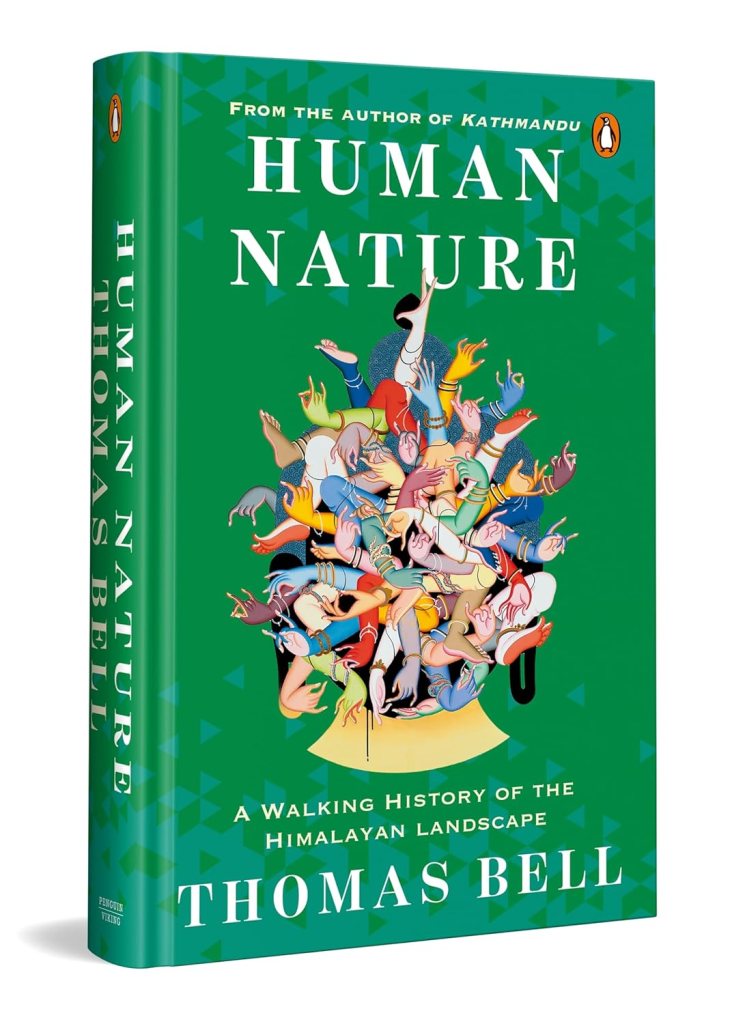
Categories
Interview Review

In Conversation with Ujjal Dosanjh

Ujjal Dosanjh left his village in Punjab in quest of a better life. He had a bare smattering of English, very less money and some family overseas when he left his home at Dosanjh Kalan at the age of seventeen. That was in 1964. He spent the first three years in Britain and then, moved to Canada to become a prominent lawyer, activist and political figure.

When he started in the 1960s, to earn a livelihood in England, he shunted trains in the British Railways. He left for Canada in hope of a better future. He had to work initially in sawmills and factories to support himself. Eventually, he could get an education and satisfy his ambitions in British Columbia, which became his home. Coming from a family which contributed to the freedom struggle of India, it was but natural that he would turn towards a public life. His uprightness, courage, tolerance, openness and commitment had roots in his background, where his parents despite different political ideologies, lived together in harmony. His family, despite their diverse beliefs, stood by him as he tried to live by his values.

Dosanjh voiced out against separatist forces that continue to demand an autonomous country for Sikhs to this day. In 1985, he was beaten almost to death by such Khalistani separatists as he boldly opposed the movement that had earlier led to the assassination of the Indian Prime Minister, Indira Gandhi (1917-1984) and to the bombing of an aircraft where all 329 people aboard died. However, undaunted by such attacks, he continues to talk unity, welfare for the underprivileged and upholds Mahatma Gandhi as his ideal. He went into Canadian politics with unfractured belief in the Mahatma. Dosanjh was the Health Minister of Canada and earlier the Premier of British Columbia. He has been honoured by both the Indian and Canadian governments. In 2003, he received the highest award for diaspora living outside India, Pravasi Bharatiya Samman, and, in 2009, he was a recipient of the Top 25 Canadian Immigrant Award.

Now, sixty years from the time he left his country of birth, he shares his narratives with the world with his updated autobiography — the first edition had been published in 2016 — and also with fiction. As an immigrant with his life spread over different geographies, he tells us in his non-fiction, Journey After Midnight – A Punjabi Life: From India to Canada: “Canada has been my abode, providing me with physical comforts and the arena for being an active citizen. India has been my spiritual refuge and my sanctuary.” He writes of what he had hoped could be a better future for humankind based on the gleanings from his own experiences and contributions to the world: “If humanity isn’t going to drown in the chaos of its own creation, the leading nations of the world will have to create a new world order, which may involve fewer international boundaries.”

In this interview, he shares his journey and expands further his vision of a world with diminishing borders.

You travelled from a village in Punjab, through UK and ended up in the Canadian cabinet to make changes that impacted humanity in your various public roles as a politician. Would you have been able to make an impact in a similar public role if you had never left India? Was the journey you went through necessary to help you become who you are?

It’s almost next to impossible to imagine what actually would have happened to my life in India had I stayed there. The most complicating element would be the standards that I would apply in such reimagining, the standards I most certainly wouldn’t have known or applied to my Indian life’s journey. I do think though and I have said it often in conversations with friends that had I stayed in India I would have either turned into a saint or devil; nothing in between for one who in 1964, the year I left, already hated the beginnings of the corruption that has now almost completely enslaved the country’s polity and ensnared the society.

Even though what has guided me throughout my life were the lessons I learnt from my freedom fighter maternal grandfather, my activist father and Mahatma Gandhi’s life, I believe the ethics and mores of public life, first in Britain and then in Canada helped shape and sculpt who I became and how I conducted myself. Had I not been to Britain and not lived most of my life in Canada, it’s impossible even to imagine the ‘me’ that would now be walking upon our planet earth.

While within five years of landing in Canada, you were studying in University of British Columbia and driving an Austin, some other immigrants fifteen years down the line continued in abject poverty. What does it take to rise out of endemic poverty? Do you see that happening in the world around us today?

The way you phrased the question conceals the fact that before I resumed full time college in January 1970s and went on to complete my BA and then LL.B. in 1976, I had spent full six years of my life in UK and Canada working jobs including shunting trains with British Rail, making crayons in a factory, being a lab assistant in a secondary school and pulling lumber on the green chain in a saw mill in Canada while often attending night school.

And I must add that my extended family and my spouse were largely responsible for paying my way through my B.A. and LL.B.

While even then it wasn’t easy, I do recognise the union wage then available to students in summer employment enabled them to save enough for the school year; with most summer jobs that’s not the case now. The students now more often than not have to depend on loans or help from the parents.

A significant section of the immigrant diaspora has done reasonably well while for many it’s becoming harder and harder to just make ends meet. 

And by the way the Austin, you refer to, was the used Austin 1100, Austin Mini’s sister, I had bought for the then princely sum of six hundred dollars; it took mere six dollars to fill its tank.

That’s truly interesting. At the beginning of your biography, you stated ‘politics is a noble calling’. Later you have written, “I had realized I needed to make a clean break from the pettiness of politics.” Which of these is true? And why the dichotomy — pettiness as opposed to nobleness? And what made you change your perspective?

No, I have not changed my view of politics. It is a noble calling but only if you do it for the right reasons. More and more I found that a significant number of people seeking public office did so for glory that they perceived the elected public office bestowed upon them. Shorn of any lofty ideals and the pursuit of public good politics often degenerates into petty squabbles rather than the giant battles of great and contrasting ideas.

The pettiness is the result of small minds pursuing the mirage of glory in phony battles that barely move the needle on the bar of public good. I often refer to the absence of great leaders in the political landscape of India and the world; Canada has not escaped the current curse of the dearth of great minds in the political arena. Hence my exasperation at the situation I found myself in.

The world over, politics seems to have become the refuge of intellectual dwarfs—no offence intended to our shorter brothers and sisters. The small minds tend not to see too far into the future; they are oblivious to the need to constantly challenge the world to be what it could be.

After a lifetime of activism and close to eighteen years of elected office it was only natural for me to tire of the myopia and pettiness in what otherwise remains a noble endeavour.   

You met Indira Gandhi — the second woman to lead a country in a prime ministerial role — and had this to say of her “Indira Gandhi loved India immensely. One can be an imperfect leader and yet a patriot”. Do you think she was an effective leader for India?

My wife and I spent an hour speaking with Indira Gandhi on the afternoon of January 13, 1984. We spent the first few minutes comparing notes about our grandparents and parents as freedom fighters and activists before discussing the issues related to the agitation in Punjab, its growing militancy and increasing violence in and outside the Golden Temple. From what she said it was clear she was extremely troubled about the dangerous situation of the militants holed up in the Temple and the toll it was taking on the peace, politics and the economy of the state. I sensed a certain helplessness in this otherwise quite brave woman when describing the unsuccessful efforts she and her office had made to reach a peaceful settlement of the issues raised by the Sikh agitation. Because I had met both the militant Bhindranwale and the peace loving leader of the agitation, Longowal, and understood the tension between the two men and their followers, I knew she was grappling with a political minefield. All of this and much more that we discussed left me in no doubt about her love for the country and all its people.

But I do believe she allowed the situation at the Golden Temple to linger too long and deteriorate before trying to bring it under control; thus, it and the Operation Bluestar, her ultimate response to the armed militants holed up in the Temple, remains one of her great misjudgements—perhaps as grave as the declaration of the National Emergency in 1975.

Imperfection being part of the human condition, one isn’t surprised that Indira Gandhi who saw all Indians as equally Indian, too, was imperfect; a strong but imperfect leader.   

“Sikri was the capital for the new world of unity that Akbar had wanted to create. Ashoka took a similarly bold leap toward peace after a bloody war. Two millennia after Ashoka and four centuries after Akbar, Mahatma Gandhi shared with India a similar vision and a path out of colonialism. India killed him.” Please explain why you feel India killed Gandhi.

One can’t and mustn’t blame an entire country for the actions of one or two persons and yet what I said of Gandhi’s assassination, at least figuratively if not literally, can be said with ample justification; not one but several attempts were made to end Gandhi the mortal. If many Indian hearts and minds—and there were many in his lifetime, perhaps not as many as there are in Modi’s India—wanted Gandhi  and his philosophy of nonviolence and love for all dead, then I must say, even without resorting to the writers’ licence, India stands accused and guilty of his January 30th, 1948 assassination; India killed Gandhi.

Even before the advent of Modi on the national scene India’s politicians had substantially diminished and damaged Gandhi’s legacy of Truth, Love and Non-violence. Considering the so few prominent voices in the public domain criticising the Modi regime’s single-minded undermining of Gandhi’s legacy, almost to the point of extinction, it can be said that if it already hasn’t done so, India is close to annihilating Gandhi’s Truth, Love and Non-violence.      

“To India’s shame, the rich and ruling classes of today mimic the sahibs of yore. Some of them still head to the hills with their servants, the Indian equivalent of the slaves of the United States.” As Gandhi is seen as one of the architects of modern India, what would have Gandhi’s stand been on this?

When Gandhi lived in England and South Africa, he was part of the diaspora of his time and learnt new things as such. Today with social and digital media one hopes even living in India he would have been aware of the yearning of humanity for equality and economic and social justice. The way most rich and powerful treat the poor and the weak in India is absolutely antithetical to what an egalitarian India would demand of them.

I’m aware of how Gandhi didn’t support the abolition of caste and of his position or lack thereof on the question of equality for the blacks of South Africa at the time. But different times throw up leaders with different and perhaps better approaches to the fundamental issues. Were he alive today, he would have argued for the abolition of caste, equality for all and he wouldn’t have accepted or ignored how India treats its workers, poor and the powerless.   

You have told us “India leads the world in the curse of child slavery and labour. Millions of India’s children are trapped in bonded labour, sex trafficking and domestic ‘help’ servitude.” Most people plead poverty and survival when they talk of children working. Do you see a way out? Is there a solution?

Yes, like all problems, this, too, has a solution:

Legislate, legislate and legislate.

Enforce, enforce and enforce the legislation.

I know some laws do exist but we need legislation with more teeth. The laws regarding minimum wage, hours of work, overtime and holiday pay and health regulations must be strengthened and more vigorously enforced, in particular, in the so-called domestic help sector. Better wages and working conditions rigorously enforced would attract adult workers who would be able to send their children to proper schools rather than thrust them in to slavery in exploitative homes, factories and workplaces.

Not much will improve on this front though unless Indians end the endemic corruption in law enforcement. You see corruption confronts and stares us in almost all, if not all, issues Indian; it is the elephant almost in each and every room.  

“Violence can never be a tool for change in a modern, democratic nation.” You tried to use Gandhian principles through your life — even in Canada. Do you think non-violence can be a way of life given the current world scenario with wars and dissensions? How do you view Gandhi sanctioning the participation of soldiers in the first and second world wars? Can wars ever be erased or made non-violent?

First let’s deal with Gandhi’s sanction of the soldiers in the two world wars. Whether or not he had sanctioned their participation, the soldiers would have gone to war; most of them fought for wages, not for the love of war or the country except those for whom the Second World War was a war against fascism and hence justified.

I don’t believe Gandhi ever stated that in fighting a violent enemy or a perceived enemy one was not allowed to use violence. All I ever remember him saying was that you throw your unarmed body wrapped in soul force in front of the enemy but if you are too chicken to do so or can’t do so for some other reason but fight an aggressor you must, violence is better than doing nothing.

As for countries fighting each other I don’t believe he ever said that, in an uncertain world where the military of another country could invade at any moment, a country must forego a military of its own.

As for nonviolence being a way of life, it can and must be for a country in its internal life. On the borders however one always has to deal with what one is presented with; you can’t ask Ukraine to not fight; in the face of a suddenly expansionist China or a belligerent Pakistan, Gandhi wouldn’t have urged the Buddha’s meditational pose for India; he didn’t do so in late 1947 when Pakistani fighters invaded Kashmir.

As for wars being non-violent, they can never be if the likes of Russia continue to invade others.  

You opposed the Khalistani separatists and stood for a united India. What is your stand on Khalistan, given the recent flare up? Did you do anything this time to allay the situation in Canada?

I have always been opposed to countries being carved out on ethnic, linguistic or religious basis; I am a firm believer in multilingual, multi-ethnic, multi-religious and multi-racial populations living together in peace within the boundaries of peaceful countries; for that to happen, secularism remains a sine qua non[1]. That is why I so passionately continue to support a secular and inclusive India.

As for me doing something in the face of what is happening in Canada today vis a vis the Khalistanis, I didn’t say anything because I don’t believe it would have added to the debate; everyone already knows what I think and believe.

What does concern me though is the weak-kneed response and reaction of the public leaders of Canada; they have not unconditionally condemned the glorification of terrorists, known murderers or those who on the streets of Canada glorify and revere the killers of Air India passengers or of Mrs. Indira Gandhi. For me, someone who immigrated to Canada in 1968 when the elder Trudeau became the Prime Minister of the country, the near silence of our politicians on Khalistani violence and its glorification has been a low point; the older Trudeau knew how to deal with the terrorists; he didn’t and wouldn’t have pussy footed around terrorism or its glorification.     

When your autobiography was published the first time in 2016, your column in Indian Express was cancelled. As many of us grew up in India of the past, we believed in secularism and democracy with freedom of expression. How has it changed over a period of time?

After I left India and particularly when I was introduced to the Hyde Park, I reflected on India and it seemed to be one of the freest places in the world; any intersection of a city road or a corner of the village served as a mini Hyde Park; from the millions of speeches made in such Hyde Parks all over India, millions of ideas tumbled forth from the lips of ordinary but engaged Indians.

Of course, I do realise that in the lives of the poor and the powerless, the freedom hadn’t shone as bright. The imprisoning of the Naxalites without charges and Indira Gandhi’s Emergency were the first real jolts of un-democracy and unfreedom I felt India as a whole had suffered. From there it went downhill; that sporadic communal riots continued; that Godhra was done to the Muslims as was done the post Indira assassination violence to the Sikhs; lynchings of Muslims and Dalits continue today.

India’s response to the first major unfreedom, Indira’s Emergency censorship, was encapsulated in the blank front pages of the censored Indian Express, that symbol of the Journalism of Courage. That symbol may still burn today but it is smouldering and clearly less bright enveloped as it and others are in the atmosphere of fear of the likes of ED[2] and CBI[3]; almost none amongst the traditional media homes shines much or at all; the digital media has thrown up some brave examples like The Wire. But the overall scene is dismal. India needs many revolutions; one of them is the reawakening of some semblance of fortitude in India’s Godi[4] media outlets.

Over repeated trips to India, you observed that people did not want to talk of major issues like availability of potable water but wanted to discuss issues like the eroding culture among the diaspora. Why do you think this has happened? Is there a way to change this mindset?

Human mind is an amazing thing; it seeks engagement but when the immediate is painful to observe and feel, it finds solace in contemplating the scenes afar; for sheer survival in its troubled and troubling milieu it develops numbness; such numbness shields it from the immediate while thinking about the distant problems, imagined or real, offer it a sense of engagement. Such is what I thought happened to many in Punjab.

Another troubling thing was that much beyond the essential human pride a sense of chauvinism and superiority, at least among its rich and powerful, has plagued Punjab for a long time which has blinded it to the need for change and progress—one didn’t need to improve what one believed to be perfect and hence superior. 

Punjab has significantly slipped in the Human Development Index. That this humbling fact is now quite widely acknowledged in intellectual and political circles gives me some hope that things may improve.      

“There are massive water shortages across the country. There’s a crisis in health care…Under the weight of crippling debts and droughts, small and marginal farmers are killing themselves. There aren’t enough jobs being created for the millions of youth joining the job market every year. The human-rights record of the Indian State in Kashmir, the Northeast and other parts in the grip of insurgency is horrific and shameful. Dalits and Muslims are lynched with impunity by Hindutva-inspired mobs for skinning dead cows, or being in the vicinity of meat that may or may not be beef.” Do you see a way out? What can India do to step out of the condition you have described so accurately?

I have argued for some time that what India needs is a new freedom struggle, a Values’ Revolution, to rid itself of corruption—rishwat[5], unethicality, religious and cultural fanaticism that impinges on many Indians’ right to life, dignity and liberty. In arguing this I am aided by Gandhi’s dictum—that I have always alluded to in my own writings—that he was engaged in not creating a new India but a new Indian; my reading of what he said has led me to conclude he meant a caring, humane, compassionate, egalitarian and an ethical Indian. To create an India with 1.4 billion ethical and progressive Indians requires a mammoth revolutionary change in our values; hence a Values’ Revolution.

At the moment I see the country’s civil society under constant attack by the forces of social division whereas in fact social solidarity and cohesion are sorely needed. A Values’ Revolution will require giant leaders; I see none on the scene today but I’m not disheartened because once begun the Revolution itself may, as do all revolutions, throw up the necessary giants.

You are an immigrant who has lived out of India for almost half a century. Do you think as part of the diaspora living outside India, we could all act together to heal a region broken by its own inability to live up to the vision created by those who wrote the constitution of the country? What would be your vision of India?

The diaspora coming together to even slightly nudge India forward is an emotionally compelling and noble thought; many of us constantly dream of doing something for the country we have left behind. Some of us do so while others revel in its imaginings only.

A major stumbling block to the diasporic unity on this question has been the ideological divisions amongst the Indians abroad which usually mirror India’s domestic political fault lines and unfortunately those difference have been only rendered sharper by the way elements of the diaspora have recently been employed in aid of India’s domestic political machinations. The old diasporic divisions now seem and feel more rabid; it is as if the political battles of India now rage equally actively in the diaspora itself. 

I always dream of India as a caring, compassionate, egalitarian and ethical India. One that values all its citizens equally and brims with social and economic justice.  

That is such a wonderful thought with which many of us agree wholeheartedly. You have written: “If humanity isn’t going to drown in the chaos of its own creation, the leading nations of the world will have to create a new world order, which may involve fewer international boundaries.” What is the world order you suggest?

For starter no order can be imposed by the so-called leading nations, no matter how powerful. It may take a significant amount of nudging and cajoling by them to change anything.

 When I wrote my autobiography, I was imagining the world moving, at least to begin with, in the direction of regional groupings like the European Union. We saw that as the number of member states of the United Nations trended upwards, Europe witnessed the opposite where many countries dared to create the EU practically erasing borders; granted Britain rebelled – but even within its borders a referendum held today would most likely approve it re-joining the EU.

As a possible beginning for the rest of the world, our best hope lies in grand imaginings such as a South Asian Common Market at once reducing the expense of standing militaries staring angrily at each other across the borders; Southeast Asia, Africa, South America could follow; North American Free Trade Agreement already exists creating at least an economic union.

If to begin with the countries regionally moved toward the free flow of human beings along with the necessary and more convenient local trading, one could foresee the international will and desire developing toward a world populated by fewer borders and more freedom. Hopefully that would move humanity toward more international egalitarianism, prosperity and fewer wars.

Hopefully, the vision materialises. Thank you very much for giving us your time and wonderful books that make us think and emote.

Click here to access an excerpt from Journey After Midnight – A Punjabi Life: From India to Canada

[1] An essential condition, Latin phrase

[2] Enforcement Directorate

[3] Central Bureau of Investigation

[4] Lap, Hindi word

[5] Bribery, Hindi word

(The online interview has been conducted by emails by Mitali Chakravarty)

PLEASE NOTE: ARTICLES CAN ONLY BE REPRODUCED IN OTHER SITES WITH DUE ACKNOWLEDGEMENT TO BORDERLESS JOURNAL. 

Click here to access the Borderless anthology, Monalisa No Longer Smiles

Click here to access Monalisa No Longer Smiles on Kindle Amazon International