Title: Daktarin Jamini Sen: The Life of British India’s First Woman Doctor
Author: Deepta Roy Chakraverti
Publisher: Penguin/ EBURY PRESS
History often celebrates great events, revolutions, and institutions, yet it frequently overlooks individuals whose quiet determination helped shape the modern world.
Deepta Roy Chakraverti’s biography, Daktarin Jamini Sen: The Life of British India’s First Woman Doctor, seeks to restore one such remarkable figure to her rightful place in history. Through meticulous research and deeply personal storytelling, the book brings to light the life of a pioneering physician who challenged conventions, crossed borders, and carved a path for women in medicine at a time when such ambitions were rare.
Jamini Sen (1871- 1933) was among the earliest women doctors of British India and the first woman to become a Fellow of the Royal College of Physicians and Surgeons of Glasgow. In the late nineteenth and early twentieth centuries, when the world of medicine was overwhelmingly dominated by men, her achievement was nothing short of extraordinary. To study medicine, it required courage and determination; to excel in it and gain international recognition demanded a resilience that few possessed.
Chakraverti’s book traces Jamini Sen’s journey from the changing social landscape of Bengal to the complex and often dramatic world of royal Nepal. Born in a time when child marriage, strict gender roles, and social conservatism defined the lives of many women, Jamini’s life unfolded against the backdrop of a society in transition. The opening chapters evoke a Bengal negotiating between tradition and reform—where ideas of modern education, nationalism, and social change were beginning to challenge entrenched customs.
It was in this milieu that Jamini took her first steps toward a career in medicine. The path was far from easy. As a woman entering a profession dominated by men, she encountered skepticism, resistance, and prejudice. Yet the biography portrays her not as a passive victim of circumstance but as a determined individual driven by conviction and intellectual curiosity. Her pursuit of medical knowledge reflects both personal ambition and a broader spirit of reform that characterized parts of Indian society during the late colonial period.
One of the most fascinating phases of Jamini Sen’s career unfolded in Nepal. She was invited to serve as physician to the royal family during the reign of Prithvi Bir Bikram Shah. Nepal at that time was a kingdom cautiously opening its doors to modern influences, and Jamini’s presence there represented an important step in introducing modern medical practices to the royal court.
Serving in the palace required far more than medical skill. Court life was shaped by hierarchy, intrigue, and political sensitivities. Yet Jamini’s professionalism, discretion, and quiet confidence earned her the trust of the king and the respect of those around her. The biography suggests that her friendship with Prithvi Bir Bikram Shah was marked by mutual regard, and that she played a role in supporting his aspirations for a more modern Nepal.
But the story of Jamini Sen is not merely one of professional success. The book also reveals the personal costs that often accompany pioneering lives. Loss, loneliness, and emotional hardship form a recurring undercurrent in her journey. She endured the deaths of loved ones and navigated difficult relationships yet remained steadfast in her commitment to her work and her ideals.
Chakraverti’s narrative emphasises that Jamini’s resilience was rooted not only in determination but also in faith and introspection. Moments of spiritual reflection and philosophical questioning appear throughout the narrative, suggesting that her inner life was as complex as her public career. This dimension of the biography adds depth to the portrait of a woman who was not simply a medical pioneer but also a thoughtful and introspective individual.
The author’s own connection to the story lends the book a distinctive emotional resonance. Deepta Roy Chakraverti is the last of Jamini Sen’s descendants through the line of Jamini’s niece, Roma Sen Chakraverti. A lawyer educated at King’s College London with a first degree in mathematics from University of Delhi, Deepta writes not only as a historian but also as a custodian of family memory.
In the prologue, she reflects on the idea that our ancestors live within us—not only through blood and lineage but also through memory and spirit. Her decision to write about Jamini Sen arose from a growing sense of injustice. Why had a woman of such accomplishment been largely forgotten? Why had her life been reduced to little more than a historical footnote?
That question became the driving force behind the book. What began as a short story gradually expanded into a blog and finally into a full-length biography. Along the way, Chakraverti discovered family heirlooms, letters, and personal belongings passed down through generations—small fragments of the past that helped reconstruct Jamini’s life.
The author also drew upon anecdotes preserved in family memory and earlier Bengali writings by her great-aunt, Kamini Roy, which provided valuable insights into Jamini’s character and experiences. These sources give the narrative an intimate quality rarely found in conventional historical biographies.
Structured across twenty-five chapters, the book moves through the many stages of Jamini’s life—from her childhood in a changing Bengal to her years in Nepal, her struggles and triumphs in medicine, and the legacy she left behind. The chapter titles themselves hint at the drama and complexity of her life: ‘A Woman in a Man’s World’, ‘The Fight to Wield the Scalpel and Stethoscope’, and ‘Becoming British India’s Saree Wali Daktarin Sahib’.
A foreword by Hany Eteiba, President of the Royal College of Physicians and Surgeons of Glasgow, adds an important institutional recognition of Jamini Sen’s achievements. It situates her story within the broader history of global medicine and acknowledges the significance of her pioneering role.
Daktarin Jamini Sen is more than a biography. It is an act of historical recovery—a reminder that many women who challenged social boundaries and advanced professional fields were gradually erased from public memory. By reconstructing Jamini Sen’s life, Deepta Roy Chakraverti restores one such figure to the narrative of South Asian history.
Jamini Sen emerges from these pages as a courageous, intelligent, and deeply human figure—a woman who carried both the stethoscope and the burden of breaking barriers. Her story reminds us that the progress of society often begins with individuals who refuse to accept the limitations imposed upon them.
In telling that story, this book ensures that Jamini Sen will no longer remain a forgotten pioneer.
.
Bhaskar Parichha is a journalist and author of Cyclones in Odisha: Landfall, Wreckage and Resilience, Unbiased, No Strings Attached: Writings on Odisha and Biju Patnaik – A Political Biography. He lives in Bhubaneswar and writes bilingually. Besides writing for newspapers, he also reviews books on various media platforms.
PLEASE NOTE: ARTICLES CAN ONLY BE REPRODUCED IN OTHER SITES WITH DUE ACKNOWLEDGEMENT TO BORDERLESS JOURNAL
sometimes they arrive like a fox with a mouthful of feathers
because somewhere, something has died or been eaten alive
or they startle you like the clapping of pigeon wings – a spasm of applause in a silent wood –
an idea stirring up there in the wet branches, one you’d half forgotten
others push their way out of dreams, in the way tiny quills would poke through a feather bed
or goose down pillow, to remind you of all you are resting on
but the best of them drift down like a blessing, rocking like an airborne cradle
to land between the gold of the nib and the cream of the paper
with a message from the bird who’s already flown
Chris Ringrose is a writer of poetry and fiction who lives in Melbourne, Australia. His latest poetry collection is Palmistry (ICoE Press, Melbourne, 2016). Creative Lives, a collection of interviews with South Asian writers, was published by Ibidem Press, Stuttgart, in 2021. His poetry website is http://www.cringrose.com
.
PLEASE NOTE: ARTICLES CAN ONLY BE REPRODUCED IN OTHER SITES WITH DUE ACKNOWLEDGEMENT TO BORDERLESS JOURNAL.
Translators are bridge builders across cultures, time and place. We have interviewed five of them from South Asia. While the translators we have interviewed are academics, they have all ventured further than the bounds of academia towards evolving a larger literary persona.
The doyen of translation and the queen of historical fiction, Aruna Chakravarti, and poet, critic and translator, Radha Chakravarty , feel their experience at bridging cultures has impacted their creative writing aswell. Somdatta Mandal, is prolific with a huge barrage of translations ranging from Tagore, to women to travellers, despite being an essayist and reviewer, claims she does not do creative writing and views translations as her passion. Whereas eminent professor and essayist from Bangladesh, Fakrul Alam tells us that translating helped him as a teacher too. Fazal Baloch, translator and columnist from Balochistan, tells us that translation is immersive, creative and an art into itself. We started the conversation with the most basic question – how do they choose the text they want to translate…
How do you choose which texts to translate?
Aruna Chakravarti
Aruna Chakravarti: A translation is an attempt at communication on behalf of a culture, a tradition and a literature. Choosing an author and, more importantly, the most significant areas of his or her work are the first steps towards this communication, because it is only through translation that masterpieces from a small provincial culture become universal ones. Since I come from Bengal, I have always chosen the best of its literature for translation. My first translation was of Rabindranath Tagore’s lyrics. Rabindranath once said that even if all his other work fades to oblivion, his songs would remain. Saratchandra Chattopadhyay, a leading writer of 19th and early 20th century Bengal, considered Srikanta the best of his novels and the most suited to be conveyed to a global readership. I translated Srikanta. Sunil Gangopadhyay is hailed as the most eminent writer of present-day Bengal. My translations of his novels and short stories are extraordinarily well received by non-Bengali readers, to this day.
Radha Chakravarty
Radha Chakravarty: Every occasion is different. Sometimes a text chooses itself because I feel compelled to translate it. Sometimes I select texts to translate, in response to suggestions or requests from editors, readers and friends who read. Several of my books in translation evolved alongside my research interests as a scholar and academic. For instance, VermillionClouds, my anthology of stories by Bengali women, developed from my general interest in feminist literature and my desire to bring texts from our own culture to the English-speaking world. My translations of Mahasweta Devi’s writings, especially the stories on motherhood in the collection titled In the Name of the Mother, happened when I was working on a chapter about Mahasweta for my PhD thesis. Our Santiniketan, my translation of her childhood memoir, emerged from my interest in her writings, as well as my admiration for Rabindranath Tagore. The translations of Chokher Bali1, Farewell Song (Shesher Kabita) and FourChapters reflect my special fascination with Tagore’s woman-centred novels, for this was also the subject of my post-doctoral work. Later, I developed this research into my book Novelist Tagore: Gender and Modernity in Selected Texts. For my edited anthology Shades ofDifference, a compilation of Tagore’s works on the theme of universality in heterogeneity, the selection involved a great deal of thinking and research. And translating Kazi Nazrul Islam’s essays turned out to be an incredible learning experience.
Somdatta Mandal
Somdatta Mandal: I have been translating different kinds of texts over the last couple of decades, and I have no fixed agenda of what I choose to translate. Usually, I am assigned some particular text by the author or a publisher, but sometimes I pick up texts which I like to do on my own. Since I have been working and researching on travel writing for a long time, I have chosen and translated several travel texts from Bengali to English written by women during the colonial times. I have also translated a lot of Rabindranath Tagore’s essays, letters and memoirs of different women related to him. Recently I translated a seminal Bengali travel text of a sadhu’s sojourn in the Himalayas in the late nineteenth century. I have a huge bucket list of texts that I would love to translate provided I find some publisher willing to undertake it. Since copyright permissions have become quite rigid and complicated nowadays, I have learnt from my own experience that it is always advisable to seek permission from the respective authorities before venturing into translating anything. Earlier I was naïve to translate stories which I liked without seeking necessary permission from the copyright holder and those projects ultimately did not see the light of day.
Fakrul Alam
Fakrul Alam: I have no fixed policy on this issue. Sometimes the texts choose me, so to speak. For instance, I began translating poems from Bengali when I first read Jibanananda Das’s “Banalata Sen”. The poem got hold of me and would not let go. I felt at one point an intense desire to translate it and read more of Jibanananda’s poems. Translating the poem elated me and having the end product in my hand in a printed page was joyous. The more poems I read by Jibanananda afterwards, the more I felt like rendering them into English, as if to share my delight and excitement at coming across such wonderful poems with readers who would not have read them in Bengali. That led to my first book of translations, Jibanananda Das: Selected Poems (Dhaka, UPL, 1999). As I ended my work on Jibanananda I thought: why not translate some poems by Rabindranath too? I had climbed one very high mountain satisfactorily and so why not venture forth and climb the topmost peak of Bengali literature? And so, I began translating Rabindranath’s poems as well as his songs. I had grown up with them, but till now had never imagined I could render them into English. Kumkum Bhattacharya, a dear friend who at that time was in charge of Viswa-Bharati’s publishing wing, Granthana Vibhaga, had seen samples of my work and told me to think of an anthology of his translated works to be published in Tagore’s sesquicentenary year for them. This led me to the poems, prose pieces and songs by him that I translated for The Essential Tagore (Cambridge, Mass, Harvard UP, 2011 and Kolkata: Viswa Bharati, 2011), a book that I had co-edited (with Radha Chakravarty). My last book of translations, Gitabitan: Selected Song-Lyrics of Rabindranath Tagore (Dhaka: Journeyman Books, 2023) alsocame out of this same compulsion of translating works in Bengali. This particular work is a book of translations of nearly 300 songs that I love to listen to again and again—songs that made me feel every now and then that I had to translate them, especially when I heard them sung by a favourite Tagore singer. My translations of a few Kazi Nazrul Islam’s poems and some of his songs are also the result of such compulsive feelings.
However, I also translated some works because I was requested to do so by people who knew about my Jibanananda Das and Tagore translations and who felt that I would be a competent translator of works they felt were worth presenting to readers in English versions of Bengali books very dear to them. My three translations of works by Sheikh Mujibur Rahman, The Unfinished Memoirs (Dhaka: UPL Books, 2012), The Prison Dairies (Dhaka: Bangla Academy, 2017), and New China 1952 (Dhaka: Bangla Academy, 2021) were all outcomes of requests made to me to translate them. Translating Ocean of Sorrow, the epic 1891 novel by Mir Mosharraf Hossain, has been the most challenging translating work I have had to undertake till now (Dhaka: Bangla Academy, 2016). I would not have dared take on the task of translating such a long and demanding prose work if Shamsuzzaman Khan, the Director of the Bangla Academy of that period, had not kept requesting me to translate this classic of Bengali Literature.
I will end my response to this question by saying that every now and then I translate poems and prose pieces by leading writers who are my contemporaries and who keep requesting me to translate them. Occasionally, I will also translate poems by major poets of our country of the last century—poets like Shamsur Rahman and Al Mahmud—because a poem or two by them had gripped me and made me feel like venturing forth into the realm of translation.
Fazal Baloch
Fazal Baloch: Translating poetry and prose are two very different endeavors. Poetry often makes an immediate impact. Sometimes just a few lines strike me powerfully on the first reading, creating an atmosphere that sets the translation process in motion. In other words, I tend to translate the verses that stir something in me or resonate deeply.
Prose translation, by contrast, works differently. It usually unfolds after a longer process and often requires multiple readings of the text. At times, it even calls for a more deliberate, conscious effort.
Does translating impact your own writing?
Aruna Chakravarti: Yes, it does. While translating the great masters of Bengali literature I have learned much that has impacted my own writing. From Rabindranath I learned that prose need not necessarily be dry and matter of fact. It could be imbued with lyricism without appearing sentimental and over emotional. Saratchandra taught me the importance of brevity and precision. Search all his novels and you will not find one superfluous word. I try to follow his example and shun over-writing. From Sunil Gangopadhyay, I learned the art of dialogue. His direct, no-nonsense style and use of colloquialisms work best in dialogue.
Radha Chakravarty: Yes indeed. As I have just indicated in my answer to your previous question, my translations often take a course parallel to my research, and the two strands of my work sometimes become inseparably interrelated. In my critical works on Indian literature, I remain conscious of bringing these writings to an audience beyond India. Hence an element of cultural translation infuses my analysis of texts by Indian writers. In my own English poetry, when I write about Bengali settings and themes, bilingual overtones often seep in.
Somdatta Mandal: No, not at all. I am not a creative writer per se, so there is no way that translation can influence my own writing.
Fakrul Alam: I will start answering the question by saying that apart from translating and writing nonfiction essays in the creative mode, I have not authored literary works. I am first and foremost an academic. Inevitably, translating Rabindranath’s works have impacted on me academically. By now I have at least one collection of essays on various aspects of Rabindranath’s life and enough essays on him that can lead to another such book. No doubt coming to know Rabindranath so intimately through the kind of close reading that is essential for translation work has made me more sensitive to him as a thinker, educator and visionary, as well as a poet and writer of prose and fictional works. Reading literary creations by him, his letters and lectures that I came across because of my involvement with his work has also lead me to editing; the work I did as co-editor of The Essential Tagore is surely proof of that.
Let me add that my translations have also impacted on my teaching. I am now able to draw on comparisons with Bangladeshi writers and Bengali literature for comparison and contrast in the classroom when I teach texts written in English to my students. Reading up on the authors I have translated has also equipped me to be more aware of Bangladesh’s roots and national identity formation. This has led me to essays on these subjects.
Fazal Baloch: Translation is not separate from the process of creativity. Through it, we enter a new world of meaning and explore the experiences of others through a creative lens. As a writer, I find translation essential for nurturing and enriching the mind. It is also worth noting that translation is not partial or fragmentary but a complete and holistic act. When I translate, I move with its current just as I do when I write. Both processes unfold in their own rhythm without obstructing one another. In fact, it is through translation that I have come to recognize and understand great works of creativity in a deeper way.
What is the most challenging part of translation? Do you need to research when you translate?
Aruna Chakravarti: Yes, since a major part of my translation work was set in 19th century Bengal, I needed to understand and imbibe the ethos and ambience of the times. Being a Probasi Bangali who has lived outside Bengal all her life, this was important. Consequently, a fair amount of research was involved. This has stood me in good stead in my own writing.
Speaking about challenges there are many. The more divergent the two literary traditions the greater the dilemma of the translator. But the test of a good translation is the absence of uncertainty, hesitation and strain. Since translation undertakes to build bridges across cultures it is important that it reads like a creative work. The language must be flowing and spontaneous; one that readers from other languages and cultures don’t feel alienated from. One that they are willing, even eager to read. One they can sail through with effortless ease.
On the other hand, readability or beauty of language cannot be the sole test of a good translation. If the translator becomes obsessed with sounding right in the target language, he/she could run the risk of diluting and distorting the original text which would be a disservice to the author. The reader should hear the author’s voice and be conscious of the source language and culture, down to the finest nuance, if the translation is a truly good one. A good translator is constantly trying to keep a balance between Beauty and Fidelity. No translation is perfect but the finer the balance…the better the translation.
Radha Chakravarty: When translating from Bengali into a culturally distant language like English, the greatest challenge is to bring the spirit of the original alive in the target language, for readers who may not be familiar with the local context. Literal translation does not work.
The need for research can vary, depending on the nature of the text being translated, the purpose of the translation, and the target readership. Some texts travel easily across cultural and linguistic borders, while others need to be interpreted in relation to the time, place and milieu to which they belong. The latter demand more research on the part of the translator, who must act as the cultural mediator or interpreter. When translating Tagore’s writings for my anthology The Land of Cards: Stories, Poems and Playsfor Children, I found that these works speak to all children without requiring too much explanation or contextualization; very often the context becomes clear from the writing itself. But Boyhood Days, my translation of Tagore’s childhood memories in Chhelebela, required greater contextualization, for present day readers to grasp unfamiliar details of life in old-world Kolkata.
Somdatta Mandal: The most challenging part of translation is to maintain the readability of the text which I consider to be of foremost importance for any text to communicate with its readers. However, this readability should not be achieved at the cost of omission or suppression of portions of the original. Instead of rigidly following one particular criterion, usually my focus has been to choose what best communicates the nuances of the Source Language [SL]. Sometimes of course when it is best to do a literal translation of cultural material rather than obfuscate it by transforming it into an alien idiom taken from the target language resulting thus in a significant loss of the culture reflected in the original text.
As for doing research when I translate, the answer depends on what kind of text I am working on. If it is a serious academic piece, then occasionally I must consult the dictionary or the thesaurus for the most suitable word. Sometimes contextual or historical references need special attention and background research but such instances are occasional. What really attracts me towards translation is the inherent joy of creativity – of being free to frame the writer’s thoughts in your own words.
Fakrul Alam: The most challenging part of translation is getting it right, that is to say, conveying the words and feel of the original as accurately as possible. But “getting it right” also means being able to convey the form and tone of the original as well as is possible. In every way the translator must carry on his translating shoulder the burden of accuracy whenever and whatever he or she is into translating. In this respect a translator like me is different from creative people who take on the task of translating ready to take liberties to render the original in distinctive ways that will bear their signatures. They do not feel constrained like translators of my kind who never dare to move away more than a little distance from the original in order to convey the tone and the meaning as imaginatively and creatively as is possible for them.
I have a simple method when it comes to translating. My first draft is the result of no aid other than printed and/or online dictionaries. If there are allusions I come across when readying the first draft, I Google. Lately, AI has been very helpful in this regard—it even gives me the English equivalence for quite a few Bengali words when, for instance, I type the title in English of a Bengali song-lyric by Rabindranath. Then I compare my translation with that of other translations available online to see if my version is deviating to much from the ones I see.
Occasionally, I will need to do research on the work I am translating. In translating Mir Mosharraf Hossein’s epic novel, for example, I kept searching on the net to know more about the characters and situations of history he had rendered into his narrative than I knew from his writing. I will also do a lot of research if and when I feel a poem or prose work needs to be contextualized and footnotes or end notes needed by readers to understand what is being depicted fully. Thus, for Jibanananda Das’s “Banalata Sen” alone I had to Google a number of times to understand fully the imaginative geography of the piece and get a feel of the real-life equivalents of the places and characters mentioned. In particular, for the first stanza of the poem I had to look for glossaries I intended to provide on words like Vimbisar, Vidarbha, Sravasti and Natore for overseas readers.
Fazal Baloch: Translation is not simply the process of transferring of text from one language to another; it is more like a conversation between cultures, a process through which they come closer and begin to understand one another.
For me, the most challenging part of translation is working with idiomatic and metaphorical expressions. Every language has its own unique idioms and linguistic frameworks, and these are often difficult to carry over into another language. To meet this challenge, I often need to conduct research and explore the etymological roots of words.
What is more important in a translation? Capturing the essence of the work or accuracy?
Aruna Chakravarti: Capturing the essence of the work is certainly more important than accuracy. Translators shouldn’t translate words. They should convey the spirit, the intent of the work. There are some authors so obsessed with their own use of language… they want translators to find the exact equivalent for each word they have written. This is a bad idea. Firstly, it is simply not possible to find exact equivalents. At least, not in languages as diverse as Bengali and English. Secondly, the job of the translator is not to satisfy the author’s ego. It is to transfer a literary gem from a small readership to a larger, more inclusive one. If one is unable to do so, the author revered in his own country will fail to speak meaningfully across the language barrier and the onus of the failure will fall on the translator.
Radha Chakravarty: A literary text is a living reality, not a corpus of printed words on the page. It is this living spirit that needs to animate the translated text, rather than precise verbal equivalence. The popular emphasis on fidelity in translation is misplaced. For literary translation cannot be a mechanical exercise. It is, in its own right, a creative process, which depends, not on rigid verbal ‘accuracy’, but on the translator’s ability to recreate, in another language, the very soul of the original. Perhaps ‘transcreation’ is a good word to describe this.
Somdatta Mandal: Regarding translation, it must be kept in mind that though something is always lost in translation, one must always attempt to strike the right balance between oversimplification and over-explanation. Translation is also creative and the challenges it poses are significant. The intricate navigation between the source language and the translated language shows that there are two major meanings of translation in South Asia – bhashantar, altering the language, and anuvad, retelling the story. Without going into major theoretical analyses that crowd translation studies per se, I feel one should have an equal grasp over the SL and the TL [Translated Language] to make a translated piece readable. I translate between two languages – Bengali and English. Sometimes of course, cultural fidelity must be prioritised over linguistic fidelity.
Translating has caught up in a big way over the past five or six years. Now big publishing houses are venturing into publishing from regional bhasha [Language] literatures into English and so the possibilities are endless. Now every other day we come across new titles which are translations of regional novels or short stories. Translating should have as its prime motive current readability and not always rigidly adhering to being very particular about remaining close to each individual line of the source text. The target readership should also be kept in mind and so the choice of words used, and glossary should be eliminated or kept to a minimum. The meaning of a foreign word should as far as possible be embedded within the text itself. All these issues would make translating an enjoyable experience. Way back in 1995, Lawrence Venuti popularised the term ‘foreignized’ so that readers can get access to the source culture as well. He used the term to explain the kind of translation that ‘signifies the difference of the foreign text by disrupting the cultural codes that prevail in the target language.’ Thus, the idea of translation is not to just communicate the plot but also to make readers familiar with the traditions, rituals, and world views of the other.
Fakrul Alam: To me the most important goal is to come as close to the original in every possible way. This means aiming for accuracy, but surely it also means coming as near as possible to the essence of the original. In other words, as far as I am concerned, accuracy will lead to essence. But as I indicate above, most creative writers doing translation will go for the essence and forego accuracy. But knowing something will be lost in translation I will try to minimize the loss by sticking close to the original in every possible way—word meaning, the rhythm of speech, sound elements and imagery. Of course, a man’s reach should exceed his grasp but what else is going to bring the translator close to cloud nine?
Fazal Baloch: Both essence and accuracy matter, but in poetry translation, the limited space to maneuver often makes essence the priority. As I mentioned earlier, the goal of translation is not only to carry over the meaning of the words but also the rhythm, tone, emotion, and cultural context that bring the original to life.
In practice, this means the translator has to balance several tasks at once: preserving cadence and rhythm, maintaining poetic flow, and ensuring semantic clarity. Yet above all, the translator must not lose the spirit of the original when choosing between essence and accuracy.
Prose, on the other hand, offers more freedom. Because it allows greater room to preserve meaning, accuracy tends to matter more, though essence still plays a role.
In short, poetry often gives more weight to essence, while prose allows essence and accuracy to work together more harmoniously.
Best friend from Childhood, literally Sand from the Eye ↩︎
Bios of Featured Translators:
Aruna Chakravarti has been the principal of a prestigious women’s college of Delhi University for ten years. She is also a well-known academic, creative writer and translator. Her novels, Jorasanko, Daughters of Jorasanko, The Inheritors, Suralakshmi Villa and The Mendicant Prince have sold widely and received rave reviews. She has two collections of short stories and many translations, the latest being Rising from the Dust. She has also received awards such as the Vaitalik Award, Sahitya Akademi Award and Sarat Puraskar for her translations.
Radha Chakravarty is a poet, critic and translator based in Delhi, India. She has published over 20 books, including translations of major Bengali writers such as Rabindranath Tagore, Bankimchandra Chatterjee and Kazi Nazrul Islam, anthologies of South Asian writing, and several critical monographs. She has co-edited The Essential Tagore (Harvard and Visva-Bharati), named Book of the Year 2011 by Martha Nussbaum. She was Professor of Comparative Literature and Translation Studies at Ambedkar University Delhi.
Somdatta Mandalis the Former Professor of English and Chairperson at the Department of English & Other Modern European Languages, Visva-Bharati, Santiniketan. Somdatta has a keen interest in translation and travel writing.
Fazal Baloch is a writer and translator. So far, he has published seven English anthologies and one Urdu collection of his translations. His. works include “God and the Blind Man: Selected short stories by Munir Ahmed Badini (Balochistan Academy of Science and Research, 2020), The Broken Verses: Aphorism and Epigrams by Sayad Hashumi (Balochi Academy Quetta 2021), Rising Stars: English Translations of Selected Balochi Literature by the Writers under the Age of Fifty (Pakistan Academy of Letters Islamabad 2022), Muntakhib Balochi Kahaniyan (Pakistan Academy of Letters Islamabad 2022), Adam’s Remorse and Other Poems by Akbar Barakzai (Balochi Academy Quetta 2023), “Why Does the Moon Look So Beautiful?: Selected short stories by Naguman” (Balochistan Academy Turbat, revised edition 2024) and “Every Verse for You”: Selected Poetry by Mubarak Qazi (Balochistan Academy Turbat, revised edition 2025). His translations have also been included in different anthologies such as ‘Silence between the Note’ (Dhauli Books India, 2019), Unheard Voices: Twenty-One Short Stories in Balochi with English translations (Uppsala University Sweden, 2022) and ‘Monalisa No Longer Smiles: An Anthology of Writings from across the World (Om Books International, 2022). He also contributes literary columns to various newspapers and magazines. He lives in Turbat Balochistan where he serves as an Assistant Professor at Atta Shad Degree College Turbat.
(The interviews were conducted via email by Mitali Chakravarty)
PLEASE NOTE: ARTICLES CAN ONLY BE REPRODUCED IN OTHER SITES WITH DUE ACKNOWLEDGEMENT TO BORDERLESS JOURNAL
Shabnam (1960) by Syed Mujtaba Ali is a love story that is set in the third decade of the 20th century. ‘Shabnam’ in Persian means a ‘dewdrop’. The polyglot scholar Mujtaba Ali’s love story becomes a vehicle for articulating the profundities of life which extends beyond the plot and the telling just like that of his teacher, Rabindranath Tagore. To quote the words of another reviewer: “His novel can be compared to a dewdrop which assumes rainbow hues during sunrise as it encompasses not only the passionate cross-cultural romance of Shabnam and the young Bengali lecturer, Majnun, but also shades of humanity, love, compassion set against the uncertainties generated by ruthless political upheavals.” Sweeping in scope, set against the backdrop of the Afghan Civil War (1928-29) and beyond, the novel narrates an epic love story. That this has recently been translated by a former BBC editor stationed in Afghanistan, Nazes Afroz, and published for a wider readership, emphasises its relevance in the current context, where regressive curtailment of human rights and liberties are evident on a daily basis.
Shabnam is a young, upper class and educated Afghan woman, fluent in French and Persian. As we learn in the course of the narrative, she is daring and apparently fearless. She is proud of her Turkish heritage as she invokes it while introducing herself: “You know I’m a Turkish woman. Even Badshah Amanullah has Turkish blood. Amanullah’s father, the martyred Habibullah, realised how much power a Turkish woman—his wife, Amanullah’s mother—held. She checkmated him with her tricks. Amanullah wasn’t even supposed to be the king, but he became one because of his mother.” Given the current context, with its attack on womens’ freedom, it is perhaps difficult to imagine that a woman like Shabnam or anyone with a similar persona or voice could be found at all. She seems at times to inhabit the rarefied realms of her author’s imagination, beyond the earthly realm.
Shabnam’s knowledge of history and the world is extensive. She actively chooses and decides about her surroundings and her own life, which is more than what many women can do in today’s Afghanistan. Characters like Shabnam are also the result of the varied travels of the author Mujitaba Ali, who traveled and taught in five countries. On the power wielded by women, Shabnam offers a rejoinder to her lover/narrator: “In your own country, did Noor Jahan not control Jahangir? Mumtaz—so many others. How much knowledge do people have of the power of Turkish women inside a harem?”
The novel has a tripartite structure. In the first part, is the dramatic meeting of the narrator, Majnun, with the striking and unconventional Shabnam at a ball given by Amanullah Khan, the sovereign of Afghanistan from 1919 to 1929. The novel’s narrative is dialogic in nature and the introduction and subsequent exchanges of the protagonists are peppered with wit and poetry. The first part concludes with the two of them acknowledging their love for each other.
In the second part of this novel,we witness more developments in their relationship. Shabnam assumes an agential role and makes a decision to marry Majnun secretly with only their attendants looking on. And then later, this decision receives a legitimate sanction since a wedding is organised for them by her father, who does not know they are already married. Despite the xenophobic approach in those times of many Afghans (and other South Asian communities) against marrying their daughters to foreigners, her family decides to marry Shabnam to Majnun as they wanted her out of conflict-ridden Afghanistan and in a safer zone. Her father hopes she will go off to India with her husband. This seems unexpectedly progressive in the Afghanistan of almost a century ago. But instead, in the third part, she is abducted by the marauding hordes while her beloved attempts to organise their return from Afghanistan.
The last part continues with Majnun’s quest for his beloved. His endeavour leads him to travel, hallucinate and drives him almost insane, reminiscent of the Majnun of Laila-Majnun fame, a doomed union that resonates in and forms a motif in the narrator/lover’s repeated conversations with Shabnam. At the end of the novel, Majnun ascends the physical realm of love. He says: “Now after losing all my senses, I turn into a single being free of all impurities. This being is beyond all senses—yet all the senses converge there… There is Shabnam, there is Shabnam, there is Shabnam.”
The novel concludes with the realisation that “there is no end” (tamam na shud). This feeling seems to echo the idea of “na hanyate hanyamane sarire”(“It does not die”) in Sanskrit signifying that love is eternal, even beyond the material realm. Both the luminosity and fragility of love is represented in the novel.
Mujtaba Ali’s wide and varied experience is in evidence at several points in the novel, as is his wit and satiric sense, some of which filters through to his created characters. This can be experienced in the dialogues and descriptions even in its translated form. In order to conceal her identity from the marching and rustic hordes, Shabnam comes to visit her beloved in a burqa. She argues that it is not a symbol of oppression but a self-chosen disguise: “Because I can go about in it without any trouble. The ignorant Europeans think it was an imposition by men to keep women hidden. But it was an invention by women—for their own benefit. I sometimes wear it as the men in this land still haven’t learned how to look at women. How much can I hide behind the net in the hat?”
A valuable addition to the rich corpus of travel writing in Bangla Literature, the book remained unknown to the world outside Bengal despite its excellence as there were no translations. In 2015, Afroz had translated and published this book as In a Land Far from Home: A Bengali in Afghanistan. It was subsequently shortlisted for the Crossword Book Award. That translations can provide a bridge across cultures is eminently clear from this work, which gives us a tantalising glimpse of a culture beyond our own and encourages us, the readers, to recognise that true love transcends borders or boundaries and that the language of true love is the same everywhere.
The novel’s title, Shabnam, is a natural choice, as the intelligent, courageous and beautiful Shabnam is the emotional centre of the novel. To describe her ineffable charm, we could draw upon Mujtaba’s teacher’s words, in Gitanjali (Song Offerings by Tagore):
She who ever had remained in the depth of my being, in the twilight of gleams and of glimpses…
… Words have wooed yet failed to win her; persuasion has stretched to her its eager arms in vain.
Majnun, the narrator lover is left, in Tagore’s words: “gazing on the faraway gloom of the sky, and my heart wanders wailing with the restless wind.” Romance by its very nature, is fleeting and transient and romantic love in its literary avatars/depictions acquires a bitter-sweetness when its founded on loss and longing. So it is with Shabnam.
.
Dr Meenakshi Malhotra is an Associate Professor of English Literature at Hansraj College, University of Delhi, and has been involved in teaching and curriculum development in several universities. She has edited two books on Women and Lifewriting, Representing the Self and Claiming the I, in addition to numerous published articles on gender, literature and feminist theory. Her most recent publication is The Gendered Body: Negotiation, Resistance, Struggle.
.
PLEASE NOTE: ARTICLES CAN ONLY BE REPRODUCED IN OTHER SITES WITH DUE ACKNOWLEDGEMENT TO BORDERLESS JOURNAL
Story by Veena Verma, translated from Punjabi by C. Christine Fair
In the darkest of night, a black car was winding its way along the black, wide, and desolate roads of Germany like a snake. Only the sound of the wind broke the all-pervasive silence. The wind and the car seemed to be competing to outpace each other. Far away in the distance, a glimmer of light briefly appeared and then vanished like a firefly. The silence and darkness returned once more. The electricity poles on the side of the road appeared to be standing with their heads bowed in exhaustion, yawning forth a light so dim that Manjit couldn’t even make out the time on her watch.
But Manjit didn’t even bother looking at her watch. She didn’t know the date, the day, much less the time. She didn’t know whether this country’s time zone was ahead of or behind that of India. She only knew that she had left her home on the 25th of October. She didn’t even have a calendar to look at the dates. But nature had given women one way to know the passing of a month. But that clock gifted from nature had become broken along the way. Manjit seemed to bleed every third day.
Sitting in the car, with eyes half open, she looked at her fellow travelers. There was the Gujarati driver and a white man in the passenger seat. Manjit was in the back with her son, Dipu, who rested his head in her lap. Dipu was the only one she knew. Manjit didn’t know who the others were, where they were taking her, or which routes they were driving. She only knew that she would soon meet her husband, Harjit.
Harjit, to whom she had been married six years ago. After spending only two weeks together, Harjit returned to Germany after promising to take her to Germany soon. The two weeks spent with Harjit felt like two minutes. It was like a beautiful dream which disappeared once she opened her eyes. Harjit promised her that within two months at the most, she would be with him in Germany. But years had passed, and Harjit still hadn’t sent the paperwork to call Manjit to Germany. He only wrote once to say that up to now, he had not yet divorced his German wife. Manjit and her family remained silent.
The Bride by Amrita Shergil (1913-1941). From Public Domain.
In this silence, there was also regret. Why did they marry this tall, slender, beautiful Manjit at the tender age of 20 to Harjit, who was already married? Manjit was faultless. No one ever said anything bad about her character. After finishing the tenth grade in the village, her father arranged for her to do her BA in a hostel in Ludhiana. Pragat Singh lived for his daughter whose mother died while she was a child. She was only five years old and her brother was only one year old when their mother passed away from pneumonia. Pragat Singh brought his young children, wailing like birds, under his wing and accepted God’s will. His relatives tried very hard to get him a second wife, but Pragat Singh was not ready to hear this.
“I will not allow a stepmother to come into this home…My children will not be neglected. What happened has happened. If I had had any luck at all, why did my first wife die? My God will take care of me. My children will grow up. Manjit will leave my home. When Kulbir turns 16, I will get him married. Happiness will return to the house. I’ve lived my life. All of you should pray for my children’s well-being.” Whenever Pragit Singh spoke with sorrow in his voice, the entire family wept.
Manjit remembered everything. Even though she was only five years old at the time, she remembered her mother’s passing very well. Throughout her childhood, she carried this loss in her gut. Without a mother, Manjit had to grow up early. She had to care for her little brother. She had to cook food for her father. All of the household responsibilities fell on her. Even though she ostensibly had a large family, they did nothing to help her other than expressing their sympathies.
Passing the tenth grade was a major milestone for Manjit. She had passed with distinction. Pragat Singh was very excited.
“Who says that daughters are less than sons? My daughter is my son. I will make her a lawyer…” Pragat Singh said with pride.
“Excessive education spoils girls…Moreover, because of her education, finding a suitable boy for her will be difficult. It’s hard to marry off well-educated girls. If the girl becomes a lawyer, you’ll have to find a judge,” the relatives caviled.
“So according to your logic, I should dump my daughter on some run-of-the-mill boy? I am going to send her to America or Canada. There, my daughter will enjoy her life. What is there for her here? Here, she’ll just toil away her life.” Pragat Singh had such lofty dreams for his daughter. He wanted to do everything he could to make up for the fact that the children had no mother. He wanted to give them all manner of comforts.
He enrolled Manjit in a girls’ college in Ludhiana where she stayed in a hostel. Sorrow tempered her father’s nature. With Kulbir, her relationship was more like that of a friend. Both siblings shared their secrets freely with each other. Kulbir paid less attention to his studies. She advised him to focus more on his studies, but he would just shrug his shoulders in response.
One day Manjit grabbed his ear and asked, “What do you mean to say by this shoulder shrugging?”
“Sister…If you leave after completing your studies and if I become a government officer, then Father will be left alone. If we both leave, then people will steal our land.” Manjit was incredulous hearing such a profound thing from Kulbir’s tiny mouth.
“I don’t understand, Biri…” She called her brother Biri from childhood.
“Father is alone, sister…All night he is exhausted…He needs someone to help him…Even though he doesn’t say anything, how long can this go on? Moreover, sons are supposed to take over the responsibilities of the family. Daughters become the assets of another family. You have studied a lot. You’ve studied enough for both of us. I am going to stay with Father. I have no plans for further study.” Manjit sighed upon hearing her brother speak as if he were an old man. It seemed to her as if neither she nor her brother ever got to be children. Both had to become responsible as soon as they were born. Both siblings sat there for some time, sharing their sorrows.
From that point onwards, Manjit didn’t pressure Kulbir to study. Moreover, she was very happy when she got called home right before the holidays to go meet a girl for Kulbir.
Kulbir was married even though he hadn’t even passed the tenth grade. The sadness was lifted. Happiness returned to Pragat Singh’s house. The family had a new member and liveliness returned. Relatives visited the house more often. The empty place of a woman had been filled.
Manjit had completed her BA and preparations were underway to marry her off. But no boy met Pragat Singh’s expectations. The prospective grooms came and went, but each time he found some fault with them. The search stretched out. Finally, Pragat Singh’s brother-in-law, Baldev Singh, said that a boy had come to Ludhiana from Germany. He’s an engineer there. To live in Germany permanently, he married a white woman in a “paper marriage” but they lived separately, and they would get divorced. The boy came from so far to marry a special Punjabi girl. He’s a boy from a very good family. He’s an educated, good-looking, strapping young man. He had no shortage of prospects. But because Baldev was Manjit’s uncle he could persuade them not to see these other girls right away. If they were to take out a matrimonial advertisement in the newspaper, there would be a huge line of girls, and it wouldn’t take long for there to be a bidding war.
Pragat Singh began to think about the boy’s second marriage.
Pragat Singh asked, “My daughter is not lacking anything. Why would I marry her off to a boy who is already married?”
Baldev Singh explained, “Look, it’s different in other countries…No one is virtuous there. People get married to settle there permanently. These white women do not find our sons suitable nor do they suit our sons. My friend’s son did exactly this. He went to England and married a white woman. Then after paying her off, he left her. White women agree easily. They never stay with one man for long. Now that boy is very wealthy, and he has taken a bride from Kapurthala back with him. The girl did a double BA!”
“But what will people say?” Pragat Singh was not convinced.
“How can you convince them? You don’t need to tell anyone…The boy knows and you know…Do what suits you. Don’t make a big deal about it. Fulfil your responsibility while you are still alive. In the future, we don’t know what your son and daughter-in-law will do.” Baldev Singh instilled in him the fear of an unknown future.
“No! My son would never betray his sister…” Pragat Singh was hurt by his suggestion.
“You married off your boy. He’s no longer yours to control. For now, you are the boss of your household. Whether you spend five rupees or fifty. It’s your call. No one would dare question you. Moreover, finding a boy from this kind of family is very difficult. The boy is a gem. A total gem. He is beyond reproach. He even takes care to iron his underwear. For the sake of my dead sister, I don’t want my niece to get caught up in the ruses of a mother-in-law or a sister-in-law. In a foreign country, there won’t be such family fights. Both the husband and wife are educated. They can enjoy life. Here, even the best government employee doesn’t make in a month what this boy makes in a week. And this is not temporary work. He has houses and cars. What difference does it make if he married a white woman to live there permanently? If a jatt [1]has land and vigour, then he can marry twice in one year, during the March and July harvests. These days, no one is a saint like you.” Baldev Singh’s flattery brought a smile to Pragat Singh’s sad face which flickered for a moment then disappeared much like a lightning bolt flashing ever so briefly in a dark cloud.
“Okay. I’ll consider your suggestion. You should do as you like. You are family. My daughter is your daughter…But I am asking Manjit’s preference.” Pragat Singh laid down this condition.
“You talk to Manjit. And also get Kulbir’s views. Even though he’s younger, his opinion still matters. By the grace of God, Kulbir is happily married.” Baldev Singh said his peace and got up.
Even though Manjit never argued with her father, Pragat Singh still wanted to have her consent before taking such a big step. When he raised the issue of Harjit with her, she became very bashful.
“If your mother were still alive, I wouldn’t have to ask you about this or discuss this with you. She would have done this herself.” Today he remembered his wife for the first time in years and his eyes welled up in front of his children.
Bride’s Toilette, Painting by Amrita Shergil. From Public Domain
“Do whatever you want father.” Manjit, crying, hugged her father tightly.
They cried for a long time in each other’s embrace.
The next week, he brought Manjit to a friend of Baldev Singh’s to meet Harjit. Manjit kept her eyes lowered and didn’t look at Harjit. Harjit took a liking to the fair-complected, serious, and shy girl. Five days later, she was married to Harjit. Harjit, lacking vacation time, returned to Germany two weeks later. It didn’t seem like two weeks had passed. Manjit dropped Harjit off at the Delhi airport. She felt as if she had seen off her own soul. Only her body was returning. Harjit’s loving touch awoke her virginal body and aroused a thirst in her. Like the hot earth which, upon experiencing a sudden momentary burst of rain, becomes ever thirstier.
Manjit no longer felt at home in her village. What game is Mother Nature playing that she feels like a stranger in her own home?
“It’s a matter of a little time. Harjit will send the papers…Then this separation will be over.” She was trying to console herself and care for the keepsakes of Harjit’s love. But Harjit had left her a hidden gift that she would realise much later – Harjits’s child. This was the real token of his love. Upon learning of this, a wave of happiness swept over the entire family. Manjit went to Ludhiana for the sole purpose of informing Harjit of the good news via phone. Harjit was very happy to hear this news.
Manjit forthrightly told him “Call me soon as I don’t want to remain alone.”
“I also want this…but I am helpless…That bitch is obstinate. She says that she will leave me and have me deported. She isn’t divorcing me. Just be patient for a while. I will do something,” Harjit assured her.
It was like this every time. She would stay up until the middle of the night writing him letters. She told him about her anxieties, she wrote about their love, and their child. She asked him about a name for the child, told him about the village gossip questioning why she hadn’t gone to her in-law’s family, and the growing burden on her father. But every question got the same response, “I am helpless…The issues are still being sorted….”
Some time had passed. Manjit’s son Dipu, began to crawl. But the paperwork from Harjit still had not come. The hopes and aspirations with which Pragat Singh had married off his daughter failed to materialise. After four years of having his daughter sitting at his home, he began to feel fits of panic. On several occasions, he wrote to Harjit to say that even though there was no shortage of wealth in the house, it still didn’t look good to have his daughter at her parent’s home. But Harjit repeated the same story that he wanted to do something but couldn’t.
In the meantime, Kulbir had two daughters. His wife, who had been an adolescent girl, grew into a woman and she began to rule the house indirectly. That very sister-in-law who out-danced everyone in the village at her wedding now did not speak with her politely. Leave aside not having conversations, she found a way to taunt her even in basic matters. She wasn’t half as smart or attractive as Manjit. But a woman whose husband loves her is the queen. The world will bow down to a woman—howsoever ugly or moronic she may be–if her husband values her. But even the most useless man will consider a woman who is beautiful and intelligent to be irrelevant if her husband is not with her. In our society, a man is like a woman’s identity card without which she cannot be identified.
Manjit was an intelligent girl. She very well understood her husband’s compulsions and her father’s responsibilities. So, she made a compromise with time and quietly waited for the papers to be sent from Harjit. She could tolerate all of this. But she couldn’t tolerate Kulbir’s avoidance and silence. Kulbir’s nature had completely changed in the last two years. Her little brother had been a friend. They spent their childhood laughing and playing together. They supported each other in times of sorrow. Now, he didn’t speak to her. He never spoke to her son Dipu nicely– as if he were some illegitimate child. And he didn’t speak that much with Father either. He usually spent his time away and the rest of the time with his wife.
Harjit occasionally sent a bit of money. But Pragit Singh forbade her from spending that money on expenses and told her to save it. Harjit sent clothes for Dipu a few times but Kulbir’s wife burned with jealousy. When her eldest daughter insisted upon wearing new clothes, she would drag her and punch her.
“Your father did not go to Germany…We are villagers…We have to make do with the little we have. I am not going to pamper my girls. I won’t let them become lawyers….” The sister-in-law let out her frustration that had been festering for several days.
“Sister-in-law, why do you beat your daughter? It makes no difference to me whether she or Dipu wear the clothes. Both are the same.” Manjit took her sister-in-law’s hand.
“How can they be the same? He has a rich father…His father seems to be some bigshot and her father toils all day in the soil. This will spoil the girls. There’s no question of me pampering my girls. I’m going to keep them on the straight and narrow otherwise they’ll make my life hell. We are already screwed because we haven’t sorted out the previous problem and we can’t bear more difficulties. My husband can’t sleep at all at night…” The sister-in-law, having made a mountain out of a molehill, went inside.
It seemed to Manjit that her sister-in-law wasn’t taunting her but simply speaking the truth. She hadn’t realised that Kulbir wasn’t her little brother anymore; rather, he was now the father of two daughters. The burden of Manjit wasn’t just born by her father or Kuldip but by the entire family. And not just by the family, but the entire village. And maybe by the entire country, whose culture views women as a burden or the wealth of another family. Perhaps, Harjit had forgotten his culture having settled in Germany. This was perhaps why he had become irresponsible.
Several such incidents made Manjit feel uneasy. Silence spread across the house. It was as if everyone was sulking at each other. Dipu began going to school. He went along with Kulbir’s daughters. Manjit never dropped him off at school. She had stopped leaving the house because people would pepper her with questions.
One asked, “Girl! Do you have any clue about your husband?”
Another said, “We know about those who live abroad…They do what suits them. We heard that he keeps a white woman. What was the need for your father to make this mess by marrying you off to someone so far away? Were there no boys in the Punjab?”
Because Manjit didn’t have the courage to leave the house, she remained inside. She kept her face hidden like a thief. Pragat Singh began to fall ill. His body was not robust to begin with. But the sorrow of his daughter devastated him. He was bedridden. Manjit’s heart sank when she saw him.
One day, Pragat Singh and Kulbir were engrossed in an argument about something. Just two days before, Manjit had gone to her friend’s home in Ludhiana to call Harjit. Upon her return, no one spoke to her.
“Have you done anything for Manjit or not, father?” This was perhaps the first time that Kulbir spoke to their father in a loud voice.
“What should I do, son? The boy turned out to be a duffer. We took a risk with this second marriage…” Pragat Singh took a deep sigh.
“The boy turned out to be a good-for-nothing. Are there no other boys in the world? Marry her off somewhere…” Kulbir’s patience had run out.
“How can we marry her off? What will people say?” Pragat Singh understood his son’s predicament.
“What are people already saying? You are always inside the house. I’m the one who has to interact with them. It’s going to be six years of her living here. In the future, I’ll have to marry off my daughters.” Kulbir was worried about his daughters’ futures.
“It’s not a big deal. Six years have passed by. So will another four. If he doesn’t call her, then he’ll return. Where will a woman with a child get a second husband?” Pragat Singh began coughing.
“So, you keep her for four more years. I can’t care for her. She frequently goes to Ludhiana. People are talking shit about us. So how long can you keep her here? Until her hair goes grey? Then you’ll marry her off? Right now, you should find someone who has been married twice or even thrice. But you won’t like any of them. You said, ‘My daughter will be a magistrate.’ Has the women’s revolution come? Yet, you gave her more education. Even though our relatives objected to more education, you did what you wanted. Even now if I say something, you are unwilling to listen. You, like mom, are going to die. But I’m the one who has to deal with the problems. If in the future she does something that disgraces us, who will we blame?” Kulbir seemed to be trying to find a solution.
Pragat Singh sat there thinking quietly.
“I am going to call your uncle. You don’t worry. First, we’ll hear what advice he has. He was the middleman.” Pragat Singh wanted to calm the situation.
“Forget this useless uncle. This is his mess. This son-of-a-bitch has never even visited. After getting us wrapped up in this bad marriage, he has stepped aside.” Kulbir abused his uncle profusely.
“It’s not a big deal. Don’t worry. Tomorrow, I am going to send someone to Tutian Ali village to call Baldev Singh,” Pragat Singh said calmly.
“Why will you send someone? I am going to Tutian Ali myself to get that bastard.” Kulbir got up.
And the next day, at the break of dawn, he brought Baldev Singh on his motorcycle.
The three men went on arguing for some time. After considerable discussion, Baldev promised to do something quickly and then left.
Even though Manjit didn’t hear everything, she sensed that something important would happen. She was like a bird in the forest who seeing the direction of the wind can predict a storm.
A few days later, Baldev returned and explained that an agent who lived in Jalandhar would illegally deliver Manjit to Germany for Rs 5 lakhs. Once she reached Germany, she could apply for political asylum just as others did. She could live there till Harjit got his divorce and they could live together.
At first, Pragat Singh was not amenable to this. But, seeing no other way, he relented. When Kulbir and his wife learned about the amount of 5 lakhs, they made it clear that they were not going to pay for it. From that point onward, neither spoke to the father or the uncle. Upon hearing this, Manjit felt as if finally, there was a glimmer of hope in her dark world.
When they discussed this with Harjit, he refused.
Harjit explained, “Coming here through an agent is very dangerous. Women are raped by them. How can a woman come like this? Moreover, she has a child with her.”
“The legendary lovers of the Punjab, Sassi and Sohni, took even greater risk to cross rivers to meet their lovers. I will be coming by plane. Don’t worry. It’s become very difficult for me to live here now. I can’t explain everything on the phone. With great difficulty, God has given us this opportunity.” Manjit choked up as she made her appeal. Harjit relented.
“It’s fine. Do as you wish. I won’t stop you.” Harjit gave the green signal.
Pragat Singh immediately agreed without seeking the advice of the pandit. After speaking with his brother-in-law, Baldev, Pragat Singh sold some land and arranged the 5 Lakhs to give to the agent. He didn’t ask Kulbir. However, he did inform him that by selling Manjit’s share of the land, he had fulfilled his obligation. Hearing Kulbir use such hurtful words for his sister, Pragat Singh felt aggrieved, and he wanted to do anything to bring back happiness to his depressed and hapless daughter.
“Why should this poor girl be punished for our mistakes? I feel like I have had two daughters. I spent five lakhs for the marriage of my second daughter. Parents will do anything to settle a daughter in her own home.” God knows how Pragat Singh managed to summon such confidence despite being ill and frail.
Manjit knew that her brother and sister-in-law would be angry when they heard about selling the land. But there were no other options available. She hesitated to speak to her brother. But a woman could understand a woman’s pain. So, she tried to explain everything clearly to her sister-in-law.
“Sister-in-law, I don’t know why I am so unfortunate that my father had to sell ancestral land to reunite me with my husband. But all of these things are on my mind. This is a loan to me and to Harjit. When I reach, I will return every cent.” Manjit felt like a criminal.
“Sister-in-law, go to your in-laws even if you have to take the earrings off my ears to do it. It’s not a loan. Educated girls take their equal share. Had Harjit intended to send money, he would have done it a long time before. Why does he need to do this? Harjit has artfully extracted his share of the land. Fine. It’s finished. We’ll make do. Father must also be very happy that he gave his daughter her share. But he never even spoke with us politely about this.” Manjit lost her courage to discuss things further when her sister-in-law spoke rudely, nostrils flaring.
She didn’t want there to be a conflict in the house because of her. Whatever relationship that she still had with her brother would also be lost. With a heavy heart, she swallowed her tears so that her father wouldn’t know what she was suffering.
Kesar Singh, the agent, was given Rs 4 lakhs. The remaining one lakh was promised to be handed over once Manjit reached Germany. Dipu, who from childhood had picked up on the idea of flying, would see a plane flying in the sky and say “Daddy’s plane has come! I am going to see Daddy!” With her child in her lap, Manjit said her final goodbyes to her village. In the middle of the night, she left her beloved village, like a thief.
“Father, we will come back soon.” She placed her head upon her father’s chest as he lay upon the bed.
Pragat Singh began to wail. He took $500 and some jaggery from underneath his pillow and gave it to his daughter and grandson as a blessing.
“Child, if your mother were alive…” His pillow was soaked with tears.
“Father, my sister-in-law and mother are the same. Don’t you worry about me. Both Kulbir and my sister-in-law have taken very good care of me.” Manjit paid her respects to her brother and sister-in-law who were standing nearby.
Pragat Singh took a deep sigh. Manjit picked up Dipu and left the house.
She had no idea when she left her house how long her journey would be or even how she would know when she reached her destination. The agent, Kesar Singh, had her passport delivered with a visa for Moscow. Kesar Singh’s man would take her from here. At the Moscow airport, she hid herself among the other passengers and came outside. Standing outside the airport she was looking everywhere frantically. For some 15 minutes or so, she stood there waiting for the agent’s man but no one came. She didn’t have a lot of luggage. She had only three suits for herself and three for Dipu in a handbag. The agent explained that she shouldn’t take a lot of luggage because she would have to walk along the way.
Just as she was thoroughly exhausted and thinking about sitting upon the ground, a South Asian man passed by her.
“You are Manjit, right?,” the man asked discretely.
Upon hearing her name, Manjit was startled. But she quickly got a hold of herself and nodded her head affirmatively.
He instructed, “Follow behind me slowly. Don’t arouse suspicion.” He then slipped in front of her.
Manjit put Dipu down to walk, and they began to slowly follow the man. Outside the airport, a white car was waiting, driven by a white man. When the South Asian man went and sat in the car, she picked up Dipu and walked briskly to the car. She climbed inside and sat Dipu on her lap. The car started with a jerk and took off slowly like a bullock cart.
Manjit looked outside the window. people with strange faces and clothes roamed about. Store sign boards were written in Russian, which she didn’t understand. She prayed to God and sat quietly with her son in her lap.
They arrived at some desolate place and stopped in front of a building. When the old, rusty door opened, a foul odor filled the air. Manjit was seated in a room on the second floor. In the room, there was only one bed, a desk, and a chair. Manjit laid the sleeping Dipu on the bed and began looking for water to wash her hands and face.
The South Asian man explained, “There’s a shared kitchen here, Madam…Boys in your situation are staying in the adjoining rooms. I mean those with illegal papers.”
Confused, Manjit responded, “Illegal? But Uncle Kesar arranged my papers…These are genuine…”
“In our profession, no one has an uncle. Agents and goldsmiths don’t even spare their own fathers…. How did you get this wrong impression?” The man gave a lecherous laugh, his black, filthy teeth glimmered like watermelon seeds.
Manjit was in disbelief. “This is fraud,” she said in English.
“Don’t speak English. You will get caught…And if you get caught, four other men will suffer along with you…Sit here quietly. The kitchen and the bathroom are below. You go and wash your face and hands, and I will bring you something to eat.” And as he was leaving, Manjit handed him Dipu’s empty milk bottle.
“Oh. I forgot to tell you my name…People call me Tony…But this is my fake name, just like your passport.” As soon as Tony said this, Manjit’s whole body began to tremble.
After Tony left, she locked the door to the room. Not only did she not go downstairs to wash her hands and face, but she didn’t even as much as turn on the lights in her room. She shivered as she sat in the darkness.
About an hour later, Tony returned with things to eat and drink.
He was worried. “Something terrible has happened.”
“What happened…?” She also became concerned.
“Because your visa is fake your name is not showing up in the computer at the embassy here. The embassy people told me to bring the woman because they are starting a case.” Tony sat down with his head in his hands.
Fearfully, she stood up from the bed. “Now what will happen?”
“Who knows what will happen…We have a man working in the embassy. I have just returned from meeting him. He is on his way here. Look, maybe this will get sorted out…The man is very useful…If he uploads your name in the computer somehow…Otherwise….” Concerned, Tony shook his head.
“Otherwise, what will happen?” Manjit went and stood next to him.
Tony laid out the possible punishments. “The police will capture you. Jail is also possible. They may send you back to India…and you may spend seven years in jail here. They’ll send your kid to an orphanage…”
“No…No…This cannot happen.” Manjit let out a shriek.
“Shut up, you crazy bitch! You’re going to get caught and you’re going to get me caught.” Tony got up and put his hand over her mouth to muffle her sounds and he put the other hand on her back.
“This can’t happen.” Manjit shook her head in disbelief.
“Why can’t it happen? Everything is possible. In the underworld, everything is possible.” Tony removed his hand from her mouth but not from her back.
An idea came to Manjit’s mind. “Can I call my husband or the uncle in India?”
“I thought you’re an intelligent and educated women. But you seem like a complete moron. Where are you going to find a phone here? What if the police record your voice on the phone? You will bring this trouble upon yourself.” Tony expressed sympathy.
Manjit, out of options, asked him, “So…what should I do?”
“Look. I’m not nuts. I am worried about you. This guy is coming, Peter. He can do a lot of things. If he manages to understand the problem, then he will sort it out. Guaranteed.” Tony grabbed her and sat her down on the bed.
Manjit asked, “How should he understand?”
“Bas[2]. Just watch what is going on…” As Tony elaborated, there was a knock on the door.
“Look, he’s here.” Tony ran to open the door.
A short, obese man entered. It was hard to tell from his colour whether he was white or South Asian. He sat down as he blew smoke from his cigar. He stared at Manjit and then at Dipu, who suddenly got up from his sleep. Seeing the situation, Tony picked up Dipu and carried him outside.
Manjit was stunned. Peter got up from the chair and sat her on the bed. Manjit was terrified and tried to get up, but he had pinned down her arms.
“Sit up. Don’t worry.” When Peter spoke Punjabi, Manjit sighed relief.
“I…I…I…am very tired…I want to relax.” She began to sense some looming danger.
“Don’t make such a fuss. There is no shortage of women in Russia. I have come here only to help you because you are an Indian girl. I have an obligation to help out my own people because no one over here is going to look after us.” When Peter spoke, Manjit could smell the alcohol on his breath.
“I don’t need any help.” Manjit pushed him and she ran towards the door.
“Don’t be so stupid, girl. You entered this country illegally. It’s very rare to come across Indian girls here. If anyone gets suspicious, you’ll get caught. You need a visa for Germany, and you need papers.” Peter pulled back her dupatta.
“I don’t need anything…” Manjit tried to open the door, but it was locked from the outside.
Manjit threatened, “I am going to scream and call the others for help.”
“Screaming happens every day here. No one will bother. Everyone here is a thief. Illegal immigrants like you. They value their lives.” Rather than kowtowing to her threat, he scared the shit out of her.
Manjit felt as if she were imprisoned. She banged her head on the door with all her might then she began to wail.
“Don’t be foolish. In life, nothing happens exactly as a person wants. You have to give something to get something. I am with you…I’m going to help you cross over…” Peter forcefully took her into his embrace and turned off the light in the room.
Helpless and in tears, Manjit sat on the floor with her head in her knees. Peter did not force her onto the bed. He satisfied his lust on the foul-smelling carpet on the floor. Leaving Manjit lying on the floor, he took a key from his pocket and opened the door then put on his coat and went outside.
Injured, Manjit stood up and began looking everywhere for something with which she could take her life. Amidst the things on the table, she glimpsed a long knife. She had just picked up the knife when the door opened, and Dipu came in alone.
“Mommy…” Dipu yelled. The knife fell from Manjit’s hand.
“Mommy. Uncle has given me so many toys…” Dipu showed her a large packet which he held in his small hands.
“My son…If you hadn’t been born, I would have killed myself. How can I go to your father being disgraced like this?” Manjit hugged her son and began to sob.
“Mother, who beat you?” It was very difficult for little Dipu to understand his mother’s suffering.
“No one, son.” Manjit collected her wits.
While feeding Dipu, she thought that some way or another, she would hand over Dipu to Harjit to whom he belonged. After this, nothing else would matter. What had she done with her life? She was living only for Dipu. Otherwise, given all that happened after her marriage, she would have killed herself somehow to remove the burden from her father’s mind. She tried to move on from the rape that had happened. Then she wiped her eyes and began to put Dipu to sleep.
That night, Tony did not return. She spent the entire night awake. The next morning, Tony returned with fresh milk and bread. Manjit wanted to smash Tony’s head with a brick. Tony understanding her mental condition went downstairs with eyes glancing downward to make tea. After some time, he came upstairs. He had a smile on his face.
“Your situation will be sorted out, Madam.” Tony said in a conciliatory tone of voice.
But Manjit did not respond. She looked in Tony’s direction with fury in her eyes. With that same, old lustful smirk, he began to pour the tea into the cups.
“Whatever was meant to happen, has happened…Take this tea. Wash your face and hands and change your clothes…Take a look at how ugly you look.
“Your man lives in a country of white women… Where women stand beneath streetlights and call men with a gesture of their hand. How did your husband pick you, such low-grade stuff?” When Tony exceeded all limits of indecency, Manjit could no longer control herself.
“What do you know about my husband, you bastard? When I tell him of your misdeeds, he will eat you alive.” Abuses shot from Manjit’s mouth like bullets.
“You are going to tell your husband? About my misdeeds? From where has this brave man come who will eat me alive? If he had any feelings for you, why didn’t he come and get you himself? Why are you going through an agent?” Tony laughed sarcastically.
“He had to…” Manjit began to say something but quickly stopped herself.
“Compulsion is just an excuse. Here, men sleep around with dozens of women. What do you know about your husband? What will you get by telling him? Your honour is in your hands. Moreover, no man in this world would keep a woman in his house who has slept with strange men. You’ll just create problems for yourself. You’ll pay the price.” Tony’s words silenced Manjit.
For some time, she went on thinking in silence.
“You don’t worry. You are a married woman. Here, we don’t abandon unmarried girls. What will come of you? So, has anyone compromised your virginity? After all, you have a kid…Who will ever know? Your sacrifice will not go wasted. Take a look. I bought your papers from Peter. You’ll be allowed to travel onwards.” Tony withdrew the paperwork from his pocket.
A sparkle returned to Manjit’s sad eyes. Having forgotten all of her pain and sorrow, she began to eat a biscuit with her tea.
“What else is going to happen to me?” Manjit made herself get up to go to the bathroom to wash her face and hands.
Looking at herself in the mirror, she saw that what Tony said was true. Her face looked haggard. Looking at herself carefully after so many months, she sobbed. Her face was gaunt. Her eyes were sunken with dark circles appearing all around them.
Her face had become skeletal. The veins in her long neck were clearly visible. Her body was emaciated. The darkness of her sorrows snatched her rosy glow and left her face sallow. Her one-expressive face had become a portrait of despair. Her youth had faded.
“Sorrow and anguish consume a person…,” she said to her reflection in the mirror then she washed her hands and face.
Deep inside a person, no matter how despondent and defeated by life they may feel, there is still some glimmer of life that illuminates a path out of this darkness. This is where Manjit was. Somehow, her heart told her that there would be an end to her misery. She, like an ordinary woman, would reach her husband’s house and forget all of her hardships. Holding this thought, she spent the whole day playing with Dipu. Just like a person, who after sustaining an injury is weak but healed by nature and rebounds twice as strong to face down challenges, Manjit too resolved to ford this difficult path.
“What was to happen, has happened. What was my fault?” Holding this thought, she began trying to forget the incident of that night.
She was asleep at midnight when she felt something moving on her chest. Fear seized her breath. When she opened her eyes and looked, she saw Tony stretched out next to her, his right hand exploring her body.
“Bastard.” Manjit grabbed his hand and twisted it.
“Don’t speak loudly, Madam. People outside will hear,” Tony whispered.
“Let them hear, you prick. Get out of my room.” Manjit, with all of her strength, kicked him in the legs.
“Stop it…Stop it. It’s not good to get so angry. Am I any worse than Peter? If Peter could enjoy himself, what’s your problem with me taking a turn?” Tony didn’t mind her kicks of rage and smiled, revealing those black teeth.
“That happened once,” Manjit clarified.
“If it happened once, then what’s the problem with it happening again and again?” Tony now began to show his manliness. He tore Manjit’s clothes. Manjit was helpless and looking all around. Tony spread a blanket out on the floor and put Dipu to sleep. Manjit was grateful that at least her child was not watching him violate her.
But Manjit’s wish would not remain fulfilled for long. On the third day, Tony came with two other men, Pala and Narman.
“These are our men, and they will take you across the border with Russia…” Tony introduced them to her.
Upon seeing these men, Manjit didn’t like them. One could see the debauchery in their eyes. Then Manjit began to shake with some unknown fear. A woman, no matter how simple she may be, is an expert in reading the eyes of men. And Manjit set out on that path where there was no dignity or honour. She put Dipu to sleep then she took a blanket and tried to sleep. The loud drunken laughter coming from the other room kept her awake.
A while later, Pala came into her room and dragged her out from underneath the blanket. He was the rape champion. He didn’t let Manjit put up the slightest resistance and, like Peter, gave evidence of manliness on the floor of the room. When Pala had exhausted himself, Narman came. He couldn’t speak a word of Punjabi, but every torturer understands the language of cruelty and how to use it. Narman was not unfamiliar with this language. This happened repeatedly throughout the night. As if both men had decided their turns. Inside, Manjit had lost her will to say anything. She was not prepared for these sudden assaults.
The next day, Tony stayed with her the entire day. Because of the incident the night before, whatever hesitation he had was now gone. Now he violated Manjit in front of Dipu. If Dipu cried, he threatened to turn him over to the police. Several days passed like this. So, when Tony finally handed over the paperwork to travel onwards, Manjit could not believe it. Tony took four hundred dollars from her, claiming that it was for purchasing things and bribing onward agents.
“Take these jeans and top and put it on. You’ll get caught in Indian clothes.” And then he told her to change her clothes.
The next day, Pala and Narman put her on the train going to Budapest. The long trip took two days and nights and was exhausting. But at all times, on the train, there were checkers and other passengers. Because of this, she was not afraid of those two sadists. At the border with Hungary, the railway employees gathered the passports which, upon reaching Budapest, were returned.
Once they reached Budapest, Pala and Narman dropped her off at a flat and returned.
“So be it. I escaped that hell,” Manjit consoled herself.
According to what Paul said, two men going by the names of Ali and Makhan would facilitate her border crossing into Austria that evening. Manjit stretched out on the sofa and began waiting for these two strange men.
It was now quite dark but the two men had not come. Manjit felt restless. She didn’t know where she was, their ages or even what they looked like. But it turns out that she didn’t have to wait much longer. Around nine o’clock at night, the door to the flat opened and the two young men came in together. One was dark complexioned and the other was wheatish.
Manjit sat up on the sofa.
“It’s okay. Be comfortable. You can stay where you were,” the dark-complexioned man said.
The two men looked at each other and made secretive gestures. Manjit saw everything and ignored it. She had become used to tolerating such filthy gazes and rapacious behavior. The two of them went into the kitchen and began warming something. Then they took out a bottle of booze and put it on the table. The dark one, Ali, filled two glasses with alcohol and offered some to Manjit.
“No.” Manjit answered with hatred.
“Makhna. You take this,” Ali yelled at Makhan who was standing in the kitchen.
“No. I am not drinking,” Makhan answered from the kitchen.
“Drink it, bastard! If you drink, you’ll have the courage to act.” Ali picked up the glass and went to give it to him in the kitchen.
Ali returned and put Manjit’s neck in his right arm and kissed her for a long time. Manjit did not resist. It was as if she had lost the power to fight back. Dipu got up and began to play with the brass statues on the shelf. He had become accustomed to seeing everything.
“You do not have a visa for Austria. The police are very strict here…,” Ali began to strike fear in Manjit’s heart.
“I know. I do not have a visa. I know how strict the police are. However strict they are, compared to animals like you, they will be gentle…” Manjit suddenly boiled with rage.
Ali and Makhan looked in her direction in bewilderment.
“What do you want to say, girl?” Ali asked in an annoyed voice.
“Why are all of you dogs all alike?” Manjit’s voice was also piqued.
“From which jackal and wolf-infested jungle have you come? You should be grateful that they didn’t chew on your bones or your kid’s.” Ali’s eyes had the sparkle of a butcher, and he grabbed Manjit by her braid and yanked it hard. Manjit let out a cry and even Dipu began to cry out of fear. Ali slapped Manjit on the face two or three times and grabbing her braid dragged her into the other room.
Ali said “We have become bored with white meat. These days, we rarely get any Indian women.” He then rendered Manjit helpless and threw her on the bed.
“Makhan’s turn came after Ali’s. Then came Ali’s turn, then Makhan’s. Both of them repeatedly did their duty.
After abusing her like this for some time, Ali demanded one hundred dollars from her so that he could give it to the agent who would take her onward. Manjit withdrew the last one hundred dollars from her bag and handed it to him. In the evening, Ali put her in a car and took her to the snow-covered mountains ahead. Before getting out of the car, he gave some instructions to Manjit.
“The next station after this will be your husband’s house. Once you’ve reached there, you should not talk about us. Even we have a reputation. You also will be disgraced. For this reason, you should forget everything that has happened during your journey.” Then he handed her over to Jack, the driver of the Sky Train, and left.
Jack took her to a guest house. He then said something in an unknown language to the older white woman sitting at the reception and they both laughed. Manjit could neither understand anything nor did she want to.
At night, Jack came to make use of his manliness. Manjit laid quietly on the bed like a corpse.
The next evening, Jack took her on foot along the twisting mountainous route. Ahead there was a dense forest and the darkness of night. But Jack wanted to make her cross the border at midnight, when the soldiers on guard would change shifts at midnight. They spent several hours walking along the uneven path. Both were ready to drop due to the cold and exhaustion. Both took turns carrying Dipu, who was asleep.
“Look! There is Germany…” Jack signaled towards the wire fencing ahead.
Manjit looked ahead with wide eyes as if she were searching for her lost destination in the darkness.
“We must crawl under this wire. There is a current running through it twenty-four hours a day. If it is touched by you ever so slightly, you will be caught.” Jack warned her of the dangers.
She hesitated for a moment.
Jack warned her, “Do it quickly. Otherwise, I will leave you here and go back.” Then she gathered her courage and laid herself out in the crevice that had been excavated beneath the wire. She squeezed herself through to the other side on her back. Jack handed her Dipu in the same way, then ran towards the dark forest.
Manjit, without wasting a single minute, turned towards the left following Jack’s instruction. Around five hundred feet ahead, there was a black car waiting for her in the darkness. Without giving it much thought or consideration, she got into the car. The Gujarati driver started the car without even turning around to look.
As the car sped up, Manjit’s memories came flooding back just as rapidly. She remembered each and every moment of her life like some story. Only she knew what had happened to her, what she had suffered, and what she endured in silence. She could tell no one. She was contemplating the deep extent of a woman’s suffering. She worships like a God the very one who destroys her. She wasn’t even considered worthy of explaining the reality of these so-called gentlemen who have been appointed the caretakers of society. If she were to say the slightest thing in protest of their cruelties, she would be punished. Society would boycott her. She would be exiled from the homes of her father and husband, and the mark of the stigma would always be a target on her forehead. Perhaps fearing this, she would tolerate all of the abuse quietly and would not share her agony.
Up to this point, she had endured in silence. Her heart had already been crushed in her own country, where people and her relatives taunted her and ruined her life. Without any other option, she had to set upon this dangerous path. Otherwise, somehow or the other, she would have remained waiting for Harjit her entire life. She had no objection. But in this way, she was kicked out of her village.
Physically, she had been eviscerated by the monsters of this unknown land. Monsters who roamed around everywhere in the guise of men, whose hunger could only be sated by the flesh of women. They didn’t leave any meat on her body. Ali was correct when he said that if they could, they would chew on her bones. There was no part of her body that did not have the marks of the teeth and nails of those monstrous beasts. Even now, she felt their rough hands probing her body as if they wanted to tear away her flesh. Who knew which hand belonged to whom? There were so many hands, and they all felt the same. It was as if they weren’t fingers on her entire body, but lizards slithering. Filthy lizards, under whose stench, the fragrance of the beautiful moments spent with Harjit were vitiated.
She was thinking about Harjit when she recalled with great intensity all of those incidents that happened to her.
“Should I tell Harjit about this?” she asked herself.
“No. You’ll just cause problems for yourself.” Tony’s words were ringing in her ears.
“How can one keep such an enormous truth away from the man with whom one will spend her entire life?” she asked of the darkness.
“In the entire world, there has never been a man born who will let a woman who has been with another man in his house.” Ali’s eyes glimmered in the dark.
“Then what should I do?” Worried, she clutched her bag.
She found a packet of hard cane sugar, which her father had given her for good luck. She felt as if her hands had frozen.
“When your father comes to know your story, he will kill himself by eating poison. Harjit won’t keep you…How will you go — having left Dipu alone in this cruel world? You have seen the savagery and reality of this world. For this reason, you will remain quiet. Leave the decision in the hand of God…Women tolerate anything to preserve the honour of the family.” The packet grabbed her hand.
“So be it…If this ever gets out, then I will explain to Harjit that I destroyed myself for his son. If it hadn’t been for Dipu, she would have ended her story by leaping into a well in the village. Maybe Harjit will forgive me. He is so educated and gentle. If he cannot understand my pain, then curse this life.” Thinking about this, she began her journey quietly like a train that would stop at several stations, and travelers would get on and off continuing forward towards its final destination.
“In just ten minutes, we will deliver you to your husband.” The Gujarati driver said in Hindi, breaking the silence.
Manjit’s heart began to pound hard and her hands and feet began to tremble. Her mouth was dry. She ran her hands over her hair and fixed her chunni[3].
“Have I really reached my husband’s country? What will be the first words I say to him?” But Harjit wouldn’t let her say anything. He would run to her and bring her into his arms in front of everyone…Maybe he’d even forget Dipu…But she would stop him herself to say, “Take care of your child. With great difficulty, I cared for him these last five years. Now it’s your turn.” All of this seemed to be a dream.
Suddenly the car stopped with a jerk beneath an electricity poll. Manjit looked outside from the window. Some man was standing there with his hands inside the pockets of a leather jacket. Manjit watched with great attention. This was indeed Harjit. He got a little heavier and perhaps this was why she didn’t recognise him.
The driver got out of the car and was talking with Harjit for some time. Manjit began to feel anxious. Why was Harjit taking so long? Why hasn’t he come over to open the door and embrace her? When Manjit could no longer control herself, she slowly opened the door and came outside. Outside there was a frigid wind blowing and her chunni flew off, but Manjit didn’t realise this. Taking soft steps, she approached Harjit and the Gujarati man.
“Who is this,” Harjit asked in surprise.
“This is your wife…,” the Gujarati said happily.
“My wife? Dude, you have brought me the wrong woman. This is not my wife…” Harjit said worriedly.
“Believe me, sir… This is your wife. Look carefully.” The Gujrati was very distressed.
“Do you think that I am looking at my wife for the first time? She is very beautiful. Here. Look at her picture…” Harjit took his wallet from his pocket.
Manjit saw that Harjit was showing the photo of her when she was a maiden with two braids in which she is standing holding a book to her chest…a young girl.
Manjit wanted to say something, but the words would not come out.
“You certainly should be able to recognise your child?” The driver wanted to give more proof.
“When the wife isn’t mine, how can the kid be mine? Go. Go make an idiot of someone else…,” Harjit said in a stern voice and quickly went and sat in his car parked on the other side of the road.
“You…You. Please listen to me.” The driver ran behind him.
But Harjit, with a jolt, turned his car around and disappeared in a plume of smoke.
Just as Harjit’s car turned around, Manjit’s mind began to spin… She felt dizzy, and everything around her seemed to be spinning. It was as if the entire universe was spinning…Manjit lost her footing. Before the driver could do anything, she fell to the ground.
[1] Jat here refers to a person from the farming community. It also could be the caste of the boy
Veena Verma is a Punjabi short story writer based in UK. She has brought out three anthologies of short stories.
C. Christine Fair, the translator, is a professor in Georgetown University’s Security Studies Program. Her books include In Their Own Words: Understanding the Lashkar-e-Tayyaba (OUP 2019); Fighting to the End: The Pakistan Army’s Way of War (OUP, 2014); and Cuisines of the Axis of Evil and Other Irritating States (Globe Pequot, 2008). Her translations of Hindi, Urdu and Punjabi stories have appeared in the Bombay Literary Magazine, Bombay Review, Muse India, Kitaab, The Punch Magazine, and Borderless Journal. She reads, writes and speaks Punjabi, Hindi, and Urdu.
.
PLEASE NOTE: ARTICLES CAN ONLY BE REPRODUCED IN OTHER SITES WITH DUE ACKNOWLEDGEMENT TO BORDERLESS JOURNAL
The many faces pf Kazi Nazrul Islam. From the Public Domain
The abiding image of Kazi Nazrul Islam (1899-1976) is that of the “Rebel Poet,” who defines himself as a fiery comet streaking across the firmament, emblazoning in the sky a message of revolutionary change. Unlike Rabindranath Tagore, Nazrul was not born into social and intellectual privilege. He has been described, in fact, as “the ‘other’ of the elite Kolkata bhadralok”.[1] Born in Churulia village in the Bardhaman district of Bengal, Nazrul was the son of the head of a mosque, studied in an Islamic school, and during his youth, joined a Leto group, a travelling band of local performers. When in high school, he was recruited into the British army, and served in Karachi. Even after he returned to Bengal as a young poet who had already acquired fame and repute, he remained something of an outsider to the intellectually sophisticated world of the literati. It was from this position of an outsider that he fashioned his own image as the bidrohior ‘Rebel poet’ who challenged the structures of the political, social, cultural and literary establishment with the sheer force of his iconoclastic writings.
Though best known as a poet, composer and revolutionary, Nazrul’s oeuvre also includes novels, essays, stories, editorials and journalistic pieces on a remarkable variety of topics. He was also a lyricist and composer, creator of the iconic genre called “Nazrulgeeti”. Nazrul’s brilliant literary career lasted from 1919 to 1942, when illness brought it to a sudden end. During this short span of time, he wrote on an amazing range of subjects, including politics, nationalism, social change, religion, communalism, education, philosophy, nature, love, aesthetics, literature and music. He saw it as his mission to arouse public awareness about pressing issues, and to jolt them out of their complacency and general apathy. Remembering Nazrul on the 48th anniversary of his death, it is daunting to think about his extraordinary legacy, but also a timely moment to reflect upon his significance for our own times.
In his political stance, Nazrul argued passionately in favour of armed struggle for total independence from colonial rule, rejecting the Gandhian path to advocate a freedom won via armed resistance. The trope of violence recurs in his writings. Yet his apparent espousal of the principle of destruction springs from a utopian dream of constructive change. “Reform can be brought about, not through evolution, but through an outright bloody revolution,” he says in the essay ‘World Literature Today’. “We shall transform the world completely, in form and substance, and remake it, from scratch. Through our endeavours, we shall produce new creation, as well as new creators”.[2]
Nazrul’s ideas on education counter the colonial pattern, advocating instead a curriculum that draws on indigenous contexts and models. He feels that the new education policy should emphasise empathy, inclusiveness and heterogeneity, with a special focus on psychological and emotional development. “It is our desire that our system of education should be such that it progressively makes our life-spirit awakened and alive,” he says in ‘A National Education’, adding: “… We would rather produce daredevils than spineless young men.” [3]
Inclusiveness and acceptance of heterogeneities are central to Nazrul’s vision. During his stint as a soldier in Karachi in his young days, he became interested in Marxist thought. The influence of this line of thinking can be felt in his emphasis on economic egalitarianism, and his passionate support of the cause of the downtrodden peasantry, particularly in his journal Langal. Following the 1926 riots in Kolkata, he expresses his anguish at the communal antagonism between Hindus and Muslims, critiquing different forms of orthodoxy in both religions. In the poem ‘Samyabadi (Egalitarian)’ [4], he declares:
I sing the song of equality—
Where all divisions vanish and barriers dissolve,
Where Hindu-Buddhist-Muslim-Christian
	merge and become one …
Nazrul was also a supporter of women’s rights. In his poetry, he speaks of equality between men and women. In ‘Nari (Woman)’ he argues: “If man keeps woman captive, then in ages to come, / He will languish in a prison of his own making”.[5]
Not surprisingly, Nazrul’s fearless, unconventional attitude aroused hostility in many quarters. His bold, outspoken magazine Dhumketu enraged the British. The journal was banned, and Nazrul condemned to rigorous imprisonment. At his trial in 1923, he delivered a resounding rejoinder in his speech ‘Rajbandir Jabanbandi (Deposition of a Political Prisoner)’. He remained a thorn in the flesh for the British administration because of his revolutionary views. Nazrul’s religious views also raised many hackles. He married Ashalata Sengupta, or Pramila, who belonged to the Brahmo Samaj. This antagonised conservative Hindus as well as orthodox Muslims.
Nazrul’s success as a writer, especially Rabindranath Tagore’s appreciation of his work, also caused jealousy among contemporary writers. For Tagore had dedicated his play Basanta to Nazrul, and also sent a telegram to him when he was in prison, exhorting him to give up his hunger strike. In 1922, Tagore had written a poem addressed to Nazrul, which appeared in successive issues of the journal Dhumketu[6]:
Come, O shining comet! Blaze
Across the darkness, with your fiery trail.
Upon the fortress-top of evil days,
Let your victory-pennant sail.
What if the forehead of the night
Bear misfortune’s sinister sign?
Awaken, with your flashing light,
All who lie comatose, supine.
Rabindranath Tagore’s recognition of Nazrul’s talent created a lot of envy in literary circles. In 1926-27, parodies of Nazrul’s poetry started appearing in Shanibarer Chithi, a journal published by the Tagore circle. It came to be rumoured that Tagore had not liked Nazrul’s use of the Persianate word khoon (blood) instead of the Sanskritised word rakta, in his composition ‘Kandari Hushiar’. This gave rise to a controversy that became known as khooner mamla (the bloody affair), which drew a strong reaction from a deeply perturbed Nazrul, in the shape of an essay ‘Boror Piriti Balir Baandh” (A Great Man’s Love is a Sandbank)’, in which he blamed Tagore’s followers for the entire misunderstanding. The situation was resolved through the mediation of friends, and relations between Tagore and Nazrul remained cordial. When Tagore died in 1941, Nazrul broadcast a moving elegy, “Robi-Hara”, on Calcutta Radio.
In some ways, Nazrul was ahead of his time. Not many people know that he was aware of environmental issues and the threat of climate change, pressing problems in our own times. In ‘The Day of Annihilation’, he writes in a prophetic vein, of global warming, dissolving ice-caps and a changing ecology, cautioning his readers that if humans exploit the planet, we will eventually be responsible for the destruction of life on earth.
In Nazrul’s life and writings, we encounter the constant pull of contraries.His consciousness was simultaneously rooted in local culture, and infused with a broad transnational spirit. He felt inspired by movements in other parts of the world, such as the Turkish Revolution, the Irish Revolution and the Russian Revolution. In the essay ‘Bartaman Viswasahitya (World Literature Today)’, we discover his awareness about literary developments across the globe.In his political writings he espouses the path of violence, but he also composes exquisitely tender love songs, devotional songs drawing on both Hindu and Muslim imagery, and songs about the beauty of nature.
Nazrul’s style is a volatile mix of colloquial, idiomatic expressions, formal Bengali, Sanskrit and Persianate vocabulary, a smattering of English, and multiple registers of language. His polyglot sensibility also surfaces in his practice as a translator. He translated Omar Khayyam and Hafez from Persian into Bengali. His translations from Arabic into Bengali include 38 verses of the Qu’ran, part of the Mirasun Nagmat (a treatise on Hindustani classical music) and some poems. He translated Whitman’s ‘O Pioneer’ from English into Bengali. He is also known for his innovative ghazals in Bengali.
In 1942, Nazrul suddenly lost his speech. His illness brought his literary life to an abrupt end. All the same, the impact of his writings continued to be felt. In the Bangladesh Liberation War of 1971, the freedom fighters adopted Nazrul’s music as a source of inspiration. He was later declared the National Poet of Bangladesh. Today, while Nazrul’s poems and songs continue to delight and inspire, the true extent of his achievement remains in shadow. It is time for a comprehensive reappraisal of this much underestimated literary genius, because his writings have so much to offer us in our present world.
[1]The Collected Short Stories of Kazi Nazrul Islam, ed. Syed Manzoorul Islam and Kaustav Chakraborty (Hyderabad: Orient Blackswan, 2024), p. xviii. Bhadralok translates to gentleman
[2]Kazi Nazrul Islam, Selected Essays, translated by Radha Chakravarty (New Delhi: Penguin Random House, 2024), p. 137.
[3] Kazi Nazrul Islam,Selected Essays, trans. Radha Chakravarty (2024), p. 60.
[6]The Essential Tagore, ed. Fakrul Alam and Radha Chakravarty. Cambridge, Massachusetts: Harvard University Press, 2011, pp. 115-116; Translation mine.
Radha Chakravarty is a writer, critic, and translator. She has published 23 books, including poetry, translations of major Bengali writers, anthologies of South Asian literature, and critical writings on Tagore, translation and contemporary women’s writing. She was nominated for the Crossword Translation Award 2004.
.
PLEASE NOTE: ARTICLES CAN ONLY BE REPRODUCED IN OTHER SITES WITH DUE ACKNOWLEDGEMENT TO BORDERLESS JOURNAL
It was the year 2020. When most of the world was lacking connection and normalcy, I had the privilege of being in Sri Lanka, an island that I had referred to as ‘home’ but hadn’t truly been my home since I left at the age of eighteen. Being here gave me connection with a sugary coat of ‘normalcy’. I had my affectionate family, who made lockdowns entertaining with the purchase of a ping pong table, the nightly binge of true crime documentaries and the occasional games night, including a terrible decision to play ‘Cards Against Humanity’. I had a relationship with my boyfriend in all the physical sense of the word after two years of long-distance phone calls. I had my friends who were all a 15-minute drive away. I had a flexible job where I could interact with smart and passionate coworkers, something I ignorantly thought I wouldn’t find in Sri Lanka. Add to that, countless long weekends and public holidays, mostly spent in the beach towns down south, a region brimming with excellent food options, tasty cocktail bars and magnificent sea swims – truly this was an island that brought comfort, safety and security.
But I wanted more.
This romanticised version of the pandemic years spent in Sri Lanka, while all true, evoked such strong feelings of being lost, purposeless, and devoid of self-worth. This most comfortable of comfort zones made me feel completely out of sorts and yearning for something different. Long, sleepless nights of overthinking, questioning and wondering, “What on earth am I doing here?” Did I spend four years in an exceedingly difficult academic environment and four years working in the most ambitious, individualistic, enlightening city to land up here? Did my parents really spend thousands of dollars on American college tuition for me to end up back home feeling like a failure?
The initial move back home in May 2020 was going to be temporary. I was placed on furlough from my job in London and I believed it was best to wait it out back home. I thought that once the pandemic was all well and done, which would obviously be in a few months, I’d return to London, like nothing had changed.
As I fell in deeper with the aesthetically pleasing confines of beautiful beaches in Trincomalee, the delicious home-cooked meals, the hugs from my parents, the kisses from my boyfriend, the cuddles with my little nieces and nephews, and the long weekend trips with friends, it would be an outright lie to say I wasn’t relieved when the furlough continued and ultimately, ended with the expiration of my work visa. That seemed to seal the decision. I had no way back to the United Kingdom. Sri Lanka was to be my home now.
Looking back at that time, it was like being given this Trojan horse of a cozy, tender, warm embrace, disguising claws that pierced slowly, leaking poison and disillusionment. The surrounding Indian Ocean was as confining as it was endless, as isolating as it was welcoming, as suffocating as it was refreshing.
*
Scrolling through social media, I compared myself to others. And no, it wasn’t the mindless glazing-of-the-eyes watching Tik Tok or Reels but the reading-every-post-with-anxiety on LinkedIn. I compared myself to my friends in New York City, progressively moving up the ladder with impressive promotions and new six figure salaries. I compared myself to my best friends, living their lives independently, powering through their work passionately. I compared myself to peers in my graduating class who seemed to be smashing it in whatever life path they were on. And I felt thoroughly sorry for myself.
While pleased to be working with smart individuals at my WFH startup job in Sri Lanka, the lack of growth and opportunity for professional development made me itch. There were too many moments in the middle of workdays, where I laid sprawled across my bed, staring up at the fan and berating myself down a black hole. I switched between two toxic mindsets, one telling myself that I was no longer worthy of doing exciting, cutting-edge, fulfilling work and the other questioning why I couldn’t be content with all the positives that I had around me? Why did I always want more? Why did I always have this “grass will be greener” frame of mind? Why couldn’t I just ‘be’? This second mindset would set in when I heard my mum’s call to come for her home-cooked lunch of rice and curry. Wasn’t I begging for all these luxuries when I was living abroad?
While work was a huge factor contributing to my discontent, lifestyle was a secondary, significant reason. Disclaimer, disclaimer, disclaimer that everyone has different priorities and are in different stages of life and I spent a lot of time (over)thinking about my priorities. I wanted new experiences. I wanted to be pushed outside my comfort zone to do things that terrified my introverted self. I wanted to work remotely from a Greek island. I wanted to pick up Spanish again and stay in Barcelona for the summer. I wanted to take a creative writing course in Paris. I wanted to hop on a flight and visit my best friend in Munich, where she was living on a farm. I wanted the luxury of having a multiple-year multiple-entry Schengen visa which would be stamped every few months. I wanted a different passport. I wanted to go for an innumerable amount of plays, whether they were in small, 30-seater spaces with no set design or in beautiful, historic theatres where the lead actor is naked almost the entire run time (for artistic purposes apparently). I wanted to watch Jodie Comer in Prima Facie. I wanted to laugh hysterically at a live interview with the legendary Phoebe Waller-Bridge. I wanted to listen to the beautiful minds of Konkona Sen Sharma, Nandita Das and Aparna Sen discussing the perils of censorship in their films in India; watch a match at Wimbledon; find a way to go to the Berlinnale Film Festival. Enjoy the Edinburgh Fringe Festival.
I wanted to do so many things.
Could I find these things while living in Sri Lanka? I convinced myself that I couldn’t.
*
Recently, at my one-year work anniversary in my current job, my manager thoughtfully said, “Thank you for always striving for excellence.” While very kind words, they made me understand something I perhaps always knew about myself, without ever being explicitly told. Always striving for excellence even as a type-A young person, pushing for excellent grades, in order to go to an excellent college in the United States, and ultimately, secure an excellent job. (I’m exhausted just typing out this sentence.) And after being extremely fortunate to work with intelligent and supportive people and have challenging, exciting projects, my own benchmark for excellence kept rising.
I wanted to really enjoy my work but also be challenged by it. I wanted to learn from diverse, brilliant colleagues. I wanted to learn new technical skills. I wanted to have workshops with Product teams on developing new AI functionalities and how best to position them in the marketplace. I wanted to brainstorm with the Content team on how to best partner with a certain Tamil British-Indian actress and not feel like the token voice of diversity. I wanted the promotion and the salary bump and the senior title and the recognition and the reputation. And if not now, then it was in the five-year plan. I can say that this is what New York City does to you, but that would be a lie. It’s me. Hi. I’m the problem, it’s me.
All this ambition drove me straight into a brick wall, dissolving my confidence in my own capabilities. I blamed Sri Lanka. I blamed a whole country for making me feel like this.
Soon, the island was facing its worst economic crisis since independence and to watch the destruction of possibility, willpower and any minute form of political stability in real time was heartbreaking. I won’t even attempt to put into words the plight of Sri Lankans who lost almost everything, unable to access the most basic essentials of fuel, electricity, cooking oil, milk powder and medicines. By early 2022, ‘home’, an island that had nurtured me, that gave me the most special roots, that offered me safety and security, was broken. In my siloed social bubble of international school kids, foreign-educated graduates and Colombo’s upper-middle class families, I desperately wanted to get out. And so did thousands of others who did not want to waste their potential in a nation that was falling apart at the seams.
After years of only regarding Sri Lanka with fondness, I found that bitterness, resentment, and animosity towards my island nation magnified to a point where I couldn’t even hold a conversation with friends who could leave but were choosing to stay. Give me a work permit, give me a Western passport, give me a student visa, give me anything that will allow me to leave this place.
A family meeting was called when my black mood permeated through the home, along with wine, cheese, and a whiteboard to discuss my future plans — the pleasures of coming from a business family — efficient but with alcohol. My family, the ever-loving, supportive, encouraging guiding lights in my life, told me point-black, “You need to leave.” In an atypical South Asian, fashion, they said, “Do what makes you happy. Get a job or do your Masters. Travel everywhere.” My sweet parents, knowing that they would once again be empty nesters with my brother and me elsewhere, knowing that they fully enjoyed having the house full again, also recognised that their kids would be their happiest selves outside of Sri Lanka.
To have diametrically opposing emotions about the right path forward is confusing to say the very least. If I chose to remain in Sri Lanka, it would have been because three people lived there. My parents were not getting any younger and more substantially, we treasured each other. My partner and I were finally living in the same city after years of distance and savouring every moment of togetherness. And to have all three people only having words of encouragement further deepened the guilt.
But I wanted to be selfish. I didn’t want to stay because I’m a patriotic citizen contributing to the brain drain. I didn’t want to stay because I’m a good daughter or girlfriend. I wanted to leverage my resources, my experiences and most importantly, my LinkedIn, to do the impossible. A broken island meant I had to put together the pieces. For myself.
To leave or not to leave? And to which part of the world? To return back to the country where I have the privilege of residency but do I want to live in the land of mass shootings and a work-till-you-die mentality? Or to pursue an entry into the U.K. through a student visa by doing an unwanted MBA? Or to strive for the most idealistic, unrealistic scenario — a job in London?
But in that snug, tightly wrapped, a-little-too-hot Anokhi[1] blanket of a comfort zone, the decision was always clear. Maybe one day, I’ll make my peace with my ‘home’. Maybe one day, my blood won’t boil with frustration when I’m on Sri Lankan soil for more than a fortnight. Maybe one day, I will feel the affection again. Maybe one day.
Fast forward two years to the present day, sitting in my cozy flat in London, having just spent a few electrifying weeks in Greece, riding on a high from a successful partnership with a certain tech juggernaut, and preparing for next week’s launch of a new AI product, I appreciate my new ‘home’. It might not be the island I once thought I would spend the rest of my life in, and it’s a little colder and gloomier than the tropics. But the possibilities are endless once again, my dreams are daring once again, and life is feeling full once again
Nitya Amalean is an emerging writer and storyteller. She was born and nurtured in Sri Lanka, college-educated in the United States and currently, lives in London where she works for an audio media company.
.
PLEASE NOTE: ARTICLES CAN ONLY BE REPRODUCED IN OTHER SITES WITH DUE ACKNOWLEDGEMENT TO BORDERLESS JOURNAL.
Humans are in a perpetual state of motion — be it intercity, interstate, or inter-country — and the relentless quest to assimilate commences. Embracing a new culture, blending seamlessly with the locals, and adopting regional slangs and accents become daily endeavours. In this race without a finish line, a persistent anxiety takes hold. “What if I don’t quite fit in?” “Will people forever perceive me as an outsider?” “Could I lose touch with my roots?” Trust me, this apprehension intensifies when one immigrates to a foreign land.
The inner conflict of belonging experienced in transcultural migrations casts light on the concept of cultural dysphoria. When I first encountered this term, it piqued my interest in how individuals navigate their daily lives while carrying this weight. Cultural dysphoria, a recent term, is an extension of the concept of dysphoria. EverydayFeminism defines cultural dysphoria as: “…the dissonance between the societal expectations for an individual’s broad cultural performance or identity and their desired embodiment of that culture, or uncertainty about where they fit into cultural categories.”
In simpler terms, someone experiencing cultural dysphoria feels like an alien in a new culture. They grapple with the space between two distinct cultures. While their mind urges them to embrace the tenets of the new cultural paradigm, their heart insists on preserving their native cultural heritage.
It was only recently that I comprehended how the concept of cultural dysphoria applied to both me and my family. This understanding took nearly two decades to crystallise, but as the adage goes, “better late than never.” Such realisation would not have dawned upon me without the pursuit of my Ph.D. thesis. Over time, I delved into novels penned by first-generation South Asian American writers such as Chitra Banerjee Divakaruni, Amulya Malladi, Naomi Munaveera, and Bapsi Sidhwa. These authors were born in South Asian countries and subsequently migrated to America. Their literary works often delve into the challenges faced by immigrant families in a foreign land. Reading allows us to explore the world, but essays and books also furnish a window through which we can empathise with someone’s narrative. Nevertheless, one’s own story offers a distinct and nuanced perspective. Indeed, first-hand experiences yield unique vantage points.
I was a mere eight-years-old when my father obtained Canada’s Permanent Residency Card, and our journey towards establishing roots in a foreign land began. As a second grader, comprehending that you’re about to traverse over 7,000 miles is no small feat. At times, the gravity of such a situation eluded me. On other occasions, I found excitement in the impending turbulence. It was exhilarating, even though questions like ‘why are we relocating?’ and ‘why must I leave my school?’ continually lingered in my mind, spanning the distance from Delhi to our future home in Calgary.
This is the nature of belongingness – it doesn’t instantaneously manifest if you’ve have never before contemplated the possibility of residing in a country far removed from your homeland. The initial step in transcultural migration involves recognition, transcendence, and integration. One must acknowledge the reality of transcending boundaries, leaving behind their original cultural heritage, and stepping foot in a foreign land with its own distinct cultural tapestry. I refer to this stage as ‘Acceptance’, as it encompasses a multitude of thoughts regarding one’s capacity to accept and be accepted within this new environment.
For my family, the journey of assimilation began the moment we exited YYC Calgary International Airport in November 2006. A friend of my maternal uncle’s son welcomed us—a network woven through connections—a common phenomenon in Indian culture. Connecting with familiar faces, who then introduce you to others, and this chain keeps expanding, is deeply ingrained in our cultural fabric. From being surrounded by individuals of a different ethnicity to grappling with the nuances of time zones, my family sought to adapt to our new Canadian milieu. Isn’t it peculiar how one day you’re in the tranquility of your home, and the very next day, you soaring through the skies, crossing international borders?
Recalling the sequence of events surrounding our immigration, nearly two decades later, is no simple task. Much has evolved, particularly my perspective on life. What once seemed normal has shifted, no longer aligning with my current perceptions. This is the natural progression of personal growth – forgetting, reminiscing, comprehending, and de-constructing. Each emotion makes sense in hindsight, guided by wisdom acquired over time.
At times, we relegate certain emotions to the shadows of our heart. We normalise the experience of residing in the in-between and the accompanying sense of non-belongingness, presuming it to be an idiosyncrasy. However, South Asian diaspora members share these particular sentiments of the in-between. We accept our role as outsiders among the locals, convinced that this is the way it should be, right?
Navigating the new environment while endeavouring to retain a strong connection to one’s roots becomes paramount when relocating to a foreign country. A part of me yearned to return to India to celebrate the Festival of Lights with those left behind, while another part was eager to explore innovative ways of preserving our culture and traditions amidst the bustling streets of a land predominantly inhabited by individuals of a different ethnicity.
During those years, Canada had not yet become the Mecca for Indian students pursuing higher education, as it is today. The immigrant community consisted mainly of those who had relocated in the ’70s or ’80s in pursuit of a brighter future for their children. Consequently, the Indian community was relatively smaller.
The question of belongingness emerged from as early as my first day at school. Where does one truly belong in a classroom of over twenty students with varied ethnicity? Among these students, four were of Indian descent, two hailed from Pakistan, one each from Australia and France, while the remainder were Canadian natives. Yet none of these students were unequivocally ‘Indian.’
The logical assumption might be that I belonged with the group of four Indian-origin students. However, this was not the case because, fundamentally, I was Indian. A subtle distinction lies between being Indian and being of Indian origin. It wasn’t a matter of passports; it ran deeper. I was too Indian to seamlessly integrate with non-Indians and just slightly more Indian than those of Indian origin. I existed as an ‘other’ amidst the ‘others,’ with the four Indian-origin students occasionally amused by my Indian accent. Emerging from a decent background, having received education in a convent school, initiating casual conversations with a simple ‘hey, what’s up?’ was effortless. Yet, adopting a foreign accent was not within my purview. My peers of the same age knew precisely when and how to employ phrases like ‘screw it,’ ‘for God’s sake’, I’m not interested,’ and ‘nahhhh…’ The only phrase that came to mind whenever I wished to express my lack of interest was ‘it doesn’t matter’. As a non-native English speaker, it was the most apt phrase I could muster. Apparently, seamless alignment in terms of accent, language, and communication is pivotal to establishing friendships in a foreign land. Failure to do so results in being cast aside as an outsider.
The nagging thought that permeated my family’s collective consciousness during those early days in Canada was this: Do we belong here among people who do not perceive us as one of themselves? We had successfully traversed the initial stage of transcultural migration. Consequently, the second stage — which I’ve labelled ‘Non-belongingness’ — became a pivotal moment, shedding light on our lack of alignment with both people of Indian origin and non-Indians. Our cultural identity remained a poignant question mark, casting a shadow over our Canadian experience.
For my father, commuting to work entailed a daily two-hour journey to and from his workplace. Occasional weekend outings, mostly for groceries, marked the extent of our excursions. Indian suits were my mother’s customary attire, but how long would that persist? After a few months, she transitioned to wearing jeans and long shirts. While Indian suits exude grace and elegance, she lamented the difficulty of blending in. “Passing by a row of foreigners while wearing a salwar kameez is a daunting task; one becomes the subject of unwarranted stares,” she confided. Her eyes betrayed a longing for the life she left behind in India, where she could choose her favourite salwar kameez and embellish it with the most exquisite dupatta in her wardrobe without attracting undue attention. I sensed her yearning for India, particularly when my maternal grandfather — whom I affectionately called Nanu — phoned. Each call filled her with joy, and her countenance radiated even more than usual. Perhaps Nanu sensed her yearning to return, which manifested as glistening tears on my mother’s cheeks.
Life in Canada was a far cry from what it used to be in India. As Diwali approached, I eagerly anticipated the deluge of sweets and gifts that would typically inundate our home in India. However, that year, those customary tokens of celebration were conspicuously absent, a stark reminder that we had yet to establish a substantial social network in Canada. Everything had changed. People in Canada appeared disinterested in the Festival of Lights. It was just another day for them. Some were engrossed in preparations for Christmas, while others seemed oblivious to the existence of Diwali, India’s most eagerly awaited festival. With no candles adorning our home, no gifts to fuel our excitement, and nothing resembling the grandeur of an Indian Diwali, our spirits plummeted upon realising that we had yet to sever our emotional ties to our culture. It was a perplexing sensation. While I yearned to embrace the festivities of Christmas, the absence of enthusiasm for Diwali contrasted starkly with my Canadian expectations. I believe my parents experienced a similar sentiment because on that day, an uncharacteristic sombreness shrouded our smiles. We smiled for each other, but the glint in our eyes bespoke our longing for our true home, India.
In this narrative, where did we truly belong? Some may argue that we belonged where we resided at that moment, while others might reflect on their immigrant experiences and ponder their sense of belonging. This is where the bitter realisation of cultural dysphoria takes root. The inability to fully integrate into a foreign land, the feeling of being an outsider, and the disconnect between cultural expectations and reality culminate in a dysphoric sensation, marking the onset of the third stage in an individual’s transcultural migration journey. At this juncture, it becomes imperative to recognise that while certain aspects of one’s former culture must be relinquished, others must be preserved. I refer to this third stage as the ‘In-Between.’
The third stage of the transcultural migration experience delineates the unique space an individual occupies, betwixt and between two cultures. As immigrants, we embraced certain facets of the new culture while shedding some of our own, and vice versa, to carve out a niche that could accommodate and harmonise both cultures. Within this ‘In-Between,’ a new persona emerged. We remained too Indian for the world outside, yet our hearts affirmed it was for the best.
That year in Canada unfolded with a plethora of surprises. And then, we returned to India. But that’s a story for another essay!
The feeling of cultural dysphoria is far from uncommon. A majority of migrants grapple with the turmoil of cultural conflicts when transitioning to a new country. While this narrative offers a glimpse into how transcultural migrations can affect an individual, there exist countless other stories waiting to be shared with the world. In the area of transcultural migration, each thread tells a unique story, and my narrative is but one strand in this rich fabric of human experience. As my family and I navigated the in-between of two cultures, I am reminded that our journey is a testament to resilience, adaptability, and the enduring power of cultural identity. While the road may be fraught with challenges, the experience has imbued us with a profound appreciation for new cultures. Cultural dysphoria may cast its shadow, but it also offers a canvas for personal growth and understanding. It is my hope that by sharing our story, we illuminate the path for others embarking on similar journeys and foster a deeper understanding of the intricate web of the transcultural in-between.
Disha Dahiya is a PhD Research Scholar in English Literature. She has a keen interest in exploring the South Asian narrative across borders and boundaries while focusing on the cultural aspect of transcultural migrations.
.
PLEASE NOTE: ARTICLES CAN ONLY BE REPRODUCED IN OTHER SITES WITH DUE ACKNOWLEDGEMENT TO BORDERLESS JOURNAL
It is the beginning of a saffron day.
She tinges her white salwar with colour.
The walls are thin and we listen,
Offered prayers to Sikh Saints,
Inside a room of crippled faith.
We wait,
We wait for the devotion to finish,
For her to step out,
To tsk at our negligence,
To sigh at us heretics…
Chiffon is what covers her head,
Falls over so elegantly onto her shoulders,
Only to be quickly put back to its position.
She bends over in much pain.
‘Nanak’ she says is the medicine --
Handing out the sacred sweet.
We roll our eyes but stretch our hands,
Whilst scuffling her salwar,
Remembering the sun of 1947
She’d narrate,

In silent murmurs and naked
Soles,

She had covered miles to feel
Uninhabited,

She remembered intervals
On makeshift mornings,

Toppling over bodies with
No sound,

On footpaths familiar she remembered
Runnels painted with blood,

Leaving behind dupattas* and flags,
Flying spirits in the sky,

She was certain she’d return,
To unlocked doors,

To obscure meanderings

To Bitter-sweet memories
Of abandoned and burnt
Homes,

Rest assured,
She never did

She found refuge in language.

*Veils or Scarves that are almost the size of stoles
This poem is about the journey made by the late Kuldeep Kaur (seated on the left). She was originally from Rawalpindi (now in Pakistan). As a child, she had to travel on foot, stepping over heaps of dead bodies from Rawalpindi to an army base camp and finally settled in New Delhi, Patel Nagar. This photograph was taken in 1993. She is seated next to her daughter, both of who also witnessed the 1984 Sikh-Hindu riots, another face of fundamentalism. Photo provided by Masha Hassan.
Masha Hassan is a PhD student at the University of Bologna, Italy. Her research entails identity constructions at the margins, the ‘liminal identities’, focusing on the South Asian diaspora. You would occasionally find her wandering in Kebab shops in Italy talking in Urdu, Hindi or Punjabi with the shop owners, listening to their journeys. Her articles have been published in The Speaking Tree, Times of India, Jamhoor Magazine, and online Italian magazines such as OgZero and connessioneprecarie. Her first poem, ‘Main, Junaid’, (dedicated to Hafiz Junaid who was lynched on a moving train on the suspicion of carrying beef) was published on the cover of a local Marathi magazine called Purogrami Jangarjana, Mumbai, India in June 2017.
PLEASE NOTE: ARTICLES CAN ONLY BE REPRODUCED IN OTHER SITES WITH DUE ACKNOWLEDGEMENT TO BORDERLESS JOURNAL.
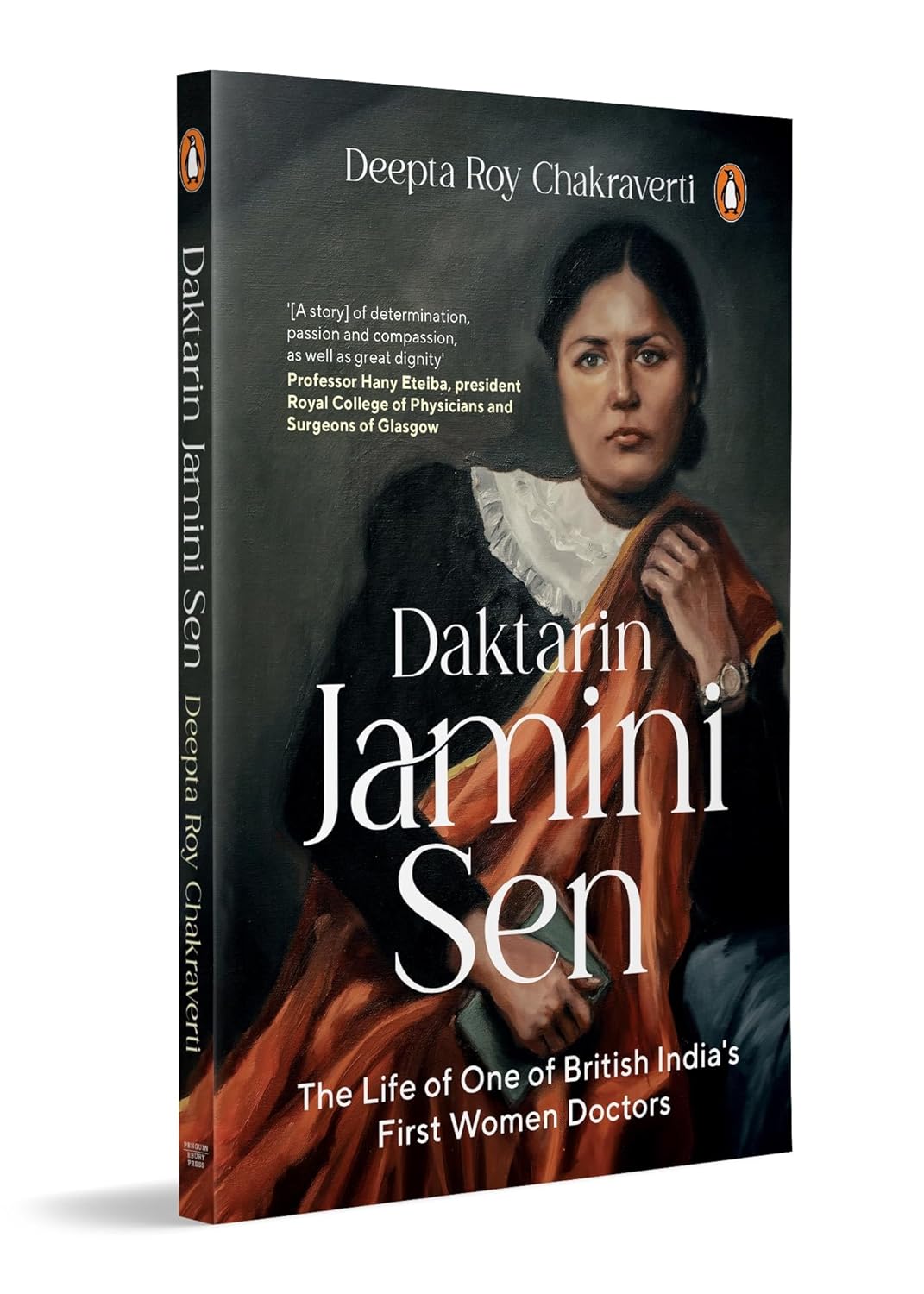

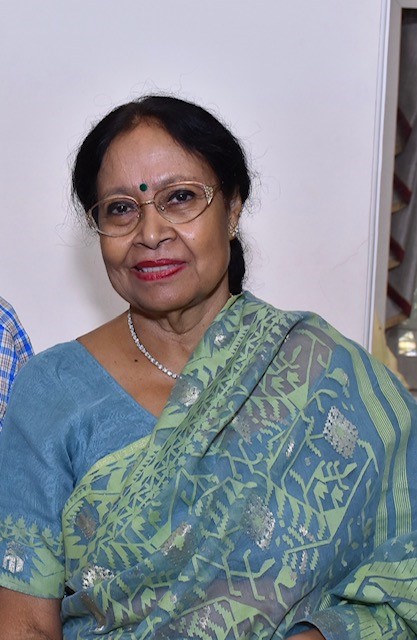


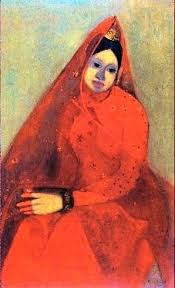
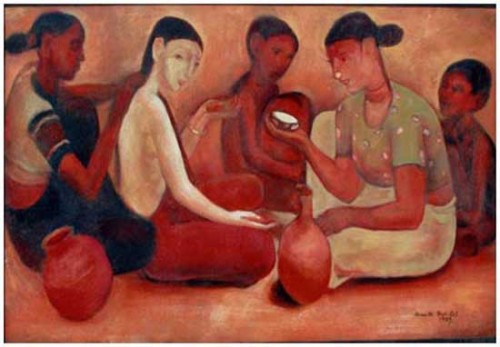




 Borderless