Categories
Contents

Borderless, February 2026

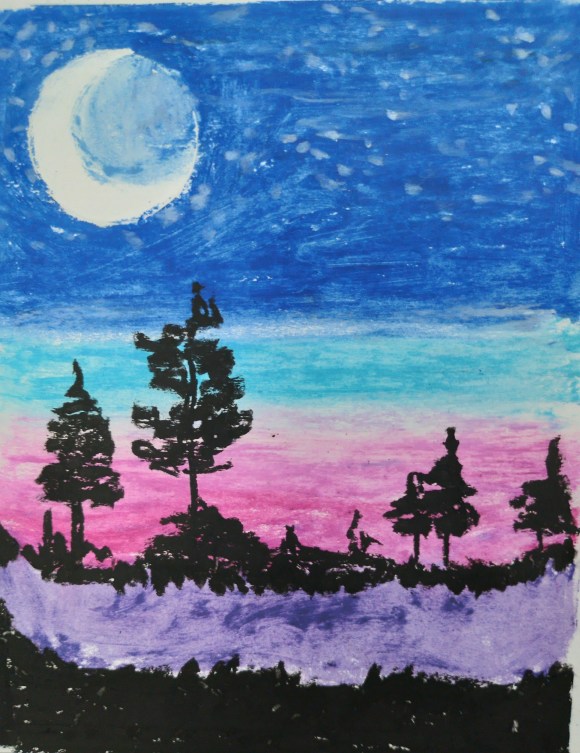
Art by Sohana Manzoor

Editorial

What Do We Yearn for?… Click here to read.

Translations

Nazrul’s Ashlo Jokhon Phuler Phalgun (When Flowers Bloom Spring) has been translated from Bengali to English by Professor Fakrul Alam. Click here to read.

An Elegy for the Merchant of Hope by Atta Shad has been translated from Balochi by Fazal Baloch. Click here to read.

Four of his own Malay poems have been translated by Isa Kamari. Click here to read.

Two of her own Persian poems have been written and translated by Akram Yazdani. Click here to read.

The Beaten Rooster, a short story by Hamiruddin Middya, has been translated from Bengali by V Ramaswamy. Click here to read.

Tagore’s Shishur Jibon (The Child’s Life) has been translated from Bengali by Mitali Chakravarty. Click here to read.

Poetry

Click on the names to read the poems

Allan Lake, Goutam Roy, Chris Ringrose, Alpana, Lynn White, C.Mikal Oness, Shamim Akhtar, Luis Cuauhtémoc Berriozábal, Snehaprava Das, Jim Bellamy, Manahil Tahir, John Swain, Mohul Bhowmick, Ryan Quinn Flanagan, SR Inciardi

Poets, Poetry & Rhys Hughes

In The Clumsy Giant, Rhys Hughes shares a funny poem about a gaint who keeps stubbing his toes! Click here to read.

Musings/Slice from Life

From the Land of a Thousand Temples

Farouk Gulsara shares attitudes towards linguistic heritage. Click here to read.

A Tangle of Clothes Hangers

Mario Fenech explores the idea of time. Click here to read.

Dreaming in Pondicherry

Mohul Bhowmick muses in Pondicherry. Click here to read.

Champagne Sailing

Meredith Stephens narrated a yatch race between Sydney and Hobart with photographs by Alan Noble. Click here to read.

In the Company of Words

Gower Bhat shares a heartfelt account of a bibliophile. Click here to read.

Musings of a Copywriter

In Horoscope or Horrorscope, Devraj Singh Kalsi reflects on predictions made at his birth. Click here to read.

Essays

The Chickpea That Logged More Mileage Than You

Ravi Varmman K Kanniappan gives an interesting account of the chickpeas journey through time and space, woven with a bit of irony. Click here to read.

Memories: Where Culture Meets Biology

Amir Zadnemat writes of how memory is impacted by both science and humanities. Click here to read.

The Restoration of Silence

Andriy Nivchuk brings to us repetitious realities that occur through histories. Click here to read.

Aeons of Art

In If Variety is the Spice of Life…, Ratnottama Sengupta introduces upcoming contemporary artists. Click here to read.

Stories

The Onion

JK Miller brings to us the story of a child in Khan Yunis. Click here to read.

Santa in the Autorickshaw

Snigdha Agrawal takes us to meet a syncretic spirit with a heartwarming but light touch. Click here to read.

Disillusioned

Sayan Sarkar shares a story of friendship and disillusionment. Click here to read.

Decluttering

Vela Noble shares a spooky fantasy. Click here to read.

The Value of Money

Naramsetti Umamaheswararao writes a story that reiterates family values. Click here to read.

Book Excerpts

An excerpt from Arupa Kalita Patangia’s Moonlight Saga, translated from Assamese by Ranjita Biswas. Click here to read.

An excerpt from Natalie Turner’s The Red Silk Dress. Click here to read.

Interview

Keith Lyons in conversation with Natalie Turner, author of The Red Silk Dress. Clickhere to read.

Book Reviews

Somdatta Mandal reviews Sanjoy Hazarika’s River Traveller: Journeys on the TSANGO-BRAHMAPUTRA from Tibet to the Bay of Bengal. Click here to read.

Rakhi Dalal reviews Sujit Saraf’s Every Room Has a View — A Novel. Click here to read.

Anindita Basak reviews Taslima Nasrin’s Burning Roses in my Garden, translated from Bengali by Jesse Waters. Click here to read.

Bhaskar Parichha reviews Kailash Satyarthi’s Karuna: The Power of Compassion. Click here to read.

.

Click here to access the Borderless anthology, Monalisa No Longer Smiles

Click here to access Monalisa No Longer Smiles on Amazon International

Categories
Editorial

What Do We Yearn for?

Most people like you and me connect with the commonality of felt emotions and needs. We feel hungry, happy, sad, loved or unloved and express a larger plethora of feelings through art, theatre, music, painting, photography and words… With these, we tend to connect. And yet, larger structures created over time to offer security and governance to the masses—of which you and I are a part — have grown divisive, and, by the looks of it, the fences nurtured over time seem insurmountable. To retain these structures that were meant to keep us safe, wars are being fought and many are getting killed, losing homes and going hungry. We showcase such stories, poems and non-fiction to create an awareness among those who are lucky enough to remain untouched. But is there a way out, so that all of us can live peacefully, without war, without hunger and with love and a vision towards surviving climate change which (like it or not) is upon us?

Creating an awareness of hunger and destruction wreaked by war is a heartrending story set in Gaza by JK Miller. While Snigdha Agrawal’s narrative gives a sense of hope, recounting a small kindness by a common person, Sayan Sarkar shares a more personal saga of friendship and disillusionment — where people have choice. But does war leave us a choice as it annihilates friendships, cities, homes and families? Naramsetti Umamaheswararao’s story reiterates the belief in the family – peace being an accepted unit. Vela Noble’s fantastical fiction and art comes like a respite– though there is a darker side to it — with a touch of fun. Perhaps, a bit of fantasy and humour opens the mind to deal with the more sombre notes of existence.

The translation section hosts a story by Hamiruddin Middya, who grew up as a farmer’s son in Bengal. Steeped in local colours, it has been rendered into English by V Ramaswamy. Nazrul’s song revelling in the colours of spring has been translated from Bengali by Professor Fakrul Alam. Atta Shad’s pensive Balochi lines have been brought to us in English by Fazal Baloch. Isa Kamari continues to bring the flavours of an older, more laid-back Singapore with translations of his own Malay poems. A couple of Persian verses have been rendered into English by the poet, Akram Yazdani, herself. Questing for harmony, Tagore’s translated poem while reflecting on a child’s life, urges us to have the courage to be like a child — open, innocent and willing to imagine a world laced with trust and hope. If we were all to do that, do you think we’d still have wars, violence and walls built on hate and intolerance?

While in a Tagorean universe, children are viewed as trusting and open, does that continue a reality in the current world that believes in keeping peace with weapons? Contemporary voices think otherwise. Manahil Tahir brings us a touching poem in a doll’s voice, a doll belonging to a child victimised by violence. While violence pollutes childhood, pollution in Delhi has been addressed by Goutam Roy in verse. Poignant lines from Luis Cuauhtémoc Berriozábal make one question the idea of home and borders while Snehaprava Das has interpreted the word ‘borderless’ in her own way. We have more colours of humanity from Allan Lake, Chris Ringrose, Alpana, Lynn White, C.Mikal Oness, Shamim Akhtar, Jim Bellamy,John Swain, Mohul Bhowmick and SR Inciardi. Ryan Quinn Flanagan has given fun lines about a snow fight while Rhys Hughes has shared a humorous poem about a clumsy giant.

Bringing in humour in prose is Devraj Singh Kalsi’s musing about horoscopes! While, with a soupçon of irony Farouk Gulsara talks of his ‘holiday’, Meredith Stephen takes us to a yacht race in Australia and Mohul Bhowmick to Pondicherry. Gower Bhat writes of his passion for words while discussing his favourite books. Ratnottama Sengupta introduces us to contemporary artists from her part of the world.

Mario Fenech takes a look at the idea of time. Amir Zadnemat writes of how memory is impacted by both science and humanities while Andriy Nivchuk brings to us snippets from Herodotus’s and Pericles’s lives that still read relevant. Ravi Varmman K Kanniappan gives the journey of chickpeas across space and time, asserting: “The chickpea does not care about your ideology, your portfolio, or your meticulously curated identity. It will grow, fix nitrogen, feed someone, and move on without a press release.” It has survived over aeons in a borderless state!

In book excerpts, we have a book that transcends borders as it’s a translation from Assamese by Ranjita Biswas of Arupa Kalita Patangia’s Moonlight Saga. Any translation is an attempt to integrate the margins into the mainstream of literature, and this is no less. The other excerpt is from Natalie Turner’s The Red Silk Dress. Keith Lyons has interviewed Turner about her novel which crosses multiple cultures too while on a personal quest.

In reviews, Somdatta Mandal discusses a book that explores the colours of a river across three sets of borders, Sanjoy Hazarika’s River Traveller: Journeys on the TSANGO-BRAHMAPUTRA from Tibet to the Bay of Bengal. Rakhi Dalal writes about a narrative centring around migrants, Sujit Saraf’s Every Room Has a View — A Novel. Anindita Basak reviews Taslima Nasrin’s poetry, Burning Roses in my Garden, translated from Bengali by Jesse Waters. Bhaskar Parichha reviews Kailash Satyarthi’s Karuna: The Power of Compassion. In it, Satyarthi suggest the creation of CQ — Compassion Quotient— like IQ and EQ, claiming it will improve our quality of life. What a wonderful thought!

Could we be yearning compassion?

Holding on to that idea, we invite you to savour the contents of our February issue.

Huge thanks to all our contributors and readers for making this issue possible. Heartfelt thanks to our wonderful team, especially Sohana Manzoor for her fabulous artwork.

Enjoy the reads!

Let’s look forward to the spring… May it bring new ideas to help us all move towards more amicable times.

Mitali Chakravarty

borderlessjournal.com

CLICK HERE TO ACCESS THE CONTENTS FOR THE FEBRUARY 2026 ISSUE.

.

READ THE LATEST UPDATES ON THE FIRST BORDERLESS ANTHOLOGY, MONALISA NO LONGER SMILES, BY CLICKING ON THIS LINK.

Categories
Stories

Disillusioned

By Sayan Sarkar

“Belepole, Santragachi, Dhulagarh! Belepole, Santragachi, Dhulagarh!”

The singsong voice of the conductor filled the air in the busy intersection of Rabindra Sadan.

Sanjib crossed the road hurriedly, raising his hand to attract the conductor’s attention lest the bus left the stand before he reached it. The conductor nodded assuredly, indicating they had no intention of leaving so soon.

Sanjib boarded the bus and occupied a window seat near the front. Flicking his wrist, he looked at his watch — 4:15pm. He had ample time to make the trip to Belepole and return by 9pm

After a couple more minutes of waiting at the stand, the engine revved and the bus slowly made its way towards the Second Hooghly Bridge. As the conductor made his customary gesture for the ticket, Sanjib handed him a 50 rupee note.

“Belepole,” he added with excitement.

 Sanjib’s heart was fluttering in his chest. He was going to visit Belepole, the place where he was born, after almost two decades. He had spent fourteen years of his life in that place — almost his entire childhood. But when he was in grade 9, his father — a central government officer —got a posting in Delhi, and they moved there permanently after selling their house to a promoter. Things became very hectic after that. There was school, then college, then masters, then PhD, then a post-doc in Europe, and finally a teaching position in a reputed central government institute in the capital city. The years passed by like a whirlwind, starting and ending within the blink of an eye. Sanjib had come to Kolkata only a handful of times within that period but never found the time or opportunity of visiting his birthplace.

This time, however, was different.

This time, he had come to Rabindra Sadan to attend the inauguration of an art exhibition hosted by his school friend and renowned artist Pulak Banerjee. The interactions with his old friend brought back memories of his birthplace — which was only half an hour from the gallery on the other side of the Hooghly River — to his mind, and he was filled with an intense desire to pay a visit to the locality where his journey had started. Pulak supported this idea wholeheartedly, but he let Sanjib go on the sole condition that he be back for dinner at Peter Cat around 9 pm.  

As the bus raced past the innumerable cables of the Second Hooghly bridge, countless fond memories of his youth flooded Sanjib’s mind. Memories of their three-storied house — which was almost a hundred years old, memories of the pond where he used to swim summer and winter, memories of his neighbors and their smiling faces, memories of all the childhood mischief and scoldings. They started appearing one after another, like hours-long video fast-forwarded to finish within only a few seconds.

But even amid this deluge, the memory of a single person stood out sharply against the rest. The memory of his childhood friend — Anil.

Anil, who was only one year his senior, had been his next-door neighbor. The two friends had grown up together and were almost inseparable. Not a single day had passed in those fourteen years that the two friends hadn’t played or spent some time together. Wherever one went, the other followed. Whatever one did, the other copied. They were up to all sorts of mischief together, and had become the terror of the locality for an extended period of time. Anil belonged to a relatively poor family, and could only afford education in a Bengali medium school. Sanjib, and his parents always welcomed him into their household with open arms, and he went on multiple trips with Sanjib and his family.

Anil wasn’t very good in studies, and barely passed his examinations is school. But what he lacked in intelligence, he more than made up for in athleticism. He was a great cricketer and an expert swimmer. He participated in many state level competitions and even won a few medals over the years. The two friends had a pact — Sanjib would help Anil with his studies, and Anil would help Sanjib improve his batting and swimming forms.

For fourteen long years, they had laughed and cried and fought and grown up together, until one day, Sanjib had to move away. It was the most difficult moment of their young lives, and a lot of tears were shed and promises were made. Anil didn’t have a landline at home at that time, so it was decided that he would visit a nearby shop every other day at a pre-determined time and Sanjib would call him there.

This ritual was followed religiously for nearly two years before Sanjib’s tuition timings and the pressure of his impending board and competitive examinations finally caught up with him. Slowly but surely, the two friends drifted apart. Pretty soon, Anil was relegated to Sanjib’s subconscious mind, waiting to be liberated again by some external stimulus.

That stimulus finally arrived nearly two decades later, and Sanjib’s mind was once again filled with the memories of his dear old friend and companion.

“Belepole is coming. Belepole is coming,” the conductor announced in his characteristic voice.

Sanjib got up from his seat.

Alighting from the bus, he slowly made his way towards the familiar by lane that led to his neighborhood — his para. As he walked along the alley, his mind was once again crowded with incidents from his childhood. These streets were once his playground, and there was a time when he knew every square inch of this locality like the back of his hand. Every nook and cranny of this place was filled with memories. Some of the old buildings he could still recognise, but many of the old ones had given way to more modern apartments. His para had undergone a transformation with time, confirming the old saying that change is the only constant in the universe.

Sanjib soon reached the location of his old house and found a modern four-storied apartment standing tall in its stead. He had seen pictures of this apartment in his father’s phone, but this was the first time he saw it with his own eyes. He stood rooted to the spot, mentally drawing the outline of his old house and comparing it with the present architecture.

He could still visualise every detail clearly against the modified backdrop — his bedroom, the living room, the kitchen, the dining room. It was as if he was seeing through the new apartment and staring into his long-lost past.

“Heyyy maaan. What’s your problem?”

A hoarse voice suddenly interrupted Sanjib’s reverie.

He turned around in surprise — a bit ashamed that he had been caught staring at a building for so long — and found a tramp sitting a little way off along the edge of the street. His clothes were in tatters, and it seemed like he hadn’t taken a bath in years. His long hair and beard had become matted with oil, dirt, and dead skin cells. His frail frame shook with every word he said.  Even from afar, Sanjib could realise that he was inebriated by the intonations of his voice.

“Get outta hereee!” He shouted again. “What’re you doing standing and staring in the middle of the streeeetttt!”

Sanjib’s face filled with disgust. He felt an overwhelming sense of aversion towards the tramp. He quickly turned away from him and walked towards the new apartment.

Beyond the apartment was Anil’s house, and Sanjib had half expected to find his friend at home. It was, after all, a Sunday evening. So, chances were higher than usual.  

But he was taken by surprise when he found Anil’s house barely standing at all. One of the walls had completely crumbled, and the rest were ready to follow suite. The entire plot had become a garbage heap with dogs and crows roamed around ravenously in search of leftovers. Nature had already started reclaiming the land and the dilapidated building was covered with creepers and crawlers.

The juxtaposition of the dazzling new apartment and the crumbling old house in such close proximity had a great effect on Sanjib’s mind and he stood dumbfounded in front of his friend’s former residence.

“Sanjib?” A second voice broke out in the background. “Is that you?”

There was uncertainty in the voice, but it sounded very familiar.

Sanjib’s brain had already started connecting the dots, and by the time he turned around, he had matched the voice with a face from his past.

“Bimal kaku[1]!” He nearly shouted with delight. “How are you?”

The warm and welcoming smile of Bimal Das felt very soothing to Sanjib’s eyes.

“I am fine, Sanjib.” The man replied with a touch of warmth and emotion. “How big you’ve grown! It’s been such a long time since I last saw you!”

Sanjib embraced his Bimal kaku lovingly.

Bimal Das used to own a grocery shop in the neighbourhood, and he had always been very fond of all the kids in the locality. He often used to give them free snacks below the counter, and invited them to his house whenever there was an occasion.

“Come,” Bimal led Sanjib by his arm. “We’ll sit and talk in my house.”

The next half an hour was spent in fond recollection.

Sanjib leant that Bimal’s shop was not running very smoothly ever since the advent of online shopping. His sons, however, had all gotten jobs outside the state, and they regularly sent him money to ensure he never lacked the basic amenities required to live a modest life. They had also suggested that he close the shop and stay with them, but Bimal had always felt a strong affection towards his shop and refused to shut it down.

He opened his shop regularly, sat behind the counter like old times, and spent most of the time chatting with the retired people of the locality.

“You see Sanjib, I will continue running the shop as long as my body permits,” he concluded with a defiant tone.

Sanjib looked admiringly at his Bimal kaku. He had aged significantly, but his vigour and liveliness were worthy of praise.

“Bimal kaku,” Sanjib spoke apprehensively. “What happened to Anil? His house is in ruins.”

A pall of gloom suddenly descended on Bimal’s smiling face. He looked down towards the floor and sat silently.

Sanjib’s heart sank. With each passing moment, his mind grew heavier with anxiety.

When Bimal started speaking again, Sanjib braced himself for the worst.

“Around five years after you left,” Bimal spoke softly. “Anil lost his mother — who was his biggest well-wisher and who loved him the most in the world.”

“Anil was heartbroken,” he continued.

“Still, he had his father to look after him, guide him, and reign in his emotions. The father-son duo clung onto each other and battled the storms of adversity. Anil gradually recovered from the shock and tried his best to live his life to the fullest.

“But alas. The fates had marked him as a child of misfortune. Five years later, his father passed away as well. Anil was all alone.

“Although all of us, his neighbours, tried our best to console him and help him in his time of need, he never recovered from this second shock. He left his house, started roaming about the streets aimlessly, got drunk, and all but lost his mind. We tried numerous times to bring him back to his senses, but it was not to be. Anil would be absent for weeks at an end, and then suddenly, one morning, we would find him sleeping unceremoniously near the edge of the main road.

“Those of us who felt sorry for him gave him food and clothes from time to time. While he ate and drank to sustain himself, he rarely touched the clothes. After a few years, he stopped recognising us completely. He just came and went as he pleased.”

Sanjib couldn’t believe his ears. Every word that Bimal spoke appeared to drive a nail through his heart. He felt an indescribable pain and sadness for his friend.

“Coincidentally,” Bimal continued morosely. “Anil is here now.”

“He came a couple of days ago. Just this afternoon, I found him sitting and blabbering at the intersection. I gave him some food and water. He was quite drunk. His clothes were in tatters, and he looked more dead than alive. Oh, how it pained me to see him in such a condition.”

Bimal covered his face to hide the tears that flooded his eyes.

Sanjib jolted upright, as if struck by lightning. His mind had already raced half an hour back into the past.

He recalled the hoarse voice that had interrupted his day dream.

He recalled the countenance of the tramp that had disgusted him so much.

He brought forth every feature of that haggard body in front of his mind’s eye. The unkempt hair and beard, the tattered clothes, the frail frame.

His friend had spoken to him after twenty years. And he had turned and walked away disgusted. His friend, who probably had a bright future as a cricketer or a swimmer, but was reduced to nothingness. His friend, who had lost his sanity thanks to the cruel workings of fate.

The image of the modern apartment and the crumbling house flashed in front of Sanjib’s eyes. He was the modern apartment, shining and well established in life. Anil was the crumbing house, battling against insanity and counting his days.

In the face of this incomprehensible truth, the contrast seemed even more cruel.

Sanjib sat still. His vision had become blurry and his cheeks were hot with the stream of tears that flowed down like water from a dam.

At the intersection, Anil was still sitting on the road, speaking gibberish, and cursing anyone who passed the street.

[1] uncle

Sayan Sarkar was born and raised in Kolkata. He is a passionate reader and lifelong learner who spends his leisure time immersed in books and new ideas.

.

PLEASE NOTE: ARTICLES CAN ONLY BE REPRODUCED IN OTHER SITES WITH DUE ACKNOWLEDGEMENT TO BORDERLESS JOURNAL. 

Click here to access the Borderless anthology, Monalisa No Longer Smiles

Click here to access Monalisa No Longer Smiles on Kindle Amazon International
Categories
Stories

Evergreen

By Sayan Sarkar

For 30 years, Mr. Roy had been a professor of mathematics at a university in Kolkata.

At 65, he had grown tired of the fast-paced and boisterous city life. He never married and had no close relatives in the city. Therefore, he never had any attachments to the city.

A few months before his retirement, he had heard of an old British-era bungalow in a village in the district of Bankura.

Mr. Roy visited the location and immediately fell in love with the place. The two-storeyed bungalow stood near the outskirts of the village, very close to the forest. The other houses in the village were a little further away, and it took around 10 minutes to reach the nearest house on foot. A peepul and a banyan tree flanked the back portion of the bungalow, behind which lay a large pond. The forest began from the other end of the pond. Numerous rows of teak, sal, mahua, and arjun trees stood almost shoulder to shoulder, creating a pleasant view for the human eye.

After inspecting the bungalow and speaking with the owner, Mr. Roy finalised the deal and completed the associated formalities promptly. He decided to employ the existing caretaker as his daily help. The caretaker lived just 15 minutes from the bungalow with his family.

Mr. Roy had already sent some of his belongings to the bungalow before his retirement, and on the 15th of April, he moved permanently to this place with the rest of his items. The date was significant – 15th April was the Bengali New Year, or Poila Baisakh. Mr. Roy had specifically chosen the beginning of the new year to start this new phase in his life.

Upon his arrival on the 15th, he found a small crowd in front of his bungalow. Many of the locals had come to welcome him to their village. He invited all of them into the bungalow and spent a considerable amount of time interacting with them. The crowd thinned around noon until only the caretaker was left. His name was Samir, a man in his mid-40s.

“Samir, please give me something to eat. I am famished,” Mr. Roy said, getting ready for his bath.

“Yes, Dada! I will prepare your lunch within half an hour,” Samir replied, heading towards the kitchen.

After a long and refreshing bath, Mr. Roy got dressed and approached his bedroom window to look outside. He found that the banyan and peepul trees were quite close to his window and obstructed most of the view. Some of the branches almost touched the window as if trying to claw their way into the house. He saw a lot of birds on the trees, chirping and hopping from branch to branch. As he looked down, he suddenly noticed a young boy of around 10. The little boy was sitting on a branch of the banyan tree and munching on an apple.

“Hey! What are you doing there? You’ll get hurt if you fall!” Mr. Roy shouted with a look of apprehension.

The boy looked up and saw Mr. Roy’s worried face. He smiled from ear to ear in response and jumped down from the branch like a trapeze artist.

“Don’t worry, Kaku[1]! I have a habit of climbing this tree,” he said with a mischievous smile and disappeared around the corner.

Hearing Mr. Roy’s shouts, Samir came up from the kitchen, just in time to see the little boy run away.

“That’s my son, Sukumar! He’s a very mischievous boy, Dada[2]! He runs around the village all day after returning from school. He climbs trees like a monkey. This spot is his favourite. He must climb the banyan tree at least once every day,” Samir confessed.

“I see,” replied Mr. Roy. “But don’t you think these trees are a little too close to the window? This is the only room in the house facing the forest, but I can’t see anything because of these two trees. And here I was thinking of sitting in front of this window and enjoying a view of the forest.”

“Yes, Dada! These trees are quite close to the house. You can even consider them to be a part of the house. It’s said that they are more than a hundred years old!” Samir informed Mr. Roy.

“Hmm. I see!” he remarked.

The next morning, Mr. Roy went out to explore the village after breakfast. He returned around noon, huffing and puffing in the summer heat. After his bath, he called Samir to his bedroom.

“Samir, there’s something I wanted to talk to you about,” he said, his eyes fixed on the trees outside.
“You see, I’d been thinking about those trees since yesterday. You must admit that the view of the forest beyond the pond is breathtaking. But those damned trees are in the way! I can’t see anything at all! So, I’ve decided to get rid of them.

“Usually, I’m against the felling of trees, but I must make an exception this time. I talked to a woodcutter in the village bazaar today. He agreed to do the job for me. However, he already had some assignments for the next three days, so he’ll be coming on Sunday.”

Samir stood aghast. He couldn’t believe his ears.

Dada…you wish to cut down the trees? But they’re a part of this house! They’ve been here long before I came to this house. You can simply cut some of the branches to give you a better view. You don’t need to cut down the entire trees!” he said, visibly emotional.

Mr. Roy stared at Samir for a few seconds before giving his reply.

“I’d thought about pruning the trees as well. But that wouldn’t solve the problem. The branches would grow back over time, and I’d have to continue pruning them every now and then. It’s better to just be done with them entirely. Besides, this village has an abundance of trees all around. It won’t cause anyone harm if I cut just two. No, no. I’ve made up my mind.”

“Okay, Dada… As you wish!” Samir turned away dejectedly.

“Samir,” Mr. Roy called him back, his tone much softer than before.

“I know you love the trees, and your son loves them too. I’ll build him a playground where he can enjoy himself.”

Samir nodded slowly and headed down towards the kitchen.

Mr. Roy felt a pang of guilt in his heart, but his desire to enjoy the view from his bedroom far outweighed his feeling of guilt. As he walked towards the window, he found Sukumar playing among the branches of the trees like the day before.

They’ll feel bad now. But time will heal everything eventually, he thought to himself.

*

Samir was a little late arriving the next day.

“What happened? Is everything all right?” enquired Mr. Roy, a little upset as well as worried.

“Sukumar is not well, Dada. He went swimming in the pond yesterday and caught a terrible cold. He’s had a fever since last night and couldn’t sleep a wink. I was finally able to put him to sleep in the morning. I’m sorry for being late,” Samir explained. His face looked worn out.

“Poor boy! If you need medicines, you can come to me, you know. I’ve been practicing homeopathy for quite some time,” Mr. Roy responded.

Samir nodded his head.

“You can go home early today after preparing dinner,” Mr. Roy added after a little pause. “Your son’s health comes first!”

“Thank you, Dada!” Samir said gratefully.

He took his leave around 5 PM, two hours before his usual time.

Mr. Roy read a book until nine o’clock, had his dinner, and then went to sleep.
He kept his bedroom window open for better air circulation. The weather outside was oppressively hot and humid. There was an unnatural stillness in the air, with no hint of a breeze whatsoever.

*

Mr. Roy was woken up by the chirping of the birds outside his window at the crack of dawn. As he gathered his senses and sat up in bed, he received quite a shock – the entire bedroom floor was strewn with dead leaves of peepul and banyan. They had reached as far as the door, which was quite some distance from the open window.

But how’s this possible? There wasn’t the slightest breeze last night! Even if there was a breeze late at night, how have the leaves fallen only on the floor and not on my bed? Mr. Roy thought to himself.

He couldn’t make head or tail of the situation.

The thing that worried him the most was the fact that all the leaves were withered and dead. Not a single fresh leaf was in sight! He collected the leaves and threw them out the window before Samir arrived, not wanting him to know about this incident.

When Samir came to work, he tried to act normally. He learnt that Sukumar was better, but still very weak. His mother was taking care of him that day.

The day passed quite uneventfully. Mr. Roy went out for a stroll through the village and returned before lunch. He took a nap in the afternoon and spent the evening reading. By the time Samir left at eight o’clock, he had finished his dinner and was sitting in front of his bedroom window smoking a cigar. As he gazed outside, the silhouette of the trees was the only thing visible to him.

The night was quite hot, and there was still no sign of a breeze. His mind wandered to the incident of the morning, and he tried in vain to find a logical explanation to satisfy himself. He decided to close the window that night to be on the safe side.

At 10 PM, Mr. Roy locked the window, double-checked it, and went to bed. As he dozed off, he silently hoped everything would be all right the next morning.

*

But alas! He woke up to a similar scene the next morning. Dead leaves were strewn across the floor. That day, he even found some leaves on his bed and his body. He jumped up to the window and found it locked—just as he’d left it the night before. His face turned pale, and he felt a chill run down his spine. As he opened the window, his eyes fell on the two trees staring back at him ominously.

Are the trees sending me a message and warning me against cutting them? But how’s that possible? Am I really supposed to believe that some tree spirits are trying to threaten me? That’s simply absurd!

Mr. Roy tried to strengthen his mind. It was Friday, and the woodcutter would be arriving on Sunday to do his job. He just had to endure two more nights. He decided that he would ask Samir to stay with him for the remaining two nights.

Happy with the resolution, he then proceeded to pick up the leaves and dump them out the window.

When Samir arrived, Mr. Roy learned that his son was much better. Relieved, he asked Samir to stay with him for the next two nights, citing that he wasn’t feeling well and might need assistance at night. Samir agreed and took his leave after lunch to inform his family of his overnight stay.

Mr. Roy took a little nap in the afternoon and read the paper till evening. There was a forecast of a thunderstorm at night—what the locals called Kalbaisakhi, or what is referred to as a Nor’wester.

Samir returned around 6 PM and prepared some tea for both of them. He sat on the floor of his master’s bedroom and sipped tea, chatting with him about various topics.

Mr. Roy felt his confidence returning in the presence of another human being.

After dinner, Samir made his bed on the floor and waited for his master to go to bed. Mr. Roy instructed him to close the window just in case it started raining after they fell asleep.
They conversed a little before eventually drifting off.

Mr. Roy’s sleep was disturbed by a series of shrill noises. As he woke up with a start, he found the room engulfed in pitch-black darkness. He heard the rain pattering against the closed window. A storm was brewing outside. The fan had stopped moving.

There was a power cut.

But all this was quite normal. The only abnormal thing in this atmosphere was the continuous chirping of birds outside his window! It felt as if dozens of birds were pressed against the window, chirping incessantly.

Mr. Roy had never had such an experience before. The avian cacophony created a haunting ambience.

“Samir! Samir! Wake up!” he shouted at the top of his voice.

Samir jolted up in his bed.

Dada? What’s wrong?” he asked, unable to grasp the situation.

“Birds! Why are so many birds chirping outside my window?” Mr. Roy panicked.

Samir rubbed his eyes in confusion. “Birds? Where? I can’t hear anything!” he said after processing everything around him.

“What do you mean you can’t hear anything? There are dozens of birds chirping outside! Have you gone deaf?!” Mr. Roy responded, his voice shaking with fear.

Dada, are you alright? I can’t hear any birds at all. The only things I hear are the sound of the rain and the whistling of the wind. Maybe you are mistaking the wind for birds,” Samir tried to explain, visibly confused at the delirium of his master.

“Impossible! That’s not the wind! That’s the sound of birds! I can’t stand it anymore!” Mr. Roy desperately put both hands against his ears.

“It’s those damned trees! They won’t leave me alone!” he shouted like a madman.

Dada! Calm down, I’m here with you. Nothing will happen.” Samir got up from his bed and approached his master.

But by this time, Mr. Roy had fallen silent. He had fainted.

*

When he finally opened his eyes, it was morning.

“Thank God you’re awake! How do you feel now?” enquired Samir with a worried expression.

“What happened? Did I pass out?” Mr. Roy blurted out, still quite confused.

“Yes, Dada! Last night, you were shouting about hearing birds. You passed out shortly after that episode. I was quite worried. I couldn’t go out to fetch anyone in the storm, so I waited till morning. Should I call a doctor?” Samir asked, still quite concerned.

“No, I’m fine. No need to call a doctor. I must’ve been dreaming. Why don’t you make some tea for both of us?” Mr. Roy replied slowly.

As Samir went to the kitchen, he sat up in his bed. Although he had told Samir that he might have been dreaming of the bird sounds, he knew that he had been wide awake. He had definitely heard the chirping of birds.

It must be the trees! What are they trying to tell me? That dozens of birds will be forced to abandon their nests if I cut them down? What should I do then?

He got out of bed and moved towards the window, deep in thought. As he looked outside, he found Sukumar playing near the peepul tree. How happy he looked!

A smile appeared across Mr. Roy’s face as he watched the child enjoying himself.

“Here’s your tea, Dada,” he heard Samir’s voice behind him.

“Samir, your son is here. He’s playing with the trees again,” Mr. Roy said, taking up his cup and sipping the hot tea.

“Yes, Dada. He missed his friends for the last few days. So, he came here early today to catch up.” Samir laughed.

Mr. Roy’s smile broadened.

“Samir, I’ve decided not to cut the trees,” he said after a moment’s silence. “As you said, they are a part of the house. Your son loves them too. Maybe I’ll get used to this view after all!”

Samir stared at his master, overwhelmed with joy.

“That’s great news, Dada! Sukumar will be very happy to hear that!” he said, wiping away a tear from his eye.

“Very well then, go home and get some rest. Come back in the afternoon. I have some reading to do.” Mr. Roy got up and shook Samir’s hand.

“Okay, Dada!” Samir replied, getting ready to go.

As he went out of the main gate, Sukumar ran to greet him.

“What did he say?” the 10-year-old boy asked anxiously.

“He has decided against cutting the trees,” assured Samir.

The boy’s face lit up. He started dancing around in joy.

Samir put his hand inside his pocket and took out an audio cassette player.

“Here, take it.” He handed it over to his son.

“I never thought your cassette recording of chirping birds from the zoo would be of any use. But it was of great service last night. You should’ve seen Mr. Roy’s face when the recording started playing outside the window. It looked like he’d seen a ghost. It was difficult for me to keep a straight face!” Samir broke off into laughter.

Sukumar quickly joined him.

“What about the dead leaves? You should give me some credit for that! That was my idea!” he declared, looking for his father’s approval.

“Of course! That was a fantastic idea,” Samir replied.

“That’s what sowed the seed of doubt in his mind. Little did he know that I’ve always had spare keys to the rooms in the house. With the keys, it was child’s play to get into his room and spread the leaves at night.”

“We sure fooled him, didn’t we, Dad?” Sukumar beamed.

“Yes, we did, son. Although it’s never good to fool another person, we did it for the greater good. Those trees are a part of the history of this village, and I will never let them be harmed!” Samir spoke, his voice quivering with emotion.

Sukumar squeezed his father’s hand tightly.

“I will protect the trees with you, Dad! I promise!” he replied with tears in his eyes.

.

[1] Uncle

[2] Elder brother – a polite form of address

Sayan Sarkar was born and raised in Kolkata. He is a passionate reader and lifelong learner who spends his leisure time immersed in books and new ideas.

.

PLEASE NOTE: ARTICLES CAN ONLY BE REPRODUCED IN OTHER SITES WITH DUE ACKNOWLEDGEMENT TO BORDERLESS JOURNAL

Click here to access the Borderless anthology, Monalisa No Longer Smiles

Click here to access Monalisa No Longer Smiles on Kindle Amazon International