Odbayar Dorj writes of celebrating the start of the new school year in Mongolia and of their festivals around teaching and learning. Click here to read.
Naramsetti Umamaheswararao gives a story set in a village in Andhra Pradesh. Clickhere to read.
Feature
A conversation withAmina Rahman, owner of Bookworm Bookshop, Dhaka, about her journey from the corporate world to the making of her bookstore with a focus on community building. Clickhereto read.
The idea of spring heralds hope even when it’s deep winter. The colours of spring bring variety along with an assurance of contentment and peace. While wars and climate disasters rage around the world, peace can be found in places like the cloistered walls of Sistine Chapel where conflicts exist only in art. Sometimes, we get a glimpse of peace within ourselves as we gaze at the snowy splendour of Himalayas and sometimes, in smaller things… like a vernal flower or the smile of a young child. Inner peace can at times lead to great art forms as can conflicts where people react with the power of words or visual art. But perhaps, what is most important is the moment of quietness that helps us get in touch with that inner voice giving out words that can change lives. Can written words inspire change?
Our featured bookstore’s owner from Bangladesh, Amina Rahman, thinks it can. Rahman of Bookworm, has a unique perspective for she claims, “A lot of people mistake success with earning huge profits… I get fulfilment out of other things –- community health and happiness and… just interaction.” She provides books from across the world and more while trying to create an oasis of quietude in the busy city of Dhaka. It was wonderful listening to her views — they sounded almost utopian… and perhaps, therefore, so much more in synch with the ideas we host in these pages.
Our content this month are like the colours of the rainbow — varied and from many countries. They ring out in different colours and tones, capturing the multiplicity of human existence. The translations start with Professor Fakrul Alam’s transcreation of Nazrul’s Bengali lyrics in quest of the intangible. Isa Kamari translates four of his own Malay poems on spiritual quest, while from Balochi, Fazal Baloch bring us Munir Momin’s esoteric verses in English. Snehprava Das’s translation of Rohini K.Mukherjee poetry from Odia and S.Ramakrishnan’s story translated from Tamil by B.Chandramouli also have the same transcendental notes. Tagore’s playful poem on winter (Sheeth) mingles a bit for spring, the season welcomed by all creatures great and small.
We have good news to share —Borderless Journal has had the privilege of being listed on Duotrope – which means more readers and writers for us. We are hugely grateful to all our readers and contributors without who we would not have a journal. Thanks to our wonderful team, especially Sohana Manzoor for her fabulous artwork.
Hope you have a wonderful month as we move towards the end of this year.
In Dylan on Worm’s Head, Rhys Hughes describes a misadventure that the Welsh poet had while hiking as a tribute to him on Dylan Thomas Day. Clickhereto read.
Munaj Gul gives an in memoriam for a photographer from Balochistan. Clickhere to read.
Musings of a Copywriter
In ‘Is this a Dagger I See…?‘, Devraj Singh Kalsi gives a tongue-in-cheek account of a writer’s dilemma. Click here to read.
Notes from Japan
In A Golden Memory of Green Day in Japan, Suzanne Kamata tells us of a festival where she planted a tree in the presence of the Japanese royalty. Click here to read.
Perhaps when Dylan Thomas wrote these lines, he did not know how relevant they would sound in context of the world as it is with so many young dying in wars, more than seven decades after he passed on. No poet does. Neither did he. As the world observes Dylan Thomas Day today — the day his play, Under the Milkwood, was read on stage in New York a few months before he died in 1953 — we have a part humorous poem as tribute to the poet and his play by Stuart McFarlane and a tribute from our own Welsh poet, Rhys Hughes, describing a fey incident around Thomas in prose leading up to a poem.
May seems to be a month when we celebrate birthdays of many writers, Tagore, Nazrul and Ruskin Bond. Tagore’s birthday was in the early part of May in 1861 and we celebrated with a special edition on him. Bond, who turns a grand ninety this year, continues to dazzle his readers with fantastic writings from the hills, narratives which reflect the joie de vivre of existence, of compassion and of love for humanity and most importantly his own world view. His books have the rare quality of being infused with an incredible sense of humour and his unique ability to make fun of himself and laugh with all of us.
Nazrul, on the other hand, dreamt, hoped and wrote for an ideal world in the last century. The commonality among all these writers, seemingly so diverse in their outlooks and styles, is the affection they express for humanity. Celebrating the writings of Nazrul, we have one of his fiery speeches translated from Bengali by Radha Chakravarty and a review of her Selected Essays: Kazi Nazrul Islam by Somdatta Mandal. An essay from Niaz Zaman dwells on the feminist side of Nazrul while bringing in Begum Roquiah. Zaman has also shared translations of his poetry. Professor Fakrul Alam, who had earlier translated Nazrul’s iconic ‘Bidrohi or Rebel‘, has given us a beautiful rendition of his song ‘Projapoti or Butterfly’ in English. Also in translation, is a poem by Tagore on the process of writing poetry. Balochi poetry by Manzur Bismil on human nature has been rendered into English by Fazal Baloch and yet another poem from Korean to English by Ilwha Choi.
Ratnottama Sengupta this month converses with a dancer who tries to build bridges with the tinkling of her bells, Sohini Roychowdhury. Gita Viswanthan travels to Khiva in Uzbekistan, historically located on the Silk Route, with words and camera. An essay on Akbar Barakzai by Hazran Rahim Dad and another looking into literature around maladies by Satyarth Pandita add zest to our non-fiction section. Though these seem to be a heterogeneous collection of themes, they are all tied together with the underlying idea of creating links to build towards a better future.
In focus this time is a writer whose prose is almost akin to poetry, Rajat Chaudhuri. A proponent of solarpunk, his novel, Spellcasters, takes us to fictitious cities modelled on Delhi and Kolkata. In his interview, Chaudhuri tells us: “The path to utopia is not necessarily through dystopia. We can start hoping and acting today before things get really bad. Which is the locus of the whole solarpunk movement with which I am closely associated as an editor and creator…”
On that note, I would like to end with a couple of lines from Nazrul, who reiterates how the old gives way to new in Proloyullash (The Frenzy of Destruction, translated by Alam): “Why fear destruction? / It’s the gateway to creation!” Will destruction be the turning point for creation of a new world? And should the destruction be of human constructs that hurt humanity (like wars and weapons) or of humanity and the planet Earth? As the solarpunk movement emphasises, we need to act to move towards a better world. And how would one act? Perhaps, by getting in touch with the best in themselves and using it to act for the betterment of humankind? These are all points to ponder… if you have any ideas that need a forum on such themes, do share with us.
We have more content which has not been woven into this piece for the sheer variety of themes they encompass. Do pause by our content’s page and browse on all our pieces.
With warm thanks to our wonderful team at Borderless — especially Sohana Manzoor for her fabulous art — I would like to express gratitude to all our contributors, without who we could not create this journal. We would also like to thank our readers for making it worth our while to write — for all of our words look to be read, savoured and mulled, and maybe, some will evolve into treasured wines.
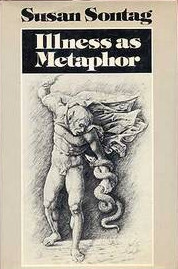
In her seminal work, Illness as Metaphor, Susan Sontag delves into the intricate realm of disease metaphors and presents evidence from the literary field that has employed metaphors for human illness, especially tuberculosis and cancer. Sontag draws on a rich literary history, referencing the works of Stendhal, Karl Menninger, Thomas Mann, Charles Dickens, Thomas Wolfe, Franz Kafka and others, to illustrate how metaphors for diseases have been ingrained in our cultural psyche. The two diseases, TB and cancer, discussed at length in the essay, are viewed from innumerable literary points of view. Fictional and real-life views of people surrounding these diseases have been put forward, which betray a cacophony of contrasting and similar ideas.
Sontag astutely dissects the contrasting metaphors associated with tuberculosis and cancer. Tuberculosis, she argues, has been romanticised and considered more socially acceptable and often viewed as a glamorous affliction. “Having TB was imagined to be an aphrodisiac and to confer extraordinary power of seduction. Cancer is considered to be de-sexualizing.” Sontag describes the tumour as “a foetus with its own will”. She further states that TB is a disease of poverty and deprivation, whereas cancer is a disease of middle-class life. She adds that cancer is associated with affluence, with excess. The metaphors associated with the diseases, she contends, not only affect the body but also shape societal perceptions and cultural narratives. The metaphorical attributions of TB and cancer in literature and society echo broader societal perceptions of class and status.
Published in 1978Susan Sontag (1933-2004)
There is an aphorism by Heraclitus that men have devised gods in their own images, and as Sontag states, the nomenclature of ‘cancer’ is derived from the Greek- karkinos and the Latin- cancer, both of which mean crab. She clarifies by quoting Galen that since the external tumour’s swollen veins resembled a crab’s legs, that is how it got its name. This tendency to associate unfamiliar things with familiar ones is common; people often perceive shapes in clouds, drawing comparisons to known objects. Similarly, diseases are often viewed through familiar frameworks. Since diseases afflict and weaken us, they are often seen as adversaries. Thus, labelling the experience of battling cancer as a fight imbues individuals with a sense of hope, suggesting the possibility of victory amidst adversity.
Sontag, betraying the nature of cancer as a slowly progressing disease that suddenly manifests without any warning, presents the earliest evidence where it was first used metaphorically by Wyclif in 1382. “The word of hem crepith as a kankir”.She assembles the different metaphors associated with Cancer, which are as diverse as the number of human illnesses. For her, Cancer is a source for topological metaphors: “spreads”, “proliferates”, “diffused”, and “excised”.
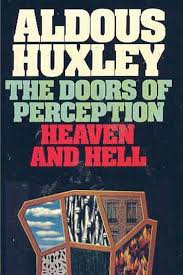
The essay examines the mythologies and superstitions associated with these diseases and how metaphors sometimes wear the cloak of superstition, too. But metaphors make the understanding of the disease more manageable. Metaphors are a means of understanding the meaning of things. That which cannot be explained as such can be explained by metaphors. In his books, The Doors of Perception and Heaven and Hell, Aldous Huxley states: “It is difficult, it is all but impossible, to speak of mental events except in similes drawn from the more familiar universe of material things. If I have made use of geographical and zoological metaphors, it is not wantonly out of a mere addiction to picturesque language. It is because such metaphors express very forcibly the essential otherness of the mind’s far continents, the complete autonomy and self-sufficiency of their inhabitants.” The metaphors will exist, and educating the masses is the only way to stop them from becoming a stigma or superstition against that disease.
Published in 1954Published in 1956
Quite possibly, the doctors refraining from revealing the true nature of disease inherently to the patient might reflect the notion of fear of death. The diseased person might perhaps think that death will come to everyone but him. Revealing his cancer to him might imply the idea of the inevitable approaching death. Thus, employing the metaphor of ‘battling’ with cancer provides a sense of relief to the patient of emerging victorious in the battle. A diseased man on the bed is akin to a newborn baby, with the only difference being that in one, the river of life has begun to flow, whereas, in the other, it is on the verge of drying. An afflicted man is as helpless as a baby. He craves for care. In this vulnerable state, directly discussing the illness may be too distressing, necessitating the use of metaphors to convey the situation. The patient’s understanding is limited. The only truth he has made a pact with is the slipping of time and the approach of death.
Regardless of how one has lived, everyone desires a death with dignity. Yet, why is it that some illnesses seem to afford this dignity while others do not? What criteria determine whether an illness is seen as favourable? Is it pain or time? The dilemma is akin to choosing between jumping into a well or off a cliff―Death awaits at both ends. As Susan Sontag herself ‘battled’ breast cancer, one cannot help but wonder whether the book would have been different had her affliction been tuberculosis instead. The essay appears biased, elevating tuberculosis and its sufferers while diminishing the dignity of cancer patients. It only examines these diseases from a personal perspective. TB has been presented as a glorified disease, whereas cancer is something that rots the body. Only briefly does the essay touch on the societal perceptions that label tuberculosis as a disease of poverty and cancer as a disease of affluence.
It is not only cancer and TB that have attracted metaphors or have been known to be identified with them. In fact, every other disease and illness is accompanied by metaphors, like an object and its shadow. And it must be noted that some diseases, apart from being associated with metaphors, are linked with gods and deities.
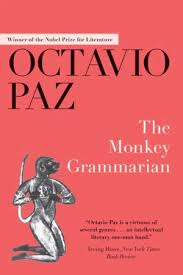
I recall a passage from the book The Monkey Grammarian in which the author, Octavio Paz, describes a scene inside the ‘Temple of Galta’ which is also known as ‘The Monkey Temple’ in Rajasthan: “The children leap about and point to the stone, shouting ‘Hanuman, Hanuman!’ On hearing them shouting, a beggar suddenly emerges from the rocks to show me his hands eaten away by leprosy. The next moment, another mendicant appears, and then another and another.”
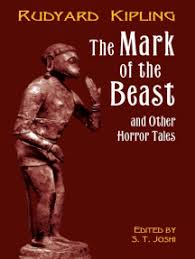
When I first read this passage, I was immediately reminded of the story ‘The Mark of The Beast’ by Rudyard Kipling and a paper that I had read related to the story titled ‘Recognizing the Leper: Hindu Myth, British Medicine, and the Crisis of Realism in Rudyard Kipling’s The Mark of the Beast’. The author of the paper had woven the interconnectedness and drawn parallels between the story, the leprosy affected character and Hanuman-lila. In ‘The Mark of The Beast’, an Englishman named Fleete, in the company of his two friends, desecrates a statue of Hanuman inside a temple with his cigar and declares it as ‘the mark of the beast’ but is soon embraced by a “mewing” leper who emerges from behind the statue following which, Fleete begins to develop skin discolourations and starts exhibiting animal-like behaviour. In the paper, the author establishes a connection between Hanuman and leprosy to justify why the Hindu monkey god is often called ‘sankat-mochan’ or ‘liberator from distress’. Drawing reference from the study of Hanuman lore by Philip Lutgendorf, the author argues how Kipling’s story resonates with a specific Hanuman-lila that relates his manifestation as a leper before the 16th-century saint Tulsidas.
“Instead, he [the tree ghost] told Tulsidas to seek the grace of Hanuman and revealed that the latter came every evening to a certain ghat in the form of an old leper to listen to the narration of Rama's story; he sat at the back of the crowd and was always the last to leave. That night, Tulsidas surreptitiously followed the leper, who led him deep into the forest before the poet finally fell at his feet, hailing him as the Son of the Wind. As the ghost had predicted, the leper "denied a thousand times" that he was anything other than a sick old man, but Tulsidas persisted in his entreaties. Eventually, Hanuman manifested his glorious form. Raising one hand over his shoulder to point southwest, he said, "Go to Chitrakut," and placing the other hand over his heart, added, "I promise you will see Rama.”
Illness as Metaphor should not be considered a caution about metaphors in their relation to illness but rather a critique of their misapplication, where these metaphors can morph into stigmas that persist in people’s consciousness. “Illness is the night-side of life, a more onerous citizenship. Everyone who is born holds dual citizenship in the kingdom of the well and in the kingdom of the sick. Although we all prefer to use only the good passport, sooner or later, each of us is obliged, at least for a spell, to identify ourselves as citizens of that other place,” Sontag states in the opening lines of her book-length essay. But, unless one is born in the mythical Shangri-La, and as long as humanity exists, illnesses and their accompanying metaphors will persist, evolving with each new malady that emerges. Today, it is cancer, just as yesterday, it was tuberculosis and COVID-19. Tomorrow will inevitably bring new illnesses, accompanied by a fresh set of metaphors that shape our collective understanding of the ever-present shadow of illness in the human experience.
Satyarth Pandita is a Junior Research Fellow at the National Institute of Mental Health and Neurosciences, Bengaluru. He completed his dual degree of Bachelor of Science and Master of Science in Biological Sciences (major) and Humanities and Social Sciences (minor) from the Indian Institute of Science Education and Research Bhopal (IISERB).
Links to Satyarth’s published works, email address and social media handles can be found here.
.
PLEASE NOTE: ARTICLES CAN ONLY BE REPRODUCED IN OTHER SITES WITH DUE ACKNOWLEDGEMENT TO BORDERLESS JOURNAL





 Borderless