Prof. Sarbeswar Das (1925–2009): A scholar of depth, a teacher of light. Photo Provided by Bhaskar Parichha
In the intellectual history of modern Odisha, Professor Sarbeswar Das stands as one of those rare figures who seamlessly bridged scholarship, ethics, and social commitment. A luminous teacher, an erudite writer, and a quiet Gandhian, his life and work embodied the moral seriousness and intellectual curiosity that marked a generation shaped by the freedom struggle and the promise of a newly independent India.
Born in Sriramchandrapur village in the Puri district of Odisha in 1925, Sarbeswar Das grew up in a milieu where simplicity, discipline, and community values were deeply ingrained. His brilliance shone early—he topped the matriculation examination across Odisha and Bihar, a distinction that foreshadowed a lifetime of academic excellence.
His educational journey took him first to Ravenshaw College, Cuttack, the cradle of higher education in Odisha, where he absorbed the liberal spirit and rigorous intellectual training that the institution was known for. He later studied at Allahabad University, one of India’s foremost centers of learning, before proceeding to the University of Minnesota, for advanced studies in English literature.
His exposure to American academia at a time when few Indian scholars ventured abroad profoundly shaped his intellectual orientation. The years in Minnesota opened to him a new world of thought—modern literary criticism, American fiction, and the philosophy of democratic humanism—all of which left a deep imprint on his teaching and writing in later years.
On returning to India, Das joined the teaching profession, which he would pursue with remarkable dedication and grace for several decades. He served as a professor of English in some of Odisha’s most respected institutions—Christ College (Cuttack), SCS College (Puri), Khallikote College (Berhampur), and Ravenshaw College (Cuttack).
As a teacher, he was known not only for his formidable command of English but also for his clarity of expression, quiet humour, and empathetic engagement with students. He could bring Shakespeare and Emerson alive in the classroom, weaving them into the moral fabric of everyday Indian life. His pioneering initiative was the introduction of American Literature as a formal subject of study in Indian universities, long before it became fashionable to do so.
In an age when English studies in Odisha were largely confined to the British canon, he expanded its horizons by introducing writers like Walt Whitman, Emily Dickinson, William Faulkner, and Mark Twain to Indian classrooms.
Das believed that literature must connect with lived experience. He often told his students: “Language is not just a means of expression; it is a mirror of our moral imagination.” This conviction shaped generations of students who went on to become writers, teachers, and civil servants. Among them was the late Ramakanta Rath, later one of Odisha’s most celebrated poets, who fondly remembered Prof. Das as a teacher who inspired intellectual courage and aesthetic sensitivity.
Alongside his teaching, Prof. Das was a prolific writer and scholar. He authored around twenty-five books spanning essays, literary criticism, translations, and reflections on education and society. His writings in English and Odia reveal a mind steeped in both classical and modern traditions. Fluent in English, Odia, and Sanskrit, he was at ease quoting from the Bhagavad Gita and Hamlet in the same breath.
His essays in English reflected on the role of language in education, the cultural responsibility of intellectuals, and the need for moral clarity in modern life. He consistently argued for a vernacular humanism—a belief that English education must not estrange Indian students from their cultural roots but rather help them view their own traditions through a broader, universal lens.
As a principal, he brought administrative efficiency and human warmth to his role. His tenure is remembered for reforms that encouraged academic discipline, faculty collaboration, and student participation. He believed that education was not merely about acquiring degrees but about shaping ethical citizens.
Prof. Das’s intellectual life was inseparable from his moral and civic commitments. As a young man, he participated in the Quit India Movement, aligning himself with the Gandhian values of simplicity, non-violence, and service throughout his life.
Late in life, Prof. Das turned inward to recount his journey in his autobiography, Mo Kahani (My Story), which has since acquired the stature of a modern Odia classic. Spanning eight decades of personal and social history, it offers not only a memoir of a life well-lived but also a vivid ethnography of Odisha across the twentieth century.
In Mo Kahani, he paints rich, affectionate portraits of his family—his parents and sisters, Suruji and Hara Nani—and evokes the rhythms of village life, with its festivals, hierarchies, and hardships. His account of the great famine of 1919, passed down through family memory, is a haunting narrative of suffering and resilience.
The autobiography captures the moral universe of rural Odisha—its compassion, faith, and silent endurance—while chronicling the social changes wrought by modernity, education, and political awakening.
The book transcends personal recollection to become a social document of rare authenticity, preserving the voices and values of an era in transition. Scholars have hailed it as a valuable resource for understanding Odia social and cultural history, as well as a significant contribution to Indian autobiographical writing.
Prof. Sarbeswar Das passed away in 2009 at the age of 84, leaving behind a legacy of intellectual depth and human kindness. Those who knew him remember his calm demeanour, his Gandhian simplicity, and his unwavering belief in the power of education as a moral force. His students and colleagues regarded him not merely as a teacher but as a guide who exemplified integrity and humility in every aspect of life.
His contributions to English literary education in Odisha were transformative. By introducing American literature, promoting cross-cultural study, and insisting on a pedagogy grounded in ethical reflection, he helped modernise the study of English in the state and inspired a generation to approach literature as a bridge between worlds.
Even today, his writings—both critical and autobiographical—continue to speak to the challenges of our times: the search for meaning in education, the reconciliation of global and local cultures, and the enduring need for moral clarity in a rapidly changing world.
In the final measure, Prof. Sarbeswar Das remains not only a scholar and educator but also a moral historian of his age—one who chronicled the soul of Odisha with the sensitivity of a poet and the precision of a teacher. His Mo Kahani endures as his final lesson: that learning is not a mere accumulation of knowledge, but a lifelong practice of understanding, empathy, and truth.
.
Bhaskar Parichha is a journalist and author of Cyclones in Odisha: Landfall, Wreckage and Resilience, Unbiased, No Strings Attached: Writings on Odisha and Biju Patnaik – A Political Biography. He lives in Bhubaneswar and writes bilingually. Besides writing for newspapers, he also reviews books on various media platforms.
PLEASE NOTE: ARTICLES CAN ONLY BE REPRODUCED IN OTHER SITES WITH DUE ACKNOWLEDGEMENT TO BORDERLESS JOURNAL
I learnt early that life is never fair. They say time and tide wait for no man, moving along their own trajectory.
I heard money solves all problems or at least eases the pain of tough times. There was a time I ventured into saving mode. I started my own piggy bank, dropping in a coin almost daily into a plastic-mould chick figurine. I patted myself on the back as the clink of coins became louder and louder. It was not much, but every jingle reminded me of the value of money and the comfort it would provide me one day. The trouble was that my sisters were equally pleased that my coffers were filling to the brim. They began needling out coin after coin to finance their addiction of buying little treats. I felt frustrated. I knew saving was hard, but I never expected reaching my goal to be so difficult. My sisters’ malfeasance came to light one day when I noticed that the piggy bank had been displaced away from its usual place, tucked behind my nice shirts. That was when I confronted my sisters.
In my eyes, I did nothing wrong. Instead of admonishing my sisters and compensating for my loss, Amma claimed it was my fault. She taught me the harsh truths of life. It was my responsibility to safeguard my property, not anyone else’s. After that realisation, I sought out other ways to save money.
Then, I had a new group of friends. I joined a competitive group of classmates who wanted to excel academically. I thought that would be easy. I devoted all my time to studying and paying attention in class. It seemed easy, but it was a different story when the examination results were released. It was the class jester, for whom everything was a joke, who came out on top. Another valuable lesson I learnt was not just to study hard, but to study smart.
As I grew older and the screaming radio became a constant background to my daily life, I realised that the world was not a peaceful place. On one hand, songs promised a tranquil world of apple trees and honeybees[1]; from the same country, they sent tanks and bombs to annihilate each other. It seemed that the Vietnam War would never end. Peace in the Middle East was merely a pipe dream.
Amidst all that, a hippie song emerged, envisioning a world without boundaries, an airspace free from control, and a peaceful existence [2]. It instilled a sense of hope that life might indeed have something to look forward to after all. The image of two figures dressed entirely in white playing a white grand piano remains permanently etched in my mind as the beacon of hope that one day everything will be all right. And life went on.
After many years of burning the midnight oil and reaping bitter seeds, its sweet fruit finally emerged. Yet, all my classmates who were partying and living life to the full had already gained a head start in their careers. They had ascended the ladders of their professions and were cruising around in flashy cars, while I was starting as an intern with little to show except a few letters behind my name. The competitive streak within me, however, reassured me that academic excellence is superior to the acquisition of wealth.
I continued my healing work, convincing myself that what I was doing would be returned in kind and that I would receive blessings of a different kind. As time passed, I realised that those were merely comforters to soothe a colicky baby. The old adage ‘health is wealth’ was a fallacy. In the real world, wealth buys health, just as one gets justice with all the money one can afford to pay for legal services. The youthful cry of ‘Can’t Buy Me Love’ [3] was another lie. Money buys everything, and it feels better to cry in a BMW than by the footpath of the street.
So, there I was, thinking that if I were to follow the ways prescribed by the elders, I would be all right. “Tell no lies.” They said. “Speak only the truth!” Then there were people who made lying— or they would call it ‘bending the truth’— the pillar of their profession. “Don’t be materialistic, look at humanity!” Tell that to the stockholders who do not take it kindly when the conglomerate shows high praises and blessings but announces no monetary returns in dividends. For one thing, even big countries help each other not for altruistic reasons but for geopolitical and economic interests. There is no such thing as a free lunch. Everything comes with its encumbrances.
I was advised not to fight back but to turn the other cheek. Yet, behind my back, the world has regarded me as a fall guy, and I was merely a useful idiot—someone they could blame for all their wrongdoings because I was naïve enough to admit my mistakes. Now my friends urge me to strike before the other party draws first blood and to never admit to any wrongdoings.
As human beings, we yearn for a world without conflict. We all desire peace of mind—a world where everyone follows a single prescribed path, where everything falls into place, a utopia in which one person sees another not by the colour of their skin or the tunic they wear, but by the strength of their character. Most prayers we offer to a higher being invariably end with ‘Peace on Earth’ or ‘Happiness for All’. Prayers like ‘Sarve Bhavantu Sukhinaha‘ [4] and ‘Om Shanti‘ [5] assume that everyone can have things their way at one given time, creating a win-win situation. Such a situation can only exist in our imagination. Regardless of what everyone else says, life is a zero-sum game. For someone to win, another must lose, somewhere, somehow. For the lion colony to be happy, a goat must be sacrificed. Contentment is achieved when we acknowledge our limitations and accept that sometimes things do not go in our favour. Outcomes may improve if we recognise that we can only do so much.
An Earth without conflict is a pipe dream. The natural course of events is entropy interspersed with instances of chaos and order. One can choose to adopt a nihilistic view of our existence and do nothing, or be like Sisyphus [6] — resigned to the fact that we are in a hopeless situation — but strive to find joy in setting small targets and achieving modest successes, filling our hearts with laughter and happiness during the lull before the storm, and endeavour to leave a better future for the next generation.
When everyone found it impossible to carry a big load, the human mind devised the wheel. When the greener pastures across the lake obsessively stirred the curious, it took one brave young man with the imagination to make a raft of fallen tree trunks. Hope springs eternal in the human breast[7]. The change we want the world to embody starts with the man in the mirror. Numerous social experiments have repeatedly shown that doing a kind gesture is contagious. One good turn deserves another. No good deed remains unreturned. We can try.
Sisyphus: From Public Domain
[1] A verse from The New Seekers’ “’I’d Like To Teach the World to Sing” became a jingle for Coca-Cola later.
[2] John Lennon’s most successful solo single, ‘Imagine’, envisions a world of peace without materialism, without borders separating nations, and without religion.
[3] The Beatles’ 1964 hit ‘Can’t Buy Me Love’ is a McCartney composition that naively preaches that true love cannot be bought. In the later stages of his life, McCartney discovered the hard way that divorce, without a pre-nuptial agreement for someone of his stature, could be financially draining. Money can’t buy love, but falling out of it can be costly.
[6] In Greek mythology, Sisyphus was a shrewd king. The gods condemned him to roll a boulder up a hill for eternity, only to see it roll down again after reaching the summit. Albert Camus, in his book ‘The Myth of Sisyphus,’ implies that Sisyphus was happy. He found performing and completing the act itself meaningful. He gave meaning to the meaningless.
[7] “Hope springs eternal in the human breast,” an excerpt from Alexander Pope’s poem “An Essay on Man.”
.
Farouk Gulsara is a daytime healer and a writer by night. After developing his left side of his brain almost half his lifetime, this johnny-come-lately decided to stimulate the non-dominant part of his remaining half. An author of two non-fiction books, Inside the twisted mind of Rifle Range Boy and Real Lessons from Reel Life, he writes regularly in his blog, Rifle Range Boy.
.
PLEASE NOTE: ARTICLES CAN ONLY BE REPRODUCED IN OTHER SITES WITH DUE ACKNOWLEDGEMENT TO BORDERLESS JOURNAL
Mount Parnassus in Greece, where the muses were said to gather, was regarded as the home of poetry: From Public Domain
For the longest time, women were uncomfortable occupants of the house of poesy[1], particularly where there were existing canons of poetry established by the institutional gate-keepers and male custodians of literature. At best, they were viewed as Jane-come-latelies who sought to transgress the hitherto hallowed domains of high verse, interlopers to the hallowed heights of Parnassus who dared not “drink the milk of paradise”.
This ‘absence’ of women from the terrain of poetry is in spite of the fact that women have always written poetry, from ancient times to now. Sappho in the western tradition, was a Grecian poet from 5th-6th century BCE who was the pioneer of lyric poetry, a genre which apart from being set to music, also inaugurated the poetic ‘I’. In India, Buddhist nuns in the Mahayana and Theravadas who wrote poems known as the therigathas were early precursors of female poets. These early women poets engaged in the sometimes forbidden, sometimes lascivious charms of verse and versification. Down the ages, there were many others who joined them and kept the lamp of women’s versification lit. However, if women have always been versifiers, why has there been a resistance and grudging admission for women to the poetic domain, which becomes a sort of “No (Wo)man’s land”? Why do women poets have only a token presence in traditional poetic anthologies?
Some reasons have been offered, not least among them being the preponderance of male poets who have often also been self-proclaimed and self-appointed guardians, legatees and arbiters of poetic tradition. Canonical poetic traditions, many claim, require a knowledge and understanding of Latin and Greek in the West while a knowledge of Sanskrit/Persian in the Asian context was deemed necessary. Thus women, who, for the most part, lacked formal education and had but small Latin and less Greek, could only hover around the margins and fringes of poetry. The situation with Sanskrit and Persian was similar and women remained mostly absent from or shadowy denizens of poetic terrains. Even if and when women were writing, they were doing so in colloquial registers and in the languages of the common people and not in formal or decorative language, deemed essential for poetry, for the most part. Almost the first group of women writing poetry in India were Buddhist nuns who wrote in Pali, one of the many ancient languages in the ancient Indian subcontinent, which enshrined its own scholarly tradition. Sappho wrote in the Greek Aeolic dialect, which was difficult for Latin writers to translate.
Between 12th and 17th century, there was an advent of devotional mystic poetry called “Bhakti” and “Sufi” poetry. While the poems were uttered/written in a devotional idiom, the poems and songs were often rebellious and iconoclastic, rejecting institutional religions and social norms. This poetry was rooted in personal and unmediated devotion and rejected formal languages and established societal norms. Some of this poetry was in an informal register, colloquial language and performative with a strong dramatic quality. Thus we have lines in Kannada from Akka Mahadevi (1130-1160) who rejects her earthly husband:
I love the handsome one: He has  no death decay nor form… no end no clan, no land.
Take these husbands who die, decay, and feed them to your kitchen fires.(Vachanas)
Women poets for the longest time had a crisis of identity, identification and non-belonging. They laboured under the anxiety of authorship where they felt the absence of precursors and fore-mothers and the lack of a poetic tradition to which they could belong. They were often made to feel as if they lacked genuine poetic talent or that they were transgressors against womanhood and femininity.
In Aurora Leigh (1855) by Elizabeth Barrett Browning, the eponymous title character, considers the diverse fields of literature where women can exercise their talent and claim a space. The field of dramatic writing poses a challenge because the former demands that the woman writer be in the public eye in order to promote her plays. Further, to achieve or even aspire to the rank of Poet, Aurora must become capable of “widening a large lap of life to hold the world-full woe”. Over the course of the long epic poem, she tries to reconcile her femininity with her artistic aspirations. In both cases, she is denied emotional fulfilment. She refuses to accept the role of an obedient wife, since it would mean foregoing the intellectual independence needed to develop as an artist, but then she must also refuse the love of a husband. In Book Five, she mentions three poets, none of whom she admires for their “popular applause”. Yet she admits that she envies them for the time they can devote to their chosen vocation and the adoring women that surround them and provide emotional support and fill their days with glory.
Another issue with women’s writing and poetry is the uncomfortable positioning of women in relation to patriarchal language or male centred language. If as Dale Spender declares in “Man-made Language”, the masculine is asserted as the norm, where do we position women’s voices? While language is a universal medium of communication, man-made language is full of sexism and chauvinism and expresses reality from a predominantly masculine and patriarchal perspective. If language is a social system which women are persuaded or co-opted to use, how do they work within its confines to express their poetic aspirations? How do they stretch, bend, subvert language to express their own realities? Can we read techniques of irony, satire and other figurative and metaphoric strategies of defiance and subversion and an attempt to undermine from within?
Juliet Mitchell in her essay on ‘Femininity, Narrative and Psychoanalysis’ states that the woman writer/novelist must of necessity be a hysteric, straddling two opposed worlds. One world is that of male definitions and conceptions of femininity and the other, a resistance and defiance of such conceptualising, accompanied by an attempt to undermine from within. Her defiance and resistance makes her character that of a hysteric, one who defies accepted notions and standards of femininity and is therefore considered transgressive. She troubles fixed gender categories, roles and definitions. She also disrupts and challenges the symbolic order of language, one which insists on rules of grammar and linguistic structures through the semiotic order which uses word play, repetitions and childish rhymes, in order to express inner desires and drives. The symbolic order deals with the denotative aspects of language and the semiotic order with the affective aspect.
Women’s poetry often houses and accommodates the semiotic, seeming psychobabble that plays with and disturbs fixed notions of femininity and binary gender identities.
What are the popular themes that inform women’s poetry? Some themes are to with women’s search for authentic self-hood and identity, their search for roots and a space of their own. As we see in Aurora Leigh, much of women’s poetry is self-conscious and self-reflexive, about the act of writing itself, the “awful daring of a moment’s surrender which an age of prudence could never retract.”(T.S.Eliot)
Many contemporary women poets, across continents, have evinced a substantial interest in exploring their poetic self through their poems. On the one hand is the confessional poetry of Sylvia Plath and Anne Sexton, on the other the brief gnomic utterances of Emily Dickinson. Before the advent of the twentieth century, one hears of Barrett Browning, Emily Dickinson and Christina Rossetti, among many others. Names like Aphra Behn and Anne Bradstreet have been included in many syllabi, often as a token inclusion in an otherwise male centric course.
Women poets have talked about the horrors of war including rape, pillage and destruction. In their critique of war and violence, we find the forging of transnational solidarities, whether it is women’s poetry from Sri Lanka or Birangona (War heroines).
In India the many names that come to mind are that of Kamala Das, Eunice D’Souza, Meena Alexander, Sujata Bhatt and Sunuti Namjoshi. Women poets have employed effective means to explore the entire gamut of experience.The private and the public domain, their process of self-analysis; the process of poetic creativity and a probe into poetic identities are all significant fields of exploration. For these women writers, analysing the creative process becomes much more than just a poetic theme. As they unravel the mystery of their poetic psyche in their writings, it becomes an epiphanic journey for the poets and their readers.
Dr Meenakshi Malhotra is an Associate Professor of English Literature at Hansraj College, University of Delhi, and has been involved in teaching and curriculum development in several universities. She has edited two books on Women and Lifewriting, Representing the Self and Claiming the I, in addition to numerous published articles on gender, literature and feminist theory. Her most recent publication is The Gendered Body: Negotiation, Resistance, Struggle.
.
PLEASE NOTE: ARTICLES CAN ONLY BE REPRODUCED IN OTHER SITES WITH DUE ACKNOWLEDGEMENT TO BORDERLESS JOURNAL
Farouk Gulsara discussed William Dalrymple’s latest book
Growing up in the later part of the 1970s, kids of my generation were drilled with stories that India was a subcontinent of poverty, filth, and pickpockets. Even our history books taught us that it was a land of darkness, living in its myths, superstitions, and cults, waiting to be civilised by the mighty European race and their scientific discoveries.
That was what was impressed upon us as we sauntered into adulthood. The media did not help either. With eye-catching news like a particular Indian Prime Minister having his daily dose of gau mutra[1] for breakfast and another ousted after thirteen days of taking oath as the Prime Minister, India was made out to be just another third-world country. Then came the 21st century and the turn of tides. Locally bred academicians started teasing deeper into India’s forgotten history. They started doubting the self-deprecating history that was taught to them by leftist historians in the textbooks.
Like many historians before him, historian William Dalrymple, in his latest book, The Golden Road: How Ancient India Transformed the World outlines the importance of India as a cradle of knowledge that peddled wisdom to regions near and far. Its scientific knowledge was far ahead of its time. This know-how was put into practice and spread via trade routes. Their port of entry received not just their goods but also their culture and way of life.
Enduring attack after attack from foreign invaders, Indians had already forgotten their glorious past by the time of the British Raj. A tiger hunting expedition inadvertently brought British hunters to various beautiful cave carvings and Buddhist sculptures. That kind of rekindled India’s history, which had disappeared from the Indian imagination.
India had been a crucial economic fulcrum and a civilisational engine in early world history. As early as 31BCE, Indians had learnt to manipulate the monsoonal winds to steer their ship to the West to the prosperous kingdom of Ethiopia, Egypt and subsequent access to the Mediterranean. With their mammoth merchant ships, they transported pearls, spices, diamonds, incense, slaves and even exotic animals like elephants and tigers in exchange for gold. Trade favoured India so much that a Roman Naval Commander, Pliny the Elder, lamented the unnecessary spicing of the food and the almost transparent Indian fabric that left nothing to the imagination. It is said Buddhism reached the shores of Egypt through these ships. The Christian monastic way of life is said to have been influenced by these monks.
With seasonal monsoon winds, Indian ships brought not just trade but philosophy, politics, and architectural ideas to Southeast Asia, China, and even Japan. All this cultural allure and sophistication did not happen through conquest. Sanskrit was the language of knowledge and a conduit for spreading knowledge.
Buddhism emerged in the 5th century BCE as an alternative to caste-centred and animal sacrifice-filled rituals. Unlike Jainism’s strict austerities, it offered a middle path. Due to King Ashoka’s untiring efforts, Buddhism spread beyond its borders. Contrary to the belief that Buddhism promotes an impoverished way of living, early Buddhists drew interests (and resources) from the merchant group, as evidenced by the Ajanta Caves’ findings. Buddhism drew many Chinese scholars to India’s centres of higher learning in Nalanda and Kanchipuram in the South to get first-hand experience reading Buddhist scriptures in Sanskrit. India’s universities later became the template for other varsities the world over.
Ajanta CavesAjanta Painting inside the caveFrom Public Domain
India’s cultural influence on South Sea Asia is phenomenal. Stories from Indian epics, Ramayana and Bhagvad Gita, are told and retold in children’s stories, plays and cultural art forms. Their ruling elites were Hindus. The biggest Hindu and Buddhist temples are not in India but in Cambodia and Java, respectively, as Angkor Wat and Borobudur. Marvellous stony statues and temple are similar to those in India. At a time when the Byzantines were presiding over Europe, the Suryavarman clan was ruling a Hindu Empire so huge it would dwarf their European counterpart.
The 5th to 7th century of the common era was the golden age of Indian mathematics. Between Aryabhata and Brahmagupta, their knowledge of the nine-number system (and zero) brought them the know-how of negative numbers, algebra, trigonometry, algorithms and astronomy far ahead of their time. They understood that Earth was a sphere spinning on its axis, about the eclipse, gravity and planetary rotations. The Indians even built a space observatory tower in Ujjain to study constellations and devise a solar calendar. The idea of a prime meridian arose from here.
In the 8th century, the Abbasids exerted control over the Afghanistan region through treaties with local viziers. At that time, the Bamiyan region in Afghanistan had over 460 monasteries and 10,000 monks. A member of an influential Buddhist family, the Barmakid, converted to Islam to establish his family in the Abbasid fold. They brought Indian medicines, texts, and scholars with them and encouraged and promoted Islamic engagement with the East. Sanskrit texts were translated into Arabic. It is said that the Barmakids were instrumental in the building of Baghdad.
The Islamic hegemony spread, as did the scholarship it had built.
The Bamakid-Abbasid liaison met a tragic end due to palace power dynamics. The Abbasids started looking at the Romans for inspiration. Many Europeans were drawn to the Golden Age of Islam. Many texts were translated into Latin. Toledo of Andalusia introduced the science of timekeeping from Ujjain to Oxford. A particular young Italian named Leonardo of Pisa picked up the beauty of Mathematics during his stay in Algeria. He returned to publish ‘Liber Abaci‘ (The Book of Calculation) in 1202, which introduced Europe to the sequence of Fibonacci numbers and the mystic power of mathematics. This sudden gush of knowledge spurred the European Renaissance.
First published in 1202, Liber abaci was one of the most important books on mathematics in the Middle Ages, introducing Arabic numerals and methods throughout Europe. Its author, Leonardo Pisano of Pisa is known today as Fibonacci .Stature of Fibonacci (1170-1240/50) in PisaFrom Public Domain
The whole cycle completed its full arc when European powers rose to great heights. Benefitting from the knowledge from India that layered its way through, passing from hand to hand, the colonial masters returned to chop off[2]the hands that had nourished it.
Emerging rejuvenated from their occupation-induced slumber, with their Anglophilic familiarity, Indians have risen from the ashes to claim their status in the Indosphere[3], a world where Indian influences permeated every layer of society.
This well-researched, unputdownable book is for all history buffs. Infused with little nuggets from cover to cover that would excite nerds, it is a joy to read about the history of India in a way that is not often told in the mainstream.
[1]Gau mutra, cow urine, has a sacred role in some forms of Hinduism and Zoroastrianism and is used for medicinal purposes and in some Hindu ceremonies.
[3]Indosphere is a collective linguistic term for areas under Indian linguistic influence. It includes countries in the Southern, Southeast, and East Asian regions. 22 languages, including Indo-European and Dravidian languages, are recognised under this category and are considered to have originated in India.
Farouk Gulsara is a daytime healer and a writer by night. After developing his left side of his brain almost half his lifetime, this johnny-come-lately decided to stimulate the non-dominant part of his remaining half. An author of two non-fiction books, Inside the twisted mind of Rifle Range Boy and Real Lessons from Reel Life, he writes regularly in his blog, Rifle Range Boy.
.
PLEASE NOTE: ARTICLES CAN ONLY BE REPRODUCED IN OTHER SITES WITH DUE ACKNOWLEDGEMENT TO BORDERLESS JOURNAL
To conquer fear is the beginning of wisdom.
—Bertrand Russell, Unpopular Essays (1950)
This is one of the dedications that precedes the narrative of Mineke Schipper’s non-fiction, Widows: A Global History. Her description of misapprehensions and the darkness around widowhood, as well as the actions that have been taken and suggestions on how more can be done to heal, weave a narrative for a more equitable society.
Starting with mythological treatment of widows, the book plunges into an in-depth discussion, not just with case studies but also with a social critique of the way these women are perceived and treated around the world, their need to heal from grief or a sense of devastation caused by their spouse’s death, concluding with stories that reflect the resilience of some of those who have overcome the odds of being repulsed. It is a book that inspires hope… hope for a world where despite all stories of misogyny covered in media, there are narratives that showcase both the human spirit and humanity where the ostracised are moving towards being integrated as a part of a functional social sphere.
Schipper, best known for her work on comparative literature mythologies and intercultural studies, navigates through multiple cultures over time and geographies to leave a lingering imprint on readers. She writes: “In Book V of his Histories, Herodotus (485-425/420 BCE) described life among the Thracians: Each man has many wives, and at his death there is both great rivalry among his wives and eager contention on their friends’ part to prove which wife was best loved by her husband. She to whom the honour is adjudged is praised by men and women alike and then slain over the tomb by her nearest of kin. After the slaying she is buried with the husband.” And yet she tells us of the dark past of Europe, “A Polish text asserts with great certainty that, after the burning of the body of her husband, ‘every wife allowed herself to be beheaded and went with him into death’.” She tells us stories of wife burning, killing and dark customs of yore across the world that seem like horror stories, including satis in India. The “motivation” is often greed of relatives or customs born of patriarchal insecurities. She contends, “wherever desperate poverty reigns, widows are at an increased risk.”
She argues: “The story is much the same everywhere; widows who are well educated know what rights they have or are able to find the right authorities to approach with their questions, while women with little or no education continue to suffer from malevolent practices.”
She has covered the stories that reflect the need for the welfare of widows, of how early marriages lead to widowhood even in today’s world ( “ Every year around twelve million girls under the age of eighteen get married, one in five of all marriages.”), of social customs like dowry, which can be usurped by a widow’s spouse’s family, of steps that are being taken and changes that need to be instituted for this group of women often regarded in the past and even in some places, in the present, as witches. In fact, she has written of such ‘witch villages’ in Africa, which have been developed to help widows who have been treated badly and turned away from their homes. Such stories, she tells us prevail all over the world, including India, where widows are sent or go to Varanasi.
She asserts that despite these efforts, “there is often still a significant gap between declarations of gender equality and their day-to-day enforcement and application.” She ends with case studies of four women: “Christine de Pisan, Tao Huabi, Laila Soueif and Marta Alicia Benavente examples of widows who dared to fully throw themselves into a new life following the death of their husbands.” And with infinite wisdom adds: “We cannot change history, but we can look to the past with new knowledge and to the future with new eyes.” She concludes with a profound observation: “Time does not heal sorrow, but out of the centuries-old ashes, grief, strict commandments and prohibitions, new prospects can also rise. The fact that every person’s life is finite makes every day unique and precious. The same goes for widows.”
In this interview Mineke Schipper (née Wilhelmina Janneke Josepha de Leeuw), an award-winning writer from Netherlands, tells us what started her on her journey to uncover the stories of this group of people.
What got you interested in widows as a group from around the world? Why would you pick this particular group only for a whole book?
Yes, whence this topic? The widow had been a tiny part of Never Marry a Woman with Big Feet. Women in Proverbs From Around the World (Yale UP 2004), an earlier book I wrote about proverbs referring to women’s lives, from girl babies to brides, wives and co-wives, mothers and mothers-in-law, grandmothers and old women. It was a long and breathtaking study about more than 15,000 proverbs, collected over many years, apparently widely appreciated and translated with two relatively recent editions published in India, in English and in Marathi. For those interested: the complete collected material is accessible and searchable at www.womeninproverbsworldwide.org, including proverbs about widows. That small but striking section about widows had made me curious, but other books, as it goes, pushed ahead, before I came back to them. In January 2020, I had to look up something in that book about proverbs, and the pages about widows looked so weird that I proposed the widow as my new topic to my Dutch publisher who responded enthusiastically.
You have written of so many cultures and in-depth. How long did it take you to collect material for this book and put it together?
All over I found obvious warnings and distrust viz a viz a woman whose husband dies. Interestingly, a widow was associated with death—and a widower was not. Take heed, suitor, when you replace the dead husband in the widow’s conjugal bed! Better not! Was it the fear that she had killed him? Or the creepy thought that the dead man’s hovering ghost was still hanging around? A widow was supposed to mourn intensely over her husband, preferably the rest of her life. In the meantime, proverbial messages openly expressed the widower’s happiness at the news of his wife’s death: ‘Grief for a dead wife lasts to the door’ (all over Europe) or ‘A wife’s death renews the marriage’ (Arabic). I came across well-known names—such as Confucius, Herodotus, Boniface, and Ibn Battuta—and lesser-known names of early travellers, historians, and philosophers with their commentaries on widows, compulsory or non-mandatory prolonged mourning, voluntary or prescribed chastity, and a surprisingly common choice of suicide as the best option for her. Amazingly many widows obediently followed their husbands to death. In all continents, monuments and documents witness how women joined dead men—buried or burnt alive, hanged, strangled or beheaded, drowned, stabbed or shot. A preference for strangling was inspired by the idea that the victim would enter the next world ‘intact’. So, from the narrow diving board of no more than a few dozen proverbs I plunged into the hidden history of widowhood for about three years.
How do women perpetrate the victimisation of widows? Would you say that widows as a group are more victimised against than other groups of women?
Conceptions about women as interchangeable objects were widespread. If a woman was ‘no longer of use’, a man would need to get a new one, much as you would do with a broken watch, rifle, knife or whip. A man cannot or will not do without a wife, but what about when the tables are turned? The need to present women without husbands as inept and dependent must have been great. A widow managing all by herself was rather met with obvious disapproval. Widowhood has traditionally been associated with emptiness. In Sanskrit, the word vidhua means ‘destitute’, and the Latin viduata (‘made destitute, emptied’) is the root of the word for widow in many European languages, including Witwe (German), veuve (French) and weduwe (Dutch).
Nonetheless there have always been plenty of widows who have lived wonderfully independent lives, but this is not the image seared into the public consciousness. The notion that a woman is unable to live her own life after the death of her husband is an amazingly deep-rooted one. The Japanese word for widow (mibōjin) literally means ‘she who has not yet died’, that is, a widow is simply sitting in Death’s waiting room for her own time to come. Interestingly, the status of widower on the other hand was usually so short-lived and temporary that some languages even lack a word for it all together!
What makes widows more vulnerable than others?
Every widow has her own story, but social systems play an important role. In traditions where goods, land and property are inherited through the mother’s family line with matrilocality, a groom comes to live with his bride’s family, although this often ended up working out slightly differently as men were not best pleased with this living arrangement, so in reality there would be negotiation. However, over the centuries patrilineal systems, lineage and inheritance significantly became the dominant system. According to the patrilocal rules, a man had to remain ‘at home’, a system which to this day obliges countless brides to move in with their parents-in-law, an environment foreign to them. They are forced to comply with the demands and expectations of their family-in-law, while the husbands remain comfortable in the familiar surroundings they grew up in, with major consequences for the lives of women who become widows. This patrilocal living situation has often resulted in greater inequality between marital partners and harsh rules for widows, often preventing a wife from any material heritage after her husband’s death. According to the work of evolutionary psychologists, married women who live with or in close contact with their matrilineal family run a significantly lower risk of violence in the form of (physical) abuse, rape and exploitation than those who move in with their husband’s family. This is all the more true for a widow with a distrustful family-in-law who accuse her of killing her husband, a danger that is greatest in areas where poverty reigns.
At a point you have said, “The Aryan period, which preceded later negative social developments, saw a differently structured society in which there was more space for women: to a certain extent women had religious autonomy, they were entitled to education at all levels (with some even becoming celebrated authors), they participated in public life and also held important positions… However, by the year 200 AD, their position had considerably worsened.” Do you have any idea why their condition worsened in India? What were the ‘negative social developments’ you mention?
In matters of religion the woman was increasingly dependent on the services of her husband or of priests, possibly also on her sons or male relatives, to carry out the rituals she required. Simultaneously she became largely excluded from all types of formalised education. This lasting effect can be seen even today in the global difference in the rate of female and male literacy. The negative stance towards women in India dates back to Brahmin commentaries of ancient Vedic texts, which referred to women as lesser humans; widows subsequently occupied an even lower rung on the social ladder and were forced to work hard towards their religious salvation through extreme asceticism. One example: ‘At her pleasure [after the death of her husband], let her emaciate her body by living only on pure flowers, roots of vegetables and fruits. She must not even mention the name of any other men after her husband has died.’ (Manusmriti Kamam 5/160) Patriarchal relations have developed gradually in different parts of the world and at different times, but not everywhere in the same rigorous forms.
In the Abron-Kulango culture in the northeast of his native Côte d’Ivoire, you have told us “[B]oth widows and widowers were required to accompany their spouse to the next world” but eventually due to societal realisations, such practices stopped. Do you think this can happen in other cultures too. Have you seen it happen in other cultures?
As far as I know, such practices do not exist anywhere anymore. The most problematic obstacle for the rights of widow’s in less-well off regions is the unfortunate combination of illiteracy, fear of witchcraft and covetous in-laws, particularly during periods of mourning and grief. The good news is that even in the most unexpected places initiatives are emerging to help inform women in rural areas of their equality before the law. Self-aware widows become inspiring role models; conscious of their rights, they share their knowledge with others so that more of their fellow widows can find the right legal aid when injustice rears its head.
Would you hold as culprit people who enforce the death of widows? Would you address these people too as criminals in today’s context? Please elaborate.
It wouldn’t help much to do this! Marriage is still frequently presented as the utmost peak that a woman can achieve during her life. From this supposed top spot married women often still look at single and widowed women in a new light—with pity, contempt, suspicion or even hostility: they are out to seduce your own husband! When death comes calling, not only men’s but also women’s negative feelings easily bubble up from the morass of fear at the dreaded prospect of becoming a widow. Over the centuries such reactions towards widows have become part of the constrictive hierarchy meant to keep so many women in their place.
Can sati be justified[1](even though they are deemed illegal as is suicide) by saying the widow immolated herself willingly? Please explain.
The social pressure on widows must have been immense, but we are living now and no longer in the past. It is true that in poorer regions far out of the reach of cities, countless numbers of widows still have to traverse a long road towards a humane and dignified existence. However, instead of justifying the willingness to immolate herself as her own choice, it is better to insist on the positive news that, after the loss of their partner, today not only men but also women have the right to stay alive and further explore their own talents and new possibilities.
You have told us dowry started as a European custom. Is it still a custom there as it is in parts of South Asia, even if deemed illegal? Was it brought into Asia by Aryans/colonials or a part of the culture earlier itself?
The dowry is the gift that the bride’s family would contribute to the couple’s new home. Even though colonisation may have reinforced this ancient custom, but in many communities, it was already a custom and still is in many parts of the world. In Europe it stayed on until the late nineteenth century. In cultures where the bride provided a dowry, the death of a wife would bring benefits to a widower, as a new wife with a new dowry would enrich his home with new assets such as silver tableware, jewellery, bed linen and other valuables. For centuries, among Christians, divorce was forbidden, and from the perspective of widowers the prospect of a second chance provoked a sense of euphoria, as expressed in quite some sayings where his sadness does not go beyond the front door. Across Europe such messages confirm a husband’s profit of his wife’s death: ‘Dead wives and live sheep make a man rich.’ (French; UK English). However, most widows were denied such liberating feelings or didn’t experience any profit from the change. Often, they did not even allow themselves to get over her loss and indulge in any new freedom. They usually were subject to the paralysing fear of other people’s gossip.
In many places a widow who remarried would even lose entitlement to her own dowry or other input she had contributed to her marriage. Many women who remarried felt unable to invoke any right they had on the property of their deceased husband. Little wonder, therefore, that widows were heavily discouraged from remarrying, for example in China. The use of far-reaching laws still re-enforced the highly recommended chaste and sexless existence of widows after the death of her husband. Of course, the considerable number of child marriages in sub-Saharan Africa and South Asia easily robbed child widows from the legal rights wherever they had. According to the World Widows Report, the situation for widows with children is still exceptionally alarming in many parts of the world. Daughters, in particular, remain a huge problem in traditions where women have to contribute a dowry when daughters get married. For this reason alone, poorer parents have a preference for sons: they are more likely to inherit from their father’s family, while their widowed mother can expect little.
Has the condition of widows across the world improved over time? Please elaborate.
Over the centuries far too many widows have been convinced that their only future was conditioned by their dead husband. In my book there are examples from different areas of courageous widows who changed their own lives. Looking around in one’s own neighbourhood, there are always exemplary models of independent widows who do not let themselves be deterred by the doom of whatever prejudiced people think or say.
All emancipation starts with the opportunity to acquire knowledge, but if we are to believe what tradition tells us, women had little need for that, based on an assumption that knowledge did nothing to encourage and promote female obedience, and even less for virtue. ‘Knowledge goes before virtue for men, virtue before knowledge for women’ is an old saying in Europe, while a Chinese saying also agrees that a woman without knowledge is already doing very well. The fact that this message has had such a wide-ranging effect can be seen in the vast difference in levels of education and training among boys and girls in global education statistics.
What did a man look out for when it came to finding a wife? In order to facilitate control over women, various warnings have been passed down to men. One such proverb found the world over clearly expresses this sentiment: ‘Never marry a woman with big feet.’ It comes from the Sena language in Malawi and Mozambique. In China, India and other parts of the world, I came across literal iterations of this proverb. In spite of geographic or cultural distances and differences, this saying reflects a widespread consensus: hierarchy in male-female relations seemed to be essential, and someone had to be in charge. Should he become the main breadwinner for the duration of their married life, his wife will be even more dependent on him.
Significantly the big feet metaphor points to male fear of female talents and power. Hardly surprising therefore that becoming a widow was the worst possible catastrophe for women. Worldwide the solidarity between wives and widows is growing and literacy support within local communities as well, while the former unwavering prejudices against widows are shrinking, and more and more widows with big feet do manage. The old anti-widow stronghold of local prejudice is slowly but surely crumbling into ruins. We cannot change history, but widows can look to the past with new knowledge and into the future with new eyes and new hope.
In Conversation with Malashri Lal, about her debut poetry collection, Mandalas of Time, Hawakal Publishers
Professor Malashree Lal
Time present and time past Are both perhaps present in time future, And time future contained in time past. If all time is eternally present All time is unredeemable.
‘Mandalas’ means circle in Sanskrit, the root, or at last the influencer, of most of the Indian languages in the subcontinent. Sanskrit belongs to the Indo-Germanic family, which homes Latin and Greek among other languages. Malashri Lal, a former professor in Delhi University, has called her poetry collection Mandalas of Time.
Her poetry reiterates the cyclical nature of the title, loaning from the past to blend the ideas with the present and stretching to assimilate the varied colours of cultures around the world.
Embracing an array of subjects from her heritage to her family — with beautiful touching poems for her grandchild — to migrants and subtle ones on climate change too, the words journey through a plethora of ideas. Nature plays an important role in concretising and conveying her thoughts. In one of the poems there is a fleeting reference to wars — entwined with the Pilkhan (fig) tree:
The Pilkhan tree thinks of its many years
Of shedding leaves, bearing inedible fruit, of losing limbs
But smiles at his troubles being far less
Than of unfortunate humans
Who kill each other in word and deed
But gather around the tree each Christmas
With fulsome gifts and vacant smiles
To bring in another New Year.

--Another New Year
Amaltas (Indian Laburnum) or Bougainvillea bind her love for nature to real world issues:
Only the Amaltas roots, meshed underground
Thrust their tendrils into the earth’s sinews below.
Sucking moisture from the granular sand, desperately.
The golden flowers pendent in the sun, mock the traveller
Plump, succulent, beacon-like, they tease with
The promise of water
Where there is none.

--Amaltas in Summer
And…
The Bougainvillea is a migrant tree, blossom and thorn
That took root in our land
And spread its deception
Of beauty.

--Bougainvillea
Her most impactful poems are women centric.
Words crushed into silence
Lips sealed against utterance
Eyes hooded guardedly
Body cringing into wrinkled tightness
Is this what elders called
‘Maidenly virtue?’

--Crushed
There is one about a homeless woman giving birth at Ratlam station during the pandemic chaos, based on a real-life incident:
Leave the slum or pay the rent
Who cares if she is pregnant,
Get out — go anywhere.
…
Ratlam station; steady hands lead her to the platform.
Screened by women surrounding her
A kind lady doctor takes control.
Pooja sees a puckered face squinting into the first light.
"This is home," she mutters wanly,
"Among strangers who cut the cord and feed my newborn,”

-- Ladies Special
In another, she writes of Shakuntala — a real-world migrant who gave birth during the covid exodus. She birthed a child and within the hour was on her way to her home again — walking. It reminds one of Pearl S Buck’s description of the peasant woman in Good Earth (1931) who pauses to give birth and then continues to labour in the field.
Most interesting is her use of mythology — especially Radha and Sita — two iconic characters out of Indian lore. In one poem, she finds a parallel to “Sita’s exile” in Italy, at Belisama’s shrine. In another, she finds the divine beloved Radha, who was older to Krishna and married to another, pining after the divinity when he leaves to pursue his life as an adult. And yet, she questions modern stances through poems on more historical women who self-immolated themselves when their husbands lost in battle!
Malashri Lal has turned her faculties post-retirement to literary pursuits. One of her co- authored books around the life of the poet Michael Madhusudan Dutt, received the Kalinga award for fiction. She currently serves on the English advisory board of Sahitya Akademi. In this conversation, Lal discusses her poetry, her journey and unique perceptions of two iconic mythological women who figure in her poetry.
When did you start writing poetry?
Possibly my earliest poetry was written when I was about twelve, struggling with the confusing emotions of an adolescent. I would send off my writing to The Illustrated Weekly which used to have pages for young people, and occasionally I got published. After that, I didn’t write poetry till I was almost in my middle age when the personal crisis of losing my parents together in a road accident brought me to the outpourings and healing that poetry allows.
What gets your muse going?
Emotional turmoil, either my own or what I observe within the paradigms of social change. With my interest in women’s issues, my attention is arrested immediately when I hear or read about injustice, violence, exploitation or negligence of women or girl children. It doesn’t have to be a dramatic or extreme event but even the simple occurrences of decision making by a husband without consulting his wife has me concerned about the dignity and agency of a woman. Some poems like “Escape”, hint at such inequality that society takes for granted. On the other hand, my poems about migrant women giving birth on the long march to a hypothetical village “home” during the pandemic, are vivid transferences from newspaper stories. “Ladies Special” is about Pooja Devi giving birth at Ratlam station; “The Woman Migrant Worker” is based on a report about Shakuntala who stopped by the roadside to give birth to a baby and a few hours later, joined the walking crowd again.
Why did you name your poetry book Mandalas of Time?
To me ‘Mandalas’ denote centres of energy. Each node, though distinct in itself, coheres with the others that are contiguous, thus resulting in a corporeal body of interrelatedness. My poems are short bursts of such energy, concentrated on a subject. They are indicative of a situation but not prescriptive in offering solutions. Hence the spiritual energy of ‘Mandalas’, a term used in many traditions, seemed best suited to my offering of poems written during periods of heightened consciousness and introspection. The poems are also multilayered, hence in constant flux, to be interpreted through the reader’s response. Many of them end in questions, as I do not have answers. The reader is implicitly invited to peruse the subject some more . It’s not about closure but openness. See for instance: “Crushed”, or “Shyamoli”.
Today, I rebel and tug at a
Divided loyalty —
The feudal heritage of my childhood
Fights off the reformist Bengali lineage,
My troubled feminism struggling
Between Poshak  and Purdah
White Thaan  and patriotism
Can one push these ghosts aside?

--Shyamoli
*Poshak: Rajasthani dress
*Thaan: White saree worn by the Bengali widow
You have written briefly of your mixed heritage, also reflected in your poem dedicated to Tagore, in whose verses it seems you find resolution. Can you tell us of this internal clash of cultures? What exactly evolved out of it?
My bloodline is purely Bengali but my parents nor I ever lived in Bengal. My father was in the IAS in the Rajasthan cadre and my mother, raised in Dehradun, did a lot of social work. In the 1950s and 1960s, Rajasthan was economically and socially confined to a feudal heritage and a strictly hierarchical structure. Rama Mehta’s novel Inside the Haveli (1979), describes this social construction with great sensitivity. Elite homes had separate areas for men and women, and, within that, a layout of rooms and courtyards that were defined for specific use by specified individuals according to their seniority or significance. Such hierarchies existed in Bengal too — the ‘antarmahal[1]’ references bear this out — but the multiple layers in Rajasthan seemed more restrictive.
In my “mixed heritage” of being born of Bengali parents but raised in Rajasthan, I started noting the contrasts as well as the similarities. I recall that when my father went on tours by jeep into the interior villages along rutted roads, I would simply clamber on. At one time I lived in a tent, with my parents, during the entire camel fair at Pushkar. I would listen to the Bhopa singers of the Phad painting tradition late into the evening. So my understanding and experience of Rajasthan is deep into its roots.
Phad paintingBhopa singersFrom Public Domain
Bengal– that is only Calcutta and Santiniketan–I know through my visits to grandparents, aunts and uncles. My cousins and I continue to be very close. I saw a fairly elite side of Calcutta—the Clubs, the Race Course, the restaurants on Park Street, the shopping at New Market, and sarees displays at Rashbehari Avenue. Santiniketan though was different. I was drawn to the stories of the Santhal communities, visited their villages, attended the Poush Mela[2] regularly and knew several people in the university. After Delhi, the wide-open spaces, the ranga maati (red soil), the Mayurakhi River, and the tribal stories were fascinating. I am fluent in Bengali and because of my relatives in Calcutta as well as Santiniketan, I never felt an outsider. My father’s side of the family has been at Viswa Bharati since the time of Rabindranath Tagore. So, I felt comfortable in that environment. And through an NGO called Women’s Interlink Foundation, established by Mrs Aloka Mitra, I had easy access to Santhal villages such as Bonerpukur Danga.
Poush Mela, started by the Tagore Family in 1894Santhali Performance at Poush Mela
However, in summary, though I lived with both the strains of Bengal and Rajasthan, the daily interaction in Jaipur where I received all my education till PhD, was more deeply my world. The fragmented identity that some poems convey is a genuine expression of figuring out a cultural belonging. Poems such as “To Rabindranath Tagore” helped me to understand that one can have multiple exposures and affiliations and be enriched by it.
Do you feel — as I felt in your poetry — that there is a difference in the cultural heritage of Bengal and Rajasthan that leads you to be more perceptive of the treatment of women in the latter state? Please elaborate.
Indeed, you are right. Bengal has a reformist history, and my family are Brahmo Samaj followers. Education for women, choice in marriage partner, ability to take up a career were thought to be possible. My paternal grandmother, Jyotirmoyi Mukerji, was one of the early graduates from Calcutta University; she worked as an Inspectress of Schools, often travelling by bullock carts, and she married a school teacher who was a little younger than her. They together chose to live in Rangoon in undivided India, heading a school there. These were radical steps for women in the late 19th century. My father grew up in Rangoon and came to Rajasthan as a refugee during the Second World War. My grandmother, who lived with us, was a tremendous influence denoting women’s empowerment. But what we saw around us in Jaipur was the feudal system and purdah for women in Rajasthan.
Fortunately, Maharani Gayatri Devi had set up a school in 1943 in Jaipur to bring modern thinking in the women, and I was fortunate to study there till I went to university. Let’s recall that Maharani Gayatri Devi was from Coochbehar (Bengal) and had studied at Santiniketan. She brought Bengal’s progressive ideas to the privileged classes of Rajasthan. My classmates were mostly princesses. I visited their homes and families and delved deeply into their history of feudalism. Without being judgmental, I must say that Rajasthan’s heritage is very complex and one must understand the reasons behind many practices and not condemn them.
You have brought in very popular mythological characters in your poems — Sita and Radha — both seen from a perspective that is unusual. Can you explain the similarity between Sita’s exile and Belisama’s shrine (in Italy)? Also why did you choose to deal with Radha in a post-Krishna world?
Namita Gokhale and I have completed what is popularly known as the “Goddess Trilogy”. After In Search of Sita and Finding Radha, the latest book, Treasures of Lakshmi: The Goddess Who Gives, was launched in February 2024 at the Jaipur Literature Festival, and the Delhi launch was on 8th October 2024 to invoke the festive season.
Version 1.0.0
In answering your question let me say that myth is storytelling, an indirect way of contending with issues that are beyond ordinary logic or understanding. Sita and Belisama coming together is an illustration of what I mean. The backstory is that Namita Gokhale and I had a joint residency at Villa Serbelloni in Bellagio (Italy) and we were revising the final manuscript of our book In Search of Sita. The thrust of that book is to recall the strength of Sita in decision making, in being supportive of other women, in emerging as an independent minded person. Our research had unearthed a lot of new material including oral history and folklore. In Bellagio, we started enquiring about local mythical stories and chanced upon Belisama,[3] a Celtic goddess known for her radiant fire and light, and in the village we chanced upon an old grotto like structure. Unlike in India, where we have a living mythology of commonly told and retold tales, in Italy the ancient legends were not remembered. The poem “Bellagio, Italy” took shape in my imagination bringing Sita and Belisama, two extraordinary women, together.
As to my poems on Radha, I cannot think of a “post-Krishna” world since Vrindavan and Mathura keep alive the practices that are ancient and continuous. Radha is the symbol of a seeker and Krishna is the elusive but ever watchful divine. They are body and soul, inseparable. The stories about “Radha’s Flute” or “Radha’s Dilemma” in poems by those names have an oral quality about them. The craft of writing is important, and for me, the theme decides the form.
Interesting, as both the poems you mention made me think of Radha after Krishna left her for Rukmini, for his role in an adult world. You have a poem on Padmini. Again, your stance is unusual. Can you explain what exactly you mean — can self-immolation be justified in any way?
This is a poem embedded in the larger query about comparative cultural studies. Rani Padmini’s story was written by Jayasi[4] in 1540, and it described a ‘heroic’ decision by Padmini that she and her handmaidens should commit Jauhar (mass self-immolation) rather than be taken prisoners and face humiliation and violent abuse by the men captors. You will note that my poem ends on a question mark: “I ask you if you can rewrite /values the past held strong?” Self-immolation has to be seen in the context of social practices at the time of Padmini (13-14th queen in Mewar, Rajasthan). The jauhar performed by Rani Padmini of Chittor is narrated even now through ballads and tales extolling the act if one goes into oral culture. But there is counter thinking too, as was evident in the controversy over Sanjay Leela Bhansali’s film Padmavat (2018) which stirred discussions on historicity, customary practice and oral traditions. Sati and Jauhar are now punishable offences under Indian law, but in recording oral history can one change the storyline? It’s not just self-immolation that comes under such a category of questioning the past — polygamy, polyandry, child marriage, prohibitions on widows and many other practices are to be critiqued in modern discourse, but one cannot rewrite what has already been inscribed in an old literary text.
This is a question that draws from what I felt your poems led to, especially, the one on Padmini. Do you think by changing text in books, history can be changed?
“History” is a matter of perspective combined with the factual record of events and episodes. Who writes the “history” and in what circumstances is necessary to ask. The narration or interpretation of history can be changed, and sometimes ought to be. To take an obvious case why is the “Sepoy Mutiny” of 1857 now referred to as the “First War of Independence”? In current discussions on Rana Pratap[5] in Rajasthan’s history, there are documents in local languages that reinterpret the Haldighati battle of 1576 not as the Rana’s defeat but his retreat into the forests and setting up his new kingdom in Chavand where he died in 1597. The colonial writers of history—at least in Rajasthan– were dependent on local informers and had little understanding of the vast oral repertoire of the state. Even Col. James Tod’s Annals and Antiquities of Rajasthan (1829) about the history, culture, and geography of some areas in Rajasthan, is often reproducing what he has heard from the bards and balladeers which are colourful and hyperbolic renderings as was the custom then. In Bengal, the impact of Tod is seen in Abanindranath Tagore’s[6]Rajkahini (1946), which is storytelling rather than verified facts. I feel history cannot be objective, it is author dependent.
Nature, especially certain trees and plants seem to evoke poetry in you. It was interesting to see you pick a fig tree for commenting on conflicts. Why a Pilkhan tree?
The Pilkhan is an enormous, bearded old fig tree that lives in our garden and is a witness to our periodic poetic gatherings. Mandalas of Time is dedicated to “The Poets under the Pilkhan Tree” because my book emerged from the camaraderie and the encouragement of this group. I see the tree as an observer and thinker about social change—it notes intergenerational conflict in “Another New Year”, it offers consolation against the terrors of the pandemic in the poem “Krishna’s Flute”. It’s my green oasis in an urban, concrete-dominated Delhi. In the evening the birds chirp so loudly that we cannot hear ourselves speak. Squirrels have built nests into the Pilkhan’s wide girth. It’s not a glamorous tree but ordinary and ample—just as life is. By now, my poet friends recognise the joy of sharing their work sitting in the shadow of this ancient giant. There are no hierarchies of age or reputation here. We are the chirping birds—equal and loquacious!
You have successfully dabbled in both poetry and fiction, what genre do you prefer and why?
Mandalas of Time is my first book of poems and it comprises of material written unselfconsciously over decades. During the pandemic years, I decided to put the manuscript together, urged by friends. Meanwhile my poems started appearing in several journals.
As to fiction, I’ve published a few short stories and I tend to write ghostly tales set in the mountains of Shimla. Its possibly the old and the new that collides there that holds my attention. I’ve been urged to write a few more and publish a book—but that may take a while.
Should we be expecting something new from your pen?
Mandalas of Time has met with an amazing response in terms of reviews, interviews, speaking assignments, and online presentations. The translation in Hindi by 13 well known poets is going into print very soon. Permission has been sought for a Punjabi translation. I’m overwhelmed by this wide empathy and it is making me consider putting together another book of poems.
The many faces pf Kazi Nazrul Islam. From the Public Domain
The abiding image of Kazi Nazrul Islam (1899-1976) is that of the “Rebel Poet,” who defines himself as a fiery comet streaking across the firmament, emblazoning in the sky a message of revolutionary change. Unlike Rabindranath Tagore, Nazrul was not born into social and intellectual privilege. He has been described, in fact, as “the ‘other’ of the elite Kolkata bhadralok”.[1] Born in Churulia village in the Bardhaman district of Bengal, Nazrul was the son of the head of a mosque, studied in an Islamic school, and during his youth, joined a Leto group, a travelling band of local performers. When in high school, he was recruited into the British army, and served in Karachi. Even after he returned to Bengal as a young poet who had already acquired fame and repute, he remained something of an outsider to the intellectually sophisticated world of the literati. It was from this position of an outsider that he fashioned his own image as the bidrohior ‘Rebel poet’ who challenged the structures of the political, social, cultural and literary establishment with the sheer force of his iconoclastic writings.
Though best known as a poet, composer and revolutionary, Nazrul’s oeuvre also includes novels, essays, stories, editorials and journalistic pieces on a remarkable variety of topics. He was also a lyricist and composer, creator of the iconic genre called “Nazrulgeeti”. Nazrul’s brilliant literary career lasted from 1919 to 1942, when illness brought it to a sudden end. During this short span of time, he wrote on an amazing range of subjects, including politics, nationalism, social change, religion, communalism, education, philosophy, nature, love, aesthetics, literature and music. He saw it as his mission to arouse public awareness about pressing issues, and to jolt them out of their complacency and general apathy. Remembering Nazrul on the 48th anniversary of his death, it is daunting to think about his extraordinary legacy, but also a timely moment to reflect upon his significance for our own times.
In his political stance, Nazrul argued passionately in favour of armed struggle for total independence from colonial rule, rejecting the Gandhian path to advocate a freedom won via armed resistance. The trope of violence recurs in his writings. Yet his apparent espousal of the principle of destruction springs from a utopian dream of constructive change. “Reform can be brought about, not through evolution, but through an outright bloody revolution,” he says in the essay ‘World Literature Today’. “We shall transform the world completely, in form and substance, and remake it, from scratch. Through our endeavours, we shall produce new creation, as well as new creators”.[2]
Nazrul’s ideas on education counter the colonial pattern, advocating instead a curriculum that draws on indigenous contexts and models. He feels that the new education policy should emphasise empathy, inclusiveness and heterogeneity, with a special focus on psychological and emotional development. “It is our desire that our system of education should be such that it progressively makes our life-spirit awakened and alive,” he says in ‘A National Education’, adding: “… We would rather produce daredevils than spineless young men.” [3]
Inclusiveness and acceptance of heterogeneities are central to Nazrul’s vision. During his stint as a soldier in Karachi in his young days, he became interested in Marxist thought. The influence of this line of thinking can be felt in his emphasis on economic egalitarianism, and his passionate support of the cause of the downtrodden peasantry, particularly in his journal Langal. Following the 1926 riots in Kolkata, he expresses his anguish at the communal antagonism between Hindus and Muslims, critiquing different forms of orthodoxy in both religions. In the poem ‘Samyabadi (Egalitarian)’ [4], he declares:
I sing the song of equality—
Where all divisions vanish and barriers dissolve,
Where Hindu-Buddhist-Muslim-Christian
	merge and become one …
Nazrul was also a supporter of women’s rights. In his poetry, he speaks of equality between men and women. In ‘Nari (Woman)’ he argues: “If man keeps woman captive, then in ages to come, / He will languish in a prison of his own making”.[5]
Not surprisingly, Nazrul’s fearless, unconventional attitude aroused hostility in many quarters. His bold, outspoken magazine Dhumketu enraged the British. The journal was banned, and Nazrul condemned to rigorous imprisonment. At his trial in 1923, he delivered a resounding rejoinder in his speech ‘Rajbandir Jabanbandi (Deposition of a Political Prisoner)’. He remained a thorn in the flesh for the British administration because of his revolutionary views. Nazrul’s religious views also raised many hackles. He married Ashalata Sengupta, or Pramila, who belonged to the Brahmo Samaj. This antagonised conservative Hindus as well as orthodox Muslims.
Nazrul’s success as a writer, especially Rabindranath Tagore’s appreciation of his work, also caused jealousy among contemporary writers. For Tagore had dedicated his play Basanta to Nazrul, and also sent a telegram to him when he was in prison, exhorting him to give up his hunger strike. In 1922, Tagore had written a poem addressed to Nazrul, which appeared in successive issues of the journal Dhumketu[6]:
Come, O shining comet! Blaze
Across the darkness, with your fiery trail.
Upon the fortress-top of evil days,
Let your victory-pennant sail.
What if the forehead of the night
Bear misfortune’s sinister sign?
Awaken, with your flashing light,
All who lie comatose, supine.
Rabindranath Tagore’s recognition of Nazrul’s talent created a lot of envy in literary circles. In 1926-27, parodies of Nazrul’s poetry started appearing in Shanibarer Chithi, a journal published by the Tagore circle. It came to be rumoured that Tagore had not liked Nazrul’s use of the Persianate word khoon (blood) instead of the Sanskritised word rakta, in his composition ‘Kandari Hushiar’. This gave rise to a controversy that became known as khooner mamla (the bloody affair), which drew a strong reaction from a deeply perturbed Nazrul, in the shape of an essay ‘Boror Piriti Balir Baandh” (A Great Man’s Love is a Sandbank)’, in which he blamed Tagore’s followers for the entire misunderstanding. The situation was resolved through the mediation of friends, and relations between Tagore and Nazrul remained cordial. When Tagore died in 1941, Nazrul broadcast a moving elegy, “Robi-Hara”, on Calcutta Radio.
In some ways, Nazrul was ahead of his time. Not many people know that he was aware of environmental issues and the threat of climate change, pressing problems in our own times. In ‘The Day of Annihilation’, he writes in a prophetic vein, of global warming, dissolving ice-caps and a changing ecology, cautioning his readers that if humans exploit the planet, we will eventually be responsible for the destruction of life on earth.
In Nazrul’s life and writings, we encounter the constant pull of contraries.His consciousness was simultaneously rooted in local culture, and infused with a broad transnational spirit. He felt inspired by movements in other parts of the world, such as the Turkish Revolution, the Irish Revolution and the Russian Revolution. In the essay ‘Bartaman Viswasahitya (World Literature Today)’, we discover his awareness about literary developments across the globe.In his political writings he espouses the path of violence, but he also composes exquisitely tender love songs, devotional songs drawing on both Hindu and Muslim imagery, and songs about the beauty of nature.
Nazrul’s style is a volatile mix of colloquial, idiomatic expressions, formal Bengali, Sanskrit and Persianate vocabulary, a smattering of English, and multiple registers of language. His polyglot sensibility also surfaces in his practice as a translator. He translated Omar Khayyam and Hafez from Persian into Bengali. His translations from Arabic into Bengali include 38 verses of the Qu’ran, part of the Mirasun Nagmat (a treatise on Hindustani classical music) and some poems. He translated Whitman’s ‘O Pioneer’ from English into Bengali. He is also known for his innovative ghazals in Bengali.
In 1942, Nazrul suddenly lost his speech. His illness brought his literary life to an abrupt end. All the same, the impact of his writings continued to be felt. In the Bangladesh Liberation War of 1971, the freedom fighters adopted Nazrul’s music as a source of inspiration. He was later declared the National Poet of Bangladesh. Today, while Nazrul’s poems and songs continue to delight and inspire, the true extent of his achievement remains in shadow. It is time for a comprehensive reappraisal of this much underestimated literary genius, because his writings have so much to offer us in our present world.
[1]The Collected Short Stories of Kazi Nazrul Islam, ed. Syed Manzoorul Islam and Kaustav Chakraborty (Hyderabad: Orient Blackswan, 2024), p. xviii. Bhadralok translates to gentleman
[2]Kazi Nazrul Islam, Selected Essays, translated by Radha Chakravarty (New Delhi: Penguin Random House, 2024), p. 137.
[3] Kazi Nazrul Islam,Selected Essays, trans. Radha Chakravarty (2024), p. 60.
[6]The Essential Tagore, ed. Fakrul Alam and Radha Chakravarty. Cambridge, Massachusetts: Harvard University Press, 2011, pp. 115-116; Translation mine.
Radha Chakravarty is a writer, critic, and translator. She has published 23 books, including poetry, translations of major Bengali writers, anthologies of South Asian literature, and critical writings on Tagore, translation and contemporary women’s writing. She was nominated for the Crossword Translation Award 2004.
.
PLEASE NOTE: ARTICLES CAN ONLY BE REPRODUCED IN OTHER SITES WITH DUE ACKNOWLEDGEMENT TO BORDERLESS JOURNAL
I hear the scents whisper. Familiar fragrances of clove and cinnamon, imbued with spicy notes of pepper and eucalyptus beckon and tease. Elusive murmurs of mysterious oils and herbs tinge the air as I walk along a narrow-paved lane in Old Dhaka, overshadowed by looming walls on either side. I ignore the press of prying eyes and inquisitive bodies that accompany my passage. The call of the scents is irresistible, and I feel strangely unafraid of what lies before the next turn in the path ahead. These were the scents of my childhood — of summer afternoons spent secretly exploring the forbidden depths of my grandmother’s closet, the kaancher almarih[1] where her medicines were stored in shiny glass bottles with peeling labels.
The narrow lane spills into a small courtyard hemmed by buildings on three sides. Everything is closed because it is Friday, the day of prayer in Bangladesh. Peering through grimy windows, I see gigantic iron cauldrons, cavernous kansa kadhais[2], their gold gleaming in glimpses amidst sooty splatters, huge ladles and enormous tongs. Some vessels perch on hand-crafted mud stoves, their sides smoothened and baked by fires. Wooden logs are stacked in the corner along with bulging sacks of coal. Nearby, some large pieces of cloth, perhaps used for straining, are hung out to dry. In the shadowy recesses, shelves stacked with glass bottles glisten with reflected light. It seems almost staged, like a theatrical representation of a medieval kitchen and yet the evidence of daily use is undeniable.
The fourth side of the courtyard has an open doorway. A sudden urge, an inexplicable pull, lures me towards it. I feel I know what lies beyond its brink. Yet how could that be? In this alien city, situated in a land scarred by a brutal Partition, from where does this knowing come? Concentrating on lifting the edge of my saree as I step across the threshold, it takes me a moment to lift my eyes to see what lies ahead. A painting of a pot-bellied man seated cross legged on an asana[3], a sacred thread adorning the vast expanse of his chest, looks solemnly back at me. Before me was the same face I’d seen on countless bottles in that medicine cupboard of my childhood — the same glossy hair, oiled and parted with precision, the same curled moustache, the same narrow bordered white dhoti[4].
The author with her great grandfather’s portrait in Dhaka. Photo Courtesy: Ranu Bhattacharyya
I find myself before a life-size portrait of my great grandfather, Mathura Mohan Chakraborty, founder of Shakti Aushadhalaya, the Ayurvedic pharmacy famed in the streets of Dhaka, Calcutta, Patna, Benaras and Rangoon at the turn of the 19th century. The kitchen behind me was the pharmacy’s karkhana[5] to prepare medicines of his formulations. His portrait hung before the inner sanctum of the temple he had dedicated to the revered Bengali saint, Lokenath Baba. Legend claimed that the mystic had whispered the recipe of the first medicinal formulation to his most faithful disciple — my great grandfather.
Ever since I arrived in Dhaka as an expat, I had been searching for the Shakti Aushadhalaya premises. Everyone knew of the company; yet nobody seemed to know where it was located. I was introduced everywhere as a young scion of the family. And though whispers followed me at gatherings and smiles broadened on hearing I was the great granddaughter of Mathurababu, my questions regarding the whereabouts of the company drew blank stares and confused responses. In horticulture, the word scion, refers to the detached living part of a plant that is cut to be grafted onto another plant. The sundering of this particular scion had been so complete, over so many generations, through such a series of violent events that it seemed my search for the original plant would remain elusive.
It was only through persistent enquiry that I found myself in Swamibagh Road in Old Dhaka where the manufacturing unit of Shakti Aushadhalaya was located. Mathurababu had founded the company in Patuatuli, Dhaka, in 1901. Family lore suggests Lokenath Baba inspired him to venture far from his origins as a schoolteacher in Bikrampur. The ascetic recognised his potential, unusual in those times, as a graduate versed in three languages — Bengali, Sanskrit and English. Starting from humble beginnings in the family kitchen, peddling hair oil and tooth powder in his neighbourhood, Mathurababu’s prescient business acumen saw his enterprise flourish. The company produced and supplied quality Ayurvedic medicines at low prices. Mathurababu also established an Ayurvedic institute, attached to his manufacturing unit to popularise Ayurvedic knowledge. The institute taught Ayurveda and philosophy in Sanskrit. Students were offered free tuition, boarding, and lodging.
Ayurveda, considered the oldest existing health science in the world, is believed to have originated in India 5000 years ago. The journey of Ayurveda from ancient times to its present incarnation is a fascinating story that follows several simultaneous trajectories, embracing geopolitics and history, trade and commerce, science and industry, technology and travel.
It is with a sense of wonder that I encounter my great grandfather’s name in journals and books that describe the history of Ayurveda in India. He was among the earliest entrepreneurs to transition towards production of Ayurvedic drugs for the market. Directly involved in all aspects of his company, Mathurbabu immersed himself in the study of Ayurveda and had an extensive library of rare treatises on ancient Indian medical traditions, including a prized copy of Susruta Sanhita[6].
He noticed that Western medicines advertised their products in newspapers and journals. Following this model, he embraced a similar practice for his own company. An advertisement published in Muhammadi in February 1940 included endorsements from freedom fighter Chittaranjan Das, Lord Lytton, the Viceroy of India, and Lord Ronaldshay, the Governor General of Bengal. In the vintage advertisement, Lord Lytton wrote: “I was very interested to see this remarkable factory which owes its success to the energy and enthusiasm of its proprietor Babu Mathura Mohan Chakravarty B.A. The preparation of indigenous drugs on so large a scale is a very great achievement. The factory appeared to me to be exceedingly well managed and well equipped &c. &c.” In the same advertisement, in Bengali, Chittaranjan Das endorsed that nothing could surpass the production processes for medicines at Shakti Aushadhalaya.
Since the mid-19th century, several eminent leaders of the Indian freedom struggle visited Mathurbabu’s factory in Dhaka. On June 6, 1939, in the company’s visitor’s book, Subhash Chandra Bose wrote, “I visited the Sakti Oushadhalaya[7], Dacca, today and was very kindly shown around the premises. Indigenous medicines are prepared here on a large scale and in accordance with Ayurvedic principles. The institution reflects great credit on Babu Mathura Mohan Chakravarty, whose enterprise has brought Ayurvedic medicines within the reach of the poor. I wish him all success to the institution which he has built up after so much enterprise and hard labour for a long period. The success of Sakti Oushadhalaya, Dacca, means the popularity of Ayurveda throughout the country and this in its turn means the relief of suffering humanity.”
When my parents visited us in Dhaka a year after our arrival, we went back to Swamibagh Road. Our visit included a trip to the shop where the medicines of Shakti Aushadhalaya were sold.
Despite being taken over by the Pakistan government in 1971 and subsequently acquired by a private entrepreneur, the company remains operational in Bangladesh to this day with 37 branches nationwide. Though Mathurababu’s portrait is no longer on the medicine bottles in the shop, the names of the formulations inscribed, are still recognised by my mother. As we browse through the offerings, a crowd begins to form around her, hailed and welcomed as Mathurababu’s direct descendant. Much to my mother’s delight, the crowd guided her to his house, a now derelict mansion hidden in the by-lanes of Old Dhaka.
We entered the property through an ornamented gatehouse that opened to a large courtyard. On one side was the Baithakghar, the public receiving room with the Nat Mandir, the family temple in front of us. On the other side was the majestic mansion with tall columns, topped with ornate capitals. Next to the Nat Mandir was a small doorway that led to a shaded courtyard with a well, meant for the family’s private use. Beyond was yet another courtyard, enclosed with buildings on three sides.
Parts of the ancestral home. Photo Courtesy: Ranu Bhattacharyya
As I climbed the stairs leading to the second floor, I had a feeling of déjà vu. I felt I had been here before through my grandmother’s stories. Her small feet must have climbed these stairs. There was the arched windows she had said she gazed out of, and the vast veranda with colonnades, where she played with her eight siblings. Wandering through the rooms, I hear her voice narrating tales of her childhood — kite races on the terrace, indolent boat rides on the Padma, and the indulgence of choosing sarees from the weavers who came all the way from Benaras.
The house is now home to several families who regard our arrival with wary welcome. “Where are the Italian painted tiles?” I ask eagerly. The story of the tiles imported by her father from Italy were amongst the kaleidoscope of stories that my grandmother had shared with me. Whisperings and murmurings ensue amidst the crowd and then a hefty cupboard was pushed aside to reveal the tiles in all their faded glory.
Slowly it dawns upon me that the silent bottle in my grandmother’s cupboard had encoded stories that belied its seemingly mundane materiality. To uncover these lost stories, I embark on a renewed search for those old medicine bottles of my childhood. Their fragrance lingers at the edges of my memory, offering tantalising glimpses to fragments of knowledge. The sense of smell is our oldest sense. My memories of stories narrated by my grandmother were inextricably connected to the scents locked in that bottle. Would holding the bottle in my hand peel back the layers of my memory, answer some unanswered questions about my grandmother’s roots, help me map the route of our family’s journey? But alas! Those bottles are lost to time. My grandmother’s generation is gone and I search among Mathurababu’s scattered grandchildren and great grandchildren to no avail.
My grandmother left Dhaka in 1936, never to return. Mathurbabu’s house on Calcutta’s Central Street was completed that year, and it is there he moved with his wife and three youngest unwed daughters, including my grandmother. His older son remained in Dhaka to oversee the factory and drug production, while Mathurbabu focused on controlling the distribution from a central office in Calcutta. Till his death in 1942, despite his ailing health and flagging energy, he visited the company’s distribution centres spread across Calcutta everyday, accompanied by his faithful retainer Nathu. Probing for reasons for this abrupt migration, my uncle gave me a solitary clue. He recalled that my great grandfather had felt his family was unsafe in Dhaka. With this obscure clue in hand, I delved into history books for elaboration. I read about the rise of communal tensions in Bengal from the mid-1920’s. The Dhaka riots of 1930 targeted several well-established businessmen and involved loot and arson of their business and personal properties.
In 1947, there was yet another wave of migrations far more existential and grimmer. After the borders were drawn between the newly formed nations of India and Pakistan, the remaining family fled Dhaka overnight, leaving behind the factory, the mansion, in fact, all their material possessions in a land suddenly hostile to their continued habitation. Unable to exercise control over their properties in East Pakistan, there was an initial attempt by Mathurbabu’s heirs to establish a factory in Chandernagore. Without my great grandfather at the helm, this nascent enterprise floundered and ultimately sank. Cut from its moorings in Dhaka, Mathurbabu’s inheritors could not keep the business afloat in India. Slowly his legacy dissipated. The Shakti Aushadhalaya head office in Calcutta’s Beadon Street closed and the shops in Calcutta, Karachi, Kabul, and Colombo lowered their shutters.
Through generations of migration and resettlement, we are left with only scattered memories and fragmented stories. These intangible remains are my inheritance today. These intangibles are bound neither by form, nor by time. Instead, they offer limitless possibilities for exploration, crafting and archiving. Memory, nourished by the repeated telling of stories, provides continuity. These intangible wisps of legacy — a remembered glimpse of a peeling label, the stories heard from my grandmother, the whispered whiff of a familiar fragrance, open a door to the past and invite me to connect it to the present. “Listen to us,” the scents call. “Let us tell you our story.”
Ranu Bhattacharyya, author of The Castle in the Classroom: Story as a Springboard for Early Literacy, Stenhouse, 2010, is an educator and writer who has lived and worked across the world, exploring and archiving narratives that connect people and cultures.
.
PLEASE NOTE: ARTICLES CAN ONLY BE REPRODUCED IN OTHER SITES WITH DUE ACKNOWLEDGEMENT TO BORDERLESS JOURNAL
A panoramic view of Colombo. Photo courtesy: Ravi Shankar
My impressions of Colombo and Sri Lanka were positive. I was aware of the high human development indicators of the island nation, progress in access to essential medicines and the civil war. Sri Lanka shares many similarities with the state of Kerala in Indian in terms of topography, culture, food habits, high human development, outmigration, militant trade unions and a passion for egalitarian development. I also remembered the recent violent uprising against the former president and the image of the public frolicking in the pool at the presidential palace.
I was happy to receive an invitation to travel to Colombo in July 2023. I was invited to The Colombo Medical School, which was established by the British in 1870 and is one of the older schools in South Asia. It is the premier medical school of the country, and a new tower block has been constructed. The twenty-story tower is spacious and houses various departments. the humanities. The school was the first to start a Department of Medical Humanities (using art in the education of doctors) in South Asia. The physiology department has created a museum consisting of old instruments and apparatus that are no longer used. This is an excellent idea, and you remain in touch with the history of medicine.
The hotel where I stayed was located on Galle Face Road with the beach and the Galle Face green on the other side of the road. The beach was clean, and the park was originally laid out in 1859 by the British Governor General Sir Henry Ward. The Dutch had placed the cannons facing the ocean as a defence against the Portuguese. Sri Lanka had changed hands multiple times among the different colonial powers.
One of the striking features of Colombo is its cleanliness. The buses may be old and crowded but they are colourful. There are also rickshaws in a variety of colours, mainly green and red though yellow ones were less common. The kittul jaggery harvested from the fishtail palm or the jaggery palm is famous and I loved the gingelly rolls made with this jaggery. My second visit was in early January this year. The apartment where I stayed was attached to an old Sri Lankan house. The location was near to all conveniences but away from the noise and traffic.
I visited the Sri Lankan national museum, the largest in the country. It was established by Sir Gregory, the British governor of Ceylon (as Sri Lanka was then called) in 1877. The museum is housed in a white, neo-Baroque building and offers a fascinating glimpse into Sri Lanka’s past. The museum is well maintained though it is not air conditioned. The humidity is a constant presence in Colombo. The collection of antiques at the museum is extraordinary.
The MuseumInside the templePhoto Courtesy: Ravi Shankar
On my last evening in Colombo, I did some sightseeing. We went to the Gangaramaya temple, the most important one in Colombo. The architecture is a mix of Sri Lankan, Indian, Thai, and Chinese styles. The temple was started by the famous scholar monk Hikkaduwe Sri Sumangala Nayaka Thera in the late 19th Century. The temple has a rich collection of Buddha statues and huge collections of ivory that must be worth millions if not billions. Our next stop was the Lotus tower at 351.5 metres, the largest self-supported structure in South Asia. The lotus is a symbol of purity. view of Colombo city from the observation tower at the top is excellent. I could see the Galle Face Road where I had stayed during my last visit. We could see the Sri Lankan railway depots and stations.
Colombo is a fascinating city. There is plenty to see and do. Recent economic events have hit the island hard. During my subsequent visit I plan to explore other parts of this magical country. Serendip/Serendib was the ancient Persian/Arab name for the country. The name is believed to be derived from the Sanskrit Simhaladwipa (dwelling place of Lion’s Island). The lion occupies a prominent place on the Sri Lankan flag.
The three princes of Serendip in an ancient story had the knack of making unexpected discoveries and is the root of the word serendipity in English. Visit Colombo and Sri Lanka, who knows what serendipitous discoveries await you?
Photo Courtesy: Ravi Shankar
Dr. P Ravi Shankar is a faculty member at the IMU Centre for Education (ICE), International Medical University, Kuala Lumpur, Malaysia. He enjoys traveling and is a creative writer and photographer.
.
PLEASE NOTE: ARTICLES CAN ONLY BE REPRODUCED IN OTHER SITES WITH DUE ACKNOWLEDGEMENT TO BORDERLESS JOURNAL
‘Himalaya Jatra’ (A trip to the Himalayas) has been excerpted from Jibon Smriti[1] and translated by Somdatta Mandal.
Jibon Smriti by Rabindranath Tagore (1861-1941)
After my head was shaved for the upanayan (sacred thread) ceremony, I was seriously troubled thinking how I would go to school. However serious attraction the European boys had towards the bovine race; they did not have that much respect for the Brahmins. So even if they did not throw anything over the shaven head, they would surely make fun of it.
While I was worried with such thoughts, I got a call one day from the room on the second floor. Father asked me whether I would like to go with him to the Himalayas. If I could shout the words “Yes I do” at a sky-rendering tone, then the feelings of my heart would have been suitably expressed. Where was the Bengal Academy and where the Himalayas!
Before leaving, Father assembled everyone in the house and according to his tradition did the upasana – the traditional prayers. After paying obeisance to all the elders I entered the coach along with Father. At my age, this was the first time that clothes had been tailored for me. Father had personally ordered the colour and the quality of the fabric. A round velvet cap with design in zari[2] was also made for me. I held that in my hand because I felt reluctant to wear it on my shaven head. As soon as I entered the coach, Father ordered, “Wear it on the head.” He did not leave any scope for untidiness and so I had to wear that cap over my shameful head. In the train, I would take it off whenever I got an opportunity to do so but that did not escape Father’s notice. So, I had to keep it in its right place.
Right from youth to maturity, all the ideas and work of my father were always perfect. He could not leave anything hazy in his mind and could not do any work in a haphazard manner. For him his duty towards others and the duty of others towards him were defined very clearly. By nature, we are an easy-going people and not concerned when we deviate a little here and there. So, we were always very scared and alert about our behaviour towards him. Though it did not cause any serious damage, he felt hurt if there was any deviation from his agenda. Before making any resolution, he would mentally visualise everything clearly in all its details. So, for any occasion he would plan where each object should be placed, who would be placed in which position, who would be entrusted with which responsibility and to what extent there would be no deviation from that on any account. After the work was complete, he would gather reports from different people. Then he would compare each description and by putting them together in his mind, tried to see everything clearly. In this respect he did not possess our national character at all. There was no chance for the minutest deviation in his resolutions, thoughts, behaviour and performance. For this reason, for all the days I was with him on this trip to the Himalayas, I had plenty of freedom on the one hand but on the other, all my behaviour was determined in such a manner that it could not be transgressed. When he declared a holiday then he would not prevent one doing anything for any reason whatsoever; when he fixed some rules then he didn’t leave any scope for minute lapses.
Before our journey to the Himalayas commenced, we were supposed to stay for some days at Bolpur. Satya had gone there some time back with his parents. No nineteenth century child from any respectable household would ever believe his travel accounts. But we had not yet learnt to decipher the demarcating line between possible and impossible acts. Even Krittibas or Kashiram Das could not help us in this matter. The colourful children’s books and magazines with pictures in them did not warn us beforehand about the difference between fact and fiction. We had to learn the hard way that there was strict discipline in the world.
Satya[3] had told me that boarding the train was a dangerous act and one could not do it if one did not have special abilities for it. There was no way to save oneself if one slipped and fell. Also, when the train would start moving after that, they would need to assemble all the strength in the body and force themselves to sit down otherwise they would be pushed in such a strong manner that everyone would just get thrown out, scattered, and lost. So, I was quite scared when I reached the station. But when I got onto the train so easily, I started doubting whether the actual part of the boarding was yet to take place. After that when the train started to move very smoothly then I became demoralized that there was no sign of danger.
As the train kept on moving rows of green trees, blue bordered fields and shady villages ran past on both sides like a flood of mirages. We reached Bolpur in the evening. As soon as I got inside the palanquin, I closed my eyes. I wanted to discover all the surprises that Bolpur had in store for me only the next morning when I would open my eyes again. If I got a hint of it in this hazy unclear evening, then I would miss the charm of total happiness the next morning.
Early next morning, I came and stood outside with a tremble in my heart. The erstwhile traveller had told me that Bolpur was different from all other places in the world because though there was no roof over the pathway leading from the main house to the kitchen one would not have to face any rain or sunshine. So, I started looking for that strange path. Readers please do not be surprised to know that I have not found that path to date.
Being a city-bred boy, I had never seen paddy fields before and had painted rosy pictures about shepherd boys in my imagination after reading about them in books. Satya had told me that the fields around Bolpur were full of paddy and playing every day with the shepherd boys was a daily affair. The main aspect of this game was to collect rice from the fields, cook it and sit down with them to share that meal.
I looked desperately on all sides. Where were the paddy fields in this desert land? There might be a few shepherd boys in some field somewhere but there was no way to identify them. It did not take long to regret what I could not see because what I saw was enough for me. There was no control by the servants here. The only line of control was the blue line on the horizon which nature had demarcated and so there was no deterrent for me to roam about freely.
Even though I was quite small, Father did not prevent me from moving about freely on my own. At some places in the meadows of Bolpur the sandy topsoil on the ground had eroded in the monsoon rain and below that level created small caves, rivers, streams, and tiny hillocks full of red gravel and different kinds of stones. It was a complete geographical world for young children. The hillocks and pits here were known as the Khoai. From here I collected different kinds of stones in my pockets and took them to Father. He never made fun of this childish effort even for a single day. He would express interest and say, “How nice! From where did you get them?” I would reply, “There are thousands of stones like this. I can bring them for you every day.” He would then say, “That would be nice. Why don’t you decorate this hill with those stones?”
Earlier an attempt had been made to dig a pond but was left midway because the soil was very hard. Part of the soil from that incomplete hole was heaped up on the southern side like a hill. Father would sit there on a wooden stool early every morning for his upasana. The sun would rise from the eastern horizon in front of him. He would encourage me to decorate that hill with those stones. When I left Bolpur I felt very sad because I could not carry that huge collection of stones along with me. I had not realised then that there was a responsibility and cost for carrying any sort of burden. I could not even claim the ownership and maintain relationship with them just because I had saved them. Even today I sometimes fail to realise it. If God then listened to my sincerest prayers and blessed me with a boon, “From now on you will go on bearing the weight of these stones forever,” I would not be able to laugh and make fun of it as I am doing now.
There was a place in the Khoai where water had seeped through the soil and accumulated in a deep hole. This water would sometimes overflow and trickle very slowly through the sand. Near the mouth of that hole, I found many small fish that dared to swim against the flow of that water. I went and told Father, “I have seen a very beautiful stream, and it would be nice if we could get our drinking and bathing water from there.” He added to the excitement by saying, “Is that so? It will be good then.” and then decided to bring water from there just to award a prize to the discoverer.
I would roam around the hillocks and pits of Khoai at any time of the day and would look for discovering something extraordinary. I was Livingstone in this tiny unknown land. It seemed like land on the opposite side of a binocular. The rivers and the hillocks were so small, the scattered wild berry and wild date palm trees were equally stunted. The fish that I had discovered in that tiny river were equally small and of course there was no need to mention that the discoverer was small as well.
To develop my alertness, Father would give me two or four annas to keep and I had to account for it. He also entrusted me with winding his expensive gold watch regularly. He did not think that there was a possibility of damage; his mission was to teach me a sense of responsibility. When he went out for a walk in the morning he used to take me along. If he met a beggar on the way he would instruct me to give him alms. At the end when it was time to submit the accounts, I could never tally the amount received and spent. One day when my funds extended, he said, “I think I will have to appoint you as cashier; money grows in your hands.” I would take great care to wind his watch regularly. But the amount of care was perhaps a little more than required because very soon the watch had to be sent to Calcutta for repair.
When I grew up later, I remembered those days when I had to submit all accounts to him. At that time, he used to live on Park Street. I had to read the accounts to him every second or third day of the month. He could not read anything by himself then. I had to compare the accounts of last month and last year and place them in front of him. First, he heard the big figures and calculated them mentally. If he had any doubts in his mind, I would have to read out the smaller expenses. Sometimes it had also happened that I had evaded some sections of the accounts which did not tally so that he would not get annoyed but somehow it could never be suppressed. He would sketch the complete accounts in his mind and could detect wherever there were lapses. For this reason, those two days were full of anxiety for me. I have already mentioned how it was his habit to frame a clear picture in his mind – whether it was accounts or any natural scenery or arranging for any celebration. He had not seen the new mandir (prayer hall) and many other things at Santiniketan, but he got the details from different people who went there and then collated the picture in his mind. He had an extraordinary memory and power of assessment. So, once he had something in his mind it could never be erased.
Father had identified certain slokas[4] he liked from the Bhagavad Gita and asked me to copy them along with their Bengali translations. I was an ordinary boy at home, so I basked in the glory of that very serious task assigned to me. In the meantime, I had done away with that tattered blue exercise book and collected a bound Lett’s Diary. To maintain the prestige of a poet my attention was now focused on keeping proper notebooks and other external manifestations. Apart from writing poetry, in my own imagination I tried to establish myself as a poet. For this reason, whenever I wrote poems in Bolpur I would stretch my legs and sit below the small coconut palm tree at the end of the garden and love to fill up my notebooks. This felt quite poetic. Sitting on that grassless stony bed in the heat of the sun I had composed a heroic poem called ‘Prithvirajer Parajoy’ (The Defeat of Prithviraj). Despite having such heroic rasas, that poem could not be saved from destruction. Like its elder sister, the blue notebook, that bound Lett’s Diary also got lost in oblivion.
Starting from Bolpur we went to Sahebgunj, Danapur, Allahabad, Kanpur, and other places. After halting at some of them, we finally reached Amritsar. On the way one incident remains clearly etched in my mind. The train had halted at some big station. A ticket checker came to verify our tickets and after looking at me once he suspected something but did not dare to mention it. After some time, another checker arrived, and both stood uneasy for some time near the door and then left. The third time probably the station master himself arrived. He checked my half-ticket and asked Father, “Isn’t this boy above twelve years?” Father replied, “No.” I was eleven years old then but had more intelligence compared to my age. Then the station master said, “You will have to pay full fare for him.” My father’s eyes glowed in rage. He took out some notes from his box and gave them. When they deducted the fare and returned the change, Father took the money and threw it on the platform which made a jingling sound on the stone and was scattered everywhere. The station master was ashamed and left immediately. That Father would be lying for such a petty thing just to save money was something that made him bow his head in shame.
I remember the gurdwara[5] in Amritsar like a dream. On several mornings I would walk along with Father to that Sikh temple in the middle of the lake. There worship would go on throughout the day. My father went and sat among the Sikh worshippers and would suddenly start singing the hymns along with them. Listening to this song of praise being sung by an outsider, they got excited and got up to welcome him. On our way back we were given pieces of sugar candy and halwa.
Once, Father invited one of the singers of the gurdwara to our house just to listen to his bhajans[6]. The singer would probably be happy even with the lesser amount of money that was given to him. As a result, there were so many enthusiasts willing to come and sing at our house that a strict arrangement had to be made to prevent their entry. Unable to enter the house, they started attacking us on the street. Every morning, Father would take me along with him for his morning walk. During that time singers with tambourines on their shoulders would suddenly appear from nowhere. Just as a bird gets startled when it sees someone with a gun on his shoulders and thinks he is a hunter, so we would also get scared whenever we saw the tip of a tambourine at a distance. But the prey had become so clever that the sound of the tambourine was merely an empty one; it would chase us far away and couldn’t capture us.
In the evening Father would sit in the verandah in front of the garden. I was then called to sing Brahmasangeet[7] for him. The moon would rise, and moonlight infiltrated through the leaves of the trees and fell on the verandah while I sang a song in the raga Behag:
Without you Lord who is our saviour
Who is our support in this dark world?
I can still recollect that picture – Father sitting quietly in the evening with his head bent low, listening to the song with his palms folded on his lap.
I had mentioned before how Father had heard from Srikantha babu and laughed at the two spiritual poems which I had composed. I could take revenge for that much later when I grew older. Let me mention it here. Once I had composed several songs to be sung at the Maghotsav celebrations in the morning and evening. One song among them was worded, “I cannot see you, but you are there in all our eyes.” Father was then staying at Chinsurah and Jyoti dada and I were summoned there. He asked Jyoti dada to sit at the harmonium and asked me to sing all the new songs one by one. He even asked me to repeat some songs. After that he said, “If the king of this land knew the language of this country and could appreciate her literature, he would reward the poet. Since there is no such possibility for the king to do so, I will have to perform that duty.” Saying these words, he handed me a cheque for five hundred rupees.
Father wanted to teach me English and had carried with him several volumes of the series called Peter Parley’s Tales. Among them he selected for me the biography of Benjamin Franklin. He had thought that the biography could be read like a story, and I would benefit from it. But he realised his mistake soon. Benjamin Franklin was surely an intelligent man, but his religious worldview pained Father. At times while reading the text, he would become very annoyed with the extremely materialistic knowledge and advice of Franklin and could not stop without protesting it.
Except for learning Mugdhabodh by heart, I had not learnt any Sanskrit before this. Father started teaching me directly from the second volume of Rijupath and along with it asked me to memorize the word formation from Upakramanika. The way we had been taught Bengali helped us in our learning of Sanskrit. He encouraged me to learn Sanskrit right from the beginning. I would reverse all the words I had learnt and created complex sentences on my own by adding grammatical notes wherever I felt like. In this manner I transformed the language of the gods to the language of the demons. But Father did not make fun of my weird boldness even for a day. Besides that, he would explain to me many things about astronomy verbally from the simplified English text of Proctor. I would write them down in Bengali.
Among the books Father carried with him for his own reading I noticed one book in particular. This was Gibbon’s Rome bound in ten or twelve volumes. From their appearance, they did not seem to have any entertainment value. I used to think that since I was a child I had no choice and was forced to read many things but if Father wished he could easily avoid reading this book. Then why this sorrow?
We stayed in Amritsar for about a month. Towards the end of Chaitra [mid-April], we started our journey from there towards the hills of Dalhousie. In Amritsar, time did not seem to pass, and the call of the Himalayas was making me restless. While we were climbing the mountains in a sort of litter used in the hills, the entire region was full of different kinds of seasonal crops which grew in layers on the mountain slopes and looked very beautiful. We would have milk and bread and then leave early in the morning and take a rest at dak bungalows in the afternoon. My eyes did not rest for the whole day; I feared that I might miss noticing something. When we reached a corner of the mountain at the turn of the road, the bearers would put down our basket carriage and take rest under the dense shade of the trees that bent down with the weight of their leaves; a place where one or two streams leapt down over the mossy black stones that resembled playful daughters of the sages sitting at the feet of old meditating ascetics. I would covetously keep on thinking why they did not leave us there as it would be nice to stay at such a place.
Getting acquainted with something new always has its advantages. Till then the mind does not know that there are many more places like that. Once you get to know it, the mind starts saving its attentive powers but when it sees that everything is very rare then it does away with its stinginess and pays full attention to it. Now on some days when I walk on the streets of Calcutta, I imagine that I am a foreigner. Then I can imagine that there are plenty of things to see, but we don’t see them because we don’t have a mind to value them. That is the reason why people go abroad to satiate their visual hunger.
Father had entrusted me with his small cash box for safekeeping. There was no reason to think that I was the most suitable person for that job. A lot of money was kept there to be spent during our travels. He could have been more assured if he gave it to Kishori Chatterjee, but he had a special reason for handing it over to me. One day after reaching a dak bungalow, I had left that box on the table in the room and Father had chided me for that. After reaching the dak bungalow Father would sit on a bench outside. When it was evening and the stars shone brightly in the clear mountain sky, Father would teach me how to identify the planets and the stars and would discuss astronomy.
Our house in Bakrota was on the highest peak of a mountain. Though it was the month of Baisakh, it was very cold. The snow had not melted at many places on the road, especially where the sunlight did not fall directly. Father did not apprehend any danger here and so did not prevent me from wandering in the mountains at my own free will. There was a big pine forest in the valley near our house. I went alone to that forest quite frequently along with my metal-headed stick. The trees along with their shadows stood like giants and were many hundred years old. But they could not even speak a word when a small human child roamed among them. I would get a special touch from those trees as soon as I entered the shadow of the forest. It seemed to have the coldness of a reptile. The light and shade that fell on the dry leaves seemed like various lines drawn on the body of a huge prehistoric reptile.
Sketch of the house ‘The Snow Dawn’ at Bakrota. Photo provided by Somdatta Mandal
My bedroom was right at the end of the house. Lying on my bed at night I could see the faint light of the planets and the brightness of the snow on the mountain peaks through the windows. I don’t know at what hour of the night it was when I saw Father in a red shawl walking silently with a candle in his hand. He was going to the glass-enclosed verandah outside to sit and pray. After another bout of sleep Father shook me and asked me to wake up. The darkness of the night had not gone away completely. That time was fixed for me to learn by heart the “naroh, narou, narah” grammar from the Upakramanika. Getting out of the warm blankets in that cold weather was indeed a sad beginning.
At sunrise, Father finished drinking a bowl of milk after his morning prayers and then made me sit beside him. He would pray once more by chanting mantras from the Upanishads. After that he took me out for a walk. I could not compete with him. I would stop somewhere in the middle of the path and climb up through a short cut to go back to our house.
After Father came back, I had to study English for about an hour. After that a cold-water bath was scheduled at ten o’clock and there was no respite from this. The servants did not dare to mix some hot water against his orders. Father encouraged me by telling me stories about how he used to bathe in intolerably cold water in his younger days.
Drinking milk was another trial for me. Father drank plenty of milk. I wasn’t sure whether I inherited this strength of drinking milk from him or not, but I have mentioned earlier the reason why my eating and drinking habits went in a completely opposite direction. But I had to drink the milk along with him. I had to beg the servants and they took pity on me by filling up the bowl with less milk and more froth.
After lunch Father sat down once again to teach me but it was impossible to keep my eyes open as the spoilt morning sleep would take its revenge now. I would just doze off to sleep. Seeing my condition, Father would let me go but then the sleep would instantly run away. After that it was the turn of the mountains. On some afternoons I would take my stick and walk alone from one mountain to another. Father never expressed his anxiety over it. Till the end of my life, I have seen that he never wanted to restrain our independence. I did a lot of things that were against his taste or will, and if he so wished he could have scolded and prevented me from doing it. But he never did that. He would wait and see whether I performed all my duties from the core of my heart. He did not accept that we followed truth and beauty only as external manifestations; he knew that if we moved away from truth, we could return to it once again but if we were forced to accept truth through false discipline then it would block the path of our return.
At the beginning of my youth, I had the fancy that I would travel by bullock cart on the Grand Trunk Road and go up to Peshawar. No one approved of my proposal and cited various reasons against it. But when I went and told Father about it, he said, “This is a very good idea. Travelling by train is not real travel at all.” Then he narrated tales of how he travelled to different places on foot or in a horse carriage. He never for once mentioned that it would be difficult or dangerous for me to travel in that way.
On another occasion when I was newly appointed as the secretary of the Adi Samaj, I went to his house at Park Street and told him, “I do not like this idea that only Brahmins can become Acharyas at the Adi Brahmo Samaj and non-Brahmins cannot do so.” He then told me, “All right try and bring a remedy to this if you can.” After I received his permission, I realised that I did not have the power to do so. I could only see the deficiency but was unable to create something wholeheartedly. Where was my strength to do so? Where was the ingredient with which I could break something and rebuild something else? He knew that until the right person came forward, it was better to follow the old rules, but he did not discourage me by mentioning any such problem. Just as he had given me the freedom to roam around in the mountains alone, in a similar way he gave me the freedom to find the right path on my own. He was not scared that I would commit mistakes, did not express his doubts so that I would suffer. He just held the ideals of life in front of us but did not use the rod of discipline.
I would often spend time with Father talking about things at home. As soon as I received any letter from home I would go and show it to him. I am sure he got a lot of information from me about things that he did not have the possibility of getting from anyone else. He would also let me read the letters he received from Baro dada and Mejo dada, my elder brothers. In this manner I also learnt the art of writing letters and he knew that I also needed to learn all these external ways and manners as well.
I still remember that in one of Mejo dada’s letters he had used a phrase which meant that he was slogging at his workplace with a rope tied around his neck. Father repeated a few of those words and asked me the meaning of it. He did not approve of my explanation and offered a different meaning to it. But I had such impertinence that I was unwilling to accept it and argued with him for a long time. If it was anyone else, he would surely have scolded me and asked me to stop, but Father listened to all my protests with patience and then tried to make me understand.
Father even told me many funny stories which included stories about the whims of the rich people in those days. Since the border of the sari or dhoti would hurt their delicate skin, some of these fanciful people would tear the border off and then wear the cloth. Since the milkman used to mix water with the milk, a servant was appointed to look after it. Then another inspector was appointed to keep an eye on that servant. In this way the number of inspectors went on increasing while the colour of the milk turned paler and gradually became as crystal clear as water. When asked for an explanation the milkman replied that if the number of inspectors went on increasing then there would be no other way but to add snails, mussels, and prawns in the milk. I really enjoyed listening to this story when I heard it from him for the first time.
After several months passed by in this manner, Father sent me back to Calcutta along with his assistant Kishori Chatterjee.
.
[1] An early translation of Tagore’s Jibonsmriti (1911, Memories of Life), entitled My Reminiscences, had been done by Surendranath Tagore in 1916 and was reprinted in 1990 by Mitra and Ghosh Publishers, Calcutta. The translation of this particular section has been done by Somdatta Mandal from the original Bengali text.
[7] The songs sung by the people of the Brahmo faith and popularised by Tagore’s father, Debendranath Tagore.
Rabindranath Tagore (1861 to 1941) was a brilliant poet, writer, musician, artist, educator – a polymath. He was the first Nobel Laureate from Asia. His writing spanned across genres, across global issues and across the world. His works remains relevant to this day.
Somdatta Mandal is a critic and translator and a former Professor of English at Visva-Bharati, Santiniketan, India.
.
PLEASE NOTE: ARTICLES CAN ONLY BE REPRODUCED IN OTHER SITES WITH DUE ACKNOWLEDGEMENT TO BORDERLESS JOURNAL

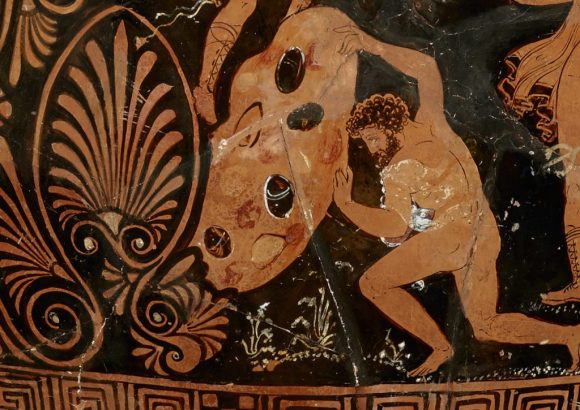
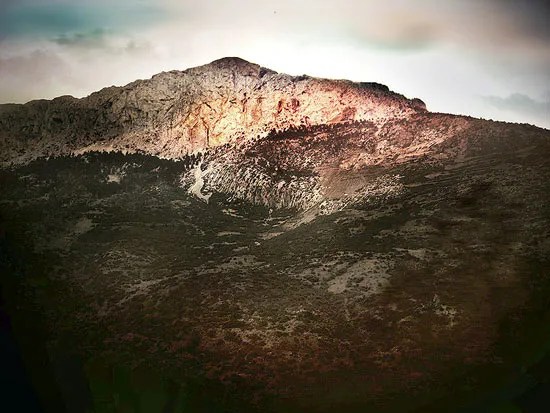
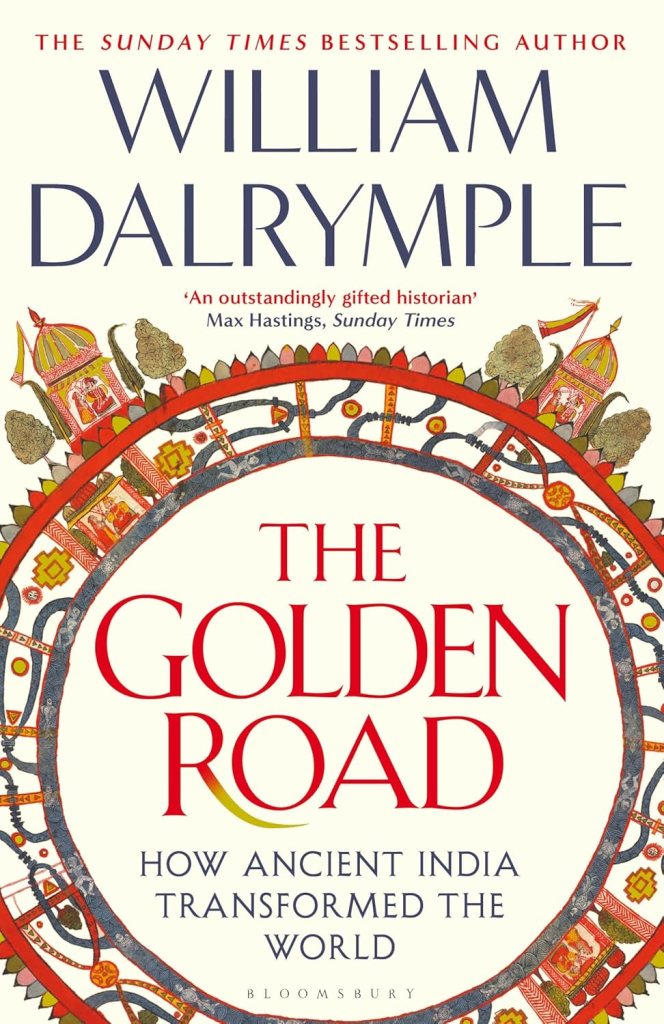

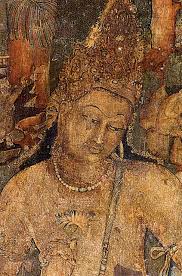


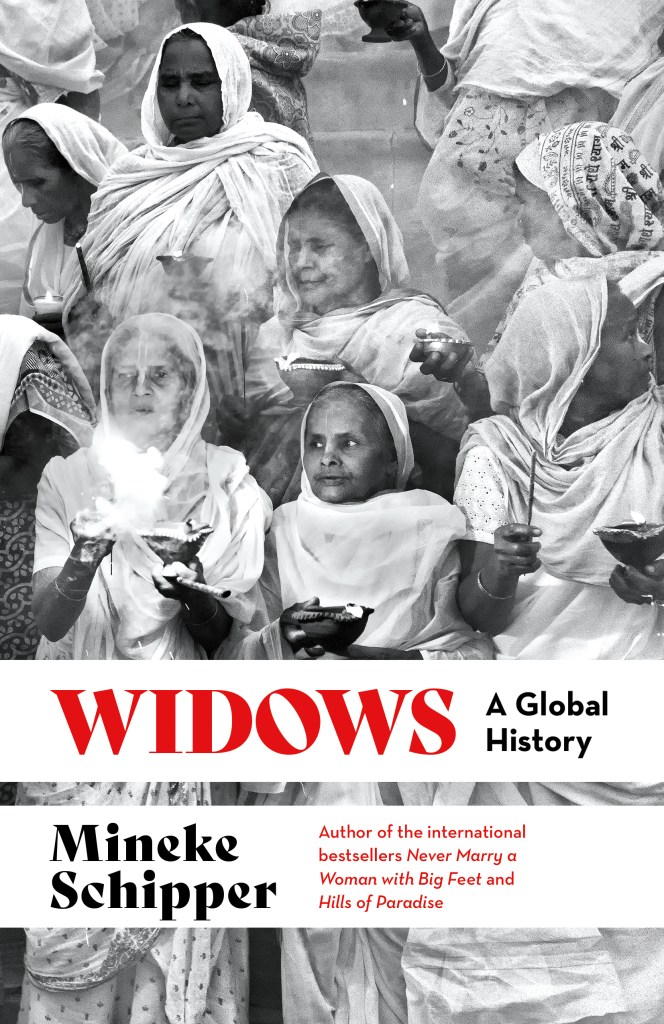
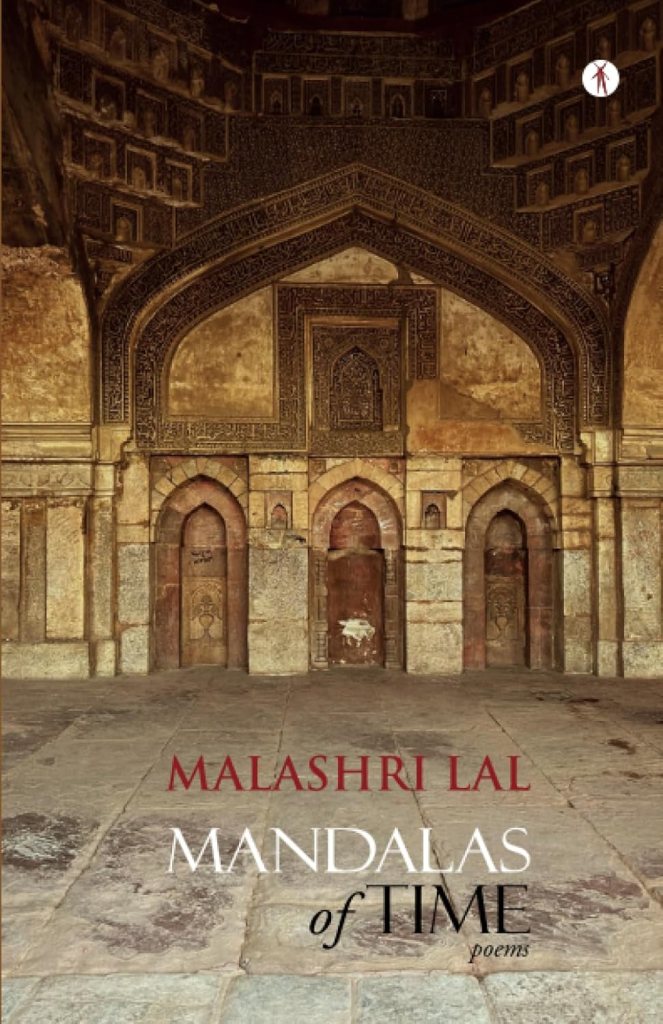
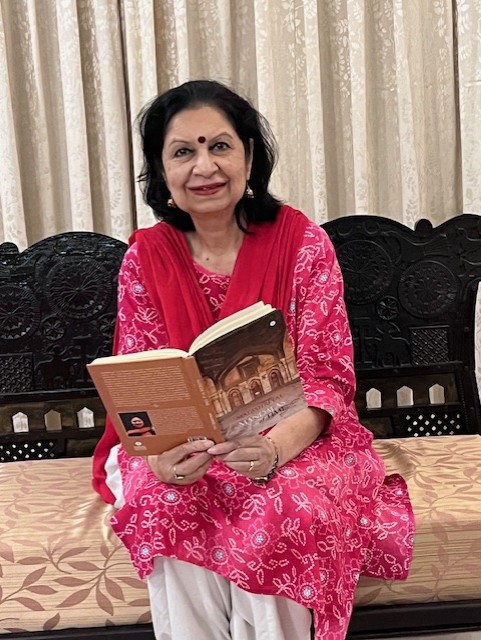
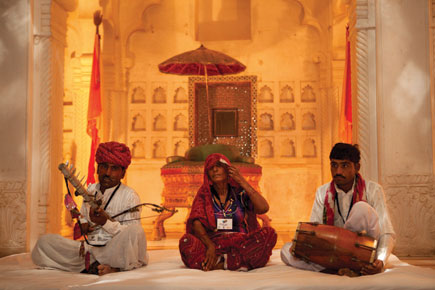
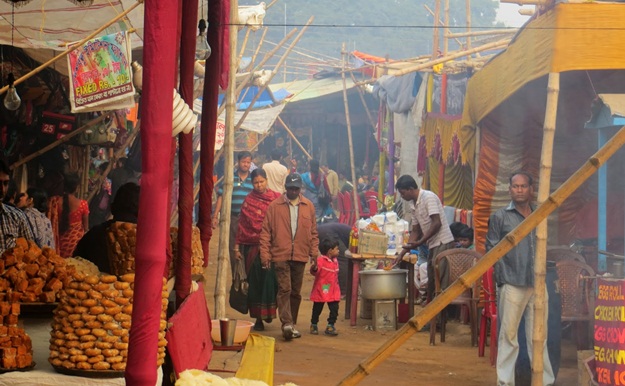
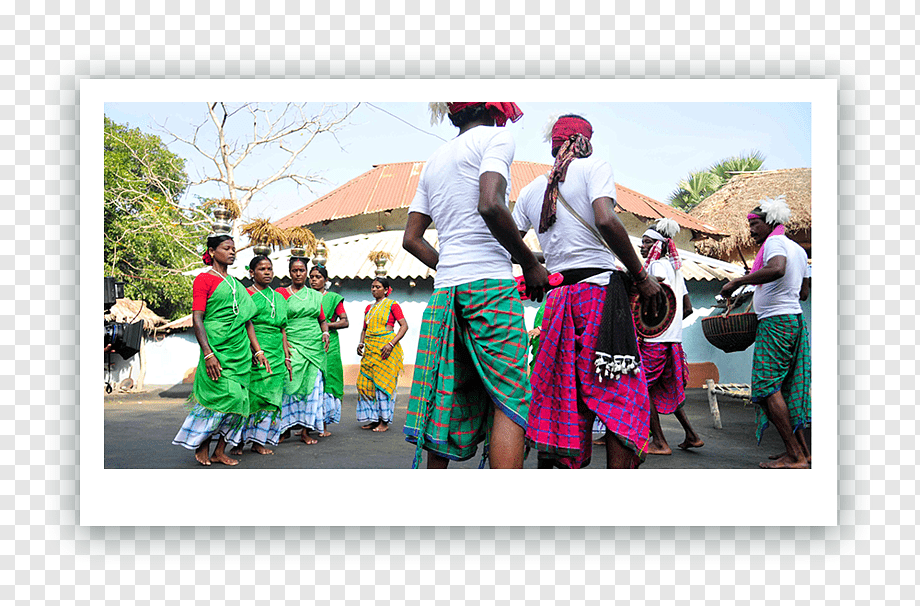
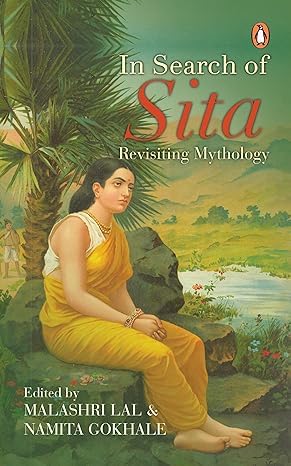
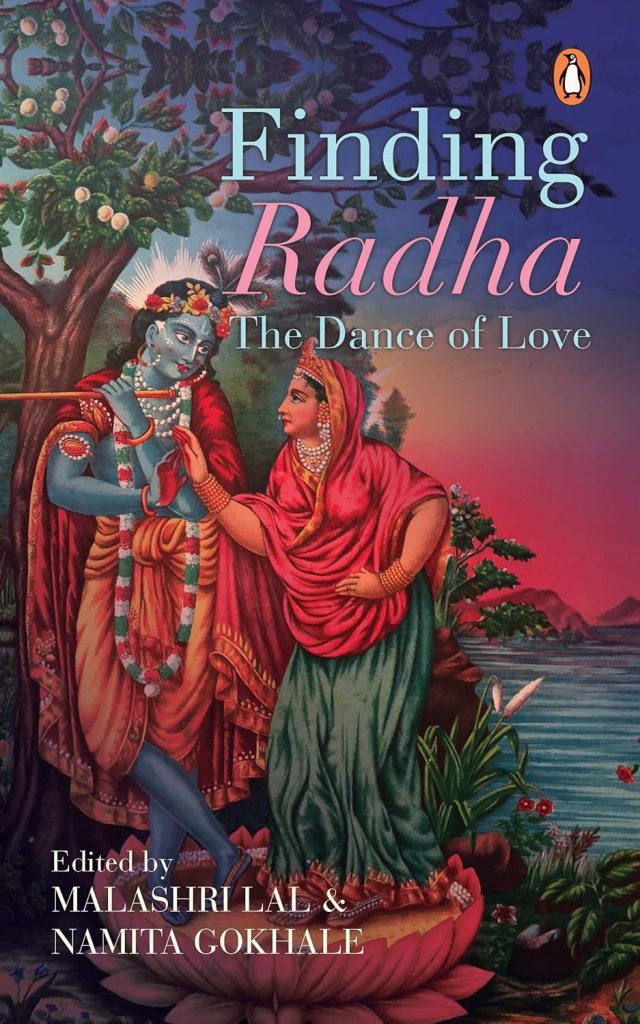
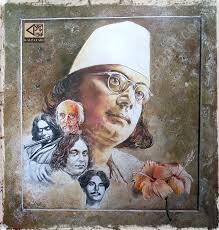
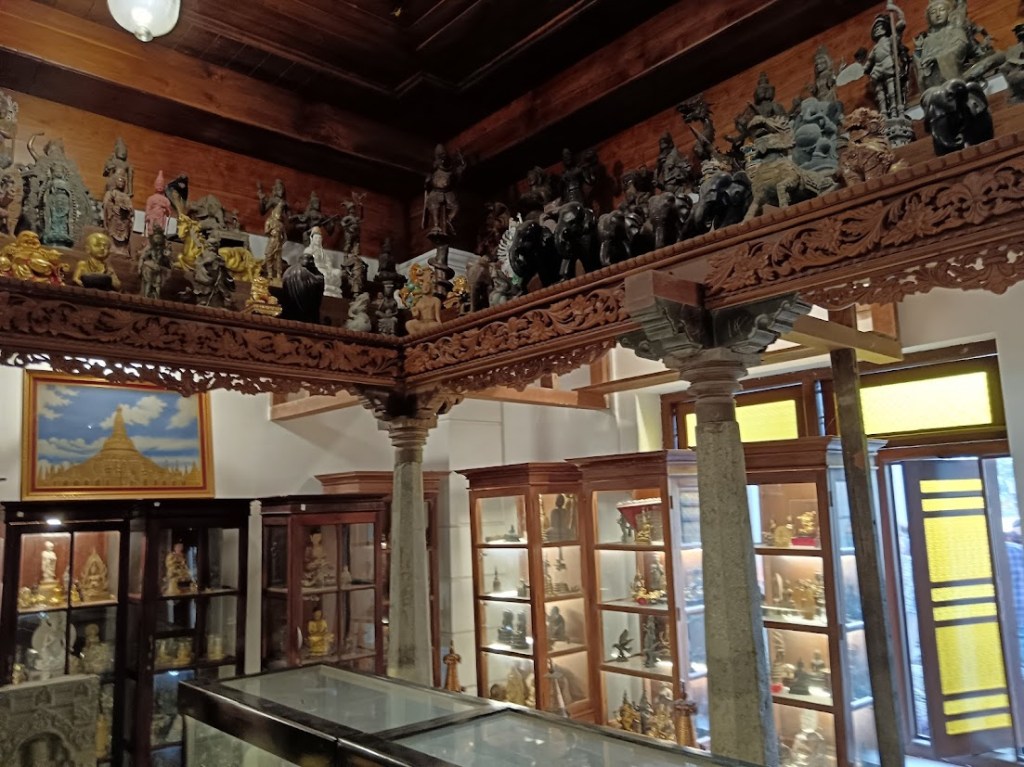


 Borderless