Categories
Conversation

‘Soumitra Chatterjee was my father first and then everything else’

Poulami Bose Chatterjee converses with Ratnottama Sengupta
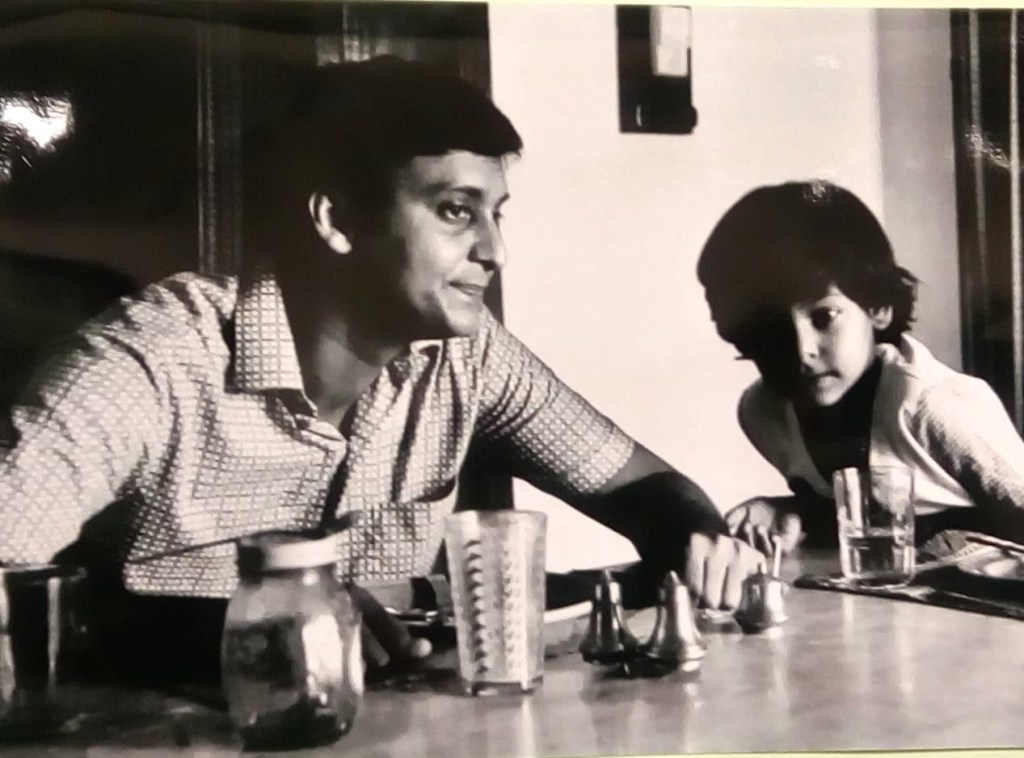
Young Soumitra Chatterjee with his daughter, Poulami. Photo provided by Ratnottama Sengupta

“All the recovery Rono Bhaitu[1]( Soumitra’s grandson) has made, is entirely due to his mother,” Soumitra Chatterjee (1935-2020) had said to me when I met him before Covid set in. His voice was laden with deep affection and paternal pride for his daughter. Deservedly so, as the world has been witnessing since the star actor passed away in November 2020. Poulami took upon herself the male mantle of lighting her father’s pyre.
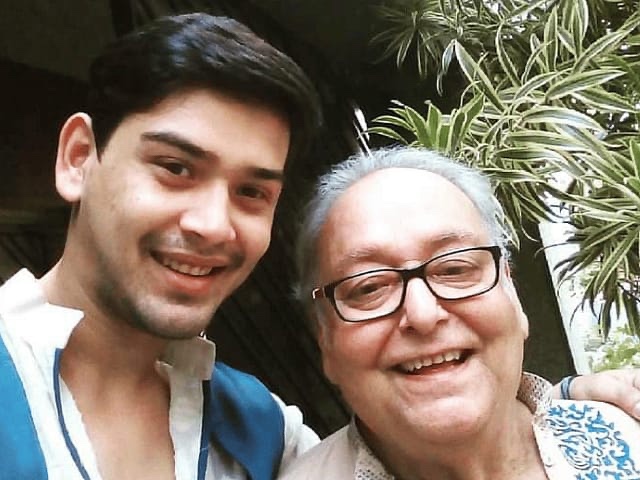
An older Soumitra Chatterjee with his grandson, Ronodeb Bose. Photo provided by Ratnottama Sengupta

But that was neither the beginning nor the end of her duty towards her father. I had seen her perform on stage alongside the thespian in Homapakhi [A Legendary Bird] that had explored the complexities of a society trying to reconcile its modern aspirations with traditional roots.

And last November she directed Janmantar [Rebirth], an original play Soumitra Chatterjee had written in 1993 but was never staged before. Seen through the eyes of a matinee idol who is visiting a remote village in Purulia, it focused on ills like child marriage, witch hunting, clash between and land owners and cultivators.  “Unfortunately, 30 years later too, all the ills are still thriving on that soil,” Poulami said to me.
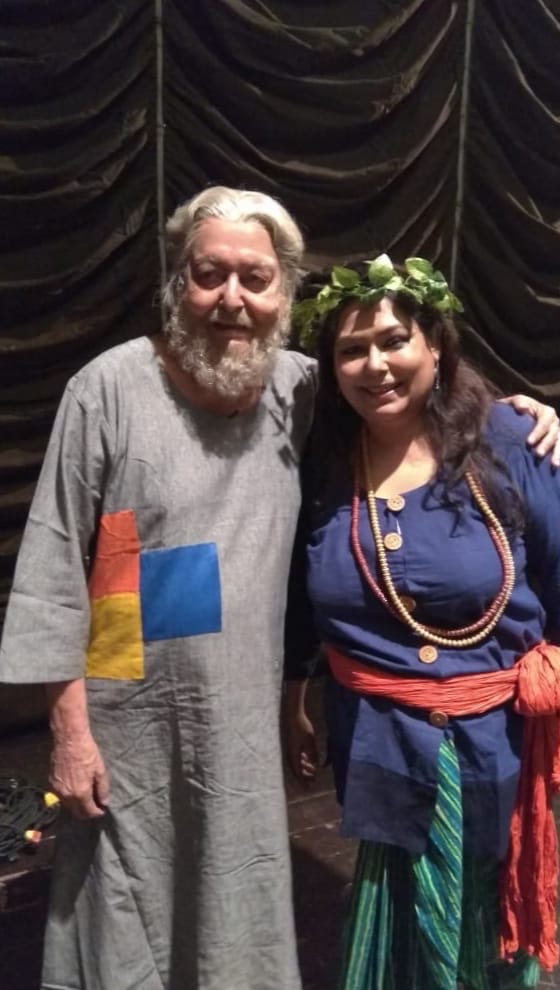
Poulami with Soumitra. Photo provided by Ratnottama Sengupta

And in January, even as the definitive biography Soumitra Chatterjee and his World was being launched in the Kolkata Literary Meet, she staged Chandanpurer Chor [The Thief of Chanderpur], his light hearted transliteration of Jean Anouilh’s Carnival of Thieves[2], to mark his birth anniversary.

On the eve of the International Women’s Day I conversed with Poulami, whose parents have been an integral part of my life too.   

Ratnottama Sengupta: Who is Poulami? A Bharatanatyam dancer? A theatre person? Mother of an actor with a brief trajectory? Or, daughter of Soumitra Chatterjee?
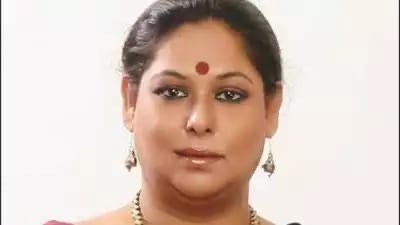
Poulami Bose Chatterjee

Poulami Bose: I think Poulami is a bit of all this — along with a passionate theatre practitioner. I am my mother’s daughter too. I hope I am a loyal friend to my friends. But above all I’m myself. I like to think of myself as a free spirit — absolutely totally in love with my daughter and son and music and dance and theatre and all that is wonderful in the world.

RS: When did you first realise that your father was not a 10-5 pm office going father like that of other girls? That he was a star?

PB: For a long time in my growing up years I actually didn’t realise how big a star he was. He was a very loving, hands-on father, very involved in our lives. I always knew he was an actor but didn’t realise the magnitude of his stardom. He never brought that aspect home. Our home was always filled with lively discussions, about books, music, paintings, dance, theatre, cinema, the environment, travel… It was a beautiful childhood, very loving, very secure.

Bapi [father] and Ma were always introducing us to new things. Encouraging us to embrace the world. I thought that was normal and that’s what every father was like. Only after I grew up did I realise his impact on the Bengali moviegoers’ lives.

RS: What did a ‘cine star’ mean to you when a) you were learning Bharatanatyam under Thankamani Kutty? b) Studying? c) Getting married to Ruchir Bose?

PB: The word ‘Cine Star’ didn’t matter much when I was learning dance or studying because I was treated just like any other student, by my teachers and my friends. In fact my father didn’t believe in the word ‘Star’. He maintained that he was a professional actor — and we were certainly not encouraged to have airs and graces about us. So we interacted normally with people, and people did likewise. Some people were of course star struck but they didn’t make a difference to me. As for getting married to Ruchir: he was and still is a very down to earth person, far removed from the film industry, very humane. He and his family have always accepted me and treated me for who I am rather than who my father was.

RS: Who was a bigger star for you — Soumitra Chatterjee or Satyajit Ray?

PB: Of course Satyajit Ray! Soumitra Chatterjee was my father first and then everything else, whereas Satyajit Ray was larger than life. We grew up hero worshipping him. Our whole family was absolutely in awe of him — as a person, as a filmmaker, an author and the rest. We were influenced a great deal by his way of life. His sensibilities. In fact we still idolize him.

RS: Which films of Soumitra Chatterjee have you loved most?

PB: Oh there are so many! Apur Sansar, Sansar Simante, Jhinder Bondi, Koni. Ekti Jiban, Dekha, Mayurakshi, Agradani, Ashani Sanket, Abhijan, Sonar Kella, Ganadevata, Atal Jaler Ahwan, Aparichita, Teen Bhubaner Pare, Baghini, Basanta Bilap, Shakha Prasakha, Charulata, Kapurush, Akash Kusum, Dwando, Borunbabur Bondhu…[3] I can go on.

The most impressive thing for me was his versatility. He was different in all the films that I have mentioned above. He was one actor who didn’t have mannerisms. He always became the character. I have seen him doing a lot of homework, research to delve deep into the character’s psyche. Acting was his passion and that was evident in whichever role he played.

RS: Which film of your father has impacted you most? One that moved you at a personal level, perhaps because you identified with it most?

PB: I think Koni. His now iconic dialogue, “Fight Koni, fight!” has stayed with me till this day. Whenever I feel low or face any kind of obstacle, I always remember him in the film. How the human spirit is capable of rising against all odds. How hard work and determination can carry you forward. It inspires not to give up without a fight.

RS: Soumitra Da was a Master in Bengali; Deepadi[4] in English. Who guided you in your studies? Who selected what books you will read?

PB: My parents, like I said earlier, were hands on parents. They, both, helped me with my school work. The atmosphere in our house revolved around books, so we read a lot while growing up. Ma had done her MA in Philosophy. She and Bapi introduced me to both English and Bengali literature. Bapi was more strict, he expected me to read classics and serious books. Ma was more liberal, she let me read anything I wanted to, including romance novels which my father thought were a waste of time.
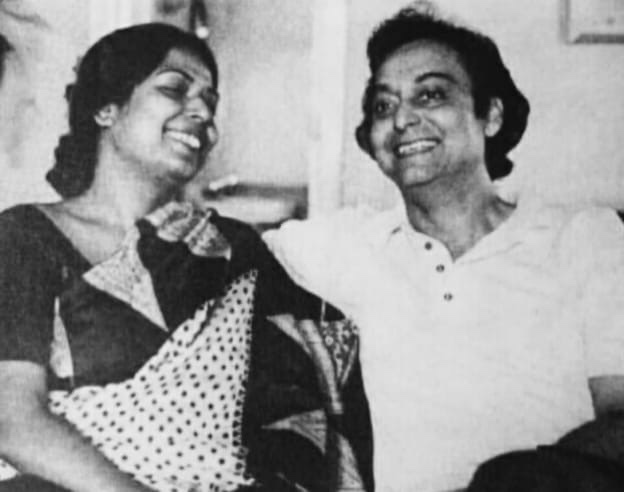
Soumitra and his wife Deepa. Photo provided by Soumitra Chatterjee

RS: So who are your favourite authors?

PB: I am eclectic in my choice. I read classics as well as bestsellers, plenty of them. My favourite authors are Tarashankar Bandopadhyay,  Bibhuti Bhushan, Manik Bandopadhyay, Jibanananda Das, Shakti Chattopadhyay,  Sunil Gangopadhyay, Charles Dickens, O Henry, Oscar Wilde, Maupassant, Shirshendu Mukhopadhyay, Samaresh Basu, John Grisham, Pablo Neruda, Gabriel García Marquez, Arundhati Roy, Agatha Christie, Akhtaruzzaman Elias, Humayun Ahmed, Jeffrey Archer, Khaled Husseini, Chitra Divakaruni Banerjee, Satyajit Ray, Sukumar Ray, Saradindu Bandopadhyay, Paolo Coelho, Gerald Durrell, Charlotte Bronte, Emily Bronte, Lewis Carroll… to name a few!

RS: Soumitra Da was a poet. He also translated plays — classics of world theatre — into Bengali. What was he most happy to do — act in movies? Write and direct plays? Or retire to the inner world of poetry?

PB: All three. I’ve never seen him sit idle or waste time. It depended on his mood — he loved doing all three. But I must add: theatre was, always, his first love. He was deeply influenced by Sisir Bhaduri (1889-1959), with whom he had started out. He directed plays for Pratikriti, a group that Ma had — and he directed plays for Abhinetri Sangha, set up by the actors of Tollygunge.

RS: Deepadi was an ace badminton player. Did she give up her own world to be Mrs Soumitra Chatterjee? 

PB: She gave up her career primarily for us. Bapi was at the peak of his career and was naturally very busy. Ma felt we needed to have at least one parent around, always. In retrospect, I realise it was a huge sacrifice. But I have to say, both my brother and I needed her. I think she realised that and did what most mothers do: she prioritized us over her career.

Ma had the biggest heart ever. She was more intelligent than the three of us put together. And she was non-judgmental about who she was reaching out to. So many sportswomen she helped, on her own. And I vividly remember this young Muslim boy in New Market who always carried her shopping to the car. One day Ma learnt that he had TB. She immediately brought him home and organised a room on the terrace for him to stay until he recovered. She didn’t hesitate because she had children, she didn’t seek the advice of doctors, she didn’t think twice because her husband was a star!

RS: Why did you choose to carry forward Soumitra Chatterjee’s legacy on stage rather than on screen? 

PB: Theatre kind of seeped into me. I used to watch Bapi – when he was idling, he would arrange the empty cigarette and matchboxes to design sets. I have been on stage ever since I could walk. It is my first love. I’m passionate about live performances, be it dance or theatre. Not that I didn’t get offers for films but I never actively pursued them. I married relatively early and had both my children by the time I was 26. Stage was always more accommodating and easier to manage. And till now the magic of the stage hasn’t worn off. I am still madly in love with the stage. Screen just didn’t happen… no particular reason, really.

RS: Soumitra Da was proud of his grandson’s screen presence. And he was extremely proud of the manner in which you handled your son’s unfortunate accident. Would you like to talk about it?

PB: Bapi had high hopes for Ronodeep. He felt Rono was a very sensitive actor perfectly suited for the screen. He was devastated by Rono’s accident. It was the most tragic thing to have happened in all our lives. But I have come to terms with it. I count my blessings — it could have been worse! Rono is with us — a bright and wonderful boy, sensitive and sweet, full of love and empathy. He still has a long way to go in terms of recovery and health but he’s getting there, one step at a time…

I have learned a lot from this phase of my life. I continue to learn every day. It has also shaped me, moulded me as a person. Bapi-Ma told me always to have grace even under pressure, to be always dignified. I have tried to follow them.

RS: Can you recount one cherished moment with your father?

PB: In May 2020, months before he passed away, during Covid, Bapi and I were just sitting and talking about various things. Suddenly he told me, “Mitil I have never said this to you before but I want you to know that I am very proud of the way you have conducted yourself during Bhaitu’s accident and every day since then. Your dignity and your grace has made me really happy. I’m so proud that you have turned out to be the person you are!”

All through my life I will cherish this one moment.

RS: In today’s world many daughters are taking up the responsibility of carrying forward the legacy of their fathers. What, in your opinion, has brought about this social change? Did Soumitra Chatterjee raise you to (consciously) fight patriarchy?

PB: I guess the world is waking up to the fact that what sons can do, daughters can do better! I really don’t know what exactly has brought this social change but I definitely welcome it. My daughter is a great source of strength for me. She is my best friend. My father had raised my brother, Sougata, and me as equals, maybe favouring me a tad more!

Bapi was always ahead of his times. He always told me, “The sky is the limit, you can do whatever you set your mind to.” But it was Ma who very consciously taught me to fight patriarchy. She was a champion for the girl child.

RS: Soumitra Da was never lured by the reach and fame of Bollywood? So, why did he direct Stree Ka Patra[5], the telefilm he made for the national television, in Hindi?

PB: Bapi believed that he could deliver best in his own mother tongue. Besides, he was not enamoured of the kind of films made in Bollywood at that time. He loved his life here, his theatre, his poetry, and co-editing Ekshan, the culture magazine that first published Satyajit Ray’s script. Going to Bollywood, he felt, would put a stop to all his literary and theatrical pursuits.

However, he got the offer to direct Stree Ka Patra for National Doordarshan, and it came with the clause that it had to be in Hindi. The other telefilm he directed, Mahasindhur Opar Theke [ From the Other side of the Ocean] was in Bengali 

RS: Many uncharitable people say that Soumitra Chatterjee wasted his talent by limiting himself to Bengali films and by indiscriminate selection of roles — because of his family responsibilities. Your response to this?

PB: Limiting himself to Bengali films was a conscious decision he made. And I have just elucidated the reasons. Yes he wanted to provide for his family, and he did so the only way he knew to — by acting. He never shied from saying that he was a professional actor. And if he wanted to take on the responsibilities who is anyone else to talk about it?

He could have abandoned his family like many others. He chose not to. His family, his life, his choices… that’s all I can say.

RS: You have grown up in close proximity with stars like Sharmila Tagore, Madhabi Mukherjee, Sandhya Roy, Tanuja, and directors like Tapan Sinha, Ajoy Kar, Tarun Majumdar, Rituparno Ghosh. Please share some memories/ anecdotes with us.

PB: The only name in the list who I have grown up in close proximity with is Tapan Sinha, whose birth centenary is being celebrated. He was a wonderful human being! While we were growing up we didn’t interact much with people from the film industry. We certainly met them but at parties, weddings, social events… 

My parents had a huge circle of friends. A doctor’s group. My mum’s friends. Poets like Shakti Kaku and Sunil Kaku. My dad’s friends like Nirmalya Acharya, the co-editor of Ekshan. Directors Ajit Lahiri, Ashutosh Mukherjee, Nripen Ganguly who was fondly called ‘Nyapa Da.’ Friends from theatre. His childhood friends. It was a vast cross section of people, so it was wonderful, happy and great fun growing up around so many amazing people.

RS: Gaachh [Tree], the documentary by Catherine Berger, focused only on his stage life. Abhijan[6][The Expedition] directed by renowned actor Parambrata Chatterjee, did not excite cineastes who have adored Soumitra Chatterjee, honoured with Dadasaheb Phalke for cinema, Sangeet Natak award for theatre, decorated with the Lotus award of Padma Bhushan and the French Order des Arts et des Lettres. Will you give us a biopic of Soumitra Chatterjee on stage?

PB: I am not in favour of a biopic for someone like Bapi. On the other hand, a stage production would be limiting. He was a multihued talent. It is difficult to capture so many facets of his personality. It is a daunting task to encompass every nuance, every shade of such an extraordinary life in a single film. A biopic should not be made if it does not do justice to the magnificence of the man.

.

[1] Ronodeb Bose, grandson of Soumitra Chatterjee, had a bike accident in 2017

[2] Jean Anouilh (1910-1987), Carnival of Thieves(1938)

[3] Bengali films in which Soumitra Chatterjee played the lead.

[4] Deepa Chatterjee, wife of Soumitra Chatterjee

[5] A pun in the heading. Stree is woman, Patra is vessel as well as a prospective groom. So, a Woman’s Vessel or Prospective Groom

[6] Soumitro Chatterjee played the lead in the 1962 Abhijan, directed by Satyajit Ray

.

Ratnottama Sengupta, formerly Arts Editor of  The Times of India, teaches mass communication and film appreciation, curates film festivals and art exhibitions, and translates and write books. She has been a member of CBFC, served on the National Film Awards jury and has herself won a National Award. 

.

PLEASE NOTE: ARTICLES CAN ONLY BE REPRODUCED IN OTHER SITES WITH DUE ACKNOWLEDGEMENT TO BORDERLESS JOURNAL

Click here to access the Borderless anthology, Monalisa No Longer Smiles

Click here to access Monalisa No Longer Smiles on Amazon International
Categories
Greetings from Borderless

Auld Lang Syne…

As we wait for the new year to unfold, we glance back at the year that just swept past us. Here, gathered together are glimpses of the writings we found on our pages in 2024 that herald a world of compassion and kindness…writings filled with hope and, dare I say, even goodwill…and sometimes filled with the tears of poetic souls who hope for a world in peace and harmony. Disasters caused by humans starting with the January 2024 in Japan, nature and climate change, essays that invite you to recall the past with a hope to learn from it, non-fiction that is just fun or a tribute to ideas, both past and present — it’s all there. Innovative genres started by writers to meet the needs of the times — be it solar punk or weird western — give a sense of movement towards the new. What we do see in these writings is resilience which healed us out of multiple issues and will continue to help us move towards a better future.

A hundred years ago, we did not have the technology to share our views and writings, to connect and make friends with the like-minded across continents. I wonder what surprises hundred years later will hold for us…Maybe, war will have been outlawed by then, as have been malpractices and violences against individuals in the current world. The laws that rule a single man will hopefully apply to larger groups too…

Poetry

Whose life? by Aman Alam. Click here to read.

Winter Consumes by Luis Cuauhtémoc Berriozábal. Click here to read.

Hot Dry Summers by Lizzie Packer. Click here to read.

House of Birds (for Pablo Neruda) by Ryan Quinn Flanagan. Click here to read.

Poems for Dylan Thomas by Michael Burch. Click here to read.

Dylan Thomas in Ardmillan Terrace? by Stuart McFarlane. Click here to read.

Bermuda Love Triangle & the Frothiest Coffee by Rhys Hughes. Click here to read.

Satirical Poems by Maithreyi Karnoor. Click here to read.

Three Poems by Rakhi Dalal. Click here to read.

Manish Ghatak’s Aagun taader Praan (Fire is their Life) has been translated from Bengali by Indrayudh Sinha. Click here to read.

Manzur Bismil’s poem, Stories, has been translated from Balochi by Fazal Baloch. Click here to read.

Ye Shao-weng’s poetry ( 1100-1150) has been translated from Mandarin by Rex Tan. Click here to read.

Amalkanti by Nirendranath Chakraborty has been translated from Bengali by Debali Mookerjea-Leonard. Click here to read.

The Mirror by Mubarak Qazi has been translated from Balochi by Fazal Baloch. Click here to read.

Homecoming, a poem by Ihlwha Choi on his return from Santiniketan, has been translated from Korean by the poet himself. Click here to read.

Pochishe Boisakh (25th of Baisakh) by Tagore (1922), has been translated from Bengali by Mitali Chakravarty. Click here to read.

Nazrul’s Ghumaite Dao Shranto Robi Re (Let Robi Sleep in Peace) has been translated from Bengali by Professor Fakrul Alam. Click here to read.

Jibananada Das’s Andhar Dekhecche, Tobu Ache (I have seen the dark and yet there is another) has been translated from Bengali by Professor Fakrul Alam. Click here to read.

Tagore’s Shotabdir Surjo Aji ( The Century’s Sun today) has been translated from Bengali by Mitali Chakravarty. Click here to read.

Non-fiction

Baraf Pora (Snowfall)

A narrative by Rabindranath Tagore that gives a glimpse of his first experience of snowfall in Brighton and published in the Tagore family journal, Balak (Children), has been translated from Bengali by Somdatta Mandal. Click here to read.

Dylan on Worm’s Head

Rhys Hughes describes a misadventure that the Welsh poet had while hiking as a tribute to him on Dylan Thomas Day. Click here to read.

Travels of Debendranath Tagore 

These are from the memoirs of Tagore’s father translated from Bengali by Somdatta Mandal. Click here to read.

Two Pizza Fantasies

Rhys Hughes recounts myths around the pizza in prose, fiction and poetry, Click here to read

Is this a Dagger I See…?

Devraj Singh Kalsi gives a tongue-in-cheek account of a writer’s dilemma. Click here to read.

Still to Moving Images 

Ratnottama Sengupta explores artists who have turned to use the medium of films… artists like the legendary MF Husain. Click here to read.

How Dynamic was Ancient India?

Farouk Gulsara explores William Dalrymple’s latest book, The Golden Road: How Ancient India Transformed the World. Click here to read.

The Magic Dragon: Cycling for Peace

Keith Lyons writes of a man who cycled for peace in a conflict ridden world. Click here to read.

A Cover Letter

Uday Deshwal muses on writing a cover letter for employment. Click here to read.

A Manmade Disaster or Climate Change?

Salma A Shafi writes of floods in Bangladesh from ground level. Click here to read.

Pinecones and Pinky Promises

Luke Rimmo Minkeng Lego writes of mists and cloudy remembrances in Shillong. Click here to read.

 Educating for Peace in Rwanda

Suzanne Kamata discusses the peace initiatives following the terrors of the 1994 Rwandan Genocide while traveling within the country with her university colleague and students. Click here to read.

Breaking Bread

Snigdha Agrawal has a bovine encounter in a restaurant. Click here to read.

From Srinagar to Ladakh: A Cyclist’s Diary

Farouk Gulsara travels from Malaysia for a cycling adventure in Kashmir. Click here to read.

A Saga of Self-empowerment in Adversity

Bhaskar Parichha writes of Noor Jahan Bose’s Daughter of The Agunmukha: A Bangla Life, translated from Bengali by Rebecca Whittington. Click here to read.

Safdar Hashmi

Meenakshi Malhotra writes of Anjum Katyal’s Safdar Hashmi: Towards Theatre for a Democracy. Click hereto read.

Meeting the Artists

Kiriti Sengupta talks of his encounter with Jatin Das, a legendary artist. Click here to read.

The Comet’s Trail: Remembering Kazi Nazrul Islam

Radha Chakravarty pays tribute to the rebel poet of Bengal. Click here to read.

The Myriad Hues of Tagore by Aruna Chakravarti

Aruna Chakravarti writes on times and the various facets of Tagore. Click here to read.

The Year of Living Dangerously

Professor Fakrul Alam takes us back to the birth of Bangladesh. Click here to read.

A Short, Winding, and Legendary Dhaka Road 

Professor Fakrul Alam takes us on a historical journey of one of the most iconic roads of Dhaka, Fuller Road. Click here to read.

 A Sombre Start 

Suzanne Kamata talks of the twin disasters in Japan. Click here to read.

Fiction

The Snakecharmer

Shapuray by Nazrul, has been translated from Bengali by Sohana Manzoor. Click here to read.

Significance

Naramsetti  Umamaheswararao creates a fable around a banyan tree and it’s fruit. Click here to read.

Just Another Day

Neeman Sobhan gives a story exploring the impact of the politics of national language on common people. Click here to read.

The Ghosts of Hogshead

Paul Mirabile wanders into the realm of the supernatural dating back to the Potato Famine of Ireland in the 1800s. Click here to read.

A Queen is Crowned

Farhanaz Rabbani traces the awakening of self worth. Click here to read.

The Last Hyderabadi

Mohul Bhowmick talks of the passage of an era. Click here to read.

The Gift 

Rebecca Klassen shares a sensitive story about a child and an oak tree. Click here to read.

Galat Aurat or The Wrong Woman

Veena Verma’s story has been translated from Punjabi by C Christine Fair. Click here to read.

The Melting Snow

A story by Sharaf Shad,  has been translated from Balochi by Fazal Baloch. Click here to read.

Conversations

Ratnottama Sengupta talks to Ruchira Gupta, activist for global fight against human trafficking, about her work and introduces her novel, I Kick and I Fly. Click here to read.

A conversation with eminent Singaporean poet and academic, Kirpal Singh, about how his family migrated to Malaya and subsequently Singapore more than 120 years ago. Click here to read.

A brief overview of Rajat Chaudhuri’s Spellcasters and a discussion with the author on his book. Click here to read.

A review of and discussion with Rhys Hughes about his ‘Weird Western’, The Sunset Suite. Click here to read.

Categories
Editorial

Clinging to Hope

I will cling fast to hope.

— Suzanne Kamata, ‘Educating for Peace in Rwanda

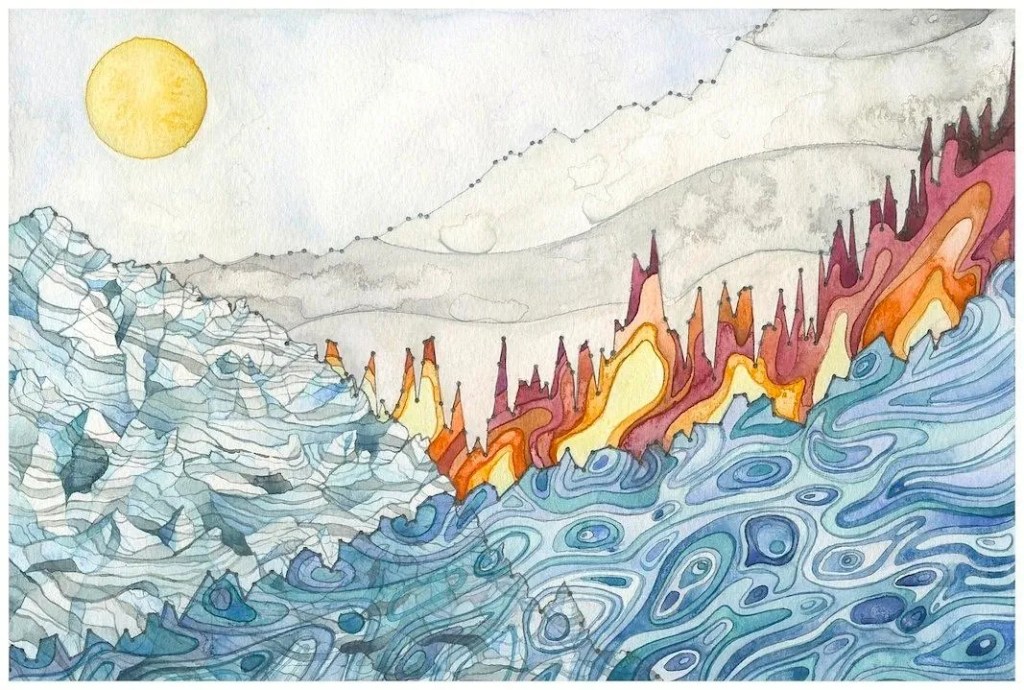
Landscape of Change by Jill Pelto, Smithsonian. From Public Domain

Hope is the mantra for all human existence. We hope for a better future, for love, for peace, for good weather, for abundance. When that abundance is an abundance of harsh weather or violence wrought by wars, we hope for calm and peace.

This is the season for cyclones — Dana, Trami, Yixing, Hurricanes Milton and Helene — to name a few that left their imprint with the destruction of both property and human lives as did the floods in Spain while wars continue to annihilate more lives and constructs. That we need peace to work out how to adapt to climate change is an issue that warmongers seem to have overlooked. We have to figure out how we can work around losing landmasses and lives to intermittent floods caused by tidal waves, landslides like the one in Wayanad and rising temperatures due to the loss of ice cover. The loss of the white cover of ice leads to more absorption of heat as the melting water is deeper in colour. Such phenomena could affect the availability of potable water and food, impacted by the changes in flora and fauna as a result of altered temperatures and weather patterns. An influx of climate refugees too is likely in places that continue habitable. Do we need to find ways of accommodating these people? Do we need to redefine our constructs to face the crises?

Echoing concerns for action to adapt to climate change and hoping for peace, our current issue shimmers with vibrancy of shades while weaving in personal narratives of life, living and the process of changing to adapt.

An essay on Bhaskar Parichha’s recent book on climate change highlights the action that is needed in the area where Dana made landfall recently. In terms of preparedness things have improved, as Bijoy K Mishra contends in his essay. But more action is needed. Denying climate change or thinking of going back to pre-climate change era is not an option for humanity anymore. While politics often ignores the need to acknowledge this crises and divides destroying with wars, riots and angst, a narrative for peace is woven by some countries like Japan and Rwanda.

Suzanne Kamata recently visited Rwanda. She writes about how she found by educating people about the genocide of 1994, the locals have found a way to live in peace with people who they addressed as their enemies before… as have the future generations of Japan by remembering the atomic holocausts of 1945.

Writing about an event which wrought danger into the lives of common people in South Asia is Professor Fakrul Alam’s essay on the 1971 conflict between the countries that were carved out of the 1947 Partition of the Indian subcontinent. As if an antithesis to this narrative of divides that destroyed lives, Luke Rimmo Minkeng Lego muses about peace and calm in Shillong which leaves a lingering fragrance of heartfelt friendships. Farouk Gulsara muses on nostalgic friendships and twists of fate that compel one to face mortality. Abdullah Rayhan ponders about happiness and Shobha Sriram, with a pinch of humour, adapts to changes. Devraj Singh Kalsi writes satirically of current norms aiming for a change in outlook.

Humour is brought into poetry by Rhys Hughes who writes about a photograph of a sign that can be interpreted in ways more than one. Michael Burch travels down the path of nostalgia as Ryan Quinn Flanagan shares a poem inspired by Pablo Neruda’s bird poems. Luis Cuauhtémoc Berriozábal writes heart wrenching verses about the harshness of winter for the homeless without shelter. We have more colours in poetry woven by Jahanara Tariq, Stuart MacFarlane, Saranyan BV, George Freek, G Javaid Rasool, Heath Brougher and more.

In translations, we have poetry from varied countries. Ihlwha Choi has self-translated his poem from Korean. Ivan Pozzoni has done the same from Italian. One of Tagore’s lesser-known verses, perhaps influenced by the findings of sensitivity in plants by his contemporary, Jagadish Chandra Bose (1858-1937) to who he dedicated the collection which homed this poem, Phool Photano (making flowers bloom), has been translated from Bengali. Professor Alam has translated Nazrul’s popular song, Tumi Shundor Tai Cheye Thaki (Because you are so beautiful, I keep gazing at you).

In reviews, Somdatta Mandal has discussed The Collected Short Stories of Kazi Nazrul Islam, translated by multiple translators from Bengali and edited by Syed Manzoorul Islam and Kaustav Chakraborty. Rakhi Dalal has written about The Long Strider in Jehangir’s Hindustan: In the Footsteps of the Englishman Who Walked From England to India in the Year 1613 by Dom Moraes and Sarayu Srivatsa, a book that looks and compares the past with the present. Bhaskar Parichha has written of a memoir which showcases not just the personal but gives a political and economic commentary on tumultuous events that shaped the history of Israel, Palestine, and the modern Middle East prior to the more than a year-old conflict. The book by the late Mohammad Tarbush (1948-2022) is called My Palestine: An Impossible Exile.

Stories travel around the world with Paul Mirabile’s narrative giving a flavour of bohemian Paris in 1974. Anna Moon’s fiction set in Philippines gives a darker perspective of life. Lakshmi Kannan’s narrative hovers around the 2008 bombing in Mumbai, an event that evoked much anger, violence and created hatred in hearts. In contrast, Naramsetti Umamaheswararao brings a sense of warmth into our lives with a story about a child and his love for a dog. Sreelekha Chatterjee weaves a tale of change, showcasing adapting to climate crisis from a penguin’s perspective.

Hoping to change mindsets with education, Mineke Schipper has a collection of essays called Widows: A Global History, which has been introduced along with a discussion with the author on how we can hope for a more equitable world. The other conversation by Ratnottama Sengupta with Veena Raman, wife of the late Vijay Raman, a police officer who authored, Did I Really Do All This: Memoirs of a Gentleman Cop Who Dared to be Different, showcases a life given to serving justice. Raman was an officer who caught dacoits like Paan Singh Tomar and the Indian legendary dacoit queen, Phoolan Devi. An excerpt from his memoir accompanies the conversation. The other book excerpt is from an extremely out of the box book, Rhys Hughes’ Growl at the Moon, a Weird Western.

Trying something new, being out of the box is what helped humans move out from caves, invent wheels and create civilisations. Hopefully, this is what will help us move into the next phase of human development where wars and weapons will become redundant, and we will be able to adapt to changing climes and move towards a kinder, more compassionate existence.

Thank you all for pitching in with your fabulous pieces. There are ones that have not been covered here. Do pause by our content’s page to see all our content. Huge thanks to the fantastic Borderless team and to Sohana Manzoor, for her art too.

Hope you enjoy our fare!

Mitali Chakravarty

borderlessjournal.com

Click here to access the  content’s page for the November 2024 Issue

.

READ THE LATEST UPDATES ON THE FIRST BORDERLESS ANTHOLOGY, MONALISA NO LONGER SMILES, BY CLICKING ON THIS LINK.

Categories
Poetry

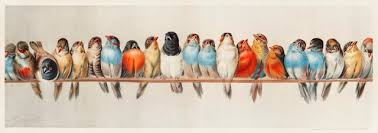
House of Birds

By Ryan Quinn Flanagan

From Public Domain
HOUSE OF BIRDS
(for Pablo Neruda*)

In this house,
the bird walls sing, the
chirping floor, a bouncing
glance.

The mud luscious climes of a
tilted unseen.

Cavernous eyes dug out
like cupped waterfalls,
the branching mater's dance.

The dense green leering of
moss things, freedom's
sprawling skin.

That gentle giant of towering mantle:
does the child reach up out of the land
of his fathers, unknowing still
of the fire eaters that scar and maim?

Do peckish blandishments
litter the halls like forgotten toys?

In this man, a splash
of gleeful longing, the princely
rooms and their throaty
shadows.

All things destined
and careening.

*Pablo Neruda( Chilean poet, 1904-1973) had a series of bird poems. You can access a few at these links:

Click here to read a translation of Pablo Neruda’s Art of Birds

Click here to read more of Neruda’s bird poems

Ryan Quinn Flanagan is a Canadian-born author residing in Elliot Lake, Ontario, Canada with his wife and many bears that rifle through his garbage.  His work can be found both in print and online in such places as: Evergreen Review, The New York Quarterly, Borderless Journal, GloMag, Red Fez, and Lothlorien Poetry Journal

.

PLEASE NOTE: ARTICLES CAN ONLY BE REPRODUCED IN OTHER SITES WITH DUE ACKNOWLEDGEMENT TO BORDERLESS JOURNAL

Click here to access the Borderless anthology, Monalisa No Longer Smiles

Click here to access Monalisa No Longer Smiles on Kindle Amazon International

Categories
Poetry

The Stone-Ribbed Lane

By Radhika Soni

THE STONE-RIBBED LANE

This stone-ribbed lane is familiar to me,
I have traveled its air before,
Drawing the whiff of chamomile tea,
Brewing inside a closed door.

Stray notes of a piano in my ears,
Waft from the window across;
From the melody, it appears,
The strain that's playing, is one of loss.

The cars sitting atop the wheels,
Appear to have not budged for long;
The place resounded with laughter
In those times, when children thronged.

How still and silent are its nooks,
Where you and I once strolled,
When stars gleamed from the sky's hooks,
As we sat under a dim lit pole.

The once bustling lane appears to sleep,
As in the distance ships set sail.
Though my feet desire to leap,
The heart still wants to prevail.

Radhika Soni writes in quest of harmony. She is greatly influenced and inspired by the poetry of Percy Bysshe Shelley, Lord Byron, Edgar Allan Poe, Robert Frost, Pablo Neruda, W.H. Auden and William Butler Yeats to name a few. She loves nature walks.

.

PLEASE NOTE: ARTICLES CAN ONLY BE REPRODUCED IN OTHER SITES WITH DUE ACKNOWLEDGEMENT TO BORDERLESS JOURNAL

Click here to access the Borderless anthology, Monalisa No Longer Smiles

Click here to access Monalisa No Longer Smiles on Kindle Amazon International

Categories
Poetry

And There in This City

By R.S.

Courtesy: Creative Commons
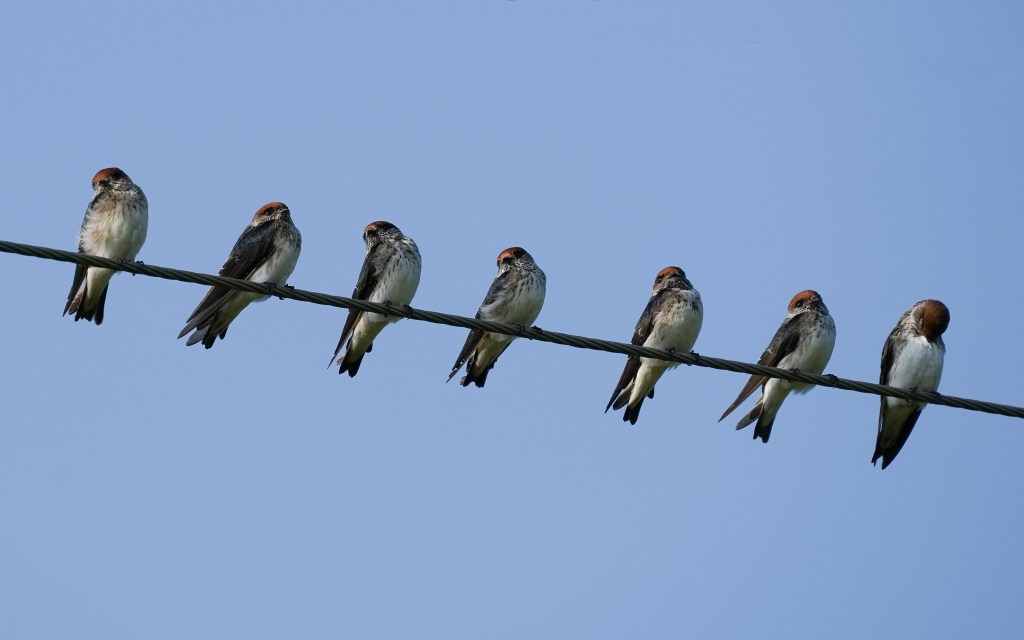
The swallows flew south,
Gathering on telephone wires.
The streets grumbled and huffed,
Weighed down by grey tyres.

The city ripped at the seams,
Worn-out, frowned.
In the sea of apathy,
Voices dwindled and drowned.

Joy shrivelled and wept,
waylaid in a corner—
Itself, the pallbearer 
And the mourner.

The lamp posts blinked and sighed,
In the midst of commotion
And the piers dangled their feet,
In the sleepy blue ocean.

Radhika Soni (R.S.) writes poetry to find harmony in life. She is greatly influenced and inspired by the poetry of Percy Bysshe Shelley, Lord Byron, Edgar Allan Poe, Robert Frost, Pablo Neruda, W.H. Auden and William Butler Yeats to name a few. She loves nature walks and rises early to draw inspiration from the morning star.

.

PLEASE NOTE: ARTICLES CAN ONLY BE REPRODUCED IN OTHER SITES WITH DUE ACKNOWLEDGEMENT TO BORDERLESS JOURNAL

Click here to access the Borderless anthology, Monalisa No Longer Smiles

Click here to access Monalisa No Longer Smiles on Kindle Amazon International