Categories
Stories

Perhaps the Last Kiss

A Nepali story by Bhupeen, translated by Ishwor Kandel 

Nepali Intercity Bus. Courtesy: Creative Commons

I woke up suddenly.

The bus was rattling. The passengers in the bus were crying as they were frightened. Some of the passengers were making a last bid to make it to the entrance and jump out of the bus hurriedly. The seats and the extra bamboo stools of the bus that had been full were vacant. Perhaps, a few audacious passengers had already jumped off the bus. I could see only either weak and old people or the mothers with their babies on the seats. The bus was shaking like the earth during an earthquake and was running on the street like a drunkard. 

I looked at the seat of the bus driver. It was vacant. I could easily guess that the driver must have jumped out of the window just as he realised that he could not avoid an accident. At that time, I had been fast asleep.

“I must do something. If one stays sans any measures even after one predicts the accident, it is nothing more than accepting death quietly,” said a voice within me. I got up quickly and trying to keep my balance. After accomplishing this initial feat, I had the illusion that I had pushed death a bit farther away. Then, I saw my wife’s face till now darkened with terror look towards me with a glimmer of hope in her eyes. She was trying to say something lying on one of the seats in the corner holding her hands around our only son’s head. But her words were entangled in her throat. Sometimes it is quite easy to understand the language of extreme crisis. I had already understood her language.

I had been awake till the time the bus crossed the Narayani River. And in my half sleep, I heard the bus conductor shouting ‘Arunkhola, Chormara’ and knocking at the door. When I woke up, I did not immediately realise where I was. That was not an urgent need either. The most important thing was to survive.

The old people in the bus were chanting the name of God. It felt as if the blood from their heads were making macabre, abstract images on the white piece of cloth that covered the front seat. The predicament of my wife was not an exception. The blood from the cut on her head was falling on the face of the eight-month-old son. Sensing the dreadful noise and the tragic condition of his mother, the baby was crying. He was crying in such a way that he was choked for quite a long time in between.

I took the baby from my wife with lightning speed. I patted him on his back. In a while, our son started to breath normally. This was a relief. But the bus was bouncing on the road like a frantic bull. It was like bull riding in sports channel where matadors try their level best to sit on the bull and continue seated if possible. It was not the time to think of a sport. But I did. Perhaps, I was meant to lie under the bull’s deadly hooves and see the last of the sun. I did not want that.

I held the baby tightly with one hand and walked to the door, supporting myself with the other seats or the rod over the gangway with the other hand. There were no obstacles to moving ahead as the capable ones had already jumped out of the bus, making it almost empty. Compromising with the potential risk, they landed safely.

The bus was moving forward downhill with the glass on the windows clinking. I bent down and had a flickering look at the road but there were no bends nearby. It was a hopeful sign in the time of disaster. A bus without a driver knows not how to turn with the bends.

Trying to maintain balance as much as possible, I reached close to the door and started to plan how I could jump off the bus safely. Through the door, I noticed a canal beside the road and on a little height, I could see a paddy field filled with crops. I thought of flinging the baby as far as the field.

The collage of unpleasant sounds made my mind go blank again. I postponed the task, but the bus that should have stopped was moving ahead downhill humming the song of death. 

Managing to move one step closer to the door, I gazed at my son’s countenance. I could not figure out what would be more ruthless – to fling him out or to keep him with me. To my surprise, he was smiling looking at me. Probably he was telling me, “Dad I am not worrying about death because I am on the lap of the most reliable person in this world. Death cannot even touch me on this lap.”

My eyes were full of tears.  I lost my self-confidence for the first time in my life and prayed to the Almighty, “Oh god! Please save my child. I cannot see anything around except darkness.” My instincts could sense the start of tragedy, the end, death. But I was struggling to prove that instinct was a lie. I completely abominated the pointlessness of the kiss of the death. The rising smile of my son like the full moon in pitch darkness filled my being with the light of energy. I wanted both of us to be safe.

Coincidently, the vehicles were not visible on both sides of the road. The arrival of any vehicles from any sides of the road in such a terrifying moment could only be break the thread of life from the passenger. The bus was speeding faster singing the monotonous song of the death.

Little further, a bridge and the bank of river could be seen. The overflowing water of the canal that flooded the road was a characteristic of the mid-rainy season. I stepped down on the last step at the door of the bus and prayed for a safe landing.

“I should jump off the bus before we reach to the bridge. There is no other alternative.” The voice echoed into my being and got lost somewhere. I wanted to evade death, jumping off the bus but it would be quite impossible to save the baby as the bus was speeding on the wide and blacktopped road. I again delayed. In no time, the bus reached near the bridge. The roaring flooded river below the bridge was flowing, whirling madly.

Clutching the baby to my chest where potential death reigned, I once again looked at the seat of the bus where my wife was crying and looking at me — as if with solicitation — along with the few remaining passengers. I could hardly read her face as the blood from her forehead blurred her expressions.

She would probably have said, “Go my dear husband. Please jump off the bus with our son and save him. For me, I can accept death in lieu of his life. Please don’t waste even a second to help me. Save our son.”

Or she could also have said, “Please try to save me as well my love. I long to see my son grow up.”

Reading these two possible emotions on the countenance of my wife, I comprehended that I was a selfish husband. I was perplexed with the thought. How had I dared to reach the door with the thought of jumping off the bus leaving her alone. Were our marriage vows about eternal togetherness an illusion? Perhaps, I thought of abandonment to save our son’s life. This thought gave me some solace. I felt pleased about being a selfless husband and a father even just before the last breath.

It was the third year of our marriage. Life had offered us some moments to celebrations. Most of the time, I had been busy teaching and managing our home. She was busy struggling with her married life, establishing a loving identity in her new world and becoming a mother –the best word in the world.

This had had an adverse effect on her studies. Last year she was pregnant, but she took the examination of her bachelor’s degree in Chennai in South India. Unfortunately, she failed one of the subjects. This is the common predicament of all the Nepali women.

This time, I was going to Chennai with her as she had to retake her exam. We were supposed to catch the train next morning. Her parents had been living long in Chennai where she went to university. Our families were originally from the same village in Nepal. We met in the village during their visit, became friends and we got married. I was planning to meet her relatives, enjoy the sea beach, leave mother and child there for few months and get back home. But the accident interrupted our plans on the first day of our long journey.

The bus slowed down as it crossed the bridge. I looked through the windscreen. The bus seemed to be moving uphill. I went back to my seat. I mumbled to myself, “Nothing can separate us.”

“Dying together is better than living alone.” I had a strong sense of determination. The bus started to go downhill again — slowly at first and then faster and faster. As the bus was losing balance, I remembered a sentence from an article on mountaineering — in mountaineering, descending is more dangerous than ascending. My heart said that I was very close to death along with the passengers. I almost died in my heart. But I was still alive in my mind. The mind functions till the last breath.

I was touching my son who was sitting quietly on my lap. I touched my wife and hugged her tightly. And I was ready to face potential death. Finding myself very close to the end of life, I wanted to wail.

There was a loud noise. The rest of the windows of the bus were totally smashed but the bus had stopped finally with a strong quake. For a couple of moments, time froze. We all went back to our seat. The bus had bumped on a big tree beside the road and halted. I kissed my son and wife on their foreheads.

That was not the last kiss of my life.

Bhupeen

.

Bhupeen is an award-winning writer with three collections of poetry, an anthology of essays and a novel. His creations are widely published and known for witty turn of phrases. Bhupeen is one of the founders of the ‘Conservation Poetry Movement’.

Ishwor Kadel is a poet, teacher’s trainer and educator. His published works include Baya, a collection of poems, and Echoes, a novel. He is also a reputed translator.

.

PLEASE NOTE: ARTICLES CAN ONLY BE REPRODUCED IN OTHER SITES WITH DUE ACKNOWLEDGEMENT TO BORDERLESS JOURNAL

Categories
Stories

The Tree of Life

A flash fiction by Parnil Yodha

Tashi was padding barefoot with his goat. The sparkling light of the progenitor of life shone on his bald skull. His maroon kasaya robe seemed like the perfect camouflage for him amidst the flaming red grove of Royal Poinciana. He observed a bumble-bee perched on a tricoloured — white, purple and yellow– flower of a wild pansy, lapping its sweet nectar, while being as clueless as the bacteria (the sole life form that inhabited the Earth for the first two billion years) that spawned the tree of life. Rapt in the splendour of that spectacle, Tashi lost control of his grip; his brown threngwa (rosary) comprising one hundred and eight beads slipped from his fingers and plopped down in a muddy puddle. His goat also yanked its leash free from his grasp.

The goat scurried off to a tree that had low hanging boughs full of green chewy leaves. Tashi lay on his back, his head reclining on his arms, in the shade of a tree whose leaves were dappled sunlight — a gas burner facilitating cooking, photo-synthetically speaking – while the goat kept pouncing at its green food. As he lay abstractedly, a rueful yearning for his homeland Tibet arrested his mind.

Tashi used to be yet another shepherd boy with a small herd of Changthangi (Pashmina) goats residing in a village of Tibet, when he came to know about His Holiness Dalai Lama leading the cause of Tibetan people in India. His parents would talk about His Holiness in whispers, wary of the Chinese officials and spies. Tashi had made up his mind to flee. But his ailing grandmother was too attached to him.

Chetu, I love you more than my life,’ his grandmother would say.

So, it was only after his grandmother had passed away that he fled to Lhasa. He joined the caravan of the refugees who were going to India via Nepal. A hundred people including children were led by two guides to Nepal from Lhasa on foot. They walked at night and hid behind the rock-mountains during the day. It was chilly; all they had was a gray sky overhead and the snow-capped mountains around. The harsh wind would bite them without mercy.  One night was so chilly that Tashi thought he would die!

Nevertheless, they would doze off during respite-breaks at night, due to exhaustion. The travellers would lie alone shivering at times, whereas snuggle up to each other to share body heat at other times. The travellers would sometimes quarrel over petty issues with one another, like who would occupy the best spot to rest first. The guides would desperately try to mediate. After about one month of endless walking, the caravan reached the Tibetan Reception Centre in Nepal, from where it was led to Dharamshala, India after the grant of the necessary clearance.

Shortly, Tashi’s eyelids got top heavy and dropped shut like, the magnetic door of a refrigerator. He saw a majestic, semi-arid expanse with steep-sided mountain ranges and two-horned, densely furred Tibetan yaks. A bright yet balmy white light dazzled his eyes. He shrouded his eyes partly with the back of his right hand, and began to peep through the gap between his fingers, looking for the source of the light. He raised his foot to walk towards the light, but as he raised his foot, he felt something tugging at it: a sleek, jet black snake had coiled itself around his leg, like a metallic foot cuff. While he grappled to free his leg, he saw his grandmother’s face – a childlike smile on a sallow face. He yanked his leg free. Soon, everything went black.

When the darkness dissipated, Tashi saw himself sailing in the air, stiff as a log. When he edged closer, he saw a pocket-clock dangling around his neck with its hands moving anticlockwise. With a jolt, his stiff self started up like a car engine, and was soon trundling in reverse gear. As this mid-air journey proceeded, his body began transforming itself into an antelope, then a golden retriever, then a Banyan tree, then a fern and in the end, he became as minuscule as an atom. He ground to a halt. He looked around; it was an eerie landscape, rather a moonscape, with whitish-grey pumice plains and dark greyish-black basalt rocks. There was no sign of life yet. Far ahead, he saw a towering volcano, throwing up sizzling lava and darkening the sky above it, too ready to cool its lava down into crystals by dropping the slimy mass into the lake below formed from a melted glacier.

A rumbling thunder roused Tashi from his marvelled slumber. Tashi scrambled to his feet, got hold of his goat’s leash and ambled backed to the monastery. Tashi was seventy now, and would die soon, he thought, without even setting a foot again on the land of his forefathers. And why, only because some of us cannot fathom the truth of our existence: that the long, long voyage that all our genes travelled to reach where we are today was, a joint enterprise and not a separate one. Then again, he knew that a monk was supposed to be devoid of all desires; so he immediately wiped off the wistful moist from his eyes.

At the monastery, Tashi tethered the goat to a bamboo pole and held the teats of the goat between his thumb and forefinger and massaged the udders downwards. He squirted the milk out into a steel bucket and took a gulp. The energy from the sun – the source of all life — that had flowed to the tree, then, in turn, to the goat had reached the man like a message, the message of interdependence and compassion. He sat bolt upright in dhyana, closed his eyes and accepted all the things that were beyond his control. He breathed in, breathed out, breathed in, and then never breathed out again.

Parnil Yodha is a law graduate and aspiring writer and poet based in New Delhi (India). Her works have been published in literary magazines like Indian periodical and Indus Women Writing.

.

PLEASE NOTE: ARTICLES CAN ONLY BE REPRODUCED IN OTHER SITES WITH DUE ACKNOWLEDGEMENT TO BORDERLESS JOURNAL

Categories
Editorial

Triumph of the Human Spirit

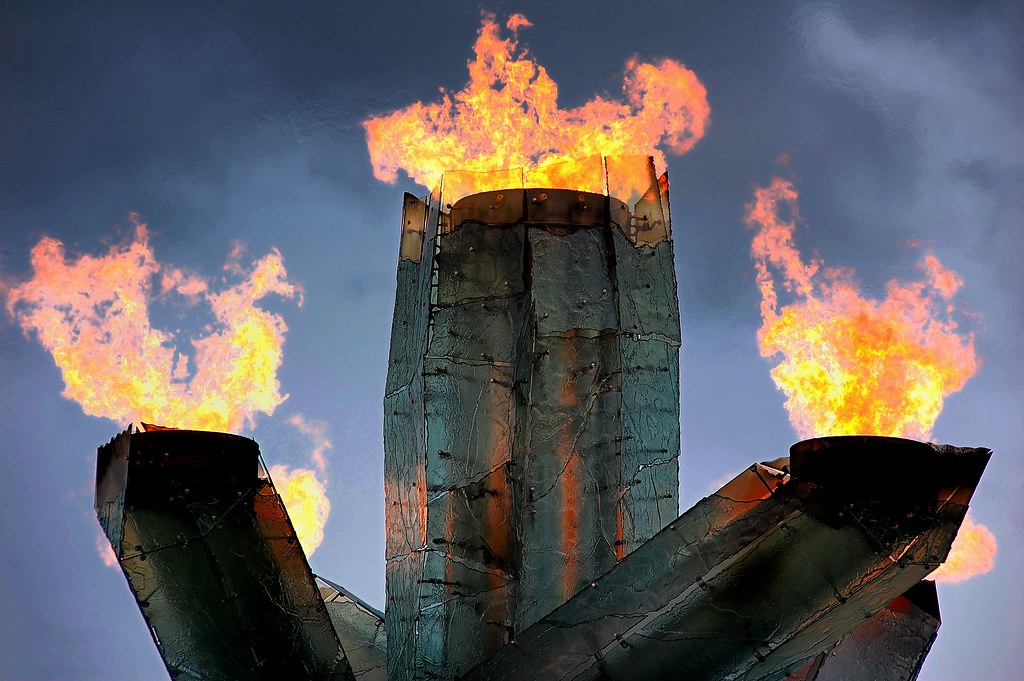
On August 8th 2021, the chief of the International Olympic Committee, Thomas Bach, pointed out during the closing ceremony that these games were “unprecedented” and brought messages of “hope, solidarity and peace” into a world torn with the desolation generated by the pandemic. It was a victory of the human spirit again, a precursor of what is to come. That the Japanese could get over their pandemic wrought hurdles, just as they did post the nuclear disasters wrought by the Second World War and by the 2011 earthquake-tsunami at Fukushimaya, to host something as spectacular and inspiring as these international games reflects, as the commentators contended, a spirit of ‘harmony and humility’. The last song performed by many youngsters seemed to dwell on stars in the sky — not only were the athletes and organisers the stars but this also reminded of unexplored frontiers that beckon mankind, the space.What a wonderful thing it was to see people give their best and unite under the banner of sports to bring messages of survival and glimpses of a future we can all share as human beings! Our way of doing things might have to evolve but we will always move forward as a species to thrive and expand beyond the known frontiers.

One such explorer of yet unknown frontiers who mingles the historic with the contemporary, Goutam Ghose, an award-winning filmmaker and writer, has honoured our pages with an extensive interview showing us how art and harmony can weave lores that can help mankind survive. This is reinforced by the other interview with Singaporean academic, Dr Kirpal Singh, whose poetry reflects his convictions of a better world. With our intelligence, we can redefine processes that hold us back and grind our spirits to dust — be it the conventional ‘isms’ or norms that restrict our movement forward – just as Tagore says in the poem, we have translated this time, ‘Deliverance’.

…On this auspicious dawn,
Let us hold our heads high in the infinite sky 
Amidst the light of bounteousness and the heady breeze of freedom.

As the Kobiguru mentioned earlier in the poem, the factors that oppress could be societal, political, or economic. Could they perhaps even be the fetters put on us by the prescribed preconceived definition of manmade concepts like ‘freedom’ itself? Freedom can be interpreted differently by multiple voices.

This month, on our pages, ‘freedom’ has found multiple interpretations in myriad of ways — each voice visualising a different dream; each dream adding value to the idea of human progress. We have discussions and stories on freedom from Nigeria, Argentina, India, Pakistan, Myanmar, Malaysia and more. Strangely enough, August holds multiple independence/ national days that are always for some reason seen as days of being ‘freed’ by many — at least from oppression. But is that true?

From Malaysia, Julian Matthews and Malachi Edwin Vethamani cry out against societal, religious and political bindings – quite a powerful outcry at that with a story and poems. Akbar Barakzai continues his quest with three poems around ideas of freedom translated from Balochi by Fazal Baloch. Jaydeep Sarangi and Joan Mcnerny pick up these reverberations of freedom, each defining it in different ways through poetry.

Jared Carter takes us back to his childhood with nostalgic verses. Ryan Quinn Flanagan, Michael Lee Johnson, Vandana Sharma and many more sing to us with their lines. Rhys Hughes has of course humour in verse that makes us smile as does Jay Nicholls who continues with her story-poems on Pirate Blacktarn – fabulous pieces all of them. The sport of hummingbirds and cats among jacaranda trees is caught in words and photographs by Penny Wilkes in her Nature’s Musings. A poetic tribute to Danish Siddiqui by young Sutputra Radheye rings with admiration for the Pulitzer prize-winning photographer who met his untimely end last month on 16th while at work in Afghanistan, covering a skirmish between Taliban and Afghanistan security forces. John Linwood Grant takes up interesting issues in his poetry which brings me back to ‘freedom’ from colonial regimes, perhaps one of the most popular themes for writers.

Indo-Pak independence, celebrated now on 14th (Pakistan) and 15th August (India), reflects not only the violence of the Partition which dislocated and killed millions historically but also the trauma caused by the event. Capturing this trauma is a short story based on memories of Partition by Nadir Ali, translated from Punjabi by his daughter, Amna Ali. Ratnottama Sengupta translates from the diary of Sandhya Sinha (1928-2016), a woman’s voice from the past that empathises with the subjugated who were subdued yet again after an upsurge of violence during the Quit India Movement (1942) against the colonials. Sinha contends that though the movement frittered away, the colonials were left with an after-taste of people hankering for self-rule. A thought-provoking short story by Sunil Sharma explores the results of self-rule in independent India.

Alluding to Jinnah’s vision for women, Aysha Baqir muses emotionally about the goals that remain yet to be fulfilled 74 years after independence. Moazzam Sheikh’s story of immigrants explores dementia, giving us a glimpse of the lives of Asian immigrants in America, immigrants who had to find a new home despite independence. Was this the freedom they dreamt of — all those who fought against various oppressive regimes or colonialism?

Tagore’s lyrics might procure a few ideas on freedom, especially in the song that India calls its National Anthem. Anasuya Bhar assays around the history that surrounds the National Anthem of India, composed by Tagore in Bengali and translated to English by the poet himself and more recently, only by Aruna Chakravarti. We also carry Dr Chakravarti’s translation of the National Anthem in the essay. Reflecting on the politics of Partition and romance is a lighter piece by Devraj Singh Kalsi which says much. ‘Dinos in France’ by Rhys Hughes and Neil Reddick’s ‘The Coupon’ have tongue-in-cheek humour from two sides of the Atlantic.

A coming-of-age story has been translated from Nepali by Mahesh Paudyal – a story by a popular author, Dev Kumari Thapa – our first Nepali prose piece.  We start a four-part travelogue by John Herlihy, a travel writer, on Myanmar, a country which has recently been much in the news with its fight for surviving with democracy taking ascendency over the pandemic and leaving the people bereft of what we take for granted.

Candice Louisa Daquin discusses a life well-lived in a thought provoking essay, in which she draws lessons from her mother as do Korean poet, Ihlwha Choi, and Argentinian writer, Marcelo Medone. Maybe, mothers and freedom draw similar emotions, of blind love and adulation. They seem to be connected in some strange way with terms like motherland and mother tongue used in common parlance.

We have two book excerpts this time: one from Beyond the Himalayas by the multi-faceted, feted and awarded filmmaker we have interviewed, Goutam Ghose, reflecting on how much effort went in to make a trip beyond boundaries drawn by what Tagore called “narrow domestic walls”. We carry a second book excerpt this time, from Jessica Muddit’s Our Home in Myanmar – Four years in Yangon. Keith Lyons has reviewed this book too. If you are interested in freedom and democracy, this sounds like a must read.

Maithreyi Karnoor’s Sylvia: Distant Avuncular Ends, is a fiction that seems to redefine norms by what Rakhi Dalal suggests in her review. Bhaskar Parichha has picked a book that many of us have been curious about, Arundhathi Subramaniam’s Women Who Wear Only Themselves. Parichha is of the opinion,Elevated or chastised, exonerated or condemned, the perturbation unworldly women in India face is that they have never been treated as equal to men as spiritual leaders. This lack of equality finds its roots not only in sociological and cultural systems, but more particularly at the levels of consciousness upon which spirituality and attitudes are finally based.”One wonders if this is conclusive for all ‘unworldly women’ in India only or is it a worldwide phenomenon or is it true only for those who are tied to a particular ethos within the geographical concept of India? The book reviewed by Meenakshi Malhotra,  Somdatta Mandal’s The Last Days of Rabindranath Tagore in Memoirs, dwells on the fierce independence of the early twentieth century women caregivers of the maestro from Bengal. These women did not look for approval or acceptance but made their own rules as did Jnadanandini, Tagore’s sister-in-law. Bhaskar Parichha has also added to our Tagore lore with his essay on Tagore in Odisha.

As usual, we have given you a peek into some of our content. There is more, which we leave for our wonderful readers to uncover. We thank all the readers, our fantastic contributors and the outstanding Borderless team that helps the journal thrive drawing in the best of writers.

I wish you all a happy August as many of the countries try to move towards a new normal.

Mitali Chakravarty

Borderless Journal, August 2021

Categories
Stories

Froth

A short story by Dev Kumari Thapa, translated from Nepali by Mahesh Paudyal

Dev Kumari Thapa (1928-2011). Photo provided by Mahesh Paudyal

What a hen-pecked man! Not even aware of his wife wrapping him around her little finger, though he was a college teacher.

Mother was commenting with someone in the kitchen. Shyam thought, the gossip was about himself. Before that day too, his mother had counseled him many a time. Rupa cared for no one. She was beautiful and well-educated, having brought up in an atmosphere of freedom. Whenever Shyam remembered Rupa, he could not help a smile. It’s true that he had loved and married Rupa, in spite of knowing everything about her. On her part too, she loved and chose him from among numerous other youths and married him with her own will. Her character too was blotless; only that, she was quite liberal in her thoughts. It would have been better, if Rupa restrained herself in a little more. She was not just a woman now; she also was a daughter-in-law. But then, how much should anyone counsel her! She could not change her ways or did not even want to change them. In that case, what could Shyam do? Leave Shyam alone; every man in his position would be helpless.

Even the French warrior, Napoleon Bonaparte, who dreamt of conquering the whole world, could not keep his consort Josephine under control. Why so? Because, like Shyam, he also loved his wife very much. She was four years older to him, and a widow of a soldier in his own army. She was a spendthrift. Expenses for her clothes and cosmetics had rendered Napoleon’s coffers empty. When he was busy in the battlefield, she indulged herself in the lap of luxury. But then, Napoleon always gave in to her, and fulfilled each of her demands. He died alone at St. Helena, far away. Before breathing his last, he took the names of his motherland and his beloved Josephine. Some women are born merely to amuse their men.

Shyam smiled again, as if he was remembering a thrilling experience. His mother entered his room carrying a cup of tea for him. Beset by ill-feelings, Shyam could not raise his hood and talk with his mother. Instead, he kept himself busy flipping through the pages of a newspaper that lay nearby. Raising the issue of Rupa once again, Mother had said, “Good that you have got a wife, my child. But then, if your old mother has to do all the chores, what use is her presence here?”

He said nothing. Taking a deep sigh, his mother walked out of the room.

When it was fairly dark in the evening, Rupa entered the house. Seeing Shyam look dejected, she said with a smile, “Hello Professor!”

He giggled, but said with a grim face, “Why had you been so late?”

Rupa said lightly, “Am I your student that I have to give clarification?”

He shouted, “It’s not about clarification. I want to see that people do not critique you. That’s all.”

Rupa said in her natural tone, “Why should anyone critique me? I have not guilty of anything wrong. I cannot chang my inborn nature, no matter how much I want. Nor can you force me to change, Mister Professor! What are good and bad characters, after all? They are effects of the hormones one has. The pituitary gland in my head is more active; I am therefore more nimble, active and shrewd than others. Kamala nextdoor has less amount of thyroid, so she looks dull and people call her a good woman. That’s all you ought to understand.”

Rupa’s words made Shyam laugh. He was also rendered speechless. A lecturer by profession, he was a man of grave nature, a visionary, a lonely son of his mother. He loved his mother very much. He loved Rupa equally deeply. How wonderful it would be, if he could work a balance between the two people he loved! He could neither counsel Rupa, nor could Rupa appease her mother-in-law.

Shyam was spending his days amidst such dilemma, when his aunt — his father’s sister — and her young daughter, Shyama, paid them a visit. His aunt had come to town from the village to arrange for her daughter’s college education here. Shyam’s mother was meeting her after a long gap, and their meeting made both of them very happy. His mother requested her sister-in-law to stay with them at least for a month before returning to her home in the village. She advised her to admit daughter Shyama to her son’s college. Accordingly, Shyam got her admitted to his own college, and this made the mother’s quite contented.

After having lived with them for a month, the aunt returned to her home. Shyama started living under her aunt’s care, and studying.

Shyama from a wealthy and cultured background was of a serious nature and had a sharp mind. In no time, she had become everyone’s favourite at the college. Shyam was extremely delighted to see her progress. The brother and sister went to college together and returned home together.

With such a turn of events, the suffocating atmosphere at Shyam’s home improved to some extent, and there was some light now. Shyam’s mother started loving Shyama like her own daughter. Shyama also started helping her in household chores. Shayma established a friendly relationship with sister-in-law Rupa.

One day, Rupa asked Shyama to accompany her to the cinema. With all modesty, Shyama pleaded that she could only go after her examinations were over. Rupa went alone. By then, Shyama had come to know that her aunt had to do most chores in her own family, but she kept quiet, thinking it unwise to make a comment on someone else’s family.

After a short conversation with his aunt, Shyama went to her study. She could not focus for long; so, she went to the kitchen and started making tea. She gave a cup to her aunt, poured two for herself and for Shyam. She walked into Shyam’s room with the tea. Shyam was delighted on seeing her, and in a jocular way, said, “So you happen to be the cook of this family, isn’t it?”

With a smile, Shyama said, “Does it make one a cook if one does her own housework?”

Shyam said in a fond voice, “Sister, how happy mother is ever since you arrived here? I could not serve her as a son must. You serve her on both of our behalves. I congratulate you, and you have all my blessings.”

Shyama said, “Brother, you have me a place in your family. Else, I would be languishing in a hostel. You have also helped me with my lessons. I am obliged to you and can never pay for your favour. It’s my privilege to get this opportunity to serve you both.”

This way, brother and sister conversed for a long time. Shyam forgot the lack of a sister in his life.

Rupa returned home from the movies. Seeing Shyama inside her room, she said, “Shyama, the movie was wonderful. You didn’t agree to go with me.” Expressing his support for Shyama, Shyam said, “Can a student afford to go to the movies?”

Rupa didn’t like Shyam’s intervention. She gave a strange look and rushed out of the room. After Shyama was gone, Rupa returned and said to Shyam in a voice of dissent, “Two of you are together, both at the college and at home. I can see closeness growing between teacher and student.”

Shyam said in a light-hearted manner, “Are you jealous?”

Rupa said, “Go. Take the girl and leave her at a hostel.”

Shyam was astounded, seeing such a narrow outlook surface in Rupa. Counseling her, he said, “Pooh, what a mean thing you said! I thought you were educated and liberal.”

In the meantime, Mother came to ask Shyam to join dinner. The issue was dismissed.

That night, Shyam was restless for a long time. He could not manage even a nap. It occurred to him that Rupa, whom he considered an educated and magnanimous person, could also be envious. She had overlooked that jealousy was making her mean. Fie! Her thoughts were as mean as the froth on the surface of the sea. Where was the depth expected of an educated heart like hers? Shyama? Sister Shyama was a goddess born and brought up with ideals.

That night, he could not sleep.

After a few days, Rupa gave Shyam a new bit of information. She was pregnant. The news made Shyam extremely happy. Taking her into his arms, he said, “Congratulations! I think our baby will now make your pituitary gland smaller. Won’t it?”

Rupa blushed with embarrassment. Shyam was deeply moved by her newfound shyness — a novelty from Rupa.

.

Dev Kumari Thapa (1928-2011) is a story writer. She wrote stories both for adults and children. Though she was born and educated in Darjeeling, India, she later moved to Nepal and settled in Biratnagar. A nurse by training, she wrote form her schooldays. Her published story collections are Ekadashi, Jhajhalko, Seto Biralo, Tapari,  Bhok Tripti,  Pralaya-Pratiksha and Dev Kumari Thapaka Pratinidhi Katha. She also wrote some biographies and essays.

Mahesh Paudyal is a lecturer of English at the Central Department of English, Tribhuvan University. He is also a poet, fiction writer, translator and critic. He has the permission from the family to translate this story.

.

PLEASE NOTE: ARTICLES CAN ONLY BE REPRODUCED IN OTHER SITES WITH DUE ACKNOWLEDGEMENT TO BORDERLESS JOURNAL.

Categories
Poetry

Poetry from Nepal

Written by Krishna Bajgai, translated from Nepalese by Dr. Rupak Shrestha          


Krishna Bajgai
Alphabet Adoration

Since the thirst of alphabets 
Was witnessed in his young eyes,
The illiterate parents made him 
Swallow all the alphabets,
Forcing him to memorise.

As soon as he was strong enough
To carry on his back 
A bag of alphabets,
His teachers forcefully fed him 
Tough words from books.

As he grew, 
He started to learn by rote 
History and politics,
Finally, philosophy,
From the professors' antiquated notes. 

He grew up with alphabets,
Learned to play with them,
Understood layered
Meanings of words and sentences,
By days and by nights.

He stuck on his routine life,
Made books his pillow at night,
Surrounded himself with the alphabets 
In classrooms and libraries 
For hours and hours, days and nights.

One day, 
All of a sudden,
A gigantic price was put on his head,
Charged for playing with 
Weapons made of alphabets.

The next day,
An arrest warrant was issued in words.
Soon he was freed 
by the rallying of sentences.

Again, he wrote 
More and more with alphabets
While he continued to live,
Till the last sentence he wrote was –
‘’I adore alphabets.’’

Krishna Bajgai leads the Samakalin Sahitya Pratisthan that he founded in 2014. He publishes and edits www.samakalinsahitya.com. He has thirteen published books, three of his which are taught at the Universities in Nepal for Bachelors’ in Arts degree. Two have been part of research for the Master’s degree curriculum at Tribhuvan University. Decorated by seven prestigious awards in his literary career, he is also affiliated with many literary institutions.

Rupak Shrestha, a renowned figure in the Nepalese Diaspora in the United Kingdom writes free verse, ghazals, songs, muktaks (quatrains), and haiku, does literary criticism and translates. He has been felicitated by different literary institutions for his contribution. He has authored Big Ben ra Samay (Poetry Collection) 2011, Pokhtak (Muktak Collection) 2014, Butte Kimono (Haiku Collection) 2017, and Rupak (Songs’ Album) 2018.

.

PLEASE NOTE: ARTICLES CAN ONLY BE REPRODUCED IN OTHER SITES WITH DUE ACKNOWLEDGEMENT TO BORDERLESS JOURNAL

Categories
Poetry

Doubt


Poetry by popular poet Avaya Shrestha, translated from Nepali by Haris C Adhikari

Avaya Shrestha


Doubt the beautiful 
Collages rendered by 
These various images of clouds, 
Doubt the beauty 
Of the existence of various 
Floating colours on beautiful lakes
And of the snow— like patches of clouds—
That has come to your hands. 
.
Doubt the sensational 
News in newspapers and TV,
The flowery, immaculate poems of poets,
The mind-blowing thoughts of intelligentsia,
And the Prime Minister’s speech 
In the name of all the citizens. 

Doubt 
Even the stories told 
In sweet language 
By your respected teacher,
Doubt 
The history written 
By great historians 
And the all-accepted values 
In the world. 
.
Doubt 
Yudhisthira’s loyalty
To truth, which is like snow 
Melting; and doubt
Arjuna’s bravery, which is like the sky
Untouched; doubt
Devavrata’s BhishmaPratigyaa*,
Duryodhana’s meanness
And the magical stories of the
Vedas and the Puranas. 
.
Socrates, Marx and Gandhi 
Darwin, Freud and Einstein 
Are only your co-travellers;
The Holy Bible, the Ramayana 
And the Mahabharata 
The Dhammopadesh, the Tripitak 
And the Quran 
Are not the ultimate truth;
Neither Brahma is real 
Nor false is the world; doubt
Vishnu, Maheshwor, Shree Ram, 
Christ, Kabir, Mohammed,
And even the Buddha 
Who himself speaks of doubts. 
.
No one is outside 
The circle of doubts 
In this yard-like 
Collective world—
Doubt !
Even this poem of mine
That creates 
The god of doubts … 
.
Unstoppable, 
I do doubt my own conscience 
The way the soil does
Give a test every time 
To the seeds sown in its womb. 

*Bhishma Pratigya : A terrible oath taken by Devavrata (who later came to be known as Bhishma), one of the most important figures in the Mahabharata (Note:In this poem the persona doubts both the eulogized characters like Yudhisthira and Arjuna, who have been depicted as completely flawless and godlike, and the hatred-inspiring character like Duryodhana, who has been depicted only as a figure full of foolishness and demonlike character in the epic).

Avaya Shrestha (b. 1972) is a powerful poet, well known for his subversive, rebellious, anti-conformist and thought-provoking poetry. He hails from Bhaktapur district. He is also known as a short story writer and columnist. He holds a bachelor’s degree in sociology and political science from Tribhuwan Univesity. Shrestha has three books to his credit: Phul Binako Sakha and Kayakalpa (both anthologies of poetry) and Tesro Kinara (an anthology of short stores). He has received several recognitions and awards including Garima Best Prose Award (2012) , Best Creation Award in Prahari Bimonthly (2008), Nepal Academy Short (Best) Story Award (2004) and Dristi Weekly Columnist Honour (2008). He has worked as reporter and feature editor for different national dailies of Nepal. His columns Satyakura is popular among Nepali readers.

Haris C. Adhikari, a widely published poet and translator from Nepal, and an MPhil scholar in English language, teaches at Kathmandu University. He has three books poetry and literary translation to his credit. Adhikari’s creative and scholarly works have appeared in numerous national and international journals. Until 2017, he edited Misty Mountain Review, an online journal of short poetry. Currently, he co-edits Polysemy, a journal of interdisciplinary scholarship, published out of DoMIC, Kathmandu University. He can be reached at haris.adhikari@ku.edu.np

.

PLEASE NOTE: ARTICLES CAN ONLY BE REPRODUCED IN OTHER SITES WITH DUE ACKNOWLEDGEMENT TO BORDERLESS JOURNAL

Categories
Poetry

Deathless Death

By Nirmal Kumar Thapa

Taking the first sight of this planet, a glance around the world;

With your first cry

Shouting the demands of joy,

Even without smelling the sagacity;

Your demand with horrific tears

Being meaningless,

I can sense the deeper entails of your crying;

Perhaps, you are grieved with fear of death

Unknowingly.

A journey from the cradle to the grave,

From a reckless infant to a mystic older soul,

From a brighter shine to a stout pale ray, I know your vexation;

For a lavish survival,

How to guard your soul;

Dido for savouring equanimity,

And where are you going?

Stepping moments towards a grave!

You can’t catch all.

Everything is accompanying you, your serenity, safety

and leading you to the bone yard;

Before death arrives,

Get delighted with festive being-ness, forgetful of your aim;

Don’t rush your existence, too meaningless,

If you couldn’t tap your feet under the blissful shine,

No realisation can ever let you smell the iciness of the grave,

So, don’t miss the great songs of life.

Feel the rhythm and dance, before you go a deep-sleep,

Dance without songs and music,

Cheer-up from your silent world;

You may stir your own-ness melody

Music, far away from Beethoven’s.

Cherishing a divine music of Cosmic flute,

But such silence is hard to keep, relish those very moments,

While you lived silently

It brings completeness, intensely.

Then you comprehend those moments,

A death of deathlessness;

Graveyard is the aim but death is not,

While you endured wholly,

A journey to enjoy deep into the self

Can also enjoy the journey to the grave;

Are you missing the eternal principle of life?

The real fruit of life?

You’re stepping towards a mere departure of your life.

Uttering with tears,

You surprised me.

don’t lose your own joy

that you can sense sitting alone silently,

Death seeks a normal visit,

That you most welcome and celebrate;

For an ultimate challenge of the unknown

Enter in death enjoying a silent song.

Then death is no more a fear of the soul.

Take it as a sutra

A mantra of life, like ~

OM MANE PADME HUM

SATYEM SHIVAM SUNDARAM

And exert it in your own inner space,

Where your beloved one has placed;

Live adventurously, with a wild wisdom,

Cheer up your Laughter without gags,

A great joke laughs at me.

Birth is nothing but live it with a source of passion,

Reunite your passion with the next ardour.

.

Nirmal Kumar Thapa from Nepal is a unique poet, famed for his spiritual blend into contemporary life. He lives in Kathmandu. His edited work COVID-19, an anthology of short stories featuring 26 authors, has recently been published under the ‘Nepal Centre International’ Banner.

.

PLEASE NOTE: ARTICLES CAN ONLY BE REPRODUCED IN OTHER SITES WITH DUE ACKNOWLEDGEMENT TO BORDERLESS JOURNAL.

Categories
Poetry

An Entreaty

By Hem Bishwakarma, translated to English from Nepali by the poet himself

Hem Bishwakarma

My feet are chasing me persistently

Laying my life down under

From then to now!

.

Please,

While I’m passing by this life

Since I am as small as a thread

Do not walk by my side

For I might be broken

.

I might be in a deep contemplation

I might be sketching my country map

Or, writing a poem

Dedicated to you

Try not to stick to me

So that the air will not pass

Try not to walk by my ears

Though you are on a vehicle

Try not to splash a smile at my eyes

The air that lets me a hold to stand

Might fall down!

.

I can give you a whole universe to walk on

Except the soil that my feet stride

Or, walk on the trees

Or, walk on the chests of rivers

You have a tall mountain to trail

Or, it’ll be alright,

If you walk just before or after me.

Giving up this vast geography,

Please do not stick to my skin and walk

.

I would have burnt to ashes

The road would have been habituated

I would walk without a movement

I would watch the flowers—

Please try not to encompass and walk

Being as narrow as yourself!

.

I would be walking with a storm in my eyes

Please do not walk breaking the silence in the air.

.

Hem Bishwakarma is a poet from Nepal. His poems are published in different national and international poetry journals.

.

PLEASE NOTE: ARTICLES CAN ONLY BE REPRODUCED IN OTHER SITES WITH DUE ACKNOWLEDGEMENT TO BORDERLESS JOURNAL

Categories
Excerpt Poetry

Poems from Notes of Silent Times

Poetry from Nepal by Mahesh Paudyal

Workers’ Poem

In a small gathering on the lawn

The poet was reciting his verses.

A little away, some masons and labours were busy

Hammering nails.

The poet stopped, looked at them, and yelled—

“Stop your pranks! Can’t you see I am reading a poem?”

The workers were silent. The poet recited his verses.

Much later, when everyone was gone

The workers resumed their life-song.

I don’t know if the poet heard it.

***

Emperor and the Kids

“Emperor, we are hungry!”

This sounded like a shooting lullaby;

The Emperor slept for one more century.

“Emperor, please lend us your crown for a while;

We will play the king-queen game and return.”

The Emperor ordered:

“Officer! Send these children out of the four passes!

They are here to spread measles.”

***

Firefly

Firefly,

Perhaps it’s time that writes our existence.

No matter how much you try

To glow in broad daylight

You need to wait for the night

To make yourself visible

***

Storm!

Blow on, storm!

Blow with all your might!

Unless there is wind

And unless a few homes and roofs are betumbled

No one writes

An epic on air, the puny thing!

***

The Sky

All smoke rising from the earth

Goes skyward

But the sky is never called the country of smoke

It is always called

The land of the stars and moons

***

These poems are excerpted from his latest collection, Notes of Silent Times

Mahesh Paudyal is a Nepali poet, storywriter, critic and translator. A lecturer of English at Tribhuvan University, Mr. Paudyal has written extensively for children and adult readers, and has translated more than 2 dozen books from Nepali into English. His major works include Tadi Kinarko Geet (novel), Tyaspachhi Phulena Godavari (stories), Of Walls and Pigeons (stories),  Sunya Praharko Sakshi (poems) and Notes of Silent Times (poems). Among his seminal translations are Dancing Soul of Mount Everest (representative modern Nepali poems), Radha (an award-winning novel by Krishna Dharabasi), Unfinished Memoirs and Prison Notes by Sheikh Mujibur Rahaman and Silver Cascades (representative Nepali short stories.) A recipient of Nepal Bidhyabhushan, Narendramani Dixit Gold Medal, Bimal Gurung Memorial Award, Sudish Niraula Memorial and Prasiddha Kandel Memorial Award, he has also represented Nepal in many international literary seminars.]

.

.

PLEASE NOTE: ARTICLES CAN ONLY BE REPRODUCED IN OTHER SITES WITH DUE ACKNOWLEDGEMENT TO BORDERLESS JOURNAL. 

Categories
Excerpt Poetry

Poems from My Father’s Face by Chandra Gurung

Chandra Gurung’s poetry translated by Mahesh Paudyal

My Father’s Face

Two eyes glitter like the sun and the moon

In that face

A kite of self-confidence keeps flying

Beautiful orchids and rhododendrons bloom

Combating the storms of calamities

.

On that face

A sun rises every morning to carry the burden of a new day

And returns, at the end of the day

Hiding every line of sorrows

Carrying little parcels of joy

Making the house and the patio bright

.

On that face

Narrow are the eyes that read the world

Pug is the nose that looms with raised self-respect

Wrinkled are the cheeks where joys and sorrows glide

Chapped are the lips, where smiles stage a march-past

And the entire Mongol identity has been smouldered by heat.

.

But I am delightful

Happy beyond telling

When everyone says:

“You look exactly like your father.”

.

Trust

Since you are back

Take those roses on the table

And kindly adorn them in the hearts.

Let the fragrance of love waft from it.

.

Bring out on the veranda

A pair of chairs;

Let’s spend some intimate moments.

Also place a bottle of wine, and two glasses

On the table;

We shall spend

Some moments of life, talking.

.

Look!

My weary rags

My books, pen and paper abandoned like an orphan

The stubs of cigarette littered like unclaimed corpses

And the scratched mirror—

All await for a single touch

From you.

.

This dark evening

You showed up at my doorstep all alone.

At this moment

Every nook of my heart

Is filled with love, ripple by ripple.

.

Leave it!

Let that window remain open at least

It reflects my heartfelt belief

That you would certainly turn up.

.

Desert: A Life of Mirage

There is not a single bright line of smile

On the broad canvas of the face

No butterfly of joy flutters on the cheeks

Desolate is this desert

Like a garden where all beauty has wilted.

.

There are dry tufts, devoid of life, everywhere

Dry hands of wind come to caress youth

The eyes accumulate dead excitement

And looms a mound of desolation

.

The youthful sun comes to face, eye-to-eye, all day long

The wind teases again and again

The desert longs to allure a traveler with its youth

Dreams of enchanting someone with its gestures

The desert is like a bride’s dream

Living in anticipation of a loving embrace.

.

Its breasts are decked by green date palms

A youthful cactus is tucked on its ears

And the desert stands in a long caravan of desires

Like a life of mirage

.

All is well

Everything is fine.

Just now,

My children in immaculate uniform

Have been taken to school

By a house-boy their age

.

My parents are happy in an old-age home

I am off from the pack of my siblings

My better half spends time watching TV serials

My home has hosted peace pervasively

From this, we can perceive that

All is well.

.

Since a prayer room in the home accommodates

A bunch of deities

It has been long that praying has been a rare tale

Doesn’t it mean

Everything is fine?

.

Nothing ever tortures my heart

I don’t meddle in others’ affairs

And keep myself away from such trifling hassles

And thus, do not bother myself in vain

It’s true:

Everything is fine.

.

I keep my own ways

Act amiably with all

And keep myself away from problems

For this reason

Everything is fine.

.

I carefully maintain my looks

Dress up myself decently

And follow healthy dietary habits

In fact,

Is everything really fine?

.

All these poems are excerpted from Chandra Gurung’s upcoming book, My Father’s Face, with the author’s permission

.

Chandra Gurung is a Bahrain based Nepali poet.  He has an anthology of poetry to his credit. That was published in 2007. The second anthology of his translated poems titled My Father’s Face will be published from Rubric Publishing, New Delhi.  He has passion for translation as well. He has translated Hindi, English and Arabic poets into Nepali. He has also has translated some of the Nepali poets into Hindi. His works (poems and articles) have found space in many online and print magazines including More of my beautiful Bahrain, Snow Jewel, Collection of Poetry and Prose complied by Robin Barratt (UK), Warscapes.com and many leading Dailies in Nepal.

.

Mahesh Paudyal is a Nepalese writer, translator critic and Assistant Professor of English at Tribhuvan University. His works basically foreground local epistemic traditions and Eastern mythological richness. He has published novels, stories, poems, plays and songs both for adults and children and has extensively written critical works. His major translations include Sheikh Mujiboor Rahman’s Unfinished Memoirs and Prison Notes into Nepali, Silver Cascades, a collection of Nepali short stories and Dancing Soul of Mount Everest, representative modern Nepali poems. He is the Executive Editor of Roopantaran, a translation-based journal of Nepal Academy.

.

PLEASE NOTE: ARTICLES CAN ONLY BE REPRODUCED IN OTHER SITES WITH DUE ACKNOWLEDGEMENT TO BORDERLESS JOURNAL.