Categories
Essay

Anadi: A Continuum in Art

Ratnottma Sengupta revisits an exhibition full 25 years later
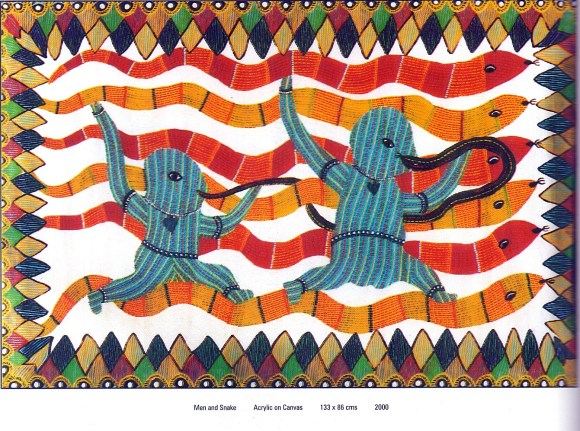
Images from exhibits at Anadi . Provided by Ratnottama Sengupta

On November 1 of 1956 was born a state in Central India called Madhya Pradesh. And 44 years later, on exactly the same day of November 1, in the year 2000 it was remapped. A new state — Chhattisgarh — was carved out of the land that had been home to the oldest Indians: the men and women who had peopled the caves at Bagh and Bhimbetka. 

Standing at the threshold of that new beginning, I had curated an exhibition titled Anadi – that which has no beginning and, therefore, no end. The exhibition card was designed by M F Husain who came on the inaugural day in Delhi. The next day was graced by the presence of Madhavrao Scindia, scion of the royal family that continues to throw up political leaders. I was fortunate to have friends like collectors Anand Agarwal and H K Kejriwal, bureaucrats Bhaskar Ghose and Sarayu Doshi, art lovers like poet Gulzar and artists like Yusuf Arakkal. Happily, then, the exhibition travelled to Birla Academy in Kolkata to Chitrakala Parishath in Bangalore to the National Gallery of Modern Art in Mumbai. And with it travelled a batch of youngsters who were soon to be among the most sought after names in Indian Contemporary Art.

What made that exhibition so special? The card? The multi-venue display? The star viewers? The exhilarating combination of tribal paintings, figurative sculpture, and abstract images? Twenty five years later, I will look back to find an answer.
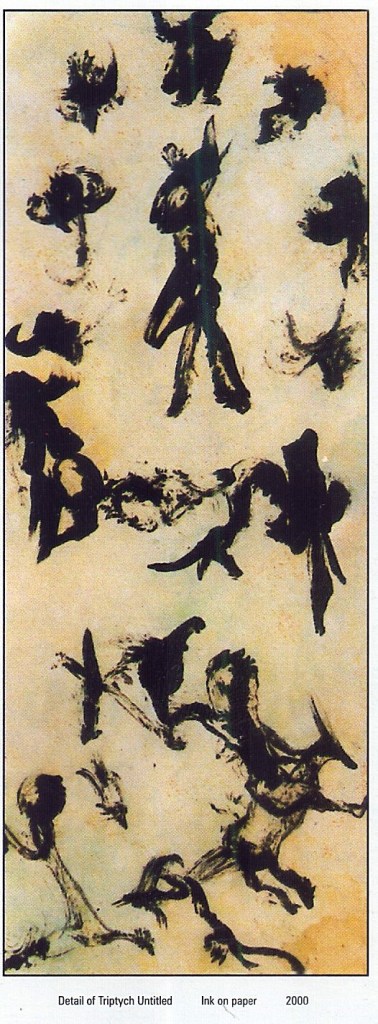
Images from exhibits at Anadi . Provided by Ratnottama Sengupta

At the intersection of two millennia I was amazed to note there was no rupture in continuity. Anadi offered a fresh look at a continuum that lives on beyond the geopolitical redefinition, because it began at a time when Chhattisgarh was not Madhya Pradesh, nor the Central Province of the Raj. Bhopal, Indore, Raipur, Jagdalpur, Sanchi, Vidisha, Malwa… these cities had no chief minister back then, nor a Prime Minister. Why, there were no Begums nor a Buddha. No Baj Bahadur loved a Roopmati nor did Kalidasa send a Cloud as Messenger. It was a time when the intrepid fingers that harnessed stones and hunted hides also painted rocks to sing of life. In the process – around 10,000 BCE – they crafted the rockbed of Indian Art at Bhimbetka, the UNESCO World Heritage Site mere miles away from Bhopal.

Bare lines that captured with only a twist and a turn the vigor of hunting and the verve of dancing, rock art is that elusive genre which is narrative, figurative and abstract – all at one go. And that is a characteristic common to the tribal stream of art which flourishes in the state from a forgotten past. There is a story in every figure painted by Bhuri Bai or Sukho Korwa. She paints a cart and tells you of the festival day when on its wheels it goes round habitats, collecting all the bimari and driving illness out of the village. He paints a bird that pounces on a snake which devours a rat, recounting the lifecycle that sustains ecological balance. But where is the third dimension? Where’s the likeness to the world of five senses? We see no effort here to evoke either. Instead, there is a stylization which is unique to the region that is home to the Bhil, Gond, Sahariya, Baiga, Saur and other tribes. A stylisation that abstracts the essence of the physical reality they celebrate through colour and line.
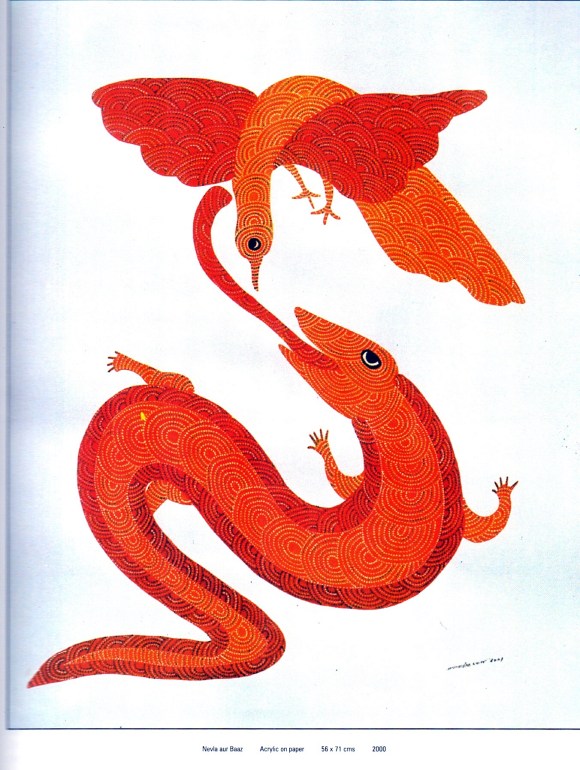
Images from exhibits at Anadi . Provided by Ratnottama Sengupta

Dots and crosses, circles and squares all come into play as the vivacious blues and reds, yellows and greens acquire life. A line is not simply a straight line or curve: that would be an unappetising repetition. The quest for variety and individuality finds Kala Bai, Lado, Sumaru break up the lines into an intricate arrangement of countless motifs. When the subject is the same, as too the colour, it’s the dots and crosses, dashes and stars that give the work the imprint of individuality. In the process, these artists who work in a community and send off their creations to markets in distant cities, have worked out a way of ‘patenting’ artistic property. Tradition did not require them to ever sign off a work with their names. In the age of copyright awareness and intellectual property rights, they might put their signatures on the canvas – but the unmistakable imprint of the artists lie in the manner of their assembling the familiar patterns.

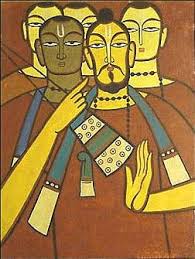
That, make no mistake, is the sign of a master, be he in the tribal mould or a modernist. For corroboration, we have only to look at a painting by Maqbool Fida Hussain, N S Bendre or Syed Haider Raza. Madhuri or Mahabharat, Gandhi or Indira, M F Husain constantly painted figures. Eminent and easily recognised ones at that.  And yet, they lived not in the details of their features but in the lines and colours that spelt ‘Husain’ to seasoned viewers. Likewise Bendre’s forms had little concern for photographic realism. In Raza’s case, it is the arrangement of colourful geometrical bindus (circles) and squares alone that speaks of the artist. So, regardless of whether or not there is a ‘McBull’ or ‘Bendre’ inked on the canvas, we readily identify these masters who, incidentally, all came from this same state of Madhya Pradesh.
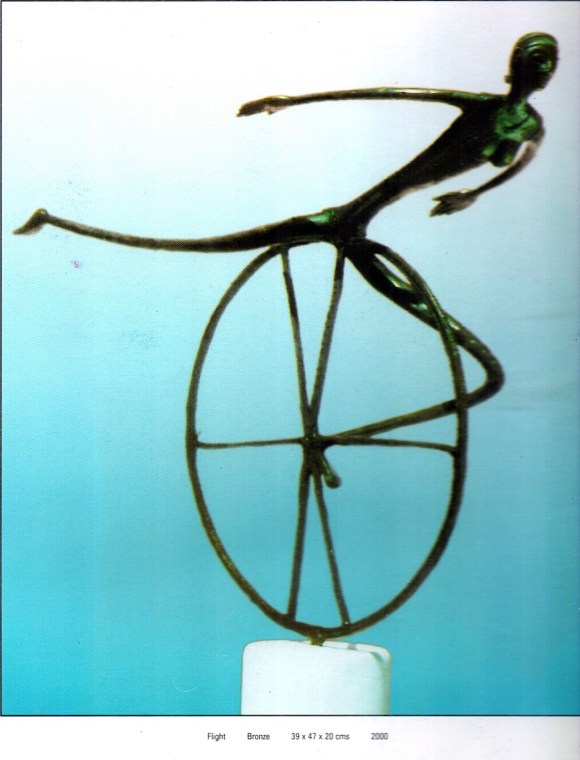
Images from exhibits at Anadi . Provided by Ratnottama Sengupta

Note one more thing about these names. Each of them had set new watersheds for Indian contemporary art. All of them had opened up new avenues for artists who came after them.  Bendre, the first to head the art education at the Maharaja Sayajirao University of Baroda, gave not just one more centre for mastering the brush. He gave shape to an institution which still assimilates the best of the home and the universe, giving the MSU artists a rare acceptability in India and in the West. Raza, who lived in Paris for years and years, did not sever his umbilical cord with this soil, yet carved a niche for Indianness in the Mecca of contemporary art. And Husain? The life as too the art of this ‘Picasso from Indore’ had become a legend in his own lifetime.  Who else but MF could raise the high water mark at auctions, again at again, at home and abroad? Who but him could open up the markets for Indian artists, including those who preceded him like Jamini Roy?
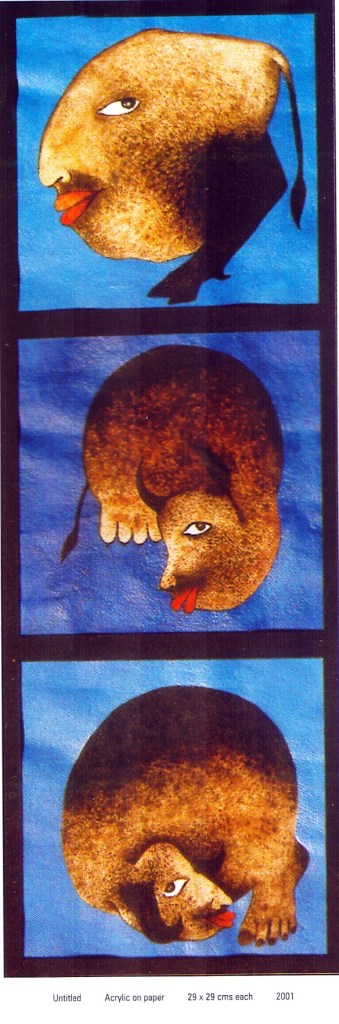
Images from exhibits at Anadi . Provided by Ratnottama Sengupta

Talking of the masters who opened vistas, especially in the context of Madhya Pradesh, one comes to J Swaminanthan who facilitated a two-way transaction. While holding the reins of Roopankar Museum in Bhopal, he assimilated tribal art to such an extent that he could understand it, explain it, talk about it, write about it and paint after them, using their earth colours, and the bareness of their lines. At the same time, the outsider who became an insider gave, through Bharat Bhavan, all of Madhya Pradesh a new standing in the realm of contemporary art. Artists from all over the country would congregate in Bhopal with their art, exhibit it, discuss it threadbare in seminars, impart it to those keen to learn. Small wonder, the state boasts a host of artists like Akhilesh and Anwar, Seema Ghuraiya and Manish Pushkale, Yogendra and Vivek Tembe, Jaya Vivek and Jangarh Shyam. Artists who steal the attention of the world today.  

This breed, which was born with the emergence of the state, came of age in artistic terms as the province consolidated its presence on the marquee. And an overwhelming number of them express themselves in just lines and colours. They care not for things like market – which seems to have an insatiable appetite for figurative art. Nor for the narrative tradition of the forefathers who painted on rocks. These neo-masters are all distilling forms, extracting experiences, working out their own equations with abstraction.

But, come to think of it, isn’t this exactly what the original artists of this land – and every other land on earth – set out to do when they picked up the sharpened tool that was millennia away from the paint brush? 

Ratnottama Sengupta, formerly Arts Editor of  The Times of India, teaches mass communication and film appreciation, curates film festivals and art exhibitions, and translates and writes books. She has been a member of CBFC, served on the National Film Awards jury and has herself won a National Award. 

.

PLEASE NOTE: ARTICLES CAN ONLY BE REPRODUCED IN OTHER SITES WITH DUE ACKNOWLEDGEMENT TO BORDERLESS JOURNAL

Click here to access the Borderless anthology, Monalisa No Longer Smiles

Click here to access Monalisa No Longer Smiles on Amazon International
Categories
Essay

The Bauls of Bengal

Aruna Chakravarti writes of the Bauls (wandering minstrels) of Bengal and the impact their syncretic thought, music and life had on Tagore

Religious movements such as Bhakti and Sufi have spanned time and territory and entered Bengal, in successive waves, creating a syncretic culture in which music and poetry are amalgamated. One of the forms in which these movements find creative expression is Baul Gaan —the singing of itinerant minstrels.

Universally recognised as foremost among the oralities of Bengal, the Baul Sampradai is a community for whom singing is synonymous with worship. The Baul expounds a philosophy of humanism which rejects religious orthodoxies and stresses human equality irrespective of caste, class, religion and gender. The Baul sets himself on a spiritual journey, lasting a lifetime, towards discovering his moner manush (man within the heart) thereby alienating the notion of seeking the Divine in external forms such as mosques, temples, images and sculptures. Since God is believed to reside within man, the human body is viewed as the site of the ultimate truth –that which encompasses the entire universe. This tenet of Baul philosophy is known as deha tatwabad—the belief that the soul being pure the body that houses it, together with all its functions, is pure and holy.

Concentrated mostly in Kushthia, Shilaidaha and Sajadpur in East Bengal (now Bangladesh) and Murshidabad and Birbhum in West Bengal, the Baul tradition, though drawing elements from Tantra, Shakta and Sahajiya[1], stems from two main sources — Muslim Sufi and Hindu Vaishnav. Hence the simultaneous presence of Hindu and Muslim bauls in the villages of Bengal and great composers from both streams—Lalon Fakir, Duddu Shah, Madan Baul, Gagan Harkara and Fakirchand. Rejecting religious codes such as Shariat and Shastras, caste differences, social conventions and taboos, which they see as barriers to a true union with God, they sing of harmony between man and man. “Temples and mosques obstruct my path,” the Baul sings, “and I can’t hear your voice when teachers and priests crowd around me.”

Refusing to conform to the conventions of religion and caste ridden Bengali society, Bauls (the word is sourced from the middle eastern bawal meaning mad or possessed) are wandering minstrels who sing and dance on their way to an inner vision. Essentially nomadic in nature walking, for them, is a way of life. “No baul should live under the same tree for more than three days” — the saying seems to stem from the Sufi doctrine of walking an endless path (manzil) in quest of the land where the Beloved (the Divine) might be glimpsed. Bauls live on alms which people give readily. In return the Baul sings strumming his ektara[2] with dancing movements. The songs are rich with symbolism, on the one hand, and full of ready wit and rustic humour on the other. The Baul rails against the hypocrisy of religion and caste and takes sharp digs at the clergy but totally without rancour.

Many of the composite forms found in an older culture of Bengal have become sadly obscured in the present scenario of identity politics. But the one that has not only survived but is gaining in recognition day by day, is the Baul tradition. This is, in no small measure, owing to the intervention and interest taken by Rabindranath Tagore. In his Religion of Man Rabindranath tells us that, being the son of the founder of the Adi Brahmo Samaj, he had followed a monotheistic ideal from childhood but, on gaining maturity, had sensed within himself a disconnect from the organised belief he had inherited. Gradually the feeling that he was using a mask to hide the fact that he had mentally severed his connection with the Brahmo Samaj began tormenting him. And while in this frame of mind, travelling through the family estates in rural Bengal, he heard a Baul sing. The singer was a postal runner by the name of Gagan Harkara and the song was “Ami kothai paabo tare/ amaar moner manush je re[3].”

“What struck me in this simple song,” Rabindranath goes on to say, “was a religious expression that was neither grossly concrete, full of crude details, nor metaphysical in its rarefied transcendentalism… Since then, I’ve often tried to meet these people and sought to understand them through their songs which are their only form of worship.” In his Preface to Haramoni[4], Rabindranath makes another reference to this song. Quoting some lines from the Upanishads—   Know him whom you need to know/ else suffer the pangs of death— he goes on to say, “What I heard from the mouth of a peasant in rustic language and a primary tune was the same. I heard, in his voice, the loss and bewilderment of a child separated from its mother. The Upanishads speak of the one who dwells deep within the heart antartama hridayatma[5]and the Baul sings of the moner manush. They seem to me to be one and the same and the thought fills me with wonder.”

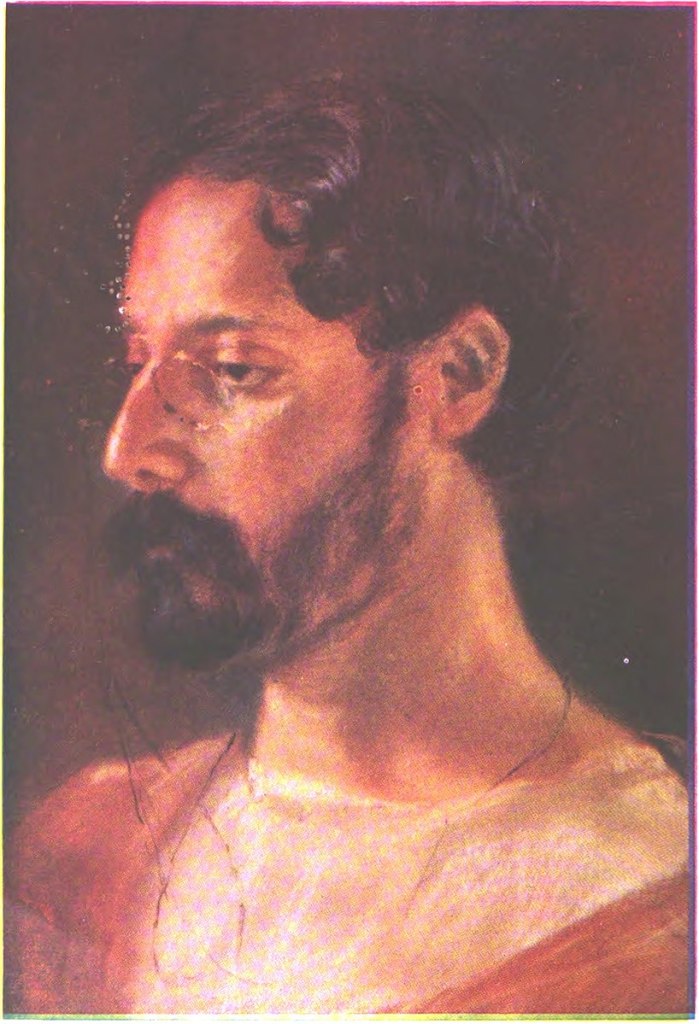
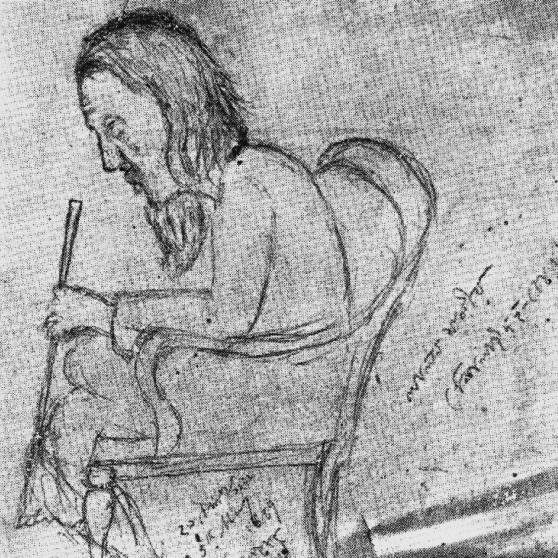
A Portrait of Lalon Fakir sketched by Jyotindranath Tagore(1849-1925)

Lalon Fakir’s commune was located in the village of Chheurhia which fell within Rabindranath’s father’s estates. Though there is no authentic record of a meeting between the two, it is a fact that the poet was the first to recognise Lalon’s merit which had the quality of a rough diamond. His inspiration was powerful and spontaneous but, lacking in clarity of expression, lay buried in obscurity till Rabindranath brought it out into the open. Publishing some of the songs in some of the major journals of the time, Rabindranath took them to the doors of the educated elite. Not only that. They gained in popularity from the fact that he, himself, often used Baul thought and melody in his own work. “In some songs,” he tells us in his Manush er Dharma[6], “the primary tunes got mixed up with other raags – raaginis which prove that the Baul idiom entered my sub conscious fairly early in life. The man of my heart, moner manush, is the true Devata[7]. To the extent that I’m honest and true to my knowledge, action and thought — to that extent will I find the man of my heart. When there is distortion within, I lose sight of him. Man’s tendency is to look two ways — within and without. When we seek him without — in wealth, fame and self- gratification — we lose him within.”

But it wasn’t only in his compositions that Rabindranath disseminated Baul ideology. It went deeper than that. The primitive simplicity and freedom of Baul thought and living charmed him so completely that he started imbibing them in his own lifestyle. He grew his hair long, kept a flowing beard and wore loose robes. He created Baul like characters in his plays and dance dramas and enacted the roles himself. And, as he grew older, a restlessness; an inability to stay in one place took hold of him. Leaving the ancestral mansion of Jorasanko he relocated to Santiniketan but even there he could not stay in the same house for more than two months. In the last two and half decades of his life, a tremendous wanderlust seized him. He travelled extensively both within the country and without, earning for himself the sobriquet of ‘roving ambassador for India’.

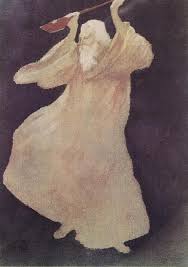
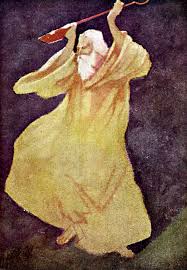
Perhaps, the most powerful testimony of the evolution of Rabindranath from a princely scion of the Tagores of Jorasanko to the man he finally became is found in Abanindranath’s portrait of his uncle. It depicts an old man with flowing white locks and beard, wearing a loose robe and holding an ektara high above his head. The limbs are fluid in an ecstatic dance movement. It is a significant fact that the painting is titled Robi Baul.

Robi Baul (1916): Painting by Abanindranath Tagore (1871-1951). From Public Domain

[1] Different schools of philosophy and religion. The Sahajiya is a philosophy that embrace nature and the natural way of life.

[2] String instrument

[3] Translates from Bengali to: “Where will I find Him — He who dwells within my heart”

[4] The Haramoni (Lost Jewels) is 13-volume collection of Baul songs compiled by Mansooruddin to which Tagore wrote the preface for the first volume published in 1931

[5] Translates to ‘innermost part of the heart and soul’

[6] Collection of Lectures by Tagore in Bengali, published in 1932

[7] Translates to “God’

Aruna Chakravarti has been the principal of a prestigious women’s college of Delhi University for ten years. She is also a well-known academic, creative writer and translator. Her novels, JorasankoDaughters of JorasankoThe Inheritors, Suralakshmi Villa and The Mendicant Prince have sold widely and received rave reviews. She has two collections of short stories and many translations, the latest being Rising from the Dust. She has also received awards such as the Vaitalik Award, Sahitya Akademi Award and Sarat Puraskar for her translations.

.

PLEASE NOTE: ARTICLES CAN ONLY BE REPRODUCED IN OTHER SITES WITH DUE ACKNOWLEDGEMENT TO BORDERLESS JOURNAL 

Click here to access the Borderless anthology, Monalisa No Longer Smiles

Click here to access Monalisa No Longer Smiles on Kindle Amazon International

Categories
poetry of Jibanananda Das

Given the Boon of Eternity…

Jibananada Das’s poem translated from Bengali by Professor Fakrul Alam

GIVEN THE BOON OF ETERNITY 

Given the boon of eternity, I would walk the ways of the world eternally.
All, all alone — what if I would see lush green grass in full bloom then?
And what if I beheld the yellowing grass withering away— And view
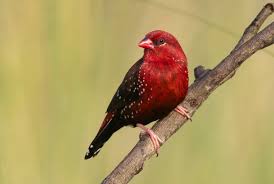
The sky full of wan white clouds at dawn? Like a tattered munia bird
Blood reddened breast in the evening — I would see the stars repeatedly;
I would see an unknown woman’s hair drifting away from a loosened bun;
A woman who would leave — with a face bereft of the evening sun’s glow.

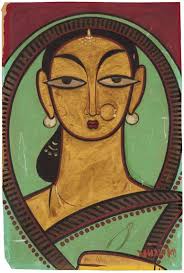
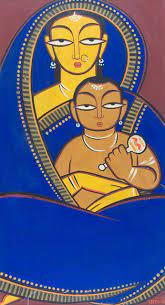
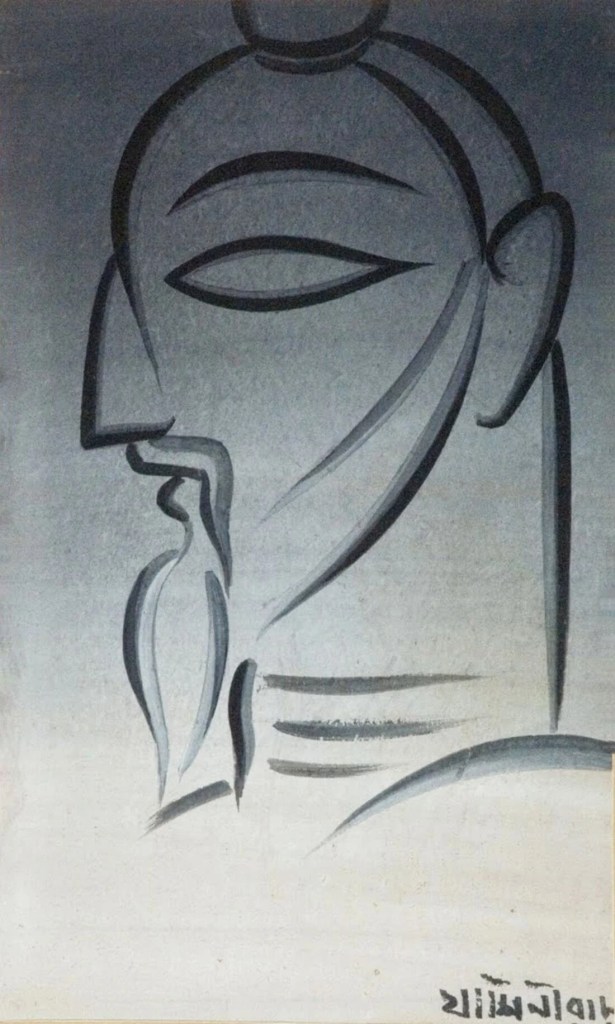
Art by Jamini Roy

Jibanananda Das (1899-1954) was a Bengali writer, who now is named as one of the greats. In his lifetime, he wrote beautiful poetry, novels, essays and more. He believed: “Poetry and life are two different outpouring of the same thing; life as we usually conceive it contains what we normally accept as reality, but the spectacle of this incoherent and disorderly life can satisfy neither the poet’s talent nor the reader’s imagination … poetry does not contain a complete reconstruction of what we call reality; we have entered a new world.”

.

Fakrul Alam is an academic, translator and writer from Bangladesh. He has translated works of Jibanananda Das and Rabindranath Tagore into English and is the recipient of Bangla Academy Literary Award (2012) for translation and SAARC Literary Award (2012).

.

PLEASE NOTE: ARTICLES CAN ONLY BE REPRODUCED IN OTHER SITES WITH DUE ACKNOWLEDGEMENT TO BORDERLESS JOURNAL

Click here to access the Borderless anthology, Monalisa No Longer Smiles

Click here to access Monalisa No Longer Smiles on Amazon International
Categories
poetry of Jibanananda Das

Poems of Longing by Jibanananda Das

Translated from Bengali by Professor Fakrul Alam

Art by Jamini Roy (1887-1972). From Public Domain
If I Get to Live Forever
(Ananta Jebon Pai Jodi)

If I get to live forever — then forever, I’ll be all alone —
If I return to the paths of the world, I’ll see green grass
Sprouting — will see yellow grass scattering — the sky
Whitening in the morning — like a tattered munia bird,
Breast blood - stained in the evening — again and again I’ll see stars
And view a strange woman untying braided hair and leaving
Alas, her face devoid of traces of the setting sun’s soft glow

If I get to live forever — forever, I’ll walk the ways of the world
All alone. If I ever return to the world’s pathways, I’ll see
Trams, buses, dust. Innumerable slums and, broken bowls too —
Dark and dirty lanes; fights, people swearing; squinted eyes
Rotten prawns; I’ll see a whole lot of things interminably
And yet all this time I won’t get to meet you again — for eternity!

If I have eternal Life
( Anante Jebon Jodi)

Given the boon of eternity, I would walk the ways of the world eternally.
All, all alone — what if I would see lush green grass in full bloom then?
And what if I beheld the yellowing grass withering away — And view
The sky full of wan white clouds at dawn? Like a tattered munia bird
Blood reddened breast in the evening — I would see the stars repeatedly;
I would see an unknown woman’s hair drifting away from a loosened bun;
A woman who would leave — with a face bereft of the evening sun’s glow.

Jibanananda Das (1899-1954) was a Bengali writer, who now is named as one of the greats. In his lifetime, he wrote beautiful poetry, novels, essays and more. He believed: “Poetry and life are two different outpouring of the same thing; life as we usually conceive it contains what we normally accept as reality, but the spectacle of this incoherent and disorderly life can satisfy neither the poet’s talent nor the reader’s imagination … poetry does not contain a complete reconstruction of what we call reality; we have entered a new world.”

.

Fakrul Alam is an academic, translator and writer from Bangladesh. He has translated works of Jibanananda Das and Rabindranath Tagore into English and is the recipient of Bangla Academy Literary Award (2012) for translation and SAARC Literary Award (2012).

.

PLEASE NOTE: ARTICLES CAN ONLY BE REPRODUCED IN OTHER SITES WITH DUE ACKNOWLEDGEMENT TO BORDERLESS JOURNAL

Click here to access the Borderless anthology, Monalisa No Longer Smiles

Click here to access Monalisa No Longer Smiles on Amazon International
Categories
A Special Tribute

 Reminiscing on Tagore… 

Rabindranath Tagore (1861-1941) has a unique place in many lives. His works continue to impact us. His songs continue to feel relevant. It is not easy to grasp him in totality, to comprehend how he towered over divisive constructs created by humans with his work at Sriniketan and Santiniketan, funded eventually by his Nobel Prize money that poured in with his writings. We all unite not just under the umbrella of his writings and wisdom, but also seek solutions from his life and times — a period of dynamic changes, a renaissance. Can we find these answers? Is it to be found in the breeze that wafts across boundaries at war… or in an eternity where he continues to touch hearts… 

For many of us who have not grown up listening to Tagore songs and know of him as a distant figure, here is an attempt to bring his life to you starting with the naming of the infant Rabindranath —  reimagined by Aruna Chakravarti, to his first trip out of his cloistered home in Jorsanko and his first experience of snow as he went to study in England — both translated from his writings by Somdatta Mandal. We have a transcreation of a poem he wrote celebrating his birthday on pochishhe boisakh where he shares the joy of his birth with all of us. We wind up translations with Ratnottama Sengupta’s rendition of a song where he offers his lyrics to all those who are willing to listen. 

Showcasing the current relevance of Tagore is a brief musing from Sengupta. To relate the wonder of Tagore’s lyrics, we have writings from professor Fakrul Alam and Asad Latif, who contend how Tagore continues evergreen… 

Birth

The Naming of Rabindranath: Aruna Chakravarti shares how he chanced upon the name Rabindranath in this excerpt from Jorasanko. Click here to read. 

Joys of Living 

Himalaya Jatra ( A trip to Himalayas) by Tagore, has been translated from his Jibon Smriti (1911, Reminiscenses) by Somdatta Mandal from Bengali. This records his first trip out of Jorasanko as a teenager. Click here to read.

Baraf Pora (Snowfall) by Rabindranath Tagore, gives a glimpse of his first experience of snowfall in Brighton and published in the Tagore family journal, Balak (Children), has been translated from Bengali by Somdatta Mandal. Click here to read.

Pochishe Boisakh (25th of Baisakh), a birthday poem by Tagore(1922), has been translated from Bengali by Mitali Chakravarty. Click here to read.

Bhumika (Introduction) by Tagore has been translated from Bengali by Ratnottama Sengupta. Click here to read.

Rhapsodies 

Heatwave & Tagore

Ratnottama Sengupta relates songs of Tagore to the recent heatwave scorching Kolkata. Click here to read.

The Older I get, the More Youthful Feels Tagore

Asad Latif gives a paean in prose to the evergreen lyrics of Tagore. Click here to read.

Discovering Rabindranath and My Own Self

Professor Fakrul Alam muses on the impact of Tagore in his life. Click here to read.

Celebrate Tagore’s legacy not only with translations but with a unique discussion on Tagore between Aruna Chakravarty and the late Sunil Gangopadhyay (1934-2012). The discussion took place under the auspices of Sahitya Akademi during the celebration of 150 years of Tagore. The book is available online on Amazon, in Om and more bookstores in India and in Bookworm, Bangladesh.

Categories
Editorial

Celebrating the Child & Childhood…

‘Victory to Man, the newborn, the ever-living.’
They kneel down, the king and the beggar, the saint and
the sinner,
the wise and the fool, and cry:
‘Victory to Man, the newborn, the ever-living.’

The Child’ by Rabindranath Tagore1, written in English in 1930

This is the month— the last of a conflict-ridden year— when we celebrate the birth of a messiah who spoke of divine love, kindness, forgiveness and values that make for a better world. The child, Jesus, has even been celebrated by Tagore in one of his rarer poems in English. While we all gather amidst our loved ones to celebrate the joy generated by the divine birth, perhaps, we will pause to shed a tear over the children who lost their lives in wars this year. Reportedly, it’s a larger number than ever before. And the wars don’t end. Nor the killing. Children who survive in war-torn zones lose their homes or families or both. For all the countries at war, refugees escape to look for refuge in lands that are often hostile to foreigners. And yet, this is the season of loving and giving, of helping one’s neighbours, of sharing goodwill, love and peace. On Christmas this year, will the wars cease? Will there be a respite from bombardments and annihilation?

We dedicate this bumper year-end issue to children around the world. We start with special tributes to love and peace with an excerpt from Tagore’s long poem, ‘The Child‘, written originally in English in 1930 and a rendition of the life of the philosopher and change-maker, Vivekananda, by none other than well-known historical fiction writer, Aruna Chakravarti. The poem has been excerpted from Indian Christmas: Essays, MemoirsHymns, an anthology edited by Jerry Pinto and Madhulika Liddle, a book that has been reviewed by Somdatta Mandal and praised for its portrayal of the myriad colours and flavours of Christmas in India. Christ suffered for the sins of humankind and then was resurrected, goes the legend. Healing is a part of our humanness. Suffering and healing from trauma has been brought to the fore by Christopher Marks’ perspective on Veronica Eley’s The Blue Dragonfly: healing through poetry. Basudhara Roy has also written about healing in her take of Kuhu Joshi’s My Body Didn’t Come Before Me. Bhaskar Parichha has reviewed a book that talks of healing a larger issue — the crises that humanity is facing now, Permacrisis: A Plan to Fix a Fractured World, by ex-British Prime Minister Gordon Brown, Nobel Laureate Michael Spence, Mohamed El-Erian and Reid Lidow. Parichha tells us that it suggests solutions to resolve the chaos the world is facing — perhaps a book that the world leadership would do well to read. After all, the authors are of their ilk! Our book excerpts from Dr Ratna Magotra’s Whispers of the Heart – Not Just A Surgeon: An Autobiography and Manjima Misra’s The Ocean is Her Title are tinged with healing and growth too, though in a different sense.

The theme of the need for acceptance, love and synchronicity flows into our conversations with Afsar Mohammad, who has recently authored Remaking History: 1948 Police Action and the Muslims of Hyderabad. He shows us that Hyderabadi tehzeeb or culture ascends the narrow bounds set by caged concepts of faith and nationalism, reaffirming his premise with voices of common people through extensive interviews. In search of a better world, Meenakshi Malhotra talks to us about how feminism in its recent manifestation includes masculinities and gender studies while discussing The Gendered Body: Negotiation, Resistance, Struggle, edited by her, Krishna Menon and Rachana Johri. Here too, one sees a trend to blend academia with non-academic writers to bring focus on the commonalities of suffering and healing while transcending national boundaries to cover more of South Asia.

That like Hyderabadi tehzeeb, Bengali culture in the times of Tagore and Nazrul dwelled in commonality of lore is brought to the fore when in response to the Nobel laureate’s futuristic ‘1400 Saal’ (‘The year 1993’), his younger friend responds with a poem that bears not only the same title but acknowledges the older man as an “emperor” among versifiers. Professor Fakrul Alam has not only translated Nazrul’s response, named ‘1400 Saal’ aswell, but also brought to us the voice of another modern poet, Quazi Johirul Islam. We have a self-translation of a poem by Ihlwha Choi from Korean and a short story by S Ramakrishnan in Tamil translated by T Santhanam.

Our short stories travel with migrant lore by Farouk Gulsara to Malaysia, from UK to Thailand with Paul Mirabile while chasing an errant son into the mysterious reaches of wilderness, with Neeman Sobhan to Rome, UK and Bangladesh, reflecting on the Birangonas (rape victims) of the 1971 Bangladesh Liberation war, an issue that has been taken up in Malhotra’s book too. Sobhan’s story is set against the backdrop of a war which was fought against linguistic hegemony and from which we see victims heal. Sohana Manzoor this time has not only given us fabulous artwork but also a fantasy hovering between light and dark, life and death — an imaginative fiction that makes a compelling read and questions the concept of paradise, a construct that perhaps needs to be found on Earth, rather than after death.

The unusual paradigms of life and choices made by all of us is brought into play in an interesting non-fiction by Nitya Amlean, a young Sri Lankan who lives in UK. We travel to Kyoto with Suzanne Kamata, to Beijing with Keith Lyons, to Wayanad with Mohul Bhowmick and to Langkawi with Ravi Shankar. Wendy Jones Nakanishi argues in favour of borders with benevolent leadership. Tongue-in-cheek humour is exuded by Devraj Singh Kalsi as he writes of his attempts at using visiting cards as it is by Rhys Hughes in his exploration of the truth about the origins of the creature called Humpty Dumpty of nursery rhyme fame.

Poetry again has humour from Hughes. A migrant himself, Jee Leong Koh, brings in migrant stories from Singaporeans in US. We have poems of myriad colours from Ryan Quinn Flanagan, Patricia Walsh, John Grey, Kumar Bhatt, Ron Pickett, Prithvijeet Sinha, Sutputra Radheye, George Freek and many more. Papia Sengupta ends her poem with lines that look for laughter among children and a ‘life without borders’ drawn by human constructs in contrast to Jones Nakanishi’s need for walls with sound leadership. The conversation and dialogues continue as we look for a way forward, perhaps with Gordon Brown’s visionary book or with Tagore’s world view of lighting the inner flame in each human. We can hope that a way will be found. Is it that tough to influence the world using words? We can wish — may there be no need for any more Greta Thunbergs to rise in protest for a world fragmented and destroyed by greed and lack of vision. We hope for peace and love that will create a better world for our children.

As usual, we have more content than mentioned here. All our pieces can be accessed on the contents’ page. Do pause by and take a look. This bumper issue would not have been possible without the contribution of all the writers and our fabulous team from Borderless. Huge thanks to them all and to our wonderful readers who continue to encourage us with their comments and input.

Here’s wishing you all wonderful new adventures in the New Year that will be born as this month ends!

Mitali Chakravarty

borderlessjournal.com

  1. Indian Christmas: Essays, MemoirsHymns edited by Jerry Pinto & Madhulika Liddle ↩︎

Click here to access the content’s page for the December 2023 issue

.

READ THE LATEST UPDATES ON THE FIRST BORDERLESS ANTHOLOGY, MONALISA NO LONGER SMILES, BY CLICKING ON THIS LINK.