Categories
Contents

Borderless, December 2024

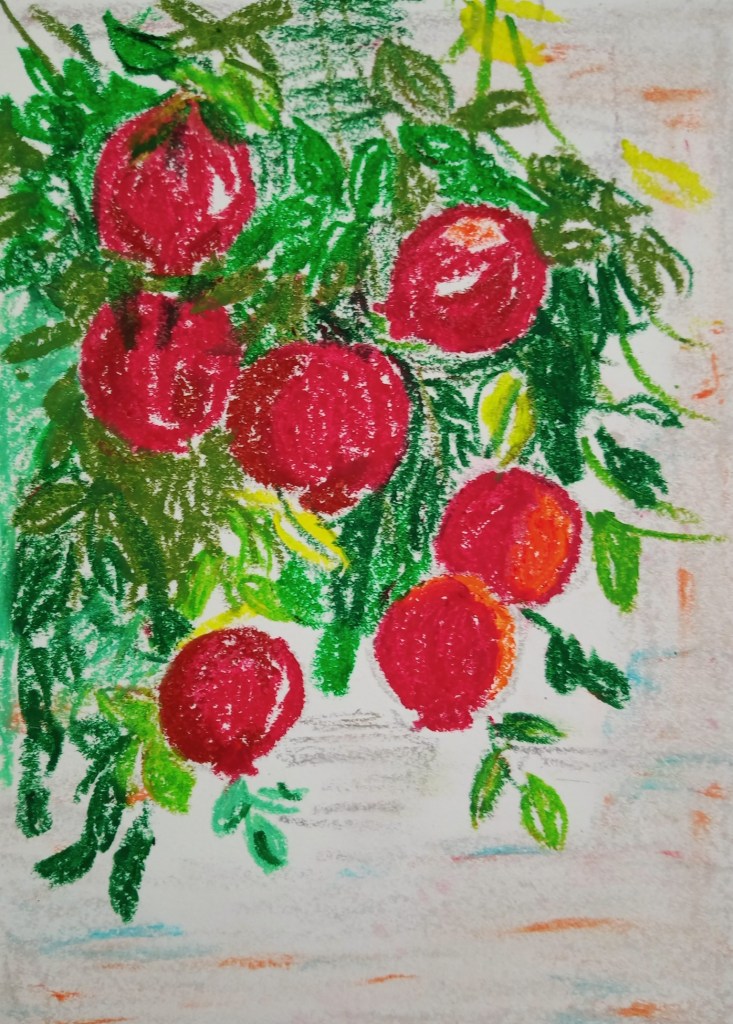
Art by Sohana Manzoor

Editorial

‘Footfalls Echo in the Memory’… Click here to read.

Translations

Jibananada Das’s Andhar Dekhecche, Tobu Ache (I have seen the dark and yet there is another) has been translated from Bengali by Professor Fakrul Alam. Click here to read.

Manish Ghatak’s Aagun taader Praan (Fire is their Life) has been translated from Bengali by Indrayudh Sinha. Click here to read.

Manzur Bismil’s poem, Stories, has been translated from Balochi by Fazal Baloch. Click here to read.

Homecoming, a poem by Ihlwha Choi on his return from Santiniketan, has been translated from Korean by the poet himself. Click here to read.

Tagore’s Shotabdir Surjo Aji ( The Century’s Sun today) has been translated from Bengali by Mitali Chakravarty. Click here to read.

Poetry

Click on the names to read the poems

Michael R Burch, Farah Sheikh, George Freek, Rajiv Borra, Kelsey Walker, Lokenath Roy, Thompson Emate, Joy Anne O’Donnell, Jayant Kashyap, John Grey, Aman Alam, Stuart McFarlane, Ayesha Binte Islam, Ryan Quinn Flanagan, Saranyan BV, Rhys Hughes

Musings/ Slices from Life

Autumn in Hyderabad

Mohul Bhowmick muses on Hyderabad. Click here to read.

Straight Back Across the Strait

Meredith Stephens gives a vignette of life in South Australia with a sailing adventure built in. Click here to read.

My Patchwork Year

Keith Lyons muses on what 2024 meant for him. Click here to read.

Musings of a Copywriter

In Byline Fever, Devraj Singh Kalsi travels down the path of nostalgia. Click here to read.

Essays

Still to Moving Images

Ratnottama Sengupta explores artists who have turned to use the medium of films… artists like the legendary MF Husain. Click here to read.

How Dynamic was Ancient India?

Farouk Gulsara explores William Dalrymple’s latest book, The Golden Road: How Ancient India Transformed the World. Click here to read.

A Short, Winding, and Legendary Dhaka Road

Professor Fakrul Alam takes us on a historical journey of one of the most iconic roads of Dhaka, Fuller Road. Click here to read.

Stories

Significance

Naramsetti  Umamaheswararao creates a fable around a banyan tree and it’s fruit. Click here to read.

The Dance of Life

Snigdha Agrawal explores ageism. Click here to read.

The Unsuspecting Suspect

Paul Mirabile wraps his telling like a psychological thriller. Click here to read.

Conversations

Ratnottama Sengupta converses with Divya Dutta, an award-winning actress, who has authored two books recently, Stars in my Sky and Me and Ma. Click here to read.

Lara Geyla converses about her memoir, Camels of Kyzylkum, and her journey as an immigrant. Click here to read.

Book Excerpts

An excerpt from Thomas Bell’s Human Nature: A Walking History of the Himalayan Landscape. Click here to read.

An excerpt from Savi Naipaul Akal’s The Naipauls of Nepaul Street, a retelling of VS Naipaul’s heritage in Trinidad by his sister. Click here to read.

Book Reviews

Somdatta Mandal reviews Kusum Khemani’s Lavanyadevi, translated from Hindi by Banibrata Mahanta. Click here to read.

Aditi Yadav reviews Nanako Hanada’s The Bookshop Woman, translated from Japanese by Cat Anderson. Click here to read.

Jagari Mukherjee reviews Kiriti Sengupta’s poetry collection, Oneness. Click here to read.

Bhaskar Parichha reviews Noor Jahan Bose’s Daughter of The Agunmukha: A Bangla Life, translated from Bengali by Rebecca Whittington. Click here to read.

.

Click here to access the Borderless anthology, Monalisa No Longer Smiles

Click here to access Monalisa No Longer Smiles on Amazon International

Categories
Editorial

‘Footfalls Echo in the Memory’

Painting by Claud Monet (1840-1926). From Public Domain

Acknowledging our past achievements sends a message of hope and responsibility, encouraging us to make even greater efforts in the future. Given our twentieth-century accomplishments, if people continue to suffer from famine, plague and war, we cannot blame it on nature or on God.

–Homo Deus (2015), Yuval Noah Harari

Another year drumrolls its way to a war-torn end. Yes, we have found a way to deal with Covid by the looks of it, but famine, hunger… have these drawn to a close? In another world, in 2019, Abhijit Banerjee had won a Nobel Prize for “a new approach to obtaining reliable answers about the best ways to fight global poverty”. Even before that in 2015, Yuval Noah Harari had discussed a world beyond conflicts where Homo Sapien would evolve to become Homo Deus, that is man would evolve to deus or god. As Harari contends at the start of Homo Deus, some of the world at least hoped to move towards immortality and eternal happiness. But, given the current events, is that even a remote possibility for the common man?

Harari points out in the sentence quoted above, acknowledging our past achievements gives hope… a hope born of the long journey humankind has made from caves to skyscrapers. If wars destroy those skyscrapers, what happens then? Our December issue highlights not only the world as we knew it but also the world as we know it.

In our essay section, Farouk Gulsara contextualises and discusses William Dalrymple’s latest book, The Golden Road with a focus on past glories while Professor Fakrul Alam dwells on a road in Dhaka , a road rife with history of the past and of toppling the hegemony and pointless atrocities against citizens. Yet, common people continue to weep for the citizens who have lost their homes, happiness and lives in Gaza and Ukraine, innocent victims of political machinations leading to war.

Just as politics divides and destroys, arts build bridges across the world. Ratnottama Sengupta has written of how artists over time have tried their hands at different mediums to bring to us vignettes of common people’s lives, like legendary artist M F Husain went on to make films, with his first black and white film screened in Berlin Film Festival in 1967 winning the coveted Golden Bear, he captured vignettes of Rajasthan and the local people through images and music. And there are many more instances like his…

Mohul Bhowmick browses on the past and the present of Hyderabad in a nostalgic tone capturing images with words. From the distant shores of New Zealand, Keith Lyons takes on a more individualistic note to muse on the year as it affected him. Meredith Stephens has written of her sailing adventure and life in South Australia. Devraj Singh Kalsi describes a writerly journey in a wry tone. Rhys Hughes also takes a tone of dry humour as he continues with his poems musing on photographs of strangely worded signboards. Colours are brought into poetry by Michael R Burch, Farah Sheikh, George Freek, Rajiv Borra, Kelsey Walker, John Grey, Stuart McFarlane, Saranyan BV, Ryan Quinn Falangan and many more. Some lines from this issue’s poetry selection by young Aman Alam really resonated well with the tone defined by the contributors of this issue:

It's always the common people who pay first.
They don’t write the speeches or sign the orders.
But when the dust rises, they’re the ones buried under...

Whose Life? By Aman Alam

Echoing the theme of the state of the common people is a powerful poem by Manish Ghatak translated from Bengali by Indrayudh Sinha, a poem that echoes how some flirt with danger on a daily basis for ‘Fire is their life’. Professor Alam has brought to us a Bengali poem by Jibanananda Das that reflects the issues we are all facing in today’s world, a poem that remains relevant even in the next century, Andhar Dekhecche, Tobu Ache (I have seen the dark and yet there is another). Fazal Baloch has translated contemporary poet Manzur Bismil’s poem from Balochi on the suffering caused by decisions made by those in power. Ihlwha Choi on the other hand has shared his own lines in English from his Korean poem about his journey back from Santiniketan, in which he claims to pack “all my lingering regrets carefully into my backpack”. And yet from the founder of Santiniketan, we have a translated poem that is not only relevant but also disturbing in its description of the current reality: “…Conflicts are born of self-interest./ Wars are fought to satiate greed…”. Tagore’s Shotabdir Surjo (The Century’s Sun, 1901) recounts the horrors of history…The poem brings to mind Edvard Munch’s disturbing painting of “The Scream” (1893).  Does what was true more than hundred years ago, still hold?

Reflecting on eternal human foibles, Naramsetti Umamaheswararao creates a contemporary fable in fiction while Snigdha Agrawal reflects on attitudes towards aging. Paul Mirabile weaves an interesting story around guilt and crime. Sengupta takes us back to her theme of artistes moving away from the genre, when she interviews award winning actress, Divya Dutta, for not her acting but her literary endeavours — two memoirs — Me and Ma and Stars in the Sky. The other interviewee Lara Gelya from Ukraine, also discusses her memoir, Camels from Kyzylkum, a book that traces her journey from the desert of Kyzylkum to USA through various countries. In our book excerpts, we have one that resonates with immigrant lores as writer VS Naipual’s sister, Savi Naipaul Akal, discusses how their family emigrated to Trinidad in The Naipauls of Nepaul Street. The other excerpt from Thomas Bell’s Human Nature: A Walking History of the Himalayan Landscape seeks “to understand the relationship between communities and their environment.” He moves through the landscapes of Nepal to connect readers to people in Himalayan villages.

The reviews in this issue travel through cultures and time with Somdatta Mandal’s discussion of Kusum Khemani’s Lavanyadevi, translated from Hindi by Banibrata Mahanta. Aditi Yadav travels to Japan with Nanako Hanada’s The Bookshop Woman, translated from Japanese by Cat Anderson. Jagari Mukherjee writes on the poems of Kiriti Sengupta in Oneness and Bhaskar Parichha reviews a book steeped in history and the life of a brave and daring woman, a memoir by Noor Jahan Bose, Daughter of The Agunmukha: A Bangla Life, translated from Bengali by Rebecca Whittington.

We have more content than mentioned here. Please do pause by our content’s page to savour our December Issue. We are eternally grateful to you, dear readers, for making our journey worthwhile.

Huge thanks to all our contributors for making this issue come alive with their vibrant work. Huge thanks to the team at Borderless for their unflinching support and to Sohana Manzoor for sharing her iconic paintings that give our journal a distinctive flavour.

With the hope of healing with love and compassion, let us dream of a world in peace.

Best wishes for the start of the next year,

Mitali Chakravarty

borderlessjournal.com

Footfalls echo in the memory
Down the passage which we did not take
Towards the door we never opened
Into the rose-garden.

TS Eliot, ‘Burnt Norton’, Four Quartets (1941)

Click here to access the content’s page for the December 2024 Issue

.

READ THE LATEST UPDATES ON THE FIRST BORDERLESS ANTHOLOGY, MONALISA NO LONGER SMILES, BY CLICKING ON THIS LINK.

Categories
Review

No Man’s an Island

Book Review by Jagari Mukherjee

Title: Oneness

Author: Kiriti Sengupta

Publisher: Transcendent Zero Press

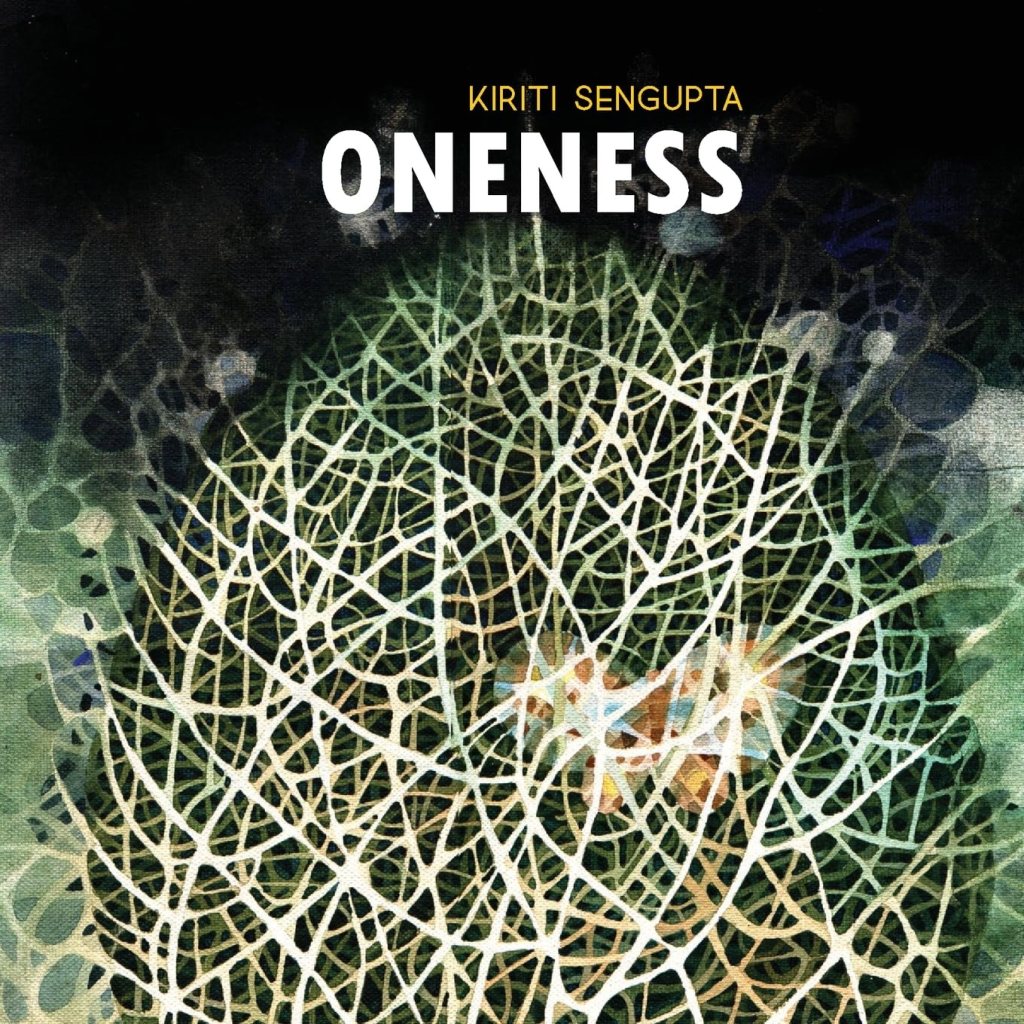
Oneness by Kiriti Sengupta, an established writer and publisher, is the paean of a poet in love with life. This thin volume has the gorgeousness of a Rajasthani miniature: The poems are accompanied by colourful paintings by Pintu Biswas and Samir Mondal. The artwork adds to the magic of the experience that is Oneness. Exploring the pieces, the reader, too, is drawn by the poet into embracing life like an affectionate lover who accepts the highs and lows of our existence or a relationship. The bright tapestry (literal and metaphorical) presented in the little tableau of a book entrances us to appreciate the romance of oneness in the midst of our teeming variety of happenings over time.

The title “Oneness” recalls to mind John Donne’s[1] immortal sermon, delivered after he healed from a prolonged bout of illness, titled ‘No Man is an Island’. Donne’s illness was so severe that he was considered to be on his deathbed, but defying all odds, he survived. And, then, he wrote:

No man is an island,
Entire of itself;
Every man is a piece of the continent,
A part of the main.

Oneness is a celebration of life as much as the start of ‘No Man is an Island’. It expresses an all-encompassing love for other human beings, the realisation that the hues of blood, joys and griefs are same for everyone, that death and sorrow are common to all. Oneness is an eternal feeling captured well in this collection.

Oneness homes haikus, short verses and prose poems. The haikus reflect profoundness with the brevity of words, typical of Sengupta’s style. For instance:

full moon
across the landscape
fireflies.

One would imagine a dark night sky and a full, flowery golden moon, illuminating the black landscape and the pinpricks of lights from the insects. Instead, the accompanying artwork surprises with a canvas awash in swirling cobalt blues a large blazing red moon, and fireflies like bright flames. It forms an interesting contrast.

Some haikus are beautiful and poignant with subtle decadent sadness:

the post box
recedes to rust
the lost art

A post box is part of the past in the twenty-first century with the advent of online communication. The painting shows a cherry-red post box, with two crows frequenting the scene. The crows, presumably, communicate with each other at the site of the letterbox. The visual and the art bring to mind Donne’s lines, “Any man’s death diminishes me / Because I am involved in mankind”. Perhaps there is a need to mourn the metaphorical death of letter writing, a form of genuine, soulful exchange which would wean away from loneliness and the impersonality of online interactions.

Taking other poems into consideration, it is difficult to choose favourites. In ‘Primordial Leaning’, Sengupta begins with an assertive statement, compelling the reader to accept that they define women as Durga or Kali. The rest of the poem intersperses questions and one more statement. The poet questions the attitude adopted by ‘pop feminists’  to ask whether it is ‘kind’ to compare women to these warrior goddesses, and should men, in turn, behave like Shiva, who is the Destroyer in the Hindu Trinity. It is an interesting take that would be of great value to scholars of Gender and Masculinity Studies. There are no easy answers to this interrogative, but Sengupta packs in a punch in his fiery inimitable style.

You define women as Durga
or Kali. Are you a believer? Are you
being kind? You could have convinced
them to fight the evil.
Instead, when you imply the goddess,
do you illustrate
sisterhood with many limbs? Would you
like men to act as Shiva—the destroyer?

The poem ‘Tenure: Early Years’ asserts that one never outgrows one’s early life when he or she is around a parent. Even when the child becomes an adult, a guardian keeps the memories of their wards’ childhood alive through stories and reminiscences. Thus, for a parent, juvenescence lasts forever.

What role do guardians play
when their wards grow up?
They feed lived experiences,
keep childhood alive.
Juvenescence spans the length
of the parent’s life.

In ‘Separation’, man and nature experience alienation, a state prevalent in postmodern times. However, in the artwork facing the poem, the “worn-out tree” is the reflection of the narrator. Perhaps it is a case of pathetic fallacy where nature echoes the loneliness faced by twenty-first century man. Yet, one can always ask: are trees and men, thus, not united in their separation from the rest of the kaleidoscope?

Only a little needs to be invested
in sketching the worn-out tree.
A charcoal or two, canvas, and span.
I place myself amid the landscape
to explain the prevailing isolation.

John Donne’s sermon ends with the idea of the inevitability of Death: “And therefore never send to know for whom the bell tolls;/ It tolls for thee.” The poems in Oneness, on the other hand, create an eternal algorithm of the unity and universality of human existence. Each written piece, with its companion artwork, form an unforgettable vignette; each is a resplendent unveiling of the beauty and truth of life.

.

[1] John Donne (1572-1631), major poet of metaphysical school

.

Jagari Mukherjee is the Editor-in-chief of Narrow Road Literary Journal and the Chief Executive Editor of EKL Review. Jagari has three full-length poetry collections and two chapbooks and a bestselling ebook to her credit.

PLEASE NOTE: ARTICLES CAN ONLY BE REPRODUCED IN OTHER SITES WITH DUE ACKNOWLEDGEMENT TO BORDERLESS JOURNAL

Click here to access the Borderless anthology, Monalisa No Longer Smiles

Click here to access Monalisa No Longer Smiles on Amazon International
Categories
Contents

Borderless, March 2024

Art by Sohana Manzoor

Editorial

‘If Winter Comes, Can Spring be Far Behind…’ Click here to read.

Translations

Travels of Debendranath Tagore are narratives translated from Bengali by Somdatta Mandal. Click here to read.

The Yellow Flower, a narrative by Haneef Sharif, has been translated by Fazal Baloch from Balochi. Click here to read.

Ye Shao-weng’s poetry ( 1100-1150) has been translated from Mandarin by Rex Tan. Click here to read.

Nazrul’s Amamai Nahi Go Bhalobashleo (Even if you don’t love me) has been translated by Professor Fakrul Alam from Bengali. Click here to read.

Rough Stone by Ihlwha Choi has been translated from Korean to English by the poet himself. Click here to read.

Phalgun or Spring by Rabindranath Tagore has been translated from Bengali by Mitali Chakravarty. Click here to read.

Conversations

A discussion with Radha Chakravarty on her new book, Subliminal, and a brief review of the book. Click here to read.

Jagari Mukherjee interviews Rajorshi Patranabis, discussing his new book, Checklist Anomaly and Wiccan philosophy. Click here to read.

Poetry

Click on the names to read the poems

Rhys Hughes, Alpana, Ron Pickett, Shamik Banerjee, Stuart McFarlean, Baisali Chatterjee Dutt, John Grey, Shahalam Tariq, Jim Murdoch, Kumar Ghimire, Peter Magliocco, Saranyan BV, Rex Tan, Samina Tahreem, Luis Cuauhtémoc Berriozábal

Poets, Poetry & Rhys Hughes

In Lines for Loons, Loonies and Such-like, Rhys Hughes shares a rare treat. Click here to read.

Musings/Slices from Life

The Elusive Utopia?

Farouk Gulsara discusses the ideal of a perfect world. Click here to read.

Serenading Sri Lanka

Mohul Bhowmick backpacks in Sri Lanka with a camera. Click here to read.

Musings of a Copywriter

In A Conversation with God, Devraj Singh Kalsi has a bargaining chip. Click here to read.

Notes from Japan

In Cherry Blossom Forecast, Suzanne Kamata brings the Japanese ritual of cherry blossom viewing to our pages with her camera and words. Click here to read.

Stories

Prison Break

C.J.Anderson-Wu gives a poignant flash fiction. Click here to read.

Terrace

Rakhi Pande relates a strange tale from Goa. Click here to read.

The Temple-going Snake

Devraj Singh Kalsi almost creates a fable but not quite. Click here to read.

Monsoon Arc

K.S. Subramaniam shows the human spirit pitched against the harshness of monsoon storms. Click here to read.

Felipe Jimenez’s Quest of the Unheard

Paul Mirabile travels to Spain of Goya’s times with an imaginary friend who takes after perhaps, Don Quixote? Click here to read.

Essays

Where the Rice is Blue and Dinosaurs Roar…

Ravi Shankar takes us on a tour of a Malaysian town. Click here to read.

Conquering Fears: Bowing to the Mountains 

Keith Lyons tells us of his challenging hike in New Zealand. Click here to read.

Book Excerpts

An excerpt from Out of Sri Lanka: Tamil, Sinhala and English Poetry from Sri Lanka and its Diasporas edited by Vidyan Ravinthiran, Seni Seneviratne and Shash Trevett. Click here to read.

An excerpt from Rajat Chaudhuri’s Spellcasters. Click here to read.

Book Reviews

Somdatta Mandal reviews Ilse Kohler-Rollefson’s Camel Karma: Twenty Years Among India’s Camel Nomads. Click here to read.

Rakhi Dalal reviews Anuradha Kumar’s The Kidnapping of Mark Twain: A Bombay Mystery. Click here to read.

Bhaskar Parichha reviews Mafia Raj: The Rule of Bosses in South Asia by Lucia Michelutti, Ashraf Hoque, Nicolas Martin, David Picherit, Paul Rollier, Clarinda Still. Click here to read.

.

Click here to access the Borderless anthology, Monalisa No Longer Smiles

Click here to access Monalisa No Longer Smiles on Amazon International

Categories
Editorial

‘If Winter Comes, Can Spring be Far Behind…’

Where the mind is without fear

Where the world has not been broken up into fragments

Where the clear stream of reason has not lost its way

Where the mind is led forward by thee
Into ever-widening thought and action…

— ‘Where the Mind is without Fear’ (1910), by Rabindranath Tagore

As we complete the fourth year of our virtual existence in the clouds and across borders, the world has undergone many changes around us, and it’s not only climate change (which is a huge challenge) but much more. We started around the time of the pandemic — in March 2020 — as human interactions moved from face-to-face non-virtual interactions to virtual communication. When the pandemic ended, we had thought humanity would enter a new age where new etiquettes redefining our social norms would make human existence as pandemic proof as possible. But before we could define new norms in the global context, takeovers and conflicts seem to have reft countries, regions and communities apart. Perhaps, this is a time when Borderless Journal can give a voice to all those who want to continue living as part of a single species in this world — where we can rise above our differences to find commonalities that make us human and part of the larger stream of humanity, that has been visualised by visionaries like Tagore or John Lennon — widely different cultural milieus but looking for the same things — humankind living together in harmony and moving towards a world without violence, without hate, without rancour and steeped in goodwill and love.  

Talking of positive values does not make sense in a world that seems to be veering towards darkness… Many say that humankind is intrinsically given to feelings of anger, hate, division, lust, shame and violence. But then we are just as much inclined towards happiness, fun, love, being respectful and peaceful. Otherwise, would we be writing about these? These are inherited values that have also come down to us from our forefathers and some have been evolving towards embalming or healing with resilience, with kindness and with an open mind.  

If you wake up before sunrise, you will notice the sky is really an unredeemable dark. Then, it turns a soft grey till the vibrant colours of the sun paint the horizon and beyond, dousing with not just lively shades but also with a variety of sounds announcing the start of a new day. The darkest hours give way to light. Light is as much a truth as darkness. Both exist. They come in phases in the natural world, and we cannot choose but live with the choices that have been pre-made for us. But there are things we can choose — we can choose to love or hate. We can choose resilience or weakness. We can choose our friends. We can choose our thoughts, our ideas. In Borderless, we have a forum which invites you to choose to be part of a world that has the courage to dream, to imagine. We hope to ignite the torch to carry on this conversation which is probably as old as humanity. We look forward to finding new voices that are willing to move in quest of an impractical world, a utopia, a vision — from which perhaps will emerge systems that will give way to a better future for our progeny.

In the last four years, we are happy to say we have hosted writers from more than forty different nationalities and our readers stretch across almost the whole map of the world. We had our first anthology published less than one and a half years ago, focussing more on writing from established pens. Discussions are afoot to bring out more anthologies in hardcopy with more variety of writers.

In our fourth anniversary issue, we not only host translations by Professor Fakrul Alam of Nazrul, by Somdatta Mandal of Tagore’s father, Debendranath Tagore, but also our first Mandarin translation of a twelfth century Southern Song Dynasty poet, Ye Shao-weng, by Rex Tan, a journalist and writer from Malaysia. From other parts of Asia, Dr Haneef Sharif’s Balochi writing has been rendered into English by Fazal Baloch and Ihlwha Choi has transcreated his own poetry from Korean to English. Tagore’s Phalgun or Spring, describing the current season in Bengal, adds to the variety in our translated oeuvre.

An eminent translator who has brought out her debut poetry book, Radha Chakravarty, has conversed about her poetry and told us among other things, how translating to English varies from writing for oneself. A brief overview of her book, Subliminal, has been provided. Our other interviewee, Rajorshi Patranabis — interviewed by Jagari Mukherjee — has written poetry from a Wiccan perspective — poetry on love — for he is a Wiccan. We have poetry by Luis Cuauhtémoc Berriozábal, Jim Murdoch, Alpana, Baisali Chatterjee Dutt, John Grey, Shahalam Tariq, Saranyan BV, Rex Tan, Ron Pickett with poetry on the season and many more. Humour is brought into poetry with verses woven around a funny sign by Rhys Hughes . His column this month hosts a series of shorter poems — typically in Hughes’ own unique style.

Devraj Singh Kalsi has explored darker shades of humour in his conversation with God while Suzanne Kamata has ushered in the Japanese spring ritual of gazing at cherry blossoms in her column with photographs and narrative. Keith Lyons takes us to the beautiful Fiordlands of New Zealand, Ravi Shankar to Malaysia and Mohul Bhowmick trapezes from place to place in Sri Lanka. Farouk Gulsara has discussed the elusiveness of utopia — an interesting perspective given that we look upto ideals like these in Borderless. I would urge more of you to join this conversation and tell us what you think. We did have Wendy Jones Nakashini start a discussion along these lines in an earlier issue.

We have stories from around the world: C.J.Anderson-Wu from Taiwan, Paul Mirabile from France, Rakhi Pande, Kalsi and K.S. Subramaniam from India. Our book excerpts are from Out of Sri Lanka: Tamil, Sinhala and English Poetry from Sri Lanka and its Diasporas edited by Vidyan Ravinthiran, Seni Seneviratne and Shash Trevett and a Cli-fi book that is making waves, Rajat Chaudhauri’s Spellcasters. Mandal has also reviewed for us Ilse Kohler-Rollefson’s Camel Karma: Twenty Years Among India’s Camel Nomads. Bhaskar Parichha has discussed Mafia Raj: The Rule of Bosses in South Asia by Lucia Michelutti, Ashraf Hoque, Nicolas Martin, David Picherit, Paul Rollier, Clarinda Still — a book written jointly by multiple academics. Rakhi Dalal in her review of Anuradha Kumar’s The Kidnapping of Mark Twain: A Bombay Mystery has compared the novel to an Agatha Christie mystery!

I would want to thank our dedicated team from the bottom of my heart. Without them, we could not have brought out two issues within three weeks for we were late with our February issue. A huge thanks to them for their writing and to Sohana Manzoor for her art too. Thanks to our wonderful reviewers who have been with us for a number of years, to all our mentors and contributors without who this journal could not exist. Huge thanks to all our fabulous loyal readers. Devoid of their patronage these words would dangle meaninglessly and unread. Thank you all.

Wish you a wonderful spring as Borderless Journal starts out on the fifth year of its virtual existence! We hope you will be part of our journey throughout…

Enjoy the reads in this special anniversary issue with more content than highlighted here, and each piece is a wonderful addition to our oeuvre!

Mitali Chakravarty

borderlessjournal.com

Click here to access the content page for the March 2024 Issue.

.

READ THE LATEST UPDATES ON THE FIRST BORDERLESS ANTHOLOGY, MONALISA NO LONGER SMILES, BY CLICKING ON THIS LINK.

Categories
Interview

Checklist Anomaly: A Wiccan’s Journey of Exploration

Jagari Mukherjee in conversation with Rajorshi Patranabis

It was an exquisite late spring morning when the poet, Rajorshi Patranabis, and I met up for this interview at 8th Day Cafe and Bakery in Salt Lake. Over two pots of dark golden Earl Grey tea, Rajorshi answered my questions in his charmingly candid fashion, elaborating on our favourite subject, poetry; in particular, his book published by Hawakal in September 2023. We read aloud from the book, Checklist Anomaly, in between our conversation, and altogether spend a delightful hour-and-a-half figuratively floating on the gossamer wings of poesy.

Jagari: Congratulations, Rajorshi, for bringing out the first-ever individual collection of gogyoshi 1 in India. Checklist Anomaly, like your previous book, The Last Drop of Your Tears, is a seminal volume replete with love poems. Can you tell us a bit about the form and why you chose to express yourself in it?

Rajorshi: Last Drop of Your Tears was my first foray into five-line poetry, but I had previously done Japanese poetic forms like haiku and haibun. Gogyohka2 gave me some more lines to express myself albeit with some conditions of phrase and metaphor in every line. Gogyoshi was a natural transition from gogyohka wherein it is the freest form of five-line Japanese poetry. Gogyoshi should have a title and every line starts with a capital letter. When I started writing these forms, I had no idea that both Tears and Checklist Anomaly would be seminal collections. I’m personally extremely grateful to Hawakal Publishers for having the gumption to publish something to which they didn’t have any past reference points.

Jagari: Going through Checklist Anomaly, I was struck by your depiction of the beloved in your love poems. For instance, on page 16, I found the following poem:

She embraced to feel
Doused to drown
She kissed deep
Bitten lips strip
She seduced to engulf

Unlike the western courtly poetry tradition, your beloved is not a passive figure perceived through male gaze, but a powerful woman who defies the virgin/whore dichotomy. Could you tell me how did you create such an empowered feminine figure?

Rajorshi: A very few people know that I’m a Wiccan by philosophy and practice and Wicca is perhaps the first ever feminist movement. We look up to strong women like Luciana and Joan of Arc, amongst others for inspiration. Having been taught Wicca by my teacher in India, the reference to the 64 yoginis of Hirapur cannot be avoided. Yoginis are nothing but witches and the epitome of ‘Shakti (strength)’. As a direct consequence, love poems from my pen cannot possibly have a beloved who leans upon me for support. The other way round is the truth and it is time that poets realise that a beloved actually is the Shakti and love is the force.

Jagari: Your poems are lacquered with colours. I know that for a certainty that you are diagnosed as colour-blind. So, how does a colour-blind poet perceive hues and tints?

Rajorshi: Oh no, not again! Being colour-blind doesn’t mean I don’t decipher colours at all. I understand all the primary colours. Colours for me are emotions. In the poem ‘Lone Red Venom’ from Checklist Anomaly, I say, “Night of the flipped moon/I sit on your lone red venom.” Here, red is a metaphor—a colour normally not associated with poison. Here, it is more of an emotion. I leave it to the reader to decipher it through their own perspective, through their own eyes.

Jagari: Your answer brings to my mind another gogyoshi, titled ‘Incomplete Refrain’ on page 110.

My night shrouded in violet
Your dawn smelling in springtime lavender
Your flight took you to life
My fall broke my splinters of roving greed
Twilight murmurs about our incomplete refrain

Tell me, does the ‘fall’ in this poem refer to a post-lapsasarian world? Would you say that religion/spirituality is deeply infused into your poetry?

Rajorshi: First things first. The version of Wicca that I’ve been initiated into by my teacher (Wiccan High Priestess Ipsita Roy Chakraverti), encompasses every faith, every culture and every philosophy. So, you won’t actually find anything overtly or covertly pointing at any particular religion whatsoever. By the way, this ‘fall’ is actually autumnal fall for me; having said that, I’m happy that you have perceived it differently. This is perhaps where poetry wins.

Jagari: So, what’s next on the creative cards, Rajorshi?

Rajorshi: Something on the lines from the diary of Osiris which are Wiccan prose poems and I am also working on my second collection of gogyohka.

Jagari: That’s wonderful! We will wait for you to contribute new gems and ornaments to the poetic world.

  1. Gogyoshi is a form of Japanese poetry. It is the simplest as it has just five lines. ↩︎
  2. Gogyokha five line form of Japanese poetry but different from gogyoshi. Gogyoshi is considered the freest of Japanese poetic forms, as the poems do not have syllabic restrictions, specific line breaks, or a rhyme scheme. However, the style differs from other five-line forms, such as tanka and gogyohka, by the titling of its poems. ↩︎

Jagari Mukherjee is the Editor-in-chief of Narrow Road Literary Journal and the Chief Executive Editor of EKL Review. She is the winner of Women Empowered Gifted Poet Award, the Reuel International Prize For Poetry, the Bharat Award for Short Story, and the Rabindranath Tagore Literary Prize for Book Review. Jagari has three full-length poetry collections and two chapbooks and a bestselling ebook to her credit.

PLEASE NOTE: ARTICLES CAN ONLY BE REPRODUCED IN OTHER SITES WITH DUE ACKNOWLEDGEMENT TO BORDERLESS JOURNAL

Click here to access the Borderless anthology, Monalisa No Longer Smiles

Click here to access Monalisa No Longer Smiles on Amazon International