Categories
Contents

Borderless August 2023

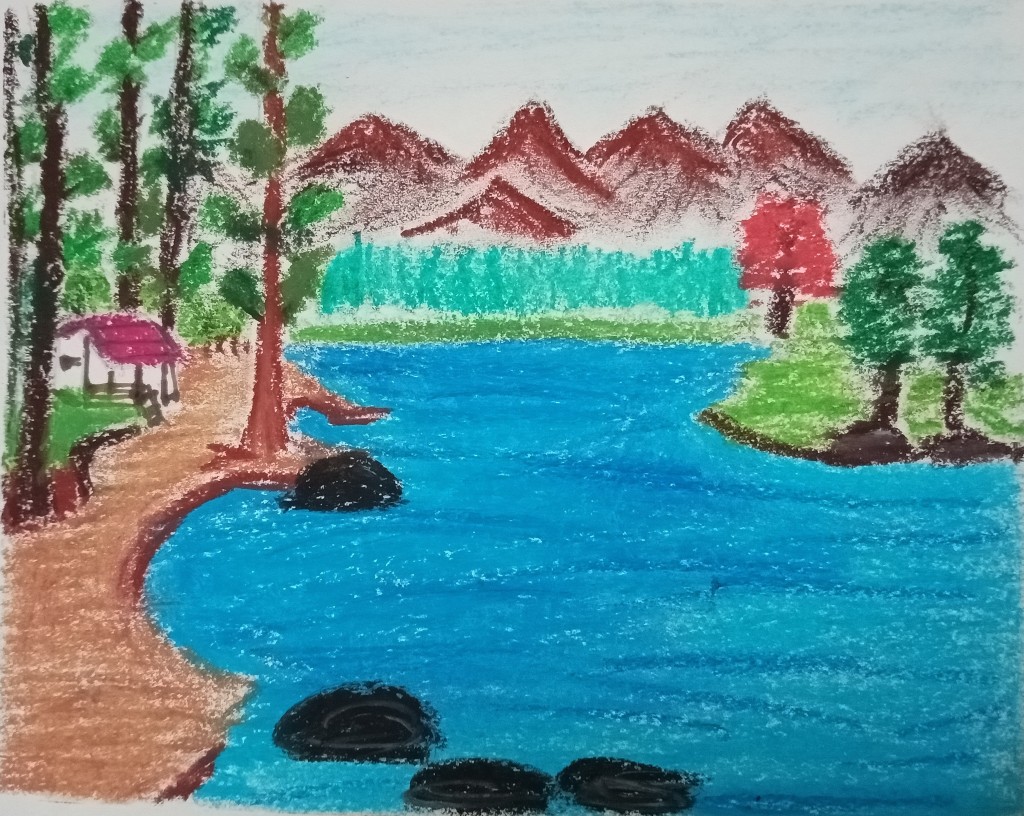
Art by Sohana Manzoor

Editorial

Other Echoes in the Garden… Click here to read.

Interviews

Ujjal Dosanjh, former Minister from Canada and former Premier of British Columbia, discusses his autobiography, Journey After Midnight – A Punjabi Life: From India to Canada, and the need for a world with less borders. Click here to read.

Professor Fakrul Alam discusses his new book of Tagore translations, Gitabitan: Selected Song-Lyrics of Rabindranath Tagore. Click here to read.

Translations

Tagore’s Musalmanir Galpa (A Muslim Woman’s Story) has been translated from Bengali by Aruna Chakravarti. Click here to read.

Masud Khan’s poem, In Another Galaxy, has been translated from Bengali by Professor Fakrul Alam. Click here to read.

Wakeful Stays the Door, a poem by Munir Momin, has been translated from Balochi by Fazal Baloch. Click here to read.

Dangerous Coexistence, written in Korean and translated by Ilhwah Choi. Click here to read.

Proshno or Questions by Tagore has been translated by Mitali Chakravarty. Click here to read.

Pandies Corner

Songs of Freedom: An Ordinary Tale is a narrative by Nandani based on her own experiences, translated from Hindustani by Janees. These narrations highlight the ongoing struggle against debilitating rigid boundaries drawn by societal norms, with the support from organisations like Shaktishalini and Pandies. Click here to read.

Poetry

Click on the names to read the poems

Jared Carter, Rhys Hughes, Malachi Edwin Vethamani, Luis Cuauhtémoc Berriozábal, Saranyan BV, Ryan Quinn Flanagan, A Jessie Michael, Jahnavi Gogoi, George Freek, Koushiki Dasgupta Chaudhuri, David Francis, Akil Contractor, Michael Burch

Poets, Poetry & Rhys Hughes

In An Experiment with Automatic Poetic Translation, Rhys Hughes auto translates an English poem sequentially through 28 languages and then back to English with hilarious results. Click here to read.

Musings/ Slices from Life

Mister, They’re Coming Anyway

Timothy Jay Smith writes on the refugee crisis in Lesbos Island, Greece with photographs by Michael Honegger. Click here to read.

Migrating to Myself from Kolkata to Singapore

Asad Latif explores selfhood in context of diverse geographies. Click here to read.

Islands that Belong to the Seas

Paul Mirabile muses on how humans are like migrants on islands borrowed from the seas. Click here to read.

Of Dreams, Eagles and Lost Children

Aysha Baqir muses on the narrow, closed borders that condemn children. Click here to read.

Mushroom Clouds and Movies: Response from a Hibakusha’s Daughter

Kathleen Burkinshaw discusses Oppenhiemer the movie. Click here to read.

Sleepless in the High Desert, Slumber in the Sierra

Meredith Stephens covers Nevada to Columbia in a car with her camera. Click here to read.

My Hostel Days

Ravi Shankar reminisces on bygone days. Click here to read.

Musings of a Copywriter

In The Amateur Professional, Devraj Singh Kalsi writes of a amateur who thought of himself as a professional. Click here to read.

Notes from Japan

In How I Wound Up in Japan, Suzanne gives her story as an immigrant. Click here to read.

Essays

A Different Persuasion: On Jane Austen’s Novels & their Adaptations

Deepa Onkar delves into the world of Jane Austen books and films. Click here to read.

A Foray into Andamans

Mohul Bhowmik explores Andaman with a camera and narrative. Click here to read.

Bhaskar’s Corner

In Chittaranjan Das: A Centenary Tribute, Bhaskar Parichha discusses the life of one of the most legendary Odia writers. Click here to read.

Stories

Belacan

Farouk Gulsara shares a story based on the life of a migrant in 1950s. Click here to read.

The Japanese Maple

Shivani Shrivastav weaves a story of friendship and loneliness among migrants. Click here to read.

The Coin

Khayma Balakrishnan explores human and supernatural interactions in a school setting in Malaysia. Click here to read.

The Vagrant

Reeti Jamil narrates a strange tale set in a village and told by a farmer. Click here to read.

Book Excerpts

An excerpt from Ujjal Dosanjh’s Journey After Midnight: A Punjabi Life from Canada to India. Click here to read.

An excerpt from Roses in the Fire of Spring: Better Roses for a Warming World and Other Garden Adventures, by M.S. Viraraghavan and Girija Viraraghavan. Click here to read.

Book Reviews

Somdatta Mandal reviews Amitav Ghosh’s Smoke and Ashes: A Writer’s Journey Through Opium’s Hidden Histories. Click here to read.

Basudhara Roy reviews Greening the Earth: A Global Anthology of Poetry, edited by K. Satchidanandan & Nishi Chawla. Click here to read.

Bhaskar Parichha reviews Arunava Sinha’s The Greatest Indian Stories Ever Told: Fifty Masterpieces from the Nineteenth Century to the Present. Click here to read.

.

Click here to access the Borderless anthology, Monalisa No Longer Smiles

Click here to access Monalisa No Longer Smiles on Kindle Amazon International
Categories
Editorial

Other Echoes in the Garden…

“Other echoes
Inhabit the garden. Shall we follow?
Quick, said the bird, find them, find them…”

— TS Eliot, ‘Four Quartets: Burnt Norton’(1936)

Humans have always been dreamers, ideators and adventurers.

Otherwise, could we have come this far? From trees to caves to complex countries and now perhaps, an attempt to reach out towards outer space for an alternative biome as exploring water, in light of the recent disaster of the Titan, is likely to be tougher than we imagined. In our attempt to survive, to live well by creating imagined constructs, some fabrications backfired. Possibly because, as George Orwell observed with such precision in Animal Farm, some perceived themselves as “more equal”. Of course, his was an animal allegory and we are humans. How different are we from our brethren species on this beautiful planet, which can survive even without us? But can humanity survive without Earth? In science fiction, we have even explored that possibility and found home among stars with the Earth becoming uninhabitable for man. However, humanity as it stands of now, continues to need Earth. To live amicably on the planet in harmony with nature and all the species, including our own, we need to reimagine certain constructs which worked for us in the past but seem to have become divisive and destructive at this point.

Ujjal Dosanjh, former Minister in the Canadian cabinet and former Premier of British Columbia, in his autobiography, Journey After Midnight – A Punjabi Life: From India to Canada, talks of regionalism as an alternative to narrow divisive constructs that terrorise and hurt others. He writes in his book: “If humanity isn’t going to drown in the chaos of its own creation, the leading nations of the world will have to create a new world order, which may involve fewer international boundaries.” We have a candid conversation with him about his beliefs and also a powerful excerpt from his autobiography.

An interview with Professor Fakrul Alam takes us into Tagore’s imagined world. He discussed his new book of Tagore translations, Gitabitan: Selected Song-Lyrics of Rabindranath Tagore. He has brought out a collection of 300 songs translated to English. In a bid to emphasise an inclusive world, we also have a translation of Tagore’s ‘Musalmanir Galpa’ (A Muslim Woman’s Story) by Aruna Chakravarti. A transcreation of his poem, called ‘Proshno or Questions’ poses difficult challenges for humanity to move towards a more inclusive world. Our translation by Ihlwha Choi of his own Korean poem to English also touches on his visit to the polymath’s construct in the real world, Santiniketan. All of these centring around Tagore go to commemorate the month in which he breathed his last, August. Professor Alam has also translated a poem from Bengali by Masud Khan that has futuristic overtones and builds on our imagined constructs. From Fazal Baloch we have a Balochi translation of a beautiful, almost a surrealistic poem by Munir Momin.

The poetry selections start with a poem on ‘Wyvern’, an imagined dragon, by Jared Carter. And moves on to the plight of refugees by Michael Burch, A Jessie Michael, and on migrants by Malachi Edwin Vethamani. Ryan Quinn Flanagan has poetry that suggests the plight of refugees at a metaphorical level. Vibrant sprays of colours are brought into this section by Luis Cuauhtémoc Berriozábal, Saranyan BV, Jahnavi Gogoi, George Freek and many more. Rhys Hughes brings in a spot of humour with his mountainous poetry (literally) and a lot of laughter with his or rather Google’s attempt at automatic translation of a poem. Devraj Singh Kalsi has shared a tongue in cheek story about an ‘amateur professional’ — rather a dichotomy.

We travel to Andaman with Mohul Bhowmick and further into Sierra with Meredith Stephens. Ravi Shankar travels back in nostalgia to his hostel and Kathleen Burkinshaw dives into the past — discussing and responding to the media presentation of an event that left her family scarred for life, the atomic holocaust of 1945 in Japan. This was a global event more than seven decades ago that created refugees among the survivors whose homes had been permanently destroyed. Perhaps, their stories are horrific, and heart wrenching like the ones told by those who suffered from the Partition of India and Pakistan, a divide that is celebrated by Independence Days for the two nations based on a legacy of rifts created by the colonials and perpetrated to this day by powerbrokers. Aysha Baqir has written of the wounds suffered by the people with the governance gone awry. Some of the people she writes of would have been refugees and migrants too.

A poignant narrative about refugees who flock to the Greek island of Lesbos by Timothy Jay Smith with photographs by Michael Honegger, both of whom served at the shelters homing the displaced persons, cries out to halt wars and conflicts that displace them. We have multiple narratives of migrants in this issue, with powerful autobiographical stories told by Asad Latif and Suzanne Kamata. Paul Mirabile touches on how humans have adopted islands by borrowing them from seas… rather an unusual approach to migrations. We have an essay on Jane Austen by Deepa Onkar and a centenary tribute to Chittaranjan Das by Bhaskar Parichha.

The theme of migrants is echoed in stories by Farouk Gulsara and Shivani Shrivastav. Young Nandani has given an autobiographical story, translated from Hindustani to English by Janees, in which a migration out of various homes has shredded her family to bits — a narrative tucked in Pandies Corner.  Strange twists of the supernatural are woven into fiction by Khayma Balakrishnan and Reeti Jamil.

In reviews, Parichha has explored Arunava Sinha’s The Greatest Indian Stories Ever Told: Fifty Masterpieces from the Nineteenth Century to the Present. Somdatta Mandal’s review of Amitav Ghosh’s Smoke and Ashes: A Writer’s Journey Through Opium’s Hidden Histories seems to be an expose on how historical facts can be rewritten to suit different perceptions and Basudhara Roy has discussed the Greening the Earth: A Global Anthology of Poetry, edited by K. Satchidanandan and Nishi Chawla.

There is more wonderful content. Pop by our August’s bumper edition to take a look.

I would like to give my grateful thanks to our wonderful team at Borderless, especially to Sohana Manzoor for her fabulous artwork. Huge thanks to all our gifted contributors and our loyal readers. Borderless exists today because of all of you are making an attempt to bringing narratives that build bridges, bringing to mind Lennon’s visionary lyrics:

You may say I'm a dreamer
But I'm not the only one
I hope someday you'll join us
And the world will live as one

Thank you for joining us at Borderless Journal.

Have a wonderful month!

Mitali Chakravarty

borderlessjournal.com

.

Visit the August edition’s content page by clicking here

READ THE LATEST UPDATES ON THE FIRST BORDERLESS ANTHOLOGY, MONALISA NO LONGER SMILES, BY CLICKING ON THIS LINK.

Categories
Contents

Borderless June 2023

Art by Sohana Manzoor

Editorial

Where have All the People Gone? … Click here to read.

Translations

Hena, a short story by Nazrul, has been translated from Bengali by Sohana Manzoor. Click here to read.

Mohammad Ali’s Signature, a short story by S Ramakrishnan, has been translated from Tamil by Dr B Chandramouli. Click here to read.

Three poems by Masud Khan have been translated from Bengali by Professor Fakrul Alam. Click here to read.

Shadows, a poem in Korean, has been translated by the poet himself, Ihlwha Choi. Click here to read.

Pran or Life by Tagore has been translated from Bengali by Mitali Chakravarty. Click here to read.

Conversations

Shantanu Ray Chaudhuri converses with Vinta Nanda about the Shout, a documentary by Vinta Nanda that documents the position of women in Indian society against the backdrop of the #MeToo movement and centuries of oppression and injustice. Click here to read.

In Conversation with Advait Kottary about his debut historic fiction, Siddhartha: The Boy Who Became the Buddha. Click here to read.

Poetry

Click on the names to read the poems

Michael Burch, Ananya Sarkar, George Freek, Smitha Sehgal, Rachel Jayan, Michael Lee Johnson, Sayantan Sur, Ron Pickett, Saranyan BV, Jason Ryberg, Priya Narayanan, Ryan Quinn Flanagan, Evangeline Zarpas, Ramesh Karthik Nayak, Rhys Hughes

Poets, Poetry & Rhys Hughes

In Ghee-Wizz, Rhys Hughes talks of the benefits of Indian sweets while wooing Yetis. Click here to read.

Musings/Slices from Life

Humbled by a Pig

Farouk Gulsara meets a wild pig while out one early morning and muses on the ‘meeting’. Click here to read.

Spring Surprise in the Sierra

Meredith Stephens takes us hiking in Sierra Nevada. Click here to read.

Lemon Pickle without Oil

Raka Banerjee indulges in nostalgia as she tries her hand at her grandmother’s recipe. Click here to read.

Apples & Apricots in Alchi

Shivani Shrivastav bikes down to Alchi Ladakh to find serenity and natural beauty. Click here to read.

Musings of a Copywriter

In Trees from my Childhood, Devraj Singh Kalsi muses on his symbiotic responses to trees that grew in their home. Click here to read.

Notes from Japan

In Superhero Sunday in Osaka, Suzanne Kamata writes of her experience at the Osaka Comic Convention with her daughter. Click here to read.

Stories

The Trial of Veg Biryani

Anagha Narasimha gives us a social satire. Click here to read.

Am I enough?

Sarpreet Kaur explores social issues in an unusual format. Click here to read.

Arthur’s Subterranean Adventure

Paul Mirabile journeys towards the centre of the Earth with his protagonist. Click here to read.

Essays

No Bucket Lists, No Regrets

Keith Lyons muses on choices we make while living. Click here to read.

In Search of the Perfect Dosa

Ravi Shankar trots around the world in quest of the perfect dosa — from South India to Aruba and West Indies. Click here to read.

“Bookshops don’t fail. Bookshops run by lazy booksellers fail.”

Shantanu Ray Chaudhuri takes us for a tour of the Kunzum bookstore in New Delhi. Click here to read.

Book Excerpts

An excerpt from Greening the Earth: A Global Anthology of Poetry, edited by K. Sachitanandan and Nishi Chawla. Click here to read.

An excerpt from Advait Kottary’s Siddhartha: The Boy Who Became the Buddha. Click here to read.

Book Reviews

Somdatta Mandal reviews Behind Latticed Marble: Inner Worlds of Women by Jyotirmoyee Devi Sen, translated from Bengali by Apala G. Egan. Click here to read.

Rakhi Dalal reviews Rhys Hughes’ The Wistful Wanderings of Perceval Pitthelm. Click here to read.

Basudhara Roy reviews Prerna Gill’s Meanwhile. Click here to read.

Bhaskar Parichha reviews Zac O’Yeah’s Digesting India: A Travel Writer’s Sub-Continental Adventures With The Tummy (A Memoir À La Carte). Click here to read.

.

PLEASE NOTE: ARTICLES CAN ONLY BE REPRODUCED IN OTHER SITES WITH DUE ACKNOWLEDGEMENT TO BORDERLESS JOURNAL

Click here to access the Borderless anthology, Monalisa No Longer Smiles

Click here to access Monalisa No Longer Smiles on Kindle Amazon International
Categories
Editorial

Where have All the People Gone?

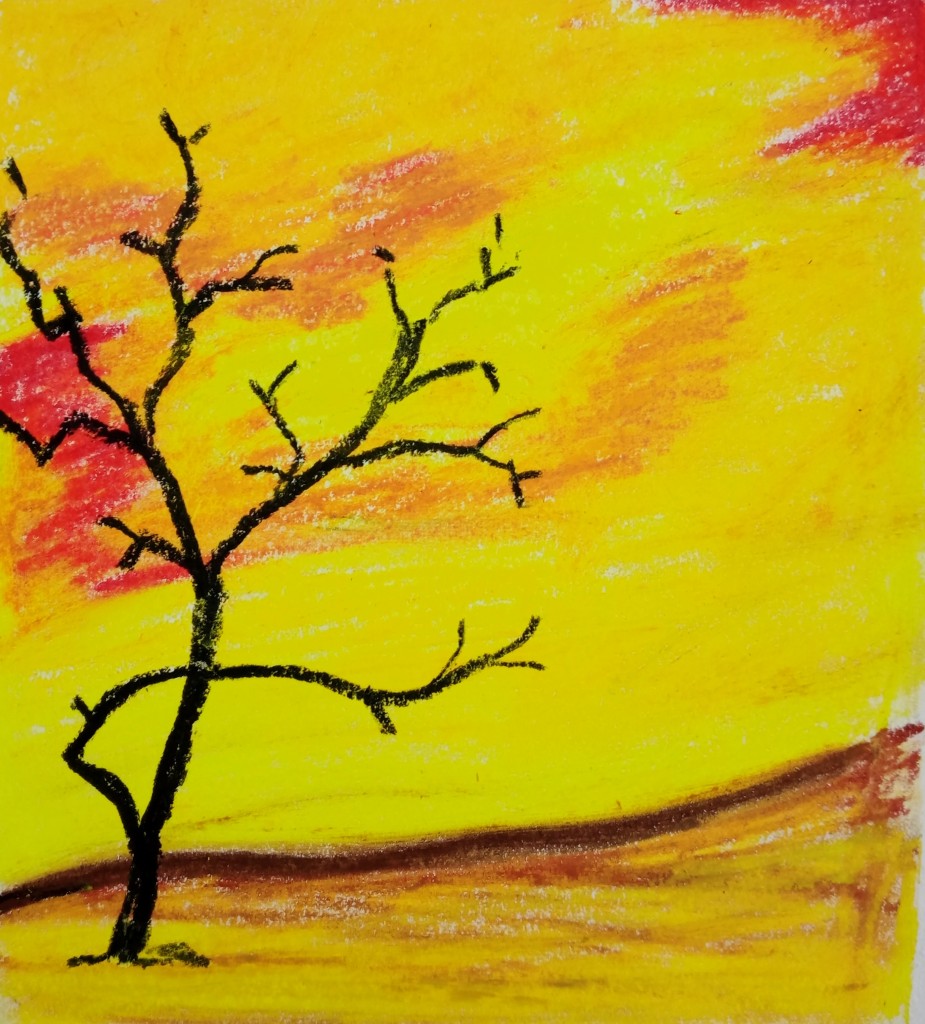
Courtesy: Creative Commons

Can humankind ever stop warring and find peace?

Perhaps, most sceptics will say it is against human nature to stop fighting and fanning differences. The first recorded war was fought more than 13,000 years ago in what is now a desert but was green long ago. Nature changed its face. Continents altered over time. And now again, we are faced with strange shifts in climate that could redefine not just the dimensions of the surface area available to humankind but also our very physical existence. Can we absorb these changes as a species when we cannot change our nature to self-destruct for concepts that with a little redefining could move towards a world without wars leading to famines, starvation, destruction of beautiful edifices of nature and those built by humankind? That we could feed all of humans — a theory that won economist Abhijit Banerjee his Nobel Prize in 2019 so coveted by all humanity — almost seems to have taken a backseat. This confuses — as lemmings self-destruct…do humans too? I would have thought that all humanity would have moved towards resolving hunger and facing the climate crises post-2019 and post-pandemic, instead of killing each other for retaining constructs created by powerbrokers.

In the timeless lyrics of ‘Imagine’, John Lennon found peace by suggesting we do away with manmade constructs which breed war, anger and divisions and share the world as one. Wilfred Owen and many writers involved in the World Wars wrote to showcase the desolation and the heartfelt darkness that is brought on by such acts. Nazrul also created a story based on his experience in the First World War, ‘Hena’, translated for us by Sohana Manzoor. Showcasing the downside of another kind of conflict, a struggle to survive, is a story with a distinctive and yet light touch from S Ramakrishnan translated from Tamil by B Chandramouli. And yet in a conflict-ridden world, humans still yearn to survive, as is evident from Tagore’s poem Pran or ‘Life’. Reflecting it is the conditioning that we go through from our birth that makes us act as we do are translations by Professor Fakrul Alam of Masud Khan’s poetry and from Korean by Ihlwha Choi.

A figure who questioned his own conditioning and founded a new path towards survival; propounded living by need, and not greed; renounced violence and founded a creed that has survived more than 2500 years, is the man who rose to be the Buddha. Born as Prince Siddhartha, he redefined the norms with messages of love and peace. Reiterating the story of this legendary human is debutante author, Advait Kottary with his compelling Siddhartha: The Boy Who Became the Buddha, a book that has been featured in our excerpts too. In an interview, Kottary tells us more of what went into the making of the book which perhaps is the best survivor’s guide for humanity — not that we need to all become Buddhas but more that we need to relook at our own beliefs, choices and ways of life.

Another thinker-cum-film maker interviewed in this edition is Vinta Nanda for her film Shout, which highlights and seeks resolutions for another kind of crisis faced by one half of the world population today. She has been interviewed and her documentary reviewed by Shantanu Ray Chaudhuri. Chaudhuri has also given us an essay on a bookshop called Kunzum which continues to expand and go against the belief we have of shrinking hardcopy markets.

The bookshop has set out to redefine norms as have some of the books featured in our reviews this time, such as Rhys Hughes’ latest The Wistful Wanderings of Perceval Pitthelm. The reviewed by Rakhi Dalal contends that the subtitle is especially relevant as it explores what it says — “The Absurdity of Existence and The Futility of Human Desire” to arrive at what a person really needs. Prerna Gill’s Meanwhile reviewed by Basudhara Roy and poetry excerpted from Greening the Earth: A Global Anthology of Poetry, edited by K. Satchidanandan and Nishi Chawla, also make for relooking at the world through different lenses. Somdatta Mandal has written about Behind Latticed Marble: Inner Worlds of Women by Jyotirmoyee Devi Sen, translated by Apala G. Egan and Bhaskar Parichha has taken us on a gastronomic tour with Zac O’Yeah’s Digesting India: A Travel Writer’s Sub-Continental Adventures with the Tummy (A Memoir À La Carte).

Gastronomical adventures seem to be another concurrent theme in this edition. Rhys Hughes has written of the Indian sweets with gulab jamun as the ultimate life saver from Yetis while trekking in the Himalayas! A musing on lemon pickle by Raka Banerjee and Ravi Shankar’s quest for the ultimate dosa around the world — from India, to Malaysia, to Aruba, Nepal and more… tickle our palate and make us wonder at the role of food in our lives as does the story about biryani battles by Anagaha Narasimha.

Talk of war, perhaps, conjures up gastronomic dreams as often scarcity of food and resources, even potable water and electricity is a reality of war or conflict. Michael Burch brings to us poignant poetry about war as Ramesh Karthik Nayak has a poem on a weapon used in wars. Ryan Quinn Flanagan has brought another kind of ongoing conflict to our focus with his poetry centring on the National Day (May 5th) in Canada for Vigils for Missing and Murdered Indigenous Women by hanging red clothes from trees, an issue that perhaps has echoes of Vinta Nanda’s Shout and Suzanne Kamata’s poetry for her friend who went missing decades ago as opposed to Rachel Jayen’s defiant poetry where she asserts her womanhood. Ron Pickett, George Freek and Sayantan Sur have given us introspective perspectives in verse. We have more poetry asking for a relook at societal norms with tongue-in -cheek humour by Jason Ryberg and of course, Rhys Hughes with his heartfelt poem on raiders in deserts.

The piece that really brought a smile to the lips this time was Farouk Gulsara’s ‘Humbled by a Pig’, a humorous recount of man’s struggles with nature after he has disrupted it. Keith Lyons has taken a look at the concept of bucket lists, another strange construct, in a light vein. Devraj Singh Kalsi has given a poignant and empathetic piece about trees with a self-reflective and ironic twist. We have narratives from around the world with Suzanne Kamata taking us to Osaka Comic Convention, Meredith Stephens to Sierra Nevada and Shivani Shrivastav to Ladakh. Paul Mirabile has travelled to the subterranean world with his fiction, in the footsteps perhaps of Jules Verne but not quite.

We are grateful to all our wonderful contributors some of whom have not been mentioned here but their works were selected because they truly enriched our June edition. Do visit our contents page to meet and greet all our wonderful authors. I would like to thank the team at Borderless without whose efforts and encouragement our journal would not exist and Sohana Manzoor especially for her fantastic artwork as well. Thank you all.

Wish you another lovely month of interesting reads!

Mitali Chakravarty

borderlessjournal.com

.

READ THE LATEST UPDATES ON THE FIRST BORDERLESS ANTHOLOGY, MONALISA NO LONGER SMILES, BY CLICKING ON THIS LINK.

Categories
World Environment Day

Pangea to Plastics

Millions of years ago, 
Life bubbled into being 
In a world without walls…

While the World Environment Day steps in once a year, we live in an ever-changing environment every moment of our lives. The environment is what we make of it as it continues to evolve around us. It is impacted by our very presence. There was a time when all the world was a huge continent — Pangaea. Climate must have been as different as the flora and fauna then by what scientists tell us. 

We have come a long way since that period. Looking at the concerns we face today, the United Nations has announced a plastic awareness drive. Plastic is not natural… but of human origin, just like United Nations. Climate change is the focus of the whole world, as temperatures rise, ice-caps melt and the weather turns more unpredictable. 

Polar Bear testing melting sea ice Courtesy: Creative Commons

In this special issue, we have poetry from around the world showcasing the evolution of Earth, climate change, the way life has evolved and will continue to evolve — 

Dreams of Disenchantment: Poetry by Michael Burch maps how man has contributed to global disasters through history. Click here to read. 

Two poems excerpted from Greening the Earth: A Global Anthology of Poetry, edited by K. Sachitanandan and Nishi Chawla. Click here to read.

Specks & Spirits: Showcasing selected poetry excerpted from Rhys Hughes’ latest anthology of global voices, Animal, Vegetable, Mineral: Light Verse about Life & Other Heavy Things, these poems map the historic evolution of life on Earth, of humans, celebrate the diversity of flora and fauna and muse to wonder at our evolving place in the Universe… Click here to read. 

Painting by Gita Viswanath

Categories
Excerpt

Greening the Earth

Title: Greening the Earth: A Global Anthology of Poems

Editors: K. Satchidanandan & Nishi Chawla

Publisher: Penguin Random House

Preface

Humanity’s power to degrade the environment has become unprecedentedly dangerous. In fact, we have already changed the environment irreversibly, and suicidally so. What we call nature is no longer nature in its pristine glory. Human intervention has transformed it into something sub- rather than semi-human: a combination of climate, topography, the original environment and the effects of the long history of human intervention. If it was agriculture that had transformed the landscape once, it is now urbanization that has affected the broader areas of our environment. Managing the environment is becoming a practical rather than a theoretical problem. It is not enough that we create theme parks or conserve a select few areas. ‘Museumizing’ nature and landscape will not be enough. Several animals and birds are on the verge of extinction; the list is growing, and human beings can easily be next in the at-risk list. What we require today is not isolated action, but concerted action at the global level. Techno- fascism that leads to eco-fascism—both have their roots in human greed and aggression—is one of the inevitable fall-outs of blind and unsustainable patterns of development.

While a few poems in this anthology offer a perspective on how humans can respond to the reality of extinction, others give us an awareness of how we can struggle to keep what we still have. Some poems share earnest insights into our own evolution, and others offer grim warnings or raise voices against the imminent threat of extinction and the fate of our planet. Some poets spin interconnected incantations and weave healing nature through their blood, and others honor it by connecting the sustainable with their personal poetic bones. The environmental theme of most poems can inspire meditation as well as a commitment to apocalyptic action. The poets anthologized here offer landscapes of beauty and joy, of rustic retreat, of communion with our natural world, against the larger looming questions of human survival, of spurring towards conservation and preservation, of recognizing our ancestral knowledge, of a complicated pact and a complex impact. The anthology, in short, is our kind of shock tactic to the glaring lacunae within our urbanized, post-industrial society. What distinguishes us further, is that our anthology is a global chorus of poetic voices. We cannot stress enough the ‘sustainable’ route felt in the ‘sustainable’ poetic voices of our anthology. Along with our conscious eco warrior poets, Greening the Earth is our kind of responsible activism.

Extinction

Maren Bodenstein

here

on the prairie we measure

the years

by the extinction of insects

that visit our porch lamps

the brittle

longhorn is gone

for a while now the giant

stick insect no longer flares its scarlet wings even

the bluewhite chafers have succumbed

to the heat

by day we dwell in the creek

my sisters and I

one of us pregnant

but I keep forgetting

if it is me

look I am full term now

I tell them stroking my flat belly

on the horizon

a fire roars

through the grasses and over

the houses it marches

the last army of insects

into the bellies of storks

a confusion of vehicles

full of belongings flees

towards us

Ma in her car

with the poodle

comes rushing at us

get in she shouts

misses the bridge

plunges deep

we must rescue her

I tug at the metal

but my sisters

heavy with chatter

do not hear

Ma broken mermaid sneezes

opens her blue-eyes

happy

to see me

Beholden

Erin Holtz Braeckman

I come to you as Crow. But not before you first come to me. My bones are left like tinder in the dark ashes of my feathers when you find them. Crouching low in the crisp clutch of Spring the way the grandmothers once did, you speak words of ritual from the cave of folk memory you’ve walked right into without knowing. And you ask—before you hear my totem call from the pines high overhead; you ask before you slip one of my bones into your pocket. Because wrapped inside the song of that old teaching circle you stepped within was this telling: what you collect, you become the caretaker of. Not the thing itself, but its living story. Those crystals on your altar? You are the steward of their mountains. Those shells lining your windowsill? You are the custodian of their oceans. The pressed petals and dried acorns and vials of sand—the bones; in them there are entire fields and forests and feral ones of whom you are a curator. Which is why I come to you this time, a cackle-caw of shade-shifters stalking through your sister spruces. The others fly when you near, leaving me below in the corner fencing, the wing you took the bone from a tangle of black shadow throwing back the light. I feel the moment you are beholden, Crow-Keeper; how you fold the wild beating of my body into your hands, placing me like a stone on a cairn into the bracken beyond; how those grandmothers come to braid feathers into your hair.

(Excerpted from Greening the Earth: A global Anthology of Poetry, Penguin Random House)

About the Book:

Greening the Earth is a rare anthology that brings together global poetic responses to one of the major crises faced by humanity in our time: environmental degradation and the threat it poses to the very survival of the human species. Poets from across the world respond here in their diverse voices-of anger, despair, and empathy-to the present ecological damage prompted by human greed, pray for the re-greening of our little planet and celebrate a possible future where we live in harmony with every form of creation.

Editors:

K. Satchidanandan is a leading Indian poet He is also perhaps the most translated of contemporary Indian poets, having 32 collections of translation in 19 languages, including Arabic, Chinese, Japanese, English, Irish, French, German and Italian, besides all the major Indian languages. He has 24 collections of poetry, four books of travel, a full length play and a collection of one-act plays, two books for children and several collections of critical essays, including five books in English on Indian literature besides several collections of world poetry in translation. He has been a Professor of English, and also the chief executive of the Sahitya Akademi, the Director of the School of Translation Studies, Indira Gandhi Open University, Delhi and National Fellow, Indian Institute of Advanced Study, Shimla. He is a Fellow of the Kerala Sahitya Akademi and has won 52 literary awards from different states and countries, including the Sahitya Akademi award, India-Poland Friendship Medal from the Government of Poland, Knighthood from the Government of Italy and World Prize for Poetry for Peace from the Government of the UAE. His recent collections in English include While I WriteMisplaced Objects and Other PoemsThe Missing RibCollected Poems, Not Only the OceansQuestions from the Dead and The Whispering Tree: Poems of Love and Longing.

Nishi Chawla is an academician and a writer. She has six collections of poetry, nine plays, two screenplays and two novels to her credit. Nishi Chawla holds a Ph. D. in English from The George Washington University, Washington, D.C. USA. After teaching for nearly twenty years as a tenured Professor of English at Delhi University, India, she had migrated with her family to a suburb of Washington D.C. She has taught at the University of Maryland from 1999 until 2014. She is now on the faculty of Thomas Edison State University, New Jersey, USA. Nishi Chawla’s plays get staged both in the USA and in India.

PLEASE NOTE: ARTICLES CAN ONLY BE REPRODUCED IN OTHER SITES WITH DUE ACKNOWLEDGEMENT TO BORDERLESS JOURNAL

Click here to access the Borderless anthology, Monalisa No Longer Smiles

Click here to access Monalisa No Longer Smiles on Kindle Amazon International