Categories
Greetings from Borderless

We wish You a Happy New Year

The year 2023 seemed to have been hard on all of us. Wars in the post-pandemic world, weapons and armies that destroy innocent civilian lives have taken the centre stage, vying with climate disasters, refugees, senseless shootings and unrest.  Amidst this gloom and doom, we need hope — a gleam of light to help us find solutions towards a peaceful world. Let us give the newborn 2024 a fair chance towards its own wellbeing with cheer and laughter. Let’s laugh away our troubles and find the inner strength to move forward towards a better future where people live in harmony… perhaps to hum and recall Paul Mc Cartney’s wise words in ‘Ebony and Ivory'(1982)…

We all know that people are the same wherever you go 
There is good and bad in ev'ryone
We learn to live, when we learn to give
Each other what we need to survive, together alive

A solution to find that hidden strength within us is given to us by a bard who we cherish, Rabindranath Tagore. He suggests a panacea in his poem, Tomar Kachhe Shanti Chabo Na (I Will Not Pray to You for Peace):

....
Amidst this wave of conflict,
In the haze of the games you script,
I will swing towards my own dream.

Let the breeze blow off the lamplight,
Let storms thunder in the sky —
Every moment in my heart,
I can sense your footfall.
In darkness, I strive to find my stream.

In that spirit, we look inward not just to find our dreams and materialise them, but also into the treasure chests of Borderless Journal to find writings that bring a smile to our lips. Tagore, translated by Fakrul Alam and Somdatta Mandal, leads the way as we start with humour and wonder in poetry and meander into a few prose pieces that evoke laughter, at times upending our current stream of thoughts or values. We move on to our three columnists, Rhys Hughes, Devraj Singh Kalsi and Suzanne Kamata, who bring laughter and uncover the nuances of the world around us on a monthly basis. Included also are the pieces by our travelling granny, Sybil Pretious, whose spirited travels prove that age is just a number. Capturing the spirit of diversity with a tinge of laughter, let us usher in the new year to a more hopeful and sturdy start.  

Poetry

Giraffe’s Dad by Tagore: Giraffer Baba (Giraffe’s Dad), a short humorous poem by Tagore, has been translated from Bengali by Professor Fakrul Alam. Click here to read.

Dangermouse by Ryan Quinn Flanagan. Click here to read. 

A Poem About Mysore by Rhys Hughes. Click here to read.

Voice of the Webb by Ron Pickett.  Click here to read.

The Writer on the Hill by Kisholoy Roy.  Click here to read.

Philosophical Fragments by Don Webb. Click here to read.

A Blob of Goo? by Wilda Morris. Click here to read.

Dino Poems by Richard Stevenson.   Click here to read.

Rani Pink by Carol D’Souza. Click here to read.

Walking Gretchums by Saptarshi Bhattacharya. Click here to read.

The Decliner by Santosh Bakaya. Click here to read.

Prose

Travels & Holidays: Humour from Rabindranath: Translated from the original Bengali by Somdatta Mandal, these are Tagore’s essays and letters laced with humour. Click here to read.

Humbled by a Pig: Farouk Gulsara meets a wild pig while out one early morning and muses on the ‘meeting’. Click here to read. 

Leo Messi’s Magic Realism: Sports fan Saurabh Nagpal explores the magic realism in famous footballer Messi’s play with a soupçon of humour. Click here to read.

I am a Jalebi: Arjan Batth tells us why he identifies with an Indian sweetmeat. Click here to read why.

A Day at Katabon Pet Shop , a short story set amidst the crowded streets of Dhaka, by Sohana Manzoor. Click here to read.

Columns

Poets, Poetry & Rhys Hughes… Click here to read.

Musings of a Copywriter by Devraj Singh Kalsi … Click here to read.

Adventures of a Backpacking Granny by Sybil Pretious… Click here to read.

Notes from Japan by Suzanne Kamata … Click here to read.

Categories
A Special Tribute

Will Peace Come Dropping by?

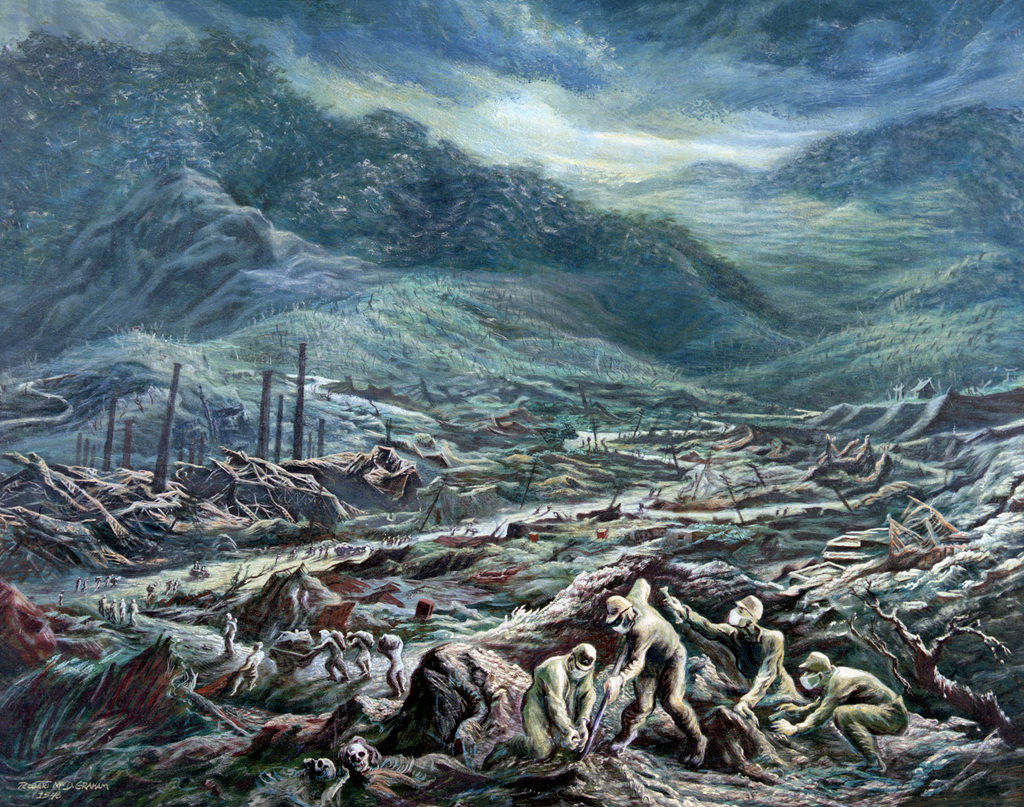
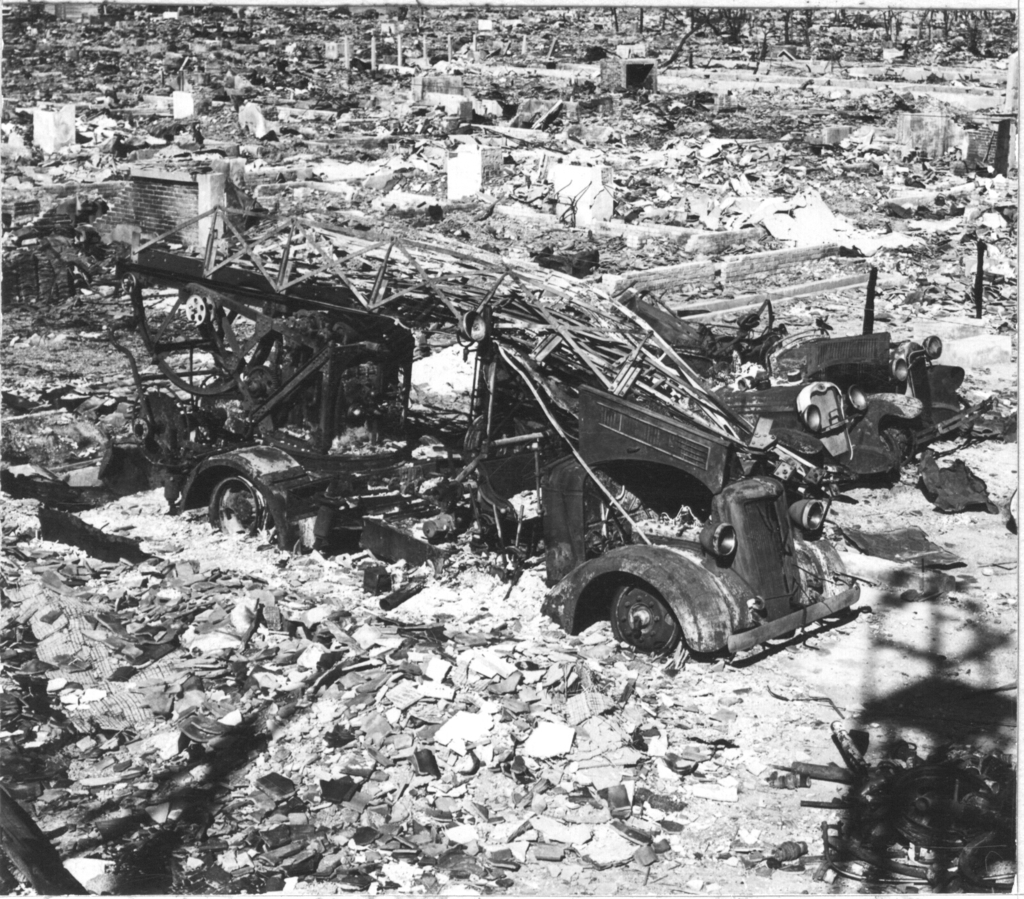
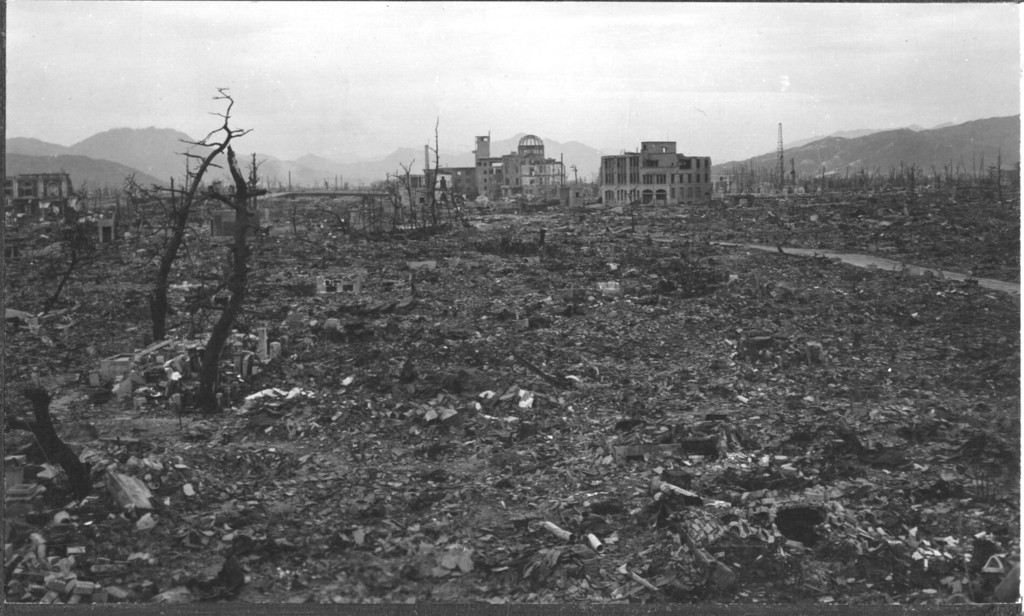
When in 1945, the Allied forces dropped atom bombs on August 6th in Hiroshima and on August 9th in Nagasaki, the Second World War drew Japanese aggression to a halt. But what was the impact on the lives of those innocents whose home, family and future changed forever? Their lives were wrecked — within a few seconds for no fault of their own. The impact clearly continues to ravage the second generation, as can be seen from the narrative of a hibakusha’s daughter who shares her travails while expressing her candid views on the recent movie, Oppenheimer, and the sale of ‘Boppenheimer’ products. She writes: “I live with it1 now having a chronic progressive nerve pain disease. My damaged immune system is attributed to my mother’s exposure to radiation from the atomic bombing.”

Are we forgetting that past, where two whole towns were decimated by atomic bombings with uncountable numbers of deaths and suffering handed down generations? Will we repeat the horrific story again to resolve issues as conflicts continue to ravage the planet with weapons, without considering their impact on the already felt climate crises? Will there be a replay of the bombing of 1945 to annihilate a people, their way of life and create suffering among all humanity? We may not be around to comment on the outcome!

Way back in 2017,  climate experts contended that in case of another such bomb blast, “The effect would be similar to that of the giant meteor believed to be responsible for the extinction of the dinosaurs. This time, we would be the dinosaurs.” 

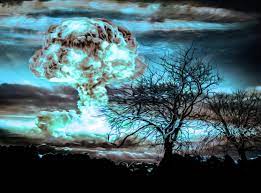
With that in mind, we hope for a world without wars. In this special edition, writings look for peace by creating awareness and suggesting alternatives. Kathleen Burkinshaw writes about the 1945 bombings and her perspectives on media packaging of mushroom clouds. We have a story from a soldier’s perspective during the First World War by the eminent Bengali poet, Nazrul, who fought in it as a soldier for the British army. Current conflicts show up in the writing of Ramy-Al-Asheq, who was born in a refugee camp in the Middle East. They move to Ukraine with voices of Lesya Bakun, a refugee on the run, and Ron Pickett, a US army veteran. Poetry on Myanmar in the past by Sister Lou Ella Hickman and a story of the Rohingya’s plight by Shaheen Akhtar brings the focus into civil wars within Asia. More poems by Don Webb and Michael Burch urge for peace through poetry. Awareness about conflicts that nonetheless impact an interconnected world are brought in with interviews with journalists who were in Afghanistan (Andrew Quilty) and Myanmar (Jessica Muddit) when the takeovers by the current regimes started. We conclude with a discussion for alternatives towards a better future with Anthony Sattin.

Non-Fiction

Mushroom Clouds and Movies: Response from a Hibakusha’s Daughter: Kathleen Burkinshaw, a second generation victim who suffers nerve disorders from the atom bomb dropped on Hiroshima, where her mother watched her own father perish, responds to the recent media packaging of the event. Click here to read.

The Refugee and the Other, an excerpt from Ever Since I Did Not Die by  Ramy Al-Asheq, translated by  Isis Nusair. Click here to read.

Poetry 

I am Ukraine by Lesya Bakun, a refugee from Ukraine. Click here to read.

Wars and Rumours of War, a response on the war in Ukraine by Ron Picket, a a retired naval aviator with over 250 combat missions and 500 carrier landings. Click here to read.

My Visit to Myanmar in 1997, a poem about peace in the land where Buddha flourished by Sister Lou Ella Hickman. Click here to read.

Philosophical Fragments by Don Webb, an anti-war poem. Click here to read.

Poetry for Peace by Michael Burch. Click here to read 

Fiction 

Hena is a short story by Nazrul from the perspective of a soldier during the first world war, translated from Bengali by Sohana Manzoor.  Click here to read.

The Magic Staff is a poignant short story about a Rohingya child seeking refuge by Shaheen Akhtar, translated from Bengali by Arifa Ghani Rahman. Click here to read.

Interviews 

A discussion about Afghanistan, with journalist Quilty who went back to Kabul as Taliban entered the city. Click here to read.

Keith Lyons talks to Jessica Mudditt, who watched from within the country as the Myanmar Junta took over. Click here to read.

Could there be a way out of this world wide unrest? A discussion with Anthony Sattin as he explores concept of brotherhood unique to earlier times, when borders were not this well defined. Click here to read.

*

  1. the impact of the atomic bomb ↩︎
Categories
Contents

Borderless July 2023

Painting by Sohana Manzoor

Editorial

As Imagination Bodies Forth Click here to read.

Translations

Bankim Chandra Chattopadhyay’s Bangalar Nobbyo Lekhokdiger Proti Nibedon (a request to new writers of Bengali), has been translated from Bengali and introduced by Abdullah-Al-Musayeb. Click here to read.

Poetry on Rain by Masud Khan has been translated from Bengali by Professor Fakrul Alam. Click here to read.

Dancer by Bashir Baidar, has been translated from Balochi by Fazal Baloch. Click here to read.

Motherhood: A Tiny Life inside Me, a poem by Sangita Swechcha, has been translated from Nepali by Hem Bishwakarma. Click here to read.

The Wind and the Door, has been written and translated from Korean by Ihlwha Choi. Click here to read.

Megh or Cloud by Tagore has been translated from Bengali by Mitali Chakravarty. Click here to read.

Conversation

In conversation with Afsar Mohammad, a poet, a Sufi and an academic teaching in University of Pennsylvania. Click here to read.

Poetry

Click on the names to read the poems

Afsar Mohammad, Rhys Hughes, Kirpal Singh, Don Webb, Masha Hassan, Vernon Daim, George Freek, Arya KS, Robert Nisbet, Dr Kanwalpreet, John Grey, Nivedita N, Samantha Underhill, Vikas Sehra, Ryan Quinn Falangan, Saranyan BV, Heath Brougher, Carol D’Souza, Michael Burch

Poets, Poetry & Rhys Hughes

In Productivity, Rhys Hughes muses tongue-in-cheek on laziness and its contribution in making a nation more productive. Click here to read.

Musings/ Slices from Life

Should I stay or should I go?

Keith Lyons muses on our attitude towards changes. Click here to read.

Bangal-Ghoti-Bati-Paati or What Anglophilia did to My Palate

Ramona Sen journeys in a lighter vein through her taste buds to uncover part of her identity. Click here to read.

Awesome Arches and Acrophobia

Meredith Stephens takes us for a fabulous treat of Sierra Nevada mountains with her camera and narrative. Click here to read.

Musings of a Copywriter

In The Lost Garden, Devraj Singh Kalsi writes of how his sense of wellbeing mingles with plants. Click here to read.

Notes from Japan

In Better Relations Through Weed-pulling, Suzanne Kamata introduces us to an annual custom in Japan. Click here to read.

Essays

The Story of a Land at War with Itself

Ratnottama Sengupta presents the first hand account of the war in Bosnia-Herzegovina (1992-1995) from a letter from her brother, who was posted there as part of the peace-keeping troops. Click here to read.

‘Wormholes to other Worlds’

Ravi Shankar explores museums in Kuala Lumpur. Click here to read.

Stories

A Troubled Soul

Mahim Hussain explores mental illness. Click here to read.

The Llama Story

Shourjo shares a short fun piece written from a llama’s perspective. Click here to read.

Mister Wilkens

Paul Mirabile gives a strange tale set in Europe of the 1970s. Click here to read.

Book Excerpts

An excerpt from Red Sky Over Kabul: A Memoir of a Father and Son in Afghanistan by Baryalai Popalzai and Kevin McLean. Click here to read.

An excerpt from The Blue Dragonfly – healing through poetry by Veronica Eley. Click here to read.

Book Reviews

Somdatta Mandal reviews The Past is Never Dead: A Novel by Ujjal Dosanjh. Click here to read.

KPP Nambiar reviews The Stolen Necklace: A Small Crime in a Small Town by Shevlin Sebastian and VK Thajudheen. Click here to read.

Rakhi Dalal reviews Drop of the Last Cloud by Sangeetha G. Click here to read.

Bhaskar Parichha reviews Burning Pyres, Mass Graves and A State That Failed Its People : India’s Covid Tragedy by Harsh Mander. Click here to read.

.

Click here to access the Borderless anthology, Monalisa No Longer Smiles

Click here to access Monalisa No Longer Smiles on Kindle Amazon International

Categories
Editorial

As Imagination Bodies Forth…

Painting by Sybil Pretious
And as imagination bodies forth
The forms of things unknown, the poet's pen
Turns them to shapes and gives to airy nothing
A local habitation and a name

 A Midsummer Night's Dream (1595) by William Shakespeare

Famous lines by Shakespeare that reflect on one of the most unique qualities in not only poets — as he states — but also in all humans, imagination, which helps us create our own constructs, build walls, draw boundaries as well as create wonderful paintings, invent planes, fly to the moon and write beautiful poetry. I wonder if animals or plants have the same ability? Then, there are some who, react to the impact of imagined constructs that hurt humanity. They write fabulous poetry or lyrics protesting war as well as dream of a world without war. Could we in times such as these imagine a world at peace, and — even more unusually — filled with consideration, kindness, love and brotherhood as suggested by Lennon’s lyrics in ‘Imagine’ – “Imagine all the people/ Livin’ life in peace…”. These are ideas that have been wafting in the world since times immemorial. And yet, they seem to be drifting in a breeze that caresses but continues to elude our grasp.

Under such circumstances, what can be more alluring than reflective Sufi poetry by an empathetic soul. Featuring an interview and poetry by such a poet, Afsar Mohammad, we bring to you his journey from a “small rural setting” in Telangana to University of Pennsylvania, where he teaches South Asian Studies. He is bilingual and has brought out many books, including one with his translated poetry. Translations this time start with Bankim Chandra Chattopadhyay’s advice to new writers in Bengali, introduced and brought to us by Abdullah-Al-Musayeb. Tagore’s seasonal poem, ‘Megh or Cloud’, has been transcreated to harmonise with the onset of monsoons. However, this year with the El Nino and as the impact of climate change sets in, the monsoons have turned awry and are flooding the world. At a spiritual plane, the maestro’s lines in this poem do reflect on the transience of nature (and life). Professor Fakrul Alam’s translation of Masud Khan’s heartfelt poetry on rain brings to the fore the discontent of the age while conveying the migrant’s dilemma of being divided between two lands. Fazal Baloch has brought us a powerful Balochi poet from the 1960s in translation, Bashir Baidar. His poetry cries out with compassion yet overpowers with its brutality. Sangita Swechcha’s Nepali poem celebrating a girl child has been translated by Hem Bishwakarma while Ihlwha Choi has brought his own Korean poem to readers in English.

An imagined but divided world has been explored by Michael Burch with his powerful poetry. Heath Brougher has shared with us lines that discomfit, convey with vehemence and is deeply reflective of the world we live in. Masha Hassan is a voice that dwells on such an imagined divide that ripped many parts of the world — division that history dubs as the Partition. Don Webb upends Heraclitus’s wisdom: “War is the Father of All, / War is the King of All.” War, as we all know, is entirely a human-made construct and destroys humanity and one cannot but agree with Webb’s conclusion.  We have more from Kirpal Singh, Ryan Quinn Flanagan, Nivedita N, John Grey, Carol D’Souza, Vernon Daim, George Freek, Saranyan BV, Samantha Underhill and among the many others, of course Rhys Hughes, who has given us poetry with a unique alphabetical rhyme scheme invented by him and it’s funny too… much like his perceptions on ‘Productivity’, where laziness accounts for an increase in output!

Keith Lyons has mused on attitudes too, though with a more candid outlook as has Devraj Singh Kalsi with a touch of nostalgia. Ramona Sen has brought in humour to the non-fiction section with her tasteful palate. Meredith Stephens takes us on a picturesque adventure to Sierra Nevada Mountains with her camera and narrative while Ravi Shankar journeys through museums in Kuala Lumpur. We travel to Japan with Suzanne Kamata and, through fiction, to different parts of the Earth as the narratives hail from Bangladesh, France and Singapore.

Ratnottama Sengupta takes us back to how imagined differences can rip humanity by sharing a letter from her brother stationed in Bosnia during the war that broke Yugoslavia (1992-1995). He writes: “It is hard to be surrounded by so much tragedy and not be repulsed by war and the people who lead nations into them.” This tone flows into our book excerpts section with Red Sky Over Kabul: A Memoir of a Father and Son in Afghanistan by Baryalai Popalzai and Kevin McLean. Popalzai was affected by the Russian invasion of Afghanistan in 1980 and had to flee. A different kind of battle can be found in the other excerpt from The Blue Dragonfly – healing through poetry by Veronica Eley – a spiritual battle to heal from experiences that break.

In our reviews section, KPP Nambiar reviews The Stolen Necklace: A Small Crime in a Small Town by Shevlin Sebastian and VK Thajudheen, a book that retells a true story. Sangeetha G’s novel, Drop of the Last Cloud, we are told by Rakhi Dalal, explores the matrilineal heritage of Kerala, that changed to patriarchal over time. Bhaskar Parichha reviews Burning Pyres, Mass Graves and A State That Failed Its People: India’s Covid Tragedy by Harsh Mander. Parichha emphasises the need never to forget the past: “It is a powerful book and sometimes it is even shattering. The narrative is a live remembrance of a national tragedy that too many of us wish to forget when we should, instead, etch it in our minds so that we can prevent another national tragedy like this one from recurring in the future.”  While we need to learn from the past as Parichha suggests, Somdatta Mandal has given a review that makes us want to read Ujjal Dosanjh’s book, The Past is Never Dead: A Novel. She concludes that it “pays tribute to the courage and tenacity of the human spirit and its capacity for hope despite all odds.”

We have more content than mentioned here… all of it enhances the texture of our journal. Do pause by our July issue to savour all the writings. Huge thanks to all our contributors, artists, all our readers and our wonderful team. Without each one of you, this edition would not have been what it is.

Thank you all.

Have a wonderful month!

Mitali Chakravarty

borderlessjournal.com

.

Visit the July edition’s content page by clicking here

READ THE LATEST UPDATES ON THE FIRST BORDERLESS ANTHOLOGY, MONALISA NO LONGER SMILES, BY CLICKING ON THIS LINK.

Categories
Poetry

Philosophical Fragments by Don Webb

Don Webb
Heraclitus wrote one long book on papyrus.
It is believed to be called On Nature.
The title page was destroyed, and much of the content during the burning of the library at Alexandria.
Recent efforts have restored some of the charred fragments.
For example, the famous couplet --
“War is the Father of All,
War is the King of All.”
Actually reads,
“War is the Father of All,
War is the King of All.
Just kidding!
War is Stupid.”

Don Webb teaches Special Education (High School English) by day and horror writing by night.  He has 25 published books, and around 100 published poems.  He likes cats, fireworks and Egyptian history.

PLEASE NOTE: ARTICLES CAN ONLY BE REPRODUCED IN OTHER SITES WITH DUE ACKNOWLEDGEMENT TO BORDERLESS JOURNAL. 

Click here to access the Borderless anthology, Monalisa No Longer Smiles

Click here to access Monalisa No Longer Smiles on Kindle Amazon International