Incomplete statues of Michelangelo in Accademia Gallery, Florence
In the Accademia Gallery, Florence, are housed incomplete statues by Michelangelo that were supposed to accompany his sculpture of Moses on the grand tomb of Pope Julius II. The sculptures despite being unfinished, incomplete and therefore imperfect, evoke a sense of power. They seem to be wresting forcefully with the uncarved marble to free their own forms — much like humanity struggling to lead their own lives. Life now is comparable to atonal notes of modern compositions that refuse to fall in line with more formal, conventional melodies. The new year continues with residues of unending wars, violence, hate and chaos. Yet amidst all this darkness, we still live, laugh and enjoy small successes. The smaller things in our imperfect existence bring us hope, the necessary ingredient that helps us survive under all circumstances.
Imperfections, like Michelangelo’s Non-finito statues in Florence, or modern atonal notes, go on to create vibrant, relatable art. There is also a belief that when suffering is greatest, arts flourish. Beauty and hope are born of pain. Will great art or literature rise out of the chaos we are living in now? One wonders if ancient art too was born of humanity’s struggle to survive in a comparatively younger world where they did not understand natural forces and whose history we try to piece together with objects from posterity. Starting on a journey of bringing ancient art from her part of the world, Ratnottama Sengupta shares a new column with us from this January.
Drenched in struggles of the past is also Showkat Ali’s The Struggle: A Novel, translated from Bengali by V. Ramaswamy and Mohiuddin Jahangir. It has been reviewed by Somdatta Mandal who sees it a socio-economic presentation of the times. We also carry an excerpt from the book as we do for Anuradha Marwah’s The Higher Education of Geetika Mehendiratta. Marwha’s novel has been reviewed by Meenakshi Malhotra who sees it as a bildungsroman and a daring book. Bhaskar Parichha has brought to us a discussion on colonial history about Rakesh Dwivedi’s Colonization Crusade and Freedom of India: A Saga of Monstrous British Barbarianism around the Globe. Udita Banerjee has also delved into history with her exploration of Angshuman Kar’s The Lost Pendant, a collection of poems written by poets who lived through the horrors of Partition and translated from Bengali by multiple poets. One of the translators, Rajorshi Patranabis, has also discussed his own book of supernatural encounters, Whereabouts of the Anonymous: Exploration of the Invisible. A Wiccan by choice, Patranbis claims to have met with residual energies or what we in common parlance call ghosts and spoken to many of them. He not only clicked these ethereal beings — and has kindly shared his photos in this feature — but also has written a whole book about his encounters, including with the malevolent spirits of India’s most haunted monument, the Bhangarh Fort.
Bringing us an essay on a book that had spooky encounters is Farouk Gulsara, showing how Dickens’ A Christmas Carolrevived a festival that might have got written off. We have a narrative revoking the past from Larry Su, who writes of his childhood in the China of the 1970s and beyond. He dwells on resilience — one of the themes we love in Borderless Journal. Karen Beatty also invokes ghosts from her past while sharing her memoir. Rick Bailey brings in a feeling of mortality in his musing while Keith Lyons, writes in quest of his friend who mysteriously went missing in Bali. Let’s hope he finds out more about him.
Charudutta Panigrahi writes a lighthearted piece on barbers of yore, some of whom can still be found plying their trade under trees in India. Randriamamonjisoa Sylvie Valencia dwells on her favourite place which continues to rejuvenate and excite while Prithvijeet Sinha writes about haunts he is passionate about, the ancient monuments of Lucknow. Gulsara has woven contemporary lores into his satirical piece, involving Messi, the footballer. Bringing compassionate humour with his animal interactions is Devraj Singh Kalsi, who is visited daily by not just a bovine visitor, but cats, monkeys, birds and more — and he feeds them all. Suzanne Kamata takes us to Kishi, brought to us by both her narrative and pictures, including one of a feline stationmaster!
We've run away from the simmering house
like milk that is boiling over. Now I'm single again.
The sun hangs behind a ruffled up shed,
like a bloody yolk on a cold frying pan
until the nightfall dumps it in the garbage…

('A Poet in Exile', by Dmitry Blizniuk, translated from Ukranian by Sergey Gerasimov)
In translations, we have Professor Fakrul Alam’s rendition of Nazrul’s mellifluous lyrics from Bengali. Isa Kamari has shared four more of his Malay poems in English bringing us flavours of his culture. Snehaparava Das has similarly given us flavours of Odisha with her translation of Pravasini Mahakuda’s Odia poetry. A taste of Balochistan comes to us from Fazal Baloch’s rendition of Sayad Hashumi’s Balochi quatrains in English. Tagore’s poem ‘Kalponik’ (Imagined) has been rendered in English. This was a poem that was set to music by his niece, Sarala Devi.
After a long hiatus, we are delighted to finally revive Pandies Corner with a story by Sumona translated from Hindustani by Grace M Sukanya. Her story highlights the ongoing struggle against debilitating rigid boundaries drawn by societal norms. Sumana has assumed a pen name as her story is true and could be a security risk for her. She is eager to narrate her story — do pause by and take a look.
In fiction, we have a poignant narrative about befriending a tramp by Ross Salvage, and macabre and dark one by Mary Ellen Campagna, written with a light touch. It almost makes one think of Eugene Ionesco. Jonathan B. Ferrini shares a heartfelt story about used Steinway pianos and growing up in Latino Los Angeles. Rajendra Kumar Roul weaves a narrative around compassion and expectations. Naramsetti Umamaheswararao gives a beautiful fable around roses and bees.
With that, we come to the end of a bumper issue with more than fifty peices. Huge thanks to all our fabulous contributors, some of whom have not just written but shared photographs to illustrate the content. Do pause by our contents page and take a look. My heartfelt thanks to our fabulous team for their output and support, especially Sohana Manzoor who does our cover art. And most of all huge thanks to readers whose numbers keep growing, making it worth our while to offer our fare. Thank you all.
Here’s wishing all of you better prospects for the newborn year and may we move towards peace and sanity in a world that seems to have gone amuck!
A brief discusion of Whereabouts of the Anonymous: Exploration of the Invisible by Rajorshi Patrnabis, Hawakal Publishers, with an exclusive interview with the author on his supernatural leanings
Whereabouts of the Anonymous: Exploration of the Invisible by Rajorshi Patrnabis could have been a regular book of intense ghost stories, with the oldest ‘presences’ dating back to the regime of Sher Shah Suri (1472 – 1545). ‘Presences’ are basically spirits — visible or barely visible — that cause disturbances in the energy field surrounding us, as per the book.
One of the most coherent of these ‘spirits’ was from 1920, confiding her story on Christmas eve — reminds one of Dickens’ A Christmas Carol and Uncle Scrooge — only this spirit was a British woman from the Raj era, a spirit that lost her beloved who was from a Bengali royal family. Her strict father stepped in and stopped the marriage. No one knew what happened to the groom. And she continued to weep and wait while haunting the premises of the popular and populous Park Street where she was supposed to meet her beloved more than a hundred years ago… Then there’s a ghost that takes you back to his funeral pyre… drawing back the curtain between the two dimensions — one in which we exist and one in which they hover…
These, however, are not your regular ghost stories. There is a difference for Patranabis claims to have met these sad spirits in real life.
A Wiccan by choice, Patranabis has tried to draw back the curtains to reveal a dimension whose existence is elusive and avoidable for most of us at best and rejected by many. He claims to have a spiritual bent of mind which helps him experience these out-of-the-box scenarios, meet the dearly departed. He has done a number of books of poetry around his beliefs. He has even photographed these spirits!
Photographs of spirits by Rajorshi Patranabis
Though the images are blurry at the first viewing, you have to focus hard to see the ethereal outlines of shadows beyond the realm of the living, I guess.
Whereabouts of the Anonymous is a memoir that spans his interactions with, as the title says — ‘the anonymous’ — or the blurry ‘presences’ and explores the invisible for majority of the spirits are merely depicted as shadowy in his narrative as in his photographs except for a few whose images have not been taken.
Occasionally, the spirits can be malevolent as in the Bhangarh Fort, where a foul-smelling female spirit and some lost souls in the ancient jails wounded Patranabis physically and chased him out. Set in the Aravalli hills of Rajasthan. Bhangarh is the most haunted place in India. There is a story of a princess and her spurned lover associated with it. Evidently, a sage fell in love with the princess and made a special concoction which would make her fall in love with him. When she went to buy a perfume, the smitten lover tried to replace it with his love potion. The princess threw away the bottle of love potion. It fell on a rock, dislodging it. The rock rolled down to kill her admirer, who cursed her with his dying breath!
There is also the narrative about a whole village that accepts and lives in peace with the spirits of their dearly departed, even giving them rickshaw rides and offering them chairs!
Patrnanabis has brought his Wiccan outlook into the discourse. His language flows. The narrative is simple and easy to understand. The descriptions are so graphic that one can almost visualise the disembodied spirits and their interactions. The 150-page book is an enjoyable and easy read and a perfect companion for travel or an evening or two. But the author’s experiences and his interests stretch beyond what the pages can hold. In this interview, we discuss his beliefs and his experiences…and maybe, another book?
How old were you when you had your first supernatural sighting? Were you scared the first time?
When I look back, the first time that I had a feel of the ‘other dimension’ was perhaps at the age of 7 or 8. I remember going to my paternal home at Digboi during our winter vacations. I remember going to my parent’s bedroom at the first floor and my mother used had to send me to her room to fetch something. The room was across a terrace, and I remember running through the terrace from the staircase to the room. But every time, I could feel someone running with me through the terrace. But as and when I would enter the room, it was all perfect. I would run back again again to the stairs. When I would blurt this out to my parents, they would simply ignore me, but somehow, I was never completely convinced. It was much later, sometime around the year 2000 that my father confided with me of a real ‘presence’ there. He told me that there had been many an experience where people had felt the presence of something eerie there. But by then I had had some very deep experience of the supernatural existence.
Rajorshi Patranabis in Wiccan wear
When did you become a Wiccan and why?
The answer to this ‘why’ is a wee bit dicey. I am myself not sure of this. It was just a flow that I couldn’t control. Mind you, I had already gone through some extremely remarkable experiences and my stint at the hill top temple and my encounter with that 97 year old person who taught me numerology was way before I joined Wicca. I would call myself pretty insane in those phases of my life. By the time Wicca happened, I had calmed down considerably and joining my teacher was nothing less than an accident. It so happened that my friend, Subhodip, and I were walking down the Southern Avenue in Kolkata when we spotted another school friend ( a senior Wiccan) standing at the door of an otherwise inconsequential book store. He waved at us and asked us to join in, as it was an open session by my teacher. We joined. Subhodip was skeptical, while I followed it up with an email and I was called for an interview with Ma’am. The journey started. I had mentioned about my experience in ‘Whereabouts…’ This was early 2013.
Did becoming a Wiccan help you align to the supernatural better?
Infact, my Wiccan knowledge taught me the nuances of alignment with the forces of nature. Why just the supernatural? The vibrations that the earth emanates, the animal kingdom throws out, to feel and spot across dimensions etc. The most important thing is perhaps the use of sound like the chatter of a rainfall, the melodies of a singing bowl or even drum beats (like in Voodoo) as means of invocation, that, was passed on to me. More than anything, the pleasures of immersing oneself in ancient knowledges can be very ‘intoxicating’. Our school concentrates most on the Egyptian origins. If you ask me now, I worship Goddess Isis as my altar Goddess along with the 64 yoginis. Yes, Wicca has helped align myself to me, if I say this philosophically.
You have called yourself ‘spiritual’ and also spoken of ‘seers’? Can you explain these two terms?
I wouldn’t get into the linguistic trap of English. But a Wiccan would say spiritual comes from ‘spirit’. A very basic tenet of Wicca is to align your body, mind, soul and spirit. As and when the becomes one with nature does your mind uplift itself to being a soul. A soul that gets through the rigours of lust becomes a spirit. We are in the habit of using the word spirituality very lightly, but a true Wiccan would say that a pure spirit sits on the pinnacle of the pyramid. There are many references in our Sanatan scriptures too about such spirits and the recourse they take to leave the body, as and when they cross over.
A seer is a saint who has won over the realms of the physical nuances. He/she is automatically clairvoyant as all their faculties have attained the higher plains in the atmosphere. Please don’t mistake a seer for only a saint. A scientist or a litterateur who had immersed themselves in the claustrophobic depths of knowledge can be a seer too. Many such examples can be sighted to prove this.
How did/does your family respond to your being a Wiccan or interacting with spirits?
My family doesn’t always subscribe to what I do, but in all honesty they had never been a hindrance to my learnings. There are Wiccan ceremonies that I celebrate or spells that I do from time to time for the well being of people, they had all along been very supportive. They stand as a pillar beside me.
When and why did you turn to writing?
I started writing at a very young age. My first poem, if I can recall was at the age of 13. But as time went on, everything slowed down. My next phase was from 2015 and my first published book was in 2018. By this phase I was well and truly into Wicca.
You have used Japanese techniques in poetry to describe your journey as a Wiccan and to interact with spirits. Why? Do these align better to help you describe your experiences?
Well, I wouldn’t say I use Japanese poetry forms to interact with any spirit. Though I must accept that I’ve had communications with the other dimension which were very poetic at times. In my book, Gossips of our Surrogate story, I had used quite a bit from my Wiccan Book of Shadows and even you had accepted that they were poems alright, good or bad, notwithstanding. But I would also like to harp on the inherent pertinence of this question. Gogyokha or Gogyoshi are short form poetry in just 5 lines and my forays into the other dimension had just had similar experiences — short, crisp and at most times life altering. In my Gogyoshi collection, Checklist Anomaly, all the poems are either true happenings or near life occurings. My writing (poetry) as a whole, until now, had been with deep metaphysical love. Perhaps my thought process is challenged. But Japanese forms had been a huge compliment to this particularly weird handicap of mine.
What made you think of doing this book — your memoir of supernatural interactions so to speak?
To be very honest, all these experiences that I had shared in Whereabouts of the Anonymous would have stayed with me through out this physical life had it not been for a dear brother and publisher, Bitan Chakraborty. It was on his persistent insistence that I decided to put my ‘stories’ on paper. But that was again a very difficult thing. I really had to scoop things from the nook and crannies of my memory to make for a reasonably good compilation. Even Bitan had certain experiences with me or otherwise ( like his camera giving up on a particular shot etc.) and was most interested on such a memoir seeing the light of the day. I have dedicated this book to Bitan. I had to, it was his brainchild and as a Wiccan would say, the Universe made me write it.
You seem to seek out departed spirits or ghosts. Why? Are you not scared?
I find this word ‘ghosts’ very disrespectful. Departed spirits, well, if you ask me no spirits depart. Remember, the law of conservation of energy — the total energy remains constant, it can neither be created nor be destroyed. The energies ( whether spirits or not) have this affinity to get in touch with other souls who can feel them and with a little effort can hear them. The ectoplasmatic fusions that happen inside the cosmos are mostly not registered by ‘so called science minded sceptics’. There are gadgets to measure such vibes. And afraid? No. You would only be afraid if you stay in denial of the other dimension. If I say that the other dimension is omnipresent, no matter what, you won’t be afraid of it. Remember you are afraid of darkness because you don’t see through it, but as soon as you put on a light, it becomes a part of you. Precisely the unknown is magic or mysticism and the known is science.
Do you only sight spirits or auras around people? Are you into Noetics as a subject?
Auras form the atmosphere, it really doesn’t matter whether you have a body or not. There are ascetics who would ask you not to touch anyone’s feet while paying obeisance. The say, the aura or the protonic energy of a person is as long as that person’s height. They say you put your head on the ground, possibly, to absorb a concoction of the Earth’ s magnetism coupled with the aura of that person. By the bliss of this Universe, I do feel a few energies that are devoid of a body. Noetics or the consciousness levels automatically become part of these. But I am personally not into Noetic sciences or research. But ancient knowledges under the umbrella of Wicca does take you through the subconscious to superconscious levels of the mind with twinings of the nature, supernature and the supernatural. There are very thin lines segregating them.
In you memoir, you keep asking people to leave a glass of water to satiate the spirit. Do you see yourself as a person who appeases ghosts? Do you help people – how do they reach out to you if they feel a ‘presence’?
What does a glass of water do? Think of a situation where you stand in front of everyone, yet you’re being ignored by everyone. You would not realise that you’re actually not visible to them. Just think of the insecurity that you would have to realise that persons whom love so dearly are slowly getting ahead with life and that you have become a fading memory. That glass of water just reinstates the faith that he/she still matters to you.As time goes, like all energies, they would also dissipate. But with pleasantness in them.
I don’t appease anyone. As my teacher says, it’s all about alignment. If I may say so, the Universe makes me do certain things that a psychiatric practitioner would do to people with mental illness. These are very small techniques that I had learnt over the years to put a restless soul to a restful state. As far as the last part of your question is concerned, I don’t do anything for any consideration. I have a promise to keep. If the cosmos so wills that I would be of help to someone, I would definitely land up from nowhere.
Do you plan to do something with this ‘gift’ you have? Can you see spirits where others cannot? Will you be doing more books about your supernatural experiences?
Well, after the book went for print, I realised that I could have included many more of the experiences that I had gone through. So, another book is very much in the offing. And as far as doing something with this ‘gift’ is concerned, I am completely in sync with you that this is a ‘gift’ that the cosmos had bestowed upon me and when you have such an invaluable gift, you keep them. You generally don’t use them. Seeing spirits? I feel them and I see them only when the spirit wants to show them off (like the school Master of Bhanjerpukur – one of my most remarkable experiences).
(This review and online interview by email is by Mitali Chakravarty)
PLEASE NOTE: ARTICLES CAN ONLY BE REPRODUCED IN OTHER SITES WITH DUE ACKNOWLEDGEMENT TO BORDERLESS JOURNAL
What exactly is a prose poem? It seems to be a very short story, but not quite. It isn’t a flash fiction. I mean, it almost is, but it isn’t. I realised that I don’t really know what a prose poem is, but I do know that I like them.
From Public Domain
A few years ago, I read The Penguin Book of the Prose Poem. I picked it from a library shelf without any great expectations. I don’t mean that the library shelf didn’t have Great Expectations. I am sure it had that book and plenty of other volumes by Dickens. No, I mean that I wasn’t anticipating much. And let’s be clear: not every piece in that Penguin anthology was excellent or even good. Far from it! There was a lot of pretentious nonsense and word salad gibberish, and some of the best-known writers represented in the pages were responsible for some of the worst contributions. But there was enough brilliance to elevate the entire collection, and in fact I even came to the conclusion that the gems were set off to better effect because of the presence of the duds.
According to the chronology of the contents of that anthology, the prose poem first became a viable mode of artistic expression in the 1840s. I have no idea how true this is. I can only be sure of my own prose poems. Maybe ‘sure’ is too strong a word. I still wonder if they are true prose poems and not flash fictions that are simply more condensed and intense than most flash fictions. All I can do is offer a small sample of my own, four of them from various stages of my 35 year-long writing career. And let me say that I can envisage a day when I stop writing short stories, novels, plays, articles and poems, but still write prose poems (if that’s what these are) because I love the form so much.
            The Landscape Player

At first he played music on his instruments, reaching his audience through the purest melodies. His music washed over them, elevating them, burning their eyelids with tears or else trembling their lips with a dozen different kinds of smile. And when the vast wall of sound he had created had died away, there would be a silence more moving than any applause.
In time, he noticed that listeners were describing his music in terms of feelings. They spoke not of harmony and rhythm but of sadness and joy. They spoke not of keys and modes, but of elation and despair. The music was merely an interface. Accordingly, he started making instruments that played emotions instead of notes.
His scheme worked well; the critics were enraptured. His harps were threaded with heartstrings and plucked with plectrums made from the fingernails of dead lovers. His Miserychords and Tromgroans explored the outer limits of tragedy, a lugubrious drone agitated by the pounding Kettle Glums. While on a different level, the Mirthophone, Memory Gongs and rasp of the Double Bliss provided a counterpoint of cautious hope and nostalgia.
The reviews were extremely favourable. People came from all over the land to hear him. But once again, they took refuge in metaphor. Now they spoke not of sadness and joy, elation and despair, but of a sea of tears dotted with misty islands, of evil vales of shadow and rosy mountains bathed in light, of dank, gnarled forests webbed on mossy floors by a thousand cheerful babbling brooks. They explained their emotions in terms of landscape.
Deeply troubled and filled with rage, he took apart his instruments and reassembled them into something new. Now he could play landscapes. In seven minutes, he could play out his own Creation there on the stage, before them all. With his fingers on middle-sea and various salt flats, he stood them ankle-deep in puddles where an angry sun had dried up a prehistoric ocean. Salt on their shoes, they kicked sand in a purple cloud, sliding across the desert toward a ruined amphitheatre.
On and on they travelled, over the craggy sharps of unknown ranges that lacerated the sky. His brazen scales swung them in the balance; they ascended the crackling walls of icebergs and toppled over the other side. His miner chords took them deep beneath the Earth, under the drifting continents through a molten sea. And then, emerging from the depths of a volcano, they wove through a jungle of semi-quavers, trampled a tundra of tones.
The crashing crescendo became an enormous tidal wave bearing down on their heads, sweeping them onto the rolling steppes of the Coda. They suddenly realised that they were witnessing every sight that had ever existed and others that never would exist. They were exhausted, they were jaded. This was his revenge.
And yet, he had overlooked one detail. As he played the final chord, ready to storm off the stage, the final landscape shimmered into view. It was the landscape of the Concert Hall itself, complete with musician and instruments. He saw himself begin the piece afresh, from the overture. He guessed that he had condemned himself to an endless cycle of craters, sand dunes and rivers.
The audience grew restless. They yawned and fanned themselves. When he came around to the Jurassic again, most of them stood up and left. By the end of the Ice Age, the auditorium was empty. He had tried too hard to connect directly with other people. He had forgotten that only in the act of love can the gap between desire and outcome be truly bridged.
Some say that he is still there, multiplying himself forever, squeezing himself into the mouth of eternity like a snake that swallows its own tail, or like a raconteur who swallows his own tale. Others maintain that he has already reached infinity and has been set free to play a penny whistle on street corners. Either way, it is generally agreed that, in the world of music, he managed to create something of a scene.


                 Rumpledoodle Dandy

I went to the loan shark but they were out of hammerheads. I don’t know how I am going to drive my nails back onto my fingers. I guess I don’t have to drive them, they can always walk or cycle. They can even cycle back afterwards, but that counts as recycling and all the counts are at an aristocrats’ meeting at the moment. How many counts are there? I didn’t keep note. The best kept note is G#, the others tend to go off faster. They positively fly. Fly? Those flies were thick on the ground. When they took off, they were cleverer. They took off their smocks and berets. Why they wore fruit on their heads is anyone’s guess. Straw berets rot rapidly in the rain, that’s true. But the reign is over. Over where? Over there! Where Rumpledoodle Dandy sits on a throne and wears a crown that is the talk of the town. Strange king! He has fitted wheels to his palace and now he’s the torque of the town too.


               A Man on Stilts

There was a man on stilts and his stilts kept growing taller. He might have been an acrobat or fool, a visionary or scoundrel, nobody knew. At first, he just stood on stilts that were as high as telegraph poles, and he strode about the city with a perspiring face. But under the sheen of his sweat, he was smiling. The following day his stilts had already doubled in height. And now he stepped over trams and trains with an ease that bordered on the obscene, as if the traffic was beneath his notice, as if those vehicles were discarded toys or slices of dropped cake. Within a week his stilts were so high he could step over any building in any city of the nation or indeed of any other country.
What can be said to such a man? How can anyone communicate with him? No crane could reach him, no ladder. A helicopter was sent up to negotiate, but the clatter of the rotors drowned out the conversation. An aeronaut in a balloon managed to float beside him for several hours. They discussed many topics but whether the exchange was cordial or heated is uncertain. A gust of wind puffed the aeronaut away over the ocean and he vanished. Long after we had given up hope of speaking with him, of learning his name and intentions, a sheet of paper floated gently down to street level. It was a letter he had written to us. When we read it, we were compelled to grimace.
His handwriting was clear and his message unambiguous. His stilts would keep growing longer forever, he said. There was nothing we could do about the situation. There was nothing he could do. His destiny was an elevated one. Why fret about his altitude? Why worry about the ethics of his movements, the purity of his motives? Higher and higher he would go, his ersatz legs lengthening each day by a significant percentage. Soon enough, he would be able to stride from continent to continent. Then he would circumnavigate the globe in two or three quick steps. Finally he would be able to bridge the gap between this planet and the moon or even stand on other worlds.
We accepted this, some of us. Others argued for the cutting down of those monstrous stilts, for the burning of them, for the introduction of woodworm or woodpeckers. Anything to bring him back, to stop him striding about like the god of storks. We waited in vain for more letters to float down. At last it seems he rose up through the atmosphere until his head protruded beyond the bubble of air that permits life. His face was in space and he suffocated there. His body toppled and fell and burned up like a meteor. But a rumour began that he is still falling and this rumour has turned into a modern myth. People wait to be struck by his cadaver, to be grotesquely blessed.
The stilts themselves did not fall. They have grown so heavy that they are driving themselves slowly into the ground. They will push through the crust of our planet and ignite in the magma far below. In the meantime, we harness their sliding motion, connecting both stilts to a series of cogs and crankshafts, and we congratulate ourselves on our ingenuity. We might even find a practical use one day for the rotating toothed wheels. The letter from the sky has been obtained by the museum and it can be viewed in a glass case in one of the rooms, I have no idea which one. I never visit the museum. My grandmother is there, pickled in a jar, and I prefer to avoid gazing at her.


               Ocean of Words

They were separated by a vast body of water, the ocean, and they longed to press their own bodies together, but it was not possible. When would it be permitted? Only when distance was abolished. They wrote letters to express their love and yearning and these letters passed back and forth between them. So many words did they write that they had to continually dip the nibs of their pens into the inkwell. When each letter was ready to be sent there was a lurching sensation inside them. What could this mean? They each stood on the shore and gazed over the black waters but the horizon prevented visual contact. Only the letters could pass that taut line, sliding under it the same way a postman can push an envelope under a door. But the more letters they wrote, the closer the horizon seemed. Was this an illusion? No, the landmasses on which they lived had broken free and were floating like ships, moving to a point in the middle of the ocean. How strange and marvellous! They wrote letters to express their feelings on this subject. Then one morning they both understood what had happened. The ocean was made of ink. They had dipped their pens into it so many times that now it was dry. They were grounded. And so, they jumped lightly down onto the seabed and ran the few remaining steps into each other’s arms.
Rhys Hughes has lived in many countries. He graduated as an engineer but currently works as a tutor of mathematics. Since his first book was published in 1995 he has had fifty other books published and his work has been translated into ten languages.
.
PLEASE NOTE: ARTICLES CAN ONLY BE REPRODUCED IN OTHER SITES WITH DUE ACKNOWLEDGEMENT TO BORDERLESS JOURNAL
Out on my usual morning walk. A lovely June morning, the air fresh, cool, the rising sun obscured by a belt of sleepy, moving cloudlets. The sun’s soft, mellow rays dried the dew on the large, leafy trees and blossoming flowers of Holland Park.
As always, I bent my steps towards my favourite bench where, I could sit alone and quiet, near to the ponds, yet far enough not to hear too many voices. The air smelt fragrant that particular morning. I hastened to start on my adventures with Dickens’ David Copperfield as I turned a sharp bend on the path that took me to the bench and the great, sprawling oak tree that homed the myriad rooks and scurrying squirrels. I halted. A seedy-looking man was slowly sitting up on my bench! I had never found someone occupying my bench before. He was scratching an unshaven face and an uncombed head of black, curly hair.
Snapping out of my astonishment, I boldly went up to him. “Sir, have you been sleeping on this bench?”
Hardly looking at me, he softly replied, “In fact I have, my good man. And I will add, I enjoyed a very quiet and relaxed sleep. Not a soul in the park at two in the morning, not even the squeaking of a squirrel.” He said all this with considerable aplomb.
“Well, I’m very happy to hear that. Of course you shall be leaving soon?”
“Not that soon, I’m afraid. When I sleep out, which is almost always, I arrive here in Holland Park at 2pm. and leave at three in the afternoon, sometimes a bit later.”
I bit my lip. “What do you, eye little girls with bad intent?”
“I should think not — that is very uncouth.”
“ Spit out pieces of your broken luck?”
“Hardly. My luck has remained intact, I’m proud to say.”
“Warm your feet in the sun?”
“They keep very warm in this season, even with my shoes off.”
The bench-sleeper took out a cigarette from a torn shirt pocket, lit it, then smeared his shabby clothes with greasy fingers. “Want a smoke?”
“No thank you, I don’t smoke.”
“May I ask you why you have chosen this particular bench to sleep on?” I resumed, as he puffed away, staring blankly into space. “This is my reading bench, sir. It has been for over two years. I come almost every morning to have a good read before breakfasting at the Duck or Grouse across the road.”
“Ah ! The Duck or Grouse, I know it well. The barmaid is an acquaintance of my wife.”
“You have a wife?”
“Yes, and two children. Does that shock you?” Before I could answer he pointed a slender finger at my book: “A rather dreary read in the morning, no? I mean, why not something more droll like David Lodge or Oscar Wilde?”
“I prefer Dickens if you don’t mind,” I responded, taken aback by the man’s impertinence. The impertinent man yawned, took a bright, red apple from his trouser pocket and began munching on it.
“Sorry to have disrupted your morning reading, old chap, but oftentimes in life we are confronted by unforeseen events or encounters contrary to our habits. The question is: Should we disregard the event or investigate the meaning behind it? Why on this particular morning, on this particular bench have you been confronted by someone who has hindered your daily morning ritual? Is it accidental or providential? Please, sit down.” I did unthinkingly sit down and watched him blow blue smoke rings into the still air. I will admit that I was a bit awed by him.
He went on calmly: “Does my appearance really offend you, cause you any discomfiture? Retard your reading of Dickens, who I must say, I have never really taken a liking to?”
“Oh, so now you insult my choice of reading?” I fumed.
“I meant no insult, sir, only a reminder you that there are morning readings, afternoon readings, evening and night readings. And I’m sorry to inform you that Dickens is not a morning reading, especially David Copperfield.”
“Well, I’m sorry to disappoint you, but if you are to remain seated on this, my bench, then you will be subjected to my perusal of David Copperfield; and whether it pleases you or not will not change my habit of doing so.” My bold affirmation seemed not to disturb the blighter’s rings of smoke that sailed lightly up into the broad leaves of the oak tree.
He wrinkled his nose: “Habits are terrible enemies.”
“Are they?”
“Yes, that’s why I oftentimes change a bench … even a park: St James is lovely with its lake. Richmond, Finsbury and Circus Gardens are very pleasant, too … You see, I despise habits, they instil an implacable rigor mortis.”
I ignored him and frowned: “So, you believe I’m a silly, old dolt because I read David Copperfield every morning on the same bench?”
“Of course not,” he responded quickly, tying the laces of his heelless shoes. “I simply wished to make clear to you on this lovely morning that a stranger has sat on ‘your’ bench, and that you have yet to ask him whether he is a beggar or not!”
The bench-sleeper’s remark put so point blank did indeed pique my curiosity, so I took up his defiance: “Are you not a beggar then?”
“Have I asked for money?” was his snappy reply.
“No … not yet, anyway.”
“Nor will I. So what are your deductions?” He peered at me with a mischievous gleam in his eye.
“That you are not begging for money and that you have given me the occasion to snap my habit by engaging in conversation with you.”
“You have expressed it wonderfully!” he exclaimed.
“In that case, why do you sleep out on park benches, when you said that you have a wife and children, and you have no need of money?”
He shook the dew out of his hair. “Is there anything ambiguous or incongruous about that?” he countered.
“I think there is! I have a wife and a home, and at night I sleep in my home, not on park benches.”
“And children?”
I sat back. “No, in fact we have no children.”
He took out another cigarette. “ So?”
“So what?”
“Oh, nothing. My children often visit me in the parks when not at school, and my wife, when she’s not working.”
“I can’t believe all this!” I stuttered.
“Why not ? Have you something against a gesture so innocent, so insignificant than a man who sleeps on park benches, who is visited by his dear family, when, in fact, he could sleep in a lovely, soft bed next to his charming wife? Let us say that park benches have become my second residence.”
I gasped at that last remark mentioned so candidly. I changed the subject: “Tell me then, what do you do until two or three o’clock on this bench? You have no book to read.”
He chuckled. “My book lies outside written pages. My readings are people whom I observe, the flowers that I smell, the singing birds or gambolling squirrels that I hear. The conversations I have with many a good person, like yourself. I do read books — just the other day I found a copy of Lawrence’s The Rainbow in the trash bin. Can you imagine someone throwing away a classic of that sort?”
“Yes, that is a crime. So your days seem to pass by splendidly, a full agenda, if I may say so without irony.”
“You may say exactly that, my good man.” He stretched his limbs, took another cigarette and smoked dreamily, peering into the thick leafy foliage of the oak tree. Songbirds had been accompanying his well-stated sentences for some time now; they seemed to punctuate them, rhythmically. The manner in which he smoked his cigarette mystified me. There was a touch of delicacy, elegance, even refinement in his gestures. His speech, too, prompted me to think that he was no ordinary tramp.
He pointed to the sun: “When did you say you breakfast at the Duck or Grouse?”
“At ten o’clock.”
“Judging by the sun, it must be very close to ten.”
I glanced at my watch. “How right you are!” I said, stunned by the accurate time-telling of this unusual man.
“I’m afraid I have prevented you from reading one sentence of Dickens.”
“No bother ; I have many mornings to do so … unless …”
“Unless you find me lying or seated here every day ? Not to worry; as I said, I change benches and parks quite regularly. But who knows, we may meet again in different circumstances.” And he smiled while his eyes shone a roguishness that confounded me.
“Right!” I returned. “Perhaps we shall meet again.” I stood up to leave.
“Bon appetit,” he called out as I wended my way to the front gate.
Finishing my breakfast, I hurried home eager to share that odd encounter with my wife, at that moment busy with her morning gardening. “You’ll never know how I spent my morning, dear.”
“Reading your book, I suppose, as you always do,” my wife replied tritely without looking up, pulling out the weeds from the borders of coneflowers, forget-me-nots, asters and chrysanthemums below the bay window of our newly bought duplex.
“Not at all,” I responded. “I had a very strange conversation with a man who sleeps on park benches every night, and sits on them until three in the afternoon.”
She stood and eyed me strangely. “Talking to beggars, hey? How much did he wrest from you?”
“He wasn’t a beggar Helen. He simply sleeps and sits on park benches. In fact, he had a refined way of smoking his cigarette. Very well-spoken, too.”
She continued to stare at me without a word. “He even has a wife and children who visit him in the parks.”
“Does he ? Well I’ll be damned if he wasn’t putting you on, Marvin. Do you think I’d visit you in a park, sleeping on a bloody bench?” I smiled weakly. “He’s a smooth talker, that one is. Be careful, he might put ideas in your head, ”she concluded and attended to her peonies and snapdragons.
I felt odd and asked, “How about a restaurant tonight, dear? I’ve had a handsome pay rise, you know. Let’s dine at the Galvin La Chapelle.”
Helen jumped up like a Jack-out- of-the-Box. “Are you mad? I think that beggar or bench-sleeper got the better of you. The Galvin La Chapelle is the most expensive restaurant in London … eighty or ninety quid a menu!”
“Yes, I know. But I really feel like having a wonderful meal. After all, it’s only money…”
My wife went back to her edging and weeding.
So that night, dressed in our best clothes, we stepped under the chapelled vaults of the Galvin La Chapelle in Spitalfields, whose French cuisine and romantic atmosphere knew no rival in London, perhaps even in the whole of England. We were seated at our reserved table for two in the middle of the enormous dining hall, where we could admire the polished marble pillars supporting the stone ceiling, the timbered vaults and the arched windows. We both felt so paltry surrounded by such grandiose mediaeval decor.
“Such a posh restaurant, I’ve never seen such lovely architecture and decoration. And feel this tablecloth, it wasn’t bought at Primark,” Helen remarked blissfully, passing her rough, garden-versed fingers over the silken cloth after having been seated in a red-upholstered chair by a charming young waiter.
“I knew you’d like it, darling.” I beamed, thoroughly delighted at my wife’s first impressions. “You deserve it, haven’t we’ve worked hard: first the duplex then the car?” The Maître d’Hôtel[1] greeted them in French, then with much studied decorum, lay two menus on the table in the middle of which had been placed a vase of intoxicating tuberoses whose fragrance almost caused Helen to faint in ecstasy. Marvin ordered cocktails.
Suddenly his face turned white as a ghost. Helen, snapping out of her ecstatic state, searched the sudden whiteness for a reason: “Marvin … Marvin, are you alright ? Is it the flowers or the prices on the menu that have turned your face into stone ? I told you this place was dear. We’re not at MacDonald’s, you know …”
Marvin struggled to speak: “No … no … it’s not the menu, dear.” He turned to observe the Maître d’Hôtel presently leaning on the counter of the cocktail bar. He was attired in the most striking satin canvas double-breasted tuxedo with a black, silk bow tie whose tips brushed lightly against the red-laced lining of his vest. His tailored trousers grazed daintily a pair of Crockette and Jones shoes, the dearest in London. There he leaned on his right elbow, chatting up the barmaid. With the most refined gesture, he took out a cigarette from a gold-plaited case and lit it.
Marvin gasped: “It’s him! It’s him, Helen!”
“What are you on about?”
“The head-waiter talking to the waitress at the bar…It’s the bench-sleeper in the park. I’m sure of it.”
Helen sat back, a bit ruffled at her husband’s outlandish outbursts. The young waiter brought the hors d’oeuvres[2]: duck liver royal and buffalo milk panna cotta. As soon as the waiter had served them: “Are you daft!” she whispered so as not to be heard by two couples who had just been seated near to them. “Stop this nonsense, Marvin. Control yourself. Don’t forget where we are. How can a tramp on a park bench be the head waiter of the most expensive restaurant in London?”
“But the way he smokes his cigarette…it’s exactly like the beggar’s! And his grey eyes, those glazed, blurry, grey eyes are his. Helen I can’t believe it!”
“Then don’t believe it because it can’t be him. Calm down and eat your duck liver. Look, he’s coming to take down our main dish, which because of your foolishness, we haven’t chosen yet.”
The stately Maître d’Hôtel glided over, pad in hand. Marvin, red as a lobster, buried his face in the menu. Helen scanned hers, marvelling at the names.
“Let me suggest the crab ravioli,” His soft voice sailed in between them. A voice very familiar to Marvin.
“That sounds lovely,” Helen said, staring impatiently at her husband who was hiding his face behind the menu. “With a lot of ricotta cheese, please. I’ll also order a free range aged duck sauce à l’orange. And you darling, what will it be?” she added, barely disguising her anger.
“I shall have the Iberico pork with chimichurri sauce, please,” Marvin ordered, peering over his menu at the head waiter.
“Of course, sir, we serve the finest French cuisine in England ; une cuisine exquisite!”
“How about some wine, dear?” Helen interrupted, peevishly.
The Maître d’Hôtel suggested: “An Aloxe-Corton Latour red wine goes well with pork. As to the crab, why not a carafe of Chardonnay?” Helen and Marvin acquiesced by simply nodding their heads. “If I’m not mistaken, this is your first time here? Perfect. Then permit me to offer you, on the house, our burnt honey custard tart for dessert. It simply melts in your mouth.” The first-comers wreathed in smiles, albeit Marvin’s somewhat withered, nodded again in ostentatious gratitude. The Mâitre d’Hôtel glided off across the stone-paved floor with velvet steps.
Marvin leaned over the table, his nose ruffling the tuberoses. “Helen, I’m telling you it’s him. I’m going over there to settle this mystery once and for all. I know he recognised me, that’s why he offered that dessert to us.”
“Don’t be rude, Marvin. I shan’t be embarrassed because of your ill-behaviour. That beggar has got to your head. Sip your cocktail, why are you ruining such a lovely evening, especially one that will cost you over two hundred quid?” Helen bit her lip.
“But dear, I shan’t embarrass you ; I’ll just casually stroll over to the fellow and hint at David Copperfield. He’ll get the message. He’ll know I’m on to him.”
“What do you mean ‘on to him’ ? He’s not a criminal! Stop this immediately or I’ll leave you eating your two-hundred pound meal alone!” With those stern words that brooked no rebuke, the affair appeared settled …
Marvin, however, was not to be foiled …
He stood up. Gathering courage, he made a bee-line for the cocktail bar where the Maître d’Hôtel was serving himself a drink. Marvin in a low but firm voice said: “Sir, I believe we have met elsewhere.”
Being much taller than Marvin, the Maître d’Hôtel bent over him, drawing closer. He placed a comradely hand on his shoulder : “My good man, how observant you are! My disguise has not fooled you for a moment. But please, look at your lovely wife,” and he sighed. “She’s almost in tears, worrying over your stubbornness to know the truth. The truth? Of what? About a sleeper on a park bench, one who harbours a certain disdain for Dickens in the mornings? If I were to reveal the mystery of our morning’s encounter, would you please return to your table and enjoy the meal with your wife.”
Marvin remained speechless, although he did scoop out a handful of cashew nuts from a porcelain dish on the cocktail bar counter.
“You see,” the head waiter continued philosophically, “here in this restaurant I play the role of a Maîtred’Hôtel. I wear the weeds and mask of social bearing, parade about this remarkable dining room with aristocratic ease. I follow the rigid rules of proper etiquette. Where we met and spoke this morning is my breath of fresh air, my dwelling of unconfined freedom. There I dispose my mask, divest my constraining costume and don the clothes and air of a bird that has flown out of its cage. Here inside, I’m an actor. There, outside, a spectator no longer on stage constrained to act, but react to those whom I observe. And that my good man is the essence of freedom. In the parks, I regain a sense of reality by observing the simplicity of Nature, the grass beneath my feet, the sun, moon and stars above my head. The trees and the songbirds. In the restaurant, albeit it be the finest in England, I merely act, opined as a social asset, as a means to cater to people’s needs for costly pleasures, and of course to my own and those of my family’s, although mine and theirs are far from costly. Look, I shouldn’t be smoking this, but it is the only pleasure, the only soupçon of outside freedom that I can afford myself here.”
Marvin, awed by this avowal, said nothing. The Maître d’Hôtel concluded: “Now hurry back to your charming wife who has been impatiently waiting for your return. I do believe your main course will be promptly served. But let me say this, please do not disclose the reason for my bench-sleeping activities. That will be our little secret, one only between us. Look, your wife appears so upset, why subject her to trivialities? Discretion, my good man. Discretion. Put her at ease and enjoy your meal.” The Maître d’Hôtel causually strolled to a nearby table, smiling.
Marvin shuffled to his table, where indeed Helen was fuming. “Well ! Has he called the ambulance to have you packed off to Bedlam?”
Marvin winced. The irony of her remark cut deep into his emotions. He appeared lost in thought: “No … We had a smashing conversation, in fact. He’s quite a decent chap, well-read on Dickens, too.”
“Good, then let us get on with this wonderful meal. Cheers darling, and thank you, the wine is heavenly and the crab, well, what can I say?” Helen raised her glass: “To us … and Dickens!”
Paul Mirabile is a retired professor of philology now living in France. He has published mostly academic works centred on philology, history, pedagogy and religion. He has also published stories of his travels throughout Asia, where he spent thirty years.
.
PLEASE NOTE: ARTICLES CAN ONLY BE REPRODUCED IN OTHER SITES WITH DUE ACKNOWLEDGEMENT TO BORDERLESS JOURNAL
In 1974, the modest, starless Hotel du Commerce, at 14, Rue[1] Sainte Geneviève, in Paris became my home for over six months, and its owner, Madame Marie, my adopted mother.
A young, aspiring journalist, I was sent to Paris by the editor of a worthless monthly magazine in Palermo, Sicily, to write an article on the monuments of Paris. I took up my long residence at the Hotel du Commerce for two reasons: it was very cheap — that is, ten francs a day — and conveniently located in the centre of the city, only a ten minute walk to the Notre-Dame Cathedral. Madame Marie, ninety kilos of joy and laughter, rented me a room on the fifth floor (without a lift) with two other residents: Caban across from me and Paco at the end of the corridor. The rooms had neither attached toilets – there was one for each floor — nor showers (none). Like all residents and tourists, we washed from the washbasin in our rooms. My little window looked out on to the red-tiled rooftop of a Russian bookshop.
To tell the truth I never wrote that article on the monuments of Paris. What a boring subject! On the other hand, my stay at Madame Marie’s hotel afforded me enough material to write a book — a sketch of her and her residents, their trades, joys and sorrows … their uncelebrated destinies. My editor would have probably sacked me for this ‘breach of contract’, but as luck would have it, his magazine went out of business before my return to Palermo.
I shall never know why Madame Marie took such a liking to me. Everyday, she would invite me for coffee and a chat. We would even watch television in the evenings in her sitting-room which separated the tiny kitchen from the reception. From there she kept an alert eye on the comings and goings of everyone. She was a jolly old woman, and this, despite the loss of her husband at an early age, and the terrible events that occurred in her hotel during the Algerian war in the fifties and sixties[2]. She was indeed fat, but quick-witted with plenty of pluck. She had rolls of flesh rumbling under her eye-catching flower-dotted red robe.
“You know, I was a young girl during the Second World War. I hid some French Resistance fighters in my parents’ house in the Alps. The Germans who hunted down the French fighters couldn’t scare me with their rifles and threats. I sent them packing whenever they pounded at our door!” she would repeat proudly when I was alone with her. When her husband died, she was left on her own to manage the hotel, and in the 50’s that was no asset. Deserters, police informers, merciless OAS members[3] and their equally ruthless adversaries, the FNL[4] all came and went causing rows, arrests, even murders. The plucky Madame Marie handled it all with her sang-froid and flair for compromise.
“My sixth-sense got me through that lot,” she would laugh, her jowls shaking. By the 1970’s, however, things had calmed down in Paris. The lodgers were mostly Japanese and American tourists with a sprinkling of North Europeans. No more brawls, police raids or murders. Madame Marie spoke no foreign language but she understood everything that she needed to understand. She had hired an old woman to clean the rooms. The sprightly widow had learned how to say in English, after having knocked on the lodger’s door at eight in the morning: “You stay or you go?” It was enough to get her point across.
Madame Marie disliked the police. She flared at their scent even before they stepped through the front door in incognito on the trail of someone except on one occasion. I shall let her narrate that exceptional episode: “How that flic[5] fooled me I’ll never forget. Dressed like a hippy, long hair, a torn knapsack, he took a room in the courtyard. He spent two weeks here and never said a word. He got in no later than eight o’clock at night. I thought he played the guitar on the metro[6] for money. Then one day, dozens of police stormed through the front door into the courtyard. I was in the sitting-room and rushed out the back door of the kitchen to see what all the hullabaloo was about. The door of one of my clients was wide open, a young bloke who used to play the guitar on the metro; he had been handcuffed by the ‘hippy’ and was being walked out. I couldn’t believe it. It was like a film. When everything settled down, a police officer came over to me and politely explained that my lodger was a notorious drug-dealer and had been under surveillance for weeks by the ‘hippy’. He apologised for the inconvenience and paid the rent for both the dealer (who hadn’t paid me) and the hippy-policeman.” Madame Marie sighed. “He’s the only flic who ever fooled me.” And she laughed her usual jolly laugh.
She got up to make some more coffee for at that moment Caban and Bebert came in for a chat, both a bit tipsy from their usual drinking bouts before, during and after work. Then Bebette made her appearance, the prostitute to whom Madame Marie ‘lent’ one of the courtyard rooms every now and then to exercise her profession. Madame Marie had no moral qualms about such professions. Everyone had to earn a living … Close behind sailed in an elderly woman whose name I no longer recall. Madame Marie considered the woman to be her best friend. She would sit in front of the television and shout insults at the politicians whom she disliked, much to the displeasure of the others, especially Bebert, who would shower her with mocking abuse. When things got too rowdy Madame Marie would shout them all down or threaten to turn them out if they didn’t settle down.
Madame Marie was at times brusque but fair. She liked Caban, the former butcher and now factory worker hailing from southern France, shy and lonely, drunk by mid-morning. He had been living in Hotel du Commerce since the late sixties. She was fond too, of Bebert, the chimney-sweep, a small, taciturn, melancholic chap straight out of Dicken’s David Copperfield, drunk before ten in the morning. He constantly coughed. His clothes were impregnated with soot and cigarette smoke. Bebert hardly spoke at the table, smoking like a chimney, drinking his coffee whilst Caban smiled and winced at the others’ ridiculous jokes and jibes. Day after day and night after night that sitting-room typified for me – and for the others, I suppose — a sanctuary of friendship and convivial exchange. Oftentimes, I read myself into a page of Balzac’s novel Le Père Goriot [7].
The other two residents rarely joined at that cheery table. One of them, Bolot, stayed in a room in the courtyard. He was a former German soldier who joined the French Foreign Legion after his capture during World War II. The other was called Paco, a Republican Spaniard, who escaped Franco’s persecutions after the Spanish Civil War[8].
I got to know them all, save Bebert. We had no time to get really acquainted. “Poor Bebert,” Madame Marie would sigh. One evening as we sat watching a film Bebert knocked at her kitchen door, then staggered in towards us, blood streaming from his mouth, drenching his night-shirt. His face was ghost white. He kept murmuring, “Madame Marie … Madame Marie,” through clenched, blood-filled teeth. The chimney-sweep appeared lost in a daze. Madame Marie quickly took him by the shoulders, laid him on the sofa then trotted off to get the police. They arrived quickly (the station was two doors away). An ambulance shortly followed. Bebert was placed carefully on a stretcher and carried out.
We never saw Bebert again nor had any news of him. Madame Marie presumed that he had died of a haemorrhage from too much smoking, drinking and chimney soot. She had his room cleaned and fumigated. His belongings amounted to a pair of torn slippers, two shirts and trousers and two used razor blades. On the other hand, she gasped at the hundreds of empty packs of cigarettes. Bebert’s world had been compressed into a nebulous routine of cigarette and alcohol fumes and chimney soot. A bleak, Dickensian world to say the least.
Poor Bebert. He had been living at Hotel du Commerce for eleven years. A fellow without a family, friends … known to no one. He practiced a trade that was gradually dying out. No one ever asked for him at the reception — never a phone call. He was the unknown toiler whose burial stone carries no name because he had no money for a headstone. He was probably buried in the fosse commune[9].
Caban, whom I knew much better than Bebert, fared no better. His salary flowed away upon the torrent of fumes of cigarettes and drink, or as Madame Marie put it coarsely: “He pissed it all against a wall!” Too much gambling, too. So his wife left him, after that, his sixteen-year-old daughter. They were never to be heard from again. Caban was soft-spoken, very shy. Quite frankly, I never saw Caban sober, except at six in the morning before catching the bus to work at the wine-bottling factory. He had asked the foreman, Mister Tomas, to have me hired on for the summer since many of the workers had gone off on holiday. In the café whilst waiting for the morning bus, he began his inglorious day with coffee and a few shots of cognac. He continued his indulging all through the working day on the first floor of the factory where he drank the last dregs of wine from the bottles that were to be washed. By five o’clock he was completely sloshed! Mister Tomas kept him on out of pity. Besides, Caban was inoffensive. Madame Marie even told me he had saved a girl from drowning in the Seine River in Paris. But let Madame Marie tell this very true tale: “He was walking along the banks of the Seine after work when he heard the screams and splashings below him. Caban was a strong swimmer at that time, so he took off his shoes, dived in and grabbed the girl in the water. In a few minutes he had brought her back to the banks safe and sound where a crowd of people had gathered, applauding him. The young girl cried and cried but was unhurt. And you know, her father was the owner of the France-Soir daily newspaper. So, to thank Caban, he gave him a certain sum of money and offered him the France-Soir freeeveryday for the rest of his life. All he had to do was give his name at the news-stands.”
“Does Caban read the France-Soir? I never see him reading a newspaper,” I asked naively.
She laughed. “No, Caban never reads. He never had much instruction.”
I became quite friendly with Caban since we worked together at the factory, although he would constantly upbraid me for not joining him in his ritualised morning concoction. I insisted that I never drink. He would snicker and shrug his bony shoulders. “All men drink!” he slurred. That of course was a subject of conjecture which, and this goes without saying, I never pursued with him.
One day whilst I translated for Madame Marie at the reception, I mentioned that I hadn’t seen Caban for more than a week. Neither had she. Mister Tomas had telephoned, too. Caban never missed a day at work … never. She told me to go upstairs and knock at his door. Which I did for several minutes. Silence. When I returned without news of him she immediately dawdled out to the police station. She was back in no time with two policemen. I accompanied them upstairs. They pounded at the door then kicked it open. There knelt Caban over his bed, his face black as coal. The stench in his room made us gag. I hurried down to tell Madame Marie. And as we stood in the reception, the ambulance arrived and four men, escorted by the police, placed Caban’s frail, limp body into a plastic bag and dragged it down the steps, one by one : thump … thump … thump … Madame Marie started to cry. I covered my ears …
Poor Caban had been dead for over a week, due no doubt to a blood clot of the brain. Madame Marie never forgot those thumps on the flight of stairs. Nothing was said of his death in the newspapers, even in the tabloids. Like Bebert, he succumbed to a companionless death, without flowers or prayers. Without sorrow or tears … He too was probably buried in a fosse commune. He had no bank account. The police found six Francs in his pocket … Six more than in Bebert’s …
Paco, the Spanish refugee, had been living in Hotel du Commerce for seven years. His lack of good French isolated him from the Paris scene, so he took refuge in the clusters of Hispanic scenes that peppered the Parisian streets, especially the taverns where flamenco music could be heard on Rue Moufftard, only a fifteen-minute walk from our hotel.
Since I speak Spanish quite well, I had on many occasions accompanied Paco to these musical haunts of his, where the paella was copious, the sangria flowed like water, the music, if not excellent, loud enough to forget one’s trials and tribulations of the day. Above all, it was cheap …
Paco drank heavily, rum and coke or sangria, but never behaved uncivilly. His deep, black eyes bore into mine whenever he spoke of his luckless past: “My older brother was killed in the war against Franco. I escaped via the Pyrenees leaving behind my parents. Since 1940, I’ve been living in France, working in factories or in the fields. And you know, I still don’t have my French papers. I have no identity! I can’t go back to Spain because of Franco[10], so I must stay here unloading lorries at the Halle Market or washing dishes in grotty gargotes[11].” Paco clapped to the sound of tapping feet and to the rhythmic chords of a furious guitar. “Every now and then I repair the toilets at the hotel which are constantly clogged up.” He snapped his fingers, ordered tapas[12], spoke to his friends in the language of his parents.
The fiery Spaniard would introduce me to his Spanish artist friends, all of them sullen, sad figures whose love of Spain had evaporated into hazy fumes of sangria, nostalgia, gaudy flamenco music, tasteless tapas and brief love affairs. As to Paco, he appeared to be a loner, an ill-starred chap lost in a huge city of lost souls, of crowds so busy that their business took no heed of such a shadowy figure, fugitive and fleeting, drifting from tapas to tapas, sangria to sangria.
Paco hated Paris, but it proved the only place for a stateless refugee to avoid police roundups. For Paco, Hotel du Commerce symbolised a haven for marginals, the homeless and stateless. “Madame Marie is my guardian angel,” he would croak. “My very fat guardian angel” as he clapped and stamped to the riotous music. “The police will never find me … never!” he boasted raising his glass to Madame Marie’s health.
He was wrong. One hot September week, Paco couldn’t be found in the hotel. Madame Marie suspected foul play. Two days later the police arrived, informing her that a certain Paco Fuentes had been apprehended without papers. He had been extradited to his country of origin. His belongings? He had none, like Bebert and Caban. The little he did possess were thrown into a bag and out into a rubbish bin. Poor Paco — would he ever find his parents?
On my many jaunts through Spain, after Franco’s death, I tried to locate Paco Fuentes, but it was like finding a needle in a haystack as the expression goes. Here, however, I must thank the excellent Spaniard, for it was he who introduced me to the world of flamenco.
Bolot kept very much to himself. Unlike the other residents he never drank nor smoked. You didn’t want to muck about with Bolot — a massive fellow, indeed. But then again who would muck about with a former French Foreign Legion soldier?
Yet, Bolot’s aloofness and reserved demeanour attracted many people to him. He had that sort of winning smile, and since he spoke very good French, albeit with a heavy German accent, he befriended those who came into contact with him. Moreover, he shared a passion for stamp-collecting. That was Bolot’s raison d’être[13]! His collection had become very well known to both specialists and amateurs. I would accompany him to the Flea Market on Sundays and there he would trade stamps with the best of stamp-collectors. Stamps from the Soviet Union, China, India, Cuba, several African states, Turkey and Libya. Bolot didn’t need the money, his pension as a soldier was comfortable enough. He simply enjoyed the thrills.
One day as we strolled back to the metro as he towered above me, Bolot acknowledged his good luck: “I volunteered for the army at seventeen, an enthusiastic patriot. Was captured by the French after two days of combat and given a choice: prison or the Foreign Legion. I chose the second, changed my nationality and name.”
“What was your German name?” He smiled but left the question unanswered.
“So I fought for the French. A traitor to my homeland. Call me what you like, I couldn’t sit out the war in a prison for years and years. You know, I never went back to Germany. When I quit the Legion I received my pension and came straight to Paris, the City of Lights.”
“To do what?”
“To sell stamps!” Bolot laughed. “No, I worked as a mechanic in factories until retiring.”
I got to know Bolot as well as Caban since all three of us worked at the same wine-bottling factory in the summer of 1974. He left earlier than me because of a fight between him and an obnoxious individual who abhorred Germans, even though Bolot had acquired French nationality long ago. Bolot refused to fight him, despite the other’s punches, which the former Legionnaire dodged or blocked with considerable ease. If Bolot had really fought, he would have killed him. Mister Tomas broke up the squabble, sacked the young rowdy on the spot and apologised to Bolot. Bolot exercised the noble art of self-restraint.
When I left for grape-picking at the end of September, then on to Italy and Sicily, it was Bolot who helped me repair the broken spokes of my bicycle. Outside Hotel du Commerce, Madame Marie and Bolot wished me the best of luck, inviting me back whenever it suited me. There would always be a spare room for me she insisted. I cycled out of Paris in the direction of Burgundy. I had spent six months at Hotel du Commerce …
After a month of grape-picking I returned to Palermo only to discover that the magazine had failed due to lack of interest … and funds. Relieved, I went to Madrid to begin a career as a flamenco guitarist. Time passed quickly. Or as Madame Marie would philosophically say: “It’s not time that passes but us!” Exhausted from so much playing in studios and taverns, I decided to take a break and travel to France and visit Hotel du Commerce.
It was under new ownership. The manager, an Italian, informed me that Madame Marie had died years ago from dementia after a spell in a nursing home. How everything had changed: the reception room had been refurbished and Madame Marie’s Balzacian sitting-room had become a dining-room for guests. The once starless hotel had become a three-star hotel.
I stayed two nights and paid sixty euros a night! In the seventies, I paid the equivalent of one and a half euros! True, all the rooms had been painted in bright, cheery colours, fitted out with toilets and showers. But sixty euros? Besides, I like a hotel that is lived in, not just slept in …
With the death of Madame Marie, a whole era had come to a close. Hotel du Commerce had decidedly conformed to the standards of kitsch. There were no more residents, only tourists. All the single rooms on the fifth floor had become large rooms suitable for modern travelling couples. Gone were the days and nights round Madame Marie’s convivial table, her coffees and conversation. Those colourful figures who had imprinted their existence there, whose joys and sorrows had been shared by Madame Marie and myself, no longer painted those refurbished walls simply because the epoch ignored the very existence of such figures.
Indeed, who during those two nights reminisced the glittering epoch of Madame Marie’s Hotel duCommerce? Who even imagined her singular story and those of her likeable, touching residents? No one. No one, perhaps, except me, who vouched to safeguard those memories. Memories of the anonymous whose faces will never be seen on photos, nor names ever printed in books.
Paul Mirabile is a retired professor of philology now living in France. He has published mostly academic works centred on philology, history, pedagogy and religion. He has also published stories of his travels throughout Asia, where he spent thirty years.
.
PLEASE NOTE: ARTICLES CAN ONLY BE REPRODUCED IN OTHER SITES WITH DUE ACKNOWLEDGEMENT TO BORDERLESS JOURNAL
The first thing I realised while walking around London is that not a single one of all the people I had known who had been to England, told me how charming the city is. The buses with open tops, the red telephone booths, Big Ben, the London Bridge and all those pretty buildings simply fascinated us. So, before heading out for Haworth, we walked around in London and took Duck’s tour and saw some really enchanting stuff.
Sohana at the Tower of London
We spent a large part of a day at the famed Tower of London, which is literally a thousand years old, first built by William the Conqueror in the 11th century. Our visit began with a tour by a Beefeater (also known as a Yeoman Warder), who gave us a general overview of the Tower’s history. He had a wicked sense of humor and kept making puns like “Let’s be heading this way.” We saw Tower Hill, the site of public executions on the scaffold, and also Tower Green, where Anne Boleyn and Lady Jane Grey were executed – the spot is now commemorated by a glass sculpture with a pillow on top. The tour ended at the Chapel Royal of St Peter ad Vincula where those executed on Tower Green (including Boleyn and Jane Grey) are buried. Afterwards, we took a picture with the Beefeater outside the chapel.
Next, we went to the building that houses the Crown Jewels. Our eyes were dazzled by the rich display of crowns, scepters, and orbs bejeweled with diamonds, rubies, sapphires, and every kind of precious stone possible in the vault. We also saw the famed Kohinoor diamond, set in the Queen Mother’s crown, as well as the crown worn by the late Queen Elizabeth II. After the crown jewels, there was also a section of gold plates, serving dishes, goblets, wine jugs, etc. that were used for ceremonial occasions by various monarchs. We will probably never again see such a display of wealth, and perhaps there is no other place with so much wealth on display in one place. However, all the gold and perhaps some of the obnoxious histories attached with the splendour on display started to make me feel nauseous, so I was glad to get out into the open air.
We looked around in the White Tower, which stands in the center with a display of military equipment and history. Then we went to the Beauchamp Tower, which is known for the graffiti on the walls left by various prisoners, including some very high-profile ones. At one point, when I saw the graffiti attributed to Robert Dudley, Earl of Leicester, I stood rooted to the spot. It was incredible to think we were standing in the same room where such illustrious prisoners once lived, carving their convictions into the walls.
We walked around the grounds, taking pictures, and then came across some costumed characters, including James Scott, Duke of Monmouth, who posed with me graciously for a picture. The costumed characters put on a dramatic reenactment of James trying to claim the throne. James Scott is the fellow who required several blows of the axe, followed by a butcher knife, during his beheading on Tower Hill by the half-drunk Jack Ketch. The Beefeater told us the story in all its gory detail, though the reenactment, thankfully, included the trial but not the execution.
We took pictures, including one of Nausheen posing with a raven. These birdsare kept and bred on the grounds of the Tower. Apparently, they have kept at least half a dozen ravens since the time of Charles II, who thought the Tower would fall and the empire disintegrate if he did not always keep ravens there. There is even one beefeater whose job it is to feed and take care of the ravens! Finally, we also saw the room where Sir Walter Raleigh was imprisoned for many years, and the place where he used to walk back and forth (now called Raleigh’s Walk), and I got goose bumps.
Our day ended with a brief stop at Tate Modern, which is just across the river from the Tower. I’m not really into modern art, and as I paused in front of a famous painting by Picasso, I had to admit that I understood nothing about its greatness. To me it looked like a misshapen human figure lying on its side. Nausheen kept on dancing around the pieces and went on explaining what she had learnt in conjunction with modern poetry.
The Parliament & Big Ben
Next morning, we passed Big Ben and the Houses of Parliament on our way to Westminster Abbey where kings and queens are still coronated, and where many notable historical, political, and literary figures are buried. It was very crowded, but also a very solemn kind of place – kind of dark and gloomy, with tombs and effigies all around, and Latin epitaphs everywhere. Many of England’s kings and queens are buried here, and we saw the tombs of Henry VII, Elizabeth I, Bloody Mary, and Mary Queen of Scots. The tomb of Queen Elizabeth felt unreal – almost as if it was part of a dream I had nurtured for long.
Eventually, we made our way to the Poets’ Corner, which Nausheen was especially eager to see. She got excited seeing the tomb of Chaucer, who was the first to be buried in the Poets’ Corner. We both patted the tomb in homage to the great man. We also saw tombs of various other poets and writers, such as Austen and Dickens, and memorials to writers who are buried elsewhere, but commemorated here nonetheless, such as Shakespeare and the Brontës. Finally, we stopped at the museum shop to buy some souvenirs.
The afternoon saw us at the Tate Britain. We took a tour with one of the museum guides, who took us through the Turner wing. It was really great that they have an entire wing devoted to Turner, since his work is familiar to me from my dissertation supervisor, Dr. Collins’s course. There were also paintings by Constable and Gainsborough, but of course, Turner’s are the most dramatic and majestic. There was also a smaller wing dedicated to Blake’s prints, paintings, and engravings. However, the ones that are most familiar to us, from Songs of Innocence and Experience, are mostly elsewhere, such as in the British Museum, so there were only a handful of those.
The next day was cold and gloomy and we decided to stay in. We made plans of visiting Hampstead, the home of the young Romantic poet John Keats the day after. I knew days would be bad as I was developing a fever. But I could surely rest for one day.
Sohana Manzoor is an Associate Professor at the Department of English and Humanities at ULAB, a short story writer, a translator, an essayist and an artist. This essay was previously published in The Daily Star in January 2019.
PLEASE NOTE: ARTICLES CAN ONLY BE REPRODUCED IN OTHER SITES WITH DUE ACKNOWLEDGEMENT TO BORDERLESS JOURNAL
G Venkatesh writes about a book from 1946. What is interesting is no women writers are featured in it despite their being a phrase which he quotes in his essay, ‘a stepdaughter of the Muses’…
Photo graph by G Venkatesh
There is this book published in 1946 in New York, that I picked up at a Red Cross charity shop in Karlstad (Sweden) of late. A compilation of micro-biographies (make that ‘nano’ if you will) of 20 novelists (fiction-writers in other words) from Italy, Spain, France, England, Scotland, the USA, Russia and Ireland, who graced the world of literature in flesh between the mid-14th and the mid-20th centuries, and will continue to do so, in spirit, forever.
Pillars of fertile imagination, seeded from the idea-realm Visual by G Venkatesh
I venture in this article to present some gleanings from this little gem of a book, to enlighten, motivate, inspire, educate and rekindle interest in the classics of yore. Ralph Waldo Emerson wrote that all writing happens by the grace of God. We witness that in the lives of the twenty writers profiled in the book. Some had an inborn urge to write, some developed the penchant to do so as if the idea floated in from the idea-realm beyond the astral, and some others were blessed by the Divine to transmute their pain and suffering to the written word that has stood the test of time, and will continue to do so, into the distant future. Condemnation paved the way to commendation for some, while rejections emboldened others to transcend the limits of human judgement and rejoice in the sunshine of hard-earned glory.
At its perigee, the ‘novel’, as observed by Henry and Dana Lee Thomas, is an epitome of philosophy as applied to life. The Thomases ask readers to consider the life of every novelist profiled to be a magnum opus in itself – each adorned with facts stranger than fiction.
Boccaccio, Rabelais, Cervantes
This is an Italian-French-Spanish trio (encompassing the 14th to the early 17th century), and perhaps most of the readers may be familiar only with the third-named. Giovanni Boccaccio was a contemporary of Alighieri Dante (whose biography he wrote). A ‘friendly sinner’, he was a devotee of the here and now, while also being profoundly interested in the hereafter.’ Novelists, well and truly, leave behind accounts of their times, couched in fiction (and that, read alongwith factual history, helps us readers to visualise and understand better how things were in the past). The ‘poets’ in them, simultaneously dwell on and dream about how things can, must and will be in the future. Many of them refrain from including a semi-autobiographical element to their novels, and the Thomases have identified Francois Rabelais as being one such. To the Frenchman, all life was an anecdote with a bitter ending, a truth he based his limited fictional creations on.
Miguel de Cervantes, the Spaniard, is presented as a disappointed, shattered and disgusted man, who was chiefly motivated by his own trials, travails and tribulations to pen the famous Don Quixote. This knight who fought windmills, was perhaps what Cervantes thought himself to be – blessed with the good fortune to live in folly and die in wisdom.
Defoe, Swift, Sterne
From the simple Quixote and the clumsy Sancho Panza to the resourceful Robinson Crusoe and his helpful Man Friday, characters created by Daniel Defoe in a novel eponymous with the protagonist. Defoe was a paradox of moral integrity and material ambition (if you can visualise one such blend), who by virtue of the fact that he donned the mantles of businessman, pedlar, politician, pamphleteer and spy (not necessarily in that order) in his life, could interpret mankind expertly in his fiction. A kind of ‘been-there, seen-that, done-that, can-write-about-all-with-authority’. Jonathan Swift, of Gulliver’s Travels fame, was gifted with a supreme intellect and a spiritual-religious leaning, but encumbered by physical weakness. God gives but also deprives at the same time, a mystery which humankind has not been able to solve. Fatherless when barely half-a-year old, he was verily a titan (like the character Gulliver he created) among pygmies (like the Lilliputians). He abhorred injustice and thought and prayed forever for the felicity of humankind. He lived to be 78, but contended on the basis of his experiences that the gift of a long life is bought at a very high price.
Laurence Sterne, the preacher-poet Yorkshireman, left behind several nuggets of wisdom in his novels and a couple of them can be cited hereunder:
“I laugh till I cry, and I cry till I laugh” (reminding one of the Yin and the Yang which feed into each other)
“Give me all the blessings of wisdom and religion if you will, but above all, let me be a man.”
Scott, Balzac, Dumas
Sir Walter Scott, while being a prodigy like Swift, also had to contend with physical disabilities like him. He tided over them marvellously, prudently, gallantly and tirelessly, en route to a knighthood and immortality in the realm of English literature. Dreamy Honoré de Balzac, obdurate and uncompromising, believed that man’s destiny and purpose in life was to “rise from action through abstraction to sight” – a deed-word-thought ascent in other words. “Life lies within us (spiritual), and not without us (material)”, he averred. He never got the glory he deserved when he was alive, and his soul perhaps got the peace it richly merited when fame showed up posthumously.
Athos, Porthos, Aramis and D’Artagnan – characters from The Three Musketeers, a novel by Alexandre Dumas which presents the facts of 19th century France through the medium of fiction – were known to school-goers in the 1970s and 1980s, like yours sincerely. Dumas, as the Thomases have noted, met praise with a shrug and insults with a smile – stoically in other words. However, he had a penchant for sarcasm and trenchant wit which were unleashed whenever required. “I do not know how I produce my poems. Ask a plum tree how it produces plums,” is verily a testimony to his transatlantic contemporary Ralph Waldo Emerson’s “All writing happens by the grace of God.”
Hugo, Flaubert, Hawthorne
Two Frenchman and a New-Englander American comprise this trio. Viktor Marie Hugo, of Les Misérables fame, was born in the same year as Dumas, and was regarded widely as the ‘Head’ of the 19th century to Abraham Lincoln’s ‘Heart’. His crests of hard-won success coincided with the troughs of ill-deserved sorrow (he had to contend with the deaths of his wife and children). The Divine Will strengthened his mind, soul and fingers to move quill on paper, enabling the much-bereaved Frenchman to cope and conquer. “Sorrow,” he wrote, “is but a prelude to joy.” A stoic would however add, “and vice versa”. Quite like Sterne’s “I laugh till I cry, and I cry till I laugh”. Despite all that he had to endure; Hugo always believed in God and the purposes he lays out for human beings in their lives.
Hugo’s friend Gustave Flaubert considered the written word to be a living entity, with a voice, perfume, personality and soul. A concoction of realism and romanticism, if ever there was one, Flaubert was also a peculiar amalgamation of poet-cynic, artist-scientist and humankind’s comforter-despiser. He ardently believed that though the soul is trapped within a mortal corpus on the terrestrial realm, it (which is the actual identity of a human being) lives in the idea-realm, and finds its rewards therein.
Hawthorne, on the other side of the ocean, was charmed by the sea and surf and sand in his childhood and youth, having spent a lot of time along the New England coast in north-western America. That led him to dwell on the mysteries of the human soul (which continue to be mysteries at the time of writing), while rebelling against the Puritanic influences that had engulfed the region. He was on an eternal quest, an intellectual and moral pathfinder in his own right, and a pioneering rebel with the pen and quill in his arsenal.
Thackeray, Dickens, Dostoyevsky
William Makepeace Thackeray, readers will be interested to know, was born in Calcutta (now, Kolkata). A sentimental cynic who glimpsed the stupidity of life through the fog of sorrow, he believed that foolishness of the past is a pre-requisite to wisdom in the present and the future – in other words, simply put, we learn from our errors as we move on. ‘Gifted with a bright wit and an attractive humour’, in the words of Charlotte Bronte, he contended that literature was more a misfortune and less a profession. His cynicism helped him to grasp reality, and feel empowered in the process –“How very weak the very wise; how very small the truly great are.” Kind and wise humans often lack the power to change things for the better, while the powerful ones lack the conscience, will and goodness to want to do so.
Thackeray rivalled with Charles Dickens for fame and glory. Dickens, similar to Scott and Swift, had to contend with physical discomfort in his childhood and adolescence, in addition to a father who was not responsible with the money he earned. These experiences would later feed into the stories he churned out prolifically; semi-autobiographical some of them, while informing readers at the same time about the times that prevailed – “the best of times and the worst of times” (A Tale of Two Cities). His humble beginnings made him burn the midnight oil later in life, fuelled by the ambition to succeed, which he sustained all along. Quite like it was Hugo across the Channel, the troughs of torment annulled the acmes of accomplishment. Yet, he remained grateful to God and fellow-humans for the life he lived, and bade one and all a ‘respectful and affectionate farewell’, before ascending to the astral realm.
Reclusive Feodor Dostoyevsky, like Hawthorne in America, struggled to shake off a Puritan upbringing and sought fodder for his literature among the common man – the suffering proletariat who visited liquor shops to drown their sorrows in alcohol. Man, he believed, was responsible for his own salvation…and not God. He however did believe at times that God saved those whom men punished. But then, he also contradicted himself or seemed to do so, when he said that man is saved only because the Devil exists. But perhaps that was not a contradiction after all – God saves man from what he has to be saved from! The meaning of life, according to Dostoyevsky, was the brute-to-angel and the sinner-to-saint transformation of man; quite on the lines of Balzac’s action-abstraction-sight prescription.
Novelist
Lifespan
Selected works
Giovanni Boccaccio
1313-1375
Filocolo, Filostrato, Teseide, Fiammetta, Amorosa Visione, Ameto, Decameron, Life of Dante
Francois Rabelais
1495 – 1553
Pantagruel, Gargantua
Miguel de Cervantes
1547 – 1616
Galatea, Don Quixote, Novelas Exemplares, Persiles y Sigismunda
Daniel Defoe
1661-1731
The True-Born Englishman, The Apparition of Mrs Veal, Robinson Crusoe, The Dumb Philosopher, Serious Reflections, Moll Flanders
Jonathan Swift
1667 – 1745
The Battle of the Books, The Tale of a Tub, Gulliver’s Travels Children of the Poor, Directions to Servants, Polite Conversation
Laurence Sterne
1713-1768
A political romance, Tristram Shandy, Sermons by Yorick, The Sentimental Journey
Sir Walter Scott
1771 – 1832
The Lady of the Last Minstrel, Ivanhoe, Kenilworth, The Lady of the Lake, Waverley, The Monastery
Honoré de Balzac
1799 – 1850
The Country Doctor, Eugenie Grandet, Jesus in Flanders, Droll Stories, Louis Lambert, Seraphita, A Daughter of Eve, The Peasants
Alexandre Dumas
1802 – 1870
The Three Musketeers, The Count of Monte Cristo, The Black Tulip, The Prussian Terror, The Forty-Five, Chicot the Jester, The Queen Margot
Victor Hugo
1802 – 1885
Les Misérables, The Toilers of the Sea, The History of a Crime, Legend of the Centuries, The Hunchback of Notre Dame, The Supreme Pity
Gustave Flaubert
1821 – 1880
Madame Bovary, The Sentimental Education, The Temptation of St Anthony, Bouvard and Pécuchet, Salambbô
Nathaniel Hawthorne
1804 – 1864
Twice Told Tales, The Blithedale Romance, The Scarlet Letter, Mosses from an Old Manse, The Marble Faun, Tanglewood Tales, The Snow Image
William Thackeray
1811 – 1863
The Great Hoggarty Diamond, Vanity Fair, The Book of Snobs, Henry Esmond, The Virginian, Lovel the Widower, The Newcomes
Charles Dickens
1812 – 1870
Pickwick Papers, Oliver Twist, Nicholas Nickleby, Barnaby Rudge, David Copperfield, A Tale of Two Cities, Great Expectations
Feodor Dostoyevsky
1821 – 1881
Crime and Punishment, Poor Folk, The Double, The Landlady, The Family Friend, The House of Death, The Gambler, The Idiot,
Leo Tolstoy
1828 – 1910
War and Peace, Anna Karenina, Childhood, The Cossacks, Two Hussars, Three Deaths, A Confession, Master and Man, Resurrection, What is Art
Guy de Maupassant
1850 – 1893
Une Vie, The Ball of Fat, Mademoiselle Fifi, The Necklace, Yvette, Our Heart, Bel-Ami, Pierre and Jean, A Piece of String
Emile Zola
1840 – 1902
Doctor Pascal, Therese Raquin, The Dram Shop, Nana, Germinal, The Earth. The Dream, Rome, Paris, Fertility, Work, Truth, Justice
Mark Twain
1835 – 1910
Huckleberry Finn, The Adventures of Tom Sawyer, Joan of Arc, A Connecticut Yankee, What is Man, The Prince and the Pauper
Thomas Hardy
1840 – 1928
A Pair of Blue Eyes, Under the Greenwood Tree, Far from the Madding Crowd, The Trumpet-Major, The Mayor of Casterbridge, Jude the Obscure, Tess of the D’Urbervilles
Table: The novelists profiled, and a list of their selected works
Tolstoy, Maupassant, Zola
Leo Tolstoy, also a Russian like Dostoyevsky, unlike Dickens, was not guided onward and forward by ambition. He believed in stooping to conquer and was motivated in his life’s journey by compassion. Orphaned when not yet a teenager, haunted by an inferiority complex pertaining to his ‘unprepossessing appearance’, and disgusted with organised religion (the Orthodoxy which prevailed in Russia), he discovered his purpose in Rousseau’s philosophy and in ridding the human heart of evil and helping it to live in peace, in communion with Nature. His dissent, rebellion and dissatisfaction with extravagance (of the nobility), bigotry (of the clergy) and tyranny (of the royalty), were the seeds, water and fertiliser for his contributions to Russian literature. Readers know that Mahatma Gandhi was inspired by the philosopher-prophet-penman Leo Tolstoy to set up the Tolstoy Farm in South Africa. Some nuggets which will serve as parts of vade mecums for readers:
“Death, blessed brother death, you are the final deliverance.”
“There are millions of human beings on earth who are suffering. Why do you think only of me?”
Guy de Maupassant was one of those millions who suffered a lot. Reading about the tragic short life led by him, with constant physical and psychological afflictions which led to autoscopy in his 42nd year, and death in the 43rd, makes one sad. It also makes readers turn to his short stories – of which he is known to be a master – more eagerly. Flaubert and de Maupassant knew each other well, the former being a ‘guru’ guiding the latter on from time to time, along his literary journey.
Another Frenchman – Emile Zola – a contemporary of de Maupassant and Flaubert and a good friend of the painter Paul Cezanne, progressed through pitfalls and serendipitous godsends to profile the poor people of France, and ironically rise to richness thereby. A man who defended justice and spoke up against all forms of unfairness, Zola is known for standing up for the French army captain Alfred Dreyfus, a Jew who was wrongly (and knowingly so) accused of treason in 1894, and playing a key role in clearing the Jew’s name in 1906 (four years after Zola passed away). His last written words –“…to remake through truth a higher and happier humanity.”
Twain and Hardy
The man most readers know as Mark Twain, was born Samuel Clemens in America. Though it would not be right to compare and contrast the travails endured by the novelists profiled by Henry and Dana in this book, it can at least be said that a peep into Twain’s life tugs at your heartstrings and the vibrations linger on for a long time. Indeed, as a natural consequence, respect and admiration well up in the heart, for this novelist. He suffered an awful lot, but also learnt to laugh at his own agony as an ‘onlooker’ – the soul observing the pain of the body and the trauma of the mind it enlivens, from a distance, without being affected in any way. Like Hugo on the other side of the ocean, he endured what can be considered as possibly the greatest sorrow a man can face – burying/cremating his own children, one after another. Twain always supported the underdogs while voicing his disgust at the pompousness of the rich and powerful, in his own unique brand of sarcasm. The following words of his may sound cynical, but they are open to interpretation:
“Nothing exists but you. And you are but a homeless, vagrant, useless thought, wandering forlorn among the empty centuries.”
Without letting these words deter you, link them with the other sufferer Viktor Hugo’s “Nothing is as powerful as an idea whose time has come”, and soldier on.
The last of the twenty, Thomas Hardy, is yours sincerely’s favourite (I happen to read all his important works in my twenties, if I remember right). Hardy like his fellow-Britons Swift and Scott was born with a “frail body, strong mind and compassionate soul”. He was compassionate towards and appreciative of the forces and elements of Mother Nature – winds, clouds, bees, butterflies, squirrels, sheep etc., as pointed out by the Thomases. The manner in which he moulded his protagonists in his novels was catalysed by this compassion. Most of them are compassionate themselves, and evoke compassion in the hearts of readers, quite easily. Hardy wanted to teach his fellow-humans how to “breast the misery they were born to”, by using his fictional protagonists as instruments. His life was an exercise in “subduing the hardest fate” and “persistence through repeated discomfitures”. As it often happens with true geniuses, he was much ahead of his times, and the glory that illumined his soul in heaven posthumously, more than compensated for the disappointments which had to be endured when it was encased in his mortal corpus.
Not the last word by any means
Serendipity, it must have been, which made me stride into the Red Cross charity shop in Karlstad in June, wherefrom I purchased this 280-page treasure. To quote Longfellow (who incidentally was a college-mate of Hawthorne’s),
“Lives of great men all remind us/We can make our lives sublime/And departing leave behind us/Footprints on the sands of time.”
The 20 authors profiled in this book represent a huge family of writers who converted fiction from ‘a stepdaughter of the Muses’ to an ‘epitome of the philosophy of life’, except that there were no ‘daughters or stepdaughters of men’ listed among the novelists in this volume.
.
G Venkatesh (50) is a Chennai-born, Mumbai-bred ‘global citizen’ who currently serves as Associate Professor at Karlstad University in Sweden. He has published 4 volumes of poetry and 4 e-textbooks, inter alia.
.
PLEASE NOTE: ARTICLES CAN ONLY BE REPRODUCED IN OTHER SITES WITH DUE ACKNOWLEDGEMENT TO BORDERLESS JOURNAL
R.K. Narayan gives me a ‘warmer’ feeling than any other novelist. This doesn’t mean that his books make life seem easy. On the contrary, his work is absolutely committed to dealing with the travails of existence, but there is a deep humanity about his style that strongly appeals to my better nature, and I love immersing myself in his world. I feel that no more genuine and sincere guide can be found to our common reality than this author.
He was an author I was aware of for a long time before I actually read him. I planned to read his books one day, but most things that are postponed until that magical ‘one day’ seem never to happen. Finally, I dipped into a very small book of his short stories when I had a bout of flu. This was a sampler volume, pocket sized and easy to race through, but I paced myself at one story a day. They were a gift to an unwell man. I loved them. Nearly all of them had a twist at the end, but the twists didn’t feel at all contrived.
There was some other quality about them that intrigued me. They seemed to display not the slightest trace of self-consciousness. They reminded me of the authors I had most enjoyed when I first discovered the joys of literature, Robert Louis Stevenson, the early H.G. Wells, some Dickens. They allowed me to be a pure reader again, rather than an aspiring writer who was always on the lookout for ways to improve his own technique.
Hot lemon tea and short stories just like these are what a man needs when the flu takes hold of him. I finished the slim volume and recovered my health. I now knew that Narayan was an author who strongly appealed to me. Therefore, it was necessary to seek out his other books. I went to the local library, a library that happens to be one of the best I have ever visited, but all the Narayan books were already on loan. However, there was another author with an Indian name on the shelf very near where Narayan should be. I decided that he might act as a temporary substitute and I took out a volume at random. It turned out to be the very first book of V.S. Naipaul, certainly an Indian writer, but one who was also a writer from Trinidad, on the opposite side of the world to India. I read it, loved it, found it very different from Narayan.
Miguel Street is a brilliant collection of linked stories. These tales are set in one street in Port of Spain, the capital of Trinidad, and written in a deceptively simple style that Naipaul claims was inspired by the author of the old picaresque novel Lazarillo de Tormes, published in 1554 and probably written by Diego Hurtado de Mendoza, a book I read a few years ago with great enjoyment. But there is a rhythmic music to Miguel Street that clearly has little to do with that earlier work. It is a funny book, but behind the comedy is a certain measure of pain, and behind that pain is more comedy, and so on. The stories are therefore multi-layered, and this concealed complexity of form works as a very satisfying contrast to the singsong language of the telling. But these tales are hard. They aren’t as warmly embracing as Narayan’s.
I came to the conclusion, one I think I still hold, that Naipaul and Narayan are opposites, that they represent two poles on one spectrum of literature, that the first is hard and cynical, the other yielding and benevolent. Naipaul always seems to be a pessimist, and even in optimistic passages he is pessimistic about the worth of optimism. Narayan always seems to be an optimist, and even when things go wrong for his characters, he is optimistic about their pessimism. More to the point, their pessimism doesn’t endure, it dissipates rapidly. I admire both authors immensely, but I would much prefer to meet Narayan and drink coffee with him than meet Naipaul over any drink.
After I finished Miguel Street I returned it to the library, and now Narayan was back on the shelves, so I helped myself to The Bachelor of Arts, a novel that flows with incredible smoothness. It tells of Chandran, who graduates from college and falls in love with Malathi, a girl he sees on the river bank one fateful evening. His yearnings for her lead to the most dramatic adventure of his youth, as he impulsively but bravely decides to reject the world when he is unable to have her as his wife. But that is only one extended incident among many. The story is delightful, charming, innocent, but it also has elements of melancholy. It is humorous and yet serious. Reading it, I fully understood why Graham Greene said that Narayan was his favourite writer in the English language. Greene also claimed that Narayan had metaphorically offered him a second home in India, and that was exactly the way I felt too.
Then I learned that The Bachelor of Arts was one volume in a loose trilogy, and I obtained the other two books linked to it. Swami and Friends turned out to be almost as engrossing and fascinating, though a little simpler in structure. The English Teacher, on the other hand, was much more sombre in tone, with a plot concerning an English teacher who loses his new wife to typhoid. Narayan lost his own wife to the same disease. The sadness and poignancy of certain scenes in this novel are thus intense, yet the author never allows his narrator to become self-indulgent and the ending of this novel is beautiful. This is a trilogy that can be regarded as authentic, and what I mean by this is that there is no sense that the truth is being operated on by the tools of the writer’s trade for effect. Truth here is unadorned and more effective as a result. It takes gentle courage to write this way and succeed so admirably.
I do feel with Narayan that he is befriending the reader as well as relating a narrative. As I have already said, Narayan gives me a warm feeling that no other writers do to the same degree. His style is perfect for the needs of readers who wish to forget about the technical aspects of literature and feel exactly the same way they did when they were young and launching themselves into the mighty universe of literature for the first time.
Narayan is able to do two contradictory things simultaneously, namely (1) show that we are all the same throughout the world, and (2) show how cultures and people around the world differ from each other. And although other authors can pull off this trick, with Narayan it doesn’t feel like a trick at all but a natural expression of his being. It is true that I have enjoyed some of his books less than others, he is far from being the perfect writer. Talkative Man, for example is one of the weaker works, a short novel, more of a novella really, set in the fictional town of Malgudi as are most of his books, and it is charming and humorous and a little bit haphazard, a semi-picaresque in which the action always seems to be episodic and wide-ranging but in fact is firmly grounded in that one small town in a sleepy backwater of Southern India.
But it lacks bite, for although Narayan’s novelistic bite is gentle, unlike the bite of Naipaul, it is a bite all the same. The Painter of Signs bites, and although there are some slapdash passages in this novel (as there are in Talkative Man) they are easy to forgive, thanks to the compelling soft force of the poignant story about two individuals who despite being on different life-paths, meet and become deeply involved with each other.
Yet there is one Narayan book that is supreme above all his others, at least in my opinion, and it is a collection of stories I took with me when I travelled to East Africa and wanted a companion light enough to carry in my small rucksack and amusing enough to make each mosquito-filled night pass smoothly. The one quality possessed by Narayan that makes him such an agreeable companion on a long journey is that he never lectures or talks down to the reader but invites him to share his world, his vision. His fictional town of Malgudi feels absolutely real to me, so much so that it is my favourite invented location in all literature, and I always accept the invitation to stroll its dusty streets.
Malgudi Days is the title of this wondrous volume. I read it in Mombasa. It is a collection that displays enormous variety within the compass of its fictional setting, the remarkable town of Malgudi, only occasionally venturing outside it, into the countryside or the jungle where tigers and angry gods cause difficulties for the people who stray into their domain. Most of the time, the people settled in Malgudi, or just passing through it, devise deeply human strategies for coping with the difficulties thrown at them by circumstance and fate, often making their own difficulties through the accretion of actions over years. Despite the warmth of Narayan’s prose style, the gentle mood he evokes, the benign ambience of the setting, there is suffering and guilt here too.
Characters are not infrequently criminals who have fled the scene of their misdoings and have relocated to Malgudi in order to start afresh. Not always can they leave behind their pasts. And yet there are no simple morality lessons here, the resolutions are often chaotic, ambiguous, the stories of some lives are left hanging. Narayan is in control of his material but not of life and life bowls balls that his characters can’t always bat…
It is difficult for me to enthuse too precisely about this collection without ending up saying things I have no wish to say. The individual stories are superb, but the sum is greater than its parts. To choose individual tales to praise seems a mild insult to the integrity of the whole, though I am aware that it is perfectly acceptable to pick out particular pieces and talk about them. The collection was not designed as a whole anyway but amalgamated from two existing collections and updated with a handful of new stories.
I am merely delighted that I discovered R.K. Narayan and I fully intend to read everything he published. And there are districts of Bangalore and Mysore that evoke some aspects of Malgudi and are there to be explored without having any specific ‘sights’ to seek out. Ambience is everything. Friendship within that ambience is a blessing. Narayan is a friend on a shelf, a genuine friend, and the black ink of his words on the white pages of his books are like reversed stars on a night sky that is as radiant as daylight.
.
Rhys Hughes has lived in many countries. He graduated as an engineer but currently works as a tutor of mathematics. Since his first book was published in 1995 he has had fifty other books published and his work has been translated into ten languages.
.
PLEASE NOTE: ARTICLES CAN ONLY BE REPRODUCED IN OTHER SITES WITH DUE ACKNOWLEDGEMENT TO BORDERLESS JOURNAL
Strider Marcus Jones wrote these lines about an idyllic utopia that was named Lothlorien by JRR Tolkien in Lord of the Rings. Jones writes beautiful poetry that touches the heart with its music and lyricality and recreates a world that hums with peace, beauty, acceptance and tolerance – values that have become more precious than gems in the current world of war, strife and distress. He has created his own Lothlorien in the form of a journal which he has named after the elfin utopia of Tolkien. An avid reader and connoisseur of arts, for him all his appreciation congeals in the form of poetry which draws from music, art and he says, perhaps even his legal training! Let us stride into his poetic universe to uncover more about a man who seems to be reclusive and shy about facing fame and says he learns from not just greats but every poet he publishes.
What started you out as a writer? What got your muse going and when?
In my childhood, I sought ways to escape the poverty of the slums in Salford. My escape, while gathering floorboards from condemned houses every winter and carrying them through back entries in crunching snow to our flat, above two shops for my dad to chop up and burn on the fire was to live in my imagination. I was an explorer and archaeologist discovering lost civilisations and portals to new dimensions our mind’s had lost the ability to see and travel between since the time of the druids. Indoors I devoured books on ancient history, artists, and poetry from the library. I was fascinated by the works of Picasso, Gauguin, Bruegel and many others and sketched some of their paintings. Then one day, my pencil stopped sketching and started to compose words into lines that became “raw” poems. My first mentor was Anne Ryan, who taught me English Literature at High School when I was fourteen. Before this, I had never told anyone I was writing poetry. My parents, siblings and friends only found out when I was in my twenties and comfortable in myself with being a ranger, a maverick in reality and imagination.
When I read your poetry, I am left wondering… Do you see yourself in the tradition of a gypsy/mendicant singing verses or more as a courtly troubadour or something else?
I don’t have the legs to be a courtly troubadour in tights and my voice sounds like a blacksmith pounding a lump of metal on his anvil.
I feel and relate to being gypsy and am proud of my Celtic roots passed down to me from my Irish Gypsy grandmother on my Father’s side who read the tea leaves, keys, rings, and other items telling people’s fortunes for years with scary accuracy. I seem to have inherited some of her seer abilities for premonition.
Like my evening single malt whiskey, age has matured the idealism of my youth and hardened my resolve to give something back to the world and society for giving me this longevity in it. The knocks from the rough and tumble of life have hardened my edges, but my inner core still glows like Aragorn’s calm courage and determination in the quest to bring about a more just and fairer world that protects its innocent people and polluted environment. Since Woody Guthrie, Tom Waits and Bukowski are influences I identify with deeply, I suppose I am a mendicant in some of my poetry but a romantic and revolutionary too, influenced by Neruda, Rumi, Byron, and Shelley shielded by The Tree of Life in Tolkien’s Lothlorien:
THE HEAD IN HIS FEDORA HAT
a lonely man,
cigarette,
rain
and music
in a strange wind blowing
moving,
not knowing,
a gypsy caravan
whose journey doesn't expect
to go back
and explain
why everyone's ruts have the same
blood and vein.
the head in his fedora hat
bows to no one's grip
brim tilted inwards
concealing his vineyards
of lyrical prose
in a chaos composed
to be exposed,
go, git
awed
and jawed
perfect and flawed,
songs from the borderless
plain
where no one has domain
and his outlaw wit
must confess
to remain
a storyteller
that hobo fella
a listening barfly
for a while,
the word-winged butterfly
whose style
they can't close the shutters on
or stop talking about
when he walks out
and is gone.
whiskey and tequila
with a woman who can feel ya
inside her, and know she's not Ophelia
as ya move as one,
to a closer and simplistic,
unmaterialistic
tribal Babylon,
becomes so,
when she stands, spread
all arms and legs
in her Eskimo
Galadriel glow,
sharing mithril breath,
no more suburban settlements
and tortured tenements
of death,
just a fenceless forest
and mountain quests
with a place to rest
on her suckled breasts,
hanging high, swinging slow.
war clouds HARP
through stripped leaves and bark,
where bodies sleeping in houseboat bones
reflect and creak in cobbled stones:
smokey sparks from smoked cigars
drop like meteorites from streetlight stars,
as cordons crush civil rights
under Faust's fascist Fahrenheit’s.
one more whiskey for the road.
another story lived and told
under that
fedora hat
inhaling smoke
as he sang and spoke
stranger fella
storyteller.
You seem to have a fascination for JRR Tolkien. You have a poem and a journal by the name of Lothlorien. Why this fascination? Do you think that JRR Tolkien is relevant in the current context? We are after all, reverting to a situation similar to a hundred years ago.
Yes, on all counts. Tolkien and his Lord of The Rings trilogy have been part of my life since I first read one summer when I was twelve years old. My young mind, starved of adventure and elevenses in Salford’s slums, willingly absorbed the myths and magic, lore’s and legends beguiling me to enter the ‘Age of Man’. This living in a time of relative peace alongside other, more ancient races with musical-poetic languages reflected part of my own reality in living through the Cold War decades under the impending doom of nuclear annihilation where daily life often felt the shadows cast by the Cuban Missile Crisis, war in Vietnam, Pol Pot’s Cambodia, and famine in Biafra.
Sauron’s evil eye and invading armies echo an outgoing President Eisenhower’s ominous warning to curtail the influence and corruption of the banking-military-industrial-complex. Instead, Martin Luther King and President John F Kennedy were assassinated and a surveillance state and gilded slavery ideology is being imposed globally using artificial intelligence. Ancient civilisations in Iraq and Libya have been destroyed for control of oil and to maintain global Petro dollar power. Tolkien and The Lord of the Rings is just as relevant today in Ukraine, Yemen, and Syria and as it was through the slaughters of Verdun, the Somme and Flanders Fields. It is a warning that good must prevail over evil and this burden is borne by those with courage and conviction who cannot be corrupted.
What is your Lothlorien? What does poetry mean to you and your existence?
My Lothlorien is a more peaceful world, with more tolerance of other individuals and cultures. Not perfect by any stretch but a place where people laugh, have their neighbours back and work with each other. A place of social justice and equality, music, poetry and art. It is no place for racism, sexism, ageism, corruption, or war. A kind of homestead with birdsong, forest, mountains and rivers, preferably in the French Pyrenees or Alaskan Bush. A place of words composed into poems and stories read and spoken, passed down and added to by each inspired generation in the Native American tradition. Poetry is all about communication and community in my existence. We are caretakers of our words and the world.
You have used Orwell, Gaugin and many more references in your poetry. Which are the writers and artists that influence you the most? What do you find fascinating about them?
Individuality of expression through fiction, poetry, art and music fascinates me. Now, at 62 years of age so many have influenced my poetry with or without me knowing or realising it. These include:
From the past – Chaucer, Tennyson, Shelley, Keats, Blake, W.B. Yeats, Auden, Langston Hughes, Hart Crane, Sexton, Plath, Kerouac, Heaney, Lorca, Orwell, Dickens, Dylan Thomas, Tolkien, Steinbeck, Heller, Donaldson, P.D. James, Ian Rankin, Vonnegut, Dostoyevsky, Rilke, Rumi, E.E.Cummings, Neruda, Leadbelly, Robert Johnson, Miles Davis, Thelonious Monk, John Coltrane, Dylan, Tom Waits. So many.
From now – They know who they are. I have published their work in Lothlorien Poetry Journal.
You play instruments — saxophone and clarinet? Does that impact your poetry?
Saying I play instruments is a huge stretch of the imagination. I get strange notes out of my saxophone and clarinet that must sound like a hurricane blowing in anyone’s ears. My black Labrador, Mysty, covers her ears with her paws but I enjoy trying to play. I love jazz music, anything from the 1920s to early 70s, but Miles Davis, Monk, Coltrane, Mingus, and Ornette Coleman took jazz music to a level that transcends mortality.
Jazz music continues to be a profound influence in my poetry. I will explain how.
Does any kind of music impact your writing?
In some way, unbeknown to me, jazz music, particularly that of Davis, Monk and Coltrane runs parallel to and interweaves with the rhythms of how I think when I write poetry. It closes my mind to the distractions of the outside world. The sound of those perfect and imperfect notes opens a door in my mind, I close my eyes, float into this dark room and my senses fill with images and words, which hover in the air like musical notes where I conduct them into rhythms and phrases bonded to a theme. Some become poems, others disintegrate into specks of dust, the moment gone. Sometimes, the idea and train of thought sleeps in my subconscious for years. This happened with my poems “Visigoth Rover” and “Life is Flamenco” which come from my sojourns randomly wandering through Spain but were born years later listening to Paco playing Spanish guitar and Flamenco music which is another key influence in my poetry.
VISIGOTH ROVER
i went on the bus to Cordoba,
and tried to find the Moor's
left over
in their excavated floors
and mosaic courtyards,
with hanging flowers brightly chameleon
against whitewashed walls
carrying calls
behind gated iron bars-
but they were gone
leaving mosque arches
and carved stories
to God's doors.
in those ancient streets
where everybody meets-
i saw the old successful men
with their younger women again,
sat in chrome slat chairs,
drinking coffee to cover
their vain love affairs-
and every breast,
was like the crest
of a soft ridge
as i peeped over
the castle wall and Roman bridge
like a Visigoth rover.
soft hand tapping on shoulder,
heavy hair
and beauty older,
the gypsy lady gave her clover
to borrowed breath,
embroidering it for death,
adding more to less
like the colours fading in her dress.
time and tune are too planned
to understand
her Trevi fountain of prediction,
or the dirty Bernini hand
shaping its description.
LIFE IS FLAMENCO
why can't i walk as far
and smoke more tobacco,
or play my Spanish guitar
like Paco,
putting rhythms and feelings
without old ceilings
you've never heard
before in a word.
life is flamenco,
to come and go
high and low
fast and slow-
she loves him,
he loves her
and their shades within
caress and spur
in a ride and dance
of tempestuous romance.
outback, in Andalucian ease,
i embrace you, like melted breeze
amongst ripe olive trees-
dark and different,
all manly scent
and mind unkempt.
like i do,
Picasso knew
everything about you
when he drew
your elongated arms and legs
around me, in this perpetual bed
of emotion
and motion
for these soft geometric angles
in my finger strokes
and exhaled smokes
of rhythmic bangles
to circle colour your Celtic skin
with primitive phthalo blue
pigment in wiccan tattoo
before entering
vibrating wings
through thrumming strings
of wild lucid moments
in eternal components.
i can walk as far
and smoke more tobacco,
and play my Spanish guitar
like Paco.
Tell us about how music and language weaves into your poetry — “i’m come home again” — there is no effort at punctuation — and yet the poem is clear and lyrical. I really love this poem – Lothlorien. Can you tell me how you handle the basic tool of words and grammar in your poetry?
In my mind, music is poetry through sound instead of words. Like words, the combinations of notes and pauses have intricate rhythms and phrases. In many of my poems like “Lothlorien” and those above, I weave the rhythms and phrases of jazz music or Spanish guitar and words together with run on lines so there is no need for punctuation. This gives these poems, and many others a spontaneity and energy which feels more natural and real and has a potent, more immediate impact on the senses and emotions when combined with images and happenings. This whole process feels natural to me. It began in my early twenties, when I was listening to old Blues and the likes of Leadbelly and Robert Johnson alongside Dylan, Led Zeppelin, Tom Waits and Neil Young. These are the raw underbelly notes of my pain and anger at the world. Jazz is the mellow top notes. I hope this makes sense. It is hard to explain something that is natural to and part of who I am, so forgive any lack of clarity.
Sometimes, I just like to add a moment of mischievous fun to a serious poem as in these two:
REJECTING OVID
the fabulous beauty of your face-
so esoteric,
not always in this place-
beguiles me.
it's late, mesmeric
smile is but a base,
a film to interface
with the movements of the mind behind it.
my smile, me-
like Thomas O'Malley
the alley
cat reclining on a tin bin lid
with fishy whiskers-
turns the ink in the valley
of your quills
into script,
while i sit
and sip
your syllables
with fresh red sepals of hibiscus,
rejecting Ovid
and his Amores
for your stories.
OLD CAFE
a rest, from swinging bar
and animals in the abattoir-
to smoke in mental thinks
spoken holding cooling drinks.
counting out old coppers to be fed
in the set squares of blue and red
plastic tablecloth-
just enough to break up bread in thick barley broth.
Jesus is late
after saying he was coming
back to share the wealth and real estate
of capitalist cunning.
maybe. just maybe.
put another song on the jukebox baby:
no more heroes anymore.
what are we fighting for --
he's hiding in hymns and chants,
in those Monty Python underpants,
from this coalition of new McCarthy's
and it's institutions of Moriarty's.
some shepherds’ sheep will do this dance
in hypothermic trance,
for one pound an hour
like a shamed flower,
watched by sinister sentinels-
while scratched tubular bells,
summon all to Sunday service
where invisible myths exist-
to a shamed flower
with supernatural power
come the hour.
How do you compose a poem? Is it spontaneous or is it something you do? Do you hear the lines or voices or is it in some other way?
Most poems come from life’s experiences and observations of people, places, nature, and events. These can be from the past, or present and sometimes premonitions of the future which often overlap depending on the theme/s and where I want it to go.
When it comes to composing a poem, I am not robotic, and neither is my Muse. I have no set time and never write for the sake of writing something each day which I find disrupts my subconscious process. A poem can begin at any time of day or night, but my preferred time to think and write is mid-evening going through to witching hour and beyond. I put some music on low, pour myself a slow whiskey and sit down in my favourite chair with pen and folded paper. I never try to force a poem. The urge to write just occurs. I don’t know how, or why. It just happens. My subconscious finds the thread, thinks it through and the poem begins to unravel on the page. I care about the poems since they care about the world and the people in it. So, I often agonise for days and in some cases years, over lines and words and structure, crossing out words and whole lines until they feel right. Editing, and redrafting is a crucial part of the writing process and requires courage and discipline. Butchering your own work feels barbaric in the moment but enhances your poetic voice and strengthens the impact of a poem on the reader.
You are a lawyer and in the Civil Service in UK. How does law blend with poetry?
I am a law graduate and retired legal adviser to the magistrates’ courts/civil servant who retired early. I have never practiced as a lawyer.
I never think about law when I write, but I am sure the discipline brings organisation to the orderly chaos of Spinoza’s universe that resembles the space inside my head.
Tell us about your journal. When and how did you start it?
I started Lothlorien Poetry Journal in January 2021. I publish the online rolling blog of poetry and fiction and printed book volumes — currently standing at eight issues featuring established and emerging poets and fiction writers published on the LPJ blog.
We are a friendly literary journal featuring free verse/rhyming/experimental poetry, short stories, flash fiction, and occasional interviews with poets.
We love poems about enchantment, fantasy, fairy tale, folklore, dreams, dystopian, flora and fauna, magical realism, romance, and anything hiding deep in-between the cracks.
I publish Lothlorien Poetry Journal periodically, 4-6 issues every year. Contributors to each issue (selected from the best work published on the Journal’s Blog) are notified prior to publication and receive a free PDF copy of the issue that features their work.
We nominate for the Pushcart Prize and Best of the Net.
What do you look for in a poet as a publisher?
I look for a poet or writer’s distinct voice, that spark of originality in their theme/s, the rhythm and musicality in their language and phrasing. I have no boundaries as to style, form, or subject – prose, rhyming, free verse, sonnets, haiku, experimental or mavericks who break the rules and write about the darker underbelly of society – if it is good and not offensive, racist or sexist Lothlorien Poetry Journal could be the natural home for your work. The best way to find out is to come to Lothlorien, have a read, and decide to submit.
LOTHLORIEN
i'm come home again
in your Lothlorien
to marinate my mind
in your words,
and stand behind
good tribes grown blind,
trapped in old absurd
regressive reasons
and selfish treasons.
in this cast of strife
the Tree of Life
embraces innocent ghosts,
slain by Sauron's hosts-
and their falling cries
make us wise
enough to rise
up in a fellowship of friends
to oppose Mordor's ends
and smote this evil stronger
and longer
for each one of us that dies.
i'm come home again
in your Lothlorien,
persuading
yellow snapdragons
to take wing
and un-fang serpent krakens-
while i bring
all the races
to resume
their bloom
as equals in equal spaces
by removing
and muting
the chorus of crickets
who cheat them from chambered thickets,
hiding corruptions older than long grass
that still fag for favours asked.
i'm come home again
in your Lothlorien
where corporate warfare
and workfare
on health
and welfare
infests our tribal bodies
and separate self
in political lobbies
so conscience can't care
or share
worth and wealth-
to rally drones
of walking bones,
too tired
and uninspired
to think things through
and the powerless who see it true.
red unites, blue divides,
which one are you
and what will you do
when reason decides.
IN THE TALK OF MY TOBACCO SMOKE
i have disconnected self
from the wire of the world
retreated to this unmade croft
of wild grass and savage stone
moored mountains
set in sea
blue black green grey
dyed all the colours of my mood
and liquid language-
to climb rocks
instead of rungs
living with them
moving around their settlements
of revolutionary random place
for simple solitary glory.
i am reduced again
to elements and matter
that barter her body for food
teasing and turning
her flesh to take words and plough.
rapid rain
slaps the skin
on honest hands
strongly gentle
while sowing seeds
the way i touch my lover
in the talk of my tobacco smoke:
now she knows
she tastes
like all the drops
of my dreams
falling on the forest
of our Lothlorien.
Thanks for your lovely poetry and time.
(This is an online interview conducted by Mitali Chakravarty.)
PLEASE NOTE: ARTICLES CAN ONLY BE REPRODUCED IN OTHER SITES WITH DUE ACKNOWLEDGEMENT TO BORDERLESS JOURNAL
You might be wondering how on earth Dusty, the cat, played such a huge role in my downfall. I suppose I should use the defence that the title of this piece is nothing more than literary license because for one thing, I have never had a downfall. Oh, I’ve had many falls and stumbles, but no major catastrophic tragedy that cast me into the pits of despair. I suppose rather than the pits of despair, I have just visited the suburbs of despair. And having lived in the suburbs, I don’t mind equating these two. That is one of the many wonderful things about life, that we can fall, but invariably we rise again, as it is said in a part of the Bible I can never remember, though I fall I shall rise. Confucius said it as well: that our greatest glory is not in never falling, but in rising every time we fall. The title of this book is misleading, to an extent. I never fell, absolutely, and Dusty had nothing to do with my stumbles. In fact, she was a factor in helping me to get up again and again. A cat? Yes, one might be amazed at the soothing companionship that pets offer generally. I don’t mean all pets. I can’t imagine a turtle, for example, offering solace at the end of a rotten day at work or after your partner has just told you that you are now a lone wolf and good luck with your future. But let me get back to when I finally decided to get a cat.
I was on my own and had rented a bachelor apartment. I was determined to have a pet, particularly a cat, as cats had been a big part of my life since I found the stray Dickens twenty years ago. It was the first of the month, moving day, and as I had not a lot to move for reasons to long to go into, I thought I wouldn’t go a day without company, so I asked my daughters to come with me to the Humane Society to pick one out. My eldest daughter was a little hesitant as she and her boyfriend had adopted a dog few months earlier and had to return it, for reasons once again too long to go into. As a result, she felt that she was blacklisted and that her picture was up on screens and walls and would somehow be subject to abuse at the hands of the workers there. I tried to explain that these people were very well intentioned and likely not wanting to seek revenge for the return of an animal. I mean, I asked her, what could they possibly do? Shame her in front of the other caged animals? Sick a wild pack of rabid pooches on her? But she was nervous enough that she left the choosing of my cat to me and Josie.
My other daughter and I went cruising through the rooms looking at the imprisoned beasts. Any visit to one of these places can be sad. They really do look like prisoners as they pace their small spaces and when you pass by a cage, they seem to do their best to be alluring, realizing on some level, that this stranger might just be their ticket out of Sing-Sing. They rub up against the bars and look at you with these pleading eyes that seem to say, “Please like me, take me home.” It’s every meathead’s dream of what a single’s bar should be like but isn’t for meatheads. My daughter finally found one that she connected with and told me to come over and have a look. It was an American Shorthair, grey and with lovely kind, green eyes. The assistant opened the cage for me and let me put my hand in to have a pet. It was a lovely meeting until the blood was drawn. Mine, I mean, not hers. She lashed out not too fiercely at my hand and I pulled back too late. Josie looked up at me and said,
“Dad, you moved too quickly!”
My argument was that the quick move was the result of having been assaulted and not the cause, but she was intent that this was the one for me and so, naturally, I agreed, as I held my hand up to prevent my life’s blood from escaping.
“There not used to being touched, poor things.” said the worker.
I looked at my gash and wondered if there would be any pity for me, or only another condemnation at having been doing jazz hands in a cat’s cage, but there was none. Nevertheless, I agreed to take this one home and started the paperwork. The woman across the desk took my particulars and my cheque and told me, quite casually.
“And we won’t charge you for the cream.”
“Cream?” I asked, “What cream?”
For a moment I thought that they were going to offer an antibacterial tube for my hand given that one of their inmates had attempted murder on me. But not even close.
“The cream for her backside” came the “as if you didn’t know” response.
“Why would I need cream for her backside?” I asked bracing myself for an answer I knew wouldn’t be pleasant. I mean, any conversation around creams and cat’s backsides is not going to work out well, and this one didn’t.
“As you probably noticed, the kitty is a little bit bigger than she should be.”
A little bit? This was one fat cat. Cats as a rule are about as sedentary a creature as you’ll find so being a little bit chunky is par for the course, but this one was two pars for the course. I didn’t mind as I thought I’ll get her slimmed down with a gym membership and controlled diet.
“And the cream on her anus will help her lose weight?” I asked hopefully.
“Oh no, it’s just that she is so big she can’t really reach her anus to clean it, so she has a wee bit of an infection. The cream will help clear it up. Twice a day, but I suggest you wear a glove as you do it.”
If there was one thing I didn’t need a suggestion about as to when to wear a glove it was that. I didn’t relish the idea with a glove anyway. We took her back to my sparsely furnished new apartment and put her down on the floor while I set up the all-important pooh box and, more important to her, the food and water bowl. She was still a nameless cat, so I asked the girls as I was busying myself rushing about, as much as one can in a bachelor apartment, setting up for my new roommate,
“Well girls, what should we name her?”
“Dusty.” Came the immediate response from Josie. And it made sense as she was a gray furred kitty with lovely white bits as well.
“Because she’s gray?” I called out from the bathroom as I scooped kitty litter into the target box.
“No.” said Josie. “Because she’s eating a fluff of dust.”
And that is my cat, Dusty. As if being so obese that you can’t clean your own backside wasn’t evidence enough, she has an eating compulsion that will not stop, even at dust. But we forged strong bonds and became good friends. As a matter of fact, there is a gay theatre in Toronto called Buddies in Bad Times Theatre Company, and they are quite good. So, from day one I would refer to Dusty and I as just that, buddies in bad times. Of course, the times weren’t bad exactly, but they were certainly getting better.
Erwin Coombs is a retired teacher of philosophy, history and literature who has rejected all forms of retirement. He is an avid writer, reader, and observer of life. When not observing and reading and living, he is writing. Erwin has lived in Egypt, Jamaica, England and travelled a great deal but, in his mind, not enough. His writing is a celebration of people and opportunity, both of which life gives in abundance. These stories are from his, as yet unpublished book, Dusty the Cat: Her Part in My Downfall.
.
PLEASE NOTE: ARTICLES CAN ONLY BE REPRODUCED IN OTHER SITES WITH DUE ACKNOWLEDGEMENT TO BORDERLESS JOURNAL
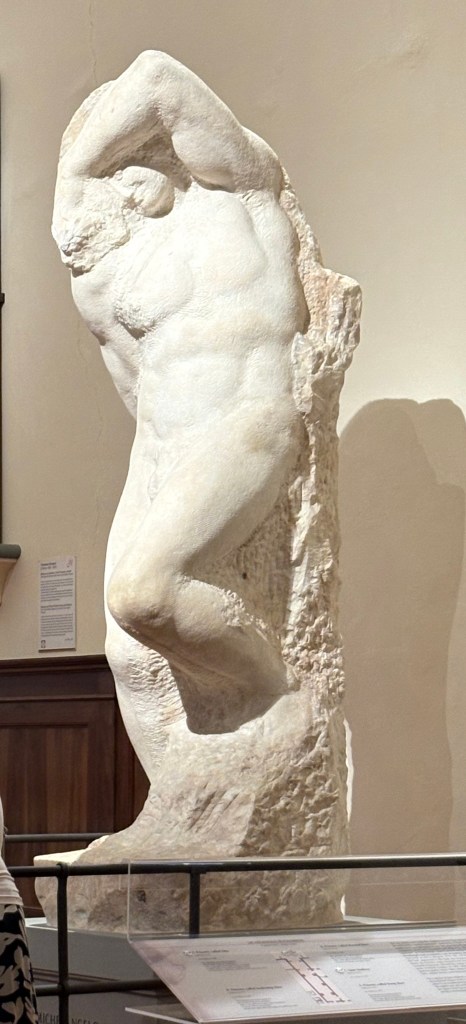
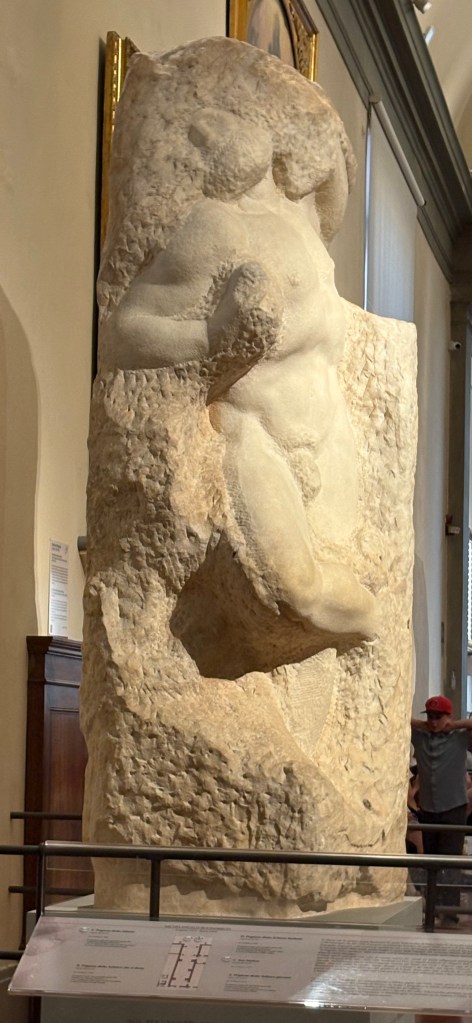
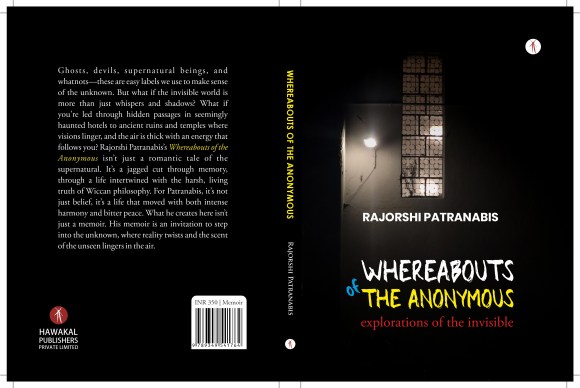
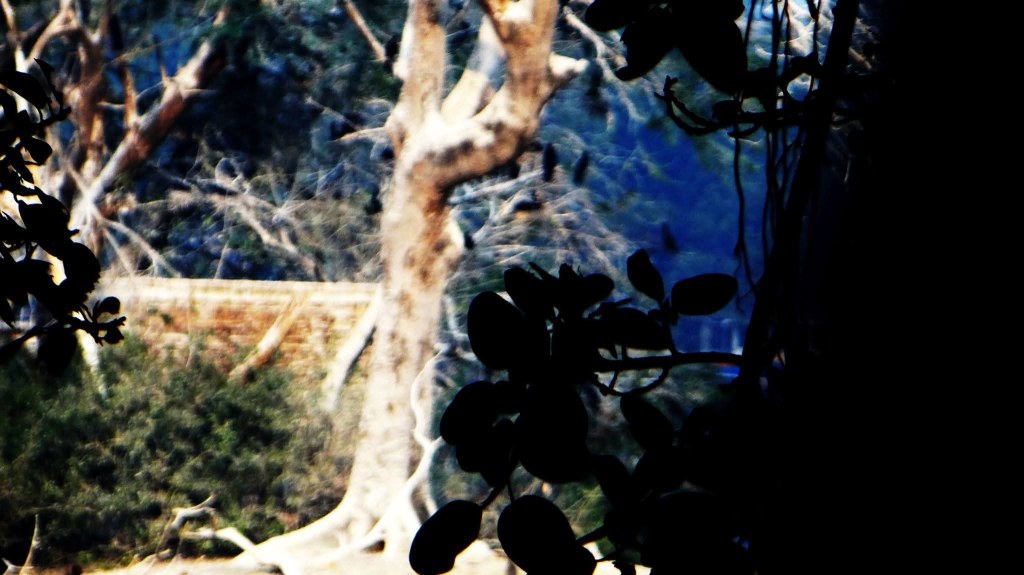
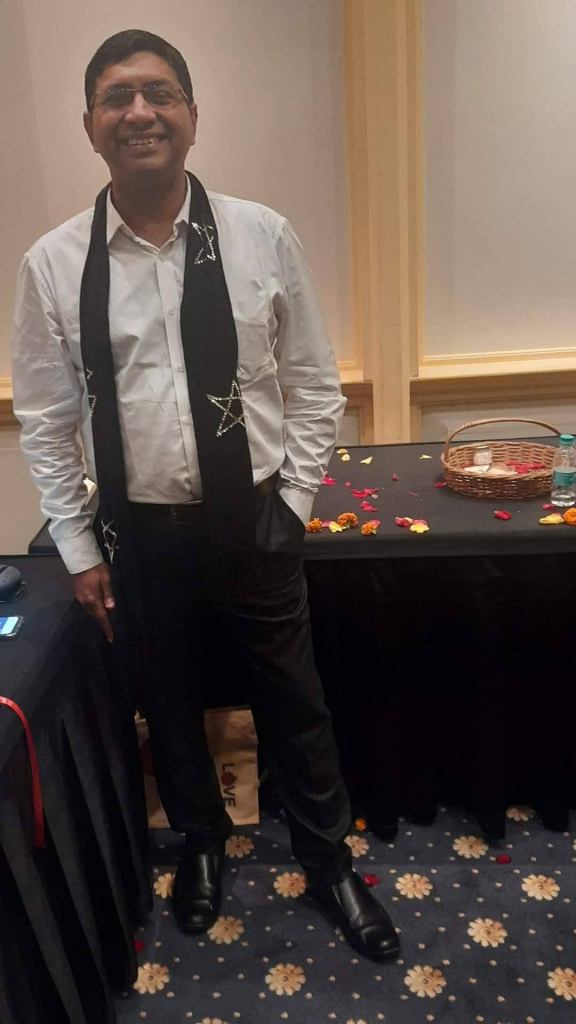
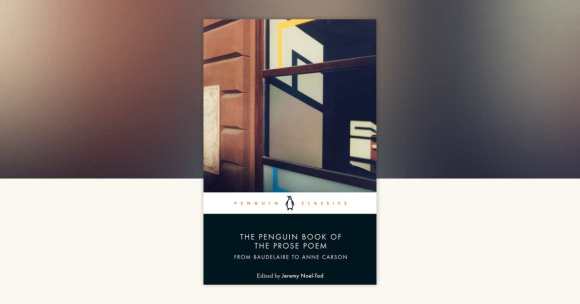

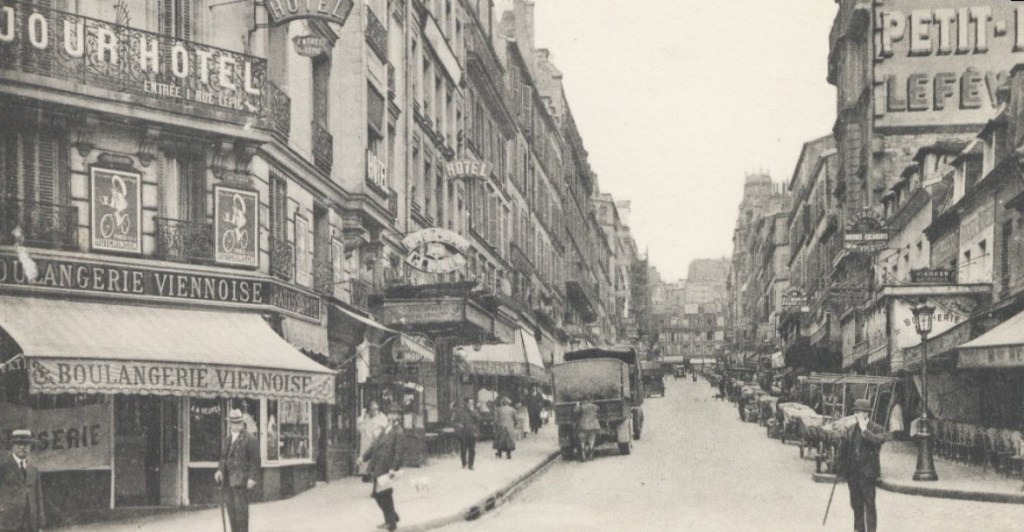
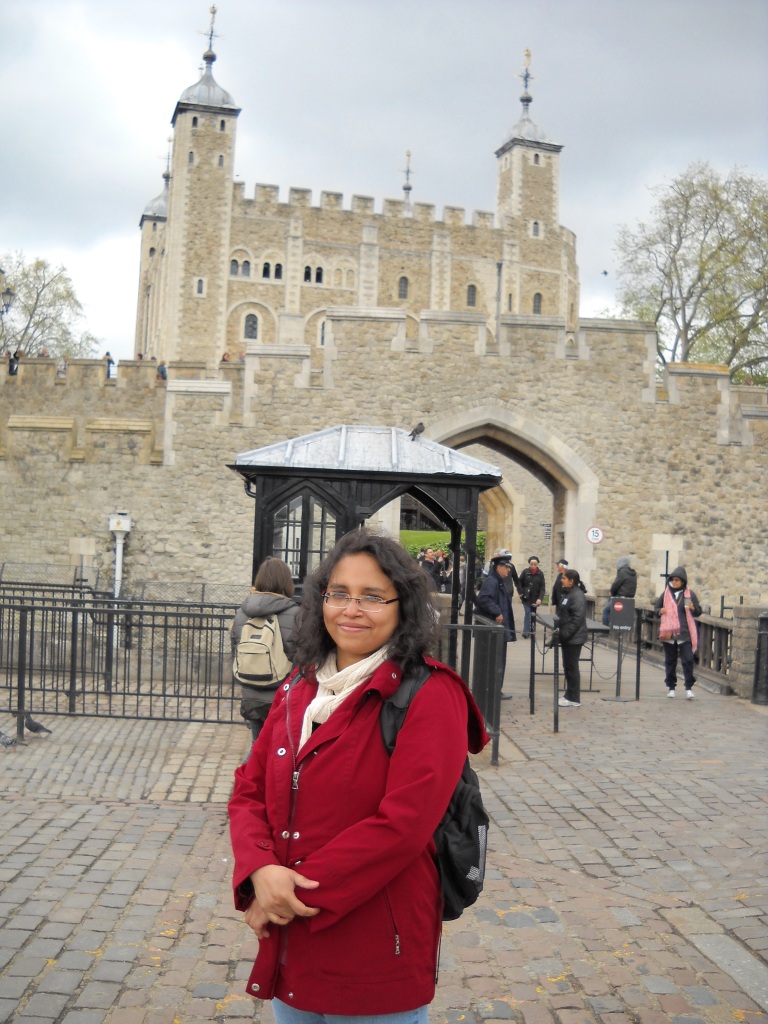
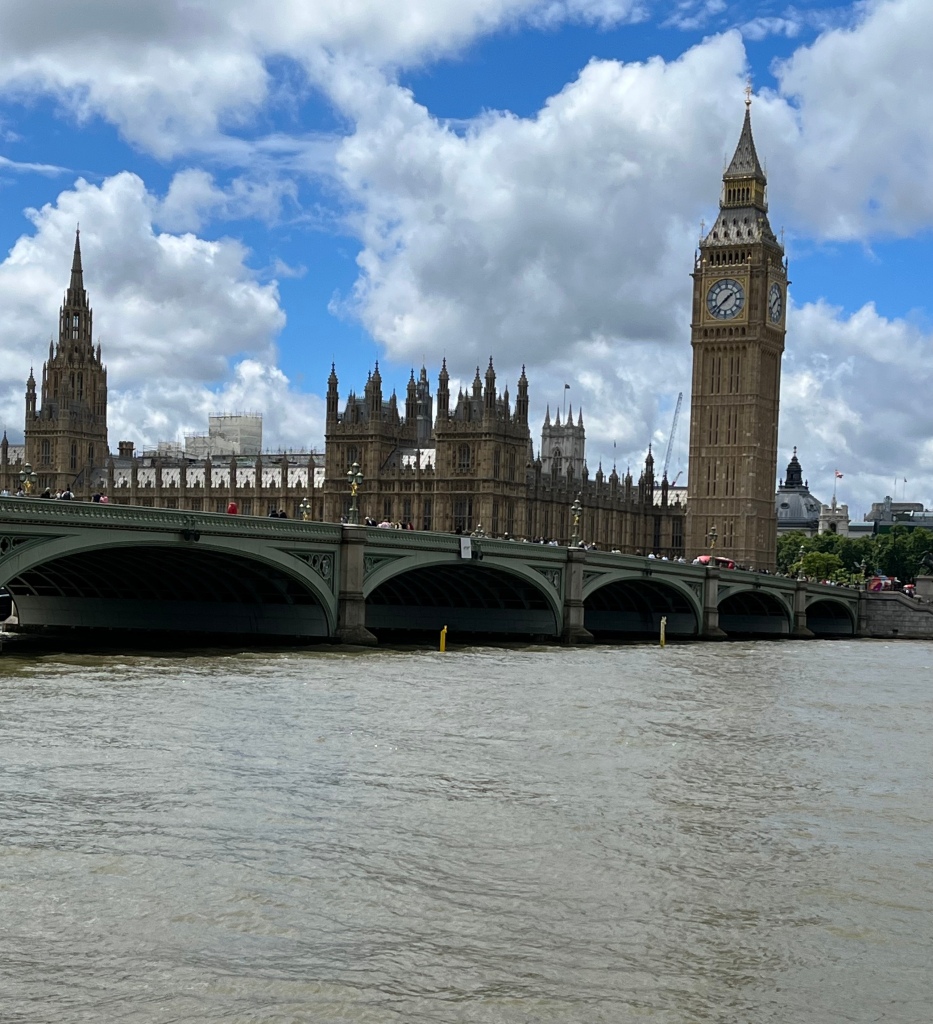




 Borderless