Titles: Little Lhasa: Reflections in Exiled Tibet and Tibetan Suitcase
Author: Tsering Namgyal Khortsa
Publisher: Speaking Tiger Books
Following the forced escape of His Holiness the Dalai Lama in March 1959, thousands of Tibetans were forced to flee Tibet, and it was these refugees who formed the early exiled community. The refugee community now stands at a figure of around 130,000, with Tibetans spread across numerous settlements in India, Nepal and Bhutan, and thousands more displaced all around the world. The Tibetan government in exile is based in Dharamsala, India. It is called the Central Tibetan Administration (CTA) and was founded in 1959 by the 14th Dalai Lama. In the 1980s, a second wave of Tibetans fled due to political repression. The CTA advocates for human rights, self-determination, and the preservation of religion and culture for Tibetans. The CTA has a parliament, judiciary, and executive branch and its principles include truth, non-violence, and genuine democracy. The Dalai Lama has said that the exile administration would be dissolved as soon as freedom is restored in Tibet.
After over seventy years of being in exile, a whole generation of Tibetans have come of age in a land far from home. With the Dalai Lama and other great masters as their spiritual guides, they have grown up cut off from their homeland. Their experiences have been unique, as they have, despite globalization, kept alive their religion and culture. In Little Lhasa: Reflections in Exiled Tibet, Tsering Namgyal Khortsa writes comprehensively about the different aspects of their life today. Comprising of ten essays and six interviews, this volume becomes an eye-opener on the multifarious aspects of the present situation of Tibetans at large. Beginning with different writers writing about Tibet and exile in the very first essay titled ‘Little Lhasa’, the next one ‘Shangrila Online’ tells us about the role of social media, internet cafes and how technology in remote Dharamsala often enables one to participate in other people’s experiences in real time. The writer describes in detail how such lifestyle changes in contemporary times have enabled the creation of a “virtual Tibet”. In the next essay ‘Buddha’s Children’, Khortsa describes the young generation of exiled children in India and how their religious identity has triumphed over all other identities. We are also told about the different kinds of foreigners who come to India to take religious courses, and the writer wonders whether they go home feeling merely inspired by their visit to India and their meetings with Tibetan masters or whether such exposure and experience actually triggers a paradigm shift in the way they view the world.
In the next essay we are told how Tibetans lead demonstrations in Dharamsala and other parts of India every year, especially the one held on March 10th that commemorates the anniversary of the failed uprising against Chinese invasion. ‘Movies and Meditation’ mentions a film festival in Dharamsala which reveals how recent Tibetan films highlight a growing and vibrant filmmaking community within the Tibetan diaspora, but Khortsa laments the paucity of full-length films about Tibetans in exile and the issues they confront, namely patriotism, individualism, and reconciliation of personal fulfilment with the Tibetan cause. The titles of the three following essays, ‘Dharma Talk’, ‘The Lure of India’ and ‘The Monk at Manali’ are self-explanatory. The last essay of this section ‘Nation of Stories’ tells us about writers who write and publish in the English language, and though diverse in terms of their education, upbringing, background and geographical location, one common condition that they all share is the collective trauma of the Chinese occupation of Tibet, which is invariably a leitmotif in Tibetan literature.
Part Two consists of six interviews, each one different in perspective than the other, and they must be mentioned here to understand the kaleidoscopic nature of the people involved in the Tibetan cause. Thus, we have conversations with Lisa Gray as ‘A Western Buddhist’, Ananda Nand Agnihotri as ‘An Indian Tibetan Buddhist,’ Ngawang Woeber, ‘An Ex-Political Prisoner’, Nyima Dhondup, ‘A Swiss Tibetan’, Tenzing Sonam, ‘A Tibetan Writer and Filmmaker’ and Tenphun, ‘The Tibetan Poet’. All in all, Little Lhasa becomes a valuable record of the life of a people who refuse to bow down or forget, and even while adapting to a rapidly changing world, continue to nurture their roots.
II
After the non-fiction, Tsering Namgyal Khortsa comes up with a brilliant piece of fiction and read together, each text complements the other beautifully. In the ‘Editor’s Note’ at the very beginning of the novel Tibetan Suitcase, Tsering Namgyal Khortsa tells us that while he was working as a business journalist in Hong Kong he once ran into Dawa Tashi, an old acquaintance and an aspiring novelist from Dharamsala, India who was working as a meditation teacher and was quite busy with his job. He had a suitcase full of letters and documents and wanted him to turn the contents of the suitcase into a book. After going through the collection, Khortsa discovered that the contents of the suitcase, if organized with care and discipline, could indeed make for an epistolary novel. So, he declares that except for correcting a few typos here and there and add note and datelines to the letters, he had not done anything. He also categorically states, “None of the letters are mine, except some entries that I wrote, making the book partly fictionalized.” He also wanted to leave room for readers to imagine (or ‘feel’ for themselves) what is not mentioned in the book, in deference to the Tibetan culture of reticence and taciturnity, rather than turning himself into an all-knowing chatterbox.
Tibetan Suitcase is a remarkable novel about the peripatetic Tibetan community in exile. It is divided into six parts, beginning roughly from 1995 to 2000. It opens in Hong Kong where a tycoon Peter Wong opens a meditation centre and employs Dawa Tashi, our protagonist as a meditation teacher and a guru, though he is not really trained to be a lama. Dawa Tashi is an India-born Tibetan. His parents fled Tibet when the Chinese invaded, and Dawa has grown up in the quiet, verdant Indian Himalayas. When Dawa applies to a well-known university in America (Appleton University in Wisconsin) to pursue a course in creative writing, his hitherto ordinary life changes dramatically. At the university he befriends, and falls in love with, Iris Pennington, an unusual American student who is studying Buddhist literature. He also comes in contact with Khenchen Sangpo, a renowned scholar of Buddhism and a reincarnated Rinpoche himself. Circumstances lead Dawa back to India too soon, but the connections he makes take his life into many new directions. Some, with Iris and Khenchen, take him deeper into the mystical and mysterious world of Buddhist scholarship. Other journeys take him back to his roots, making him question his life’s directions.
Apart from the interesting incidents and characters we meet in the first four parts of the novel, Part Five is an exceptionally engrossing to read. Beginning with the reportage in the Fall Issue of the journal Meridian, which is edited by Brent Rinehart, we are told that on his seventy-ninth birthday Khenchen decided that he had to go back to Tibet to see his native land. Having gained a quick residency status in the United States, and possessing an American passport, Khenchen still had many relatives in Tibet, some of them quite alive and well, despite the Chinese occupation. He travels to Lhasa in 1996 and goes for a trip to Lake Manasarovar but things take a different turn when he is arrested by the Chinese authority because he was apparently “endangering national security”. What follows are different press releases from the US Statement Department, reports from the International Association of Tibetan Studies in London, address by the President of Appleton University and as Iris writes to Dawa, she never expected herself to be so politically involved and “did not realize Tibet was such a political subject”. It was ironic that one of the world’s most spiritual places was one of its most burning political issues. Tibet might be a small place, but it has a reasonably big space in the collective consciousness of the world. Of course, Khenchen Sangpo is ultimately released and without disclosing the actual ending of the novel, which in a circular fashion ends in Hong Kong from where it began, many loose ends are tied up and life came to a full circle for everybody, especially for Iris Pennington who finally managed to find her roots.
Both the non-fiction and the fiction book by Tsering Namgyal Khortsa prove to be eye-openers for all readers who have very little knowledge about the sorrow and plight of the uprooted Tibetans who live in exile and many of whom do not even have a country to call their own. Based in Dehradun, India at present, Khortsa’s narratives are so powerful that it has aptly prompted Speaking Tiger Books to reprint the updated versions of both the books in 2024 and one can call it a yeoman service to readers both serious and casual. A must read.
.
Somdatta Mandal, critic and translator, is a former Professor of English at Visva-Bharati, Santiniketan, India.
.
PLEASE NOTE: ARTICLES CAN ONLY BE REPRODUCED IN OTHER SITES WITH DUE ACKNOWLEDGEMENT TO BORDERLESS JOURNAL
Storytelling is central to the life and work of Malaysian author, editor and teacher, Daphne Lee. Keith Lyons finds out what keeps her up at night.
When I1 first met Daphne Lee in person, in a Chinese Buddhist cafe in Christchurch, New Zealand, on a summery day. I was struck by her curiosity. And I came away impressed, not just by how she delights in hearing ghost stories, myths, supernatural tales, and folklore but how she makes connections to the universality of storytelling, and what lies beneath.
Daphne Lee
As well as being a collector and curator of stories, she’s a writer, a creative writing teacher, and an editor—since 2009 she’s been consulting editor at Scholastic Asia. She’s been active in supporting the work of writers and illustrators of children’s and young adult literature with Asian content. Daphne curated and edited Malaysian Tales: Retold & Remixed (ZI Publications) in 2011 and Remang: An Anthology of Ghostly Tales (Terrer Books) in 2018, while Bright Landscapes, Daphne’s first collection of short stories, was published in 2019. She’s working on a new short story collection, and her first novel, which she is currently revising while in New Zealand on a writing retreat, far from the streets of Kuala Lumpur and her Roman Catholic school upbringing.You can find out more about the multi-talented Daphne at her website https://daphnelee.org/.
Interview with Keith Lyons
What inspired you to create Remang: An Anthology of Ghostly Tales?
Malaysians love ghost stories. We would rather any misfortune or unusual occurrence be caused by a spirit or other supernatural phenomena than try to figure out a logical reason. Having said that, I don’t believe in ghosts, but I do enjoy ghost stories. I thought it would be fun to edit a collection of these, but I was wrong …
How do you approach writing and curating ghost stories? What elements do you feel make a truly eerie and memorable tale?
I prefer a story to suggest a mood and to be atmospherically or suggestively spooky than to be full of gory and blood-curdling details. I like the sort of ghost stories that are frightening only if you read between the lines or that seem unremarkable at first, but months later, you suddenly realise what it all means.
Your work often draws from Asian folklore and supernatural beliefs. Are there any particular myths or legends that have influenced your storytelling?
Nothing in particular, but I have heard the same stories all my life and with surprisingly few variations and differences. I enjoy retelling the old tales or building on elements in them. Hopefully, I make a completely new story, but with recognisable features because I like reading stories in which there are some familiar details.
Do you have a personal ghost story or supernatural experience that shaped your interest in this genre?
My family lived in a haunted house in my hometown (Segamat in Johor, the peninsula’s southern-most state) and we experienced things like lights going on and off, footsteps, odd, unexplained sounds, and so on. I can’t remember much, but I don’t think any of us ever felt threatened during the eight years we lived there. If there were spirits, they were not malevolent. My interest in the supernatural was probably more shaped by the films I watched as a child, including The Exorcist and the Hammer House of Horror — Dracula films starring Christopher Lee.
As an editor, what do you look for in a compelling ghost story?
The problem with the ghost stories we tell one another is that they are usually just anecdotal fragments. I look for fully-formed stories with well-developed characters—the ghostly element might even seem merely incidental to the plot yet be significant enough to make an impression. It should haunt you a long time after you’ve stopped reading.
How do you balance creative freedom with maintaining a strong thematic or narrative structure in an anthology?
I’ve curated two anthologies—one of ghost stories and the other of retellings of folktales, myths and legends. For both the brief was quite open and I welcomed a variety of styles and voices.
What are some of the challenges you face when working with authors, particularly in speculative fiction and folklore-based stories?
I find that when it’s an open call, it can be challenging to gather enough suitable stories for an anthology. Once you’ve made the selection, the editing process is usually long and laborious, with more back and forth than the deadline allows. It’s a much more straightforward process when experienced authors are invited to contribute to an anthology. With the authors published by my day-job (at Scholastic Asia), the major challenge is when the author is too precious about what they’ve created and is adamant about retaining something that doesn’t work or refuses to/is unable to develop a half-formed idea. Fortunately, that has rarely been the case. It’s imperative that authors trust their editors and, thankfully, I’ve had a good relationship with most of the writers with whom I’ve worked.
You’ve been deeply involved in the Malaysian publishing scene. How has the landscape for local horror and supernatural fiction evolved over the years?
I’m not directly involved in the scene as most of my work as an editor is with an American publishing house, albeit its Asian imprint. However, I am a reader of locally published books and do read some supernatural fiction written in the Malay language. When I was a teenager, I was a fan of a series of books with the series title Bercakap Dengan Jin (Talking with a Jinn)—they were dark tales that featured a witch doctor, set in rural Malaysia, with lurid covers and badly designed interior pages. The production value of horror fiction has improved, but the stories that are most popular are still the ones we are familiar with, especially about the ghosts that haunt every school and hospital in the country. They are hastily written and barely edited, with high print runs—horror sells, second only to romance novels.
How important is it for Malaysian and Asian supernatural stories to be represented in the broader literary world?
The world needs to realise that there is more to Asia than just what the West is showing it. Right now, a handful of houses controls what most of us are exposed to and end up reading. Even if Asian fiction is getting on the shelves, it’s only what these publishing houses have decided is worthy. In Asia, especially those countries that were colonised, readers are still stuck with the idea that books out of the UK and the US are better than those published locally. In Malaysia, we have some authors who have ‘made it’ in the West—people like Tan Twan Eng, Tash Aw, Preeta Samarasan and Zen Cho. They are excellent writers, but I don’t know if many Malaysians would pay attention to their work if they were published by Malaysian houses. Unfortunately, we don’t appear to be very discerning readers. Penguin Random House SEA, which runs out of Singapore and is riding on the Penguin brand, fails to offer sufficient editorial support to its authors and seems to be prioritising marketability and quantity over quality. Readers buy the books because Penguin is supposed to equal quality. Writers sign contracts with the house because they recognise PRH as a popular brand with a great reputation. They complain about the poor editing but choose to stay with the company. This is a kind of horror story too!
Do you think traditional ghost stories still resonate with modern readers? How do you adapt them to contemporary audiences?
I think so. I think part of the attraction of ghost stories is that people like to be scared as long as they can also feel safe while feeling terrified. Traditional ghost stories are the perfect comfort reads. They are thrilling yet familiar. You know what’s coming—all the scary bits, but there’s usually a happy ending too, when the ghosts are put to rest and the humans go back to their boring lives.
Many Western readers are familiar with ghosts like the vengeful spirit or the haunted house trope. What uniquely Malaysian or Asian ghostly elements do you wish more people knew about?
The Asian ghosts most familiar to Western readers are probably the Japanese yokai. Once again, there is a degree of gatekeeping going on. A Malaysian author I know was looking for a lit agent and was told that although her writing was good, her stories were ‘too South-east Asian’. What does that even mean? Western publishers and agents underestimate the ability of readers to relate to subjects unfamiliar, especially when they originate in South-east Asia. Often you hear that a publisher or agent already has a South-east Asian on their list and does not have room for more. Yet, there are officially eleven countries that make up the region. They are not interchangeable, and do not share a common language, history or culture. Malaysia has many types of ghosts and they each reflect the various beliefs and attitudes Malaysians have towards life and all its big and petty questions. To know these spirits is to know the fears and anxieties of the common Malaysian.
You’re planning an online archive of Malaysian folktales. Could you share more about this project and why it’s important to preserve these stories?
I was recently on a panel about folktales with two other Malaysian authors who write books that draw on folktales for inspiration and one of them said that the folktales that stick around are the ones that mean something to the community. This may have been true in the past when folktales were shared orally. These days, the ones that survive are those that get included in collections or are retold and reimagined into films etc. The same ones get recycled time and time again, probably because they are the most dramatic or sentimental. Collecting as many folktales as possible and storing them online gives them all a fair chance of surviving. What may be insignificant to one generation, may resonate for another. The main thing is to let each generation decide, and for the stories to be available and accessible.
Bright Landscapes was your first personal collection of short stories. How did that experience differ from curating Remang?
For Bright Landscapes I had only myself with whom to argue and disagree. My editor and I were, fortunately, on the same wavelength, but she really helped me improve on the quality of the stories. I wouldn’t undertake another project like Remang unless more time and more resources were available.
Can you share any details about your upcoming novel? What themes or ideas are you exploring?
During the pandemic I completed a novel but on reading it, I realised how rubbish it was. It’s very close to my heart, but I think it’s not quite the right time for a rewrite. It needs to ‘cook’ more, in my subconscious. That novel is set in a world where gods and humans live side-by-side, during a time of religious reform. The protagonists are a priest and a deity, and the story deals with questions of friendship, integrity, religious belief, and faith. I have a second novel that I am currently working on—a coming-of-age story set in a convent school in a small Malaysian town in the 1980s. It also explores questions of friendship and faith. I attended two Convent schools from age five to seventeen, and I was raised Roman Catholic. I did think of becoming a nun when I was in my early teens, like the protagonist of my novel, but I have been an atheist since my early twenties, although I am now probably more agnostic than anything. Religious belief and faith are subjects fascinating to me.
As a creative writing teacher, what advice would you give to aspiring writers interested in supernatural fiction?
The same advice I would give any aspiring writer: Read widely and voraciously. And write every day, about anything and everything.
If you could collaborate with any author—living or deceased—on a ghost story, who would it be and why?
I don’t want to collaborate with anyone, but I would like to have a conversation with Elizabeth Bowen about the handful of ghost stories she published. They are my favourites—quiet, mysterious, melancholy, sardonic. I have questions about them that still keep me up at night, decades after I first read them.
Keith Lyons (keithlyons.net) is an award-winning writer and creative writing mentor originally from New Zealand who has spent a quarter of his existence living and working in Asia including southwest China, Myanmar and Bali. His Venn diagram of happiness features the aroma of freshly-roasted coffee, the negative ions of the natural world including moving water, and connecting with others in meaningful ways. A Contributing Editor on Borderless Journal’s Editorial Board, his work has appeared in Borderless since its early days, and his writing featured in the anthology Monalisa No Longer Smiles.
.
PLEASE NOTE: ARTICLES CAN ONLY BE REPRODUCED IN OTHER SITES WITH DUE ACKNOWLEDGEMENT TO BORDERLESS JOURNAL.
The Sun rears its orangey hue over the horizon. Yet another new day dawns. The Sun does not know it is starting a new horizon. It performs its preordained duty, firing nuclear fusion reactions on its surface. It is the round Earth that revolves around the Sun. The Earth does not know a new day has begun. It just revolves counterclockwise on its axis. It has multiple new dawns at its manufactured latitudes. It neither knows where it started nor its point of reference. A series of celestial accidents brought it to be with its speed and its faithful lunar companion.
The day does not know it is a new day. Wednesday does not know it is Wednesday. It is merely an agreed arrangement for convenience. There is nothing specific about Wednesday or, for that matter, any day. It can rain, shine, snow, or be a non-discrete day. Good or bad things can happen, just like any other day. It is daylight, and night befalls before another day.
Earthlings have been miscalculating their calendars anyway. In 1582, Pope Gregory XIII replaced the Julian calendar with the Gregorian calendar. They realised they had miscalculated the solar cycle and had to remove ten days from the Julian calendars to be in sync with a complete revolution. It took the world three centuries to agree on a single calendar. Imagine the ensuing pandemonium. Sweden had to add two leap days to correct their miscalculations. Imagine finding headstones bearing dates like February 30 or 31 as death dates! So, going back, today’s Wednesday could have been a Saturday in the old Julian calendar.
Different cultures view the beginning of the calendar year at various times, depending on whether they follow a solar, lunar, or lunisolar calculation. The Chinese, who follow a lunar system, celebrate theirs in late January or early February, allowing for leap years. The Persians start theirs, Nowruz, on the summer solstice. The Indians and their Southeast Asian counterparts usher it in April with a water festival, prayers and much merriment. Not to forget the Cambodian despotic leader who established Year 0 on 17th April 1975 to whitewash their glorious past, much like the French Year Zero of the 1789 Bastille Day.
In essence, it is just another day. Just as Paul McCartney described in his song, ‘Another Day‘, one merely slips into shoes on the first day of the calendar and follows the same old routine. That is sad. So, to break the monotony, we attach importance to these days. We start a new ledger or a new school term in some countries. In Malaysia, our school term used to begin on the first Monday of January until COVID-19 befuddled everything. The Education Ministry had to close the schools and postpone examinations. The public examinations used to be done at the end of the year those days. Now, nobody knows when the term begins and when the examinations are written.
Many seize the opportunity to use the new year as leverage to get their lives in order. In the post-inebriation hangover following Christmas and New Year’s Eve, one would vow to become a teetotaller. The resurgence of gym memberships can be observed again. The days into the New Year would see new, eager, wannabe Jane Fondas, who would be MIA by mid-January, often seen arguing at the front desk for a refund.
Life is a continuum; it is not compartmentalised. Though it is good to use the birth of a new year as a fulcrum to springboard oneself to greater heights, any day is a good day to start. All it requires is determination and focus. However, it is easier said than done, and the motivational push varies from person to person. Elements that break the will and opinionated naysayers are aplenty.
Anyway, life will be boring if there are no days to look forward to— no birthdays to shower love, no Christmas to bond, no Harvest Festivals to show gratitude to the forces of Nature, and no New Year’s to make new resolutions for the umpteenth time and break them once again. This makes the world go on. There is always something to look forward to.
Photo Courtesy: Farouk Gulsara
Farouk Gulsara is a daytime healer and a writer by night. After developing his left side of his brain almost half his lifetime, this johnny-come-lately decided to stimulate the non-dominant part of his remaining half. An author of two non-fiction books, Inside the twisted mind of Rifle Range Boy and Real Lessons from Reel Life, he writes regularly in his blog, Rifle Range Boy.
.
PLEASE NOTE: ARTICLES CAN ONLY BE REPRODUCED IN OTHER SITES WITH DUE ACKNOWLEDGEMENT TO BORDERLESS JOURNAL
To conquer fear is the beginning of wisdom.
—Bertrand Russell, Unpopular Essays (1950)
This is one of the dedications that precedes the narrative of Mineke Schipper’s non-fiction, Widows: A Global History. Her description of misapprehensions and the darkness around widowhood, as well as the actions that have been taken and suggestions on how more can be done to heal, weave a narrative for a more equitable society.
Starting with mythological treatment of widows, the book plunges into an in-depth discussion, not just with case studies but also with a social critique of the way these women are perceived and treated around the world, their need to heal from grief or a sense of devastation caused by their spouse’s death, concluding with stories that reflect the resilience of some of those who have overcome the odds of being repulsed. It is a book that inspires hope… hope for a world where despite all stories of misogyny covered in media, there are narratives that showcase both the human spirit and humanity where the ostracised are moving towards being integrated as a part of a functional social sphere.
Schipper, best known for her work on comparative literature mythologies and intercultural studies, navigates through multiple cultures over time and geographies to leave a lingering imprint on readers. She writes: “In Book V of his Histories, Herodotus (485-425/420 BCE) described life among the Thracians: Each man has many wives, and at his death there is both great rivalry among his wives and eager contention on their friends’ part to prove which wife was best loved by her husband. She to whom the honour is adjudged is praised by men and women alike and then slain over the tomb by her nearest of kin. After the slaying she is buried with the husband.” And yet she tells us of the dark past of Europe, “A Polish text asserts with great certainty that, after the burning of the body of her husband, ‘every wife allowed herself to be beheaded and went with him into death’.” She tells us stories of wife burning, killing and dark customs of yore across the world that seem like horror stories, including satis in India. The “motivation” is often greed of relatives or customs born of patriarchal insecurities. She contends, “wherever desperate poverty reigns, widows are at an increased risk.”
She argues: “The story is much the same everywhere; widows who are well educated know what rights they have or are able to find the right authorities to approach with their questions, while women with little or no education continue to suffer from malevolent practices.”
She has covered the stories that reflect the need for the welfare of widows, of how early marriages lead to widowhood even in today’s world ( “ Every year around twelve million girls under the age of eighteen get married, one in five of all marriages.”), of social customs like dowry, which can be usurped by a widow’s spouse’s family, of steps that are being taken and changes that need to be instituted for this group of women often regarded in the past and even in some places, in the present, as witches. In fact, she has written of such ‘witch villages’ in Africa, which have been developed to help widows who have been treated badly and turned away from their homes. Such stories, she tells us prevail all over the world, including India, where widows are sent or go to Varanasi.
She asserts that despite these efforts, “there is often still a significant gap between declarations of gender equality and their day-to-day enforcement and application.” She ends with case studies of four women: “Christine de Pisan, Tao Huabi, Laila Soueif and Marta Alicia Benavente examples of widows who dared to fully throw themselves into a new life following the death of their husbands.” And with infinite wisdom adds: “We cannot change history, but we can look to the past with new knowledge and to the future with new eyes.” She concludes with a profound observation: “Time does not heal sorrow, but out of the centuries-old ashes, grief, strict commandments and prohibitions, new prospects can also rise. The fact that every person’s life is finite makes every day unique and precious. The same goes for widows.”
In this interview Mineke Schipper (née Wilhelmina Janneke Josepha de Leeuw), an award-winning writer from Netherlands, tells us what started her on her journey to uncover the stories of this group of people.
What got you interested in widows as a group from around the world? Why would you pick this particular group only for a whole book?
Yes, whence this topic? The widow had been a tiny part of Never Marry a Woman with Big Feet. Women in Proverbs From Around the World (Yale UP 2004), an earlier book I wrote about proverbs referring to women’s lives, from girl babies to brides, wives and co-wives, mothers and mothers-in-law, grandmothers and old women. It was a long and breathtaking study about more than 15,000 proverbs, collected over many years, apparently widely appreciated and translated with two relatively recent editions published in India, in English and in Marathi. For those interested: the complete collected material is accessible and searchable at www.womeninproverbsworldwide.org, including proverbs about widows. That small but striking section about widows had made me curious, but other books, as it goes, pushed ahead, before I came back to them. In January 2020, I had to look up something in that book about proverbs, and the pages about widows looked so weird that I proposed the widow as my new topic to my Dutch publisher who responded enthusiastically.
You have written of so many cultures and in-depth. How long did it take you to collect material for this book and put it together?
All over I found obvious warnings and distrust viz a viz a woman whose husband dies. Interestingly, a widow was associated with death—and a widower was not. Take heed, suitor, when you replace the dead husband in the widow’s conjugal bed! Better not! Was it the fear that she had killed him? Or the creepy thought that the dead man’s hovering ghost was still hanging around? A widow was supposed to mourn intensely over her husband, preferably the rest of her life. In the meantime, proverbial messages openly expressed the widower’s happiness at the news of his wife’s death: ‘Grief for a dead wife lasts to the door’ (all over Europe) or ‘A wife’s death renews the marriage’ (Arabic). I came across well-known names—such as Confucius, Herodotus, Boniface, and Ibn Battuta—and lesser-known names of early travellers, historians, and philosophers with their commentaries on widows, compulsory or non-mandatory prolonged mourning, voluntary or prescribed chastity, and a surprisingly common choice of suicide as the best option for her. Amazingly many widows obediently followed their husbands to death. In all continents, monuments and documents witness how women joined dead men—buried or burnt alive, hanged, strangled or beheaded, drowned, stabbed or shot. A preference for strangling was inspired by the idea that the victim would enter the next world ‘intact’. So, from the narrow diving board of no more than a few dozen proverbs I plunged into the hidden history of widowhood for about three years.
How do women perpetrate the victimisation of widows? Would you say that widows as a group are more victimised against than other groups of women?
Conceptions about women as interchangeable objects were widespread. If a woman was ‘no longer of use’, a man would need to get a new one, much as you would do with a broken watch, rifle, knife or whip. A man cannot or will not do without a wife, but what about when the tables are turned? The need to present women without husbands as inept and dependent must have been great. A widow managing all by herself was rather met with obvious disapproval. Widowhood has traditionally been associated with emptiness. In Sanskrit, the word vidhua means ‘destitute’, and the Latin viduata (‘made destitute, emptied’) is the root of the word for widow in many European languages, including Witwe (German), veuve (French) and weduwe (Dutch).
Nonetheless there have always been plenty of widows who have lived wonderfully independent lives, but this is not the image seared into the public consciousness. The notion that a woman is unable to live her own life after the death of her husband is an amazingly deep-rooted one. The Japanese word for widow (mibōjin) literally means ‘she who has not yet died’, that is, a widow is simply sitting in Death’s waiting room for her own time to come. Interestingly, the status of widower on the other hand was usually so short-lived and temporary that some languages even lack a word for it all together!
What makes widows more vulnerable than others?
Every widow has her own story, but social systems play an important role. In traditions where goods, land and property are inherited through the mother’s family line with matrilocality, a groom comes to live with his bride’s family, although this often ended up working out slightly differently as men were not best pleased with this living arrangement, so in reality there would be negotiation. However, over the centuries patrilineal systems, lineage and inheritance significantly became the dominant system. According to the patrilocal rules, a man had to remain ‘at home’, a system which to this day obliges countless brides to move in with their parents-in-law, an environment foreign to them. They are forced to comply with the demands and expectations of their family-in-law, while the husbands remain comfortable in the familiar surroundings they grew up in, with major consequences for the lives of women who become widows. This patrilocal living situation has often resulted in greater inequality between marital partners and harsh rules for widows, often preventing a wife from any material heritage after her husband’s death. According to the work of evolutionary psychologists, married women who live with or in close contact with their matrilineal family run a significantly lower risk of violence in the form of (physical) abuse, rape and exploitation than those who move in with their husband’s family. This is all the more true for a widow with a distrustful family-in-law who accuse her of killing her husband, a danger that is greatest in areas where poverty reigns.
At a point you have said, “The Aryan period, which preceded later negative social developments, saw a differently structured society in which there was more space for women: to a certain extent women had religious autonomy, they were entitled to education at all levels (with some even becoming celebrated authors), they participated in public life and also held important positions… However, by the year 200 AD, their position had considerably worsened.” Do you have any idea why their condition worsened in India? What were the ‘negative social developments’ you mention?
In matters of religion the woman was increasingly dependent on the services of her husband or of priests, possibly also on her sons or male relatives, to carry out the rituals she required. Simultaneously she became largely excluded from all types of formalised education. This lasting effect can be seen even today in the global difference in the rate of female and male literacy. The negative stance towards women in India dates back to Brahmin commentaries of ancient Vedic texts, which referred to women as lesser humans; widows subsequently occupied an even lower rung on the social ladder and were forced to work hard towards their religious salvation through extreme asceticism. One example: ‘At her pleasure [after the death of her husband], let her emaciate her body by living only on pure flowers, roots of vegetables and fruits. She must not even mention the name of any other men after her husband has died.’ (Manusmriti Kamam 5/160) Patriarchal relations have developed gradually in different parts of the world and at different times, but not everywhere in the same rigorous forms.
In the Abron-Kulango culture in the northeast of his native Côte d’Ivoire, you have told us “[B]oth widows and widowers were required to accompany their spouse to the next world” but eventually due to societal realisations, such practices stopped. Do you think this can happen in other cultures too. Have you seen it happen in other cultures?
As far as I know, such practices do not exist anywhere anymore. The most problematic obstacle for the rights of widow’s in less-well off regions is the unfortunate combination of illiteracy, fear of witchcraft and covetous in-laws, particularly during periods of mourning and grief. The good news is that even in the most unexpected places initiatives are emerging to help inform women in rural areas of their equality before the law. Self-aware widows become inspiring role models; conscious of their rights, they share their knowledge with others so that more of their fellow widows can find the right legal aid when injustice rears its head.
Would you hold as culprit people who enforce the death of widows? Would you address these people too as criminals in today’s context? Please elaborate.
It wouldn’t help much to do this! Marriage is still frequently presented as the utmost peak that a woman can achieve during her life. From this supposed top spot married women often still look at single and widowed women in a new light—with pity, contempt, suspicion or even hostility: they are out to seduce your own husband! When death comes calling, not only men’s but also women’s negative feelings easily bubble up from the morass of fear at the dreaded prospect of becoming a widow. Over the centuries such reactions towards widows have become part of the constrictive hierarchy meant to keep so many women in their place.
Can sati be justified[1](even though they are deemed illegal as is suicide) by saying the widow immolated herself willingly? Please explain.
The social pressure on widows must have been immense, but we are living now and no longer in the past. It is true that in poorer regions far out of the reach of cities, countless numbers of widows still have to traverse a long road towards a humane and dignified existence. However, instead of justifying the willingness to immolate herself as her own choice, it is better to insist on the positive news that, after the loss of their partner, today not only men but also women have the right to stay alive and further explore their own talents and new possibilities.
You have told us dowry started as a European custom. Is it still a custom there as it is in parts of South Asia, even if deemed illegal? Was it brought into Asia by Aryans/colonials or a part of the culture earlier itself?
The dowry is the gift that the bride’s family would contribute to the couple’s new home. Even though colonisation may have reinforced this ancient custom, but in many communities, it was already a custom and still is in many parts of the world. In Europe it stayed on until the late nineteenth century. In cultures where the bride provided a dowry, the death of a wife would bring benefits to a widower, as a new wife with a new dowry would enrich his home with new assets such as silver tableware, jewellery, bed linen and other valuables. For centuries, among Christians, divorce was forbidden, and from the perspective of widowers the prospect of a second chance provoked a sense of euphoria, as expressed in quite some sayings where his sadness does not go beyond the front door. Across Europe such messages confirm a husband’s profit of his wife’s death: ‘Dead wives and live sheep make a man rich.’ (French; UK English). However, most widows were denied such liberating feelings or didn’t experience any profit from the change. Often, they did not even allow themselves to get over her loss and indulge in any new freedom. They usually were subject to the paralysing fear of other people’s gossip.
In many places a widow who remarried would even lose entitlement to her own dowry or other input she had contributed to her marriage. Many women who remarried felt unable to invoke any right they had on the property of their deceased husband. Little wonder, therefore, that widows were heavily discouraged from remarrying, for example in China. The use of far-reaching laws still re-enforced the highly recommended chaste and sexless existence of widows after the death of her husband. Of course, the considerable number of child marriages in sub-Saharan Africa and South Asia easily robbed child widows from the legal rights wherever they had. According to the World Widows Report, the situation for widows with children is still exceptionally alarming in many parts of the world. Daughters, in particular, remain a huge problem in traditions where women have to contribute a dowry when daughters get married. For this reason alone, poorer parents have a preference for sons: they are more likely to inherit from their father’s family, while their widowed mother can expect little.
Has the condition of widows across the world improved over time? Please elaborate.
Over the centuries far too many widows have been convinced that their only future was conditioned by their dead husband. In my book there are examples from different areas of courageous widows who changed their own lives. Looking around in one’s own neighbourhood, there are always exemplary models of independent widows who do not let themselves be deterred by the doom of whatever prejudiced people think or say.
All emancipation starts with the opportunity to acquire knowledge, but if we are to believe what tradition tells us, women had little need for that, based on an assumption that knowledge did nothing to encourage and promote female obedience, and even less for virtue. ‘Knowledge goes before virtue for men, virtue before knowledge for women’ is an old saying in Europe, while a Chinese saying also agrees that a woman without knowledge is already doing very well. The fact that this message has had such a wide-ranging effect can be seen in the vast difference in levels of education and training among boys and girls in global education statistics.
What did a man look out for when it came to finding a wife? In order to facilitate control over women, various warnings have been passed down to men. One such proverb found the world over clearly expresses this sentiment: ‘Never marry a woman with big feet.’ It comes from the Sena language in Malawi and Mozambique. In China, India and other parts of the world, I came across literal iterations of this proverb. In spite of geographic or cultural distances and differences, this saying reflects a widespread consensus: hierarchy in male-female relations seemed to be essential, and someone had to be in charge. Should he become the main breadwinner for the duration of their married life, his wife will be even more dependent on him.
Significantly the big feet metaphor points to male fear of female talents and power. Hardly surprising therefore that becoming a widow was the worst possible catastrophe for women. Worldwide the solidarity between wives and widows is growing and literacy support within local communities as well, while the former unwavering prejudices against widows are shrinking, and more and more widows with big feet do manage. The old anti-widow stronghold of local prejudice is slowly but surely crumbling into ruins. We cannot change history, but widows can look to the past with new knowledge and into the future with new eyes and new hope.
I reported to Kuala Pilah[1]District Hospital on 11th August 1989. Just having passed out from medical school a year earlier, followed by a year of housemanship training, I was rearing to go. Like Dr. David Livingstone, who explored the interior of Africa to treat the needy (and convert them), I thought I would change the world.
1989 Kuala Pilah District Hospital was a secondary 100-bedded hospital with a resident Obstetrician-Gynaecologist, a few medical officers and a functioning operating theatre. Many seriously ill patients who needed tertiary care were transferred to a general hospital about 40km away.
The hospital administrator was pleasantly surprised to meet me. He thought I would join the team when the rest of the doctors reported on the first of the month. Truth be told, I was down with a case of occupational hazard. I was down with chicken pox after delivering a mother with the disease. I had to extend my training ten days after exhausting my annual leave.
After the cursory formalities, I was given time off to help settle in. The hospital did not have any accommodation facilities for its staff. They only had a vacant but rundown wooden attap house just outside the hospital. It had all the basic amenities, electricity and water supply. I thought I would use it temporarily before getting better accommodation elsewhere. That is when I was introduced to CK. CK was to be my housemate.
CK was working as an anaesthetic medical officer in the hospital. He was a year senior to me in service and was training to be an anaesthetic specialist. He alternated with another medical officer trained in anaesthesia to do daily calls in the Kuala Pilah District Hospital.
CK walked in when I was talking to the hospital administrator, Dr Teng.
“Oh yes. This is Dr. CK. He can be your housemate,” Dr Teng said. He will move into a new place once he gets one.”
“I think I’ll stay with CK and probably share his new place,” I said, “…that is if he is okay with sharing.”
CK was a lovable chap with a smiling face and an approachable demeanour. Slightly chubby, he resembled a cuddly teddy bear. His affable charm put everyone at ease, which helped him in his career as an anaesthetist. I later found that, understandably, the one thing he loved in his life was his food. He would later jokingly say that his paunch was an asset for him in his job. It helped to stabilise patients’ heads when he was intubating them.
A tall Minangkabau roof. From Public Domain
Before the phrase ‘living out of a suitcase’ became vogue, I was already living that life. Uprooting from point A to point B meant shoving everything into a couple of suitcases into the car’s boot, and off I went. My needs were few.
My stay was at an old wooden house built with a tall Minangkabau-styled roof. At any time of the day, it was cool. A cool breeze constantly swept through the length of the house. The tall ceiling helped. Despite its location in the heart of Kuala Pilah town, it was eerily quiet. The only noise one hears is the squeaking of its wooden floor when someone walks. As mentioned, the home had modern electricity and water supplies. The quarters pleasantly surprised me with a newly installed telephone line.
It was a time before digital mobile devices came into existence. All we had were landlines and pagers. Telephones were essential to medical treatment as they remained the only way to track down doctors on the go, from ward to ward, in a compound with single-story buildings. It was comical to see musical chairs at play. Sometimes calling someone is like playing ‘Whac-a-Mole’. One calls Ward B only to be told the doctor has gone to Ward A, which has just been called. In emergencies, if a doctor could not be tracked down, a runner (literally the most agile of the staff) would run from point to point to hunt the doctor down. The public announcement system was available but would forever be under repair, and the person holding the key to the audio room would be AWOL[2].
As CK was the anaesthetic medical officer (MO) on call, attending cases that needed surgery, he did not need to sleep in the hospital. He could return to his quarters (the one I was to share) after midnight to retire for the night. He would typically hang around the hospital before leaving for his quarters when the coast was clear.
Now, CK was a heavy sleeper. Like Kumbhakarna[3], he was one of those who could sleep through a nuclear holocaust. The only thing that CK woke up to was a telephone ringing—the first ring at that! No, the bleep of the pager would not do.
Later that evening, after meeting around the new colleagues, CK and I walked to a nearby food court for dinner. The char koay teow[4] stall there later became our favourite hunting ground for dinner for the next year while we were there in Kuala Pilah.
Ah Chong, the char koay teow seller, who had known CK for his regular patronage, ran out. Ah Chong was born and bred in Kuala Pilah. He ran Kuala Pilah’s famous halal char koay teow stall and took a keen interest in every little gossip around town. A simple-looking man whose wardrobe probably had two types of garments — white pagoda tee-shirts and black knee-length trousers — must probably be one of the wealthiest men in Kuala Pilah.
“Hello, boss. What happened early this morning, ah? So much commotion, with lights, honking and ambulance sirens. What happened? A bus accident or something like that? I think the whole of Kuala Pilah got up!”
CK sheepishly told Ah Chong, “No, nothing. The hospital just wanted to contact me.” Ah Chong left to prepare our dish.
After Ah Chong left our table, CK started to chuckle.
“You know what he is talking about?” asked CK.
“No.” I shrugged.
“The day I arrived here, I knew I would be on-call. And I took the quarters to stay before getting a proper house. Teng, the administrator, told me to do calls on the third day I arrived.” CK started. “I told Teng he needed to install the telephone line at the quarters immediately as they may need to contact me after late.”
“Teng told me he will get it done next week. He said, “You know, these small towns, they do things slowly.”
“I told him I was doing calls and that I am a deep sleeper. The only thing that wakes me up is the sound of a phone ringing.”
“But he said he would get it done as soon as possible.”
“Yesterday, I was on call. I don’t know why; maybe it was because it was the start of the hungry ghost month or something, and the wards were eerily quiet. There were no cases after 4pm.”
“I was at the doctors’ lounges watching TV and dosed off. Can you imagine there were bed bugs on the settee cushion?”
“I started scratching and scratching like a monkey on heat. I left for the quarters, telling the Operation Theatre (OT) staff to contact me if needed.”
“I left close to midnight. As luck would have it, a mother came in just as I left, after being in labour at home since morning. Our friend, Morrison, thought she needed a Caesarian Section. They paged me. Twice. No reply. So, Wahab, the OT attendant, ran to the quarter.”
“Wahab came to the quarters’ gate. He was just too shy to come in. So, he started calling for me. I must have been in my deepest sleep state. I guess I was just too tired yesterday. Too tired, not doing any work.”
“After a few times, he started throwing pebbles at my window. No response. Then he ran back to the nurse to tell the situation. The OT nurse, now in desperate mode, called the ambulance driver. She thought the ambulance driver, being good at raising the alarm, could raise me from a dead sleep!”
“What?” I exclaimed. I had no clue in which direction this story was going.
“Now, the ambulance driver is a smart man. He knew it was 4 o’clock on a Tuesday morning. He can’t simply turn on the ambulance siren at full blast. People had to go to work the next morning. He had to answer if any of the townfolks were to complain.”
“He brought the ambulance near the quarters, parked it facing the main gate and turned on the high beam. No reply. Then he flickered it repeatedly. All were quiet in the rooms.”
“Then the genius thought, why not turn on the beacon? So, up came the stroboscopic red light twirling around town, waking everybody!”
“He was not prepared for what came next. Lights from nearby shophouses started flickering, too. Soon, he could see silhouettes of people drawing their curtains, trying to figure out the commotion. One by one, everyone was up!”
“Still, I was sleeping, it seemed. As a last measure, before calling the police, the driver started blaring the siren!”
“Luckily, I got up. As an instinct, I saw my pager and the numerous messages there.”
“I ran out like the Merry Melodies cartoon character. I got the shock of my life when I came out to the gate. Outside, to greet me were the uncles and aunties, with their sarongs[5]and nighties, all with blurry eyes trying to make sense of the pandemonium. I could see through the windows that the lights were on. People were craning their necks trying to see all the excitement — lights, ambulance lights, siren and crowd.”
“KP is a peaceful town. I think people never get more excitement in their lives. Ever.”
“Anyway, the surgery went fine and baby too.”
That was how our first day started. A few days after that episode, we moved to a single-storey house some 10 minutes from the hospital. Filled with quirky moments like that and many more, we got embroiled in our respective works. A year flew past by. CK went on to be a consultant anaesthetist a few years later. We have been in contact since.
One October morning, 2024, I heard CK was found slouched in the bathroom. He had an apparent coronary event. Nothing could arouse CK this time, not even the 1,000 elephants who allegedly walked over Kumbhakarna to wake him up.
.
[1] Kuala Pilah is the second in the State of Negeri Sembilan, Malaysia. It is 36 km from the state capital, Seremban, and 101 km from Kuala Lumpur.
[3] In Ramayana, Ravana’s (the king who abducted Sita) brother is Kumbhakarna. An intellectual and physically menacing prince was tricked into receiving the boon of sloth. He remained asleep for six months, just to get up, eat and sleep again. Legend has it that he could only be awakened by having 1,000 elephants walking over him.
[4] A popular stir-fried flat rice noodle dish of Southern Chinese origin
[5] A loose cloth wrapped around the lower body, worn by men and women of the Malay Archipelago.
Farouk Gulsara is a daytime healer and a writer by night. After developing his left side of his brain almost half his lifetime, this johnny-come-lately decided to stimulate the non-dominant part of his remaining half. An author of two non-fiction books, Inside the twisted mind of Rifle Range Boy and Real Lessons from Reel Life, he writes regularly in his blog, Rifle Range Boy.
.
PLEASE NOTE: ARTICLES CAN ONLY BE REPRODUCED IN OTHER SITES WITH DUE ACKNOWLEDGEMENT TO BORDERLESS JOURNAL
We live on a huge planet, a watery world, which is a small cosmos in itself.Keith Lyons discovers humanity in his local swimming pool.
In recent years, I’ve increasingly sought an elixir of life. Even though I know this magical potion won’t grant me eternal life — not even eternal youth. The elixir doesn’t even promise to cure all diseases, though it seems a lot of other people are taking this tonic as treatment for every kind of ailment.
My pursuit of this higher realm means that most days, if I am able, I take a break from work, life and the busy-ness of it all to replenish, relax, and rejuvenate. My woo-woo astrological friend reckons that because my star sign is Cancer (one of the three water signs along with Pisces and Scorpio), I am drawn to water. But then, we all need water. Water is Life. It keeps all life going – for without water, life cannot exist. As the saying goes, “No Blue – No Green.” We need water to survive, to thrive, for our hygiene, for our wellbeing, and for the ice cubes in our virgin piña colada cocktails.
When I heard about the prospect of a new swimming pool opening up nearby my home, in the dark days of the Covid-pandemic, I was doubly happy and expectant. I even turned up to the new venue before it had actually opened, when they were still finishing the build and checking all the systems worked. The local government funded facility offered not only a swimming pool, but also a point of contact for interactions with the council, and the pool was twinned with a modern library. In my mind, I imagined that it might be possible to go swimming, then to glide over to a cafe or bar to get a drink, and then to select a book to read while reclining on an in-water lounger. Could it possible? I know I had stayed at a fancy hotel with a wet bar in Macau, where the bartender served cocktails to me and a photographer as we lived our best lives — until the next morning when we didn’t feel so flash.
Water, as you may know, makes up over 70% of the Earth’s surface. Up to 60% of the human body is actually water — depending on how much fluids you’ve drunk. A cucumber is made up of around 96% water. I recall these facts from a high school science project as I push the button of the water dispenser and a half circle of cool water arcs up for me to catch as much as I can in my mouth. I’m thirsty and know I need to drink lots of fluids, as I’ve just spent the last 80 minutes exercising and soaking in warm water. And I feel like I’m dehydrated from all the exertion.
Ever since a new indoor swimming pool opened in my neighbourhood, I’ve been making the effort to go as often as I can, to move and stretch in the warm hydrotherapy pool and then relax in the even-hotter spa. It has become something of a pilgrimage for me, even on the coldest, rainy days of winter. My route there from my house goes along a new cycleway, through a park (where a dog recently tried to attack me on my bike) cuts through a local ‘secret shortcut’ beside offices and a new church, then tracks along an industrial area of factories, warehouses, and commercial premises. After 6pm, the road to the pool has little traffic, just the occasional truck and security vehicle. If road conditions, traffic and winds are favourable, I can be door-to-door in under 10 minutes. But once I enter the new complex, change into my swimming gear, and walk down the ramp of the hydrotherapy pool, time becomes less important. I change from the demands of a busy world to more me-time.
But there’s more than devoting an hour to honour and exercise one’s physical body. Moving in water offers benefits beyond the physical realm, whether one’s aim is to help the heart, the waistline or the body’s strength. Because water is a lot denser than air, water provides more resistance — around 12-14% — compared to doing the same exercises on land. That resistance assists cardio and strength training. There’s another factor for water-based activities: buoyancy. The feeling of being lighter or weightless when submerged in water means you take the pressure off bones, joints and muscles. It is the closest thing you or I might get to being in space. You don’t even need one of those NASA t-shirts with the iconic blue, red and white logo of the National Aeronautics and Space Administration.
The 1.4-metre-deep hydrotherapy pool, which is kept at 33-36C, sits alongside the traditional 25-metre swimming pool, which is kept at 26-28C. The therapeutic pool’s inclusion in the new community complex was the result of lobbying by locals, who previously had to drive across to the opposite side of the city to access a suitably warm pool.
Photo Courtesy: Keith Lyons
It has only been a few months since the pool opened, but already many come to the waters, from when it opens at 5.30am each weekday (7am weekends) to when the last are forced to leave at 9.30pm (8pm in weekends). I’m more of an afternoon and evening swimmer, preferring to go to the pool after work or at the end of the day. Some attend the twice-a-week gentle exercise class, where the average age is 65+. Others visit almost every day at nearly the same time.
Some arrive in wheelchairs, pushing walking frames, or hobbling on crutches. Others walk from the changing rooms to the water smiling expectantly as they pace towards the transformative pool. At mid-morning, with the light from the wall-to-ceiling windows slanting across the pool, it could easily be a scene from the 1985 movie, Cocoon, where the retirement home pool helped them rediscover their youth (it was full of aliens). If you had to paint the scene, there would be a lot of blue hues, along with off-white and grey tones, with silvery reflections off the water.
While some exercise by themselves, focusing on their routines, the set prescribed by their physiotherapist, or whatever takes their fancy, for many it is also a social time, as they aqua jog up and down the lengths, or stand at the sides doing calisthenics. If you listen carefully over the music soundtrack of upbeat, positive songs playing over the public speakers, you can hear the water gushing and flowing. It bubbles up from the floor of the pool. Jets roll in from the sides of the hydrotherapy pool. In the spa pool, there’s a force field strategically placed around the pool. Modern water treatment means there’s no smell of chlorine.
The pool is a very tactile, sensual in-body experience. It is also somewhat humbling. Patrons must change into suitable bathing costumes, which can be as skimpy and revealing as bikinis and togs, though some prefer full body covering for modesty or self-perceptions. The water in the hydrotherapy pool is so warm that there’s never any hesitation on entering. People are only limited by the speed at which they can move from the air environment to the watery world of buoyancy and drag.
My local swimming pool is a microcosm of the wider community, and the big wide world. As where I live has experienced significant migration in recent decades, it is certainly a diverse multi-national cross-section of the community. Chinese are the largest group, with a swim school, coached sometimes in Mandarin, operating most weeknights. There are also families from the Philippines, a group of learn-to-swimmers from Nepal, and occasionally a non-swimmer from India who needs to be rescued from the deep end of the main pool by lifeguards. On one afternoon and evening, the whole pool becomes ‘women-only’, with the blinds drawn so women can use the pools without the glare of men. With more refugees from other countries now making up our neighbourhood, there are often people from Afghanistan, Eritrea, Kurdistan, Ethiopia, Somalia and Bhutan venturing into the pools for the first time.
Is the swimming pool I go to special? Can such a multi-sensory, multi-cultural, relaxing-yet-reviving experience only be found in my swimming pool? Nope. Seek out a public swimming pool in your area and discover another world.
Photo Courtesy: Keith Lyons
.
Keith Lyons (keithlyons.net) is an award-winning writer and creative writing mentor originally from New Zealand who has spent a quarter of his existence living and working in Asia including southwest China, Myanmar and Bali. His Venn diagram of happiness features the aroma of freshly-roasted coffee, the negative ions of the natural world including moving water, and connecting with others in meaningful ways. A Contributing Editor on Borderless journal’sEditorial Board, his work has appeared in Borderless since its early days, and his writing featured in the anthology Monalisa No Longer Smiles.
.
PLEASE NOTE: ARTICLES CAN ONLY BE REPRODUCED IN OTHER SITES WITH DUE ACKNOWLEDGEMENT TO BORDERLESS JOURNAL.
“Singapore is intimately linked with home and, yet for me, home has always been a process of lifelong search. Partly because of the early months of my birth. The record says I was born in March 1949, but the time was not certain as I do not have a birth certificate. My father forgot to register my birth,” reminisces Dr Kirpal Singh, an internationally recognised scholar. Born in the Straits Settlement of Singapore, before the island emerged as an independent entity, he has lived through much of history. He tells a story of multi-racial, multi-cultural growth that the island afforded him.
His father, he tells us, was “well known throughout Malaya — Jeswant Singh nicknamed as ‘Just One’ — a boxer who would knock people down with his left hook. In 1954, he left boxing when he killed someone during a match.” His mother, a Jewish Scot who he cannot recollect, he tells us, “ might have been David Marshall’s sister according to my stepsister but no one else has said that.” Marshall[1] was the first Chief Minister of Singapore from 1955 to 1956 and then Singapore’s Ambassador to France, Portugal, Spain, and Switzerland 1978 to 1993. He is the founder of the Worker’s Party. His parents had emigrated from Baghdad to Singapore in 1908 according to current resources.
How did Singh’s parents come to be in Singapore? Were they immigrants or colonials?
He responds with what he knows: “My grandfather and grandmother came to Singapore on board a ship in 1900. They left Jullunder, Punjab, in 1899. By the time they reached Singapore, it was the end of 1900. They left to seek their fortune. They were from the farming community. My grandfather was only sixteen and my grandmother was about twelve. They were in transit in Penang for six months. They came to Singapore in 1901. Actually, it was all Malaya — Singapore was part of the Straits Settlement. They came to Singapore by train. Trains were just starting out. It was around August 1901.
Trains in Malaya
“My uncle was conceived during this journey. They halted in Singapore for only two or three weeks. My grandfather’s cousin was in Perak[2], in Malaya. So, he wanted to be with his cousin. His cousin had cattle. Most of the Sikhs were cattle farmers. They settled in Pahang[3], an area which eventually became a nuclear dump[4] for Australia. It is closed to public now. There was a stone that proclaimed the land was a nuclear dump when I went with my son a few years ago.
“My father moved to Singapore as his prospects were better here as a boxer. This is where he met my mother. I was born here. He actually met mum because my mother’s two brothers had invited her to come from Glasgow. My mother is Scottish, from an industrial background. Her brothers came to the Far East to make money. She finished her school leaving exams and came to visit her brothers during her vacation. She would go with her bothers to watch boxing, where she saw my father, the champ. She was only fifteen or sixteen. The next thing the brothers knew was she was pregnant with me.”
Jeswant Singh was popular with colonials. Kirpal Singh tells us: “Some Europeans saw him box and offered him a job then in the Base Ordinance Depot. This was the British Military camps in the Far East. There were three bases in Singapore: the naval base, Kranji and one in the South. He worked there for thirty years and retired after that. In 1972[5], after the final British withdrawal from Singapore, dad’s formal employment status ended. After that he just did odd jobs, ending up as a security guard, looking after the factories in Jurong, earning about two to three hundred dollars a month.”
Kirpal Singh spent his childhood with his grandmother and uncle. Before he started schooling, his father left him with his grandmother and divorced his mother in favour of a new bride. Dr Singh tells us the story of how he returned to Singapore: “I was basically in Perak with my grandmother. My uncle, who was the first Sikh to become a Christian in Southeast Asia, left home because his father gave him a beating for changing his religion. My uncle was an Anglican. His conversion saved him from the Great Depression as the clergy was very well looked after. From 1929 to 1933, the church looked after him because he was the priest in Seramban. My father was still young. My uncle was born in 1911 and my dad in 1923. My grandmother bore eighteen children. Five of the infants passed away before they were one month old. But thirteen survived. She passed away at 95… I knew when I left for my doctorate programme in Adelaide that that was the last time I would see her. I had a hunch and was crying on the plane. Six weeks later, I got a letter with the news of her death.”
He adds: “Dad was in not in a position to look after me. The responsibility fell on his brother William. His full name was William Massa Singh s/o Deva Singh. He had studied at the Ipoh Chinese school, topped the school, eventually worked as an insurance agent. He was very good in English. The principal of his school, a New Zealander, arranged for my uncle to move to Singapore. Then my father moved there too. Singapore was the metropolis even then. It was the centre of English education. Penang was the other one. In 1956, I was sent to Singapore from Perak on a train — a one-and-a-half-day journey to my uncle.”
His grandmother joined them within a few months as his uncle was, he says, “more interested in aiding Lee Kuan Yew get rid of the colonials. Lee Kuan Yew was a self-made man. He met Goh Keng Swee[6] and Rajaratnam[7] as students in England. They became buddies and wanted to move out of colonial rule and be independent.”
Then, how did a young child survive? Dr Singh tells us: “I used to earn my pocket money from age five six by watering gardens. I have had very interesting experiences. When I was in primary two, I used to give tuition to primary one students. With enough gumption, you can survive in this world.”
Kampongs in Singapore’s past
“I grew up with my uncle’s wards, who were brought home to be educated. There was even one who was a Chinese-Japanese mix. So, I grew up being familiar cross-cultural marriages and in a multicultural home. I grew up in the kampong with a Chinese boy and we became friends from the age of seven-and-a-half when we were in primary two. His name is Tan Jwee Song — I call him Jwee, ‘my good saint’. He told me after O-levels he would support me to study further and took to teaching. At that time, you could become a teacher after completing your O level. I joined Raffles late during my time in high school because it was too expensive for me. I taught in night classes started by Lee Kuan Yew and studied. I owed Jwee $80,000 dollars and I wanted to pay his widow back — but she would not accept it. When I graduated in 1973 with an honours’ degree, I was $44 thousand in debt. Then, I was given a scholarship.”
And slowly, Kirpal Singh came to his own. When television came into being, he tells us: “I was often on TV in 1970s — days of early television — debates and interviews as a guest.” Kirpal Singh grew into an intellectual of repute as he worked and studied with the support of the many races and many people who, often like him, were migrants to Singapore.
As time moves forward, these stories — that are almost as natural as the sand, the wind and the sea — ask to be caught in words and stored for posterity, stories from life that show how narrow borders drawn by human constructs cannot come in the way of those with ‘gumption’.
(Written by Mitali Chakravarty based on a face to face conversation with Kirpal Singh. Published with permission of Kirpal Singh)
A brief overview of Rajat Chaudhuri’s Spellcasters, published by Niyogi Books, and a conversation with the author.
Spellcasters by Rajat Chaudhuri is a spellbinding fast paced adventure in a phantasmagorical world against the backdrop of climate change and environmental disasters. Chaudhuri, a proponent of solarpunk[1], has nine books under his belt, including the Butterfly Effect (2018) a few fellowships (like Charles Wallace), and a sense of fun as the characters hurtle through the book gripping the readers with their intensity.
In this novel, Chaudhuri’s universe is run by a council, based on Akbar’s Navratnas[2]. They seem to be people in charge of running a chaotic world. This group — though not drawn from Akbar’s court but from various parts of the world — are known as the ‘Nine Unknown Men’. They are said to host great people from the past in another dimension. As they “fold the dimensions and transform matter from one form to another”, manipulating and yet healing characters like Chanchal Mitra, his protagonist, putting the world to ‘rights’ by destroying villainous capitalists who sport shrunken heads of their enemies and indulge in creating drugs that can lead to annihilation of humankind, there is a fine vein of coherence which gives credibility to Chaudhuri’s imagined world.
The locales are all fictitious but highlight real world problems of climate change, unethical scientific research and uncontrolled economic growth that only pamper the pockets of the rich craving power. He weaves in episodes that had made headlines in Indian media, like Ganesha drinking milk, and Himalayan disasters, a result of interferences by human constructs like dam building and ‘development’. A sensuous mysterious woman with curly hair, Sujata, who sets Mitra back on track and is as good as a Marvel heroine when accosted with villains, adds to the appeal of the book.
He describes a barefoot tribe which seems more idyllic than real. But given that it is a phantasmagorical fantastical novel, one would just accept that as a part of the Spellcasters’ world. However, the import of the message the tribal leader conveys to the characters on the run is astute. “We take little from this land and try to return what it gives us. So did our forefathers and all those who walk this country with the animals. But the settlers in villages and cities never tire of drawing out the last drop of earth’s riches…” A similar take on nomadism and settler communities can be found in nonfiction in Anthony Sattin’s Nomads: The Wanderers Who Shaped our World, who talks of the spirit of brotherhood, or asabiyya, that bound the nomads together, a concept borne in the fourteenth century in the Middle East. One wonders if the Nine Unknown Men who cast spells are also bound by some such law as at the end the ‘Perfect Lovers’ disappear into another adventure in time… perhaps, to resurface in Chaudhuri’s next book?
Chaudhuri is poetic with words. He writes stunning descriptions of storms and climate events: “The rivers are boisterous and overflowing, the skies are being torn apart by forests of lightning. The great snow-capped peaks from where these rivers emerge have vanished behind walls of water tumbling down from the skies.”
The thing that makes his book truly unique is the way his characters seem to internalise or grow out of the miasma that encapsulates the world below the mountains. They seem like an extension of the chaotic external environment with strange happenings. Even in the council meeting held by the Nine Unknown Men, some of the crowd seem to be wisps of mists. Chanchal Mitra has to go above the hovering fog to start healing back to normal. The novel starts in a seemingly dystopian setting. The ending is more of a fantasy. There is a strain of Bengaliness in his wry humour, in small factual details, like we find Jagadish Chandra Bose seated in the council hall, though LJ drawn from RL Stevensons’ fictional pirate from Treasure Island (1883), Long John Silver, and Caligari from The Cabinet of Dr Caligari (1920), have larger and more crucial roles in the novel. Spellcasters is a thriller that entices with words, a gripping plot and suspense — set against a backdrop of strange climate events that are becoming a reality in today’s world, though the characters are more interesting than those drawn from real life.
The novel is written by an author who is compelled by perhaps more than a need to record his times. He has a vision… though not clearly laid out as a didactic message. But it hovers in the fog that is part of the book. One of the things that came across[3] was to create utopia, we need the chaos of dystopian existence…a theme that rebel poet Nazrul addresses in his poem, ‘Proloyullash’ (The Frenzy of destruction): “Why fear destruction? It’s the gateway to creation!”
Rajat Chaudhuri
In a past life, Chaudhuri had been a consumer rights activist, an economic and political affairs officer with a Japanese Mission and a climate change advocate at the United Nations, New York. Working in such capacities could have generated his vision, his worldview. Let us find out more about it by asking him directly:
What made you turn to writing from being an activist and climate change advocate? How long have you been writing fiction? What made you turn to fiction?
I am still involved with activism through my work with NGOs and my writing for popular media and other venues. However, I have gradually shifted my energies to creative fiction through which, nowadays, I try to engage with climate change and other planetary crises.
I have been writing fiction for nearly two decades now, my first novel, Amber Dusk was published seventeen years ago. As a full-time activist I have had the opportunity to interact and work with people from various strata of society right from the villages of India to international fora like the United Nations, where I have often noticed a tug-of-war of ideas between big business, sections of civil society, governments and other major groups like women, indigenous people and so on. While watching and participating in these, I had begun to realise how stories can open another flank in our efforts to communicate our ideas.
Today, you see, storytelling is everywhere. Stories are being recruited for issues big or small, important or completely worthless, even dangerous! In my case, I realised that stories can be an important vehicle for communicating issues surrounding planetary crises to my audience. Stories tend to be sticky — they remain with us for a long time and studies are now showing that well told stories can trigger changes in perceptions, beliefs and ideas. But it took me a long time to transform this realisation into book projects. Before that I had written other books – contemporary fiction, urban fantasy and so on.
What made you conceive Spellcasters? How long did it take you to write?
There are two or three strands that came together in the writing of Spellcasters. Most important among these is my interest in psychology and mental disorders and specifically in the fact that the ideas that dominate the world today, you can call them spells too, make us behave like we are affected by some kind of mental illness. Ideas and practices like limitless growth, conspicuous consumption and so on, make us behave as if we have lost our minds as we go on plundering the planet for energy and resources despite the fact that `nature’ is striking back at us with ever-increasing fury. So, our mental illness is causing planetary illness and at the centre of all this are these powerful, mesmerising, false beliefs, which right from the time of the Club of Rome have been known to be dangerous.
So, when I began to plan this novel, all these thoughts were in my mind partly driven by my activism. And at the same time, I had been reading Sudhir Kakar’s works about magic and mysticism in India and the parallels between Indian and western psychology so all of that came together. It took me about five years to complete Spellcasters not at one go, there was other stuff I have worked on in between.
What kind of research went into making the book?
To create the main character, the journalist Chanchal Mitra, I worked closely with my psychoanalyst friend Anurag Mishra who happens to be a student of Sudhir Kakar. And that research was really intense. We had long face-to-face and online sessions and I read a lot about the varieties and specificities of mental disorder.
Then there is of course that background layer of interest which oftenseeds ideas in your mind. This usually comes from your reading, and I had been interested in reading about the occult traditions of the East and the West for many years. Characters like Mme Alexandra David-Neel[4], the magic healers among indigenous peoples, the power of entheogenic substances like mushrooms have always fascinated me, and some of that came back while researching this book. Writing the climate layer of the story was comparatively easier because of my first-hand activist experience.
Do you have a vision or a message that you tried to address in this novel? I felt it moved from a dystopian setting to that of a fantasy — though not to utopia. Do you think a dystopian vision is necessary to evolve utopia?
The message is simple, and we all know it: Ideas of limitless growth have affected us mentally and so we behave and act in ways (resource extraction, carbon emission) that are making the planet sick. We are passing on our illness to the planet. The belief in limitless growth is a zoonotic disease that our species has transferred to the living planet. Still, we do not act because we are under the effect of these powerful ideas, these powerful spells, that’s where the novel gets its name. The message, if we can call it one, is to be aware of this and try to break out of these spells.
The path to utopia is not necessarily through dystopia. We can start hoping and acting today before things get really bad. Which is the locus of the whole solarpunk movement with which I am closely associated as an editor and creator. But `darkness’ can be redeeming too. Jem Bendell writes about this in detail. Grief and sorrow can indeed make us stronger; author Liz Jensen navigates grief and encounters hope in Your Wild and Precious Life, which is a must read for everyone asking these questions. But coming back to Spellcasters it is really neither dystopia or utopia if we are talking about the climate layer of the story, it’s very much set in the present. What might look dystopian are the gothic and magical elements and settings which serve as a counterpoint to the cold logic of the scientist character, Vincent.
Your novel has broken various barriers by mingling different constructs. So, tell us, how do you combine realism with fantasy, science with literature and create your own world?
It’s not difficult actually. Fantasy, magic and `unreason’ are woven around the borders of the familiar. We see them often without noticing it. Leaping a little higher or using a prescription eye-cleanser can do the trick!
To answer the other part of your question, science and literature or nature and culture were never apart in the first place. They were sundered because of the partitioning project of modernity which goes back to the work of Hobbes and Boyle and has its own history and protagonists. Science fiction as you know does not care much for this division. Climate fiction because of its scaffolding of science and reason needs to bring the two together. As a climate fiction writer, I try to keep the scientific complexities in the background, but they remain as building blocks of the story. In this book however we have a full chapter which is out of a scientist’s journal, and I did that for a change in flavour and in the spirit of experimentation.
Are your imaginary locales based on real cities? Please elaborate.
Often so. In Spellcasters the cities of Anantanagar and Aukatabadare modelled on Calcutta and Delhi respectively. A close reader can easily pick out the similarities but then I also enjoy changing some details especially when I am writing mixed-genre work like this one. So, there is no Chinese joint (like the one Chanchal hangs out at) in Calcutta where you can openly smoke weed but there are places quite similar to the one I described and there is indeed a real person with an eye of glass who used to hang out in one of these.
You have spoken of storms on the hills. Do you also see this as an impact of climate change? Do you think building roads, tunnels or hydel power stations on the hills can, over a period of time, have adverse effects on climate or humanity? Can you suggest an alternative to such ‘development’?
The avalanches, the unseasonal rains, especially the cloudbursts are all closely connected to climate change. Having said that, we also have to be careful to avoid climate reductionism. Often it is a concatenation of factors (including carbon emissions and climate change) and processes, their effects amplified by feedback loops, that precipitate disasters. This is very true if we study migration, for which climate change can be one of the driving forces but there could be other factors like economic opportunities, cultural patterns etc implicated in such flows.
Mindless development which does not take into account the fragility of nature and the interconnections between all beings big and small, microscopic or enormous, animate or inanimate, will set into motion processes that will precipitate crises like climate change. Yes, big dams are definitely a problem and small hydro is always a better option. We often hear that nature is self-healing or that there have been many previous extinctions, and that the planet has made and remade itself, but that’s like telling ourselves, please prepare for suicide while the super-rich and the cults of preppers, especially in the advanced industrialised nations, can escape to their doomsday bunkers.
The alternatives to the current development model is to be found in the ideas of Gandhi, of Schumacher, in solarpunk literature, in Vandana Shiva’s works among plenty of other places. The basic idea is to live in harmony with the planet, cut down on emissions, reduce resource extraction, try community based participatory solutions to problems instead of relying on economic, high-tech or market-based instruments, step back, go slow and let nature cloth and feed us so that we can live with dignity while forsaking greed.
In Spellcasters, you show climate change as an accepted way of life at the end. Do you think that can be a reality? Do you think climate change can be reversed?
A novel often presents itself as a bouquet of ideas without the author demonstrating any clear bias for one over the others. But as an activist-writer I usually drop clear hints as to what is more desirable without making it too obvious. There is always this ongoing duel between politics and aesthetics in a novel and the best among us balance the two quite well.
Climate change can of course be engaged with, controlled and reversed, if we can stick to the ambitious targets of the Paris climate agreement with the rich nations facilitating the process with more funds to poorer nations. Both producers and consumers have a role to play here, and we need serious lifestyle changes in the advanced industrial nations (or rather the global North) and a serious focus on climate justice for any meaningful change to occur. Only planting trees and carbon-trading won’t do.
Your language is very poetic. Do you have any intention of trying poetry as a genre?
Thank you. I haven’t ever thought of writing poetry because I am not gifted with the art of brevity which I think is essential there. But I have enjoyed translating poetry from Bengali to English, which was published as a book. I plan to do more of that.
What can we next expect from your pen?
I have been trying to finish a work of non-fiction about climate change and I hope to do this by the end of the year.
Let me also take this opportunity to thank you Mitali and your team at Borderless Journal for your service to literature. You are doing important work here and I am really grateful for your interest in my novel.
Thank you so much for giving us your time and sharing your wonderful book.
.
[1]Solarpunk is a sci-fi subgenre and social movement that emerged in 2008. It visualizes collectivist, ecological utopias where nature and technology grow in harmony. Read more by clicking her
[2]Navratnas or the nine gems were a bunch of very gifted men in his court, like Birbal and Tansen.
[3]The author does not agree to this reading in the interview. He sees his novel evolve out of the solarpunk movement.
Are you going to bloom in the rain tonight? I hear your footsteps in the darkness, I smell your scent on the budding seeds, and wonder whether you are among the stars.
This life can only be lived due to your existence. I feel like I am losing myself more than usual. After losing everything I cared about, I considered migrating to a different country.
Regrets have shattered some of my aspirations, and I miss giving my all to love someone like you. Why does tonight’s rain sound so sad? I've cried for ages, and you haven't flowered yet.
Thousands of breaths push me towards your sweet lips. Allow our sorrows to touch the drenched grass in the park, and follow the moonlight to find me waiting with a rainbow umbrella…
TWO FINGERS CROSSED
I'm wondering if my depression stems from my past or what I'll become in the future. Is it because I speak your language with an accent? I'm sorry, but my accent represents who I am.
I wish I could erase children's memories of everyday genocide with a pencil and eraser. My phone isn't charging. My cousin is wearing my face mask. I lie dead in my blood-soaked bath.
Does the moonlight still brighten your melancholy heart? What arouses your emotions? Can you dream about kissing me the way you usually do? Who wouldn't love a walk under the twinkling stars?
I miss the way you hold my frigid hands behind my back, with at least two fingers crossed. When I inhale your breath, I trust my senses completely. Your amazing voice is the music that brings me joy.
PACK OF CIGARETTES AND LIQUOR
I'd swap my rusty flesh and chilly blood for a pack of smokes and a drink.
I am willing to sacrifice my emotions and peace for a pack of smokes and alcohol.
I'm willing to surrender my citizenship and foreign passport for smokes and whisky.
I am willing to compromise my values and ethics for a pack of smokes and alcohol.
I'd swap my wounded heart and warm hands for a pack of smokes and a drink.
I'd swap my youthful smile and tears for a pack of smokes and a drink.
I'm willing to exchange my healthy organs and memories for smokes and whisky.
I'd exchange my imprecise accent and colourless fantasies for a pack of smokes and a bottle of vodka.
I will never give up my past and hometown for a coffin which I tried to steal before my sentence by hanging with death.
Ahmad Al-Khatat was born in Baghdad, Iraq. His work has appeared in print and online journals globally. He has poems translated into several languages such as Farsi, Chinese, Spanish, Albanian, Romanian. He has published some poetry chapbooks, and a collection of short stories.
.
PLEASE NOTE: ARTICLES CAN ONLY BE REPRODUCED IN OTHER SITES WITH DUE ACKNOWLEDGEMENT TO BORDERLESS JOURNAL
Title: Once Around the Sun: From Cambodia to Tibet
Author: Jessica Mudditt
Chapter 20 – In or out?
As I walked the streets of downtown Hohhot in search of a travel agency, I felt further than five hundred kilometres from Beijing. I was still in East Asia, but the capital city of Inner Mongolia had Central Asian influences too, such as the cumin seed flatbread I bought from a hawker with ruddy cheeks and a fur hat. I passed a Muslim restaurant with Arabic lettering on the front of its yellow-and-green facade, and many street signs and shops featured Mongolian script as well as Mandarin. With its loops, twirls and thick flourishes, Mongolian looked more similar to Arabic than Chinese. In actual fact, the top-down script is an adaptation of classical Uyghur, which is spoken in an area not far to the west.
The winds that blew in from the Russian border to the northeast were icy cold, so I was glad to soon be inside a travel agency. It was crammed with boxes of brochures and a thick film of dust covered the windowpanes. Hohhot is the main jumping-off point for tours of the grasslands, so I was able to get a ticket for a two-day tour that began the following morning.
I wasn’t enthusiastic about going on a tour because I preferred to move at my own pace, however there was no other way to access the grasslands. The upside was that I was guaranteed to sleep inside a ger, which is a circular tent insulated with felts. The Russian term of ‘yurt’ is better known. I had read that Inner Mongolia was a bit of a tourist trap for mainland Chinese tourists, but I was nonetheless excited to get a glimpse of the Land of the Weeping Camel.
I walked into a noodle shop and a customer almost dropped her chopsticks when she saw me. The girls at the cash register were giggling and covering their faces as I pointed at a flat noodle soup on a laminated menu affixed to the counter.
Foreign tourists must be thin on the ground in Hohhot, I thought as I carried my bowl over to a little table by the window.
Inner Mongolia was one of the few places that Lonely Planet almost discouraged people from visiting: ‘Just how much you can see of the Mongolian way of life in China is dubious.’ But I was still keen to see what I could.
I ate slowly, enjoying each fatty morsel of mutton. I was pretty good with chopsticks by that point – I’d never be a natural, but I didn’t drop any bits of mutton into the soup with a splash, as I used to in Vietnam.
Hohhot seemed a scruffy, rather bleak sort of city – or at least in the area where I was staying close to the train station. Street vendors stood cheek by jowl on one side of the road, calling out the prices of their wares. The opposite side was under construction and the one still in use was unpaved, which meant that two lanes of traffic had to navigate a narrow area of bumpy stones while avoiding massive potholes and piles of dirt. I saw a motorbike and a three-wheel truck almost collide.
I spent the next few hours wandering around the Inner Mongolia Museum, which has a staggering collection of 44,000 items. Some of the best fossils in the world have been discovered in Inner Mongolia because its frozen tundra preserves them so effectively. The standout exhibit for me was the mammoth. It had been discovered in a coal mine in 1984 and most of its skeleton was the original bones rather than replicas. I gazed up at the enormous creature and tried to imagine it roaming the earth over a million years ago. Mind-boggling.
I admired the black-and-white portraits of Mongolian tribesmen, and then took photos of a big bronze statue of Genghis Khan astride his galloping mount. The founding leader of the Mongol Empire was the arch-nemesis of China, and parts of the Great Wall had been built with the express purpose of keeping out his marauding armies. Genghis Khan must have rolled in his grave when China seized control of a large swathe of his territory in 1947.
What was once Mongolia proper became a Chinese province known as ‘Inner Mongolia Autonomous Region’. This long-winded name is an example of Orwellian double-speak. So-called ‘Inner Mongolia’ is part of China, whereas the independent country to the north is by inference ‘Outer Mongolia’. Nor is the Chinese region autonomous. The Chinese state has forced Mongolians to assimilate. Their nomadic lifestyle and Buddhist beliefs had been pretty much eradicated, and although speaking Mongolian wasn’t outlawed, learning the state language of Mandarin was non-negotiable.
On top of this, the government provided tax breaks and other financial incentives to China’s majority ethnic group, the Han Chinese, if they relocated to Inner Mongolia. Mongolians now account for just one in five people among a total population of 24 million. The same policies of ethnic ‘dilution’ exist in China’s four other ‘autonomous regions’, which include Tibet and Xinjiang, the home of the Uyghurs.
Shortly before I left the museum, I came to a plaque that described the official version of history, which was at odds with everything I’d read in my Lonely Planet.
‘Since the founding of Inner Mongolia Autonomous Region fifty years ago, a great change has happened on the grasslands, which is both a great victory of the minority policy and the result of the splendid leadership of the Communist Party of China. The people of all nationalities on the grassland will never forget the kind-hearted concerns of the revolutionary leaders of both the old and new generations.’
I rolled my eyes, snapped a photo of the plaque for posterity, and continued walking.
* * *
I didn’t venture far from my hotel for dinner because I planned on having an early night. I chose a bustling restaurant with lots of families inside and was waiting for a waiter to come and start trying to guess my order when a group of men at the next table caught my eye. They seemed to be waving me over.
Me? I asked by pointing at myself.
Yes, they were nodding. Shi de.
I happily joined the group and introduced myself by saying that I was from ‘Aodàlìyǎ’. I think they were Han Chinese, as they didn’t look Mongolian. I whipped out my phrasebook and tried to say I had come from Beijing, but I was fairly certain they didn’t understand me.
Anyhow, no matter. Ten shot glasses were filled from a huge bottle of baijiu, and I was soon laughing as if I was with old friends. One of the slightly older guys used a set of tongs to place wafer-thin slices of fatty pork into the bubbling hotpot on the table, followed by shiitake mushrooms and leafy greens. As the impromptu guest of honour, my bowl was filled first once it was cooked – by which time I’d already had three shots.
The hotpot was fantastic, and I had to remind myself not to finish everything in my bowl. Bethan had told me that Chinese etiquette requires a small amount of food not to be eaten at each meal. This indicates that it was so satisfying that it wasn’t necessary to eat every last bite. As a kid, it was ingrained in me to finish everything on my plate. I loved food and was generally in the habit of licking my bowl clean, so I had to exercise a certain amount of restraint.
I had just rested my chopsticks across the top of my bowl to signal I was finished when I was invited to go sit on the wives’ table, which was across from the men’s. The women were very sweet and a couple of them seemed to be around my age. I once again tried to communicate using my phrasebook, but I was hopelessly drunk by then. I could hardly string a sentence together in English, let alone Mandarin. I was also beginning to feel queasy from the baijiu, so I gratefully accepted a cup of green tea from the porcelain teapot that came my way on the lazy Susan. After taking some photos together, I bid the two groups ‘zaijian’ (goodnight). I tried to contribute some yuan for the meal, but they wouldn’t hear of it. I curtsied as a stupid sort of thank-you, and then I was on my way.
* * *
More hard liquor awaited me the following day. A striking woman in a red brocade gown with long sleeves handed me a small glass of baijiu as I stepped off the minibus a bit before noon.
‘It’s a tradition,’ she said with a smile, while holding a tray full of shots.
I downed the baijiu with my backpack on and grinned as the backpacker behind me did the same. There were four foreign tourists on the tour, and about eight domestic ones. The liquor gave me an instant buzz, which I needed. I hadn’t slept well and woke up feeling lousy, so I’d kept to myself during the two-hour journey. Even though I should have been excited, I got grumpier and grumpier as the reality of being on a tour began to sink in. Plus, the landscape was not the verdant green steppes I’d been expecting. At this time of year, it was bone dry and dusty. It hadn’t occurred to me to check whether my visit coincided with the low season.
I began chatting to the other tourists. The guy who had the baijiu after me was Lars from Holland. There was also a couple from Germany. I could immediately tell they were pretty straitlaced. Their clothes looked very clean and functional, and the girl refused the baijiu.
The woman in red introduced herself as Li, our tour guide. Then she led us along a path lined with spinifex to a dozen gers. They faced each other in a circle, and off to the right was a much larger ger with the evil eye painted on its roof and Tibetan prayer flags fluttering in the fierce winds. There were no other buildings in sight and no trees.
Li told us to meet inside the big ger in fifteen minutes after we’d put our stuff in the smaller gers she proceeded to assign us. Lars and I would be spending the night in a ger with ‘82’ painted on its rusted red door. There certainly weren’t eighty gers, so the logic behind the numbering system wasn’t clear – but no matter. The German couple took the ger to the right of ours.
These were not portable tents for nomads. Each ger was mounted on a concrete base and I think the actual structure was made of concrete too, and merely wrapped in grey tarpaulins. The door was made of metal and at the top was a sort of chimney structure – perhaps for ventilation. Like igloos, the only opening was the door, and it was pitch-black inside. I located a dangling light switch as I entered.
‘Ah – I love it!’ I exclaimed.
It was a simple set-up, with single beds lining the perimeter and a low table in the middle of the room. Patterned sheets were draped from the concave ceiling. I chose the bed with a framed portrait of Genghis Khan above it. Lars put his backpack next to a bed on the other side. I was happy enough to share a ger with him. He gave off zero sleazy vibes.
‘I might just take a couple of those extra blankets,’ I said to Lars as I piled on a few extra floral quilts from another bed. The wind had an extra iciness to it out on the steppes and I shuddered to think what the temperature would drop to overnight. We zipped our jackets back up and headed out.
I wandered over to the toilet block, which was quite a distance from the gers. I made a mental note to drink as little as possible before getting into bed to avoid having to go in the night. Once I got closer to the toilets, I was glad they were so far away. The stench was unbelievable.
In the female section were two concrete stalls without doors. In the middle of the floor in each was a rectangular gap. I almost gagged. Just a few centimetres away from the concrete was an enormous pile of shit. I could make out bits of used toilet paper and sanitary pads and there were loads of flies buzzing around. Without running water or pipes, the excrement just sat there, day after day, building up. I would have turned and walked straight back out but I was busting for a wee. I held my breath so I wasn’t inhaling the smells. I wanted to close my eyes too, but I was terrified of falling in, so I had to look at what I was doing. I couldn’t get out of there fast enough.
‘Oh my god, Lars – the drop toilets are totally disgusting,’ I said after I met up with him in the big ger. ‘It’s just a pit of shit without running water.’
‘I know an American girl who fell into a drop toilet in China last year,’ he said.
‘No way,’ I said with a shudder.
‘Yeah. She said it was terrible. She was in a really poor village somewhere in central China and she went to the toilet at night. She couldn’t see that some of the wooden planks had gaps in them – and then one of them broke and she fell in. She was up to her neck in shit. She was screaming for people to come help her. Apparently, it took them half an hour to fish her out, and all the while she could feel creatures writhing around her body. She cut her trip short and had to get counselling when she got home.’
‘I bet she did,’ I said. ‘That’s the most disgusting thing I’ve ever heard in my life. The poor girl.’
Just then Li appeared and said we were heading outside to watch horse racing and traditional wrestling after some sweet biscuits and tea. We assembled around a fenced area where there were about thirty ponies tethered to poles. Some were lying down while still saddled.
‘Horses usually sleep while standing up, so these ponies must be knackered – pardon the pun,’ I joked to Lars.
Notwithstanding, they looked to be in reasonably good condition, with shiny coats and no protruding ribs. There were chestnuts, bays and dapple greys.
I heard the sound of hoofbeats and looked behind me. A group of men on horseback came thundering across the steppes. It was a magnificent sight, and any lingering resentment I had about being on a tour melted away.
One of the men rode ahead of the rest. He was wearing a cobalt-blue brocaded tunic and his wavy black hair came down past his ears. He was really good-looking. He approached Li with a smile, said something to her and dismounted with the ease of someone who had probably started riding horses before he learned to walk. Li and the man exchanged a few words – I definitely saw her blush – and then he got back on.
‘Gah!’ he yelled as he dug his heels into his horse’s sides.
The other horsemen followed after him with whoops, leaving a trail of dust in their wake. These Mongolian ponies were only about twelve or thirteen hands, but they sure were fast and could turn on a dime. I loved watching them carve up the dry earth.
Next a group of men on motorcycles appeared along the track. There were quite a lot of them – at least twenty. We formed a big circle, and the traditional wrestling began. I wasn’t sure what the rules were, but it was fairly self-explanatory: one man got another in a headlock and thumped him to the ground. The next man came along and fought the winner, and so on and so forth. The spectators egged on the fighters with what I assumed were good natured cat calls. Everyone was grinning. By the time the wrestling matches were over, the fighters were absolutely covered in dust and the sun was beginning to set. I’m sure it was all staged for our benefit, but it was good fun.
With the seamless orchestration of a tour that has been done a thousand times before, we gravitated to the big ger. Dinner was bubbling away in a large clay pot and it smelled pretty good. There was also a big vat of noodles with black sauce and the ubiquitous Chinese vegetables of thinly sliced carrot, bok choy, baby corn and onion. There was a bottle of baijiu on each table.
We were serenaded with traditional music while we ate. One of the instruments reminded me of the didgeridoo and there was also a violin. I had read that strands of horse mane are used to make violin strings. The male singer had a deep voice that was almost a warble, and it was hauntingly beautiful.
Five men and women emerged from behind a red curtain and began to dance. They wore long-sleeved, billowing satin tunics that were cinched at the waist with embroidered belts. One of the women had a tall hat made of white beads that dangled down to her waist. It must have been heavy. It was a high-energy display of kicks and splits and parts of it were reminiscent of Irish dancing. They twirled their billowing skirts like sufis. The Chinese tourists started clapping in time with the music and then we all joined in. Sure, it was a bit cheesy, but I was really enjoying myself. At the end of the concert, we had photos with the performers as they were still trying to catch their breath.
We were given torches to light our way back to our gers. It was absolutely freezing, so I wore all my clothes to bed. I snuggled into my blankets and pulled them right up to my chin, feeling grateful for the warmth of Bethan’s jumper.
Mercifully, I slept right through until morning and avoided a late-night visit to the shit pit.
When I wandered out of the ger the next morning, breakfast was being prepared nearby. The carcass of a freshly slaughtered sheep was hanging from the back of a trailer. A man was skinning it while the blood drained out of its neck into a big metal bowl. Its head was in a second bowl, while squares of wool were laid out flat to dry on a tarp. A toddler in a puffy orange jacket was playing in the dust while his mother worked away at skinning parts of the wool. What distressed me more than butchery up close was the live sheep that was watching on from the back of the trailer. He presumably knew he was next.
After a breakfast of ‘sheep stomach stew with assorted tendons’ (as Li described it) we headed out for a ride on the steppes. I couldn’t wait to ride a horse again. I’d spent most of my childhood obsessed with horses, and I was lucky enough to have one for a few years, until I got older and became more interested in hockey and parties.
I rode a stocky bay with a trimmed mane that bobbed up and down as it trotted along the path. I looked over its perky little ears. The saddle had an uncomfortable pommel that kept jabbing me in the stomach, but I loved being under the wide open sky. It was a pale blue with just a few wispy clouds. Sheep grazed and crows rested on clumps of rocky outcrops.
I winced at the Chinese guy ahead of me, who was bouncing out of time to the rhythm of his horse’s gait and landing with a heavy bump in the saddle; his oversized suit flapping in the wind and his feet poking out straight in the stirrups. Much easier on the eye was the guide two horses ahead of him. He was every inch the Mongolian cowboy. Dressed from head to toe in black, he wore a leather jacket, cowboy hat and scuffed black cowboy boots. He never took off his wraparound sunglasses and he spoke little. He smouldered like the heartthrob actor, Patrick Swayze.
We’d travelled several kilometres when we came to a building block that was the same greyish brown as the earth. Inside it had a cottage feel. We sat around a table covered with a frilly tablecloth and drank yak milk. As we did, Lars told me about his day trip to North Korea. While in South Korea for a couple of weeks, he had visited the demilitarised zone (better known as the ‘DMZ’), where a ceasefire was negotiated between the two Koreas in 1953. In a military building is what is known as the ‘demarcation line’ – and Lars had one foot in North Korea and another in South Korea. I hung on his every word.
Our conversation got me thinking about how cool it would be to go to North Korea. I was actually quite close to the border. When I got back to the ger, I retrieved my Lonely Planet out of my bag and thumbed to the section titled ‘Getting there and away’, which had instructions for every country that borders China.
‘Visas are difficult to arrange to North Korea and at the time of writing, it was virtually impossible for US and South Korean citizens. Those interested in travelling to North Korea from Beijing should get in touch with Koryo Tours, who can get you there (and back).’
I was pretty sure the cost would be prohibitive for my budget and decided to stick with my existing plan of cutting south-west towards Tibet. Maybe one day I’d get the chance to visit North Korea, but it wouldn’t be on this trip.
Once back in Hohhot, I boarded a train bound for Pingyao. As I watched the apartment blocks pass by in a blur, I thought with satisfaction about the past twenty-four hours. Any visit to Inner Mongolia is problematic, but I couldn’t fault the Chinese tour company. They had made every effort to keep us entertained. Mongolian culture was so new to me that I couldn’t even tell whether something was authentic or staged, but I had seen and done all the things I hoped to during my visit. And, sure, my time there was really brief. But I’d be forever grateful to have seen a part of the world I thought I’d only ever get to see in a documentary.
Photo Courtesy: Jessica Muddit
About the Book: While nursing a broken heart at the age of 25, Jessica Mudditt sets off from Melbourne for a year of solo backpacking through Asia. Her willingness to try almost anything quickly lands her in a scrape in Cambodia. With the nation’s tragic history continuing to play out in the form of widespread poverty, Jessica looks for ways to make a positive impact. She crosses overland into a remote part of Laos, where friendships form fast and jungle adventures await.
Vietnam is an intoxicating sensory overload, and the hedonism of the backpacking scene reaches new heights. Jessica is awed by the scale and beauty of China, but she has underestimated the language barrier and begins her time there feeling lost and lonely. In circumstances that take her by surprise, Jessica finds herself hiking to Mount Everest base camp in Tibet.
From a monks’ dormitory in Laos to the steppes of Inner Mongolia, join Jessica as she travels thousands of kilometres across some of the most beautiful and fascinating parts of the planet.
About the Author: Jessica Mudditt was born in Melbourne, Australia, and currently lives in Sydney. She spent ten years working as a journalist in London, Bangladesh and Myanmar, before returning home in 2016. Her articles have been published by Forbes, BBC, GQ and Marie Claire, among others. Once Around the Sun: From Cambodia to Tibet is a prequel to her earlier book, Our Home in Myanmar.
.
PLEASE NOTE: ARTICLES CAN ONLY BE REPRODUCED IN OTHER SITES WITH DUE ACKNOWLEDGEMENT TO BORDERLESS JOURNAL
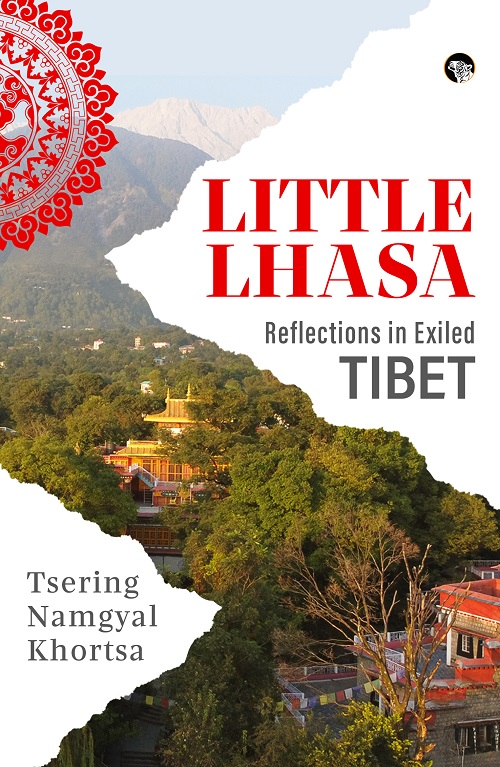
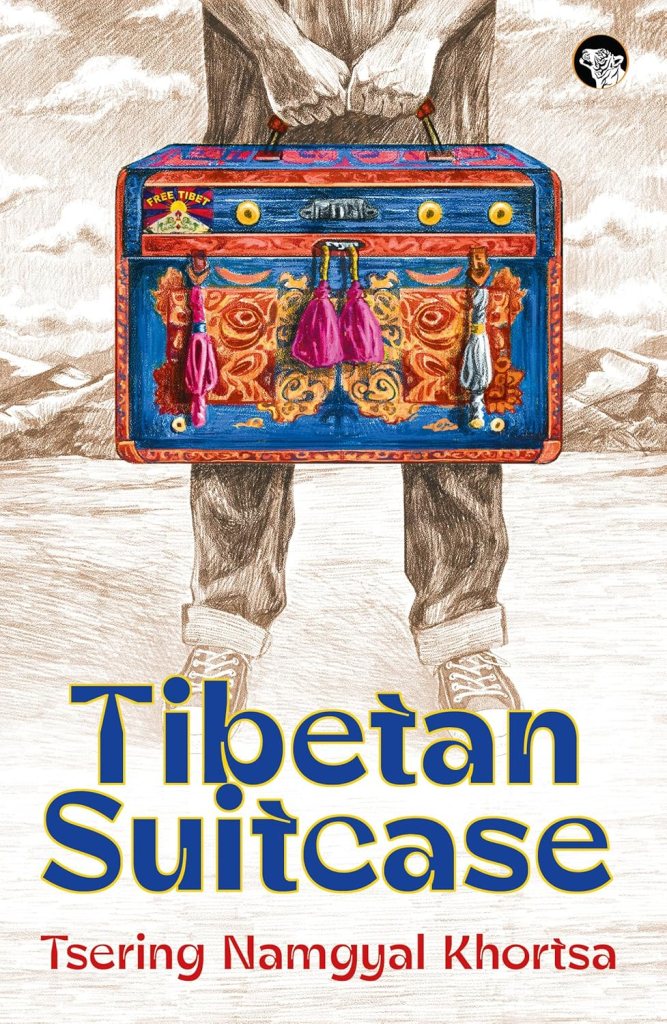



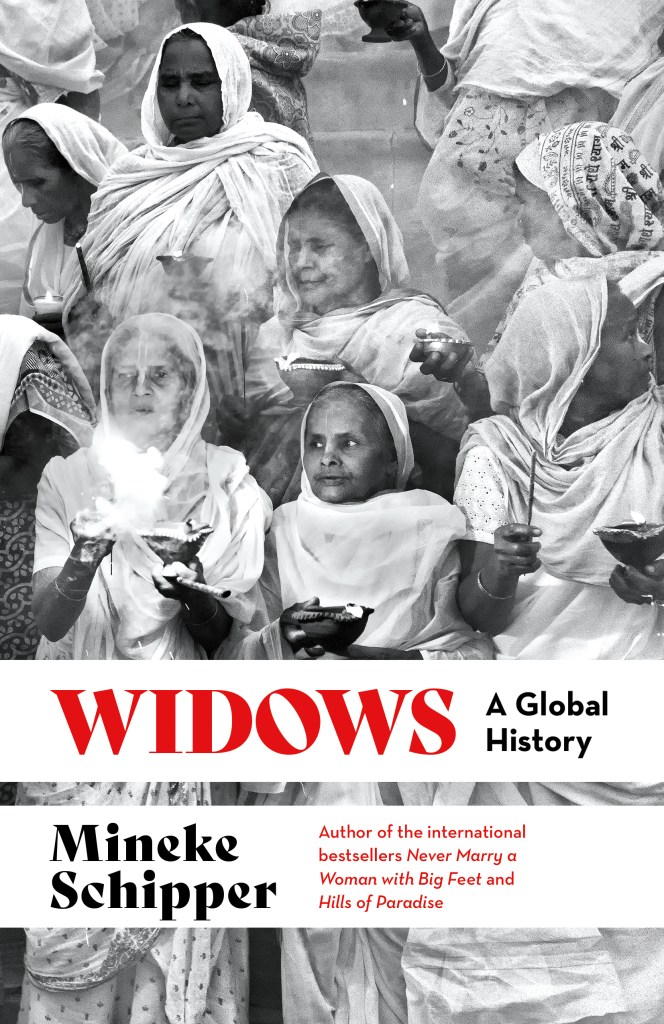

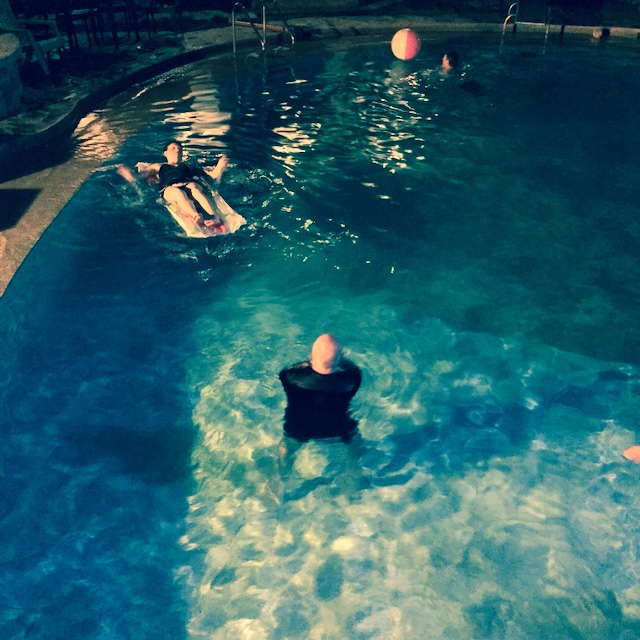
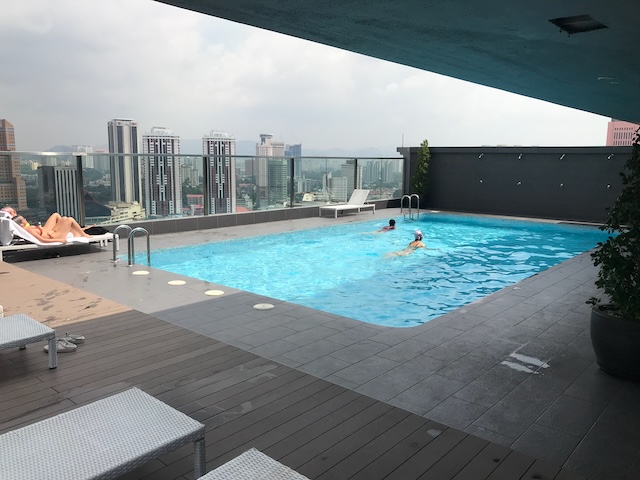
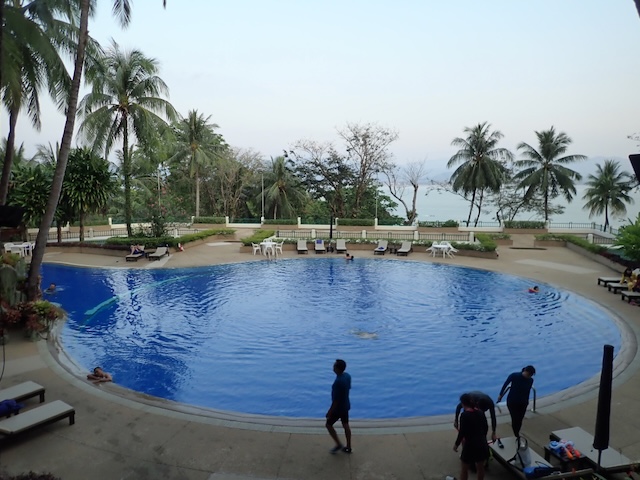

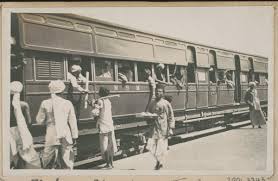

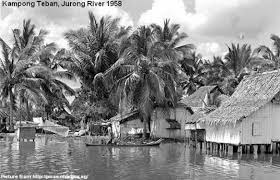




 Borderless