Ubud: Where Dean and Keith Stayed. Photo by Keith Lyons
So many questions remain about Dean. Many remain unanswered. Top of that list would have to be “Is Dean still alive?”, followed by “How and when did Dean die?”
But underlying all those questions about a gentleman I met in Indonesia in the late 2010s is the fact that I, along with many others who encountered him on the island of Bali, regard him as a ‘good man’ and miss his presence.
“Have you ever wondered if he is still alive but just can’t communicate?” suggested an associate; a possible scenario, given Dean was in his seventh decade on this Earth. “What would happen if he just turns up again? Wouldn’t that be funny?” another pondered.
I first met Dean a couple of years after I moved to the cultural heart of Bali, Ubud, a small town a couple of hundred metres above sea level, a place sometimes with its head in the clouds. When I moved into a room overlooking the rice paddies, just 10 minutes’ walk from the centre of town, I heard about Dean before I first met him in person. Staff mentioned the other ‘permanent’ residing in the neighbouring bungalow. Later that day, in the turquoise waters of the infinity pool that overlooked the gully cloaked in jungle, I saw a figure glide underwater from one end to the other, dive flippers giving the impression the creature was both extraordinarily tall and also well-suited to amphibious life.
Dean, as I was later to learn, was both frugal and generous. I never quite worked out if he was living off savings or a veteran’s benefit. Or if he served in the military or actively tried to avoid it. When I first met him on the pathway that connects our respective residences to the main path that straddles the accommodation and the rice fields, he told me how he would eat lunch at a local food stall, known as a warung, with it being as little as 10,000 rupiah — less than US$1 — for a simple rice-based meal.
He cared less for the plethora of cute Instagram cafes and foodie-recommended ‘must-try’ restaurants that catered to the tourists who thronged the central market and motorcycle-packed streets of Jalan Raya Ubud. Though, there was one exception. Every so often, sometimes to mark his arrival back from a visa-run to Malaysia (most foreigners living in Bali usually have to exit every three or six months depending on their visas), or at the end of his long stay, when he was about to travel elsewhere in south east Asia, as the end of year rainy season ramped up — then Dean displayed his munificence. He would treat the staff — and a few hangers on — to a calzone from a long-established pizza joint that prided itself on its secret sauce. Being a folded-over pizza, the fillings remain hot during its journey in the box on the back of a Honda Vario scooter.
I got invited to join in one of those calzone feasts. We sat under a long pagoda looking out across beyond the pool and jungle to the terraces and the ridge where silhouettes were just visible in the twilight. Dean was very much a global citizen, well-travelled, and scuba diving in almost as many countries as he had visited. He had worked as a dive instructor at schools and resorts. He still had with him equipment for aqua-living, along with other items stored in other places where he had lived and worked.
Just as scuba diving requires adherence to safe practices and procedures, Dean’s life on terra firma also followed routines and habits, which he hoped would ensure his longevity. One day he asked me to check an unusual skin condition with white patchiness on his upper arm, which he had convinced himself by Googling might be pre-cancerous. He was going to have it checked out, but on closer inspection, I thought it might just be a local fungal infection. Fortunately, it cleared up a week or so later, so he didn’t have to visit a clinic.
Because Dean seemed to live such an active life and appeared fitter and healthier than most of the visitors to Bali, it seemed like he was in a sweet spot: retired but active, living a simple life of contentment, sharing good vibes with all and sundry.
So, it was a surprise, after the COVID pandemic with its travel restrictions, that I didn’t hear from Dean, and later, concluded he must have left us. It was only a few months ago when I returned to Bali that the reality of his absence became more evident. When I visited, instead of my usual room at the end of the block overlooking the jungle, I was given the next upstairs bungalow, the one Dean usually stayed in.
Staff, as well as the former ‘manager’ and one of his closest friends, told me they hadn’t heard from him for more than a year. He’d moved to a coastal settlement, closer to the sea, and there were rumours he’d met someone. “Perhaps she was a gold-digger,” suggested his local friend, who I’ll call No. 4. “But I don’t think Dean had much gold for her to mine.”
As we sat under the gazebo, gazing out at the perfect postcard scene of harmony between humans and nature, No. 4 confided that if Dean had already died, he had a rather onerous duty. Dean had asked him to dispose of his body. I thought perhaps that the American might have requested a cremation ritual, common on the island, which has evolved a blend of Hinduism, animism, and Buddhism into a rich mix of ceremony and devotion. But no, instead, he had requested that No.4 deal with his bodily form in another way. “See those coconut trees,” No.4 pointed towards the tall palm trees in the gully, which rose high up to their crown canopy of green fronds sheltering its fruit orbs. “Dean wanted to be strung up in one of those.”
We talked about the practicality of somehow hauling his body up 25 metres or more, and then about what processes and creatures might consume his corpse. It was quite a natural way to go, we concluded, though we did wonder about the sight, smell and impact on other guests staying in the bungalows.
“Dean also had another option, he mentioned to me a few times,” said No. 4, who seemed troubled by the responsibility. Plan B involved Dean’s body being fed to the lions at Bali Zoo. Dean had obviously given this some thought, and it weighed heavily on No.4, not just his role as Dean’s body caretaker, but what the duty might entail.
The following evening, my last before heading back home, I invited No.4 and some of others who knew Dean to get together. Amid the chat and speculation, the cool drinks and spicy snacks, as the breeze picked up and swayed the coconut trees gently this way and that, we had an informal farewell to Dean. Another of his friends — let’s call him Guitar Man — nominated one coconut tree and reckoned with some rope it would be possible to string up a body. No one wanted to try calling Dean’s phone, so I did again, just to confirm it was true. The number was out of service.
Another who knew Dean, let’s call him TaxiMan, talked through what Plan B might involve: chopping up with a machete Dean’s corpse, putting it into bags, visiting the zoo during its 9am to 5pm opening hours, and either throwing the parts over into the lion’s enclosure, or joining the special ‘Lion Feeding’ session (US$5). “I can find out what times they feed the lions and tigers,” he said, having worked out the practicality of this option. No. 4 looked nervous. There was more risk attached with this option, not just from a lion’s fangs, but from the law. How would you explain bags of body parts?
Then, just in time, I heard the strain of the motor-scooter coming up the rise of the terrace towards our place. It was the pizza delivery guy bearing two boxes with calzones I’d ordered.
As for Dean, we still don’t know for sure if he has died. We don’t know the circumstances of his death, or what remains of his body. What we do know is that he is still cherished and remembered. And that there can be few better legacies than to have friends fondly recall a person with a blend of missing, gratitude, and humour.
.
Keith Lyons (keithlyons.net) is an award-winning writer and creative writing mentor originally from New Zealand who has spent a quarter of his existence living and working in Asia including southwest China, Myanmar and Bali. His Venn diagram of happiness features the aroma of freshly-roasted coffee, the negative ions of the natural world including moving water, and connecting with others in meaningful ways. A Contributing Editor on Borderless journal’s Editorial Board, his work has appeared in Borderless since its early days, and his writing featured in the anthology Monalisa No Longer Smiles.
.
PLEASE NOTE: ARTICLES CAN ONLY BE REPRODUCED IN OTHER SITES WITH DUE ACKNOWLEDGEMENT TO BORDERLESS JOURNAL.
Emil Cioran (1911-1995). Photo provided by the author
It was the summer of 2019. The hostels were empty. Vacation had begun, and most students had already left for their hometowns. I was to leave the next day. While packing, I suddenly remembered The House of the Dead by Dostoevsky, which I had lent to a senior months ago.
I walked to his nearly abandoned hostel block and knocked on his half-open door. The room was dark—uncannily dark for the middle of the day. Thick curtains strangled the sunlight, casting the room into a premature night. There he lay on the bed, flat on his back, a laptop balanced on his belly. He handed me my book and resumed the video he had been watching—with monastic focus—from the fifty-sixth minute. It was footage of a man slowly cutting down a giant tree with an axe. He had been watching it, second by second, without skipping. He didn’t pause even when I left.
That was the man who introduced me to Emil Cioran.
It was not until much later that I finally read him. The Trouble with Being Born opens at three o’clock in the morning with Cioran contemplating the futility of existence:
“Three in the morning. I realize this second, then this one, then the next: I draw up the balance sheet for each minute. And why all this? Because I was born. It is a special type of sleeplessness that produces the indictment of birth.”
The book proceeds as a collection of aphorisms circling around the nausea of existence and the idea of suicide as both temptation and reprieve.
Before I began to read his work, I tried to prepare myself by reading his biography and interviews. I wanted to understand the man behind the words, as if glimpsing his life might help me endure the weight of his thoughts. One such childhood story was telling. In an interview, Cioran confessed that when he was a child, one of his favourite pastimes was to play football with human skulls excavated by a gravedigger who was his friend. But little did he know at that time that what seemed like play was the seed of a lifelong fixation, depriving him of sleep, driving him to insomnia, in the hope of a long, never-ending slumber.
For Cioran, suicide was not a prescribed act but an ever-present possibility—a metaphysical escape hatch that bestowed dignity on existence. The mere awareness of this option granted him a strange form of freedom. The power of contemplating death, rather than executing it, was his way of wrestling with life’s meaninglessness. Suicide was philosophical, not prescriptive; a potential that loomed, yet never fully realised.
Yet one question persists: if Cioran saw life as an error and glorified suicide as the only coherent act, why did he never end his own life? His own words reveal the paradox:
“It is not worth the bother of killing yourself, since you always kill yourself too late.”
According to him, suicide comes too late to undo anything. The damage is already done. You’ve already suffered so much that ending it doesn’t fix anything—it merely ends an already exhausted life. By the time you do it, you’ve already endured the worst. You’ve already been broken, emptied, eroded by suffering. So, what’s the point? The act becomes redundant, even absurd.
At another moment, he offers a different angle, confessing his indecision:
“The energy and virulence of my taedium vitae continue to astound me. So much vigor in a disease so decrepit! To this paradox I owe my present incapacity to choose my final hour.”
Although Cioran ascribes his procrastination for suicide to his extreme weariness and boredom, yet, contrastingly, at another place, for him the power of ending one’s life is the greatest power.
“No autocrat wields a power comparable to that enjoyed by a poor devil planning to kill himself.”
This is the Cioranian condition: every insight undermined by its opposite, every aphorism shadowed by contradiction. He frames suicide as the ultimate sovereignty. The mere thought of being able to end one’s life surpasses the power of kings. And yet, he never exercised it. Instead, he transformed the possibility into philosophy, into aphorism, into art. His writing is not a system but an ongoing quarrel with himself. Instead of answering any particular question, his writings raise towers of new questions.
This tension, of circling but never arriving, defines his thought. He writes with precision, but his precision is not in building arguments―it is in dismantling them. Each aphorism is like a shard of glass: sharp, illuminating, but impossible to piece into a whole. Consider his reflection on sleeplessness:
“If there is so much discomfort and ambiguity in lucidity, it is because lucidity is the result of the poor use to which we have put our sleepless nights.”
Cioran knew the price of insomnia. To be awake at three in the morning is to be exiled from the world of the living, suspended in a state where thoughts spiral without conclusion. For him, insomnia was both torment and revelation. Perhaps, if Cioran had been able to sleep well, he might not have been trapped in this endless dialogue with futility. Instead, he lived in perpetual wakefulness, speaking to his own emptiness:
“No one has lived so close to his skeleton as I have lived to mine: from which results an endless dialogue and certain truths which I manage neither to accept nor to reject.”
“Once we appeal to our most intimate selves, once we begin to labor and to produce, we lay claim to gifts, we become unconscious of our own gaps. No one is in a position to admit that what comes out of his own depths might be worthless. ‘Self-knowledge’? A contradiction in terms.”
If, according to Cioran, true self-knowledge is not possible because we are too attached to our own depths and ego to judge ourselves truly, then there is no way he could have unearthed any truths about himself while living close to his emptiness (skeleton).
Cioran is, however, conscious of his contradictions. They were not accidents; they were his method. But are those contradictions a mirror of the thinkers he admired? In one of his aphorisms, he confesses:
“In the Orient, the oddest, the most idiosyncratic Western thinkers would never have been taken seriously, on account of their contradictions. This is precisely why we are interested in them. We prefer not a mind but the reversals, the biography of a mind, the incompatibilities and aberrations to be found there, in short those thinkers who, unable to conform to the rest of humanity and still less to themselves, cheat as much by whim as by fatality. Their distinctive sign? A touch of fakery in the tragic, a hint of dalliance even in the irremediable.”
Cioran points to that strange quality in writers like Nietzsche, Baudelaire or even himself-deeply tragic, but also stylistic, artful, and aware of the absurdities of their drama. For him, the appeal is not in the polished answers but in the drama of the doubt, in the visible struggle of a mind with itself.
Cioran is always in a perpetual state of perplexity. His thoughts are malleable. What is true for him today becomes obsolete tomorrow. And all this he has tried to betray through words. He knew his thoughts were mercurial, unstable. He confesses his extreme mental variability:
“I may change my opinion on the same subject, the same event, ten, twenty, thirty times in the course of a single day. And to think that each time, like the worst impostor, I dare utter the word “truth”!
Every time he pronounces a new opinion, he does so with the implicit suggestion that this one is right―that this is the truth. He accuses himself of a kind of fraud, i.e. knowing his judgments are volatile, yet he delivers them as if they were true.
Amidst all these contradictions and paradoxes, what, then, did Cioran truly long for? Because what he wishes for in one place, he rejects in the other. But there is one feeling, or a longing, that recurs throughout the book―a longing for a time before time, a time before creation. He speaks of it with yearning, as if for a paradise never lost yet never possessed.
“There was a time when time did not yet exist…. The rejection of birth is nothing but the nostalgia for this time before time.”
“O to have been born before man!”
This longing resonates the idea of what the Portuguese call saudade, a longing for something that never was or will never be attainable. Unlike nostalgia, which mourns a past that once existed, saudade is a longing for an unattainable ideal, a sense of melancholic absence that can only be evoked in poetry and art. This yearning captures the profound melancholy that saturates Cioran’s philosophy—a feeling that seeps like a grey mist into a distant blue sky. And yet he admits the impossibility of feeling it:
“It is impossible to feel that there was a time when we did not exist. Hence our attachment to the personage we were before being born.”
We cannot experience absence, so we cannot truly imagine our non-being before birth. In our memory and awareness, we’ve always been — we cannot step outside ourselves to picture a time when we were nothing. This is not a metaphysical claim, but a psychological one.
If Cioran were a simple nihilist, one who believed in nothing and cared for nothing, why would he write at all? Why invest thought and feeling into a world he found so painfully absurd? The answer lies in his profound sensitivity. Cioran was a nihilist who felt too much. He was wounded by life. Writing, for him, was both a compulsion and a failure. Cioran was a master of paradox. He despised life yet wrote nine books about it. He dismissed language as futile yet clung to words as his only tool. He longed for silence yet confessed:
“We write books because we are ashamed of not having been able to remain silent.”
Writing was a failure to keep still in the face of futility. Yet silence was a greater failure, an impossibility. Thus, he turned his torment into words. For him, each book was a kind of reprieve. Perhaps, his most telling aphorism is this:
“A book is postponed suicide.”
For him, writing a book symbolised a form of delayed self-destruction or self-sacrifice, where the author channels inner turmoil into the work and thus postpones an existential “death”.
On a similar note, he explains the need for language, the need for writing.
“The more injured you are by time, the more you seek to escape it. To write a faultless page, or only a sentence, raises you above becoming and its corruptions. You transcend death by the pursuit of the indestructible in speech, in the very symbol of nullity.”
Language itself, for Cioran, is paradoxical. It is both empty (words are mere signs, lacking substance) and the only tool we have to approach the eternal. So even while writing may seem futile or illusory, it’s also the only space where something indestructible can be momentarily glimpsed.
The Cioranian paradox yet again comes into the picture, where he proclaims:
“One must be mad or drunk,” the Abbe Sieyès said, to speak well in the known languages. One must be drunk or mad, I should add, to dare, still, to use words, anyword….”
In his earlier aphorisms, he advocates for the meaning or use of writing, but then in the following aphorisms, he expresses the futility of writing, or words, of language itself. To use language sincerely is itself madness. If words distort, then every attempt to write is a betrayal. And yet he could not stop writing. This was the paradox that sustained him.
In the book, Cioran traces this disposition back to his family:
“Every family has its own philosophy. One of my cousins, who died young, once wrote me: ‘It’s all the way it’s always been and probably always will be until there’s nothing left any more.’”
Whereas my mother ended the last note she ever sent me with this testamentary sentence: “Whatever people try to do, they’ll regret it sooner or later.
“Nor can I even boast of having acquired this vice of regret by my own setbacks. It precedes me, it participates in the patrimony of my tribe. What a legacy, such unfitness for illusion!”
Cioran interjects with irony: he can’t even take credit for being regret-prone as a result of his own failures. It’s not just personal experience that made him this way—regret runs deeper; it’s not biographical but ancestral.
Yet Cioran was not only drawn to grand despair. He had a peculiar love for the banal, the ordinary, and the infinitesimal things in our everyday life. Like Georges Perec’s concept of the “infraordinary”―the unnoticed texture of daily life―Cioran wrote:
“The intrinsic value of a book does not depend on the importance of its subject (else the theologians would prevail, and mightily), but on the manner of approaching the accidental and the insignificant, of mastering the infinitesimal. The essential has never required the least talent.”
“No true art without a strong dose of banality. The constant employment of the unaccustomed readily wearies us, nothing being more unendurable than the uniformity of the exceptional.”
For him, the ordinary was not a distraction from philosophy but its truest field.Emil Cioran was also deeply influenced by the Eastern philosophies of Hinduism and Buddhism. He often returned to the idea of renunciation and detachment:
“It is trifling to believe in what you do or in what others do. You should avoid simulacra and even ‘realities’; you should take up a position external to everything and everyone, drive off or grind down your appetites, live, according to a Hindu adage, with as few desires as a ‘solitary elephant’.”
“I am enraptured by Hindu philosophy, whose essential endeavor is to surmount the self; and everything I do, everything I think is only myself and the self’s humiliations.”
And yet, while he admired Buddha’s teachings on suffering, he could not detach himself from his own disappointments:
“My faculty for disappointment surpasses understanding. It is what lets me comprehend Buddha, but also what keeps me from following him.”
Cioran is the kind of person who is aware of his suffering, knows the cure, but won’t take the medicine because the illness has become who he is. For him, disappointment is instinctive, all-consuming and more intimate than thought itself. Since Buddha taught that life is marked with Dukha (suffering/disappointment), Cioran feels connected to Buddhist philosophy, but he cannot follow that path because to follow Buddha requires detachment, letting go of even disappointment, which Cioran cannot do.
Cioran also reflects on a peculiar way to cope with life’s anxieties. He says:
“In order to conquer panic or some tenacious anxiety, there is nothing like imagining your own burial. An effective method, readily available to all…”
This aphorism resonates directly with the Hindu practices, as especially embodied in Banaras (Varanasi), where the city itself is a living memento mori, where cremation fires at Manikarnika Ghat never extinguish, and death is not hidden away but displayed as part of life. In Varanasi, the pilgrims are encouraged to watch the burning pyres, not to indulge morbidity but to confront impermanence directly. But even here, he reminds us of the futility of origins:
“The emphasis on birth is no more than the craving for the insoluble carried to the point of insanity.”
He knows that obsessing over the question of birth, of life, is futile, insoluble and unanswerable. To take this obsession with origins, with life’s beginning, so seriously — to revere it, to found ideologies or hope on it — is, for Cioran, madness. It means you are so committed to wrestling with the unanswerable that you’ve abandoned sanity. It’s a form of spiritual masochism: continually turning to the one question — Why was I born? — that has no satisfying answer.
A man who spent all his life thinking about the tragedy of birth, the futility of life and the meaning of death confesses at one point in the book that he has known nothing new in all his later years that he knew when he was young. All his thinking, the sleepless nights, the anxiety and the dread have contributed nothing to further his knowledge. In his own words:
“What I know at sixty, I knew as well at twenty. Forty years of a long, superfluous, labour of verification.”
Despite all of Cioran’s nihilistic or dark thoughts, he granted failure a strange dignity:
“This is how we recognize the man who has tendencies toward an inner quest: he will set failure above any success, he will even seek it out, unconsciously of course. This is because failure, always essential, reveals us to ourselves, permits us to see ourselves as God sees us, whereas success distances us from what is most inward in ourselves and indeed in everything.”
“Failure, even repeated, always seems fresh; whereas success, multiplied, loses all interest, all attraction.”
In this sense, he inverts conventional wisdom: failure is not defeat but a revelation, a mirror of the self, stripped of illusion.
The Trouble with Being Born is not an easy read. The book is a constant rumination and meditation on the bliss of nonexistence, the deep nostalgia for a state before being, before consciousness, before identity. There is an uneasiness, an anxiety, a restlessness and an unknown dread that creeps in and grows with every sentence one reads. It has the potential to scratch the old wounds of one’s soul, which one has forgotten. Yet, if one reads and analyses the aphorisms from a distance with a particular perspective, it can also provoke laughter―the laughter of someone who has stared too long at the abyss and found it absurd.
Emil Cioran is like a chess master, and each of his aphorisms is a calculated move. For every aphorism that he mentions, he has already anticipated the reader’s move. He has anticipated every question, especially the most obvious one, why he did not kill himself and his reply is already there.
Reading Cioran is like walking into a fog. Every sentence brings a chill of recognition, but also a deeper uncertainty. He lived next to his emptiness, befriended it, argued with it, laughed at it—and wrote it down. He is frustrating. He contradicts himself. He writes aphorisms that sound like suicide notes, only to retract them with a smirk. But that is the trouble with Cioran. He lived. He wrote. He suffered. And somehow, he made it all sound beautiful.
And perhaps that’s the final paradox: the man most disillusioned with life gave us one of its most enduring voices.
After reading him, I’ve come to admire Cioran because, to me, he is like a mathematician devoted to solving the equation of life and death. Every variable, every permutation and combination, has passed through his mind; the possibilities now stand exposed on the blackboard, supporting and undermining one another in turn. The solution, if it exists, hovers just within sight—yet he chooses to work through it endlessly, not in pursuit of an answer, but in devotion to the act itself. He is a modern Sisyphus, who has not merely accepted his fate, but learned to love the rolling of the boulder, again and again, to the mountain’s top.
Satyarth Pandita is a PhD student at the National Institute of Mental Health and Neuro Sciences (NIMHANS), Bengaluru. He completed his dual degree, a Bachelor of Science and Master of Science in Biological Sciences (major) and Humanities and Social Sciences (minor), at the Indian Institute of Science Education and Research Bhopal (IISERB). His works have appeared in various newspapers and periodicals, including The Quint, OutlookIndia, The Wire, Madras Courier, Borderless, and Kitaab, among others.
Links to Satyarth’s published works, email address and social media handles can be found here.
.
PLEASE NOTE: ARTICLES CAN ONLY BE REPRODUCED IN OTHER SITES WITH DUE ACKNOWLEDGEMENT TO BORDERLESS JOURNAL
Title: Return to Sri Lanka: Travels in a Paradoxical Island
Author: Razeen Sally
Publisher: Simon & Schuster India
Sri Lanka’s culture is characterised by several paradoxical aspects that reflect its rich history, diverse population, and the complexities of contemporary society. Here are some notable contradictions: Home to various ethnic groups, including Sinhalese, Tamils, and Muslims, each has its distinct languages and traditions. However, there is a prevailing sentiment among some that prioritises Sinhalese culture over others, leading to tensions and conflicts regarding national identity and rights.
While Sri Lanka has a history of female activism and women hold significant positions in politics (e.g., former President Chandrika Kumaratunga), gender inequality persists in many sectors. Women often face societal pressures that limit their roles despite their contributions to the economy and community. The tiny country has made strides in economic development and infrastructure, yet significant poverty remains, particularly in war-affected regions like the North and East. This disparity highlights the uneven benefits of economic progress across different communities
The island is also known for its religious diversity, with Buddhism, Hinduism, Christianity, and Islam practiced by its citizens. However, this coexistence is often marred by sectarian violence and discrimination, particularly against minority groups during political upheavals.
As Sri Lanka embraces globalization and modern influences, there is a tension between adopting new lifestyles and preserving traditional customs. This cultural clash can lead to generational divides within families and communities.
Razeen Sally’s book, Return to Sri Lanka: Travels in a Paradoxical Island, explores these complexities and contradictions. The memoir combines personal narrative with historical and political analysis, offering readers an immersive journey through various regions of Sri Lanka—from the bustling capital of Colombo to the tranquil beaches and verdant hill country. Sally reflects on his childhood experiences while addressing the island’s tumultuous history, including its colonial past and the long-lasting effects of civil war.
Razeen Sally, the son of a Sri Lankan Muslim father and a Welsh mother, was raised in Colombo and educated in the UK. After teaching at the London School of Economics, he now teaches at the Lee Kuan Yew School of Public Policy in Singapore. In his early forties, he felt a strong urge to return to Sri Lanka for the first time since childhood and has spent the past ten years exploring the island.
Sally viewed Sri Lanka as a paradise during his childhood, but conflict soon disrupted their lives, fracturing his family’s connection to the island. Return to Sri Lanka tells the story of his journey towards reconciliation in the twenty-first century, as Sally, now an academic and political adviser, revisits his birthplace. This travel memoir addresses significant political issues and is rich in beauty and profound reflections, written by someone who feels like both a local and a visitor.
The words, “Paradoxical Island”, in the title encapsulates the duality of Sri Lanka, where hospitality coexists with high rates of violence and societal divisions. Despite interactions among ethnic groups like Tamils and Sinhalese, underlying tensions often surface, revealing deep-seated issues regarding rights and representation.
Sally provides insight into how historical events, such as the policies of successive governments and the impact of colonialism, have shaped contemporary Sri Lankan society. He discusses significant political figures and movements while critiquing policies that have led to economic challenges, including a brain drain among educated youth.
The book highlights Sri Lanka’s diverse cultural landscape, examining how various religions and ethnicities contribute to both its charm and its conflicts. Sally emphasises the importance of understanding these dynamics to appreciate the island’s true essence.
Return to Sri Lanka is not just a travelogue but a profound exploration of a nation grappling with its identity. Sally’s reflections offer hope for reconciliation and progress, urging readers to engage with Sri Lanka’s complexities while appreciating its inherent beauty. These paradoxes illustrate the complexities of Sri Lankan culture, where historical legacies continue to shape contemporary realities, creating a vibrant yet challenging social landscape.
Bhaskar Parichha is a journalist and author of Cyclones in Odisha: Landfall, Wreckage and Resilience, Unbiased, No Strings Attached: Writings on Odisha and Biju Patnaik – A Political Biography. He lives in Bhubaneswar and writes bilingually. Besides writing for newspapers, he also reviews books on various media platforms.
.
PLEASE NOTE: ARTICLES CAN ONLY BE REPRODUCED IN OTHER SITES WITH DUE ACKNOWLEDGEMENT TO BORDERLESS JOURNAL
Farouk Gulsara discussed William Dalrymple’s latest book
Growing up in the later part of the 1970s, kids of my generation were drilled with stories that India was a subcontinent of poverty, filth, and pickpockets. Even our history books taught us that it was a land of darkness, living in its myths, superstitions, and cults, waiting to be civilised by the mighty European race and their scientific discoveries.
That was what was impressed upon us as we sauntered into adulthood. The media did not help either. With eye-catching news like a particular Indian Prime Minister having his daily dose of gau mutra[1] for breakfast and another ousted after thirteen days of taking oath as the Prime Minister, India was made out to be just another third-world country. Then came the 21st century and the turn of tides. Locally bred academicians started teasing deeper into India’s forgotten history. They started doubting the self-deprecating history that was taught to them by leftist historians in the textbooks.
Like many historians before him, historian William Dalrymple, in his latest book, The Golden Road: How Ancient India Transformed the World outlines the importance of India as a cradle of knowledge that peddled wisdom to regions near and far. Its scientific knowledge was far ahead of its time. This know-how was put into practice and spread via trade routes. Their port of entry received not just their goods but also their culture and way of life.
Enduring attack after attack from foreign invaders, Indians had already forgotten their glorious past by the time of the British Raj. A tiger hunting expedition inadvertently brought British hunters to various beautiful cave carvings and Buddhist sculptures. That kind of rekindled India’s history, which had disappeared from the Indian imagination.
India had been a crucial economic fulcrum and a civilisational engine in early world history. As early as 31BCE, Indians had learnt to manipulate the monsoonal winds to steer their ship to the West to the prosperous kingdom of Ethiopia, Egypt and subsequent access to the Mediterranean. With their mammoth merchant ships, they transported pearls, spices, diamonds, incense, slaves and even exotic animals like elephants and tigers in exchange for gold. Trade favoured India so much that a Roman Naval Commander, Pliny the Elder, lamented the unnecessary spicing of the food and the almost transparent Indian fabric that left nothing to the imagination. It is said Buddhism reached the shores of Egypt through these ships. The Christian monastic way of life is said to have been influenced by these monks.
With seasonal monsoon winds, Indian ships brought not just trade but philosophy, politics, and architectural ideas to Southeast Asia, China, and even Japan. All this cultural allure and sophistication did not happen through conquest. Sanskrit was the language of knowledge and a conduit for spreading knowledge.
Buddhism emerged in the 5th century BCE as an alternative to caste-centred and animal sacrifice-filled rituals. Unlike Jainism’s strict austerities, it offered a middle path. Due to King Ashoka’s untiring efforts, Buddhism spread beyond its borders. Contrary to the belief that Buddhism promotes an impoverished way of living, early Buddhists drew interests (and resources) from the merchant group, as evidenced by the Ajanta Caves’ findings. Buddhism drew many Chinese scholars to India’s centres of higher learning in Nalanda and Kanchipuram in the South to get first-hand experience reading Buddhist scriptures in Sanskrit. India’s universities later became the template for other varsities the world over.
Ajanta CavesAjanta Painting inside the caveFrom Public Domain
India’s cultural influence on South Sea Asia is phenomenal. Stories from Indian epics, Ramayana and Bhagvad Gita, are told and retold in children’s stories, plays and cultural art forms. Their ruling elites were Hindus. The biggest Hindu and Buddhist temples are not in India but in Cambodia and Java, respectively, as Angkor Wat and Borobudur. Marvellous stony statues and temple are similar to those in India. At a time when the Byzantines were presiding over Europe, the Suryavarman clan was ruling a Hindu Empire so huge it would dwarf their European counterpart.
The 5th to 7th century of the common era was the golden age of Indian mathematics. Between Aryabhata and Brahmagupta, their knowledge of the nine-number system (and zero) brought them the know-how of negative numbers, algebra, trigonometry, algorithms and astronomy far ahead of their time. They understood that Earth was a sphere spinning on its axis, about the eclipse, gravity and planetary rotations. The Indians even built a space observatory tower in Ujjain to study constellations and devise a solar calendar. The idea of a prime meridian arose from here.
In the 8th century, the Abbasids exerted control over the Afghanistan region through treaties with local viziers. At that time, the Bamiyan region in Afghanistan had over 460 monasteries and 10,000 monks. A member of an influential Buddhist family, the Barmakid, converted to Islam to establish his family in the Abbasid fold. They brought Indian medicines, texts, and scholars with them and encouraged and promoted Islamic engagement with the East. Sanskrit texts were translated into Arabic. It is said that the Barmakids were instrumental in the building of Baghdad.
The Islamic hegemony spread, as did the scholarship it had built.
The Bamakid-Abbasid liaison met a tragic end due to palace power dynamics. The Abbasids started looking at the Romans for inspiration. Many Europeans were drawn to the Golden Age of Islam. Many texts were translated into Latin. Toledo of Andalusia introduced the science of timekeeping from Ujjain to Oxford. A particular young Italian named Leonardo of Pisa picked up the beauty of Mathematics during his stay in Algeria. He returned to publish ‘Liber Abaci‘ (The Book of Calculation) in 1202, which introduced Europe to the sequence of Fibonacci numbers and the mystic power of mathematics. This sudden gush of knowledge spurred the European Renaissance.
First published in 1202, Liber abaci was one of the most important books on mathematics in the Middle Ages, introducing Arabic numerals and methods throughout Europe. Its author, Leonardo Pisano of Pisa is known today as Fibonacci .Stature of Fibonacci (1170-1240/50) in PisaFrom Public Domain
The whole cycle completed its full arc when European powers rose to great heights. Benefitting from the knowledge from India that layered its way through, passing from hand to hand, the colonial masters returned to chop off[2]the hands that had nourished it.
Emerging rejuvenated from their occupation-induced slumber, with their Anglophilic familiarity, Indians have risen from the ashes to claim their status in the Indosphere[3], a world where Indian influences permeated every layer of society.
This well-researched, unputdownable book is for all history buffs. Infused with little nuggets from cover to cover that would excite nerds, it is a joy to read about the history of India in a way that is not often told in the mainstream.
[1]Gau mutra, cow urine, has a sacred role in some forms of Hinduism and Zoroastrianism and is used for medicinal purposes and in some Hindu ceremonies.
[3]Indosphere is a collective linguistic term for areas under Indian linguistic influence. It includes countries in the Southern, Southeast, and East Asian regions. 22 languages, including Indo-European and Dravidian languages, are recognised under this category and are considered to have originated in India.
Farouk Gulsara is a daytime healer and a writer by night. After developing his left side of his brain almost half his lifetime, this johnny-come-lately decided to stimulate the non-dominant part of his remaining half. An author of two non-fiction books, Inside the twisted mind of Rifle Range Boy and Real Lessons from Reel Life, he writes regularly in his blog, Rifle Range Boy.
.
PLEASE NOTE: ARTICLES CAN ONLY BE REPRODUCED IN OTHER SITES WITH DUE ACKNOWLEDGEMENT TO BORDERLESS JOURNAL
Rajorshi Patranabis shares the philosophy and lore of Wiccans
What, if I say that 68% of the universe is dark? Well, this is not my statement. This is a scientifically proven fact. What is there inside the darkness? Sceptics will say, let science find it out. The spirituals will say there’s mysticism. A Wiccan will say there’s mystical magic. Magic, as in common parlance is entertainment, in Wiccan philosophy, it’s the basis of existence. Magic can be best explained as something that’s occurs yet cannot be fathomed.
The term, Wicca, came was popularised by Gerald Gardiner with his books. Many said, it was misogynistic. To be fair to him, 1925 was not as open as it is today, as far as societal norms were concerned. It is more accepted today. I, a practicing Wiccan, follow a way that is more open, more aligned to nature, supernature and the supernatural. What I follow was introduced into India by Ma’am Ipsita Roy Chakraverti.
While this movement may well be termed as historically the first ever feminist movement, the pagan practices involved are more than a thousand years old. Ritualistic worshipping of nature is seamlessly integrated into Wiccan practices. The ancient knowledges that had trickled down through generations are put together in the modern Wiccan practices. Wicca is a philosophy, and I detest calling it a religion. Here, we don’t believe, we seek. We use the knowledge to try and to unfathom mysteries that lie within the dark spheres of nature. Albeit, a miniscule bit, but we do delve into that 68% of darkness, once in a while.
From shamanism to voodoo, from the ancient Egyptian ways of healing to the 64 yoginis, this school covers every way by which the human soul and body can be healed. They say the basic apothecary of life is to align oneself to the directions given by nature. Manifestation of the female power of nature (shakti) forms the essence of this philosophy. The mind, the body and the soul form the complete sphere of the universe. Wicca believes that nothing is inanimate and that everything has a consciousness draped in a veil of conscience.
Everything that’s around us has been derived from this planet, and if this planet is living, Mother Earth is living, then, everything that comes out of it is also living. As the Law of Conservation of Energy says, the total energy is constant, it can neither be created, nor be destroyed. Hence, the body might change, the forms change but the energy remains. Energy is eternal. The metamorphic energy inside a human body that has derived its form mostly from the magnetic or the electric energies of this planet is called the soul. The soul thinks and decides with the mind and the body giving them a presence. A purified soul is the spirit and when this spirit raises itself to survive in unison with the nature, we call that person spiritual.
Chakraverti says every strong woman is a witch. The word ‘witch’ comes from the old English word ‘wik’, which means wise. A female spirit is more nuanced, stubborn, flexible and erudite. A witch is that wise woman who takes on her challenges head on. A witch or a wizard work on the same footing of aligning mankind to the deluges of nature to heal the spirit, the mind, which in turn takes care of the body. Historically, a Wiccan considers Joan of Arc, Robin Hood, Noor Jehan as witches / wizards. Witches were killed at a point due to patriarchal fears of powerful women. These women had been portrayed as negative women in many of the kindergarten folklores.
The Greek goddess, Diana, was worshiped by Wiccan by Budapest Wiccans. Did she metamorphose to Dayaan[1], when she travelled east? Dayaans were to be feared, to be killed if possible. We have come a long way, no doubt, but sporadic news of such killings are still rampant.
There are also certain myths about witches, one being, flying on the broom. The broom is symbolic of cleanliness — cleaning a society of the cobwebs of false beliefs and weak minds. Broom becomes synonymous with power. Flight is of the spirit. A potent spirit reaches places in such time that the body can never think of. There are innumerable examples of saints and sages being spotted at two or more places at the same time. Advanced Wicca philosophy is inclusive of the powers of Hatyoga and Tantra.
Wiccans are the worshippers of the mother Goddess Isis of Egypt. She’s the moon Goddess and the wife of Lord Osiris, the lord of the dark world. She’s the quintessential witch, the Goddess of magic, the Goddess of strength. Indian Wiccans are influenced by forms of Shakti known as Kamala and the Bhubaneswari. The most ancient traces of worship of the raw female power of nature can be found in Kali. Wiccans are also influenced by the Tibetan Tara and the concept of Dakini (the divine witch).
The basic Wiccan principle of worship is through sound vibrations. Chants take the centre stage. Chants of Buddhism are also regularly practiced as are those of Vodun faith with drumbeats. Healing is practiced with chants, as was a common practice in ancient Egypt. The sound of the singing bowl is potent in helping heal.
They have tools that help focus energies of the Earth. Some sound like falling rain. Then there are stones, as in a crystal, a rose quartz, an obsidian, the lapiz lazuli and so on. But the most important tool is the Athame. This is a blunt long knife that is charged and is used to tap the powers of the nature.
One of the oft asked questions is do Wiccans delve into the ‘other dimension’? Physicists have claimed for long, the existence of a celestial plane. Scientists have even said, that, there is a time difference between the celestial and the terrestrial plane. Dreams are said to be in the celestial plane, and hence, time moves differently in dreams. But in effect all humans would have had a brush with the two worlds through dreams. Wiccans believe the veil between the two worlds becomes very thin in autumn. Thus we have All Soul’s Day, Halloween, Bhoot Chaturdashi (holy night of the ghosts) all around the same time, in the autumn of the Northern hemisphere.
I would like to share a few supernatural experiences that I have had myself. These are all first-hand experiences, and I share them with no intention to influence the readers.
A psychic expedition at the Rabindra Sarovar Lake in Kolkata at around 9.30 am on a November morning revealed a figure in my camera. The lake was the psychiatric hospital for the American Soldiers during the 2nd world war. The spirit communicated with us and what could generally be fathomed was, ‘ 1942, Michael James, Death nail through my heart’.
Another time, I rode in an e-rickshaw with someone who had crossed over 20 years before. The driver was very much in congruence with my story when he said, he takes a ride every other evening. This place is a traditionally haunted village in East Midnapore district of West Bengal, India. And yet again, at one of the famous 5-star hotels in Delhi, I could feel someone removing the sacred thread[2] from my body.
I can go on and on. But when it’s Wicca, it’s the strength of Isis that needs to be manifested for healing. And as a true Wiccan, I take leave with, Tebua Netr Anset (You’re the Isis, we know).
[2] A thread worn by Brahmins after they go through an initiation ceremony in their teens.
Rajorshi Patranabisis a poet, critic, reviewer and translator. A Wiccan by philosophy and belief, he is a food consultant by profession with 10 books of poetry and 4 books of translation.
.
PLEASE NOTE: ARTICLES CAN ONLY BE REPRODUCED IN OTHER SITES WITH DUE ACKNOWLEDGEMENT TO BORDERLESS JOURNAL.
Shailaja woke up reluctantly with the phone alarm at six in the morning and switched on the pump. The first day of the odd semester! She hadn’t got much sleep, but she was still looking forward to meeting the students. She had worked quite hard in the vacation: reading Gone with the Wind, word by word, and photocopying and collating secondary material. Preparing for the new course on popular fiction had given her an insight into romance; teaching it would be therapeutic, she told herself firmly.
The morning passed too quickly with the ever-voluble Rajni ki Ma[1]. She laid out Shailaja’s green chiffon sari on the bed. A gift from Ranjan in a previous life! Or had it been just last year?
‘Didi, wear this today,’ she commanded.
‘I have to go to college. This sari is thin and transparent. It is for the evening.’
Rajni ki Ma started off another tirade about single women dressing like widows and driving away men from their doorsteps.
‘One should not fight all the time. It can’t be his fault totally. Can one clap with one hand? After all, he came and gave the car, didn’t he? Who gives away something so expensive! You could have talked to him, offered him something to eat. There was enough food and I could have made more. As it is, you people eat so little…’ She went on. Shailaja thought she had a point but she still hung the sari back in the wardrobe and took out a yellow salwar and a grey kurta instead.
Rajni ki Ma made a face. ‘Uh, not even matching. Other madams have everything matching, even sandals. Buy some new clothes, no!’
Shailaja emerged from her new home. She felt young—about five years old. The poha[2]Rajni ki Ma had prepared for her—the Maharashtrian way, with peanuts, curry leaves and a dash of sugar—had been piquant with green chilies. She really enjoyed breakfast in spite of the heartache. Her class began at ten-thirty. It was a good forty-minute drive from Vasant Kunj to college. Shailaja shot out of the parking; it was ten already.
But then she had to brake rather precipitately. A huge water tanker was squatting right outside the parking in the middle of the narrow road to the colony gate. What was she to do? As usual, there were cars parked on both sides of the lane all the way till the gate. The parking areas inside the colony were woefully inadequate to contain the Indian automobile revolution that had resulted in two-three cars per flat. With the tanker standing where it was, it was a complete roadblock. In fact, the sides of the tanker were brushing the parked cars on both sides. Shailaja honked. A woman resplendent in a parrot-green dressing gown appeared from the thicket at the side of the road. ‘Two minutes, Madam,’ she said.
Shailaja noted that the huge pipe that emerged from the underbelly of the tanker and vanished into the hedgerow was vibrating. It was dispensing water into one of the monstrous black storage water tanks behind the hedgerow. The tanker was, no doubt, from the state water department and had been sent to pacify the irate residents. Water was supplied for only half an hour that morning.
Another woman in a frilly pink nightgown arrived on the scene and said to parrot-green, ‘I called the tanker. How is it that you are taking water before me?’
It was Mrs Gandhi underneath the pink frills. But she did not even look at Shailaja. She was busy holding her own with parrot-green.
‘If you keep sitting inside having tea, the whole world is not going to wait for you,’ parrot-green attacked.
‘I had called the tanker,’ repeated Mrs Gandhi.
‘So what, I had called him yesterday and the day before, and you took water before me both days.’
Shailaja stuck her head out of the window. ‘Nilima-ji, it’s me.’
‘There is not a drop in my home, and Mr Gandhi has to leave for work,’ she said turning to Shailaja at last.
Mr Gandhi? Husband… Wow! ‘So do I, Nilima-ji. I have work too. My class begins in twenty minutes,’ said Shailaja poking her head out further. ‘Please move the tanker and let me pass.’
Both the women looked askance. ‘Not a drop of water,’ repeated parrot-green.
‘This is emergency, Shailaja. One day the children can wait for five minutes,’ said the betraying Mrs Gandhi.
‘You know I teach in a college. And can’t the water wait five minutes?’ Shailaja persisted.
‘No, it can’t. Why should we ask the tanker to move? He got here first,’ replied parrot-green querulously.
‘I will lose my job,’ Shailaja pleaded.
‘Teachers in Delhi University are always late,’ said the treacherous Mrs Gandhi as her partner-in-crime nodded her agreement. ‘Nobody ever loses job. You only said!’
‘That’s not true. Like in every other job, there are some who are conscientious and others who aren’t,’ replied Shailaja, cursing herself for bitching about her colleagues to all and sundry.
‘It is a good job for women,’ conceded parrot-green. ‘You’re a woman. You must understand the kind of problems one can have without water,’ she continued in a sisterly way.
‘I’m not telling you to not take water; I’m only requesting you to let me pass. Where is the driver?’ said Shailaja, feeling a little desperate now.
‘How do I know? He must be around,’ replied parrot-green.
‘Don’t get so impatient, Shailaja. Try and see it from Mrs Malhotra’s point of view,’ said Mrs Gandhi brokering Buddhist peace. She had been nattering about her ‘new way of worship’ all through summer.
By then, there were three cars honking behind Shailaja. Somebody yelled, ‘Which so and so is blocking the road today?’
Mrs Gandhi and parrot-green looked at each other and, in unspoken agreement, disappeared behind the hedgerow like exotic birds startled by rude tourists in a bird sanctuary.
‘Nilima-ji, I will get very late,’ whined Shailaja but she was talking to thin air.
A man strode out of the car, ‘Inconveniencing everybody!’ he hollered. ‘Blocking traffic at ten in the morning! Driver!’ he called.
Nothing happened.
‘Whose tanker is this?’ The man demanded.
‘There were a couple of ladies here a minute ago,’ said Shailaja, trying to help.
The man gave her a scornful look. ‘Mrs Gandhi!’ he growled. ‘She seems to have a swimming pool in her flat. Water came for an hour in the morning; still this truck from Jal Board has to be called!’
‘I think the water came for just half an hour this side. There was also this other woman, Mrs Malhotra… In fact, she was taking water,’ the ever fair and loyal Shailaja tried to explain.
The man paid no attention to her. He walked to the tanker and turned off the water supply; the fat tube stopped vibrating. Shailaja wondered about him, obviously a man of consequence. His tummy protruded so confidently, like that of her college principal. A thin boy emerged from the thicket. He looked about fifteen.
‘Move the tanker, you…. Next time I’ll get you arrested,’ the man commanded.
The boy jumped into the driver’s seat and the tanker began to roll back.
Law of inertia: roadblocks in Vasant Kunj don’t move without the use of rude force.
I should have got out of the home earlier, rued Shailaja. She would be very late.
Law of inertia: Rajni ki Ma won’t stop unless there is an equal force against her.
She was trapped between the home and the world, powerless, helpless! Panic had her stomach in knots, the road seemed to rise to block her way, the trees on either side gesticulated menacingly. The big tanker was challenging her to pass from the narrow alley that it had created by rolling back just a couple of feet. The car behind her was honking. She breathed deeply, released the clutch and wove her way around the monster. The car nipping at her heels seemed to snort derisively at her lack of expertise.
She had learnt driving just a couple of years ago; Ranjan’s driver had taught her. They had bought a second-hand car for her commute to college. She hadn’t used her skill much because the driver was usually free to drop her to college in Ranjan’s brand new sedan. But at least she could drive and had a car, Shailaja told herself, in an unconscious echo of Mrs Gandhi’s Buddhism.
Three women try Buddhist chanting, activism, and fermented drinks of various kinds to make sense of their fast-changing worlds.
Shailaja, abandoned but lovelorn, wistfully teaching romance in a Delhi University college; Mrs Gandhi, plump and garrulous, dedicated to providing endless cups of tea and plates of biskut[3] to all and sundry; and firebrand Dini, ensconced in her idyllic female world, simply cannot see eye to eye.
But suddenly, their lives take unexpected turns. A lecherous boss, a cheating husband and a completely unsuitable but irresistible lover make them seek out each other. Will Vasant Kunj, with its tight shared spaces, encroached pathways and perennial water and electricity crises provide intersections for unlikely friendships? Or will they continue to collide at Aunty Point, where they’ve all been cast ashore?
Written mainly in the form of witty dialogue, the novel is like a play about warring world views. The three women act out Buddhism, feminist activism, and love and longing but in doing so they improvise their acts and their roles merge into a shared femaleness. Indian society is sometimes described in terms of conflict between the pre-modern and the post-modern. In this novel such confusion is located within individuals and the conflict is always psychosocial. So while it details the bizarre dailiness of middle class Vasant Kunj — the illegal water pumps and power breakdowns — the novel also touches lightly on universal dilemmas about identity and conflicting social roles that women face all over the world. It is an accessibly written book intended to make the reader chuckle and think.
About the Author
Anuradha Marwah is the author of four novels The Higher Education of Geetika Mehendiratta, Idol Love,Dirty Picture, and Aunties of Vasant Kunj and five plays. She has co-authored the textbooks for Creative Writing prescribed by Delhi University for undergraduate students and by the NCERT for class nine. She is recipient of the Charles Wallace Writer’s Residency (2001) to three universities in the UK and Fulbright-Nehru Academic and Professional Excellence (FNAPE) fellowship to the University of Minnesota-Twin Cities (2017). She is Professor of English at Zakir Husain Delhi College, Delhi University and lives in Vasant Kunj with her partner.
.
PLEASE NOTE: ARTICLES CAN ONLY BE REPRODUCED IN OTHER SITES WITH DUE ACKNOWLEDGEMENT TO BORDERLESS JOURNAL
Short story by S Ramakrishnan, translated from Tamil by T Santhanam
It was Malavika who sent me the video of the monk who plays guitar. Malavika is my daughter. She is pursuing fashion designing course in Kingston University, England. Her desires and interests are a puzzle to me. Some days ago, she sent a recording of a poem by William Blake in her voice. After that, she sent a photo of her carrying a placard in a demonstration against global warming. As clouds change to forms unimaginable, her interests keep on changing. After watching a butterfly, she had sent her impressions in writing. It seemed as though it was from a seasoned writer.
Children who leave home for far off places, in a sense, leave us. She was no longer the girl she was in Chennai. The new country and new environment have changed her. The changes are reflected in her appearance and deeds. My wife did not like these alterations. Below the video of the monk who played guitar, she had given the caption: “Music is Meditation”. I could not understand her. At the age of twenty-two, I thought she would be fondly giving herself to worldly pleasure. But she was immersed in meditation, agitation and museum visits.
In the video sent by Malavika, the monk must have been about thirty years old. His head was tonsured. He wore a robe coloured orange. His ears were slightly big. He had a sharp nose and small lips where a smile was frozen. It was hard to find out if he was a Nepali or a foreigner. On his left arm, was tattooed the image of Buddha.
It was funny to see a Monk with a guitar. The image we have formed about saints and the looks of current day saints are not alike. Perhaps, we refuse to update that image. Perhaps, the meaning of sainthood has changed.
The musical piece was given the title “Falling flowers”. From the way he was playing, it seemed as real as the blossomed cherry leaves falling gently. The normal rapidity and gush associated with guitar music was not there. Like an insect that moves in the water, his fingers moved on the guitar strings. Music tunes to the past more easily than photographs. A small piece of music is enough to take us back to our school days.
I saw the video once or twice. I felt the urge to listen to it again and again. While listening at night, I felt as if the fragrance of incense was wafting into the vacant spaces of my heart. I found His name was Limang Tolma while searching for his other videos. There were hundreds of musical pieces by him. All of them were only seven minutes long. Evidently, he played the guitar for only seven minutes in a day. That too under the sal tree in Coben Monastery seated on a stool. Hundreds of people from various countries pour in to listen to his performance. All this I gathered while browsing the internet. His music was melodious and sweet. Why did he play for seven minutes only at each stretch was beyond comprehension.
To know more about Limang Dolma, I called Malavika on her mobile. She sent a message that she was observing silence for the past five days. Why this silence? Tongue can be tied down. But the mind?
I told my wife. She responded that she had scolded Malavika and that was why she was doing this.
I could not understand. What was the skirmish between mother and daughter? I sent a message to Malavika asking her how long her silence would continue. “God only knows,” was her reply.
As I am a senior executive in an automobile company, I had to conduct two to three meetings in a day. My blood pressure sometimes would rise after returning from these meetings.Sometimes, I would have a headache too. At times, the meetings would last for ten hours. After the meeting, I would feel as if somebody has placed a pile of iron on my shoulders. I would feel sick, wondering why we could not conduct our work without talking, discussing or fighting.
One day, before the commencement of the meeting, I started to listen to the monk’s guitar music from my cell phone rather impulsively. I closed my eyes for seven minutes as though I was in a deep meditation. It was as pleasant a feeling as a moist breeze caressing my body. There was peace in my heart and an exhilaration I had never known before. On that day, I could sense the change in my voice and the way I was moving towards a solution. Somehow the officials of the sales department seemed to understand this. After the conclusion of the meeting while coming down in the lift, Amarnath said, “There was something new in your speech today. You spoke like a Zen Master.”
“Yes” I nodded approvingly with a smile. I was just wondering how a small piece of music could bring such a tremendous change in me.
I wanted to know more about Limang Dolma. Searching through the internet I was more and more astonished. The real name of Limang Dolma is Christopher Cane. He was born in Milan. He had pursued Anthropology. After coming into contact with a Buddhist monk, he has embraced Buddhism and become a monk in the Buddhist Monastery. He plays the guitar only under the tree of the monastery and nowhere else. Young people throng to him. They listen to his music. Some of them stay there for days together to savour his music. They wear T-shirts bearing his image with the words, “Buddha plays Guitar”. In an interview, a young lady asks him. “All saints in India hold one or other instruments. Why does Buddha not play any instrument nor is seen holding one?”
“He himself is a musical instrument. One who knows how to tune himself finds no need for a musical instrument. In the same way, Nature tunes itself. Is there any tune better than what the water plays?”
“Why do you play only for seven minutes?”
“Seven is the symbol of consciousness in Buddhism.”
“Seven minutes is not enough for us. Can’t you play more?”
“Will you take honey in a gulp? Is a spoonful not enough?” he asks.
I admired Limong Dolma fo his speech, poise and the way he handled guitar. I too felt like wearing a T-shirt bearing his image. I sent the video of Limang Dolma to some of my friends asking them to listen to his music. Only Mohan Muralidharan, a neurologist and my school mate, sent a reply saying that a man from Turkey played better than the monk and shared the video. Why should one musician be compared to another? Can’t this foolishness be avoided?
I called Mohan and blurted out my irritation. He said in a mocking tone, “You’re aging. That is why you listen to a monk playing the guitar. Music should make us feel young. It should twinge our nerves. You have never touched a musical instrument in your entire life. Can you whistle atleast?”
Mohan was right. I haven’t even played the mouth organ which many played during my school days.
I felt like owning a guitar. The same evening, I went to a musical store in Leo mall. I showed the video of Limang Dolma and asked for a guitar like the one in the video. The face of the girl at the counter brightened. “Limang Dolma?” she asked. I felt glad that she too has listened to the music. She brought a guitar from inside. I told her, ” I don’t know how to play guitar. This is for my daughter.”
The girl told with a smile, “Limang Dolma was a thief. He was in prison. After his release, he became a Monk. People say he speaks to Buddha through his music.”
“Really!”
“I overheard two girls talk of it when they came to purchase a guitar.”
“Do you believe that?”
“I believe it partially.”
“Which part?”
“That he speaks to Buddha,” she smiled.
She looked like my daughter when she smiled. Perhaps for young girls Buddha is a different personality. May be, the Buddha known by the ones who have crossed fifty years like me and the Buddha these young girls adore are not the same.
When I brought guitar home, my wife chided me.
“Why have you brought this? Who will play?”
“Just let it be,” I responded.
“Is it a show piece to be kept just like that?” she asked.
I did not reply.
I placed the guitar in Malavika’s room close to her bed. I had a feeling that Malavika had returned. I sent that night the picture of guitar to Malavika by WhatsApp. She sent an emoji of two clapping hands. Also, she sent a message “We are going to visit Limang Dolma.”
Though I felt happy, I was eager to know who was the other in the ‘We’. I did not venture to ask Malavika. Instead, I asked, “When?” She did not respond.
After five days, she sent a picture to me. She was among the hundreds of youngsters before Limang Dolma, as he was playing the guitar. My eyes were cast on a young man with long hair, not on Limang Dolma. The young man hung his arms around Malavika’s shoulder.
Who was this fellow? How long had she known him? I could not see his face properly. I widened the image. An European face. Perhaps was he also a musician? I thought of asking Malaviika. But I curbed that thought and went on to ask about the musical event, as I called her. She was full of cheer. She told me,” Listening to Dolma’s music, one feels like a kite fluttering in the air. I do not know what to say. Flying to heaven.”
“I read somewhere that he was a thief,” I said.
” Oh, that’s a myth constructed by magazines. When asked about this, Dolma says raindrops do not have a past. Jonah and myself were in the Monastery for three days. Wonderful experience!”
A question arose on my mind as to who Jonah was. I was not sure whether to ask her or not. Why wouldn’t she talk about him?
I asked, “Is Jonah a musician?”
“Dad, how do you know? Indeed, he is. He plays the guitar well. It was he who introduced me to Dolma’s music.”
“Is Jonah your classmate?”
“No, he works in a bar where I hold a part time job.”
“You didn’t tell me,” I pretended to be angry.
“Dad, don’t tell Mom about this.”
“About your working in bar?” I asked deliberately.
“About Jonah too?” she laughed. As she was so laughing, she seemed to be some other young girl. After she hung up, I was thinking about Jonah. Was he a good person or bad? Was he also a thief earlier? Or could he be a drug addict? Who were his parents? Was he in love with Malavika? Had I become old? Was Mohan right? I
admired a Monk playing guitar somewhere. But I do not like Jonah who also plays guitar. Why? I was perplexed. Suppose if Limong Dolma put his arm around the shoulder of my daughter, would I dislike him too? I was confused.
Two days later, Malavika forwarded a video of Limang Dolma downloaded in her phone. Limong Dolma walked as though he was floating in the air. He sat under the tree. Peace was on his face as he tuned the guitar — the same music that I savoured earlier. No longer did I feel close to that music. Somehow, instead of Limang, Jonah’s face came before me. I felt as if a bitterness had settled down on my tongue.
The same night, Malavika called me. Before my asking anything, she said, ” After visiting Limang Dolma, I do not feel like listening to his music again”
“Why?” I asked as if I did not know anything.
“I do not like it any more just the way I suddenly liked it before.”
“How is Jonah?” I asked intentionally.
“Do not talk about him. I hate him. I hate whatever he introduced to me.”
Inwardly I was happy.
” Any problem? Shall I talk to Jonah?”
“Why should you talk to him? The days I moved with him, it was a nightmare. Daddy, why do you not rebuke me?”
“You are not a kid, after all.”
“But you think of me as a kid only. You don’t know me as Mom does.”
I was flummoxed. I could hear Malavika sobbing for the first time ever. I did not know how to console her. I hurriedly gave the phone to my wife. She started walking towards the kitchen with her words of consolation. What has transpired between her and Jonah? Why was she weeping? I could not make out. At the same time, I was happy that she disliked the world she created for herself and moved back towards my world. A thought arose that she was coming home. I asked my wife what Malavika had said.
“That boy is not good. I told her from the beginning itself. But she did not pay heed.”
“Did you know about Jonah before?”
“She told me six months back. I scolded her saying that your Dad will not like this. I have spoken to Jonah also.”
“To Jonah? You?”
“Yes, I could not understand a bit of what he spoke.”
“What is the problem now?”
“It’s over. No use talking about it!”
I could not understand what happened. But Malavika had been closer to her mother than to me. She had shared everything with her mother. I was pained at this. Why then did she asked me not to tell her mother? Why this drama? Children after growing up, treat their father as a plaything. The daughter I know is now the girl I do not know. I could not reconcile myself to this.
I heard the guitar music of the monk that night. I was more attracted to the tree than to the music.
Leaves do not stay on the tree for long. When a leaf falls, the tree does not reach out to catch it. When falling leaves sail along the wind, the trees can do nothing but look at them in silence. Somehow, the music stirred a grief in me.
As I prepared to leave for office next morning, I saw my wife keeping the guitar next to dustbin. What was the fault of the guitar after all?
” What are you going to do with this?” I asked.
“Anish told me, he will take it. What do we do with this? Malavika does not want it any more.”
I nodded giving the impression that she was right. But I felt sorry while doing that.
.
S. Ramakrishnan is an eminent Tamil writer who has won the Sahitya Akademi Award in the Tamil Language category in 2018. He has published 10 novels, 20 collections of short stories, 75 collections of essays, 15 books for children, 3 books of translation and 9 plays. He also has a collection of interviews to his credit. His short stories are noted for their modern story-telling style in Tamil and have been translated and published in English, Malayalam, Hindi, Bengali, Telugu, Kannada and French.
T Santhanam is a retired Bank Executive in Bangalore, India. He has a passion for literature with a special affinity for poetry. He writes poetry in Tamil. He is also a blogger.
.
PLEASE NOTE: ARTICLES CAN ONLY BE REPRODUCED IN OTHER SITES WITH DUE ACKNOWLEDGEMENT TO BORDERLESS JOURNAL
I had a jigsaw of a map of India but it wasn’t a proper map. It had the names of cities on it but it was covered in pictures too, scenes of ‘typical everyday life’ for people who lived in various parts of the country. This jigsaw introduced me to India. I saw lots of elephants and tigers and women picking tea and men drinking the tea and coconut trees and mountains and a few deserts. The trees, elephants, tigers, women and mountains were all the same size. Sri Lanka was included in the map and because it is a much smaller landmass it only had room to show one elephant and one woman picking tea.
This jigsaw was one of several jigsaws that I had in the same series. They were all the same size too, so that I came away with the mistaken impression that India, Australia, New Zealand, Japan and South America were all as large as each other. I have checked just now and I see that these jigsaws were made by Waddingtons and called ‘jig-maps’ and now I also learn that the Indian one didn’t contain Sri Lanka after all. The fallibility of memory! Looking at it for the first time in almost fifty years I discover that Bangalore is represented by a man playing a flute to two cobras in a basket while a wise mongoose looks on. Was Bangalore ever really like that? Was it like that when the jigsaw was made? Clearly a lot has changed in half a century.
The jigsaw was only the starting point of my intellectual discovery of the Indian subcontinent. Films augmented my growing awareness. Films showed me that the meaning of India could be found in elephants, tigers and women picking tea, not to mention men drinking tea, coconut trees, mountains, deserts. The place seemed marvellous. I decided to go there one day. But when? The thing to do was to consult a proper atlas, not a jigsaw, in fact a battered old atlas bound in ripped green cloth that dated from the 1920s and was probably a book once owned by my great-grandfather.
India seemed far away, yes, but not as far as Australia, and because I had cousins in Australia who had come to visit (bringing me a boomerang as a gift), I knew the voyage was feasible. First, I would reach France, that was the first step, and I felt confident I could walk to France. There was the inconvenience of a stretch of open sea between Britain and France, but I believed I could construct a raft from driftwood and sail across without too much trouble. Once I arrived in France the remainder of the journey would look after itself. I equipped myself for the walk. I took a penknife and a flask of orange squash, and I set off. There was woodland near the house where I grew up and I walked for ten minutes or so before meeting a boy I knew who was unsuccessfully trying to climb a tree. He came down with a crash, asked me for a drink and I obliged. Half the squash went down his gullet and I knew I could never hope to reach France on a half empty canteen. I returned home.
But I never abandoned the quest to reach India, I merely postponed it. The country had snakes in baskets! How could I resist that? Where I came from, the only stuff you found in wicker baskets was laundry. Boring in comparison! The snakes in India were musical and loved flute melodies. That also was amazing. It occurred to me that snakes were flute-like themselves and perhaps had even evolved from flutes (or vice versa) which explained the association. What if the strong resemblance led to a flautist accidentally trying to play a snake instead of a flute? The question alarmed me for days.
Maybe the music produced as a result would be the best ever heard by any human ear? Or perhaps it would be the worst! Yet another thing to find out for myself when I got to India. In the meantime, to continue my research, I spent a lot of time with a toy called a ‘View-Master Stereoscope’ that showed images on slides in 3-D. It was a plastic box with two lenses and a lever that rotated a disc on which the images were fixed.
One of the discs in my possession was an arrangement of “spectacular views” from around the globe. It included Banff in Canada, the Golden Horn in Turkey (those are the only other two I remember) and yes, a frontal view of the Taj Mahal. I studied the Taj Mahal carefully. It was vast and white. What clues could I glean from it? I wasn’t sure. Someone told me it was constructed by elephants. I accepted this but wondered what use elephants had for such a grand monument. It wasn’t edible. It wasn’t a bun.
On a school trip I was taken on a bus to Bristol Zoo, which seemed to lie at an extraordinary distance from the small town where I lived. We were shown an elephant and informed by a teacher that it was an Indian elephant, because it had small ears. Those ears looked vast to me and from that moment I had no choice but to regard the teacher as incompetent, a fool who didn’t know the difference between big and small. The incompetence of adults was something I learned the hard way, like most children. For instance, another teacher told us that crude oil was ‘liquid gold’ but I knew he was wrong. Oil was black and gold was golden, they couldn’t be the same. He had neglected to explain it was a metaphor. That might have helped his credibility.
My grandmother knew a little about India because one of her uncles was a sailor and had been there. He came back full of stories about it. People in India were able to levitate cross-legged, he had told her, after studying a thing called yoga. But yoga was dangerous. Some men had tied themselves in knots doing it and couldn’t be untied. They had spent the rest of their lives as a knot. Only the lightest men could levitate as far as the ceiling. Occasionally one of them would go up the chimney and drift away on the breeze. He had sometimes been far out at sea and watched them drifting over his ship. He had waved to them but if they broke their concentration they would come back down and make a splash, so his cheerful greetings were ignored. No offence taken, he said, he understood their predicament. Well, that was India for you.
In Calcutta he had seen a magician with a rope who had thrown it up high in the air and it had become rigid. Then he climbed it and vanished at the top. It was an impressive trick but he couldn’t see the point of it. He preferred the men who slept on nails instead of mattresses. Had he actually seen any of these chaps himself? No, not exactly. Nails grew on trees in that country and during his stay there had been a drought and a bad harvest and there weren’t enough nails to spare and those magic men had to sleep on porcupines instead. It was better than nothing, he supposed. My grandmother passed these tales onto me, uncritically and with evident approval. She always regretted not being born a man and going to sea herself. She wanted to be a pirate.
My grandmother’s uncle knew all about curries but I didn’t and I waited a long time before I tasted my first. It blew off the roof of my mouth, but looking back, I imagine, it was a very mild curry. Like most British men I soon acquired a taste for spices and eventually I became what is known in common parlance as a ‘chilli head’, going so far as to munch on the spiciest raw chillies available and insisting through a forced grin that they were “nothing special”, but that was later. My first curry was an eye opener. On second thoughts, it was more of an eye shutter, as I squeezed back the tears into my ducts. Yet this experience is a necessary rite of passage for all British males. It is the ‘test of fire’ and no less important than ‘the test of liquid’ (one’s first beer in a pub) and the ‘test of hair’ (the first shaving of the chin). These are the three essential tests, although there might be some others of lesser importance.
It must also be admitted, and I don’t say this cheerfully, that Kipling had a deep influence too on what I thought I knew about ‘India’. He is a problematic author now, one who made too many assumptions about how acceptable it was to work within the rigid structures of an imperialist system and only petitioning for greater humanity within that system. We can look back now and chide him for not opposing the system itself, but as a young British boy, I had no thoughts about systems of any kind. I was unhistorical despite my interest in history. The past was a place of knights bashing each other with maces, the distant past was a place where cavemen bashed each other with clubs. The present could never be history because it wasn’t the past, a simple equation in my head, and when Kipling wrote of his contemporary India, I received his impressions in my own time. Therefore, his India became mine too. ‘Gunga Din’ was exactly the sort of chap one might meet in the streets today. It never occurred to me that Kipling was a relic, an antique, for the reason that his books stood on my bookshelves now, and thus had contemporary relevance.
My sister’s best friend at school was an Indian girl, Joya Ghosh by name, but because we lived in a small town in Wales, I don’t think it registered in my mind that her parents had come from elsewhere. I didn’t think about the matter very much, if at all. She was merely a person with a deep laugh, much deeper than the laugh any child ought to have, thinking back on it now. It rumbled. It was the sort of laugh I later came to associate with hearty men with big beards, Captain Haddock or Taras Bulba types. She didn’t have a big beard or even a small one, at least I don’t recall seeing one.
She once courageously interceded in order to stop a pillow fight between myself and my sister. Her diplomacy in maintaining her neutrality as she did so impressed me considerably. But I never asked her anything about India. Maybe she wouldn’t have known much, but that is beside the point. I never even made the attempt. Nor do I remember meeting her parents or siblings, though I surely must have. She was here and India was elsewhere, so no connection could be logically made. The Jungle Book cartoon film filled in all the gaps anyway. I learned that in India wolves held conferences, that monkeys had kings, and that vultures were willing to join forces with humans to frustrate the machinations of tigers. This seemed perfectly reasonable.
When I was 14 years old, a brief article on Buddhism in an encyclopaedia captured my imagination. I wanted to know more about this philosophy. Where should I turn in order to find out more? There were no books on the subject in my local library, which was the only source of reading material in the town, and no adults I asked knew anything about it. The Buddha had found enlightenment under a tree in India. Would I have to travel to India to find enlightenment about his enlightenment? That seemed probable. My grandmother’s uncle hadn’t said anything to her about it, strangely enough, so I had to extrapolate from that one encyclopaedia article. It mentioned reincarnation and I liked this idea. To get an opportunity to be every other animal under the sun! To understand that already I had been many of those animals. Sublime!
The deeper aspects of the philosophy were passed over in that article. But my mind was made up, I would henceforth be a vegetarian, and I have been one ever since. There was familial opposition to my decision, of course. If I was no longer going to eat meat, what would I eat? British food back then was famous for being terrible (some would say it still is) and there was no tradition of tasty vegetarian meals. A vegetarian meal was simply an ordinary meal but without a lump of meat included, in other words a plate of boiled potatoes, boiled carrots, boiled cabbage, sprinkled with salt and pepper. This was years before the Curry Revolution that shook our island nation to the core, threw out our complacency and shattered our culinary blandness.
I now decided that I was a Buddhist and would go to live in a monastery in the mountains when I was older. Unlike my first attempt at walking to India, my second attempt would see me equipped with more than just a penknife and flask of orange squash. I would go equipped with inner tranquillity. That was the idea anyway. If I met with an accident during the journey, savaged by wild beasts or attacked by bandits on mountain slopes, it wouldn’t matter too much because I would be reborn as some other animal, maybe a squirrel or goose, and have an interesting life in a new form. I might even be reborn as an animal with enough strength to turn the tables on my attackers. A rhinoceros or hippopotamus. That would be fun and I regretted that I wouldn’t be there to see what happened, even though in another sense I was there…
But I kept putting off the day of my departure. There were too many other things to do first, such as pass my school exams and save enough pocket money to buy a new bicycle. Also, I didn’t want to shave my head. Time and tide wait for no man, or so they say, and weeks turned into months, months into years, and then I lost interest in walking seven thousand kilometres overland because I had started to go on hiking trips with friends and was learning what distance really meant to legs and feet. My first proper manly hike was 28 Km through forested hills and my feet were blistered on the soles so badly that for the next three days I walked on tiptoes like a conspirator but while making noises that no conspirator would make, “Ouch!” and “Yow!”
I grew up even more than I already had, went to university, graduated and travelled. I had friends who went to India and came back and they told me tales of their adventures. These adventures were suspiciously devoid of canyon rope bridges and cobras swaying to flute music, and equally suspiciously full of ghee-laden sweets and cheap beer. I eventually made it to India, but I went first to Sri Lanka, for reasons too complicated to outline in an article of such a short length. Yes, there were ghee-laden sweets and cheap beer shortly after I landed in Bangalore, but I think that was just coincidence. As for canyon rope bridges I still haven’t encountered any, but I did see an incredibly rickety broken bridge when I went to Coorg, absolutely the sort of thing one finds in old adventure novels or in the films adapted from them.
And now I sit under a magnificent banyan tree and consider how all my current knowledge about India deviates from what I thought I knew about the country in my distant youth. I think I have only really learned one thing, which is that India is simply too large to comprehend. There is too much of it, and it is full of people doing things, and those things are baffling even when explained because the explanations, no matter how lucid they are, are also baffling. This is a complicated way of saying I haven’t found any snakes in my bed yet, no bears in my bathroom, and I still haven’t been eaten by a tiger and reincarnated as a mongoose. But anything at all can happen.
Rhys Hughes has lived in many countries. He graduated as an engineer but currently works as a tutor of mathematics. Since his first book was published in 1995 he has had fifty other books published and his work has been translated into ten languages.
.
PLEASE NOTE: ARTICLES CAN ONLY BE REPRODUCED IN OTHER SITES WITH DUE ACKNOWLEDGEMENT TO BORDERLESS JOURNAL
There is the import and export of desires in one of the oldest cities in the world, beside one of the most revered rivers, as Keith Lyons discovers in Varanasi.
A sadhu watching over the early morning activity on the banks of the Ganges at Assi ghat. Photo Courtesy: Keith Lyons
Most who come to Varanasi, deep down, are seeking peace. The ancient city formerly known as Kashi and Benares is the holy site for three religions: Hinduism, Jainism, and Buddhism. For Hindus who flock to India’s spiritual capital from all over the country, bathing in the sacred Ganges is said to wash away all sins.
For me, as a non-religious outsider, I was also seeking inner peace, and perhaps a deeper understanding of the questions of life and death. But amid the surrealness of the labyrinthine old city, with its wandering bulls, revered shrines, marauding monkeys, and burning bodies, one thing I found was a place to satisfy my earthly material needs.
“It’s to die for,” exclaimed an American bohemian I’d met a few weeks earlier in Bodh Gaya, where the Buddha gained enlightenment. I ran into him strolling along the ghats — steps down to the Ganges that line the western bank of the curve in the wide river. Despite the 1256-page heavy Lonely Planet India, TripAdvisor and social media, there is nothing like word-of-mouth recommendations from fellow travellers. “So you are already at that party,” said Brad, impressed that I too had made it that far along the waterfront almost 2km from where I was staying. “Well, you can’t miss it, can you,” I replied. “It’s probably the only place of its kind right at the water’s edge, and if you don’t see it, you probably smell it.”
For many travellers who don’t want to be seen as sightseeing tourists but are in search of the authentic and the local, Varanasi seems to offer quite an array of experiences, some beyond the comfort level of leisure tourists who keep to the beaten path. Of the 88 ghats of Varanasi which are used for bathing, washing and ceremonial worship, there are two which are synonymous with the spiritual centre. Those two are exclusively used for cremations.
The same reason for bathing in the sacred waters to obtain forgiveness for transgressions applies, but for the recently deceased, it is believed that if their ashes are scattered into the purifying Ganga, their reincarnation cycle will end — and they will reach nirvana.
As the one of the ‘seven sacred cities’, the place supreme deity Shiva (known as ‘The Destroyer’) brought into being by meditation, Varanasi and its cremation ghats represent the ultimate ‘geographical cure’. There are rest homes and ashrams where the elderly and terminally ill wait to die, believing that if they die in the old city, they will be redeemed of all their sins by Lord Shiva on the cremation pyre.
Varanasi straddles the known world and the hidden, with the Ganges a crossing point between earth and heaven. For tens of thousands of foreigners who have Varanasi on their itinerary routes, it is fair to say many are seeking peace, but definitely not of the kind that involves the death of their current material existence. Instead, there is a curiosity about the openness of death and its rituals, and the chance to bear witness to the process which can be at the same time sad and soul-destroying yet also joyous and life-affirming.
For those that don’t share the faith that propels people to this city, perhaps any visit to Varanasi could be described as macabre or dark tourism, fueled by the antagonism between testimony and voyeurism. The epitome of this is the quest by foreigners to get as close as possible to take photos of burning bodies. As if normal travel isn’t stressful enough, the macabre tourist seeks out encounters that have the potential to be emotional and even traumatic.
I must admit, I did have a certain curiosity about witnessing wooden pyres where corpses were placed to be burned. And I did have a fear that I might identify a limb or hand being consumed by the fire, or even that somehow a writhing contorted face might emerge from the flames and snarl at me menacingly.
That didn’t happen. What did happen is that I passed the cremation grounds numerous times during my walks up and down the riverbanks, occasionally pausing to observe from a distance, but the sight didn’t stir me as much as the reflection that this was how a culture and a religion farewell their dead. Having been an altar boy in the Catholic Church, I’d seen my fair share of embalmed bodies in coffins at teary sad funerals, but there was quite a different feeling at Varanasi. Anyway, I didn’t want to intrude as a gawking foreigner.
I was just as interested in the negotiations for firewood between relatives and the lower-caste Doms. The price for 400 kg of wood can be around Rs 4,000 (around US$52), a visiting insurance broker from Mumbai tells me, as we stand on the steps beside towers of split logs from the Himalayas. “The better wood is more expensive, but the government is trying to encourage using things like coconut shells and cow dung cakes instead of cutting down more trees,” he says, before the discussion turns to cricket, and a New Zealand cricketer I’d never heard of who played for his beloved Mumbai Indians. Later that evening, to make up for my lack of patriotic sporting knowledge, I impress some local boys playing cricket on the uneven surface of a terrace by catching a whizzing ball with one hand.
Wood merchant stack wood for cremations. Photo Courtesy: Keith Lyons
I noticed that after the initial shock of seeing dead bodies, and after a few days, the constant exposure to these late rites meant that I could be sitting in the open-fronted government-approved 70-year-old Blue Lassi Shop and I wouldn’t even look up when a procession march along bearing a body destined for the Manikarnika ghat. Everyday hundreds of bodies are burned on the riverbank, with the no-frills natural gas crematorium operated 24/7.
I had already taken on board — and possibly ignored through denial – the message of Varanasi: Death is unavoidable. One day, I will die. My body will be destroyed. Life on earth is finite. Make the most of it.
I reflected on this as I stood sipping my tea at Dada ki Chai, or as I sought out the best kachori sabzi[1], or the sweet and sour channa1, dahi vada[2]on the crooked and crowded streets.
So what else did I discover among the maze of alleyways, the crumbling palaces and the riverbank steps down to the river? Don’t dismiss me as a lousy traveller who can’t be without the comforts of home, but I have to admit one of the finds of my waterside wanderings was a red tent erected on the wide path, where a family had recently set up a low-key pizza eatery.
Pizza? Yes, hand-made, wood-fired pizza. When I first visited, Sunil has only just started the venture. He was going to get some pizza boxes and a label for Euro Pizza and arrange a takeaway and delivery service. The only seating was a few plastic seats.
Diners waited patiently in the cool evening, not so intent on breaking the cycle of death and rebirths but wanting respite from the hot spicy food served up in train stations and roadside dhabas.[3]
In the distance, only a few minutes’ walk away, flames could be seen from the Maharaja Harishchandra ghat, Varanasi’s second, and smaller burning ground. Further along, sounds from the evening ceremony could be heard. But none of that mattered really. There was always a friendly grin from Sunil or a nod of recognition from his family members who cranked out the vegetarian pizzas. It was Rs.150 (US$2) for a ‘small’ pizza, but it was large enough to share. Which people did, with fellow travellers they’d just met, the whole of life made up of many triangle segments, their Varanasi stories to be told later about the burning corpses, the ashes scattered into the river, and the weirdest yet most wonderful thing: a pizzeria perched by a crematorium and a crossing to paradise.
Euro pizza’s humble red tent on the banks of the Ganges. Photo Courtesy: Keith Lyons
Keith Lyons (keithlyons.net) is an award-winning writer, author and creative writing mentor, who gave up learning to play bagpipes in a Scottish pipe band to focus on after-dark tabs of dark chocolate, early morning slow-lane swimming, and the perfect cup of masala chai tea. Find him@KeithLyonsNZor blogging at Wandering in the World (http://wanderingintheworld.com).
PLEASE NOTE: ARTICLES CAN ONLY BE REPRODUCED IN OTHER SITES WITH DUE ACKNOWLEDGEMENT TO BORDERLESS JOURNAL
Keith Lyons interviews Jessica Mudditt, who spent four years in Myanmar and wrote a book about it
Jessica Mudditt holding her book. Photo sourced from author
Australian author and journalist Jessica Mudditt studied and worked in the UK, but it is the seven years she spent in Bangladesh and Myanmar which seems to have made the most significant impact on her professional career and personal life. Mainly covering business, technology and lifestyle, her articles have appeared in The Economist, BBC, The Telegraph, The Guardian, CNN, GQ and Marie Claire.
She lived and worked in Myanmar’s former capital Yangon in the mid-2010s, and after returning to Australia, Our Home in Myanmar – Four Years in Yangon (Hembury Press, May 2021) was published with an Epilogue placing the book’s focus in the context of the military coup which stole back power in February this year following democratic elections.
From Sydney, Jessica reflected on her time in Myanmar, and the recent events which have curtailed hopes for democracy, freedom and economic growth.
Looking back on what happened this year, does it make your time in Myanmar seem more special?
In a way, it makes even my most happy and carefree memories bittersweet. When I was reading back over the book as part of the editing process, some of the situations I described became quite poignant, knowing what I know in hindsight. For example, after the 2015 elections, it was Senior General Min Aung Hlaing who was the first to come out and say that as the commander-in-chief, he would respect the election results and the will of the people in voting for Aung San Suu Kyi’s party. Five years later, it was he who staged this terrible coup and is holding the entire country hostage. What changed for him, I wonder, between then and now? It was like he tried the shoe on one day and decided that it didn’t fit.
If you were still in Myanmar at the time of the coup, would you get out or stay given the dangerous time for journalists right now?
I would leave. It is simply too unsafe. There are no newspapers left to write for at any rate, other than The Global New Light of Myanmar. Mizzima and Irrawaddy and others have been stripped of their operating licenses and as such, are illegal entities. If you go on The Myanmar Times website, it turns black, and then a pop-up notice announces that the newspaper has been suspended for three months. That was six months ago. There are very, very few foreign journalists left inside the country. Of course, every expat was heartbroken to leave and many have expressed that they feel guilty about the people they have left behind. Everyone is in an impossible situation right now.
You added to the book from 2015 with updates on where some of the key players are now: The Myanmar Times co-founder Ross Dunkley was pardoned after the coup and is now back in Australia, have you had any contact with him, and if so, how do you feel about how it all panned out for him?
When Ross got a 13-year sentence in 2019 on drugs charges, I worried that he may not survive such a long period in prison. He is not a young man anymore. However, Ross turned out to be a cat with nine lives. He was released shortly after the coup (he joked in an interview that he is the only person to have benefitted from the coup). What astounded me was that despite everything he has been through in Myanmar, he expressed a wish to return there. I suppose it is his home, after all the years he has spent there. But even so! I sent him a message on Facebook just saying I was glad and relieved for him. However, I don’t think he has logged onto it since his release.
Photos of jailed former advisor to Aung San Suu Kyi, Sean Turnell, being vaccinated were released recently; are you concerned about his fate and also that of journalist Danny Fenster from Frontier who is also in Insein?
I feel sick when I think about them. I don’t know Danny personally, but Sean was a source for a few stories, and I met him in Sydney. I have so much respect for him, and he was always so kind and helpful. I am friends with his wife, Ha Vu, on Facebook, and her anguished posts are deeply upsetting. Yesterday was her birthday and she wrote that it was the first time in a decade that her husband hadn’t been able to wish her a happy birthday. She knew it would upset him. Sean has done nothing wrong – nor has Danny, of course – and I just wish that the military would let them go – along with the other 6,000 innocent people they have arrested.
Do you think you were lucky to have been in the country during its opening up and transformation?
I was incredibly lucky. The pace of change was so fast that I often had the sensation that I was watching history unfold in front of me. That may never happen again in my life. The liberalisation of the media was incredible. As a freelance journalist, when I had an idea for a story, I would google the topic to see what had been previously written. There were many instances when there was virtually nothing at all because it had never been possible to write of such topics under the draconian censorship laws (most of these laws were lifted not long after I arrived). I wrote the first stories on Myanmar’s human hair trade, cobras being found inside peoples’ homes in Yangon, children with cancer and elderly care. Journalism was challenging in Myanmar because there was a dearth of reliable data and finding sources could be tricky, as people were not always willing to speak as they still mistrusted the military (with good reason, it turned out). But it was also rewarding because it gave people the chance to tell their stories for the first time, and to provide information to readers that had perhaps not been in the public domain before.
What do you think attracted others from overseas to witness, take part or benefit from the changes?
One of the reasons I loved living in Yangon was because the ex-pat community was very interesting. At a party, for example, I could walk up to someone and ask, “What brought you to Myanmar?” or “What are you doing in Myanmar” and the answer would just about always be fascinating. Myanmar is a beautiful country with wonderful people, but it isn’t an easy place to live and many of the things associated with the ‘good life’ are unavailable. I think that if you moved to Myanmar, you wanted something different out of life, or to do things in a different way.
I’m pretty sure that there were a host of motivations though, and I’m sure that a few were motivated partially by greed. Myanmar was an untapped market with a large population, although spending power is comparatively low. There were also few laws regulating business dealings, so it was a bit of a wild west and that attracted a few shandy operators. But I think, for the most part, people’s intentions were good. They were there because they wanted to make a difference as well as to witness something really historic, in a political sense.
As a woman in Myanmar how safe did you feel, and do you think that helped or hindered your work?
I felt safe in Myanmar, as it has some of the lowest crime rates in Asia. I remember reading in Lonely Planet that muggings and pickpocketing are rare, and that if you accidentally drop money on the ground in a big city like Yangon, it’s more likely that someone will come chasing after you to return it. That actually happened to me. I would sit at a beer station in the evening with my bag slung behind my chair or on the ground or whatnot, and I never gave it a second thought. I wouldn’t do that in Sydney.
Sexual harassment is nowhere near as prevalent as it is in places such as India. In saying that, I am referring to sexual harassment against expat women. There were frequent reports of Burmese women being groped on crowded buses, for example.
Someone in Yangon told me last week that even though the current situation is desperate, and millions of people are starving and displaced, there is a huge amount of cooperation among the people, who help each other in any way they can. Sadly, we all know that the criminals in Myanmar are the military. The reams of razor wire that sit atop six-foot fences around people’s homes are there not because there are a lot of burglaries, but because the military comes for people in the night. They were doing it for decades before I arrived, and they are doing it again now.
What misconceptions about Myanmar do you think are held outside the country?
I’m not sure if it’s a misconception, but Myanmar’s political history is so complex that it can be difficult for people to get their head around it, and difficult to explain. The first thing most people say to me when the subject of Myanmar comes up is “What is the deal with Aung San Suu Kyi? I thought she was a good person – why did she fall from grace?” Or they will say they have heard of the terrible situation with the Rohingya, but they don’t understand how the genocide came about, or why they are still living in refugee camps. Most people outside Myanmar assume that Buddhism is a religion of peace, so they don’t understand why so much violence has taken place, or that Buddhism can turn militant and be infected with extreme nationalism.
Were you more surprised about the frosty reception you got from fellow ex-pats at your first newspaper job, or the treatment you got working for a newspaper once considered a mouthpiece for the military and government?
I was more surprised by the frosty reception I got at The Myanmar Times. I was wildly excited to be working there and went through a lot of difficulties to get my first visa (I brush over it in the book, but Sherpa and I initially applied from Bangladesh and were denied visas, so in the end we had to apply from Thailand). My colleagues at newspapers in Bangladesh had always been fantastically friendly, so it just never crossed my mind that my expat colleagues in Myanmar wouldn’t be friendly. My expectations were way too high, but I was pretty crushed, I have to say. Over time though, things improved, and I ended up with a terrific group of friends at work. We had a lot of fun nights out too.
My colleagues at The Global New Light of Myanmar were really kind and wonderful. I learnt so much about Myanmar from them, both on the job and during the casual conversations we’d have while smoking cigarettes or drinking whisky together after work. Myanmar people are so kind –so it wasn’t my colleagues’ kindness that surprised me. It was how strongly opposed to the military they were. I had not expected them to be staunch supporters of Aung San Suu Kyi, or even to themselves be former political prisoners. Many worked at the state-run newspaper because it was one of the few opportunities to use English in a professional context. To me, it showed just how pervasive the desire is for democracy and human rights among the people of Myanmar.
When did you get the idea for writing a book about your time in Myanmar?
I got the idea after I returned from Myanmar to Australia. Funnily enough, while I was living in Myanmar, I had been writing a book about Bangladesh. When I got back to Australia, I had no luck getting a publishing deal for the memoir on Bangladesh, so I decided to put it aside and start one on Myanmar. I started it in 2018 and finished it in April 2021. I’m glad that I decided to do that, because it would be hard to write the same book knowing that a coup would take place after I left. I am sure I would write it differently — with less optimism. As I mention in the epilogue, I thought I was simply writing about the ‘new Myanmar’ and that many books would follow in the same vein. I had no idea that I was inadvertently writing a history book.
In light of the events of 2021 with the military coup and Covid, do you see any hope for Myanmar, or is it a failed state?
There has possibly never been a darker time in Myanmar’s history, with the twin crises of COVID-19 and the military takeover to endure. But I don’t believe that this is how the story ends for Myanmar. It is evident that the people are unwilling to give up their democratic freedoms and human rights – I get the sense that they will fight until there is no one left standing.
However, the country is on the brink of becoming a failed state, if it isn’t already, and the suffering has already been immense. I know from my time in Myanmar that building back after half a century of dictatorship and a mismanaged economy was already difficult enough – I worry about how much this puts the country back on the path to progress. I take a long-term view of things though, and I believe that democracy will be restored, and the military will be booted out of all aspects of civilian life, including their 25% quota of parliamentary seats. I have no idea when this may occur, but I do believe that it will.
Keith Lyons (keithlyons.net) is an award-winning writer, author and creative writing mentor, who gave up learning to play bagpipes in a Scottish pipe band to focus on after-dark tabs of dark chocolate, early morning slow-lane swimming, and the perfect cup of masala chai tea. Find him@KeithLyonsNZor blogging at Wandering in the World (http://wanderingintheworld.com).
.
PLEASE NOTE: ARTICLES CAN ONLY BE REPRODUCED IN OTHER SITES WITH DUE ACKNOWLEDGEMENT TO BORDERLESS JOURNAL
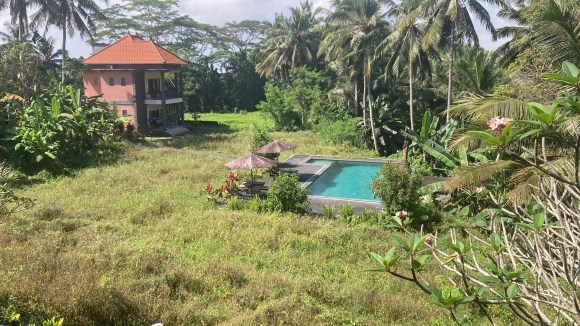
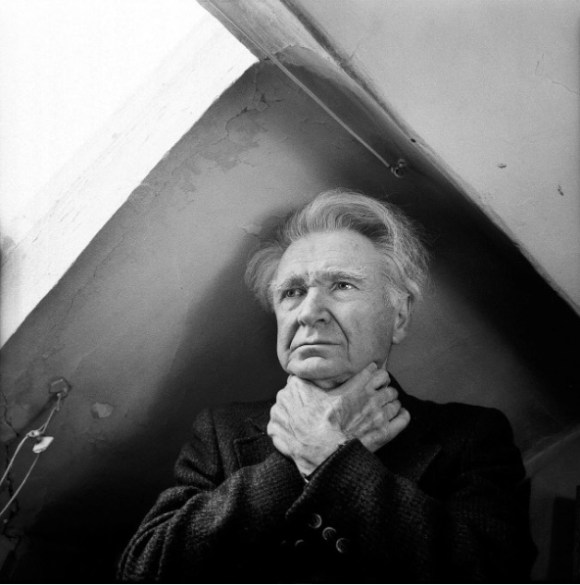

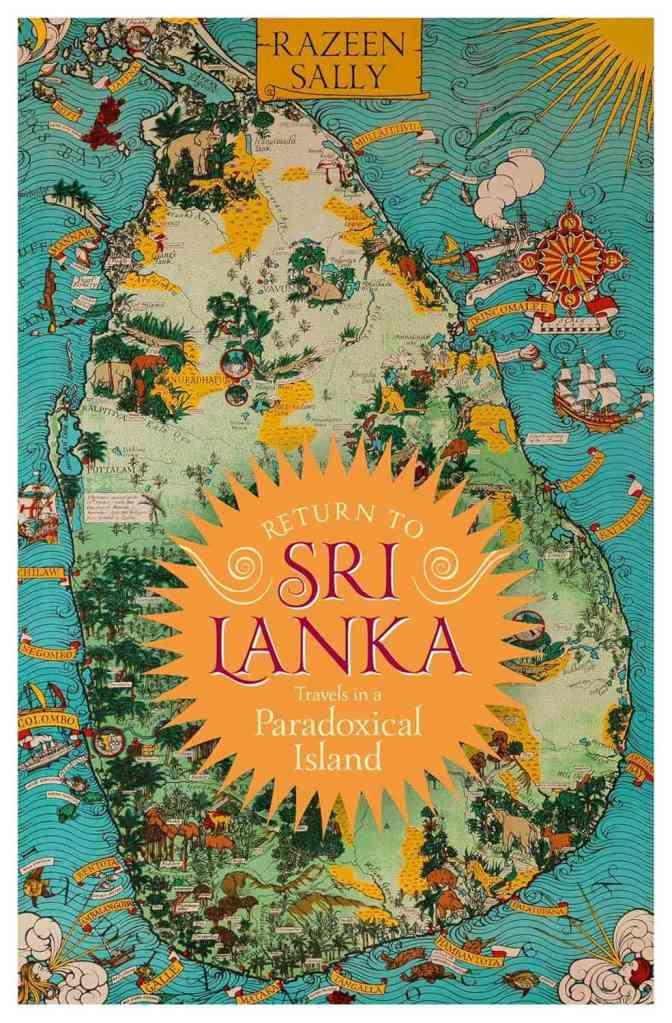
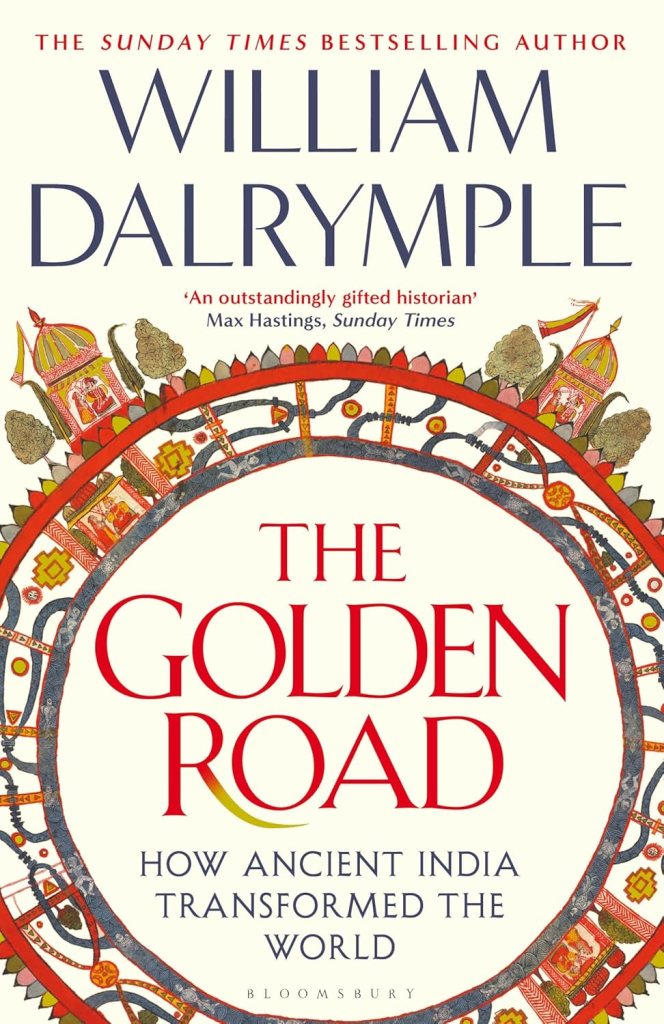

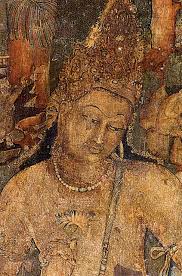


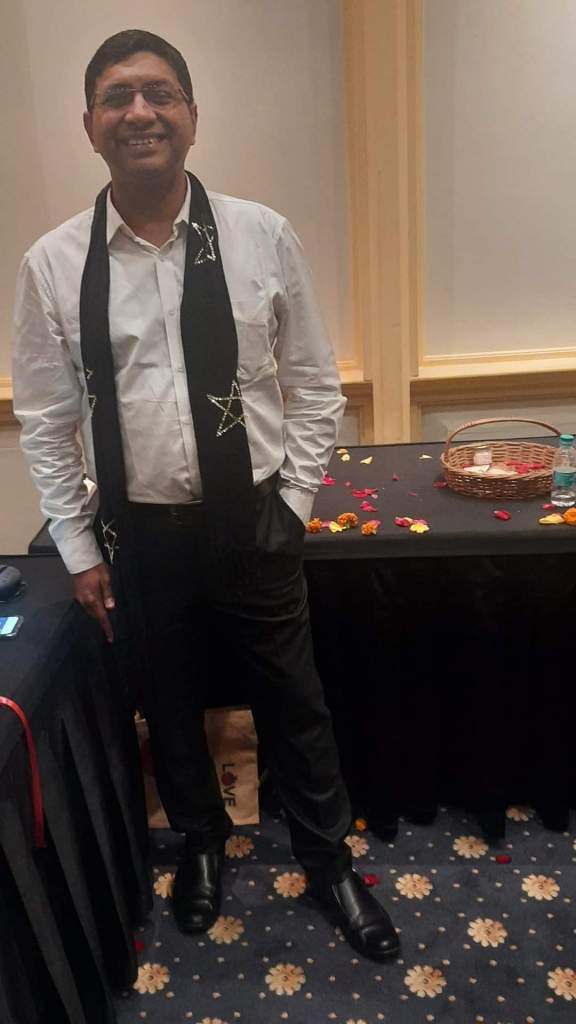
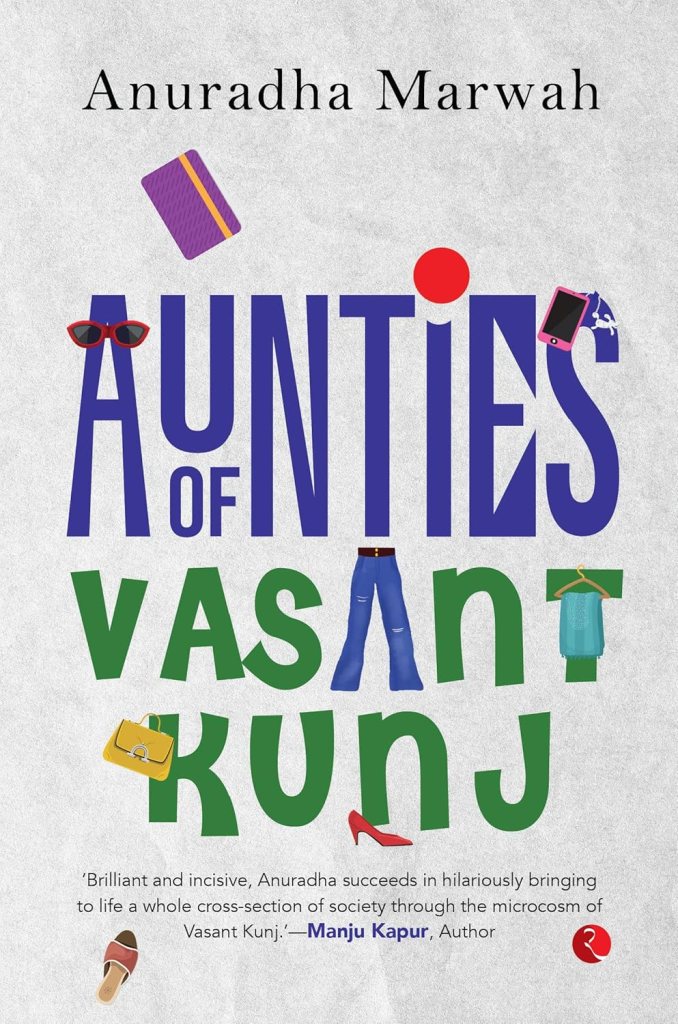


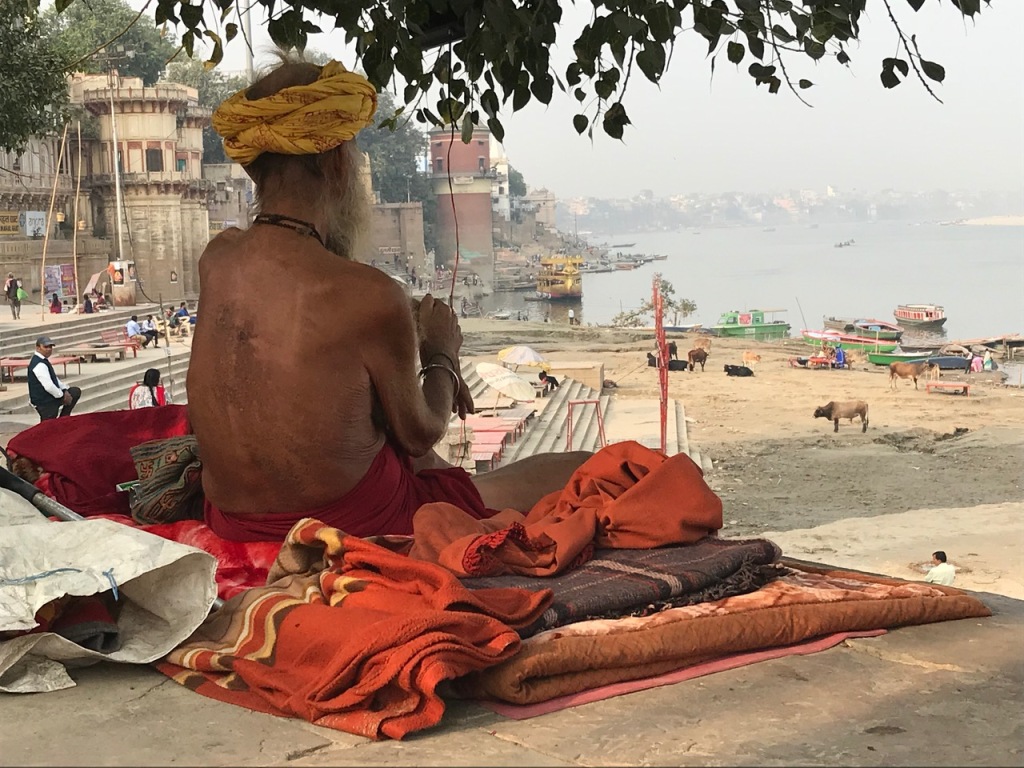
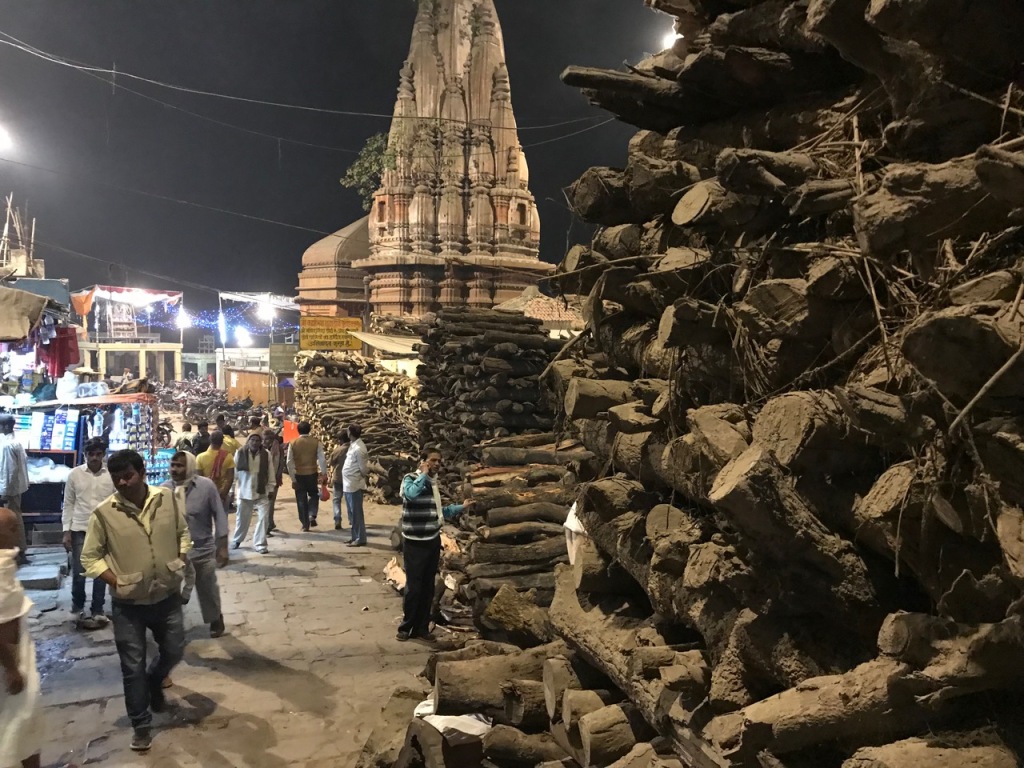
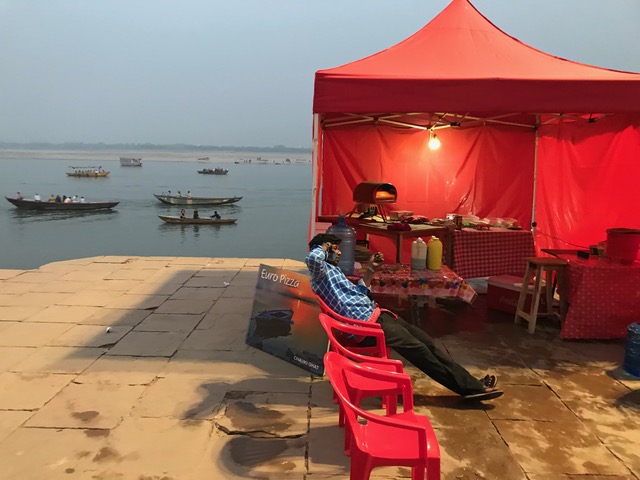
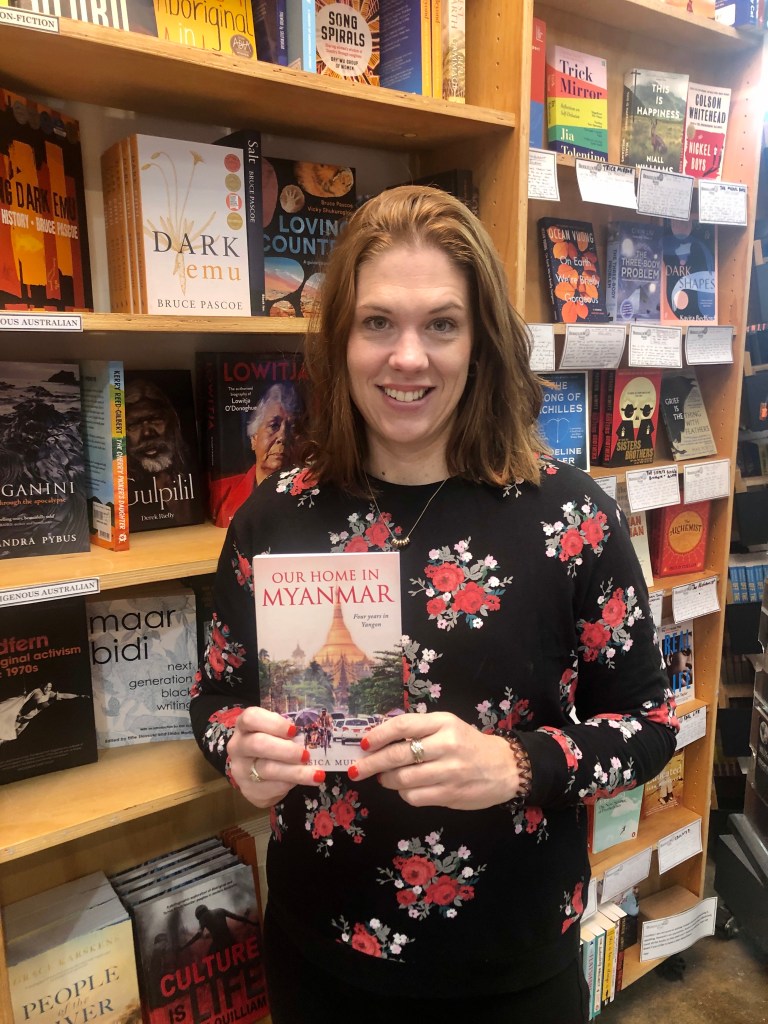
 Borderless