As a curator, Ratnottama Sengupta writes about the long trajectory of films by artists, beginning with Husain’s Berlinale winner, down to the intrepid band she screened at the just concluded 30th Kolkata International Film Festival
Gaja Gamini: Painting by MF Hussain Gaja Gamini (An elephant’s walk) Movie by MF Hussain
When Maqbool Fida Husain won the Golden Bear in the 17th edition of the Berlin Film Festival, the year was 1967. I, in my pre-teen years, knew little about painting. But growing up in a family of filmmakers I was already conversant with the art of looking through the camera. So I was disoriented that the film critics of the time were baffled by what had impressed the international jury.
Royalty, tigers, ruins, hawks, school children, anklets, on the river bank – all these images moving only to music, not a word uttered. The jury at Berlinale were astounded by the richness of the artist’s idiom that had breathed life into a Rajasthan that is rich in architecture as it is in painting, in costume as in music.
This dawned on me years later, when I curated the exhibition, 3 Dimensions, forthe All India Fine Arts and Crafts Society in New Delhi. It featured paintings, sculpture and graphic art or drawings by artists from Husain, Satish Gujral, Ghulam Mohammad Sheikh, Jatin Das to Sanjay Bhattacharya, Paresh Maity, Mimi Radhakrishnan, Shadab Hussain, among others.
A unique feature of this exhibition was that all the participating artists had interest in another expression of art. So every evening of that week had seen a Ram Kumar and Mimi read their short stories; a Narendra Pal Singh and Jatin Das read their poems; a Sanjay Bhattacharya render Tagore songs of and a Shruti Gupta Chandra perform Kathak. Ratnabali Kant had staged a Performance Art in the presence of Prime Minister V P Singh who had inaugurated the week-long exhibition by reading his poems. And, on the closing day, I had screened Through a Painter’s Eyes. That’s when it dawned on me: it was the originality of vision captured by the 7-minute short film had won over Berlin as also Melbourne and our very own National Awards too.
Subsequently Husain, who had started out from the tenements of Bombay by painting oversized hoardings of Hindi films on the sleeping tramlines at the dead of night, had at the ripe age of 84 made Gaja Gamini (2000) with stars such as Madhuri Dixit, and Minaxi — A Tale of Three Cities (2004) with Tabu and Naseeruddin Shah. Ironically these films baffled the critics just as much as the earlier short film had. However the dazzling visuals of vibrant figures and colourful structuring of the (non)-narrative had found acceptance in the Marche du Film section of Cannes 2004.
*
I have since then tried to fathom what drives artists who are skilled at painting with oil or watercolour, or sculpting wood or stone, metal or clay, or creating graphic images on paper or linoleum, to wield the megaphone. Now, instead of holding the camera or editing the celluloid strips with their hands, they use their mind, their mind’s eyes, their creative imagination.
Some other contemporaries of Husain too had, after attaining glory in the plastic arts, turned to experimenting with the new, ever evolving, ever contemporary art form — cinema. In 1970, Tyeb Mehta, who had briefly worked as an editor, made Koodal, meaning ‘Meeting Ground’ on the Bandra station of Mumbai’s Western Railway. The synthesis of images of humans and animals had won him the Filmfare Critics Award.
Cartoonist Abu — born Attupurathu Mathew Abraham — was a journalist and author who had worked for Punch, Tribune and The Observer in London before returning to work with The Indian Express. He was given a special award by the British Film Institute for the short animation No Ark, clearly a cryptic message deriving from the Biblical tale of Noah’s Ark.
Equally engrossing is the story of Syzygy, also produced by Films Division, and directed by Akbar Padamsee. This 16-minute short, premiered at a UNESCO screening in Paris 1969, had no narrative, no sound, or even colour. It only had lines evoking shapes typically used to refer to the alignment of celestial bodies. Only one man had stayed back till the end of the screening — and he had said to Padamsee, “Most people could not understand your film — it’s a masterpiece.”
Reportedly that man had gone on to become the programming director at Cinematheque Francaise – world’s largest film archive. That’s where Indian filmmaker found Ashim Ahluwalia found a copy of Events in a Cloud Chamber, Padamsee’s second film that was sent for screening at the Delhi Art Expo — never to be returned to the artist. The lost-in-transit film has now been professionally reinterpreted by Ahluwalia.
NB: All these films were supported by filmmaking bodies, and though often baffled, cineastes realised theirs was a new way of seeing the visual expression that goes under the arching umbrella of cinema.
*
This desire to understand, adapt, and get under the skin of a modern medium had driven Tagore, a century ago from today, to paint expressionistic forms and also to film Natir Pujo (1931). And today we find a band of artists from Delhi, Mumbai, Kerala and Baroda making films that bridge disciplines from landscape and abstraction to mimetic movement and drama.
What are the notable features of these films that are mostly made on video? They too have little need for dialogue. Instead, their sight is supported by music of natural sound. If the objects they capture through the lens are arresting forms, vacant spaces can be just as inviting. When they have humans as their protagonists, they are keen to capture body language rather than drama. Colourful palette is not a foregone conclusion – monochromes and black and white can be more poignant. Because? Their visuals are but vehicles for commenting on social reality and for communicating philosophic content.
Legends or veterans, seasoned or sprouting, this intrepid band of adventurers includes Vivan Sundaram, Ranbir Kaleka, Gopi Gajwani, Rameshwar Broota, Bharti Kapadia, Babu Eshwar Prasad, Gigi Scaria, Protul Dash, and Sanjay Roy. They are a continuum of the spirit of experimentation that had driven Husain and Tyeb, Abu Abraham and Akbar Padamsee.
Films by Artists at KIFF*

1 *Disclaimer* 2016/ 9:40 min
By *Gigi Scaria* focuses on the sleight of hands by a magician
2 *On the Road* 2021/ 5:7 min
By *Babu Eshwar Prasad* is a nostalgic look at road movies that are part documentary, part adventure.
3 *Sabash Beta* 3 min
By *Rameshwar Broota* with Vasundhara Tewari applauds the galloping of a fleighty horse.
4 *Leaves Like Hands of Flame* 2010/ 5:34 min
By *Veer Munshi* likens the fallen chinar leaves to the autumn in the lives of uprooted Kashmiris.
5 *L for…* 2019/ 13:14 min
By *Bharti Kapadia* plays with the sight and - surprisingly - the sound of the alphabet.
6 *Fruits Ripen and Rot* 2022/ 4:21 min
By *Sanjay Roy* is a surrealistic look at the divergent responses to food that is central to everyman's existence.
7 *How Far…?* 2023/ 12:37 min
By *Ranveer Kaleka* is an elegy, a dirge, mourning the losses wrought to Planet Earth by human destruction such as war.
8 *Burning Angel* 2024/ 4:37 min
By *Pratul Dash*  is an abstract story of the same destruction.
9 *Turning 2008/ 11 min
By Vivan Sundaram is a silent, colourful comment on the waste created by consumerist civilization.
10 *Time* 1974/13 min
By *Gopi Gajwani* is a riveting tale of how relative a minute is to one in mourning, one waiting, and for one in love.


*Kolkata International Film Festival
.
Ratnottama Sengupta, formerly Arts Editor of The Times of India, teaches mass communication and film appreciation, curates film festivals and art exhibitions, and translates and write books. She has been a member of CBFC, served on the National Film Awards jury and has herself won a National Award.
.
PLEASE NOTE: ARTICLES CAN ONLY BE REPRODUCED IN OTHER SITES WITH DUE ACKNOWLEDGEMENT TO BORDERLESS JOURNAL
Farouk Gulsara discussed William Dalrymple’s latest book
Growing up in the later part of the 1970s, kids of my generation were drilled with stories that India was a subcontinent of poverty, filth, and pickpockets. Even our history books taught us that it was a land of darkness, living in its myths, superstitions, and cults, waiting to be civilised by the mighty European race and their scientific discoveries.
That was what was impressed upon us as we sauntered into adulthood. The media did not help either. With eye-catching news like a particular Indian Prime Minister having his daily dose of gau mutra[1] for breakfast and another ousted after thirteen days of taking oath as the Prime Minister, India was made out to be just another third-world country. Then came the 21st century and the turn of tides. Locally bred academicians started teasing deeper into India’s forgotten history. They started doubting the self-deprecating history that was taught to them by leftist historians in the textbooks.
Like many historians before him, historian William Dalrymple, in his latest book, The Golden Road: How Ancient India Transformed the World outlines the importance of India as a cradle of knowledge that peddled wisdom to regions near and far. Its scientific knowledge was far ahead of its time. This know-how was put into practice and spread via trade routes. Their port of entry received not just their goods but also their culture and way of life.
Enduring attack after attack from foreign invaders, Indians had already forgotten their glorious past by the time of the British Raj. A tiger hunting expedition inadvertently brought British hunters to various beautiful cave carvings and Buddhist sculptures. That kind of rekindled India’s history, which had disappeared from the Indian imagination.
India had been a crucial economic fulcrum and a civilisational engine in early world history. As early as 31BCE, Indians had learnt to manipulate the monsoonal winds to steer their ship to the West to the prosperous kingdom of Ethiopia, Egypt and subsequent access to the Mediterranean. With their mammoth merchant ships, they transported pearls, spices, diamonds, incense, slaves and even exotic animals like elephants and tigers in exchange for gold. Trade favoured India so much that a Roman Naval Commander, Pliny the Elder, lamented the unnecessary spicing of the food and the almost transparent Indian fabric that left nothing to the imagination. It is said Buddhism reached the shores of Egypt through these ships. The Christian monastic way of life is said to have been influenced by these monks.
With seasonal monsoon winds, Indian ships brought not just trade but philosophy, politics, and architectural ideas to Southeast Asia, China, and even Japan. All this cultural allure and sophistication did not happen through conquest. Sanskrit was the language of knowledge and a conduit for spreading knowledge.
Buddhism emerged in the 5th century BCE as an alternative to caste-centred and animal sacrifice-filled rituals. Unlike Jainism’s strict austerities, it offered a middle path. Due to King Ashoka’s untiring efforts, Buddhism spread beyond its borders. Contrary to the belief that Buddhism promotes an impoverished way of living, early Buddhists drew interests (and resources) from the merchant group, as evidenced by the Ajanta Caves’ findings. Buddhism drew many Chinese scholars to India’s centres of higher learning in Nalanda and Kanchipuram in the South to get first-hand experience reading Buddhist scriptures in Sanskrit. India’s universities later became the template for other varsities the world over.
Ajanta CavesAjanta Painting inside the caveFrom Public Domain
India’s cultural influence on South Sea Asia is phenomenal. Stories from Indian epics, Ramayana and Bhagvad Gita, are told and retold in children’s stories, plays and cultural art forms. Their ruling elites were Hindus. The biggest Hindu and Buddhist temples are not in India but in Cambodia and Java, respectively, as Angkor Wat and Borobudur. Marvellous stony statues and temple are similar to those in India. At a time when the Byzantines were presiding over Europe, the Suryavarman clan was ruling a Hindu Empire so huge it would dwarf their European counterpart.
The 5th to 7th century of the common era was the golden age of Indian mathematics. Between Aryabhata and Brahmagupta, their knowledge of the nine-number system (and zero) brought them the know-how of negative numbers, algebra, trigonometry, algorithms and astronomy far ahead of their time. They understood that Earth was a sphere spinning on its axis, about the eclipse, gravity and planetary rotations. The Indians even built a space observatory tower in Ujjain to study constellations and devise a solar calendar. The idea of a prime meridian arose from here.
In the 8th century, the Abbasids exerted control over the Afghanistan region through treaties with local viziers. At that time, the Bamiyan region in Afghanistan had over 460 monasteries and 10,000 monks. A member of an influential Buddhist family, the Barmakid, converted to Islam to establish his family in the Abbasid fold. They brought Indian medicines, texts, and scholars with them and encouraged and promoted Islamic engagement with the East. Sanskrit texts were translated into Arabic. It is said that the Barmakids were instrumental in the building of Baghdad.
The Islamic hegemony spread, as did the scholarship it had built.
The Bamakid-Abbasid liaison met a tragic end due to palace power dynamics. The Abbasids started looking at the Romans for inspiration. Many Europeans were drawn to the Golden Age of Islam. Many texts were translated into Latin. Toledo of Andalusia introduced the science of timekeeping from Ujjain to Oxford. A particular young Italian named Leonardo of Pisa picked up the beauty of Mathematics during his stay in Algeria. He returned to publish ‘Liber Abaci‘ (The Book of Calculation) in 1202, which introduced Europe to the sequence of Fibonacci numbers and the mystic power of mathematics. This sudden gush of knowledge spurred the European Renaissance.
First published in 1202, Liber abaci was one of the most important books on mathematics in the Middle Ages, introducing Arabic numerals and methods throughout Europe. Its author, Leonardo Pisano of Pisa is known today as Fibonacci .Stature of Fibonacci (1170-1240/50) in PisaFrom Public Domain
The whole cycle completed its full arc when European powers rose to great heights. Benefitting from the knowledge from India that layered its way through, passing from hand to hand, the colonial masters returned to chop off[2]the hands that had nourished it.
Emerging rejuvenated from their occupation-induced slumber, with their Anglophilic familiarity, Indians have risen from the ashes to claim their status in the Indosphere[3], a world where Indian influences permeated every layer of society.
This well-researched, unputdownable book is for all history buffs. Infused with little nuggets from cover to cover that would excite nerds, it is a joy to read about the history of India in a way that is not often told in the mainstream.
[1]Gau mutra, cow urine, has a sacred role in some forms of Hinduism and Zoroastrianism and is used for medicinal purposes and in some Hindu ceremonies.
[3]Indosphere is a collective linguistic term for areas under Indian linguistic influence. It includes countries in the Southern, Southeast, and East Asian regions. 22 languages, including Indo-European and Dravidian languages, are recognised under this category and are considered to have originated in India.
Farouk Gulsara is a daytime healer and a writer by night. After developing his left side of his brain almost half his lifetime, this johnny-come-lately decided to stimulate the non-dominant part of his remaining half. An author of two non-fiction books, Inside the twisted mind of Rifle Range Boy and Real Lessons from Reel Life, he writes regularly in his blog, Rifle Range Boy.
.
PLEASE NOTE: ARTICLES CAN ONLY BE REPRODUCED IN OTHER SITES WITH DUE ACKNOWLEDGEMENT TO BORDERLESS JOURNAL
1971 began and ended on a note of hope but in the course of the year we went through the whole gamut of human emotions: love for our motherland and hate for its enemies; desire for freedom and abhorrence at those who had curtailed our right to be ourselves; feelings such as anxiety, fear, even terror caused by the knowledge that at any moment we might be abducted and murdered; and excitement and elation at the thought that relief could not be far away. 1971 was the year when for months we lived from day to day, totally insecure in a Dhaka which had become like a city of the dead; it was also the year when we discovered what it meant to hope against hope. 1971, in short, was a cataclysmal year; for every Bengali it was the year of living dangerously.
The year must have begun innocuously enough; at this point in time, I have simply no recollection what I did or how I felt in January and February of that year. But certainly, hope must have been in the air; after Sheikh Sahib’s massive election victory all of us must have been feeling confident and secure in the knowledge that we were finally about to master our destiny. For me—temperamentally apolitical and not yet out of my teens at the beginning of that year—the first sign that something was seriously wrong came one day while we were watching a test match in Dhaka Stadium on the first of March. Suddenly, the game was interrupted and then abandoned as news came about Yahya Khan’s decision to not call a meeting of the Pakistani National Assembly. Pandemonium ruled for a while in the field, but soon everyone left, muttering that this cannot be, indignant that the army chief could not go against the resounding mandate given to the Awami League to change the course of Pakistani history.
And then for a while: hartals[1], demonstrations, slogans, meetings, public displays of discontent, and the will to oppose and resist on one side and display of the carrot as well as the stick on the other. In fact, the month of March showed a whole nation in a state of ferment, ready to go to any length against a brutal but posturing force.
A first climax was Sheikh Saheb’s[2] speech of March 7. Hearing it now, I cannot but think: is it as stirring for people of this generation as it was for ours? Contemplated in retrospective, the speech seems to be the quintessence of the Bengali spirit in 1971: inspired, defiant, pulsating, and resolute. It considers the dangers ahead but is emphatic about the need to put up resistance and counter whatever measures were taken to contain us.
The real climax, of course, came on the night of March 25. That night I was in Sylhet, visiting my sister and her husband, along with my father and two other sisters. In Sylhet that night we could have no idea that Dhaka had become the scene of carnage or that our family, friends, and acquaintances were in the greatest of danger. It was only next morning, waking up to discover that Sylhet town was under curfew, and listening to Indian radio and the BBC, that we began to have an inkling of how devastated Dhaka had become in a night and in how much jeopardy our loved ones were.
Throughout the next week we alternated between a feeling of joy at the knowledge that Bengalis were fighting back and a foreboding that a grievous wound had been inflicted on us. We were elated by Major Zia’s declaration on the radio about independence and the reports of resistance everywhere; we were depressed by the news items transmitted in the air waves about Dhaka as a city that had been flattened by heavy weapons and was still burning. Since, our house was close to Farmgate, we were full of anxiety: had my mother and the sister we had left behind survived the mass slaughter of Dhakaites that was being narrated everywhere except on Radio Pakistan?
After a few days my father decided that he had had enough of waiting and uncertainty; he and I would head for Dhaka and determine for ourselves the fate of my mother and sister. My brother-in-law and three other sisters would remain in what seemed the relative safety of Sylhet. Little did we realise as we left them on a day in early April the hardship and suffering they would go through in the next few months, fleeing from tea garden to tea garden and even to the safety of Tripura[3] to escape the pillaging Pakistani army. Only after we were reunited with them in Dhaka in July did we get to know of their travails as they attempted to evade the marauding forces.
The trip to Dhaka was a tense and an unforgettable one. A few images are etched in my memory vividly: driving through the tea gardens, we saw tea garden workers with bows and arrows, determination wrought on their faces. In Brahmanbaria, we heard gripping stories of the confrontations that had taken place in Comilla and saw the intense preparations being taken in the town itself to resist the Pakistani onslaught. But the most vivid memory of the journey are the scenes of mass exodus we witnessed as we neared Dhaka: men, women, and children on foot or on rickshaws, looking harrowed, wearily fleeing to village homes from the city to escape genocide. Not a few of the people we met told us not to be so foolhardy as to return to Dhaka.
Thankfully, we managed to reach our Indira Road home without facing any unpleasant situations and found that my mother and sister were safe. But there were troop movements all the time and stories of mass arrests of young men during curfew. The elders of my family decided that I would be safer in my uncle’s house in Dhanmondi than in a house in the Farmgate area.
In the few weeks that I stayed in Dhanmondi I managed to get in touch with some of my friends. The news they told me was horrifying: Dr. Jyotirmoy Guhathakurta, my tutorial teacher, and the man who first made me feel that I had the sensitivity to be a student of Shakespeare, and who went beyond his role as a tutor to talk to me about his passion for radical humanism, as well as Mr. Rashidul Hasan, who taught us Blake and was as humble and meek as some of the denizens of The Songs of Innocence and of Experience, had been brutally murdered. More horror stories: one of my school friends, Arun Chowdhury, and his father, could no longer be traced after they had been abducted from Ranada Prasad Saha’s Narayanganj home along with the millionaire philanthropist; one of my uncle’s in-laws, a Rajshahi University professor, had also disappeared after being picked up by the army; other people that we knew had been shot at or humiliated or hurt. A friend who had joined her family in Bogra had witnessed their house being burned and the family had barely managed to escape with their lives. The whole Bengali nation appeared to be bleeding and bruised.
Nevertheless, no one felt defeated and hope still flickered as a candle newly lit and solidly fixed will even in the darkest night. For one thing, there were the daily broadcasts from Swadhin Bangla Betar Kendra[4]containing news about Mujibnagar and organised resistance all over the country. Then there was the knowledge that some friends had crossed the border and were receiving training so that they could be inducted into the Mukti Bahini[5]. Everywhere one could view the resentment against the Pakistani army being concentrated to the point when it would rebound upon them.
Eventually, my parents decided that we would take a house in a part of the city which was relatively free from regular army patrolling and I rejoined them in a Central Road flat. But, really, no part of the city was completely safe. One night, to take just one example, the boys of the neighbouring family climbed the wall separating our two houses because the army had raided the house next door and stayed with us till next morning. I still remember how tense we were that night and nervous and indignant.
Gradually, we learned to sleep better and not hear the stray shots that were fired into the night by who knows whom. Inevitably, we adapted to a life lived mostly indoors, listening to the radio or the tape recorder all day, or reading, or playing cards. But we had to be very careful about everything that we did: the radio had to be toned down, books with insidious sounding titles not read, and visit to and from friends of our age restricted. Fear of army raids constricted us and forced us to make life a diminished thing. Only my father would go out regularly to spend the day in office or shopping; his greying hair gave him a kind of limited freedom that we could not hope to have.
However, consolations for lives lived under such strained circumstances were not impossible to seek even in those days when we would rarely venture into natural light. By June, bombs which were beginning to explode at regular intervals all over the city announced loudly to us that the Bengali capacity to resist, far from being diminished, had transformed itself in spectacular fashion. My father told us one day that he was one of many people who had been donating money for freedom fighters who were now infiltrating into the city in large numbers. In July and August, the Mukti Bahini activity in Dhaka intensified and I even met a few of them. Also, every once in a while, a close friend suddenly disappeared from Dhaka and those of us who still remained in the city still unsure of what we should do talked about his decision to join the freedom struggle and his daring with a mixture of admiration and envy.
Of course, we knew that the life of a freedom fighter was far from a glamorous one, and full of risks. Exactly how hazardous their life could be was driven home to us when in late August a number of them were caught and murdered. Because we knew a few of these valiant fighters personally or by name, for some time, indeed for perhaps the only time that year, we felt depressed and shaken. But another few weeks and many amongst us roused ourselves and felt hopeful again. True, there had been a setback and some of the muktis[6]who had become legendary in a short time because of their exploits had been killed or imprisoned, but September showed that the spirit of resistance was very much alive.
Explosions could once again be heard in and around Dhaka and were signs to us of the vigour and irrepressible nature of our freedom fighters. By October, Swadhin Bangla[7]Radio broadcasts regularly reassured us that there were advances being made on the diplomatic front by our government-in-exile and that on the battlefield our reconstituted Bangladesh army were beginning to engage the Pakistani forces and defeat and demoralise them.
By early November, Nasim Mohsin, my best friend at that time, decided that it was time for him to join the freedom fighters and that the moment for a decisive assault on the Pakistani army was near. I was with him when he contacted some local muktis about crossing over to training camps in Tripura. They told him that the borders were already the site of daily skirmishes and that he should postpone the journey for a while till they could confirm a safe crossing. Desperate to become part of the freedom struggle, Nasim ignored their advice and our pleas to be patient and left us, never to be seen again. Much later, we were to discover that he had been captured by collaborators of the Pakistani army in a village in the Comilla border. They then handed him over to the local Pakistani troops who summarily shot him.
Late November and our excitement grew: the Bangladesh army was no longer content with skirmishes and raids and was now attacking the Pakistanis frontally. By late November war looked inevitable as desperate Pakistani tactics drew India into the campaign. Finally, on the night of December 3, the Dhaka night sky was spectacularly lit by tracer bullets and then invaded by Indian bombers targeting military installations. The next day all of us were on roof-tops watching dog-fights and cheering Indian jets attacking the airport and the cantonment, oblivious to the danger from shrapnel and debris from shattered planes.
Over the next two weeks, our joy grew by the hour, for every Swadhin Bangla Radio broadcast or Indian radio bulletin informed us of Pakistani reverses and detailed advances made by the liberation forces. In our enthusiasm we did not realise that we were going through dangerous times in the capital city as the Pakistani army and its collaborators, their backs against the wall, were becoming more and more vicious. It was only later that we discovered that the brother of a friend who had joined the freedom fighters had been picked up by the Pakistani army during this time and would disappear from our sights forever. And as the liberation forces closed in on Dhaka, rumours spread of youths and prominent people being abducted. Undoubtedly, the scariest memory I have from this period is of a Pakistani plane droning one night, which we knew had dropped bombs on an orphanage the previous night in a bid to discredit the Indian Air Force. It was a moment when we felt totally vulnerable and at the mercy of forces whose reason had become warped to the extent that they could indulge in mass destruction of innocents merely to smear India in the eyes of the world.
Nothing the vicious Pakistani military/propaganda machine could do, however, could thwart the logic of history and prevent liberation, and by December 15 we were hearing the booming of artillery in and around Dhaka. On December 16, we headed for the Ramna Race Course area because we heard that a surrender ceremony was scheduled there in the afternoon.
But we could only go as far as the Hotel InterContinental, where we got caught in a cross-fire. A friend who was with me got slightly hurt as a splinter from a bullet pierced his leg. We took him to his house and then scattered, telling ourselves that we had not survived nine months of occupation only to get killed at the moment of liberation. But by evening we were out in the streets celebrating with muktis, among whom I could see at least one close friend, firing his Sten gun into the air. The year of living dangerously was ending, and the time for unmitigated hope had finally come to stay with us, at least for a while!
From Left to Right: Boethius, Keirkegaard and Montaigne. Courtesy: Abdullah Rayhan
“Do you hear the whisper of the shadows?
   This happiness feels foreign to me.
      I am accustomed to despair.”

-Forough Farrokhzad (1934-1967), Iranian Poet and Filmmaker
We seek psychotherapy to deal with the distress, sadness, depression, and psychological dimensions that are beyond our reach. Even after going through the medical procedure, we are seldom left with the satisfying sensation we deeply crave. This is where philosophy comes in.
To Socrates, philosophy was basically the way to live a life. He mainly observed how life functions and examined the influences that allocate life with certain affects. Other philosophical ideas too somewhat try to interpret the nature of existence in a similar manner. There are tons of such schools: from absurdism, to existentialism, nihilism, Hegelian, Kantian, and whatnot. But, apart from offering ideas and perspectives on existence, what else do they contribute? It can be a bit vague to trace the purpose of such philosophical ideas where the basic understanding, instead of leading toward fulfillment, can plunge us into the deepest pit of darkest despair. Existential philosophy will constantly remind you of life’s futility, ethical philosophies will keep painting idealistic portraits all to no avail. Finally, you are left with novel knowledge that does not necessarily help you deal with the struggles drowning your heart within a blurry tumult.
Fortunately, practical application of philosophy exists. Last year, when I was particularly at my lowest, estranged from everything I adored, all prospects of happiness ruined, abandoned to face monstrous adversities with a heavy bleeding heart, I found Boethius[1] comforting.
Camus, Sartre, and Nietzsche will comfort you with the assurance that you can construct optimism with your own effort. They tell your life has no inherent meaning, thus you are allowed to come up with your own sense of existence and give it any meaning you can conjure up at will. Bentham will tell you how to establish collective contentment. Kant will give you formulas to maintain peace. But none of them essentially gives a clear picture of what happiness really is. This makes Boethius unique. He doesn’t adhere to any false hopes, he rejects all things that are constructed, yet, through a transparent honesty, he shows a path that can lead toward organic satisfaction, not laced with any promises of universal fulfillment, just simple reasoning advocating for individual contentment.
Boethius basically inspires us to contemplate on our happiness. He directly questions the idea of happiness we so intimately endorse. Boethius asks you,
“Do you really hold dear that kind of happiness which is destined to pass away? Do you really value the presence of Fortune when you cannot trust her [Fortune] to stay and when her departure will plunge you in sorrow? And if it is impossible to keep her at will and if her flight exposes men to ruin, what else is such a fleeting thing except a warning of coming disaster?”
We consider ourselves lucky when we get our desired happiness. But, being lucky or ‘fortunate’ cannot be the standard that constructs happiness. In Boethius’ words, “happiness can’t consist in things governed by chance” mainly because there’s no guarantee it will last. He argues anything that is ephemeral, transient, and temporary cannot be of any value in terms of happiness as when that happiness evaporates, it is replaced by sorrow that is sometimes too much to bear. In this way, state of happiness is “a warning of coming disaster”. Happiness should not be the reason for despair and discontent. Thus, happiness brought by luck is not what it appears to be.
He further asks if something that is temporary can really be claimed as one’s own. Boethius’s voice renders one mute when he states, “I can say with confidence that if the things whose loss you are bemoaning were really yours, you could never have lost them.”
A significant portion of Boethius’s argument is surrounding the transience of happiness. If happiness lies in what’s temporary, then isn’t misery temporary as well? Boethius puts it with much clarity. He comforts you, saying: “If you do not consider that you have been lucky because your onetime reasons for rejoicing have passed away, you cannot now think of yourself as in misery, because the very things that seem miserable are also passing away.”
Boethius inspires you to wonder about the nature of misery. We are miserable, sad, melancholic usually because we had a taste of happiness sometimes in the past, which is missing at the moment. We were happy once. But happiness is no longer part of our lives, and this absence is what’s causing our misery. Had we not had that happiness before, we wouldn’t have the misery that chokes our heart with a suffocating grip. This is the reason Boethius called happiness “a warning of coming disaster”.
Think about it. Someone who is currently living the same life as you may not be in similar misery as you because, as they haven’t had the happiness you had, they are not burdened to deal with the absence that you are compelled to plummet in. Thus, neither happiness nor misery operate based on any strict blueprint, rather it is something formed by one’s own experience and are inter-dependent. Boethius puts it very eloquently saying, “There is something in the case of each of us that escapes the notice of the man who has not experienced it, but causes horror to the man who has […] Nothing is miserable except when you think it so, and vice versa, all luck is good luck to the man who bears it with equanimity”. We lose our ability to “bear it (despair) with equanimity” because of our past interactions with pleasant experiences.
Perhaps you would relate to Boethius in terms of misery though not in an entirely literal sense. Boethius had everything. A beautiful wife, two affectionate children, popularity, respect, novelty, an amazing home, and enough money to live without any worrying. Yet, because of some false accusation, he was suddenly deprived of it all and was imprisoned. His happy life suddenly became a dark den overpouring with impenetrable despair. Many of our misery too is born because of its contrast to the time when we were happy. Now think about it for a moment. Boethius was devastated in the cell because he previously had a satisfying life. Had he lived like a homeless person with nothing of his own, the confined space of that very cell would appear satisfactory because of the roof over the head and chunks of food on the plate no matter how dim and damp the dark roof or how stale the smelly food. It shows how subjective the texture of happiness is.
Boethius deconstructs the common perception of happiness, breaking it down to a rather ‘mundane’ prospect of life on the contrary to our belief of it being a significant one. He believes our idea of happiness itself is laced with misery. He proclaims, “how miserable the happiness of human life is; it does not remain long with those who are patient and doesn’t satisfy those who are troubled.”
So, if happiness indeed is of the nature that compulsorily leaves one unsatisfied, then does happiness deserves to be attributed with divine epithet? Boethius disagrees. He presents a compelling argument for this, saying, “[H]appiness is the highest good of rational nature and anything that can be taken away is not the highest good – since it is surpassed by what can’t be taken away …” It is the unreliability of our perceived idea of happiness that makes it a futile one with little or no value.
So, if happiness is something that is transient, unreliable, and can never offer the contentment it promises, then is happiness really something to chase after? “Happiness which depends on chance comes to an end with the death of the body,” propounds Boethius. Thus, to cling on to happiness is to cling on to a slippery rope dangling on top of a void filled to the brim with invisible abyss. You cannot do anything to make this notion of happiness fruitful in the sense you believe it to be. Boethius thinks it’s foolish to attempt to make this ineffective happiness endure and persist. He words it differently saying, “what an obvious mistake to make – to think that anything can be enhanced by decoration that does not belong to it.” Thus, again, the problem lies with the way we shape the notion of happiness.
As our immediate cognition tells us, the most apparent formula of happiness is a combination of romantic love and successful career. But is it really true? If you have understood Boethius, you probably realise that these temporary agents (romantic partner and career) cannot make you content for long. Something that is not entirely yours own cannot get you that contentment you crave. Kierkegaard too agrees how things that are not inherently one’s own are subject to loss, thus misery. Kierkegaard delivers the idea with a touch of subtle humour,
“Marry, and you will regret it; don’t marry, you will also regret it; marry or don’t marry, you will regret it either way. Laugh at the world’s foolishness, you will regret it; weep over it, you will regret that too; laugh at the world’s foolishness or weep over it, you will regret both. Believe a woman, you will regret it; believe her not, you will also regret it… Hang yourself, you will regret it; do not hang yourself, and you will regret that too; hang yourself or don’t hang yourself, you’ll regret it either way; whether you hang yourself or do not hang yourself, you will regret both.”
Kierkegaard and Boethius clearly intersect at certain points. Having happiness too, with its transience and all, is always the cause of a constant despair. Boethius very wittily points out that when we don’t have happiness, we strive and struggle to attain it. Once we have attained it, we become anxious to preserve it because no matter how much we enjoy happiness, at the back of our mind, we are aware of its temporary and fragile nature. This is why Kierkegaard says all our prospects of happiness are ultimately fated to end up in regret. Michel de Montaigne words this human tendency more concisely saying, “he who fears he shall suffer, already suffers what he fears”. In other words, as being in happiness always contains the risk of losing the happiness, this fear actually prevents one from ever fully attaining that state of mind.
Kierkegaard reaches such a conclusion because he too believed happiness as we know it is transient and fragile. The reason, as he locates, is its inorganic essence. Happiness modified with external force will never be permanent or make one content. He imagined happiness as an inswing door. He says, “the door of happiness opens inward, one should keep aside a little to open it: if one pushes, they close it more and more”. This is to say that one should not put any external force to influence happiness. That way, it’ll only cause more damage than good, or as Kierkegaard words it, the door of happiness will “close more and more”.
This overall means, our understanding of happiness, which is generally tied to external factors, can never bring within our reach the happiness we idealise with transcended romanticism. Thus, we are putting so much value in that idea of happiness in futile attempts, not knowing what it has in store for us while in reality it does not deserve to be the glorified item that sits at the epitome of human desire.
Interestingly, Boethius, Kierkegaard, and Montaigne have similar ideas on obtaining true contentment. They all agree that it’s not attainable with external properties and should be dug up from ones within. They commonly emphasise internal resources over external acquisitions.
Montaigne, for example, closely focuses on the nuanced foundation where the true happiness lies. Yes, material and metaphysical attainments can make us happy, he agrees, but not genuinely as we want it to be. He suggests, “[W]e should have wife, children, goods, and above all health, if we can, but we must not bind ourselves to them so strongly that our happiness depends on them. We must reserve a backshop wholly our own.” Similar to Boethius, Montaigne too recommends not relying our happiness on subjects that are subject to transience. Rather he advices to “reserve a backshop”. This “backshop” is the inner sanctum, a profound part of ourselves that remains untouched by the outer world, free from all kinds of external force. He designs this backshop as a space “wherein to settle our true liberty, our principal solitude and retreat”.
Kierkegaard too advocates for contentment that arises from within rather than from external influences whose essential nature is transient. In Kierkegaard’s perception, similar to Montaigne’s, it is silence, solitude, and introspection within us that can get us the contentment we idealise as happiness. He perceived all kinds of temporal gains as a reason for eventual dissatisfaction and advocated for things that remain untainted for eternity like intellect and truth.
Similar to Kierkegaard and Montaigne, Boethius agrees it is internal stability that overpowers the temporary shower of ecstatic sense of euphoria external fortune brings. Boethius advocates for this internal stability with better wording,
“If you are in possession of yourself you will possess something you would never wish to lose and something Fortune could never take away.”
This internal stability, according to Boethius, comes from one’s power of reasoning. Similar to Kierkegaard, Boethius prioritises intellectual resources because it has the ability to make one indifferent to their own fate. Intellect can make one recognise that there cannot be any prospect of contentment in things that are unstable, and everything that fortune brings is laced with this vicious instability. By fortune, Boethius does not mean a sudden stroke of good luck that potentiates all of our solvencies, but rather it’s everything good that happens to us without our own effort whether it’s a small gift from a loved one, or the smile of a baby. These make us happy, yet these are external forces. Fate intervenes in our life, leaving us with little to no control over our own selves. We can’t control a baby from smiling, and we won’t get out of our way and prevent a loved one from offering us a flower which they have invested so much thought in, but when babies do not smile at us, or when no one is left to offer even a stem of flower to us, that is when we experience a suffocation that could break our already shattered heart. Boethius asks us to realise all these with a clear conscience and allow our intellect and power of reasoning to locate what’s unstable and help us grip onto only what’s inherently ours.
All these perspectives boil down to the fact that the reason we are not happy isn’t because we are constantly chasing it, but rather we have a wrong perception of what happiness is. Happiness is not the greatest good, nor is it anything to die for. It is, as clichéd as it may sound, something present within all of us with a very apparent eminence, and all one has to do to access it is have an open mind and reach ones within with honesty. Through this lens one doesn’t have to ‘imagine’ Sisyphus happy, rather Sisyphus is ‘happy’ for real and for eternity.
Works Cited:
On the Consolation of Philosophy by Anicius Manlius Severinus Boethius
Either/Or by Søren Kierkegaard
[1] Anicius Manlius Severinus Boethius (480-524), Roman statesman, historian and polymath
Essais by Michel de Montaigne
Abdullah Rayhan studies Literature and Cultural Studies at Jahangirnagar University.
.
PLEASE NOTE: ARTICLES CAN ONLY BE REPRODUCED IN OTHER SITES WITH DUE ACKNOWLEDGEMENT TO BORDERLESS JOURNAL
Ramakrishna Mission Durga Puja, Dhaka. From Public Domain
The very first time I heard Shah Abdul Karim’s [1]heart-stirring song “Age Ki Shundor Din Kataitam[2]”, I was transported to my childhood years in Dhaka’s Ramakrishna Mission Road, where we revelled during Durga Puja. Karim remembers lyrically “how happily” he and other village youths would spend their childhood days, “Hindus and Muslims/Singing Baul and Ghetu songs all together.” Karim’s song always strikes a responsive note in my heart because I recall how joyously my friends—whether Muslim or Hindu—and my family members would spend the Puja days every year in our Ramakrishna Misson Road paara or neighbourhood. Although my memories of those days have dimmed considerably by now, one thing I still remember clearly is this: after the two Eids, Durga Puja was the most important festival to light up our young lives then. Alas, those days are gone, not only for me, but for most people growing up in a paara in Dhaka.
One explanation for the spontaneity with which we would participate in the Ramakrishna Mission Puja festivities was demography. Our paara consisted mostly of Muslims but also of not a few Hindus. Our nearest neighbours, for instance, were two Hindu families. True, the events leading to 1947 Partition had created a divide of sorts between people speaking the same language but belonging to different religions, yet, on most occasions, we interacted freely with each other. Every day we would hear the ululations linked to prayers in our Hindu neighbour’s house just as they would listen to the azaan[3] drift into their homes five times a day from our neighbourhood mosques (sans loudspeakers!), summoning the faithful to join the congregation. On Puja days, they would send us prasads[4] and we too would share sweets our mothers would cook for our religious festivals with them. Pakistan was very much a state built around one religion, but do I deceive myself or were ordinary people much more secular and much less bigoted then?
Another reason for the ease with which we moved in and out of Ramkrishna Mission stemmed no doubt from the attitudes of the people who directed Ramkrishna Mission. Much like the Catholic American missionaries who ran the school and college where I would get my basic education, the saffron-clad men of this mission were always tolerant of paara children irrespective of their religion. We were allowed to play football in the Mission field, bathe in its pond for hours, pick the bokul flowers from its trees or while they were strewn in the shades, chat for hours on its lawn, or read in its reading room. Occasionally, one of the missionaries who would spend most of their time meditating or leading prayers for Hindus, would even drop in for a chat with my parents, both devout Muslims but very pleased to have others in our midst. Sure, there were limits even then, for we would not go inside Hindu prayer rooms, and our Hindu friends would never disturb us during our prayer times, but open-mindedness and forbearance ensured that most of the spaces we lived in in our community were shared ones.
Dhakkis or drummers performing. From Public domain
In any case, Durga Puja in Ramkrishna Mission was the most memorable experience of another religion I have ever had. The moment we would hear the tak dum tak dum of the drums pervade the spaces of our neighbourhood in the mostly warm but occasionally hot and humid end-autumnal days full of fleecy clouds in nearly always blue skies, our hearts would flutter. Those thrumming, magical beats announced unmistakably that the time for another fun-filled Saradiya[5]Puja week had come! The dhakkis or drummers, I do believe, were our Pied Pipers, for we would sprint like the spellbound children of Hamlin then to the open field in front of the mission prayer hall the moment we heard them. We would find them there pounding away on their drums, swaying and smiling and showing off their skills on those ponderous-seeming but colourfully decorated and deep-echoing dhols!
The whole of Ramkrishna Mission became a spectacle of sights, smells, and sounds for the next few days. No matter where or when we went to the Mission during the festival, we would experience a riot of colours, a medley of sounds, and a range of flavours that made the Durga Puja days[6] unforgettable. During Durga Puja, Ramkrishna Mission was truly in the carnivalesque mode, for there was an unmistakable mela or fair-like quality to it.
Hindu men and women would come dressed in their fineries, the married women glowing because of their vermillion smeared-foreheads and multi-coloured saris, the men looking happy and yet self-conscious in their bright but heavily-starched new dhotis[7], and the children beaming and giggling because of anything and everything. We too would dress up for the occasion because, whether Hindu or Muslim, this was an occasion to meet people, mingle, chat, display and (for the boys) ogle.
Playing ManjirasBlowing the Conch shellFrom Public Domain
The sound of the drums would merge with the tinkle of manjiras[8], the chiming of bells, the unique note coming from conch shells, the ululation of women, the chanting of the mysterious but solemn-sounding Sanskrit prayers and the incessant chatter of not quite focused devotees. Indeed, there was a constant buzz in the Mission compound every day from mid-morning till late in the evening. In the Mission field, hawkers would sell hot and spicy pickles and chutneys, delectable sweet and/or sour savouries, and flavoured and syrupy drinks. At times the missionaries and volunteers would serve watery but delicious labra khichuri to anyone who cared to line up and eat from the plantain leaves. The smell of the different food items sold through the day would blend with the smoke and scent of the ceremonial dhups or incense lighted for the occasion. The press of the crowd, the feeling of excitement exuded by the people who sat to watch events or wander from place to place, and the assorted Bangla dialects heard all around us created a matchless mix.
But of course, Puja was mainly a holy occasion for the Hindus of the city. While we Muslim children did not understand a lot of what went on and were often mystified by the seemingly endless cycle of rituals, there was much to keep us absorbed in at least a few of the religious events. At the centre of the Puja, undoubtedly, were the idols built for the occasion. They are traditionally unveiled on the sixth day of the moon and placed on a pandal, a temporary structure erected for the veneration of the goddess Durga. Even if we did not know the import of all that we saw, who could not but be overwhelmed by the centrepiece, the resplendent goddess, ten weapons in her ten hands, a benign smile on her face, glowing in light golden colours, draped in a flaming red sari, standing on her lion mount, taming the demon Mahisasur.
Also awe-inspiring were the attendant deities (how “filmy” are the idols made now!). We were captivated by the welcoming melodies of “agamoni” and intrigued by the “Chandipat[9]” or reading from the Hindu scriptures. Day and night we were captivated by the rituals of anjali as the deity was offered flowers and prayers.
For most of us, one of the more fascinating moments of Durga Puja came on the ninth day, when a little girl was made the kumari, symbol of pristine beauty. But the climactic event was the immersion of the deity in the mission pond on the last day. From the morning of this day we would witness intense activity. First, devotees would begin preparations to move the deity, then the pandal would be carried to the pond to the sound of ululations, and finally the Durga would be immersed in the pond water to chants affirming her victory and predicting her triumphant return the next year.
The Durga Puja days mesmerised all of us in the paara in many other ways. For instance, the dhaakis seemed to punctuate the days and nights of the Puja week with aarati[10]and ritual dances, gyrating and drumming with abandon and delighting us children. In the evenings, kirtans or devotional songs absorbed older people who were content to muse to musical tunes even in the middle of a crowd. But what fascinated most people young or old was the jatra[11] that was staged in any one of these evenings. Like the morality plays that I would read about later in my English Studies when studying the history of the theatre of Elizabethan England, this folk genre had angels and demons, characters like Vice and Conscience, music and dance, pathos and farce. In short, it was made out of a recipe guaranteed to please. Its plot, typically taken from an episode of a Hindu epic, was of the kind that would keep children as well as adults spellbound.
Jatra performed on an open (often makeshift)stage with the audience sitting all around it. From Public Domain
All in all, Durga Puja was a truly enthralling and synaesthetic experience; no wonder our senses were satiated by the end of the Puja week! The most important thing, I now realise, was that for nearly a week our paara came alive and we became part of a carnival that went on for days. And in the process our neighbourhood managed to come somewhat closer, for this was one religious occasion where differences were overcome to a great extent.
In 1967, my family moved from Ramakrishna Mission Road to another part of Dhaka and I have never been to another Durga Puja held there since then. But by 1965, a change had already come over our paara. The India-Pakistan war of 1965 had widened the rift created by Partition, a rift that seemed to have been bridged to a great extent in our neighbourhood. A few of our Hindu neighbours left for India after the war. The rest, I know from subsequent visits, have migrated to India over the decades. The Ramkrishna Mission Puja, I hear, is still a huge event, but I doubt very much if the whole neighbourhood comes alive during puja week like it did when I was there.
Will coming generations in our part of the world ever rediscover the joy that comes from knowing that despite different beliefs, people can participate spontaneously in each other’s festivals and even delight in them fully? In 1985, after six years spent in Canada, I remember walking past a Durga Puja pandal in Khulna with a nephew. I asked him, “Have you ever gone inside and enjoyed the puja festivities?”
“No,” he said, “there is a smell that comes from the dhup that they use that I can’t stand. Besides, we aren’t supposed to!” It was a moment that first made me realise that the dream of a secular, tolerant, humane Bangladesh had received a jolt in the years that I had been away. Subsequent events have been even more upsetting for those of us who believe in the values encapsulated in that part of our original (1972) constitution that was later “amended”. It is thus that Shah Abdul Karim’s song has so much resonance for me that every time I hear it, I keep thinking of the Durga Puja celebrations in Ramakrishna Mission that I had been part of once upon a time: “How happily once we village youths/ Would spend our days, Hindus and Muslims/…./ I keep thinking: we’ll never be happy like then/ Though I once believed happiness was forever/ Day by day things get worse and worse.”
(Published in Daily Star on October 20, 2007)
[1] Shah Abdul Karim (1916-2009) was a baul musician of note.
I fondly remember my first place of work after graduation and the lessons it taught me. My education and house surgency had prepared me well for medical practice. I was removed from the cocoon of my alma mater and learned to practice medicine in the community. I have not visited the place after I left, and the ensuing three decades must have brought about a lot of changes. Unsure if any of my colleagues are still working at the hospital. I owe a debt of gratitude to the nurses, fellow resident doctors, specialists and others who got me started on the long road toward independent medical practice!
I recall… in the 1990s, the time was after two in the afternoon when I reached Perumpaddapa in Malappuram district of Kerala state in India. I had used public transport. Public transport in Kerala is mainly provided by private buses. I was happy to meet two of my seniors working at the KMM hospital as medical officers. The hospital had advertised a resident medical officer (RMO) post in local dailies, and I had travelled to apply for the position.
Coincidentally, two seniors both had the same name as me — Ravi, and they strongly recommended me for the position. The Medical Superintendent was a paediatrician. Based on my academic records and my friends’ recommendations, I was offered the position. The hospital was a busy one and it was my first job after graduation and house surgency. Soon we had three Ravis as RMOs at the hospital. The other two RMOs were named Abdul Ghafoor.
The hospital was next to the famous Puthenpalli (new mosque in Malayalam) and was located at the Southern border of Malappuram district. There was a strong influence from the neighbouring district of Thrissur where I did my undergraduate medical degree. The nearest town was Kunnamkulam. I had frequented the town many times before. We, the RMOs were posted in different departments, and had to take emergency duty in turns. There was an emergency duty room. We spent the evening and night there while on duty. The hospital had a psychiatry department and a coronary care unit (CCU). These were not common in the 1990s. In the evening, we accompanied the psychiatrist and the internal medicine specialist on their rounds in the psychiatry ward and the CCU. The hospital was not built to a central plan, and buildings had been added as per need leading to a warren of buildings and structures.
During the mornings I worked in the Paediatrics outpatient department (OPD) and assisted the Paediatricians. Our lead child specialist was very popular in the region and had a lot of patients. Most doctors working in the hospital did private practice in the afternoon and evenings. On my non-duty days, I would be free by around two in the afternoon. I stayed in a quarter provided by the hospital. The quarter was a two-story building surrounded by swaying coconut and betel nut trees. I was on the top floor and my apartment had a small sit out, a living room and a bedroom and a kitchen. There were two quarters on the top floor while the ground floor only had one large quarter occupied by our orthopaedic surgeon. There were two buildings in proximity.
The rooms had basic furniture — armchairs, cots and beddings. There were no curtains and old fashioned open wooden cupboards fitted into the walls. These consisted of wooden planks and frames recessed into the wall. These are often depicted in older Malayalam movies.
I occasionally made house calls. The region had a lot of individuals working in the ‘Gulf’. Remittances had made the region prosperous.
It was a short three-minute walk to the hospital. Puthenpalli was a popular place for pilgrimage. The mosque contains the maqbara (grave) of a renowned Sufi saint, Sheik Kunjahmed Musaliyar. Devotees believe that his blessings keep the place safe and radiant. The consecrated water at the mosque is believed to have divine healing powers.
Puthenpalli MosqueDuffu Muttu danceFrom Public Domain
Puthenpalli Nercha[1] was the annual festival and drew pilgrims from far and wide. Ghee rice was distributed to the pilgrims and the needy. Ghee rice is a popular delicacy in the Malabar region. The flavour was largely syncretic as the festival was in December around Christmas and it catered to all communities irrespective of religious inclinations. A grand procession involving elephants and traditional musical performances like Chenda Melam using the traditional drums of Kerala and Mapila Pattu… dances like Kol Kali and Duffu Muttu followed.
Chenda MelamKol Kali — a stick dance From Public Domain
It is typical of Kerala that religious festivals have both a religious and a community purpose. Over centuries, different religions have co-existed in harmony. Elephant processions are common in Hindu temple festivals and are also increasingly used in church and mosque celebrations.
In the olden days these festivals were also important locations for commerce as various stalls were set up selling a variety of goods. Today with online shopping sites and home delivery this may be less important though the shopping attraction still exists. These festivals enable people to forget the challenges of daily life and be transported to a different world for a few days. The Hindu festivals are called Poorams or Velas, the Christian ones are termed Perunnal and the Muslim ones are called either Nercha or Perunnal. Puthenpalli Nercha also boasted a mesmerising fireworks display at night.
The mosque committee served the community by running a school and an orphanage.
We were provided with food from the school hostel. The food was usually par boiled rice and sardines. We were provided with both spicy sardine curry and sardine fries. Two sardines in the curry and two or three well fried and crispy ones for both lunch and dinner. Eating the same food day after day could get a bit boring though! There would also be a vegetable that used to vary daily. And Kerala papadam. The Kerala fish curry used plenty of coconut and tamarind. A coconut and chilly paste was coated on the sardine and it was then deep fried in coconut oil before being part of the curry. Shallots, Kashmiri chillies and curry leaves are common ingredients. I discovered as you travelled up the Malabar coast toward Mangalore, the coating became less spicy.
The emergency department was busy during the evenings, but things usually quietened down at night. I always found night duty tiring as it took me a long time to go back to sleep after attending to a case. Injuries were common and we also received psychiatric patients for admission to the psychiatry ward and cardiac patients as we had an CCU. We were not sufficiently trained to handle aggressive patients. We did have a security person on duty outside the emergency. There were also other security personnel on duty at the entrance to the CCU and at different outpatient departments.
The hospital was surrounded by village homes, and we often walked along the quiet by lanes. The quarter next to me on the top floor was occupied by a lab technician and he was good company and had a wealth of stories to tell. The buses were usually very crowded.
The coast was not far, and you could also walk on the beach and watch the fishermen set out in their boats. The mosque was usually crowded. There were no academic activities at the hospital, and we learned by doing. We would get a break after finishing our night duty and I used to combine my leaves and spend two or three days with my uncle in Palakkad once every two months. KMM hospital was a good place to work. I eventually left to join a small hospital and clinic at Areacode further north in the same district.
Dr. P Ravi Shankar is a faculty member at the IMU Centre for Education (ICE), International Medical University, Kuala Lumpur, Malaysia. He enjoys traveling and is a creative writer and photographer.
.
PLEASE NOTE: ARTICLES CAN ONLY BE REPRODUCED IN OTHER SITES WITH DUE ACKNOWLEDGEMENT TO BORDERLESS JOURNAL
Fakrul Alam writes nostalgically of his visits to Feni in Noakhali, a small town which now suffers from severe flooding due to climate change.
Green Feni, Noakhali Feni flooded due to climate change From Public Domain
Every year, twice a year, during winter and summer vacations, my family would travel to Feni, Noakhali, where we would spend our holidays in our Nana Bari, the home of my Nana, or maternal grandfather.
For days before the journey, our excitement would keep mounting. For one thing, Amma[1] would make frequent trips to Nawabpur, or what was then called Jinnah Avenue, to buy fabrics or wool which she would then sew/darn/weave into clothes or woolens to gift her family members when in Feni. She would also spend more time in the kitchen than usual, cooking as many dishes as she could for my father, the only one of us who would be staying behind since he had his office to attend to; he would join us, if at all, for a few days at the end. For days before she left, Amma would repeat instructions to our household help until, by the time we left, we had memorised what they were supposed to be doing while we were away. Moreover, she would spend the last few days before the journey packing and repacking since she had to ensure that we had everything we needed, not only for the fortnight or so we would spend in Feni, but also for the journey back and forth.
And then, finally, the day of the journey to Feni would arrive! The six of us would board two or three rickshaws in the morning elatedly and head for the railway station in Phulbaria. We would have to thread our way through a platform overflowing with passengers and hangers-on, coolies and vendors, beggars and con-artists, as well as railway police and ticket checkers. Intrepid and inspired, Amma would lead us through the milling and tense crowd. It was as if the whole world was heading for the same interclass compartment; indeed, it seemed that we always managed to reach it just when the train was ready to leave the station.
Eventually, the train would leave Phulbaria and we would relax and feel exhilarated again. Because we did the trip so often, we looked forward to the highlights on the way. Bhairab Bridge, huge and unending, had views of the riverscape that were breathtaking in all seasons and for as long as the train clanged through it we were awestruck. Kasba, the station on the border where Pakistani and Indian troops skirmished frequently throughout the 1960s, was always the place where we tensed up a little. The red hills of Mainamati looked incongruous in the green world of Bangladesh. There were junctions like Brahmanbaria and Laxam, where vendors hawked their wares and cries of “cha gorom[2]” and “deem[3]” filled the air. Although the trip to Feni was supposed to be seven or eight hours long, by the time the train reached Feni station, it would be late in the evening and we would be exhausted, worn out by a journey that seemed to have gone on and on.
Feni in the 1960s was a small mofussil town, and to us Dhakaites, quaintly interesting. Rickshaws were often veiled! The traffic consisted almost entirely of rickshaws and bullock carts; the buildings seemed rickety or run-down, as if someone had forbidden them all to look good or completed or told them not to stand up straight. Although the trip to our Nana Bari from the station was not more than a few minutes by rickshaw, to us, it seemed to take forever; we just couldn’t wait for the journey to end by this time.
But all our fatigue evaporated as soon as our rickshaw took a bend and Nana Bari swung into view, revealing our uncles and aunts waiting eagerly to take us in. Nana, intensely religious at this stage of his life, would often be waiting to greet us with the warmest of smiles before hurrying off to prayer. My Nani[4] would first embrace Amma and the two of them would sniff a little, both overcome by the emotion of the oldest daughter returning home after some months. Then she would hug the five of us turn by turn and dash for the kitchen where she had been supervising the cooking. We would join her there as soon as we had washed and changed so that she could serve us delicious pithas[5] and all sorts of delicacies that Amma could cook in Dhaka only now and then. If it wasn’t too late, Amma’s relatives and friends would drop in, making us feel very important, for everyone wanted to know what we children were doing in school and the details of our Dhaka life. Eventually, we would drop off to sleep in utter exhaustion, but not before our uncles and aunts revealed the plans they had for us for the next few days.
The next few days, in fact, would go in a whirl. If it was summer and the heat was too intense or the rain too heavy, we would play carom or snakes and ladders inside for a while; if there was a cloud cover or only a drizzle outside, we would play hopscotch or football in the courtyard or retreat to the shaded grove in the backyard. Sooner or later, though, we would head for the pond, the centre of our daily rituals. Once we went into the water, we stayed in till Nani and Amma dragged us out for lunch. It was in this pond that we all learned to swim in successive trips; here we floated on banana-trunk rafts for hours and were thrilled at the way my uncles caught fish either with a net or a fishing rod. Sometimes, a tiger-skinned snake would slither past us shushing us instantly until it disappeared. Then we would resume our water games once again. If it was winter, on the other hand, we would stay in bed as long as possible, until the sun was completely up; afterwards, we would head for the courtyard where we would play hopscotch or cricket or go to the farthest reach of our Nana Bari in the plot of land adjacent to the pond, pretending to be picnicking. And then after we had psyched and warmed ourselves adequately we would go to the pond for a quick dip and rush out shivering to dry ourselves and have lunch in the sun.
Some evenings Amma would take us out to visit her relatives. Other evenings, we would go out for strolls. At least one evening we would spend promenading all around the dighi (large tank) around which colonial Feni had grown and where there were dak bungalows and the offices of this sub-divisional town. On one of these evenings, our uncle would take us to the edge of the town to show the old bridge and the massive and ancient banyan tree on the Grand Trunk Road, narrating to us, as we went, the story of how Sher Shah had built it and the bridge hundreds of years ago as part of his plan to administer efficiently the territories he had wrested from the Mughals. On another evening, our uncle would take us to see the ruins of Feni airport, for the town was once one of the key forward bases of the Royal Air Force, even though it would be abandoned at the bend of our history when India was partitioned. At least once during every visit to Feni, we would sneak out to go to see a film, for our now-puritan Nana was known to frown even at the mention of the cinema and would get mad at my uncles and aunts if he came to know where they had taken us.
At night, we would occasionally go to dawats[6]. Once every trip, Nanu would reciprocate by inviting relatives, friends, and even acquaintances she considered important to Nana Bari so that they could also meet us over dinner. On nights when we stayed home all by ourselves, Nana would join us after evening prayers, relaxing and joking with us for at least an hour, and thus remind the other elders of how he had been full of life and a Swadeshi (self-rule) campaigner once, an activist in the cause of one Bengal, but how he had become other-worldly now. Sometimes his stepbrother would visit us, tooting his odd-sounding bicycle horn entirely for our benefit as he came and went, and filling Nana Bari with his booming voice and loud laughter. Nani, too, would join us for a while, finally relaxing after another day of hard work, and would tease us as grandmothers are supposed to do, making us grandchildren feel silly and important at the same time.
Reluctantly, we would go to sleep after dinner; some on beds and some on the mats spread out on the floor. But sleep would take long to come, for we would first review the events of the day or plan for the one that was coming up, exchange secrets in the dark, or whisper stories about the ghosts and robbers that were supposed to be all around Nana Bari.
But we felt totally secure in Nana Bari, wrapped up in the love of my grandparents and uncles and aunts. Every part of the Bari[7] was full of family history. “There,” an aunt would say, “was where you were born!” “Those rooms are where all of us used to live before your Nana decided to extend the house for all you grandchildren,” my Nani would tell us proudly. In time, I began to fill parts of Nana Bari with my own memories too, although I was still a boy. Wasn’t that the room, for instance, where I was painfully initiated into the faith, though the occasion led to a feast in my honour afterwards? Occasionally, we all became part of family history in the making, as an uncle or an aunt got married, or one of us or a cousin had his akika[8] or birthday celebrated, and Nana Bari would then take on a festive air for days.
For the fortnight or so we were in Nana Bari, we were thus completely happy. Little did we know then the financial difficulties my Nana was experiencing due to the religious turn he had taken in old age; the hours he was spending in prayers and meditation meant that other people were taking advantage of him, encroaching on his land and trying to defraud him in business. Little did we know the strain Nani was going through then, running the large family on a reduced budget—Amma had three brothers and seven sisters—for she was always generous with us. Little did we realise that our uncles and aunts had to make do with much less than they had been once used to, for they seemed to be totally indulgent and giving whenever we asked them for anything.
No wonder that when the time to return to Dhaka came we were all quite unhappy. As we departed, Amma (and Nani) cried a lot, this time because mother and daughter knew that they would not be seeing each other for at least another six months, and because every leave-taking now confirmed to them that the first parting was irrevocable. We felt a little sad too. School was something to look forward to, but how could the cramped life we led in the busy city compensate for the freedom and the open spaces and the love swirling all around Nana Bari? The journey back, therefore, would seem uneventful and unending and we would go back to Dhaka a fatigued and melancholy lot.
*
Last year, two of our sisters and I visited Nana Bari for a few hours. My Nana had died in 1970, and my Nani went in 1997; all my uncles and aunts were now in Dhaka or abroad. Nana Bari had shrunk in size, for my uncles had decided to sell parts of it in a strategic move to secure the main house from the machinations of the covetous lot that controls remittance-rich and hooligan-infested Feni. The pond, the shaded groves, and all our favorite haunts were gone and we felt totally depressed at the diminished thing that the Bari had become. Better not to come any more, I told myself, better to keep Nana Bari intact in memory than confront the diminution of the place where more than anywhere else we had once been totally happy. Better to wax nostalgic than be confronted with the ever-increasing intimations of mortality.
The many faces pf Kazi Nazrul Islam. From the Public Domain
The abiding image of Kazi Nazrul Islam (1899-1976) is that of the “Rebel Poet,” who defines himself as a fiery comet streaking across the firmament, emblazoning in the sky a message of revolutionary change. Unlike Rabindranath Tagore, Nazrul was not born into social and intellectual privilege. He has been described, in fact, as “the ‘other’ of the elite Kolkata bhadralok”.[1] Born in Churulia village in the Bardhaman district of Bengal, Nazrul was the son of the head of a mosque, studied in an Islamic school, and during his youth, joined a Leto group, a travelling band of local performers. When in high school, he was recruited into the British army, and served in Karachi. Even after he returned to Bengal as a young poet who had already acquired fame and repute, he remained something of an outsider to the intellectually sophisticated world of the literati. It was from this position of an outsider that he fashioned his own image as the bidrohior ‘Rebel poet’ who challenged the structures of the political, social, cultural and literary establishment with the sheer force of his iconoclastic writings.
Though best known as a poet, composer and revolutionary, Nazrul’s oeuvre also includes novels, essays, stories, editorials and journalistic pieces on a remarkable variety of topics. He was also a lyricist and composer, creator of the iconic genre called “Nazrulgeeti”. Nazrul’s brilliant literary career lasted from 1919 to 1942, when illness brought it to a sudden end. During this short span of time, he wrote on an amazing range of subjects, including politics, nationalism, social change, religion, communalism, education, philosophy, nature, love, aesthetics, literature and music. He saw it as his mission to arouse public awareness about pressing issues, and to jolt them out of their complacency and general apathy. Remembering Nazrul on the 48th anniversary of his death, it is daunting to think about his extraordinary legacy, but also a timely moment to reflect upon his significance for our own times.
In his political stance, Nazrul argued passionately in favour of armed struggle for total independence from colonial rule, rejecting the Gandhian path to advocate a freedom won via armed resistance. The trope of violence recurs in his writings. Yet his apparent espousal of the principle of destruction springs from a utopian dream of constructive change. “Reform can be brought about, not through evolution, but through an outright bloody revolution,” he says in the essay ‘World Literature Today’. “We shall transform the world completely, in form and substance, and remake it, from scratch. Through our endeavours, we shall produce new creation, as well as new creators”.[2]
Nazrul’s ideas on education counter the colonial pattern, advocating instead a curriculum that draws on indigenous contexts and models. He feels that the new education policy should emphasise empathy, inclusiveness and heterogeneity, with a special focus on psychological and emotional development. “It is our desire that our system of education should be such that it progressively makes our life-spirit awakened and alive,” he says in ‘A National Education’, adding: “… We would rather produce daredevils than spineless young men.” [3]
Inclusiveness and acceptance of heterogeneities are central to Nazrul’s vision. During his stint as a soldier in Karachi in his young days, he became interested in Marxist thought. The influence of this line of thinking can be felt in his emphasis on economic egalitarianism, and his passionate support of the cause of the downtrodden peasantry, particularly in his journal Langal. Following the 1926 riots in Kolkata, he expresses his anguish at the communal antagonism between Hindus and Muslims, critiquing different forms of orthodoxy in both religions. In the poem ‘Samyabadi (Egalitarian)’ [4], he declares:
I sing the song of equality—
Where all divisions vanish and barriers dissolve,
Where Hindu-Buddhist-Muslim-Christian
	merge and become one …
Nazrul was also a supporter of women’s rights. In his poetry, he speaks of equality between men and women. In ‘Nari (Woman)’ he argues: “If man keeps woman captive, then in ages to come, / He will languish in a prison of his own making”.[5]
Not surprisingly, Nazrul’s fearless, unconventional attitude aroused hostility in many quarters. His bold, outspoken magazine Dhumketu enraged the British. The journal was banned, and Nazrul condemned to rigorous imprisonment. At his trial in 1923, he delivered a resounding rejoinder in his speech ‘Rajbandir Jabanbandi (Deposition of a Political Prisoner)’. He remained a thorn in the flesh for the British administration because of his revolutionary views. Nazrul’s religious views also raised many hackles. He married Ashalata Sengupta, or Pramila, who belonged to the Brahmo Samaj. This antagonised conservative Hindus as well as orthodox Muslims.
Nazrul’s success as a writer, especially Rabindranath Tagore’s appreciation of his work, also caused jealousy among contemporary writers. For Tagore had dedicated his play Basanta to Nazrul, and also sent a telegram to him when he was in prison, exhorting him to give up his hunger strike. In 1922, Tagore had written a poem addressed to Nazrul, which appeared in successive issues of the journal Dhumketu[6]:
Come, O shining comet! Blaze
Across the darkness, with your fiery trail.
Upon the fortress-top of evil days,
Let your victory-pennant sail.
What if the forehead of the night
Bear misfortune’s sinister sign?
Awaken, with your flashing light,
All who lie comatose, supine.
Rabindranath Tagore’s recognition of Nazrul’s talent created a lot of envy in literary circles. In 1926-27, parodies of Nazrul’s poetry started appearing in Shanibarer Chithi, a journal published by the Tagore circle. It came to be rumoured that Tagore had not liked Nazrul’s use of the Persianate word khoon (blood) instead of the Sanskritised word rakta, in his composition ‘Kandari Hushiar’. This gave rise to a controversy that became known as khooner mamla (the bloody affair), which drew a strong reaction from a deeply perturbed Nazrul, in the shape of an essay ‘Boror Piriti Balir Baandh” (A Great Man’s Love is a Sandbank)’, in which he blamed Tagore’s followers for the entire misunderstanding. The situation was resolved through the mediation of friends, and relations between Tagore and Nazrul remained cordial. When Tagore died in 1941, Nazrul broadcast a moving elegy, “Robi-Hara”, on Calcutta Radio.
In some ways, Nazrul was ahead of his time. Not many people know that he was aware of environmental issues and the threat of climate change, pressing problems in our own times. In ‘The Day of Annihilation’, he writes in a prophetic vein, of global warming, dissolving ice-caps and a changing ecology, cautioning his readers that if humans exploit the planet, we will eventually be responsible for the destruction of life on earth.
In Nazrul’s life and writings, we encounter the constant pull of contraries.His consciousness was simultaneously rooted in local culture, and infused with a broad transnational spirit. He felt inspired by movements in other parts of the world, such as the Turkish Revolution, the Irish Revolution and the Russian Revolution. In the essay ‘Bartaman Viswasahitya (World Literature Today)’, we discover his awareness about literary developments across the globe.In his political writings he espouses the path of violence, but he also composes exquisitely tender love songs, devotional songs drawing on both Hindu and Muslim imagery, and songs about the beauty of nature.
Nazrul’s style is a volatile mix of colloquial, idiomatic expressions, formal Bengali, Sanskrit and Persianate vocabulary, a smattering of English, and multiple registers of language. His polyglot sensibility also surfaces in his practice as a translator. He translated Omar Khayyam and Hafez from Persian into Bengali. His translations from Arabic into Bengali include 38 verses of the Qu’ran, part of the Mirasun Nagmat (a treatise on Hindustani classical music) and some poems. He translated Whitman’s ‘O Pioneer’ from English into Bengali. He is also known for his innovative ghazals in Bengali.
In 1942, Nazrul suddenly lost his speech. His illness brought his literary life to an abrupt end. All the same, the impact of his writings continued to be felt. In the Bangladesh Liberation War of 1971, the freedom fighters adopted Nazrul’s music as a source of inspiration. He was later declared the National Poet of Bangladesh. Today, while Nazrul’s poems and songs continue to delight and inspire, the true extent of his achievement remains in shadow. It is time for a comprehensive reappraisal of this much underestimated literary genius, because his writings have so much to offer us in our present world.
[1]The Collected Short Stories of Kazi Nazrul Islam, ed. Syed Manzoorul Islam and Kaustav Chakraborty (Hyderabad: Orient Blackswan, 2024), p. xviii. Bhadralok translates to gentleman
[2]Kazi Nazrul Islam, Selected Essays, translated by Radha Chakravarty (New Delhi: Penguin Random House, 2024), p. 137.
[3] Kazi Nazrul Islam,Selected Essays, trans. Radha Chakravarty (2024), p. 60.
[6]The Essential Tagore, ed. Fakrul Alam and Radha Chakravarty. Cambridge, Massachusetts: Harvard University Press, 2011, pp. 115-116; Translation mine.
Radha Chakravarty is a writer, critic, and translator. She has published 23 books, including poetry, translations of major Bengali writers, anthologies of South Asian literature, and critical writings on Tagore, translation and contemporary women’s writing. She was nominated for the Crossword Translation Award 2004.
.
PLEASE NOTE: ARTICLES CAN ONLY BE REPRODUCED IN OTHER SITES WITH DUE ACKNOWLEDGEMENT TO BORDERLESS JOURNAL
Farouk Gulsara on a cycling adventure through battleworn Kashmir
They say to go forth and explore, to go to the planet’s edge to increase the depth of your knowledge. Learning about a country is best done doing the things the local populace does, travelling with them, amongst them, not in a touristy way, in a manicured fashion in a tourist’s van but on leg-powered machines called bicycles. Itching to go somewhere after our memorable escapade in South Korea, cycling from Seoul to Busan, as the borders opened up after the pandemic, somebody threw in the idea of cycling from Kashmir to Ladakh. Long story short, there we were, living our dream. The plan was to cycle the 473km journey, climbing 7378m ascent in 8 days, between 6th July 2024 and 12th July 2024.
Our expedition started with us landing in Amritsar after a 5.5-hour flight from Kuala Lumpur. From there, it was another flight to Srinagar, where the crunch began.
Day 1. Amritsar
Amritsar Golden Temple. Photo Courtesy: Farouk Gulsara
After a good night’s sleep, everyone was game for a quick, well-spread breakfast and a leisurely stroll to the Harmandir, the Sikh Golden Temple. Much later, I realised the offering was 100% vegetarian and did not miss any non-vegetarian food. As a mark of respect, the vicinity around the temple complex served only vegetarian food, including a McDonald’s there. Imagine a McDonald’s without the good old quarter pounder! Hey, image is essential.
The usual showing of gratitude to the Almighty was marred by the unruly behaviour of the Little Napoleons, the Royal Guards. New orders were out, it seems, according to one guard with a chrome-plated spear and a steely sheathed dagger at his hip—no photography allowed. Then, on the other end of the Golden Pool, it was okay to photograph but only with a salutary (namaste) posture, with hands clasped on the chest. On the other side, it was alright. One can pose as he pleases. The guards were more relaxed there.
That is the problem when rules are intertwined with religion. People make their own goal post and shift it as they please. When little men are given power to enforce God’s decree on Earth, they go overboard. They feel it is their God-given raison d’etre and the purpose of existence. Since nothing is cast in stone and everyone in mankind is on a learning curve, what is appropriate today may be blasphemous tomorrow and vice versa. We distinctly remember snapping loads of pictures of the full glory of Harmandir day and night during our last visit, preCovid.
We all know what happened in the Stanford experiment when students were given powers to enforce order. It becomes ugly very quickly. Next, the flight to Srinagar.
Boat House Dal Lake, Srinagar
Srinagar. Photo Courtesy: Farouk Gulsara
My impression differed from when Raj Kapoor and Vyajanthimala were seen spending their honeymoon boating around the lake in the 1964 mega-blockbuster Hindi movie Sangam. Then, it had appeared insanely cold, with mists enveloping the lake’s surface. Serenity was the order of the day. What I saw in the height of summer with a temperature hovering around 30C, was anything but peaceful. Even across the lake, the constant blaring of car horns was enough to make anyone go slightly mad.
The lake is a godsend for dwellers around it. Many depend on the lake to transport tourists and sell memorabilia and other merchandise on their boats. The rows of boat houses are also popular sites for honeymooners and tourists to hire. Privacy may be an issue here. Imagine small-time Kashmiri silk vendors just landing at the boat house and showing produce to the occupants. They may want you to sample their kahwa,a traditional spiced-up, invigorating, aromatic, exotic green tea.
Day 2. Boat House, Dal Lake, Srinagar
Kashmiri Kahwa, a spiced tea. Photo Courtesy: Farouk Gulsara
Early morning starts with peaceful silence until the honking and murmur of the crowd start slowly creeping in. It was a leisurely morning meant to acclimatise ourselves to the high altitude (~1500m) before we began to climb daily till we hit the highest point of ~5400m. This would — aided by prophylactic acetazolamide –hopefully do the trick to keep altitude sickness at bay.
The morning tête á tête amongst the generally older crowd was basically about justifying our trip ahead. The frequent question encountered by these older cyclists was, ‘Why were they doing it?’ The standard answer was similar to what George Mallory told his detractors when he expressed his desire to climb the peak that became Everest.
“Why? Because it is there!” Mallory had said.
The cyclists told their concerned naysayers, “Because we can!”
Yeah, the general consensus was sobering. Time was running out, and so many things needed to be done before the big eye shut. There were so many places and so little time!
Lal Chowk. Photo Courtesy: Farouk Gulsara
Continuing the easy-peasy stance before the crunch, a trip to town was due. Backed with the symphony of the blaring of honks, we made a trip to the town square, Lal Chawk. After checking out how regular people got along with life, we realised the heavy presence of armed army personnel at almost every nook and corner of the town. Perhaps it was because it was Friday and prayers were in progress.
The return trip to our boat house was a trip down memory lane. After spending most of our adult lives in air-conditioned cars, the trip back on a cramped Srinagar town bus brought us back to our childhood, when rushing to get a place in the bus and squeezing through shoulder to shoulder in a sardine-packed bus was a daily challenge. That, too, was in the tropical heat minus the air conditioning.
By noon, temperatures had soared to a roasting 30C. So much for cool Kashmir!
Our trip coincided with the Amarnath Yatra, an annual pilgrimage for Shiva worshippers who pay obeisance to Holy Ice Lingam.
Dal Lake. Photo Courtesy: Farouk Gulsara
The evening was the time to familiarise ourselves with our machines, which involved a ride around the city. It was a nightmare of an experience where we had to simultaneously see our fronts, back, and sides. It was jungle fare. Nobody knew from which direction vehicles were going to barge at us. We survived somehow, if ever we were born in India, our most probable cause of death would be death by road traffic accident.
The ride brought us to the affluent part of Srinagar, which changed our perception of Kashmir as a war-torn zone. What we saw were nicely manicured lawns and neatly painted buildings. The only hint of disturbances is the apparent presence of armed army personnel nearby. It is said that the one single sign of peace is to see people hanging around lakes and esplanades. We did see this on this ride. Young families were strolling along the promenade to a string of shops selling potpourri of delicacies. Kashmir appeared peaceful.
Day 3. Srinagar…move it, move it…
Sunset at Dal Lake. Photo Courtesy: Farouk Gulsara
It was 4am in Kashmir, and all through the night, it had been raining with occasional threats of thunder in the distance. The plan was to start riding as soon as the day broke with the first ray of the sun. That could be 5am or later. And it has probably nothing to do with Indian timing. Today’s ride would be a 90km challenging ride with an ascent of 4.5%.
All the cyclists survived the ordeal. Starting around 6am, after checking the machines and last-minute briefings, we were good to go.
We did not know that Lake Dal was so huge. The first 20km was all about going around the lake. The first stop was at Mani Gam, a picturesque countryside with a massive tributary of the Sindh River, for an early breakfast of hot milk coffee.
As expected, the traffic was heavy because of the Amarnath Yatra. But one would expect attendees of a divine voyage like this to want to exhibit tolerance, patience, and softness. Unfortunately, the ugly side of drivers was in full glory. If the rest of the world would blare their honk with all their might just before a head-on collision, here, the same action is synonymous with informing another fellow road user that he is around.
To be fair, many pilgrims were in chartered vans, and the drivers were quite aggressive, overtaking in blind corners and swerving to the edge of the roads. All in the name of making more trips and making money for the family.
Sind River at Ganderbal. Photo Courtesy: Farouk Gulsara
They say with greater powers comes great responsibility. Apparently, the lorry drivers here missed the memo. Locally, they are known as the King of the Road, with multi-octaved ear drums rupturing high-decibel honks, sometimes to the tune of Bollywood numbers.
The cyclists continued grinding despite side disturbances that can push any person raving mad; the steady climb was unforgiving. Just when they thought that was the end of the climb, they were fooled for another just after the bend. The most gruelling part was the end of the day’s trip. We rode more than 85 km, climbed a total elevation of 2692 m, and still lived to tell.
Hotel Thajwass Glacier, Sonamarg
Along Srinagar…Ladakh Highway. Photo Courtesy: Farouk Gulsara
Dinner was entirely vegetarian as a mark of respect to the hotel’s occupants who were there to fulfil their pilgrimage at Amarnath temple. The brouhaha that struck a chord amongst many occupants was the cancellation of helicopter services to the pilgrimage site. The pilgrims were given the choice of either walking a 15 or 22-km track to fulfil their vows or they could pre-book a helicopter ticket to go there. The trouble with the helicopter services is that their feasibility depended on the weather. Weather is controlled by God, the logical explanation would be that God was not too keen to give audience to the so-and-so who were scheduled on flight.
After the light chat with fellow hotel dwellers and answering their curious questions about why able bodies would want to torture themselves, it was time to hit the sack. We could have asked them why fly when they could walk, but we did not.
Day 4. Sonamarg
Sonamarg. Photo Courtesy: Farouk Gulsara
We decided to make it a day of light and easy. Everyone was left to their own devices after the spirit-sapping grind the day before. Most took a rain check on the initial hike but went for a long walk instead.
So, we took a stroll in the Kashmiri Valley, admiring the result of Nature’s choice of colours in His palette: the symphony of rushing cool mountain water and the refreshing cool breeze.
We met a couple from Chennai at the breakfast table with a sad tale. They had recently lost their only child who was born with cerebral palsy. They had to part from her after caring for their child for many years. They suddenly found plenty of free time on their hands. They decided to spend the rest of their remaining post-retirement lives doing short gigs, earning enough money to tour around and help out other families undergoing the same predicament as they did with their special child.
When we think we do not have nice shoes, we should not forget about those with no feet. No matter how big our problems seemed, others could have had it worse.
Sonamarg can be classified as a tourist town with rows of hotels on either side of the road, occasionally laced with souvenir shops and restaurants. The township appears to have been newly built, with freshly tarred roads, loose pebbles on the road shoulder, and unfinished touch-ups.
Day 5. Off to Drass
On the way… Photo Courtesy: Farouk Gulsara
We were off to Drass, the coldest inhabited place in India in winter. A quick read and one might read it as Dr-Ass, rather fitting of a name as one could use an examination of one’s derrière after a climb that was upon us. We will see you in hell. But wait, hell is supposed to be hot, is it not? Or hath hell frozen over?
At one point in the 1947-48, Drass was invaded and captured by Pakistan. Soon later, India recaptured Drass. We were only 12km from the line of control (LOC).
Hotel D’Meadow Drass
As expected, it was a gruelling ride. The first 21km were excruciatingly torturous, with narrow roads that had to be shared with the notorious motorists who thought that without the honk, one could not drive. We had to test our trail biking skills later as quite a bit of the stretch was undone or probably collapsed as a result of downpours. We were left with a sand tract and later fabricated stone tracks, which gave good knocking on our posterior ends. Remember our appointment with Dr Ass?
Zojila Pass. Photo Courtesy: Farouk Gulsara
After the 21 km mark, it was generally downhill, but our guide told us to unlock the mountain bike suspension for more comfort due to the violent bumping. The road improved as we entered Ladakh but was interspersed with occasional potholes that shook the machine.
After a short lunch break at a remote restaurant (referred to as a hotel), we were good to go and finally reached Drass at about 3 pm.
We had gone through the gruelling Zojila Pass. A tunnel is currently being built to connect Sonamarg and Drass. It would cut down travel from 4h to 1.5h.
Point to note: this Pass lives up to its name. When Japan was attacked by many post-nuclear attack monsters, the biggest one was referred to as Gojira. Hollywood decided to christian Gojira as Godzilla, giving rise to the meaning of gigantic as in Mozilla and Godzilla’s appetite. Zojila Gojira, what’s the difference? Both were scary.
Day 6. Drass to Kargil
Leaving the ‘Gateway to Ladakh’ and the ‘Coldest place in India’, we headed toward Kargil, which had been immortalised in annal of history when Pakistan and India fought a war in 1999.
Today’s cycling routine was less enduring compared to our previous rides. Most of the route was a downhill trend lined by dry, stony mountains on one side and the gushing blue waters of a tributary of the Indus on the other. The road condition was pretty good, with recently tarred roads, barring some stretches being tarred and resurfaced in various states.
After completing the close 60km trip to Kargil, we were told we were the fastest group the organiser had ridden with. Eh, not bad for a bunch of sixty-something madmen! Maybe they were just words of encouragement.
I was surprised to see Kargil as a bustling town with many business activities. Construction is happening here and there. Vendors were spreading their produce. Touters were busy looking for clientele. Hyundais, Marutis, and motorcycles thronged the streets, which were obviously not built to handle such tremendous volumes. Everyone was in a hurry. That is a sign of development.
We were housed in the tallest building around here. It was a four-story, four-star hotel with a restaurant and 24-hour hot water services. In most places we stayed, hot water was only supplied at short, predetermined intervals.
Day 7. Kargil to Budkharbu
The day started at about 6:45 am, with temperatures around 9C. This leg was expected to be tough. Two-thirds of our journey would be climbs, and there’d be more. It is expected to be sunny throughout, so we could expect a lot of huffing and puffing.
Today’s ride was easily the toughest one. Straddling on our saddles for 7.5 hours was no easy feat by any means. The climbs went on and on. The steepest and most prolonged ascent came after 39 km. It was a sustained climb for the next 10 km, hovering between 4% and 12% ascent.
Photo Courtesy: Farouk Gulsara
Nevertheless, we were feasted with some of the most mesmerising views of barren, arid landscapes, as though someone had painted them with hues in the brown range, occasionally speckled with malachite green and a top of sky blue. It was a feeling as if we were at the edge of heaven.
We pass through a small town called Malbech, which appears to be a Buddhist town with many temples and chanting over its public address system. I guess no one wants to keep their sacred words of God to themselves. They had a compelling desire to broadcast it to the world.
Many Shiva temples and mosques lined the road of our ride, all showing their presence with specific flags, colours and banners claiming those areas.
We finally reached Budhkharbu at 2 pm in the heat of summer Ladakh. The temperature was about 22C. The total biking time was 5h 43m. Everyone was shrivelled, depleted of glycogen and energy.
Budhkharbu is so far from civilisation that the occupants do not feel the need for digital connectivity. Only we, the town folks, were having withdrawal symptoms for not being able to upload our Strava data to earn instant gratification. Foreigners were not allowed to purchase SIM cards, so we were essentially crippled for a day.
Day 8. Padma Numbu Guest House, Budhkhorbu to Nurla
Photo Courtesy: Farouk Gulsara
Rise and shine. Rinse and repeat. Breakfast at the Guest House to a vegetarian, sorry, no eggs too, accompanied by the aroma of incense and the tune of ‘Om Jaya Jagatheeswara Hare1‘, we were good to go. I suspect the owners of this guest house were ardent BJP supporters. The keyholder to our rooms carried a lotus symbol. And the BJP mission office was their neighbour.
We were up on the saddle and ready to move by 7:15 am. The sun was already bright and shiny by then, and we were all enticed by the 26kms steep decline.
After 9 kms, we did not mind the initial steep climb traversing the unforgiving Fotula Pass. At one point, we almost reached 4,200m above sea level. Other than the occasional passerby and military barracks, there wasn’t a single inkling of life there. It was just barren, arid land for miles and miles.
64 km later, we arrived at our destination, Nurla. Nurla is a no man’s land and is not featured for first-time visitors to Ladakh. Nearby is a self-forming statue of the Sleeping Buddha and a giant statue of Maitreya Buddha. Here, the seed of the Namgyal Dynasty started. It is famous for Tibetan paintings. As temporary sojourners, we just learned and moved along.
By now, we had learnt how the honking system worked. Even the brotherly advice from BRO (Border Road Organisation) advises using vehicle horns, especially at blind corners and overtaking another vehicle. At a telepathic level, the driver seems to converse with the other, ‘I can take charge of my vehicle as I overtake you. Now, don’t you make any sudden moves, can you?’ The melodious tone of honks, especially of lorries and buses, is just to liven up the monotonous journey, as do music (and movies).
Day 9.Travellers’Lodge, Nurla to Leh
We were told today’s leg would be challenging, with 85 km to cover and a steep one. Hence, we had to be up on our saddles by 5 am.
In essence, today’s outing was the toughest by far. We climbed two hills, and just when we thought everything was done and dusted, another climb to our hotel came. Overall, we covered 85km and 1672m elevation in 7h 2m.
We saw two essential tourist attractions as we approached Leh: Magnetic Hill and gurudwara. Magnetic Hill is believed to create an optical illusion of a hill in the area and surrounding slopes. The cars may be going uphill when they are, in fact, going downhill.
Sourced by Farouk Gulsara
The Guru Pathan Gurudwara is another curious worship site in the middle of nowhere. Legend has it that Guru Nanak stopped at this place, coming from Tibet and towards Kashmir. It was a Buddhist enclave. While meditating, an evil demon tried to crush him by rolling down a boulder. Hold behold, the stone turned waxy soft and did not injure the Guru.
An indestructible piece of rock was encountered while constructing this stretch of the highway. The Buddhist monks told the authorities of the legend, and the Gurudwara was erected. The Buddhists revered Guru Nanak and treated him as a great teacher.
The journey ended with a brutal, unrelenting climb to our final destination, Hotel Panorama in Leh.
The next journey the following day to Khardungla was optional. Only the young at heart opted for it. A 37 km journey with an inclination of 8% constantly with possible extreme subzero temperatures was too much to ask from my gentle heart. I opted out.
Thus ended our little cycling escapade from Srinagar to Leh, Ladakh. Few will attempt this journey with SUVs or superbikes; only madmen will do it with mountain bikes.
P.S. I want to thank Sheen, Adnan, Basil, and Samir of MTB Kashmir for their immaculate planning and supervision of the rides.
A holy chant extolling the lord of the Universe ↩︎
Farouk Gulsara is a daytime healer and a writer by night. After developing his left side of his brain almost half his lifetime, this johnny-come-lately decided to stimulate the non-dominant part of his remaining half. An author of two non-fiction books, Inside the twisted mind of Rifle Range Boy and Real Lessons from Reel Life, he writes regularly in his blogRifle Range Boy.
.
PLEASE NOTE: ARTICLES CAN ONLY BE REPRODUCED IN OTHER SITES WITH DUE ACKNOWLEDGEMENT TO BORDERLESS JOURNAL
I hear the scents whisper. Familiar fragrances of clove and cinnamon, imbued with spicy notes of pepper and eucalyptus beckon and tease. Elusive murmurs of mysterious oils and herbs tinge the air as I walk along a narrow-paved lane in Old Dhaka, overshadowed by looming walls on either side. I ignore the press of prying eyes and inquisitive bodies that accompany my passage. The call of the scents is irresistible, and I feel strangely unafraid of what lies before the next turn in the path ahead. These were the scents of my childhood — of summer afternoons spent secretly exploring the forbidden depths of my grandmother’s closet, the kaancher almarih[1] where her medicines were stored in shiny glass bottles with peeling labels.
The narrow lane spills into a small courtyard hemmed by buildings on three sides. Everything is closed because it is Friday, the day of prayer in Bangladesh. Peering through grimy windows, I see gigantic iron cauldrons, cavernous kansa kadhais[2], their gold gleaming in glimpses amidst sooty splatters, huge ladles and enormous tongs. Some vessels perch on hand-crafted mud stoves, their sides smoothened and baked by fires. Wooden logs are stacked in the corner along with bulging sacks of coal. Nearby, some large pieces of cloth, perhaps used for straining, are hung out to dry. In the shadowy recesses, shelves stacked with glass bottles glisten with reflected light. It seems almost staged, like a theatrical representation of a medieval kitchen and yet the evidence of daily use is undeniable.
The fourth side of the courtyard has an open doorway. A sudden urge, an inexplicable pull, lures me towards it. I feel I know what lies beyond its brink. Yet how could that be? In this alien city, situated in a land scarred by a brutal Partition, from where does this knowing come? Concentrating on lifting the edge of my saree as I step across the threshold, it takes me a moment to lift my eyes to see what lies ahead. A painting of a pot-bellied man seated cross legged on an asana[3], a sacred thread adorning the vast expanse of his chest, looks solemnly back at me. Before me was the same face I’d seen on countless bottles in that medicine cupboard of my childhood — the same glossy hair, oiled and parted with precision, the same curled moustache, the same narrow bordered white dhoti[4].
The author with her great grandfather’s portrait in Dhaka. Photo Courtesy: Ranu Bhattacharyya
I find myself before a life-size portrait of my great grandfather, Mathura Mohan Chakraborty, founder of Shakti Aushadhalaya, the Ayurvedic pharmacy famed in the streets of Dhaka, Calcutta, Patna, Benaras and Rangoon at the turn of the 19th century. The kitchen behind me was the pharmacy’s karkhana[5] to prepare medicines of his formulations. His portrait hung before the inner sanctum of the temple he had dedicated to the revered Bengali saint, Lokenath Baba. Legend claimed that the mystic had whispered the recipe of the first medicinal formulation to his most faithful disciple — my great grandfather.
Ever since I arrived in Dhaka as an expat, I had been searching for the Shakti Aushadhalaya premises. Everyone knew of the company; yet nobody seemed to know where it was located. I was introduced everywhere as a young scion of the family. And though whispers followed me at gatherings and smiles broadened on hearing I was the great granddaughter of Mathurababu, my questions regarding the whereabouts of the company drew blank stares and confused responses. In horticulture, the word scion, refers to the detached living part of a plant that is cut to be grafted onto another plant. The sundering of this particular scion had been so complete, over so many generations, through such a series of violent events that it seemed my search for the original plant would remain elusive.
It was only through persistent enquiry that I found myself in Swamibagh Road in Old Dhaka where the manufacturing unit of Shakti Aushadhalaya was located. Mathurababu had founded the company in Patuatuli, Dhaka, in 1901. Family lore suggests Lokenath Baba inspired him to venture far from his origins as a schoolteacher in Bikrampur. The ascetic recognised his potential, unusual in those times, as a graduate versed in three languages — Bengali, Sanskrit and English. Starting from humble beginnings in the family kitchen, peddling hair oil and tooth powder in his neighbourhood, Mathurababu’s prescient business acumen saw his enterprise flourish. The company produced and supplied quality Ayurvedic medicines at low prices. Mathurababu also established an Ayurvedic institute, attached to his manufacturing unit to popularise Ayurvedic knowledge. The institute taught Ayurveda and philosophy in Sanskrit. Students were offered free tuition, boarding, and lodging.
Ayurveda, considered the oldest existing health science in the world, is believed to have originated in India 5000 years ago. The journey of Ayurveda from ancient times to its present incarnation is a fascinating story that follows several simultaneous trajectories, embracing geopolitics and history, trade and commerce, science and industry, technology and travel.
It is with a sense of wonder that I encounter my great grandfather’s name in journals and books that describe the history of Ayurveda in India. He was among the earliest entrepreneurs to transition towards production of Ayurvedic drugs for the market. Directly involved in all aspects of his company, Mathurbabu immersed himself in the study of Ayurveda and had an extensive library of rare treatises on ancient Indian medical traditions, including a prized copy of Susruta Sanhita[6].
He noticed that Western medicines advertised their products in newspapers and journals. Following this model, he embraced a similar practice for his own company. An advertisement published in Muhammadi in February 1940 included endorsements from freedom fighter Chittaranjan Das, Lord Lytton, the Viceroy of India, and Lord Ronaldshay, the Governor General of Bengal. In the vintage advertisement, Lord Lytton wrote: “I was very interested to see this remarkable factory which owes its success to the energy and enthusiasm of its proprietor Babu Mathura Mohan Chakravarty B.A. The preparation of indigenous drugs on so large a scale is a very great achievement. The factory appeared to me to be exceedingly well managed and well equipped &c. &c.” In the same advertisement, in Bengali, Chittaranjan Das endorsed that nothing could surpass the production processes for medicines at Shakti Aushadhalaya.
Since the mid-19th century, several eminent leaders of the Indian freedom struggle visited Mathurbabu’s factory in Dhaka. On June 6, 1939, in the company’s visitor’s book, Subhash Chandra Bose wrote, “I visited the Sakti Oushadhalaya[7], Dacca, today and was very kindly shown around the premises. Indigenous medicines are prepared here on a large scale and in accordance with Ayurvedic principles. The institution reflects great credit on Babu Mathura Mohan Chakravarty, whose enterprise has brought Ayurvedic medicines within the reach of the poor. I wish him all success to the institution which he has built up after so much enterprise and hard labour for a long period. The success of Sakti Oushadhalaya, Dacca, means the popularity of Ayurveda throughout the country and this in its turn means the relief of suffering humanity.”
When my parents visited us in Dhaka a year after our arrival, we went back to Swamibagh Road. Our visit included a trip to the shop where the medicines of Shakti Aushadhalaya were sold.
Despite being taken over by the Pakistan government in 1971 and subsequently acquired by a private entrepreneur, the company remains operational in Bangladesh to this day with 37 branches nationwide. Though Mathurababu’s portrait is no longer on the medicine bottles in the shop, the names of the formulations inscribed, are still recognised by my mother. As we browse through the offerings, a crowd begins to form around her, hailed and welcomed as Mathurababu’s direct descendant. Much to my mother’s delight, the crowd guided her to his house, a now derelict mansion hidden in the by-lanes of Old Dhaka.
We entered the property through an ornamented gatehouse that opened to a large courtyard. On one side was the Baithakghar, the public receiving room with the Nat Mandir, the family temple in front of us. On the other side was the majestic mansion with tall columns, topped with ornate capitals. Next to the Nat Mandir was a small doorway that led to a shaded courtyard with a well, meant for the family’s private use. Beyond was yet another courtyard, enclosed with buildings on three sides.
Parts of the ancestral home. Photo Courtesy: Ranu Bhattacharyya
As I climbed the stairs leading to the second floor, I had a feeling of déjà vu. I felt I had been here before through my grandmother’s stories. Her small feet must have climbed these stairs. There was the arched windows she had said she gazed out of, and the vast veranda with colonnades, where she played with her eight siblings. Wandering through the rooms, I hear her voice narrating tales of her childhood — kite races on the terrace, indolent boat rides on the Padma, and the indulgence of choosing sarees from the weavers who came all the way from Benaras.
The house is now home to several families who regard our arrival with wary welcome. “Where are the Italian painted tiles?” I ask eagerly. The story of the tiles imported by her father from Italy were amongst the kaleidoscope of stories that my grandmother had shared with me. Whisperings and murmurings ensue amidst the crowd and then a hefty cupboard was pushed aside to reveal the tiles in all their faded glory.
Slowly it dawns upon me that the silent bottle in my grandmother’s cupboard had encoded stories that belied its seemingly mundane materiality. To uncover these lost stories, I embark on a renewed search for those old medicine bottles of my childhood. Their fragrance lingers at the edges of my memory, offering tantalising glimpses to fragments of knowledge. The sense of smell is our oldest sense. My memories of stories narrated by my grandmother were inextricably connected to the scents locked in that bottle. Would holding the bottle in my hand peel back the layers of my memory, answer some unanswered questions about my grandmother’s roots, help me map the route of our family’s journey? But alas! Those bottles are lost to time. My grandmother’s generation is gone and I search among Mathurababu’s scattered grandchildren and great grandchildren to no avail.
My grandmother left Dhaka in 1936, never to return. Mathurbabu’s house on Calcutta’s Central Street was completed that year, and it is there he moved with his wife and three youngest unwed daughters, including my grandmother. His older son remained in Dhaka to oversee the factory and drug production, while Mathurbabu focused on controlling the distribution from a central office in Calcutta. Till his death in 1942, despite his ailing health and flagging energy, he visited the company’s distribution centres spread across Calcutta everyday, accompanied by his faithful retainer Nathu. Probing for reasons for this abrupt migration, my uncle gave me a solitary clue. He recalled that my great grandfather had felt his family was unsafe in Dhaka. With this obscure clue in hand, I delved into history books for elaboration. I read about the rise of communal tensions in Bengal from the mid-1920’s. The Dhaka riots of 1930 targeted several well-established businessmen and involved loot and arson of their business and personal properties.
In 1947, there was yet another wave of migrations far more existential and grimmer. After the borders were drawn between the newly formed nations of India and Pakistan, the remaining family fled Dhaka overnight, leaving behind the factory, the mansion, in fact, all their material possessions in a land suddenly hostile to their continued habitation. Unable to exercise control over their properties in East Pakistan, there was an initial attempt by Mathurbabu’s heirs to establish a factory in Chandernagore. Without my great grandfather at the helm, this nascent enterprise floundered and ultimately sank. Cut from its moorings in Dhaka, Mathurbabu’s inheritors could not keep the business afloat in India. Slowly his legacy dissipated. The Shakti Aushadhalaya head office in Calcutta’s Beadon Street closed and the shops in Calcutta, Karachi, Kabul, and Colombo lowered their shutters.
Through generations of migration and resettlement, we are left with only scattered memories and fragmented stories. These intangible remains are my inheritance today. These intangibles are bound neither by form, nor by time. Instead, they offer limitless possibilities for exploration, crafting and archiving. Memory, nourished by the repeated telling of stories, provides continuity. These intangible wisps of legacy — a remembered glimpse of a peeling label, the stories heard from my grandmother, the whispered whiff of a familiar fragrance, open a door to the past and invite me to connect it to the present. “Listen to us,” the scents call. “Let us tell you our story.”
Ranu Bhattacharyya, author of The Castle in the Classroom: Story as a Springboard for Early Literacy, Stenhouse, 2010, is an educator and writer who has lived and worked across the world, exploring and archiving narratives that connect people and cultures.
.
PLEASE NOTE: ARTICLES CAN ONLY BE REPRODUCED IN OTHER SITES WITH DUE ACKNOWLEDGEMENT TO BORDERLESS JOURNAL
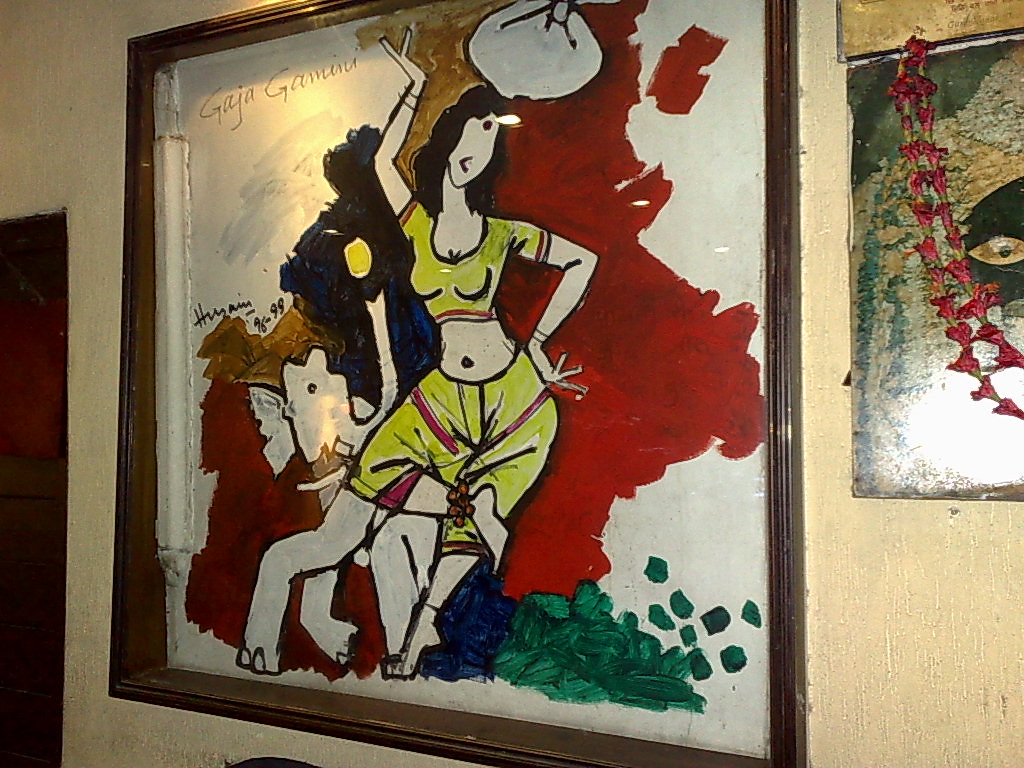

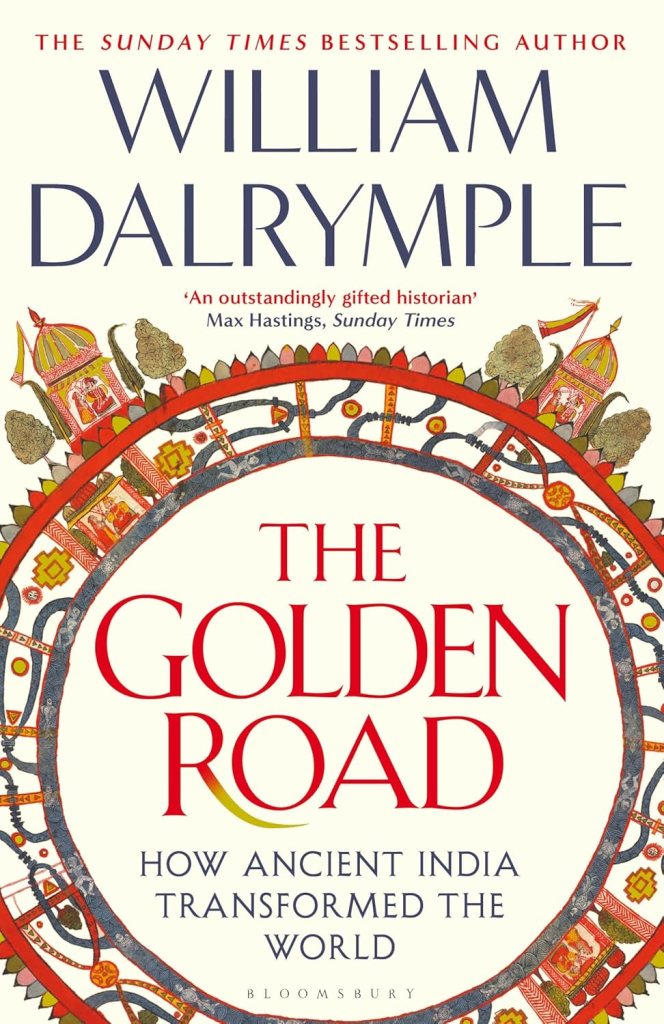

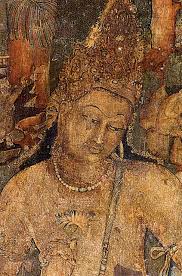


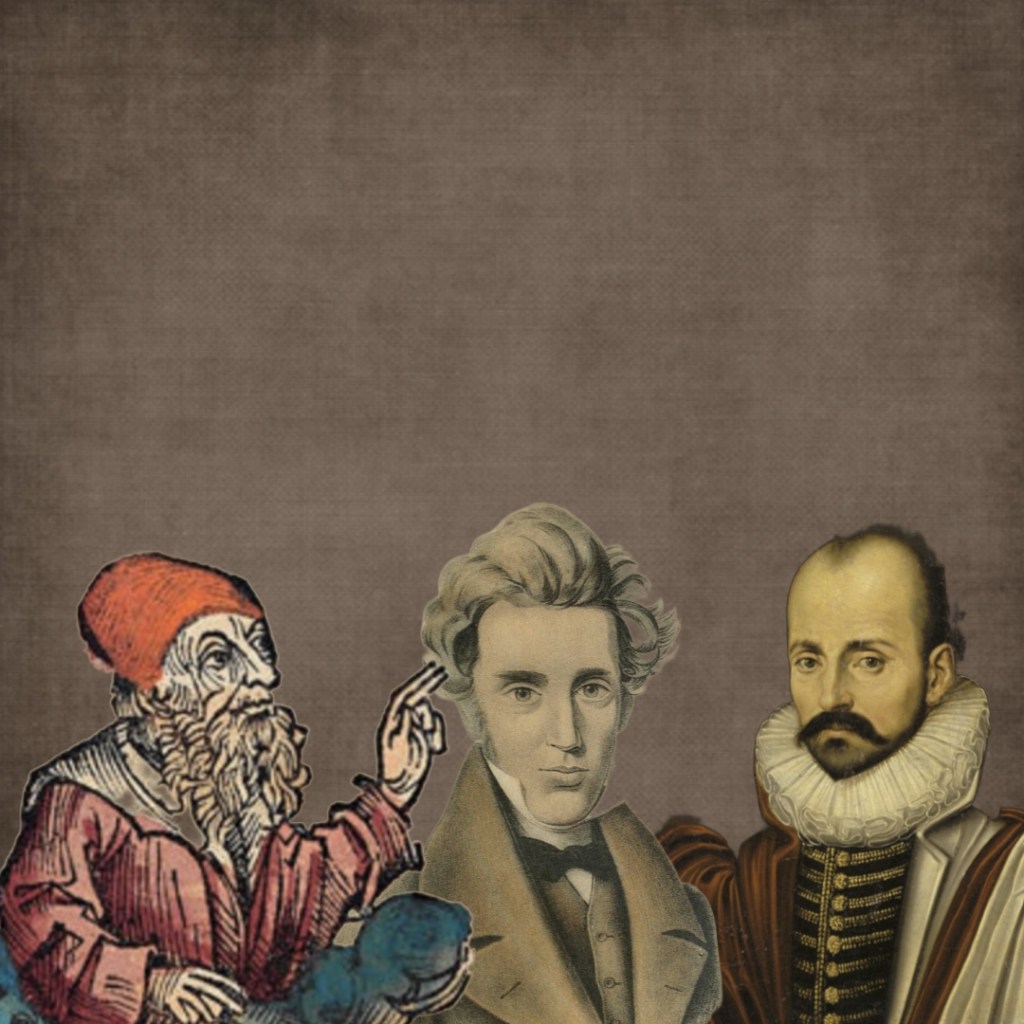
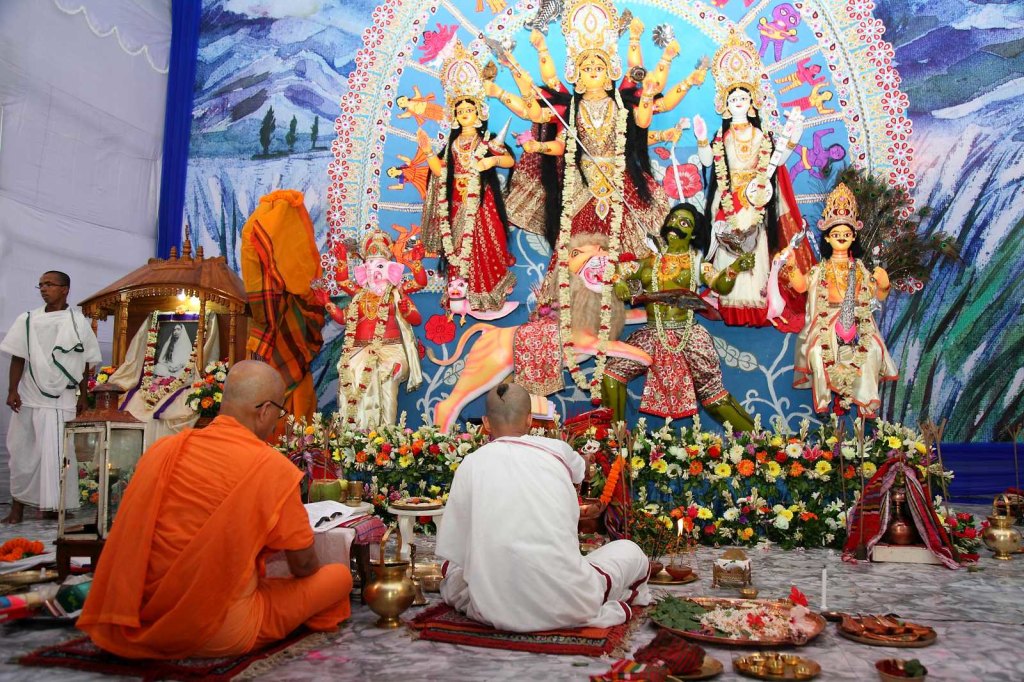
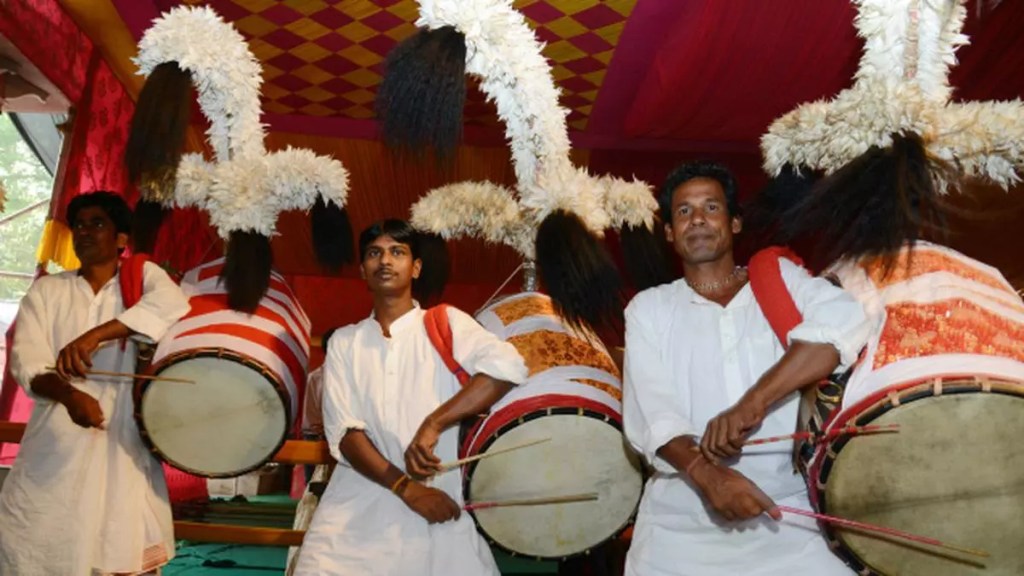
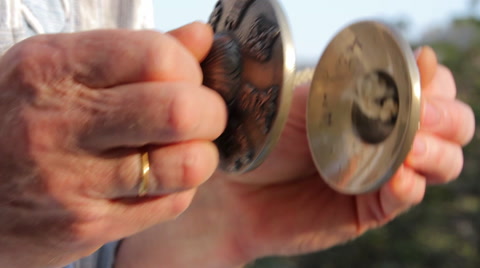

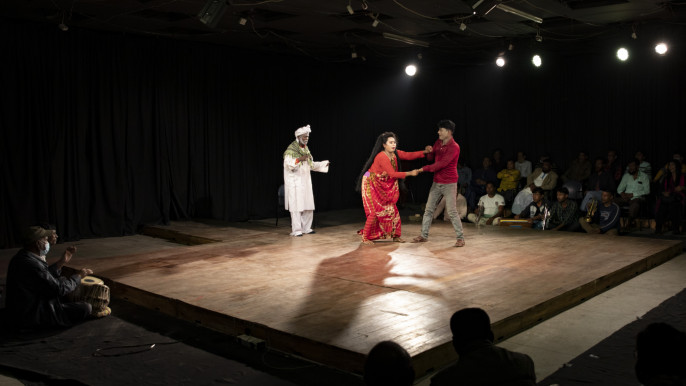
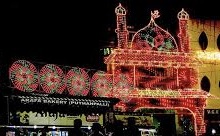
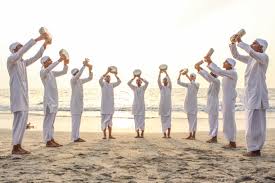
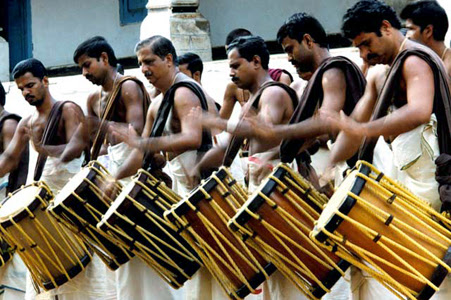

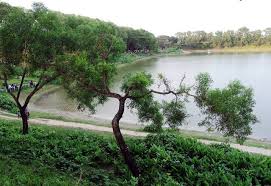
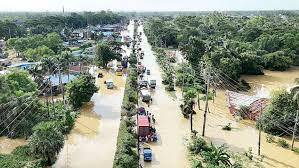
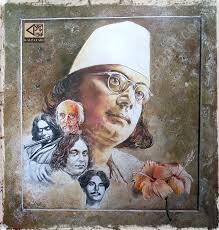
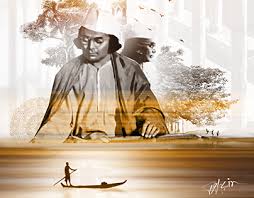
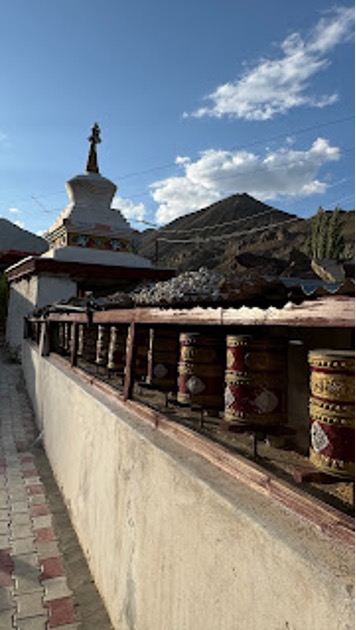
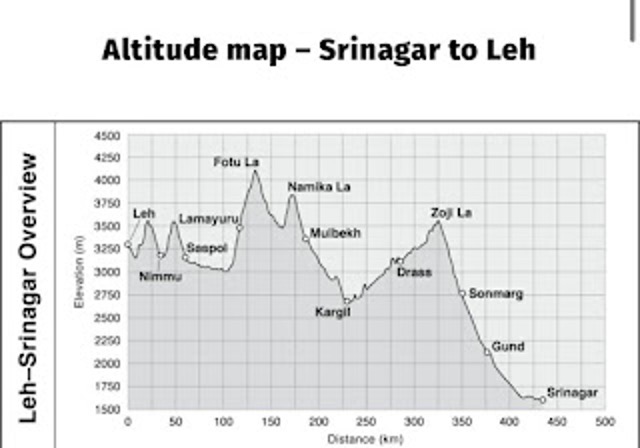
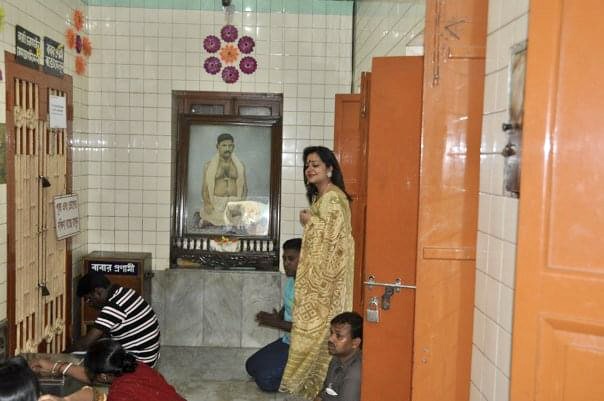
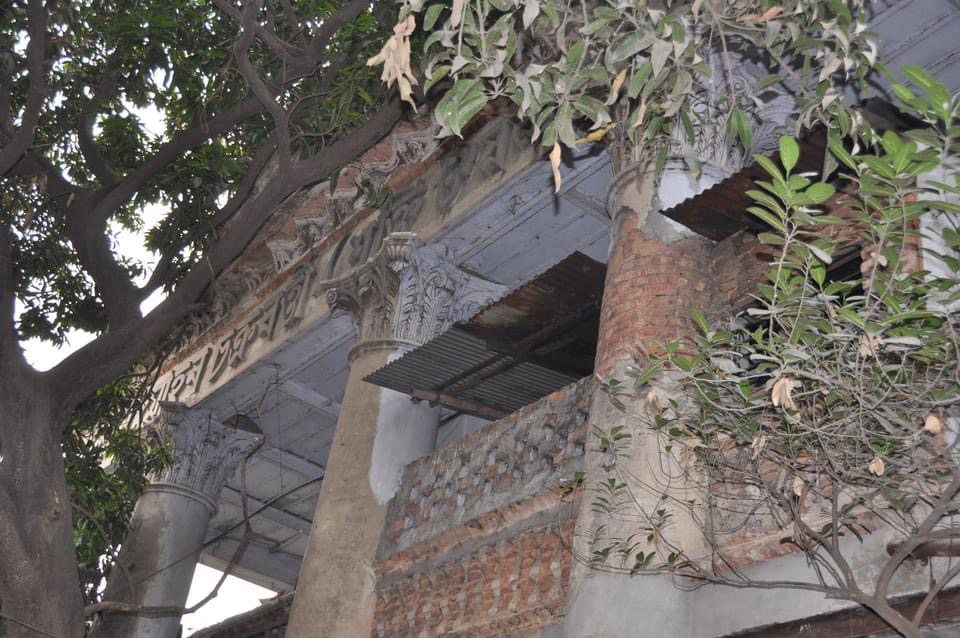
 Borderless