Most people like you and me connect with the commonality of felt emotions and needs. We feel hungry, happy, sad, loved or unloved and express a larger plethora of feelings through art, theatre, music, painting, photography and words… With these, we tend to connect. And yet, larger structures created over time to offer security and governance to the masses—of which you and I are a part — have grown divisive, and, by the looks of it, the fences nurtured over time seem insurmountable. To retain these structures that were meant to keep us safe, wars are being fought and many are getting killed, losing homes and going hungry. We showcase such stories, poems and non-fiction to create an awareness among those who are lucky enough to remain untouched. But is there a way out, so that all of us can live peacefully, without war, without hunger and with love and a vision towards surviving climate change which (like it or not) is upon us?
Creating an awareness of hunger and destruction wreaked by war is a heartrending story set in Gaza by JK Miller. While Snigdha Agrawal’s narrative gives a sense of hope, recounting a small kindness by a common person, Sayan Sarkar shares a more personal saga of friendship and disillusionment — where people have choice. But does war leave us a choice as it annihilates friendships, cities, homes and families? Naramsetti Umamaheswararao’s story reiterates the belief in the family – peace being an accepted unit. Vela Noble’s fantastical fiction and art comes like a respite– though there is a darker side to it — with a touch of fun. Perhaps, a bit of fantasy and humour opens the mind to deal with the more sombre notes of existence.
The translation section hosts a story by Hamiruddin Middya, who grew up as a farmer’s son in Bengal. Steeped in local colours, it has been rendered into English by V Ramaswamy. Nazrul’s song revelling in the colours of spring has been translated from Bengali by Professor Fakrul Alam. Atta Shad’s pensive Balochi lines have been brought to us in English by Fazal Baloch. Isa Kamari continues to bring the flavours of an older, more laid-back Singapore with translations of his own Malay poems. A couple of Persian verses have been rendered into English by the poet, Akram Yazdani, herself. Questing for harmony, Tagore’s translated poem while reflecting on a child’s life, urges us to have the courage to be like a child — open, innocent and willing to imagine a world laced with trust and hope. If we were all to do that, do you think we’d still have wars, violence and walls built on hate and intolerance?
Mario Fenech takes a look at the idea of time. Amir Zadnemat writes of how memory is impacted by both science and humanities while Andriy Nivchuk brings to us snippets from Herodotus’s and Pericles’s lives that still read relevant. Ravi Varmman K Kanniappan gives the journey of chickpeas across space and time, asserting: “The chickpea does not care about your ideology, your portfolio, or your meticulously curated identity. It will grow, fix nitrogen, feed someone, and move on without a press release.” It has survived over aeons in a borderless state!
In book excerpts, we have a book that transcends borders as it’s a translation from Assamese by Ranjita Biswas of Arupa Kalita Patangia’s Moonlight Saga. Any translation is an attempt to integrate the margins into the mainstream of literature, and this is no less. The other excerpt is from Natalie Turner’s The Red Silk Dress. Keith Lyons has interviewed Turner about her novel which crosses multiple cultures too while on a personal quest.
Holding on to that idea, we invite you to savour the contents of our February issue.
Huge thanks to all our contributors and readers for making this issue possible. Heartfelt thanks to our wonderful team, especially Sohana Manzoor for her fabulous artwork.
Enjoy the reads!
Let’s look forward to the spring… May it bring new ideas to help us all move towards more amicable times.
Shishur Jibon (The Child’s Life) is a part of Tagore’s 1922 collection of poems, Shishu Bholanath (Child Bholanath).
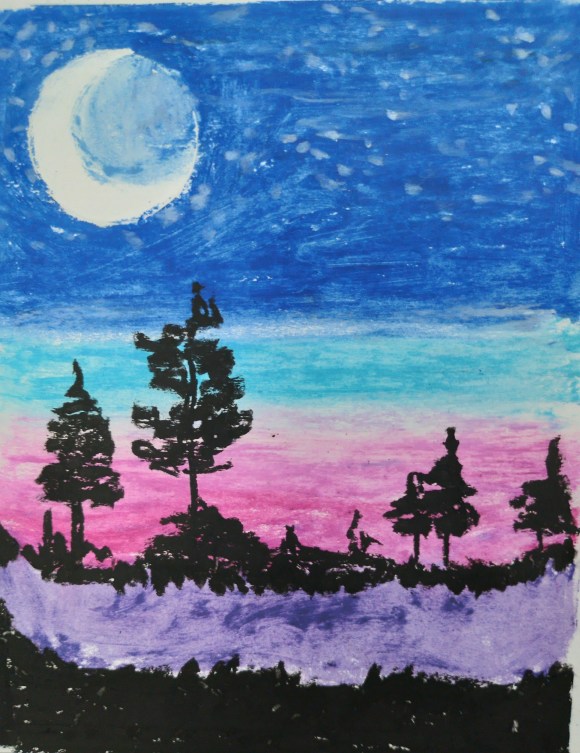
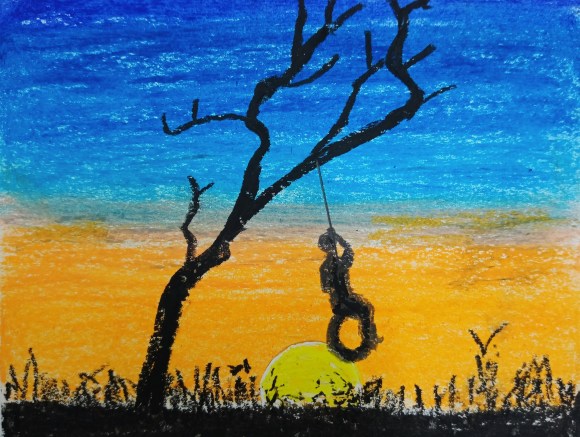
Art by Sohana Manzoor
THE CHILD’S LIFE

Do we have the
     courage to be a child?
         That’s why we die old.
We store every little thing,
         Hoard over time in trunks,
                   Stash in piles.
Today is ruined with thoughts
Of tomorrow. Tomorrow, we’ll stock
         For the burdens of the next day.
We get objects of desire,
And realise we have no need for them.
        We quest for things gone astray.
Fearing for the unknown future,
We lose sight of the path,
     And plan for the day after.
The future will always
          Be shrouded in mystery.
Then, will we have no reprieve?
As we ignite the lamp of intellect,
The flame flickers in the breeze —
         We calculate each step.
Numerous people advise
With subtle judgement
 Hair-splitting details before every quest.
Let my heart again be filled
      With the desire to be a trustful child.
         Let me flow freely like the breeze,
Swiftly unmask fears
   Hovering about the future.
      I will confront them as they are seen.
By the pond or on the rooftop,
     Mingling the known and unknown,
        The common and uncommon,
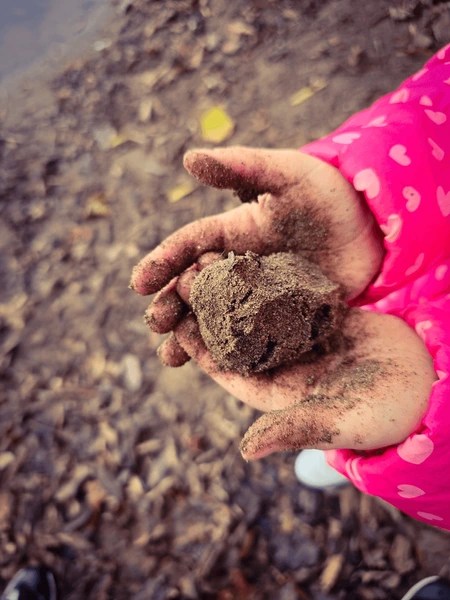
I will roll a ball of mud.
 This will be my toy.
      Happiness doesn’t need to be bought.
Taking on the onus of adulthood,
     I come to this huge market,
            Where grownups push and jostle.
Selling my world, when I
        Head home, I take
           With me only verbosity.
I have wasted away my time
    looking for bargains.
          The hours passed swiftly.
As dusk turns to twilight,
I suddenly feel, I do not like
        The deals I made deftly.
Our lives start
     With childhood.
          Let childhood prevail again.
Let us find companionship
     Like land and water,
        Let us play again in the dusty glen.
Breaking the boundaries of possibilities,
Let us sail on waves of impossibilities,
        Navigating on a ferry of dreams.
Again, let’s abandon logic
And create our world of magic,
        Forgetting the practical realms.
The first day when I arrived
           In this new world,
              Sunlight bathed my life.
 That period was filled with
     Childish imaginings —
       Where did it come from?
Who secretly beads
Dewdrops each night?
        Crickets chirp in unison.
 At dawn, I notice,
The interplay
        Of glittering lights.
There was a time
     When holidays blew in
       With breezy blue skies.
We looked for partners
     While playing games
       As childhood flew by.
Trees in play bloom flowers.
Flowers in play fruit fruits.
           Fruits sprout new buds.
Lands play with the lapping water.
Waters play with the swaying breeze.
         The breeze plays in its own tune.
With the youth,
     You remain young
              Despite your baggage.
You fly paper lanterns
Of many colours,
       Paint the skies with vibrant shades.
That day I fantasied
Being back by your side.
        We played together holding hands.
We floated many dreams,
 Conversed on sad and happy themes,
          And together, we relaxed.
The flowers burdened
       By the colours of seasons,
         Flow away in the stream of time.
Again, they come to shore
        As the breeze blows,
                Drifting to the waterside.
In the wicker basket of the world,
Your flowers with my garland twirled,
      Decorating the ferry of seasons.
I have hope in my heart,
The bokul ferry’ll return to the earth,
      Listening to the shiuli’s reasons.
When I hummed a song
That day on my own,
         It drifted by unoccupied.
That day, I saw a flicker
      In your eyes of laughter,
            You recognised me by your side.
Seeing your dusty play, your light,
My heart was filled with delight,
         Despite the sad notes on the flute.
I understood that spring,
You heard me sing.
          I too love to hear your tune.
The day passed in fields and paths.
            Dusk settled in.
                If you bid me farewell,
Then in your twilight
   Raise the sail of the boat,
     I will cross the river aswell.
Again, O friend of the child,
Let’s play on our own to abide
         In a youthful Universe.
Gazing at your face,
Your world I’ll embrace,
      I’ll view it in a simple light.
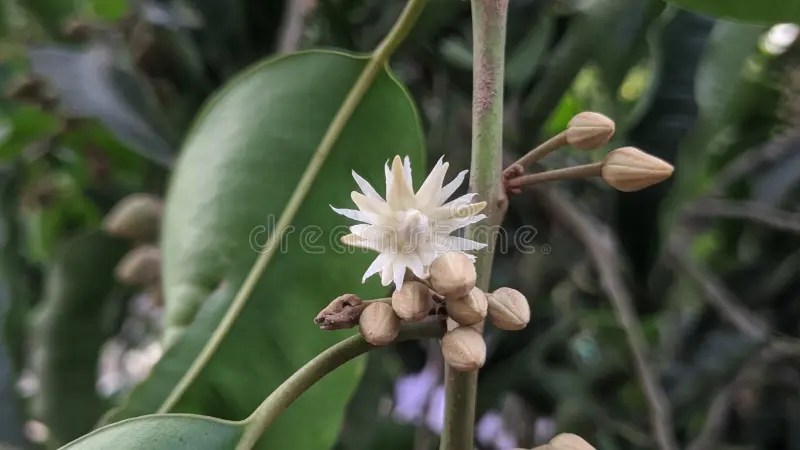
Colourful paper lanterns in the skyA child making a mud ballFrom Public Domain BokulShiuliFrom Public Domain
.
This poem has been translated from Bengali by Mitali Chakravarty with editorial input by Sohana Manzoor
.
PLEASE NOTE: ARTICLES CAN ONLY BE REPRODUCED IN OTHER SITES WITH DUE ACKNOWLEDGEMENT TO BORDERLESS JOURNAL
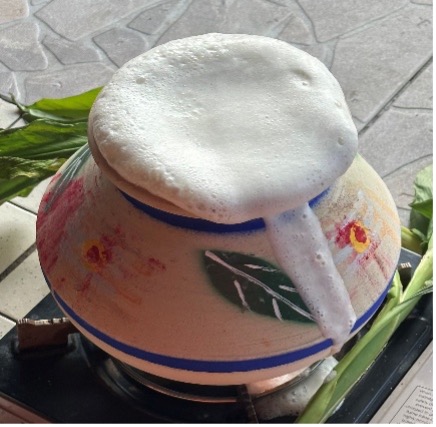
Pongal Pot. Photo Courtesy: Ravi Varmman K Kanniappan
On the 15th of January 2026, while much of the modern world was busy checking notifications, updating calendars, and worrying about quarterly outcomes, traditional Tamil households across the globe were doing something far more radical, watching milk boil. “Pongal”, the harvest festival, is one of those ancient cultural practices that stubbornly refuses to modernise. It does not arrive as an app update, cannot be streamed, and has no subscription model.
Milk is poured into a pot, heated patiently, and allowed, indeed encouraged, to overflow. This overflow is not considered inefficiency or waste, but it is the very point. It signifies abundance, wellbeing, and prosperity not merely for humans but for the entire ecosystem that made the meal possible, the sun, the rain, the soil, the cow, and the quiet, unseen labour of nature itself. Rice, lentils, jaggery, nuts, legumes, and raisins follow, and the resulting sweet dish is shared freely among family and friends, because prosperity that is not shared is considered incomplete.
This is an economy based not on accumulation but on circulation, not on profit but on participation. Something I believe is deeply unsettling to modern sensibilities.
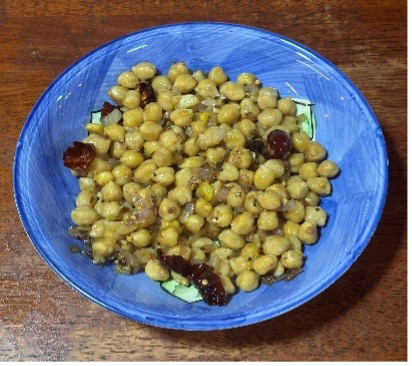
Into this defiantly non-consumerist ritual wandered a chickpea with an extraordinarily well travelled past. This was no humble backyard legume, nor had it been picked up at the nearest market. It had sprouted in Mexico, been packed in Lebanon, purchased in Sierra Leone, and generously gifted by my wife Greeja’s friend, Saras, and her husband Pieter, a Belgian whose kindness, like the chickpea itself, clearly knows no borders. The chickpea’s journey to Malaysia, where, after crossing more continents than most humans manage in a lifetime, it finally fulfilled its destiny, being cooked into a traditional Tamil Pongal.
By then this chickpea had crossed more borders than most people ever will, navigated more currencies than a multinational executive, and yet arrived without a single stamp of self-importance. If globalization were ever to seek a spokesperson, it would do well to choose this chickpea, which achieved in silence what conferences and treaties have struggled to explain. The chickpea does not attend Davos, does not publish white papers, does not tweet about resilience or sustainability, and yet it embodies globalisation with a calm confidence that makes economists look unnecessarily stressed.
We often speak of globalisation as though it were invented sometime in the late twentieth century by economists with impressive haircuts and Power Point skills. But the chickpea, unimpressed by timelines, has been global for at least nine thousand years. Its origins lie in the “Fertile Crescent”, that much abused cradle of early civilisations covering modern day Turkey and Syria, where early cultivation was recorded between 7500 and 6800 BCE. The wild ancestor, “cicer reticulatum”, still grows in southeastern Turkey, quietly ignoring the fact that humans have spent millennia fighting over the land around it. From this region, chickpeas spread naturally to the Middle East, the Mediterranean basin, and India by around 3000 to 2000 BCE, becoming a staple across cultures, religions, and cuisines. This was globalisation without shipping containers, trade sanctions, or consultants, just humans carrying seeds because hunger is wonderfully non-ideological.
India, once it encountered the chickpea, embraced it with characteristic enthusiasm and then proceeded to dominate its production. Today, India accounts for more than 70 percent of global chickpea output, a statistic that has made the chickpea an unlikely participant in modern trade wars. Protectionist policies, tariffs, reciprocal duties, and import bans imposed by major players such as India, the United States, and Mexico have transformed this humble legume into a politically sensitive commodity. It turns out that even the simplest food becomes controversial once spreadsheets get involved.
Thiruvalluvar (an ancient philosopher), writing two thousand years ago, anticipated this uncomfortable truth with brutal clarity:
“Only those who live by agriculture truly live; all others merely follow and feed upon them.” - Kural 1033
The verse throws stylish shade at modern life, while we sip lattes under perfect air conditioning and call it “work”, farmers are out there negotiating with the sun, rain, and stubborn soil to keep humanity fed. Our sleek jobs, fancy titles, and glowing screens? Well, they are merely luxury addons. Strip away agriculture and civilisation collapses into a very well-dressed famine. Turns out, all our progress still runs on dirt, with attitude.
The chickpea’s journey to South America, especially Mexico, is a reminder that globalisation has often travelled under less noble banners. Portuguese and Spanish explorers introduced chickpeas to the New World in the sixteenth century, carrying them across oceans as reliable, non-perishable protein sources. From these initial points of contact, chickpeas spread across Central and South America, embedding themselves into local agriculture and diets. In modern times, Mexico has emerged as a significant exporter, specialising in the Kabuli variety prized for its size and quality, with major production zones in Sonora and Sinaloa. Argentina and Chile also joined the club. Thus, a crop born in ancient Anatolia, nurtured in India, and sanctified by ritual, found itself repackaged for global markets, complete with branding, logistics, and regulatory oversight. The chickpea, once again, remained silent.
Silence, however, does not mean insignificance. Homer knew this. In TheIliad (Book 13) he famously compares arrows ricocheting off Menelaus’s armour to chickpeas and dark-fleshed beans flying off a threshing floor in the wind. The metaphor works only because the audience knew exactly how dried chickpeas behave, hard, resilient, and oddly bouncy. By likening lethal weapons to pulses, Homer not only emphasises the strength of the armour but also performs a subtle act of cultural grounding. The epic world of gods and heroes is momentarily tethered to the everyday agricultural reality of farmers winnowing grain. War, Homer seems to say, may be glorious, but it is ultimately sustained by food. Chickpeas, by 800 BCE, were so deeply embedded in Greek life that their sound and movement were universally recognisable. Even epic poetry depended on legumes.
Indian tradition offers an equally revealing, if more logistical, narrative. In South Indian tale associated with the Mahabharata, an Udupi King is said to have managed catering for the massive armies at Kurukshetra. Legend holds that he could predict daily casualties by observing leftover food. In some versions, the king visits Krishna at night, who eats a handful of roasted chickpeas, the number consumed corresponding mysteriously to the thousands who would fall the next day. This allowed precise meal planning and zero waste on an industrial scale of destruction. These divine data analytics allowed the king to cook exactly the right amount of food, avoiding waste on a genocidal scale. It is perhaps the earliest example of just-in-time inventory management, achieved without software, powered entirely by chickpeas and divine omniscience.
If you have ever wondered why Udupi cuisine is famous for efficiency and planning, this story offers a clue. Here, chickpeas function not just as food but as instruments of cosmic accounting.
Interestingly, while early Vedic texts sometimes viewed certain pulses as unsuitable for sacrifice, the Mahabharata period saw chickpeas elevated into sraddha rites (funeral rituals) and daily offerings. They transitioned from questionable to sacred, a promotion many humans would envy.
Thiruvalluvar’s ethical framework accommodates this evolution effortlessly:
“Sharing food and caring for all life is the highest of virtues.”-- Kural 322
A noble idea, until chickpeas quietly steal the spotlight. Modest, beige, and absurdly cooperative, they divide endlessly without complaint and nourish everyone from monks to gym bros. While humans argue ethics in panels and podcasts, chickpeas get on with the job, feeding the masses without ego. In the moral economy of virtue, they don’t preach but they simply multiply and sustain, humbling us one hummus bowl at a time.
Across civilisations, chickpeas became the dependable fuel of endurance. Roman soldiers consumed them as part of their standard rations, boiling them into thick porridge known as “puls” when meat was scarce. Gladiators relied on pulses for strength, earning nicknames that emphasised grain and legume consumption rather than heroism. Spanish and Portuguese sailors trusted chickpeas on long sea voyages because they did not rot, sulk, or demand refrigeration. During World War II, Allied researchers turned again to pulses to address vitamin deficiencies among troops, while the modern Indian Army continues to include chickpea flour and whole chickpeas in field rations due to their high caloric density and reliability. Empires rise and fall, but soldiers keep eating chickpeas.
Modern science, arriving fashionably late as usual, now confirms what ancient armies, monks, and farmers already knew. Chickpeas are celebrated as “brain food,” dense with nutrients that support cognitive function, mood regulation, and neurological health. Nutritional psychiatry highlights their role in reducing inflammation and stabilising the gut brain axis, making them valuable in alleviating anxiety and depression. Unlike the sugar-fuelled spikes and crashes of contemporary diets, chickpeas offer slow-release energy, the kind required for sustained thought, emotional regulation, empathy, and decision making. In a world addicted to instant gratification, caffeine dependence, and burnout worn as a badge of honour, the chickpea is almost offensively patient. That patience makes it profoundly incompatible with modern lifestyles, and incompatibility, in our times, is the surest mark of subversion.
If this sounds like ancient wisdom romanticised through hindsight, it is worth noting that modern civilisation has recently spent billions of dollars rediscovering precisely the same conclusion, often during lunch breaks. Sometime in the post-Covid era, somewhere between a glass walled co-working space and an overbranded café serving ethically sourced air, a young startup founder sat staring at his laptop, attempting to optimise a problem modern life seems uniquely skilled at inventing, how to eat “mindfully” without actually having time to eat. His company was building an AI-driven wellness platform designed to “personalise nutrition using real time biometric feedback.” Investors liked it. The pitch deck had the correct fonts. The valuation was impressive for something that had not yet solved hunger, distraction, or exhaustion.
Lunch arrived in recyclable packaging engineered to survive a nuclear winter. Inside was a bowl labelled Ancient Protein Medley. It contained quinoa flown in from the Andes, kale grown in a vertical farm two kilometres away, avocado sourced from somewhere geopolitically awkward, and, almost as an afterthought, roasted chickpeas. The chickpeas were rebranded as “plant-based protein spheres,” presumably because “chickpea” did not sound sufficiently disruptive, scalable, or fundable.
As the founder ate mechanically between Slack notifications, his smartwatch vibrated with updates. Blood sugar stable. Cortisol marginally elevated. Cognitive focus acceptable. The AI recommended breathing exercises and fewer screens. The founder ignored both and continued eating. The irony was complete. A system powered by cloud computing, global capital, and predictive algorithms had concluded, after millions in funding, that roasted chickpeas were ideal for sustained energy and mental clarity.
This was not new knowledge. Roman soldiers had marched on it. Tamil farmers had lived on it. Sailors had crossed oceans with it. But now it had a dashboard, a graph, and a subscription model.
Later that evening, the same founder attended a panel discussion on sustainability. Someone in the audience asked about regenerative agriculture. The panellists responded confidently, invoking carbon credits, blockchain traceability, lab-grown proteins, and the future of food. No one mentioned legumes fixing nitrogen. No one mentioned soil. No one mentioned that the chickpeas quietly sitting in the founder’s lunch bowl had already done more for planetary health than the entire panel combined. The chickpeas, true to form, offered no comment, no keynote, and no thought leadership, only nourishment.
The chickpea’s journey eastward is no less intriguing. It reached China via the Silk Road, settling primarily in Xinjiang, where evidence of cultivation dates back around two thousand years. There, it became part of Uighur medicinal traditions, prescribed for ailments ranging from hypertension to itchy skin. During the Tang and Yuan dynasties, chickpeas gained prominence as a “cosmopolitan” food, sometimes referred to as the “Muslim bean”. Yet in central China, the chickpea struggled for a distinct identity, often conflated with the common pea even by Li Shizhen[1], the famed Ming dynasty herbalist. Not all travellers are recognised for who they are, some spend centuries being mistaken for someone else.
And yet, through all this travel, confusion, commodification, and conflict, the chickpea remained quietly regenerative. Unlike extractive crops, it forms a symbiotic relationship with Rhizobium bacteria in its roots, fixing nitrogen from the air and enriching the soil. It takes and gives simultaneously, leaving the land better than it found it. This is perhaps the most radical aspect of the chickpea’s philosophy, one that stands in stark contrast to modern economic models based on extraction and exhaustion.
Thiruvalluvar warns us gently but firmly:
“Harm done to others inevitably returns to oneself.” – Kural 319
A warning humans hear, nod at, and immediately ignore. The chickpea takes a cooler approach. It survives by being outrageously generous, throwing itself into curries, salads, and hummus without a trace of resentment. No revenge arc, no ego. Just pure edible goodwill. While we stress over karma and consequences, the chickpea lives its truth, give everything away, become indispensable, and achieve immortality in every lunch bowl.
Humanity today resembles the ancient chickpea, hard, resilient, perpetually defensive. We pride ourselves on toughness, bouncing off crises with admirable persistence, yet rarely ask what we leave behind. Climate change, trade wars, and political upheavals are the shrill winds of Homer’s winnowing floor, tossing us about. The question is not whether we survive the tossing, but whether we enrich the soil when we land. Progress, the chickpea suggests, is not about becoming larger, louder, or more profitable. It is about being regenerative, ordinary, and useful.
In an age obsessed with luxury, consumption, and curated lifestyles, the chickpea offers a quietly subversive model. It is not elite food, but it is the food of soldiers, monks, labourers, and families. It does not advertise, rebrand, or reinvent itself. It simply nourishes.
Thiruvalluvar captures this understated wisdom perfectly:
“From seeds come harvests, and from giving comes abundance.” -- Kural 1030
A line politicians quote solemnly before approving tax breaks for themselves. The chickpea, deeply unimpressed, just does the math. One seed becomes many, then redistributes itself aggressively into every cuisine on earth. No gatekeeping, no merit tests, no ‘personal responsibility’ lecture. While humans weaponise scarcity and call it policy, the chickpea runs a ruthless experiment in abundance and wins, by being cheap, shared, and impossible to cancel. The chickpea has lived this truth for millennia.
So perhaps the real lesson of globalisation does not lie in trade agreements or consumer choices but in a small legume that has travelled from ancient Turkey to modern Mexico, survived Roman marches and mythic wars, endured misnaming and trade barriers, and still ends up quietly nourishing someone’s meal.
Even now, after dashboards have glowed, algorithms have pontificated, and every opinion has been optimised into a performance, the answer remains stubbornly ancient, from Roman roads to Tamil fields. The chickpea does not care about your ideology, your portfolio, or your meticulously curated identity. It will grow, fix nitrogen, feed someone, and move on without a press release.
In a world addicted to spectacle, branding, and moral pontification, this calm, beige indifference feels almost obscene. Quiet competence and unfashionable, the chick pea, turns out to be the rarest, and most outrageously extravagant, luxury left.
The travelled chickpea. Photo Courtesy: Ravi Varmman K Kanniappan
[1] Li Shizen(1518-1593), Ming acupuncturist, herbalist, naturalist, pharmacologist, physician.
Ravi Varmman explores leadership, culture, and self-inquiry through a philosophical lens, weaving management insight with human experience to illuminate resilience, ethical living, and reflective growth in an ever shifting world today.
PLEASE NOTE: ARTICLES CAN ONLY BE REPRODUCED IN OTHER SITES WITH DUE ACKNOWLEDGEMENT TO BORDERLESS JOURNAL
Bibliography
Pongal festival, milk boiling ritual, symbolism of abundance and ecology
Ramaswamy, N. (2004). Festivals of Tamil Nadu. New Delhi: Sterling Publishers.
Origins of chickpea domestication in the Fertile Crescent; dates (7500–6800 BCE); wild ancestor Cicer reticulatum
Zohary, D., Hopf, M., & Weiss, E. (2012). Domestication of Plants in the Old World (4th ed.). Oxford: Oxford University Press.
Spread of chickpeas to India by 3000–2000 BCE
Fuller, D. Q. (2006). Agricultural origins and frontiers in South Asia. Journal of World Prehistory, 20(1), 1–86.
India producing ~70% of global chickpeas; modern trade disputes
FAO. (2023). FAOSTAT Statistical Database: Pulses Production and Trade. Rome: Food and Agriculture Organization of the United Nations.
Thiruvalluvar quotations, dating (~2nd century BCE–2nd century CE), agrarian ethics
Pope, G. U. (1886). The Tirukkural. London: Oxford University Press.
Introduction of chickpeas to the Americas by Spanish and Portuguese explorers
Smith, B. D. (2011). General patterns of niche construction and the management of ‘wild’ plant and animal resources. Philosophical Transactions of the Royal Society B, 366(1566), 836–848.
Modern chickpea cultivation in Mexico (Sonora, Sinaloa), Kabuli variety exports
Gaur, P. M., et al. (2012). Chickpea breeding and production. Plant Breeding Reviews, 36, 1–87.
Homer’s Iliad Book 13 chickpea/threshing-floor simile
Homer. (c. 8th century BCE). The Iliad, Book XIII. Trans. E. V. Rieu. London: Penguin Classics.
Udupi King / Mahabharata legends involving chickpeas and casualty prediction
Hiltebeitel, A. (2001). Rethinking the Mahābhārata: A Reader’s Guide to the Education of the Dharma King. Chicago: University of Chicago Press.
Chickpeas in sraddha rites and post-Vedic ritual elevation
Olivelle, P. (1993). The Āśrama System: The History and Hermeneutics of a Religious Institution. Oxford: Oxford University Press.
Roman soldiers, gladiators, and chickpea-based diets (“puls”)
Garnsey, P. (1999). Food and Society in Classical Antiquity. Cambridge: Cambridge University Press.
Chickpeas in maritime rations and early modern naval diets
Braudel, F. (1981). The Structures of Everyday Life: Civilization and Capitalism, Vol. 1. New York: Harper & Row.
Use of pulses in World War II nutrition and modern military rations
Nestle, M. (2002). Food Politics: How the Food Industry Influences Nutrition and Health. Berkeley: University of California Press.
Nutritional psychiatry: chickpeas, gut–brain axis, slow-release energy
Jacka, F. N. et al. (2017). Nutritional psychiatry: The present state of the evidence. The Lancet Psychiatry, 4(3), 271–282.
Modern “wellness tech,” quantified nutrition, and startup food culture
Lupton, D. (2016). The Quantified Self. Cambridge: Polity Press.
Nitrogen fixation via Rhizobium in chickpeas; regenerative agriculture
Peoples, M. B., et al. (2009). The contributions of legumes to reducing the environmental risk of agricultural production. Agriculture, Ecosystems & Environment, 133(3–4), 223–234.
Chickpeas in China via Silk Road; Xinjiang cultivation; “Muslim bean”
Hansen, V. (2012). The Silk Road: A New History. Oxford: Oxford University Press.
Li Shizhen and historical misclassification of chickpeas
Unschuld, P. U. (1986). Medicine in China: A History of Ideas. Berkeley: University of California Press.
He went for a walk
in the salty sea,
tripped over a ship,
a Spanish galleon.

He went for a stroll
in a summer meadow,
fell over a horse,
a thoroughbred stallion.

And every time
he stubbed his toes
he shouted, “Oh no!
I’m a clumsy giant.”

He went for a saunter
in haunted woodland,
tripped over a ghost
and injured his hand.

He went for a ramble
on a deserted beach,
slipped on a peach skin,
made a hole in the sand.

And every time
he stubbed his toes
he shouted, “Oh no!
I’m a clumsy giant.”

He liked to promenade
with a vat of lemonade
along the clifftop,
not afraid of the drop.

But accidents happen
and over he went
with a roll of thunder
accompanied by clapping.

And every time
he stubbed his toes
he shouted, “Oh no!
I’m a clumsy giant.”

Cyclops Billy was his friend,
Cyclops Billy advised him to mend
before he went walking again
and risked a tripping
over monsters
and men.

Cyclops Billy is tired of his groans,
Cyclops Billy adopted a tone
of gentle rebuke to the great fluke,
cushioned his bones
and proffered
him soup.

And every time
he stubbed his toes
he shouted, “Oh no!
I’m a clumsy giant.”

Thank you, Thank you,
I feel much better,
the giant admitted in a letter,
and then he went on his way
to take a tour
of pastures new,
to take a look and see the view,
hoping to do so
without any hassle.

He climbed a tree
higher and higher
and reached the top
with a skip and a hop
and took the look that he desired,
saw the sunset all on fire.

He climbed a mountain
even higher, reached the summit
before he retired,
scared the yeti who lived up there
until the poor creature
lost all its hair.

On an avalanche he descended,
soonest broken is soonest mended,
crashed into a castle
from a storybook,
rented by a vampire
but owned by a spook.

And every time
he stubbed his toes
he shouted, “Oh no!
I’m a clumsy giant.”
From Public Domain
Rhys Hughes has lived in many countries. He graduated as an engineer but currently works as a tutor of mathematics. Since his first book was published in 1995 he has had fifty other books published and his work has been translated into ten languages.
.
PLEASE NOTE: ARTICLES CAN ONLY BE REPRODUCED IN OTHER SITES WITH DUE ACKNOWLEDGEMENT TO BORDERLESS JOURNAL
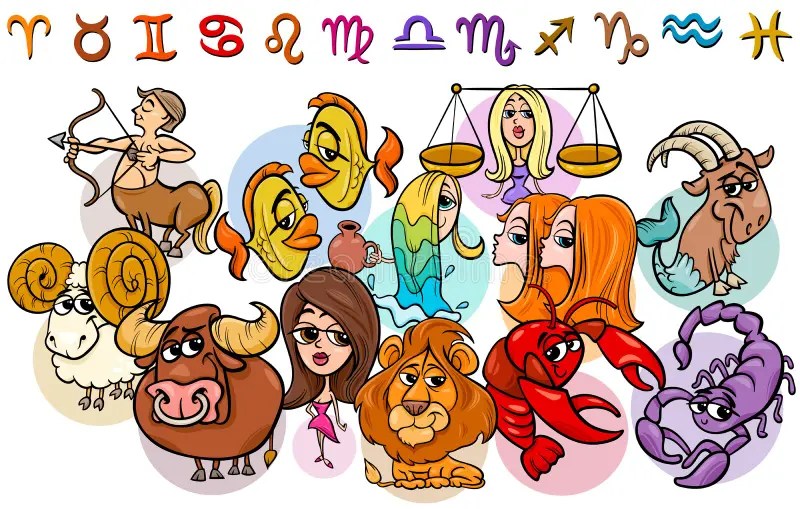
It is a matter of joy that my existence in this world has been largely successful in proving my birth chart predictions wrong. This has now fossilized into my belief even though my mother held a different viewpoint. Ever since I got to read the prized booklet in my teenage years, I was disturbed about my life as an adult and my life span. I was classified as an early achiever of success scheduled to play a long innings. So, I planned to delay almost everything and become a late bloomer instead. Success earned late lasts longer was the guiding thought. Imagine a young fellow who was destined to get his hands on everything considered worth acquiring. Contrast these projections with his determination to put everything on hold, to express solidarity with millions of others who have to struggle very hard and for too long to finally become an achiever. Being stubborn to refuse what fate has ordained sounds crazy and suicidal but that was the rebellious streak that glowed like a firefly in my head during those days.
Wherever I found I was supposed to clock a win or hovered close to winning, I chose to withdraw, step back, or slow down to help another person in greater need of it. Such noble sacrifices were not included in my horoscope, but I gave no scope to destiny to remote control my life. After all, it did not include any career option of my choice and so the glowing tales of a ‘successful’ life meant little. While my mother was glad that the birth chart made it sound all good for me, a roller-coaster ride worth envying, she was upset that I was in a challenging mode, holding my will superior to what the astrologers had outlined in those few hand-written pages. I had some vital questions to raise and clarify doubts. When I expressed the desire to meet the astrologer who drafted my future at the time of my birth, she said he had departed from earth, leaving no scope for me to chase him for an explanation or seek a partial rewrite. There was no way I could convince myself that I was supposed to spend my entire life as per his forecast even though he foretold an abundance of material possessions and windfall gains.
Considering the prediction that I was going to be settled abroad around the age of thirty, I chose not to seek my fortune outside the country, believing that only the meritorious students deserve to go abroad for higher studies or only the highly educated get employed there. Nothing could materialise without the passport, so I delayed acquiring it in my early twenties. My singular focus was to ensure that I was academically unfit for the international job market. Although the extended family gave importance to settling abroad, and many relatives of my generation were upskilling themselves and secretly planning for the big break in the foreign lands, my lack of ambition stoked serious concerns as they concluded it quite abnormal that a young fellow does not dream of flying across continents. When they offered real life examples of how some of our relatives had a better, more ‘secure’ life and they were doing exceptionally well in Canada and Australia, I showed no interest in their immigration tales and chose to furnish a divergent viewpoint of domestic success being a greater challenge in an overpopulated job market.
The holidaying arriviste from New York – an architect of a brilliant career in the field of computers – was eager to know what I was pursuing as we were the branches of the same family tree. When I disclosed that I was into media studies, he was visibly relieved that I would not be seeking any favours like sponsorship, internship, scholarship, or referrals. He was expecting me to praise his global success but my lack of curiosity in his professional breakthroughs made him furious within. His arched eyebrows suggested an element of shock when I mentioned I had zero interest in shifting to a foreign country in search of greener pastures. He read it as my lack of self-confidence to compete globally. He suggested I should mingle with those friends who have a strong urge to move abroad and develop a similar expansive mindset instead of remaining a frog in the well, with those outdated ideas of roots keeping me stuck and decaying my potential. His words failed to stir me or change my outlook, and I maintained that staying local but thinking global was sufficient for me. There have been big achievers who never boarded a ship or a plane, yet they were recognised by the world over for their contributions.
Many friends were exploring opportunities abroad although they kept it as a closely guarded secret to reduce competition. My steadfast refusal to ape them was as source of disappointment, generating fears that the horoscope must have missed out some crucial details or the exact time of birth was recorded incorrectly – a difference of a minute or two possibly changed the entire calculation grid. That I had managed to raise questions on the accuracy of the birth chart was a big achievement, but my mother started scanning the newspaper classifieds for another experienced astrologer who could accurately read my palm and forehead and find out what the future had in store for me. I was sure that the excessive crisscrossing of lines and their lengths and breaks would confuse any seasoned palmist, making him lose patience to further read between the lines.
When I told my close friends that writing could be practiced from any part of the world, they argued that the opportunities to succeed in writing were non-existent within the country. The Western world offered a better life to mediocre writers as well. When my mother understood that creative pursuits were a priority for me, she tried to find some linkage with the birth chart once again. She did succeed in establishing a connection with writing and the business of iron. After all, books and newspapers began their printing journey with the use of metal in the early stages.
As the years passed by, she was convinced that her son would not move out of the city, forget leaving the country. Applying for a passport when it was well past the ‘right’ time to migrate was explained as a necessary step to ensure a holiday abroad though the vacation never materialised. Aside from some minor errors in calculations, she was unwilling to concede that the horoscope was fundamentally misleading. Just then a work-related opportunity in a neighbouring country arrived my way. When I refused to accept it, she was relieved that though late, the horoscope was right to suggest the professional breakthrough abroad and it was my decision to let it go. No more arguments on the accuracy of the birth chart as she felt quite victorious after a long phase of wait. An international opportunity gone waste gave a high of a different kind. My satisfaction that I was not crossing the border disappointed my mother, but I was happy to stay in my homeland.
That I was supposed to be a businessman according to the birth chart was another prediction that haunted me like a nightmare. I was keen to prove it incorrect. Those were the days when the self-employed or freelance professional tag was not in circulation so there were just two categories for astrologers to focus on. The iron business forecast consumed my energy as I feared I would end up being a scrap dealer instead of a global metal magnet. My confidence remained perpetually low, and the fundamental lack of ambition drove me insane. An overdose of humility and modesty stifled my voice to rise and shine.
When I told her about words being the complete world for me, she was happy the prediction was right. Words and books need paper and printing press, so my business of writing had the iron component in it. As per her assessment, the astrologer won despite my best attempts to prove him wrong. She gave a creative spin to those predictions and find some solid connection with my choices. Being published abroad meant it was going international and writing had metal and mettle associated with it. While I stayed happy with the conclusion that the astrologer was wrong, she stayed happy that the astrologer had predicted everything correct and things were unfolding in accordance with what the birth chart foretold.
Talking about life span, it is better to stay silent. I should not pose a challenge just to prove the astrologer wrong. Though I hated the long life he predicted for me as I wondered what I was supposed to do for so many decades, with each passing year now, I feel there is so much to achieve and the prediction gives solace that there is still enough time to fulfil my pending dreams as the journey began late due to my stubborn approach. Whenever I am doubtful about my future on this earth, I fish out the horoscope and read the short paragraph highlighting my long-life span and heave a sigh of relief.
.
Devraj Singh Kalsiworks as a senior copywriter in Kolkata. His short stories and essays have been published in Deccan Herald, Tehelka, Kitaab, Earthen Lamp Journal, Assam Tribune, and The Statesman. Pal Motors is his first novel.
PLEASE NOTE: ARTICLES CAN ONLY BE REPRODUCED IN OTHER SITES WITH DUE ACKNOWLEDGEMENT TO BORDERLESS JOURNAL
We were in the middle of the winter deep freeze when it happened. A single comment about where (and where not) to pile snow. And having been locked inside for months and gone squirrely, neighbours became combatants with a single swing of the shovel. It bounced dully off the kneecap, but reaction was swift. Another shovel coming back the other way, grazing off the side of the arm. The first shovel was then raised and extended as if a spear in some ancient Greek phalanx. I was up in the window across the street, watching the entire thing. It has since been christened The Great Snow Shovel Fight of 2024. I guess a few of the other neighbours saw it as well. I wonder if they cheered as I did when the one shovel clobbered the other over the head and chased him up the street. Maybe I was a little bit squirrely as well. Rushing downstairs to plug the iced-over truck into the house with an orange extension cord, so that it had a chance of starting in the morning.
Ryan Quinn Flanagan is a Canadian-born author residing in Elliot Lake, Ontario, Canada with his wife and many bears that rifle through his garbage. His work can be found both in print and online in such places as: Evergreen Review, The New York Quarterly, Borderless Journal, GloMag, Red Fez, and Lothlorien Poetry Journal.
.
PLEASE NOTE: ARTICLES CAN ONLY BE REPRODUCED IN OTHER SITES WITH DUE ACKNOWLEDGEMENT TO BORDERLESS JOURNAL
There are many great cinematic representations of time such as the 1960 George Pal version of the Time Machine and from the same period the Time Travellers ( which was remade as the inferior Journey to the Centre of Time some years later) had some interesting juxtapositions near the end. But the sequence that has stuck in my head is from Kubrick’s 2001 a Space Odyssey, where a shattering glass is used to convey the passage of subjective time for Bowman. For the majority of living things, time is a subjective concern, a relative few spend most of their lives looking at the cosmic scheme of things — philosophers, scientists and writers.
Aristotle differed from Plato and over the centuries there were many unique interpretations ranging from bleak existential views to epic works comfortingly tied to Madeleines. Our concept of time is reinforced by popular culture. A 1960 film titled When the Clock Strikes, is about a criminal condemned to be executed at midnight. It’s a stormy night and an assortment of characters converge on Cady’s place not far from the prison where the convicted murderer will be hung. Cady’s is a convenient place to shelter from the storm for a juror who is wracked with guilt that he might have sent an innocent man to the gallows. He has an opportunity to convey his concerns when the warden calls on the way to prison. Also there is a woman pretending to be the wife of the condemned man and somehow a man struggles through the stormy night and arrives at Cady’s to announce that he is the guilty one but he is too late to stop the execution as the phone lines are down. The rest of the movie deals with a plan to somehow get the stolen money the deceased man had hidden. This is a good example of how time hangs over our existence, providing motivation and sometimes pushing us to the limits of endurance rather than be beaten by the relentless arrow of time.
Newton ‘s Universe served us well until the electron microscope focused attention on the underlying structure of the Universe. No longer could we accept that the Universe functioned like clockwork as in the languorous days gone by. Even Einstein knew that, for want of a better word, ‘spooky’ things were happening at a sub-atomic level. The Universe is essentially vast amounts of information. In the 20th century, devices were invented to record sound and visual information . These devices proved invaluable to scientific research as well as arts a and entertainment. Scientific and creative minds found ways of mixing, compressing and manipulating information in much the same way that information goes through various transformations in a cosmic setting such as event horizon of a black hole for instance. The Universe is composed of sequences of information , timelines branching in all directions. Some entities will follow one timeline while others will sample multiple timelines. On a quantum level, time foam can occur under the right conditions and elsewhere there are shards of time and no doubt there is time that resembles the contents of a document shredder.
This is the 21st century and we should have mastered time with all the technological marvels at our disposal. Modern transport can get us from A to B so much quicker, at least it would if only governments would spend enough on infrastructure so we did not spend so much time in traffic jams. AI should be facilitating a more a meaningful existence but algorithms can be time wasters when corporations use them to maximise profits. At a time when there are record numbers of lonely people someone comes up with the bright idea of creating a virtual reality where participants interact with avatars creating another wedge between people and the real world. Such virtual worlds can attract people predisposed to such immersion. Gambling addicts can spend days, weeks, years, gambling on poker machines. The tragedy is playing out right now as these individuals lose their partners, families and souls to the machines. It’s a limbo world where nothing meaningful happens. Lost time.
Scientists say the concept of time was invented by us to create a sense of order to our existence but is time not a thing? We should make the most of whatever devices are at our disposal to improve our lives and the lives of those around us. A meaningful existence is one that acknowledges that we are creatures like all other creatures on this planet and we are sustained by this planet and the complex ecosystems around us.
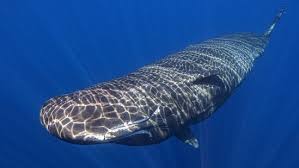
The answers to the mysteries of time might be solved by the collective wisdom of the world’s indigenous people. It might also come some time in the future in conversations with sperm whales at a depth of three thousand metres.
From Public Domain
.
Mario Fenech is an artist, writer. His visual art is mainly sculptures and had many exhibitions around Melbourne over the years. His writing has been essentially science fiction ideas and most were short stories although he self-published a novella in 2013 titled, ‘The Rock in Room Ten’. He is currently two thirds into his latest science fiction story.
.
PLEASE NOTE: ARTICLES CAN ONLY BE REPRODUCED IN OTHER SITES WITH DUE ACKNOWLEDGEMENT TO BORDERLESS JOURNAL
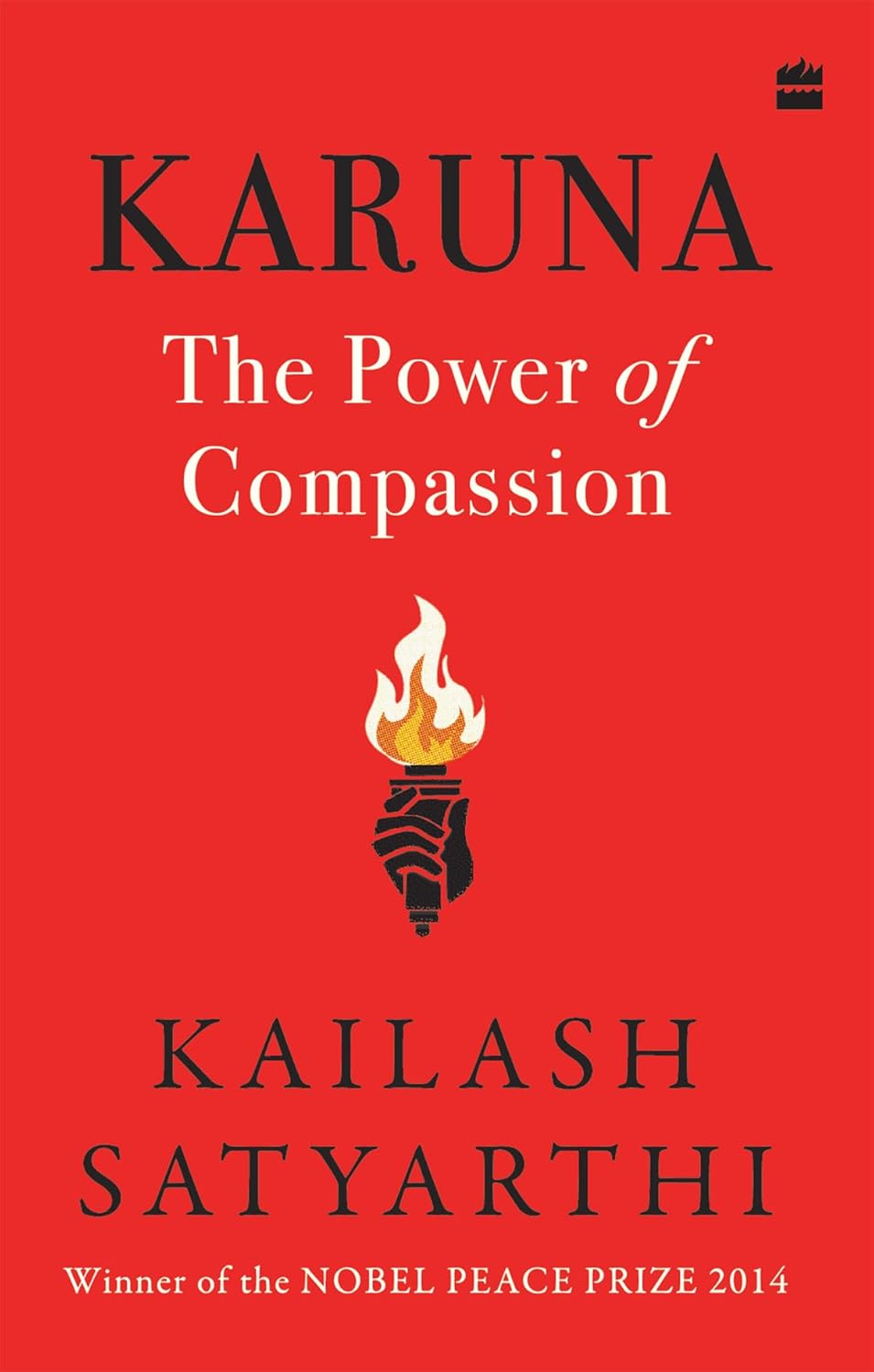
Never before has the world been so wealthy, so networked and so saturated with information. And yet, as Kailash Satyarthi points out in Karuna: The Power of Compassion, humanity appears increasingly fractured—by inequality, conflict, ecological devastation and a growing culture of indifference. The paradox, he argues, is not a lack of resources or knowledge, but a moral failure. What the modern world suffers from is not technological deficit, but a deficit of compassion.
Satyarthi’s central intervention is to reclaim compassion from the realm of softness. In popular imagination, compassion is often treated as an individual emotion—gentle, personal, and largely apolitical. Karuna rejects this framing outright. Compassion, Satyarthi insists, is not passive kindness or distant sympathy. It is an active, disruptive force—one that challenges injustice, reshapes institutions and compels moral action.
For Satyarthi, compassion is born at a precise moment: when another person’s suffering is experienced not as an abstract concern but as one’s own. That recognition, he argues, cannot remain inert. True compassion demands a response. In this sense, compassion is not the opposite of power; it is a form of power—ethical power—that has historically driven social movements, expanded rights and forced political change. From struggles against child labour to campaigns for human dignity, Satyarthi positions compassion as the invisible engine behind lasting transformation.
One of the book’s most distinctive contributions is the idea of a “Compassion Quotient (CQ)”. Just as IQ measures cognitive ability and EQ assesses emotional intelligence, CQ is proposed as a way to understand how individuals, organisations and societies relate to suffering and responsibility. For Satyarthi, CQ is not an abstract moral scorecard. It is a practical framework—something that can be cultivated, strengthened and embedded into systems of governance, education and leadership.
The argument is clear: without a high CQ, even the most intelligent or emotionally skilled societies risk becoming efficient but cruel. Economic growth without compassion deepens inequality. Technological progress without compassion accelerates exclusion. Political power without compassion normalises injustice. CQ, in Satyarthi’s formulation, becomes the missing ethical dimension in modern decision-making.
To prevent compassion from dissolving into sentimentality, Satyarthi defines it through four inseparable elements. The first is awareness—the refusal to look away from suffering. Indifference, he argues, is not neutrality; it’s complicity. The second is connectedness—the recognition that another’s pain is not “their problem” but part of a shared human condition. This sense of moral interdependence is central to karuna or compassion.
The third element is deep feeling—a genuine emotional identification with the other, distinct from detached sympathy or charity. And finally, action—concrete, mindful steps to reduce harm and restore dignity. Compassion, Satyarthi insists, collapses if it stops at feeling. Without action, awareness becomes voyeurism and empathy becomes self-indulgence.
When these four elements converge, compassion becomes transformative. It turns individuals—often without formal authority—into problem-solvers, moral leaders and catalysts for change. This is a recurring theme in the book: power does not always flow from institutions; it often emerges from ethical clarity and moral courage.
Satyarthi’s insistence on compassion as a public ethic is shaped by his own life’s work. Over five decades, he has fought for the rights of millions of marginalised children across borders, cultures and political systems. In Karuna, these experiences are not presented as personal triumphs but as evidence of what compassion-in-action can achieve when it is organised, sustained and fearless.
The urgency of the book lies in its diagnosis of the present moment. Satyarthi argues that globalisation has connected markets and technologies, but not consciences. What is needed, he writes, is a “globalisation of compassion”—a deliberate effort to act as if the world is one family. This is not sentimental universalism, but a pragmatic moral stance, especially when addressing issues such as child exploitation, forced labour, displacement, and environmental collapse.
In a political climate increasingly defined by hostility, exclusion and moral exhaustion, Karuna makes a quiet but radical demand: that compassion be treated not as a personal virtue but as a collective responsibility. It calls on citizens, leaders and institutions to rethink success—not merely in terms of growth or efficiency, but in terms of dignity protected and suffering reduced.
Karuna: The Power of Compassion is not a manual for charity, nor a retreat into moral idealism. It is a challenge—to individuals and societies alike—to recognise that the future will not be shaped by intelligence, technology, or power alone. Without compassion as a guiding force, Satyarthi warns, progress itself becomes hollow. With it, even the most entrenched injustices can be confronted.
.
Bhaskar Parichha is a journalist and author of Cyclones in Odisha: Landfall, Wreckage and Resilience, Unbiased, No Strings Attached: Writings on Odisha and Biju Patnaik – A Political Biography. He lives in Bhubaneswar and writes bilingually. Besides writing for newspapers, he also reviews books on various media platforms.
PLEASE NOTE: ARTICLES CAN ONLY BE REPRODUCED IN OTHER SITES WITH DUE ACKNOWLEDGEMENT TO BORDERLESS JOURNAL
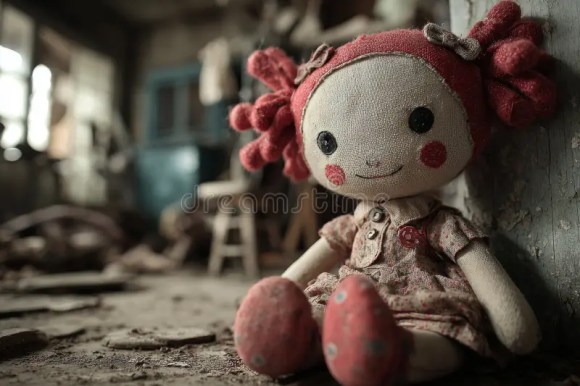
Torn clothes, rough hair, a burn scar— I wonder where she is.
Maybe adopted by a safe land, still afraid of the dark, the smoke, and a voice too high.
Lying with hollow eyes, staring at the starry sky— I wonder where she is.
Maybe in a refugee haven, still starving to feed one younger than her.
Alongside a graveyard of dreams and desires… I wonder where she is.
In a wrecked shelter once called home— not warm enough to battle the cold inside.
You may wonder why I am so optimistic.
Because—
I was her doll, and she was mine. There is no mortality in Doll Land
From Public Domain
Manahil Tahir is an MBBS student from Pakistan whose writing explores memory, conflict, and quiet resilience at the intersection of humanity and psychology.
.
PLEASE NOTE: ARTICLES CAN ONLY BE REPRODUCED IN OTHER SITES WITH DUE ACKNOWLEDGEMENT TO BORDERLESS JOURNAL







 Borderless