Meenakshi Malhotra visits Harsh Mander’s Locking down the Poor contextualising it against the current scenario
Title: Locking down the Poor: The Pandemic and India’s Moral Centre
Author: Harsh Mander
Publisher: Speaking Tiger Books
Harsh Mander’s Locking down the Poor: The Pandemic and India’s Moral Centre is a moving and poignant account of a crisis that he views as preventable. He gives us a detailed account of the havoc wreaked by the sudden announcement of a nation-wide lockdown in March. In early 2020, the first cases of Covid-19 infection were confirmed in India, and on 24 March the country’s prime minister announced a nationwide lockdown, giving the population of over 1.3 billion just four hours’ notice. It became obvious within a matter of days that India had plunged into a major humanitarian crisis.
In this stringent and harsh critique, Mander, a social activist, demonstrates how grave this crisis has been, and why it has had a lasting impact, from which the economy is still reeling. The author further shows us that this impact is the direct consequence of public policy choices that the governance made, particularly of imposing the world’s longest and most stringent lockdown, with the smallest relief package. The underprivileged were abandoned even as their livelihoods were destroyed and the blue collared work force were pushed to the brink of starvation.
Mander brings us voices of out-of-work daily-wage and informal workers, the homeless and the destitute, all overwhelmed by hunger and dread. From the highways and overcrowded quarantine centres, he brings us stories of migrant workers who walked hundreds of kilometres to their villages or were prevented from doing so and detained. His book can be seen as an expose that lays bare the callous disregard for basic needs during an emergency closure of a country where tens of crores continue to live in congested shanties or single rooms, on pavements with no toilets and no running water and no possibility of physical distancing, even though more than seven decades have passed after independence.
While the pandemic was a world-wise crisis which forced nations and countries to take emergency measures, Mander contends that the response within the country was a betrayal of the common people, the starving millions of India who live on the edge of hunger and poverty. Their increased precariousness, the author believes, was a result not only of a natural but a man-made, humanitarian crisis. It was the result, he says, of a short-sighted governance operating with a middle-class bias, who just refused to take into cognisance the ironies of pronouncements like “wash your hands” “stay home, stay safe”.
The author’s concerns here can be framed in the larger context of his anxiety and fears about the erosion of democratic politics in India. Speaking with the authority of an ombudsman wielding a blunderbuss, Mander backs his account with facts and statistics, observation and detailed reporting. Carrying out relief work in the unauthorised urban slums of Delhi, he sees the desperate situation of the people who are more threatened by hunger than the pandemic. That the government turned a blind eye to the omnipresent reality of hunger and poverty, was appalling to the author. Further, the alarming rise of domestic violence during the pandemic has also exposed the domestic space as a precarious location for many women in India and elsewhere. This fact has been well documented across a range of platforms and though this is not a primary concern in Locking Down the Poor.
The book concerns itself with hunger, the uncertain fate of migrants, daily wage labourers, the deepening class divides and many other issues of relevance. Mander points out the neglect of food security and the dismantling of informal labour rights, the wilful blindness of the courts and the state machinery which forced people into the space of their ‘homes’ regardless of the distress or human cost which has been colossal and disastrous. Commenting on the impact of the lockdown on the upper classes, Mander comments, “For the rich and middle classes, the lockdown was disorienting and a nuisance, but largely seen as necessary.” However, in the absence of safety nets, it was the poor who had to bear the brunt of the devastation that followed.
Thus, he writes that while the “appallingly planned lockdown offered zero protection to the poor, it placed the burden of the most destructive costs on their shoulders.” He also quotes journalist Ipsita Chakravarty who wrote in stark terms that “with the nationwide lockdown, the government drew a cordon around the bodies it wished to protect…pulling up the drawbridges to guard the chosen-those who could afford to stay in. On the bodies of those outside this charmed circle, the lockdown wrought havoc.”
Looking at the crisis of the first lockdown in 2020, after a gap when some time has elapsed, we realise that much of his critique holds true even now. The lack of foresight and proper planning became evident in the second wave as well, given the colossal tragedy of humongous proportions that unfolded in front of us and made all of us — rich, poor, middle -class citizens — mute victims and witnesses. A very comprehensive account of the impact on India of the Covid crisis, Locking down the Poor is also a chronicle of our times, of brutal exclusions that we practice unthinkingly on a daily basis. The book is in a sense as the blurb says a “ledger of our accountability at a time when the poor of India have been brought to despair and abjection by a callous state and an uncaring, unequal society”.
Dr Meenakshi Malhotra is Associate Professor of English Literature at Hansraj College, University of Delhi, and has been involved in teaching and curriculum development in several universities. She has edited two books on Women and Lifewriting, Representing the Self and Claiming the I, in addition to numerous published articles on gender, literature and feminist theory.
.
PLEASE NOTE: ARTICLES CAN ONLY BE REPRODUCED IN OTHER SITES WITH DUE ACKNOWLEDGEMENT TO BORDERLESS JOURNAL
THE FRANKS WERE FRENCH LONG BEFORE THEY EVER BECAME HOTDOGS


Tiara Morgan barbecues in the crew cut grass line burbs.  A semi-circle of rosy-cheeked beer garden parents and a tiny splash pool for the shrieking ecstatic kiddies.  Attention seeking progeny and some matted little rescue dog living out its days of swaddled butt-sniffing glory.  As the buns come out, the smoke from grandpas fiery holy grill.  The Franks were French long before they ever became hotdogs, did you know that?  Liberté, Egalité, Fraternité!  The hamburger crowd could care less and all those tiny Orange Crush faces hugging droopy sunflowers in buzzing yellow-belted back gardens.  The roof retiled and the floors just redone.  There is a tour for the wives lost to marriage.  And animated refills bringing out the paper plates.  A condiment-rich table for the snotty rug rats.  On these long summer days that smell thrice as good as they ever look.  Not a cloud in the passing service station sky.  Everyone laughing and young as they will ever be again.
Ryan Quinn Flanagan is a Canadian-born author residing in Elliot Lake, Ontario, Canada with his wife and many bears that rifle through his garbage. His work can be found both in print and online in such places as: Evergreen Review, The New York Quarterly, Borderless Journal, GloMag, Red Fez, and The Oklahoma Review.
.
PLEASE NOTE: ARTICLES CAN ONLY BE REPRODUCED IN OTHER SITES WITH DUE ACKNOWLEDGEMENT TO BORDERLESS JOURNAL
There is the import and export of desires in one of the oldest cities in the world, beside one of the most revered rivers, as Keith Lyons discovers in Varanasi.
A sadhu watching over the early morning activity on the banks of the Ganges at Assi ghat. Photo Courtesy: Keith Lyons
Most who come to Varanasi, deep down, are seeking peace. The ancient city formerly known as Kashi and Benares is the holy site for three religions: Hinduism, Jainism, and Buddhism. For Hindus who flock to India’s spiritual capital from all over the country, bathing in the sacred Ganges is said to wash away all sins.
For me, as a non-religious outsider, I was also seeking inner peace, and perhaps a deeper understanding of the questions of life and death. But amid the surrealness of the labyrinthine old city, with its wandering bulls, revered shrines, marauding monkeys, and burning bodies, one thing I found was a place to satisfy my earthly material needs.
“It’s to die for,” exclaimed an American bohemian I’d met a few weeks earlier in Bodh Gaya, where the Buddha gained enlightenment. I ran into him strolling along the ghats — steps down to the Ganges that line the western bank of the curve in the wide river. Despite the 1256-page heavy Lonely Planet India, TripAdvisor and social media, there is nothing like word-of-mouth recommendations from fellow travellers. “So you are already at that party,” said Brad, impressed that I too had made it that far along the waterfront almost 2km from where I was staying. “Well, you can’t miss it, can you,” I replied. “It’s probably the only place of its kind right at the water’s edge, and if you don’t see it, you probably smell it.”
For many travellers who don’t want to be seen as sightseeing tourists but are in search of the authentic and the local, Varanasi seems to offer quite an array of experiences, some beyond the comfort level of leisure tourists who keep to the beaten path. Of the 88 ghats of Varanasi which are used for bathing, washing and ceremonial worship, there are two which are synonymous with the spiritual centre. Those two are exclusively used for cremations.
The same reason for bathing in the sacred waters to obtain forgiveness for transgressions applies, but for the recently deceased, it is believed that if their ashes are scattered into the purifying Ganga, their reincarnation cycle will end — and they will reach nirvana.
As the one of the ‘seven sacred cities’, the place supreme deity Shiva (known as ‘The Destroyer’) brought into being by meditation, Varanasi and its cremation ghats represent the ultimate ‘geographical cure’. There are rest homes and ashrams where the elderly and terminally ill wait to die, believing that if they die in the old city, they will be redeemed of all their sins by Lord Shiva on the cremation pyre.
Varanasi straddles the known world and the hidden, with the Ganges a crossing point between earth and heaven. For tens of thousands of foreigners who have Varanasi on their itinerary routes, it is fair to say many are seeking peace, but definitely not of the kind that involves the death of their current material existence. Instead, there is a curiosity about the openness of death and its rituals, and the chance to bear witness to the process which can be at the same time sad and soul-destroying yet also joyous and life-affirming.
For those that don’t share the faith that propels people to this city, perhaps any visit to Varanasi could be described as macabre or dark tourism, fueled by the antagonism between testimony and voyeurism. The epitome of this is the quest by foreigners to get as close as possible to take photos of burning bodies. As if normal travel isn’t stressful enough, the macabre tourist seeks out encounters that have the potential to be emotional and even traumatic.
I must admit, I did have a certain curiosity about witnessing wooden pyres where corpses were placed to be burned. And I did have a fear that I might identify a limb or hand being consumed by the fire, or even that somehow a writhing contorted face might emerge from the flames and snarl at me menacingly.
That didn’t happen. What did happen is that I passed the cremation grounds numerous times during my walks up and down the riverbanks, occasionally pausing to observe from a distance, but the sight didn’t stir me as much as the reflection that this was how a culture and a religion farewell their dead. Having been an altar boy in the Catholic Church, I’d seen my fair share of embalmed bodies in coffins at teary sad funerals, but there was quite a different feeling at Varanasi. Anyway, I didn’t want to intrude as a gawking foreigner.
I was just as interested in the negotiations for firewood between relatives and the lower-caste Doms. The price for 400 kg of wood can be around Rs 4,000 (around US$52), a visiting insurance broker from Mumbai tells me, as we stand on the steps beside towers of split logs from the Himalayas. “The better wood is more expensive, but the government is trying to encourage using things like coconut shells and cow dung cakes instead of cutting down more trees,” he says, before the discussion turns to cricket, and a New Zealand cricketer I’d never heard of who played for his beloved Mumbai Indians. Later that evening, to make up for my lack of patriotic sporting knowledge, I impress some local boys playing cricket on the uneven surface of a terrace by catching a whizzing ball with one hand.
Wood merchant stack wood for cremations. Photo Courtesy: Keith Lyons
I noticed that after the initial shock of seeing dead bodies, and after a few days, the constant exposure to these late rites meant that I could be sitting in the open-fronted government-approved 70-year-old Blue Lassi Shop and I wouldn’t even look up when a procession march along bearing a body destined for the Manikarnika ghat. Everyday hundreds of bodies are burned on the riverbank, with the no-frills natural gas crematorium operated 24/7.
I had already taken on board — and possibly ignored through denial – the message of Varanasi: Death is unavoidable. One day, I will die. My body will be destroyed. Life on earth is finite. Make the most of it.
I reflected on this as I stood sipping my tea at Dada ki Chai, or as I sought out the best kachori sabzi[1], or the sweet and sour channa1, dahi vada[2]on the crooked and crowded streets.
So what else did I discover among the maze of alleyways, the crumbling palaces and the riverbank steps down to the river? Don’t dismiss me as a lousy traveller who can’t be without the comforts of home, but I have to admit one of the finds of my waterside wanderings was a red tent erected on the wide path, where a family had recently set up a low-key pizza eatery.
Pizza? Yes, hand-made, wood-fired pizza. When I first visited, Sunil has only just started the venture. He was going to get some pizza boxes and a label for Euro Pizza and arrange a takeaway and delivery service. The only seating was a few plastic seats.
Diners waited patiently in the cool evening, not so intent on breaking the cycle of death and rebirths but wanting respite from the hot spicy food served up in train stations and roadside dhabas.[3]
In the distance, only a few minutes’ walk away, flames could be seen from the Maharaja Harishchandra ghat, Varanasi’s second, and smaller burning ground. Further along, sounds from the evening ceremony could be heard. But none of that mattered really. There was always a friendly grin from Sunil or a nod of recognition from his family members who cranked out the vegetarian pizzas. It was Rs.150 (US$2) for a ‘small’ pizza, but it was large enough to share. Which people did, with fellow travellers they’d just met, the whole of life made up of many triangle segments, their Varanasi stories to be told later about the burning corpses, the ashes scattered into the river, and the weirdest yet most wonderful thing: a pizzeria perched by a crematorium and a crossing to paradise.
Euro pizza’s humble red tent on the banks of the Ganges. Photo Courtesy: Keith Lyons
Keith Lyons (keithlyons.net) is an award-winning writer, author and creative writing mentor, who gave up learning to play bagpipes in a Scottish pipe band to focus on after-dark tabs of dark chocolate, early morning slow-lane swimming, and the perfect cup of masala chai tea. Find him@KeithLyonsNZor blogging at Wandering in the World (http://wanderingintheworld.com).
PLEASE NOTE: ARTICLES CAN ONLY BE REPRODUCED IN OTHER SITES WITH DUE ACKNOWLEDGEMENT TO BORDERLESS JOURNAL
THINKING OF MY FRIEND
(After Chu Hsi)

A breeze rustles the leaves
at the edge of the bay.
The moon and the stars make
night almost as clear as day.
On the lake a loon calls,
from very far away.
The lake is a calm desert.
But tonight a strong wind
will blow. Waves will beat
like furious fists against
the rocks. I feel this anger
is more real than the calm.
It’s nature’s realm.
My friend says we must
look for the good.
I find it hard to believe.
Forgive me, my friend.
I watch a worm,
stranded in the grass,
struggling in agony,
until it finally reaches
its predetermined end.
I leave it alone,
and walk carefully home.
First of all, let me congratulate you on winning The Gordon Graham Prize for Naga Literature 2021 for your debut novel Waiting for the Dust to Settle. How do you feel about winning this award?
Thank you! I’m very excited, of course! This is such a great morale booster considering that I almost gave up the novel midway! But more importantly, I really appreciate the Kohima Educational Trust/Kohima Educational Society for instituting the Prize to encourage writings by Nagas.
Can you share a bit about writing the story and the choice of the title?
Yes, it certainly was worth the wait. It took many years for the book to see the light of day. It’s been quite a journey. When I first wrote the first draft, I didn’t gauge it would be such a long road to publishing. Part of this was because many publishing houses rarely take the risk to publish a debutant. But I’m thankful that Speaking Tiger Books decided to take me on board!
As for the title, it’s very much drawn from the protracted Indo-Naga political problem and the wait for an amicable solution that never seems to happen. Unfortunately, in the process of waiting many other issues have cropped up along the way for the Nagas that peace is such an illusion at the moment. The title is also partly inspired by Samuel Beckett’s Waiting for Godot. For quite some years, in my family circle, we’ve funnily referred to the novel as Godot because it was never coming. Fortunately, in our case, the Godot showed up. But bigger issues that the novel deals with are still evading, the wait is getting longer.
What provoked your interest to write the story of your protagonist, Rokovei? At what point did you have the inkling that you might have stumbled on a character or a story you’re going to commit to?
Well, many have also asked me if Rokovei is me! I always say it’s both “yes” and “no”. “Yes”, because many of my experiences of growing up in a small town are imprinted in the protagonist. I suppose every piece of literary work tends to have some components of autobiography to it. But “no” also because I’ve also drawn the experiences of many people I know into the person. For instance, I relived playing around the highway with friends but I never dreamt of becoming an army officer while few of my friends did. For me, the character too developed with the story.
I appreciated the way that your novel undertakes an examination of how people cope with the trauma during the difficult decades of the last century because of the Indo-Naga movement. Can you shed more light on this, especially contextualising against recent events?
The Indo-Naga political imbroglio is considered one of the longest unresolved conflicts in South Asia. Needless to say, for generations, the Nagas have waited for peace to dawn in their land. Growing up in one of the most militarised regions of the world, I’ve seen how intimidating the armed forces can be, especially when you hear so much of atrocities committed by them on civilians. The recent killing at Oting in Mon district of Nagaland is just one of the many high-handed atrocities. Thankfully, we have more alert media to cover the event and our people are more informed now. But as long as AFSPA (Armed Forces Special Powers Act of 1958) stays, the Indian armed forces will continue their reign of terror. The Act has only caused more injury than building trust among the public and the custodians of security.
Was there anything, in particular, you were reading or thinking about regarding the events when you wrote the novel?
I was reading though not quite about what I was contemplating to write about. But there were many fragmented stories in my head that I wanted to piece together. And so, one summer break, I wrote down a skeletal framework for the novel. I’ve always felt the necessity of writing our stories because we are going through lots of changes and many things are swiftly lost as the past recedes. For instance, the Senapati town of the 1980s is only faintly visible now. The transformation of its landscape and the people is quite astounding. I think documenting the past helps us remember the place with affection.
Why do you think it is important to know a place through its stories?
I think, as human beings, we all have a sense of belonging, not necessarily to one place alone but it could be many places. And situating a story in a place, helps us find the connection with the people and their culture. Sometimes, it can be quite fascinating to learn about new things and ideas through the stories that help us discover the place, people, and culture.
There are so many realities woven into the novel, making it an interesting read. Would you like to take us through your journey as a writer while sharing the research that went into creating this book? You had mentioned that you relied on the book The Judgement that Never Came: Army Rule in North East India by Nandita Haksar and Sebastian M Hongray for the factual events.
You’re right in pointing out the realities that are woven into the novel. In fact, that was one of my intentions. I didn’t want to write about only one character who would dominate the whole narrative. I wanted multiple stories to emerge. In that sense, I am interested in “writing community memory”. I’ve been to different places talking about this idea. Simply put, “writing” is the way of telling where “community” is the subject and “memory” is the resource. This is nothing new for a communitarian society like the Nagas. This is what makes our oral culture too. So, when I talk about my interest in the community memory, I wanted to see how a community memorialises certain events that impacted them in general. This is where I focused on the impact of the three month-long Operation Bluebird of 1987, the counter-insurgency operation launched by the Assam Rifles following the Oinam incident. The large-scale human rights violation of killings, rape, molestations, and torture continue to mar the memories of the people of about thirty villages affected by it. Even today, 9th July is still marked by the people as a black day. Many of the pains and sufferings remain undocumented even today. The book The Judgment that Never Came was helpful in some historical details. But though the Oinam incident forms a focal point of the novel, it’s not entirely about it. I decided to remove the narrative from where the thick of action was occurring because I wanted other issues to emerge too. For instance, the late 80s and early 90s saw many unfortunate turns of events. There was the break-up of NSCN into Isak-Muivah and Khaplang factions which brought so much bloodshed to the Nagas themselves. Then came the ethnic conflict between Nagas and Kukis, the wounds of which are yet to be healed completely! Most of the stories in the novel are a construct of stories I’ve heard at different points in time and there are not much of interviews involved.
Can you reflect more on the importance, perils, and/or rewards of writing contemporary work that takes up political issues? In writing political fiction, is there a risk of having your characters seem like mere mouthpieces for ideas? How important is the personal story or family history in your writings?
Well, I tend to be a bit sceptical of categorisation because it limits the book from being read otherwise. But, of course, the readers have the freedom to view it from different angles. At the same time, there are indeed a lot of political issues in my novel. It can be risky because it is often difficult to walk the fine line of being politically correct all the time. For me, however, I wanted to write a story like this because there are a lot of things that you can’t speak directly but the form of fiction gives me the liberty to talk of issues implicitly. Sometimes, some truths are better told as fiction. Perhaps, that’s why parables or allegories speak powerfully even today! I think personal or family histories are wonderful story plots because our lives are stories. And who can relate your own saga or the one about your family better than you yourself?
You have written a book on English literature that comes from the Northeast region. Tell us about your research experiences in writing that book.
I suppose you meant Literary Cultures of India’s Northeast: Naga Writings in English (2015). That book was partly a result of my PhD thesis submitted at Jawaharlal Nehru University. When first got interested in exploring writings from the region, particularly Naga writings, it was hard to find stuff. I remember visiting Kohima, hunting for literary works by Nagas, and up ending frustrated because bookstores don’t have them! But it’s astounding how things change in the last 10-15 years! Now we have a vibrant body of works by writers from the region on various subjects, and many academic works to supplement with. The region has certainly become a hotspot of academic discourses of late!
As you said, writings in English from Northeast India are beginning to draw attention from the rest of the country and from around the world. As one of the writers from the region, how do you assess the future of this trend?
I cannot predict what the future will be. All I can say is that this new interest of reading the region through literary productions is certainly a good exercise because for too long there have been multiple misunderstandings about the people of the region and their cultures. Unfortunately, India is too big a country with too many diverse cultures that stereotypes become easy. And for a region that’s so little read, the people from the Northeast tend to fall prey to prejudices so often. Hopefully, this new attention will help re-imagine the region.
Are there other writers whose work feels important to you, both in terms of literary lineage and inspiration in writing?
Well, there are so many actually. But since our discussion is more on writings from the Northeast, I would like to limit my answer to that. As for literary lineage, I’m much indebted to my own culture of storytelling. Being from an oral culture, I understand that stories are embedded with history and cultural anecdotes that they become indispensable to understanding the people. As far as writings in English is concerned, I’m certainly indebted to forerunners like Easterine Kire, Temsula Ao, Mamang Dai, Kynpham Sing Nongkynrih, and a host of others who showed new possibilities with our literary heritage.
Were you always a reader? What kind of books did you read, growing up? Tell us a little more about your growing-up years, education, and family, and how they have shaped your life and writing?
I was not actually. Books were scarce. But the advantage of growing up in an oral society is that we get to hear stories and that keeps our imagination alive. My early formative years were spent mostly in the small but growing town of Senapati. Then I went to Shillong for pre-university years, after which I moved to Delhi for graduation and I’ve been in the capital city ever since. I must say, my real initiation to reading more rigorously started during my college years, having being exposed to cheap used books easily available by the roadsides. But my enduring love for reading and writing springs largely from the literature classrooms as a student and now I teach the same. I’m drawn particularly to the genre of realism from the nineteenth century and the power that literature has to shape the intellectual life of society.
What encouragement would you offer to writers, especially young people who wish to write? Could you take us through some of the processes you went through in your writing?
I’m more of a moderate reader and writer. In the sense, my job and other responsibilities keep me occupied most of the time, and I like it that. As I see it, writing also comes with its responsibility and so, I don’t want to just write for the sake of writing. I also write occasionally in newspapers and other public forums on different issues. Now, of course, writing a non-fictional piece can be quite another challenge. Unlike many writers, I didn’t have an A-Z plan of the novel when I first started. Yes, I did have a rough plot and why I wanted to write the story. But many sub-plots popped up along the way. So, the story grew as I wrote. Like I mentioned above, “memory” was chiefly my resource bank. I did cross-check on some factual stuff. And like all writings, there were lots of personal editing – deletion, addition, etc. But few tips that I can offer young aspiring writers are:
First, be willing to learn. Being teachable is one of the humblest virtues to imbibe. Sometimes, your attitudes can come in the way of bettering yourself. And I think this is becoming an impediment for young people today, perhaps it has to do with our educational system too. The truth is, however, we don’t know everything.
Secondly, seek help. This can be sought in two ways. One way is to reach out to friends and family who can offer feedback on your manuscript. I’ve improved a good deal in this aspect, even adding some sub-plots to my novel. And the other way is to seek professional editorial help. No matter how good you are at the language, you’ll realise that editors always have different eyes and offer good suggestions. Also, when it comes to one’s own writing, we always overlook some mistakes. Perhaps, that’s because sometimes we read with our mind and not with our eyes!
Thirdly, be patient. To be patient is to persevere, not just in writing but also in looking forward to the final product. Anything done in a rush seldom produces quality. For me too, writing this novel also tested my patience to a certain limit. As I mentioned above, I almost gave up midway. But it’s certainly worth the wait. And more patience may be required in an initial project because people are yet to see your work.
Thank you so much for indulging my questions, which I think will benefit, especially young Nagas wanting to foray into the world of writing. What is your perception of the role of a writer from the North-eastern region or a writer of the world?
You’re welcome! I must thank you for allowing me to share my thoughts! I only hope what I shared will be of some help to a few. I think writers, wherever you may be from, leave a legacy behind that is not easily forgotten. The fact that we continue to read many ancient pieces of literatures attest to this truth.
Lastly, but not the least, could you please let your fans know what you are writing at present if you are, and when can they expect to see another story from you?
That’s the question I have been trying to duck at the moment but I guess it can’t be averted. Honestly, I’m not writing anything at the moment. Partly because I’m not under pressure to write one and I don’t depend on that for a living. But I’ve some ideas and plots in my head. I hope to pen them down at the appropriate time. I like to let the idea first find a certain formation in my mind before letting it out. That’s what I did with my novel too. For now, I can just say that I hope to find an opportunity to write one soon.
[1] This award was instituted ‘to promote good writing and raise the profile of Naga writers’ in 2018.
Dr. Achingliu Kamei is a short story writer, poet, and an ultra-runner, She teaches Literature at Delhi University. She is currently residing in Delhi with her family and Haru, the cat. She has authored Songs of Raengdailu, a poetry book (2021).
PLEASE NOTE: ARTICLES CAN ONLY BE REPRODUCED IN OTHER SITES WITH DUE ACKNOWLEDGEMENT TO BORDERLESS JOURNAL
Jibananda Das’s All Afternoon Long, translated from Bengali by Fakrul Alam. Click here to read.
The Colour of Time, Korean poetry composed and translated by Ihlwha Choi. Click here to read.
The Ordeal of Fame, a humorous skit by Rabindranath, translated by Somdatta Mandal. Click here to read.
Fazal Baloch translates a retold folktale from Balochi, The Precious Pearl. Click here to read.
Tagores’ Lukochurihas been translated from Bengali as Hide and Seek by Mitali Chakravarty. Click here to read.
Pandies’ Corner
These narratives are written by youngsters from the Nithari village who transcended childhood trauma and deprivation. The Story of Rajesh has been written by Yogesh Uniyal in a mix of English and Hindi, and translated fully to Hindi by Nirbhay Bhogal. Clickhere to read.
Rhys Hughes shares why he put together an anthology of humorous poetry with seventeen writers, Wuxing Lyrical. Is his logic funny or sane? Click here to find out.
In An Encounter with the Monet on Naoshima, Suzanne Kamata writes of snacking on Claude Monet’s hundred year old recipes while savouring his art and that of the famed artist who makes bold art with polka-dots, Yayoi Kusama. Click here to read.
An excerpt from Upamanyu Chatterjee’s Villainy. Click here to read.
An excerpt from Ramy Al-Asheq’sEver Since I Did Not Die, translated from Arabic by Isis Nusair, edited by Levi Thompson. The author was born in a refugee camp. Click here to read.
Book Reviews
Rakhi Dalal revisits Tagore’s The Post Office, translated from Bengali in 1912 by Devabrata Mukherjee. Click here to read.
Indrashish Banerjee reviews Upamanyu Chatterjee’s Villainy. Click here to read.
For when your troubles starting multiplying
And they just might
It's easy to forget them without trying
With just a pocketful of starlight

Catch a falling star and put it in your pocket
Never let it fade away (never let it fade away)
Catch a falling star and put it in your pocket
Save it for a rainy day

'Catch a Falling Star' by Paul Vance and Lee Pockriss
Perhaps, it is time to find that fallen star popularised by pop singer Perry Como is 1957. Optimism glimmers faintly, sometimes even conceals itself, in a world passing through a dark phase in history. For instance, few of us would know that we might find more answers to tackle climate change as dinosaur fossils (from the time an asteroid hit the planet) have been unearthed recently. That sounds like solutions can be had to what was perceived as inevitable doom.
Another bit of news that perhaps will cheer some is the first anthology of Borderless Journal will soon be available in market. It has been accepted by a publisher, an old, trusted and reputed name from India, Om Books International. They have bookshops splattered all over — should make it easy for buyers to access the book. Hopefully, you can target the anthology for your Diwali or Christmas gift hampers. Om Books has one of the most iconic editors-in chief, Shantanu Ray Chaudhuri. A multiple award-winning editor, he has worked in Penguin and Harper Collins and is currently churning out wonderful books from Om with a fabulous production team, working with whom has been a pleasure. Ray Chaudhuri is an outstanding film writer and poet. He is part of a group that is creating a film archive online. To know more about him or his views on publishing, you can read our online conversation with him.
The energy one gets from optimism like starlight from a fallen star, lightens the darker shadows that create gloom with the war leading to rise in prices and threats of recession in a post pandemic scenario. Lesya Bakun, the refugee from Ukraine whose story we carried last month, finds her starlight by sharing updates of her story. She added to her narrative with the news that her cousin has been taken as a prisoner of war by Russia from the besieged factory in Ukraine. Though sharing does not alleviate suffering, Bakun’s ability to cling to hope and imagine a future where she gets her dream highlights the strength of her convictions. The other thing that is revealed by her narrative and media coverage is exclusivity and boxes of ideology split humankind, erase families, cities, countries, lives and sanity. The war can appease only the lust of warlords. Against this desolation caused by the devastation, what could be the starlight that would lead to a happier future?
Laughter. Unleashing the ability to laugh at oneself is as potent as laughter that generates relief and lightens our mood, so that we can view differences as whimsical, treat them with tolerance and compassion and not destroy the diversities that add colours to the world. Perhaps, that is why Tagore took to humour too. Somdatta Mandal has translated a series of humorous skits by Tagore. We are featuring one of these called the ‘Ordeal of Fame’. Yet another translation or transcreation of a poem called ‘Lukochuri’ or ‘Hide and Seek’ reflects the playful in Tagore’s oeuvre. These, along with Rhys Hughes humour on the pandemic in poetry and prose, bring good cheer into our journal. Hughes has also used his column to tell us why he curated a new humorous anthology of verses by seventeen poets called Wuxing Lyrical. I wonder if he is serious or joking!
As we trot around the globe, Suzanne Kamata tells us about a Monet museum in Japan where she ate madeleines made with the artist’s recipe! Meredith Stephens sails to Tasmania with her camera and gives us a glimpse of nature’s plenty. Ravi Shankar relates his trekking adventures among the Himalayas in Nepal, with awesome photographs of these mountains, while Kenny Peavy who lives in Indonesia dwells on the value of falling down and getting up in a light humorous vein against the backdrop of nature – though metaphorically perhaps the world needs to do that. We have G Venkatesh’s story about his stay in Johannesburg where he discovers that skin tones do not matter.
Ratnottama Sengupta makes the whole world look like a home with the story of a legendary screenwriter, Jean Claude Carriere, who wrote the script of Mahabharata for Peter Brook’s play (1985) of the same name and the subsequent film (1989) — with characters drawn from all over the world. Candice gives us an overview of the pandemic, with more focus on US where she lives.
Mike Smith travels back to another time when an ailment called World War II raged and has revived a writer from the past, HE Bates (1905-1974). We have another essay by Dan Meloche on a legendary book which turned 100 this year — Herman Hesse’s Siddhartha. Rakhi Dalal revisits more than a century old translation by Devabrata Mukherjee of Tagore’s The Post Office which bears relevance to the present day as it shows how the human spirit endures over even the darkness of death.
Bhaskar Parichha has reviewed Radhika Gupta’s Limitless: The Power of Unlocking Your True Potential, by his assessment a book that inspires youngsters to take charge of their future. On the other hand, there are books that explore the darkest in humans. Basudhara Roy has reviewed a collection short stories by Sunil Sharma called Burn the Library & Other Fiction. Indrashish Banerjee reviews Upamanyu Chatterjee’s latest novel based on modern day crimes, Villainy, from which we are carrying a book excerpt too. The other excerpt is from a narrative written from a refugee’s perspective, Ramy Al-Asheq’s Ever Since I Did Not Die, translated by Isis Nusair from Arabic. Born in a refugee camp in Damascus, this Syrian-Palestinian poet defies all genres to touch hearts with brutal honesty. No less sincere is Michael Burch’s poetry on summer that ushers in the season as much as Sohana’s beautiful painting that we are using as our cover photo. We have poetry from not just Shantanu Ray Chaudhuri but also by George Freek, S. Srinivas, Tohm Bakelas, Abin Chakraborty, Marianne Tefft and many more. As usual, I have not mentioned all the treats in store for you. Delve into our contents page and browse to find out more.
Before winding up, I would want to extend my thanks not only to our team and contributors, but also to our publisher who is willing to republish our content with some tweaking. Thanks to our readers who, I hope, will be excited to have selected content between their palms as a hardcopy anthology with 49 of our most iconic pieces. We have more than a thousand published works. This anthology will be an iconic sample that you can carry anywhere with you even if there is no internet – that would include Mars and Moon!
I wish you happy reading, happy dreaming and hope… plenty of it.
Indian President Pranab Mukherjee presents the Swarna Kamal Award to Shantanu Ray Chaudhuri at the 60th National Film Awards ceremony in New Delhi in 2013. Photo provided by Shantanu Ray Chaudhuri
Sandman, the mythical dream maker from Scandinavia, is said to sprinkle magical sand on sleeping children’s eyes to inspire beautiful dreams. What could Sandman have in common with a much-fêted editor who has worked with many celluloid stars and writers?
They both vend dreams – one makes dreams for children and the other is tries to fulfil dreams of writers attempting to create a beautiful book. Meet one such seeker of serendipity Shantanu Ray Chaudhuri, an eminent award-winning editor, who has brought out books on and by film personalities of India as well as assisted less-known writers find a footing in the tough world of traditional publishing. His magical sand is impeccable editing and an open outlook that stretches beyond the superficial glitter of fame and delves deep to look for that hidden well from which he draws out the best in a writer.
Books commissioned and edited by him have won the National Award for Best Book on Cinema twice and the inaugural MAMI (Mumbai Academy of Moving Images) Award for Best Writing on Cinema. In 2017, he was named Editor of the Year by the apex publishing body, Publishing Next. He has worked with famed writers like Gulzar and Arun Shourie as well as Bollywood stars like Rishi Kapoor and with the prestigious Satyajit Ray Archives. He has a book called Icons from Bollywood (2005) with Penguin on films, a set of fifteen essays. And he writes wonderful pieces on films for various sites like Cinemaazi, an archival film website,and Free Press Journal regularly.
But, Ray Chaudhuri is not just a film buff as he tells the world. He has a well-kept secret like ABBA’s ‘Nina Pretty Ballerina’, who would wear dancing shoes after work and turn into a phenomenon. He emotes beautiful poetry but hesitates to publish…He does have a book of verses though called Whims brought out by the Writers’ Workshop. In this exclusive, Ray Chaudhuri, who has worked in Penguin and Harper Collins and now is the Editor-in-Chief of Om Books International, tells us how he turned from a dry accountant to a seeker of serendipity and what it takes to publish with traditional publishers.
Please tell us what started you out on your journey as an editor and writer.
I have always loved the word serendipity. It accounts for whatever good I have experienced. I loved reading of course but went on to become an accidental editor. I started very early – loved books. Went through the age-specific lists – Hardy Boys, Alfred Hitchcock and The Three Investigators, and Tintin (which I love still), then slowly to Conan Doyle and Agatha Christie and P.G. Wodehouse, Satyajit Ray, Feluda and Shonku, Somerset Maugham, Camus and others.
In fact, I remember, during summer vacations, my mashis [aunts] would often ask to pluck grey hair from their heads and would pay me at Re 1 per hair. So, if I managed 25, I would have money to buy a Tintin. Or novels that were sold in second-hand shops at Rs 10-15. I wanted to study literature and humanities but at the time the stream was looked down upon. People whose opinions we respected kept saying, ‘Will you be a schoolteacher after studying humanities?’ I wish I had said yes at the time.
Anyway… Science I was sure I wouldn’t take. And humanities I wasn’t allowed to. So, I took up commerce, graduated, did my M.Com, studied for chartered accountancy and cost accountancy. Then for years worked in accounts and finance. And hated it. I would leave jobs and go off quite regularly.
Meanwhile, I had started writing poems and on films (as a means of escaping the drudgery of accounts and finance). These were published in magazines regularly. In fact, I won the Filmfare Best Review Award that they had every month a few times. Then, Writers Workshop published my first book of poems. And by this time, nearing thirty, I had had enough of accounts. I realised that any creativity in accounts would lead to jail! And I was damned if I could put up with another day of matching debits and credits. I enrolled for a mass communication course at XIC Mumbai, then started a magazine on cinema on my own, and subsequently moved to publishing and editorial.
What pushed you into publishing others over writing yourself for we can see you are an excellent writer too?
I have often asked myself: do I have anything to say that will make a difference to someone reading? Can I ever write an opening sentence as eloquent as Camus’s The Outsider? Or create a character like Larry Darrel in Maugham’s Razor’s Edge? Or one line like Rilke’s ‘For the Sake of a Single Poem’. Or, in fact, a draft of an unpublished novel a young friend of mine, Ramona Sen, asked me to read recently to comment on editorially – it is so good … could well be the next big thing in publishing. And the answer has always been ‘no’.
I look at what goes for writing today. It dismays me that books have become all about posting your picture with the cover and getting likes – it has to be more than getting FB likes, more than announcing your book as bestseller on social media. I would be mortified about unleashing anything as mediocre as these on anyone.
And then there’s also the question of what being a ‘writer’ means for you as an individual. Some of these authors and poets I meet are so conceited … I have doubts about myself as a person … you know, as Matthew 16:26 says: For what will it profit a man if he gains the whole world and forfeits his soul? These doubts about whether my writing amounts to anything, whether it says anything about me as a person have kept me from writing and more importantly publishing my writing – barring of course my columns and features on cinema.
Editing and publishing other people’s work is more impersonal – I can keep myself out of the equation. Though when you really like a book, you do tend to get emotionally involved.
You have authored a book of poems, Whims, and IconsfromBollywood. Tell us about these.
I guess both came off just like that – I wonder if there was a case of wanting to show off at the time I had published them. Today, I would think twice. The book of poems, Whims, was published by Writers Workshop, and I was rather proud at one time that Professor Lal deemed it worthy of being published. I often told myself that some of the best Indian poets began with Writers Workshop. I just sent it off to him on a whim.
Iconsfrom Bollywood was a more organised affair. I was working at Penguin at the time. Its children division was doing a series of books on icons – the arts, science, music, etc. Since everyone knew my interest in cinema, I had even met a few of the icons, the publisher, Sayoni Basu, asked me and I agreed. Eventually as no two people could agree on the ten names for the book – all the books in the series had ten icons – this ended up having fifteen names, the only book in the series with fifteen essays. It did rather well, got some good reviews in Dawn and Guardian and a few others.
Is authoring a book more challenging than editing and publishing for another? Or is it the other way? Please elucidate.
Of course, writing a book is more challenging. When you edit, you are working on adding some value to what a writer has already put down. You are not creating the world. At best, you help the author develop his work. It is challenging because often you are the first reader outside the author’s circle and your opinion also shapes the book. But writing is way more difficult. You are literally creating something out of nothing. Even writing a single line of good poetry is tougher than editing.
Tell us what moves your muse for poetry and prose?
That’s tough. It could be anything. For instance, in my college days DTC buses used to have a single passenger seat right at the front. I would often look at it and imagine how lonely it might feel. I eventually wrote a poem on that. Or when my folks narrated the story of Gulzar’s film Lekin to me, I was moved enough to write a poem. The sight of a battered old man, dead-drunk, lying by the roadside led to a story – what if that man had a past when there was hope and love in his life. Being in love has been a muse: I once wrote 21 poems for a beloved friend’s twenty-first birthday. The sight of my son’s sleeping face, his soft breathing, when I wake up at night and look at him. Even hate inspires you. The sense of disillusionment I felt about a ‘great’ poet’s pettiness and hypocrisy led to one of my best poems. My own frailties. The light at dusk, a tired day going to sleep. Lost friends … lost ideals. A good film. A bad film. Anything really.
We have read a lot of film pieces by you. When did your interest in writing for cinema start and how did it take off? Did it ever stray to film industries in other countries?
I think the love for cinema developed once I started studying commerce. The subjects bored me. Films offered me an escape. It helped that there were 4-5 cinema halls within walking distance of both my home and my college. I would often get away from college and make my way to a theatre. In the three years of graduation, I watched 169 films in halls. I watched the first-day-first-show, 12-3, and then would make my way to the evening one 6-9. I used to make a list and write down synopsis of what I felt. This was the 1980s, theatres were in awful shape, a really bad time for films and so most of what I watched were utter crap. But that was a lesson in itself. And I really enjoyed the escape to another world, even if a trashy one.
Slowly, with the coming of cable TV, there were more options. The VCR had come in and with that a few more options. Pirated prints from Palika Bazar. I had meanwhile written a few reviews for Filmfare and won a series of best review awards. That boosted my confidence in both my writing and my understanding of cinema. I also did a course in film and TV from the XIC, Mumbai. I started contributing to journals. I ran and wrote for the journal I started in Bombay, Lights Camera Action. But things took off after I started writing on Bengali cinema for Film Companion. And then with my association with Cinemaazi. I must thank Anupama Chopra and Sumant Batra for this. Couldn’t have happened without them.
I publish primarily on Bengali and Hindi cinema but write on a lot of international films for my own self. It’s tough finding time to watch, write, while keeping to the demands of a regular job and other freelancing assignments that one needs to do to keep the home fires burning. I envy the people who have money to spare, don’t have to worry about a job, and can keep churning out books.
Please tell us a bit about Cinemaazi – is it a website founded by you? It seems to be an archive, there is mention of an encyclopaedia?
Cinemaazi is the kind of serendipity I have been looking for as editor and film lover. It’s an initiative to document the history of Indian cinema across languages under the umbrella project Indian Cinema Heritage Foundation, a public charitable trust. The Foundation is also creating a freely accessible digital archive and encyclopaedia of Indian cinema and its people. No, I am not the founder. It’s entirely the brainchild and vision of Sumant and Asha Batra. Sumant is the kind of collector you can only be in awe of. I met him first at the Kumaon Lit Fest that he runs. And we shared a common love of cinema. In 2019, he started talking of a site to document the history of Hindi films, using his huge collection of film memorabilia. My only contribution, if you could call it that, was suggesting we make it a site on pan-Indian cinema, not just Hindi. He agreed and I worked on getting some material on Bengali and some other languages. Also kept contributing to it with articles and some video essays – we did a six-hour-long oral history project with Dhritiman Chatterjee. Cinemaazi got off to a very good start in January 2020. But by March 2020 we were all locking down. And it affected an endeavour taking its first steps. But it kept on working thanks to a small dedicated team. And now it’s poised to take off in a big way. I would have been very happy to engage in a bigger way with Cinemaazi, but as Sumant says, ‘he can’t afford me’, whatever that might mean. Sigh! I guess one ceases to be useful after a time. I am happy to have been a part of it in a small way in its first years.
You have worked with many icons of the Indian film industry like Rishi Kapoor, Satyajit Ray, Gulzar. Please share with us a few of your more interesting experiences.
Shantanu with film star Rishi Kapoor and his wife Neetu SinghShantanu And Rishi Kapoor Photos provided by Shantanu Ray Chaudhuri
The big names I worked with like Gulzar and Rishi Kapoor and Arun Shourie were like perks of the job. Yes, they were FB like/share moments except that I seldom shared those days. I miss Rishi-ji a lot … and often go through the WhatsApp messages he sent me… With Gulzar-ji, it was all about poetry and translations. Never worked on a book of films with him, though I did commission a series of monographs on three of his films that came out after I had left the publishing house.
Shantanu Ray Chaudhuri in conversation with Gulzar and Meghna (Gulzar’s daughter) in Jaipur Literary Festival
The Satyajit Ray association was immensely satisfying. We ended up publishing five very rare books that I think not many editors would have dared to – imagine doing a book on Satyajit Ray’s unmade film on Ravi Shankar! The ones I really enjoyed were the first-time authors I was privileged to publish, people like Balaji Vittal, Anirudh Bhattacharya, Akshay Manwani, Rakesh Bakshi, Parthajit Baruah … and so many. They had no reason to trust me as editor and publisher. I have never been a big-name editor. But to have had them trust me with their books, books that did well, was quite humbling.
I was privileged to have someone like Vishal Bhardwaj trust me with his first book of poems in English. And through Vishal, I came to know Rekha and worked on a series of festival appearances with her – she has so many stories that she should do a book. With Sharmila Tagore, I worked on a book on Mansur Pataudi that did very well. Authors like Krishna Shastri, Sathya Saran and Gajra Kottary became close friends. Rakhshanda Jalil … whom I love and admire – she did a wonderful book on Shahryar with me and a couple of other translations of Gulzar and Kaifi Azmi. There was Nasreen Munni Kabir and her book on Zakir Hussain…
The more interesting encounters are the ones that ended badly. An author, who again published first with me and went on to publish 4 more, turned on me because I took on his rabid right-wing wife on the CAA and their obnoxious reference to ‘urban naxals’ … I was abused and received a lot of threatening messages and calls … I lost a friend and an author, but I am glad I could take a stand on a matter on which many of our ‘liberal’ friends and authors remain silent. Another ‘great’ poet, someone I considered God, turned out to have feet of clay and whose behaviour I find traumatic even today. But those are for my memoir! They taught me a better lesson than anything else could.
You have worked with big multinational names like Penguin and HarperCollins and even brought out collection of books on films. And now you have moved to working with one of the oldest and most iconic publishers from India. Is the experience any different?
Well, the best thing about not being with an MNC is that one is not part of the toxic environment they breed. It was killing after a point. And often they wouldn’t take on an idea just to spite you, even though some of the books that got commissioned were unbelievably bad, had me scratching my head, wondering what I had missed. And they can be very demeaning to authors. And short-sighted too. I remember signing up Rahul Rawail’s memoir of Raj Kapoor. And the publishing house actually reneged on its commitment after sending him an offer. It put me in such a bad place with him. Thankfully, I could get him another MNC publisher. And the book is now getting such rave reviews.
Yes, it’s challenging working in a smaller space. You have nothing going for marketing – not that the biggies do anything much on this either, unless you are already a big name which makes it easy to market. Then you don’t have budgets for advances and for marketing. So, immediately your commissioning acquires a different take. But that also makes you look for good young talent. I am glad I have found quite a few, thanks to agents like Suhail Mathur and some goodwill I might have built up in the last few years. Authors I am sure I wouldn’t have been allowed to publish in the MNCs. Now, whether they sell and work in the market is a gamble.
Writers find it challenging to use traditional publishing. In an attempt to make their writing visible, many are turning to self-publishing and publishing with independent small publishers. What do you think of this trend?
I think it does take a little more time in going the traditional publishing route. Self-publishing is quicker. But then authors also need to be patient. Traditional publishing can give them benefits of a good editor. Give them more time to polish their text. However, it seems more and more authors are in too much of a rush to publish. Getting FB likes and shares is more important than working on your text. Authors don’t feel like they need good editorial intervention. Publishing is all that matters, whatever be the quality of writing.
Unfortunately, traditional publishing too has failed to give good editorial inputs. Some of the stuff I read by the MNC publishers are atrocious. I think everyone wants a book out too quick. When I started out as an editor, we had months to work on a book. These days, authors tend to ask for a marketing plan even before they have completed the first draft of the text. And publishers are only too willing to get on the treadmill. And the post-publication efforts of MNCs also operate on the 90-10 principle: 90 per cent of marketing budget is spent on 10 per cent of the biggies. So, I guess self-publishing works. Some of the most successful mass-market writers we have today started with vanity or self-publishing, then were picked up by the traditional publishers. And the writing continues to be as bad.
Can you tell us as a publisher, what do you look for when you accept or reject a piece of writing?
I don’t think any publisher has figured out what makes a book work. Most of them go by herd mentality: mythologicals are selling, let’s do them, in trilogies, since it’s fashionable these days. Short stories don’t work. Fitness/self-help, yes, let’s do.
Basically, one looks for (i) is the content engaging (ii) is the writing interesting. Take, Akshay’s book on Sahir … I found the content wonderful. And so well done. Or Balaji-Anirudh’s book on RD Burman … the research was impeccable. And though people were sceptical, saying these people had been dead for decades, one felt that these books had that special something. Or more recently, the anthology on motherhood that Om is publishing. I was immediately interested in the theme and the variety of essays on offer – to have Kamala Das and Mannu Bhandari, Shashi Deshpande and Shabana Azmi between the same covers is…. There’s a collection of essays on the pandemic that I have commissioned, coming out soon – again, from Shashi Tharoor and Vidya Balan to an anonymous gravedigger and migrant worker – the range is incredible. The book that we are doing with Borderless Journal, for example. What a wide variety of international writing! Or the book on cybersecurity. Or for that matter, Suman Ghosh’s Soumitra Chatterjee book, which gave some fascinating insights to the director-actor relationship. I knew people would think it niche, but what if we could make it big? It has the potential.
Thank you for that. What is your vision as a publisher and writer of the future of publishing and writing?
I am too small fry to talk of the future of publishing. It’s a tough time for publishers. At the end of the day, all those 500 likes on FB won’t help if those liking don’t buy books. Social media reach is no guarantee of either good writing or good sales.
The way Westland folded says a lot about how untenable big advances are. Authors must realise that. While publishers must make efforts to sell more of the books they publish so that even if advances are small, the royalty on sales works out.
I think there’s also a lot of snobbery around English-language publishing in India. On the part of publishers, authors, translators, agents, literary festivals. I know an agent, one of India’s most successful, who doesn’t deign to pitch books to me because I am not with the top MNC publishers. Though apart from a hefty advance, there is nothing I cannot deliver that the biggies can. One of the most popular cover designers, who worked closely with me when I was at Penguin and Harper, just put me out to dry when I approached him for a cover on the Soumitra Chatterjee book. He couldn’t be bothered even to respond given that I was with a smaller publisher now. The most popular translator won’t give me time of day, though I edited his/her first book. There’s this author couple I published after both their individual books had been rejected at other publishers. But once they realised that prosperity lay in ingratiating themselves with what they perceived were other more popular and powerful editors … though none of their books have worked in terms of sales so far in the last ten years.
Most editors I have come across give off vibes like they are god’s gift to the language. I mean, not even two per cent of the population engages with the work you do. What are we so uppity about? The local cobbler attends to more people than what your average book gets as readers.
And this snobbery impacts the kind of publishing we do. We are suckers for big names, big advances. We have to move out of that. And out of this herd mentality of publishing. Give new writers, new themes a chance. At the same time, new young authors need to reflect on their work and not rush into becoming a ‘published’ author. It’s not instant noodles or coffee. Books and authors take time to develop. We need to give books that time.
Thank you for giving us your time and also taking on our anthology.
With Sandip Ray &Sharmila TagoreWith Soumitra ChatterjeeWith Amitabh BachchanShantanu at various launches and events with Indian films’ glitterati. Photos provided by Shantanu Ray Chaudhuri
A stranger than fiction book that starts with a limerick and ends with a rhyme, supposed to be a scholarly and playful work on perhaps the first Australian novelist-cum-lawyer-cum-journalist who sold cheap paperbacks for women readers traveling by train in India in the nineteenth century — probably British readership — fought a case for Rani of Jhansi – wrote for Charles Dickens’s Household Words – This can be the description of Amit Ranjan’s John Lang the Wanderer of Hindoostan, Slanderer in Hindoostanee, Lawyer for the Ranee (Niyogi Books). Why would one do a book on a maverick like this Australian journalist-cum-writer of the nineteenth century who opposed the British? What led to such a book? The quest for a ghostly ‘Alice Richman’ who lived in Pune in the 1800s, says Ranjan. And the author’s quest continues…spanning the shores of Australia, ‘Hindoostan’ and America…
The other most interesting thing about this book is the way the story is told – Ranjan says he is deeply influenced by the genre of magic realism and this, perhaps, reflects in his writing. While the research input is awesome, the style is non-academic and even flamboyant at times. It is a book that brings a smile to your face with its obvious cheekiness. But this is also the kind of book you keep on your bookshelf and pull out when you have time to mull over a discussion on historic links and syncretism – for that is the sap that flows through the book concealed behind a laid-back narrative style of a nineteenth-century writer. Who is this Ranjan who has tried to re-invent pedantry and scholarship, treat the serious business of research and academia with such friskiness?
Ranjan is a Visiting Fellow at UNSW [University of New South Wales], Sydney; and a Fulbright Scholar-in- Residence at Miami, an assistant Professor at NCERT [National Council of Educational Research and Training, India] — with eye to the sky, and ear to the ocean. His poetry collection, Find Me Leonard Cohen, I’mAlmost Thirty, came out two years ago, and his biography of Dara Shukoh is due out soon. His poetry collection came out 4 years ago, and a new collection of poems The Knot of Juggernaut was just released in Miami in March. Without more ado, as John Lang would have it, we present to you Amit Ranjan –
What was it that made you map your journey of unearthing Lang in the form of his writings instead of writing about his life directly? You have used the forms of limerick, poetry and the epistolary technique along with essays and Lang’s own writing to build your case. An amazing amalgam — Why? It is rather an unusual form of storytelling.
This is an interesting question, or a set of questions. I think poetry is a powerful medium. At a certain time, it was supposed to regale and break tedium; now it seems to create tedium – the trajectory of human taste is interesting indeed. So, unable to write a book in verse (Vikram Seth debuted with a novel[1] in verse a little more than three decades ago, with elan), the least I could do (and generally do with prose) is having poetic invocations at the beginning and the end. I’ve also tried to maintain a certain poeticity through the book – it does add some funk and spunk, I believe.
About the form of writing – what was available to me was writings about Lang, and writings by Lang. Lang’s own voice is richer and wittier than his contemporaries and commentators, and therefore it came naturally to speak about his voice, rather than speak about what has been spoken about his voice. Unfortunately, the personal papers and artefacts of Lang have all been lost – it would certainly have been a riot to peruse his letters. And since letters by him are missing, I decided to write a letter to him (which is the first chapter) much in the way he’d have liked to write or receive a letter.
Also, about the form of writing – history writing and academic writing is caught in its self-referential niche writing – and needs to be freed from that cage, or that page in the history of stylistics of writing. Much influenced by the Latin American novelists, as also the frame narratives like Bocaccio’s Decameron and Alif Laila[2] – I thought it would be an interesting to approach non-fiction and/or history like a novel of the “lo real maravilloso[3]” genre (well, almost). So one could call it creative non-fiction (this work is completely and heavily annotated, so there’s nothing ‘fictitious’ in the work – just to add that disclaimer). I think these experiments are exciting, much like ficto-criticism as a foil of this form.
You have an interesting tone of narration which is half flippant, but it delves deep into research. Tell us a bit about your research.
The tone is what one makes of it. It is also very Victorian in its language, to keep in sync with Lang’s age. The alleged flippancy is a deliberate device I guess – as a tribute to Lang’s own voice that is playful and yet serious, as also to demonstrate that playful writing can be effective and serious.
Telling a “bit” about this research will occupy a bit of space, for dwelling in the haunt of 19th century is a bit of a habit with me now. Those puns aside, the road of this research has been thrilling across space and time. On the home turf, it took me to Meerut, Mussoorie, Agra and Calcutta. We, being good recyclers of papers, the works by or about Lang barely survive here. The copies of his newspaper, The Mofussilite, published from the above-mentioned cities (minus Mussoorie) weren’t available anywhere except London, Canberra, Chicago – and interestingly Islamabad. And so, I went to UNSW at Sydney for my PhD research, courtesy of Endeavour and Inlaks fellowships. There I met a very interesting 86-year-old gentleman, Mr Victor Crittenden, who was a retired librarian, and who had a very keen interest in John Lang. He had republished a lot of Lang’s work, and it was amazing to have conversations with him. The only little problem was that he was such a hopeless Romantic that he had ascribed several anonymous or pseudonymous works to Lang. This, then, became a daunting task, to research about each of these works and see if they could actually be Lang’s. And of course, it also resulted in funny arguments. Meanwhile, I relaxed the scope and the methodology, made it broad and unorthodox, to see where I could get. I met descendants of Lang’s half-brothers; a rabbi in Melbourne who believed Lang was Jewish; a member of Italian nobility in Paris, bitter about the politics in that family, and so on. At one point I emailed one Motee Persaud in hope that he’s a descendant of Jotee Persaud – only to cause him anxiety, for there was some court against him, and he thought my email was a subterfuge for a bigger design! When I returned from Sydney, I lost a pen drive with scans of Lang’s newspaper, for it was in a pretty UNSW backpack that someone took fancy to. I think I met the purloiner for a fleeting minute a few months later! The bit can go on, but I think this bit should be contained before I write a short story about it here.
Was the journey of discovery as interesting as your discovery of Lang?
Oh yes indeed! I think some of that has been revealed in the previous answer. It’s still an open book, an ongoing journey, I am still working with The Mofussilite. In my three fellowships to Miami (none about Lang), I purloined time to peruse Lang’s journal. The journey has been a thriller all through, I would like to believe – including my not being able to find Lang’s grave ever. Once, my friends and I rolled down Mussoorie hills into Camel’s Back Cemetery and the eight of us hunted for Lang at the haunted forest on a rainy afternoon. No luck, and never after in my subsequent visits, though the directions are fairly easy.
One of the most fun discoveries was that a picture of Lala Jotee Persaud, a client of Lang’s, was printed in The Illustrated London News as Nana Sahib’s! I was thrilled to receive that picture from ILN.
Ruskin Bond, a writer many of us deeply admire, found Lang in the Camel Back cemetery in Mussoorie in 1964. Then an Australian scholar investigated him. Lang finally found a way to instigate your pen to take up his cause. What moved you to research and write on him?
I met Mr Bond in 2009 I think, and my friends and I had a great fan moment. His father had some Lang novels, and that is what interested in him. Almost simultaneous, John Earnshaw was interested Lang’s life in Australia, and he wrote a short 30-page account detailing his timeline. And then the interest was lost for 40 years, when Victor Crittenden and Rory Medcalf of Australian High Commission reinvigorated interest in the matter.
All this, unbeknown to me, I was hunting for Alice’s history. Alice Richman, a girl who died at 26 in 1882, is buried in Alice Garden, Pune University, surrounded by a forest and many urban legends. Not knowing how to go about finding anything about her – I followed the Hanuman methodology – pick up the whole mountain if you can’t identify the herb. In reading about Australians in India in 19th century, I stumbled upon Lang, and since then, there’s been no looking back.
So, Alice the ghost sparked your interest in him from her very presence in Pune, what was it about Lang that attracted you to take a decade long journey into his adventures? Tell us a bit about how Alice pushed you to it.
In the pursuit of Alice, I read about the interesting Australian women missionaries in India (they were brought to India to be ‘tamed’); camels and camel drivers that went from India; and several such fascinating stories. The pursuit of Alice prepared my reading list, and that is how I found Lang. A white man fighting a white empire, with a nuanced understanding of India, and with an infective invective – seemed like a natural resonance to me. It is beyond the scope of this interview to get into the thrilling details of discovering things about Alice’s life too throughout this decade you’ve mentioned. Suffice it to say that it is actually the pursuit of Alice I have been on, and she keeps rewarding with some Lang legend and legacy every now and then.
Did you feel there was a need to bring out Lang to the fore? Is he relevant for our times?
Absolutely so. He was the man who took on Lord Hardinge in his newspaper on a daily basis, to the point where the Governor General summoned him. Lang merely said that he made more profit by writing against him, than he could ever by singing paeans to him. He was a rebel, and witty. Today’s journalists across the world from the age of democracy can take a lesson or two from a man from the time of the Empire.
To understand where we are, we need to look at where we come from. The tedious legal system; the workings and trappings of army; racism; casteism; evolution of sciences and belief in pseudosciences – are explained in detail with wit, rigour and humour in Lang’s writings. To understand our postcolonial ontology, it is very important to understand how deeply colonialism affects us.
Please introduce the most interesting fact about the ‘Wanderer of Hindoostan’ to our readers. Tell us a bit about him concisely, especially as we are told in your preface: “Suddenly, there was an interesting piece of news doing rounds: that the Indian PM gifted his Australian counterpart with John Lang documents to demonstrate how far back the relations between the two countries went. I was not acknowledged. However, it was also a backhanded compliment. Lang had finally found an afterlife.”
Lang died in 1864; his name and works survived until. About 1910. For the afterlife of a writer, critics are important. Shakespeare, for example, was resurrected by the Romantics in the 19th century. After 19th century, Lang was lost until John Earnshaw’s minor interest in the 1960s; and then Victor – as already stated. My research was awarded as a PhD thesis in 2012. Interestingly, in 2014 he was showcased in this prime ministerial meeting. The rest you have told in your question – sometimes one has to take backhanded compliments with high spirits! Of course, it was an anxious time for me, for the cat was out of the bag, and I had to hunt for a publisher fast. However, as stated in the book – Stories forgotten or lying in the cold, find their own time to be told – and therefore finally a book, half in size of the original, in 2021. The advantage of including Lang is of course pushing India-Australia ties to mid-19th century, an idea which has never really been thought of.
Was the John Charnock you mentioned in your book related to Job Charnock, the founder of Calcutta? Was Lang related to him and did that impact his choices? Job Charnock was after all a rebel too in a manner of speaking.
That’s a difficult connection to figure out, which I will try to, on some idle day when curiosity gets the better of me. Job Charnock, the alleged founder of Calcutta, died in 1693; and the reference in the Lang book about John Charnock is from 1843 (p362). Lucy, wife of John Lang, had a sister, Mary, a poet who was married to John Henry Charnock. Mary’s book Legendary Rhymes (1843) was published posthumously, and her husband wrote a preface to this book. This Charnock was Lang’s brother-in-law, so they would have known each other well. John Charnock himself was an agriculturalist and a drainage expert and wrote books on this matter. To answer the last part of the question, in my opinion, Job Charnock and John Lang are as different as chalk and cheese – the former being a thorough imperialist and the latter, the opposite.
In the start of a chapter, you have said: “Lang had foreseen Google.” Elucidate.
Oh, that’s a joke to complement and compliment one of Lang jokes. The novel Ex-Wife revolves around the predicament of a Eva Merrydale, divorced by her husband for “criminal familiarity with another man.” (p370) Eva’s brother tells that this case has been mentioned 114,227 times in the media, with 107 times in the Times alone. These kind of figures are something one would see in a google search result – 114,227 results for “Eva Merrydale divorce”
That is Lang lampooning the British media for its obsessing over a poor divorcee through the exaggerated figures. However, one wonders, if there were people employed to keep track of a particular news appearing in the media.
As a digression to this essay, Lang indeed was looking into the future of journalism – sensational headlines, scandals and so on. In one lead article about the Gorham case, which had been talked about to death, Lang just wrote –‘Damn the Gorham Case!’ – and captured the public sentiment!
What was the purpose of this book? What kind of readership did you expect?
I guess the purpose of a prose book, fiction or non-fiction, is to tell a good story. However, my purpose was to fulfil a calling – I had at hand, the figure of a character lost for a century. It then becomes one’s responsibility to resurrect the figure as one has been entrusted by destiny, too. And of the course, the more general idea holds – the keys to the present lie in the past, as has already been discussed.
In terms of readership, I was looking at anyone who is interested in an interesting story of a maverick figure. This is why the language is jargon free, the stylistics are that of a novel. However, of course, one is also looking at the countries Lang is lost to – India, Australia and UK – and to have them remember an important critic and figure of their past. I expect students of literature and colonial/ postcolonial histories to pick this work up; but I’d love it much more that it appeals to the general reader of fiction and non-fiction.
John Lang had encounters with Dickens, Rani of Jhansi — a very wide range of historic personalities and influenced, you have claimed even George Bernard Shaw. Yet, all these personalities lived on while he faded to obscurity. Why do you think that happened?
Lang fought the British imperial sword with his pen, was declared a “hospital bed novelist” by the critics and buried to the British posterity. He wrote in Australia with convicts as heroes, which of course, didn’t go down well with the convict settlement. For Indians, who he had so much adulation for, he still got lost to history. Probably his interest in wine and women did not go down well with Indian historians too; or he was difficult to slot, being an interloper.
One of the things that does come across is Lang faded to obscurity as no one knew of him. Do you feel the role of historians and critics critical to the survival of an author? Or do you feel the colonials he often wrote against were happy to bury his writings?
Both aspects are at work. As already pointed out, the colonial press gave him bad reviews all the time. Subsequent critics were not kind either. This goes on to suggest how deeply ideological and long drawn out the colonial project was.
How was Lang a rebel in his times? Do you feel your own journey has been a rebellion against pedagogical practices of the current times? After all, can a book based on this much research start with a limerick and end with a tongue-in-cheek rhyme?
Two leitmotifs would suffice to settle the matter about being a rebel. It is said, in Lang’s multiple novels, about the white British protagonists – “India he loved, England he despised.” The second motif is strong women characters, some of them very deliberately parodying Victorian women and Victorian novels.
If my writing is considered rebellious to the current conventions, I would take it as a compliment, and not a back handed one. I wish I wrote the entire book in verse. I hope to pull off that trick successfully someday.
Maybe you will – an upcoming one – Alice’s story…Do you have an upcoming book? What about a novel on the ghostly Alice?
A new poetry book titled The Knot of Juggernaut, Or The Mystery of (Miami Mambo) Vexuality was just released, a day before I left Miami to come back to Delhi. It will be out here soon, too, in a month. This collection has poems written about journeys between the Bay of Bengal and the Bay of Biscayne. The title was suggested by The Right Honourable KB Con, Ducktor Albatross.
A biography of Dara Shukoh is scheduled for the year end.
The Alice book – definitely, whenever Alice wills it!
First published in Shishu (Children) in 1909, Lucko Churi (Hide and Seek) is also a part of Tagore’s collection called Sanchayita. It captures the endearing, playful relationship between a mother and her son as well as the innocence of the child.
          HIDE AND SEEK
In a playful mood, if I were to
      Bloom as a champa flower on a tree,
At dawn, O mother, I would frolic
       Amidst the branches of young leaves.
I would win in this game of hide-and-seek.
         Would you have recognised me?
You would call out, “Khoka, where are you? “
       I would only laugh silently.

When you do your household chores
         I would watch from high above.
After a bath, with your wet hair spread on your shoulder,
          When you would walk under the tree
To go to the prayer room
         While inhaling the perfume of the blooms —
You would wonder how
          Your Khoka’s scent mingles with the breeze!

In the afternoon, after everyone has lunched
            When you relax with a Mahabharat,
The shade of the tree by the windowsill
            Would fall on your back and lap.
My tiny shadow would sway
           On the words of your book.
But you would not know the shadow
      Of your darling wafts before your eyes.

In the evening, after lighting a lamp,
       When you go to the cowshed,
I would finish my game
       And drop down from the tree.
Again, I would be your Khoka.
        I would say,”Tell me a story.”
And you would ask,”Naughty! Where were you?”
      I would reply, “I will not tell you my secret.”


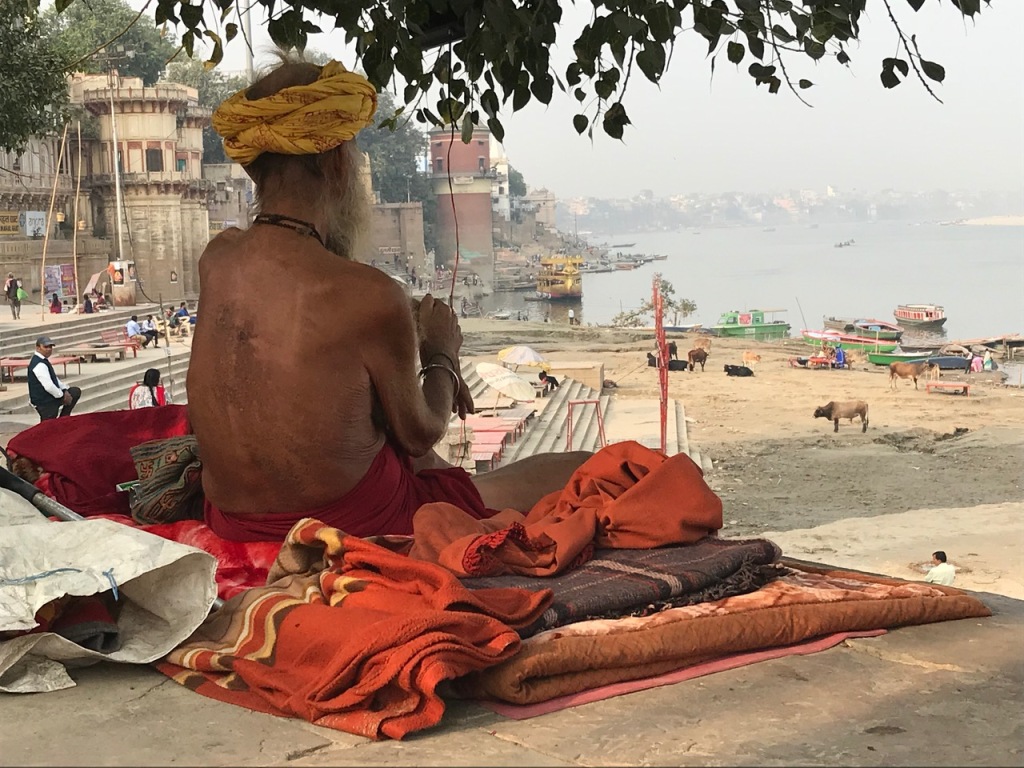
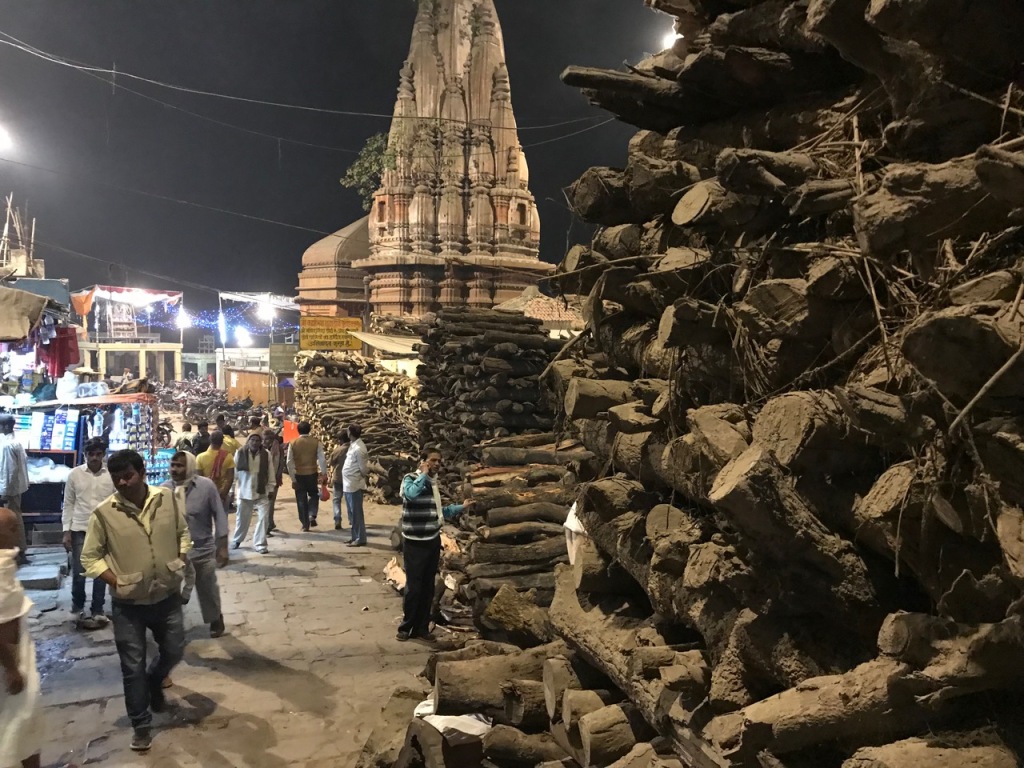
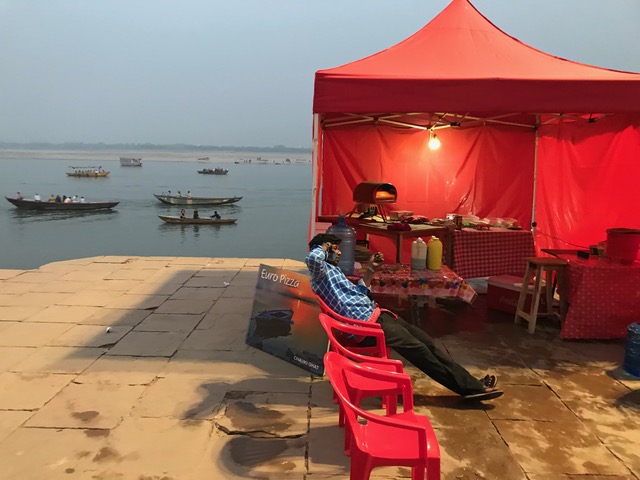



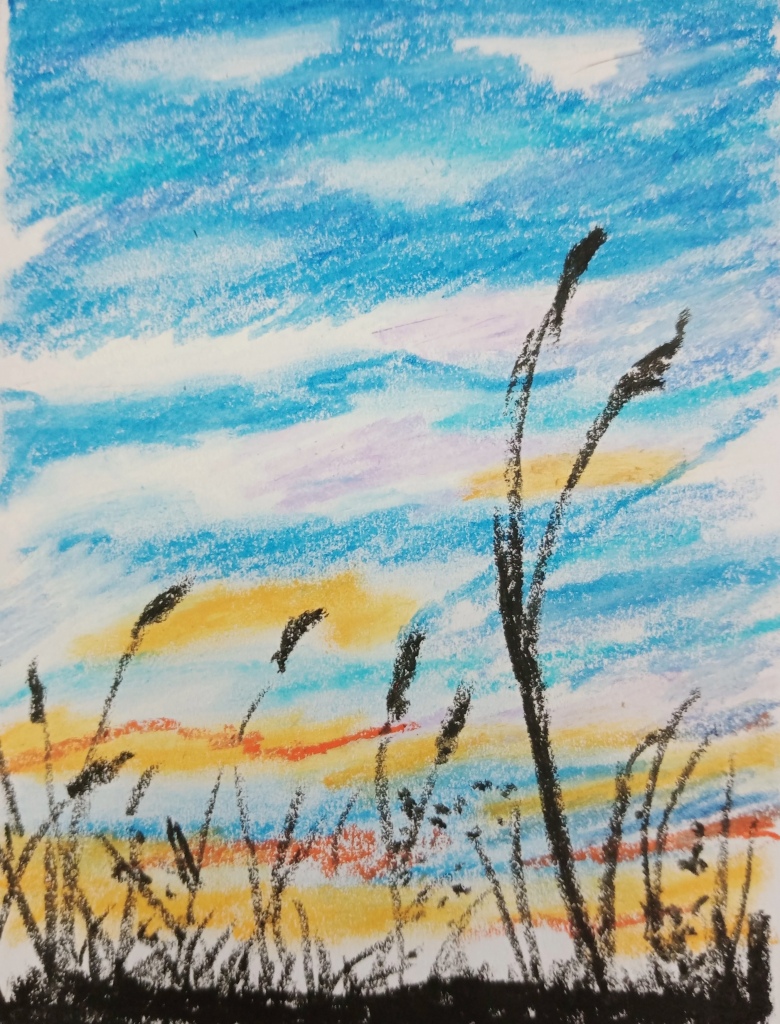
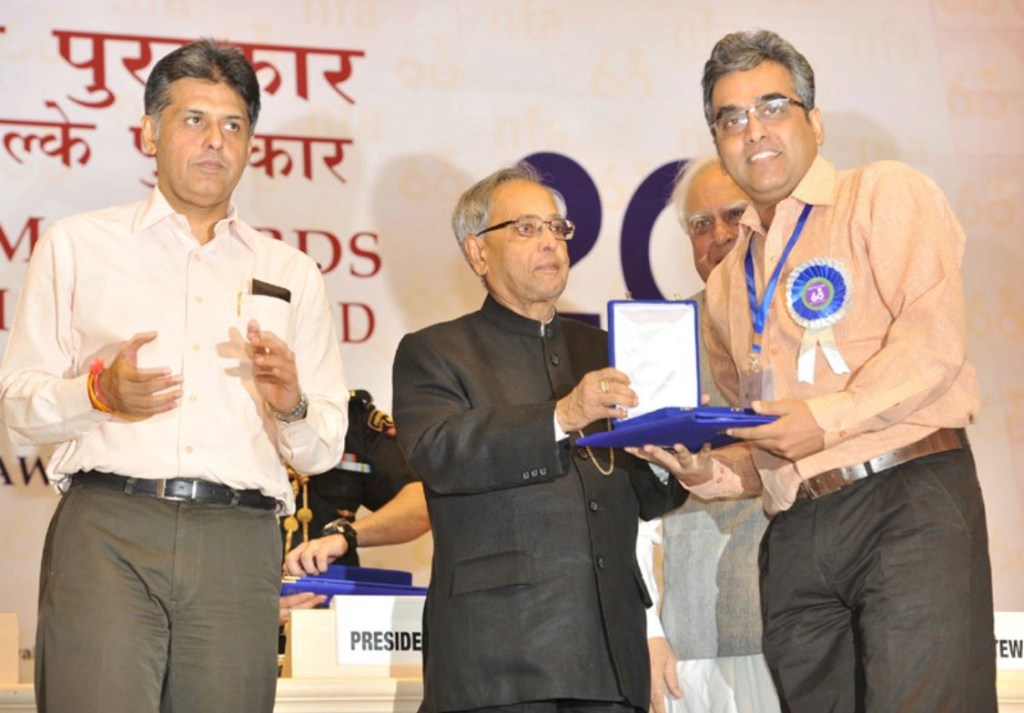
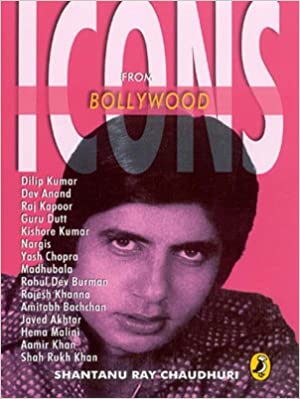
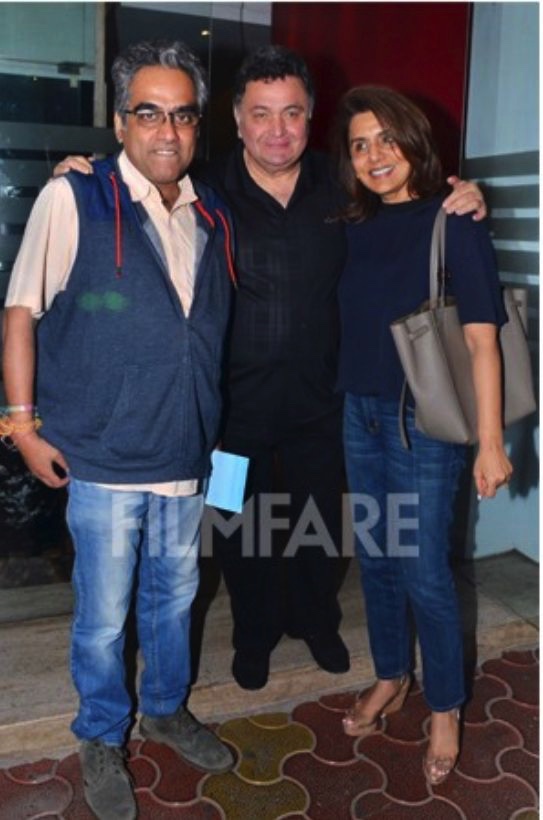
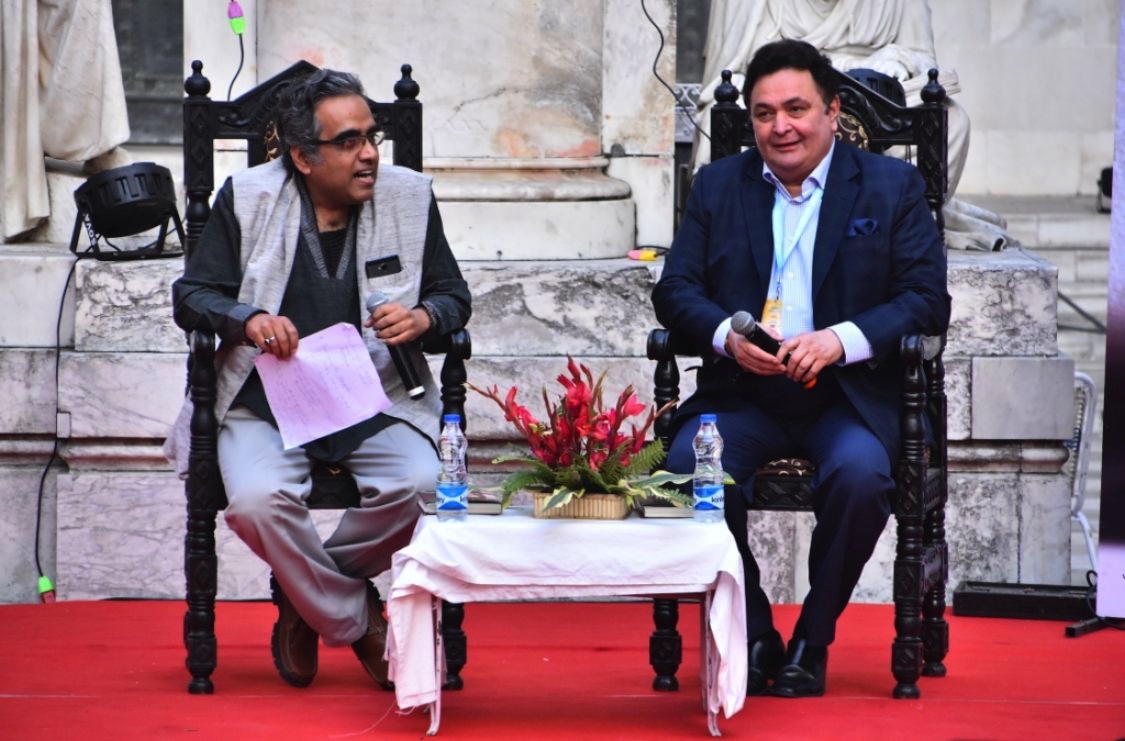


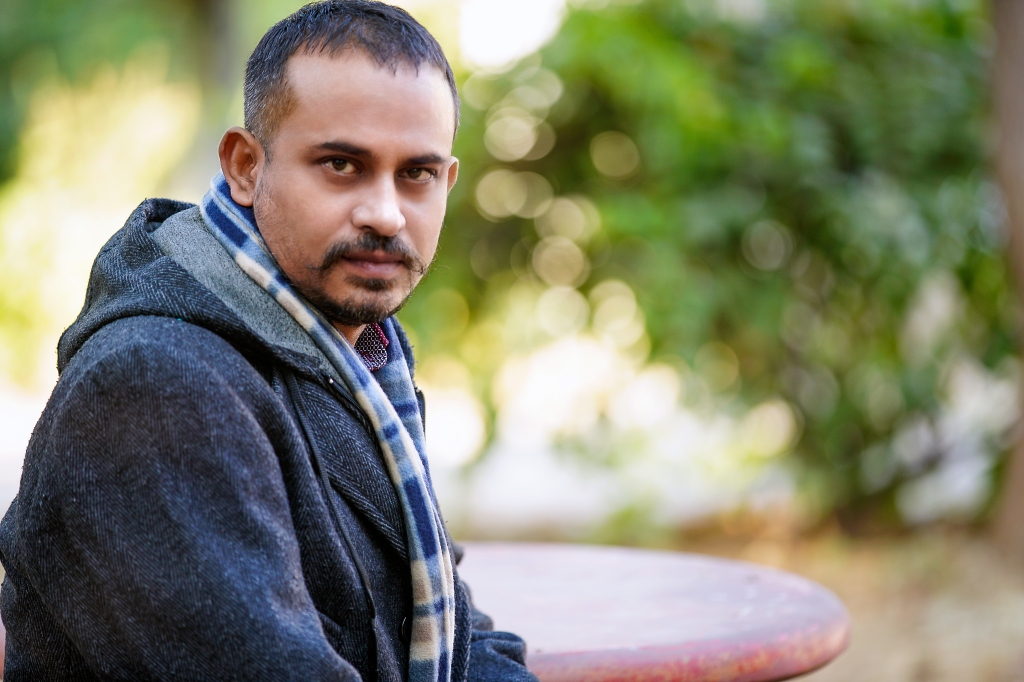
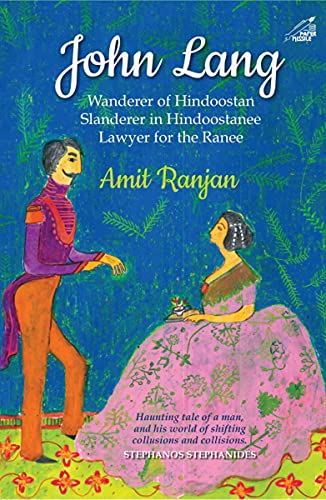


 Borderless