October spins a series of celebrations that carry on to herald a glorious start of a new year and beyond. From the Chinese Festival of the Nine Emperor Gods which happens to coincide with Navratri to Christmas and beyond — festivals bring joy into our lives. Majority of these human constructs ring in happiness and hope while reflecting the victory of what we consider good over evils. Often these celebrations are syncretic, roping in people from all cultures and religious creeds, creating a sense of oneness in a way that only a stream of contentment can.
In I Went to Kerala, Rhys Hughes treads a humorous path bringing to us a mixed narrative of Christmas on bicycles . Click here to read.
Hold the roast turkey please Santa Celebrating the festive season off-season with Keith Lyons from New Zealand, where summer solstice and Christmas fall around the same time. Click here to read.
They bring hope, solace and love to those who believe in them. But, when the structures holding the fiestas in place start to crumble, what do we do then?
Our lives have moved out of wilderness to cities over centuries. Now, we have covered our world with the gloss of technology which our ancestors living in caves would have probably viewed as magic. And yet we violate the dignity of our own kind, war and kill, destroy what we built in the past. The ideological structures seem ineffective in instilling love, peace, compassion or hope in the hearts of the majority. Suddenly, we seem to be caving in to violence that destroys humanity, our own kind, and not meting out justice to those who mutilate, violate or kill. Will there be an end to this bleak phase? Perhaps, as Tagore says in his lyrics[1], “From the fount of darkness emerges light”. Nazrul has gone a step further and stated clearly[2], “Hair dishevelled and dressed carelessly/ Destruction makes its way gleefully. / Confident it can destroy and then build again …Why fear since destruction and creation are part of the same game?”
And yet, destruction hurts humans. It kills. Maims. Reduces to rubble. Can we get back the people whose lives are lost while destruction holds sway? We have lost lives this year in various wars and conflicts. As a tribute to all the young lives lost in Bangladesh this July, we have a poem by Shahin Hossain. Afsar Mohammad has brought in the theme of festivals into poetry tying it to the current events around the world. In keeping with the times, Michael Burch has a sense of mirthlessness in his poems. Colours of emotions and life have been woven into this section by Malashri Lal, Luis Cuauhtémoc Berriozábal, Fhen M, Shamik Banerjee, George Freek, Matthew James Friday, Jenny Middleton and many more. This section in our journal always homes a variety of flavours. Stuart MacFarlane has poems for Wordsworth… and some of it is funny, like Rhys Hughes’ poem based on photographs of amusing signposts. But then life has both sorrows and laughter, and poetry is but a slice of that as are other genres. We do have non-fiction in a lighter vein with Hughes’ story and poem about pizzas. Devraj Singh Kalsi has given a tongue in cheek narrative about his library experiences.
Festivals have also been taken up in fiction by Tanika Rajeswari V with a ghostly presence hovering over the arrangements. Paul Mirabile has taken us around the world with his story while Saeed Ibrahim writes from his armchair by the Arabian sea. Sahitya Akademi winner for his children’s stories, Naramsetti Umamaheswara Rao, has showcased peer pressure among youngsters in his narrative.
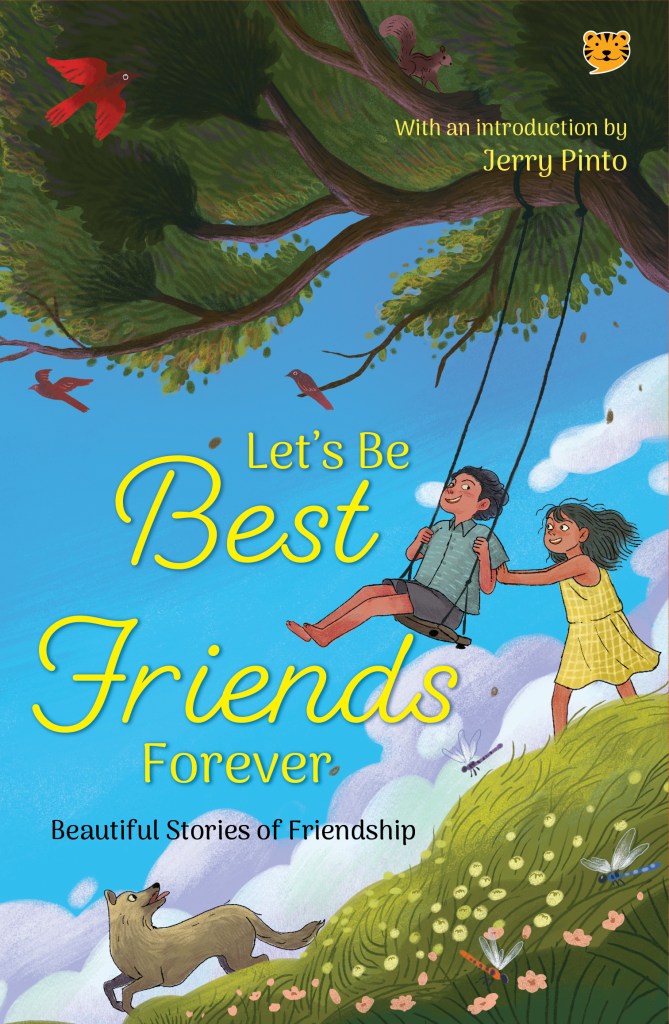
Our book excerpts usher good cheer with a narrative by Ruskin Bond from Let’s Be Best Friends Forever: Beautiful Stories of Friendship. And also hope with a refugee’s story from Ukraine, which travels through deserts, Italy and beyond to US and has a seemingly happier outcome than most, Lara Gelya’s Camel from Kyzylkum. This issue’s conversations take us around the world with Keith Lyons interviewing Lya Badgley, who has crossed continents to live and write. Malashri Lal, the other interviewee, is an academic and writer with sixteen books under her belt. She travels through the world with her poetry inMandalas of Time.
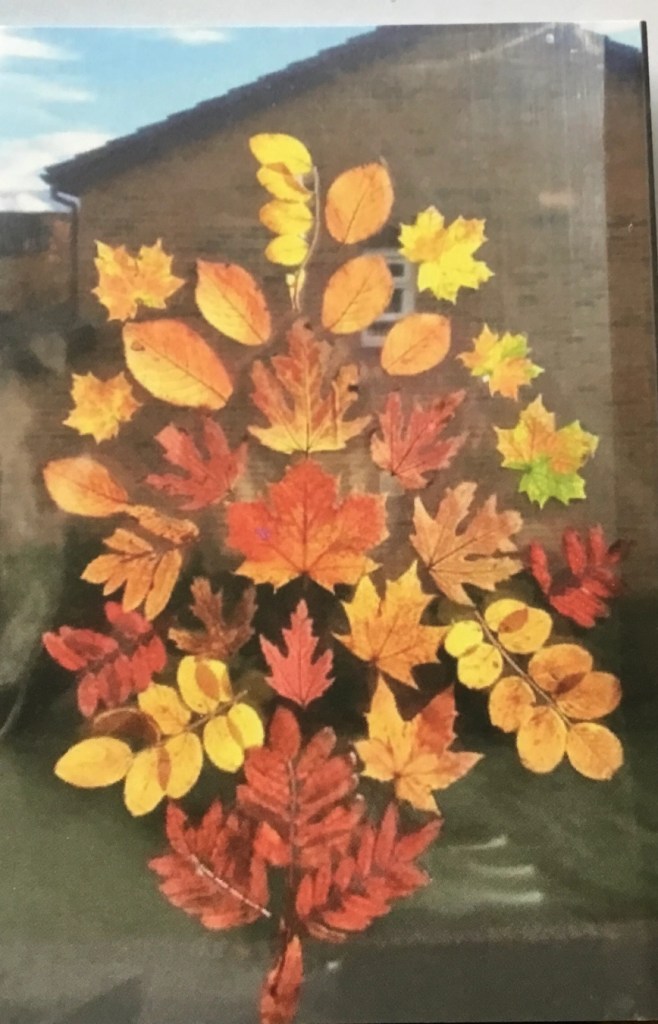
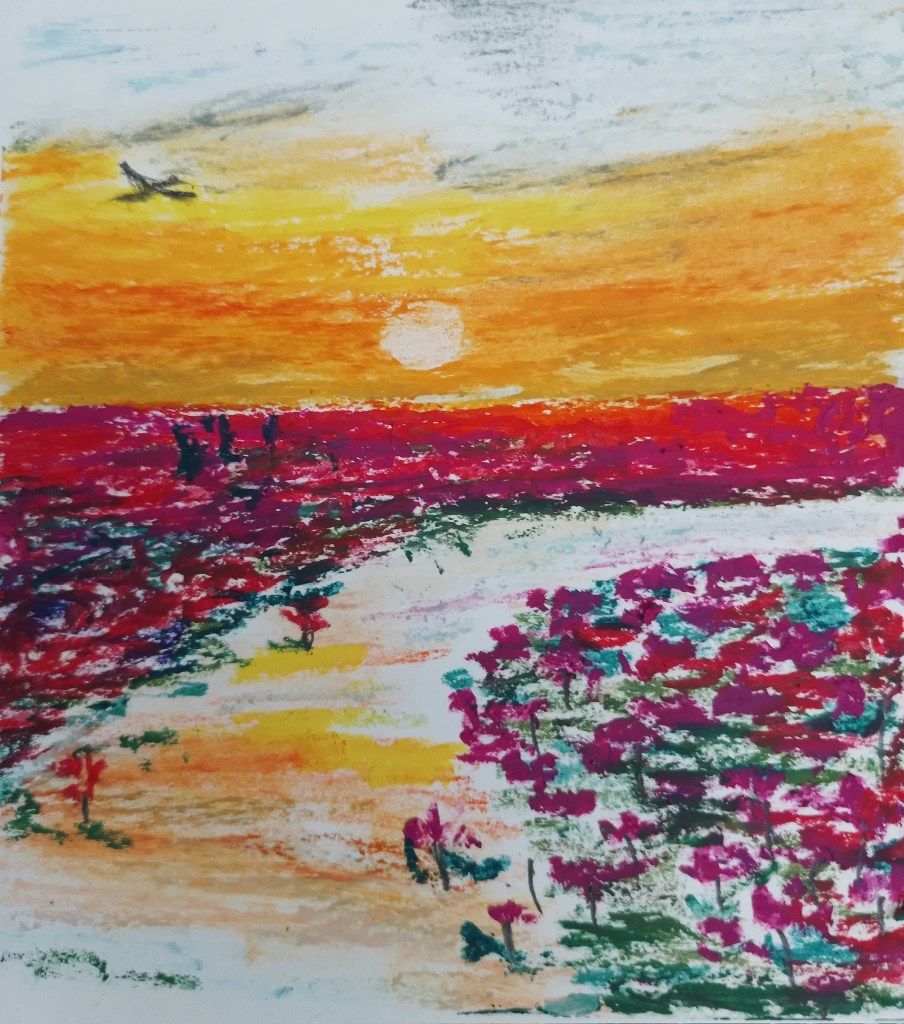
Huge thanks to the Borderless team for putting this issue together – the last-minute ties – and the art from Sohana Manzoor. Without all this, the edition would look different. Heartfelt thanks to our contributors without whose timely submissions, we would not have a journal. And most of all we thank our readers – we are because you are – thank you for reading our journal. As all our content, despite being indispensable, could not be mentioned here, do pause by our content’s page for this issue.
From the fount of darkness emerges light. That is your luminescence. A beacon shines amidst all rebellions, conflicts. That is your radiance. The hut that lies along a dusty path, That is your abode. Being immortalised by war is cruel affection. That is your love. When all is lost, what remains, That is your invisible gift. Death contains life like a vessel. That is the life you give us. The dust that lies under our feet laces the land. That is your heavenly land. Amidst all of us, you conceal yourself. That is You for me.
I can’t quite remember the first time I ate pizza. But I do remember that it came as a revelation. What a marvellous invention! The circular kind seems superior to the square or rectangular style, I don’t know why, and thin crust is better than deep pan, again I am unable to offer an explanation for this truth, though I guess mathematics definitely plays a role. But why a thin circle should be tastier than any other shape is beyond my understanding. No matter! The important thing to know about pizzas is that there are very few official variants, all vegetarian. It is a Rule of Naples that this should be so, Naples where pizza originated, and who are we to violate the ancient laws of a distant land? There is the margherita and the marinara, both simple and delicious. I don’t know if any other variations are acceptable. I am a pizza eater, not a pizza pundit. Let us be satisfied with those two types. And now allow me to present a story and a poem both themed around this most delectable of cheesy meals!
Down in the Park
There had been another report of a flying saucer over our town and this time I believed it. I saw it with my own eyes, not with anyone else’s, because I generally use my own eyes to see things. How about you? Maybe you use the eyes of your best friend, borrowed when he is sleeping, but I don’t do that. Messy and inefficient.
Anyway, I saw the flying saucer when I rose in the early hours to fetch a glass of water back to my bedside table. Flashing lights, weird flight path, eerie low drone and no sign of any trickery at all. Actually it wasn’t water in my glass. It was neat brandy and it was in a bottle, but I don’t want you to think I’m an alcoholic. I don’t want you to think I was drunk when I saw it. I wasn’t drunk.
I was as sober as an octopus. A postgraduate octopus.
The flying saucer hovered above my garden briefly, as if waiting for something, but I didn’t run out in my pyjamas; the grass was wet and I couldn’t find my slippers. I suppose you would have worn waterproof shoes made from the stitched skins of watermelons? That’s the kind of person you clearly are, but I’m not, no sir.
So I forsook the opportunity of getting a closer look. Too bad. Too bad is what you are. A scoundrel.
The next morning, I met Clive in the bakery. I was buying iced buns and so was he, but to my mild surprise he also bought a pizza, vegetarian, with a topping of extra olives.
I have to stress that my surprise really was mild. It’s not as if he was buying a machine gun made from bread or a cake in the shape of a centaur’s elbow.
“Did you hear about the—,” I began.
“Yes, Douglas, yes; I saw it myself and I stood and wondered. It hovered above many gardens, that flying saucer thing, including mine, and then it moved on. What purpose did it have? I pondered long and suddenly I realised!”
“You did what?” I croaked.
“I realised the truth about them, about the flying saucers. I know what they are and why they come here. I’m going to the park now and if you accompany me there, I’ll explain everything to you. Even though you aren’t as intelligent as me, I feel sure you will be able to understand the meaning of my words.”
The chance was too good to miss, so I followed Clive along the street that led to the nearest park. When we got there, we gravitated to the lake, as always, and watched the ducks. Some men watch women in the park, but not me. I watch ducks. That’s just the way it is.
I munched on an iced bun and cast my spare crumbs into the ripples. I often do that. I cast crumbs. I am a crumb caster. What the heck are you?
The ducks were happy to eat the morsels I offered them, but Clive held my arm in a powerful grip, most unlike him, because even though he is a strong man he is a bit of a simpering clot, and he prevented me from casting more pieces.
“Watch this!” he cried, so I did.
I often watch things when asked to do so.
Sometimes even when I’m not asked, I will watch.
I am a crumb casting watcher.
Like a discus thrower, Clive rotated on the spot and threw his pizza as far as he could. It was still warm, that pizza of his, and the olives glittered like crystals, and steam rose from the tomato paste as it soared over the waters. I know little about the aerodynamic properties of Italian cuisine, but it seemed to hang in the air for ages.
Then it dropped into the lake and sank.
“I was expecting it to float,” I remarked feebly.
But Clive was ecstatic. “Did you see? The ducks misunderstood it! They simply didn’t know what to make of it! They didn’t recognise it as food and why should they? They don’t know what a pizza is. That proves my point!”
I frowned. “You mean that—”
“Yes, Douglas, yes! Flying saucers are scraps of food that are being thrown to us by aliens from outer space. It’s so obvious! Why has no one thought of this before? We throw food for ducks; the aliens throw food for us. It’s a perfect analogy! Flying saucers are alien pizzas!”
I didn’t believe him, and I told him so. But that same night I moved my dining table and a solitary chair into my garden and sat there, expectantly, with a knife and fork.
I’m still there, waiting. And I’ve drunk all the wine.
So I’ve started on the brandy…
And I am wondering what the aliens are like.
Maybe they are like you.
In fact, I now think that you are one of them.
You cosmic rascal!
TAMPERED WITH

The evidence
was tampered with
in Tampa.
I read about the case
in the Italian newspaper,
La Stampa.

But why was a crime
committed
in far flung Florida
considered
so newsworthy in Naples
and Rome
when there were horrider
cases much closer
to home?

It’s because of the man
suspected
of being behind the scam,
Don Avidograsso,
the celebrated mafioso.

He had defrauded a bank
of millions
one quiet morning
with a few trusty minions.
But he had made
a fatal mistake:
leaving behind the pizza
he’d baked
for his lunch, a margherita.

This delicacy was taken
and placed
in storage for forensic
examination.
Undigested, it would
provide a clue
as to who
should be arrested.

Everyone knows that Don
Avidograsso is
obsessed with margheritas.
No other pizza
is to his taste, but in haste
to flee the scene
he had abandoned it like a
discus in a dream.

Aware of the danger
he was in,
Don Avidograsso forced
entry into
the storage facility
one night
to alter the incriminating
pizza by
adding toppings regarded
as rotten
by his unforgiving culture.

Pineapple slices, no less!
And now
let me confess
that I never could assume
that a purist
such as Don Avidograsso
would ever
find room in his stomach
for the Hawaiian
variety of pizza, a travesty
to his way
of traditional thinking.

Such evidence would be
inadmissible
in court! But he was seen
and caught
by an alert guard not hard
of hearing.
Don Avidograsso’s belly
gave him away,
rumbling and grumbling
all the way
like thunder over the sea.

His pizza tampering failed
and now he waits in jail,
hungry and gaunt,
the same way
we wait in this restaurant.
Rhys Hughes has lived in many countries. He graduated as an engineer but currently works as a tutor of mathematics. Since his first book was published in 1995 he has had fifty other books published and his work has been translated into ten languages.
.
PLEASE NOTE: ARTICLES CAN ONLY BE REPRODUCED IN OTHER SITES WITH DUE ACKNOWLEDGEMENT TO BORDERLESS JOURNAL
spilled grass seed grows on garage shelves escapees
drum and bass echo in the breeze cold glass throbs
a fern roots near a rose’s mulch sharing keys
sheltering from wintery rain pulse rates sync
Jenny Middleton is a working mum and writes whenever she can amid the fun and chaos of family life. Her poetry is published in several printed anthologies, magazines and online poetry sites. Jenny lives in London with her husband, two children and two very lovely, crazy cats. You can read more of her poems at her website https://www.jmiddletonpoems.com.
.
PLEASE NOTE: ARTICLES CAN ONLY BE REPRODUCED IN OTHER SITES WITH DUE ACKNOWLEDGEMENT TO BORDERLESS JOURNAL
Title:Let’s Be Best Friends Forever: Beautiful Stories of Friendship
Publisher: Talking Cub, Speaking Tiger Books
From ‘The Tunnel of Friendship’ by Ruskin Bond
I had already started writing my first book. It was called Nine Months, but had nothing to do with a pregnancy; it referred merely to the length of the school term, the beginning of March to the end of November, and it detailed my friendships and escapades at school and lampooned a few of our teachers. I had filled three slim exercise books with this premature literary project, and I allowed Azhar to go through them. He was my first reader and critic. ‘They’re very interesting. But you’ll get into trouble if someone finds them,’ was his verdict.
We returned to Shimla, having won our matches against Sanawar, and were school heroes for a couple of days. And then my housemaster discovered my literary opus and took it away and read it. I was given six of the best with a Malacca cane, and my manuscript was torn up. Azhar knew better than to say ‘I told you so’ when I showed him the purple welts on my bottom. Instead, he repeated the more outrageous bits he remembered from the notebooks and laughed, till I began to laugh too.
‘Will you go away when the British leave India?’ Azhar asked me one day.
‘I don’t think so,’ I said. ‘My stepfather is Indian. My mother’s family have lived here for generations.’
‘Everyone is saying they’re going to divide the country. I think I’ll have to go away.’
‘Oh, it won’t happen,’ I said glibly. ‘How can they cut up such a big country?’
‘Gandhi will stop them,’ he said.
But even as we dismissed the possibility, Jinnah, Nehru and Mountbatten and all those who mattered were preparing their instruments for major surgery.
Before their decision had any effect on our life, we found a little freedom of our own—in an underground tunnel that we discovered in a corner of the school grounds. It was really part of an old, disused drainage system, and when Azhar and I began exploring it, we had no idea just how far it extended. After crawling along on our bellies for some twenty feet, we found ourselves in complete darkness. It was a bit frightening, but moving backwards would have been quite impossible, so we continued writhing forward, until we saw a glimmer of light at the end of the tunnel. Dusty, a little bruised and very scruffy, we emerged at last on to a grassy knoll, a little way outside the school boundary. We’d found a way to escape school!
The tunnel became our beautiful secret. We would sit and chat in it, or crawl through it just for the thrill of stealing out of the school to walk in the wilderness. Or to lie on the grass, our heads touching, reading comics or watching the kites and eagles wheeling in the sky. In those quiet moments, I became aware of the beauty and solace of nature more keenly than I had been till then: the scent of pine needles, the soothing calls of the Himalayan bulbuls, the feel of grass on bare feet, and the low music of the cicadas.
World War II had just come to an end, the United Nations held out the promise of a world living in peace and harmony, and India, an equal partner with Britain, would be among the great nations…
But soon we learnt that Bengal and Punjab provinces, with their large Muslim populations, were to be bisected. Everyone was in a hurry: Jinnah and company were in a hurry to get a country of their own; Nehru, Patel and others were in a hurry to run a free, if truncated, India; and Britain was in a hurry to get out. Riots flared up across northern India.
At school, the common room radio and the occasional newspaper kept us abreast of events. But in our tunnel Azhar and I felt immune from all that was happening, worlds away from all the pillage, murder and revenge. Outside the tunnel, there was fresh untrodden grass, sprinkled with clover and daisies, the only sounds the hammering of a woodpecker, and the distant insistent call of the Himalayan barbet. Who could touch us there?
‘And when all wars are done,’ I said, ‘a butterfly will still be beautiful.’
‘Did you read that somewhere?’ Azhar asked.
‘No, it just came into my head.’
‘It’s good. Already you’re a writer.’
Though it felt good to hear him say that, I made light of it. ‘No, I want to play hockey for India or football for Arsenal. Only winning teams!’
‘You’ll lose sometimes, you know, even if you get into those teams,’ said wise old Azhar. ‘You can’t win forever. Better to be a writer.’
One morning after chapel, the headmaster announced that the Muslim boys—those who had their homes in what was now Pakistan—would have to be evacuated. They would be sent to their homes across the border with an armed convoy.
It was time for Azhar to leave, along with some fifty other boys from Lahore, Rawalpindi and Peshawar. The rest of us—Hindus, Christians, Buddhists, Sikhs and Parsis—helped them load their luggage into the waiting British Army trucks that would take them to Lahore. A couple of boys broke down and wept, including our departing school captain, a Pathan who had been known for his unemotional demeanour. Azhar waved to me and I waved back. We had vowed to meet again some day. We both kept our composure.
The headmaster announced a couple of days later that all the boys had reached Pakistan and were safe. On the morning of 15 August 1947, we were marched up to town to witness the Indian flag being raised for the first time. Shimla was still the summer capital of India, so it was quite an event. It was raining that morning. We were in our raincoats and gumboots, while a sea of umbrellas covered the Mall.
(Extracted from Let’s Be Best Friends Forever: Beautiful Stories of Friendship, with an introduction by Jerry Pinto. Published by Talking Cub, the children’s imprint of Speaking Tiger Books.)
ABOUT THE BOOK
An Afghan trader and a young Bengali girl form a touching connection that transcends cultural barriers in Rabindranath Tagore’s classic story ‘The Kabuliwala’. Jo March and Laurie from Little Women meet at a dull party and become companions for life. L. Frank Baum’s timeless characters Dorothy and Toto adventure around Oz forging magical bonds of friendship.
The brave queen of Jhansi and her ally Jhalkaribai come together to fight for freedom and dignity; Jesse Owens narrates an inspiring tale of sportsmanship and solidarity from his Olympic days; and twelve-year-old Kamala and her friends, Edward, Amir and Amma, endure the Partition riots together in Bulbul Sharma’s heart-warming story.
In these pages you will also meet Nimmi and her best pal, Kabir, whose school misadventures include spirited debates; Sunny, whose love for books leads to a new friendship on a trip to Darjeeling; Cyril and Neil, who face life’s challenges with inventive word games, and Siya, who discovers that true friends can come in the most unexpected forms—even as a cherished doll.
Animal lovers will delight in the escapades of Gillu, the charming squirrel, Harold, the handsome hornbill, Rikki-tikki-tavi, the loyal mongoose, Hira and Moti, the powerful oxen, and Bagheera, the brave panther who looks after the young boy Mowgli.
With stories from beloved and popular authors—Ruskin Bond, Rudyard Kipling, Mahadevi Varma, Jerry Pinto, Shabnam Minwalla, and many more—Let’s Be Best Friends Forever is an enchanting collection that celebrates the universal power and beauty of friendship.
.
PLEASE NOTE: ARTICLES CAN ONLY BE REPRODUCED IN OTHER SITES WITH DUE ACKNOWLEDGEMENT TO BORDERLESS JOURNAL
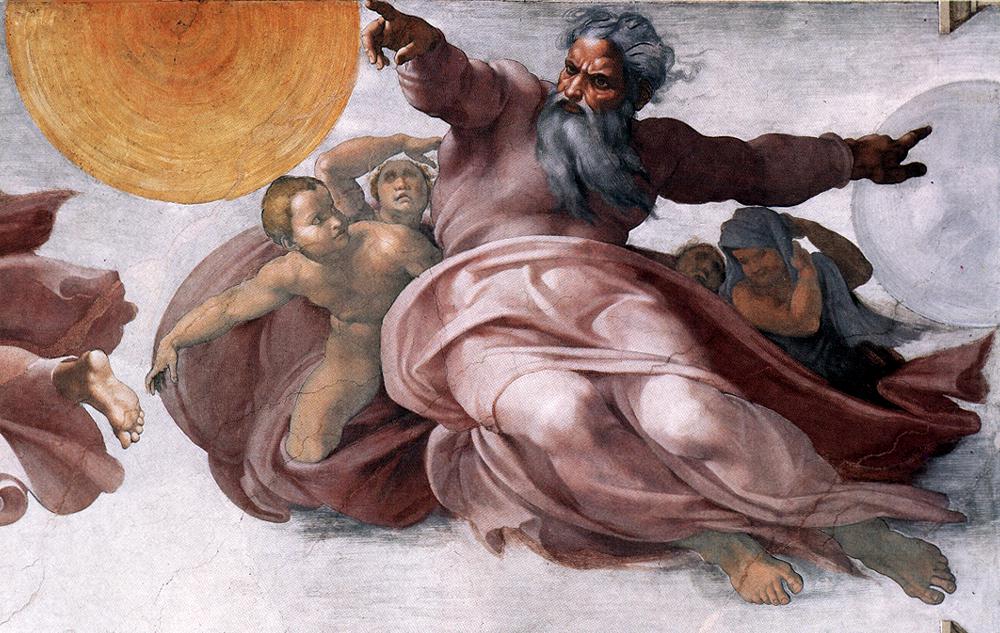
Painting by Michelangelo (1475-1564), Sistine Chapel
THE POET, GOD

In the beginning,
God wrote infinitely before a spaceless window
open to the void.

Perhaps disliking the work, God threw
all the poems out of the window
and they coalesced and swirled and erupted
into the universe, forming
atoms and the Chapbook of Elements,
then the Epic of the DNA,
The Collected Poems of Life
with award winning variety, words in all forms,
and finally us, with our elevated word-souls,
reconstructing all that fractured work
in our little imitations of infinity
and offering it back to God
as prayer or questions or proof.

God does not respond, does not read
the overwhelming volume of submissions.
God has angelic interns to do that.

God sits procrastinating over a new volume,
trying always to write the perfect poem
aware, like all poets,
that no such poem exists
and the closest you can come to it
is being it.


SUNFLOWER


Stamen stand to attention, parading
rippling hearts and radiating petals

a yellow hole that follows Fibonacci’s
hinting a hidden march into infinity.

Every year, so much effort as if this
flower plots to become the sun,

outlive all stars, defy death itself,
as Van Gogh knew. The coup fails

every time only to return. As long
as it returns, we have hope and art.


THE STAR OF THE FOREST


Scientists are still finding
a few names on the secret roll-call
of those close to erasure.
Tiny panicking plants
in remote corners of the tropics.

(Though not too remote for profit to find.)

Enter the Star of the Forest,
Didymoplexis stella-silvae.
One of sixteen new orchids found
from a once dense corner of Madagascar.

No leaves or chlorophyll,
a plant that has lost what makes a plant.
Star-like flowers that arise out of the dank humus
for one day of attraction

in the total darkness.

The pollinator a mystery, though ants
are suspected.
The lucky one.

3 of the 16 orchids are already extinct
due to logging and geranium oil
for aromatherapy in sweet smelling
middle class Western homes.
Matthew James Friday is a British born writer and teacher. He has had many poems published in US and international journals. His first chapbook, The Residents, was published by Finishing Line Press in summer 2024. http://matthewfriday.weebly.com.
.
PLEASE NOTE: ARTICLES CAN ONLY BE REPRODUCED IN OTHER SITES WITH DUE ACKNOWLEDGEMENT TO BORDERLESS JOURNAL
Jonathan Harper was startled out of sleep by an impatient ringing at the door bell. He rolled out of bed, tip-toed to the sitting-room and peeked through the curtains covering the bay windows. In the dim, moonlit night he perceived a slender, young man dressed in some sort of long robe. He was completely bald. Again the bell rang and rang under the young man’s relentless ringing. Jonathan hastened to the hearth, picked up the poker out of its andiron then quietly moved towards the door. With a quick jerk he unlocked it so as to take the knocker by surprise. The knocker looked stonily at Jonathan’s sleepy, pale face and at the poker.
“Whatever are you doing with that mighty weapon, father?” was that knocker’s first remark. Jonathan stared in astonishment, mouth agape. “Yes, father it’s me, your son Francis. Have you forgotten me ?”
And that was how Francis Harper, the fugitive Buddhist monk, and his father Jonathan, completely thunderstruck, were reunited …
“Quick, come in … come in … At this hour of the night, Francis. And look at you, dressed like a beggar monk. So thin. I hardly recognised you.” Jonathan was in a state of great excitement. Francis sailed in, closed the door and settled on the familiar canopy. He scanned the sitting-room: Nothing had changed.
“You gave me a scare, Francis,” Jonathan resumed, still standing.
“Well, who would be ringing at this hour of the night?” Francis returned in a flat voice. His father hadn’t quite understood the question. He seemed half asleep. “Where’s mum?”
“Who?”
“Mummy … your beloved wife?” Francis pressed ironically. Jonathan stared emptily at him. “Well, is she here, or has she gone to see her boring sister Hazel ? Perhaps she’s out with her lover?” Jonathan winced.
“Don’t be vulgar, Francis, please.”
“Come on, I’m only having you on. Where is she?”
Jonathan stepped forward: “I thought she was with you! She went to find you in Laos a year ago, and I’ve never had any word from her since.”
Francis looked blankly at this father then jumped up. “She’s mad ! Why did you let her go, damn it?”
“I didn’t let her go, Francis; she woke up one morning and off she went leaving me a note.”
“What note? Do you still have it?”
“The note … Yes …” Jonathan shuffled to his bedroom to procure Heather’s note that she had left for him on the chimney-mantle. He handed it to his son. It seemed that it had been wrinkled up into a ball then roughly flattened out.
“Bloody hell! Why did she do that?” Francis gritted his teeth. “It’s such a dangerous place to be for mummy. She has no clue of the dangers : the jungles are infested with disease and wild animals. Food and water are dodgy. It’s another world.”
The son glared at his father then threw himself down onto the canopy, burying his face in his hands.
“I’ve put the police on to it but nothing has come up,” Jonathan defended himself, yet in a contrite tone of voice. “She believed that only she could bring you back to us. But … how did you come back here?”
The question struck Francis oddly. He looked at his father who still stood: “Do put down that poker, you cut such a ridiculous figure.” Indeed, Jonathan hadn’t noticed that he still clenched the poker tightly. He tossed it into the cold hearth. Francis sighed: “Me ? Do you really want to know, father?”
“Of course I want to know, then we can both set out to find mother.”
“No we cannot just set out to find mother. I am a wanted criminal in Thailand and in England. Have you forgotten?”
“Rubbish! How then did you manage to get home if you are wanted by the police?” Jonathan persisted, trotting back and forth from the sitting-room to the kitchen to make coffee and toast muffins.
“That’s a long story,” Francis lamented, crumbling up the letter and dropping it to the carpeted floor.
“Well, we have the whole night, so please, I must know the truth. It’s been a nightmare for me in this house all alone. You know that Andy pops in almost every day to rub salt into my wounds, drinking my brandy and wheeling that mordant wit of his.”
“You mean that you’ve been pissing it up with that halfwit?” Francis snapped.
“No … no, of course not. But he invites himself over and never knows when to leave. How many times have I put up with his drunken effrontery.”
“Well, if I ever see him here …”
“No ! He must not see you; if he does all Stevenage will know and that means the police, too. No. We must find a way to hide you, to keep you safe from the law until this rotty mess is straightened out.”
“Straightened out?” Francis sneered. He eyed his father coldly. ‘Forced’ solitude had wrinkled the old man’s ashen face, had given him the appearance of Gandalf straight out of TheHobbit, all he needed was a grey cloak, staff and floppy hat to complete the portrait instead of his thirty-year old pyjamas. The flesh on his neck had gone flabby and his eyes, colourless, like his thinning, flaky hair. Jonathan finished his coffee: “Please tell me how you left Laos and managed to reach England,” he said in a weak voice, practically beseeching his son.
Francis took a gulp of coffee, he made a wry face: “I haven’t drunk coffee for over twelve years.” Setting the cup down on the settee, he began his tale. And as Francis fumbled to find his words Jonathan observed the metamorphosis of his appearance.
Francis’ face, laboured by years of privations, illness and fasts, had the appearance of rough, sandy stone. His eyes were set deep in their orbits whilst the furrows of his crow’s eyes twitched at every slight movement or sound in the sitting-room. The callousness of his face darkened all its former freshness of youth – that youth he had abandoned in southeast Asia. He swayed slightly in the canopy, nibbling at his muffin, apathetically. Jonathan made some more coffee and toasted more muffins for his enfeebled son. He opened slightly the bay window curtains then finally settled down in his wicker chair.
Francis began lethargically, rubbing his hairless head: “I had been living from monastery to monastery in northern Laos, constantly ill because of the food and water until one day I decided that I had no future in those remote places of worship. Mind you, the religious services captivated me as did the jungle and the snaking, mystical Mekong. The monks were jovial chaps, very respectful and reserved. They offered a soothing solace to my inner and outer sufferings. But I had to leave and return to England. My mind and body ached for familiarity… for mother and for the English language …”
“And your father?” interposed Jonathan, biting his quavering lower lip. Francis looked sadly at his aging father. “I know I haven’t been the best of fathers to you, Francis,” Jonathan conceded, his cheeks flushing red with shame. “But you will acknowledge that I did encourage you to travel to Asia to earn your livelihood. You know, I did not choose my solitude. It was imposed on me.”
“Did we then impose it, me and mummy?” came Francis’ laconic retort.
Jonathan looked dismal, a bit jarred by the remark. He stared at his son through sleepy, spent eyes. Francis laughed: “Of course I’ve returned for you too!” He pursued: “Thanks to my Lao passport procured for me by the Venerable Father, I travelled to visa-free countries. First, I boated it down to Vientiane, then took a cheap flight to Moscow. From there to Cairo, where I renewed my British passport at the embassy wihout any questions asked, although it had expired over six years. Anyway, with my British passport I entered Italy by boat, and from there on used my British passport since European border officials hardly looked at it. To avoid the usual big entries into England I hitched up to the Hook of Holland and took the ferry to Harwich.”
“But hadn’t the border officials suspected anything … your dress?”
“I changed dress in Italy but wore my robe when crossing into England.”
“But your photo?”
“My face has undergone a drastic change, father — haven’t you noticed?” Jonathan had but said nothing. “Anyway, what could they say to a tonsured-headed Englishman who had become a Buddhist?” Jonathan paused, as if reflecting.
“And the money to pay for all these flights, boats and trains?”
“I had my Cook’s travellers’ cheques safely in my money belt.”
Jonathan sighed. “Look Francis, we must not dilly-dally, Interpol may be on your trail at this very moment. No dawdling about, I have to find a place to hide you.”
“Don’t exaggerate, father, please.”
Jonathan sized up his gaunt, emaciated son: “I hope you’re not thinking of turning yourself over to the police.” Jonathan wrung his hands fearfully.
“No, no, I’ve paid for my selfishness and stupidity. Every day and night for twelve years that horrible scene still floods my mind.”
Here it seemed to Jonathan that Francis began to weep quietly. What to do ? What to do ? Comfort him with a fatherly hand on the shoulder ? A paternal embrace ? Or simply a kind, appeasing word ? Jonathan, whilst he observed his son, realised that he had never been a fatherly towards his son. Heather had been right — he thought as he looked on helplessly at his son’s bony, trembling shoulders.
The grandfather clock struck six.
“My God, it’s morning!” Jonathan cried, going to the bay window. “People will be milling about.”
“So what, people always mill about in the morning,” came Francis’ sardonic reply.
“Someone may see you.”
“Through the window? Who will see me father if I stay in the house?”
“Right you are, Francis.”
“And mother?” Francis retorted, a glare of reproach in his cloudy eyes.
“Mother? Why hasn’t she ever written to me? Did you not have any news of her in Laos?”
“Some monks did speak about an old lady with grey hair seen in different boats on the Mekong. That’s about all. It could have been anyone … “
“Anyone? An old, grey-haired lady traipsing up and down the Mekong,” Jonathan cut in savagely. He fell back into his wicker chair. “I have to get you out of England before I tend to your mother. I will act quickly and decisively for you and her.”
Francis stared at his wizen-faced father, and for the first time in his life the young man felt a pang of pride towards him. Yes, a pang of pride because Francis had always believed his father to be a moral coward, a skulker who purposely disavowed, even mocked all his childhood projects, which had gradually raised an emotional tension between them. The clock struck half-past six. The first rosy rays of the sun trickled into the sitting-room with the warm, gay light. At that stroke of the clock Francis truly felt that their generational tension had been somehow lightened.
Francis stood. Jonathan stood. They gazed at each other and an instant later broke out into howls of laughter, laughing like two little boys. They laughed and laughed as they had never laughed before.
Jonathan strode over to Francis and slapped him paternally on the back: “Let’s have a real British breakfast.” Which they did — bacon and eggs, kipper and fresh orange juice which Jonathan squeezed himself.
The doorbell rang. Jonathan jumped out of his chair. Francis hastened to the bay window. It was Andy. “Blast! Into your room Francis and don’t make a sound. I’ll send that bugger packing. How dare he come bothering me at this hour of the morning.”
As Jonathan shuffled to the door, Francis made a bee-line for his bedroom. Jonathan threw it open.
“Well old man, up bright and early, hey?” began Andy in his usual strident, exasperating tone. “How about a little excursion to St Albans this morning ? They have an excellent pub where the food is the best in Hertfordshire.” Andy struck his customary ill-bred pose.
“No thanks, not today Andy, I’m terribly busy …”
“You, busy, Johnny old boy? Come on, mate, we’ll take your car.”
“That goes without saying since you haven’t one,” Jonathan rejoined peevishly. “No, today I must finish some work. You go and tell me how the food is. We’ll see about tomorrow.” He corrected himself. “No … next week ; I shall be popping over to visit my cousin-in-law.”
Andy sensed that Jonathan was lying.
“I see,” and a grotesque smile stretched over his red-spotted, pasty face. “What’s good for the goose is good for the gander, hey?”
“What are you insinuating?”
“Oh nothing … nothing, old boy. Have a good time and let me know how things work out.” He gave Jonathan an equivocal wink. Jonathan slammed the door in his face.
“Bloody idiot!” he growled. Jonathan stopped in his tracks. “My cousin-in-law … that’s it ! I’ll send Francis to Mary in Ireland. No one will ever think of searching for him in Ireland.”
Jonathan was all agog. He had found a solution to Francis’ dilemma thanks to Andy’s unexpected visit. He called to Francis who opened the door of his room carefully.
“No bother, the blighter’s gone, and I have a smashing idea, Francis. I have half a mind to drive you to Ireland where the British police will never hunt you down. My cousin-in-law, Mary O’Casey, lives in Waterville. Once we’re there and you’ve met her, I’ll drive back to England, get a flight to Laos and bring mother back home.”
Francis had never seen his father so animated. His shrivelled features seemed to rejuvenate, new blood infuse that puffy, pasty, unshaven Gandalf face. Francis, however, stood at the door of his room, a strange, alien gleam in his eyes. He turned to his father: “You’ve left everything as it was,” he pronounced softly. “Malraux’s La Voie Royale, Maugham’s TheGentleman in the Parlour. My desk … Everything as it was … exactly … “
“Yes, your mother wished it so. Nothing has been touched. The room has been waiting for your return. Unfortunately the circumstances require desperate action that I would never have imagined. We must buckle up, my boy.”
“Ireland?” wondered Francis sceptically.
“Ireland,” Jonathan echoed. “I shall get you there tonight and we’ll be on the Birkenhead ferry for Dublin tomorrow morning. Dress like an average Englishman and use your British passport.”
“What do you mean by an average Englishman, father?” Francis enquired.
“Well … Put a cap on your bald head and dress in English clothes. You’re not thinking of getting into Ireland with your monk’s robe, are you?”
Francis chuckled: “Don’t worry, my days of impersonating a Buddhist monk are over.”
“Were you then not sincere about your conversion?” his father asked rather puzzled.
Francis shrugged his shoulders: “I don’t know. I don’t know who I really am. I seem to have lost all identity of myself by impersonating or embracing so many identities. Now I’m off to Ireland. Will I become an Irishman?” A melancholic smile stretched his bloodless lips.
“Whatever you become Francis you will always be my son.” Francis nodded, albeit the resigned gesture seemed to embarrass his father who eyed his son with genuine sympathy.
“Mary will have you working in the gardens, and you know she has lodgers there all year round. You could help her out in her home. She lost her husband many years ago. A fine woman, she is.”
Francis nodded again and stepped back into his room. He closed the door silently and lay on his bed, his blood-shot eyes fixed on all his books nicely arranged on the shelves. He smiled. Then those sleepless eyes fell on a photo of his beloved Irish setter, Patty. He closed them and thought of nothing … nothing at all. He began to murmur a prayer of contrition in the name of the Enlightened One …
Meanwhile in the sitting-room Jonathan set to work without delay. He had already contacted his cousin-in-law by phone, explaining Francis’ predicament. He related everything to her without any feelings of guilt or mawkish sentimentality. Mary despised sentimentality. She would welcome Francis like her own child — a child she had never herself had.
Francis had fallen asleep. His father woke him at five in the afternoon. They had a large dinner, after which, under the cover of darkness, Jonathan packed Francis’ belongings in the boot — two shirts and trousers, a pair of walking boots and woollen socks, and his favourite books, Malraux’s La VoieRoyale, Maugham’s Collected Short Stories, three of Richard Burton’s travel books and T.E. Lawrence’s Seven Pillars of Wisdom.
They reached Birkenhead in the morning two hours before the first ferry to Ireland. The bored border official hardly looked at their passports. An hour and a half later they were in Dublin. There the Irish waved them through after having taken a cursory glance at their passports. Two hours later they arrived at Mary O’Casey’s homestead near Hog’s Head. They were both exhausted but relieved to have accomplished their mission.
Mary welcomed them with a hearty lunch. She hadn’t seen Jonathan for over twenty-five years. As to Francis, she had seen him once at the age of five or six. Jonathan stayed on several nights. Mary had no lodgers at that time so she was happy to sit at the welcoming hearth, drink her evening brandy and chat with her distant family-in-law. She read about Heather in the tabloids and wished Jonathan all the luck to bring her back home. If the British bobbies couldn’t do it, well, Jonathan would! He nodded, weakly. Francis remained silent.
Three days later Jonathan bid farewell to Mary and his son. It was time to put into action his plan to retrieve Heather from the jungles of Laos. He would obtain his visa for Laos in London, then buy his flight ticket. He promised to keep Francis informed of any developments.
“Good or bad!” said Francis, with a serious face. Jonathan’s cheeks reddened. He didn’t answer, casting a covert glance at Mary. Instead he strode over to his son, kissed him on both cheeks, something he had not done since he was a baby, kissed Mary on the forehead and hastened out to the car. He was gone in a few minutes.
“I hope you’ll tell me some good stories of your travels, Francis,” Mary chirped cheerfully, taking Francis by the arm. “You know, I like a good story round the hearth. I’ll have you know that you’re in the land of leprechauns, banshees and sidhes.” Her greenish eyes twinkled with impishness.
“What are banshees and sidhes?” Francis asked sheepishly.
“Ah! The spirits of the dead, lad. The unquiet dead. But you needn’t bother about them, I chase minions away with my broom.” And Mary broke into peels of good-natured laughter.
Francis worked daily in Mary’s lovely flower and vegetable gardens, and when lodgers arrived he cooked them breakfast and dinner whenever she was at Waterville on an errand. Oftentimes, he accompanied the guests on the loop road where he could again and again admire the blanket bogs. Mary warned him on several occasions, waving a minatory finger at him, never to step foot in the lime-covered homestead. He never did, not because he was afraid of ghosts — his upriver experiences in Laos had hardened him on all fear of supernatural beings — but because he hadn’t the heart to disobey his father’s cousin-in-law, a cousin-in-law, by the way, that he never quite came to comprehend the genealogical connexion. No matter. He felt at home with this charming woman and with her lively lodgers.
Four quiet months elapsed. One late misty Autumn morning Mary handed Francis a letter from his father. It was posted from Luang Prabang, Laos. Francis quickly opened it. As he scanned the almost unreadable scribble of his father’s handwriting his now bearded face contracted and hardened into a stony expression of restrained grief.
“What is it, my lad?” Mary strolled over to him, frightened.
The young man set the letter down gently on the table: “Mummy’s dead, Mary. She died of illness in northern Laos six months ago. Father is bringing her back home for burial.” Mary placed a motherly hand on Francis’ shoulder and spoke a few words of real warmth. Francis stared vacantly through the open front door into the greyish autumn sky.
The first lodger of the morning thumped slowly down the wooden stairway for breakfast.
From Public Domain
.
Paul Mirabile is a retired professor of philology now living in France. He has published mostly academic works centred on philology, history, pedagogy and religion. He has also published stories of his travels throughout Asia, where he spent thirty years.
.
PLEASE NOTE: ARTICLES CAN ONLY BE REPRODUCED IN OTHER SITES WITH DUE ACKNOWLEDGEMENT TO BORDERLESS JOURNAL
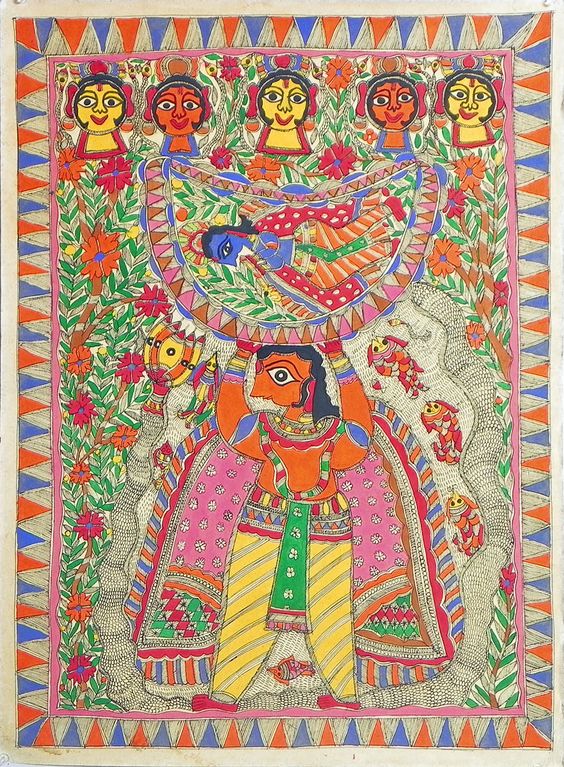
Birth Of Krishna: Madhubani Art. From Public Domain
Throwback to the early 60s. Janmashtami[1] was a highly anticipated event for us kids, back then. In our community of expats, the Sharma household outdid others in celebrating the festival with great fanfare. Aunty Sharma would start the preparations days ahead of the festival, instructing the gardener to collect loose soft soil from the periphery of her kitchen garden. Plying the soft soil between her fingers, a miniature model village scene was crafted, closely resembling Mathura, where Lord Krishna was born. Single gauge railway track winding through the plains, midway a station master’s cabin, cows grazing in the green fields at the foot of the grassy sloped conical hills, built into the scene. Village belles dressed in colourful clothes poised to fill their urns from the lake, (formerly an empty biscuit tin overlaid with mud), made it more picturesque. Thatched roofed huts, and a post office with a red-letter box, made it complete. Picture perfect in every respect identical to villages depicted in Bollywood movies with heroines dancing around trees. Placed right in the centre was the crib with the bronze idol of Baby Krishna, looking indolently at worshippers. The entire scene rested against the living room wall, covered with Auntie’s gold brocaded wedding saree, the two edges tied to the door hinges on either side.
The highlight of the evening was not in the rituals but in the eating of the prasad and the special ‘shudh shakahari’[2] dinner that followed. It was a once-in-a-year dinner that we relished and hogged till our tummies could take no more. Apart from the binge-eating of homemade besan[3] and coconut laddoos[4], soaked in ghee, offered to the idol, it was the ‘panjiri[5]’ prasad[6], our eyes were fixed on for reasons, other than holy. Made of roasted wheat flour, dry fruits, powdered sugar, spices and a generous helping of ghee added to give it a unique taste and texture, this offering had special significance for us. Of powdery consistency that could go in any direction; swallowed or blown in faces for the heck of it. The latter was always on our minds, the fun part of the festivities. Never begrudged by the seniors, who were tickled pink seeing our ‘panjiri’ covered ghostly faces, with pieces of dried fruit stuck in the hair, hanging from eyelashes, stuck at the corners of the mouth. And always ended in a contest of who could blow the most. Who looked the weirdest? Thus, acquiring the name ‘phoo phaa’. The ‘phoo’ sound from the funnel-shaped mouth in the act of blowing, followed by the ‘phaa’ from the mouth muscles stretched sideways. Those amongst us with missing frontal teeth struggled to get it right as the powdery ‘panjiri’ got moistened by saliva a bit too soon, the ‘phoo’ producing zero results.
One year, the contest was struck off. For no fault of anyone. Nor any shortcomings in the puja[7] arrangement. The scene was up like every year, with a little modification here and there. Bronze plates were laid out with homemade laddoos, whole fruits, the steel dekchi filled with ‘panchamrit[8]’, a sweet drink made by mixing five ingredients — milk, yoghurt, crushed basil leaves, honey and Ganga Jal[9]to which sugar, ghee, chironji[10] and makhana[11] are added for the crunch part and flavouring. A drink commonly had to break the day-long fast. This fast was observed by Uncle and Aunty Sharma only. A cupful of the delicious drink had us craving for more. It was rationed to pass around to all the attendees. No one left without partaking of this prasad spooned out on open palms. We were treated to a second helping of the leftovers, if any.
The puja rituals progressed as usual with the offering of flowers, prasad, and singing of hymns, to be followed by the aarti. Aunty was about to light the ghee lamp for the aarti[12] when our attention was diverted to the sound of a splash in the biscuit tin lake.
An unexpected visitor had landed from outer space! Uninvited, it dropped from the ceiling above. We jumped in fright and disgust at the sight of an ugly lizard amid the holy scenery. The creepy-looking reptile stared at us, unblinking, flicked its tongue, cocked its head to one side, then to the other and slithered up to the railway track, making clear its intention of lingering.
That was not to happen. Baxter the two-year-old Alsatian, otherwise a well-disciplined pet, sitting on his haunches, guarding the inmates and watching the puja with full devotion, bounded across the room barking at the invader, ready to crush the creature under his paws. After all, it was his job to protect the family. In his view, this intruder certainly did not qualify as a worshipper.
Uncle and Aunty tried to calm him. That was out of the question. He went straight into the village scene, bringing it down, chasing the half-tailed lizard, looking at him tauntingly as if to say ‘Catch me if you can’. The laddoos went flying into the air, the fruit platter upturned, and the ‘panjiri’ mixture floated up like a cloud over the village. ‘Baxter stop…stop’ from Uncle and Aunty went unheeded. Baxter was not in a mood to give up the chase. Just as he was about to paw swipe, the lizard darted between the folds of the brocaded saree and vanished in the blink of an eye. Baxter barking furiously spun around, nose to the ground, desperately searching for the invader. Chintu the cook, busy in the kitchen preparing dinner, heard the commotion and came running, grabbed Baxter by his collar, deftly clipped on the chain, tying him to the balcony railing. Peace was restored.
Wasn’t this a bad omen, Aunty questioned with concern. “No…no…Lord Krishna had visited in the avatar of the lizard and blessed us all” comforted Uncle. Baby Krishna was lifted out of the crib and placed in the alcove on the wall, which served as the mandir for all Gods and Goddesses. Aarti was resumed, to the ringing of the heavy brass bell and singing of “Om Jai Jagdish Hare[13]”, a hymn sung when concluding the puja.
Baxter sat in the balcony corner with his ears drooped, tail tucked between his legs, a soulful look in his eyes, fixed on Uncle, seeking forgiveness for his misdemeanor. “It’s okay, Baxter,” Uncle whispered, patting him on the head, and unchaining him. He lifted his head slightly, his tail beginning to wag again slowly. The reprimand was over and forgiveness had arrived. He joined us at the dining table, crouching underneath and parking himself near Auntie’s feet. The grand ‘shudh shakahari’ dinner commenced with deep-fried kachoris[14], an assortment of cooked vegetables, both dry and with gravy, lachha — ginger juliennes soaked in lemon juice, ending with the thick and creamy kheer[15]. With the arrival of the last, the missed ‘phoo phaa’ contest that year, receded into the far corners of our minds.
.
[1] A festival celebrating the birth of Krishna held in mid-August in India
Snigdha Agrawal (nee Banerjee) is a spontaneous writer, writing in all genres, covering poetry, prose, short stories and travelogues. A non-conformist septuagenarian, she took up writing as a hobby post-retirement and continues to learn and experiment with the out-of-the-box style.
.
PLEASE NOTE: ARTICLES CAN ONLY BE REPRODUCED IN OTHER SITES WITH DUE ACKNOWLEDGEMENT TO BORDERLESS JOURNAL





 Borderless