Categories
Essay

From Madagascar to Japan: An Adventure or a Dream?

By Randriamamonjisoa Sylvie Valencia

For as long as I can remember, I have been an introvert — this is who I am and will always be. Yet, few believe it. I come from Madagascar, a distant island where the people are called the Malagasy — a community bound by culture, tradition, and a shared sense of identity. Malagasy people are known for their warmth and generosity, often revealing a talkative side as they delight in conversation, and playful exchanges.  In contrast, I am reserved — a shy person who expresses myself freely only when comfortable and among those I trust.

As a child, I was the most talkative among my siblings, recounting every detail of my school day to my parents. I delighted in describing the funny expressions my primary school teacher made while explaining lessons, or the mischievous boys who always stuck their chewing gum on the pupils’ desks and all the tasks I had accomplished. I wanted my parents to know I was doing well, that the teacher praised me, and that I helped classmates who struggled.

Both my parents are very talkative, especially my father, from whom I inherited the gift of words. Speaking in front of my family comes naturally, yet in front of others, my words often falter — a fear that has always troubled me. I speak freely only with those I know well— my family and a few close friends.

Facing a large audience has always been daunting. My father encouraged me to confront this fear, to be confident, and to meet the audience’s gaze. I tried many times: presenting in group projects, speaking as a class representative, even addressing an audience at a classmate’s parent’s funeral.

As I grew older, my determination to overcome this fear grew. I devoured books and videos on public speaking, eager to communicate with confidence. My first real test came in 2018, when I delivered a speech in a Japanese language contest. I had loved Japanese language since childhood, captivated by its culture, and dreamed of becoming fluent. Entering the contest was a dream — an opportunity to speak publicly and a chance to win a trip to Japan.

I was guided by two close friends who practiced with me daily. They corrected my mistakes, offered feedback, and most importantly, encouraged me. Having known me for years, they understood how terrifying standing on stage could be, yet they supported me out of love, friendship, and belief in my potential.

During rehearsals, I gave my utmost effort, memorising the script when necessary. Still, doubts lingered about meeting expectations, conquering fears, and not disappointing those who believed in me. The days of practice passed quickly, and soon, the big day arrived. Nervous at first, I gradually became more at ease while speaking. I managed to control my anxiety but knew my performance was imperfect. I focused on each word, yet my mind occasionally went blank, struggling with the judges’ questions. Embarrassment washed over me; I feared I had let my friends and family down.

In the end, I did not win the first prize, but my closest friends congratulated me. They reminded me that the true milestone was stepping onto the stage, speaking in front of an audience, and maintaining composure. Their encouragement helped me realise that courage and effort mattered more than the outcome itself.

As an introvert, talking to strangers is challenging, let alone addressing a crowd. Hearing the words “public speaking” makes my stomach tighten, palms sweat, and heart race. Stage fright, fear of facing many people and sharing my thoughts has always been real. Each time my name is called, I shake, my mind blanks, heart pounds, mouth dries, and confidence seems to vanish before I start. Yet, I have never lost hope. Deep down, I knew a strength within me would help rise above fear and grow into a better version of myself.

One year later, I stood again in the same contest. This annual competition was a goal I refused to let go of. As before, my friends encouraged, pushed, and trained with me every day until the D-day. Their support gave me the strength to continue. I prepared even more fiercely — joining language clubs and volunteering in storytelling activities. But it was not easy. I never felt comfortable speaking or working with strangers. I was told teamwork required discussion, sharing, and collaboration — a nightmare for an introvert.

Solitude had been my ally, yet suddenly, I was surrounded by people of all ages and personalities. Cooperation was no longer optional. However, through this challenge, I discovered an important truth: whether introverted or extroverted, whether silent or talkative, we must learn to connect with others. Survival and growth depend on collaboration and support.

The big day of the speech contest arrived in May, a season of transition between summer and winter. I arrived at the hall just in time, accompanied by a close friend. A staff member guided me to my seat, only a few meters from the judges. I felt cheerful, and calm, even giving a fist bump to nearby contestants. For the first time, I felt truly ready to give a speech — optimistic, and at peace. Perhaps it was the preparation or my friends’ wholehearted support, or maybe I had begun to trust myself.

There were four contestants in the advanced level, and I was the last to speak. Each of us hoped to win the grand prize — a trip to Japan. I did not worry about the others. I believed in my success and was determined to win first place. Just days before, I even dreamed of visiting Japan, so nothing could stand in my way.

Finally, it was my turn. I adjusted the microphone, greeted in Japanese, and bowed to the judges and audience. I spoke for about five minutes on how Malagasy parents raise children. Three judges asked each two questions. Thanks to countless practice hours and mock questions and answers sessions with my best friends, I answered every tricky question. For the first time, right after my speech, I felt like a winner.

The event lasted about three hours, and the final verdict came. The Master of Ceremonies announced winners, starting with the beginner level, then the advanced. Among the four in my category, only two remained. The Master of Ceremonies paused dramatically before announcing the first-place winner… and pronounced my name. I whispered a silent thanks to God. This result — the goal I had worked so hard for — had become reality. The trip to Japan was the reward, and even more importantly, I had overcome stage fright. I spoke naturally and confidently in front of the audience — another milestone achieved.

Later that year, in 2019, I visited Japan for the first time. The experience was magical. I met wonderful people, explored my favorite country, and fulfilled a long-cherished dream.

Six years later, I returned to the Land of the Rising Sun—this time as an international student. I now live in Tokushima prefecture, which is in southeastern Japan, far from the bustling cities, in a quiet countryside where few tourists venture. Yet, the city and its neighbourhoods are simply wonderful. It is peaceful, surrounded by greenery, and while the locals may seem reserved, they are incredibly welcoming. Even with some grasp of the local language, adapting to a new country as a foreigner is challenging. Still, thanks to the support of my seniors and friends who have lived here for years, I managed to navigate my first six months successfully.

The city where I live hosts an annual Japanese speech contest open to foreigners who have been residing here for some time. I was encouraged to participate, partly because I could speak some Japanese, and partly because it was a great chance to gain experience. I thought, why not? After all, I gradually grew more comfortable speaking in front of others.

This time, participants could choose their own topics, though it was suggested to focus on their experience in Japan or explore cultural connections between their home country and Japan. I was eager to participate, but selecting a topic was harder than I expected. Inspiration felt scarce, and I had no clear direction. Still, I knew that finding my own perspective was key to making the speech meaningful.

Overwhelmed by my studies, I barely noticed the passage of time. Before I knew it, the deadline had arrived. I had not written a single word, though ideas swirled in my mind. I opened my laptop, took a deep breath, and began writing everything that came to my mind. Reflecting on my experiences in Japan, I realised that people often struggled to pronounce my name correctly. That inspired me to talk about the hidden culture behind Japanese and Malagasy names.

With my theme set, I focused on making my speech coherent and captivating. I tend to draw inspiration at the last minute. I wrote, rewrote, and proofread repeatedly, staying up all night without noticing morning approaching.

Finally, I finished my manuscript and emailed it to one of my Japanese teachers to check for grammatical errors. She responded immediately, and her quick proofreading allowed me to submit my speech on the deadline. I felt relieved, yet strangely nervous, a sensation I could not quite describe.

Six years have passed since I last spoke in front of an audience. Preparing another speech made me feel nostalgic, bringing back memories of long rehearsals, the advice of my best friends, and countless sleepless nights.

A month after submitting my manuscript, I received an email from the event organizer announcing my selection. I was among the fourteen candidates chosen to compete. I whispered a quiet “wow,” but doubts immediately surfaced. I had two months to prepare. To understand what awaited me, I watched recordings of previous competitions, while my seniors and Japanese teacher helped me refine my speech.

Four students were selected from my university. The other three were Asian students with extensive experience in Japanese language and culture. They read Kanji (Japanese characters)effortlessly and conversed naturally. And then, there was me. Though I had been exposed to Japanese language and culture since childhood, memorising every character reading and grasping dialects was never easy. Back in my country, despite growing interest in Japanese language and culture, opportunities to use it in daily life remain limited. Once again, I faced a new challenge—this time in the Land of the Rising Sun.

Time flew, and soon the two months of preparation had passed. Finally, the big day arrived. Early that morning, a kind university staff member greeted us with a bright smile. As I descended from my dormitory, I saw her waiting by her car near the main gate, bowing politely. Her excitement was palpable. Three of us rode in her car; she asked about our preparations and told jokes, perhaps to ease our nerves, which were all visible.

After twenty minutes, we arrived at a large building and walked up to the fifth floor through corridors decorated in traditional style. Japanese architecture and design have always fascinated me, and I was struck by their beauty once again. The event hall was medium-sized, with a small table at the entrance holding our name tags.

One by one, the other candidates arrived. We were then led to a smaller room for a preparatory meeting. While waiting, we chatted briefly to get to know one another. The competition began in the early afternoon. We were instructed to enter the hall one by one, greeted with warm applause. Observing the other candidates, I could tell they were ready. Fourteen contestants competed in total. Thirteen were Asians from countries including China, Vietnam, India, Indonesia, the Philippines, Taiwan, Sri Lanka, and Thailand. I was the only African, from a distant country few people knew. Before each speech, the Master of Ceremonies shared a brief anecdote about the candidate’s country, offering the audience a glimpse into its culture. Each contestant then delivered a five-minute speech.

There were two types of awards: the Golden Prize for first and second place, followed by four Silver Prizes. I had hoped to place among the top five while preparing my speech.

As I listened to the first three candidates, I was deeply impressed. Their speeches were powerful, emotional, and delivered with near-native fluency. I was surprised by how advanced and impressive their speaking skills were. I was the sixth speaker. Perhaps it had been so long since I last addressed an audience, or perhaps it was the absence of my closest friends but standing alone in a foreign country in front of strangers was overwhelming. My hands trembled. When my name was announced, I feared I might not endure those five minutes on stage.

Still, I stood before hundreds of people. I bowed, held the microphone firmly, and began. My heart raced and sweat ran down my face and back. Gradually, the pressure eased. When I shared the example of the longest name in the world—from my country, the audience reacted with surprise and amusement. I realised how attentive they were and regained inner calm. Although I forgot one line, I finished my speech smoothly and expressively.

The remaining eight candidates were equally impressive. Their eloquence was such that, with eyes closed, one might mistake them for native speakers. It was the highest-level contest I had ever participated in. Each theme and presentation were unique, and every contestant spoke with confidence. I doubted whether I would receive a prize, but reassured myself that even without one, the experience was worthwhile. Most participants had lived in Japan for over three years, and the Chinese and Taiwanese contestants were especially strong in oral expression. Yet, standing among such talented competitors was an honor.

After a break that was supposed to last twenty minutes but stretched to fifty, results were announced. They began with six Encouragement Prizes. I thought I might be among them, but my name was not called. Two more awards followed, still not mine. A friend nudged me, whispering, “Congratulations!” I replied, “Stop joking. Congratulations to you instead!”

Finally, the Silver Prizes were announced. They first called my country, then my name. The applause and cheers overwhelmed me, and tears welled in my eyes. I had not expected to win a Silver Prize, given the competition’s level. One friend from my university won the Golden Prize, and the second Golden Prize went to a Vietnamese contestant.

Participating in such a high-level competition was a tremendous challenge. Every step—from manuscript preparation to standing on stage—pushed me beyond my comfort zone. Yet, when it was over, I felt immense pride. I had once again delivered a speech before a large audience, this time in the country whose language I had cherished for years.

Though I had been nervous, the audience remained unaware. Their attentive expressions and warm applause carried me through. Afterwards, my Japanese teachers praised my performance, saying I had done exceptionally well. In that moment, I realised every hour of preparation, every doubt, and every fear had been worthwhile. I had faced a formidable challenge, stood my ground, and expressed myself fully, a reminder that courage, practice, and determination can transform daunting experiences into triumphs. It is a memory I will treasure forever.

.

Randriamamonjisoa Sylvie Valencia is from Madagascar and is currently studying in Japan as a trainee student. She enjoys reading, writing, listening to music, and traveling to explore new cultures.

PLEASE NOTE: ARTICLES CAN ONLY BE REPRODUCED IN OTHER SITES WITH DUE ACKNOWLEDGEMENT TO BORDERLESS JOURNAL

Click here to access the Borderless anthology, Monalisa No Longer Smiles

Click here to access Monalisa No Longer Smiles on Kindle Amazon International
Categories
Musings

Hope Lies Buried in Eternity

By Farouk Gulsara

I learnt early that life is never fair. They say time and tide wait for no man, moving along their own trajectory. 

I heard money solves all problems or at least eases the pain of tough times. There was a time I ventured into saving mode. I started my own piggy bank, dropping in a coin almost daily into a plastic-mould chick figurine. I patted myself on the back as the clink of coins became louder and louder. It was not much, but every jingle reminded me of the value of money and the comfort it would provide me one day. The trouble was that my sisters were equally pleased that my coffers were filling to the brim. They began needling out coin after coin to finance their addiction of buying little treats. I felt frustrated. I knew saving was hard, but I never expected reaching my goal to be so difficult. My sisters’ malfeasance came to light one day when I noticed that the piggy bank had been displaced away from its usual place, tucked behind my nice shirts. That was when I confronted my sisters. 

In my eyes, I did nothing wrong. Instead of admonishing my sisters and compensating for my loss, Amma claimed it was my fault. She taught me the harsh truths of life. It was my responsibility to safeguard my property, not anyone else’s. After that realisation, I sought out other ways to save money.

Then, I had a new group of friends. I joined a competitive group of classmates who wanted to excel academically. I thought that would be easy. I devoted all my time to studying and paying attention in class. It seemed easy, but it was a different story when the examination results were released. It was the class jester, for whom everything was a joke, who came out on top. Another valuable lesson I learnt was not just to study hard, but to study smart.

As I grew older and the screaming radio became a constant background to my daily life, I realised that the world was not a peaceful place. On one hand, songs promised a tranquil world of apple trees and honeybees[1]; from the same country, they sent tanks and bombs to annihilate each other. It seemed that the Vietnam War would never end. Peace in the Middle East was merely a pipe dream. 

Amidst all that, a hippie song emerged, envisioning a world without boundaries, an airspace free from control, and a peaceful existence [2]. It instilled a sense of hope that life might indeed have something to look forward to after all. The image of two figures dressed entirely in white playing a white grand piano remains permanently etched in my mind as the beacon of hope that one day everything will be all right. And life went on. 

After many years of burning the midnight oil and reaping bitter seeds, its sweet fruit finally emerged. Yet, all my classmates who were partying and living life to the full had already gained a head start in their careers. They had ascended the ladders of their professions and were cruising around in flashy cars, while I was starting as an intern with little to show except a few letters behind my name. The competitive streak within me, however, reassured me that academic excellence is superior to the acquisition of wealth.

I continued my healing work, convincing myself that what I was doing would be returned in kind and that I would receive blessings of a different kind. As time passed, I realised that those were merely comforters to soothe a colicky baby. The old adage ‘health is wealth’ was a fallacy. In the real world, wealth buys health, just as one gets justice with all the money one can afford to pay for legal services. The youthful cry of ‘Can’t Buy Me Love’ [3] was another lie. Money buys everything, and it feels better to cry in a BMW than by the footpath of the street. 

So, there I was, thinking that if I were to follow the ways prescribed by the elders, I would be all right. “Tell no lies.” They said. “Speak only the truth!” Then there were people who made lying— or they would call it ‘bending the truth’— the pillar of their profession. “Don’t be materialistic, look at humanity!” Tell that to the stockholders who do not take it kindly when the conglomerate shows high praises and blessings but announces no monetary returns in dividends. For one thing, even big countries help each other not for altruistic reasons but for geopolitical and economic interests. There is no such thing as a free lunch. Everything comes with its encumbrances. 

I was advised not to fight back but to turn the other cheek. Yet, behind my back, the world has regarded me as a fall guy, and I was merely a useful idiot—someone they could blame for all their wrongdoings because I was naïve enough to admit my mistakes. Now my friends urge me to strike before the other party draws first blood and to never admit to any wrongdoings. 

As human beings, we yearn for a world without conflict. We all desire peace of mind—a world where everyone follows a single prescribed path, where everything falls into place, a utopia in which one person sees another not by the colour of their skin or the tunic they wear, but by the strength of their character. Most prayers we offer to a higher being invariably end with ‘Peace on Earth’ or ‘Happiness for All’. Prayers like ‘Sarve Bhavantu Sukhinaha‘ [4] and ‘Om Shanti‘ [5] assume that everyone can have things their way at one given time, creating a win-win situation. Such a situation can only exist in our imagination. Regardless of what everyone else says, life is a zero-sum game. For someone to win, another must lose, somewhere, somehow. For the lion colony to be happy, a goat must be sacrificed. Contentment is achieved when we acknowledge our limitations and accept that sometimes things do not go in our favour. Outcomes may improve if we recognise that we can only do so much.

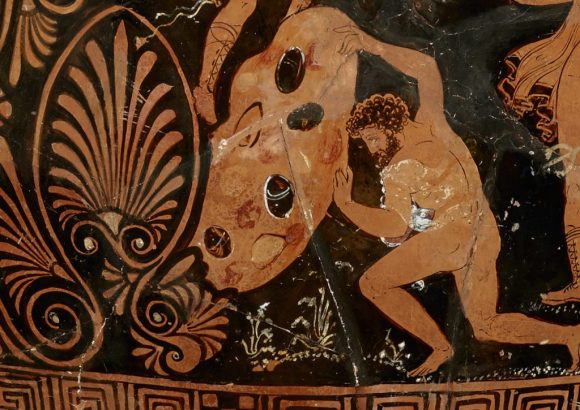
An Earth without conflict is a pipe dream. The natural course of events is entropy interspersed with instances of chaos and order. One can choose to adopt a nihilistic view of our existence and do nothing, or be like Sisyphus [6] — resigned to the fact that we are in a hopeless situation — but strive to find joy in setting small targets and achieving modest successes, filling our hearts with laughter and happiness during the lull before the storm, and endeavour to leave a better future for the next generation.

When everyone found it impossible to carry a big load, the human mind devised the wheel. When the greener pastures across the lake obsessively stirred the curious, it took one brave young man with the imagination to make a raft of fallen tree trunks. Hope springs eternal in the human breast[7]. The change we want the world to embody starts with the man in the mirror. Numerous social experiments have repeatedly shown that doing a kind gesture is contagious. One good turn deserves another. No good deed remains unreturned. We can try. 

Sisyphus: From Public Domain

[1]  A verse from The New Seekers’ “’I’d Like To Teach the World to Sing” became a jingle for Coca-Cola later.

[2] John Lennon’s most successful solo single, ‘Imagine’, envisions a world of peace without materialism, without borders separating nations, and without religion.

[3] The Beatles’ 1964 hit ‘Can’t Buy Me Love’ is a McCartney composition that naively preaches that true love cannot be bought. In the later stages of his life, McCartney discovered the hard way that divorce, without a pre-nuptial agreement for someone of his stature, could be financially draining. Money can’t buy love, but falling out of it can be costly.

[4] Sanskrit for ‘May all be happy’

[5] Sanskrit for ‘Peace’

[6] In Greek mythology, Sisyphus was a shrewd king. The gods condemned him to roll a boulder up a hill for eternity, only to see it roll down again after reaching the summit. Albert Camus, in his book ‘The Myth of Sisyphus,’ implies that Sisyphus was happy. He found performing and completing the act itself meaningful. He gave meaning to the meaningless.

[7] “Hope springs eternal in the human breast,” an excerpt from Alexander Pope’s poem “An Essay on Man.”

.

Farouk Gulsara is a daytime healer and a writer by night. After developing his left side of his brain almost half his lifetime, this johnny-come-lately decided to stimulate the non-dominant part of his remaining half. An author of two non-fiction books, Inside the twisted mind of Rifle Range Boy and Real Lessons from Reel Life, he writes regularly in his blog, Rifle Range Boy.

.

PLEASE NOTE: ARTICLES CAN ONLY BE REPRODUCED IN OTHER SITES WITH DUE ACKNOWLEDGEMENT TO BORDERLESS JOURNAL

Click here to access the Borderless anthology, Monalisa No Longer Smiles

Click here to access Monalisa No Longer Smiles on Kindle Amazon International
Categories
Poetry

At the turn of the Century

By Stuart MacFarlane

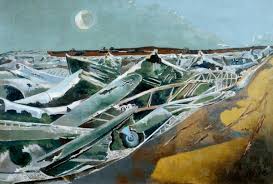
Art by Paul Gnash (1889-1946)
                  I

I wonder what people felt
at the turn of the century,
with Waterloo behind them now;
and the Crimea and the hundred wars
fought by men to prove
I'm not sure what.
I wonder what they felt
as the thick black smoke of industry
cleared now on the skyline;
and there, for the first time, they saw
the blue sky, the sunlight shining through.
I wonder what they felt
when they saw their century slip away,
like a fine ship pushed out to sea.
And there, before them, the great unknown;
mile on mile of endless ocean.
Did they feel hope or fear, I wonder?
Or maybe both?
And, seeing the gravestones in the rain,
perhaps a sense of sadness, too,
for those who had not made it.
For many had lived, but many more had died.


II

We survived the shock of the millennium,
with Passchendaele behind us now;
and Auschwitz, Hiroshima, Korea, Vietnam.
And, I wonder, as the years subside,
what we will feel
at the turn of our century...
With Iraq behind us now,
and Gaza and Ukraine and the hundred wars
yet to be fought by men to prove
I'm not sure what.
I wonder what we'll feel as
the thick clouds of radioactive gas
clear slowly on the skyline.
And there, for the first time, we see
the blue sky, the sunlight shining through.
I wonder what we'll feel
as our century slips away,
like part of a rocket jettisoned
silently in outer space.
And there, before us, the great unknown;
a thousand light years, bright with stars;
yet so very, very far away.
Will we feel hope or fear, I wonder?
Or maybe both?
And, seeing the gravestones in the rain,
perhaps a sense of sadness, too,
for those who did not make it.
For many will live, but many more will die.

Stuart MacFarlane is now semi-retired. He taught English for many years to asylum seekers in London. He has had poems published in a few online journals.                                                                                                                    

.

PLEASE NOTE: ARTICLES CAN ONLY BE REPRODUCED IN OTHER SITES WITH DUE ACKNOWLEDGEMENT TO BORDERLESS JOURNAL

Click here to access the Borderless anthology, Monalisa No Longer Smiles

Click here to access Monalisa No Longer Smiles on Kindle Amazon International
Categories
Interview Review

A Backpacker’s Diary by Jessica Mudditt

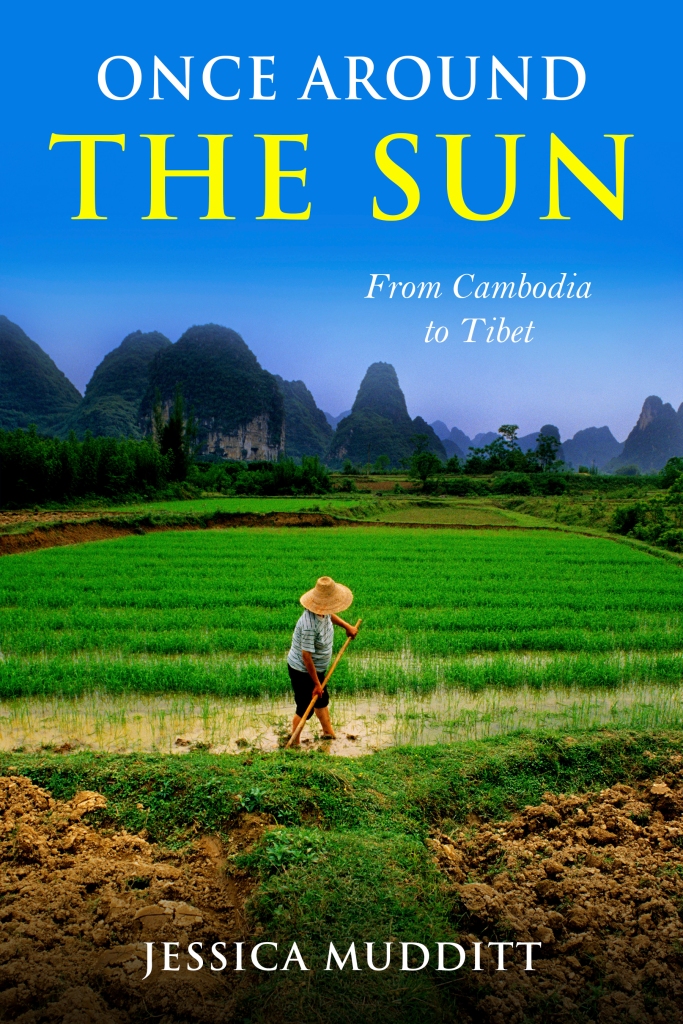
A brief overview of Once Around the Sun : From Cambodia to Tibet (Hembury Books) by Jessica Mudditt and a conversation with the author

Jessica Mudditt’s Once Around the Sun: From Cambodia to Tibet is not just a backpacker’s diary but also her need to relate to humanity, to find friendships and even love, as she does with Kris, a photographer named after Krishna, the Hindu god, because his parents while visiting India fell in love with the divinity!

The Burmese translation of Our Home in Myanmar was published recently.

Hurtling through Cambodia, Vietnam, China, Tibet, young Mudditt concludes her narrative just at the brink of exploring Nepal, India and Pakistan in her next book… leaving the reader looking forward to her next adventure. For this memoir is an adventure that explores humanity at different levels. Before this, Mudditt had authored Our Home in Myanmar – Four years in Yangon, a narrative that led up to the Myanmar attack on Rohingyas and takeover by the military junta. Once Around the Sun: From Cambodia to Tibet is the first part of a prequel to her earlier book, Our Home in Myanmar, both published by her own publishing firm, Hembury Books.

What makes her narrative unique is her candid descriptions of life on a daily basis — that could include drunken revelry or bouts of diarrhoea — while weaving in bits of history and her very humane responses. Her trip to Angkor Wat yields observations which brings into perspective the disparities that exist in our world:

“I was gazing out at an empire that was once the most powerful and sophisticated in the world. In 1400, when London had a middling population of 50,000, the kingdom of Angkor had more than a million inhabitants and a territory that stretched from Vietnam to Brunei. It had flourished for six hundred years, from the ninth to the fifteenth centuries.

“But somehow Cambodia had become one of the world’s poorest countries, and surely the most traumatised too, following a recent war and genocide. I knew that when we came back down to the ground, there would be a collection of ragtag street kids and downtrodden beggars desperately hoping for our spare change. It was difficult to reconcile the grandeur of Cambodia’s past with its heart-breaking present in the twenty-first century. How did a country’s fortunes change so dramatically? Could the situation ever be turned around?”

How indeed?

Then, she writes of Vientaine in Vietnam:

“I was struck by the fact that sex work seemed to be the consequence for countless young women living in poverty. It made me angry, but mostly sad.”

In these countries broken into fragments by intrusions from superpowers in the last century, judged by the standards of the “developed countries” and declared “underdeveloped”, an iron rice bowl becomes more important to survive than adventure, discovering other parts of the world or backpacking to self-discovery. Travel really is the privilege of that part of the world which draws sustenance from those who cannot afford to travel.

Jessica showcases mindsets from that part of the Western world and from the mini-expat world in Hong Kong, which continue alienated from the local cultures that they profess to have set out to explore or help develop. One of the things that never ceases to surprise is that while the ‘developed’ continue to judge the ‘third world’, these countries destroyed by imposed boundaries, foreign values, continue to justify themselves to those who oppress them and also judge themselves by the standards of the oppressors.

Some of these ‘developing’ countries continue to pander to needs of tourism and tourists for the wealth they bring in, as Jessica shows in her narrative. She brings out the sharp differences between the locals from Asia and the budgeted backpackers, who look for cheap alternatives to experience more of the cultures they don’t understand by indulging in explorations that can involve intoxicants and sex, their confidence backed by the assurance that they can return to an abled world.

Backpackers from affluent countries always have their families to fall back on — opulent, abled and reliable. Mudditt with her candid narrative explores that aspect too as she talks of her mother’s response to her being sick and budgeting herself. Her mother urges her to cut short her trip. But she continues, despite the ‘adversities’, with an open mind. That she has a home where she can return if she is in any kind of trouble begs a question — what kind of ‘civilisation’ do we as humans have that she from an abled background has a safe retreat where there are those for whom the reality of their existence is pegged to what she is urged to leave behind for her own well-being? And why — as part of the same species — do we accept this divide that creates ravines and borders too deep to fathom?

Mudditt with her narrative does create a bridge between those who have plenty and those who still look for and need an iron rice bowl. She mingles with people from all walks and writes about her experiences. Hers is a narrative about all of us –- common humanity. Her style is free flowing and easy to read — quite journalistic for she spent ten years working as one in London, Bangladesh and Myanmar, before returning to her home in Australia in 2016. Her articles have been published by Forbes, BBC, GQ and Marie Claire, among others. This conversation takes us to the stories around and beyond her book.

What led you to embark on your backpacking adventure? Was it just wanderlust or were you running away from something?

It was primarily from wanderlust, but I also didn’t know what I was going to do with the rest of my life. After six years at university, I was still yet to have any particular calling. However, I was also glad I didn’t know. It meant that I was free to go and explore the world, because I wasn’t putting my career on hold. I had no career.

I also had a broken heart when I set off for Cambodia – but the trip was planned before that relationship had even begun. But again, part of me was glad that my boyfriend had called it quits, because my plan was to be away for a very long time (and it ended being a decade away).

What made you think of putting down your adventures in writing? As you say, this is a prequel to your first book.

It was the pandemic that made me realise that backpacking was really special. There was a period in 2020 when it looked like travel may never be so unrestricted again, so it motivated me to document my year of complete freedom. It was also before social media was even a thing. When I was lost, I was really lost, and I had to use my problem-solving skills.

Prior to the pandemic, I sort of thought that backpacking itself was too fun to write about. I hadn’t actually lived in any of the countries I visited – I was just passing through. But that is also a valid experience, and one that many people can fondly relate to. There were also some really confronting and difficult moments.

You have written of people you met. How have they responded to your candid portrayals? Or did you change their names and descriptions to convey the essence but kept your characters incognito?

While I was writing the book, I got back in touch with the people I travelled with – I can thank Facebook for still being in touch with most people mentioned. They helped me to remember past anecdotes and I got some of the back story of their own trips. I have only used first names to protect their privacy, although there are some photos in the book too. Thankfully the world is so big that the odds are small that anyone would recognise, say, an Irish guy from Adam in Vietnam in 2006! Clem from Shanghai has just sent me a photo of her with my book, and Romi from Vietnam actually came to my book launch, which was awesome.

What was your favourite episode in this book — as a backpacker and as a writer? Tell us about it.

I think it was crossing into China and meeting ‘the man.’ I felt so alive with every step I took into China after crossing over on foot from Vietnam. To be chaperoned in the way I was – without being able to communicate a single word – was unusual. His kindness left me speechless, so the anecdote has a nice story arc.

In your travels through China, you faced a language handicap and yet found people kind and helpful. Can you tell us a bit about it?

I foolishly underestimated the language barrier. It was profound. In Southeast Asia, there was always at least a sprinkling of English, and I sort of just assumed that I’d be fine. I entered China from Vietnam, so my first port of call was Nanning, where there is not even really an expat population. I couldn’t do the most basic things, from finding the toilet or an internet cafe or something to eat! I used sign language and memorised the Chinese character for ‘female’ to make sure I went into the right toilet! In a restaurant, I just pointed at whatever someone else was eating in the hope that they would bring me a bowl of whatever it was. There were times when I was seriously lost and lonely, but I ended up staying in China for two months and saw the comedic side. I was bumbling around like Mr Bean (who is hugely popular in China).

I met a lot of people who were really kind to me, and I was just so grateful to them. I didn’t have Wi-Fi on my phone back then, so getting lost in a massive city in China was a bit scary. I met a student called Mei-Xing who ‘adopted’ me for a few days in Guilin. We had a really nice time together and it was so great to hang out with a local.

What is/are the biggest takeaway/s you had from your backpacking in this part of the world? Tell us about it.

I think it’s something quite simple: the world can be a very beautiful place, and a very polluted place. Tourism can do a great deal of damage when there are too many people clambering over one area. There is also an incredible level of disparity in a material sense on our planet. Some humans are travelling into space on rockets. Others are pulling rickshaws, as though they are draught horses. It is profoundly inequitable.

Having travelled to large tracts of Asia, what would you think would be the biggest challenge to creating a more equitable world, a more accepting world? Do you think an exposure to culture and history could resolve some of the issues?

I think that democracy is key. It slows us down and forces us to act in the interest of the majority, not the top-level cronies. That is definitely also something I witnessed in Myanmar. When a few people hold all the power, the population is deprived of things that ought to be a human right.

I think that travel definitely alters your perspective and broadens your mind, and it is something I’d recommend to anyone. Realising that the way that things are done in your home country is not the only way of doing things is a valuable thing to learn.

Mostly, you met people off the street. In which country did you find the warmest reception? Why and how?

In Pakistan. The hospitality and friendliness was unparalleled. I think it was in part due to not having many tourists there. Nothing felt transactional. I met some fascinating people in Pakistan who would have a profound impact on my own life. I am still in touch with several people I met there.

At a point you wondered if the poverty you saw could be reversed back to affluence in the context of the Angkor kingdom. Do you have any suggestions on actually restoring the lost glory?

I believe that it is beginning to be restored. Pundits have called this the “Asian Century.” I am convinced that the United States and the UK are in decline, and this process will only speed up. India, to me, holds the most promise as the next superpower, because it is a democracy (albeit flawed – like all of them), English- speaking, enormous, beautiful, fascinating and its soft power is unmatched. China is facing headwinds. I blame that on making people sad by removing their agency.

How long were you backpacking in this part of the world? Was it longer than you had intended? What made you extend your stay and why?

My trip was exactly 365 days long. I planned it that way from the beginning. I wanted to travel for no less than a year (more than a year and I might stay feeling guilty for being so indulgent!). That is also why the book is called Once Around the Sun – my time backpacking was the equivalent of one rotation of the Earth. I set off on 1 June 2006 – the first day of winter in Australia – and I arrived on 1 June 2007 in London, on the first day of the British summer. I love the sunshine.

After having travelled around the large tracts of Asia and in more parts of the world, could you call the whole world your home or is it still Australia? Is your sense of wellbeing defined by political boundaries or by something else?

Home for me is Sydney. I absolutely love it. I get to feel as though I am still travelling, because my home city is Melbourne. I go down a new road every other day and I love that feeling. The harbour is beautiful, and the sun is shining most days. It’s very multicultural too.

My kids are three and five, so I haven’t travelled overseas for years. My plan is to travel with them as much as possible when they are a bit older. I hope they love it as much as me. I cannot wait to return to Asia one day. I am also desperate to visit New York City.

What are your future plans for both your books and your publishing venture?

The second part of Once Around the Sun will come out in 2025. It’s called Kathmandu to the Khyber Pass, and it covers the seven months I spent Nepal, India and Pakistan.

My goal is to complete my fourth memoir by 2027. It will be called My Home in Bangladesh (it will be the prequel to Our Home in Myanmar!).

My fifth book will be about how to write a book. I am a book coach and in a few years I will have identified the most common challenges people face when writing a book, and finding their voice.

In the next twelve months, there will be at least 12 books coming out with Hembury Books, which is my hybrid publishing company. I love being a book coach and publisher and I hope to help as many people as possible to become authors.

Please visit the website and set up a discovery call with me if you plan on writing a nonfiction book, or have gotten stuck midway: https://hemburybooks.com.au/.

(The online interview has been conducted through emails and the review written by Mitali Chakravarty.)

Click here to read an excerpt from Once Around the Sun

PLEASE NOTE: ARTICLES CAN ONLY BE REPRODUCED IN OTHER SITES WITH DUE ACKNOWLEDGEMENT TO BORDERLESS JOURNAL. 

Click here to access the Borderless anthology, Monalisa No Longer Smiles

Click here to access Monalisa No Longer Smiles on Kindle Amazon Internation


Categories
Musings

In the Grip of Violence

Ratnottama Sengupta muses on the ongoing wars and violence as acts of terror and gazes back to an incident in the past which resulted in a powerful Bengali poem by Tarik Sujat that she has translated here

The world is in the grip of violence, Rabindranath Tagore wrote on March 5, 1927, sitting in the abode of peace – Santiniketan. Full 97 years later, the world is still in the grip of violence?

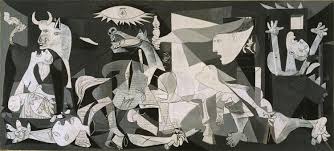
It’s Gaza today. Ukraine yesterday. Afghanistan some days ago. Sri Lanka not so long ago. Sometimes it is Bosnia. At other times, it’s Vietnam. Lands far flung and near adorn themselves with blood-red mark of hatred. Religion. Self-seeking dictators. Communism. Global lust for power. No matter what is at stake, the pawn is an innocent life. Always. A woman. An elder. An unborn child…

Tagore wrote Hingshay unmatto prithibi [1]– “The world is in the grip of violence as a prayer to the Almighty. The delirium is leading to conflicts, cruel and ceaseless… Crooked is the world today, tangled its philosophy. No bond is sacred.” And the anguish of such a state of affairs? It led even the Eternal Bard of Bengal to pray for a new birth of ‘Him of Boundless Life.’ “Save them,” Tagore had prayed to the Serene, “raise your eternal voice of hope” so that “Love’s lotus, with its inexhaustible store of nectar” may open its petals in His light. In His immeasurable mercy. To wipe away all dark stains from the heart of the continents.

In vain he prayed.

“Forgive them!” Jesus said, for “They know not what they do!” And what did the soldiers do? They gambled for his clothes by throwing dice! (Luke 23:34)

Forgive them? “Have you forgiven those who vitiated the atmosphere and snuffed out light for innocent lives?” Tagore asked the Almighty, in ‘Proshno (Question)‘. Have you forgiven those who deal hate in the secret hours of night? Have you embraced with love those who murder the helpless in broad daylight under the cover of ideology? Don’t you wince when a pregnant Bilkis[2] is gang-raped? Why do you shed silent tears when elected rulers choke people’s voice with furtive use of power?

And like his Prayer, Tagore’s ‘Question’ too has remained unanswered. And dumb sit the messiahs when men with mistaken notion of mission kill, maim, mutilate hostages who become mere numbers in newspaper headlines – until a new dateline wipes it off our collective memory.  Thus, once again, the world was shaken by brutalities carried out in the name of God, in Dhaka’s elite neighbourhood, Gulshan.

On July 1, 2016, before the Cinderella hour struck, five militants entered the Holey Artisan Bakery with bombs, machetes, pistols, and opened fire on men and women, from Italy, Japan, India, Bangladesh. Sunrise. Sunset.. Sunrise… unsuccessfully the police tried to secure the hostages. An elite force of the Bangla Army had to raid to put an end to what BBC News described as “the deadliest Islamist attack in Bangladesh”. Meanwhile? The toll had risen to 29 lives, totaling 17 foreigners, three locals, two policemen, five gunmen, and two bakery staff who were trying to earn their daily bread!

Since Gulshan is home to many embassies and high commissions in the capital of the secular nation, the news stirred up the world in no time. And prayers poured in – over cellphones, on Facebook, television and newspapers too.  Prayers of wives for their husbands. Prayers of mothers for their sons. Prayers of a niece for her aunt. Prayers of American friends for their Indian batch mate. But once again, prayers went unanswered…

Among those who did not survive to tell the story was Simona Monti of Italy who worked in textiles. Then 33 years of age, Simona was soon to go to her home an hour away from Rome, to deliver the child she had nursed in her womb for five months. But Michelangelo too did not live to breathe in the world vitiated by hatred. When the news reached her brother, he prayed his Simona’s bloodshed would make this “a more just and brotherly world.”

His prayer, too, remains unanswered.

But poets and other men of conscience did not remain silent. Within days of the incident Tarik Sujat wrote Janmer aagei aami mrityu ke korechhi alingan  (Even before my birth I embraced death, July 6, 2016). No diatribe in his words, but the muted cry of an unborn being jolts us. That cry left me with a tear in one eye and fire in the other…

On my very first reading I was touched, I was moved, I fell silent. The pensive mood of the embryonic life turned me reflective. Anger, rage, fury was not the answer to hostility, loathing, abhorrence, I realised. So will you, as you go through the poem that was handed out in Magliano Sabino when Simona’s hometown prayed for her eternal rest.

I Embraced Death Before Birth 

Even before my birth I embraced death.
I have no nation, no speech,
No stock of my own.
No distinction between Holy-Unholy,
Sin and Virtue, Sacred or Cursed.
Having seen the ghastly face of life
I've swallowed my last drop of tear...
My first breath did not pollute
The environs of your earth.
My last breath was the first gift
Of this planet to me!

Maa!
You were my only playhouse,
My school, and my coffin.
I had yet to open my eyes -
And still I saw
The sharp nails of executioner
Ripping apart my naval cord.
My ears were yet to hear sound,
Still I could catch bells
That summon lads to schools...
The obscure sound echoed
Through churches, temples,
And minarets of masjids
Until, slowly, it fell silent...

My first bed was my last.
My mother's womb was
My only home
In the unseen world.
On that nook too, darkness descended.
Floating down the river of blood
I groped for my umbilical cord
To keep me afloat...
My tiny fingers, my soft palm
Could find nothing to clutch.

In that Dance of Death
My unseeing eyes witnessed
Koran, Bible, Gita, Tripitak
Bobbing in receding blood.
In the achromatic gloom
Of my chamber
I got no chance to learn
A single mark of piety!

Still...
I embraced death before I was born.
My mother's womb is my
Grave, my coffin, my pyre.
The world of humans
Is enveloped in fire -
A few droplets of my meagre body
Does not quench its thirst!

(Translated from Tarik Sujat’s Bengali poem by Ratnottama Sengupta)

Why has this portrayal of a tormented soul found voice in French, German, Swedish, Italian, English…? Why has it been translated into 17 languages? In the answer blowing in the wind lies hope for mankind. For, the answer is: Not every man is created in the image of Lucifer.  That is why, when Giulia Benedetti learnt that she will never again see her aunt Nadia Benedetti, that “she will not talk, will not comment on fashion, will not sing together again…” she wrote on Facebook: “Do not forget. Do not lose her memory. Do not let crazy people massacre. Do not let them win…”

And I immerse my voice in the Bard’s to say: “Let life come to the souls that are dead…” And I pray, bring harmony, bring rhythm, bring melody in our lives, O Serene! Wipe away every dark cloud from the world yet to dawn!

[1] The world is crazed with greed

[2] Bilkis Bano was gangraped in 2002 https://thewire.in/rights/in-her-own-words-what-bilkis-bano-went-through-in-2002

Ratnottama Sengupta, formerly Arts Editor of  The Times of India, teaches mass communication and film appreciation, curates film festivals and art exhibitions, and translates and write books. She has been a member of CBFC, served on the National Film Awards jury and has herself won a National Award. 

.

PLEASE NOTE: ARTICLES CAN ONLY BE REPRODUCED IN OTHER SITES WITH DUE ACKNOWLEDGEMENT TO BORDERLESS JOURNAL

Click here to access the Borderless anthology, Monalisa No Longer Smiles

Click here to access Monalisa No Longer Smiles on Amazon International

Categories
Essay

Akbar Barakzai: A Timeless Poet

By Hazaran Rahim Dad

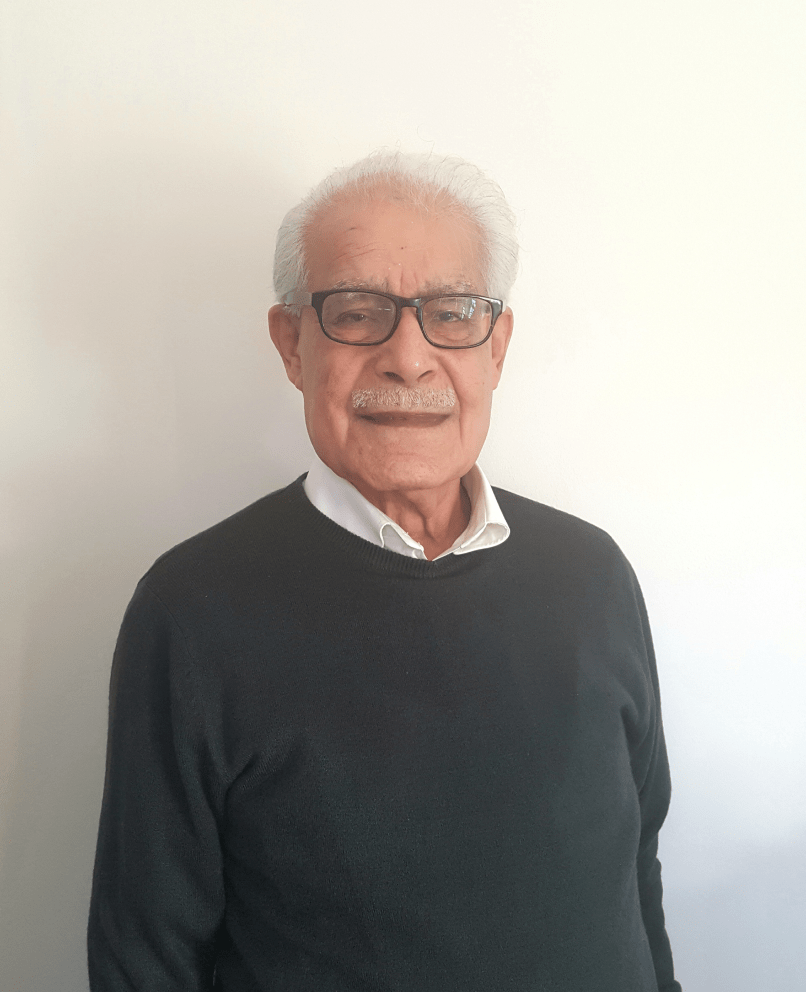
Akbar Barakzai (1939-2022) was born in Shikarpur Sindh, Pakistan. He received his early Education from Karachi and later he graduated from University of Karachi. Barakzai  is considered as one of the most defiant progressive voices in modern Balochi literature. His poetry reflects the objective realities of life and ambitions of his people. Boundless love for masses, profound desire for peace and prosperity, and unwavering resolve to resist and defy the tyranny are some of the commonplace themes of his poetry.

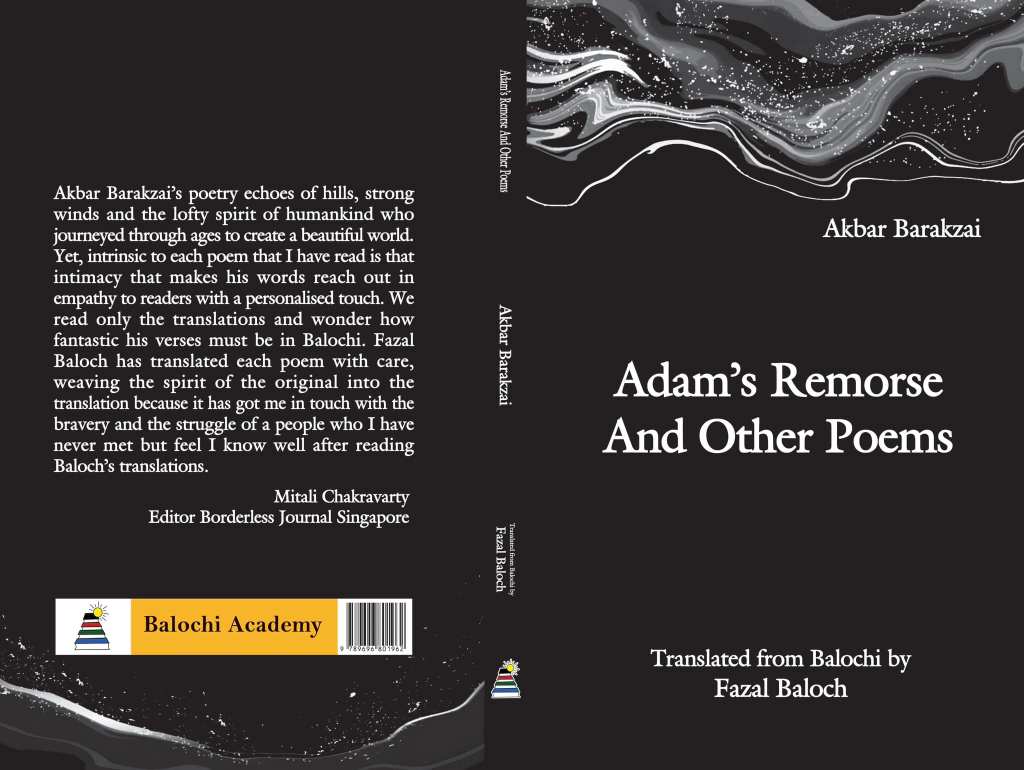
 “Akbar Barakzai belongs to the generation of the poets that witnessed the political and literary activism of Muhammad Hussain Unqa, Sher Mohammad Mari, Mir Gul Khan Naseer and Azat Jamaldini”, writes Fazal Baloch, a renowned translator who most recently brought out the anthology of Barakzai’s translated poems under the title Adam’s Remorse and Other Poems, published by Balochi Academy Quetta in 2023.

In his literary career, which spans over a half century, Barakzai has managed to bring out only two of his anthologies. Some selected poems by Barakzai have been translated from Balochi to English by Fazal Baloch, a college professor in Turbat, and a prominent literary translator.

Akbar Barakzai was an honest and dedicated political and social activist whose aim was progress of Baloch people. He as poet could not only express the human sentiments but could also express their aspirations for their life of Freedom and Dignity. “He served … his people admirably and deserves our respect and love,” says Meer Mohammad Ali Talpur, a Baloch intellectual.

Barakzai’s poems are rich in linguistic and literary expressions. His language is both simple and philosophical. In his poetry, he celebrates resistance, challenges oppression, and expresses a belief in a better future without losing hope. He emphasises resilience to overcome suffering. He writes:

I am the tree of immortality,
O, you tyrant brute!
The more you hew me down,
the more I sprout

The imagery of the tree symbolises the strength and the life cycle of a tree which remains steadfast midst harsh weathers.

In another poem, titled ‘Not Forever’, Barakzai continues to convey themes of resistance and defiance. As he says:

The rule of chains and fetters
Will last only for today, not forever.
The age of tyranny and oppression
Will last only for today, not forever.

He inscribes that the current state of being oppressed or controlled (“rule of chains and fetters,” “tyranny and oppression”) is temporary. Barakzai implies hope for a future where such oppression will end, indicating a belief in the eventual triumph of freedom and justice.

Barakzai sought to reshape the prevailing socio-political views and wrote for freedom and liberty, peace and prosperity and dignity of mankind. His love for human dignity transcends all geographical and cultural frontiers and becomes universal, added Fazal Baloch.

Indeed, Barakzai’s poetry transcends borders and speaks to universal themes. In his poem ‘Who Can Snuff Out the Sun?’ written in response to Che Guevara’s execution, he celebrates Che Guevara’s heroism and the universal struggle for justice and freedom. By acknowledging Che Guevara’s courage and sacrifice, Barakzai connects with a broader global struggle for human rights and liberation.

"Who can snuff out the sun? 
Who can suppress the light?"

And in the last lines of the poem, he notes,

I'm Ernesto Che Guevara
I'm Immortal
Everywhere in the world

“This is not only Barakzai’s most quoted poem, but it is also one of the most remarkable Balochi poems touching the theme of resistance and defiance,” contends Fazal Baloch.

Similarly, in his another poem like ‘I’m Viet Cong’, he expresses solidarity with the people of Vietnam, few lines are written as such:

I'm the spirit of freedom and liberty 
Who can enslave me?
Who can kill me?
After all
I'm Viet Cong I'm Viet Cong.

He might have shown solidarity with Afghanistan in his poem ‘April 1978’. His lines read:

Let's sing for the Saur
Let’s extol the groom
A garden in our heart has bloomed
Doves chant and herald the news
Revolution has arrived
Arrived what we desired

One of the ways in which Barakzai weaves the West and the East into his poetry. He has a poem called ‘Waiting for Godot’. Samuel Beckett’s Godot is emblematic of an ideal that we keep waiting for. Barakzai has captured the essence of the whole play in his poem with his refrain —

Arise! O friends from this deep slumber 
Godot will not, will never show up

In one of his most powerful poems, ‘Word’, Barakzai conveys the power of speaking up for one’s rights and the importance of not remaining silent in the face of oppression. He believes that by voicing one’s grievances and advocating for justice, freedom, and salvation can be achieved, ultimately leading to the end of oppression as these lines indicate:

Don’t ever bury the word
In the depth of your chest
Rather express the word
Yes, speak it out.
The word brings forth
Freedom and providence
Of course, freedom and providence.

In ‘How Long’, Barakzai starts by portraying a bleak situation where life is filled with distress and young people are dying tragically. He inscribes,

For how long
Life will remain in utter distress
Handsome youths keep falling to bullets
And mirror like hearts
Continue to shatter into shards?

Then, he shifts the tone to one of hope and optimism, and writes,

Light-- the very essence of freedom 
Will not forever remain in prison
Life will not suffer distress
The serpent of tyranny
Will vanish evermore
The sapling of envy and hatred
Will wither away.

He suggests that despite the current darkness, better days are ahead. He expresses confidence that “light”, symbolic of freedom, will not remain imprisoned forever. He predicts an end to the suffering and the disappearance of tyranny. The imagery of the “serpent of tyranny” vanishing and the “sapling of envy and hatred” withering away conveys the idea of a brighter future where oppression and negativity are eradicated.

Barakzai’s poetry is a ray of hope in the midst of suffering from atrocities and hatred and envy. His poetry reflects his love for humanity resonating with the voices of the oppressed and for them.

Hazaran Rahim Dad is a poet and writer. She writes on sociopolitical issues focusing on the right of fishermen. Currently she is pursuing her MPhil degree in English literature from Karachi.

PLEASE NOTE: ARTICLES CAN ONLY BE REPRODUCED IN OTHER SITES WITH DUE ACKNOWLEDGEMENT TO BORDERLESS JOURNAL

Click here to access the Borderless anthology, Monalisa No Longer Smiles

Click here to access Monalisa No Longer Smiles on Kindle Amazon International

Categories
Excerpt

Once Around the Sun: From Cambodia to Tibet

Title: Once Around the Sun: From Cambodia to Tibet

Author: Jessica Mudditt

Chapter 20 – In or out?

As I walked the streets of downtown Hohhot in search of a travel agency, I felt further than five hundred kilometres from Beijing. I was still in East Asia, but the capital city of Inner Mongolia had Central Asian influences too, such as the cumin seed flatbread I bought from a hawker with ruddy cheeks and a fur hat. I passed a Muslim restaurant with Arabic lettering on the front of its yellow-and-green facade, and many street signs and shops featured Mongolian script as well as Mandarin. With its loops, twirls and thick flourishes, Mongolian looked more similar to Arabic than Chinese. In actual fact, the top-down script is an adaptation of classical Uyghur, which is spoken in an area not far to the west.

The winds that blew in from the Russian border to the northeast were icy cold, so I was glad to soon be inside a travel agency. It was crammed with boxes of brochures and a thick film of dust covered the windowpanes. Hohhot is the main jumping-off point for tours of the grasslands, so I was able to get a ticket for a two-day tour that began the following morning.

I wasn’t enthusiastic about going on a tour because I preferred to move at my own pace, however there was no other way to access the grasslands. The upside was that I was guaranteed to sleep inside a ger, which is a circular tent insulated with felts. The Russian term of ‘yurt’ is better known. I had read that Inner Mongolia was a bit of a tourist trap for mainland Chinese tourists, but I was nonetheless excited to get a glimpse of the Land of the Weeping Camel.

I walked into a noodle shop and a customer almost dropped her chopsticks when she saw me. The girls at the cash register were giggling and covering their faces as I pointed at a flat noodle soup on a laminated menu affixed to the counter.

Foreign tourists must be thin on the ground in Hohhot, I thought as I carried my bowl over to a little table by the window.

Inner Mongolia was one of the few places that Lonely Planet almost discouraged people from visiting: ‘Just how much you can see of the Mongolian way of life in China is dubious.’ But I was still keen to see what I could.

I ate slowly, enjoying each fatty morsel of mutton. I was pretty good with chopsticks by that point – I’d never be a natural, but I didn’t drop any bits of mutton into the soup with a splash, as I used to in Vietnam.

Hohhot seemed a scruffy, rather bleak sort of city – or at least in the area where I was staying close to the train station. Street vendors stood cheek by jowl on one side of the road, calling out the prices of their wares. The opposite side was under construction and the one still in use was unpaved, which meant that two lanes of traffic had to navigate a narrow area of bumpy stones while avoiding massive potholes and piles of dirt. I saw a motorbike and a three-wheel truck almost collide.

I spent the next few hours wandering around the Inner Mongolia Museum, which has a staggering collection of 44,000 items. Some of the best fossils in the world have been discovered in Inner Mongolia because its frozen tundra preserves them so effectively. The standout exhibit for me was the mammoth. It had been discovered in a coal mine in 1984 and most of its skeleton was the original bones rather than replicas. I gazed up at the enormous creature and tried to imagine it roaming the earth over a million years ago. Mind-boggling.

I admired the black-and-white portraits of Mongolian tribesmen, and then took photos of a big bronze statue of Genghis Khan astride his galloping mount. The founding leader of the Mongol Empire was the arch-nemesis of China, and parts of the Great Wall had been built with the express purpose of keeping out his marauding armies. Genghis Khan must have rolled in his grave when China seized control of a large swathe of his territory in 1947.

What was once Mongolia proper became a Chinese province known as ‘Inner Mongolia Autonomous Region’. This long-winded name is an example of Orwellian double-speak. So-called ‘Inner Mongolia’ is part of China, whereas the independent country to the north is by inference ‘Outer Mongolia’. Nor is the Chinese region autonomous. The Chinese state has forced Mongolians to assimilate. Their nomadic lifestyle and Buddhist beliefs had been pretty much eradicated, and although speaking Mongolian wasn’t outlawed, learning the state language of Mandarin was non-negotiable.

On top of this, the government provided tax breaks and other financial incentives to China’s majority ethnic group, the Han Chinese, if they relocated to Inner Mongolia. Mongolians now account for just one in five people among a total population of 24 million. The same policies of ethnic ‘dilution’ exist in China’s four other ‘autonomous regions’, which include Tibet and Xinjiang, the home of the Uyghurs.

Shortly before I left the museum, I came to a plaque that described the official version of history, which was at odds with everything I’d read in my Lonely Planet.

‘Since the founding of Inner Mongolia Autonomous Region fifty years ago, a great change has happened on the grasslands, which is both a great victory of the minority policy and the result of the splendid leadership of the Communist Party of China. The people of all nationalities on the grassland will never forget the kind-hearted concerns of the revolutionary leaders of both the old and new generations.’

I rolled my eyes, snapped a photo of the plaque for posterity, and continued walking.

* * *

I didn’t venture far from my hotel for dinner because I planned on having an early night. I chose a bustling restaurant with lots of families inside and was waiting for a waiter to come and start trying to guess my order when a group of men at the next table caught my eye. They seemed to be waving me over.

Me? I asked by pointing at myself.

Yes, they were nodding. Shi de.

I happily joined the group and introduced myself by saying that I was from ‘Aodàlìyǎ’. I think they were Han Chinese, as they didn’t look Mongolian. I whipped out my phrasebook and tried to say I had come from Beijing, but I was fairly certain they didn’t understand me.

Anyhow, no matter. Ten shot glasses were filled from a huge bottle of baijiu, and I was soon laughing as if I was with old friends. One of the slightly older guys used a set of tongs to place wafer-thin slices of fatty pork into the bubbling hotpot on the table, followed by shiitake mushrooms and leafy greens. As the impromptu guest of honour, my bowl was filled first once it was cooked – by which time I’d already had three shots.

The hotpot was fantastic, and I had to remind myself not to finish everything in my bowl. Bethan had told me that Chinese etiquette requires a small amount of food not to be eaten at each meal. This indicates that it was so satisfying that it wasn’t necessary to eat every last bite. As a kid, it was ingrained in me to finish everything on my plate. I loved food and was generally in the habit of licking my bowl clean, so I had to exercise a certain amount of restraint.

I had just rested my chopsticks across the top of my bowl to signal I was finished when I was invited to go sit on the wives’ table, which was across from the men’s. The women were very sweet and a couple of them seemed to be around my age. I once again tried to communicate using my phrasebook, but I was hopelessly drunk by then. I could hardly string a sentence together in English, let alone Mandarin. I was also beginning to feel queasy from the baijiu, so I gratefully accepted a cup of green tea from the porcelain teapot that came my way on the lazy Susan. After taking some photos together, I bid the two groups ‘zaijian’ (goodnight). I tried to contribute some yuan for the meal, but they wouldn’t hear of it. I curtsied as a stupid sort of thank-you, and then I was on my way.

* * *

More hard liquor awaited me the following day. A striking woman in a red brocade gown with long sleeves handed me a small glass of baijiu as I stepped off the minibus a bit before noon.

‘It’s a tradition,’ she said with a smile, while holding a tray full of shots.

I downed the baijiu with my backpack on and grinned as the backpacker behind me did the same. There were four foreign tourists on the tour, and about eight domestic ones. The liquor gave me an instant buzz, which I needed. I hadn’t slept well and woke up feeling lousy, so I’d kept to myself during the two-hour journey. Even though I should have been excited, I got grumpier and grumpier as the reality of being on a tour began to sink in. Plus, the landscape was not the verdant green steppes I’d been expecting. At this time of year, it was bone dry and dusty. It hadn’t occurred to me to check whether my visit coincided with the low season.

I began chatting to the other tourists. The guy who had the baijiu after me was Lars from Holland. There was also a couple from Germany. I could immediately tell they were pretty straitlaced. Their clothes looked very clean and functional, and the girl refused the baijiu.

The woman in red introduced herself as Li, our tour guide. Then she led us along a path lined with spinifex to a dozen gers. They faced each other in a circle, and off to the right was a much larger ger with the evil eye painted on its roof and Tibetan prayer flags fluttering in the fierce winds. There were no other buildings in sight and no trees.

Li told us to meet inside the big ger in fifteen minutes after we’d put our stuff in the smaller gers she proceeded to assign us. Lars and I would be spending the night in a ger with ‘82’ painted on its rusted red door. There certainly weren’t eighty gers, so the logic behind the numbering system wasn’t clear – but no matter. The German couple took the ger to the right of ours.

These were not portable tents for nomads. Each ger was mounted on a concrete base and I think the actual structure was made of concrete too, and merely wrapped in grey tarpaulins. The door was made of metal and at the top was a sort of chimney structure – perhaps for ventilation. Like igloos, the only opening was the door, and it was pitch-black inside. I located a dangling light switch as I entered.

‘Ah – I love it!’ I exclaimed.

It was a simple set-up, with single beds lining the perimeter and a low table in the middle of the room. Patterned sheets were draped from the concave ceiling. I chose the bed with a framed portrait of Genghis Khan above it. Lars put his backpack next to a bed on the other side. I was happy enough to share a ger with him. He gave off zero sleazy vibes.

‘I might just take a couple of those extra blankets,’ I said to Lars as I piled on a few extra floral quilts from another bed. The wind had an extra iciness to it out on the steppes and I shuddered to think what the temperature would drop to overnight. We zipped our jackets back up and headed out.

I wandered over to the toilet block, which was quite a distance from the gers. I made a mental note to drink as little as possible before getting into bed to avoid having to go in the night. Once I got closer to the toilets, I was glad they were so far away. The stench was unbelievable.

In the female section were two concrete stalls without doors. In the middle of the floor in each was a rectangular gap. I almost gagged. Just a few centimetres away from the concrete was an enormous pile of shit. I could make out bits of used toilet paper and sanitary pads and there were loads of flies buzzing around. Without running water or pipes, the excrement just sat there, day after day, building up. I would have turned and walked straight back out but I was busting for a wee. I held my breath so I wasn’t inhaling the smells. I wanted to close my eyes too, but I was terrified of falling in, so I had to look at what I was doing. I couldn’t get out of there fast enough.

‘Oh my god, Lars – the drop toilets are totally disgusting,’ I said after I met up with him in the big ger. ‘It’s just a pit of shit without running water.’

‘I know an American girl who fell into a drop toilet in China last year,’ he said.

‘No way,’ I said with a shudder.

‘Yeah. She said it was terrible. She was in a really poor village somewhere in central China and she went to the toilet at night. She couldn’t see that some of the wooden planks had gaps in them – and then one of them broke and she fell in. She was up to her neck in shit. She was screaming for people to come help her. Apparently, it took them half an hour to fish her out, and all the while she could feel creatures writhing around her body. She cut her trip short and had to get counselling when she got home.’

‘I bet she did,’ I said. ‘That’s the most disgusting thing I’ve ever heard in my life. The poor girl.’

Just then Li appeared and said we were heading outside to watch horse racing and traditional wrestling after some sweet biscuits and tea. We assembled around a fenced area where there were about thirty ponies tethered to poles. Some were lying down while still saddled.

‘Horses usually sleep while standing up, so these ponies must be knackered – pardon the pun,’ I joked to Lars.

Notwithstanding, they looked to be in reasonably good condition, with shiny coats and no protruding ribs. There were chestnuts, bays and dapple greys.

I heard the sound of hoofbeats and looked behind me. A group of men on horseback came thundering across the steppes. It was a magnificent sight, and any lingering resentment I had about being on a tour melted away.

One of the men rode ahead of the rest. He was wearing a cobalt-blue brocaded tunic and his wavy black hair came down past his ears. He was really good-looking. He approached Li with a smile, said something to her and dismounted with the ease of someone who had probably started riding horses before he learned to walk. Li and the man exchanged a few words – I definitely saw her blush – and then he got back on.

‘Gah!’ he yelled as he dug his heels into his horse’s sides.

The other horsemen followed after him with whoops, leaving a trail of dust in their wake. These Mongolian ponies were only about twelve or thirteen hands, but they sure were fast and could turn on a dime. I loved watching them carve up the dry earth.

Next a group of men on motorcycles appeared along the track. There were quite a lot of them – at least twenty. We formed a big circle, and the traditional wrestling began. I wasn’t sure what the rules were, but it was fairly self-explanatory: one man got another in a headlock and thumped him to the ground. The next man came along and fought the winner, and so on and so forth. The spectators egged on the fighters with what I assumed were good natured cat calls. Everyone was grinning. By the time the wrestling matches were over, the fighters were absolutely covered in dust and the sun was beginning to set. I’m sure it was all staged for our benefit, but it was good fun.

With the seamless orchestration of a tour that has been done a thousand times before, we gravitated to the big ger. Dinner was bubbling away in a large clay pot and it smelled pretty good. There was also a big vat of noodles with black sauce and the ubiquitous Chinese vegetables of thinly sliced carrot, bok choy, baby corn and onion. There was a bottle of baijiu on each table.

We were serenaded with traditional music while we ate. One of the instruments reminded me of the didgeridoo and there was also a violin. I had read that strands of horse mane are used to make violin strings. The male singer had a deep voice that was almost a warble, and it was hauntingly beautiful.

Five men and women emerged from behind a red curtain and began to dance. They wore long-sleeved, billowing satin tunics that were cinched at the waist with embroidered belts. One of the women had a tall hat made of white beads that dangled down to her waist. It must have been heavy. It was a high-energy display of kicks and splits and parts of it were reminiscent of Irish dancing. They twirled their billowing skirts like sufis. The Chinese tourists started clapping in time with the music and then we all joined in. Sure, it was a bit cheesy, but I was really enjoying myself. At the end of the concert, we had photos with the performers as they were still trying to catch their breath.

We were given torches to light our way back to our gers. It was absolutely freezing, so I wore all my clothes to bed. I snuggled into my blankets and pulled them right up to my chin, feeling grateful for the warmth of Bethan’s jumper.

Mercifully, I slept right through until morning and avoided a late-night visit to the shit pit.

When I wandered out of the ger the next morning, breakfast was being prepared nearby. The carcass of a freshly slaughtered sheep was hanging from the back of a trailer. A man was skinning it while the blood drained out of its neck into a big metal bowl. Its head was in a second bowl, while squares of wool were laid out flat to dry on a tarp. A toddler in a puffy orange jacket was playing in the dust while his mother worked away at skinning parts of the wool. What distressed me more than butchery up close was the live sheep that was watching on from the back of the trailer. He presumably knew he was next.

After a breakfast of ‘sheep stomach stew with assorted tendons’ (as Li described it) we headed out for a ride on the steppes. I couldn’t wait to ride a horse again. I’d spent most of my childhood obsessed with horses, and I was lucky enough to have one for a few years, until I got older and became more interested in hockey and parties.

I rode a stocky bay with a trimmed mane that bobbed up and down as it trotted along the path. I looked over its perky little ears. The saddle had an uncomfortable pommel that kept jabbing me in the stomach, but I loved being under the wide open sky. It was a pale blue with just a few wispy clouds. Sheep grazed and crows rested on clumps of rocky outcrops.

I winced at the Chinese guy ahead of me, who was bouncing out of time to the rhythm of his horse’s gait and landing with a heavy bump in the saddle; his oversized suit flapping in the wind and his feet poking out straight in the stirrups. Much easier on the eye was the guide two horses ahead of him. He was every inch the Mongolian cowboy. Dressed from head to toe in black, he wore a leather jacket, cowboy hat and scuffed black cowboy boots. He never took off his wraparound sunglasses and he spoke little. He smouldered like the heartthrob actor, Patrick Swayze.

We’d travelled several kilometres when we came to a building block that was the same greyish brown as the earth. Inside it had a cottage feel. We sat around a table covered with a frilly tablecloth and drank yak milk. As we did, Lars told me about his day trip to North Korea. While in South Korea for a couple of weeks, he had visited the demilitarised zone (better known as the ‘DMZ’), where a ceasefire was negotiated between the two Koreas in 1953. In a military building is what is known as the ‘demarcation line’ – and Lars had one foot in North Korea and another in South Korea. I hung on his every word.

Our conversation got me thinking about how cool it would be to go to North Korea. I was actually quite close to the border. When I got back to the ger, I retrieved my Lonely Planet out of my bag and thumbed to the section titled ‘Getting there and away’, which had instructions for every country that borders China.

‘Visas are difficult to arrange to North Korea and at the time of writing, it was virtually impossible for US and South Korean citizens. Those interested in travelling to North Korea from Beijing should get in touch with Koryo Tours, who can get you there (and back).’

I was pretty sure the cost would be prohibitive for my budget and decided to stick with my existing plan of cutting south-west towards Tibet. Maybe one day I’d get the chance to visit North Korea, but it wouldn’t be on this trip.

Once back in Hohhot, I boarded a train bound for Pingyao. As I watched the apartment blocks pass by in a blur, I thought with satisfaction about the past twenty-four hours. Any visit to Inner Mongolia is problematic, but I couldn’t fault the Chinese tour company. They had made every effort to keep us entertained. Mongolian culture was so new to me that I couldn’t even tell whether something was authentic or staged, but I had seen and done all the things I hoped to during my visit. And, sure, my time there was really brief. But I’d be forever grateful to have seen a part of the world I thought I’d only ever get to see in a documentary.

Photo Courtesy: Jessica Muddit

About the Book: While nursing a broken heart at the age of 25, Jessica Mudditt sets off from Melbourne for a year of solo backpacking through Asia. Her willingness to try almost anything quickly lands her in a scrape in Cambodia. With the nation’s tragic history continuing to play out in the form of widespread poverty, Jessica looks for ways to make a positive impact. She crosses overland into a remote part of Laos, where friendships form fast and jungle adventures await.

Vietnam is an intoxicating sensory overload, and the hedonism of the backpacking scene reaches new heights. Jessica is awed by the scale and beauty of China, but she has underestimated the language barrier and begins her time there feeling lost and lonely. In circumstances that take her by surprise, Jessica finds herself hiking to Mount Everest base camp in Tibet.

From a monks’ dormitory in Laos to the steppes of Inner Mongolia, join Jessica as she travels thousands of kilometres across some of the most beautiful and fascinating parts of the planet.

About the Author: Jessica Mudditt was born in Melbourne, Australia, and currently lives in Sydney. She spent ten years working as a journalist in London, Bangladesh and Myanmar, before returning home in 2016. Her articles have been published by Forbes, BBC, GQ and Marie Claire, among others. Once Around the Sun: From Cambodia to Tibet is a prequel to her earlier book, Our Home in Myanmar.

.

PLEASE NOTE: ARTICLES CAN ONLY BE REPRODUCED IN OTHER SITES WITH DUE ACKNOWLEDGEMENT TO BORDERLESS JOURNAL

Click here to access the Borderless anthology, Monalisa No Longer Smiles

Click here to access Monalisa No Longer Smiles on Kindle Amazon International

Categories
Musings

The Elusive Utopia?

By Farouk Gulsara

When I was growing up, the radio was the musical score constantly playing in the background. Blaring between Tamil movie songs and radio dramas were news of the hour and current issue discussions. The things that got imprinted on my impressionable mind as I was transforming from a teenager to a young adult were about violence, wars and bombings. I remember about the war in Vietnam as it was close to home. For every peace talk and the end of war announcement, there would pop up another bombing and a barrage of casualties. My simple mind wondered when the war would end, but it never did. It went on for so long that they had a Tamil film in 1970 named Vietnam Veedu (House of Vietnam), referring to a household forever in family feuds and turmoil. 

Along with the war in Vietnam, people came by boat to the shores of Malaysia. The then leaders, in the late 1970s, dealing with a poor economic climate as they were reeling from a devastating racial riot, were not so cordial with their arrival. Malaysia went into the bad books of the international arena when the Marines were issued a ‘shoot-at-sight’ order on Vietnamese boat people by the then Deputy Prime Minister, Mahathir Muhammad. The refugees were eventually placed in barb-wired concentration camps-like holding centres. The last of the boat people left Malaysia in 2005. Even today, many former refugees who had started life anew elsewhere return to Pulau Bidong to perform ancestral worship or to remind themselves and their descendants of the hell they escaped.

Just as I thought Malaysia had seen the last of the people displaced from their homes gracing their shores, Malaysia had to play host to economic refugees from Myanmar, the ethnic Myanmarese and the Rohingyas. And the cycle of not wanting to spend the country’s precious resources and accepting them on humanitarian grounds continues to date.  

My ever optimist friend is dreaming of a utopia on Earth. Her idea of utopia is one where people are kind to each other, not hurling grenades or aiming intercontinental missiles at each other and accepting each other’s citizens with open arms. In fact, in her world, there would be borders. She dreams of a world where people are happy, able to enjoy the fruit of their existence, a world where there is no destruction of Mother Earth and none of the species of plants and animals go extinct. She envisages a space where everyone communicates with one another with kindness without hurting their psyche. The search is still on, where people do not look at each other with scorn and suspicion and are willing to accept another as a fellow sibling from a common mother. She dreams of a borderless world where heart, mind and territories are a continual flow of ideas and messages for the betterment of humankind. Unfortunately, despite all the strides the world has seemingly made, she remains unhappy and is getting more discontent by the day. 

“Why is there so much hate? Why is there war after all the wisdom we have supposedly learnt as evidenced by our scientific advancements?” she asks. “Are we just developing creative ways to annihilate each other until the whole race reaches the point of no return?” 

I see our newspapers and digital media. I became convinced that humans are evil and anthropocentric. They do not bother about other living beings. They are only interested in fending for themselves, fattening themselves, usurping treasures and fattening their coffers, and rapaciously wanting to leave a legacy for their descendants to savour to eternity. In typical situations, the world can accommodate all of Man’s needs, but not their greed. 

Innately, I reminisce about the times when I was young, trees were tall, the air was clean, and adults were trustworthy. We long to go back to those innocent days. 

Upon closer scrutiny, we realise we were presented with a false image of serenity. Beneath the surface of sobriety, even then, trenches were built to gun down brothers and chemical factories to neutralise them biologically. We think we are in the worst of times, but historians differ. Our current era is the most peaceful and safest throughout our existence. The chance of an average man in the current time, unlike his ancestors, to be directly involved or affected physically by wars is quite remote. 

Our ancestors did not need the media to know the world’s plight because it often happened at their doorstep. The swords carved out people’s fate line, not consensus or democracy. 

Life is cyclical. Peace and chaos have alternated all through our history. Like a phoenix, we keep rising from the rubble of destruction only to be broken to smithereens. Torrents of events around us bear testimony to this fact. It has been like this since time immemorial.

There was a time when Angkor Wat was the talk of travellers who could not stop praising man’s colossal achievement. With mind-binding engineering marvels, it testified to what the human mind could think next. Then, it got lost in the folly of human activities, only to be discovered as an ancient relic by passing foreigners. 

Isfahan, an essential stop along the Silk Road, was once hailed as heaven on Earth with the highest level of culture. People with exquisite taste for art, literature, music and architecture made it their second home. Babur, who established the Mughal Dynasty, never synced with India as he felt the Indians were less cultured than the Persians because of what he was exposed to in the Safavid capital. Isfahan’s own glory brought its destruction. 

All through Man’s sojourn on Earth, it has been anything but peaceful. The funny thing is that, amid all the destruction, we still managed to bring up our humanity and the science that would save us from extinction. In spite and amidst all the mayhem, we kept famine at bay, found cures for many infectious diseases and sent rockets to the moon and beyond. Paradoxically, the science that saved us becomes a thorn in our progress. From muskets to rifles to intercontinental missiles to the press of a red button, it is becoming easier to plan out our destruction. 

So, the world has never been peaceful, and humans have not been kind. What can we do about it? Do you brood at our shortsightedness, or are we like Sisyphus? Knowing pretty well that, Sisyphus destined for life with the punishment of pushing a boulder up a hill only to see it roll down and for him to repeat the whole exercise again and again, he can take two paths. He can perform the task without thinking, like an automaton, go mad and die, or the alternative is finding simple pleasures in the seemingly mundane task. He could challenge himself to do it faster, explore newer routes to roll the boulder or experiment with various tools to aid in his task. 

We continue doing our bit for humanity, knowing very well that it is just a drop in the ocean. Our efforts to promote peace and brotherhood will trigger small pockets of change and hopefully snowball into something earth-shattering for a good reason.

War, hardship and tragedy are bound to continue. It is too intertwined in our DNA. Many are even convinced that for seismic changes to occur, we need jolts and uncertainties. All these wars may be part of our search for a perfect system to pave Earth’s peace. A war to end all wars? Now, where have we heard that one before?

All through its existence, the Universe has seen it all before. If one were to believe Graham Hancock, the documentary maker or a pseudo-historian as some may call him, then one would be convinced that the world has experienced all these and even greater things before, only to lose everything because of human greed. Some other belief systems are confident that time does not go in a linear fashion but rather in a cyclical fashion. All that is happening today gives the Universe a deja vu.

.

Farouk Gulsara is a daytime healer and a writer by night. After developing his left side of his brain almost half his lifetime, this johnny-come-lately decided to stimulate the non-dominant part of his remaining half. An author of two non-fiction books, Inside the twisted mind of Rifle Range Boy and Real Lessons from Reel Life, he writes regularly in his blog, Rifle Range Boy.

.

PLEASE NOTE: ARTICLES CAN ONLY BE REPRODUCED IN OTHER SITES WITH DUE ACKNOWLEDGEMENT TO BORDERLESS JOURNAL

Click here to access the Borderless anthology, Monalisa No Longer Smiles

Click here to access Monalisa No Longer Smiles on Kindle Amazon International

Categories
Stories

The Wave of Exile

By Paul Mirabile

Mr Richards, employed by the British Council, had been teaching English at a posh, private preparatory school in Thailand for more than four years in the Province of Prachuap Khira Khan in a coastal town named Mawdaung. His first and sixth form pupils enjoyed his humour much more than his tedious grammatical explanations, and Mr Richards had no qualms about this.

Mr Richards taught twelve hours a week which offered him ample time to learn Thai, travel extensively throughout the country, especially up North in the dusk-filled jungles and along the Mekong River shores exploring villages and temples.

The one-storey school, perched high up on the brow of a hill, overlooked the turquoise-tainted Indian Ocean. The large windows of his class afforded pupil and professor much visual pleasure when grammar became too much of a bore, and Mr Richards too weary or hot to break the boredom.

“Now, instead of casting cursory glances out of the windows,” shouted a nettled Mr Richards, one very grey, windy day, “who can tell me what function the word ‘chewing’ plays in the composed word ‘chewing-gum’ ?” All the smiling faces and darting eyes happily translated their perfect ignorance of the answer. However, a minute later, a very pretty girl, one of the brightest in his class, excitedly cried out, “A verb, sir !” Mr Richards gave her a benign smile and shook his head.

“No, no. It is not because it ends in -ing that it is a verb,” he lectured in a paternal tone, so overtly exercised by Mr Richards, and so perfunctorily accepted by the pupils. He scanned the eager heads of the others ; alas none had the desire to crack the enigma. He checked his watch : “Oh well, I’ll let them out ten minutes or so before the bell rings. I have to catch that bus to Bangkok,” he sighed, still waiting for an answer that never came.

“No bother. Tonight think about it and tomorrow morning let me know, right ?” He stood up. “Go on now … down the hill … off to the beach, I’ll give you a treat this afternoon.”

Before he had even finished the word ‘afternoon’ the whole class, besides two girls, grabbed their books and scrambled for the door. Out they stormed, racing downhill towards the shingled beach of the crescent-shaped bay. Mr Richards observed them from the large windows. Their delightful screams made him a bit queasy: he had been told never to allow the pupils out before the bell. He, nevertheless, had done so on several occasions. He shrugged his shoulders, picked up his books and papers from the wooden desk and was about to make for the door when a terrible thundering or roaring sound froze him in his footfalls. He swivelled on his heels and gasped in horror as rolls and rolls of water smashed against the plate glass of the window panes. The violence of the impact threw the two girls to the floor screaming, but besides a few chinks through which spouts of water gushed in, the windows had miraculously withstood the brunt of the tidal wave. For a tidal wave it was, and a tremendous one! The two girls remained lying on the floor, crying but unhurt.

Mr Richards ran to the windows. The waves had receded, but what he espied below on the crescent-shaped seascape, or what had been a crescent-shaped seascape, caused him to fall back and scream involuntarily : “Dear God! There’s nothing left!” Indeed nothing remained: no palm trees, no vendors’ shacks along the shore, no boulders. No shore ! Only a vast ocean that lay several metres below the school, now churning a glaucous thickness under grey, sultry skies, upon which floated a myriad bobbing flotsam: uprooted palm-trees, lifeless cows and dogs, shoals of bloated fish, roofs of straw, pots and pans, planks, bright coloured robes with or without their proprietors’ bodies inside them !

“Bodies !” he cried covering his mouth. “My pupils … Have they all …” He dared not finish his sentence. The two girls stared at him, mouths agape, eyes deorbited. “The boys and girls floating in the water … Dear God they’ve all drowned !” He wept and wailed, stamping his feet, grabbing at his hair. The girls too began to weep and wail.

In an instant he came to himself. “Their deaths are my fault,” he mused. “I let them out too soon … against all school regulations. Blast ! Why did I do that … just today ?” He soon realised that the headmaster would be on to him soon enough; he feared his starched character. And the parents ? They would accuse him of manslaughter.  He would be arrested and put in prison, even hanged for involuntary homicide ! He had every call to be frightened …

Taking hold of himself, Mr Richards knew he had to flee very quickly from Thailand before the headmaster and the parents learned about his unpardonable blunder. And they would learn about it soon enough when the panic and hysteria had died down.

He leapt over the still supine girls and rushed out the door. Once outside he noted that the town near the school had hardly been damaged. But below, he caught glimpses of undulating corpses being poled out of the waters by villagers and policemen in pirogues, rowboats or catamarans. The tidal wave had been gigantic. He turned his attention away from the catastrophe and fled home …

He jogged up to his bungalow further up the grassy hill at the edge of town. Speedily he gathered what he could, for the alert would be out for him at any moment … Or, so he believed. A change of clothes, one or two books and his official documents he stuffed into a small backpack, and without locking his door quickly made a bee-line for the bus station, where luckily he managed to jump on a bus for Bangkok. Apparently no one recognised him, nor followed him. He paid the fare, settled into one of the many empty seats and stared stony-eyed out of the window. His red, puffy eyes filled with tears. What a blithering fool he had been ! And now, what had he become ? A fugitive … no, worse, a murderer ! “Dead ! All dead !” rose a ghastly whisper in his ear.  He had to get away as far as possible as the scenes of the bloated pupils danced before his bloodshot eyes.

Once in Bangkok he wasted no time. Further North he travelled by bus into the Province of Chiang Rai. There, in a village whose name he hardly recalled, he spent two nights pondering his dilemma, assuaging his jaded nerves, chary of leaving any sign or evidence of his frantic intinerary, thinking only of a plan to save his neck. He couldn’t possibly stay in Thailand, the police surely were now on his trail, or would be very soon. Neither could he return to England: the bobbies would be waiting for him at the airport, ready to handcuff the murderer of over a dozen innocent children !

Then in the middle of a hot, sleepless night it suddenly occurred to him: he would shave his head and eyebrows, don a monk’s robe, change his expensive Russell and Bramley shoes for sandals and set out for Laos. He had travelled widely in Laos and could even speak a smattering of Kra-dai. He had taught in Luang Prabang for three years and had many friends amongst his former pupils, two of whom had entered monkhood in Pak Beng at the Wat or temple Jin Jong Jaeng. “I shall escape naked from the shipwreck of mundane life,” he  murmured, smiling inwardly at his little metaphor which he recollected from his childhood upbringing. But would he ?.. Mr Richards sunk into his lumpy bed: the figure of an outlaw, a pariah, a self-exile stood before him like a shadow … a double of himself: -swollen little bodies drift like flotsam in waters, darkly … that fey voice droned above a tumult of incongruous thoughts.

Mr Richards shook his head and said aloud, “To Pak Beng. There I’ll join the sangha[1] of the Theravada monks. There I shall seek spiritual solace, rid my mind and spirit of those drifting bodies of cheerful boys and girls, swept away from the joys of life because I had a bus to catch!” So he hoped.

Yet the obstacles of reaching the temple caused him concern. The Laotian government frowned upon Western spiritual-seekers cluttering their monasteries and temples. He needed a visa. Where would he find a consulate in the North of Thailand ? And would they issue one to a ‘Western monk’ ?

He jumped up from the bed, and as he did his mind cleared of all that tumultuous tossing. He had befriended many of his pupils’ parents whilst working in Luang Prabang, and he knew, by correspondence, and his frequent voyages to Laos, that one of them, Mr Inthavong, had been appointed consul in one of the North Thailand consulates. He rushed down to the reception and asked at the desk where the nearest Laotian consulate could be found.

“You must travel by bus to Wiang Kaen near the Mekong River, sir.”

“Are there any other consulates ?”

“Not that I know of, sir.”

Mr Richards heart skipped a beat; Mr Inthavong must be working there. He had to take the chance.

The next morning the ‘Western monk’ got on a bus for Wiang Kaen, carrying only a small bag for his passport, photos and a bit of lunch. All along the tedious journey to the North-Eastern town Mr Richards prayed that Mr Inthavong would be there; it was his only chance to obtain a visa for Laos.

He reached Wiang Kaen by nightfall, found accommodations at a temple guest house and spent a horribly sleepless night, tormented now by the thought of the failure of his plan, now by the screeching rats and buzzing mosquitoes.

At nine o’clock sharp he was at the front gate of the bright new consulate, a lovely two-storey bungalow-like edifice enshrined by lush gardens carpeted with the most perfume-scented fruit trees and flowers. He rang. The security guard strolled out and sized him up. Mr Richards politely mentioned his friend’s name. The unshaven security guard raised two quizzical eyebrows, but took his passport and photo and left him to ruminate the events that were about to unfold behind that iron barrier, inside the lovely bungalow. It all seemed hours to him as that voice repeated  “irresponsible murderer !” Suddenly the security guard stood before him, together with a small, portly man dressed in a suit and tie.

“Can that be you Mr Richards? A bonze? A monk? What have you done? Where is all your beautiful black hair ?” All this was said in imperious tones much to the delight of the monk who sighed in relief: his pupil’s father had recognised him! He wiped the perspiration off his furrowed brow. “Step in, please … out of the heat,” the consul pleaded. So they both strolled into the air-conditioned consulate, Mr Inthavong wearing Russell and Bramley shoes, recently polished, Mr Richards, a pair of worn-out sandals.

Inside the monk was served tea and a bowl of rice in Mr Inthavong’s office, he himself abstaining from joining him since he had already breakfasted. “I’m so happy to see you Mr Richards,” began the enthusiastic consul. “What brings you here, and dressed like that ? Are you really a monk now ?” Mr Richards broke into a tapestry of lies that, as time went by, he himself began to believe: Living so long in Asia had infused his soul with the compassionate virtues of Buddhism, and in Laos, he hoped to pursue his path deeper in the compassionate depths of Buddhahood in order to glean its treasures. The consul smiled like a child does when listening to his or her favourite nursery rhyme.

Mr Richards then got down to business: his visa ! Mr Inthavong nodded, examining his passport and two photos. “You shall have it in three days. Meanwhile, you are to be my guest here, upstairs with my wife and two children.”

And so the first snag had been circumvented. For those three days, Mr Richards, plied with food, drink and homely conversation, had all but forgotten the wave, the floating bodies and merciless whisper … the abominable figure of a self-exiled …

On the morning of the fourth day, armed with a three-month visa, the Western monk set out to cross the Mekong River to Ban Houei Sai on a Nam Ou boat with six other passengers. It had been so long since he had been on the Mother of all Rivers. He inhaled the tropical river air in silent jubilation. As they navigated slowly downstream, his thoughts interlaced with the flecks of foam, wandered back to his days spent on the Mekong at Guan Lei on the Chinese border, where having been temporarily stranded, he finally was welcomed aboard a small six-cabin dai, a Chinese boat, heading for Thailand.

What a voyage! They had anchored by the soundless jungles at night, machetted through them in the evenings in search of mangoes, navigated by bathing rosy water buffalows and by tiny golden stupa-tipped isles. What an adventure! The crew had left him off in a small Laotian village where he made his way to Luang Prabang on one of those blue, wooden box-boats, gliding by stilt-home villages under whose piles lounged or snorted huge black pigs, scenes so reminiscent of Alix Aymé’s paintings[2] housed at the Luang Prabang Royal Palace. Then the real adventure began, upstream on the Nam Ou in a frail six-seater river boat, slowly weaving between treacherous snags and swift cross-currents. He passed the Park Ou caves, Nong Khiaw and Muang Khwa, sleeping in bungalows and eating rice with thick pieces of pork in the pristine territories of the Hmong tribal peoples. Alas, his grand voyage to Hatsa ended in Sop Pong near the Vietnamese border, the authorities refusing him an entry visa to cross Vietnam then back into Laos where he wished to continue on his river voyage to Chao Dan Tra at the Chinese border.

Ah yes, those were the days of freedom … of existential sovereignty. And now ? A fugitive … a prisoner to his own wretched egoism, Mr Richards suddenly felt overwhelmed by a deep loneliness. His mixed recollections were suddenly interrupted by shouts from the shore : they had reached Ban Houei Sai.

Once the formalities were completed, Mr Richards managed to hop on a collective taxi which sped him towards Pak Beng on a smooth road. He reached the town before nightfall, and to his joy he spotted his two former pupils seated on the temple steps. Were they waiting for him ? Indeed they were, thanks to a letter sent by Mr Inthavong who had explained in great detail to the Satu or Venerable Father of the temple-sangha Mr Richards’ religious fervour and enthusiastic intentions to enter monkhood. The consul had added that nothing should be said to the police or to other state authorities of his entry into Buddhahood.

His former pupils, who had grown into full manhood, heads shaven and bare foot, happily led him to meet the Satu Father. To tell the truth, Mr Richards hardly recognised them. But that made no difference. As expected, he deposited a large donation (all the cash he had on him which amounted to some six hundred pounds), then was given three bright new ochre-coloured robes of pure cotton, shown to his splayed window cell, through which he had a slight view of the inner temple gardens, and was told the daily procedures of his initiation as a pha or a novice: collective prayers in the Prayer Hall, breakfast, Sutra readings until lunch, discussion, rest period, an hour or two of manual labour such as gardening, restoring frescoes or termite-riddled woodwork, personal perpetual moving meditations, yoga exercises, then a light meal before the final collective prayer and sleep until the sound of the gong at four o’clock in the morning.

When the two monks had left him, Mr Richards lay back on the straw mat on the earthen floor that served as a bed. He had been given immaculately clean sheets and a pillow. A mosquito net had been nailed to the splayed window. The walls bore no images nor any other colour than a light beige. Putting his hands behind his head he followed the slowly turning ceiling fan with his eyes: yes, his plan had succeeded. No one would ever find him here. Yet he had no reason to rejoice. He would never again see his aging parents seated at the hearth reading or conversing in low voices, his trusty Irish Setter … his friends at the pub. A sharp pain of remorse, or better put, compunction stabbed at his chest. “Dead! Drowned ! All dead !” the whispers hammered at his temple. Would that relentless voice ever grant him respite ? Would anyone ever forgive him ? Only penance. Only the fires of tribulation could scrape away the rust of vice that had corroded his being. A life of contrition would be the most appropriate path for him, the most responsible. Tears again began to well up in his eyes. He fell asleep and awakened to the cascading sound of two or three vibrating gongs.

So began Mr Richards’ initiation into Therevada monkhood. He had to learn the akkara alphabet in order to read the sutras, the Buddhist acriptures. His practice of many languages enabled him to accomplish this in two months. What he enjoyed most was the tham nong or the musical rhythm method which empowers the monks to memorise the hundreds of sutras of the Sacred Books ; it formed part of the didactic games that the bonzes played every morning and afternoon. These didactic games also included dancing and chanting sessions. The ‘western bonze’ adapted quite rapidly to his new lifestyle … his new home … No doubt his last …

As time passed, the rigours of the monastic code, the kindness of all the monks towards him, his slow but steady immersion into the Kra-Dai language and the marvels of the modality of Buddhist life attenuated, to a certain extent, the mortifying effects his spirit and body had suffered since that horrendous wave. Images of the drowned bodies did wake him up in the middle of certain nights, heaving and panting in one sweaty mass of anguish. However, the whispered voice had long since been silenced. His prayers and ruminations served as a watershed for those waves of guilt, an oceanic ointment for his slowly healing wounds. He was so glad to do service at the temple, run errands for the personnel who worked in the kitchen, wash and hang to dry the three robes of all twenty or so monks.

Gradually he succumbed to the beauties of Buddhahood, of attaining inner peace, his mind having all but vacated that remorseful past. His wide struggles between jubilation and despondency, gaiety and sorrow, ecstasy and debasement dwindled to a few chinks of dread. In short, he enjoyed his laborious leisure …

It was his seventh year at the temple. In spite of his three-month visa having expired, the Satu Father allowed him to take up his begging bowl and go into town to beg for donations, and even have a bite to eat at one of the roadside stands if he so desired. Mr Richards beamed with joy. In all those seven years he had hardly stepped out of the temple. He knew nothing of Pak Bent besides several photos that had been left behind by some tourists on the bench of the veranda of the main Prayer Hall.

He strolled about the crowded streets of the main arteries admiring the colourful markets and smelling the cooked food that had once given him pleasure, especially the pork and prawns. He went from shop to shop, his bowl filling with dented coins and frazzled bills. He was about to order himself a vegetarian meal in one of the market eateries when a group of well-dressed men addressed him in broken English. He shrugged his shoulders, prudently. They then spoke in Thai which he feigned to understand a bit. They appeared to be part of a large tourist group. One man placed a five-dollar bill in the monk’s bowl. They spoke very politely to him, and even invited the good monk to their hotel for a bite to eat … vegetarian of course ! The monk hesitated at first, but finally agreed. Who knows, perhaps these good men, quite wealthy-looking, would donate a fine sum to the temple-sangha.

They hailed two taxis and soon stood outside the palacial Le Grand Pakbeng, a sumptious five-star hotel. The finest in Pak Beng. In the lift that shot them up to the Presidentielle Suite, he looked at himself in the lift mirror ; he hadn’t seen his face for over seven years (the temple-sangha had no mirrors) and noted that the corners of his eyes had shrivelled into crow’s eyes. He winced.

ThePresidentielle Suite was fabulously fitted out with an outdoor spa and living area. The majestic terrace looked out upon the rolling Mekong which snaked through the rich greens of the mountainous forests.

The door was slammed shut and locked behind him … 

And that was the last time anyone ever saw the monk from the Wat Jin Jong Jaeng, alias Mr Richards.

An investigating detective, sent by the Richards’ family, after a year or two of intense enquiry, believed that their son had been abducted by the group of Thai tourists who had checked into Le Grand Pakbeng. The detective, once learning their names, discovered that three or four of them were the parents of the pupils who had drowned in the terrible tidal wave that struck southern Thailand some nine or ten years back. Alas nothing could be proven against them. What proved very odd was the fact that Mr Richards’ parents had no idea their son had been the cause of the drowned children in Thailand, and even ignored his entry into monkhood, having received no letter from him for over seven years ! The detective had nothing to say about this silence. Nor did he wish to say anything.

The detective concluded in his report to the grief-stricken parents, rather sententiously, that no human being has ever disappeared completely, however altered his or her appearance. This trite remark hardly brought a ray of solace to them.

.

[1]        A monastery or convent of Buddhist monks.

[2]        (1894-1989) French painter. She discovered the use of lacquer in her landscape paintings of Southeast Asia.

.

Paul Mirabile is a retired professor of philology now living in France. He has published mostly academic works centred on philology, history, pedagogy and religion. He has also published stories of his travels throughout Asia, where he spent thirty years.

.

PLEASE NOTE: ARTICLES CAN ONLY BE REPRODUCED IN OTHER SITES WITH DUE ACKNOWLEDGEMENT TO BORDERLESS JOURNAL

Click here to access the Borderless anthology, Monalisa No Longer Smiles

Click here to access Monalisa No Longer Smiles on Kindle Amazon International

Categories
Poetry

Poetry by Michael Lee Johnson

SUMMER IS DYING 
 
Outside, summer is dying into fall,
and blue daddy petunias sprout ears—
hear the beginning of night chills.
In their yellow window box,
they cuddle up and fear death together.
The balcony sliding door
is poorly insulated, and a cold draft
creeps into all the spare rooms. 
 
BOWL OF BLACK PETUNIAS 

If you must leave me, please
leave me for something special,
like a beautiful bowl of black petunias—
for when memories leak
and cracks appear
and old memories fade,
flowers rebuff bloom,
sidewalks fester weeds
and we both lie down
separately from each other 
for the very last time.
 
MEMORIES PAST
(Hillbilly Daddy)
 
I settle into my thoughts
zigzagging between tears
my fathers’ grave—
Tippecanoe River 
Indiana 1982.
Over now,
a hillbilly country
like the flow 
catfish memories 
raccoons in trees
coon dogs tracking
on the river bank,
the hunt.
Snapping turtles
in the boat
offline—
river flakes
to ice—
now covered
thick snow.

Michael Lee Johnson lived ten years in Canada during the Vietnam era. Today he is a poet in the greater Chicagoland area, IL.  He has 284 YouTube poetry videos. He is aa published poet in 44 countries, a song lyricist, has several published poetry books. He is editor-in-chief of 3 poetry anthologies, all available on Amazon, and has several poetry books and chapbooks. He has over 453 published poems. 

.

PLEASE NOTE: ARTICLES CAN ONLY BE REPRODUCED IN OTHER SITES WITH DUE ACKNOWLEDGEMENT TO BORDERLESS JOURNAL

Click here to access the Borderless anthology, Monalisa No Longer Smiles

Click here to access Monalisa No Longer Smiles on Kindle Amazon International