Japan is generally considered a safe country with a low crime rate. I feel comfortable walking around our neighbourhood alone, in the dark. In fact, I usually go for a walk in the evening after dinner, when night has already fallen. My walking course is mostly along sidewalks, generally well-lit, and the roads are well-traveled. Part of my usual course goes through a tunnel which is across the street from a large shopping mall.
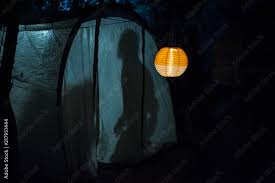
I’d never had any concerns until a couple of months ago when I discovered a tent in the corner of the tunnel. How odd! Once or twice, I’d come across skateboarding teens, but never anyone who seemed to be living there. I couldn’t tell if anyone was inside, cuddled up within canvas. It was zipped shut, and malodourous. I hurried past, hoping it would be gone the next day, but it was still there.
While Japan is a very safe country, bad things sometimes do happen here. There was the guy who dressed up like the Joker and lit a fire on a Tokyo subway on Halloween. There was the woman who killed her neighbors by poisoned curry. Every now and then, some knife-wielding psycho starts slashing strangers in a crowd.
I mentioned the tent to my husband. He thought it was strange, too.
“But there is a camera in the tunnel,” I said.
‘It’s just for show,” he countered. “It’s probably not activated.”
“Maybe I should tell the police,” I said. After I had thought about it, though, I changed my mind. Maybe someone was fleeing an abusive home. Maybe an elderly person who couldn’t make rent was holed up inside. Even though I suspected the worst — some crazed criminal lying in wait — it was possible that there was a perfectly good explanation.
Nevertheless, I avoided going for a walk for the rest of the week. A few days later, I decided that it would probably be safe if I crossed the road instead of going through the tunnel. I set out after dark, as usual, but when I got to the crosswalk before the tunnel, I waited for the light. I saw a patrol car parked on the other side of the road, and two policemen waiting to cross. Maybe I should tell them about the tent, I thought. But I said nothing. We crossed paths without a word.
As I watched them, I realised that they already knew about the situation in the tunnel. That’s where they were headed. I observed as they made their way to the tent and peered at it. I felt sure that everything would be back to normal the next day.
But it wasn’t.
The next time I drove by, I noticed that the tent was still standing. Maybe no one had been inside of it when the police officers dropped by to check it out. Maybe they had left it standing out of consideration for the person who was using it for shelter. Or maybe it was more of a trap, so that they could catch the person when they came back.
At any rate, I was relieved that the police were aware of the tent, and that I no longer had to feel conflicted about whether or not I called them. I continued to cross the road instead of going through the tunnel.
A couple of weeks later, my husband and I had dinner with a friend who often went jogging. She knew about the tent, too, and remarked on how odd it was. No one seemed to know what was going on. I’d heard of out-of-work men sleeping on scraps of cardboard in a Tokyo park, but there were no homeless people in our small town. Not that I knew of, anyway.
Finally, my husband came back from a visit to the shopping mall one evening. He told me that he’d seen a police car and an ambulance near the tent. After that, it was gone. I scanned the local newspaper the next day and watched the evening news, but no one mentioned the tent in the tunnel. Maybe I would never find out what had happened.
I thought of other potentially scandalous events that had never been reported — a preschool teacher knifed by her ex-boyfriend on school grounds, a principal who’d hung himself in his office — and I realised that many things were kept under wraps.
I was reminded not to take my personal safety for granted. It also occurred to me that while people in small towns often complain that everyone knows everyone else’s business, the folks in the small town where I lived were good at keeping each other’s secrets, too.
.
Suzanne Kamatawas born and raised in Grand Haven, Michigan. She now lives in Japan with her husband and two children. Her short stories, essays, articles and book reviews have appeared in over 100 publications. Her work has been nominated for the Pushcart Prize five times, and received a Special Mention in 2006. She is also a two-time winner of the All Nippon Airways/Wingspan Fiction Contest, winner of the Paris Book Festival, and winner of a SCBWI Magazine Merit Award.
PLEASE NOTE: ARTICLES CAN ONLY BE REPRODUCED IN OTHER SITES WITH DUE ACKNOWLEDGEMENT TO BORDERLESS JOURNAL
Many years ago, when my children were small and I was working on my first-to-be-published novel Losing Kei, I joined an online writing group made up of members of the Association of Foreign Wives of Japanese. Since I live off the beaten track, on the island of Shikoku, this group was a godsend for me. Not only was I able to connect with non-Japanese women raising biracial kids in a supposedly homogenous country, but I could also connect with others writing in English.
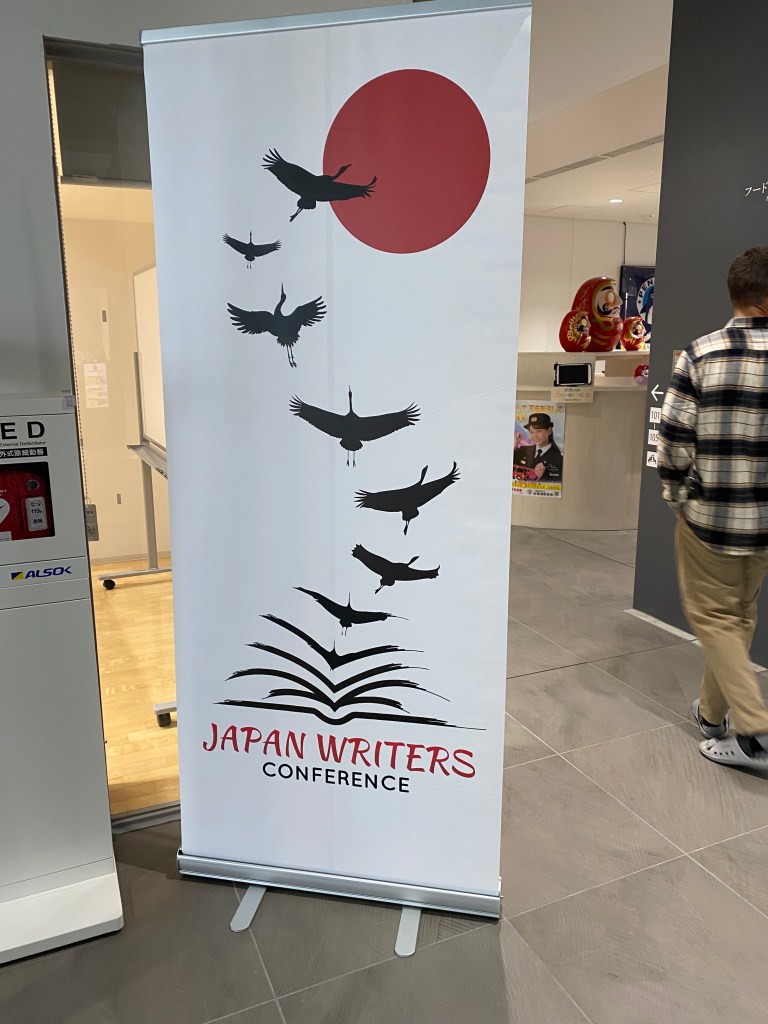
I ultimately finished my novel. I was not the only member of this group who went on to publish books. In addition to writing and publishing, another wonderful thing that came out of this now defunct virtual community was the Japan Writers Conference, which was first held in 2008. One of the members, poet and writer Jane Joritz-Nakagawa, whose most recent book is the searing LUNA (Isobar Press, 2024), proposed a grassroot gathering of writers in Japan. There would be no keynote speaker, no fees for participants, and no payments for presenters. We would just get together and share our writing and our expertise.
Another member, Diane Hawley Nagatomo, who recently published her second novel, Finding Naomi (Black Rose Writing, 2024) after an illustrious career in academia, volunteered to host the initial conference at her university. Chanoyu University, in Tokyo, is famously the institution attached to the kindergarten attended by the Japanese royal family. It was also the site of the first Japan Writers Conference.
Since then, the conference has been held at various universities and colleges around the country, including in Okinawa, Hokkaido, Kyoto, Iwate, and at Tokushima University, hosted by me in 2016. Over the years, many notable speakers have appeared, such as Vikas Swarup, whose novel Q & A became the film Slumdog Millionaire, popular American mystery writer Naomi Hirahara, and Eric Selland, poet and translator of TheNew York Times bestseller The Guest Cat by Takashi Hiraide. The list goes on and on.
This past year, the conference was held not at a university, but at the Futaba Business Incubation and Community Centre.
When I told my husband that I was going to Futaba, he looked it up on a map.
“That’s in the exclusionary zone,” he said, somewhat alarmed.
Indeed, the conference would be held on the coast in Fukushima Prefecture, not too far from the site of the nuclear power plant which was hit by a tsunami in 2011. For years, there have been concerns about radiation, however the area is staging a comeback. The host of this year’s conference would be the Futaba Area Tourism Research Association, an organisation committed to “promoting tourism and land operations, inviting people to rediscover the charms of Fukushima’s coastal areas. The company’s mission is to bring people worldwide to this unique place that has recovered from a nuclear disaster.”
“I don’t think they would hold the conference there if it wasn’t safe,” I told him.
The JWC website reported that although the town had been evacuated after the 2011 Great East Japan Earthquake and the meltdown at the Fukushima Daiichi Nuclear Power Station, evacuation orders had been lifted for about 10% of the town on August 30, 2022. Decontamination efforts are still underway. New homes are being built, new businesses are emerging, and the annual festival Daruma-Ichi resumed in 2023. The areas hosting the JWC had been deemed safe, “with radiation levels regularly monitored and within acceptable limits.” I reserved a room at the on-site ARM Hotel and went ahead with my plans.
Getting to Futaba from my home in Tokushima took all day. I got up before the sun and took a bus, a plane, then a succession of trains. As I got closer to my destination, I noted the absence of buildings along the coast. I tried to imagine the houses that might have been there before the grasses had gone wild. Later, the appearance of earth-moving equipment suggested future development.
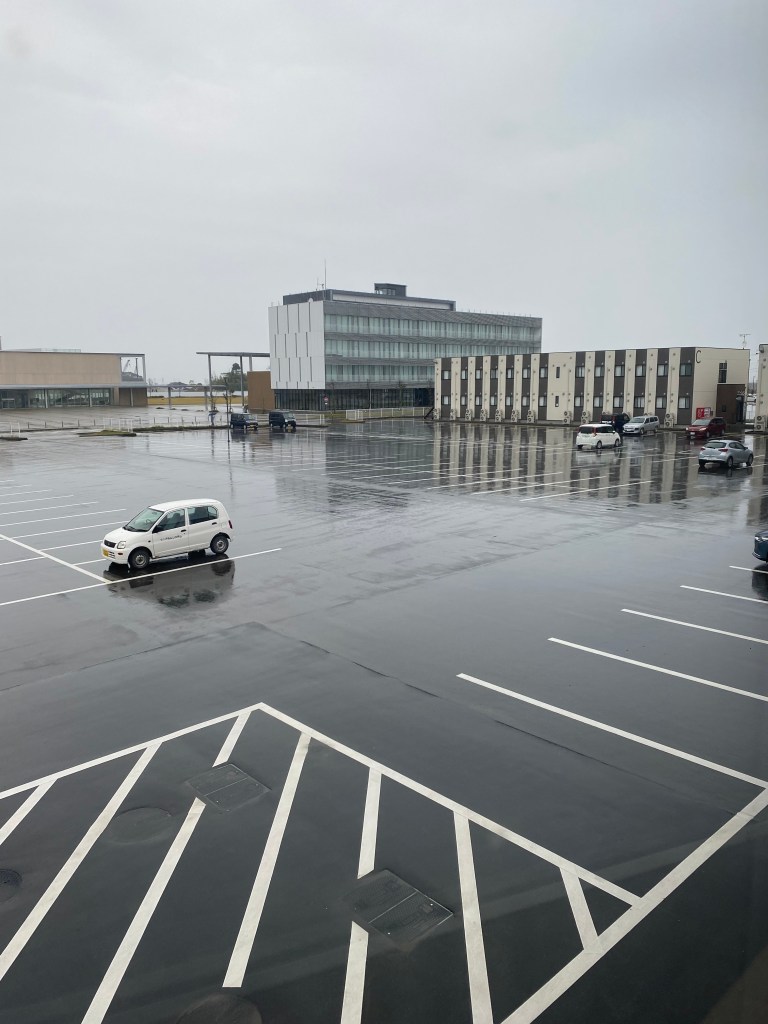
From the nearly deserted train station, I took a bus, and then lugged my suitcase to the hotel’s registration desk. There was nothing around besides the convention center and the hotel. I saw a very tall breakwater, blocking my view of the ocean. I felt as if I were on the edge of the world.
The evening before the conference began, I had dinner at the hotel restaurant, where I met up with some writers I had gotten to know at past conferences. Ordinarily, we might have moved on to a bar to continue our literary discussions, but after the restaurant closed at eight, there was nowhere else to go. There was some talk of going to the beach. A few of us went out into the night and sat on the seawall, sipping Scotch from paper cups, and talking under the stars. At one point, we contemplated the waves below, all those who were washed out to sea and remained missing.
The conference began the following morning. I was amazed that, in spite of the effort that it had taken to get there, presenters had come from all over the world – a Syrian poet who was based in Canada, a poet from Great Britain, a Japanese writer and translator who lived in Germany, a Tunisian writer and motivational speaker who’d flown in from UAE.
I gave a presentation on writing for language learners and shared my haiku in another session. Others presented on a variety of topics including literary correspondence, storytelling and tourism, climate fiction, and writing the zuihitsu[1]. In between sessions, I caught up with old friends and met new ones. On Saturday night, there was a banquet with bentos featuring delicacies such as smoked duck, mushroom rice, and salad with Hokkigai clams.
In retrospect, it was especially meaningful to attend the conference in Futaba, and to feel that we were able to play some small part in the rejuvenation of the area. It was also exciting to interact with writers who came from so far away. Although it’s still very much a grassroots event, it has become truly international.
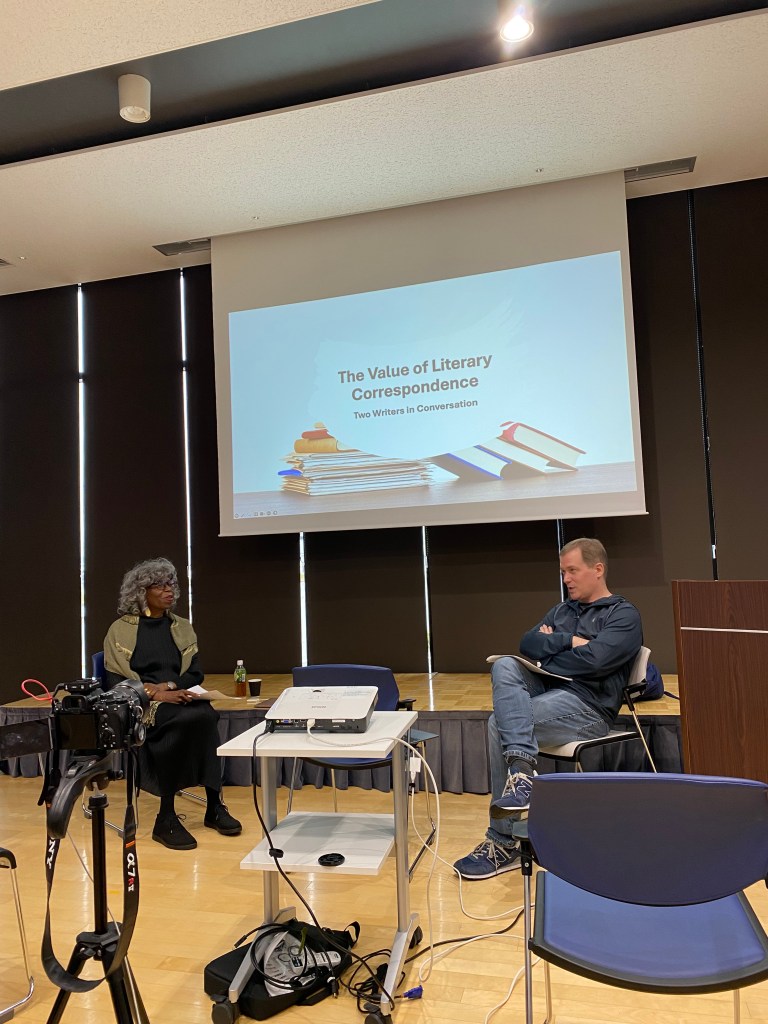
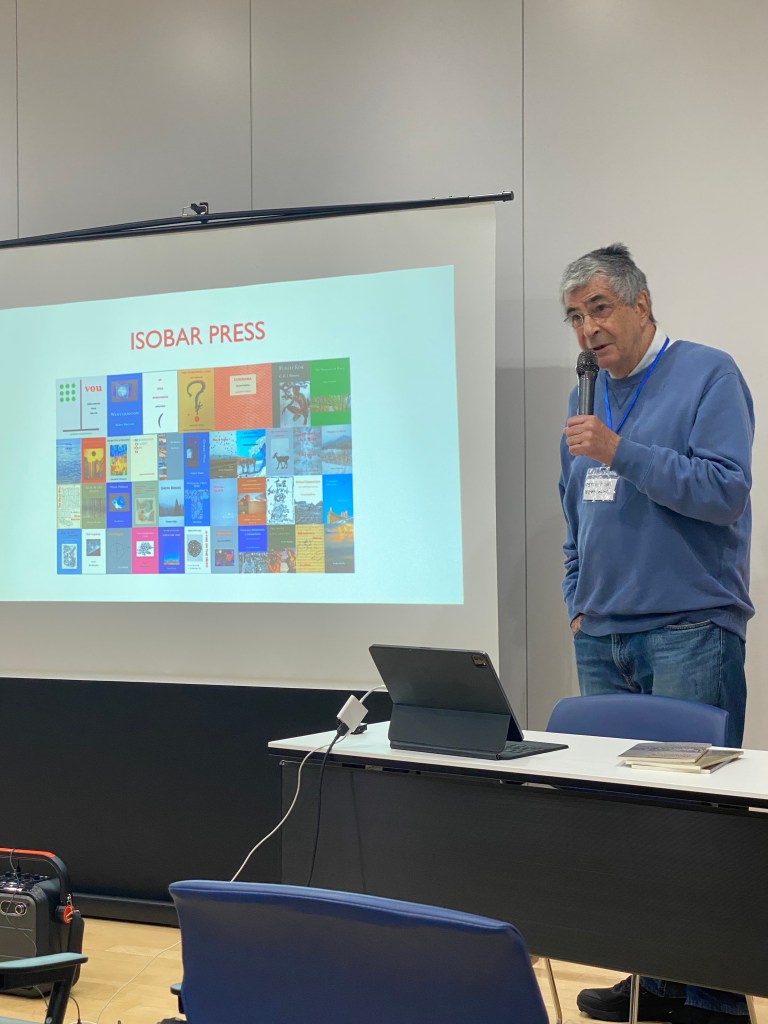
American authors Karen Hill Anton and David Joiner talk about literary correspondencePaul Rossiter, publisher of Isobar Press, introduces new Japan-related titles.
Suzanne Kamatawas born and raised in Grand Haven, Michigan. She now lives in Japan with her husband and two children. Her short stories, essays, articles and book reviews have appeared in over 100 publications. Her work has been nominated for the Pushcart Prize five times, and received a Special Mention in 2006. She is also a two-time winner of the All Nippon Airways/Wingspan Fiction Contest, winner of the Paris Book Festival, and winner of a SCBWI Magazine Merit Award.
PLEASE NOTE: ARTICLES CAN ONLY BE REPRODUCED IN OTHER SITES WITH DUE ACKNOWLEDGEMENT TO BORDERLESS JOURNAL
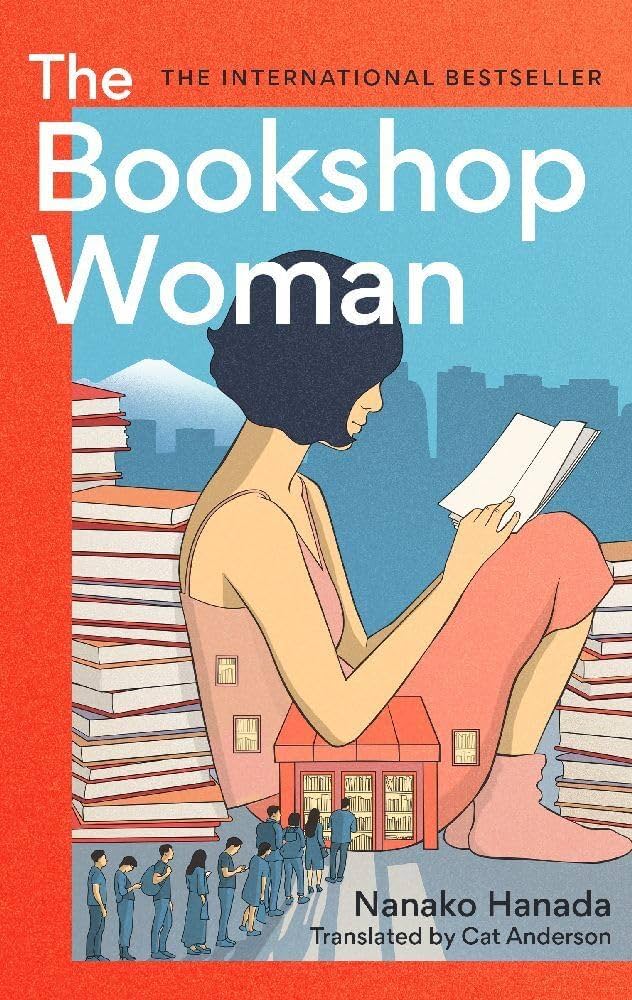
There is a unique charm around books that talk of books and bookstores. Nanako Hanada’s The Bookshop Woman is an honest and touching memoir where she recounts and reflects on real life incidents that transpired in the rock-bottom phase of her life. Seamlessly translated from the Japanese by Cat Anderson, the narrative opens on a certain night in January 2013, with a distraught Nanako sitting listless and dejected in a restaurant at 2 a.m. in Yokohama. She had parted ways with her husband, and moved out of their flat. Living out of a suitcase, she moves through cheap hotels and public bathhouses, like a homeless drifter with an uncertain future.
Nanako is a manager at a branch of Village Vanguard, a bookshop chain. She is depressed with the thought that there’s a lot lacking in her life. However, as we flip through the pages, we see the resilient side of Nanako. She intends to rise above the mess and her depression. She learns to walk with her head held high without feeling sorry for herself. She moves into a cramped apartment near Yokohama station, and also happens to join a new social networking site, the ‘Perfect Strangers’, which provides dating services. She embarks on her ‘Perfect Strangers’ journey with a profile that reads, “I’m the manager of a very unusual bookshop. I have access to huge database of over ten thousand books, and I’ll recommend the one that’s perfect for you.” Although a trivial trend of the modern times, joining this new virtual platform proved a turning point in Nanako’s life.
Through several encounters with random strangers, Nanako discovers a world beyond her broken relationship and self doubt. Meeting new people puts her social skills to test and starts her on a journey of self-discovery. She learns to open up without being over-conscious of herself. In the larger picture, she understands that accepting changes in life is the right way to embrace it. The discussions that Nanako holds with people provide insight into the conditions of the modern day world and human relationships. However, through the eyes of Nanako, Tokyo which “had only felt cold and inhospitable” turns interesting beyond her dreams when she just “tried opening! What freedom there was here!” , and all she wanted to do with this freedom was to introduce more people to new books.
Meanwhile, as the manager of the Village Vanguard, she passionately continues to do her best, innovating with selling strategies and tending to her customers. She gradually learns to “discern what was special about books that perhaps didn’t look so promising at first, and to distil their charm in words”. She talks of the ‘joy of bookselling’ and gives a first-hand account of the challenges of her business. Nanako introduces readers to a host of books through the recommendations she offers during her Perfect Stranger sessions. There is even an appendix in the book that provides more details about these recommendations.
Experimenting with her ideas, Nanako also holds book jam sessions where people come over at a designated spot at an assigned time and share about their favourite books. These book jam sessions humbled her, as she realises that she had hitherto been ‘slightly condescending’ in recommending new books to people. This realisation transforms her outlook immensely.
Weaving through myriads of book suggestions and social meet-ups, Nanako evolves as a person and finds her footing in the real world. Even in the professional sphere she follows her heart and makes changes that resonate with her personal evolution. Her love for books and devotion to bookselling make her empathetic to the extent that she “would inadvertently get a glimpse of something deep in a person’s heart”.
Within a year of that dreary lonesome night in Yokohama, life comes a full circle for Nanako. As a result of her adventures and experiments, she finds peace within herself. Her divorce gets amicably finalised and she even quits the virtual platform to immerse herself in the natural flow of the delightful world she’d discovered — one full of meaningful human connections, friendships, the warmth of books and bookstores. We see Nanako wondering about the day when someone else would pick her books and recommend it to others, triggering an infinite loop– such is the power of books that turns drifters into trendsetters and dreams into reality. The book is indeed a must read to discover this incredible power and reaffirm one’s faith in resilience of human spirit!
Aditi Yadav is an amateur writer from India. She is also a South Asia Speaks fellow (2023). Her works appear in Rain Taxi Review, EKL Review, Usawa Literary Review, Gulmohur Quarterly, Narrow Road Journal, Borderless Journal and the Remnant Archive.
.
PLEASE NOTE: ARTICLES CAN ONLY BE REPRODUCED IN OTHER SITES WITH DUE ACKNOWLEDGEMENT TO BORDERLESS JOURNAL
Book Title: The Long Strider in Jehangir’s Hindustan: In the Footsteps of the Englishman Who Walked From England to India in the Year 1613
Authors: Dom Moraes and Sarayu Srivatsa
Publisher: Speaking Tiger Books
During the years, in the early seventeenth century, when East India Company began a search for the possibilities of trade with India via sea route, Thomas Coryate of the village Odcombe in Somerset, England, made an ambitious plan to travel to the Indies, as he called it, on foot. This wasn’t his first undertaking. Having travelled across Europe on foot before, writing a travelogue Crudities on his experience which brought him some fame, he now wished to travel to a place no Englishmen had gone before. Motivated by the thought of gaining more fame with this venture so as to win the affection of Lady Ann Harcourt of Prince Henry’s Court, even the idea of traversing 5000 miles on foot as compared to 1975 miles that he did in Europe did not dissuade him.
Known as ‘the long strider’, in 1612, Coryate set for his journey to the Indies from London. And in year 1999, more than three hundred years later, his journey and subsequent struggles, somehow inspired Dom Moraes to traverse the same route to correlate Coryate’s experience in the now altered places and its people. Coryate travelled alone, Moraes took the journey with Sarayu Srivatsa, the co-author of this book.
Dom Moraes, poet, novelist and columnist, is seen as a foundational figure in Indian English Literature. He published nearly thirty books in his lifetime. In 1958, at the age of twenty, he won the prestigious Hawthornden Prize for poetry. He was awarded the Sahitya Akademi Award for English in 1994. The Long Strider in Jehangir’s Hindustan was first published in the year 2003. Moraes passed away in 2004.
Sarayu Srivatsa, trained as an architect and city planner at the Madras and Tokyo universities, was a professor of architecture at Bombay University. Her book, Where the Streets Lead, published in 1997 had won the JIIA Award. She also co-authored two books with Dom Moraes: The Long Strider, and Out of God’s Oven (shortlisted for the Kiriyama Prize). Her first novel, The Last Pretence, was longlisted for the Man Asian Literary Prize, and upon its release in the UK (under the title If You Look For Me, I am Not Here), was also included on The Guardian’s Not the Booker Prize longlist.
Srivatsa, who travelled with Moraes to all the places Coryate passed through, writes diary chapters coextending the same routes subsequently. So, each fictive reconstruction of a period and place of Coryate’s travel by Moraes is followed by a diary chapter for the same place by Srivatsa. In that sense the book becomes part biographical fiction and part memoir.
Coryate, son of a Vicar and dwarfish in stature, was seized by this desire to gain fame and respect. What desire seized the imagination of Moraes, eludes this reader. It, however, doesn’t escape the notice that both the writers shared somewhat similar plight towards the end.
Some of Coryate’s writing during the period did not survive as it was destroyed by Richard Steele, but the rest was sent to England and was posthumously published in an anthology in 1625. Basing his research on such sources, after extensive three years of investigation, Moraes managed to create an account of Coryate’s demeanour, his lived life in a new land with diverse people and customs at different places which he found both shocking and fascinating. Coryate found the people of India loud and violent but he was also touched by their generosity and kindness. He witnessed the disagreements between Hindus and Muslims, the caste system where the upper caste oppressed the people from lower caste, sati, and the ways of Buddhist monks, Sikhs, pundits of Benaras and Aghoris[1], the lifestyle of Jehangir and the city of Agra before Taj Mahal. He was fortunate to have an audience with Jehangir, the main reason of his travel, but he failed in securing his patronage or enough money to continue to China which he had been his original intent.
In Moraes’ writing, the era comes alive. Vivid imagery and description makes the struggles and sufferings of Coryate palpable on one hand and on the other offer a view on the unfolding of history in a country where these many hundred years later, the echoes of a past similar to the present can be heard. In the preface, Moraes posits one of the reasons to take on the book — to compare the India then with the country during his times. As the reader proceeds with the story, the comparison becomes apparent in Moraes’ construction vis-a-vis Srivatsa’s entries.
Towards the end, an ailing Coryate succumbed to his illness and his body was buried somewhere near the dock at Surat. He could not make a journey home in 1615, but in 2003 a brick from his supposed tomb was sent back to the church in Odcombe by Srivatsa where a ninety six year old vicar waited patiently for the only famous man from Odcombe to return home. The epilogue by Srivatsa gives an account of Moraes’ own struggle with cancer and his demise in 2004, a year after the book was published. It is but right that the soil from his grave in Mumbai also found a resting place in Odcombe.
Rakhi Dalal writes from a small city in Haryana, India. Her work has appeared in Kitaab, Scroll, Borderless Journal, Nether Quarterly, Aainanagar, Hakara Journal, Bound, Parcham and Usawa Literary Review.
.
PLEASE NOTE: ARTICLES CAN ONLY BE REPRODUCED IN OTHER SITES WITH DUE ACKNOWLEDGEMENT TO BORDERLESS JOURNAL
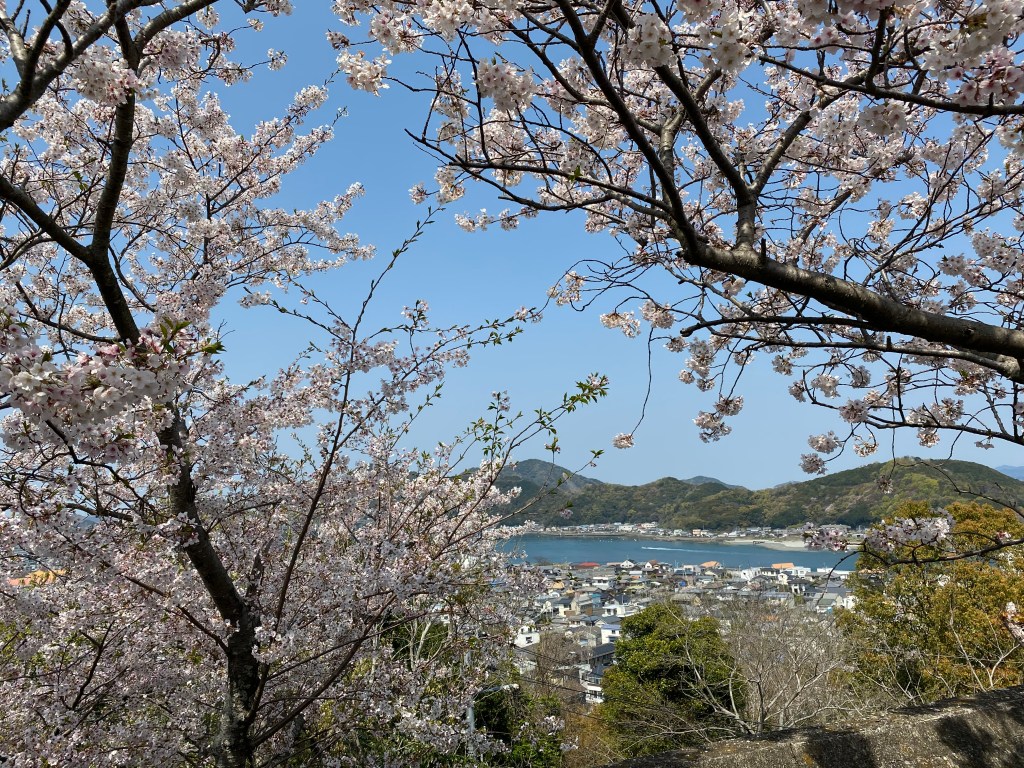
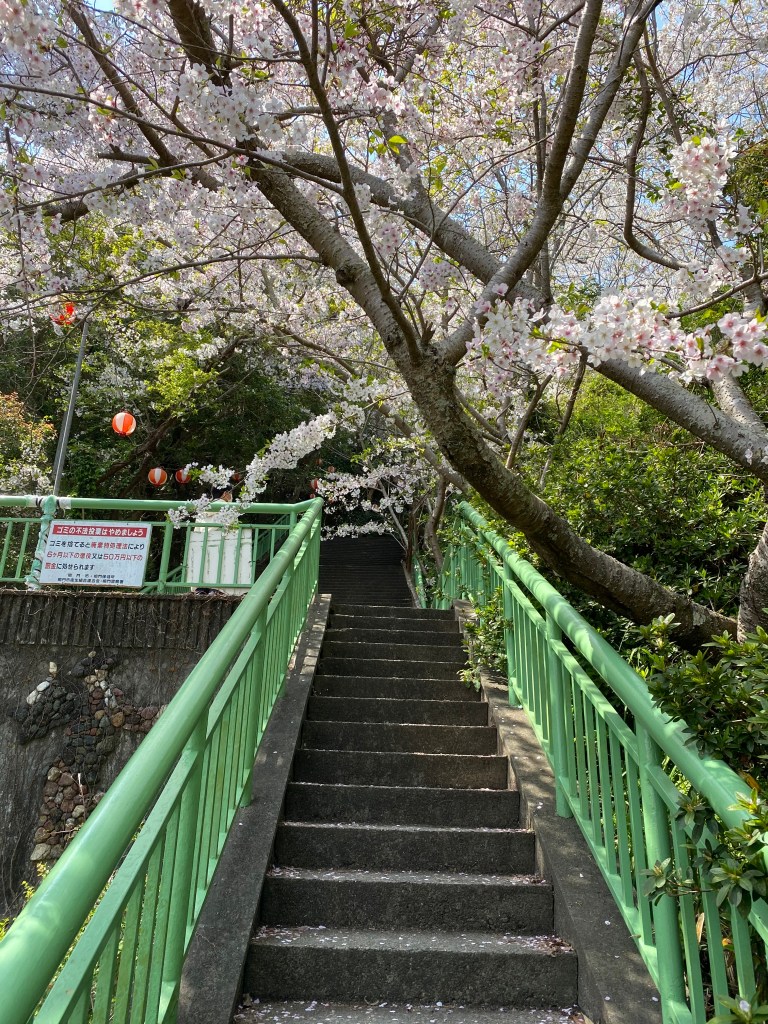
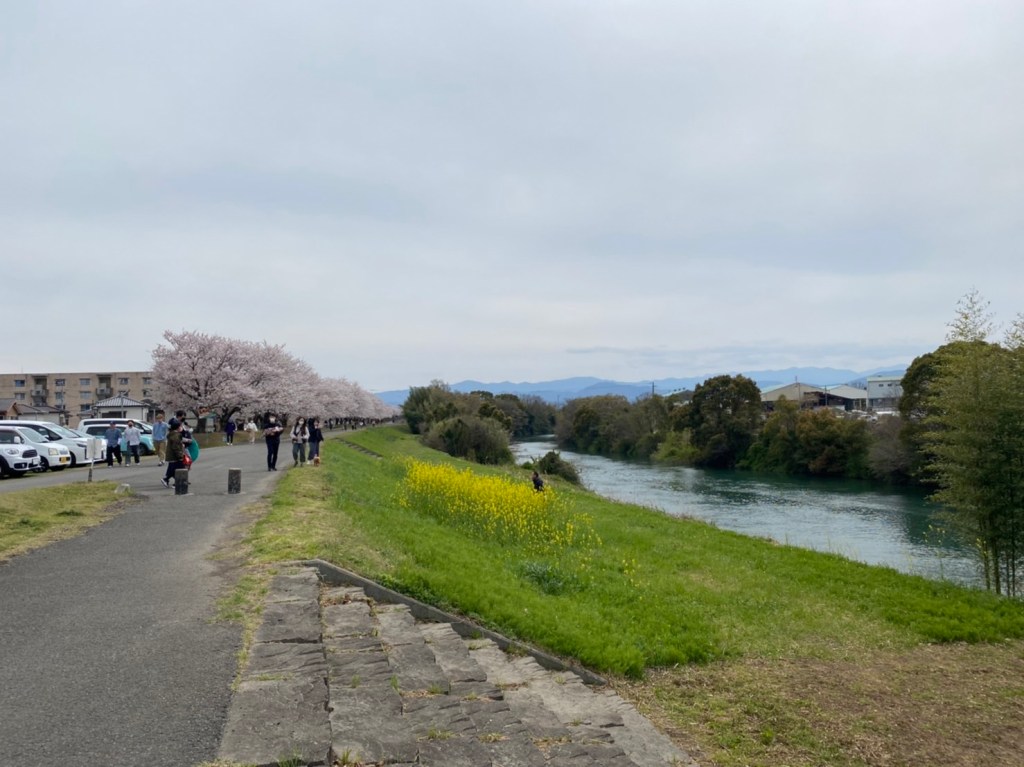
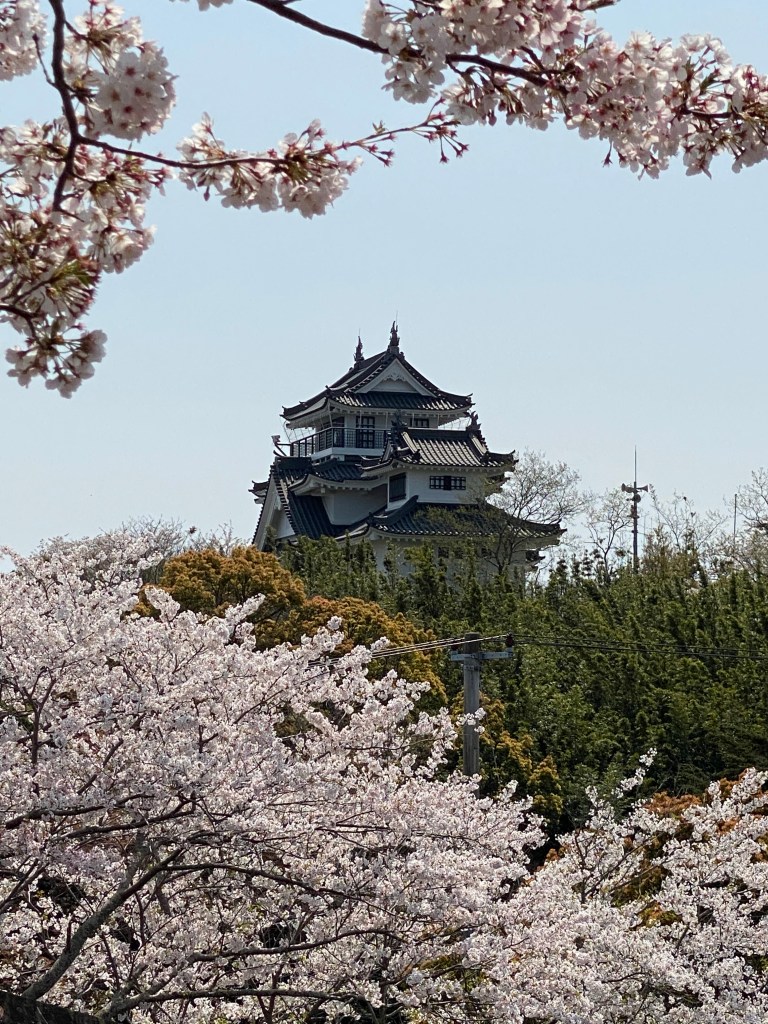
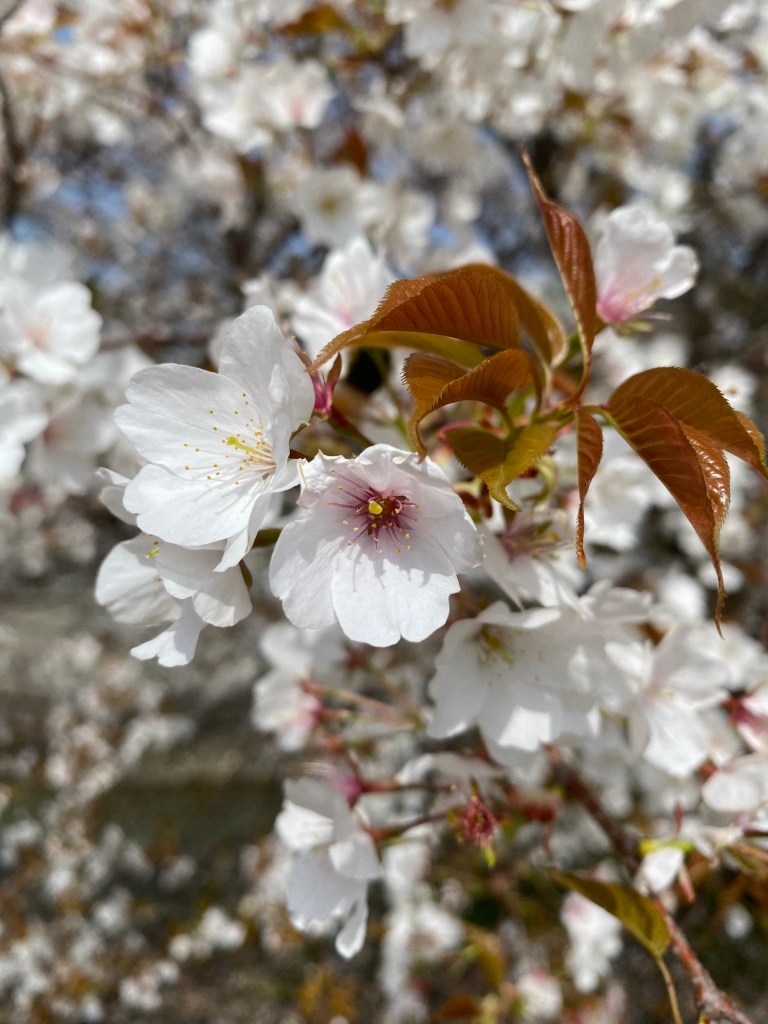
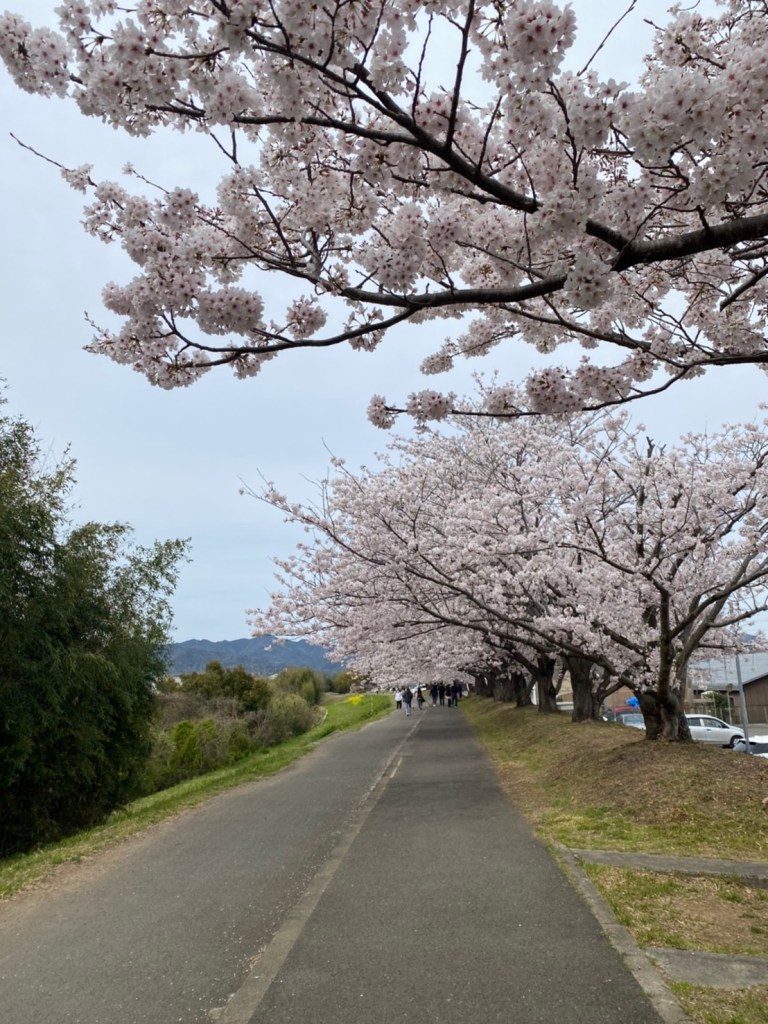
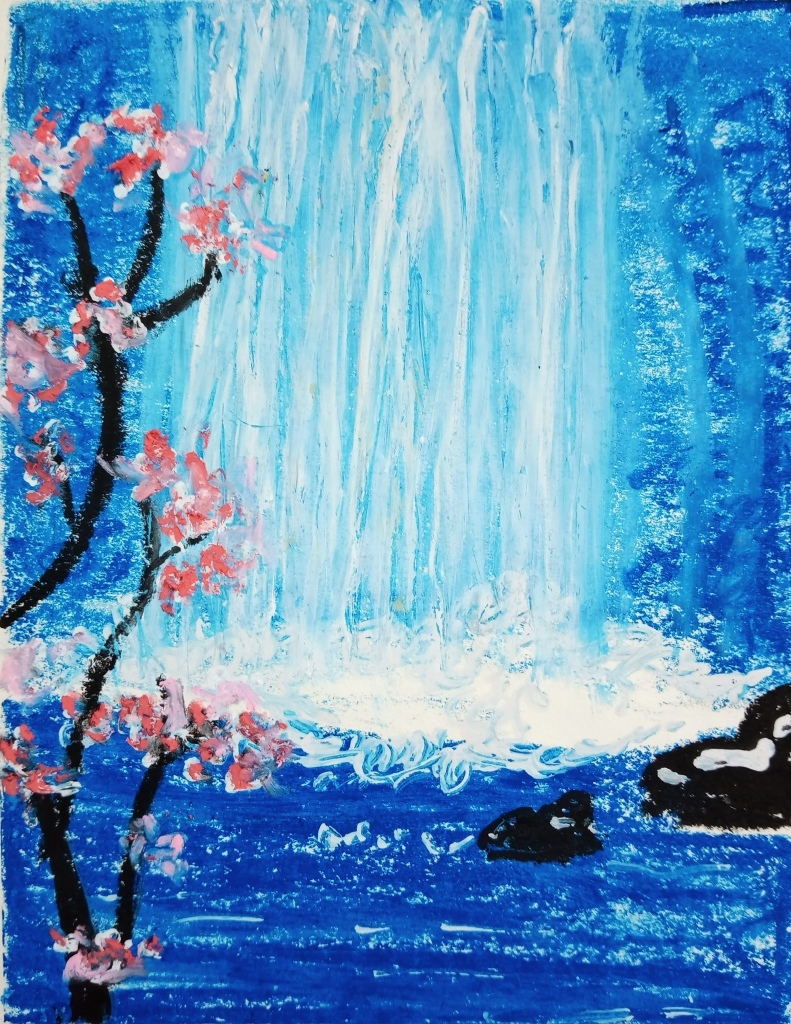
As I write this, the cherry trees on the campus of the university where I work are adorned with deep pink blossoms. There are several varieties of sakura, which bloom at different times. The earliest are the Kawazukura-zakura, which blossom as early as February in some parts of Japan. In a couple of weeks, the more commonly known frothy pale pink flowers of the Somei Yoshino will be seen. Usually, this timed to perfectly coincide with graduation ceremonies, and opening ceremonies welcoming new students. Every speech seems to begin with a mention of the ephemeral blooms.
Another kind, the Shidare-zakura (weeping sakura), is often found in traditional Japanese gardens. There used to be a Shidare-zakura across the street from my house. I enjoyed seeing the flowers, garlands swaying in the breeze, but, unfortunately, the owner of the property cut the tree down
My family and I used to make at least one outing each spring to roam among the cherry blossoms. Now, it’s just my husband and me, but as I previous years, we will probably visit a park or mountainside, transformed into a fairytale landscape, and take selfies while pondering the impermanence of youth and beauty.
Many people will gather on blue tarp spread under boughs to partake of lavish boxed lunches and drink beer. The park surrounding the former grounds of Tokushima Castle will be thronged with merrymakers. During the pandemic, Hanami (cherry-blossom-viewing) was frowned upon. At that time, the park was eerily vacant. I imagine that for many Japanese, not being able to participate in this traditional event was one of the greatest hardships of 2020-22.
In February, TV announcers are newspapers begin to forecast the passage of blossoms across the peninsula. It goes something like this:
In northern Japan, snowflakes flutter and fall. Winter hangs on.
Cherry tree twigs stick out of bare branches like witchy fingers.
Every year meteorologists predict the appearance of cherry blossoms.
How do they know when the buds will release their blooms?
Well, from March, once a day, sometimes twice, someone checks on 58 designated barometer trees. One is near Yasukuni Shrine in Tokyo. Most people don’t know where the rest of the trees are. It’s a secret!
People from all over Japan send in photos of cherry blossom buds. Team cherry blossom examines all the photos and tracks the progress of the trees.
Tightly clenched buds mean it may be another month.
About ten days later, the tips change color – yellow-green.
And then, a deeper darker green, like moss in a forest.
When the tips become pink, get ready for cherry blossom viewing.
After five or six blossoms have appeared, the Meteorological Agency announces the start of the cherry blossom season.
In Kyushu, cherry trees may bloom in March. Gradually, buds open, releasing frothy flowers all the way up to Hokkaido, in a wave of pink and white.
Cherry blossom petals flutter and fall.
Suzanne Kamatawas born and raised in Grand Haven, Michigan. She now lives in Japan with her husband and two children. Her short stories, essays, articles and book reviews have appeared in over 100 publications. Her work has been nominated for the Pushcart Prize five times, and received a Special Mention in 2006. She is also a two-time winner of the All Nippon Airways/Wingspan Fiction Contest, winner of the Paris Book Festival, and winner of a SCBWI Magazine Merit Award.
PLEASE NOTE: ARTICLES CAN ONLY BE REPRODUCED IN OTHER SITES WITH DUE ACKNOWLEDGEMENT TO BORDERLESS JOURNAL
Ratnottama Sengupta talks to Ruchira Gupta, activist for global fight against human trafficking, about her work and introduces her novel, I Kick and I Fly. Click here to read.
The White Lady by Atta Shad has been translated from Balochi by Fazal Baloch. Click here to read.
Sparrows by Ihlwha Choi has been translated from Korean by the poet himself. Click here to read.
Tagore’s Dhoola Mandiror Temple of Dust has been translated from Bengali by Mitali Chakravarty. Click here to read.
Pandies Corner
Songs of Freedom: What are the Options? is an autobiographical narrative by Jyoti Kaur, translated from Hindustani by Lourdes M Supriya. These narrations highlight the ongoing struggle against debilitating rigid boundaries drawn by societal norms, with the support from organisations like Shaktishalini and pandies’. Click here to read.
Ratnottama Sengupta travels back to her childhood wonderland where she witnessed what we regard as Indian film history being created. Click here to read.
Aditi Yadav explores the universal appeal of the translation of a 1937 Japanese novel that recently came to limelight as it’s rendition on the screen won the Golden Globe Best Animated Feature Film award (2024). Click here to read.
Love is a many splendoured thing and takes many forms — that stretches beyond bodily chemistry to a need to love all humankind. There is the love for one’s parents, family, practices one believes in and most of all nurtured among those who write, a love for words. For some, like Tagore, words became akin to breathing. He wrote from a young age. Eventually, an urge to bridge social gaps led him to write poetry that bleeds from the heart for the wellbeing of all humanity. Tagore told a group of writers, musicians, and artists, who were visiting Sriniketan in 1936: “The picture of the helpless village which I saw each day as I sailed past on the river has remained with me and so I have come to make the great initiation here. It is not the work for one, it must involve all. I have invited you today not to discuss my literature nor listen to my poetry. I want you to see for yourself where our society’s real work lies. That is the reason why I am pointing to it over and over again. My reward will be if you can feel for yourself the value of this work.”
And it was perhaps to express this great love of humanity that he had written earlier in his life a poem called Dhoola Mandirthat urges us to rise beyond our differences of faith and find love in serving humankind. In this month, which celebrates love with Valentine’s Day, we have a translation of this poem that is born of his love for all people, Dhoola Mandir. Another poet who writes of his love for humanity and questions religion is Nazrul, two of whose poems have been translated by Niaz Zaman. Exploring love between a parent and children is poetry by Masood Khan translated from Bengali by Fakrul Alam. From the distant frontiers of Balochistan, we have a poem by Atta Shad, translated from Balochi by Fazal Baloch, for a fair lady — this time it is admiration. Ihlwha Choi translates poetry from Korean to express his love for a borderless world through the flight of sparrows.
Suzanne Kamata writes a light-hearted yet meaningful column on the recent Taylor Swift concert in Tokyo. Aditi Yadav takes up the Japanese book on which was based a movie that won the 2024 Golden Globe Best Animated Feature Film Award. Sohana Manzoor journeys to London as Devraj Singh Kalsi with tongue in cheek humour comments on extracurriculars that have so become a necessity for youngsters to get to the right schools. Snigdha Agrawal gives us a slice of nostalgia while recounting the story of a Santhali lady and Keith Lyons expresses his love for peace as he writes in memory of a man who cycled for peace.
In reviews, Somdatta Mandal has explored Tahira Naqvi’s The History Teacher of Lahore: A Novel. Srijato’s AHouse of Rain and Snow, translated from Bengali by Maharghya Chakraborty, has been discussed by Basudhara Roy and Bhaskar Parichha has reviewed Toby Walsh’s Faking It: Artificial Intelligence in a Human World. News and Documentary Emmy Award winner (1996) Ruchira Gupta’s daring novel born of her work among human traffickers, I Kick and I Fly, has been brought to our notice by Sengupta and she converses about the book and beyond with this socially conscious activist, filmmaker and writer. Another humanist, a doctor who served by bridging gaps between patients from underprivileged backgrounds, Dr Ratna Magotra, also conversed about her autobiography,Whispers of the Heart — Not Just a Surgeon: An Autobiography, where she charts her journey which led her to find solutions to take cardiac care to those who did not have the money to afford it,
We have fiction this time from Neeman Sobhan reflecting on how far people will go for the love of their mother tongue to highlight the movement that started on 21st February in 1952 and created Bangladesh in 1971. Our stories are from around the world — Paul Mirabile from France, Ravi Shankar from Malaysia, Sobhan from Bangladesh and Ravi Prakash and Apurba Biswas from India — weaving local flavours and immigrant narratives. Most poignant of all the stories is a real-life narrative under the ‘Songs of Freedom’ series by a young girl, Jyoti Kaur, translated from Hindustani by Lourdes M Supriya. These stories are brought to us in coordination with pandies’ and Shaktishalini, a women’s organisation to enable the abused. Sanjay Kumar, the founder of pandies’ and the author of a most poignant book about healing suffering of children through theatre, Performing, Teaching and Writing Theatre: Exploring Play, writes, “‘Songs of Freedom’ bring stories from women — certainly not victims, not even survivors but fighters against the patriarchal status quo with support from the organisation Shaktishalini.”
While looking forward in hope of finding a world coloured with love and kindness under the blue dome, I would like to thank our fabulous team who always support Borderless Journal with their wonderful work. A huge thanks to all of you from the bottom of my heart. I thank all the writers who make our issues come alive with their creations and readers who savour it to make it worth our while to bring out more issues. I would urge our readers to visit our contents’ page as we have more than mentioned here.
I was already living in Japan when Taylor Swift was born, so she was never part of my American cultural experience. I didn’t hear her songs on the radio, didn’t see her face on the cover of magazines, and because I never clicked on links about her, she never entered my online bubble.
I had a vague awareness that she was a Country and Western singer, but I’d always been more inclined to listen to “alternative” music (Kate Bush, Siouxsie Sioux, Sinead O’Connor, Bjork, and so on).
At some point, my students at a small teacher’s college in Western Japan began to mention her as their favourite singer in their self-introductions. When they asked me what musicians I liked, I struggled to come up with someone they had heard of. Finding a favorite Taylor Swift song seemed like a good way to connect.
I learned a little bit more about her: she enjoys baking and knitting; she loves cats. Every time she visits a city, its economy improves. She gives generous bonuses to the people who work for her and supports LGBTQI rights. She has inspired girls all over the world. She seems like a genuinely nice person.
My son listened to her music, and after he shared one of his playlists with me, I had “We Are Never Ever Getting Back Together” on my phone. I liked it. It was catchy and relatable, easy to sing along to. But I didn’t really become a fan until she released Folklore during the pandemic. A friend whose musical taste I trusted raved about it on Facebook, so I downloaded the album. I listened to it as I drove to my office where I sat alone at my desk all day, uploading material for virtual classes. I became enamored with her storytelling, evident in songs such as “Betty,” about a teenage love triangle, and “The Last Great American Dynasty,” which exudes Great Gatsby vibes.
Last July, I learned that Taylor Swift would be performing four shows in Tokyo. A lottery would determine who would get tickets. I had never been to a big concert in an arena—well, not since I saw the Bee Gees in Detroit, when I was in junior high school, and that was before artists began incorporating mapping and other bells and whistles. I thought it would be fun. An extravaganza. I asked my husband if he wanted to go to a Taylor Swift concert with me.
“There’s no way you’ll be able to get tickets,” he said.
I entered the lottery anyway. Lo and behold, I “won” two tickets for Thursday, February 8, the second of four shows. As the date was months away, I didn’t count on anything. A lot could happen. And it did!
A week before the concert, I got an emergency text from my sister-in-law telling me that my elderly mother had fallen down and broken her hip. She was in the hospital, about to have surgery. The last time something like that had happened (to my father), I had rushed back to America. But my dad told me that everything was under control, and my mother made it through surgery without any complications, so I decided to put off my return home.
Then, three days before the start of the concerts, a rare snowstorm hit Tokyo, shutting down transportation. Since my husband and I live in distant Shikoku, we were planning to take a plane on the day of the show, arriving just a few hours in advance. If the snow continued, we wouldn’t make it.
“It’ll melt,” my husband assured me.
He was right. By Thursday, most of the snow was gone.
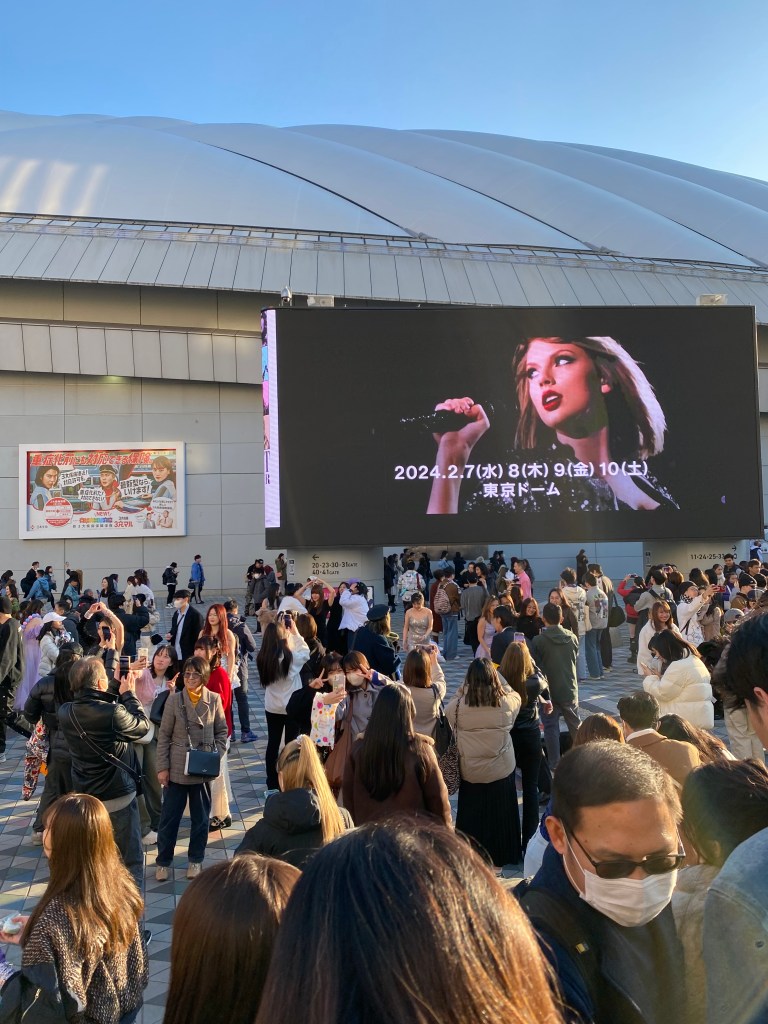
We made it to Haneda Airport, checked into our hotel in Ueno, had some sushi, and took the train to Tokyo Dome. Two hours before start time, a crowd had already gathered. Young women in spangled dresses, tiaras, and cowgirl hats, speaking various languages, posed for photos and exchanged friendship bracelets. Hundreds of people were queued up to buy merchandise related to the Eras Tour. Although my husband and I waited in line for almost an hour, when it became clear that we risked missing the beginning of the performance, we left and went to find our seats, which were high up in the rafters.
Slowly, the seats began to fill. By the time the lights dimmed, the place was packed. The music began, and dancers came onto the stage holding what looked like Japanese fans. Cheers surged. To my left, an earnest young woman, who was apparently attending alone, recorded nearly the entire show on her phone. A white-haired Japanese man, also on his own, sat just in front of me. Several young women in short dresses stood behind us, singing and dancing along to the songs that they knew. Whenever Taylor disappeared for a set or costume change, they would squeal in delight at her reappearance on stage: “Yabai, yabai, yabai[1]!”
For three hours and twenty minutes, as Taylor went through her set of 47 songs, ranging across her career, the arena was filled with joy.
Occasionally, my husband would lean over and ask, “Do you know this one?”
I confess that I didn’t know all of the songs—especially those from her early albums. I danced along anyway.
After the concert, my social media feeds were abuzz with reactions from other friends who had been there, or who’d attended the performance the night before. It felt as we had been part of something huge—and happy.
Meanwhile, back in the United States, rumors were circulating that Taylor Swift was part of some Deep State government plot to re-elect President Joe Biden in November. NFL fans were complaining that she got too much onscreen attention when she attended her boyfriend’s games (to cheer him on). Others slut-shamed her for having had too many boyfriends or attacked her for polluting with her private plane.
I was glad that none of that vitriol had reached Japan.
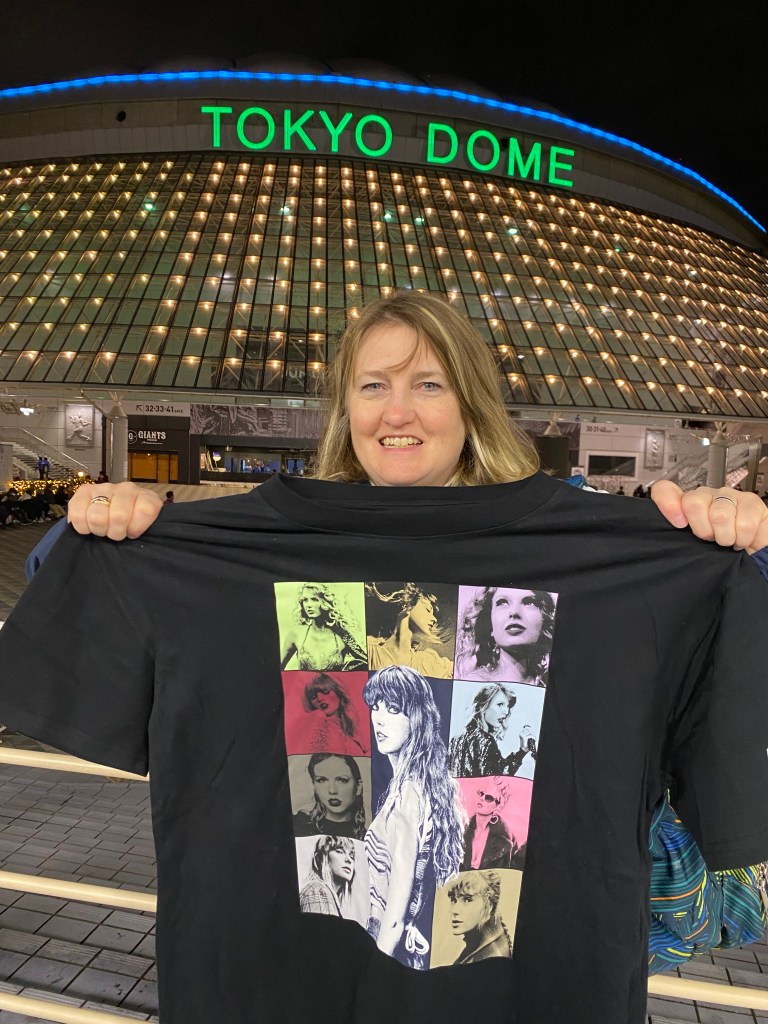
My husband and I went back to Tokyo Dome the next evening, during the concert, to buy T-shirts. At that time, the line for merchandise was blessedly short. We saw people sitting on benches outside the arena, or with their ears pressed to the walls, taking in as much as they could. It was strangely moving.
When I got back home, I downloaded two more of her albums. I’ve been listening to them non-stop ever since.
Suzanne Kamatawas born and raised in Grand Haven, Michigan. She now lives in Japan with her husband and two children. Her short stories, essays, articles and book reviews have appeared in over 100 publications. Her work has been nominated for the Pushcart Prize five times, and received a Special Mention in 2006. She is also a two-time winner of the All Nippon Airways/Wingspan Fiction Contest, winner of the Paris Book Festival, and winner of a SCBWI Magazine Merit Award.
PLEASE NOTE: ARTICLES CAN ONLY BE REPRODUCED IN OTHER SITES WITH DUE ACKNOWLEDGEMENT TO BORDERLESS JOURNAL
It may seem perverse to submit an article advocating the benefits of borders to a journal entitled Borderless. I hasten to explain that I agree with the guiding principle of this publication – that the human spirit should be encouraged to soar, transcending cultural limitations and national boundaries. But I’m also reminded of the observation made by the American poet Robert Frost that high fences make good neighbours.
Borders! It’s one of those words that has developed an almost completely negative connotation in recent years, having taken on the emotive sense of exclusion and unfairness. A second example of this phenomenon is the term patriotism, which now is denigrated for similar reasons. Borders and patriotism refer to values and beliefs valorized in the past that are currently under vigorous attack. Their stock has plunged dramatically in this modern globalised society.
It’s no wonder. We inhabit the age of EDI – equality, diversity, and inclusion. Few voices are raised to question its tenets. Most people seem, for example, unreservedly to believe in multiculturalism as an undisputed good, and love of one’s own country has become a questionable – often dismissed as a deplorable – sentiment.
The present disdain for borders and patriotism is unsurprising. We are witnessing the mass migration of people from one part of the world to others on a scale unseen since the post-1945 refugee crisis, when an estimated 175 million people were on the move, in part because of the defeat of the Axis powers but also because of new civil wars. Nowadays, the US, the UK and Europe are proving particularly attractive destinations for individuals fleeing countries troubled by violence, corruption, poverty, religious persecution, and social discrimination. I would like here to explain why I believe in the benefits of borders while acknowledging their potential demerits.
I think the propensity to erect borders is an essentially human trait, coexistent with human existence. The world’s first walls originated with its first cities – places like Jericho in the Bible, constructed twelve thousand years ago – where Joshua waged his famous battle to bring them down. The ancient cities had walls for defensive purposes. Walls intended to divide countries came much later, with the first instance originating in Mesopotamia in 2000 BC.
David Frye observes in his book Walls: A History of Civilization in Blood and Brick that the idea of constructing barriers to keep people out is as ancient as human civilisation. It is only the people excluded that has changed. In the past, it was invading hordes of armed warriors. Now barriers are erected to control immigration, to keep out terrorists, and to halt the flow of illegal drugs.
In Frye’s opinion, borders originated as a means of creating a safe space where civilization could develop and flourish. Walls gave people the security to sit and think. Frye links the building of the Great Wall of China in the late third century B.C. with the creation of the ancient Chinese state. In Britain, Hadrian’s Wall was constructed around 112 A.D. by the Romans to keep out the ‘barbaric’ tribes in the north while they ‘civilized’ the inhabitants further south.
Borders seem to be coming back into vogue. Donald Trump’s vow to expand and reinforce the Mexico-United States barrier was a crucial component of his successful 2016 presidential campaign platform. But in January 2021, the newly elected president Joe Biden halted construction of what had become known as ‘Trump’s Wall’. Since that date, the southern border of the States has been swamped with illegal migrants, and in July 2022 Biden backtracked, announcing a plan to fill in four gaps in the barrier in Arizona that had seen some of the busiest illegal crossings. Some might argue it’s too little too late. In July 2022, there were reports of four thousand Mexican family encounters at the border; a year later, that number had quadrupled. And that’s only Mexican immigrants. Economic and political turmoil in such countries as Venezuela, Haiti, Ecuador, and Columbia has seen large numbers of people trying to escape to the States: their near neighbor where they seek not only safety but a place where they can aspire and thrive.
Similarly, the EU is in the process of having to reconsider what it once identified as one of its guiding principles: the unrestricted movement of people (in particular, workers) within its twenty-eight EU member states. Countries such as Austria and Denmark have significant percentages of their populations who are opposed to this policy. It has been argued that citizens in richer member states are more likely to have negative views. Until the 2000s, only one percent of EU citizens lived in a country other than the country of their birth. That situation has changed dramatically in recent years with the EU’s enlargement to central and eastern Europe. Now intra-EU migration involves millions of EU nationals who are, in general, their countries’ best and brightest – their most highly educated or highly skilled workers – moving from poorer to richer EU member states. What some EU nationals see as an opportunity, others regard as a threat.
Borders not only keep people out but also keep people in. That is one of their least attractive features. The barbed wire that was the first manifestation of the structure that came to be known as the Berlin Wall appeared almost overnight in August 1961. But this wall had an unusual purpose. It was erected to prevent immigration from East Germany to West Germany when the economy of the former was on the verge of collapse because of the many people fleeing to the west. The Berlin Wall staunched that flow of emigration, leading President Kennedy to observe that ‘A wall is a hell of a lot better than a war’.
Arguably the Korean Demilitarized Zone constructed after 1953, which is 250 kilometers long and five kilometers wide, separating the north and south of what was once a single country, has similarly acted as a deterrent to armed conflict. It has been described as a ‘comfortable wall’ that ensures an ‘uncomfortable peace’. For the North Korean government, it acts as a barrier to invasion from the far more prosperous and less repressive government of South Korea. But it has also trapped millions of people in a state that increasingly resembles a huge prison camp. North Koreans are among the poorest people in the world as well as the least economically free. It is estimated that a tenth of the population died during a famine that lasted from 1995 to 1998. While a thousand escape the country every year, many are imprisoned, tortured, and even killed while making the attempt. But they are willing to brave the danger, reluctant to remain in a country where they are systematically denied any civil, religious, or political rights.
Borders are not limited to the demarcation of cities and countries. Physical structures indicating property limits are a fact of everyday life for people throughout the world. In my native America, fences are a prominent feature, indicating boundaries for houses and fields. In Japan, where I lived for many years, the traditional family compound – including farmhouse and storehouse and courtyard – is enclosed within clay walls. In the corner of northwest England where I am currently residing, the countryside of rolling green hills is crisscrossed by dry stone walls and hedges. Hedges in Britain have their origins in the Bronze Age (2500-700 BC), when they were used to manage cattle and to keep them separate from crops. There is speculation that some hedges of sufficient age, density and size may even have once served as military defenses. But while their first function was to act as barriers, they now serve an important role in the environment, as the preserve of insects and wildlife, including sixty species of nesting birds.
A house itself represents a kind of delimitation: a declaration of private space as opposed even to the yard or garden, which are semi-public. Americans tend to be house-proud, their dwellings often boasting large picture windows that afford a view to passers-by of the carefully decorated front room. Japanese, on the other hand, are sometimes ashamed of inhabiting a cramped small house sometimes separated only by a matter of inches from their neighbours’ homes on either side, and they tend to use opaque rather than clear windows to preserve their privacy. Even the big traditional Japanese farmhouse is somehow secretive – bearded in heavy shrubbery, stooping under the weight of a heavy tiled roof. Of course, there are many types of houses in Britain, but I happen to live in one of the most common – a terraced house with a tiny garden out front and a cement yard at the back. My bay window looking out onto the street has its lower half shrouded in a thin net curtain. When I stand nearby, I can look out at my domain – my little plot of earth densely planted with bushes, flowers, and shrubs.
Living in the UK, I’m often reminded of the saying ‘An Englishman’s house is his castle’. The typical British home has an emphasis on the cozy and comfortable, and while few still have coal fires, many retain the old fireplaces as a decorative feature. Alas, nowadays, many British people pave over their little front gardens to use the space for parking. But traveling by train affords wonderful views of long strips of narrow gardens backing on to the tracks, and I sometimes think their owners are like public benefactors, entertaining us with the sight of their patios and pergolas, their beds of flowers and rose trellises as we speed to our destinations.
The observant reader may have noticed that I have begun this short essay on borders by examining those surrounding countries and cities, and then continuing with an ever-narrowing perspective. I would like to conclude by looking at the barriers we put up between ourselves and others.
As I noted at the beginning of this piece, the American poet Robert Frost wrote a poem eulogising high fences for ensuring good relations with our neighbors. Because the States is a relatively new country – and one of considerable size – many Americans can enjoy the luxury of living in houses surrounded by a good deal of land. Driving through any suburb you can see large expanses of grassy lawn separating the house, often a ranch-style dwelling, from the road. In that sense, Frost’s high fences aren’t needed. Unlike the Japanese, crammed into close quarters with each other, or Europeans, fond of renting flats, Americans are used to having their own space. The pioneer spirit lingers on with a focus on rugged individualism.
This can be a curse as well as a blessing. There have been shocking instances in recent years of abducted American women and children spending years as captives in houses so remote or so barricaded against the outside world that their kidnappers could act with near impunity.
Such a situation is unimaginable in Japan. Many Japanese, and especially those in Japan’s cities, live in what they call ‘mansions’ – huge buildings with apartments the inhabitants own rather than rent. Few secrets can be kept in such an environment. In towns and rural areas, the strong emphasis on community activities means that there is constant interaction between households.
While many Americans like to preserve a physical distance from others, the Japanese have developed ways to preserve their privacy in public places as a sort of psychic skill. During my long residence in Japan, I often marveled at how the Japanese can make a virtue of necessity, and this is a case in point. On packed trains, the Japanese self-isolate by reading or dozing or using their phones. In dense crowds in cities, they manage to retain personal space by skillfully skirting each other, scarcely touching, as they walk. Whenever I find myself in one of the huge subway stations in Tokyo or Osaka, I occasionally pause to marvel at what looks like a carefully choreographed dance. Throngs of well-dressed people silently rush past me. They are dignified, intent on their own business, and no confusion or chaos is perceptible. Despite the closest proximity imaginable to each other, they somehow manage to preserve their own personal borders.
The situation in the UK is between those two extremes. Despite inhabiting one of the most densely populated countries in Europe, the British can enjoy incomparable scenery preserved as so-called ‘green belt’ areas around cities as well as landscapes protected by their designation as national parks or as areas of outstanding natural beauty. Unsurprisingly, the British are great walkers. As an American, I’ve had to learn that when a friend suggests a stroll, it can easily mean a four or five-mile hike. The British can escape to the great outdoors when they feel a need to be alone.
There are those who dismiss national stereotypes as nonsense, but I’m inclined to credit them with at least a grain of truth. I think, for example, there are affinities between the Japanese and the British that are perhaps attributable to their both inhabiting island nations and being, as a result, insular. They are bad at learning other languages. They are traditionally characterised by a certain reserve – lacking, for example, the American fondness for confessing details of their private lives to complete strangers.
Borders. Patriotism. The two are connected. It is often said that those who do not learn from the mistakes of the past are doomed to repeat them. The lesson we might be tempted to draw from the bloody history of the twentieth century is that nationalism is reprehensible and that borders can lead to wars.
But I prefer to draw another moral. It can be argued that the world was plunged into two world wars because evil, opportunistic leaders like Hitler chose not to respect national borders while also twisting patriotism felt by Germans and Austrians into a perverted version of what is a normal human impulse to love one’s own country. As I write this piece, I can’t help but think of how topical it is, with the tragedy unfolding in the Middle East which concerns borders and contested land. I pray a just settlement can be reached and peace achieved as soon as possible.
Finally, I believe we all resort to a variety of measures to define ourselves. We are individuals; we are residents of a certain neighborhood; we are citizens of a particular country. I believe that it is by respecting each other’s borders – personal and public – that we can achieve the ideal of living together on this crowded globe in harmony. Public borders – such as the political boundaries of our own country – can inspire altruism by leading us to identify with an entity greater than ourselves. Private borders – those parameters for conduct and behavior we draw for ourselves, in our daily lives – can confer peace and a sense of individual self.
Wendy Jones Nakanishi has published widely on English and Japanese literature and, under her pen name of Lea O’Harra, has written four crime fiction novels available on Amazon.
PLEASE NOTE: ARTICLES CAN ONLY BE REPRODUCED IN OTHER SITES WITH DUE ACKNOWLEDGEMENT TO BORDERLESS JOURNAL
Can anyone say for sure, when Japan and Kerala or, for that matter, Japanese and Malayalam languages, came into contact for the first time? No, it is all buried in the chronicles of yore! This is so, in spite of the legendary Bodhidharma travelling from somewhere in the South-West part of India (Kerala?) to China on its way to Japan in AD 520, albeit still disputed!
With the arrival of the Portuguese in Southern Japan from Cochin(?) during AD 1543, there was obviously a possibility of Malayalee priests or laymen including ‘horse trainers’ and cooks, reaching Japan along with Portuguese navigators. But records of such visits are yet to be made public, being either in Portuguese, Chinese or Japanese archives.
However, according to Takako Mulloor, a daughter-in-law from Japan living in Kerala for the past half a century, such obscurities need not always be the case. She remembers the story of four Japanese youths who happened to visit Quilon and from there to North Kerala, sometime during the reign of Ōtomo Sōrin (1530-1587).
Sorin was one of the few feudal lords of Japan (Daimyo), to embrace Catholicism under the influence of Portuguese missionaries. Originally known as ‘Fujiwara-no-Yoshishige’, he was very powerful at the time, ruling most of Japan. Apparently, he thought it apt to ascertain the ‘truth’ behind the new religion that was spreading fast in his domain. Thus, he is said to have deputed four Japanese youths to Rome and Europe – a new world — to meet the Holy Pope and report back to him.
These youths, after completing their mission successfully, landed in Quilon, on their return voyage. Quilon was a flourishing port of that period. Due to some unknown reasons, they proceeded further north towards Cochin by local crafts, called ‘Kettuvalloms’. Unfortunately, one of them caught malaria and died somewhere on the way and was buried.
According to personal communication from Takako, such records are available with the NHK ( Nippon Hōsō Kyōkai) Brodcasting Corporation of Japan. She remembered that a TV team from NHK had visited Kerala sometime in 1979-80, to make a documentary on these youths and to locate the grave of the one who had lost his life. Takako was their interpreter on this mission, being fluent in Malayalam, Japanese and English.
While I was in Japan from 1965 to 1969, very little information was available in Kerala about Japan. Prior to leaving India, except for some writings by the renowned author MT Vasudevan Nair, the knowledge of Japanese language or culture was scanty.
On joining Osaka University of Foreign Languages (Ōsaka Gaidai), I was fascinated by the general manners of people in and out of the university. They were always kind, polite and willing to help especially students and others from abroad.
Despite having an advanced ‘Language Laboratory’ and excellent faculty, my language proficiency was mostly strengthened by the people on the street or in the villages of the Osaka suburbs. From the very beginning, I was also struck with an inexplicable quality in their language, with its unaccented delivery and melodious intonations that always reminded me nostalgically, of Malayalam!
Amazingly, both these languages were similar in several respects such as the order of alphabets, vowels and structure of sentences that usually didn’t end in a consonant.
We foreign students had to learn some special topics namely ‘Things Japanese’ that included Flower arrangement (Ikebana); Japanese theatre traditions Kabuki, Bunraku and the oral Rakugo and so on. In general, most of them including folk arts, proverbs, and day to day practices, reminded me of the village life in Kerala.
For instance, ‘banishing’ evil spirits from home was just the same as practiced in villages here. Above all, I could also recognise a few Japanese words more or less similar in meaning and pronunciation, synonymous with Malayalam!
That was when the idea of a Japanese-Malayalam Dictionary germinated in me. But, back in Tokyo University after completing six months’ language course, my attention was mainly focused on research, to earn a doctorate. Still, I was able to hone my Japanese speaking skills by constant interaction with the local people who were always enthusiastic about teaching foreigners, their language.
During the second year in Tokyo, unexpectedly one day, the Indian Embassy in Tokyo called me to enquire if I could teach a few senior Japanese government officials, Malayalam.
Didactic skill being not my forte with Malayalam, my first response was a polite ‘no’, despite the attractive remuneration offered. But the potential pupils would not be dissuaded. Thus started my part-time job as ‘Malayalam Teacher’, in Tokyo. Nearly three years of teaching came to an end on my completing my doctoral research, so as to return home.
Contacts with my erstwhile students were soon reduced to almost nil. One exception was an exchange of communication with a Shyoichi Itoh, who retained his interest in Malayalam as also Kerala. Occasionally, he used to write to me in Malayalam to my great delight, for comments and correction. He had also written some articles on Kerala in Japanese journals, on topics of interest to Japanese readers, based on his experience.
The unique Writers’ Co-operative of Kerala (SPCS) was one of such topics covered. Similarly, at my request and as suggested by the editor M T Vasudevan Nair, he wrote an article for the Malayalam weekly, Mathrubhoomi, focusing on the ritual suicide of the famous Japanese writer Yukio Mishima, in 1970. He had also written a guide book for Japanese students interested in learning Malayalam entitled ‘Malayalam for Beginners’.
Subsequently in 1974, Itoh made a surprise visit to me in Poona where I was working at the time. In fact, he came with the happy news of joining The Tokyo University of Foreign Studies (TUFS) as Professor and Head of the Department of Malayalam. That was a deserving recognition of his dedication to the study of Malayalam. His Malayalam for Beginners is still in use in the University and elsewhere.
My last meeting with Prof. Itoh was during early 1982, when he visited my official residence in Tokyo, with his dear daughter. At that time, I was on a government of India assignment (1981-’85), renewing old contacts as well.
Sadly, Prof. Itoh passed away rather prematurely, in 1998.
After taking superannuation from my employer — an international organisation at that time – at the beginning of the current millennium, I settled down in Cochin, India. Still, the dictionary dream was alive and efforts for bringing Japanese and Malayalam closer, was always a passion!
During the early nineties, despite being immersed in professional activities, I had undertaken the translation of Nobel Laureate Yasunari Kawabata’s [1]novel, Yama no Oto or ‘Sound of the Mountain’ (1971) directly from Japanese to Malayalam as Malayute Shabdam.
Published by Current Books (Trissur) in 1994, the translation was well received by Malayalee readers, resulting in more editions. Considering the fact that such translations are usually based on the English version due to language constrains, my work, directly from the original Japanese, is thought to be the first of its kind, in Malayalam.
However, the dictionary project could not be taken up immediately even after retirement, due to personal preoccupations. Ultimately, work on this long-awaited project was started in 2002, two years after retirement, in right earnest.
An old dictionary of Japanese-English-Japanese format, brought along from my ‘student’ days in Osaka was used as the first reference source. Published in 1950 by the Obunsha Company of Tokyo, it was the only one available for me at that juncture.
Following untiring work, the first draft was ready in two years. It was prepared in the Japanese-English-Malayalam format covering some 2000 foolscap pages and nearly a hundred thousand head-words. The meaning of each word and phrase was given in English and Malayalam with Japanese pronunciation in Malayalam fonts. The entire manuscript was compiled in long hand, without using a typewriter or computer!
Thereafter, attempts to get a competent publisher in Kerala was futile mainly due to the non-availability of Japanese fonts for printing. As a final solution, it was felt necessary to obtain fonts from Japan. However, the impasse was broken finally when my old friend and great historian Prof (Dr.) M.G.S. Narayanan introduced Toshie Awaya, a faculty member of the TUFS, as a conduit for assistance from that university.
While discussing various possibilities with Awaya, it was a pleasant surprise to know that late Prof. Itoh, my ‘old student’, used to be her Malayalam Professor!
Subsequently, on visiting Japan with my wife, a meeting was arranged with the late Indologist and renowned historian, Prof. Noboru Karashima, whom I knew during Tokyo University days. He was living in Kamakura, and Awaye took us to his very impressive residence for discussion.
On that occasion, as he suggested, it was decided we meet Prof. Jun Takashima and Prof. Makoto Minegishi engaged in dictionary-related research, in TUFS. They were attached to the Institute of Languages and Cultures of Asia and Africa (ILCAA). Established in 1964 within TUFS, this institute was engaged in promoting academic exchanges between Japan and other Asian-African nations, having been recognised as competent to carry out that task.
The two Professors during a meeting that ensued in the Institute, were amazed to see the sample manuscript of the dictionary that was shown to them. Firstly, use of ‘long hand’ instead of typing or computer printing, seemed out of this world to them.
Another fact, of more importance, was that the dictionary used as reference source material was outdated. It was pointed out that in view of the fast-evolving nature of languages with the addition of new words incessantly, the earlier work had become redundant.
While agreeing to discard the manuscript, we decided to start afresh using a latest dictionary as source to digitalise the new version with the help of a software developed by Prof. Takashima! It was also agreed that the manuscript thus produced with my data would be arranged in a ‘camera-ready’ copy at the ILCAA, that could be suitably published in Kerala.
After several exchanges of visits from India to Japan and Japan to India followed by umpteen number of corrections and revisions, the promised ‘final’ product was ready by the end of 2018.
Then, it was a matter of finding a qualified publisher. The Kerala State Institute of Languages, Thiruvananthapuram, that readily agreed, was found to be the most appropriate one to accomplish that task, in an excellent manner.
The formal release of the beautifully printed and bound Japanese-Malayalam Dictionary of some 1500 pages was formally carried out in the presence of the ILCAA Professors, by Kerala State Cultural Minister A.K. Balan. Hideki Asari, Minister and Dy. Chief of Mission, Japanese Embassy, New Delhi and several other dignitaries were present on the occasion in Thiruvananthapuram on March 8, 2019.
With such a happy finale of a hard work put in during some sixteen years of my post-retirement years, the dictionary may represent a milestone in the annals of Japanese-Malayalam affinities.
During the half a century that elapsed from the time of my first landing in Japan and the release of the dictionary, major changes are manifested in the ethos of Japan-Kerala interactions. Exchange of visits by artists, academics, writers and common people, resulted in the publication of several travelogues, translations, studies, and so forth enabling people of these two parts of the world to come closer, as I dreamt in the 1960s.
Several literary works from Japanese were translated into Malayalam by eminent writers from Kerala including M.K. Menon (Vilasini), K. Kunhikrishnan and others! General studies were also published about Japan, in Malayalam. An in-depth study of Kerala-Japan cultural relations is available in the remarkable book, ‘The Throne of Chrysanthemums’ by the gifted writer and artist, K. Asok Kumar.
In addition to such developments, many professionals from Kerala are now finding gainful employment in Japan, something unheard of a few years back.
In conclusion, it has to be emphasised that the age-old affinity between Japanese and Malayalam needs to be studied afresh by our linguists and historians, in the light of significant evidence emerging from various new studies.
When Rev.(Dr.) Robert Caldwell (1814-1891) postulated the theory of possible origin of Japanese and Tamil languages from the same root, there was no mention of Malayalam, in particular. So also Japanese professors – Akira Fujiwara (1981) and Susumu Ohno (2007) — who revived that hypothesis recently, were also not referring to the Malayalam connection.
Meanwhile, some of our erudite linguists such as Prof. Naduvattom Gopala Krishnan, were able to prove the ancient origin of Malayalam, from the same root as modern Tamil, proving eligibility of both these languages to be included in the ‘Classical Languages’ category, already accepted officially.
According to Prof Gopala Krishnan, the very fact that some ‘Malayalam only’ words were identified in ‘Sangam Literature’ of 300 BCE- 300 ACE, reaffirms its classical position. Even epigraphical evidence from the Edakkal Caves of Wayanad (Malabar), that go back to 6000 BCE, are said to be supportive of ancient origin of Malayalam, together with Tamil.
As such, there is an urgent need for a relook into our perspective of the gamut of Japanese-Malayalam affinities!
[1] Yasunari Kawabata (1899-1972) was the first Japanese to win a Nobel prize in 1968
Dr. KPP Nambiar, formerly a Consultant/Technocrat at the UN Food and Agriculture Organisation, is the author of many scientific papers and books, including a 1500-page Japanese-Malayalam dictionary.
PLEASE NOTE: ARTICLES CAN ONLY BE REPRODUCED IN OTHER SITES WITH DUE ACKNOWLEDGEMENT TO BORDERLESS JOURNAL.