Categories
Celebrating Humanity

Can Old Acquaintances be Forgot…

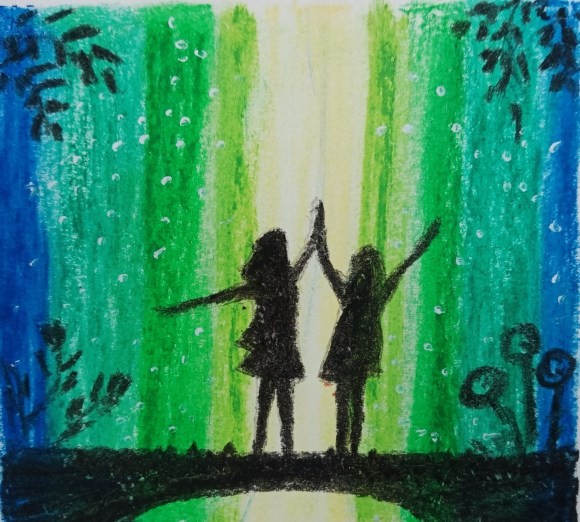
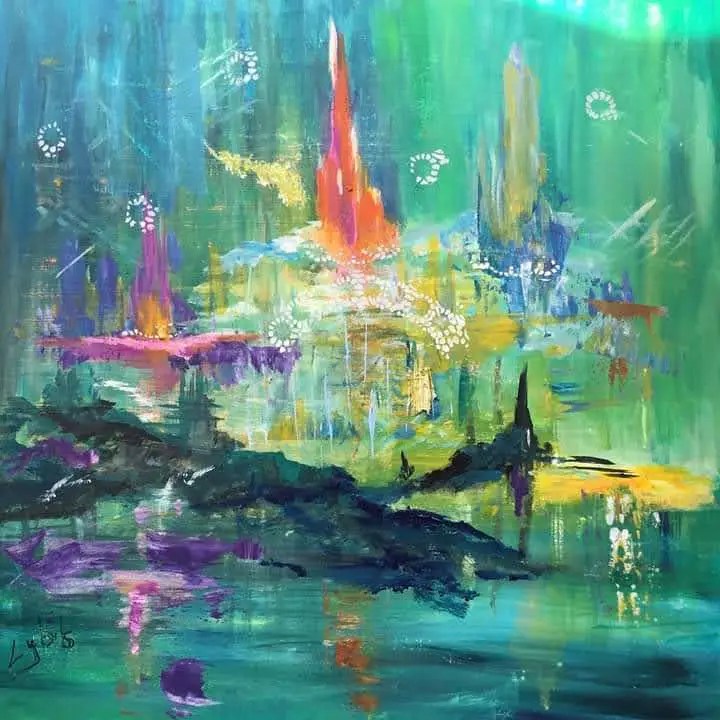
Our January 2025 Cover: Art by Sohana Manzoor

It has been a strange year for all of us. Amidst the chaos, bloodshed and climate disasters, Borderless Journal seems to be finding a footing in an orphaned world, connecting with writers who transcend borders and readers who delight in a universe knit with the variety and vibrancy of humanity. Like colours of a rainbow, the differences harmonise into an aubade, dawning a world with the most endearing of human traits, hope.

A short round up of this year starts with another new area of focus — a section with writings on environment and climate. Also, we are delighted to add we now host writers from more than forty countries. In October, we were surprised to see Borderless Journal listed on Duotrope and we have had a number of republications with acknowledgement — the last request was signed off this week for a republication of Ihlwha Choi’s poem in an anthology by Hatchette US. We have had many republications with due acknowledgment in India, Bangladesh, Pakistan and UK too among other places. Our team has been active too not just with words and art but also with more publications from Borderless. Rhys Hughes, who had a play performed to a full house in Wales recently, brought out a whole book of his photo-poems from Borderless. Bhaskar Parichha has started an initiative towards another new anthology from our content — Odia poets translated by Snehaprava Das. We are privileged to have all of you — contributors and readers — on board. And now, we invite you to savour some of our fare published in Borderless from January 2025 to December 2025. These are pieces that embody the spirit of a world beyond borders… 

Poetry

Click on the names to read the poems

Arshi, Luis Cuauhtémoc Berriozábal, Snehaprava Das, Ron Pickett, Nziku Ann, Onkar Sharma, Harry Ricketts, Ashok Suri, Heath Brougher, Momina Raza, George Freek, Snigdha Agrawal, Stuart Macfarlane, Gazala Khan , Lizzie Packer, Rakhi Dalal, Jenny Middleton, Afsar Mohammad, Ryan Quinn Flanagan, Rhys Hughes

Translated Poetry

The Lost Mantras, Malay poems written and translated by Isa Kamari

The Dragonfly, a Korean poem written and translated by Ihlwha Choi

Ramakanta Rath’s Sri Radha, translated from Odiya by the late poet himself.

Identity by Munir Momin, translated from Balochi by Fazal Baloch

Found in Translation: Bipin Nayak’s Poetry, translated from Odiya by Snehaprava Das.

For Sanjay Kumar: To Sir — with Love by Tanvir , written for the late founder of pandies’ theatre, and translated from Hindustani by Lourdes M Surpiya.

Therefore: A Poem by Sukanta Bhattacharya, translated from Bengali by Kiriti Sengupta.

Poetry of Jibanananda Das, translated from Bengali by Fakrul Alam.

Tagore’s Pochishe Boisakh Cholechhe (The twenty fifth of Boisakh draws close…) translated from Bengali by Mitali Chakravarty. 

Fiction

An excerpt from Tagore’s long play, Roktokorobi or Red Oleanders, has been translated by Professor Fakrul Alam. Click here to read.

Ajit Cour’s short story, Nandu, has been translated from Punjabi by C Christine Fair. Click here to read.

A Lump Stuck in the Throat, a short story by Nasir Rahim Sohrabi translated from Balochi by Fazal Baloch. Click here to read.

Night in Karnataka: Rhys Hughes shares his play. Click here to read.

The Wise Words of the Sun: Naramsetti Umamaheswararao relates a fable involving elements of nature. Click here to read.

Looking for Evans: Rashida Murphy writes a light-hearted story about a faux pas. Click here to read.

Exorcising Mother: Fiona Sinclair narrates a story bordering on spooky. Click here to read.

The Fog of Forgotten Gardens: Erin Jamieson writes from a caregivers perspective. Click here to read.

Jai Ho Chai: Snigdha Agrawal narrates a funny narrative about sadhus and AI. Click here to read.

The Sixth Man: C. J. Anderson-Wu tells a story around disappearances during Taiwan’s White Terror. Click here to read.

Sleeper on the Bench: Paul Mirabile sets his strange story in London. Click here to read.

I Am Not My Mother: Gigi Baldovino Gosnell gives a story of child abuse set in Philippines where the victim towers with resilience. Click here to read.

Persona: Sohana Manzoor wanders into a glamorous world of expats. Click here to read.

In American Wife, Suzanne Kamata gives a short story set set in the Obon festival in Japan. Click here to read.

Sandy Cannot Write: Devraj Singh Kalsi takes us into the world of advertising and glamour. Click here to read.

Non Fiction

Classifications in Society by Tagore has been translated from Bengali by Somdatta Mandal. Click here to read.

The Day of Annihilation, an essay on climate change by Kazi Nazrul Islam, translated from Bengali by Radha Chakravarty. Click here to read.

The Bauls of Bengal: Aruna Chakravarti writes of wandering minstrels called bauls and the impact they had on Tagore. Click here to read.

The Literary Club of 18th Century London: Professor Fakrul Alam writes on literary club traditions of Dhaka, Kolkata and an old one from London. Click here to read.

Roquiah Sakhawat Hossein: How Significant Is She Today?: Niaz Zaman reflects on the relevance of one of the earliest feminists in Bengal. Click here to read.

Anadi: A Continuum in Art: Ratnottama Sengupta writes of an exhibition curated by her. Click here to read.

Reminiscences from a Gallery: The Other Ray: Dolly Narang muses on Satyajit Ray’s world beyond films and shares a note by the maestro and an essay on his art by the eminent artist, Paritosh Sen. Click here to read.

250 Years of Jane Austen: A Tribute: Meenakshi Malhotra pays a tribute to the writer. Click here to read.

Menaced by a Marine Heatwave: Meredith Stephens writes of how global warming is impacting marine life in South Australia. Click here to read.

Linen at Midnight: Pijus Ash relates a real-life spooky encounter in Holland. Click here to read.

Two Lives – A Writer and A Businessman: Chetan Datta Poduri explores two lives from the past and what remains of their heritage. Click here to read

‘Verify You Are Human’: Farouk Gulsara ponders over the ‘intelligence’ of AI and humans. Click here to read.

Where Should We Go After the Last Frontiers?: Ahamad Rayees writes from a village in Kashmir which homed refugees and still faced bombing. Click here to read.

The Jetty Chihuahuas: Vela Noble takes us for a stroll to the seaside at Adelaide. Click here to read.

The Word I Could Never Say: Odbayar Dorj muses on her own life in Mongolia and Japan. Click here to read.

On Safari in South Africa by Suzanne Kamata takes us to a photographic and narrative treat of the Kruger National Park. Click here to read.

The Day the Earth Quaked: Amy Sawitta Lefevre gives an eyewitness account of the March 28th earthquake from Bangkok. Clickhere to read.

From Madagascar to Japan: An Adventure or a Dream: Randriamamonjisoa Sylvie Valencia writes of her journey from Africa to Japan with a personal touch. Clickhere to read.

How Two Worlds Intersect: Mohul Bhowmick muses on the diversity and syncretism in Bombay or Mumbai. Click here to read.

Can Odia Literature Connect Traditional Narratives with Contemporary Ones: Bhaskar Parichha discusses the said issue. Click here to read.

A discussion on managing cyclones, managing the aftermath and resilience with Bhaksar Parichha, author of Cyclones in Odisha: Landfall, Wreckage, and Resilience. Click here to read.

A discussion of Jaladhar Sen’s The Travels of a Sadhu in the Himalayas, translated from Bengali by Somdatta Mandal, with an online interview with the translator. Click here to read.

A conversation with the author in Anuradha Kumar’s Wanderers, Adventurers, Missionaries: Early Americans in India . Click here to read.

Keith Lyons in conversation with Harry Ricketts, mentor, poet, essayist and more. Click here to read.
Categories
Contents

Borderless, March 2025

Happy Birthday Borderless… Click here to read.
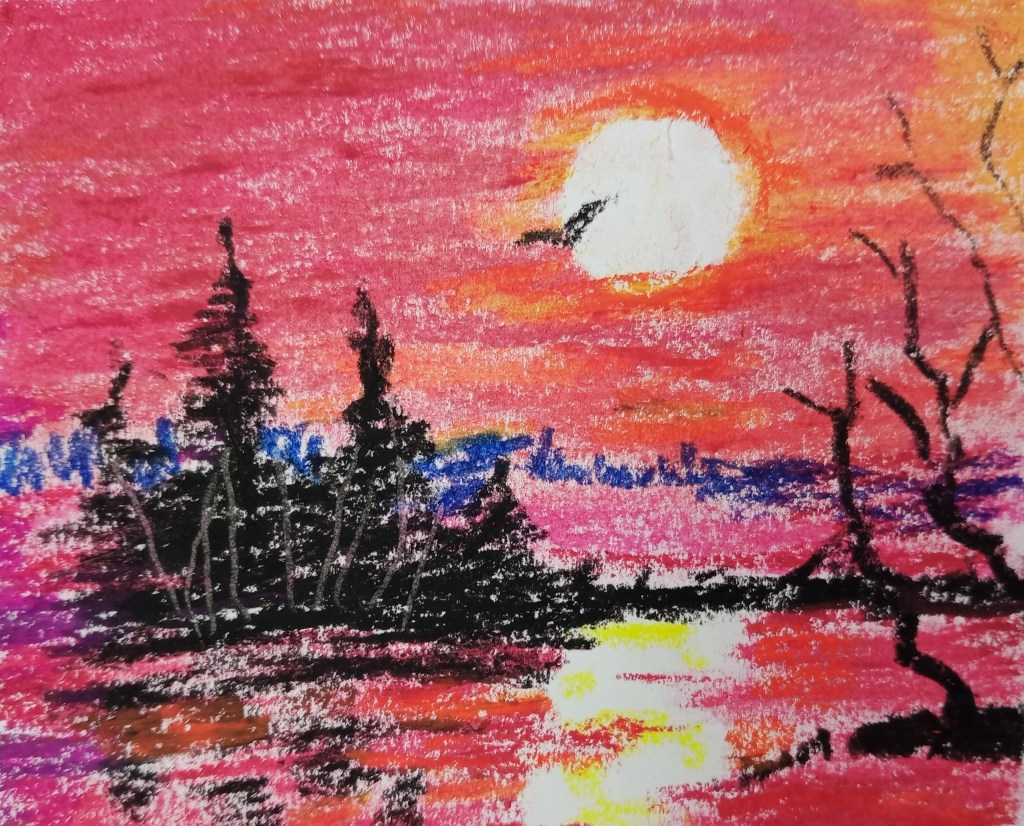
Art by Sohana Manzoor

Editorial

Celebrating a Borderless World… Five Years and Counting… Click here to read.

Translations

Jibanananda Das’ poems on war and for the common masses have been translated from Bengali by Professor Fakrul Alam. Click here to read.

A Scene with an Aged Queen, a poem by Ihlwha Choi  has been translated from Korean by the poet himself. Click here to read.

Tagore’s Esho Bosonto, Esho Aj Tumi (Come Spring, Come Today) has been translated from Bengali by Mitali Chakravarty. Click here to read.

Pandies’ Corner

For Sanjay Kumar: To Sir — with Love has been written for the founder of pandies’ theatre by Tanvir, a youngster from the Nithari village where pandies’ worked with traumatised victims. Over time, these kids have transcended the trauma to lead fulfilling lives. The late Sanjay Kumar passed on this January. This is a tribute to him by one of his students. It has been translated from the Hindustani original by Lourdes M Surpiya. Click here to read.

Poetry

Click on the names to read the poems

Luis Cuauhtémoc Berriozábal, Kiriti Sengupta, Ryan Quinn Flanagan, Snehaprava Das, Stuart McFarlane, Arshi Mortuza, George Freek, Jyotish Chalil Gopinathan, Ahmad Al-Khatat, Michael Burch, Bibhuti Narayan Biswal, Mark Wyatt, Owais Farooq, Adriana Rocha, Rakhi Dalal, Rhys Hughes

Musings/Slices from Life

Nobody Knows…

Farouk Gulsara muses on the dichotomies in life exploring beliefs that shape our world. Click here to read.

Beachcombing on the Abrolhos Islands

Meredith Stephens goes beachcombing in a thinly inhabited island. Click here to read.

As Flows the Gomti: A Monument of Tranquility 

Prithvijeet Sinha takes us to the past of Lucknow. Click here to read.

Musings of a Copywriter

In All Creatures Great and Small, Devraj Singh Kalsi talks of living in harmony with nature… is it tongue in cheek? To find out, click here to read.

Notes from Japan

In Haiku for Rwandan Girls, Suzanne Kamata writes of her trip to Africa where she teaches and learns from youngsters. Click here to read.

Essays

Take One

Ratnottama Sengupta takes stock of women in Bengali cinema over the last fifty years. Click here to read.

Drinking the Forbidden Milk of Paradise…

Meenakshi Malhotra explores the past of poetry and women writers. Click here to read.

Where have all the Libraries Gone?

Professor Fakrul Alam writes of the loss of libraries as we knew them. Click here to read.

Stories

In the Realm of Childhood

Paul Mirabile gives us a story set in Scotland. Click here to read.

The Appropriate Punishments

Naramsetti Umamaheswararao gives a fable set in a forest. Click here to read.

Eyes of Inti

Swati Basu Das shares a lighthearted flash fiction. Click here to read.

‘Solitude is a Kind of Freedom…’

Munaj Gul gives an introspective story set in Balochistan. Click here to read.

Why I Stopped Patronising that Cheese Maker’s Shop…

Zoé Mahfouz shares a humorous vignette of Parisian life. Click here to read.

Conversations

Ratnottama Sengupta discusses the famous actor, Soumitra Chatterjee, with his daughter, Poulami Bose Chatterjee. Click here to read.

Keith Lyons interviews Malaysian author and editor, Daphne Lee. Click here to read.

Book Excerpts

An excerpt from Frank S Smyth’s The Great Himalayan Ascents. Click here to read.

An excerpt from Rhys Hughes’ The Devil’s Halo. Click here to read.

Book Reviews

Somdatta Mandal reviews Tsering Namgyal Khortsa’s non-fiction, Little Lhasa: Reflections in Exiled Tibet and fiction, Tibetan Suitcase, together. Click here to read.

Malashri Lal reviews Rachna Singh’s Raghu Rai: Waiting for the Divine. Click here to read.

Bhaskar Parichha reviews Sandeep Khanna’s Tempest on River Silent: A Story of Last 50 Years of India. Click here to read.

Vignettes from a Borderless World… Click here to read a special fifth anniversary issue.
Categories
Editorial

Celebrating Borderless… Five Years and Counting…

Emerging by Sybil Pretious

Drops of water gather to make a wave. The waves make oceans that reshape land masses over time…

Five years ago, on March 14th, in the middle of the pandemic, five or six of us got together to start an online forum called Borderless Journal. The idea was to have a space that revelled with the commonality of felt emotions. Borderless was an attempt to override divisive human constructs and bring together writers and ideators from all over the Earth to have a forum open to all people — a forum which would be inclusive, tolerant, would see every individual as a part of the fauna of this beautiful planet. We would be up in the clouds — afloat in an unbordered stratosphere— to meet and greet with thoughts that are common to all humans, to dream of a world we can have if we choose to explore our home planet with imagination, kindness and love. It has grown to encompass contributors from more than forty countries, and readers from all over the world — people who have the same need to reach out to others with felt emotions and common concerns.

Borderless not only celebrates the human spirit but also hopes to create over time a vibrant section with writings on the environment and climate change. We launch the new section today on our fifth anniversary.

Adding to the wealth of our newly minted climate and environment section are poems by Luis Cuauhtémoc Berriozábal on the LA fires, Green by Mark Wyatt and Ecopoetry by Adriana Rocha in our March issue. We also have poetry on life in multiple hues from Kiriti Sengupta, Ryan Quinn Flanagan, Snehaprava Das, Stuart McFarlane, Arshi Mortuza, George Freek, Ahmad Al-Khatat, Jyotish Chalil Gopinathan, Michael Burch, Bibhuti Narayan Biswal, Owais Farooq and Rakhi Dalal. Tongue-in-cheek humour in poetry is Rhys Hughes forte and he brings us just that in his sign poem.

 Devraj Singh Kalsi with a soupçon of ironic amusement muses on humans’ attitude to the fauna around him and Farouk Gulsara lays on a coating of sarcasm while addressing societal norms. Meredith Stephens brings us concerns for a green Earth when she beachcombs in a remote Australian island. Prithvijeet Sinha continues to familiarise us with his city, Lucknow. Suzanne Kamata, on the other hand travels to Rwanda to teach youngsters how to write a haiku!

Professor Fakrul Alam takes us to libraries in Dhaka with the hope that more will start writing about the waning of such paradises for book lovers. Other than being the month that hosts World Environment Day, March also homes, International Women’s Day. Commemorating the occasion, we have essays from Meenakshi Malhotra on the past poetry of women and from Ratnottama Sengupta on women in Bengali Cinema. Sengupta has also interviewed Poulami Bose Chatterjee, the daughter of the iconic actor Soumitra Chatterjee to share with us less-known vignettes from the actor’s life. Keith Lyons has interviewed Malaysian writer-editor Daphne Lee to bring to us writerly advice and local lores on ghosts and hauntings. 

Our fiction truly take us around the world with Paul Mirabile giving us a story set Scotland and Naramsetti Umamaheswararao giving us a fable set in a Southern Indian forest. Swati Basu Das takes us on an adventure with Peruvian food while sitting by the Arabian Sea. Munaj Gul gives a heart-rending flash fiction from Balochistan. And Zoé Mahfouz shares a humorous vignette of Parisian life, reflecting the commonality of felt emotions.

Celebrating the wonders of the nature, is a book excerpt from Frank S Smyth’s The Great Himalayan Ascents. While the other excerpt is from Hughes’ latest novel, The Devil’s Halo, described as: ‘A light comedy, a picaresque journey – like a warped subterranean Pilgrim’s Progress.’ We have reviews that celebrate the vibrancy of humanity. Bhaskar Parichha writes of Sandeep Khanna’s Tempest on River Silent: A Story of Last 50 Years of India, a novel that spans the diversity that was India. Malashri Lal reviews Rachna Singh’s Raghu Rai: Waiting for the Divine, a non-fiction on the life and works of the famous photographer. Somdatta Mandal discusses two book by Tsering Namgyal Khortsa reflecting the plight of Tibetan refugees, a non-fiction, Little Lhasa: Reflections in Exiled Tibet and a fiction, Tibetan Suitcase.

One of features that we love in Borderless is that language draws no barriers — that is why we have translations by Professor Alam of Jibananada’s short poems on the impact of war on the common masses. We have a small vignette of Korea from Ihlwha Choi’s self-translated poem. And we have a translation of Tagore’s verses invoking the healing power of spring… something that we much need.

We also have a translation by Lourdes M Supriya from Hindustani of a student’s heartrending cry to heal from grief for a teacher who faced an untimely end — a small dirge from Tanvir, a youngster with his roots in Nithari violence who transcended his trauma to teach like his idol and tutor, the late Sanjay Kumar. With this, we hope to continue with the pandies corner, with support from Lourdes and Anuradha Marwah, Kumar’s partner.

Borderless has grown in readership by leaps and bounds. There have been requests for books with writings from our site. On our fifth anniversary, we plan to start bringing out the creative writing housed in Borderless Journal in different volumes. We had brought out an anthology in 2022. It was well received with many reviews. But we have many gems, and each writer is valued here. Therefore, Rhys Hughes, one of our editorial board members, has kindly consented to create a new imprint to bring out books from the Borderless Journal. We are very grateful to him.

We are grateful to the whole team, our contributors and readers for being with us through our journey. We would not have made it this far without each one of you. Special thanks to Sohana Manzoor for her artwork too, something that has almost become synonymous with the cover page of our journal.  Thank you all from the bottom of my heart.

Wish you all happy reading! Do pause by our content’s page and take a look at all the wonderful writers.

Best wishes,

Mitali Chakravarty

borderlessjournal.com

Click here to access the contents page for the March 2025 issue

Happy Birthday Borderless… Click here to read.

Vignettes from a Borderless World… Click here to read a special fifth anniversary issue.
Categories
pandies' corner

For Sanjay Kumar: To Sir – with Love

Here is a Hindustani poem by Tanvir from the Nithari village, where pandies’ conducted workshops to help traumatised and deprived youngsters. It has been translated to English by Lourdes M Supriya.

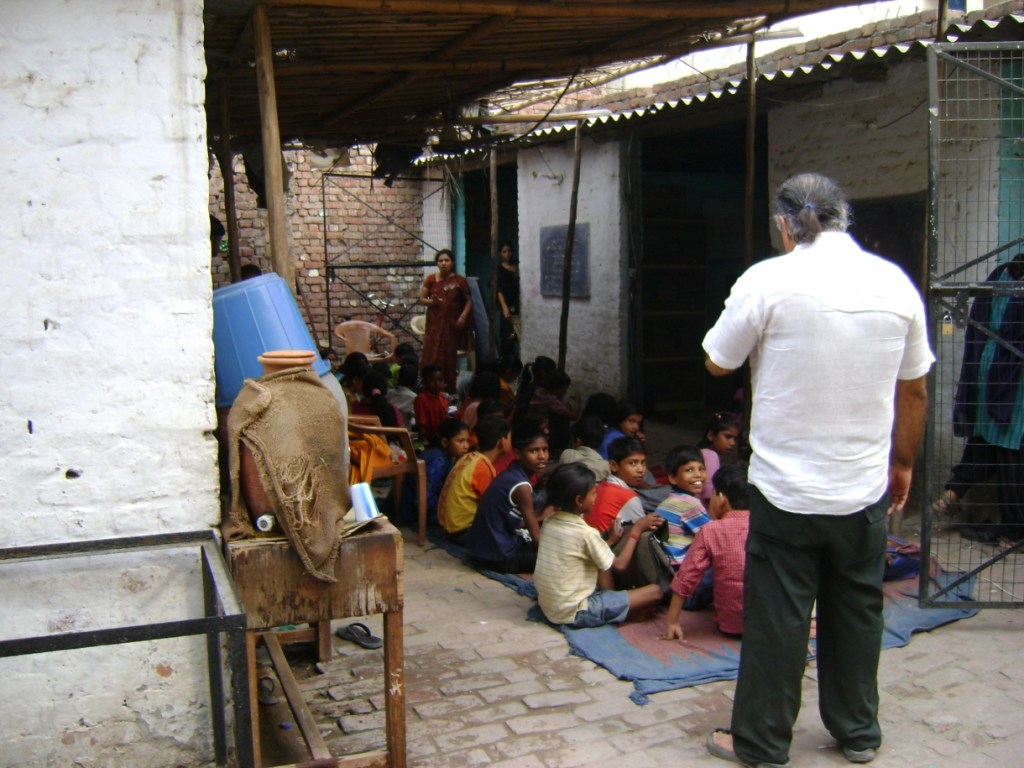
The late Sanjay Kumar (1961-2025), founder of pandies’, creating a story collective at a workshop being conducted for the children at Nithari. Photo provided by the late Sanjay Kumar
Tanvir was first introduced to pandies’ theatre in 2012 as a student at their theatre workshop in Saksham School, Nithari village. After finishing his studies, Tanvir continued to volunteer at the Saksham School till 2019 as a teacher.
How we wish you were here...
This party would have brought more cheer.
A sight so dear --
Could you imagine, friends,
His sense of peace and no fear?
How we wish you were here...
This party, this eve, would have more cheer...

The breeze would seem perfumed with myrrh.
Our best moments were with you right here.
No broken heart, no wounds are as severe --
How we wish you were here...
This party, this eve, would have more cheer...

Even the moon and the stars would appear
Among the thousand dreams gathered here
To hear a single speech by you.
Oh! A scene so sincere--
One more happy day with you here...
How we wish you were here...
This party, this eve, would have more cheer...

It’s only been a few days...
How much can we weep?
The pain is immense Sanjay Sir--
Come back, we cannot walk alone on a road this steep.
Missing your laughter, your voice, and all your ways,
How do we carry on without you? How can we be joyous?
How we wish you were here...
This party, this eve, would have more cheer...

Lourdes M Surpiya is a filmmaker, editor, and theatre practitioner who has been associated with pandies’ theatre since 2015. 

.

PLEASE NOTE: ARTICLES CAN ONLY BE REPRODUCED IN OTHER SITES WITH DUE ACKNOWLEDGEMENT TO BORDERLESS JOURNAL

Click here to access the Borderless anthology, Monalisa No Longer Smiles

Click here to access Monalisa No Longer Smiles on Kindle Amazon International